
Bat 1 - Physical Characteristics. Bat 1 - Behavioral Characteristics
|
|
|
- Oliver McDowell
- 9 years ago
- Views:
Transcription
1 Bat 1 - Physical Characteristics Ear Length: millimeters (from notch to tip) Nose Leaf: absent Fur Color: tan to dark, chocolate brown Tail: does not extend beyond tail membrane Tragus: broad with rounded tip Bat 1 - Behavioral Characteristics I use many habitats from lowland deserts to timberline meadows. I am often found living in buildings. I m very beneficial eating significant crop and forest pests including ground beetles, scarab beetles, cucumber beetles, snout beetles and stink bugs, as well as many species of moths and leafhoppers. I hibernate in caves. 1.
2 Bat 2 - Physical Characteristics Ear Length: millimeters (from notch to tip) Fur Color: darkish gray brown, hairs are uniform in color Other: wing membrane attaches at ankle joint, not at the base of the toes Bat 2 - Behavioral Characteristics I prefer hunting over water. I eat mosquitoes, caddis flies, stone flies, and other aquatic insects. I am very sensitive to disturbance. If disturbed, very young bats of my species may drop off the cave wall to the floor or into a stream. I use caves year round. I am Federally Endangered.
3 Bat 3 - Physical Characteristics Ear Length: 9-15 millimeters (from notch to tip) Calcar: slightly keeled Fur Color: dull brown fur, faintly bi-colored Other: small foot around 7 millimeters long Bat 3 - Behavioral Characteristics My nickname is social myotis because I like to pack tightly together when roosting. I hibernate in caves, typically larger and cooler ones. I am Federally Endangered. I am vulnerable to disturbance because I hibernate in large numbers in only a few caves (the largest hibernation caves support from 20,000 to 50,000 bats).
4 Bat 4 - Physical Characteristics Ear Length: millimeters (from notch to tip) Fur Color: yellowish brown to olive brown, belly fur and back fur are slightly different color Other: toe hairs longer than toes and wing membrane attaches to foot at toe Tragus: relatively short and rounded at tip Bat 4 - Behavioral Characteristics I am often found living in buildings I enjoy eating a variety of insects including midges, mosquitoes, mayflies, caddisflies, moths, beetles, and crane flies. My populations have been hit hard by White- Nose Syndrome. I hibernate in large colonies in cool, humid caves.
5 Bat 5 - Physical Characteristics Ear Length: millimeters (from notch to tip) Fur Color: reddish brown to brown Other: ear extends beyond nose by several millimeters if you lay ears forward and the tragus is long and pointed. Wing membrane attaches to foot at toe. Bat 5 - Behavioral Characteristics While small insects like caddisflies make up a large part of my diet, I can also take down larger prey. To eat the larger food, I carry my catch to a branch and settle down to eat. Populations of my species have been hit hard by White-Nose Syndrome. In summer I choose dense forests and I roost with my young under exfoliating bark and in tree cavities. Photo by Al Hicks, NY DEC I primarily hibernate in caves.
6 Bat 6 - Physical Characteristics Ear Length: small ears, less than 12 millimeters (from notch to tip) Fur Color: fur is golden brown to reddish brown and individual hairs are distinctly tri-colored Other: forearm is pink, tragus is short and rounded, and wing membrane attaches to foot at toe Bat 6 - Behavioral Characteristics I am a generalist when it comes to eating. I feed on small beetles, wasps, flies, and moths. I often roost alone. I am one of the few North American bats that often have two pups each year. I hibernate in caves, mines, and rock crevices.
7 Bat 7 - Physical Characteristics Ear Length: Enormous, over 25 millimeters (from notch to tip) Fur Color: light to dark brown Other: facial glands on either side of the snout are quite distinctive. Bat has short toe hairs. Bat 7 - Behavioral Characteristics Moths make up a big part of my diet. I hibernate in clusters inside of caves, typically in the cooler sections. I am Federally Endangered. I use caves year round. When roosting or hibernating, I curl up my long ears so they look like ram horns. Photo Craig Stihler, WV DNR
Grade 5 Standard 5 Unit Test Heredity. 1. In what way will a kitten always be like its parents? The kitten will...
 Grade 5 Standard 5 Unit Test Heredity Multiple Choice 1. In what way will a kitten always be like its parents? The kitten will... A. be the same color. B. learn the same things. C. have the same body structures.
Insect identification sheet
 information leaflet Insect identification sheet To enable you to identify the insect you have in your home, we have provided some identification sheets. These depict the most common pest species that you
SPECIES DESCRIPTION Picture
 SPECIES DESCRIPTION Picture German Cockroach Cockroach egg case & nymphs 12-15mm (Adult Stage)Mid to dark brown body. Lighter area with 2 dark bars behind head. Wings. Very long antennae. Young are smaller
Silent, Nighttime Hunters By Guy Belleranti
 By Guy Belleranti Owls are raptors, or birds of prey. They are carnivores who quickly and silently swoop down on their prey from above. Most raptors such as eagles, hawks and falcons are day hunters. They
The Fly. Quality Pest Management. Live Cleaner. Live Healthier. Cluster Fly. The weather is warming up and as if from no where the flies appear.
 The Fly The weather is warming up and as if from no where the flies appear. House Fly Flies will pitch and feed on just about anything including faeces to your lunch! They spread disease and are a generally
Flies That Catch Trout And Why They Work
 Flies That Catch Trout And Why They Work We all have boxes of flies that we carry on every trip. But we always find ourselves fishing the same flies; Why?? because they always produce fish. A special thank-you
feet that are used for hunting prey and to defend against predators at the nest.
 Anatomy of Owls: Function of Wing Feathers: o Primary Feathers propel an owl into flight. o Secondary Feathers keep an owl in flight through gliding. o On both the primary and secondary feathers, there
Identifying Aquatic Insects From Your Pond
 Identifying Aquatic Insects From Your Pond Penobscot County Soil & Water Conservation District Natural Resources Conservation Service 28 Gilman Plaza, Suite #2 Bangor, ME 04401 Tel: (207) 990-3676 Fax:
Emerald Tree Boa: Emerald Tree Boas are bright green to blend in with their habitat. They are part of the boa family and are constrictors.
 Anaconda: The anaconda lives in the swamps and rivers. Anacondas can also climb trees. Adults can get as big as 20 feet long. Anacondas are good swimmers. They have scales and can swim quickly. They kill
ESL (English as a Second Laguage) Bugs Alive! Pre-visit. On-site. Post-visit
 These materials have been designed to be easily downloaded as PDF files and give adult learners the opportunity to be involved in pre-visit, on-site and post-visit activities about this exhibition. Pre-visit
Structures of animals
 Structures of animals Name: All animals have been designed with different parts, which we call structures, that make up their bodies. Each of these structures is important as it is used to perform a specific
Alaska Forest Pest Control Supplemental Information. Category Twelve
 Alaska Forest Pest Control Supplemental Information Category Twelve In general, applicators who apply pesticides to property other than their own, or act as a pesticide consultant must obtain certification
Reptiles and Amphibians by Guy Belleranti
 Name: Take a look at the four animals pictures below. Do you know which ones are reptiles and which ones are amphibians? The chameleon is an unusual lizard that can change the color of its scaly body.
WEATHER, CLIMATE AND ADAPTATIONS OF ANIMALS TO CLIMATE
 7 WEATHER, CLIMATE AND ADAPTATIONS OF ANIMALS TO CLIMATE TEXTBOOK QUESTIONS AND ANSWERS Q.1. Why weather changes so frequently? Ans. All changes in the weather are caused by the sun. The movement of the
Insect Pests of Pecan. Will Hudson Extension Entomologist
 Insect Pests of Pecan Will Hudson Extension Entomologist How important is nut drop to production? Pecan trees typically lose 75% of the pecans between nut set and shell hardening even when protected from
Insect Life Cycle LEVELED READER BOOK LA. www.readinga-z.com. Visit www.readinga-z.com for thousands of books and materials.
 Insect Life Cycle A Reading A Z Level L Leveled Book Word Count: 607 LEVELED READER BOOK LA Written by Chuck Garofano Visit www.readinga-z.com for thousands of books and materials. www.readinga-z.com Photo
Great Horned Owl (Bubo virginianus)
 Great Horned Owl (Bubo virginianus) Range: The Great Horned Owl is found in North and South America from northern Alaska and Canada through Mexico to the tropical rainforest to Tierra del Fuego. It is
Insect Life Cycle. www.readinga-z.com. Visit www.readinga-z.com for thousands of books and materials.
 Insect Life Cycle A Reading A Z Level L Leveled Reader Word Count: 607 LEVELED READER L Written by Chuck Garofano Visit www.readinga-z.com for thousands of books and materials. www.readinga-z.com Photo
Get to Know Your Watershed. McMillan Creek
 Get to Know Your Watershed McMillan Creek Where is McMillan Creek? McMillan Creek is found in the northeastern portion of the City of Prince George, know as the Hart and Shady Valley. It is located entirely
The Simple Truth: We Can t Live Without Them
 The Great Pollinator Partnership poster has been reproduced as part of a cooperative effort of the North American Pollinator Protection Campaign to raise awareness of the importance of pollinators to our
Use this diagram of a food web to answer questions 1 through 5.
 North arolina Testing Program EO iology Sample Items Goal 4 Use this diagram of a food web to answer questions 1 through 5. coyotes 3. If these organisms were arranged in a food pyramid, which organism
Name That Adaptation. Background: Link to the Plan Read Section 5 (Whooping Crane Ecology and Biology) in the Management Plan
 Summary Students will explore structural, physiological, and behavioral adaptations of whooping cranes. Objectives: Students will be able to: Define an adaptation Describe several whooping crane adaptations
INTEGRATED PEST MANAGEMENT
 Gerald R. Ford Conservation Center Nebraska State Historical Society 1326 S. 32 nd Street, Omaha, NE 68105 (402) 595-1180, Fax: (402) 595-1178 [email protected] www.nebraskahistory.org INTEGRATED
Wild About... Frogs and Frogspawn
 a Wild About... Rutland County Council Nature notes Frogs belong to a group of animals called amphibians, which also includes newts and toads. Amphibians live both on land and in water. Water is needed
Bats and Bat Habitats: Guidelines for Wind Power Projects
 Ministry of Natural Resources July 2011 BATS AND BAT HABITATS Guidelines for Wind Power Projects Ontario Ministry of Natural Resources First Edition July 2011 MNR Number 52696 (English) ISBN 978-1-4435-6097-9
A REVIEW OF PEST CONTROL IN AVOCADOS
 California Avocado Society 1979 Yearbook 63: 58-65 A REVIEW OF PEST CONTROL IN AVOCADOS C. Don Gustafson Farm Advisor, Cooperative Extension Service, University of California, San Diego County. Introduction
Karen J. English Graphic and Web Designer. Please click the thumbnails on the following pages to view larger versions of the images.
 Karen J. English Graphic and Web Designer Please click the thumbnails on the following pages to view larger versions of the images. graphic design: small pieces graphic design: large pieces web design
Rain Forests. America's. Web of Life. Rain Forest Ecology. Prince William Network's OVERVIEW OBJECTIVES SUBJECTS
 Rain Forest Ecology National Science Education Standards Standard C: Life Sciences Populations and ecosystems. Standard C: Life Sciences Diversity and adaptation of organisms. Standard F: Science in Personal
Most of the final work preparing the collection will be done at home once you learn preparation techniques in science lab. WHAT IS AN INSECT?
 INSECT COLLECTING INSTRUCTIONS SEVENTH GRADE SCIENCE INSECT PROJECT The first unit that you will study in science in the fall is entomology. This is a study of insects and includes preparing an insect
My favourite animal is the cheetah. It lives in Africa in the savannah, It eats and gazel es. It is big and yel ow with black spots.
 The crocodile is big and green. It has got a long tail, a long body and a big mouth with big teeth. It has got four short legs. The crocodile eats fish and other animals. He lives in Africa and America,
World Oceans Day at ZSL Whipsnade Zoo
 World Oceans Day at ZSL Whipsnade Zoo Teachers notes KS 1 & KS 2 This booklet will help you to focus your self guided trail on ocean animals, looking at the adaptations of the species and focusing in on
American Bats. Night Friends- On-line Activity Guide
 Night Friends- American Bats On-line Activity Guide The National Wildlife Federation and Bat Conservation International are working with the U.S. Postal Service to promote the American Bats Stamps as a
Munsell Soil Color. Munsell Gradient No. Code
 Munsell Gradient No. Munsell Soil Color Code Munsell Soil Color Description 10.0 10R 2.5/1 Reddish Black 10.0 10R 2.5/2 Very Dusky Red 10.0 10R 3/1 Dark Reddish 10.0 10R 3/2 Dusky Red 10.0 10R 3/3 Dusky
Insect Record. Date. Observations
 Insect Record Date Observations Investigation 1: Mealworms No. 1 Notebook Master Stages in the Life Cycle of the Darkling Beetle 1. Cut apart the pictures. 2. Glue the pictures in a column in your science
Animal Adaptations -- Vocabulary
 Section 1 Objectives o Children will understand what animal adaptations are. o Children will be able to explain why animal adaptations are important. o Children will be able to explain different types
Photo Merlin D. Tuttle, Bat Conservation International
 Photo Merlin D. Tuttle, Bat Conservation International On the Cover: A Red Bat perched in autumn foliage is one of several species of bats that make annual migrations. Other species are year round residents
Northern Long-eared Bat - Interim Final 4(d) Rule Questions and Answers
 Northern Long-eared Bat - Interim Final 4(d) Rule Questions and Answers 1. What action is the Service taking? On January 15, 2015, the Service published a proposed rule under section 4(d) of the Endangered
The H-Map: An Alternative to the Venn Diagram
 The H-Map: An Alternative to the Venn Diagram H Fossil Fuels 1. 2. 3. 4. 5. Both? 1. 2. 3. Solar Power 1. 2. 3. 4. 5. Venn Diagram Fossil Fuels Solar Energy Source: Holt Elements of Literature (2005) Word
Bountiful Beetles Lesson Plan
 Bountiful Beetles Lesson Plan Lesson Title: Bountiful Beetles Objectives: Students will identify the life cycle, anatomy and other characteristics of beetles. Students will conduct a simple research using
Grade Level Content Expectations addressed: Activities: Schedule of Field Trip Activities at the Detroit Zoo 8:15 am Board Bus at School
 Title: Comparing and Contrasting Ecosystem Biodiversity Submitted by: Tracy Ortiz Email: [email protected] School: Coffey K-8 Educational Learning Community Date: May 12, 2010 Target Grade: 6 Duration:
Animals of the Desert
 Animals of the Desert (NatureScope Discovering Deserts page 26-27) Third Grade Core: Standard 2 Objective 2 Describe the interactions between living and nonliving things in a small environment. Teach a
POND INTERACTIONS Teacher Guide February 2011
 Grades: 4, 5, & 6 POND INTERACTIONS Teacher Guide February 2011 Time: 3 hours A pond is an ever-changing environment. The pond ecosystem is made of countless interactions that link living things to one
2.2 Interactions Among Species
 Key Terms ecological niche bog predator prey mutualism parasite ecological niche the way that an organism occupies a position in an ecosystem, including all the necessary biotic and abiotic factors 2.2
Questions and Answers about Bats
 Questions and Answers about Bats Students from across the United States sent in these questions during the May 17 webcast of BatsLIVE and experts provided the following responses. The May 17 webcast may
ANIMALS AND THEIR HABITATS: KS1 STUDENT RESOURCES
 ANIMALS AND THEIR HABITATS: KS1 STUDENT RESOURCES PLANT OR ANIMAL? (Lesson 1:1) Card sort task: print out and get the students to sort them into: Plants or Animals. Get the students to explain why they
The lychee belongs to the Sapindaceae family Christian DIDIER
 THE LYCHEE Litchi chinensis Sonn is a tropical /subtropical fruit originated in southern China and southeastern Asia. The lychee belongs to the Sapindaceae family Christian DIDIER Introduction to LYCHEE
Objectives: Teach children the basic parts and different types of insects. Make fun bug snacks and play games to learn about bugs.
 Objectives: Teach children the basic parts and different types of insects. Make fun bug snacks and play games to learn about bugs. Materials: Insect pictures Word Search (attached) Corrugated cardboard
Patterns of Bat Fatality at Wind Development Facilities. Edward B. Arnett, Bat Conservation International
 Patterns of Bat Fatality at Wind Development Facilities Edward B. Arnett, Bat Conservation International Biological Diversity: over 1,100 species identified >one-quarter of the world s mammals Broad and
Class Insecta - The insects
 A Introduction 1. Very species rich 2. Characteristics a. 3 pairs of legs b. 2 pairs of wings (most) except flies (1 pair of wings - Diptera) B. Distribution 1. All habitats except saltwater - replaced
Common Backyard Birds of Alabama
 Common Backyard Birds of Alabama Alabama Ornithological Society (AOS) state list includes 420 species: 158 species regularly breed in Alabama 174 species regularly winter 80 species migrate through Alabama
U.S. Fish & Wildlife Service West Virginia Ecological Services Field Office
 Slide 1 West Virginia Ecological Services Field Office Liz Stout Fish and Wildlife Biologist 694 Beverly Pike Elkins, West Virginia 26241 [email protected] 304-636-6586 x 15 Slide 2 Today s Goals
ENGLISH HERITAGE GUIDELINE FOR INSECT PEST MANAGEMENT IN ENGLISH HERITAGE
 ENGLISH HERITAGE GUIDELINE FOR INSECT PEST MANAGEMENT IN ENGLISH HERITAGE HISTORIC PROPERTIES. Contents 1/ English Heritage Guideline for Insect Pest Management 2/ Introduction to pest management 3/ What
Who Eats What in the Woods?
 Who Eats What in the Woods? Developed with teachers at Tolworth Junior School in Kingston upon Thames in 2000. The webaddress for this activity is; Last updated 26th February 2008 This activity has now
Region of Georgia : Mountains
 Region of Georgia : Mountains Northern most region of GA Cold weather in the winter Brasstown Bald is the highest point in Georgia Lots of creeks and streams High above sea level Poor soil for farming
Carpet Beetles In Homes Phil Pellitteri/UW Insect Diagnostic Lab
 Carpet Beetles In Homes Phil Pellitteri/UW Insect Diagnostic Lab One can expect to find a few carpet beetles in any home. Larvae can feed on animal hair, dead insect, wool, horn, silk, plant seeds, feathers,
The Mountain Ecosystem by Kimberly M. Hutmacher
 A habitat is where a plant or animal lives and grows. A habitat is part of an ecosystem where lots of different plants and animals live. Mountains, with their many levels are an ecosystem containing many
Task 2 Multi-text reading: Interesting facts about butterflies
 Task 2 Multi-text reading: Interesting facts about butterflies Level: ISE III Focus: Task 2 Multi-text reading Aims: To read for gist and specific information and to deduce meaning from context Objectives:
INSECTS CLASSROOM RESOURCES CREATED AND COMPILED BY IPTV K-12 CONNECTIONS
 INSECTS CLASSROOM RESOURCES CREATED AND COMPILED BY IPTV K-12 CONNECTIONS *THE MATERIALS WERE DESIGNED TO ACCOMMODATE A K-6 AUDIENCE PLEASE MODIFY AS APPROPRIATE INSECTS A to Z Work with a partner to complete
Everything You Wanted to Know About Spiders!
 Everything You Wanted to Know About Spiders! How do spiders fit into the Animal Kingdom? Spiders are arthropods, a group of invertebrates containing insects, crustaceans, millipedes, centipedes, arachnids
Exhibit Inquiry. Rainforest. Aug 11
 Exhibit Inquiry Exhibit Inquiry Have students look for the following exhibits related to living things during their visit to the Ontario Science Centre: Where to go: (Level 6) What it's about: Tropical
Layers. Forest floor, canopy, and more!
 Layers Forest floor, canopy, and more! Introduction When I was nine, I went to a museum about wildlife and there was part of the museum that was about rain forests and it had some plants that lived in
www.irishseedsavers.ie Natural surface water on earth includes lakes, ponds, streams, rivers, estuaries, seas and oceans.
 www.irishseedsavers.ie POND LIFE FACT SHEET Natural surface water on earth includes lakes, ponds, streams, rivers, estuaries, seas and oceans. A pond is a small body of fresh water shallow enough for sunlight
6 WONDERFUL WEST VIRGINIA DECEMBER 2015. Wonderful West Virginia Magazine
 6 WONDERFUL WEST VIRGINIA DECEMBER 2015 Wonderful West Virginia Magazine LOVELY, DARK, AND DEEP Winters in West Virginia can be harsh, but some animals have an ingenious way of staying alive and well until
POCKET IDENTIFICATION GUIDE
 The Pennsylvania Native Bee Survey Citizen Scientist Pollinator Monitoring Guide POCKET IDENTIFICATION GUIDE Leo Donovall/Pennsylvania Department of Agriculture Bees vs. Wasps vs. Flies Bees Usually Very
Can You Tell a 'Gator From a Croc? by Guy Belleranti
 Can You Tell a 'Gator From a Croc? Look closely at the reptiles pictured below. Can you tell which one is the crocodile and which is the alligator? Many people confuse crocodiles and alligators, and it's
Brownies. It s Your Planet Love It! WOW: Wonders of Water. Ice Cold (page 25) Extinct (page 39)
 Exhibit Guide WOW: Wonders of Water Ice Cold (page 25) The Earth has two poles, a North Pole and a South Pole. Both are extremely cold and covered in ice. Sometimes you might see huge masses of moving
Name Class Date. Adapting to the Environment Adaptations and Survival
 CHAPTER 3 4 SECTIN Adapting to the Environment Adaptations and Survival EFRE YU READ After you read this section, you should be able to answer these questions: What adaptations help animals survive? What
Worksheets. (Caterpillars of Singapore s Butterflies) Worksheet Title Recommended level. Adaptations of the caterpillar defence mechanism
 Worksheets (Caterpillars of Singapore s Butterflies) Worksheet Title Recommended level 1 Life cycle of a butterfly P3 2 Am I an insect? P3 3 4 Adaptations of the caterpillar defence mechanism The butterfly
Species Horse Module - Colors
 Species Horse Module - Colors Learning Objectives Beginner Identify the following coat colors of the horse: Bay, Black, Brown, Chestnut. Targeting Life Skills Beginner Learning to Learn Intermediate Decision
Valley fold 1/4 at the left side, again creasing only at the edge, and unfold. Valley fold, connecting the tops of the angle bisectors, and unfold.
 Triceratops by Jerry Harris 1. Begin with a square, white side up, with the vertical diagonal precreased. A square of 10" results in a model of approximately 5.8" long and 1.67" tall at the hip. 2. 3.
Worksheets. (Caterpillars of Singapore s Butterflies) Worksheet Title Recommended level. Adaptations of the caterpillar defence mechanism
 Worksheets (Caterpillars of Singapore s Butterflies) Worksheet Title Recommended level 1 Life cycle of a butterfly P3 2 Am I an insect? P3 3 4 Adaptations of the caterpillar defence mechanism The butterfly
A Visual Guide to Detecting Emerald Ash Borer Damage
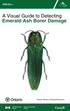 cfs.nrcan.gc.ca A Visual Guide to Detecting Emerald Ash Borer Damage Ontario Ministry of Natural Resources Library and Archives Canada Cataloguing in Publication A visual guide to detecting emerald ash
TREE NOTES. CALIFORNIA DEPARTMENT OF FORESTRY AND FIRE PROTECTION Arnold Schwarzenegger Governor State of California. Dale T.
 TREE NOTES CALIFORNIA DEPARTMENT OF FORESTRY AND FIRE PROTECTION Arnold Schwarzenegger Governor State of California Dale T. Geldert Director NUMBER: 30 February 2005 Mike Chrisman Secretary for Resources
Grain Sorghum Insect Control
 Agriculture and Natural Resources FSA2066 Grain Sorghum Insect Control Glenn E. Studebaker Extension Entomologist Gus Lorenz Associate Department Head Extension Entomologist Scott Akin Extension Entomologist
Christmas Trees Pseudotsuga menziesil (Douglas-fir), Abies grandis (Grand fir), Abies procera
 Christmas Trees Pseudotsuga menziesil (Douglas-fir), Abies grandis (Grand fir), Abies procera (Noble fir) (Pinaceae) Fast Facts: Acres in Washington: 25,000 acres Number of growers: 300 Value of Production
Major Insects of Apple, Peach and Pear Trees in the Home Orchard
 Major Insects of Apple, Peach and Pear Trees in the Home Orchard Henry W. Hogmire West Virginia University Tree Fruit Research and Education Center Kearneysville, WV Apple Pests Plum Curculio Beetle (snout
12. INSECT PEST AND DISEASE MANAGEMENT
 12. INSECT PEST AND DISEASE MANAGEMENT Conservation farming promotes a diversity of insect life, influences pest populations and also favours many beneficial insects. The beneficial insects which act as
LAWN GUARDIAN GRUB CONTROL
 LAWN GUARDIAN GRUB CONTROL Beneficial Nematodes When Do I Apply? Grubs start feeding in April and again in August. Apply Beneficial Nematodes in May or when grubs are seen in the soil, ensure the soil
A Most Colorful Mammal by Guy Belleranti
 Name: In the tropical rainforests of western Africa lives a mammal with a most colorful face and rump. This mammal is the mandrill, the world's largest monkey. The skin on a male mandrill's face has a
2/20/2015. Dramatic Play- Laurie Jacoby and Nicki Taves Merrill Area Public Schools Head Start/Early Childhood Program
 Laurie Jacoby and Nicki Taves Merrill Area Public Schools Head Start/Early Childhood Program Block area- Print off pictures of different kinds of planes and have the children predict the number of blocks
ALFALFA INSECTS: AN OVERVIEW OF CUTWORMS, ALFALFA WEEVIL, AND APHIDS. Steven E. Salisbury 1 ABSTRACT
 ALFALFA INSECTS: AN OVERVIEW OF CUTWORMS, ALFALFA WEEVIL, AND APHIDS Steven E. Salisbury 1 ABSTRACT Insect pests present a significant threat to alfalfa production. There are several alfalfa insect pests
Organic Control Methods of Almond Insect Pest
 Big Tree Organic Field Day Turlock, CA, April 2nd, 2009 Organic Control Methods of Almond Insect Pest David Doll Farm Advisor UCCE Merced County Overview Organic Control Methods of Control of common pests
Learning expeditions
 Learning expeditions Same and different Where do I fit in? Introduction: On this Expedition, your students will explore the question, Where do I fit in? by learning how to compare identifying characteristics
The Bug Hotel. Clouded yellow butterfly
 The Bug Hotel Clouded yellow butterfly TABLE OF CONTENTS PAGE CREATE CREATURE COMFORT 2 SO WHAT WOULD YOU NEED TO BUILD A BUG HOTEL? 2 WHERE TO SITE YOUR BUG HOTEL 2 MATERIALS 3 BUT WHERE WOULD YOU GET
Animal Adaptations Investigation (K-3)
 Animal Adaptations Investigation (K-3) At a glance Students explore the Zoo in search of animals that fit certain categories and discover their adaptations. Time requirement One Zoo visit of at least 60
East Midlands Councils. PUBLIC HEALTH 2011 Pest Control starts at home. Richard Bevan Bristol City Council Pest Control Services Manager
 East Midlands Councils PUBLIC HEALTH Pest Control starts at home Richard Bevan Bristol City Council Pest Control Services Manager Local Authorities Financial restraints reduced budgets Present issues staffing
There s no place like home!
 2Discovery Card Teacher Time: 2.5 hours (split into two sessions) Information (suitable for 7-12 year olds) This is an opportunity for children to make their own bug boxes and test the habitat preference
Endangered animal pictionary
 Get informed Get involved Get sharing Endangered animal pictionary PLANTS and ANIMALS Time: 20 minutes Who it s for: 10+ You ll need: Whiteboard / flipchart Pens Endangered animals fact cards What to do:
Timneh Grey Parrots are smaller, darker and have maroon colored tail feathers. Their upper beak is a dark horn color with a black tip.
 Congo African Grey Scientific name Psittacus erithacus erithacus Also known as Grey Parrot African gray parrots are stocky, short tailed birds. The body coloration is varying shades of gray depending on
Why Fruit Trees Die D. B. Meador, Extension Specialist (retired) University of Illinois
 Why Fruit Trees Die D. B. Meador, Extension Specialist (retired) University of Illinois Occasionally, fruit trees decline and often die. Diseases affecting the leaves, fruit, and twigs of fruit trees usually
Common Name: AMERICAN BARBERRY. Scientific Name: Berberis canadensis Miller. Other Commonly Used Names: none. Previously Used Scientific Names: none
 Common Name: AMERICAN BARBERRY Scientific Name: Berberis canadensis Miller Other Commonly Used Names: none Previously Used Scientific Names: none Family: Berberidaceae (barberry) Rarity Ranks: G3/S1 State
The Alfalfa Weevil in Utah
 Page 1 of 5 The Alfalfa Weevil in Utah Fact Sheet No. 58 January 1989 Edward W. Evans Extension Entomologist Introduction The alfalfa weevil is a major pest throughout Utah. It is a beetle with one generation
The life of a Panda Javonna luper. How do they live there cute life
 The life of a Panda Javonna luper How do they live there cute life The life of a Panda Javonna luper Introduction Image Source: kidrex This is a panda eating bamboo. I'm going to tell you about Pandas.