
Tattooing & Piercing Information Kit Information Kit Contents
|
|
|
- Cameron Cox
- 9 years ago
- Views:
Transcription
1 Tattooing & Piercing Information Kit Information Kit Contents o Body Piercing o Tattoos o Tattooing and Piercing o Tattooing and Body Piercing Safety: Information from Wellington-Dufferin- Guelph Public Health o Tattoo Aftercare Instructions o Pamphlets: o Ear Piercing o Tattooing & Body Piercing o Jewelry for Initial Piercings o Jewelry for Healed Piercings

2 Body Piercing What Is a Body Piercing and What Can You Expect? A body piercing is exactly that a piercing or puncture made in your body by a needle. After that, a piece of jewelry is inserted into the puncture. The most popular pierced body parts seem to be the ears, the nostrils, and the belly button. If the person performing the piercing provides a safe, clean, and professional environment, this is what you should expect from getting a body part pierced: The area you've chosen to be pierced (except for the tongue) is cleaned with a germicidal soap (a soap that kills disease-causing bacteria and microorganisms). Your skin is then punctured with a very sharp, clean needle. The piece of jewelry, which has already been sterilized, is attached to the area. The person performing the piercing disposes of the needle in a special container so that there is no risk of the needle or blood touching someone else. The pierced area is cleaned. The person performing the piercing checks and adjusts the jewelry. The person performing the piercing gives you instructions on how to make sure your new piercing heals correctly and what to do if there is a problem. Before You Pierce That Part If you're thinking about getting pierced, do your research first. If you're under 18, some places won't allow you to get a piercing without a parent's consent. It's a good idea to find out what risks are involved and how best to protect yourself from infections and other complications. Certain sites on the body can cause more problems than others infection is a common complication of mouth and nose piercings because of the millions of bacteria that live in those areas. Tongue piercings can damage teeth over time. And tongue, cheek, and lip piercings can cause gum problems. Studies have shown that people with certain types of heart disease might have a higher risk of developing a heart infection after body piercing. If you have a medical problem such as allergies, diabetes, skin disorders, a condition that affects your immune system, or infections or if you are pregnant ask your doctor if there are any special concerns you should have or precautions you should take beforehand. Also, it's not a good idea to get a body piercing if you're prone to getting keloids (an overgrowth of scar tissue in the area of the wound).

3 If you decide to get a body piercing: Make sure you're up to date with your immunizations (especially hepatitis B and tetanus). Plan where you will get medical care if your piercing becomes infected (signs of infection include excessive redness/tenderness around the piercing site, prolonged bleeding, pus, and change in your skin color around the piercing area). Also, if you plan to get a tongue or mouth piercing, make sure your teeth and gums are healthy. Making Sure the Piercing Shop Is Safe and Sanitary Body piercing is regulated in some areas but not others. Although most piercing shops try to provide a clean and healthy environment, some might not take proper precautions against infections or other health hazards. If you decide to get a body piercing, do a little investigative work about a shop's procedures and find out whether it provides a clean and safe environment for its customers. Every shop should have an autoclave (a sterilizing machine) and should keep instruments in sealed packets until they are used. Ask questions and make sure: the shop is clean the person doing the piercing washes his or her hands with a germicidal soap the person doing the piercing wears fresh disposable gloves (like those worn at a doctor's office) the person doing the piercing uses sterilized instruments or instruments that are thrown away after use the person doing the piercing does not use a piercing gun (they're not sterile) the needle being used is new and is being used for the first time the needle is disposed of in a special sealed container after the piercing there are procedures for the proper handling and disposal of waste (like needles or gauze with blood on them) It's also a good idea to ask about the types of jewelry the shop offers because some people have allergic reactions to certain types of metals. Before you get a piercing, make sure you know if you're allergic to any metals. Only nontoxic metals should be used for body piercings, such as: surgical steel solid 14-karat or 18-karat gold niobium titanium platinum

4 If you think the shop isn't clean enough, if all your questions aren't answered, or if you feel in any way uncomfortable, go somewhere else to get your piercing. Some Health Risks If all goes well, you should be fine after a body piercing except for some temporary symptoms, including some pain, swelling at the pierced area, and in the case of a tongue piercing, increased saliva. But be aware that several things, including the following, can go wrong in some cases: chronic infection uncontrollable or prolonged bleeding scarring hepatitis B and C tetanus skin allergies to the jewelry that's used abscesses or boils (collections of pus that can form under your skin at the site of the piercing) inflammation or nerve damage Depending on the body part, healing times can take anywhere from a few weeks to more than a year. If you do get a piercing, make sure you take good care of it afterward don't pick or tug at it, keep the area clean with soap (not alcohol), and don't touch it without washing your hands first. Never use hydrogen peroxide because it can break down newly formed tissue. If you have a mouth piercing, use an alcohol-free, antibacterial mouthwash after eating. If you're thinking of donating blood, be aware that some organizations won't accept blood donations from anyone who has had a body piercing or tattoo within the last year because both procedures can transmit blood-borne diseases you may not realize were passed on to you at the time of the piercing. If your piercing doesn't heal correctly or you feel something might be wrong, it's important to get medical attention. Most important, don't pierce yourself or have a friend do it make sure it's done by a professional in a safe and clean environment.

5 Reviewed by: Steven Dowshen, MD Date reviewed: February 2012 Originally reviewed by: Michele Van Vranken, MD

6 Tattoos It seems like everyone has a tattoo these days. What used to be the property of sailors, outlaws, and biker gangs is now a popular body decoration for many people. And it's not just anchors, skulls, and battleships anymore from school emblems to Celtic designs to personalized symbols, people have found many ways to express themselves with their tattoos. Maybe you've thought about getting one. But before you head down to the nearest tattoo shop and roll up your sleeve, there are a few things you need to know. Did You Know? Tattoos have been around for a long, long time. Throughout history, tattoos were mostly worn as decoration. They ve been found on mummified bodies dating back to 3300BC. And it s well known that many societies wore (and still wear) tattoos as part of their culture. So What Exactly Is a Tattoo? A tattoo is a puncture wound, made deep in your skin, that's filled with ink. It's made by penetrating your skin with a needle and injecting ink into the area, usually creating some sort of design. What makes tattoos so long-lasting is they're so deep the ink isn't injected into the epidermis (the top layer of skin that you continue to produce and shed throughout your lifetime). Instead, the ink is injected into the dermis, which is the second, deeper layer of skin. Dermis cells are very stable, so the tattoo is practically permanent. Tattoos used to be done manually that is, the tattoo artist would puncture the skin with a needle and inject the ink by hand. Though this process is still used in some parts of the world, most tattoo shops use a tattoo machine these days. A tattoo machine is a handheld electric instrument that uses a tube and needle system. On one end is a sterilized needle, which is attached to tubes that contain ink. A foot switch is used to turn on the machine, which moves the needle in and out while driving the ink about 1/8 inch (about 3 millimeters) into your skin. Most tattoo artists know how deep to drive the needle into your skin, but not going deep enough will produce a ragged tattoo, and going too deep can cause bleeding and intense pain. Getting a tattoo can take several hours, depending on the size and design chosen.

7 Does It Hurt to Get a Tattoo? Getting a tattoo can hurt, but the level of pain can vary. Because getting a tattoo involves being stuck multiple times with a needle, it can feel like getting a bunch of shots or being stung by a hornet multiple times. Some people describe the tattoo sensation as "tingling." It all depends on your pain threshold, how good the person wielding the tattoo machine is, and where exactly on your body you're getting the tattoo. Also, keep in mind that you'll probably bleed a little. If You're Thinking About It If you're thinking about getting a tattoo, there is one very important thing you have to keep in mind getting it done safely. Although it might look a whole lot cooler than a big scab, a new tattoo is also a wound. Like any other slice, scrape, puncture, cut, or penetration to your skin, a tattoo is at risk for infections and disease. First, make sure you're up to date with your immunizations (especially hepatitis and tetanus shots) and plan where you'll get medical care if your tattoo becomes infected (signs of infection include excessive redness or tenderness around the tattoo, prolonged bleeding, pus, or changes in your skin color around the tattoo). If you have a medical problem such as heart disease, allergies, diabetes, skin disorders, a condition that affects your immune system, or infections or if you are pregnant ask your doctor if there are any special concerns you should have or precautions you should take beforehand. Also, if you're prone to getting keloids (an overgrowth of scar tissue in the area of the wound), it's probably best to avoid getting a tattoo altogether. Avoiding Infection It's very important to make sure the tattoo studio is clean and safe, and that all equipment used is disposable (in the case of needles, gloves, masks, etc.) and sterilized (everything else). Some cities, and communities set up standards for tattoo studios, but others don't. You can call your county, or local health department to find out about the laws in your community, ask for inspection results on licensed tattoo shops, or check for any complaints about a particular studio. Professional studios usually take pride in their cleanliness. Here are some things to check for: Make sure the tattoo studio has an autoclave (a device that uses steam, pressure, and heat for sterilization). You should be allowed to watch as equipment is sterilized in the autoclave. Check that the tattoo artist is a licensed practitioner. If so, the tattoo artist should be able to provide you with references.

8 Be sure that the tattoo studio follows the Occupational Safety and Health Administration's Universal Precautions. These are regulations that outline procedures to be followed when dealing with bodily fluids (in this case, blood). If the studio looks unclean, if anything looks out of the ordinary, or if you feel in any way uncomfortable, find a better place to get your tattoo. What's the Procedure Like? Here's what you can expect from a normal tattooing procedure: The tattoo artist will first wash his or her hands with a germicidal soap. The to-be-tattooed area on your body will be cleaned and disinfected. The tattoo artist will put on clean, fresh gloves (and possibly a surgical mask). The tattoo artist will explain the sterilization procedure to you and open up the single-use, sterilized equipment (such as needles, etc.). Using the tattoo machine (with a sterile, single-use needle attached), the tattoo artist will begin drawing an outline of the tattoo under your skin. The outline will be cleaned with antiseptic soap and water. Sterile, thicker needles will be installed on the tattoo machine, and the tattoo artist will start shading the design. After cleaning the area again, color will be injected. A new bottle of ink should be opened for each individual. Any blood will be removed by a sterile, disposable cloth or towel. When finished, the area, now sporting a finished tattoo, will be cleaned once again and a bandage will be applied. Taking Care of a Tattoo The last step in getting a tattoo is very important taking care of the tattoo until it fully heals. Follow all of the instructions the studio gives you for caring for your tattoo to make sure it heals properly. Also, keep in mind that it's very important to call your doctor right away if you see or feel any signs of infection such as pain, spreading redness, swelling, or drainage of pus. To make sure your tattoo heals properly: Keep a bandage on the area for up to 24 hours. Avoid touching the tattooed area and don't pick at any scabs that may form. Wash the tattoo with an antibacterial soap (don't use alcohol or peroxide they'll dry out the tattoo). Use a soft towel to dry the tattoo just pat it dry and be sure not to rub it. If you don't have an allergy to antibiotic ointment, rub some into the tattoo. Don't use petroleum jelly it may cause the tattoo to fade. Put an ice pack on the tattooed area if you see any redness or swelling. Try not to get the tattoo wet until it fully heals. Stay away from pools, hot tubs, or long, hot baths. Keep your tattoo away from the sun until it's fully healed.

9 Even after it's fully healed, a tattoo is more susceptible to the sun's rays, so it's a good idea to always keep it protected from direct sunlight. If you're outside often or hang out at the beach, it's recommended that you always wear a sunscreen with a minimum sun protection factor (SPF) of 30 on the tattoo. This not only protects your skin, but keeps the tattoo from fading. What Are the Risks? If you decide to get a tattoo, chances are everything will go as planned. But if disinfection and sterilization steps aren't followed, there are some things you need to be aware of that can go wrong. If you don't go to a tattoo studio or the tattoo studio doesn't follow precautions like using sterilized equipment or if it shares ink between customers, you're putting yourself at risk for getting viral infections such as hepatitis, bacterial skin infections, or dermatitis (severe skin irritation). Also, some people have allergic reactions to the tattoo ink. And if you already have a skin condition such as eczema, you may have flare-ups as a result of the tattoo. Serious complications can result if you attempt to do a tattoo yourself, have a friend do it for you, or have it done in any unclean environment. Because tattooing involves injections under the skin, viruses such as HIV and hepatitis B and C can be transferred into your body if proper precautions aren't followed. For this reason, the American Red Cross and some other blood banks require people to wait 12 months after getting a tattoo before they can donate blood. Tattoo Removal A lot of people love their tattoos and keep them forever. But others decide a couple of years down the road that they really don't like that rose on their ankle or snake on their bicep anymore. Or maybe you broke up with your boyfriend or girlfriend and no longer want his or her initials on your stomach. What then? In the past, tattoo removal required surgery, but now there are several other methods that can be used. One common method is laser removal. Some tattoo shops also offer tattoo removal, but it's a better idea to make sure the person doing the removal is a medical doctor. Before you go just anywhere to get your tattoo removed, check with your doctor or contact the Canadian Dermatological Association to find a reputable laser removal specialist in your area. Although it's called tattoo removal, completely removing a tattoo can be difficult depending on how old the tattoo is, how big the tattoo is, and the types and colors of inks that were used. Removal of the entire tattoo is not always guaranteed. It's best to consult with a dermatologist who specializes in tattoo removal to get your questions answered such as whether anesthesia is used. The dermatologist can also give you a good idea of how much (if not all) of the tattoo can be removed.

10 Tattoo removal can be pretty expensive. Depending on factors like the size and design of the tattoo, removal can cost significantly more than the actual tattoo. The Laser Removal Procedure Laser tattoo removal usually requires a number of visits, with each procedure lasting only a few minutes. Anesthesia may or may not be used. What happens is the laser sends short zaps of light through the top layers of your skin, with the laser's energy aimed at specific pigments in the tattoo. Those zapped pigments are then removed by your body's immune system. Removing a tattoo by laser can be uncomfortable and can feel a lot like getting a tattoo. The entire process usually takes several months. Just like when you get a tattoo, you must look after the wound area after a tattoo is removed. The area should be kept clean, but it shouldn't be scrubbed. Also, it might turn red for a few days and a scab might form. Don't rub or scrub the area or pick at the scab. Let it heal on its own. Laser tattoo removal is usually effective for the most part, but there can be some side effects. The area can become infected or scarred, and it can also be susceptible to hyperpigmentation, which causes the area where your tattoo used to be to become darker than your normal skin, or hypopigmentation, which causes the area where your tattoo used to be to become lighter than your normal skin color. So Is It Worth It? Is getting a tattoo worth the money and hassle? It's up to you. Some people really enjoy their tattoos and keep them for life, whereas others might regret that they acted on impulse and didn't think enough about it before they got one. Getting a tattoo is a big deal, especially because they're designed to be permanent. If you've thought about it and decided you want a tattoo, make sure you do a little detective work and find a clean, safe, and professional tattoo shop. Also, remember that getting and maintaining a tattoo involves some responsibility after you leave the tattoo shop, it's up to you to protect and treat it to prevent infections or other complications.

11 Reviewed by: Michele Van Vranken, MD Date reviewed: April 2009 TATTOOING AND PIERCING The Issue Tattooing and ear/body piercing are increasingly popular among Canadians. These procedures, however, may increase the risk of contracting a number of serious bloodborne diseases. Background Tattoos and ear/body piercings are very popular, especially among those aged 18 to 22. Between 73 and 83 percent of women in the U.S. have had their ears pierced. An American university survey in 2001 found that 51 percent of students had piercings and 23 percent had tattoos. U.S. studies show that the number of women with tattoos quadrupled between 1960 and The number of tattooing and piercing shops in Canada has increased dramatically in the last few years. Health Risks of Tattooing and Ear/Body Piercing Skin and mucous membranes in the mouth and nose protect you from many infections. Both tattooing and ear/body piercing procedures involve piercing the skin or mucous membrane with a needle or other sharp instrument. Unless the needles are new, sterilized for each treatment and properly handled by the practitioner, instruments can be contaminated with the infected blood or bodily fluids of another person. You may also have bacteria or viruses present on your skin that can enter your body and cause infection when your skin is pierced. Practitioners who do the tattooing and piercing are also at risk of becoming infected through accidental cuts and punctures. It is possible to transmit viral infections such as hepatitis B, hepatitis C, Human Immunodeficiency Virus (HIV)/Acquired Immunodeficiency Syndrome (AIDS) and herpes through tattooing and piercing, as well as bacterial skin infections such as Streptococcus and Staphylococcus. Minimizing your Risk

12 The best protection against disease and infection is to carefully choose where you obtain your tattoo or piercing. Here is a list of conditions on which to base your decision: The work area is clean and brightly lit. The shop uses instruments that are easily cleaned and sterilized, such as stainless steel. Tattooing is done with sterile needles in a tattoo machine that has been wiped with alcohol after each use and covered with new disposable plastic. Ear piercing is done with a sterile needle or a gun that has a disposable sterile cartridge to holds the studs. Tattoo and piercing needles are new and sterile for each treatment. They should never be reused. Those performing the procedure have clean working habits, including washing their hands before and after procedures, after handling contaminated items, before opening and handling sterile supplies, and before putting on and after removing their gloves. Practitioners wear medical gloves during the procedures. The shop has a clean zone and a dirty zone. The procedure should be done in the clean zone where only sterilized packages and clean equipment are kept and used. The dirty zone is the contaminated area where there is a washing sink and holding basin for disinfecting implements. Work surfaces are made of smooth and non-porous materials. All surfaces are cleaned with a solution of bleach and water. The shop has a sterilizing machine, preferably a steam sterilizer, and test strips are used to indicate whether the machine is operating correctly. Waste is disposed of properly, with blood-contaminated waste placed in plastic bags and tied before being added to the regular waste. Sharp implements used to pierce the skin are put into puncture-resistant containers. Oral and written instructions are given to clients for personal care You can minimize your own risk of infection by taking these precautions: Choose a good professional practitioner who has been trained. Ask the practitioner if she or he follows the Infection Control Guidelines for tattooing and ear/body piercing. Never tattoo or pierce skin that has a cut or break, pimples, warts, or other abnormalities. Make sure the practitioner disinfects the skin area using a skin antiseptic before the procedure.

13 Wash your hands thoroughly before you apply lotions or ointments to the tattooed or pierced area after the procedure or when rotating the jewelry, as directed by the practitioner. If you are concerned that the tattoo or piercing is infected, contact your doctor or local health unit. Hepatitis B vaccine will help protect you from hepatitis B, but there is no vaccine for hepatitis C or HIV. Health Canada s Role Working in partnership with the provincial and territorial governments, Health Canada has created Infection Control Guidelines for tattooing and ear/body piercing. These guidelines were developed for practitioners of tattooing and ear/body piercing by representatives from industry, health services, and Health Canada s Centre for Infectious Disease Prevention and Control. Need More Info? Learn more about Health Canada s Infection Control Guidelines Get information on hepatitis C It s Your Health article on hepatitis C Information on the Canadian Strategy on HIV/AIDS Additional It s Your Health articles You can also call (613)

14 Tattooing and Body Piercing Safety: Information from Wellington-Dufferin-Guelph Public Health Is it right for me? When you change your body, it's a very personal decision. Before you go ahead, make sure it's right for you. To help make your decision, ask yourself: Am I making this choice myself without pressure from my friends? Have I asked someone who has had body art for a long time five to fifteen years if they still like it? Remember, what's popular today may not be tomorrow. Do I have personal health issues (metal allergies, not vaccinated against hepatitis B) that may affect my choice? If my tattoo/piercing is in an obvious spot and can't be hidden by clothing, will it affect my chance of getting a job in certain fields? Can I commit the time to care for my new tattoo/piercing? Should I try a temporary tattoo or henna to help me decide? Body art is for a lifetime. If you have any doubts, wait and get more information. Here's what you should know: Laser treatments can remove tattoos, but they're very expensive. Costs range from $150-$500 per treatment. You may need five to six treatments. Your skin may change colour permanently after the tattoo is removed.

15 Considering body art? Protect Yourself Find a Good Artist A well-trained professional artist does the safest work. Safe work is done in a professional studio that is properly equipped. Avoid going to friends and people who work out of their homes they aren't likely to be equipped or experienced enough to do safe, quality work. Tattooing/body piercing is not a regulated profession in Ontario. This means there are not standards and licensing to ensure these individuals are knowledgeable and competent in their profession. They have to take it upon themselves to learn proper and safe procedures. Insist on seeing the needle removed from the sterile packaging before it is used on you. All other instruments must be sterile, pre-packed, and opened in front of you. Experienced tattoo/body piercing artists will be happy to show you what steps they've taken to lower the risk of spreading disease to you and to themselves and will be willing to answer all your questions. Know the risks: Your skin is the body's first line of defense against infections. Any time the skin is broken, there are health risks. HIV and hepatitis (B and C) are examples of serious infections you can get from unclean equipment. You should get a hepatitis B vaccination before getting a tattoo or body piercing. How to choose a studio Here's what to look for: An autoclave sterilizer is used. It's very important that artists sterilize all instruments that contact blood or body fluids. Records should show the autoclave is being tested every second week.

16 A hand-washing sink, cleaners and surface disinfectants, and skin antiseptics must be available. These are used with each tattooing or body piercing procedure. New, sterile needles are used each time. These needles are then thrown out in a special container for disposable sharp tools. Only sterile, individually pre-packed instruments are used for each tattooing or body piercing procedure. They are opened in front of you. Disposable items such as razors, ink caps, swabs, gloves are being used and then tossed. Only fresh ink is used for tattooing. It is poured into disposable caps in front of you. The artist always wears disposable gloves and changes them after touching anything that might not be sterile. Only clean (if possible, sterile) dressings can cover the new tattooed or pierced area. For information on studio inspection call Wellington-Dufferin-Guelph Public Health at or How to choose an artist Here's what to look for: The artist is willing to show you all areas of the studio. He or she confidently answers all your questions, including those about sterilization methods. The artist has a portfolio of his or her work available for you to see. The artist is not under the influence of alcohol or drugs while working on you. You shouldn't be either. Some drugs can cause you to bleed more and interfere with healing, as well as interfering with your good judgment. The artist discusses aftercare instructions with you including things that can damage your new tattoo or piercing such as sunlight, swimming, and too much handling. Remember: This change you made to your body is technically an open wound you have to treat it properly or you risk getting an infection. An infection affects your health and can ruin your new body art.

17 Tattoos and piercings take time to heal. Procedure Healing time Tattoo six weeks Piercing tongue four weeks earlobe six to eight weeks eyebrow six to eight weeks ear cartilage and navel four months to one year lip two to three months nostrils two to four months nipple three to six months You may have an infection, if your tattoo or piercing: becomes more red or swollen feels hot to the touch oozes pus Contact your doctor as soon as possible. For more information, contact Public Health at SOURCE: Public Health Wellington Dufferin Guelph Tattoo Aftercare Instructions After getting a tattoo, be sure to take proper care of the tattoo site in order to promote proper healing, prevent infection, and preserve the final appearance of the tattoo. Wash hands thoroughly before touching a healing tattoo Remove bandage within 2 hours of application to prevent bandage from sticking to skin. Do not re-bandage tattoo. Gently wash off excess ointment and fluids from tattoo with clean, bare hand. Pat dry with a clean, single-use paper towel; do not rub with towel. Apply a thin layer of antibiotic ointment such as Bacitracin TM Zinc Oxide ointment, Neosporin TM of Vitamin A&D ointment. After 5 days, substitute a gentle fragrance-free and colour-free body lotion. Repeat the above washing/ointment procedure at least 3 times a day for 1-2 weeks

18 Note: Consult with a health care provider if any signs of allergic reaction or infection appear. DO NOT pick, rub, scratch, or help along the scabbing process. Some scabbing is normal. Excessive scabbing, however, may indicate a poorly done tattoo. Picking at the scabs or flakes may pull the colour out and can increase chances of infection. DO NOT expose tattoo to sun or a tanning bed until completely healed (at least 4 weeks). Note: After tattoo is healed, use sun block whenever exposed to the sun. DO NOT get the tattoo wet for 2 weeks except for gentle washing, no hot baths, hot tubs, or swimming. DO NOT use Hydrogen Peroxide or rubbing alcohol on your tattoo. DO NOT wear tight clothing or nylons over your tattoo until healed Visit our website for more information, on tattoo and body piercings

Safe Tattooing How is it done? Things to remember before getting a tattoo: What are the risks? Hepatitis B Hepatitis C: HIV/AIDS:
 Safe Tattooing How is it done? A tattoo consists of pigmentation that is inserted into the second layer of the skin. A vertical vibrating instrument is used to inject the pigment 50 to 3000 times per minute.
BLOOD BORNE PATHOGENS
 BLOOD BORNE PATHOGENS AIDS and other blood-borne pathogens such as Hepatitis B and C are deadly diseases that are present in today s society. All blood-borne pathogens are transmitted in blood and other
MRSA. Living with. Acknowledgements. (Methicillin-Resistant Staphylococcus aureus)
 How can I keep myself healthy? Hand washing and use of an alcohol-based hand sanitizer are the primary way to prevent acquiring or transmitting bacteria. If you get a cut or scrape, wash it well with soap
Black Hills Healthcare System
 Black Hills Healthcare System Methicillin Resistant Staphylococcal Aureus (MRSA) Patient and Family Information What is MRSA? Staphylococcus Aureus, often referred to simply as staph, is a bacteria commonly
Living healthy with MRSA
 Stamford Health System Having MRSA means what? Living healthy with MRSA Discharge information for patients and families WASHING YOUR HANDS IS THE KEY!!! Staph aureus is a bacteria that lives on your skin
JAC-CEN-DEL COMMUNITY SCHOOLS BLOODBORNE PATHOGENS UNIVERSAL PRECAUTIONS A BACK TO SCHOOL TRADITION
 JAC-CEN-DEL COMMUNITY SCHOOLS BLOODBORNE PATHOGENS UNIVERSAL PRECAUTIONS A BACK TO SCHOOL TRADITION UNIVERSAL PRECAUTIONS AGAINST BLOODBORNE PATHOGENS Employees working in a school system are potentially
Radiation Therapy and Caring for Your Skin
 Patient Information Radiation Therapy and Caring for Your Skin Comments, Feedback? Contact Patient and Professional Education 519-685-8742 Email: [email protected] Reviewed by the LRCP Patient Education
The Hepatitis B virus (HBV)
 The Hepatitis B virus (HBV) There are 400 million people in the world who live with chronic hepatitis B, including France. Most people don t even know they are infected. But there are several important
Bloodborne Pathogens (BBPs) Louisiana Delta Community College
 Bloodborne Pathogens (BBPs) Louisiana Delta Community College 1 Bloodborne Pathogens Rules & Regulations Office of Risk Management (ORM) requires development of a bloodborne pathogens plan low risk employees
DO YOU WORK AROUND BLOOD OR BODY FLUIDS? Cal/OSHA s New Rules
 DO YOU WORK AROUND BLOOD OR BODY FLUIDS? Cal/OSHA s New Rules Labor Occupational Health Program University of California, Berkeley 1994 ACKNOWLEDGMENTS This booklet is a publication of the Labor Occupational
Living with MRSA. Things to remember about living with MRSA: This is really serious. I need to do something about this now!
 Things to remember about living with MRSA: 1. Wash your hands often. 2. Take care of yourself: Eat right, exercise, quit smoking, and avoid stress. 3. Take good care of your skin. 4. Keep skin infections
Guidelines for Tattooing
 COMMUNICABLE DISEASE CONTROL HEALTH PROTECTION AND SAFETY Guidelines for Tattooing Ministry of Health and Ministry Responsible for Seniors Canadian Cataloguing in Publication Data British Columbia. Public
Learning About MRSA. 6 How is MRSA treated? 7 When should I seek medical care?
 IMPORTANT MRSA is a serious infection that can become life-threatening if left untreated. If you or someone in your family has been diagnosed with MRSA, there are steps you need to take now to avoid spreading
Chapter 11. Everting skin edges
 Chapter 11 PRIMARY WOUND CLOSURE KEY FIGURE: Everting skin edges In primary wound closure, the skin edges of the wound are sutured together to close the defect. Whenever possible and practical, primary
Health Standards and Guidelines for Tattooing
 Health Standards and Guidelines for Tattooing June 2002 Table of Contents I. Introduction... 3 What is Tattooing?... 3 Equipment and Supplies... 4 II. Operational Requirements... 5 1. Informed Consent...
Use and Disposal of Sharps
 From Infection Prevention: A Reference Booklet for Health Care Providers 2001 EngenderHealth Use and Disposal of Sharps In health care settings, injuries from needles and other sharp items are the number-one
City and County of Denver Rules and Regulations for Body Artist, Body Art Establishments, and Mobile Body Art Vehicles Chapter 24 DRMC
 City and County of Denver Rules and Regulations for Body Artist, Body Art Establishments, and Mobile Body Art Vehicles Chapter 24 DRMC Adopted by the Board of Environmental Health on March 11, 1999 And
How can you protect yourself from infections?
 How can you protect yourself from infections? Your Infection Prevention Guide www.esrdncc.org Table of Contents Preventing an infection is an important part of your kidney care...3 Things you can do...4
Going home after an AV Fistula or AV Graft
 Going home after an AV Fistula or AV Graft TGH Information for patients and families During your hospital stay, your surgeon created an: AV Fistula AV Graft Read this booklet to learn: how to care for
INSTRUCTIONS FOR USE HUMIRA 40 MG/0.8 ML, 20 MG/0.4 ML AND 10 MG/0.2 ML SINGLE-USE PREFILLED SYRINGE
 INSTRUCTIONS FOR USE HUMIRA (Hu-MARE-ah) (adalimumab) 40 MG/0.8 ML, 20 MG/0.4 ML AND 10 MG/0.2 ML SINGLE-USE PREFILLED SYRINGE Do not try to inject HUMIRA yourself until you have been shown the right way
Facial Sports Injuries
 Facial Sports Injuries Playing catch, shooting hoops, bicycling on a scenic path or just kicking around a soccer ball have more in common than you may think. On the up side, these activities are good exercise
INSTRUCTIONS FOR USE HUMIRA 40 MG/0.8 ML SINGLE-USE PEN
 INSTRUCTIONS FOR USE HUMIRA (Hu-MARE-ah) (adalimumab) 40 MG/0.8 ML SINGLE-USE PEN Do not try to inject HUMIRA yourself until you have been shown the right way to give the injections and have read and understand
BLOODBORNE PATHOGENS EXPOSURE CONTROL PLAN
 BLOODBORNE PATHOGENS EXPOSURE CONTROL PLAN Facility Name: University of Arkansas at Little Rock Date of Preparation: 01-17-06 In accordance with the OSHA Bloodborne Pathogens Standard, 1910.1030, the following
Pre and Post Procedure Treatment for Permanent Makeup
 Pre and Post Procedure Treatment for Permanent Makeup Pre Procedure Instructions: We highly recommend you use the Homeopathic medication Arnica Montana prior to and following your lip color procedure.
EAST CAROLINA UNIVERSITY INFECTION CONTROL POLICY. Methicillin-resistant Staph aureus: Management in the Outpatient Setting
 EAST CAROLINA UNIVERSITY INFECTION CONTROL POLICY Methicillin-resistant Staph aureus: Management in the Outpatient Setting Date Originated: Date Reviewed: Date Approved: Page 1 of Approved by: Department
Leader s Guide E4017. Bloodborne Pathogens: Always Protect Yourself
 E4017 Bloodborne Pathogens: Always Protect Yourself 1 Table of Contents Introduction 3 Video Overview.3 Video Outline.4 Preparing for and Conducting a Presentation. 7 Discussion Ideas..8 Quiz..9 Quiz Answers...11
Section 4: Your Vascular Access. What is vascular access?
 Section 4: Your Vascular Access What is vascular access? What is a fistula? Taking care of a new fistula What is a graft? Taking care of a new graft What is a hemodialysis catheter? Taking care of a hemodialysis
Informed Consent For Laser Hair Removal
 Informed Consent For Laser Hair Removal INSTRUCTIONS This informed-consent document has been prepared to help inform you about laser procedures, its risks, as well as alternative treatment(s). It is important
TAKING CARE OF WOUNDS KEY FIGURE:
 Chapter 9 TAKING CARE OF WOUNDS KEY FIGURE: Gauze Wound care represents a major area of concern for the rural health provider. This chapter discusses the treatment of open wounds, with emphasis on dressing
Safety FIRST: Infection Prevention Tips
 Reading Hospital Safety FIRST: Infection Prevention Tips Reading Hospital is committed to providing high quality care to our patients. Your healthcare team does many things to help prevent infections.
Blood borne Pathogens
 Blood borne Pathogens What Are Blood borne Pathogens? Blood borne pathogens are microorganisms such as viruses or bacteria that are carried in blood and can cause disease in people. Types of Blood borne
INFECTION CONTROL POLICY
 INFECTION CONTROL POLICY Infection control is the name given to a wide range of policies, procedures and techniques intended to prevent the spread of infectious diseases amongst staff and service users.
Bloodborne Pathogens
 Bloodborne Pathogens Learning Objectives By the end of this section, the participant should be able to: Name 3 bloodborne pathogens Identify potentially contaminated bodily fluids Describe 3 safe work
Peripherally Inserted Central Catheter (PICC) Patient Instructions
 Patient Care Services 300 Pasteur Drive Stanford, CA 94305 Peripherally Inserted Central Catheter (PICC) Patient Instructions A Peripherally Inserted Central Catheter (PICC) is a soft flexible tube inserted
Injecting Inside the Mouth
 Injecting Inside the Mouth 135 9 CHAPTER It is possible to treat a tooth without pain. You do this with an injection of local anesthetic. You must inject near the nerve, so to give good injections, you
Accent on Health Obgyn, PC HERPES Frequently Asked Questions
 1. What is herpes? 2. How common is herpes? 3. Is there a cure for herpes? 4. What is oral herpes (cold sores)? 5. How is oral herpes spread? 6. What is genital herpes? 7. How is genital herpes spread?
GUIDELINES TO PREVENT TRANSMISSION INFECTIOUS DISEASES IN SCHOOLS
 GUIDELINES TO PREVENT TRANSMISSION OF INFECTIOUS DISEASES IN SCHOOLS May 1991 Precautions, Procedures and Instructions for Handling Body Fluids DUVAL COUNTY PUBLIC SCHOOLS CONTENTS PAGE Introduction...
Taking Out a Tooth. Before You Begin: Ask Questions! CHAPTER11
 159 CHAPTER11 Taking Out a Tooth Not every painful tooth needs to come out. You must decide how serious the problem is, and then decide if you can treat and save the tooth. Some problems such as root canal
call 811 to get advice from a nurse, or have someone drive the patient to a hospital Emergency Department. Patients should NOT drive themselves.
 Taking Care at Home After Surgery This checklist is to help you and your support person know what to do after you go home following your surgery. If you are given instructions verbally or in writing by
PATIENT GUIDE. Care and Maintenance Drainage Frequency: Max. Drainage Volume: Dressing Option: Clinician s Signature: Every drainage Weekly
 PATIENT GUIDE Care and Maintenance Drainage Frequency: Max. Drainage Volume: Dressing Option: Every drainage Weekly Clinician s Signature: ACCESS SYSTEMS Pleural Space Insertion Site Cuff Exit Site Catheter
Information for adult patients. Common questions about tonsil surgery. Why do we have tonsils? How is the operation performed? What happens now?
 Information for adult patients The purpose of this information is to help everyone who undergoes tonsil surgery to feel as good as possible after the operation and to return to normal food and normal activities
Learning about Hepatitis C and Chronic Kidney Disease
 Learning about Hepatitis C and Chronic Kidney Disease Hepatitis C and Chronic Kidney Disease If you have chronic kidney disease (CKD), you want to learn all you can about your disease and what you can
Care of Your Hickman Catheter
 Care of Your Hickman Catheter Johns Hopkins Kimmel Cancer Center, Revised 7/11 Contents What is a Hickman Catheter? Page 3 Does the Catheter Limit My Activities? Page 4 How Do I Care for My Catheter? Page
Biliary Drain. What is a biliary drain?
 Biliary Drain What is a biliary drain? A biliary drain is a tube to drain bile from your liver. It is put in by a doctor called an Interventional Radiologist. The tube or catheter is placed through your
GENERAL INFORMATION. Hepatitis B Foundation - Korean Chapter Pg. 3 www.hepb.org
 GENERAL INFORMATION What is hepatitis B? Hepatitis B is the world's most common liver infection that can lead to cirrhosis and liver cancer. It is caused by the hepatitis B virus (HBV), which attacks and
BLOODBORNE PATHOGENS IN SCHOOLS
 BLOODBORNE PATHOGENS IN SCHOOLS INTRODUCTION As sure as children fall while learning to walk, students experience cuts, bruises and other injuries. In times past, little thought was given to treatment
Hygiene and Infection. Control advice in the home
 Introduction The Infection Control Department Mid-Western Regional Hospital, Ennis, wrote this booklet with Clare Primary Community and Continuing Care and C-Diff Patients and Families Group. This booklet
Giving safe injections
 Giving safe injections A guide for nurses and others who give injections World Health Organization International Council of Nurses The World Health Organization (WHO) defines a safe injection to be one
Preventing Diaper Rashes
 Preventing Diaper Rashes This pamphlet is meant to help you learn what you can do to help prevent diaper rash. Your child is receiving medication (antibiotics, diuretics, chemotherapy) that may make your
Body Art Facility Infection Prevention And Control Plan Guideline
 Body Art Facility Infection Prevention And Control Plan Guideline In accordance with the California Health and Safety Code, Section 119313, a body art facility shall maintain and follow a written Infection
All About Your Peripherally Inserted Central Catheter (PICC)
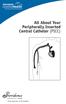 All About Your Peripherally Inserted Central Catheter (PICC) General Information Intravenous (IV) therapy is the delivery of fluid directly into a vein. An intravenous catheter is a hollow tube that is
1) Giving patient access and control over their health information
 he HIPAA Challenge: How to protect patient privacy while providing necessary information to individuals and entities involved in the patient s care that need patient information to perform necessary services.
PICCs and Midline Catheters
 Patient Education PICCs and Midline Catheters Patient s guide to PICC (peripherally inserted central catheter) and midline catheters What are PICCs and midline catheters used for? Any medicine given over
SIDE EFFECTS. ction? A skin reaction. skin rea. tumour in your. when you. body. The skin
 R a diation Th erap y and C a ring for Y our S kin The purpose of this pamphlet is to give you information about caring for your skin during and after radiation therapy. SIDE EFFECTS Radiation therapy
Renal Vascular Access Having a Fistula For Haemodialysis
 Renal Vascular Access Having a Fistula For Haemodialysis Delivering the best in care UHB is a no smoking Trust To see all of our current patient information leaflets please visit www.uhb.nhs.uk/patient-information-leaflets.htm
Bloodborne Pathogens. Updated 1.21.13
 Bloodborne Pathogens Updated 1.21.13 Purpose OSHA s Blood-borne Pathogens Standard protects anyone with a job-related risk of contracting a blood-borne borne disease The standard outlines preventative
33 Infection Control Techniques
 CHAPTER 33 Infection Control Techniques Learning Outcomes 33.1 Describe the medical assistant s role in infection control. 33.2 Describe methods of infection control. 33.3 Compare and contrast medical
C. difficile. Answers to frequently asked questions about. at the Jewish General Hospital. www.jgh.ca SIR MORTIMER B. DAVIS JEWISH GENERAL HOSPITAL
 Answers to frequently asked questions about C. difficile at the Jewish General Hospital SIR MORTIMER B. DAVIS JEWISH GENERAL HOSPITAL A McGill University Teaching Hospital www.jgh.ca 1. CLOSTRIDIUM DIFFICILE
Tooth Decay. What Is Tooth Decay? Tooth decay happens when you have an infection of your teeth.
 Tooth Decay What Is Tooth Decay? Tooth decay happens when you have an infection of your teeth. When you eat food and drink, it is broken down into acid. This acid helps to make plaque (a sticky substance).
NEHSNORTH EASTERN HEALTH SPECIALISTS
 COSMETIC DERMATOLOGY NEHSNORTH EASTERN HEALTH SPECIALISTS nehs.com.au CONSENT FORM ACNE Treatment I, DOB:, of authorize of North Eastern Health Specialist to perform hair removal with the BBL / Nd-Yag
Environmental Management of Staph and MRSA in Community Settings July 2008
 Page 1 of 7 Environmental Management of Staph and MRSA in Community Settings July 2008 Questions addressed on this page What are Staph and MRSA? How is Staph and MRSA spread? What is the role of the environment
Wound Care on the Field. Objectives
 Wound Care on the Field Brittany Witte, PT, DPT Cook Children s Medical Center Objectives Name 3 different types of wounds commonly seen in sports and how to emergently provide care for them. Name all
Advice about MRSA for people not in hospital. If you have MRSA, this leaflet tells you about things you should do in your everyday life.
 Advice about MRSA for people not in hospital If you have MRSA, this leaflet tells you about things you should do in your everyday life. Easy read This booklet is about a germ called MRSA. It is an Easy
What Is. Norovirus? Learning how to control the spread of norovirus. Web Sites
 Web Sites Centers for Disease Control and Prevention (CDC) http://www.cdc.gov/norovirus/index.html Your Local Health Department http://www.azdhs.gov/diro/lhliaison/countymap.htm What Is Ocument dn Norovirus?
Sterile Dressing Change with Tegaderm CHG for Central Venous Catheter (CVC)
 Sterile Dressing Change with Tegaderm CHG for Central Venous Catheter (CVC) The dressing protects your catheter site. It also helps prevent infection at the site. Keep your dressing clean and dry at all
Moving to a hospital or skilled nursing facility
 H Moving to a hospital or skilled nursing facility What to expect when you have MRSA (Methicillin-resistant Staphylococcus aureus) A booklet for patients, residents, family members, and caregivers About
CATHETER for Hemodialysis
 CATHETER for Hemodialysis What You Need to Know to Stay Healthy with a Catheter One treatment choice for kidney failure is hemodialysis (HD). HD removes wastes and excess fluid from your blood. Your lifeline
Safety Point: Preparing Your First Aid Kit
 Safety Point: Preparing Your First Aid Kit We all have things in our home that keep us safe, healthy, and happy: Lots of food and water Clothes that keep us warm and dry Comfortable bed and pillow Toothbrush
PATIENT GUIDE. Care and Maintenance Drainage Frequency: Max. Drainage Volume: Dressing Option: Clinician s Signature: Every drainage Weekly
 PATIENT GUIDE Care and Maintenance Drainage Frequency: Max. Drainage Volume: Dressing Option: Every drainage Weekly Clinician s Signature: ACCESS SYSTEMS Pleural Space Insertion Site Cuff Exit Site Catheter
Protecting Myself from MRSA By Angela Ulferts RN, BSN
 Protecting Myself from MRSA By Angela Ulferts RN, BSN What is MRSA? MRSA stands for Methicillin-Resistant Staphylococcus Aureus. This is an infection that has been around for some time. But it has always
Infection control. Self-study course
 Infection control Self-study course Course objectives By the end of this course you will be able to: 1) Define a germ 2) Define the environment that a germ needs to live and grow 3) Explain the chain of
How to Fill a Cavity WHEN NOT TO PLACE A FILLING CHAPTER10
 143 How to Fill a Cavity CHAPTER10 When someone s tooth hurts, you do not always need to take it out. There may be a way to treat it and keep it. Always ask yourself whether a bad tooth really needs to
Infection Prevention
 Infection Prevention Dear HSS Patient: The Hospital for Special Surgery is committed to patient safety and quality patient care and is proud to have achieved one of the lowest infection rates in New York
Eye Injuries. The Eyes The eyes are sophisticated organs. They collect light and focus it on the back of the eye, allowing us to see.
 Eye Injuries Introduction The design of your face helps protect your eyes from injury. But injuries can still damage your eyes. Sometimes injuries are severe enough that you could lose your vision. Most
Hepatitis B. What I need to know about. National Digestive Diseases Information Clearinghouse NATIONAL INSTITUTES OF HEALTH
 What I need to know about Hepatitis B U.S. Department of Health and Human Services NATIONAL INSTITUTES OF HEALTH National Digestive Diseases Information Clearinghouse What I need to know about Hepatitis
Blood-borne viruses in the workplace Guidance for employers and employees
 Blood-borne viruses in the workplace Guidance for employers and employees Is this guidance useful to me? If you are an employer or employee, self-employed or a safety representative, and involved in work
Care for your child s Central Venous Catheter (CVC)
 Care for your child s Central Venous Catheter (CVC) This booklet is intended for general informational purposes only. You should consult your doctor for medical advice. Please call the clinic or your home
41 Assisting with Minor Surgery
 Learning Outcomes 41.1 Define the medical assistant s role in minor surgical procedures. 41-2 CHAPTER 41 Assisting with Minor Surgery 41.2 Describe types of wounds and explain how they heal. 41.3 Describe
Laser Tattoo Removal. Birmingham Regional Skin Laser Centre
 What is laser tattoo removal? Laser tattoo removal is a treatment to help fade and remove unwanted tattoos. We are able to remove the following types of tattoos: Amateur tattoos - normally formed using
Bloodborne Pathogens. San Diego Unified School District Nursing & Wellness Program August 2013
 Bloodborne Pathogens San Diego Unified School District Nursing & Wellness Program August 2013 Why Another In-service?? Cal/OSHA mandates that employees with occupational exposure are informed at the time
Medication Guide Rebif (Re-bif) Interferon beta-1a (in-ter-feer-on beta-one-â)
 Medication Guide Rebif (Re-bif) Interferon beta-1a (in-ter-feer-on beta-one-â) Please read this leaflet carefully before you start to use Rebif and each time your prescription is refilled since there may
Worker Health, Hygiene, and Personal Practices. Please pass the apple from the back of the room to the front
 Worker Health, Hygiene, and Personal Practices Please pass the apple from the back of the room to the front Penn State Farm Food Safety Workshop 2011 Would you eat the apple we just passed around? How
Hemodialysis Access: What You Need to Know
 Hemodialysis Access: What You Need to Know Hemodialysis Access: What You Need To Know Whether you already get hemodialysis treatment, or you will need to start dialysis soon, this booklet will help you
ELECTROLYSIS- INFORMATION AND FAQ s
 ELECTROLYSIS- INFORMATION AND FAQ s 1. How does Electrolysis work? A very fine sterilized filament is inserted into the hair follicle, which is a natural opening in the skin. The skin is not pierced or
Conjunctivitis - Pink Eye
 Conjunctivitis - Pink Eye Introduction Conjunctivitis is often called pink eye. It causes inflammation of the thin, clear lining inside the eyelid and on the white of the eye. The inflammation gives the
Your Guide to Peritoneal Dialysis Module 3: Doing Peritoneal Dialysis at Home
 Your Guide to Peritoneal Dialysis Module 3: 6.0959 in Preparing to do PD One of the most important things about PD is to keep the dialysis area and anything that comes in contact with the PD equipment
A Guide to Breast Screening
 A Guide to Breast Screening Contents Information for Carers, Family, Friends and Medical Guardians of Care Introduction Information on BreastCheck Information on Attending Screening The Screening Story
Dental Care and Chronic Conditions. Respiratory Disease Cardiovascular Disease Diabetes
 Dental Care and Chronic Conditions Respiratory Disease Cardiovascular Disease Diabetes Shape Up Your Smile and Avoid Some Complications of Chronic Diseases When you take good care of your oral health,
Brock University Facilities Management Operating Procedures
 Subject: Bodily Fluid Clean-Up Number: FMOP 2-3 Approval: Executive Director Issue Date: 22 Sep 08 Responsibility: Manager Custodial Services Review Period: 2 Years PROCEDURES FOR BODILY FLUID CLEAN-UP
POLICY & PROCEDURE: SAFE HANDLING OF SHARPS & NEEDLE STICKS
 POLICY & PROCEDURE: SAFE HANDLING OF SHARPS & NEEDLE STICKS File Name: SAFESHARPSPP2013 Revision: 2 Date of Issue: Person Responsible: Edel Niland 1.0 POLICY Dublin Institute of Technology (DIT) endeavours
Kean University BS Degree Program in Athletic Training BLOOD BORN PATHOGENS POLICY
 Kean University BS Degree Program in Athletic Training BLOOD BORN PATHOGENS POLICY Effective September 2, 2014 The following policy will apply to students taking classes and faculty teaching those classes
Why it is Important to Talk with Young People about HIV and AIDS 2. Facts about HIV and AIDS 3. How to Get Started 7
 Table of Contents Why it is Important to Talk with Young People about HIV and AIDS 2 Facts about HIV and AIDS 3 How to Get Started 7 What to Say to Your Children About HIV and AIDS 8 Talking with Young
Definitions. This plan. membrane, 2012-2013. These are. additions and. and. weeping a source of. withstand the. demands of to or from a
 PALM BEACH ATLANTIC UNIVERSITY ATHLETIC TRAINING BLOOD BORNE PATHOGENS POLICY & EXPOSURE CONTROL PLAN Introduction This plan is designedd to eliminatee or minimize exposure to blood borne pathogens, as
HUMULIN (HU-mu-lin) N
 Instructions for Use HUMULIN (HU-mu-lin) N (human insulin [rdna origin] isophane suspension) vial (100 Units/mL, U-100) Read the Instructions for Use before you start taking HUMULIN N and each time you
This pamphlet describes how all school employees, regardless of job assignment, can minimize the risk of exposure to viral hepatitis.
 Revised July 2010 Viral Hepatitis INTRODUCTION The United Federation of Teachers prepared this pamphlet to answer questions asked by school staff who are concerned about catching hepatitis from their students
APPROVAL REVIEW PROCEDURES
 Summit County Public Health 1867 West Market Street Akron, Ohio 44313 Phone: (330) 923-4891 Toll-free: 1 (877) 687-0002 Fax: (330) 923-6436 www.scphoh.org APPROVAL REVIEW PROCEDURES Ohio Law requires that
MOHS MICROGRAPHIC SURGERY
 Mary E. Maloney, MD Director Professor of Medicine David E. Geist, MD Assistant Professor of Medicine Dori Goldberg, MD Assistant Professor of Medicine Mark J. Scharf, MD Professor of Medicine Jason D.
Shop Safety. Action Tattoo 3525 Del Mar Heights Rd., Suite 7 San Diego, CA 92130
 Shop Safety Action Tattoo 3525 Del Mar Heights Rd., Suite 7 San Diego, CA 92130 Action Tattoo Exposure Control and Infection Prevention Plan (ECIPP) Established on: / / Section 1: Policy, Scope, and Responsibility...
HUMULIN 70/30 KwikPen
 1 Instructions for Use HUMULIN 70/30 KwikPen (70% human insulin isophane suspension 30% human insulin injection [rdna origin]) Read the Instructions for Use before you start taking HUMULIN 70/30 and each