
Standard Skill Übungen mit Punkten
|
|
|
- Gyles Marshall Jefferson
- 9 years ago
- Views:
Transcription
1 Standard Skill Übungen mit Punkten Quelle: 18 Übungen (max 6 davon transitions/mounts) in 3 Minuten Fläche: 11x14 m; 3 Kreise: 8m, 4m, 50 cm Übersicht Riding = Fahren Nr Stationary = auf der Stelle Nr Transitions = Übergänge Nr Mounts = Aufstiege Nr Abkürzungen fwd = forward = vorwärts bwd = backward = rückwärts c = circle = Kreis 8 = figure eight = Achter ext = extended = mit weggestrecktem Bein frh = freehanded = freihändig 1ft = one foot = einbeinig ww= wheel walk = Radlauf = mit Füßen auf dem Reifen RIDING SKILLS = Fahren 1. a) riding 1.0 b) riding - c 1.2 c) riding Riding (sitting on seat, facing forward). 2. a) riding bwd 3.0 b) riding bwd - c 3.4 c) riding bwd Riding backward. 3. a) seat in front, seat against body 2.0 b) seat in front 2.3 c) seat in front - c 2.5 d) seat in front e) seat in front frh 3.1 f) seat in front frh - c 3.3 g) seat in front frh Riding with seat held in front of the rider. In a) the seat or hand holding the seat may rest against the rider. In e), f), and g) neither hand touches the seat and the seat post is held between the rider's legs. 4. a) seat in front bwd, against body 3.5 b) seat in front bwd 3.7 c) seat in front bwd - c 3.9 d) seat in front bwd e) seat in front bwd frh 3.9 f) seat in front bwd frh - c 4.1 Riding backward with seat held out in front of the rider. In a) the seat or hand holding the seat may rest against the rider. In e) and f) neither hand touches the seat and the seat post is held between the rider's legs. 5. a) seat in back, seat against body 2.3 b) seat in back 2.5 c) seat in back - c 2.7 d) seat in back Riding with the seat held out behind the rider. In a) the seat or the hand holding the seat may rest against the rider. 6. a) seat in back bwd, against body 3.5 b) seat in back bwd 3.9 c) seat in back bwd - c 4.2 d) seat in back bwd Riding backward with the seat held out behind the rider. In a) the seat or the hand holding the seat may rest against the rider. 7. a) seat on side, against body 3.0 b) seat on side, against body - c 2.8 c) seat on side 3.7 d) seat on side - c 3.5 Riding with the seat held out to the side of the rider. In a) and b) the seat or the hand holding the seat may rest against the rider. 8. a) seat on side bwd, against body 3.8 b) seat on side bwd 4.1 c) seat on side bwd - c 4.3 Riding backward with the seat held out to the side of the rider. In a) the seat or the hand holding the seat may rest against the rider. 9. a) stomach on seat, 1 hand on seat 2.0 b) stomach on seat 2.1 c) stomach on seat - c 2.3 d) stomach on seat Riding with the abdomen on the seat, frh. In a) one hand holds onto the seat. 10. a) stomach on seat bwd 3.8 b) stomach on seat bwd - c 4.0 c) stomach on seat bwd Riding backward with the abdomen on the seat, hands free. 11. a) chin on seat, 1 hand on seat 3.8 b) chin on seat 4.0 c) chin on seat - c 4.1 d) chin on seat Riding with no part of the body other than the chin touching the back of the seat, freehanded. In a) one hand may touch the seat. 12. a) chin on seat bwd, 1 hand on seat 4.7 b) chin on seat bwd 4.9 c) chin on seat bwd - c 5.1 d) chin on seat bwd Riding backward with no part of the body other than the chin touching the back of the seat, freehanded. In a) one hand may touch the seat. 13. a) 1 foot 3.0 b) 1ft - c 3.2 c) 1ft d) 1ft ext 3.2 e) 1ft ext - c 3.4 f) 1ft ext g) 1ft crossed 3.4 h) 1ft crossed - c 3.6 i) 1ft crossed Riding with one foot on pedal. In d), e) and f) the free leg is extended. In g), h) and i) the free leg is crossed over the pedaling leg.

2 14. a) 1ft bwd 4.1 Riding backward with one foot on pedal. In d), e) and f) the free leg is extended. b) 1ft bwd - c 4.3 c) 1ft bwd d) 1ft ext bwd 4.3 e) 1ft ext bwd - c 4.5 f) 1ft ext bwd a) 1ft seat in front, against body 3.8 Riding with the seat held out in front of the rider, one foot on pedal. In a), e), f) and g) the seat or hand holding the seat my rest against the rider. In e) and f) the free leg is extended. b) 1ft seat in front 4.5 c) 1ft seat in front - c 4.7 d) 1ft seat in front e) 1ft ext, seat in fr against body 4.0 f) 1ft ext, seat in fr against body - c a) 1ft seat in front against body bwd 4.7 Riding backward with the seat held out in front of the rider, one foot on pedal. In a) the seat or hand holding the seat may rest against the rider. b) 1ft seat in front bwd 5.1 c) 1ft seat in front bwd - c a) seat on side, 1ft, against body 3.8 b) seat on side, 1ft 4.6 c) seat on side, 1ft - c 4.2 d) seat on side, 1ft Riding with the seat held out to the side of the rider, one foot on pedal. In a) the seat or the hand holding the seat may rest against the rider. 18. a) seat on side, 1ft bwd, against body 4.4 b) seat on side, 1ft bwd 4.8 c) seat on side, 1ft bwd - c 5.0 Riding backward with the seat held out to the side of the rider, one foot on pedal. In a) the seat or the hand holding the seat may rest against the rider. 19. a) side saddle, hand touching seat 3.5 b) side saddle, hand touching seat - c 3.3 c) side saddle frh 3.9 d) side saddle frh - c 3.7 e) side saddle frh Riding 1ft while sitting partially on seat with the free leg resting on the seat or on the same side as the pedaling foot. In a) and b) one hand may touch the seat. 20. a) wheel walk 3.5 b) ww - c 3.7 c) ww Propelling the wheel with the feet placed on the wheel in front of the frame. 21. a) ww bwd 4.2 Riding backward by propelling the wheel with the feet placed on the wheel in front of the frame. b) ww bwd - c a) ww frame between feet 4.0 b) ww frame between feet - c 4.2 Riding forward by propelling the wheel with one foot placed on the wheel in front of the frame and the other foot placed on the wheel behind the frame. 23. a) ww frame between feet bwd 4.3 b) ww frame between feet bwd - c 4.5 Riding backward by propelling the wheel with one foot placed on the wheel in front of the frame and the other foot placed on the wheel behind the frame. 24. a) ww bwd, feet behind frame 4.8 b) ww bwd, feet behind frame - c 5.0 Riding backward by propelling the wheel with the feet placed on the wheel behind the frame. 25. a) spoke walk bwd 4.8 b) spoke walk bwd - c 5.0 Riding backward by propelling the wheel with the feet placed on both sides of the wheel, behind the frame. Feet may contact spokes, rim, or tire. 26. a) ww 1ft 3.7 b) ww 1ft - c 3.9 c) ww 1ft d) ww 1ft ext 4.1 e) ww 1ft ext - c 4.3 f) ww 1ft ext Walking the wheel using only one foot on the wheel, in front of the frame. In d), e) and f) the free leg is extended. 27. a) ww bwd 1ft 5.4 b) ww bwd 1ft - c 5.6 c) ww bwd 1ft ext 5.8 d) ww bwd 1ft ext - c 6.0 Walking the wheel backwards with one foot on the wheel, in front of the frame. In c) and d) the free leg is extended. 28. a) koosh koosh 3.9 b) koosh koosh - c 4.1 c) ww bwd 1ft behind frame 5.0 d) ww bwd 1ft behind frame - c 5.2 Walking the wheel backward with one foot on the wheel behind the frame. In a) and b) the other foot rests on the frame with the toe being used as a brake to maintain balance. 29. a) gliding 4.0 b) gliding - c 4.2 c) gliding, leg ext 4.2 d) gliding, leg ext - c 4.4 Riding with one foot on the wheel and the other foot resting on the frame, maintaining balance only by the braking action of the foot on the wheel. In c), d) the free leg is extended. 30. a) gliding bwd foot behind frame 5.5 b) gliding bwd foot behind frame - c 5.9 Riding with one foot on the wheel behind the frame and the other foot resting on the frame, maintaining balance only by the braking action of the foot on the wheel.

3 31. a) hand wheel walk 4.3 b) hand wheel walk - c 4.5 c) hand wheel walk feet out 5.0 d) hand wheel walk feet out - c 5.2 Riding by propelling the unicycle with the hands on the wheel and with the feet resting on the frame. In c) and d) the legs are extended. 32. a) one hand wheel walk 4.7 b) one hand wheel walk - c 4.9 c) one hand wheel walk feet out 5.4 d) one hand wheel walk feet out - c 5.6 Hand wheel walk with one hand on the wheel. In c) and d) the legs are extended. 33. a) hand ww, stomach on seat 4.3 b) hand ww, stomach on seat - c 4.5 Hand wheel walk with the abdomen on the seat and the legs extended. 34. a) one hand ww, stomach on seat 4.7 b) one hand ww, stomach on seat - c 4.9 One hand wheel walk with the abdomen on the seat and the legs extended. 35. a) drag seat in front 3.9 b) drag seat in front - c 4.1 c) drag seat in front Riding with the seat dragging on the floor, in front of the wheel. 36. a) drag seat in back 4.0 b) drag seat in back - c 4.2 c) drag seat in back Riding with the seat dragging on the floor, behind the wheel. 37. a) drag seat in front bwd 6.4 b) drag seat in front bwd - c 6.6 c) drag seat in front bwd Riding backwards with the seat dragging on the floor, in front of the wheel. 38. a) side ride 5.2 b) side ride - c 5.0 c) side ride d) side ride, one hand 5.6 e) side ride, one hand - c 5.4 f) side ride, one hand Riding 1ft, next to the unicycle, with foot on the noncorresponding pedal, holding on to the seat with both hands. The seat or the hands holding the seat may rest against the rider. In d), e) and f) only one hand holds the seat. 39. a) coasting, leg ext 5.5 b) coasting, leg ext - c 5.9 c) coasting, leg ext Riding with one foot resting on the frame and the free foot extended. 40. a) coasting, foot in 5.5 b) coasting, foot in - c 5.9 c) coasting, foot in Riding with both feet resting on the frame. 41. a) coasting backward, leg ext 6.6 b) coasting backward, leg ext - c 6.7 c) coasting backward, leg ext Riding backward with one foot resting on the frame and the free foot extended. 42. a) coasting backward, foot in 6.5 b) coasting backward, foot in - c 6.8 c) coasting backward, foot in Riding backward with both feet resting on the frame. 43. a) sideways ww 5.4 b) sideways ww - c 5.6 Riding sideways, standing on the wheel with one foot in front of the frame and the other behind the frame, holding on to the seat with both hands. 44. a) sideways ww, 1ft 5.6 b) sideways ww, 1ft - c 5.8 c) sideways ww, 1ft on seat 5.8 Riding sideways, standing on the wheel with one foot in front of the frame and the free leg extended, holding on to the seat with both hands. In c) the free leg is placed on the seat. 45. a) cross over 4.7 b) cross over - c 4.5 c) cross over Riding one footed, with the pedaling foot on the noncorresponding pedal. Non pedaling foot can be extended, or on the fork. 46. a) stand up ww 1ft 5.0 b) stand up ww 1ft - c 5.2 Standing on the frame walking the wheel using only one foot on the wheel, in front of the frame. 47. a) stand up glide 5.7 b) stand up glide - c 5.9 Standing on the frame with one foot on the wheel, in front of the frame, maintaining balance only by the braking action of the foot on the wheel. 48. a) stand up coast 6.7 b) stand up coast - c 6.9 c) stand up coast Coasting while standing upright with both feet on the frame. STATIONARY SKILLS = auf der Stelle 100. a) idling 2.2 b) idling 1ft 2.4 c) Idling 1ft ext 2.5 d) idling 1ft crossed a) idling seat in front, against body 2.7 b) idling seat in front 2.9 c) idling 1ft seat in fr, against bdy 3.2 d) idling 1ft seat in front 3.5 e) idling 1ft seat in fr ext, agnst bdy 3.5 f) idling seat in back, against body 3.0 g) idling seat in back 3.2 Staying in place by moving the wheel forward and backward centered at a vertical crank position with the seat held in front of the rider. In a), c) and e) the seat or hand holding the seat may rest against the rider. In c) and d) idling with one foot on pedal. In e) idling with one foot on pedal and free foot extended.

4 In f) and g) the seat is held in back of the rider. In f) the seat or hand holding the seat may rest against the rider a) idling seat on side, touching body 2.8 b) idling seat on side 3.1 Idling with the seat held out to the side of the rider. In a) the seat may touch the rider s body. In b) the rider shall have no contact with the seat other than one hand holding the seat a) crank idle, seat against body 3.5 b) crank idle freehand, against body 3.6 c) crank idle 4.0 Staying in place, on one side of the unicycle, by moving the wheel forward and backward centered at a vertical crank position. One foot is on the pedal while the other foot is resting on top of the crank arm on the same side. In a) the seat or one hand holding the seat may rest against the rider. In b) the seat may rest against the rider but neither hand may touch the seat. In c) the rider shall have no contact with the seat other than one hand holding the seat a) stillstand 3.8 Staying in place with no wheel movement a) twisting 2.8 Staying in place twisting the unicycle left and right around a vertical axis a) touch the floor 2.5 b) touch the floor with both hands 3.5 Bending down and touching the floor with one hand while seated or standing on the pedals in the seated position. In b) both hands simultaneously touch the floor a) touch the floor, seat in front 3.2 Bending down and touching the floor with one hand, while holding the seat out in front with the other hand a) bounce seat 3.4 From riding with the seat in front, bouncing the seat on the floor once and catching it back a) touch seat on floor 3.8 Bending down and touching the floor with the seat while holding it out in front of the rider with one hand a) hopping 2.4 b) hopping frh 2.6 Bouncing with the unicycle with one hand holding on to the seat. In b) both hands are free a) hopping seat in front, against bdy 2.8 b) hopping seat in front 3.0 c) hopping seat in back, against bdy 3.2 d) hopping seat in back 3.4 Hopping with the unicycle with the seat held in front of the rider. In a) and c) the seat or the hand holding the seat may rest against the rider. In c) and d) the seat is held in back of the rider a) hoptwisting 3.3 Staying in place bouncing the unicycle left then right around a vertical axis. A minimum of 3 consecutive cycles (left and right bounces) must be executed. Neither hand may touch the seat a) hoptwist b) hoptwist c) hoptwist d) hoptwist freehand e) hoptwist frh f) hoptwist frh Bouncing with the unicycle and turning around a vertical axis over a) 90, b) 180 and c) 360 degrees in one jump. In d), e) and f) with hands free a) riding hoptwist b) riding hoptwist c) riding hoptwist freehand d) riding hoptwist freehand Riding forward and jumping around a vertical axis over a) 180 and b) 360 degrees in one jump and continue riding. In c), and d) with hands free a) hop over 2.9 b) sideways hop over 2.8 c) hop over, seat in front 3.7 d) sideways hop over, seat in front 3.8 Hop with the unicycle over the center 50 cm circle. One or both hands may touch the seat. In a) and c) with the unicycle facing the direction of travel. In b) and d) with the unicycle perpendicular to the direction of travel. In c) and d) the seat is held in front of the rider a) side hopping 4.0 b) side hopping, foot touching tire 3.5 Hopping 1ft, next to the unicycle, with foot on the noncorresponding pedal holding on to the seat with either one or both hands. In a) the free foot is extended. In b) the free foot is touching the tire for balance a) hopping on wheel 3.0 Hopping, standing on wheel with one foot in front of and the other behind frame, holding on to the seat with both hands a) hoptwist on wheel b) hoptwist on wheel Hopping on wheel and turning around a vertical axis over a) 90 and b) 180 degrees in one jump a) hopping on wheel frh 4.2 Hopping, standing on wheel with one foot in front of and the other behind the frame, not holding on to the seat a) hoptwist on wheel frh b) hoptwist on wheel frh Hopping on wheel freehanded, and turning around a vertical axis over a) 90 and b) 180 degrees in one jump a) riding spin 3.3 Riding, rotating 360 degrees around a vertical axis and continuing riding in the same direction a) bwd riding spin 3.7 Riding backward, rotating 360 degrees around a vertical axis and continuing riding backward in the same direction a) spin 3.5 b) spin 1ft 3.7 c) spin 1ft ext 3.9

5 Riding in a small circle with the upper body rotating around a vertical axis. In b) and c) riding with one foot on pedal a) backward spin 4.0 b) backward spin 1 ft 4.3 c) backward spin 1 ft ext 4.7 Riding backward in a small circle so that the upper body is rotating around a vertical axis. In b) and c) riding with one foot on pedal a) spin seat in front, against body 3.7 b) spin seat in front 3.9 Riding in a small circle with the seat held out in front of the rider so that the upper body is rotating around a vertical axis. In a) the seat or the hand holding the seat may rest against the rider a) spin seat in back, against body 3.8 b) spin seat in back 4.1 Riding in a small circle with the seat held out behind the rider so that the upper body is rotating around a vertical axis. In a) the seat or the hand holding the seat may rest against the rider a) spin seat on side, against body 3.6 b) spin seat on side 4.0 Riding in a small circle so that the upper body is spinning around a vertical axis with the seat held out to the side of the rider. In a) the seat or hand holding the seat may rest against the rider a) pirouette 4.0 Spinning around a vertical axis, on momentum gained from forward movement a) backward pirouette 4.5 Spinning around a vertical axis on momentum gained from backward movement a) pirouette seat in front, against bdy 4.1 b) pirouette seat in front 4.4 Spinning around a vertical axis with the seat held out in front of the rider. In a) the seat or the hand holding the seat may rest against the rider a) pirouette seat in back, against bdy 4.2 b) pirouette seat in back 4.5 Spinning around a vertical axis with the seat held out behind the rider. In c) the seat or the hand holding the seat may rest against the rider. TRANSITIONS = Übergänge 150. a) riding to seat in front 1.5 From riding, pulling out the seat to seat in front a) seat in front to riding 1.7 From seat in front, getting back on the seat into riding a) riding to seat in back 1.6 From riding, pulling out the seat to seat in back a) seat in back to riding 1.9 From seat in back, getting back on the seat into riding a) ww to pedals 3.2 From walking the wheel to riding. b) ww to riding 1ft 3.4 In b) from walking the wheel to riding with one foot on the pedal. c) gliding to pedals 3.5 In c) gliding to riding. d) gliding to riding 1ft 3.7 In d) gliding to riding with one foot on the pedal a) leg around 3.4 From seat in front, swinging one leg around the seat to seat in back or riding. b) leg around twice 4.2 In b), the leg goes once around the seat before the foot is placed back on the pedal a) leg around reverse 3.5 From seat in back, swinging one leg around the seat to seat in front or riding. b) leg around twice reverse 4.4 In b), the leg goes once around the seat before the foot is placed back on the pedal a) backspin 2.7 Riding, rotating 180 degrees around a vertical axis and continuing riding backward in the same direction a) front spin 3.3 Riding backward, rotating 180 degrees around a vertical axis and continuing riding forward in the same direction a) pick up seat in front 4.0 b) pick up seat in front with toe 4.7 c) pick up seat in front free foot 4.4 From seat drag in front, picking up the frame and bringing it upright into seat in front. In a) the frame is picked up with a hand. In b) the frame is picked up with the toe by back pedaling slightly. In c) the frame is picked up by lifting a foot off the pedals and placing it under the frame a) pick up seat in back 4.2 b) pick up seat in back with heel 4.2 c) pick up seat in back free foot 5.0 From seat drag in back, picking up the frame and bringing it upright into seat in back or seat on side. In a) the frame is picked up with a hand. In b) the frame is picked up with the heel. In c) the frame is picked up by lifting a foot off the pedal and placing it under the frame a) pedals to hopping on wheel 3.1 From seat in front, jumping on the wheel into hopping on wheel. b) pedals 270 to hopping on wheel 4.2 In b), the unicycle is rotated 270 c) pedals 450 to hopping on wheel 5.8 or in c), 450 degrees around a vertical axis before the feet are placed on the tire. d) pedals to sideways ww 3.4 In d), from seat in front, jumping on the wheel into sideways wheel walk. e) pedals 270 to sideways ww 4.7 f) pedals 450 to sideways ww 6.0 In e) and f), the unicycle is rotated e) 270 or f) 450 degrees around a vertical axis before the feet are placed on the tire a) hopping on wheel to pedals 3.7 b) hopping on wheel 270 to pedals 4.4

6 c) hopping on wheel 450 to pedals 6.0 From hopping on wheel, jumping down to seat in front or riding. In b) and c), the unicycle is rotated b) 270 degrees or c) 450 degrees around a vertical axis before the feet are placed on the pedals. d) sideways ww to pedals 3.3 e) sideways ww 270 to pedals 6.0 In d), from sideways wheel walk, jumping or stepping down to seat in front or riding without hopping. In e), the unicycle is rotated 270 degrees around a vertical axis before the feet are placed back on the pedals a) pedals to hopping on wheel frh 3.7 From riding, placing one foot on the wheel in front of the frame and the other foot on the wheel behind the frame, and standing up into hopping on wheel freehanded a) hopping on wheel frh to pedals 4.2 From hopping on wheel freehanded, jumping down to riding 165. a) seat in front to side ride 5.1 From seat in front jumping into side ride a) side ride to seat in front 5.3 From side ride, jumping into seat in front a) side ride to hopping on wheel 5.5 From side ride, jumping into a) hopping on wheel b) side ride to sideways ww 5.8 From side ride, jumping into b) sideways wheel walk a) step around 5.0 From seat in front the rider steps around the uni, without the uni bouncing or turning, such that the feet switch pedals. The rider ends facing the opposite way, sitting on the seat. m) inverse 5.2 From seat on side the rider swings one leg in back and then steps around the uni, without the uni bouncing or turning, such that the feet switch pedals. The rider ends facing the opposite way, sitting on the seat a) 180 uni spin 4.6 b) 360 uni spin 5.3 c) 540 uni spin 6.0 d) 720 uni spin 7.0 Jumping up off the uni, rotating the uni or the body a), e), h) & k) 180 or b), f), i) & l) 360 or c), g) & j) 540 or d) 720 around a vertical axis and landing back on it. e) 180 uni spin to seat in front 4.6 f) 360 uni spin to seat in front 5.6 g) 540 uni spin to seat in front 6.6 In e), f) & g) the rider lands with the seat held in front. The seat may touch the rider and one or both hands may touch the seat. h) 180 uni spin to idling 1ft 4.8 i) 360 uni spin to idling 1ft 5.5 j) 540 uni spin to idling 1ft 6.2 In h), i) & j) the rider lands into idling one foot. k) 180 uni spin to idling 1ft seat in fr 4.9 l) 360 uni spin to idling 1ft seat in fr 5.7 In k) & l) the rider lands into idling one foot with the seat held in front. The seat may touch the rider and one or both hands may touch the seat a) 180 uni spin to ww 4.9 b) 360 uni spin to ww 5.6 Jumping up off the uni, rotating it a) & c) 180, or b & d) 360 degrees around a vertical c) 180 uni spin to ww 1ft 5.1 d) 360 uni spin to ww 1ft 5.8 axis and landing back on it in the wheel walk position. In c) and d) the rider lands into wheel walk one foot a) 180 uni spin to hopping on whl frh 5.5 b) 360 uni spin to hopping on whl frh 6.2 Jumping up off the uni, rotating it a) 180 or b) 360 degrees around a vertical axis, and landing back on it into hopping on wheel freehanded. When landing on the wheel, the hands must not touch the seat after the first hop a) 180 uni spin on wheel 4.4 b) 360 uni spin on wheel 5.1 From hopping on wheel, jumping up off the unicycle, rotating it a) 180 or b) 360 degrees around a vertical axis, and landing back on it into hopping on wheel. MOUNTS = Aufstiege 200 a) mount 1.3 b) mount to idle 1.5 c) mount to 1ft idle 2.0 d) mount to 1 ft ext idle 2.5 Mounting the uni from standing behind it, by placing one foot on the rear pedal and going up and over the wheel or rotating the wheel backward to obtain balance. In b), c) and d) mounting to idling without riding. In c) and d), mounting into idling with only one foot on pedal. In d) the free leg is extended a) rolling mount 1.8 b) rolling mount to 1ft 2.5 c) rolling mount to 1ft ext 2.7 d) rolling mount to gliding 3.4 e) rolling mount to coasting 4.0 Mounting the uni while pushing the uni forward, by placing one foot on the rear pedal and going up and over the wheel, without the wheel pausing, stopping or going backwards and continue riding forward. In b) mounting directly into one foot riding. In c) mounting directly into one foot extended riding. In d) and e) mounting directly into d) gliding or e) coasting without touching either of the pedals a) back mount 1.9 b) back mount to idle 2.1 c) back mount to 1ft idle 2.6 d) back mount to 1ft idle ext 3.1 Mounting the uni from standing in front of it, by placing one foot on the front pedal and going up and over the wheel or rotating the wheel forward to obtain balance. In b), c) and d) mounting to idling without riding. In c) and d), mounting into idling with only one foot on pedal. In d) the free leg is extended a) side mount 1.8 b) side mount leg around 3.4

7 c) side mount leg around twice 4.9 Mounting the uni from standing next to it, by placing corresponding foot on pedal closest to rider, swinging the other leg around in front of the seat, getting seated and placing second foot on pedal. In b), c) and d), the leg goes b) and d) once or c) twice around the seat before the second foot is placed on the pedal. d) floor mount 2.5 e) floor mount leg around 4.1 In d) and e) the rider mounts the unicycle by laying the unicycle down on its side with one pedal touching the floor, one hand holding the seat and placing corresponding foot on pedal closest to rider and the other foot on the edge of the tire, neither foot may touch the floor, and mounts into the side mount a) side mount reverse 1.8 b) side mount reverse leg around 3.4 c) side mount rev. leg around twice 4.9 Mounting the uni from standing next to it, by placing corresponding foot on pedal closest to rider, swinging the other leg around behind the seat, getting seated and placing second foot on pedal. In b), c) and d), the leg goes b) and d) once or c) twice around the seat before the second foot is placed on the pedal. d) floor mount reverse 2.5 e) floor mount reverse leg around 4.1 In d) and e) the rider mounts the unicycle by laying the unicycle down on its side with one pedal touching the floor, one hand holding the seat and placing corresponding foot on pedal closest to rider and the other foot on the edge of the tire, neither foot may touch the floor, and mounts into the side mount a) jump mount 2.2 Mounting the uni from standing behind it, by jumping on it, landing on both pedals simultaneously. b) free jump mount 2.7 In b) the rider lets go of the uni before his or her feet leave the floor. c) jump mount to seat in front 2.5 In c) the rider lands with the seat in front, not touching body. d) jump mount to seat in back 2.7 In d) the rider lands with seat in back not touching body. e) jump mount to ww 2.9 In e) the rider lands in wheel walk position f) jump mount from on wheel 2.9 In f) the unicycle is lying on its side. Rider stands on the side of the tire with neither foot touching the floor, then jumps up, pulls saddle into position, and lands on saddle and pedals g) 180 uni spin jump mount 2.6 h) 360 uni spin jump mount 2.7 In g) and h) the uni or rider gets spun 180 and 360 degrees respectively around a vertical axis after the rider leaves the floor but before the rider lands on it. i) turn around jump mount 3.0 In i) the rider turns around 180 degrees before landing on the unicycle b) free side jump mount 3.0 In b) the rider lets go of the uni before his or her feet leave the floor c) side jump mount to ww 3.2 d) side jump mount to ww 1 ft 3.4 e) side jump mount to ww 1 ft ext 3.6 In c), d) or e) the feet are placed on the wheel, without touching the pedals, and the rider goes immediately into c) wheel walk, d) wheel walk one foot or e) wheel walk one foot with the free leg extended f) 180 uni spin side jump mount 3.8 g) 360 uni spin side jump mount 5.2 In f) and g) the uni gets spun 180 and 360 degrees respectively around a vertical axis after the rider leaves the floor but before the rider lands on it a) spin mount b) spin mount Mounting the unicycle and without pausing or idling, spinning a) 360 and b) 720 degrees around a vertical axis a) kick up mount, 1 hand on seat 2.8 b) kick up mount 3.0 c) kick up mount to ww 3.2 d) kick up mount to ww 1ft 3.4 e) kick up mount to ww 1ft ext 3.6 Mounting the uni from standing over it (the unicycle lying on the floor) by placing corresponding foot on pedal, kicking the seat up into place with the other foot without either hand touching the seat and placing the second foot on the pedal. In a) one hand may touch the seat a) pick up mount 3.2 Mounting the unicycle from standing behind it (wheel upright with seat on the floor) by jumping onto the pedals, picking up the seat and getting seated a) swing up mount 3.4 Mounting the unicycle from standing beside it (wheel upright; seat on floor) by placing corresponding foot on the pedal, swinging the frame upright with the second foot, swinging the second leg around the back of the seat, getting seated, and placing the second foot on the pedal a) push up mount 3.8 Mounting the unicycle starting with rider laying face down on the floor. The uni is in the riding position but with only the seat and wheel touching the floor. The rider pushes up using only the hands, the feet can only touch the pedals, into the riding position a) side jump mount 2.5 Mounting the uni from standing next to it, by jumping on it with on leg going around the front of the seat and landing on both pedals simultaneously.

8 1 3a) 3b)c)d) 3e)f)g) 5a) 5b)c)d) 7a)b) 7c)d) 2 4a) 4b)c)d) 4e)f) 6a) 6b)c)d) 8a) 8b)c) 9 b)c)d) 11b)c)d) 13a)b)c) 13d)e)f) 13g)h)i) 15a) 15b)c)d) 15e)f) 10 12b)c)d) 14a)b)c) 14d)e)f) 16a) 16b)c) 20a)b)c) a)b)c) 26d)e)f) 28a)b) 21a)b) 23 27a)b) 27c)d) 28c)d) 29a)b) 29c)d) 30 31a)b) 31c)d) 32a)b) 32c)d)

EXERCISE INSTRUCTIONS 1
 EXERCISE INSTRUCTIONS 1 Contents ANKLE TOUCHES... 4 BACK EXTENSIONS... 4 BACK REVERSE FLYES... 4 BALL ROLL... 4 BASKETBALL SQUATS... 4 BEAR CRAWL... 4 BICEP CURL (Resistance Band)... 4 BOXING JABS... 5
JUNIPERO SERRA VOLLEYBALL OFF SEASON TRAINING SCHEDULE
 JUNIPERO SERRA VOLLEYBALL OFF SEASON TRAINING SCHEDULE 2007 OFF SEASON WORKOUT Our off season workout is centered around Speed, Agility & Quickness which are athletic attributes that are very trainable
Cardiac Rehab Program: Stretching Exercises
 Cardiac Rehab Program: Stretching Exercises Walk around the room, step side to side, ride a bike or walk on a treadmill for at least 5 minutes to warm up before doing these stretches. Stretch warm muscles
Xcel Skills Chart. Bronze Skills that can be used to fulfill A VP Bars Beam Floor
 Xcel Skills Chart Bronze Skills that can be used to fulfill A VP Bars Beam Floor Mounts: Pullover (from 1 or 2 ft or run) Jump to front support Glide swing to stand Run out glide kip Single leg jam kip
BEACH VOLLEYBALL TRAINING PROGRAM
 2008 ELITE PERFORMANCE ATHLETE CONDITIONING BEACH VOLLEYBALL TRAINING PROGRAM Team BC 2008 Steve Van Schubert, CAT(C), CSCS Training Schedule General Outline Phase 1 2 Weeks Phase 2 3 Weeks Phase 3 3 Weeks
Locomotion Skills. Walking Running Horizontal Jump Hopping Skipping
 Locomotion Skills Walking Running Horizontal Jump Hopping Skipping Walking Progressive alternation of leading legs and continuous contact with the supporting surface. Walking cycle or Gait cycle involves
Shoulders (free weights)
 Dumbbell Shoulder Raise Dumbbell Shoulder Raise 1) Lie back onto an incline bench (45 or less) with a DB in each hand. (You may rest each DB on the corresponding thigh.) 2) Start position: Bring the DB
EXERCISE DESCRIPTIONS PHASE I Routine #1
 EXERCISE DESCRIPTIONS PHASE I Routine #1 Hip Mobility Exercise: Forward Out-In Movement: Raise leg out to the side, and rotate around to the front. Keep shin/thigh angle at 90 degrees. Exercise: Backward
Speed, Agility, Quickness Training
 Speed, Agility, Quickness Training Goal: To develop Speed, Agility, and Quickness (SAQ) and functional football strength for young football players through a consistent and safe format. Place the stations
General Guidelines. Neck Stretch: Side. Neck Stretch: Forward. Shoulder Rolls. Side Stretch
 Stretching Exercises General Guidelines Perform stretching exercises at least 2 3 days per week and preferably more Hold each stretch for 15 20 seconds Relax and breathe normally Stretching is most effective
6 Week Body Transformation At Home Workouts
 6 Week Body Transformation At Home Workouts Ok, so here are the workouts for the program. You will do 3-4 workouts per week, for example on a Monday Wednesday Friday schedule. You can do this whatever
Basic Stretch Programme 3. Exercise Circuit 4
 Basic Stretch Programme 3 Exercise Circuit 4 2 1 Calves Stand approximately 1 metre away from wall with legs straight and heels on floor. Step and lean forward and slowly push hips towards wall. Should
1. Cut & plant 6. Hitch Hiker 5-7 cuts on each side 3 x 20-30s. 2. Single-leg jumping 7. Y-position 5-10 reps 2 x 10 reps each arm
 Beach Volleyball program - Level 1 1. Cut & plant 6. Hitch Hiker 5-7 cuts on each side Keep knee over toe 5-7 cuts on each side Squeeze shoulder blades together Lift arms Thumb pointing upwards 2. Single-leg
Clasp hands behind hips and stretch arms down towards floor. Roll shoulder back to open chest. Do not let back arch. Power Skips
 Warm Up Exercises Jump Rope Ankle Bounces Jumping Jacks Using a fast twirl, rapidly jump up and down using spring in the feet and ankles, not in knees. V-Jumps Rapidly jump up and down using spring in
The Lose-the-Last-1o-Pounds Workout
 Printable Workout: www.myfitstation.com The Lose-the-Last-1o-Pounds Workout From The Women s Health Big Book of Exercises Phase 1) Week 1-4 It s time to finish off that fat for good! This 8-week plan from
Conditioning the GAA Player
 Requirement Before starting any exercise regime you should: consider consulting a qualified fitness or sports adviser to ensure the regime is suitable for you Consult your own doctor if you have a medical
Exercises for older people
 Exercise for older people Exercises for older people Sitting Getting started If you ve not done much physical activity for a while, you may want to get the all-clear from a GP before starting. For the
LEVEL I SKATING TECHNICAL. September 2007 Page 1
 SKATING September 2007 Page 1 SKATING SKILLS The game of Ice Hockey is a fast-paced, complex, team sport, which demands quick thinking, fast reactions and special athletic skills. Skating is the most important
Queensland Level 1-3 Requirements 2013
 Queensland Level - Requirements 0 CALCULATION OF D SCORE All routines will be from a Difficulty Score of 5.0 (D Score) Complete omission of an element = 0.60 deduction from the D score (i.e. no attempt
Instructor Training Program Levels 1 through 4 Uneven Bars
 USA Gymnastics Online: Technique: Uneven Bars Page 1 of 9 Instructor Training Program Levels 1 through 4 Uneven Bars Level 1 - Uneven Bars MOUNT: BACK HIP PULLOVER Grasp bar with hands "shoulder width"
Most Effective Abdominal Exercises
 The following abdominal exercises, when done correctly, will give you an incredible workout. They are suitable for both men and women. Most Effective Abdominal Exercises You have full rights to distribute
A proper warm-up is important before any athletic performance with the goal of preparing the athlete both mentally and physically for exercise and
 A proper warm-up is important before any athletic performance with the goal of preparing the athlete both mentally and physically for exercise and competition. A warm-up is designed to prepare an athlete
Kelly Corso MS, ATC, CES, FMSC, CSST
 ACL Injury Prevention Program Kelly Corso MS, ATC, CES, FMSC, CSST What is the ACL??? The ACL or anterior cruciate ligament, attaches the front top portion of the shin bone (tibia) to the back bottom portion
Stand with your feet hip-width apart and your weight equally distributed on both legs (A).
 Introduction to balance exercises Balance exercises can help you maintain your balance and confidence at any age. Balance exercises can also help prevent falls and improve your coordination. For older
Exercise 1: Knee to Chest. Exercise 2: Pelvic Tilt. Exercise 3: Hip Rolling. Starting Position: Lie on your back on a table or firm surface.
 Exercise 1: Knee to Chest Starting Position: Lie on your back on a table or firm surface. Action: Clasp your hands behind the thigh and pull it towards your chest. Keep the opposite leg flat on the surface
Creative Curriculum Developmental Continuum Checklist
 Social/Emotional Development: Prosocial Behavior Curriculum Objective: 13 Uses thinking skills to resolve conflicts Accepts adult solution to resolve a conflict Seeks adult assistance to resolve a conflict
Physiotherapy Database Exercises for people with Spinal Cord Injury
 Physiotherapy Database Exercises for people with Spinal Cord Injury Compiled by the physiotherapists associated with the following Sydney (Australian) spinal units : Last Generated on Mon Mar 29 16:57:20
ACL Reconstruction Rehabilitation
 ACL Reconstruction Rehabilitation The following exercises are commonly used for rehabilitation following ACL reconstruction surgery. However, each knee surgery is unique and each person s condition is
Fact sheet Exercises for older adults undergoing rehabilitation
 Fact sheet Exercises for older adults undergoing rehabilitation Flexibility refers to the amount of movement possible around a joint and is necessary for normal activities of daily living such as stretching,
Exercises for the Hip
 Exercises for the Hip Gluteal Sets: Lie on your back, tighten buttocks and hold for 3-5 seconds. Repeat 20 times. Supine Hip ER/IR: Lie on your back with legs straight. Gently rotate knees out and in limited
EGOSCUE CLINIC PAIN/POSTURE STRETCHES 1. Standing Arm Circles: Helps Restore Upper Body Strength
 EGOSCUE CLINIC PAIN/POSTURE STRETCHES 1. Standing Arm Circles: Helps Restore Upper Body Strength Two sets of 40 repetitions each. Stand with your feet pointed straight and hip-width apart. Place your fingertips
Lower Body Strength/Balance Exercises
 Compliments of (Medical Group Name & Phone # to be inserted here) Lower Body Strength/Balance Exercises Hip Flexion Strengthens thigh and hip muscles. Use ankle weights, if you are ready to. Stand to the
Spine Conditioning Program Purpose of Program
 Prepared for: Prepared by: OrthoInfo Purpose of Program After an injury or surgery, an exercise conditioning program will help you return to daily activities and enjoy a more active, healthy lifestyle.
Keep fit at the workplace! A simple training programme for more exercise at the workplace.
 Keep fit at the workplace! A simple training programme for more exercise at the workplace. INTRODUCTION Dear Readers, Keeping your body in one position, such as sitting or standing for a long time, results
Basic Training Exercise Book
 Basic Training Exercise Book Basic Training Exercise Book Instructions The exercises are designed to challenge the major muscles groups every day, approximately every 2 to 3 hours., for a total of 6 times
SAMPLE WORKOUT Full Body
 SAMPLE WORKOUT Full Body Perform each exercise: 30 secs each x 2 rounds or 2-3 sets of 8-12 reps Monday & Wednesday or Tuesday & Thursday Standing Squat Muscles: glutes (butt), quadriceps (thigh) Stand
Otago Exercise Program Activity Booklet
 Head Movements Stand up tall and look ahead. Slowly turn your head as far as you can to the right. Slowly turn your head as far as you can to the left. Repeat five times to each side. 44 Neck Movements
Standing with legs slightly apart, inhale and expand chest and shoulders; exhale and draw in chest and shoulders.
 ILLUSTRATED EXERCISE #4 PAGE 1 2012 Bringing the Body to the Stage and Screen and Beyond by Annette Lust 1 Standing with legs slightly apart, inhale and expand chest and shoulders; exhale and draw in chest
Chronos - Circuit Training Bodyweight
 Outline Chronos - Circuit Training Bodyweight 1. Mountain climbers doubles x 10 2. Mountain climbers singles x 10 each leg 3. Mountain climbers singles out x 10 each leg 4. Mountain Climbers Doubles out
HELPFUL HINTS FOR A HEALTHY BACK
 HELPFUL HINTS FOR A HEALTHY BACK 1. Standing and Walking For correct posture, balance your head above your shoulders, eyes straight ahead, everything else falls into place. Try to point toes straight ahead
rarecorvettes.com, [email protected], (831) 475-4442 Pacific Time Zone
 INTRODUCTION TO WHEEL ALIGNMENT A SHORT COURSE ON WHEEL ALIGNMENT, FRONT AND REAR PREPARED FOR THE N.C.R.S. NATIONAL CONVENTION JUNE 29 TO JULY 5, 2012 by: JOE CALCAGNO, RARE CORVETTES rarecorvettes.com,
THE SPEED PROGRAM THE following is A list Of POinTS THAT PRODucE RESulTS in SPEED improvement: CHANGE THE GAME
 THE SPEED PROGRAM Remember, perfect technique is the #1 emphasis with the BFS Speed Program. Faster times will follow perfect technique. The Speed Program is as follows: 1. Start with a Sprint Learning
12 Week Do-it-Yourself Fitness Program
 12 Week Do-it-Yourself Fitness Program Created by Brad Awalt, MS, ACSM Assistant Manager, Health Plus [email protected] January 2011 Do you have a goal to begin an exercise routine, but not sure
Chapter 8: Rotational Motion of Solid Objects
 Chapter 8: Rotational Motion of Solid Objects 1. An isolated object is initially spinning at a constant speed. Then, although no external forces act upon it, its rotational speed increases. This must be
WOMEN S FLAT TRACK DERBY ASSOCIATION Minimum Skills Requirements Version 4.10 Updated January 31, 2013
 WOMEN S FLAT TRACK DERBY ASSOCIATION Minimum Skills Requirements Version 4.10 Updated January 31, 2013 This document was created by the WFTDA Training Committee. Questions about the MSR should be directed
RALLY SIGNS AND DESCRIPTIONS. The principal parts of the exercises are boldface and underlined.
 RALLY SIGNS AND DESCRIPTIONS Designated wording and symbols for rally signs Judges may use duplicates of stations marked with an asterisk in designing their courses. The principal parts of the exercises
Living Room Bodyweight Workout Week 1 March or jog in place for 1 min to increase heart rate and lubricate joints.
 Warm Up- Living Room Bodyweight Workout Week 1 March or jog in place for 1 min to increase heart rate and lubricate joints. Protocol- All exercises will be done for 2 sets of 10 repetitions. After the
LEARN TO SKATE CURRICULUM INTRODUCTION
 LEARN TO SKATE CURRICULUM INTRODUCTION The focus and goal of the Learn to Skate (L2S) curriculums are designed to teach beginner hockey players the fundamentals of skating. Every association will have
The 11+ A complete warm-up program
 The 11+ A complete warm-up program Part 1 & 3 A A }6m Part 2 B A: Running B: Jog back B! FIELD SET-UP A: Running exercise B: Jog back The course is made up of 6 pairs of parallel cones, approx. 5-6m apart.
Chair Exercises and Lifting Weights
 Chair Exercises and Lifting Weights Why are chair exercises and lifting weights important? Physical activity is one of the most important things you can do to maintain your diabetes control as well as
BASIC EXERCISES AND DRESSAGE MOVEMENTS
 Appendix USDF Teaching Manual Articles BASIC EXERCISES AND DRESSAGE MOVEMENTS Excerpted from Principles of Riding The Official Handbook of the German National Equestrian Federation, 1985 edition Reprinted
WWW.ALPHADOGSPORTS.COM SPEED TRAINING MANUAL
 WWW.ALPHADOGSPORTS.COM SPEED TRAINING MANUAL ALPHA DOG SPEED TRAINING We would like to thank you for your commitment to Alpha Dog Sports. Alpha Dog Sports is proud to bring the top equipment from around
TIPS and EXERCISES for your knee stiffness. and pain
 TIPS and EXERCISES for your knee stiffness and pain KNEE EXERCISES Range of motion exercise 3 Knee bending exercises 3 Knee straightening exercises 5 STRENGTHENING EXERCISES 6 AEROBIC EXERCISE 10 ADDITIONAL
Floor/Field Stretches
 Floor/Field Stretches 3D Hip Flexor Stretch *Start position* 1. Swing arms above head as front knee drives forward (x 5-10) 2. Swing arms over each shoulder as front knee drives forward 3D Groin Stretch
FUNCTIONAL STRENGTHENING
 FUNCTIONAL STRENGTHENING *This group of exercises are designed to increase leg and core endurance and stability as related to bipedal functional activities. *Perform this program for 4-6 weeks. It is ideal
Stretching in the Office
 Stretching in the Office Legs: Quads, Hamstrings, IT band, Hip flexors, Gluts, Calves Quads: Standing @ desk maintaining upright posture, grab one leg @ a time by foot or ankle and bring it towards backside
INDOOR AGILITY LADDER
 INDOOR AGILITY LADDER IMPORTANT INFORMATION PLEASE READ AND KEEP DISCLAIMER The following guidelines should be observed when using the Indoor Agility Ladder. Always consult your physician before participating
are you reaching your full potential...
 T h e r e s n o s u c h t h i n g a s b a d e x e r c i s e - j u s t e x e r c i s e d o n e b a d l y FIT for sport are you reaching your full potential... These tests are a series of exercises designed
Qigong. Ba Duan Jin. The Eight Pieces of Brocade
 Qigong Ba Duan Jin The Eight Pieces of Brocade by Col and g Hamilton Yiheyuan Martial Arts Contents Page Introduction 2 Preparation 2 1. Hold up the Sky 3 2. The Archer 4 3. Join Heaven and Earth 5 4a.
Safe Lifting and Carrying
 PART 1 Basic Lifts Proper lifting and handling will help protect against injury and make your job easier. It takes training and practice to do it right. The following are basic steps in safe lifting and
Suggested Practice Plan Rookie and Tee Ball
 Suggested Practice Plan Rookie and Tee Ball Table of Contents General Coaching Tips --------------------------------------------------------- 2 Stretching Exercises ------------------------------------------------------------
How To Develop Quick Feet
 Agility Workout Drills Marker Agility Drills Set the markers in a square with a distance of 30 feet between them. 1. Around the Box To develop quick feet and directional change muscles Sprint from marker
Low Back Pain: Exercises
 Low Back Pain: Exercises Your Kaiser Permanente Care Instructions Here are some examples of typical rehabilitation exercises for your condition. Start each exercise slowly. Ease off the exercise if you
ANKLE STRENGTHENING PROGRAM Program Time: 20 min. Recommended: 3x a week
 ANKLE STRENGTHENING PROGRAM Program Time: 20 min. Recommended: 3x a week Manuel A. Escalante, Jr. BS, ATC, EMT Model: Nathan Swift BS Note: This program is not meant to replace an evaluation by your coach,
back care TIPS FOR DAILY ACTIVITIES
 back care TIPS FOR DAILY ACTIVITIES TIPS FOR DAILY ACTIVITIES INTRODUCTION When your back hurts, the way you hold and move your body is important. Your muscles can become more tense and painful depending
Range of Motion. A guide for you after spinal cord injury. Spinal Cord Injury Rehabilitation Program
 Range of Motion A guide for you after spinal cord injury Spinal Cord Injury Rehabilitation Program This booklet has been written by the health care providers who provide care to people who have a spinal
Practice Ideas Rookie / Junior Mosquito
 Practice Ideas Rookie / Junior Mosquito Equipment essentials needed: 25 30 wiffle balls 20 25 kenko balls 20 tennis balls 1 2 tennis or racquet ball racquets 4 6 cones 3 4 bats and helmets 1 or 2 batting
Anterior Cruciate Ligament Reconstruction Rehabilitation Protocol
 The First Two Weeks After Surgery You will go home with crutches and be advised to use ice. Goals 1. Protect reconstruction 2. Ensure wound healing 3. Maintain full knee extension 4. Gain knee flexion
TOTAL HIP REPLACEMENT
 PENN ORTHOPAEDICS TOTAL HIP REPLACEMENT Home Exercise Program Maintain Your 3 HIP PRECAUTIONS! The purpose of your hip precautions is to allow for the best healing and the most successful outcomes from
This document fully describes the 30 Day Flexibility Challenge and allows you to keep a record of your improvements in flexibility.
 Welcome to the StretchTowel 30 Day Flexibility Challenge! You can Be More Flexible in 30 days by following our stretching program for 10 minutes a day. The best part is that you can stretch using the StretchTowel
Anatomy of a Manual Wheelchair
 Anatomy of a Manual Wheelchair D. Michael McKeough, PT, EdD Associate Professor Division of Physical Therapy 1 Abstract This presentation illustrates the components of a manual wheelchair. Note pages contain
Spinal Exercise Program/Core Stabilization Program Adapted from The Spine in Sports: Robert G. Watkins
 Spinal Exercise Program/Core Stabilization Program Adapted from The Spine in Sports: Robert G. Watkins Below is a description of a Core Stability Program, designed to improve the strength and coordination
The following are sample ideas for physical activity breaks.
 Appendix D. Ideas for Physical Activity Breaks in Meetings Ideas for Physical Activity Breaks in Meetings Benjamin Franklin once said, You don t stop playing because you grow old, you grow old because
Care at its Best! Foam Roller Exercise Program
 Foam Roller Exercise Program Foam rollers are a popular new addition the gym, physical therapy clinics or homes. Foam rollers are made of lightweight polyethyline foam. Cylindrical in shape, foam rollers
Overview for Beginner s Class:
 Overview for Beginner s Class: Each class consists of: arm up, stretching exercises; Learning the Tai Chi 24 Short Form; Learning QiQong exercises. Stretching: The purpose of stretching exercises is to
How To Stretch Your Body
 Exercise Module A New Leaf Choices for Healthy Living University of North Carolina at Chapel Hill 2007 Center for Health Promotion and Disease Prevention Physical Activity Exercises for Keeping Active
TOTAL KNEE REPLACEMENT
 PENN ORTHOPAEDICS TOTAL KNEE REPLACEMENT Home Exercise Program PENN ORTHOPAEDICS TOTAL KNEE REPLACEMENT HOME EXERCISE PROGRAM To get the best results from your surgery, it is important that you do your
Week 7. Equipment. None required. Session 19. Total lengths = 48 lengths. Total distance = 1,200m
 Equipment None required Session 19 Total lengths = 48 lengths Total distance = 1,200m Warm up 200m FC (concentrating on push and glide at the start of each length) Main set 1. 100m FC X 4 (pace yourself
ANKLE STRENGTHENING INTRODUCTION EXERCISES SAFETY
 ANKLE STRENGTHENING INTRODUCTION Welcome to your Ankle Strengthening exercise program. The exercises in the program are designed to improve your ankle strength, fitness, balance and dynamic control. The
START FINISH. 5 yards 5 yards
 Agility, Plyometric & Conditioning Drills Pro Agility Objectives: Improve athletic ability and body coordination during sudden change of direction 1. Measure out a 10 yard area with 5 yard increments 2.
March 7th. Smartnet &PNCR. Expanded Hammersmith Functional Motor Scale for SMA (HFMSE) PNCR Network for SMA
 PNCR Network for SMA March 7th Expanded Hammersmith Functional Motor Scale for SMA (HFMSE) 2009 Add-on module presented by PNCR - Expanded Hammersmith Functional Motor Scale (HFMSE) Smartnet &PNCR Hammersmith
Swimming at Key Stages 1 and 2. Schemes of Work and Session Plans. for. Novice Swimmers
 Swimming at Key Stages 1 and 2 Schemes of Work and Session Plans for Novice Swimmers Mary Bainbridge British Swimming Lead Tutor Jason Turner PE & School Sport Manager January 2013 SWIMMING AND WATER SAFETY
SECTION III UNEVEN BARS
 SECTION III UNEVEN BARS CHAPTER 1 GENERAL INFORMATION I. APPARATUS REGULATIONS Refer to the current Women s Rules and Policies book for exact specifications. A. The height of the bar is measured from the
Coaching Session Plan
 Aim of Session To introduce & develop catching a high ball Duration 5 minutes catch & movement Receiver call for the ball Move so that the is under the ball Keep looking at the ball In pairs, 5 metres
No Equipment Agility/Core/Strength Program for Full Body No Equip Trainer: Rick Coe
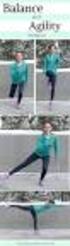 No Equipment Agility/Core/Strength Program for Full Body No Equip Trainer: Rick Coe Introduction Program designed to be performed in a circuit. Perform exercises in sequence without rest 2-3 times. Increase
The Santa Monica Orthopaedic and Sports Medicine Research Foundation. The PEP Program: Prevent injury and Enhance Performance
 The Santa Monica Orthopaedic and Sports Medicine Research Foundation The PEP Program: Prevent injury and Enhance Performance This prevention program consists of a warm-up, stretching, strengthening, plyometrics,
Hip Conditioning Program. Purpose of Program
 Prepared for: Prepared by: OrthoInfo Purpose of Program After an injury or surgery, an exercise conditioning program will help you return to daily activities and enjoy a more active, healthy lifestyle.
SECTION CANADA SOCCER PATHWAY: COACH S TOOL KIT STAGE TWO FUNDAMENTALS CANADA SOCCER PATHWAY: COACH S TOOL KIT STAGE 2: FUNDAMENTALS 1
 SECTION CANADA SOCCER PATHWAY: COACH S TOOL KIT STAGE TWO FUNDAMENTALS CANADA SOCCER PATHWAY: COACH S TOOL KIT STAGE 2: FUNDAMENTALS 1 CANADA SOCCER BELIEVES EVERY PLAYER DESERVES THE BEST POSSIBLE SOCCER
English translated version
 English translated version Official translation of the Japanese original Copyright c 2014 Kodokan Judo Institute All Rights Reserved. Ju-no-Kata Revised on July 7 th, 1977 Amended on June 1 st, 2007 Introduction
AGILITY LADDER IMPORTANT INFORMATION PLEASE READ AND KEEP DISCLAIMER
 AGILITY LADDER IMPORTANT INFORMATION PLEASE READ AND KEEP DISCLAIMER The following guidelines should be observed when using the Agility Ladder. Always consult your physician before participating in any
Physical Capability Strength Test: One Component of the Selection Process
 Physical Capability Strength Test: One Component of the Selection Process One aspect of the Power Systems Institute selection process is to successfully complete and achieve a passing score on a physical
Off Ice Fitness #1. Warm Up/Cool Down Agility Power Strength Core Strength Balance
 Off Ice Fitness #1 Warm Up/Cool Down Agility Power Strength Core Strength Balance Designed Specifically for Pre-Juvenile/Juvenile/Intermediate Skaters and Coaches Contacts for Fitness Equipment Bosu Fitball
Moving and Handling Techniques
 Moving and Handling Techniques Introduction Manual handling involves any activity that requires the use of force exerted by a person to lift, lower, push, pull, carry or otherwise move or hold an object.
Range of Motion Exercises
 Range of Motion Exercises Range of motion (ROM) exercises are done to preserve flexibility and mobility of the joints on which they are performed. These exercises reduce stiffness and will prevent or at
APPENDIX A. Sets = the completion of one consecutive grouping of repetitions of an exercise.
 Exercise Instruction Sheet Instructions: APPENDIX A Exercises are to be performed 3 times per week. Allow one rest day between each exercise day. You may divide the exercises into groups and perform them
Rehabilitation. Rehabilitation. Walkers, Crutches, Canes
 Walkers, Crutches, Canes These devices provide support through your arms to limit the amount of weight on your operated hip. Initially, after a total hip replacement you will use a walker to get around.
Knee Conditioning Program. Purpose of Program
 Prepared for: Prepared by: OrthoInfo Purpose of Program After an injury or surgery, an exercise conditioning program will help you return to daily activities and enjoy a more active, healthy lifestyle.
Guidance to Support Schools Swimming
 Guidance to Support Schools Swimming Birmingham Schools Guidance & Award Scheme SWIMMING In terms of National Curriculum levels if pupils are working at the: Non-swimmer stage - this equates to pre-level
UPPER QUADRANT PAC. Do only those exercises that I have checked off for you to do independently. THINGS TO AVOID
 UPPER QUADRANT PAC Most common pain / disfunction syndromes occur as a result of a combination of poor posture habit and imbalanced muscle groups. The following exercise protocols will address the most