
Ransom. Article by Dr Kim Edwards. By David Malouf INTRODUCTION
|
|
|
- Curtis Wilkerson
- 9 years ago
- Views:
Transcription
1 Article by Dr Kim Edwards Ransom By David Malouf INTRODUCTION Why do some stories endure? What is it about some tales that fires our imaginations, haunts our dreams, and colours our own lives so much we can t stop thinking, talking and writing about them? For Australian novelist David Malouf, it was the way in which an ancient myth of battle and fallen heroes connected with his own personal experience of growing up during wartime this inspired him to respond to and retrace the legendary story of Troy with his own visions and revisions. Stories always beget stories, changing over time to reach out to new audiences. Malouf s novel Ransom takes up and shakes up an old epic tale of the clashing battles we fight both in the world and inside our own heads. It reminds us why story-telling (and retelling) is so important in preserving our histories, explaining and enriching our own lives and experiences, foretelling our futures. BRIEF SYNOPSIS Achilles is inconsolable over the death of his companion Patroclus in battle. Even killing the killer was not vengeance enough: he now desecrates the corpse of Trojan prince Hector daily, dragging it behind his chariot in a shameful fit of rage and pain. King Priam determines to approach his enemy Achilles as an ordinary man and father, to offer him a ransom of gold in return for his son s body. The royal court, including his wife Hecuba, are horrified, but he will not be swayed. 1

2 Bewildered local carter Somax is subsequently commissioned to drive Priam to the Greek camp.on the journey he casually shares stories of common life and simple pleasures, causing Priam to rethink his own philosophies about family, death and the art of living. A mysterious young man who escorts them safely to their destination is revealed to be the god Hermes. Achilles momentarily mistakes Priam for his own father and is surprisingly respectful, while Priam himself has gained humility over the course of the journey. Consequently the ransom is accepted, and the two men negotiate a brief period of peace for mourning and funeral rites. Hector s death heralds the fall of Troy, the murder of Priam at the hands of Achilles son Neoptolemus, and the impending fate of the great warrior himself. For a brief period, however, the extraordinary experience has made both king and solider into new men, while Somax is left to resume his simple life, armed only with an amazing story his listeners cannot believe. BACKGROUND & CONTEXT Ransom is a re-imagining of events and characters from the ancient Trojan War in Greek mythology, as told in Homer s The Iliad. This epic poem and its sequel The Odyssey are the ur-texts of ancient literature: the first (and some scholars argue, the best) works to survive intact for posterity. They were the original blockbuster action stories: they have influenced virtually all adventure tales, war narratives and heroic journey myths since, and helped shape our own modern ideas of heroism and gallantry. The identity of their creator Homer is a two-thousand year-old mystery. He was certainly not a writer these poems were composed earlier than the sixth century BC, and are part of an oral tradition of story-telling. Yet he must have been a sophisticated and experienced raconteur, for these are not primitive or emergent tales but mature and profound works of art, as evidenced by the fact 2

3 that they still make for exciting and energised reading, even centuries later and in translation. The unifying factor in the art and literature of classical Greece is the focus on humanity, and discovering man s place in the world. The Iliad considers this in the context of war and religion, as its characters attempt to understand themselves and their gods. Ransom explores this further in a close and emotive examination of some of the key players. The original myth of the Trojan War began with the prince, Paris. He fell in love with Helen, the wife of a Greek king Menelaus, and carried her back with him to Troy. Menelaus responded by raising a huge armada to force her return. (Over a century and a half later, Christopher Marlowe famously called Helen of Troy the face that launch d a thousand ships in his play Doctor Faustus). Led by Menelaus and his brother Agamemnon, the Greek army laid siege to Troy for nine years, but were unable to take the city. The Iliad takes up the story in the tenth year, when Agamemnon insulted Achilles by taking from him a slave-girl awarded as a war prize (we begin to notice the position of women being revealed here, and the recurring theme of stealing loved ones and being forced to return them). Achilles withdraws from battle, and the Greeks begin to lose until Patroclus takes his place to boost morale, but is cut down in his stead. Incensed with grief, Achilles returns to the fray, finally killing his great rival the Trojan champion Hector and turning the tide against Troy. It is here in book twenty-four (the final chapter) of Homer s epic that Malouf intervenes with a new perspective on the story. Like its source, this version intermingles the real and the mythological (Troy was a real place and the site of great war, but even in Homer s time the pantheon of Greek gods had become symbolic and a narrative device), yet in considering this cultural context, Ransom begins to delicately explore the nexus of the prosaic and the divine, and of history and fiction. 3

4 STRUCTURE, LANGUAGE & STYLE Shifting Perspectives The sea has many voices. (p.3) Chapter divisions in Malouf s novel correspond with different character perspectives and changes in time, location and scene: I. Dawn on the bare, desolate seashore and war-torn plains, from the perspective of Achilles. II. Priam s bustling, urban day inside private and enclosed spaces of bedchambers and inner courts. III. Somax s voice as storyteller dominates his realm: the fertile natural world between encampment and city. IV. The evening introspection of Achilles contrasts with loud military camp life and the new perspectives of Priam and Somax. V. A new day dawns as the three protagonists return to their normal roles, contemplating the impact the experience has had upon their lives. Consider how these places and their inhabitants are being characterised. They exist in close geographical proximity, but they are worlds apart: what unites and separates them? Moreover, this is the passing of a single day in a ten-year war think about the metaphors of time at play. Malouf presents the life-cycle of man, contrasting traditional male roles through age, class and status which are evoked by the changing perspectives of young warrior, elderly king and common man. Embedded narratives Many stories are told within the story to unveil the past or foreshadow the future, including: Achilles and Patroclus first meeting (p.10 13) 4

5 Priam s childhood (p.63 79) Somax s home life (p , ) Priam s impending death (p ). This interweaving of narratives highlights the significance of causality in the fall of Troy: how one event can create a terrible chain of conflict and how a single life or death can mark an end to an entire family, city or history. Style Present Tense Interestingly this novel set in ancient times is written predominantly in present tense: The sun is already up and has begun to burn off the crisp white groundfrost as they leave the stockade wall behind them. (p.205) This gives a sense of immediacy and urgency to the plot, emphasising the question of free choice whether a decision made in that moment can actually rewrite the characters futures. Imagery Malouf s style is lyrical and elegant. From the outset his poetic language, careful metaphor and complex imagery evokes the natural world, the changing seasons and the elemental forces: The sea surface bellies and glistens, a lustrous silver-blue a membrane stretched to a fine transparency (p.3) He shows us a constant tension between the domestic, hierarchical and civilised in society and the violent, animalistic, emotional side of human nature, and juxtaposes the ethereal and divine with the earthy and mortal. CHARACTERS & RELATIONSHIPS Ransom captures three men considering their fractured sense of self, the limitations of their social roles and their transitory place in the world and the annals of history. They are each standing on the brink of extraordinary selfrevelations: Look, he wants to shout, I am here, but the I is different. (p.209) It is their moment of iconoclasm of image-breaking, where everything you 5

6 thought you knew must be destroyed and recreated anew: Whatever it was is over. Or, mysteriously, has just begun. (p.107) Achilles (T)his boldest, most ferocious, more unpredictable of the Greeks. (p.197) Achilles is a man divided. As the legendary son of the Greek hero Peleus and the Nereid (sea nymph)thetis, he exists on the border between the mortal world of his father and the divine realm of his goddess mother. He is the greatest warrior the Greeks have ever seen, yet he is still a man with flaws and weaknesses. He may be a fearless fighter and mighty military leader with his whole terrible machinery (p.199), but Achilles is also proud, vindictive, jealous and petulant. His troops think he has gone mad when he defies his role as warrior and hero and breaks daily every rule they have been taught to live by (p.29) first over the insult of the stolen slave girl and then over the death of his companion. As a child he learnt to never betray to others what he felt (p.5), but this left him no coping mechanisms for dealing with grief. He thus indulges his baser passions and ignoble wrath like a wolf, a violator of every law of gods and men (p.58). However, Achilles is also a father; his love for his absent son is a sore spot whose ache he has long repressed. (p.183) The offer of the ransom instigates the realisation of his mortal place in an immortal male lineage: Now, in the aftermath of Priam s words, he sees beyond Priam his father Peleus, and beyond him another, himself, the old man he will never be. (p.185) He feels himself cleansed of the corrupting, dangerous emotions that had perverted his love for Patroclus, and discovers a calming sense of order and fulfillment in the way his life has unfolded. In his epiphany, he has revealed the true Achilles, the one he has come all this way to find (p.190), and learnt he is an honorable, empathetic and whole man. 6

7 Priam He is obliged to think of the king s sacred body as at once a body like any other and an abstract of the lands he represents, their living map. (p.43) Priam is a metonym: his name and body have come to represent his role and his country. The city of Troy is called Priam interchangeably in The Iliad, and for Malouf s character, the division between the personal and political spheres and the public and the private self has collapsed almost entirely. His resulting civic function is to stand still at the centre, both actual and symbolic in the same breath, and to experience those dual states quite naturally as one. (p.44) However, Priam acknowledges that, like Achilles, he has been unable to reconcile this duality, and repressed the one in order to fulfill the other: Ordinary desires and needs and feelings are not unknown to you (but) you have, you can have, in your kingly role, no part in them (p.84) His life has been one of physical and emotional abstinence ( this lack in me p.77), but also like Achilles, he has an intense spirituality and connection to the gods that is both a blessing and an awful responsibility (p.43). It is this gift of foresight that sparks off unprecedented thought and action with his outrageous plan to plead for Hector s body: (T)he thing that is needed to cut this knot we are all tied in is something that has never before been done or thought of. Something impossible. Something new. (p.58) This is not a classical idea. Desperate times demand a new kind of heroism: Priam s plan foreshadows modern, humanist thought that is rooted in peaceable notions of empathy, philanthropy and ethics. In an era of violence and ceremony and legends-in-the-making, he wonders, Mightn t it be time for me to expose myself at last to what is merely human? To learn a little of what that might be, and what it is to bear it as others do? (p.85) His name itself means ransom ; the story of his sister rescuing him from slavery and ignominy has tainted his life ever since. He hopes daring to perform a new innovative act will stand forever as proof of what I was (p.90). Having stepped into a space that 7

8 till now was uninhabited and found a way to fill it (p.208), he discovers curiosity, humility, and a sense of his own humanity. Somax We re children of nature, my lord. Of the earth, as well as of the gods. (p.121) It takes the humble carter Somax to know a little about what is good for the body as well as the spirit (p.120), and thus have balance and purpose in his life while his new acquaintances struggle for meaning and equilibrium. Somax rejoices in the quotidian, the everyday life. He takes pride and pleasure in the little things, like good food and a yarn, playing with children or stopping to cool your feet after a long drive. Consequently he has developed simple, honest, enduring philosophies about life, death, the world, and his place in it. He knows his name and his role in society and it fits him, he has always thought, rather well. (p.98). He is a devoted family man whose relationships have been warm, human and affectionate, as opposed to the cool distance Priam keeps, or the overwrought passion Achilles feels. Somax is also attuned to the natural and animal world, and his inherent pragmatism allows him a degree of insight and resilience denied to other characters: he recognises an aggrandising augury (supposedly from Zeus) is ridiculous because the bird is simply a chickenhawk (p.101). He is wonderfully tactful in caring for his king, and is unintimidated by the presence of Hermes (a)s if the arrival of a god on the scene was in his life quite an ordinary occurrence. (p.160) His gentle assumption, (T)here s many things we don t know, sir. The worst happens, and there, it s done. The fleas go on biting. The sun comes up again (p.135), is validated by the final section of the novel as day dawns and the characters are temporarily at peace with themselves and their mortality. 8

9 Patroclus (H)is soulmate and companion since childhood (p.10). Brought to Peleus court as a child seeking asylum for murder, Patroclus becomes an adoptive brother to Achilles and the new centre (p.14) of his life. Unequal in age, status and fame, they nevertheless mirror each other right until the fatal moment when Patroclus begs to wear Achilles armour and, dressed like him and moving as he did (p.19), is hewn down in his place. Despite (or perhaps because of) being tainted a killer in his childhood, Patroclus transcends from murderer to moraliser as an adult. His pure heart (p.16) is torn between his love for Achilles and disappointment at the unheroic sulking of his brother-in-arms. Unlike Achilles, Patroclus is able to put the greater good before petty personal issues. His sense of humility and love for his fellow man is ultimately what kills him; Achilles exorbitant grief at his death is thus infused with a sense of guilt. Hecuba This kind of women s talk unnerves him. It is not in his sphere. (p.52) Hecuba is Priam s wise, proud wife, and they share a profound and tender love that has survived age and other women. His instant need to tell her his plan reminds us that even in this patriarchal society there are powerful women who influence the decisions of men (indeed, the Trojan War is fought for the sake of a woman, as is Achilles refusal to fight). However, the female world and women s work remains mysterious and mystical to the protagonists. Priam is disturbed by the fury of a mother s grief as Hecuba rages at being a woman who can only sit and weep when, if she caught Achilles, she d tear his heart out and eat it raw (p.51). Achilles is intrigued but awkward and out of place (p.193) in the women s tent where Hector s body is washed, and Somax can only marvel at the talents and charms of his daughter-in-law, granddaughter and favourite mule Beauty. For all their power and posturing, the novel concludes that all men both begin and end up in the hands of women (p.192). 9

10 Hermes If he really was the celestial joker messenger, thief, trickster, escort of souls to the underworld where were they heading? (p.159) Hermes is an unexpected arrival in the narrative. Unlike Achilles goddess mother and Isis in Priam s dream, this god is neither ethereal nor spiritual. He is arrogant and impudent: (H)is bluster was that of a youth who liked to hear his own voice and strike poses (p.145). His disguise provokes the question of appearance versus true nature (Priam s simple robe for example, and Patroclus and then Hector wore borrowed armour), and his attitude aligns him with other rash young men like Achilles, who hold the fates of others and the balance of power in their hands. His appearance suggests the gods have a vested interest in this event, but his departure at the gates of the Greek camp implies the mortal characters are taking back the reins of their destinies. Hector (T)his moment was sacred; a meeting that from the beginning had been the clear goal of their lives and the final achievement of what they were. (p.23) Achilles sees his own fate in Hector, his blood brother and shadow-self. Killing him to avenge Patroclus meant aiming beyond Hector at himself (p.22), so that the death becomes a metaphoric suicide watching for a second time the dreamlike enactment of his own (p.22) as it marks his period of impotence as a hero and loss of emotional control. However, Achilles finally realises Hector s noble death, sanctioned by the gods, fulfilled his chosen role as a warrior, helping to ease his own fears and sooth his soul-searching. 10

11 THEMES, IDEAS & VALUES Power of language and story-telling (L)ost, as they all are, in a story he might be hearing for the first time and which has not yet found its end. (p.12) Think of a story, a tale every child knows (p.63). Priam is speaking of his origins, but Malouf is also reminding us of our own reading experience here in revisiting a famous legend with him. Now (i)magine then, what it was like to be that child. To actually stand as I did at the centre of it, of what was not a story, not yet, but a real happening (p.64). Ransom is fuelled by Malouf s desire to infuse new life and realism into an epic poem, to reinvent and revitalise ancient literature for a modern audience to imagine themselves into. Within the context of Ransom, stories are told because of the need to understand past experience, to express emotions, and to analyse one s self. As a spinner of tales (p.157), Somax has learnt how to articulate and grow into his life and relationships, while Priam (who has always had an Idaeus to find words (p.53) for him) discovers the power, creativity and delight of speaking for himself, having known (w)hat it means to be one of those who have no story that will ever be told. (p.75) Moreover, stories are not only important on a personal level, but they also ensure immortality, for a man s acts follow him wherever he goes in the form of story. (p.6) The actions of Priam and Achilles will thus be remembered as the stuff of legend (p.216) and the history of Troy preserved for future generations. However, Somax like most storytellers, is a stealer of other men s tales, of other men s lives (p.218). Like Priam s soothsaying daughter Cassandra, he is fated not to be believed when telling the truth. But even fictional stories can contain truths about the human condition, and how the world works. Malouf thus invites us to use his novel to understand ourselves and our own experiences. 11

12 In a novel absorbed with story-telling, (w)ords can be the agents of what is new, of what is conceivable and can be thought and let loose upon the world. (p.61) The power of language is commanding and compelling in Ransom, from the formal, grandiose oratory of the court, to Somax s captivating, prattling freedom of speech. However, silence can also be powerful and expressive in political and social contexts by keeping hidden and therefore mysterious, one s true intent (p.126), and on a personal level when there might be no words, as there is no visible form (p.78) for the depth of feeling. Characters are afraid of where silence might take them (p.168). Death, Grief and Loss (S)elf-consciousness at times makes us strange to ourselves and darkly divided (p.31) Achilles claims war is necessary for men to express themselves with violence before returning, refreshed in spirit, to being a good farmer again (p.7). He is therefore lost and troubled when vengeance does not assuage his grief. On facing his son s unwitting murderer, Beauty the mule, Somax explains I felt like punching her where she stood. But what could have been the good of that? That wouldn t have brought him back. (p.141) Ransom speculates about what violence can and can t solve, and whether men are defined by violence as a display of masculinity, power and self-knowledge. Priam knows, We are mortals, not gods. We die. Death is in our nature And for that reason, we should have pity for one another s losses (p.184). The novel hinges upon death and the character s inabilities to deal with grief and loss: Achilles has sacrificed animals, slaughtered Trojan prisoners and desecrates Hector s body daily, but his unchannelled pain at the death of Patroclus is still unappeased. Priam, meanwhile, has wept over the fall of Hector as is proper to his grief (p.40), but has been saved (p.138) from real mourning by suppressing his paternal affections and natural emotions. These perverse and disproportionate responses to the fear of dying and the loss of loved ones are 12

13 realigned in Somax, who knows the secret to surviving grief. It leaves a gap you can t ignore. It s there. Always... (p.134), but truth is, we don t just lie down and die, do we, sir? We go on. For all our losses (p.131) because life is fleeting and beautiful, and like the temporary truce in place at the end of the novel, in the midst of war and death there is always a time for living (p.198). Fate versus free will Not a mockery my friend, but the way things are. Not the way they must be, but the way they have turned out. In a world that is also subject to chance. (p.46) Traditionally the Greek gods are ruthless, capricious, play favourites and cheat constantly in the games they make of men s lives: A joke of the kind the gods delight in, who joke darkly. (p.201) Achilles mother is inscrutable and absent, Hermes is contemptuous and self-important, and while Jove s message is meant to be clear for all to see (p.102), the portent is simply being misread. But in Priam s dream vision of the messenger goddess Iris, she dares suggest that the gods do not control men s destiny entirely, which is a dangerous and blasphemous idea. The danger lies not only in offending deities but in being forced to take responsibility for your own actions for if it is not fate and the will of the gods at fault, then it is you. Imagine what it would lead to, the violence. Imagine the panic it would spread. (p.62) However, there is also a kind of freedom in that (p.59), because the notion of chance offers a kind of opening. The opportunity to act for ourselves. To try something that might force events into a different course. (p.61) To what extent then are the mortal characters controlled by the roles they have been born into, or come to assume? Achilles knows he will die young That is fated and inevitable (p.9), yet he resists this knowledge fiercely. But in Priam s independent act of rebellion against tradition, the end which is so close now, seems to have been miraculously suspended. (p.211) 13

14 Neoptolemus knows already that the last days of this story belong to him (p.212). The question is therefore whether the revelations of the three protagonists are pointless, if the ending is to be the same. Ultimately, Priam sees the freedom to make a choice as a ransom paid: the price of the new is facing the unknown we pay for our mortal lives with death, and the chance a story can end in a different way is the road my other self went down (p.68). DIFFERENT INTERPRETATIONS Doubling Achilles identified so strongly with a story that he felt mated darkly, flesh to ghost (p.15) with the boy young Patroclus killed. For Achilles, Patroclus is the man who has half himself (p.18), whilst fighting Hector was like trying to deceive or outguess his shadow (p.22). The mirroring of these characters reveals both their likenesses and differences and can be compared with the next generation of young men in love with their own importance (p.161): cautious Automedon and hungry Alcimus in the Greek camp Somax s son whose strength was the death of him (p.133), died showing off like Achilles, Patroclus and Hector Neoptolemus the small mimic hero posturing with his miniature sword (p.184) who will make a bloody ignoble mess of the death of Priam because (t)o be a son to the great Achilles is a burden. (p.213) What is being suggested about masculine culture, growing up and male bonding? Another male role, fatherhood, is also depicted in various ways: Somax points to his heart and notes (I)t s in our nature. We re tied that way, all of us. Tied here (p.131). However, Priam suspects he is a very different kind of parent and wonders if what it was to lose a son (meant) the same for him as it did for the driver (p.136), while Achilles has also been an absent father and misses his own father so much he mistakes Priam for him. When these three disparate men converge for the event that will shape the narrative and history of Troy, they are also united in mingled amusement and bemusement at being exposed 14

15 to new worlds and new words, catching glimpses into lives and stories so alien to their own experiences. ESSAY TOPICS (10 topics) 1. In a world ruled by ancient gods, Ransom contemplates the notion of free will. How free are the characters to defy their roles and change their destinies? 2. Somax is upset at being renamed Idaeus. What is the power and function of names in Ransom? 3. Ransom is a novel of fathers and sons. What is being revealed about the pressures of both parenting and growing up? 4. Does violence solve anything in Ransom? 5. Achilles feels as if he has found himself by the end of the novel. What does he discover about the true Achilles? 6. Ransom depicts a determinedly male world, where the women are only incidental characters. Do you agree? 7. Malouf s novel demonstrates the power of story-telling in keeping history alive for us. Discuss. 8. Are there any true heroes in Ransom? 9. Priam s actions are ultimately pointless because Troy is destined to fall. Discuss. 10. Words speak louder than actions in Ransom. Do you agree? 15

16 ANALYSING A SAMPLE QUESTION To take on the lighter bond of being simply a man. Perhaps that is the real gift I have to bring him. Perhaps that is the ransom. (p.60). What is the significance of the title of Malouf s novel? Fully understanding key topic terms is an important place to begin when responding to an essay question: As a noun, ransom means the release of a property or person for a price and is also the name of the price or payment itself. As a verb, it can mean to redeem or rescue, or to atone or expiate. Now think through some of the ways the word is being used in the novel Literally, it is the treasure being offered to reclaim Hector s body but it is also Priam being humble and vulnerable in offering himself up to Achilles ( I have now to be ransomed a second time p.79) Priam s name translates as ransom and was given to him as a child when his sister became the price paid, the gift given to buy your brother back from the dead (p.74) The Greeks are unintentionally paying a ransom for Helen of Troy in blood and battle, Achilles unconsciously paid for his resentment of a petty slight with Patroclus life and Priam learns that mortality, that fee paid in advance (p.184) is the price of living Priam is redeeming Hector, but he is also saving Achilles from disgrace, while Achilles is relieving him from his grief Somax is also able to redeem Priam and then Achilles by innocently showing them new ways to live and think: the price of the new is facing the unknown, but what was new could also be pleasurable (p.122) Priam and Achilles both feel the need to atone for their respective choices and roles in life Priam for the fate of his city and the loss of his son, and Achilles for his unheroic behaviour and his disrespect of death The topic quote also suggests there is a price paid in being a great hero or a mighty warrior, and the real ransom is the chance to simply be a man to be yourself and not your role. 16

17 Make sure you draw your ideas and discoveries back to the topic itself. Malouf s title therefore: offers a complex array of meanings reminds us of the series of key events that initiate the narrative illustrates character connections and comparisons explores themes of loss and gain, life and death, and self-identity. THE TEXT AND FURTHER READING The Text Malouf, David 2009, Ransom, Random House Australia, North Sydney. Further Reading Homer: The Iliad 1998, trans. Robert Fagles, Penguin Books, New York. Homer: The Iliad 1987, trans. Martin Hammond, Penguin Books, London. The Iliad of Homer 1961, trans. Richmond Lattimore, University of Chicago Press, Chicago & London. The Odyssey of Homer 1967, trans Richmond Lattimore, Harper Perennial, New York. [Malouf s source material is well worth reading in a good translation. Lattimore is a favourite for good story-telling and scholarly accuracy, while Fagles focuses on poetic verse and Hammond turns the narrative into a novel form. Like Ransom, The Odyssey further undermines traditional heroic values and notions of self-identity.] Graves, Robert 1992, The Greek Myths: The Complete Edition, Penguin Books, London. 17

18 [There are lots of excellent texts on Greek mythology, but Graves work is wonderfully catalogued, indexed and readable, where each chapter tells the stories, then follows with corresponding source material and scholarly analysis.] Malouf, David 2009, Interview with Romana Koval on The Book Show, ABC Radio National, 1 April, Malouf, David 1983, Fly Away Peter, Penguin Books, Melbourne. Malouf, David 1980, An Imaginary Life, Pan Macmillan, Sydney. Malouf, David 1994, Remembering Babylon, Vintage, London. [Malouf s novels have recurring themes and ideas: for example, these three texts share Ransom s concerns with the significance of history and narrative, violence in humanity, masculine cultures, dislocation and loss, and nature and the poetic.] Smith, Yvonne 2009, Beauty s Clear, Round Eye: David Malouf s Ransom, Southerly Long Paddock 4 (69/1), BIOGRAPHY Dr Kim Edwards has a PhD in popular culture and sensation fiction at Monash University where she teaches English literature and fantasy narratives. She is a freelance writer and reviews books, film and theatre. 18

Marriage 1. Marriage was instituted and designed by God. Gen. 2:18 25.
 Marriage 1. Marriage was instituted and designed by God. Gen. 2:18 25. 2. At the heart of marriage is companionship and intimacy, which both husband and wife must promote. Gen. 2:18, 24. And the Lord God
WILL WE BE MARRIED IN THE LIFE AFTER DEATH?
 Explanatory Notes: WILL WE BE MARRIED IN THE LIFE AFTER DEATH? Series title: Topic: Marriage in heaven / heaven as a marriage Table of Contents: Message 1: What is the Life after Death Like? p. 1 Message
Devotion NT347 CHILDREN S DEVOTIONS FOR THE WEEK OF: LESSON TITLE: The Hall of Faith. THEME: God wants us to trust Him. SCRIPTURE: Hebrews 11:1-40
 Devotion NT347 CHILDREN S DEVOTIONS FOR THE WEEK OF: LESSON TITLE: The Hall of Faith THEME: God wants us to trust Him. SCRIPTURE: Hebrews 11:1-40 Dear Parents Welcome to Bible Time for Kids! This is a
WELCOME TO GOD S FAMILY
 WELCOME TO GOD S FAMILY To all who received him, to those who believed in his name, he gave the right to become children of God children born not of natural descent, nor of human decision or a husband
What are you. worried about? Looking Deeper
 What are you worried about? Looking Deeper Looking Deeper What are you worried about? Some of us lie awake at night worrying about family members, health, finances or a thousand other things. Worry can
Paper 1 Cheryl Texin 21h.301 Rec: F2 Honor & Glory in the Iliad: Life After Death
 Honor & Glory in the Iliad: Life After Death Honor and glory are central to the Greek character. Since heroes are the essence of the society from which they come, Greek heroes live their lives according
The Odyssey. Teaching Unit. Individual Learning Packet. by Homer (Trans. by W.H.D Rouse) ISBN 978-1-60389-877-5 Item No. 200672
 Individual Learning Packet Teaching Unit by Homer (Trans. by W.H.D Rouse) Copyright 1999 by Prestwick House Inc., P.O. Box 658, Clayton, DE 19938. 1-800-932-4593. www.prestwickhouse.com Permission to copy
Home Is Where The Heart Is
 Home Is Where The Heart Is Where is your heart? Is it where you are, or is it out searching for a relationship to fulfill you? Is your heart into making a home for yourself and your children, or is it
The Literature of Classical Greece
 The Literature of Classical Greece The golden age of classical Greece lasted from the early fifth to the late fourth century BC, and was concentrated in Asia Minor and the Greek Isles. Although this era
The Iliad and the Odyssey, Part 1
 The Iliad and the Odyssey, Part 1 By Vickie Chao Homer was the most famous poet in the whole of ancient Greece. But he was a mysterious man, too. For centuries, scholars had no idea exactly when he lived
Acts 11 : 1-18 Sermon
 Acts 11 : 1-18 Sermon Imagine a church being riven apart by different personalities leading different groups each trying to pull it in different directions. Imagine a church whose future is threatened
THEME: God desires for us to demonstrate His love!
 Devotion NT320 CHILDREN S DEVOTIONS FOR THE WEEK OF: LESSON TITLE: The Gift of Love THEME: God desires for us to demonstrate His love! SCRIPTURE: 1 Corinthians 13:1-13 Dear Parents Welcome to Bible Time
Opening Our Hearts, Transforming Our Losses
 Preface Alcoholism is a disease of many losses. For those of us who are the relatives and friends of alcoholics, these losses affect many aspects of our lives and remain with us over time, whether or not
Following the Wise Men What s Your Star? Matthew 2:1-12
 1 Natalie W. Bell January 4, 2015 Epiphany Sunday Following the Wise Men What s Your Star? Matthew 2:1-12 Has anything grabbed your attention lately? What was it? And could it be God could God be using
THEME: Jesus sent the Holy Spirit to indwell and empower us.
 Devotion NT285 CHILDREN S DEVOTIONS FOR THE WEEK OF: LESSON TITLE: The Day of Pentecost THEME: Jesus sent the Holy Spirit to indwell and empower us. Dear Parents SCRIPTURE: Acts 2:1-41 Dear Parents, Welcome
WATCHING THOUGHTS AND EMOTIONS
 GUIDED MEDITATION You can sit in a comfortable position, because the posture is not really important. What is important is to have your spine erect but relaxed. And you may have your eyes open or closed.
THE FORGIVING FATHER
 BOOK 1, PART 3, LESSON 4 THE FORGIVING FATHER THE BIBLE: Luke 15:11-32 THEME: We can discover what Jesus wants us to do and be by hearing the parables Jesus told. PREPARING FOR THE LESSON MAIN IDEA: Jesus
Devotion NT267 CHILDREN S DEVOTIONS FOR THE WEEK OF: LESSON TITLE: The Second Coming. THEME: Jesus is coming again. SCRIPTURE: Matthew 24:27-31
 Devotion NT267 CHILDREN S DEVOTIONS FOR THE WEEK OF: LESSON TITLE: The Second Coming THEME: Jesus is coming again. SCRIPTURE: Matthew 24:27-31 Dear Parents Welcome to Bible Time for Kids. Bible Time for
The Qualities of a Godly Father. Mark 5: 21-24; 35-43
 The Qualities of a Godly Father Mark 5: 21-24; 35-43 Today is a special day for many of the men here. Today has been set aside to honor fathers. Being a father is one of the great joys in life. I am blessed
BIG FISH Dramaturgical Study Guide
 BIG FISH Dramaturgical Study Guide Created by Joel Edwards, Student Dramaturge Introduction As I began research for Big Fish, especially for some of the historical references in the show, I began to notice
Ancient Epic: Homer and Vergil. History and Literature
 History and Literature History and Literature if histories like Herodotus encompass story along with history, does literature then do the same? historians benefit from the study of fictional works in at
30 Scripts for Relaxation, Imagery & Inner Healing - Vol. 2
 30 Scripts for Relaxation, Imagery & Inner Healing - Vol. 2 Julie Lusk Whole Person Press Table of Contents Becoming Relaxed The cornerstone of all guided imagery work lies in the ability to relax the
Greetings, Blessings, Scott DeWitt Director of Spiritual Outreach Casas por Cristo
 Team Devotional Greetings, Welcome to Casas por Cristo! If you are reading this, then more than likely you are embarking on a week-long adventure serving our Lord and Savior along the U.S. / México border
~SHARING MY PERSONAL PERSPECTIVE~
 April 2012 ~SHARING MY PERSONAL PERSPECTIVE~ Dear Friends, It is a certainty that shared values encourage cooperative relationships. I don t know who first said this, but I certainly believe it to be true.
United Church of God An International Association. Level 2 Unit 4 Week 4 EIGHTH COMMANDMENT AND TENTH COMMANDMENT
 United Church of God An International Association SABBATH S CHOOL Preteen Sabbath Instruction Program Teacher s Outline Level 2 Unit 4 Week 4 EIGHTH COMMANDMENT AND TENTH COMMANDMENT OBJECTIVE: To show
Peace Contents Prayer leader introduction note. Prayer handout sheet. Prayer outline. Handout content (for reference only)
 Peace Contents Prayer leader introduction note. Prayer handout sheet. Prayer outline. Handout content (for reference only) Dear Prayer Leader, Thank-you for leading this prayer on the charism of Peace.
Romeo and Juliet Act 3 Scene 5
 What do we learn about Juliet s relationship with her father from? Why does Lord Capulet arrange his daughter s wedding to Paris? He wants to see his daughter settled and married to a man he approves of
The Trojan War. By Alyssa DiBella and Lauren Ritcey
 The Trojan War By Alyssa DiBella and Lauren Ritcey The two sides: Greek and Trojan Greek side: Gods and Goddess: Athena (Minerva) - goddess of wisdom, war, patriotism and good citizenship Hera (Juno) -
Compassion: The Heartbeat of God
 Life Reference: Jude 22-23 Focus Verse: And of some have compassion, making a difference (Jude 22). From the time we were little, bedtime stories filled our heads with handsome princes who searched until
FILMS AND BOOKS ADAPTATIONS
 FILMS AND BOOKS Reading a book is very different to watching a film. The way that we understand both is also different. We firstly need to think of the ways in which films and books tell their stories.
LESSON TITLE: Our Chief Cornerstone. THEME: Jesus is our cornerstone! SCRIPTURE: Ephesians 2:19-22 CHILDREN S DEVOTIONS FOR THE WEEK OF: Dear Parents
 Devotion NT328 CHILDREN S DEVOTIONS FOR THE WEEK OF: LESSON TITLE: Our Chief Cornerstone THEME: Jesus is our cornerstone! SCRIPTURE: Ephesians 2:19-22 Dear Parents Welcome to Bible Time for Kids! This
PUSD High Frequency Word List
 PUSD High Frequency Word List For Reading and Spelling Grades K-5 High Frequency or instant words are important because: 1. You can t read a sentence or a paragraph without knowing at least the most common.
Jesus Came to Earth to Destroy the Works of the Devil JOHN PIPER Why Christmas Happened Jesus Incarnation and Our Regeneration The Great Love of God
 Jesus Came to Earth to Destroy the Works of the Devil JOHN PIPER Why Christmas Happened Two times in 1 John 3:1-10 we are told why Christmas happened that is, why the eternal, divine Son of God came into
Introduction to Greek Mythology. Sixth Grade Language Arts Mrs. Huffine
 Introduction to Greek Mythology Sixth Grade Language Arts Mrs. Huffine What is Greek Mythology? The people of ancient Greece shared stories called myths about the gods, goddesses, and heroes in which they
The Odyssey Background Information
 Name: Date: Period: Ms. Lopez The Odyssey Background Information The world s most famous epic poems Homer s Iliad and Odyssey were composed between 900 and 700 B.C. The poems describe legendary events
Mama Maggie: The Egyptian Mother Teresa
 Mama Maggie: The Egyptian Mother Teresa A Long Journey of Love and Giving Leads to a Nobel Nomination She is a woman whose thin body belies the amount of strength and energy that overflows from it to serve
4 Possessive/Jealous. Men in Relationships
 4 Possessive/Jealous Men in Relationships A possessive/jealous man will: Tell you how to dress; Be overly concerned about where you are going when socializing; Insist on escorting you to mundane places;
THEME: We need to completely trust in Jesus.
 Devotion NT238 CHILDREN S DEVOTIONS FOR THE WEEK OF: LESSON TITLE: Jesus Walks on Water THEME: We need to completely trust in Jesus. SCRIPTURE: Mark 6:45-52 Dear Parents Welcome to Bible Time for Kids!
The importance of Prayer life
 The importance of Prayer life Prayer means communication with God. Prayer will lead us into dependence upon God. A person completely declared before God I am nothing and God is supreme. And declare without
Parenting. Coping with DEATH. For children aged 6 to 12
 Parenting Positively Coping with DEATH For children aged 6 to 12 This booklet will help you to understand more about death and the feelings we all have when someone we care about, like a parent, a brother
PRAYING FOR OTHER PEOPLE
 PRAYING FOR OTHER PEOPLE SESSION ONE HOW TO PRAY FOR OTHER PEOPLE When friends get together, they talk about their problems. Sometimes your friends will share with you about their own personal difficulties
LESSON TITLE: The Great Commandment. THEME: Love is the fulfillment of the Law. SCRIPTURE: Mark 12:28-34 CHILDREN S DEVOTIONS FOR THE WEEK OF:
 Devotion NT264 CHILDREN S DEVOTIONS FOR THE WEEK OF: LESSON TITLE: The Great Commandment THEME: Love is the fulfillment of the Law. SCRIPTURE: Mark 12:28-34 Dear Parents Welcome to Bible Time for Kids.
INDIVIDUAL POEMS. 2008 NCUSCR 71 West 23rd Street, Suite 1901 New York, NY 10010-4102 (212) 645-9677 www.ncuscr.org
 The following poems were composed by Teachers Exchange Program participants at the Mid- Year Conference for Chinese Teachers in January 2010. The teachers wrote the poems in a demonstration class during
Seek and Ye Shall Find
 Seek and Ye Shall Find There is a very simple line in the preachment of Jesus that has posed a problem for the religious community for some time. Jesus says, Seek and ye shall find. When he says that,
Now this I am telling you: You have seen before many times before or you
 Ramtha Could It Be That You Are Already Dead? Excerpt from: The Mystery of Birth and Death: Redefining the Self And all along you may think that you are really alive. Maybe you are just dead, reliving
Assignment Discovery Online Curriculum
 Lesson title: Reflections of Ancient Greece Grade level: 5-6, with an adaptation for older students Subject area: Ancient History Duration: Two or three class periods Assignment Discovery Online Curriculum
The Odyssey (1/3) 9/7/2005. 5b. Odyssey 1 1
 The Odyssey (1/3) Speak, [Muse], of the cunning hero, the wanderer, blown off course time and time again... Speak of all the cities that he saw, the minds that he grasped, the suffering deep in his heart
Oedipus and Troy Maxson: The Classic and Modern Tragic Heroes of Literature
 Carlson 1 Oedipus and Troy Maxson: The Classic and Modern Tragic Heroes of Literature What makes a hero? Many would think of modern day superheroes such as Super Man, Spider Man, and Wonder Woman. Fighting
The Greatness of a Humble Heart
 CHILDREN: The Greatness of a Humble Heart 1 The Greatness of a Humble Heart Luke 9:46-48 INTRODUCTION: A. The title of this study, The Greatness of a Humble Heart almost seems like a contradiction in terms...
OVERCOMING THE FEAR OF REJECTION Series: Freedom From Your Fears - Part 7 of 10
 Series: Freedom From Your Fears - Part 7 of 10 Proverbs 29:25 Fear of man is a dangerous trap, but to trust in God means safety. (Living Bible) INTRODUCTION Today we're looking at the Fear of Rejection.
Glory A God of Dignity and Victory Psalm 3:1-3
 Glory A God of Dignity and Victory Psalm 3:1-3 Everyone hold up your Bible s this morning: o I am a believer in Jesus Christ. o I believe in his written word. o I am what it says I am o I can do what it
The Holy See PRAYER VIGIL FOR THE FESTIVAL OF FAMILIES ADDRESS OF THE HOLY FATHER. B. Franklin Parkway, Philadelphia Saturday, 26 September 2015
 The Holy See APOSTOLIC JOURNEY OF HIS HOLINESS POPE FRANCIS TO CUBA, TO THE UNITED STATES OF AMERICA AND VISIT TO THE UNITED NATIONS HEADQUARTERS (19-28 SEPTEMBER 2015) PRAYER VIGIL FOR THE FESTIVAL OF
EXAMPLE PAPER 2 PRACTICE ESSAY: GLASS MENAGERIE VS. ANTIGONE
 Ima Writer Period EXAMPLE PAPER 2 PRACTICE ESSAY: GLASS MENAGERIE VS. ANTIGONE Question: A dramatist often creates a gap between what the audience knows and what the characters know. With a reference to
A long, long time ago, there lived. a very rich prince. He lived in a huge. palace with gold and silver ornaments
 A long, long time ago, there lived a very rich prince. He lived in a huge palace with gold and silver ornaments everywhere. He had riches beyond the wildest dreams of ordinary boys and girls. The rooms
Devotion NT273 CHILDREN S DEVOTIONS FOR THE WEEK OF: LESSON TITLE: The Garden of Gethsemane. THEME: We always need to pray! SCRIPTURE: Luke 22:39-53
 Devotion NT273 CHILDREN S DEVOTIONS FOR THE WEEK OF: LESSON TITLE: The Garden of Gethsemane THEME: We always need to pray! SCRIPTURE: Luke 22:39-53 Dear Parents Welcome to Bible Time for Kids. Bible Time
Ordinary Moments of Grace
 Ordinary Moments of Grace To everything there is a time and a season for every purpose under heaven. A time to be born and a time to die. A time to sow and a time to reap. A time to laugh and a time to
Haslingden High School RE HOMEWORK BOOKLET Year 8 Block A
 Haslingden High School RE HOMEWORK BOOKLET Year 8 Block A Name: Form: Subject Teacher: Date Given: Date to Hand in: Level: Effort: House Points: Comment: Target: Parent / Guardian Comment: 0 Year 8 Block
THEME: God wants us to walk as children of light.
 Devotion NT330 CHILDREN S DEVOTIONS FOR THE WEEK OF: LESSON TITLE: Children of Light THEME: God wants us to walk as children of light. SCRIPTURE: Ephesians 5:1-18 Dear Parents Welcome to Bible Time for
LESSON TITLE: Jesus Visits Mary and Martha THEME: Jesus wants us to spend time with \ Him. SCRIPTURE: Luke 10:38-42
 Devotion NT249 CHILDREN S DEVOTIONS FOR THE WEEK OF: LESSON TITLE: Jesus Visits Mary and Martha THEME: Jesus wants us to spend time with \ Him. SCRIPTURE: Luke 10:38-42 Dear Parents Welcome to Bible Time
How to. in the LORD. by Jeff Doles. David encouraged himself in the LORD his God. (1 Samuel 30.6 KJV)
 How to Encourage Yourself in the LORD by Jeff Doles David encouraged himself in the LORD his God. (1 Samuel 30.6 KJV) DAVID AND HIS BAND OF SOLDIERS HAD JUST RETURNED HOME TO ZIKLAG, only to find that
David Is Anointed King By Samuel 1 Samuel 16:1-13
 Lesson 078 David Is Anointed King By Samuel 1 Samuel 16:1-13 MEMORY VERSE 1 S AMUEL 16:7 For the LORD does not see as m an sees; for m an looks at the outward appearance, but the LORD looks at the heart.
Galatians 5:16-21 Not a License, Not a Law. It s the Spirit. Intro: The liberty of life in the Spirit! The Walk that is available in the Holy Spirit.
 Galatians 5:16-21 Not a License, Not a Law. It s the Spirit. Intro: The liberty of life in the Spirit! The Walk that is available in the Holy Spirit. Necessity of walking in the Spirit. Not an option.
THE REQUIREMENTS OF COMMITTED MEMBERS Part 2
 THE REQUIREMENTS OF COMMITTED MEMBERS Part 2 We need to give strong support. We cannot give strong support unless we become mighty men. None of us should fail because this is God s plan. God wants us to
The Odyssey. What traits of Odysseus are revealed (good AND bad) and where? What obstacles are coming between Odysseus and his goal?
 The Odyssey As you read, consider and take notes on the following: What traits of Odysseus are revealed (good AND bad) and where? What obstacles are coming between Odysseus and his goal? How does he deal
Candidate Name: Payge Cassidy Temple. Candidate Number: 2652. Centre Name: Ashbourne College. Centre Number: 10101
 Candidate Name: Payge Cassidy Temple Candidate Number: 2652 Centre Name: Ashbourne College Centre Number: 10101 FM1: Analysing Film Form: Written Analysis, focusing on sound and cinematography in Andrea
HarperOne Reading and Discussion Guide for The Weight of Glory. Reading and Discussion Guide for. The Weight of Glory. C. S. Lewis.
 Reading and Discussion Guide for The Weight of Glory by C. S. Lewis The Weight of Glory is a series of essays and talks that Lewis wrote over a long period (roughly between 1939 and 1956). We have organized
Collects for Mothering Sunday
 Mothering Sunday Prayers Collects for Mothering Sunday God of compassion, whose Son Jesus Christ, the child of Mary, shared the life of a home in Nazareth, and drew the whole human family to himself: strengthen
LESSON TITLE: Jesus is the Way, the Truth, and the Life
 Devotion NT271 CHILDREN S DEVOTIONS FOR THE WEEK OF: LESSON TITLE: Jesus is the Way, the Truth, and the Life THEME: We can always trust Jesus. SCRIPTURE: John 14:1-6 Dear Parents Welcome to Bible Time
Prayer Basics. Adults
 Prayer Basics for Adults (Lesson 1: Introduction) (A study guide resource built to accompany the book Prayer Basics: The Who, What, When, Where, Why, and How of Prayer and brought to you by the Office
Active Reading Hamlet Act 1
 Active Reading Hamlet Act 1 All the major characters of Hamlet emerge in the first act. As you read act 1, focus on Hamlet s developing relationships with the characters listed below. In each box state
LESSON TITLE: Jesus Heals Blind Bartimaeus
 Devotion NT257 CHILDREN S DEVOTIONS FOR THE WEEK OF: LESSON TITLE: Jesus Heals Blind Bartimaeus THEME: Jesus always has time for us! SCRIPTURE: Mark 10:46-52 Dear Parents Welcome to Bible Time for Kids!
Opening Prayers Opening Prayer Opening Prayer Opening Prayer
 s Lord, let us not dwell in the past, nor worry about the future. We cannot undo what is done. We cannot foresee what will come. Let us instead dwell in your peace, love and be loved, heal and be healed.
Figurative Language Archetypes Symbols Elements of Fairy Tales. revised 07.07.12 English 1302: Composition II D. Glen Smith, instructor
 Figurative Language Archetypes Symbols Elements of Fairy Tales Figurative Language symbol: a visual representation of something else motif: a reoccurring symbol in various forms which appears throughout
Neville 02-12-1968 SALVATION HISTORY
 Neville 02-12-1968 SALVATION HISTORY It is God's purpose to give himself to you as though there were no other! And when He does, it will not be you and God, but you as God! Although it seems impossible
Solomon is a Wise King
 1 Kings 3 5 At Gibeon the LORD appeared to Solomon during the night in a dream, and God said, "Ask for whatever you want me to give you." 6 Solomon answered, "You have shown great kindness to your servant,
entrust to you the true riches? And if you have not been faithful with what belongs to another, who will give you what is your own?
 Serving Two Masters This month I am looking at the stories Jesus told. And since I like a challenge, I am either looking at stories we don t usually hear about or a different view of a familiar story.
Joseph and the Coat of Many Colors
 Joseph and the Coat of Many Colors Teacher Pep Talk: Joseph was called a dreamer by his brothers. But are you really a dreamer just because God chooses to speak to you in a dream? Joseph s brothers hated
Angel Guidance Messages of Love and Guidance
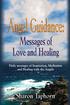 A beautiful expanded collection of messages inspired from the daily Angel Wisdom that Sharon Taphorn channels and shares with thousands of readers around the world. Each message contains thought provoking
Devotion NT207 CHILDREN S DEVOTIONS FOR THE WEEK OF: LESSON TITLE: The Birth of Jesus. THEME: God is in control of all things. SCRIPTURE: Luke 2:1-7
 Devotion NT207 CHILDREN S DEVOTIONS FOR THE WEEK OF: LESSON TITLE: The Birth of Jesus THEME: God is in control of all things. SCRIPTURE: Luke 2:1-7 Dear Parents Welcome to Bible Time for Kids! Bible Time
Theme: Bereavement Title: Surviving Loss
 Theme: Bereavement Title: Surviving Loss Target Group: Mainly Church background Age: 11 14 Aim: Equipment: Bible Base: To raise awareness of the feelings that bereavement brings. Bibles, Lion King video,
CATECHISM (adopted 2008) FOR CUMBERLAND PRESBYTERIAN CONFESSION OF FAITH
 (from 2008 preliminary minutes page 183) CATECHISM (adopted 2008) FOR CUMBERLAND PRESBYTERIAN CONFESSION OF FAITH 1. Who is God? God is the one living, active Creator of all that is, seen and unseen. 2.
INTERNATIONAL HOUSE OF PRAYER MIKE BICKLE. Appendix: The 30 Descriptions of Jesus in Revelation 1-3
 Appendix: The 30 Descriptions of Jesus in Revelation 1-3 I. INTRODUCTION A. There are 24 distinct descriptions in Revelation 1 (7 descriptions in v. 5-7 plus 17 directly related to Jesus as the Son of
The first Sunday that was ever celebrated in the Great Hall1 and when this school
 Ramtha Here was an entity who put aside the woman that he loved, his children, the throne, and had a message. Everyone can be the sons and daughters of their parents, but very few ever finally decide to
English 9 Honors Required Summer Assignment
 English 9 Honors Required Summer Assignment Students enrolled in the English 9 Honors course for the 2015-2016 school year will be required to complete the enclosed assignments. Failure to complete these
The Greatest Gift is Love
 The Greatest Gift is Love Sunday school lesson for the week of May 31, 2015 By Dr. Hal Brady Lesson scripture: 1 Corinthians 13 It goes beyond feelings. It is the set of the will for the welfare of another.
MEDIA & COMMUNICATIONS
 The American Legion MEDIA & COMMUNICATIONS P.O. BOX 1055 INDIANAPOLIS, IN 46206-1055 (317) 630-1253 Fax (317) 630-1368 For God and Country Memorial Day 2016 The American Legion Media & Communications Division
A Modern Tragic Hero. Day had broken cold and gray, exceedingly cold and gray, (London, 341). In
 許 文 馨 Literary Criticism (I) January 12, 2006 A Modern Tragic Hero Day had broken cold and gray, exceedingly cold and gray, (London, 341). In the first sentence of Jack London s famous short story To Build
9 Days of Revolutionary Prayer for Your Girl
 9 Days of Revolutionary Prayer for Your Girl Day 1: He Wants Her Welcome to 9 Days of Revolutionary Prayer for Your Girl your daughter, or the girl you are seeking to mentor. Each day of prayer coincides
Prelude to The Odyssey: the Story of the Trojan War *
 Prelude to The Odyssey: the Story of the Trojan War * The Courting of Helen Helen, princess of Sparta, was the most beautiful girl in the world. When the time arrived for her to be married, her father
Romeo & Juliet. Student Worksheet 1 Reading task 1. shakespeare for life. www.macmillanreaders.com/shakespeare. ROMEO & JULIET: Student worksheet
 Student Worksheet 1 Reading task 1 Before reading the synopsis, read the quiz questions and try to predict the correct answers. Once you ve completed your answers read the play synopsis to check your answers
Did you know that more than 50% of the folks who call themselves Catholic choose not to believe what is really the heart of our faith?
 The Body and Blood of Christ? Really! Did you know that more than 50% of the folks who call themselves Catholic choose not to believe what is really the heart of our faith? You may have forgotten why we
Genre Definitions. Albemarle County Public Schools, August 1996 Appendix F
 Genre Definitions I. Fiction A. Realistic Fiction Imaginative writing that accurately reflects life as it could be lived today. Everything is a realistic fiction story could conceivably happen to real
YOUR NEW LIFE IN CHRIST
 Your life in christ YOUR NEW LIFE IN CHRIST lesson 8 When you place your faith in Jesus Christ, He becomes your Savior and your Sovereign Lord and Master. You are under new ownership. You can only enjoy
Yogi Tea Bag Inspirations received from all the Yogi Tea Debby has consumed over the last year
 Yogi Tea Bag Inspirations received from all the Yogi Tea Debby has consumed over the last year A Act selfless, you will be infinite. Appreciate yourself and honor your soul. As a plant can t live without
YOU ARE NOT AN ACCIDENT. Key Verse I am your creator. You were in My care even before you were born Isaiah 44:2 YOU ARE NOT AN ACCIDENT
 YOU ARE NOT AN ACCIDENT UN (Relationship with amily and Community) 15 Minutes 1. If you have any new people, take a few minutes to introduce yourselves. Briefly share how you heard about this group. 2.
NATIONAL CURRICULUM LINKS
 Special Places Key Stage 1 < < Special Places SUMMARY OF ACTIVITY Based around a Native American theme whereby pupils spend time in the outdoors on their own, but with each pupil supported by their own
THANK YOU HOW TO MULTIPLY LEADERS NOTE STORIES.CITYHOPE.CC CONNECT WITH US
 THANK YOU Please accept our sincerest thanks for hosting a Fusion group this semester. It is people like yourself who are key in helping to establish the health and longevity of City Hope Church. Your
Who could imagine that following Jesus would come to this? From the day three years
 The Choice to Follow: Peter and Jesus John 13:33-38; 18:1-19:37 Peter said to him, Lord, why can I not follow you now? I will lay down my life for you. Jesus answered, Will you lay down your life for me?
Discover The God Who Believes In You
 Discover The God Who Believes In You I AM LOVED The most basic fact of the Bible is that there is a God. He made everything that is, including you, and loves you with an everlasting love. God has loved
the call of moses after before
 the call of moses after before The Moses Series Day 1: The Call of Moses Sketchboard title: "God chose a leader" Text: Exodus 1-4 Introduction: Have you ever been asked to do something you didn't want