
Driving in Fog, Rain and Wind for School Bus Drivers. Reference Guide and Test
|
|
|
- Job Whitehead
- 9 years ago
- Views:
Transcription
1 Driving in Fog, Rain and Wind for School Bus Drivers Reference Guide and Test

2 Introduction Every school year bus drivers are faced with adverse driving conditions. Pounding rain storms, wet slippery roads, high winds and extremely dense fog make driving a vehicle so large quite a challenge. The video covers these challenges by giving bus drivers helpful and innovative techniques that can be utilized when driving in extreme weather conditions The video is divided into 5 separate sections PART 1: Proper Vehicle Maintenance / Pre Trip Inspection PART 2: Driving in Dense Fog PART 3: Driving in Heavy Rain PART 4: Driving in High Winds PART 5: Additional Safety Issues Part 1: Proper Vehicle Maintenance / Pre Trip Inspection When driving in rain, fog, or windy conditions, keep in mind the importance of the pre trip inspection and proper vehicle maintenance. Whenever weather conditions are bad, bus drivers need to make sure everything on the bus is working properly. 1) Windshield Wipers: a) The windshield wipers on the bus must be in good condition. b) wiper blades should press against the windshield hard enough to effectively wipe away rain. c) Check the windshield washer reservoir and make sure it works and is full. d) If windshield wipers cause streaks or smears, the blades must be replaced immediately. Streaks and smears caused from worn wiper blades can inhibit a drivers ability to see clearly. 1

3 2) Heater and Defroster: a) Check the bus s defrosting and heating equipment. Make sure they both work properly and that you know how to safely operate them. b) Check all of the vents for the defroster to make sure no part of the windshield will fog up while driving. 3) Lights, Reflectors, Mirrors and Windows: a) Be sure all windows and mirrors are cleared of debris and clean before driving. b) Make sure that mirrors are properly adjusted. c) Lights, Reflectors and Turn signals are especially important during bad weather. Be sure all turn signals, reflectors and lights on the bus are in good working condition. d) If the bus is equipped with fog or strobe lights, make sure they are working and are free of debris. e) Check all lights and reflectors often and keep them clean during bad weather. 4) Tires: a) Make sure all tires are properly inflated with no bulges or defects present. b) Check all lug-nuts and make sure they are present and tightened. c) Take the time to check the tread on tires. Tires must provide traction to drive safely over wet pavement. Tires should have sufficient tread with at least 4/32 inch tread depth in every major groove of the front tire and 2/32 inch on other tires. 5) Additional Items: a) Check the interior lights of the bus and make sure all toggle switches are working. b) Carry extra rags for moisture buildup on windows and mirrors. 6) If you have any questions or concerns about the tires, wipers, or any other safety 2

4 issue concerning your bus, be sure to bring it up to your supervisor or have a mechanic take a look. When driving in poor weather conditions, take the necessary steps to insure the bus has been properly maintained. Each step is as critical as the next. The key to keeping students safe is to maintain your bus thoroughly. Part 2: Driving in Dense Fog Fog is condensed water vapor in cloud-like masses generally lying close to the ground and limiting visibility. Fog can occur at anytime of day or night. Fog on highways and freeways can be extremely dangerous due to the speeds being traveled. Fog is very often unexpected and visibility can deteriorate quickly. 1) Always be on the look out for foggy conditions and be ready to act if you enter an area of dense fog. 2) If you are about to enter an area of fog, be ready to reduce speed ahead of time. Never assume that the fog will thin out after entering it. 3) Many highways, freeways, and surface streets have flashing fog-related warning signs when entering an area known for its foggy conditions. Be sure to obey all warning signs. Realize that if a flashing warning sign is hard to read in dense fog, non flashing signs are near impossible to see. Maintaining focus and familiarizing yourself with your route can help you identify signs. 4) Whenever driving in foggy conditions, be sure that your headlights are on and set to low beam, and use the vehicles fog lights or strobe lights if available. High headlight beams reflect off of fog. The reason for keeping the headlights on low beam is to reduce the amount of reflection bouncing off the fog. And just because you remembered to engage your headlights does not mean other drivers around the bus 3

5 have done the same. Be aware and stay alert for other drivers who may have forgotten to turn on their lights. Some school districts make it a policy to engage their four way hazards in heavy fog. Others do not. Be sure to follow the policies set forth by your school district. And if you have any questions, ask your supervisor regarding this important issue. 5) A method that you may want to incorporate when driving in dense fog is to pick out identifiable landmarks such as signs, lights, or other noticeable objects, that may be a reference close to the road you are traveling on. This will help to identify where you are located on your route. 6) Be especially alert to vehicles on the side of the roadway in foggy conditions. 7) Do not rely on vehicles you are following to dictate your driving. The vehicle in front may not be on the right side of the road at all. 8) A good technique when driving in heavy fog is to follow the fog line, which is a white line running along the right side of the road. The fog line should be your primary reference when driving in dense fog. If no fog lines are present, use another ground reference, such as highway reflectors or road separators. Following Distances 9) Tail lights are extremely faint and hard to see in heavy fog. The following distance for a bus should be a far enough distance away to recognize vehicles tail lights in front of the bus if faced with sudden stops or braking. Ultimately, it will be driving at slow speeds and keeping a safe distance from vehicles in front of the bus that will ensure safer driving conditions. The vehicle you are driving takes longer to slow down, so do not ever follow a vehicle too closely. 4

6 10) If the area you are driving in is so foggy that it reduces your visibility to a point that would be deemed unsafe to continue driving, be sure to: a) Pull over to a safe area b) Turn off all lights on the bus (this is so motorists approaching the bus do not try and follow it.) c) Contact dispatch and try and wait it out. The best option in extremely low visibility is to wait it out. It is better to get students to school later as opposed to taking a risk. 11) Making turns or navigating curves in dense fog can be tricky. Fog can get so thick, it makes it hard to see how the road may curve ahead of you. A good technique to use when driving around curves is to: a) Use the roadside fog lines as your guide to determine how the road ahead may curve. b) If there are no guide lines present, use another road reference such as a double yellow line or white striped lines. c) Honk the horn when driving around curves in heavy fog. This will give oncoming motorist a heads up. 12) Passing vehicles in dense fog is highly discouraged in a school bus. Try to avoid passing unless it is absolutely necessary to do so. 13) When at a stop light, stop sign or intersection, you can rely on your other senses as well. Listen for traffic by opening the drivers window and service door. 14) Implement a fog delay schedule, since fog can lift at anytime. 15) The bottom line is to drive at a safe speed. Drive slowly. Be alert and ready to act Make sure you maintain adequate following distances to give yourself time to react to 5

7 any situation that may come up unexpectedly. Part 3: Driving in Rain 1) Driving in rain presents many challenges for school bus drivers. What may start out as a light sprinkle, can rapidly increase to a heavy rain storm in a matter of minutes. 2) Use your low beam headlights the same as you would when driving in foggy conditions. a) Headlights should be on low beam to reduce the reflection of the rainwater. b) Any time your windshield wipers are engaged, your headlights should be engaged as well. Following Distances 3) Be aware of other drivers on the road when driving in rain. a) Be sure to keep a safe distance between you and other vehicles to give yourself time to react to any traffic or sudden stops. b) Following distances on wet roadways should be 3 to 9 times greater than the distance on a dry road. c) Improve driving safety by slowing down under these conditions and by increasing the following distance. d) Keep a safe following distance to minimize back spray from other vehicles. 4) Signal your turns ahead of time to give other drivers increased warning. Brake early when slowing behind another vehicle or coming to an intersection. 5) When driving through standing water, your brakes will get wet. Water on the brakes are dangerous because it can cause the brakes to be weak, to apply unevenly, or to grab. This can cause a lack of braking power as well as wheel lockups and pulling 6

8 the vehicle to one side or the other. Avoid driving through any standing water if possible. However, if you cannot avoid it, you should: a) Slow down on approach and place the transmission in a low gear. b) Gently apply the brakes. This presses linings against brake drums or discs and keeps mud, silt and water from getting in. c) Increase the engine s rpm and cross the water while keeping light pressure on the brakes. d) When you get out of the water, maintain light pressure on the brakes for a short distance to heat them up and dry them out. e) Be careful when drying out the brakes. If done to long, this can cause the brakes to overheat. f) Make a test stop when it is safe to do so. If brakes still feel wet, dry them out further by slightly applying brakes as mentioned. Hydroplaning 6) In heavy rain, your vehicle's tires may begin to actually ride on the water that is lying on top of the road pavement. This is called "hydroplaning" and it can lead to complete loss of traction and steering control. Hydroplaning usually occurs at higher speeds, but it also can occur if your vehicle's tire tread is worn or improperly inflated. When there is heavy rain, it is always wise to drive more slowly. If you experience hydroplaning while driving the bus, the best step of action is to: a) Gently ease off the gas to slow down the bus until it makes contact with the pavement again. b) Never, under any circumstances, should you hit the brake during a hydroplane. This would simply lead to even less traction and steering control. c) Good tires with deep tread can help prevent hydroplaning. Be on the look out for water running across the roadway so you can be prepared to take action. 7

9 7) Slow down early and never slam on the brakes when approaching intersections, downgrades or curves. When going around curves, be sure not to go too fast or make sudden movements with the steering wheel. This could cause a bus to skid. 8) Make gradual and smooth motions when steering and braking in rainy weather. 9) When you start to pull away from a stopped position, be sure to do so smoothly. This will help prevent the tires on the bus from spinning out. 10) Avoid changing lanes in heavy rains and only do so if necessary. When changing lanes, give yourself enough time to move into the next lane safely. 11) When driving in rain, safe speed and following distances are the most important issues to keep in mind. Drive slowly. You must stay focused and be aware of everything around the bus to safely get students to their destinations. If it starts to rain so heavily that you feel it may be a safety concern, don t take any risks. Find a safe place far enough away from the roadway to stop the bus, alert dispatch and wait it out. Part 4: Driving in High Winds 1) Think of a school bus as being a moving billboard 40 feet long and 10 feet high. The side of a school bus acts like a sail on a sailboat and strong winds can push the bus sideways. Wind can even move the school bus off the road or, in extreme conditions, tip it over. 2) Wind can occur at anytime of night or day, in sunny conditions and stormy conditions. 3) Keep an eye out and obey all high wind warning signs. Especially when there are 8

10 certain areas that may be known for their windy conditions. These signs warn motorists to proceed with caution. Steering Techniques 4) One of the most important skills for a school bus driver is safe steering techniques. a) It is important that you keep a firm grip on the steering wheel at all times. b) Never attempt to drive with one hand. When conditions are windy, you will have to be constantly making slight corrections while steering to make sure the bus stays in its lane. 5) Speed is also a major factor when driving in high winds. Driving at slow speeds can significantly reduce the chance of being pushed into another lane. a) If you are caught in strong winds, you should slow down to lessen the effect of the wind. b) In extremely high gusts, pull off the roadway and wait. Contact your dispatcher to get more information on wind conditions. c) Follow state and district procedures for driving in windy conditions. 6) Stay alert for natural windbreaks and tunnel exits where sudden changes of wind pressure exist. When in a tunnel or overhang, there is brief relief from the high winds. But the moment you exit those areas, you can be hit with a high gust. Try to anticipate the wind ahead and be prepared to steer accordingly. 7) Be mindful of vehicles surrounding the bus. Wind gusts can push the bus out of its lane and you have to be mindful of the bus s rear end shifting. 8) When traveling on freeways or highways with multiple lanes, try to position the bus in a lane where it would not be completely surrounded by other vehicles. 9

11 9) You can anticipate the direction of wind in rainy conditions by observing the back spray of vehicles traveling in front of the bus. Part 5: Additional Safety Issues 1) Mirrors may be limited in their use. For example: When it is raining extremely hard, water drops may build up on your window as well as the mirror that you are trying to look into. Maintain focus and still rely on your mirrors although the view may be slightly diminished. 2) Maintain consistent times when picking up students. Adjust your time and begin your driving route early whenever weather conditions are poor. Students will be waiting for their bus, and if it is not on time you it would be unfair to make them wait in cold, wet weather. In the video, we supplied information and techniques for driving in poor weather conditions. It is your job to apply them to every facet of driving in bad weather conditions. Stay focused. And always keep in mind the precious cargo you are transporting. 10

12 Test Questions 1) Tread depth on the front tires of the bus should be at tread depth. a) 2/32 inch b) 4/32 inch c) 6/32 inch 2) When driving in dense fog it is recommended that you have your headlights set to the high-beam position. TRUE or FALSE 3) When driving in heavy fog it is recommended that you follow the tail lights in front of the bus to help identify where the road is. TRUE or FALSE 4) If you come to a stop sign or intersection in heavy fog; a good technique is to a) Get through it as quick as possible b) Honk the horn and wait for a response back c) Open the drivers window and service door d) None of the above 5) Anytime windshield wipers are on, the headlights should be on as well. TRUE or FALSE 11

13 6) The following distance on wet roadways should be a) Slightly further then on dry roads b) 2 times greater then on dry roads c) 3-9 times greater then on dry roads d) None of the above 7) When brakes get wet, you can dry them by maintaining light pressure on them while slowly accelerating. TRUE or FALSE 8) If the bus starts to hydroplane, hit the brakes immediately. TRUE or FALSE 9) A school bus driver does not have to worry about driving in windy conditions because the bus is so heavy. TRUE or FALSE 10) When driving in poor weather conditions the best option is to a) Slow down b) Increase following distances c) Wait it out d) All of the above 12

14 Answer Key 1) b 2) TRUE 3) FALSE 4) c 5) TRUE 6) c 7) TRUE 8) FALSE 9) FALSE 10) d 13

GENERAL KNOWLEDGE PRACTICE TEST
 GENERAL KNOWLEDGE PRACTICE TEST 1. Driving under the influence of any drug that makes you drive unsafely is: a. Permitted if it is prescribed by a doctor b. Against the law c. Permitted if it is a diet
FY16 Defensive Driving Test ANSWER SHEET. Instructor: Bob Bugger
 1. What is the most important safety item on the bus? a. First aid kit b. Bio hazard kit c. Safety reflector kit d. Driver* *The driver has to operate all the other equipment. The driver must be in top
INSTRUCTOR S GUIDE. Stay on the Right Track Highway-Railway Crossing Awareness Training for Newly Licensed Drivers
 INSTRUCTOR S GUIDE Stay on the Right Track Highway-Railway Crossing Awareness Training for Newly Licensed Drivers WHAT WE DO Operation Lifesaver is a nationwide, non-profit public information and education
1. When the roads are slippery, you should make turns as gentle as possible.
 GENERAL KNOWLEDGE KEY FACTS CDL 1. When the roads are slippery, you should make turns as gentle as possible. 2. The heavier a vehicle or the faster it is moving, the more heat the brakes have to absorb
DEFENSIVE DRIVING. It s an Attitude
 DEFENSIVE DRIVING It s an Attitude RLI Design Professionals Design Professionals Learning Event DPLE 155 July 15, 2015 RLI Design Professionals RLI Design Professionals is a Registered Provider with The
BACKING UP PROCEDURES FOR SCHOOL BUS DRIVERS
 LEADER S GUIDE 2498-LDG-E BACKING UP PROCEDURES FOR SCHOOL BUS DRIVERS Quality Safety and Health Products, for Today...and Tomorrow Introduction This video is designed to demonstrate backing up training
INSPECTION BEFORE RIDING
 INSPECTION BEFORE RIDING Check the following items before riding. ITEM Engine cum transmission oil Fuel Tyres Battery Speedometer Lighting Steering Throttle Clutch Brakes Wheels WHAT TO CHECK FOR Availability
Adaptive Cruise Control
 33 Adaptive Cruise Control Adaptive Cruise Control Adaptive Cruise Control is a driving support system intended to allow more comfortable driving on expressways, freeways and interstate highways. The vehicle
6: LANE POSITIONS, TURNING, & PASSING
 6: LANE POSITIONS, TURNING, & PASSING BASIC LANE POSITIONS Traffic law says that slower vehicles should stay to the right. But where exactly should bicycles ride? Here are some basics. Never Ride Against
Freeway Driving Demands Special Skills
 Demands Special Skills Demands Special Skills Traveling today s highways can be a frustrating, confusing journey through a maze of roadblocks, detours and traffic jams. With more than 161,000 miles of
Professional Truck Driver Training Course Syllabus
 Professional Truck Driver Training Course Syllabus The curriculum standards of this course incorporate the curricular recommendations of the U. S. Department of Transportation s Federal Highway Administration
Chapter 4 DEFENSIVE DRIVING
 Chapter 4 DEFENSIVE DRIVING Chapter 4 Table of Contents Chapter 4 DEFENSIVE DRIVING... 4-1 DEFENSIVE DRIVING... 4-3 Positioning The Bus... 4-3 When Making a Turn at an Intersection... 4-3 Making the perfect
Atlanta, Georgia Road Test
 1. When driving your car Into traffic from a parked position, you should: A. Sound your horn and pull Into the other lane. B. Signal and proceed when safe. C. Signal other traffic and pull directly into
Document Name: Driving Skills. Purpose: To outline necessary driving skills required to maximize driving safety.
 Document Name: Driving Skills Date Created: 8 October 2013 Date Reviewed: 4 February 2014 Date Approved: 29 July 2015 Purpose: To outline necessary driving skills required to maximize driving safety. Overview:
15-Passenger Van Safety Awareness Program. Environmental Health & Safety Department 570-662-4906
 15-Passenger Van Safety Awareness Program Environmental Health & Safety Department 570-662-4906 Course Objective The objective of this presentation is to increase the safety awareness of passenger van
SECTION 2 3 OPERATION OF INSTRUMENTS AND CONTROLS. Lights, Wipers and Defogger
 OPERATION OF INSTRUMENTS AND CONTROLS Lights, Wipers and Defogger SECTION 2 3 Headlights and turn signals................................... 92 Emergency flashers..........................................
HOW TO PREPARE FOR YOUR MARYLAND NONCOMMERCIAL CLASS C DRIVER S TEST
 ` HOW TO PREPARE FOR YOUR MARYLAND NONCOMMERCIAL CLASS C DRIVER S TEST A portion of your noncommercial driving test will be conducted on a closed course to test your basic control of the vehicle, and a
Adaptive cruise control (ACC)
 Adaptive cruise control (ACC) PRINCIPLE OF OPERATION The Adaptive Cruise Control (ACC) system is designed to assist the driver in maintaining a gap from the vehicle ahead, or maintaining a set road speed,
Defensive Driving While Towing a Trailer By Elizabeth Koncki, Maryland Department of Agriculture
 Defensive Driving While Towing a Trailer By Elizabeth Koncki, Maryland Department of Agriculture Many of you have heard the term defensive driving, but maybe you may have not been taught the method or
Adverse Driving Conditions. Adverse Driving Conditions
 Adverse 5 Adverse 133 5 Adverse This chapter contains information regarding driving in poor conditions. It provides you with information on the following: nighttime driving driving in the rain, snow, or
Bendix Wingman ACB Active Cruise with Braking Questions & Answers
 Bendix Wingman ACB Active Cruise with Braking Questions & Answers Please note: This document is designed to assist you in understanding select aspects of the Bendix Wingman ACB Active Cruise with Braking
Cycle Safety. Some tips on safer cycling. Údarás Um Shábháilteacht Ar Bhóithre Road Safety Authority
 Cycle Safety Some tips on safer cycling Údarás Um Shábháilteacht Ar Bhóithre Road Safety Authority Be safe For further information on safe cycling, please look at the Rules of the Road website at www.rulesoftheroad.ie
This section deals with mandatory and optional equipment for your vehicle as well as suggestions for safer road use.
 3. EQUIPMENT This section deals with mandatory and optional equipment for your vehicle as well as suggestions for safer road use. 3.1 Lights No person shall drive a vehicle on a highway at nighttime or
SECTION 1-5 OPERATION OF INSTRUMENTS AND CONTROLS 06.0.711. Lights, Wipers and Defogger
 OPERATION OF INSTRUMENTS AND CONTROLS Lights, Wipers and Defogger SECTION 1-5 Headlights and turn signals................................... 76 Emergency flashers..........................................
TP 14840E (10/2008) SAFETY TIPS WINTER DRIVING. You, your vehicle and winter driving
 TP 14840E (10/2008) SAFETY TIPS WINTER DRIVING You, your vehicle and winter driving Prevent problems before they occur: Top 10 tips 1. Get your vehicle ready for winter in the fall. 2. Install four matching
Fleet Services Full-size Cargo Van Training
 Fleet Services Full-size argo Van Training Module Overview ll Fleet Services customers must first complete Fleet Services asic river Training, review Program Policy Manual for rivers, and Fleet Services
ROAD SIGNS IN JAPAN PARKING SIGNS. No Parking or Stopping Anytime SIZE & WEIGHT LIMIT SIGNS SPEED LIMIT SIGNS
 ROAD SIGNS IN JAPAN Stop Slow & all Do Not Enter & Motorcycles Road Large Sized Trucks & Special Duty Road All Except Two Wheeled Light Except Bicycles Large Passenger No Right Turn No Passing No U-Turn
Operating Vehicle Control Devices
 Module 2 Topic 3 Operating Vehicle Control Devices 1. Identify the vehicle controls in the pictures below: 1. 2. 3. 4. 7. 7. 5. 6. 1. accelerator 2. parking brake 3. foot brake 4. gear shift lever_ 5.
Guelph Driving School. 246 WOOLWICH ST. Unit C Guelph, Ontario N1H 3V9. Office: 519-829-8801 Cell: 519-362-5664. Email: info@guelphdrivingschool.
 246 WOOLWICH ST. Unit C Guelph, Ontario N1H 3V9 Office: 519-829-8801 Cell: 519-362-5664 Email: [email protected] Dear Student, We would like to take this opportunity to thank you for choosing
ve been rolling Here, s to you, Oregon riders! You, , s no wonder for longer than you, ve been walking, so it
 THE BICYCLIST S 1 the bicyclist s survival guide ride safely. the way to go. 2 Here, s to you, Oregon riders! You, ve been rolling for longer than you, ve been walking, so it, s no wonder you feel right
Highway-Rail Grade Crossing Training for School Bus Drivers
 D E C I D E S M A R T, A R R I V E S A F E Highway-Rail Grade Crossing Training for School Bus Drivers Presented by Operation Lifesaver, Inc. in cooperation with the National Association of State Directors
SAMPLE VEHICLE FLEET SAFETY & USAGE POLICY
 SAMPLE VEHICLE FLEET SAFETY & USAGE POLICY Policy The purpose of this policy is to ensure the safety of those individuals who drive company vehicles and to provide guidance on the proper use of company
CHAPTER 2 TRAFFIC SIGNS AND HIGHWAY MARKINGS
 CHAPTER 2 TRAFFIC SIGNS AND HIGHWAY MARKINGS This chapter summarizes traffic signs, signals and road markings that control the flow of traffic, making streets and highways safer for motorists, bicyclists
DRIVING TEST POSSIBLE QUESTIONS & ANSWERS.
 DRIVING TEST POSSIBLE QUESTIONS & ANSWERS. Question 1. What shape and colour is a warning sign? Diamond Shape - Yellow and Black Question 2. When should you not drive? While under the influence of alcohol,
Nevada Non-Commercial Class A and B, J Endorsement Study Guide
 Nevada Non-Commercial Class A and B, J Endorsement Study Guide December 2012 Table of Contents Foreword... 4 General Information... 4 Non-Commercial Vehicle Classifications... 4 What You Need To Know...
Videos for Safety Meetings
 Videos for Safety Meetings 2474 2005, ERI Safety Videos OPERATING ELECTRIC PALLET JACKS SAFELY This easy-to-use Leader s Guide is provided to assist in conducting a successful presentation. Featured are:
Bicycle riding is a great way to get into shape
 Bicycle riding is a great way to get into shape and have fun. To remain safe on Illinois roads, it is important to follow the same traffic safety laws that govern vehicle drivers. No amount of bicycle
USING THE MOBILE PHONE WHILE DRIVING. Using a mobile phone while driving can significantly impair a driver s:
 USING THE MOBILE PHONE WHILE DRIVING Is it dangerous to use the phone while driving? Driving is a complex task, requiring drivers to use and coordinate a number of skills. Any lapse in concentration increases
GENERAL DRIVING TEST QUESTIONS
 GENERAL DRIVING TEST QUESTIONS 99 15 16 16 17 15 20 18 GENERAL TEST QUESTIONS 1. When you take a road test for a driver s license: 1. You must provide the vehicle. 2. The vehicle must be in safe operating
STEERING COLUMN CONTROLS
 STEERING COLUMN CONTROLS Ignition Switch... 2-1 Lighting/Turn Signal Control Lever... 2-5 Windshield Wiper and Washer Lever... 2-6 Rear Window WiperlWasher Switch (if equipped)... 2-8 Tilt Steering Lock
Appendix A In-Car Lessons
 Driver Education Classroom and In-Car Curriculum Appendix A In-Car Lessons Table of Contents In-Car Lessons Introduction..... A-4 Overview and Objectives Teacher Information and Resources Lesson #1 Developing
J & Z Automotive Repair www.jandzauto.com 1451 Teaneck road, Teaneck, NJ 07666
 J & Z Automotive Repair www.jandzauto.com 1451 Teaneck road, Teaneck, NJ 07666 Office: 201-833-8398 E-mail: [email protected] Monthly Maintenance Checklist Taking your vehicle to your Gemini Automotive
Carolina Road Driving School Sample Test Questions
 Carolina Road Driving School Sample Test Questions 1. A driver's license is required for which of the following? 1. Sitting in the driver's seat of a car while the engine is running. 2. Steering a car
Bicycle Safety Quiz Answers Parental Responsibilities
 Bicycle riding is a great way to get into shape and enjoy the outdoors. To remain safe on Illinois roads, it is important to follow the same traffic safety laws that govern vehicle drivers. No amount of
Vehicle Standards Instruction (General 18.0) Projecting Loads Released January 2014
 Vehicle Standards Instruction (General 18.0) Projecting Loads Released January 2014 This Vehicle Standards Instruction (VSI) has been produced to explain the requirements for transporting projecting loads
Overview. Family & Passenger: Wear Bright Cloth Brighter is better! That's right, the brighter your clothing the better your chances are of being seen
 Overview Family & Passenger: Wear Bright Cloth Brighter is better! That's right, the brighter your clothing the better your chances are of being seen Personal Matters: Cell Phone use While Driving Yes,
Teaching Your Teen to Drive
 MetLife Auto & Home Teaching Your Teen to Drive Without driving each other crazy! Dear Parent/Guardian, One of the best ways for you to influence your teen s driving habits is to sit in the copilot seat
Headlight switch. The daytime running. lights) turn on.
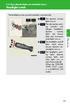 Headlight switch The headlights can be operated manually or automatically. U.S.A. Canada The daytime running lights turn on The side marker, parking (vehicles with halogen headlights), daytime running
CAR DAILY VEHICLE PRE CHECKS INFORMATION. Page 1 of 6
 Page 1 of 6 CAR DAILY VEHICLE PRE CHECKS INFORMATION There are approximately 2.5 million vehicles in national fleet in Ireland. As vehicles age they are subject to wear and tear and unless attended to
Signs, Pavement Markings, and Work Zones. Signs, Pavement Markings, and Work Zones
 Signs, Pavement 3 Signs, Pavement 77 3 Signs, Pavement This chapter includes information on highway signs that are intended to guide and inform you while you are driving. It includes information on the
Bendix Wingman ACB Active Cruise with Braking. Operator s Manual
 Bendix Wingman ACB Active Cruise with Braking Operator s Manual Warning: Improper use of the Bendix Wingman ACB Active Cruise with Braking System can result in a collision causing property damage, serious
Checklist and Tips for Safe Winter Driving
 Know Your Car Every vehicle handles differently; this is particularly true when driving on wet, icy, or snowy roads. Take time now to learn how to best handle your vehicle under winter weather driving
Bicycle Riding. WHAT ARE the. One Final Note... It is against the law to ride a bicycle under the influence of alcohol and/or drugs. (21200.
 One Final Note... It is against the law to ride a bicycle under the influence of alcohol and/or drugs. (21200.0 VC) Bicycle Riding WHAT ARE the CALIFORNIA HIGHWAY PATROL CHP 909 (12/11) OPI 013 94 75015
FMCSA Webinar Nov.18th to Examine Large Truck Crash Fatalities Involving Pedestrians & Bicyclists. New Technology for Better Fleet Management
 In This Issue: FMCSA Webinar Nov.18th to Examine Large Truck Crash Fatalities Involving Pedestrians & Bicyclists Help Prevent Roadway Accidents involving Pedestrians How to Steer Clear of Accidents with
Safety-conscious Drivers Prevent Crashes. Defensive Driving: Managing Visibility, Time and Space. Improve Your Defensive Driving Skills
 Defensive Driving: Managing Visibility, Time and Space Motor vehicle travel is the primary means of travel in the United States. With all the benefits that come along with mobility, there are thousands
Ell STEERING COLUMN CONTROLS STEERING COLUMN CONTROLS
 STEERING COLUMN CONTROLS Ignition Switch........ 2-1 LightinglTurn Signal Control Lever... 2-5 Windshield Wiper and Washer Lever... 2-6 Rear Window Wiper/Washer Switch (if equipped)... 2-8 Tilt Steering
Head Start Bus Monitor Training
 Head Start Bus Monitor Training The bus monitor works with the driver to ensure all Head Start children are safe and comfortable on the bus. Bus monitors encourage and direct the Head Start child to be
Drive Defensively. Trainer Outline. Goals: This safety session should teach employees to: Applicable Regulations: General Duty Clause Sec.
 Drive Defensively Trainer Outline 2020 Goals: This safety session should teach employees to: Understand the importance and practices of defensive driving. Applicable Regulations: General Duty Clause Sec.
chapter 3 basic driving skills
 chapter 3 basic driving skills When curving to the left, keep the front wheels close to the right edge of the lane to keep your driver s side rear wheels out of the next lane of traffic. Curve ahead slow
Sharing the road safely
 6 sharing the road in this chapter Sharing the road safely Pedestrians Cyclists Motorcycle riders Passenger vehicles Large vehicles School buses Public transit buses Emergency vehicles Emergency workers
Staying alert A guide to passenger security
 Staying alert A guide to passenger security GO Safely GO Transit is one of the safest transit systems in North America. Still, we have to be prepared for unexpected incidents. Your safety and security
AAA S GUIDE TO A SAFE
 Credit: ThinkStock SAME ROADS SAME RULES SAME RIGHTS AAA S GUIDE TO A SAFE BIKE RIDE DRIVING A BICYCLE Yes, bicyclists MUST drive their bicycles in the same manner that motorists drive their cars. Most
TEST ON Driving Safely Among Bicyclists and Pedestrians
 TEST ON Driving Safely Among Bicyclists and Pedestrians Next you will take a 16 question test about driving safely among bicyclists and pedestrians. Please take out a sheet of paper to mark down and score
Model Fleet Safety Program Short
 TM Model Fleet Safety Program Short CORPORATE HEADQUARTERS 518 EAST BROAD STREET COLUMBUS, OHIO 43215 614.464.5000 STATEAUTO.COM TM Disclaimer: The information contained in this publication was obtained
Commentary Drive Assessment
 Commentary Drive Assessment Time start: Time finish: Candidate s Name: Candidate s Email: Date of Assessment: Location: Candidate s Supervisor: Supervisors Contact Number: Supervisors Email: Assessor s
Lesson 1 - Risks While Driving
 Module 4 Space Management The following information is a review of the lesson you just completed. Take time to review and study this information. Remember, this important information will be needed to
The Older And Wiser Driver
 The Older And Wiser Driver AAA Foundation for Traffic Safety Sharpening Your Driving Skills Aging is inevitable, but growing older doesn t have to mean giving up an active life. While aging does impose
These "rules of the road" are based on Texas Transportation Code statutes. Find the complete bicycle code at the bottom of the page
 Texas Bicycle Laws These "rules of the road" are based on Texas Transportation Code statutes. Find the complete bicycle code at the bottom of the page Bicyclists have the rights and duties of other vehicle
Guide. Crease Lines. Perf Line 6.85. accident EXTRA PANEL NOT NEEDED. Parent-Teen Contract Preparing your teen for the road ahead
 Printed Side outside view 18 3 9/16 3 5/8 9/ 16 3 7/8 3 7/8 3 5/8 What to do if you re in an accident Stop! If you leave the site of an accident, you could be Road Ahead charged with a hit and run regardless
Beginner s Permit. Survival Guide. Compliments of. (843) 263-5023 www.123drivedrivingacademy.com [email protected]
 Beginner s Permit Survival Guide Compliments of (843) 263-5023 www.123drivedrivingacademy.com [email protected] Please use this study guide to assist you in studying for your written knowledge
RC HELICOPTER INSTRUCTION MANUAL
 AGE 14+ RC HELICOPTER INSTRUCTION MANUAL 1. Smart R/C system 2. Full scale remote control 3. Omnidirectional flight 4. Smooth hover performance 5. Newly designed electricity saving functionality 6. Longer
New Mexico Driver Manual Table of Contents
 Table of Contents THE DRIVER LICENSE... 1 TYPES OF DRIVER LICENSES GRADUATED LICENSE SYSTEM... 1 Instructional Permit... 1 Provisional License... 1 Unrestricted Driver License... 2 DRIVER LICENSE RENEWAL...
Back to School Car Safety. Direct Buy Warranty Staff September 19, 2014
 Back to School Car Safety Direct Buy Warranty Staff September 19, 2014 It s back to school season, and that means kids are picking out new clothes, putting on their backpacks, and hitting the road to get
Florida Class E Knowledge Exam Road Rules Practice Questions www.gdlinstitute.org
 If you purchase the Value Package from GDL Institute, over 100 additional practice questions are included at no additional cost. Use discount code PQ10 and receive 10% off of the package price! 1. If you
- FREE! - The Official San Francisco BIKE GUIDE. 1st Edition
 - FREE! - The Official San Francisco BIKE GUIDE 1st Edition SF BIKE LAWS SAN FRANCISCO BICYCLISTS MUST: Yield to People Walking Whether they re in a crosswalk or not, ALWAYS yield to people walking. Stop
TRAINER NOTES FOR LESSON PLAN 2012 13 School Bus Instructors Inservice TITLE OF LESSON: TRAINING UPDATES FOR A CDL
 TRAINER NOTES FOR LESSON PLAN 2012 13 School Bus Instructors Inservice TITLE OF LESSON: TRAINING UPDATES FOR A CDL Length of Lesson: 30 minutes TRAINER NOTES: Hand out lesson plan at the beginning of the
August 21, 2007 2:00 3:00 pm. Presented by: Barbara Zortman, Center for Traffic Safety Fritzi Schreffler, PennDOT District 8 Safety Press Office
 August 21, 2007 2:00 3:00 pm Presented by: Barbara Zortman, Center for Traffic Safety Fritzi Schreffler, PennDOT District 8 Safety Press Office These children are transported more than 385 million miles
Level 2 Award in Safe Driving at Work
 Level 2 Award in Safe Driving at Work Student notes (sample) www.britsafe.org Membership Training Qualifications Audit and Consultancy Audit and Policy Consultancy and Opinion Policy Awards and Opinion
Stop The stop sign, a red octagon with white lettering, means come to a full stop and be sure the way is clear before proceeding.
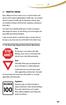 Tr a f f i c S i g n s 7 7. TRAFFIC SIGNS Many collisions and near crashes occur as a result of drivers who ignore or fail to respond appropriately to traffic signs. It is essential that the meaning of
Driver Certification
 Driver Certification Environmental Health & Safety/Risk Management Department of Campus Operations 300 College Park Dayton, Ohio 45469-2904 937-229-4503 Agenda: Part I: Review of UD Driver Certification
Texas Virtual Driver Education Course Syllabus
 Texas Virtual Driver Education Course Syllabus By Amarillo Independent School District INTRODUCTION: 46:04 Welcome/Tutorial 5 minutes Virtual Drive Notice 1 minute Audio/Computer Requirements 3 minutes
12 & 15- Passenger Van Defensive Driver Training
 12 & 15- Passenger Van Defensive Driver Training NHTS-national Highway Traffic Safety Administration Recognizes that 12-15 passenger vans (include driver) are similar type vehicle and offer the same hazards
8. WHAT EVERY MOTORCYCLIST MUST KNOW
 8. WHAT EVERY MOTORCYCLIST MUST KNOW It is an offence to carry passengers on the handle bars, frame or tank of the motorcycle. It is also an offence to cling to or attach yourself or your vehicle to any
A Guide to Accident Prevention on Motorcycles
 A Guide to Accident Prevention on Motorcycles SEE me now? Always ride with your dipped headlight on DAY AND NIGHT Avoiding the 5 most common motorcycle accidents... 1 Collisions at Junctions... These can
FLEET SAFETY INSAFE Safety Consultants Mark McDaniel - Bob Starkey
 INSAFE Safety Consultants Mark McDaniel - Bob Starkey What is Fleet Safety? Driving Techniques Operator Knowledge Vehicle Maintenance Trip Planning Indiana Dept. of Labor : McDaniel / Starkey 1 Real Estate
Tire Safety for Passenger Vehicles and Light Trucks
 Hanover Risk Solutions Tire Safety for Passenger Vehicles and Light Trucks Properly maintained tires improve the steering, stopping, traction, and load-carrying capability of vehicles. Underinflated and
Table of Contents. Introducing AYGO. Accessing your vehicle 2 3. Lights 9. Wipers 10. Electric windows 4. Gear change 11
 AYGO Brief Guide Table of Contents Accessing your vehicle 2 3 Electric windows 4 Steering wheel (Vehicles with an adjustable type) 4 Seat and seat belt adjustment 5 Instrument Panel overview 6 Instrument
TROPIC LIGHTNING CHECKRIDE PERFORMANCE MEASURE
 TROPIC LIGHTNING CHECKRIDE PERFORMANCE MEASURES V4.0 TASK 1: PERSONAL PROTECTIVE EQUIPMENT PERFORMANCE MEASURE DOT Approved Helmet Proper Reflective Equipment Full Fingered Gloves Proper Eye Protection
New Driver & Coach Practice Guide
 New Driver & Coach Practice Guide Welcome to Driving in Maryland Dear Coach and Rookie Driver: For the Rookie Driver: Congratulations. In getting your Learner s Instructional Permit, you have just completed
SCHOOL BUS SAFETY STOP WHAT MOTORISTS SHOULD KNOW. ILLINOIS STATE BOARD OF EDUCATION Making Illinois Schools Second to None
 SAFETY WHAT MOTORISTS SHOULD KNOW STATE BOARD OF EDUCATION Making Illinois Schools Second to None Funded by National Highway Traffic Safety Administration and Illinois Department of Transportation Division