
OROKLINI MARSH. Introduction
|
|
|
- Maurice Freeman
- 9 years ago
- Views:
Transcription
1 OROKLINI MARSH Introduction I have been a keen Bird-watcher for many years and my interest has gradually changed to carrying out in depth study of specific sites rather than random outings to various areas. I have been involved in the production of, or have carried out myself, site dossiers at many sites both in UK and abroad. Obviously inputs from entomologists or botanists make the site dossier more useful if they are available. When I started visiting Oroklini Marsh in 2001, it soon became obvious that few Birders visited the site regularly, certainly not enough to give an overall picture of resident and visiting birds to the marsh. Compared with other local sites such as Larnaca Salt Lake, Larnaca Sewage Works and Akhna Dam, Oroklini Marsh tends to be regarded as the poor relation. I visited the site almost daily and noted 195 species in 11 years which makes visiting the site very worthwhile and attractive to visiting Birders. The marsh is a Special Protective Area (SPA) under EU Birds Directive and a Site of Community Importance (SCI) under EU Habitats Directive. There are plans to carry out serious management of the site such as removal of invasive plants and construction of Bird Watching Hides. Currently, the best viewing point for the main lake is from the Ooooops car park at the northern end and from the derelict buildings at the southern end to view the more marshy areas. It must be said however that the marshy area is also more of a lake in the wet season and access is very limited. It is hoped that the document might be of use to visiting Birders or local residents who may not be aware of what may be seen on the marsh at different times of year. As can be imagined, daily sightings produce a wealth of data which is updated at least monthly. For anyone less than keen on meeting snakes I have only ever come across Large Whip Snakes which are reputed to be quite harmless. The largest I have seen was about 2 metres long with a Rat sized swelling half way along.

2 Geography/Topography Like the majority of place names in Cyprus, Oroklini suffers from indecision regarding the use of Greek, English or Gringlish. Most maps use the spelling VOROKLINI while most road signs use OROKLINI with the Greek spelling underneath. The marsh is situated south of the village between the motorway and the Larnaca/Dhekalia road. Visitors from the west should take the Oroklini exit from the motorway turning first left after about 100 metres which will take you under the bridge shown at the top of the sketch map. Visitors from the east should take the Oroklini exit which will lead directly to the road junction at the north east part of the marsh. The marsh shows all the signs of having been a mini salt lake in a previous life. The sea is only a matter of about 200 metres away, and, when drying, a glaze of salt is obvious on the flat areas. Salt loving plants grow over the whole marsh and Mullet and Eels have obvi0usly found a way in, being very common when the marsh is full. The majority of the water comes to the north west of the main lake through a culvert under the motorway from slightly higher ground. Local council workers carry out weekly anti-mosquito activities over the whole marsh which includes spraying and the introduction of Mosquito fish, much appreciated by the Grebes and Egrets etc. A dam at the north east part of the marsh ensures that no water flows to other areas until the southern part of the main lake is 100cm deep. Once the dam overflows, the remaining areas gradually fill to a depth of about 50cm as long as the season s rainfall has been sufficient. The 3 drainage channels fill to a depth of about 200cm and therefore very rarely dry out. Winter In UK, the winter period is easy to define.not so in Cyprus. With Barn Swallows only being absent for about 7 weeks centred around December but with the first wintering European Robins being seen in October, it all seems a bit hazy. I shall plump for the period November to April.

3 Generally speaking, activity on the marsh is dictated more by water level and food availability rather than the time of year. The normal start of the rainy season during November kicks off rejuvenation of the marsh when counts of 100 appear on the sightings lists. Eurasian Coots are usually the first obvious winter arrivals with numbers rising to many hundreds by December. Other water fowl making an appearance are Little and Black-necked Grebes, Water Rails, Common Moorhens, Little and Spotted Crakes, various Gulls and Ducks. Common Black-headed Gulls are usually present in hundreds, once water levels permit, using the marsh to rest, preen and bathe. Slender-billed Gulls visit in small numbers and give Birders a challenge trying to sort them out from the Common Black-headed Gulls. Yellow-legged, Baltic, Mediterranean, Caspian and Little Gulls visit in small numbers. Eurasian Teal are easily the most common and long staying ducks, being present from November until April in counts of up to 400. Other visiting Ducks seen in smaller numbers include Common Shelduck, Eurasian Wigeon, Gadwall, Mallard, Northern Pintail, Northern Shoveler, Red-crested Pochard, Garganey and Ferruginous Duck. Various Heron and Egret species occur in variable numbers, the most common being the Little Egret at 98 and the Cattle Egret at 67. Glossy Ibis normally appear during March with numbers peaking in April, the record being 173 on 21 st April Western Marsh, Hen and Pallid Harriers appear during the winter with the Western Marsh Harrier being the most common, much to the annoyance of the Eurasian Coots and Ducks. Common Buzzards and Eurasian Sparrowhawks are occasionally seen while Common Kestrels are seen throughout. Although large numbers of Black-winged Stilt, Spur-winged Lapwing and Ruff arrive during March, the genuine winter visitors among the waders include Little-ringed Plover, Northern Lapwing, Common Snipe, Common Redshank and Common Sandpiper. Meadow Pipits are fairly common throughout the winter, reaching counts of up to or 2 European Robins, Bluethroats, Western Black Redstarts, Eurasian Blackbirds, Song Thrushes and Common Chaffinches are present throughout but normally restricted to the area near the Sveltos Hotel which has dense cover near water.

4 Cetti s Warbler, Common Chiffchaff, Eurasian Blackcap and Sardinian Warbler share this area, the Cetti s Warbler starting it s song at full volume from January. Common Starlings are usually seen overflying en route to roosts, occasionally in numbers to 200. Summer I will assume for the sake of convenience that the summer period includes the months May to October and the mentioned birds will include resident breeders as well as summer visitors. Little Grebe will be seen in all months providing the water levels are suitable, a few pairs normally breeding. When the marsh is in the final stages of drying out, Little Grebes can be seen feeding on the stranded Mosquito Fish without the necessity to dive. Little Egrets have bred on the marsh in previous years in small numbers but not for the last 5 years. The species has gradually reduced in numbers over the years with the previously uncommon Cattle Egrets becoming much more common. Grey Herons can be seen visiting in all months of the year but cannot be called residents and definitely don t breed. Mallard breed regularly, Garganey have bred sporadically on the marsh since 2002, Northern Shoveler bred in 2010 for the first time in 100 years and Red-crested Pochard started regular breeding from Common Kestrels are resident and breed on the roof of nearby Hotels. Chukar used to breed in small numbers and groups of up to 15 were often seen. The last 5 years has seen a dramatic decrease in numbers and the species is now extremely rare on the marsh, probably due to the spread of building now surrounding the marsh. It seems odd that Black Francolin should be unaffected and are still quite common, more often heard than seen. Common Moorhen and Eurasian Coot breed annually, numbers dependant on water levels. Black-winged Stilts breed annually, numbers dependant on water levels but can reach 60 nests. Little Ringed Plover often have 1 or 2 nests but chicks have never been seen. Spur-winged Lapwing breed every year with about 7 pairs normally having 2 broods. Nests with 5 eggs instead of the normal 4 are often seen. Ruff are migrants but are seen in May with counts of up to about 75. Little Stint are

5 similar with counts of up to about 40. Small numbers of Wood Sandpipers are common throughout the summer as are Green Sandpipers. Little Terns occasionally breed on the marsh but with little success. Recently, from 5 nests, only a single juvenile was the result. A very abnormally high number of snakes was seen around the nests and it is assumed they accounted for the poor result. Eurasian Collared Doves are resident in trees and buildings on the edge of the marsh. Common Swifts normally arrive in January and feed over the marsh until the end of August. Barn Swallows feed over the marsh from January to November counts of up to 350 being noted in September when a large movement takes place. Common House Martins are around from February to September only reaching counts of about 20 birds. Crested Larks are resident and breed on the drier parts of the marsh. Black-headed Wagtails are seen from March until October and breed in small numbers. Zitting Cisticola and Spectacled Warblers are resident and breed in the drier years. Eurasian Magpie are resident but reducing in numbers every year. There was a single nest in a large bush on the edge of the marsh a few years ago. Hooded Crows are common residents but have never bred. House Sparrows breed adjacent to the marsh and feed their young on the emerging Dragonflies of the Red Sympetrum type which number literally millions. European Goldfinches obviously breed but nests have never been found. Migrants Migrating species are a little difficult to describe as they don t all stick to the rules. Some species can be seen throughout the summer and are presumed to be non-breeders, not bothering to travel great distances for no reason. Little Bittern, Night Herons and Squacco Herons visit in Spring and Autumn. Little Egrets are seen in larger numbers in Spring and Autumn, with a few in summer. Purple Herons and Glossy Ibis are regular in Spring but rarer in autumn. Little Crake put in an appearance in March and April and occasionally winter. Common Cranes can be seen overflying in spring with counts of 100 s but with less in autumn.

6 Black-tailed Godwits visit in small numbers from March to June and in even smaller numbers in autumn. Marsh Sandpipers and Greenshank are seen in spring and autumn. European Turtle Doves visit in spring and autumn, as do European and Blue-cheeked Bee-eaters. Common Kingfishers are seen mainly in autumn, less in spring and a few winter. Sand Martins are seen in spring in low numbers but more common in autumn. Whinchats, Isabelline and Northern Wheatears are usually seen in spring and autumn. Among the Warblers, Great Reed and Icterine Warblers appear in small numbers in spring and autumn but I admit to failures in positive identification of some other species. I always err on the side of accurate idents only, so have not recorded glimpses of Little brown birds skulking in dense Tamarisk bushes. I feel sure there are Olivaceous and Eurasian Reed Warblers passing through but have not logged them. Red-backed, Lesser-grey and Masked Shrikes can be seen in spring and more commonly in autumn. Numbers are very variable. Vagrants and Casual Visitors The following species can be regarded as Occasionl visitors, Vagrants or Rarities, the status referring strictly to the marsh and not Cyprus as a whole. Black-necked Grebe Great White Pelican Lttle Bittern Black Stork Common Shelduck Booted Eagle Common Quail Eurasian Golden Plover Great Snipe Ruddy Turnstone Common Woodpigeon Pied Kingfisher Citrine Wagtail Fieldfare Great Reed Warbler Collared Flycatcher Woodchat Shrike Great Cormorant Eurasian Bittern Great Egret Greater White-fronted Goose Long-legged Buzzard Eleonora s Falcon Collared Pratincole Broad-billed Sandpiper Eurasian Curlew Pin-tailed Sandgrouse Common Cuckoo Red-rumped Swallow Dunnock Savi s Warbler Eastern Orphean Warbler Rose-coloured Starling Cretzschmar s Bunting

Trip Report. By Bob Shiret
 Paphos 16 th 30 th March 2016 Trip Report By Bob Shiret Introduction I have to confess that before embarking on this year`s trip I doubted whether I would be constructing a report afterwards as it could
Paphos 12 th 26 th March 2014
 Paphos 12 th 26 th March 2014 Trip Report By Bob Shiret View of Akamas Peninsular Introduction This report follows last April s where as you will see a different mix of birds were seen. The holiday was
Birding Trip Report. Portugal 17 th to 23 rd April 2013. Tony Small & Dave Hardaker. [email protected]
 Birding Trip Report Portugal 17 th to 23 rd April 2013 Tony Small & Dave Hardaker. [email protected] Area around the back of Guerreiro, leading to LPN, Alentejo. We booked flights with Easyjet from
Bird watching is organized by Alecturist Mr. Tomaz Remzgar
 Bird watching is organized by Alecturist Mr. Tomaz Remzgar Bird watching trip 1: Birds of alpine forests DURATION: 6-8 hours HABITATS: coniferous forest, mixed forest, rock cliffs PRICE: 180 A trip into
Birding Cyprus by foot, by bike, by bus and by car
 Birding Cyprus by foot, by bike, by bus and by car APRIL 2012 Having visited Cyprus once before, back in 1997, a return visit seemed overdue. A week long package deal via lowcostholidays got return flights
Holiday Highlights. Cyprus. 8-15 April 2015. Don Mills, David Johnston, Terry White, Liz Woodford and Bill Shepherd
 Holiday Highlights Cyprus 8-15 April 2015 Guide: Guests: Day 1: Roy Atkins Don Mills, David Johnston, Terry White, Liz Woodford and Bill Shepherd Our flight leaves Gatwick exactly on time and after a pleasant
Hungary & Transylvania May 10 th 21 st 2011 Trip Report
 Hungary & Transylvania May 10 th 21 st 2011 Trip Report May 10 th The group consisting of Peter & Dot Kitching, Keith Deacon & Nadine Hodson, Brenda Seaton, Ann & Graham Johnson, Dick & Jan Brown and Maurice
Spring tour B Kiskunság - Bükk Mountains - Lake Tisza - Hortobágy (5 days, 4 nights)
 Spring tour B Kiskunság - Bükk Mountains - Lake Tisza - Hortobágy (5 days, 4 nights) During this 5-days (4 nights) tour we will visit 3 National Parks. Kiskunság NP, Bükk NP and Hortobágy NP offering us
NORTH KARELIAN BIRDING AREAS
 NORTH KARELIAN BIRDING AREAS Bird towers 1. Kitee, Hovinlampi (2 towers) 2. Joensuu, Höytiäinen channel estuary 3. Rääkkylä, Jouhtenuslampi 4. Valtimo, Lake Kalliojärvi (2 towers) 5. Rääkkylä, Lake Kiesjärvi
Corsica. April 30th May 17th 2012. A Trip Report by Tim Hajda
 Corsica April 30th May 17th 2012 A Trip Report by Tim Hajda Introduction Corsica is a stunningly beautiful French island in the western Mediterranean Sea. Thanks to its relatively low population density
Date Species Species_2 Gender # Road Milepost or Specific Location Comments 4/10/2013 Red Fox Fox, Red 1 Tank Farm 5/25/2013 Emperor Goose Goose,
 Date Species Species_2 Gender # Road Milepost or Specific Location Comments 4/10/2013 Red Fox Fox, Red 1 Tank Farm 5/25/2013 Emperor Goose Goose, Emperor 4 Nome River Bridge Norton Sound Side 5/28/2013
Birding Finland and Sweden 9 th to 20 th May 2017 (12 days)
 Birding Finland and Sweden 9 th to 20 th May 2017 (12 days) Ural Owl by David Hoddinott This tour will take us to the coast of northern Finland and to the vast wilderness in the northeast of the country,
North Merseyside. Local Wildlife Sites Selection Guidelines
 DRAFT North Merseyside Local Wildlife Sites Selection Guidelines January 008 Prepared by: Rachael Rhodes Assistant Ecologist Merseyside Environmental Advisory Service DRAFT Contents Page Number Introduction
Kazakhstan 4 th to 17 th May 2013 (14 days)
 Kazakhstan 4 th to 17 th May 2013 (14 days) Pallas's Sandgrouse by Machiel Valkenburg Kazakhstan is the world s largest landlocked country and its territory of 2,727,300 square kilometres (1,053,000 sq
DECOY COMPETITION RULE BOOK
 34th Annual Havre de Grace Decoy & Wildlife Festival May 1, 2, 3, 2015 DECOY COMPETITION RULE BOOK GENERAL RULES AND REGULATIONS 1. All entrants must complete the entry form. Entry form must be signed.
Lappet-faced Vulture, Bir Shalatayn, 2004-12-04. Copyright: Måns Grundsten
 Egypt, December 2-9 2004 The Red Sea Coast (Hurghada to Bir Shalatayn) & The Nile Valley (Crocodile Island) Måns Grundsten & Matti Eriksson, Stockholm, Sweden Lappet-faced Vulture, Bir Shalatayn, 2004-12-04.
Birds of conservation concern
 Birds of conservation concern 3 2009 Birds of conservation concern 3 Data sources The UK s leading bird conservation organisations have worked together on the third quantitative review of the status of
Integrating Bird Conservation and Natural Resources Management: Best Management Practices. Jennifer Devlin, City of Portland, Environmental Services
 Integrating Bird Conservation and Natural Resources Management: Best Management Practices Jennifer Devlin, City of Portland, Environmental Services When to Plan Disturbance: August 1 January 31 best time
Bird Photography Site Guide Port Aransas, TX and environs
 Bird Photography Site Guide Port Aransas, TX and environs Overview Port Aransas, TX is located on the northern end of Mustang Island, less than an hour s drive from Corpus Christi. It has been known as
Seattle is -- FOR THE BIRDS. How to Identify Common Seattle Birds
 Seattle is -- FOR THE BIRDS How to Identify Common Seattle Birds Want to learn more about birds? Join Seattle Audubon s Family and Youth Programs Mailing List to hear about upcoming opportunities. Name:
Ruben Vlot The Netherlands [email protected]
 Ruben Vlot The Netherlands [email protected] I hope this trip report will help you in preparing your trip through Turkey. If you have any questions left after reading the report do not hesitate to contact
Ulcinjska Primorje - Montenegro
 Basic ideas for the development of sustainable tourism on the Ada Island Ulcinjska Primorje - Montenegro (June 2004) Martin Schneider-Jacoby Fig. 1. Ada Island, Reserve Velipoja and the Bojana River: Protected
Western Turkey - Birds, Flowers & History
 Western Turkey - Birds, Flowers & History Naturetrek Tour Itinerary 200 Outline itinerary Day 1 Day 2 Day 3/4 Day 5/6 Day 7 Day 8 Fly Izmir & transfer Kuşadasi. Kuşadasi. Lake Bafa. Denizli. Kuşadasi.
Lesvos 21 st April 5 th May 2012 Howard Vaughan & party
 Lesvos 21 st April 5 th May 2012 Howard Vaughan & party Day one: 21 st April: We left Gatwick in early morning sunshine, little knowing that this was the last glimmer of brightness that Blighty would see
JANUARY 1 JANUARY 2 JANUARY 3. Possible First Occurrences Today. Possible First Occurrences Today. Possible First Occurrences Today
 JANUARY 1 Black-capped Chickadee Two-note Song Canada Goose Sandhill Cranes Last Seen Wisconsin River Open JANUARY 2 Black-capped Chickadee Two-note Song Sandhill Cranes Last Seen Wisconsin River Open
Go Slow in Sweden. Naturetrek Go Slow Tour Itinerary. Outline itinerary. Fly Vasteras and transfer Svartådalen. Day 1
 Naturetrek Go Slow Outline itinerary Day 1 Fly Vasteras and transfer Svartådalen. Day 2/5 Birding & natural history excursions around Svartådalen. Day 6 Birding around Svartådalen and fly London. Departs
South-west Iceland 24th February 2nd March 2016
 South-west Iceland 24th February 2nd March 2016 This was by no means a birding holiday, but more of a trip for me and my wife to relax and spend some time planning the birth of our first child and celebrate
The Wonderful World of Wetlands BINGO
 The Wonderful World of Wetlands BINGO Time: 10-15 minutes to create Bingo board; 5-10 minutes to play one-round of Bingo Scituate Reservoir Watershed Education Program 17 Smith Ave Greenville, RI 02828
BIRD WATCHING IN CYPRUS A BRIEF GUIDE FOR VISITORS TO THE ISLAND
 BIRD WATCHING IN CYPRUS A BRIEF GUIDE FOR VISITORS TO THE ISLAND 1 Information on Cyprus in general The position of Cyprus in the eastern Mediterranean with Turkey to the north, Syria to the east and Egypt
ORNITHOLIDAY S TOUR TO GREECE - THE ISLAND OF KOS AT LEISURE Eleonora s Island. 07-14 May 2015. Leader: Paul Rogers
 ORNITHOLIDAY S TOUR TO GREECE - THE ISLAND OF KOS AT LEISURE Eleonora s Island 07-14 May 2015 Leader: Paul Rogers ORNITHOLIDAY S TOUR TO GREECE - THE ISLAND OF KOS AT LEISURE Eleonora s Island 07-14 May
MONITORING LONG TERM TRENDS OF BIRD POPULATIONS IN SWEDEN
 S. SVENSSON, 2004 - Monitoring long term trends of bird populations in Sweden.In : Anselin, A. (ed.) Bird Numbers 1995, Proceedings of the International Conference and 13 th Meeting of the European Bird
Wetlands by Leslie Cargile
 Name: by Leslie Cargile What do the bogs in Ireland, the marshes in South Carolina, and the swamps of Louisiana have in common? If you said they re all wetlands, you d be right! are any land that is flooded
LANIUS BIRD TOURS. CROATIA Spring on the Dalmatian Coast 7 th - 14 th May 2014
 LANIUS BIRD TOURS CROATIA Spring on the Dalmatian Coast 7 th - 14 th May 2014 Leader Dave Read Local Guide Robert Crnković Participants Christopher & Christine Watkinson Mick & Ann Daubney Richard Ness
Bird Hunting along the Adriatic Flyway
 Bird Hunting along the Adriatic Flyway An Assessment of Bird Hunting in Albania, Bosnia-Herzegovina, Croatia, Montenegro, Slovenia and Serbia Report compiled by EuroNatur within the Frame of the Project
Recommended Land Use Guidelines for Protection of Selected Wildlife Species and Habitat within Grassland and Parkland Natural Regions of Alberta
 Fish and Wildlife Division Sustainable Resource Development Recommended Land Use Guidelines for Protection of Selected Wildlife Species and Habitat within Grassland and Parkland Natural Regions of Alberta
Spain The Best of Coto Doñana
 Naturetrek 22-26 November 2012 Corn Bunting Glossy Ibis Little Owl Penduline Tit Report compiled by Byron Palacios Images by Julian Gayarre Naturetrek Cheriton Mill Cheriton Alresford Hampshire SO24 0NG
Where Do Birds Live?
 Objectives You will learn about 1) where birds build nests, 2) the materials they use, 3) different nest characteristics and 4) how to observe nesting activity. Introduction Birds hatch their young in
birdwatching in portugal
 birdwatching in portugal In this guide, you will find 36 places of interest for birdwatchers and seven suggestions of itineraries you may wish to follow. Accept the challenge and venture forth around Portugal
ORNITHOLIDAYS TOUR TO HUNGARY Spring Tour. 01 08 May 2010. Leader: Gábor Simay
 ORNITHOLIDAYS TOUR TO HUNGARY Spring Tour 01 08 May 2010 Leader: Gábor Simay ORNITHOLIDAYS TOUR TO HUNGARY Spring Tour 01-08 May 2010 A Personal Diary Saturday, 1 May It was sunny and pleasant in Budapest
Cycles of life. You will be visiting the museum to see some baby animals and their parents. Here are some of their stories.
 Cycles of life Some animals die of old age, some die of disease, some are killed and eaten by other animals. But the world does not run out of animals because more are being born or hatched all the time.
The importance of Lebanon for the migratory soaring birds & the flyway. April 2012. Bassima Khatib SPNL Assistant Director General
 The importance of Lebanon for the migratory soaring birds & the flyway April 2012 Bassima Khatib SPNL Assistant Director General Outline Who is SPNL? IBA programme Importance of Lebanon for migratory soaring
Owls. Choose words from the list at the end of the page to fill in the blank spaces.
 Owls Choose words from the list at the end of the page to fill in the blank spaces. Owls are _ of prey. A bird of prey is one that catches its food in its Owls hunt for their at night. A bird that hunts
Wildlife for the Workforce Part II:
 Wildlife for the Workforce Part II: Turtles and Tortoises, Snakes, Bees, and Exotic Animals Sarasota County Parks and Recreation Turtles and Tortoises Common cooter Green sea turtle Gopher tortoise Terrapin
Naturetrek Tour Report 20-27 April 2013. Marbled Duck
 Naturetrek 20-27 April 2013 Marbled Duck Purple Heron Swallowtail 2013 Naturetrek Tour Group Report compiled by Alan Miller Images by Richard Beer and Alan Miller Naturetrek Cheriton Mill Cheriton Alresford
These Maps Are For The Birds
 These Maps Are For The Birds Students will study New York State Breeding Bird Atlas maps to learn where different bird species nest and how their distributions have changed over time. Objectives: Students
Naturetrek Tour Report 28 April - 5 May 2009
 Naturetrek 28 April - 5 May 2009 Picnic in the Bocquer Valley Red-knobbed Coot with chick Nightingale Greater Flamingos Report and images compiled by Alan Miller Naturetrek Cheriton Mill Cheriton Alresford
The Owl That Roared Character Introduction
 The Owl That Roared Character Introduction Bubo the Giant Eagle Owl Bubo is a huge bird of prey with great tufty eyebrows. He was orphaned as a baby at London zoo, he fell from his nest into the lions
CONSERVATION MEASURES FOR ELEONORA S FALCON IN GREECE LAYMAN S REPORT
 CONSERVATION MEASURES FOR ELEONORA S FALCON IN GREECE LAYMAN S REPORT JANUARY 2008 2 Eleonora s Falcon Eleonora s Falcon is one of the most characteristic birds of the Aegean Sea. It is a migrating falcon
Arctic Magic Finland and Varanger Fjord 15 th 25 th June 2001
 Arctic Magic Finland and Varanger Fjord 15 th 25 th June 2001 Tour Report Celtic Bird Tours 84 Coity Road, Bridgend Cf31 1LT +44 01656 645709 [email protected] Tour Leaders Jeff Price Neil Donaghy
The Breeding Bird Survey
 The Breeding Bird Survey 2009 The population trends of the UK s breeding birds 2009 BBS Report 1 The Breeding Bird Survey partnership The British Trust for Ornithology The Nunnery Thetford Norfolk IP24
Region of Georgia : Mountains
 Region of Georgia : Mountains Northern most region of GA Cold weather in the winter Brasstown Bald is the highest point in Georgia Lots of creeks and streams High above sea level Poor soil for farming
GUIDANCE: Avoiding Impacts on Nesting Birds During Construction and Revegetation Projects
 TERRESTRIAL ECOLOGY ENHANCEMENT STRATEGY GUIDANCE: Anna s Hummingbirds Photo by Phillip G.Engstrom Avoiding Impacts on Nesting Birds During Construction and Revegetation Projects Version 2 October 2010
Common Backyard Birds of Alabama
 Common Backyard Birds of Alabama Alabama Ornithological Society (AOS) state list includes 420 species: 158 species regularly breed in Alabama 174 species regularly winter 80 species migrate through Alabama
ORNITHOLIDAYS TOUR TO SPAIN THE CANARY ISLANDS Winter Sunshine Break. 15-22 February 2014. Leaders: David Walsh
 ORNITHOLIDAYS TOUR TO SPAIN THE CANARY ISLANDS Winter Sunshine Break 15-22 February 2014 Leaders: David Walsh ORNITHOLIDAYS TOUR TO SPAIN THE CANARY ISLANDS Winter Sunshine Break 15-22 February 2014 A
Naturetrek Tour Report 9-17 September 2013. Black Stork (Neil Pont)
 Naturetrek 9-17 September 2013 Black Stork (Neil Pont) Pygmy Cormorants (Neil Pont) Pied Wheatear (Richard Bashford) White Pelicans (Neil Pont) Report compiled by Richard Bashford Images courtesy of Neil
Red-billed Tropicbird at Praia, Santiago, 30 th April 2011
 1 Cape Verdes April/May 2011 by Richard Bonser Red-billed Tropicbird at Praia, Santiago, 30 th April 2011 Introduction Following the sightings of three extreme Western Palearctic herons at one site in
Crooked Tree Wildlife Sanctuary
 Vision The Belize Audubon Society (BAS) will be a strategic leader in building a nation in which people in Belize live in harmony with and benefit from the environment. Mission The Belize Audubon Society
Bird Study Merit Badge Workbook
 Merit Badge Workbook This workbook can help you but you still need to read the merit badge pamphlet. The work space provided for each requirement should be used by the Scout to make notes for discussing
FIELD CHECKLIST OF BIRDS
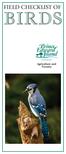 FIELD CHECKLIST OF BIRDS Blue Jay While in its 1977 spring session, the Prince Edward Island legislature officially declared the Blue Jay as avian emblem for the province. During Environment Week of 1976,
Trip Report Madeira 22 February 1 March 2005
 1 (6) Trip Report Madeira 22 February 1 March 2005 Together with my two children, Alexander 13 years and Nina 9 years I made a combined vacation and birding tour to Madeira. We flew from Malmö-Sturup airport
Bird Scavenger Hunt Activity
 Bird Scavenger Hunt Activity Materials: Bird questions worksheet (pages 2-3) 18 Bird fact cards (pages 4-8) Tape and scissors Preparation: Print the fact cards on card stock or brightly-colored paper and
Hortobágy, Zemplén & Ore Mountains Sat 2nd-Sat 9th May 2015
 Limosa Holidays Trip Report HUNGARY & SLOVAKIA Hortobágy, Zemplén & Ore Mountains Sat 2nd-Sat 9th May 2015 Trip photos (clockwise, from top left): A female Red-footed Falcon looks out form its nestbox
Pond Vocabulary Words and Meanings
 Pond Vocabulary Words and Meanings Adapt: to adjust to a use or situation Aquatic: from or in the water Bacteria: tiny organisms, too small to be seen with the naked eye Carnivore: an animal that eats
ORNITHOLIDAYS TOUR TO FRANCE WALLCREEPER TOUR AT LEISURE Mountains and Marshes. 15-20 January 2013. Leader: Paul Rogers
 ORNITHOLIDAYS TOUR TO FRANCE WALLCREEPER TOUR AT LEISURE Mountains and Marshes 15-20 January 2013 Leader: Paul Rogers ORNITHOLIDAYS TOUR TO FRANCE WALLCREEPER TOUR AT LEISURE Mountains and Marshes 15-20
ENDANGERED AND THREATENED
 ENDANGERED AND THREATENED Understand how species in the Sonoran Desert Region may become endangered or threatened and what is being done to protect them. ARIZONA SCIENCE STANDARDS SC03-S4C3-03&04, SC08-S1C3-07,
Chapter Four Resource Management Plan
 Chapter Four Resource Management Plan 4.1 Overview of Resource Management Plan Sensitive resources identified within the Plan area include biological, agricultural, and cultural resources. This section
Breeding Birds in Trouble
 Workshop Report Breeding Birds in Trouble Preparation of an action plan for proper management of threatened breeding birds in the Wadden Sea Wilhelmshaven, 18 April 213 Photo: G. Reichert Joint Monitoring
Blacks Creek BIRD RESERVE A COMMUNITY VISION FOR BLACKS CREEK RESERVOIR
 Blacks Creek BIRD RESERVE A COMMUNITY VISION FOR BLACKS CREEK RESERVOIR 1 This document was prepared by the Golden Eagle Audubon Society and the Land Trust of the Treasure Valley with support and input
Fry Phrases Set 1. TeacherHelpForParents.com help for all areas of your child s education
 Set 1 The people Write it down By the water Who will make it? You and I What will they do? He called me. We had their dog. What did they say? When would you go? No way A number of people One or two How
Turkey - Istanbul and the Bosphorus Migration
 Turkey - and the Bosphorus Migration Naturetrek Tour Itinerary Outline itinerary Day 1 Day 2/3 Day 4/5 Day 6/8 Day 9 Fly. Migration watching and sightseeing,. Uludağ; overnight Bursa. Migration watching
Impacts on biodiversity of exploitation of renewable energy sources: the example of birds and bats
 Hermann Hötker, Kai-Michael Thomsen, Heike Jeromin Impacts on biodiversity of exploitation of renewable energy sources: the example of birds and bats Facts, gaps in knowledge, demands for further research,
POLAND in Spring 8 th 16 th May 2010
 POLAND in Spring 8 th 16 th May 2010 Red-breasted Flycatcher, Bialowieza Palace Park all photos: Keith Grant 1 Leaders / Guides: Keith Grant (Travelling Naturalist) Csaba Lendvai (EcoTours, Hungary) Group
Wild About... Frogs and Frogspawn
 a Wild About... Rutland County Council Nature notes Frogs belong to a group of animals called amphibians, which also includes newts and toads. Amphibians live both on land and in water. Water is needed
How to make a Solitary Bee Box
 How to make a Solitary Bee Box **Note: The following instructions include the use of tools that may be dangerous. Ensure there is adult supervision with children. Time: 1 hour People: 1-2+ Materials: Wood
Norway: 9 th 21 st August 2007 by David Bradnum
 Background and Logistics Norway: 9 th 21 st August 2007 by David Bradnum Since my partner is a teacher, there s always potential for a long holiday in the summer but since it s not a great time of year
Picos de Europa 23 29 June 2012
 Picos de Europa 23 29 June 2012 Steve Dudley Lesvos Birding www.lesvosbirding.com I d long wanted to visit the Picos de Europa for birds and butterflies and the incredible alpine scenery. And it did not
Why Count Birds? (cont.)
 AVIAN CENSUS TECHNIQUES: Why count birds? Descriptive Studies = asks what types of birds occur in a particular habitat? - Provides gross overview of bird occurrence and perhaps a crude estimate of abundance
BirdWING Newsletter. Special places in spring. The BirdWING Newsletter. Donations, donations! Tern raft success. Bird Watching In Northern Greece
 BirdWING Newsletter Volume 1 Issue 7 Summer 2010 In this issue news from: Wetland Kerkini Prespa Lakes The Evros Delta The Amvrakikos Gulf BirdWING.eu Bird Watching In Northern Greece The BirdWING Newsletter...brings
Egypt 23/4 2/5 2010. Pink-backed Pelicans were seen quite easily on this visit at Abu Simbel. Photo Peter Berglin
 Egypt 23/4 2/5 2010 Trip report summary This is a much shortened version of the trip report, with many photos, in Swedish that can be seen at http://www.avifauna.se/avifauna/rapporter-arkiv/ reserapporter/nordafrika-mellanostern/egypten/
MONTENEGRO MAY 2009 (with some information on Croatia and Albania) Feb 2011
 MONTENEGRO MAY 2009 (with some information on Croatia and Albania) Feb 2011 Introduction This report provides a little bit of information on a number of sites visited, mostly in Montenegro during a week
Poland's Primeval Forests
 Naturetrek Tour Itinerary Outline itinerary Day 1 Day 2/3 Day 4 Fly Warsaw and transfer Bialowieza. Bialowieza Forest. Transfer to Warsaw and fly London. Departs May Focus Birds and mammals Grading Grade
THE INTRODUCED SACRED IBIS, PREDATOR OF SEABIRDS AND OTHER FRAGILE SPECIES
 THE INTRODUCED SACRED IBIS, PREDATOR OF SEABIRDS AND OTHER FRAGILE SPECIES Pierre Yésou, Dr. Suzanne Bastian, Prof. Philippe Clergeau, Denis Lacourpaille & Sébastien Reeber Sacred Ibis Threskiornis aethiopicus