
Vietnam: Progress Beyond High Coverage. Increasing immunization program quality, safety and efficiency
|
|
|
- Lynne Stevenson
- 9 years ago
- Views:
Transcription
1 Vietnam: Progress Beyond High Coverage Increasing immunization program quality, safety and efficiency December 2006

2 Increasing the quality, safety, and efficiency of immunization in Vietnam Vietnam is proud of its National Expanded Program on Immunization (NEPI), and with good reason NEPI has achieved coverage levels well above 90 percent for many years. At the same time, the program understands that there is always room for improvement. That is why PATH *, in close partnership with NEPI, has collaborated since 2003 to increase the quality, safety and efficiency of immunization services. Much of the work was done in Ha Tinh and Thanh Hoa provinces, but PATH also worked with NEPI at the national level to update and improve policies, train staff, and increase community knowledge and demand for vaccination. Specific areas of focus included: Updating vaccinator skills and knowledge. Developing new and more effective supervisory systems. Improving cold chain management to help ensure vaccine potency and reduce wastage. Increasing access to the first dose of hepatitis B vaccine within 24 hours after birth. Improving injection safety with needle-removers. Behavior change communication for improved consumer compliance and demand. Immunization updates were overdue and much appreciated by health staff. Vietnamese parents value immunization and place high levels of trust in health workers. Assisting NEPI with advocacy for increased support for immunization, Global Alliance for Vaccines and Immunizations (GAVI)-mandated financial sustainability planning, support for the national interagency coordinating committee, and the 2003 Expanded Program on Immunization (EPI) review. Updating vaccinator skills and knowledge Ha Tinh province, population 1.4 million, was selected as a model province where NEPI, with support from PATH, could test, modify, and promote best immunization practices. The goal was to enable provinces facing similar challenges to conduct study tours to Ha Tinh and learn from their peers. Because staff turnover is high, health workers in the province required refresher training updating skills and knowledge became a top priority. Sixty-three provincial and district level staff received extensive technical updates and training as trainers. For the first time they experienced, and mastered, interactive training methodologies based on established principles of adult learning. Equipped with their new skills, the managers in turn conducted three-day trainings for commune and district health staff. Training topics included hepatitis B vaccine introduction, injection safety, vaccine management, and microplanning. The sessions were evaluated very positively by trainees across the board. * PATH is an international, nonprofit organization that creates sustainable, culturally relevant solutions, enabling communities worldwide to break longstanding cycles of poor health. By collaborating with diverse public- and private-sector partners, PATH helps provide appropriate health technologies and vital strategies that change the way people think and act. For more information, visit 2

3 Since the initial work in Ha Tinh, five additional provinces have benefited from similar training. Over the course of the project 215 master trainers were deployed. They trained 3,396 provincial, district, and commune health workers and 3,520 village health workers. And to ensure continuing in-service updates for national and regional staff, NEPI also added a development day to their quarterly EPI meetings. The time is used in different ways according to need: sometimes for training workshops, sometimes for less formal information-sharing and problemsolving. Medical school staff also suffered from long gaps in refresher training for some it had been as long as ten years! To help ensure that new graduates had the most updated information, 18 professors from medical universities and 82 teachers from secondary medical schools were retrained under the project. This effort covered all medical and secondary medical schools of Vietnam. Vietnam was one of the first countries to adapt the new version of WHO s Immunization in Practice. 16,000 copies were distributed nationwide. Developing more effective supervisory systems Traditionally in Vietnam, staff supervision meant traveling infrequently to commune health centers, looking for mistakes. This approach encourages staff to hide problems, not solve them. But in five districts of Ha Tinh, managers adopted a different approach. Supportive supervision is designed to improve program quality and performance through collegial problem-solving, on-the-job training, routine coaching, and use of standardized supervision checklists. The new system was so well-received that the government decided to expand it province-wide. And recently UNICEF asked NEPI to help the national nutrition program integrate supportive supervision into their programs. Evaluation results documented impressive changes in many aspects of the immunization program, as shown in this chart. Improvements after introduction of supportive supervision checklists Is the thermometer in the vaccine carrier during transport? Is the temperature between 2 C and 8 C? If opened, has the BCG ampule not been transported? Were the vaccine vials protected from direct contact with ice? Is there a separate area for registering and screening subjects for EPI clients? Is there enough hepatitis B vaccine for all infants? Are the needles bent or not recapped after use? The supervision checklists are very helpful. Previously different supervisors used to visit at different times and talk about different things. Sometimes one would contradict the other. Now the support is consistent. In fact the lists are so good we asked PATH to add them to the local version of Immunization in Practice. Dr. Nguyen Van Cuong, NEPI 3

4 Temperature C /11 10:51 5/11 6/11 7/11 8/11 9/11 10/11 11/11 12/11 13/11 14/11 15/11 16/11 17/11 18/11 19/11 Electronic data loggers documented freeze problems in the cold chain. Ensuring vaccine potency and reducing wastage Vaccines are biological products that must be stored at 2 C to 8 C degrees to ensure potency. Some vaccines are very sensitive to heat, others become damaged if frozen. Vaccine vial monitors (VVMs) labels that change color when exposed to too much heat or light helped ensure that staff would not use any heatcompromised vaccine. But studies conducted by NEPI and PATH in two provinces suggested that vaccine freezing may have been a greater problem than suspected. PATH worked with NEPI to adapt training and point-of-storage job aids to improve refrigerator monitoring and mitigate the problem. Supervisors also trained and monitored staff to ensure that: Refrigerator temperatures were checked twice per day, seven days a week, including holidays. Vaccines were properly loaded into cold boxes and vaccine carriers, with insulating material between the ice packs and vaccines. Ice packs were effectively and routinely conditioned prior to use in vaccine carriers. Appropriate actions were taken in the event that refrigerator temperatures moved out of the correct range. Another concern was that health workers have difficulty understanding the English-language expiry dates printed on vaccine vials. This could result in incorrect use of expired vaccine which might not protect the child or premature disposal of vaccine that had not yet expired, resulting in unnecessary wastage. So PATH created a simple translation sheet designed to be attached to vaccine carriers. Over 12,000 of these stickers have been distributed nationwide. Increasing access to hepatitis B vaccine within 24 hours after birth Hepatitis B vaccine was first added to the national immunization program in 1997, but supply constraints limited availability to a small number of districts. Fortunately, over the past few years vaccine supplied by GAVI has enabled national introduction. Still, protecting newborns within a day after birth when they are at high risk of mother-to-child infection remains a daunting challenge because most commune health centers do not have refrigerators to store the vaccine. PATH and NEPI decided to test a birth dosing system which has proven successful in other countries. Because hepatitis B vaccine is not highly heat sensitive, it can be kept at tropical room temperatures for up to one month. A pilot study in Thanh Hoa assessed storage of the vaccine this way, outside the cold chain. Because mothers know their children are at risk, they readily accept hepatitis B vaccination shortly after birth. Single-dose vials of vaccine with VVMs are collected from district cold stores twice a month, depending on the commune s projected birth rates for that period. If there is no refrigerator in the health center, the vaccine is kept outside the cold chain for up to two weeks. Babies born in the centers are vaccinated there. And for the 20 percent of babies born in their homes (primarily in mountainous districts among ethnic minorities), midwives or parents notify the commune health worker about the birth immediately. The vaccinator then visits the home the next day. 4

5 Commune health staff are positive about the system for two reasons: they no longer have to travel to the district store to pick up vaccine every time a child is born, saving time and effort, and more children are being protected, more rapidly, than ever before. Families also appreciate the improved service. An evaluation of the strategy, including blood testing to confirm that the out of the cold chain vaccines effectively conferred protection, was conducted near the end of It documented a 37.3% increase in the percentage of infants vaccinated within 24 hours of birth after initiation of the out of cold chain strategy (from 45.3% to 82.6%), with no decrease in immune response. Percentage of infants receiving their first dose of hepatitis B vaccine within 24 hours of birth Before out of the cold chain system After out of the cold chain system First dose given within 24 hours 45.3% 82.6% Please disseminate the birth dose evaluation results quickly. We must advocate for a national policy supporting the out of the cold chain strategy. We don t want to go back to the old system. Dr. Bui Minh Quyen, Thanh Hoa Province Improving injection safety with needle-removers Contaminated needles and syringes can pose a serious health problem in the community if they are not properly disposed of after use. Simple, hand-operated devices called needle-removers or defangers, which quickly and cleanly separate needles from syringes, and secure the sharps in puncture-proof containers. They have made a significant difference in PATH projects in India. And needle-removers offer benefits in addition to segregating dangerous sharps. They reduce the incidence of needle-stick injuries among health workers. So NEPI and PATH decided to assess the potential for using needle-removers in Vietnam as well. Simple needle-removers help health care workers at the commune level safely manage injection waste. A six-month pilot project was initiated in Ha Tinh from June to December, Ninety-eight injection providers in eight communes were trained to use needle-removers immediately after providing injections. Defanged syringe barrels were tossed into standard EPI safety boxes, which were later burned and buried. The needles, collected safely in the base of the remover, were dumped into secure, underground safety pits. Evaluation results at the end of the study period showed that: 93% of health workers surveyed approved of the needle-removers and wanted to continue using them. They said that the devices were easy to operate, were safe, that they functioned well, and that using them did not take extra time. They felt that needle-removers were an appropriate solution to the problem of sharps waste at the commune level. One challenge for the future is to identify a sustainable source of needle-removers. PATH and NEPI are looking into various options to meet the need. 5

6 Behavior change communication for improved consumer compliance and demand PATH and NEPI also have implemented extensive community education activities relating to immunization using a range of dynamic media strategies: Vietnam s leading TV channel broadcast a special immunization quiz program during their popular Sunday at Home show. Three families competed in front of a national audience. Vietnam TV also broadcast a series of immunization spots regularly for six months; then the ads were shared with local stations. The Voice of Vietnam radio station broadcast another quiz program this time for national participation. Nearly 1,000 listeners submitted responses. Local radio spots were designed especially for H mong and Giarai ethnic minorities living in remote and mountainous areas. Forty reporters were oriented on immunization issues and new initiatives in the NEPI-PATH project. Numerous articles were placed in local and national newspapers during the project period. Topics included neonatal tetanus, hepatitis B birth dosing, measles and rubella campaigns, immunization rumors and misinformation, and the importance of community support for polio eradication. The infant immunization card was re-designed with more information and in an easier-to-use format. First prize in the TV quiz was a new refrigerator! Special media messages were developed to motivate mothers to carefully retain the cards and bring them to the next immunization session. District officials organized advocacy meetings with local leaders and community mobilization meetings with village women. Illustrated flip charts were created for use by facilitators during community meetings. PATH and NEPI designed posters, pamphlets, cassette tapes, and radio and TV spots explaining the importance of hepatitis B birth dosing. These communication interventions seem to have created a significant impact, as documented in the baseline and post-project evaluation results below. Selected Pre- and Post-Intervention Knowledge Survey Results Baseline (before interventions) End-of-project (after interventions) Mothers who had heard of hepatitis B immunization 82.1% 92.6% Mothers who knew that the first dose of hepatitis B should be given within 24 hours after birth 13.9% 78.4% Mothers who knew that children should return for immunization at 9-11 months (measles vaccination) 41.4% 59.7% Mothers who received immunization cards 39.4% 94.5% Mothers who retained immunization cards 72% 85.5% 6

7 Field evaluation of a rapid hepatitis B surface antigen test NEPI was interested in evaluating the effectiveness of its hepatitis B program but how? The World Health Organization (WHO) recommends measuring reductions in hepatitis B surface antigen (HBsAg), but serology surveys are logistically difficult, expensive, and unpopular at the community level. Instead, PATH and the national immunization program decided to evaluate the ease of use and accuracy of the Abbott Determine HBsAg quick test in a field setting. The study demonstrated that the test has very good sensitivity and excellent specificity when used to assess HBsAg rates in the field, so it can be used to evaluate hepatitis B vaccination programs simply and economically. These findings have important implications for Vietnam and for other countries as well. For example, based on the Vietnam findings, in March 2006 the Cambodian National Immunization Program took used the quick test to assess HBsAg rates in their country. A productive, satisfying, and long-term relationship PATH s first projects with the Vietnamese government began in the 1980 s, focusing on contraceptive supply and technology transfer for local contraceptive manufacture. Since then we have had many different kinds of collaboration, with the immunization partnership described in this paper being one of the most extensive. While that project has come to an end, new opportunities have arisen, such as our innovative project with the National Institute of Hygiene and Epidemiology (NIHE), NEPI, and others to assess the most effective ways of immunizing teenage girls against cervical cancer, using the new HPV vaccines. One era ends and another begins I have always been impressed with the close working relationship between PATH and NEPI. It is not always that way in these kind of MOH-foreign partnerships. PATH is at our side, working shoulder-to-shoulder with us. And not only at the national level, PATH also is there with our staff in the field. Dr. Nguyen Van Cuong, NEPI Often in international partnerships we are constrained by inflexible, multi-year plans. With PATH we also plan, but usually there is more flexibility we are able to respond to changing situations and adjust our course as necessary. This is a big benefit. Associate Professor Dr. Do Si Hien, NEPI For more information: Vietnam PATH Hanoi Towers, 2 nd Floor 49 Hai Ba Trung P.O. Box 252, IPO Hanoi, Vietnam Tel: Fax: [email protected] USA PATH 1455 NW Leary Way Seattle, Washington USA Tel: (206) Fax: (206) [email protected] Web: Photo credits: Philippe Blanc, except the needle-remover courtesy of Dr. Huong Vu and the TV quiz show courtesy of VTV3. 7

8 Key accomplishments in Vietnam Updating vaccinator skills and knowledge 215 senior staff were trained as core immunization trainers with a focus on modern training methods. 6,916 health workers received refresher training. Eighteen medical university professors and 82 teachers from secondary medical schools also were trained. A development day for continuing education has been added to every quarterly EPI meeting. PATH and NEPI adapted, translated, printed, and distributed 16,000 copies of the 2004 update of WHO s Immunization in Practice modules. Developing more effective supervisory systems A supportive supervision strategy was developed and implemented, first in five low-performing, mountainous districts. Since then the successful system has been expanded to the entire province and may go nationwide. UNICEF has asked NEPI to help national nutrition programs integrate the system. Ensuring vaccine potency and reducing wastage Freeze studies identified failures in appropriate cold chain management. Staff training and increased monitoring have mitigated the problems. Supervisors added cold chain topics to their field visit checklists. A simple translation card on each vaccine carrier helps non-english speakers accurately interpret vaccine expiry dates. The program distributed 2,000 sets of no freeze job aids. Increasing access to hepatitis B vaccine within 24 hours after birth Taking hepatitis B vaccine out of the cold chain has increased access to hepatitis B vaccine very early in life even for those born at home. Health workers and families applaud the system. Birth doses given within 24 hours increased 37.3% as a result of the new system. Improving syringe safety with needle-removers EPI staff welcomed use of needle-removers to increase safety. Behavior change communication for improved consumer compliance A special EPI quiz show was broadcast on Vietnam s leading TV channel during their popular Sunday at Home show. Vietnam TV also broadcast a series of immunization spots regularly for six months; then the ads were shared with local stations. An EPI quiz for the general public was broadcast over the Voice of Vietnam national radio station. Local radio spots were designed for ethnic minorities living in remote areas. The infant immunization card was re-designed with more information and in an easier-to-use format. Advocacy meetings were held with community leaders at all levels and community mobilization meetings were organized with village women. District officials organized advocacy meetings with local leaders and community mobilization meetings with village women. PATH and NEPI designed posters, pamphlets, flipcharts, cassette tapes, and radio and TV spots explaining the importance of hepatitis B birth dosing. Technical assistance to NEPI PATH assisted with the national EPI review, financial sustainability planning, and support for the national Interagency Coordinating Committee. 6

9 PATH Immunization Publications These documents are available from Most are available in both English and French; some are available in Spanish and Russian as well. Use the site search engine to locate titles of interest (or click on the titles below if you are reading an electronic version). Advocacy for Immunization The Case for Childhood Immunization Fragile Lives Immunization at Risk (film) Childhood Immunization: A Worthwhile Investment (PowerPoint show) Advocacy for Immunization Childhood Immunization: What You Need To Know (for parents) Hepatitis B Vaccine Introduction: Lessons Learned in Advocacy, Communication and Training Realizing the Full Potential of Childhood Immunization: How Health Professionals Can Make a Difference Helping Young People Become Youth Advocates for Immunization Immunization Management and Training Immunizing Children Against Hepatitis B Immunizing Children Against Haemophilus influenzae type B Immunizing Children Against Japanese Encephalitis Immunization and Child Health Materials Development Guide Preventing Vaccine Freezing in the Cold Chain Guidelines for Supportive Supervision Training Vaccinators in a Time of Change Advanced Immunization Management (AIM) e-learning modules Injection Safety Giving Safe Injections Proper Handling and Disposal of Auto-Disable Syringes and Safety Boxes Designing Safe Syringe Disposal Systems for Immunization Services Using Uniject to Increase the Safety and Effectiveness of Hepatitis B Immunization Unsafe Injections, Fatal Infections Practical, Local Solutions for Safely Managing Contaminated Syringes and Other Medical Waste Technologies for Vaccine Delivery in the 21st Century Perceptions About Injections and Private Sector Injection Practices in Central Nepal Immunization Injection Safety in Nepal Other papers describing PATH s immunization solutions Andhra Pradesh Building a Model Immunization System Cambodia Coverage Improvement Planning Pays Off Senegal Changing the Face of Immunization in West Africa PATH s Children s Vaccine Program Increasing coverage, improving safety, expanding protection

Immunizing Children Against Haemophilus influenzae type B (Hib) A Training Module For Vaccinators
 Immunizing Children Against Haemophilus influenzae type B (Hib) A Training Module For Vaccinators Training Resource Series, Revised March 2006 Adapting This Training Module for Your Program This module
Expanded Programme on Immunization
 Expanded Programme on Immunization Expanded Programme on Immunization has been delivered the immunization services to the targeted children of under one year old child and pregnant women. Currently total
Breakeven Analysis for Various Human Papillomavirus Vaccine Presentations in Vietnam and Uganda
 Breakeven Analysis for Various Human Papillomavirus Vaccine Presentations in Vietnam and Uganda August 2010 Batiment Avant Centre 13 Chemin du Levant 01210 Ferney Voltaire France Phone: 33.450.28.00.49
Streamlining Immunization Logistics in the Provinces of Central Java and Yogyakarta, Indonesia
 Streamlining Immunization Logistics in the Provinces of Central Java and Yogyakarta, Indonesia A Collaborative Project of the Ministry of Health, Republic of Indonesia and PATH April 2005 March 2006 1455
Giving safe injections
 Giving safe injections A guide for nurses and others who give injections World Health Organization International Council of Nurses The World Health Organization (WHO) defines a safe injection to be one
Module 7 Expanded Programme of Immunization (EPI)
 Module 7 Expanded Programme of Immunization (EPI) (including Vitamin A, Tetanus Toxoid and Growth Monitoring) CONTENTS 7.1 What are the tools used for data collection?....................................2
REPUBLIC OF KENYA MINISTRY OF HEALTH NATIONAL POLICY ON INJECTION SAFETY AND MEDICAL WASTE MANAGEMENT
 REPUBLIC OF KENYA MINISTRY OF HEALTH NATIONAL POLICY ON INJECTION SAFETY AND MEDICAL WASTE MANAGEMENT MINISTRY OF HEALTH NATIONAL POLICY INJECTION SAFETY AND MEDICAL WASTE MANAGEMENT FEBRUARY 2007 National
cambodia Maternal, Newborn AND Child Health and Nutrition
 cambodia Maternal, Newborn AND Child Health and Nutrition situation Between 2000 and 2010, Cambodia has made significant progress in improving the health of its children. The infant mortality rate has
Ministry of Health NATIONAL POLICY ON INJECTION SAFETY AND HEALTH CARE WASTE MANAGEMENT
 THE REPUBLIC OF UGANDA Ministry of Health NATIONAL POLICY ON INJECTION SAFETY AND HEALTH CARE WASTE MANAGEMENT JULY 2004 GOVERNMENT OF UGANDA MINISTRY OF HEALTH NATIONAL POLICY ON INJECTION SAFETY AND
Needlestick Injury Prevention Assessment Tool
 Needlestick Injury Prevention Assessment Tool WHO PROJECT TO PREVENT NEEDLESTICK INJURY and HIV TRANSMISSION AMONG HEALTHCARE WORKERS March 2005 Combined tool for assessing the safety of injections, suturing,
Healthcare Waste Management Training
 WHO Regional Office for Europe Healthcare Waste Management Training Module 5 Sharps: Handling & Mitigation Measures Content Introduction Needle Stick accidents: Tanzania Mitigation measures Safer design
National EPI Review Report
 National EPI Review Report Vietnam 30 March to 10 April 2009 1 Table of Contents List of Figures and Tables... 3 Acronyms... 4 1. Executive Summary... 5 Key Recommendations... 8 Immunization Services...
Viral hepatitis. Report by the Secretariat
 SIXTY-THIRD WORLD HEALTH ASSEMBLY A63/15 Provisional agenda item 11.12 25 March 2010 Viral hepatitis Report by the Secretariat THE DISEASES AND BURDEN 1. The group of viruses (hepatitis A, B, C, D and
Cultural Competency: HBV Prevention and Control in the Asian American Communities
 Cultural Competency: HBV Prevention and Control in the Asian American Communities Samuel So, MD 苏 启 深 教 授 Asian health activist Asian Liver Center Lui Hac Minh Professor of Surgery Stanford University
OPTIMIZE. Albania Report
 OPTIMIZE Albania Report This report was commissioned by Optimize: Immunization Systems and Technologies for Tomorrow, a collaboration between the World Health Organization and PATH. The report was authored
Vaccine Storage Practices Appropriate Vaccine and Diluent Storage Conditions
 Vaccine Storage Practices Appropriate Vaccine and Diluent Storage Conditions Live Vaccines Live vaccines are sensitive to heat. MMRV, varicella, and zoster vaccines must be stored in a continuously frozen
15 Training. 15.1 Public education on hazards linked to health-care waste
 Training 15 Training 15.1 Public education on hazards linked to health-care waste Promotion of the appropriate handling and disposal of medical waste is important for community health, and every member
Margaret Wing, B.Sc. Pharmacy, MBA Alberta Pharmacists Association (RxA) Director of Professional Services September 19, 2009
 Margaret Wing, B.Sc. Pharmacy, MBA Alberta Pharmacists Association (RxA) Director of Professional Services September 19, 2009 A health care provider who is administering drugs by injection, should only
Philippines: PCV Introduction and Experience. Dr. Enrique A. Tayag Assistant Secretary Department of Health Philippines
 Philippines: PCV Introduction and Experience Dr. Enrique A. Tayag Assistant Secretary Department of Health Philippines Outline Evidence Communications and Advocacy Role of professional Organizations Role
Home Health Education Programme Thatta - Pakistan
 Home Health Education Programme Thatta - Pakistan Programme Update July 2014-April 2015 Supported by: Association of Medical Doctors of Asia (AMDA) Funded by: Chigasaki -Chuo Rotary Club (CCRC)-Japan Implemented
Pentavalent Vaccine. Guide for Health Workers. with Answers to Frequently Asked Questions
 Pentavalent Vaccine Guide for Health Workers with Answers to Frequently Asked Questions Ministry of Health and Family Welfare Government of India 2012 Immunization is one of the most well-known and effective
The Lao PDR AIDS Communications in Laos
 This document is downloaded from DR-NTU, Nanyang Technological University Library, Singapore. Title Strategies and approaches to AIDS communications in Lao People's democratic republic Author(s) Kongsayasak
Immunisation Services - Authority for Registered Nurses and Midwives
 Policy Directive Ministry of Health, NSW 73 Miller Street North Sydney NSW 2060 Locked Mail Bag 961 North Sydney NSW 2059 Telephone (02) 9391 9000 Fax (02) 9391 9101 http://www.health.nsw.gov.au/policies/
Assessment of Cold chain Status for Immunization in Central Ethiopia
 Assessment of Cold chain Status for Immunization in Central Ethiopia By: Bezunesh Rogie Advisors: Professor Yemane Berehane (MD,MPH, PhD) Dr. Filimona Bisrat (MD, MPH) May, 2012 1 Assessment of cold chain
Main Changes to the Vaccination Schedule Recommended by the Japan Pediatric Society January 12, 2014
 Main Changes to the Vaccination Schedule Recommended by the Japan Pediatric Society January, 04 ) 3-valent Pneumococcal conjugate vaccine (PCV3) The description of catch-up schedule for PCV3 has been revised
Vaccination: It s what your child would choose. Your guide to childhood vaccinations.
 Vaccination: It s what your child would choose No-one likes an injection, but your child would never choose to suffer from serious conditions like measles, mumps or whooping cough. Your guide to childhood
1 Temperature Monitoring of Medication and Vaccine Fridges
 1 Policy Fridges used to store medications and vaccines are monitored to ensure the viability of the medications and vaccines. Food and medications must be stored in separate fridges to guard against contamination.
2 months Diptheria; Tetanus; Whooping Cough; Hib & Polio 1st dose Pneumococcal Conjugate Vaccination
 IMMUNISATIONS You may want to know if your child should have routine immunisations and whether there could be an increased risk of complications because of the heart condition. We have sought the opinions
No Goal Indicator Operational definition Data source/ collection Baseline Target Milestones
 No Goal Indicator Operational definition Data source/ collection Baseline Target Milestones G 1.1 Achieve a world free of poliomyelitis Interrupt wild poliovirus transmission globally G1.2 Certification
This document was published by: The National Department of Health. Editorial team: Provincial EPI Team National EPI Team Dr NJ Ngcobo
 REVISED : OCTOBER 2010 This document was published by: The National Department of Health Editorial team: Provincial EPI Team National EPI Team Dr NJ Ngcobo Copies may be obtained from: The National Department
Changing hygiene behavior in schools and communities
 Changing hygiene behavior in schools and communities Successes and lessons learned from Nasirnagar, Bangladesh, March 2009 BACKGROUND In 2006, Save the Children conducted formative research into hygiene
UW School of Dentistry Comprehensive Medication Policy
 UNIVERSITY OF WASHINGTON SCHOOL OF DENTISTRY Subject: UW School of Dentistry Comprehensive Medication Policy Policy Number: Effective Date: December 2014 Revision Dates: June 2015 PURPOSE This policy provides
VFC Program Requirements for 2015
 VFC Program Requirements for 2015 Objectives After viewing this presentation, you will: o Understand the CDC requirements for a back-up Thermometer o Rules on transporting vaccine from one location to
What Is Patient Safety?
 Patient Safety Research Introductory Course Session 1 What Is Patient Safety? David W. Bates, MD, MSc External Program Lead for Research, WHO Professor of Medicine, Harvard Medical School Professor of
performance and quality improvement to strengthen skilled attendance
 An affiliate of Johns Hopkins University using performance and quality improvement to strengthen skilled attendance United States Agency for International Development The Maternal and Neonatal Health (MNH)
Polio and the Introduction of IPV
 Polio and the Introduction of IPV Poliomyelitis (polio) is a highly infectious disease that is caused when a person is infected by the polio virus that invades the nervous system. Poliomyelitis can cause
FLORENCE TOWNSHIP BOARD OF EDUCATION FILE CODE: 4112.4/4212.4 Florence, New Jersey
 FLORENCE TOWNSHIP BOARD OF EDUCATION FILE CODE: 4112.4/4212.4 Florence, New Jersey Regulation Exposure Control Administration BLOODBORNE PATHOGENS A. The district safety and health program officer, district
INCREASING COMPLETE IMMUNIZATION IN RURAL UTTAR PRADESH
 INCREASING COMPLETE IMMUNIZATION IN RURAL UTTAR PRADESH The Government of India has recommended that a child must be vaccinated against six vaccine-preventable diseases (polio, tuberculosis [TB], diphtheria,
Promoting hygiene. 9.1 Assessing hygiene practices CHAPTER 9
 74 CHAPTER 9 Promoting hygiene The goal of hygiene promotion is to help people to understand and develop good hygiene practices, so as to prevent disease and promote positive attitudes towards cleanliness.
Your Specialty Medication Handbook
 Your Specialty Medication Handbook What s Inside Welcome... 3 You can count on special care... 4 Specialty medications present special challenges Get support from the specialty care management program
Protocol for ordering, storing and handling vaccines. March 2014
 Protocol for ordering, storing and handling vaccines March 2014 Introduction This protocol applies to all staff involved in immunisation. It aims to ensure that vaccines are stored and managed properly
VACCINE CARRIERS AND COLD BOXES
 SUPPLY DIVISION COLD CHAIN SUPPORT PACKAGE PROCUREMENT GUIDELINES VACCINE CARRIERS AND COLD BOXES VACCINE CARRIERS AND COLD BOXES Procurement Guidelines Vaccine Carriers and Cold Boxes Key information
Technology Solutions for Global Health
 Technology Solutions for Global Health Technology Solutions for Global Health May 2011 In the developing world, the difference between sickness and health for millions of babies and mothers can be as simple
Instructions for Use PROCRIT (PRO KRIT) (epoetin alfa)
 Instructions for Use PROCRIT (PROKRIT) (epoetin alfa) Use these Instructions for Use if you or your caregiver has been trained to give PROCRIT injections at home. Do not give yourself the injection unless
2. For the 2012-13 school year, children who will be 4 years old by September 1 st are eligible to participate in the Lab School.
 "Our task is to help children become highly sensitive to the world about them Give them freedom Let them try Let them fail Let them succeed Encourage them Rejoice with them!!! Dear Parents: I Can Make
Current Trends in Immunization
 Current Trends in Immunization Christian Lease Director, Immunization Policy, Novartis Vaccines 2011 NCSL Meeting Objectives Review the benefits of immunization Discuss where the immunization enterprise
International Service Program 2010-2012
 International Service Program 2010-2012 Prevention of Mother-to-Child Transmission of HIV and Gender-Based Violence in Rwanda UNICEF USA$500,000 Project Description THE GOAL To prevent mother-to-child
I B2.4. Design of the patient information leaflet for VariQuin
 (English translation of official Dutch version) I B2.4. Design of the patient information leaflet for VariQuin Information for the Patient: Read this package leaflet carefully when you have some time to
HERMES Vaccine Supply Chain Modeling: Senegal and Benin
 HERMES Vaccine Supply Chain Modeling: Senegal and Benin Bruce Y. Lee, MD, MBA Associate Professor University of Pittsburgh HERMES Team Tina-Marie Assi, PhD Former Co-Coordinator Diana L. Connor, MPH Co-Coordinator
FIP 2011 Hyderabad. CL/pharmaSuisse 1. Vaccinations when travelling. Which vaccinations? Vaccinations when travelling Last News!
 To help protect your privacy, PowerPoint prevented this external picture from being automatically downloaded. To download and display this picture, click Options in the Message Bar, and then click Enable
Early Childhood Indicators Report
 2015 Early Childhood Indicators Report Carol Prentice, Prentice Consulting, 2012 Updated by Alaska Department of Health & Social Services, September 2013 Updated by Prentice Consulting, July 2015 Early
Which flu vaccine should you or your child
 have? Click on an age group to find out Birth to under six months Babies of this age cannot have flu vaccine so the best way to protect them is for their mother to have the vaccination while pregnant.
MATERNAL AND CHILD HEALTH
 MATERNAL AND CHILD HEALTH 9 George Kichamu, Jones N. Abisi, and Lydia Karimurio This chapter presents findings from key areas in maternal and child health namely, antenatal, postnatal and delivery care,
Immunity and how vaccines work
 1 Introduction Immunity is the ability of the human body to protect itself from infectious disease. The defence mechanisms of the body are complex and include innate (non-specific, non-adaptive) mechanisms
Vaccines for International Travelers
 Vaccines for International Travelers Vaccinations, Destinations, Clinics for Vaccinations JMAJ 44(10): 441 447, 2001 Nobuhiko OKABE National Institute of Infectious Diseases Abstract: The types, frequency
Guidelines for Implementing Supportive Supervision. A step-by-step guide with tools to support immunization
 Guidelines for Implementing Supportive Supervision A step-by-step guide with tools to support immunization This document was made possible through the support of the Bill & Melinda Gates Foundation. Program
Zambia 2007 2010. I. Progress on key indicators
 Zambia 2007 2010 I. Progress on key indicators Indicator Value Year Value Year Child population (millions, under 18 years) 6.1 2004 6.7 2008 U5MR (per 1,000 live births) 182 2004 148 2008 Underweight (%,
2.3. The management in each HCF shall be responsible for ensuring good waste management practices in their premises.
 1. PURPOSE Health-care activities lead to production of medical waste that may lead to adverse health effects. Most of this waste is not more dangerous than regular household waste. However, some types
Seven Key Reasons Why immunization must remain a priority in the WHO European Region
 Seven Key Reasons Why immunization must remain a priority in the WHO European Region A dramatic decrease in cases of vaccine-preventable diseases has made many infectious diseases seen as a thing of the
Infectious Waste Management Plan
 Infectious Waste Management Plan Infectious Waste Management Plan USC Health & Safety Programs Unit 777-5269 POLICY: A. In keeping with the University of South Carolina's policy of providing protection
Lancet Device Incident Investigation Report - 2012
 Lancet Device Incident Investigation Report - 2012 Summary On May 16, 2012 the Winnipeg Regional Health Authority (WRHA) received notification from the University of Manitoba (U of M) of an incident at
Guidelines for Disposal of Bio-medical Waste Generated during Universal Immunisation Programme (UIP)
 Guidelines for Disposal of Bio-medical Waste Generated during Universal Immunisation Programme (UIP) (November 2004) CENTRAL POLLUTION CONTROL BOARD DELHI 110 032 1 Contents Page No. 1. Introduction 2
Building Capacity to Make Transport Work for Women and Men in Vietnam
 EAST ASIA AND PACIFIC REGION Social Development Notes INNOVATIONS, LESSONS, AND BEST PRACTICE Building Capacity to Make Transport Work for Women and Men in Vietnam Gender and Transport Challenges Women
KINGSTON, FRONTENAC AND LENNOX & ADDINGTON PUBLIC HEALTH BY-LAW, POLICY & PROCEDURE MANUAL PROCEDURE: PERSONNEL. DATE: 2015-01-13 PAGE: 1 of 5
 PROCEDURE: PERSONNEL APPROVED BY: DATE: 2015-01-13 PAGE: 1 of 5 TRANSPORTATION OF DANGEROUS GOODS Definitions: Accidental release: an unplanned or accidental discharge, emission, explosion, outgassing
Sponsorship Proposal to World Airlines Clubs Association
 Sponsorship Proposal to World Airlines Clubs Association What is Blue Dragon Children s Foundation? Blue Dragon Children's Foundation is a grassroots charity reaching out to kids in crisis throughout Vietnam
Routine Immunization Schedules. Section 2. Newfoundland and Labrador Immunization Manual. Routine Immunization Schedules
 Newfoundland and Labrador Immunization Manual Section 2 Routine Immunization Schedules Routine Immunization Schedules... 2.1-1 Policy on Routine Immunization Schedules... 2.1-2 Routine and Delayed Immunization
Michigan Medicaid. Fee-For-Service. Handbook
 Michigan Medicaid Fee-For-Service Handbook Table of Contents Introduction Getting Care Services Michigan Medicaid Covers Non-Emergency Transportation Services Emergency Room Care Dental Pharmacy Paying
BLOODBORNE PATHOGENS EXPOSURE CONTROL PROGRAM
 BLOODBORNE PATHOGENS EXPOSURE CONTROL PROGRAM Purpose: The purpose of this program is to eliminate or minimize employee and student exposure to blood and other potentially infectious materials. This exposure
Roger Williams University. Bloodborne Pathogens Exposure Control Plan
 Roger Williams University Bloodborne Pathogens Exposure Control Plan Revised 12/2010 ROGER WILLIAMS UNIVERSITY BLOODBORNE PATHOGENS EXPOSURE CONTROL PLAN I. STATEMENT OF POLICY It is the policy of Roger
My name is Ana Maria Alvarez
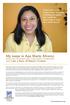 I had come to the United States dreaming of finding my mother but I ended up discovering so much more about myself. My name is Ana Maria Alvarez and I am 20 years old. I am from Guatemala I came to Mary
How To Store An Acam2000 Vaccine
 ACAM2000 Smallpox (Vaccinia) Vaccine, Live Deployment Guidance - Acambis Inc. Revision: October 2008 Information contained in this guidance will also be available through Acambis, in the event that questions,
Ex-Ante Evaluation (for Japanese ODA Loan)
 Japanese ODA Loan Ex-Ante Evaluation (for Japanese ODA Loan) 1.Name of the Project Country: Socialist Republic of Viet Nam Project: Regional and Provincial Hospital Development Project (II). Loan Agreement:
GENERAL INFORMATION. Hepatitis B Foundation - Korean Chapter Pg. 3 www.hepb.org
 GENERAL INFORMATION What is hepatitis B? Hepatitis B is the world's most common liver infection that can lead to cirrhosis and liver cancer. It is caused by the hepatitis B virus (HBV), which attacks and
Hospital Emergency Operations Plan
 Hospital Emergency Operations Plan I-1 Emergency Management Plan I PURPOSE The mission of University Hospital of Brooklyn (UHB) is to improve the health of the people of Kings County by providing cost-effective,
A Safe Patient. Commonwealth Nurses Federation. Jill ILIFFE Executive Secretary. Commonwealth Nurses Federation
 A Safe Patient Jill ILIFFE Executive Secretary Commonwealth Nurses Federation INFECTION CONTROL Every patient encounter should be viewed as potentially infectious Standard Precautions 1. Hand hygiene 2.
University of Maryland College Park School of Public Health
 In Focus: A Summary of the Asian American Community Group Reports Korean Community Needs Assessment Summary Report Research Team Maryland Asian American Health Solutions (MAAHS) University of Maryland
University of Alberta 2015-2016 Faculty Immunization Clearance Form: Requirements for Validating Forms for Entry into a Program
 University of Alberta 2015-2016 Faculty Immunization Clearance Form: Requirements for Validating Forms for Entry into a Program Key Terms & Abbreviations: dtap: tetanus, diphtheria, acellular pertussis
HIV and AIDS in Bangladesh
 HIV and AIDS in Bangladesh BACKGROUND The first case of HIV/AIDS in Bangladesh was detected in 1989. Since then 1495 cases of HIV/AIDS have been reported (as of December 2008). However UNAIDS estimates
OCCUPATIONAL SAFETY AND HEALTH ADMINISTRATION (OSHA)
 OCCUPATIONAL SAFETY AND HEALTH ADMINISTRATION (OSHA) The OSHA/VOSH 1910.1030 Blood borne Pathogens Standard was issued to reduce the occupational transmission of infections caused by microorganisms sometimes
Hand Hygiene and Infection Control
 C Hand Hygiene and Infection Control Sirius Business Services Ltd www.siriusbusinessservices.co.uk Tel 01305 769969 [email protected] Whatever your First Aid, Fire Safety or Health & Safety
Community-Based Initiatives Series 14. Monitoring, supervisory and evaluation tools for community-based initiatives
 Community-Based Initiatives Series 14 Monitoring, supervisory and evaluation tools for community-based initiatives Community-Based Initiatives Series 14 Monitoring, supervisory and evaluation tools for
- % of participation - % of compliance. % trained Number of identified personnel per intervention
 Fighting Disease, Fighting Poverty, Giving Hope KEY OBJECTIVE 1 : HUMAN RESOURCE MANAGEMENT KEY RESULT AREA : HUMAN RESOURCE ACTIVITIES OUTPUT KEY ACTIVITIES INDICATOR TARGET RESOURCE/ENABLERS Have adequate
Viral Hepatitis A, B, and C
 Viral Hepatitis A, B, and C What is Hepatitis? Hepatitis means inflammation of the liver Elizabeth A. Bancroft, MD, SM Acute Communicable Disease Control County of Los Angeles Department of Public Health
Children s Health and Nursing:
 Children s Health and Nursing: A Summary of the Issues What s the issue? The foundation for healthy growth and development in later years is established to a large degree in the first six years of life.
Providing health care
 82 CHAPTER 10 Providing health care In any community, people become ill and require access to health care facilities and treatment. The problem may be physical, such as diarrhoea, fever or injury, or mental,
A Guide to Your Baby s Care The First Year
 A Guide to Your Baby s Care The First Year A Guide to Your Baby s Care The First Year What s Inside Congratulations! Your baby is finally here. Having a baby is a special gift. You ll want to take good
Bloodborne Pathogens Exposure Incident Reporting Kit
 THE UNIVERSITY OF SOUTHERN INDIANA Bloodborne Pathogens Exposure Incident Reporting Kit Administrative Services Annex North 8600 University Blvd., Evansville, IN 47712 Any Questions? TELEPHONE: (812) 461-5393
GLOBAL GRANT MONITORING AND EVALUATION PLAN SUPPLEMENT
 ENGLISH (EN) GLOBAL GRANT MONITORING AND EVALUATION PLAN SUPPLEMENT Global grant sponsors for humanitarian projects and vocational training teams must incorporate monitoring and evaluation measures within
ChildFund PnG AnnuAl REPORT 2013 14
 ChildFund PNG ANNUAL REPORT 2013 14 ChildFund in PNG ChildFund Papua New Guinea is the representative office of ChildFund Australia an independent and non-religious international development organisation