
NUISANCE ANIMAL CONTROL PLAN
|
|
|
- Jonas Fitzgerald
- 9 years ago
- Views:
Transcription
1 .,; NUISANCE ANIMAL CONTROL PLAN u.s. FISH & WILDLIFE SERviCE MUSCATATUCK NATIONAL WILDLIFE REFUGE

2 Nuisance Animal Control Plan for Muscatatuck National Wildlife Ref Date: Date: 1/r7 /;u, 9:--/7.-;o Approved by:.~... G&<l...,'t...---,.._ Area2Refug~rVisor Date: 'J_/24 LID 2

3 Table of Contents Introduction... 5 I. Beaver A. Description... 6 B. Control Methods and Alternatives Control Methods Alternatives... 7 C. Justification of Pest Control II. Muskrat B. A. Description... 7 Control Methods and Alternatives Control Methods Alternatives... 9 C. Justification ofpest Control III. Mute Swan... 9 A. Description... 9 B. Control Methods and Alternatives Control Methods Alternatives C. Justification of Pest Control.... ll A. IV. Feral Cat Description

4 B. Control Methods and Alternatives Control Methods Alternatives C. Justification of Pest Control \ 4

5 Nuisance Animal Control Plan Muscatatuck National Wildlife Refuge Introduction: This Control Plan will cover control of invasive and nuisance animal species on Muscatatuck National Wildlife Refuge. The four species covered within this plan are beaver, muskrat, Mute Swan, and feral cat and all cause significant damage to habitat and/or wildlife populations. Control efforts will be primarily conducted by refuge staff although volunteers will likely assist in the efforts. Any individual using a firearm during control efforts must have (1) Attended and completed a hunter safety course and (2) undergo annual refresher training with a FWS Law enforcement officer.. Beaver are native to the refuge, but cause problems by girdling and felling trees, impeding drainage by constructing dams within waterways, culverts, and water control structures, and by negatively impacting the structural integrity of dikes and levees by burrowing activities. Beaver activity has caused deterioration and loss of bottomland hardwood trees on the refuge. Although beavers do provide beneficial wetland habitat on the refuge, it is necessary to conduct monitoring and control of the population to reduce negative impacts on wetland units and wetland forest habitats. Control efforts will be essential in ensuring the protection of bottomland hardwood forests and minimizing drainage problems associated with draw-downs of moist soil units, green tree reservoirs, marshes, and ditches. Muskrat, also native to the refuge, cause similar problems like that of the beaver. Muskrat, along with beaver, burrow into dike banks reducing overall structural integrity. Weakened structures become problematic after caving in and causing surface damage that may encumber travel and prevent maintenance efforts. Weakened structures also cause direct seepage or leaks in dikes or do so indirectly by creating open sites that erode. Mute Swans are an introduced species from Europe and Asia that aggressively compete with native waterfowl. They use vegetation found on the edges of lakes to build large mounds to nest on, which they become extremely territorial about. Due to their territorial behavior, native waterfowl ducks and geese are displaced from their usual nesting areas. Mute Swans may also be aggressive towards people, which is a safety concern for the 185,000 annual visitors. Feral cats are free-roaming cats often born in the wild. They naturally prey on native birds, reptiles, amphibians, and small mammals. Feral cats hunt instinctively rather than out of a need for food (Liberg 1984, Warner 1985). This predatory drive presents problematic competition with native predators like foxes. Their predation on native small rodents also presents a threat to the overall 5

6 ecosystem by opening niches for exotic rodents. (Crooks and Soule 1999, Hawkins et al. 1999, Kays and DeWan 2004). I. Beaver A. Description The beaver (Castor canadensis) is the largest North American rodent. Adults usually weigh between 30 and 40 pounds, but may weigh over 60 pounds. Beaver are semi-aquatic mammals that feed only on vegetation consisting primarily of bark, twigs, and leaves of hardwood trees and the stems and roots of herbaceous aquatic plants. Beavers cause substantial damage to natural resources on Muscatatuck National Wildlife Refuge. Direct damage (i.e. cutting and girdling) of desirable tree species and flooding of timber behind dams negatively effects both young and mature stands ofbottomland hardwood forest. B. Control Methods Recommended 1. Control Methods Methods of control proposed for use on Muscatatuck National Wildlife Refuge are those which have been proven effective in other areas and under a variety of circumstances and which have been proven to be species specific. The main method will be free shooting in areas that have heavy beaver activity which could pose a threat to timber health and survival. All free shooting will be conducted by refuge staff and/or qualified staff from other agencies and usually occur during nighttime hours after the refuge is closed to public entry. Instances may arise where there is a need to conduct efforts during normal "open" hours; during these efforts public safety and perception will be considered. All shooting will be conducted in a safe manner away from public view when feasible. This will prevent the conflicts that are inherent with these types of operations and public safety and perception. If necessary, trapping will be implemented in these same areas, but will be a last resort. Trapping may be authorized by Special Use Permit to outside sources if needed. Beavers will be shot on sight by authorized personnel and disposed of when accessible and feasible. Retrieved carcasses will be left in the forest. This will allow predators, scavengers, and other opportunistic carnivores to use the remains. Refuge personnel may take advantage of incidental shooting opportunities during routine visits to the beaver dam areas. Refuge personnel will remove dams and make sure water is not being held on timber. Incidental control will be conducted by authorized refuge personnel in accordance with 50 CFR 30.11, 50 CFR 31.14, and 7 RM The policy ofthe Service is to engage in the control of wildlife within the National Wildlife Refuge System to assure balanced wildlife and fish populations consistent with the optimum management of refuge habitat. The objective of 6

7 animal control management is to prevent substantial damage to refuge resources. Title 50 CFR governs authorization of control practices, Part 3 I, Section I 4: (a) Animal species which are surplus or detrimental to the management program of a wildlife area may be taken in accordance with Federal and State laws and regulations by Federal or State personnel or by permit issued to private individuals. (b) Animal species which are damaging or destroying Federal property within a wildlife refuge area may be taken or destroyed by Federal personnel. 2. Alternatives One of the objectives of Muscatatuck National Wildlife Refuge is to provide protection of fish and wildlife and provide habitat for migratory birds. A no action alternative would result in unacceptable levels of damage to natural resources on the refuge and adjacent private property. Free shooting is the most effective method due to time, cost, and the effects of the traps on other aquatic mammals such as otters. C. Justification of Pest Control One of the objectives of Muscatatuck National Wildlife Refuge is to provide habitat and protection of migratory birds, fish and wildlife. The bottomland hardwood forest habitat ori the refuge provides the habitat base needed to achieve this objective. Beavers are known for constructing dams in brakes/sloughs, which hold water in these low areas causing timber to be stressed and/or die. During the early I 900's, beaver populations in Indiana became rare due to the great demand of their fur. In the I 940' s once demand dropped, a breeding pair of beavers was introduced from Wisconsin, and the population has been thriving ever since. The prices of beaver pelts are still so low that local trappers have no interest in trapping them. Beavers have important ecological value, but populations need to be managed to regulate damage to timber. II. Muskrat A. Description The muskrat (Ondatra zibethicus) is a medium-sized, semi-aquatic rodent native to Indiana and throughout North America. They weigh about 3 pounds with small eyes and large hind feet with coarse hairs between the toes to aid in swimming. Muskrats in Indiana are most numerous in areas of abundant shallow water. They prefer to place nest chambers above the water level in burrows entered from the water. In marshes and lakes, they use cattails and other aquatic plants to construct houses resembling small haystacks. Although usually strictly vegetarian, with cattails being their main food source, muskrats will feed on carcasses of fish, 7

8 frogs, and other muskrats if not enough plant material is available. Throughout winter, they continue eating on the bulbs and root systems of aquatic plants causing the exposed parts of the plants to die come spring. This large quantity of dead plant matter causes biochemical changes in the water and soil and may prevent vegetation growth for several years if little water flows through. The greatest management concern regarding muskrat is the damage they cause to levees and dikes. Dikes are commonly jeopardized by the burrowing activities of these animals. The network oftunnels honeycombing a dike reduces the structural integrity of the dike and often leads to cave-ins, increased erosion, and seepage. In some instances water seeping through a muskrat burrow can lead to a complete blow out of the dike which can undermine overall moist soil management or other wetland management goals by reducing feeding, nesting, or resting habitat for migratory birds, decrease seed production, or lead to less than optimal vegetative development within a unit. B. Control Methods Recommended 1. Control Methods Methods of control proposed for use on Muscatatuck National Wildlife Refuge are those which have been proven effective in other areas and under a variety of circumstances and which have been proven to be species specific. The main method will be free shooting in areas that have heavy muskrat activity which could pose a threat to timber health and survival or the integrity of refuge infrastructure. Most free shooting will be conducted by refuge staff and/or qualified staff from other agencies during nighttime hours after the refuge is closed to public entry. This will prevent the conflicts that are inherent with these types of operations and public safety and perception. If necessary, trapping will be implemented in these same areas, but will be a last resort. Muskrat will be shot on sight by authorized personnel and disposed of by leaving carcasses in the forest. This will allow predators, scavengers, and other opportunistic carnivores to use the remains. Refuge personnel may take advantage of incidental shooting opportunities during routine visits to moist soil units, other wetlands, and beaver dam areas. Refuge personnel will remove dams and make sure water is not being held on timber. Incidental control will be conducted by authorized refuge personnel in accordance with 50 CFR 30.11, 50 CFR 31.14, and 7 RM The policy of the Service is to engage in the control of wildlife within the National Wildlife Refuge System to assure balanced wildlife and fish populations consistent with the optimum management of refuge habitat. The objective of animal control management is to prevent substantial damage to refuge resources. Title 50 CFR governs authorization of control practices, Part 31, Section 14: (a) Animal species which are surplus or detrimental to the management program 8

9 of a wildlife area may be taken in accordance with Federal and State laws and regulations by Federal or State personnel or by permit issued to private individuals. (b) Animal species which are damaging or destroying Federal property within a wildlife refuge area may be taken or destroyed by Federal personnel. 2. Alternatives One of the objectives of Muscatatuck National Wildlife Refuge is to provide protection of fish and wildlife and provide habitat for migratory birds. A no action alternative would result in unacceptable levels of damage to natural resources on the refuge and adjacent private property. Trapping is difficult due to time, cost, and the effects of the traps on other aquatic animals such as turtles. Habitat modification or removal would be counterproductive since they share the same habitat with multiple native species. Free shooting is most effective method although cage type family traps may be used in the future. C. Justification of Pest Control One of the objectives of Muscatatuck National Wildlife Refuge is to provide habitat and protection of migratory birds, fish and wildlife. The bottomland hardwood forest habitat on the refuge provides the habitat base needed to achieve this objective. Muskrats are known for constructing dams in brakes/sloughs, which hold water in these low areas causing timber to be stressed and/or die. Muskrat have important ecological value, but populations need to be managed to regulate damage to timber, dikes, and levees. III. Mute Swan A. Description The Mute Swan (Cygnus olor) is one ofthree species of swan found throughout Indiana. Unlike their native relatives, the tundra and trumpeter swans, Mute swans are nonnative and breed in Indiana. The Mute Swan's orange bill makes it easy to distinguish from the two other species. It is the only species found in Indiana during the summer and usually carries its neck in a strongly curved S-shape while swimming. The Mute Swan was introduced to North America in the late 1800's as an ornamental species; native waterbirds have a hard time coexisting with such a dominant species. Mute Swans require about eight pounds of aquatic vegetation for food daily and can damage significant acreages while feeding and nesting. They eat higher quality plants both under the water and along the water's edge destroying both food and cover for native waterfowl and leaving only aquatic weeds. 9

10 B. Control Methods Recommended 1. Control Methods Methods of control proposed for use on Muscatatuck National Wildlife Refuge are those which have been proven effective in other areas and under a variety of circumstances and which have been proven to be species specific. The main method will be free shooting. All free shooting will be conducted by refuge staff and/or qualified staff from other agencies using discretion and after hours if possible. This will prevent the conflicts that are inherent with these types of operations and public safety and perception. Bodies will be removed and buried in an area closed to the public when feasible. Incidental control will be conducted by authorized refuge personnel in accordance with 50 CFR 30.11, 50 CFR 31.14, and 7 RM The policy of the Service is to engage in the control of wildlife within the National Wildlife Refuge System to assure balanced wildlife and fish populations consistent with the optimum management of refuge habitat. The objective of animal control management is to prevent substantial damage to refuge resources. Title 50 CFR governs authorization of control practices, Part 31, Section 14: (a) Animal species which are surplus or detrimental to the management program of a wildlife area may be taken in accordance with Federal and State laws and regulations by Federal or State personnel or by permit issued to private individuals. (b) Animal species which are damaging or destroying Federal property within a wildlife refuge area may be taken or destroyed by Federal personnel. 2. Alternatives One of the objectives of Muscatatuck National Wildlife Refuge is to provide protection of fish and wildlife and provide habitat for migratory birds. A no action alternative would result in unacceptable levels of damage to natural resources on the refuge and adjacent private property. Free shooting is the most effective method due to time, cost, and the effects of the traps on other aquatic mammals such as otters. C. Justification of Pest Control One of the objectives of Muscatatuck National Wildlife Refuge is to provide habitat and protection of migratory birds, fish and wildlife. Mute Swans are an aggressive species that chase resident and migratory birds and waterfowl away. They also consume and use a large portion of nutritional underwater and wetland plants. This leaves the other waterfowl with a lesser variety of nutritional plants they would normally have if the Mute Swans were not present. By controlling the 10

11 .. Mute Swans on the refuge, we are also helping with the Mute Swan problem on a national scale since they are not resident species at the refuge. Mute Swans have also been known to attack humans and small children. With the refuge open to visitors 365 days a year, it is better to be proactive than reactive. IV. Feral Cat A. Description For the purpose of this control plan, a feral cat is any free roaming individual found within the boundaries of the refuge. Feral cats (Felis catus) are the same species as a domestic cat but are born or have strayed into the wild. Domestic cats were introduced approximately 200 years ago to control rodents on the east coast. Although the number of feral cats in the United States is unknown, humansubsidized cats can reach densities over several hundred cats/km 2 (Liberg et al. 2000). Feral cats pose a threat to the local ecosystem. because they kill native birds and mammals, compete with native predators, and carry diseases. A study in Wisconsin shows that cats are killing millions of birds each year throughout the state with similar numbers across the Midwest (Coleman and Temple 1993). Feral cats also feed on rodents and small mammals causing fierce competition for native predators and raptors such as raccoons, fox, red tailed hawks, and owls especially during winter months (George 1974). Feral cats have spread feline leukemia virus to mountain lions (Jessup et al. 1993) can also carry and transmit diseases, such as rabies and toxoplasmosis, to humans (Warfield and Gay 1986). B. Control Methods Recommended 1. Control Methods Methods of control proposed for use on Muscatatuck National Wildlife Refuge are those which have been proven effective in other areas and under a variety of circumstances and which have been proven to be species specific. The main method will be live trapping of any individual found on the refuge. Control will be conducted by authorized refuge personnel in accordance with 50 CFR 30.11, 50 CFR 31.I4, and 7 RM I4.9. The policy of the Service is to engage in the control of wildlife within the National Wildlife Refuge System to assure balanced wildlife and fish populations consistent with the optimum management of refuge habitat. The objective of animal control management is to prevent substantial damage to refuge resources. Title 50 CFR governs authorization of control practices, Part 31, Section 14: (a) Animal species which are surplus or detrimental to the management program of a wildlife area may be taken in accordance with Federal and State laws and regulations by Federal or State personnel or by permit issued to private II

12 individuals. (b) Animal species which are damaging or destroying Federal property within a wildlife refuge area may be taken or destroyed by Federal personnel. 2. Alternatives One of the objectives of Muscatatuck National Wildlife Refuge is to provide protection of fish and wildlife. A no action alternative would result in a higher population of feral cats, which would be detrimental to populations of native birds and predators. Another alternative would be a trap, neuter and return (TNR) method. This method would require collecting the feral cat, sterilizing it, and then adopting 'it out or returning it to the wild. While this alternative is more publicly acceptable, the cost and time required is prohibitive for the refuge. Also, TNR would not decrease the amount of problems the cats cause because they would still be present and feeding on the refuge. The feral cat population is open and constantly changing and the methods of control should be reevaluated periodically if it is determined that trapping alone cannot reduce populations significantly. C. Justification of Pest Control One of the objectives of Muscatatuck National Wildlife Refuge is to support the maximum sustainable breeding and post-breeding populations of waterfowl and migratory birds along with a diverse population of other resident species. In order to maintain large, diverse populations, feral cats will need to be controlled. They kill a large number of native birds and rodents outcompeting native predators and raptors. Muscatatuck National Wildlife Refuge is open to the public 365 days a year, with some visitors bringing pet dogs. Feral cats may carry diseases that could easily be transferred to a human or his/her pet. 12

13 Literature Cited Coleman, J.S., and S.A. Temple Rural residents' free-ranging domestic cats: a survey. Wildlife Society Bulletin 21: Crooks, K. R. and M. E. Soule Mesopredator release and avifauna! extinctions in a fragmented system. Nature 400: George, W. G Domestic cats as predators and factors in winter shortages of raptor prey. Wilson Bulletin 86: Hawkins, C. C., W. E. Grant, and M. T. Longnecker Effect of subsidized housecats on California birds and rodents. Transactions of the Western Section of the Wildlife Society 5:29-33 Jessup, D.A., K.C. Pettan, L.J. Lowenstine and N.C. Pedersen Feline leukemia virus infection and renal spirochetosis in free-ranging cougar (Felis concolor). Journal of Zoo and Wildlife Medicine 24:73-79 Kays, R. W. and A. A. DeWan Ecological impact of inside/outside house cats around a suburban nature preserve. Animal Conservation7: Liberg, Food habits and prey impact by feral and house-based domestic cats in a rural area in southern Sweden. Journal of Mammalogy65: Liberg, 0., M. Sandell, D. Pontier, and E. Natoli Density, spatial organization and reproductive tactics in the domestic cat and other felids.l in The domestic cat: the biology of its behaviour. Turner, D. C. and P. Bateson. eds.cambridge University Press. Cambridge, United Kingdom. Warner, R. E Demography and movements of free-ranging domestic cats in rural Illinois. Journal of Wildlife Management 49: Warfield, M.S. and W.I. Gay The cat as a research subject. Pp In: W.I. Gay (ed.) Health Benefits of Animal Research. Foundation for Biomedical Research, Washington, DC. 13

14 I! United States Department of the Interior FISH AND WILDLIFE SERVICE Bishop Henry Whipple Federal Building 1 Federal Drive Fort Snelling MN In reply refer to: RFS2/Muscatatuck NWR September 24, 2010 Memorandum To: From: Subject: Wildlife Refuge Manager, Muscatatuck NWR Area 2 Refuge S~pervisor ~~~~ Nuisance Animal Control Plan, Muscatatuck NWR Enclosed please find a signed copy of the Nuisance Animal Control Plan for Muscatatuck NWR. I am pleased to see that the refuge is addressing habitat and infrastructure damages which can occur when populations of certain species, such as beaver and muskrat, exceed healthy levels. While I am signing the cover page for the plan, I am asking that several items, listed below, be addressed in an updated version. Use of non-toxic shot and bullets: The plan should state that all control activities conducted with firearms will be conducted using non-toxic shot and bullets. Firearm use by non-le personnel: Currently there is no FWS policy regarding firearm use by non-le personnel (with the exception for bear protection in Alaska). Because national policy does not exist, the station will need to formulate a policy regarding firearm use by non-le employees. I suggest that all non-le employees that utilize firearms are 1) full-time staff members, 2) complete a state certified firearms safety training course, and 3) receive an annual firearms safety refresher by a FWS LE Officer. Feral cat control: The plan specifies that the "main" method for control will be live trapping. Please modify the feral cat section to clearly articulate that shooting is not a control option. Since station NEP A documentation only covers live trapping, other techniques are not approved and would require NEP A documentation and an amendment to the Nuisance Animal Control Plan. Mute swan control: While I am not requesting modifications to this plan regarding mute swans, threshold levels for mute swan control must be developed prior to incorporating control efforts. I recommend incorporating objectives for mute swans into your habitat management plan.

Town of Richmond Hill Beaver Management Policy Summary
 Town of Richmond Hill Beaver Management Policy Summary Above Left: Tree damage from beaver. Above Right: Beaver dam in stream - notice the water level above and below the dam! Below: Beaver swimming. Town
Wildlife Habitat Conservation and Management Plan
 Wildlife Habitat Conservation and Management Plan For [Applicant Name] [Insert photo of property] Developed in Cooperation with Jane Doe Habitat Conservation Biologist Oregon Department of Fish and Wildlife
AP ENVIRONMENTAL SCIENCE 2010 SCORING GUIDELINES
 AP ENVIRONMENTAL SCIENCE 2010 SCORING GUIDELINES Question 3 (a) Why are zebra mussels located primarily in areas in the eastern United States rather than in the western United States? One point can be
POLICY ON THE RELOCATION OF WILDLIFE
 State of New Jersey Department of Environmental Protection Mail Code 501-03 Division of Fish and Wildlife PO Box 420 / 501 East State Street Trenton, NJ 08625-0420 POLICY ON THE RELOCATION OF WILDLIFE
RESTORATION & REVITALIZATION
 RESTORATION & REVITALIZATION Legal preservation has not proved to be sufficient to preserve natural communities. Restoration activities are diverse and includes revitalization of natural communities which
All members of the puma species carry their kittens the same way domestic cats do, and they can purr like housecats too.
 Florida Panther In spite of many, many attempts, I have not been able to discover let alone photograph a majestic Florida panther in the wild. The tawny cat is an endangered species. The panthers I have
CORPORATE POLICY STATEMENT NO. 12 MANAGEMENT OF PEST ANIMALS
 1. OBJECTIVE CORPORATE POLICY STATEMENT NO. 12 MANAGEMENT OF PEST ANIMALS August 2015 To provide direction and guidance for the management of pest animals on lands and waters managed by the Department
Use: Cooperative farming as a habitat management tool to enhance and restore refuge grasslands
 Compatibility Determination Use: Cooperative farming as a habitat management tool to enhance and restore refuge grasslands District Name: Minnesota Valley Wetland Management District Establishing and Acquisition
ON THE RELOCATIO Division of
 New Jersey Department off Environmental Protection Division of Fish and Wildlife Mail l Code 501-03 PO Box 4200 / 501 East State St Trenton, NJ 08625-0420 POLICY ON THE RELOCATIO ON OF WILDLIFE As the
PEST CONTROL Control vertebrate pests by shooting
 1 of 5 level: 3 credit: 6 planned review date: July 2006 sub-field: purpose: Pest Management This unit standard is for people involved with vertebrate pest control in rural environments. People credited
CATS and WILDLIFE HOW YOU CAN PROTECT BOTH
 CATS and WILDLIFE HOW YOU CAN PROTECT BOTH Where is your cat right now? Could it be harming native wildlife? Is it roaming in your neighbour s yard? Is it crossing a busy road? Could it be returned to
Clean, Drain, Dry! Activity
 Clean, Drain, Dry! Activity Students participate in hands on activity that demonstrates the ways in which aquatic plants and other nuisance species may be accidentally introduced or spread to new locations.
Mission. Values. Vision. Mission Values Vision
 Mission Values Vision Mission The Wildlife Rehabilitation of Minnesota provides quality medical care and rehabilitation for all injured, sick and orphaned wild birds and animals and shares its knowledge
Pest Control Methods and Tips
 Waterway Technote Pest animals Contents Benefits of animal pest control 1 Common pest animal species found in riparian areas and control methods 2 Protecting plants from animal pests 3 Regional pest specific
Pond Vocabulary Words and Meanings
 Pond Vocabulary Words and Meanings Adapt: to adjust to a use or situation Aquatic: from or in the water Bacteria: tiny organisms, too small to be seen with the naked eye Carnivore: an animal that eats
Controlling Invasive Plants and Animals in our Community
 Controlling Invasive Plants and Animals in our Community PROVIDED BY THE WILDLIFE COMMITTEE What makes a plant or animal invasive? When a plant or animal from another region of the world (usually Europe
Questions & Answers on Rabies
 BUCKS COUNTY DEPARTMENT OF HEALTH Neshaminy Manor Center, Health Building 1282 Almshouse Road Doylestown, PA 18901 215-345-3318 Questions & Answers on Rabies Q: What is rabies? A: Rabies is a deadly disease
Population Ecology. Life History Traits as Evolutionary Adaptations
 Population Ecology An Overview of Population Ecology Population ecology is the study of factors that affect population: Density Growth A population is a group of individuals of a single species that occupy
Grassland Food Webs: Teacher Notes
 Grassland Food Webs: Teacher Notes Alan Henderson ecosystem Objectives After completing this activity students will be able to: Create a food web and identify producers and consumers. Assign organisms
Standard Operating Guideline Pest/Rodent Control
 Standard Operating Guideline (SOG) Title: PEST/RODENT CONTROL District Name: Date Prepared: Date Revised: OBJECTIVE: - Ensuring effective system-wide preventive and predictive maintenance actions - Ensure
Lesson Overview. Biodiversity. Lesson Overview. 6.3 Biodiversity
 Lesson Overview 6.3 6.3 Objectives Define biodiversity and explain its value. Identify current threats to biodiversity. Describe how biodiversity can be preserved. THINK ABOUT IT From multicolored coral
9.0 PUBLIC HEALTH (MOSQUITO ABATEMENT)
 9.0 PUBLIC HEALTH (MOSQUITO ABATEMENT) This chapter analyzes the public health effects of the project, particularly with regard to mosquito abatement. The chapter discusses historical and existing efforts
Dear Internship Candidate,
 Dear Internship Candidate, Thanks for your interest in becoming a part of the team here at the WNC Nature Center, a part of the City of Asheville's Parks, Recreation and Cultural Arts Department. With
Ecology 1 Star. 1. Missing from the diagram of this ecosystem are the
 Name: ate: 1. Missing from the diagram of this ecosystem are the 5. ase your answer(s) to the following question(s) on the diagram below and on your knowledge of biology.. biotic factors and decomposers.
j.b. NO. 2S1(~ A BILL FOR AN ACT
 j.b. NO. 2S1(~ A BILL FOR AN ACT RELATING TO PREDATORS. BE IT ENACTED BY THE LEGISLATURE OF THE STATE OF HAWAII: 1 SECTION 1. Section 183D-l, Hawaii Revised Statutes, is 2 amended by amending the definition
Post-Wildfire Clean-Up and Response in Houston Toad Habitat Best Management Practices
 Post-Wildfire Clean-Up and Response in Houston Toad Habitat Best Management Practices Purpose The purpose of this document is to provide guidance and recommendations for minimizing potential impacts to
3. Which relationship can correctly be inferred from the data presented in the graphs below?
 1. Recent evidence indicates that lakes in large areas of New York State are being affected by acid rain. The major effect of acid rain in the lakes is (1) an increase in game fish population levels (3)
6. Which of the following is not a basic need off all animals a. food b. *friends c. water d. protection from predators. NAME SOL 4.
 NAME SOL 4.5 REVIEW - Revised Habitats, Niches and Adaptations POPULATION A group of the same species living in the same place at the same time. COMMUNITY-- All of the populations that live in the same
www.irishseedsavers.ie Natural surface water on earth includes lakes, ponds, streams, rivers, estuaries, seas and oceans.
 www.irishseedsavers.ie POND LIFE FACT SHEET Natural surface water on earth includes lakes, ponds, streams, rivers, estuaries, seas and oceans. A pond is a small body of fresh water shallow enough for sunlight
Extinction; Lecture-8
 I. introduction Definition Current extinction Genetic drift Extinction; Lecture-8 II. 3 types of extinction 1. background 2. mass 3. stochastic III. 5 periods of mass IV. human caused 1. on land and in
How To Manage Wildlife And Wildlife Damages At Earthen Dams
 Dam Owner s Guide To Animal Impacts On Earthen Dams FEMA L-264 / September 2005 Twenty-five states across the U.S. can write headlines of unsafe dam operations caused by nuisance wildlife intrusions,
ENDANGERED AND THREATENED
 ENDANGERED AND THREATENED Understand how species in the Sonoran Desert Region may become endangered or threatened and what is being done to protect them. ARIZONA SCIENCE STANDARDS SC03-S4C3-03&04, SC08-S1C3-07,
Chapter 3. Alternatives
 Chapter 3. Alternatives 3.1 Introduction Alternatives are different approaches designed to achieve the refuge purpose(s), vision, and the goals identified in the CCP while helping to fulfill the System
Flora and Fauna. Section 4.9: Flora and Fauna
 Flora and Fauna Section 4.9: Flora and Fauna BACK OF TAB 81 4.9 Flora and Fauna Objectives Ensure protection of the significant natural environment in and around Sydney Airport Minimise the propagation
A guide to living with Urban Coyotes
 A guide to living with Urban Coyotes Living with coyotes ThinkStock Coyotes are found throughout Florida. This adaptable animal belongs to the dog family and resembles a small German shepherd. In Florida,
Discover Entomology. Discover Entomology. A Science, a Career, a Lifetime. A Science, a Career, a Lifetime
 Discover Entomology A Science, a Career, a Lifetime Discover Entomology A Science, a Career, a Lifetime What is Entomology? Entomology is the study of insects. Entomologists study bees, ants, beetles,
Recognizing Wetlands. For additional information contact your local U.S. Army Corps of Engineers office. Pitcher plant.
 US Army Corps of Engineers For additional information contact your local U.S. Army Corps of Engineers office. 1998 Edition Recognizing Wetlands Pitcher plant The information presented here will help you
Avian Influenza: the moving target
 Avian Influenza: the moving target Ilaria Capua 1 & Dennis J Alexander 2 OIE/FAO Reference Laboratories 1 Istituto Zooprofilattico Sperimentale delle Venezie Legnaro, Padova IT 2 VLA Weybridge, UK H5N1
Prairie Food Chains & Webs Producers, Consumers & Decomposers
 Kansas Prairies s, s & Decomposers Science, Life Science, Reading, Math Materials Vocabulary worksheet Food Chain worksheet Overview To explore the organisms found on a prairie and identify the various
IPM Plan for Campus Landscape
 Created June 2014 IPM Plan for Campus Landscape Statement of Purpose The purpose of this integrated pest management (IPM) plan is to guide the use of environmentally sensitive pest management strategies
Structural Integrated Pest Management Program: Contract Specifications for INSERT YOUR FACILITY NAME HERE
 Model IPM Contract Structural Integrated Pest Management Program: Contract Specifications for INSERT YOUR FACILITY NAME HERE Premises covered by this specification: 1. 2. 3. 4. 5. (Attach additional list
The Wonderful World of Wetlands BINGO
 The Wonderful World of Wetlands BINGO Time: 10-15 minutes to create Bingo board; 5-10 minutes to play one-round of Bingo Scituate Reservoir Watershed Education Program 17 Smith Ave Greenville, RI 02828
Addendum D. Nomination of Moody Wash ACEC
 Addendum D Nomination of Moody Wash ACEC Moody Wash ACEC is hereby nominated by Citizens for Dixie s Future to: BLM St. George Field Office 345 East Riverside Drive St. George, UT 84790 Moody Wash is a
March 17, 2015. Dear Mr. Sullins:
 Tony Sullins Endangered Species Chief, Midwest Regional Office Public Comment Process Attn: FWS-R5-ES-2011-0024 Division of Policy and Directives Management U.S. Fish and Wildlife Service 4401 N. Fairfax
San Francisco Bay Area Wetlands Restoration Program Design Review Group. Project Summary Outline
 San Francisco Bay Area Wetlands Restoration Program Design Review Group Project Summary Outline The project proponent desiring to have a project considered by the Design Review Group (DRG) shall provide
Using Aerial Photography to Measure Habitat Changes. Method
 Then and Now Using Aerial Photography to Measure Habitat Changes Method Subject Areas: environmental education, science, social studies Conceptual Framework Topic References: HIIIB, HIIIB1, HIIIB2, HIIIB3,
Habitat Analysis of the California Condor. Meagan Demeter GIS in Natural Resource Management APEC480 18 May, 2013
 Habitat Analysis of the California Condor Meagan Demeter GIS in Natural Resource Management APEC480 18 May, 2013 1 Index Background...3 Literature Review...5 Hypothesis...6 Data...7 Methods...7 Anticipated
CHAPTER 8. FEDERALLY-LISTED ENDANGERED OR THREATENED SPECIES
 1. INTRODUCTION AND DEFINITIONS. CHAPTER 8. FEDERALLY-LISTED ENDANGERED OR THREATENED SPECIES a. General. The Biotic Resources chapter in Appendix A of Order 1050.1E combines information on Federally-listed
AFRICAN WILDLIFE CONFERENCE 2008 Zoo Dvur Králové a.s. May 6-11, 2008. - Conference Proceedings. www.zoodvurkralove.cz
 AFRICAN WILDLIFE CONFERENCE 2008 Zoo Dvur Králové a.s. May 6-11, 2008 - Conference Proceedings www.zoodvurkralove.cz Cheetah Conservation Strategies in Namibia a Model for the Future By Laurie Marker Over
How To Plan A Buffer Zone
 Backyard Buffers Protecting Habitat and Water Quality What is a buffer? A buffer (also called a riparian buffer area or zone) is the strip of natural vegetation along the bank of a stream, lake or other
STANDARDS FOR RANGELAND HEALTH ASSESSMENT FOR SAGEHEN ALLOTMENT #0208
 STANDARDS FOR RANGELAND HEALTH ASSESSMENT FOR SAGEHEN ALLOTMENT #0208 RANGELAND HEALTH STANDARDS - ASSESSMENT SAGEHEN ALLOTMENT #0208 STANDARD 1 - UPLAND WATERSHED This standard is being met on the allotment.
Options for dog population management: Where do you start?
 Options for dog population management: Where do you start? Improving animal welfare in shelters: a practical approach Warsaw, 12 April 2014 Alexandra Hammond-Seaman RSPCA mission The RSPCA will, by all
Living with Foxes and Skunks Goose Hunting: CWS
 Ministry of Natural Resources and Forestry Living with Foxes and Skunks Goose Hunting: CWS November 19 th, 2015 Town of Tecumseh Kathryn Markham, A/Management Biologist Steven Rowswell, A/Wildlife Technician
Appendix A: Land Protection Plan
 Appendix A: Land Protection Plan In this appendix A.1 Introduction and Purpose A.2 Project Description A.3 Refuge Purposes A.4 Land Acquisition Policy for Urban Refuges A.5 Status of Resources to be Protected
SANTA BARBARA COUNTY COMPREHENSIVE PLAN LOMPOC AREA
 SANTA BARBARA COUNTY COMPREHENSIVE PLAN LOMPOC AREA A. LAND USE ELEMENT INTERPRETIVE GUIDELINES B. COMMUNITY BENEFITS C. COUNTY ACTION ITEMS Adopted by the Board of Supervisors November 9, 1999 A. Santa
Lesson 1. Objectives: ocus: Subjects:
 Lesson 1 The Web of Life Objectives: 1. Understand the concept of an ecosystem. 2. Understand the interdependence of members of an ecosystem. Subjects: 1. Ecology 2. Language 3. Art MATERIALS: Copies of
CHAPTER 2: APPROACH AND METHODS APPROACH
 CHAPTER 2: APPROACH AND METHODS APPROACH Given Hawaii s biological uniqueness on a global scale, the Comprehensive Wildlife Conservation Strategy (CWCS) recognizes the importance of protecting all native
Landfills-T27 20810 Vector & Bird Control
 These materials were developed under the auspices of CalRecycle for specific technical training presentations and are posted as reference documents for the local government and CalRecycle staff who attended
Non-consumptive use of wildlife. Non-consumptive Use. Non-consumptive Use
 Non-consumptive use of wildlife Non-consumptive Use Any non-hunting or non-extractive use Examples: wildlife feeding & photography, bird watching, whale watching Non-consumptive Use Sources of information
Fishing, Hunting & Gathering The Rights and Responsibilities of First Nations People in Manitoba
 Fishing, Hunting & Gathering The Rights and Responsibilities of First Nations People in Manitoba First Nations people have always had a special relationship with the natural life forms that the land provides
Roots & Shoots Raptor Care EcoTeam Lesson 4: Predator/Prey Relationships
 Roots & Shoots Raptor Care EcoTeam Lesson 4: Predator/Prey Relationships Time needed 30 minutes for journal page. Project is ongoing. Cost None Weather requirement None Advance preparation Locate and contact
Pledge Supporting NJ Wildlife Action Plan
 Pledge Supporting NJ Wildlife Action Plan 10 Points 10 Points The Wildlife Action Plan Pledge is a community s first step in recognizing the important role that wild animals play in healthy, sustainable
Dawn Reis Ecological Studies. www.ecologicalstudies.com
 Dawn Reis Ecological Studies www.ecologicalstudies.com Laguna Salada Sharp Park s Federal & State Protected San Francisco Garter Snake (Thamnophis sirtalis tetrataenia) and California Red-legged Frog (Rana
China The Giant Panda
 China The Giant Panda China The Giant Panda Deep in a forest, a black-and-white bear sits peacefully. It chews the green leaves of a plant. The bear is alone, but there are others not too far away. Later,
Use this diagram of a food web to answer questions 1 through 5.
 North arolina Testing Program EO iology Sample Items Goal 4 Use this diagram of a food web to answer questions 1 through 5. coyotes 3. If these organisms were arranged in a food pyramid, which organism
AN INITIATIVE TO IMPROVE
 L OW E R C A R M E L R I V E R A N D L AG O O N F L O O D P L A I N R E S TO R AT I O N A N D E N H A N C E M E N T P R O J E C T AN INITIATIVE TO IMPROVE FLOOD PROTECTION RESTORE AND PROTECT RIPARIAN
Integrated Pest Management
 Chapter 2 Integrated Pest Management In This Chapter Keywords After learning the information in this chapter, you will be able to: 1. Define Integrated Pest Management (IPM). 2. List and describe the 5
Asian Longhorned Beetle Control Program
 United States Department of Agriculture Animal and Plant Health Inspection Service Asian Longhorned Beetle Control Program Environmental Assessment, December 1996 United States Department of Agriculture
AGENDA ITEM 6. R-14-148 Meeting 14-34 December 10, 2014 AGENDA ITEM
 R-14-148 Meeting 14-34 December 10, 2014 AGENDA ITEM AGENDA ITEM 6 Adoption of a Final Environmental Impact Report for the Integrated Pest Management Program, and Approval of the Integrated Pest Management
THE INTRODUCED SACRED IBIS, PREDATOR OF SEABIRDS AND OTHER FRAGILE SPECIES
 THE INTRODUCED SACRED IBIS, PREDATOR OF SEABIRDS AND OTHER FRAGILE SPECIES Pierre Yésou, Dr. Suzanne Bastian, Prof. Philippe Clergeau, Denis Lacourpaille & Sébastien Reeber Sacred Ibis Threskiornis aethiopicus
POLICY REGARDING PEST MANAGEMENT ON CITY PROPERTY
 POLICY REGARDING PEST MANAGEMENT ON CITY PROPERTY 1. The purpose of this policy is to eliminate or reduce pesticide use to the greatest possible extent. The City of Madison agrees with the US EPA that
Broadmoor Public Golf Course TREE MANAGEMENT GUIDE
 Broadmoor Public Golf Course TREE MANAGEMENT GUIDE Conservation of the trees at the Broadmoor Public Golf Course is a priority for environmental, economic and human health reasons. Trees make a difference
Examining Blanding's Turtle Habitat using Remote Sensing and GIS: A study in the Shiawassee National Wildlife Refuge, Saginaw, Michigan
 Examining Blanding's Turtle Habitat using Remote Sensing and GIS: A study in the Shiawassee National Wildlife Refuge, Saginaw, Michigan GIS Symposium 2014 Melissa Szymanski 1 Outline Background Current
Rabbitat. Gimme shelter. That s exactly what brush. Brush Piles for Wildlife
 Wildlife and Your Land a series about managing your land for wildlife Rabbitat Brush Piles for Wildlife Have you ever watched a startled rabbit dart across your yard and suddenly disappear as if by magic?
Prairie Food Chains & Webs Producers, Consumers, & Decomposers
 Kansas Prairies Prairie Food Chains & Webs Producers, s, & Decomposers Life Science, Math, Reading, Science Materials Student Worksheet A: Vocabulary Student Worksheet B: Food Chain Overview To explore
Introduction and Pretest
 Introduction and Pretest PREPARATION It s recommended that the students complete the five proofreading lessons in the Writer s Guide before beginning this unit. The pretest in this introduction to the
Tree Integrated Pest Management. Dan Nortman Virginia Cooperative Extension, York County
 Tree Integrated Pest Management Dan Nortman Virginia Cooperative Extension, York County IPM Refresher Definition: The use of a combination of appropriate pest control tactics to reduce pest population
Rain Forests. America's. Web of Life. Rain Forest Ecology. Prince William Network's OVERVIEW OBJECTIVES SUBJECTS
 Rain Forest Ecology National Science Education Standards Standard C: Life Sciences Populations and ecosystems. Standard C: Life Sciences Diversity and adaptation of organisms. Standard F: Science in Personal
CLASS S - AGRICULTURE
 LIBRARY OF CONGRESS CLASSIFICATION OUTLINE CLASS S - AGRICULTURE (Click each subclass for details) Subclass S Subclass SB Subclass SD Subclass SF Subclass SH Subclass SK Agriculture (General) Plant culture
Silent, Nighttime Hunters By Guy Belleranti
 By Guy Belleranti Owls are raptors, or birds of prey. They are carnivores who quickly and silently swoop down on their prey from above. Most raptors such as eagles, hawks and falcons are day hunters. They
Michigan Wetlands. Department of Environmental Quality
 Department of Environmental Quality Wetlands are a significant component of Michigan s landscape, covering roughly 5.5 million acres, or 15 percent of the land area of the state. This represents about
Designing in Sustainability in an Utility Scale Photovoltaic Array. Tim Green, Brookhaven National Laboratory Richard Chandler, BP Solar October 2010
 Designing in Sustainability in an Utility Scale Photovoltaic Array Tim Green, Brookhaven National Laboratory Richard Chandler, BP Solar October 2010 Biography Tim Green Currently the Natural & Cultural
The Colorado River Delta
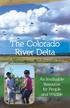 The Colorado River Delta An Invaluable Resource for People and Wildlife the colorado river delta The Colorado River Delta and its waters support a rich and diverse treasure of plants and animals in an
How To Understand Wolves
 SOME THINGS YOUR STUDENTS WILL WANT TO KNOW ABOUT WOLVES - AND WON T BE AFRAID TO ASK 1. Are wolves dangerous to people? Wild wolves avoid people. The myths about wolves attacking and eating people are
Integrated Pest Management Program Contract Guide Specification - 1999 Revision -
 Integrated Pest Management Program Contract Guide Specification - 1999 Revision - This Document is Intended for General Guidance Only And Does Not Pertain to Any Actual Contract 1. GENERAL A. Description
AMENDMENTS TO APPENDICES I AND II OF THE CONVENTION. Other Proposals
 AMENDMENTS TO APPENDICES I AND II OF THE CONVENTION Other Proposals A. PROPOSAL Transfer of Clemmvs muhlenbergii from Appendix Il to Appendix I. B. PROPONENT The United States of America. C. SUPPORTING
NATIONAL PARKS AND WILDLIFE SERVICE
 NATIONAL PARKS AND WILDLIFE SERVICE TITLE: REHABILITATION OF FAUNA POLICY AUTHOR Mngr, Strategic Policy Division DATE OF ORIGINAL ENDORSEMENT Oct 2001 DATE OF EFFECT Oct 2001 DATE LAST MODIFIED July 2002
NATURAL RESOURCE RESTORATION LESSON PLAN Fix It!
 NATURAL RESOURCE RESTORATION LESSON PLAN Fix It! Theme Repairing Damaged Resources Links to Overview Essays and Resources Needed for Student Research http://oceanservice.noaa.gov/education/corals http://oceanservice.noaa.gov/topics/coasts/restoration/
Bites, Bats, and being safe a a quiz about RABIES. Dr. Emily Beeler, DVM Los Angeles County Public Health Veterinary Public Health and Rabies Control
 Bites, Bats, and being safe a a quiz about RABIES Dr. Emily Beeler, DVM Los Angeles County Public Health Veterinary Public Health and Rabies Control Overview What is rabies? What animals transmit rabies?
Multiple Species Conservation Program County of San Diego. A Case Study in Environmental Planning & The Economic Value of Open Space
 Multiple Species Conservation Program County of San Diego A Case Study in Environmental Planning & The Economic Value of Open Space Amy M. Fox Land Use Law Case Study Autumn Semester, 1999 Multiple Species
STATEMENT OF RON HUNTSINGER NATIONAL SCIENCE COORDINATOR BUREAU OF LAND MANAGEMENT U.S
 STATEMENT OF RON HUNTSINGER NATIONAL SCIENCE COORDINATOR BUREAU OF LAND MANAGEMENT U.S. DEPARTMENT OF THE INTERIOR BEFORE THE HOUSE APPROPRIATIONS SUBCOMMITTEE ON INTERIOR, ENVIRONMENT AND RELATED AGENCIES
Activity 3 Interview Activity
 Activity 3 Interview Activity Objective & Overview: Students will experience a broad array of viewpoints by collecting other people s views on panda conservation issues. Teacher Background Information:
Master of the Grasses
 Name: by Guy Belleranti What would you do if you saw a guinea pig that weighed 75, 100 or even 150 pounds? Of course, guinea pigs don t grow nearly that big, but if you saw a capybara, you might mistakenly
3.0 COST OF WILDLIFE-RELATED MOTOR VEHICLE ACCIDENTS
 3.0 COST OF WILDLIFE-RELATED MOTOR VEHICLE ACCIDENTS 3.1 Wildlife-related Motor Vehicle Accidents The cost of wildlife-related motor vehicle accidents to the residents of British Columbia is substantial.