
Corneal topography recent advances
|
|
|
- Garey Cooper
- 9 years ago
- Views:
Transcription


1 Corneal topography recent advances Ming Wang, M.D.,Ph.D. International President, Shanghai Aier Aier Eye Hospitals, PR China Clinical Associate Professor of Ophthalmology, Univ of TN Director, Wang Vision Institute Nashville, TN, 37203, USA

2 Colleagues Tracy Swartz, OD, MS. Helen Boerman, OD Shawna Hill, OD Yangzi Jiang, O.D. Financial interest: consultant, Tracey Technologies, Inc.


3 Why do we still need to keep updated on topo in the wavefront era? Cornea is the main refractive structure; Cornea is what we alter surgically mainly; New topo technology offers new capabilities: 1. Posterior and pachy topography (anterior/posterior) and FFKC; 2. Elevation excimer laser REMOVES tissue; elevation map is important in treating decentered treatment; Wavefront does have limitations (no infor outside the pupil, no infor about axial location of aberration, changes with accommodation); Combined topo-wavefront approach to treat problem at where it occurs (topo-linked to treat corneal problems): not all aberrations at all axial locations are created equal.

4 Examination of posterior cornea reveals earliest sign of ectasia: A case of posterior KC ( ominous purple ) in a virgin eye, with normal anterior. Don t touch it!

5 Posterior ectasia s/p LASIK Don t enhance it!

6 Posterior corneal surface changes effect on visual quality

7 Current and future topo technolologies Placido disk (e.g., Humphrey); Scanning slit (e.g., Orbscan); 3-D topo (e.g., AstraMax); Scheimpflug imaging (e.g., Pentacam); Ultrasound (e.g., Artemis); Topo-wavefront combined (e.g., Tracey, OPD, Orbscan-Zyopitix, Meil- 80/CRS Master, Allegro analyzer/topolyzer T-CAT, Waveprint/Humphrey); Anterior segment OCT.

8 Placido 1. Reliable, long track record, less expensive; 2. Primary data = curvature (accurate); 3. Derived data = elevation (less accurate); 4. No posterior and pachy data; 5. Humphrey Atlas, Tomey, Topcon, Magellan, Keratron, Orbscan, AstraMax.

9 Placido: axial vs. elevation maps Curvature (D) map (primary data, accurate) Elevation (um) map (Derived from curvature, not as accurate)

10 Placido: Magellen Eye Mapper

11 Placido: Magellan Neural network for KC detection; 30-ring, dual-edge (60 rings of data): 21,600 data points, high resolution.

12 Placido: Opticon Keratron Keratron and Keratron Scout (portable); Non-spherically biased.

13 Current and future topo technolologies Placido disk (e.g., Humphrey); Scanning slit (e.g., Orbscan); 3-D topo (e.g., AstraMax); Scheimpflug imaging (e.g., Pentacam); Ultrasound (e.g., Artemis); Topo-wavefront combined (e.g., Tracey, OPD, Orbscan-Zyopitix, Meil- 80/CRS Master, Allegro analyzer/topolyzer T-CAT, Waveprint/Humphrey); Anterior segment OCT.

14 Scanning slit: Orbscan IIz 20 slits from each side; Primary data: height/elevation of anterior corneal surface, posterior corneal surface, and pachymetry; Derived data: curvature (D); A placido is added, in Orbscan IIz, for primary curavature data.

15 Scanning slit: Orbscan

16 Scanning slit: Orbscan IIz quad map Elevation Posterior Curvature (D) Placido added! Pachy

17 Primary vs derived data Elevation to curvature: first derivative (loss of initial absolute height/position infor); Curvature to elevation: integration (generating an arbitrary constant (height))

18 Primary vs. derived data Primary data: directly measured by the device, more accurate, e.g.: Curvature data in placido disc systems (Humphrey); Elevation data in scanning slit systems (Pentacam); Secondary data: derived from primary data, less accurate, e.g., the reverse of the above, e.g.: Elevational data from Humphrey; Curvature (D) data scanning slit system such as Pentacam.

19 Keratoconus

20 Posterior ectasia S/P LASIK (do NOT enhance (removal of more tissue!))

21 Examination of posterior cornea helps identify the cause of resistance to enhancment: a case of s/p H-L, resistant to enh, why? Preop existing posterior decentered apex!!! Preop After +4 D H-L Regressed to +3, after enh Again reg Ming to Wang, +2, after MD,PhD enh
22 Examination of posterior cornea reveals earliest sign of ectasia: A case of posterior KC ( ominous purple ), with normal anterior. Don t touch it!
23 Current and future topo technolologies Placido disk (e.g., Humphrey); Scanning slit (e.g., Orbscan); 3-D topo (e.g., AstraMax); Scheimpflug imaging (e.g., Pentacam); Ultrasound (e.g., Artemis); Topo-wavefront combined (e.g., Tracey, OPD, Orbscan-Zyopitix, Meil- 80/CRS Master, Allegro analyzer/topolyzer T-CAT, Waveprint/Humphrey); Anterior segment OCT.
24 3-camera stereo imaging; 2-D checker board placido; Rotating scanning slit (but only 4 slits, while Orsbcan has 40); Primary data: Both curvature (D) and elevation AstraMax (placido + slit)
25 2-D checker board placido Polar coordinate (checker board): angle + radius; Standard placido: has only half of the polar coordinate s data (just radius data).
26 3-D topo: 3 camera stereo imaging 1. Lesser prone to artifactual reading such as from scar or dry eye surface; 2. More data from direct measurements (lesser dependence on intrapolation) and more data degeneracy: enhanced sensitivity of detection
27 3-D topo: rotating slit (AstraMax)
28 1-D vs 3-D: post myopic LASIK diplopia (1-D) Featureless flat cornea
29 1-D vs 3-D: same cornea, post myopic LASIK diplopia (3-D) 1. 3-D stereo: central irregularity; 2. 3-D stereo and 2-D checker board has enhanced sensitivity of detection.
30 1-D vs 3-D: post high myopic LASIK, artifactual pachy reading of 253um (1-D)?? Ultrasound = 480 um.
31 1-D vs 3-D: same cornea, s/p high myopic LASIK, reduced breakdown in extreme Ks or hazy cornea (3-D) 3-D: showing normal topo pachy; 3-D topo (with more data points) does not break down in extreme Ks or hazy cornea.
32 Current and future topo technolologies Placido disk (e.g., Humphrey); Scanning slit (e.g., Orbscan); 3-D topo (e.g., AstraMax); Scheimpflug imaging (e.g., Pentacam); Ultrasound (e.g., Artemis); Topo-wavefront combined Tracey, OPD, Orbscan-Zyopitix, Meil- 80/CRS Master, Allegro analyzer/topolyzer T-CAT, Waveprint/Humphrey; Anterior segment OCT.
33 Theodor Scheimpflug, Austrian, invented a photographic apparatus in 1904, for military for accurate imaging over a wide focal range (e.g., architectural documentation of sekyscaprer facades); , Prof Hockwin, Germany, a cataract researcher, adapted Scheimpflug for sagittal plane imaging of anterior segment of the eye.
34 Scheimpflug Rule In conventional cameras, object (film) plane, lens plane and subject plane are parallel to each other; In Scheimpflug cameras, these planes are not parallel but intersect in a straight line. When film plane and subject plane intersect forming a 90-degree angle, halved by the lens plane, a 1:1 image to subject ratio is achieved; Advantage of Scheimpflug: images along the optical axis of the eye can be assessed*. * Harold Merklinger: Scheimpflug s patent. Photo Techniques, Nov/Dec, 1996.
35 Scheimpflug image
36 Scheimpflug vs Orbscan vs placido Advantage of Scheimpflug rotating slit over scanning slit: 1. Angle between image and camera is always 90 degree (maximal cross sectional area spread high sensitivity); 2. Common reference point hinged in the middle (reliability, This is absent in scanning slit). It is particularly important for posterior surface (since it has less intense illumination than anterior surface to begin with (hence lower s/n ratio); Disadvantage: curvature is derived data (less accurate). Orbscan compensated this by adding a placido (curvature)
37 Scheimpflug imaging: Pentacam elevation map
38 Scheimpflug imaging: Pentacam posterior elevation
39 Scheimpflug imaging: Pentacam pachymetry
40 Improved Scheimpflug: Precisio Precisio improved from previous Scheimpflug products in that Precisio uses off-axis (20 degree) projection through the center of the cornea to eliminate data loss caused by reflection off the center.
41 Improved Scheimpflug: Precisio
42 Improved Scheimpflug: Precisio limbal vessel position
43 Improved Scheimpflug: Precisio pachymetry
44 Improved Scheimpflug: Precisio elevation mapping
45 Improved Scheimpflug: Precisio used in CIPTA treatment for complex eyes (10D astigmatism due to misprogramming) CIPTA treatment plan Preop New FDA clinical trial on complex eyes with Cipta (e.g. decentered treatment)
46 Current and future topo technolologies Placido disk (e.g., Humphrey); Scanning slit (e.g., Orbscan); 3-D topo (e.g., AstraMax); Scheimpflug imaging (e.g., Pentacam); Ultrasound topo (e.g., Artemis); Topo-wavefront combined (e.g., Tracey, OPD, Orbscan-Zyopitix, Meil- 80/CRS Master, Allegro analyzer/topolyzer T-CAT, Waveprint/Humphrey); Anterior segment OCT.
47 Ultrasound topo imaging: microfolds
48 Ultrasound topo imaging: epithelial topo Advantage: layer by layer topography.

49 Current and future topo technolologies Placido disk (e.g., Humphrey); Scanning slit (e.g., Orbscan); 3-D topo (e.g., AstraMax); Scheimpflug imaging (e.g., Pentacam); Ultrasound topo (e.g., Artemis); Topo-wavefront combined (e.g., Tracey, OPD, Orbscan-Zyopitix, Meil- 80/CRS Master, Allegro analyzer/topolyzer /t-c, Waveprint/Humphrey); Anterior segment OCT.
50 Why do we need topo-wf combined? Treating problem at its source A fundamental assumption of wavefront-based surgery: aberrations, no matter where along the visual axis they arise (ie, from cornea or lens) can be adequately represented by an end-on collapsed shot (wavefront map, which contains no infor about axial location of aberration) and adequately treated at any axial location (plane) (e.g., cornea); Do all aberrations at different axial locations created equal? Will treating problems at where it is located (ie., treating corneal problems at cornea, etc) improve the outcome? Should we NOT do LASIK if significant aberration is located on the lens? A case in point: why the predictability of astigmatic treatment (magnitude and axis) so much lesser than sphere?
51 A study: comparison of LASIK treating anterior cornea versus non-anterior corneal astigmatism Group I [(R-K)/R < 1.000] Group II [(R-K) > 1.000] P-values Age Pre-operative Spherical Equivalent Pre-operative Cylinder (R) Table 2 Averages Group I [(R-K)/R < 1.000] Group II [(R-K)/R > 1.000] P-values Fraction of Residual Cylinder (R'/R) For Text: 95% Confidence Interval Group I [(R-K)/R < 1.000] Group II [(R-K)/R > 1.000] Age to to Pre-operative Spherical Equivalent to to Pre-operative Cylinder (R) to to.899 Age, SE comparable, though magnitude of total preop astigmatism is higher in the low lenticular astigmatism group.
52 Result: residual untreated astigmatism after LASIK is twice as high in eyes with preop predominantly lenticular astigmatism Pre-Operative Percentage of non-corneal Astigmatism (R-K/R) vs. Fraction of Post-Operative Residual Astigm atism (R'/R) 0.6 Fraction of Post-Operative Residual Astigmatism (R'/R) low high Percentage of non-corneal Astigm atism (R-K/R) Figure 3 P < 0.05.
53 LASIK treating corneal vs lenticular astigmatism 1) LASIK treating corneal astigmatism: Excellent result (less residual astigmatism). Circular incoming light. End result: a nice circular image on retina, minimal residual uncorrected cylinder.
54 LASIK treating corneal vs lenticular astigmatism 2) LASIK treating lenticular astigmatism: Not good result (twice the amount of untreated astigmatism is left). Circular incoming light. End result: a bizarre imperfect image on retina, higher amount of residual uncorrected cylinder.
55 Conclusion of LASIK treating corneal vs lenticular astigmatism study Axial distance between the plane of aberration and plane of treatment does matter; Treating problem at its source yields better clinical result; The underlying assumption of the current wavefrontdriven treatment today, ie., aberrations, no matter where they arise axially, can be adequately represented by an end-on collapsed shot (wavefront map) and adequately treated anywhere along the visual axis (e.g., cornea), may not be valid; hence, this may present a fundamental limit of resolution of treatment efficacy of wavefront-based treatment; Also, lens is more dynamically changing, while cornea stays stationary, removing of lens, later, in such post- LASIK eyes with high lenticular aberration may worsen the vision! Topo-wavefront combined approach is needed, so we can identify the axial location of aberrations, and treat them at where they occur.
56 Advantages of topo-wf combination Ability to discern source of aberrations as primarily corneal or lenticular (internal ocular sources) Improve selection of most appropriate refractive correction procedure Enhance custom correction of either cornea (custom LASIK) or lens (custom IOL) for improved visual outcome
57 Challenges of topo-wf combination Registration between corneal topography and aberrometry/wavefront measurements Algorithmic accuracy of Zernike calculation from corneal topography Appropriate subtraction techniques for measured internal ocular aberrations
58 Topo-WF combined: Tracey
59 Topo-WF combined: Tracey Horizontal Coma in Lens w/ Spherical Cornea Since aberration is largely in the lens, should we NOT touch this cornea with LASIK?
60 Topo-WF combined: Tracey Corneal HOA causes WF HOA
61 Topo-WF combined: Tracey Lenticular HOA is responsible for total WF HOA Don t do LASIK, and create reverse aberration on the innocent cornea, And, later, when you remove the lens, pt s vision might get worse!
62 Topo-WF combined: VISX WP-Humphrey
63 _ Topo-WF combined: VISX approach ACAP Cornea Wavefront = VISX Ablation Profile Calculation as in WaveScan Treatment table for VISX laser Target Wavefront
64 Summary of new topo technologies New topo technologies offer new capabilities: 1. Posterior and pachy topography (anterior/posterior) FFKC; 2. Elevation treating decentered treatment and central island; 3. New tomography topos Schemflug and anterior segment OCT. Wavefront does have limitations (no infor outside the pupil, no infor about axial location of aberration, changes with accommodation); Combined topo-wavefront approach to treat problem at where it occurs (topo-linked to treat corneal problems): not all aberrations at all axial locations are created equal.
65 Topo FFKC criteria D rule: > 2D difference in superior and inferior k readings outside the central 3mm; > 2D difference in the corresponding inferior corneal locations between two eyes; Absolute value of K very high (over 50D) in one eye; 3-point touch: Coinciding of location of pathology of ant & post elevation, pachymetry & ant curvature; Displaced apex in all maps; Anterior & posterior float: Ominous purple in the posterior surface; Anterior um; Posterior 20-25um (post-lasik: 40-50um); Pachymetry: Bed um; Normal: 535um, SD=35um. No LASIK below 1D(500um), no PRK below 2d (465um); KC: 430um, SD=70um; Thinnest area is more than 15um thinner than center; The difference between thinnest areas between 2 eyes is greater than 15-20um; Abrupt & more rapid out-of-zone pachy increase from thinnest point radially out; IA orientation, amount, pattern > 3D or more dioptic curvature change,,in central 3-mm circle; In central 3-mm circle, not regular (bow-tie) pattern; across the pupil 180 degrees, change of astigmatism orientation and amount; Against-the-rule astig plus inferior steepening, the "C" pattern, suggesting PMD; Topo-based FFKC detectors: Tomey: positive KC score with either the KCI or KCS index; EyeSys: I-S > 1.3; Pentacam: ISV, IVA, KI, CKI, /Rmi, IHA, IHD and ABR Humphrey Atlas: Path-finder, in red zone.
66 Visual quality the new frontier of refractive surgery in 21 st century
67 Visual quality corneal topo is still our bread and butter and indispensable

68
Irregular astigmatism:
 Irregular astigmatism: definition, classification, topographic and clinical presentation Ming X. Wang, MD, PhD Clinical Associate Professor of Ophthalmology of University of Tennessee Director, Wang Vision
How do we use the Galilei for cataract and refractive surgery?
 How do we use the Galilei for cataract and refractive surgery? Douglas D. Koch, MD Mariko Shirayama, MD* Li Wang, MD, PhD* Mitchell P. Weikert, MD Cullen Eye Institute Baylor College of Medicine Houston,
THE BEST OF BOTH WORLDS Dual-Scheimpflug and Placido Reaching a new level in refractive screening
 THE BEST OF BOTH WORLDS Dual-Scheimpflug and Placido Reaching a new level in refractive screening GALILEI G4 Clinical Applications Corneal Implant Planning The comes with a licensable corneal inlay software
Ectasia after laser in-situ keratomileusis (LASIK)
 Ectasia after laser in-situ keratomileusis (LASIK) 長 庚 紀 念 醫 院 眼 科 蕭 靜 熹 Post-LASIK ectasia A rare complication of LASIK Manhattan jury awarded a former investment banker a record $7.25 million for post-lasik
Customized corneal ablation and super vision. Customized Corneal Ablation and Super Vision
 Customized Corneal Ablation and Super Vision Scott M. MacRae, MD; James Schwiegerling, PhD; Robert Snyder, MD, PhD ABSTRACT PURPOSE: To review the early development of new technologies that are becoming
CORNEAL TOPOGRAPHY. Refractive power of the eye
 CORNEAL TOPOGRAPHY Anne Faucher, M.D., FRCS University of Toronto Refractive power of the eye Eye has 3 refractive elements: 1. Cornea 2. Lens 3. Axial length Cornea (air/tear film interface) provides
Surgical Advances in Keratoconus. Keratoconus. Innovations in Ophthalmology. New Surgical Advances. Diagnosis of Keratoconus. Scheimpflug imaging
 Surgical Advances in Keratoconus Keratoconus Ectatic disorder 1 in 1,000 individuals Starts in adolescence & early adulthood Uncertain cause 20% require corneal transplant Innovations in Ophthalmology
New topographic custom ablation procedure for treating irregular astigmatism post keratoplasty with high frequency (1 KHz) excimer laser.
 New topographic custom ablation procedure for treating irregular astigmatism post keratoplasty with high frequency (1 KHz) excimer laser. G. COLONNA M.D., G. Lorusso M.D., S. Santoro M.D. ESCRS Berlin
Comparison of Residual Stromal Bed Thickness and Flap Thickness at LASIK and Post-LASIK Enhancement in Femtosecond Laser-Created Flaps
 Comparison of Residual Stromal Bed Thickness and Flap Thickness at LASIK and Post-LASIK Enhancement in Femtosecond Laser-Created Flaps Lingo Y. Lai, MD William G. Zeh, MD Clark L. Springs, MD The authors
Kerry D. Solomon, MD, is Director of the Carolina Eyecare Research Institute at Carolina Eyecare Physicians in Charleston, S.C.
 I think the ideal diagnostic technology for all of us would be a device where we could take a measurement, make an adjustment based on the patient s history, including past surgery, and come up with an
Curtin G. Kelley, M.D. Director of Vision Correction Surgery Arena Eye Surgeons Associate Clinical Professor of Ophthalmology The Ohio State
 Curtin G. Kelley, M.D. Director of Vision Correction Surgery Arena Eye Surgeons Associate Clinical Professor of Ophthalmology The Ohio State University Columbus, Ohio Refractive Errors Myopia (nearsightedness)
The pinnacle of refractive performance.
 Introducing! The pinnacle of refractive performance. REFRACTIVE SURGERY sets a new standard in LASIK outcomes More than 98% of patients would choose it again. 1 It even outperformed glasses and contacts
Page: 1 of 6. Corneal Topography/Computer-Assisted Corneal Topography/ Photokeratoscopy
 Section: Surgery Effective Date: July 15, 2015 Last Review Status/Date: June 2015 Page: 1 of 6 Corneal Topography/ Photokeratoscopy Description Computer-assisted topography/photokeratoscopy provides a
Total Corneal Power Estimation: Ray Tracing Method versus Gaussian Optics Formula PATIENTS AND METHODS
 Cornea Total Corneal Power Estimation: Ray Tracing Method versus Gaussian Optics Formula Li Wang, 1 Ashraf M. Mahmoud, 2 Betty Lise Anderson, 3 Douglas D. Koch, 1 and Cynthia J. Roberts 2 PURPOSE. To evaluate
Posterior Corneal Astigmatism: Is It Important? MP Weikert, MD Baylor College of Medicine October 23, 2011
 : Is It Important? MP Weikert, MD Baylor College of Medicine October 23, 2011 Corneal Imaging What major challenge do we face when imaging the cornea? Measuring the curvature & refractive power of the
MAke A difference in someone s life
 MAke A difference in someone s life Fitting guide En del av Multilens contents Introduction 1 Applications 2 characteristics 2 Fitting philosophy 3 Fitting process 4 Ideal fit 5 Comfort vs lens awarness
VISX Wavefront-Guided LASIK for Correction of Myopic Astigmatism, Hyperopic Astigmatism and Mixed Astigmatism (CustomVue LASIK Laser Treatment)
 CustomVue Advantage Patient Information Sheet VISX Wavefront-Guided LASIK for Correction of Myopic Astigmatism, Hyperopic Astigmatism and Mixed Astigmatism (CustomVue LASIK Laser Treatment) Statements
Refractive Surgery. Evolution of Refractive Error Correction
 Refractive Surgery Techniques that correct for refractive error in the eye have undergone dramatic evolution. The cornea is the easiest place to place a correction, so most techniques have focused on modifying
ABrand New Refraction Meas urement Instrument
 PW ABrand New Refraction Meas urement Instrument The TOPCON KR-9000PW WAVEFRONT ANALYZER incorporates comprehensive measurement of the eye's total optical system which has not been achieved until now,
7/24/2014 ORBSCAN. Dr. HARITHA
 ORBSCAN Dr. HARITHA Cornea is the most powerful refractive element, contributing 43D of total 60D power of eye. Anterior surface elliptical, HD-11.5mm VD-10.6mm. Posterior surface- circular,avg D- 11.5mm
The Pentacam: Precision, Confidence, Results, and Accurate Ks!
 The Pentacam: Precision, Confidence, Results, and Accurate Ks! Produced under an unrestricted educational grant from Oculus, Inc. This monograph is based on an informational symposium presented at the
By Dr Waleed Al-Tuwairqi, MD Dr Omnia Sherif, MD Ophthalmology Consultants, Elite Medical & Surgical Center Riyadh -KSA.
 By Dr Waleed Al-Tuwairqi, MD Dr Omnia Sherif, MD Ophthalmology Consultants, Elite Medical & Surgical Center Riyadh -KSA Rome, Italy 2013 بسم الرحمن الرحيم In the name of Allah, Most Gracious, Most Merciful
LASIK. Complications. Customized Ablations. Photorefractive Keratectomy. Femtosecond Keratome for LASIK. Cornea Resculpted
 Refractive Surgery: Which Procedure for Which Patient? David R. Hardten, M.D. Minneapolis, Minnesota Have done research, consulting, or speaking for: Alcon, Allergan, AMO, Bausch & Lomb, Inspire, Medtronic,
Alain Saad, MD, Alice Grise-Dulac, MD, Damien Gatinel, MD, PhD
 CASE REPORT Bilateral loss in the quality of vision associated with anterior corneal protrusion after hyperopic LASIK followed by intrastromal femtolaser-assisted incisions Alain Saad, MD, Alice Grise-Dulac,
Customized corneal ablation can be designed. Slit Skiascopic-guided Ablation Using the Nidek Laser. Scott MacRae, MD; Masanao Fujieda
 Slit Skiascopic-guided Ablation Using the Nidek Laser Scott MacRae, MD; Masanao Fujieda ABSTRACT PURPOSE: To present the approach of using a scanning slit refractometer (the ARK 10000) in conjunction with
ALL-IN-ONE Optical Biometry, Dual Scheimpflug Tomography and Placido Topography
 ALL-IN-ONE Optical Biometry, Dual Scheimpflug Tomography and Placido Topography GALILEI G6 Clinical Applications High confidence premium IOL selection The GALILEI G6 offers a link to the ray-tracing software
What is the main target for all phaco surgeons?
 CORRECTION C O OF ASTIGMATISM DURING CATARACT SURGERY Abdallah dllh K. Hassouna, M.D. Sherein S. Wahba, M.D. Ain Shams University 2009 Main target What is the main target for all phaco surgeons? Main Target
SCHWIND CAM Perfect Planning wide range of applications
 SCHWIND CAM Perfect Planning wide range of applications ORK-CAM PresbyMAX PALK-CAM PTK-CAM 2 SCHWIND CAM the system solution The latest version of the modular SCHWIND CAM represents an even more efficient
Looking for Keratoconus
 07.31.06 Screening for LASIK: Tips and Techniques Surgeons share helpful strategies for identifying which patients are good candidates and which could be trouble. Christopher Kent, Senior Editor Screening
5/24/2013 ESOIRS 2013. Moderator: Alaa Ghaith, MD. Faculty: Ahmed El Masri, MD Mohamed Shafik, MD Mohamed El Kateb, MD
 ESOIRS 2013 Moderator: Alaa Ghaith, MD Faculty: Ahmed El Masri, MD Mohamed Shafik, MD Mohamed El Kateb, MD 1 A systematic approach to the management of Keratoconus through the presentation of different
Challenging Refractive Surgery Cases. Vance Thompson, MD, FACS Refractive and Cataract Surgery Vance Thompson Vision Sioux Falls, South Dakota
 Challenging Refractive Surgery Cases Vance Thompson, MD, FACS Refractive and Cataract Surgery Vance Thompson Vision Sioux Falls, South Dakota Financial Disclosures Research/consulting: Alcon AMO B & L
Validation of a New Scoring System for the Detection of Early Forme of Keratoconus
 10.5005/jp-journals-10025-1019 Alain Saad, Damien Gatinel ORIGINAL ARTICLE Validation of a New Scoring System for the Detection of Early Forme of Keratoconus Alain Saad, Damien Gatinel ABSTRACT Purpose:
Dr. Hijab Mehta - MS, DOMS, FCPS Dr. S. Natarajan DO Dr. Hitendra Mehta MS
 Customized Ablation Dr. Hijab Mehta - MS, DOMS, FCPS Dr. S. Natarajan DO Dr. Hitendra Mehta MS such as the patient s pupil size, in dim and bright light, corneal diameter and thickness are important considerations
Minimally Invasive Surgery: Femtosecond Lasers and Other Innovative Microsurgical Techniques
 Minimally Invasive Surgery: Femtosecond Lasers and Other Innovative Microsurgical Techniques Julio Narváez MD Associate Professor of Ophthalmology Loma Linda University Non-Refractive Applications of Femtosecond
Technicians & Nurses Program
 ASCRS ASOA Symposium & Congress Technicians & Nurses Program April 17-21, 2015 San Diego, California Update on Post-Refractive Surgery IOL Calculations ASCRS Technicians and Nurses Program April 18 th,
Overview of Refractive Surgery
 Overview of Refractive Surgery Michael N. Wiggins, MD Assistant Professor, College of Health Related Professions and College of Medicine, Department of Ophthalmology Jones Eye Institute University of Arkansas
FIRST EXPERIENCE WITH THE ZEISS FEMTOSECOND SYSTEM IN CONJUNC- TION WITH THE MEL 80 IN THE US
 FIRST EXPERIENCE WITH THE ZEISS FEMTOSECOND SYSTEM IN CONJUNC- TION WITH THE MEL 80 IN THE US JON DISHLER, MD DENVER, COLORADO, USA INTRODUCTION AND STUDY OBJECTIVES This article summarizes the first US
Ectasia Risk Scoring System (ERSS): Limitations and Variability in Predictive Value
 Ectasia Risk Scoring System (ERSS): Limitations and Variability in Predictive Value Jay S. Pepose, M.D., Ph.D. Director, Pepose Vision Institute Professor of Clinical Ophthalmology Washington University
CustomVue Treatments for Monovision in Presbyopic Patients with Low to Moderate Myopia and Myopic Astigmatism
 CustomVue Treatments for Monovision in Presbyopic Patients with Low to Moderate and Myopic Introduction Pre-Operative Examination Surgical Technique 1 2 IMPORTANT INFORMATION CustomVue Monovision treatments
Common Co-management Questions
 Issue 037 efocus Innovation. Leadership. Passion for Perfection 415.922.9500 --- www.pacificvision.org Common Co-management Questions Top questions recently asked by optometrists co-managing refractive
Incision along Steep Axis
 Toric IOL An option or a must? ~ 15% cataract surgical patients >1.5 D Options: spectacles, CLs, Incision along steep axis, LRI, AK, toric IOL, Excimer Laser or a combination Walter J. Stark, MD Professor
Keratoconus Detection Using Corneal Topography
 Keratoconus Detection Using Corneal Topography Jack T. Holladay, MD, MSEE, FACS ABSTRACT PURPOSE: To review the topographic patterns associated with keratoconus suspects and provide criteria for keratoconus
INTRACOR. An excerpt from the presentations by Dr Luis Ruiz and Dr Mike Holzer and the Round Table discussion moderated by Dr Wing-Kwong Chan in the
 INTRACOR An excerpt from the presentations by Dr Luis Ruiz and Dr Mike Holzer and the Round Table discussion moderated by Dr Wing-Kwong Chan in the 1 Dr Luis Ruiz Presbyopia treatment with INTRACOR Luis
final corrected draft
 Archived at the Flinders Academic Commons http://dspace.flinders.edu.au/dspace/ This is the author s final corrected draft of this article. It has undergone peer review. Citation for the publisher s version:
Richard S. Hoffman, MD. Clinical Associate Professor of Ophthalmology Oregon Health & Science University
 Zeiss Mel 80 and Visumax Refractive Laser Systems Richard S. Hoffman, MD Clinical Associate Professor of Ophthalmology Oregon Health & Science University No Financial Interest ZEISS Workstation CRS-Master
When To Laser, When To Implant, When To Do Both
 When To Laser, When To Implant, When To Do Both Scott MacRae, MD Professor of Ophthalmology Professor of Visual Sciences StrongVision Refractive Surgery Center University of Rochester Eye Institute Refractive
OCULUS Pentacam Pentacam HR
 OCULUS Pentacam Pentacam HR The Gold Standard in Anterior Segment Tomography We focus on progress Providing the best care to your patients > The eye is extremely sensitive. Loss or impairment of sight
Quality Control in Refractive Surgery
 Quality Control in Refractive Surgery Stefan Pieger*, M.Sc. Ingenieurbüro Pieger GmbH, Wendelstein, Germany Introduction Personal experience as application specialist for refractive excimer lasers since
Patient-Reported Outcomes with LASIK (PROWL-1) Results
 Patient-Reported Outcomes with LASIK (PROWL-1) Results Elizabeth M. Hofmeister, MD CAPT, MC, USN Naval Medical Center San Diego Refractive Surgery Advisor for Navy Ophthalmology Assistant Professor of
Wavefront higher order aberrations in Dohlman/Boston keratoprosthesis and normal eyes
 Wavefront higher order aberrations in Dohlman/Boston keratoprosthesis and normal eyes Kalliopi Stasi, Seth Pantanelli, Geunyoung Yoon, Greg McCormick, James Aquavella Rochester Eye Institute and Center
The Evolution of the Optical Zone in Corneal Refractive Surgery. Bruce Drum, Ph.D.
 The Evolution of the Optical Zone in Corneal Refractive Surgery. Bruce Drum, Ph.D. FDA, Division of Ophthalmic and ENT Devices, Rockville, MD Disclaimer This presentation represents the professional opinion
Cataract Testing. What a Patient undergoes prior to surgery
 Cataract Testing What a Patient undergoes prior to surgery FINANCIAL DISCLOSURE I have no financial interest or relationships to disclose What do most Technicians find to be the most mundane yet very important
ICRS implantation with the Femto LDV laser in stabilized KC patients: 6 months results
 ICRS implantation with the Femto LDV laser in stabilized KC patients: 6 months results Jérôme C. VRYGHEM, M.D. Brussels Eye Doctors Brussels, Belgium No financial interest! A lot of KC patients show interest
Overview. Addressing Astigmatism with Toric IOL Implantation: Pre-Operative and Operative Considerations. Where are we now? How have we progressed?
 Addressing Astigmatism with Toric IOL Implantation: Pre-Operative and Operative Considerations Jason Wang, M.D. Spring Symposium 2012 OMNI Eye Specialists / Spivack Vision Center March 3, 2012 Overview
Our Commitment To You
 SYSTEM SUPPORT Quality-crafted, the system boasts dependability with high efficiency and low gas usage. We provide responsive service and maintenance contract options, supported by our nationwide direct
IOL Power Calculations for Postrefractive Surgery Eyes
 eyetube.net The Creator s Forum: IOL Power Calculations for Postrefractive Surgery Eyes Olsen Formula By Thomas Olsen, MD, PhD The calculation of IOL power in an eye that has undergone corneal refractive
OCULUS PENTACAM BASIC CLASSIC HR
 OCULUS PENTACAM BASIC CLASSIC We focus on progress Many Patients have Apprehensions before an Examination. > The eye is an extremely sensitive area Loss or impairment of sight always produces anxiety.
One Use-PlusSBK versus LDV Femto Laser Clinical evaluation
 One Use-PlusSBK versus LDV Femto Laser Clinical evaluation Nikica Gabric, Maja Bohac, Iva Dekaris Eye Clinic Svjetlost Zagreb, Croatia MORIA ONE USE-PLUS SBK MICROKERATOME Automatic linear microkeratome
Standardized Analyses of Correction of Astigmatism With the Visian Toric Phakic Implantable Collamer Lens
 Standardized Analyses of Correction of Astigmatism With the Visian Toric Phakic Implantable Collamer Lens Donald R. Sanders, MD, PhD; Edwin J. Sarver, PhD ABSTRACT PURPOSE: To demonstrate the methodology
The Laser Eye Center s surgeons are sub-specialized in both cornea and refractive surgery, and are among the region s most experienced surgeons.
 Laser Eye Center 1 About Us The Laser Eye Center at AUBMC is a state-of-the-art, continuously updated facility with a mission to provide high-precision refractive surgery to correct visual errors. Staffed
Course # Intra Corneal Ring Segments Contact Lens Management of Irregular Astigmatism
 Course # 772 Intra Corneal Ring Segments Contact Lens Management of Irregular Astigmatism Intra Corneal Ring Segments Contact Lens Management of Irregular Astigmatism Financial Disclosure I do not own
Surgical Management of Irregular Astigmatism
 Peer-Reviewed Literature: Surgical Management of Irregular Astigmatism Editor: Ming Wang, MD, PhD, Clinical Associate Professor of Ophthalmology at the University of Tennessee and Director of the Wang
Shawna L. Hill, OD, FAAO
 Shawna L. Hill, OD, FAAO Wang Vision Institute, Palmer Plaza, 1801 West End Ave, Ste 1150, Nashville, TN 37203 615.321.8881 Phone 615.321.8874 Fax [email protected] EDUCATION RESIDENCY IN
415.922.9500 www.pacificvision.org
 Issue 046 September 2012 efocus Excellence in Co-Managed Care P A C I F I C V I S I O N I N S T I T U T E Life in Focus 415.922.9500 www.pacificvision.org Last month, we held a dinner with the Bay Area
Cassie Schroeder Refractive Surgery Coordinator Boozman-Hof Regional Eye Clinic (479) 246-1820 (479) 531-3937
 Thank you for your interest in refractive surgery here at Boozman-Hof Regional Eye Clinic. Enclosed is a bio on Dr. Cole and articles about LASEK. There is also information on our financing company that
Insert to. January 2011. Comfort and confidence for all IOL calculations
 Insert to January 2011 Comfort and confidence for all IOL calculations Advanced Optical Biometry and Keratometry with LENSTAR LS 900 CONTENTS Lenstar and Ray-Tracing Calculations...3 By Jaime Aramberri,
Premium Lenses in Problematic Patients
 Premium Lenses in Problematic Patients How to be successful with presbyopic lenses in eyes that have already had LASIK surgery. Walter Bethke, Managing Editor If implanting a monofocal intraocular lens
NEW HORIZONS IN CORNEAL SURGERY VERSATILE FEMTOSECOND LASER WORKSTATION WE FOCUS ON PERFECTION
 NEW HORIZONS VERSATILE FEMTOSECOND IN CORNEAL LASER WORKSTATION SURGERY WE FOCUS ON PERFECTION ADVANCED FEMTOSECOND LASER TECHNOLOGY COMMITTED TO VERSATILITY > ONE SYSTEM FOR ALL FEMTO-APPLICATIONS > ANATOMICALLY
Wavefront technology has been used in our
 Wavefront Customized Ablations With the WASCA Asclepion Workstation Sophia I. Panagopoulou, BSc; Ioannis G. Pallikaris, MD ABSTRACT PURPOSE: WASCA (Wavefront Aberration Supported Cornea Ablation) is a
Topographically-guided Laser In Situ Keratomileusis to Treat Corneal Irregularities
 Topographically-guided Laser In Situ Keratomileusis to Treat Corneal Irregularities Michael C. Knorz, MD, Bettina Jendritza, MD Objective: To evaluate the predictability and safety of topographically guided
The future of laser refractive surgery is exciting
 The Cornea is Not a Piece of Plastic Cynthia Roberts, PhD Editorial The future of laser refractive surgery is exciting with the potential for ever-improved postoperative visual performance. In the past,
Comparison to other anterior segment imaging devices
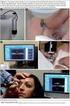 found helpful in a number of areas of ophthalmology. However, in the field of anterior segment tumors its usefulness is confined to a subset of tumors that are confined to the iris, hypo pigmented, and
KERATOCONUS IS A BILATERAL, ASYMMETRIC, CHRONIC,
 Comparison of and Intacs for Keratoconus and Post-LASIK Ectasia MUNISH SHARMA, MD, AND BRIAN S. BOXER WACHLER, MD PURPOSE: To evaluate the efficacy of single-segment Intacs and compare with double-segment
INTRODUCTION. Trans Am Ophthalmol Soc 2006;104:402-413
 ORBSCAN II ASSISTED INTRAOCULAR LENS POWER CALCULATION FOR CATARACT SURGERY FOLLOWING MYOPIC LASER IN SITU KERATOMILEUSIS (AN AMERICAN OPHTHALMOLOGICAL SOCIETY THESIS) BY Henry Gelender MD ABSTRACT Purpose:
Comparison Combined LASIK Procedure for Ametropic Presbyopes and Planned Dual Interface for Post-LASIK Presbyopes Using Small Aperture Corneal Inlay
 Comparison Combined LASIK Procedure for Ametropic Presbyopes and Planned Dual Interface for Post-LASIK Presbyopes Using Small Aperture Corneal Inlay Minoru Tomita, MD, PhD 1,2 1) Shinagawa LASIK, Tokyo,
Paragon RG-4 Fitting Reference Guide
 PARAGON VISION SCIENCES Paragon RG-4 Fitting Reference Guide* & Certification Manual 2008 *This document is an abbreviated version and does not replace the FDA approved professional fitting guide. Lenses
RELEX SMILE AND SMILE EXTRA.. OUR 1 YEAR RESULTS AND PATIENTS SURVEY
 RELEX SMILE AND SMILE EXTRA.. OUR 1 YEAR RESULTS AND PATIENTS SURVEY DR SANDIP MITRA MD FRCS CORNEA AND REFRACTIVE FELLOW (ROYAL VICTORIA EYE AND EAR HOSPITAL, AUSTRALIA) RELEX SMILE UNIT AT THE ALZAHRA
Wavefront-guided Excimer Laser Vision Correction After Multifocal IOL Implantation
 Wavefront-guided Excimer Laser Vision Correction After Multifocal IOL Implantation Bettina B. Jendritza, MD; Michael C. Knorz, MD; Steve Morton ABSTRACT PURPOSE: To investigate the use of wavefront-guided
The Galilei Dual Scheimpflug Analyzer incorporates multiple diagnostic modalities into one device to map the cornea and anterior segment.
 Supplement to March 2009 The Galilei Dual Scheimpflug Analyzer incorporates multiple diagnostic modalities into one device to map the cornea and anterior segment. Sponsored by an unrestricted educational
IOL Power Calculation After Myopic LASIK. Hany Helaly, Lecturer of Ophthalmology, Faculty of Medicine, Alexandria University.
 IOL Power Calculation After Myopic LASIK Hany Helaly, Lecturer of Ophthalmology, Faculty of Medicine, Alexandria University. SUPERVISORS Prof. Dr. Mohammad El-Hifnawy Professor of Ophthalmology Faculty
Update on Post- Refractive Surgery IOL Calculations
 Update on Post- Refractive Surgery IOL Calculations Hawaiian Eye 2014 Kauai Rhonda G Waldron MMSc, COMT, CRA, ROUB, RDMS Diagnostic Echographer, Senior Associate in Ophthalmology Emory Eye Center Atlanta,GA
Aberrations caused by decentration in customized laser refractive surgery
 Aberrations caused by decentration in customized laser refractive surgery Diana C. Lozano 1,2 Advisors: Jason Porter 2,3a, Geunyoung Yoon 2,3b, and David R. Williams 2,3a San Diego State University, San
Ectasia Risk Factors: Lessons Learned
 Ectasia Risk Factors: Lessons Learned Lewis R Groden, MD Execu-ve Medical Director, LasikPlus Vision Centers/LCA Vision Associate Professor University of South Florida, Department of Ophthalmology Tampa,
Make a difference in someone s life FITTING GUIDE
 Make a difference in someone s life FITTING GUIDE CONTENTS Introduction 3 Applications 4 Characteristics 4 Fitting philosophy 5 Mid-peripheral / limbal zone 6 Only 3 fitting variables to determine 7 Ideal
iocutouchtm for ipad Contents of Videos and Still Images Anatomy 906. Normal Eye and Orbit - no labels 907. Normal Eye and Orbit - with labels
 iocutouchtm for ipad Contents of Videos and Still Images Anatomy 906. Normal Eye and Orbit - no labels 907. Normal Eye and Orbit - with labels Normal Eye 474. Normal Eye overview 476. Cornea - overview
How To Treat Eye Sight Problems With Eye Care
 Dealing With The Refractive Surprise Richard S. Hoffman, MD Clinical Associate Professor of Ophthalmology Casey Eye Institute Oregon Health and Science University No Financial Interest Why The Surprise?
Map Interpretation Guide. Map Interpretation Guide. Software Version 5.2
 Map Interpretation Guide Map Interpretation Guide Software Version 5.2 Map Interpretation Guide Software Version 5.2 contents Foreword... 4 Introduction... 5 Getting Started... 6 1 The Refractive Report...
OCT-guided Femtosecond Laser for LASIK and Presbyopia Treatment
 Shinagawa LASIK Center OCT-guided Femtosecond Laser for LASIK and Presbyopia Treatment Minoru Tomita, MD, Ph.D 1) Executive Medical Director at Shinagawa LASIK Center, Tokyo, Japan 2) Clinical Professor
PATIENT CONSENT FOR LASER IN-SITU KERATOMILEUSIS (LASIK)
 INTRODUCTION: You have been diagnosed with myopia (nearsightedness) or hyperopia (farsightedness) with or without astigmatism, or astigmatism alone. Myopia is a result of light entering the eye and focusing
Refractive Errors & Correction
 Super Vision 6 Chapter Lasik is currently the most sophisticated procedure for correction of refractive errors. Lasik is an acronym for Laser Assisted Insitu Keratomileusis. In Lasik, Excimer laser is