
INCIDENT RESPONSE PLAN
|
|
|
- Jeffery Dean
- 10 years ago
- Views:
Transcription
1 L o s A n g e l e s M i s s i o n C o l l e g e INCIDENT RESPONSE PLAN INFORMATION TO HELP YOU PLAN AND PREPARE Eldridge Avenue Sylmar, California (818)

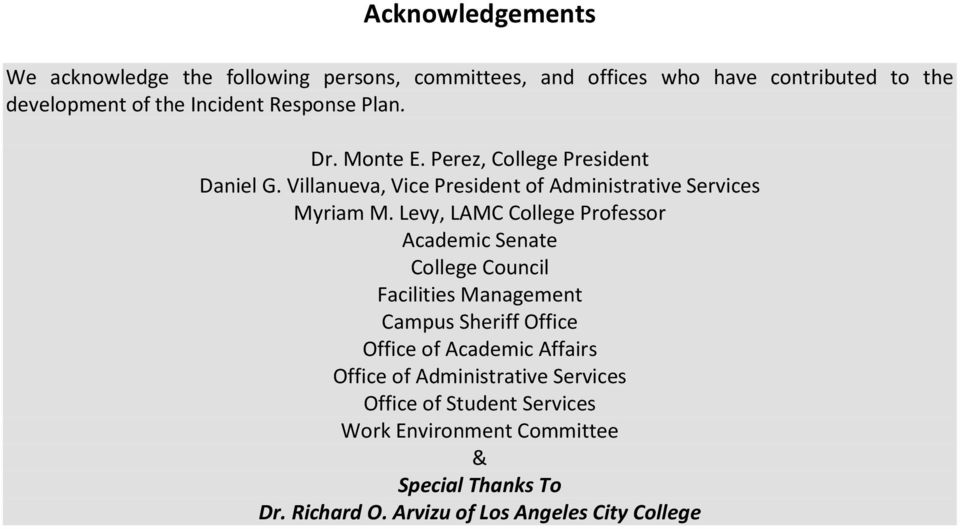
2 Acknowledgements We acknowledge the following persons, committees, and offices who have contributed to the development of the Incident Response Plan. Dr. Monte E. Perez, College President Daniel G. Villanueva, Vice President of Administrative Services Myriam M. Levy, LAMC College Professor Academic Senate College Council Facilities Management Campus Sheriff Office Office of Academic Affairs Office of Administrative Services Office of Student Services Work Environment Committee & Special Thanks To Dr. Richard O. Arvizu of Los Angeles City College
3 Table of Contents Part One - Introduction Purpose and Scope of Plan... 1 Approval Statement... 1 Record of Distribution / Changes Table... 2 Emergency Phone Numbers... 3 Emergency Chain of Command Authority... 3 Campus Evacuation Maps... 4 Building Evacuation Maps Building Coordinator/CERT Responsibilities Part Two - Identified Emergencies Active Shooter Bomb Threat Earthquake Evacuation Fire Flooding / Water Damage Hazardous Material Release Lockdown Medical Emergency Power Outage Rolling Blackout Terrorist Attack Utility Outage Windstorm (Severe) Additional Information and Procedures Part Three Appendices Appendix A Bomb Threat Checklist Appendix B Los Angeles Community College District Incident/Injury Report Appendix C State of California Employer s Report of Occupational Injury or Illness Appendix D State of California Accident Identification Report, Standard Form Appendix E State of California of Vehicle Accident, Standard Form Appendix F U.S. Department of Labor Material Safety Data Sheet... 71

4 PART ONE INTRODUCTION Purpose and Scope of Plan Los Angeles Mission College is committed to the safety of students, faculty, staff and visitors on its campus. The Incident Response Plan (IRP) is the official plan of the college and is part of the overall emergency preparedness efforts. The plan will address emergency preparedness and response procedures related to natural disasters, and specific circumstances that constitute an emergency. The Los Angeles Mission College (LAMC) Incident Response Plan (IRP) has been created to serve as a blueprint for actions to be instituted by the employees of LAMC whenever a real or perceived emergency threatens the college population and/or campus. For the purpose of this plan, an emergency is defined as a situation or the threat of an impending situation with potential to negatively affect the health, safety and welfare of the campus community and/or the integrity of campus buildings or environment, which is not covered by routine, day-to-day operations. This plan provides a uniform approach for managing response to all types and sizes of real, potential or perceived emergency, with full implementation required only for major disasters involving a large portion of the campus community. Following identification of an emergency situation, the Los Angeles Mission College President will notify the necessary Threat Assessment Team members and activate the appropriate level of response in accordance with this plan. Approval Statement This Incident Response Plan at Los Angeles Mission College has been reviewed and is hereby approved. This plan is effective immediately and supersedes all other plans. Monte E. Perez, Ph.D. COLLEGE PRESIDENT DATE Daniel G. Villanueva VICE PRESIDENT OF ADMINISTRATIVE SERVICES DATE CAMPUS SHERIFF DATE LAMC Incident Response Plan 1
5 RECORD OF DISTRIBUTION AND CHANGES Los Angeles Mission College Incident Response Plan This plan will be reviewed and approved annually in August. All updates and revisions to the plan will be tracked and recorded in the following table. This process ensures the most current version of the plan is made available at all times. Change # Date of Change Entered by Action / Summary of Description 8/23/2012 Initial Release LAMC Incident Response Plan 2
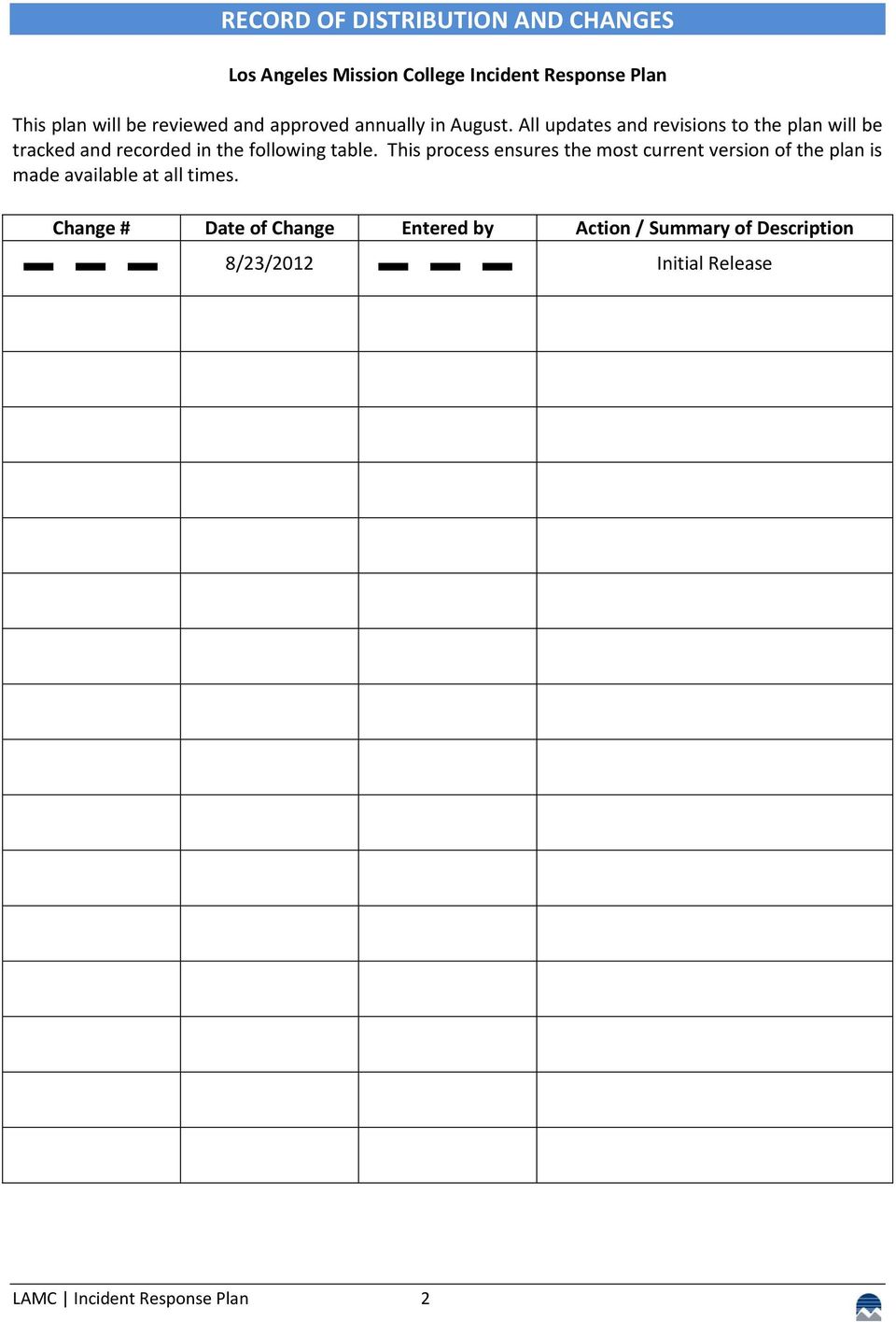
6 Emergency Phone Numbers Police/Fire/Medical Emergencies LAMC President... (818) LAMC Vice President of Administration... (818) LAMC Director of College Facilities... (818) LAMC Campus Sherriff Office... (818) Emergency Chain of Command Authority In the event of an emergency, the chain of authority for administrative decision-making is as follows: 1. President or the Vice President of Administrative Services 2. Duty Vice President or Dean 3. Director College Facilities 4. Duty LAMC Administrator 5. Los Angeles County Sheriff's Department - Duty Deputy 6. Los Angeles County Sheriff's Department - Duty Security Officer Administrative decisions relating to emergency situations - such as the decision to cancel classes, to send employees home, or to close the college - are made by the top-ranking available person in the administrative chain of authority. LAMC Incident Response Plan 3
7 Campus Evacuation Map LAMC Incident Response Plan 4
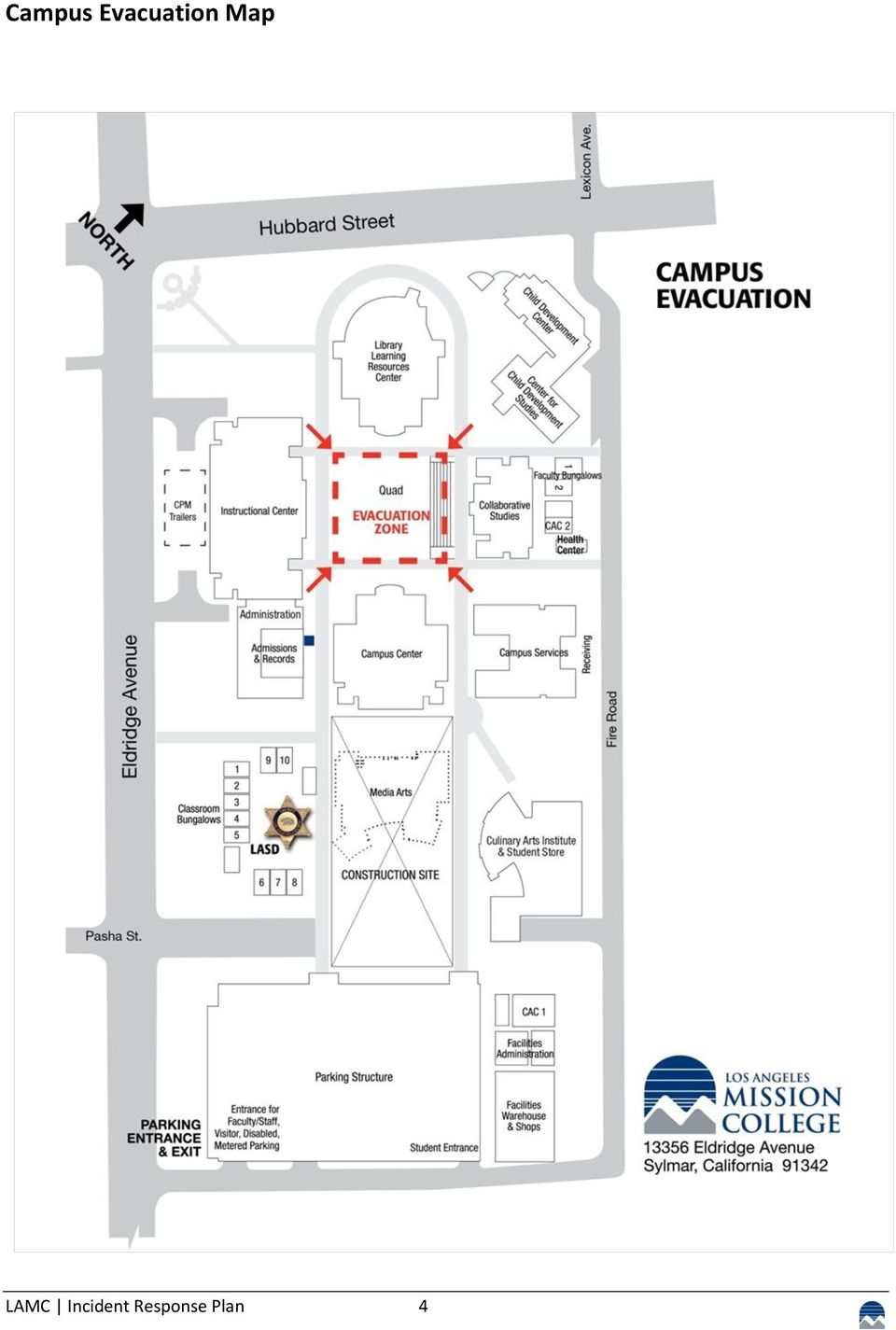
8 Building Evacuation Maps The following pages contain Evacuations Maps for Los Angeles Mission College. LAMC Incident Response Plan 5

9 LAMC Incident Response Plan 6
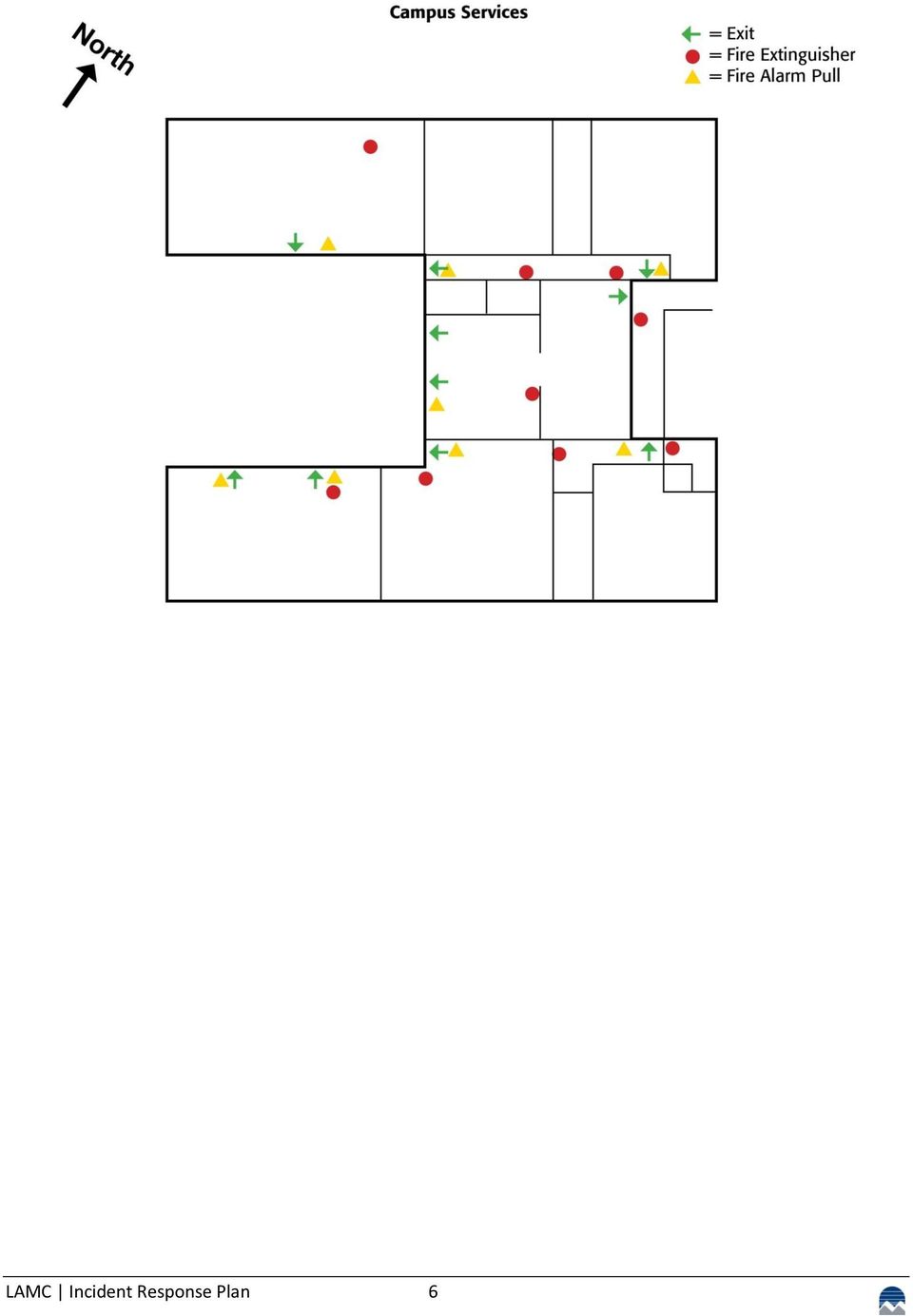
10 LAMC Incident Response Plan 7
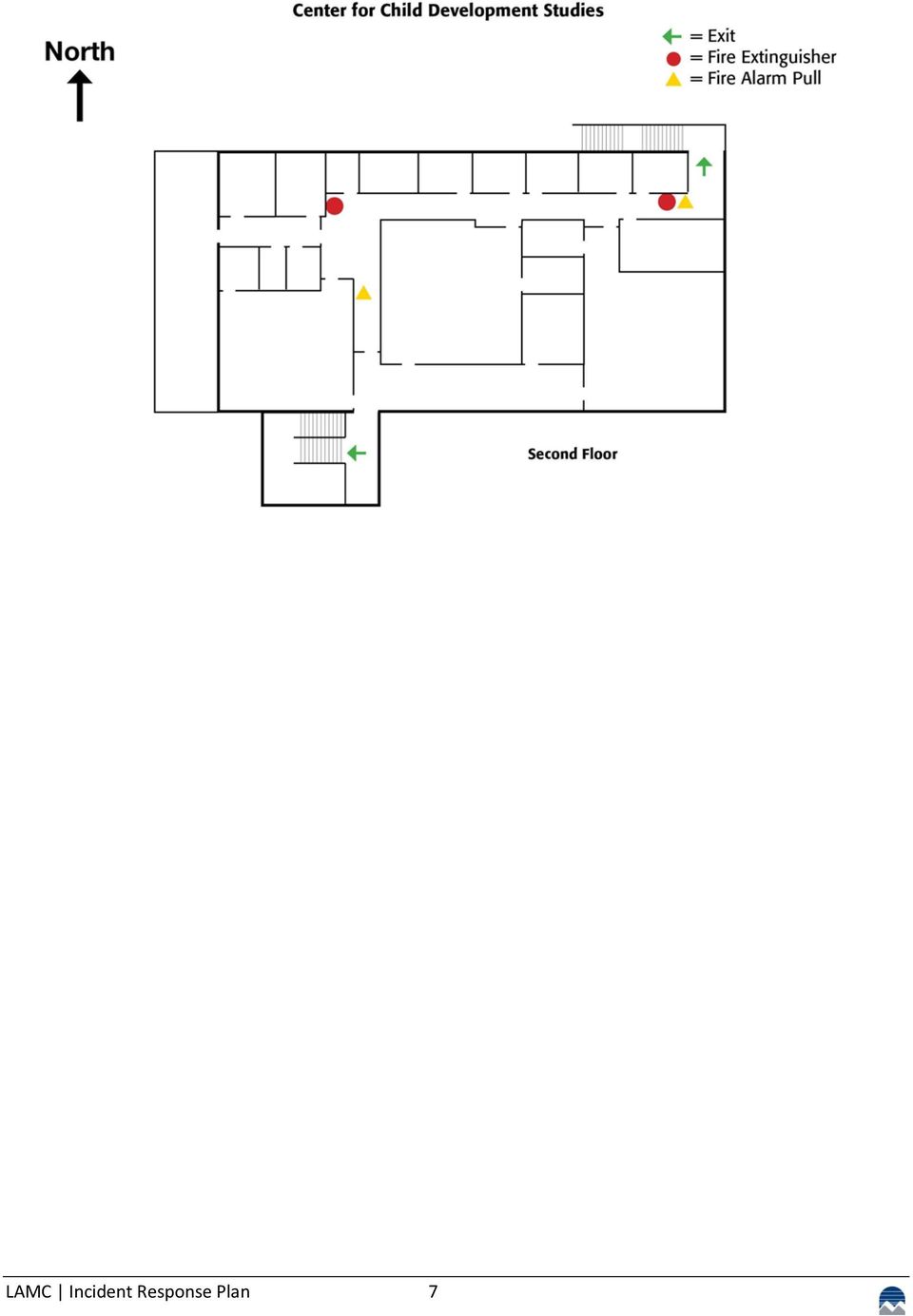
11 LAMC Incident Response Plan 8
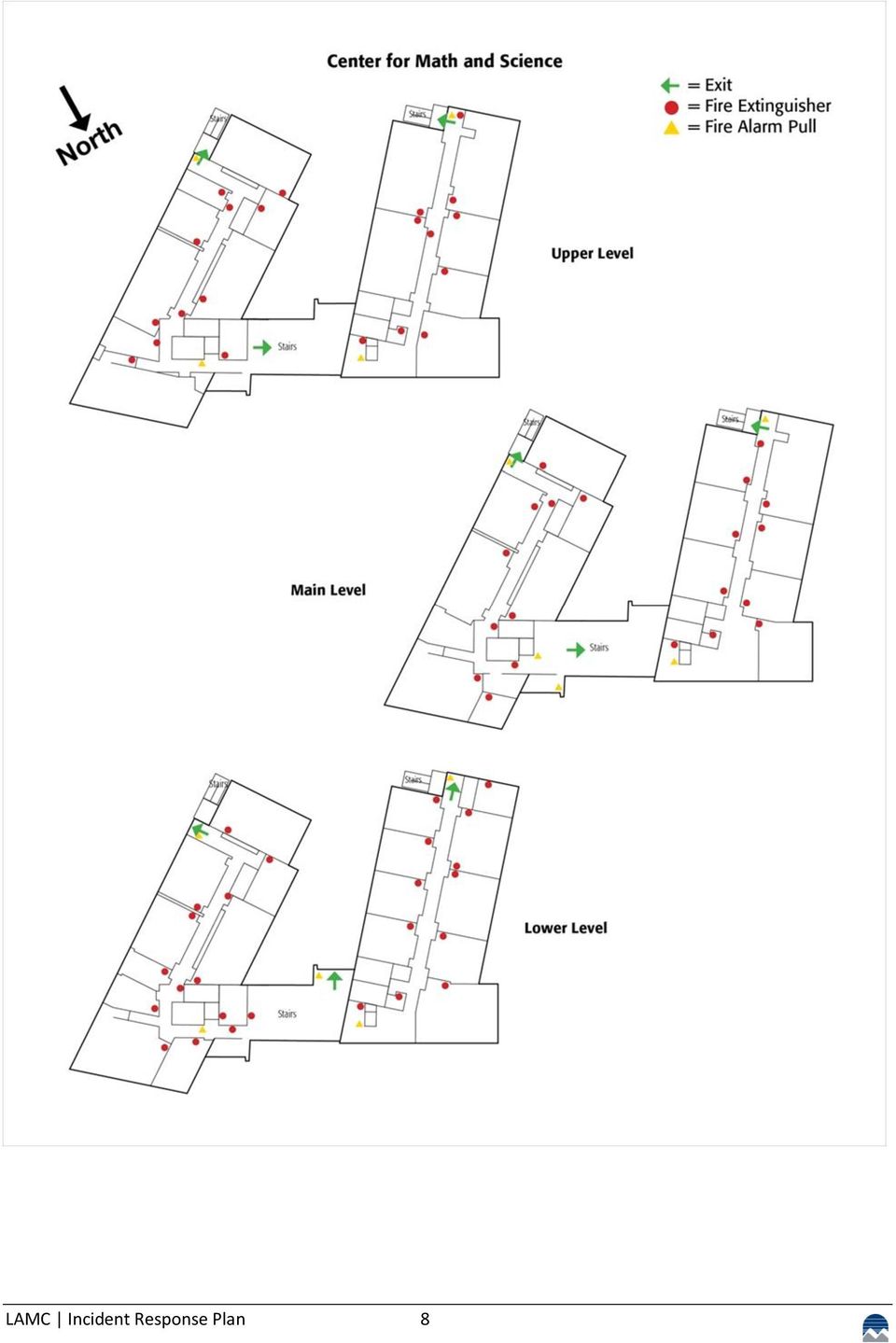
12 LAMC Incident Response Plan 9
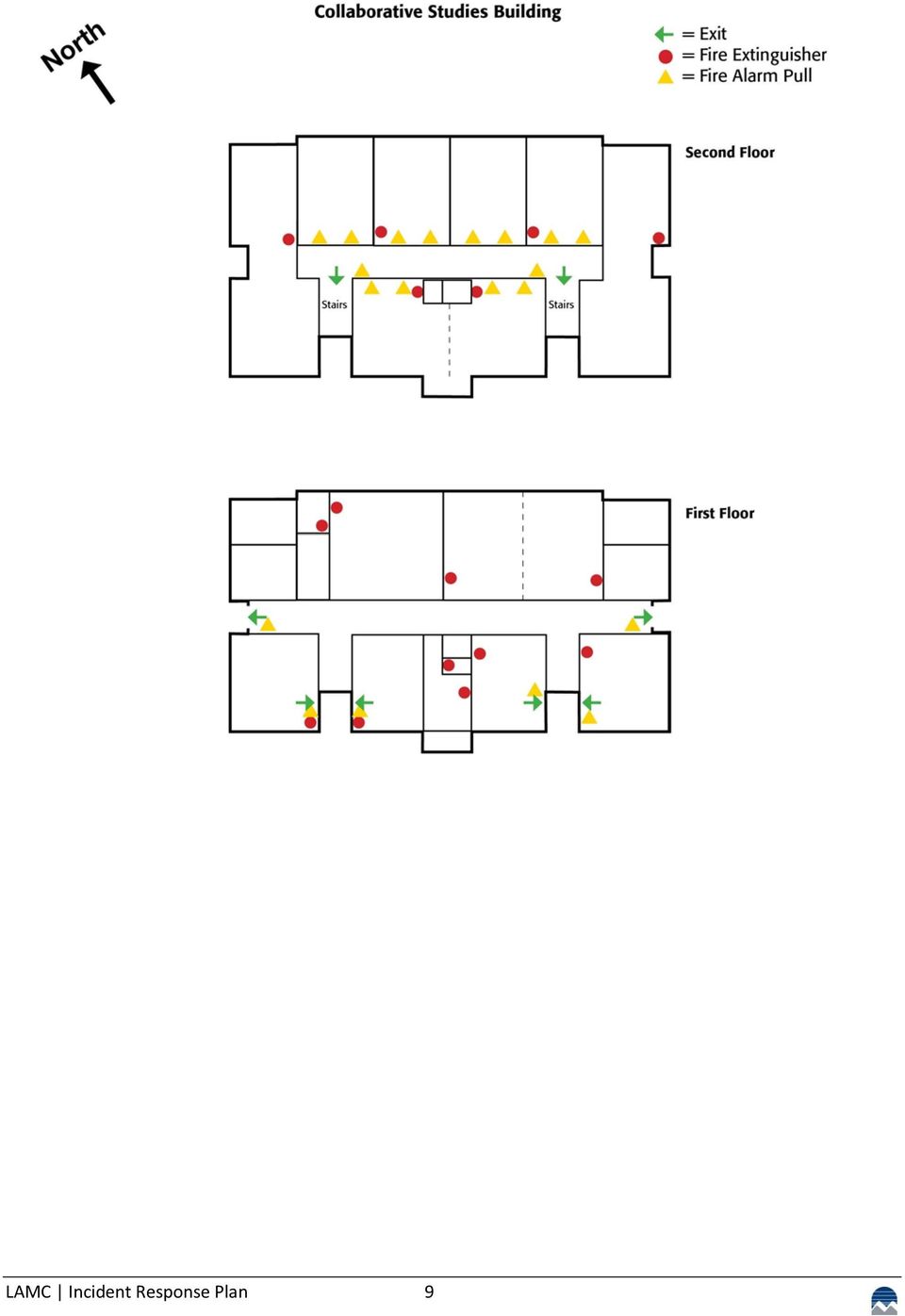
13 LAMC Incident Response Plan 10

14 LAMC Incident Response Plan 11
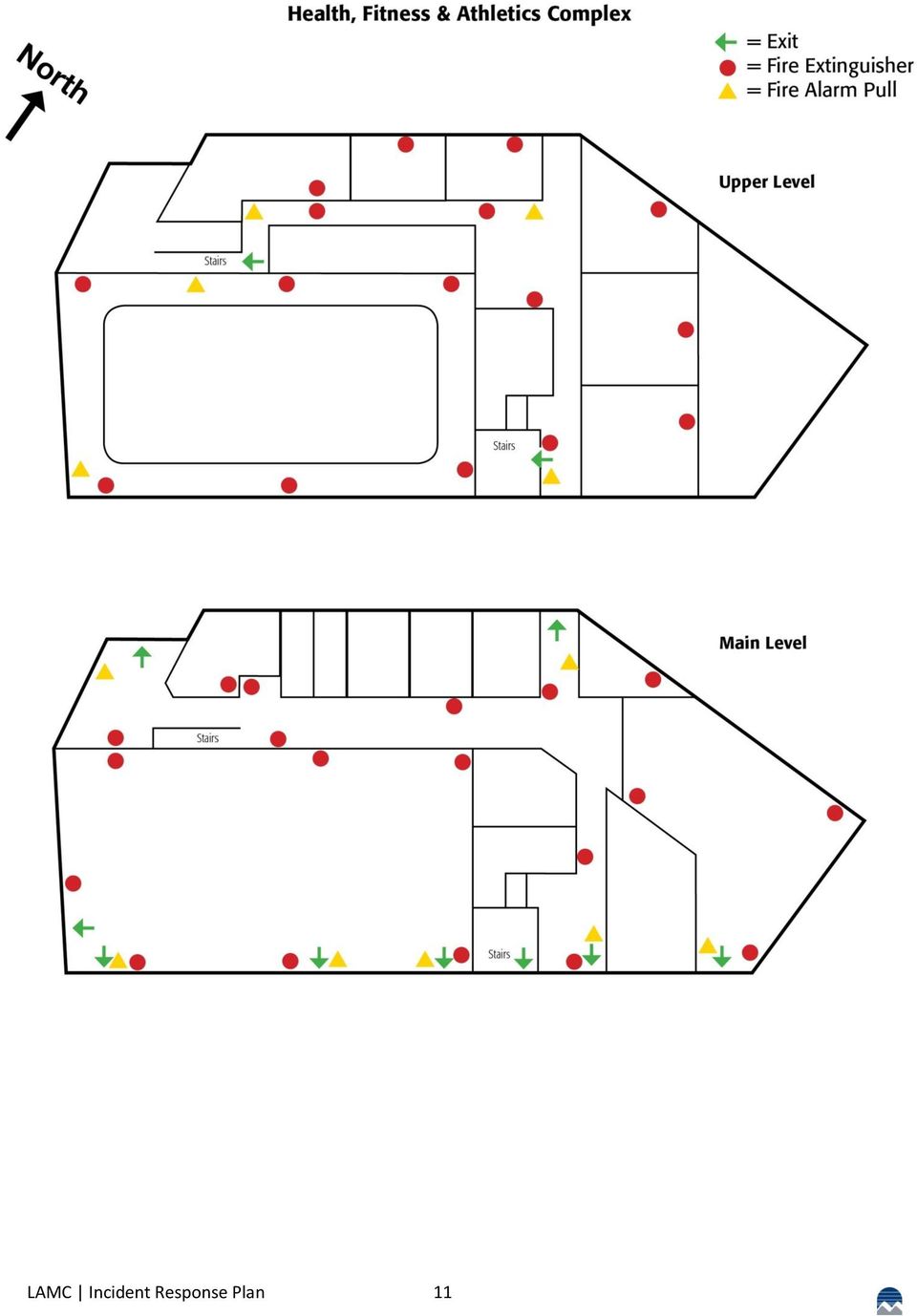
15 LAMC Incident Response Plan 12

16 LAMC Incident Response Plan 13
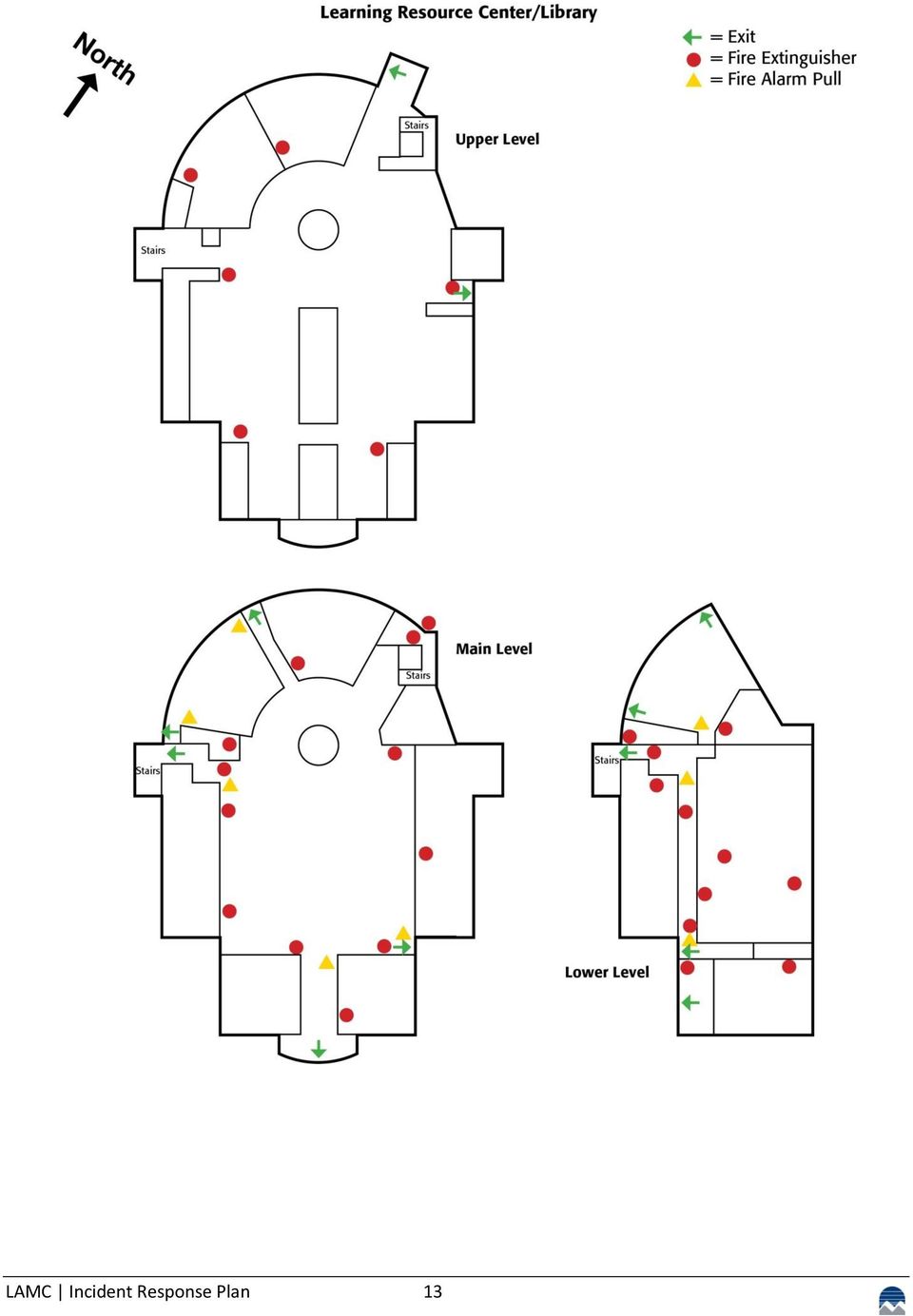
17 Building Coordinators Responsibilities/CERT Utilized as a team, these individual receive certified training in the area of Community Emergency Response consistent with the guideline of the Federal Emergency Management Agency. Training includes Fire Safety, Light Search and Rescue, Disaster Triage, and Disaster Psychology. These skills will be used during emergency and non-emergency circumstances. Additional responsibilities include: During Emergency Only. Communicate with Incident Command Center (ICC) if activated during an emergency. Coordinate evacuation (if needed) with other employees, ensure the building is cleared/secured/marked prior to leaving. Routine Issues. Maintain current Emergency Operations Plan (in process). Know area evacuation routes. Ensure postings of evacuation routes. Ensure each room/office has emergency guidelines (flipchart) posted. Informs instructors to make classes aware of guidelines. Attend training as offered (along with back-up coordinator). Know location/operations of fire extinguishers. Coordinate evacuations as needed. LAMC Incident Response Plan 14

18 ACTIVE SHOOTER A Crisis Situation Response is to be utilized for situations where an actual crisis situation has occurred. An appropriate response should be implemented for any situation involving the following scenarios: Shots being fired on or immediately adjacent to the campus. Report of weapon(s) on campus. A stabbing on campus. An explosion near, but not on the campus. A hostage situation or an armed barricaded subject on or immediately adjacent to the campus. A natural disaster, hazardous materials incidents, or threats involving weapons of mass destruction which would indicate immediate danger to those on campus. Immediate Actions: Lock and/or barricade doors to prevent shooter from entering room Close blinds Block windows Turn off radios and dim computer screens Keep calm, quiet, and out of sight To protect yourself from gunfire, take cover behind thick desks, along concrete walls, or against filing cabinets Silence cell phones Leaving a secured area: Consider risks before leaving. Remember, the shooter is looking for 'targets of opportunity' and generally will need to be stopped by an outside force. Do not evacuate rooms or buildings unless told to do so by Building Monitor or police officer, or unless it is absolutely clear and safe to do so. Rescue attempts should only be tried if they can be accomplished without endangering lives. When in doubt, shelter in place and wait for instructions from emergency personnel. Call 911 or notify the Campus Sherriff by calling (818) from cell phones. Do not hang up on the dispatcher until told to do so. Provide the following information: Clearly state there has been a shooting or someone has been shot. The exact location of the suspect(s) including building, type of building, number of exits, room/office number, front or side window, roof, office, classroom, etc. Number of shots fired by the suspect(s), if the suspect(s) is still shooting, and type of weapon(s) (rifle, shotgun, handgun, etc.) or explosive device(s). Description of suspect(s), their clothing, vehicle used, and direction of travel. Condition and number of hostages, and number of known injured or killed. Any demands or information supplied by suspect(s). College staff members should refrain from attempting to negotiate with the violator(s) as numerous hostage situations have ended in tragedy when well intended, and untrained civilians attempted to help with negotiations. LAMC Incident Response Plan 15
19 STAFF AND FACULTY RESPONSIBILITIES Notify the Campus Sheriff by calling (818) Provide the dispatcher with all available information regarding the threat. If an assessment of the situation indicates that it is safer to remain in the classroom than to leave it, lock or barricade classroom doors once the hallways near their room are clear of students. Do not open doors unless instructed to do so by a staff or authorized personnel that are recognized by sight or voice. Emergency Responders may enter the room using a master key or by providing positive identification. If an instructor observes imminent danger near room immediately secure their room and notify the Campus Sheriff of the danger via telephone, radio system or runner. Brief students that the College has been placed on a heightened security status as a response to an apparent crisis situation. Advise students to remain quiet until more can be learned about the situation. Calmly and quietly review emergency evacuation procedures with students to prepare them for possible evacuation. Until the situation has been assessed, recommend that students remain in classroom unless authorization is received from appropriate authority. In the event that you are outside when this event occurs take the following actions: Notify the Campus Sheriff by calling (818) Provide the dispatcher with all available information regarding the threat of an explosion. Proceed to assigned class or an indoor secure area unless otherwise instructed by the building administrator/department head. If the assigned class is not accessible or is unsafe proceed to the nearest classroom. Seek shelter in the safest place available if it is unsafe to enter a campus building. If the decision is made to leave the campus, faculty/staff should notify their supervisor or department head, or emergency response personnel of their location and the number and names of students/ employees present. Notification should occur as soon as it is safe to do so. RETURN TO NORMAL OPERATIONS Once the danger has passed the College President or Senior College Administrator may be able to put the College back to normal status. The campus should be returned to normal operations when all of the following three conditions are met: There is no indication that an above normal level of danger exists. Further measure such as evacuation will not be needed. It is possible for the functions of the College or department to continue. LAMC Incident Response Plan 16
20 If the building is evacuated use the telephone, cell phones, radios or runners to announce that a return to normal operations is being implemented. The return to normal operations will be announced by proper authority going from room to room if students and faculty remained in rooms during the emergency. An announcement to inform College faculty, staff and students as to the reason that normal campus operations were interrupted is beneficial to prevent rumors from causing undue alarm within the College. LAMC Incident Response Plan 17

21 LAMC Incident Response Plan 18 PAGE LEFT INTENTIONALLY BLANK
22 BOMB THREAT Bomb threats are usually received by telephone, but may also be received by note, letter or . All bomb threats should be taken very seriously and handled as though an explosive were in the building. Act quickly, but remain calm and obtain information with the checklist. If a bomb threat is received by phone: 1. Remain calm. Keep the caller on the line for as long as possible. DO NOT HANG UP, even if the caller does. 2. Listen carefully. Be polite and show interest. 3. Try to keep the caller talking to learn more information. If possible, write a note to a colleague to call the authorities or, as soon as the caller hangs up, immediately notify them yourself. 4. Ask the person making the bomb threat the following questions: Where is the bomb going to explode? Where is it right now? What does it look like? What will cause it to explode? Why did you choose this location? What damage will it do? Do you want people hurt? What is your name? 5. If your phone has a display, copy the number and/or letters on the window display. 6. Complete the Bomb Threat Checklist in Appendix A immediately. Write down as much detail as you can remember. Try to get exact words. If a bomb threat is received by handwritten note: Call the Campus Sherriff at (818) Handle note as minimally as possible If a bomb threat is received by Call the Campus Sherriff at (818) Do not delete the message Signs of a suspicious package: No return address Excessive postage Stains Strange odor Strange sounds Unexpected Delivery DO NOT: Use two-way radios or cellular phone; radio signals have the potential to detonate a bomb. Evacuate the building until police arrive and evaluate the threat. Activate the fire alarm. Touch or move a suspicious package. LAMC Incident Response Plan 19
23 STAFF AND FACULTY RESPONSIBILITIES Most bomb threats are received by telephone. When a staff or faculty member receives a bomb threat they should remain calm and try to get as much information as possible from the caller. If a staff or faculty member discovers a suspicious package or object immediately report the package to the Campus Sheriff by calling (818) as appropriate. Under no circumstances should the package be touched, moved, or tampered with by anyone other than trained personnel. When a staff or faculty member is first informed of a bomb threat immediately notify their supervisor or department head and the Campus Sheriff by calling (818) as appropriate. Provide the dispatcher with all available information regarding the bomb threat. The decision to evacuate a particular area of building will be made by campus authorities. Keep all students in the classroom while the bomb threat response is being completed. Move away from doors and windows and give Drop, Cover and Hold Command. Instruct students to stay down until subsequent instructions are given. If an assessment of the situation indicates that it is safer to remain in the classroom than to leave it, lock or barricade classroom doors once the hallways near the room are clear of students. Do not open doors unless instructed to do so by a staff member or authorized personnel that are recognized by sight or voice. Public safety responders may enter the room using a master key or by providing positive identification. If an instructor observes imminent danger near their room immediately secure their room and notify the Campus Sheriff of the danger via telephone or runner. Brief students that the College has been placed on a heightened security status as a response to an apparent crisis situation. Advise students to remain quiet until more can be learned about the situation. Calmly and quietly review emergency evacuation procedures with students to prepare them for possible evacuation. Until the situation has been assessed, recommend that students remain in classroom unless authorization is received from appropriate authority. In the event you are outside when this event occurs take the following actions: Move away from the danger area to a safe location. Notify the Campus Sheriff by calling (818) as appropriate. The President or designee will provide directions relating to cancellation of classes, release of students and other follow-on actions by the faculty and staff. Seek shelter in the safest place available if it is unsafe to enter a campus building. Assist individuals with disabilities. Request assistance from Sheriff or City of Los Angeles Fire Department personnel. If assistance is not available and it becomes necessary to move disabled persons, do so carefully. Ask the individual if they need help then render assistance as directed. LAMC Incident Response Plan 20
24 Return to Normal Operations Once the danger has passed the Senior College Administrator or Incident Commander may be able to put the College back to normal status. The campus should be returned to normal operations when all of the following three conditions are met: There is no indication that an above normal level of danger exists. Further measure such as evacuation will not be needed. It is possible for the functions of the College or department to continue. Using the telephone, cell phones, radios or runners, announce that the campus is returning to normal operations. An announcement to inform College faculty, staff and students as to the reason that normal campus operations were interrupted is beneficial to prevent rumors from causing undue alarm within the College. LAMC Incident Response Plan 21
25 LAMC Incident Response Plan 22 PAGE LEFT INTENTIONALLY BLANK
26 EARTHQUAKE Immediate Actions If Indoors: Stay calm and try to calm and reassure others. Duck or drop to the floor. Take COVER under a sturdy desk, table, or other furniture. Hold on to furniture you are under and protect face. Be prepared to move with it until the shaking stops. If you are not near a desk or table, drop to the floor against the interior wall and protect your head and neck with your arms. Avoid exterior walls, windows, hanging objects, mirrors, tall furniture, large appliances, and cabinets with heavy objects or glass. INSTRUCT OTHERS TO DUCK, COVER, AND HOLD! Stay away from glass windows, wall shelves, and heavy equipment. DO NOT RUN OUTSIDE. DO NOT EVACUATE UNTIL AFTER TREMORS CEASE. Be aware that earthquake aftershocks may cause further damage. Once the main tremor has ceased, calmly evacuate building to evacuation assembly area in the Campus Quad. Assist those with physical disability. GAS LEAKS If you smell gas, cease all operations. DO NOT SWITCH LIGHTS ON OR OFF. HAZARDOUS MATERIALS RELEASE INCIDENT Some gasses are odorless and colorless. Do not enter any areas where hazardous materials are store or suspected until uniformed personnel or other trained authorized person has inspected and cleared the areas. Immediate Actions If Outdoors: Quickly move at least 300 feet away from buildings, utility poles, and other structures. CAUTION: Always avoid power or utility lines. After the Earthquake: o Evacuate building if the earthquake seemed serious enough to cause structural damage by moving quickly to the evacuation point shown on the Emergency Exit Plan posted in each room. o Expect aftershocks. Move carefully and use extreme caution when moving around damaged buildings because aftershocks can cause further damage. o Check for injuries, trapped persons and disabled persons in your vicinity. o Check for fires. If you can, extinguish with a fire extinguisher. If not, leave the area and call the Campus Sherriff at (818) o Clean up spilled chemicals or other potentially harmful materials, if safe to do so. o Do not use electric equipment. Turn electrical switches off and do not light matches. o Do not touch downed power lines, other exposed wires, or objects touched by downed lines. o Do not use telephone unless an emergency requires it. o Check closets and storage shelf areas. Open doors carefully and watch for falling objects. o Listen for damage reports and evacuation information. Do not spread rumors. o Do not return to an evacuated building until instructed to do so by emergency personnel. LAMC Incident Response Plan 23
27 LAMC Incident Response Plan 24 PAGE LEFT INTENTIONALLY BLANK
28 EVACUATION Emergency evacuation of a building/buildings or the campus may be required due to situations such as a major fire, an explosion or a major crisis situation. An evacuation plan should be preplanned in order to move away from a threatened building or area toward an evacuation area. The evacuation protocol shall be used under the following conditions: An explosive device detonates on campus. A functional explosive device is found on campus. A hostage situation takes place on campus. A situation involving a barricaded subject armed with explosives or firearms takes place on campus. A severe weather crisis occurs which requires removal of personnel to a safe remote location. A weapon of mass destruction or hazardous materials incident occurs on or near the campus and public safety responders determine that mass evacuation to a remote location is required. Whenever the facility or grounds are rendered unsafe and evacuation to a remote site is needed. PRESIDENT / CAMPUS SHERIFF / KEY PERSONNEL Notify the Campus Sheriff by calling (818) , as appropriate. Provide the dispatcher with all available information about the situation that may result in the evacuation of the campus. The Campus Sheriff Deputy or the Incident Commander will ensure that the appropriate levels of notifications are made to the College administration and that the appropriate reports are completed detailing the events and actions taken. For small scale evacuations the Campus Sheriff Deputy/Incident Commander, Los Angeles Mission College President or senior official will make the determination of the need to evacuate a particular area. For large scale evacuations the Los Angeles Mission College President or senior official present will make the determination to order an evacuation based on a consultation with the Threat Assessment Team and/or the Campus Sheriff. A campus wide evacuation order will be made by the Los Angeles Mission College President or College Senior Official present will make the determination to order an evacuation based on a consultation with the Threat Assessment Team and/or the Campus Sheriff. Implement Evacuation Plan. As the chief investigative body for the College, the Campus Sheriff will maintain Incident Command on all incidents that could reasonably lead to a criminal investigation. In incidents where the Campus Sheriff will not be the primary investigator agency Incident Command will be transitioned to the agency responsible for such investigation upon their arrival. As a matter of course the City of Los Angeles Fire Department will have Incident Command on all fires and hazmat incidents. LAMC Incident Response Plan 25
29 DO NOT USE campus radios or cell phones if there is a bomb or bomb threat on campus. If there is NO bomb or bomb threat on campus utilize the Campus radios, telephones or cell phones to maintain communications between faculty, staff and students. NOTE: Cell phones and radios are essential tools to maintain communications. Accountability Procedures for Emergency Evacuations Campus and Building Evacuation Maps are located on pages Building Marshals are designated by the Threat Assessment Team and will conduct head counts once evacuation has been completed. There is at least one Building Marshal per floor or per twenty occupants to provide adequate guidance and instruction at the time of an emergency. The employees selected as Building Marshals are to be trained in the complete workplace layout and the various primary and alternate escape routes from the workplace. All Building Marshals are to be trained in the evacuation of disabled individuals, and equipment necessary for that evacuation. Awareness of hazardous areas to be avoided during emergencies. Before leaving, the Building Marshals are to check rooms and other enclosed spaces in the workplace for other employees who may be trapped or otherwise unable to evacuate the area, and convey this information to emergency personnel. Once each evacuated group of employees have reached their Designated Meeting Site, each Building Marshals: Assembles his/her group in the Designated Meeting Site. Takes head count of his or her group. Assumes role of department contact to answer questions. Instruct personnel to remain in area until further notice. Reports status to Threat Assessment Team or Campus Sheriff Deputy (if activated). Instruct personnel to remain at Designated Meeting Site until further notice. LAMC Incident Response Plan 26
30 EMERGENCY EVACUATION KITS The College should maintain two Emergency Evacuation Kits. The two Emergency Evacuation Kits should contain the following items: A copy of the Los Angeles Mission College Incident Response Plan. A set of master keys for all doors and wall lockers. A set of building plans, including all gas, electrical, cable shut-offs and water risers. A complete list of all cellular phone numbers for College administration. Emergency Evacuation Kits should contain information relating to the emergency response equipment and its location. Considerations for Emergency Evacuation Plan development, include the following items: Plan alternative evacuation plans for different directions from the campus. Your primary evacuation route may be inaccessible. Plan alternative student staging/rally areas, based on the above evacuation plans. In some emergencies, gathering students in a large, open area of the campus places them at risk. Plan "runners" to maintain communication between administration and staging/rally areas, and media staging areas in case electronic communication is interrupted. Prearrange a media staging area for briefings. Relay information to the College President and/or Threat Assessment Team on a regular basis through electronic means or by runners. LAMC Incident Response Plan 27
31 LAMC Incident Response Plan 28 PAGE LEFT INTENTIONALLY BLANK
32 FIRE The warning for a fire is an alarm and/or smoke and flames. Immediate Actions: Smell Smoke or Detect a Fire. Prior to opening doors, feel if the door is HOT. Open cautiously. If SMOKEY, stay near the floor where less smoke accumulates. Pull fire alarm. Evacuate from the area to the designated assembly area. Assist person with disabilities and children. Alert classes, students and employees nearby. Call 911 or your college local emergency number from cell phones and describe location, nature and extent/size of fire. Be sure to mention if there are any known or suspected persons trapped or if hazardous materials are involved. Call Campus Sherriff at (818) and provide the dispatcher with all available information regarding the fire. The Campus Sheriff Deputy will ensure that the appropriate levels of notifications are made to the College administration and that the appropriate reports are completed detailing the events and actions taken. If Fire is Minor and Controllable: Direct fire extinguisher(s) toward base of flames. Evacuate immediate area if appropriate. STAFF AND FACULTY RESPONSIBILITIES If the fire is small, you may wish to fight it with an extinguisher. Call Campus Sherriff at (818) and provide the dispatcher with all available information regarding the fire. In case of a fire, employees should activate the nearest fire alarm box and/or make a telephone call to the Campus Sheriff at (818) This high-pitched alarm alerts building occupants of the need for evacuation and sends a signal to the Campus Sheriff that there is an alarm condition in the building. It may be necessary to activate additional fire alarm boxes, or shout the alarm, if people are still in the building and the alarm has stopped sounding, or if the alarm does not sound. This can be done while exiting. Persons discovering a fire, smoky condition, or explosion should pull the fire alarm box. Any pertinent fire or rescue information should be conveyed to the Campus Sheriff. Assist individuals with disabilities. Request assistance from law enforcement or City of Los Angeles Fire Department personnel. If assistance is not available and it becomes necessary to move disabled persons, do so carefully. Ask the individual if they need help then render assistance as directed. LAMC Incident Response Plan 29
33 To report emergencies, call the Campus Sheriff at (818) State you name, your location, and the nature of the call. Speak slowly and clearly. Wait for the dispatcher to hang up first. On occasion the dispatcher may need additional information or may provide you with additional instructions. Make certain every student has left the classroom. In the event that a person has been injured and you are not able to evacuate someone notify the Campus Sheriff personnel, a Building Marshal, or other emergency response personnel that someone is inside the room. Close the doors and windows and accompany your class to the designated assembly area (map in each room). Upon reaching your assigned assembly area, immediately take attendance. Render first aid as necessary. Follow instructions from proper authority relating to continued operations. Evacuation Procedures for Building Occupants When the fire alarm sounds, all personnel should ensure that nearby personnel are aware of the emergency, quickly shutdown operating equipment (e.g., compressed gas cylinders), close doors and exit the building using stairwells. All occupants should proceed to their Designated Assembly Area and await further instructions from their Building Marshals. All personnel should know where primary and alternate exits are located, and be familiar with the various evacuation routes available. Campus and Building Evacuation Maps are located on pages Building occupants must NOT use elevators as an escape route in the event of a fire. Notes and Precautions: Small fires can be extinguished only if you are trained to use a fire extinguisher. However, an immediate readiness to evacuate is essential. All fires, even those that have been extinguished, must be reported to the Campus Sherriff immediately at (818) Never enter a room that is smoke filled. Never enter a room if the door is warm to touch. Return to Normal Operations Once the danger has passed the Senior College Administrator or Incident Commander may be able to put the College back to normal status. The campus should be returned to normal operations when all of the following three conditions are met: There is no indication that an above normal level of danger exists. Further measure such as evacuation will not be needed. It is possible for the functions of the College or department to continue. LAMC Incident Response Plan 30
34 If the building is evacuated use the telephone, cell phones, radios or runners to announce that a return to normal operations is being implemented. The return to normal operations will be announced by proper authority going from room to room if students and faculty remained in rooms during the emergency. An announcement to inform College faculty, staff and students as to the reason that normal campus operations were interrupted is beneficial to prevent rumors from causing undue alarm within the College. LAMC Incident Response Plan 31
35 LAMC Incident Response Plan 32 PAGE LEFT INTENTIONALLY BLANK
36 Flooding / Water Damage There may be areas on the Los Angeles Mission College campus subject to or affected by floods. Except in the case of flash flooding, the onset of most floods is a relatively slow process with a buildup of several days. Closure of highways can result in isolating areas of the community. Students may be unable to return home or may have to be evacuated to an alternate location. Los Angeles Mission College officials may be alerted to danger and be ordered to evacuate by fire and/or law enforcement or local emergency officials. Should a flooding situation occur, an orderly evacuation of the area should be initiated, call the Campus Sheriff at (818) Sheriff s personnel will notify the appropriate college personnel and dispatch personnel to the area. Provide the dispatcher with all available information regarding the flooding threat. Monitor weather conditions in an affected area by radio/tv broadcasts, internet, or weather alert radio. Evacuate students to an alternate location immediately in accordance with established College policy. If the situation does not permit evacuation, keep students on campus or other safe location and make the following provisions. Provide care for students, faculty and staff who cannot leave the campus due to flooded streets etc. If necessary, arrange for the evacuation of staff and students to a safe alternate location. Shut off water at mains so contaminated water will not back up into the campus supply. Be prepared to open designated shelter sites for use. Check emergency response supplies if the College is designated as an evacuation shelter. Prepare for contaminated food, water, broken gas lines, and wet electrical equipment. If classes are dismissed, resume classes only after determination of building safety, and/or in other designated buildings after the flood. WATER DAMAGE Serious water damage can occur from a number of sources: broken pipes, clogged drains, broken skylight or windows, or construction oversights. Request for repairs of leaky pipes and broken faucets are not a flood situation. They are to be reported by sending a work request form to Facilities Maintenance for notification of needed repair. LAMC Incident Response Plan 33
37 If a serious water leak occurs: 1) Call the Campus Sherriff at (818) Advise the dispatcher of the exact location and severity of the leak. Indicate whether any valuables are involved or are in imminent danger. 2) Notify your supervisor of the extent and the location of the leak, use extreme caution. If there is any possible danger, evacuate the area. 3) If you know the source of the water and are confident of your ability to stop it (i.e., unclog the drain or turn off the water), do so cautiously. 4) Be prepared to assist as directed in protecting college property and valuables that are in jeopardy. Take only essential steps to avoid or reduce immediate water damage: Evacuation Individuals in the hazardous area should be notified/warned and directed to leave the affected area. Do not enter an area that has been flooded until told to do so by emergency personnel. Employees are not to leave the campus until authorized to do so by an authorized administrator or Sheriff s personnel. STAFF AND FACULTY RESPONSIBILITIES Any flooding should be reported immediately to Campus Sheriff at (818) When reporting, be specific about the nature of the exact location. Campus Sheriff will contact the necessary specialized authorities and medical personnel. The key person on site should evacuate the affected area at once and close it off to access until the arrival of Campus Sheriff or City of Los Angeles Fire Department. If possible have someone remain in vicinity, away from danger, to assist emergency responders in locating the flood. If an emergency exists, activate the building alarm. You must report the emergency by phone. When the evacuation alarm is sounded, walk to the nearest identified exit and ask others to do the same. Assist the Building Marshals in evacuating students to an alternate location immediately in accordance with established College policy. If the situation does not permit evacuation, keep students on campus or other safe location and make the following provisions. Assist individuals with disabilities. Request assistance from law enforcement or City of Los Angeles Fire Department personnel. If assistance is not available and it becomes necessary to move disabled persons, do so carefully. Ask the individual if they need help then render assistance as directed. LAMC Incident Response Plan 34
38 Return to Normal Operations Once the danger has passed the Senior College Administrator, or Incident Commander may be able to put the College back to normal status. The campus should be returned to normal operations when all of the following three conditions are met: There is no indication that an above normal level of danger exists. Further measure such as evacuation will not be needed. It is possible for the functions of the College or department to continue. If the building is evacuated use the telephone, cell phones, radios or runners to announce that a return to normal operations is being implemented. The return to normal operations will be announced by proper authority going from room to room if students and faculty remained in rooms during the emergency. LAMC Incident Response Plan 35
39 LAMC Incident Response Plan 36 PAGE LEFT INTENTIONALLY BLANK
40 HAZARDOUS MATERIAL RELEASE Hazardous materials incidents are possible in numerous campus locations. Also, vehicles carrying hazardous materials on or near campus facilities and businesses operating near our facilities can generate hazardous materials incidents that may affect campus operations. Immediate Actions: Safeguard lives and isolate materials if safe to do so. Notify 911 or call Campus Sherriff at (818) from cell phones. Minimize property damage. Determine need to EVACUATE building: Alert others in building activate alarm. Evacuate immediately. Assist persons with disabilities or injuries. Close doors leading into the building to isolate release. Move and stay unwind, up slope, upstream, at least 300 feet free from building (to evacuation staging areas if safe). Keep streets and walkways clear for emergency equipment. Notify 911 or call Campus Sherriff at (818) from cell phones. If evacuation of the building/area is required, do the following: Always move crosswind to avoid fumes. Never move down wind. Follow the directions of the Building Marshals. Maintain control of students. Render first aid as necessary. Take roll. After the area has been evacuated, do not return until the City of Los Angeles Fire Department declares the area safe. Advise emergency services with: Exact location of spill, including room number if inside a building. Name of spilled material Quantity Appearance solid, liquid, odor, color, etc. Injuries or physical effects to those who have been exposed. Whether any victims are trapped within the isolated area. Area of contamination. Your name, department, and the phone extension you are calling from. If hazardous material is on a person remove any excess material and check follow immediate treatment as appropriate: Hazardous materials in eye: brush away and dry materials, then hold the eye open and flush with water at least 15 minutes. LAMC Incident Response Plan 37
41 Hazardous material on skin: remove contaminated clothing, brush away and dry materials and flush area with water in a safety shower for at least 15 minutes. Seek medical attention immediately! Send Materials Safety Data Sheets (MSDS) in Appendix F with the injured! Do not return to the evacuated area until the area is declared safe by trained authorized personnel. STAFF AND FACULTY RESPONSIBILITIES If in your work area there is hazardous material you are not familiar with or may cause harm to yourself or others, or, if there is immediate danger to life, call the Campus Sheriff at (818) , as appropriate. The Campus Sherriff or the Office of Administrative Services will immediately notify Environmental Health & Safety at (916) Keep all students/employees away from the site. For any hazardous material spill, the Campus Sherriff or Office of Administrative Services will notify Environmental Health & Safety. If evacuation of the building/area is required, do the following: Always move crosswind to avoid fumes. Never move down wind. Follow the directions of the Building Marshals. Maintain control of students. Render first aid as necessary. Take roll. After the area has been evacuated, do not return until the City of Los Angeles Fire Department declares the area safe. Assist individuals with disabilities. Request assistance from law enforcement or City of Los Angeles Fire Department personnel. If assistance is not available and it becomes necessary to move disabled persons, do so carefully. Ask the individual if they need help then render assistance as directed. LAMC Incident Response Plan 38
42 LOCKDOWN - only if you cannot GET OUT safely LOCKDOWN WARNING: When the campus becomes aware of a shooter on campus, take immediate action. First Choice: GET OUT Second Choice: HIDE OUT & KEEP OUT Help others and treat injuries - Learn simple triage through campus safety Find protection (behind a wall, tree, pillar, or other solid object) Avoid places that trap or restrict movement Find a room that locks Blockade the door (desks, cabinets, etc) Close blinds, cover windows Lights out! Be silent - turn off radios or other noise producing objects and silence cell phones or pagers Call 911 or your College Sherriff at (818) from a cell phone SPREAD OUT It's much easier to shoot a group of people who are huddled in one place, than if they are scattered around the room Quietly talk about what you will do if the shooter enters, play dead, take out, etc. WHEN OFFICERS ARRIVE outside, calmly tell them: Location of the shooter Number of shooters Number and type of weapons WHEN OFFICERS ENTER your room Don't point Keep hands open and visible at all times Don't scream or yell or run toward officers Be quiet, compliant They don't know who is a threat Law Enforcement's first responsibility is to eliminate the threat Police will not assist with injuries Police will not assist you as you get out Third Choice: IF THE SHOOTER ENTERS YOUR ROOM TAKE OUT If there is no other option Act as a team with a total commitment to action Do whatever necessary This is a life and death decision only you can make Disrupt his/her actions or incapacitate him/her Total commitment and absolute resolve is critical LAMC Incident Response Plan 39
43 PREVENTION: Ask for help - if you, or if you know someone who is feeling desperate, we want to help. Report concerns about your friends to any campus employee. Unusually angry or argumentative? Noticeable changes in behavior? Blame others for their problems? Extreme disorganization? Retaliate against perceived injustice? Increasing belligerence? Fail to take responsibility for their own actions? Ominous, specific threats (homicide, suicide, etc)? Preoccupation with violent themes? Hypersensitivity to criticism? Recent acquisition/fascination with weapons? Interested in recently publicized violent events? A lockdown/shelter-in-place situation can be initiated under the following: Someone who has a gun or weapon (Active Shooter) An out-of-control student who is a threat to the safety of other students, faculty, staff or himself/herself An intruder Hazardous chemical spill outside the building Weather related events (severe lightning, high winds, etc.) Down power lines outside a building LAMC Incident Response Plan 40
44 LAMC Incident Response Plan 41 PAGE LEFT INTENTIONALLY BLANK
45 MEDICAL EMERGENCY The Campus Sheriff with the responding City of Los Angeles Fire Department will coordinate First Aid. Rescue and Medical Duties The Campus Sheriff or City of Los Angeles Fire Department will conduct all rescue and medical activities. ADMINISTRATOR/FACULTY/STAFF Non-critical situations Call the Campus Sheriff at (818) as appropriate. Provide the dispatcher with all available information regarding the situation. The Campus Sheriff will assess the severity of the incident and notify either the Student Health Center or the City of Los Angeles Fire Department Paramedics if further assistance is needed. In situations involving students, where the Student Health Center is able to treat, the Campus Sheriff will provide transportation to the facility. The City of Los Angeles Fire Department or EMS, as applicable, will be contacted for paramedic assessment and transportation where an individual needs emergency medical treatment. In non-emergency situations involving staff, faculty, or volunteers working for the College they will be referred to the appropriate treatment location. In all situations involving emergency medical treatment the City of Los Angeles Fire Department will be contacted for paramedic assessment and/or transportation to an area hospital. The Campus Sheriff Deputy or the Incident Responder will ensure that the appropriate levels of notifications are made to the College administration and that the appropriate reports are completed detailing the events and actions taken. If injury occurs, follow procedures for Los Angeles Community College District Incident/Injury Report Form identified in Appendix B LACCD Incident/Injury Report. Critical Situations Call Campus Sherriff at (818) and tell the dispatcher that a medical emergency is in progress and assistance is needed. The Campus Sheriff Dispatcher will dispatch the necessary emergency response personnel. The Campus Sheriff Deputy or the Incident Commander will ensure that the appropriate levels of notifications are made to the College administration and that the appropriate reports are completed detailing the events and actions taken. Administer first aid to the extent possible. If appropriate, law enforcement will limit activity on campus and around the injured student. LAMC Incident Response Plan 42
46 If injury occurs, follow procedures for Los Angeles Community College District Incident/Injury Report Form identified in Appendix B. If the injured is a disabled person notify the Disabled Student Coordinator if possible. In the event of a death Notify the Campus Sheriff by calling (818) as appropriate. Provide the dispatchers with all available information regarding the situation. The Campus Sheriff Deputy or the Incident Commander will ensure that the appropriate levels of notifications are made to the College administration and that the appropriate reports are completed detailing the events and actions taken. Campus Sheriff will secure the immediate scene around the deceased. Initiate insurance documentation. The Campus Sherriff will call the County Coroner s Office. College Site Preparation Establish and maintain a list of emergency medical telephone numbers, including poison control. Establish and maintain a list of staff and students qualified to administer first aid. Maintain current list of students, faculty and staff. Personal Medical Emergency Report Forms The State of California EMPLOYER S REPORT OF OCCUPATIONAL INJURY OR ILLNESS form located in Appendix C must be completed by the attendant staff member or responsible staff member for employees. A standard non-employee accident report form will be filed for non-employees. Administration must provide injured employees with an EMPLOYEE S CLAIM FOR WORKER S COMPENSATION BENEFITS within 24 hours after the accident. Contact the District s Office of Risk Management at (213) Automobile accident reports must be completed for accidents occurring on campus through the Campus Sheriff. Automobile accidents occurring off campus with College vehicles will be subject to local law enforcement and should be reported to the jurisdiction where the accident occurred. The driver of a College or State owned vehicle involved in an accident will record all pertinent information on the Accident Identification Card, Std Form 269 in Appendix D, before leaving the scene of the accident. If another vehicle is involved the driver of that vehicle will be given the appropriate portion of Std Form 269. Blank Accident Identification Cards, Std Form 269, are kept in the glove box of each State owned vehicle. All accidents which result in injury to any person other than a College employee, or which involve serious damage to private property must be reported immediately to the State Office of Insurance and Risk Management at (916) Also the driver of the state owned vehicle must complete and submit within 48 hours a Report of Vehicle Accident, Std. Form 270 in Appendix E. If that person is LAMC Incident Response Plan 43
47 unable to complete the form the immediate supervisor or person who authorized the employee to use the vehicle will ensure that the form is completed and inform the Auto Liability Self Insurance Unit of the Office of Insurance and Risk Management. LAMC Incident Response Plan 44
48 LAMC Incident Response Plan 45 PAGE LEFT INTENTIONALLY BLANK
49 POWER OUTAGE ROLLING BLACKOUT California has recently experienced severe power shortages resulting in power companies shutting off power to various jurisdictions on a rotational basis for periods up to 90 minutes. Normally the jurisdiction will receive notice of the pending power disruption 20 to 30 minutes in advance of the power shutdown. Immediate Actions: If utility failure occurs during regular hours, notify Facilities Maintenance at extension If there is potential danger or if failure occurs after hours, always notify Campus Sherriff at (818) by cell phone. Electrical/Light Failure: Keep everyone in their seats for seconds (just in case the event is a switching or temporary 'brown out' problem). If lighting does not resume, vacate area. Since emergency building lighting may not provide sufficient illumination for safe exiting, especially at night or from interior rooms, you must keep a flashlight with spare batteries handy. Plumbing Failure/Flooding: Stop using all electrical equipment immediately. Vacate the area if necessary. Notify Campus Sherriff and Facilities Maintenance as instructed above. Stop all operations. Do not use phone or switch on/off lights or any electrical equipment. Get out of the building. Never use any electrical switches with a gas leak! Electrical arcing can trigger an explosion! Call Campus Sherriff at (818) and Facilities Maintenance at extension 7800 from another building. Ventilation Problem: If smoke odors come from the ventilation system, notify Campus Sherriff at (818) or Facilities Maintenance at x7800 as instructed above. If necessary, evacuate the area. If visible smoke comes through, call 911 (refer to section on FIRE on Page 29). Water Line Failure: Immediately notify Campus Sherriff at (818) and Facilities Maintenance at extension If necessary, evacuate the area. In the event of a power outage during day The College will remain open and business and instructional operations will continue to the maximum extent possible. Should safety considerations prevent work from continuing the Deans, Directors, Department Chairs, or Faculty Members may reassign staff or classes to outside locations. Consider canceling the remainder of a class if instructional quality or student safety is compromised. Turn off the lights, computer equipment, copiers, printers, and as much other equipment as possible. If you are in a building with no natural light source, carefully exit the building and/or regroup in a naturally lit area. Help those who need assistance. Faculty members are responsible for assisting disabled persons in evacuation. Faculty may coordinate this activity with the Building Marshal. LAMC Incident Response Plan 46
50 Do not attempt to use elevators. In the event of a power outage during hours of darkness Remain on campus for fifteen minutes in the event power is restored quickly. If power is not restored within fifteen minutes, instruction will stop and the campus business will close for the remainder of the evening. Faculty should remind students of the general rules regarding power outages as outlined above, the need to exercise caution and avoid panic. When power is restored Turn lights on first, then copiers, printers and other equipment. Turn computers on last. Be sure to return flashlights and lanterns to the places where they were stored. STAFF AND FACULTY RESPONSIBILITIES Call Facilities Maintenance at extension 7800 or Campus Sheriff at (818) to report the outage. During the day, wait five minutes to determine if power will be restored. If at night the faculty or staff member may decide to evacuate without waiting. Calmly and quietly review emergency evacuation procedures with students to prepare them for possible evacuation. Assist individuals with disabilities. Request assistance from Law enforcement or City of Los Angeles Fire Department. If assistance is not available and it becomes necessary to move disabled persons, do so carefully. Ask the individual if they need help then render assistance as directed. In the event that you are outside when this event occurs take the following actions: Notify Facilities Maintenance at extension 7800 or the Campus Sheriff at (818) as appropriate. Proceed to assigned class or an indoor secure area unless otherwise instructed by the building administrator/department head. If the assigned class is not accessible, or is unsafe, proceed to the nearest classroom. COLLEGE STAFF/ADMINISTRATION Follow the College procedures for limiting access to workspace. Report any suspicious activity to the front office immediately. Return to Normal Operations Once the danger has passed the Senior College Administrator or Incident Commander may be able to put the College back to normal status. The campus should be returned to normal operations when all of LAMC Incident Response Plan 47
51 the following three conditions are met: There is no indication that an above normal level of danger exists. Further measure such as evacuation will not be needed. It is possible for the functions of the College or department to continue. If the building was evacuated use the telephone cell phones, radios or runners to announce that the College is returning to normal operations. The return to normal operations will be announced by proper authority going from room to room if students and faculty remained in rooms during the emergency. An announcement to inform College faculty, staff and students as to the reason that normal campus operations were interrupted is beneficial to prevent rumors from causing undue alarm within the College. LAMC Incident Response Plan 48
52 LAMC Incident Response Plan 49 PAGE LEFT INTENTIONALLY BLANK
53 TERRORIST ATTACK Terrorist Attacks can take many forms - from an individual with a gun shooting victims on campus, to an individual with a bomb to the use of Bioterrorism. In most instances the emergency will not be identified as a terrorist event until after the event has occurred. College officials should follow the appropriate emergency response identified in this plan. A Critical Situation Response is to be utilized for situations where an actual identifiable terrorist event has occurred. A Critical Situation may be declared by the College Sheriff. The Critical Situation Response should be implemented for any situation involving the following scenarios: Clearly identifiable terrorist event such as receipt of a call indicating a terrorist event. Receipt of a letter or package with powder or other suspicious material in the package. Bomb detonation or weapons discharge. PRESIDENT / CAMPUS SHERIFF / KEY PERSONNEL Notify the Campus Sheriff by calling (818) as appropriate. Provide the dispatchers with all available information regarding suspect(s) description, location, type(s) of weapons and any other critical information. The Campus Sheriff Deputy or the Incident Commander will ensure that the appropriate levels of notifications are made to the College administration and that the appropriate reports are completed detailing the events and actions taken. In a verified terrorist attack the Campus Sheriff will maintain Incident Commander until relieved by the County Sheriff s Office or an Federal Bureau of Investigation official who has primary investigatory responsibility in a terrorist attack. The College President, the Vice President of Administration, the Associate Vice President of Administration, or the College Sheriff should consider activating the Threat Assessment Team. Once the Threat Assessment Team is activated the Incident Commander will liaison with the Los Angeles Mission College Threat Assessment Team until the EOC is activated, then it will coordinate with the EOC Operations Section Chief (or other EOC staff as appropriate). If injury occurs, follow procedures for Los Angeles Community College District Incident/Injury Report Form in Appendix B LACCD Incident/Injury Response From. For a shooter on campus follow the "Active Shooter" response plan on page 15. For a "Bomb Threat" or "Explosion" follow the Event Specific Checklist in Appendix A. LAMC Incident Response Plan 50
54 LAMC Incident Response Plan 51 PAGE LEFT INTENTIONALLY BLANK
55 UTILITY OUTAGE Utility failures can occur at any time. The most common utility failures experienced at the college are electrical power outages that are usually brief and generally do not disrupt activities for more than a few moments at any given time. In the event of a major or potential danger to members of the college community, all or part of the college will be closed. Employees are not to leave the campus until authorized to do so by an authorized administrator or Campus Sherriff at (818) If you are in an unlit area, proceed cautiously to an area that has emergency lights or evacuate the building. Provide assistance to students, visitors and staff in your immediate area. 1. Electrical/Light Failure: Most campus buildings are equipped with an emergency lighting system designed to provide enough illumination in corridors and stairs for safe exiting. In the event of electrical failure, call Facilities Maintenance at extension A representative will notify the Sheriff s Department when assistance in evacuating an area is needed. If an administration representative is not available contact the Campus Sherriff at (818) Give your name, location, and department and advise them of the situation. If you are in an unlit area, proceed cautiously to an area that has emergency lights or evacuate the building. Provide assistance to students, visitors and staff in your immediate area. 2. Elevator Failure: All elevators are equipped with emergency alarms. Stay calm. Use the intercom telephone or the emergency button. College personnel will be dispatched to the elevator for assistance. 3. Plumbing Failure/Flooding: Cease using all electrical equipment, vacate the area and call Facilities Maintenance at extension If unavailable contact the Campus Sherriff at (818) Ventilation: If smoke or burning smells come from the ventilation system, vacate the area and immediately call the Campus Sherriff at (818) Telephone System Failure: Should a telephone instrument become inoperable during the course of the routine workday send an Online Work Request vial the LAMC website and submit to IT (Information Technology) or call extension Should college telephones become inoperable during an emergency situation such as that associated with an earthquake, a number of communications has been established. When dispatching a runner, the primary point of contact should be the Campus Sherriff or administrator in charge. LAMC Incident Response Plan 52
56 LAMC Incident Response Plan 53 PAGE LEFT INTENTIONALLY BLANK
57 WINDSTORM (SEVERE) Windstorms severe enough to cause damage may occur at infrequent intervals and may be accompanied by torrential rains. Accurate meteorological predictions may be available and prior warning may be expected in sufficient time to enable the campus to prepare for emergency condition. If a severe windstorm occurs: 1. The best protection in severe winds is the permanent building of the campus. As a result, steps will be taken to ensure the safety of students/employees within the buildings rather than to evacuate. Time permitting, students and employees in temporary structures will be moved to permanent buildings/structures. Insofar as is practical, the Campus Sherriff will follow up on warnings by making room-to-room inspections of all temporary structures. 2. At the time of warning of impending severe winds, property and equipment not properly anchored should be moved inside a building or tied down. 3. Immediately after the cessation of severe winds, college personnel will inspect all areas for damage. The National Weather Service has developed a system of "watches" and "warnings" that are issued when severe weather conditions may exist. Immediate Actions: The best protection in the event of severe winds is the use of the permanent campus buildings. It is safer to be inside permanent buildings than attempt to evacuate the campus. Time permitting, employees and students in temporary structures will be moved to permanent concrete structures. In the event of a tornado warning: Emergency Operations Center will attempt to issue warning of approaching tornado. Move everyone out of windowed areas. Close doors and remain in interior, windowless rooms, hallways, or basements. Await further instructions issued by the Incident Commander or other officials. Insofar as is practicable, Building Monitors will follow up on warnings to employees and students by making room-to-room inspections. IF THERE IS NO ADVANCED WARNING: Take cover immediately in interior rooms or along an inside wall. Try to find a place away from large, heavy objects, and windows. Open doors if possible. Keep calm and maintain calm for students and/or faculty/staff you are supervising. LAMC Incident Response Plan 54
58 STAFF AND FACULTY RESPONSIBILITIES If an emergency exists activate the building alarm. Building evacuations shall occur when an alarm sounds or when an emergency exists. ASSIST THE DISABLED IN EXITING THE BUILDING! Remember that elevators are reserved for the disabled persons use. If at all possible do not use elevators. If trapped in an elevator, remain calm. Do not attempt to force open the roof hatch or door. Use the telephone located on the panel. They will send help that will assist you. Once outside, move to a clear area at least 100 feet away from the affected building(s). Keep streets, fire lanes, hydrants and walkways clear for emergency vehicles and crews. If requested, assist emergency crews as necessary. DO NOT RETURN TO AN EVACUATED BUILDING until the all-clear signal is sounded or unless told to do so by a College official. To prevent fire hazards, do not use open flames (candles, etc.). LAMC Incident Response Plan 55
59 LAMC Incident Response Plan 56 PAGE LEFT INTENTIONALLY BLANK
60 ADDITIONAL INFORMATION AND PROCEDURES Telecommunications Failure Proceed to the nearest operational phone and notify Facilities Management at extension Elevator Failure Those facilities on campus which have elevators will follow those procedures which are posted within the elevator. Notify Facilities Management at extension 7800 or the Campus Sheriff at (818) Plumbing Failure/Flooding Cease using all electrical equipment and follow the notification and evacuation steps listed above. Notify Facilities Maintenance at extension 7800 or the Campus Sheriff at (818) Natural Gas Leak or Ruptured Gas Line Notify Plant Facilities at extension 7800 or the Campus Sheriff at (818) Cease all operations and follow the notification and evacuation steps listed above. The Campus Sheriff and/or Facilities Management will evaluate the situation and determine if evacuation of the building or area is warranted; follow procedures for Hazardous Materials Release. (See Page 36 Hazardous Materials Release) Ventilation If smoke or burning smells emanate from the ventilation system, report information to Campus Sheriff at (818) and evacuate, if appropriate. Water Contamination If water contamination is suspected or has been verified, Facilities Management personnel will liaison with the applicable Water Department to determine if the location and extent of contamination. An advisory will be issued to the campus community advising of the contamination and to not use the water. LAMC Incident Response Plan 57
61 LAMC Incident Response Plan 58 APPENDIX A
62 Keep a copy of this page under your phone. 1. EXACT WORDING OF THE THREAT: BOMB THREAT CHECKLIST 2. ASK THE CALLER 6. CALLER S VOICE a. What can you tell me? Sex Age b. When is the bomb going to explode? c. Where is it right now? Calm Nasal d. What kind of bomb is it? Angry Stutter e. What will cause it to explode? Excited Lisp f. Did you place the bomb? Slow Raspy g. Why? Rapid Deep h. What is your address? Soft Ragged i. What is your name? Loud Clearing Throat Laughter Deep Breathing 3. REPORT THREAT IMMEDIATELY TO: Crying Cracking Voice Normal Disguised Your supervisor; Distinct Accent Floor or Building Marshal; Slurred Familiar (In some cases) (818) If voice was familiar, who did it sound like? 4. BASIC CALL INFORMATION 7. BACKGROUND NOISES: Time of threat: Street noises Office machinery Restaurant Voices Date: Factory machinery Animal noises PA System Clear Your Name: Music Static Household noises Local Position: Motor Long Distance Other: Phone Number where threat was received: 8. REMARKS 5. THREAT LANGUAGE Well-spoken Foul Irrational Incoherent Taped Message was read LAMC Incident Response Plan 59
63 LAMC Incident Response Plan 60 APPENDIX B
64 LAMC Incident Response Plan 61
65 LAMC Incident Response Plan 62
66 LAMC Incident Response Plan 63 APPENDIX C
67 LAMC Incident Response Plan 64
68 LAMC Incident Response Plan 65 APPENDIX D
69 LAMC Incident Response Plan 66
70 LAMC Incident Response Plan 67
71 LAMC Incident Response Plan 68 APPENDIX E
72 LAMC Incident Response Plan 69
73 LAMC Incident Response Plan 70
74 LAMC Incident Response Plan 71 APPENDIX F
75 Material Safety Data Sheet May be used to comply with OSHA's Hazard Communication Standard, 29 CFR Standard must be consulted for specific requirements. U.S. Department of Labor Occupational Safety and Health Administration (Non-Mandatory Form) Form Approved OMB No IDENTITY (As Used on Label and List) Note: Blank spaces are not permitted. If any item is not applicable, or no information is available, the space must be marked to indicate that. Section I Manufacturer's Name Emergency Telephone Number Address (Number, Street, City, State, and ZIP Code) Telephone Number for Information Date Prepared Signature of Preparer (optional) Section II - Hazardous Ingredients/Identity Information Hazardous Components (Specific Chemical Identity; Common Name(s)) OSHA PEL ACGIH TLV Other Limits Recommended %(optional) LAMC Incident Response Plan 72
76 Section III - Physical/Chemical Characteristics Boiling Point Specific Gravity (H 2 O = 1) Vapor Pressure (mm Hg) Melting Point Vapor Density (AIR = 1) Evaporation Rate (Butyl Acetate = 1) Solubility in Water Appearance and Odor Section IV - Fire and Explosion Hazard Data Flash Point (Method Used) Flammable Limits LEL UEL Extinguishing Media Special Fire Fighting Procedures Unusual Fire and Explosion Hazards (Reproduce locally) OSHA 174, Sept Section V - Reactivity Data Stability Unstable Conditions to Avoid Stable Incompatibility (Materials to Avoid) Hazardous Decomposition or Byproducts Hazardous Polymerization May Occur Will Not Occur Conditions to Avoid LAMC Incident Response Plan 73
77 Section VI - Health Hazard Data Route(s) of Entry: Inhalation? Skin? Ingestion? Health Hazards (Acute and Chronic) Carcinogenicity: NTP? IARC Monographs? OSHA Regulated? Signs and Symptoms of Exposure Medical Conditions Generally Aggravated by Exposure Emergency and First Aid Procedures Section VII - Precautions for Safe Handling and Use Steps to Be Taken in Case Material is Released or Spilled Waste Disposal Method Precautions to Be taken in Handling and Storing Other Precautions LAMC Incident Response Plan 74
78 Section VIII - Control Measures Respiratory Protection (Specify Type) Ventilation Local Exhaust Special Mechanical (General) Other Protective Gloves Eye Protection Other Protective Clothing or Equipment Work/Hygienic Practices * U.S.G.P.O.: /45775 LAMC Incident Response Plan 75
Emergency Response Guide. *Dial 9-9-1-1 (on-campus phone)* Skyline College Public Safety (650) 738-4199
 Emergency Response Guide *Dial 9-9-1-1 (on-campus phone)* Skyline College Public Safety (650) 738-4199 Emergency Phone Numbers Emergency: 9-9-1-1. When using any campus phone, you do need to dial 9 first
EMERGENCY PREPAREDNESS PLAN FOR
 EMERGENCY PREPAREDNESS PLAN FOR Name of Child Care Center Provided by: 2014 Emergency Preparedness Plan Page 1 TABLE OF CONTENTS Page I: Introduction... 3 II: Emergency Response Organization... 3 III:
EMERGENCY PROCEDURES
 EMERGENCY PROCEDURES In an Emergency Call 911 Using County Telephone System Call 9-911 Fresno County Sheriff 600-3111 Fresno County Security 600-6785 TABLE OF CONTENTS Introduction 3 Accidents 4 Serious
Factors to Consider When Developing an Evacuation Plan
 The following should be viewed only as suggestions: Factors to Consider When Developing an Evacuation Plan 1. You must identify your document with a specific title and explanation. Example: Evacuation
Union College Campus Safety Emergency Action Guide
 Union College Campus Safety Emergency Action Guide Emergency Telephone Numbers At Union College, for all campus emergencies dial Campus Safety at ext. 911. (If the line is busy on a second try, dial "6911".)
East Mississippi Community College. Scooba Campus * Mayhew Campus Department of Public Safety. Campus Emergency Action Plan.
 1 East Mississippi Community College Scooba Campus * Mayhew Campus Department of Public Safety Campus Emergency Action Plan Revised 2013 TABLE OF CONTENTS 2 Foreword & Emergency Numbers Page 3 Active Shooter
emergency action guide
 emergency action guide IN THE EVENT OF LIFE-THREATENING OR EXTREME EMERGENCY CALL 911 FIRST. Central Campus Public Safety Dial 6666 from campus phone or call 215.641.6666 West Campus Public Safety Dial
EMERGENCY PROCEDURES
 EMERGENCY PROCEDURES Introduction Being prepared is the first step towards preventing and/or handling emergency situations. Because your safety is of utmost importance, SOLEX College has created this document
EMERGENCY INFORMATION GUIDE
 EMERGENCY INFORMATION GUIDE DECLARING STATE OF EMERGENCY/INFORMING THE PUBLIC The authority to declare a campus state of emergency rests with the College President or designee. During the period of any
EVACUATION Fire / Explosion / Smell of Smoke / Gas Odor / Fire Alarm / Bomb Threat
 Emergency Procedures Quick Reference Guide Faculty Edition EVACUATION Fire / Explosion / Smell of Smoke / Gas Odor / Fire Alarm / Bomb Threat LOCKDOWN Intruder / Weapon / Hostage /Active Shooter / Hostile
EMERGENCY PREPAREDNESS PLAN
 EMERGENCY PREPAREDNESS PLAN Promontory Charter School ----------------Emergency 911--------------------- INTRODUCTION The purpose of this Emergency Preparedness Plan for Promontory Charter School is to
Central State University. Emergency Action Plan Quick Reference
 Central State University Emergency Action Plan Quick Reference A. PURPOSE We each have a responsibility to know how we should respond in an emergency. This emergency action reference provides a brief overview
Mt. San Antonio College Campus Emergency Response and Evacuation Plan
 Mt. San Antonio College Campus Emergency Response and Evacuation Plan The Mt. SAC Board of Trustees is committed to providing a safe and secure campus work and learning environment for students, employees,
EMERGENCY PROCEDURES Revised July 2007. Do Not Remove
 ROANE STATE COMMUNITY COLLEGE EMERGENCY PROCEDURES Revised July 2007 The Department of Public Safety EMERGENCY (Police, Fire or Ambulance): 911 Do Not Remove MEDICAL EMERGENCY ON CAMPUS Minor Injuries/Illnesses
POINT UNIVERSITY CAMPUS SECURITY Emergency Response Plan
 POINT UNIVERSITY CAMPUS SECURITY Emergency Response Plan Introduction The Point University Emergency Response Plan establishes guidelines for campus-wide communication, service coordination and safety
Austin Peay State University. Public Safety Department. Emergency Procedures 931-221-7786
 Austin Peay State University Public Safety Department Emergency Procedures 931-221-7786 Severe Weather IF A TORNADO WARNING HAS BEEN ISSUED FOR YOUR AREA Stay inside and be alert to falling objects Stay
Chippewa County Courthouse Security Emergency Procedures. Dial 9 9 1 1 FIRE POLICE AMBULANCE
 Chippewa County Courthouse Security Emergency Procedures Dial 9 9 1 1 FIRE POLICE AMBULANCE Table of Contents Introduction... 2 Explosion... 3 Civil Disorder/Threat to Personal Safety... 4 Chemical Spill...
GUNNISON DISPATCH CAMPUS SECURITY CAMPUS FACILITIES. Emergency 911 Non-Emergency 970.641.8000
 Emergency Guide EMERGENCY CONTACTS GUNNISON DISPATCH Emergency 911 Non-Emergency 970.641.8000 CAMPUS SECURITY Security Office 970.943.3084 Security Cell 970.209.1020 Security Duty Cell 970.209.8798 CAMPUS
Living Arts Institute @ School of Communication Arts Emergency Preparedness Plan. - Table of Contents -
 Living Arts Institute @ School of Communication Arts Emergency Preparedness Plan - Table of Contents - Purpose 1 Evacuation Procedures 2 Medical Emergency 3 Accident Report Form 4 Blood and Body Fluid
PREPAREDNESS DRILL DOCUMENTATION FORM
 SY 12/13 PREPAREDNESS DRILL DOCUMENTATION FORM District: School/Facility: Person Completing Form: Contact Ph: Drills & Recommended Frequency Date conducted Person conducting drill Time required to conduct
EMERGENCY PROCEDURES
 Berkeley City College EMERGENCY PROCEDURES EMERGENCY PHONE NUMBERS POLICE FIRE AMBULANCE Campus Phones/Cell Phone. 911 BCC Security Desk.510-981-2975 (From campus phone, dial 2975) BCC Security 2070 Allston
Fall 2013. Emergency Guide. Campus Safety & Security 815-226-4060. 5050 E. State Street, Rockford, IL 61108 rockford.edu 14-0037
 Fall 2013 Emergency Guide Campus Safety & Security 815-226-4060 5050 E. State Street, Rockford, IL 61108 rockford.edu 14-0037 Emergency Contacts Police Emergency.... 911 Fire Emergency.... 911 Medical
Backpacks, bags, parcels, and cameras must be checked before entering the museum.
 Robie House - Safety & Security SECURITY IS EVERYONE S RESPONSIBILITY! Address: 5757 Woodlawn Avenue, Chicago, IL 60637 Telephone : 708-725-3880 RULES FOR ALL VISITORS Backpacks, bags, parcels, and cameras
Emergency Preparedness
 Policy Number: J104 Title: Emergency Preparedness Section: Operations Emergency Preparedness It is the responsibility of EASTERN to safeguard the health and welfare of School students and employees by
REACT. Rapid Emergency Action Checklist. The University of Toledo Health Science Campus. Emergency Contact Information for Department or Lab
 Emergency Contact Information for Department or Lab Main contact: Phone number: Back-up contact: Phone number: The University of Toledo Health Science Campus Rapid Emergency Action Checklist REACT This
800. Emergency Operations Policy and Safety Plan
 800. Emergency Operations Policy and Safety Plan 800.1 Introduction Luther Rice College and Seminary has approved and disseminated these safety procedures to assist individuals in an emergency situation.
EMERGENCY PROCEDURES
 EMERGENCY PROCEDURES Fire 9-911 or 911 from your cell phone Police 9-911 or 911 from your cell phone Ambulance 9-911 or 911 from your cell phone Because cell phones are directed to the appropriate dispatch
1130 K Street Building - Sacramento Emergency Procedures
 1130 K Street Building - Sacramento Emergency Procedures EMERGENCY PHONE NUMBERS IN CASE OF EMERGENCY (Fire Ambulance Police) 911 EMERGENCY USING CELL PHONE (916) 732-0100 Building Security Lobby: (916)
Sam Houston State University
 Sam Houston State University Lowman Student Center EMERGENCY PROCEDURES July 2007 Emergency Procedures Found in this Document General Information for any Emergency Situation in the LSC...... 2 Vandalism,
How To Handle An Emergency At A Strata Corporation
 24 HOUR ANSWERING SERVICE The regular office hours at our firm are 9:00 am to 5:00 pm Monday to Friday. After these regular hours, the same telephone number is answered by a Telephone Answering Service,
EMERGENCY RESPONSE PROCEDURES
 EMERGENCY RESPONSE PROCEDURES TO REPORT AN EMERGENCY, CALL: CSB Security 320-363-5000 SJU Life Safety 320-363-2144 911 from SJU land-line phone 9-911 from CSB land-line phone OFF-CAMPUS EMERGENCY NUMBERS:
A L A B A M A A & M U N I V E R S I T Y RESIDENCE HALL EMERGENCY GUIDELINES
 RESIDENCE HALL EMERGENCY GUIDELINES EMERGENCY INFORMATION In the event of hazardous weather or other natural emergencies, medical alerts, or campus closing or delays student should check their university
EMERGENCY PROCEDURES
 EMERGENCY PROCEDURES IMPORTANT: This document contains procedures to assist you in responding to an on-campus emergency. A variety of scenarios are included, but this document does not purport to cover
Emergency Response Manual
 Page 1 of 9 Table of Contents NOTE: This emergency response manual is to be used as standard operating guidelines. IN ALL CASES, USE COMMON SENSE. Introduction... 2 Emergency Contacts... 3 1) Vehicle Accident
OCPS Emergency Response Quick Reference Guide Orange County Public Schools Security Control Center 407-317-3333
 OCPS Emergency Response Quick Reference Guide Orange County Public Schools Security Control Center 407-317-3333 Key Teacher Responsibilities Lockdown (Code Red, Red LD & Yellow) If Indoors: Bring students
Reviewed: Revised: 12/09. Page: 1 of 9
 Section: Emergency / Disaster Plan II Title/Subject: Clinic Evacuation Policy Number: Reviewed: Revised: 12/09 Page: 1 of 9 Purpose: The purpose of this Emergency Evacuation Plan is to ensure that the
EMERGENCY RESPONSE PROCEDURES
 EMERGENCY RESPONSE PROCEDURES TO REPORT AN EMERGENCY, CALL: Madonna Public Safety 734-432-5442 from a campus phone 911 or 5442 Livonia Police Department from a campus phone 9-911 from a cell phone 911
Administrative Policy Memo No. 9 Attachment C April 2010
 Administrative Policy Memo No. 9 Attachment C April 2010 Emergency Procedures MEDICAL EMERGENCY 2. Assess the situation. 3. Get help. Call 911 from any office/campus phone or 911 from any pay phone (no
Columbia University Department of Public Safety
 Columbia University Department of Public Safety Emergency Response Protocols for Faculty & Staff Medical Center Campus 2 EMERGENCY RESPONSE PROTOCOLS FOR FACULTY & STAFF I. Introduction COLUMBIA UNIVERSITY
EMERGENCY EVACUATION PROCEDURES
 EMERGENCY POLICY is committed to assuring a safe workplace for its employees. For this reason, the company has developed the following procedures for emergency situations. All employees should be familiar
EMERGENCY MESSAGE TEMPLATES
 General Guidelines: EMERGENCY MESSAGE TEMPLATES Text messages may not be longer than 160 characters, including spaces. E-mail and voice mail messages should generally be the same message. There are two
Implementation Date: May 5, 2009. Table of Contents. Section Description Page. 1.0 Description 1. 2.0 Initial Response 2
 Recommended by Emergency Preparedness Committee: April 21, 2009 Recommended by President s Council: May 1, 2009 Approved by Executive Committee: May 5, 2009 NAIT Procedures CS1.2.6 Flood Implementation
Evacuation Procedures
 Evacuation Procedures CONTENTS Evacuation Procedures... 1 When Alarm Sounds... 2 Evacuation Routes... 2 Accounting for Employees/Visitors after Evacuation... 3 Emergency Contact Information... 3 Advanced
SAFETY GUIDANCE MATERIAL
 SAFETY GUIDANCE MATERIAL SAFETY MANAGEMENT MONDAY MARCH 23,GUIDANCE 2015 This safety resource was written for the scrap industry by the scrap industry and was developed to assist you in making your scrap
NPCollege Crisis Management Plan Page 1 of 11. Table of Contents
 NPCollege Crisis Management Plan Page 1 of 11 Table of Contents Introduction 2 A. Preface.. 2 B. Emergency Phone Numbers. 2 C. Public Agency Numbers 2 D. Emergency Team Chart 3 Part One: Emergency Plan..
Emergency Procedures
 Emergency Procedures August 2012 Introduction This information is disseminated to assist students, faculty, and staff in their ability to respond to different emergencies. This manual should be kept within
Emergency Procedures. Emergency Phone Numbers. Unisafe (Security) (07) 838 4444 or extension 4444 Police, Fire Service or Ambulance 1-111
 Facilities Management Emergency Procedures Unisafe Guidelines for managing emergency situations Unisafe (Security) (07) 838 4444 or extension 4444 Police, Fire Service or Ambulance 1-111 Emergency Phone
EMERGENCY RESPONSE PLAN
 EMERGENCY RESPONSE PLAN OCONOMOWOC AREA SCHOOL DISTRICT NAME OF SCHOOL Blue = Handled within the school Yellow = 911 or handled within the school, based on severity Red = 911 called as a rule CODE WORDS
Module 14 Handling Emergency Situations
 Handling Emergency Situations The Shift Lead protects the team, customers and restaurant by monitoring safety. However, you cannot always prevent problems. Sometimes, things happen that you were not expecting
Emergency Procedures Manual For MGEX Building Tenants
 March 2011 Emergency Procedures Manual For MGEX Building Tenants Emergency Contacts Emergency/Security... ( 612) 250-3269 Police...911 Fire...911 Paramedics...911 Poison Control...1-800-222-1222 MGEX Property
Emergency and Critical Incident Policy and Procedure
 Emergency and Critical Incident Policy and Procedure 1. Purpose and scope Emergencies and critical incidents in the workplace can affect people physically and psychologically, and affect the business continuity
Sample Emergency and Critical Incident Policy and Procedure
 Sample Emergency and Critical Incident Policy and Procedure 1. Purpose and Scope Emergencies and critical incidents in the workplace can affect people physically and psychologically, and affect program
GREENWOOD INTERNATIONAL SCHOOL
 GREENWOOD INTERNATIONAL SCHOOL EMERGENCY CRISIS MANAGEMENT PLAN REVISED ON DECEMBER 2011 Website: www.greenwood.sch.ae E-mail: [email protected] Promulgation Statement Greenwood International School
(Sample) Building Emergency Plan
 (Sample) Building Emergency Plan for XXXXXX 2815 Commons Way Cincinnati, OH 45221 August 2016 University of Cincinnati Department of Public Safety Department a 2 Table of Contents A. Introduction B. Components
ACTIVE SHOOTER HOW TO RESPOND
 ACTIVE SHOOTER HOW TO RESPOND October 2008 Emergency Numbers EMERGENCY SERVICES: 9-1 -1 LOCAL EMERGENCY INFORMATION LINE: LOCAL POLICE DEPARTMENT: LOCAL FIRE DEPARTMENT: LOCAL HOSPITAL: LOCAL FBI FIELD
Palestine Independent School District Crisis Management Plan 2013-2014
 Incident Command System Activation (Anytime where the physical, emotional, psychological Safety of students, faculty and/or staff is threatened.) Call 911, set up command post, and activate Crisis Response
Louis H. Katz Executive Vice President and Treasurer. Steven Lerman. Darrell Darnell INTRODUCTION
 safety.gwu.edu The George Washington University Office of Safety and Security comprised of the Office of Emergency Management, Office of Health and Safety and GW Police Department is tasked with promoting
Guide To EMERGENCIES
 Guide To EMERGENCIES Campus Security 716-614-6400 Dial Extension 6400 or Extension 555 Emergency 911 Wellness Center 716-614-6275 New York State Police - 716-297-0755 Poison Control - 1-800-222-1222 Niagara
NATURAL GAS EMERGENCY PROCEDURES AND ACCIDENT PREVENTION
 NATURAL GAS EMERGENCY PROCEDURES AND ACCIDENT PREVENTION Fire and Life-Safety Group (FLS) I. EMERGENCY PROCEDURES The emergency procedures for natural gas emergencies are similar to that for fire emergencies.
BETTENDORF PUBLIC LIBRARY INFORMATION CENTER EMERGENCY RESPONSE AND FACILITY CLOSURE POLICY
 BETTENDORF PUBLIC LIBRARY INFORMATION CENTER EMERGENCY RESPONSE AND FACILITY CLOSURE POLICY PURPOSE This policy serves to provide guidelines for staff and patrons to be used in response to an event or
How To Handle A Natural Disaster At Fsu
 Ferris State University Emergency and Safety Procedures Guide REV 08/17/2004 MARSH, USA, Inc If Someone Becomes Ill or is Injured and Requires Medical Attention: Call 911. Give the dispatcher the following
Building Marshals Emergency Response Procedures. (Updated January 2015)
 Building Marshals Emergency Response Procedures (Updated January 2015) Quick Incident Response Guide Type of Emergency Emergency Description Action Type Evacuate vs. Shelter-in-Place Earthquake A significant
A school crisis is any event that drastically disrupts or alters a normal school day for your campus. More dynamic if the media covers the event!!
 Critical Incident Management Instructor: Lieutenant Mo Canady, Hoover Police Department What Is A School Crisis?? A school crisis is any event that drastically disrupts or alters a normal school day for
EMERGENCY RESPONSE PLAN
 EMERGENCY RESPONSE PLAN ILLINOIS VALLEY COMMUNITY COLLEGE District No. 513 815 North Orlando Smith Road Oglesby, Illinois 61348 November 2012 Table of Contents Mission Statement... 1 Purpose... 1 Plan
TENANT EMERGENCY PREPAREDNESS PLAN
 JSR Management 2800 Corporate Exchange Dr. Suite #025 Columbus, OH 43231 614-882-1515 614-882-2301 fax [email protected] TELEPHONE NUMBERS POLICE, FIRE, AMBULANCE 911 MANAGEMENT OFFICE JSR Management 2800
EMERGENCY RESPONSE PLANNING FOR SCHOOLS AND CHILDCARE PROGRAMS
 EMERGENCY RESPONSE PLANNING FOR SCHOOLS AND CHILDCARE PROGRAMS Gregg Champlin (603) 223-3629 [email protected] School and Child Care Emergency Response Plans Requirements: K-12 Public and Nonpublic
University of Wisconsin Green Bay EMERGENCY PLAN
 University of Wisconsin Green Bay EMERGENCY PLAN TABLE OF CONTENTS PAGES 1. PURPOSE 2 2. EMERGENCIES DEFINED 2 3. GENERAL RESPONSIBILITIES 4 4. EMERGENCY MANAGEMENT TEAM 5 5. CAMPUS EMERGENCY VOLUNTEER
Hughes School District 2015-2016 Disaster Recovery Plan
 Hughes School District Disaster Recovery Plan. 1 Hughes School District 2015-2016 Disaster Recovery Plan On Our way to the Top Quickly Sheryl Owens, Superintendent Hughes School District Disaster Recovery
EMERGENCY PROCEDURES. (August 2010)
 EMERGENCY PROCEDURES (August 2010) In advance, each staff person or volunteer should: STAFF EMERGENCY PROCEDURES 1. Read and understand these emergency procedures. 2. Know at least two ways out of the
Workplace Fire Safety
 Teaching Guide Workplace Fire Safety for staff Seattle Fire Department Fire Prevention Division Workplace Fire Safety Instructor Outline Introduction Goals: To ensure that employees are knowledgeable in
EMERGENCY COMMUNICATION PLAN
 EMERGENCY COMMUNICATION PLAN 2 Document Control Revision: 1 Date: 4 February 2014 Status: Document change control: Approved by EPC Revision # Change Description Date Author 1 Initial document release as
Member Housing Emergency Protocols
 Member Housing Emergency Protocols 1 Table of Contents Important Phone Numbers 3 Evacuation Procedures for Fire, Smoke, Gas Leak 5 Shelter In Place for Severe Weather 6 Accident and Medical Emergencies
TITLE: ACTIVE THREAT SITUATION RESPONSE PLAN Page 1 of 6
 TITLE: ACTIVE THREAT SITUATION RESPONSE PLAN Page 1 of 6 Original: 3/12 Minor Revisions: 10/13 Full Review: Responsible Persons: Director of Security/Safety Approving Committee: Environmental Safety Committee
Administration & Finance
 Issuing Office: Vice Chancellor Policy Number: FY13-A&F-004-01 for Policy Name: UMass Boston Alert System Original Date Issued: April 24, 2013 Revision #: 1 Last Update: August 13, 2014 Purpose of Policy:
CHECKLIST FOR SCHOOLS Utah Department of Public Safety Division of Homeland Security Office of Emergency Services (801) 538-3400 (800) 753-2858
 EMERGENCY PROCEDURES CHECKLIST FOR SCHOOLS Utah Department of Public Safety Division of Homeland Security Office of Emergency Services (801) 538-3400 (800) 753-2858 in cooperation with the Utah Commission
Emergency Management is responsible for coordinating the City of Houston s preparation for and response to emergency situations.
 CITY OF HOUSTON Office of Emergency Management October 2004 Emergency Management is responsible for coordinating the City of Houston s preparation for and response to emergency situations. Houston is exposed
UNIVERSITY SAFETY AND EMERGENCY PROCEDURES
 UNIVERSITY SAFETY AND EMERGENCY PROCEDURES The University is committed to the welfare and safety of its students, faculty, staff and visitors. This guidebook has been compiled to assist you in responding
EMERGENCY ACTION PLAN. for
 EMERGENCY ACTION PLAN for Facility Name: Facility Address: DATE PREPARED: / / EMERGENCY PERSONNEL NAMES AND PHONE NUMBERS EMERGENCY COORDINATOR: Name: Phone: ( ) AREA MONITORS (If applicable): Area: Name:
Emergency Preparedness and Conference Emergency Plan Form
 In order to maintain a safe environment for all visitors at Pacific University, it is important for your program s staff and participants to understand the procedures to follow in the unlikely event of
TOOELE COUNTY EMPLOYEES EMERGENCY SAFETY HANDBOOK 2012 REVISION
 TOOELE COUNTY EMPLOYEES EMERGENCY SAFETY HANDBOOK 2012 REVISION This handbook has been developed for four reasons: 1) to save lives 2) to assist county officials in meeting OSHA requirements for fire safety
SAN FRANCISCO EMERGENCY INFORMATION. San Francisco Marriott Marquis. 780 Mission St. San Francisco CA 94103 T 415-896-1600, F 415-486-8101,
 SAN FRANCISCO EMERGENCY INFORMATION San Francisco Marriott Marquis 780 Mission St. San Francisco CA 94103 T 415-896-1600, F 415-486-8101, Table of Contents Building Description 4 Building Life Safety Features
MAJOR PLANNING CONSIDERATIONS CHECKLIST
 MAJOR PLANNING CONSIDERATIONS CHECKLIST The following checklist is provided as a guide to assure that relevant considerations are identified in the emergency management planning process. Use the blank
Delgado Community College Public Relations and Marketing. Crisis Communication Plan
 Delgado Community College Public Relations and Marketing Crisis Communication Plan The following crisis communication plan is a specific blueprint to be used in the event of a crisis at Delgado Community
This document contains the text of Secretary of the State regulations concerning
 1 This document contains the text of Secretary of the State regulations concerning Emergency Contingency Model Plan for Elections (Sections 9-174a-1 to 9-174a-34) This document was created by the Office
CRISIS PREPAREDNESS:
 CRISIS PREPAREDNESS: Parents and School Emergencies The safety of our students and staff are top priorities for Holy Rosary School. www.holyrosaryschool.us Crisis Preparedness: Parents and School Emergencies
How To Evacuate The University Of California Building
 University of California Washington Center Emergency Evacuation Plan UC Washington Center 1608 Rhode Island Ave., NW Washington, DC 20036 Revised February 16, 2012 I. Purpose of the Plan II. Building Description
SHELTER-IN-PLACE OR EVACUATE
 SHELTER-IN-PLACE OR EVACUATE WOULD YOU KNOW WHAT TO DO? A PREPAREDNESS GUIDE FOR THE HOME No matter where you live, your community may experience a natural or man-made disaster a tornado, floor, winter
Emergency Planning Guideline
 www.hh.net.nz Essential Emergency and Security Systems Supporting and Complimenting the Home s Fire Evacuation Scheme POLICY: To optimise emergency readiness REFERENCE: NZS 8143: 2002 NB: Management is
HISTOLOGY LABORATORY EMERGENCY PROCEDURES
 HISTOLOGY LABORATORY EMERGENCY PROCEDURES CONTENTS 1 Chain of command...3 2 Disaster plan...3 2.1 Announcement 2.2 Pathology departmental duties 2.3 Reference 3 Evacuation...4 3.1 Meeting place 3.2 Evacuation