
Section 8: Clinical Exercise Testing. a maximal GXT?
|
|
|
- Melina McDonald
- 10 years ago
- Views:
Transcription
1 Section 8: Clinical Exercise Testing Maximal GXT ACSM Guidelines: Chapter 5 ACSM Manual: Chapter 8 HPHE 4450 Dr. Cheatham Outline What is the purpose of a maximal GXT? Who should have a maximal GXT (and current medical examination) before starting a moderate or vigorous exercise program? Should a physician be present to supervise the maximal GXT? What are the personnel needs for conducting a maximal GXT? What protocols and procedures should be used with a maximal GXT? What are the maximal GXT contraindications and test termination criteria? 1

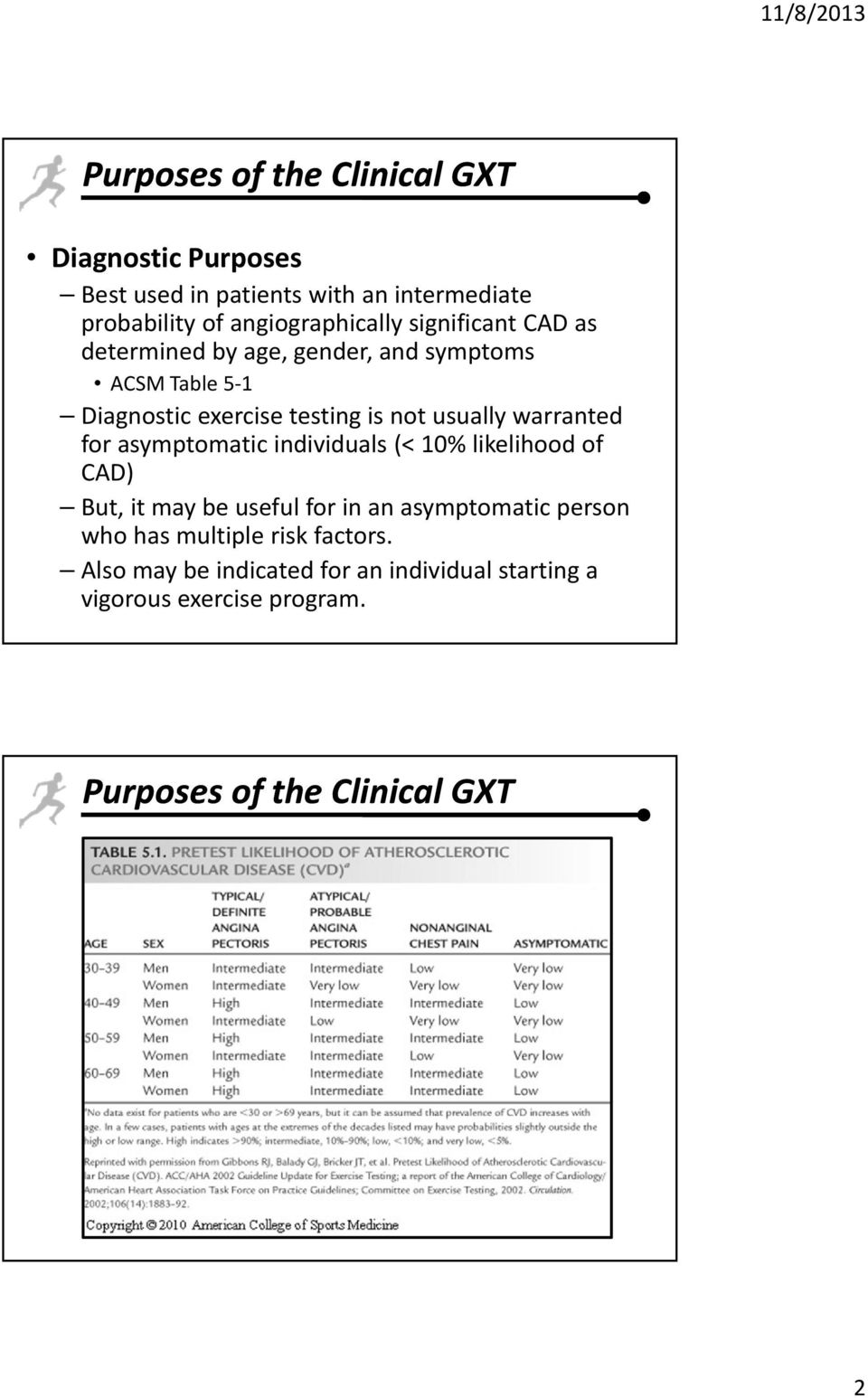
2 Purposes of the Clinical GXT Diagnostic Purposes Best used in patients with an intermediate probability of angiographically significant CAD as determined by age, gender, and symptoms ACSM Table 5 1 Diagnostic exercise testing is not usually warranted for asymptomatic individuals (< 10% likelihood of CAD) But, it may be useful for in an asymptomatic person who has multiple risk factors. Also may be indicated for an individual starting a vigorous exercise program. Purposes of the Clinical GXT 2
3 Purposes of the Clinical GXT Disease Severity and Prognostic Uses Useful for the evaluation of disease severity among persons with known or suspected CAD. ST Segment characteristics often used to look at severity of disease We will discuss this more in Chapter 6 Purposes of the Clinical GXT Exercise Testing after MI Can be performed before or soon after hospital discharge for prognostic assessment, activity prescription and evaluation of further medical therapy or interventions. Submaximal: 4 6 days after acute MI Symptom Limited: > 14 days after acute MI 3

4 Purposes of the Clinical GXT Functional / Therapeutic Purposes Used to determine functional capacity. Functional capacity is inversely related to risk for CAD and all cause and CV mortality This information is valuable for: Activity counseling, exercise prescription, return to work evaluation, disability assessment, and to help estimate prognosis. How is functional capacity expressed? Percentile rankings (ACSM Table 4.8) Percentage of expected METs for age using a nomogram (ACSM Figure 5.1) Purposes of the Clinical GXT 4

5 Purposes of the Clinical GXT Who Should be Tested? / Physician Supervision Depends on risk stratification (see Chapter 2) Physician supervision is not necessary in people at low risk Physician supervision is recommended in people at moderate and high risk 5

6 Personnel Needs for GXT In all situations where exercise testing is performed, site personnel should at least be certified at a level of basic life support (CPR) and have automated external defibrillator (AED) training. Preferably, one or more staff members should also be certified in first aid and advanced cardiac life support (ACLS). Also, see Box 8.2 (ACSM Manual, p. 144) Mode of Exercise Treadmill More common form of physiologic stress Higher VO 2 and peak HR (compared to other modes) Handrails should be available Cycle Ergometer Less expensive, require less space, less noisy Better quality ECG recordings and BP Unfamiliar method of exercise and highly dependant on patient motivation Test often ends due to local fatigue Lower values for VO 2 compared to treadmill (5 25%) Arm Ergometry For patients who cannot perform leg exercise VO 2max is 20 30% lower than treadmill 6

7 Protocols When choosing a protocol consider: The purpose of the test The specific outcomes desired Characteristics of the individual Numerous standardized protocols Create your own (not typically done) Duration should be between 8 and 12 minutes Protocols (cont d) Bruce Protocol (and Modified Bruce) Most commonly used protocol Employs relatively large increments (i.e. METs per stage) every 3 minutes Better for screening younger and/or physically active individuals 7

8 4.7 METS 7.0 METS 10.1 METS 12.9 METS 15.0 METS 16.9 METS Protocols (cont d) Balke Ware Treadmill Protocol (and modified) Also, commonly used protocol Smaller increments in exercise intensity (i.e. constant speed of 3.3 mph, gradual % grade increases) Preferable for older or deconditioned individuals or persons with chronic disease 8

9 Protocols (cont d) Ramp Protocols Work rate increases in a constant and continuous manner. Advantages include: Avoidance of large and unequal increments in workload Uniform increase in hemodynamic and physiologic responses More accurate estimates of exercise capacity and ventilatory threshold Individualizing the test Targeted test duration 9

10 Non Clinical Protocols: 10

11 11

12 Heart Rate and Blood Pressure Before, during, and after GXT Hemodynamic responses If SBP decreases with an increase in exercise intensity, it should be retaken immediately > 10 mmhg, test should be stopped ECG Filtered vs. Real Time Data Constant monitoring 12

13 Subjective Ratings and Symptoms RPE (Ratings of Perceived Exertion) Angina, Claudication, Dyspnea Scales Gas Exchange and Ventilatory Responses These measurements are appropriate when: Precise CP response to a specific therapeutic intervention is required When the etiology of exercise limitation or dyspnea is uncertain When evaluation of exercise capacity in patients with heart failure is used to assist in prognosis and need for transplant Research context Assisting in development of exercise prescription 13

14 Post Exercise Period: For maximal sensitivity, patients should be placed in the supine position Advantageous to record about 10 seconds of ECG while patient is standing upright at end of test For non diagnostic purposes: Use active cool down Monitoring should continue for at least 5 minutes post exercise or until ECG changes return to baseline or significant signs and symptoms resolve. Contraindications to Exercise Testing 14
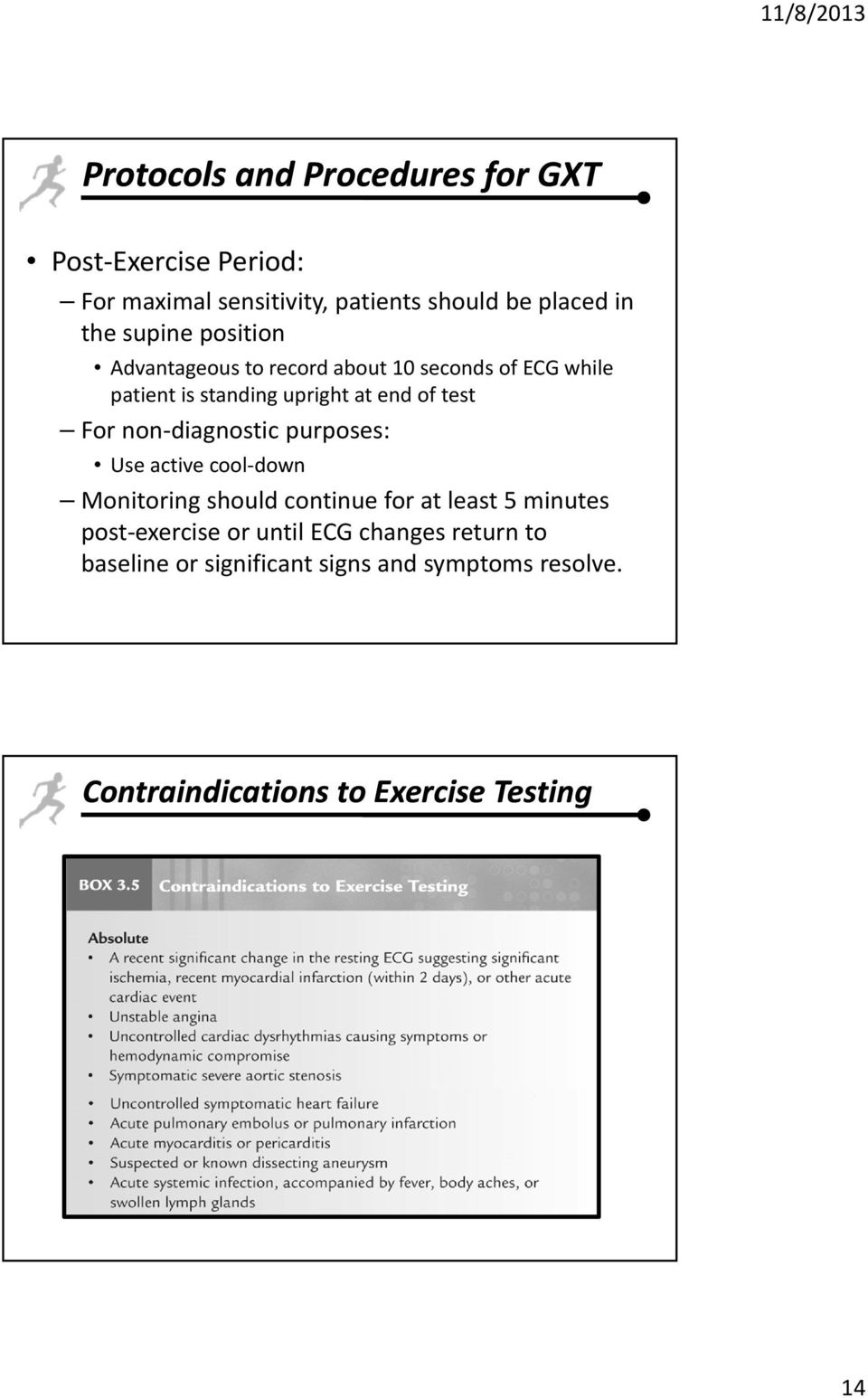
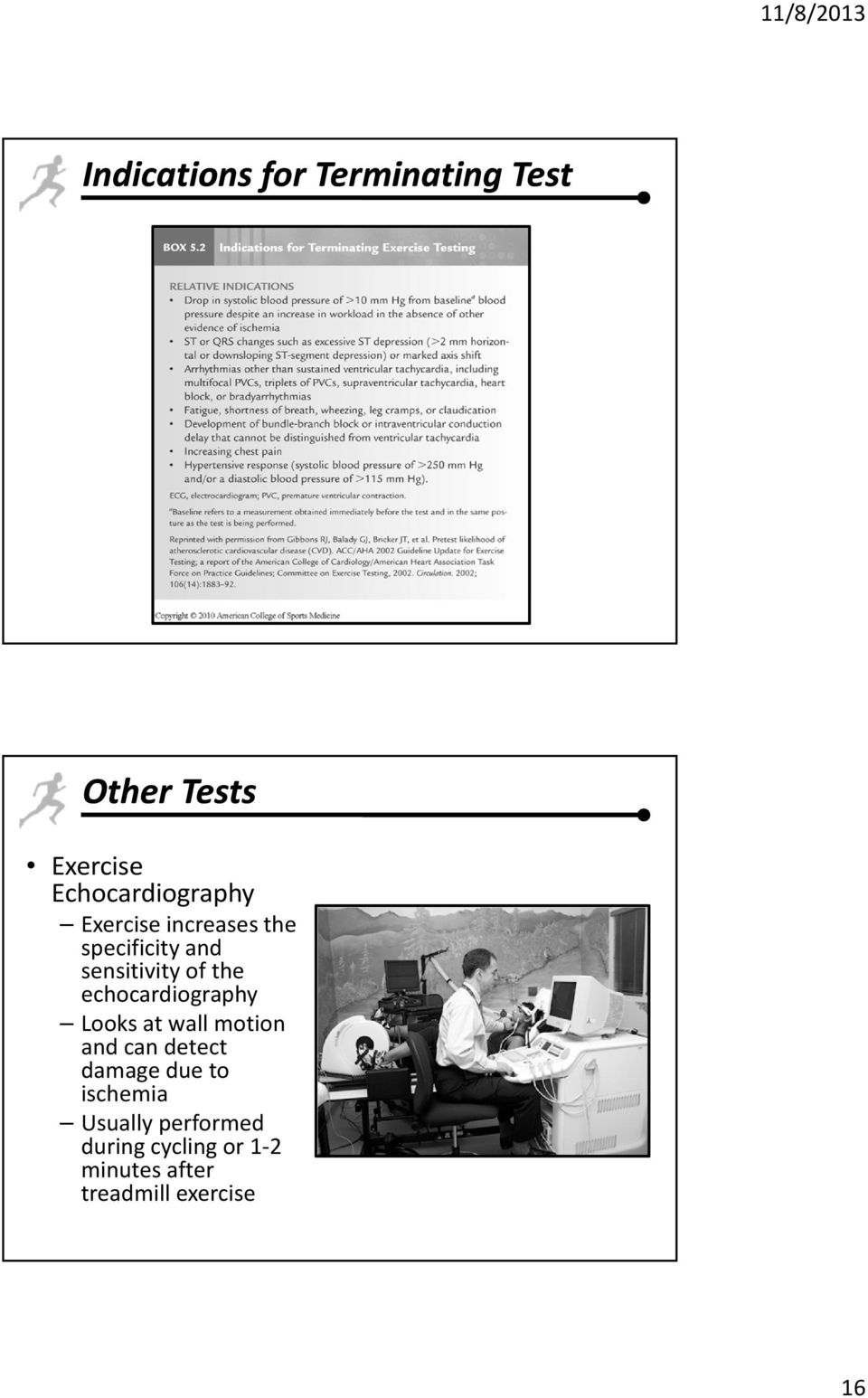
15 Contraindications to Exercise Testing Indications for Terminating Test 15

16 Indications for Terminating Test Other Tests Exercise Echocardiography Exercise increases the specificity and sensitivity of the echocardiography Looks at wall motion and can detect damage due to ischemia Usually performed during cycling or 1 2 minutes after treadmill exercise 16
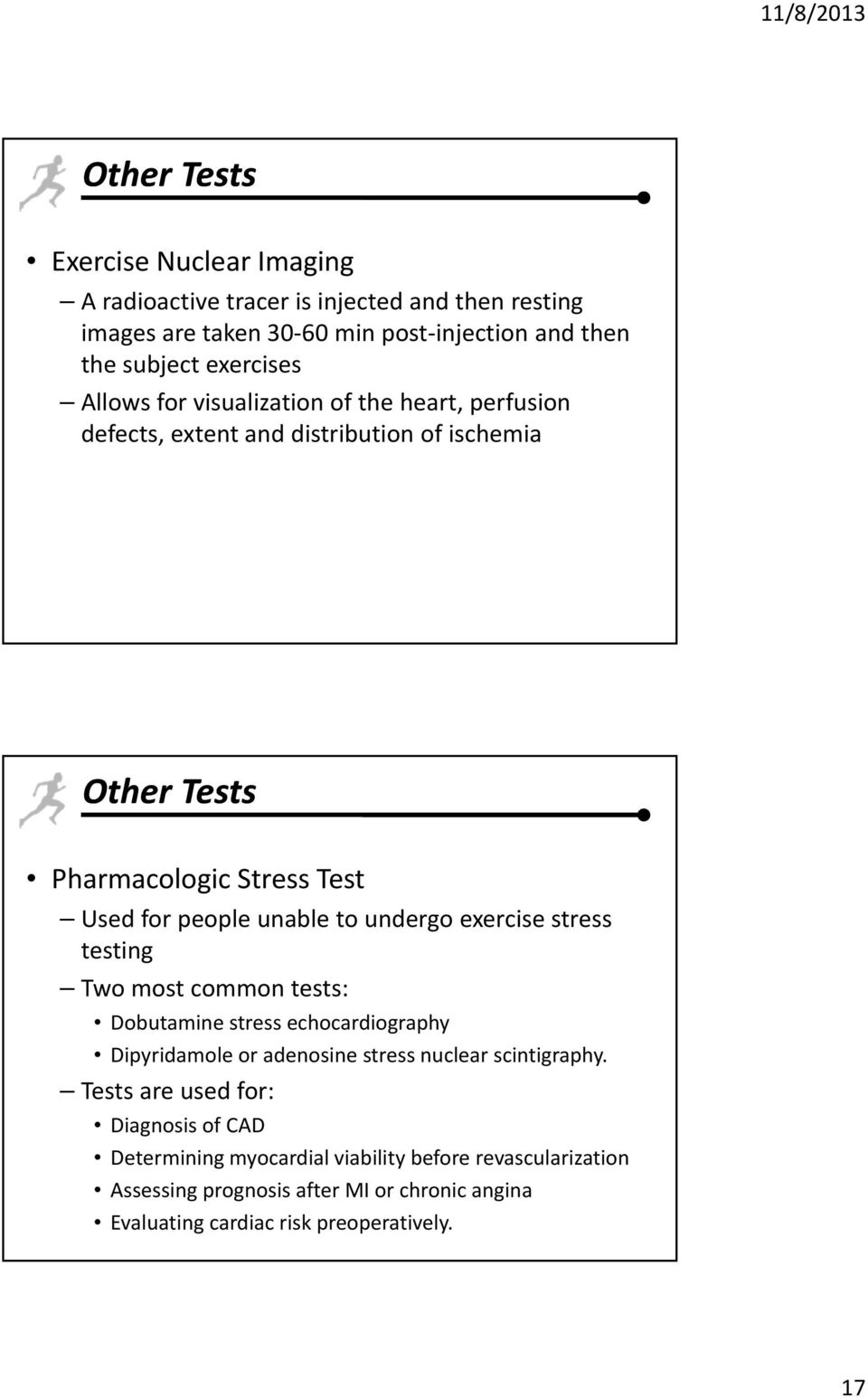
17 Other Tests Exercise Nuclear Imaging A radioactive tracer is injected and then resting images are taken min post injection and then the subject exercises Allows for visualization of the heart, perfusion defects, extent and distribution of ischemia Other Tests Pharmacologic Stress Test Used for people unable to undergo exercise stress testing Two most common tests: Dobutamine stress echocardiography Dipyridamole or adenosine stress nuclear scintigraphy. Tests are used for: Diagnosis of CAD Determining myocardial viability before revascularization Assessing prognosis after MI or chronic angina Evaluating cardiac risk preoperatively. 17
Purpose of Testing (p 58 G) Graded Exercise Testing (GXT) Test Order. Maximal or Submaximal Tests?
 Graded Exercise Testing (GXT) Purpose of Testing (p 58 G) Educating participants about their present fitness status relative to health-related standards and age- and gender-matched norms Providing data
Name: Age: Resting BP: Wt. kg: Est. HR max : 85%HR max : Resting HR:
 Bruce Protocol - Submaximal GXT Name: Age: Resting BP: Wt. kg: Est. HR max : 85%HR max : Resting HR: Stage Min. % Grade MPH METs 2min HR 3min HR BP RPE 1 0-3 10 1.7 4.7 2 3-6 12 2.5 7.0 3 6-9 14 3.4 10.1
38 year old female with mild obesity. She is planning an exercise program to loose weight. She has no other known risk factors for CAD.
 Stress Testing: Wael A. Jaber, MD,FACC 38 year old female with mild obesity She is planning an exercise program to loose weight. She has no other known risk factors for CAD. You recommend: A. Exercise
123 Main St NY, New York 12345 ph: (202) 555 5555 fax: (202) 555 5555
 Patient Name: DOE, JOHN D. Gender: M Date of Study: 4/2/2013 Date of birth: 6/28/1962 Age: 50 Medical Record #: 45869725 Ordering Physician: JANE INTERNIST, MD History: Atypical Angina, Abn ECG, High Cholesterol,
Cardiorespiratory Fitness
 Cardiorespiratory Fitness Assessment Purpose Determine level of fitness & set goals Develop safe & effective exercise prescription Document improvements Motivation Provide info concerning health status
Exercise Intensity in Cardiac Rehabilitation: The Clinical Side of the Coin
 Exercise Intensity in Cardiac Rehabilitation: The Clinical Side of the Coin Bonnie Sanderson,PhD, RN, FAACVPR AACVPR President 2010-2011 Associate Professor Auburn University School of Nursing Overview
BASIC STANDARDS FOR RESIDENCY TRAINING IN CARDIOLOGY
 BASIC STANDARDS FOR RESIDENCY TRAINING IN CARDIOLOGY American Osteopathic Association and the American College of Osteopathic Internists Specific Requirements For Osteopathic Subspecialty Training In Cardiology
Specific Basic Standards for Osteopathic Fellowship Training in Cardiology
 Specific Basic Standards for Osteopathic Fellowship Training in Cardiology American Osteopathic Association and American College of Osteopathic Internists BOT 07/2006 Rev. BOT 03/2009 Rev. BOT 07/2011
Stress Echocardiogram
 Purpose: Heart First Guidelines Stress Echocardiogram To outline the guidelines and protocols for performing Stress Echocardiograms as established by the American College of Cardiology References: 1. Stress
Efficient Evaluation of Chest Pain
 Efficient Evaluation of Chest Pain Vikranth Gongidi, DO FACC FACOI Indian River Medical Center Vero Beach, FL No Disclosures Outline Background Chest pain pathway Indications for stress test Stress test
Non Invasive Testing for CAD
 Non Invasive Testing for CAD Wael A. Jaber, MD Section of Cardiac Imaging Heart and Vascular Institute Cleveland Clinic 38 year old female with mild obesity She is planning an exercise program to loose
Pre-Screening and Risk Stratification
 Pre-Screening and Risk Stratification Chapter 1, 2 and 3 ACSM What is involved in the prescreening process? The Basic Goal To determine if it is safe for an individual to start an exercise program, what
IMGPT: Exercise After a Heart Attack 610 944 8140 805 N. RICHMOND ST (Located next to Fleetwood HS) Why is exercise important following a heart
 Why is exercise important following a heart attack? Slow progression back into daily activity is important to strengthen the heart muscle and return blood flow to normal. By adding aerobic exercises, your
Assessment of Anaerobic & Aerobic Power
 Assessment of Anaerobic & Aerobic Power The most popular anaerobic cycling test is the Wingate Anaerobic test (WAnT), named after the university in Israel where it originated. The original test was designed
Part A: Structure and Organization
 Part A: Structure and Organization Radioactive Materials License NRC (or State) radioactive materials license present Personnel Medical Director Meets Medical Director responsibility requirements Meets
To provide standardized Supervised Exercise Programs across the province.
 TITLE ALBERTA HEALTHY LIVING PROGRAM SUPERVISED EXERCISE PROGRAM DOCUMENT # HCS-67-01 APPROVAL LEVEL Executive Director Primary Health Care SPONSOR Senior Consultant Central Zone, Primary Health Care CATEGORY
Treating AF: The Newest Recommendations. CardioCase presentation. Ethel s Case. Wayne Warnica, MD, FACC, FACP, FRCPC
 Treating AF: The Newest Recommendations Wayne Warnica, MD, FACC, FACP, FRCPC CardioCase presentation Ethel s Case Ethel, 73, presents with rapid heart beating and mild chest discomfort. In the ED, ECG
Predictive Implications of Stress Testing (Chapt. 14) 1979, Weiner and coworkers. Factors to improve the accuracy of stress testing
 Predictive Implications of Stress Testing (Chapt. 14) Sensitivity Specificity Predictive Value Patient Risk 1979, Weiner and coworkers Stress testing has very little diagnostic value. A positive stress
Instructions for Accessing LCDs. J4 LCD List
 As a contractor, TrailBlazer oversees LCD development and reconsideration. More information is available on the LCD Development Process and the steps involved in the LCD Reconsideration Process at these
Is it really so? : Varying Presentations for ACS among Elderly, Women and Diabetics. Yen Tibayan, M.D. Division of Cardiovascular Medicine
 Is it really so? : Varying Presentations for ACS among Elderly, Women and Diabetics Yen Tibayan, M.D. Division of Cardiovascular Medicine Case Presentation 69 y.o. woman calls 911 with the complaint of
Analysis of Peak Oxygen Consumption and Heart Rate During Elliptical and Treadmill Exercise
 Analysis of Peak Oxygen Consumption and Heart Rate During Elliptical and Treadmill Exercise John A. Mercer, Janet S. Dufek, and Barry T. Bates Mercer JA, Dufek JS, Bates BT. Analysis of peak oxygen consumption
Understanding the Pain Trajectory During Treadmill Testing in Peripheral Artery Disease
 Understanding the Pain Trajectory During Treadmill Testing in Peripheral Artery Disease Diane Treat-Jacobson, PhD, RN, FAHA, FAAN Susan J. Henly, PhD, RN Ulf G. Bronas, PhD, ATC, ATR Arthur S. Leon, MD,
Treadmill Exercise Test to Set Run Training Zones. Preparation. Test Protocol
 Treadmill Exercise Test to Set Run Training Zones This field test will help you determine your heart rate and pace at lactate threshold, which you can then use to set your run training zones for using
MYOCARDIAL PERFUSION COMPUTED TOMOGRAPHY PhD course in Medical Imaging. Anne Günther Department of Radiology OUS Rikshospitalet
 MYOCARDIAL PERFUSION COMPUTED TOMOGRAPHY PhD course in Medical Imaging Anne Günther Department of Radiology OUS Rikshospitalet CORONARY CT ANGIOGRAPHY (CTA) Accurate method in the assessment of possible
RISK STRATIFICATION for Acute Coronary Syndrome in the Emergency Department
 RISK STRATIFICATION for Acute Coronary Syndrome in the Emergency Department Sohil Pothiawala FAMS (EM), MRCSEd (A&E), M.Med (EM), MBBS Consultant Dept. of Emergency Medicine Singapore General Hospital
The Canadian Association of Cardiac
 Reinventing Cardiac Rehabilitation Outside of acute care institutions, cardiovascular disease is a chronic, inflammatory process; the reduction or elimination of recurrent acute coronary syndromes is a
Perioperative Cardiac Evaluation
 Perioperative Cardiac Evaluation Caroline McKillop Advisor: Dr. Tam Psenka 10-3-2007 Importance of Cardiac Guidelines -Used multiple times every day -Patient Safety -Part of Surgical Care Improvement Project
CHEST PAIN EVALUATION TOOL
 CHEST PAIN EVALUATION TOOL Chest pain or discomfort is one of the commonest causes for presentation to the Emergency Room (ER) or physicians office. There are many causes for chest discomfort. The serious
TASK FORCE SUPPLEMENT FOR FUNCTIONAL CAPACITY EVALUATION
 TASK FORCE SUPPLEMENT FOR FUNCTIONAL CAPACITY EVALUATION A. GENERAL PRINCIPLES Use of a Functional Capacity Evaluation (FCE) is to determine the ability of a patient to safely function within a work environment.
Central Office N/A N/A
 LCD ID Number L32688 LCD Title Cardiac Rehabilitation and Intensive Cardiac Rehabilitation Contractor s Determination Number L32688 AMA CPT/ADA CDT Copyright Statement CPT only copyright 2002-2011 American
105 CMR 143.000: STANDARDS GOVERNING CARDIAC REHABILITATION TREATMENT
 105 CMR 143.000: STANDARDS GOVERNING CARDIAC REHABILITATION TREATMENT Section 143.001: Purpose and Scope 143.002: Authority 143.003: Citation 143.004: Definitions 143.005: General Requirements for Cardiac
Clinical Care Program
 Clinical Care Program Therapy for the Cardiac Patient What s CHF? Not a kind of heart disease o Heart disease is called cardiomyopathy o Heart failure occurs when the heart can t pump enough blood to meet
Main Effect of Screening for Coronary Artery Disease Using CT
 Main Effect of Screening for Coronary Artery Disease Using CT Angiography on Mortality and Cardiac Events in High risk Patients with Diabetes: The FACTOR-64 Randomized Clinical Trial Joseph B. Muhlestein,
James F. Kravec, M.D., F.A.C.P
 James F. Kravec, M.D., F.A.C.P Chairman, Department of Internal Medicine, St. Elizabeth Health Center Chair, General Internal Medicine, Northeast Ohio Medical University Associate Medical Director, Hospice
GENERAL EQUATION FOR SPIROMETRY CALCULATION OF VO 2 VO 2(ml O2/min) = (V I (ml O2/min STPD) * F I O 2 ) (V E(ml O2/min STPD) *F E O 2 )
 Exercise Testing and Prescription Lab Metabolic Calculation Lab Use Appendix D, lecture materials, and the conversions below to help you complete this lab. This lab is for purposes of practicing metabolic
Pulmonary Rehabilitation. Steve Crogan RRT Pulmonary Rehabilitation, University of Washington Medical Center Seattle, Washington 10/13/07
 Pulmonary Rehabilitation Steve Crogan RRT Pulmonary Rehabilitation, University of Washington Medical Seattle, Washington 10/13/07 Pulmonary Rehabilitation Created in the 1970 s Initially intended for COPD
Tests For Predicting VO2max
 Tests For Predicting VO2max Maximal Tests 1.5 Mile Run. Test Population. This test was developed on college age males and females. It has not been validated on other age groups. Test Procedures. A 1.5
3/2/2010 Post CABG R h e bili a i tat on Ahmed Elkerdany Professor o f oof C ardiac Cardiac Surgery Ain Shams University 1
 Post CABG Rehabilitation i Ahmed Elkerdany Professor of Cardiac Surgery Ain Shams University 1 Definition Cardiac rehabilitation services are comprehensive, long-term programs involving : medical evaluation.
Cardiac Rehabilitation CARDIAC REHABILITATION HS-091. Policy Number: HS-091. Original Effective Date: 3/16/2009
 Easy Choice Health Plan, Inc. Harmony Health Plan of Illinois, Inc. M issouri Care, Inc. Ohana Health Plan, a plan offered by WellCare Health Insurance of Arizona, Inc. WellCare Health Insurance of Illinois,
2/20/2015. Cardiac Evaluation of Potential Solid Organ Transplant Recipients. Issues Specific to Transplantation. Kidney Transplantation.
 DISCLOSURES I have no relevant financial relationships to disclose. Cardiac Evaluation of Potential Solid Organ Transplant Recipients Michele Hamilton, MD Director, Heart Failure Program Cedars Sinai Heart
UNIVERSITY OF WATERLOO
 UNIVERSITY OF WATERLOO Faculty of APPLIED HEALTH SCIENCES DESCRIPTION The cardiac rehabilitation practicum will focus on skill development in the areas of program administration, graded exercise testing,
Name of Policy: Cardiopulmonary Exercise Stress Test (CPET/CPX)
 Name of Policy: Cardiopulmonary Exercise Stress Test (CPET/CPX) Policy #: 198 Latest Review Date: August 2010 Category: Medicine Policy Grade: Active Policy but no longer scheduled for regular literature
Cardiovascular Guidelines for DOT Physical Exams By Maureen Collins MSN, APRN, BC
 Cardiovascular Guidelines for DOT Physical Exams By Maureen Collins MSN, APRN, BC The Federal Motor Carrier Safety Administration (FMCSA) administers the Federal Motor Carrier Safety Regulations (FMCSRs)
4/7/2015. Cardiac Rehabilitation: From the other side of the glass door. Chicago, circa 1999. Objectives. No disclosures, no conflicts
 Cardiac Rehabilitation: From the other side of the glass door No disclosures, no conflicts Charles X. Kim, MD, FACC, ABVM Objectives 1. Illustrate common CV benefits of CV rehab in real world practice.
Listen to your heart: Good Cardiovascular Health for Life
 Listen to your heart: Good Cardiovascular Health for Life Luis R. Castellanos MD, MPH Assistant Clinical Professor of Medicine University of California San Diego School of Medicine Sulpizio Family Cardiovascular
Cardiopulmonary Exercise Stress Test (CPET) Archived Medical Policy
 Applies to all products administered or underwritten by Blue Cross and Blue Shield of Louisiana and its subsidiary, HMO Louisiana, Inc.(collectively referred to as the Company ), unless otherwise provided
Concussion Management Protocol for G-Force Program
 Concussion Management Protocol for G-Force Program Baseline ImPACT testing Recommended but not mandatory - Can be done anytime but ideally recommended before season begins - Ideally this should be done
Non-invasive functional testing in 2014
 Non-invasive functional testing in 2014 Bjarne Nørgaard Department Cardiology B Aarhus University Hospital Skejby, Disclosures: Research grants: Edwards and Siemens Non-invasive functional testing in 2014
Predicting Aerobic Power (VO 2max ) Using The 1-Mile Walk Test
 USING A WALKING TEST 12/25/05 PAGE 1 Predicting Aerobic Power (VO 2max ) Using The 1-Mile Walk Test KEYWORDS 1. Predict VO 2max 2. Rockport 1-mile walk test 3. Self-paced test 4. L min -1 5. ml kg -1 1min
Coronary Artery Disease leading cause of morbidity & mortality in industrialised nations.
 INTRODUCTION Coronary Artery Disease leading cause of morbidity & mortality in industrialised nations. Although decrease in cardiovascular mortality still major cause of morbidity & burden of disease.
EMR Tutorial Acute Coronary Syndrome
 EMR Tutorial Acute Coronary Syndrome How to find the Acute Coronary Syndrome AAA Home Page 1 of 26 Master Tool Bar Icon When the Template button is clicked you will be presented with the preference list.
Pharmacologic Stress Agents: Protocol and Safety
 Pharmacologic Stress Agents: Protocol and Safety Donna Lesniak, RN, CCRC Mallinckrodt Institute of Radiology Washington University School of Medicine Saint Louis, Missouri Disclosure Neither I nor my immediate
Inpatient Heart Failure Management: Risks & Benefits
 Inpatient Heart Failure Management: Risks & Benefits Dr. Kenneth L. Baughman Professor of Medicine Harvard Medical School Director, Advanced Heart Disease Section Brigham & Women's Hospital Harvard Medical
2016 PQRS OPTIONS FOR INDIVIDUAL MEASURES: CLAIMS, REGISTRY
 Measure #317: Preventive Care and Screening: Screening for High Blood Pressure and Follow-Up Documented National Quality Strategy Domain: Community / Population Health 2016 PQRS OPTIONS F INDIVIDUAL MEASURES:
Exercise Prescription Case Studies
 14 Exercise Prescription Case Studies 14 14 Exercise Prescription Case Studies Case 1 Risk Stratification CY CHAN is a 43-year-old man with known history of hypertension on medication under good control.
Educational Goals & Objectives
 Educational Goals & Objectives The Cardiology rotation will provide the resident with an understanding of cardiovascular physiology and its broad systemic manifestations. The resident will have the opportunity
Outpatient/Ambulatory Rehab. Dedicated Trans-disciplinary Team (defined within Annotated References)
 CARDIAC The delivery of Cardiac Rehab is unlike most other rehab populations. The vast majority of patients receive their rehab in outpatient or community settings and only a small subset requires an inpatient
Exercise Objectives. Lecture Objectives. Contrasting Approaches and Techniques of Exercise in Pulmonary Rehabilitation
 Contrasting Approaches and Techniques of Exercise in Pulmonary Rehabilitation Mark W. Mangus, Sr., BSRC, RRT, RPFT, FAARC Pulmonary Rehabilitation Coordinator Christus Santa Rosa Medical Center San Antonio,
Ischemic Heart Disease: Angina Pectoris
 Ischemic Heart Disease: Angina Pectoris Robert J. Straka, Pharm.D. FCCP Associate Professor University of Minnesota College of Pharmacy Minneapolis, Minnesota, USA [email protected] Learning Objectives
Pulmonary Diseases. Lung Disease: Pathophysiology, Medical and Exercise Programming. Overview of Pathophysiology
 Lung Disease: Pathophysiology, Medical and Exercise Programming Overview of Pathophysiology Ventilatory Impairments Increased airway resistance Reduced compliance Increased work of breathing Ventilatory
Systolic Blood Pressure Intervention Trial (SPRINT) Principal Results
 Systolic Blood Pressure Intervention Trial (SPRINT) Principal Results Paul K. Whelton, MB, MD, MSc Chair, SPRINT Steering Committee Tulane University School of Public Health and Tropical Medicine, and
6/5/2014. Objectives. Acute Coronary Syndromes. Epidemiology. Epidemiology. Epidemiology and Health Care Impact Pathophysiology
 Objectives Acute Coronary Syndromes Epidemiology and Health Care Impact Pathophysiology Unstable Angina NSTEMI STEMI Clinical Clues Pre-hospital Spokane County EMS Epidemiology About 600,000 people die
The patient s response to therapy within the first hour in the Emergency Room is one of the most reliable ways to predict need for hospitalization.
 Emergency Room Asthma Management Algorithm The Emergency Room Asthma Management Algorithm is to be used for any patient seen in the Emergency Room with the diagnosis of asthma. (The initial history should
FFR CT : Clinical studies
 FFR CT : Clinical studies Bjarne Nørgaard Department Cardiology B Aarhus University Hospital Skejby, Denmark Disclosures: Research grants: Edwards and Siemens Coronary CTA: High diagnostic sensitivity
Noninvasive testing can provide useful information for
 CONTINUING EDUCATION Roles of Nuclear Cardiology, Cardiac Computed Tomography, and Cardiac Magnetic Resonance: Noninvasive Risk Stratification and a Conceptual Framework for the Selection of Noninvasive
EAE TEACHING COURSE Aorta and aortic valve 2012
 EAE TEACHING COURSE Aorta and aortic valve 2012 31th March 2012 Szczecin, Poland EP EAE TEACHING COURSE: aorta and aortic valve Szczecin, 31st March 2012 Prof. Luigi Badano, Italy Prof. Patrizio Lancellotti,
Tests. Pulmonary Functions
 Pulmonary Functions Tests Static lung functions volumes Dynamic lung functions volume and velocity Dynamic Tests Velocity dependent on Airway resistance Resistance of lung tissue to change in shape Dynamic
Automatic External Defibrillators
 Last Review Date: May 27, 2016 Number: MG.MM.DM.10dC2 Medical Guideline Disclaimer Property of EmblemHealth. All rights reserved. The treating physician or primary care provider must submit to EmblemHealth
Objectives. Preoperative Cardiac Risk Stratification for Noncardiac Surgery. History
 Preoperative Cardiac Risk Stratification for Noncardiac Surgery Kimberly Boddicker, MD FACC Essentia Health Heart and Vascular Center 27 th Heart and Vascular Conference May 13, 2011 Objectives Summarize
Renovascular Hypertension
 Renovascular Hypertension Philip Stockwell, MD Assistant Professor of Medicine (Clinical) Warren Alpert School of Medicine Cardiology for the Primary Care Provider September 28, 201 Renovascular Hypertension
What have health care professionals done to decrease rates of physical inactivity?
 1 2 3 4 5 6 7 8 9 10 Careers in Clinical Exercise Physiology Credentialing, Scope, and Practice Jennifer S. Blevins, Ph.D. ACSM ES RCEP and Program Director SM [email protected] Exercise and Medicine Physicians
Osama Jarkas. in Chest Pain Patients. STUDENT NAME: Osama Jarkas DATE: August 10 th, 2015
 STUDENT NAME: Osama Jarkas DATE: August 10 th, 2015 PROJECT TITLE: Analysis of ECG Exercise Stress Testing and Framingham Risk Score in Chest Pain Patients PRIMARY SUPERVISOR NAME: Dr. Edward Tan DEPARTMENT:
DISCLOSURES RISK ASSESSMENT. Stroke and Heart Disease -Is there a Link Beyond Risk Factors? Daniel Lackland, MD
 STROKE AND HEART DISEASE IS THERE A LINK BEYOND RISK FACTORS? D AN IE L T. L AC K L AN D DISCLOSURES Member of NHLBI Risk Assessment Workgroup RISK ASSESSMENT Count major risk factors For patients with
Managing Mitral Regurgitation: Repair, Replace, or Clip? Michael Howe, MD Traverse Heart & Vascular
 Managing Mitral Regurgitation: Repair, Replace, or Clip? Michael Howe, MD Traverse Heart & Vascular Mitral Regurgitation Anatomy Mechanisms of MR Presentation Evaluation Management Repair Replace Clip
WHY DO MY LEGS HURT? Veins, arteries, and other stuff.
 WHY DO MY LEGS HURT? Veins, arteries, and other stuff. Karl A. Illig, MD Professor of Surgery Chief, Division of Vascular Surgery Mitzi Ekers, ARNP April 2013 Why do my legs hurt? CONFLICTS OF INTEREST
CARDIAC REHABILITATION PROGRAM
 CARDIAC REHABILITATION PROGRAM Preparation for the Cardiac Rehabilitation Program After your heart problem is stable, your physician or cardiologist will refer you to the Cardiac Rehabilitation program.
Advanced Heart Failure & Transplantation Fellowship Program
 Advanced Heart Failure & Transplantation Fellowship Program Curriculum I. Patient Care When on the inpatient Heart Failure and Transplant Cardiology service, the cardiology fellow will hold primary responsibility
6-minute walking distance: covered distance in a quick self-paced walk on a flat, hard surface in a period of 6 minutes
 SOP 6-Minute-Walk Test 1. General considerations The self-paced 6-minute walk test (6MWT) is considered as suitable method to objectively assess the submaximal level of functional capacity in children
The Role Of The Therapist In Cardio-Vascular And Diabetes Rehabilitation
 The Role Of The Therapist In Cardio-Vascular And Diabetes Rehabilitation Dr. Gudrun Haager Sports Scientist Head of outpatient cardiac rehabilitation, Kantonsspital St.Gallen, Switzerland Why do you need
Cardiac Rehabilitation (Outpatient Phase II) Corporate Medical Policy. Medical Policy
 Cardiac Rehabilitation (Outpatient Phase II) Corporate Medical Policy File name: Cardiac Rehabilitation (Outpatient Phase II) File code: UM.REHAB.04 Origination: 08/1994 Last Review: 08/2011 Next Review:
Chapter 2 Performance of the Exercise Test
 Chapter 2 Performance of the Exercise Test George D. Harris and Russell D. White Each year, over 1 million Americans experience a nonfatal or fatal myocardial infarction or sudden death from coronary heart
Step 2 Use the Medical Decision-Making Table
 Step 2 Use the Medical Decision-Making Table In Step 1, we determined the patient location and patient type. For most patient encounters, this determines the first 4 digits of the 5-digit CPT code. Three
Cardiac Rehabilitation at AUBMC
 Cardiac Rehabilitation at AUBMC Clinical Protocols and The Role of The Advanced Practice Nurse Presentation by: Mohamad Issa, MSN, BSN, BC- RN, AUBMC CCU OUTLINE Background on cardiovascular diseases History
The ASA defines anesthesiology as the practice of medicine dealing with but not limited to:
 1570 Midway Pl. Menasha, WI 54952 920-720-1300 Procedure 1205- Anesthesia Lines of Business: All Purpose: This guideline describes Network Health s reimbursement of anesthesia services. Procedure: Anesthesia
CARDIOLOGY Delineation of Privileges
 CARDIOLOGY Delineation of Privileges APPLICANT: INITIAL APPOINTMENT REQUIREMENTS: BASIC EDUCATION: M.D. or D.O. from an accredited school of medicine or osteopathy. Successful completion of an ACGME or
New York State Workers' Comp Board. Mid and Lower Back Treatment Guidelines. Summary From 1st Edition, June 30, 2010. Effective December 1, 2010
 New York State Workers' Comp Board Mid and Lower Back Treatment Guidelines Summary From 1st Edition, June 30, 2010 Effective December 1, 2010 General Principles Treatment should be focused on restoring
Cardiac Assessment for Renal Transplantation: Pre-Operative Clearance is Only the Tip of the Iceberg
 Cardiac Assessment for Renal Transplantation: Pre-Operative Clearance is Only the Tip of the Iceberg 2 nd Annual Duke Renal Transplant Symposium March 1, 2014 Durham, NC Joseph G. Rogers, M.D. Associate
National Learning Objectives for COPD Educators
 National Learning Objectives for COPD Educators National Learning Objectives for COPD Educators The COPD Educator will be able to achieve the following objectives. Performance objectives, denoted by the
mtbi Concussion, Post Concussion Syndrome and mtbi
 mtbi Concussion, Post Concussion Syndrome and mtbi Barry Willer PhD [email protected] Immediate Symptoms Secondary Symptoms Cognitive Issues Ideally with Baseline Understanding Persistent Symptoms
Pharmacologic Stress Agents
 Pharmacologic Stress Agents Donna Lesniak, RN, CCRC Mallinckrodt Institute of Radiology Washington University School of Medicine Saint Louis, Missouri Disclosure Neither I nor my immediate family members
Introduction to Cardiopulmonary Exercise Testing
 Introduction to Cardiopulmonary Exercise Testing 2 nd Edition Andrew M. Luks, MD Robb Glenny, MD H. Thomas Robertson, MD Division of Pulmonary and Critical Care Medicine University of Washington Section
INFORMED CONSENT INFORMED CONSENT FOR PARTICIPATION IN A HEALTH AND FITNESS TRAINING PROGRAM
 INFORMED CONSENT INFORMED CONSENT FOR PARTICIPATION IN A HEALTH AND FITNESS TRAINING PROGRAM NAME: DATE: 1. PURPOSE AND EXPLANATION OF PROCEDURE I hereby consent to voluntarily engage in an acceptable