
Hernia Surgery as an Outpatient
|
|
|
- Annabella Stanley
- 10 years ago
- Views:
Transcription
1 Patient & Family Guide 2015 Hernia Surgery as an Outpatient Bring this booklet with you to all of your appointments. This booklet belongs to:

2 Contents Types of hernias 2 How is a hernia repaired? 3 Types of hernia surgery 3 Getting ready for surgery 4 Pre-admission Clinic 4 What kind of anesthetic do I need? 4 Patients who are having a general anesthetic or conscious sedation 5 Patients who are having a local anesthetic 5 The day of surgery 8 The operating room 10 After your surgery 11 At home (all types of hernia surgery) 12 Deep breathing and coughing exercises 13 Foot and leg exercises 13 QEII map, Halifax 18 Windsor map 19

3 Hernia Surgery as an Outpatient We have written this booklet to help you and your family through your hernia surgery experience. This booklet will help you learn about the care you will receive. It will also help you learn to care for yourself before and after surgery. Please read this booklet and encourage your family to read it as well. You may want to use the space at the back of the booklet to make notes or to write down your questions. Bring this booklet with you to all of your appointments and to the hospital on the day of your surgery. It is important to remember that you and your family play a big part in your recovery and continuing good health. There are a number of people who will be involved in your care. You and your family are the most important members of the Team. Other Team members are: your surgeon, your anesthesiologist, resident surgeons and anesthesiologists, medical students, clerical staff, a research nurse and nurses in the General Surgery Clinic, Pre-Admission Clinic, Same Day Surgery Unit and other areas as well. Because there are so many people involved in your care, it may sometimes be confusing for you. If you have questions about your care, you may call the Hernia Clinic ( ) or the nurse in the General Surgery Clinic ( ). The type of surgery you are having is: Your surgeon is: The office number and assistant is: Your surgery will take place at the: (hospital) on: at: (date) (time) 1

4 Types of hernias The body has a number of compartments which are enclosed by a sturdy outside wall of muscle and tissue. The wall of the abdomen contains areas of possible weakness. A hernia forms when an outer wall breaks open or tears. This allows organs (such as a loop of bowel or tissue) to fall through the opening. Umbilical Epigastric Inguinal Femoral An epigastric hernia develops in the mid upper abdomen along the line from the breast bone to the navel (belly button). An incisional hernia can happen in an area where the abdominal wall was weakened by previous surgery. An inguinal hernia is an opening in the abdominal wall located at the groin. It is common in children and adults but is most common in men. A femoral hernia which develops at or near the leg crease is lower than an inguinal hernia. It is more likely to occur in women. An umbilical hernia looks like a bulging navel. 2

5 How is a hernia repaired? The tissues or organs are returned to their original place. The surgeon then sews strong muscle and tissue over the defect. If there are not enough natural tissues, a synthetic patch will be used: Patch and plug A mesh material is used to plug the opening. Mesh Synthetic plastic (such as polypropylene or Gore-Tex ) is used. It makes a very strong repair that follows the body s movement and size. Types of hernia surgery Open method (local anesthetic) The hernia is repaired by making an incision (cut) in the muscular wall. Mesh may be used to strengthen the weakened muscle. Open method (general anesthetic or conscious sedation) The hernia is repaired by making an incision in the muscular wall. Mesh may be used to strengthen the weakened muscle. Laparoscopic Your surgeon may use a thin device called a laparoscope to do your surgery. A few small cuts are made on your abdomen. The laparoscope is inserted through one of these small cuts. It has a light and camera which provides pictures from inside the abdomen. Using video images from the laparoscope, other surgical instruments are guided to the surgical area. A general anesthetic is needed for this surgery. You and your surgeon will talk about which type of surgery is best for you. 3

6 Getting ready for surgery Please bring these to all hospital visits: Your Provincial Health Card Your medications in their original containers Pre-admission Clinic Depending on your health history and your medications, you may need to visit the Pre-admission Clinic, Victoria General (VG) site. The Clinic is on the 10th floor. Plan to be at the Clinic for 2-4 hours. In the Pre-Admission Clinic, you will be asked health questions. You may have a heart test (EKG), have blood taken, and be seen by an anesthesiologist (a doctor who puts patients to sleep for surgery). If you do not need to go to the Clinic, you may receive a call from the Preadmission Clinic nurse who will ask you questions about your health. You may need to have blood tests and an EKG at a local hospital. What kind of anesthetic do I need? A local anesthetic is the injection of freezing medication into an area. The area is frozen so you do not feel any pain for 3-4 hours. This is not available for laparoscopic surgery. With a general anesthetic, you will be given medication and be asleep during your surgery. This type of anesthesia is needed for laparoscopic hernia surgery and for some open methods of surgery. If you have conscious sedation, you will be given medication through an intravenous (IV) to relax you and to stop any pain during surgery. This is not available for laparoscopic surgery. 4

7 Patients who are having a general anesthetic or conscious sedation Do not eat any solid food after midnight the night before your surgery. Do not drink any fluids after midnight the night before your surgery. After surgery, you need a responsible adult to escort you home and to stay with you to provide care as needed. You may take your medications as instructed with sips of water. If you are unsure of what to take, check with your surgeon. For 24 hours after a general anesthetic or conscious sedation DO NOT: Operate heavy machinery Sign legal documents Drive a car Drink alcohol Patients who are having a local anesthetic You may eat on the day of your surgery. A responsible adult must drive you home after your surgery and provide care as needed for 1-2 days. Health and hygiene Call your surgeon before coming for surgery if you have a fever, cold, or flu-like symptoms. Make sure you get a good night s rest before surgery. Take a complete bath or shower and shampoo the evening before or the morning of surgery. Do not wear any scents. Nova Scotia Health Authority is a scent-free environment. 5

8 Medications If you take medications, please bring them with you. Tell the nurse that you have your medications with you in their original containers. Let your surgeon know at least one week before your surgery if you are taking over-the-counter medications and/or herbal products. It is very important to notify your surgeon at least one week before your surgery if you are taking aspirin (ASA) or blood thinners. You may need to stop taking these medications before your surgery. Smoking The night before surgery, do not smoke after supper. Smoking can increase the secretions in your lungs, and you could have problems with your breathing. In the interest of promoting a healthier lifestyle, Nova Scotia Health Authority is smoke- and vape-free for patients, visitors and staff. Food and drink Eat at least 3 healthy meals the day before surgery. You may have a snack at bedtime. Healthy eating promotes quicker healing. Do not drink alcohol for 48 hours before your surgery. Dentures Wear your dentures to the hospital. Just before you go to the Operating Room (OR), you will be asked to remove your dentures and put them in a denture cup. Do not put your dentures in a tissue or paper towel. Always put your dentures in a denture cup marked with your name. If you have permanent bridges, caps, crowns or loose teeth, tell your nurse. 6

9 Glasses or contact lenses Bring a case for your glasses when you are not wearing them. Your glasses will be taken from you just before you go to the OR. They will be returned to you in the post recovery area. If you have contact lenses, it is best if you wear your glasses to the hospital. If this is not possible, bring your lens container and cleaning solutions. Remember to tell your nurse you are wearing contact lenses. They must be removed before you go to the OR. Hearing aids If you wear a hearing aid, bring it and a storage container with you. Depending upon how much hearing loss you have, you may be able to wear the hearing aid to the OR. If it is taken from you, it will be returned in the recovery area after you wake up from surgery. Valuables Leave all valuables (jewelry, money, credit cards, cheque books) at home. The hospital is not responsible for the loss of any item. All jewelry, including toe rings, must be removed at home. Pierced body parts Please remove jewelry from any pierced body part. This includes all tongue, lip, nose, ear, belly button and nipple rings or studs. 7

10 Arrive at the hospital 2 hours before your surgery. The day of surgery If you are having a general anesthetic or conscious sedation: If your surgery is at the Victoria General (VG), go to the Same Day Surgery Unit, 10th floor, Victoria Building. You will get ready for surgery in this area. If your surgery is at the Halifax Infirmary on Robie Street, enter at the Robie Street entrance and take the elevator to the 5th floor to register. If your surgery is at Hants Community Hospital, go to the Booked Appointments Window at the Registration Desk and sign the clipboard. A short nursing assessment will be done. Information about your surgery will be reviewed with you. You will be asked to put on a johnny shirt, dressing gown and slippers. Your clothes and other belongings will be marked and placed in a locker. You will have a short wait before you go to the OR. A nurse will answer any of your questions or talk with you about any concerns you have. Just before leaving for the OR, you will be asked to remove your dentures and eyeglasses. All jewelry, rings, studs and chains should already have been removed and left at home. 8

11 If you are having a local anesthetic: Go to Minor Procedures, Level 4, Halifax Infirmary, QEII. The nurse will do a short nursing assessment and talk to you about your surgery. You will be asked to change into a johnny shirt and get ready for the surgery. The nurse will take you to the procedure room. The doctor will speak with you and inject the local anesthetic. The doctor will repair the hernia. A dressing will be placed over your incision. A nurse will help you get ready to go home. A responsible adult must drive you home and stay with you for 24 hours. Delays Sometimes, an unexpected emergency surgery can delay a booked operation. If this happens, every effort will be made to rebook your operation as soon as possible. 9

12 The operating room A member of the OR Team will take you to the OR. On arrival, a nurse will greet you and ask you several questions. The staff will be dressed in masks, caps and special clothing to ensure a clean environment. The OR is usually cool. You will be given a warm blanket. The staff will help you move to an OR bed. A belt, similar to a car seat belt, will be placed around you to ensure your safety. Before you go to sleep, you will have an intravenous (IV) started. Several white discs will be placed on your chest and shoulder. This allows the anesthesiologist to check your heart rate while you are under anesthesia. A larger pad may be placed on your leg, back or shoulder. This is a grounding pad, and is another safety measure. A clothespin-like device, called an Oximeter Probe, may be attached to your finger. It will help the anesthesiologist monitor your oxygen levels during surgery. Your surgeon and/or anesthesiologist will speak with you just before the anesthetic is given. Waiting room There is a waiting area for your family member/friend while you are in surgery and recovery. At the VG and the Halifax Infirmary, the Surgical Liaison Nurse will update your family on your progress. At Hants Community Hospital, the nurse from Day Surgery will speak with your family to update them about your progress. 10

13 After your surgery Recovery area You will be taken on a stretcher to a special recovery area. Most patients recover from their anesthetic in this unit. The nurses are waiting for you. They will frequently check your: Blood pressure and pulse Breathing Intravenous (IV) Dressings They will also ask you about your pain and give you medications if needed. At first you may be sleepy, your mouth may be dry, and there may be a small plastic airway in place to help your breathing. You may be given oxygen for a short time. The patches placed on your chest for heart monitoring may still be in place. The clothespin-like device attached to your finger may also be in place to measure your oxygen levels. There may be a small amount of drainage on your dressings. Don t worry, as this often happens. Your nurse will watch this and call your surgeon if needed. When you are more awake and comfortable, you will be taken to the Post Recovery Area to get ready to go home. Post-recovery area A nurse will review your instructions for care at home with you and your family member. Be sure to ask any questions about your care. You will change into your own clothing in this area. Bring loose-fitting clothing, such as a sweat suit and comfortable shoes to wear home. Anything that fits tightly may cause discomfort on your incision. Tight -fitting clothing may not fit over your dressing. 11

14 At home (all types of hernia surgery) Keeping pain or discomfort under control You may feel some pain or discomfort. Don t worry, this is normal. You will be given medication for pain in the recovery area. Before you leave the hospital, you will be given a prescription for pain pills. You should pick up the pills on your way home from the hospital. Start taking your pain pills regularly every 4-6 hours when your incision starts to feel tender. Most people feel they need to take pain pills for a day or two. Pain control is important. Good pain control can help you: Enjoy greater comfort while you heal. Get well faster! With less pain, you can carry out your normal activities and get your strength back faster. Improve your results people who have well-controlled pain seem to do better after surgery. It may help to avoid problems such as pneumonia and blood clots. Take pain pills when the pain starts. If you know your pain will increase when you start an activity or exercise, take the pain pills before you start. It is harder to get relief from pain once it has taken hold. This is a key step in proper pain control. Contact your surgeon if you are still having pain after taking your pain pills as prescribed. It is important that your pain is managed well. You will be asked to tell us about your pain using a scale from If 0 is no pain and 10 is the worst pain ever, what number would you give your pain? Do not drink alcohol while taking pain pills. 12

15 Deep breathing and coughing exercises You will be expected to do deep breathing and coughing exercises. 1. Take a deep breath in through your nose. 2. Hold your breath for 2-3 seconds, by counting 1, 2, Breathe out through your mouth. 4. Repeat this type of breathing in and out 6 or 7 times. 5. On your last breath in, hold it for a second and cough firmly. If you cough up any phlegm, repeat the exercise. These exercises help keep your lungs clear and make your breathing easier. The best time to do these exercises is about 20 minutes after you take your pain pills. When doing these exercises, hold a pillow over your incision(s). This will help support your incision(s) and ease the discomfort. Foot and leg exercises Your blood will circulate better if you exercise your feet and legs. 1. Point your toes downward towards the floor. Relax your feet, and then point them upward to the ceiling. Relax. 2. Make circles with both ankles going to the right. Relax. Repeat the same going to the left. Relax. 3. Bend your knees up and down. It is not wise to stay in bed for long periods of time without moving your legs and feet. These exercises should be done at least 5 times every hour. These exercises should not be done if your surgeon tells you not to do so. Passing urine (peeing) It is sometimes difficult to get started peeing the 1st day or so after surgery. Rarely, a patient may need to return to the hospital to have a catheter inserted if he/she cannot pass urine. There may be some burning when you pass your urine the day after surgery. If the burning continues or gets worse, contact your family doctor as it may be a sign of infection. 13

16 Care of the incision: Inguinal or femoral hernia (men) If there is swelling of the scrotum, apply ice (such as an ice pack, or a bag of frozen peas). Place ice on the incision for 15 minutes and then take it off the incision for 15 minutes. Do this during the first 24 hours. This will help reduce swelling. You may alternate the ice with warm, dry heat. Jockey shorts (briefs) are better than boxers. Black and blue or purple bruising of the groin, penis and/or scrotum is common. It will get better over time. You may or may not have stitches. If you do, they need to be removed about 7-10 days after surgery. You will be given an appointment with your family doctor or surgeon. Remove the bandage after 24 hours and leave the Steri-Strips open to the air. If Steri-Strips are placed on your cut, they can be peeled off as they get loose. This is about 7-10 days after your operation. You may shower with the Steri-Strips on. Do not use soap or scrub this area. During your shower you may cover the area with plastic kitchen wrap if you wish. Do not have a tub bath, use a hot tub or swim for days after surgery. Sitting for long periods of time can be painful and increase the swelling. A semi-reclining position for the first few days is best. Care of the incision: Inguinal or femoral hernia (women) There may be swelling of the groin or pubic area. During the first 24 hours, place an ice pack on the incision for 15 minutes at a time. Let at least 15 minutes pass before you put the ice pack on the incision again. This will help reduce the swelling. You may alternate the ice with warm, dry heat. There may be some bruising in the pubic and groin area. This will get better over time. Remove the bandage after 24 hours and leave the Steri-Strips open to the air. The incision will have stitches that dissolve. These will be covered with Steri- Strips. They stay on for 7-10 days. You can shower with Steri-Strips on your incision. Take care to not scrub at them just pat them dry. Do not have a tub bath, use a hot tub, or swim for days after surgery. Sitting for long periods of time can be painful and will increase the swelling. A semi-reclining position is best for the first few days. 14

17 Care of the incision: Umbilical (men and women) There may be some bruising around the incision. This will get better over time. Remove the bandage after 24 hours and leave the Steri-Strips open to the air. The incision will have stitches that dissolve. These will be covered with Steri- Strips. They stay on for 7-10 days. You can shower with Steri-Strips on your cut. Take care to not scrub at them just pat them dry. Wait days before having a tub bath, using a hot tub, or going swimming. Many patients find that wearing an abdominal binder helps give support before and after surgery. Care of the incision: Laparoscopic (men and women) There will be a few small incisions in your abdomen. The incision will have stitches that dissolve. These will be covered with Steri- Strips. They stay on for 7-10 days. You can shower with Steri-Strips on your incision. Take care to not scrub at them just pat them dry. Do not have a tub bath, use a hot tub or swim for days. Physical activity (unless told otherwise by your doctor) Do not lift anything over 15 pounds for 6 weeks (for example, children, groceries and laundry). Avoid push or pull activities like vacuuming. Do not do any sports for 6 weeks after the operation. The first few days at home are to be quiet. Gradually increase your activity. You will find that you will tire easily and may need extra rest. Gradually, your energy will return. Light housework, preparing small meals, walking and riding as a passenger in a car for a short distance may then be started. You and your doctor should talk about returning to exercise, lifting and your usual activities. Wear soft, loose-fitting clothing as the incision heals. It takes some time for concentration and reflexes to return to normal. Be sure that you are feeling comfortable before you start driving. Do not drive if you are taking narcotic pills for discomfort. Narcotic pain pills will lower your alertness and the ability to make quick decisions. 15

18 Walking is the best exercise during your recovery period. How soon you can return to work will depend on your type of work as well as your general health and recovery. You may resume sexual activity (sex) whenever you feel well enough. Constipation This is a common problem if you are taking narcotics for pain. Suggestions for managing constipation are provided under Meals, below. Meals Eating well-balanced, healthy meals will help you regain your strength. The foods you eat affect your bowel movements (pooping). If constipation is a problem, try to eat foods high in fibre and roughage. Bran cereals, whole wheat bread, green leafy vegetables and fresh fruit are high in fibre. Drink 8-10 glasses of water a day unless you are not allowed to because of another health problem. Ask your doctor about using stool softeners or laxatives if needed. Remember, you do not need a bowel movement every day to be healthy. Vegetables: at least 2 kinds Grains & starches Protein Fruit Milk Healing ridge This is an area of swelling and hardness beneath the cut after a hernia repair. It may feel like a roll of quarters or even a small cucumber under your skin. You may have the healing ridge for 2-3 weeks and then it may soften over the next 2-3 weeks. It is caused by the tissue swelling and inflammation around the implanted mesh as it heals into the surrounding muscle. 16

19 Call your surgeon or family doctor if you have: Vomiting that continues with increasing pain and fever. Redness, swelling or warmth around the cut. Drainage from the cut. Increasing pain or a change in the type of pain. Fever and chills (fever greater than F or 38.5 C that is not controlled with Tylenol ). Significant shortness of breath/chest pain. If you cannot contact your surgeon or family doctor, go to the nearest Emergency Department. Follow-up visit with your surgeon You may have a follow-up appointment with your surgeon within a month of your surgery. You may have questions about your surgery. Write these questions down so you have them in front of you during your visit. During this visit, the surgeon and nurse may: Look at your incision area. Remove any stitches, staples or Steri-Strips. Ask about any pain you are having and whether you need medication. Explore how you and your family are doing. Discuss when you can go back to work. Talk about your questions and concerns. Your family doctor It is important to stay in close contact with your family doctor at all times. He/she needs to know what is happening to you. Your family doctor can provide support and help guide you through this time. 17

20 QEII map, Halifax IWK HEALTH CENTRE 4 TO UNDERGROUND PARKING PUBLIC GARDENS 2 1a EMERGENCY PATIENT PARKING HALIFAX SKATEBOARD PARK HALIFAX CITADEL NATIONAL HISTORIC SITE TO BRIDGES Q U I N P O O L R D. THE QEII HEALTH SCIENCES CENTRE IS MADE UP OF 10 BUILDINGS LOCATED ON TWO SITES: 7 EMERA OVAL UNIVERSITY AVENUE 10 ROBIE STREET ROBIE STREET 3 C O G S W E L L S T R E E T 1b SOUTH STREET SOUTH STREET UNIVERSITY AVENUE SUMMER STREET ROBIE STREET ROBIE STREET B E L L R O A D SPRING GARDEN ROAD TOWER RD. QUEEN STREET TO BRIDGES GOTTINGEN ST. S O U T H PA R K S T R E E T SOUTH PARK STREET MORRIS STREET CLYDE STREET SPRING GARDEN ROAD SACKVILLE STREET SPRING GARDEN ROAD VETERANS MEMORIAL LANE P P P HALIFAX INFIRMARY SITE P P S U M M E R S T R E E T T R O L L O P E S T R E E T A H E R N AV E N U E B E L L R O A D P P Q U E E N S T R E E T QUEEN STREET P VICTORIA GENERAL S ITE MARTELLO ST. HALIFAX INFIRMARY (HI) SITE 1a. Halifax Infirmary 1b. Charles V. Keating Emergency and Trauma Centre 2. Abbie J. Lane Memorial 3. Camp Hill Veterans Memorial Patient/Family Parking Emergency Entrance General Entrances VICTORIA GENERAL (VG) SITE 4. Nova Scotia Rehabilitation Centre 5. Bethune 6. Mackenzie 7. Centre for Clinical Research 8. Dickson 9. Victoria 10. Centennial 18

21 Windsor map 19
22 If you have any questions, please ask. We are here to help you. Questions for your health care Team: 20
23 Looking for more health information? Contact your local public library for books, videos, magazines, and other resources For more information go to novascotia ca Nova Scotia Health Authority promotes a smoke-free, vape-free, and scent-free environment. Please do not use perfumed products. Thank you! Nova Scotia Health Authority www nshealth ca Prepared by: General Surgery Clinic, QEII and Hants Community Hospital Illustration by: LifeART Super Anatomy 1 and Health Care 1 Images, Copyright 1994, TechPool Studios Corp Corp USA Designed by: Nova Scotia Health Authority, Central Zone Patient Education Team Printed by: Dalhousie University Print Centre The information in this brochure is for informational and educational purposes only only The information is not intended to be and does not constitute healthcare or medical advice advice If you have any questions, please ask your healthcare provider provider WI Revised July 2015 The information in this pamphlet is to be updated every 3 years or as needed needed needed
Hernia Surgery as an Outpatient Dartmouth General Hospital
 Hernia Surgery as an Outpatient Dartmouth General Hospital Bring this booklet with you to all of your appointments. This booklet belongs to: What topics are in this booklet? Types of Hernias... 3 Types
You will be having surgery to remove a tumour(s) from your liver.
 Liver surgery You will be having surgery to remove a tumour(s) from your liver. This handout will help you learn about the surgery, how to prepare for surgery and your care after surgery. Surgery can be
After Your Retina Surgery
 2011 After Your Retina Surgery Eye Care Centre Please bring this booklet to the hospital with you on the day of your operation. After Your Retina Surgery After Surgery... 2 Gas or air injection... 2 Managing
Peripheral Vascular Bypass Surgery
 Name: Peripheral Vascular Bypass Surgery You are about to have the blockages in your peripheral arteries repaired. This handout gives you information about your surgery, what to expect from surgery, how
Before and After Your Cardioversion
 2013 Before and After Your Cardioversion Before and After Your Cardioversion Preparing for your cardioversion Your doctor has recommended cardioversion to treat your heart rhythm problem. This booklet
Preparing for your Surgery:
 Preparing for your Surgery: Information for Patients Undergoing a: UHN Minimally Invasive Radical Hysterectomy Possible removal of one or both ovaries and tubes Possible removal of pelvic lymph nodes Patient
Living With Your Pacemaker
 2012 Living With Your Pacemaker Living With Your Pacemaker The pamphlet will help you learn what your new pacemaker can do for you. The heart s natural pacemaker Your heart s natural pacemaker controls
Endovascular Abdominal Aortic Aneurysm Repair Surgery
 Endovascular Abdominal Aortic Aneurysm Repair Surgery You are scheduled for an admission to Cooper University Hospital for Endovascular Abdominal Aortic Aneurysm surgery (EVAR). Please read this handout,
Gallbladder Surgery with an Incision (Cholecystectomy)
 Gallbladder Surgery with an Incision (Cholecystectomy) It is normal to have questions about your surgery. This handout gives you information about what will happen to you before, during and after your
X-Plain Preparing For Surgery Reference Summary
 X-Plain Preparing For Surgery Reference Summary Introduction More than 25 million surgical procedures are performed each year in the US. This reference summary will help you prepare for surgery. By understanding
Colon Cancer Surgery and Recovery. A Guide for Patients and Families
 Colon Cancer Surgery and Recovery A Guide for Patients and Families This Booklet You are receiving this booklet because you will be having surgery shortly. This booklet tells you what to do before, during,
Hysterectomy Vaginal hysterectomy Abdominal hysterectomy
 Hysterectomy A hysterectomy is a surgery to remove a woman s uterus. The uterus is one of the organs of the female reproductive system and is about the size of a closed hand. You can no longer have children
Living With Advanced Liver Disease
 2014 Living With Advanced Liver Disease This book belongs to: repared by: Multi Organ Transplant rogram QEII Health Sciences Centre Halifax, NS Tel 902-473-1256 Fax 902-473-5898 Website: www.mydoctor.ca
Abdominal Wall (Ventral, Incisional, Umbilical) Hernia Repair Postoperative Instructions
 Abdominal Wall (Ventral, Incisional, Umbilical) Hernia Repair Postoperative Instructions No lifting greater than 10 15 lbs for the first three weeks following your surgery. Walking around the house, office
You and your doctor will talk about your condition and the treatment that is best for you.
 PATIENT EDUCATION patienteducation.osumc.edu It is normal to have questions about your surgery. This handout gives you information about what will happen to you before, during and after your surgery. If
GOING HOME AFTER YOUR TAVR PROCEDURE
 GOING HOME AFTER YOUR TAVR PROCEDURE HENRY FORD HOSPITAL CENTER FOR STRUCTURAL HEART DISEASE GOING HOME After your TAVR procedure, you will need help when you go home. It is hard to predict how much help
Laparoscopic Bilateral Salpingo-Oophorectomy
 Laparoscopic Bilateral Salpingo-Oophorectomy What is a? This is a surgery where your doctor uses a thin, lighted camera and small surgical tool placed through a small (1/2 inch) incision usually in the
Excision of Vaginal Mesh
 What is excision of vaginal mesh? This procedure is done to remove mesh from the vagina. When is this surgery used? If mesh has eroded into the vagina, bladder, urethra, or bowel If there is pain associated
Electroconvulsive Therapy ECT and Your Mental Health
 Electroconvulsive Therapy ECT and Your Mental Health Mental Health and Addictions Program St. Joseph s Healthcare Hamilton Charlton Campus 50 Charlton Avenue East Hamilton, Ontario 905-522-1155 ext. 33684
After Glaucoma Surgery
 2011 After Glaucoma Surgery Eye Care Centre Please bring this booklet to the hospital with you on the day of your operation. After Glaucoma Surgery What is in this booklet? How is the surgery done?...
Total Abdominal Hysterectomy
 What is a total abdominal hysterectomy? Is the removal of the uterus and cervix through an abdominal incision (either an up and down or bikini cut). Removal of the ovaries and tubes depends on the patient.
Pancreatoduodenectomy (Whipple s Procedure)
 Pancreatoduodenectomy (Whipple s Procedure) Your doctor has arranged to surgically remove part of your pancreas or Whipple s procedure. We have written this pamphlet to help you learn about your surgery
After Your Abdominal Surgery
 UW MEDICINE PATIENT EDUCATION After Your Abdominal Surgery Self-care and follow-up You recently had abdominal surgery. This handout explains what to expect during your recovery. Please read these instructions
Your Recovery After a Cesarean Delivery
 Your Recovery After a Cesarean Delivery It is normal to have many questions about your care after delivery. Cesarean delivery is surgery and your body needs time to heal and recover for the next 6 weeks,
GreenLight Laser Therapy for Treating Benign Prostatic Hyperplasia (BPH)
 GreenLight Laser Therapy for Treating Benign Prostatic Hyperplasia (BPH) To learn about this procedure it helps to know these words: The prostate is the sexual gland that makes a fluid which helps sperm
After Your Gastrectomy
 After Your Gastrectomy UHN Information for patients and families Read this information to learn: what a gastrectomy is how to care for yourself what problems to look out for who to call if you have any
Laparoscopic Repair of Hernias. A simple guide to help answer your questions
 Laparoscopic Repair of Hernias A simple guide to help answer your questions What is a hernia? A hernia is defined as a hole or defect in the abdominal (belly) wall. A hernia can either be congenital (a
A Preop Nurse will attempt to call you to review your medical history and instructions.
 Pre-Operative Instructions A Preop Nurse will attempt to call you to review your medical history and instructions. What to bring to SDS: Identification and insurance information Arrival time: In order
Lumbar Spine Surgery What to Expect
 Lumbar Spine Surgery What to Expect You have been scheduled for lumbar spine surgery and are probably wondering what to expect with your surgical journey. We will discuss pre- operative tasks, the day
Going home after an AV Fistula or AV Graft
 Going home after an AV Fistula or AV Graft TGH Information for patients and families During your hospital stay, your surgeon created an: AV Fistula AV Graft Read this booklet to learn: how to care for
Recto-vaginal Fistula Repair
 What is a recto-vaginal fistula repair? Rectovaginal fistula repair is a procedure in which the healthy tissue between the rectum and vagina is closed in multiple tissue layers. An incision is made either
Orthopaedic Surgery Center of Joint Preservation and Replacement After Total Hip Replacement Discharge Instructions
 Congratulations on your new hip! You are going home after a successful total hip replacement. Although there is still much work to do, we have already achieved a lot. So, when you get home, take a deep
My Spinal Surgery: Going Home
 My Spinal Surgery: Going Home The Spinal Surgery Team has prepared this insert containing information to help prepare you and your family for going home after your spinal surgery. Please visit the UHN
DaVinci Robotic Hysterectomy
 UW MEDICINE PATIENT EDUCATION DaVinci Robotic Hysterectomy How to prepare This handout gives instructions to follow for patients who are scheduled for a DaVinci robotic hysterectomy. To learn more about
Laparoscopic Colectomy. What do I need to know about my laparoscopic colorectal surgery?
 Laparoscopic Colectomy What do I need to know about my laparoscopic colorectal surgery? Traditionally, colon & rectal surgery requires a large, abdominal and/or pelvic incision, which often requires a
Epigastric Hernia Repair
 Epigastric Hernia Repair WHAT IS EPIGASTRIC HERNIA REPAIR? 2 WHAT CAUSES IT? 2 WHAT DOES TREATMENT/MANAGEMENT INVOLVE? 2 WHAT WOULD HAPPEN IF THE HERNIA WAS NOT TREATED? 3 EPIGASTRIC HERNIA REPAIR 3 WHAT
Surgical removal of fibroids through an abdominal incision-either up and down or bikini cut. The uterus and cervix are left in place.
 What is an abdominal myomectomy? Surgical removal of fibroids through an abdominal incision-either up and down or bikini cut. The uterus and cervix are left in place. When is this surgery used? Treatment
Discharge Information after a Coronary Angiogram or Coronary Angioplasty/ Stent Procedure
 Discharge Information after a Coronary Angiogram or Coronary Angioplasty/ Stent Procedure FORM # W-00500 June 2014 Discharge Information after a Coronary Angiogram or Coronary Angioplasty/ Stent Procedure
PATIENT HANDBOOK AND JOURNAL DAY OF SURGERY
 PATIENT HANDBOOK AND JOURNAL DAY OF SURGERY PREPARING YOUR SKIN BEFORE SURGERY PRE-OP HIBICLENS BATHING INSTRUCTIONS: General Information: Because the skin is not sterile, it is important to make sure
Total Vaginal Hysterectomy with an Anterior and Posterior Repair
 Total Vaginal Hysterectomy with an Anterior and Posterior Repair What is a total vaginal hysterectomy with an anterior and posterior repair? Total vaginal hysterectomy is the removal of the uterus and
Neck Surgery (Cervical spine surgery) Remember to bring this handout to the hospital with you.
 Neck Surgery (Cervical spine surgery) Remember to bring this handout to the hospital with you. 1 Neck Surgery (cervical spine surgery) Table of contents Page Why do I need neck surgery?... 2 What kinds
Total Vaginal Hysterectomy
 What is a total vaginal hysterectomy? Is the removal of the uterus and cervix through the vagina. Removal of the ovaries and tubes depends on the patient. Why is this surgery used? To treat disease of
X-Plain Inguinal Hernia Repair Reference Summary
 X-Plain Inguinal Hernia Repair Reference Summary Introduction Hernias are common conditions that affect men and women of all ages. Your doctor may recommend a hernia operation. The decision whether or
Inguinal (Groin) Hernia Repair
 Information for patients Inguinal (Groin) Hernia Repair General Surgery Tel: 01473 712233 DMI ref: 11582-09.indd(RP) Issue 1: February 2010 The Ipswich Hospital NHS Trust, 2010. All rights reserved. Not
POSTOPERATIVE INSTRUCTION FOR ANTERIOR/POSTERIOR LUMBAR SPINE FUSION
 www.southerarizonaspine.com POSTOPERATIVE INSTRUCTION FOR ANTERIOR/POSTERIOR LUMBAR SPINE FUSION This handout will review the care you need to follow once you are home. If you have any questions or concerns,
Functional rehab after breast reconstruction surgery
 Functional rehab after breast reconstruction surgery UHN A guide for women who had DIEP, latissimus dorsi with a tissue expander or implant, or two-stage implant based breast reconstruction surgery Read
Elective Laparoscopic Cholecystectomy
 General Surgery Elective Laparoscopic Cholecystectomy This information aims to explain what will happen before, during and after your surgery to remove your gallbladder. It includes information about the
Inpatient Surgery Information The Lady Minto Hospital 241 Eighth Street, Cochrane, Ontario P0L 1C0 Phone: 705-272-7200
 Inpatient Surgery Information The Lady Minto Hospital 241 Eighth Street, Cochrane, Ontario P0L 1C0 Phone: 705-272-7200 About Your Care You and your doctor have agreed that you need an operation. Staying
Laparoscopic Hysterectomy
 Any further questions? Please contact the matron for Women s Health on 020 7288 5161 (answerphone) Monday - Thursday 9am - 5pm. For more information: Royal College of Obstetrics and Gynaecology Recovering
Inguinal Hernia (Female)
 Inguinal Hernia (Female) WHAT IS AN INGUINAL HERNIA? 2 WHAT CAUSES AN INGUINAL HERNIA? 2 WHAT DOES TREATMENT / MANAGEMENT INVOLVE? 3 DAY SURGERY MANAGEMENT 3 SURGICAL REPAIR 4 WHAT ARE THE RISKS/COMPLICATIONS
Shoulder Dislocation or Instability Surgery: A Guide to Recovery After Surgery
 What is Shoulder Instability? What is a Shoulder Dislocation? The shoulder joint is a ball in socket joint and is the most mobile joint in the human body. The socket, however, is quite shallow which means
Spigelian Hernia Repair
 Spigelian Hernia Repair WHAT IS A SPIGELIAN HERNIA? 2 WHAT CAUSES IT? 2 WHAT DOES TREATMENT/ MANAGEMENT INVOLVE? 2 WHAT WOULD HAPPEN IF THE HERNIA WAS NOT TREATED? 2 SPIGELIAN HERNIA REPAIR 3 WHAT ARE
Your Guide to Outpatient Surgery
 Your Guide to Outpatient Surgery An entire team of professionals will be involved in preparing you for your surgery. Welcome Memorial s mission is to provide you, the patient, with the highest quality
Laparoscopic Cholecystectomy
 Laparoscopic Cholecystectomy Removal of Gall Bladder Page 12 Patient Information Further Information We endeavour to provide an excellent service at all times, but should you have any concerns please,
How to Care for Yourself after Lumbar Posterior Decompression
 How to Care for Yourself after Lumbar Posterior Decompression What is Lumbar Posterior Decompression? Lumbar Posterior Decomposition is the removal of part of or all of the bone that covers the back of
Lumbar or Thoracic Decompression and Fusion
 Lumbar or Thoracic Decompression and Fusion DO NOT TAKE ANY ASPIRIN PRODUCTS OR NON-STEROIDAL ANTI- INFLAMMATORY DRUGS (ie NSAIDs, Advil, Celebrex, Ibuprofen, Motrin, Naprosyn, Aleve, etc) FOR 2 WEEKS
Lumbar or Thoracic Fusion +/- Decompression
 Lumbar or Thoracic Fusion +/- Decompression PLEASE DO NOT TAKE ANY NON-STEROIDAL ANTI-INFLAMMATORY DRUGS (NSAIDs like Advil, Celebrex, Ibuprofen, Motrin, Vioxx, Naprosyn, Aleve, etc) OR ASPIRIN PRODUCTS
Heart Failure Clinical Pathway
 Patient & Family Guide 2016 Heart Failure Clinical Pathway www.nshealth.ca Heart Failure Clinical Pathway Your hospital stay will follow a written care plan called a Clinical Pathway. The pathway is a
Total laparoscopic hysterectomy bilateral salpingooophorectomy
 Total laparoscopic hysterectomy bilateral salpingooophorectomy We dedicate this book to all of the women who have entrusted their care to us. By allowing us to take part in their surgery and after care,
After Bladder Surgery (TUR-TransUrethral Resection) Discharge Information
 After Bladder Surgery (TUR-TransUrethral Resection) Discharge Information General Information (for either procedure) TUR (Transurethral Resection) Bladder Neck may be done to remove scar tissue blocking
Laser of the Vulva. This is a surgery where your doctor will use a laser light to remove unhealthy tissue.
 What is laser of the vulva? This is a surgery where your doctor will use a laser light to remove unhealthy tissue. Why is this surgery used? To treat diseases of the vulva Vulvar Intraepithelial Neoplasia
Patient & Family Guide. Fistuloplasty. www.nshealth.ca
 Patient & Family Guide Fistuloplasty 2016 www.nshealth.ca Fistuloplasty What is a fistuloplasty? A fistuloplasty is a non-surgical procedure used to open blocked or narrowed blood vessels in your fistula.
Knee arthroscopy advice sheet
 Knee arthroscopy advice sheet During an arthroscopy, a camera is inserted into the knee through two or three small puncture wounds. It allows the surgeon to look at the joint surfaces, cartilage and the
Knee Arthroscopy Post-operative Instructions
 Amon T. Ferry, MD Orthopedic Surgery Sports Medicine Knee Arthroscopy Post-operative Instructions PLEASE READ ALL OF THESE INSTRUCTIONS CAREFULLY. THEY WILL ANSWER MOST OF YOUR QUESTIONS. 1. You may walk
Hernia Repair Surgery
 A Guide to Hernia Repair Surgery A patient friendly book for: This booklet is to help you understand and prepare for your surgery Please review it with the nurse and your family. Please bring it with you
Managing Urinary Incontinence
 Patient & Family Guide 2016 Managing Urinary Incontinence www.nshealth.ca Managing Urinary Incontinence What is the urinary system? Urine (pee) is made in the kidneys. It flows through tubes called ureters.
Total Hip Replacement Surgery Home Care Instructions
 Total Hip Replacement Surgery Home Care Instructions Surgery: Date: Doctor: This handout will review the care you need to follow once you are home. If you have any questions or concerns, please ask your
After Your Gastric Bypass Surgery
 After Your Gastric Bypass Surgery UHN Information for patients and families Read this information to learn: what problems to look out for how to care for yourself at home about your follow-up appointment
Cataract Information for Patients
 Cataract Information for Patients http://www.gov.pe.ca/health and click on Wait Times tab Page 1 What is a Cataract? A cataract is a clouding of the eye s naturally clear lens. When the lens becomes cloudy,
Department of Surgery
 Thoracic Surgery After Your Lung Surgery Patient Education Discharge Information You have just had lung surgery. The following are definitions of terms you may hear in connection with your surgery: THORACOTOMY
Femoral Hernia Repair
 Femoral Hernia Repair WHAT IS A FEMORAL HERNIA REPAIR? 2 WHAT CAUSES A FEMORAL HERNIA? 2 WHAT DOES TREATMENT/ MANAGEMENT INVOLVE? 3 DAY SURGERY MANAGEMENT 3 SURGICAL REPAIR 4 WHAT ARE THE RISKS/COMPLICATIONS
TOWN CENTER ORTHOPAEDIC ASSOCIATES P.C. Labral Tears
 Labral Tears The shoulder is your body s most flexible joint. It is designed to let the arm move in almost any direction. But this flexibility has a price, making the joint prone to injury. The shoulder
All About Your Peripherally Inserted Central Catheter (PICC)
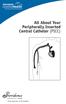 All About Your Peripherally Inserted Central Catheter (PICC) General Information Intravenous (IV) therapy is the delivery of fluid directly into a vein. An intravenous catheter is a hollow tube that is
Guidelines for Surgical Patients
 Guidelines for Surgical Patients Guidelines for Surgical Patients We are pleased that you and your physician have selected us to provide your surgical care. Everyone associated with the hospital is dedicated
M O V I N G F R E E LY. HerniaCenter. The Columbia Hernia Center at ColumbiaDoctors Midtown
 M O V I N G F R E E LY HerniaCenter The Columbia Hernia Center at ColumbiaDoctors Midtown Director, Dr. Peter L. Geller The Columbia Hernia Center brings together a group of surgeons adept in using the
Sinus and Nasal Surgery
 D E C A T U R M E M O R I A L H O S P I T A L Sinus and Nasal Surgery Introduction You are scheduled for sinus and nasal surgery. This helps open your sinuses and restore normal sinus functioning. Usually,
Orthopaedic Spine Center. Anterior Cervical Discectomy and Fusion (ACDF) Normal Discs
 Orthopaedic Spine Center Graham Calvert MD James Woodall MD PhD Anterior Cervical Discectomy and Fusion (ACDF) Normal Discs The cervical spine consists of the bony vertebrae, discs, nerves and other structures.
Enhanced recovery after laparoscopic surgery (ERALS) programme: patient information and advice 2
 This booklet is funded by, and developed in collaboration between University Hospital Southampton NHS Foundation Trust and Pfizer Limited. NPKAM0198 March 2014 Enhanced recovery after laparoscopic surgery
The following document includes information about:
 Patient information WHAT TO EXPECT WHILE RECEIVING RADIATION THERAPY FOR PROSTATE CANCER Oncology Vitalité Zone : 1B 4 5 6 Facility : Dr. Léon-Richard Oncology Centre The following document includes information
Surgery for Stress Incontinence
 Directorate of Women s Services Surgery for Stress Incontinence Tension Free Vaginal Tape Information for Patients Direct dial number Ward 40 0191 282 5640 Stress Incontinence Stress incontinence is a
Enhanced recovery programme (ERP) for patients undergoing bowel surgery
 Enhanced recovery programme (ERP) for patients undergoing bowel surgery Information for patients, relatives and carers An enhanced recovery programme (ERP) has been established at Imperial College Healthcare
Cardiac Catheterization Lab Procedures
 UW MEDICINE PATIENT EDUCATION Cardiac Catheterization Lab Procedures This handout describes how cardiac catheterization works. It also explains how to prepare for your procedure and the self-care needed
Low Back Surgery. Remember to bring this handout to the hospital with you.
 Remember to bring this handout to the hospital with you. Table of contents Page Why do I need low back surgery?... 1 What kinds of low back surgeries are there?... 2 Before your surgery... 3 After your
Hysteroscopy. What is a hysteroscopy? When is this surgery used? How do I prepare for surgery?
 What is a hysteroscopy? This is a procedure where a doctor uses a thin tube with a tiny camera to look inside the uterus. There are no incisions. Saline solution is used to expand the uterus in order to
Total Knee Replacement
 Total Knee Replacement Contents Introduction Total Knee Replacement Preparing for surgery Pre-op visit Day of surgery After surgery (In Hospital) After surgery (In Rehab) Exercise Program and Physical
Electrical Cardioversion
 Electrical Cardioversion This handout will help you get ready for and recover from your electrical cardioversion at the Royal Jubilee Hospital. What is an electrical cardioversion? Electrical cardioversion
Laparoscopic cholecystectomy. Golden Jubilee National Hospital NHS National Waiting Times Centre. Patient information guide
 Golden Jubilee National Hospital NHS National Waiting Times Centre Laparoscopic cholecystectomy Patient information guide Agamemnon Street Clydebank, G81 4DY (: 0141 951 5000 www.nhsgoldenjubilee.co.uk
Chest Port Port-a-cath
 Patient Education Port-a-cath This handout explains what a chest port is and what to expect when you have one. What is a chest port? Your doctor has asked us to insert a chest port (also called a port-acath)
.org. Knee Arthroscopy. Description. Preparing for Surgery. Surgery
 Knee Arthroscopy Page ( 1 ) Arthroscopy is a common surgical procedure in which a joint (arthro-) is viewed (-scopy) using a small camera. Arthroscopy gives doctors a clear view of the inside of the knee.
Wrist Fractures Looking for more health information?
 2011 Wrist Fractures Notes Wrist Fractures After your cast is taken off you will likely feel some joint and soft tissue tightness of the injured forearm. You may have one or more of the these wrist and
ANESTHESIA. Anesthesia for Ambulatory Surgery
 ANESTHESIA & YOU Anesthesia for Ambulatory Surgery T oday the majority of patients who undergo surgery or diagnostic tests do not need to stay overnight in the hospital. In most cases, you will be well
Contact Information. We will contact you to book appointments. Surgery dates cannot be given until 2 weeks before a surgery date is secured.
 Contact Information Bariatric Surgery Program Raleen Murphy - Nurse Practitioner Phone: 709-777-2038 Email: [email protected] Registered Dietician Phone 709-777-2038 Email: Receptionist available
Cardiac Catheterization
 Thank you for choosing Rose Medical Center for your cardiac care. Our goal is to make your stay as comfortable and pleasant as possible. Please let our knowledgeable and friendly staff know if there is
Orthopaedic Surgery Center of Joint Preservation and Replacement After Total Knee Replacement Discharge Instructions
 Congratulations! You are going home after a successful total knee replacement. Although there is still much work to do, we have already achieved a lot. So, when you get home, take a deep breath and relax.
Understanding Dental Implants
 Understanding Dental Implants Comfort and Confidence Again A new smile It s no fun when you re missing teeth. You may not feel comfortable eating or speaking. You might even avoid smiling in public. Fortunately,
V03 Varicose Veins Surgery
 V03 Varicose Veins Surgery What are varicose veins? Varicose veins are enlarged and twisted veins in the leg. They are common and affect up to 3 in 10 people. More women than men ask for treatment, with