
Product Monograph. SOVALDI (sofosbuvir) Tablets 400 mg sofosbuvir Antiviral Agent
|
|
|
- Patrick Hawkins
- 10 years ago
- Views:
Transcription
1 Pr SOVALDI (sofosbuvir) Tablets 400 mg sofosbuvir Antiviral Agent Gilead Sciences Inc. Foster City, CA USA Date of Preparation: July 21, 2015 Gilead Sciences Canada, Inc. Mississauga, ON L5N 2W3 Canada Submission Control No.:
2 TABLE OF CONTENTS PART I: HEALTH PROFESSIONAL INFORMATION... 3 SUMMARY PRODUCT INFORMATION... 3 INDICATIONS AND CLINICAL USE... 3 CONTRAINDICATIONS... 4 WARNINGS AND PRECAUTIONS... 4 ADVERSE REACTIONS... 7 DRUG INTERACTIONS DOSAGE AND ADMINISTRATION OVERDOSAGE ACTION AND CLINICAL PHARMACOLOGY STORAGE AND STABILITY SPECIAL HANDLING INSTRUCTIONS DOSAGE FORMS, COMPOSITION AND PACKAGING PART II: SCIENTIFIC INFORMATION PHARMACEUTICAL INFORMATION CLINICAL TRIALS DETAILED PHARMACOLOGY MICROBIOLOGY TOXICOLOGY REFERENCES PART III: CONSUMER INFORMATION Page 2 of 57

3 SOVALDI sofosbuvir PART I: HEALTH PROFESSIONAL INFORMATION SUMMARY PRODUCT INFORMATION Route of Administration Dosage Form / Strength Clinically Relevant Nonmedicinal Ingredients oral tablet None 400 mg sofosbuvir For a complete listing, see the DOSAGE FORMS, COMPOSITION AND PACKAGING section. INDICATIONS AND CLINICAL USE SOVALDI (sofosbuvir) is a hepatitis C virus (HCV) nucleotide analog NS5B polymerase inhibitor indicated for the treatment of chronic hepatitis C virus (CHC) infection as a component of a combination antiviral treatment regimen. The following points should be considered when initiating treatment with SOVALDI: SOVALDI must not be administered as monotherapy (see WARNINGS AND PRECAUTIONS, General). Treatment regimen and duration are dependent on both viral genotype and patient population (see DOSAGE AND ADMINISTRATION). Treatment response varies based on baseline host and viral factors. Geriatrics (> 65 years of age): Clinical studies of SOVALDI involving patients aged 65 and over showed similar treatment response rates to that of younger subjects across treatment groups. In general, caution should be exercised when administering SOVALDI in elderly patients, reflecting the greater frequency of anemia, decreased hepatic, renal or cardiac function, and of concomitant disease or other drug therapy (see WARNINGS AND PRECAUTIONS). Page 3 of 57
4 Pediatrics (< 18 years of age): Safety and effectiveness in pediatric patients have not been established (see WARNINGS AND PRECAUTIONS). Patients Awaiting Liver Transplantation: SOVALDI efficacy with SOVALDI + ribavirin (RBV) regimen has been established in patients with HCV genotype 1, 2, 3 or 4 infection awaiting liver transplantation with hepatocellular carcinoma (HCC) meeting Milan criteria (see DOSAGE AND ADMINISTRATION and CLINICAL TRIALS). Patients Co-infected with HIV-1: SOVALDI efficacy with SOVALDI + RBV regimen has been established in treatment-naïve CHC patients with HCV genotype 1 and in CHC patients with HCV genotype 2 or 3 regardless of treatment experience. Clinical data is not available for treatment-experienced HCV genotype 1 patients or HCV genotype 4 patients (see DOSAGE AND ADMINISTRATION and CLINICAL TRIALS). CONTRAINDICATIONS SOVALDI is contraindicated in patients with known hypersensitivity to any of the components of the product. For a complete listing, see the DOSAGE FORMS, COMPOSITION AND PACKAGING section of the. When SOVALDI is used in combination with peginterferon alfa/ribavirin or ribavirin, the contraindications applicable to those agents are applicable to combination therapies. Refer to the s of peginterferon alfa and ribavirin for a list of their contraindications. SOVALDI combination treatment with peginterferon alfa/ribavirin or ribavirin is contraindicated in women who are pregnant or may become pregnant and men whose female partners are pregnant or may become pregnant because of the risks for birth defects and fetal death associated with ribavirin (see WARNINGS AND PRECAUTIONS, Special Populations). WARNINGS AND PRECAUTIONS General SOVALDI must not be administered as a monotherapy and must only be used in combination with either peginterferon alfa/ribavirin or ribavirin for the treatment of hepatitis C infection. Therefore, the s for these agents must be consulted before starting treatment with SOVALDI. The S282T substitution in NS5B, associated with resistance to sofosbuvir, was detected in one subject who received SOVALDI monotherapy (see MICROBIOLOGY, Resistance). Page 4 of 57
5 If peginterferon alfa/ribavirin or ribavirin used in combination with SOVALDI is permanently discontinued, SOVALDI must also be discontinued (see DOSAGE AND ADMINISTRATION). Use with Potent P-gp Inducers Drugs that are potent P-gp inducers in the intestine (e.g. rifampin, St. John s wort) may significantly decrease sofosbuvir plasma concentration leading to reduced therapeutic effect of SOVALDI and potential loss of virologic response. Rifampin and St. John s wort should not be used with SOVALDI (see DRUG INTERACTIONS). Cardiovascular Serious Symptomatic Bradycardia When Coadministered with Amiodarone and Another HCV Direct Acting Antiviral Postmarketing cases of symptomatic bradycardia and cases requiring pacemaker intervention have been reported when amiodarone is coadministered with SOVALDI in combination with an investigational agent (NS5A inhibitor) or simeprevir. A fatal cardiac arrest was reported in a patient taking amiodarone who was coadministered a sofosbuvir-containing regimen (HARVONI (ledipasvir/sofosbuvir)). Bradycardia has generally occurred within hours to days, but cases have been observed up to 2 weeks after initiating HCV treatment. Patients also taking beta blockers, or those with underlying cardiac comorbidities and/or advanced liver disease may be at increased risk for symptomatic bradycardia with coadministration of amiodarone. Bradycardia generally resolved after discontinuation of HCV treatment. The mechanism for this effect is unknown. Coadministration of amiodarone with SOVALDI in combination with another direct acting antiviral (DAA) is not recommended. For patients taking amiodarone who have no other alternative, viable treatment options and who will be coadministered SOVALDI and another DAA: Counsel patients about the risk of symptomatic bradycardia Cardiac monitoring in an in-patient setting for the first 48 hours of coadministration is recommended, after which outpatient or self-monitoring of the heart rate should occur on a daily basis through at least the first 2 weeks of treatment. Patients who are taking SOVALDI in combination with another DAA who need to start amiodarone therapy due to no other alternative, viable treatment options should undergo similar cardiac monitoring as outlined above. Due to amiodarone s long half-life, patients discontinuing amiodarone just prior to starting SOVALDI in combination with a DAA should also undergo similar cardiac monitoring as outlined above. Page 5 of 57
6 Patients who develop signs or symptoms of bradycardia should seek medical evaluation immediately. Symptoms may include near-fainting or fainting, dizziness or lightheadedness, malaise, weakness, excessive tiredness, shortness of breath, chest pains, confusion or memory problems (see ADVERSE REACTIONS, Post-Market Adverse Drug Reactions and DRUG INTERACTIONS). Hepatic/Biliary/Pancreatic No dose adjustment of SOVALDI is required for patients with mild, moderate or severe hepatic impairment (Child-Pugh Class A, B or C) (see ACTION AND CLINICAL PHARMACOLOGY and DOSAGE AND ADMINISTRATION). Safety and efficacy of SOVALDI have not been established in patients with decompensated cirrhosis. Renal No dose adjustment of SOVALDI is required for patients with mild or moderate renal impairment. The safety and efficacy of SOVALDI has not been established in patients with severe renal impairment (egfr < 30 ml/min/1.73m 2 ) or end stage renal disease (ESRD) requiring hemodialysis (see ACTION AND CLINICAL PHARMACOLOGY and DOSAGE AND ADMINISTRATION). Special Populations Pregnant Women: There are no data on the use of SOVALDI in pregnant women. No effects on fetal development with sofosbuvir have been observed in rats and rabbits at the highest doses tested. In the rat and rabbit, exposure to the predominant circulating metabolite GS at the highest dose was approximately 10-fold and 28-fold the exposure in humans at the recommended clinical dose, respectively (see TOXICOLOGY). Ribavirin may cause birth defects and/or death of the exposed fetus and significant teratogenic and/or embryocidal effects have been demonstrated in all animal species exposed to ribavirin. Extreme care must be taken to avoid pregnancy in female patients and in female partners of male patients (see CONTRAINDICATIONS). Ribavirin therapy should not be started unless a report of a negative pregnancy test has been obtained immediately prior to initiation of therapy. When SOVALDI is used in combination with ribavirin or peginterferon alfa/ribavirin, women of childbearing potential and their male partners must use two forms of effective contraception during treatment and for 6 months after the treatment has concluded. Routine monthly pregnancy tests must be performed during this time. Refer to the Product Monograph containing ribavirin information for additional guidance. Page 6 of 57
7 Nursing Women: It is not known whether sofosbuvir and its metabolites are excreted in human breast milk. Excretion of sofosbuvir in milk was studied in postpartum female rats after a single oral dose. The milk:plasma concentration ratios in the female rats were 0.1 at 1 hour post-dose and 0.8 at 24 hours post-dose. The predominant circulating metabolite GS was the primary component observed in the milk of lactating rats. Mothers should be instructed not to breastfeed if they are taking SOVALDI. See also the containing ribavirin information. Pediatrics (< 18 years of age): The safety and efficacy of SOVALDI in pediatric patients have not been established. Geriatrics (> 65 years of age): Clinical studies of SOVALDI included 99 subjects (90 subjects received SOVALDI) aged 65 and over. The response rates observed for subjects over 65 years of age were similar to that of younger subjects across treatment groups. In general, caution should be exercised when administering SOVALDI in elderly patients reflecting the greater frequency of anemia, decreased hepatic, renal or cardiac function, and of concomitant disease or other drug therapy. Patients with Genotype 5 or 6 CHC: There is limited data regarding the use of SOVALDI in patients with genotype 5 or 6 CHC. Seven patients infected with genotype 5 (n=1) or genotype 6 (n=6) were included in the NEUTRINO clinical trial. Following 12 weeks of treatment with SOVALDI in combination with peginterferon alfa/ribavirin, all 7 patients achieved SVR12. Patients Coinfected with HBV/HCV: The safety and efficacy of SOVALDI have not been established in patients coinfected with HBV. Post-Liver Transplant Patients: The safety and efficacy of SOVALDI have not been established in post-liver transplant patients. ADVERSE REACTIONS Adverse Drug Reaction Overview Clinical Trial Adverse Drug Reactions Because clinical trials are conducted under very specific conditions, the adverse reaction rates observed in the clinical trials may not reflect the rates observed in practice and should Page 7 of 57
8 not be compared to the rates in the clinical trials of another drug. Adverse drug reaction information from clinical trials is useful for identifying drug-related adverse events and for approximating rates. The safety assessment of SOVALDI is based on pooled Phase 3 clinical trial data (both controlled and uncontrolled) including 650 subjects who received SOVALDI + ribavirin (RBV) combination therapy for 12 weeks, 250 subjects who received SOVALDI + ribavirin combination therapy for 24 weeks, 327 subjects who received SOVALDI + peginterferon (PEG) alfa + ribavirin combination therapy for 12 weeks, 243 subjects who received peginterferon alfa + ribavirin for 24 weeks and 71 subjects who received placebo (PBO) for 12 weeks. The proportion of subjects who permanently discontinued treatment due to adverse events was 4% for subjects receiving placebo, 1% for subjects receiving SOVALDI + ribavirin for 12 weeks, <1% for subjects receiving SOVALDI + ribavirin for 24 weeks, 11% for subjects receiving peginterferon alfa + ribavirin for 24 weeks and 2% for subjects receiving SOVALDI + peginterferon alfa + ribavirin for 12 weeks. No adverse drug reactions specific to SOVALDI have been identified. Table 1 lists adverse reactions (Grade 2 and higher) observed in clinical trials of SOVALDI combination therapy that occurred in greater than or equal to 3% of subjects in any of the treatment arms. The most common adverse reaction ( 5%) for SOVALDI + ribavirin combination therapy (12 weeks or 24 weeks treatment) was fatigue. The most common adverse reactions ( 5%) for SOVALDI + peginterferon alfa + ribavirin combination therapy were fatigue, anemia, neutropenia, insomnia, headache and nausea. Table 1. Treatment-Emergent Adverse Drug Reactions (Grade 2 and Higher) Reported in at Least 3% of Subjects in Any Treatment Arm a,b PBO (N=71) SOVALDI +RBV 12 weeks (N=650) SOVALDI +RBV 24 weeks (N=250) PEG+RBV 24 weeks (N=243) SOVALDI +PEG+RBV 12 weeks (N=327) Fatigue 4 (5.6%) 49 (7.5%) 13 (5.2%) 42 (17.3%) 39 (11.9%) Anaemia 0 31 (4.8%) 7 (2.8%) 14 (5.8%) 46 (14.1%) Insomnia 1 (1.4%) 19 (2.9%) 11 (4.4%) 22 (9.1%) 20 (6.1%) Headache 0 22 (3.4%) 7 (2.8%) 15 (6.2%) 26 (8.0%) Neutropenia 0 1 (0.2%) 0 23 (9.5%) 40 (12.2%) Nausea 0 16 (2.5%) 4 (1.6%) 10 (4.1%) 18 (5.5%) Irritability 0 10 (1.5%) 3 (1.2%) 13 (5.3%) 12 (3.7%) Pruritus 0 7 (1.1%) 10 (4.0%) 8 (3.3%) 8 (2.4%) Dyspnea 0 11 (1.7%) 5 (2.0%) 3 (1.2%) 13 (4.0%) Page 8 of 57

9 PBO (N=71) SOVALDI +RBV 12 weeks (N=650) SOVALDI +RBV 24 weeks (N=250) PEG+RBV 24 weeks (N=243) SOVALDI +PEG+RBV 12 weeks (N=327) Depression 0 7 (1.1%) 2 (0.8%) 17 (7.0%) 5 (1.5%) Influenza like illness 0 3 (0.5%) 2 (0.8%) 11 (4.5%) 11 (3.4%) Decreased appetite 1 (1.4%) 7 (1.1%) 1 (0.4%) 12 (4.9%) 5 (1.5%) Thrombocytopenia 1 (1.4%) (7.8%) 6 (1.8%) Myalgia 0 7 (1.1%) 2 (0.8%) 9 (3.7%) 6 (1.8%) Rash 1 (1.4%) 3 (0.5%) 1 (0.4%) 11 (4.5%) 7 (2.1%) Asthenia 0 3 (0.5%) 12 (4.8 %) 2 (0.8%) 3 (0.9%) a Frequencies of adverse drug reactions are based on Grade 2 and higher treatment-emergent adverse events, considered related to study drug. b Additionally, the following adverse drug reactions of low severity (Grade 1) occurred with SOVALDI + ribavirin combination therapy: dry skin (5%), nasopharyngitis (4%). Less Common Clinical Trial Adverse Drug Reactions (<3%) Treatment-emergent, related (to any active treatment) adverse drug reactions of at least moderate intensity (Grade 2 and higher) occurring in less than 3% of patients receiving SOVALDI are listed below by body system: Table 2. Treatment-Emergent Adverse Drug Reactions (Grade 2 and Higher) Reported in < 3% of Subjects Receiving SOVALDI Body System SOVALDI + RBV SOVALDI + PEG-IFN + RBV Blood and Lymphatic System Disorders Lymphadenopathy, lymphopenia, neutropenia Hemolytic anemia, leukopenia, thrombocytopenia Ear And Labyrinth Disorders Vertigo N/A Cardiac Disorders Palpitations N/A Eye Disorders Amaurosis Fugax, dry eye, eye Vision blurred irritation, visual impairment Gastrointestinal Disorders Abdominal discomfort, abdominal distension, abdominal pain, abdominal pain upper, anal inflammation, constipation, diarrhea, dry mouth, dyspepsia, epigastric discomfort, frequent bowel movements, gastritis, gastroesophageal reflux disease, nausea, stomatitis, tongue ulceration, toothache, vomiting Abdominal pain, abdominal pain lower, abdominal pain upper, aphthous stomatitis, cheilitis, constipation, diarrhea, dyspepsia, gastroesophageal reflux disease, glossitis, vomiting General Disorders and Administration Site Conditions Asthenia, chest pain, chills, feeling abnormal, feeling cold, influenza like illness, irritability, malaise, nodule, oedema peripheral, pain, pyrexia, xerosis Asthenia, chest discomfort, chills, feeling abnormal, injection site rash, injection site reaction, pain, pyrexia, spinal pain Page 9 of 57

10 Body System SOVALDI + RBV SOVALDI + PEG-IFN + RBV Hepatobiliary Disorders Hyperbilirubinaemia Hyperbilirubinaemia Immune System Disorders Sarcoidosis Cryoglobulinaemia Infections and Infestations Injury, Poisoning and Procedural Complications Investigations Metabolism and Nutrition Disorders Musculoskeletal And Connective Tissue Disorders Neoplasms Benign, Malignant And Unspecified (Incl Cysts And Polyps) Nervous System Disorders Psychiatric Disorders Bronchitis, fungal infection, kidney infection, nasopharyngitis, oral herpes, upper respiratory tract infection, urinary tract infection, varicella Excoriation, sunburn, wound Blood glucose increased, eosinophil count increased, hemoglobin abnormal, hemoglobin decreased, heart rate increased, thyroid function test abnormal, weight decreased Decreased appetite, hyperglycemia, hypokalemia, increased appetite Arthralgia, flank pain, muscle spasms, muscle twitching, myalgia, pain in extremity Basal cell carcinoma Amnesia, burning sensation, disturbance in attention, dizziness, dysgeusia, lethargy, memory impairment, migraine, nerve root compression, neuropathy peripheral, paresis, restless legs syndrome Abnormal dreams, aggression, agitation, anxiety, apathy, confusional state, depressed mood, depression, hallucination, libido decreased, libido increased, mood altered, mood swings, nightmare, sleep disorder, suicidal ideation, suicide attempt, thinking abnormal Folliculitis, gastroenteritis viral, infected skin ulcer, skin bacterial infection, urinary tract infection N/A Blood creatinine increased, blood uric acid increased, hemoglobin abnormal, hemoglobin decreased, neutrophil count decreased, platelet count decreased, transaminases increased, weight decreased Decreased appetite, hyperglycemia, hyponatremia Arthralgia, back pain, muscle spasms, muscular weakness, myalgia N/A Ageusia, amnesia, disturbance in attention, dizziness, dizziness postural, dysgeusia, loss of consciousness, mental impairment, migraine, sinus headache, tremor Affect lability, agitation, anxiety, confusional state, depression, distractibility, libido decreased, mood swings, restlessness, tachyphrenia Renal and Urinary Disorders Renal failure N/A Reproductive System and Breast N/A Pelvic pain Disorders Respiratory, Thoracic and Mediastinal Disorders Cough, dyspnea, dyspnoea at rest, dyspnea exertional, nasal dryness, Cough, nasal dryness Skin And Subcutaneous Tissue Disorders oropharyngeal pain Alopecia, asteatosis, dermatitis, dry skin, eczema, erythema, hyperhidrosis, night sweats, onychoclasis, photosensitivity reaction, pruritus, pruritus generalised, psoriasis, rash, rash generalised, rash macular, rash maculo-papular, rash papular, skin fissures Dermatitis, pruritus, psoriasis, rash, rash generalised, rash maculopapular, urticarial Page 10 of 57

11 Body System SOVALDI + RBV SOVALDI + PEG-IFN + RBV Vascular Disorders Hematoma, hot flush Hot flush, hypertension Special Populations HIV-1 Coinfected Patients The safety profile of SOVALDI and ribavirin in HIV-1 coinfected subjects was similar to that observed in mono-infected HCV subjects treated with SOVALDI and ribavirin in Phase 3 clinical trials. Additionally, dizziness (grades 2-4) was observed in >5% of HIV-1 coinfected subjects (see CLINICAL TRIALS). Patients Awaiting Liver Transplantation The safety profile of SOVALDI and ribavirin in HCV-infected subjects prior to liver transplantation was similar to that observed in subjects treated with SOVALDI and ribavirin in Phase 3 clinical trials (see CLINICAL TRIALS). Abnormal Hematologic and Clinical Chemistry Findings Laboratory Abnormalities The frequency of treatment-emergent laboratory abnormalities (Grades 3-4) occurring in at least 2% of subjects in any treatment arm are described in Table 3. Table 3. Laboratory Abnormalities (Grades 3-4) Reported in 2% of Subjects in Any Treatment Arm Laboratory Abnormality Parameters Hemoglobin c (< 9 g/dl or change from baseline 4.5 g/dl) Neutrophils (< 0.75 x10 9 /L) Platelets (< 50 x10 9 /L) Lymphocytes (< 0.5 x10 3 /μl) White blood cells (< 1.5 x10 3 /μl) PBO 12 weeks SOVALDI + RBV a 12 weeks SOVALDI+ RBV a 24 weeks Peg-IFN + RBV b 24 weeks SOVALDI+ Peg-IFN + RBV a 12 weeks N=71 N=650 N=250 N=243 N= % 11% 10% 27% 1% < 1% 0 15% 20% 3% < 1% 1% 7% < 1% 0 1% 2% 11% 5% 0 <1% 0 5% 6% ALT (> 5 x ULN) 9% <1% 1% 4% 2% Page 11 of 57
12 AST (> 5 x ULN) 14% <1% 0 2% 3% Lipase (> 3 x ULN) Serum glucose (> 250 mg/dl) Total bilirubin (> 2.5 x ULN) 1% 2% 2% 2% < 1% 6% 2% 1% 2% 2% 0 3% 3% 1% 0 a b c Subjects received weight-based ribavirin (1000 mg per day if weighing <75 kg or 1200 mg per day if weighing 75 kg). Subjects received 800 mg ribavirin per day regardless of weight. Grade 4 hemoglobin abnormality (<7 g/dl) occurred in 1 subject in the SOVALDI+Peg-IFN+RBV treatment arm. Post-Market Adverse Drug Reactions In addition to adverse reactions from clinical studies, the following adverse reactions have been identified during post approval use of SOVALDI. Because postmarketing reactions are reported voluntarily from a population of uncertain size, it is not always possible to reliably estimate their frequency or establish a causal relationship to drug exposure. Cardiac Disorders Serious symptomatic bradycardia when amiodarone is coadministered with SOVALDI in combination with another HCV direct acting antiviral (see WARNINGS AND PRECAUTIONS, Cardiovascular and DRUG INTERACTIONS). DRUG INTERACTIONS Overview Drug-Drug Interactions Sofosbuvir is a nucleotide prodrug. After oral administration of SOVALDI, sofosbuvir is rapidly converted to the predominant circulating metabolite GS that accounts for greater than 90% of drug related material systemic exposure, while the parent sofosbuvir accounts for approximately 4% of drug related material (see ACTION AND CLINICAL PHARMACOLOGY). In clinical pharmacology studies, both sofosbuvir and GS were monitored for purposes of pharmacokinetic analyses. Sofosbuvir is a substrate of drug transporter P-gp and breast cancer resistance protein (BCRP) while GS is not. Drugs that are potent P-gp inducers in the intestine (e.g. rifampin or St. John s wort) may decrease sofosbuvir plasma concentration leading to reduced therapeutic effect of SOVALDI and thus should not be used with SOVALDI (see WARNINGS AND PRECAUTIONS). Coadministration of SOVALDI with drugs that inhibit P-gp and/or BCRP may increase sofosbuvir plasma concentration without increasing Page 12 of 57

13 GS plasma concentration; accordingly, SOVALDI may be coadministered with P-gp and/or BCRP inhibitors. Sofosbuvir and GS are not relevant inhibitors of drug transporters including P-gp, BCRP, OATP1B1 and OATP1B3 or enzymes CYP3A4, CYP1A2, CYP2B6, CYP2C19, CYP2C9, CYP2C8, CYP2D6, and UGT1A1 and thus are not expected to increase exposures of drugs that are substrates of these transporters or enzymes (see DETAILED PHARMACOLOGY). The intracellular metabolic activation pathway of sofosbuvir is mediated by generally low affinity and high capacity hydrolase and nucleotide phosphorylation pathways that are unlikely to be affected by concomitant drugs (see ACTION AND CLINICAL PHARMACOLOGY). Drug interaction information for SOVALDI with potential concomitant drugs is summarized in Table 4. The drug interactions described are based on potential drug interactions that may occur with SOVALDI. The table is not all-inclusive (see CONTRAINDICATIONS and ACTION AND CLINICAL PHARMACOLOGY) Table 4. Potentially Significant a Drug Interactions Concomitant Drug Class: Drug Name Antiarrthymics: amiodarone Anticonvulsants: carbamazepine phenytoin phenobarbital oxcarbazepine Antimycobacterials: rifabutin rifampin a. This table is not all inclusive. b. = increase, = decrease Effect on Concentration b Effect on amiodarone and sofosbuvir concentrations unknown sofosbuvir GS sofosbuvir GS Clinical Comment Coadministration of amiodarone with SOVALDI in combination with another DAA may result in serious symptomatic bradycardia. The mechanism of this effect is unknown. Coadministration of amiodarone with SOVALDI in combination with another DAA is not recommended; if coadministration is required, cardiac monitoring is recommended (see WARNINGS AND PRECAUTIONS, Cardiovascular and ADVERSE REACTIONS, Post-Market Adverse Drug Reactions). Coadministration of SOVALDI with carbamazepine, phenytoin, phenobarbital or oxcarbazepine is expected to decrease the concentration of sofosbuvir, leading to reduced therapeutic effect of SOVALDI. Such coadministration is not recommended. Coadministration of SOVALDI with rifabutin is expected to decrease the concentration of sofosbuvir, leading to reduced therapeutic effect of SOVALDI. Such coadministration is not recommended. SOVALDI should not be used with rifampin, a potent intestinal P-gp inducer (see WARNINGS AND PRECAUTIONS, General, Use with Potent P-gp Inducers) Page 13 of 57
14 Drug-drug interaction studies with SOVALDI and HCV protease inhibitors (boceprevir and telaprevir) have not been conducted; therefore there are no data to support a dosing recommendation for the use of SOVALDI in combination with these agents. Drugs without Clinically Significant Interactions with SOVALDI In addition to the drugs included in Table 4, the interaction between SOVALDI and the following drugs were evaluated in clinical trials and no dose adjustment is needed for either drug: cyclosporine, darunavir/ritonavir, emtricitabine, efavirenz, methadone, oral contraceptives, raltegravir, rilpivirine, tacrolimus, or tenofovir disoproxil fumarate. The effects of coadministered drugs on the exposure of sofosbuvir and GS are shown in Table 5. The effects of sofosbuvir on the exposure of coadministered drugs are shown in Table 6. Table 5. Drug Interactions: Changes in Pharmacokinetic Parameters for Sofosbuvir and the Predominant Circulating Metabolite GS in the Presence of the Coadministered Drug a Coadministered Drug Cyclosporine Darunavir (boosted with ritonavir) Dose of Coadministered Drug (mg) 600 single dose 800/100 once daily Sofosbuvir Dose (mg) 400 single dose 400 single dose N Mean Ratio (90% CI) of Sofosbuvir and GS PK With/Without Coadministered Drug No Effect=1.00 sofosbuvir GS sofosbuvir GS Efavirenz b 600 once daily sofosbuvir Emtricitabine b 200 once daily 400 single Tenofovir dose 16 disoproxil 300 once daily GS fumarate c Methadone methadone maintenance therapy (30 to 130 daily) 400 once daily 14 sofosbuvir GS C max AUC C min 2.54 (1.87, 3.45) 0.60 (0.53, 0.69) 1.45 (1.10, 1.92) 0.97 (0.90, 1.05) 0.81 (0.60, 1.10) 0.77 (0.70, 0.84) 0.95 c (0.68, 1.33) 0.73 c (0.65, 0.83) 4.53 (3.26, 6.30) 1.04 (0.90, 1.20) 1.34 (1.12, 1.59) 1.24 (1.18, 1.30) 0.94 (0.76, 1.16) 0.84 (0.76, 0.92) 1.30 c (1.00, 1.69) 1.04 c (0.89, 1.22) NA NA NA NA NA NA NA NA Page 14 of 57

15 Coadministered Drug Raltegravir Rilpivirine Tacrolimus Dose of Coadministered Drug (mg) 400 twice daily 25 once daily 5 single dose Sofosbuvir Dose (mg) 400 single dose 400 single dose 400 single dose NA = not available/not applicable a. All interaction studies conducted in healthy volunteers b. Administered as ATRIPLA c. Comparison based on historic control N Mean Ratio (90% CI) of Sofosbuvir and GS PK With/Without Coadministered Drug No Effect=1.00 sofosbuvir GS sofosbuvir GS sofosbuvir GS C max AUC C min 0.87 (0.71, 1.08) 1.09 (0.99, 1.20) 1.21 (0.90, 1.62) 1.06 (0.99, 1.14) 0.97 (0.65, 1.43) 0.97 (0.83, 1.14) 0.95 (0.82, 1.09) 1.03 (0.97, 1.08) 1.09 (0.94, 1.27) 1.01 (0.97, 1.04) 1.13 (0.81, 1.57) 1.00 (0.87, 1.13) NA NA NA NA NA NA Page 15 of 57

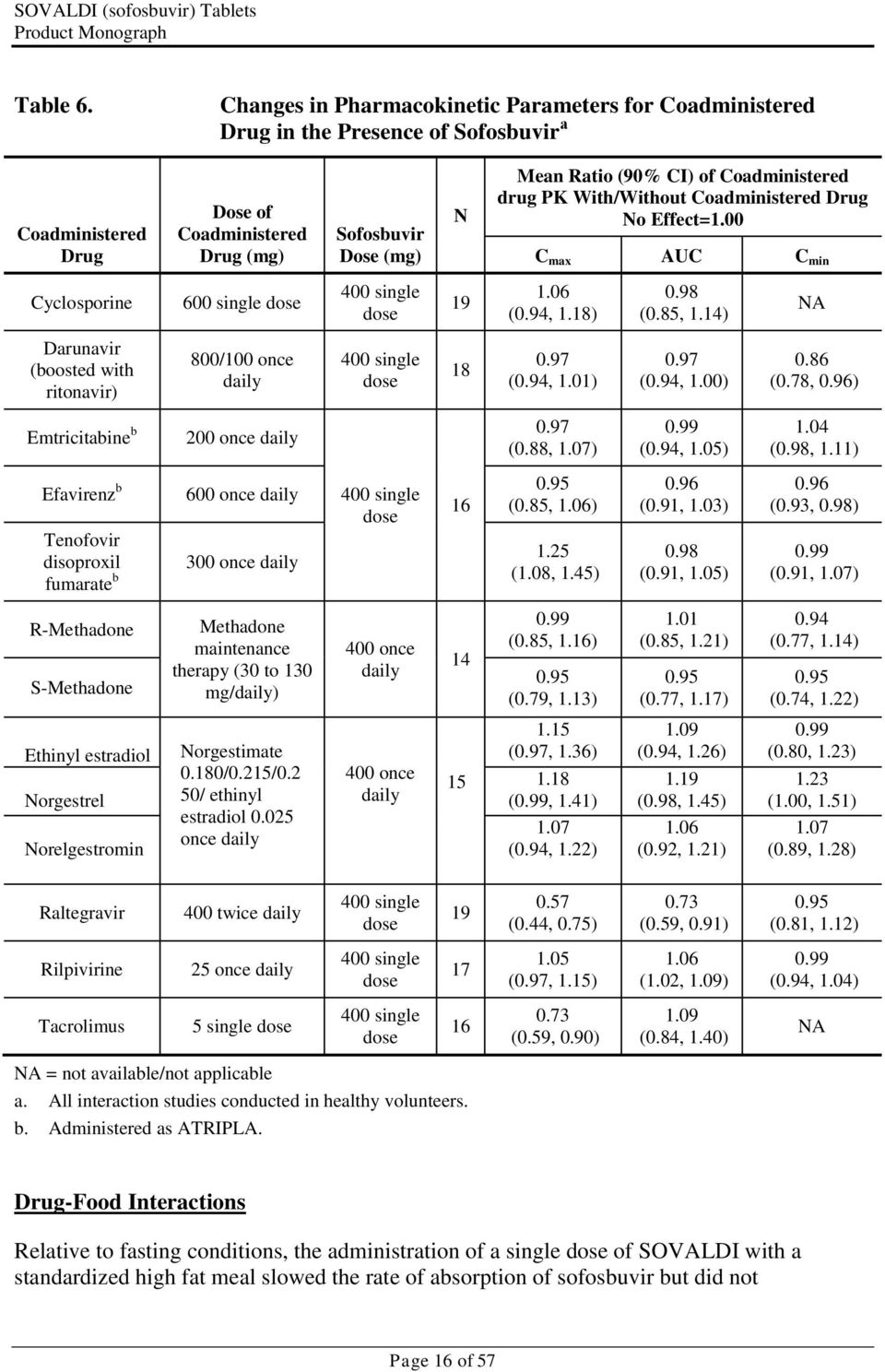
16 Table 6. Changes in Pharmacokinetic Parameters for Coadministered Drug in the Presence of Sofosbuvir a Coadministered Drug Dose of Coadministered Drug (mg) Sofosbuvir Dose (mg) N Mean Ratio (90% CI) of Coadministered drug PK With/Without Coadministered Drug No Effect=1.00 C max AUC C min Cyclosporine 600 single dose 400 single dose (0.94, 1.18) 0.98 (0.85, 1.14) NA Darunavir (boosted with ritonavir) 800/100 once daily 400 single dose (0.94, 1.01) 0.97 (0.94, 1.00) 0.86 (0.78, 0.96) Emtricitabine b 200 once daily 0.97 (0.88, 1.07) 0.99 (0.94, 1.05) 1.04 (0.98, 1.11) Efavirenz b Tenofovir disoproxil fumarate b 600 once daily 300 once daily 400 single dose (0.85, 1.06) 1.25 (1.08, 1.45) 0.96 (0.91, 1.03) 0.98 (0.91, 1.05) 0.96 (0.93, 0.98) 0.99 (0.91, 1.07) R-Methadone S-Methadone Methadone maintenance therapy (30 to 130 mg/daily) 400 once daily (0.85, 1.16) 0.95 (0.79, 1.13) 1.01 (0.85, 1.21) 0.95 (0.77, 1.17) 0.94 (0.77, 1.14) 0.95 (0.74, 1.22) Ethinyl estradiol Norgestrel Norelgestromin Norgestimate 0.180/0.215/0.2 50/ ethinyl estradiol once daily 400 once daily (0.97, 1.36) 1.18 (0.99, 1.41) 1.07 (0.94, 1.22) 1.09 (0.94, 1.26) 1.19 (0.98, 1.45) 1.06 (0.92, 1.21) 0.99 (0.80, 1.23) 1.23 (1.00, 1.51) 1.07 (0.89, 1.28) Raltegravir 400 twice daily 400 single dose (0.44, 0.75) 0.73 (0.59, 0.91) 0.95 (0.81, 1.12) Rilpivirine 25 once daily 400 single dose (0.97, 1.15) 1.06 (1.02, 1.09) 0.99 (0.94, 1.04) Tacrolimus 5 single dose 400 single dose (0.59, 0.90) 1.09 (0.84, 1.40) NA NA = not available/not applicable a. All interaction studies conducted in healthy volunteers. b. Administered as ATRIPLA. Drug-Food Interactions Relative to fasting conditions, the administration of a single dose of SOVALDI with a standardized high fat meal slowed the rate of absorption of sofosbuvir but did not Page 16 of 57
17 substantially affect the extent of absorption. The exposure (AUC) of the predominant circulating metabolite, GS , was unaffected (90% CIs of the Geometric Mean Ratios (GMRs) contained within %) by a high-fat meal, and although there was a modest decrease of 24% in C max with a high-fat meal, the decrease was not considered clinically meaningful. Therefore, SOVALDI can be administered without regard to food (see DOSAGE AND ADMINISTRATION, ACTION AND CLINICAL PHARMACOLOGY, Pharmacokinetics and DETAILED PHARMACOLOGY). Drug-Herb Interactions Coadministration of St. John s wort, a potent intestinal P-gp inducer, may decrease sofosbuvir plasma concentrations, which may result in loss of therapeutic effect. St. John s wort should not be used with SOVALDI. Drug-Laboratory Interactions Interactions of SOVALDI with laboratory tests have not been established. DOSAGE AND ADMINISTRATION Dosing Considerations SOVALDI must only be used in combination with either pegylated interferon and ribavirin (genotypes 1 and 4, respectively), or ribavirin alone (genotypes 2 and 3, respectively). Recommended Dose and Dosage Adjustment The recommended dose of SOVALDI is one 400 mg tablet, taken orally, once daily with or without food (see ACTION AND CLINICAL PHARMACOLOGY, Pharmacokinetics). The recommended dose and treatment duration for SOVALDI combination therapy is provided in Table 7. Page 17 of 57

18 Table 7. Recommended Dose and Treatment Duration* for SOVALDI Combination Therapy in HCV Mono-infected and HIV-1 Coinfected Patients Duration SOVALDI Dose (daily) Peginterferon alfa Dose Ribavirin Dose (daily) Patients with genotype 1, or 4 CHC 12 weeks Refer to peginterferon alfa PM Refer to PM containing ribavirin information Patients with genotype 2 CHC Patients with genotype 3 CHC 12 weeks 24 weeks 400 mg NA <75 kg = 1000 mg a 75 kg = 1200 mg a NA = not applicable; PM = * Treatment duration is fixed and is not guided by subjects' HCV RNA levels (i.e., no response guided therapy). a The daily dose of ribavirin is administered orally in two divided doses with food. SOVALDI in combination with ribavirin for 24 weeks can be considered as a therapeutic option for treatment naïve and non-cirrhotic treatment experienced CHC patients with genotype 1 infection who are ineligible to receive an interferon-based regimen (See CLINICAL TRIALS). Treatment decision should be guided by an assessment of the potential benefits and risks for the individual patient. Patients with Hepatocellular Carcinoma Awaiting Liver Transplantation SOVALDI (400 mg) in combination with weight-based ribavirin (< 75 kg = 1000 mg; or 75 kg = 1200 mg) is recommended for up to 48 weeks or until the time of liver transplantation, whichever occurs first, to prevent post-transplant HCV reinfection (see CLINICAL TRIALS). Dose Modification Dose reduction of SOVALDI is not recommended. Genotype 1 and 4 If a patient has a serious adverse reaction potentially related to peginterferon alfa and/or ribavirin, the peginterferon alfa and/or ribavirin dose should be reduced accordingly or discontinued if necessary. If discontinuation is necessary, SOVALDI must also be discontinued (see DOSAGE AND ADMINISTRATION, Discontinuation of Dosing). Refer to the s for peginterferon alfa and ribavirin for additional information about how to reduce and/or discontinue the peginterferon alfa and/or ribavirin dose. Page 18 of 57

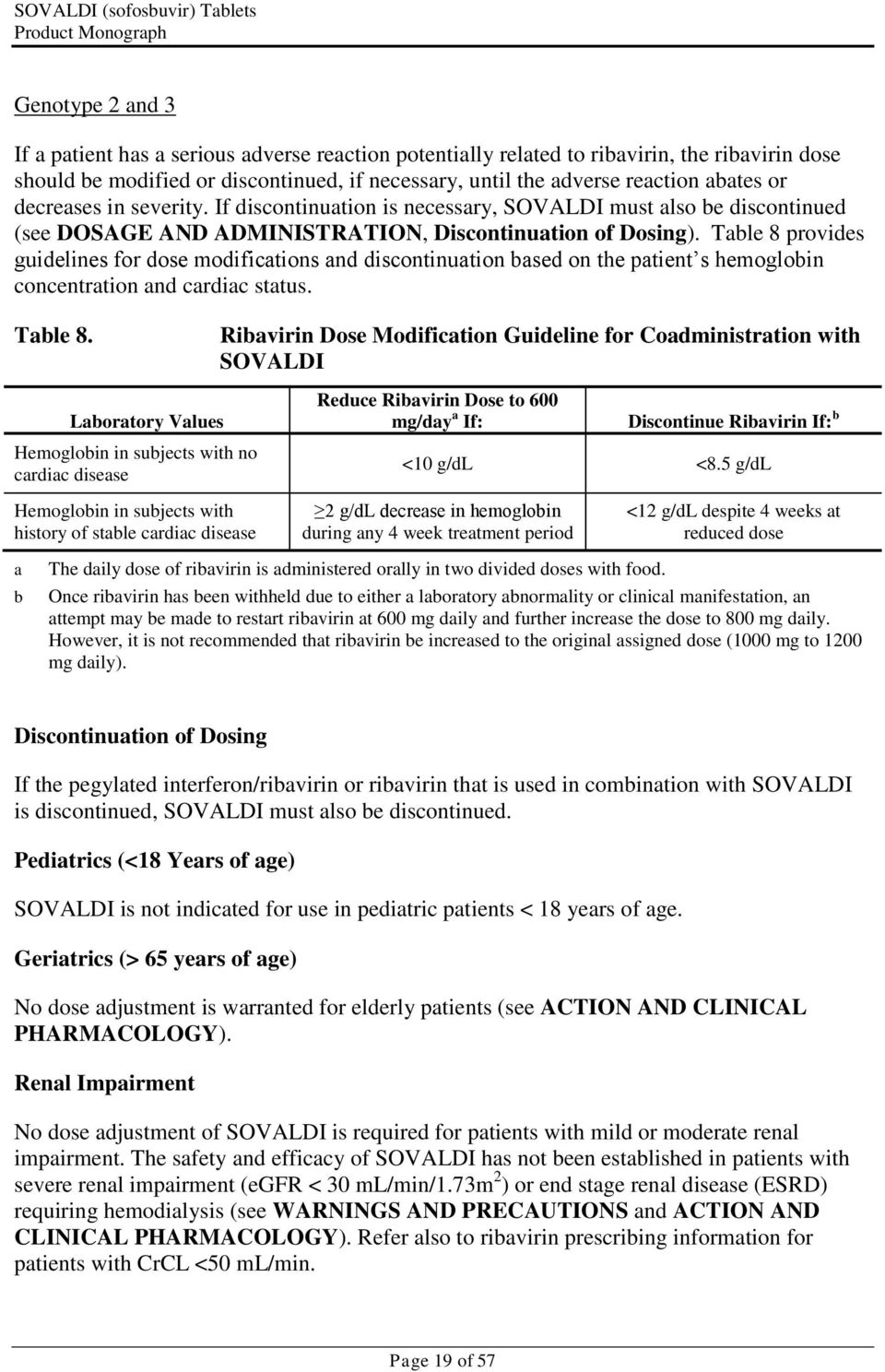
19 Genotype 2 and 3 If a patient has a serious adverse reaction potentially related to ribavirin, the ribavirin dose should be modified or discontinued, if necessary, until the adverse reaction abates or decreases in severity. If discontinuation is necessary, SOVALDI must also be discontinued (see DOSAGE AND ADMINISTRATION, Discontinuation of Dosing). Table 8 provides guidelines for dose modifications and discontinuation based on the patient s hemoglobin concentration and cardiac status. Table 8. Ribavirin Dose Modification Guideline for Coadministration with SOVALDI Laboratory Values Hemoglobin in subjects with no cardiac disease Reduce Ribavirin Dose to 600 mg/day a If: Discontinue Ribavirin If: b <10 g/dl <8.5 g/dl Hemoglobin in subjects with history of stable cardiac disease 2 g/dl decrease in hemoglobin during any 4 week treatment period <12 g/dl despite 4 weeks at reduced dose a b The daily dose of ribavirin is administered orally in two divided doses with food. Once ribavirin has been withheld due to either a laboratory abnormality or clinical manifestation, an attempt may be made to restart ribavirin at 600 mg daily and further increase the dose to 800 mg daily. However, it is not recommended that ribavirin be increased to the original assigned dose (1000 mg to 1200 mg daily). Discontinuation of Dosing If the pegylated interferon/ribavirin or ribavirin that is used in combination with SOVALDI is discontinued, SOVALDI must also be discontinued. Pediatrics (<18 Years of age) SOVALDI is not indicated for use in pediatric patients < 18 years of age. Geriatrics (> 65 years of age) No dose adjustment is warranted for elderly patients (see ACTION AND CLINICAL PHARMACOLOGY). Renal Impairment No dose adjustment of SOVALDI is required for patients with mild or moderate renal impairment. The safety and efficacy of SOVALDI has not been established in patients with severe renal impairment (egfr < 30 ml/min/1.73m 2 ) or end stage renal disease (ESRD) requiring hemodialysis (see WARNINGS AND PRECAUTIONS and ACTION AND CLINICAL PHARMACOLOGY). Refer also to ribavirin prescribing information for patients with CrCL <50 ml/min. Page 19 of 57
20 Hepatic Impairment No dose adjustment of SOVALDI is required for patients with mild, moderate or severe hepatic impairment (Child-Pugh Class A, B or C) (see WARNINGS AND PRECAUTIONS and ACTION AND CLINICAL PHARMACOLOGY). Safety and efficacy of SOVALDI have not been established in patients with decompensated cirrhosis. See peginterferon alfa prescribing information for contraindication in hepatic decompensation. Missed Dose If a patient misses a dose of SOVALDI within the time it is usually taken, the patient should take SOVALDI as soon as possible, and then take the next dose of SOVALDI at the regularly scheduled time. If a patient misses a dose of SOVALDI and it is almost time for the next dose, the patient should not take the missed dose, but resume the usual dosing schedule. A double dose of SOVALDI must not be taken. If a patient vomits less than 2 hours after taking a dose of SOVALDI, the patient should take another dose of SOVALDI. If a patient vomits more than 2 hours after taking a dose of SOVALDI, the patient should take the next dose at the regularly scheduled time. OVERDOSAGE For management of a suspected drug overdose, contact your regional Poison Control Centre. Administration of activated charcoal may also be used to aid in the removal of unabsorbed active substance. General supportive measures including monitoring of vital signs as well as observation of the clinical status of the patient are recommended. The highest documented dose of sofosbuvir was a single supratherapeutic dose of sofosbuvir 1200 mg administered to 59 healthy subjects. In that trial, there were no untoward effects observed at this dose level, and adverse events were similar in frequency and severity to those reported in the placebo and sofosbuvir 400 mg treatment groups. The effects of higher doses are not known. No specific antidote is available for overdose with SOVALDI. If overdose occurs the patient must be monitored for evidence of toxicity. Hemodialysis can efficiently remove (53% extraction ratio) the predominant circulating metabolite GS A 4-hour hemodialysis session removed 18% of the administered dose. ACTION AND CLINICAL PHARMACOLOGY Mechanism of Action Page 20 of 57

21 Sofosbuvir is a direct-acting antiviral agent (pan-genotypic polymerase inhibitor) against the hepatitis C virus. HCV RNA replication is mediated by a membrane-associated multiprotein replication complex. The HCV polymerase (NS5B protein) is an RNA-dependent RNA polymerase (RdRp). It is the essential initiating and catalytic subunit of this replication complex and is critical for the viral replication cycle. There is no human homolog for HCV NS5B RdRp. Sofosbuvir is a monophosphorylated pyrimidine nucleotide prodrug that undergoes intracellular metabolism to form the pharmacologically active uridine analog triphosphate (GS ). GS competes with natural nucleotides for incorporation (by HCV NS5B) into the nascent RNA strand during replication of the viral genome. GS differs from endogenous pyrimidine nucleotides in that it has been modified at the 2 position with the addition of a methyl and a fluoro functional group. Incorporation of GS into nascent RNA strongly reduces the efficiency of further RNA elongation by RdRp, resulting in premature termination of RNA synthesis. The stopping of viral replication leads to a rapid decline of HCV viral load and clearing of HCV levels in the body. Pharmacodynamics Effect on Electrocardiogram The electrocardiographic effects of sofosbuvir at the therapeutic dose (400mg) and 3-fold above therapeutic dose (1200 mg) were evaluated in a randomized, single-dose, placebo-, and active-controlled (moxifloxacin 400 mg) four period crossover thorough QT trial in 59 healthy subjects. The trial demonstrated a lack of effect of sofosbuvir on prolongation of the QTcF interval. The upper bound of the two-sided 90% confidence interval for the largest placebo-adjusted, baseline-corrected QTc based on Fridericia correction method (QTcF) was below 10 ms, the threshold for regulatory concern. Pharmacokinetics Absorption: The pharmacokinetic properties of sofosbuvir and the predominant circulating metabolite GS have been evaluated in healthy adult subjects and in subjects with chronic hepatitis C. Following oral administration of SOVALDI, sofosbuvir was absorbed quickly and the peak plasma concentration was observed ~0.5-2 hour post-dose, regardless of dose level. Peak plasma concentration of GS was observed between 2 to 4 hours postdose. Effects of Food Relative to fasting conditions, the administration of a single dose of SOVALDI with a standardized high fat meal slowed the rate of absorption of sofosbuvir but did not substantially affect the extent of absorption. The exposure of GS was not altered in the presence of a high-fat meal. Therefore, SOVALDI can be administered without regard to food. Page 21 of 57
22 Distribution: Sofosbuvir is approximately 61-65% bound to human plasma proteins and the binding is independent of drug concentration over the range of 1 g/ml to 20 g/ml. Protein binding of GS was minimal in human plasma. After a single 400 mg dose of [ 14 C]-sofosbuvir in healthy subjects, the blood to plasma ratio of 14C-radioactivity was approximately 0.7. Metabolism: Sofosbuvir is extensively metabolized in the liver to form the pharmacologically active nucleoside analog triphosphate GS The metabolic activation pathway involves sequential hydrolysis of the carboxyl ester moiety catalyzed by human cathepsin A (CatA) or carboxylesterase 1 (CES1) and phosphoramidate cleavage by histidine triad nucleotidebinding protein 1 (HINT1) followed by phosphorylation by the pyrimidine nucleotide biosysthesis pathway. Dephosphorylation results in the formation of nucleoside metabolite GS that cannot be efficiently rephosphorylated and lacks anti-hcv activity in vitro. After a single 400 mg oral dose of [ 14 C]-sofosbuvir, sofosbuvir and GS accounted for approximately 4% and >90% of drug related material (sum of molecular weight-adjusted AUC of sofosbuvir and its metabolites) systemic exposure, respectively. Excretion: Following a single 400 mg oral dose of [ 14 C]-sofosbuvir, mean total recovery of the dose was greater than 92%, consisting of approximately 80%, 14%, and 2.5% recovered in urine, feces, and expired air, respectively. The majority of the sofosbuvir dose recovered in urine was GS (78%) while 3.5% was recovered as sofosbuvir. This data indicate that renal clearance is the major elimination pathway for GS The median terminal half-life of sofosbuvir and GS were 0.4 and 27 hours respectively. Page 22 of 57
23 Special Populations and Conditions Pediatrics: The pharmacokinetics of sofosbuvir and GS in pediatric subjects have not been established. Geriatrics: Population pharmacokinetic analysis in HCV-infected subjects showed that within the age range (19 to 75 years) analyzed, age did not have a clinically relevant effect on the exposure to sofosbuvir and GS Clinical studies of SOVALDI included 99 subjects (90 subjects received SOVALDI) aged 65 and over. The response rates observed for subjects over 65 years of age were similar to that of younger subjects across treatment groups. Gender: No clinically relevant pharmacokinetic differences have been observed between men and women for sofosbuvir and GS Race: Population pharmacokinetics analysis in HCV-infected subjects indicated that race had no clinically relevant effect on the exposure of sofosbuvir and GS Hepatic Insufficiency: The pharmacokinetics of sofosbuvir were studied following 7-day dosing of 400 mg sofosbuvir in HCV-infected subjects with moderate and severe hepatic impairment (Child-Pugh Class B and C). Population pharmacokinetics analysis in HCV-infected subjects indicated that cirrhosis had no clinically relevant effect on the exposure of sofosbuvir and GS No dose adjustment of sofosbuvir is recommended for patients with mild, moderate and severe hepatic impairment (see WARNINGS AND PRECAUTIONS and DOSAGE AND ADMINISTRATION). Renal Insufficiency: The pharmacokinetics of sofosbuvir were studied in HCV negative subjects with mild (egfr 50 and <80 ml/min/1.73m 2 ), moderate (egfr 30 and <50 ml/min/1.73m 2 ), severe renal impairment (egfr < 30 ml/min/1.73m 2 ) and subjects with end stage renal disease (ESRD) requiring hemodialysis following a single 400 mg dose of sofosbuvir. No dose adjustment is required for patients with mild or moderate renal impairment. In subjects with severe renal impairment, the sofosbuvir and GS AUC inf was 171% and 451% higher, respectively, compared to subjects with normal renal function (egfr > 80 ml/min/1.73m 2 ). In subjects with ESRD, sofosbuvir AUC inf was 28% higher when Page 23 of 57
24 sofosbuvir was dosed 1 hour before hemodialysis compared with 60% higher when dosed 1 hour after hemodialysis. The AUC inf of GS in subjects with ESRD administered sofosbuvir 1 hour before or 1 hour after hemodialysis was at least 10-fold and 20-fold higher, respectively, compared to normal subjects. Hemodialysis can efficiently remove (53% extraction ratio) the predominant circulating metabolite GS A 4 hour hemodialysis session removed approximately 18% of administered dose. The safety of SOVALDI has not been assessed in patients with severe renal impairment or ESRD (see WARNINGS AND PRECAUTIONS, DOSAGE AND ADMINISTRATION and DETAILED PHARMACOLOGY). STORAGE AND STABILITY Store at 15 to 30 C (59-86 F). Dispense only in original container Do not use if seal over bottle opening is broken or missing. SPECIAL HANDLING INSTRUCTIONS There are no special handling instructions. DOSAGE FORMS, COMPOSITION AND PACKAGING SOVALDI is available as tablets for oral administration. Each tablet contains 400 mg of sofosbuvir. The tablets include the following inactive ingredients: mannitol, microcrystalline cellulose, croscarmellose sodium, colloidal silicon dioxide, and magnesium stearate. The tablets are film-coated with a coating material containing the following inactive ingredients: polyvinyl alcohol, titanium dioxide, polyethylene glycol/macrogol, talc, and yellow iron oxide. SOVALDI tablets are yellow, capsule-shaped, film-coated, debossed with GSI on one side and 7977 on the other side of the tablet. Each bottle contains 28 tablets, a silica gel desiccant, polyester coil and closed with a child resistant closure. Page 24 of 57
25 PART II: SCIENTIFIC INFORMATION PHARMACEUTICAL INFORMATION Drug Substance Proper name: Chemical name: Molecular formula: sofosbuvir (S)-Isopropyl 2-((S)-(((2R,3R,4R,5R)-5-(2,4-dioxo-3,4- dihydropyrimidin-1(2h)-yl)-4-fluoro-3-hydroxy-4- methyltetrahydrofuran-2-yl)methoxy)(phenoxy)phosphorylamino) propanoate C 22 H 29 FN 3 O 9 P Molecular mass: Structural formula: Physicochemical properties: Sofosbuvir is a white to off-white crystalline solid and is slightly soluble in water. CLINICAL TRIALS The efficacy of SOVALDI was evaluated in five phase 3 trials in a total of 1724 HCV monoinfected subjects with genotypes 1 to 6 chronic hepatitis C (CHC), one Phase 3 trial in 223 HIV-1 co-infected subjects with genotype 1,2 or 3 CHC and one Phase 2 trial in 61 subjects with genotype 1 through 6 HCV infection and hepatocellular carcinoma (HCC) meeting the Milan criteria awaiting liver transplantation. One of the five trials was conducted in treatment-naïve subjects with genotype 1, 4, 5 or 6 CHC in combination with peginterferon alfa 2a and ribavirin and the other four trials were conducted in subjects with genotype 2 or 3 CHC in combination with ribavirin including one in treatment-naïve subjects, one in interferon intolerant, ineligible or unwilling subjects, one in subjects previously treated with an interferon-based regimen and one in all subjects irrespective of prior treatment history or ability to take interferon. The trial in HIV-1 co-infected subjects was conducted in combination with ribavirin in treatment-naïve subjects with genotype 1 CHC and all subjects with genotype 2 or 3 CHC irrespective of prior treatment history or ability to take interferon. Page 25 of 57
26 Subjects in these trials had compensated liver disease including cirrhosis. SOVALDI was administered at a dose of 400 mg once daily. Peginterferon (Peg-IFN) alfa 2a dose was 180 micrograms per week and the ribavirin (RBV) dose was weight-based mg daily administered in two divided doses when used in combination with SOVALDI. Treatment duration was fixed in each trial and was not guided by subjects HCV RNA levels (no response guided algorithm). Plasma HCV RNA values were measured during the clinical trials using the COBAS TaqMan HCV test (version 2.0), for use with the High Pure System. The assay had a lower limit of quantification (LLOQ) of 25 IU per ml. Sustained virologic response (SVR) was the primary endpoint to determine the HCV cure rate for all trials which was defined as HCV RNA less than 25 IU per ml at 12 weeks after the end of treatment. Clinical Trials in Subjects with Genotype 1 or 4 Chronic Hepatitis C Treatment-Naïve Subjects NEUTRINO (Study 110) Study demographics and trial design NEUTRINO was an open-label, single-arm trial that evaluated 12 weeks of treatment with SOVALDI in combination with peginterferon alfa 2a and ribavirin in treatment-naïve subjects with genotype 1, 4, 5 or 6 HCV infection. Demographic characteristics for subjects in NEUTRINO are provided in Table 9. Page 26 of 57
27 Table 9. Study Treatment and Demographic Characteristics of Adult Subjects in NEUTRINO Study Dosage, Route of Administration and Duration NEUTRINO SOVALDI 400 mg once daily p.o. + PEG-IFN alfa 180 μg/week s.c. + RBV 1000 or 1200 mg/day p.o., 12 weeks Demographics Total N = 327 Gender: n (%) Male 209 (64%) Female 118 (36%) Age: median (range) 54 (19 70) Race: n (%) White 257 (79) Black 54 (17) Asian 7 (2) Other 8 (2) Missing 1 Body Mass Index: mean (range) 29 kg/m 2 (18-56 kg/m 2 ) Baseline HCV RNA Category: n (%) 6 log 10 IU/mL 256 (78) Cirrhosis: n (%) Yes 54 (17%) HCV Genotype: n (%) Genotype (89) Genotype 4 28 (9) Genotype 5 or 6 7 (2) Study Results Table 10 presents the response rates for the treatment group of SOVALDI + peginterferon alfa + ribavirin. Page 27 of 57
28 Table 10. Virologic Outcome in Study NEUTRINO SOVALDI + Peg-IFN alfa + RBV 12 weeks N=327 Overall SVR 90% (295/327) <LLOQ a at treatment week % (327/327) Outcome for subjects without SVR On-treatment virologic failure 0/327 Relapse b 9% (28/326) Other c 1% (4/327) Death d 0/327 Discontinued study treatment due to adverse event (AE) Discontinued study treatment for other reasons 2% (5/327) <1% (2/327) a. Number of subjects reporting HCV RNA < LLOQ (Lower Limit of Quantitation) detected + the number of subjects with HCV RNA < LLOQ TND (target not detected). b. The denominator for relapse is the number of subjects with HCV RNA <LLOQ at their last on-treatment assessment. c. Other includes subjects who did not achieve SVR and did not meet virologic failure criteria (e.g., lost to follow-up). d. Treatment emergent death. Response rates for selected subgroups are presented in Table 11. Page 28 of 57
29 Table 11. SVR Rates for Selected Subgroups in NEUTRINO Genotype SOVALDI + Peg-IFN alfa + RBV 12 weeks Genotype 1 a 89% (261/292) Genotype 1a 92% (206/225) Genotype 1b 82% (54/66) Genotype 4 96% (27/28) Cirrhosis Race No 92% (252/273) Yes 80% (43/54) Black 87% (47/54) Non-black 91% (248/273) Multiple Baseline Factors Genotype 1, Metavir F3/F4 fibrosis, IL28B non-c/c, HCV RNA >800,000 IU/mL 71% (37/52) a One subject had genotype 1a/1b mixed infection. SVR rates were similarly high in subjects with baseline IL28B C/C allele [93/95 (98%)] and non-c/c (C/T or T/T) allele [202/232 (87%)]. It is estimated that the response rate in patients who previously failed pegylated interferon and ribavirin therapy will approximate the observed response rate in NEUTRINO subjects with multiple baseline factors traditionally associated with a lower response to interferonbased treatment (Table 11). The SVR rate in the NEUTRINO trial in genotype 1 subjects with IL28B non-c/c alleles, HCV RNA >800,000 IU/mL and Metavir F3/F4 fibrosis was 71% (37/52). Clinical Trials in Subjects with Genotype 2 or 3 Chronic Hepatitis C Treatment Naïve Adults FISSION (Study 1231) Study demographics and trial design FISSION was a randomized, open-label, active-controlled trial that evaluated 12 weeks of treatment with SOVALDI and ribavirin compared to 24 weeks of treatment with peginterferon alfa 2a and ribavirin in treatment-naïve subjects with genotype 2 and 3 HCV. The ribavirin doses used in the SOVALDI + ribavirin and peginterferon alfa 2a + ribavirin arms were weight-based mg per day and 800 mg per day regardless of weight, respectively. Subjects were randomized in a 1:1 ratio and stratified by cirrhosis (presence vs Page 29 of 57
30 absence), HCV genotype (2 vs 3) and baseline HCV RNA level (< 6 log 10 IU/mL vs 6 log 10 IU/mL). Subjects with genotype 2 or 3 HCV were enrolled in an approximately 1:3 ratio. Table 12. Study Treatment and Demographic Characteristics of Adult Subjects in FISSION Study Dosage, Route of Administration and Duration FISSION SOVALDI 400 mg p.o. + RBV mg p.o. daily; 12 weeks (Treatment Arm) PEG-IFN 180 μg/week + RBV 800 mg/day; 24 weeks (Comparator Arm) Demographics Treatment Arm Comparator Total N = 256 Gender: n (%) Male 171 (67%) Female 85 (33%) Age: median (range) 50 (20-72) Race: n (%) White 223 (87) Black 12 (5) Asian 14 (6) Other 7 (3) Body Mass Index: mean (range) 28 kg/m 2 (17-51 kg/m 2 ) Baseline HCV RNA Category: n (%) 6 log 10 IU/mL 148 (58) Cirrhosis: n (%) Yes 50 (20%) HCV Genotype: n (%) Genotype 1 3 (1) Genotype 2 70 (27) Genotype (72) N = 243 Gender: n (%) Male 156 (64%) Female 87 (36%) Age: median (range) 50 (19-77) Race: n (%) White 212 (87) Black 5 (2) Asian 15 (6) Other 11 (5) Body Mass Index: mean (range) 28 kg/m 2 (19-52 kg/m 2 ) Baseline HCV RNA Category: n (%) 6 log 10 IU/mL 137 (56) Cirrhosis: n (%) Yes 50 (20%) HCV Genotype: n (%) Genotype 1 0 Genotype 2 67 (28) Genotype (72) N = 499 Gender: n (%) Male 327 (66%) Female 172 (34%) Age: median (range) 50 (19 77) Race: n (%) White 435 (87) Black 17 (3) Asian 29 (6) Other 18 (4) Body Mass Index: mean (range) 28 kg/m 2 (17-52 kg/m 2 ) Baseline HCV RNA Category: n (%) 6 log 10 IU/mL 285 (57) Cirrhosis: n (%) Yes 100 (20%) HCV Genotype: n (%) Genotype 1 3 (1) Genotype (27) Genotype (72) Study Results Table 13 presents the response rates for the treatment groups of SOVALDI + ribavirin and peginterferon alfa + ribavirin. Page 30 of 57
31 Table 13. Virologic Outcome in Study FISSION SOVALDI + RBV 12 weeks Peg-IFN alfa + RBV 24 weeks N=256 a N=243 a Overall SVR 67% (171/256) 67% (162/243) Genotype 2 95% (69/73) 78% (52/67) Genotype 3 56% (102/183) 63% (110/176) <LLOQ b at treatment week 12 99% (245/247) 92% (207/224) Outcome for subjects without SVR On-treatment virologic failure <1% (1/256) 7% (18/243) Relapse c 30% (76/252) 21% (46/217) Other d 3% (8/256) 7% (17/243) Death e <1% (1/256) 0/243 Discontinued study treatment due to adverse event (AE) Discontinued study treatment for other reasons 1% (3/256) 11% (26/243) 3% (17/256) 12% (28/243) a. Including three subjects with recombinant genotype 2/1 HCV infection. b. Number of subjects reporting HCV RNA < LLOQ (Lower Limit of Quantitation) detected + the number of subjects with HCV RNA < LLOQ TND (target not detected). c. The denominator for relapse is the number of subjects with HCV RNA <LLOQ at their last on-treatment assessment. d. Other includes subjects who did not achieve SVR and did not meet virologic failure criteria (e.g., lost to follow-up). e. Treatment emergent death. The difference in the overall SVR rates between SOVALDI + ribavirin and peginterferon alfa + ribavirin treatment groups was 0.3% (95% confidence interval: -7.5% to 8.0%) and the study met the predefined noninferiority criterion. Among the small number of Black/African Americans enrolled in the trial, 75% (9/12) subjects achieved SVR in the SOVALDI + ribavirin treatment group compared to 40% (2/5) in the peginterferon alfa + ribavirin treatment group. Response rates for subjects with cirrhosis at baseline are presented in Table 14 by genotype. Page 31 of 57
32 Table 14. SVR Rates by Cirrhosis and Genotype in Study FISSION Cirrhosis SOVALDI + RBV 12 weeks Genotype 2 Genotype 3 Peg-IFN alfa + RBV 24 weeks SOVALDI + RBV 12 weeks Peg-IFN alfa + RBV 24 weeks (N=73) (N=67) (N=183) (N=176) No 97% (59/61) 81% (44/54) 61% (89/145) 71% (99/139) Yes 83% (10/12) 62% (8/13) 34% (13/38) 30% (11/37) Interferon Intolerant, Ineligible or Unwilling Adults POSITRON (Study 107) Study demographics and trial design POSITRON was a randomized, double-blinded, placebo-controlled trial that evaluated 12 weeks of treatment with SOVALDI and ribavirin (N =207) compared to placebo (N =71) in subjects who are interferon intolerant, ineligible or unwilling. Subjects were randomized in 3:1 ratio and stratified by cirrhosis (presence vs absence). Page 32 of 57
33 Table 15. Study Treatment and Demographic Characteristics of Adult Subjects in POSITRON Study Dosage, Route of Administration and Duration POSITRON SOVALDI 400 mg p.o. + RBV mg p.o. daily; 12 weeks (Treatment Arm) Placebo; 12 weeks (Comparator Arm) Demographics Treatment Arm Comparator Arm Total N = 207 Gender: n (%) Male 117 (57%) Female 90 (44%) Age: median (range) 53 (21 75) Race: n (%) White 188 (91) Black 9 (4) Asian 7 (3) Other 3 (1) Body Mass Index: mean (range) 28 kg/m 2 (18-53 kg/m 2 ) Baseline HCV RNA Category: n (%) 6 log 10 IU/mL 140 (68) Cirrhosis: n (%) Yes 31 (15%) HCV Genotype: n (%) Genotype (53) Genotype 3 98 (47) Interferon Classification: n (%) Ineligible 88 (43) Intolerant 17 (8) Unwilling 102 (49) Prior HCV Treatment: n (%) No 170 (82) N = 71 Gender: n (%) Male 34 (48%) Female 37 (52%) Age: median (range) 54 (28 67) Race: n (%) White 66 (93) Black 4(6) Asian 1 (1) Other 0 Body Mass Index: mean (range) 28 kg/m 2 (20-43 kg/m 2 ) Baseline HCV RNA Category: n (%) 6 log 10 IU/mL 54 (76) Cirrhosis: n (%) Yes 13 (18%) HCV Genotype: n (%) Genotype 2 34 (48) Genotype 3 37 (52) Interferon Classification: n (%) Ineligible 33 (47) Intolerant 8 (11) Unwilling 30 (42) Prior HCV Treatment: n (%) No 56 (79) N = 278 Gender: n (%) Male 151 (54%) Female 127 (46%) Age: median (range) 54 (21-75) Race: n (%) White 254 (91) Black 13 (5) Asian 8 (3) Other 3 (1) Body Mass Index: mean (range) 28 kg/m 2 (18-53 kg/m 2 ) Baseline HCV RNA Category: n (%) 6 log 10 IU/mL 194 (70) Cirrhosis: n (%) Yes 44 (16%) HCV Genotype: n (%) Genotype (51) Genotype (49) Interferon Classification: n (%) Ineligible 121 (44) Intolerant 25 (9) Unwilling 132 (47) Prior HCV Treatment: n (%) No 226 (81) Table 16 presents the response rates for the treatment groups of SOVALDI + ribavirin and placebo. Page 33 of 57
34 Table 16. Virologic Outcome in Study POSITRON SOVALDI + RBV 12 weeks Placebo 12 weeks N=207 N=71 Overall SVR 78% (161/207) 0/71 Genotype 2 93% (101/109) 0/34 Genotype 3 61% (60/98) 0/37 <LLOQ a at treatment week % (202/202) 0/68 Outcome for subjects without SVR On-treatment virologic failure 0/207 97% (69/71) Relapse b 20% (42/205) 0/0 Other c 2% (4/207) 3% (2/71) Death d 0/207 0/71 Discontinued study treatment due to adverse event (AE) Discontinued study treatment for other reasons 2% (4/207) 4% (3/71) <1% (2/207) 0% (0/71) a. Number of subjects reporting HCV RNA < LLOQ (Lower Limit of Quantitation) detected + the number of subjects with HCV RNA < LLOQ TND (target not detected). b. The denominator for relapse is the number of subjects with HCV RNA <LLOQ at their last on-treatment assessment. c. Other includes subjects who did not achieve SVR and did not meet virologic failure criteria (e.g., lost to follow-up). d. Treatment emergent death. The SVR12 rate in the SOVALDI + ribavirin treatment group was statistically significant when compared to placebo (p < 0.001). Table 17 presents the subgroup analysis by genotype for cirrhosis and interferon classification. Page 34 of 57
35 Table 17. SVR Rates for Selected Subgroups by Genotype in POSITRON SOVALDI + RBV 12 weeks Genotype 2 Genotype 3 N=109 N=98 Cirrhosis No 92% (85/92) 68% (57/84) Yes 94% (16/17) 21% (3/14) Interferon Classification Ineligible 88% (36/41) 70% (33/47) Intolerant 100% (9/9) 50% (4/8) Unwilling 95% (56/59) 53% (23/43) Previously Treated Adults FUSION (Study 108) Study demographics and trial design FUSION was a randomized, double-blinded trial that evaluated 12 or 16 weeks of treatment with SOVALDI and ribavirin in subjects who did not achieve SVR with prior interferonbased treatment (relapsers and nonresponders). Subjects were randomized in a 1:1 ratio and stratified by cirrhosis (presence vs absence) and HCV genotype (2 vs 3). Page 35 of 57
36 Table 18. Study Treatment and Demographic Characteristics of Adult Subjects in FUSION Study Dosage FUSION SOVALDI 400 mg p.o. + RBV 1000 or 1200 mg p.o. daily; 12 weeks (Treatment Arm 1) SOVALDI 400 mg p.o. + RBV 1000 or 1200 mg p.o. daily; 16 weeks (Treatment Arm 2) Demographics Treatment Arm 1 Treatment Arm 2 Total N = 103 Gender: n (%) Male 73 (71%) Female 30 (29%) Age: median (range) 56 (30-69) Race: White 88 (85) Black 5 (5) Asian 7 (7) Other 3 (3) Missing 0 Body Mass Index: mean (range) 28 kg/m 2 (19-43 kg/m 2 ) Baseline HCV RNA Category: n (%) 6 log 10 IU/mL 77 (75) Cirrhosis: n (%) Yes 36 (35%) HCV Genotype: n (%) Genotype 1 3 (3) Genotype 2 36 (35) Genotype 3 64 (62) Response to Prior HCV Treatment: n (%) Relapser 78 (76) N = 98 Gender: n (%) Male 67 (68%) Female 31 (31%) Age: median (range) 55 (24-70) Race: White 86 (88) Black 1 (1) Asian 5 (5) Other 6 (6) Missing 1 (1) Body Mass Index: mean (range) 29 kg/m 2 (20-44 kg/m 2 ) Baseline HCV RNA Category: n (%) 6 log 10 IU/mL 69 (70) Cirrhosis: n (%) Yes 32 (33%) HCV Genotype: n (%) Genotype 1 3 (3) Genotype 2 32 (33) Genotype 3 63 (64) Response to Prior HCV Treatment: n (%) Relapser 73 (75) N = 201 Gender: n (%) Male 140 (70%) Female 61 (30%) Age: median (range) 56 (24 70) Race: White 174 (87) Black 6 (3) Asian 12 (6) Other 9 (4) Missing 1 (0.5) Body Mass Index: mean (range) 29 kg/m 2 (19-44 kg/m 2 ) Baseline HCV RNA Category: n (%) 6 log 10 IU/mL 146 (73) Cirrhosis: n (%) Yes 68 (34%) HCV Genotype: n (%) Genotype 1 6 (3) Genotype 2 68 (34) Genotype (63) Response to Prior HCV Treatment: n (%) Relapser 151 (75) Table 19 presents the response rates for the treatment groups of SOVALDI + ribavirin for 12 weeks and 16 weeks. Page 36 of 57
37 Table 19. Virologic Outcome in Study FUSION SOVALDI + RBV 12 weeks SOVALDI + RBV 16 weeks N= 103 a N=98 a Overall SVR 50% (51/103) 71% (70/98) Genotype 2 82% (32/39) 89% (31/35) Genotype 3 30% (19/64) 62% (39/63) <LLOQ b at treatment week % (103/103) 100% (98/98) <LLOQ b at treatment week 16 Not Applicable 100% (98/98) Outcome for subjects without SVR On-treatment virologic failure 0/103 0/98 Relapse c 48% (49/103) 29% (28/98) Other d 3% (3/103) 0/98 Death e 0/103 0/98 Discontinued study treatment due to adverse event (AE) Discontinued study treatment for other reasons 1% (1/103) 0/98 0% (0/103) 0% (0/103) a. Including six subjects with recombinant genotype 2/1 HCV infection. b. Number of subjects reporting HCV RNA < LLOQ (Lower Limit of Quantitation) detected + the number of subjects with HCV RNA < LLOQ TND (target not detected). c. The denominator for relapse is the number of subjects with HCV RNA <LLOQ at their last on-treatment assessment. d. Other includes subjects who did not achieve SVR and did not meet virologic failure criteria (e.g., lost to follow-up) e. Treatment emergent death. Table 20 presents the subgroup analysis by genotype for cirrhosis and response to prior HCV treatment. Page 37 of 57
38 Table 20. SVR Rates for Selected Subgroups by Genotype in Study FUSION Cirrhosis SOVALDI + RBV 12 weeks Genotype 2 Genotype 3 SOVALDI + RBV 16 weeks SOVALDI + RBV 12 weeks SOVALDI + RBV 16 weeks N=39 N=35 N=64 N=63 No 90% (26/29) 92% (24/26) 37% (14/38) 63% (25/40) Yes 60% (6/10) 78% (7/9) 19% (5/26) 61% (14/23) Response to prior HCV treatment Relapser 86% (25/29) 89% (24/27) 31% (15/49) 65% (30/46) Nonresponder 70% (7/10) 88% (7/8) 27% (4/15) 53% (9/17) Treatment-Naïve and Previously Treated Adults VALENCE (Study 133) Study demographics and trial design The VALENCE trial evaluated SOVALDI in combination with weight-based ribavirin for the treatment of genotype 2 or 3 HCV infection in treatment-naïve subjects or subjects who did not achieve SVR with prior interferon-based treatment, including subjects with compensated cirrhosis. The original trial design was a 4 to 1 randomization to SOVALDI + ribavirin for 12 weeks or placebo. Based on emerging data, this trial was unblinded and all genotype 2 HCV-infected subjects continued the original planned treatment and received SOVALDI + ribavirin for 12 weeks, and duration of treatment with SOVALDI + ribavirin in genotype 3 HCV-infected subjects was extended to 24 weeks. Eleven genotype 3 subjects had already completed SOVALDI + ribavirin for 12 weeks at the time of the amendment. Page 38 of 57
39 Table 21. Study Treatment and Demographic Characteristics of Adult Subjects in VALENCE Demographics* Study Genotype 2 SOVALDI + RBV** 12 Weeks Genotype 3 SOVALDI + RBV** 24 Weeks SOVALDI Placebo + RBV Placebo** Total VALENCE N = 73 N = 250 N = 85 N = 419 Gender: n (%) Male - 40 (55) Female - 33 (45) Gender: n (%) Male (62) Female - 95 (38) Gender: n (%) Male - 49 (58) Female - 36 (42) Gender: n (%) Male (60) Female (40) Age: median (range) 60 (28 74) Age: median (range) 50 (19 69) Age: median (range) 51 (19 72) Age: median (range) 51 (19 74) Race: n (%) White 65 (89) Black 5 (7) Asian 1 (1) Not permitted 2 (3) Race: n (%) White 236 (94) Black 0 Asian 9 (4) Not permitted 5 (2) Race: n (%) White 81 (95) Black 1 (1) Asian 3 (4) Not permitted 0 Race: n (%) White 393 (94) Black 6 (1) Asian 13 (3) Not permitted 7 (2) Body Mass Index: mean (range) 26 kg/m 2 (20-35 kg/m 2 ) Body Mass Index: mean (range) 25 kg/m 2 (17-41 kg/m 2 ) Body Mass Index: mean (range) 25 kg/m 2 (18-40 kg/m 2 ) Body Mass Index: mean (range) 25 kg/m 2 (17-44 kg/m 2 ) Baseline HCV RNA: median (range) 6.7 log 10 IU/mL ( ) Baseline HCV RNA: median (range) 6.5 log 10 IU/mL ( ) Baseline HCV RNA: median (range) 6.7 log 10 IU/mL ( ) Baseline HCV RNA: median (range) 6.6 log 10 IU/mL ( ) Cirrhosis: n (%) Yes 10 (14) Cirrhosis: n (%) Yes 58 (23) Cirrhosis: n (%) Yes 18 (21) Cirrhosis: n (%) Yes 88 (21) Prior HCV Treatment Experience And Interferon Classification: n (%) Experienced - 41 (56) IFN Intolerant - 3 (7) Non-Response - 10 (24) Relapse/Breakthrough - 28 (68) Naïve - 32 (44) IFN-eligible - 27 (84) IFN-ineligible - 5 (16) Prior HCV Treatment Experience And Interferon Classification: n (%) Experienced (58) IFN Intolerant - 10 (7) Non-Response - 41 (28) Relapse/Breakthrough - 94 (65) Naïve (42) IFN-eligible - 94 (90) IFN-ineligible - 11 (10) *Demographics for GT3 patients receiving 12 weeks (N=11) were similar. **Dosage: SOVALDI 400 mg p.o. daily, RBV 1000 or 1200 mg p.o. daily Prior HCV Treatment Experience And Interferon Classification: n (%) Experienced - 50 (59) IFN Intolerant - 0 Non-Response - 18 (36) Relapse/Breakthrough - 32 (64) Naïve - 35 (41) IFN-eligible - 30 (86) IFN-ineligible - 5 (14) Prior HCV Treatment Experience And Interferon Classification: n (%) Experienced (58) IFN Intolerant - 13 (5) Non-Response - 73 (30) Relapse/Breakthrough (65) Naïve (42) IFN-eligible (88) IFN-ineligible - 21 (12) Page 39 of 57
40 Table 22 presents the response rates for the treatment groups of SOVALDI + ribavirin for 12 weeks (Genotype 2) and 24 weeks (Genotype 3). Eleven genotype 3 subjects who received SOVALDI + ribavirin for 12 weeks had an overall SVR12 rate of 27.3%. Placebo subjects (N=85) are not included in the table as none achieved SVR12. Table 22. Virologic Outcome in Study VALENCE Genotype 2 SOVALDI + RBV 12 weeks Genotype 3 SOVALDI + RBV 24 weeks N=73 N=250 a Overall SVR 93% (68/73) 84% (210/250) Outcome for subjects without SVR On-treatment virologic failure 0% (0/73) <1% (1/250) Relapse b 7% (5/73) 14% (34/249) Treatment-naïve 3% (1/32) 5% (5/105) Treatment-experienced 10% (4/41) 20% (29/144) Other c 0% (0/73) 2% (5/250) Death d 0/73 0/250 Discontinued study treatment due to adverse event (AE) 0/73 <1% (1/250) Discontinued study treatment for other reasons 0/73 1% (3/250) a. Eleven genotype 3 subjects who received SOVALDI + ribavirin for 12 weeks were not included. b. The denominator for relapse is the number of subjects with HCV RNA <LLOQ at their last on treatment assessment. c. Other includes subjects who did not achieve SVR12 and did not meet virologic failure criteria (e.g., lost to follow up). d. Treatment emergent death. Page 40 of 57
41 Table 23 presents the subgroup analysis by genotype for cirrhosis and prior HCV treatment experience. Table 23. SVR Rates for Selected Subgroup by Genotype in Study VALENCE Genotype 2 SOVALDI + RBV 12 weeks Genotype 3 SOVALDI + RBV 24 weeks N=73 N=250 Treatment-naïve 97% (31/32) 93% (98/105) Non-cirrhotic 97% (29/30) 93% (86/92) Cirrhotic 100% (2/2) 92% (12/13) Treatment-experienced 90% (37/41) 77% (112/145) Non-cirrhotic 91% (30/33) 85% (85/100) Cirrhotic 88% (7/8) 60% (27/45) Clinical Trials in Special Populations Subjects Co-infected with HCV and HIV-1 SOVALDI was studied in an open-label clinical trial (Study PHOTON-1) evaluating the safety and efficacy of 12 or 24 weeks of treatment with SOVALDI and ribavirin in subjects with genotype 1, 2 or 3 chronic hepatitis C co-infected with HIV-1. Subjects were either not on antiretroviral therapy with a CD4+ cell count >500 cells/mm 3 or had virologically suppressed HIV-1 with a CD4+ cell count >200 cells/mm 3. Page 41 of 57
42 Table 24. Characteristics Gender: n (%) Male Female Age: median (range) Study Treatment and Demographic Characteristics of Adult Subjects in PHOTON-1 Demographics GT1 TN SOVALDI + RBV* 24 weeks a N = (82) 21 (18) GT2 TN SOVALDI + RBV* 12 weeks a N = (81) 5 (19) GT2 TE SOVALDI + RBV* 24 weeks a N = (96) 1 (4) GT3 TN SOVALDI + RBV* 12 weeks a N = (81) 8 (19) GT3 TE SOVALDI + RBV* 24 weeks a N = (82) 3 (18) Total N = (83) 38 (17) 49 (25-70) 51 (24-69) 54 (42-68) 49 (28-71) 54 (34-65) 51 (24 71) Race: White Black Asian Other Body Mass Index: mean (range) kg/m 2 69 (61) 37 (32) 1 (1) 7 (6) 17 (65) 6 (23) 0 3 (12) 17 (71) 6 (25) 1 (4) 0 35 (83) 2 (5) 1 (2) 4 (10) 15 (88) 1 (6) 0 1 (6) 153 (69) 52 (23) 3 (1) 9 (4) 27 (19-46) 27 (21-32) 29 (19-40) 28 (20-44) 26 (22-33) 27 (19-46) Baseline HCV RNA Category: n (%) 6 log 10 IU/mL 92 (81) 20 (77) 19 (79) 27 (64) 15 (88) 173 (78) Cirrhosis: n (%) Yes 5 (4) 1 (4) 4 (17) 6 (14) 6 (35) 22 (10) HCV Genotype: n (%) Genotype 1 Genotype 2 Genotype 3 IL28B Genotype: n (%) CC non-cc Missing 114 (100) (27) 83 (73) 1 (<1) 0 26 (100) 0 10 (39) 16 (61) (100) 0 10 (42) 14 (58) (100) 15 (36) 27 (64) (100) 10 (59) 7 (41) (51) 50 (22) 59 (27) 75 (34) 147 (66) 1 (<1) On ARV Treatment at Enrollment: n (%) Yes 112 (98) 22 (85) 23 (96) 39 (93) 16 (94) 212 (95) *Dosage: SOVALDI 400 mg p.o. daily, RBV 1000 or 1200 mg p.o. daily a Treatment duration based upon genotype and prior treatment history. Note: Genotype 2 and 3 subjects were either HCV treatment naïve or treatment experienced whereas genotype 1 subjects were all treatment naïve. Page 42 of 57
43 Efficacy data 12 weeks post treatment are available for 210 subjects (see Table 25). Table 25. Virologic Outcome in Study PHOTON-1 a HCV genotype 1 HCV genotype 2 HCV genotype 3 SOVALDI + RBV 24 weeks TN (N=114) SOVALDI + RBV 12 weeks TN (N=26) SOVALDI + RBV 24 weeks TE (N=13) Overall 76% (87/114) 88% (23/26) a 92% (12/13) Outcome for subjects without SVR12 On-treatment virologic failure 1% (1/114) 4% (1/26) 0/13 Relapse b 22% (25/113) 0/25 8% (1/13) Other c 1% (1/114) 8% (2/26) 0/13 Death d 0/114 0/26 0/13 Discontinued study treatment due to adverse event (AE) 3% (3/114) 4% (1/26) 0/13 Discontinued study treatment for other reasons 7% (8/114) 8% (2/26) 0/13 TN = Treatment-naïve; TE = Treatment-experienced a. Subjects with genotype 2 CHC treated with SOVALDI + RBV for 24 weeks (N=15) and subjects with genotype 3 CHC treated with SOVALDI + RBV for 12 weeks (N=42) achieved overall SVR12 rates of 93 % and 67% respectively. These subjects are not included in the table. b. The denominator for relapse is the number of subjects with HCV RNA <LLOQ at their last on treatment assessment. c. Other includes subjects who did not achieve SVR12 and did not meet virologic failure criteria (e.g., lost to follow up). d. Treatment emergent death In the 223 CHC subjects with HIV-1 co-infection, the CD4+ cell percentage did not change during treatment. Median CD4+ cell count decreases of 85 cells/mm 3 and 84 cells/mm 3 were observed at the end of treatment with SOVALDI + ribavirin for 12 or 24 weeks, respectively. HIV-1 rebound during SOVALDI + ribavirin treatment occurred in 2 subjects (0.9%) on antiretroviral therapy. Page 43 of 57
44 Table 26. SVR Rates for Selected Subgroups in Study PHOTON-1 SOVALDI + RBV 24 weeks GT1 TN SOVALDI + RBV 12 weeks GT2/3 TN SOVALDI + RBV 24 weeks GT2/3 TE N=114 N=68 N = 28 HCV Genotype Genotype 1a 82% (74/90) N/A N/A Genotype 1b 54% (13/24) N/A N/A Genotype 2 N/A 86% (23/26) 93% (14/15) Genotype 3 N/A 67% (28/42) 92% (12/13) IL28B Genotype CC 68% (17/25) 92% (11/12) 80% (24/30) Non-CC 79% (34/43) 94% (15/16) 75% (62/83) Patients Awaiting Liver Transplantation: SOVALDI was studied in HCV-infected subjects prior to undergoing liver transplantation in an open-label clinical trial evaluating the safety and efficacy of SOVALDI and ribavirin administered pre-transplant to prevent post-transplant HCV reinfection. The primary endpoint of the trial was post-transplant virologic response (ptvr) (HCV RNA < lower limit of quantification [LLOQ] at 12 weeks post-transplant). HCV-infected subjects, regardless of genotype, with hepatocellular carcinoma (HCC) meeting the MILAN criteria (defined as the presence of a tumor 5 cm or less in diameter in patients with single hepatocellular carcinomas and no more than three tumor nodules, each 3 cm or less in diameter in patients with multiple tumors and no extrahepatic manifestations of the cancer or evidence of vascular invasion of tumor) received 400 mg SOVALDI and mg ribavirin daily for up to 48 weeks or until the time of liver transplantation, whichever occurred first. Demographics and baseline disease characteristics are presented in Table 27. Page 44 of 57
45 Table 27. Study Treatment and Demographic Characteristics of Adult Subjects in P Study Dosage P SOVALDI 400 mg p.o. + RBV 1000 or 1200 mg p.o. daily; up to 48 weeks or until liver transplant N = 61 Gender: n (%) Male - 49 (80%) Female - 12 (20%) Age: median (range) 59 (46 73) Race: White 55 (90) Black 6 (10) Demographics Body Mass Index: mean (range) 28 kg/m 2 (20-59 kg/m 2 ) Baseline HCV RNA Category: n (%) 6 log 10 IU/mL 41 (67) HCV Genotype: n (%) Genotype 1a 24 (39) Genotype 1b 21 (34) Genotype 2a 1 (2) Genotype 2b 7 (12) Genotype 3a 7 (12) Genotype 4a 1 (2) IL28B Genotyp: n (%) CC 13 (22) non-cc 48 (78) Prior HCV Treatment: n (%) Yes 46 (75) An interim analysis was conducted on 61 subjects who received SOVALDI and ribavirin; 45 subjects had HCV genotype 1; 44 subjects had a baseline Child-Pugh-Turcotte score less than 7 and all subjects had a baseline unadjusted MELD score 14. Virologic outcomes are presented in Table 28. Duration of viral suppression prior to transplantation was the most predictive factor for ptvr in those who were HCV RNA <LLOQ at the time of transplantation. Page 45 of 57
46 Table 28. Virologic Outcome in Study P SOVALDI + RBV N = 61 Number of Subjects Transplanted 44 Number of Subjects with HCV RNA <LLOQ at time of transplantation 41 ptvr rate at Posttransplant Week 12 62% (23/37) a ptvr: post-transplant virologic response a Of the 41 subjects with HCV RNA <LLOQ at time of transplantation, there were 37 evaluable subjects who reached the 12 week post-transplant time point. DETAILED PHARMACOLOGY Pharmacodynamics Effect on Electrocardiogram The recommended therapeutic dose (400 mg) and 3-fold above the recommended therapeutic dose (1200 mg) of sofosbuvir were evaluated for effect on the QTc interval when administered to healthy subjects. Administration of a 1200-mg dose provided C max increases of approximately 3.6- and 1.9-fold and AUC inf increases of approximately 3.9- and 2.5-fold for sofosbuvir and GS , respectively, when compared to 400 mg. The results from this study showed the expected effect of the single dose of moxifloxacin (positive control) on the QTc interval (QTcF, QTcB, QTcN, and QTcI), indicating that the study had appropriate assay sensitivity; the lower bound of the 2-sided 90% confidence interval was > 5 msec at more than 1 time point. Evaluation of the baseline-adjusted mean differences between sofosbuvir 400 mg or 1200-mg doses and placebo and their associated 2-sided 90% confidence intervals demonstrated a lack of effect of sofosbuvir on prolongation of the QTcF interval (primary PD endpoint). The upper bounds of the 90% confidence intervals were < 10 msec at all time points after dosing. Consistent with the results using the QTcF correction formula, the upper bounds of the 2-sided 90% confidence intervals were < 10 msec for both sofosbuvir doses at all time points using other correction methods. The mean exposure of GS (AUC tau and C max ) and sofosbuvir (AUC tau ) at the sofosbuvir 1200 mg dose was 3.8-, 3.6-, and 2.9-fold higher, respectively, than the mean exposure (based on population PK exposures) achieved in Phase 3 studies, and indicated adequate QTc safety margins for GS and sofosbuvir in the event of overdose or a drug-drug interaction. Safety Pharmacology The effects of sofosbuvir (evaluated as GS-9851, a 1:1 diastereomeric mixture of sofosbuvir and its stereoisomer) on the central nervous, cardiovascular, and respiratory systems were examined in a core battery of safety pharmacology studies. The studies presented have not Page 46 of 57
47 identified any undesirable pharmacodynamic effect of sofosbuvir on physiological function at therapeutic dose level. Pharmacokinetics Absorption The pharmacokinetic properties of sofosbuvir and the predominant circulating metabolite GS have been evaluated in healthy adult subjects and in subjects with chronic hepatitis C. Following oral administration of SOVALDI, sofosbuvir was absorbed quickly and the peak plasma concentration was observed ~0.5-2 hour post-dose, regardless of dose level in healthy subjects or HCV-infected subjects. Peak plasma concentration of GS was observed between 2 to 4 hours post-dose. The absolute bioavailability of sofosbuvir was not specifically evaluated; however, at least 80% of an administered dose was absorbed into systemic circulation based upon urinary recovery (measured by LC/MS/MS). Based on population pharmacokinetic analysis in subjects with genotype 1 to 6 HCV infection who were coadministered ribavirin (with or without pegylated interferon), geometric mean steady state AUC 0-24 and C max were 969 ng hr/ml and 479 ng/ml for sofosbuvir (N=838), and 6790 ng hr/ml and 543 ng/ml for GS (N=1695), respectively. Relative to healthy subjects administered sofosbuvir alone (N = 272), the sofosbuvir AUC 0-24 and C max were 60% higher and 39% higher; and GS AUC 0-24 and C max were 39% lower and 50% lower, respectively, in HCV-infected subjects. Sofosbuvir and GS AUCs are near dose proportional over the dose range of 200 mg to 1200 mg. Effects of Food A study conducted in 39 healthy subjects, showed that relative to fasting conditions, the administration of a single dose of SOVALDI with a standardized high fat meal slowed the rate of absorption of sofosbuvir (high-fat meal versus fasted; prolonged T max : 1.5 versus 0.5 hours) but did not substantially affect the extent of absorption. When evaluated as GS , prolonged T max (high-fat meal vs fasted; 4.00 vs 2.00 hours) and modestly lower C max (high-fat meal vs fasted; Geometric Least Squares Mean (GLSM) ratio for C max 24% decreased) were observed. AUC 0-last and AUC inf of GS were unaltered in the presence of a high-fat meal. The decrease in C max was not considered clinically significant and therefore, SOVALDI can be administered without regard to food. Distribution Sofosbuvir is approximately 61-65% bound to human plasma proteins and the binding is independent of drug concentration over the range of 1 g/ml to 20 g/ml. Protein binding of GS was minimal in human plasma. After a single 400 mg dose of [ 14 C]-sofosbuvir in healthy male subjects (n=7), the blood to plasma ratio of 14 C-radioactivity was approximately 0.7. [ 14 C]-sofosbuvir-derived radioactivity was absorbed and widely distributed to tissues (e.g., alimentary canal, lymphatic system, excretory system) of male rats and pregnant, nonpregnant, and postpartum female rats after a single oral dose. Drug-derived radioactivity was Page 47 of 57
48 transferred through the placenta of females and was found in amniotic fluid and absorbed into fetuses. Fetal blood and brain levels of drug-related material were higher than those observed in dams. Levels of drug-derived radioactivity were quantifiable in the milk collected from postpartum females (see WARNINGS AND PRECAUTIONS, Special Populations, Nursing Women). Levels of drug-derived radioactivity were transferred into nursing pups and were detectable in the liver and gastrointestinal (GI)/stomach contents. Metabolism The metabolism of sofosbuvir, including metabolic routes leading to elimination and activation, was characterized in vitro (in plasma, blood, various hepatic-derived extracts, cells, and enzyme preparations) and in a human mass balance PK study. Sofosbuvir is extensively metabolized in the liver to form the pharmacologically active nucleoside analog triphosphate GS The metabolic activation pathway involves sequential hydrolysis of the carboxyl ester moiety catalyzed by human cathepsin A (CatA) or carboxylesterase 1 (CES1) and phosphoramidate cleavage by histidine triad nucleotidebinding protein 1 (HINT1) followed by phosphorylation by the pyrimidine nucleotide biosysthesis pathway. Dephosphorylation results in the formation of nucleoside metabolite GS that cannot be efficiently rephosphorylated and lacks anti-hcv activity in vitro. After a single 400 mg oral dose of [ 14 C]-sofosbuvir in healthy male subjects (n=7), sofosbuvir and GS accounted for approximately 4% and >90% of drug related material (sum of molecular weight-adjusted AUC of sofosbuvir and its metabolites) systemic exposure, respectively. Excretion Following a single 400 mg oral dose of [ 14 C]-sofosbuvir in healthy male subjects (n=7), mean total recovery of the dose was greater than 92%, consisting of approximately 80%, 14%, and 2.5% recovered in urine, feces, and expired air, respectively. The majority of the sofosbuvir dose recovered in urine was GS (78%) while 3.5% was recovered as sofosbuvir. Renal clearance is the major elimination pathway for GS Consistent with substantial elimination of GS in the urine, clinically significant changes in GS PK were noted with declining renal function. The median terminal half-life of sofosbuvir and GS were 0.4 and 27 hours respectively. Special Populations and Conditions Hepatic Insufficiency: The pharmacokinetics of sofosbuvir was studied following 7-day dosing of 400 mg sofosbuvir in HCV-infected subjects with moderate and severe hepatic impairment (Child-Pugh Class B and C). Relative to subjects with normal hepatic function, the sofosbuvir AUC 0-24 was 126% and 143% higher in moderate and severe hepatic impairment, while the GS AUC 0-24 was 18% and 9% higher, respectively. Population pharmacokinetics analysis in HCV-infected subjects indicated that cirrhosis had no clinically Page 48 of 57
49 relevant effect on the exposure of sofosbuvir and GS No dose adjustment of sofosbuvir is recommended for patients with mild, moderate and severe hepatic impairment (see WARNINGS AND PRECAUTIONS and DOSAGE AND ADMINISTRATION). Renal Insufficiency: The pharmacokinetics of sofosbuvir were studied in HCV negative subjects with mild (egfr 50 and <80 ml/min/1.73m 2 ), moderate (egfr 30 and <50 ml/min/1.73m 2 ), severe renal impairment (egfr < 30 ml/min/1.73m 2 ) and subjects with end stage renal disease (ESRD) requiring hemodialysis following a single 400 mg dose of sofosbuvir. Relative to subjects with normal renal function (egfr > 80 ml/min/1.73m 2 ), the sofosbuvir AUC inf was 61%, 107% and 171% higher in mild, moderate and severe renal impairment, while the GS AUC inf was 55%, 88% and 451% higher, respectively. In subjects with ESRD, sofosbuvir AUC inf was 28% higher when sofosbuvir was dosed 1 hour before hemodialysis compared with 60% higher when dosed 1 hour after hemodialysis. The AUC inf of GS in subjects with ESRD administered SOVALDI 1 hour before or 1 hour after hemodialysis was at least 10-fold and 20-fold higher, respectively, compared to normal subjects. Hemodialysis is required for the elimination of GS (extraction ratio 53%) in subjects with ESRD, with a 4 hour hemodialysis removing approximately 18% of administered dose. No dose adjustment is required for patients with mild or moderate renal impairment. The safety of SOVALDI has not been assessed in patients with severe renal impairment or ESRD (see WARNINGS AND PRECAUTIONS and DOSAGE AND ADMINISTRATION). Drug-Drug Interactions In vitro studies indicated that sofosbuvir and GS are not inhibitors of human CYP isozymes CYP3A4, CYP1A2, CYP2C19, CYP2C9, CYP2C8, and CYP2D6 or UGT1A1. Sofosbuvir caused little to no induction of CYP enzymes. Sofosbuvir and GS were minimally metabolized by FMO, UGT, or CYP. Sofosbuvir and GS showed little or no inhibition of Pgp, BCRP, OATP1B1, OATP1B3, OCT1, and BSEP. GS showed little or no inhibition of the renal transporters OAT1, OAT3, OCT2, and MATE1. Sofosbuvir is a substrate for Pgp and BCRP but not OCT1, OATP1B1, or OATP1B3. GS is not a substrate for Pgp, BCRP or the renal transporters OAT1, OAT3, OCT2, and MATE1. Based on these data sofosbuvir and its metabolites are predicted to have low liability to cause clinically significant drug interactions through human CYP or drug transporters. Sofosbuvir and its metabolites are predicted to have low liability to be affected by enzyme-mediated drug interactions. The fact that sofosbuvir is a substrate of Pgp and BCRP suggests that sofosbuvir may be susceptible to modest changes in PK that can occur via Pgp and/or BCRP transporter-based drug interactions. Clinical studies were conducted to evaluate the effect of drugs that can affect or be affected by sofosbuvir and GS during co-administration (see DRUG INTERACTIONS). Page 49 of 57
50 MICROBIOLOGY Antiviral Activity Sofosbuvir exhibits broad anti-hcv activity across genotypes. In HCV replicon assays, the EC 50 values of sofosbuvir against full-length replicons from genotype 1a, 1b, 2a, 3a and 4a, and chimeric 1b replicons encoding NS5B from genotype 2b, 5a or 6a ranged from to 0.11 µm. The median EC 50 value of sofosbuvir against chimeric replicons encoding NS5B sequences from clinical isolates was µm for genotype 1a (range µm; N=67), µm for genotype 1b (range µm; N=29), µm for genotype 2 (range µm; N=15) and 0.081µM for genotype 3a (range µm; N=106). In infectious virus assays, the EC 50 values of sofosbuvir against genotype 1a and 2a were 0.03 and 0.02 µm, respectively. The presence of 40% human serum had no effect on the anti-hcv activity of sofosbuvir. Evaluation of sofosbuvir in combination with interferon alpha or ribavirin showed no antagonistic effect in reducing HCV-RNA levels in replicon cells. Since there is about 65% homology of the HCV NS5B polymerase across HCV genotypes, and since GS binds to a highly conserved region of RdRp, sofosbuvir is a pangenotypic inhibitor of the HCV NS5B polymerase with a high barrier to resistance. In a biochemical assay, GS inhibited the polymerase activity of the recombinant NS5B from HCV genotype 1b, 2a, 3a and 4a with an IC50 value ranging from 0.7 to 2.6 µm. GS is not an inhibitor of human DNA and RNA polymerases nor an inhibitor of mitochondrial RNA polymerase. Resistance In Cell Culture HCV replicons with reduced susceptibility to sofosbuvir have been selected in cell culture for multiple genotypes including 1b, 2a, 2b, 3a, 4a, 5a and 6a. Reduced susceptibility to sofosbuvir was associated with the primary NS5B substitution S282T in all replicon genotypes examined. Site-directed mutagenesis of the S282T substitution in replicons of 8 genotypes conferred 2- to 18-fold reduced susceptibility to sofosbuvir and reduced the replication viral capacity by 89% to 99% compared to the corresponding wild-type. In biochemical assays, the ability of the active triphosphate of sofosbuvir (GS ) to inhibit recombinant NS5B polymerase from genotypes 1b, 2a, 3a and 4a expressing the S282T substitution was reduced compared to its ability to inhibit wild-type recombinant NS5B polymerase, as indicated by a 8-24-fold increase in IC 50. In Clinical Trials In a pooled analysis of 991 subjects who received SOVALDI in Phase 3 trials (NEUTRINO, FISSION, POSITRON and FUSION), 226 subjects qualified for resistance analysis due to virologic failure or early study drug discontinuation and having HCV RNA > 1000 IU/ml. Post-baseline NS5B sequences were available for 225 of the 226 subjects, with deep sequencing data (assay cutoff of 1%) from 221 of these subjects. The sofosbuvir-associated Page 50 of 57
51 resistance substitution S282T was not detected in any of these subjects by deep sequencing or population sequencing. No other NS5B substitutions were identified to be associated with resistance to sofosbuvir by deep sequencing and phenotypic analyses. The S282T substitution in NS5B was detected in a single subject receiving SOVALDI monotherapy in a Phase 2 trial. This subject harbored <1% S282T at baseline and developed S282T (>99%) at 4 weeks post-treatment which resulted in a 14-fold change in sofosbuvir EC50 and reduced viral replication capacity. The S282T substitution reverted to wild-type over the next 8 weeks and was no longer detectable by deep sequencing at 12 weeks post-treatment. Effect of Baseline HCV Polymorphisms on Treatment Outcome Baseline NS5B sequences were obtained for 1292 subjects from Phase 3 trials by population sequencing and the S282T substitution was not detected in any subject with available baseline sequence. In an analysis evaluating the effect of baseline polymorphisms on treatment outcome, no statistically significant association was observed between the presence of any HCV NS5B variant at baseline and treatment outcome. Cross Resistance HCV replicons expressing the sofosbuvir-associated resistance substitution S282T were fully susceptible to other classes of anti-hcv agents and were 3-10 fold more sensitive to ribavirin as compared to wild-type replicons. Sofosbuvir retained activity against the NS5B substitutions L159F and L320F associated with resistance to other nucleoside inhibitors. Sofosbuvir was fully active against substitutions associated with resistance to other directacting antivirals with different mechanisms of actions, such as NS5B non-nucleoside inhibitor, NS3 protease inhibitors and NS5A inhibitors. Cytotoxicity Sofosbuvir showed little or no cytotoxicity in cell lines derived from liver, prostate, lymphoid, or connective tissues or primary human cells isolated from the liver, circulating lymphoid cells, or bone marrow. TOXICOLOGY Repeat-Dose Toxicity Sofosbuvir or GS-9851, a 1:1 diastereomeric mixture of sofosbuvir and its stereoisomer, were evaluated in repeat-dose oral toxicity studies up to 13 weeks in mice, 26 weeks in rats, and 39 weeks in dogs. The primary target organs identified were the cardiovascular, hepatobiliary, gastrointestinal (GI) and hematopoietic (erythroid) systems. In 7-day toxicity studies with GS-9851, doses of 2000 mg/kg/day in the rat and 1500 mg/kg/day in the dog resulted in (but were not limited to) increased mucus secretions in the stomach, glycogen depletion, and increased alanine aminotransferase (ALT), aspartate aminotransferase (AST), and bilirubin, with associated histopathologic liver findings in dogs; and heart adverse effects in both rats (e.g. multifocal cardiac myofiber degeneration) and dogs (e.g., increased QT/QTc intervals). At the adverse dose, exposure levels (based on GS AUC) in the GS-9851 Page 51 of 57
52 7-day toxicity studies were at least 28-fold higher than human exposure at 400 mg sofosbuvir. In a second 7-day toxicity study conducted with sofosbuvir alone in rats at doses up to 2000 mg/kg/day, no early mortalities or signs of cardiac toxicity were observed. GS exposure was 29-fold higher than human exposure at 400 mg sofosbuvir, a margin similar to that observed in the previous 7-day rat study with the stereomeric mixture (GS- 9851). Findings in the liver and heart were not observed in long-term studies with GS-9851 or sofosbuvir. In chronic toxicity studies in rats (26 weeks) and dogs (39 weeks), sofosbuvir effects included (but were not limited to) GI-related clinical signs (e.g., soft feces and emesis) and a decrease (e.g., approximately 10%) in mean red cell indices that were observed mainly in the high-dose group of dogs. One male dog was euthanized moribund with intestinal hemorrhage. The relationship to sofosbuvir was undetermined. In general, exposure levels in the chronic toxicity studies at the no observed adverse effect level were at least 9- fold (based on an AUC of GS ) higher than human exposure at 400 mg sofosbuvir. Genotoxicity and Carcinogenicity Use with Ribavirin and/or Peginterferon alfa: Ribavirin was shown to be genotoxic in several in vitro and in vivo assays. Ribavirin was not oncogenic in a 6-month p53+/- transgenic mouse study or a 2-year carcinogenicity study in rats. See the for ribavirin. Sofosbuvir, when administered as the diastereomeric mixture GS-9851, was not genotoxic in a bacterial mutagenicity assay, in an in vitro chromosome aberration test using human peripheral blood lymphocytes and in an in vivo mouse micronucleus assay. Carcinogenicity studies in mice and rats do not indicate any carcinogenicity potential of sofosbuvir administered at doses up to 600 mg/kg/day in mouse and 750 mg/kg/day in rat. Exposure to GS in these studies was up to 30 times (mouse) and 15 times (rat) higher than the clinical exposure at 400 mg sofosbuvir. Reproductive and Development Toxicity Use with Ribavirin and/or Peginterferon alfa: In fertility studies in male animals, ribavirin induced reversible testicular toxicity; while peginterferon alfa may impair fertility in females. Refer to for ribavirin and peginterferon alfa for additional information. Sofosbuvir had no effects on embryo-fetal viability or on fertility when evaluated in rats. No teratogenic effects were observed in rat and rabbit developmental toxicity studies with sofosbuvir. Sofosbuvir had no adverse effects on behavior, reproduction, or development of the offspring in the rat pre- and post-natal development study. At the highest dose tested, exposure to the predominant circulating metabolite GS was at least 8-fold the exposure in humans at the recommended clinical dose. Fertility was normal in the offspring of rats exposed daily from before birth (in utero) through lactation day 20 at daily GS exposures (AUC) of approximately 12-fold higher than human exposures at the recommended clinical dose. Page 52 of 57
53 REFERENCES 1. Sofia MJ, Bao D, Chang W, Du J, Nagarathnam D, Rachakonda S, Reddy PG, Ross BS, Wang P, Zhang HR, Bansal S, Espiritu C, Keilman M, Lam AM, Steuer HM, Niu C, Otto MJ, Furman PA. Discovery of a β-d-20-deoxy-20-r-fluoro-20- β-c-methyluridine Nucleotide Prodrug (PSI-7977) for the Treatment of Hepatitis C Virus. J. Med. Chem. 2010;53: Lam AM, Murakami E, Espiritu C, Steuer HM, Niu C, Keilman M, Bao H, Zennou V, Bourne N, Julander JG, Morrey JD, Smee DF, Frick DN, Heck JA, Wang P, Nagarathnam D, Ross BS, Sofia MJ, Otto MJ, Furman PA. PSI-7851, a Pronucleotide of -D-2 -Deoxy-2 -Fluoro-2 -C-Methyluridine Monophosphate, Is a Potent and Pan-Genotype Inhibitor of Hepatitis C Virus Replication. Antimicrob. Agents Chemother. 2010;54(8): Gane EJ, Stedman CA, Hyland RH, Ding X, Svarovskaia E, Symonds WT, Hindes RG, Berrey MM. Nucleotide Polymerase Inhibitor Sofosbuvir plus Ribavirin for Hepatitis C. N Engl J Med. 2013;368: Ma H, Jiang WR, Robledo N, Leveque V, Ali S, Jaime TL, Masjedizadeh M, Smith DB, Cammack N, Klumpp K, Symons J. Characterization of the Metabolic Activation of Hepatitis C Virus Nucleoside Inhibitor -D-2 -Deoxy-2 -fluoro-2 - C-methylcytidine (PSI-6130) and Identification of a Novel Active 5 - Triphosphate Species. J. Biol. Chem. 2007;282(41): Dusheiko G, Burney T. Hepatitis C treatment: interferon free or interferon freer?. The Lancet. 2013;381(9883): Jacobson IM, Gordon SC, Kowdley KV, Yoshida EM, Torres MR, Sulkowski MS, Shiffman ML, Lawitz E, Everson G, Bennett M, Schiff E, Assi MT, Subramanian GM, An D, Lin M, McNally J, Brainard D, Symonds WT, McHutchison JG, Patel K, Feld J, Pianko S, Nelson DR. Sofosbuvir for Hepatitis C Genotype 2 or 3 in Patients without Treatment Options. N Engl J Med. 2013;368(20): Lawitz E, Mangia A, Wyles D, Torres MR, Hassanein T, Gordon SC, Schultz M, Davis MN, Kayali Z, Reddy KR, Jacobson IM, Kowdley KV, Nyberg L, Subramanian GM, Hyland RH, Arterburn S, Jiang D, McNally J, Brainard D, Symonds WT, McHutchison JG, Sheikh AM, Younossi Z, Gane EJ. Sofosbuvir for Previously Untreated Chronic Hepatitis C Infection. N Engl J Med May 16;368(20): Page 53 of 57
54 IMPORTANT: PLEASE READ PART III: CONSUMER INFORMATION Pr SOVALDI (Sofosbuvir) Tablets This leaflet is part III of a three-part "Product Monograph" published when SOVALDI was approved for sale in Canada and is designed specifically for Consumers. This leaflet is a summary and will not tell you everything about SOVALDI. Contact your doctor or pharmacist if you have any questions about the drug. ABOUT THIS MEDICATION What the medication is used for: SOVALDI is used in combination with ribavirin or pegylated interferon and ribavirin to treat chronic (long term) hepatitis C infection of all genotypes in adults. People with hepatitis C have the virus in their blood and in their liver. It is not known if SOVALDI is safe and effective in children under 18 years of age. What it does: SOVALDI used with other medicines has been shown to cure chronic hepatitis C infection in the majority of patients. Cure means the HCV virus is cleared from your blood (remains at an undetectable level) when measured 3 months after finishing all treatment. SOVALDI is a type of medicine called a polymerase inhibitor. It works by blocking a specific step in the replication of the HCV virus. During this specific step, the HCV virus copies its genetic material so that it can create duplicate virus particles. Polymerase inhibitors like SOVALDI prevent the HCV virus from creating a full copy of its genetic material. When SOVALDI is used along with other medicine, many steps in the replication process can be blocked. This prevents the virus particles from duplicating themselves, allowing your body to clear (remove) the virus from your blood. When it should not be used: Do not take SOVALDI and ribavirin or SOVALDI and ribavirin/peginterferon alfa if you: are pregnant or may become pregnant or you are a man whose female partners are pregnant or may become pregnant are allergic to sofosbuvir or any of the other ingredients in this product (See What the important nonmedicinal ingredients are ) What the medicinal ingredient is: sofosbuvir What the important nonmedicinal ingredients are: mannitol, microcrystalline cellulose, croscarmellose sodium, colloidal silicon dioxide, and magnesium stearate. The tablets are filmcoated with a coating material containing polyvinyl alcohol, titanium dioxide, polyethylene glycol/macrogol, talc, and yellow iron oxide. What dosage forms it comes in: SOVALDI is available as tablets. Each tablet contains sofosbuvir 400 mg, as the active ingredient. SOVALDI tablets are yellow, capsuleshaped, film-coated, debossed with GSI on one side and 7977 on the other side of the tablet. Each bottle contains 28 tablets, a silica gel desiccant, polyester coil and closed with a child resistant closure. WARNINGS AND PRECAUTIONS BEFORE you use SOVALDI talk to your doctor, nurse, or pharmacist if you: have liver problems other than hepatitis C infection have hepatitis B or HIV have severe kidney disease have any other medical condition are pregnant or planning to become pregnant are breastfeeding. It is not known if SOVALDI passes into your breast milk. You are recommended not to breastfeed while taking SOVALDI. are taking any medication that is listed in this pamphlet under Drugs that may interact with SOVALDI (see INTERACTIONS WITH THIS MEDICATION). Pregnancy SOVALDI must be used with ribavirin or peginterferon and ribavirin. Ribavirin may cause birth defects and death of the fetus. Extreme care must be taken to avoid becoming pregnant. This means: You or your partner must not become pregnant while taking SOVALDI combination treatment or become pregnant within 6 months after you Page 54 of 57
55 IMPORTANT: PLEASE READ have stopped taking ribavirin. If you or your partner become pregnant during this period, you must contact your doctor. Read the package insert for ribavirin for information regarding pregnancy. Contraception Male and female partners must use 2 effective methods of birth control during the entire treatment and for 6 months after you stop taking SOVALDI combination treatment. INTERACTIONS WITH THIS MEDICATION Drugs that may interact with SOVALDI include: Tell your healthcare provider about all the medicines you take, including prescription and nonprescription medicines, vitamins, and herbal supplements. Other medicines may affect how SOVALDI works. Especially tell your healthcare provider if you take: amiodarone (Cordarone ) carbamazepine (Tegretol ) oxcarbazepine (Trileptal ) phenytoin (Dilantin ) phenobarbital rifabutin (Mycobutin ) rifampin (Rifadin, Rifater, Rofact ) St. John s wort (Hypericum perforatum) or a product that contains St. John s wort Know the medicines you take. Keep a list of your medicines and show it to your healthcare provider and pharmacist when you get a new medicine. PROPER USE OF THIS MEDICATION Usual Adult Dose: SOVALDI should not be used alone. Your healthcare provider will tell you what other medicines you should take with SOVALDI. Take 1 tablet (400 mg) only once daily with or without food. SOVALDI is taken for either 12 or 24 weeks. Your healthcare provider will tell you exactly how long you need to take SOVALDI. Do not stop taking SOVALDI without first talking with your healthcare provider. SOVALDI only works when it is used along with other antiviral medicines. You might not need to take interferon or you might be able to shorten your time on interferon. Your doctor will decide which other medicines you need to use along with SOVALDI. Overdose: In case of drug overdose, contact a health care practitioner, hospital emergency department or regional Poison Control Centre immediately, even if there are no symptoms. Missed Dose: It is important not to miss a dose of SOVALDI. If you do miss a dose of SOVALDI, you must take the tablet as soon as possible. Then take the next dose as usual. If it is nearly time for your next dose, wait and take the next dose at your usual time. Do not take a double dose (two doses close together). If you are sick (vomit) less than 2 hours after taking SOVALDI, take another tablet. If you vomit more than 2 hours after taking SOVALDI you should not take another tablet until your next regularly scheduled tablet. Do not take a double dose to make up for a missed dose. SIDE EFFECTS AND WHAT TO DO ABOUT THEM The most common side effects of SOVALDI in combination with ribavirin include: tiredness low red blood cells headache difficulty sleeping nausea depression irritability The most common side effects of SOVALDI in combination with peginterferon alfa and ribavirin include: tiredness low red blood cells low white blood cells headache difficulty sleeping nausea Page 55 of 57
56 Very common IMPORTANT: PLEASE READ depression rash irritability When SOVALDI is used in conjunction with pegylated interferon and ribavirin, the following effects have occurred: SERIOUS SIDE EFFECTS, HOW OFTEN THEY HAPPEN AND WHAT TO DO ABOUT THEM Symptoms / Effect* Effect: Low red blood cell counts (anemia) Symptoms: Tiredness Headache Shortness of breath Dizziness Looking pale Effect: Low white blood cell counts (neutropenia) Symptoms: Increased infections Talk with your doctor or pharmacist Only if severe In all cases Stop taking drug and call your doctor or pharmacist REPORTING SUSPECTED SIDE EFFECTS You can report any suspected adverse reactions associated with the use of health products to the Canada Vigilance Program by one of the following 3 ways: Report online at Call toll-free at Complete a Canada Vigilance Reporting Form and: - Fax toll-free to , or - Mail to: Canada Vigilance Program Health Canada Postal Locator 0701D Ottawa, Ontario K1A 0K9 Postage paid labels, Canada Vigilance Reporting Form and the adverse reaction reporting guidelines are available on the MedEffect Canada Web site at NOTE: Should you require information related to the management of side effects, contact your health professional. The Canada Vigilance Program does not provide medical advice. Effect: Low blood platelet (thrombocytopenia) Symptoms: Bruising and increased tendency to bleed *These side effects are commonly associated with peginterferon alfa and ribavirin therapy. Tell your healthcare provider if you have any side effect that bothers you or that does not go away. These are not all the possible side effects of SOVALDI. For more information, ask your healthcare provider or pharmacist. This is not a complete list of side effects. For any unexpected effects while taking SOVALDI, contact your doctor or pharmacist. HOW TO STORE IT Store SOVALDI at o C (59 86 o F). Keep SOVALDI in its original container. Do not use SOVALDI if the seal over the bottle opening is broken or missing. Keep SOVALDI and all medicines out of reach and sight of children. MORE INFORMATION This document plus the full, prepared for health professionals can be found at: or by contacting the sponsor, Gilead Sciences Canada, Inc., at: This leaflet was prepared by Gilead Sciences, Inc. Last revised: July 21, 2015 Gilead Sciences, Inc. Foster City, CA USA Gilead Sciences Canada, Inc. Mississauga, ON L5N 2W3 SOVALDI and HARVONI are trademarks of Gilead Sciences, Inc. or its related companies. Other brands listed are trademarks of their respective owners Gilead Sciences, Inc. All rights reserved. Page 56 of 57
57 IMPORTANT: PLEASE READ e gs-004 Page 57 of 57
Clinical Criteria for Hepatitis C (HCV) Therapy
 Diagnosis Clinical Criteria for Hepatitis C (HCV) Therapy Must have chronic hepatitis C (HCV infection > 6 months), genotype and sub-genotype specified to determine the length of therapy; Liver biopsy
PRIOR AUTHORIZATION PROTOCOL FOR HEPATITIS C TREATMENT
 PRIOR AUTHORIZATION PROTOCOL FOR HEPATITIS C TREATMENT HARVONI (90mg ledipasvir/400mg sofosbuvir): tablet (PREFERRED AGENT) SOVALDI (sofosbuvir ): 400mg tablets (PREFERRED AGENT ) OLYSIO (simeprivir) PEG-INTRON
HARVONI (ledipasvir and sofosbuvir) tablets, for oral use Initial U.S. Approval: 2014
 HIGHLIGHTS OF PRESCRIBING INFORMATION These highlights do not include all the information needed to use HARVONI safely and effectively. See full prescribing information for HARVONI. HARVONI (ledipasvir
PHARMACY PRIOR AUTHORIZATION
 PHARMACY PRIOR AUTHORIZATION Hepatitis C Clinical Guideline Harvoni (sofosbuvir/ledipasvir), Sovaldi (sofosbuvir), Viekira PAK (ombitsavir, paritapravir/ritonavir, dasubavir), and Olysio (simeprevir) Authorization
INITIATING ORAL AUBAGIO (teriflunomide) THERAPY
 FOR YOUR PATIENTS WITH RELAPSING FORMS OF MS INITIATING ORAL AUBAGIO (teriflunomide) THERAPY WARNING: HEPATOTOXICITY AND RISK OF TERATOGENICITY Severe liver injury including fatal liver failure has been
NEW DRUGS FOR THE TREATMENT OF HEPATITIS C. Marcella Honkonen, PharmD, BCPS AzPA Annual Convention. Sunday, June 29 th, 2014 (1:15-2:15)
 NEW DRUGS FOR THE TREATMENT OF HEPATITIS C Marcella Honkonen, PharmD, BCPS AzPA Annual Convention. Sunday, June 29 th, 2014 (1:15-2:15) Objectives Determine initial treatment options for patients with
NHS GRAMPIAN. Community Pharmacy Supply Of Hepatitis C Treatments. Pharmaceutical Care Information Pack
 NHS GRAMPIAN Community Pharmacy Supply Of Hepatitis C Treatments Pharmaceutical Care Information Pack NHS Grampian Hepatology Team April 2015 NHS GRAMPIAN Community Pharmacy Supply Of Hepatitis C Treatments
Teriflunomide is the active metabolite of Leflunomide, a drug employed since 1994 for the treatment of rheumatoid arthritis (Baselt, 2011).
 Page 1 of 10 ANALYTE NAME AND STRUCTURE TERIFLUNOMIDE Teriflunomide TRADE NAME Aubagio CATEGORY Antimetabolite TEST CODE PURPOSE Therapeutic Drug Monitoring GENERAL RELEVANCY BACKGROUND sclerosis. The
Sponsor Novartis. Generic Drug Name Secukinumab. Therapeutic Area of Trial Psoriasis. Approved Indication investigational
 Clinical Trial Results Database Page 2 Sponsor Novartis Generic Drug Name Secukinumab Therapeutic Area of Trial Psoriasis Approved Indication investigational Clinical Trial Results Database Page 3 Study
Monitoring of Treatment of viral hepatitis C
 Monitoring of Treatment of viral hepatitis C J.Boubaker Department of Gastroenterology La Rabta hospital Tunis-Tunisia Monitoring of Hepatitis C Treatment Aims of Monitoring : Evaluate Efficacy. Detect
Sovaldi (sofosbuvir) Prior Authorization Criteria
 INITIAL REVIEW CRITERIA Sovaldi (sofosbuvir) Prior Authorization Criteria 1. Adult patient age 18 years old; AND 2. Prescribed by a hepatologist, gastroenterologist, infectious disease specialist, transplant
ZEPATIER (elbasvir and grazoprevir) tablets, for oral use Initial U.S. Approval: 2016
 HIGHLIGHTS OF PRESCRIBING INFORMATION These highlights do not include all the information needed to use ZEPATIER safely and effectively. See full prescribing information for ZEPATIER. ZEPATIER (elbasvir
----------------------DOSAGE FORMS AND STRENGTHS--------------------- HIGHLIGHTS OF PRESCRIBING INFORMATION
 HIGHLIGHTS OF PRESCRIBING INFORMATION These highlights do not include all the information needed to use OLYSIO safely and effectively. See full prescribing information for OLYSIO. OLYSIO (simeprevir) capsules,
HEPATITIS C DISCUSSION GUIDE:
 HEPATITIS C DISCUSSION GUIDE: INFORMATION AND ANSWERS TO AID YOUR COUNSELING OF PATIENTS INDICATION HARVONI is indicated for the treatment of chronic hepatitis C (CHC) genotype 1 infection in adults. Warnings
Medical Policy An independent licensee of the Blue Cross Blue Shield Association
 Hepatitis C Second Generation Antivirals Page 1 of 22 Medical Policy An independent licensee of the Blue Cross Blue Shield Association Title: Hepatitis C Second Generation Antivirals Through Preferred
Phase: IV. Study Period: 20 Jan. 2006-17 Sep. 2008
 The study listed may include approved and non-approved uses, formulations or treatment regimens. The results reported in any single study may not reflect the overall results obtained on studies of a product.
boceprevir 200mg capsule (Victrelis ) Treatment experienced patients SMC No. (722/11) Merck, Sharpe and Dohme Ltd
 boceprevir 200mg capsule (Victrelis ) Treatment experienced patients SMC No. (722/11) Merck, Sharpe and Dohme Ltd 09 September 2011 The Scottish Medicines Consortium (SMC) has completed its assessment
An Approach to the Diagnosis and Treatment of Hepatitis C Virus Infection in 2015. Matthew McMahon, MD
 An Approach to the Diagnosis and Treatment of Hepatitis C Virus Infection in 2015 Matthew McMahon, MD In the United States, 2.2-3.2 million people are infected with the hepatitis C virus (HCV) Half unaware
HIV/Hepatitis C co-infection. Update on treatment Eoin Feeney
 HIV/Hepatitis C co-infection Update on treatment Eoin Feeney HIV/Hepatitis C coinfection Where we are now Current treatment regimens and outcomes What s coming soon Direct acting antivirals (DAAs) What
See 17 for PATIENT COUNSELING INFORMATION. Revised: 3/2016 FULL PRESCRIBING INFORMATION: CONTENTS* WARNING: ADRENAL CRISIS IN THE SETTING OF SHOCK OR
 HIGHLIGHTS OF PRESCRIBING INFORMATION These highlights do not include all the information needed to use LYSODREN safely and effectively. See full prescribing information for LYSODREN. LYSODREN (mitotane)
Hepatitis C Virus Direct-Acting Antivirals Prior Authorization Request Form
 Hepatitis C Virus Direct-Acting Antivirals Prior Authorization Request Form For assistance, please call 1-855-552-6028 or fax completed form to 570-271-5610. Medical documentation may be requested. This
White, circular, biconvex, uncoated tablets with a score line on one side, plain on the other.
 Nausicalm Cyclizine hydrochloride Ph. Eur. 50 mg Presentation White, circular, biconvex, uncoated tablets with a score line on one side, plain on the other. Uses Actions The active ingredient-cyclizine
New IDSA/AASLD Guidelines for Hepatitis C
 NORTHWEST AIDS EDUCATION AND TRAINING CENTER New IDSA/AASLD Guidelines for Hepatitis C John Scott, MD, MSc Associate Professor, UW SoM Asst Director, Liver Clinic, Harborview Medical Center Presentation
boceprevir 200mg capsule (Victrelis ) Treatment naïve patients SMC No. (723/11) Merck Sharpe and Dohme Ltd
 boceprevir 200mg capsule (Victrelis ) Treatment naïve patients SMC No. (723/11) Merck Sharpe and Dohme Ltd 09 September 2011 The Scottish Medicines Consortium (SMC) has completed its assessment of the
HEPATITIS C THERAPY PRIOR AUTHORIZATION FORM: Page 1 of 3 Patient Information. Diagnosis Acute Hep C Chronic Hep C Hepatocellular Carcinoma
 HEPATITIS C THERAPY PRIOR AUTHORIZATION FORM: Page 1 of 3 Patient Information Recipient: MA#: Date of Birth: Phone #: Body Weight: Treatment Plan Sovaldi (sofosbuvir) 400mg: Take once daily for weeks Olysio
MEDICAL POLICY STATEMENT
 MEDICAL POLICY STATEMENT Original Effective Date Next Annual Review Date Last Review / Revision Date 5/21/2014 3/24/2016 3/24/2015 Policy Name Policy Number Hepatitis C Oral SRx-0003 Medical Policy Statements
Hepatitis Update. HCV Cure As A Paradigm for Convergence of Interests. Evidence Based Nuts and Bolts For the Family Doc 11/5/2014
 Evidence Based Nuts and Bolts For the Family Doc Hepatitis Update William Carey MD MACG, FAASLD Oct 25, 2014 HCV Cure As A Paradigm for Convergence of Interests Hepatitis C Cure 1 Get Ready Get SET Go
Liver Disease & Hepatitis Program Providers: Brian McMahon, MD, Steve Livingston, MD, Lisa Townshend, ANP. Primary Care Provider:
 Liver Disease & Hepatitis Program Providers: Brian McMahon, MD, Steve Livingston, MD, Lisa Townshend, ANP Primary Care Provider: If you are considering hepatitis C treatment, please read this treatment
Safety and Efficacy of DAA + PR in HCV/HIV co-infected patients. Mark Sulkowski, MD Johns Hopkins University Baltimore Maryland USA
 Safety and Efficacy of DAA + PR in HCV/HIV co-infected patients Mark Sulkowski, MD Johns Hopkins University Baltimore Maryland USA Liver disease is the second leading cause of death amongst HIV-positive
Clinical Study Synopsis for Public Disclosure
 abcd Clinical Study for Public Disclosure This clinical study synopsis is provided in line with s Policy on Transparency and Publication of Clinical Study Data. The synopsis - which is part of the clinical
Emerging Direct-Acting Antivirals for Treatment of Chronic Hepatitis C
 Emerging Direct-Acting Antivirals for Treatment of Chronic Hepatitis C Debra Birnkrant, MD Director, DAVP DILI Conference March 20, 2013 1 HCV in the United States 3 to 4 million people have chronic HCV
HCV Interaction Studies presented at the 15 th International Workshop on Clinical Pharmacology of HIV and Hepatitis Therapy, Washington, April 2014.
 Page 1 HCV Interaction Studies presented at the 15 th International Workshop on Clinical Pharmacology of HIV and Hepatitis Therapy, Washington, April 2014. This report summarises interaction studies relating
Commonly Asked Questions About Chronic Hepatitis C
 Commonly Asked Questions About Chronic Hepatitis C From the American College of Gastroenterology 1. How common is the hepatitis C virus? The hepatitis C virus is the most common cause of chronic viral
MEDICATION GUIDE Savella (Sa-vel-la) (milnacipran HCl) Tablets
 MEDICATION GUIDE Savella (Sa-vel-la) (milnacipran HCl) Tablets Savella is not used to treat depression, but it acts like medicines that are used to treat depression (antidepressants) and other psychiatric
Teriflunomide (Aubagio) 14mg once daily tablet
 Teriflunomide (Aubagio) 14mg once daily tablet Exceptional healthcare, personally delivered Your Consultant Neurologist has suggested that you may benefit from treatment with Teriflunomide. The decision
Core Safety Profile. Pharmaceutical form(s)/strength: 50mg tablets IE/H/PSUR/0028/002 Date of FAR: 17.07.2013
 Core Safety Profile Active substance: Naltrexone Hydrochloride Pharmaceutical form(s)/strength: 50mg tablets P-RMS: IE/H/PSUR/0028/002 Date of FAR: 17.07.2013 4.2 Posology and method of administration
Ledipasvir/Sofosbuvir (Harvoni) for Treatment of Hepatitis C
 Ledipasvir/Sofosbuvir (Harvoni) for Treatment of Hepatitis C Policy Number: Original Effective Date: MM.04.034 12/1/2014 Line(s) of Business: Current Effective Date: HMO; PPO; QUEST Integration 12/1/2014
Adjunctive psychosocial intervention. Conditions requiring dose reduction. Immediate, peak plasma concentration is reached within 1 hour.
 Shared Care Guideline for Prescription and monitoring of Naltrexone Hydrochloride in alcohol dependence Author(s)/Originator(s): (please state author name and department) Dr Daly - Consultant Psychiatrist,
PRODUCT MONOGRAPH INCLUDING PATIENT MEDICATION INFORMATION
 PRODUCT MONOGRAPH INCLUDING PATIENT MEDICATION INFORMATION SUNVEPRA * asunaprevir Capsule, 100 mg, Oral Antiviral Agent Bristol-Myers Squibb Canada Montréal, Canada Date of eparation: 09 March 2016 *TM
Novartis Gilenya FDO Program Clinical Protocol and Highlights from Prescribing Information (PI)
 Novartis Gilenya FDO Program Clinical Protocol and Highlights from Prescribing Information (PI) Highlights from Prescribing Information - the link to the full text PI is as follows: http://www.pharma.us.novartis.com/product/pi/pdf/gilenya.pdf
Treatment of Hepatitis C in Patients with Renal Insufficiency
 HEPATITIS WEB STUDY HEPATITIS C ONLINE Treatment of Hepatitis C in Patients with Renal Insufficiency Robert G. Gish MD Professor Consultant, Stanford University Medical Center Senior Medical Director,
5.07.09. Aubagio. Aubagio (teriflunomide) Description
 Federal Employee Program 1310 G Street, N.W. Washington, D.C. 20005 202.942.1000 Fax 202.942.1125 5.07.09 Subject: Aubagio Page: 1 of 6 Last Review Date: December 5, 2014 Aubagio Description Aubagio (teriflunomide)
MEDICAL ASSISTANCE HANDBOOK PRIOR AUTHORIZATION OF PHARMACEUTICAL SERVICES. I. Requirements for Prior Authorization of Hepatitis C Agents
 MEDICAL ASSISTANCE HBOOK I. Requirements for Prior Authorization of Hepatitis C Agents A. Prescriptions That Require Prior Authorization Prescriptions for Hepatitis C Agents that meet any of the following
Update on Hepatitis C. Sally Williams MD
 Update on Hepatitis C Sally Williams MD Hep C is Everywhere! Hepatitis C Magnitude of the Infection Probably 8 to 10 million people in the U.S. are infected with Hep C 30,000 new cases are diagnosed annually;
A guide to the accelerated elimination procedure
 A guide to the accelerated elimination procedure Prescribing information and information on adverse event reporting can be found on the last page. What is the accelerated elimination procedure? An accelerated
Technology appraisal guidance Published: 25 November 2015 nice.org.uk/guidance/ta365
 Ombitasvir paritaprevir ritonavir with or without dasabuvir for treating chronic hepatitis C Technology appraisal guidance Published: 25 November 2015 nice.org.uk/guidance/ta365 NICE 2015. All rights reserved.
Review: How to work up your patient with Hepatitis C
 Review: How to work up your patient with Hepatitis C You screened your patient, and now the HCV antibody test is positive. What do you do next? The antibody test only means they have been exposed to HCV.
Nursing 113. Pharmacology Principles
 Nursing 113 Pharmacology Principles 1. The study of how drugs enter the body, reach the site of action, and are removed from the body is called a. pharmacotherapeutics b. pharmacology c. pharmacodynamics
Public Assessment Report Scientific discussion. Tenofovir disoproxil Teva (tenofovir disoproxil) SE/H/1432/01/DC
 Public Assessment Report Scientific discussion Tenofovir disoproxil Teva (tenofovir disoproxil) SE/H/1432/01/DC This module reflects the scientific discussion for the approval of Tenofovir disoproxil Teva.
IMPORTANT DRUG WARNING Regarding Mycophenolate-Containing Products
 Dear Healthcare Provider: Mycophenolate REMS (Risk Evaluation and Mitigation Strategy) has been mandated by the FDA (Food and Drug Administration) due to postmarketing reports showing that exposure to
ZOVIRAX Cold Sore Cream
 Data Sheet ZOVIRAX Cold Sore Cream Aciclovir 5% w/w Presentation Topical cream Indications ZOVIRAX Cold Sore Cream is indicated for the treatment of Herpes simplex virus infections of the lips and face
Recommended Dose. 50 mg once daily. Treatment-naïve or treatment-experienced INSTInaïve. when coadministered with certain UGT1A or
 HIGHLIGHTS OF PRESCRIBING INFORMATION These highlights do not include all the information needed to use TIVICAY safely and effectively. See full prescribing information for TIVICAY. TIVICAY (dolutegravir)
Hepatitis Update. Study 110: SVR at post-treatment week 24 (SVR24) Jürgen Rockstroh, MD. No ART EFV/TDF/FTC ART/r/TDF/FTC Total
 Hepatitis Update Jürgen Rockstroh, MD Study 11: SVR at post-treatment week 24 (SVR24) Patients with Undetectable HCV RNA (Percentage) 8 7 6 5 4 3 2 1 71 No ART EFV/TDF/FTC ART/r/TDF/FTC Total 69 8 74 n/n
Safety and Efficacy of Deferasirox (ICL670) in Patients With Iron Overload Resulting From Hereditary Hemochromatosis
 A service of the U.S. National Institutes of Health Trial record 1 of 1 for: CICL670A2202 Previous Study Return to List Next Study Safety and Efficacy of Deferasirox (ICL670) in Patients With Iron Overload
MEDICAL ASSISTANCE HANDBOOK PRIOR AUTHORIZATION OF PHARMACEUTICAL SERVICES. I. Requirements for Prior Authorization of Hepatitis C Agents
 MEDICAL ASSISTANCE HBOOK PRI AUTHIZATION OF PHARMACEUTICAL SERVICES I. Requirements for Prior Authorization of Hepatitis C Agents A. Prescriptions That Require Prior Authorization Prescriptions for Interferon,
Lung Pathway Group Nintedanib (Vargatef) in advanced Non-Small Cell Lung Cancer (NSCLC)
 Lung Pathway Group Nintedanib (Vargatef) in advanced Non-Small Cell Lung Cancer (NSCLC) Indication: In combination with docetaxel in locally advanced, metastatic or locally recurrent NSCLC of adenocarcinoma
VISTARIL (hydroxyzine pamoate) Capsules and Oral Suspension
 VISTARIL (hydroxyzine pamoate) Capsules and Oral Suspension DESCRIPTION Hydroxyzine pamoate is designated chemically as 1-(p-chlorobenzhydryl) 4- [2-(2-hydroxyethoxy) ethyl] diethylenediamine salt of 1,1
Daclatasvir (Daklinza)
 FACTSHEET Daclatasvir (Daklinza) Summary Daclatasvir (Daklinza) is a medication used to treat hepatitis C. It is taken with sofosbuvir (Sovaldi) and sometimes ribavirin. This combination is approved in
Summary of the risk management plan (RMP) for Ofev (nintedanib)
 EMA/738120/2014 Summary of the risk management plan (RMP) for Ofev (nintedanib) This is a summary of the risk management plan (RMP) for Ofev, which details the measures to be taken in order to ensure that
Like cocaine, heroin is a drug that is illegal in some areas of the world. Heroin is highly addictive.
 Heroin Introduction Heroin is a powerful drug that affects the brain. People who use it can form a strong addiction. Addiction is when a drug user can t stop taking a drug, even when he or she wants to.
Viral Hepatitis Prevention Board Meeting November 2013. The Netherlands: Hepatitis C treatment guidelines
 Viral Hepatitis Prevention Board Meeting November 2013 The Netherlands: Hepatitis C treatment guidelines Floor Berden MD, PhD student Radboud university medical center Nijmegen, the Netherlands Conflicts
ESBRIET (pirfenidone) capsules, for oral use Initial U.S. Approval: 2014
 HIGHLIGHTS OF PRESCRIBING INFORMATION These highlights do not include all the information needed to use ESBRIET safely and effectively. See full prescribing information for ESBRIET. ESBRIET (pirfenidone)
St. Luke s MS Center New Patient Questionnaire. Name: Date: Birth date: Right or Left handed? Who is your Primary Doctor?
 St. Luke s MS Center New Patient Questionnaire Name: Date: Birth date: Right or Left handed? Who is your Primary Doctor? Who referred you to the MS Center? List any other doctors you see: Reason you have
Medication Guide EQUETRO (ē-kwĕ-trō) (carbamazepine) Extended-Release Capsules
 Medication Guide EQUETRO (ē-kwĕ-trō) (carbamazepine) Extended-Release Capsules Read this Medication Guide before you start taking EQUETRO and each time you get a refill. There may be new information. This
HCV/HIVCo-infection A case study by. Dominic Côté, Nurse Clinician B.Sc Chronic Viral Illness Services McGill University Health Centre
 HCV/HIVCo-infection A case study by Dominic Côté, Nurse Clinician B.Sc Chronic Viral Illness Services McGill University Health Centre Objectives By sharing a case study of a patient co-infected with HIV/HCV
SOUTH TAMPA MULTIPLE SCLEROSIS CENTER
 SOUTH TAMPA MULTIPLE SCLEROSIS CENTER PATIENT/CARE GIVER QUESTIONNAIRE DEMOGRAPHIC INFORMATION Patient's Name: City: State: Zip Code: Phone: Marital Status: Spouse/Care Giver Name: Phone (H) (W) Occupation:
Hepatitis C Class Review
 Hepatitis C Class Review Drug Use Research & Management Program Oregon State University, 500 Summer Street NE, E35, Salem, Oregon 97301-1079 Phone 503-945-5220 Fax 503-947-1119 Month/Year of Review: January
JANUVIA sitagliptin phosphate 25 mg, 50 mg & 100 mg tablets
 JANUVIA sitagliptin phosphate 25 mg, 50 mg & 100 mg tablets What is in this leaflet This leaflet answers some common questions about JANUVIA. It does not contain all the available information. It does
Prior Authorization Policy
 Prior Authorization Policy http://www.paramounthealthcare.com/providers Ribavirin Rebetol (ribavirin capsule or oral solution) Copegus (ribavirin tablet), Moderiba (ribavirin tablet), Ribasphere (ribavirin
Dallas Neurosurgical and Spine Associates, P.A Patient Health History
 Dallas Neurosurgical and Spine Associates, P.A Patient Health History DOB: Date: Reason for your visit (Chief complaint): Past Medical History Please check corresponding box if you have ever had any of
MEDICATION GUIDE KOMBIGLYZE XR (kom-be-glyze X-R) (saxagliptin and metformin HCl extended-release) tablets
 MEDICATION GUIDE KOMBIGLYZE XR (kom-be-glyze X-R) (saxagliptin and metformin HCl extended-release) tablets Read this Medication Guide carefully before you start taking KOMBIGLYZE XR and each time you get
HCV Treatment Failure
 بسم االله الرحمن الرحيم HCV Treatment Failure Gamal Esmat PROF.OF HEPATOLOGY&TROPICAL MEDICINE CAIRO UNIVERSITY Director of Viral Hepatitis Treatment Centers (VHTCs( VHTCs) MOH-EGYPT www.gamalesmat.com
Clinical Trial Results Database Page 1
 Clinical Trial Results Database Page Sponsor Novartis Generic Drug Name BGT6 Therapeutic Area of Trial Advanced solid malignancies Approved Indication Investigational Study Number CBGT6A0 Title A phase
Package Leaflet: Information for the user. <Levetiracetam 750 mg, film-coated tablets> <Levetiracetam 1000 mg, film-coated tablets> Levetiracetam
 Package Leaflet: Information for the user
MEDICATION GUIDE POMALYST (POM-uh-list) (pomalidomide) capsules. What is the most important information I should know about POMALYST?
 MEDICATION GUIDE POMALYST (POM-uh-list) (pomalidomide) capsules What is the most important information I should know about POMALYST? Before you begin taking POMALYST, you must read and agree to all of
MEDICATION GUIDE ACTOPLUS MET (ak-tō-plus-met) (pioglitazone hydrochloride and metformin hydrochloride) tablets
 MEDICATION GUIDE (ak-tō-plus-met) (pioglitazone hydrochloride and metformin hydrochloride) tablets Read this Medication Guide carefully before you start taking and each time you get a refill. There may
MEDGUIDE SECTION. What is the most important information I should know about SEROQUEL? SEROQUEL may cause serious side effects, including:
 MEDGUIDE SECTION Medication Guide SEROQUEL (SER-oh-kwell) (quetiapine fumarate) Tablets Read this Medication Guide before you start taking SEROQUEL and each time you get a refill. There may be new information.
Long-term Results of Pegylated Interferon alfa-2a and Tenofovir for Hepatitis B
 Long-term Results of Pegylated Interferon alfa-2a and Tenofovir for Hepatitis B Patrick Marcellin Viral Hepatitis Research Center Hôpital Beaujon, University of Paris France OBJECTIVES OF THERAPY IN CHRONIC
Share the important information in this Medication Guide with members of your household.
 MEDICATION GUIDE BUPRENORPHINE (BUE-pre-NOR-feen) Sublingual Tablets, CIII IMPORTANT: Keep buprenorphine sublingual tablets in a secure place away from children. Accidental use by a child is a medical
Full name DOB Age Address Email Phone numbers (H) (W) (C) Emergency contact Phone
 DEMOGRAPHIC INFORMATION Full name DOB Age Address Email Phone numbers (H) (W) (C) Emergency contact Phone CARE INFORMATION Primary care physician: Address Phone Fax Referring physician: Specialty Address
MEDICATION GUIDE POTIGA (po-tee-ga) tablets, CV (ezogabine)
 MEDICATION GUIDE POTIGA (po-tee-ga) tablets, CV (ezogabine) Read this Medication Guide before you start taking POTIGA and each time you get a refill. There may be new information. This Medication Guide
DOSAGE FORMS AND STRENGTHS Tablets: Ombitasvir, paritaprevir, ritonavir: 12.5/75/50 mg (3) Dasabuvir: 250 mg (3)
 HIGHLIGHTS OF PRESCRIBING INFORMATION These highlights do not include all the information needed to use VIEKIRA PAK safely and effectively. See full prescribing information for VIEKIRA PAK. VIEKIRA PAK
Chapter 36. Media Directory. Characteristics of Viruses. Primitive Structure of Viruses. Therapy for Viral Infections. Drugs for Viral Infections
 Chapter 36 Media Directory Drugs for Viral Infections Slide 23 Slide 27 Slide 29 Zidovudine Animation Saquinavir Mesylate Animation Acyclovir Animation Upper Saddle River, New Jersey 07458 All rights reserved.
Scottish Medicines Consortium
 Scottish Medicines Consortium peginterferon alfa-2a, 135 microgram/ml and 180 microgram/ml pre-filled injections of solution for subcutaneous injection (Pegasys ) No. (561/09) Roche Products Limited 10
PRODUCT MONOGRAPH. Pr PROLOPA. levodopa and benserazide combination. Capsules 50-12.5, 100-25, 200-50. Pharmaceutical standard: professed
 PRODUCT MONOGRAPH Pr PROLOPA levodopa and benserazide combination Capsules 50-12.5, 100-25, 200-50 Pharmaceutical standard: professed Antiparkinson Agent Hoffmann-La Roche Limited Date of Preparation:
Patient Information VYTORIN (VI-tor-in) (ezetimibe and simvastatin) Tablets
 Patient Information VYTORIN (VI-tor-in) (ezetimibe and simvastatin) Tablets Read this Patient Information carefully before you start taking VYTORIN and each time you get a refill. There may be new information.
Drug Interactions in Managing HIV/HCV Co-Infection Presenter: Christopher Keeys, Pharm.D., BCPS 28 October 2015
 Drug Interactions in Managing HIV/HCV Co-Infection Presenter: Christopher Keeys, Pharm.D., BCPS 28 October 2015 Drug-Drug Interactions between Direct Acting Antiviral (DAA) and Antiretroviral Therapy (ART)
PATIENT MEDICATION INFORMATION
 READ THIS FOR SAFE AND EFFECTIVE USE OF YOUR MEDICINE PATIENT MEDICATION INFORMATION Pr CYRAMZA ramucirumab Read this carefully before you receive CYRAMZA (pronounced "si ram - ze"). This leaflet is a
Docetaxel + Carboplatin + Trastuzumab (TCH) Adjuvant Breast Cancer
 Docetaxel + Carboplatin + Trastuzumab (TCH) Adjuvant Breast Cancer Background: A non-anthracycline based regimen for high-risk, HER 2 positive breast cancer in the adjuvant setting (BCIRG 006). Patient
PRIOR AUTHORIZATION POLICY
 PRIOR AUTHORIZATION POLICY Harvoni (sofosbuvir/ledipasvir tablets Gilead) To initiate a Coverage Review, Call 1-800-417-1764 OVERVIEW Harvoni is a fixed-dose combination of ledipasvir, a hepatitis C virus