
Cryptography Basics. 1 Secret Key Encryption. 1.1 Classical Cryptosystems. Lecture Notes (Syracuse University) Cryptography Basics: 1
|
|
|
- Neil Davis
- 10 years ago
- Views:
Transcription
1 Lecture Notes (Syracuse University) Cryptography Basics: 1 Cryptography Basics 1 Secret Key Encryption Convention and Terms Plaintext: Ciphertext: Encryption: Decryption: Cryptanalysis: Secret Key Encryption is also called Symmetric Key Encryption: the key used for encryption is the same as the key for decryption. 1.1 Classical Cryptosystems Monoalphabetic Substitution Cipher Units of plaintext are substituted with ciphertext according to a regular system. The units may be single letters, pairs of letters, triplets of letters, mixtures of the above, and so forth. The receiver deciphers the text by performing an inverse substitution. Example: Mapping: A->D, B->E, so on, Encryption: HELLO -> KHOOR Drawbacks: this cipher can be easily broken using frequency analysis. In any language, the frequencies of the characters are different. For example, in English, z appears much less frequent than t. Although each character is mapped to another character in the substitution cipher, their frequencies can reveal themselves. Polyalphabetic Substitution Cipher: using multiple substitution alphabets. The Enigma machine is more complex but still fundamentally a polyalphabetic substitution cipher. The Enigma Machines. Transposition Cipher Units of the plaintext are rearranged in a different and usually quite complex order, but the units themselves are left unchanged. By contrast, in a substitution cipher, the units of the plaintext are retained in the same sequence in the ciphertext, but the units themselves are altered. Example

2 Lecture Notes (Syracuse University) Cryptography Basics: 2 HELLO WORLD -> HLOOL --> HLOOLELWRD ELWRD One-time pad (see wikipedia) Invented in 1917 Used in low bandwidth Used in military The Hotline between US and former Soviet Union use one-time pad. A perfect encryption schemes, in terms of security. 1.2 DES and AES DES (Data Encryption Standard) history: Horst Feistel (IBM) created the Lucifer block cipher as a result of research hobby. Later, Lucifer became a major IBM initiative, and IBM revised it, named it DSD : IBM decided to respond to the call for encryption standard issued by NBS (National Bureau of Standards). This means that IBM would be required to relinquish its patent rights, essentially giving, not selling, the algorithm to the world. Early 1974, NSA offered to work with IBM on DSD-1. NSA s all-star cryptanalysts would analyze DSD-1 and qualify the algorithm. IBM should allow NSA to control the implementation of the crypto system. IBM took the offer. Horst Feistel s Lucifer specified a 128-bit key, but NSA did not like that, and cut it into 64 bits, which is 8 bytes. IBM used one bit of each byte for parity checks. This reduced the size of the key to 56 bits. 1977, the final algorithm was accepted as a standard, called DES. DES Technical Details 56-bit key, 64-bit block, 16 rounds. Block Cipher: 64-bit block Brute-force attack , Electronic Frontier Foundation (EFF) built a DES cracker machine with $250,000. It broke a DES key in 56 hours. 1999, distributed.net and the Electronic Frontier Foundation collaborated to publicly break a DES key in 22 hours and 15 minutes. 3DES: C = E1 [ D2 [ E1 [P] ] ] 3DES use 2 keys (some use 3 keys), 112 bits are sufficient. How come 3DES did not become another standard? It is slow: basically, we have to run DES algorithm sequentially three times. AES (Advanced Encryption Standard)

3 Lecture Notes (Syracuse University) Cryptography Basics: 3 In January 1997, NIST announced that they wished to choose a successor to DES to be known as AES. In September 1997, NIST ofifcially calls for new algorithms for AES. The algorithms were all to be block ciphers, supporting a block size of 128 bits and key sizes of 128, 192, and 256 bits. Such ciphers were rare at the time of the announcement. In the nine months that followed, fifteen different designs were created and submitted from several different countries. These algorithms were investigated by cryptographers. The investigation focused on security, performance, feasibility, and other factors. During the process, some algorithms were eliminated because of their weakness in security, some were eliminated because of the performance or other factors. In August 1999, NIST announced that they were narrowing the field from fifteen to five. All five algorithms, commonly referred to as AES finalists, were designed by cryptographers considered well-known and respected in the community. Rijndael (Pronuciation Rain Doll ). IDEA (International Data Encryption Algorithm), used by PGP Blowfish (Bruce Schneier). RC5 (Rivest). CAST-128, used by PGP. These finalists went through a further round of intense analysis and cryptanalysis. On October 2, 2000, NIST announced that Rijndael had been selected as the proposed AES. Note: The security of AES and many other well-known encryption algorithms (except the one-time pad) has never been proven. They are considered secure because they have been thoroughly investigated by many cryptographers, and so far nobody could break them. 1.3 Attacking a Cryptosystem Ciphertext-Only Attack: attackers try to find the plaintext from a ciphertext. Known-Plaintext Attack: the attacker has obtained some (plaintext, ciphertext) pairs, and they use these known pairs to find out the other things that they do not know, such as the key and the unknown plaintexts. Chosen-Plaintext Attack: attackers can select any plaintext, and ask the encryption system to produce a ciphertext. The attackers can do this for many times. Attakers then try to use the information to break the encryption scheme. In the real life, all the above three scenarios can happen. Therefore, to become a strong cryptosystem, a cryptosystem should resist all the above three attacks. Question: can the classical cryptosystems resist the above attacks?

4 Lecture Notes (Syracuse University) Cryptography Basics: 4 2 Block Cipher Modes of Operation Block cipher operates on blocks of fixed length, for example, DES operates on 64-bit blocks, and AES operates on 128-bit blocks. To encrypt a message longer than the block size, the message has to be divided into multiple blocks, so block ciphers can operate on each of them. There are many ways to apply block ciphers on these blocks; These different methods are called modes of operation. Details are described in Wikipedia. Figures in this section are from Wikipedia (we only show the encryption part, the decryption part can be easily derived based on the encryption part). Electronic Code Book Mode (ECB) The mode diagram Problem: duplicate blocks and rearrange attack. Cipher Block Chaining (CBC) IV: Initialization Vector. Does not need to be secret. Even if the same message is sent repeatedly, the ciphertext will be completely different each time due to IV. Has been the most commonly used mode of operation.

5 Lecture Notes (Syracuse University) Cryptography Basics: 5 Parallelization Encryption cannot be parallelized Decryption can be parallelized Cipher feedback (CFB) Turn a block cipher into a stream cipher Parallelization Encryption cannot be parallelized Decryption can be parallelized Output feedback (OFB) Also turns a block cipher into a stream cipher Parallelization

6 Lecture Notes (Syracuse University) Cryptography Basics: 6 Counter (CTR) Encryption/Decryption cannot be parallelized, but because the plaintext or ciphertext is only used for the final XOR, the block cipher operations may be performed in advance, allowing the final step to be performed in parallel once the plaintext or ciphertext is available. Also turns a block cipher into a stream cipher The counter can be any simple function which produces a sequence which is guaranteed not to repeat for a long time, although an actual counter is the simplest and most popular CTR allows a random access property for decryption Padding. Because a block cipher works on units of a fixed size, but messages come in a variety of lengths, some modes (mainly CBC) require that the final block be padded before encryption. Several padding schemes exist. Add null bytes to the palintext. Care must be taken so the original length of the plaintext can be recovered. The original DES method: add a single one bit, followed by enough zero bits to fill out the block; if the message ends on a block boundary, a whole padding block will be added. PKCS#5 Standard: each padding octet contains the number of octets that are added in the padding. The following is an example for a 128-bit block cipher that uses the PKCS#5 padding scheme (in the first example, 0x09 is used in the padding, because 9 octets are added in the padding; in the second example, 0x10 is used because 16 octets are added): Original plaintext 1: 0a23bac45092f7 Padded plaintext (PKCS#5): 0a23bac45092f Original plaintext 2: 0a23bac45092f793273a7fe9093eaa88 Padded plaintext (PKCS#5): 0a23bac45092f793273a7fe9093eaa

7 Lecture Notes (Syracuse University) Cryptography Basics: 7 CFB, OFB and CTR modes do not padding. The size of ciphertext is the same as the size of plaintext. This characteristic of stream ciphers makes them suitable for applications that require the encrypted ciphertext data to be the same size as the original plaintext data, and for applications that transmit data in streaming form where it is inconvenient to add padding bytes.

8 Lecture Notes (Syracuse University) Cryptography Basics: 8 3 One-Way Hash Function 3.1 One-Way Hash Function One-way Hash Function Reduce variable-length input to fixed-length (128 or 160 bit) output Notation: M H(M) One Way Property Easy: M H(M). Computationally Infeasible: H(M) M. Implications: Even if M 1 and M 2 has just a single bit difference, H(M 1 ) and H(M 2 ) will be very different. If you know M and H(M), but after you change a single bit in H(M), you will not be able to find a M that can generate this modified hash value. Collision Free Property: computationally infeasible to find two messages that hash to the same hash value. For m-bit hash, using the brute-force attack, it takes only about 2 m/2 messages, chosen at random, before one would find two with the same value (like the birthday problem). MD5 is broken: it is found not to be collision free! Why do we want collision-free property? Example: We can construct M 1 and M 2, such that h(m 1 ) = h(m 2 ). The meaning of M 1 and M 2 can be exactly the opposite. M 1 = Alice owes Kevin $100. M 2 = Alice owes Kevin $1M. Alice signs h(m 1 ), but not h(m 2 ). If h(m 1 ) = h(m 2 ), Alice will be in trouble. Even if the hash is not collision free, but finding such a meaningful M 1 and M 2 is not easy. However, it might be possible to find h(m 1, r 1 ) = h(m 2, r 2 ), where r 1 and r 2 are random numbers. Hash Algorithms MD2 (Message Digest) by Rivest MD3 does exist, but it was superseded by MD4 before it was ever published or used. MD4 (Message Digest) by Rivest Faster than MD2, but a version of MD4 is found to be weak. MD5 (Message Digest) by Rivest A little slower than MD bit hash SHA (Secure Hash Algorithm) 1993 NIST published SHA 1995 a never published flaw is found in SHA.

9 Lecture Notes (Syracuse University) Cryptography Basics: 9 SHA-1 is proposed: most popular one. SHA-1: 160-bit hash. SHA-2: SHA-256, SHA-384, and SHA-512. MD5, SHA-0, SHA-1 are not collision free Collisions in SHA-0 in 2 39 operations. Collisions in the full SHA-1 in 2 52 hash operations, much less than the brute-force attack of 2 80 operations based on the hash length. The time complexity for finding a collisions in MD5 is MAC: Message Authentication Code Message Authentication: making sure that the message is indeed sent by the claimed sender, not by other parties or modified by other parties. MAC algorithms Can be constructed from hash functions (e.g. HMAC) Can also be constructed from block cipher algorithms (e.g. OMAC, CBC-MAC and PMAC). HMAC: Hashed MAC (or keyed hash) HMC K (m) = h((k opad) h((k ipad) m)) Need a secret key (SHA, MD5 do not need a secret key) Use one-way Hash function h as a black-box building block. A one-way hash function is conducted by iterating a basic compression function on blocks of data. We denote by B the bytelength of such blocks (e.g. B=64 for MD5 ahd SHA1). ipad = 0x and opad = 0x5c5c5c...5c5c. Their length is B, i.e. the size of hash block. The values of ipad and opad are not critical to the security of the algorithm, but were defined in such a way to have a large Hamming distance from each other and so the inner and outer keys will have fewer bits in common. K is a secret key padded to length B with extra zeros. If K is longer than B byptes, we will use hash(k) as the key. HMAC-MD5, HMAC-SHA1. Need to know the secret key in order to verify. 3.3 Applications of One-Way Hash Function Pseudorandom number generator (PRNG): One-way hash function can be used for this purpose. This is done by combining a (secret) random seed with a counter and hashing it: h(seed, c), h(seed, c+ 1), h(seed, c + 2), and so on. Stream Cipher: Use one-way hash function as a pseudorandom number generator to genrate a stream of psuedorandom numbers. XOR the plaintext with this stream of numbers. In decryption, the same stream can be constructed using the counter and the seed (the seed is the encryption key).

10 Lecture Notes (Syracuse University) Cryptography Basics: 10 Password Verification: To verify passwords, we do not need to store plain-text passwords in a database. We can store the hashes of passwords in the database. This way, even if the whole database is compromised by adversaries, the password information is still safe if a strong one-way hash function was used. Making Commitment: Alice and Bob plays a simple online game. Each person provides an integer. If the sum of the two integers is odd, Alice wins; otherwise Bob wins. However, whoever gives out the number first will definitely lose. Using one-way hash function, they can commit their numbers first, and then release the numbers to each other. Nobody can change his/her mind after the commitment, unless he/she can find a collision of the hash function. Detecting Changes: To ensure system security, it is necessary to routinely check whether the important files/configurations are modified. We can use one-way hash to achieve this. This is the main idea behind the Tripwire idea. One-way hash chain The S/KEY one-time password scheme. Broadcast authentication Merkle Tree Timestamping a document Publish hash in a magazine or newspaper. One hash per document: expensive. One hash per 1000 documents: cost saving. Using Merkle Tree can achieve such a cost saving. Broadcast authentication in lossy channels Signing each packet is expensive Hashing all of them together and then hash the result cannot tolerate the loss of packet. Using Merkle Tree can solve this problem.

11 Lecture Notes (Syracuse University) Cryptography Basics: 11 4 Public-Key Cryptography 4.1 History First asymmetric key algorithm was invented, secretly, by Clifford Cocks (then a recent mathematics graduate and a new staff member at GCHQ in the UK) early in the 1970s. 1976, Diffie and Hellman postulated this system without demonstrating that such algorithms exist. 1978, Rivest, Shamir and Adleman all then at MIT invented RSA, which is a reinvention of Cocks scheme. Since then, several other asymmetric key algorithms have been developed, but the most widely known remains Cocks/RSA. Another algorithm is ElGamal (Taher ElGamal), which relies on the (similar and related) difficulty of the discrete logarithm problem. A third is a group of algorithms based on elliptic curves, first discovered by Neal Koblitz in the mid 80s. NSA has also claimed to have invented public-key cryptography, in the 1960s; however, there is currently (as of 2004) little supporting evidence for their claims. Merkle-Hellman (MH) was one of the earliest public key cryptosystems invented by Ralph Merkle and Martin Hellman in Although its ideas are elegant, and far simpler than RSA, it has been broken. (Merkle-Hellman Knapsacks). Stories behind RSA: Steven Levy s Crypto book 4.2 Diffie-Hellman Key Exchange Diffie-Hellman Key Exchange The algorithm was first published by Whitfield Diffie and Martin Hellman in 1976 Discrete Logarithms in a finite field is a hard problem: find x where a x = b (mod n) The protocol 1. Alice and Bob agree on a finite cyclic group G of size p and a generating element g in G. 2. Alice sends g x mod p to Bob. 3. Bob sends g y mod p to Alice. 4. Alice computes (g y ) x mod p. 5. Bob computes (g x ) y mod p. 6. Both Alice and Bob get g xy mod p. g can be small. x and y must be large. Turn Diffie-Hellman Key Exchange to a Public-Key System Public Key: Alice publishes g, p, and (g x mod p) as her public key. Private Key: g, p, and x.

12 Lecture Notes (Syracuse University) Cryptography Basics: 12 Encryption: 1. Bob generates y, and generates a key K = (g x ) y mod p. 2. Bob encrypts M using the key K and a symmetric key encryption method, such as AES. 3. Bob sends the ciphertext and g y mod p to Alice. Decryption: 1. Alice generates K = (g y ) x mod p. 2. Alice decrypts the ciphertext using K. ElGamal algorithm: this algorithm is similar to the above algorithm, but it does not rely on any symmetric key encryption scheme. 1. Let h = g x mod p. 2. Public key: (p, g, h) 3. Private key: x 4. Encryption: generate a random k, let c 1 = g k mod p, c 2 = m h k mod p. 5. Decryption: c 2 /c x 1 mod p. It should be noted that c 2/c x 1 = m hk /g kx = m mod p. 4.3 RSA Algorithm Mathematics background for RSA algorithm Extended Euclidean algorithm: Given x, find y, such that x y = 1 mod m. The Extended Euclidean algorithm can efficiently find the solution to this problem. Euler s theorem: For any number a relatively prime to n = pq, a (p 1)(q 1) = 1 mod pq. RSA Algorithm. Why is this very useful? Let z = k(p 1)(q 1) + r, we have a z = a k(p 1)(q 1) a r = a r mod pq. In other words: If z = r mod (p 1)(q 1), then a z = a r mod pq. Special case: If z = 1 mod (p 1)(q 1), then a z = a mod pq. We can use Euler s theorem to simply a z mod pq. Let n = pq, where p and q are two large primes. Public key (e, n), where e is relative prime to (p 1)(q 1). Private key (d, n), such that ed = 1 mod (p 1)(q 1). d can be calculated using the Extended Euclidean algorithm. Encryption: c = m e mod n. Decryption: c d = (m e ) d = m ed mod n. Security of RSA: depends on the hardness of factoring: factoring n = p q is hard when n is large. RSA Example Let n = 22 = Let e = 3, find d, such that e d = 1 mod 10. We get d = 7.

13 Lecture Notes (Syracuse University) Cryptography Basics: 13 Encrypting M = 7: 7 3 = 49 7 = 5 7 = 13 mod 22. Decrypting: 13 7 = = (15 15) (15 13) = 5 19 = 7 mod 22 Sign M = 9: 9 7 = = 15 mod 22. RSA Performance Issues: Exponentiating with big numbers: For example, let us compute mod 678. We do not need to do 32 multiplies, instead, we do the following: = = 213 mod 678, = = 621 mod 678, = = 537 mod 678, = = 219 mod 678, = = 501 mod 678. Similarly, we can easily compute mod n. 54 = ( ) 2 = (((((1) 2 + 1) 2) 2 + 1) 2 + 1) 2. Therefore, = (((((123) 2 123) 2 ) 2 123) 2 123) 2. We will do module operations at each step, whenever the intermediate results are larger than n. We will not compute a huge number and then do one module operation at the end. The total cost is 8 multiplies and 8 divides (the divides are caused by the module operations). Performance: if the exponent is 512 bit, the number of multiplication and divides is linear to 512. Choice of e in RSA. e does not need to be a large number. In practice, 3 and are often selected as the value of e. Efficiency of RSA: very costly 100 times slower than DES (software) 1000 times slower than DES (hardware) 5 Digital Signature 5.1 Digital Signature Algorithms Motivation of digital signature Physical signature Properties: Authenticity, unforgeable, not reusable, unalterable, can t be repudiated. RSA Signature Scheme Public key (verifying key): (e, n). Private key (signing key): (d, n). Sign: M d mod n.

14 Lecture Notes (Syracuse University) Cryptography Basics: 14 Verify: (M d ) e mod n. The result should be equal to M if the signature is authentic. DSA (Digital Signature Algorithm): 1991, Proposed by NIST as a DSS (Digital Signature Standard) Criticism from RSA and its supporters Developed by NSA Royalty-free DSA is slower than RSA Avoid reusing digital signature: Sign with timestamps. Sign the hash. In practice, we only sign the hash of the message, not the message itself, because the message may be large, and signing is quite slow for large message. 5.2 Public-Key Certificate Associating public keys with identities. The Man-in-the-middle attack How to make sure Bob s Public Key is really Bob s? Binding the identity with the public key Hierarchical certificate authority (eg, X.509), A local trust model (eg, SPKI), A statistical web of trust (eg, PGP and GPG). Certificates Consist of: holder s id, holder s public key, CA s signature, expiration date X.509 certificate The certificate can be obtained from a public known database Tree Structure If you trust one, you can verify all of them. A Sample X.509 Certificate: Data: Version: 1 (0x0) Serial Number: 7829 (0x1e95) Signature Algorithm: md5withrsaencryption Issuer: C=ZA, ST=Western Cape, L=Cape Town, O=Thawte Consulting cc, OU=Certification Services Division, CN=Thawte Server CA/ [email protected] Validity Not Before: Jul 9 16:04: GMT Not After : Jul 9 16:04: GMT Subject: C=US, ST=Maryland, L=Pasadena, O=Brent Baccala,

15 Lecture Notes (Syracuse University) Cryptography Basics: 15 OU=FreeSoft, CN= Subject Public Key Info: Public Key Algorithm: rsaencryption RSA Public Key: (1024 bit) Modulus (1024 bit): 00:b4:31:98:0a:c4:bc:62:c1:88:aa:dc:b0:c8:bb: 33:35:19:d5:0c:64:b9:3d:41:b2:96:fc:f3:31:e1: 66:36:d0:8e:56:12:44:ba:75:eb:e8:1c:9c:5b:66: 70:33:52:14:c9:ec:4f:91:51:70:39:de:53:85:17: 16:94:6e:ee:f4:d5:6f:d5:ca:b3:47:5e:1b:0c:7b: c5:cc:2b:6b:c1:90:c3:16:31:0d:bf:7a:c7:47:77: 8f:a0:21:c7:4c:d0:16:65:00:c1:0f:d7:b8:80:e3: d2:75:6b:c1:ea:9e:5c:5c:ea:7d:c1:a1:10:bc:b8: e8:35:1c:9e:27:52:7e:41:8f Exponent: (0x10001) Signature Algorithm: md5withrsaencryption 93:5f:8f:5f:c5:af:bf:0a:ab:a5:6d:fb:24:5f:b6:59:5d:9d: 92:2e:4a:1b:8b:ac:7d:99:17:5d:cd:19:f6:ad:ef:63:2f:92: ab:2f:4b:cf:0a:13:90:ee:2c:0e:43:03:be:f6:ea:8e:9c:67: d0:a2:40:03:f7:ef:6a:15:09:79:a9:46:ed:b7:16:1b:41:72: 0d:19:aa:ad:dd:9a:df:ab:97:50:65:f5:5e:85:a6:ef:19:d1: 5a:de:9d:ea:63:cd:cb:cc:6d:5d:01:85:b5:6d:c8:f3:d9:f7: 8f:0e:fc:ba:1f:34:e9:96:6e:6c:cf:f2:ef:9b:bf:de:b5:22: 68:9f 6 Applications of Public-Key Encryption and Digital Signature Key Exchange using public keys Goal: Alice and Bob want to agree upon a key K, which can be used as session key. Session key: only exists for the duration of the communication. Alice sends her public key to Bob, and Bob sends his to Alice. Transport Layer Security (TLS) and its predecessor, Secure Sockets Layer (SSL). Based on PKI. Provide security for communications over networks such as the Internet. Widely used in applications like web browsing, electronic mail, instant messaging and voiceover-ip (VoIP). A prominent use of TLS is for securing World Wide Web traffic carried by HTTP to form HTTPS. OpenSSL is an open source implementation of the SSL and TLS protocols. The core library (written in the C programming language) implements the basic cryptographic functions and provides various utility functions.

16 Lecture Notes (Syracuse University) Cryptography Basics: 16 7 Implementing Cryptography Correctly is Not Easy: Case Studies 7.1 Diebold Electronic Voting System: Case Study Background: Municipalities and states throughout the U.S. are adopting paperless electronic voting systems to replace outdated punch-card and mechanical voting systems. A number of different vendors have designed such kind of e-voting systems. A team of researchers at Johns Hopkins University conducted a security analysis on one of the e-voting systems, the Diebold system. The report pointed out a number of places where cryptography is implemented incorrectly. We will use this report as our case study to understand what might go wrong when integrating cryptography in a real-world system. We refer to this report as the JHU Report in this lecture note. Key management JHU Report: In the Diebold code we analyzed, both the keys for the smartcard and the keys used to encrypt the votes were static entries in the source code. This means that the same keys are used on every voting device. Thus, an attacker who was able to compromise a single voting device would have access to the keys for all other voting devices running the same software. #define DESKEY ((des_key*)"f2654hd4") From the CVS logs, we see this particular key has been used without change since December 1998, when the CVS tree for AccuVote-TS version 3 began, and we assume that the key was in use much before 14 that. Although Jones reports that the vendor may have been aware of the key management problems in their code since at least 1997 [16, 17], our findings show that the design flaw was never addressed. Encryption algorithm JHU Report: A second set of problems has to do with the way that the Diebold code encrypts the votes and audit logs. The files that hold the votes are encrypted using the Data Encryption Standard (DES) algorithm in CBC mode. There are problems with the use of both DES and the CBC mode, as we describe below. In their response to allegation 44, Diebold states that there are stronger forms of compression than DES, but the authors implication that the keys can be recovered in a short time is deliberately misleading. We assume that Diebold meant to claim that there are stronger encryption algorithms available, as DES is not a compression algorithm. Integrity JHU Report: Instead of using such a MAC, the Diebold code uses a non-cryptographic checksum called a CRC to detect whether a file has been tampered with. This is completely insecure as is discussed on page 15 of our paper. The use of CRCs instead of MACs has long been documented in the security literature as a very serious mistake. In Diebold system, before being encrypted, a 16-bit cyclic redundancy check (CRC) of the plaintext data is computed. This CRC is then stored along with the ciphertext in the file and verified whenever the data is decrypted and read. This process in handled by the ReadRecord and WriteRecord functions in TSElection/RecordFile.cpp. Since the CRC is an unkeyed, public function, it does not provide any meaningful integrity protection for the data. In fact, by storing it in an unencrypted form, the purpose of encrypting the data in the first place (leaking no information about the contents of the

17 Lecture Notes (Syracuse University) Cryptography Basics: 17 plaintext) is undermined. Standard industry practice would be to first encrypt the data to be stored and then to compute a keyed cryptographic checksum (such as HMAC-SHA1) of the ciphertext. This cryptographic checksum could then be used to detect any tampering with the plaintext. Note also that each entry has a timestamp, which can be used to detect reordering, although sequence numbers should also be added to detect record deletion. Mode JHU Report: We note that DES is being used in CBC mode which requires an initialization vector to ensure its security. We go on to show that the Diebold code does not provide the necessary initialization vectors. A detailed explanation of this problem is highly technical; we refer the interested reader to A Concrete Security Treatment of Symmetric Encryption: Analysis of the DES Modes of Operation. Second, DES is being used in CBC mode which requires a random initialization vector to ensure its security. The implementation here always uses zero for its IV. This is illustrated by the call to DesCB- CEncrypt in TSElection/RecordFile.cpp; since the second to last argument is NULL, DesCBCEncrypt will use the all-zero IV. To correctly implement CBC mode, a source of strong random numbers must be used to generate a fresh IV for each encryption. Suitably strong random numbers can be derived from many different sources, ranging from custom hardware to accumulated observations of user behavior. Random number JHU Report: While the voter s identity is not stored with the votes, each vote is given a serial number... generated by a linear congruential random number generator... seeded with static information. Diebold Response: There is no need for security here. The only intent of this code is to pseudorandomize the order of ballots for purposes of display and reporting, as required in some states. Jones (Doug Jone from the University of Iowa also responded to Diebold s reponse): Diebold is wrong. There is need for security here. If the sequence of pseudo-random numbers is known, and the sequence in which voters actually entered the booth has been recorded (as a poll-watcher can easily do), then we can recover any particular voter s ballot from the report of individual ballots. This allows an insider working at election central to check this report (I d use a pocket camera to take photos of the report), in cooperation with a poll watcher, to confirm whether the paid voters have earned their pay by voting the required way. Vote buying schemes that rely on insiders at the vote count cooperating with poll-watchers date back many years, and therefore, strong randomization schemes are justified here! I ve worked as a poll watcher, I know that perfect records are hard to keep, but I also know that I can correct my records if I can talk a few voters into signing their ballots with pre-selected write-in votes or funny patterns of yes-no votes on the judicial retention ballot. Smartcards JHU Report: Upon reviewing the Diebold code, we observed that the smartcards do not perform any cryptographic operations. This, in and of itself, is an immediate red flag. One of the biggest advantages of smartcards over classic magnetic-stripe cards is the smartcards ability to perform cryptographic operations internally, and with physically protected keys. Because of a lack of cryptography, there is no secure authentication of the smartcard to the voting terminal. This means that nothing prevents an attacker from using his or her own homebrew smartcard in a voting terminal. One might naturally wonder how easy it would be for an attacker to make such a homebrew smartcard. First, we note that user-programmable smartcards and smartcard readers are available commercially

18 Lecture Notes (Syracuse University) Cryptography Basics: 18 over the Internet in small quantities and at reasonable prices. Second, an attacker who knows the protocol spoken between voting terminals and legitimate smartcards could easily implement a homebrew card that speaks the same protocol. 7.2 DVD Protection: Case Study The process: 1. Each DVD player has a master key, which is unique to the DVD player manufacturer. This key is called the player key. 2. The palyer reads an encrypted disk key from the DVD, and uses the player key to decrypt the disk key. Since there are many player keys out there (each manufacture has one), the DVD must contain a copy of the encrypted disk key for each player key. 3. The player reads the encrypted title key for the file to be played. The DVD will likely contain multiple files, each with its own title key. The player uses the descrypted disk key to decrypt the title key. 4. The player used the title key to descrypt the content. Encryption algorithm: Content Scrambling System (CSS). Its security depends on its secrecy: in 1999, Jon Johansen (with another two anonymous people) disassembled a software DVD player to uncover the descrambling algorithm. They then wrote and released a C code called DeCSS. The encryption key is only 40-bit and not all possible 40-bit numbers can be keys: A highend home computer in 1999 running optimized code could brute-force it within 24 hours, and modern computers can now brute-force it in a few seconds or less. Software player has its own unlock key. This is where the problem is.

19 Lecture Notes (Syracuse University) Cryptography Basics: 19 The key must be stored in the memory. The contents must appear in the memory unencrypted. Users can reverse engineering the code. Users can debug the code and find the keys in the memory. Making reverse engineering a crime is not going to be a solution. Unfortunately, this is where the DVD industry is going. 7.3 Mistakes in Encryption: Not using cryptography when it is needed The Wall Street Journal (December 17, 2009): Insurgents Hack U.S. Drones. Militants in Iraq have used $26 off-the-shelf software to intercept live video feeds from U.S. Predator drones, potentially providing them with information they need to evade or monitor U.S. military operations. Senior defense and intelligence officials said Iranian-backed insurgents intercepted the video feeds by taking advantage of an unprotected communications link in some of the remotely flown planes systems. Shiite fighters in Iraq used software programs such as SkyGrabber available for as little as $25.95 on the Internet to regularly capture drone video feeds, according to a person familiar with reports on the matter. U.S. officials say there is no evidence that militants were able to take control of the drones or otherwise interfere with their flights. Still, the intercepts could give America s enemies battlefield advantages by removing the element of surprise from certain missions and making it easier for insurgents to determine which roads and buildings are under U.S. surveillance.... The potential drone vulnerability lies in an unencrypted downlink between the unmanned craft and ground control. The U.S. government has known about the flaw since the U.S. campaign in Bosnia in the 1990s, current and former officials said. But the Pentagon assumed local adversaries wouldn t know how to exploit it, the officials said.... Officials stepped up efforts to prevent insurgents from intercepting video feeds after the July incident. The difficulty, officials said, is that adding encryption to a network that is more than a decade old involves more than placing a new piece of equipment on individual drones. Instead, many components of the network linking the drones to their operators in the U.S., Afghanistan or Pakistan have to be upgraded to handle the changes.... Today, the Air Force is buying hundreds of Reaper drones, a newer model, whose video feeds could be intercepted in much the same way as with the Predators, according to people familiar with the matter. A Reaper costs between $10 million and $12 million each and is faster and better armed than the Predator. 7.4 Mistake in Encrytion: Inventing your own encryption algorithm and keep it secret Good encryption algorithms such as DES, AES, and Blowfish take many years to develop by smart minds who specialize on cryptography, and then they were scrutinized by many other smart minds. The reason why we see these names is because nobody has broken them so far. All the bad ones have already been eliminated.

20 Lecture Notes (Syracuse University) Cryptography Basics: 20 The selection process for AES: Standard_process If you ever want to invent your own encryption algorithm for your software within a few days or even a few months, think about what those algorithms have gone through. If this does not stop you, then look at the following cases: Case 1: DVD encryption Case 2: WEP: is a deprecated algorithm to secure IEEE wireless networks. Beginning in 2001, several serious weaknesses were identified by cryptanalysts with the result that today a WEP connection can be cracked with readily available software within minutes. Case 3: The GSM encryption algorithm was broken. gsm_encryption_algorithm_was_broken-news-1347.php. Case 4: 3G GSM encryption cracked in less than two hours /01/15/3g-gsm-encryption-cracked-in-less-than-two-hours/ Case 5: Philip Zimmermann, Beware of Snake Oil. com/en/essays/snakeoil.html. Keeping your algorithm secret is not going to help much: reverse engineering. Why Security-Through-Obscurity Won t Work shtml Principle Principle: Security of encryption should be based on the secrecy of the keys, not the secrecy of the algorithm. If you still want to try, then you are either a cryptographer who simply wants to develop a better encryption algorithm, or you are simply crazy. 7.5 Mistake in Encryption: Bad Key Management Hardcode the keys in the program, e.g. Diebold. Principles

Public Key Infrastructure in idrac
 A Dell Technical White Paper Dell Enterprise Team Jeethendra Telagu THIS WHITE PAPER IS FOR INFORMATIONAL PURPOSES ONLY, AND MAY CONTAIN TYPOGRAPHICAL ERRORS AND TECHNICAL INACCURACIES. THE CONTENT IS
Table of Contents. Bibliografische Informationen http://d-nb.info/996514864. digitalisiert durch
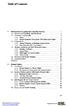 1 Introduction to Cryptography and Data Security 1 1.1 Overview of Cryptology (and This Book) 2 1.2 Symmetric Cryptography 4 1.2.1 Basics 4 1.2.2 Simple Symmetric Encryption: The Substitution Cipher...
Overview of Cryptographic Tools for Data Security. Murat Kantarcioglu
 UT DALLAS Erik Jonsson School of Engineering & Computer Science Overview of Cryptographic Tools for Data Security Murat Kantarcioglu Pag. 1 Purdue University Cryptographic Primitives We will discuss the
EXAM questions for the course TTM4135 - Information Security May 2013. Part 1
 EXAM questions for the course TTM4135 - Information Security May 2013 Part 1 This part consists of 5 questions all from one common topic. The number of maximal points for every correctly answered question
CIS 6930 Emerging Topics in Network Security. Topic 2. Network Security Primitives
 CIS 6930 Emerging Topics in Network Security Topic 2. Network Security Primitives 1 Outline Absolute basics Encryption/Decryption; Digital signatures; D-H key exchange; Hash functions; Application of hash
COSC4377. Chapter 8 roadmap
 Lecture 28 Chapter 8 roadmap 8.1 What is network security? 8.2 Principles of cryptography 8.3 Message integrity 8.4 Securing e mail 8.5 Securing TCP connections: SSL 8.6 Network layer security: IPsec 8.7
IT Networks & Security CERT Luncheon Series: Cryptography
 IT Networks & Security CERT Luncheon Series: Cryptography Presented by Addam Schroll, IT Security & Privacy Analyst 1 Outline History Terms & Definitions Symmetric and Asymmetric Algorithms Hashing PKI
CRYPTOGRAPHY IN NETWORK SECURITY
 ELE548 Research Essays CRYPTOGRAPHY IN NETWORK SECURITY AUTHOR: SHENGLI LI INSTRUCTOR: DR. JIEN-CHUNG LO Date: March 5, 1999 Computer network brings lots of great benefits and convenience to us. We can
Public Key Cryptography Overview
 Ch.20 Public-Key Cryptography and Message Authentication I will talk about it later in this class Final: Wen (5/13) 1630-1830 HOLM 248» give you a sample exam» Mostly similar to homeworks» no electronic
Network Security. Computer Networking Lecture 08. March 19, 2012. HKU SPACE Community College. HKU SPACE CC CN Lecture 08 1/23
 Network Security Computer Networking Lecture 08 HKU SPACE Community College March 19, 2012 HKU SPACE CC CN Lecture 08 1/23 Outline Introduction Cryptography Algorithms Secret Key Algorithm Message Digest
7! Cryptographic Techniques! A Brief Introduction
 7! Cryptographic Techniques! A Brief Introduction 7.1! Introduction to Cryptography! 7.2! Symmetric Encryption! 7.3! Asymmetric (Public-Key) Encryption! 7.4! Digital Signatures! 7.5! Public Key Infrastructures
Authentication requirement Authentication function MAC Hash function Security of
 UNIT 3 AUTHENTICATION Authentication requirement Authentication function MAC Hash function Security of hash function and MAC SHA HMAC CMAC Digital signature and authentication protocols DSS Slides Courtesy
Lecture 9: Application of Cryptography
 Lecture topics Cryptography basics Using SSL to secure communication links in J2EE programs Programmatic use of cryptography in Java Cryptography basics Encryption Transformation of data into a form that
CIS433/533 - Computer and Network Security Cryptography
 CIS433/533 - Computer and Network Security Cryptography Professor Kevin Butler Winter 2011 Computer and Information Science A historical moment Mary Queen of Scots is being held by Queen Elizabeth and
Network Security. Gaurav Naik Gus Anderson. College of Engineering. Drexel University, Philadelphia, PA. Drexel University. College of Engineering
 Network Security Gaurav Naik Gus Anderson, Philadelphia, PA Lectures on Network Security Feb 12 (Today!): Public Key Crypto, Hash Functions, Digital Signatures, and the Public Key Infrastructure Feb 14:
SECURITY IMPROVMENTS TO THE DIFFIE-HELLMAN SCHEMES
 www.arpapress.com/volumes/vol8issue1/ijrras_8_1_10.pdf SECURITY IMPROVMENTS TO THE DIFFIE-HELLMAN SCHEMES Malek Jakob Kakish Amman Arab University, Department of Computer Information Systems, P.O.Box 2234,
CSCE 465 Computer & Network Security
 CSCE 465 Computer & Network Security Instructor: Dr. Guofei Gu http://courses.cse.tamu.edu/guofei/csce465/ Public Key Cryptogrophy 1 Roadmap Introduction RSA Diffie-Hellman Key Exchange Public key and
1720 - Forward Secrecy: How to Secure SSL from Attacks by Government Agencies
 1720 - Forward Secrecy: How to Secure SSL from Attacks by Government Agencies Dave Corbett Technical Product Manager Implementing Forward Secrecy 1 Agenda Part 1: Introduction Why is Forward Secrecy important?
The Mathematics of the RSA Public-Key Cryptosystem
 The Mathematics of the RSA Public-Key Cryptosystem Burt Kaliski RSA Laboratories ABOUT THE AUTHOR: Dr Burt Kaliski is a computer scientist whose involvement with the security industry has been through
Network Security. Security Attacks. Normal flow: Interruption: 孫 宏 民 [email protected] Phone: 03-5742968 國 立 清 華 大 學 資 訊 工 程 系 資 訊 安 全 實 驗 室
 Network Security 孫 宏 民 [email protected] Phone: 03-5742968 國 立 清 華 大 學 資 訊 工 程 系 資 訊 安 全 實 驗 室 Security Attacks Normal flow: sender receiver Interruption: Information source Information destination
Computer Security: Principles and Practice
 Computer Security: Principles and Practice Chapter 20 Public-Key Cryptography and Message Authentication First Edition by William Stallings and Lawrie Brown Lecture slides by Lawrie Brown Public-Key Cryptography
Lukasz Pater CMMS Administrator and Developer
 Lukasz Pater CMMS Administrator and Developer EDMS 1373428 Agenda Introduction Why do we need asymmetric ciphers? One-way functions RSA Cipher Message Integrity Examples Secure Socket Layer Single Sign
SECURITY IN NETWORKS
 SECURITY IN NETWORKS GOALS Understand principles of network security: Cryptography and its many uses beyond confidentiality Authentication Message integrity Security in practice: Security in application,
Common Pitfalls in Cryptography for Software Developers. OWASP AppSec Israel July 2006. The OWASP Foundation http://www.owasp.org/
 Common Pitfalls in Cryptography for Software Developers OWASP AppSec Israel July 2006 Shay Zalalichin, CISSP AppSec Division Manager, Comsec Consulting [email protected] Copyright 2006 - The OWASP
Cryptography: Motivation. Data Structures and Algorithms Cryptography. Secret Writing Methods. Many areas have sensitive information, e.g.
 Cryptography: Motivation Many areas have sensitive information, e.g. Data Structures and Algorithms Cryptography Goodrich & Tamassia Sections 3.1.3 & 3.1.4 Introduction Simple Methods Asymmetric methods:
Final Exam. IT 4823 Information Security Administration. Rescheduling Final Exams. Kerberos. Idea. Ticket
 IT 4823 Information Security Administration Public Key Encryption Revisited April 5 Notice: This session is being recorded. Lecture slides prepared by Dr Lawrie Brown for Computer Security: Principles
Network Security. Abusayeed Saifullah. CS 5600 Computer Networks. These slides are adapted from Kurose and Ross 8-1
 Network Security Abusayeed Saifullah CS 5600 Computer Networks These slides are adapted from Kurose and Ross 8-1 Goals v understand principles of network security: cryptography and its many uses beyond
Chapter 11 Security+ Guide to Network Security Fundamentals, Third Edition Basic Cryptography
 Chapter 11 Security+ Guide to Network Security Fundamentals, Third Edition Basic Cryptography What Is Steganography? Steganography Process of hiding the existence of the data within another file Example:
Overview of Public-Key Cryptography
 CS 361S Overview of Public-Key Cryptography Vitaly Shmatikov slide 1 Reading Assignment Kaufman 6.1-6 slide 2 Public-Key Cryptography public key public key? private key Alice Bob Given: Everybody knows
Dr. Jinyuan (Stella) Sun Dept. of Electrical Engineering and Computer Science University of Tennessee Fall 2010
 CS 494/594 Computer and Network Security Dr. Jinyuan (Stella) Sun Dept. of Electrical Engineering and Computer Science University of Tennessee Fall 2010 1 Introduction to Cryptography What is cryptography?
Network Security - ISA 656 Introduction to Cryptography
 Network Security - ISA 656 Angelos Stavrou September 18, 2007 Codes vs. K = {0, 1} l P = {0, 1} m C = {0, 1} n, C C E : P K C D : C K P p P, k K : D(E(p, k), k) = p It is infeasible to find F : P C K Let
Network Security. Chapter 3 Symmetric Cryptography. Symmetric Encryption. Modes of Encryption. Symmetric Block Ciphers - Modes of Encryption ECB (1)
 Chair for Network Architectures and Services Department of Informatics TU München Prof. Carle Network Security Chapter 3 Symmetric Cryptography General Description Modes of ion Data ion Standard (DES)
Lecture 6 - Cryptography
 Lecture 6 - Cryptography CSE497b - Spring 2007 Introduction Computer and Network Security Professor Jaeger www.cse.psu.edu/~tjaeger/cse497b-s07 Question 2 Setup: Assume you and I don t know anything about
Security. Contents. S-72.3240 Wireless Personal, Local, Metropolitan, and Wide Area Networks 1
 Contents Security requirements Public key cryptography Key agreement/transport schemes Man-in-the-middle attack vulnerability Encryption. digital signature, hash, certification Complete security solutions
CS 758: Cryptography / Network Security
 CS 758: Cryptography / Network Security offered in the Fall Semester, 2003, by Doug Stinson my office: DC 3122 my email address: [email protected] my web page: http://cacr.math.uwaterloo.ca/~dstinson/index.html
How To Encrypt With A 64 Bit Block Cipher
 The Data Encryption Standard (DES) As mentioned earlier there are two main types of cryptography in use today - symmetric or secret key cryptography and asymmetric or public key cryptography. Symmetric
Public Key (asymmetric) Cryptography
 Public-Key Cryptography UNIVERSITA DEGLI STUDI DI PARMA Dipartimento di Ingegneria dell Informazione Public Key (asymmetric) Cryptography Luca Veltri (mail.to: [email protected]) Course of Network Security,
Cryptography and Network Security
 Cryptography and Network Security Fifth Edition by William Stallings Chapter 9 Public Key Cryptography and RSA Private-Key Cryptography traditional private/secret/single key cryptography uses one key shared
Network Security (2) CPSC 441 Department of Computer Science University of Calgary
 Network Security (2) CPSC 441 Department of Computer Science University of Calgary 1 Friends and enemies: Alice, Bob, Trudy well-known in network security world Bob, Alice (lovers!) want to communicate
Chapter 10. Network Security
 Chapter 10 Network Security 10.1. Chapter 10: Outline 10.1 INTRODUCTION 10.2 CONFIDENTIALITY 10.3 OTHER ASPECTS OF SECURITY 10.4 INTERNET SECURITY 10.5 FIREWALLS 10.2 Chapter 10: Objective We introduce
Network Security. HIT Shimrit Tzur-David
 Network Security HIT Shimrit Tzur-David 1 Goals: 2 Network Security Understand principles of network security: cryptography and its many uses beyond confidentiality authentication message integrity key
Chapter 7: Network security
 Chapter 7: Network security Foundations: what is security? cryptography authentication message integrity key distribution and certification Security in practice: application layer: secure e-mail transport
Network Security [2] Plain text Encryption algorithm Public and private key pair Cipher text Decryption algorithm. See next slide
![Network Security [2] Plain text Encryption algorithm Public and private key pair Cipher text Decryption algorithm. See next slide](/thumbs/24/4351346.jpg "Network Security [2] Plain text Encryption algorithm Public and private key pair Cipher text Decryption algorithm. See next slide") Network Security [2] Public Key Encryption Also used in message authentication & key distribution Based on mathematical algorithms, not only on operations over bit patterns (as conventional) => much overhead
Network Security [2] Public Key Encryption Also used in message authentication & key distribution Based on mathematical algorithms, not only on operations over bit patterns (as conventional) => much overhead
Secure Sockets Layer (SSL ) / Transport Layer Security (TLS) Network Security Products S31213
 Secure Sockets Layer (SSL ) / Transport Layer Security (TLS) Network Security Products S31213 UNCLASSIFIED Example http ://www. greatstuf f. com Wants credit card number ^ Look at lock on browser Use https
Chapter 8. Cryptography Symmetric-Key Algorithms. Digital Signatures Management of Public Keys Communication Security Authentication Protocols
 Network Security Chapter 8 Cryptography Symmetric-Key Algorithms Public-Key Algorithms Digital Signatures Management of Public Keys Communication Security Authentication Protocols Email Security Web Security
Lecture 9 - Network Security TDTS41-2006 (ht1)
 Lecture 9 - Network Security TDTS41-2006 (ht1) Prof. Dr. Christoph Schuba Linköpings University/IDA [email protected] Reading: Office hours: [Hal05] 10.1-10.2.3; 10.2.5-10.7.1; 10.8.1 9-10am on Oct. 4+5,
Chapter 8. Network Security
 Chapter 8 Network Security Cryptography Introduction to Cryptography Substitution Ciphers Transposition Ciphers One-Time Pads Two Fundamental Cryptographic Principles Need for Security Some people who
Message Authentication
 Message Authentication message authentication is concerned with: protecting the integrity of a message validating identity of originator non-repudiation of origin (dispute resolution) will consider the
SAMPLE EXAM QUESTIONS MODULE EE5552 NETWORK SECURITY AND ENCRYPTION ECE, SCHOOL OF ENGINEERING AND DESIGN BRUNEL UNIVERSITY UXBRIDGE MIDDLESEX, UK
 SAMPLE EXAM QUESTIONS MODULE EE5552 NETWORK SECURITY AND ENCRYPTION September 2010 (reviewed September 2014) ECE, SCHOOL OF ENGINEERING AND DESIGN BRUNEL UNIVERSITY UXBRIDGE MIDDLESEX, UK NETWORK SECURITY
Outline. Computer Science 418. Digital Signatures: Observations. Digital Signatures: Definition. Definition 1 (Digital signature) Digital Signatures
 Outline Computer Science 418 Digital Signatures Mike Jacobson Department of Computer Science University of Calgary Week 12 1 Digital Signatures 2 Signatures via Public Key Cryptosystems 3 Provable 4 Mike
Message Authentication Codes
 2 MAC Message Authentication Codes : and Cryptography Sirindhorn International Institute of Technology Thammasat University Prepared by Steven Gordon on 28 October 2013 css322y13s2l08, Steve/Courses/2013/s2/css322/lectures/mac.tex,
The Misuse of RC4 in Microsoft Word and Excel
 The Misuse of RC4 in Microsoft Word and Excel Hongjun Wu Institute for Infocomm Research, Singapore [email protected] Abstract. In this report, we point out a serious security flaw in Microsoft
Introduction to Cryptography
 Introduction to Cryptography Part 3: real world applications Jean-Sébastien Coron January 2007 Public-key encryption BOB ALICE Insecure M E C C D channel M Alice s public-key Alice s private-key Authentication
CSCI-E46: Applied Network Security. Class 1: Introduction Cryptography Primer 1/26/16 CSCI-E46: APPLIED NETWORK SECURITY, SPRING 2016 1
 CSCI-E46: Applied Network Security Class 1: Introduction Cryptography Primer 1/26/16 CSCI-E46: APPLIED NETWORK SECURITY, SPRING 2016 1 Welcome to CSCI-E46 Classroom & Schedule 53 Church Street L01 Wednesdays,
Cryptographic Hash Functions Message Authentication Digital Signatures
 Cryptographic Hash Functions Message Authentication Digital Signatures Abstract We will discuss Cryptographic hash functions Message authentication codes HMAC and CBC-MAC Digital signatures 2 Encryption/Decryption
Notes on Network Security Prof. Hemant K. Soni
 Chapter 9 Public Key Cryptography and RSA Private-Key Cryptography traditional private/secret/single key cryptography uses one key shared by both sender and receiver if this key is disclosed communications
Cryptographic hash functions and MACs Solved Exercises for Cryptographic Hash Functions and MACs
 Cryptographic hash functions and MACs Solved Exercises for Cryptographic Hash Functions and MACs Enes Pasalic University of Primorska Koper, 2014 Contents 1 Preface 3 2 Problems 4 2 1 Preface This is a
AN IMPLEMENTATION OF HYBRID ENCRYPTION-DECRYPTION (RSA WITH AES AND SHA256) FOR USE IN DATA EXCHANGE BETWEEN CLIENT APPLICATIONS AND WEB SERVICES
 HYBRID RSA-AES ENCRYPTION FOR WEB SERVICES AN IMPLEMENTATION OF HYBRID ENCRYPTION-DECRYPTION (RSA WITH AES AND SHA256) FOR USE IN DATA EXCHANGE BETWEEN CLIENT APPLICATIONS AND WEB SERVICES Kalyani Ganesh
Network Security. Chapter 2 Basics 2.2 Public Key Cryptography. Public Key Cryptography. Public Key Cryptography
 Chair for Network Architectures and Services Department of Informatics TU München Prof. Carle Encryption/Decryption using Public Key Cryptography Network Security Chapter 2 Basics 2.2 Public Key Cryptography
lundi 1 octobre 2012 In a set of N elements, by picking at random N elements, we have with high probability a collision two elements are equal
 Symmetric Crypto Pierre-Alain Fouque Birthday Paradox In a set of N elements, by picking at random N elements, we have with high probability a collision two elements are equal N=365, about 23 people are
Network Security. Omer Rana
 Network Security Omer Rana CM0255 Material from: Cryptography Components Sender Receiver Plaintext Encryption Ciphertext Decryption Plaintext Encryption algorithm: Plaintext Ciphertext Cipher: encryption
What is network security?
 Network security Network Security Srinidhi Varadarajan Foundations: what is security? cryptography authentication message integrity key distribution and certification Security in practice: application
CRYPTOGRAPHY AND NETWORK SECURITY
 CRYPTOGRAPHY AND NETWORK SECURITY PRINCIPLES AND PRACTICE SIXTH EDITION William Stallings International Edition contributions by Mohit P Tahiliani NITK Surathkal PEARSON Boston Columbus Indianapolis New
HASH CODE BASED SECURITY IN CLOUD COMPUTING
 ABSTRACT HASH CODE BASED SECURITY IN CLOUD COMPUTING Kaleem Ur Rehman M.Tech student (CSE), College of Engineering, TMU Moradabad (India) The Hash functions describe as a phenomenon of information security
Message Authentication Codes. Lecture Outline
 Message Authentication Codes Murat Kantarcioglu Based on Prof. Ninghui Li s Slides Message Authentication Code Lecture Outline 1 Limitation of Using Hash Functions for Authentication Require an authentic
Cryptography & Digital Signatures
 Cryptography & Digital Signatures CS 594 Special Topics/Kent Law School: Computer and Network Privacy and Security: Ethical, Legal, and Technical Consideration Prof. Sloan s Slides, 2007, 2008 Robert H.
Cryptography and Network Security Chapter 9
 Cryptography and Network Security Chapter 9 Fifth Edition by William Stallings Lecture slides by Lawrie Brown (with edits by RHB) Chapter 9 Public Key Cryptography and RSA Every Egyptian received two names,
Three attacks in SSL protocol and their solutions
 Three attacks in SSL protocol and their solutions Hong lei Zhang Department of Computer Science The University of Auckland [email protected] Abstract Secure Socket Layer (SSL) and Transport Layer
Introduction to Computer Security
 Introduction to Computer Security Hash Functions and Digital Signatures Pavel Laskov Wilhelm Schickard Institute for Computer Science Integrity objective in a wide sense Reliability Transmission errors
Secure Network Communication Part II II Public Key Cryptography. Public Key Cryptography
 Kommunikationssysteme (KSy) - Block 8 Secure Network Communication Part II II Public Key Cryptography Dr. Andreas Steffen 2000-2001 A. Steffen, 28.03.2001, KSy_RSA.ppt 1 Secure Key Distribution Problem
Network Security. Modes of Operation. Steven M. Bellovin February 3, 2009 1
 Modes of Operation Steven M. Bellovin February 3, 2009 1 Using Cryptography As we ve already seen, using cryptography properly is not easy Many pitfalls! Errors in use can lead to very easy attacks You
Cryptography and Network Security
 Cryptography and Network Security Spring 2012 http://users.abo.fi/ipetre/crypto/ Lecture 9: Authentication protocols, digital signatures Ion Petre Department of IT, Åbo Akademi University 1 Overview of
Security. Friends and Enemies. Overview Plaintext Cryptography functions. Secret Key (DES) Symmetric Key
 Friends and Enemies Security Outline Encryption lgorithms Protocols Message Integrity Protocols Key Distribution Firewalls Figure 7.1 goes here ob, lice want to communicate securely Trudy, the intruder
How To Understand And Understand The History Of Cryptography
 CSE497b Introduction to Computer and Network Security - Spring 2007 - Professors Jaeger Lecture 5 - Cryptography CSE497b - Spring 2007 Introduction Computer and Network Security Professor Jaeger www.cse.psu.edu/~tjaeger/cse497b-s07/
EXAM questions for the course TTM4135 - Information Security June 2010. Part 1
 EXAM questions for the course TTM4135 - Information Security June 2010 Part 1 This part consists of 6 questions all from one common topic. The number of maximal points for every correctly answered question
Massachusetts Institute of Technology Handout 13 6.857: Network and Computer Security October 9, 2003 Professor Ronald L. Rivest.
 Massachusetts Institute of Technology Handout 13 6.857: Network and Computer Security October 9, 2003 Professor Ronald L. Rivest Quiz 1 1. This quiz is intended to provide a fair measure of your understanding
Network Security. Abusayeed Saifullah. CS 5600 Computer Networks. These slides are adapted from Kurose and Ross 8-1
 Network Security Abusayeed Saifullah CS 5600 Computer Networks These slides are adapted from Kurose and Ross 8-1 Public Key Cryptography symmetric key crypto v requires sender, receiver know shared secret
, ) I Transport Layer Security
 Secure Sockets Layer (SSL, ) I Transport Layer Security _ + (TLS) Network Security Products S31213 UNCLASSIFIED Location of SSL -L Protocols TCP Ethernet IP SSL Header Encrypted SSL data= HTTP " Independent
AC76/AT76 CRYPTOGRAPHY & NETWORK SECURITY DEC 2014
 Q.2a. Define Virus. What are the four phases of Viruses? In addition, list out the types of Viruses. A virus is a piece of software that can infect other programs by modifying them; the modification includes
Overview. SSL Cryptography Overview CHAPTER 1
 CHAPTER 1 Note The information in this chapter applies to both the ACE module and the ACE appliance unless otherwise noted. The features in this chapter apply to IPv4 and IPv6 unless otherwise noted. Secure
Overview of Symmetric Encryption
 CS 361S Overview of Symmetric Encryption Vitaly Shmatikov Reading Assignment Read Kaufman 2.1-4 and 4.2 slide 2 Basic Problem ----- ----- -----? Given: both parties already know the same secret Goal: send
Cryptography and Network Security Chapter 10
 Cryptography and Network Security Chapter 10 Fifth Edition by William Stallings Lecture slides by Lawrie Brown (with edits by RHB) Chapter 10 Other Public Key Cryptosystems Amongst the tribes of Central
Key Hopping A Security Enhancement Scheme for IEEE 802.11 WEP Standards
 White Paper Key Hopping A Security Enhancement Scheme for IEEE 802.11 WEP Standards By Dr. Wen-Ping Ying, Director of Software Development, February 2002 Introduction Wireless LAN networking allows the
Authentication, digital signatures, PRNG
 Multimedia Security Authentication, digital signatures, PRNG Mauro Barni University of Siena Beyond confidentiality Up to now, we have been concerned with protecting message content (i.e. confidentiality)
Evaluation of Digital Signature Process
 Evaluation of Digital Signature Process Emil SIMION, Ph. D. email: [email protected] Agenda Evaluation of digital signatures schemes: evaluation criteria; security evaluation; security of hash functions;
Symmetric Key cryptosystem
 SFWR C03: Computer Networks and Computer Security Mar 8-11 200 Lecturer: Kartik Krishnan Lectures 22-2 Symmetric Key cryptosystem Symmetric encryption, also referred to as conventional encryption or single
CS3235 - Computer Security Third topic: Crypto Support Sys
 Systems used with cryptography CS3235 - Computer Security Third topic: Crypto Support Systems National University of Singapore School of Computing (Some slides drawn from Lawrie Brown s, with permission)
Lecture 4 Data Encryption Standard (DES)
 Lecture 4 Data Encryption Standard (DES) 1 Block Ciphers Map n-bit plaintext blocks to n-bit ciphertext blocks (n = block length). For n-bit plaintext and ciphertext blocks and a fixed key, the encryption
Overview of CSS SSL. SSL Cryptography Overview CHAPTER
 CHAPTER 1 Secure Sockets Layer (SSL) is an application-level protocol that provides encryption technology for the Internet, ensuring secure transactions such as the transmission of credit card numbers
Cryptography and Network Security Chapter 12
 Cryptography and Network Security Chapter 12 Fifth Edition by William Stallings Lecture slides by Lawrie Brown (with edits by RHB) Chapter 12 Message Authentication Codes At cats' green on the Sunday he
CSE/EE 461 Lecture 23
 CSE/EE 461 Lecture 23 Network Security David Wetherall [email protected] Last Time Naming Application Presentation How do we name hosts etc.? Session Transport Network Domain Name System (DNS) Data
Properties of Secure Network Communication
 Properties of Secure Network Communication Secrecy: Only the sender and intended receiver should be able to understand the contents of the transmitted message. Because eavesdroppers may intercept the message,
Ky Vu DeVry University, Atlanta Georgia College of Arts & Science
 Ky Vu DeVry University, Atlanta Georgia College of Arts & Science Table of Contents - Objective - Cryptography: An Overview - Symmetric Key - Asymmetric Key - Transparent Key: A Paradigm Shift - Security
Cryptography Lecture 8. Digital signatures, hash functions
 Cryptography Lecture 8 Digital signatures, hash functions A Message Authentication Code is what you get from symmetric cryptography A MAC is used to prevent Eve from creating a new message and inserting
Message authentication and. digital signatures
 Message authentication and " Message authentication digital signatures verify that the message is from the right sender, and not modified (incl message sequence) " Digital signatures in addition, non!repudiation
Cryptography & Network Security
 Cryptography & Network Security Lecture 1: Introduction & Overview 2002. 3. 27 [email protected] Common Terms(1) Cryptography: The study of mathematical techniques related to aspects of information security
CS155. Cryptography Overview
 CS155 Cryptography Overview Cryptography Is n A tremendous tool n The basis for many security mechanisms Is not n The solution to all security problems n Reliable unless implemented properly n Reliable
Cryptography and Network Security
 Cryptography and Network Security Spring 2012 http://users.abo.fi/ipetre/crypto/ Lecture 3: Block ciphers and DES Ion Petre Department of IT, Åbo Akademi University January 17, 2012 1 Data Encryption Standard