
SeaTac - Tukwila Food Innovation Network (FIN)
|
|
|
- Lynne Harvey
- 10 years ago
- Views:
Transcription
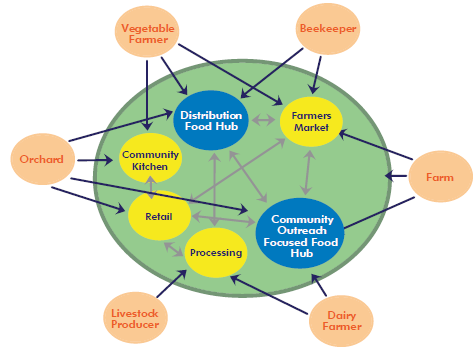
1 SeaTac - Tukwila Food Innovation Network (FIN) What is the Food Innovation Network (FIN)? The Food Innovation Network is a governance structure for accomplishing the goal of promoting increased local food sector investment and employment opportunities through the coordinated collaboration of community organizations, businesses, education institutions and local government. A key strategy for this network is to develop a Food Innovation District, or a food business cluster, in the SeaTac - Tukwila area. We will anchor the district with a multipurpose facility that includes a commercial kitchen to serve as a culinary incubator for foodrelated businesses and to offer training, consulting and support to low-income community members interested in starting their own food-related businesses. The kitchen space will serve as a food incubator program for catering or small-scale food processing, training space for culinary arts programs, and community cooking space for community members or not-for-profit agencies. The educational spaces will be programmed by the community college system or other post-secondary educational partners to provide classes in the technical aspects of food delivery, preparation, production, nutrition, ESL and business skills classes, and other postsecondary degree offerings. Workforce development training opportunities will be developed and coordinated with food service, manufacturers, distributors and other food-related business located in or near the district. Service agencies supporting immigrant services, resume writing, job skills, small business development, and child care will be co-located in the district to provide a comprehensive program offering nearby. Figure 1 A food innovation district (see Figure 1) is a geographic concentration of food-oriented businesses, services, and community activities that local governments support through Adapted from Regional Food Solution s Food Innovation Districts: An Economic Gardening Tool (2013) April 2014 Page 1

2 planning and economic development initiatives in order to promote a positive business environment, spur regional food system development, and increase access to local food. 1 A district could include a food hub facility 2 as an anchor for producers, and it can attract food manufacturers, suppliers, buyers and programs that serve the community and make the district an attractive destination point. A district s business-oriented elements, which can include infrastructure such as processing facilities and commissary kitchens, for example, also often serve community-oriented elements such as nutrition education and community kitchens. Similarly a food innovation district s place-oriented elements, such as restaurants and foodrelated events (e.g. farmers markets), benefit from and support the local food producers and community activity that districts bring together. 3 Why does it matter? The SeaTac-Tukwila area is one of the nation s most diverse communities in terms of country-oforigin and socioeconomic circumstance. There are more than 70 distinct linguistic groups represented in the area and residents include political refugees seeking asylum, secondgeneration immigrants, and longtime residents. Communication and effective translation barriers exacerbate challenges around education, employment, and health access. These cities have twice as many people (39%) living below the federal poverty line and higher mortality rates than the rest of King County, with over 90% of students on free and/or reduced lunch. This community lacks access to healthy food; obesity affects a quarter of the residents. The population experiences 1.5 times the number of diabetes-related deaths as compared to the County average, and 1.2 times the rate of heart disease. The food industry is a key area in which we can make headway in enterprise and job development and training, providing economic opportunities for the community and a trained workforce, as well as access to healthy foods. Food hubs offer local farmers increased access to a range of local market streams. While more of this kind of regional infrastructure is certainly needed across the country, careful assessment of the demand of the regional agricultural economy is recommended to determine what kind of food hub would serve the community well. Much of the work around food sector development has been focused on local farmers and direct sales through farmers markets, CSAs and the like. In the SeaTac-Tukwila area, attention has grown toward providing opportunities to urban food producers, processors and other 1 (Cantrell, 2013) 2 Food hub facilities provide a space for local producers to aggregate and distribute their goods and typically allow producers to use shared resources for some light processing (e.g. washing, cooling, re-packaging produce), for transportation needs, and for marketing local goods. As a stand-alone project, the food hub facility offers important support for producers looking to reach new markets. 3 (Cantrell, 2013) April 2014 Page 2

3 retailers as well. The food processing and service sectors provide opportunities for entrepreneurs, especially in immigrant communities searching for culturally appropriate food products. Mobile food trucks, home-based bakers, and produce distributors serving specialized markets are all examples of food entrepreneurs with potential to expand their business and support or supplement their household income. The food innovation district aims to meet the local demand for more food-oriented development, using a culinary incubator and a complementary supply chain as the anchors. Engaging a range of stakeholders from institutional buyers, distributors and processors will help identify and facilitate workforce training and employment opportunities. Additionally, self-employment and small-scale entrepreneurship complement more traditional job training as a pathway to economic self-sufficiency in poverty communities. The food sector offers a particularly appealing and accessible economic opportunity given the importance of food from cultural, social and health promotion perspectives. A food entrepreneurship program with access to commercial kitchen facilities would enable us to offer to traditionally underserved communities meaningful, affordable and accessible industry-specific support to this growing industry cluster. A successful food innovation district would create a business cluster environment that spurs local and regional food system development and economic self-sufficiency while improving access to fresh, local food in a community with clear interest and deep cultural and culinary assets to contribute. The SeaTac-Tukwila Food Innovation Network is developing in order to reach the following goals and objectives: Goal 1: Create a business environment that spurs regional food sector development Objective: To increase investments and technical support for food system enterprises. Possible Indicators: 4 Number and type of food sector and business training programs (FIN members) Number of borrowers (for food-related establishments) from community lenders Allocation of grant funds or other economic incentives (FIN members) Number/percentage of people employed within job categories or supply chain segment Employment/unemployment rates within a given area Average daily/hourly wages by job category 4 Indicators in bold are recommended as most feasible to implement. April 2014 Page 3

4 Number of city offices a food business needs to seek approvals from to launch and keep business open Number of agencies working across multiple sectors with a multi-sector approach Increased economic activity and market access for small- and mid-sized producers Local food procurement (from SeaTac-Tukwila establishments) by institutional buyers Annual capital investment in food sector Number, square footage, product value of supply chain facilities Goal 2: Support economic self-sufficiency within the community Objective: To increase the number of establishments and livable wage jobs in the food system in SeaTac and Tukwila. Possible Indicators: Number of individuals who participate in food-related business training (FIN members) Growth in number of businesses still open after 3 years, 5 years (Public Health Seattle & King County; WSDA) Number of food system jobs (US Economic Census) Skill level and wage profile of jobs created Rise in household income Median wage by food enterprise compared to city Total wages to the community Number of full time/part time jobs created Potential for advancement within sector Number of food system establishments and annual growth Growth in net revenue for businesses Failure rate of locally owned businesses working in cluster Number of unemployed trainees placed Income to urban producers Goal 3: Improve access to fresh, local food where there is a disproportionately high incidence of chronic, diet-related disease Objective: To decrease the number of new cases of diabetes and the percentage of SeaTac- Tukwila residents considered obese and overweight. Possible Indicators: Rate of decline in diabetes and adult and child obesity rates in SeaTac and Tukwila (Public Health Seattle & King County) April 2014 Page 4

5 # of farmers markets, produce stands and other fresh food retailers (WA State Department of Social and Human Services) #/% retailers accepting SNAP and WIC benefits (WA State Department of Health and Department of Social and Human Services) Number and reach of nutrition education (FIN members) Change in Retail Food Environment Index (compares unhealthy to healthy food establishment) Measure of food insecurity for a given region (number of households/individuals enrolled in SNAP, WIC, free/reduced school lunch, summer lunch program, food banks, etc.) Increased articulation and understanding health-related outcomes. Retail square footage dedicated to healthy and/or local food Availability of healthy food, distance to grocery store, cost of getting to grocery store Who is involved and what are the roles? FIN provides a governance structure for the coordinated collaboration of community organizations, businesses, education institutions and local government. The network governance model developed by Re-Amp prioritizes the principles and values of shared responsibility, shared accountability, and distributed ownership of the work. For this effort to be successful it is vital that participants understand the need for collaborative energy focused on the broad vision for food systems change that this work is bigger than any one organization can manage on its own. The goal is to accelerate the pace of change by participating as network members, rather than as individual organizations focused on our own priorities. The proposed structure for the network is outlined below. Steering committee Provides overall guidance on network activities, convenes network members, advocates for change, identifies gaps in strategies, and develops processes for learning and for network organizing, reviews metrics, assists with fundraising. Working groups All network implementation efforts are coordinated through these groups, which focus on specific topics. Each working group takes responsibility for a set of goals, strategies and indicators to further develop, implement and monitor. Working groups also manage the data research needs that are identified for their areas of work. Network members Function as the boots on the ground and are responsible for implementing the strategies of the plan. Members agree to actively participate in at least one working group by sharing information, connecting to partners, developing project ideas, implementing projects, reporting on success and on metrics. They maintain their own organizational autonomy and are responsible for their own organizational needs. April 2014 Page 5

6 Network coordinator (currently Urban Food Link) Provides administrative support, communications support, convener/connector, coordinate information and referral to resources, report to steering committee, assists with fundraising. Figure 2 provides a list of organizations and agencies currently involved. Figure 2 Current Network Partners: Global to Local Bainbridge Graduate Institute City of SeaTac City of SeaTac What will the FIN do? City of Tukwila The network provides a space for members to connect, build partnerships, and strategically work together. To achieve the identified goals the network will help coordinate and support the following areas of work (see Figure 2) that are ultimately being carried out by organizations, businesses and government agencies: Community engagement ensure efforts are guided by community interests and needs and actively involve community participation. Health education and outreach ensure health-related resources, information and training are coordinated with FIN activities. Finance opportunities identify and develop a suite of finance opportunities (e.g. micro-loans, loans, lending circles, credit lines) for entrepreneurs, businesses scaling up and facility development. Food enterprise formation development and provision of resources and training for residents interested in operating a food-related business. Resources/training designed to address the unique needs of food sector operations (e.g. processing, distribution, retail, restaurant, catering, etc.) as well as a wide range of training levels (e.g. orientation, business plan development, scaling-up, etc.). General business support and training development and provision of resources and training for residents in need of a broad range of business development needs such as bookkeeping, tax/legal issues, ESL, marketing, soft skill training, etc. These services are not necessarily designed specifically for food-related businesses but are key for overall business stability. Current efforts are led by education institutions and business training/counseling organizations. Global to Local Lifelong Aids Alliance Northwest Agriculture Business Center Public Health - Seattle & King County Swedish Health Services Urban Food Link April 2014 Page 6
7 Workforce development coordinate, develop and implement workforce development opportunities in the food sector with local employers. Efforts can be coordinated with other training opportunities such as soft skills, ESL, etc. Supply chain development assess needs producers, processors and buyers and develop appropriate market channels. Local policy and regulatory support development and adoption of policies to support the formation of food enterprise district. This includes addressing potential regulatory barriers or implementing economic development incentives to spur to development. Relevant policies include city Comprehensive Plans, municipal zoning ordinances, and food safety regulations. The current phase of the project will largely focus on the formalizing the network itself and facilitating potential projects among the network members. The network infrastructure development tasks include: Infrastructure develop a workplan and network charter (vision, goals, roles/responsibilities, etc.); develop methods to track progress and overall network coordination Communications connect/convene partners to achieve goals and launch projects and develop communication plan and tools (i.e. listserv, talking points) Funding/financing assist with identifying funding and lending sources to implement the FIN workplan and launch projects. Research and Evaluation determine common metrics that will be used for evaluation of network progress; identify research needs and tracking methods Projects - identify potential projects and assist in catalyzing conversations among stakeholders How will the FIN do it? The members of this network will foster trust and accountability by weaving connections through their personal and business relationships. We will identify a shared platform that allows the network to communicate and track progress. We will connect resources to catalyze and spread innovation. The network will form a dense core of connections among people and organizations that have a shared purpose, and actively cultivate new connections to extend reach and influence and to foster innovation. April 2014 Page 7

8 This group, with support from Urban Food Link, will take on the responsibilities of filtering, processing and managing knowledge for the members. The network members will share responsibility for: Promoting dialogue, exchange, and learning among members; Shaping the agenda by amplifying little-known or little-understood ideas for the public; Convening organizations or people; Facilitating action by members and addressing global problems through knowledge of their local, national, and regional contexts; Building community by promoting and sustaining the values and standards of the group of individuals or organizations within it; Mobilizing and rationalizing the use of resources for members to carry out their activities; and/or Strengthening international consciousness, commitment, and solidarity. Figure 3 April 2014 Page 8

STATEMENT OF POLICY. Healthy Food Access
 13-04 STATEMENT OF POLICY Healthy Food Access Policy Many residents of urban and rural areas lack access to healthy foods within their communities. Inadequate healthy food sources have perpetuated chronic
GROWING MICHIGAN S GOOD FOOD FUTURE.
 GROWING MICHIGAN S GOOD FOOD FUTURE. AN INVESTMENT IN GOOD FOOD IS AN INVESTMENT IN MICHIGAN S FUTURE. Twenty percent of U.S. households struggle to feed their families healthy foods. In Michigan alone,
Attachment 1. Principles, Priorities, and Actions for Economic Renewal and Development for the City of Seattle
 Attachment 1 Principles, Priorities, and Actions for Economic Renewal and Development for the City of Seattle Quality of Life A livable city requires that we retain and improve the character of Seattle,
How To Help Small Businesses In North Carolina
 STATE SUPPORT FOR SMALL BUSINESS LENDING: A Roadmap for North Carolina October 2014 Introduction Small businesses are the economic engines of our state and local communities. In North Carolina, businesses
Baltimore Food Policy Initiative: A Catalyst to Address Health, Economic and Environmental Disparities
 Baltimore Food Policy Initiative: A Catalyst to Address Health, Economic and Environmental Disparities Mayor Stephanie Rawlings-Blake Baltimore City [email protected] August 29 th, 2014 Baltimore
Austin s Sustainable Food System
 Austin s Sustainable Food System State of the Food System Report Purpose: Educate Snapshot of current food system Identifies trends Easily understood highly graphic Links to existing goals Imagine Austin/
NEW YORK. New York Service Sites
 NEW YORK Below you will find detailed descriptions of all of the service sites located in this state. Each description includes details about the community where the service site is based, the overall
Race and Social Justice Initiative (RSJI) in the Budget
 (RSJI) in the Budget Introduction This chapter provides background and context for Race and Social Justice Initiative (RSJI) related budget additions throughout the 2015-2016 Proposed Budget. This is an
Proposal for Supplemental Nutrition Assistance Program Nutrition Education (SNAP-Ed) in Menominee and Shawano Counties during Fiscal Year 2014
 Proposal for Supplemental Nutrition Assistance Program Nutrition Education (SNAP-Ed) in Menominee and Shawano Counties during Fiscal Year 2014 Overview of Supplemental Nutrition Assistance Program Nutrition
An Equity Profile of the Kansas City Region. Summary. Overview. The Equity Indicators Framework. central to the region s economic success now and
 An Equity Profile of the Kansas City Region PolicyLink and PERE An Equity Profile of the Kansas City Region Summary Overview Across the country, regional planning organizations, community organizations
Market Ventures, Inc. Consulting / Development / Operations
 Hartford Regional Market Master Plan Overview Presentation to GCAD Town Hall Meeting January 29, 2014 Market Ventures, Inc. Consulting / Development / Operations National consultants on wholesale and retail
Know Your Farmer, Know Your Food (KYF2) Regional Food Hub Subcommittee
 Know Your Farmer, Know Your Food (KYF2) Regional Food Hub Subcommittee Presentation Overview Regional Food Hubs Definition & Core Components Two Food Hub Examples (Urban and Rural) Lessons Learned So Far
Good Food for Early Care and Education
 Good Food for Early Care and Education Diane Harris, Ph.D., M.P.H., C.H.E.S. Health Scientist and Team Lead, Healthy Food Environment Division of Nutrition, Physical Activity and Obesity Centers for Disease
CENTRAL KITCHEN, URBAN FARM, AND EDUCATION CENTER
 RETHINKING SCHOOL LUNCH OAKLAND CENTRAL KITCHEN, URBAN FARM, AND EDUCATION CENTER THE HUB OF A NEW DISTRICT-WIDE SCHOOL FOOD SYSTEM NETWORK We are committed to building a school district that provides
Understanding PSE Change- Ways to Include PSE into 1890 EFNEP
 Understanding PSE Change- Ways to Include PSE into 1890 EFNEP Virginie Zoumenou PhD CNS LDN Associate Professor 1890 EFNEP Program Director University of Maryland Eastern Shore (UMES) 3/22/2016 Virginie
The Minneapolis Staple Foods Ordinance:
 The Minneapolis Staple Foods Ordinance: An innovative policy to improve healthy food availability in small food stores Kristen Klingler, MPH, CHES 8 th Biennial Childhood Obesity Conference June 30, 2015
Poverty. Worth County Estimates. Poverty Status of Individuals. Families at Selected Ratios of Income to Poverty Level
 Poverty And Food Needs, Iowa Poverty and food insecurity impact the welfare of individuals, families, and communities. This profile describes indicators of poverty, food insecurity, and other measures
Milan Urban Food Policy Pact
 Milan Urban Food Policy Pact 15 October 2015 Acknowledging that cities which host over half the world s population have a strategic role to play in developing sustainable food systems and promoting healthy
A project of the Atlanta Wealth Building Initiative and The Community Foundation for Greater Atlanta
 A project of the Wealth Building Initiative and The Project Wealth Building Initiative and its first business, Lettuce Project Ellen Macht, Project Manager, responsible for managing all aspects of the
August 11, 2009 MEMORANDUM FOR THE HEADS OF EXECUTIVE DEPARTMENTS AND AGENCIES. Developing Effective Place-Based Policies for the FY 2011 Budget
 THE WHITE HOUSE WASHINGTON August 11, 2009 M-09-28 MEMORANDUM FOR THE HEADS OF EXECUTIVE DEPARTMENTS AND AGENCIES FROM: SUBJECT: Peter R. Orszag, Office of Management and Budget Melody Barnes, Domestic
Sustainable and Equitable Local Food Systems A case study in Minneapolis, Minnesota
 Sustainable and Equitable Local Food Systems A case study in Minneapolis, Minnesota Julie Ristau, Founding Co-Chair, Homegrown Minneapolis [email protected] The Greater Peoria Regional Food Summit
FOSTERING COMMUNITY BENEFITS. How Food Access Nonprofits and Hospitals Can Work Together to Promote Wellness
 FOSTERING COMMUNITY BENEFITS How Food Access Nonprofits and Hospitals Can Work Together to Promote Wellness 2 fostering community benefits INTRODUCTION: NONPROFIT HOSPITALS AND THE AFFORDABLE CARE ACT
Income is the most common measure
 Income Goal A healthy standard of living for all Income is the most common measure of socioeconomic status, and a strong predictor of the health of an individual or community. When assessing the health
ECONOMIC DEVELOPMENT. in this chapter. 8.1 Overview of Economic Conditions. 8.2 Priority Economic Development Needs
 8 ECONOMIC DEVELOPMENT in this chapter 8.1 Overview of Economic Conditions 8.2 Priority Economic Development Needs 8.3 Economic Development Goals and Policies chapter 8 economic development Creating new
Creating and Enhancing Access to Healthy Food Retail in Your Community: Funding Opportunities for Colorado
 Creating and Enhancing Access to Healthy Food Retail in Your Community: Funding Opportunities for Colorado Food Systems Toolbox Webinar Series Thursday April 17 th, 2014 1-2 p.m. WELCOME! Wendy Peters
Sustainability at Portland State University Playbook 2013-2018
 Sustainability at Portland State University Playbook 2013-2018 This document summarizes Portland State University s sustainability planning as of December 2013, identifies gaps, and articulates the path
JUST THE FACTS A Monthly Public Assistance Update from the Illinois Department of Human Services
 A Monthly Public Assistance Update from the Illinois Department of Human Services January 2014 Summary Total cases receiving Public Assistance in Illinois decreased by 10,008 (20,138 persons) in January
All summer intern positions are part time, unpaid positions that flexibly run from June through August and require a 10 hour weekly work commitment.
 Truly Living Well is excited to announce our Summer 2016 Internship Positions. These positions offer opportunities to those looking to exchange meaningful service for meaningful experience in a variety
THE MULTILATERAL INVESTMENT FUND DEPLOYING VALUE CHAINS FOR DEVELOPMENT. Nancy Lee General Manager MULTILATERAL INVESTMENT FUND
 THE MULTILATERAL INVESTMENT FUND DEPLOYING VALUE CHAINS FOR DEVELOPMENT Nancy Lee General Manager MULTILATERAL INVESTMENT FUND 2. TABLE OF CONTENTS Introduction to the Multilateral Investment Fund Evolution
Strategic Plan 2015-2019. Child Care Resource Center. Quality Care for Every Child. Community Service Council
 Goal 6: CCRC will improve internal and external communications Objective 2: Improve internal communications. Hold monthly CCRC staff meetings. Provide information about early care and learning issues at
2015 Government Relations Priorities
 2015 Government Relations Priorities Each year the United Fresh Produce Association s Board of Directors, Government Relations Council, members and industry partners evaluate and determine the overarching
An Assessment of Capacity Building in Washington State
 An Assessment of Capacity Building in Washington State The Nonprofit Ecosystem Framework Executive Summary prepared by The Giving Practice A consulting service of Philanthropy Northwest February 2012 About
FACT SHEET. Farm to School Grant Program. Funding Information and Application Requirements. (949) 589-6338 u www.blaisassoc.
 FACT SHEET Farm to School Grant Program Funding Information and Application Requirements FAST FACTS 1 Application Deadline April 24, 2013 2 Workshops (if any) Three webinars will be offered. Register at:
Grant Guidelines. 4. Is this the best possible use of Citi Foundation funds given other opportunities before us?
 Grant Guidelines The mission of the Citi Foundation is to promote economic progress and create measurable impact in lowincome communities around the world. We invest in efforts that increase financial
Michigan Good Food. charter
 Michigan Good Food charter June 2010 The Michigan Good Food Charter was developed with leadership from the C.S. Mott Group for Sustainable Food Systems at Michigan State University, the Food Bank Council
Council Strategic Plan 2015-2018. squamish.ca
 Council Strategic Plan 2015-2018 squamish.ca 2 Summary Our Council began their 2014 2018 term with a strategic planning exercise. The exercise identified a number of areas of focus for Council and directed
Healthy Chicago 2.0: Working in Partnership to Achieve Health Equity
 Healthy Chicago 2.0: Working in Partnership to Achieve Health Equity Institute of Medicine Chicago June 11, 2015 Julie Morita, MD, Commissioner Presentation Outline Healthy Chicago 2.0 Planning Process
Sow Much Good is committed to growing healthy communities in underserved neighborhoods by:
 MEDIA KIT Sow Much Good (SMG) was founded to eliminate socioeconomic, racial, and ethnic health disparities that result from a lack of access to nutritionally dense food products in marginalized populations.
Recommendations for the Prevention and Wellness Funds
 Recommendations for the Prevention and Wellness Funds A Memo Prepared by PolicyLink and Prevention Institute for President Obama s Administration April 2009 America s success rests upon the health of its
Training Module: Community Staples
 Training Module: Community Staples This training contains general information only and Deloitte is not, by means of this training session, rendering accounting, business, financial, investment, legal,
Oklahoma county. Community Health Status Assessment
 Oklahoma county Wellness Score 2014 Community Health Status Assessment Mental and Social Health Overall Mental Health score The World Health Organization defines mental health as a state of well-being
MENUS OF CHANGE BREAKOUT SESSION B3 JUNE 18, 2015 THE MELTING POT: HONORING AND ELEVATING LOCAL FOOD CULTURES WORLDWIDE
 MENUS OF CHANGE BREAKOUT SESSION B3 JUNE 18, 2015 THE MELTING POT: HONORING AND ELEVATING LOCAL FOOD CULTURES WORLDWIDE NEVER RAN. NEVER WILL BROWNSVILLE, BROOKLYN- AN EDUCATION IN SURVIVAL PUBLIC HEALTH
WHAT WORKS FOR CITIES
 REPORTING ON WHAT WORKS FOR CITIES Anchor Institutions and Food Systems: A Recipe for Economic Growth Anchor institutions, including hospitals, universities and other organizations, wield significant power
Alaska Food Policy Council Strategic Plan
 Alaska Food Policy Council Strategic Plan January 12, 2012 Inside: Food Policy in Alaska Alaska s Food System (p4) The Alaska Food Policy Council (p5) The AFPC Strategic Plan Vision (p6) Core Values (p6)
Public Education Leadership Project
 Public Education Leadership Project Extending and Expanding the Impact into the Second Decade Copyright President & Fellows of Harvard College Executive Summary In 2003, Harvard Business School (HBS) and
The Mississippi Small Business and Grocer Investment Act
 January 2015 The Mississippi Small Business and Grocer Investment Act A Closer Look at the Policies and Issues associated with Making Investments in Underserved Communities in the State of Mississippi
6. Social & Community Facilities
 6.1. Objectives The built environment, with appropriate housing, public spaces and community facilities provides a basic platform to ensure residents have the best opportunity to build their own community.
An Overview of Children s Health Issues in Michigan
 An Overview of Children s Health Issues in Michigan Sponsors Michigan Chapter American Academy of Pediatrics Michigan Council for Maternal and Child Health School - Community Health Alliance of Michigan
DRAFT FOR PUBLIC REVIEW
 DRAFT FOR PUBLIC REVIEW Portland Plan Phase III: Education Strategy www.pdxplan.com What are the goals of this strategy? Improve student success through community-wide collaborative efforts, address the
A summary of HCSMP recommendations as they align with San Francisco s citywide community health priorities appears below.
 All recommendations and guidelines in this HCSMP address important health policy goals for San Francisco. Certain guidelines are designated in this HCSMP as Eligible for. Guidelines with this designation
City of Philadelphia - Need and Social Services. Susan Kretsge, Deputy Mayor
 City of Philadelphia - Need and Social Services Susan Kretsge, Deputy Mayor Philadelphia 5 th largest city in the United States Located in the NE corridor of the US between New York City and Washington,
State of Mississippi. Oral Health Plan
 State of Mississippi Oral Health Plan 2006 2010 Vision Statement: We envision a Mississippi where every child enjoys optimal oral health; where prevention and health education are emphasized and treatment
The Partnership to End Childhood Hunger in Maryland and the No Kid Hungry Campaign
 The Partnership to End Childhood Hunger in Maryland and the No Kid Hungry Campaign Rethinking Hunger: A Universal Impact > EDUCATION HUNGER > ECONOMIC PERFORMANCE > HEALTH > NATIONAL SECURITY > OBESITY
CONCLUSIONS AND IMPLICATIONS. 1. Jobs, an urgent challenge. 2. Opportunities for job creation
 CHAPTER 11 CONCLUSIONS AND IMPLICATIONS 1. Jobs, an urgent challenge The world is facing an enormous jobs challenge, a challenge that is twofold. First, 600 million jobs must be created by 2020. Second,
ECONOMIC DEVELOPMENT STRATEGIC PLAN
 ECONOMIC DEVELOPMENT STRATEGIC PLAN Prepared for the Lubbock Economic Development Alliance November 2014 TIP STRATEGIES PAGE 1 INTRODUCTION This strategic plan will guide Lubbock s economic development
Bridging Health and Community Development: Investing in People, Place, and Equity May 21, 2015 1:00 pm Eastern Time
 Bridging Health and Community Development: Investing in People, Place, and Equity May 21, 2015 1:00 pm Eastern Time Andriana Abariotes, Twin Cities LISC Kimberlee Cornett and David Fukuzawa, The Kresge
Financing Smallholder Farmers. to Increase Incomes and Transform Lives in Rural Communities
 Financing Smallholder Farmers to Increase Incomes and Transform Lives in Rural Communities EXECUTIVE SUMMARY Africa is home to a quarter of the world s farmland, yet it generates only 10 percent of all
Nourishing Young Minds A Review of the Student Nutrition Program in Toronto
 STAFF REPORT ACTION REQUIRED Nourishing Young Minds A Review of the Student Nutrition Program in Toronto Date: June 8, 2012 To: From: Wards: Board of Health Medical Officer of Health All Reference Number:
Guide to Building A Broad-Based Coalition
 Guide to Building A Broad-Based Coalition Supporting the Development and Sustainability of a System of Pathways DISTRICT FRAMEWORK TOOL 1.1.3 As communities across California commit to developing systems