
How To Conduct A Dental Public Health Activity
|
|
|
- Charity Bates
- 5 years ago
- Views:
Transcription
1 Dental Public Health Activities & Practices Practice Number: Submitted By: Methodist Healthcare Ministries Submission Date: September 2009 Last Updated: September 2009 SECTION I: PRACTICE OVERVIEW Name of the Dental Public Health Activity: The Methodist Healthcare Ministries School Based Oral Health Program Public Health Functions: Assurance Population-based Interventions Assurance Building Linkages and Partnerships for Interventions Assurance Building State and Community Capacity for Interventions Assurance Access to Care and Health System Interventions Healthy People 2010 Objectives: 7-7 Increase number of health care organizations that provide patient and family education Increase schools requiring injury protection for students participating in physical activities 21-1 Reduce dental caries experience in children 21-2 Reduce untreated dental decay in children and adults 21-8 Increase sealants for 8 year-olds first molars & 14 year-olds first & second molars Increase utilization of oral health system Increase preventive dental services for low-income children and adolescents Increase number of school based health centers with oral health component 27-2 Reduce use of tobacco by adolescents 27-4 Increase average age of first tobacco use by adolescents and young adults State: Texas Federal Region: Southwest Region VI Key Words for Searches: Oral health, dental decay, dental sealants, preventive dental services, fluoride treatment Abstract: The Methodist Healthcare Ministries (MHM) School Based Oral Health Program is a comprehensive model that focuses on oral disease prevention, treatment and education. The program is a collaborative effort of Methodist Healthcare Ministries (a faith-based, non-profit organization), University of Texas Health Science Center San Antonio (UTHSCSA) Department of Dental Hygiene and Dental School, and the Texas Department of State Health Services Oral Health Program. The Program s prevention component includes annual oral health assessments, dental sealants, fluoride treatments, mouthguard fabrication for sports, oral hygiene instruction, nutrition, tobacco cessation, and early intervention programs. The treatment component includes essential services such as emergency, diagnostic, preventive and restorative care. The education component provides classroom oral health education for children and increases awareness of good oral health among parents and teachers. At the start of the School Based Dental Program in 2002, the program was integrated into two existing MHM school based health centers located in two school districts of South Central Texas. MHM has built a fixed dental clinic in each of the two school based health centers. Patients qualify for reduced fees based on a sliding fee schedule. Dental hygiene faculty and students provide the preventive, treatment and educational services to children at the school based health centers in conjunction with the MHM dental staff (includes a dentist, a dental hygienist, and a dental assistant). More than 2,600 preventive services were provided in the school year. Program evaluation and assessment showed that the percentage of children with untreated tooth decay decreased by 9%. The annual operating budget for the MHM School Based Health Center Dental Program is approximately $500,000. The program was established with an initial grant from the Robert Wood Johnson Foundation, but since then has been funded by Methodist Healthcare Ministries. Contact Persons for Inquiries: Joe Babb, Executive Director, Methodist Healthcare Ministries, 4507 Medical Drive, San Antonio, TX 78229, Phone: , Fax: , [email protected] Sherry Jenkins, Program Coordinator, Methodist Healthcare Ministries, 217 W. Otto, Marion, TX 78124, Phone: x111, Fax: , [email protected] Practice # The Methodist Healthcare Ministries School Based Oral Health Program 1

2 SECTION II: PRACTICE DESCRIPTION History of the Practice: Methodist Healthcare Ministries of South Texas (MHM) is a faith-based, non-profit corporation created in MHM s mission is to improve the health of those least served in the 72 counties of South Texas identified at the Southwest Texas Conference of The United Methodist Church. Since 1996, MHM has been the largest non-public funding source for community healthcare for people in need residing in San Antonio and South Texas (include some of the poorest counties in the United States). MHM provides care through health-related programs and services that it owns and operates: primary care clinics, support services like counseling, case management and social services, parenting programs, community centers, and church-based community nursing programs. MHM also provides financial support to established organizations that are effectively meeting the needs of the underserved in local communities through their programs and services. In February 2001, the Robert Wood Johnson (RWJ) Foundation awarded MHM a grant to start a comprehensive school based dental program for underserved communities in South Texas. The school based dental program was to be incorporated into two existing MHM school based health centers that were offering medical and social services. With renovation of the two health centers space and installation of equipment, the first dental clinic was completed in September 2002 and the second dental clinic in November Dental staff was then hired. By January 2003, the school based dental program was in full operation. Justification of the Practice: Dental caries (tooth decay) is the most prevalent single disease affecting children and high-risk populations experience a disproportionate higher level of dental disease. Young school children from lower income families in Texas have more dental caries, fewer dental sealants, and less dental treatment compared to their national peers. In 2000, young school children in Texas did not meet the national Healthy People objectives for oral health (even though older Texas school children/adolescents from lower income families met national objectives). Oral health disparities are most evident in population groups residing in South Texas. These groups include rural residents, low-income children and adults, minority individuals, migrant farm workers, and homeless individuals. They are least likely to access needed dental care services. The Federal Office of Rural Health Policy of the Health Resources and Services Administration has identified these barriers to oral health care, particularly in rural areas: An overall lack of dentists; A limited number of area dentists willing to accept Medicaid, Children s Health Insurance Program and/or sliding fee payments; The reluctance of dentists to accept managed care plan payments for dental services; Lack of fluoridated water; Poverty and cost of services; Cultural influences that do not promote regular preventive practices; A low level of dental health education; Lack of transportation; and Lack of a coordinated screening and referral network. Access to dental care problems for rural residents in South Texas are compounded by geographic isolation and the difficulty of recruiting and retaining dentists in their communities. School based health programs offer an effective way to reach and serve children especially in rural areas. Children and parents will miss fewer days of school and work when dental services are provided in school settings. Two to three times more third graders have dental sealants when their schools have a dental sealant program. Practice # The Methodist Healthcare Ministries School Based Oral Health Program 2

3 Inputs, Activities, Outputs and Outcomes of the Practice: The Methodist Healthcare Ministries School Based Oral Health Program is a comprehensive model that focuses on oral disease prevention, treatment and education. Program Purpose, Goal and Objectives The purpose of MHM School Based Oral Health Program is to develop a reproducible model that will improve the oral health of school-aged children in underserved areas throughout the 72 county service area of MHM. The goal is to improve oral health of school-aged children through a school based oral health program integrated into two existing school based health centers. The program objectives are based on Healthy People 2010 oral health objectives: 1. Decrease the percentage of children needing urgent dental care. 2. Increase the percentage of children with annual dental visits. 3. Decrease the number of children with untreated tooth decay. 4. Increase the percentage of children receiving preventive dental services. 5. Improve oral health knowledge, attitudes and behaviors in children. 6. Improve oral health knowledge of school personnel. Partnerships and Collaborations The program is a collaborative effort of: Methodist Healthcare Ministries, University of Texas Health Science Center San Antonio (UTHSCSA), Department of Dental Hygiene and Dental School, and The Texas Department of State Health Services, Oral Health Program. The first three years ( ) of the program were partially funded through a grant from the Robert Wood Johnson Foundation. After the RWJ grant, the MHM continues to fund and operate the program. Program Staff The staff of the MHM School Based Oral Health Program has grown to include one full-time dentist, one full-time dental hygienist, one full-time dental assistant, and one administrative staff. In addition, dental hygiene faculty and students provide clinical, preventive, treatment and educational services to children at the two school based health centers. Program Facilities The School Based Dental Program was integrated into two existing MHM School Based Health Centers in The MHM school based health centers are located in two school districts of South Central Texas: Marion Independent School District (ISD) has a total enrollment of ~1,500 children. Schertz Cibolo Universal City ISD has a total enrollment of ~10,000 children. The school based health centers have a comprehensive approach to total health care for students which includes medical, dental, behavioral, and social services. For the School Based Dental Program, two fixed dental clinics have been built, one in each health center at the Marion and Schertz elementary schools. Each dental clinic had one operatory. Program Services The School Based Oral Health Program includes prevention, treatment and education components. The program provides a variety of services for each component. Practice # The Methodist Healthcare Ministries School Based Oral Health Program 3

4 (1) Prevention Component This program component includes the following activities. Annual oral examinations, dental prophylaxis (cleaning), dental sealants, professionally applied fluoride treatments, and oral hygiene instruction are provided in the dental clinic setting at both school based health centers. A dental sealant project (a population-focused preventive measure) implemented at both school sites. A weekly fluoride mouth rinse project was originally implemented in the Marion school district (its community water supply is below optimal fluoride level). Fluoride varnish applications (deliver twice a year) have replaced the fluoride mouthrinse program in both sites. A mouthguard fabrication project is in place to provide students the protection from sports related injuries. Annual oral health assessments (oral screening surveys of children in grades K, 2, 3, 7 and 8) are conducted to determine oral health status and needs. The sealant project was initially provided to 2 nd and 7 th grade students. The project has expanded to offering oral screenings for all children in grades from Pre-kindergarten (PK) through 8 th grade and delivering dental sealants to children in 2 nd, 3 rd, 7 th and 8 th grades. A dentist assesses each child and a dental hygienist applies the dental sealants to the permanent molars. During the assessments of 3 rd and 8 th graders, sealant retention is evaluated. In the first year of the mouthguard project, 80 mouthguards were fabricated for student athletes at the UTHSCSA Dental School. In the second year, 94 mouthguards were provided for athletes in grades 7 th -12 th with a signed permission form in the Marion school district. School staff (nurses, social workers and administrative assistants), dental students, dental hygiene students, and a private dentist support the mouthguard project. (2) Treatment Component This program component provides primary oral health services such as emergency, diagnostic, preventive, and restorative care. The scope of clinical services includes restorative procedures (e.g., fillings), endodontics (e.g., root canal therapy), oral surgery (e.g., extractions), limited orthodontics, and limited prosthodontics (e.g., dental crowns/appliances). Patients can qualify for reduced fees based on a sliding fee schedule. (3) The Education Component This program component provides classroom education to students and in-service education for school personnel. Education topics include oral health and hygiene, nutrition, tobacco cessation and mouthguards. Classroom oral health education is provided by the program s staff dental hygienist and UTHSCSA dental hygiene students for seven elementary schools. The dental hygiene students are given instruction, tools/materials, and a curriculum. To help reach the older students, presentations are also given to athletes in middle and high schools and include information on mouthguards and tobacco cessation. Support of School Administration and Personnel Support from school administration and personnel (the superintendent, school nurses, teachers, coaches, and administrative staff) at each school is vital to the operation of the School Based Oral Health Program. For example, school nurses help organize program events such as dental screenings and classroom oral health education; coaches encourage student athletes to participate in the mouthguard fabrication project; and school based social workers assist with referrals of students who have behavioral management issues or need special care at a community health center or in a private dental practice. Program Evaluation Program evaluation is set up to determine the progress of achieving the six program objectives. Evaluation data is collected from: The annual assessment (oral screenings) of children in grades K, 2, 3, 7 and 8; Practice # The Methodist Healthcare Ministries School Based Oral Health Program 4

5 An annual survey questionnaire completed by parents of children in grades K, 3 and 8); Records of children receiving oral hygiene instruction, topical fluoride, and dental sealants; Pre and post tests of children who received classroom oral health education; and Pre and post tests of school personnel who received in-service education. The evaluation of the Program s treatment component is accomplished by conducting annual oral assessment surveys of children (each child receives an oral health screening and his/her parent completes a questionnaire). The annual survey is based on the Basic Screening Survey protocol developed by the Association of State Territorial Dental Directors and the Make Your Smile Count Texas Dental Health Survey developed and implemented by the UTHSCSA and the Texas Department of Health (now the Texas Department of State Health Services). Data gathered evaluates untreated decay, children needing urgent dental care, and children with annual dental visits (Program Objectives 1, 2 & 3). Evaluation of the prevention component includes an assessment of children receiving preventive dental services (Program Objective 4). A computerized database has been set up to track the number of children who received preventive dental services and the number of oral hygiene instructions, dental prophylaxes, fluoride applications and sealants provided. The education component is evaluated with pre and post tests to determine improved oral health knowledge, attitudes and behaviors in children and school personnel (Program Objectives 5 & 6). Program Outputs Program outputs include the following: Annually, screenings and fluoride varnish (applied twice a year) are provided free of charge to more than 1,200 students. Annually, dental sealants are provided free of charge to approximately 500 students in grades 2 nd, 3 rd, 7 th, and 8 th. Annually, approximately 90 mouthguards are fabricated for athletes. Annually, on average, 1,500 patient visits are completed at the fixed dental clinics, resulting in approximately $52,000 in billable dental care. Annually, more than $48,000 in free preventive and restorative dental services has been provided to students in the two school districts. Annually, approximately 1,500 students from seven elementary schools participate in the classroom oral health education. Program Outcomes For the first three years ( ) of the MHM School Based Oral Health Program, in-depth evaluation analysis was made to determine the how well the program has achieved its objectives. In comparing 2002 to 2004, the MHM School Based Oral Health Program demonstrated that: Percentage of children with no dental problems increased by 13% (70% to 83%). Percentage of children needing urgent dental care remained relatively the same (3%- 5%). Percentage of children requiring early dental care decreased by 15% (27% to 12%). Percentage of children with untreated tooth decay decreased by 9% (27% to 18%) Percentage of children with annual dental visits (reported by parents) increased slightly by 2% (69% to 71%). Number of preventive dental services significantly increased (178 to 2,420 services). Classroom education and in-service education that started in 2003 showed improved knowledge among the children in grades K-3 and among the teachers (pre and post test scores improved 3-17%) Evaluation data and analysis since 2004 are not available at this time. Practice # The Methodist Healthcare Ministries School Based Oral Health Program 5

6 The comprehensive school-based program (which provides dental sealants, fluoride varnish applications, mouthguard fabrication, restorative and other dental treatment services, and oral health education) has demonstrated improvement related to its program objectives. Budget Estimates and Formulas of the Practice: The first three years ( ) of the program were partially funded through a grant from the Robert Wood Johnson Foundation. Start up costs, partially funded by the RWJ grant, set up two dental operatories for clinical services (an operatory in each of the two school based health centers). The Methodist Healthcare Ministries has continued to fund and operate the program into its current 9 th year. In recent years, the annual operating budget for the MHM School Based Health Center Dental Program is approximately $500,000. The 2009 budget for the school based dental program is estimated at $250,000 for operating expenses and $210,000 for salaries and benefits. An additional $120,000 has been budgeted for capital items in 2009 (to equip an additional dental operatory and purchase a new digital x-ray unit). Average cost per dental visit for the program was estimated to be $ Lessons Learned and/or Plans for Improvement: A good marketing strategy would improve the visibility of the MHM School Based Oral Health Program and its services to the communities. Most of the program s marketing has been by word of mouth. Sending permission forms (e.g., for students to participate in the annual oral health assessment and dental sealant project) with school registration packets at the beginning of each school year will generate a higher return rate. At the start of the program, clinical visits were only about 50% of the projected goal. This was partly due to not taking into account that it takes time to inform parents and families of the new program and to work with them to understand and value the services offered. Marketing and promotion of the program is now an important focus. The number of clinical visits has increased since the program started to be advertised through flyers and school newspaper articles. The program providers plan to become Medicaid providers in order to further increase patient load and demand for services. Parents apathy towards dental care is still a problem in both school districts; hopefully, with oral health education, added knowledge and understanding of the importance and utilization of regular dental care will change attitudes and behaviors. Getting middle school students to return signed consent forms is a challenge. Available Information Resources: The MHM School Based Oral Health Program uses the Association of State and Territorial Dental Directors Basic Screening Survey Tool as the protocol for the annual oral health assessment screenings and to guide data collection in the dental sealant project (electronic records are being integrated into the school based health center s system in 2009). The ASTDD Basic Screening Survey Tool contains one manual which must be downloaded from the ASTDD Website; one video and three laminated color assistance cards for training (including one for pre-school children, one for school age children, and one for adults) which can be ordered from the ASTDD Website ( Practice # The Methodist Healthcare Ministries School Based Oral Health Program 6

7 SECTION III: PRACTICE EVALUATION INFORMATION Impact/Effectiveness How has the practice demonstrated impact, applicability, and benefits to the oral health care and well-being of certain populations or communities (i.e., reference scientific evidence, outcomes of the practice and/or evaluation results)? The MHM School Based Oral Health Program has been able to demonstrate achievements related to its program objectives: decreasing the number of children with untreated tooth decay, increasing the percentage of children receiving preventive dental services, and improving oral health knowledge, attitudes and behaviors in children. Most notable is the decrease by 9% in the proportion of children with untreated tooth decay in the two school districts served during the first three years of the program. Efficiency How has the practice demonstrated cost and resource efficiency where expenses are appropriate to benefits? How has the practice demonstrated realistic and reasonable staffing and time requirements? Provide unit cost analysis or cost-benefit analysis if appropriate. As a non-profit organization, MHM receives discounts (reduced costs) for supplies from dental supply companies. Toothbrushes are also discounted since the staff dental hygienist is affiliated with an academic institution (UTHSCSA). The program leverages off of the partners resources. For example, dental hygiene students complete their rotations in the MHM fixed dental clinics and teach oral health in the classrooms, which reduce staffing costs. Demonstrated Sustainability How has the practice showed sustainable benefits and/or how has the practice been sustainable within populations/communities and between states/territories? What mechanisms have been built into the practice to assure sustainability? The Methodist Healthcare Ministries (MHM) School Based Oral Health Program is now in its 9 th year of operation. The program has been sustainable because it is part of the MHM non-profit division and is part of the large MHM healthcare system. Collaboration/Integration How has the practice built effective partnerships/collaborations among various organizations and integrated oral health with other health projects and issues? What are the traditional, nontraditional, public and private partnerships/collaborations established by the practice for integration, effectiveness, efficiency and sustainability? The MHM School Based Oral Health Program has been established and maintained through collaboration with the Methodist Healthcare Ministries, the University of Texas Health Science Center Dental Hygiene and Dental Programs, and Texas Department of State Health Services Oral Health Program. A Memorandum of Understanding was established with each school district served. Objectives/Rationale How has the practice addressed HP 2010 objectives, met the National Call to Action to Promote Oral Health, and/or built basic infrastructure and capacity for state/territorial/community oral health programs? The MHM School Based Oral Health Program objectives are based on the Healthy People 2010 objectives to improve children s oral health. The program objectives aim to reduce caries experience, reduce untreated tooth decay, increase utilization of dental services, increase dental sealants, increase preventive services for low-income children, reduce tobacco use, increase patient and family health education, and increase number of school based health centers with an oral health component. Practice # The Methodist Healthcare Ministries School Based Oral Health Program 7

8 As stated by Olapeju Simoyan and Victor Badner in Implementing a School-Based Dental Health Program: The Montefiore Model: 1 School based health centers serve as the first line of defense for children s health, bringing health services to the students. The students served are generally poor, uninsured, underserved and at a higher health risk than their more affluent peers. School dental clinics provide onsite dental services during school hours, relieving parents of the necessity to take time off work, and reducing the number of missed class hours. Many of the barriers to receiving oral health care services can be reduced by implementation of a comprehensive school based oral health program. Extent of Use Among States Describe the extent of the practice or aspects of the practice used in other states. The 2009 Synopses of State and Territorial Programs showed the number of states that reported having the following programs: 45 states having a oral health education and promotion program 37 states having a dental screening program 39 states having a sealant program 35 states having a fluoride mouthrinse program 25 states having a fluoride varnish program 5 states having a mouthguard/injury prevention program 33 states having an access to care program 1 Simoyan O, Badner V. Implementing a school-based dental health program: The Montefiore model. J School Health 2002;72(6): Practice # The Methodist Healthcare Ministries School Based Oral Health Program 8

School-Based Oral Health Care. A Choice for Michigan Children.indd 1
 School-Based Oral Health Care A Choice for Michigan Children School Based Oral Health Care: A Choice for Michigan Children is part of an information set meant to serve as a guideline for school personnel
State of Mississippi. Oral Health Plan
 State of Mississippi Oral Health Plan 2006 2010 Vision Statement: We envision a Mississippi where every child enjoys optimal oral health; where prevention and health education are emphasized and treatment
Promising Practices to Improve Access to Oral Health Care in Rural Communities
 Rural Evaluation Brief February 2013 Y Series - No. 7 NORC WALSH CENTER FOR RURAL HEALTH ANALYSIS http://walshcenter.norc.org Rural Health Research Center UNIVERSITY OF MINNESOTA www.sph.umn.edu/hpm/rhrc/
Health Priority: Access to Primary and Preventive Health Services Objective 4: Access to Oral Health Services
 Health Priority: Access to Primary and Preventive Health Services Objective 4: Access to Oral Health Services Long Term (2010) Subcommittee Outcome Objective: By 2010, increase by 10 percentage points
Dental Therapists in New Zealand: What the Evidence Shows
 Issue Brief PROJECT Children s NAME Dental Campaign Dental Therapists in New Zealand: What the Evidence Shows Dental decay remains the most common chronic childhood disease in the United States. 1 More
VARNISH! MICHIGAN BABIES TOO!
 VARNISH! MICHIGAN BABIES TOO! 2012-2013 Annual Report The Varnish! Michigan Babies Too! Program was developed as an incentive for medical providers to have oral health training and begin an oral health
Dental Public Health Activities & Practices
 Dental Public Health Activities & Practices Practice Number: 33018 Submitted By: New Jersey Department of Health and Senior Services Submission Date: November 2009 Last Updated: November 2009 Name of the
PROJECT ABSTRACT. Assessment of Children, 1993-94, and a dental care needs assessment conducted by San
 PROJECT ABSTRACT Project Identifier Information Project Title: Children s Dental Sealant Project (CDSP) Project Number: 1 H45 MC 00024-01 Project Director: Sergio Cuevas, D.D.S., Dental Director Contact
State of North Carolina. Medicaid Dental Review
 State of North Carolina Medicaid Dental Review October 2010 EXECUTIVE SUMMARY The Centers for Medicare & Medicaid Services (CMS) is committed to improving pediatric dental care in the Medicaid program
Dental Public Health Activities & Practices
 Dental Public Health Activities & Practices Practice Number: 06002 Submitted By: Office of Oral Health, California Department of Health Services Submission Date: April 2002 Last Updated: April 2002 Name
Ohio Public Health Association
 Ohio Public Health Association Dental Care Access: A Public Health Issue April 17 th, 2014 Presented by: Audia Ellis, MSN, RN, FNP BC [email protected] Objectives Evaluate the current state of dental
CMS oral Health Initiative an opportunity for Dental Hygienists April 23 rd 2015 Nancy Gurzick, RDH, BSDH, MA
 CMS oral Health Initiative an opportunity for Dental Hygienists April 23 rd 2015 Nancy Gurzick, RDH, BSDH, MA Course objectives Part I Federal and State Oral Health Programs Understanding Medicaid/Federal
Best Practices: Ongoing Challenges. Dr. Mary Lashley Towson University October 2011
 Best Practices: Ongoing Challenges Dr. Mary Lashley Towson University October 2011 Impaired nutrition and physical development Pain Absenteeism (work, school) Diabetes, CVD, Stroke Pre-term birth Self
Oral Health Program. Directory of Dental Access Programs. North Dakota Department of Health. Safety Net Dental Clinics.
 North Dakota Department of Health Oral Health Program Directory of Dental Access Programs October 2013 The North Dakota Department of Health s Oral Health Program does not run dental clinics in the state,
Dental Outline of Coverage
 Dental Outline of Coverage Blue Cross and Blue Shield of Texas (herein called (BCBSTX, We, Us, Our) Dental Indemnity Insurance Contract REQUIRED OUTLINE OF COVERAGE A. Read Your Contract Carefully. This
Issue Brief: Expanding Access to Oral Health Care in Idaho
 Issue Brief: Expanding Access to Oral Health Care in Idaho Oral diseases can be attributed to bacterial infections that, if left untreated, can affect other systems of the body. A growing number of studies
Liberty Healthcare Management, Inc. Dental Plan Benefits
 Liberty Healthcare Management, Inc. Dental Plan Benefits Network: PDP Plus Benefit Summary Coverage Type In-Network Out-of-Network Type A cleanings, oral examinations 100% of Negotiated Fee* 100% of R&C
Kansas Dental Project Joint Venture
 Kansas Dental Project Joint Venture Purpose In 2009, the W.K. Kellogg Foundation launched a national initiative to expand access to oral health care through innovative and community-driven solutions to
the virtual dental home Improving the oral health of vulnerable and underserved populations using geographically distributed telehealth-enabled teams
 policy brief the virtual dental home Improving the oral health of vulnerable and underserved populations using geographically distributed telehealth-enabled teams May, 2013 Pacific Center for Special Care
California s State Oral Health Infrastructure: Opportunities for Improvement and Funding
 California s State Oral Health Infrastructure: Opportunities for Improvement and Funding joel diringer, jd, mph, and kathy r. phipps, drph, rdh abstract California has virtually no statewide dental public
Dual Degree Programs in Dental Education: Exploring Benefits and Challenges
 Dual Degree Programs in Dental Education: Exploring Benefits and Challenges SESSION OBJECTIVES Describe how existing dual degree program models can be implemented in dental schools. Identify how a dual
Dental Benefits in the United States. Fay Donohue
 Dental Benefits in the United States Fay Donohue President & CEO 1 Agenda Dental Insurance Market Coverage Types Plans Price Cost Management Case Study The DentaQuest Story 2 Nearly 166 million Americans,
THE PUBLIC HEALTH DENTAL HYGIENE PRACTITIONER ROLE IN MANAGED CARE ORGANIZATIONS. A Fact Sheet Prepared by the PA Dental Hygienists Association
 THE PUBLIC HEALTH DENTAL HYGIENE PRACTITIONER ROLE IN MANAGED CARE ORGANIZATIONS A Fact Sheet Prepared by the PA Dental Hygienists Association Background Bill establishing PHDHPs passed and signed into
Michigan Department of Health and Human Services Mobile Dental Program. Erin Suddeth, RDH, BS, MPA Public Health Consultant Oral Health
 Michigan Department of Health and Human Services Mobile Dental Program Erin Suddeth, RDH, BS, MPA Public Health Consultant Oral Health What is PA 100: Mobile Dental Facility? Application For Mobile Dental
American Academy of Pediatric Dentistry Head Start Dental Home Initiative
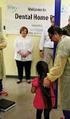 AAPD/OHS Get a HEAD START on a DENTAL HOME American Academy of Pediatric Dentistry Head Start Dental Home Initiative Creating partnerships between the dental community and Head Start to provide dental
Dental Action Plan Template For Medicaid and CHIP Programs
 Dental Action Plan Template For Medicaid and CHIP Programs State: ALABAMA Program (please designate): Medicaid X CHIP Both State Lead: BEVERLY CHURCHWELL Contact Information for State Lead: ALABAMA MEDICAID
Innovative State Practices for Improving The Provision of Medicaid Dental Services:
 Innovative State Practices for Improving The Provision of Medicaid Dental Services: SUMMARY OF EIGHT STATE REPORTS: (Alabama, Arizona, Maryland, Nebraska, North Carolina, Rhode Island, Texas and Virginia)
2007 Insurance Benefits Guide. Dental and Dental Plus. Dental and. Dental Plus. www.eip.sc.gov Employee Insurance Program 91
 Dental and www.eip.sc.gov Employee Insurance Program 91 Table of Contents Introduction...93 Your Dental Benefits at a Glance...94 Claim Examples (using Class III procedure claims)...95 How to File a Dental
By Jane Meredith Adams
 Schooll s sttrrugglle tto prro safety viide netdenttall healltt March 31st, 2013 Add a Comment By Jane Meredith Adams Like 3 Share Share Students learn how to care for their teeth and receive preventive
Quality, affordable dental insurance
 Quality, affordable dental insurance Group association dental insurance under the IHC Dental plans is underwritten by Madison National Life Insurance Company, Inc. in all states except Maine, New Hampshire
Mobile and Portable Dental Services in Preschool and School Settings: Complex Issues.
 An Issue Brief Where oral health lives Mobile and Portable Dental Services in Preschool and School Settings: Complex Issues. Purpose and Definitions Dental disease among children in the U.S. remains a
IMPORTANT CARRIER INFORMATION
 Anchorage School District Dental Plan Benefits Network: PDP Plus Benefit Summary Coverage Type In-Network Out-of-Network Type A cleanings, oral examinations 100% of Negotiated Fee* 100% of R&C Fee** Type
How To Improve Health Care For Children
 STATE ORAL HEALTH ACTION PLAN (SOHAP) TEMPLATE FOR MEDICAID AND CHIP PROGRAMS STATE: Michigan PROGRAM TYPE ADDRESSED IN TEMPLATE: MEDICAID ONLY X COMBINED MEDICAID AND CHP STATE MEDICAL DENTAL PROGRAM
The University of Alabama at Birmingham Dental Plan Benefits
 The University of Alabama at Birmingham Dental Plan Benefits Network: PDP Plus Benefit Summary Basic Plan Plan Option 1 Benefit Summary Coverage Type In-Network Out-of-Network Type A cleanings, oral examinations
WMI Mutual Insurance Company
 Dental Policy WMI Mutual Insurance Company PO Box 572450 Salt Lake City, UT 84157 (801) 263-8000 & (800) 748-5340 Fax: (801) 263-1247 DENTAL POLICY A. Schedule of Benefits: Annual Maximum Dental Benefit
Scott & White Dental Plan Benefits
 Scott & White Dental Plan Benefits For the savings you need, the flexibility you want and service you can trust. Benefit Summary Select Plan Enhanced Plan Coverage Type PDP : : Coverage Type PDP : : Type
OVERVIEW The MetLife Dental Plan for Retirees
 OVERVIEW The MetLife Dental Plan for Retirees IN NETWORK: Staying in network saves you money. 1 Participating dentists have agreed to MetLife s negotiated fees which are typically 15% to 45% below the
Dental Public Health Activities & Practices
 Dental Public Health Activities & Practices Practice Number: 55001 Submitted By: West Virginia University, Health Sciences Center, Childhood Oral Health Project Submission Date: September 2009 Last Updated:
Low Plan. High Plan Coverage Type
 Dental Benefits Savings, flexibility and service. For healthier smiles. Overview of Benefits for: Earlham College With all of the emphasis on healthy living, it may be refreshing to know you have access
DENTAL DENTAL PLAN of North Carolina
 DENTAL DENTAL PLAN of North Carolina 333 Six Forks Rd Ste 18 Raleigh NC 27609 800-662-8856 http://www.deltadentalnc.org Plan Document Group #1100 This document should be read in conjunction with the Schedule
Dental Plans YOUR GUARDIAN PLAN OFFERS:
 Dental Plans Option 1 or 2: With your High Plan or Low Plan plan, you can visit any dentist; but you pay less out-of-pocket when you choose a PPO dentist. COMPARE THE PLANS Option 1: High Plan Option 2:
Dental Benefits. How Dental Benefits Work. Schedule of Benefits
 Dental coverage under Stryker s healthcare plan helps pay dental bills for you and your family. It is designed to encourage good dental care. The plan covers preventive dental services and treatment for
A DENTAL PLAN THAT BALANCES CHOICE & SAVINGS
 A DENTAL PLAN THAT BALANCES CHOICE & SAVINGS GuideStone s Choice Dental Plan Cigna Total DPPO The Cigna Total Dental PPO (DPPO) network makes it easy to protect your health and your smile with the right
Colorado Medical Assistance Program
 Colorado Medical Assistance Program Colorado Department of Health Care Policy & Financing Using General Fund Dollars to Expand Medicaid Access Amy Scangarella Children s s Policy Specialist Using General
SmileNet SM Dental Discount Program
 SmileNet SM Dental Discount Program We want to catch you smiling. for Individuals and Families SpecialOffers This program is provided by Anthem Blue Cross Life and Health Insurance Company as a service
Vermont Oral Health Plan 2014
 Vermont Oral Health Plan 2014 Table of Contents INTRODUCTION TO VERMONT ORAL HEALTH PLAN 2013... 3 THE BURDEN OF ORAL DISEASE IN VERMONT... 6 Children... 6 Adults... 8 Older Adults... 10 Disparities...
Mills College Student Health Plan - Dental Plan Benefits
 Mills College Student Health Plan - Dental Plan Benefits Network: PDP Plus Benefit Summary Coverage Type In-Network Out-of-Network Type A cleanings, oral examinations 100% of Negotiated Fee* 80% of R&C
A Message. Dear Colleague:
 A Message Dear Colleague: I am pleased to present the New York State Oral Health Plan. This plan addresses the burden of oral disease in New York State and was developed by the New York State Department
Choice, Service, Savings. To help you enroll, the following pages outline your company's dental plan and address any questions you may have.
 Plan Design for: Unitarian Universalist Association of Congregations Effective Date: October 01, 2002 Amendment Effective Date ± : January 01, 2013 Date Prepared: January 01, 2015 Choice, Service, Savings.
Frequently Asked Questions (FAQs)
 Cisco Systems LifeConnections Dental Center Frequently Asked Questions (FAQs) December 2013 Contents General 1. What is Cisco s LifeConnections Health Center?... 3 2. What dental care services are available
2015 Insurance Benefits Guide. Dental Insurance. Dental Insurance. www.eip.sc.gov S.C. Public Employee Benefit Authority 95
 2015 Insurance Benefits Guide www.eip.sc.gov S.C. Public Employee Benefit Authority 95 Insurance Benefits Guide 2015 Table of Contents Introduction...97 State Dental Plan... 97 Dental Plus... 97 Dental
Delta Dental Individual and Family Dental Plans. EHB Certified DELTA DENTAL OF NORTH CAROLINA
 Delta Dental Individual and Family Dental Plans EHB Certified DELTA DENTAL OF NORTH CAROLINA You ll benefit from: Freedom Enjoy access to two Delta Dental networks Delta Dental PPO and Delta Dental Premier.
Choptank Community Health System School Based Dental Program Healthy Children Are Better Learners DENTAL
 School Based Dental Program Healthy Children Are Better Learners DENTAL Dear Parent/Guardian: As a student in the Caroline, Dorchester and Talbot County Public School system, your child has access to the
Access to Oral Health Care for the Residents of Public Housing Irene Hilton, DDS, MPH
 Access to Oral Health Care for the Residents of Public Housing Irene Hilton, DDS, MPH Dental Consultant National Network for Oral Health Access What is NNOHA? A nationwide network of safety-net oral health
Paulding County School District Dental Plan Benefits
 Paulding County School District Dental Plan Benefits Network: PDP Plus Benefit Summary Plan Option 1 High Plan Plan Option 2 Low Plan Coverage Type In-Network Out-of-Network Coverage Type In-Network Out-of-Network
State of Alabama. Medicaid Dental Review
 State of Alabama Medicaid Dental Review October 2010 Executive Summary The Centers for Medicare & Medicaid Services (CMS) is committed to improving pediatric dental care in the Medicaid program reflecting
Olentangy Local School District Dental Plan Benefits
 Olentangy Local School District Dental Plan Benefits For the savings you need, the flexibility you want and service you can trust. Benefit Summary Coverage Type PDP In-Network Out-of-Network Type A cleanings,