
Contact: Your Name. address. FOR IMMEDIATE RELEASE November 6, Page 1 of 2
|
|
|
- Emmeline Curtis
- 10 years ago
- Views:
Transcription
1 Q October 16, 2006 Contact: Your Name Phone number address FOR IMMEDIATE RELEASE November 6, 2006 Students Across North America Call for Universities to Stop Abetting Access-to-Medicines Crisis in Poor Countries International Leaders Voice Support for Student Activists PHILADELPHIA, Pa. A student group at [insert name of university] seeking to make life-saving medicines more accessible in developing countries has caught the attention of an array of international leaders. A South African Supreme Court Justice, four Nobel laureates, and humanitarians including the UN Special Envoy for HIV/AIDS in Africa and the co-founders of Partners in Health have voiced their support for the recentlyreleased consensus statement of Universities Allied for Essential Medicines (UAEM). UAEM adopted the Philadelphia Consensus Statement at the conclusion of the group s national conference in early October, which drew representatives from 35 of the top research universities in North America. Students from [insert name of university] traveled to Philadelphia to participate in the conference. The text of the Consensus Statement and a full list of signatories are available at The Consensus Statement consists of three major policy proposals to reform the way universities develop and license biomedical research discoveries. According to the Statement, universities should: (1) promote equal access to the fruits of university research, such as drugs and vaccines; (2) engage in and promote research and development for neglected diseases; and (3) measure research success according to impact on human welfare. The Philadelphia Consensus Statement represents a watershed moment for universities to collectively do the right thing when it comes to making their innovations available to those who need it most, said Justice Edwin Cameron, who serves on the South African Supreme Court of Appeal. Justice Cameron was the first senior South African official to state publicly that he was living with HIV/AIDS. For too long, life-saving medical tools that are the fruits of university-led discovery have been denied to poor people in poor countries. If our universities really are to be institutions for the public good, this must change, said Dr. Paul Farmer, co-founder of the humanitarian organization Partners in Health and Presley Professor of Medical Anthropology at Harvard University. The [Name of university] UAEM chapter is actively promoting the Philadelphia Consensus Statement as the first step toward convincing universities to fulfill their obligations to act for the public good. Students will use the Statement to continue discussions with key decision makers on how [add name of local institution] can contribute. The group also plans to expand the list of signatories on the Consensus Statement through a petition drive targeting students and faculty members. The issue of university research and the access crisis has also attracted the attention of policymakers at the national level. Senator Patrick Leahy (D-VT), ranking member on the Judiciary Committee, recently Page 1 of 2 28
![A student group at [insert name of university] seeking to make life-saving medicines more accessible in developing countries has caught the attention of an array of international leaders.](/docs-images/55/9172338/images/page_1.jpg "A South African Supreme Court Justice, four Nobel laureates, and humanitarians including the UN Special Envoy for HIV/AIDS in Africa and the co-founders of Partners in Health have voiced their")
2 introduced legislation requiring all federally-funded research institutions to ensure that the drugs they develop are supplied to poor countries at the lowest possible cost. The Public Research in the Public Interest Act of 2006 (S. 4040) reflects a growing consensus that universities have failed to act on an issue uniquely within their power. "Universities are, before anything else, institutions dedicated to the creation and dissemination of knowledge in the public interest. The Public Research in the Public Interest Act of 2006 is designed in the spirit of that commitment," said Senator Leahy. "I have introduced this legislation because the leaders of universities have not yet been able to come together around a different approach. Regardless of how it is achieved, I believe that increasing the availability of the medical innovations that come from publicly-funded research centers is a sound solution to a pressing global health concern." About Universities Allied for Essential Medicines UAEM is a coalition of over 35 student chapters across North America dedicated to using university action to ameliorate the access-to-medicines crisis in developing countries. Universities Allied for Essential Medicines has a two-fold mission: (1) to determine how universities can help ensure that biomedical end products, such as drugs, are made more accessible in poor countries and (2) to increase the amount of research conducted on neglected diseases, or those diseases predominantly affecting people who are too poor to constitute a market attractive to private-sector R&D investment. In both cases, universities are well-placed to make a difference. University scientists are major contributors in the drug development pipeline. At the same time, universities have an avowed commitment to advancing the public good. As members of these universities, our fundamental goal is to hold them to this commitment. Please see for more information. About the Philadelphia Consensus Statement The Philadelphia Consensus Statement was adopted by Universities Allied for Essential Medicines following the 2006 annual conference held in early October at the University of Pennsylvania. Initial signatories include four Nobel laureates, nine of the most distinguished professors in the field of intellectual property law, and international luminaries including Stephen Lewis, UN Special Envoy for HIV/AIDS in Africa; Zackie Achmat, founder of South Africa s Treatment Action Campaign; and Jim Yong Kim, former Director of the Department of HIV/AIDS at the World Health Organization. The text of the statement and a full list of initial signatories is available online at: About the Public Research in the Public Interest Act of 2006 (S.4040) This bill would allow generic manufacturers to supply medicines originating from federally-funded university innovations in developing countries at affordable prices. Because these licensing terms encourage the introduction of reduced-price drugs only in markets too poor to otherwise afford them, its terms do not threaten intellectual property, corporate investments, or profits in wealthy nations. Moreover, under the proposal, both pharmaceutical companies and universities would receive royalties from the sale of generics in developing-world markets. The text of S.4040 is available online at: Page 2 of 2 29

3 For Immediate Release Q Contact: Dave Chokshi October 16, [email protected] FOR IMMEDIATE RELEASE November 6, 2006 Students Across North America Call for Universities to Stop Abetting Access-to-Medicines Crisis in Poor Countries International Leaders Voice Support for Student Activists PHILADELPHIA, Pa. For five years, students across North America have been calling on their universities to make the life-saving drugs discovered in campus laboratories available in the developing world. Now, a chorus of stentorian voices has joined their cause, including a South African Supreme Court Justice, four Nobel laureates, and humanitarians such as the UN Special Envoy for HIV/AIDS in Africa and the co-founders of Partners in Health. The idea that universities must have a role in ameliorating the access-to-medicines crisis in poor countries owes its origins to a 2001 campaign at Yale University. Students, scientists, and the organization Doctors Without Borders asked Yale to help increase access to the AIDS drug d4t in South Africa. Yale scientists discovered and patented d4t; the university subsequently licensed the drug to Bristol-Myers Squibb, which marketed it for $1,600 per patient per year. Under pressure from students, faculty, and the general public, Yale and Bristol-Myers Squibb agreed to allow generic manufacturers of d4t to compete in certain markets, thus lowering the price of the drug to $55 per patient per year a 96 percent reduction. Unfortunately, the Yale-d4t case was an isolated one. In the five years since Yale s decision, other universities have missed similar opportunities by failing to negotiate prospectively for equitableaccess terms in their pharmaceutical licenses. Last year, for example, in a deal with Gilead Sciences and Royalty Pharma, Emory University sold its royalty rights to emtricitabine, an active ingredient in the HIV antiretrovirals Emtriva, Truvada and Atripla. The scale of the deal (the largest-ever such transaction for an academic institution) caught the attention of student activists at Emory, who investigated Gilead s provisions for access in developing countries and found them lacking. Although Gilead s Access Program promises to supply 97 developing countries, the drugs are only available in a fraction of them, said Stephanie Doan, a student at the Rollins School of Public Health at Emory. Learning from this experience is critical. In future negotiations with pharmaceutical companies, the University must require expanded access to Emory-developed drugs in poor countries. Expanding access in poor countries does not require universities to sacrifice their bottom line. Because patients in developing countries aren t currently able to afford the drugs that they so desperately need, they do not factor into pharmaceutical company revenue or university royalties. Meanwhile, at Yale University, the situation has come full circle. Students there discovered this summer that Yale had exclusively licensed a compound known as Ed4t to a Japanese pharmaceutical Page 1 of 3 30

4 company without any provisions for access. Ed4t is closely related to d4t, but in early tests has proven both more effective and less toxic than its predecessor. Yale refuses to disclose in exactly what countries it is patenting the molecule, but its international patent application designates 76 lowand middle-income countries for every kind of national protection available. The list includes countries like Lesotho, where almost a quarter of the population is infected with HIV. Meanwhile Lesotho s entire annual GDP is less than yearly returns on Yale s endowment. Ed4t calls into question Yale's commitment to seeing their drugs reach the poor, said Michael Steffen, a student at Yale Law School. "When Yale pushed to make d4t available to poor HIV patients in Africa, it sent a message: ensuring access to Yale s discoveries goes to the heart of what it means to be a great research university. But the public filings suggest that history has been forgotten with Ed4T. What are the university's plans for this promising new HIV drug in the developing world? If it completes clinical trials, will it be available? They won't say, and that's deeply disappointing." More recently, these students and others from more than 35 major research universities in the U.S. and Canada convened in early October at the annual conference of the student group Universities Allied for Essential Medicines (UAEM, There, they discussed how to bring about systematic change to pharmaceutical licensing policies across their campuses. The outcome of this discussion was the adoption of the Philadelphia Consensus Statement, a document that lays out a comprehensive set of policy proposals by which universities can address the access crisis. The Consensus Statement is organized along three main points: (1) promoting equal access to university research; (2) promoting research and development for neglected diseases; and (3) measuring research success according to impact on human welfare. The Philadelphia Consensus Statement represents a watershed moment for universities to collectively do the right thing when it comes to making their innovations available to those who need it most, said Justice Edwin Cameron, who serves on the South African Supreme Court of Appeal. Justice Cameron was the first senior South African official to state publicly that he is living with HIV/AIDS. For too long, life-saving medical tools that are the fruits of university-led discovery have been denied to poor people in poor countries. If our universities really are to be institutions for the public good, this must change, said Dr. Paul Farmer, co-founder of the humanitarian organization Partners in Health and Presley Professor of Medical Anthropology at Harvard University. Dr. Farmer and Justice Cameron are among dozens of initial signatories to the Philadelphia Consensus Statement, all of whom are listed at The issue of university research and the access crisis has also attracted the attention of policymakers at the national level. Senator Patrick Leahy (D-VT), ranking member on the Judiciary Committee, recently introduced legislation requiring all federally-funded research institutions to ensure that the drugs they develop are supplied to poor countries at the lowest possible cost. The Public Research in the Public Interest Act of 2006 (S. 4040) reflects a growing consensus that universities have failed to act on an issue uniquely within their power. "Universities are, before anything else, institutions dedicated to the creation and dissemination of knowledge in the public interest. The Public Research in the Public Interest Act of 2006 is designed in the spirit of that commitment," said Senator Leahy. "I have introduced this legislation because the leaders of universities have not yet been able to come together around a different approach. Regardless of how it is achieved, I believe that increasing the availability of the medical innovations that come from publicly-funded research centers is a sound solution to a pressing global health concern." Page 2 of 3 31

5 About Universities Allied for Essential Medicines UAEM is a coalition of over 35 student chapters across North America dedicated to using university action to ameliorate the access-to-medicines crisis in developing countries. Universities Allied for Essential Medicines has a two-fold mission: (1) to determine how universities can help ensure that biomedical end products, such as drugs, are made more accessible in poor countries and (2) to increase the amount of research conducted on neglected diseases, or those diseases predominantly affecting people who are too poor to constitute a market attractive to private-sector R&D investment. In both cases, universities are well-placed to make a difference. University scientists are major contributors in the drug development pipeline. At the same time, universities have an avowed commitment to advancing the public good. As members of these universities, our fundamental goal is to hold them to this commitment. Please see for more information. About the Philadelphia Consensus Statement The Philadelphia Consensus Statement was adopted by Universities Allied for Essential Medicines following the 2006 annual conference held in early October at the University of Pennsylvania. Initial signatories include four Nobel laureates, nine of the most distinguished professors in the field of intellectual property law, and international luminaries including Stephen Lewis, UN Special Envoy for HIV/AIDS in Africa; Zackie Achmat, founder of South Africa s Treatment Action Campaign; and Jim Yong Kim, former Director of the Department of HIV/AIDS at the World Health Organization. The text of the statement and a full list of initial signatories is available online at: About the Public Research in the Public Interest Act of 2006 (S.4040) This bill would allow generic manufacturers to supply medicines originating from federally-funded university innovations in developing countries at affordable prices. Because these licensing terms encourage the introduction of reduced-price drugs only in markets too poor to otherwise afford them, its terms do not threaten intellectual property, corporate investments, or profits in wealthy nations. Moreover, under the proposal, both pharmaceutical companies and universities would receive royalties from the sale of generics in developing-world markets. The text of S.4040 is available online at: Page 3 of 3 32

The Role of Universities in Essential Medicine
 The Role of Universities in Essential Medicine Presented by: Gloria Tavera Thanks To: Sam Chaifetz (Yale) 2004 Hillary Freudenthal (Berkeley) 2005 Amit Khera (University of Pennsylvania School of Medicine)
GLOBAL ACCESS LICENSING FRAMEWORK
 GLOBAL ACCESS LICENSING FRAMEWORK Every university-developed technology with potential for further development into a drug, vaccine, or medical diagnostic should be licensed with a concrete and transparent
Beat the AIDS epidemic Press for fair prices and better access to medicines.
 Beat the AIDS epidemic Press for fair prices and better access to medicines. JUNE 2015 Globally, 35 million people are living with HIV. 22 million of them do not receive the treatment they need. The patent
Why Are Drugs So Expensive? Learning About the Drug Development Process
 Why Are Drugs So Expensive? Page 1 of 92 Why Are Drugs So Expensive? Learning About the Drug Development Process written by: Ann Newman Seventh Street Development Group This product is for your Personal
HEALTH LAW AND GLOBAL HEALTH JUSTICE. Yale Law School
 HEALTH LAW AND GLOBAL HEALTH JUSTICE Yale Law School HEALTH LAW AND GLOBAL HEALTH JUSTICE Yale Law School The Yale Law School s wide range of health-related programming reflects the many important ways
PROMOTING ACCESS AND MEDICAL INNOVATION: INTERSECTIONS BETWEEN PUBLIC HEALTH, INTELLECTUAL PROPERTY AND TRADE
 PROMOTING ACCESS AND MEDICAL INNOVATION: INTERSECTIONS BETWEEN PUBLIC HEALTH, INTELLECTUAL PROPERTY AND TRADE Joint study by the WHO, WIPO and WTO Secretariats Outline and overview The WHO, WIPO and the
The EU role in global health QUESTIONNAIRE: Question 1 Question 2 Question 3: Question 4: Question 5:
 The EU role in global health QUESTIONNAIRE: Question 1: In your opinion, does the proposed concept global health cover the most relevant dimensions? If not, which other essential factors would you suggest?
PHD FELLOWSHIPS at the University of Rochester
 PHD FELLOWSHIPS at the University of Rochester The University of Rochester offers PhD programs in all of its schools: ARTS, SCIENCES & ENGINEERING THE EASTMAN SCHOOL OF MUSIC THE SCHOOL OF MEDICINE AND
Q&A Intellectual Property Policy
 Q&A Intellectual Property Policy Table of Contents Q: Why have an Intellectual Property Policy?... 3 Q: Does the IP Policy apply to me?... 3 Q: I am primarily affiliated with another institution and am
TIBCO Spotfire Helps Organon Bridge the Data Gap Between Basic Research and Clinical Trials
 TIBCO Spotfire Helps Organon Bridge the Data Gap Between Basic Research and Clinical Trials Pharmaceutical leader deploys TIBCO Spotfire enterprise analytics platform across its drug discovery organization
What does the AHSC mean for you?
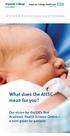 > > > > > > > > > > > > > > > > > > > > What does the AHSC mean for you? Our vision for the UK s first Academic Health Science Centre a mini-guide for patients Quicker access to new medicines and new treatments
Protection of Employees Rights in Insolvency
 Protection of Employees Rights in Insolvency Introduction Since the beginning of the 21st century, the world faced many economic challenges (to be gentle), the crash of the dot-com bubble in 2000 2001,
Pharmaceutical Products Liability. Michael C. Dubin Stephen Knobloch
 Pharmaceutical Products Liability Michael C. Dubin Stephen Knobloch Objectives Objective 1 Get Actuaries Thinking About Adding Value to New Areas Objective 2 Provide example using pharmaceutical industry
Ending cancer. Together.
 Ending cancer. Together. Making History by Being First To achieve something as big and bold as ending cancer requires the courage to be first and a willingness to partner with others. At the Robert W.
We use Reaxys intensively for hit identification, hit-to-lead and lead optimization.
 CASE STUDY Dr. Fabio C. Tucci, COO of Epigen Biosciences We use Reaxys intensively for hit identification, hit-to-lead and lead optimization. CREATING NEW ASSETS Epigen Biosciences is a start-up pharmaceutical
Helene D. Gayle, President and CEO, CARE USA
 The Atlanta Declaration U.S. Leadership in Improving the World s Health 21 May 2012 It is timely and important that we celebrate America s global health successes, and that we continue to lead investing
HOT TOPICS IN IN HEALTH CARE REFORM
 By Felicia Fuller Publications Manager, DAC Patient Recruitment Services The Patient Protection and Affordable Care Act (ACA), colloquially known as Obamacare, is in full effect and its impact is palpable
Intellectual Property and Access to HIV/AIDS Treatment Case Studies
 Intellectual Property and Access to HIV/AIDS Treatment Case Studies Recent TRIPS-related developments in the rest of the world In developing countries Until now, India, Brazil and Thailand have been among
Stephen Dibert Global Practice Lead Life Sciences Foreign Affairs, Trade and Development Canada JBA Seminar - February, 2015
 Life Sciences Industry in Canada Stephen Dibert Global Practice Lead Life Sciences Foreign Affairs, Trade and Development Canada JBA Seminar - February, 2015 Life Sciences in Canada Canadian life sciences
The Prize Fund for HIV/AIDS
 The Prize Fund for HIV/AIDS A New Paradigm for Supporting Sustainable Innovation and Access to New Drugs for AIDS: De-Linking Markets for Products from Markets for Innovation May 26, 2011 Introduction
Tuberculosis OUR MISSION THE OPPORTUNITY
 Tuberculosis OUR MISSION Guided by the belief that every life has equal value, the Bill & Melinda Gates Foundation works to help all people lead healthy, productive lives. Our Global Health Program is
Medicines for Neglected Diseases Workshop. Dennis Liotta, Ph.D. Director Emory Institute for Drug Discovery Atlanta, Georgia
 Medicines for Neglected Diseases Workshop Dennis Liotta, Ph.D. Director Emory Institute for Drug Discovery Atlanta, Georgia September 11, 2010 Poverty, Many People Poor health conditions High Morbidity
Three Branches of Government. Lesson 2
 Three Branches of Government The Executive Branch The President of the United States is the leader of the executive branch. The President s duties are to: Enforce federal laws and recommend new ones Serve
P.O. Box 4550. Iowa City, IA 52244-4550 (319) 335-3305. (800) 648-6973. www.uifoundation.org/iowafirst
 P.O. Box 4550. Iowa City, IA 52244-4550 (319) 335-3305. (800) 648-6973. www.uifoundation.org/iowafirst The State University of Iowa Foundation is a 501(c)(3) tax-exempt organization soliciting tax-deductible
Plan for AIDS Relief
 The U.S. US President s Emergency Plan for AIDS Relief Medical and Nursing Education Partnership Initiative Deborah von Zinkernagel Principal Deputy Global AIDS Coordinator U.S. Department of State The
Join our scientific talent community
 Join our scientific talent community There has never been a better time to be a part of Janssen Research & Development. We are at the forefront of healthcare leading, evolving and transforming it into
GAO NEW DRUG DEVELOPMENT. Science, Business, Regulatory, and Intellectual Property Issues Cited as Hampering Drug Development Efforts
 GAO United States Government Accountability Office Report to Congressional Requesters November 2006 NEW DRUG DEVELOPMENT Science, Business, Regulatory, and Intellectual Property Issues Cited as Hampering
Monetary and Political Effects of Product Liability Lawsuits in. the Pharmaceutical Industry. Constructed By: Spenser Hanson.
 Monetary and Political Effects of Product Liability Lawsuits in the Pharmaceutical Industry Constructed By: Spenser Hanson Joe Wadle October 24 th, 2009 G400: Professor Andreas Hauskrecht Introduction
PROPOSAL by Bangladesh, Barbados Bolivia, and Suriname. Prize Fund for Development of Low-Cost Rapid Diagnostic Test for Tuberculosis. Date: 09.04.
 PROPOSAL by Bangladesh, Barbados Bolivia, and Suriname Prize Fund for Development of Low-Cost Rapid Diagnostic Test for Tuberculosis Executive Summary Date: 09.04.15 The governments of Bangladesh, Barbados,
AFRICAN UNION ROADMAP: PROGRESS IN THE FIRST YEAR
 AFRICAN UNION ROADMAP: PROGRESS IN THE FIRST YEAR Update on progress to implement the African Union Roadmap on Shared Responsibility and Global Solidarity for AIDS, TB and Malaria Response in Africa (2012
ACCESS TO AFFORDABLE TREATMENT FOR HIV/AIDS: THE ISSUES
 ACCESS TO AFFORDABLE TREATMENT FOR HIV/AIDS: THE ISSUES AIDS Law Unit Legal Assistance Centre July, 2002 INTRODUCTION Although there is currently no cure for HIV/Aids, treatment has, however, been developed
FACT SHEET The Competition Commission s Market Inquiry into the Private Health Care Sector
 FACT SHEET The Competition Commission s Market Inquiry into the Private Health Care Sector 1 www.section27.org.za @Section27News SECTION27news Tel: +27 11 356 4100 l Fax: +27 11 339 4311 5th floor Braamfontein
Vision 2020 Strategic Plan
 UNIVERSITY OF HOUSTON COLLEGE OF PHARMACY Vision 2020 Strategic Plan A VISION OF THE FUTURE Caring for Texans through health and discovery The college will be a leader in education, research, service and
Community College Presidents National Meeting on Academic Progression in Nursing
 Community College Presidents National Meeting on Academic Progression in Nursing Convened by: The Robert Wood Johnson Foundation Hosted at: The American Association of Community Colleges April 9, 2013
Successes and Challenges in the Affordable Care Act: Beyond Access
 Successes and Challenges in the Affordable Care Act: Beyond Access Robert Greenwald Clinical Professor of Law, Harvard Law School Director, Center for Health Law and Policy Innovation/Treatment Access
INVITATION LETTER ASSIGNMENT TITLE: INDIVIDUAL CONSULTANCY SERVICES RELATED TO THE TRAINING ON ADVANCED GCP TRAINING FOR RBC/MRC.
 INVITATION LETTER COUNTRY: RWANDA SOURCE OF FUNDS: ORDINARY BUDGET ASSIGNMENT TITLE: INDIVIDUAL CONSULTANCY SERVICES RELATED TO THE TRAINING ON ADVANCED GCP TRAINING FOR RBC/MRC. REFERENCE NUMBER: 034/CS/ICS/2014-2015/RBC-MRC
The University of Edinburgh Global Health Academy
 The University of Edinburgh Global Health Academy Collective Vision for Global Health Academy Bringing together the University s eminent Global Health Scientists and Practitioners and students from disciplines
The Role of Research Institutions in the Formation of the Biotech Cluster in Massachusetts
 The Role of Research Institutions in the Formation of the Biotech Cluster in Massachusetts Lita Nelsen Massachusetts Institute of Technology Cambridge, December 2005 The Massachusetts Biotech Cluster 2005
MEDICAL BREAKTHROUGHS RESEARCH SUMMARY
 MEDICAL BREAKTHROUGHS RESEARCH SUMMARY TOPIC: Training the Body to Fight Melanoma REPORT: 3823 BACKGROUND: Melanoma is the most dangerous form of skin cancer that can be hard to treat and fatal if not
I, Salvador Antonetti Zequeira, Secretary of the Board of Trustees of the. University of Puerto Rico, DO HEREBY CERTIFY THAT:
 BOARD OF TRUSTEES UNIVERSITY OF PUERTO RICO CERTIFICATION NUMBER 63 2007-2008 I, Salvador Antonetti Zequeira, Secretary of the Board of Trustees of the University of Puerto Rico, DO HEREBY CERTIFY THAT:
Role of traditional health practitioners
 Role of traditional health practitioners Task-shifting and HIV/AIDS care Dr Mosa Moshabela (Director, RADAR) School of Public Health, University of Witwatersrand, Johannesburg It is important to remember
SADC PHARMACEUTICAL PROGRAMME SADC PHARMACEUTICAL BUSINESS PLAN 2007-2013
 SADC PHARMACEUTICAL PROGRAMME SADC PHARMACEUTICAL BUSINESS PLAN 2007-2013 SADC SECRETARIAT 27 TH JUNE 2007 ACRONYMS AIDS : Acquired Immunodeficiency Syndrome Antiretroviral ARV : Antiretroviral cgmp :
Pennino Corporation TECHNOLOGY TO IMPROVE LIFE
 Pennino Corporation TECHNOLOGY TO IMPROVE LIFE Agenda The Opportunity Highlights Corporate Profile NYU Relationship Obesity and Diabetes Graphics and Facts Next Stage of Development Efficacy and Safety
Framework. Australia s Aid Program to Papua New Guinea
 Framework Australia s Aid Program to Papua New Guinea 21 October 2002 Our Unique Development Partnership our close bilateral ties are reflected in our aid program Enduring ties bind Papua New Guinea with
drug dependence treatment and care
 UNODC-WHO Joint Programme on drug dependence treatment and care The vision Effective and humane treatment for all people with drug use disorders. Nothing less than would be expected for any other disease.
What is Healthcare Reform? Get a view of the future health care system in the US; learn. success factors for healthcare administrators?
 What is Healthcare Reform? Get a view of the future health care system in the US; learn about primary resources and tools for the healthcare administrator, and what are the success factors for healthcare
HTA Position Paper. The International Network of Agencies for Health Technology Assessment (INAHTA) defines HTA as:
 HTA Position Paper The Global Medical Technology Alliance (GMTA) represents medical technology associations whose members supply over 85 percent of the medical devices and diagnostics purchased annually
The statements made herein are our own and do not necessarily reflect the views of the Johns Hopkins University.
 Johns Hopkins Center for a Livable Future 615 North Wolfe Street, W7010 Baltimore, MD 21205 January 4, 2013 Division of Dockets Management (HFA-305) Food and Drug Administration 5630 Fishers Lane, rm.
Harvard and the Massachusetts Economy FACTS & IMPACT
 Harvard and the Massachusetts Economy FACTS & IMPACT www.community.harvard.edu Harvard and the Massachusetts Economy FACTS & IMPACT 2015 Harvard University takes pride in being part of the Massachusetts
Uzoamaka Emeka Nzelibe (312) 503-0750 [email protected]
 Uzoamaka Emeka Nzelibe (312) 503-0750 [email protected] PROFESSIONAL EXPERIENCE Northwestern University School of Law, Chicago, IL Clinical Assistant Professor of Law (June 2004-Present):
Concurrent Session A: HIV/AIDS The Role of Criminal Law in Public Health
 Canadian Conference on the Public s Health and the Law November 5-7, 2006 (Toronto) Concurrent Session A: HIV/AIDS The Role of Criminal Law in Public Health Moderator: Dr. Brian Cornelson HIV Family Practice
U.S. DRUG IMPORT BILL HAS SERIOUS IMPLICATIONS FOR CANADA
 Page 35 U.S. DRUG IMPORT BILL HAS SERIOUS IMPLICATIONS FOR CANADA Guy W. Giorno, Lynne Golding, Vincent Routhier, and Philippe David Fasken Martineau DuMoulin LLP INTRODUCTION Legislation currently before
Implementing Corporate Social Responsibility in Health Sector
 Student Research Projects/Outputs No. 003 Implementing Corporate Social Responsibility in Health Sector Sam Lee MBA 2005 China Europe International Business School 699, Hong Feng Road Pudong, Shanghai
SUBMISSION TO THE SENATE INQUIRY INTO OUT-OF- POCKET COSTS IN AUSTRALIAN HEALTHCARE. Prepared by National Policy Office
 SUBMISSION TO THE SENATE INQUIRY INTO OUT-OF- POCKET COSTS IN AUSTRALIAN HEALTHCARE Prepared by National Policy Office May 2014 COTA Australia Authorised by: Ian Yates AM Chief Executive [email protected]
INSTITUTIONAL AND ORGANISATIONAL CHANGE j) Mainstreaming a gender equality perspective in the Consolidated Inter-Agency Appeals BACKGROUND
 INSTITUTIONAL AND ORGANISATIONAL CHANGE j) Mainstreaming a gender equality perspective in the Consolidated Inter-Agency Appeals BACKGROUND A gender perspective in humanitarian assistance: what does it
Institute for OneWorld Health
 Institute for OneWorld Health a nonprofit pharmaceutical company Oxymoron no more: nonprofits can deliver medicines for the poor of the world January 10, 2005 Victoria Hale, PhD CEO, OneWorld Health The
An Assessment of the Proposal. To Create a Department of Engineering. At Indiana University Bloomington
 1 An Assessment of the Proposal To Create a Department of Engineering At Indiana University Bloomington Anita Jones, University Professor Emerita, University of Virginia Eric Grimson, Chancellor, Massachusetts
disabilities THE GAP REPORT 2014
 THE GAP REPORT 2014 People with disabilities There are more than one billion people living with a physical, sensory, intellectual or mental health disability in the world four out of five live in low-
Please find below my answers to the questions on The EU role in global health
 Jean-Pierre Unger, MD, MPH, PhD Professor of Public Health Institute of Tropical Medicine Antwerp, Belgium [email protected] Tel 32 3 2476254 Antwerp, November the 18 th, 2009 Dear Sir, Please find below
Militarism and HIV/AIDS: The Deadly Consequences for Women. Background paper by Women's International League for Peace and Freedom
 Militarism and HIV/AIDS: The Deadly Consequences for Women Background paper by Women's International League for Peace and Freedom UN General Assembly Special Session on HIV/AIDS June, 2001 It is known
1. What are the key strengths and weaknesses of the UK s innovation system in relation to business-university collaboration?
 ABPI S RESPONSE TO THE BUSINESS, INNOVATION AND SKILLS SELECT COMMITTEE INQUIRY INTO THE STRENGTHS AND WEAKNESSES OF BUSINESS-UNIVERSITY COLLABORATION IN THE UK AND THE UK S PERFORMANCE AGAINST INTERNATIONAL
Lead the Future of Pharmaceutical Science
 MYLAN SCHOOL OF PHARMACY AND THE GRADUATE SCHOOL OF PHARMACEUTICAL SCIENCES Lead the Future of Pharmaceutical Science GRADUATE SCHOOL OF PHARMACEUTICAL SCIENCES: A NATIONAL LEADER ABOUT DUQUESNE UNIVERSITY
Feasibility Study. Narrative 1. DESCRIPTION OF THE PROGRAM
 Feasibility Study Program name and degree level: Master Degree in Mathematical Science. Department/College: Mathematics, College of Arts and Sciences. Proposed implementation date: Fall, 2008 Narrative
JOINT PETITION SUBMITTED BY GURKHA ORGANISATIONS TO RT. HON. DAVID CAMERON MP PRIME MINISTER ON 24 APRIL 2013
 JOINT PETITION SUBMITTED BY GURKHA ORGANISATIONS TO RT. HON. DAVID CAMERON MP PRIME MINISTER ON 24 APRIL 2013 BACKGROUND This Petition is submitted jointly by various Gurkha organisations campaigning on
Actionable Insights into Health Policy, Practice and Outcomes Through Research and Big Data - with a Spotlight on Oncology
 Actionable Insights into Health Policy, Practice and Outcomes Through Research and Big Data - with a Spotlight on Oncology Attend the Virtual Meeting in HE-Xpo Wednesday, Feb. 18, 2015 Session One: 9:30
Mywish Maredia, Frederic Erbisch, Anwar Naseem, Amie Hightower, James Oehmke, Dave Weatherspoon, & Christopher Wolf 1
 AgBioForum Volume 2, Number 3 & 4 1999 Pages 247-252 PUBLIC AGRICULTURAL RESEARCH AND THE PROTECTION OF INTELLECTUAL PROPERTY: ISSUES AND OPTIONS Mywish Maredia, Frederic Erbisch, Anwar Naseem, Amie Hightower,
Testimony of Timothy Coetzee, Ph.D. Representative of a Patient Advocacy Organization President, Fast Forward LLC
 Testimony of Timothy Coetzee, Ph.D. Representative of a Patient Advocacy Organization President, Fast Forward LLC Committee on Oversight and Government Reform Domestic Policy Subcommittee U.S. House of
PH.D. IN BUSINESS ADMINISTRATION
 PH.D. IN BUSINESS ADMINISTRATION Intellectual Discovery AND INNOVATION join a nationally ranked program that is accredited by AACSB International, placing the UTSA College of Business in the top five percent