
Auditory Alert Characteristics: A Survey of Pilot Views
|
|
|
- Oswald Chambers
- 10 years ago
- Views:
Transcription
1 THE INTERNATIONAL JOURNAL OF AVIATION PSYCHOLOGY, 15(3), Copyright 2005, Lawrence Erlbaum Associates, Inc. Auditory Alert Characteristics: A Survey of Pilot Views Guy Peryer, Jan Noyes, Kit Pleydell-Pearce Department of Experimental Psychology University of Bristol Nick Lieven Department of Aerospace Engineering University of Bristol This survey obtained feedback from 50 commercial pilots on the design characteristics of a set of auditory flight deck alerts. The first section in the online questionnaire assessed pilot views on current loudness levels and prevalence of cognitive impairment from alert presentation. The second section in the questionnaire required the pilots to rate the effectiveness of 10 auditory alerts currently in operation on a large commercial aircraft. In general, the alerts were rated favorably on informational content variables, but unfavorably on presentation style variables. Loud, continuous alerts can distract pilot attention away from processing task-related information, increasing the potential for error. New methods for alert presentation are suggested, based on real-time analysis of flight deck noise. This is argued to offer a more suitable environment for problem solving, decision making, and communication during alert situations. Flight deck alerts, designed to be pilot aids, are often perceived as being intrusive and aversive (Sorkin, 1988). Unpopular features of alert systems include high numbers of false alarms (Bliss, 2003) and undesirable presentation characteristics (Mårtensson, 1995; Patterson, 1982). Both reduce the credibility of the alert systems. This article focuses solely on the acoustic characteristics of alert signals. The motivation for carrying out this research was to obtain feedback from pilots on current alert characteristics and to assimilate information con- Requests for reprints should be sent to Jan Noyes, University of Bristol, Department of Experimental Psychology, 8 Woodland Road, Bristol, BS8 1TN, England. [email protected]

2 234 PERYER, NOYES, PLEYDELL-PEARCE, LIEVEN cerning a pilot s cognitive capabilities and limitations during alert events (Noyes & Starr, 2000). It is important to continue to run pilot feedback studies to see how well research guidelines have infiltrated into operational practice and to report suggested changes. A primary role of flight deck auditory alerts is to direct the pilot s attention to a particular system event. In a three-stage process the pilot must recognize the alert, analyze its meaning in relation to other information presented on the flight deck, and aim to resolve any abnormal or unsafe operating conditions (Hawkins, 1993; Pritchett, 2001). Consequently, auditory alerts represent an acoustic cue to possible complex problem-solving and decision-making tasks. The way a pilot is alerted to an abnormal system state will influence subsequent task performance following alert detection (Wickens & Hollands, 2000). If an auditory alert acts as a stressor, the immediate inclination for pilots is to seek a means of silencing the noise rather than analyzing the meaning of the alert and resolving any unsafe operating conditions. In these circumstances, pilots view auditory alerts as a source of irritation (Patterson, 1982). Furthermore, increasing pilot stress levels during warning events may lead to an increased potential for human error (Rigby & Edelman, 1968; Wickens & Hollands, 2000). Designers need to ensure that alerts have appropriate characteristics that enable swift, accurate understanding and do not prevent flight deck communication or impair the cognitive functioning of the crew. This was summarized in a Federal Aviation Administration (FAA) Advisory (2000): Warning information must be provided to alert crew to unsafe operating conditions, and enable them to take appropriate corrective action. Systems, controls, and associated monitoring and warning means must be designed to minimize crew errors which could create additional hazards (p. 126). ALERT INTENSITY The most common complaint from pilots concerning auditory alerts is excessive volume (James, 1996; Patterson, 1982). For readers who are unfamiliar with the previous literature, a summary is given here. In a Lufthansa survey (Uchtdorf & Heldt, 1989) of the Boeing and the Airbus flight deck systems, 98% of the pilots regarded auditory alerts as extremely important to flight safety. However, almost all participants complained that the alerts were presented at an excessive volume. Manufacturers tend to take the better safe than sorry approach when setting the alert intensity level (James, 1996). This approach is understandable, as an alert that is masked by flight deck noise will go undetected and render the auditory warning system useless. However, high-intensity sounds have been reported to have undesirable physiological and psychological effects.

3 AUDITORY ALERTS AND PILOT VIEWS 235 Adverse Effects From the Onset of a High-Intensity Alert (Auditory Startle) The human auditory startle response can be elicited from sounds that have abrupt onsets and high sound pressure levels (Björk, 1999; Thackray & Touchstone, 1970; Turpin, Schaefer, & Boucsein, 1999; Wilkins, 1982). There are various physiological changes that accompany the startle response: chemical changes in the blood (e.g., adrenalin), changes in heart rate and blood pressure, changes in breathing and sweat gland activity, and brief changes in skeletal muscle tension (Wilkins, 1982). The startle response itself is thought not to endanger health; however, deficits in performance can be observed for a short period after the startle response has occurred. Thackray and Touchstone (1970) used a tracking task as a performance measure. A burst of white noise of over 100dB occurred unexpectedly in a 30-min testing session. Maximum disruption to tracking task performance was observed in the first 2 sec following startle, showing that perceptual motor recovery is relatively fast. However, significant disruption was observed up to 10 sec following startle. Pilot reports of cognitive impairment from excessively loud alerts can be accessed via the Aviation Safety Reporting System (ASRS) database. The reports are written in shorthand, submitted voluntarily, and are anonymous. Within the database there are numerous examples of how loud alerts cause disorientation, confusion, and occasionally unintended actions. Moreover, nearly all of the reports that mention loud alerts claim that the alert directly contributed to the breach in flight safety. For example, the aspect of this incident that I must comment on is how distracting and potentially disorienting a large sudden change in noise level can be. When these large sudden changes occur, the crew can be momentarily immobilized by a startle reaction (National Safety Data Analysis Center [NASDAC] Report No , 1993). In this situation a pilot might not be able to recognize anything beyond the presence of an alert signal and all information regarding alert meaning and corrective action is temporarily lost (Pritchett, 2001). Perceptual characteristics that increase the startle response include a more abrupt onset, otherwise known as the attack or rise time of a stimulus (Björk, 1999; Turpin et al., 1999); higher intensities (Björk, 1999; Turpin et al., 1999); unpleasant signals (Bradley & Lang, 2000); and darkness (Grillon, Pellowski, Merikangas, & Davis, 1997). Adverse Effects From the Duration of a High-Intensity Alert Some flight deck auditory alerts continue until corrective action takes place. Continuous alerts of high intensity have been reported to be very distracting. As an example, While attempting to inhibit this loud continuous distracting aural warning, I inadvertently activated the alternate LNDG gear extension switch

4 236 PERYER, NOYES, PLEYDELL-PEARCE, LIEVEN while trying to activate the GPWS gear override. There was then a very loud roaring noise in the cockpit further aggravating our anxiety (NASDAC Report No , 1998). A review of distraction caused by background sounds is contained in Banbury, Macken, Tremblay, and Jones (2001), which concluded that both speech and nonspeech sounds have a distracting effect on serial recall and tasks that involve seriation (the process of placing items in order). Levels of distraction have been documented as being independent of intensity; however, as yet, no studies have examined auditory distraction using flight deck presentation levels (i.e., above 85dB). It is hypothesized that higher intensity alerts would have a qualitative effect on distraction (Banbury et al., 2001) purely due to the stressful nature of experiencing loud sounds. The auditory modality is very sensitive to change, which makes it ideal for warning presentation; however, if the alert continues, attention, even at a rudimentary level, is still devoted to processing the auditory signal and is diverted away from processing task-related information (Banbury et al., 2001; Wickens & Hollands, 2000). A secondary adverse effect from loud and continuous auditory alerts is the masking of communications (Patterson, 1982; Pritchett, 2001). For example, the B has an alt alert warning audio set too high and interferes with ATC coms I consider this hazardous to safety, and it adds to freq congestion when missed ATC instructions must be repeated (NASDAC Report No , 2002). It is essential that alert signals are detected and that the flight crew are made aware that a problem is ongoing. However, care needs to be taken when setting intensity levels and alert durations. Auditory startle, task distraction, and communications masking are all issues that increase the chance of pilot error. Alert Intensity CURRENT GUIDELINES FOR ALERT DESIGN Patterson (1982) suggested a model of alert presentation based on the intensity level and spectral content of background noise. Alerts should be presented at least 15dB above the threshold of alert detection and limited to 30dB above threshold to prevent task disruption. The guidelines put forward by Patterson are widely accepted and have been incorporated into the U.K. Ministry of Defence Standard (INT DEF STAN 00 25, 2004). In addition, similar guidelines can be found for the International Organization of Standardization (ISO 7731, 1986) and the U.S. Human Engineering Standard (MIL STD 1427F, 1999). Loudness levels of alerts are referred to specifically in this survey as a means of discovering if alert intensity is still a problem 20 years on from Patterson s study.

5 AUDITORY ALERTS AND PILOT VIEWS 237 Alert Comprehension: Distinctiveness and Associability Guidelines The U.S. Human Engineering Standard (MIL STD 1427F, 1999) suggested that the first 0.5 sec of an auditory alert signal that requires immediate action should be distinctive from the first 0.5 sec of any other alert signal that may occur at that time. This reduces the need for the pilot to search visual displays for alert verification. Distinctiveness as an alert characteristic is central to effective design and is referred to specifically within this survey. An example of a highly distinctive alert that is easily associated with its meaning is the fire bell. Patterson s (1982) study indicated that on 98% of trials the fire bell was recalled correctly and not confused with any other alert sound. This is arguably due to an increased familiarity with fire bells outside the flight deck environment. However, this does demonstrate how nonverbal auditory signals can be highly effective alerts, providing there is a sufficient association between the sound and the alert meaning (Ulfvengren, 2003). As the need for more auditory alerts increases, it seems logical to use more speech signals on the flight deck (Doll & Folds, 1986). The advantages of speech signals are that they are reliable and versatile and require no additional learning. A disadvantage is that there is already a lot of speech on the flight deck and a lack of perceptual contrast may reduce the effectiveness of a speech alert (Patterson, 1982). A compromise advocated by numerous researchers is to have a nonspeech signal followed by a short speech signal. This way, the nonspeech signal captures the pilot s attention and the speech signal confirms the alert meaning. Preference of alert type is referred to specifically in this survey. Urgency Mapping Flight deck visual alerts are generally prioritized into categories of urgency: warnings, cautions, and advisories. Warning messages appear in red on visual displays and require immediate crew action. Caution messages appear in amber and require immediate crew awareness. Both warning and caution messages are accompanied by an auditory alert. Alerts tend to occur in phases of flight with the highest workload (Woods, 1995). Consequently, when an alert is triggered, pilots are usually faced with a situation in which they have to coordinate subsequent action based on the situational urgency of the alert message. More specifically, Interruptions and distractions create the demand to suspend ongoing activities, defer planned actions, and remember to resume suspended actions and/or execute intentions in the future. In doing so, they constantly threaten to sidetrack pilots and make

6 238 PERYER, NOYES, PLEYDELL-PEARCE, LIEVEN them vulnerable to a variety of potential errors. (Loukopoulos, Dismukes, & Barshi, 2001, p. 2) A guideline that has developed out of recent research is urgency mapping (Edworthy, 1994), in which the urgency of the event matches the perceived urgency of the auditory alert. This is important so that cautions are not designed with higher urgency characteristics than warnings. Various studies have attempted to find factors that influence perceived urgency of auditory alerts (Burt, Bartolome, Burdette, & Comstock, 1995; Haas & Casali, 1995; Haas & Edworthy, 1996; Hellier & Edworthy, 1999; Momtahan, Hétu, & Tansley 1993). Collectively, research indicates that perceived urgency can be manipulated using intensity levels, temporal characteristics, and spectral characteristics. For example, auditory alert urgency can be increased by raising intensity level, decreasing interpulse interval, and raising pitch. A case study on the urgency mappings of alerts on the Griffon CH 146 helicopter concluded that the acoustic characteristics of the tested alerts did not adequately map onto levels of situational urgency (Arrabito, Mondor, & Kent, 2004). If urgency mismatching does occur, laboratory research indicates that task performance is undermined (Edworthy, Hellier, Walters, Weedon, & Adams, 2000). The level of urgency mapping for the selection of alerts is assessed within this survey by correlating event urgency with the perceived urgency of the alert sound. Participants METHOD A within-subjects questionnaire design was employed. Initially, a pilot study was carried out to refine the content of the questionnaire and test the technical operations of Web-based data collection. Sixteen members of the University Air Squadron participated. All individuals had flying experience, although some had relatively few solo hours. The majority of professional pilots who participated were contacted via the Bluecoat organization. The remainder of the participants were British Airways pilots. Table 1 lists the demographic information of the 50 pilots who took part in the survey. Survey Design Section A assessed the subjective opinions of pilots on current loudness levels, prevalence of startle and cognitive impairment as a result of auditory alert presentation, preferences of alert type, and the level of urgency of a list of warning events. The questions are listed here. At every stage participants were encouraged to give further comments.

7 AUDITORY ALERTS AND PILOT VIEWS 239 TABLE 1 Participant Details Demographic Factors a M Mode Age Flying hours 9,922 15,000 Years on current aircraft type Familiarity with auditory alerts b Display Technology on Current Aircraft Type a Frequency Analogue 2 Hybrid (analogue/digital) 13 Glass cockpit 35 a n = 50. b Based on a 7-point scale ranging from 1 (unfamiliar) to 7 (very familiar). 1. In general, how would you describe the loudness levels of auditory alerts on the flight deck? Scale ranged from 1 (far too loud) to 7 (far too quiet). 2. Have you ever experienced an auditory alert that has impaired your performance in a high-workload situation? (Yes/No. If Yes, please give further information.) 3. Have you ever been startled by an auditory alert on the flight deck? (Yes/No. If Yes, please give further explanation.) 4. Do you prefer flight deck auditory alerts with (a) speech elements, (b) nonspeech elements, or (c) a mixture of the two? Please give a reason for your choice. 5. Please rate how urgent the situation is if the following auditory alert is triggered? (fire, traffic, windshear, system caution, configuration, ground proximity, autopilot disconnect, overspeed, decision height, 500 ft). Scale ranged from 1 (not at all urgent) to 7 (critical). Section B assessed the subjective opinions of pilots on the effectiveness of a set of 10 alerts currently in operation on a large commercial aircraft. These included 6 nonspeech alerts (fire, configuration, autopilot disconnect, system caution, decision height, overspeed), 2 speech alerts (traffic, 500 ft), and 2 combination alerts that had both speech and nonspeech components (ground proximity and windshear). All alerts were recorded in quiet conditions. From the literature a checklist of desirable characteristics was assembled to assess auditory alert efficiency. These included the following: 1. Detection: Auditory alerts need to be presented at a sufficient level above ambient noise to ensure detection but limited to levels that do not cause auditory startle and task disruption.

8 240 PERYER, NOYES, PLEYDELL-PEARCE, LIEVEN 2. Sound type: The type of sound chosen for an alert should be highly distinctive and easily associable with the alert function. 3. Urgency: The perceived urgency of the alert needs to map the criticality of the situation. 4. Duration: The alert meaning should be delivered succinctly. Auditory alerts should not prevent fluent flight deck communication or disrupt piloting tasks. Asoundfilewasembeddedatthetopofeachpage.Theparticipantwasinstructed to listen to the alert sound several times before proceeding with the questions listed next. Ratings were given on a 7-point Likert scale with a midpoint of 4. The questions were structured so that desirable characteristics (e.g., an alert that is highly distinctive) would receive a rating of greater than 4 and undesirable characteristics (e.g.,analertthathasahighlikelihoodofstartle)wouldreceivearatinglowerthan4. 1. How familiar are you with this sound? Scale ranged from 1 (never heard)to 7 (very familiar). 2. How distinctive is this sound from other auditory alerts? Scale ranged from 1 (very similar to others) to 7 (very distinctive). 3. How easy would it be to detect this sound in a high-workload situation? Scale ranged from 1 (very hard) to 7 (very easy). 4. How easy is it for you to associate this sound with the alerting event? Scale ranged from 1 (very difficult) to 7 (very easy). 5. What is the likelihood of you being startled by this sound? Scale ranged from 1 (very likely) to 7 (very unlikely). 6. If this sound was repeated several times or presented continuously, how irritating would it be? Scale ranged from 1 (very irritating) to 7(not at all irritating). 7. If this sound was repeated several times or presented continuously, how distracting would it be? Scale ranged from 1 (very distracting) to 7(not at all distracting). 8. What level of urgency does the sound itself convey? Scale ranged from 1 (very low) to 7 (very high). 9. Overall, how effective is this sound as a flight deck alert? Scale ranged from 1 (very ineffective) to 7 (very effective). RESULTS Section A: Loudness Levels, Performance Impairment, and Alert Preferences 1. In general how would you describe the loudness levels of auditory alerts on the flight deck? (see Figure 1; based on a scale ranging from 1 [far too loud] to 7 [far too quiet]).

9 AUDITORY ALERTS AND PILOT VIEWS 241 Twenty-six participants (52%) gave a rating of lower than 4 (the midpoint) and the mean rating was slightly above 3 (3.16), indicating that current alert loudness levels are regarded as too loud by over half of the pilots tested. The means are given to permit comparisons with other research findings, notwithstanding their doubtful statistical use with pseudo-interval data. In addition, a series of pilot comments have been selected that highlight design issues. Comment: Consideration of volume levels with Active Noise Reduction headsets needs to be made. Sometimes it seems that the warnings and alerts have all been turned up way too much and are now deafening, leading to a tendency to try to block them out. Practicing ignoring them surely must be dangerous. 2. Have you ever experienced an auditory alert that has impaired your performance in a high-workload situation? (Yes/No. If yes, please give further information.) Approximately half of the participants (46%) had experienced alerts that impaired their performance. Analysis of the comments offered in response to this question reiterates previous research in that alerts have a tendency to mask communications and dominate attention. Comment: Critical yet nonaural warnings (e.g., approaching altitude alert light) become invisible when competing with multiple, nuisance (and very loud) traffic alerts. 3. Have you ever been startled by an auditory alert on the flight deck? (Yes/No. If yes, please give further information.) A high proportion of participants (74%) had experienced a startle response from auditory alerts on the flight deck. Analysis of the additional comments offered by the participants revealed that excessively loud alerts cause a disruption to piloting tasks and increase stress levels on the flight deck. FIGURE 1 Alert loudness ratings. Based on a scale ranging from 1 (far too loud) to7(far too quiet). N = 50. Loudness levels: M = 3.16, Mode = 4.00, SD = 1.06.

10 242 PERYER, NOYES, PLEYDELL-PEARCE, LIEVEN Comment: When the audible caution/warning is so loud it startles me, it just adds more distraction/confusion when I probably have more than I need. Silencing the loud noise temporarily takes precedence over (1) good flying, (2) analyzing the problem, and (3) solving the problem. 4. Do you prefer flight deck auditory alerts with speech elements, nonspeech elements, or a combination of the two? This question examined which type of alerts pilots find most useful. The majority of pilots (64%) responded in favor of combination alerts. Analysis of the comments indicated that nonspeech sounds are beneficial in alerting the pilot to a fault, but an added spoken message provides verification of alert meaning. Comment: Specificity when sounding an alarm reduces the discernment time for a pilot. When a nonspeech alert is sounded, it takes time to scan the cockpit and recognize the source. Even familiar bells and chimes require absolute verification. This is not simply because the same alert may be used to designate different alarm conditions, flight regime depending it s also because pilots who jump from airplane to airplane (as I have) may not have the desired familiarity or confidence in discerning the meaning of a particular chime or horn. Section B: Alert Effectiveness Ratings The 7-point Likert scale had a midpoint of 4. Means of 4 and higher represented desirable alert characteristics and means lower than 4 represented undesirable alert characteristics. All the alert sounds scored highly on the effectiveness variable with the exception of the overspeed alert and the decision height alert (see Appendix). The overall effectiveness scores for these two alerts were surprisingly low. However, this may be explained by the low familiarity ratings on both alerts. Other noteworthy results were observed on the startle, irritation, and distraction variables. Alerts that were rated as likely to cause startle were the fire bell, autopilot disconnect, configuration siren, system caution, ground proximity, and windshear alerts. If any of the alerts were presented repetitively or continuously they were rated as being irritating and distracting (see Appendix). All the alerts received a meaning rating of lower than 4 on these two variables, indicating a negative result. The mean, mode, and median values for the whole set of alerts are given in Table 2. A principal component analysis (PCA) was performed on the data to detect structure in the relationship between rating variables. The alert urgency ratings were omitted from this analysis because they were only deemed relevant to the urgency mapping analysis, mentioned in greater detail later. Prior to performing the PCA, the suitability of data for factor analysis was assessed. The correlation matrix, constructed across all alert sounds, indicated the presence of multiple coeffi-

11 AUDITORY ALERTS AND PILOT VIEWS 243 TABLE 2 Measures of Central Tendency for the 10 Alert Sounds cients of.3 and above. The Kaiser Meyer Oklin measures of sampling adequacy were.71 and the Bartlett s Test of Sphericity reached significance (p <.001), supporting the factorability of the correlation matrix. The scree plot revealed the presence of two components. Likewise, the PCA indicated the presence of two components with eigenvalues exceeding 1.0, explaining 56.7% of the total variance (Component 1 = 34.1%, Component 2 = 22.6%). To aid interpretation, a varimax rotation was performed on the component matrix (Table 3). Loadings below 0.4 were suppressed in the analysis. The first component was assigned the title alert information because distinctiveness, familiarity, association, and ease of detection variables all related to the content of the alert. Variables in Component 1 significantly correlated with alert effectiveness ratings and each other. In other words, alerts that received high ratings on distinctiveness, familiarity, association, and ease of detection also received high effectiveness ratings. Component 2 was assigned the title alert response, as likelihood of startle, irritation, and distraction are all variables that have been documented to influence pilot performance following alert detection. The variables in Component 2 correlated significantly with each other but were not negatively correlated with effectiveness scores. This suggests that alert content and style of presentation were viewed as separate issues. The pilots appeared to prioritize the alert content over the style of presentation when rating overall effectiveness. Urgency Mapping M Mode Mdn SD Effectiveness Familiarity Association Distinctiveness Detection Urgency Startle Irritation Distraction Note. N = 486. Within the questionnaire all the participants were asked two urgency-related questions. The first asked the pilots to rate the situational urgency if each of the following alerts were triggered: fire, traffic, windshear, system caution, configuration, ground proximity, autopilot disconnect, overspeed, decision height, and 500 ft. The second question asked the pilots to rate the perceived urgency of

12 244 PERYER, NOYES, PLEYDELL-PEARCE, LIEVEN each of the 10 alert sounds. To assess the level of urgency mapping for the set of alerts, a correlation was performed on the mean event and mean alert scores. The correlation coefficient was.71 (N = 10), which was significant at the.05 level, indicating that, on the whole, according to pilot opinion, the urgency mapping for the alerts was accurate. The scatter plot for this correlation is given in Figure 2. Accurate urgency mapping can be observed for the majority of the alerts, especially the ground proximity, windshear, and autopilot disconnect alerts. However, urgency mismatching can be observed in the overspeed, decision height, 500 ft, and system caution alerts. TABLE 3 Rotated Component Matrix Component 1: Alert Information Component 2: Alert Response Effectiveness.735 Association.813 Familiarity.744 Distinctiveness.675 Detection.623 Startle.642 Irritation.777 Distraction.806 Urgency of Event (1 = low, 7 = critical) 1. Fire 2. Overspeed 3. Configuration 4. Traffic 5. Decision Height 6. Autopilot Disconnect 7. Ground Proximity 8. Windshear ft 10. System Caution Urgency of Alert (1 = low, 7 = critical) FIGURE 2 Urgency mapping scatter plot.

13 AUDITORY ALERTS AND PILOT VIEWS 245 DISCUSSION The purpose of this research was to obtain feedback from pilots on current design principles. Section A of the survey assessed the subjective opinions of pilots on current alert intensity levels, and Section B assessed overall effectiveness ratings of a set of auditory alerts currently in operation. Alert Intensity The majority of participants tested in the survey currently fly the most modern generation of aircraft and it is interesting to note that despite the vast changes to visual display design on the flight deck, the way auditory alerts are presented to pilots has remained much the same. The criticisms referred to in Patterson s (1982) report more than 20 years ago are remarkably similar to the criticisms identified in this study. Current auditory alerts perform their function well but: [A]chieve their success at considerable cost, in that they flood the flight deck with very loud, strident sounds. This has two unfortunate side effects: first, it makes the auditory warning system unpopular with the flight crew. Secondly, and perhaps more important, many of the existing warnings disrupt thought and prevent crew communication, which at a critical moment makes an already difficult situation worse. (Patterson, 1982, p. 1) More than half of the pilots rated the current intensity level of alerts as too high. Nearly three quarters of the pilots tested had experienced startle from auditory alerts, and approximately half of the participants had also experienced impaired performance due to auditory alert presentation. New technological advances in adding active noise-reduction capabilities to pilot headsets have further exacerbated the problem of loud alerts. Active noise-reduction headsets typically reduce flight deck noise levels by approximately 10 to 15dB, which further increases the perception of alert loudness and likelihood of startle. Alert Preferences The majority of pilots tested responded in favor of combination alerts. Combination alerts contain a nonspeech prealert that is designed to capture attention and a speech component that verifies alert meaning. For example, I feel that an alarm sound is good at getting attention and the voice that follows is an unambiguous description of the fault or the action to take. Voice on its own is too easy to disregard in high-workload situations and bells and sirens are too confus-

14 246 PERYER, NOYES, PLEYDELL-PEARCE, LIEVEN ing on their own. An example of a combination alert evaluated in this survey is the ground proximity alert commonly referred to as Whoop, Whoop Pull Up (see Appendix). Alert Ratings Taken together, the results suggest that the participants rated the design and informational content of the alerts favorably. This is indicated by the high scores on the distinctiveness, association, and ease of detection variables; however, for many of the alerts there is a likelihood of startle, and if presented repetitively or continuously, a likelihood of irritation and distraction (see Appendix). A startle response is mainly triggered due to a large change in sound pressure level. If an alert reaches its peak intensity instantaneously, there is a greater potential for startle. A method of reducing the startling quality of the alerts would be to reassess the onset intensity. Assigning a gradient of intensity increase is argued to reduce the chance of startle (Patterson, 1982). Distraction and irritation, on the other hand, are more associated with the duration of an alert. To guarantee detection, alerts need to have distracting qualities; however, if they continue after the point of detection, these distracting qualities can interfere with resolution of the situation (Banbury et al., 2001; Wickens & Hollands, 2000). In the PCA, variables relating to the design and informational content of the alert (Component 1) all had strong positive correlations with effectiveness, whereas the variables that related to the style of alert presentation did not negatively correlate with effectiveness and loaded onto a separate component. Despite unfavorable scores on startle, distraction, and irritation variables, many of the alerts received high effectiveness ratings nonetheless (see Appendix). The dichotomy between components suggests that pilots regard style of presentation and sound content as distinct issues when assessing alert efficacy. Urgency Mapping The majority of the alerts received accurate urgency mapping, although there are two alerts that are of concern. First, the acoustic characteristics of the system caution alert, commonly referred to as the owl, were rated as more urgent than the event dictates. Particular attention needs to be applied to caution alerts so that tasks of higher priority are not interrupted by less urgent events. A way of decreasing the perceived urgency of this alert would be to either lower the pitch or increase the interpulse interval. Second, the overspeed clacker was perceived to be far less urgent than the event dictates. The perceived urgency of this alert could be increased by either raising the pitch or decreasing the interpulse interval. One caveat associated with this analysis is that it is unclear if pilots used previous experience when rating the perceived urgency of the alert sounds.

15 AUDITORY ALERTS AND PILOT VIEWS 247 To ensure that urgency is assessed on acoustic characteristics alone, future urgency mapping analyses will include a group of novice listeners. Future Directions in Auditory Alert Presentation To improve auditory alert assistance, designers should attempt to find methods of lowering alert intensity without compromising detection. Patterson (1982) suggested presenting alerts at a fixed ratio above flight deck noise. However, one limitation of Patterson s procedure is that presentation levels are set using the highest levels of routine flight noise. As Edworthy and Hellier (2000) pointed out, both the level and spectrum of aircraft noise will vary as a function of speed, height, and current activity, [and] these variables need to be taken into account in some way (p. 29). In an attempt to build on Patterson s (1982) ideas, research at the University of Bristol has applied new technological advances to controlling the intensity of auditory alerts. A possible solution to excessively loud alerts is to conduct contemporaneous analysis of flight deck noise. A system that is currently being evaluated samples flight deck noise in real time via a microphone in the pilot s headset (for headset presentation) or headrest (for speaker presentation). Amplitude and spectral characteristics of the noise are analyzed in software. The output of this procedure is fed into additional software that is responsible for attenuating or augmenting the alerts to the desired level. After the alert intensity has been set, the alert is then delivered to the pilot via the headset or flight deck speakers. There are two advantages in employing this system. First, alert intensity levels model background noise levels at the time of presentation. As a result, alerts are presented at a lower level during quieter phases of flight and the potential for startle and communications masking is reduced. Future designs of this system aim to incorporate active noise reduction, allowing additional control over alert intensity. Second, the alert presentation software can be automated to perform more complex presentation patterns. For example, the sound can be lowered to 5dB above the detection threshold once the alert has been acknowledged. At this level the signal will still be audible but should not dominate pilot attention. This is hypothesized to offer a more suitable environment for decision making, problem solving, and communication during warning events. Clearly, examination of such modifications requires scientific research within the flight deck environment to ensure efficacy and suitability. APPLICATIONS FOR THIS RESEARCH The research findings reported here show that current auditory alert designs are prone to the same criticisms that were identified more than 20 years ago. This suggests that there has been no resolution to the problems of excessive loudness and duration of alert messages. Startle, communications masking, and task dis-

16 248 PERYER, NOYES, PLEYDELL-PEARCE, LIEVEN traction increase the potential for pilot error during warning events and make the alert systems unpopular with flight crews. It is therefore important that future research continues to examine the presentation style of alert messages to discover more efficient ways of using auditory signals in warning events. ACKNOWLEDGMENTS This research was funded by the Civil Aviation Authority (U.K.). We would also like to acknowledge British Airways and the Bluecoat Organization for supplying participants, and Charles Jenkins for technical help with the survey. REFERENCES Arrabito, G. A., Mondor, T. A., & Kent, K. J. (2004). Judging the urgency of non-verbal auditory alarms: A case study. Ergonomics, 47, Banbury, S. P., Macken, W. J., Tremblay, S., & Jones, D. M. (2001). Auditory distraction and short-term memory: Phenomena and practical implications. Human Factors, 43, Björk, E. A. (1999). Startle, annoyance and psychophysical responses to repeated sound bursts. Acustica (Acta Acustica), 85, Bliss, J. P. (2003). Investigation of alarm-related accidents and incidents in aviation. International Journal of Aviation Psychology, 13, Bradley, M. M., & Lang, P. L. (2000). Affective reactions to acoustic stimuli. Psychophysiology, 37, Burt, J. L., Bartolome, D. S., Burdette, D. W., & Comstock, J. R. (1995). A psychophysical evaluation of the perceived urgency of auditory warning signals. Ergonomics, 38, Doll, T. J., & Folds, D. J. (1986). Auditory signals in military aircraft: Ergonomic principles versus practice. Applied Ergonomics, 17, Edworthy, J. (1994). Urgency mapping in auditory warning signals. In N. Stanton (Ed.), Human factors in alarm design (pp ). London: Taylor & Francis. Edworthy, J., & Hellier, E. (2000). Auditory warnings in noisy environments. Noise and Health, 6, Edworthy, J., Hellier, E., Walters, K., Weedon, B., & Adams, A. (2000). The relationship between task performance, reaction time, and perceived urgency in nonverbal auditory warnings. In Proceedings of IEA 2000, HFES 2000 Congress 3 (pp ). San Diego, CA: Human Factors and Ergonomic Society. FAA Advisory Circular. (2000). Certification of transport airplane mechanical systems (AC 25 22). Washington, DC: Federal Aviation Administration. Grillon, C., Pellowski, M., Merikangas, K. R., & Davis, M. (1997). Darkness facilitates the acoustic startle reflex in humans. Biological Psychiatry, 42, Haas, E. C., & Casali, J. G. (1995). Perceived urgency of and response-time to multitone and frequency modulated warning signals in broadband noise. Ergonomics, 38, Haas, E. C., & Edworthy, J. (1996). Designing urgency into auditory warnings using pitch, speed and loudness. Computing and Control Engineering Journal, 7, Hawkins, F. H. (1993). Human factors in flight (2nd ed.). Aldershot, England: Ashgate. Hellier, E., & Edworthy, J. (1999). On using psychophysical techniques to achieve urgency mapping in auditory warnings. Applied Ergonomics, 30, INT DEF STAN 00 25, Part 19/1. (2004). Human engineering domain. Glasgow, Scotland: Defence Procurement Agency. ISO (1986). Danger signals for work places Auditory danger signals. Geneva, Switzerland: Organization for International Standardization.

17 AUDITORY ALERTS AND PILOT VIEWS 249 James, S. H. (1996, October). Audio warnings for military aircraft. Paper presented at the AGARD Aerospace Medical Panel Symposium on Audio Effectiveness in Aviation, Copenhagen, Denmark. Loukopoulos, L. D., Dismukes, R. K., & Barshi, I. (2001, March). Cockpit interruptions and distractions: A line observations study. Paper presented at the 11th International Symposium on Avaition Psychology, Columbus, OH. Mårtensson, L. (1995). The aircraft crash at Gottröra: Experiences of the cockpit crew. International Journal of Aviation Psychology, 5, MIL STD 1427F. (1999). Department of Defense design criteria standard: Human engineering. Washington, DC: U.S. Department of Defense. Momtahan, K., Hétu, R., & Tansley, B. (1993). Audibility and identification of auditory alarms in the operating room and intensive care unit. Ergonomics, 36, National Safety Data Analysis Center. (1993). Brief Report No [Online]. Retrieved May 2005, from &AC_VAR=TRUE&RPRT_VAR=TRUE&ANMLY_VAR=TRUE&SYN_VAR=TRUE& NARR_VAR=TRUE&NARR_SRCH= National Safety Data Analysis Center. (1998). Brief Report No [Online]. Retrieved May 2005, from &AC_VAR=TRUE&RPRT_VAR=TRUE&ANMLY_VAR=TRUE&SYN_VAR=TRUE& NARR_VAR=TRUE&NARR_SRCH= National Safety Data Analysis Center. (2002). Brief Report No [Online]. Retrieved May 2005, from &AC_VAR=TRUE&RPRT_VAR=TRUE&ANMLY_VAR=TRUE&SYN_VAR=TRUE& NARR_VAR=TRUE&NARR_SRCH= Noyes, J. M., & Starr, A. F. (2000). Civil aircraft warning systems: Future directions in information management and presentation. International Journal of Aviation Psychology, 10, Patterson, R. D. (1982). Guidelines for auditory warnings on civil aircraft (CAA Paper No ). London: Civil Aviation Authority. Pritchett, A. R. (2001). Reviewing the role of cockpit alerting systems. Human Factors and Aerospace Safety, 1, Rigby, L. V., & Edelman, D. A. (1968). A predictive scale of aircraft emergencies. Human Factors, 10, Sorkin, R. D. (1988). Why are people turning off our alarms? Journal of the Acoustical Society of America, 84, Thackray, R. I., & Touchstone, R. M. (1970). Recovery of motor performance following startle. Perception and Motor Skills, 30, Turpin, G., Schaefer, F., & Boucsein, W. (1999). Effects of stimulus intensity, risetime, and duration on autonomic and behavioral responding: Implications for the differentiation of orienting, startle, and defense responses. Psychophysiology, 36, Uchtdorf, D., & Heldt, P. (1989, April). Survey on cockpit systems B / A , 1986 [Special issue]. Flightcrew Info. Ulfvengren, P. (2003). Associability: A comparison of sounds in a cognitive approach to auditory alert design. Human Factors and Aerospace Safety, 3, Wickens, C. D., & Hollands, J. G. (2000). Engineering psychology and human performance (3rd ed.) Upper Saddle River, NJ: Prentice Hall. Wilkins, P. A. (1982). Effects of noise on people. In R. G. White & J. G. Walker (Eds.), Noise and vibration (pp ). New York: Wiley. Woods, D. D. (1995). The alarm problem and directed attention in dynamic fault management. Ergonomics, 38, Manuscript First Received: December 2003

18 APPENDIX Mean Ratings for Each of the 10 Alerts Fire Overspeed Configuration Traffic Decision Height Autopilot Disconnect Ground Proximity Windshear 500 ft System Caution Effectiveness M SD Familiarity M SD Distinctiveness M SD Detection M SD Association M SD Urgency M SD Startle M SD Irritation M SD Distraction M SD

Limits to Audible Alarm Signal Recognition when Encoding Alarm Context April, 2015
 Limits to Audible Alarm Signal Recognition when Encoding Alarm Context April, 2015 Peter Doyle, Sharon Allan, Shawn Sullivan, Adam Sapirstein and Maria Cvach [email protected] Audio Alarm Signals and Context
ACOUSTICAL CONSIDERATIONS FOR EFFECTIVE EMERGENCY ALARM SYSTEMS IN AN INDUSTRIAL SETTING
 ACOUSTICAL CONSIDERATIONS FOR EFFECTIVE EMERGENCY ALARM SYSTEMS IN AN INDUSTRIAL SETTING Dennis P. Driscoll, P.E. and David C. Byrne, CCC-A Associates in Acoustics, Inc. Evergreen, Colorado Telephone (303)
This document describes how engineered sounds for control system alarms improve Operator responsiveness.
 January 2013 Page 1 This document describes how engineered sounds for control system alarms improve Operator responsiveness. for Multi-Console Control Rooms communicate more information, take advantage
Classical vs. Operant Conditioning
 Classical vs. Operant Conditioning Operant conditioning (R S RF ) A voluntary response (R) is followed by a reinforcing stimulus (S RF ) The voluntary response is more likely to be emitted by the organism.
THE CHALLENGES OF MANAGING CONCURRENT AND DEFERRED TASKS. Dr. R. Key Dismukes NASA Ames Research Center Moffett Field, CA
 THE CHALLENGES OF MANAGING CONCURRENT AND DEFERRED TASKS Dr. R. Key Dismukes NASA Ames Research Center Moffett Field, CA Dr. Loukia D. Loukopoulos United States Navy/NASA Ames Research Center Moffett Field,
Lecture 2, Human cognition
 Human Cognition An important foundation for the design of interfaces is a basic theory of human cognition The information processing paradigm (in its most simple form). Human Information Processing The
Have you ever missed a call while moving? : The Optimal Vibration Frequency for Perception in Mobile Environments
 Have you ever missed a call while moving? : The Optimal Vibration Frequency for Perception in Mobile Environments Youngmi Baek and Rohae Myung Dept. of Industrial and Information Engineering Korea University
Alarm Management What, Why, Who and How?
 Alarm Management What, Why, Who and How? Executive Summary The introduction of the DCS has made it possible to create alarms more easily and at a lower cost. Although software alarms are convenient, the
Aviation Safety Prize ecfi Tasks
 2008 NASA "The PAV Challenge" Aviation Safety Prize ecfi Tasks The Aviation Safety Prize (ASP) will be based upon a set of defined tasks that can be flight demonstrated to the CAFE Test Pilots by each
Building Safety on the Three Cultures of Aviation
 Building Safety on the Three Cultures of Aviation Robert L. Helmreich, Ph.D. Professor and Director University of Texas Aerospace Crew Research Project Austin, Texas, USA Effective efforts to achieve safety
Abbreviation Acknowledgements. The History Analysis of the Consumer Applicatl.o Using ASR to drive Ship, One Application Example
 Contents Preface Abbreviation Acknowledgements xv xix xxiii 1. INTRODUCTION 1 1.1 NEW TIME WITH NEW REQUIREMENT 1 1.2 THE ASR APPLICATIONS 2 The History Analysis of the Consumer Applicatl.o Using ASR to
737 NG Comm unications
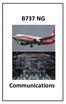 B737 NG Comm munications 5.20 Communications-System Description Introduction The communication system includes: radio communication system interphone communication system cockpit voice recorder system
The effect of mismatched recording conditions on human and automatic speaker recognition in forensic applications
 Forensic Science International 146S (2004) S95 S99 www.elsevier.com/locate/forsciint The effect of mismatched recording conditions on human and automatic speaker recognition in forensic applications A.
Cognitive and Organizational Challenges of Big Data in Cyber Defense
 Cognitive and Organizational Challenges of Big Data in Cyber Defense Nathan Bos & John Gersh Johns Hopkins University Applied Laboratory [email protected], [email protected] The cognitive and organizational
MODELS OF THREAT, ERROR, AND CRM IN FLIGHT OPERATIONS
 MODELS OF THREAT, ERROR, AND CRM IN FLIGHT OPERATIONS Robert L. Helmreich 1, James R. Klinect, & John A. Wilhelm University of Texas Team Research Project The University of Texas at Austin Department of
Question Specifications for the Cognitive Test Protocol
 Question Specifications for the Cognitive Test Protocol Core Questions These are the 6 disability questions to be tested in the interview. All of the other questions in the cognitive test protocol are
How To Find Out How Fast A Car Is Going
 JOURNAL OF VERBAL LEARNING AND VERBAL BEHAVIOR 13, 585-589 (1974) Reconstruction of Automobile Destruction: An Example of the Interaction Between Language and Memory ~ ELIZABETH F. LOFTUS AND JOHN C. PALMER
PERCENTAGE ARTICULATION LOSS OF CONSONANTS IN THE ELEMENTARY SCHOOL CLASSROOMS
 The 21 st International Congress on Sound and Vibration 13-17 July, 2014, Beijing/China PERCENTAGE ARTICULATION LOSS OF CONSONANTS IN THE ELEMENTARY SCHOOL CLASSROOMS Dan Wang, Nanjie Yan and Jianxin Peng*
b) Describe the concept of ERROR CHAIN in aviation.
 1. Crew Resource Management (CRM) was celebrated as the convergence ofa concept, an attitude and a practical approach to pilot training. a) What is the CRM all about and how this program could improve
CELL PHONE INDUCED PERCEPTUAL IMPAIRMENTS DURING SIMULATED DRIVING
 CELL PHONE INDUCED PERCEPTUAL IMPAIRMENTS DURING SIMULATED DRIVING David L. Strayer, Frank A. Drews, Robert W. Albert, and William A. Johnston Department of Psychology University of Utah Salt Lake City,
Application Notes. Contents. Overview. Introduction. Echo in Voice over IP Systems VoIP Performance Management
 Application Notes Title Series Echo in Voice over IP Systems VoIP Performance Management Date January 2006 Overview This application note describes why echo occurs, what effects it has on voice quality,
The Growing Epidemic of Cell Phone Use While Driving. Participant Guide
 The Growing Epidemic of Cell Phone Use While Driving Participant Guide Disclaimer Although the information and recommendations contained in this publication have been compiled from sources believed to
Tonal Detection in Noise: An Auditory Neuroscience Insight
 Image: http://physics.ust.hk/dusw/ Tonal Detection in Noise: An Auditory Neuroscience Insight Buddhika Karunarathne 1 and Richard H.Y. So 1,2 1 Dept. of IELM, Hong Kong University of Science & Technology,
Summary Table Voluntary Product Accessibility Template
 Voluntary Product Accessibility Template (VPAT) Name of Product: imagerunner ADVANCE C5255/C5250/C5240/C5235 Date: May 27, 2012 Note: This document was prepared based on normal walk-up functionality. It
INITIAL TEST RESULTS OF PATHPROX A RUNWAY INCURSION ALERTING SYSTEM
 INITIAL TEST RESULTS OF PATHPROX A RUNWAY INCURSION ALERTING SYSTEM Rick Cassell, Carl Evers, Ben Sleep and Jeff Esche Rannoch Corporation, 1800 Diagonal Rd. Suite 430, Alexandria, VA 22314 Abstract This
AIRCRAFT RESCUE AND FIRE FIGHTING GUIDE REVISION 0. AA Flight Safety Department.4601 Hwy 360; MD 849 GSWFA.Fort Worth Texas 76155. Phone 817-967-1829
 AIRCRAFT RESCUE AND FIRE FIGHTING GUIDE REVISION 0 AA Flight Safety Department.4601 Hwy 360; MD 849 GSWFA.Fort Worth Texas 76155. Phone 817-967-1829 Copyright 2013 by American Airlines Book design by Ted
Ministry of Civil Aviation Egyptian Advisory Circular Number 00-3 Egyptian Civil Aviation Authority. EAC No.00_3
 Ministry of Civil Aviation Egyptian Advisory Circular Number 00-3 EAC No.00_3 Issue 5, Rev. 0 Dated May, 2012 Page 1 2B 1T11T Egyptian Advisory Circular Number 00-3 Ministry of Civil Aviation UTABLE of
FIRE CODE INTERPRETATION
 FIRE CODE INTERPRETATION March 2008 ISSUE: Existing Fire Alarm Systems FCI-08-06 Page 1 of 9 The purpose of this bulletin is to identify conditions where a building fire alarm system may be subject to
Destiny 4100. Destiny 4100. Owners Manual
 Destiny 4100 Destiny 4100 Owners Manual TABLE OF CONTENTS INTRODUCTION Control Panel...3 Detection Devices...3 Telephone Keypads...3 GLOSSARY... 4-5 LOCAL PHONE ACCESS Using Your Telephones As Keypads...6
Situated Usability Testing for Security Systems
 PNNL-20201 Prepared for the U.S. Department of Energy under Contract DE-AC05-76RL01830 Situated Usability Testing for Security Systems FL Greitzer February 2011 DISCLAIMER This report was prepared as an
Supporting Features. Supports with Exceptions. Supports with Exceptions. Supports
 Voluntary Product Accessibility Template (VPAT) Date: April 1, 2008 Name of Product: Kyocera FS-1100 (Desktop Laser Printer) Contact for more Information: [email protected] Section 1194.21
The Art of Aeronautical Decision-Making Course Table of Contents
 Federal Aviation Administration The Art of Aeronautical Decision-Making Course Table of Contents Introduction Chapter 1 Chapter 2 Chapter 3 Chapter 4 Chapter 5 Chapter 6 Chapter 7 What is ADM? 3-P Model
TECHNOLOGY RESEARCH AND DEVELOPMENT More Than Alarm Anna Kołodziej-Saramak
 TECHNOLOGY RESEARCH AND DEVELOPMENT More Than Alarm Anna Kołodziej-Saramak The purpose of the voice alarm systems (VAS) is to inform people about hazards in a possibly efficient way (which, unfortunately,
What Audio Engineers Should Know About Human Sound Perception. Part 2. Binaural Effects and Spatial Hearing
 What Audio Engineers Should Know About Human Sound Perception Part 2. Binaural Effects and Spatial Hearing AES 112 th Convention, Munich AES 113 th Convention, Los Angeles Durand R. Begault Human Factors
The Dramatic Effects of Pitot-Static System Blockages and Failures. References... 51
 The Dramatic Effects of Pitot-Static System Blockages and Failures by Luiz Roberto Monteiro de Oliveira. Table of Contents I II III IV V VI Introduction.1 Pitot Static Instruments..3 Blockage Scenarios
MANAGING FOR THE UNEXPECTED
 Ross Thought in Action MANAGING FOR THE UNEXPECTED Kathleen M. Sutcliffe Professor, University of Michigan, Stephen M. Ross School of Business Marlys K. Christianson Assistant Professor, University of
Convention Paper Presented at the 133rd Convention 2012 October 26 29 San Francisco, USA
 Audio Engineering Society Convention Paper Presented at the 133rd Convention 2012 October 26 29 San Francisco, USA This paper was peer-reviewed as a complete manuscript for presentation at this Convention.
Perceptual influence of the vibratory component on the audio component of alarms produced by rumble strips, by measuring reaction times
 Proceedings of the Acoustics 2012 Nantes Conference 23-27 April 2012, Nantes, France Perceptual influence of the vibratory component on the audio component of alarms produced by rumble strips, by measuring
Acoustics of indoor sports halls and gymnasia
 Acoustics of indoor sports halls and gymnasia Robert Conetta 1, Bridget Shield 1, Trevor Cox 2, Charlie Mydlarz 2, Julie Dockrell 3, Daniel Connolly 3 1 London South Bank University 2 University of Salford
Syllabus - Fatigue Risk Management (FRM) Training
 Syllabus - Fatigue Risk Management (FRM) Training Syllabus Fatigue Risk Management (FRM) Training Aviation Quality Services Syllabus Fatigue Risk Management 1 Day 1... 3 1.1 Module FRM01: Development of
AUDIBLE MONITOR ALARM: FRIEND OR FOE?
 AUDIBLE MONITOR ALARM: FRIEND OR FOE? Osinaike B. B. 1, Amanor-Boadu S. D. 2, Oyebamiji E.O. 1, Tanimowo A 1, Dairo M.D. 3 1-Consultant/Lecturer, Department of Anaesthesia, Ladoke Akintola University Teaching
Operational Use of the English Language. ATM Safety around Europe
 9 Dragica Stankovic Operational Use of the English Language ATM Safety around Europe 1 Introduction Aviation represents a domain which arguably more than any other, requires world-wide standardized and
Using Retrocausal Practice Effects to Predict On-Line Roulette Spins. Michael S. Franklin & Jonathan Schooler UCSB, Department of Psychology.
 Using Retrocausal Practice Effects to Predict On-Line Roulette Spins Michael S. Franklin & Jonathan Schooler UCSB, Department of Psychology Summary Modern physics suggest that time may be symmetric, thus
Response to fire alarms
 http://irc.nrc-cnrc.gc.ca Response to fire alarms NRCC-49272 Proulx, G. A version of this document is published in / Une version de ce document se trouve dans: Fire Protection Engineering, no. 33, Winter
AN INTRODUCTION TO PSYCHOLOGY
 An Introduction to MODULE - I 1 AN INTRODUCTION TO PSYCHOLOGY As human beings our curiosity drives us to know the reasons behind various events happening around us. Whenever we meet somebody or see someone
Memory for pictures and words as a function of level of processing: Depth or dual coding?
 Memory & Cognition 1977, Vol. 5 (2),252-256 Memory for pictures and words as a function of level of processing: Depth or dual coding? PAUL R. D'AGOSTINO Gettysburg CoUege, Gettysburg, Pennsylvania 17925
WHITE PAPER VoIP Networks August 2013. Keys to Minimizing Echo in VoIP Networks
 WHITE PAPER VoIP Networks August 2013 Keys to Minimizing Echo in VoIP Networks Table of Contents Executive Summary 3 Section 1: The Challenge 4 Minimizing Echo in VoIP Systems Section 2: The Opportunity
Comprehensive Reading Assessment Grades K-1
 Comprehensive Reading Assessment Grades K-1 User Information Name: Doe, John Date of Birth: Jan 01, 1995 Current Grade in School: 3rd Grade in School at Evaluation: 1st Evaluation Date: May 17, 2006 Background
Subject: CREW RESOURCE MANAGEMENT TRAINING PROGRAMME
 ADVISORY CIRCULAR FOR AIR OPERATORS Subject: CREW RESOURCE MANAGEMENT TRAINING PROGRAMME Date: xx.xx.2013 Initiated By: Republic of Korea AC No: 1. PURPOSE This advisory circular (AC) presents guidelines
SECTION 508 COMPLIANCE
 SECTION 508 COMPLIANCE Section 508 requires that Federal Departments and Agencies provide Electronic and Information Technology (EIT) that s accessible to people with disabilities. The purpose of this
The Use of Directional Sound to Aid Aircraft Evacuation
 The Use of to Aid Aircraft Evacuation Professor Deborah Withington, School of Biomedical Sciences, University of Leeds, LS2 9NQ, U.K. & Sound Alert Technology plc. The ability to safely evacuate passengers
Active Monitoring of Voice over IP Services with Malden
 Active Monitoring of Voice over IP Services with Malden Introduction Active Monitoring describes the process of evaluating telecommunications system performance with intrusive tests. It differs from passive
ON SELECTIVE ATTENTION: PERCEPTION OR RESPONSE?
 362 QUARTERLY JOURNAL OF EXPERIMENTAL PSYCHOLOGY COMMENTS ON SELECTIVE ATTENTION: PERCEPTION OR RESPONSE? Downloaded by [University of California, San Diego] at 11:49 12 February 2013 BY J. A. DEUTSCH
Understanding the task
 Understanding the task Identifying the potential for human failure in preventing an accident or exposure to substances hazardous to health requires having a thorough understanding of the task the person
VPAT Summary. VPAT Details. Section 1194.22 Web-based Internet information and applications - Detail
 Date: October 8, 2014 Name of Product: System x3755 M3 VPAT Summary Criteria Status Remarks and Explanations Section 1194.21 Software Applications and Operating Systems Section 1194.22 Web-based Internet
P/N 135A-970-022 FAA Approved: 12/6/2007 Section 9 Initial Release Page 1 of 8
 FAA APPROVED AIRPLANE FLIGHT MANUAL SUPPLEMENT FOR GARMIN SL40 NAV/COMM Serial No: Registration No: When the GARMIN SL40 COM radio is installed in the Liberty Aerospace XL-2, this supplement is applicable
Accident Analysis: Single-pilot versus Two-pilot - Is There a Safety Advantage?
 Accident Analysis: Single-pilot versus Two-pilot - Is There a Safety Advantage? AIN analysis comparing accidents involving one-pilot versus two-pilot business jet operations from 1977 through 2014 reveals,
USER-INITIATED NOTIFICATION: A CONCEPT FOR AIDING THE MONITORING ACTIVITIES OF PROCESS CONTROL OPERATORS
 USER-INITIATED NOTIFICATION: A CONCEPT FOR AIDING THE MONITORING ACTIVITIES OF PROCESS CONTROL OPERATORS Stephanie Guerlain and Peter Bullemer Honeywell Technology Center Minneapolis, MN Monitoring activities
Implementing Large-Scale Autonomic Server Monitoring Using Process Query Systems. Christopher Roblee Vincent Berk George Cybenko
 Implementing Large-Scale Autonomic Server Monitoring Using Process Query Systems Christopher Roblee Vincent Berk George Cybenko These slides are based on the paper Implementing Large-Scale Autonomic Server
Table of Contents 1. INTRODUCTION 2 2. DEFINITION 4 3. UAS CLASSIFICATION 6 4. REGULATORY PRINCIPLES 16 5. INTERACTION WITH AIR TRAFFIC CONTROL 16
 FOREWORD Table of Contents 1. INTRODUCTION 2 2. DEFINITION 4 3. UAS CLASSIFICATION 6 4. REGULATORY PRINCIPLES 16 5. INTERACTION WITH AIR TRAFFIC CONTROL 16 6. SENSE AND AVOID ( required for applicants
Functional Assessment Measures
 Functional Assessment Measures FUNCTIONAL RATING SCALES This section highlights the assessment of functional limitations. Assessment of functional limitations is essential to help determine eligibility
Usability of Medical Applications Ved Line Kagenow Svenstrup, [email protected]
 Usability of Medical Applications Ved Line Kagenow Svenstrup, [email protected] What is usability? The user, rather than the system, at the center of the process. Risk of operating errors that can cause injury
Flight Operations Briefing Notes
 Flight Operations Briefing Notes I Introduction Interruptions and distractions are the main threat facing flight crews. Note : A threat is a condition that affects or complicates the performance of a task
The Online Journal of New Horizons in Education Volume 3, Issue 3
 Undergraduates Who Have a Lower Perception of Controlling Time Fail To Adjust Time Estimation Even When Given Feedback Yoshihiro S. OKAZAKI [1], Tomoya IMURA [2], Masahiro TAKAMURA [3], Satoko TOKUNAGA
Crew Resource Management (CRM)
 King Schools Online Internet Learning Programs Crew Resource Management (CRM) Syllabus King Schools, Inc. 3840 Calle Fortunada San Diego, CA 92123 800-854-1001 (USA) 858-541-2200 (Worldwide) www.kingschoolsonline.com
Sound Quality Aspects for Environmental Noise. Abstract. 1. Introduction
 The 2002 International Congress and Exposition on Noise Control Engineering Dearborn, MI, USA. August 19-21, 2002 Sound Quality Aspects for Environmental Noise Dr.-Ing. Klaus Genuit HEAD acoustics GmbH
SCENARIO DEVELOPMENT FOR DECISION SUPPORT SYSTEM EVALUATION
 SCENARIO DEVELOPMENT FOR DECISION SUPPORT SYSTEM EVALUATION Emilie M. Roth Roth Cognitive Engineering Brookline, MA James W. Gualtieri, William C. Elm and Scott S. Potter Aegis Research Corporation Pittsburgh,
5162 E. Working in oxygen-reduced atmospheres BGI/GUV-I 5162 E. Information
 5162 E BGI/GUV-I 5162 E Information Working in oxygen-reduced atmospheres November 2013 Imprint About us Publisher: German Social Accident Insurance (DGUV) Mittelstraße 51 10117 Berlin Tel.: 030 288763800
GUIDE TO PATIENT COUNSELLING
 Guide To Patient Counselling page - 1 - GUIDE TO PATIENT COUNSELLING Communication is the transfer of information meaningful to those involved. It is the process in which messages are generated and sent
TI 313 (1.0 EN) d&b Remote network - Integration
 TI 313 (1.0 EN) d&b Remote network - Integration 1. Introduction The d&b Remote network offers various options to configure, control and monitor a d&b sound reinforcement system. This can be done by either
General... 1. Applicability... 1 Cancellation... 1 References... 1 Effective Date... 1 Background...1. Components of CRM... 3
 AC AOC-34( (0) 17 April 2014 Advisory Circular TRAINING PROGRAMME ON CREW RESOURCE MANAGEMENT General... 1 Purpose... 1 Applicability... 1 Cancellation... 1 References... 1 Effective Date... 1 Background....1
Prevention of Spam over IP Telephony (SPIT)
 General Papers Prevention of Spam over IP Telephony (SPIT) Juergen QUITTEK, Saverio NICCOLINI, Sandra TARTARELLI, Roman SCHLEGEL Abstract Spam over IP Telephony (SPIT) is expected to become a serious problem
Alarm Management. July 2012 / White paper. Make the most of your energy SM
 Alarm Management July 2012 / White paper Make the most of your energy SM Summary Executive summary... p 1 Introduction... p 2 Control room management best practices today... p 4 Alarm management requirements...
Programming Guide. http://www.reecominc.com. Model: R-1630C
 Programming Guide S.A.M.E Digital Weather / All Hazards Alert Radio CEA-2009-A Certified Alert Receiver Model: R-1630C Public Alert Certified Reecom Electronics Inc. http://www.reecominc.com Features:
Control Room Management and Related Best Practices
 Control Room Management and Related Best Practices Executive Summary This paper summarizes a SCADA implementer s perspective regarding the intent of the Pipeline Hazardous Materials Safety Administration
Title & Image NATIONAL CIVIL AVIATION ADMINSTRATION. Advisory Circular
 Title & Image NATIONAL CIVIL AVIATION ADMINSTRATION Advisory Circular Subject: CREW RESOURCE MANAGEMENT TRAINING PROGRAMME Issuing Office: [Identity of Office of NCAA issuing ] Document No.: [NCAA AC #]
Purpose This Advisory Circular provides methods acceptable to the Director for showing compliance with Part 43 and Part 91.
 Advisory Circular AC 43-11 Revision 2 Emergency Locator Transmitters 12 June 2008 General Civil Aviation Authority Advisory Circulars contain information about standards, practices, and procedures that
Air Medical Transport Planning Good planning can save lives. Planning for air medical transport
 Chapter 1 2 15 Air Medical Transport Planning Good planning can save lives. Planning for air medical transport is important to maximize efficiency and safety; it helps create the best care for patients.
Test Anxiety, Student Preferences and Performance on Different Exam Types in Introductory Psychology
 Test Anxiety, Student Preferences and Performance on Different Exam Types in Introductory Psychology Afshin Gharib and William Phillips Abstract The differences between cheat sheet and open book exams
Improving safety through accident investigation: An NTSB perspective Robert Sumwalt
 Improving safety through accident investigation: An NTSB perspective Robert Sumwalt March 18, 2015 It was really great to see firsthand the professional work done by members of the airborne law enforcement
ANNEX 11. RESOLUTION MSC.128(75) (adopted on 20 May 2002) PERFORMANCE STANDARDS FOR A BRIDGE NAVIGATIONAL WATCH ALARM SYSTEM (BNWAS)
 RESOLUTION MSC.128(75) (adopted on 20 May 2002) PERFORMANCE STANDARDS FOR A BRIDGE NAVIGATIONAL WATCH ALARM SYSTEM (BNWAS) THE MARITIME SAFETY COMMITTEE, RECALLING Article (28(b) of the Convention on the
FMEA Failure Risk Scoring Schemes
 FMEA Failure Risk Scoring Schemes 1-10 Scoring for Severity, Occurrence and Detection CATEGORY Severity 10 9 8 7 6 5 3 2 1 Hazardous, without warning Hazardous, with warning Very High High Moderate Low
Summary Table Voluntary Product Accessibility Template
 Voluntary Product Accessibility Template (VPAT) Name of Product: Canon EOS 50D (EF 28-135 IS USM KIT) Date: June 29, 2009 e: This document was prepared based on normal walk-up functionality. It does not
Everybody has the right to
 Everybody has the right to good hearing The Guide TO Hearing satisfaction for more people Beltone was founded on the act of helping a friend to enjoy life more. Since 19, we have provided knowledge, tools,
Maryland State Firemen s Association Executive Committee Meeting December 5, 2009
 Maryland State Firemen s Association Executive Committee Meeting December 5, 2009 Maryland State Police Aviation Command Update Presented by: Major Andrew J. (A. J.) McAndrew Hello, my name is Major A.