
A COMPARISON OF THE EB-5 CATEGORY WITH ALTERNATIVE IMMIGRATION STRATEGIES
|
|
|
- Kristopher Nicholas Merritt
- 10 years ago
- Views:
Transcription
1 Copyright 2006, American Immigration Lawyers Association. Reprinted, with permission, from Immigration Options for Investors and Entrepreneurs ( Edition), available from AILA Publications. A COMPARISON OF THE EB-5 CATEGORY WITH ALTERNATIVE IMMIGRATION STRATEGIES by Lincoln Stone * INTRODUCTION Investment in a U.S. business can be a springboard to enjoyment of U.S. immigration benefits. Experienced practitioners know well the legal requirements for qualifying investor clients in the L-1 and E-2 nonimmigrant visa categories. Seasoned attorneys also recognize that the first permanent residence option for investors is the EB-1C classification for multinational executives and managers. 1 Among the advantages of the EB-1C classification, the first is that it does not require labor certification. It also closely parallels the L-1 visa category such that L-1 visa holders should qualify for EB-1C classification in most cases. But the EB-1C classification is unsuited to certain investors who, for instance, do not maintain a related business operation overseas or will not work as an employee in the U.S. business. This article surveys the attributes of investment immigration, in particular the characteristics of the investor and the qualities of the investment that satisfy the regulatory scheme for the permanent residence category based on employment-creating investment (EB-5). 2 Compared to other permanent residence options available to the investor, the EB-5 classification stands alone in its requirement that the investor survive the purgatory of a two-year conditional residence period. This article assumes a basic understanding of the subject categories. Instead of presenting a comprehensive analysis of the subject categories, this article highlights the peculiar ways the attributes of EB-5 investment immigration deviate from common understandings about eligibility for the E-2 and L-1 visa categories as well as the EB-1C classification. A thorough understanding of * Lincoln Stone practices immigration law in Los Angeles with Stone & Grzegorek LLP. 1 Immigration and Nationality Act of 1952 (INA), Pub. L. No , 66 Stat. 163 (codified as amended at 8 USC 1101 et seq.) 203(b)(1)(C); 8 CFR 204.5(j). The EB-1A category for extraordinary ability immigrants also is a viable alternative for the small group of persons who can meet the high standards set forth in regulations. See INA 203(b)(1)(A); 8 CFR 204.5(h). 2 INA 203(b)(5); 8 CFR these attributes should facilitate the transition of an investor client from nonimmigrant L-1 or E-2 status to permanent residence. CHARACTERISTICS OF INVESTOR Even before considering the amount and structure of the investment a new client has made, and the economic and employment consequences of that investment, perhaps the first consideration for a practitioner is whether this particular client has the necessary personal qualities to prove eligibility for the EB-5 classification. Background and Experience It may be somewhat surprising to practitioners that the investor applying for permanent residence based on the EB-5 classification need not have a particular background or any experience at all. Regulations for the EB-5 classification are silent on characteristics of the investor. Successful petitioners have included students, relatively young adults, retirees, petitioners with limited English language ability and no prior investment experience, and investors with no management experience or entrepreneur skills. Holders of the L-1 visa, on the other hand, must have worked as an executive, manager, or specialized knowledge employee for an affiliated business. The L-1 visa category is intended to accommodate multinational enterprises, but in that context the regulations for the L-1 visa narrowly circumscribe the benefit so that only top-level executives or managers, or the rare specialized knowledge employee, are eligible for the L-1 visa. 3 Unlike the L-1 visa category, the EB-5 petitioner is not required to demonstrate any particular past experience. The E-2 visa holder must be coming to the United States solely to develop and direct the enterprise. The E-2 visa category is available to those investorentrepreneurs who will devote all their energies to developing and directing their own businesses. 4 Regulations relating to the E-2 visa category do not 3 8 CFR 214.2(l) CFR 41.51(b)(2); 8 CFR 214.2(e)(2). 69

2 70 IMMIGRATION OPTIONS FOR INVESTORS AND ENTREPRENEURS stipulate that the investor have prior experience. However, inasmuch as the E-2 visa is issued so that the investor will be the principal entrepreneur of the enterprise, consular officers typically query the E-2 visa applicant s qualifications for developing and directing an enterprise in the United States. The E visa application form, DS-156E, in pertinent part, requests information on the investor s former position and duties, relevant experience and education, and a detailed description of the duties of the position in the United States. Not only is the EB-5 petitioner excused from presenting evidence of past experience, but the EB-5 classification, in essence, minimizes the significance of what the investor actually will do in the U.S. enterprise. The EB-5 classification mandates only that the investor will be engaged in the enterprise, which can be as minimal as having a role in policy formulation. 5 The investor does not have to be a manager, executive, or even an employee in the business, and does not have to direct and control the business. If the investor s personal characteristics (i.e., mental capacity and communication skills, considering perhaps the aid of a proxy or translator) will allow for some role in policy-making, then the investor is eligible for EB-5 classification. The EB-5 classification, therefore, is not limited to entrepreneurs who can demonstrate past investment and managerial experience. Although the Form I-526 used by EB-5 petitioners includes entrepreneur in the title, a petitioner may qualify for the EB-5 classification without actually having entrepreneurial experience or the intent to be an entrepreneur in the investment enterprise. Nationality The nationality of the investor is critically important in the case of the E-2 visa category. Only those nationals of countries having treaties with the United States conferring reciprocal benefits for investors are eligible for the E-2 visa. 6 Consequently, nationals of certain countries with large numbers of investors (such as Brazil, India, and the People s Republic of China) cannot obtain E-2 visa benefits. Permanent residence by investment and petition in the EB-5 classification is available to nationals of all countries. Considering only the applicable regulations, the nationality of the investor should not be a consideration in the EB-5 classification. However, in practice, a cautious practitioner is wise to consider nationality. The actual adjudication of I-526 petition is not necessarily blind to the nationality of the petitioner; U.S. Citizenship and Immigration Services (USCIS) officers decide I-526 petitions in the context of what they know, or assume, about the general economic and political circumstances of particular countries. Due to legitimate concerns about organized crime, money laundering, and terrorism, as well as the prevalence of fraudulent documents, practitioners can anticipate heightened scrutiny in the adjudication of EB-5 petitions filed by investors of certain nationalities. Officers, likewise, may be influenced by similar nationality-based considerations (e.g., fraud profiles ) in the course of adjudicating E-2, L-1, and EB- 1C cases. CHARACTERISTICS OF INVESTMENT Once the practitioner has sized up the client s personal characteristics that may be relevant to eligibility, determined the client s nationality, and assessed the potential impact that nationality might have on adjudication, attention can turn to the characteristics of the actual or proposed investment and whether the investment will qualify the client for permanent residence. The first option the practitioner should consider is the EB-1C classification, as it does not require a two-year conditional residence period. If the investor is qualified and if the investment can be structured to meet the requirements for EB-1C classification, then the practitioner should prepare and file the Form I-140 petition based on the EB-1C classification. 7 If EB-1C classification is not available, then consider whether the investment satisfies the standards of the EB-5 classification. Practitioners must bear in mind that although Congress indicated that the legal principles that would govern the EB-5 classification investment should be no different from the legal principles that govern E-2 visa 5 INA 203(b)(5)(A); 8 CFR 204.6(j)(5). 6 Commercial treaties may include bilateral investment treaties; treaties of friendship, commerce, and navigation; and free trade agreements such as the North American Free Trade Agreement. 7 An added benefit is that the I-140 petition, unlike the I-526 petition, can be concurrently processed with an I-485 application for adjustment of status. Interim Rule, 67 Fed. Reg (July 31, 2002), published on AILA InfoNet at Doc. No (posted Jul. 31, 2002).

3 A COMPARISON OF THE EB-5 CATEGORY WITH ALTERNATIVE IMMIGRATION STRATEGIES 71 investments, 8 experience instructs that important distinctions exist in the adjudication of EB-5 petitions. The following eight-point checklist may be handy to practitioners in determining whether an investment will qualify for the EB-5 classification. Investment Timing The permanent residence benefit provided by the EB-5 category can be based on any investment made after November 29, 1990, the effective date of the enabling legislation. The qualifying investment may be spread out over time and need not be executed in a single phase. Indeed, the investment that qualified the investor for an L-1 or E-2 visa may be supplemented with additional capital in order to qualify the investor for the minimum capital requirement of the EB-5 classification. Furthermore, insofar as the EB- 5 statute provides that the investor may be in the process of investing capital, the qualifying investment may straddle the filing of the I-526 petition. 9 Investment by Individual Petitioner The permanent residence benefit based on the EB- 5 classification requires investment by an individual. Thus, investments of funds owned by an entity cannot be the basis for the EB-5 petition. This requirement continues to be particularly vexing for investors from such countries as the People s Republic of China, where the distinction between the assets of an individual and the assets of a company is so frequently blurred. Allowing for the possible exception where the petitioner owns 100 percent of the investing entity, in most instances, if the investment is made by an entity rather than an individual, immigration benefits will be limited to the L-1 and E-2 visa categories and the EB-1C immigrant classification. Similarly, in adjudicating an EB-5 petition, the examiner will require specific, detailed evidence that the investment is by the petitioner and not some oth- er individual or entity. 10 It is vital to the success of the I-526 petition to support it with detailed documentation that traces invested funds from the U.S. enterprise back to the individual petitioner. Of course, the requirement that the petitioner is the actual investor does not foreclose approval of a petition based on funds that the petitioner received by loan, inheritance, or gift, as those arrangements have been accepted for years in E-2 visa practice. 11 Also note that the EB-5 classification is relatively better suited to simultaneous petitions for immigration benefits filed by multiple individual investors in a single enterprise. The E-2 visa category can accommodate at most two petitioning co-investors who each control 50 percent of the enterprise. 12 The L-1 visa category and EB-1C classification could theoretically accommodate multiple individual investors who petition for immigration benefits; however, each of the investors must satisfy the executive, manager, or specialized knowledge requirements and the investors must own the foreign and U.S. businesses in approximately the same proportions. 13 The EB-5 classification, in comparison, can accommodate multiple petitioning investors in the same enterprise without regard to percentage ownership and the existence of nonpetitioning investors, so long as each petitioning investor can document sufficient employment impacts. 14 The petitioning investors, moreover, can take all credit for employment impacts as if the nonpetitioning investors created no employment at all. 15 Investment in Commercial Enterprise Permanent residence based on the EB-5 classification must be premised on a commercial enterprise that is a for-profit activity formed for the ongoing conduct of lawful business. Consequently, nonprofit enterprises, one-shot construction projects, and non commercial activity such as owning and operating a 8 This is according to the legacy INS Final Rule, 56 Fed Reg , (Nov. 29, 1991). Congress also cited the investment standards that prevailed with the former nonpreference investor category. S. Rep. No , at 21 (1989). 9 INA 203(b)(5)(A)(ii). Even the statute concerning the petition for removal of conditions on permanent residence, INA 216A(d)(1)(B), authorizes removal of conditions where petitioner is still in the process of investing; however, petitioner will be required to substantially complete the investment prior to filing the petition for removal of the conditions. See 8 CFR 216.6(c)(1)(ii), (c)(1)(ii); Matter of Izumii, 22 I&N Dec. 169, 19 Immigr. Rptr. B2-32 ( AAO July 13, 1998). 10 INA 203(b)(5)(A)(ii); 8 CFR 204.6(c); Matter of Ho, 22 I&N Dec. 206, 19 Immigr. Rptr. B2-99 (AAO July 31, 1998) (funds transferred from unidentified account will not be credited to petitioner) FAM N FAM N.12. More than two E-2 visas might be had if the investors are executive, supervisory, or essential employees who have invested their funds into a holding company structure CFR 214.2(l)(1)(ii)(L) CFR 204.6(g)(1) CFR 204.6(g)(2).

4 72 IMMIGRATION OPTIONS FOR INVESTORS AND ENTREPRENEURS personal residence will not support a finding that there is a commercial enterprise. 16 The E-2 visa also requires an investment in a for-profit commercial enterprise. 17 Furthermore, investments in idle or speculative investments that do not involve an active commercial enterprise will not yield an E-2 visa for the investor. 18 Note that the L-1 and EB-1C categories require the existence of a legal entity that is doing business in the United States. 19 The EB-5 statute requires investment in a new commercial enterprise. 20 However, USCIS will distinguish between businesses existing before and after November 29, All investments made in businesses started after November 29, 1990, will be considered investments made in a new commercial enterprise. If the business existed prior to November 29, 1990, USCIS will consider the enterprise new only if the investment causes a restructuring or reorganization of the enterprise, or the investment substantially expands the net worth or employment base of the enterprise by at least 40 percent. 21 Exactly what USCIS will accept as sufficient restructuring or reorganization is anybody s guess, 22 but mere cosmetic changes to the business s décor and a new business plan will not suffice. 23 Practitioners can anticipate that proof of substantial expansion in terms of net worth might require audited financial statements as evidence of net worth. 24 Note, also, 16 8 CFR 204.6(e), defining Commercial enterprise CFR 41.51(b)(8); 9 FAM N FAM N CFR 204.5(j)(2), 214.2(l)(1)(ii)(H). 20 INA 203(b)(5)(A). Note that Congress eliminated the requirement that the petitioner establish a new commercial enterprise. Pub. L. No , 116 Stat. 1758, Title I, Subtitle B, Ch et seq. (2002). 21 Memorandum of William R. Yates, Amendments Affecting Adjudication of Petitions for Alien Entrepreneur (EB-5) (June 10, 2003), published on AILA InfoNet at Doc. No (posted June 17, 2003). 22 See cases reviewed in L. Stone, Congress Eliminates the Established Requirement in the Investor Statute: Will This Stimulate Foreign Investment? AILA s Immigration Law Today (July/Aug. 2003). 23 Matter of Soffici, 22 I&N Dec. 158, 19 Immigr. Rptr. B2-25 (AAO June 25, 1998) (business in existence for 24 years is not made new by acquiring it and operating it in a newly-formed corporation). 24 Matter of [name not provided], WAC (AAO Dec. 15, 2000). See Memorandum of Alexander Aleinikoff, INS General Counsel, Jan. 31, 1995, reprinted in 73 Interpreter Releases 1617, 1625 (Nov. 18, 1996) (indicatcontinued that USCIS may require that such proof of the new enterprise must exist as of the filing of the I-526 petition, and, in that case, the petitioner would not be permitted to base the argument of restructuring/reorganization/expansion on future events. Applicants for benefits in the E-2, L-1, and EB- 1C categories encounter no such limitations in terms of the prior existence of the business. Whether the investment is in an existing business or a new business is usually immaterial to eligibility for the visa. 25 Investment Location Investments in certain locations can facilitate qualifying for permanent residence based on the EB-5 classification. In contrast, investment location is not relevant to eligibility for E-2 or L-1 visas or the EB-1C immigrant classification. First, if the investment is in a targeted employment area, then the minimum capital that must be invested to qualify for the EB-5 classification is reduced from $1 million to $500, The location of the investment is deemed to be the place where the enterprise is principally doing business. 27 Also, note that the determination of targeted employment area is based on circumstances existing at the time of investment, rather than at the time of petition filing or petition adjudication. 28 Regulations define a targeted employment area as a rural area or an area of high unemployment exceeding 150 percent of the national average unemployment rate. 29 Consider a simple illustration of how the regulation is applied. If an investment is made in March 2004, and the I- 526 petition is filed in August 2004, then the evidence in support of the petition might include unemployment data for the particular area in March 2004 (or if unavailable, then February 2004, or end of the year 2003 data should suffice). That unemployment data, then, is compared to the national unemployment data for end of the year If the local area ing that 40 percent increase in net worth can be reached by counting all the capital contributed, rather than solely the petitioner s capital). 25 An obvious exception is that the L-1 visa is available for one year on a fairly liberal basis to executive, managerial, and specialized knowledge employees who are staffing a new office in the United States. 8 CFR 214.2(l)(3)(v), (vi). 26 INA 203(b)(5)(C) CFR 204.6(j)(6) CFR 204.6(e), defining Targeted employment area. 29 Id.

5 A COMPARISON OF THE EB-5 CATEGORY WITH ALTERNATIVE IMMIGRATION STRATEGIES 73 rate is at least 150 percent of the national average unemployment rate, then the investment was made in a targeted employment area. Note, there are several alternative methods for determining that an investment area is indeed rural or an area of high unemployment. 30 Practitioners who employ creative thinking and do extra homework on unemployment data frequently come to the conclusion that the client invested in a targeted employment area. The second aspect of the EB-5 classification that concerns investment location is the Immigrant Investor Pilot Program. If the investment is in a regional center designated by USCIS (or legacy Immigration and Naturalization Service (INS)) under the Immigrant Investment Pilot Program, then the employment-creation requirement of the EB-5 classification may be satisfied by employment created in the commercial enterprise as well as indirect employment impacts throughout the economy. 31 Investment in a regional center location potentially simplifies the task of proving the job creation required as evidence in support of the I-526 petition. Further considerations for regional center investment are presented in the section below on employment impacts. Investment Amount The EB-5 permanent residence classification stipulates a minimum capital investment of $1 million. As indicated above, if the investment is in a targeted employment area, the minimum capital that must be invested to qualify for the EB-5 category is reduced from $1 million to $500,000. Capital that is not cash, such as equipment or inventory, is credited in the amount of its fair market value. The amount of capital required by law, therefore, is a relatively straightforward proposition. Regulations for the EB-5 permanent residence classification do not require considerations of substantiality, proportionality, or marginality, as in E-2 visa practice. The purpose of the substantial investment requirement for E-2 visas is to ensure to a reasonable extent that the business invested in is not specula- tive, but is or soon will be a successful enterprise as the result of the exercise of sound business and financial judgment. Thus, before issuing the E-2 visa, consular officers are directed to weed out risky undertakings and to ensure that the investor is unquestionably committed to the success of the business. 32 No parallel exists in the adjudication of petitions for EB-5 classification; if the investor meets the minimum investment amount, there is no further inquiry into substantiality. Practitioners in the E-2 visa field must contend with the rule of proportionality that requires that an investment be substantial in a proportional sense; that is, in relationship to the total cost of either purchasing an established enterprise or creating the type of enterprise under consideration. 33 According to the proportionality test which involves an inverted sliding scale a $1 million investment does not qualify for an E-2 visa if, for instance, the total capital in the enterprise is $300 million. 34 Adjudication of EB-5 petitions does not involve a proportionality analysis. Indeed, the EB-5 petitioner may be supplying very little of the overall capital invested in the enterprise, for example, $500,000 of a total of $50 million. Even so, the disproportionate investment will satisfy the EB-5 classification. Notwithstanding the relative insignificance of the petitioner s investment as compared to the total investment in the enterprise, the EB-5 petitioner may be able to take all the credit for any job creation in the enterprise. 35 Unlike the EB-5 classification, the E-2 visa category requires consideration of marginality. A marginal enterprise is one that does not have the present or future capacity to generate more than a minimal living for the treaty investor and family. 36 Investment in a marginal enterprise cannot support an E-2 visa. Adjudication of EB-5 cases does not necessarily consider marginality. If the petitioner has invested the required amount of capital and created the required number of jobs, it is irrelevant that the enterprise might be characterized as marginal. But, a word of caution to practitioners where the EB-5 petition is based on future job creation, in which 30 8 CFR 204.6(j)(6). 31 Departments of Commerce, Justice, and State, for Judiciary, and Related Agencies Appropriations Act of 1993, Pub. L. No , 610, 106 Stat (1992), amended by Pub. L. No , 116 Stat. 1758, Title I, Subtit. B. Ch (2002) FAM 41.51, Note CFR 41.51(b)(9)(i); 9 FAM N CFR 41.51(b)(9)(ii); 9 FAM N CFR 204.6(g)(2) CFR 41.51(b)(10); 9 FAM N.11.

6 74 IMMIGRATION OPTIONS FOR INVESTORS AND ENTREPRENEURS case the regulations require the I-526 petition to be supported by a comprehensive business plan: The marginality of the business may be questioned albeit in the somewhat different language of the credibility of the business plan. An examiner may conclude that the insufficiency of the comprehensive business plan casts doubt on the viability of the business and the potential for creating and sustaining the required 10 full-time jobs. 37 Similar considerations, again in the form of different language, are at work in the L-1 and EB-1C categories where an adjudicating officer perceives the U.S. entity to be relatively insubstantial to warrant the presence of an executive or manager. Investment of Equity Capital The EB-5 petition must be based on an equity investment. In defining the term invest, the EB-5 regulations provide that the petitioner s investment cannot be any form of a debt arrangement or a loan from the investor to the enterprise. 38 Any form of investment that USCIS may categorize as essentially debt, where the petitioner has a commitment to be repaid a specific amount, will not qualify the petitioner for permanent residence based on the EB-5 classification. 39 Practitioners also should heed the warning that USCIS is likely to consider the requirement of equity investment to imply long-term equity investment. One can anticipate substantial difficulties in securing USCIS approval of any EB-5 petition that is based on an investment structure that might be folded up, without provision for significant financial losses to the petitioner, soon after the removal of the condition on permanent residence. The suspicion would be that the investment scheme is actually a loan dressed as an equity investment. Practitioners with substantial experience representing investors in the E-2 visa category have not been required by law, custom, or practice to specify whether the investment capital is equity or debt. Typically, the issue is not raised. Counsel, instead, emphasize that the investor s capital is sufficiently at risk to merit issuance of the E-2 visa. The eligibility criteria for the L-1 and EB-1C categories do not include investment at all, and, thus, to the extent that the U.S. enterprise is funded by the visa applicant s capital, that funding may be a loan from the applicant without jeopardizing visa eligibility. Capital for EB-5 eligibility purposes includes contributions by the petitioner to the enterprise in the form of cash, equipment, inventory, and indebtedness that is not secured by assets of the commercial enterprise. 40 Any commitment of the petitioner to invest capital over time must be fully documented, whether by promissory note or otherwise. A promissory note constitutes capital if it is secured by assets owned by the petitioner, the assets are specifically identified as securing the note, the security interests in the note are perfected, and the assets are amenable to seizure by the holder of the note. 41 Although promissory notes are acceptable as a form of capital, and although the statute clearly authorizes an investor to be in the process of investing capital, 42 practitioners should counsel their clients that such arrangements are likely to confuse the issues of eligibility and could lead to petition denials and costly delays in adjudication. The reference in the EB-5 regulation to indebtedness as an acceptable form of capital can create further confusion. Legacy INS had explained that it allowed indebtedness because the guidelines for E-2 visas allowed it, and the agency desired to follow Congress s directive to broadly interpret the law. 43 The EB-5 regulations, thus, require the petitioner to present evidence of any loan or mortgage agreement, promissory note, security agreement, or any other like evidence of borrowing. 44 But the definition of invest clearly prohibits the petitioner from qualifying for the EB-5 category based on a loan from the petitioner to the enterprise, and that regulation likewise has been interpreted to preclude the petitioner s 37 Matter of Ho, 22 I&N Dec. 206, 19 Immigr. Rptr. B2-99 (AAO July 31, 1998) CFR 204.6(e), defining Invest. Matter of Soffici, 22 I&N Dec. 158, 19 Immigr. Rptr. B2-25 (AAO June 25, 1998). 39 Matter of Izumii, 22 I&N Dec. 169, 19 Immigr. Rptr.B2-32 (AAO July 13, 1998) (for a discussion of guaranteed payments and redemption agreement) CFR 204.6(e), defining Capital. 41 Matter of Hsiung, 22 I&N Dec. 201, 19 Immigr. Rptr. B2-106 (AAO July 31, 1998). 42 INA 203(b)(5)(A)(i) Fed Reg , (Nov. 29, 1991), citing the FAM CFR 204.6(j)(2)(v).

7 A COMPARISON OF THE EB-5 CATEGORY WITH ALTERNATIVE IMMIGRATION STRATEGIES 75 eligibility based on borrowing by the enterprise. 45 In order to avoid interpreting the definitions of capital and invest incongruously, and to home in on what the regulation means in terms of accepting indebtedness, help may be found in the later update to the E-2 visa guidelines. The Department of State (DOS) has clarified that in terms of whether the investment is sufficiently at risk, if the funds availability arises from indebtedness the funds will be acceptable for E-2 visa purposes so long as they are not secured by assets of the enterprise. 46 In other words, the investment in the enterprise of the proceeds of a loan secured, for example, by the investor s home can be accepted as an at risk investment for E-2 visa purposes. The reference to indebtedness for E-2 visa purposes, therefore, is meant to refer to the limited circumstances when the investor may use borrowed funds to make an at risk investment in the enterprise. The same intention is likely in the reference to indebtedness found in the EB-5 regulation. Oddly, considering the importance of intellectual property in the modern economy, the regulatory definition of capital in the EB-5 context has been drafted to exclude intangible assets. 47 This interpretation deviates from the E-2 visa standards that Congress intended to be the model for EB-5 standards of investment. In the E-2 visa context, rights to intangible or intellectual property may be considered capital assets to the extent value can be determined. 48 Practitioners may look to the EB-5 regulation and its narrow interpretation to exclude intangible assets as a matter requiring legal challenge or statutory and regulatory change. Lawful Source of Investment Capital The EB-5 statute requires that the petitioner invest capital in a U.S commercial enterprise. The EB- 5 regulations legislate further, requiring that a petitioner demonstrate that the invested capital was obtained through lawful means. 49 In the aftermath of issuing four precedent decisions in 1998, the Administrative Appeals Office (AAO) issued a string of nonprecedent decisions that introduced exceedingly high legal standards for proof of source of capital, including the apparent requirement that petitioner must prove a sufficient level of income to be able to invest. Practitioners have a variety of arguments to choose from in challenging the legality of exceedingly high evidentiary standards. 50 Not the least among the arguments is the authority USCIS examiners and DOS consular officers already have to deny immigration benefits of any kind to an applicant suspected of drug trafficking, terrorism, or any other unlawful activity. 51 Fortunately, recent experience with EB-5 petitions has resulted in service center approvals based on a reasonable quantity of supporting evidence. Successful I-526 petitions will incorporate a commonsense approach to the issue of lawful source of funds, sensitive to the responsibility of the USCIS examiner to know generally who the petitioner is and to identify the source of the investor s capital. Following this approach, a practitioner is wise to include in support of the I-526 petition five years of income tax returns, both individual and business; evidence of businesses owned; and evidence that points to the actual source of the invested capital whether that source is savings, inheritance, gift, or another source. Petitioners who cannot produce income tax records and other credible documentation of wealth and earnings may need to retain reputable international accounting firms or business consultants to certify source of funds. 52 In comparison, an application for an E-2 visa need not include such detailed evidence of lawful source of funds. Although the form DS-156E queries the source of the E-2 visa applicant s source of funds, it is intended only to confirm that capital is the investor s personal risk capital CFR 204.6(e), defining Invest. Matter of Soffici, 22 I&N Dec. 158, 19 Immigr. Rptr. B2-25 (AAO June 25, 1998) FAM N (emphasis added). Note that although the FAM is clearer, the actual Department of State regulation is poorly drafted: Such investment capital must be the investor s unsecured personal business capital or capital secured by personal assets. 22 CFR 41.51(b)(7) CFR 204.6(e) FAM N CFR 204.6(j)(3). 50 See AAO cases reviewed and arguments presented in L. Stone, Immigrant Investment in Local Clusters: Part II, 80 Interpreter Releases 937 (July 14, 2003) (hereinafter Stone, Local Clusters ); L. Stone and S. Yale-Loehr, Evidence of Source of Capital in Immigrant Investor Cases, 6 Bender s Immigr. Bull. 972 (Oct. 1, 2001). 51 INA 212(a)(2)(C), (a)(3). 52 See J. Greathouse and L. Stone, Practice Guidance on Identifying Investor Source of Funds, elsewhere in this volume. 53 Item 13 to Optional Form 156E, Justification Attachment to Bureau of Consular Affairs, Visa Office, OMB Control continued

8 76 IMMIGRATION OPTIONS FOR INVESTORS AND ENTREPRENEURS Investors who apply for L-1 visa benefits or EB- 1C classification have no requirement to present evidence of source of funds, which is yet another reason for fully exploring EB-1C classification before advising a client to pursue the EB-5 route. Investment at Risk Both the E-2 visa and the EB-5 permanent residence categories require that the investment capital be at risk. The EB-5 regulation, indeed, is patterned closely after the E-2 visa concept of investment risk. 54 The E-2 visa concept of investment connotes the placing of funds or other capital assets at risk, in the commercial sense, in the hope of generating a financial return. If the funds are not subject to partial or total loss if business fortunes reverse, then it is not an investment for purposes of the E-2 visa category or EB-5 classification. 55 The invested funds may be escrowed pending the approvals of the I-526 petition and immigrant visa, as in E-2 visa practice, to protect the investor. But adjudicators are likely to require firm and detailed evidence of how the escrowed funds will be expended by the enterprise immediately after approval of the I-526 petition and visa issuance. 56 In the light of this onerous standard, the inevitable heightened scrutiny of escrow arrangements, and the difficulties inherent in planning business activities while waiting for funds to be released at some indefinite future date, practitioners should advise clients of all positive and negative factors that must be weighed in considering whether to use an escrow. Notwithstanding the same language found in the respective regulations for the E-2 visa category and EB-5 classification, certain AAO nonprecedent decisions on EB-5 cases featured a disturbing adjudica- Number (Aug. 8, 1997). Note that USCIS regulations for E-2 petitions now state that funds obtained through criminal activity cannot be considered qualifying capital. 8 CFR 214.2(e)(12) CFR 204.6(j)(2); 56 Fed. Reg , (Nov. 29, 1991) CFR 41.51(b)(7); 9 FAM N.8.1-2; Matter of Ho, 22 I&N Dec. 206, 19 Immigr. Rptr. B2-99 (AAO July 31, 1998) (holding that merely placing funds into an account without undertaking concrete business activity is not an atrisk investment for EB-5 purposes). 56 INS Memorandum, Robert L. Bach, Executive Associate Commissioner (Aug. 28, 1998), HQ 40/6.1.3, published on AILA InfoNet at Doc. No (posted Aug. 31, 1998); see also 22 CFR 41.51(b)(7); 8 CFR 214.2(e)(12). tion standard that incorrectly equated at risk with proof that all of the invested capital would be used toward creating jobs. That part of invested capital that is not spent directly on job creation is not sufficiently at risk to be counted for EB-5 purposes, according to this line of cases. 57 In a welcome development, in the latest investor cases decided at the service center level, USCIS examiners do not appear to be applying the dubious at risk standards espoused in the AAO nonprecedent decisions. Instead, petitions are approved where all the required capital is invested and is at risk in the business, the enterprise has commenced concrete business activities, and the petition is supported by a comprehensive business plan. Investors who apply for L-1 or EB-1C benefits need not be concerned directly with whether invested capital is at risk. Still, the more speculative a business and investment plan, the more likely an examiner may be incredulous. INVESTOR CONTROL OF ENTERPRISE The EB-5 permanent residence classification does not require the investor s control of the enterprise. This is in stark contrast to the investment model for L-1 and E-2 visa-holders who are required by regulation to exercise control of the enterprise. The EB-5 classification only requires that the investor engage in the enterprise. 58 The EB-5 regulation requires some participation in the management of the enterprise, either day-to-day managerial control or a role in policy formulation. 59 Presumably, an officer or director position would satisfy the requirement to be engaged in the enterprise. Less clear are questions of whether certain lower-level management positions or advisory committee positions will suffice. But the stronger argument is that such positions are sufficient, particularly in view of the regulation providing that the role of the petitioner could be as minimal as a limited partner in a limited partnership formed under the Uniform Limited Partnership Act. 60 Practitioners 57 See cases reviewed and analysis in Stone, Local Clusters, supra note INA 203(b)(5)(A) CFR 204.6(j)(5) CFR 204.6(j)(5)(iii). Practitioners must ensure that the petitioner is not passive and merely a limited partner in name; the petitioner must have the actual rights and duties that are normally granted to such limited partners under the ULPA.

9 A COMPARISON OF THE EB-5 CATEGORY WITH ALTERNATIVE IMMIGRATION STRATEGIES 77 should note also the related consideration that the EB- 5 immigrant is not required to own a certain minimum percentage of the enterprise, so long as there is some equity ownership. By comparison, the E-2 visa requires the investor to control the enterprise either by demonstrating ownership of at least 50 percent of the enterprise, by possessing operational control through a managerial position or other corporate device, or by other means. 61 The E-2 visa also requires the investor to develop and direct the investment enterprise. 62 The L-1 visa similarly requires the beneficiary to be an executive, manager, or specialized knowledge employee. Managers exercise day-to-day discretion over particular operations of a business. Executives direct the management of a business. 63 The upshot of this comparison is that the EB-5 classification, unlike the E-2 and L-1 visa categories, does not insist on a central, controlling position for the investor. The underlying rationale must be that the EB-5 classification rewards the very large investment by the EB-5 investor and job creation in the enterprise, whereas the E-2 and L-1 visa categories reward management, specialized knowledge, and entrepreneurship. EMPLOYMENT IMPACTS The EB-5 permanent residence classification stresses the employment consequences of the investment and, thus, is named the employment creation visa category. In order to enact the EB-5 legislation over the strenuous objections that the category was un-american in its welcome to wealthy foreign investors, Congress struck a political compromise that featured the employment-creation aspect of the law. 64 Neither the L-1 visa nor the E-2 visa categories have employment requirements per se, although evidence of employment in the enterprise can be critical and necessary evidence in both categories of visa applications. The L-1 visa and EB-1C regulations, for instance, do not prescribe the number of employees an enterprise must have in order to qualify an applicant as an L-1 manager, but experienced practitioners know well that USCIS examiners look for depth in company organization charts CFR 41.51(b)(11); 8 CFR 214.2(e)(16). 62 Id CFR 214.2(l) Cong. Rec. S7622, 7626 (daily ed. July 11, 1989). and tend to favor petitions that are based on businesses that employ at least dozens of workers. Job Creation The typical I-526 petition filed pursuant to the EB-5 permanent residence classification will be based on evidence of the creation of at least 10 jobs. 65 The jobs filled by the investor or the investor s immediate family do not count toward meeting the requirement. 66 The jobs must be full-time (i.e., at least 35 hours weekly), although part-time positions can be combined in cases of job sharing. 67 The I-526 petition must demonstrate either that at the time of filing the petition the investment already has created the requisite 10 full-time jobs, or the petition may include as evidence a comprehensive business plan that provides details on how the jobs will be created during the investor s conditional residence period. 68 A comprehensive business plan for purposes of the EB-5 classification should include a description of the business and its products or services, a market analysis, a marketing plan, organizational charts, an employee hiring timetable, income projections, and other related documentation. 69 If multiple investors in a single enterprise are petitioning for EB-5 classification, then there should be an agreement to allocate job creation among them. 70 Saving Jobs In the case of an investment in a troubled business (defined as a business that has existed for at least two years and has experienced losses in the past 12- or 24-month period that exceed 20 percent of the company s net worth 71 ), the petitioner may meet the jobs requirement by presenting a comprehensive business plan and evidence that the investment is saving jobs. 72 Where the facts are presented, it may be prudent to argue both theories employment creation and employment saving in the same I-526 petition. One downside of the troubled business theory is that USCIS occasionally has 65 8 CFR 204.6(j)(4)(i) CFR 204.6(e), defining Qualifying employee CFR 204.6(e), defining Full-time employment CFR 204.6(j)(4). 69 Matter of Ho, 22 I&N Dec. 206, 19 Immigr. Rptr. B2-99 (AAO July 31, 1998) CFR 204.6(g)(2) CFR 204.6(e), defining Troubled business CFR 204.6(j)(4)(ii).

10 78 IMMIGRATION OPTIONS FOR INVESTORS AND ENTREPRENEURS restrictively interpreted its regulation to disqualify any I-526 petition based on a business that has suffered even insignificant reduction in the employment level of the company (as compared to the preinvestment level). 73 Given that the troubled business theory is entirely a creation of agency regulation, and is intended to address real-world needs for new capital investment in viable businesses that have experienced losses, that policy objective appears to be thwarted if investors are reluctant to invest in troubled businesses for immigration benefits out of fear that the employment level in the business may dip even the slightest. Employment Impacts in a Regional Center Where the investment is made in a regional center that has been designated under the Immigrant Investor Pilot Program, the EB-5 petition may be based on evidence of job impacts throughout the economy. 74 The term regional center has both geographic and conceptual connotations. The investment must be made within the geographic boundaries of the designated regional center, 75 and the measurement of jobs indirectly created must be in accordance with the conceptual scope of the regional center designation. As to the latter point, each regional center is designated by USCIS or legacy INS upon presentation of a general regional center plan (e.g., to focus investment on four core industry clusters) and a statistical study or jobs multiplier standard that is intended to be in use for measurement of job impacts that result from investments in the particular regional center area. Consider the following example: An EB-5 petitioner may have invested within the geographic boundary of an approved regional center; however, if the petitioner s investment is not consistent with the general conceptual plan of the regional center, then the petitioner s indirect jobs theory will not be relevant to consideration of the I- 526 petition. In such a case, the I-526 petition could be approved only if there is sufficient direct job creation in the immediate enterprise that received petitioner s capital. While the Pilot Program enables a petitioner to count indirect jobs, it also opens up the EB-5 classification to an array of investment structures that otherwise would not be possible. According to the EB-5 regulations, only those entities that are whollyowned are part of the commercial enterprise, and thus, only the employees of such wholly-owned entities can be figured in the calculation of the employment created. 76 In other words, the petitioner s $1 million investment in ABC Co. cannot be based on employment creation in ABC Co. s 75 percent owned-subsidiary Inc. But, on the other hand, if the EB-5 petitioner has invested within a regional center and is basing job creation on indirect employment principles which sever the direct linkages among the petitioner, the commercial enterprise, and the employment then employment creation in such 75 percent owned subsidiaries can be counted toward the EB-5 job requirement. This structural nuance is potentially important in the future development of immigrant-financed venture capital funds that aggregate large amounts of pooled capital and invest that capital for EB-5 petitioners into a variety of companies. 77 In recent decades, similar investment funds have proven to be powerful engines of job creation and growth in the U.S. economy. Congress extended the Immigrant Investor Pilot Program until September 30, Certain offices of USCIS also have demonstrated considerable support for expanding the Immigrant Investor Pilot Program, and have embraced the goal of the program to amass and pool large amounts of investment capital and to concentrate that capital in specific, limited geographic areas so as to promote economic growth and job creation in those areas. 79 More than likely, 73 Id. (providing that the number of existing employees is being or will be maintained at no less than the preinvestment level for a period of at least two years. ) CFR 204.6(m)(7). 75 For example, the California Consortium for Agricultural Export regional center covers the nine rural counties of central California; the Golden Rainbow Freedom Fund embraces the south side of downtown Seattle; the Philadelphia Investment Development Corporation includes the county of Philadelphia. See E. Carroll et al., Profiles of Regional Centers Designated Under the Immigrant Investor Pilot Program, elsewhere in this volume CFR 204.6(e), defining Commercial enterprise and Employee. 77 Memorandum of Paul W. Virtue, Acting General Counsel, September 10, 1993, reprinted in 72 Interpreter Releases 1220 (Sept. 1, 1995) (approving mutual investment fund as a commercial enterprise). 78 Pub. L. No , 117 Stat (2003). 79 Pub. L. No , 116 Stat. 1758, Title I, Subtit. B. Ch (2002).

11 A COMPARISON OF THE EB-5 CATEGORY WITH ALTERNATIVE IMMIGRATION STRATEGIES 79 the list of approved regional centers will grow to include additional areas throughout the country. 80 DURATION OF BENEFITS Permanent residence based on EB-5 investment is intended to last forever and, therefore, may transcend the period of actual investment if the investor terminates the investment in the enterprise for whatever reason. The investor s status is conditional for the first two years of residence, however. During a three-month period at the end of the twoyear conditional residence period, the investor must petition for removal of the condition. The Form I- 829 petition for removal of the condition should be approved if the investor has maintained the investment and created the required employment. 81 But if the petitioner has terminated the investment at any time prior to filing the petition to remove the condition, the investor can expect the I-829 petition to be denied. Once the condition is removed, on the other hand, the investor enjoys permanent residence without consideration of the future success of the investment or the enterprise. As indicated before, permanent residence by way of the EB-1C category is vastly superior because there is no conditional period of residence. Once the EB-1C case is approved, the permanent residence vests. The beneficiary could even leave the company that was the basis for permanent residence without jeopardizing immigration status. Benefits enjoyed by E-2 and L-1 nonimmigrant visa-holders lack permanence. The E-2 visa has continuing viability so long as the investor maintains the investment in the U.S. enterprise. Most E-2 visas are issued in increments of four or five years, and I-94 cards are issued for two years. Benefits under the E- 2 visa could continue indefinitely, but if the investment fails, then the investor will not get renewal of the E-2 visa. Also, the E-2 visa benefits are tied to the company that qualifies under the law; if the ben- 80 For a thorough discussion of the Investor Pilot Program and regional centers, see L. Stone, Policy Considerations in the Immigrant Investor Pilot Program, elsewhere in this volume. 81 INA 216A; 8 CFR 216.6, Note how the legal requirements for removal of the condition differ significantly from the legal requirements for initially classifying an investor for conditional residence. For an exhaustive discussion of removal of conditions for investors, see the separate article, L. Stone, Removal of the Conditions on Permanent Residence for Immigrant Investors, elsewhere in this volume. eficiary leaves the first company for a second one, continuing E-2 visa benefits will require qualifying under the second company. The L-1 visa also is issued in increments. Extension of the L-1 visa depends on continuing viability of the U.S. enterprise as well as the foreign entity that formerly employed the investor. If either entity fails, the investor will not obtain renewal of the L-1 visa. Like the E-2 visa benefit, the L-1 visa benefit ties the beneficiary to the company that qualifies under the law; if the beneficiary departs the company for a second one, continuing L-1 benefits will require qualifying under the second company. In any event, the L-1 visa has a cap of seven years. Ongoing experience with clients in the EB-5 conditional resident status reveals several significant processing complications that very likely deter investment and use of the EB-5 classification. Before counseling a client to proceed with the EB-5 classification, practitioners should take full measure of the drawbacks and potential hazards. For one, the conditional period does not commence until after USCIS approves adjustment of status (assuming adjustment of status processing), and according to current USCIS processing at the Texas Service Center, that can mean more than two years in delay before the conditional period commences. Furthermore, there may be significant backlogs in adjudication of the I-829 petitions for removal of the condition. Combined, the processing can easily extend beyond seven years for an investor to succeed in the EB-5 journey. Investors in conditional status also experience more than the average amount of frustration in securing the evidence of status, such as receipt notices for filing of the I-829 petition and I-551 passport stamps as evidence of continuing lawful status during the time the I-829 petition is pending with USCIS. Thanks to a recent federal court decision, EB-5 investors can take some comfort in knowing that USCIS should not be permitted during the investor s conditional residence to change the legal standards applicable to removal of the condition. 82 But, given that there is no good faith argument for investors with conditional residence (as with conditional residents who base immigration on marriage 83 ), and there are no existing regulations that provide a mechanism for an investor to maintain uninterrupted status if, for instance, the subject commercial enterprise is merged 82 Chang, et al. v. United States, 327 F.3d 911 (9th Cir. 2003). 83 INA 216(c)(4).

12 80 IMMIGRATION OPTIONS FOR INVESTORS AND ENTREPRENEURS with or acquired by another company or ends up in bankruptcy, the conditional residence feature could make the EB-5 route an exceedingly perilous one to travel for securing U.S. permanent residence. CONCLUSION For those clients who have sufficient funds to invest, but who do not maintain a multinational business with offices abroad and in the United States, the EB-5 permanent residence classification can be an attractive vehicle to achieve U.S. permanent residence. Practitioners must recognize the subtle distinctions that exist among the E-2 visa, L-1 visa, EB-1C permanent residence, and the EB-5 permanent residence categories when assisting a client to make the transition to permanent residence based on investment.

I. OVERVIEW STATUTORY REQUIREMENTS. A. The Regular Program
 I. OVERVIEW Congress created the employment-based fifth preference (EB-5) immigrant visa category in 1990 for immigrants seeking to enter to engage in a commercial enterprise that will benefit the U.S.
SCOPE: This PM is applicable to, and is binding on, all USCIS employees.
 U.S. Citizenship and Immigration Services Office of the Director (MS 2000) Washington, DC 20529-2000 May 30, 2013 PM-602-0083 Policy Memorandum SUBJECT: EB-5 Adjudications Policy PURPOSE: The purpose of
How To Understand The Fundamentals Of An Eb5
 Understanding the Fundamentals of EB-5 Practice Kate Kalmykov (dl), New York, NY David Andersson, EB-5 Investor Committee, Vancouver, BC Robert Divine, Chattanooga, TN Introduction EB-5 category created
Spouses and unmarried children under the age of 21 of an E1 or E2 nonimmigrant may be granted the same status to accompany the E1 or E2.
 Nonimmigrant Treaty Traders and Investors and Immigrant Employment-Based Alien Entrepreneurs OVERVIEW The E1 and E2 nonimmigrant visa categories are comprised of treaty traders and treaty investors entitled
EB-5 Immigrant Investor Program Frequently Asked Questions (09/2013)
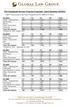 EB-5 Immigrant Investor Program Frequently Asked Questions (09/2013) 1. EB-5 Visas Issued to the Top 5 Countries for FY-2009 to FY-2013: FY-2013* C5 T5 I5 R5 Total China Mainland born 154 139 5,771 4 6,008
EMPLOYMENT CREATION VISAS (PERMANENT INVESTOR VISAS) EB-5
 12000 Biscayne Boulevard Suite 106 Miami, Florida 33181 Phone (305) 895-0300 Fax (305) 895-0306 EMPLOYMENT CREATION VISAS (PERMANENT INVESTOR VISAS) EB-5 CHECKLIST OF DOCUMENTS REQUIRED TO SUPPORT EMPLOYMENT
About the EB5 Immigrant Investor Visa Classification. The EB5 Visa Regional Center and the Immigrant Investor
 About the EB5 Immigrant Investor Visa Classification The EB5 Visa Regional Center and the Immigrant Investor The Fifth Employment-Based Visa Preference ( EB-5 ) was enacted by Congress in 1991 and is administered
EB-5 Visa Program Immigration Questions and Answers
 EB-5 Visa Program Immigration Questions and Answers 1. How many immigrant visas are allotted for this classification? The EB-5 program allocates 10,000 visas per year for aliens and family members whose
American Bar Association Administrative Law Section. Jennifer Hermansky Associate Attorney Klasko, Rulon, Stock & Seltzer, LLP
 American Bar Association Administrative Law Section Jennifer Hermansky Associate Attorney Klasko, Rulon, Stock & Seltzer, LLP EB-5 category created in 1990 for foreign nationals who invest in a new commercial
EB-5 Immigrant Investor Program Overview
 EB-5 Immigrant Investor Program Overview 12/11/2009 USAINVESTCO This document explains the EB-5 program and how to qualify. It also includes answers to many of the frequently asked questions concerning
Details on EB-5, U.S. Permanent Residency/Greencard for Investors
 Details on EB-5, U.S. Permanent Residency/Greencard for Investors The immigrant investor, or EB-5, program is a highly beneficial permanent residence option for the wealthy individual. Since there is no
Immigration Law Seminar
 Immigration Law Seminar NONIMMIGRANT WORK VISAS H1-B, L-1, and E-2 IMMIGRANT VISAS EB-1 to EB-5 Speaker: Organizers: SHAHIN MOTALLEBI, ESQ. LAW OFFICES OF SHAHIN MOTALLEBI A R E A S O F P R A C T I C E
EB-5 Visa The rules Regional center FAQ Tax considerations. Investor Green Card (Detail)
 EB-5 Visa The rules Regional center FAQ Tax considerations Investor Green Card (Detail) US Green Card The Fast and Easy Way An EB-5 Visa with American Life Inc. EB-5 Visa The EB-5 Visa provides the most
FILE: WAC 09 034 51388 Office: CALIFORNIA SERVICE CENTER ~ate:au& 0 3 2011)
 ., identifjting data deleted to prevent clearly unwarranted invasion of personal privac) PUBLIC COPY U.S. Department of Homeland Security U.S. Citizenship and Immigration Services Of$ce of Administrative
EB-5 Immigrant Investor
 EB-5 Immigrant Investor I Visa Description The fifth employment based visa preference category, created by Congress in 1990, is available to immigrants seeking to enter the United States in order to invest
EB 5 Briefing Paper: USCIS Immigration through Investment Program
 EB 5 Briefing Paper: USCIS Immigration through Investment Program March 20, 2012 ESI Corp Real Estate and Economic Development Counselors In an effort to offer a program to compete with the efforts of
PUBLIC COPY. and Immigration. U.S. Citizenship. identifying dhta deleted e prevent clearly unwarranteo invasion of personal privacy
 U.S. Department of Ifomeland Security 20 Mass. Ave., N.W., Rrn. 3000 Washington, DC 20529 identifying dhta deleted e prevent clearly unwarranteo invasion of personal privacy PUBLIC COPY U.S. Citizenship
Questions and Answers
 Questions and Answers A Discussion about the EB-5 Immigrant Investor Program Teleconference February 26, 2014 Overview On February 26, 2014, the Public Engagement Division and USCIS Immigrant Investor
HQ 70/6.2.8 JUN 19 2001
 MEMORANDUM FOR ALL SERVICE CENTER DIRECTORS; REGIONAL DIRECTORS; DIRECTOR, OFFICER DEVELOPMENT TRAINING FACILITY, GLYNCO DIRECTOR, OFFICER DEVELOPMENT TRAINING FACILITY, ARTESIA HQ 70/6.2.8 JUN 19 2001
EB-5 Immigrant Investor Program. Anthony Derosby, Esq. Pierce Atwood LLP
 EB-5 Immigrant Investor Program Anthony Derosby, Esq. Pierce Atwood LLP The EB-5 Category Section 203(b)(5) of the Immigration and Nationality Act (INA) allocates 10,000 EB-5 immigrant visas per year to
Investing in America through the E-2 and EB-5 Visa Categories
 Investing in America through the E-2 and EB-5 Visa Categories By Angelo A. Paparelli, Stephen Yale-Loehr and Ted Chiappari* [*Angelo A. Paparelli is a partner in Seyfarth Shaw in New York and Los Angeles.
The EB-5 Immigrant Investor Pilot Program
 The EB-5 Immigrant Investor Pilot Program A technical analysis by ACFI s General Counsel By Boyd Campbell Attorney and Civil Law Notary visaus.com The Immigrant Investor Pilot Program (also called the
U.S. Immigration Options for Hiring and Transferring Foreign Personnel
 U.S. Immigration Options for Hiring and Transferring Foreign Personnel by H. Ronald Klasko * One of the critical concerns of foreign-owned companies establishing U.S. operations and of U.S. businesses
EB 5 5 Visas: Immigration to the U.S. and International Tax Consequences
 Panel 5A EB 5 5 Visas: Immigration to the U.S. and International Tax Consequences Speakers: - Lincoln Stone Stone & Grzegorek LLP Michael Welters Bull, Housser & Tupper Patrick W. Martin Procopio, Cory,
and Immigration Services Thank you, U~S. Citizenship (b)(6) FILE: DATE: ftb \ j 2.013 OFFICE: TEXAS SERVICE CENTER Beneficiary:
 U.S. Department or Homeland Security U. S. Citizenship and Immigration Services Administrative Appeals Office (AAO) 20 Massachusetts Ave. N.W., MS 2090 Washington, DC 20529-2090 U~S. Citizenship and Immigration
Questions and Answers Aug. 31, 2009
 Office of Communications Questions and Answers Aug. 31, 2009 USCIS Provides Interim Deferred Action Relief For Surviving Spouses Relief for Spouses of Deceased U.S. Citizens Married Less Than Two Years
Call. Visit 1-202-787-1944 www.visapro.com
 1 HOW TO GET A GREEN CARD QUICK: KNOW YOUR OPTIONS The United States offers several expedited or quick ways to become a Permanent Resident (Green Card Holder). A Green Card allows you to live and work
U.S. Citizenship and Immigration Services
 U.S. Department of Homeland Security U.S. Citizenship and Immigration Service: Administrar.ive Appeals Office (AAO) 20 Massachusetts Ave., N.W., MS 2090 Washington, DC 20529-2090 U.S. Citizenship and Immigration
Grossman Law, LLC Tel: 240-403-0913 110. N. Washington St. Suite 350 Fax: 240-453-0915 EB-5 IMMIGRANT VISA
 Tel: 240-403-0913 110. N. Washington St. Suite 350 Fax: 240-453-0915 Rockville, MD 20850 www.grossmanlawllc.com EB-5 IMMIGRANT VISA Eligibility The EB-5 Immigrant Visa, also known as the Employment Creation
FILE: WAC 04 2 18 509 19 Office: CALIFORNIA SERVICE CENTER Date:
 U.S. Department of IIomeland Security 20 Mass. Ave., N.W., Rm. 3000 Washington, DC 20529 identifying data deleted to prevent clearly unwarranted invasion of personal privacj U.S. Citizenship and Immigration
L1is a Visa for multinational managers and internal transfer staff with special skills.
 L1A visa Transnational Manager Visa L1A L1is a Visa for multinational managers and internal transfer staff with special skills. Basically, there are three requirements for L1: 1. Currently be, or will
l'tlbl1c COP"t u. S. Citizenship OCT 2 6 2010 and Immigration Services
 identifying data deleted to prevent clearly unwarranted invasion of personal privacy l'tlbl1c COP"t U.S. Department of Homeland Security lj.s. Citizenship and Immigration Services OjJice of Administrative
How To Get A Job In The United States
 U.S. Department of fzomeland Security 20 Mass. Ave., N.W., Rrn. 3000 Washington, DC 20529 identifpnp data deleted to prevent ciearfy ~~lwa~mted invasion of personal privacy U.S. Citizenship and Immigration
EB-5 USA Green Card Visa. Immigrate to USA. Abhinav Outsourcings Pvt. Ltd. www.abhinav.com
 EB-5 USA Green Card Visa Immigrate to USA Contents 1. About ABHINAV 2. EB-5 USA Green Card Visa Overview 3. Qualifying Immigrants under USA EB-5 Immigration Visa 4. EB-5 USA Green Card Visa Stage-wise
and Immigration Services U. S. Citizenship Office: CALIFORNIA SERVICE CENTER Date: MAR 1 4 WAC 04 193 53836
 U.S. Department of Homeland Security 20 Mass. Ave., N.W., Rrn. 3000 Washington, DC 20529 U. S. Citizenship and Immigration Services WAC 04 193 53836 Office: CALIFORNIA SERVICE CENTER Date: MAR 1 4 PETITION:
PUBLIC COPY. and Immigration. U.S. Citizenship. FILE: WAC 03 030 5 1081 Office: CALIFORNIA SERVICE CENTER Date: ApR 1 g 2a)5
 U.S. Department of Homeland Security 20 Mass. Ave., N.W., Rm. A3042 Washington, DC 20529 U.S. Citizenship and Immigration PUBLIC COPY FILE: WAC 03 030 5 1081 Office: CALIFORNIA SERVICE CENTER Date: ApR
Petition for a Nonimmigrant Worker Pursuant to Section 101(a)(\5)(H)(iii) of the Immigration and Nationality Act, 8 U,S,c' 1101(a)(15)(H)(iii)
 identifying data deleted to prevent clearly Wlw~ted invasion of personal pnvacy ~LICCon u.s. Department of Homeland Security u. S. Citizenship and Immigration Services Office of Administrative Appeals
and Immigration U.S. Citizenship
 U.S. Department of Homeland Security U. S. Citizenship and Immigration Services Office of Administrative Appeals MS 2090 Washington, DC 20529-2090 U.S. Citizenship and Immigration PETITION: Immigrant petition
FILE: EAC 03 i22155201 Office: VERMONT SERVICE CENTER DatdAN
 U.S. Department of Homeland Security 20 Mass. Ave., N.W., Rm. A3042 Washington, DC 20529 U. g. Citizenship and Immigration FILE: EAC 03 i22155201 Office: VERMONT SERVICE CENTER DatdAN IN RE: Petitioner:
RCW1421251836/ID1421251836
 U.S. Citizenship and Immigration Services Immigrant Investor Program Mailstop 2235 Washington, DC 20529 May 13, 2015 Gonzalo Lopez-Jordan 1200 Brickell Ave. Suite 1950 Miami, Florida 33131 Application:
EB-5 INVESTMENT For Green Card in the US
 EB-5 INVESTMENT For Green Card in the US Overview U.S. Congress introduced EB-5 immigrant visa category for foreign investors in 1990. Under this program, prospective investors are offered the opportunity
apeatgiog data deleted to
 apeatgiog data deleted to hnv&fin ofmm~l dvarr U.S. Department of Homeland Security 20 Mass Ave N w. Room A3042 Wash~ngton, DC 20529 U.S. Citizenship and Immigration f4fi ')(j yp" ' I & FILE: WAC 03 227
The ABC'S Of Immigration: Visa Options for Nurses, Part 2: Immigrant Visa Options for Nurses
 The ABC'S Of Immigration: Visa Options for Nurses, Part 2: Immigrant Visa Options for Nurses by Gregory Siskind The immigrant visa is normally the only option for nurses because most of the nonimmigrant
BUSI NESS & INVESTMENT I M MIGR ATION LAW. Investment & Business Immigration
 BUSI NESS & INVESTMENT I M MIGR ATION LAW Investment & Business Immigration WELCOME David Hirson & Partners, LLP has over 30 years of experience in immigration law. Our practice provides a full range of
Petition for a Nonimmigrant Worker Pursuant to Section 101(a)(15)(H)(i)(b) of the Immigration and Nationality Act, 8 U.S.C. 1101(a)(15)(H)(i)(b)
 identifying data deleted to prevent clearly unwarranted mvasion ofpersonal privacy MMUC COPY U.S. Department of Homeland Security U.S. Citizenship and Irnmigration Services Administrative Appeals Office
FILE: Office: CALIFORNIA SERVICE CENTER Date: WAC 03 149 52466
 U.S. Department of Homeland Security 20 Mass Ave, N W, Rm. A3042, Wash~ngton, DC 20529 FILE: Office: CALIFORNIA SERVICE CENTER Date: WAC 03 149 52466 PETITION: Iriimigrant Petition for Alien Worker as
PUBLI(1 mpy. identifying data deleted to prevent clea.-;y i?w".rrantrg invasion of personai prlvac) U.S. Citizenship and Immigration Services
 identifying data deleted to prevent clea.-;y i?w".rrantrg invasion of personai prlvac) PUBLI(1 mpy I1.S. Department or tfumelsnd Securit! U.S. Citizenship and Immigration Services Office of Administrative
Form I-924, Application for Regional Center under the Immigrant Investor Pilot Program. Midwest Metropolitan Regional Center, Inc.
 U.S. Citizenship and Immigration Services Immigrant Investor Program Washington, DC 20529 06/04/2014 Jeffery E Campion Midwest Metropolitan Regional Center, Inc. 1675 Market St, 211 Weston, FL 33326 Application:
FILE: Office: CALIFORNIA SERVICE CENTER Date: OCT 1 5 2007 WAC 06 067 50421
 U.S. Department of IIomeland Security 20 Mass. Ave., N.W., Rm. 3000 Washington, DC 20529 identifying data deleted to prevent clearly unv zrranted invasion of personal privacy U. S. Citizenship and Immigration
OFFICE: CALIFORNIA SERVICE CENTER. Enclosed please find the decision of the Administrative Appeals Office (AAO) in your case.
 U.S. Department of Homeland Security U.S. Citizenship and Immigration Servi ce~ Administrative Appeals Office (AAO) 20 Massachusetts Ave., N.W., MS 2090 Washington, DC 20529-2090 U.S. Citizenship and Immigration
IMMIGRANT INVESTOR PROGRAM
 United States Government Accountability Office Report to Congressional Requesters August 2015 IMMIGRANT INVESTOR PROGRAM Additional Actions Needed to Better Assess Fraud Risks and Report Economic Benefits
INFORMATION ON EB-1A VISA CATEGORY AND IMMIGRANT VISA PROCESSING VS. ADJUSTMENT OF STATUS. Presentation by Terry Yale Feiertag
 INFORMATION ON EB-1A VISA CATEGORY AND IMMIGRANT VISA PROCESSING VS. ADJUSTMENT OF STATUS Presentation by Terry Yale Feiertag EB-1A VISA CATEGORY How to qualify for Legal Permanent Residence as an Extraordinary
EB-5 I-829 RFEs: What Does USCIS Look for? By Stephen Yale-Loehr, Robert C. Divine, and Sonia Sujanani 1
 EB-5 I-829 RFEs: What Does USCIS Look for? By Stephen Yale-Loehr, Robert C. Divine, and Sonia Sujanani 1 Introduction In response to a Freedom of Information Act (FOIA) request filed by Invest In the USA
File: EAC 06 219 5015 1 Office: VERMONT SERVICE CENTER Date: MAR 1 0 2008
 U.S. Department of Homeland Security 20 Massachusetts Ave., N.W., Rm. 3000 Washington, DC 20529 U. S. Citizenship and Immigration Services P IC COPY File: EAC 06 219 5015 1 Office: VERMONT SERVICE CENTER
POST-DEPORTATION HUMAN RIGHTS PROJECT
 CENTER for HUMAN RIGHTS and INTERNATIONAL JUSTICE at BOSTON COLLEGE POST-DEPORTATION HUMAN RIGHTS PROJECT Boston College Law School, 885 Centre Street, Newton, MA 02459 Tel 617.552.926 Fax 617.552.9295
SEC ADOPTS FINAL RULES TO THE INVESTMENT ADVISERS ACT OF 1940 IMPLEMENTING PROVISIONS OF THE DODD FRANK ACT
 SEC ADOPTS FINAL RULES TO THE INVESTMENT ADVISERS ACT OF 1940 IMPLEMENTING PROVISIONS OF THE DODD FRANK ACT 1. INTRODUCTION On 22 June 2011, the Securities and Exchange Commission ("SEC") adopted final
Revisions to Adjudicator s Field Manual (AFM) Regarding Certain Alien Physicians Chapter 22.2(b) General Form I-140 Issues (AFM Update AD09-10)
 U.S. Citizenship and Immigration Services Office of Domestic Operations Washington, DC 20529 (MS-2110) June 17, 2009 HQ 70/6.2 AD09-10 Memorandum TO: FROM: SUBJECT: USCIS Leadership Donald Neufeld /s/
CHAPTER 7: IMMIGRATION LAW FOR EMPLOYEES & INVESTORS
 CHAPTER 7: IMMIGRATION LAW FOR EMPLOYEES & INVESTORS 7.1: EMPLOYMENT-BASED IMMIGRATION The typical process under employment-based immigration is to either enter the United States to create a business,
FILE: WAC 04 141 50948 Office: CALIFORNIA SERVICE CENTER Date: APR 0 3 200F
 Idaniiyhg d8ta deleted to L mt ciearly unwananted of- pivw U.S. Department of Homeland Security 20 Mass. Ave. N.W., Rm. A3042 Washington, DC 20529 U. S. Citizenship and Immigration PUBLIC COPY FILE: WAC
JB' U. S. Citizenship and Immigration. FILE: EAC 02 172 52281 Office: VERMONT SERVICE CENTER ~ateja I
 U.S. Department of Homeland Security 20 Mass. Ave., N.W., Rrn. A3042 Washington, DC 20529 U. S. Citizenship and Immigration FILE: EAC 02 172 52281 Office: VERMONT SERVICE CENTER ~ateja I JB' PETITION:
FILE: EAC 05 055 50230 Office: VERMONT SERVICE CENTER Date: A& 2 9 2006
 U.S. Department of Homeland Security 20 Massachusetts Ave. NW, Rm. 3000 Washington, DC 20529 identifying data deleted to prevent clearly unwarranted invasion of personal pivacy PUBLIC COPY U.S. Citizenship
DATE: FEB 0 1 2012 Office: CALIFORNIA SERVICE CENTER FILE:
 identifying data delsede prevent clearly unwarranted invasis ofpenœalprivacy PUBLIC COPY U.S. Department of Homeland Security U.S. Citizenship and Immigration Services Administrative Appeals Office (AAO)
Raising EB-5 Capital: Key Securities Laws Considerations and a Compliance Roadmap
 Raising EB-5 Capital: Key Securities Laws Considerations and a Compliance Roadmap Mariza E. McKee, Robert J. Ahrenholz and Robert B. Keim, Kutak Rock LLP, with Practical Law Labor & Employment A Practice
INTERNAL REVENUE SERVICE NATIONAL OFFICE TECHNICAL ADVICE MEMORANDUM
 INTERNAL REVENUE SERVICE NATIONAL OFFICE TECHNICAL ADVICE MEMORANDUM Number: 200502040 Release Date: 01/14/2005 Index (UIL) No.: 61.53-00, 79.03-00, 83.05-00 CASE-MIS No.: TAM-144621-03 -------------------------------------
U. S. Citizenship and Immigration
 U.S. Department of Homeland Security 20 Massachusetts Ave. NW, Rm. A3042 Washington, DC 20529 U. S. Citizenship and Immigration Services FILE: - -- WAC 03 245 50305 Office: CALIFORNIA SERVICE CENTER Date:
Issuance of a Preferred Stock Dividend by the Federal Home Loan Mortgage Corporation
 Issuance of a Preferred Stock Dividend by the Federal Home Loan Mortgage Corporation The Federal Home Loan Mortgage Corporation is authorized, under 12 U S.C. 1455(0.to *ssue a dividend of preferred stock
U. S. Citizenship and Immigration Services
 U.S. Department of Homeland Security 20 Mass. Ave., N.W., Rm. A3042 Washington. DC 20529 U. S. Citizenship and Immigration Services FILE: Office: CALIFORNIA SERVICE CENTER Date: JUN 0 1 PETITION: Immigrant
UNCLASSIFIED (U) U.S. Department of State Foreign Affairs Manual Volume 9 Visas 9 FAM 41.54 NOTES
 9 FAM 41.54 NOTES (CT:VISA-2238; 12-19-2014) (Office of Origin: CA/VO/L/R) 9 FAM 41.54 N1 INTRODUCTION (CT:VISA-1417; 04-08-2010) a. Section 1(b) of Public Law 91-225 of April 7, 1970, created a nonimmigrant
IMMIGRATION OPTIONS FOR ENTREPRENEURS
 BOSTON HARTFORD STAMFORD NEW YORK NEWARK EAST BRUNSWICK PHILADELPHIA WILMINGTON WASHINGTON, DC IMMIGRATION OPTIONS FOR ENTREPRENEURS Amy Haberman Partner McCarter & English, LLP McCarter & English, LLP
NAVIGATING THE LAWFUL SOURCE REQUIREMENT FOR EB-5 IMMIGRATION
 NAVIGATING THE LAWFUL SOURCE REQUIREMENT FOR EB-5 IMMIGRATION by Elsie Hui Arias and Lincoln Stone * For foreign nationals with the means to invest a substantial amount of capital into a U.S. commercial
FILE: EAC 04 202 50200 Office: CALIFORNIA SERVICE CENTER Date: ' 28Q6
 U.S. Department of Homeland Security 20 Mass Ave., N.W., Rm. A3042 Washington, DC 20529 U. S. Citizenship and Immigration b '> FILE: EAC 04 202 50200 Office: CALIFORNIA SERVICE CENTER Date: ' 28Q6 PETITION:
Federation for American Immigration Reform. The Failure of the EB-5 Visa Program
 Federation for American Immigration Reform selling AMERIcA short: The Failure of the EB-5 Visa Program Eric A. Ruark, Director of Research and Aniqa Moinuddin, Researcher March 2012 Federation for American
How To Get A Nursing Job In Vermont
 4 9 c?%% $dew & pmsent,- tnvsp;l@~ adwacy of FPFS~Y~~ U.S. Department of Homeland Security 20 Mass. Ave., N.W., Rm. A3042 Washington, DC 20529 U. S. Citizenship and Immigration FILE: EAC 02 2 1 7 5 13