
Preface to the Second Edition
|
|
|
- Abigail Caldwell
- 10 years ago
- Views:
Transcription
1 Preface to the Second Edition The second edition of this book contains both basic and more advanced material on non-life insurance mathematics. Parts I and II of the book cover the basic course of the first edition; this text has changed very little. It aims at the undergraduate (bachelor) actuarial student as a first introduction to the topics of non-life insurance mathematics. Parts III and IV are new. They can serve as an independent course on stochastic models of non-life insurance mathematics at the graduate (master) level. The basic themes in all parts of this book are point process theory, the Poisson and compound Poisson processes. Point processes constitute an important part of modern stochastic process theory. They are well understood models and have applications in a wide range of applied probability areas such as stochastic geometry, extreme value theory, queuing and large computer networks, insurance and finance. The main idea behind a point process is counting. Counting is bread and butter in non-life insurance: the modeling of claim numbers is one of the major tasks of the actuary. Part I of this book extensively deals with counting processes on the real line, such as the Poisson, renewal and mixed Poisson processes. These processes can be studied in the point process framework as well, but such an approach requires more advanced theoretical tools. Parts I and II of this text are kept at a level which requires basic knowledge of probability theory and stochastic processes. Such knowledge is typically available in the 2nd or 3rd year of a bachelor program with a mathematical, statistical, actuarial or econometric orientation. The new parts of this text tell the story of point processes in non-life insurance mathematics. The concept of a point process requires some knowledge of measure and advanced probability theory. The student who is familiar with the topics of Parts I and II will not have difficulties in continuing with Parts III and IV. Those who read from cover to cover will discover that many results in the first parts will become much more transparent and elegant in the framework of point processes. The advanced student may immediately start

2 VI Preface to the Second Edition with the parts on point and Poisson processes. I hope that not only the specialized actuarial student will benefit from this book, but anybody who wants to know about the wonderful world of counting points. The main objective of writing this book was to produce lecture notes for my students. The material of this book grew out of courses I have been teaching in the bachelor and master actuarial programs at the University of Copenhagen. The interaction with the students kept me sufficiently realistic about the theoretical level which one may wish to approach. Through the years the success rate of my students has confirmed that the material of this book is accessible, both at the undergraduate and graduate levels. Different ideas have inspired the process of writing the new chapters of this book. Norberg s [114] propagation of point process theory in non-life insurance mathematics has been a guide to Chapter 8. Since the beginning of the 1990s Norberg has pointed towards the enormous gains for actuarial science by using advanced point process theory. Insurance mathematics is not a scientific island. Through its history actuarial science has interacted with mathematical, statistical and economic disciplines. The Cramér-Lundberg theory of collective risk is a fine example of how this applied stochastic theory gained from the ideas of renewal, queuing and large deviation theory. Various excursions will lead the reader of this book into different, but related fields of applied probability theory, including extreme value theory, teletraffic models and Lévy processes. Extreme value theory is a natural tool for analyzing the large claims in an insurance portfolio. In this text we will learn about the close relationship of extremes and point processes. We will also read about point process models which are used both in insurance mathematics and for modeling large computer networks. The compound Poisson process originates in Lundberg s thesis from This was the first use of a Lévy jump process. An excursion to Lévy processes will illustrate how a fundamental non-life insurance model was extended to a major class of stochastic processes. In the process of writing the second edition of this book I have benefitted from discussions with students, colleagues and friends. Jeffrey Collamore, Richard A. Davis, Anders Hedegaard Jessen, Jesper Lund Pedersen and Gennady Samorodnitsky have read parts of this book and proposed various improvements. My sincere thanks go to Sid Resnick for a long series of colorful and insightful comments. I have been blessed by an effort whose helpfulness went beyond what one would expect from a colleague and friend. I am indebted to Catriona Byrne, Marina Reizakis and Jef Boys from Springer-Verlag for efficient and competent professional editorial support. Thomas Mikosch Copenhagen, October 2008

3 Preface to the Second Edition VII Preface to the First Edition To the outside world, insurance mathematics does not appear as a challenging topic. In fact, everyone has to deal with matters of insurance at various times of one s life. Hence this is quite an interesting perception of a field which constitutes one of the bases of modern society. There is no doubt that modern economies and states would not function without institutions which guarantee reimbursement to the individual, the company or the organization for its losses, which may occur due to natural or man-made catastrophes, fires, floods, accidents, riots, etc. The idea of insurance is part of our civilized world. It is based on the mutual trust of the insurer and the insured. It was realized early on that this mutual trust must be based on science, not on belief and speculation. In the 20th century the necessary tools for dealing with matters of insurance were developed. These consist of probability theory, statistics and stochastic processes. The Swedish mathematicians Filip Lundberg and Harald Cramér were pioneers in these areas. They realized in the first half of the 20th century that the theory of stochastic processes provides the most appropriate framework for modeling the claims arriving in an insurance business. Nowadays, the Cramér-Lundberg model is one of the backbones of non-life insurance mathematics. It has been modified and extended in very different directions and, moreover, has motivated research in various other fields of applied probability theory, such as queuing theory, branching processes, renewal theory, reliability, dam and storage models, extreme value theory, and stochastic networks. The aim of this book is to bring some of the standard stochastic models of non-life insurance mathematics to the attention of a wide audience which, hopefully, will include actuaries and also other applied scientists. The primary objective of this book is to provide the undergraduate actuarial student with an introduction to non-life insurance mathematics. I used parts of this text in the course on basic non-life insurance for 3rd year mathematics students at the Laboratory of Actuarial Mathematics of the University of Copenhagen. But I am convinced that the content of this book will also be of interest to others who have a background on probability theory and stochastic processes and would like to learn about applied stochastic processes. Insurance mathematics is a part of applied probability theory. Moreover, its mathematical tools are also used in other applied areas (usually under different names). The idea of writing this book came in the spring of 2002, when I taught basic non-life insurance mathematics at the University of Copenhagen. My handwritten notes were not very much appreciated by the students, and so I decided to come up with some lecture notes for the next course given in spring, This book is an extended version of those notes and the associated weekly exercises. I have also added quite a few computer graphics to the text. Graphs help one to understand and digest the theory much easier than formulae and proofs. In particular, computer simulations illustrate where the limits of the theory actually are.

4 VIII Preface to the Second Edition When one writes a book, one uses the experience and knowledge of generations of mathematicians without being directly aware of it. Ole Hesselager s 1998 notes and exercises for the basic course on non-life insurance at the Laboratory of Actuarial Mathematics in Copenhagen were a guideline to the content of this book. I also benefitted from the collective experience of writing EKM [46]. The knowledgeable reader will see a few parallels between the two books. However, this book is an introduction to non-life insurance, whereas EKM assume that the reader is familiar with the basics of this theory and also explores various other topics of applied probability theory. After having read this book, the reader will be ready for EKM. Another influence has been Sid Resnick s enjoyable book about Happy Harry [123]. I admit that some of the mathematical taste of that book has infected mine; the interested reader will find a wealth of applied stochastic process theory in [123] which goes far beyond the scope of this book. The choice of topics presented in this book has been dictated, on the one hand, by personal taste and, on the other hand, by some practical considerations. This course is the basis for other courses in the curriculum of the Danish actuarial education and therefore it has to cover a certain variety of topics. This education is in agreement with the Group Consultatif requirements, which are valid in most European countries. As regards personal taste, I very much focused on methods and ideas which, in one way or other, are related to renewal theory and point processes. I am in favor of methods where one can see the underlying probabilistic structure without big machinery or analytical tools. This helps one to strengthen intuition. Analytical tools are like modern cars, whose functioning one cannot understand; one only finds out when they break down. Martingale and Markov process theory do not play an important role in this text. They are acting somewhere in the background and are not especially emphasized, since it is the author s opinion that they are not really needed for an introduction to non-life insurance mathematics. Clearly, one has to pay a price for this approach: lack of elegance in some proofs, but with elegance it is very much like with modern cars. According to the maxim that non-bayesians have more fun, Bayesian ideas do not play a major role in this text. Part II on experience rating is therefore rather short, but self-contained. Its inclusion is caused by the practical reasons mentioned above but it also pays respect to the influential contributions of Hans Bühlmann to modern insurance mathematics. Some readers might miss a chapter on the interplay of insurance and finance, which has been an open subject of discussion for many years. There is no doubt that the modern actuary should be educated in modern financial mathematics, but that requires stochastic calculus and continuous-time martingale theory, which is far beyond the scope of this book. There exists a vast specialized literature on financial mathematics. This theory has dictated most of the research on financial products in insurance. To the best of the author s knowledge, there is no part of insurance mathematics which deals with
![I also benefitted from the collective experience of writing EKM [46]. The knowledgeable reader will see a few parallels between the two books.](/docs-images/55/8614518/images/page_4.jpg "However, this book is an introduction to non-life insurance, whereas EKM assume that the reader is familiar with the basics of this theory and also explores various other topics of applied")
5 Preface to the Second Edition IX the pricing and hedging of insurance products by techniques and approaches genuinely different from those of financial mathematics. It is a pleasure to thank my colleagues and students at the Laboratory of Actuarial Mathematics in Copenhagen for their support. Special thanks go to Jeffrey Collamore, who read much of this text and suggested numerous improvements upon my German way of writing English. I am indebted to Catriona Byrne from Springer-Verlag for professional editorial help. If this book helps to change the perception that non-life insurance mathematics has nothing to offer but boring calculations, its author has achieved his objective. Thomas Mikosch Copenhagen, September 2003


6

Non-Life Insurance Mathematics
 Thomas Mikosch Non-Life Insurance Mathematics An Introduction with the Poisson Process Second Edition 4y Springer Contents Part I Collective Risk Models 1 The Basic Model 3 2 Models for the Claim Number
Analysis of Financial Time Series
 Analysis of Financial Time Series Analysis of Financial Time Series Financial Econometrics RUEY S. TSAY University of Chicago A Wiley-Interscience Publication JOHN WILEY & SONS, INC. This book is printed
New Tracks in B.S. in Mathematics
 New Tracks in B.S. in Mathematics The University has approved the introduction of several tracks in the BS degree in Math. Starting Fall 2015, there will be a Comprehensive Track; an Applied Math Track;
KEY WORDS: Geoinformatics, Geoinformation technique, Remote Sensing, Information technique, Curriculum, Surveyor.
 CURRICULUM OF GEOINFORMATICS INTEGRATION OF REMOTE SENSING AND GEOGRAPHICAL INFORMATION TECHNOLOGY Kirsi VIRRANTAUS*, Henrik HAGGRÉN** Helsinki University of Technology, Finland Department of Surveying
Learning outcomes. Knowledge and understanding. Competence and skills
 Syllabus Master s Programme in Statistics and Data Mining 120 ECTS Credits Aim The rapid growth of databases provides scientists and business people with vast new resources. This programme meets the challenges
www.warwick.ac.uk/go/statistics MORSE Mathematics Operational Research Statistics Economics BSc Hons MMORSE
 MORSE Mathematics Operational Research Statistics Economics BSc Hons MMORSE SCHOOL Mathematics UNIVERSITY MORSE CAREER Professions Actuary Accountancy Finance Statistician Industry Civil Service Operational
Essays in Financial Mathematics
 Essays in Financial Mathematics Essays in Financial Mathematics Kristoffer Lindensjö Dissertation for the Degree of Doctor of Philosophy, Ph.D. Stockholm School of Economics, 2013. Dissertation title:
From Ruin Theory to Solvency in Non-Life Insurance
 From Ruin Theory to Solvency in Non-Life Insurance Mario V. Wüthrich RiskLab ETH Zurich & Swiss Finance Institute SFI January 23, 2014 LUH Colloquium Versicherungs- und Finanzmathematik Leibniz Universität
The CS Principles Project 1
 The CS Principles Project 1 Owen Astrachan, Duke University Amy Briggs, Middlebury College Abstract The Computer Science Principles project is part of a national effort to reach a wide and diverse audience
Bachelor Program in Analytical Finance, 180 credits
 Program Curriculum Page 1 of 7 Program code: RMV20 Bachelor Program in Analytical Finance, 180 credits This is a translation of the original program study plan in Swedish, which was approved by the Faculty
POL 204b: Research and Methodology
 POL 204b: Research and Methodology Winter 2010 T 9:00-12:00 SSB104 & 139 Professor Scott Desposato Office: 325 Social Sciences Building Office Hours: W 1:00-3:00 phone: 858-534-0198 email: [email protected]
Programme Curriculum for Master Programme in Entrepreneurship
 Programme Curriculum for Master Programme in Entrepreneurship 1. Identification Name of programme Master Programme in Entrepreneurship Scope of programme 60 ECTS Level Master level Programme code Decision
A LOOK BACK: UNDERGRADUATE COMPUTER SCIENCE EDUCATION: A NEW CURRICULUM PHILOSOPHY & OVERVIEW
 A LOOK BACK: UNDERGRADUATE COMPUTER SCIENCE EDUCATION: A NEW CURRICULUM PHILOSOPHY & OVERVIEW John C. Knight, Jane C. Prey, & Wm. A. Wulf Department of Computer Science University of Virginia ABSTRACT
http://www.springer.com/978-0-387-71392-2
 Preface This book, like many other books, was delivered under tremendous inspiration and encouragement from my teachers, research collaborators, and students. My interest in longitudinal data analysis
UNEXPECTED ADVICE FOR BEGINNING GRADUATE STUDENTS IN ASTROPHYSICS
 Organizations, People and Strategies in Astronomy I (OPSA I), 143-147 Ed. A. Heck,. UNEXPECTED ADVICE FOR BEGINNING GRADUATE STUDENTS IN ASTROPHYSICS JEFFREY L. LINSKY JILA University of Colorado and NIST
UNIVERSITY OF SOUTH AFRICA DEPARTMENT OF QUANTITATIVE MANAGEMENT
 UNIVERSITY OF SOUTH AFRICA DEPARTMENT OF QUANTITATIVE MANAGEMENT Contents Page 1 QUANTITATIVE MANAGEMENT... 1 1.1 Operations Research... 1 1.2 Financial modelling... 2 1.3 Research and consulting... 2
Innovative Masters Program Safety of Civil Engineering Critical Infrastructures and Territories
 Innovative Masters Program Safety of Civil Engineering Critical Infrastructures and Territories Timashev S.A., Alekhin V.N., Poluyan L.V., Guryev E.S. Ural Federal University Ural Branch Russian Academy
Chapter 1. Introduction
 Chapter 1 Introduction 1.1. Motivation Network performance analysis, and the underlying queueing theory, was born at the beginning of the 20th Century when two Scandinavian engineers, Erlang 1 and Engset
1) Chemical Engg. PEOs & POs Programme Educational Objectives
 1) Chemical Engg. PEOs & POs Programme Educational Objectives The Programme has the following educational objectives: To prepare students for successful practice in diverse fields of chemical engineering
CURRICULUM. For the Degree Program in Fine Arts At the Academy of Fine Arts Vienna
 CURRICULUM For the Degree Program in Fine Arts At the Academy of Fine Arts Vienna After the conclusion of Part I of the Program (code no. 605) the Degree Program in Fine Arts comprises two fields of study:
Tennessee Board of Regents. Proposal for the Establishment of a Lower Division General Education Core
 Tennessee Board of Regents Proposal for the Establishment of a Lower Division General Education Core Created by: The Ad Hoc Committee charged to Establish a Lower Division General Education Core Curriculum
Computation Beyond Turing Machines
 Computation Beyond Turing Machines Peter Wegner, Brown University Dina Goldin, U. of Connecticut 1. Turing s legacy Alan Turing was a brilliant mathematician who showed that computers could not completely
Sales Coaching Achieves Superior Sales Results
 Sales Coaching Achieves Superior Sales Results By Stu Schlackman Sales Coaching Achieves Superior Sales Results Why Sales Coaching? As a sales leader your days go by quickly. You are constantly multi-tasking,
Practical Time Series Analysis Using SAS
 Practical Time Series Analysis Using SAS Anders Milhøj Contents Preface... vii Part 1: Time Series as a Subject for Analysis... 1 Chapter 1 Time Series Data... 3 1.1 Time Series Questions... 3 1.2 Types
Curriculum for The Master of Science in Technology in Risk and Safety Management
 The Faculty of Engineering and Science The Board of Studies for Civil Engineering Curriculum for The Master of Science in Technology in Risk and Safety Management Aalborg University 2014 Version 2, november
Probability and Statistics
 Probability and Statistics Syllabus for the TEMPUS SEE PhD Course (Podgorica, April 4 29, 2011) Franz Kappel 1 Institute for Mathematics and Scientific Computing University of Graz Žaneta Popeska 2 Faculty
Is the General Education program purpose congruent with the overall mission of the institution?
 Where do we start? MODELS OF GENERAL EDUCATION The best General Education Program is not based simply on choosing specific goals or finding the perfect model. The best program is one that is aligned with
C. Wohlin and B. Regnell, "Achieving Industrial Relevance in Software Engineering Education", Proceedings Conference on Software Engineering
 C. Wohlin and B. Regnell, "Achieving Industrial Relevance in Software Engineering Education", Proceedings Conference on Software Engineering Education & Training, pp. 16-25, New Orleans, Lousiana, USA,
Further Steps: Geometry Beyond High School. Catherine A. Gorini Maharishi University of Management Fairfield, IA [email protected]
 Further Steps: Geometry Beyond High School Catherine A. Gorini Maharishi University of Management Fairfield, IA [email protected] Geometry the study of shapes, their properties, and the spaces containing
Computer Science Information Sheet for entry in 2016. What is Computer Science?
 Computer Science Information Sheet for entry in 2016 What is Computer Science? Computer Science is about understanding computer systems and networks at a deep level. Computers and the programs they run
COLUMBIA UNIVERSITY IN THE CITY OF NEW YORK DEPARTMENT OF INDUSTRIAL ENGINEERING AND OPERATIONS RESEARCH
 Course: IEOR 4575 Business Analytics for Operations Research Lectures MW 2:40-3:55PM Instructor Prof. Guillermo Gallego Office Hours Tuesdays: 3-4pm Office: CEPSR 822 (8 th floor) Textbooks and Learning
Point Process Techniques in Non-Life Insurance Models
 1 Point Process Techniques in Non-Life Insurance Models Thomas Mikosch University of Copenhagen 1 Conference in Honor of Jan Grandell, Stockholm, June 13, 2008 1 2 What is a point process? 3 Consider the
Master of Mathematical Finance: Course Descriptions
 Master of Mathematical Finance: Course Descriptions CS 522 Data Mining Computer Science This course provides continued exploration of data mining algorithms. More sophisticated algorithms such as support
ENGINEERING FIRST YEAR GUIDE
 ENGINEERING FIRST YEAR GUIDE 2016/17 WELCOME FROM THE ASSOCIATE DEAN On behalf of the Faculty of Engineering, welcome to the Bachelor of Engineering Program at Dalhousie University. We are pleased that
Courtney Waid-Lindberg, Northern State University
 A Criminologist s Journey: Embracing the Sociological Roots of Justice Studies Courtney Waid-Lindberg, Northern State University Abstract This piece has afforded me the opportunity to reflect on my role
If so, you are probably considering a degree in Actuarial Science, finance or investment. If you have not as yet, we suggest that you do!
 Are you expecting at least 80% for school Mathematics and Physical Science, and looking for a business orientated professional career? If so, you are probably considering a degree in Actuarial Science,
PROGRAMME DESCRIPTION FOR THE PhD PROGRAMME IN INDUSTRIAL ECONOMICS AND TECHNOLOGY MANAGEMENT 2015/2016
 PROGRAMME DESCRIPTION FOR THE PhD PROGRAMME IN INDUSTRIAL ECONOMICS AND TECHNOLOGY MANAGEMENT 2015/2016 Objective of the PhD programme in Industrial Economics and Technology Management Vision and Goals
PHILOSOPHY AT COPENHAGEN BUSINESS SCHOOL
 PHILOSOPHY AT COPENHAGEN BUSINESS SCHOOL by Ole Thyssen research professor, dr. phil Dept. Of Management, Politics and Philosophy Copenhagen Business School In 1986, a position in general systems theory
CHAPTER 3 CALL CENTER QUEUING MODEL WITH LOGNORMAL SERVICE TIME DISTRIBUTION
 31 CHAPTER 3 CALL CENTER QUEUING MODEL WITH LOGNORMAL SERVICE TIME DISTRIBUTION 3.1 INTRODUCTION In this chapter, construction of queuing model with non-exponential service time distribution, performance
CALCULUS COURSES AT THE COMPUTER SCIENCE FACULTY, THE UNIVERSITY OF INDONESIA
 CALCULUS COURSES AT THE COMPUTER SCIENCE FACULTY, THE UNIVERSITY OF INDONESIA Kasiyah MACHMUDIN Department of Mathematics, University of Indonesia Computer Science Faculty, University of Indonesia [email protected]
an excerpt from The 21 Success Secrets of Self-Made Millionaires by Brian Tracy Published by Berrett-Koehler Publishers
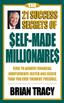 an excerpt from The 21 Success Secrets of Self-Made Millionaires by Brian Tracy Published by Berrett-Koehler Publishers Contents Preface vii Introduction: The Law of Cause and Effect 1 Success Secrets
RUTHERFORD HIGH SCHOOL Rutherford, New Jersey COURSE OUTLINE STATISTICS AND PROBABILITY
 RUTHERFORD HIGH SCHOOL Rutherford, New Jersey COURSE OUTLINE STATISTICS AND PROBABILITY I. INTRODUCTION According to the Common Core Standards (2010), Decisions or predictions are often based on data numbers
MoM, Dr. Beam, and Visual Mechanics: Direct Manipulation Software for Learning Mechanics of Materials. University of Wisconsin-Madison
 MoM, Dr. Beam, and Visual Mechanics: Direct Manipulation Software for Learning Mechanics of Materials at the University of Wisconsin-Madison prepared for The Institute on Learning Technology part of the
1. Implementation of a testbed for testing Energy Efficiency by server consolidation using Vmware
 1. Implementation of a testbed for testing Energy Efficiency by server consolidation using Vmware Cloud Data centers used by service providers for offering Cloud Computing services are one of the major
Integration of Mathematical Concepts in the Computer Science, Information Technology and Management Information Science Curriculum
 Integration of Mathematical Concepts in the Computer Science, Information Technology and Management Information Science Curriculum Donald Heier, Kathryn Lemm, Mary Reed, Erik Sand Department of Computer
Software Engineering Transfer Degree
 www.capspace.org (01/17/2015) Software Engineering Transfer Degree This program of study is designed for associate-degree students intending to transfer into baccalaureate programs awarding software engineering
New Education System Begins in April 2016
 New Education System Begins in April 2016 Outline of Education Reform at Tokyo Tech June, 2015 Why Education Reform Now? We will cultivate students with the drive to excel and the vision to contribute
From Unleashing Your Inner Leader. Full book available for purchase here.
 From Unleashing Your Inner Leader. Full book available for purchase here. Contents Preface xiii About Me xv About the Book xvii Acknowledgments xix Chapter 1 You and Your Inner Leader 1 Part One of the
Market Intelligence Building Strategic Insight. Per V. Jenster & Klaus Solberg Søilen. Copenhagen Business School Press
 Market Intelligence Market Intelligence Building Strategic Insight Per V. Jenster & Klaus Solberg Søilen Copenhagen Business School Press Market Intelligence Building Strategic Insight Copenhagen Business
Curricula for Chemical Engineering Degree Courses at Universities and Fachhochschulen (Universities of Applied Science)
 Curricula for Chemical Engineering Degree Courses 1 Curricula for Chemical Engineering Degree Courses at Universities and Fachhochschulen (Universities of Applied Science) Recommendation of the VDI-Society
Study Programme in Creative Computer Graphics
 HÖGSKOLAN I GÄVLE PROGRAMME SYLLABUS Creative Computer Graphics Programme Code: TGCCK Established by the Board of Science and Technology 2006-09-21 Revised by the Board of Science and Technology 2009-03-12
Introduction. Dear Leader,
 Table of Contents Introduction...4 Meeting and Setting Goals...6 Week 1: The Great Human Questions...9 Week 2: Examining the Ways We Know...15 Week 3: The Christian Worldview...24 Appendix A: The Divine
Faculty of Telecommunications and Space Technology
 Faculty of Telecommunications and Space Technology Master of Science in Communication Network Engineering Page 1 Faculty of Telecommunications and Space Technology Master of Science in Communication Network
Schneps, Leila; Colmez, Coralie. Math on Trial : How Numbers Get Used and Abused in the Courtroom. New York, NY, USA: Basic Books, 2013. p i.
 New York, NY, USA: Basic Books, 2013. p i. http://site.ebrary.com/lib/mcgill/doc?id=10665296&ppg=2 New York, NY, USA: Basic Books, 2013. p ii. http://site.ebrary.com/lib/mcgill/doc?id=10665296&ppg=3 New
School of Domestic and International Business, Banking and Finance
 ROMANIAN-AMERICAN UNIVERSITY School of Domestic and International Business, Banking and Finance Bachelor in International Business TAUGHT IN ENGLISH The primary task undertaken by the International Business
Frank Phillips College Psychology 2301
 Frank Phillips College Psychology 2301 I. General Course Information Ms. Jan Moore PSYC2301, Spring Mini-Term, 2010 Introduction to Psychology 3 Credit Hours Prerequisites: passage of reading section of
CREDIT TRANSFER: GUIDELINES FOR STUDENT TRANSFER AND ARTICULATION AMONG MISSOURI COLLEGES AND UNIVERSITIES
 CREDIT TRANSFER: GUIDELINES FOR STUDENT TRANSFER AND ARTICULATION AMONG MISSOURI COLLEGES AND UNIVERSITIES With Revisions as Proposed by the General Education Steering Committee [Extracts] A. RATIONALE
Civil Engineering Sciences - Environment and Transportation
 Curriculum for the Master s Program Civil Engineering Sciences - Environment and Transportation Curriculum 2006 This curriculum was approved by the Curricula Committee of Graz University of Technology
Preparing for the Academic Culture at TU Delft
 Preparing for the Academic Culture at TU Delft TU Delft is a highly valued and rated institution in the world. We will be very happy to include you in our Academic World. Yet to enter into our Academic
Department of Industrial Engineering & Management
 455 Department of Industrial Engineering & Management Chairperson: Professors: Associate Professor: Assistant Professors: Senior Lecturers: Instructor: Yassine, Ali Salameh, Moueen; Yassine, Ali Maddah,
Curriculum for the Bachelor s Program
 Cooperation Project NAWI Graz Curriculum for the Bachelor s Program Earth Version 2006/07 This curriculum was approved by the Senate of Graz University of Technology in a circular voting procedure on 28
Professional Organization Checklist for the Computer Science Curriculum Updates. Association of Computing Machinery Computing Curricula 2008
 Professional Organization Checklist for the Computer Science Curriculum Updates Association of Computing Machinery Computing Curricula 2008 The curriculum guidelines can be found in Appendix C of the report
UT MATHEMATICS DEPARTMENT. The UTeach Program Natural Sciences and the UTeach Summer Masters Program
 UT MATHEMATICS DEPARTMENT The UTeach Program Natural Sciences and the UTeach Summer Masters Program What is UTeach Natural Sciences? A Secondary Math and Science Teacher Preparation Program at The University
A Beginner s Guide to Financial Freedom through the Stock-market. Includes The 6 Steps to Successful Investing
 A Beginner s Guide to Financial Freedom through the Stock-market Includes The 6 Steps to Successful Investing By Marcus de Maria The experts at teaching beginners how to make money in stocks Web-site:
Subject Examination and Academic Regulations for the Research on Teaching and Learning Master s Programme at the Technische Universität München
 Page 1 The version is provided merely as a convenience and is not intended to be a legally binding document. Subject Examination and Academic Regulations for the Research on Teaching and Learning Master
FINANCIAL TECHNOLOGY, BACHELOR OF SCIENCE (B.S.) WITH A CONCENTRATION IN ACTUARIAL SCIENCE
 VCU 1 FINANCIAL TECHNOLOGY, BACHELOR OF SCIENCE (B.S.) WITH A CONCENTRATION IN ACTUARIAL SCIENCE The Bachelor of Science in Financial Technology offers concentrations in actuarial science and financial
Comparison of Gaps in Mathematics in Engineering Curricula
 Comparison of Gaps in Mathematics in Engineering Curricula Lecturer Department of Interdisciplinary Studies Faculty of Engineering, University of Ruhuna, Sri Lanka ABSTRACT Students entering the engineering
Masters of Engineering in MIE Certificate Program in Financial Engineering
 Masters of Engineering in MIE Certificate Program in Financial Engineering March 2, QFRM 2012 Roy H. Kwon University of Toronto Masters of Engineering at MIE The Master of Engineering program prepares
Agreement on. Dual Degree Master Program in Computer Science KAIST. Technische Universität Berlin
 Agreement on Dual Degree Master Program in Computer Science between KAIST Department of Computer Science and Technische Universität Berlin Fakultät für Elektrotechnik und Informatik (Fakultät IV) 1 1 Subject
mit sloan school of management
 ndergraduate mit sloan school of management MIT Sloan Undergraduate Programs One of the best things about being in Course 15 is that you continuously interact with so many of the up-and-coming business
Educating for Hope in Troubled Times: Climate Change and the Transition to a Post-Carbon Future
 Educating for Hope in Troubled Times: Climate Change and the Transition to a Post-Carbon Future Author David HICKS Formerly Professor in the School of Education, Bath Spa University, UK 281 Reviewer Danuta
Data Science. BSc Hons
 Data Science BSc Hons Data scientists are the magicians of the Big Data era. New York Times, 2013 By 2018, the United States alone could face a shortage of 140,000 to 190,000 people with deep analytical
SAS JOINT DATA MINING CERTIFICATION AT BRYANT UNIVERSITY
 SAS JOINT DATA MINING CERTIFICATION AT BRYANT UNIVERSITY Billie Anderson Bryant University, 1150 Douglas Pike, Smithfield, RI 02917 Phone: (401) 232-6089, e-mail: [email protected] Phyllis Schumacher
Core Curriculum to the Course:
 Core Curriculum to the Course: Environmental Science Law Economy for Engineering Accounting for Engineering Production System Planning and Analysis Electric Circuits Logic Circuits Methods for Electric
SYSTEMS, CONTROL AND MECHATRONICS
 2015 Master s programme SYSTEMS, CONTROL AND MECHATRONICS INTRODUCTION Technical, be they small consumer or medical devices or large production processes, increasingly employ electronics and computers
Department of Mathematics and Statistics. Georgetown University. Master of Science Degree Program in Mathematics and Statistics
 Department of Mathematics and Statistics Georgetown University Master of Science Degree Program in Mathematics and Statistics Graduate Student Handbook, October 2012 ---------------------------------------------------------------------------------------------------------------------
There is a physics joke about the stages of learning quantum mechanics:
 Preface The only way to learn physics is to do physics. However, almost all physics textbooks leave a huge gap between the level of the problems that they solve as examples, and the level of the problems
What it takes to be a World Class Industrial Engineer
 What it takes to be a World Class Industrial Engineer I have been asked to comment tonight on what it takes to be a World Class Industrial Engineer? Dr. Chen gave me a light assignment. Now I know what
Statistics Meets Big Data 統 計 遇 見 大 數 據
 Stat3980: Statistics in Banking and Finance Statistics Meets Big Data 統 計 遇 見 大 數 據 Dr. Aijun Zhang Spring 2016@HKBU 1 Course Title: STAT3980/MATH4875 Overview Selected Topics in Statistics Statistics
2. SUMMER ADVISEMENT AND ORIENTATION PERIODS FOR NEWLY ADMITTED FRESHMEN AND TRANSFER STUDENTS
 Chemistry Department Policy Assessment: Undergraduate Programs 1. MISSION STATEMENT The Chemistry Department offers academic programs which provide students with a liberal arts background and the theoretical
Name of the University: University of Wisconsin-Madison Names of the students: Jing Jin Exchange semester: Fall 2008. Academic:
 Name of the University: University of Wisconsin-Madison Names of the students: Jing Jin Exchange semester: Fall 2008 Academic: General Information about the School The University of Wisconsin-Madison (
PHD PROGRAM IN FINANCE COURSE PROGRAMME AND COURSE CONTENTS
 PHD PROGRAM IN FINANCE COURSE PROGRAMME AND COURSE CONTENTS I. Semester II. Semester FINC 601 Corporate Finance 8 FINC 602 Asset Pricing 8 FINC 603 Quantitative Methods in Finance 8 FINC 670 Seminar 4
Emmanouil Papangelis (Manos Papagelis)
 Emmanouil Papangelis (Manos Papagelis) 276 St. George St., Toronto, ON, M5R 2P5 Tel.: +1.647.995.8500 (cell) Email: [email protected] Web: http://www.cs.toronto.edu/ papaggel Career Goals I am grateful
Syllabus of the Dept. of Applied Statistics EAST West University. Graduate Program
 Syllabus of the Dept. of Applied Statistics EAST West University Graduate Program Introduction Statistics is the study of the collection, organization, analysis, and interpretation of data. It deals with
A GENERAL CURRICULUM IN MATHEMATICS FOR COLLEGES W. L. DUREN, JR., Chairmnan, CUPM 1. A report to the Association. The Committee on the Undergraduate
 A GENERAL CURRICULUM IN MATHEMATICS FOR COLLEGES W. L. DUREN, JR., Chairmnan, CUPM 1. A report to the Association. The Committee on the Undergraduate Program in Mathematics (CUPM) hereby presents to the
Delta Courses. *The College Classroom. The College Classroom: International Students, International Faculty. Diversity in the College Classroom
 COURSE CATALOG Contents Introduction... 3 Delta Courses... 4 The College Classroom... 4 The College Classroom: International Students, International Faculty... 4 Diversity in the College Classroom... 4
ACTUAL PROBLEMS AND GOOD PRACTICES IN ACCOUNTANCY TEACHING TO STUDENTS IN ALBANIA
 ACTUAL PROBLEMS AND GOOD PRACTICES IN ACCOUNTANCY TEACHING TO STUDENTS IN ALBANIA Alketa Pasholli (Zheku), PhD Head of Finance and Accounting - Department Faculty of Economy Fan S. Noli University,Korce,