
Pricing European-style Asian options based on the arithmetic average, under the Black and
|
|
|
- Edgar Bailey
- 10 years ago
- Views:
Transcription
1 A Dynamic Programming Procedure for Hatem Ben-Ameur Michèle Breton Pierre L Ecuyer GERAD and Département des Méthodes Quantitatives de Gestion, École des H.E.C., 3000 Chemin de la Côte Sainte-Catherine, Montréal, Canada H3T 2A7 GERAD and Département des Méthodes Quantitatives de Gestion, École des H.E.C., 3000 Chemin de la Côte Sainte-Catherine, Montréal, Canada H3T 2A7 GERAD and Département d Informatique et de Recherche Opérationnelle Université de Montréal, C.P. 6128, Succ. Centre-Ville, Montréal, Canada H3C 3J7 [email protected] [email protected] [email protected] lecuyer Pricing European-style Asian options based on the arithmetic average, under the Black and Scholes model, involves estimating an integral a mathematical expectation) for which no easily computable analytical solution is available. Pricing their American-style counterparts, which provide early exercise opportunities, poses the additional difficulty of solving a dynamic optimization problem to determine the optimal exercise strategy. A procedure for pricing American-style Asian options of the Bermudan flavor, based on dynamic programming combined with finite-element piecewise-polynomial approximation of the value function, is developed here. A convergence proof is provided. Numerical experiments illustrate the consistency and efficiency of the procedure. Theoretical properties of the value function and of the optimal exercise strategy are also established. Option Pricing; Asian Options; Path-Dependent Options; American Options; Bermudan Options; Dynamic Programming; Piecewise Polynomials) 1. Introduction A financial derivative is a contract that provides its holder with a future payment that depends on the price of one or more primitive assets), such as stocks or currencies. In a frictionless market, the noarbitrage principle allows one to express the value of a derivative as the mathematical expectation of its discounted future payment, with respect to a so-called risk-neutral probability measure. Options are particular derivatives characterized by nonnegative payoffs. European-style options can be exercised at the expiration date only, whereas American-style ones offer early exercise opportunities to the holder. For simple cases, such as for European call and put options written on a stock whose price is modeled as a geometric Brownian motion GBM), as studied by Black and Scholes 1973), analytic formulas are available for the fair price of the option. However, for more complicated derivatives which may involve multiple assets, complex payoff functions, possibilities of early exercise, stochastic time-varying model parameters, etc., analytic formulas are unavailable. These derivatives are usually priced either via Monte Carlo simulation or via numerical methods e.g., Boyle et al. 1997, Hull 2000, Wilmott et al. 1993, and other references given there). An important class of options for which no analytic formula is available even under the standard Black- Scholes GBM model is the class of Asian options, for which the payoff is a function of the arithmetic average of the price of a primitive asset over a certain time period. An Asian option can hedge the risk exposure /02/4805/0625$ electronic ISSN Management Science 2002 INFORMS Vol. 48, No. 5, May 2002 pp

2 of a firm that sells or buys certain types of resources raw materials, energy, foreign currency, etc.), on a regular basis over some period of time. Because the average in general is less volatile than the underlying asset price itself, these contracts are less expensive than their standard versions. Asian options are heavily traded over the counter and because of the possible lack of depth of these markets, their theoretical values often need to be computed on the fly for fair negotiations. Asian options come in various flavors. For example, the average can be arithmetic or it can be geometric. One talks of a plain vanilla Asian option if the average is computed over the full trading period, and a backward-starting option if it is computed over a right subinterval of the trading period. This interval usually has a fixed starting point in time. The Asian option can be fixed strike if the strike price is a fixed constant) or floating strike if the strike is itself an average). It is called flexible when the payoff is a weighted average, and equally weighted when all the weights are equal. The prices are discretely sampled if the payoff is the average of a discrete set of values of the underlying asset observed at discrete epochs), and continuously sampled if the payoff is the integral of the asset price over some time interval, divided by the length of that interval. The options considered in this paper are the most common: Fixed-strike, equally weighted, discretely sampled Asian options based on arithmetic averaging. The dynamic programming approach could also be used to price other kinds of discretely sampled Asian options. European-style Asian Eurasian) options can be exercised at the expiration date only, whereas Americanstyle ones Amerasian) offer earlier exercise opportunities, which may become attractive intuitively when the current asset price is below the current running average i.e., is pulling down the average) for a call option, and when it is above the running average for a put. Here, we focus on Amerasian call options, whose values are harder to compute than the Eurasian ones because an optimization problem must be solved at the same time as computing the mathematical expectation giving the option s value. We assume that the exercise opportunities are only at the observation epochs or a subset of them). These types of options are also called Bermudan options. There is an extensive literature on the pricing of Eurasian options. In the context of the GBM model, there is a closed-form analytic solution for the value of discretely sampled Eurasian options only when they are based on the geometric average Turnbull and Wakeman 1991, Zhang 1995). The idea is that under the GBM model, the asset price at any given time has the lognormal distribution, and the geometric average of lognormals is lognormal. Geman and Yor 1993) used Bessel processes and derived exact formulas for a class of continuous-time Eurasian options. For options based on the arithmetic average, solution approaches include quasi-analytic approximation methods based on Fourier transforms, Edgeworth and Taylor expansions, and the like e.g., Bouaziz et al. 1994, Carverhill and Clewlow 1990, Curran 1994, Levy 1992, Ritchken et al. 1993, Turnbull and Wakeman 1991), methods based on partial differential equations PDEs) and their numerical solution via finite-difference techniques e.g., Alziary et al. 1997, Rogers and Shi 1995, Zvan et al. 1998), and Monte Carlo simulation coupled with variance-reduction techniques e.g., Glasserman et al. 1999, Kemna and Vorst 1990, L Ecuyer and Lemieux 2000, Lemieux and L Ecuyer 1998, Lemieux and L Ecuyer 2001). Techniques for pricing Amerasian options are surveyed by Barraquand and Pudet 1996), Grant et al. 1997), and Zvan et al. 1998, 1999). Hull and White 1993) have adapted binomial lattices from the binomial tree model of Cox et al. 1979) to the pricing of Amerasian options. Klassen 2001) has recently refined this approach. Broadie and Glasserman 1997a) proposed a simulation method based on nonrecombining trees in the lattice model that produces two estimators of the option value, one with positive bias and one with negative bias. By taking the union of the confidence intervals corresponding to these two estimators, one obtains a conservative confidence interval for the true value. However, the work and space requirements of their approach increases exponentially with the number of exercise opportunities. Broadie and Glasserman 1997b) then developed a simulation-based stochastic mesh method that accommodates a large number of exercise dates and high-dimensional American options. Their method may be adaptable to 626 Management Science/Vol. 48, No. 5, May 2002

3 Amerasian options, although this is not the route we take here. While revising this paper, we learned about related work by Wu and Fu 2000), who prove some properties of the exercise frontier for Amerasian options and propose an approach that parameterizes the exercise frontier and optimizes the parameters by a stochastic approximation algorithm combined with a simulation-based perturbation analysis gradient estimation method. Longstaff and Schwartz 2001) propose yet another simulation-based approach whose key idea is to approximate the same function as the value function in dynamic programming DP) at each time step, but by fitting a linear combination of preselected basis functions to a data set generated by simulation using least-squares regression. Zvan et al. 1998) have developed stable numerical PDEmethods adapted from the field of computational fluid dynamics for pricing Amerasian options with continuously sampled prices. Zvan et al. 1999) have also adapted these PDEmethods to options with discretely sampled asset prices, and with barriers. The numerical approach introduced in this paper is formulated in discrete time directly. Pricing American-style options can be formulated as a Markov decision process, i.e., a stochastic DP problem, as pointed out by Barraquand and Martineau 1995) and Broadie and Glasserman 1997b), for example. The DP value function expresses the value of an Amerasian option as a function of the current time, current price, and current average. This value function satisfies a DP recurrence or Bellman equation). Solving this equation yields both the option value and the optimal exercise strategy. For a general coverage of stochastic DP, we refer the reader to Bertsekas 1995). In this paper, we write the DP equation for Amerasian options under the GBM model. Using this equation, we prove by induction certain properties of the value function and of the optimal exercise frontier which delimits the region where it is optimal to exercise the option). We then detail a numerical solution approach for the DP equation, based on piecewise polynomial interpolation over rectangular finite elements. This kind of approach has been used in other application contexts, e.g., by Haurie and L Ecuyer 1986) and L Ecuyer and Malenfant 1988). In fact, we reformulate the DP equation in a way that simplifies significantly the numerical integration at each step, thus improving the efficiency of the procedure. Convergence and consistency of the method as the discretization gets finer follow from the monotonicity properties of the value function. We also use an extrapolation method to accelerate the convergence. Numerical experiments indicate that the method is competitive, at least for certain situations. The DP approach could also be used for pricing other lowdimensional American-style products such as calls with dividends, puts, lookback options, and options with barriers. It would also work for other types of models than the GBM for the evolution of the underlying asset, e.g., for a CEV process Cox 1996, Boyle and Tian 1999). The properties of the value function that we derive in 4 are easy to generalize. On the other hand, the implementation details that we develop in 5 are specific to the GBM model. These details would have to be reworked for other types of models. The idea of this paper came after reading Grant et al. 1997). These authors also formulate the problem of pricing an Amerasian option in the dynamic programming framework, but use Monte Carlo simulation to estimate the value function at each point of some discretization of the state space, and identify a good exercise frontier by interpolation. Their estimate of the value function at the initial date is an estimate of the option value. These authors also propose to restrict the strategy of exercise to a class of suboptimal rules where the exercise frontier is approximated by two linear segments, at each date of exercise opportunity. They observed in numerical examples that restricting the class of strategies in this way did not seem to diminish the value of the option significantly, but they provided no proof that this is true in general. Here, we suggest replacing simulation at both stages by numerical integration, which is obviously less noisy, and we do not assume a priori a shape of the exercise frontier. For both the simulation approach and our approach, an approximation of the value function must be memorized, so the storage requirement is essentially the same for the two methods. Management Science/Vol. 48, No. 5, May

4 The rest of the paper is organized as follows. Section 2 presents the model and notation. In 3 we develop the DP formulation. In 4 we establish certain properties of the value function and of the optimal region of exercise. Our numerical approximation approach is detailed in 5. In 6 we report on numerical experiments. Section 7 is a conclusion. 2. Model and Notation 2.1. Evolution of the Primitive Asset We assume a single primitive asset whose price process S t t 0 T is a GBM, in a world that satisfies the standard assumptions of Black and Scholes 1973). Under these assumptions see, e.g., Karatzas and Shreve 1998), there is a probability measure Q called risk neutral under which the primitive asset price S satisfies the stochastic differential equation ds t = rs t dt+ S t dw t for 0 t T 1) where S 0 >0, r is the risk-free rate, is the volatility parameter, T is the maturity date, and W t t 0 T is a standard Brownian motion. The solution of 1) is given by S t = S t e t t + W t W t for 0 t t T 2) where = r 2 /2. An important feature is that the random variable S t /S t is lognormal with parameters t t and t t, and independent of the -field F t = S t t 0 t, i.e., of the trajectory of S t up to time t. This follows from the independent increments property of the Brownian motion. In addition, from the no-arbitrage property of the Black- Scholes model, the discounted price of the primitive asset is a Q-martingale: t S t = E t S t F t for 0 t t T 3) where t = e rt t 0 T is the discount factor process and E is all along this paper) the expectation with respect to Q. Details about risk-neutral evaluation can be found in Karatzas and Shreve 1998) The Bermudan-Amerasian Contract We consider a model similar to that of Grant et al. 1997). Let 0 = t 0 t 1 <t 2 < <t n = T be a fixed sequence of observation dates, where T is the time horizon, and let m be an integer satisfying 1 m n. The exercise opportunities are at dates t m, for m m n. If the option is exercised at time t m, the payoff of the Bermudan)-Amerasian call option is S m K +def = max 0 S m K, where S m = S t 1 + +S t m /m is the arithmetic average of the asset prices at the observation dates up to time t m. This model is quite flexible. For n = 1, we get a standard European call option. For m = n>1, we have a Eurasian option. Here, we are not really interested in these degenerate cases, but in the case where m <n. To simplify the exposition we will assume that the observation dates are equally spaced: t i t i 1 = h for i = 1 n, for some constant h. We will also drop the Bermudan qualifier, with the implicit understanding that everything is really in discrete time. 3. The Dynamic Programming Formulation 3.1. Value Function and Recurrence Equations For m = 0 n, denote by v m s s the value of the option at the observation date t m when S t m = s and S m = s, assuming that the decisions of exercising the option or not, from time t m onwards, are always made in an optimal way i.e., in a way that maximizes the option value). This optimal value is a function of the state variables s s and of the time t m. We take the state space as 0 2 for convenience, although at each time step, only a subset of this space is reachable: Because S is always positive, at time t m one must have s = s>0ifm = 1 and s>s/m>0ifm>1. At time t n, v n s s v n s does not depend on s, whereas at time t 0, s is just a dummy variable in v 0 s s v 0 s, which depends only on s. At time t m,ifs t m = s and S m = s, the exercise value of the option for m m )is v e m s = s K + 4) 628 Management Science/Vol. 48, No. 5, May 2002

5 whereas the holding value i.e., the value of the option if it is not exercised at time t m and if we follow an optimal exercise strategy thereafter) is v h m s s = E m s s v m+1 S t m+1 m s + S t m+1 / m + 1 for 0 m n 1 5) where E m s s represents the conditional expectation E F t m S t m = s S m = s, and = e rh is the discount factor over the period t m t m+1. This holding value vm h s s is the conditional) expected value of the option at time t m+1, discounted to time t m. The optimal value function satisfies: vm h s s if 0 m m 1 v m s s = max { vm e s vh m s s } if m m n 1 vm e s if m=n 6) The optimal exercise strategy is defined as follows: In state s s at time t m, for m m<n, exercise the option if vm e s >vh m s s, and hold it otherwise. The value of the Amerasian option at the initial date t 0, under an optimal exercise strategy, is v 0 s = v 0 s s. The functions vm e vh m, and v m are defined over the entire state space 0 2 for all m, via the above recurrence equations, even if we know that part of the state space is not reachable. We do this to simplify the notation and to avoid considering all sorts of special cases.) A natural way of solving 6) is via backward iteration: From the known function v n and using 4) 6), compute the function v n 1, then from v n 1 compute v n 2, and so on, down to v 0. Here, unfortunately, the functions v m for m n 2 cannot be obtained in closed form we will give a closed-form expression for v n 1 in a moment), so they must be approximated in some way. We propose an approximation method in 5. In the next section, we establish some properties of v m and of the optimal strategy of exercise, which are interesting per se and are also useful for analyzing the numerical approximation techniques. 4. Characterizing the Value Function and the Optimal Exercise Strategy 4.1. The Value Function v n 1 Recall that the value function v n at the horizon T = t n has the simple form v n s s = s K +. We now derive a closed-form expression for the value function at time t n 1, the last observation date before the horizon. We assume that 1 m n 1 otherwise, one has v n 1 = vn 1 h and the argument simplifies). From 5) we have v h n 1 s s = E n 1 s s [ n 1 s + S tn n = n E n 1 s s[ S tn K +] ) ] + K where K = nk n 1 s. We first consider the case where K 0, i.e., s Kn/ n 1. The holding value can then be derived from 3) as the linear function v h n 1 s s = vlin s s = s n n K = s n + n 1 s K n and the exercise value equals s K>0. One can easily identify the optimal decision exercise or not) for any given state s s by comparing this exercise value with the holding value v lin. This yields an explicit expression for the value function. Consider the line defined in the s s plane by s K = v lin s s, that is, s n n 1 s + nk 1 = 0 7) The optimal strategy here is: Exercise the option if and only if s s is above the line 7). This line passes through the point K K n/ n 1 and has a slope of 1/ n n 1 < 1, so it is optimal to exercise for certain pairs s s with s> s, a possibility neglected by Grant et al. 1997). A partial intuition behind this optimal strategy is that for sufficiently large s and for s< s, the average price will most likely decrease in the future it is pressured down by the current value), so it is best to exercise right away. We now consider the case K >0, i.e., s < Kn/ n 1. In this case, the holding value is equivalent to the value of a European call option under the Management Science/Vol. 48, No. 5, May

6 GBM model, with strike price K, initial price s for the primitive asset, maturity horizon T t n 1 = h, volatility, and risk-free rate r. This value is given by the well-known Black-Scholes formula: v BS s s = 1 d n 1 s K d 1 )) h where d 1 = ln s/ K + r + 2 /2 h h and denotes the standard normal distribution function. If s K, one must clearly hold the option because the exercise value is 0. For s>k, the optimal decision is obtained by comparing v BS s s with s K, similar to what we did for the case where K 0. We now have a closed-form expression for v n 1 : max s K s+ n 1 s /n K if s Kn/ n 1 v n 1 s s = max s K v BS s s if s < Kn/ n 1 We could in principle) compute an expression for v n 2 by placing our expression for v n 1 in the DP Equations 5) and 6), although this becomes quite complicated. The functions v n and v n 1 are obviously continuous, but they are not differentiable v n is not differentiable with respect to s at s = K). These functions are also monotone nondecreasing with respect to both s and s. Finally, the optimal exercise region at t n 1 is the epigraph of some function n 1, i.e., the region where s > n 1 s, where n 1 s is defined as the value of s such that vn 1 h s s = s K. Inthe next subsection, we show that these general properties hold as well at time t m for m n General Properties of the Value Function and of the Exercise Frontier We now prove certain monotonicity and convexity properties of the value function at each step, and use these properties to show that the optimal strategy of exercise at each step is characterized by a function m whose graph partitions the state space in two pieces: At time t m, for m m<n,if s m s it is optimal to exercise the option now, whereas if s m s it is optimal to hold it for at least another step. We derive these properties under the GBM model, but the proofs work as well if S t m+1 /S t m has a different distribution than the lognormal, provided that it is independent of F t m and that the relevant expectations are finite. Proposition 1. At each observation date t m, for 1 m<n, the holding value vm h s s is a continuous, strictly positive, strictly increasing, and convex function of both s and s, for s>0 and s >0. The function v 0 s enjoys the same properties as a function of s, for s>0. For 1 m<n, the value function v m s s also has these properties except that it is only nondecreasing instead of strictly increasing) in s. Proof. The proof proceeds by backward induction on m. At each step, we define the auxiliary random variable m+1 = S t m+1 /S t m, which has the lognormal distribution with parameters h and h, independently of F t m, as in 2). A key step in our proof will be to write the holding value vm h s s as a convex combination of a continuous family of well-behaved functions indexed by m+1. For m = n 1, the holding value is v h n 1 s s = E n 1 s s v n S n n 1 s + s + = K) f d 0 n where f is the density of n. The integrand is continuous and bounded by an integrable function of over any bounded interval for s and s. Therefore, the holding value vn 1 h is also continuous by Lebesgue s dominated convergence theorem Billingsley 1986). The integral is strictly positive because, for instance, the lognormal distribution always gives a strictly positive measure to the event n 1 s + s n nk n, on which the integrand is 1. To show that vn 1 h s s is strictly increasing in s, let s >0 let >0. One has v h n 1 s s + vh n 1 s s [ n 1 s + + s = 0 n ) + K ) ] n 1 s + s + K f d n 630 Management Science/Vol. 48, No. 5, May 2002

7 [ n 1 s + + s nk n 1 s /s n n 1 s + s n ] f d n 1 n >0 The same argument can be used to prove that vn 1 h s s is strictly increasing in s. The convexity of vn 1 h s s follows from the fact that this function is a positively weighted average a convex combination), over all positive values of, of the values of n 1 s+ s /n K +, which are piecewise linear) convex functions of s and s for each. It is also straightforward to verify directly the definition of convexity for vn 1 h e.g., Rockafellar 1970): For any pair s 1 s 1 and s 2 s 2, and any 0 1 vn 1 h s s 2 s s 2 vn 1 h s 1 s vn 1 h s 2 s 2. Because the holding function is continuous and strictly positive, the value function v n 1 s s = max s K + v h n 1 s s ) is also continuous and strictly positive. It is also convex, nondecreasing in s, and strictly increasing in s, because it is the maximum of two functions that satisfy these properties. The maximum can be reached at s K + only if s >K, since vn 1 h s s >0 We now assume that the result holds for m + 1, where 1 m n 2, and show that this implies that it holds for m. The holding value at t m is v h m s s = E m s s v m+1 s m+1 m s +s m+1 / m+1 = 0 v m+1 s m s +s / m+1 f d 8) where f is the lognormal density of m. The function vm h s s is also continuous and strictly positive because the integrand is continuous, strictly positive, and bounded by an integrable function of over every bounded interval for s and s. The other properties can be proved via similar arguments as for the case of m = n 1. The proof for v 0 is also similar, as for m>0. We omit the details. Lemma 2. For s>0 and 0 < s 1 < s 2, one has v h m s s 2 v h m s s 1 < m m + 1 s 2 s 1 for 1 m<n 9) and v m s s 2 v m s s 1 s 2 s 1 for 1 m n 10) Proof. The proof proceeds again by backward induction on m. We will use the property that b + a + b a when a b. For m = n, we have v n s s 2 v n s s 1 = s 2 K + s 1 K + s 2 s 1, so 10) holds for m = n. We now assume that 10) holds for m + 1, where m<n, and show that this implies 9) and 10) for m. From 8), we have v h m s s 2 v h m s s 1 = v m+1 0 s m s 2 + s m + 1 ) v m+1 s m s 1 + s m + 1 m s2 + s 0 m + 1 m m + 1 s 2 s 1 m s 1 + s m + 1 )) f d ) f d Moreover, v e m s 2 v e m s 1 = s 2 K + s 1 K + s 2 s 1. Now, v m s s 2 v m s s 1 = max v e m s 2 v h m s s 2 ) max v e m s 1 v h m s s 1 ) max v e m s 2 v e m s 1 v h m s s 2 v h m s s 1 ) s 2 s 1 This completes the proof. Proposition 3. For m = m n 1, there exists a continuous, strictly increasing, and convex function m 0 K such that >vm e s for s < m s v h m s s =vm e s for s = m s 11) <vm e s for s > m s Proof. Let s>0 and m m n 1. We know from Proposition 1 and Lemma 2 that vm h s s is always strictly positive and strictly increasing in s, with a growth rate always strictly less than m/ m + 1 <1. On the other hand, vm e s = s K + is 0 for s K and increases at rate 1 for s >K. Therefore, there is a Management Science/Vol. 48, No. 5, May

8 unique value of s >K, denoted m s, such that 11) is satisfied. To show that m s is strictly increasing in s, let 0 < s 1 <s 2. If we suppose that m s 1 m s 2, we obtain the contradiction 0 <v h m s 2 m s 2 v h m s 1 m s 2 = v h m s 2 m s 2 v h m s 1 m s 1 + v h m s 1 m s 1 v h m s 1 m s 2 = m s 2 K m s 1 K + v h m s 1 m s 1 v h m s 1 m s 2 = v h m s 1 m s 1 v h m s 1 m s 2 m s 1 m s 2 0 where the first inequality is by Proposition 1 and the last inequality is by 9) in Lemma 2. Therefore, m s 1 < m s 2, i.e., m s is strictly increasing in s. Now consider two states s 1 s 1 and s 2 s 2 where it is optimal to exercise the option at time t m, i.e., for which s 1 m s 1 and s 2 m s 2. Let s s = s 1 s s 2 s 2 for 0 1. Because vm h is convex by Proposition 1, v h m s s v h m s 1 s v h m s 2 s 2 s 1 K + 1 s 2 K = s K = v e m s Therefore, in state s s it is also optimal to exercise the option, i.e., s m s. We have just proved that for any two points lying above the function m, the straight line joining these two points is also above the function m. This implies that m is a convex function. The convexity then implies the continuity. For m = m n 1, we define the optimal) exercise frontier at time t m as the graph of m, i.e., the locus of points s s such that vm h s s = ve m s. The function m s is the optimal exercise function and its epigraph is the optimal) exercise region. It is optimal to exercise the option at time t m if s m s, and hold it until the next exercise date t m+1 if s m s. The optimal exercise function is illustrated in 6 for a numerical example. 5. Numerical Solution of the DP Equations We now elaborate on the numerical approach that we have implemented for approximating the solution of the DP equations and the optimal exercise function. The general idea is to partition the positive quadrant of the plane s s by a rectangular grid and to approximate the value function at each observation date by a simple polynomial function on each rectangle of the grid i.e., piecewise polynomial). However, instead of fitting the approximation to v m directly, we will make the change of variable s = m s s / m 1 at time t m and redefine the value function in terms of s s by setting w m s s = v m s s before fitting a piecewise polynomial approximation to this new function w m. This change of variable greatly simplifies the integration when the approximation is incorporated into Equation 5): It makes the integral unidimensional and allows us to compute it formally explicitly) instead of numerically. The polynomial functions we tried are linear in s, and linear, quadratic, or cubic in s. Other types of approximations could also be used for w m see, e.g., de Boor 1978) A Piecewise Polynomial Approximation At time t m, let { m s s / m 1 if m>1 s = 0 if m 1 12) which is the value of S m 1 if S t m = s and S m = s and define w m s s = v m s s 13) where s = m 1 s +s /m if m 1 and s = 0ifm = 0. The function w m has the same properties as stated for v m in Proposition 1, except that w 1 does not depend on s. The recurrence 5) 6) can be rewritten in terms of w m as wm e s s = vm e s s = s K + 14) wm h s s = vm h s s = E m s s w m+1 s m+1 s for 0 m n 1 15) 632 Management Science/Vol. 48, No. 5, May 2002

9 w m s s wm h s s max wm e = s s wm h s s wm e s s if 0 m m 1 if m m n 1 if m = n 16) The idea now is to approximate each value function w m by a continuous and piecewise polynomial function of s s, of degree 1 linear) in s and degree d in s. We have experimented with d = 1 2, and 3, i.e., piecewise) bilinear, linear-quadratic, and linear-cubic functions. We first define a grid by selecting 0 = a 0 <a 1 < < a p <a p+1 = and 0 = b 0 <b 1 < <b q <b q+1 =. The grid points G = a i b j 0 i p and 0 j q, partition of the positive quadrant 0 0 into the p + 1 q + 1 rectangles R ij = s s a i s< a i+1 and b j s <b j+1, for i = 0 p and j = 0 q. In our implementations, we always took a 1 = b 1 and a p = b q, and, to simplify, we assume that these conditions hold in the following discussion however, our convergence proof does not make this assumption). Under these conditions, if s s G, then s in 15) is necessarily in the interval b 1 b q for m>0, which means that we need an approximation of w m+1 only over the box B = 0 b 1 b q. We regroup the rectangles covering the box B as follows. Suppose for now that q 1 is a multiple of d. d def For j J = 1 d+ 1 2d + 1 q d, let R 0 j R 0 j+d 1 R 1 j R 1 j+d 1 for i = 1 R d i j = R i j R i j+d 1 for 1 <i<p 1 R p 1 j R p 1 j+d 1 R p j R p j+d 1 for i = p 1 We consider approximating functions that are linear in s and polynomial of degree d in s over each of these rectangles R d i j, and continuous across these rectangles. To construct these piecewise polynomials, at each step m, for m = n 2 2, we first compute an approximation of w m at each point of G. This is done via the DP equations 4) 6), using an available approximation ŵ m+1 of the function w m+1 in a manner to be detailed in a moment). Given the approximation w m a i b j of w m a i b j at each point a i b j G, we interpolate w m with a piecewise polynomial of degree d along the line s = a i for each i, and then interpolate linearly in s between the lines s = a i and s = a i+1, for i = 1 p 1. At time t n 1, we use the exact closed-form expression for the value function since we know it) instead of an approximation. At times t 1 and t 0 w m s s depends only on s, so only the piecewise linear interpolation in s is needed. More specifically, for 2 m n 2, over the line segment defined by s = a i and s b j b j+d for j J d, we approximate w m by the Newton interpolation polynomial ŵ m a i s = P m i j s def = m i j 0 + m i j 1 s b j + + m i j d s b j s b j+d 1 17) The coefficients m i j l are obtained by interpolating the known values of w m at the points a i b j a i b j+d, i.e., by solving the system of linear equations defined by w m a i s = P m i j s for s = b j b j+d 18) This is done for i = 1 p, and j J d. Then, over each rectangle R d i j for i<p, the approximation ŵ m s s of w m s s is defined by the linear interpolation ŵ m s s = a i+1 s ŵ a i+1 a m a i s i + s a i ŵ a i+1 a m a i+1 s 19) i In the case where q 1 is not a multiple of d, if j is the largest j<q such that d divides j 1, we use a polynomial approximation of degree q j <d in s over the rectangles R d i j, redefined by R d i j = R i j R i q Explicit Integration for Function Evaluation We now examine how to compute the approximation w m a i b j given the available approximation ŵ m+1 of w m+1. Observe that wm h in 15) is expressed as an expectation with respect to a single random variable, Management Science/Vol. 48, No. 5, May

10 m+1, and we have chosen our change of variable s s s s precisely to obtain this property. Moreover, the fact that our approximation of w m+1 is piecewise linear in s makes the integral very easy to compute explicitly when this approximation is put into 15). More specifically, the holding value wm h s s is approximated by w h m s s = E m s s ŵ m+1 s m+1 s [ p 1 ai+1 s = E m+1 m s s P i=1 m+1 i a i+1 a s i + s ) m+1 a i P m+1 i+1 a i+1 a s I i ] 20) i where is the largest j J d such that s b j and I i is the indicator of the event s m+1 s R i. The function w m h is to be evaluated only over the points of G. For k = 0 p and l = 0 q, if s s def = a k b l, we have s = c k l = m 1 b l + a k /m. By evaluating 20) at s s = a k b l and rearranging the terms, we obtain p w h m a k b l = D k i P m+1 i c k l 21) i=1 where is the element of J d for which c k l b b +d, ) a2 a E k I a 2 a 1 for i = 1 1 ai+1 a D k i = E k I a i+1 a i + a ) k a i 1 I i a i a i 1 for 1 <i<p i 1 ) ak a p 1 E I a p a p 1 for i = p p 1 is a lognormal random variable with parameters h and h, and I i is the indicator of the event a k < a 2 if i = 1 a p 1 a k if i = p 1 a i a k <a i+1 if 1 <i<p 1. Defining A k i = E I i and B k i = E a k I i, we can rewrite D k i a 2 A k 1 B k 1 a 2 a 1 a i+1 A k i B k i = + B k i 1 a i 1 A k i 1 a i+1 a i a i a i 1 B k p 1 a p 1 A k p 1 a p a p 1 for i = 1 for 1 <i<p for i = p Knowing that E I a k < a i = x k i and E I a k <a i = x k i h e rh where is the standard normal distribution and x k i = ln a i /a k h / h, we find that x k 2 for i = 1 A k i = x k i+1 x k i for 1 <i<p 1 1 x k p 1 for i = p 1 and a k x k 2 h e rh [ a B k i = k xk i+1 h x k i h ] e rh [ a k 1 xk p 1 h ] e rh for i = 1 for 1 <i<p 1 for i = p 1 The constants A k i B k i, and D k i are precomputed before doing the first iteration, and the D k i are then used to evaluate 21) at each step m. This yields the approximate value function w m a k b l = max w h m a k b l c k l K + 22) These values at the grid points are then interpolated to obtain the function ŵ m as explained earlier. Integration and interpolation stages are repeated successively until m = 0, where an approximation of w 0 and of the option value v 0 S 0 is finally obtained. An important advantage of choosing the same grid G for all m is that the coefficients D k i can be precomputed once for all. It would also be possible to use an adaptive grid, where the grid points change with the observation dates. This could be motivated by the fact that the probability distribution of the state vector changes with time. In that case, the mathematical expectations D k i would depend on m and would have to be recomputed at each observation date. With the approximation ŵ m in hand, at any given time step m the approximate) optimal decision in any state s s is easily found by comparing ŵ m s s with vm e s = s K +. If one is willing to memorize the approximations ŵ m, nothing else is needed. In fact, it suffices to memorize the approximations ŵ m over a set of rectangles that covers the optimal exercise frontier for each m. If one does not want to store these approximations, one may compute and memorize an approximation of the function m for each m. This involves 634 Management Science/Vol. 48, No. 5, May 2002
![More specifically, the holding value wm h s s is approximated by w h m s s = E m s s ŵ m+1 s m+1 s [ p 1 ai+1 s = E m+1 m s s P i=1 m+1 i a i+1 a s i + s ) m+1 a i P m+1 i+1 a i+1 a s I i ] 20) i](/docs-images/43/8423600/images/page_10.jpg "where is the largest j J d such that s b j and I i is the indicator of the event s m+1 s R i. The function w m h is to be evaluated only over the points of G.")
11 additional work, but storing these one-dimensional functions requires less memory than storing the twodimensional functions ŵ m. To approximate m, one can first approximate m s on a grid of values of s by the value s such that s K + = ŵ m s s. This value of s, denoted ˆ m s, can be found by a bisection algorithm or by more refined methods. One can then fit a spline to the points s ˆ m s by least squares or something of that flavor, and retain it as an approximation of the optimal exercise frontier at each exercise date. As it turns out, this procedure evaluates, with no extra cost, the option value and the optimal decision at all observation dates and in all states. This could be used, for instance, to estimate the sensitivity of the option value with respect to the initial price. Eurasian options can be evaluated via this procedure as well, because they are a special case Computational Speed-up and Complexity Analysis Whenever w m h a k b l <wm e a k b l at some point a k b l for m m, i.e., if it is optimal to exercise at that point, we know that we are above the optimal exercise function, so for all j l w m h a k b j <wm e a k b j and there is no need to compute w m h a k b j. Our implementation exploits this property to save computations for the pricing of Amerasian options. If m<m, we cannot avoid the computation of w m h a k b j because one is not allowed to exercise the option. For this reason, Amerasian options are somewhat faster to evaluate than Eurasian options see the numerical results in 6). This is one example of how the theoretical results proved in 4 can be exploited to improve computational efficiency. These results can be exploited not only by DP but by other methods as well. Computing time can also be reduced by exploiting the fact that whenever w m a k b l is small enough to be negligible say, less than some fixed threshold 1 ), there is no need to compute w m a k b j for j<l;itcan be replaced by 0. We took 1 = 10 6 for the numerical examples of 6. Time can also be saved by taking advantage of the fact that typically) several terms in the sum 21) are negligible, so there is no need to sum explicitly all the terms. The time complexity of the algorithm for computing the value function is O p 2 to precompute the D k i s, plus O np 2 q to compute the sum 21) for each of the pq grid points at each of the n time steps, assuming that we compute all the terms of each sum, plus O npq to solve the systems of linear equations giving the coefficients in 18). The overall time complexity is thus O np 2 q. For comparison, the time complexity of the PDEbased algorithm of Zvan et al. 1999) is O n pq, where n is the number of time steps in their time discretization. If the distance h between the successive observation dates is very small, n can be of the same order as n, but if h is large the observation dates are sparse), one must take n n to reduce the time-discretization error. With DP, there is no need to discretize the time. This analysis suggests that PDEmethods should be favored when h is small and that DP should become increasingly attractive as h increases Convergence Proof Proving the convergence of the DP algorithm as the grid size becomes finer and finer is not straightforward because the state space is unbounded and the value function increases unboundedly when s or s goes to infinity. However, if c = min a p b q, then by Lemma 3 of Conze and Viswanathan 1991) and standard large deviations approximation for the normal distribution, we have [ ] Q max S t /S 0 >c 0 t T [ ] = Q max ln S t /S 0 > ln c 0 t T ) ln c t = 1 + exp = O t 1 ln c exp ) ) 2 ln c ln c t 2 t ] ) + O ln c 2 2 t ) 23) [ ln2 c 1 = O ln c c ln c/ 2 2 t Thus, the probability that the trajectory of S t, S t 0 t T ever exits the box B = 0 a p 0 b q decreases to 0 at a rate faster than O 1/p c for any polynomial p. On the other hand, one can show that Management Science/Vol. 48, No. 5, May

12 the error on the value function can only increase linearly when s or s goes to infinity. As a consequence, the effect of the approximation error outside the box B becomes negligible if the box is large enough. This is the basic idea of the proof of the next proposition. Besides proving convergence, the proposition also says that with the bilinear interpolation d = 1, if we neglect the effect of the approximation error outside the box B, our DP procedure gives an upper bound on the option value. Define a = sup 1 i p a i a i 1 and b = sup 1 j q b j b j 1. Proposition 4. Assume that each approximation ŵ m is nondecreasing. If p q a p b q, a 0, and b 0, then for any constant c>0, sup 0 m<n sup ŵ m s s w m s s 0 s s 0 c 2 Moreover, if d = 1, ŵ m s s w m s s for all m and all s s 0 c 2, when a p and b q are large enough. Proof. In Lemma 2, we showed that the derivative of v m s s and vm h s s with respect to s never exceeds 1. We now show that their derivatives with respect to s are also bounded by the constant C m, defined recursively by C n = 0 and m C m = C m+1 + m ) E m+1 = C m+1 + m m By backward induction on m, it can be shown that for s 1 s 2, v m s 2 s v m s 1 s s 2 s 1 C m 24) This is clearly true for m = n, because v n s s does not depend on s. If we assume that 24) holds for m + 1, then, using Lemma 2, v h m s 2 s v h m s 1 s = v m s 2 m s + s 2 m + 1 ) v m+1 s 1 m s + s 1 m + 1 s 2 s 1 C m+1 + m m + 1 )) f d ) s 2 s 1 f d m + 1 = s 2 s 1 C m+1 + = s 2 s 1 C m m m ) E m+1 Note that the slope of v m with respect to s never exceeds that of vm h. This implies 24) and completes the induction. Moreover, the derivative of w m does not exceed that of v m, and similarly for wm h, so Lemma 2 and 24) hold for these functions as well. Using these bounds on the slope, and the fact that w m is increasing with respect to each of its arguments, we obtain that sup w m a k+1 b l+1 w m a k b l C m a + b 1 k<p 1 l<q 25) Let us define n = 0 and, for m = n 1 n 2 0, m = 2 m+1 + C m a + b We also define an increasing sequence of square boxes B m = 0 c m 2 as follows. Choose c 0 = c arbitrarily, and for m = 0 n 1, choose c m+1 c large enough so that for all s s B m, E m s s ŵ m+1 s m+1 s w m+1 s m+1 s I s m+1 s B m+1 m+1 26) where I is the indicator function. Such a c m+1 exists because both ŵ m+1 and w m+1 are bounded by a linear function and the probability of exiting the box B m+1 decreases faster than the inverse of any positive) linear function of c m+1 when c m+1, thanks to 23). We now show, by backward induction on m, that ŵ m w m is bounded by m over the box B m. This is clearly true for m = n, because ŵ n = w n. Now, if we assume that ŵ m+1 s s w m+1 s s m+1 for s s B m+1, then we have, for s s B m, w m s s w m s s 0 ŵ m+1 s s w m+1 s s f d m+1 Q s m+1 s B m+1 + E m s s ŵ m+1 s m+1 s w m+1 s m+1 s 2 m+1 I s m+1 s B m Management Science/Vol. 48, No. 5, May 2002

13 Then, because ŵ m is a nondecreasing interpolation of w m in the box B m and using 25), we have that ŵ m s s w m s s 2 m+1 + C m a + b = m Under the assumptions of the proposition, m 0 and this proves the first part. In the case of the piecewise-linear interpolation d = 1, it is also easily seen that the interpolation always overestimates w m, because w m is increasing and convex. That is, by backward induction on m one can show that ŵ m w m w m Grid Choice, Refinement, and Convergence Acceleration In the experiments reported here, the grid G was chosen as follows: We took p = q b i = a i for all i, a 1 = S 0 exp t n 1 5 t n 1 a p 1 = S 0 exp t n t n 1 a p = S 0 exp t n t n 1, and for 2 i p 2, a i was the quantile of order i 1 / p 2 of the lognormal distribution with parameters t n 1 and t n 1. This choice is heuristic and certainly not optimal. Ideally, the density of grid points should be increased in the regions that are visited with high probability and where the value function tends to be less linear. To assess the discretization error, we applied the algorithm repeatedly for different grid sizes, doubling the value of p =q each time, until there was no significant change in the option value estimate. We also made a sensitivity analysis with respect to 1 : For 1 < 10 6 e.g., 10 7 or 10 8 ) the results for the option value were the same as those reported here. Also, replacing the numbers 5 and 6 by larger numbers in the definitions of a 1 a p 1, and a p did not change the results. The sequence of DP approximations of the option value for successive values of p, where each value of p is twice the previous one, converges to the true option value when p. The straightforward way of estimating the option value is then to take the approximation obtained with the finest grid largest p). But one can do better by using extrapolation methods designed for accelerating the convergence of sequences and that transform a given sequence into another sequence that converges more rapidly under very broad conditions. One of these methods the most powerful, some say) is the - algorithm introduced by Wynn in 1956 see Wynn 1966, Brezinski 1978, Sidi 1996), which works as follows. Let s 1 1 s 1 l be the original finite) sequence of length l, where l is odd, and let s 0 k = 0 for all k. For j = 2 l and k = 0 l j + 1, define s j k ) 1 = s j 2 k+1 + s j 1 k+1 s j 1 k The lth and last sequence has a single term, s l 0, which is the final approximation of the convergence point of the original sequence. This algorithm performs surprisingly well in various contexts. The reader can consult the references for the justification and theory. In our context, we take it as a heuristic and always use l = 3: The original sequence is formed by taking the DP approximation for three successive grid sizes, say p/4 p/4 p/2 p/2, and p p. The CPU time required for computing s 3 0 is approximately the sum of CPU times required by DP for the three grids, and is only marginally more than the CPU time for the p p grid alone. Of course, such extrapolation methods can be used to accelerate convergence of any method that uses successively refined discretizations e.g., PDEmethods, binomial trees, etc.), not just DP. 6. Numerical Experiments and Examples Example 1. For our first example, we take S 0 = 100 K = 100 T = 1/4 years), = 0 15 r = 0 05 h = 1/52 m = 1, and n = 13. This is a 13-week contract, with an exercise opportunity at each observation epoch, which is every week. We also consider three slight modifications of this example: We first increase the volatility from 0.15 to 0.25, we then increase T from l/4 to l/2 26 weeks) while keeping n = 13, and finally we increase K from 100 to 105 to obtain an outof-the-money option. In each case, we evaluate the Eurasian and Amerasian options with five grid sizes, as indicated in Tables 1 and 2. We made the computations with the linear-linear d = 1, linear-quadratic d = 2, and linear-cubic d = 3 approximations. In Tables 1 and 2, for each parameter set and each grid size, the DP approximation of v 0 S 0 obtained with Management Science/Vol. 48, No. 5, May

14 Table 1 Approximations of the Eurasian Call Option Prices K T p= 150 p = 300 p = 600 p = p = Simulation 100, 0.25, 0.15) [ , ] 100, 0.25, 0.25) [3.3639, ] 100, 0.50, 0.25) [4.9269, ] 105, 0.50, 0.25) [2.8058, ] CPU h:min:sec) 0:00:01 0:00:10 0:01:16 0:09:47 1:18:25 0:00:01 0:00:10 0:01:15 0:09:50 1:23:13 00:00:13 d = 1 is given above that obtained with d = 2. We see that the two values are essentially the same with the finest grid, and that d = 2 does slightly better than d = 1 for the coarse grids. We also tried with d = 3, but the convergence was not really faster and the CPU times were much higher. The timings reported here are for a 750Mhz PC running the Linux operating system. The programs are written in FORTRAN and were compiled with the GNU g77 compiler. The CPU times are given for the first set of parameters values and are approximately the same for the other sets, in each the two tables. With d = 2, there are more coefficients to determine in each rectangular box than with d = 1, but there is only half the number of boxes for the same grid size. The approximation of v 0 S 0 converges rapidly as the grid size is refined. With the coarsest grid of , the error is already less than one quarter of a cent, and the result is obtained in less than 1 second. The values provided by the -algorithm not shown Table 2 Approximations of the Amerasian Call Option Prices K T p= 150 p = 300 p = 600 p = p = , 0.25, 0.15) , 0.25, 0.25) , 0.50, 0.25) , 0.50, 0.25) CPU h:min:sec) 0:00:01 0:00:06 0:00:48 0:06:04 0:48:37 0:00:01 0:00:06 0:00:48 0:06:16 0:51:15 in the table) converge even faster: With p = 600, these values never differ by more than from the values given in the table for p = 2 400, which can be considered as practically exact. We have also estimated the value of the Eurasian option by Monte Carlo simulation, using the geometric average as a control variate, as suggested by Kemna and Vorst 1990). The column labeled simulation gives the 95% confidence interval thus obtained, with one million replications. It agrees with the DP approximations. When we compare the value of the Amerasian option with its Eurasian counterpart, we see that the privilege of early exercise increases the value of the option, as expected. The contract becomes more expensive when the volatility or the maturity date is increased, because this gives more chance of achieving a large average. It becomes cheaper when the strike price is increased. To quantify the impact of increasing the number of early exercise opportunities and observation dates), we performed additional experiments with the same parameter sets as in Table 2, but with different values of n ranging from 1 to 52. For each of the four parameter sets in Table 3, the top and bottom lines give the value of the Amerasian and Eurasian call options, respectively, computed via DP with a grid. The linear-linear and linear-quadratic approximations give exactly the same values for the first four decimal digits shown here. We see that increasing n decreases the option value. The explanation is that increasing the number of observation dates increases the stability of the average 638 Management Science/Vol. 48, No. 5, May 2002
![92713 4.92851 4.92746 4.92721 4.92715 4.92713 [4.9269, 4.9274] 105, 0.50, 0.25) 2.80811 2.80647 2.80607 2.80597 2.80595 2.80734 2.80628 2.80602 2.80596 2.80594 [2.8058, 5.](/docs-images/43/8423600/images/page_14.jpg "8062] CPU h:min:sec) 0:00:01 0:00:10 0:01:16 0:09:47 1:18:25 0:00:01 0:00:10 0:01:15 0:09:50 1:23:13 00:00:13 d = 1 is given above that obtained with d = 2.")
15 Table 3 Amerasian Top) and Eurasian Bottom) Option Values As a Function of n n Figure 1 The Optimal Exercise Frontier at Time t n 2 for Example 1 Solid Line) K T , 0.25, 0.15) , 0.25, 0.25) , 0.50, 0.25) , 0.50, 0.25) prices, and this offsets the advantage of having more exercise opportunities. Note that n = 1 corresponds to a standard European call. For n = 2, it is optimal to exercise at time t 1 only if S t 1 = S 1 2K see 4.1), which is an extremely rare event with our choice of parameters. This is why the Amerasian and Eurasian options have practically the same value when n = 2. Figures 1 and 2 show the optimal exercise frontier at times t n 2 and t 2, respectively, for this example, for the Amerasian option with parameters K T n = These figures illustrate the fact that the farther away from the time horizon we are, the higher the exercise frontier is: It makes sense to wait even if the current price is somewhat below the current average, because things have time to change. The function w n not shown here) depends almost exclusively on s very little on s) and is almost piecewise linear when we are near the time horizon, but the dependence on s and the nonlinearity increase when we move away backwards) from the time horizon. Example 2. Our second example is the one considered by Grant et al. 1997). The time increment is fixed at h = 1/365 1 day), the first observation date is at t 1 = 91/ days), and the first exercise opportunity is at t m = 105/ days). The other parameters are S 0 = 100 K= 100 T = 120/365 = 0 20, and r = Table 4 gives our approximation of v 0 S 0 for the Amerasian option with different grid sizes, as in Table 2, with d = 2 the linear-quadratic approximation). In the second line of each entry the numbers in parentheses) we give the extrapolation value obtained with the -algorithm with l = 3, based on the DP Note. Thedotted lineis thediagonal s = s. approximations with p/4 p/2, and p. These extrapolation values stabilize faster than the DP approximations themselves. The column labeled GVW gives the 95% confidence interval reported by Grant et al. 1997) for the value of the option with the strategy obtained by their procedure. The difference from our values can be explained in part by the fact that their procedure systematically underestimates the values of Amerasian call options, because the exercise strategy found by their simulation procedure is suboptimal, so when they use this strategy in a simulation, their estimator of the optimal price has a negative bias. Further negative bias is Figure 2 The Optimal Exercise Frontier at Time t 2 for Example 1 Solid Line) Note. Thedotted lineis thediagonal s = s. Management Science/Vol. 48, No. 5, May

16 Table 4 Approximation of the Option Value for the GVW Example K T p= 150 p = 300 p = 600 p = p = GVW 100, 0.2) ± , 0.2) ± , 0.3) ± , 0.3) ± CPU h:min:s) 0:00:01 0:00:08 0:01:09 0:08:53 1:08:40 introduced when they assume that the exercise frontier at each stage is determined by two straight lines. With our DP procedure and the -algorithm, approximately 10 seconds of CPU time suffice to obtain the option value to within one-third of a cent. Example 3. We tried our method with the example given in Tables 3 and 4 of Zvan et al. 1999), denoted here by ZFV. The parameters are n = 250 S 0 = K = 100 T = 0 25 r= 0 1, and = 0 2 and 0.4. Such a large value of n i.e., frequent observation dates) should favor the ZFV method, in view of the analysis of 5.3. There are two important differences between the model used by ZFV and ours: 1) ZFV define S m = S 0 + +S t m / m + 1, i.e., they include S 0 in the average and we do not; 2) ZFV try to approximate the value of a continuously sampled Amerasian option that can be exercised at any time, whereas we are really interested in the value of the Bermudan option. To make the results somewhat more comparable, we adopt their definition of S m for the present example. But because of the second difference, we are still not pricing exactly the same Amerasian contract, and this will show up in the experimental results Table 6). The results are in Tables 5 and 6 for the Eurasian and Amerasian cases, respectively, with the linearquadratic interpolation d = 2. The CPU times given are for = 0 2; those for = 0 4 are similar. For each entry, the number in parentheses is the extrapolation value provided by the -algorithm for the corresponding value of p. In Table 6, DP converges to slightly different values than ZFV, and this can be explained by the difference 2) between the two models, as discussed earlier. To confirm this, we tried DP on the same model but with larger values of n, and the values were much closer to those of ZFV. The CPU times used by ZFV and DP are not really comparable because we used a 750 Mhz computer, whereas ZFV used a 200 Mhz one. The ZFV method converges faster than DP as a function of p; it gives a better approximation for coarse grid sizes. The quality of the approximation depends on the choice of grid points and on the type of approximation used over the boxes, and our DP implementation could probably be improved in this respect. According to the theoretical analysis in 5.3, the advantage of ZFV over DP should decrease if the observation dates become sparser and increase if they are more frequent. Table 5 Estimated Prices of Eurasian Call Options for the ZFV Example DP with Linear-Quadratic Interpolation ZFV p = 0 2 = 0 4 CPU = 0 2 = 0 4 CPU :00: :02: ) ) 0:00: :11: ) ) 0:07:32 1, ) ) 0:58:14 2, ) ) 7:23: Management Science/Vol. 48, No. 5, May 2002

17 Table 6 Estimated Prices of Amerasian Call Options for the ZFV Example DP with Linear-Quadratic Interpolation ZFV p = 0 2 = 0 4 CPU = 0 2 = 0 4 CPU :00: :02: : ) ) 0:00: :11: ) ) 0:04:05 1, ) ) 0:34:24 2, ) ) 4:21:10 Table 7 Approximation of v for the Hull and White Example Example 4) DP Binomial Tree p Eurasian CPU Amerasian CPU h Eurasian Amerasian :00: :00: :00: :00: :03: :01: , :26: :15: , :41: :02: Example 4. Here we consider the same example as in Table 5 of Hull and White 1993). We have n = 80 S 0 = 50 K = 50 T = 1 = 0 3 r = 0 1, and S 0 is included in the average as for the previous example i.e., S m = S 0 + +S t m / m + 1. Hull and White 1993) estimated the option value for this example using a binomial tree. Table 7 compares their results with ours. The h in the table refers to the parameter h used by their method. Its value must be quite small to get accurate results. The DP method converges nicely and needs less than 30 seconds of CPU time to approximate the value within one penny for both the Eurasian and Amerasian calls. 7. Conclusion We studied in this paper a pricing method for the Bermudan-)Amerasian option on a single asset, under the GBM model, via dynamic programming coupled with a piecewise-polynomial approximation of the value function after an appropriate change of variable. We proved continuity, monotonicity, and convexity properties of the value function and of the optimal exercise function which delimits the optimal region of exercise). These properties characterize the optimal exercise strategy for the option. Our computational method appears competitive with other available methods. One of our examples illustrates that increasing the number of exercise opportunities tends to decrease the value of the option when the average is taken over the dates where there is an exercise opportunity: The increase in the stability of the average price offsets the value for having more exercise opportunities. The DP approach does not rely on the form of the exercise region and could be used for pricing other types of discretely sampled American-style options for which the relevant information process can be modeled as a Markov process over a low-dimensional state space for the case considered in this paper, the Markov process is two-dimensional). The GBM could be replaced by a more general CEV process Cox 1996), or by other models for the underlying asset. For the CEV process, the quantities D k i in 21) can also be computed in closed form. In general, however, the implementation would have to be reworked. A key ingredient is the ability to approximate the value function at each time step. Here we have used piecewise polynomials, with the pieces determined by a rectangular grid that remains the same at all steps. Adapting the grid to the shape of the value function at each step with the same number of pieces) could provide a better approximation but would bring additional overhead. Perhaps a good compromise would be to readjust the grid every steps say), for some integer, and readjust it only in the areas just below the optimal exercise frontier, where the value function is significantly nonlinear. It can be useful to study, for each case of practical interest, how to exploit the structure of the problem to characterize the value function and the optimal Management Science/Vol. 48, No. 5, May

18 exercise strategy, and to improve the efficiency of the numerical method, as we have done here. When the dimension of the state space is large, e.g., if the payoff depends on several underlying assets, approximating the value function becomes generally much more difficult we hit the curse of dimensionality ) and pricing the option then remains a challenging problem. Acknowledgments This research has been supported by NSERC-Canada Grant No. 06P to the second author, and NSERC-Canada Grant No. ODGP and FCAR Grant No. 00ER3218 to the third author. Part of this work was done while M. Breton was a visiting professor at ITAM, México, and while P. L Ecuyer was on sabbatical at North Carolina State University in We thank Richard Simard, who helped write the programs and produce the figures, and Lawrence Kryzanowski for helpful discussions. The sharp comments of the two anonymous referees and of Area Editor Phelim Boyle helped improve the paper. References Alziary, B., J. P. Décamps, P. F. Koehl A P.D.E. approach to Asian options: Analytical and numerical evidence. J. Banking Finance Barraquand, J., D. Martineau Numerical valuation of highdimensional multivariate American securities. J. Financial Quant. Anal , T. Pudet Pricing of American path-dependent contingent claims. Math. Finance Bertsekas, D. P Dynamic Programming and Optimal Control, Volumes I and II. Athena Scientific, Belmont, MA. Billingsley, P Probability and Measure, 2nd ed. Wiley, New York. Black, F., M. Scholes The pricing of options and corporate liabilities. J. Political Econom Bouaziz, L., E. Briys, M. Crouhy The pricing of forwardstarting Asian options. J. Banking Finance Boyle, P., M. Broadie, P. Glasserman Monte Carlo methods for security pricing. J. Econom. Dynam. Control , Y. Tian Pricing lookback and barrier options under the CEV process. J. Financial Quant. Anal. 342) Brezinski, C Algorithmes d Accélération de la Convergence, Collection langages et algorithmes de l informatique. Éditions Technip, Paris, France. Broadie, M., P. Glasserman. 1997a. Pricing American-style securities using simulation. J. Econom. Dynam. Control 218 9) ,. 1997b. A stochastic mesh method for pricing highdimensional American options. Manuscript. Carverhill, A. P., L. J. Clewlow Flexible convolution. Risk Conze, A., Viswanathan Path dependent options: The case of lookback options. J. Finance Cox, J. C The constant elasticity of variance option pricing model. J. Portfolio Management , S. A. Ross, M. Rubinstein Option pricing: A simplified approach. J. Financial Econom Curran, M Valuing Asian and portfolio options by conditioning on the geometric mean price. Management Sci. 4012) de Boor, C A Practical Guide to Splines. Applied Mathematical Sciences Series, volume 27. Springer-Verlag, New York. Geman, H., M. Yor Bessel processes, Asian options, and perpetuities. Math. Finance Glasserman, P., P. Heidelberger, P. Shahabuddin Asymptotically optimal importance sampling and stratification for pricing path dependent options. Math. Finance 92) Grant, D., G. Vora, D. Weeks Path-dependent options: Extending the Monte Carlo simulation approach. Management Sci Haurie, A., P. L Ecuyer Approximation and bounds in discrete event dynamic programming. IEEE Trans. Automatic Control AC-313) Hull, J Options, Futures, and Other Derivative Securities, 4th ed. Prentice-Hall, Englewood-Cliff, NJ., A. White Efficient procedures for valuing European and American path-dependent options. J. Derivatives 1Fall) Karatzas, I., S. E. Shreve Methods of Mathematical Finance. Springer, New York. Kemna, A. G. Z., A. C. F. Vorst A pricing method for options based on average asset values. J. Banking Finance Klassen, T. R Simple, fast, and flexible pricing of Asian options. J. Comput. Finance L Ecuyer, P., C. Lemieux Variance reduction via lattice rules. Management Sci. 469) , J. Malenfant Computing optimal checkpointing strategies for rollback and recovery systems. IEEE Trans. Comput. 374) Lemieux, C., P. L Ecuyer Efficiency improvement by lattice rules for pricing Asian options. D. J. Medeiros, E. F. Watson, J. S. Carson, M. S. Manivannan, eds. Proc Winter Simulation Conf. IEEE Press, Piscataway, NJ, , Selection criteria for lattice rules and other low-discrepancy point sets. Math. Comput. Simulation 551 3) Levy, E Pricing European average rate currency options. J. Internat. Money Finance Longstaff, F. A., E. S. Schwartz Valuing American options by simulation: A simple least-squares approach. Rev. Financial Stud. 141) Ritchken, P., L. Sankarasubramanian, A. M. Vijh The valuation of path-dependent contracts on the average. Management Sci Rockafellar, R. T Convex Analysis. Princeton University Press. Princeton, NJ. 642 Management Science/Vol. 48, No. 5, May 2002

19 Rogers, L. C. G., Z. Shi The value of an Asian option. J. Appl. Probab Sidi, A Extension and completion of Wynn s theory on convergence of columns of the epsilon table. J. Approx. Theory Turnbull, S. M., L. M. Wakeman A quick algorithm for pricing European average options. J. Financial Quant. Anal Wilmott, P., J. Dewynne, J. Howison Option Pricing: Mathematical Models and Computation. Oxford Financial Press, Oxford, U.K. Wu, R., M. C. Fu Optimal exercise policies and simulationbased valuation for American-Asian options. Manuscript. Wynn, P On the convergence and stability of the epsilon algorithm. SIAM J. Numer. Anal. 31) Zhang, P. G Flexible arithmetic Asian options. J. Derivatives Zvan, R., P. A. Forsyth, K. R. Vetzal Robust numerical methods for PDEmodels of Asian options. J. Comput. Finance 12) ,, Discrete Asian barrier options. J. Comput. Finance 31) Accepted by Phelim P. Boyle; received September This paper was with the authors 9 months for 2 revisions. Management Science/Vol. 48, No. 5, May

One-state Variable Binomial Models for European-/American-Style Geometric Asian Options
 One-state Variable Binomial Models for European-/American-Style Geometric Asian Options Min Dai Laboratory of Mathematics and Applied Mathematics, and Dept. of Financial Mathematics, Peking University,
BINOMIAL OPTIONS PRICING MODEL. Mark Ioffe. Abstract
 BINOMIAL OPTIONS PRICING MODEL Mark Ioffe Abstract Binomial option pricing model is a widespread numerical method of calculating price of American options. In terms of applied mathematics this is simple
Valuation of Razorback Executive Stock Options: A Simulation Approach
 Valuation of Razorback Executive Stock Options: A Simulation Approach Joe Cheung Charles J. Corrado Department of Accounting & Finance The University of Auckland Private Bag 92019 Auckland, New Zealand.
Monte Carlo Methods in Finance
 Author: Yiyang Yang Advisor: Pr. Xiaolin Li, Pr. Zari Rachev Department of Applied Mathematics and Statistics State University of New York at Stony Brook October 2, 2012 Outline Introduction 1 Introduction
New Pricing Formula for Arithmetic Asian Options. Using PDE Approach
 Applied Mathematical Sciences, Vol. 5, 0, no. 77, 380-3809 New Pricing Formula for Arithmetic Asian Options Using PDE Approach Zieneb Ali Elshegmani, Rokiah Rozita Ahmad and 3 Roza Hazli Zakaria, School
The Black-Scholes Formula
 FIN-40008 FINANCIAL INSTRUMENTS SPRING 2008 The Black-Scholes Formula These notes examine the Black-Scholes formula for European options. The Black-Scholes formula are complex as they are based on the
Mathematical Finance
 Mathematical Finance Option Pricing under the Risk-Neutral Measure Cory Barnes Department of Mathematics University of Washington June 11, 2013 Outline 1 Probability Background 2 Black Scholes for European
Pricing and hedging American-style options: a simple simulation-based approach
 The Journal of Computational Finance (95 125) Volume 13/Number 4, Summer 2010 Pricing and hedging American-style options: a simple simulation-based approach Yang Wang UCLA Mathematics Department, Box 951555,
Chapter 2: Binomial Methods and the Black-Scholes Formula
 Chapter 2: Binomial Methods and the Black-Scholes Formula 2.1 Binomial Trees We consider a financial market consisting of a bond B t = B(t), a stock S t = S(t), and a call-option C t = C(t), where the
Hedging Illiquid FX Options: An Empirical Analysis of Alternative Hedging Strategies
 Hedging Illiquid FX Options: An Empirical Analysis of Alternative Hedging Strategies Drazen Pesjak Supervised by A.A. Tsvetkov 1, D. Posthuma 2 and S.A. Borovkova 3 MSc. Thesis Finance HONOURS TRACK Quantitative
LECTURE 15: AMERICAN OPTIONS
 LECTURE 15: AMERICAN OPTIONS 1. Introduction All of the options that we have considered thus far have been of the European variety: exercise is permitted only at the termination of the contract. These
Numerical Methods for Option Pricing
 Chapter 9 Numerical Methods for Option Pricing Equation (8.26) provides a way to evaluate option prices. For some simple options, such as the European call and put options, one can integrate (8.26) directly
Asian Option Pricing Formula for Uncertain Financial Market
 Sun and Chen Journal of Uncertainty Analysis and Applications (215) 3:11 DOI 1.1186/s4467-15-35-7 RESEARCH Open Access Asian Option Pricing Formula for Uncertain Financial Market Jiajun Sun 1 and Xiaowei
option pricing algorithms, latticebased
 Pricing Algorithms for Options with Exotic Path-Dependence YUE KUEN KWOK is an associate professor of mathematics at the Hong Kong University of Science and Technology in Hong Kong. KA WO LAU is a Ph.D.
Computational Finance Options
 1 Options 1 1 Options Computational Finance Options An option gives the holder of the option the right, but not the obligation to do something. Conversely, if you sell an option, you may be obliged to
CS 522 Computational Tools and Methods in Finance Robert Jarrow Lecture 1: Equity Options
 CS 5 Computational Tools and Methods in Finance Robert Jarrow Lecture 1: Equity Options 1. Definitions Equity. The common stock of a corporation. Traded on organized exchanges (NYSE, AMEX, NASDAQ). A common
Finite Differences Schemes for Pricing of European and American Options
 Finite Differences Schemes for Pricing of European and American Options Margarida Mirador Fernandes IST Technical University of Lisbon Lisbon, Portugal November 009 Abstract Starting with the Black-Scholes
Valuation of Asian Options
 Valuation of Asian Options - with Levy Approximation Master thesis in Economics Jan 2014 Author: Aleksandra Mraovic, Qian Zhang Supervisor: Frederik Lundtofte Department of Economics Abstract Asian options
Binomial lattice model for stock prices
 Copyright c 2007 by Karl Sigman Binomial lattice model for stock prices Here we model the price of a stock in discrete time by a Markov chain of the recursive form S n+ S n Y n+, n 0, where the {Y i }
American Capped Call Options on Dividend-Paying Assets
 American Capped Call Options on Dividend-Paying Assets Mark Broadie Columbia University Jerome Detemple McGill University and CIRANO This article addresses the problem of valuing American call options
Path-dependent options
 Chapter 5 Path-dependent options The contracts we have seen so far are the most basic and important derivative products. In this chapter, we shall discuss some complex contracts, including barrier options,
Pricing and calibration in local volatility models via fast quantization
 Pricing and calibration in local volatility models via fast quantization Parma, 29 th January 2015. Joint work with Giorgia Callegaro and Martino Grasselli Quantization: a brief history Birth: back to
Discussions of Monte Carlo Simulation in Option Pricing TIANYI SHI, Y LAURENT LIU PROF. RENATO FERES MATH 350 RESEARCH PAPER
 Discussions of Monte Carlo Simulation in Option Pricing TIANYI SHI, Y LAURENT LIU PROF. RENATO FERES MATH 350 RESEARCH PAPER INTRODUCTION Having been exposed to a variety of applications of Monte Carlo
OPTION PRICING FOR WEIGHTED AVERAGE OF ASSET PRICES
 OPTION PRICING FOR WEIGHTED AVERAGE OF ASSET PRICES Hiroshi Inoue 1, Masatoshi Miyake 2, Satoru Takahashi 1 1 School of Management, T okyo University of Science, Kuki-shi Saitama 346-8512, Japan 2 Department
Parallel Computing for Option Pricing Based on the Backward Stochastic Differential Equation
 Parallel Computing for Option Pricing Based on the Backward Stochastic Differential Equation Ying Peng, Bin Gong, Hui Liu, and Yanxin Zhang School of Computer Science and Technology, Shandong University,
Invesco Great Wall Fund Management Co. Shenzhen: June 14, 2008
 : A Stern School of Business New York University Invesco Great Wall Fund Management Co. Shenzhen: June 14, 2008 Outline 1 2 3 4 5 6 se notes review the principles underlying option pricing and some of
Lecture 4: The Black-Scholes model
 OPTIONS and FUTURES Lecture 4: The Black-Scholes model Philip H. Dybvig Washington University in Saint Louis Black-Scholes option pricing model Lognormal price process Call price Put price Using Black-Scholes
Lecture 21 Options Pricing
 Lecture 21 Options Pricing Readings BM, chapter 20 Reader, Lecture 21 M. Spiegel and R. Stanton, 2000 1 Outline Last lecture: Examples of options Derivatives and risk (mis)management Replication and Put-call
Optimization under uncertainty: modeling and solution methods
 Optimization under uncertainty: modeling and solution methods Paolo Brandimarte Dipartimento di Scienze Matematiche Politecnico di Torino e-mail: [email protected] URL: http://staff.polito.it/paolo.brandimarte
Convenient Conventions
 C: call value. P : put value. X: strike price. S: stock price. D: dividend. Convenient Conventions c 2015 Prof. Yuh-Dauh Lyuu, National Taiwan University Page 168 Payoff, Mathematically Speaking The payoff
Numerical methods for American options
 Lecture 9 Numerical methods for American options Lecture Notes by Andrzej Palczewski Computational Finance p. 1 American options The holder of an American option has the right to exercise it at any moment
An Introduction to Exotic Options
 An Introduction to Exotic Options Jeff Casey Jeff Casey is entering his final semester of undergraduate studies at Ball State University. He is majoring in Financial Mathematics and has been a math tutor
4: SINGLE-PERIOD MARKET MODELS
 4: SINGLE-PERIOD MARKET MODELS Ben Goldys and Marek Rutkowski School of Mathematics and Statistics University of Sydney Semester 2, 2015 B. Goldys and M. Rutkowski (USydney) Slides 4: Single-Period Market
Pricing Options with Discrete Dividends by High Order Finite Differences and Grid Stretching
 Pricing Options with Discrete Dividends by High Order Finite Differences and Grid Stretching Kees Oosterlee Numerical analysis group, Delft University of Technology Joint work with Coen Leentvaar, Ariel
Does Black-Scholes framework for Option Pricing use Constant Volatilities and Interest Rates? New Solution for a New Problem
 Does Black-Scholes framework for Option Pricing use Constant Volatilities and Interest Rates? New Solution for a New Problem Gagan Deep Singh Assistant Vice President Genpact Smart Decision Services Financial
An Incomplete Market Approach to Employee Stock Option Valuation
 An Incomplete Market Approach to Employee Stock Option Valuation Kamil Kladívko Department of Statistics, University of Economics, Prague Department of Finance, Norwegian School of Economics, Bergen Mihail
Risk/Arbitrage Strategies: An Application to Stock Option Portfolio Management
 Risk/Arbitrage Strategies: An Application to Stock Option Portfolio Management Vincenzo Bochicchio, Niklaus Bühlmann, Stephane Junod and Hans-Fredo List Swiss Reinsurance Company Mythenquai 50/60, CH-8022
Adaptive Online Gradient Descent
 Adaptive Online Gradient Descent Peter L Bartlett Division of Computer Science Department of Statistics UC Berkeley Berkeley, CA 94709 bartlett@csberkeleyedu Elad Hazan IBM Almaden Research Center 650
Master of Mathematical Finance: Course Descriptions
 Master of Mathematical Finance: Course Descriptions CS 522 Data Mining Computer Science This course provides continued exploration of data mining algorithms. More sophisticated algorithms such as support
On Black-Scholes Equation, Black- Scholes Formula and Binary Option Price
 On Black-Scholes Equation, Black- Scholes Formula and Binary Option Price Abstract: Chi Gao 12/15/2013 I. Black-Scholes Equation is derived using two methods: (1) risk-neutral measure; (2) - hedge. II.
Valuation of American Options
 Valuation of American Options Among the seminal contributions to the mathematics of finance is the paper F. Black and M. Scholes, The pricing of options and corporate liabilities, Journal of Political
Call Price as a Function of the Stock Price
 Call Price as a Function of the Stock Price Intuitively, the call price should be an increasing function of the stock price. This relationship allows one to develop a theory of option pricing, derived
Pricing Barrier Options under Local Volatility
 Abstract Pricing Barrier Options under Local Volatility Artur Sepp Mail: [email protected], Web: www.hot.ee/seppar 16 November 2002 We study pricing under the local volatility. Our research is mainly
Oscillatory Reduction in Option Pricing Formula Using Shifted Poisson and Linear Approximation
 EPJ Web of Conferences 68, 0 00 06 (2014) DOI: 10.1051/ epjconf/ 20146800006 C Owned by the authors, published by EDP Sciences, 2014 Oscillatory Reduction in Option Pricing Formula Using Shifted Poisson
An Introduction to Modeling Stock Price Returns With a View Towards Option Pricing
 An Introduction to Modeling Stock Price Returns With a View Towards Option Pricing Kyle Chauvin August 21, 2006 This work is the product of a summer research project at the University of Kansas, conducted
where N is the standard normal distribution function,
 The Black-Scholes-Merton formula (Hull 13.5 13.8) Assume S t is a geometric Brownian motion w/drift. Want market value at t = 0 of call option. European call option with expiration at time T. Payout at
Option pricing. Vinod Kothari
 Option pricing Vinod Kothari Notation we use this Chapter will be as follows: S o : Price of the share at time 0 S T : Price of the share at time T T : time to maturity of the option r : risk free rate
How To Value Options In A Regime Switching Model
 NICOLAS P.B. BOLLEN VALUING OPTIONS IN REGIME-SWITCHING MODELS ABSTRACT This paper presents a lattice-based method for valuing both European and American-style options in regime-switching models. In a
Session IX: Lecturer: Dr. Jose Olmo. Module: Economics of Financial Markets. MSc. Financial Economics
 Session IX: Stock Options: Properties, Mechanics and Valuation Lecturer: Dr. Jose Olmo Module: Economics of Financial Markets MSc. Financial Economics Department of Economics, City University, London Stock
Institutional Finance 08: Dynamic Arbitrage to Replicate Non-linear Payoffs. Binomial Option Pricing: Basics (Chapter 10 of McDonald)
 Copyright 2003 Pearson Education, Inc. Slide 08-1 Institutional Finance 08: Dynamic Arbitrage to Replicate Non-linear Payoffs Binomial Option Pricing: Basics (Chapter 10 of McDonald) Originally prepared
Stochastic Inventory Control
 Chapter 3 Stochastic Inventory Control 1 In this chapter, we consider in much greater details certain dynamic inventory control problems of the type already encountered in section 1.3. In addition to the
Numerical Methods for Pricing Exotic Options
 Numerical Methods for Pricing Exotic Options Dimitra Bampou Supervisor: Dr. Daniel Kuhn Second Marker: Professor Berç Rustem 18 June 2008 2 Numerical Methods for Pricing Exotic Options 0BAbstract 3 Abstract
The Behavior of Bonds and Interest Rates. An Impossible Bond Pricing Model. 780 w Interest Rate Models
 780 w Interest Rate Models The Behavior of Bonds and Interest Rates Before discussing how a bond market-maker would delta-hedge, we first need to specify how bonds behave. Suppose we try to model a zero-coupon
Richardson Extrapolation Techniques for Pricing American-style Options
 Richardson Extrapolation Techniques for Pricing American-style Options Chuang-Chang Chang, San-Lin Chung 1,andRichardC.Stapleton 2 This Draft: May 21, 2001 1 Department of Finance, The Management School,
Option Properties. Liuren Wu. Zicklin School of Business, Baruch College. Options Markets. (Hull chapter: 9)
 Option Properties Liuren Wu Zicklin School of Business, Baruch College Options Markets (Hull chapter: 9) Liuren Wu (Baruch) Option Properties Options Markets 1 / 17 Notation c: European call option price.
Pricing Barrier Option Using Finite Difference Method and MonteCarlo Simulation
 Pricing Barrier Option Using Finite Difference Method and MonteCarlo Simulation Yoon W. Kwon CIMS 1, Math. Finance Suzanne A. Lewis CIMS, Math. Finance May 9, 000 1 Courant Institue of Mathematical Science,
American and European. Put Option
 American and European Put Option Analytical Finance I Kinda Sumlaji 1 Table of Contents: 1. Introduction... 3 2. Option Style... 4 3. Put Option 4 3.1 Definition 4 3.2 Payoff at Maturity... 4 3.3 Example
Martingale Pricing Applied to Options, Forwards and Futures
 IEOR E4706: Financial Engineering: Discrete-Time Asset Pricing Fall 2005 c 2005 by Martin Haugh Martingale Pricing Applied to Options, Forwards and Futures We now apply martingale pricing theory to the
第 9 讲 : 股 票 期 权 定 价 : B-S 模 型 Valuing Stock Options: The Black-Scholes Model
 1 第 9 讲 : 股 票 期 权 定 价 : B-S 模 型 Valuing Stock Options: The Black-Scholes Model Outline 有 关 股 价 的 假 设 The B-S Model 隐 性 波 动 性 Implied Volatility 红 利 与 期 权 定 价 Dividends and Option Pricing 美 式 期 权 定 价 American
Some Polynomial Theorems. John Kennedy Mathematics Department Santa Monica College 1900 Pico Blvd. Santa Monica, CA 90405 [email protected].
 Some Polynomial Theorems by John Kennedy Mathematics Department Santa Monica College 1900 Pico Blvd. Santa Monica, CA 90405 [email protected] This paper contains a collection of 31 theorems, lemmas,
No-Arbitrage Condition of Option Implied Volatility and Bandwidth Selection
 Kamla-Raj 2014 Anthropologist, 17(3): 751-755 (2014) No-Arbitrage Condition of Option Implied Volatility and Bandwidth Selection Milos Kopa 1 and Tomas Tichy 2 1 Institute of Information Theory and Automation
 A Memory Reduction Method in Pricing American Options Raymond H. Chan Yong Chen y K. M. Yeung z Abstract This paper concerns with the pricing of American options by simulation methods. In the traditional
Black-Scholes Equation for Option Pricing
 Black-Scholes Equation for Option Pricing By Ivan Karmazin, Jiacong Li 1. Introduction In early 1970s, Black, Scholes and Merton achieved a major breakthrough in pricing of European stock options and there
Review of Basic Options Concepts and Terminology
 Review of Basic Options Concepts and Terminology March 24, 2005 1 Introduction The purchase of an options contract gives the buyer the right to buy call options contract or sell put options contract some
ON DETERMINANTS AND SENSITIVITIES OF OPTION PRICES IN DELAYED BLACK-SCHOLES MODEL
 ON DETERMINANTS AND SENSITIVITIES OF OPTION PRICES IN DELAYED BLACK-SCHOLES MODEL A. B. M. Shahadat Hossain, Sharif Mozumder ABSTRACT This paper investigates determinant-wise effect of option prices when
DETERMINING THE VALUE OF EMPLOYEE STOCK OPTIONS. Report Produced for the Ontario Teachers Pension Plan John Hull and Alan White August 2002
 DETERMINING THE VALUE OF EMPLOYEE STOCK OPTIONS 1. Background Report Produced for the Ontario Teachers Pension Plan John Hull and Alan White August 2002 It is now becoming increasingly accepted that companies
Pricing Discrete Barrier Options
 Pricing Discrete Barrier Options Barrier options whose barrier is monitored only at discrete times are called discrete barrier options. They are more common than the continuously monitored versions. The
The Binomial Option Pricing Model André Farber
 1 Solvay Business School Université Libre de Bruxelles The Binomial Option Pricing Model André Farber January 2002 Consider a non-dividend paying stock whose price is initially S 0. Divide time into small
Information Theory and Coding Prof. S. N. Merchant Department of Electrical Engineering Indian Institute of Technology, Bombay
 Information Theory and Coding Prof. S. N. Merchant Department of Electrical Engineering Indian Institute of Technology, Bombay Lecture - 17 Shannon-Fano-Elias Coding and Introduction to Arithmetic Coding
Lecture. S t = S t δ[s t ].
![Lecture. S t = S t δ[s t ].](/thumbs/28/12512709.jpg "Lecture. S t = S t δ[s t ].") Lecture In real life the vast majority of all traded options are written on stocks having at least one dividend left before the date of expiration of the option. Thus the study of dividends is important
Lecture In real life the vast majority of all traded options are written on stocks having at least one dividend left before the date of expiration of the option. Thus the study of dividends is important
FINANCIAL ECONOMICS OPTION PRICING
 OPTION PRICING Options are contingency contracts that specify payoffs if stock prices reach specified levels. A call option is the right to buy a stock at a specified price, X, called the strike price.
arxiv:1112.0829v1 [math.pr] 5 Dec 2011
![arxiv:1112.0829v1 [math.pr] 5 Dec 2011](/thumbs/39/18839218.jpg "arxiv:1112.0829v1 [math.pr] 5 Dec 2011") How Not to Win a Million Dollars: A Counterexample to a Conjecture of L. Breiman Thomas P. Hayes arxiv:1112.0829v1 [math.pr] 5 Dec 2011 Abstract Consider a gambling game in which we are allowed to repeatedly
How Not to Win a Million Dollars: A Counterexample to a Conjecture of L. Breiman Thomas P. Hayes arxiv:1112.0829v1 [math.pr] 5 Dec 2011 Abstract Consider a gambling game in which we are allowed to repeatedly
OPTIONS and FUTURES Lecture 2: Binomial Option Pricing and Call Options
 OPTIONS and FUTURES Lecture 2: Binomial Option Pricing and Call Options Philip H. Dybvig Washington University in Saint Louis binomial model replicating portfolio single period artificial (risk-neutral)
1 Portfolio mean and variance
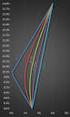 Copyright c 2005 by Karl Sigman Portfolio mean and variance Here we study the performance of a one-period investment X 0 > 0 (dollars) shared among several different assets. Our criterion for measuring
Moreover, under the risk neutral measure, it must be the case that (5) r t = µ t.
 LECTURE 7: BLACK SCHOLES THEORY 1. Introduction: The Black Scholes Model In 1973 Fisher Black and Myron Scholes ushered in the modern era of derivative securities with a seminal paper 1 on the pricing
Chapter 1: Financial Markets and Financial Derivatives
 Chapter 1: Financial Markets and Financial Derivatives 1.1 Financial Markets Financial markets are markets for financial instruments, in which buyers and sellers find each other and create or exchange
Generating Random Numbers Variance Reduction Quasi-Monte Carlo. Simulation Methods. Leonid Kogan. MIT, Sloan. 15.450, Fall 2010
 Simulation Methods Leonid Kogan MIT, Sloan 15.450, Fall 2010 c Leonid Kogan ( MIT, Sloan ) Simulation Methods 15.450, Fall 2010 1 / 35 Outline 1 Generating Random Numbers 2 Variance Reduction 3 Quasi-Monte
Options 1 OPTIONS. Introduction
 Options 1 OPTIONS Introduction A derivative is a financial instrument whose value is derived from the value of some underlying asset. A call option gives one the right to buy an asset at the exercise or
A SNOWBALL CURRENCY OPTION
 J. KSIAM Vol.15, No.1, 31 41, 011 A SNOWBALL CURRENCY OPTION GYOOCHEOL SHIM 1 1 GRADUATE DEPARTMENT OF FINANCIAL ENGINEERING, AJOU UNIVERSITY, SOUTH KOREA E-mail address: [email protected] ABSTRACT. I introduce
Return to Risk Limited website: www.risklimited.com. Overview of Options An Introduction
 Return to Risk Limited website: www.risklimited.com Overview of Options An Introduction Options Definition The right, but not the obligation, to enter into a transaction [buy or sell] at a pre-agreed price,
A Comparison of Option Pricing Models
 A Comparison of Option Pricing Models Ekrem Kilic 11.01.2005 Abstract Modeling a nonlinear pay o generating instrument is a challenging work. The models that are commonly used for pricing derivative might
FAIR VALUATION OF THE SURRENDER OPTION EMBEDDED IN A GUARANTEED LIFE INSURANCE PARTICIPATING POLICY. Anna Rita Bacinello
 FAIR VALUATION OF THE SURRENDER OPTION EMBEDDED IN A GUARANTEED LIFE INSURANCE PARTICIPATING POLICY Anna Rita Bacinello Dipartimento di Matematica Applicata alle Scienze Economiche, Statistiche ed Attuariali
A Novel Fourier Transform B-spline Method for Option Pricing*
 A Novel Fourier Transform B-spline Method for Option Pricing* Paper available from SSRN: http://ssrn.com/abstract=2269370 Gareth G. Haslip, FIA PhD Cass Business School, City University London October
THE FUNDAMENTAL THEOREM OF ARBITRAGE PRICING
 THE FUNDAMENTAL THEOREM OF ARBITRAGE PRICING 1. Introduction The Black-Scholes theory, which is the main subject of this course and its sequel, is based on the Efficient Market Hypothesis, that arbitrages
1 if 1 x 0 1 if 0 x 1
 Chapter 3 Continuity In this chapter we begin by defining the fundamental notion of continuity for real valued functions of a single real variable. When trying to decide whether a given function is or
COMPLETE MARKETS DO NOT ALLOW FREE CASH FLOW STREAMS
 COMPLETE MARKETS DO NOT ALLOW FREE CASH FLOW STREAMS NICOLE BÄUERLE AND STEFANIE GRETHER Abstract. In this short note we prove a conjecture posed in Cui et al. 2012): Dynamic mean-variance problems in
LOGNORMAL MODEL FOR STOCK PRICES
 LOGNORMAL MODEL FOR STOCK PRICES MICHAEL J. SHARPE MATHEMATICS DEPARTMENT, UCSD 1. INTRODUCTION What follows is a simple but important model that will be the basis for a later study of stock prices as
TABLE OF CONTENTS. A. Put-Call Parity 1 B. Comparing Options with Respect to Style, Maturity, and Strike 13
 TABLE OF CONTENTS 1. McDonald 9: "Parity and Other Option Relationships" A. Put-Call Parity 1 B. Comparing Options with Respect to Style, Maturity, and Strike 13 2. McDonald 10: "Binomial Option Pricing:
Lecture 11: The Greeks and Risk Management
 Lecture 11: The Greeks and Risk Management This lecture studies market risk management from the perspective of an options trader. First, we show how to describe the risk characteristics of derivatives.
FIN-40008 FINANCIAL INSTRUMENTS SPRING 2008
 FIN-40008 FINANCIAL INSTRUMENTS SPRING 2008 Options These notes consider the way put and call options and the underlying can be combined to create hedges, spreads and combinations. We will consider the
ARBITRAGE-FREE OPTION PRICING MODELS. Denis Bell. University of North Florida
 ARBITRAGE-FREE OPTION PRICING MODELS Denis Bell University of North Florida Modelling Stock Prices Example American Express In mathematical finance, it is customary to model a stock price by an (Ito) stochatic
MATHEMATICS OF FINANCE AND INVESTMENT
 MATHEMATICS OF FINANCE AND INVESTMENT G. I. FALIN Department of Probability Theory Faculty of Mechanics & Mathematics Moscow State Lomonosov University Moscow 119992 [email protected] 2 G.I.Falin. Mathematics
Option Valuation. Chapter 21
 Option Valuation Chapter 21 Intrinsic and Time Value intrinsic value of in-the-money options = the payoff that could be obtained from the immediate exercise of the option for a call option: stock price
LogNormal stock-price models in Exams MFE/3 and C/4
 Making sense of... LogNormal stock-price models in Exams MFE/3 and C/4 James W. Daniel Austin Actuarial Seminars http://www.actuarialseminars.com June 26, 2008 c Copyright 2007 by James W. Daniel; reproduction
ECON20310 LECTURE SYNOPSIS REAL BUSINESS CYCLE
 ECON20310 LECTURE SYNOPSIS REAL BUSINESS CYCLE YUAN TIAN This synopsis is designed merely for keep a record of the materials covered in lectures. Please refer to your own lecture notes for all proofs.
7: The CRR Market Model
 Ben Goldys and Marek Rutkowski School of Mathematics and Statistics University of Sydney MATH3075/3975 Financial Mathematics Semester 2, 2015 Outline We will examine the following issues: 1 The Cox-Ross-Rubinstein