
Oneness Pentecostalism: Refuting its Soteriology, Christology, and Theology
|
|
|
- Scott Austen Young
- 10 years ago
- Views:
Transcription
1 Oneness Pentecostalism: Refuting its Soteriology, Christology, and Theology E. Calvin Beisner I. Historical Background A. Offshoot of American Pentecostal movement of early 1900s B. Prompted in by adoption of a Jesus name baptismal formula C. Opposed by Assemblies of God (main Pentecostal denomination) in 1915 and D. Ministers banned from AG formed General Assembly of Apostolic Assemblies in 1916; merged in 1918 with Pentecostal Assemblies of the World in 1918; split over racial tensions in early 1920s; many mergers and splits ensued during the next two decades; the leading denomination now is the United Pentecostal Church, International, founded in 1945 by the merger of the Pentecostal Church International and the Pentecostal Assemblies of Jesus Christ. E. UPCI is now headquartered in St. Louis, Missouri, claims about 1 to 1.3 million members, and operates the Pentecostal Publishing House, which publishes under the name Word Aflame Press, about nine Bible colleges in the United States, and the Harvestime radio program. F. There are many other, smaller Oneness Pentecostal denominations. G. In 1990 Oneness Pentecostals numbered about 1.4 million in ninety denominations worldwide, or about 0.8 percent of all Pentecostals and 0.09 percent of all professing Christians. H. Oneness Pentecostalism s leading theological defenders, through books and taped lectures, are David K. Bernard, William B. Chalfant, and Robert Brent Graves, though others have also published defenses of Oneness doctrines. I. Oneness Pentecostalism is distinguished by its Christology, theology (doctrine of God), and soteriology (doctrine of salvation). 1. Christology: Jesus is God; is the Son of God only in His incarnation; and can have the fullness of the Deity (Colossians 2:9) dwelling in Him only because He is the Father and the Holy Spirit. 2. Theology: The doctrine of the Trinity is false and pagan; Jesus = the Father = the Holy Spirit. The view is called modalism because it interprets Father, Word, and Spirit not as distinct Persons but as varying modes in which God relates to His creatures. It is a revival of ancient Sabellianism, a heresy condemned in the early Church. 3. Soteriology: Justification is by grace through faith, but not by grace alone through faith alone, rather through a new birth achieved by a combination of faith, repentance, water baptism, and baptism in the Holy Spirit, the last essential to salvation and never lacking the initial evidence of speaking in tongues. II. Christology: Refuting Oneness Theology s Threat to the Unity of Christ A. We shall save the discussion of whether Christ is or is distinct from the Father and the Holy Spirit for our discussion of the doctrine of the Trinity. B. Oneness Pentecostalism teaches that Jesus is the Son of God only in His humanity.

2 1. Jesus Sonship began at Bethlehem and the humanity of the Lord Jesus is the Son, according to Oneness writer Gordon Magee. 2. According to David Bernard, The Word had pre-existence and the Word was God (the Father), so we can use [the title Word] without reference to humanity. However, the Son always refers to the Incarnation and we cannot use it in the absence of the human element. 3. Bible verses that appear to reveal a distinction between Jesus and either the Father or the Holy Spirit actually reveal only the distinction between the divine and human natures of Jesus. C. Orthodox Christianity teaches instead 1. that the Word is a Person eternally distinct from the Father and the Holy Spirit (a topic we shall save for discussion under the doctrine of the Trinity); and 2. that though His human sonship had a beginning, His divine sonship is not a mere temporary role with beginning and end. Instead, His sonship is eternal and the term Son properly applies to the preincarnate Word. D. Refutation of arguments for Oneness Christology 1. Arguments that Jesus sonship is temporal: a. Luke 1:35 says that the holy One to be born of Mary will be called the Son of God. But this only affirms that He will be called the Son of God after the incarnation; it does not deny that He was or should have been called the Son of God before the incarnation. If He was the Son before the incarnation, and then became incarnate, He remained the Son. b. Matthew 1:20 and other verses call the Son begotten, which implies a beginning in time. But the Bible refers Christ s begetting to His conception in the womb of Mary (Matthew 1:20; Luke 1:31 [and perhaps 35]; 2:21), His birth from Mary (Matthew 2:1-2, 4; Luke 2:11 [and perhaps 1:35]), and His resurrection (Acts 13:33 and probably Hebrews 1:5 and 5:5). If having been begotten at birth and resurrection did not prevent His existence as the Son before both, having been begotten at conception in the womb of Mary did not prevent His existence as the Son before that. 2. Arguments that distinctions between Jesus and the Father are simply distinctions between Jesus human and divine natures: a. Bernard asserts that plurals in reference to Jesus and the Father merely denote this distinction between two natures in Jesus. But asserting it doesn t make it so, and there are verses in which that explanation cannot work. b. For example, when he explains Jesus prayers to the Father by saying that this is Jesus human nature praying to His divine nature, he either (1) implies that Jesus was not fully man by making his divine Spirit substitute for the human spirit as the animating principle in the body, thus depriving the human side of Christ of that element of humanity, following the ancient heresy of Apollinarianism, rejected at the Council of Constantinople in 381, or (2) implies that Jesus was two persons by enabling each to talk to the other using first- and second-person pronouns. 2

3 (3) Both of these views entail an anti-biblical view of the atoning sacrifice of Christ, for the first implies that the sacrifice was not made by a fully human person and therefore not made by a proper representative of sinful men, and the second implies that the sacrifice was made only by a man and not by God and therefore was not sufficient to pay the infinite debt of sin. (4) By denying that Christ died for men s sins as God (not merely as man), Oneness theology implies an atonement that cannot fully save, because (a) Psalm 49:7-9, 15 teach that it is impossible for a mere man to make full atonement and ransom for sin. (b) Yet 1 Timothy 2:5 and Romans 5:12-19 teach that the sacrifice for man s sin had to be made by a man. (c) Thus only One who died as both fully God and fully man could properly pay the penalty for man s sin and accomplish man s salvation. (d) Note how doctrine all hangs together. E. Arguments for orthodox Christology 1. Definition, based on the Symbol of Chalcedon (A.D. 451): a. The Word, who at the incarnation was named Jesus, is very God. b. The Word is the eternal Son of God, eternally distinct from the Father. c. The Word became truly man. d. Although the Word is neither the Father nor the Holy Spirit, all the fullness of the Deity lives in bodily form in the incarnate Jesus (Colossians 2:9). e. Jesus Christ is one Person who, since, the incarnation, subsists in two distinct natures and made atonement for sin as both God and man. 2. Oneness Pentecostalism agrees that the Word is God, as taught, e.g., in John 1:1 and Titus 2: The Word is eternally distinct from the Father. a. John 1:1b, the Word was with God, denotes personal relationship that is not identity. b. Colossians 1:13-17 clearly reveals a distinction between Father and Son that predates the incarnation. The Father brought us into the kingdom of the Son he loves, in whom [the Son] we have redemption, the forgiveness of sins. He [the Son] is the image of the invisible God, the firstborn over all creation. For by him [the Son] all things were created...; all things were created by him [the Son] and for him [the Son]. He [the Son] is before all things, and in him [the Son] all things hold together. c. John 17:1, 4-5 likewise reveals a personal distinction between Father and Son before the incarnation, for there Jesus prays, Father, the time has come. Glorify your Son, that your Son may glorify you.... I have brought you glory on earth by completing the work you gave me to do. And now, Father, glorify me in your presence with the glory I had with you before the world began. 4. The Word became truly man. John 1:14, The Word became flesh, the term flesh there denoting, as it often does, according to Bauer s Greek-English Lexicon, the whole man, the human being. 5. Although the Word is neither the Father nor the Holy Spirit, all the fullness of the 3

4 III. deity lives in bodily form in Him (Colossians 2:9). a. John 15:9-10 reveals that Jesus is not the Father: As the Father has loved me, so have I loved you. Now remain in my love. If you obey my commands, you will remain in my love, just as I have obeyed my Father s commands and remain in his love.... Compare the whole Upper Room Discourse of Jesus, reported in John 14-17, for His constant expressions of distinction between Himself and the Father. b. John 15:26 reveals a distinction between Jesus and the Holy Spirit: When the Counselor comes, whom I will send to you from the Father, the Spirit of truth who goes out from the Father, he will testify about me. See also John 14:16, 26; 16:7, c. Nonetheless it remains true, as Colossians 2:9 states, that all the fullness of the Deity lives in bodily form in Him. 6. Jesus Christ is one Person who, since, the incarnation, subsists in two distinct natures and made atonement for sin as both God and man. a. Jesus is one Person (a single thinking, feeling, and choosing agent). (1) Ephesians 4:5 says of Him that there is one Lord. (2) 1 Corinthians 1:13 demands a negative answer to the question, Is Christ divided? b. Since the incarnation Jesus exists in two distinct natures, without confusion or separation, so that the one Person is fully God and fully man. (1) Titus 2:13, 2 Peter 1:1, 1 John 5:20, John 1:1, and John 20:28 all call Jesus God. (2) 1 Timothy 2:5 says that the one Mediator between God and men is the man Christ Jesus. (3) Romans 5:17 and 19 also call Jesus a man. (4) The two natures remain distinct, not mixed or confused, for: (a) God is by nature infinite, eternal, and unchangeable, while (b) man is by nature finite, temporal, and changeable, and (c) the same nature cannot be simultaneously infinite and finite, eternal and temporal, unchangeable and changeable. Theology: Oneness vs. the Trinity A. Oneness Pentecostalism teaches that 1. there is only one God, 2. the Father is God, Jesus is God, the Holy Spirit is God, and 3. Jesus = the Father = the Holy Spirit. a. Jesus = the Father. According to Bernard: (1) Isaiah 9:6 calls the Son the everlasting Father. Jesus is the Son prophesied about and there is only one Father (Malachi 2:10; Ephesians 4:6), so Jesus must be God the Father. (2) In John 8:19, 24-25, and Jesus Himself taught that He was the Father. (3) In another place Jesus said, I and my Father are one (John 10:30). (4) Jesus promised to be the Father of all overcomers (Revelation 21:6-7). 4

5 (5) In John 14:7-11, Jesus claimed to be the Father. This statement... can be viewed as nothing less tha[n] the claim of Christ to be the Father manifested in the flesh. b. Jesus = the Holy Spirit. According to Bernard, John 14:16-18, Romans 8:9-11, Philippians 1:19, and Colossians 1:27 all reveal that The Holy Spirit is the Spirit that was incarnated in Jesus and is Jesus in Spirit form.... c. Arguing a technical point of Greek grammar, Robert Brent Graves claims that when two nouns (of the same case) are connected by and, the nouns always refer to one person, place, or thing if only the first noun has the Greek definite article before it, and consequently (1) 1 Corinthians 1:3 should be translated from God our Father and Lord Jesus Christ or from God our Father, even the Lord Jesus Christ ; (2) Colossians 2:2 should be translated the mystery of God even of the Father even of Christ ; (3) 2 Corinthians 1:2 should be translated from God our Father, even the Lord Jesus Christ. d. Oneness writers also claim that the doctrine of the Trinity (1) is illogical, (2) uses unbiblical terminology, (3) is a pagan belief, and (4) was opposed by the early Church, which instead taught Oneness. B. Orthodox Christianity teaches instead that 1. there is only one God, 2. the Father and the Son and the Holy Spirit is each God, and 3. the Father and the Son and the Holy Spirit is each a distinct Person. C. Refutation of arguments for Oneness theology. 1. We agree that there is only one God. 2. We agree that the Father is God, Jesus is God, and the Holy Spirit is God. 3. We deny that Jesus = the Father = the Holy Spirit. a. Oneness arguments do not prove that Jesus is the God the Father. (1) Simply finding Jesus (the Son) called father (Isaiah 9:6) does not prove that He is God the Father, since father is a relational term, its sense determined by the relationship in mind. I am a father, but I am not my father. Oneness writers must prove that Jesus is called specifically the Father of the Son of God (i.e., His own Father); this they cannot do. In Isaiah 9:6, Father of eternity is a Hebraism for originator or creator of eternity, not the name of God the Father. (2) Jesus did not teach that He was the Father in John 8:19, 24-25, 27. By leaving out verse 26, Bernard makes it look as if John s explanation ( He was telling them about his father, verse 27) applied to Jesus answer to the Pharisees question in verse 25 ( Who are You? ), but in verse 26 Jesus said, I have much to say in judgment of you. But he who sent me is reliable, and what I have heard from him I tell the world, and so the explanation in verse 27 is clear: the One who sent Him and from whom He had heard was His 5

6 Father. (3) John 10:30 does not show that Jesus is the Father, for Jesus did not say I am the Father but I and the Father are one the plural verb indicating that the subjects ( I and Father ) denote distinct Persons. (4) Revelation 21:6-7 does not mean that Jesus is the Father. It is not Jesus but He who was seated on the throne (21:5) who says of him who overcomes, I will be his God and he will be my son. He who was seated on the throne is the Father (according to Revelation 3:21; 4:2-3, 9-11; 5:1, 6-7, 13; 6:16; 7:10, 14-15; 19:4; 20:11) and is distinguished from the Lamb (5:13; 6:16; 7:10), who has His own throne (3:21) and came and took the scroll from the right hand of him who sat on the throne (5:7). (5) Jesus did not claim to be the Father in John 14:7-11. (a) Jesus distinguishes Himself from the Father by using prepositions to show a relationship between them: No one comes to the Father except through me (14:6); I am in the Father, and... the Father is in me (14:10-11); the Father is living in me (14:10); I am going to the Father (14:12). (b) He explicitly contrasts Himself with the Father when He says, The words I say to you are not just my own. Rather, it is the Father, living in me, who is doing his work (14:10). (c) Oneness arguments focus on Jesus saying, Anyone who has seen me has seen the Father (verse 9). But the only thing people could see of Jesus was His Body, which Oneness Christology (like Trinitarian Christology) denies was divine. Thus he cannot have spoken literally when he said that whoever saw him saw the Father. b. Oneness arguments do not prove that Jesus is the Holy Spirit. (1) In John 14:16-18, Jesus expressly distinguishes Himself from the Holy Spirit by calling Him another Counselor and using third-person pronouns to denote Him but first-person pronouns to denote Himself. (2) Romans 8:9-11, Philippians 1:19, and Colossians 1:27 do not say that Jesus is the Holy Spirit. c. Robert Brent Graves was wrong about Greek grammar. He purports to be representing Granville Sharp s rule for the use of the article ho ( the ) with the conjunction kai ( and ), but in reality Sharp described six rules, not one, and none of them implies the translations Graves claims for the verses he cites. Graves writes as if only the first of Sharp s six rules existed, and then he misapplies that to the verses. As a result, all of his translations are wrong. (1) 1 Corinthians 1:3 exemplifies not the first but the fifth of Sharp s rules, and according to the fifth rule, the nouns denote distinct Persons because the first noun lacks the article. (2) Colossians 2:2 exemplifies not the first but the sixth of Sharp s rules, and according to the sixth rule, the nouns denote distinct Persons because the article is repeated before Christ. (3) 2 Corinthians 1:2 exemplifies not the first but the fifth of Sharp s rules, and 6

7 therefore God our Father is distinct from the Lord Jesus Christ. d. Oneness writers other four types of anti-trinitarian arguments also fail. (1) The doctrine of the Trinity is not illogical. It asserts that God is one in nature or substance and three in Person, but not either that He is both one and three in nature or substance or that He is both one and three in Person. Nature and person are distinct categories of things; some natures (electricity, graphite, quartz) are not persons at all, while some natures (deity, humanity) are persons. Therefore there is nothing illogical about asserting that something is one in nature but three in Person. (2) That the doctrine of the Trinity uses unbiblical terminology is irrelevant. (a) What is important is what the terminology means and whether what it means is consistent with what is taught in Scripture, not whether the terminology itself is found in Scripture. (b) Oneness writers are biased, since they object to Trinity because it is not found in Scripture, but not to Oneness, which also is not found in Scripture. (3) The doctrine of the Trinity is not pagan. (a) The various trinities of pagan religions are not analogous to the Christian Trinity but are tritheistic, modalistic (actually more like Oneness s doctrine of God), or emanational and impersonal. (b) Even if there were a pagan equivalent of the doctrine of the Trinity (and there is not), that would not prove that the Trinity was false, since some pagans also believe that God created the universe, and their doing so does not prove that belief false. (4) The early Church did not oppose the doctrine of the Trinity but taught it and opposed Oneness. (a) (b) (c) Bernard and other Oneness writers present many quotations from early Christians that they claim support Oneness, but a thorough examination of those quotations in their original contexts shows otherwise. See my book for treatment. Some of those quotations do show that some early Christian writers fell short of a properly Biblical doctrine of the Trinity, but they also reveal that they taught things about God that Oneness denies. Besides, what is most important is not what the early Church taught but what Scripture teaches. D. Arguments for orthodox Trinitarianism 1. Definition, based on the Athanasian Creed (ca. late fifth or early sixth century): a. There is only one God. b. The Father and the Son and the Holy Spirit is each God. c. The Father and the Son and the Holy Spirit is each a distinct Person. 2. Oneness theology agrees that there is only one God and that the Father, the Word (but not the Son, which as we saw denotes only Christ s humanity), and the Holy Spirit is each God. 3. The Father and the Son are distinct Persons. 7

8 a. They glorify each other both before and after the incarnation (John 17:1, 4-5). b. They are distinct as judge and judged in the atoning sacrifice of Christ (Mark 15:34; Luke 23:46). c. They are distinguished as two witnesses (John 8:14-18): Even if I bear witness of Myself, My witness is true, for I know where I came from and where I am going; but you do not know where I come from and where I am going. You judge according to the flesh; I judge no one. And yet if I do judge, My judgment is true; for I am not alone, but I am with the Father who sent Me. It is also written in your law that the testimony of two men is true. I am One who bears witness of Myself, and the Father who sent Me bears witness of Me. (1) Jesus cannot be speaking here merely as human, for He claims to have come from heaven. (2) So the distinction is between the Father and the Son as divine, not merely between the Father and Jesus human nature. (3) If Jesus and the Father were the same person, there would be only one witness, not two. 4. The Father and the Holy Spirit are distinct Persons. a. The Father will give the Holy Spirit to those who ask him (Luke 11:13). b. The Father sends the Holy Spirit (John 14:25-26). 5. Jesus and the Holy Spirit are distinct Persons. a. Jesus said in Matthew 12:28 that He drove out demons not by Himself but by the Spirit of God. b. Blasphemy against the Son of Man (a title for Jesus) can be forgiven, but not blasphemy against the Holy Spirit (Matthew 12:31-33). c. Jesus sends the Spirit as Someone distinct from Himself (John 15:26; 16:7-11). 6. Specific passages denote Father, Son, and Spirit as distinct from each other. For example, in John 14:16, Jesus says, And I [the Son] will ask the Father, and he will give you another Counselor [the Holy Spirit] to be with you forever. 7. The fifth and sixth of Sharp s rules for the use of the article with the conjunction with personal nouns require that certain verses be understood to indicate that Father, Son, and Spirit are distinct Persons. a. The fifth rule is that when the first noun lacks the article, each noun must denote a distinct person, according to which Romans 1:7 ( God our Father and the Lord Jesus Christ ) and Galatians 1:1 ( Jesus Christ and God the Father ) both show that the Father and the Son are distinct Persons. b. The sixth rule is that when each noun is preceded by the article, each noun must denote a distinct person, according to which (1) Matthew 28:19 ( in the name of the Father, and of the Son, and of the Holy Spirit ) shows that Father, Son, and Spirit are distinct Persons; and (2) 1 Thessalonians 3:11 ( our God and Father... and our Lord Jesus Christ ) and 2 Thessalonians 2:16-17 ( our Lord Jesus Christ... and God our Father ) shows that Father and Son are distinct Persons. 8. The early Church taught the doctrine of the Trinity and condemned modalism. Time doesn t permit quotations proving this, but see my book. 8

9 IV. Soteriology: Salvation by Grace Alone through Faith Alone or By Grace and Debt through Faith and Works? A. Oneness Pentecostalism teaches that 1. In Adam all men fell into sin, guilt, and spiritual death, and therefore no one can satisfy God s requirements of perfect righteousness or atone for his own sin. 2. Justification is by God s grace through faith in Jesus Christ, who died as a substitutionary sacrifice to satisfy the penalty for the sins of all men. 3. Salvation requires a new birth. 4. New birth is achieved by four steps: faith, repentance, water baptism (which must be by immersion and in the name of Jesus only and is the indispensable means of regeneration and remission of sins), and baptism in the Holy Spirit (always accompanied by the gift of tongues). B. Orthodox Christianity 1. Agrees that all men are born guilty and dead sinners because of Adam s sin. 2. Agrees that justification is by God s grace through faith in Jesus Christ, who died as a substitutionary sacrifice to satisfy the penalty for sin. 3. Agrees that salvation requires a new birth. 4. Denies that new birth is the result of faith, repentance, water baptism, and baptism in the Holy Spirit. C. Arguments for Oneness soteriology 1. Since Oneness and orthodoxy agree that man is born sinful, we can ignore that. 2. Since Oneness and orthodoxy agree that justification is by grace through faith in Christ, who died as a substitutionary sacrifice to satisfy the penalty for sin, we can ignore that, though we must caution that Oneness soteriology becomes selfcontradictory regarding whether justification is truly through faith. 3. Since Oneness and orthodoxy agree that regeneration (new birth) is necessary for salvation, we can ignore that, though we shall argue that the new birth is not achieved through faith, repentance, water baptism, and baptism in the Holy Spirit. 4. New birth is achieved by faith, repentance, water baptism, and baptism in the Holy Spirit. a. Oneness writers have not provided arguments that regeneration is achieved through faith, but seem to have assumed it, as do many evangelical Christians. b. Oneness writers have not provided arguments that regeneration is achieved through repentance, but seem to have assumed it, as do many evangelical Christians. c. Water baptism is the indispensable means of regeneration. (1) According to the authors of the UPCI publication Bible Doctrines: Foundation of the Church, John 3:5, by saying that a man must be born of water and of the Spirit, proves that Water baptism is a part of that process by which a man is born into, or made a part of, the kingdom of God. (2) Similarly, Titus 3:5 says that we are saved through the washing of regeneration and the renewing of the Holy Spirit and therefore shows that water baptism is necessary for salvation. (3) The same authors claim that Romans 6:4 shows that we are buried with 9

10 Christ in baptism. d. Water baptism is the indispensable means of remission of sins. The same authors claim that (1) Acts 10:43 shows that Baptism is where the sins are officially remitted through the name of the Lord Jesus. (2) Acts 22:16, where Ananias tells Paul to Arise, and be baptized, and wash away thy sins, calling on the name of the Lord, shows that Those who have repented and believed upon Christ can be cleansed from their sins by the blood of Christ by being baptized in the name of Jesus Christ. (3) Acts 2:38 shows that Water baptism is for the remission of sins. e. Water baptism must be by immersion to be effective. (1) Oneness writer D. L. Welch claims, The word baptize comes from the Greek words bapto and baptizo, which mean to plunge, dip, or immerse.... Thus, to baptize anyone correctly, we must immerse him into water. (2) Oneness writers claim that Romans 6:3-5 and Colossians 2:12 say we are buried with Christ by baptism into death. Therefore, Any other mode of baptism is incomplete and contrary to the teaching of the Bible. f. Water baptism must be administered with a Jesus name formula to be effective. Bernard and other Oneness authors argue: (1) Since water baptism is for the remission of sins and since the name of Jesus is the only name that saves from sin (Acts 4:12), it is needful for the name of Jesus to be spoken in water baptism. (2)... the early church administered water baptism in the name of Jesus Christ (Acts 2:38; 8:16; 10:48; 19:5; 22:16; Romans 6:3-4; Galatians 3:27; Colossians 2:11-12). (3) Historical evidence shows that the Jesus name formula, not the triune formula, was used by the early Church. g. Baptism in the Holy Spirit is essential to salvation and never occurs without the initial evidence of speaking in unknown tongues. According to Bernard (1) The baptism with, by, in, or of the Holy Ghost (Holy Spirit) is part of New Testament salvation, not an optional, postconversional experience (John 3:5; Romans 8:1-16; Ephesians 1:13-14; Titus 3:5). (2) The Bible records five historical accounts of receiving the Holy Spirit in the New Testament church: the Jews, the Samaritans, the Gentiles, the Apostle Paul, and the disciples of John at Ephesus. This record establishes that (a) The baptism of the Spirit is indeed for everyone (Luke 11:13; Acts 2:39) (b) And is accompanied by the sign of tongues (Mark 16:17).... (c) Three of the accounts explicitly describe speaking in tongues as the initial evidence of receiving the Spirit [Acts 2:1-4; 10:44-48; 19:1-7].... Tongues are implicit in the other two accounts [Acts 8:8, 12-19; 9:17, compare 1 Corinthians 14:18]. D. Refutation of arguments for Oneness soteriology 1. Orthodoxy agrees that in Adam all humankind fell into sin, guilt, and spiritual death and therefore no one can satisfy God s requirements of perfect righteousness or atone 10

11 for his own sin. 2. Orthodoxy agrees that justification is by God s grace through faith in Jesus Christ, who died as a substitutionary sacrifice to satisfy the penalty for sin. However, the Oneness makes obedience a condition of justification rather than the fruit of the faith that is the real condition of justification, and therefore undermines its own doctrine of justification through faith. 3. Orthodoxy agrees that salvation requires a new birth. 4. Orthodoxy denies that the new birth is achieved by faith, repentance, water baptism, and baptism in the Holy Spirit. a. Some orthodox Christian denominations teach that the new birth is the result of faith, but Reformed theology teaches that faith is the result of new birth, arguing, for example, from John 1:12-13: But as many as received Him, to them He gave the right to become children of God, even to those who believe in His name: who were born [note the past tense; the rebirth precedes the faith], not of blood, nor of the will of the flesh, nor of the will of man, but of God, and John 5:24: Most assuredly I say to you, he who hears My word and believes in Him who sent Me has everlasting life, and shall not come into judgment, but has passed [note the past tense; rebirth precedes faith] from death into life. b. Orthodox Christianity recognizes that repentance (a change of mind ) is simply an aspect of faith, so that real faith must include repentance. c. Water baptism is not the indispensable means of regeneration. (1) In John 3:5, born of water may denote either natural birth (in which case the statement means that a man must be born not only naturally but also of the Spirit ) or being born of the Spirit (in which case the statement means that a man must be born of water, that is, of the Spirit ). (a) Either of these interpretations is grammatically possible, and neither can be ruled out simply by one s preference for water baptism. Oneness arguments therefore argue in a circle at this point, assuming what is to be (b) proven. If born of water denotes neither natural birth nor being born of the Spirit but water baptism, then verse 5 requires both baptism and being born of the Spirit while verse 8 requires only being born of the Spirit, while if born of water means being born of the Spirit then verses 5 and 8 require the same thing. (2) Similarly, washing of regeneration in Titus 3:5 need not be understood as denoting water baptism, and using it as an argument for the Oneness position involves arguing in a circle. (a) (b) Washing of regeneration may allude to spiritual rebirth. Seeing it as denoting baptism instead creates a contradiction within verse 5, for i) Water baptism, commanded by God, is a righteous thing we do. ii) iii) But God saved us, not because of righteous things we had done, but because of his mercy. So if washing of rebirth is water baptism, then God saved us not 11

12 because of righteous things we had done... but through baptism [i.e., a righteous thing we do], which is contradictory. (3) Romans 6:4 does not state that baptism is indispensable to our burial with Christ, only that we are buried through it; it does not follow that we cannot be so buried apart from it. (Analogy: Tom arrived by train does not imply that had Tom not taken the train he could not have arrived by car or plane. The Oneness argument here is an example of the logical fallacy of affirming the consequent.) (4) Not only do these passages not prove that water baptism is indispensable to regeneration, but also Scripture teaches that regeneration sometimes occurs before water baptism (Acts 2:41; 8:12; 9:18; 10:47-48; 16:14-15, 30-33; 18:8). d. Water baptism is not the indispensable means of remission of sin. (1) Acts 10:43 does not mention baptism, much less say it is where sins are officially remitted. Instead, it says, everyone who believes in him receives forgiveness of sins through his name. (2) Acts 22:16 does not prove that water baptism is indispensable to washing away sins. (a) Assuming that Ananias s words to Paul really meant that Paul s sins were to be washed away in water baptism, the verse would not prove that baptism is indispensable to remission. i) A cause may be sufficient but not necessary; necessary and sufficient; necessary but not sufficient; or neither necessary nor sufficient but elective. ii) Baptism here cannot be a sufficient cause (whether necessary or not) of remission or regeneration, because it is ineffective apart from faith (Mark 16:16; Hebrews 11:6). iii) It cannot be a necessary but insufficient cause because remission can occur before it (Acts 2:41; 8:12; 9:18; 10:47-48; 16:14-15, 30-33; 18:8; Luke 23:39-43; Romans 4:9-12; Colossians 2:11-14). iv) Therefore water baptism, even if it were a cause of remission or regeneration, would have to be neither necessary nor sufficient but elective; God, the agent of regeneration, may elect to use it or not. (b) Scripture sometimes refers to a symbol as if it were the thing symbolized, yet, like bread in communion (John 6:51, 56), symbol and thing are not confused; Christ s death, not broken bread, saves. Similarly, water baptism symbolizes our purification from sin (Acts 22:16) and union with Christ in His death, burial, and resurrection (Romans 6:1-7), yet Christ s blood, not water, washes away our sins (Hebrews 9:13-14, 22; 1 John 1:7; Revelation 1:5; 7:14; 1 Peter 3:21). Therefore, neither water nor water baptism, but the blood of Christ and its application to us, symbolized in baptism, are the real cause of our regeneration and remission of sins. (3) Acts 2:38 does not prove that baptism is indispensable to remission of sins. (a) Grammatically, the command to be baptized is not connected with the 12

13 promise of remission of sins. i) The command to repent is in second person plural and active voice. ii) The command to be baptized is in third person singular and passive voice. iii) The possessive pronoun your modifying the sins that are remitted is in second person plural. iv) Therefore, the grammatical connection is between repent and for the remission of your sins, not between be baptized and for the remission of your sins. v) The best translation of the verse, therefore, is: Repent for the remission of your sins, and let each of you be baptized in the name of Jesus Christ.... (b) The phrase for the remission of your sins need not mean in order to obtain the remission of your sins. i) The Greek word translated for, the word eis, has many meanings. ii) One denotes reference to a person or thing for, to, with respect or reference to. iii) Another means because of. iv) If either of these is the case here, then even if the command to be baptized were linked with for the remission of your sins it would not prove that baptism was in order to obtain but would mean that it was in reference to or because of the remission of your sins. v) For Oneness proponents to insist otherwise is for them to argue in a circle, assuming as their interpretive principle in this verse the very point they seek to prove by this verse. e. Water baptism need not be by immersion to be effective. (1) The most exhaustive study ever done of the Greek words bapto and baptizo, James Wilkinson Dale s four-volume study, demonstrated that they often denote actions having little or nothing to do with immersion. (2) No verse or verses in the Bible prove that baptism must be by immersion. f. Water baptism need not be administered with a Jesus name formula to be effective. (1) Scripture nowhere instructs recitation of Jesus name during water baptism. (2) None of the verses the Oneness writers cite proves that water baptism must be administered in Jesus name. (a) None introduces the words of a quotation. (b) Romans 6:3-4, Galatians 3:27, and Colossians 2:11-12 don t even use in the name. (c) None of the remaining verses represents a consistent formula used in water baptism, the Greek words varying among them. (3) Historical evidence does not show that the Jesus name formula was preferred by the early Church. (a) Oneness authors Thomas Weisser and David Bernard claim that historical evidence supports a Jesus name formula and condemns a triune formula. 13

14 (b) Yet of the 47 citations they offer, 10 clearly and 3 possibly present no evidence for any formula; 11 clearly and 4 possibly accept either formula; and only 4 clearly (including the second-century gnostic Marcionites, who called the Father a false demigod, and two fourth-century Arians and the sixteenth-century Polish Brethren, all of whom denied the deity of Christ) and 3 possibly (including a seventeenth-century Anabaptist who might have denied the deity of Christ; a nineteenth-century Oneness believer; and another nineteenth-century writer who denied the Trinity and may have been Oneness) require a Jesus name formula. Of the 23 they cite from the first four centuries, only 3 (the Marcionites and two Arians) require a Jesus name formula; only 2 clearly and 6 possibly permitted either formula; 6 clearly and 4 possibly required a triune formula; and 6 clearly and 2 possibly present no evidence for any formula. g. Baptism in the Holy Spirit is not essential to salvation, and speaking in tongues is not the indispensable initial evidence of being baptized in the Spirit. (1) None of the verses cited by Oneness writers says baptism in the Spirit is essential to salvation. (2) The five accounts in Acts, taken singly or together, do not prove that speaking in tongues is the initial evidence of baptism in the Spirit. (a) Acts 2:1-4 does not report the disciples having received the Spirit, for they had received Him seven weeks before (John 20:22-23). (b) Even if tongues occurred in all five events, this would not prove that tongues were the invariable evidence of being baptized in the Spirit, because to take them so is to confuse descriptive (narrative) with prescriptive (command) writing. (c) Other passages in Acts tell of conversions or of people being baptized or filled with the Spirit but do not mention tongues (Acts 2:37-41; 4:31; 6:3-6; 7:55; 11:24; 13:52). So while three passages mentioning people being filled with the Spirit explicitly mention tongues, and one may imply it, it is a highly debatable inference in one other, and six do not mention it. (d) Other New Testament and many Old Testament figures were filled with (= baptized in) the Holy Spirit, of whom we are never told that they spoke in tongues. (e) Of at least forty distinct passages in the Bible that mention people being filled with (= baptized in) the Spirit, only three explicitly mention tongues, in only one other can tongues reasonably be inferred, in only one other can tongues tentatively be inferred, and thirty-five do not mention tongues. E. Arguments for orthodox soteriology 1. New birth is a gift of God s sovereign grace, independent of the sinner s action (Romans 9:15-21). a. It comes about through the living and enduring word of God (1 Peter 1:23). b. The wind blows wherever it pleases. You hear its sound, but you cannot tell 14

15 where it comes from or where it is going. So it is with everyone born of the Spirit (John 3:8). 2. New birth makes God s call effectual. It is a precondition of faith (John 1:12-13; 3:3, 5; 5:24; 1 John 5:1). 3. Faith and repentance follow new birth (John 5:24; Acts 2:37-38), and faith and repentance are both gifts from God (Psalm 80:3, 7, 19; Jeremiah 31:18; Acts 5:31; 11:18; 13:46-48; 18:27; Philippians 1:29; 2 Timothy 2:25). 4. Faith results in justification (Romans 3:28), which is not by works (Romans 3:21-30; 4:3-5), though works are the natural result of faith (James 2:14-26). 5. The believer s perseverance in the faith is assured by God s work in him through His Word (John 6:37-40; 10:28-29; Romans 5:8b-10; 8:30-39; 1 Corinthians 1:8-9; 3:15; Philippians 1:6; Hebrews 7:25; 1 Peter 1:5). 6. In this saving process, water baptism is a sign and seal (outward stamp of God s ownership of the believer), made effectual as such through faith, of the believer s union with Christ and his cleansing from sin; its absence cannot condemn the believer; its mode is flexible; its proper formula is triune. a. Water baptism is a sign and seal of the believer s union with Christ, but also with the Father and the Holy Spirit (Matthew 28:19; 1 Corinthians 10:2; 1:13; 12:13; Romans 6:3-6; Galatians 3:27-28; Colossians 2:11-12). b. Water baptism signifies and seals the believer s purification from sin (John 3:5; Titus 3:5; 1 Corinthians 6:11; Colossians 2:11-12; Matthew 3:6; Mark 1:4; Luke 3:3; Acts 22:16; 1 Peter 3:21). c. Water baptism is made effectual as a sign only through faith (John 3:18; Hebrews 11:6). d. Its absence does not condemn the believer, for Whoever believes in him is not condemned (John 3:18) and whoever believes in him shall not perish but have eternal life (John 3:16). e. The mode of baptism is flexible. (1) The word itself does not imply any mode. (2) The reference to a ritual washing of the hands as a baptism shows that it sometimes involved pouring (Matthew 15:2; Mark 7:2-5; Luke 11:38). (3) The fact that various OT ritual sprinklings are called baptisms (Hebrews 9:10, 13, 19, 21) shows that it sometimes involved sprinkling. (4) That it might sometimes have involved immersion is seen from the use of baptizo to translate the Hebrew tabal in 2 Kings 5:14, which says that Naaman dipped himself in the Jordan seven times. (5) The early Church was flexible in its mode of baptism. (See my book for quotations.) f. The proper formula for baptism is triune. (1) Jesus prescribed it in Matthew 28:19, its rhythmic form making it idea for memorization and ritual use. (2) The early Church used a triune formula. (See my book for quotations.) V. Witnessing tips A. Demonstrate love and concern. 15

16 B. Show common ground (e.g., against antinomianism). C. Focus on their weakest points: 1. Speaking in tongues as necessary for salvation. 2. Denying that Jesus existed as the Son of God before the incarnation. 3. Identifying Jesus Himself as the Father and the Holy Spirit. 4. Insisting that baptism is necessary for salvation and must be by immersion and with a Jesus name formula. D. Focus on major issues of Christology, theology, and soteriology. Don t get sidetracked onto strange practices common to Oneness and other Pentecostal holiness movements. E. Correct their false notions of evangelical Trinitarianism. 1. Express orthodox beliefs accurately. 2. Correct false notions of evangelical Christology, e.g., that we don t believe Jesus is God or that we don t believe all the fullness of Deity lives in Him in bodily form. 3. Correct their false notions of the Trinity, e.g., that we believe in three Gods. 4. Correct their false notions of evangelical soteriology, e.g., that we are antinomian or careless about water baptism. E. Calvin Beisner is national spokesman of the Cornwall Alliance for the Stewardship of Creation ( and a former associate professor of interdisciplinary studies at Covenant College ( ) and Knox Theological Seminary ( ). He is the author of Jesus Only Churches (1998) and ten other books. 16

Originally published in the Pentecostal Evangel, March 24, 2002. The 16 Foundational Truths Series There is one true God: Father, Son and Holy Spirit
 Originally published in the Pentecostal Evangel, March 24, 2002. The 16 Foundational Truths Series There is one true God: Father, Son and Holy Spirit By Edgar R. Lee Editor s note: This is the second in
How Does Jesus Save? The Significance of The Blood of Christ
 How Does Jesus Save? The Significance of The Blood of Christ 2 Introduction Jesus Saves... true, but how? He will save His people from their sins. (Mt 1:21) Are we saved... Because of our parents/ancestors?
And the Books Were Opened
 JUDGMENT DAY And the Books Were Opened 1 And the Books Were Opened Hebrews 9:27 INTRODUCTION: A. Have you thought of the reality of the judgment day? 1. Judgment day is a real day! 2. Judgment day is a
KNOWING GOD NEW BELIEVERS STUDY
 NEW BELIEVERS STUDY TABLE OF CONTENTS BIBLE STUDY 1: SALVATION 1 BIBLE STUDY 2: FAITH AND ASSURANCE 4 BIBLE STUDY 3: POWER OF THE HOLY SPIRIT 7 BIBLE STUDY 4: TRIALS 10 BIBLE STUDY 1: SALVATION SCRIPTURE
For more information on this study guide/pamphlet go to : www.someonecaresministry.org.
 P a g e 1 P a g e 2 Search the Scriptures Study Guide Author s Note: The bible says in 1 John 4:1 that we should try (test) every spirit and every message to see whether it be of God. Please test this
Unity of the Person. of Jesus Christ as the God-man. By Corey Keating
 Unity of the Person of Jesus Christ as the God-man By Corey Keating Professor Al Glenn ST502 Systematic Theology II Theological Statement Fuller Theological Seminary, Phoenix Extension Winter Quarter 2002
NATIONAL BIBLE INSTITUTE
 NATIONAL BIBLE INSTITUTE NBI'S FREE QUIZ... "BIBLE: Basic Information Before Leaving Earth" Please answer all questions contained in the test. You will be contacted within a few days with your results.
Sanctification: A Theological Position Statement. By Corey Keating
 Sanctification: A Theological Position Statement By Corey Keating Professor Al Glenn ST502 Systematic Theology II Theological Position Statement Fuller Theological Seminary, Phoenix Extension Winter Quarter
KNOWING GOD PERSONALLY
 KNOWING GOD PERSONALLY These four points explain how you can enter into a personal relationship with God and experience the life for which you were created... GOD LOVES YOU AND CREATED YOU TO KNOW 1HIM
Scripture Memory Program
 Scripture Memory Program Psa. 119:11 Your word I have hidden in my heart, That I might not sin against You. Nothing enriches the spiritual life of the believer more than the discipline of Bible memory.
CERTIFIED TEACHER APPLICATION FOR EMPLOYMENT
 Northshore Christian Academy A Ministry Of Northshore Christian Church 5700-23 rd Drive West, Everett, WA 98203 Phone (425) 407-1119 Fax (425) 425-322-2386 www.northshorechristianschools.org For Office
Baptism and the Lord s Supper: A Theological Position Statement. By Corey Keating
 Baptism and the Lord s Supper: A Theological Position Statement By Corey Keating Professor Al Glenn ST503 Systematic Theology III Theological Position Statement Fuller Theological Seminary, Phoenix Extension
7.1.1 The church is Christ together with his people called both to worship and to serve him in all of life.
 Living Faith: Chapter 7 - "God's Church" Page 1 of 6 Living Faith - Chapter 7 - God's Church 7.1 The Church 7.1.1 The church is Christ together with his people called both to worship and to serve him in
1. It is a very popular opinion in society today that one church is just as good as another.
 The Saved and the Church Introduction 1. It is a very popular opinion in society today that one church is just as good as another. 2. Many believe that church membership has nothing to do with one s salvation.
Jesus Came to Earth to Destroy the Works of the Devil JOHN PIPER Why Christmas Happened Jesus Incarnation and Our Regeneration The Great Love of God
 Jesus Came to Earth to Destroy the Works of the Devil JOHN PIPER Why Christmas Happened Two times in 1 John 3:1-10 we are told why Christmas happened that is, why the eternal, divine Son of God came into
WELCOME TO GOD S FAMILY
 WELCOME TO GOD S FAMILY To all who received him, to those who believed in his name, he gave the right to become children of God children born not of natural descent, nor of human decision or a husband
What is the Church? Matthew 16:18
 THE CHURCH What is the Church? 1 What is the Church? Matthew 16:18 INTRODUCTION: A. Matthew 16:18... And on this rock I will build My church. What is the church? 1. The prophets of old prophesied about
GOD AS CREATOR, OWNER, AND PERFECT GIFT-GIVER
 PART TWO GOD AS CREATOR, OWNER, AND PERFECT GIFT-GIVER I. GOD AS CREATOR. To understand Christian stewardship we must accept that God is the creator of everything, owner of everything, and the perfect
Section II TFC Chaplain Training Chapter 2 Doctrinal Statement Bible Study
 Section II TFC Chaplain Training Chapter 2 Doctrinal Statement Bible Study I. TFC Doctrinal Statement A. The Personality and Trinity of the Godhead (John 14:26; 1 John 5:7). B. The virgin birth and deity
The Power of the Gospel. The Great Exchange
 The Power of the Gospel 3 The Great Exchange In the last lesson, we saw how God dealt decisively with the problem of your separation from God. We also saw how this is the first fourth of the Gospel the
This booklet contains a message of love and hope. An exciting adventure awaits all who discover these life-changing truths.
 This booklet contains a message of love and hope. An exciting adventure awaits all who discover these life-changing truths. The following four principles will help you discover how to know God personally
FIRST FRUITS OF ZION WHITE PAPER Statement of Faith
 FIRST FRUITS OF ZION WHITE PAPER Statement of Faith Unless otherwise noted, Scripture quotations taken from the New American Standard Bible, Copyright 1960, 1962, 1963, 1968, 1971, 1972, 1973, 1975, 1977,
BIBLICAL EVANGELISM. IV. Christ s commissions to evangelize A. Matthew 28:18-20 B. Mark 16:15 C. Luke 24:46ff D. John 20:21 E.
 BIBLICAL EVANGELISM I. Inadequate Views of Evangelism A. The proclamation of a redemption they have already been given - Denies need for personal conversion B. Presence with hurting needy people C. Meeting
Eternity Bible College. Statement of Faith
 Eternity Bible College Statement of Faith Last Amended: 12-17-2015 Table of Contents Preamble...1 The Holy Scriptures...1 The Godhead...1 The Father...1 The Son...2 The Holy Spirit...2 Man...2 Salvation...3
God Gives You Standards for Living
 70 Bible Ethics LESSON 5 God Gives You Standards for Living Imagine that you are considering buying a bicycle. In the shop you see a beautiful bicycle, just the kind you have always wanted. Of course you
TRAINING PRAYER LEADERS
 TRAINING PRAYER LEADERS SESSION ONE GUIDING OTHERS IN PRAYER Christian leaders are busy people. They are action-oriented people. As you lead and train others to lead, you will find your time taken doing
Table of Contents. 1) Purpose of the Doctrine Survey. 2) Gospel Review. 3) Obedience. 4) Scripture. 5) Holy Spirit. 6) Prayer. 7) Christian Community
 Doctrine Survey Table of Contents 1) Purpose of the Doctrine Survey 2) Gospel Review 3) Obedience 4) Scripture 5) Holy Spirit 6) Prayer 7) Christian Community 8) Evangelism 9) Eternal Perspective 10) Accountability
3rd-4th Grade Creation to Christ
 3rd-4th Grade Creation to Christ NAME 2 Timothy 3:16 Psalm 90:2 Hebrews 11:3 Genesis 1:1 Genesis 1:27 Psalm 24:1-2 Genesis 2:23-4 Psalm 119:160 Proverbs 9:10 Hebrews 4:13 Proverbs 14:12 Ezekiel 18:32 Isaiah
Bible Doctrines I. Salvation, Eternal Security, Baptism, Repentance, Holiness, The Fear of the Lord, The Blood of Christ, and Forgiveness
 Bible Doctrines I Salvation, Eternal Security, Baptism, Repentance, Holiness, The Fear of the Lord, The Blood of Christ, and Forgiveness Eight Lessons Bible Study Course Study to shew thyself approved
HE DWELT AMONG US. THE GOSPEL OF JOHN LESSON 2 Chapter 1:19-51. The Beginning of Jesus Public Ministry
 Lesson 2, page 1 HE DWELT AMONG US THE GOSPEL OF JOHN LESSON 2 Chapter 1:19-51 The Beginning of Jesus Public Ministry Very little is recorded about Jesus childhood in the scriptures. We are told, the Child
BIBLE STUDIES FOR LIFE Where Life Connects to God s Word
 Life. It s not easy. Yet the Bible says we can have life to the fullest! Life that s found in Jesus. Millions of adults are searching for this kind of life. But they aren t sure how to find it. So we ve
The heavens declare the glory of God without words (see Psalm 19). Most importantly beyond that fact God has spoken with words in the Bible in a
 International Bible Lessons Commentary Hebrews 1:1-14 English Standard Version International Bible Lessons Sunday, December 7, 2014 L.G. Parkhurst, Jr. The International Bible Lesson (Uniform Sunday School
The Deity of Christ Q UESTIONS & OBJECTIONS LESSON
 49 LESSON 49 The Deity of Christ I know men and I tell you that Jesus Christ is no mere man. Between Him and every other person in the world there is no possible term of comparison. Alexander, Caesar,
9 marks of A Healthy New Testament Church. 1. Preaching. 2. Biblical Theology
 9 marks of A Healthy New Testament Church 1. Preaching What is it? An expositional sermon takes the main point of a passage of Scripture, makes it the main point of the sermon, and applies it to life today.
Heritage Christian Schools Bible 10, Christian Studies 11 & 12 BAA Courses
 Heritage Christian Schools Bible 10, Christian Studies 11 & 12 BAA Courses Synopsis and Rational Bible 10 and Christian Studies 11 &12 are required courses for successful graduation of Heritage Christian
Discover The God Who Believes In You
 Discover The God Who Believes In You I AM LOVED The most basic fact of the Bible is that there is a God. He made everything that is, including you, and loves you with an everlasting love. God has loved
BYLAWS OF THE CORNERSTONE INTERNATIONAL HOUSE OF PRAYER, INC
 BYLAWS OF THE CORNERSTONE INTERNATIONAL HOUSE OF PRAYER, INC PREAMBLE Statement of Faith 1. God the King and the Holy Trinity WE BELIEVE that God is the Eternal1 King2. He is an infinite, omnipresent,
GOD S SIMPLE PLAN OF SALVATION ~ Are You Going to Heaven? You Can Know For Sure!
 GOD S SIMPLE PLAN OF SALVATION ~ Are You Going to Heaven? You Can Know For Sure! The Scriptures offer the gift of eternal life through Jesus Christ the Lord. The following principles are given with the
The General Council of the Assemblies of God STATEMENT OF FUNDAMENTAL TRUTHS
 The General Council of the Assemblies of God STATEMENT OF FUNDAMENTAL TRUTHS The Bible is our all-sufficient rule for faith and practice. This is intended simply as a basis of fellowship among us (i.e.,
International Bible Lessons Commentary Hebrews 1:1-14
 International Bible Lessons Commentary Hebrews 1:1-14 New American Standard Bible International Bible Lessons Sunday, December 7, 2014 L.G. Parkhurst, Jr. The International Bible Lesson (Uniform Sunday
The Holy Spirit works in the world, convincing persons of sin and bringing them to repentance and faith, guiding them to fullness of life in Christ.
 The Holy Spirit and the Church The Holy Spirit is a divine person who eternally co-exists with the Father and the Son. The Spirit was present and active in creation, is seen throughout the Old Testament,
The Gospel Plan of Salvation
 The Gospel Plan of Salvation GOD S PART 1. The great love of God for man (John 3:16) 2. He gave His Son, Jesus Christ, as the Saviour (Luke 19:10) 3. Sent the Holy Spirit as a guide (John 16:13) 4. Gave
Spiritually Enabled John 16:13
 Spiritually Enabled John 16:13 Last week Jim talked about foundations and the importance of having the right foundation in our lives. Without the right foundations, buildings become unstable. Without the
Living Water Church Ministry Training Center
 Living Water Church Ministry Training Center He that believeth on me, as the scripture hath said, out of his belly shall flow rivers of living water. John 7:38 1000 Hall Valley Drive Bridgeport, WV 26301
PERSONAL BIBLE STUDY
 YOUR NAME: YOUR ADDRESS: PERSONAL BIBLE STUDY ' (find out for yourself what the Bible teaches) (In answering these questions, please use a King James Bible if possible) 1) THE BIBLE 1. Does the Bible claim
Big Valley Grace Lay Counseling Ministry Application Process. Requirements and Responsibilities of a Lay Counselor
 Big Valley Grace Lay Counseling Ministry Application Process It is a process! Please prayerfully and thoroughly complete this application. Lay Counseling is not for everyone, though you may have a heart
CONFIRMATION VERSE SUGGESTIONS
 Joshua 1:9b Psalm 23:1 Psalm 25:4-5 Psalm 27:1 Psalm 46:1 Psalm 46:10a Psalm 100:2 Psalm 100:1-3 Psalm 100:5 Psalm 118:1 Psalm 119:105 Psalm 121:1-2 OLD TESTAMENT READINGS Be strong and courageous. Do
Notes For The Margin Of Your Bible
 Notes For The Margin Of Your Bible But sanctify the Lord God in your hearts, and always be ready to give a defense to everyone who asks you a reason for the hope that is in you, with meekness and fear
Let speak about Forgiveness of sin.
 Let speak about Forgiveness of sin. By: Dov Avnon The second important subject after salvation or how to be save is forgiveness. The history if full of teachings that have one thing in common: you have
Answers to Study Questions. for the Doctrine of Atonement. By Corey Keating
 Answers to Study Questions for the Doctrine of Atonement By Corey Keating Professor Al Glenn ST502 Systematic Theology II Theological Statement Fuller Theological Seminary, Phoenix Extension Winter Quarter
Next Step Lessons for New Believers Finding Confidence in Our Faith
 Next Step Lessons for New Believers Finding Confidence in Our Faith {Participant s Guide} Finding Confidence in Our Faith If you ve recently placed your faith in Jesus Christ, you are about to embark on
Faith is the Victory In Overcoming Sin
 FAITH Faith is the Victory In Overcoming Sin 1 Faith is the Victory In Overcoming Sin 1 John 5:4-5 INTRODUCTION: A. The theme of this series is Faith is the Victory!, with our basic text found in 1 John
THE BAPTIST FAITH & MESSAGE
 I. The Scriptures THE BAPTIST FAITH & MESSAGE The Holy Bible was written by men who were divinely influenced. The Holy Bible is God's explaining Himself to man. It is a perfect treasure of divine teaching.
THE BASICS: Lesson 1 INTRODUCTION TO THE BIBLE
 THE BASICS: Lesson 1 INTRODUCTION TO THE BIBLE The Bible is the Word of God. It claims to be the truth, the message of God to man. 2 Peter 1:21 says that men moved by the Holy Spirit spoke from God. The
THE DISCIPLESHIP EVANGELISM COURSE
 Condensed Version THE DISCIPLESHIP EVANGELISM COURSE 48-lessons by Don W. Krow with Andrew Wommack Unless otherwise indicated, all Scripture quotations are taken from the King James Version of the Bible.
KJV. King James Bible Study Correspondence Course An Outreach of Highway Evangelistic Ministries 5311 Windridge lane ~ Lockhart, Florida 32810 ~ USA
 BAPTISM Lesson 3 Return pages 6 & 7 11 "Now That I Am Saved, Where Do I Start? Water baptism is an important step of obedience in the life of a Christian. At the beginning of this study, one must realize
BIBLE CHARACTER STUDIES
 BIBLE CHARACTER STUDIES SESSION ONE DEVELOPING CHRISTIAN CHARACTER THROUGH STUDYING GOD S WORD God gave you His Word, the Bible, so that He can have a personal relationship with you. As you get to know
FORWARD 1. Explain the tug of war that goes on within us. Romans 7:14-25
 Worksheet for: How to Live a Christian Life FORWARD 1. Explain the tug of war that goes on within us. Romans 7:14-25 2. Summarize the Christian faith in Romans 8:12-14 Chapter 1 Christian Faith 1. Read:
God: As He Wants You to Know Him Study Guide
 God: As He Wants You to Know Him Study Guide Week 1 (Sections 1-2, Chapters 1-3) Day 1 Read Chapter 1 and respond to the following questions: Why and how does the pursuit of knowing God lead to: o A right
THE PLAN OF SALVATION
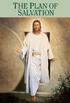 THE PLAN OF SALVATION WHAT IS THE PLAN OF SALVATION? The plan of salvation* is God s plan for the happiness of His children. It is centered on the Atonement of Jesus Christ. If you will follow the teachings
II. HOW WERE PEOPLE SAVED BEFORE JESUS CAME?
 HOW WERE PEOPLE SAVED BEFORE JESUS CAME? BOB BRYANT Cypress Valley Bible Church Marshall, Texas I. INTRODUCTION How were people saved before Jesus came? Some suggest that people were saved by sincerely
Week One!" Spiritual Journey#
 Week One!" Spiritual Journey# I. The reasons for the Bible study. A. Everyone is on a spiritual journey. Options: 1- Uninformed 2- Interested 3- Ready 4- Committed 5- Growing B. To help evaluate where
WHAT EVERY CHRISTIAN NEEDS TO KNOW Lesson 19 God the Holy Spirit: Baptism & Filling
 WHAT EVERY CHRISTIAN NEEDS TO KNOW Lesson 19 God the Holy Spirit: Baptism & Filling INTRODUCTION Last week we looked at the Holy Spirit, His Person. Many Christians today know next to nothing about the
Premarital Sex By Evan Lenow
 Premarital Sex By Evan Lenow Pre-Session Assignments One week before the session, students will take the following assignments. Assignment One Read the comments related to Hebrews 13:4 in the section It
Jesus and the Counsellor in John s Gospel
 Jesus and the Counsellor in John s Gospel In Jesus farewell speech, recorded in John s Gospel (chapters 13-17) Jesus introduces the disciples to one he calls the Counsellor. This Counsellor (the name itself
What Good Things Can We Do With the Tongue?
 TONGUE What Good Things Can We Do With the Tongue? 1 What Good Things Can We Do With the Tongue? 2 Timothy 1:13 INTRODUCTION: A. Lesson Texts: 1. 2 Timothy 1:13 Hold fast the pattern of sound words which
What is God s plan (purpose) for you? ' = next PowerPoint slide
 What is God s plan (purpose) for you? ' = next PowerPoint slide ' Intro: - God has always had a plan for His children His plan for us has been from all eternity - illus.: Jer. 29:10-11 God, I know the
Memory Verses for Kids
 Memory Verses for Kids August 2013 Psalm 119:11 I have hidden your word in my heart, that I might not sin against you. Matthew 28:19 Go into all the world and make disciples of all nations, baptizing them
The Challenges of Evangelism. Sharing your faith in the 21 st Century
 The Challenges of Evangelism Sharing your faith in the 21 st Century Definitions What is Evangelism? Evangelism, definitions of: zealous preaching and dissemination of the gospel, as through missionary
In Him Reality Scriptures
 In Him Reality Scriptures Scriptures that tell us who we are in Christ and what He has done for us. All Scriptures are from the New King James Version. IN CHRIST Romans 3:24 Being justified freely by His
Shepherding School Notes
 Shepherding School Notes As you put a found sheep upon your shoulders, you need to lead them to a full understanding of the following subjects within the first month of your contact with them. 1. THE WAY
Bible Study 70. The Mystery of God
 The Mystery of God The word mystery means an unspoken secret. God had an unspoken secret that He kept to Himself for 4,000 years. It was the biggest and best secret of all time, and it s about you and
Speaking in Tongues A VALID SCRIPTURAL EXPERIENCE
 Speaking in Tongues A VALID SCRIPTURAL EXPERIENCE ACTS 2:4 And they were all filled with the Holy Ghost, and began to speak with other tongues, as the Spirit gave them utterance. The New Testament church
with Children Sharing the Plan of Salvation By Cheryl Markland
 Sharing the Plan of Salvation with Children By Cheryl Markland Font: Whiz Bang For more information contact: Childhood Ministry Baptist State Convention of North Carolina (800) 395-5102 ext. 5646 Sharing
THE NEW TESTAMENT PROPHET
 LESSON 7... NT PROPHETS (PROPHECY) THE NEW TESTAMENT PROPHET "Now there were in the church that was at Antioch certain prophets and teachers..." Acts 13:1 It is essential to understand the difference between
WHO DO YOU SAY I AM? Youth Group Session Office of Youth & Young Adult Ministry Ukrainian Orthodox Church of the USA 2005
 WHO DO YOU SAY I AM? Youth Group Session Office of Youth & Young Adult Ministry Ukrainian Orthodox Church of the USA 2005 Ages 13-18 Workshop time 1.5 hours Objective: 1. To help your youth discover who
God s Plan for Man s Salvation
 God s Plan For Man s Salvation 1 God s Plan for Man s Salvation PLEASE OBSERVE: 1. On the day of Pentecost, the people asked in Acts 2:37, Men and brethren, What shall we do? Peter answered them. 2. In
Sharing the Gospel: Easy as 1-2-3-4-5!
 Sharing the Gospel: Easy as 1-2-3-4-5! Russ Reaves Immanuel Baptist Church Sharing the Gospel of Jesus Christ is as easy as 1-2-3-4-5! 1. There is one necessity for sharing the Gospel The Holy Spirit
WHAT WE BELIEVE : ESSENTIAL TENETS OF THE REFORMED FAITH
 WHAT WE BELIEVE : ESSENTIAL TENETS OF THE REFORMED FAITH What are the essential tenets? The essential tenets are our foundational convictions, drawn from Scripture and contained in our creeds and confessions
Leadership Application Packet
 Leadership Application Packet Godʼs word tells us that it is more blessed to give than to receive. We are excited and grateful that you are making the decision to get involved and use the talents God has
CHAPTER 3 CHRIST -- OUR ANSWER
 Have you ever wondered why the Bible was written and given to man? Was it simply to give us a sketch of history? Why then all the history about one nation--the nation of Israel? Why all the chronologies
The Deity of the Holy Spirit Timothy Cowin
 The Deity of the Holy Spirit Timothy Cowin If God is the Holy Spirit and we deny it, than we are guilty of denying God. On the other hand, if The Holy Spirit is not God, and we affirm that He is, than
Pray to God the Father, Not to Jesus His Son
 Pray to God the Father, Not to Jesus His Son by Blake Cortright Prayer is central to the Christian faith; yet, human traditions have clouded the biblical understanding of prayer. Christians are exhorted
General Knowledge Ultimate Adventure BOOK 1 - Gr. 3&4 Discoveries 1-4
 General Knowledge 1. Each Bible verse begins with a name and two numbers. The name tells you the Bible book where you find the verse. The first number is the chapter number. The second number is the verse
WHAT EVERY CHRISTIAN NEEDS TO KNOW Lesson 22 The Spiritual Life Six Components of the Christian Life
 WHAT EVERY CHRISTIAN NEEDS TO KNOW Lesson 22 The Spiritual Life Six Components of the Christian Life INTRODUCTION In today s lesson along with last week s lesson we are focusing on the practical aspects
THE DEITY OF THE MESSIAH
 MBS063 A MESSIANIC BIBLE STUDY FROM ARIEL MINISTRIES THE DEITY OF THE MESSIAH By Dr. Arnold G. Fruchtenbaum ariel.org Ariel Ministries Digital Press THE DEITY OF THE MESSIAH By Dr. Arnold Fruchtenbaum
General Association of Regular Baptist Churches Baptist Distinctives
 General Association of Regular Baptist Churches Baptist Distinctives GARBC Baptist Distinctives Out of all the available options, which church should I attend? People often choose a church based on the
The Gospel of the Kingdom The End Time Message
 Introduction The Gospel of the Kingdom The End Time Message According to Jesus, one of the signs of the end, that is, the close of this age, is the completion of the preaching of the gospel of the Kingdom
BIBLE DOCTRINE SURVEY
 BIBLE DOCTRINE SURVEY Pastor Thomas D. Alexander First Baptist Church Wellington, OH SESSION 1 AN INTRODUCTION TO BIBLE DOCTRINES & THE IMPORTANCE OF BIBLE DOCTRINES This doctrinal study was prepared by
International Bible Lessons Commentary Hebrews 1:1-14
 International Bible Lessons Commentary Hebrews 1:1-14 King James Version International Bible Lessons Sunday, December 7, 2014 L.G. Parkhurst, Jr. The International Bible Lesson (Uniform Sunday School Lessons
Baptism: Should I be Baptized?
 Baptism: Should I be Baptized? The Lord Jesus mandated two ordinances, baptism and the Lord s Supper, which visibly and tangibly express the gospel. Though they are not the means of salvation, when celebrated
Bible Correspondence Course Lesson Three
 Bible Correspondence Course Lesson Three HOW TO STUDY THE BIBLE To study any book one must approach it in an orderly manner. A student does not take his G.C.E/ C.X C exams before he begins primary studies.
The Gospel. 1 John 5:13
 EVANGELISM The Gospel 1 The Gospel 1 John 5:13 INTRODUCTION: A. Three Questions: 1. How is your relationship with God and His Son, Jesus Christ? 2. What if the Lord were to come right now; would you know
Five Things Jesus Left the Church
 CHURCH Five Things Jesus Left the Church 1 Five Things Jesus Left the Church Hebrews 9:19-24 & Acts 1:1-11 INTRODUCTION: A. Hebrews 9:19-24 For when Moses had spoken every precept to all the people according
THE SAME (Hebrews 13:8)
 THE SAME (Hebrews 13:8) Adapted from: www.sermonseeds.org/master%20index.htm For more downloadable teachings see: www.altogetherlovely.org (FREE TEACHINGS) Scripture taken from the HOLY BIBLE, NEW INTERNATIONAL
6 DAY DEVOTION GUIDE FOR FASTING & PRAYER WEEK
 6 DAY DEVOTION GUIDE FOR FASTING & PRAYER WEEK There is one body and one Spirit, just as you were called to one hope when you were called; one Lord, one faith, one baptism; one God and Father of all, who
A Study Guide For. Feelings and Faith. Study guide prepared by Vicki McGill and Karen Tkaczyk
 A Study Guide For Feelings and Faith Cultivating Godly Emotions in the Christian Life Part One (Chapters 1-3) Brian S. Borgman Study guide prepared by Vicki McGill and Karen Tkaczyk Grace Community Church,
North Shore Bible Church: Statement of Faith
 North Shore Bible Church: Statement of Faith Scriptures We teach the verbal plenary inspiration of the inerrant infallible Word of God, both the Old and New Testaments of the Bible (2 Timothy 3:16; 2 Peter
THE ORDER OF THE MASS
 THE ORDER OF THE MASS The first part of the Mass is about getting to know everyone and welcoming everyone to God s house. It s called the INTRODUCTORY RITES. Entrance Song We sing to celebrate that we