
Valuing Real Estate Fractional Ownership Interests
|
|
|
- Cody Richardson
- 10 years ago
- Views:
Transcription
1 Intangible Asset Valuation Insights Valuing Real Estate Fractional Ownership Interests Katherine A. Gilbert and C. Ryan Stewart Intangible asset valuation analysts are often called on to perform fair market value valuations of real estate undivided ownership interests (also called fractional ownership interests). Many of these real estate undivided interests are owned by holding companies or by high net worth individuals. Accordingly, those real estate fractional ownership interests may need to be valued for federal gift or estate tax compliance purposes or for intergenerational wealth transfer and estate planning purposes. This discussion provides an explanation of the defining characteristics of real estate fractional ownership interests. And, this discussion introduces (1) the valuation approaches and methods, (2) the relevant judicial precedent, and (3) the investment risk and expected return factors that the intangible asset valuation analyst should consider when valuing these types of fractional ownership interests. What Is a Fractional Ownership Interest? A real estate fractional ownership interest, also called a tenancy in common interest, exists when two or more co-tenants each own a separate fractional share of undivided real property. For purposes of this discussion, the terms fractional ownership interest and undivided ownership interest are used synonymously. Unlike a joint tenancy ownership, there is no right of survivorship among tenants in common. A tenancy in common requires only the unity of possession of the subject real estate. In the absence of an agreement between the co-tenants, each co-tenant may possess and enjoy the entire real estate. For example, each co-tenant has the right to use and to enjoy a share of the property s income. Although each co-tenant has an equal right to possess and enjoy the real estate, he or she cannot: 1. exclude the other co-tenants or 2. designate any portion of the real estate as his or her own. In the case of a single-family home, or any other type of residential property that can not be subdivided, each co-tenant s right to use and enjoy the real estate can create potential problems. Fractional ownership interests often result when partners (i.e., business or family partners) acquire the real estate without (1) the use of a holding company entity structure or (2) the transfer of the property between family members. By their very nature, real estate fractional ownership interests typically suffer from the following valuation influences: 1. a lack of marketability 2. a lack of ownership control Property-Specific Factors to Consider in the Valuation Analysis 1. Co-Tenant Rights, Privileges, and Obligations under State Law. Partition A co-tenant typically may compel a partition of the subject real estate. When the subject real estate is 80 INSIGHTS SUMMER

2 partitioned, then each co-tenant takes a distinct part according to his or her respective ownership interest. The purpose of a partition is to allow the tenants in common to sever their ownership interests. The partition enables each tenant to take possession, enjoy, and improve his/her separate real estate parcel at his or her own pleasure. If, because of its physical nature, the subject real estate cannot be equitably divided in-kind, then: a. the entire property may be ordered by a court to be sold and b. the entire property sale proceeds may be ordered to be divided among the co-tenants. Conveyance and Sale Tenants in common each hold separate ownership interests. These separate ownership interests can be sold, conveyed, or transferred without the consent of the other fractional interest owners. One tenant in common cannot bind his/her nonconsenting co-tenants in any disposition of their undivided interest in the common real estate. Contribution and Costs Each co-tenant also has a right to a contribution from his/her co-tenants. For example, each co-tenant is responsible for the costs associated with his or her cotenancy interest, including real estate taxes and property insurance. 2. Written Agreement of Co-Tenancy. The greater the number of co-tenants owning a piece of the property, the greater the potential for conflict in deciding how the property should be managed. Many potential conflicts between the co-tenants could be avoided if the co-tenants executed an agreement that describes how the real estate will be used or managed. 3. Debt Obligations. A hypothetical buyer of a real estate undivided ownership interest typically would consider whether the subject property was encumbered by a mortgage loan. In addition, the hypothetical buyer typically would be concerned with: whether the co-tenants are jointly and severally liable for the debt obligation, whether the debt obligation is assumable by the buyer of an undivided ownership interest, whether the partition of the property or a sale of an undivided ownership interest in the property results in the call of the debt obligation, and whether the holder of an undivided ownership interest is at risk of losing his or her interest if the lender forecloses on the subject property. 4. Ability to Subdivide the Real Estate. A hypothetical buyer of a real estate undivided interest would generally prefer an interest in a parcel of land that is capable of being subdivided rather than in a parcel of land that is not capable of being subdivided. 5. Historical Sales of Undivided Interests. Although uncommon, any history of arm slength sales of undivided interests of the subject property may be relevant to the valuation analysis. 6. Restrictions on Transferability of an Interest. Any restrictions on the transferability of the subject property may be relevant to the valuation analysis. 7. Lack of Income to Cover Expenses. The valuation analyst should consider the income-producing capacity of the subject real estate. The valuation analyst should also consider whether there is sufficient property income in order to cover the real estate property tax and other operating expenses. Generally Accepted Valuation Approaches and Methods There are two valuation approaches and methods that valuation analysts commonly use to value a real estate fractional ownership interest: 1. the market approach and the sale transaction analysis valuation method 2. the income approach and the partition analysis valuation method Market Approach The Sale Transaction Analysis Method This market approach valuation method is based on a comparison of the subject fractional interest to published studies of empirical data regarding arm slength sales of fractional interests. INSIGHTS SUMMER

3 First, the valuation analyst obtains a valuation of the fee simple interest in the subject real estate from an independent real estate appraiser. Second, the valuation analyst reviews: 1. the subject property s physical and economic characteristics and 2. the relevant real estate market. These property-related and market-related factors are typically described in the real estate appraisal report and in other publicly available sources. Third, this stage of the fractional interest valuation analysis is typically presented as a simple adjusted net asset value (ANAV) indication. That is, the subject real estate fee simple value indication is adjusted for: 1. any outstanding mortgages or 2. other encumbrances. The conclusion of the fee simple interest value minus outstanding mortgage/other encumbrance amount is the real estate ANAV. Fourth, the valuation analyst will compare: 1. this subject real estate ANAV value indication to 2. published studies of empirical data on real estate undivided interest actual sale transactions. In this procedure, the valuation analyst fits the subject property into the published empirical sale data. This comparison of subject real estate to sale transaction data allows the analyst to select a property-specific undivided interest valuation price discount. This property-specific but market-derived valuation price discount typically reflects the combined price adjustments related to: (1) a discount for lack of control (DLOC) and (2) a discount for lack of marketability (DLOM). Exhibit 1 Fair Market Value of the Subject Fractional Ownership Interest Market Approach Sale Transaction Analysis Valuation Method Simplified Illustrative Example As of December 31, 2009 Name of the Subject Property 1544 County Highway The Villas at Santa Rosa Beach Description of the Subject Property Type: Residential Condominium Location: Santa Rosa Beach, FL Year Built: 1998 Property Tax Assessment Value: $949,850 for the 2009 Tax Year Most Recent Sale of the Subject Property None as of December 8, 2009 Value Undivided Interest Fair Market Value Estimation Indication Indicated Fee Simple Interest Market Value of the Subject Property [a] $ 850,000 Times: Subject Undivided Interest Ownership Percentage % Equals: Indicated Pro Rata Value of the Subject Undivided Ownership Interest (Before any Valuation Price Adjustment) 383,333 Selected Valuation Price Adjustment for the Subject Undivided Ownership Interest at 22% [b] (84,333) Indicated Fair Market Value of the Subject Undivided Interest $ 299,000 Indicated Fair Market Value of the Subject Undivided Interest (rounded) $ 300,000 Notes: [a] Based on a market value fee simple interest real estate appraisal of the subject property by the Accurate Appraisal Company as of December 31, [b] Based on the valuation analyst's comparative assessment of the published empirical evidence of real estate fractional interest sale transactions that indicate typical price discounts within a range of between 15% and 35%. Several of these published studies of empirical sale transaction data are summarized in the Sale Price Discount Empirical Data section of this discussion. 82 INSIGHTS SUMMER

4 Exhibit 1 illustrates a simplified example of this market approach sale transaction analysis valuation method. This valuation method and this simplified illustrative example are based on the analysis of published empirical real estate fractional interest sale transaction data. Income Approach The Partition Analysis Method The second generally accepted valuation method for a real estate undivided ownership interest is an income approach valuation method. Exhibit 2 Fair Market Value of Subject Fractional Ownership Interest Income Approach Partition Analysis Valuation Method Simplified Illustrative Example As of December 31, 2009 Expected Time Period for a Successful Legal Partition and Sale of the Partitioned Property [a] In this valuation method, the valuation analyst will quantify the expected costs (i.e., out-of-pocket expenses and investor opportunity cost) to partition the subject real estate. This real estate partition cost analysis typically includes two cost components. The first cost component is the cost to bring a real estate partition lawsuit. The second cost component includes the costs associated with the delays and the uncertainty related to the real estate partition action. Some of the direct costs, indirect costs, and opportunity costs that are typically considered in the real estate partition cost analysis include the following: the expense of the real estate partition lawsuit the probability of the real estate partition lawsuit success the amount of time required to complete the partition lawsuit the cost to survey the subject real estate the engineering and the structural cost to physically divide the subject real estate (if necessary) the cost to replace any shared property access, utilities, etc. infrastructure the uncertainty related to selling the resulting partitioned real estate the time required to complete the post-partition real estate sale. Of course, a fair market value analysis of a real estate undivided interest should not consider real estate sale commissions or other property selling expenses. This is because fair market value represents the price that a property buyer would pay to a property seller and not the after-selling expense net sale proceeds in the pocket of the property seller. 1.5 years Indicated Real Estate Fee Simple Interest Market Value of the Subject Property [b] $ 850,000 Multiplied by: Expected Property Price Appreciation at 4% per Year for 1.5 Years [c] Equals: Expected Future Sale Price of the Subject Property Rate, Assumes the Expected Partitioned Property Sale Date $ 901,700 Multiplied by: Subject Undivided Ownership Interest Percentage % Equals: Pro Rata Allocation of the Expected Future Sale Price of Real Estate Fee Simple Interest $ 406,600 Less: Pro-Rata Portion of Real Estate Partition Costs, Assumes 10% Expected Fee Simple Interest Sale Price [d] 40,700 Projected Value of Undivided Interest at Expected Partitioned Property Sale Date, net of Partition Costs 365,900 Present Value Discount Factor at 15% Discount Rate for Partition/Holding 1.5 Years [e].8089 Present Value of Net Sale Price (after Real Estate Partition Costs) of Partitioned Real Estate $ 296,000 Indicated Fair Market Value of the Subject Undivided Interest (rounded) $ 300,000 Notes: [a] Based on the estimated amount of time to pursue a state court partition legal action. Includes the expected marketing time to sell the partitioned real estate once the partition legal action is completed. [b] Based on the market value fee simple interest real estate appraisal performed by the Accurate Appraisal Company as of [c] Based on a 4 percent expected compound annual rate of price appreciation in the value of the subject fee simple interest real estate during the expected partition legal action and market exposure period of 18 months. [d] Estimated legal, engineering, site modification, and administrative expenses associated with (1) the state court partition action and (2) the physical partitioning of the real estate. [e] Based on the opportunity cost (or required rate of return) of similar risk class assets and on the risk of a successful real estate partition litigation and partitioned property sale. INSIGHTS SUMMER

5 This income approach valuation method incorporates the future economic benefits of the fractional ownership based on the investment risk and the expected investment return of the subject undivided interest. Any value decrement between (1) the pro rata real estate fee simple interest market value and (2) the economic benefit of the pro rata real estate sale proceeds (net of partition and holding expenses other than real estate selling expenses) represents (3) the price discount required to induce a buyer to purchase and a seller to sell the undivided interest. Exhibit 2 presents a simple illustrative example of this income approach partition analysis valuation method. Fractional Interest Basis for the Valuation Price Adjustment The principal considerations in the valuation of a real estate fractional ownership interest relate to the type and the scope of the legal rights that the fractional interest owner can convey. The real estate fractional interest derives its value from the relationships among the co-owners, and not from a direct percentage of the real estate fee simple interests market value. Under the property laws of most jurisdictions, all co-owners enjoy equal rights to the subject real estate. This statement is true unless there is some contractual instrument (e.g., that created the coownership) between the parties that specifies otherwise. These state property statutes give rise to the following valuation considerations. These valuation considerations could influence the amount of the price adjustment (i.e., valuation discount) to the real estate fractional interest, relative to the pro rata real estate fee simple interest market value to a single property owner: All co-owners enjoy equal access to the subject real estate, but not exclusive access to any particular part of the subject real estate. All co-owners have to approve any actions taken with regard to the subject real estate. A co-owner expending an amount to preserve or maintain the property may then approach the other co-owners for reimbursement, to the extent he or she is entitled. The sale of the subject real estate in its entirety requires the active cooperation of all of the co-owners. If the real estate is to be partitioned into smaller units to allow each co-owner to have his or her own fee simple parcel, then the active cooperation of all the property co-owners is required. Valuation Aspects of the Fractional Interest DLOC and the DLOM Each of the above-listed valuation considerations indicates that an undivided real estate fractional interest lacks many of the elements of ownership control and of marketability that a real estate fee owner has. Some of these fee simple ownership control and marketability elements include: Lack of typical mortgage financing. Typically, the other property co-owners may be unwilling (1) to obligate themselves to repay borrowings that went to the subject fractional interest owner or (2) to expose their ownership interest in the subject real estate to foreclosure. Lack of the typical sale channels. Because of the lack of typical mortgage financing, a fractional interest transfer is more likely to be a sale for cash only. Also, unless the property co-owners agree, real estate brokers and multiple listing services will not handle undivided interest offerings without the signature of all of the co-owners (i.e., something that an individual co-owner cannot control). Lack of typical real estate buyers i.e., a relatively illiquid market. The majority of real estate sales in the United States are fee simple, single ownership interests. And, the vast majority of real estate buyers appear to prefer fee simple ownership. A Willamette Management Associates analysis of real estate transfers within a sample geographic area (discussed below), indicated that real estate fractional interests comprised only a fraction of one percent of the total real estate transactions for the analysis period. The single fee simple owner will never have to incur the cost to defend his or her 84 INSIGHTS SUMMER

6 fractional interest against the actions of other co-owners. If a co-owner wishes to dispose of his/her fractional interest, then the co-owner has three alternatives: 1 to complete the sale of the fractional ownership interest, 2. to seek a voluntary property partition, or 3 to request the appropriate court to involuntarily partition the subject real estate. The latter two fractional interest disposition alternatives involve time, expense, and uncertainty that a single fee simple interest owner will not experience. The other co-owners typically are under no binding obligation to purchase the fractional interest. Nor are the other co-owners obligated to pay any particular price for the subject fractional interest if they, in fact, do decide to buy that real estate undivided interest. For these fundamental supply and demand reasons, basic economics principles indicate that a real estate undivided interest should sell at a price discount compared to the pro rata fee simple market value of the subject real estate. Sale Price Discount Empirical Data A number of empirical studies have quantified the actual price discounts associated with real estate undivided interest actual sale transactions. What do these empirical studies conclude? The published studies generally indicate that fractional interests in properties that generate significant income tend to sell for a below average price discount. The published studies also generally indicate that larger fractional interests (i.e., a greater than a 50 percent ownership interest) tend to sell for a below average price discount. Several of these published studies of real estate fractional interest empirical sale data are summarized below. Harris-McCormick-Davis Study In an article that appeared in the American Society of Appraisers publication Valuation, in December 1983, the authors described a survey of undivided fractional interest sale transactions. 1 The real estate fractional interest sale transactions were between unrelated buyers primarily located in the Southeast. The 21 sale transactions in the survey indicated an average price discount of percent, with a standard deviation price discount of 8.29 percent. The sale transaction price adjustments ranges from a price premium of 5.56 percent to a price discount of percent. Both of these two extreme fractional interest sale transactions were considered to be unusual circumstances and were discarded from the analysis by the authors. Healy Study Martin J. Healy Jr. prepared a study of undivided fractional interest sale transactions that was published in The Appraisal Journal in July The Healy study involved nearly 100 fractional interest sale transactions, all primarily in the vicinity of Portland, Oregon. Healy found numerous non-arm s-length motives for a number of the undivided interest sale transactions. Therefore, Healy rejected some of the sale data as not being characteristic of arm s-length market sale transactions. Of the real estate fractional interest sale transactions that were retained in the relevant sample, the average price discount was 23.5 percent; and, the range of price discounts was between 3 percent and 52 percent. Peter Patchin Study Peter J. Patchin, CRE, MAI, authored a study of real estate undivided fractional interest sales that was published in Real Estate Issues, Fall/Winter 1988 edition. 3 Patchin collected fractional interest sale transactions from real estate appraisers records for properties located in Minnesota, Texas, California, and other states in the Southwest. The total number of fractional interest sale transactions in the Patchin study was 54, with some 29 of these sale transactions being apartment limited partnership interests. The average price discount associated with this study of fractional interest sales was 36.8 percent. The range of price discounts of fractional interest sales was between zero percent and 82.4 percent. INSIGHTS SUMMER

7 Peterson-Hansen-Klafter Study In a private study for a client, real estate appraiser William D. Peterson, MAI, SRPA, of Tucson, Arizona, prepared an analysis of arm s-length sale transactions in undivided interests in real estate. The fractional interest sale transactions occurred in the Tucson area from 1980 through Peterson also included data from a study provided by John T. Hansen, MAI, and Mark H. Klafter, MAI, based on sale transactions in the same area through The number of real estate fractional interest sale transactions included in the Peterson study totaled 13, and the average price discount indicated by these transactional data was approximately 50 percent. The range of the sale price discounts was from 23.4 percent to percent. It should be noted that the Tucson, Arizona, real estate market was experiencing an unstable real estate investment climate during the analysis time period. FMV Opinions Study The FMV Opinions study included real estate undivided interest sale transactions that occurred over a 20-year period. The FMV Opinions study included 30 such undivided interest sale transactions. The study concluded a mean price discount of 34.8 percent and a median price discount of 32.5 percent. 4 Humphrey Study Walter and Bruce Humphrey, two real estate appraisers in Northwest Florida, conducted a study of some 24 real estate fractional interest sale transactions. 5 Based on these undivided interest sale transactions, the overall price discounts ranged from zero percent to 67 percent. The Humphreys did not develop a central tendency price discount from the study data. However, the Humphreys suggested a formula for quantifying a fractional interest price discount. And, the Humphreys suggested that 50 percent was the threshold price discount for undivided interests. In the Humphrey study, undivided fractional interests included a significant number of undeveloped land sales and farm land transactions. Eckhoff Accountancy Corporation Study This accounting firm study, led by firm partner Ted Israel, analyzed 61 real estate fractional interest sale transactions for its database of undivided interests. 6 The fractional interest properties were located in seven states and included: 1. undeveloped land, 2. agricultural properties, and 3. commercial and multifamily residential rental properties. In the Eckhoff Accountancy Corporation study, the average price discount was 37 percent, and the median price discount was 38 percent. Willamette Management Associates Studies Willamette Management Associates (WMA) prepared a number of fractional interest price discount studies in various parts of the country. These studies were conducted both independently and in conjunction with local real estate appraisers. In one study, WMA reviewed all real estate transfer tax records for two counties in the state of Washington for a one-year period during Of a total of approximately 23,000 real estate transactions, only 50 (0.22 percent, or one in every 460 transactions) were undivided interest sale transactions. WMA analysts then interviewed the parties to each of these sale transactions in order to determine the arm s-length nature of the sale transactions. Of the 50 real estate fractional interest sales, only nine sale transactions were at arm s length. The average price discount associated with this group of sale transactions was approximately 15 percent, with a range of a 16 percent price premium to a 55 percent price discount. The WMA comparison was based on using the total real estate property tax assessment value, which typically lags the actual sale price of properties by approximately 10 percent, due to the typical one-year or longer lag in property tax assessment updates in this area. Therefore, the total indicated price discount adjustment implied in the WMA study is on the order of 25 percent. This price discount conclusion is consistent with other WMA studies that concluded average price discounts equal to and greater than 25 percent. In summary, the empirical evidence from all of these empirical studies supports the principle of a price discount adjustment to the pro rata fee simple market value of the real estate undivided interests. 86 INSIGHTS SUMMER

8 The central tendency of the price discounts concluded in these various studies falls within a range of between 15 and 35 percent. Selected Judicial Precedent Involving Fractional Interest Price Adjustments The courts have considered a variety of quantitative and qualitative considerations in the judicial determination of the value of real estate undivided ownership interests. Some of these judicial considerations include the following: the appropriateness of the fee simple interest real estate appraisals, the selected real estate valuation approaches and methods, the selected capitalization rates, and so forth the sales of comparable real estate undivided fractional interests the number of co-owners of the subject real estate the amount of time required to realize income from the subject real estate or to achieve a rate of return on the subject property investment the time and the cost to partition the subject real estate the lack of management of the subject real estate the lack of liquidity of the subject real estate fractional interest No single real estate fractional interest valuation method is universally accepted by the courts. In addition, the level of the valuation price adjustments allowed by the courts has varied on a caseby-case basis. Some courts have cited the relative lack of control and lack of marketability of a real estate undivided interest when compared with a real estate fee simple ownership. Other courts have focused solely on the out-of-pocket expenses associated with a partition legal action. The following discussion summarizes several court cases that involve the valuation of a real estate fractional interest. 1. Estate of Forbes v. Commissioner. 7 The real estate undivided interests at issue included (1) a 42 percent undivided interest in 3,321 acres and (2) a 42.9 percent undivided interest in 2,033 acres. The taxpayer applied a 30 percent fractional interest price discount. The Internal Revenue Service (the Service ) applied an 18 percent fractional interest price discount. The court accepted the taxpayer expert s recommendation for a 30 percent price discount. 2. Estate of Williams v. Commissioner. 8 The decedent owned a 50 percent undivided interest in Florida timberland. The court accepted the taxpayer s 44 percent total price discount from the appraised fee simple interest market value. The 44 percent price discount was based on a lack of control discount of 30 percent and a lack of marketability discount of 20 percent, with the two valuation discounts applied in succession. This judicial decision ignored the position often taken by the Service that any discount from the appraised fee simple interest market value should be limited to the estimated cost of a partition legal action. The court considered the potential $413,000 in property partition costs and real estate commissions of 10 percent that would be incurred upon the partition and/or sale of the property in its determination of the discount for lack of control. The court viewed the lack of comparable undivided interest sale transactions as in indication of the lack of marketability of the subject interest. The Service expert testified that a business appraiser was not qualified to value the subject undivided fractional interests. The INSIGHTS SUMMER

9 court disagreed with the Service expert, stating that the taxpayer expert was an experienced business appraiser who has given expert opinions in valuing fractional interests in partnerships, businesses and real property. 3. Estate of Barge v. Commissioner. 9 The taxpayer requested that the court apply a price discount of 50 percent to the appraised fee simple value of the property in order to calculate the real estate undivided interest value. In its decision, the court used a cost to partition analysis to calculate the undivided interest value. The court-determined value resulted in an effective undivided interest price discount of 26 percent from the appraised fee simple interest market value. 4. Shepard v. Commissioner. 10 The taxpayer presented three real estate appraisers to support the taxpayer s valuation of the leased timberland. Two of the appraisers applied price discounts for undivided interests of 27 percent and 15 percent, respectively. The Service presented one appraiser who appraised the value of the land in fee simple interest with no price discount for lack of control or for lack of marketability. The court ultimately concluded that the appropriate price discount for the undivided interest was 15 percent. The Service expert concluded that the price discount should be limited to the estimated cost to partition. The court rejected the opinion of the Service expert as failing to give adequate weight to other reasons for discounting a fractional interest in the leased land, such as lack of control in managing and disposing of the property. 5. Estate of Della Walker van Loben Sels v. Commissioner, 11 allowed a 60 percent fractional interest price discount for an undivided (tenancy in common) interest in 11 tracts of timberland. The undivided interests ranged in ownership interest from percent to percent. 6. Estate of George W. Youle v. Commissioner, 12 allowed a percent fractional interest discount for a 50 percent undivided tenancy in common interest in 254 acres of farmland where no comparable sale transactions were introduced by the estate s expert. 7. Estate of Wildman v. Commissioner. 13 This decision allowed a total 40 percent valuation adjustment for the decedent s 20 percent undivided tenant in common interest in 1,212.4 acres of farmland. The 40 percent price discount consisted of (1) a 15 percent discount for minority interest, plus (2) an additional 10 percent discount to reflect (a) the lack of ownership of the irrigation facilities and (b) the fact that the interest is not comprised of contiguous portions of land, plus (3) an additional 15 percent lack of marketability discount. The additional 15 percent discount was taken because (1) the restrictions in the agreement on the decedent s sale or transfer of her interest created an impediment that a hypothetical buyer would consider and would require some adjustment to the seller s offering price, and (2) the terms of the agreement could generate controversy and litigation, i.e., a partition action. 8. Samuel J. LeFrak v. Commissioner. 14 Samuel L. LeFrak ( LeFrak ) and his wife resided in Woodmere, New York. Mr. LeFrak was a builder, developer, and manager of rental real estate in New York City, and held interests in over 200 parcels of real property during The buildings were held in corporate, partnership, and sole proprietorship form, and were operated through the LeFrak Organization, which Mr. LeFrak directed and controlled. Toward the end of 1976, because LeFrak was aging and because real estate values in New York City were low due to poor economic conditions, petitioner decided to make gifts to his children. On December 30, 1976, for the purpose of making gifts, LeFrak conveyed interests in 22 buildings, consisting of 20 apartment buildings and two office buildings located in the boroughs of Queens and Brooklyn (hereinafter sometimes referred to as the buildings ), to his children individually or to trusts created for their benefit. The apartment buildings were subject to the New York City rent stabilization laws, while the office buildings were not. Prior to the conveyances, 20 of the buildings were held by petitioner individually and operated as sole proprietorships, and 2 were held by partnerships in which petitioner held a 96 percent interest and his children (or trusts for their benefit) held the remaining 4 percent. On December 30, 1976, LeFrak formed 20 partnerships with his children or their 88 INSIGHTS SUMMER

10 trustees. Each of the partnerships was to own and operate one of the 20 buildings which were formerly held by him individually as sole proprietorships. Each of the buildings was conveyed to LeFrak and the donees as tenants in common, doing business as the particular partnership formed to hold the respective building conveyed. The deeds were recorded on December 30, A Business Certificate for Partners for each partnership was filed with the County Clerk of Queens County on December 30, LeFrak conveyed to each donee a 7.5-percent interest in each of the buildings, subject to the outstanding mortgages. The conveyances of the buildings were made to Richard LeFrak individually, and to trusts for the benefit of each of petitioner s daughters, of which petitioners and another individual were the trustees. Accordingly, after the conveyances, petitioner owned a 70 percent interest while the donees together owned the remaining 30 percent. The Service determined deficiencies in federal gift tax against LeFrak and his wife for the taxable quarter ended December 31, 1976, in the amount of $342,658. The Service increased the deficiencies determined in the notice of deficiency by $73,229 for each petitioner. The issues presented for decision in the case are as follows: a whether the interests transferred to several donees by petitioner Samuel J. LeFrak were interests in partnerships or in real property; b. the value of the buildings in which interests were transferred; and c. whether petitioners are entitled to a discount for minority interest and lack of marketability in valuing the transferred interests. However, there was a dispute about the type of interest petitioner actually gave to the donees. LeFrak contends, and the Service respondent ( respondent ) determined in the statutory notice of deficiency, that petitioner transferred partnership interests to the donees. After the pleadings were filed, however, the Service respondent amended the answer to assert that LeFrak actually transferred fractional interests in the real estate, rather than partnership interests. Respondent s contention is based on the fact that the deeds conveying the buildings named petitioner and the donees as grantees and that they held the buildings as tenants in common. Respondent also argues that LeFrak s treatment of each of the transactions for financial, accounting, and tax purposes was consistent with a transfer of real estate, not partnership interests. Respondent contends that the buildings were conveyed to the partnerships subsequent to the gifts in issue, arguing that LeFrak was the sole owner of 20 of the buildings when he made the gifts. The end decision ultimately allowed a 30 percent combined minority interest and lack of marketability discount for the subject undivided real estate interests. 9. Estate of Alto B. Cervin v. Commissioner. 15 This decision allowed a 20 percent fractional interest price discount for: a. an undivided 50 percent interest in /- acres of farmland and b. an undivided 50 percent interest in a homestead. 10. Estate of Eileen K. Brocato v. Commissioner. 16 Eileen K. Brocato (the decedent ) died on April 12, At the time of her death, she resided in San Anselmo, California. The decedent was predeceased by her husband, Mr. John Brocato. Under the terms of Mr. Brocato s will, his estate passed into a testamentary trust for the benefit of the decedent until her death. Upon the decedent s death, the remainder of Mr. Brocato s estate was distributed predominantly to his sisters, Nina Cimarelli and Anne Ghiselli. Decedent s estate passed under the decedent s trust (the Eileen K. Brocato Living Trust ). Under the terms of the decedent s trust, the decedent s grandchildren and the children of Nina Cimarelli and Anne Ghiselli received outright monetary gifts. The remainder was distributed as follows: one-third in trust for the benefit of Anne Ghiselli, one-third in trust for the benefit of decedent s son Thomas Brocato, one-sixth in trust for the benefit of Nina Cimarelli and one-sixth in trust for the benefit of her husband Alfred Cimarelli. At the time of death, the decedent s trust included eight apartment buildings and one duplex. The combined FMV before INSIGHTS SUMMER

11 discounts was $10,432,000. The properties were appraised by David P. Rhoades & Associates, Inc. ( Rhoades ). On June 26, 1995, a Service engineer issued a review report concluding that the values before discounts determined by Rhoades were acceptable, but the amounts of the discounts were unacceptable. The Service determined a deficiency of $1,373,797 in estate tax. The court eventually allowed a 20 percent fractional interest discount, but also had to resolve the proper amount of blockage discount to apply to the Brocato properties. 11. Estate of Eileen K. Stevens v. Commissioner. 17 The court allowed a 25 percent fractional interest price discount for an undivided 50 percent interest in commercial real estate subject to a lease. Specifically, the court determined that: a. the fair market value of the Kmart property was $5,300,000 and b. the decedent s 50 percent undivided interest had a value of $1,987,500 after a 25 percent lack of marketability discount. The 50 percent undivided interest in the Walgreens property had a fair market value of $1,335,000 before a 25 percent price discount, resulting in a tax return value of $1,001,250. Finally, the 50 percent undivided interest in the Wells Fargo property had a fair market value of $493,975 before a 25 percent price discount, resulting in a tax return value of $370, Estate of John L. Baird & Estate of Sarah W. Baird v. Commissioner. 18 John L. Baird ( John ) and Sarah-W. Baird ( Sarah ) were husband and wife. At the time of their deaths on December 18, 1994, and November 2, 1995, John and Sarah held a percent and percent interests respectively in a family trust (created in 1977). The trust owned 16 noncontiguous tracts of Louisiana timberland. The trust was intended to keep the 16 parcels held by family members in undivided ownership. The trust provided for the sale of an interest, but only with the written consent of all of the beneficiaries. The 16 parcels ranged in size from 2 acres to 320 acres, and most of it was best suited as timberland. Approximately 140 of the 2,957 acres had some potential for residential development. Less than one-half of an acre had residential development as its highest and best use. John s estate reported the fair market value of his one-half community property interest in the percent interest in the trust at $707,972, after applying a 25 percent fractional interest price discount. In an amended estate tax return, a refund was claimed on the basis of an increased fractional interest discount of 50 percent. After applying the 50 percent fractional interest price discount, the reported fair market value was $550,378 instead of $707,972. John s estate increased the price adjustment to 50 percent in response to the 50 percent used by Sarah s estate in determining the fractional interest value. The Service valuation expert (who was specifically found not to be qualified to assist the court) determined the date of death fair market value of John s percent interest to be $975,091 and Sarah s percent interest to be $1,290,211. The parties agreed that the fair market value of the 16 parcels of timberland, before price adjustments, on John s date of death was $4,685,333 and on Sarah s date of death was $5,091,285. The court allowed a 60 percent fractional interest price adjustment for John s percent and Sarah s percent fractional interests. In arriving at this fractional interest price adjustment, the court agreed with the taxpayer experts that 55 percent was the mean or average amount by which fractional interests in Louisiana timberland were discounted. The court further discounted the interests an additional 5 percent to reflect: a. the poor management of the subject property and b. disagreements among the remaining family members. 13. Estate of Pearl I. Amlie v. Commissioner. 19 A 15 percent fractional interest price discount was applied by the court to the taxpayer s 7/12ths and 50 percent interest in two parcels of farmland. 90 INSIGHTS SUMMER

12 14. Campanari v. Commissioner. 20 At her death, the decedent owned undivided 113 interests in 5 parcels of real property in New York City. The taxpayer claimed the following valuation discounts: 12 percent for lack of control and 12 percent for lack of marketability. In the court s decision, both the lack of control associated with a fractional property interest and the lack of marketability of a fractional property interest are mentioned. However, these two valuation adjustments are not differentiated in the court s allowed overall price discount. 15. Fawcett v. Commissioner. 21 The subject interest was a 50 percent undivided interest in a ranch. The court agreed with a reduction to reflect the undivided nature of the decedent s interest. However, the court combined the total price discount in with a number of other factors. This decision recognized the appearance of control despite the fact that the valuation subject was a fractional ownership interest. 16. Gunn v. Commissioner. 22 The subject interest was two 50 percent undivided interests in an apartment building owned by four people (two married couples). Upon the couple s divorce, the family law court awarded the husband and wife a 25 percent undivided interest each. The property could not be partitioned, and a sale of the property was ordered by the court. The court concluded that a price discount was not applicable. 17. Mooneyham v. Commissioner. 23 The subject interest was a gift of a 50 percent undivided interest in real property. The taxpayer claimed a price discount of 15 percent. The taxpayer did not make a distinction between the minority ownership position, the lack of marketability of a fractional interest, or the costs of partition, although all these factors are mentioned as being present. The court strongly criticized both the attorneys and the experts for presenting very poor substantiation of their arguments for price discounts. 18. Pillsbury v. Commissioner. 24 The decedent owned (1) a 77 percent undivided interest in one parcel of real property and (2) a 50 percent undivided interest in another parcel of real property. The taxpayer claimed a price discount of 15 percent on each parcel. Both the lack of control associated with a minority interest and the lack of marketability of a fractional interest are mentioned in the total judicial decision. However, these two valuation adjustments are not differentiated in the total price discount that was allowed by the court. The court refused to allow a price discount higher than the claimed discount of 15 percent. 19. Van Loben Sels v. Commissioner. 25 The decedent owned undivided interests in California in: a. certain real property and b. land, timber, and mineral rights. The taxpayer claimed a price discount of 60 percent. The court concluded that a minority interest discount is applicable to an undivided interest in real property just as in a closely held business. The court settled on a 60 percent discount for lack of control, but admitted to heavy emphasis on the lack of marketability of the undivided interests. The court provided a list of the disabilities of an undivided ownership interest: a. the number of other co-owners b. the time required to realize income from the land (use) and the return on the investment c. the time and cost to partition, and d. any prior sales of the subject undivided interest (and the estimated price discount on such sales). 20. Whitehead v. Commissioner. 26 The subject interest was a 50 percent undivided interest in a ranch. The taxpayer claimed a price discount of 14 percent. The judicial decision commented on the following factors: a. the lack of access to the subject property (i.e., the lack of a road) b. the effect of the impairment due to an undivided interest The weight given to these two factors in the allowed price discount was not explained in the judicial decision. Summary and Conclusion The valuation analyst may consider relevant judicial precedent in the fractional ownership interest INSIGHTS SUMMER

13 ... the valuation analyst should not rely on... judicial precedent to reach a specific valuation discount conclusion. valuation. However, the valuation analyst should not rely on such judicial precedent to reach a specific valuation discount conclusion. This is because the conclusion of a particular judicial decision is only relevant to the facts and circumstances of that case before that finder of fact. The facts and circumstances of the subject valuation analysis will typically be different from those considered in the judicial decision. Therefore, the valuation analyst should apply generally accepted valuation approaches and methods when estimating the value of a real estate fractional interest. This discussion summarized: 1. the market approach and the sale transaction analysis method and 2. the income approach and the partition analysis method. For a real estate fractional interest where a longer holding period is expected, the income approach may be the more appropriate valuation approach. This is because the income approach analysis incorporates many of the property-specific risk factors that affect value. And, in some cases, the expected holding period is better matched to a hypothetical buyer s investment objective. For a real estate fractional interest where a shorter holding period is expected, the market approach may be more applicable to the fractional ownership interest valuation. No matter which generally accepted valuation approach and method the valuation analyst decides to use, the appropriateness, accuracy, and quantity and quality of information should be considered in the final value reconciliation procedure. Notes: 1. Don L. Harris, Philip A. McCormick, and W.D. Davis Sr., The Valuation of Partial Interests in Real Estate, ASA Valuation, December Martin J. Healy Jr., Valuation of Partial Interests, The Appraisal Journal, July Peter J. Patchin, Market Discounts for Undivided Minority Interests in Real Estate, Real Estate Issues, Fall/Winter Lance Hall, Should the IRS Surrender Cost-to- Partition Discounts for Undivided Interests? Valuation Strategies, January/February Walter H. Humphrey and Bruce B. Humphrey, Unsyndicated Partial Interest Discounting, The Appraisal Journal, July Ted Israel, Discounts on Undivided Interests in Real Estate, Valuation Strategies, May/June Estate of Forbes v. Commissioner, T.C. Memo (Mar. 23, 2001). 8. Estate of Williams v. Commissioner, T.C. Memo (Feb. 12, 1998). 9. Estate of Barge v. Commissioner, T.C. Memo (Apr. 23, 1997). 10. Shepherd v. Commissioner, 115 T.C. 376 (2000). 11. Estate of Della Walker van Loben Sels v. Commissioner, T.C. Memo (Oct. 2, 1986). 12. Estate of George W. Youle v. Commissioner, T.C. Memo (Mar. 30, 1989). 13. Estate of Wildman v. Commissioner, T.C. Memo (Dec. 21, 1989). 14. Samuel J. LeFrak v. Commissioner, T.C. Memo (Nov. 16, 1993). 15. Estate of Alto B. Cervin v. Commissioner, T.C. Memo (Oct. 31, 1994). 16. Estate of Eileen K. Brocato v. Commissioner, T.C. Memo (Dec. 29, 1999). 17. Estate of Eileen K. Stevens v. Commissioner, T.C. Memo (Feb. 18, 2000). 18. Estate of John L. Baird & Estate of Sarah W. Baird v. Commissioner, T.C. Memo (Sept. 28, 2001). 19. Estate of Pearl I. Amlie v. Commissioner, T.C. Memo (Apr. 17, 2006). 20. Campanari v. Commissioner, 5 T.C. 448 (1945). 21. Fawcett v. Commissioner, 64 T.C. 889 (1975). 22. Gunn v. Commissioner, 49 T.C. 38 (1967). 23. Mooneyham v. Commissioner, T.C. Memo (Apr. 17, 1991). 24. Pillsbury v. Commissioner, T.C. Memo (July 27, 1992). 25. Estate of Della Walker van Loben Sels v. Commissioner, T.C. Memo (Oct. 2, 1986). 26. Whitehead v. Commissioner, T.C. Memo (Mar. 5, 1974). Katherine Gilbert is a senior associate and Ryan Stewart is a manager with the firm. Both analysts are resident in our Atlanta office. Katherine can be reached at (404) or at [email protected]. Ryan can be reached at (404) or at [email protected]. 92 INSIGHTS SUMMER

VALUATION ISSUES IN FRACTIONAL REAL ESTATE INTERESTS AND PARTITION COST ANALYSIS PART II
 VALUATION ISSUES IN FRACTIONAL REAL ESTATE INTERESTS AND PARTITION COST ANALYSIS PART II This article develops a probability weighting methodology for evaluating and supporting an appropriate valuation
Co-ownership of Real Property
 California Real Estate Law Lesson 5: Co-ownership of Real Property Introduction This lesson will discuss: forms of co-ownership tenancy in common joint tenancy community property ownership of business
What is a Joint Tenancy? What is a Tenancy in Common? How is a Joint Tenancy Created, and What Property Can Be So Held?
 joint tenancy What is a Joint Tenancy? Joint tenancy is a form of ownership by two or more individuals together. It differs from other types of co-ownership in that the surviving joint tenant immediately
THE PURCHASE AND SALE AGREEMENT
 Buying a Home 1 2 INTRODUCTION Buying a home may be the biggest single investment of your lifetime. Your life s savings may be invested in this one venture. Thus, it is extremely important that you, the
Home Mortgage Interest Deduction
 Department of the Treasury Internal Revenue Service Publication 936 Cat.. 10426G Home Mortgage Interest Deduction For use in preparing 1998 Returns Contents Introduction... 1 Part I: Home Mortgage Interest...
This revenue procedure specifies the conditions under which the Internal Revenue
 Part III Administrative, Procedural, and Miscellaneous 26 CFR 601.201: Rulings and determination letters. (Also Part I, 267, 511, 512, 707, 761, 856, 1031, 1361; 1.761-1, 1.761-2; 301.7701-1, 301.7701-2,
MEDICAID ELIGIBILITY MANUAL, VOLUME III REVISED 11-01-96 PAGE 6210
 REVISED 11-01-96 PAGE 6210 TYPES OF B. REAL Real property is land, including buildings or immovable PROPERTY objects attached permanently to the land. OWNERSHIP Real property ownership can consist of an
How To Transfer Property In Oregona
 Property Ownership, real Property Transfers, and Taxes In This Chapter Section -1 Section -2 Section -3 types of Property ownership transferring Property basic tax Matters Chapter Find definitions for
Chapter 2: Property Rights & Ownership
 Introduction to Real Estate Chapter 2: Property Rights & Ownership Standard: The different types of property ownership and the need for deeds (CIP #08.1701-0201) Objectives:! Understand the concept of
THE PURCHASE AND SALE AGREEMENT
 Buying a Home INTRODUCTION Buying a home may be the biggest single investment of your lifetime. Your life s savings may be invested in this one venture. Thus, it is extremely important that you, the prospective
FARM LEGAL SERIES June 2015 Mortgage Foreclosures
 Agricultural Business Management FARM LEGAL SERIES June 2015 Mortgage Foreclosures Phillip L. Kunkel, Jeffrey A. Peterson, Jason Thibodeaux Attorneys, Gray Plant Mooty INTRODUCTION If a farm debtor is
BUYING A HOME Office of the Staff Judge Advocate, MacDill Air Force Base, Florida (813) 828-4422
 BUYING A HOME Office of the Staff Judge Advocate, MacDill Air Force Base, Florida (813) 828-4422 BUYING A HOME Buying a home may be the biggest single investment of your lifetime. An entire life's savings
JOINT TENANCIES AVOIDING SOME OF THE PITFALLS
 JOINT TENANCIES AVOIDING SOME OF THE PITFALLS Corina S. Weigl (416) 865-4549 M. Elena Hoffstein (416) 865-4388 Howard M. Carr (416) 865-4356 Laura West (416) 865-5463 April 2007 INTRODUCTION Joint ownership
Instructions for Completing Indiana Inheritance Tax Return
 Instructions for Completing Indiana Return This form does not need to be completed for those individuals dying after Dec. 31, 2012. For those individuals dying before Jan. 1, 2013, this form may need to
DISCHARGE OF INDEBTEDNESS INCOME PLANNING OPPORTUNITIES
 DISCHARGE OF INDEBTEDNESS INCOME PLANNING OPPORTUNITIES Thomas Mammarella Gordon, Fournaris & Mammarella, P.A. 1925 Lovering Avenue Wilmington, DE 19806 Tel: (302) 652-2900 Fax: (302) 652-1142 [email protected]
Estate Tax Filings and Date of Death Appraisals
 Date of Death Appraisal Services Estate Appraiser Retrospective Estate Valuations Real Estate Death Tax Specialists Los Angeles, Orange County, San Diego, Riverside County, San Bernardino County, Ventura
TEXAS MARITAL PROPERTY LAW
 TEXAS MARITAL PROPERTY LAW Marital property law in Texas is based upon the community property system. Although some Texans regard the community property system as an unfathomable mystery, actually its
Preparing a Federal Estate Tax Return Form 706, By Yahne Miorini, LL.M.
 You must attach to the return a certified copy There are 5 parts in the Form 706, 9 schedules to determine the gross estate, and 7 schedules for deductions. It is a good practice to include all of the
How should banks account for their investment in other real estate owned (OREO) property?
 TOPIC 5: OTHER ASSETS 5A. REAL ESTATE Question 1: (December 2008) How should banks account for their investment in other real estate owned (OREO) property? Detailed accounting guidance for OREO is provided
Subsequent Events and Multi-Level Valuation Discounts Ringgold Telephone Company v. Commissioner
 Gift and Estate Tax Valuation Insights Subsequent Events and Multi-Level Valuation Discounts Ringgold Telephone Company v. Commissioner James G. Rabe This discussion summarizes (1) business valuation professional
KURT D. PANOUSES, P.A. ATTORNEYS AND COUNSELORS AT LAW 310 Fifth Avenue Indialantic, FL 32903 (321) 729-9455 FAX: (321) 768-2655
 KURT D. PANOUSES, P.A. ATTORNEYS AND COUNSELORS AT LAW 310 Fifth Avenue Indialantic, FL 32903 (321) 729-9455 FAX: (321) 768-2655 Kurt D. Panouses is Board Certified by the Florida Bar as a Specialist in
BUYER'S DISCLOSURE STATEMENT
 BUYER'S DISCLOSURE STATEMENT CITY OF WALNUT CREEK INCLUSIONARY HOUSING PROGRAM ADMINISTRATIVE COVER SHEET (Remove Upon Completion) BLANK LINES: CHECKLIST Eligible Purchaser Income Level, p. 3, Section
LLC OUTLINE Table of Contents
 LLC OUTLINE Table of Contents I. INTRODUCTION... 1 A. Consider The Following Example:... 1 1. How should this trio proceed to organize?... 1 2. A Better Choice:... 1 B. Limited Liability Company... 2 1.
FARM LEGAL SERIES June 2015 Mortgages and Contracts for Deed
 Agricultural Business Management FARM LEGAL SERIES June 2015 Mortgages and Contracts for Deed Phillip L. Kunkel, Jeffrey A. Peterson, Jason Thibodeaux Attorneys, Gray Plant Mooty INTRODUCTION Purchases
Estate Planning. Farm Credit East, ACA Stephen Makarevich
 Estate Planning Farm Credit East, ACA Stephen Makarevich Farm Business Consultant 9 County Road 618 Lebanon, NJ 08833 1.800.787.3276 [email protected] 1 What is Estate Planning? 2 Estate
Common Foreclosure and Cancellation of Debt Issues for Real Property (edited transcript)
 Common Foreclosure and Cancellation of Debt Issues for Real Property (edited transcript) Yvonne McDuffie-Williams: Thank you. As he said, my name is Yvonne McDuffie-Williams. I am a senior program analyst
TITLE & ESCROW OVERVIEW
 WE MAKE COMPLEX EASY. TITLE & ESCROW OVERVIEW The following materials are intended only for educational and informational purposes. They do not contain a complete analysis of the laws, regulations and
Clients who desire a simple
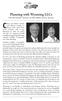 Chapter 83 Planning with Wyoming LLCs Cecil Smith (Memphis, Tennessee) and Carol Gonnella (Jackson, Wyoming) Clients who desire a simple and effective strategy to protect their assets from future lawsuits,
 TOP 20 TITLE ISSUES In no particular order, here are brief summaries of the top 20 title issues that can arise in a real estate transaction: 1. Trusts 2. Power of Attorney 3. Death 4. Divorce 5. Foreclosure
AMERICAN JOURNAL OF FAMILY LAWYERS PRE & POST NUPTIAL AGREEMENTS GENERAL ESTATE PLANNING ISSUES
 AMERICAN JOURNAL OF FAMILY LAWYERS PRE & POST NUPTIAL AGREEMENTS GENERAL ESTATE PLANNING ISSUES BETH S. COHN, ESQ. JABURG & WILK, P.C. 3200 N. Central Avenue, Suite 2000 Phoenix, Arizona 85012 Direct Dial
Considerations of the Built-In Gain (BIG) Tax Liability Discount During the S Corporation Conversion Recognition Period
 Forensic Analysis Insights Income Tax Considerations of the Built-In Gain (BIG) Tax Liability Discount During the S Corporation Conversion Recognition Period Fady F. Bebawy In performing a valuation analysis
ESTATE TAX FILING INSTRUCTIONS
 ESTATE TAX FILING INSTRUCTIONS Section References are to the Internal Revenue Code (IRC) as it existed on January 1, 2005. WHO MUST FILE This Washington State Estate and Transfer Tax Return must be filed
Is Cancellation of Debt Income Taxable? One question that I am asked often these days is whether cancellation of debt (COD) income is taxable or not?
 Is Cancellation of Debt Income Taxable? One question that I am asked often these days is whether cancellation of debt (COD) income is taxable or not? For tax purposes, the general rule is that all debt
Insolvency Procedures under Section 108
 Income Tax Insolvency Insights Insolvency Procedures under Section 108 Irina Borushko and Urmi Sampat In the current prolonged recession, many industrial and commercial entities have had to restructure
ESTATE SETTLEMENT BASICS
 ESTATE SETTLEMENT BASICS by Steven D. Beres Florida Bar Board Certified Wills, Trusts & Estates Lawyer The steps necessary to properly settle an estate upon the death of a family member or friend vary
FLORIDA REAL ESTATE INFORMATION
 FLORIDA REAL ESTATE INFORMATION A. General Information on Property Transfers B. Other Considerations in Transferring Property C. Summary of Steps in Transferring Property D. Two Types of Deeds in Florida
Succession Planning Case Studies
 Succession Planning Case Studies Prepared by NCFC Business Consulting INTRODUCTION The following are brief descriptions of how some intergenerational business succession plans have been implemented. These
The Lien Handbook: An A to Z Guide on All Things Property Liens
 The Lien Handbook: An A to Z Guide on All Things Property Liens Introduction Anyone who buys, sells or owns real property will likely deal with property liens at some point and in some fashion. Some property
Valuing S Corporation ESOP Companies
 CHAPTER FOUR Valuing S Corporation ESOP Companies Kathryn F. Aschwald Donna J. Walker n January 1, 1998, corporations with employee stock ownership plans (ESOPs) became eligible to O elect S corporation
TAX FACTS. From the State of Hawaii, Department of Taxation
 TAX FACTS From the State of Hawaii, Department of Taxation October, 2010 UNDERSTANDING HARPTA 2010-1 Note: All references to the IRC are to the Internal Revenue Code of 1986, as amended. All quoted IRC
Power of Attorney for Property
 State of Illinois Illinois Department on Aging Power of Attorney for Property Please NOTE: Power of Attorney for Property refers to the legal delegation of decision-making authority to an agent concerning
Whether the transactions in the following situations are, for federal tax purposes,
 Part I Section 61.--Gross Income Defined 26 CFR 1.61-6: Gains derived from dealings in property. (Also 82, 1001; 1.82-1, 1.6045-4) Rev. Rul. 2005-74 ISSUE Whether the transactions in the following situations
GUIDELINES. For the Michigan Homestead Property Tax Exemption Program
 Michigan Department of Treasury 2856, Formerly C-4381 (1-00) GUIDELINES For the Michigan Homestead Property Tax Exemption Program These guidelines are compiled questions and answers from the previous four
California Land Title Association
 California Land Title Association Title Consumer Series: Understanding the Language of Real Estate To the unfamiliar, it can often confuse and bewilder. Fannie Mae and Freddie Mac. ARMS and APR. Clear
Presented by: David L. Rice, Esq. For CalCPA Pasadena Discussion Group. (c) David L. Rice
 Presented by: David L. Rice, Esq. For CalCPA Pasadena Discussion Group 1 Mortgage defaults and foreclosures are of a national concern. In 2011, nearly 5,000,000 borrowers are behind on their mortgage.
ADVERSE POSSESSION. 2. What must occur for one person to gain title to another's property through adverse possession?
 Frequently asked questions or FAQs on a variety of oil, gas and energy law topics. The purpose of these FAQs is to provide short plain English answers to some of the more common questions that the public
Transfer of Ownership Guidelines PREPARED BY THE MICHIGAN STATE TAX COMMISSION
 Transfer of Ownership Guidelines PREPARED BY THE MICHIGAN STATE TAX COMMISSION Issued August 2010 TABLE OF CONTENTS Background Information 1 Transfer of Ownership Definitions 2 Deeds and Land Contracts
Non-probate Asset Transfer. How to Distribute Assets Not Managed by a Will or Trust
 Non-probate Asset Transfer How to Distribute Assets Not Managed by a Will or Trust Creating a Will or Living Trust is a significant part of a well thought out estate plan. Even the most exacting estate
PROTECTING BUSINESS OWNERS AND PRESERVING BUSINESSES FOR FUTURE GENERATIONS
 BASICS OF BUY-SELL PLANNING A buy-sell arrangement (or business continuation agreement ) is an arrangement for the disposition of a business interest upon a specific triggering event such as a business
ESTATE PLANNING. Hawaii Real Property Issues and Techniques. Heather K.L. Conahan Loden & Conahan, AAL, ALC. James L. Starshak Carlsmith Ball, LLP
 ESTATE PLANNING Hawaii Real Property Issues and Techniques Heather K.L. Conahan Loden & Conahan, AAL, ALC James L. Starshak Carlsmith Ball, LLP Hawaii State Bar Association Real Property Section February
CHAPTER 6 Estate Tax
 CHAPTER 6 Estate Tax DISCUSSION QUESTIONS 1. List six assets included in a decedent s gross estate. 1. Cash. 2. Stocks and bonds. 3. Annuities. 4. Retirement accounts. 5. Notes receivable. 6. Residences.
GENERAL MATH PROBLEM CATEGORIES AND ILLUSTRATED SOLUTIONS MEASUREMENT STANDARDS WHICH MUST BE MEMORIZED FOR THE BROKER TEST
 Chapter 17 Math Problem Solutions CHAPTER 17 GENERAL MATH PROBLEM CATEGORIES AND ILLUSTRATED SOLUTIONS MEASUREMENT STANDARDS WHICH MUST BE MEMORIZED FOR THE BROKER TEST Linear Measure 12 inches = 1 ft
14. Probate in the State of Washington
 -63-14. Probate in the State of Washington What Is Probate? Probate is a court-supervised procedure that determines the ownership of property of a deceased person (a decedent). When a person dies, all
Valuation of S-Corporations
 Valuation of S-Corporations Prepared by: Presented by: Hugh H. Woodside, ASA, CFA Empire Valuation Consultants, LLC 777 Canal View Blvd., Suite 200 Rochester, NY 14623 Phone: (585) 475-9260 Fax: (585)
GREENE VALUATION ADVISORS, LLC
 GREENE VALUATION ADVISORS, LLC 1430 Broadway 6 th floor New York, NY 10018 TEL: 212.244.1800 FAX: 212.869.0209 e-mail: [email protected] Are minority interest discounts really appropriate in valuing
Buy-Sell Planning. Succession Planning for Business Owners. Guiding you through life. SALES STRATEGY BUSINESS. Advanced Markets. Situation.
 Guiding you through life. SALES STRATEGY BUSINESS Buy-Sell Planning Succession Planning for Owners Situation owners should plan to protect their business in case of the sudden death, retirement, or disability
TRUE NET CASH FLOW Enhancing Real Estate Efficiency TIC - Tenant In Common Real Estate Ownership
 TRUE NET CASH FLOW Enhancing Real Estate Efficiency TIC - Tenant In Common Real Estate Ownership Securities offered through QA3 Financial Corp. Member FINRA/SIPC. Advisory Services offered through QA3
Business Succession Planning
 Business Succession Planning with Key Person Coverage and Buy-Sell Agreements Program Highlights & Fact Finder You put maximum effort into establishing and running your business. But are you taking the
CASE District IV Conference Fort Worth, Texas. March 25, 2013. What true assets does your family possess?
 HOW TO INITIATE GIFT PLANNING DISCUSSIONS WITH DONORS The Charitable Planning Process CASE District IV Conference Fort Worth, Texas March 25, 2013 Laura Hansen Dean, J.D. Attorney at Law (Texas, Indiana)
real estate and urban development
 doing business in Canada 1 real estate and urban development Real estate is a broad category that covers buying, selling, developing, leasing and financing across a wide range of sectors from mining, forestry,
LAW OFFICES OF BRADLEY J. FRIGON, LLC PROBATE INTAKE FORM PERSONAL INFORMATION
 Member National Academy of Elder Law Attorneys Member Special Needs Trust Alliance ** Certified Elder Law Attorney by the National Elder Law Foundation www.specialneedsalliance.com LAW OFFICES OF BRADLEY
Family Business Succession Planning
 WILLIAM DELMAGE President 22 Hemingway Drive East Providence, RI 02915 (401) 435-4239 103 [email protected] www.wdandassociates.com Family Business Succession Planning Page 2 of 9 Transferring Your
Valuing S Corporations in Family Law Engagements
 Forensic Analysis Insights Family Law Valuing S Corporations in Family Law Engagements Zach Oehlman Tax treatment of S corporations is a heavily debated topic within the valuation profession. The courts
Case 10-33583-bjh11 Doc 31 Filed 12/07/10 Entered 12/07/10 18:18:45 Desc Main Document Page 1 of 10
 Document Page 1 of 10 Eric A. Liepins ERIC A. LIEPINS, P.C. 12770 Coit Road Suite 1100 Dallas, Texas 75251 Ph. (972) 991-5591 Fax (972) 991-5788 ATTORNEYS FOR DEBTOR IN THE UNITED STATES BANKRUPTCY COURT
WHAT IS TITLE INSURANCE?
 WHAT IS TITLE INSURANCE? A title is the collective ownership records of a piece of real estate, including the transfer of any property rights and any loans using the property as collateral. A clear line
STATE OF VERMONT FINDINGS OF FACT, CONCLUSIONS OF LAW, AND ORDER
 Drew et. al. v. Drew et. al., No. 174-6-10 Cacv (Teachout, J., Sept. 23, 2013). [The text of this Vermont trial court opinion is unofficial. It has been reformatted from the original. The accuracy of the
Personal Home and Vacation Properties -Using the Principal Residence Exemption
 Personal Home and Vacation Properties -Using the Principal Residence Exemption Introduction Your family s home is generally known to be exempt from capital gains taxation, but what about the family cottage
Glossary of Title Insurance Terms
 Glossary of Title Insurance Terms abstract of title The condensed history of the title to a particular parcel of real estate, consisting of a summary of the original grant and all subsequent conveyances
LIVING TRUSTS AND AVOIDING PROBATE
 SIUC Legal Clinic 104 Lesar Law Building Southern Illinois University at Carbondale Carbondale, Illinois 62901-6821 618-536-4423 618-536-7723 (FAX) 618-453-8727 LIVING TRUSTS AND AVOIDING PROBATE INTRODUCTION
BORROWER DISCLOSURE STATEMENT First Time Homebuyer Program (Inclusionary Housing Unit and BEGIN Loan) CITY OF CONCORD
 BORROWER DISCLOSURE STATEMENT First Time Homebuyer Program (Inclusionary Housing Unit and BEGIN Loan) CITY OF CONCORD The City of Concord (the "City") has adopted an Inclusionary Housing Ordinance, City
Form CT-706 NT Instructions Connecticut Estate Tax Return (for Nontaxable Estates)
 (Rev. 06/11) Form CT-706 NT Instructions Connecticut Estate Tax Return (for Nontaxable Estates) General Information For decedents dying on or after January 1, 2011, the Connecticut estate tax exemption
Gifting: A Property Transfer Tool of Estate Planning
 Gifting: A Property Transfer Tool of Estate Planning by Marsha A. Goetting, Ph.D., CFP, CFCS, Professor and Extension Family Economics Specialist; and Joel Schumacher, Extension Economics Associate Economics
BASICS * Irrevocable Life Insurance Trusts
 KAREN S. GERSTNER & ASSOCIATES, P.C. 5615 Kirby Drive, Suite 306 Houston, Texas 77005-2448 Telephone (713) 520-5205 Fax (713) 520-5235 www.gerstnerlaw.com BASICS * Irrevocable Life Insurance Trusts Synopsis
County of Ocean, New Jersey. Jeffrey W. Moran, Surrogate 118 Washington Street, P. O. Box 2191 Toms River, NJ 08754-2191 - Phone: 732-929-2011
 County of Ocean, New Jersey Jeffrey W. Moran, Surrogate 118 Washington Street, P. O. Box 2191 Toms River, NJ 08754-2191 - Phone: 732-929-2011 A PLANNING GUIDE TO THE PROBATE PROCESS The Probate Process
MAJOR REFERENCES: Est. of Davidson v. Commissioner, T.C. No. 013748-13 (July 6, 2015).
 Thursday, August 20 2015 WRM# 15-31 The WRMarketplace is created exclusively for AALU Members by the AALU staff and Greenberg Traurig, one of the nation s leading tax and wealth management law firms. The
DIEBOLD and the Not so Beautiful: Transferee Liability Trumps Tax Shelter
 DIEBOLD and the Not so Beautiful: Transferee Liability Trumps Tax Shelter By Dana L. Mark and Jeffrey A. Galant Authors Bios: DANA L. MARK, a tax and estate planning lawyer, is Special Counsel at McCarter
A Sole Proprietor Insured Buy-Sell Plan
 A Sole Proprietor Insured Buy-Sell Plan At a sole proprietor s death, the business is dissolved and all business assets and liabilities become part of the sole proprietor's personal estate. Have you evaluated
PROBATE IN NEVADA WHAT, WHY, AND HOW by Layne T. Rushforth
 WHAT, WHY, AND HOW by Layne T. Rushforth 1. What is Probate?: Probate generally refers to the court proceeding required to formalize the transfer of the assets 1 belonging to a deceased person ( decedent
Chapter 16. Transfer of Ownership Rights and Interests A. TITLE AND EVIDENCE OF GOOD AND MARKETABLE TITLE DEFINITION OF TITLE
 Chapter 16 Transfer of Ownership Rights and Interests A. TITLE AND EVIDENCE OF GOOD AND MARKETABLE TITLE DEFINITION OF TITLE In Georgia, the title to real property is the means or the evidence by which
MARYLAND STATUTORY FORM LIMITED POWER OF ATTORNEY PLEASE READ CAREFULLY
 MARYLAND STATUTORY FORM LIMITED POWER OF ATTORNEY PLEASE READ CAREFULLY This power of attorney authorizes another person (your agent) to make decisions concerning your property for you (the principal).
Making a Gift of Real Estate
 Making a Gift of Real Estate Thinking of selling your home, commercial building, or investment property? Enjoy tax benefits, generate income, and help Stanford with a gift of real estate. Making a Gift
BARBER EMERSON, L.C. MEMORANDUM ESTATE FREEZING THROUGH THE USE OF INTENTIONALLY DEFECTIVE GRANTOR TRUSTS
 BARBER EMERSON, L.C. MEMORANDUM ESTATE FREEZING THROUGH THE USE OF INTENTIONALLY DEFECTIVE GRANTOR TRUSTS I. INTRODUCTION AND CIRCULAR 230 NOTICE A. Introduction. This Memorandum discusses how an estate
FEDERAL INCOME TAXES FOR TIMBER GROWERS
 NC STATE UNIVERSITY COLLEGE OF AGRICULTURE & LIFE SCIENCES FEDERAL INCOME TAXES FOR TIMBER GROWERS Contents 2 Introduction Definition of timber Gain or loss from sale of timber Gross sales receipts Minus:
Special Report: IRS Tax Lien
 Special Report: IRS Tax Lien TAX PLANNING AND IRS DEFENSE C a l l T o d a y! 540-438- 5344 What an IRS Tax Lien is and How it Works What is Inside? Why the IRS Files a Notice of Federal Tax Lien IRS Tax
2015 TAX COURT JUDICIAL CONFERENCE
 2015 TAX COURT JUDICIAL CONFERENCE CONFLICTS AND CHAOS: THE IMPORTANCE OF TIMELY RECOGNIZING AND MANAGING CONFLICTS OF INTEREST AND RELATED PROBLEMS IN TAX LITIGATION Discussion Hypotheticals May 22, 2015
Measuring Lost Profits Economic Damages on a Pretax Basis
 Dispute Resolution Insights Best Practices Article Measuring Lost Profits Economic Damages on a Pretax Basis Robert P. Schweihs. The judicial remedy for many commercial disputes is an award of economic
ESTATE PLANNING OR NO ESTATE PLANNING?
 ESTATE PLANNING OR NO ESTATE PLANNING? Thomas F. Kennedy KENNEDY & ASSOCIATES Attorneys-at-Law Board Certified Estate Planning and Probate Law - Texas Board of Legal Specialization 5851 San Felipe, Suite
CALIFORNIA GENERAL DURABLE POWER OF ATTORNEY THE POWERS YOU GRANT BELOW ARE EFFECTIVE EVEN IF YOU BECOME DISABLED OR INCOMPETENT
 CALIFORNIA GENERAL DURABLE POWER OF ATTORNEY THE POWERS YOU GRANT BELOW ARE EFFECTIVE EVEN IF YOU BECOME DISABLED OR INCOMPETENT CAUTION: A DURABLE POWER OF ATTORNEY IS AN IMPORTANT LEGAL DOCUMENT. BY
Gift Acceptance Policy
 Gift Acceptance Policy Purpose The purpose of this Gift Acceptance Policy is to establish the guidelines according to which the Catholic Community Foundation of Los Angeles (the Foundation ) accepts gifts
Advanced Wealth Transfer Strategies
 Family Limited Partnerships (FLPS) Advanced Wealth Transfer Strategies The American Taxpayer Relief Act of 2012 established a permanent gift and estate tax exemption of $5 million, which is adjusted annually