
20 Questions (and answers) about Traumatic Brain Injury
|
|
|
- Cecilia Flowers
- 10 years ago
- Views:
Transcription
1 20 Questions (and answers) about Traumatic Brain Injury for insurance claims adjusters, case managers, attorneys, and health-care providers by Dennis P. Swiercinsky, Ph.D. 1. What is traumatic brain injury (TBI)? Physical force injury to the head can cause nerve cells in the brain to stretch, tear, and pull apart, making them unable to relay messages from one part of the brain to another. Sufficiently forceful trauma to the head causes the brain suddenly and violently to slam against the bony structures of the interior of the skull resulting in "traumatic brain injury." The head striking an object (a windshield or the ground) at a fast rate of speed or something striking the head (a flying or falling object) can cause brain injury. Injury to brain cells interferes with all sorts of information processing thinking, remembering, seeing, and controlling and coordinating bodily movements. Traumatic brain injury can range from relatively mild to catastrophically severe depending on multiple factors including degree of force, multiple trauma, neurological complications, and timeliness of emergency medical treatment. 2. What is the difference between the terms "closed head injury" and "traumatic brain injury"? Closed head injury (CHI) implies force trauma to the head that does not result in penetration of the skull (such as a bullet or open skull fracture would). Usually, closed head injury implies traumatic brain injury, but this may not necessarily always be the case. Whether or not brain injury is sustained depends on the power of the physical force injury. If the injury is great enough, physical force radiates from the skull into the brain or causes sudden movement of the brain inside the skull, resulting in damaged nerve cells. Even if closed head injury does not cause brain injury, it may cause "soft tissue" injury such as in cervical strain or myofascial trauma. Symptoms of soft tissue injury may mimic mild brain injury. Differential diagnosis is essential. 3. What, specifically, is "mild traumatic brain injury"? Clinicians classify head (or, more correctly, brain) injury based on quality or length of change in consciousness and length of amnesia (memory loss). Both loss of consciousness (or even a semi-conscious state) and amnesia are directly caused by the sudden trauma and tearing of nerve cells. When this trauma occurs, the brain simply cannot maintain its normal functioning and shuts down, completely (causing unconsciousness) or partially (causing a feeling of being dazed), until cellular functioning can recover. "Mild brain injury" refers to the extent of loss of consciousness (30 minutes or less) and amnesia (24 hours or less), not to the functional effects. The diagnosis can be made if even one of the following conditions is observed: (1) loss of consciousness of any length, (2) amnesia of any length, (3) altered consciousness (e.g., being "dazed"), or (4) focal neurological deficits (e.g., temporary vision loss, or a seizure). A mild traumatic brain injury can result in permanent, life-altering consequences.

2 4. What are the essential functional consequences of mild traumatic brain injury? Directly caused by the "diffuse axonal injury" and other physiological changes in the brain, thinking becomes slow, memory becomes unreliable, and concentration becomes haphazard. The roadblocks of damaged and disconnected neurons mar the processing of electro-chemical messages within the brain. Processing (i.e., thinking) takes more time because it is subject to errors caused by unfamiliar neural detours. Judgment and decision-making may be faulty because the complex interrelated brain connections are just not available to the person now as they were before the injury. The individual senses incomplete mental processing and loses confidence in thinking. Complex or unfamiliar tasks become frustrating, as thinking no longer yields insights or easy problem solutions. Irritability prevails, as the individual attempts to cope with a brain that just seems always to function in a mental fog. A host of complicating cognitive and emotional reactions can evolve. To some extent, some of these problems can be permanent. 5. Can brain injury occur without direct trauma to the head? Yes. Whiplash injury or violent shaking of the head can cause brain injury. It is the sudden movement of the brain inside the cranium that causes damage to neurons. Sudden acceleration-deceleration of the head in an automobile collision, even with airbag deployment where the head is protected from striking a solid object, can cause brain injury because the brain slams against the inside of the skull, displacing, tearing, and bruising nerve cells. A roller coaster ride may make you feel dizzy for a few minutes due to inner ear disturbance, but produces nowhere near the physical force of even a 20 or 30 mph automobile crash. Even what seems like a sudden stop at the end of the ride (which, of course, it really isn t) is nothing compared to hitting a stationary object at just 15 or 20 mph. 6. Since x-rays, MRI s, or CT s can diagnose many head and brain injuries by showing areas of fracture, hemorrhage, or certain kinds of tissue injury, can they also show evidence of traumatic brain injury? Often, they cannot. Traumatic brain injury, especially if mild, involves scattered disconnection among neurons and supportive tissue, stretched (and damaged) axon membranes (known as "diffuse axonal injury"), chemical injury due to neurotransmitter toxicity, and cellular dysfunction due to changes in ionic balance. These kinds of changes to brain cells do not result in sufficient change in the tissue density to be detected by conventional imaging techniques. Even if diffuse axonal injury does cause some subtle change in tissue density, the injury is so scattered throughout the brain that there is insufficient focal concentration of injury to yield detection by these procedures. Often, more elaborate imaging techniques such as SPECT (single-photon emission computed tomography) or PET (positron emission tomography) can detect changes due to brain injury because these techniques measure brain cell metabolism, not tissue density. CT and MRI scans are usually employed initially in any degree of head trauma to check for life threatening bleeding or swelling in brain tissue.

3 7. What are the differences among the diagnostic terms "post concussion syndrome," "posttraumatic stress disorder," and "brain damage"? "Post concussion syndrome" refers to a set of often-reported symptoms that occur, and often linger for weeks or months, following traumatic brain injury, mild or otherwise. Post concussion symptoms may be due to either brain injury or soft tissue injury, or both. The syndrome includes headache, dizziness, concentration difficulty, memory failures, irritability, mental dullness, fatigue and weakness, light or sound hypersensitivity, sleep difficulty, depression, and loss of self-confidence. "Post-traumatic stress disorder" is a diagnostic term referring, specifically, to an emotional (anxiety-based) disorder caused by a psychologically intense event, and usually does not (but can) accompany post concussion syndrome, especially if the person remembers some horrifying aspect of an injury event. The term "trauma" in this case refers to emotional, not physical, impact. "Brain damage" is a general term referring to any injury to brain tissue from any cause. 8. How is the diagnosis of traumatic brain injury made using neuropsychological examination? Brain injury causes structural and functional changes. Structural changes may not be easily detected by conventional imaging procedures (see Q&A 6, above) due to the typically diffuse nature of injury. Therefore, assessing functional changes in thinking, coordination, language, emotions, and personality provides the key to diagnosing traumatic brain injury. Objective and scientifically created neuropsychological tests are sensitive to these trauma-induced functional changes that usually are not produced by the normal brain. By combining data from a thorough interview and results of neuropsychological and sometimes personality tests, the neuropsychologist creates a functional profile that can be compared to the kinds of profiles usually produced by persons with various kinds of brain injury. Neuropsychological examination also differentiates emotional and personality changes from trauma-induced changes (such as depression from organic brain dysfunction). 9. Do neurologists or neurosurgeons perform neuropsychological tests? No. Only specifically trained psychologists who specialize in neuropsychology (the study of brain and behavior relationships) are qualified to administer and interpret neuropsychological tests. Neurologists and neurosurgeons often administer a variety of mental status procedures but these are neither standardized nor sensitive enough to detect subtle dysfunction (especially of mild traumatic brain injury) that can be revealed on objective neuropsychological tests. Neurologists, neurosurgeons, and neuropsychiatrists are medical doctors who rely on physical procedures and trained observation for diagnosis, and medical/surgical techniques for treatment. Neuropsychologists are clinical psychologists who, through the use of standardized behavioral assessments, seek to understand the complex interactions of psychological and biological components that produce dysfunctional behavior. 10. Can a neuropsychological examination differentiate acquired from pre-existing problems, and differentiate which behavior or thinking problems are related to brain injury and which are not? Yes. Some neuropsychological tests are developed to be sensitive to changes caused by brain injury. Other tests are administered that are specifically not sensitive to brain injury. Comparing results from both types of tests helps define whether brain injury has occurred or not. Similarly, some procedures differentiate pre-existing emotional and personality characteristics that existed before the injury. "Differential diagnosis" is the hallmark of a comprehensive neuropsychological examination. The neuropsychologist sorts out the pre-existing emotional and psychological factors from the acquired changes due directly to brain injury.

4 11. Why is it possible for the same apparent level of brain injury in two different persons to produce very different degrees of outcome? Just as no two people are alike, no two brains are alike. Brain injury manifests itself depending on a host of factors such as intellectual capacity, physical health, age, emotional stability or instability, attitudes toward illness and health, concurrent (non-brain) injuries, quality of immediate medical attention following an injury, psychological adjustment or maladjustment, and dozens of other factors. Also, just as the kinds and amount of physical injury (broken bones, soft tissue contusions, or lacerations) vary among individuals involved in accidents, so do the amount and kind of head rotation, impact speed, and other factors that determine the degree of injury. 12. What effect does pain have on the determination of whether the injured person s problems are caused by brain injury? Pain often accompanies traumatic brain injury due to head and neck soft tissue injury, cervical strain, back injuries, and other acquired medical problems. Chronic pain and suffering certainly diminishes one s concentration, focus, and emotional well being. Thus, the potential for pain to influence the assessment of brain injury, especially in mild brain injury, is always a concern. However, research studies have demonstrated the robustness of many neuropsychological tests and documented their ability to differentiate brain dysfunction from non-brain injury conditions such as pain, as well as from depression or anxiety. A comprehensive examination must consider pain and discomfort factors as well as brain injury factors in the overall functional consequences of injury and the potential for recovery. 13. How important are medical records to the neuropsychologist? Medical records are just as important as the neuropsychological tests themselves in order to achieve a thorough assessment. Records provide the background for understanding the biomechanism of an injury and the evolution of injury characteristics, the quality and outcome of medical and other interventions, pre-existing health characteristics, and other data and independent observations to support or refute interpretations from neuropsychological test results. Educational records can also help establish level of pre-injury mental functioning. While neuropsychological data are extremely important in the whole clinical picture of an injured person, all the data must fit, or "hang together," with the rest of the medical history. 14. Is a neuropsychologist legally qualified to determine and render opinions about the cause of brain damage and the resulting behavioral and psychological problems? Yes. Case law in many jurisdictions across the United States has deemed clinical neuropsychologists, by virtue of their specialized training and experience, qualified as the professional expert of choice to determine the cause or etiology of brain damage and its resulting behavioral and psychological problems. 15. Is the neuropsychologist qualified to render impairment ratings? Yes. In fact, it is the set of results from objective neuropsychological tests that provides the best foundation for rating functional impairment. If the AMA Guides to the Evaluation of Permanent Impairment are used, the nervous system section of the rating guidelines relies on functional consequences of altered mental status, language, consciousness, and behavior exactly that which is objectively evaluated in the neuropsychological examination.

5 16. How can the neuropsychological examination help to offer an accurate prognosis? Neuropsychological status, as well as medical condition, forms the basis for prognosis following a brain injury. Extent of an injury (structurally and functionally), rate of recovery so far, complicating factors such as severe pain and other injuries, emotional and psychological reactions, support (or lack thereof) from family and employers, attitudes in the injured person about health and recovery, potential secondary gains from injury, cognitive and attitudinal strengths, and other factors contribute to the foundation for predicting outcome from brain injury. The comprehensive neuropsychological examination evaluates these areas to help determine the injured person s potential to achieve functional improvement and to identify treatment that will help achieve that improvement. Maximum improvement from mild traumatic brain injury is usually achieved in six to nine months, but can take longer. Maximum improvement from moderate or severe brain injury can take years. 17. Can the neuropsychological examination predict real-life functioning on the job and at home, including the ability to drive? At least better than any other clinical procedure, yes. How one performs on tests of memory, concentration, mental processing speed, problem-solving flexibility, thoroughness of thinking, and self-monitoring have direct implications for how one will perform on a job. Neuropsychological examination results not only provide this prediction but also establish graduated return-to-work recommendations to help insure success in injury recovery and returning to work, if that is, indeed, possible. Similarly, ability to drive safely can be predicted by one s ability to sustain attention and avoid distractibility, make quick and reflective decisions, and sustain simultaneous thinking about lots of things going on at once. 18. What treatment can a neuropsychologist offer a person who has had a traumatic brain injury and how effective is it? Neuropsychological treatment of brain injury falls into three areas: (1) teaching how to strengthen weakened skills, (2) teaching compensation strategies to lessen the impact of areas of permanent dysfunction, and (3) teaching positive attitudes and health concepts that encourage both healing and adaptation. Depending on the individual s motivation, these strategies can be very effective in helping reverse some of the effects of brain injury. Some people respond to short-term therapy, others may require months of intensive work. 19. Is it possible for a person to fake the results of neuropsychological testing? Numerous safeguards are built into the neuropsychological examination to detect attempts to fake test performance. Consistent patterns among test results that correspond to known functional impairments, quality of test motivation and attitude, and known empirical findings that characterize brain injury but not other conditions are all used to evaluate test results for "dissimulation" faking, malingering, symptom exaggeration, or distortion. Only a person well trained in neuropsychological tests might successfully fake a pattern of results that could be misinterpreted. The examination is too complex and composed in such a manner that producing a coherent and clinically familiar pattern of results indicating damage where none exists would be highly unlikely. A condition known as "conversion reaction" may be seen occasionally where an individual expresses strong psychological disorder in physical and neurological symptoms. Again, an experienced neuropsychologist can differentiate this condition from real, organic brain injury.

6 20. Is it possible for a person to not have brain damage and not intentionally fake any tests yet still be misdiagnosed as having brain damage? It is possible but rare. As long as the pre-injury history (medical, educational, vocational, and psychosocial) is well known, neuropsychological test results can be interpreted quite accurately and within a meaningful context, avoiding "over-diagnosis." The chances for erroneous conclusions are then minimal. Again, data from a variety of sources must "hang together" in order to derive an accurate diagnosis. Prejudgment, missing critical history, or failure to account for pre-existing or reactive psychological factors can lead to misinterpretation of test data. This is why the neuropsychological examination must be comprehensive, leaving no stone unturned when sorting out complex injury and its causes and consequences. Dutch Translation

BINSA Information on Mild Traumatic Brain Injury
 Mild traumatic brain injuries (MTBI) occur through sporting, car and workplace accidents. Mild brain injury is not easily diagnosed. This fact sheet explains how it may be recognised and assessed, and
Injury Law Center HEAD INJURY. Head injuries can be caused by car crashes, sports injuries, falls, workplace injuries and assaults.
 Injury Law Center Note: This information is provided to give you a basic understanding of the injury. It is not intended as medical advice. You should consult a qualified medical provider. Description
Closed Automobile Insurance Third Party Liability Bodily Injury Claim Study in Ontario
 Page 1 Closed Automobile Insurance Third Party Liability Bodily Injury Claim Study in Ontario Injury Descriptions Developed from Newfoundland claim study injury definitions No injury Death Psychological
Recovering from a Mild Traumatic Brain Injury (MTBI)
 Recovering from a Mild Traumatic Brain Injury (MTBI) What happened? You have a Mild Traumatic Brain Injury (MTBI), which is a very common injury. Some common ways people acquire this type of injury are
Traumatic Brain Injury Lawsuit
 Traumatic Brain Injury Lawsuit D Legal Guide Simple Step-By-Step Guide to Your Brain & Traumatic Brain Injury (TBI) [Type text] Distributed By: www.downtownlalw.com A Simple Step-by-Step Guide to your
Traumatic brain injury (TBI)
 Traumatic brain injury (TBI) A topic in the Alzheimer s Association series on understanding dementia. About dementia Dementia is a condition in which a person has significant difficulty with daily functioning
Concussion Management Return to Play Protocol
 Concussion Management Return to Play Protocol Returning to play following a concussion involves a stepwise progression once the individual is symptom free. There are many risks to premature return to play
What is a concussion? What are the symptoms of a concussion? What happens to the brain during a concussion?
 What is a concussion? The working definition used today for concussion is a complex pathophysiological process affecting the brain, induced by traumatic biomechanical forces (developed by the consensus
A PEEK INSIDE A CLOSED HEAD INJURY CLAIM... 1
 A PEEK INSIDE A CLOSED HEAD INJURY CLAIM By: Douglas Fletcher Fernando Fred Arias Dr. Jim Hom April 11, 2014 CONTENTS A PEEK INSIDE A CLOSED HEAD INJURY CLAIM... 1 SYMPTOMATOLOGY... 2 CRITICAL INFORMATION...
EMOTIONAL AND BEHAVIOURAL CONSEQUENCES OF HEAD INJURY
 Traumatic brain injury EMOTIONAL AND BEHAVIOURAL CONSEQUENCES OF HEAD INJURY Traumatic brain injury (TBI) is a common neurological condition that can have significant emotional and cognitive consequences.
BINSA Information on Brain Injury
 Acquired Brain Injury (ABI) There are a number of ways an individual can suffer an acquired brain injury (ABI) Figure one - ABI causes Significant causes of ABI Traumatic Brain Injury (TBI) Traumatic Brain
Whiplash and Whiplash- Associated Disorders
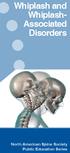 Whiplash and Whiplash- Associated Disorders North American Spine Society Public Education Series What Is Whiplash? The term whiplash might be confusing because it describes both a mechanism of injury and
NEW TRENDS AND ISSUES IN NEUROPSYCHOLOGY: Mild Traumatic Brain Injury and Postconcussive Syndrome Cases
 NEW TRENDS AND ISSUES IN NEUROPSYCHOLOGY: Mild Traumatic Brain Injury and Postconcussive Syndrome Cases Carl F. Mariano Barry H. Uhrman Introduction to Neuropsychology As many of you are aware, clinical
THE MANAGEMENT OF CONCUSSION IN AUSTRALIAN FOOTBALL
 THE MANAGEMENT OF CONCUSSION IN AUSTRALIAN FOOTBALL AFL Research board AFL MEDICAL OFFICERS' ASSOCIATION THE MANAGEMENT OF CONCUSSION IN AUSTRALIAN FOOTBALL This document has been published by the AFL
Recovering from Mild Traumatic Brain Injury/Concussion. A Guide for Patients and Their Families
 Recovering from Mild Traumatic Brain Injury/Concussion A Guide for Patients and Their Families Recovering From Mild Traumatic Brain Injury/Concussion: A Guide for Patients and Their Families This booklet
The Petrylaw Lawsuits Settlements and Injury Settlement Report
 The Petrylaw Lawsuits Settlements and Injury Settlement Report TRAUMATIC BRAIN INJURIES How Minnesota Juries Decide the Value of Pain and Suffering in Brain Injury Cases The Petrylaw Lawsuits Settlements
Brain Injury Litigation. Peter W. Burg Burg Simpson Eldredge Hersh & Jardine, P.C. www.burgsimpson.com
 Brain Injury Litigation Peter W. Burg Burg Simpson Eldredge Hersh & Jardine, P.C. www.burgsimpson.com Some General Facts About Traumatic Brain Injury TBIs contribute to a substantial number of deaths and
Background on Brain Injury
 CHAPTER 1 Background on Brain Injury In this chapter, you will: Read about Alberta s definition of Acquired Brain Injury and how that affects which supports you will be able to access. Learn about the
Types of Brain Injury
 Types of Brain Injury The bones of your skull are hard and they protect your brain. Your brain is soft, like firm Jell-O. When your head moves, your brain moves inside your skull. When your head is hit
Head Injury in Children
 Head Injury in Children The worst fear of every parent is to receive news that your child has been injured in an accident. Unfortunately, in our society, accidental injuries have become the leading threat
B U R T & D A V I E S PERSONAL INJURY LAWYERS
 TRANSPORT ACCIDENT LAW - TRAUMATIC BRAIN INJURY Traumatic Brain Injury ( TBI ) is a common injury in transport accidents. TBI s are probably the most commonly undiagnosed injuries in a hospital setting.
Attention & Memory Deficits in TBI Patients. An Overview
 Attention & Memory Deficits in TBI Patients An Overview References Chan, R., et.al.. (2003). Are there sub-types of attentional deficits in patients with persisting post- concussive symptoms? A cluster
The Indiana Trial Lawyer Association s Lifetime Achievement Seminar. Honoring Peter L. Obremsky. May 23-24, 2005
 The Indiana Trial Lawyer Association s Lifetime Achievement Seminar Honoring Peter L. Obremsky May 23-24, 2005 The Use of Medical Literature in the Brain Injury Case Thomas C. Doehrman Doehrman-Chamberlain
USE OF DEMONSTRATIVE EVIDENCE IN THE TRIAL OF A MILD TRAUMATIC BRAIN INJURY CASE. Your client, who sustained a closed head injury in an
 USE OF DEMONSTRATIVE EVIDENCE IN THE TRIAL OF A MILD TRAUMATIC BRAIN INJURY CASE Your client, who sustained a closed head injury in an automobile crash one year ago, appears perfectly fine as his trial
Brain Injury Association National Help Line: 1-800-444-6443 Brain Injury Association Web site: www.biausa.org Centers for Disease Control and
 Brain Injury Association National Help Line: 1-800-444-6443 Brain Injury Association Web site: www.biausa.org Centers for Disease Control and Prevention Web site: www.cdc.gov/ncipc/tbi Contents About Brain
Any rapid head movement can cause a Whiplash. ALTERNATIVE CARE CHIROPRACTIC Reston, Virginia
 ALTERNATIVE CARE CHIROPRACTIC Reston, Virginia P ROV E N R E L I E F F RO M W H I P L A S H Any rapid head movement can cause a Whiplash injury. Although whiplash is commonly associated with car accidents
HANDLING NON-CATASTROPHIC BRAIN INJURY CASES
 HANDLING NON-CATASTROPHIC BRAIN INJURY CASES WE VE LEARNED THAT THE BRAIN IS MORE PLASTIC THAN WE ONCE THOUGHT AND THAT DAMAGE CAN COM FROM ITS MOVEMENT WITHIN THE SKULL AFTER A BLOW TO THE HEAD OR TO
Whiplash. Whiplash is part of our modern lives. One in 200 of us will suffer from it at some point but it is rarely serious.
 Whiplash www.physiofirst.org.uk Whiplash is part of our modern lives. One in 200 of us will suffer from it at some point but it is rarely serious. Most people make a full return to health. What you do
Cervical Whiplash: Considerations in the Rehabilitation of Cervical Myofascial Injury. Canadian Family Physician
 Cervical Whiplash: Considerations in the Rehabilitation of Cervical Myofascial Injury 1 Canadian Family Physician Volume 32, September 1986 Arthur Ameis, MD Dr. Ames practices physical medicine and rehabilitation,
Overview of evidence: Prognostic factors following whiplash injury
 Overview of evidence: Prognostic factors following whiplash injury Confidence in conclusions (that an association exists) are presented in both text and graphical format, using the following legend: =
TRAUMATIC BRAIN INJURY AND DOMESTIC VIOLENCE
 TRAUMATIC BRAIN INJURY AND DOMESTIC VIOLENCE Women who are abused often suffer injury to their head, neck, and face. The high potential for women who are abused to have mild to severe Traumatic Brain Injury
MENTAL IMPAIRMENT RATING
 MENTAL IMPAIRMENT RATING Lev.II Curriculum Rev. 6/09 155 OBJECTIVES MENTAL AND BEHAVIORAL DISORDERS 1. Identify the axes used in the diagnostic and statistical manual of mental disorders - DSM. 2. Understand
CREATIVE DEMONSTRATIVE EVIDENCE: ADDING THE MIDAS TOUCH. We all know that the use of demonstrative evidence can be crucial to the jury s ability to
 CREATIVE DEMONSTRATIVE EVIDENCE: ADDING THE MIDAS TOUCH A. Introduction We all know that the use of demonstrative evidence can be crucial to the jury s ability to understand complex issues at trial. There
brain injury take care of yourself. we ll take care of the rest.
 take care of yourself. we ll take care of the rest. common injuries While injuries to the head do not always result in damage to the brain, it s important to note the most common forms of head trauma that
CONCUSSION DEFINITION
 Return to Learn and Return to Physical Activity Plan: Information for Parents and Student s CONTEXT Recent research has made it clear that a concussion can have a significant impact on a student'ss cognitive
Whiplash injuries can be visible by functional magnetic resonance imaging. Pain Research and Management Autumn 2006; Vol. 11, No. 3, pp.
 Whiplash injuries can be visible by functional magnetic resonance imaging 1 Bengt H Johansson, MD FROM ABSTRACT: Pain Research and Management Autumn 2006; Vol. 11, No. 3, pp. 197-199 Whiplash trauma can
Non-epileptic seizures
 Non-epileptic seizures a short guide for patients and families Information for patients Department of Neurology Royal Hallamshire Hospital What are non-epileptic seizures? In a seizure people lose control
RECOVERING FROM A MILD TRAUMATIC BRAIN INJURY
 RECOVERING FROM A MILD TRAUMATIC BRAIN INJURY An Information Guide BRAIN INJURY REHABILITATION SERVICE CONCUSSION CLINIC BURWOOD HOSPITAL TABLE OF CONTENTS AN INFORMATION GUIDE... 3 WHAT HAPPENS IN A TRAUMATIC
.org. Fractures of the Thoracic and Lumbar Spine. Cause. Description
 Fractures of the Thoracic and Lumbar Spine Page ( 1 ) Spinal fractures can vary widely in severity. While some fractures are very serious injuries that require emergency treatment, other fractures can
Clinical guidance for MRI referral
 MRI for cervical radiculopathy Referral by a medical practitioner (excluding a specialist or consultant physician) for a scan of spine for a patient 16 years or older for suspected: cervical radiculopathy
Staff, please note that the Head Injury Routine is included on page 3.
 Staff, please note that the Head Injury Routine is included on page 3. This booklet explains what can happen after a concussion, how to get better and where to go for more information and help if needed.
Temple Physical Therapy
 Temple Physical Therapy A General Overview of Common Neck Injuries For current information on Temple Physical Therapy related news and for a healthy and safe return to work, sport and recreation Like Us
Post-Concussion Syndrome
 Post-Concussion Syndrome Anatomy of the injury: The brain is a soft delicate structure encased in our skull, which protects it from external damage. It is suspended within the skull in a liquid called
AR159 February 9, 2015
 AR159 February 9, 2015 1.0 PURPOSE AR CONCUSSION PROTOCOL The purpose of this protocol is to provide information regarding the prevention, identification and management of concussions. Everyone has a role
Traumatic Brain Injury
 Traumatic Brain Injury NICHCY Disability Fact Sheet #18 Updated, July 2014 Susan s Story Susan was 7 years old when she was hit by a car while riding her bike. She broke her arm and leg. She also hit her
NEW ZEALAND RUGBY LEAGUE CONCUSSION / HEAD INJURY POLICY
 NEW ZEALAND RUGBY LEAGUE CONCUSSION / HEAD INJURY POLICY February 2015 New Zealand Rugby League Medical panel The aim of the policy is to provide information on concussion to all those involved in rugby
A patient guide to mild traumatic brain injury
 A patient guide to mild traumatic brain injury Delivering the best in care UHB is a no smoking Trust To see all of our current patient information leaflets please visit www.uhb.nhs.uk/patient-information-leaflets.htm
A Step by Step Guide to Understanding and Managing Traumatic Brain Injury Cases for Attorneys and Risk Managers. Sam Goldstein, Ph.D.
 A Step by Step Guide to Understanding and Managing Traumatic Brain Injury Cases for Attorneys and Risk Managers Sam Goldstein, Ph.D. Neurology, Learning and Behavior Center 230 South 500 East, Suite 100
The Insurance and Whiplash Guide I Hope You ll Never Have To Use But If You Do You ll Be Glad You Read This First!
 The Insurance and Whiplash Guide I Hope You ll Never Have To Use But If You Do You ll Be Glad You Read This First! A special thanks goes to Dr. Steven Eggleston, DC, Esq. for his expertise and his years
Traumatic Brain Injury and Incarceration. Objectives. Traumatic Brain Injury. Which came first, the injury or the behavior?
 Traumatic Brain Injury and Incarceration Which came first, the injury or the behavior? Barbara Burchell Curtis RN, MSN Objectives Upon completion of discussion, participants should be able to Describe
Concussion Guidance for the General Public
 CONCUSSION FACTS A concussion is a brain injury. All concussions are serious. Concussions can occur without loss of consciousness. All athletes with any symptoms following a head injury must be removed
A comparison of complaints by mild brain injury claimants and other claimants describing subjective experiences immediately following their injury
 Archives of Clinical Neuropsychology 16 (2001) 689 695 A comparison of complaints by mild brain injury claimants and other claimants describing subjective experiences immediately following their injury
Steps to getting a diagnosis: Finding out if it s Alzheimer s Disease.
 Steps to getting a diagnosis: Finding out if it s Alzheimer s Disease. Memory loss and changes in mood and behavior are some signs that you or a family member may have Alzheimer s disease. If you have
INJURY LAW ALERT FALL 2010 ISSUE TRAUMATIC BRAIN INJURIES
 INJURY LAW ALERT FALL 2010 ISSUE TRAUMATIC BRAIN INJURIES People who are injured in an accident can suffer many different kinds of injuries. Among the most serious, as well as the hardest to diagnose and
Mild Brain Injury Recovery
 2011 Mild Brain Injury Recovery Mild Brain Injury Recovery What is a mild brain injury? A brain injury is often caused by trauma to the head for any reason. If you had a change in your level of consciousness,
Traumatic Brain Injury
 Traumatic Brain Injury NICHCY Disability Fact Sheet #18 Resources updated, March 2011 Susan s Story Susan was 7 years old when she was hit by a car while riding her bike. She broke her arm and leg. She
Rainy River District School Board SECTION 4
 Rainy River District School Board SECTION 4 Students STUDENT CONCUSSION PROTOCOL PROCEDURE PURPOSE 4.74 The Rainy River District School Board is committed to the safety of all students. In the interests
Concussion Management Program for Red Bank Catholic High School Athletic Department
 Concussion Management Program for Red Bank Catholic High School Athletic Department *This document should be used as a framework for a successful concussion management program but is not intended to replace
Responding to the Needs of Justice-Involved Veterans. Mark Mayhew, LCSW VA Justice Outreach Coordinator
 Responding to the Needs of Justice-Involved Veterans Mark Mayhew, LCSW VA Justice Outreach Coordinator There is inherent sympathy for those who sustain damage in defense of country, whether that damage
Chronic Low Back Pain
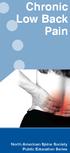 Chronic Low Back Pain North American Spine Society Public Education Series What is Chronic Pain? Low back pain is considered to be chronic if it has been present for longer than three months. Chronic low
Documentation Requirements ADHD
 Documentation Requirements ADHD Attention Deficit Hyperactivity Disorder (ADHD) is considered a neurobiological disability that interferes with a person s ability to sustain attention, focus on a task
CONCUSSION PROTOCOL PARENT/GUARDIAN INFORMATION PACKAGE
 CONCUSSION PROTOCOL PARENT/GUARDIAN INFORMATION PACKAGE November 2014 INTRODUCTION: PARENT/GUARDIAN CONCUSSION PACKAGE The parent/guardian concussion package has been developed to: Assist parent/guardians
TRAUMATIC BRAIN INJURY
 1 TRAUMATIC BRAIN INJURY WHAT IS IT? Traumatic Brain Injury (TBI) is caused by impact to the head in turn causes damage to the brain. TBI can happen at the time of the impact or later on. The injury may
The Role of Neuropsychological Testing in Guiding Decision- Making Related to Dementia
 The Role of Neuropsychological Testing in Guiding Decision- Making Related to Dementia By Scott Knight, Director, SLR Diagnostics & Assessments, a division of Sibley & Associates Inc., and Konstantine
Functions of the Brain
 Objectives 0 Participants will be able to identify 4 characteristics of a healthy brain. 0 Participants will be able to state the functions of the brain. 0 Participants will be able to identify 3 types
SOUTHWEST FOOTBALL LEAGUE CONCUSSION MANAGEMENT PROTOCOL
 SOUTHWEST FOOTBALL LEAGUE CONCUSSION MANAGEMENT PROTOCOL NOTE: Revisions to the guidelines recommended in this Concussion Management Protocol will be made on an annual basis based upon current legislation.
R ECOVERING F ROM M ILD B RAIN I NJURY/CONCUSSION A G UIDE FOR P ATIENTS
 R ECOVERING F ROM M ILD B RAIN I NJURY/CONCUSSION A G UIDE FOR P ATIENTS Mild brain injury (or concussion) is relatively common and typically occurs as a result of a blow to the head during sports, a motor
Depression & Multiple Sclerosis. Managing Specific Issues
 Depression & Multiple Sclerosis Managing Specific Issues Feeling blue The words depressed and depression are used so casually in everyday conversation that their meaning has become murky. True depression
TBI TRAUMATIC BRAIN INJURY WITHIN THE MILITARY/VETERAN POPULATION
 TBI TRAUMATIC BRAIN INJURY WITHIN THE MILITARY/VETERAN POPULATION What is TBI? An external force that disrupts the normal function of the brain. Not all blows or jolts to the head result in a TBI. The
Early Response Concussion Recovery
 Early Response Concussion Recovery KRISTA MAILEY, BSW RSW, CONCUSSION RECOVERY CONSULTANT CAREY MINTZ, PH.D., C. PSYCH., PRACTICE IN CLINICAL NEUROPSYCHOLOGY FOR REFERRAL: Contact Krista Mailey at (204)
V OCATIONAL E CONOMICS, I NC.
 V OCATIONAL E CONOMICS, I NC. This document was downloaded from Vocational Economics Inc. (www.vocecon.com). For more information on this document, visit: www.vocecon.com/articles/arttbi.htm Volume 2,
Neck Injuries and Disorders
 Neck Injuries and Disorders Introduction Any part of your neck can be affected by neck problems. These affect the muscles, bones, joints, tendons, ligaments or nerves in the neck. There are many common
Neuropsychological Assessment in Sports- Related Concussion: Part of a Complex Puzzle
 Neuropsychological Assessment in Sports- Related Concussion: Part of a Complex Puzzle Jillian Schuh, PhD 1, 2, John Oestreicher, PhD 1, & Linda Steffen, PsyD 1 1 Catalpa Health 2 Department of Neurology,
V OCATIONAL E CONOMICS, I NC.
 V OCATIONAL E CONOMICS, I NC. This document was downloaded from Vocational Economics Inc. (www.vocecon.com). For more information on this document, visit: www.vocecon.com/articles/arttbi.htm DEFINING VOCATIONAL
Traumatic brain injury (TBI), caused either by blunt force or acceleration/
 Traumatic Brain Injury (TBI) Carol A. Waldmann, MD Traumatic brain injury (TBI), caused either by blunt force or acceleration/ deceleration forces, is common in the general population. Homeless persons
By: Brett D. Baber, Esq. and Steven Blackwell, Esq. Lanham Blackwell & Baber Attorneys. 207.942.2898 www.lanhamblackwell.com
 By: Brett D. Baber, Esq. and Steven Blackwell, Esq. Lanham Blackwell & Baber Attorneys I m part of the professional and dedicated team of civil litigation attorneys and mediators at Lanham Blackwell &
Mild Traumatic Brain Injury
 Mild Traumatic Brain Injury A Mind Numbing Experience Carolyn A. Rocchio Mild Traumatic Brain Injury A Mind Numbing Experience Carolyn A. Rocchio BRAIN INJURY ASSOCIATION OF FLORIDA, INC. 201 East Sample
Depression & Multiple Sclerosis
 Depression & Multiple Sclerosis Managing specific issues Aaron, diagnosed in 1995. The words depressed and depression are used so casually in everyday conversation that their meaning has become murky.
Integrated Neuropsychological Assessment
 Integrated Neuropsychological Assessment Dr. Diana Velikonja C.Psych Neuropsychology, Hamilton Health Sciences, ABI Program Assistant Professor, Psychiatry and Behavioural Neurosciences Faculty of Health
Sport Concussion in New Zealand ACC National Guidelines
 Sport Concussion in New Zealand ACC National Guidelines This guideline document has been produced to inform National Sports Organisations (NSOs), and recreation, education and health sectors in their development
Delirium. The signs of delirium are managed by treating the underlying cause of the medical condition causing the delirium.
 Delirium Introduction Delirium is a complex symptom where a person becomes confused and shows significant changes in behavior and mental state. Signs of delirium include problems with attention and awareness,
The FacTs: * All concussions are serious. A Fact Sheet for School Nurses
 A Fact Sheet for School Nurses Assess the situation Be alert for signs and symptoms Contact a health care professional The FacTs: * All concussions are serious. * Most concussions occur without loss of
A GUIDE TO IN RUGBY UNION
 A GUIDE TO The aim of this brochure is to provide information on concussion to those involved in rugby union in Ireland. Concussion MUST be taken extremely seriously. Any player with a suspected concussion
Service Overview. and Pricing Guide
 Service Overview and Pricing Guide Millard Health s Service Overview and Pricing Guide Millard Health provides rehabilitation services for both work-related and non-work-related injuries. The rehabilitation
PE finding: Left side extremities mild weakness No traumatic wound No bloody otorrhea, nor rhinorrhea
 Case report A 82-year-old man was suffered from sudden onset spasm of extremities then he fell down to the ground with loss of consciousness. He recovered his consciousness 7-8 mins later but his conscious
Whiplash: a review of a commonly misunderstood injury
 1 Whiplash: a review of a commonly misunderstood injury The American Journal of Medicine; Volume 110; 651-656; June 1, 2001 Jason C. Eck, Scott D. Hodges, S. Craig Humphreys This review article has 64
Healing the Invisible Wound. Recovery and Rehabilitation from a Post Traumatic. Stress Injury. By Dr. Amy Menna
 Healing the Invisible Wound Recovery and Rehabilitation from a Post Traumatic Stress Injury By Dr. Amy Menna Post Traumatic Stress Disorder can affect anyone. It is a term used to describe a reaction to
Motor Vehicle Accident Intake Form
 2100 SE Lake Rd Ste 1 Milwaukie OR 97222 Motor Vehicle Accident Intake Form Today's Date: About You Name: Gender: Male Female Address: City: State: Zip: Home Number: Work Number: Other Number: Email Address:
Concussion Information for Parents/Guardians
 Concussion Information for Parents/Guardians What is a concussion and what causes a concussion? A concussion is a brain injury that causes changes in how the brain cells function, leading to symptoms that
Memory, Behaviour, Emotional and Personality Changes after a Brain Injury
 Memory, Behaviour, Emotional and Personality Changes after a Brain Injury The consequences of a brain injury on any individual, family or relationship are far reaching. A brain injury not only impacts
HEAD INJURIES V S U H E A L T H C E N T E R V A L D O S T A S T A T E U N I V E R S I T Y F A L L 2 0 1 2
 HEAD INJURIES V S U H E A L T H C E N T E R V A L D O S T A S T A T E U N I V E R S I T Y F A L L 2 0 1 2 LET S TALK ABOUT BRAIN INJURIES! Traumatic head injury affects more than 1.7 million people in
Symptoms and Signs of Irritation of the Brachial Plexus in Whiplash Injuries
 1 Symptoms and Signs of Irritation of the Brachial Plexus in Whiplash Injuries J Bone Joint Surg (Br) 2001 Mar;83(2):226-9 Ide M, Ide J, Yamaga M, Takagi K Department of Orthopaedic Surgery, Kumamoto University
Behavioral Health Psychological/Neuropsychological Testing Guidelines
 Behavioral Health Psychological/Neuropsychological Testing Guidelines Psychological testing (procedural code 96101) and Neuropsychological Testing (procedural code 96118) involve the culturally and linguistically
PI MEDPAY FORM. [J Do I have Medpay? [] How much Medpay do I have? [ ] Do I have primary or excess Medpay? [ ] Adjuster name and phone number
![PI MEDPAY FORM. [J Do I have Medpay? [] How much Medpay do I have? [ ] Do I have primary or excess Medpay? [ ] Adjuster name and phone number](/thumbs/24/3718419.jpg "PI MEDPAY FORM. [J Do I have Medpay? [] How much Medpay do I have? [ ] Do I have primary or excess Medpay? [ ] Adjuster name and phone number") PI MEDPAY FORM [J Do I have Medpay? [] How much Medpay do I have? [ ] Do I have primary or excess Medpay? [ ] Adjuster name and phone number [] Claim # PERSONAL INJURY QUES1"IONNAIRE Name: ----------------
PI MEDPAY FORM [J Do I have Medpay? [] How much Medpay do I have? [ ] Do I have primary or excess Medpay? [ ] Adjuster name and phone number [] Claim # PERSONAL INJURY QUES1"IONNAIRE Name: ----------------
ADULT NEUROPSYCHOLOGICAL HISTORY
 ADULT NEUROPSYCHOLOGICAL HISTORY Person completing this form: Patient Spouse Parent Other Patient's Name: Date: Date of Birth: Age: Sex: Race: Marital Status: Address: SS#: Phone #s: Home: Work: Cell:
See also www.thiswayup.org.au/clinic for an online treatment course.
 Depression What is depression? Depression is one of the common human emotional states. It is common to experience feelings of sadness and tiredness in response to life events, such as losses or disappointments.