
Building the Future: HR s Role in Organizational Design
|
|
|
- Anastasia Lyons
- 10 years ago
- Views:
Transcription
1 Strategic HR Management Instructor s Manual Building the Future: HR s Role in Organizational Design By Steve Weingarden, Ph.D.

2 Project Team Author: SHRM project contributor: External contributor: Copy editing: Design: Steve Weingarden, Ph.D. Bill Schaefer, SPHR, CEBS Sharon H. Leonard Katya Scanlan, copy editor Jihee Lombardi, senior design specialist 2011 Society for Human Resource Management. Steve Weingarden, Ph.D. Note to HR faculty and instructors: SHRM cases and modules are intended for use in HR classrooms at universities. Teaching notes are included with each. While our current intent is to make the materials available without charge, we reserve the right to impose charges should we deem it necessary to support the program. However, currently, these resources are available free of charge to all. Please duplicate only the number of copies needed, one for each student in the class. For more information, please contact: SHRM Academic Initiatives 1800 Duke Street, Alexandria, VA 22314, USA Phone: (800) Fax: (703) Web: IM

3 Case Overview This case study provides a history and overview of organizational design (OD). Students will use the information in the overview to complete an exercise as a hypothetical organizational design consultant working with a real company of their choice. Students will read about the definition and purpose of organizational design, methods of measurement, six models of organizational structure and two models on how to apply organizational structure principles. Teaching Note A student version of this case (without teaching notes) is available on the SHRM website. Students should read the overview before class. A structured exercise follows the overview. After students have read the overview, instructors can discuss the critical points from the overview, either before or after students present their results from the structured exercise. The estimated time to complete this activity will vary depending on the number of students, their levels of critical thinking and amount of class discussion. The estimated time needed to complete this overview and structured exercise is six hours (two hours in-class time and four hours outside of class). This case is intended for advanced undergraduate students. Students studying human resources (HR) will likely benefit most, but general business students should gain insight from the case, particularly regarding the role of HR in organizational design. Learning Objectives Undergraduate students will participate in a structured exercise about organizational design, learning overarching principles and critically applying those principles to a hypothetical consulting situation. At the end of the case, students will be able to: 1. Identify how organizations gain sustainable competitive advantage through human capital strategies such as organizational design. 2. Describe HR s role in developing human capital strategies and HR s effect on an organization s success. 3. Apply an organizational design consulting model to an organization Society for Human Resource Management. Steve Weingarden, Ph.D. 1

4 Organizational Design: An Overview Students should read this section before attempting the structured exercise. Teaching Note Instructors should have students complete the required reading outside of class. Instructors may subsequently offer additional commentary or highlight key points from the required reading in a following class session. Definition and Purpose of Organizational Design Organizations are composed of deliberately selected and deselected people who coordinate their efforts toward a specific goal (Etzioni, 1964). The ultimate purpose of an organization is to achieve a specific goal or mission. The people selected (whether self-selected or chosen) and deselected are significant in some maer that helps the organization achieve the desired goal. Organizational design centers on the organization s human resource needs to achieve the organization s specific goal. Organizational design answers the question, What is the best organizational structure? and has two objectives: 1. To facilitate the flow of information within the organization. 2. To integrate organizational behavior across different parts of the organization so the behavior is coordinated (Duncan, 1979; see also Stanford, 2007 for a similar definition). Organizational structure and its coection to strategy are core components of the organizational design process Society for Human Resource Management. Steve Weingarden, Ph.D.

5 Organizational design centers on the human resource requirements an organization needs to achieve its specific goal. Expertise in A Expertise in B Coordination of Behavior Information Flow Information Flow Coordination of Behavior Organizational Mission and Goals Coordination of Behavior Information Flow Information Flow Coordination of Behavior Expertise in C Expertise in D 2011 Society for Human Resource Management. Steve Weingarden, Ph.D. 3

6 The organizational design definition presented in this case is simplified; scholars tend to define organizational design more broadly. For scholars, organizational design often refers to all aspects of the relationship between the organizational work and the employee (Sandler, 1974). This relationship includes organizational strategy and structure as well as more granular issues such as work processes and leadership (e.g., see Burton, DeSanctis and Obel, 2006; Nadler, Tushman and Nadler, 1997). In fact, it is the organizational design process specifically the structuring process that is the pivotal coector between the business of the organization (e.g., top-level leadership and organizational strategy and goals) and the other forms of HR support (e.g., workflow process design, selection, development and compensation). An example of this coection is provided through an integrated management system known as requisite organization. One implementation map of requisite organization involves an eight-step process: Step Process 1 Build the senior leadership team. 2 Design the organizational strategy. 3 Determine the structure needed to implement the strategy. 4 Design the working relationships between functions. 5 Ensure people are in the right roles for now and in the future. 6 Manage performance; ensure that managers are skilled at managerial leadership. 7 Strengthen the role of managers who are responsible for managing other managers. 8 Build the compensation system. Adapted from Dutrisac, Koplowitz and Shepard (2007). This case focuses on how to determine the structure needed to implement strategy and set the foundation for other HR processes. The HR practitioner s main role in the organizational design process is that of partner. There are three core aspects of this partnering relationship: 1. To provide leaders with structural diagnosis through identification of the root causes of organizational performance issues. 2. To help leaders evaluate a range of design options by offering clear design criteria. 3. To ensure that leaders align their organizational design decisions to short-term and long-term strategic goals by identifying critical organizational activities and current areas of strength and weakness (Corporate Executive Board, 2009) Society for Human Resource Management. Steve Weingarden, Ph.D.

7 With these aspects of the relationship in mind, the HR practitioner best contributes to the partnership by: Providing tools that measure the current internal and external environment and current organizational structure. Offering knowledge of various organizational structures, including the pros and cons associated with each structure. Reinforcing that leaders consider strategy as a cornerstone in their design and structure decisions. These activities represent the strategic role of HR, encouraging HR professionals to engage with others in the organization to create the right culture and build the right organization (SHRM, 2007). Most of the HR practitioner s organizational design work occurs when an organization s design needs to be revisited or redesigned because changes in the competitive environment require changes for the organization and its goals; a redesign may be needed to maintain or achieve alignment (Nadler, Tushman, & Nadler, 1997). In fact, it is critical to identify the current organizational strategy and the internal and external environment of the organization to develop the structure. Structures must fit the current and future environment of an organization. Reorganization is needed when the current structure does not align with the situation (Bolman and Deal, 2003). To understand the current and future organizational strategy, it is essential that the OD consultant, whether internal or external, has access and input into the knowledge gained through senior leadership decisions regarding organizational direction. The OD consultant must have the available scope to identify the number of items that go into organizational design decisions (Robinson & Robinson, 2005). Teaching Note More information on fit and strategy is presented in the Models and Tools section. The first step to determine the most appropriate organizational design is to identify aspects of the organizational environment. A large component of the internal environment is determining where an organization is in the organizational life cycle. Organizational life cycle models depict stages where an organization is born, develops, grows, matures and dies. One of the more delineated models of the organizational life cycle is summarized on the following page Society for Human Resource Management. Steve Weingarden, Ph.D. 5

8 Passage Courtship Organization Description There is no organization. Founders are in love with an idea. Very busy doing. Infant Risk is introduced. Focus is on short-term results. Idea generation is no longer vital. Moves fast and often intuitively. Go-go Danger of having too many opportunities viewed as priorities. Short-term focused but with vision. Founders may be using strategies that are no longer efficient. Plaing and coordinating for the long term. Adolescent Less focus on short-term results. Employees desire organizational stability. Stable and predictable results. Prime Plans and procedures are in place for achieving efficiency. Awareness of external environment. May become more inward-focused toward the end of this stage. Results-oriented. Mature Institutionalized systems. More interpersonal relationships. Sense of urgency is lost. Admiration of the past and desire to maintain status quo. Aristocratic Early Bureaucracy Bureaucracy Death More interested in how something is done (ritual) than what is done or why it is done. Less awareness of external competition. May see increased prices for product or service. Results stray from earlier higher levels. In-fighting and expulsion of some leaders. Very little is accomplished. Peaceful and friendly. Agreement without action. No results. Organization is dissolved. Adapted from Adizes (1979) Society for Human Resource Management. Steve Weingarden, Ph.D.

9 Teaching Note Ask students to identify some organizations at each stage of the organizational life cycle. If there is time available for discussion, instructors may want to raise the question of whether it matters when the external perception of where an organization is in the organizational life cycle is different from the internal perception. For example, an organization with an external reputation for being slow, accomplishing very little and agreeing to change but taking no action may have actually made internal strides (internal reputation) toward moving faster and intuitively with a focus on short-term results while keeping the vision in mind. So in what stage is the organization bureaucracy or go-go? There are no guarantees that an organization will make it from one stage to the next. In fact, one of the key opportunities for an OD consultant is to recognize indicators that suggest an organization is in a risky or an unhealthy stage and aid in making adjustments. One example might be the recognition that an organization has extreme levels of formalization (e.g., an inappropriate desire for everything to be written) as part of a greater overall syndrome. Reverence for documentation might suggest that an organization is in the bureaucracy phase, which would place it at risk of death. An OD consultant could help redirect the organization to a healthier stage. In addition to the organization s life cycle, other aspects of the organizational environment should be considered for organizational design or redesign (Duncan, 1979). Internal Environment Organizational goals Talent management strategy Cross-functional cooperation and conflict External Environment Customer and client profiles Suppliers profiles Competitors profiles Sociopolitical environment Industry technology environment Adapted from Duncan (1979). The above list is intended to be overly inclusive (Duncan, 1979). Each organization will have varying environmental factors that influence decision-making. Ideally, the OD consultant will ask questions (e.g., What are your strategies?, Who are your key clients?, How is your competitive environment changing? ) about the most relevant environmental demands or will identify those key demands through direct client focus Society for Human Resource Management. Steve Weingarden, Ph.D. 7

10 Measuring the Current Organizational Structure An analysis of an organization s internal and external environment is necessary when deciding what structure will best aid the organization. Understanding of the internal environment is achieved through the measurement of the following structural dimensions: Structural Dimension Specialization Standardization Formalization Centralization Configuration Description Degree to which an organization s activities are divided into specialized roles. Degree to which an organization has standard rules or procedures. Degree to which instructions and procedures are written down. Degree to which the authority to make certain decisions is located at the top of the management hierarchy. The shape of the role structure of the organization. This includes: Chain of command: the number of vertical levels or layers on the organizational chart. Span of control: the number of direct reports per manager; number of horizontal levels or layers on the organizational chart. Adapted from Pugh (1973). These dimensions are usually measured through a survey and subsequent analysis. It should be noted that in measuring the internal organization, the question then arises, What level for each dimension is appropriate? It is important to understand that the structural dimensions are more for comparison purposes rather than overall intensity measurement. These dimensions are especially useful in defining a profile for where an organization may be in terms of: Self-perception of culture. External perception by clients and customers. External comparisons to competitors. External perceptions by potential partners Society for Human Resource Management. Steve Weingarden, Ph.D.

11 Understanding of the external environment is achieved through the measurement of contextual factors: Contextual Factor Origin and history Ownership and control Size Charter Technology Location Interdependence Description Whether an organization was privately founded; the kinds of changes in ownership, location and other related changes the organization has experienced. Type of ownership (e.g., private or public). Is control divided among a few individuals or spread among many individuals? Number of employees, net assets and market position. Nature and range of goods and services. Degree of integration achieved in an organization s work processes. Number of geographically dispersed operating sites. Extent to which an organization depends on customers, suppliers, trade unions, any owning groups or other related entities. Adapted from Pugh (1973). Contextual dimensions help formulate a better understanding of the external environment and the relationship between the internal and external environment. Once the structural dimensions and contextual factors have been examined and the coection between an organization s structure and strategy is understood, the OD consultant can consider alternatives for solution design. The art of organizational design is assessing the essential aspects of the environment and their meaning for the organization s future. Translating those aspects into the right structure is critical to building results like increases in efficiency and cost avoidance. There is no one best structure, and the consultant s decisions depend on the supporting evidence for each organization Society for Human Resource Management. Steve Weingarden, Ph.D. 9

12 Models of Organizational Structure As stated above, there is no one best organizational structure; however, several forms have emerged over time. Most current thought leaders address the vertical and horizontal structures (at a minimum). Much of the following summaries of vertical, vertical and horizontal, and open boundary structures are adapted from Anand and Daft (2007). Teaching Note Organizational structures are often depicted using organizational chart boxes or shapes like circles or triangles. In the diagrams below, the organizational structures are depicted as people. This is deliberate and is intended to reinforce that organizational design is only about structure to the degree that structure describes how employees help the organization achieve its mission and goals through work flow and coordination of behavior. Instructors may want to remind students that organization design affects employees and is a strategic human resource decision. Vertical Structures (Functional and Divisional) Two main types of vertical structure exist, functional and divisional. The functional structure divides work and employees of the organization by specialization of activity. For example, all HR professionals are part of the same function and report to a senior leader of the HR function. The same reporting process would be true for other functions, such as finance or operations. A functional structure provides the advantage of having technical expertise located in one place. The structure tends to be resistant to change, though, and cross-functional activity is more difficult to promote. Functional Senior Leader Work Specialization A Employees Work Specialization A Sub-function 1 Employees Work Specialization A Sub-function 2 The work of one organization is divided by specialization of activity Society for Human Resource Management. Steve Weingarden, Ph.D.

13 In a divisional structure, work and employees are most often divided by output, although a divisional structure could be divided by another variable such as geography. An example of a divisional structure would be a food manufacturer that divides work and employees by the type of food product. The candy division would have an entire staff (e.g., HR, finance and operations staff), while the frozen foods division would have an entirely different staff (e.g., HR, finance and operations staff). The divisional structure provides more focus and flexibility on each division s core competency and allows for more coordination than the functional structure. In a divisional structure, however, there is less interaction between employees with similar technical career paths; there are no centers of excellence. A divisional structure can also result in a loss of efficiency and duplication of effort because each division needs to acquire the same resources. Divisional Senior Leader Product A&B Employees Product A All Functions Employees Product B All Functions The work of one organization is divided by output Society for Human Resource Management. Steve Weingarden, Ph.D. 11

14 Vertical and Horizontal Structure (Matrix) As a solution for some of the issues found in the functional structure, matrix structures are sometimes used. A matrix structure combines the functional structure with the divisional structure and creates a dual-command situation. An example of a matrix structure would be a clothing manufacturer that divides work and employees by function, but also arranges employees to have accountability to a geographical manager. The major advantage of the matrix organization is that it creates a functional and divisional partnership, and the intent of the structure is to focus on the work more than the people. The common disadvantage for matrix structures is that it is hard to manage. The matrix structure also requires greater interpersonal competency by organizational staff. These disadvantages can be exacerbated in situations where the matrix goes beyond two-dimensional (e.g., a function s employees report to two different managers) to multi-dimensional (e.g., a function s employees report to more than two different managers). Matrix Senior Leader Work Specialization A Senior Leader Product A Employees Work Specialization A & Product A The work of one organization combines a functional and divisional structure Society for Human Resource Management. Steve Weingarden, Ph.D.

15 Teaching Note Instructors may want to highlight how changes in the external environment such as new industry competitors reaching the infant or go-go stages can necessitate a new organizational structure (e.g., the matrix). For example, the U.S. aerospace industry is sometimes attributed as having helped popularize the matrix structure. Wanting to close the missile gap, the aerospace industry incorporated a two-manager system where one manager was a technical manager and the other manager was a product manager (Gottlieb, 2007). The intent was to speed work flow and become more competitive. Looking outward to best practices in structure and then imitating those organizations with a particularly effective structure would likely not have allowed the aerospace industry to make the needed progress that occurred in the matrix structure. For a detailed review of matrix structure, see Gottlieb (2007) Society for Human Resource Management. Steve Weingarden, Ph.D. 13

16 Open Boundary Structures (Hollow, Modular and Virtual) More recent trends in structural forms remove the traditional boundaries of an organization. Structures using this boundary-less concept include the hollow, modular and virtual organizations (Anand & Daft, 2007). Please note that in the following charts, distinctions between organizations and size of work are depicted through the use of encompassing boxes and alterations to the size of individual graphics. Hollow structures divide work and employees by core and non-core competencies. Hollow structures are an outsourcing model. The organization maintains its core processes internally but outsources non-core processes. Key to this model is that work processes are the point of decision. For this model to succeed, incentives must be aligned between the organization and the outsourcing organizations. Hollow structures are most effective when the industry is price competitive and there are enough choices for outsourcing. An example of a hollow structure is a sports organization that has its HR functions (e.g., payroll and benefits) handled by outside organizations. Consideration of organizational environment remains crucial in open boundary models. For example, some industries caot outsource non-core processes due to government regulation (for example, health insurance organizations may face considerable problems in outsourcing Medicare processes). In some cases, the potential for outsourcing may have to be negotiated with a union. Hollow Senior Leader Organization A Employees Organization A Core Competency Process Employees Outsourced Organization Non-Core Competency Process The work processes of one organization are split between internal employees and outsourced organizations Society for Human Resource Management. Steve Weingarden, Ph.D.

17 Modular structures differ from hollow organizations in that components of a product are outsourced. Modular structures may keep a core part of the product in-house and outsource non-core portions of the product. An example of a modular structure is a headwear manufacturer that outsources hat knitting, purchases the pre-shaped hat and then applies specialized embroidery in-house before placing the headwear on the market. Modular structures can help with efficiency and speed and may lead to increases in quality. For the modular structure to be an option, the product must be able to be broken into chunks. In a modular structure, risk occurs if the parent organization removes itself from the quality check on the end product or if the outsourced organization uses a second outsourced organization. In those cases, the reputation of the parent organization may be compromised if the product quality is jeopardized and the name of the parent organization appears on the product. Modular Senior Leader Organization A Employees Organization A Core Piece of Product 1 Employees Outsourced Organization Non-Core Piece of Product 1 The work product of one organization is split between internal employees and outsourced organizations Society for Human Resource Management. Steve Weingarden, Ph.D. 15

18 Virtual structures are collaboration organizations. Partnerships are formed with external organizations often competitors that complement one another s competence. These structures are created to respond to an exceptional and often temporary marketing opportunity. An example of a virtual structure is an environmental conservancy where multiple organizations provide employees to a virtual organization to save, for example, a historical site, possibly with the intent of economic gain for the partner organizations. Virtual structures require increased communication. Two potential drawbacks to virtual structures are a lack of trust between organizations and a lack of organizational identification among employees. In the conservancy example, the lack of trust may lead to competition instead of cooperation, and employees in the virtual structure may lack a common goal, possibly jeopardizing the opportunity for success. Virtual Employees Organization A Core Competency from Organization A Employees Organization B Core Competency from Organization B The work and employees of two organizations are combined to form a partnership. Open boundary structures may add pressure to OD consultant s decisions. Arguably, there is more risk associated with open boundary designs. Employees in the current structure could be adversely affected in the name of efficiency. Because open boundary designs represent external partnerships, if restructuring does not lead to greater organizational effectiveness quickly, organizations may be quick to abandon change. This would be seen as a failure for the OD consultant. Other structures exist beyond those reviewed here. As noted with the matrix structure, creation of a new structure may be appropriate. It is the OD consultant s responsibility to identify and propose the best structure to fit a particular situation Society for Human Resource Management. Steve Weingarden, Ph.D.

19 Models to Apply Structure Principles to Organizational Design An OD consultant needs models and tools to guide an initiative with a client. In organizational design consulting, the types of information a consultant wants to obtain and present relate to the previous content in this module. That information helps determine the fit of the current structure, possible redesigns and the link to organizational strategy. Many different models and tools exist or could be created to help with organizational design. Two of the more popular diagnostic models are briefly covered here. Goold and Campbell s Toolkit Teaching Note Instructors are encouraged to further investigate the models presented below by using the cited resources. In addition, websites of organizations such as SHRM could be searched for related information (e.g., articles related to organizational design). Goold and Campbell (2002) reviewed how organizational executives make design decisions and created nine tests of organizational design. The tests are questions for the consultant to ask the organizational executive and for the organizational executive to then decide whether a possible design meets the standards. Four of the tests are related to fit, and the remaining tests are related to good design. The tests are summarized below. Test Market advantage Parenting advantage People Feasibility Specialist culture Difficult links Redundant hierarchy Accountability Flexibility Key Question Does your design direct sufficient management attention to your sources of competitive advantage in each market? Does your design help the corporate parent add value to the organization? Does your design reflect the strengths, weaknesses and motivations of your people? Have you taken account of all the constraints that may impede the implementation of your design? Does your design protect units that need distinct cultures? Does your design provide coordination solutions for the unit-to-unit links that are likely to be problematic? Does your design have too many parent levels and units? Does your design support effective controls? Does your design facilitate the development of new strategies and provide the flexibility required to adapt to change? Adapted from Goold & Campbell (2002) Society for Human Resource Management. Steve Weingarden, Ph.D. 17

20 The Goold and Campbell tests of organizational design help balance the right amount of hierarchy, control and process into organizational structure. Galbraith s Star Model Galbraith s Star Model of organizational design links strategy to structure. Five organizational design categories included in the Star Model are strategy, structure, processes, rewards and people. Conceptually, the five categories are interrelated; changes in one category affect another. Strategy People Structure Star Model Rewards Processes Adapted from Galbraith, Aspects of the Star Model may be more or less important depending on the organization. What is crucial is to ensure that the five categories align with each other. From a practitioner standpoint, the one common theme is that it is important to stay focused on strategy each step of the way (e.g., see Williams & Rains, 2007). Key Takeaways From the Overview 1. Organizational design should be linked to strategy. 2. HR s role in organizational design is strategic and sets the foundation for additional HR work and processes. 3. Consider the organizational environment. 4. Open your mind to internal and external design models. 5. Use models and tools to lead the organizational design process Society for Human Resource Management. Steve Weingarden, Ph.D.

21 Structured Exercise Teaching Note It is recommended that the following structured exercise or an alternative exercise created by the instructor be included to apply the reading. The decisions of what to include and what not to include are at the forefront when applying organizational design to a specific organization. Instructors may allow students to select a department within an organization rather than selecting an entire organization. This decision would be most appropriate if students work in organizations and have access to departmental strategy. For most class sizes, group work should be assigned. Smaller groups of two to four students are best-suited for this particular exercise because smaller groups can divide the work without scheduling extra group time outside of class. Additionally, smaller groups are more likely to agree on what to include in the presentation. It is recommended that instructors provide minutes of class time for groups to plan their approach to the exercise and to find answers on initial questions that arise. Groups should complete the remainder of the assignment outside of class. Instructors may want to demonstrate in class how to find an organization to select as a consulting client. Alternatively, instructors can assign organizations to the students. Instructors may also want to create their own templates for presentation, especially if there are other learning objectives that the instructor wants to achieve (e.g., learning to deliver presentations). The templates highlighted in boldface in the Your Assignment section are designed to help students complete the exercise. They also provide instructors with a potential writing sample from students. Some instructors may be concerned about grading students on a 2-3 minute presentation. While the exercise is designed to reflect an actual consulting standard, instructors may want to have students submit completed templates and to use them as part of the grade to supplement the presentation. Instructors should expect groups to present their recommendations in a mock internal review meeting, as described in the following sections of the exercise. Instructors should hold groups accountable for keeping to time limits and for prioritizing the essential information for presentation purposes. continued on next page >> 2011 Society for Human Resource Management. Steve Weingarden, Ph.D. 19
22 << continued from previous page When recommending models for the client organization, it is fine for students to recommend structures outside of the six models presented in the overview. For example, team-based structures may be appropriate for some organizations. Students may find that the most appropriate structural recommendation for an organization is a structure that has not been used before. Summary of student requirements: Read the module. Complete the templates. Make a 2-3 minute presentation to class during an internal review meeting. Summary of student work to be graded: 2-3 minute presentation to class during the internal review meeting (required). Completed templates (optional). If the instructor elects to grade the completed templates, this should be communicated to students, especially if there are any portions of the templates that will not be required Society for Human Resource Management. Steve Weingarden, Ph.D.
23 Your Role and the Organization You are a consultant at a management consulting organization with expertise in human resources. Your organization specializes in organizational design, helping clients analyze their existing organizational design, providing alternative models, and discussing the costs and benefits of each model. The scope of your organization s work sometimes encompasses design or redesign of an entire organization, but mostly the focus is at the departmental level. The general operating model and business process for your organization is shown below. Your Organization s Operating Model Your Consulting Firm s Model of Work Organizational Design Core Work Scope Design Detailed Design Implement Evaluate What we do We help our clients scope, design and develop organizational design solutions Society for Human Resource Management. Steve Weingarden, Ph.D. 21
24 Your organization tends to manage projects using a seven-step process. A pivotal step to your organization s success is the internal review meeting where you share your recommendations with other members of your organization. Phase Involved Parties Key Activities 1. Initial client discussion 2. Determination of project 3. Information gathering 4. Solutions design 5. Internal review meeting 6. Client presentation Client Assigned consultants from your organization Client Assigned consultants from your organization Client subject matter experts Assigned consultants from your organization Assigned consultants from your organization All members of your organization Client Assigned consultants from your organization Conversation about organizational and departmental needs Discussion of possible barriers to organizational effectiveness Brief recommendation to client about goals of the project and the work to be completed Agreement by client that there is a project A review of the current state of the organization and/or department Appropriate interviews Identification of alternative models Analysis of advantages versus disadvantages Presentation of client needs and recommendations Shared learning and feedback from colleagues at your organization Recommendations presentation and document and discussion with client Agreement on solution 7. Refinement Assigned consultants from your organization Changes to project recommendation Preparation for implementation Society for Human Resource Management. Steve Weingarden, Ph.D.
25 Current Projects Your organization currently has several client projects underway. You have been assigned to one of those projects. As part of your work, you are expected to: 1. By using organization design models, analyze the situation associated with the consulting engagement to which you are assigned. 2. Form recommendations for the design/redesign of the structure associated with the particular consulting engagement. 3. Participate in the internal review meeting discussion about the recommendations, including the similarities and differences between the consulting engagements undertaken by each of the student groups or individual students. For the information gathering step, prepare to brief your classmates on your consulting engagement in two to three minutes. Explain what the client organization does, what the client organization is interested in accomplishing and how your organization can help the client organization. Specifically, make recommendations for your client and provide support for why those recommendations are appropriate. Following your presentation, open the floor for discussion with your classmates and instructor. Your classmates and instructor will offer supportive feedback and constructive challenges to your recommendations. The discussion should last five to eight minutes Society for Human Resource Management. Steve Weingarden, Ph.D. 23
26 Your Assignment 1. Read the Organizational Design: An Overview background information. 2. Select an organization as the consulting client. This can be an organization at which you work or an organization that you research. Use the organization s website, government websites and/or commercial websites such as Hoovers ( to learn more about the organization. After collecting as much information as you can through the Internet, consider using library database search engines to supplement the information. 3. Collect as much information as you can to answer questions related to the organizational design. Some of the information may include evidence of organizational strategy, stage in the organizational life cycle, internal environment, external environment, structural dimensions and contextual dimensions. Use the Organizational Design Consulting Survey to capture information related to your client. 4. Once you have collected sufficient information about the organization, brainstorm design models that might fit with the organization s strategy. 5. Form your recommendations about organizational design. Note the reasons and risks associated with your recommendations. Use the Organizational Design Recommendation Form to capture the recommendations for your client. 6. Prepare your presentation for the internal review meeting. This should consist of speaking notes (either in a text document or in graphical presentation form) that summarize information related to the selected organization, and recommendations and supporting evidence. You may use the Internal Review Meeting Preparation Form to organize your speaking notes, or you can create your own template. 7. Participate in the internal review meeting. Be sure to review the Ground Rules for the Internal Review Meeting Society for Human Resource Management. Steve Weingarden, Ph.D.
27 Organizational Design Consulting Survey Use this form when collecting information about your client organization. Use those questions that seem most relevant. You will probably be unable to answer some of the questions. Organizational Purpose What is the mission of this organization? What are the main goals? What organizational cultural beliefs support the mission and goals of the organization? How does the organization measure its success? Organizational Passage Describe the historical development of this organization. How does this organization respond to risk? 2011 Society for Human Resource Management. Steve Weingarden, Ph.D. 25
28 Describe the balance between short-term and long-term focus for this organization. Describe how this organization approaches its external environment. How aware is this organization of its external environment? How much emphasis does this organization put on results, both short term and long term? Internal Environment How well does this organization coordinate across functions? How is information shared across functions? What are the core processes and products provided by this organization? What unique processes and products does the organization produce well? Are there processes and products that prevent this organization from optimal performance? If so, how? Society for Human Resource Management. Steve Weingarden, Ph.D.
29 External Environment Describe the clients of this organization. Are there potential future clients that are desirable for this organization? What suppliers does this organization depend on to meet its mission and goals? Describe the competitors of this organization. What are some industry trends? Is there any regulation anticipated that will affect this organization and its industry? Please explain. Is there any new technology anticipated that will affect this organization and its industry? Please explain Society for Human Resource Management. Steve Weingarden, Ph.D. 27
30 Structural Dimensions What activities at this organization are performed by specialists? How specific are procedures at this organization? Does this organization use detailed work processes? How important are items such as employee handbooks, organizational charts and job descriptions to this organization? What levels of leadership have decision-making authority at this organization? Is this organization focused on employee empowerment? n n What is the span of control at the highest level of the organization (i.e., CEO level)? What is the span of control for first-line supervisors at this organization? Society for Human Resource Management. Steve Weingarden, Ph.D.
31 Contextual Factors Describe any major changes that have occurred in the history of this organization. Explain the ownership structure of this organization. How many employees work at this organization? What financial information is available for this organization? How does this organization rank in comparison to its competitors? What are the goods and services this organization provides that support its mission? n n How specialized is the equipment used by this organization? Can work only be performed sequentially? Or is simultaneous work permissible for this organization? 2011 Society for Human Resource Management. Steve Weingarden, Ph.D. 29
32 How is this organization structured geographically? How dependent is this organization on its largest suppliers? How dependent is this organization on its largest customers? Society for Human Resource Management. Steve Weingarden, Ph.D.
33 Organizational Design Recommendation Form Use this form to record your recommendations for organizational design for your client organization. Also, feel free to use the organizational design models presented in the module to help define your ideas for this form. Strategic mission and goals of client organization Strategic gap related to client s current organization design Strategic goals of recommended organization redesign Recommended model for client organization Why is the recommended model most appropriate? Why are other models not appropriate? What are the risks associated with your recommended model? 2011 Society for Human Resource Management. Steve Weingarden, Ph.D. 31
34 Internal Review Meeting Preparation Form Key descriptive points about your client organization Key points about your client organization s strategy Other key points about your client organization Your recommendation and how the recommendation links to strategy Key points supporting your recommendation Respect the time limit for presenting your recommendations. Plan to present for 2-3 minutes and use an additional 5-8 minutes to address questions from other consultants Society for Human Resource Management. Steve Weingarden, Ph.D.
35 Ground Rules for the Internal Review Meeting 1. The internal review meeting is the opportunity to present your organizational design recommendations to colleagues before presenting them to your client. 2. Prepare the presentation for the internal review meeting in advance and rehearse it with the consideration that your colleagues do not know about your client organization, its strategy or environment. Provide enough description so your colleagues can offer effective feedback. 3. Respect the time limit for the presentation. Focus on key points and keep statements direct. Try to limit sentences to five to eight words. Decide what the key messages are and reiterate those messages. Be sure your presentation pieces align. For example, your design recommendation should be consistent with the strategy and environmental issues you present. 4. Have additional information available and be knowledgeable about your client organization. This will facilitate discussion and your ability to answer questions posed by your colleagues. 5. When serving as a colleague for recommendations presented by others, approach the situation as if you were a senior leader at the client organization. 6. Provide other consultants (classmates) with feedback that supports and challenges their recommendations. 7. Remember, the goal of the internal review meeting is to develop the best solutions for your client organization. Teaching Note It may be helpful for instructors to role model the expected behavior either by presenting a sample organization and/or by providing the first feedback to the first group of presenters Society for Human Resource Management. Steve Weingarden, Ph.D. 33
36 References Adizes, I. (1979). Organizational passages: Diagnosing and treating lifecycle problems of organizations. Organizational Dynamics, 8(3), Anand, N., & Daft, R. L. (2007). What is the right organization design? Organizational Dynamics, 36(4), Bolman, L. G., & Deal, T. E. (2003). Reframing organizations: Artistry, choice and leadership (3rd ed.). San Francisco, CA: Jossey-Bass. Burton, R. M., DeSanctis, G., & Obel, B. (2006). Organization design: A step-bystep approach. New York: Cambridge University Press. Corporate Executive Board. (2009). HR s role in organizational restructuring: Driving effective enterprise change. Arlington, VA: Corporate Executive Board. Retrieved December 18, 2009, from /Default.aspx. Duncan, R. (1979). What is the right organization structure? Decision tree analysis provides the answer. Organizational Dynamics, 7(3), Dutrisac, M., Koplowitz, H., & Shepard, K. (2007). An executive s guide to RObased organizational design. In J. L. Gray, J. G. Hunt, & S. McArthur (Eds.), Organization design, levels of work & human capability (27-52). Ontario, Canada: Global Organization Design Society. Etzioni, A. (1964). Modern organizations. Englewood Cliffs, NJ: Prentice-Hall, Inc. Galbraith, J. (2005). Designing organizations: An executive briefing on strategy, structure, and process. San Francisco: CA: Jossey-Bass. Goold, M., & Campbell, A. (2002). Do you have a well-designed organization? Harvard Business Review, 80(3), Gottlieb, M. R. (2007). Matrix organization reloaded: Adventures in team and project management. Westport, CT: Praeger Publishers. Greiner, L. E. (1972). Evolution and revolution as organizations grow. Harvard Business Review, 50(4), Greiner, L. E. (1998). Evolution and revolution as organizations grow. Harvard Business Review, 76(3), Jacques, E. (1999). Requisite organization: A total system for effective managerial organization and managerial leadership for the 21st century (2 nd revised ed.). Gloucester, MA: Cason Hall Society for Human Resource Management. Steve Weingarden, Ph.D.
37 Nadler, D. A., Tushman, M. L., & Nadler, M. B. (1997). Competing by design: The power of organizational architecture. New York: Oxford University Press. Pugh, D. S. (1973). The measurement of organization structures: Does context determine form? Organizational Dynamics, 1(1), Robinson, D. G., & Robinson, J. C. (2005). Strategic business partner: Aligning people strategies with business goals. San Francisco, CA: Berrett Koehler. Sandler, B. E. (1974). Aotated bibliography on approaches to organizational design. Professional Psychology, 5(3), Society for Human Resource Management. (2007). The SHRM learning system: Strategic management. Alexandria, VA: Society for Human Resource Management. Stanford, N. (2007). Guide to organization design: Creating high-performing and adaptable enterprises. London, England: Profile Books. Williams, T. C., & Rains, J. (2007). Linking strategy to structure: The power of systematic organization design. Organization Development Journal, 25(2), Society for Human Resource Management. Steve Weingarden, Ph.D. 35
38 SHRM members can download this case study and many others free of charge at If you are not a SHRM member and would like to become one, please visit
39 1800 Duke Street Alexandria, VA
New Kid on the Block: Diagnosing Organizational Development Issues Using Data. Training and Development. instructor s Manual
 Training and Development instructor s Manual New Kid on the Block: Diagnosing Organizational Development Issues Using Data By Steve Weingarden, Ph.D. Project Team Author: SHRM project contributor: External
Organizational Design Basics
 15.320 Strategic Organizational Design Organizational Design Basics Elements of organizational patterns What Who Why How Elements of organizational patterns (cont.) Galbraith 15.311 What is being done?
Organizational Restructuring Toolkit
 Organizational Restructuring Toolkit Driving Effective Enterprise Change CEB Applications Leadership Council CEB Infrastructure Leadership Council A Framework for Member Conversations The mission of The
Fundamentals of Organization Structure. Organizations and ICT 2014/2015 Fabiano Dalpiaz
 Fundamentals of Organization Structure Organizations and ICT 2014/2015 Fabiano Dalpiaz 1 Acknowledgements Most of these slides are taken from Daft s book Organization Theory and Design, chapter 3 Not part
Chapter-3 Organization Structure &
 MGMT 4135 Project Management Chapter-3 Organization Structure & Culture 1 Three different project management structures to choose from: 1. Functional organization 2. Projectized or dedicated teams 3. Matrix
Designing an Effective Organization Structure. January 2009
 Designing an Effective Organization Structure January 2009 Effective organization design considers five, interrelated components Clear vision and priorities Cohesive leadership team 1. Leadership 2. Decision
Quick Guide: Meeting ISO 55001 Requirements for Asset Management
 Supplement to the IIMM 2011 Quick Guide: Meeting ISO 55001 Requirements for Asset Management Using the International Infrastructure Management Manual (IIMM) ISO 55001: What is required IIMM: How to get
SAMPLE JOB DESCRIPTIONS
 SAMPLE JOB DESCRIPTIONS In this section we have provided a number of sample job descriptions. We hope that they will provide you with guidance as you develop job descriptions(s). Level Title Page Consultant
THE STAR MODEL JAY R. GALBRAITH
 THE STAR MODEL JAY R. GALBRAITH The Star Model framework for organization design is the foundation on which a company bases its design choices. The framework consists of a series of design policies that
CHANGE MANAGEMENT: HOW TO ACHIEVE A CULTURE OF SAFETY
 CHANGE MANAGEMENT: HOW TO ACHIEVE A CULTURE OF SAFETY SUBSECTIONS Eight Steps of Organizational Team Member Empowerment Creating a New Culture Planning for Teamwork Actions MODULE TIME: 2 hours 15 minutes
CRITICAL SUCCESS FACTORS FOR SHARED SERVICES: A RESEARCH AGENDA
 CRITICAL SUCCESS FACTORS FOR SHARED SERVICES: A RESEARCH AGENDA Shouhong Wang Charlton College of Business, University of Massachusetts Dartmouth Dartmouth, MA 02747-2300 USA [email protected] Hai Wang
A Sample Organization Chart
 Chapter Three Fundamentals of Organization A Sample Organization Chart CEO Fianance Manufacturing Director Human Resources Chief Accountant Budget Analyst Plant Superintendent Maintenance Superintendent
Adding Value to Public Organizations: Labor Relations in a Changing Environment
 Adding Value to Public Organizations: Labor Relations in a Changing Environment Photograph by Michael Rock, Alameda County Submitted by Aracelia G. Esparza Labor Relations Analyst Alameda County Human
All available Global Online MBA routes have a set of core modules required to be completed in order to achieve an MBA. Those modules are:
 All available Global Online MBA routes have a set of core modules required to be completed in order to achieve an MBA. Those modules are: Management and Organizational Change (P.4) Leading Strategic Decision
The Association of Change Management Professionals
 The Association of Change Management Professionals Statement of Change Management Scope, Knowledge Areas, and Process Groups March 31, 2012 Introduction The Association of Change Management Professionals
Organization architecture and profitability. Organizational architecture. Organizational architecture. Organizational architecture
 13-1 Organization architecture and profitability Organizational architecture 13-2 Totality of a firm s organization, including structure, control systems, incentives, processes, culture and people. Superior
THE STAR MODEL JAY R. GALBRAITH
 THE STAR MODEL JAY R. GALBRAITH The Star Model framework for organization design is the foundation on which a company bases its design choices. The framework consists of a series of design policies that
International Journal of Scientific & Engineering Research, Volume 5, Issue 1, January-2014 1161 ISSN 2229-5518
 International Journal of Scientific & Engineering Research, Volume 5, Issue 1, January-2014 1161 Performance appraisal System of cooperative banks in pune region: Its implication to employee s performance.
Leadership Framework for Strategic Management of Recognition and Reward Programs. SodexoMotivation.com
 Leadership Framework for Strategic Management of Recognition and Reward Programs A Leadership Framework for Strategic Management of Recognition and Reward Programs Rachel S. Permuth, PhD, MSPH - Sodexo
All available Global Online MBA routes have a set of core modules required to be completed in order to achieve an MBA.
 All available Global Online MBA routes have a set of core modules required to be completed in order to achieve an MBA. Those modules are: Building High Performance Organisations Management and Organisational
PEOPLE INVOLVEMENT AND THEIR COMPETENCE IN QUALITY MANAGEMENT SYSTEMS * Jarmila ŠALGOVIČOVÁ, Matej BÍLÝ
 PEOPLE INVOLVEMENT AND THEIR COMPETENCE IN QUALITY MANAGEMENT SYSTEMS * Jarmila ŠALGOVIČOVÁ, Matej BÍLÝ Authors: Workplace: Assoc. Prof. Jarmila Šalgovičová, PhD., Prof. Matej Bílý, DrSC.* Institute of
WHITE PAPER: How to Tackle Industry Challenges?
 WHITE PAPER: How to Tackle Industry Challenges? Introduction Human Resources (HR) teams came into existence, during the industrial revolution, for the purpose of manpower planning. HR professionals have
Talent Management Leadership in Professional Services Firms
 Talent Management Leadership in Professional Services Firms Published by KENNEDY KENNEDY Consulting Research Consulting Research & Advisory & Advisory Sponsored by Table of Contents Introduction.... 3
STRATEGY FORMULATION HISTORY STRATEGY FORMULATION
 STRATEGY FORMULATION Stated simply, strategy is a road map or guide by which an organization moves from a current state of affairs to a future desired state. It is not only a template by which daily decisions
STAFFING MANAGEMENT STUDENT WORKBOOK. Southwood School: A Case Study in Recruitment and Selection. By Fiona L. Robson
 STAFFING MANAGEMENT STUDENT WORKBOOK Southwood School: A Case Study in Recruitment and Selection By Fiona L. Robson Project Team Author: SHRM project contributors: External contributor: Editor: Design:
structures stack up Tom McMullen
 Making sure your organization structures stack up October 21, 2009 Tom McMullen Building effective organizations Trends in organization design Optimizing Focusing resources and reducing headcounts Removing
Leadership Competency Self Assessment
 USDA Virtual University School of Talent Management Leadership Essentials Certificate Program Leadership Competency Self Assessment Building Blocks for Workforce Development Based on OPM Competencies Updated:
Human Resources 101. Human Resources Series. Agenda - HR s Strategic Role. Module 1: HR s Strategic Role
 Human Resources 101 Module 1: HR s Strategic Role University of California San Francisco Human Resources Training Series HR Development & Training Human Resources Series 1. HR s Strategic Role 2. Effective
Strategic solutions to drive results in matrix organizations
 Strategic solutions to drive results in matrix organizations Copyright 2004-2006, e-strategia Consulting Group, Inc. Alpharetta, GA, USA or subsidiaries. All International Copyright Convention and Treaty
WASHBURN UNIVERSITY DUAL DEGREE PROGRAM School of Law (J.D.) & School of Business (M.B.A.)
 WASHBURN UNIVERSITY DUAL DEGREE PROGRAM School of Law (J.D.) & School of Business (M.B.A.) Recognizing that legal and business studies complement each other and that real-world problems often require solutions
Organizational Development Interventions In Learning Organizations John Theodore, Ph.D., DBA, Ph.D., CMC, President, JDT Management Consultants, USA
 Organizational Development Interventions In Learning Organizations John Theodore, Ph.D., DBA, Ph.D., CMC, President, JDT Management Consultants, USA ABSTRACT The purpose of this article was to demonstrate
Diagram. Microsoft Dynamics Sure Step Methodology
 Diagram Microsoft Dynamics Sure Step Methodology Designed to enable you to better serve your customers by helping reduce their Microsoft Dynamics total cost of ownership, the Sure Step Methodology can
Leadership Development Catalogue
 The TrainingFolks Approach The importance of superior management, leadership and interpersonal skills are critical to both individual and organizational success. It is also critical to apply these skills
STEP 5 ANALYZING COORDINATION, CONTROL, AND INCENTIVES 9. Coordination, control, and information and knowledge systems 10.
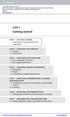 STEP 1 Getting started STEP 1 GETTING STARTED 1. Assessing the scope and goals of the organization STEP 2 ASSESSING THE STRATEGY 2. Strategy 3. Environment STEP 3 ANALYZING THE STRUCTURE 4. The configuration
Quality management principles
 quality Quality management principles One of the definitions of a principle is that it is a basic belief, theory or rule that has a major influence on the way in which something is done. Quality management
HR Field Guide: 5 Tips To Effective Workforce Performance Management
 HR Field Guide: 5 Tips To Effective Workforce Performance Management May 2010 Workforce performance management systems enable organizations to automate and optimize their performance processes and align
Chapter 5 Information Technology and Changing Business Processes
 Chapter 5 Information Technology and Changing Business Processes Managing and Using Information Systems: A Strategic Approach by Keri Pearlson & Carol Saunders Introduction How can IT enable business change?
Management Consulting: Improving Organizational Performance and Delivery of Quality Service
 Leveraging People, Processes, and Technology Management Consulting: Improving Organizational Performance and Delivery of Quality Service A White Paper Authors: Dr. Greg Mandrake Alan, Executive Coach Asmahan
Organizational Renewal: The Challenge of Change. Chapter 2
 Organizational Renewal: The Challenge of Change Chapter 2 Objectives Recognize the factors contributing to the accelerating rate of change Identify the ways an organization uses renewing processes to adapt
Human Resource Models
 Human Resource Models Human Resource Models What is a Human Resources (HR) Model and what role does it play in the development of a successful business? A HR Model is an organization s strategic framework
Organizational Culture Why Does It Matter?
 Organizational Culture Why Does It Matter? Presented to the Symposium on International Safeguards International Atomic Energy Agency Vienna, Austria November 3, 2010 IAEA-CN-184/315 Kenneth Desson Pentor
High-Performing Information Systems Aligned With Utility Business Strategy [Project #4316]
![High-Performing Information Systems Aligned With Utility Business Strategy [Project #4316]](/thumbs/27/11349355.jpg "High-Performing Information Systems Aligned With Utility Business Strategy [Project #4316]") High-Performing Information s Aligned With Utility Business Strategy [Project #4316] ORDER NUMBER: 4316 DATE AVAILABLE: June 2013 PRINCIPAL INVESTIGATORS: David W. Harris, Esteban Azagra, Rod van Buskirk,
High-Performing Information s Aligned With Utility Business Strategy [Project #4316] ORDER NUMBER: 4316 DATE AVAILABLE: June 2013 PRINCIPAL INVESTIGATORS: David W. Harris, Esteban Azagra, Rod van Buskirk,
Approaches to Managing Organizational Change
 VOLUME 12, NUMBER 1, 2010 Approaches to Managing Organizational Change Fred C. Lunenburg Sam Houston State University ABSTRACT Much has been written about the nature of change and the best methods to manage
TDWI strives to provide course books that are content-rich and that serve as useful reference documents after a class has ended.
 Previews of TDWI course books offer an opportunity to see the quality of our material and help you to select the courses that best fit your needs. The previews cannot be printed. TDWI strives to provide
EXECUTIVE BEHAVIORAL INTERVIEW GUIDE
 EXECUTIVE BEHAVIORAL INTERVIEW GUIDE INTERVIEW GUIDE INSTRUCTIONS: This Interview Guide is intended to help hiring executives conduct behavioral interviews for executive classifications covered by the
GLOBAL EXECUTIVE MBA ELECTIVE COURSES
 GLOBAL EXECUTIVE MBA ELECTIVE COURSES The Elective Courses allow you to go deeper into some of the disciplines covered in the Core Courses and a few new areas, depending on your personal interests. Choose
SigmaRADIUS Leadership Effectiveness Report
 SigmaRADIUS Leadership Effectiveness Report Sample Report NOTE This is a sample report, containing illustrative results for only two dimensions on which 360 performance ratings were obtained. The full
Table 1: Number of students enrolled in the program in Fall, 2011 (approximate numbers)
 Program: Department: MBA Human Resource Management CBA Table 1: Number of students enrolled in the program in Fall, 2011 (approximate numbers) MBA Concentration (Program) # students Human Resource Management
Using the Organizational Cultural Assessment (OCAI) as a Tool for New Team Development
 Using the Organizational Cultural Assessment (OCAI) as a Tool for New Team Development Jeff Suderman Regent University The Organizational Cultural Assessment Instrument (OCAI) is a psychometric tool developed
State of Washington. Guide to Developing Strategic Workforce Plans. Updated December 2008
 State of Washington Guide to Developing Strategic Workforce Plans Updated December 2008 Table of Contents Introduction... 3 What Is Workforce Planning?... 3 Workforce Planning Strategy Areas... 4 Strategic
Revised Human Resources Strategy
 Background Revised Human Resources Strategy WHO is a knowledge-based organization, and depends on a highly skilled, flexible and motivated workforce 1 1. The HR strategy currently in effect, Build One
Choosing a Performance Management System that Performs
 Choosing a Performance Management System that Performs INTRODUCTION Most organizations consider performance assessment processes as being an important employee intervention activity. Most of them have
CIMA E1 Course Notes. Chapter 1. Introduction to Organisations
 CIMA E1 Course Notes Chapter 1 Introduction to Organisations 1. Organisations Introduction An organisation is a social group of people that is organised and managed in a way that aims to follow a corporate
A guide to strategic human resource planning
 A guide to strategic human resource planning By Workinfo.com, www.workinfo.com 1. Introduction A comprehensive Human Resource Strategy plays a vital role in the achievement of an organisation's overall
2007 & 2008 Dennis L. Bolles and Darrel G. Hubbard 1
 Achieving the Power of Enterprise-Wide Project Management Dennis L. Bolles, PMP, President DLB Associates, LLC Darrel G. Hubbard, PE, President D.G.Hubbard Enterprises, LLC Project Management Is a Business
APPENDIX I. Best Practices: Ten design Principles for Performance Management 1 1) Reflect your company's performance values.
 APPENDIX I Best Practices: Ten design Principles for Performance Management 1 1) Reflect your company's performance values. Identify the underlying priorities that should guide decisions about performance.
instructor s Manual Job Analysis By Patricia A. Meglich, Ph.D., SPHR
 staffing Management instructor s Manual Job Analysis By Patricia A. Meglich, Ph.D., SPHR Project Team Author: SHRM project contributor: External contributor: Copy editing: Design: Patricia A. Meglich,
Foundations for Systems Development
 Foundations for Systems Development ASSIGNMENT 1 Read this assignment introduction. Then, read Chapter 1, The Systems Development Environment, on pages 2 25 in your textbook. What Is Systems Analysis and
Guide on Developing a HRM Plan
 Guide on Developing a HRM Plan Civil Service Branch June 1996 Table of Contents Introduction What is a HRM Plan? Critical Success Factors for Developing the HRM Plan A Shift in Mindset The HRM Plan in
A Qualitative Investigation of the Human Resource Management Practices in Small Businesses
 Cornell University ILR School DigitalCommons@ILR CAHRS Working Paper Series Center for Advanced Human Resource Studies (CAHRS) 4-1-2004 A Qualitative Investigation of the Human Resource Management Practices
DEVELOPING AN INTEGRATED TALENT MANAGEMENT PROGRAM. A Human Resource Management Framework
 DEVELOPING AN INTEGRATED TALENT MANAGEMENT PROGRAM A Human Resource Management Framework HR POLICY AND PLANNING DIVISION HUMAN RESOURCE BRANCH Public Service Secretariat April, 2008 Government of Newfoundland
Building. A Performance Management Program
 CONCEPT PAPER on Building A Performance Management Program 20 Community Place Morristown, NJ 07960 973-631-1607 fax 973-631-8020 www.appliedskills.com 1 Our Philosophy of Performance Management At Applied
Make information work to your advantage. Help reduce operating costs, respond to competitive pressures, and improve collaboration.
 Make information work to your advantage. Help reduce operating costs, respond to competitive pressures, and improve collaboration. May 2011 Advisory Consulting Table of contents Transform data from a hindrance
Organizational Restructuring
 Organizational Restructuring The Challenge Facilitating better alignment between technology and business units Focusing organizational strengths on delivering business value despite frequent distractions
Enterprise Content Management (ECM)
 Business Assessment: A Quick-Reference Summary Intro to MIKE2 methodology and phase 1 The methodology that will be used throughout the specialist track is based on the MIKE2 methodology. MIKE stands for
Sales Force Management
 Churchill/Ford/Walker's Sales Force Management Tenth Edition Mark W. Johnston Crummer Graduate School of Business Rollins College Greg W. Marshall Crummer Graduate School of Business Rollins College draw
World Health Organization
 March 1, 2005 Proposed Networks to Support Health Decision-Making and Health Policy Formulation in Low and Lower Middle Income Countries & Considerations for Implementation World Health Organization A
Building an effective stay back team to gain maximum value from an outsourcing agreement
 WHITE PAPER Building an effective stay back team to gain maximum value from an outsourcing agreement How to define its role, determine its size and assess the skills required 1 cgi.com 2015 CGI GROUP INC.
Introducing Talent Management
 Introducing Talent Management A Dale Carnegie White Paper By William J. Rothwell, Ph.D., SPHR The Pennsylvania State University University Park, PA How many times have we heard it said that people are
An organization consists of individuals with different tasks attempting
 2 Chapter Organizational Behavior An organization consists of individuals with different tasks attempting to accomplish a common purpose. (For a business, this purpose is the creation and delivery of goods
Empowerment and Organizational Change
 International Research Journal of Applied and Basic Sciences 2013 Available online at www.irjabs.com ISSN 2251-838X / Vol, 4 (1):1-5 Science Explorer Publications Empowerment and Organizational Change
Recruitment and Selection
 Recruitment and Selection The recruitment and selection belongs to value added HR Processes. The recruitment is about: the ability of the organization to source new employees, to keep the organization
Complexity Leadership Theory:
 Complexity Leadership Theory: Shifting leadership from the industrial age to the knowledge era Mary Uhl-Bien, Russ Marion, Bill McKelvey the clarion group REAL. CLEAR. INSIGHT. Abstract: The most widely
STRATEGIC INTELLIGENCE WITH BI COMPETENCY CENTER. Student Rodica Maria BOGZA, Ph.D. The Bucharest Academy of Economic Studies
 STRATEGIC INTELLIGENCE WITH BI COMPETENCY CENTER Student Rodica Maria BOGZA, Ph.D. The Bucharest Academy of Economic Studies ABSTRACT The paper is about the strategic impact of BI, the necessity for BI
Title: Enhancing Student Learning in Introduction to Sport Management. Author: Angela Lumpkin, Health, Sport, and Exercise Sciences
 Title: Enhancing Student Learning in Introduction to Sport Management Author: Angela Lumpkin, Health, Sport, and Exercise Sciences Summary: In order to enhance and document students learning, a sports
Center for Effective Organizations
 Center for Effective Organizations WHAT MAKES HR A STRATEGIC PARTNER? CEO PUBLICATION G 09-01 (555) EDWARD E. LAWLER III Center for Effective Organizations Marshall School of Business University of Southern
Career Management. Making It Work for Employees and Employers
 Career Management Making It Work for Employees and Employers Stuck in neutral. That s how many employees around the world would describe their career. In fact, according to the 2014 Global Workforce Study,
1-03-70 Improving IS with Cross-Functional Teams Stewart L. Stokes, Jr.
 1-03-70 Improving IS with Cross-Functional Teams Stewart L. Stokes, Jr. Payoff IS departments must find new ways to leverage human resources, and increasingly they are doing so through teamwork. Cross-functional
Strategic Plan 2013 2017
 Plan 0 07 Mapping the Library for the Global Network University NYU DIVISION OF LIBRARIES Our Mission New York University Libraries is a global organization that advances learning, research, and scholarly
HUMAN AND INSTITUTIONAL CAPACITY DEVELOPMENT HANDBOOK A USAID MODEL FOR SUSTAINABLE PERFORMANCE IMPROVEMENT
 HUMAN AND INSTITUTIONAL CAPACITY DEVELOPMENT HANDBOOK A USAID MODEL FOR SUSTAINABLE PERFORMANCE IMPROVEMENT HUMAN AND INSTITUTIONAL CAPACITY DEVELOPMENT HANDBOOK October 2010 This document was prepared
Case Studies in Systems Engineering Central to the Success of Applied Systems Engineering Education Programs
 Complexity Case Studies in Systems Engineering Central to the Success of Applied Systems Engineering Education Programs Carlee A. Bishop Principal Research Engineer, Georgia Tech Research Institute Georgia
Creating a Strategy-Focused Organization
 Creating a Strategy-Focused Organization Werner Bruggeman Valerie Decoene Geert Scheipers In recent years, organizations have sought to develop more comprehensive performance measurement systems to provide
Improving Employee Engagement to Drive Business Performance
 w h i t e p a p e r Improving Employee Engagement to Drive Business Performance A Softscape White Paper May 2008 The Employee Engagement Revelation Executive leaders and human resources (HR) practitioners
P3M3 Portfolio Management Self-Assessment
 Procurement Programmes & Projects P3M3 v2.1 Self-Assessment Instructions and Questionnaire P3M3 Portfolio Management Self-Assessment P3M3 is a registered trade mark of AXELOS Limited Contents Introduction
Leadership Development: A Critical Need in the Dental Safety Net
 Leadership Development: A Critical Need in the Dental Safety Net Angela Marks MSEd; Elizabeth Mertz, MA, PhD 2012 Center for the Health Professions at UCSF ABSTRACT This research brief presents a qualitative
The Change Management Community of Practice:
 By Bill Wilder, Director, Life Cycle Institute Life Cycle Engineering 2013 www.lce.com Success at last! The new employee self-service module has finally been implemented - on the third try. The promised
Internal Audit. Audit of HRIS: A Human Resources Management Enabler
 Internal Audit Audit of HRIS: A Human Resources Management Enabler November 2010 Table of Contents EXECUTIVE SUMMARY... 5 1. INTRODUCTION... 8 1.1 BACKGROUND... 8 1.2 OBJECTIVES... 9 1.3 SCOPE... 9 1.4
Drive to the top. The journey, lessons, and standards of global business services. kpmg.com
 Drive to the top The journey, lessons, and standards of global business services kpmg.com The new normal for global enterprises is about doing more with less while at the same time driving the top line
HUMAN RESOURCE MANAGEMENT AND DEVELOPMENT
 NEW YORK UNIVERSITY SCHOOL OF CONTINUING AND PROFESSIONAL STUDIES MASTER OF SCIENCE IN HUMAN RESOURCE MANAGEMENT AND DEVELOPMENT DIVISION OF PROGRAMS IN BUSINESS MASTER OF SCIENCE IN HUMAN RESOURCE MANAGEMENT
Game-Based Learning for Leadership and Team Management
 Game-Based Learning for Leadership and Team Management soft skills training through video games www.game-learn.com WHAT IS IT? A step-by-step manual for managing high-performance teams An online training
CSR / Sustainability Governance and Management Assessment By Coro Strandberg Principal, Strandberg Consulting www.corostrandberg.
 Introduction CSR / Sustainability Governance and Management Assessment By Coro Strandberg Principal, Strandberg Consulting www.corostrandberg.com June 2015 Companies which adopt CSR or sustainability 1
Strategic Leadership and
 Chapter 11 Strategic Leadership and Change Management Chapter 11 Learning Outcomes Discuss the role of strategic leadership in the strategic management process. Describe the relevance of analyzing the
Management levels. Middle-level managers
 MANAGEMENT LEVELS 2 Management levels Managers are organizational members who are responsible for the work performance of other organizational members. Managers have formal authority to use organizational
The relatively recent combination of
 Best practice talent management Bob Little offers a template for successful, systematic implementation The relatively recent combination of major economic, demographic, social and business trends have