
Strategic Framework for Role Expansion of Nurses and Midwives: Promoting Quality Patient Care. May 2011
|
|
|
- Dorothy Dennis
- 10 years ago
- Views:
Transcription
1 Strategic Framework for Role Expansion of Nurses and Midwives: Promoting Quality Patient Care May 2011
2

3 Table of Contents Page No. A Message from the Minister for Health 4 Foreword: Chief Nursing Officer 5 1. Introduction 7 2. National Policy Context and Health Service Priorities Nursing and Midwifery Role Development Strategic Framework for Role Expansion of Nurses and Midwives Conclusion 34 References 35 Appendix 1 Steering Group 38 Appendix 2 Case Studies 40 Appendix 3 List of Organisations that Submitted Case Studies 76 Appendix 4 Domains of Competence at Registration; Core Concepts for 77 Specialist and Advanced Practice Appendix 5 Scope of Nursing and Midwifery Practice Framework 78 Appendix 6 Benner s Model of Skill Acquisition 79 STRATEGIC FRAMEWORK FOR ROLE EXPANSION OF NURSES AND MIDWIVES: PROMOTING QUALITY PATIENT CARE 3

4 A Message from the Minister for Health I am delighted to welcome the publication of the Strategic Framework for Role Expansion of Nurses and Midwives: Promoting Quality Patient Care. The Irish healthcare environment has changed significantly over the last decade driven by population growth and emerging disease patterns. The Programme for Government 2011 is committed to reforming the delivery of health care so that more care will be delivered in the community. We will be undertaking an ambitious programme of change. I am committed to developing a health service based on need. Ireland is embracing the importance of providing timely chronic disease management, promoting wellness and reorienting the acute care system to a more community based focus. It is of note that Ireland has demonstrated a rise in life expectancy during the past decade that has been unmatched by any other country in Europe. Hospital stays are shorter with increased use of technology and research. This policy document promotes the enhancement of nursing and midwifery roles within a structured strategic framework to support the healthcare agenda. Patient safety and quality of care are at the core of what we all want to achieve. They are powerful drivers of reform and improvement in services. The health system is striving to provide patients with fully integrated healthcare that is easy to access and externally benchmarked. Nurses and midwives have an important role in supporting the Programme for Government The Nurses and Midwives Bill 2010 provides for a modern nursing and midwifery workforce that can fully engage with the programme of healthcare reform and change. This policy document provides strategic direction to support nurses and midwives to embrace increased responsibilities with a proactive solution-focused approach to responsive healthcare in order to enhance the patient experience. I wish to record my appreciation of the National Steering Group and all those who contributed to the completion of this Strategic Framework for Role Expansion of Nurses and Midwives: Promoting Quality Patient Care. Dr. James Reilly TD Minister for Health and Children 4 STRATEGIC FRAMEWORK FOR ROLE EXPANSION OF NURSES AND MIDWIVES: PROMOTING QUALITY PATIENT CARE
5 Foreword I am very pleased to present the publication of the Strategic Framework for Role Expansion of Nurses and Midwives: Promoting Quality Patient Care. This strategic document sets policy direction for the enhancement of nursing and midwifery roles. It builds on the achievements of the past ten years for nursing and midwifery and is set within the context of clinical and regulatory standards. The Programme for Government 2011 and policy initiatives such as legislative changes for the introduction of nurse and midwife medication prescribing create significant opportunities to expand the role of nurses and midwives in a proactive manner. This policy document is focused on enhancing and expanding the roles of staff nurses and staff midwives, clinical nurse and midwife specialists and advanced nurse and midwife practitioners. A six step process provides a framework for nursing and midwifery role expansion in line with service need and national policy direction. Each of the six steps outlines necessary considerations for nurse and midwife role expansion. It promotes clinical care that is delivered in a timely and evidence-based manner that reflects patients needs. Service users, the public, service providers and clinicians expect services to deliver safe, high quality care which is evidence based. Effective service delivery requires sufficient staff available at the right time, with the right skills, diversity and flexibility to deliver high quality care. Optimisation of nursing and midwifery roles is of significant importance to ensuring the delivery of a high quality patient-centred service. The extent of enhanced care provision being provided by nurses and midwives is detailed in the case studies provided in this strategic document. Expanded roles have included comprehensive physical and psychosocial assessments, prescribing of medications and ionising radiation, caseload management, delivery of nurse-led and midwife-led clinics, nurse-led admission and discharge practice. I would like to thank the National Steering Group for their expertise and knowledge in guiding the development of the Strategic Framework for Role Expansion of Nurses and Midwives: Promoting Quality Patient Care. I would also like to thank everyone who made presentations and submitted case studies. I would like to acknowledge the assistance provided by the staff of the Nursing Policy Unit which was significant. I would like to acknowledge the contribution made by Ms Sheila Sugrue former Nurse/Midwife Advisor for her work on the project. I would particularly like to acknowledge the expertise and significant work undertaken by Dr. Kathleen Mac Lellan in helping to ensure completion of this project. This Strategic Framework for Role Expansion of Nurses and Midwives: Promoting Quality Patient Care provides a policy framework to further expand the role of nurses and midwives to promote delivery of safe, high quality care by nurses and midwives. Sheila O Malley Chief Nursing Officer STRATEGIC FRAMEWORK FOR ROLE EXPANSION OF NURSES AND MIDWIVES: PROMOTING QUALITY PATIENT CARE 5
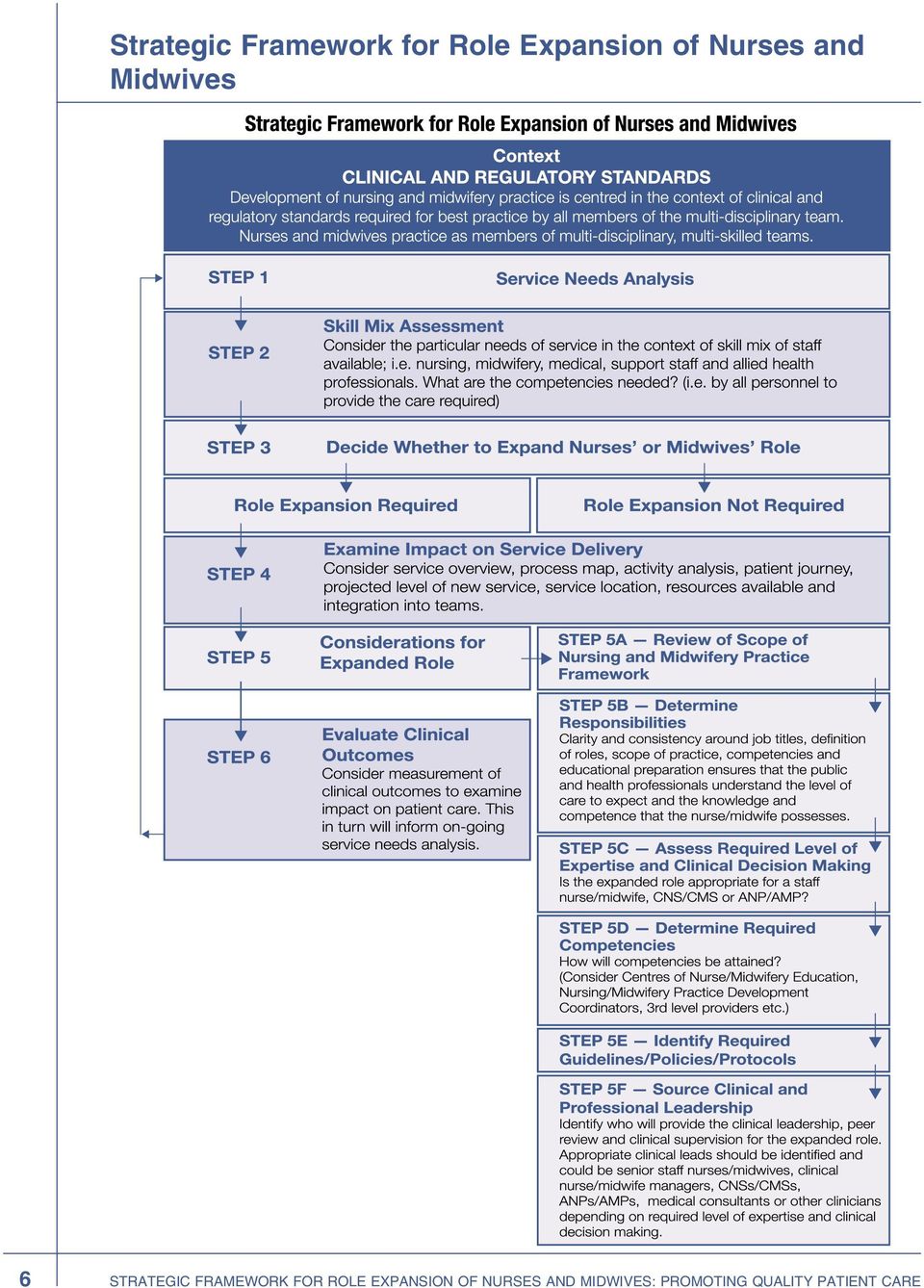
6 Strategic Framework for Role Expansion of Nurses and Midwives 6 STRATEGIC FRAMEWORK FOR ROLE EXPANSION OF NURSES AND MIDWIVES: PROMOTING QUALITY PATIENT CARE
7 1. Introduction The Programme for Government 2011 provides for healthcare reform aiming to reduce reliance on acute hospitals in order that more care can be delivered in the community. Patient safety is a national imperative. There is increased emphasis on patient safety in policy reform, legislative changes and development of standards of care driven by quality improvement initiatives. The role and function of nurses and midwives has developed significantly in the last decade in order to streamline and enhance the quality of the patient journey. The Nurses and Midwives Bill 2010 was published on 22 nd April Its purpose is to enhance the protection of the public in its dealings with nurses and midwives, to recognise midwifery as a separate profession, to provide for the registration, regulation and control of nurses and midwives, to enhance the high standards of professional education, training and competence of nurses and midwives, to investigate complaints against nurses and midwives and to increase the public accountability of the new Nursing and Midwifery Board of Ireland (Bord Altranais agus Cnáimhseachais na héireann). Nurses and midwives provide a significant volume of the care delivered within the health system. As such appropriate utilisation of their capacity, building on the undergraduate degree programme and the implementation of the clinical career pathway are of significant importance. Enhanced care provision has included comprehensive physical and psychosocial assessments, prescribing of medications and ionising radiation, caseload management, delivery of nurse-led and midwife-led clinics, nurse-led and midwife-led admission and discharge. These enhanced roles have occurred through expansion of the staff nurse and the staff midwife role and the introduction of the clinical nurse and midwife specialist and the advanced nurse and midwife practitioner roles. Focused education and training and significant support from Directors of Nursing and Midwifery and the multi-disciplinary team are integral to such role enhancement. The primary focus of expansion of nursing and midwifery roles is to improve the quality of care provision to patients provided by nurses and midwives. This occurs through increased competency attainment for nurses and midwives thereby enhancing their range of skills, capacity and opportunity to improve care delivery. Nursing and midwifery role development occurs within the context of reform and transformation of Irish healthcare provision in order to provide high quality integrated services to the Irish public. Models of care delivery are evolving in line with Department of Health and Children policy and Health Service Executive strategic and service plans. This is in order to meet the healthcare priorities of the population in an efficient, effective and quality assured manner. The purpose of this policy document is to provide a strategic framework to further expand the role of nurses and midwives to promote delivery of quality care by nurses and midwives. Role expansion encompasses becoming more competent, reflective practitioners and developing expertise and skills to meet patients /clients needs in a holistic manner. Expansion may refer STRATEGIC FRAMEWORK FOR ROLE EXPANSION OF NURSES AND MIDWIVES: PROMOTING QUALITY PATIENT CARE 7

8 to a change in the overall scope of practice of the professions to include areas of practice that have not hitherto been within the remit of nurses or midwives; or it may refer to a change in the scope of practice of an individual nurse or midwife to include areas of practice that have not been within his/her scope of practice but are within the overall scope of practice of the nursing and midwifery professions (An Bord Altranais 2000a). The Strategic Framework for Role Expansion of Nurses and Midwives outlines step by step processes for consideration of nursing and midwifery role expansion. This promotes the development and enhancement of nursing and midwifery roles in response to patient and service need and national policy direction. The policy document was guided by a Steering Group of key stakeholders which was established in May 2009 (Appendix 1). The Steering Group was guided by the following principles: Quality, safety and evidence-based practice Patient centred care Endorsement of the fundamental principles of nursing and midwifery Continuity of patient care Service need Service integration and multi-disciplinary team-working. The Steering Group invited a number of presentations to inform its discussions and deliberations. The presentations provided the context for the development of the Strategic Framework for Role Expansion of Nurses and Midwives: Recent policies, strategies and reviews (Ms Sheila O Malley, Chief Nursing Officer, Department of Health and Children) Models of best practice: The Loughrea/Athenry Community Mental Health Team from East Galway Mental Health Services (Mr Padraig O Beirne, Mental Health Nurse Managers Association) Community Midwifery Services Domino Project at the National Maternity Hospital, Holles Street (Ms Margaret Hanahoe, CMM3 National Maternity Hospital) Care of the Elderly based in St. Ita s Community Hospital Limerick (Ms Irene O Connor, Director of Nursing, St. Ita s Community Hospital, Limerick) The Clinical Governance Framework for the Health Service Executive (Ms Nora Geary, Quality and Clinical Care Directorate, HSE) The Report of the Commission on Patient Safety (Ms Sheila O Malley, Chief Nursing Officer, Department of Health and Children) 8 STRATEGIC FRAMEWORK FOR ROLE EXPANSION OF NURSES AND MIDWIVES: PROMOTING QUALITY PATIENT CARE
9 Role Expansion and Competency Development, Use of a Clinical Skills Matrix (Dr Kathleen Mac Lellan, Head of Professional Development, National Council for the Professional Development of Nursing and Midwifery). It was considered that exemplars of changing nursing and midwifery practice which detail role expansion would enhance this policy document. All Directors of Nursing and Midwifery were invited to submit case studies outlining where role expansion has occurred. A template was provided to guide the description of the case studies. The template captured information on the role expansion, driver for role expansion, skills and competencies developed, supports and benefits. Eighty five case studies were submitted from thirty two organisations. A summary of all case studies received is in Appendix 2 and twenty two case studies are outlined in detail. A list of the organisations that submitted case studies is provided in Appendix 3. A comprehensive review of a wide range of literature, national and international policy, regulation and workforce planning was completed to inform this policy document. A list of references is provided. Section 2 outlines the national policy context and health service priorities. These factors will signal the required competencies and expanded roles for nurses and midwives into the future. Section 3 provides an overview of the change and developments that have occurred for nursing and midwifery over the past ten years. The clinical pathway for nurses and midwives is discussed. Section 4 provides the Strategic Framework for Role Expansion of Nurses and Midwives. Step by step processes for consideration of nursing and midwifery role expansion are explained. A conclusion summarises the key issues referred to in this policy document. STRATEGIC FRAMEWORK FOR ROLE EXPANSION OF NURSES AND MIDWIVES: PROMOTING QUALITY PATIENT CARE 9
10 2. National Policy Context and Health Service Priorities The Programme for Government 2011 provides for a model of modern healthcare delivery where integration of care in all settings is identified as key to efficient health care delviery, in which the right care is delivered in the right place. The Government is committed to developing a universal, single-tier health service which will guarantee access to medical care based on need. More care will be delivered in the community and investment in the supply of more and better care for older people in the community and in residential settings will be a priority. A commitment is made to reducing the stigma of mental illness, ensuring early and appropriate intervention and vastly improving access to modern mental health services in the community. The Programme for Government 2011 specifically identifies the development of national strategies for Alzheimers and other dementias by 2013, a cervical cancer vaccination catchup programme for all girls in secondary school and the extension of Breastcheck. This Strategic Framework for Role Expansion of Nurses and Midwives will through appropriate utilisation and enhancement of nursing and midwifery skills support the implementation of the Programme for Government The Department of Health and Children, through strategies and guidance, sets the policy direction for the development and delivery of the health services. Policy documents such as the health strategy Quality and Fairness: A Health System for You (DoHC 2001a), Primary Care: A New Direction (DoHC 2001b), A Strategy for Cancer Control in Ireland (DoHC 2006a), A Vision for Change Report of the Expert Group on Mental Health Policy (DoHC 2006b), Tackling Chronic Disease A Policy Framework for the Management of Chronic Diseases (DoHC 2008a), Report of the Commission on Patient Safety and Quality Assurance (DoHC 2008b), and Changing Cardiovascular Health: National Cardiovascular Health Policy (DoHC 2010a) all provide blueprints for health service delivery. Policy direction has provided the plan for healthcare reform aiming to reduce reliance on acute hospitals and provide more services in the community. The delivery of the health service priorities through a quality driven agenda is supported by the Health Information and Quality Authority (HIQA), the Mental Health Commission and the establishment of the Implementation Steering Group for the recommendations of the Report of the Commission on Patient Safety and Quality Assurance (DoHC 2008b). The Report of the Commission on Patient Safety and Quality Assurance (DoHC 2008b) provides an explicit blueprint for a model of healthcare for the future that will have a quality and standards driven agenda. Two key statutory agencies provide for national standards of care and their remit includes a monitoring function. HIQA will set the standards for delivering health and social care services and will continuously inspect the services to ensure that these standards are being met. The purpose of HIQA is to drive improvements in Ireland s health and social care services (HIQA 2010a). The statutory mandate of the Mental Health Commission is to promote, encourage and foster the establishment and maintenance of high standards and 10 STRATEGIC FRAMEWORK FOR ROLE EXPANSION OF NURSES AND MIDWIVES: PROMOTING QUALITY PATIENT CARE
11 good practices in the delivery of mental health services and to take all reasonable steps to protect the interests of persons detained in approved centres. The Mental Health Commission has published the Quality Framework for Mental Health Services in Ireland (MHC 2007). The themes, standards and criteria contained in the quality framework provide clear guidance for service users, their families/chosen advocates, service providers and the public as to what to expect from a mental health service. The quality framework is applicable to all mental health services including services for children and adolescents, adults, older persons, persons with an intellectual disability and a mental health illness and forensic mental health services. The Irish Medicines Board s remit is to protect and enhance public health through the regulation of medicines, medical devices and healthcare products available on the Irish market. 2.1 Professional Accountability and Regulation The Nurses and Midwives Bill 2010 was published on 22 nd April Its purpose is to enhance the protection of the public in its dealings with nurses and midwives, to recognise midwifery as a separate profession, to provide for the registration, regulation and control of nurses and midwives, to enhance the high standards of professional education, training and competence of nurses and midwives, to investigate complaints against nurses and midwives and to increase the public accountability of the Board. An Bord Altranais will be known as the Nursing and Midwifery Board of Ireland (Bord Altranais agus Cnáimhseachais na héireann). The Nurses and Midwives Bill 2010 provides for greater accountability through demonstration of competence maintenance. A new statutory framework for the maintenance of professional competence of registered nurses and midwives will be devised by the new Nursing and Midwifery Board and there is an obligation on employers to facilitate the maintenance of professional competence of nurses and midwives in particular by providing learning opportunities in the workplace. The object of the Board shall be the protection of the public in its dealing with nurses and midwives and the integrity of the practice of nursing and midwifery through the promotion of high standards of professional education, training and practice and professional conduct among nurses and midwives. Central to the concept of professional regulation is the link between educational preparation, scope of practice for individual nurses and midwives and accountability for practice. Currently An Bord Altranais is the statutory body for the regulation of nursing and midwifery practice and has a key part in contributing to and supporting the development and continuance of role expansion for the professions. The primary purpose of the Nurses Act 1985 and the Board s rules is to ensure safe, competent and ethical care and to protect the public (An Bord Altranais 2000a). An Bord Altranais expects nurses and midwives on qualification to be competent, work within their scope of practice and adhere to their code of conduct. The scope of nursing and midwifery practice in Ireland is the range of roles, functions, responsibilities and activities in which a registered nurse or a registered midwife is educated, competent and has authority to perform. Accountability is the cornerstone of professional nursing and midwifery practice (An Bord Altranais 2000b). Nurses and midwives are accountable both legally and professionally STRATEGIC FRAMEWORK FOR ROLE EXPANSION OF NURSES AND MIDWIVES: PROMOTING QUALITY PATIENT CARE 11

12 for their practice. Nurses and midwives are accountable to the patient/client, the public, their regulatory body and their employer. An Bord Altranais provides professional guidance and support on issues relating to clinical practice, professional conduct, the requirements and standards for education, and the processes for determining a registrant s fitness/competency to practice. This guidance encompasses the Scope of Nursing and Midwifery Practice Framework (An Bord Altranais 2000b), the Code of Professional Conduct (An Bord Altranais 2000c) and practice guidelines. 2.2 Patient Safety and Quality Assurance The Commission on Patient Safety and Quality Assurance was established in January 2007 to develop clear and practical recommendations to ensure that safety and quality of care for patients is paramount within the healthcare system. Its report Building a Culture of Patient Safety (DoHC 2008b) was published in August 2008 and approved by Government in January The report contains 134 recommendations including proposals on: legislation on licensing of all public and private healthcare providers mandatory adverse event reporting policy of open disclosure on patient safety incidents and all clinicians to participate in a national programme of clinical audit leadership and accountability throughout the service through new governance, management and reporting structures, with a legal duty for patient safety on CEOs and Boards of Management improved research, education and training on patient safety patient involvement in service review and planning. The Government, on 27 th January 2009, gave its approval to progress the legislation and establish a Steering Group to drive implementation of the Commission s recommendations. An Implementation Steering Group representative of a broad range of stakeholder interests was established in June There are a wide range of initiatives now underway at a policy and an operational level, which, when taken together, have the potential to radically transform the direction and delivery of health and personal social services. The Government approved the development of legislation to underpin the recommendations of the Commission on Patient Safety and Quality Assurance for a licensing system for public and private health service providers. Legislative proposals for the licensing of public and private healthcare providers are being prepared with the aim of seeking Government approval, in 2011, to carry out a public consultation process on the draft Heads of Bill. In June 2009, the Government approved the drafting of a Health Information Bill. This will establish a statutory framework to support the use of personal health information and will aim to enhance patient care and safety with proper regard for the privacy, confidentiality and 12 STRATEGIC FRAMEWORK FOR ROLE EXPANSION OF NURSES AND MIDWIVES: PROMOTING QUALITY PATIENT CARE

13 security of such information. The Bill will incorporate the Commission s recommendations for legislation to provide, in certain circumstances, legal protection and privilege in relation to (1) open disclosure about patient safety incidents, (2) mandatory reporting of serious adverse events and (3) compliance requirements with clinical audit standards. Patient Safety First is an awareness-raising initiative through which healthcare organisations declare their ongoing commitment to patient safety. The initiative is supported by a dedicated website ( Through participation in this initiative, those involved commit to play their part in improving the safety and quality of healthcare services. This commitment is intended to create the momentum for positive change towards patient safety. The National Clinical Effectiveness Framework will provide the basis for the adoption of clinical guidelines for the treatment of diseases and illnesses that are based on best available evidence and experience. The steps being taken will also guide and promote the implementation of clinical audit programmes throughout the health system. 2.3 Models of Care Delivery The Report of the Commission on Patient Safety and Quality Assurance as identified above recommends licensing of healthcare providers as part of a safety and quality framework to improve patient safety and quality of care (DoHC 2008b). The Commission supports the implementation of a system of clinical directorates within all healthcare organisations which would ensure that the clinical director, appointed on a competency basis, would be accountable for all aspects of patient safety and quality within the directorate. The Report of the Commission on Patient Safety and Quality Assurance states that one of the requirements for good clinical effectiveness is establishing clinical standards, guidelines and indicators that enable healthcare professionals to monitor their individual, team and organisation s performance against national and international comparative parameters (DoHC 2008b). Clinical leadership and clinical governance will be further developed to support care delivery through care programmes in line with national standards. The involvement of clinicians in management is generally seen as essential to optimise the use of resources and ensure the greatest level of safety in patient care (O Shea 2009). Standardisation of care through the use of clinical guidelines and multi-disciplinary pathways of care are rapidly becoming an established and essential feature of modern day healthcare practice and are likely to be a part of clinical practice and governance structures for some time to come (NCNM 2006a, NCNM 2009a, NCNM 2009b, O Shea 2009, HSE 2011). Care pathways and guidelines are tools for consistency of care and may be seen as a way of closing the gap between what clinicians do and what scientific evidence supports. The Quality and Clinical Care Directorate (QCCD) is developing clinical leadership and clinical governance across the Health Service Executive (HSE). The objective of the QCCD is to STRATEGIC FRAMEWORK FOR ROLE EXPANSION OF NURSES AND MIDWIVES: PROMOTING QUALITY PATIENT CARE 13
14 define the way clinical services should be delivered, resourced and measured. This will mean that care will be delivered through programmes in line with national standards. A programmatic approach to change is being taken with an initial focus on chronic disease. Clinical programmes, led by a multi-disciplinary frontline team of clinicians, have been established (examples include chronic disease management programmes such as stroke and heart failure). The programmes are defining the ideal care for patients which can be implemented across the country. Specifically they are focusing on solutions which will improve patient care, remove waiting lists and save money. Each of the programmes is led by a team of national experts, selected by their peers through the academic colleges and professional bodies. The teams include consultant, GP, nursing and allied health professional, management and regional representatives, who are bringing together experience and expertise from services around the country to help plan the work of the programmes. Nurses and midwives have been recognised as key to the successful implementation of the programmes. There is a Lead Clinical Nurse on each national clinical programme working group. A Director of Nursing and Midwifery Strategic Reference Group has been convened to support the programme development. The Report of the National Acute Medicine Programme (HSE et al 2010) identifies expanded roles for nurses including nurse prescribing of medications, nurse prescribing of ionising radiation, criteria-led discharge, enhanced interdisciplinary referral and the use of early warning scores. The Programme for Government 2011 and evolving models of care delivery for the health services will set the agenda for nursing and midwifery practice into the future. This will continue to be driven by: demographic change changing patterns of health and disease expectations of the public and service users shift to delivery of more care in community settings advances in care and treatment healthcare innovation professional regulation and advances in technology for communications and care. 2.4 Demographic and Epidemiological Trends The health service priorities are driven by the demographic and epidemiological profiles of the Irish population. Migration and population growth trends will continue to influence these profiles. The number of people living in Ireland has increased by over ten per cent to 4,339,000 in the last five years. There was a steady increase in the birth rate in the last decade. Older people account for 11% of the overall population. 14 STRATEGIC FRAMEWORK FOR ROLE EXPANSION OF NURSES AND MIDWIVES: PROMOTING QUALITY PATIENT CARE

15 The health status of the population has markedly improved. Mortality rates have fallen substantially since the late 1970s in most disease areas (McDaid et al 2009). A Strategy for Cancer Control (DoHC 2006a) outlines prevention, diagnosis and treatment challenges for cancer care in Ireland. It is noted that: Survival rates for almost all types of cancer improved for people diagnosed between 2000 and 2004 compared with people diagnosed between 1994 and 1999 On average, around 22,500 new cases of invasive cancer (including non-melanoma skin cancer) are diagnosed each year. However current trends indicate that the number of cancers diagnosed each year is likely to double in the next 20 years (DoHC 2010b), so there is a necessity for services to be able to respond appropriately to such needs. The burden of chronic diseases is on the increase with major contributing lifestyle factors and an ageing population. Chronic diseases cause significant morbidity and mortality and result in poorer quality of life (Institute of Public Health 2010). Other statistics of note for delivery of the health service are concerned with suicide which is one of the top ten leading causes of premature death in Europe and is the principal cause of mortality among year old males in this region (WHO 2005). Mental health problems account for approximately 20% of the total disability burden of ill health across Europe (WHO 2004). 2.5 Workforce Planning for the Health Services Effective service delivery requires processes to ensure that there will be sufficient staff available at the right time, with the right skills, diversity and flexibility to deliver high quality care i.e. appropriate skill mix. It is envisioned that nurses and midwives will continue to provide high quality, responsive care with enhanced roles reflecting their education, continuing professional development and expertise into the future. Optimisation of nursing and midwifery roles is of significant importance to ensuring the delivery of a high quality patient-centred service. The Integrated Workforce Planning Strategy for the Health Services (DoHC and HSE 2009) has been developed to meet the needs of a modern health service. The overall goal of this strategy is to ensure that strategic and operational workforce planning processes are established as key activities in the health service. Improved workforce planning enables and supports both clinical and non clinical staff to achieve their full potential. The strategy identifies that while this was always a requirement, given the significant proportion of health funding that goes towards staff costs, it is an even greater imperative in the current economic climate. The strategy provides the framework for future workforce planning decisions. It highlights that workforce planning must be integrated with service and financial planning and outlines the principles for guiding better workforce planning decisions. It supports initiatives on STRATEGIC FRAMEWORK FOR ROLE EXPANSION OF NURSES AND MIDWIVES: PROMOTING QUALITY PATIENT CARE 15

16 reconfiguration of the health service human resources including those already underway such as improved Consultant/NCHD ratios, Nurse Prescribing and SKILL (Securing Knowledge into Lifelong Learning) development for support staff. It provides service planners with the tools to assess other sources of supply for service improvement through redeployment, retraining or changed skill mix. Flexibility of the workforce is required to take account of changes in the way services are configured and delivered. This flexibility may include changes in skill mix between grades or developing the skills and competencies of existing staff in the health services. 2.6 Summary The Programme for Government 2011 in tandem with the demographic and epidemiological profile of the Irish population will signal the required competencies and expanded roles for nurses and midwives into the future. This policy document provides a comprehensive strategic framework for role expansion of nurses and midwives. Through utilisation of this framework opportunities for further development of the nursing and midwifery role can be optimised. This framework is contextualised within national policies, health service delivery priorities, service need, skill mix, patient pathways, workforce planning, nursing and midwifery regulation and location of care as outlined in Figure 1. Support in the form of clinical standards, clinical guidelines, multi-disciplinary team working, clinical and professional leadership and clinical governance is necessary. Healthcare provision in Ireland is developing within a quality and standards-driven agenda. 16 STRATEGIC FRAMEWORK FOR ROLE EXPANSION OF NURSES AND MIDWIVES: PROMOTING QUALITY PATIENT CARE

17 STRATEGIC FRAMEWORK FOR ROLE EXPANSION OF NURSES AND MIDWIVES: PROMOTING QUALITY PATIENT CARE 17

18 3. Nursing and Midwifery Role Development The current healthcare environment is more demanding with intensified working practices within which healthcare teams and nurses and midwives now provide care. The health system is challenged with balancing resources with population health demands. Critical to an effective and sustainable healthcare system is having the right number and mix of healthcare staff. The past decade has witnessed the evolution and expansion of the role of the nurse and midwife in response to these service demands to improve the patient journey and quality of care delivery. 3.1 Nursing and Midwifery: Ten Years of Change and Development Over the past decade nursing and midwifery in Ireland have embraced significant development and change, the catalyst for which was the Report of the Commission on Nursing (Government of Ireland 1998). The achievements of the last ten years in Irish nursing and midwifery provide the foundation for the development of this strategic framework for role expansion. As recommended by the Commission on Nursing, all pre-registration nursing education programmes are now at honours primary degree level. The first direct entry undergraduate midwifery programmes began in 2006 after the successful completion of a pilot programme. From 1994 onwards there was a noticeable growth in the number of courses available to qualified nurses and midwives around the country. Funding initiatives set up by the Department of Health and Children have enabled nurses and midwives to undertake postregistration education including primary degrees (i.e. the Bachelor of Nursing Studies programmes) and postgraduate programmes in specialised areas of nursing and midwifery. At the same time, the third-level education providers have developed and provided postgraduate, masters and doctoral level programmes in response to other factors such as the development of the clinical career pathway, specific healthcare policy recommendations, the introduction of nurse and midwife medication prescribing, and the building of nursing and midwifery research capacity. Education initiatives have enabled coherent competency attainment by nurses and midwives to deliver quality patient care. The establishment of prescriptive authority in relation to medicinal products and ionising radiation has been a significant achievement. The Minister for Health and Children made the necessary legislative amendments to ensure the introduction of the two prescribing initiatives with due regard to patient safety and enhanced patient care and service provision. Services and patients will benefit from a reduction in the duplication of resources and the maximisation of the capacity and utilisation of skills and competencies of nurses and midwives. The Department of Health and Children s Research Strategy for Nursing and Midwifery in Ireland published in 2003 (DoHC 2003) laid the groundwork for the building of research capacity. Research fellowships for nurses and midwives were identified and there was an increase in the number and range of doctoral programmes available. Following recommendations of the research strategy, the baseline survey of nursing and midwifery research activity in Ireland was completed by the National Council for the Professional 18 STRATEGIC FRAMEWORK FOR ROLE EXPANSION OF NURSES AND MIDWIVES: PROMOTING QUALITY PATIENT CARE

19 Development of Nursing and Midwifery (NCNM 2006b). This provided a starting point for measuring progress in the building of research capacity, and the identification of research priorities (NCNM 2005) has endorsed a coherent and strategic approach to future research into clinical, service and policy issues. The Review of Attainments of the Research Strategy for Nursing and Midwifery in Ireland published by the Department of Health and Children details the significant activities undertaken by nurses and midwives across a broad range of research areas over the past seven years (DoHC 2010c). Developments in higher education and research have both facilitated and been facilitated by the development of the clinical career pathway in Ireland by the National Council for the Professional Development of Nursing and Midwifery, as recommended by the Commission on Nursing. There are over 2,200 nurses and midwives working in specialist and advanced practice in a variety of areas from emergency care to chronic disease management to community mental health. The publication of the Scope of Nursing and Midwifery Practice Framework by An Bord Altranais in 2000 contributed to nurses and midwives understanding of the factors that must be considered when making decisions relating to the development of professional roles (An Bord Altranais 2000b). These factors included national and international legislation, public and social policy, national and local guidelines, educational attainment and individual levels of competence. Staff nurses and staff midwives have enhanced and expanded their roles supported by the Scope of Nursing and Midwifery Practice Framework, educational initiatives and opportunities such as becoming medication and ionising radiation prescribers. Practice development as an approach to sustainable practice change has grown over the ten years and opportunities for building on this and adopting proactive approaches are outlined in A Review of Practice Development in Nursing and Midwifery in the Republic of Ireland and the Development of a Strategic Framework (DoHC 2010d). The Nursing Policy Division at the Department of Health and Children has provided national leadership for many of the projects outlined above, and at the same time has empowered nurses and midwives to demonstrate and recognise leadership through its own Empowerment of Nurses and Midwives Project (DoHC 2004). 3.2 Clinical Pathway for Nurses and Midwives Nurses and midwives are prepared to practice in a wide range of settings through focused and specific education and training. This broad educational preparation for nurses and midwives is the foundation of delivery of nursing and midwifery services in Ireland. This sets the parameters for nursing and midwifery scope of practice at the time of registration, which encompasses the range of roles, functions, responsibilities and activities, around which a nurse or midwife is educated, competent, and has the authority to perform. Nurses and midwives thus have a potential scope of practice which is the application of knowledge within boundaries such as legislation, experience, competence, competence maintenance and contextual factors. However on a day-to-day basis practice is focused on particular clinical STRATEGIC FRAMEWORK FOR ROLE EXPANSION OF NURSES AND MIDWIVES: PROMOTING QUALITY PATIENT CARE 19

20 areas, patient groups and care settings. Role expansion and role development should build on the domains of competence at registration and the core clinical concepts for specialist and advanced practice (outlined in Appendix 4). Undergraduate education provides the appropriate foundation for nurses and midwives to practice at registration, prepare them for ongoing continuing professional development and position them for development of expert practice. Undergraduate education should be the basis of a career trajectory. This means building the capacity of the nursing and midwifery workforce to provide high-quality care for a changing and dynamic health system. Consideration of and planning for enhancing nurses and midwives competencies should occur from pre-registration, from novice to expert, from generalist to specialist and advanced practice. Staff nurses and staff midwives are integral members of the multi-disciplinary team providing significant clinical care for individuals and families in a wide range of settings including acute, community, residential and extended care settings and homes. They provide comprehensive patient assessments to develop, implement and evaluate an integrated plan of healthcare, and provide evidence-based nursing and midwifery interventions. The staff nurse or midwife engages in monitoring and evaluating the patient s response to interventions and treatment. The staff nurse and staff midwife are key to the implementation and achievement of safe and effective care delivery. Case Studies 1, 3, 7, 8, 11, 14, 17, 18 and 19 detail role expansion for staff nurses and staff midwives (Appendix 2). Case Study 1 outlines how the role of the nurse working in acute medical and surgical wards is continually evolving. This is in acknowledgement that the complexities of patients admitted through medicine and surgery has increased significantly in the last number of years. As more chronic diseases are managed on an outreach service basis and by the community, the patients who are admitted to the hospital require a higher level of acute care. Nurses now working in the acute medical/surgical wards will be competent in intravenous (IV) cannulation and venepuncture, electrocardiogram (ECG) analysis, application and care of continuous positive airway pressure (CPAP), and bilevel positive airway pressure (BiPAP) and non-invasive ventilation (NIV), male catheterisation, nurse-led discharge under agreed protocols and will be trained in the use of early warning scores (EWS) (Appendix 2). It is of note that nurse and midwife participation in IV cannulation and venepuncture is so well integrated at this stage that it could be considered that they are no longer expanded roles. The concept of role extension and role expansion to support development of nursing and midwifery practice is described and debated in the literature. Role extension is a mechanism whereby nurses require certification for skills which involve taking on new tasks. Role expansion involves becoming more competent, reflective and autonomous practitioners and developing expertise and skills to meet patients nursing and midwifery needs. Expansion may refer to a change in the overall scope of practice of the professions to include areas of practice that have not hitherto been within the remit of nurses or midwives; or it may refer to a change 20 STRATEGIC FRAMEWORK FOR ROLE EXPANSION OF NURSES AND MIDWIVES: PROMOTING QUALITY PATIENT CARE

21 in the scope of practice of an individual nurse or midwife to include areas of practice that have not been within his/her scope of practice but are within the overall scope of practice of the nursing and midwifery professions. Role expansion is considered preferable to role extension in relation to the development of nursing and midwifery practice and more consistent with a holistic approach to patient/client care (An Bord Altranais 2000a). Role expansion brings with it an increase in clinical autonomy. As the expansion moves from developing competencies to taking on new roles, there is a corresponding increase in the level of clinical expertise, responsibility and subsequent accountability required in clinical decision making. This shift brings with it individual professional responsibility and places responsibility with health service providers to develop robust systems to support competence assurance and safe clinical governance. The Nurses and Midwives Bill 2010 provides for the establishment of a new statutory framework for the maintenance of professional competence of registered nurses and midwives by the new Nursing and Midwifery Board. There is also an obligation on employers to facilitate the maintenance of professional competence of nurses and midwives in particular by providing learning opportunities in the workplace. 3.3 Patient Care Pathway The patient care pathway is a continuum crossing both the hospital and community, and between hospitals. Expanded roles develop in the context of the patient care pathway as outlined in Figure 2. STRATEGIC FRAMEWORK FOR ROLE EXPANSION OF NURSES AND MIDWIVES: PROMOTING QUALITY PATIENT CARE 21
22 Health services are striving for integrated care for the patient encompassing assessments, interventions and planned clinical outcomes both at home and in the hospital. Nurse and midwife competency sets should encompass care provision for each stage of the patient pathway crossing both hospital and community. This avoids fragmentation of care and embeds nursing and midwifery roles in an integrated healthcare delivery function. Clinical areas/directorates will require specific competency sets which will build on competencies attained in the undergraduate pre-registration programmes. A structured and coherent pathway and process for enhancing nursing and midwifery roles and adding specific competencies should be developed to support service need. This could be augmented by the development of a focused skills or competencies matrix and a coherent approach to competency assessment and recognition. These approaches outlined in the Strategic Framework for Role Expansion of Nurses and Midwives provide the policy direction for development of both current and future nursing and midwifery roles. 22 STRATEGIC FRAMEWORK FOR ROLE EXPANSION OF NURSES AND MIDWIVES: PROMOTING QUALITY PATIENT CARE
23 4. Strategic Framework for Role Expansion of Nurses and Midwives The Strategic Framework for Role Expansion of Nurses and Midwives is a six step process providing a framework for nursing and midwifery role expansion. Development and enhancement of nursing and midwifery roles occur in the context of service need and national policy direction. Strategic and clinical leadership from the Director of Nursing/Midwifery will maximise the impact of role expansion to support the delivery of effective, efficient, quality assured and patient-centred nursing and midwifery care. The Director of Nursing/Midwifery has responsibility for the delivery of a comprehensive nursing and midwifery service and promotes the ongoing development of services and structures, embracing ongoing quality improvement and the management of changes necessary to achieve organisational objectives. The Strategic Framework for Role Expansion of Nurses and Midwives is developed within the context of clinical and regulatory standards. Each of the six steps of the framework outline the necessary considerations for nursing and midwifery role expansion. The steps encompass service needs analysis, skill mix considerations, impact on service delivery, supports required and evaluation of clinical outcomes. Step 1 Service Needs Analysis Service need should be the key driver for nurse and midwife role expansion. Service need emerges from a macro (national and international), meso (organisational) and micro (local service area). A systematic process should be utilised for consideration of service need. Regional and local demographics and epidemiology including public health data, HIPE (Hospital In-patient Enquiry) and case mix data, patient attendance activity, service gaps, waiting times and quality of care should be reviewed as appropriate. Consideration should be given as to whether there are improvements or gaps in the current care delivery system that could be addressed through appropriate expansion of nursing and midwifery roles. Understanding the level of expertise, clinical decision-making and competencies required for the expanded role is also of critical importance. Development of nursing and midwifery practice should be in the context of multi-disciplinary, multi-skilled teams. National, regional and local guidelines and frameworks should provide the process and clinical standards required for best practice by all members of the multi-disciplinary team. The Service Needs Analysis: Informing Business and Service Plans (NCNM 2009b) paper outlines a service needs analysis process which gives consideration to population health, epidemiology, workforce planning, HSE requirements, new ways of working and developing a business case. Additionally Improving the Patient Journey: Understanding Integrated Care Pathways (NCNM 2006a) provides guidance in relation to patient process mapping which can assist in identifying gaps in patient service delivery. STRATEGIC FRAMEWORK FOR ROLE EXPANSION OF NURSES AND MIDWIVES: PROMOTING QUALITY PATIENT CARE 23
24 24 STRATEGIC FRAMEWORK FOR ROLE EXPANSION OF NURSES AND MIDWIVES: PROMOTING QUALITY PATIENT CARE
25 Case Study 2 outlines how an intellectual disability service by adopting a service needs analysis approach made the decision to provide additional opportunities for increasing and maintaining mobility of service users. Each service user is now assessed in relation to mobility, physique and motor functioning. Therapeutic interventions include hydrotherapy, mobility activities, massage and relaxation classes (Appendix 2). Case Study 3 outlines how an older person service embraced nurse prescribing in order to minimise a service gap to ensure timely prescription and administration of medications for residents. The hospital provides residential older persons care and the gap occurs as the service relies on a GP contracted for 15 hours per week and Caredoc service out of hours (Appendix 2). Case Study 4: An Arterial Blood Pressure Monitoring Service was developed in a local health centre to facilitate appropriate management and treatment of older persons presenting with blood pressure problems. This service was developed to facilitate hospital avoidance for older persons and to support GPs in the provision of care for clients in their own homes (Appendix 2). Case Studies 5 and 6 outline how strategic national guidance can drive role expansion. A Vision for Change (DoHC 2006) and Quality Framework for Mental Health Services in Ireland (Mental Health Commission 2007) are specifically highlighted as promoting a recovery model for mental health (Appendix 2). Step 2 Skill Mix Assessment The term skill mix is usually used to describe the mix of positions, grades or occupations in an organisation. It may also refer to the combinations of activities or skills needed for each job within the organisation (Buchan and Dal 2002). Skill mix is generally embedded in the workforce planning agenda; the overall aim being to have appropriate numbers of nurses and midwives and other skill mix in place with the right skills and competencies to serve population health needs. This means that consideration should be given to: What is the current skill mix available? Is the skill mix appropriately based on current and future caseload? What are the particular needs of the clinical area in the context of skill mix within the staff complement, i.e. nursing, midwifery, medical, support staff and allied health professionals? What are the competencies required (i.e. by all personnel) to provide the appropriate care to the patient/client caseload? Is there a gap in personnel competencies relative to service delivery? Are there additional competencies required by nurses and midwives that can be gained through role expansion? STRATEGIC FRAMEWORK FOR ROLE EXPANSION OF NURSES AND MIDWIVES: PROMOTING QUALITY PATIENT CARE 25
26 The Integrated Workforce Planning Strategy for the Health Services (DoHC and HSE 2009) identifies that workforce planning at all levels in the health services should be guided by four general principles: Patient/client focused the skills and competencies to deliver services must be focused on the particular needs of patients and clients Sustainable projections must be sustainable, affordable and offer value for money Available workforce planning must take into account the available supply of personnel and Flexible workforce planning must address changing roles, skill mix and competencies arising from service redesign and delivery. Case Study 7 describes an orthopaedic hospital with no phlebotomy service available after 5pm or at weekends. This was addressed through expansion of the nurses role to embrace phlebotomy and IV cannulation after hours (Appendix 2). Step 3 Decide Whether to Expand Nurses or Midwives Role Skill mix assessment and consideration as to whether improvements or gaps in the current care delivery system could be addressed through appropriate expansion of nursing and midwifery roles, will inform the decision to expand the nurses or midwives role. Following these considerations a significant factor in determining expansion of nursing or midwifery practice includes the level of decision-making and responsibility the nurse or midwife will have rather than the nature or difficulty of the tasks to be undertaken. Nursing or midwifery knowledge and experience should continuously inform the nurse s/midwife s decision-making process. The extent of clinical decision-making should be appropriate and the educational preparation and clinical skills developed should ensure patient safety and competent practice. Case Studies 8-10 provide examples of appropriate role expansion for a staff nurse, a Clinical Nurse Specialist (CNS) and an Advanced Nurse Practitioner (ANP). Case Study 8 outlines how medical assessment unit nurses in an acute general hospital completed the programme for Nurse Prescribing of Medical Ionising Radiation. The aim of this expanded role was to meet the needs of the patients in a patient-centred manner so as to provide a more responsive, accessible, effective, timely and efficient service that improves and expedites the patients journey leading to increased levels of patient satisfaction (Appendix 2). 26 STRATEGIC FRAMEWORK FOR ROLE EXPANSION OF NURSES AND MIDWIVES: PROMOTING QUALITY PATIENT CARE
27 Case Study 9 outlines expanded roles for a CNS in Rheumatology in an acute general hospital where the CNS manages the methotrexate clinic, biologic telephone review clinic and the biologic screening clinic. Benefits have been: reduced patient waiting times for rheumatology clinics, increased patient satisfaction, reduced need for days off work for patients, improved patient safety and improved clinical outcomes (Appendix 2). Case Study 10 outlines the need for increased decision making and autonomy in line with role expansion. An ANP post in Addiction and Mental Health is outlined. This allows for patients presenting to be seen in the first instance by the ANP who will have the competence and autonomy to assess patients, prescribe and monitor alcohol detoxification where required, order blood tests, refer to outpatient mental health clinics, initiate psychosocial interventions, etc. (Appendix 2). Step 4 Examine Impact on Service Delivery Optimum service delivery is aimed at providing a patient-focused service which continuously improves the co-ordination and consistency of care of each individual patient journey. Service delivery should be evidence-based and delivered by a multi-disciplinary team. The decision to expand nursing and midwifery roles should be based on improving the patient journey through analysis of the patient process. Consideration should be given to identifying the impact of the role expansion on service delivery in terms of skill mix, the patient journey, anticipated patient outcomes and available resources. This will assist in maximisation of the impact of role expansion. Process mapping is one tool that can be utilised to capture delivery of care at different stages of the patient journey (NCNM 2006a). Case Study 11 outlines how an overall service review of the emergency department of an acute general hospital was conducted. This was in response to extended waiting times for patients from time of registration to time to see a doctor. This highlighted a need to introduce a number of service initiatives which would expedite the patients journey through the department. A number of initiatives have been developed to expand nursing roles to meet the service need. For example expanded roles include: Staff Nurse: Male catheterisation, venepuncture and IV cannulation. CNM 1: Advanced clinical skills in history taking, clinical assessment and immediate management of patients with specific clinical conditions such as respiratory conditions, abdominal pain and cardiac conditions. ANP: Comprehensive clinical assessment and following appropriate investigation and treatment can conclude an episode of care which may include discharge or referral to an appropriate other service for patients with semi-urgent and non-urgent clinical conditions. (Appendix 2). STRATEGIC FRAMEWORK FOR ROLE EXPANSION OF NURSES AND MIDWIVES: PROMOTING QUALITY PATIENT CARE 27
28 Case Study 12 outlines a gap in nursing assessment in the Intellectual Disability services. A nurse-led assessment was introduced to create a specific model tailored to the client s needs. This demonstrated that through more streamlined information and tests ordered in a more constructive manner, health promotion became the driving model of care and clients had increased input and improved healthcare outcomes (Appendix 2). Case Study 13 describes a mental health homecare team. The mental health nurse functions as a key worker to clients managing the client s care in their own home, conducting a comprehensive initial assessment of needs, delivering a range of interventions aimed at enabling the client to participate in their own recovery and optimise integration within their community (Appendix 2). Step 5 Considerations for Expanded Role Step 5a Review of Scope of Nursing and Midwifery Practice Framework The term scope of practice refers to the range of roles, functions, responsibilities and activities, in which a registered nurse or a registered midwife is educated, competent, and has the authority to perform (An Bord Altranais 2000b). Appendix 5 includes the decision making framework outlined in the Scope of Nursing and Midwifery Practice Framework (An Bord Altranais 2000b). The Scope of Nursing and Midwifery Practice Framework provides principles, which should be used to review, outline and expand the parameters of practice for nurses and midwives. The framework aims to support and promote best practice for all nurses and midwives which will ensure the protection of the public and the timely delivery of quality healthcare in Ireland. The framework is enabling and aims to support nurses and midwives in determining their scope of practice and, in so doing, to practice with flexibility and innovation. Key determining factors that must be taken into account in deciding on the scope of practice of nursing and midwifery, are considered. These include: Competence Accountability and autonomy Continuing professional development Support for professional nursing and midwifery practice Delegation Emergency situations. Case Study 14 details the haemachromatosis clinic in an acute general hospital. The Scope of Nursing and Midwifery Practice Framework is identified as a support in expanding nursing roles to encompass IV cannulation (Appendix 2). 28 STRATEGIC FRAMEWORK FOR ROLE EXPANSION OF NURSES AND MIDWIVES: PROMOTING QUALITY PATIENT CARE
29 Step 5b Determine Responsibilities Clarity and consistency around job titles, definition of roles, scope of practice and educational preparation ensures that the public and health professionals understand the level of care to expect and the knowledge and competence that the nurse or midwife possesses. The key principles of good governance include having clear and documented lines of accountability at individual, team and system level within an organisation (NCNM 2009b). This means that there should be a considered approach to determining responsibilities. It could occur through development of competency based job descriptions or reference to clinical guidelines. This is supported by key performance indicators, integrated care pathways and safety and risk management processes. Such approaches assist in outlining the standards of clinical practice expected of nurses and midwives in fulfilling their professional responsibilities. Case Study 15: The fracture liaison service in an acute general hospital outlines how the scope of practice and responsibilities are outlined through referral criteria, referral pathways and fracture liaison service protocols (Appendix 2). Step 5c Assess Required Level of Expertise and Clinical Decision Making Consideration should be given to the level of expertise and clinical decision making required by the nurse or midwife on taking on the expanded role. Expansion of practice occurs for staff nurses/midwives, clinical nurse/midwife specialists and advanced nurse/midwife practitioners. Clinical decision making brings with it autonomy, responsibility and subsequent accountability for practice. The level of clinical decision making associated with the expanded role will indicate at what stage of the clinical career pathway it should occur. Case Studies 3, 9 and 10 outline role expansion for a staff nurse, CNS and ANP (Appendix 2). Case Study 11 through service review of an emergency department identifies specific and appropriate role expansion based on clinical decision making required for staff nurses, CNM 1s, CNM 2s and advanced nurse practitioners. Clinical skills development is in the context of structured competency development programmes encompassing competency assessment within a framework of relevant protocols and guidelines (Appendix 2). Step 5d Determine Required Competencies A systematic determination of clinical competencies required based on service need and required nurse or midwife role expansion should be completed in order to create a structured competency development plan (NCNM 2010a). Competencies have traditionally been attained by undertaking additional continuing professional development and receipt of certificate. Such certification however is not necessarily the desirable process for competence assurance (An Bord Altranais 2000b). This change in consideration of processes to support competency development for nurses and midwives brings with it a responsibility for the health services to develop robust systems to support competency determination, competency attainment, competence assurance and safe clinical governance. STRATEGIC FRAMEWORK FOR ROLE EXPANSION OF NURSES AND MIDWIVES: PROMOTING QUALITY PATIENT CARE 29
30 Modern processes such as the maintenance of portfolios, engagement in clinical supervision, supervised clinical practice and clinical audit and other continuing professional development processes should be utilised to support demonstration of competency determination and attainment (NCNM 2004, NCNM 2008a, NCNM 2008b, NCNM 2009c). Education processes should build on prior learning and utilise blended learning methods depending on competency required e.g. e-learning/train the trainer/workshops/clinical supervision etc. Collaboration between education providers and services will ensure focused cost-effective education programmes. There are many approaches to competency assessment and attainment. When exploring the current role of the nurse or midwife it is necessary to be clear as to what stage of clinical competence the nurse or midwife is at and to outline the stage of competency the nurse or midwife needs to be at to be able to engage in expansion of role. Benner s novice to expert model of skill acquisition is described in Appendix 6 (Benner 1984). Many continuing professional development activities support competency attainment (Table 1). In a recent Organisation for Economic Cooperation and Development (OECD) publication, Werquin outlines that recognition of competencies that people have acquired through nonformal and informal learning, focuses directly on learning outcomes and also provides a stepping stone to further formal education or qualifications (Werquin 2010). Table 1 CPD Activities Supporting Competency Attainment (NCNM 2009c) Audit of practice or workload Membership of reflective practice or clinical supervision groups, mentoring and/or coaching Clinical practice meetings Participating in action learning sets Developing policies, protocols and guidelines Participation in management activities such as staff Following up on an identified (personal/ selection and recruitment, performance review, policy unit/department) knowledge gap by development or service planning undertaking a literature search and review in Peer review order to inform the implementation of new practice Presenting papers and posters Project work In-service training e.g. manual handling, intravenous drug administration Reflective writing activities such as critical incident analyses Involvement in committees (e.g. conference organising committee, risk management Risk assessment and management activities committee) Short course, conference, workshop and seminar attendance Undertaking courses accredited by third-level education providers or recognised authority Small-scale research studies (full-time; part-time; distance learning; supported learning; certificate, diploma, Training on new equipment baccalaureate (primary degree), Visiting other centres to compare practice or learn postgraduate/higher/diploma/advanced from other professionals about new techniques, diploma, postgraduate degree (masters, practices or projects doctoral, post-doctoral) Work-based learning (includes pre-designed learning Writing articles for in-house, regional, national packages in the workplace) or international publications 30 STRATEGIC FRAMEWORK FOR ROLE EXPANSION OF NURSES AND MIDWIVES: PROMOTING QUALITY PATIENT CARE
31 Case Study 16: The ophthalmic emergency department in an ophthalmic centre developed a nurse-led cyst removal clinic. Competencies required were gained in a number of ways clinical supervision, training from the Emergency Consultant and Registrar and undertaking the Certificate in Nurse Prescribing (Appendix 2). Case Study 17: A maternity hospital provided structured training and supervision for staff to develop skills in performing detailed examination of the newborn. Competencies were acquired through attendance at study days, examination of the newborn, supervision by Consultant and attendance at specialised clinics. Support was provided by Consultant Paediatricians, Advanced Nurse Practitioners, Midwifery Department Managers and Midwifery Staff (Appendix 2). Step 5e Identify Required Guidelines/Policies/Protocols Guidelines, policies and protocols are recognised as essential to supporting evidence-based, effective, safe and consistent care (An Bord Altranais 2000d, DoHC 2008b, NCNM 2009a). Definitions and processes are outlined in Guidance to Nurses and Midwives on the Development of Policies, Guidelines and Protocols (An Bord Altranais 2000d) and Guidance on the Adaptation of Clinical Practice Guidelines: Getting Evidence into Practice (NCNM 2009a). Good clinical guidelines aim to improve the quality of healthcare (An Bord Altranais 2000d) and clinical effectiveness (DoHC 2008b). Clinical guidelines can: provide recommendations for the treatment and care of people by health professionals be used to develop standards to assess the clinical practice of individual health professionals be used in the education and training of health professionals help patients to make informed decisions improve communication between patient and health professional (National Institute for Health and Clinical Excellence (NICE) 2010). Guidelines, policies and protocols provide for consistency of care and evidence-based practice. Clinical guidelines can inform role development and help clarify nursing and midwifery roles. Consideration as to whether they are required to support expanding nurses and midwives roles should occur. Case Study 18 outlines a number of expanded roles in the delivery suite in a large maternity hospital. Policies and research are utilised to support the expanded roles (Appendix 2). STRATEGIC FRAMEWORK FOR ROLE EXPANSION OF NURSES AND MIDWIVES: PROMOTING QUALITY PATIENT CARE 31
32 Case Study 19 relates to vaccine administration Administration of Hepatitis B, MMR, Varivax and Influenza vaccines under medication protocol by the staff nurse, CNS and ANP in Occupational Health. In order to roll out medication protocols a standard operating procedure (SOP) for the administration of vaccines and a procedure for anaphylaxis management were devised. A resuscitation trolley and CPR updates were organised. The SOP was reviewed by the Consultant and the Drugs and Therapeutics Committee (Appendix 2). Step 5f Source Clinical and Professional Leadership Expansion of nursing and midwifery practice requires consideration as to who will provide the clinical leadership, peer review and clinical supervision for the expanded role. The paper Clinical Supervision: A Structured Approach to Best Practice outlines definitions and potential benefits of clinical supervision (NCNM 2008b). Clinical supervision in Ireland is discussed in terms of its expansion and use to support professional competence and thus efficiency and effectiveness in the health service. Ongoing leadership and support is essential to ensuring competency maintenance, patient safety and focused clinical practice based on service need. Appropriate clinical leads should be identified; these include senior staff nurses/midwives, clinical nurse/midwife managers, CNSs/CMSs, ANPs/AMPs or medical consultants, etc. depending on level of nursing or midwifery practice. Case Study 20 based in the endocrinology department in a children s hospital outlines essential ongoing clinical and professional leadership and support for the nurse. This includes regular education sessions from the Consultant Paediatric Endocrinologist, caseload meetings, interdepartmental meetings and management support. Following consultation with other paediatric endocrine nurses working in Ireland (eight in total), an organisation called OPEN-I (Organisation of Paediatric Endocrine Nurses Ireland) was set up in Two educational meetings have been held to date and nine information leaflets for parents have been approved by the Nurse Practice Development Team which incorporates the three Dublin Paediatric Hospitals. Networking is a valuable mechanism by which practitioners can share and update knowledge to minimise isolation in individual posts (Appendix 2). Case Study 21 outlines the development of advanced clinical skills in the neonatal unit by an ANP through postgraduate education and mentorship in the clinical area from a Neonatologist, direct supervision from a specialist registrar and teaching sessions from the multi-disciplinary team (Appendix 2). Step 6 Evaluate Clinical Outcomes Measurements of clinical outcomes are important in order to reflect the impact of the expansion of the role of nurses and midwives. Clinical outcomes are those outcomes relating to patient care and the quality of service delivery (NCNM 2006c). Outcomes are used to 32 STRATEGIC FRAMEWORK FOR ROLE EXPANSION OF NURSES AND MIDWIVES: PROMOTING QUALITY PATIENT CARE
33 evaluate the effectiveness of care, to describe the effects of care on patients lives, to identify areas of care for improvement, and to establish a basis for clinical decision-making (Davies et al 1994; cited in Kleinpell 2009). In order to monitor the quality of the healthcare system it is essential to determine what aspects need to be measured and to ensure that good quality information is available both within and across organisations. Key performance indicators (KPIs) are those quantifiable measurements that reflect the critical success factors of an organisation. KPIs act as a measure of progress towards organisational goals (HIQA 2010b, NCNM 2010b). The Donabedian linear model of structure-process-outcome is a useful model for addressing quality and clinical outcomes. Structure relates to health service infrastructure such as resources, equipment, competence, etc. Process is how the health system works, for example, surgical procedures, vaccination programmes, pre-natal clinics, etc. Outcome is the results of care such as patient satisfaction, adverse events, infection rates, reduced pressure sore incidence, reduced length of stay, etc. These are measured through review and audit evaluating against benchmarks (NCNM 2010c). Measurement of clinical outcomes should be integral to the evaluation of nursing and midwifery role expansion to improve quality care provision to patients. This in turn should inform ongoing service needs analysis. Case Study 22: This case study through evaluation demonstrated that the introduction of a community intervention team reduced bed days and supported hospital avoidance and early discharge of patients (Appendix 2). STRATEGIC FRAMEWORK FOR ROLE EXPANSION OF NURSES AND MIDWIVES: PROMOTING QUALITY PATIENT CARE 33
34 5. Conclusion The healthcare environment has changed significantly over the last decade driven by changing demographics and epidemiology. The Government is committed to developing a health service which guarantees access to medical care based on need. Nurses and midwives are responding to the requirements of healthcare priorities and service developments and have developed their role and function significantly in the last decade in order to enhance the quality of the patient journey. This was evidenced through the work of the steering committee, the review of relevant literature and policy documents and the extensive case studies provided for in this policy document. Enhanced care provision has included comprehensive physical and psychosocial assessments, prescribing of medications and ionising radiation, caseload management, delivery of nurse-led and midwife-led clinics, nurse-led admission and discharge practice. The case studies detail expansion of the staff nurse and the staff midwife role and the introduction of the clinical nurse and midwife specialist and the advanced nurse and midwife practitioner roles. Policy initiatives create significant opportunities to expand the role of nurses and midwives. These include legislative changes, educational developments and national guidance and standards. A stronger emphasis on patient safety and increasing clinical evidence to support positive clinical outcomes are changing the models of care delivery in the Irish health system. This policy document aims to provide a strategic framework to further expand the role of nurses and midwives in order to improve the quality of patient care and support the Programme for Government It builds on the achievements of the past ten years for nursing and midwifery. The Strategic Framework for Role Expansion of Nurses and Midwives is a six step process providing a framework for nursing and midwifery role expansion. Development and enhancement of nursing and midwifery roles is structured around a focused process in line with service need and national policy direction. Each of the six steps outlines necessary considerations for nursing and midwifery role expansion. The Strategic Framework for Role Expansion of Nurses and Midwives is set within the context of clinical and regulatory standards. 34 STRATEGIC FRAMEWORK FOR ROLE EXPANSION OF NURSES AND MIDWIVES: PROMOTING QUALITY PATIENT CARE
35 References An Bord Altranais (2000a) Review of Scope of Practice for Nursing and Midwifery Final Report. An Bord Altranais, Dublin. An Bord Altranais (2000b) Scope of Nursing and Midwifery Practice Framework. An Bord Altranais, Dublin. An Bord Altranais (2000c) The Code of Professional Conduct for Each Nurse and Midwife. An Bord Altranais, Dublin. An Bord Altranais (2000d) Guidance on the Development of Policies, Protocols and Guidelines. An Bord Altranais, Dublin. An Bord Altranais (2005) Requirements and Standards for Nurse Registration Education Programmes. 3 rd edn. An Bord Altranais, Dublin. Benner P. (1984) From Novice to Expert. Addison-Wesley Publishing Company, California. Buchan J. and Dal M.R. (2002) Skill mix in the health care workforce: reviewing the evidence. Bulletin of the World Health Organization. 80(7), Davies A.R., Doyle M.A., Lansky D., Rutt W., Orsolits-Stevic M. and Doyle J.B. (1994) Outcomes assessment in clinical settings: A consensus statement on principles and best practices in project management. Joint Commission Journal on Quality Improvement (20), Cited in R. M. Kleinpell (Ed.) (2009) Outcome Assessment in Advanced Practice Nursing (2nd edn). Springer Publishing, New York, Department of Health and Children (2001a) Quality and Fairness: A Health System for You. The Stationery Office, Dublin. Department of Health and Children (2001b) Primary Care: A New Direction. The Stationery Office, Dublin. Department of Health and Children (2003) Research Strategy for Nursing and Midwifery in Ireland: Final Report. Available at: strategy for nursing and midwifery in ireland.html Department of Health and Children (2004) Final Report of the Empowerment of Nurses and Midwives Steering Group An Agenda for Change. Department of Health and Children, Dublin. Department of Health and Children (2006a) A Strategy for Cancer Control in Ireland. Department of Health and Children, Dublin. Department of Health and Children (2006b) A Vision for Change. Report of the Expert Group on Mental Health Policy. The Stationery Office, Dublin. Department of Health and Children (2008a) Tackling Chronic Disease A Policy Framework for the Management of Chronic Diseases. Department of Health and Children, Dublin. Department of Health and Children (2008b) Building a Culture of Patient Safety: Report of the Commission on Patient Safety and Quality Assurance. The Stationery Office, Dublin. Department of Health and Children (2010a) Changing Cardiovascular Health: National Cardiovascular Health Policy Government Publications, Dublin. Department of Health and Children (2010b) National Cancer Control Programme Fact Sheet. Department of Health and Children, Dublin. Available at: sheets/ Department of Health and Children (2010c) Research Strategy for Nursing and Midwifery in Ireland Review of Attainments. Department of Health and Children, Dublin. Available at: strategy for nursing and midwifery in ireland attainments.html Department of Health and Children (2010d) A Review of Practice Development in Nursing and Midwifery in the Republic of Ireland and the Development of a Strategic Framework. Department of Health and Children, Dublin. Available at: practice%20development nursing midwifery.html Department of Health and Children and Health Service Executive (2009) An Integrated Workforce Planning Strategy for the Health Services. Department of Health and Children, Dublin and HSE, Dublin. Available at: planning strategy.html Government of Ireland (1998) Report of the Commission on Nursing. The Stationery Office, Dublin. Government of Ireland (2004) Health Act. The Stationery Office, Dublin. STRATEGIC FRAMEWORK FOR ROLE EXPANSION OF NURSES AND MIDWIVES: PROMOTING QUALITY PATIENT CARE 35
36 Health Information and Quality Authority (2010a) Safer Better Care: Corporate Plan HIQA, Dublin. Health Information and Quality Authority (2010b) Guidance on Developing Key Performance Indicators and Minimum Data Sets to Monitor Healthcare Quality. HIQA, Dublin. Health Service Executive, Royal College of Physicians of Ireland, Irish Association of Directors of Nursing and Midwifery, Irish College of General Practitioners and Therapy Professions Committee (2010) Report of the National Acute Medicine Programme. HSE, Dublin. Health Service Executive (2011) National Service Plan. HSE, Dublin. Institute of Public Health (2010) Making Chronic Conditions Count: Hypertension, Stroke, Coronary Heart Disease and Diabetes. IPA, Dublin. McDaid D., Wiley M., Maresso A. and Mossialos E. (2009) Ireland: Health System Review. In Health Systems in Transition. 11(4), ESRI, Dublin. Mental Health Commission (2007) Quality Framework for Mental Health Services in Ireland. MHC, Dublin. National Council for the Professional Development of Nursing and Midwifery (2004) Report on the Continuing Professional Development of Staff Nurses and Staff Midwives. NCNM, Dublin. National Council for the Professional Development of Nursing and Midwifery (2005) Nursing and Midwifery Research Priorities for Ireland. NCNM, Dublin. National Council for the Professional Development of Nursing and Midwifery (2006a) Improving the Patient Journey: Understanding Integrated Care Pathways. NCNM, Dublin. National Council for the Professional Development of Nursing and Midwifery (2006b) Report on the Baseline Survey of Research Activity in Irish Nursing and Midwifery. NCNM, Dublin. National Council for the Professional Development of Nursing and Midwifery (2006c) Development of Measurement of Nursing and Midwifery Interventions: Guidance and Resource Pack. NCNM, Dublin. National Council for the Professional Development of Nursing and Midwifery (2008a) Clinical Nurse/Midwife Specialist Role Resource Pack. 2 nd edn. NCNM, Dublin. National Council for the Professional Development of Nursing and Midwifery (2008b) Clinical Supervision: A Structured Approach to Best Practice. NCNM, Dublin. National Council for the Professional Development of Nursing and Midwifery (2008c) Framework for the Establishment of Clinical Nurse/Midwife Specialist Posts Intermediate Pathway. 4 th edn. NCNM, Dublin. National Council for the Professional Development of Nursing and Midwifery (2008d) Framework for Establishment of Advanced Nurse Practitioner and Advanced Midwife Practitioner Posts. 4 th edn. NCNM, Dublin. National Council for the Professional Development of Nursing and Midwifery (2008e) Accreditation of Advanced Nurse Practitioner and Advanced Midwife Practitioner Posts. 2 nd edn. NCNM, Dublin. National Council for the Professional Development of Nursing and Midwifery (2009a) Guidance on the Adaptation of Clinical Practice Guidelines: Getting Evidence into Practice. NCNM, Dublin. National Council for the Professional Development of Nursing and Midwifery (2009b) Service Needs Analysis: Informing Business and Service Plans. NCNM, Dublin. National Council for the Professional Development of Nursing and Midwifery (2009c) Guidelines for Portfolio Development of Nurses and Midwives. 3 rd edn. NCNM, Dublin. National Council for the Professional Development of Nursing and Midwifery (2010a) Nurse and Midwife Clinical Competency Determination and Competency Development Planning. NCNM, Dublin. National Council for the Professional Development of Nursing and Midwifery (2010b) Clinical Outcomes Discussion Paper. NCNM, Dublin. National Council for the Professional Development of Nursing and Midwifery (2010c) Key Performance Indicators: A Guide to Choosing, Developing and Using KPIs for Clinical Nurse/Midwife Specialists and Advanced Nurse/Midwife Practitioners Discussion Paper No 3. NCNM, Dublin. National Institute for Health and Clinical Excellence (2007) About Clinical Guidelines. Available at: clinical guidelines.jsp 36 STRATEGIC FRAMEWORK FOR ROLE EXPANSION OF NURSES AND MIDWIVES: PROMOTING QUALITY PATIENT CARE
37 O Shea Y. (2009) Clinical Directorates in the Irish Health Services: Managing Resources and Patient Safety. Blackhall Publishing, Dublin. Programme for Government /Programme for Government 2011.pdf Werquin P. (2010) Recognising Non-Formal and Informal Learning Outcomes, Policies and Practices. OECD. World Health Organisation (2004) World Health Report WHO, Geneva. World Health Organisation (2005) Suicide Prevention. Available at: health/prevention/suicide/suicideprevent/en/index.html STRATEGIC FRAMEWORK FOR ROLE EXPANSION OF NURSES AND MIDWIVES: PROMOTING QUALITY PATIENT CARE 37
38 Appendix 1 Membership of the Steering Group Ms Sheila O Malley, Chairperson and Chief Nursing Officer, Department of Health and Children Dr Colette Bonner, Deputy Chief Medical Officer, Office of the Chief Medical Officer, Department of Health and Children Mr Ken Brennan, Director, Regional Centre of Nursing and Midwifery Education representing Centres of Nursing and Midwifery Education Ms Anne Carrigy, National Director, Serious Incident Management Team, Health Service Executive Mr Eamon Corcoran, Principal Officer, Department of Health and Children, retired Prof Seamus Cowman, Head of School of Nursing and Midwifery, Royal College of Surgeons in Ireland Ms Aisling Culhane, Research and Development Advisor, Psychiatric Nurses Association Ms Mary Day, Director of Nursing, Mater Misericordiae Hospital Dublin Ms Sandra Delamere, Advanced Nurse Practitioner (Sexual Health), St. James s Hospital, Dublin Ms Mary Duff, Dublin Academic Teaching Hospitals Directors of Nursing Group Dr Malachy Feely, Nurse Advisor, Department of Health and Children (resigned February 2010) Ms Barbara Fitzgerald, Irish Association of Directors of Nursing and Midwifery Ms Loreto Grogan, SIPTU Nursing Mr Charlie Hardy, Principal Officer, Department of Health and Children Ms Margaret Hennessy, Director of Public Health Nursing, Health Service Executive Ms Mary Jackson, Principal Officer, Department of Health and Children Ms Bernadette Kerry, Irish Nursing and Midwifery Practice Development Association Ms Anne Marie Lanagan, Health Service Executive, Primary Community Continuing Care Ms Julie Ling, Nurse Advisor, Department of Health and Children, replaced by Mr. Michael Murchan, Assistant Principal, Department of Health and Children in September 2009 Dr Kathleen Mac Lellan, National Council for the Professional Development of Nursing and Midwifery Ms Mary McArdle, Chairperson, Intellectual Disability Nurse Managers Association Ms Catherine McGonigle, Head of School, Dublin City University representing the Irish University Association 38 STRATEGIC FRAMEWORK FOR ROLE EXPANSION OF NURSES AND MIDWIVES: PROMOTING QUALITY PATIENT CARE
39 Ms Fiona McMahon, Office of the National Nursing Services Director, Health Service Executive Ms Louise McMahon, National Hospitals Office, Health Service Executive Ms Paula Monks, Higher Executive Officer, Secretary to Group, Department of Health and Children Mr Anthony Morris, Principal Officer, Department of Health and Children Mr Padraig O Beirne, Chairperson, Mental Health Nurse Managers Association Ms Margaret Philbin, Director of Midwifery and Nursing Services, Rotunda Hospital Dublin Dr Karen Robinson, State Claims Agency Ms Sheila Sugrue, Nurse/Midwife Advisor, Department of Health and Children until March Lead Midwife, Health Service Executive from March Ms Sandra Walsh, Assistant Principal, Department of Health and Children replaced by Ms. Eilish Timoney, Assistant Principal in February 2010 Ms Kathleen Walsh, An Bord Altranais Dr John Wells, Head of Department of Nursing, Waterford Institute of Technology representing the Institute of Technology Group Ms Eileen Whelan, Director of Nursing, Our Lady of Lourdes Hospital Drogheda STRATEGIC FRAMEWORK FOR ROLE EXPANSION OF NURSES AND MIDWIVES: PROMOTING QUALITY PATIENT CARE 39
40 Appendix 2 Case Studies Case studies outlining where role expansion has occurred were invited from all Directors of Nursing and Midwifery. A template was provided to guide the description of the case studies. The template captured information on how the role has expanded, the driver for role expansion, the skills and competencies developed and supports and benefits. The information presented provides an outline of the case studies provided by the organisations. A selected number of case studies are outlined in detail. The case studies are detailed as presented by the organisations as examples in practice. They do not purport to serve as a template or best practice for nursing or midwifery care. The accuracy, currency and completeness cannot be guaranteed. Note: Abbreviations are utilised in the case studies. Full title is given with explanation of abbreviation in the first instance. An Bord Altranais is referred to as ABA and National Council for the Professional Development of Nursing and Midwifery is referred to as NCNM. Case Study Themes Focused Skills and Competencies Examples Nurse and midwife medication prescribing. Prescribing of Medical Ionising Radiation. Male catheterisation. Vaccine administration utilising medication protocols. Electrocardiogram (ECG) analysis. Cardiotocograph (CTG) interpretation and sign off. Blood gas analysis. Intravenous (IV) cannulation and venepuncture. Application and care of continuous positive airway pressure (CPAP) and non invasive ventilation (NIV). Perineal suturing. 40 STRATEGIC FRAMEWORK FOR ROLE EXPANSION OF NURSES AND MIDWIVES: PROMOTING QUALITY PATIENT CARE
41 Service Developments Examples Midwifery Midwife-led discharges. Midwife-led pre-booking clinic at 12-weeks gestation. Midwives clinics for low-risk women throughout pregnancy. Midwife-led diabetic clinic. Nurse-led cervical screening programme. Counselling and psychological care. Domestic abuse screening. Bereavement and miscarriage clinic. Drop-in clinics. Helpline service for mothers and professionals. Increased community services and outreach clinics. Ultrasonography services, fetal assessment, antenatal diagnosis, fetal therapy and associated counselling and management. Advanced Midwife Practitioner (AMP) (Diabetes): Continuity of care for women with Type 1, Type 2 and gestational diabetes. Advanced Nurse Practitioner (ANP) (Neonatal): Admission, newborn assessment, ordering investigations, interpretation of results, central catheter placement, IV cannulation, referrals, prescribing, resuscitation, intubation and transport. AMP (Urodynamics): Comprehensive health assessment, plans and initiates care and treatment modalities to achieve patient centred outcomes and evaluate their effectiveness, initiating and terminating a care episode within the agreed scope of AMP practice guidelines. STRATEGIC FRAMEWORK FOR ROLE EXPANSION OF NURSES AND MIDWIVES: PROMOTING QUALITY PATIENT CARE 41
42 Service Developments Examples contd. Public Health/Community Arterial blood pressure monitoring service. Nursing Training of Trainers for breastfeeding course for Public Health Nurses (PHNs). Community Intervention Teams to support early discharge and avoid hospital admission. Nursing services include IV cannulation and IV antibiotic administration. Male and female catheterisation. Support the care of chronic sick in the community. Nurse-led leg ulcer clinics. Nurse-led developmental clinics. Postnatal Depression Early detection and management. Community-based Clinical Nurse Specialist (CNS) (Infection Control). Expansion of school immunisation programmes. General Hospital Services Nurse-led clinics/services: Nurse-led discharge utilising agreed protocols. Iron clinic for chronic kidney disease. Opthalmic cyst removal clinic. Pre-operative assessment and preparation. Rheumatology services methotrexate clinic, biologics telephone review clinic, biologic screening clinic. Uro-gynaecological services: includes urodyamics testing, pessary clinic and continence advisory service. Pre-biologic screening clinic. Renal service low clearance clinic/predialysis chronic kidney disease clinic: Ongoing monitoring of patients including ordering blood tests, phlebotomy, venepuncture, Hepatitis B vaccination, patient and family education, coordination of renal transplant work up and placement of timely dialysis access. 42 STRATEGIC FRAMEWORK FOR ROLE EXPANSION OF NURSES AND MIDWIVES: PROMOTING QUALITY PATIENT CARE
43 Service Developments Examples contd. General Hospital Services contd. Ear Nose and Throat (ENT) Services: Changing tracheostomy tubes, administration of adrenaline nebulisers for tracheal stenosis, referral to dieticians according to a specific screening tool (MUST Malnutrition Universal Screening Tool). ENT Emergency Department: Proficiency in aural toilet which facilitates patients to be assessed, treated and discharged by the CNS. CNS ear review clinic. Emergency Department: Assessment nurse, fast-track of semi-urgent patients, ANP service, in-service clinical skills training for staff nurses/clinical Nurse Manager (CNM) 1 and 2. Fracture liaison service. Colorectal Services: Endoscopy Unit: Nurse assisted percutaneous endoscopic gastrostomy tube insertions. CNS triage of colorectal referrals from GPs and from within the hospital. Haematology Services: Initiating IV antibiotics to a septic neutropenic patient using a Medication Protocol for a neutropenic patient. Intensive Care Unit Continuous Renal Replacement Therapy (CRRT): Nursing care of patients on CRRT, managing vascular access, dialytes, fluid balance and documentation. Older Person Services Nurse-led follow up clinic for patients with Parkinson s disease. Nurse-led follow up clinic for dementia patients and their carers. Nurse-led cannulation and infusion clinic. Telephone advice/help line for patients, staff/carers and multi-disciplinary team. STRATEGIC FRAMEWORK FOR ROLE EXPANSION OF NURSES AND MIDWIVES: PROMOTING QUALITY PATIENT CARE 43
44 Service Developments Examples contd. Paediatrics Nurse-led clinics: Laser Dermatology: Camouflage nurse-led clinics. Endocrinology Department: Dynamic Endocrine Function Testing, Auxology (meta-term covering the study of all aspects of human physical growth) and phone/nurse-led drop-in service. Teaching parents and carers and older children the skills needed to care for their child at home i.e. enteral feeding and management of tubes, care of IV lines, administration of IV antibiotics and immunoglobulin at home, administration of emergency medications for prolonged seizures and severe anaphylactic reactions. Psychiatry ANP (Addiction and Mental Health). Rehabilitation Services: CNS admission and discharge with multi-disciplinary input as required. Mental Health Homecare Services: Key worker provision of family education, management of medication concordance, relapse prevention and crisis management. Substance abuse. Counselling and psychotherapy. Integrative counselling. Nurse-led assessment for first presentation psychoses (direct referrals from GPs). Nurse-led admission therapy unit. Intellectual Disability Services Nurse-led assessment of all clients: this assessment creates a specific model tailored to the client s needs based on the principles of health promotion and intervention and the person-centred process. Behaviour Management. Mobility and therapeutic intervention. 44 STRATEGIC FRAMEWORK FOR ROLE EXPANSION OF NURSES AND MIDWIVES: PROMOTING QUALITY PATIENT CARE
45 Selected Case Studies Case Study 1 General Hospital Medical and Surgical Wards Role Expansion Nurses working in acute medical/surgical wards will be competent in: 1. IV cannulation and venepuncture. 2. Electrocardiogram (ECG) analysis. 3. Application and care of Continuous Positive Airway Pressure (CPAP) and Bilevel Positive Airway Pressure (BiPAP) and non invasive ventilation (NIV). 4. Male catheterisation. 5. Nurse-led discharge utilising agreed protocols. Driver for Role Expansion New Competencies/Skills Multi-disciplinary Team Support Management Support Benefits In acknowledgement that the complexities of patients admitted to medical and surgical wards have increased significantly in the last number of years, the role of the staff nurse has expanded. As more chronic diseases are managed on an outreach basis and by the community the patients who are admitted to the hospital require a higher level of acute care. Trained in the use of early warning scores (EWS). Trained in CPAP/BiPAP. Support from medical team, physiotherapy, ECG technicians and radiology. Support of senior nurse managers, Clinical Director, Clinical Lead Acute Medicine and Director of Nursing. Timely administration of treatment and improved ability of nurses to assess complex needs of patients. Development of a career pathway for an ANP to provide emergency out of hours care (Hospital at Night Project). STRATEGIC FRAMEWORK FOR ROLE EXPANSION OF NURSES AND MIDWIVES: PROMOTING QUALITY PATIENT CARE 45
46 Case Study 2 Role Expansion Driver for Role Expansion New Competencies/Skills Multi-disciplinary Team Support Management Support Benefits Other Relevant Information Mobility and Therapeutic Interventions (Intellectual Disability Services) Provision of a mobility programme and therapeutic interventions for service users with severe intellectual disability by a CNS. Each service user that is referred to the service is assessed in relation to mobility, physique and motor functioning by the CNS. Therapeutic interventions include hydrotherapy, mobility activities, massage and relaxation classes. The service also includes chest physiotherapy and instruction on deep breathing to maximise lung capacity. The CNS provides advice and guidance on appropriate use of equipment and service user positioning. Service need decision to provide increased opportunities to improve and maintain mobility, through assessment and review of service user. An examination and utilisation of most appropriate aids/appliances. Support from occupational therapist and physiotherapist. Skills required to perform the CNS role acquired through practical working sessions with the above professionals. Strong support. Works closely with occupational therapist and physiotherapist. Strong support from all levels of management. Improved clinical outcomes mobility is increased for all service users who use the therapeutic mobility service. Service users are exposed to mobility experiences that they would not normally have, for example walking frames and multi-wedges. All individuals using the service have the most appropriate equipment from a seating and positioning perspective. This increases their quality of life especially in relation to comfort and their ability to participate in activities and also aids sleeping and eating. Policies and protocols have been developed. ABA Scope of Nursing and Midwifery Practice Framework. 46 STRATEGIC FRAMEWORK FOR ROLE EXPANSION OF NURSES AND MIDWIVES: PROMOTING QUALITY PATIENT CARE
47 Case Study 3 Care of the Older Person Role Expansion Driver for Role Expansion Nurse Medication Prescribing One nurse prescriber and two candidates. The care of the older person hospital relies on a GP who is contracted for 15 hours per week and Caredoc service out of hours. There is a gap in the service in relation to timely intervention for medications for residents. New Competencies/Skills Certificate in Nurse Prescribing (Level 8). Multi-disciplinary Team Support Management Support Benefits Other Supports The Geriatrician provided mentorship. Medicines and Therapeutics Committee supported the initiative. Commitment for 26 days attendance at course and time off from clinical work to spend time with mentor. Reduced waiting time for patients. The nurse is more familiar with residents than a Caredoc service. Better use of resources and increased autonomy and decision making skills for nurses. Collaborative Practice Agreement. Policy for nurse prescribing. STRATEGIC FRAMEWORK FOR ROLE EXPANSION OF NURSES AND MIDWIVES: PROMOTING QUALITY PATIENT CARE 47
48 Case Study 4 Arterial Blood Pressure Monitoring Service Role Expansion Driver for Role Expansion New Competencies/Skills Multi-disciplinary Team Support Management Support A nurse-led clinic (CNM2) was established in a local health centre in 2000 to facilitate GP access to relevant Consultant services in the linked general hospital for those of their clients who needed to be seen urgently in an acute service. The link nurse enabled the provision of a domiciliary clinical assessment, identification of health needs with referred client and family or carers and phlebotomy. Liaison with the general hospital s older person s team, the older person s hospital and with the GPs is an important component of the liaison function. If required rapid referral to the Geriatrician service of the general hospital and older person s hospital where approximately six dedicated appointment slots were available to access. In 2003 the arterial blood pressure monitoring service was developed to facilitate appropriate management and treatment of older persons presenting with blood pressure problems. This service further expanded to the under 65 year old cohort in This service was developed to facilitate hospital avoidance for older persons and to support GPs in the provision of care for their clients in their own homes and community. Service provides early identification of hypertension, early intervention, appropriate management and treatment, primary and secondary prevention. Clinical assessment skills and skills to manage 24-hour arterial blood pressure monitoring were developed. Gerontological diploma was acquired by the nurse. Support from Consultants and GPs. Support from Director of Public Health Nursing. Benefits Hospital avoidance with local access to a primary care service. Detection of deviations from the norm and early management and treatment of clients. Evidence based approach to the achievement of the most appropriate management and clinical treatment of hypertensive patients. 48 STRATEGIC FRAMEWORK FOR ROLE EXPANSION OF NURSES AND MIDWIVES: PROMOTING QUALITY PATIENT CARE
49 Case Study 4 contd. Benefits contd. Empowerment of the patient through provision of health information by the nurse. Appropriate referrals of patients with complex presentations to Consultants for expert management. Other Supports Guidelines and ABA Scope of Nursing and Midwifery Practice Framework. Case Study 5 Nurse-led Admission Therapy Unit (Mental Health) Role Expansion Driver for Role Expansion New Competencies/Skills Multi-disciplinary Team Support Management Support Benefits Nurse-led service providing a range of therapeutic interventions for acute admissions focusing on psychoeducation, illness management and promotion of health. A Vision for Change (DoHC 2006) and Quality Framework for Mental Health Services in Ireland (Mental Health Commission 2007) outline the need for a recovery oriented approach for mental health services. Attendance at focused courses and seminars. Strong support. Referrals received are from the various multi-disciplinary teams. Strong support from all levels of management. For example although there are resource issues the unit continues to be provided with materials for various therapies e.g. materials for art, pottery and craft work. Improved clinical outcomes and increased client satisfaction. Clients receive information in an accessible and suitable format to enable individual insight to support development of a positive and healthy lifestyle. Liaison with voluntary groups such as AWARE, Grow, Irish Advocacy Network, the Samaritans. These groups provide information and support to clients. STRATEGIC FRAMEWORK FOR ROLE EXPANSION OF NURSES AND MIDWIVES: PROMOTING QUALITY PATIENT CARE 49
50 Case Study 6 Counselling and Psychotherapy Role Expansion Driver for Role Expansion New Competencies/Skills Multi-disciplinary Team Support Management Support Benefits Patients are referred to the CNS through the multidisciplinary team for psychotherapy. Patients present with various mental health difficulties, some of which include depression, anxiety states, suicidal ideation, self harm, psychological trauma, sexual abuse, bipolar affective disorder, bereavement, personality disorder. A Vision for Change (DoHC 2006) was a driver which states: A consistent theme in the consultation process with service users and providers was for greater access to psychological therapies or talk therapies. The popularity of these approaches and the evidence for their effectiveness has been growing in recent years. The emerging consensus is that they should be regarded as fundamental to basic mental health services, rather than viewed as merely options that are available in an uneven way. MSc in Psychoanalytic Psychotherapy. Ongoing clinical supervision. Multi-disciplinary team are supportive of role. Management provided support for continued training and development and attendance at relevant conferences and seminars. CNS provides consultancy to the team, supports reflective practice for the team and facilitates workshops/seminars on the therapeutic relationship with other members of the team. In line with A Vision for Change (DoHC 2006), the patient in therapy is able to begin to make sense and meaning of the symptoms they are experiencing and to do so within the context of a therapeutic relationship. 50 STRATEGIC FRAMEWORK FOR ROLE EXPANSION OF NURSES AND MIDWIVES: PROMOTING QUALITY PATIENT CARE
51 Case Study 7 Role Expansion Driver for Role Expansion New Competencies/Skills Multi-disciplinary Team Support Management Support Benefits Other Supports Venepuncture and Intravenous Cannulation (Orthopaedic Hospital) Nursing staff perform IV cannulation and venepuncture. No phlebotomy service available after 5pm or at weekends. Delay noted particularly at night waiting for doctors to cannulate patients. In relation to IV cannulation nursing staff attended train the trainer courses in the linked general hospital. Supervised practice was carried out in the organisation. A competency based venepuncture course was set up for nursing staff. Support from the phlebotomy staff and Consultant Anaesthetic staff. Support to attend study sessions. Increased patient satisfaction. The service which is now provided is more efficient for patients since nursing staff have taken on this role. The linked general hospital provided great assistance with IV cannulation training. STRATEGIC FRAMEWORK FOR ROLE EXPANSION OF NURSES AND MIDWIVES: PROMOTING QUALITY PATIENT CARE 51
52 Case Study 8 Medical Assessment Unit (MAU) Role Expansion Driver for Role Expansion New Competencies/Skills Multi-disciplinary Team Support Management Support Benefits Other Supports Two MAU nurses and the CNS (Chest Pain) have completed the course in Nurse Prescribing of Medical Ionising Radiation (X-ray) and two additional nurses are presently undertaking this course. On completion of the course the nurse prescribers will prescribe X-rays within the parameters of locally devised policies. The main driver was to provide a more responsive, accessible, effective, timely and efficient service that improves and expedites the patient journey within the healthcare service leading to increased levels of patient/service user satisfaction. This role expansion occurs in the context of the HSE Transformation Programme , the HSE Integrated Services Programme and the EU Working Time Directive. Participants attended a 4-day education programme in an academic teaching hospital in Dublin for theoretical instruction. The programme criteria included 10 X-ray assessments supervised by a designated Physician and 6 hours practical instruction with a Consultant Radiologist and Radiographers in a local hospital. A comprehensive multi-disciplinary support system was established and represented on a Local Implementation Group, including Nurse Manager Clinical Directorate, Clinical Director, Physicians, Emergency Department Consultant, Consultant Radiologist, Radiographers and CNM 2. This group provides a forum to develop local policies and ensure clinical governance. Full support from the Director of Nursing was given to this new expanded practice. The aim of this expanded role is to meet the needs of the patients in a patient-centred manner so as to provide a more responsive, accessible, effective, timely and efficient service that improves and expedites the patient journey within the healthcare service leading to increased levels of patient/service user satisfaction. HSE Guiding Framework for the Implementation of Nurse Prescribing of Medical Ionising Radiation in Ireland. 52 STRATEGIC FRAMEWORK FOR ROLE EXPANSION OF NURSES AND MIDWIVES: PROMOTING QUALITY PATIENT CARE
53 Case Study 9 Rheumatology Department Role Expansion Nurse-led clinics: Methotrexate clinic. Biologics telephone review clinic. Biologics screening clinic. Driver for Role Expansion Need for CNS support for patients commencing methotrexate. Addressing the needs of the stable patient on biologic therapy who does not require medical review but does require ongoing support. Direct referral to urgent clinic by CNS resulting from calls to advice line from patients having acute arthritic flare up. New Competencies/Skills Competencies gained through attendance at specific presentations at conferences/study days nationally and internationally in order to develop skills required to deliver optimum nurse-led services. Administering Mantoux. In-house study days to support competency attainment were developed with nurse practice development and CNM 2 of the unit. Multi-disciplinary Team The multi-disciplinary team includes physiotherapists, Support occupational therapist, social workers, medical and nursing specialists. The multi-disciplinary team are fully supportive of the rheumatology CNS service. Management Support Fully supportive through set up phases of clinics and ongoing CNS service needs. Doctors continue to be fully supportive. Benefits Increased autonomy and utilisation of CNS skills. Reduced patient waiting times for rheumatology clinics. Increased patient satisfaction. Reduced need for days off work for patients. Environmental benefits of reduced travel requirements. STRATEGIC FRAMEWORK FOR ROLE EXPANSION OF NURSES AND MIDWIVES: PROMOTING QUALITY PATIENT CARE 53
54 Case Study 9 contd. Benefits contd. Improved patient safety. Improved clinical outcomes. Improved efficiency of human and financial resources. Other Supports Guidelines for CNS Core Competencies, ABA Scope of Nursing and Midwifery Practice Framework. Local, national and international protocols for nurse-led clinics. Of Note The CNS (Rheumatology) regularly identifies practice areas where further nurse-led services could be provided to optimise patient care. The CNS regularly audits practice and patient satisfaction and attends conferences to upskill and share knowledge with peers both nationally and internationally. 54 STRATEGIC FRAMEWORK FOR ROLE EXPANSION OF NURSES AND MIDWIVES: PROMOTING QUALITY PATIENT CARE
55 Case Study 10 Addiction and Mental Health Services Role Expansion Driver for Role Expansion An ANP post was developed in Addiction and Mental Health. This was to ensure that patients presenting to the hospital will be seen in the first instance by the ANP who will have the competence and authority to assess patients, prescribe and monitor alcohol detoxification where required, order blood tests, refer to outpatient mental health clinics, initiate psychosocial interventions, etc. Staff noticed that there was a large drop-off of patients as they moved through the services i.e. from acute presentation, to detoxification, to substance abuse service. An audit was conducted which confirmed this trend only 25% approximately of patients seen at acute presentation made it to the point of counselling at the substance abuse service. New Competencies/Skills Certificate in Nurse Prescribing (Level 8). Multi-disciplinary Team Support Management Support Benefits Other Supports The multi-disciplinary team was supportive of the idea and participated in the steering group established to forward the initiative. A Consultant Psychiatrist participated as mentor for the prescribing education. As above plus encouragement, moral support and practical support such as time for attendance at prescribing course, etc. It is expected that the service will reduce duplication of work, reduce waiting times, produce better clinical outcomes, increase patient satisfaction and lead to better use of resources. Due to the prescribing element, the Hospital Drugs and Therapeutics Committee was reestablished after many years absence. The work involved in establishing the post also provided for increasing the visibility of specialist nursing to the wider team. Colleagues from within the substance abuse services and those in other units/departments. The hospitals policy committee, ABA documents, NCNM guidelines for establishment of posts, NCNM open days for ANPs, NCNM staff, Nurse Practice Development Co-Coordinator, Medical Mentor, Library, DON and ADON, Medical staff, trade union staff, information technology (IT) staff. STRATEGIC FRAMEWORK FOR ROLE EXPANSION OF NURSES AND MIDWIVES: PROMOTING QUALITY PATIENT CARE 55
56 Case Study 11 Emergency Department (ED) Role Expansion A number of initiatives have been developed to meet the service need. Please note that clinical skills development was in the context of structured competency development programmes developed by the ED encompassing competency assessment within a framework of relevant protocols and guidelines. In-Service Clinical Skills Training for Staff Nurses/ CNM 1s and CNM 2s Clinical skills training is provided for all nursing grades through an established in-service clinical skills training programme. A designated clinical skills facilitator has developed education modules to include Manchester Triage Training, male catheterisation, venepuncture and IV cannulation, suturing and casting. Advanced trauma life support and advanced cardiac life support skills are also taught as part of a continuous up-skilling of new and existing nursing staff. Assessment Nurse A number of experienced emergency nurses at CNM 1 grade have been educated through an in-service initiative to develop advanced clinical skills in history taking, clinical assessment and immediate management of patients with specific clinical conditions such as respiratory conditions, abdominal pain and cardiac conditions. They initiate treatment based on clinical need, supply and administer medication through medication protocol pathways and carry out investigations which include pathology, arterial blood sampling and interpretation of ECG. This role supports the emergency clinicians towards early decision making and expedites the patient journey enabling prompt clinical care and more efficient patient referral for urgent patients. CNM-initiated Fast Track This is a fast track stream for ambulatory patients in the semi-urgent category. This stream is co-ordinated by a senior nurse with expanded clinical skills such as venepuncture, IV cannulation, suturing and casting and is delivered in collaboration with a senior clinician. 56 STRATEGIC FRAMEWORK FOR ROLE EXPANSION OF NURSES AND MIDWIVES: PROMOTING QUALITY PATIENT CARE
57 Case Study 11 contd. Role Expansion contd. Driver for Role Expansion New Competencies/Skills Advanced Nurse Practitioner Service An advanced nurse practitioner service is in existence since There are 7 whole time equivalent ANPs in emergency care who deliver a service to patients with semi-urgent and non-urgent clinical conditions. The ANP carries out a comprehensive clinical assessment and following appropriate investigation and treatment can conclude an episode of care which may include discharge or referral to an appropriate other service. Extended waiting times for patients from time of registration to time to see a doctor highlighted a need to introduce a number of service initiatives which would expedite the patients journey through the department. The ED Task Force Report 2007 introduced the 6 hour target time from time of registration to time of discharge or admission and this has been a driver for change in the department. Specific in-service education sessions were developed and these sessions are delivered through formal lectures and clinical workshops. These education sessions are delivered at regular intervals and timing is based on the needs of the nursing staff. The clinical skills are assessed through: direct clinical supervision of the nurse. completion of learning outcome and competencies. Multi-disciplinary Team Support Management Support Benefits The ED Consultants and Nurse Managers initiated and supported the introduction of new nursing roles and role expansion. Clinical supervision was and continues to be provided by the ED Medical Team, ANPs, Clinical Nurse Managers and is facilitated by the Centre for Learning and Development. The Director of Nursing has supported the development of nursing roles at all grades. Expanding various roles has expedited the patient journey through the ED. The service has become more streamlined and is more efficient and effective. STRATEGIC FRAMEWORK FOR ROLE EXPANSION OF NURSES AND MIDWIVES: PROMOTING QUALITY PATIENT CARE 57
58 Case Study 11 contd. Benefits contd. Other Supports Staffing resources are utilised more effectively to promote productivity and increased job satisfaction for nursing staff. Improvements in efficiency and effectiveness ultimately lead to improved patient care and increased patient satisfaction. ABA (Scope of Nursing and Midwifery Practice Framework, Policy and Guideline Development Documents). NCNM (Position Papers, Establishment of CNS, ANP Roles, Clinical Supervision, Integrated Care Pathway). The following policies/guidelines were utilised in the development of these roles: Administration of analgesia protocol. IV cannulation and venepuncture policy. Suturing policy. Male catheterisation guidelines. Plaster application competency. 58 STRATEGIC FRAMEWORK FOR ROLE EXPANSION OF NURSES AND MIDWIVES: PROMOTING QUALITY PATIENT CARE
59 Case Study 12 Intellectual Disability (ID) Services Role Expansion Driver for Role Expansion New Competencies/Skills Nurse-led assessment of all clients; this assessment creates a specific model tailored to the client s needs. This model is based on the principles of health promotion and intervention and the person centred process. There was a gap in the services for a detailed nursing assessment; development of the nursing assessment was guided by the National Disability Authority person centred model. Training in care planning provided locally. Seminar on rights to healthcare for people with ID. Training in venepuncture. Training in assessments in dementia, Mini PASS-ADD training (an assessment schedule for psychiatric disorders in people with an intellectual disability). Multi-disciplinary Team Support Management Support Benefits Other Supports Advice from the Medical Officer. The creation of the document was in partnership with management and its roll-out was in tandem with management. Financial support was also provided. Information was streamlined and tests ordered in a more constructive manner, health promotion became the driving model of care and clients had increased input and improved healthcare outcomes. Service identified support from models from other sites, mostly located in the United Kingdom (UK). Trade Union Support. STRATEGIC FRAMEWORK FOR ROLE EXPANSION OF NURSES AND MIDWIVES: PROMOTING QUALITY PATIENT CARE 59
60 Case Study 13 Mental Health Homecare Services Role Expansion Driver for Role Expansion The mental health nurse is a key worker to clients managing the client s care in their own home, conducting a comprehensive initial assessment of the client s needs and delivering a range of interventions aimed at enabling the client to participate in their recovery and optimise integration within their community. Interventions include offering crisis intervention, anxiety management programmes, relapse prevention, individualised care plans centred around the recovery model, comprehensive psychoeducation and family support. A Vision for Change (DoHC 2006) recommended the provision of comprehensive multi-disciplinary team assessment and treatment, in particular, the use of homebased care to clients. Cognitive Behaviour Therapy (CBT) for psychosis is an evidence based approach which is highly beneficial in early intervention treatment options and severe and enduring mental illness. The introduction of prescriptive authority for nurses, which for this service has the capacity to improve patient care by earlier intervention, improved concordance and patient satisfaction. New Competencies/Skills Certificate in Nurse Prescribing (Level 8). CBT in Psychosis intensive training. Participation in multi-disciplinary team Stresspac delivery (an adapted CBT approach to anxiety management). Training in Brief Solution Focused Therapy. Post Graduate (PG) Diplomas in Severe and Enduring Mental Illness, PG Diplomas and Masters in Community Mental Health. Multi-disciplinary Team Support Management Support Consultant Psychiatrists act as mentors for nurse prescribing. Support from clinical psychology to supervise ongoing CBT in Psychosis initiative. Management support in facilitating all training and subsequent supervision needs. Training in CBT was funded within the service. 60 STRATEGIC FRAMEWORK FOR ROLE EXPANSION OF NURSES AND MIDWIVES: PROMOTING QUALITY PATIENT CARE
61 Case Study 13 contd. Benefits Expanding the nurse s role has led to increased patient satisfaction, reduced waiting times for medication especially at weekends as nurses on homecare teams provide a seven day service. A CBT approach to psychosis adds a useful and evidence-based dimension to clinical interventions. STRATEGIC FRAMEWORK FOR ROLE EXPANSION OF NURSES AND MIDWIVES: PROMOTING QUALITY PATIENT CARE 61
62 Case Study 14 Day Care Services Haemachromatosis Clinic Role Expansion Driver for Role Expansion New Competencies/Skills Multi-disciplinary Team Support Management Support Benefits Other Supports The nurses in day services were trained in IV cannulation. The driver for expanding the nurse s role was to provide a more timely, efficient service for the patients, as prior to this, the patients would have to wait for a non consultant hospital doctor (NCHD) to come to the unit to insert the cannula. This also facilitated greater throughput of patients. The clinic numbers were rapidly increasing. The nurses attended an IV cannulation study day and all were practically assessed against set criteria/ competencies. A number of staff attended a Haemachromatosis Clinic in a major academic teaching hospital run by nurses to educate and receive updates. There was good support from the multi-disciplinary team in terms of encouraging staff to upskill and giving positive feedback. Management supported staff by facilitating time off to attend the IV cannulation study days and covering travel to visit outside centres. There was support from the Nursing and Midwifery Planning and Development Unit (NMPDU) in compiling policies. Reduced waiting times for patients when they presented for their procedure. Less incidences of venous thrombosis through failed attempts to cannulate. More streamlined and efficient service for the patients. Less fragmented service. Increased patient satisfaction. Protocols and policies were developed. Information from other centres was utilised to inform local polices. Information from the Haemachromatosis Society was used. ABA Scope of Nursing and Midwifery Practice Framework was used and referenced. 62 STRATEGIC FRAMEWORK FOR ROLE EXPANSION OF NURSES AND MIDWIVES: PROMOTING QUALITY PATIENT CARE
63 Case Study 15 Fracture Liaison Service Role Expansion Driver for Role Expansion New Competencies/Skills Multi-disciplinary Team Support Management Support Benefits Other Supports Patients with specific referral criteria are referred by the Emergency Department, fracture clinic or orthopaedic wards to the Fracture Liaison Nurse for investigations. Close links between orthopaedics and rheumatology identified the value of having advice, support and DEXA (Dual-energy X-ray absorptiometry) scanning available to patients who may suffer from or be at risk of suffering from Osteoporosis. The Fracture Liaison Nurse has completed National Osteoporosis Society and International Osteoporosis Foundation training courses in bone densitometry and radiation protection. Support from Orthopaedic and Rheumatology Consultants, Radiology and Nursing Department. Release for training, equipment purchase and service location have all been provided. This service is of great benefit as a diagnostic and treatment option for patients and as a health education and promotion facility for the public and staff. There was development of Fracture Liaison Service protocols and referral pathways. Recent developments of nurse prescribing ionising radiation will also serve to expand the knowledge base. STRATEGIC FRAMEWORK FOR ROLE EXPANSION OF NURSES AND MIDWIVES: PROMOTING QUALITY PATIENT CARE 63
64 Case Study 16 Ophthalmic Emergency Department Role Expansion A number of initiatives have been developed to meet the service need. Please note that clinical skills development was in the context of structured competency development programmes developed by the Emergency Department encompassing competency assessment within a framework of relevant protocols and guidelines. Development of nurse-led cyst removal clinic. Currently 12 patients attend each week for cyst removal that would previously have had up to a two year wait. Preassessment of patients who require fundoscopy, removal of corneal foreign bodies and treatment for other minor conditions. Nurse medication prescribing. Driver for Role Expansion New Competencies/Skills Approximately eighty patients attend daily, a large proportion of them require fundoscopy, removal of corneal foreign body and lid cyst removal. Waiting times vary but can be 4-8 hours. Following an audit of the emergency service by the HSE in 2004 it emerged that specialist nurses would help by managing some minor eye conditions. Proficiency in examination and identification of abnormalities of the anterior segment of the eye and treatment where appropriate. This competency was verified by the medical team. Performing of Lid Cyst Removal: Training was carried out by the Accident and Emergency consultant and registrar over a two month period. Certificate in Nurse Prescribing (Level 8) Course undertaken by one of the two CNSs. Multi-disciplinary Team Support Management Support Benefits Development of the role was supported by the ophthalmic medical team. The Director of Nursing proposed and supported the role as did nursing management and the emergency department nursing team. Improved efficiency in the department and happier patients. 64 STRATEGIC FRAMEWORK FOR ROLE EXPANSION OF NURSES AND MIDWIVES: PROMOTING QUALITY PATIENT CARE
65 Case Study 17 Maternity Hospital Role Expansion Registered Midwives trained in performing the detailed examination of the newborn within 72 hours of birth. Driver for Role Expansion Increased birth rate. Increased availability of the 6-hour discharge service for all women (often delayed due to lack of available paediatric medical staff to conduct the examination of the newborn). Continuity of care for mothers and their babies. Integration of continuity of care to midwifery case loads. Reduction in Junior Doctors hours. New Competencies/Skills Staff attended one study day per week for five weeks. This was followed by 200 self directed study hours. Staff undertook 40 examinations of the newborn, the first 10 closely supervised by the Consultant. The last 3 were supervised by the Consultant before sign off to ensure competency. Staff undertook a 2-hour written examination. Staff also attended at specialised clinics such as cardiac, orthopaedic and routine follow up clinics. Multi-disciplinary Team Support Management Support Consultant Paediatricians, Advanced Nurse Practitioners, Midwifery Department Managers and Midwifery Staff. The expanded role was fully supported by Management. Consultant Paediatricians continue to be fully supportive. Benefits Achieve new competencies and skills. More flexibility in the timing of examination. Can add another dimension to midwifery practice. During the examination problems can be identified and if appropriate referred for investigation, specialist assessment and treatment, as well as being fully discussed with the parents. Has a health promotion function by providing an opportunity to discuss family health issues with parents as they are beginning to care for their new baby. STRATEGIC FRAMEWORK FOR ROLE EXPANSION OF NURSES AND MIDWIVES: PROMOTING QUALITY PATIENT CARE 65
66 Case Study 17 contd. Other Supports Guidelines for midwives and nurses practice. Development of local research based guidelines for the detailed examination of the newborn. National and international protocols for examination of the newborn. ABA (Scope of Practice Nursing and Midwifery Practice Framework, Policy and Guideline Development Documents). Centre of Midwifery Education. Third level provider. 66 STRATEGIC FRAMEWORK FOR ROLE EXPANSION OF NURSES AND MIDWIVES: PROMOTING QUALITY PATIENT CARE
67 Case Study 18 Delivery Suite Role Expansion Perineal suturing. CTG Interpretation. Promotion of normal birth using alternative positions in labour. Blood Gas Analysis. Care of the patients with Female Genital Mutilation. Use of Information Technology for documentation and baby security. High Dependency Care. IV cannulation and venepuncture. Driver for Role Expansion Increased birth rate along with meeting the demands of a tertiary referral centre for all high risk pregnancies in the local area. Perineal Suturing: To facilitate continuity of care and prompt suturing which reduces risk of haemorrhage. CTG Interpretation: High risk pregnancies, increased birth rate and increased litigation along with improved technology and evidence based knowledge has provided the impetus for midwives to continue to develop skills in the area of CTG interpretation. Alternative Positions for Birth: Use of evidence to promote alternative positions in labour (use of upright positions, birthing balls, mobility). While it is within the remit of a midwife s role and may not be considered role expansion, using alternative positions for birth is exploring the potential for midwives to expand their repertoire of skills to promote normal birth. New Competencies/Skills Perineal Suturing: Suture workshop provided by hospital and Centre of Midwifery Education. CTG Interpretation: Education programmes provided. Cannulation and Venepuncture: Education programmes provided. STRATEGIC FRAMEWORK FOR ROLE EXPANSION OF NURSES AND MIDWIVES: PROMOTING QUALITY PATIENT CARE 67
68 Case Study 18 contd. Multi-disciplinary Team Support Management Support Benefits Good support. Good support. Perineal Suturing: Increased continuity of care, timely suturing, reduced risk of haemorrhage, increased patient satisfaction. CTG Interpretation: Better knowledge of electronic fetal monitoring, less intervention when not required and timely interventions when required. Cannulation and Venepuncture: Timely interventions with reduced waiting time. Other Supports ABA Scope of Nursing and Midwifery Practice Framework, local policy and research evidence. 68 STRATEGIC FRAMEWORK FOR ROLE EXPANSION OF NURSES AND MIDWIVES: PROMOTING QUALITY PATIENT CARE
69 Case Study 19 Occupational Health Department Role Expansion Vaccine Administration Administration of Hepatitis B, MMR, Varivax and Influenza under medication protocol from 2006 for staff nurse, CNS and ANP in Occupational Health. Driver for Role Expansion New Competencies/Skills Multi-disciplinary Team Support Management Support Benefits Practice review this was driven by the ANP Candidate. Employees were being assessed by nurses, decisions were being made regarding the vaccine required but could not be advanced to the next stage until the vaccine was prescribed by medical personnel. Consideration was given to building the skills and experience of nurses in the Occupational Health Department and expanding practice. Practice in the UK where Patient Group Directions (PGDs) were being utilised was reviewed. Medication protocols for the vaccines were developed based on the UK PGDs. In order to roll out protocols a standard operating procedure (SOP) for the administration of vaccines and a procedure for anaphylaxis management were devised. A resuscitation trolley and cardiopulmonary resuscitation updates were organised. In house education was devised based on competency requirements. Consultant support and review of the SOP and protocols. Pharmacy department review of documentation. The SOP, procedure for anaphylaxis management and medication protocols were all submitted to and approved by the Drugs and Therapeutics Committee. Vaccines clinics are much more efficient and waiting times at clinic reduced. Reduced waste as vaccine ordering was streamlined. Easier for staff to adhere to vaccine schedules. Reduced paper work and overall allowed for more efficient service. STRATEGIC FRAMEWORK FOR ROLE EXPANSION OF NURSES AND MIDWIVES: PROMOTING QUALITY PATIENT CARE 69
70 Case Study 20 Paediatric Endocrinology Department Role Expansion The Paediatric Endocrinology Department is in operation since 2006, in response to service need. Previously, families were referred to other centres. Conditions include thyroid disorders, growth and puberty problems, pituitary abnormalities, disorders of sexual development, conditions associated with hypoglycaemia, adrenal insufficiency, various syndromes, obesity and bone disorders. A CNM 2 (CNS position when eligible to meet criteria) in endocrinology was appointed in July 2006 to a multifaceted role which has evolved in terms of workload, responsibilities and the acquisition of additional skills and knowledge in accordance with the ABA Scope of Nursing and Midwifery Practice Framework. Examples include: Dynamic Endocrine Function Testing. Intravenous cannulation/phlebotomy. Auxology (a meta-term covering the study of all aspects of human physical growth). Phone/nurse-led drop in service. Co-ordination of patient transfers overseas for specialist treatment options. Communication of complex and sensitive information to parents including test results. New Competencies/Skills Additional competencies were obtained to meet requirements of current post through attendance at various education and training modules and study days. These include: Paediatric Endocrinology: Exploring Practice Module. Two-day Auxology Training Programme. Childhood Obesity and HENRY (Health Exercise and Nutrition for the Really Young) E-Course. Specialist knowledge and increased awareness of the importance of communication and assessment skills in consultation with families. 70 STRATEGIC FRAMEWORK FOR ROLE EXPANSION OF NURSES AND MIDWIVES: PROMOTING QUALITY PATIENT CARE
71 Case Study 20 contd. New Competencies/Skills IV cannulation training. contd. Endocrine Dynamic Testing (Visited 2 centres off-site to observe protocols, etc.), competency certified by Consultant Paediatric Endocrinologist. IT skills, preparation of documents including annual service plans and clinical guidelines. Multi-disciplinary Team Support Management Support Benefits Other Supports In collaboration with the multi-disciplinary team, the CNS is responsible for the provision of safe, effective and optimal care to the patients attending the endocrinology department. The Consultant Paediatric Endocrinologist facilitates regular educational sessions for Registrar, Senior House Officer and the CNS. Weekly meetings to discuss clinical caseload and any queries arising from same. Interdepartmental meetings held as required. An orientation programme was devised on commencement of post with regular submissions of progress reports and meetings from the onset. Study leave applications have also been considered favourably. These include: Continuity of care, often first point of contact for families and other professionals. Co-ordination of inpatient care and clinics. Parent/guardian education and information leaflets. Provision of services not previously provided in the hospital e.g. Dynamic Endocrine Function Testing. Specialist paediatric endocrinology nursing knowledge, resources and development of guidelines specific to nursing practice. Links with primary, secondary and tertiary care services and external agencies. A specific job description was devised at time of CNS application in accordance with the ABA Scope of Nursing and Midwifery Practice Framework. It is reviewed as part of yearly performance review. This highlights educational and training needs, recognises strengths and areas for STRATEGIC FRAMEWORK FOR ROLE EXPANSION OF NURSES AND MIDWIVES: PROMOTING QUALITY PATIENT CARE 71
72 Case Study 20 contd. Other Supports contd. development, reviews best practice guidelines and identifies the need for expanded practice if applicable. A good communication support network is maintained between the endocrinology centres in the three Dublin paediatric sites and the hospital. Joint specialist clinics are held quarterly. Meetings are held intermittently to review best practice guidelines and protocols and will hugely aid the transition to the National Paediatric Hospital in the future. Other Relevant Information Following consultation with other paediatric endocrine nurses working in Ireland (eight in total), an organisation called OPEN-I (Organisation of Paediatric Endocrine Nurses Ireland) was set up in Two educational meetings have been held to date and nine parent information leaflets have been approved by the Nurse Practice Development Team which incorporates the three Dublin paediatric hospitals. Networking is a valuable mechanism by which practitioners can share and update knowledge to minimise isolation in individual posts. 72 STRATEGIC FRAMEWORK FOR ROLE EXPANSION OF NURSES AND MIDWIVES: PROMOTING QUALITY PATIENT CARE
73 Case Study 21 Neonatal Unit Role Expansion Driver for Role Expansion New Competencies/Skills Multi-disciplinary Team Support Management Support Benefits ANP Neonatology: Utilisation of advanced clinical skills e.g. admission, newborn assessment, ordering investigations, interpreting results. Central catheter placement. IV cannulation. Referrals. Medication prescribing. Resuscitation. Intubation. Transport. Increasing service demands within the neonatal service including increasing complexity of neonatal intensive care, increasing numbers of sick neonates and very premature baby survival. The European Working Time Directive, The Report of the Commission on Nursing, The Health Strategy, The Report of the National Taskforce on Medical Staffing, ABA Scope of Nursing and Midwifery Practice Framework, NCNM Frameworks, The Empowerment of Nurses and Midwives Steering Group. BSc. in Neonatal Studies, MSc. Nursing, Certificate in Nurse Prescribing (Level 8), mentorship and direct/indirect supervision from neonatologists and specialist registrars. Eighteen-month focused course in the UK. Mentorship from a designated neonatologist, direct supervision from a designated specialist registrar, teaching sessions from various neonatologists, dietician, consultant radiologist, etc. Full management support for the role development. More streamlined service, promotion of collaborative practices, a consistent high standard of individualised, holistic, cost-effective family-centred care, implementation and evaluation of potentially better practices, increased research utilisation and education. STRATEGIC FRAMEWORK FOR ROLE EXPANSION OF NURSES AND MIDWIVES: PROMOTING QUALITY PATIENT CARE 73
74 Case Study 21 contd. Benefits contd. Other Supports Provision of a clinical career pathway for experienced neonatal nurses therefore retaining nurses. ABA Scope of Nursing and Midwifery Practice Framework. NCNM frameworks, ANP associations, Advanced Neonatal Nurse Practitioner Network UK, conferences/seminars, IT support, access to hospital information and internet, library with current neonatal journals, medical journals and textbooks, on-line peer reviewed journals, neonatal protocols and policies. 74 STRATEGIC FRAMEWORK FOR ROLE EXPANSION OF NURSES AND MIDWIVES: PROMOTING QUALITY PATIENT CARE
75 Case Study 22 Community Intervention Team (CIT) Role Expansion Driver for Role Expansion New Competencies/Skills Since 2007 CIT nurses have been conducting phlebotomy in patients homes including INR (International Normalised Ratio) monitoring with point of care testing. Since December 2010 CIT nurses are going into hospitals in their catchment area to assess patients for suitability for administration of IV antibiotics at home, administering IV antibiotics at home and re-cannulating patients as required during the course of their treatment. Other skills include administering subcutaneous fluids in the home, male and supra-pubic re-catheterisation in the home and chest auscultation. The service was initiated to support early discharge and avoid hospital admission and to provide more intensive nursing care to clients on early discharge from hospital. ABA approved phlebotomy and cannulation training. Point of care testing of INR monitoring. Training on care of and administration of IV therapy via central venous devices and peripherally inserted central catheters. Male catheterisation. Multi-disciplinary Team Support Management Support Benefits Other Supports Support from referring hospitals and GPs. Support from Director of Public Health Nursing. As this was a HSE corporate led initiative, key senior management supported the roll out and advancement of the CIT service. Reduction in bed days, improved collaborative working between community and hospital staff, including PHN service, CNS, GPs and hospital based medical practitioners. Hospital avoidance and early discharge of patients, particularly elderly patients residing in long term care requiring IV antibiotics. Relevant ABA, NCNM, Department of Health and Children and HSE guidelines and protocols and evidence based assessment tools. STRATEGIC FRAMEWORK FOR ROLE EXPANSION OF NURSES AND MIDWIVES: PROMOTING QUALITY PATIENT CARE 75
76 Appendix 3 List of Organisations that Submitted Case Studies The Adelaide and Meath Hospital, Dublin Incorporating the National Children s Hospital AMNCH Áras Attracta, Intellectual Disability Services, Swinford, Co. Mayo Cappagh National Orthopaedic Hospital, Cappagh, Finglas, Dublin 11 Children s University Hospital, Temple Street, Dublin 1 Community Intervention Team, LHO North Dublin Central, Dublin 11 Coombe Women and Infants University Hospital, Dolphins Barn, Dublin 8 Cork University Hospital, Cork Cork University Maternity Hospital, Cork Cregg House, Sligo Drug Treatment Centre Board, Trinity Court, Dublin 2 Dublin West/South West Mental Health Services East Galway Mental Health Services LHO North Dublin, Dublin 5 LHO North West Dublin, Dublin 7 Mater Misericordiae University Hospital, Dublin 7 Mercy University Hospital, Cork Midland Regional Hospital, Mullingar Mid West Mental Health Services, St. Joseph s Hospital, Limerick National Maternity Hospital, Holles Street, Dublin 2 Our Lady s Children s Hospital, Crumlin, Dublin 12 Rotunda Hospital, Dublin 1 Royal Victoria Eye and Ear Hospital, Adelaide Road, Dublin 2 Sligo General Hospital, Sligo Sligo General Hospital, Mental Health Services, Sligo South Lee Mental Health Services, Cork St Brigid s Hospital, Ballinasloe, Co. Galway St James s Hospital, James s Street, Dublin 8 St Luke s Hospital, Kilkenny St Patrick s Hospital, Waterford St Vincent s Hospital, Fairview, Dublin 3 St Vincent s University Hospital, Elm Park, Dublin 4 Waterford Regional Hospital, Waterford 76 STRATEGIC FRAMEWORK FOR ROLE EXPANSION OF NURSES AND MIDWIVES: PROMOTING QUALITY PATIENT CARE
77 Appendix 4 Domains of Competence at Registration; Core Concepts for Specialist and Advanced Practice Registration Domains of Clinical Nurse/Midwife Specialist Advanced Nurse/Midwife competence core concepts each concept Practitioner core concepts (An Bord Altranais 2005) has associated competencies each concept has associated (NCNM 2008c) competencies (NCNM 2008d,e) Honours degree level (Level 8 Post registration post-graduate or Masters degree level (Level 9 NQAI) higher diploma (Level 8 NQAI) NQAI) The registration competencies Clinical focus Autonomy in clinical practice encompass five domains: Patient/client advocacy Expert practice Professional / ethical Education and training Professional and clinical practice leadership Audit and research Holistic approaches to care Research and the integration of Consultancy knowledge Interpersonal relationships Organisation and management of care Personal and professional development STRATEGIC FRAMEWORK FOR ROLE EXPANSION OF NURSES AND MIDWIVES: PROMOTING QUALITY PATIENT CARE 77
78 Appendix 5 Scope of Nursing and Midwifery Practice Framework 78 STRATEGIC FRAMEWORK FOR ROLE EXPANSION OF NURSES AND MIDWIVES: PROMOTING QUALITY PATIENT CARE
79 Appendix 6 Benner s Model of Skill Acquisition When exploring the current role of the staff nurse or midwife it is necessary to be clear as to what stage of clinical competence the staff nurse/midwife is at and to outline the stage of competency the nurse/midwife needs to be at to be able to engage in expansion of her/his role. Benner (1984) applies the Dreyfus Model of skill acquisition to nursing and states that a nurse will pass through five levels of proficiency: novice, advanced beginner, competent, proficient and expert. Each stage requires a time-line but different individuals may achieve it at varying times. Each stage will be presented as follows: Novice: This is the period of time from the rostered year up to the time of graduation where the nurse or midwife develops a generic skill set. Educational requirements are met by the Higher Education Institutes (HEI) through directed education. Clinical guidance and support is provided by preceptors and staff based in the clinical area. Advanced Beginner: This stage lasts approximately 18 months. It is a time when the nurse/midwife gains experience and thus gives context to the rules he/she has learnt in the novice stage. Education can be provided in the form of transition to a staff nurse/midwife programme, accompanied by some form of structured peer support. Competent: Benner (1984) suggests that this may take 18 months to three years practising in the same area. The nurse or midwife makes sense of the situation to apply rules and plan care. He/she develops a systematic approach to care. This is a period where he/she may undertake a clinically focused educational programme, such as a Higher Diploma. Peer support at this time may be reduced. The competent nurse lacks the speed and flexibility of the proficient nurse and does not yet see the situation in global terms. Proficient: The suggested time-frame is three to five years from registration. The nurse or midwife now has a holistic view of how he/she provides care and his/her decision making skills have improved. He/she also has the ability to problem solve and engage in discriminate thinking. He/she may undertake a clinically focused educational programme and clinical support may be achieved through some form of clinical supervision. Expert: Arrival at this the fifth phase will vary from one individual to another but it may be achievable from 5 years onwards if the previous stages have been invested in. The nurse/midwife becomes intuitive, fluid, flexible and highly proficient and has developed critical thinking skills. He/she may engage in Higher Educational Degrees such as Masters programmes. Clinical support should continue to be achieved through clinical supervision. STRATEGIC FRAMEWORK FOR ROLE EXPANSION OF NURSES AND MIDWIVES: PROMOTING QUALITY PATIENT CARE 79
To date there are 2,069 Clinical Nurse and Midwife Specialist posts in Ireland,
 Submission from the National Council for the Professional Development of Nursing and Midwifery to the European Commission on the Green Paper on Workforce for Health The National Council for the Professional
Accreditation of Advanced Nurse Practitioners and Advanced Midwife Practitioners
 NATIONAL COUNCIL FOR THE PROFESSIONAL DEVELOPMENT OF NURSING AND MIDWIFERY Accreditation of Advanced Nurse Practitioners and Advanced Midwife Practitioners 2nd Edition NOVEMBER 2008 A Celebration of Life
Framework for the Establishment of Clinical Nurse/Midwife Specialist Posts
 NATIONAL COUNCIL FOR THE PROFESSIONAL DEVELOPMENT OF NURSING AND MIDWIFERY Framework for the Establishment of Clinical Nurse/Midwife Specialist Posts 4th Edition NOVEMBER 2008 A Celebration of Life By
Framework for the Establishment of Advanced Nurse Practitioner and Advanced Midwife Practitioner Posts
 NATIONAL COUNCIL FOR THE PROFESSIONAL DEVELOPMENT OF NURSING AND MIDWIFERY Framework for the Establishment of Advanced Nurse Practitioner and Advanced Midwife Practitioner Posts 4th Edition JANUARY 2008
Framework for the Establishment of Clinical Nurse/Midwife Specialist Posts Intermediate Pathway
 NATIONAL COUNCIL FOR THE PROFESSIONAL DEVELOPMENT OF NURSING AND MIDWIFERY Framework for the Establishment of Clinical Nurse/Midwife Specialist Posts Intermediate Pathway 3rd Edition APRIL 2007 A Celebration
National Clinical Programmes
 National Clinical Programmes Section 3 Background information on the National Clinical Programmes Mission, Vision and Objectives July 2011 V0. 6_ 4 th July, 2011 1 National Clinical Programmes: Mission
Understanding the role
 Section 1 Understanding the role SECTION 1 Understanding the role 1. Overview To address structural pressures on the health system and to better meet changing health care needs of the population, the National
Framework for the Establishment of Advanced Nurse Practitioner and Advanced Midwife Practitioner Posts
 NATIONAL COUNCIL FOR THE PROFESSIONAL DEVELOPMENT OF NURSING AND MIDWIFERY Framework for the Establishment of Advanced Nurse Practitioner and Advanced Midwife Practitioner Posts 3rd Edition FEBRUARY 2007
Clinical Nurse Specialist and Advanced Nurse Practitioner Roles in Intellectual Disability Nursing
 Clinical Nurse Specialist and Advanced Nurse Practitioner Roles in Intellectual Disability Nursing POSITION PAPER 2 NOVEMBER 2006 POSITION PAPER 2 Clinical Nurse Specialist and Advanced Nurse Practitioner
National Standards for Safer Better Healthcare
 National Standards for Safer Better Healthcare June 2012 About the Health Information and Quality Authority The (HIQA) is the independent Authority established to drive continuous improvement in Ireland
Registered nurse professional practice in Queensland. Guidance for practitioners, employers and consumers
 Registered nurse professional practice in Queensland Guidance for practitioners, employers and consumers December 2013 Registered nurse professional practice in Queensland Published by the State of Queensland
Guide to the National Safety and Quality Health Service Standards for health service organisation boards
 Guide to the National Safety and Quality Health Service Standards for health service organisation boards April 2015 ISBN Print: 978-1-925224-10-8 Electronic: 978-1-925224-11-5 Suggested citation: Australian
Information Governance and Management Standards for the Health Identifiers Operator in Ireland
 Information Governance and Management Standards for the Health Identifiers Operator in Ireland 30 July 2015 About the The (the Authority or HIQA) is the independent Authority established to drive high
Requirements and Standards for Nurse Education Programmes for Authority to Prescribe Ionising Radiation (XRay) First Edition
 Requirements and Standards for Nurse Education Programmes for Authority to Prescribe Ionising Radiation (XRay) First Edition February 2008 Contents Preface 3 Introduction 5 Section 1: Extracts from the
Registered Nurse professional practice in Queensland
 Nursing and Midwifery Office, Queensland Strengthening health services through optimising nursing Registered Nurse professional practice in Queensland Guidance for practitioners, employers and consumers.
for Safer Better Healthcare Draft National Standards for Safer Better Healthcare September 2010 Consultation Document September 2010
 Draft National Standards for Safer Better Healthcare Consultation Draft Document National Standards September 2010 for Safer Better Healthcare Consultation Document September 2010 About the Health Information
HSE Transformation Programme. to enable people live healthier and more fulfilled lives. Easy Access-public confidence- staff pride
 HSE Transformation Programme. to enable people live healthier and more fulfilled lives Easy Access-public confidence- staff pride The Health Service Executive 4.1 Chronic Illness Framework July 2008 1
What you should know about Data Quality. A guide for health and social care staff
 What you should know about Data Quality A guide for health and social care staff Please note the scope of this document is to provide a broad overview of data quality issues around personal health information
Code of Professional Conduct and Ethics for Registered Nurses and Registered Midwives
 Code of Professional Conduct and Ethics for Registered Nurses and Registered Midwives Draft for consultation purposes October 2013 Contents Glossary Bord Altranais agus Cnáimhseachais na héireann and
Public Consultation 2009 Submission to the Second Independent Monitoring Group for A Vision for Change
 Public Consultation 2009 Submission to the Second Independent Monitoring Group for A Vision for Change Response of the National Council for the Professional Development of Nursing and Midwifery The National
Job Description. Nurse Consultant Cardiac Rhythm Management. Lead Nurse, Division of Cardiothoracic Services. Job purpose
 Job Description Position: Accountable To: Responsible To: Hours of Duty: Location: Nurse Consultant Cardiac Rhythm Management Director of Nursing Lead Nurse, Division of Cardiothoracic Services 37 ½ hours
Report of the Review of Undergraduate Nursing and Midwifery Degree Programmes
 Report of the Review of Undergraduate Nursing and Midwifery Degree Programmes December 2012 Table of Contents Abbreviations 3 Review Group Membership 4 Foreword 5 Terms of Reference 7 Executive Summary
Progress on the System Sustainability Programme. Submitted to: NHS West Norfolk CCG Governing Body, 31 July 2014
 Agenda Item: 9.1 Subject: Presented by: Progress on the System Sustainability Programme Dr Sue Crossman, Chief Officer Submitted to: NHS West Norfolk CCG Governing Body, 31 July 2014 Purpose of Paper:
JOB DESCRIPTION & PERSON SPECIFICATION. Based in Harold s Cross. Advanced Nurse Practitioner (candidate) Indefinite Duration 1.
 JOB DESCRIPTION & PERSON SPECIFICATION Based in Harold s Cross Advanced Nurse Practitioner (candidate) Indefinite Duration 1.0WTE JOB DESCRIPTION TITLE: REPORTING TO: RESPONSIBLE TO: SALARY SCALE: HOLIDAYS:
Nurse Practitioner Frequently Asked Questions
 HEALTH SERVICES Nurse Practitioner Frequently Asked Questions The Frequently Asked Questions (FAQs) have been designed to increase awareness and understanding of the Nurse Practitioner role within the
Requirements and Standards for Education Programmes for Nurses and Midwives with Prescriptive Authority. First Edition
 Requirements and Standards for Education Programmes for Nurses and Midwives with Prescriptive Authority First Edition April 2007 Contents Preface 3 Introduction 4 Section 1 Extract from the Nurses Rules
Harness Care Cooperative Ltd Quality primary care services provided through local cooperation Company registration: 06584450
 Harness Care Cooperative Ltd Quality primary care services provided through local cooperation Company registration: 06584450 Job Description Job title: Nurse Practitioner /Lead Nurse ACCOUNTIBILITY The
JOB DESCRIPTION. Clinical Nurse Manager 2 (CNM2) Staff Nurses, Health Care Assistants, Administration staff, Student Nurses and all hospital staff.
 Job Title: JOB DESCRIPTION Clinical Nurse Manager 2 (CNM2) Professionally accountable to: Key working relationships: Key Reporting relationship: Director of Nursing Clinical Nurse Managers, Medical Staff,
PRACTICE FRAMEWORK AND COMPETENCY STANDARDS FOR THE PROSTATE CANCER SPECIALIST NURSE
 PRACTICE FRAMEWORK AND COMPETENCY STANDARDS FOR THE PROSTATE CANCER SPECIALIST NURSE MARCH 2013 MONOGRAPHS IN PROSTATE CANCER OUR VISION, MISSION AND VALUES Prostate Cancer Foundation of Australia (PCFA)
Statewide Education and Training Services. Position Paper. Draft for Consultation 1 July 2013
 Statewide Education and Training Services Position Paper Draft for Consultation 1 July 2013 This paper establishes the position for an SA Health Statewide Education and Training Service following the initial
Career & Development Framework for General Practice Nursing
 & Development for General Practice Nursing & Development for General Practice Nursing Contents Introduction 5 6 7 8 Practitioner Senior Advanced Practitioner Consultant Practitioner Appendices Appendix
Rehabilitation Medicine Programme
 Update Report HiPE data from 2010 shows that approximately 30,000 individuals discharged from hospital presented with a neurological condition and/or amputation. Of these, it is likely that 50% should
Award STANDARDS - Nursing and midwifery
 Award STANDARDS - Nursing and midwifery www.qqi.ie July 2014/HS10 QQI Foreword The Qualifications (Education & Training) Act 1999 required the Higher Education and Training Awards Council to determine
Career & Development Framework for District Nursing
 & Development for District Nursing & Development for District Nursing Contents Introduction 5 6 7 8 Practitioner Senior Advanced Practitioner Consultant Practitioner Appendices Appendix 1 Appendix 2 Appendix
Summary Strategic Plan 2014-2019
 Summary Strategic Plan 2014-2019 NTWFT Summary Strategic Plan 2014-2019 1 Contents Page No. Introduction 3 The Trust 3 Market Assessment 3 The Key Factors Influencing this Strategy 4 The impact of a do
Inspection of Mental Health Division. 4 November 2013
 Inspection of Mental Health Division 4 November 2013 Introduction: The Inspectorate of Mental Health Services had long advocated for the introduction of a HSE Mental Health Directorate with Executive and
Nursing Knowledge for Your Benefit
 Nursing Knowledge for Your Benefit Policy of the Icelandic Nurses Association on Nursing and Health Care 2011-2020 About this Policy The present Policy of the Icelandic Nurses Association (INA) was developed
Advanced Nurse Practitioner Specialist. Palliative
 JOB DESCRIPTION ellenor Advanced Nurse Practitioner Specialist Palliative Care Responsible to Accountable to: Head of Adult Community Services Director of Patient Care General ellenor is a specialist palliative
4. Proposed changes to Mental Health Nursing Pre-Registration Nursing
 Developments in nurse education in England Summary BSMHFT employs 1319 registered nurses and 641 health care assistants 53% of the total workforce. BSMHFT works in partnership with Birmingham City University
Age-friendly principles and practices
 Age-friendly principles and practices Managing older people in the health service environment Developed on behalf of the Australian Health Ministers Advisory Council (AHMAC) by the AHMAC Care of Older
Building a high quality health service for a healthier Ireland
 Building a high quality health service for a healthier Ireland Health Service Executive Corporate Plan 2015-2017 Contents Foreword from the Director General 2 Vision and Mission 3 Values 4 Our Plan 5
Standards for specialist education and practice
 Standards for specialist education and practice This document is now the UKCC s exclusive reference document specifying standards for specialist practice. Any previous documentation, as detailed below,
Policy Statement 16/2006. Acute and Multidisciplinary Working
 RCN Policy Unit Policy Statement 16/2006 Acute and Multidisciplinary Working The Royal College of Nursing of the United Kingdom and the Royal College of Physicians (London) September 2006 Royal College
Guidance for New Nurse and Midwife Registrants JUNE 2010
 Guidance for New Nurse and Midwife Registrants JUNE 2010 Foreword Welcome to the profession of nursing and midwifery within Ireland. Nurses and midwives make a significant contribution to society in providing
Strategic Plan for Nurse Practitioners in the Northern Territory
 Strategic Plan for Nurse Practitioners in the Northern Territory 2014-2016 www.nt.gov.au/health PAGE 1 NT Department of Health Office of the Chief Nursing and Midwifery Officer NT Department of Health
A Strategy and Educational Framework for Nurses Caring for People with Cancer in Ireland
 A Strategy and Educational Framework for Nurses Caring for People with Cancer in Ireland A Strategy and Educational Framework for Nurses Caring for People with Cancer in Ireland Contents Foreword 1 Chapter
JOB AND PERSON SPECIFICATION
 Adelaide Health Service LYELL McEWIN HOSPITAL JOB AND PERSON SPECIFICATION Position Title: Advanced Nurse /Midwife Nurse Practitioner Perinatal Mental Health Classification Code: Registered Nurse/Midwife
National Framework for Doctoral Education
 National Framework for Doctoral Education CoNtExt Ireland enjoys a centuries-old tradition in scholarship. today, it is one of the most globalised and open economies in the world. These characteristics
National Professional Development Framework for Cancer Nursing in New Zealand
 National Professional Development Framework for Cancer Nursing in New Zealand Adapted from: National Cancer Education Project (EdCan). 2008. National Education Framework: Cancer nursing A national professional
NMC Standards of Competence required by all Nurses to work in the UK
 NMC Standards of Competence required by all Nurses to work in the UK NMC Standards of Competence Required by all Nurses to work in the UK The Nursing and Midwifery Council (NMC) is the nursing and midwifery
UKCPA - A Review of the Current Pharmaceutical Facility
 Modernising Pharmacy Careers Review of Post-Registration Career Development Discussion Paper PRO FORMA FOR CAPTURING RESPONSES TO STAKEHOLDER QUESTIONS Please complete and return to: [email protected]
Submission by the Australian College of Midwives (Inc.) in relation to The Australian Safety and Quality Goals for Health Care
 Submission by the Australian College of Midwives (Inc.) in relation to The Australian Safety and Quality Goals for Health Care The Consultation Paper titled Australian Safety and Quality Goals for Health
National Standards for the Protection and Welfare of Children
 National Standards for the Protection and Welfare of Children For Health Service Executive Children and Family Services July 2012 About the Health Information and Quality Authority The (HIQA) is the independent
Nursing and Midwifery Careers
 Nursing and Midwifery Careers Background There are over 67,000 registered nurses and midwives in Ireland (An Bord Altranais Annual Report 2007, p28) Click here to see report... This number comprises men
The National Cancer Nursing Education Project
 The National Cancer Nursing Education Project Second Edition - June 2009 Commonwealth of Australia 2009 This work is copyright. Apart from any use as permitted under the Copyright Act 1968, no part may
Good Scientific Practice
 Section 1: The purpose of this document There are three key components to the Healthcare Science workforce in the UK: 1. Healthcare Science Associates and Assistants who perform a diverse range of task
Career & Development Framework for Nursing in Occupational Health
 & Development for Nursing in Occupational Health & Development for Nursing in Occupational Health Contents Introduction 5 6 7 8 9 Practitioner Senior Advanced Practitioner Consultant Practitioner Senior
Requirements and Standards for Nurse Post Registration Education Programmes. First Edition
 Requirements and Standards for Nurse Post Registration Education Programmes First Edition April 2007 Contents Preface 3 Section 1: Extracts from the Nurses Rules 6 Section 2: Requirements for Children's
Advanced Nurse Practitioner Adult Specialist Palliative Care
 JOB DESCRIPTION ellenor Advanced Nurse Practitioner Adult Specialist Palliative Care Responsible to Accountable to: Head of Adult Community Services Director of Patient Care General ellenor is a specialist
JOB DESCRIPTION. Community Palliative Care Clinical Nurse Specialist
 JOB DESCRIPTION Post: Band: Responsible to: Accountable to: Community Palliative Care Clinical Nurse Specialist 7 (SAH adapted Agenda for Change) Team Leader Clinical Operational Manager Job Summary Work
No. prev. doc.: 8770/08 SAN 64 Subject: EMPLOYMENT, SOCIAL POLICY, HEALTH AND CONSUMER AFFAIRS COUNCIL MEETING ON 9 AND 10 JUNE 2008
 COUNCIL OF THE EUROPEAN UNION Brussels, 22 May 2008 9636/08 SAN 87 NOTE from: Committee of Permanent Representatives (Part 1) to: Council No. prev. doc.: 8770/08 SAN 64 Subject: EMPLOYMENT, SOCIAL POLICY,
Education and Development Framework for Senior Charge Nurses
 Education and Development Framework for Senior Charge Nurses Contents 1. Introduction 1 2. Using this framework 3 3. The Senior Charge Nurse role 7 4. Capabilities, key knowledge and skills 13 5. Planning
St. Vincent s Hospital Fairview JOB DESCRIPTION LOCUM SENIOR CLINICAL PSYCHOLOGIST ST JOSEPH S ADOLESCENT SERVICE
 St. Vincent s Hospital Fairview JOB DESCRIPTION LOCUM SENIOR CLINICAL PSYCHOLOGIST ST JOSEPH S ADOLESCENT SERVICE May 2015 Job Specification & Terms and Conditions Job Title and Grade Senior Clinical Psychologist
Inquiry into palliative care services and home and community care services in Queensland. Submission to the Health and Community Services Committee
 Inquiry into palliative care services and home and community care services in Queensland Submission to the Health and Community Services Committee August, 2012 1 Introduction The Queensland Nurses Union
Job Description. Wilson Health Centre, Cranmer Road, Mitcham, Surrey, CR4 4TP. Practice Manager / Clinical Manager (Clinical Matters)
 Job Description Job Title: Job Location: Responsible to: Hours of work: Salary: Nurse Practitioner (NP) Wilson Health Centre, Cranmer Road, Mitcham, Surrey, CR4 4TP Practice Manager / Clinical Manager
ADVANCED NURSE PRACTICE KAREN HERTZ UK
 ADVANCED NURSE PRACTICE KAREN HERTZ UK THE INTERNATIONAL COUNCIL OF NURSES, Definition of a Nurse Practitioner/Advanced Practice Nurse aimed to facilitate a common understanding and guide further development
A National Professional Development Framework for Palliative Care Nursing in Aotearoa New Zealand
 A National Professional Development Framework for Palliative Care Nursing in Aotearoa New Zealand Adapted from: The National Cancer Nursing Education Project (EdCaN). 2008. National Education Framework
Policy Briefing. Health Structures in Ireland, North and South
 Policy Briefing This document aims to inform ageing research and add to existing discussion on policy and research developments. Health Structures in Ireland, North and South This document outlines the
Role Profile: Clinical Nurse Specialist
 Role Profile: Clinical Nurse Specialist Role Title Purpose of the Role Clinical Nurse Specialist in Dermatology The purpose of this role is to provide specialist nursing expertise on the management of
COLlege of nursing, midwifery and healthcare
 COLlege of nursing, midwifery and healthcare College of Nursing, Midwifery and Healthcare We are a leading institution for professional healthcare education, working in close collaboration with healthcare
Transformation Programme 2007-2010
 Transformation Programme 2007-2010 Clár Athraithe 2007-2010 2 Easy Access - Confidence Staff Pride Contents 01 Welcome... 3 02 The Challenge of Change...5 03 Our Fundamental Purpose = Our Mission... 7
Career & Development Framework for Health Protection Nursing (Levels 5-9 Career Framework for Health)
 & Development for Health Protection Nursing (s 5-9 for Health) & Development for Health Public Health Protection Nursing Nursing - Health Visiting and School Nursing & Development for Health Protection
How To Be A Clinical Nurse Specialist
 Clinical Nurse Specialist Date: November 2014 Job Title : Clinical Nurse Specialist Department : Hospital Service Location : North Shore Hospital / Waitakere Hospital, Medicine and Health of Older People
Advanced Level Nursing: A Position Statement
 Advanced Level Nursing: A Position Statement DH INFORMATION READER BOX Policy HR/Workforce Management Planning Clinical Estates Commissioning IM&T Finance Social Care/Partnership Working Document purpose
JOB DESCRIPTION NURSE PRACTITIONER
 JOB DESCRIPTION NURSE PRACTITIONER TITLE OF POST: NURSE PRACTITIONER : GENERAL PRACTICE /OUT OF HOURS SALARY : To be negotiated HOURS OF EMPLOYMENT: To be agreed APPOINTMENT: Permanent contract RESPONSIBLE
Principles and expectations for good adult rehabilitation. Rehabilitation is everyone s business: Rehabilitation Reablement Recovery
 Wessex Strategic Clinical Networks Rehabilitation Reablement Recovery Rehabilitation is everyone s business: Principles and expectations for good adult rehabilitation 2 Principles and expectations for
SHEFFIELD TEACHING HOSPITALS NHS FOUNDATION TRUST EXECUTIVE SUMMARY COUNCIL OF GOVERNORS 2 ND DECEMBER 2014
 SHEFFIELD TEACHING HOSPITALS NHS FOUNDATION TRUST C EXECUTIVE SUMMARY COUNCIL OF GOVERNORS 2 ND DECEMBER 2014 Subject: Supporting Director: Author: Status 1 NHS England Five Year Forward View A Summary
Nurse and Midwife Medicinal Product Prescribing Application Guidelines for the Education Programmes
 Nurse and Midwife Medicinal Product Prescribing Application Guidelines for the Education Programmes Information For: Health Service Providers, Nurses and Midwives, and Mentors Second Edition May 2011 Changing
Future hospital: Caring for medical patients. Extract: Recommendations
 Future hospital: Caring for medical patients Extract: Recommendations Future hospital: caring for medical patients Achieving the future hospital vision 50 recommendations The recommendations from Future
The Way Forward: Strategic clinical networks
 The Way Forward: Strategic clinical networks The Way Forward Strategic clinical networks First published: 26 July 2012 Prepared by NHS Commissioning Board, a special health authority Contents Foreword...
Delivering Local Health Care
 Delivering Local Health Care Accelerating the pace of change Delivering Local Integrated Care Accelerating the Pace of Change WG 17711 Digital ISBN 978 1 0496 0 Crown copyright 2013 2 Contents Joint foreword
THE STATE OF HEALTH CARE AND ADULT SOCIAL CARE IN ENGLAND 2014/15
 15 October 2015 THE STATE OF HEALTH CARE AND ADULT SOCIAL CARE IN ENGLAND 2014/15 This briefing summarises today s publication of the Care Quality Commission s annual State of Health and Adult Social Care
JOB DESCRIPTION. Advanced Nurse Practitioner Professional Lead
 JOB DESCRIPTION JOB TITLE: RESPONSIBLE TO: LOCATION(S): JOB PROFILE: Advanced Nurse Practitioner Advanced Nurse Practitioner Professional Lead North Bristol Trust Southmead Hospital This role is to work
Tackling Chronic Disease
 Tackling Chronic Disease A Policy Framework for the Management of Chronic Diseases Hawkins House Dublin 2 Teach Haicin Baile Átha Cliath 2 Telephone (01) 6354000 www.dohc.ie ISBN: 978-1-40642135-4 Tackling
Standards of Proficiency and Practice Placement Criteria
 Social Workers Registration Board Standards of Proficiency and Practice Placement Criteria Bord Clárchúcháin na noibrithe Sóisialta Social Workers Registration Board Issued: January 2014 Contents Page
UNDERGRADUATE NURSING EDUCATION IN IRELAND
 UNDERGRADUATE NURSING EDUCATION IN IRELAND DR. E.A. CURTIS, ASSISTANT PROFESSOR OF NURSING SCHOOL OF NURSING AND MIDWIFERY TRINITY COLLEGE DUBLIN COLLEGE OF NURSING JESENICE SLOVENIA 5 TH EDUCATION AND
EUROPEAN COMMISSION DIRECTORATE-GENERAL FOR HEALTH AND FOOD SAFETY
 EUROPEAN COMMISSION DIRECTORATE-GENERAL FOR HEALTH AND FOOD SAFETY Ticking the Boxes or Improving Health Care: Optimising CPD of health professionals in Europe 11 February 2016, Brussels Introduction WORKSHOP
JOB DESCRIPTION. Specialist Hospitals, Women & Child Health Directorate. Royal Belfast Hospital for Sick Children
 JOB DESCRIPTION Title of Post: Patient Flow Coordinator Grade/ Band: Band 7 Directorate: Reports to: Accountable to: Location: Hours: Specialist Hospitals, Women & Child Health Directorate Assistant Service
POSITION DESCRIPTION
 POSITION DESCRIPTION SEPC s Mission: Supporting people with a life-limiting illness to live with dignity. Department: Position Title: Award: Hours of Duty: Responsible to: Performance Appraisal: Essential
Rehabilitation Network Strategy 2014 2017. Final Version 30 th June 2014
 Rehabilitation Network Strategy 2014 2017 Final Version 30 th June 2014 Contents Foreword 3 Introduction Our Strategy 4 Overview of the Cheshire and Merseyside Rehabilitation Network 6 Analysis of our
National Clinical Programme for Emergency Medicine. A Guide to Enhance Advanced Nurse Practitioner Services across Emergency Care Networks in Ireland
 National Clinical Programme for Emergency Medicine A Guide to Enhance Advanced Nurse Practitioner Services across Emergency Care Networks in Ireland June 2013 Foreword Registered Advanced Nurse Practitioners
A strategy to develop the capacity, impact and profile of allied health professionals in public health 2015-2018
 A strategy to develop the capacity, impact and profile of allied health professionals in public health 2015-2018 Strategy from the Allied Health Professionals Federation supported by Public Health England
JOB DESCRIPTION. Broadmead Medical Centre (BMC)
 JOB DESCRIPTION JOB TITLE: RESPONSIBLE TO: LOCATION: Nurse Practitioner Lead Nurse Broadmead Medical Centre (BMC) Job Summary: Working as an autonomous nurse practitioner as part of the Broadmead Medical