
Deception and subtypes of aggression during early childhood
|
|
|
- Derek Waters
- 10 years ago
- Views:
Transcription
1 Journal of Experimental Child Psychology xxx (2006) xxx xxx Deception and subtypes of aggression during early childhood Jamie M. Ostrov * Department of Psychology, University at Buffalo, State University of New York, Buffalo, NY 14260, USA Received 27 June 2005; revised 16 October 2005 Abstract A multi-informant study investigated the association between deception capacities and subtypes of aggression in a young early childhood sample (M = months of age, SD = 13.39, N = 64). A newly developed teacher report of deception had appropriate psychometric properties (reliability, concurrent validity, and construct validity). Recently introduced observational methods of physical and relational aggression were reliable and valid with this sample. Findings indicated that both physical and relational aggression were associated with concurrent deception. For boys only, physical aggression uniquely predicted deception, controlling for the variance associated with relational aggression. In addition, relational aggression predicted deception above and beyond the role of physical aggression for the entire sample. Ó 2005 Elsevier Inc. All rights reserved. Keywords: Deception; Aggression; Gender; Early childhood; Observation Introduction The study of aggression among peers now takes into consideration the externalizing problems of both boys and girls across development (Crick & Zahn-Waxler, 2003; Putallaz & Bierman, 2004). The study of relational aggression adds to our existing knowledge of aggression and allows us to avoid the myth that girls have benign childhoods and do not experience externalizing problems during early childhood (Zahn-Waxler, 1993). Two main * Fax: address: [email protected] /$ - see front matter Ó 2005 Elsevier Inc. All rights reserved. doi: /j.jecp

2 2 J.M. Ostrov / Journal of Experimental Child Psychology xxx (2006) xxx xxx subtypes of aggression, physical and relational, have now received attention by developmental psychologists and psychopathologists. Traditionally defined physical aggression involves the intent to hurt, harm, or injure others using physical force, including hitting, kicking, punching, pulling, pinching, and taking objects forcibly away from others. In most studies in the United States and abroad, physical aggression appears to be more frequent in boys from early childhood through adolescence (Coie & Dodge, 1998). The second subtype of aggression, relational aggression, has been defined as using either the removal or the threat of removal of the relationship as the vehicle of harm, including spreading malicious rumors, gossip, or secrets about peers and verbally or nonverbally ignoring or excluding peers during play (Crick et al., 1999). Relational aggression may be delivered in both direct and covert ways (Crick et al., 1999), distinguishing these behaviors from other conceptually related constructs such as indirect aggression (Bjorkqvist, 1994). The study of relational aggression has recently broadened from a nearly exclusive emphasis on middle childhood and adolescence (e.g., Cillessen & Mayeux, 2004; Crick, 1996; Crick & Grotpeter, 1995; French, Jansen, & Pidada, 2002; Little, Jones, Henrich, & Hawley, 2003; Rose, Swenson, & Waller, 2004; Rys & Bear, 1997) to an increased focus on the early childhood period (e.g., Crick, Ostrov, Appleyard, Jansen, & Casas, 2004; Ostrov & Crick, 2005). In keeping with the gender-linked hypothesis of aggression (Crick & Grotpeter, 1995), to date the extant research indicates that relational aggression among peers appears to be more frequent among girls during early childhood based on multiple informants and assessment techniques (e.g., Bonica, Yershova, Arnold, Fisher, and Zeljo, 2003; Burr, Ostrov, Jansen, Cullerton-Sen, and Crick, 2005; Crick, Casas, and Mosher, 1997;Estrem, 2005;McNeilly-Choque, Hart, Robinson, Nelson, and Olsen, 1996; Nelson, Robinson, and Hart, 2005; Ostrov and Keating, 2004; Ostrov, Woods, Jansen, Casas, and Crick, 2004; Russell, Hart, Robinson, and Olsen, 2003; Sebanc, 2003; cf. Hart, Nelson, Robinson, Olsen, & McNeilly-Choque, 1998; Johnson & Foster, 2005). Researchers have documented that relational aggression during early childhood is associated with important close relationships (e.g., friends, siblings [Johnson and Foster, 2005; Stauffacher and DeHart, 2005]), language capacities (Bonica et al., 2003), and both peer rejection and controversial peer sociometric status (Crick et al., 1997; Nelson et al., 2005). In addition, relational aggression appears to be stable across an 18- to 24-month period during early childhood (Crick et al., 2005). Moreover, recent longitudinal findings suggest that middle childhood relational aggression may be predicted from early childhood family and individual risk factors such as temperament and parental negativity (Park et al., 2005). In addition, the evidence that relational aggression is associated, both concurrently and prospectively, with adjustment problems and symptoms of psychopathology (e.g., loneliness, depressed affect, lack of prosocial behavior) has been mounting (Crick et al., 1997, 2005; Ostrov et al., 2004; Zahn-Waxler, Park, Essex, Slattery, & Cole, 2005). Deception during early childhood Developmental scholars have been interested in the study of lying among children for many years (for a review, see Stouthamer-Loeber, 1986). 1 Researchers have used childrenõs 1 In the current study, we use the terms lying and deception interchangeably because we rely on the interpretation and definition provided by Wilson and colleagues (2003): Lies are intentional communications that depend on knowledge of the beliefs of both the liar and the target of the deception (p. 22).

3 J.M. Ostrov / Journal of Experimental Child Psychology xxx (2006) xxx xxx 3 responses to lies to understand the development of moral behavior from early childhood (range 5 11 years of age) to adulthood (range years of age) (Peterson, Peterson, & Seeto, 1983). Cognitive developmental psychologists often have used young childrenõs deception capabilities as an index of early theory of mind or perspective-taking abilities (e.g., Chandler, Fritz, & Hala, 1989). This research, which often relies on nonverbal skill or limited verbal capacity, has revealed that children as young as 2 1 years of age are capable 2 of using various deceptive behaviors in false belief tasks, suggesting a rudimentary theory of mind ability far younger than previously hypothesized (Chandler et al., 1989; cf. Peskin & Ardino, 2003). A recent observational study documented that lying and deception are common during early childhood, with some 4-year-olds lying roughly once every 2 h and some 2-year-olds lying roughly once every 5 h. The rate of lying appears to increase with development given that children significantly increase in their rate of lying from 2 to 4 years of age (Wilson, Smith, & Ross, 2003). The overall percentage of lies seems to remain the same from 4 to 6 years of age, with most children telling lies at least sometimes (Wilson et al., 2003). Researchers have also found that 3-year-olds are able to use facial and body gestures to deceive others in laboratory tasks (Lewis, Stanger, & Sullivan, 1989). In addition, gender differences have been obtained, indicating that girls admit lying less often than do boys and that girls use more verbal deception than do boys (Lewis et al., 1989). Finally, Bussey (1999) documented that 4-year-olds are able to distinguish between lying and truth telling but are not as sophisticated as children during middle childhood and early adolescence. That is, when evaluating vignettes for false statements or truths, 4-year-oldsÕ classification of lies was in part dependent on the scenario. For these reasons, early childhood (i.e., 3 5 years of age) may be a particularly advantageous developmental period in which to investigate the association between deception and relational aggression. Deception and aggression subtypes Social and developmental psychologists have long studied the role of social manipulation and in particular how individuals disguise true intentions, gestures, and emotions in attempting to get resources (e.g., Buss, Gomes, Higgins, & Lauterbach, 1987). Researchers have documented that children who score high on both prosocial and coercive (i.e., aggressive) strategies, or who are sometimes referred to as bistrategic children (Hawley, 2003), also tend to be high on the ability to deceive others (Braginsky, 1970). Keating and Heltman (1994) found a link between childrenõs social dominance and nonverbal deception capacities, but they did not assess aggressive behavior. Developmental psychopathologists have documented the frequent cooccurrence of physical aggression, delinquent behavior, and lying (Lahey et al., 1999; Loeber & Dishion, 1983; Stouthamer-Loeber, 1986). Lying to obtain resources or avoid obligations and engaging in other covert behaviors (e.g., destruction of othersõ property) are often combined with bullying and physical aggression in DSM-IV (Diagnostic and Statistical Manual of Mental Disorders, 4th ed.) diagnoses of conduct problems (American Psychiatric Association, 1994). Despite the extensive past research linking physical aggression and lying, to date no known research has been conducted to explicitly test the association between deception or lying capacities and relational aggression. This lack of research is surprising given that several behaviors (e.g., spreading malicious lies, spreading secrets) presumably rely on these capacities. The current study is the first known test of this important empirical link.

4 4 J.M. Ostrov / Journal of Experimental Child Psychology xxx (2006) xxx xxx The role of perspective-taking abilities and aggression has been debated in the past by theorists (Crick & Dodge, 1999; Sutton, Smith, & Swettenham, 1999). Some researchers have argued that perspective-taking abilities may underscore the display of physical aggression and social exclusion (Sutton et al., 1999). Other theorists have documented that, in keeping with the social information-processing model (Crick & Dodge, 1994), both perspective-taking abilities and empathy decrease physical and relational aggression (Crick & Dodge, 1999; Loudin, Loukas, & Robinson, 2003) and increase prosocial behavior (Eisenberg & Fabes, 1998). Because perspective-taking abilities often have been viewed as underscoring the use of deception (Chandler et al., 1989), the current study may help to elucidate the link between these social cognitive capacities and the use of intentional physical and relational acts of harm (i.e., aggression). The study of relational aggression has been based nearly exclusively on the use of peer, parent, teacher, or self-report informants (for a review, see Crick et al., 2004). However, a few authors have developed observational systems for investigating relational aggression during early childhood among peers (McEvoy, Estrem, Rodriguez, & Olson, 2003; McNeilly-Choque et al., 1996; Ostrov & Keating, 2004; Ostrov et al., 2004) and siblings (Stauffacher & DeHart, 2005). Despite some advantages to a scan-sampling approach using short time intervals (e.g., 5 s per session or 8 min total observation time per child [McNeilly- Choque et al., 1996]), the focal child approach using event sampling (e.g., Ostrov & Keating, 2004), in which one child is observed for an extended period of time (e.g., 10 min per session or 80 min total observation time per child), is valid and reliably captures both the direct and covert expressions of relational aggression among preschool and kindergarten children (Crick et al., 2004). These techniques also permit the evaluation of other relevant social behaviors (e.g., gender of play partners) in which these behaviors are naturally displayed. This method further allows the observer to take into account the full interaction between the children to rule out rough-and-tumble play (Pellegrini, 1989) and infer the intent of the aggressor. Despite the time, cost, and potential for observer biases, these ecologically valid methods have acceptable psychometric properties and are arguably more objective than other informants (Ostrov, Crick, & Keating, 2005). To this end, the current study relied on these novel observational methods to assess the aggressive behavior of the participants. The current study had several empirical goals. We first determined the psychometric properties of our newly developed deception measure and attempted to replicate the reliability and validity of our aggression observations. In addition, for replication and descriptive purposes, we explored gender differences for both physical and relational aggression. In keeping with sexual selection theory (Pellegrini & Long, 2003) and past studies revealing the importance of the recipientõs gender, we predicted that girls would be more relationally aggressive to female peers than to boys and that focal boys would be more physically aggressive to male peers than to focal girls (Ostrov & Keating, 2004; Pellegrini, 2001). The second main goal of the current study was to test the relation between physical and relational aggression subtypes and deception. Given past associations with deception and the conceptually related social dominance construct (Keating & Heltman, 1994) as well as with delinquency and physical aggression/conduct problems (Lahey et al., 1999; Loeber & Dishion, 1983; Stouthamer-Loeber, 1986), we predicted that both physical aggression and relational aggression would be associated with concurrent deception. Because both physical aggression and relational aggression have been found to have gender-specific associ-

5 ations with key developmental constructs, we tested for the moderation of these associations by gender. In keeping with past studies (Crick & Bigbee, 1998; Rose et al., 2004), we tested for the unique role of physical and relational aggression in the prediction of deception. We predicted that each subtype would predict unique variance in deception when the other aggression subtype was controlled. To explore these goals, we conducted extensive naturalistic observations of young childrenõs physical and relational aggression in the classroom and on the playground as well as obtaining teacher and research assistant reports of deception capacities. Method Participants A total of 64 preschoolers (37 girls and 27 boys, 2 mean age = months, SD = 13.39) were recruited from two nationally accredited and university-affiliated early childhood schools (three locations). Of these 64 children, 17 attended the first school and 47 attended the second school, which had two separate locations administered by the same director (33 children at Site 1 and 14 children at Site 2). Children were from relatively diverse ethnic backgrounds (11% African American, 20% Asian, 48% Caucasian, 5% Indian, 3% Latino, 2% Native American, 9% other ethnicities, 3% unknown). Parents provided written consent for all participants. Based on school demographics, children ranged from lower to upper middle class, with the majority being from highly educated, twoparent, middle-class families. Children attended the school for h per week (SD = 14.36) on average. Teachers represented a range of academic backgrounds, with 28% possessing associateõs degrees, 26% possessing bachelorõs degrees, and 34% possessing masterõs or other advanced degrees (8% had other credentials, and 5% did not respond to the question). Each teacher had been serving as the focal childõs teacher for 7.5 months (SD = 5.5) on average when completing the teacher report forms. Observations of aggression J.M. Ostrov / Journal of Experimental Child Psychology xxx (2006) xxx xxx 5 Measures During training, observers spent considerable time in each participating classroom and on the playground to facilitate childrenõs acclimation to their presence and reduced potential reactivity (Pellegrini, 2004). Observers always conducted observations within earshot of the focal child to hear and see the full peer interactions (Ostrov & Keating, 2004). When in the presence of the children, both in the classroom and on the playground, observers used a minimally responsive manner (Pellegrini, 2004) and were specifically trained in controlling their nonverbal behavior (e.g., facial expressions, posture, eye contact) to further diminish possible reactivity. Assessments of reactivity (e.g., frequency of looks, com- 2 Because we collected in-depth observational data (total observation time = 5120 min or 85 h) and teacher reports on each child, we were not able to use a larger sample size. Despite our moderate sample size for an observational study of this type (McEvoy et al., 2003; Ostrov & Keating, 2004; Strayer & Roberts, 2004; Wilson et al., 2003), power analyses suggested that with an a of.05 we had sufficient power to test small to moderate-size effects when analyzing the data separately by gender.

6 6 J.M. Ostrov / Journal of Experimental Child Psychology xxx (2006) xxx xxx ments, questions to the observer from the focal child) noted by observers when in the presence of children were low to nonexistent over the course of the study (<3% of the time, Atlas & Pepler, 1998). The order of children observed was determined randomly within each day of observation with certain caveats, namely that the number of observations stayed similar for all children and no child was observed more than once per day. This was designed to avoid interdependence in observations, to avoid observing a child multiple times on a particularly bad day, and to increase the range of play situations and context within which the children were observed. If children went out of range for more than 30 s, the observation was stopped and was restarted that day or completely redone on the next available day. Naturalistic observations were collected by 10 trained male and female advanced undergraduate students and 1 graduate student. The majority of observers rotated through different classrooms throughout the observation period. All observers were unaware of the goals and hypotheses of the study. Assessment of aggression Naturalistic observations of childrenõs relational and physical aggression were conducted during free play using an adaptation of procedures developed by Ostrov and Keating (2004). Using a focal child approach, each child was observed for 10 min per assessment by a trained observer who was located in an unobtrusive position but within earshot. Over an 8-week period, each child was observed eight times for 80 min total observation time (Crick et al., 2005). We have found in past research that 80 min spread across several months provides an accurate portrayal of the focal childõs aggressive behavior with peers. In fact, past research has revealed acceptable agreement between observers and teachers as well as the predictive validity of the observational measure (Crick et al., 2005; Ostrov & Keating, 2004), an advance over past observational methods that have used shorter amounts of observed time (e.g., McNeilly-Choque et al., 1996). Given that 80 min has provided a robust measure of childrenõs behavior in the past, and given the difficulty and expense of this type of intensive data collection method, we were not able to collect additional assessments on each child, and that is a clear limitation of this study. As in prior research, the manner in which the observations were collected was not amendable to kappa coefficients because observers did not specifically record intervals when the aggressive behaviors of interest were absent. The use of intraclass correlations (ICCs) has been suggested in similar situations (McGraw & Wong, 1996) and has been used in past literature (e.g., Burr et al., 2005; Goldstein, Arnold, Rosenberg, Stowe, & Ortiz, 2001; NICHD Early Child Care Research Network, 2004; Ostrov & Keating, 2004; Ostrov et al., 2004; Stauffacher & DeHart, 2005). Evidence for favorable interrater reliability of this observational measure has been demonstrated in past research (e.g., ICCs of.75 for physical aggression and.82 for relational aggression [Ostrov and Keating, 2004]). This observational method has demonstrated acceptable validity in the past, with moderate correlations (r) between teachers and observers ranging from.42 to.50 for relational aggression and from.47 to.62 for physical aggression (Crick et al., 2005; Ostrov & Keating, 2004). In the current investigation, training consisted of several readings, discussions with the trainer, and coding of videotapes of childrenõs aggressive and prosocial behavior from past studies (Ostrov & Keating, 2004; Ostrov et al., 2004). Observers were required to reach an acceptable level of interrater reliability with the videotapes (>.80), pass a short written

7 J.M. Ostrov / Journal of Experimental Child Psychology xxx (2006) xxx xxx 7 multiple-choice/matching examination (with discussion for any incorrect answers), and conduct several live practice reliability observations in the classroom and on the playground with the trainer (with discussion for any errors). Assessments of reliability were conducted throughout the study to avoid observer drift problems (Pellegrini, 2004). During each 10-min assessment interval, the observer recorded the focal childõs engagement in the following, including a full description of what occurred and the genders of all children involved: (a) physical aggression (e.g., hitting, shoving, pulling, taking objects), (b) relational aggression (e.g., excluding from an activity, using friendship withdrawal as a threat, giving the silent treatment, covering ears to signal ignoring, spreading malicious rumors, spreading secrets). Separate behaviors were recorded based on temporal breaks in the interactions during the observation. Additional behaviors (e.g., play and prosocial behaviors, victimization) were collected for the purposes of a different study. Each child was observed on eight separate occasions, and behaviors noted during observations were summed to yield total behavior scores for each time period. The average number of instances of relational aggression and physical aggression per 10-min session was calculated for each child. Interrater reliability was assessed at each time point on 15% of observations spread across the 8-week observation period. Reliability was acceptable for relational aggression (ICC =.81) and physical aggression (ICC =.95). Teacher report of deception The ChildrenÕs False Statement Teacher Form (CFS-TF), a new measure of deception, lying, and false statements, was generated for this study. This measure was adapted from Wilson and colleagues (2003), who developed a reliable home-based observation system of deception and false statements during early childhood. Based on the coding categories from the past observational measure, seven items were generated for a teacher report instrument (Table 1). Teachers responded using a 5-point scale ranging from 1 (never or almost never true) to 5(always or almost always true), indicating the degree to which each of the statements applied to the focal child. Three positively toned filler items were included to avoid negative response bias (e.g., This child is fair and honest when playing with others ). The seven-item measure had appropriate internal consistency reliability (CronbachÕs a =.91). To establish the concurrent validity of the CFS-TF, because only one head teacher was available to complete the teacher ratings for each child, one research assistant (RA) familiar with the focal child completed the CFS-TF after all observations had been completed. Table 1 Factor loadings of childrenõs false statement measure on one principal factor Item Deception factor loading 1. This child makes false statements to make her/himself look good S/he uses deception to manipulate her/his peers during play I have noticed this child falsely accuses others of inappropriate behavior S/he avoids responsibility for her/his actions by making false statements To obtain anotherõs compliance, s/he uses false statements To gain control of a toy or resource, this child uses false statements This child deceives others to get what s/he wants..69 Note. Items 2, 7, and 10 were positively toned filler items. The full measure is available on request.

8 8 J.M. Ostrov / Journal of Experimental Child Psychology xxx (2006) xxx xxx The RAs had several months of exposure to the children via training and observational data collection sessions. The CronbachÕs a for the RA report of the CFS-TF was.92. Teacher report of aggression The Preschool Social Behavior Scale Teacher Form (PSBS-TF) developed in prior studies was used to assess teacher perceptions of childrenõs physical and relational aggression (Crick et al., 1997). This instrument consists of 16 items, 6 of which assess relational aggression (e.g., This child tries to get others to dislike a peer, This child tells a peer they wonõt be invited to their birthday party unless s/he does what the child wants ), 6 of which assess physical aggression (e.g., This child kicks or hits others ), and 4 of which assess prosocial behavior (e.g., This child is helpful to peers ). The prosocial items were included in this instrument for ethical and methodological reasons (i.e., to avoid negative response sets) and served as positively toned filler items in the current study. Additional items were collected for purposes of a different study. Teachers rated the degree to which children exhibited relational and physical aggression directed at their peers using a 5-point scale ranging from 1 (never or almost never true) to 5(always or almost always true). Evidence supports the favorable psychometric properties of the PSBS-TF (e.g., Bonica et al., 2003; Crick et al., 1997; Estrem, 2005;Hart et al., 1998; Johnson & Foster, 2005; Ostrov & Keating, 2004; Park et al., 2005). Specifically, teachersõ responses to this measure have been shown to be reliable, with CronbachÕs as exceeding.90 for both the relational aggression and physical aggression scales. Also, factor analyses have confirmed the existence of distinct factors for relational and physical forms of aggression in several preschool samples. Similarly, in the current investigation, assessments of teacher-reported physical and relational aggression were reliable (CronbachÕs as >.80). Procedure Observations (total of 5120 min or 85 h) were conducted during the fall and were initiated approximately 2 months after the children had begun attending school for that year, allowing time for the children to get to know one another (Ostrov & Keating, 2004). Teacher reports were distributed when approximately half of the observation sessions were completed. RA forms were completed after all observations were finished. Teachers received an honorarium ($25 gift certificate) for their participation. All families and staff members received a newsletter summarizing the major findings of the study. Results To address the goals of the study, a series of analyses were run. First, to evaluate the construct validity of the new teacher report measure, a principal components analysis was run. Second, to replicate the validity of the observations of aggression, teacher reports and observations were correlated. In addition, the intercorrelation between physical aggression and relational aggression was tested. Third, analyses of variance (ANOVAs) were run to explore gender differences for aggressive behavior. Fourth, a series of hierarchical regression analyses were conducted to test the link among gender, relational aggression, and physical aggression, with deception serving as the outcome variable. In the next model, we examined whether physical aggression accounted for unique variance in decep-

9 J.M. Ostrov / Journal of Experimental Child Psychology xxx (2006) xxx xxx 9 tion, controlling for relational aggression. A final model was conducted exploring whether relational aggression predicted unique variance in deception, accounting for the variance associated with physical aggression. Construct and concurrent validity of teacher report of deception To establish the construct validity and to explore the internal structure of the CFS-TF, an item-level principal components analysis with varimax rotation was conducted. The scree plot suggested that a one- or two-component solution might be viable (eigenvalues for the components were 4.61, 1.35, 0.52, 0.21, 0.15, 0.09, and 0.07). Despite the possibility of a second component (e.g., consisting of items 3, 6, and 9), only one component was extracted with moderate to high loadings (i.e., >.55) on the one component. A second test was conducted using principal axis factoring and both varimax rotation and promax rotation (in separate models). The factor solution (for factor loadings, see Table 1) was consistent with one factor, and all factor loadings were moderate to high (i.e., >.47). In addition, the correlation between the two potential factors was moderate and significant, r =.54, p <.001. Therefore, given the theorized superordinate construct of deception that applies to both potential factors (Wilson et al., 2003), only one factor was selected for the current study. In addition, to test the concurrent validity of the teacher reports, correlations were run between the teacher and RA reports for the CFS-TF. The correlation between the teacher-reported CFS-TF and the RA-reported CFS-TF was significant, r =.41, p <.01. Concurrent validity of the observations To further establish the validity of the observational methods used in the current study, correlations were conducted between the PSBS-TF and the observations for each subtype of aggression. For physical aggression, teachers and observers significantly agreed, r =.45, p <.001. For relational aggression, teachers and observers also significantly agreed, r =.40, p <.01. These findings replicate those of past studies that verified the validity of the observations of physical and relational aggression (Crick et al., 2005; Ostrov & Keating, 2004). In addition, as an indicator of the uniqueness of these constructs (Crick et al., 2005), the intercorrelation between observed physical aggression and observed relational aggression in the current sample was not significant, r =.21 ns. Gender differences in aggression For replication and descriptive purposes, gender differences for observed aggression were conducted with one-way ANOVAs at the level of the target child or recipientõs gender. The findings largely confirm past findings using these methods (Crick et al., 2005; Ostrov et al., 2005; Ostrov & Keating, 2004) and demonstrate the importance of exploring gender differences at the level of the target child or recipientõs gender. That is, girls were more relationally aggressive to female peers than were boys, F(1,61) = 6.83, p <.01, g 2 =.10, and boys were more relationally aggressive to male peers than were girls, F(1, 61) = 7.50, p <.01, g 2 =.11. In addition, boys were more physically aggressive to male peers than were girls, F(1,61) = 19.90, p <.001, g 2 =.25. There were no differences

10 10 J.M. Ostrov / Journal of Experimental Child Psychology xxx (2006) xxx xxx Table 2 Descriptive statistics for aggression subtypes and deception measures Variable Focal boys Focal girls Mean SD Range Mean SD Range Relational aggression to male Relational aggression to female Physical aggression to male Physical aggression to female Deception (teacher report) Deception (RA report) Note. The average number of instances of relational aggression and physical aggression per 10-min session (i.e., eight total sessions) was calculated for each child, and those means are displayed in the table for the means and standard deviations. The original scores (i.e., not converted) were used for the ranges to facilitate meaningful interpretations. between boys and girls for physical aggression to females, F(1, 61) = 0.20 (for descriptive statistics, see Table 2). 3 Association between aggression subtypes and deception Preliminary bivariate correlations revealed that deception was associated with concurrent physical aggression, r =.36, p <.01, and with relational aggression, r =.31, p <.01. Analyses were first conducted to test whether concurrent relations between each subtype of aggression and deception should be conducted for the entire sample or separately by gender (Rose et al., 2004). Physical aggression and gender were entered at Step 1, and their interaction was entered at Step 2. The interaction was significant (b =.78, p <.05); 4 physical aggression (b =.49, p <.01) predicted deception only for boys, F(1, 23) = 7.36, p <.01, R 2 =.24, and not for girls (b =.03). Thus, subsequent analyses with physical aggression were conducted separately for girls and boys. To examine whether gender moderated the association between relational aggression and deception, in a separate model, relational aggression and gender were entered at Step 1 and their interaction was entered at Step 2. Relational aggression (b =.32, p <.01) but not gender (b =.19) was a significant predictor of deception, F(2, 58) = 4.52, p <.05, R 2 =.18. The interaction between gender and relational aggression was found to be nonsignificant (b =.73) in the prediction of deception; thus, the entire sample was used in subsequent analyses. 3 Because aggressive behavior may be partly determined by the gender of male and female peers with whom preschool children interact, we statistically controlled for the number of male and female peers that each child interacted with during observations; that is, each time a child interacted with a new peer in the classroom, we gave him or her 1 point and then summed across all eight sessions to generate these variables. These play partner variables have been found to be reliable in the past (Ostrov & Keating, 2004) as well as in the current study (ICCs >.85). A series of analyses of covariance (ANCOVAs) were run, controlling for the number of male and female playmates (Ostrov & Keating, 2004). The findings that emerged were virtually identical to the presented findings and so are not reported in the text. 4 All bs are standardized regression weights.

11 J.M. Ostrov / Journal of Experimental Child Psychology xxx (2006) xxx xxx 11 Unique role of physical aggression in predicting deception To test the unique role of physical aggression in predicting deception, observed relational aggression were entered at Step 1. Observed physical aggression was entered at Step 2. Given the prior interaction that was found for physical aggression and gender, we conducted these analyses separately for girls and boys. For boys only, physical aggression (b =.39, p <.05, R 2 =.34) was a significant predictor of deception, controlling for the variance associated with relational aggression, DF(1,22) = 4.74, p <.05, DR 2 =.14. In keeping with the initial analyses, for girls only, physical aggression (b =.003) did not predict deception above and beyond relational aggression, DF(1,33) < 1. Unique role of relational aggression in predicting deception To test the unique role of relational aggression in predicting deception, gender and observed physical aggression were entered at Step 1. Observed relational aggression was entered at Step 2. Relational aggression (b =.26, p <.05, R 2 =.19) significantly predicted deception above and beyond the role of physical aggression and gender, DF(1, 57) = 4.47, p <.05, DR 2 =.06. Discussion In the current study, we tested the link between deception capacities and two subtypes of aggression during early childhood. The newly developed teacher report of deception (CFS-TF) was found to correspond with an independent rating by RAs who were familiar with the focal children but unaware of the hypotheses of the study. In addition to being internally consistent, the principal components analysis indicated that the deception measure was composed of essentially one main factor, demonstrating construct validity. Collectively, these analyses provide justification for the use of this measure during early childhood. However, because of our diminished power for testing some effects, future researchers should continue to test the properties of this measure with a larger and more diverse sample. This study is the fourth independent sample to demonstrate the reliability and validity of the observational methods developed by Ostrov and Keating (2004) (see also Crick et al., 2005; Ostrov et al., 2004). The focal child approach offers promise for investigating both aggression and associated social behaviors (e.g., play partners, play styles) in several naturalistic settings (e.g., classroom, playground). The main findings from this study also demonstrate the unique role that observed physical and relational aggression has during early childhood. The findings from this study are in keeping with past theory and results found within the social dominance and delinquency/conduct problems literatures (e.g., Keating & Heltman, 1994; Stouthamer-Loeber, 1986). The current research confirms past studies that have found deception, lying, and false statement behaviors in young children. In addition, we have documented that both girls and boys engage in these behaviors according to their head teachers and to RAs who spent considerable time observing the focal children. By the time children are 3 to 4 years of age, they apparently are able to use deception or false statements to manipulate others, gain control of toys, or avoid responsibility for misdeeds, confirming and extending past developmental research (Wilson et al., 2003). In addition, this study is the first to demonstrate that these abilities are associated with both physical

12 12 J.M. Ostrov / Journal of Experimental Child Psychology xxx (2006) xxx xxx aggression and relational aggression. A child might lie after hitting a peer or sibling to avoid punishment by a teacher or parent. In addition, past studies have demonstrated that children as young as 3 years of age are able to use sophisticated relationally aggressive behaviors such as spreading malicious rumors or secrets (Ostrov et al., 2004). It is possible that deception capacities and language skill (Bonica et al., 2003) facilitate the display of more sophisticated relationally aggressive behaviors. In addition, it is important to reveal that, as predicted, findings showed that both physical aggression and relational aggression were uniquely associated with concurrent deception abilities. That is, these behaviors may serve different purposes for physical aggression and relational aggression. Future research is needed to explore under what specific social and play contexts children use deception and false statements with their peers. In addition, it is important to note that deception abilities might not always be malicious or used for personal gain (e.g., the use of white lies [Wilson et al., 2003]), and future research is needed to further qualify the nature and quality of these behaviors. Future longitudinal research is also needed to test the direction of effect between aggression subtypes and deception abilities. That is, do deception abilities promote the use of relationally aggressive behaviors, or do children who are relationally aggressive in a direct way (e.g., You canõt come to my birthday party ) learn deceptive relationally aggressive tactics (e.g., spreading malicious rumors or lies about others)? Research is needed to focus on how young children acquire sophisticated deception-oriented, relationally aggressive tactics. Do older siblings and peers model these behaviors? Past research indicates the importance of these relationships (Burr et al., 2005; Stauffacher & DeHart, 2005), but a more in-depth analysis is needed to tease apart these influences over time. Additional play contexts and other social cognitive capacities (e.g., role of language and memory) and attributions (Crick & Dodge, 1994) should be included in future studies. Finally, studies should explore the link between deception and aggression in younger ages. The current evidence indicates that some children as young as 30 months of age are engaged in rudimentary relationally aggressive behaviors (Crick et al., 2005), and it will be crucial for future studies to assess for deception during this period as well. In conclusion, the current research adds to the literature in several ways. This study introduced a new reliable and valid measure for assessing teacher reports of deceptive ability. These measures could be used in future studies to complement existing observational instruments (Wilson et al., 2003) so as to avoid shared method variance problems when assessing the relation between deception and other observed social behaviors. The use of recently introduced observational methods of aggression subtypes was further supported in this independent and young sample. This study is the first to demonstrate that both physical aggression and relational aggression uniquely predict deception in children as young as 3 years of age. Early childhood educators and researchers should continue to bridge the social and cognitive developmental literature by exploring the developmental significance of deception abilities as well as physical and relational aggression for girls and boys. Acknowledgments The contributions of Kirstin Stauffacher and the entire UB Early Childhood PLAY Project staff are greatly appreciated. I thank the families, teachers, and directors of partic-

13 J.M. Ostrov / Journal of Experimental Child Psychology xxx (2006) xxx xxx 13 ipating schools. I acknowledge Leonard Simms for consultation concerning factor-analytic techniques. References American Psychiatric Association. (1994). Diagnostic and statistical manual of mental disorders (4th ed.). Washington, DC: Author. Atlas, R. S., & Pepler, D. J. (1998). Observations of bullying in the classroom. Journal of Educational Research, 92, Bjorkqvist, K. (1994). Sex differences in physical, verbal, and indirect aggression: A review of recent research. Sex Roles, 30, Bonica, C., Yershova, K., Arnold, D. H., Fisher, P. H., & Zeljo, A. (2003). Relational aggression, relational victimization, and language development in preschoolers. Social Development, 12, Braginsky, D. D. (1970). Machiavellianism and manipulative interpersonal behavior in children. Journal of Experimental Social Psychology, 6, Burr, J. E., Ostrov, J. M., Jansen, E. A., Cullerton-Sen, C., & Crick, N. R. (2005). Relational aggression and friendship during early childhood: I wonõt be your friend unless.... Early Education and Development, 16, Buss, D. M., Gomes, M., Higgins, D. S., & Lauterbach, K. (1987). Tactics of manipulation. Journal of Personality and Social Psychology, 52, Bussey, K. (1999). ChildrenÕs categorization and evaluation of different types of lies and truths. Child Development, 70, Chandler, M., Fritz, A. S., & Hala, S. (1989). Small-scale deceit: Deception as a marker of two-, three-, and fouryear-oldsõ early theories of mind. Child Development, 60, Cillessen, A. H. N., & Mayeux, L. (2004). From censure to reinforcement: Developmental changes in the association between aggression and social status. Child Development, 75, Coie, J. D., & Dodge, K. A. (1998). Aggression and antisocial behavior. In W. Damon (Ed.), Handbook of child psychology, Vol. 3: Social, emotional, and personality development (5th ed., pp ). New York: John Wiley. Crick, N. R. (1996). The role of overt aggression, relational aggression, and prosocial behavior in the prediction of childrenõs future social adjustment. Child Development, 67, Crick, N. R., & Bigbee, M. A. (1998). Relational and overt forms of peer victimization: A multiinformant approach. Journal of Consulting and Clinical Psychology, 66, Crick, N. R., Casas, J. F., & Mosher, M. (1997). Relational and overt aggression in preschool. Developmental Psychology, 33, Crick, N. R., & Dodge, K. A. (1994). A review and reformulation of social information processing mechanisms in childrenõs social adjustment. Psychological Bulletin, 115, Crick, N. R., & Dodge, K. A. (1999). Superiority is in the eye of the beholder: A comment on Sutton, Smith, and Swettenham. Social Development, 8, Crick, N. R., & Grotpeter, J. K. (1995). Relational aggression, gender, and social psychological adjustment. Child Development, 66, Crick, N. R., Ostrov, J. M., Appleyard, K., Jansen, E. A., & Casas, J. F. (2004). Relational aggression in early childhood: You canõt come to my birthday party unless.... In M. Putallaz & K. L. Bierman (Eds.), Aggression, antisocial behavior, and violence among girls: A developmental perspective (pp ). New York: Guilford. Crick, N. R., Ostrov, J. M., Burr, J. E., Jansen, E. A., Cullerton-Sen, C., & Ralston, P. (2005). A longitudinal study of relational and physical aggression in preschool. Unpublished manuscript. Crick, N. R., Werner, N. E., Casas, J. F., OÕBrien, K. M., Nelson, D. A., Grotpeter, J. K., et al. (1999). Childhood aggression and gender: A new look at an old problem. In D. Bernstein (Ed.). The Nebraska Symposium on Motivation (Vol. 45, pp ). Lincoln: University of Nebraska Press. Crick, N. R., & Zahn-Waxler, C. (2003). The development of psychopathology in females and males: Current progress and future challenges. Development and Psychopathology, 15, Eisenberg, N., & Fabes, R. (1998). Social cognition. In D. Kuhn & R. S. Siegler (Eds.), Handbook of child psychology, Vol. 2: Cognition, perception, and language (5th ed., pp ). New York: John Wiley.

14 14 J.M. Ostrov / Journal of Experimental Child Psychology xxx (2006) xxx xxx Estrem, T. L. (2005). Relational and physical aggression among preschoolers: The effect of language skills and gender. Early Education and Development, 16, French, D. C., Jansen, E. A., & Pidada, S. (2002). United States and Indonesian childrenõs and adolescentsõ reports of relational aggression by disliked peers. Child Development, 73, Goldstein, N. E., Arnold, D. H., Rosenberg, J. L., Stowe, R. M., & Ortiz, C. (2001). Contagion of aggression in day care classrooms as a function of peer and teacher responses. Journal of Educational Psychology, 93, Hart, C. H., Nelson, D. A., Robinson, C. C., Olsen, S. F., & McNeilly-Choque, M. K. (1998). Overt and relational aggression in Russian nursery school-age children: Parenting style and marital linkages. Developmental Psychology, 34, Hawley, P. H. (2003). Strategies of control, aggression, and morality in preschoolers: An evolutionary perspective. Journal of Experimental Child Psychology, 85, Johnson, D. R., & Foster, S. L. (2005). The relationship between relational aggression in kindergarten children and friendship stability, mutuality, and peer liking. Early Education and Development, 16, Keating, C. F., & Heltman, K. R. (1994). Dominance and deception in children and adults: Are leaders the best misleaders? Personality and Social Psychology Bulletin 20, Lahey, B. B., Goodman, S. H., Waldman, I. D., Hector, B., Canino, G., Jensen, P., et al. (1999). Relation of age of onset to the type and severity of child and adolescent conduct problems. Journal of Abnormal Child Psychology, 27, Lewis, M., Stanger, C., & Sullivan, M. W. (1989). Deception in 3 year olds. Developmental Psychology, 25, Little, T. D., Jones, S. M., Henrich, C. C., & Hawley, P. H. (2003). Disentangling the whys from the whats of aggressive behavior. International Journal of Behavioral Development, 27, Loeber, R., & Dishion, T. (1983). Early predictors of male delinquency: A review. Psychological Bulletin, 94, Loudin, J. L., Loukas, A., & Robinson, S. (2003). Relational aggression in college students: Examining the roles of social anxiety and empathy. Aggressive Behavior, 29, McEvoy, M. A., Estrem, T. L., Rodriguez, M. C., & Olson, M. L. (2003). Assessing relational and physical aggression among preschool children: Inter-method agreement. Topics in Early Childhood Special Education, 23, McGraw, K. O., & Wong, S. P. (1996). Forming inferences about some intraclass correlation coefficients. Psychological Methods, 1, McNeilly-Choque, M. K., Hart, C. H., Robinson, C. C., Nelson, L., & Olsen, S. F. (1996). Overt and relational aggression on the playground: Correspondence among different informants. Journal of Research in Childhood Education, 11, Nelson, D. A., Robinson, C. C., & Hart, C. H. (2005). Relational and physical aggression of preschool-age children: Peer status linkages across informants. Early Education and Development, 16, NICHD Early Child Care Research Network. (2004). Trajectories of physical aggression from toddlerhood to middle childhood. Monographs of the Society for Research in Child Development, 69, Serial No Ostrov, J. M., & Crick, N. R. (2005). Current directions in the study of relational aggression during early childhood. Early Education and Development, 16, Ostrov, J. M., Crick, N. R., & Keating, C. F. (2005). Gender biased perceptions of preschoolersõ behavior: How much is aggression and prosocial behavior in the eye of the beholder? Sex Roles, 52, Ostrov, J. M., & Keating, C. F. (2004). Gender differences in preschool aggression during free play and structured interactions: An observational study. Social Development, 13, Ostrov, J. M., Woods, K. E., Jansen, E. A., Casas, J. F., & Crick, N. R. (2004). An observational study of delivered and received aggression, gender, and social psychological adjustment in preschool: This white crayon doesnõt work.... Early Childhood Research Quarterly, 19, Park, J.-H., Essex, M. J., Zahn-Waxler, C., Armstrong, J. M., Klein, M. H., & Goldsmith, H. H. (2005). Relational and overt aggression in middle childhood: Early child and family risk factors. Early Education and Development, 16, Pellegrini, A. D. (1989). Categorizing childrenõs rough-and-tumble play. Play & Culture, 2, Pellegrini, A. D. (2001). A longitudinal study of heterosexual relationships, aggression, and sexual harassment during the transition from primary through middle school. Journal of Applied Developmental Psychology, 22,

15 J.M. Ostrov / Journal of Experimental Child Psychology xxx (2006) xxx xxx 15 Pellegrini, A. D. (2004). Observing children in their natural worlds: A methodological primer (2nd ed.). Mahwah, NJ: Lawrence Erlbaum. Pellegrini, A. D., & Long, J. D. (2003). A sexual selection theory analysis of sexual segregation and integration in early adolescence. Journal of Experimental Child Psychology, 85, Peskin, J., & Ardino, V. (2003). Representing the mental world in childrenõs social behavior: Playing hide-andseek and keeping a secret. Social Development, 12, Peterson, C. C., Peterson, J. L., & Seeto, D. (1983). Developmental changes in ideas about lying. Child Development, 54, Putallaz, M., & Bierman, K. L. (Eds.). (2004). Aggression, antisocial behavior, and violence among girls: A developmental perspective. New York: Guilford. Rose, A. J., Swenson, L. P., & Waller, E. M. (2004). Overt and relational aggression and perceived popularity: Developmental differences in concurrent and prospective relations. Developmental Psychology, 40, Russell, A., Hart, C. H., Robinson, C., & Olsen, S. F. (2003). ChildrenÕs sociable and aggressive behavior with peers: A comparison of the U.S. and Australia, and contributions of temperament and parenting styles. International Journal of Behavioral Development, 27, Rys, G. S., & Bear, G. G. (1997). Relational aggression and peer relations: Gender and developmental issues. Merrill Palmer Quarterly, 43, Sebanc, A. M. (2003). The friendship features of preschool children: Links with prosocial behavior and aggression. Social Development, 12, Stauffacher, K., & DeHart, G. B. (2005). PreschoolersÕ relational aggression with siblings and with friends. Early Education and Development, 16, Stouthamer-Loeber, M. (1986). Lying as a problem behavior in children: A review. Clinical Psychology Review, 6, Strayer, J., & Roberts, W. (2004). Empathy and observed anger and aggression in five-year-olds. Social Development, 13, Sutton, J., Smith, P. K., & Swettenham, J. (1999). Bullying and theory of mind : A critique of the social skills deficit view of anti-social behaviour. Social Development, 8, Wilson, A. E., Smith, M. D., & Ross, H. S. (2003). The nature and effects of young childrenõs lies. Social Development, 12, Zahn-Waxler, C. (1993). Warriors and worriers: Gender and psychopathology. Development and Psychopathology, 5, Zahn-Waxler, C., Park, J.-H., Essex, M., Slattery, M., & Cole, P. M. (2005). Relational and overt aggression in disruptive adolescents: Prediction from early social representations and links with concurrent problems. Early Education and Development, 16,

The Developmental and Educational Significance of Recess in Schools Early Report Newsletter Spring 2002
 The Developmental and Educational Significance of Recess in Schools Early Report Newsletter Spring 2002 Introduction Anthony Pellegrini, University of Minnesota; Peter Blatchford, University of London
Department of Psychology
 Department of Psychology Tanner Babb, Mary Ruthi The Psychology Department seeks to provide a curriculum that stimulates the necessary knowledge base and skills for participation in a variety of fields
Research context and research gaps
 PARENTING SKILLS The Role of Parents in Children s School Transition* Philip A. Cowan, PhD, Carolyn Pape Cowan, PhD University of California, Berkeley, USA December 2014,, 2 nd ed. Introduction The prevailing
Center for Research on School Safety, School Climate and Classroom Management
 1 Ezrine, G.A. (2007). Promoting Social Skills in Young Children [white paper, electronic version]. Retrieved from Georgia State University Center for School Safety, School Climate and Classroom Management
Gender Differences in the Relationship Between Young Children s Peer-Related Social Competence and Individual Differences in Theory of Mind
 The Journal of Genetic Psychology, 2005, 166(3), 297 312 Gender Differences in the Relationship Between Young Children s Peer-Related Social Competence and Individual Differences in Theory of Mind SUE
MSc Applied Child Psychology
 MSc Applied Child Psychology Module list Modules may include: The Child in Context: Understanding Disability This module aims to challenge understandings of child development that have emerged within the
Outline Chapter 1 Child Psychology 211 Dr. Robert Frank. 1 What is child development, and how has its study evolved?
 Outline Chapter 1 Chapter 1: GUIDEPOSTS FOR STUDY 1 What is child development, and how has its study evolved? 2 What are six fundamental points about child development on which consensus has emerged? 3
Courses in the College of Letters and Sciences PSYCHOLOGY COURSES (840)
 Courses in the College of Letters and Sciences PSYCHOLOGY COURSES (840) 840-545 Abnormal Psychology -- 3 cr An introductory survey of abnormal psychology covering the clinical syndromes included in the
Applied Psychology. Course Descriptions
 Applied Psychology s AP 6001 PRACTICUM SEMINAR I 1 CREDIT AP 6002 PRACTICUM SEMINAR II 3 CREDITS Prerequisites: AP 6001: Successful completion of core courses. Approval of practicum site by program coordinator.
8 th European Conference on Psychological Assessment
 8 th European Conference on Psychological Assessment 31. August 4. September 2005. Budapest, Hungary S D D Depression Scale for Children and Adolescents: evaluation of psychometric properties Anita Vulić-Prtorić,
Conduct Disorder: Treatment Recommendations. For Vermont Youth. From the. State Interagency Team
 Conduct Disorder: Treatment Recommendations For Vermont Youth From the State Interagency Team By Bill McMains, Medical Director, Vermont DDMHS Alice Maynard, Mental Health Quality Management Chief, Vermont
Relational Aggression and Friendship Quality in Late Adolescence
 Relational Aggression and Friendship Quality in Late Adolescence by Carol-Anne Hendry A Thesis Presented to The University of Guelph In partial fulfillment of requirements for the degree of Doctor of Philosophy
A Review of Conduct Disorder. William U Borst. Troy State University at Phenix City
 A Review of 1 Running head: A REVIEW OF CONDUCT DISORDER A Review of Conduct Disorder William U Borst Troy State University at Phenix City A Review of 2 Abstract Conduct disorders are a complicated set
Psychology Courses (PSYCH)
 Psychology Courses (PSYCH) PSYCH 545 Abnormal Psychology 3 u An introductory survey of abnormal psychology covering the clinical syndromes included in the diagnostic classification system of the American
Psychology (MA) Program Requirements 36 credits are required for the Master's Degree in Psychology as follows:
 Psychology (MA) ACADEMIC DIRECTOR: Carla Marquez-Lewis CUNY School of Professional Studies 101 West 31 st Street, 7 th Floor New York, NY 10001 Email Contact: Carla Marquez-Lewis, [email protected]
Gender Stereotypes Associated with Altruistic Acts
 Gender Stereotypes Associated 1 Gender Stereotypes Associated with Altruistic Acts Lacey D. Seefeldt Undergraduate Student, Psychology Keywords: Altruism, Gender Stereotypes, Vignette Abstract Possible
Standards for School Psychologists
 Standards for School Psychologists School Psychology in Education Psychology provides an important knowledge and disciplinary base for educational procedures. School psychologists are a primary source
Influence of Gender and Age in Aggressive Dream Content of Spanish Children and Adolescents
 Influence of Gender and Age in Aggressive Dream Content of Spanish Children and Adolescents Ursula Oberst, Cristian Charles, and Ander Chamarro Ramon Llull University This study investigated the aggressive
Master of Arts, Counseling Psychology Course Descriptions
 Master of Arts, Counseling Psychology Course Descriptions Advanced Theories of Counseling & Intervention (3 credits) This course addresses the theoretical approaches used in counseling, therapy and intervention.
Journal of Abnormal Psychology
 Journal of Abnormal Psychology Co-Rumination Predicts the Onset of Depressive Disorders During Adolescence Lindsey B. Stone, Benjamin L. Hankin, Brandon E. Gibb, and John R. Z. Abela Online First Publication,
Bullying. Take Action Against. stealing money. switching seats in the classroom. spreading rumors. pushing & tripping
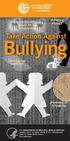 switching seats in the classroom stealing money Take Action Against Bullying spreading rumors pushing & tripping U.S. DEPARTMENT OF HEALTH & HUMAN SERVICES Substance Abuse and Mental Health Services Administration
Effective Treatment for Complex Trauma and Disorders of Attachment
 Effective Treatment for Complex Trauma and Disorders of Attachment By Meds Reactive Attachment Disorder is a severe developmental disorder caused by a chronic history of maltreatment during the first couple
Longitudinal Research on Game Effects and Implications for Public Policy Munich, Germany, November 20, 2008
 Douglas A. Gentile, Ph.D. Director, Media Research Lab, Iowa State University Director of Research, National Institute on Media and the Family Research Fellow, Institute on Science and Society Associate
/Journal of Deaf Education International, 3/, 123-136
 /Journal of Deaf Education International, 3/, 123-136 Deaf children s social relationships in mainstream schools i Terezinha Nunes, Ursula Pretzlik, & Jenny Olsson Department of Psychology, Oxford Brookes
Publishing multiple journal articles from a single data set: Issues and recommendations
 Publishing multiple journal articles from a single data set: Issues and recommendations By: Mark A. Fine and Lawrence A. Kurdek Fine, M. A., & Kurdek, L. A. (1994). Publishing multiple journal articles
Psychology Courses (PSYCH)
 Psychology Courses (PSYCH) PSYCH 545 Abnormal Psychology 3 u An introductory survey of abnormal psychology covering the clinical syndromes included in the diagnostic classification system of the American
The Normative Beliefs about Aggression Scale [NOBAGS] (Oct 1998/Oct 2011)
![The Normative Beliefs about Aggression Scale [NOBAGS] (Oct 1998/Oct 2011)](/thumbs/40/21089076.jpg "The Normative Beliefs about Aggression Scale [NOBAGS] (Oct 1998/Oct 2011)") 1 The Normative Beliefs about Aggression Scale [NOBAGS] (Oct 1998/Oct 2011) Copyright 1989 by L.R. Huesmann, N.G. Guerra, L. Miller & A. Zelli University of Illinois at Chicago For information please contact:
1 The Normative Beliefs about Aggression Scale [NOBAGS] (Oct 1998/Oct 2011) Copyright 1989 by L.R. Huesmann, N.G. Guerra, L. Miller & A. Zelli University of Illinois at Chicago For information please contact:
Child Behavior Checklist/4-18 Achenbach, T. M. 1991
 Description of Measure Child Behavior Checklist/4-18 Achenbach, T. M. 1991 Purpose To obtain caregiver report of children's competencies and behavior problems in a standardized format. Conceptual Organization
The Making Choices Program: Social Problem- Solving Skills for Children
 The Making Choices Program: Social Problem- Solving Skills for Children Mark W. Fraser James K. Nash Maeda J. Galinsky Kathleen M. Darwin University of North Carolina School of Social Work Chapel Hill,
Naturalistic Observations of Peer Interventions in Bullying
 Naturalistic Observations of Peer Interventions in Bullying D. Lynn Hawkins, Debra J. Pepler, York University and Wendy M. Craig, Queen s University Abstract This study examined peer intervention in bullying
NEW PERSPECTIVES ON BULLYING PREVENTION: WHY ARE CURRENT PROGRAMS NOT WORKING?
 NEW PERSPECTIVES ON BULLYING PREVENTION: WHY ARE CURRENT PROGRAMS NOT WORKING? Dorothy L. Espelage, Ph.D. Professor, Child Development Division; Educational Psychology [email protected] This research
Standards for the School Social Worker [23.140]
![Standards for the School Social Worker [23.140]](/thumbs/40/21507228.jpg "Standards for the School Social Worker [23.140]") Standards for the School Social Worker [23.140] STANDARD 1 - Content The competent school social worker understands the theories and skills needed to provide individual, group, and family counseling; crisis
Standards for the School Social Worker [23.140] STANDARD 1 - Content The competent school social worker understands the theories and skills needed to provide individual, group, and family counseling; crisis
A Study of the Relationship between Violent Video Game Playing and Aggression among Adolescents in the Klang Valley, Malaysia
 2011 International Conference on Humanities, Society and Culture IPEDR Vol.20 (2011) (2011) IACSIT Press, Singapore A Study of the Relationship between Violent Video Game Playing and Aggression among Adolescents
ACADEMIC DIRECTOR: Carla Marquez-Lewis Email Contact: THE PROGRAM Career and Advanced Study Prospects Program Requirements
 Psychology (BA) ACADEMIC DIRECTOR: Carla Marquez-Lewis CUNY School of Professional Studies 101 West 31 st Street, 7 th Floor New York, NY 10001 Email Contact: Carla Marquez-Lewis, [email protected]
Adolescent Depression and Attachment Ima G. Student Purdue University
 Heading (on all pages): running head plus page number Adolescent Depression 1 Running Head: ADOLESCENT DEPRESSION Running head (a shortened version of the title is defined on the title page and used in
Basic Concepts in Research and Data Analysis
 Basic Concepts in Research and Data Analysis Introduction: A Common Language for Researchers...2 Steps to Follow When Conducting Research...3 The Research Question... 3 The Hypothesis... 4 Defining the
YALE UNIVERSITY Department of Psychology 2 Hillhouse Avenue, New Haven, Connecticut 06520
 YALE UNIVERSITY Department of Psychology 2 Hillhouse Avenue, New Haven, Connecticut 06520 S180: Abnormal Psychology Instructor: David Klemanski Location: Kirtland Hall, Room 207 Day/Time: Tuesdays and
Curriculum Vitae Erin K. Shoulberg
 August, 2011 Curriculum Vitae Erin K. Shoulberg CONTACT INFORMATION Department of Psychology University of Vermont 2 Colchester Avenue Burlington, Vermont 05405 (518) 796-1198 Email: [email protected]
For more than 100 years, extremely hyperactive
 8 WHAT WE KNOW ADHD Predominantly Inattentive Type For more than 100 years, extremely hyperactive children have been recognized as having behavioral problems. In the 1970s, doctors recognized that those
Running head: SAMPLE FOR STUDENTS 1. Sample APA Paper for Students Interested in Learning APA Style 6th Edition. Jeffrey H. Kahn
 Running head: SAMPLE FOR STUDENTS 1 Sample APA Paper for Students Interested in Learning APA Style 6th Edition Jeffrey H. Kahn Illinois State University Author Note Jeffrey H. Kahn, Department of Psychology,
B.A. Programme. Psychology Department
 Courses Description B.A. Programme Psychology Department 2307100 Principles of Psychology An introduction to the scientific study of basic processes underlying human and animal behavior. Sensation and
SHORT REPORT Follow the liar: the effects of adult lies on children s honesty
 Developmental Science 17:6 (2014), pp 977 983 DOI: 10.1111/desc.12171 SHORT REPORT Follow the liar: the effects of adult lies on children s honesty Chelsea Hays 1 and Leslie J. Carver 1,2 1. Department
Chapter 1 Assignment Part 1
 Chapter 1 Assignment Part 1 Careers in Psychology 1. Which of the following psychological professionals must always have a medical degree? a. psychologist b. psychiatric social worker c. psychiatrist d.
A PROSPECTIVE EVALUATION OF THE RELATIONSHIP BETWEEN REASONS FOR DRINKING AND DSM-IV ALCOHOL-USE DISORDERS
 Pergamon Addictive Behaviors, Vol. 23, No. 1, pp. 41 46, 1998 Copyright 1998 Elsevier Science Ltd Printed in the USA. All rights reserved 0306-4603/98 $19.00.00 PII S0306-4603(97)00015-4 A PROSPECTIVE
Course Descriptions Psychology
 Course Descriptions Psychology PSYC 1520 (F/S) General Psychology. An introductory survey of the major areas of current psychology such as the scientific method, the biological bases for behavior, sensation
Psychology. REQUIREMENTS FOR A MAJOR IN PSYCHOLOGY (B.A.): 12 courses (45-49 credits)
 Psychology MAJOR, MINOR PROFESSORS: Bonnie B., George W. (chair) ASSOCIATE PROFESSORS: Richard L. ASSISTANT PROFESSOR: Tiffany A. The core program in psychology emphasizes the learning of representative
Cognitive Behavior Group Therapy in Mathematics Anxiety
 299 Journal of the Indian Academy of Applied Psychology July 2009, Vol. 35, No. 2, 299-303. Cognitive Behavior Group Therapy in Mathematics Anxiety Ayatollah Karimi and S Venkatesan All Indian Institute
Association between substance use, personality traits, and platelet MAO activity in preadolescents and adolescents
 Addictive Behaviors 28 (2003) 1507 1514 Short Communication Association between substance use, personality traits, and platelet MAO activity in preadolescents and adolescents Liis Merenäkk a, Maarike Harro
Al Ahliyya Amman University Faculty of Arts Department of Psychology Course Description Psychology
 Al Ahliyya Amman University Faculty of Arts Department of Psychology Course Description Psychology 0731111 Psychology And Life {3}[3-3] Defining humans behavior; Essential life skills: problem solving,
The relationship among alcohol use, related problems, and symptoms of psychological distress: Gender as a moderator in a college sample
 Addictive Behaviors 29 (2004) 843 848 The relationship among alcohol use, related problems, and symptoms of psychological distress: Gender as a moderator in a college sample Irene Markman Geisner*, Mary
The Incredible Years Program Series: Evaluation Methods
 The Incredible Years Program Series: Evaluation Methods Parenting Program Claims Evaluation Methods Evidence of Efficacy 4-8 year old children diagnosed with conduct problems whose parents received The
Integration of Children with Developmental Disabilities in Social Activities. Abstract
 JOURNAL ON DEVELOPMENTAL DISABILITIES, VOLUME 10, NUMBER 1, 2003 Integration of Children with Developmental Disabilities in Social Activities Abbie Solish, Patricia Minnes and Anthony Kupferschmidt Abstract
NORTHERN VIRGINIA COMMUNITY COLLEGE PSYCHOLOGY 211 - RESEARCH METHODOLOGY FOR THE BEHAVIORAL SCIENCES Dr. Rosalyn M.
 NORTHERN VIRGINIA COMMUNITY COLLEGE PSYCHOLOGY 211 - RESEARCH METHODOLOGY FOR THE BEHAVIORAL SCIENCES Dr. Rosalyn M. King, Professor DETAILED TOPICAL OVERVIEW AND WORKING SYLLABUS CLASS 1: INTRODUCTIONS
M.A. DEGREE EXAMINATION, DECEMBER 2009. First Year. Psychology. Answer any FIVE of the following questions. Each question carries 15 marks.
 (DPSY 01) First Year Paper I GENERAL PSYCHOLOGY 1. Explain the definition and scope of psychology. 2. Explain the patterns of brain and behavior in human psychology? 3. Write about perceptual constancy
Identification of Sluggish Cognitive Tempo by Teachers
 University of Northern Iowa UNI ScholarWorks Annual Graduate Student Symposium 2015 Annual Graduate Student Symposium Apr 1st, 2:00 PM - 4:00 PM Identification of Sluggish Cognitive Tempo by Teachers Rachel
An Examination of the Association Between Parental Abuse History and Subsequent Parent-Child Relationships
 An Examination of the Association Between Parental Abuse History and Subsequent Parent-Child Relationships Genelle K. Sawyer, Andrea R. Di Loreto, Mary Fran Flood, David DiLillo, and David J. Hansen, University
Drug Abuse Prevention Training FTS 2011
 Drug Abuse Prevention Training FTS 2011 Principles of Prevention Prevention programs should enhance protective factors and reverse or reduce risk factors (Hawkins et al. 2002). The risk of becoming a drug
A Parent Management Training Program for Parents of Very Young Children with a Developmental Disability
 A Parent Management Training Program for Parents of Very Young Children with a Developmental Disability Marcia Huipe April 25 th, 2008 Description of Project The purpose of this project was to determine
Teacher Management of Classroom Social Dynamics in Elementary School Opportunities for Professional Development & Intervention
 Teacher Management of Classroom Social Dynamics in Elementary School Opportunities for Professional Development & Intervention Scott D. Gest Human Development & Family Studies Prevention Research Center
What will I study? Year One core modules currently include:
 What will I study? Year One core modules currently include: Introduction to Psychology You will examine how psychology research is conducted and interpreted; a range of perspectives in psychology, including
BOK Course Title Course Description Access to Children
 ECE Online Courses Course Number BOK Course Title Course Description Access to Children 18CI1001 TI Educational Technology This course encompasses effectively analyzing, designing, Must videotape a developing,
Caroline Bill Robertson Evans
 Caroline Bill Robertson Evans Curriculum Vitae University of North Carolina School of Social Work 325 Pittsboro Street, CB# 3550 Chapel Hill, NC 27599-3550 919-962- 1225 EDUCATION 2015 (expected) PhD University
Research Proposal: Social Support, Stress, and Adaptation in Immigrant Youth. Mary J. Levitt. Florida International University
 1 Running Head: SOCIAL SUPPORT, STRESS, AND ADAPTATION Research Proposal: Social Support, Stress, and Adaptation in Immigrant Youth Mary J. Levitt Florida International University Note. This is a sample
PSYCHOLOGY. Professor McKenna Associate Professors Maxwell (chair) and Templeton Assistant Professors Bruininks and Peszka
 PSYCHOLOGY Professor McKenna Associate Professors Maxwell (chair) and Templeton Assistant Professors Bruininks and Peszka MAJOR A total of 10 courses distributed as follows: PSYC 290 Statistics PSYC 295
Perception of drug addiction among Turkish university students: Causes, cures, and attitudes
 Addictive Behaviors 30 (2005) 1 8 Perception of drug addiction among Turkish university students: Causes, cures, and attitudes Okan Cem Çırakoğlu*, Güler Içnsın Faculty of Economic and Administrative Sciences,
Master of Arts in Psychology
 Master of Arts in Psychology Administrative Unit This program is administered by the Office of Graduate Studies and Research through the faculty of Psychology, Department of Psychology, College of Arts
COMPARISONS OF CUSTOMER LOYALTY: PUBLIC & PRIVATE INSURANCE COMPANIES.
 277 CHAPTER VI COMPARISONS OF CUSTOMER LOYALTY: PUBLIC & PRIVATE INSURANCE COMPANIES. This chapter contains a full discussion of customer loyalty comparisons between private and public insurance companies
Sense of Community (SOC) as a Predictor of Adult Learner Persistence in Accelerated Degree Completion Programs (ADCPs)?
 Sense of Community (SOC) as a Predictor of Adult Learner Persistence in Accelerated Degree Completion Programs (ADCPs)? Michael O. Minor, EdD [email protected] The University of Phoenix John Sperling
PSYCHOLOGY DEPARTMENT GOALS, OBJECTIVES, AND MEASURES
 PSYCHOLOGY DEPARTMENT GOALS, OBJECTIVES, AND MEASURES The goals and directives for the psychology major are taken directly from the work of the Task Force on Undergraduate Psychology Major competencies
Measuring critical thinking, intelligence, and academic performance in psychology undergraduates
 The Irish Journal of Psychology 2009 Vol. 30 No. 3-4 pp. 123-131 Copyright 2009 by The Psychological Society of Ireland ISSN 0303-3910 Measuring critical thinking, intelligence, and academic performance
Al Ahliyya Amman University Faculty of Arts Department of Psychology Course Description Special Education
 Al Ahliyya Amman University Faculty of Arts Department of Psychology Course Description Special Education 0731111 Psychology and life {3} [3-3] Defining humans behavior; Essential life skills: problem
Chapter 1: Educational Psychology - A Foundation for Teaching. 1. Define educational psychology and state its main purpose.
 LEARNING OBJECTIVES Educational Psychology - Slavin, Ninth Edition Psychology 207 Mr. Conjar Chapter 1: Educational Psychology - A Foundation for Teaching 1. Define educational psychology and state its
Division of Child and Family Services Treatment Plan Goal Status Review Aggregate Report
 I. Introduction Division of Child and Family Services Treatment Plan Goal Status Review Aggregate Report The more efficient and effective the delivery of our services, the greater our opportunity for realizing
Chapter 13. Prejudice: Causes and Cures
 Chapter 13 Prejudice: Causes and Cures Prejudice Prejudice is ubiquitous; it affects all of us -- majority group members as well as minority group members. Prejudice Prejudice is dangerous, fostering negative
ADVANCED DIPLOMA IN COUNSELLING AND PSYCHOLOGY
 ACC School of Counselling & Psychology Pte Ltd www.acc.edu.sg Tel: (65) 6339-5411 9 Penang Road #13-22 Park Mall SC Singapore 238459 1) Introduction to the programme ADVANCED DIPLOMA IN COUNSELLING AND
Progress Report Phase I Study of North Carolina Evidence-based Transition to Practice Initiative Project Foundation for Nursing Excellence
 Progress Report Phase I Study of North Carolina Evidence-based Transition to Practice Initiative Project Foundation for Nursing Excellence Prepared by the NCSBN Research Department INTRODUCTION In 2006,
2015-2016 Academic Catalog
 2015-2016 Academic Catalog Autism Behavioral Studies Professors: Kuykendall, Rowe, Director Assistant Professors: Fetherston, Mitchell, Sharma, Sullivan Bachelor of Science in Autism Behavioral Studies
Secondary Family and Consumer Sciences Students Teaching Young Children: Importance of Using Developmentally Appropriate Lessons
 Journal of Family and Consumer Sciences Education, 30(1), Spring/Summer2012 Secondary Family and Consumer Sciences Students Teaching Young Children: Importance of Using Developmentally Appropriate Lessons
Standards for the School Counselor [23.110]
![Standards for the School Counselor [23.110]](/thumbs/25/6617639.jpg "Standards for the School Counselor [23.110]") II. STANDARDS FOR THE SCHOOL SERVICE PERSONNEL CERTIFICATE Standards for the School Counselor [23.110] STANDARD 1 - Academic Development Domain The competent school counselor understands the learning process
II. STANDARDS FOR THE SCHOOL SERVICE PERSONNEL CERTIFICATE Standards for the School Counselor [23.110] STANDARD 1 - Academic Development Domain The competent school counselor understands the learning process
The WISC III Freedom From Distractibility Factor: Its Utility in Identifying Children With Attention Deficit Hyperactivity Disorder
 The WISC III Freedom From Distractibility Factor: Its Utility in Identifying Children With Attention Deficit Hyperactivity Disorder By: Arthur D. Anastopoulos, Marc A. Spisto, Mary C. Maher Anastopoulos,
Parent-Child Relationships in Early Childhood and Development of Anxiety & Depression
 Parent-Child Relationships in Early Childhood and Development of Anxiety & Depression JENNIFER L. HUDSON, PhD Centre for Emotional Health, Department of Psychology, Macquarie University, AUSTRALIA Topic
G.F. Huon School of Psychology, University of New South Wales, Sydney, Australia
 INTERVIEWING AND OBSERVATION G.F. Huon School of Psychology, University of New South Wales, Sydney, Australia Keywords: Unobtrusive observation, systematic observation, ethical considerations, reactivity,
Relational Aggression and Subjective Well- Being in Independent Senior Living Communities
 Relational Aggression and Subjective Well- Being in Independent Senior Living Communities By Jacquelyn Benson, MA, Senior Research Associate Mather LifeWays Institute on Aging both the quantity and quality
Computer-based testing: An alternative for the assessment of Turkish undergraduate students
 Available online at www.sciencedirect.com Computers & Education 51 (2008) 1198 1204 www.elsevier.com/locate/compedu Computer-based testing: An alternative for the assessment of Turkish undergraduate students
Can Personality Be Used to Predict How We Use the Internet?
 July 2002, Vol. 4 Issue 2 Volume 4 Issue 2 Past Issues A-Z List Usability News is a free web newsletter that is produced by the Software Usability Research Laboratory (SURL) at Wichita State University.
Position Statement EFFECTIVE PARENTING: POSITIVE SUPPORT FOR FAMILIES AND THEIR CAREGIVERS
 Position Statement EFFECTIVE PARENTING: POSITIVE SUPPORT FOR FAMILIES AND THEIR CAREGIVERS The National Association of School Psychologists (NASP) recognizes the tremendous impact families 1 have on children
Assessment, Case Conceptualization, Diagnosis, and Treatment Planning Overview
 Assessment, Case Conceptualization, Diagnosis, and Treatment Planning Overview The abilities to gather and interpret information, apply counseling and developmental theories, understand diagnostic frameworks,
Discipline and Intergenerational Transmission
 Discipline 1 Discipline and Intergenerational Transmission Aria Snyder and Samantha Bub Undergraduate Students: Human Development and Family Studies Key Words: discipline practices, intergenerational transmission,
International Online Journal of Educational Sciences, 2012, 4 (3), 519-528. International Online Journal of Educational Sciences
 International Online Journal of Educational Sciences www.iojes.net ISSN: 1309-2707 Impact of Anxiety on the Academic Achievement of Students Having Different Mental Abilities at University level in Bahawalpur