
Bankruptcy and Problem Gambling FAQ
|
|
|
- Ashlie Wright
- 10 years ago
- Views:
Transcription
1 Bankruptcy and Problem Gambling FAQ By Karen Adler Trustee in Bankruptcy Rumanek & Company Ltd. Bankruptcy Basics Consumer Proposals The Bankruptcy Process Common Issues in Consumer Bankruptcies Bankruptcy and Gambling Glossary of Terms BANKRUPTCY BASICS What is bankruptcy? Bankruptcy is a process permitted to any person who lives, works, or has property in Canada, owes at least $1,000, and is unable to meet his obligations as they come due (or whose assets, if sold, would not pay off his liabilities). When a person cannot meet his debt obligations, he has a right under federal law to assign everything he owns to a third party, known as a Trustee, who is entrusted to liquidate the person s available assets, if any, and distribute the proceeds to the creditors. The Bankruptcy process strives for a balance among the rights of the debtor to obtain relief from her debts, the rights of the creditors to be repaid, and the public confidence in the integrity of Canada s insolvency system. Are there different types of bankruptcies? There are two types of bankruptcies, the legal terms for which are summary administration and ordinary administration. Where there are few assets available to creditors (under $15,000), the bankruptcy is usually administered as a summary administration, a streamlined process that eliminates a great deal of the paperwork involved in more complex files. Ordinary administration files are those with significant assets (over $15,000) or an expectation of legal or other difficulties. How is bankruptcy in Canada regulated? Bankruptcy is regulated by the Office of the Superintendent of Bankruptcy (the OSB), which has division offices across Canada. The laws governing the insolvency system are contained in the Bankruptcy and Insolvency Act. What is a trustee in bankruptcy? Trustee in bankruptcy refers both to an individual who is licensed to administer bankruptcies, and the corporate entity with which individual trustees may be affiliated. Only a licensed trustee is permitted to administer bankruptcies in Canada. Trustees, both corporate and individual, are often referred to as the

2 trustee, or it, where circumstances dictate, in order to emphasize that the trustee acts not in a personal capacity but as representative of its many roles and interests. Rights of the Debtor: Under the Bankruptcy and Insolvency Act, creditors are required by law to stop all collection action, and may communicate only with the trustee. This means that collection calls, lawsuits or wage garnishees are not permitted (child support is one important exception). Any existing garnishees stop as of the date of bankruptcy. The rules pertaining to Canada Revenue Agency (CRA) may be slightly different pending on circumstances consult a trustee for more information. It is important to note, however, that the debtor is not the client, and the trustee is not the debtor s friend. Because the trustee represents many conflicting interests, there is no solicitor client privilege or rights of confidentiality with a trustee. The trustee must sometimes be adversarial toward the interests of the bankrupt; it is a regular occurrence that a trustee will strongly recommend to a debtor that she obtain independent legal counsel to protect her interests. Rights of the Creditors: The creditors rely on the trustee to pay them their share of whatever funds are available, and may benefit in the following ways: When a bankrupt person has assets such as surplus income, a second car, a bonus, or a share in a property, she is required to either turn them over to the trustee or pay in their sale value, for eventual distribution to the creditors. Creditors benefit from the trustee s right and responsibility to investigate, and sometimes overturn, fraudulent transactions (e.g. cashing an investment, repaying a debt to a family member, or transferring title of a house in the months prior to bankruptcy) in order to recover funds that rightfully belong to the creditors. The trustee distributes the money to creditors according to how much they are owed, so each creditor is treated equitably. The Integrity of the Insolvency System: The insolvency system certifies trustees to administer the laws and implement the principles of the Bankruptcy and Insolvency Act. The trustee is required to report to creditors and the Court if the debtor has acted outside the spirit of the law. The image of a person spending excessively prior to filing for bankruptcy, but outside the statutory period, offends the integrity of the insolvency system. The trustee is required to report these facts, not just to the creditors, but to the OSB and the Court as well. How much does it cost to go bankrupt? In a summary administration, a trustee in bankruptcy is paid for its work, most of which is administrative, through a tariff set within the Bankruptcy and Insolvency Act. This is why most trustees charge the same amount for the basic administration of a bankruptcy. Additional payments must be made where there is higher than average income or assets, a recent transfer of property, or cashing of investments. Tax refunds for the year of bankruptcy (and the prior year if returns have not yet been filed) also go to the estate for the benefit of the creditors. What if a person cannot pay the basic fee? The OSB has a program called the Bankruptcy Assistance Program, or BAP. Trustees elect to participate in the program, and the local Official Receiver s office will refer the person to a participating trustee. There is an

3 upfront cost to cover the trustee s disbursements, and HST credits, income tax refunds, and other realizations cover the difference. Does a trustee take everything away from a bankrupt? According to provincial law, certain assets are exempt from seizure. In Ontario this includes a specified resale (not replacement) value for household furniture and appliances, personal effects, one car, tools of trade and RRSPs (less the last 12 months of contributions). The values of the exempt property are generally determined by estimating how much the person will earn from a garage or online sale of the items. For example: A dining-room set may cost $4,000 to replace, but its resale value may be only $500. The household goods exemption of $11,300 (in Ontario) easily covers most peoples household furniture and appliances for this reason. One car whose resale value is less than $5,650 (in Ontario) is exempt, and the trustee has no interest in it. The value of a car can often be estimated by going to a dealership and asking how much they would give for the car, on the spot (as opposed to it s trade-in value). If the car is worth more than the exemption, arrangements must be made with the trustee to pay the difference. A car is worth $4700. The trustee has no interest, and nothing further needs to be paid A car is worth $7400. The debtor must arrange a payment of $1750 ($7400 less $5650) to the trustee. A person has two cars, one worth $6000, the other worth $2000. The exemption may be applied to the more valuable vehicle. The debtor would have to pay $350 in respect of the more valuable car, plus $2000 to address the second car. Note: If the car is financed, the debtor should consider whether the car is worth the amount still owed on it. If the car is leased, the debtor should decide whether the payments and the buyback are outweighed by the resale value of the vehicle. If the payments are up to date, and the debtor wants to keep the car, the leasing or finance company may permit the payments to continue. If there are several months of arrears, the car could be repossessed. Sometimes the payments are so high that the best solution is to return the vehicle to the leasing or finance company. If the car is returned, any shortfall is covered by the bankruptcy. An RRSP is exempt except for any contributions made in the 12 months prior to the bankruptcy. Those amounts are to be paid to the trustee, either by the debtor, or directly from the investment company. What assets can be seized by the trustee? 1. High family income, or Surplus Income Note that high income is relative. If you compare a single person who earns $3,800 per month with a single mother of three who earns the same, it is reasonable that, in the absence of other differences, the individual is required to pay more than the single mother in a bankruptcy. Calculations are based on income, family size, childcare or medical expenses and other considerations. Payments into a bankruptcy are calculated according to a formula set by the Bankruptcy Act and a threshold set annually by the Office of the Superintendent of Bankruptcy (OSB). This amount is called surplus income. Since the amendments of September 18, 2009, a first-time bankrupt with surplus income remains in bankruptcy for 21 months if there is no opposition to her discharge; a second-time bankrupt remains for 36 months if no opposition to his discharge is filed. If the surplus income payments are not made,

4 however, an opposition would be filed by the trustee, and the payments would become a condition of discharge (see below). The amendments have the effect of encouraging wherever possible the filing of a consumer proposal (see below) instead of a bankruptcy. 2. Investments Note that an RESP, for example, may contain $2,500, but if liquidated may only realize $1,800. The bankrupt has the option to keep the RESP and pay the trustee $1,800, or to allow the fund to be cashed in by the trustee. 3. A second vehicle A bankrupt is generally entitled to keep one vehicle. This does not mean a second car (or motorcycle or boat) must be given up, only that the resale value of the second vehicle must be paid into the estate. 4. Severance package or bonus A severance package that represents income lost during the period of the bankruptcy is subject to surplus income calculations, the same way that the actual income would be. A severance amount is divided over the number of months to which it applies and the calculation is done as though that was the monthly income. A bonus is considered a windfall rather than income, so it belongs to the trustee for the creditors. How might debtors react to the bankruptcy process? Debtors often believe that by signing bankruptcy documents, they are free and clear of their obligations. It is not uncommon for them to become upset by the trustee s seizure of their property. This is where the trustee is required to be more adversarial, and may recommend that the debtor retain a lawyer to protect his interests. (Remember, the debtor is not the client.) The trustee represents many interests, including the integrity of the insolvency system. For example: A person who saves $100 every month for her child s education but skips her line of credit payment is not saving her own money. She is putting away the bank s $100 and calling it her own. A person who finances a computer had better be prepared to pay for it, even in a bankruptcy. If not, the finance company has every right to repossess the computer. A person who loses her $1,000 employee bonus but is in the process of shedding $100,000 in debt by filing a bankruptcy should be able to weigh the benefits against the loss of that bonus.

5 CONSUMER PROPOSALS Is there an alternative to bankruptcy? The BIA provides an alternative process for those who are insolvent and require the intervention of a trustee, but for one reason or another wish to avoid bankruptcy. A person who owes less than $250,000 in total (excluding mortgages on his principal residence) may file a Consumer Proposal instead of a bankruptcy. In a consumer proposal, the debtor reviews her financial situation with a trustee and works out how much she can afford to pay on a monthly basis. The amount expected to be realized in a theoretical bankruptcy (based on surplus income and asset realization) The trustee presents the offer to the creditors, who vote based on the amount they are owed. If a basic majority of creditors, as represented by the amounts owed to them, is in favour, the proposal is considered accepted. As long as monthly payments are made on time, and are never behind by 3 months, the debts are eliminated upon completion of the proposal. If creditors do not accept the proposal, a meeting is called at which time the debtor has the opportunity to reframe the proposal with more favourable terms. Debtors should be cautioned that falling behind by the value of three payments will automatically annul the consumer proposal ( deemed annulment ). Advantages to consumer proposals over bankruptcy: Assets are under less scrutiny than in bankruptcy, and are not seized by the trustee; There is no requirement to pay surplus income; Payments are steady, and can be spread over a period up to five years; There is no investigation into improper conduct (beyond that which the trustee may wish to have on file); The debtor may feel less shame at the prospect, considering that he is making an offer to the creditors, rather than walking away from his responsibilities ; There is no Court hearing. Disadvantages of consumer proposals: Proposals are almost always considerably more expensive than bankruptcy; Fluctuations in income can make regular payments difficult; Deemed annulment can be costly, as no payments will be returned to the debtor if the proposal fails.

6 THE BANKRUPTCY PROCESS What is the timeline of a bankruptcy? While each file is different, the basic process is the same. 1. Intake interview: The trustee collects personal information. Debts and assets are outlined, recent major transactions and reasons for financial difficulty are discussed, family income and expenses are calculated and options are reviewed. The debtor is given a copy of the brochure Dealing With Debt to introduce the person to the options and implications of the bankruptcy process in Canada. When gambling is involved, the trustee tries to get a sense of how gambling has affected the debtor, and how much debt has been incurred as a result. 2. Signing of documents: In a stressful situation such as bankruptcy, a person will generally sign what is given to them. A conscientious trustee will review the bankruptcy documents with the debtor to ensure that the debtor understands what he or she is signing. 3. E-filing and notification to creditors: The bankruptcy becomes official once the trustee receives a file number from the OSB. At that moment, the debtor is protected by the Bankruptcy and Insolvency Act and all recovery action from creditors must cease (unless they have direct permission of the Court to continue). Creditors are sent a package that includes key documents and a form used to prove their claim. While the debts are addressed by the bankruptcy, they are not dissolved (or cleared) until the bankruptcy is discharged. Creditors who are unfamiliar with the bankruptcy process may be reluctant to stop their pursuit of the debtor. The trustee will intervene in such situations. 4. Counselling sessions: First counselling session: This session covers budgeting, spending and use of credit. It is helpful for many, although others may not be ready for such a controlled approach of their expenses. Second counselling session: This session covers what progress has been made in managing finances, how to avoid difficulties in the future, and whether outside counselling such as gambling counselling is needed, if this has not been discussed previously. 5. Cashing in (realization) of assets. This is the amount received by the trustee after selling an asset (such as a condo) for its cash value and repaying any amount secured by that asset (i.e., the mortgage loan). Also refers to the funds received after collapsing an investment. 6. Section 170 report, the trustee s report on the bankrupt s Application for Discharge : This is the report listing the main issues with respect to the file, including realization of assets, current income, gambling, resale of goods purchased on credit and not paid for, transfer of property, prior bankruptcy and other issues. This report is generally referred to in Court when discussing the bankrupt individual s circumstances. Where gambling is not a factor in the bankruptcy, a person who is bankrupt for the first time may be eligible for an automatic discharge after nine months. Where gambling is a factor, discharge is not effective until after a Court hearing is held, and any conditions and/or suspensions imposed by the Court have been met. 7. Court hearing: Bankrupts listing gambling as a cause of bankruptcy are generally required to attend Court to present the details of their circumstances and the causes and results of their gambling. 8. Discharge of bankrupt: Once Court-imposed conditions have been met, and required suspension period has elapsed, the bankrupt is eligible for a discharge. Discharge from bankruptcy means that all debts owed at the date of bankruptcy are gone, and the debtor no longer owes any more money. There are

7 exceptions, such as child support arrears, student loans, judgments for motor vehicle accidents, and similar obligations that are not discharged by the discharge of a bankrupt. 9. Discharge of trustee: Once administration of a file is complete, or, where the bankrupt is undischarged, with permission of the Court, the trustee is required to close the file. If the bankrupt is discharged when the trustee is discharged, the file is closed and completed. If the bankrupt is not discharged, he or she is no longer protected by the trustee. In that case, the debtor is in a position similar to his or her position before filing. Obtaining a discharge at this point will generally require an additional payment to the trustee for reactivating the file. COMMON ISSUES IN CONSUMER BANKRUPTCIES Does the bankrupt lose his house? Not necessarily. The trustee is not interested in the house itself. The trustee is only interested in the realization on the house, or the bankrupt s share of the equity in the property. The trustee does its best to figure out how much the house would be valued at if the house were sold. The calculation is based on the bankrupt s share of the property, the appraised value of the house and the mortgages against it. In most cases, the trustee will accept a payment arrangement so that the creditors can receive fair value for the bankrupt s share of the equity, and the bankrupt can keep the house. Sometimes, though, it really is better for the bankrupt to walk away from the house, if the costs of staying far outweigh the benefits. Any shortfall or penalty resulting from leaving the house would be covered by the bankruptcy, as long as no further mortgage payments are made after signing the documents. What are joint debts? How are joint debts dealt with in a bankruptcy? A joint debt is an obligation to pay involving more than one person. Joint debts are generally considered joint and several, which means that each person who signed for the debt is responsible for the entire amount until the amount is paid in full. For example, if an overdraft on a joint account is $1,500, each spouse is responsible for the full $1,500 until the amount is paid in full. If an individual, let s say Bill, is unable to get a loan on his own, and has his brother co-sign a loan of $15,000. If Bill goes bankrupt, his brother is responsible for the entire unpaid balance, up to $15,000. Where there is a credit card co-signed by another person, the co-signor is fully responsible for the entire debt. If the other person has a supplementary card, the liability is usually only for the amount spent on that particular card. Assets, on the other hand, are considered shared. In the case of a couple, a $2,500 boat registered in both names requires that the bankrupt spouse pay only $1,250 to the trustee. So, the debtor only has to address half of the house, half of the RESP or half of the value of the second car (if these assets are held at with another person). Can a bankrupt ever get credit or a mortgage again? The credit bureaus keep a record of a bankruptcy for seven years after a first-time bankruptcy, but credit card companies love discharged bankrupts and will often give them credit cards within one or two years. The difficulty lies in having an individual limit his use of credit. Buying a house generally requires at least one year post-discharge, but since the loan is secured by the house, the risk to the bank is much smaller than it would be for an unsecured loan.

8 BANKRUPTCY AND GAMBLING At what stage in a bankruptcy does gambling become an issue? The issue of gambling can come up at various points in an administration of bankruptcy, for example, when: the initial documents list gambling as a cause of bankruptcy; the second counselling session discusses outside intervention for gambling problems; the trustee s pre-discharge status report ( 170 report ) notes the fact of the gambling; and/or the debtor s discharge hearing. Isn t it enough to say the person has a gambling problem, and leave it at that? There are several concerns that must be addressed in respect of a person s gambling history: Is the gambling continuing? Has the person received counselling yet? Does he appear to be sincere in his attempts to overcome his desire to gamble? Where did the money come from in order to fund the gambling? Did the person obtain funds for gambling through fraudulent means? How serious is the problem? How much control did the person have over her gambling? Of course, this is difficult to evaluate, but we can get a rough idea of the seriousness of the gambling problem. For example, we can differentiate between a person who stops playing when his credit runs out (playing with other people s money), and the person who sells her family cottage in order to continue the gambling activity (gambling away her own assets). Has the person really been gambling at all? Sometimes when gambling is cited as a cause of bankruptcy, it is actually a convenient cover-up for something entirely different, such as supporting a family living elsewhere, paying off less legitimate debts or putting cash into a mattress. Compared with other addictive behaviours, why is gambling taken so seriously by the Courts? The Bankruptcy and Insolvency Act singles out gambling as a fact (under section 173 of the Act) that precludes obtaining an automatic discharge. Today we are aware of many other types of addiction, but only gambling has been codified in the bankruptcy legislation. For this reason, gambling is given special attention in the Courts, and registrars and judges are required to address this particular addiction in a different way from others. However, the objective of the bankruptcy Court is not to pass judgement, but to find a fair compromise between the debtor s unpaid gambling losses and the rights of the creditors to some recovery. The Judge or Registrar will ask questions to gain information about the bankrupt and her gambling history, in order to determine the best course of action considering the specifics of the situation. How does the Court decide on the appropriate approach to an individual s discharge where gambling has been a factor? The Court is very careful to distinguish between those who show the characteristics of addiction in respect of their gambling, and those who play beyond their ability to repay but are essentially in control. The types of conditions imposed on a bankrupt will always depend on his or her individual situation. The Court considers bankrupts who have lost their life savings, job and family to have demonstrated addictive behaviours in respect of their gambling. These are people whose conditions for discharge are rehabilitative.

9 On the other hand, bankrupts who ran out of money or credit may not have been acting outside of their control to the extent that those described above have. The gambling may have had characteristics of addiction, but these people were ultimately able to stop playing when funds were no longer readily available. Discharge for these debtors would likely be both rehabilitative and punitive, requiring a repayment to creditors through the trustee. Bankrupts who sold goods purchased on credit, or who have lied on credit applications in order to fund their gambling, are considered to have committed fraud. Such people may have been desperate, but they have still committed fraud, and the Court will impose stricter financial conditions on discharge when fraud has been involved. Conditions of discharge may include repayment requirement: payment of a portion of the debt lost in gambling, payment of amounts received after purchasing goods on credit and reselling for cash; and/or rehabilitative measures: written undertakings to be provided to the trustee for the OLG self-exclusion program, not gambling for a period of time, and not applying for or obtaining credit for a period of time. The Court may also impose a suspension of discharge, a time period during which a person remains in bankruptcy. A suspension of 6 months is typical for a standard second-time bankrupt. A suspension of several years is not uncommon when fraudulent activity (as punishment) or severe problem gambling (as a help measure) has been a factor.

10 GLOSSARY OF TERMS Asset: In the context of bankruptcy it means all the property of the debtor available for distribution for the general benefit of creditors (available for paying debts). Anything a person owns that has cash value. In most cases, most of a person s assets are exempt from seizure by a trustee. Bankrupt: A natural person or corporation who has made a voluntary assignment in bankruptcy or against whom a receiving order has been made. A person who has filed for bankruptcy. Bankruptcy and Insolvency Act (BIA): Federal legislation that addresses the administration of personal and business bankruptcies and proposals in Canada. The BIA overrides most other legislation in Canada; for this reason, bankruptcy is a very powerful remedy. Conditional Discharge: Sometimes the Court will impose conditions on the discharge of a bankrupt, such that the discharge is only effective once those conditions are met. Creditor: A person or company to whom a debtor owes money. A creditor must prove to the trustee the amount that is owed and the circumstances under which the funds or services were provided. Debtor: A person who has borrowed funds or received services from another and has not paid for them as originally agreed. A person who has filed a consumer proposal is technically a proponent, but most trustees use the term debtor instead, as distinct from bankrupt. Deemed annulment: A consumer proposal is deemed annulled when it falls behind by the value of three payments. There is a process for reactivation, but the trustee may require the missing three months payments before initiating the process, and the timeline for doing so is quite short. Discharge: The release of a debtor from the obligation to repay his or her debts. A bankrupt's discharge may be automatic, suspended, conditional or absolute. A bankrupt may also be refused discharge. Discharge from bankruptcy means that all debts owed at the date of bankruptcy are gone, and the debtor no longer owes any money, as long as no new debt has been incurred post-bankruptcy. Estate: The bankruptcy file, as administered by the trustee. Insolvent: The condition of being unable to pay debts as they become due, or in the ordinary course of business, or having liabilities that exceed the total value of assets. Insolvent person: A person who is not bankrupt and who lives, carries on business or has property in Canada, whose debts are at least $1000, and (a) who unable to pay his debts as they become due, (b) who has ceased paying his debts as they become due, or (c) the combination of whose property is not, at a fair value, sufficient to enable payment of all his obligations, due and coming due. Liquidate: To sell an asset for the purpose of obtaining its cash value. Office of the Superintendent of Bankruptcy (OSB): Office of the Superintendent of Bankruptcy, an agency of Industry Canada. The Office of the Superintendent of Bankruptcy supervises the administration of the Bankruptcy and Insolvency Act. The OSB has Division Offices throughout Canada. The department in the Canadian government dedicated to the administration of bankruptcies and regulation of trustees and other administrators. Ordinary administration: A bankruptcy in which assets exceed $15,000 and/or requires an unusual degree of legal or other intervention.

11 RESP: Registered Education Savings Plan. The value of an RESP is an asset of a bankrupt estate, and must be turned over to the trustee in a bankruptcy. Summary administration: A streamlined process for administering a bankruptcy in which realizable assets are expected not to exceed $15,000. Surplus income: The portion of an individual bankrupt's income that is required to be paid into the bankruptcy estate during the bankruptcy, as per standards established by the OSB. The calculation is based on family size, types and amounts of expenses, and guidelines set annually by the OSB. A first-time bankrupt with surplus income remains in bankruptcy for 21 months if there is no opposition to her discharge; a second-time bankrupt remains for 36 months if no opposition. Suspension of discharge: A Court-imposed delay in a person s discharge from bankruptcy. Trustee in bankruptcy: A person or company licensed by the federal Office of the Superintendent of Bankruptcy to administer bankruptcies and proposals in Canada.

Business Debtline www.businessdebtline.org 0800 0838 018 BANKRUPTCY
 BUSINESS DEBTLINE Business Debtline www.businessdebtline.org 0800 0838 018 BANKRUPTCY FACT SHEET NO. 10 NORTHERN IRELAND What is bankruptcy? Bankruptcy is a way of dealing with debts that you cannot pay.
The Basics of Bankruptcy and Insolvency Law. Jeffrey C. Carhart
 The Basics of Bankruptcy and Insolvency Law Jeffrey C. Carhart TYPES OF INSOLVENCY PROCEEDINGS Liquidation in Bankruptcy Proposals in Bankruptcy involving re-organizations or going concern sales Re-organizations
PINDER BUECKERT & ASSOCIATES INC. DUTIES, RESTRICTIONS, AND RESPONSIBILITIES IMPOSED ON A BANKRUPT
 PINDER BUECKERT & ASSOCIATES INC. DUTIES, RESTRICTIONS, AND RESPONSIBILITIES IMPOSED ON A BANKRUPT Many potential bankrupts have very little knowledge of the significance and implication of the Bankruptcy
Summary of Key Issues in Chapter 47 of the Statutes of Canada, 2005, and Chapter 36 of the Statutes of Canada, 2007
 Summary of Key Issues in Chapter 47 of the Statutes of Canada, 2005, and Chapter 36 of the Statutes of Canada, 2007 Both the Bankruptcy and Insolvency Act (BIA) and the Companies Creditors Arrangement
Date of Interview: NAME DURATION REASON FOR LEAVING. Marital status: Single Married Separated Divorced Widowed Common Law
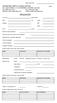 Date of Interview: CRAWFORD SMITH & SWALLOW INC. Page 1 531 LAKE STREET, ST. CATHARINES, ONTARIO L2N 4H6 Tel: (905) 937-2100 Fax: (905) 937-7363 Website: www.crawfordss.com Email: [email protected] APPLICATION
Bankruptcy Questions. FAQ > Bankruptcy Questions WHAT IS CHAPTER 7 BANKRUPTCY?
 FAQ > Bankruptcy Questions Bankruptcy Questions WHAT IS CHAPTER 7 BANKRUPTCY? Chapter 7 bankruptcy is sometimes called a straight bankruptcy or a liquidation proceeding. The number one goal in an individual
What is Credit? What Different Types of Credit Are Available?
 Credit and Debt What is Credit? Credit is a contract between a lender, such as a bank, a credit card company, or a store, and an individual or company. The lender provides the money or access to money,
A voluntary bankruptcy under the BIA commences when a debtor files an assignment in bankruptcy with the Office of the Superintendent of Bankruptcy.
 Bankruptcy and Restructuring 121 BANKRUPTCY AND RESTRUCTURING Under Canadian constitutional law, the federal government has exclusive legislative control over bankruptcy and insolvency matters. Insolvency
MABS Guide to the Personal Insolvency Act, 2012
 MABS Guide to the Personal Insolvency Act, 2012 DISCLAIMER: This Guide is for general information purposes only and does not constitute legal, financial or other professional advice. Specific advice should
Bankruptcy Guide for Beginners
 Bankruptcy Guide for Beginners Answers to 20 common bankruptcy questions We hope you find this guide useful and informative. We look forward to helping you eliminate debt and get a fresh financial start.
WHAT BANKRUPTCY CAN T DO
 A decision to file for bankruptcy should only be made after determining that bankruptcy is the best way to deal with your financial problems. This brochure cannot explain every aspect of the bankruptcy
ENGLISH BANKRUPTCY PROCEDURE GUIDE. A bankruptcy is deemed to commence on the date of the bankruptcy order.
 ENGLISH BANKRUPTCY PROCEDURE GUIDE A bankruptcy is deemed to commence on the date of the bankruptcy order. The advantages of a bankruptcy to a debtor are: automatic discharge after 1 year; vast majority
Insolvency and. Business Recovery. Procedures. A Brief Guide. Compiled by Compass Financial Recovery and Insolvency Ltd
 Insolvency and Business Recovery Procedures A Brief Guide Compiled by Compass Financial Recovery and Insolvency Ltd I What is Insolvency? Insolvency is legally defined as: A company is insolvent (unable
Always Ask Questions Before you Retain a Bankruptcy Attorney
 Always Ask Questions Before you Retain a Bankruptcy Attorney Deciding to file bankruptcy is a stressful time. You're about to turn your life upside down in order to eliminate debt that you can't pay. Because
SCHEDULE OF OPTIONS AVAILABLE TO INDIVIDUALS IN FINANCIAL DIFFICULTY
 SCHEDULE OF OPTIONS AVAILABLE TO INDIVIDUALS IN FINANCIAL DIFFICULTY The most common options available to individuals who are unable to pay their debts are:- 1 Do nothing. 2 Obtain an unsecured debt consolidation
QUESTIONS CONCERNING BANKRUPTCY
 QUESTIONS CONCERNING BANKRUPTCY The Law Office of Paul D. Post, P.A. is a debt relief agency. We help people file for bankruptcy relief under the Bankruptcy Code. The assistance provided to clients may
In Debt? Dealing with your creditors Call: 0800 157 7330 or 01257 251319 www.debtproblemsuk.com
 Debtfocus Business Recovery & Insolvency Ltd In Debt? Dealing with your creditors Call: 0800 157 7330 or 01257 251319 www.debtproblemsuk.com Content highlights Before you read this guide in detail, you
THE BASICS OF CHAPTER 11 BANKRUPTCY
 THE BASICS OF CHAPTER 11 BANKRUPTCY Bankruptcy is a legal proceeding in which a debtor declares an inability to pay consumer or business debts as they become due. Debtors may seek to be excused from continuing
BANKRUPTCY. What is the difference between a Chapter 7 and a Chapter 13 bankruptcy?
 BANKRUPTCY Bankruptcy means you ask the court to excuse you from your duty to repay your creditors. A person or business you owe money to is called a creditor. Bankruptcy allows you to discharge (get rid
COMMON QUESTIONS ABOUT BANKRUPTCY
 SCUDDER G. STEVENS, P.A. ATTORNEYS AT LAW A PROFESSIONAL ASSOCIATION 120 North Union Street P.O. Box 1156 Kennett Square, PA 19348 (610) 444-9840 (800) 294-4242 FAX (610) 444-9841 COMMON QUESTIONS ABOUT
Williams Bankruptcy A Debt Relief Agency helping people eliminate debt and obtain relief under Chapter 7 of the Bankruptcy Code
 A Publication of the Law Office of Richard L. Williams Williams Bankruptcy A Debt Relief Agency helping people eliminate debt and obtain relief under Chapter 7 of the Bankruptcy Code Tips for Questionnaire
Trust Deed Equivalents in Australia, Canada and the U.S.
 Trust Deed Equivalents in Australia, Canada and the U.S. Australia A personal insolvency agreement (PIA) under Part X of the Bankruptcy Act 1966 is a way for a debtor to come to an agreement with their
ADJUSTMENT OF DEBTS UNDER CHAPTER 13 QUESTIONS AND ANSWERS ABOUT CHAPTER 13 CASES
 ADJUSTMENT OF DEBTS UNDER CHAPTER 13 QUESTIONS AND ANSWERS ABOUT CHAPTER 13 CASES 1. What is a chapter 13 bankruptcy case and how does it work? A chapter 13 bankruptcy case is a proceeding under federal
Bankruptcy. Individuals and businesses use bankruptcy as a way to obtain relief from debts owed to creditors.
 Bankruptcy Document last updated 2/2/2012. Individuals and businesses use bankruptcy as a way to obtain relief from debts owed to creditors. The United States Constitution authorizes Congress to pass uniform
Debt Solution Overview 2
 Contents Debt Solution Overview 2 Debt Management What is a Debt Management Plan? 3 What are the benefits of a Debt Management Plan? 3 How does it work? 3 What debts can be included in a plan? 4 What debts
Bankruptcy may make it possible for you to:
 A decision to file for bankruptcy should be made only after determining that bankruptcy is the best way to deal with your financial problems. This brochure cannot explain every aspect of the bankruptcy
Factsheet. Bankruptcy. e y. i c e. Make Every Count. The information and benefit rates in this leaflet are correct at April 2009
 M on Factsheet e y E3 A dv i c e Bankruptcy U ni Make Every Count t The information and benefit rates in this leaflet are correct at April 2009 01438 737555 www.hertsdirect.org/benefits Bankruptcy Bankruptcy
D. MANNING & ASSOCIATES INC. Suite 520-625 Howe Street Vancouver, B.C. V6C 2T6. Telephone: (604) 683-8030 Fax: (604) 683-8327
 D. MANNING & ASSOCIATES INC. Suite 520-625 Howe Street Vancouver, B.C. V6C 2T6 Telephone: (604) 683-8030 Fax: (604) 683-8327 URL: http://www.manning-trustee.com PERSONAL INSOLVENCY HANDOUT FOR CONSUMER
What will happen to my home?
 What will happen to my home? Information about your home when bankruptcy occurs. This section covers the questions you are most likely to want answered about your home if you are made bankrupt: Will I
Debt Options Information guide
 Debt Options Information guide Debt & Money Advice Support CIC (DMAS CIC) is authorised and regulated by the Financial Conduct Authority FRN: 631799. A company registered in England & Wales 9203918. 1
Everything You Need to Know About Bankruptcy
 Everything You Need to Know About Bankruptcy Raymond J. Sallum Bloomfield, Michigan http://bloomfieldlawgroup.com/chapter-7-bankruptcy B l o o m f i e l d L a w G r o u p R a y m o n d J. S a l l u m (
BANKRUPTCY SOME FREQUENTLY ASKED QUESTIONS AND ANSWERS
 BANKRUPTCY SOME FREQUENTLY ASKED QUESTIONS AND ANSWERS 1 You should file for bankruptcy only after carefully deciding that bankruptcy is the best way to deal with your financial problems. This pamphlet
adversary proceeding - A lawsuit arising in or related to a bankruptcy case that is commenced by filing a complaint with the court.
 Terminology adversary proceeding - A lawsuit arising in or related to a bankruptcy case that is commenced by filing a complaint with the court. assume - An agreement to continue performing duties under
How to Stop Your Creditors From Not Making Payments
 things to know Helping you understand your debt Your questions answered Some common questions Here are the answers to some frequently asked questions that may arise when dealing with your debt. Creditors
CHARLES (CHUCK) JOHNSON ATTORNEY AT LAW
 CHARLES (CHUCK) JOHNSON ATTORNEY AT LAW CHERI KNIGHT SHELLY MUSTAIN 985 KK DRIVE, SUITE 104 PO BOX 1030, OSAGE BEACH, MO 65065 PHONE: 573-348-0503 TOLL FREE: 866-342-6063 FAX: 573-348-0537 E-MAIL: [email protected]
DECLARATION OF INTENTION TO PRESENT A DEBTOR S PETITION SUSPENSION OF CREDITOR ENFORCEMENT Bankruptcy Act 1966 Section 54A
 DECLARATION OF INTENTION TO PRESENT A DEBTOR S PETITION SUSPENSION OF CREDITOR ENFORCEMENT Bankruptcy Act 1966 Section 54A Privacy The information you are required to provide on this form is collected
DISCHARGE FROM BANKRUPTCY GUIDEBOOK. Court of Queen s Bench (Manitoba)
 DISCHARGE FROM BANKRUPTCY GUIDEBOOK Court of Queen s Bench (Manitoba) For information purposes only October 2015 Table of Contents Introduction... 3 Preparing your own application for discharge... 4 Requisition
BANKRUPTCY TERMINOLOGY
 ADVERSARY PROCEEDING BANKRUPTCY TERMINOLOGY A lawsuit arising in or related to a bankruptcy case that is commenced by filing a complaint with the bankruptcy court. ASSUME An agreement to continue performing
How To Pay Off Debt Through Bankruptcy
 Bankruptcy 13 Bankruptcy Debts & Debt Collection What happens if I can't pay my bills? Persons to whom you owe money have several methods of recourse if you fail to pay a debt. The method used depends
CHAPTER 7 BANKRUPTCY BOOKLET
 CHAPTER 7 BANKRUPTCY BOOKLET By Gerardo M. DelGado, Esq. AMABLE LAW PLLC [email protected] INTRODUCTION This information is intended as general information ONLY. It is NOT legal advice. You should
NOTICE NO. 1. Notice Mandated By Section 342(b)(1) and 527(a)(1) of the Bankruptcy Code PURPOSES, BENEFITS AND COSTS OF BANKRUPTCY
 NOTICE NO. 1 Notice Mandated By Section 342(b)(1) and 527(a)(1) of the Bankruptcy Code PURPOSES, BENEFITS AND COSTS OF BANKRUPTCY The United States Constitution provides a method whereby individuals, burdened
SUCCESSFUL HOW TO BE IN YOUR CHAPTER 13 BANKRUPTCY. Table of Contents. Huon Le, Chapter 13 Trustee-Augusta
 He looks the whole world in the face for he owes not any man. ~Henry Wadsworth Longfellow HOW TO BE SUCCESSFUL IN YOUR CHAPTER 13 BANKRUPTCY Huon Le, Chapter 13 Trustee-Augusta Table of Contents IMPORTANT
Bankruptcy: Is It the Right Choice for You?
 Bankruptcy: Is It the Right Choice for You? Find more easy-to-read legal information at www.ptla.org Introduction This is to help you to understand some basics about the bankruptcy laws and rules. This
Trustees and Liquidators in Bankruptcies and Compulsory Liquidations
 Trustees and Liquidators in Bankruptcies and Compulsory Liquidations Information on the appointment, functions, powers and payment of trustees and liquidators, and their complaints procedure. Contents
LAUREN ROSS Attorney at Law 2550 N. Hollywood Way Suite 404 Burbank, CA 91505-5046 Tel.(818) 847-0211 Facsimile (818) 847-0214
 LAUREN ROSS Attorney at Law 2550 N. Hollywood Way Suite 404 Burbank, CA 91505-5046 Tel.(818) 847-0211 Facsimile (818) 847-0214 INITIAL CONSULTATION AGREEMENT AND REQUIRED NOTICES Please Note: These documents
NOTICE NO. 1 Notice Mandated by Section 342(b)(1) and 527(a)(1) Of The Bankruptcy Code:
 Mandatory Bankruptcy Disclosures The following mandatory disclosures are required under Section 527 and 342 of the Bankruptcy Abuse Prevention and Consumer Protection Act (BAPCPA) of 2005. NOTICE NO. 1
A Guide to a Debt Settlement Arrangement ( DSA )
 A Guide to a Debt Settlement Arrangement ( DSA ) May 2013 Contents Introduction... 2 What is a DSA?... 2 Eligibility... 3 What Type of Debts may or may not be included in a DSA?... 4 The DSA Process...
Bankruptcy and Restructuring
 doing business in Canada 102 p Bankruptcy and Restructuring 1. Legislation and Court System The Canadian bankruptcy and insolvency regime is divided between the federal and provincial levels of government
What Creditors Can CONSUMER TIPS
 What Creditors Can Do If You Don t Pay This publication is intended to provide general information only and is not a substitute for legal advice. Contents Page Unsecured credit contracts 2 If a creditor
Notice to Delinquent Taxpayers
 Notice to Delinquent Taxpayers Department of the Treasury Alcohol and Tobacco Tax and Trade Bureau TTB P 5610.1 (1/04) Previous Editions are Obsolete NOTICE TO DELINQUENT TAXPAYERS INTRODUCTION When you
Filing Bankruptcy: General Information. Debts
 Filing Bankruptcy: General Information The Big Picture The Big Picture when it comes to Bankruptcy is this: the person or entity that owes money and needs relief from creditors (the debtor ) is making
K.2 Answers to Common Bankruptcy Questions
 Adapted from Consumer Bankruptcy Law and Practice, 10 th Edition, National Consumer Law Center, copyright 2012. Used by permission. K.2 Answers to Common Bankruptcy Questions A decision to file for bankruptcy
Personal insolvency information for debtors
 Personal insolvency information for debtors November 2015 July 2010 This publication is designed for people who may be finding their level of debt unmanageable and are contemplating bankruptcy or any of
In Debt. Dealing with your creditors
 In Debt Dealing with your creditors 0 This guide has been produced by the Insolvency Service with the help and support of the IVA Standing Committee. The Insolvency Service would like to thank the members
CAMPBELL LAW FIRM, P.A. CLIENT INFORMATION SHEET
 CAMPBELL LAW FIRM, P.A. CLIENT INFORMATION SHEET Please provide us with the following information to help us serve you better (please print). Name: Social Security Number: Date: DOB: Address: City, State,
BANKRUPTCY. Offermans Parners Turnaround + Solvency Solutions 1
 BANKRUPTCY Offermans Parners Turnaround + Solvency Solutions 1 BANKRUPTCY Bankruptcy is the process of administering the Estate of a person who is unable to pay their debts as and when they fall due (i.e.
Money Matters: What you need to know about debt. What is debt?
 What is debt? Debt is a sum of money owed to another person or organization. A debt can be in the form of a: Bank loan Rent arrears Utility bill debts Over draft with bank account Failure to pay council
ANSWERS TO COMMON BANKRUPTCY QUESTIONS
 Wayne Howell, PLLC ANSWERS TO COMMON BANKRUPTCY QUESTIONS A decision to file for bankruptcy should be made only after determining that bankruptcy is the best way to deal with your financial problems. This
BANKRUPTCY THE BASICS
 Law Offices of Nakita R. Blocton A Limited Liability Company 950 22 nd Street North, Suite 715, Birmingham, Alabama 35203 - Post Office Box 2783, Birmingham, Alabama 35202 Telephone: (205) 251-8747 Fax:
This guide has been produced by the Insolvency Service with the help and support of the IVA Standing Committee. The Insolvency Service would like to
 This guide has been produced by the Insolvency Service with the help and support of the IVA Standing Committee. The Insolvency Service would like to thank the members of the IVA Standing Committee for
Relate. Personal Insolvency Bill 2012. August 2012. New arrangements for dealing with debt. Contents
 August 2012 Volume 39: Issue 8 ISSN 0790-4290 Contents Relate The journal of developments in social services, policy and legislation in Ireland Page No. 1 Personal Insolvency Bill 2012 This issue deals
Chapter 7 Liquidation Under the Bankruptcy Code
 From Administrative Office of the United States Courts, Bankruptcy Basics, Public Information Series. Chapter 7 Liquidation Under the Bankruptcy Code The chapter of the Bankruptcy Code providing for "liquidation,"
Bankruptcy Scenario 4
 Bankruptcy Scenario 4 TO HELP EXPLAIN SOME OF THE CONCEPTS CONTAINED IN BANKRUPTCY, THE INSOLVENCY SERVICE OF IRELAND (ISI) HAS CREATED SOME POSSIBLE SCENARIOS TO ILLUSTRATE HOW THE PROCESS MAY OPERATE
Consumer Credit Counseling. Knowing Your Options A Briefing for Individuals Contemplating Bankruptcy
 Consumer Credit Counseling Knowing Your Options A Briefing for Individuals Contemplating Bankruptcy Part 1 Overview You are contemplating bankruptcy and probably have a number of questions. Is bankruptcy
UNITED STATES BANKRUPTCY COURT DISTRICT OF MINNESOTA NOTICE OF RESPONSIBILITIES OF CHAPTER 13 DEBTORS AND THEIR ATTORNEYS
 UNITED STATES BANKRUPTCY COURT DISTRICT OF MINNESOTA In re: Case No. Debtors. NOTICE OF RESPONSIBILITIES OF CHAPTER 13 DEBTORS AND THEIR ATTORNEYS This Notice lists certain responsibilities of debtors
Submission of Canadian Association of Insolvency and Restructuring Professionals. Introduction and Executive Summary
 Submission of Canadian Association of Insolvency and Restructuring Professionals Introduction and Executive Summary 277 Wellington Street West Toronto, Ontario, M5V 3H2 Tel.: (416) 204-3242 Fax: (416)
IN THE UNITED STATES BANKRUPTCY COURT FOR THE WESTERN DISTRICT OF MISSOURI
 MOW 2016-1.4 (5/22/07) IN THE UNITED STATES BANKRUPTCY COURT FOR THE WESTERN DISTRICT OF MISSOURI IN RE: ) ) ) Case No. ) ) Debtors. ) RIGHTS AND RESPONSIBILITIES AGREEMENT BETWEEN CHAPTER 13 DEBTORS AND
Bankruptcy Law Firm Ursula Jones, Attorney
 ATTORNEY-CLIENT BANKRUPTCY RETAINER AGREEMENT The Client(s) hereby enter into this Attorney-Client Retainer Agreement with Ursula Jones ( Attorney ). 1. TOTAL FEES AND COSTS (a) Fixed Fee: A fixed fee
It's Time to Settle My Debts
 CHECKLIST ADDITIONAL INFORMATION It's Time to Settle My Debts You're drowning under a mountain of debt Prepare a budget to identify your essential expenses. Check whether you are eligible for government
Frequently Asked Questions. for. Chapter 7 Debtors
 Frequently Asked Questions for Chapter 7 Debtors The information contained in this document is provided as a service to our clients, and does not constitute legal advice. We try to provide quality information,
Individual Bankruptcy A Client's Guide to the Language and Procedure
 Individual Bankruptcy A Client's Guide to the Language and Procedure BAKKE NORMAN L A W O F F I C E S Welcome Thank you for considering Bakke Norman, S.C. to represent your interests. This booklet will
Discharge from bankruptcy
 BRIEFING PAPER Number 3043, 8 October 2015 Discharge from bankruptcy By Lorraine Conway Inside: 1. Official receiver s claim to the bankruptcy estate 2. How is after-acquired property treated? 3. Automatic
What will happen to the bankrupt's home?
 BRIEFING PAPER Number 5178, 1 October 2015 What will happen to the bankrupt's home? By Lorraine Conway Inside: 1. Bankruptcy in a nutshell 2. Which assets can the trustee claim? 3. Dealing with the bankrupt
TYPES OF BANKRUPTCY There are three main types of bankruptcy cases. These are referred to by their chapter number in the Bankruptcy Code.
 SOME INFORMATION ABOUT BANKRUPTCY People who are having trouble paying their debts sometimes consider bankruptcy as a remedy for this situation. An individual, called a debtor, usually files bankruptcy
WHAT YOU SHOULD KNOW ABOUT YOUR CHAPTER 13
 WHAT YOU SHOULD KNOW ABOUT YOUR CHAPTER 13 YOUR TRUSTEE S NAME, ADDRESS, AND TELEPHONE NUMBER: Nancy J. Whaley Standing Chapter 13 Trustee 303 Peachtree Center Avenue SunTrust Plaza Garden Offices, Suite
MANDATORY BANKRUPTCY DISCLOSURE
 2418 Main St. Vancouver, WA 98660 www.mcaleerlaw.net Telephone: (360) 334-6277 Facsimile: (360) 356-1920 MANDATORY BANKRUPTCY DISCLOSURE IMPORTANT INFORMATION ABOUT BANKRUPTCY ASSISTANCE SERVICES FROM