
Pennsylvania Coalition for the Advancement of Nursing Education. White Paper. May 2012
|
|
|
- Barnaby Morgan
- 10 years ago
- Views:
Transcription
1 Pennsylvania Coalition for the Advancement of Nursing Education White Paper May 2012
2 Table of Contents Introduction... ii Background/Overview...1 Review of the Literature...3 Report of the Data...17 Examples for Educational Programs...35 Recommendations and Call to Action...43 References...46 Appendix A...50 Appendix B...53 i
3 Introduction The Pennsylvania Coalition for the Advancement of Nursing Education (PCANE) is a group of nurse leaders and nurse educators from throughout the Commonwealth of Pennsylvania. The group has been meeting since Fall PCANE s vision is to achieve a cohesive plan for the advancement of nursing education within the Commonwealth. Organizations The members of PCANE represent the Pennsylvania State Nurses Association (PSNA), the Pennsylvania Organization of Nurse Leaders (PONL) and nursing education programs in hospital-based programs, associate degree programs, baccalaureate and higher degree programs and practical nursing programs. The members of PCANE also represent several statewide educational organizations including: the Pennsylvania Higher Education Nursing Schools Association (PHENSA), the Pennsylvania Colleges of Associate Degree Nursing (PCADN) and the Pennsylvania Association of Practical Nursing Administrators (PAPNA). Members of PCANE are: Andrea Hollingsworth, chair; Patrick Kenny, Betsy M. Snook and Patty Gates Smith, PSNA; Marion Burns-Tuck, PONL; and Patty Knecht, Debbie Rahn, Rhonda Maneval, Mary Alyce Nelson, Diane Breckenridge, Lana De Ruyter, Christine Alichnie and Beverly Welhan, nursing education. (See Appendix B for each member and their affiliations.) In October 2007, the group began their work by establishing goals and identifying strengths, weaknesses, opportunities and trends that have an impact on nursing education in the Commonwealth. The primary goal is to advocate for a seamless career pathway to achieve a nursing workforce at a higher educational level to care for the increased needs of patients across ii
4 the lifespan. The secondary goal is to advocate for advancing the educational preparation of the nurse to care for the needs of the citizens of Pennsylvania. Seamless articulation is the vehicle to increase the preparation of the workforce to reach the minimal requirement of a registered nurse (RN) to be a baccalaureate-prepared nurse. The group has given a great deal of effort in gathering data concerning the interest of students in continuing their education, the barriers to advancement, the capacity of schools to handle larger numbers of students pursuing higher degrees and the availability of institutional support. This has been accomplished by surveys designed by the group and sent to various constituencies. Future Goal and Project Outcome The future goal of the Coalition is the development of a model for nursing education for the Commonwealth that focuses on a career ladder of education beginning at the LPN level continuing through educational programs for RNs and through educational programs up to and including doctoral degrees. This model will enable all levels of nurses to seamlessly continue their education as they desire. The model will also assist to alleviate the shortage of nursing faculty as more nurses will advance their education through the attainment of graduate degrees. This White Paper reviews the work and findings of the Coalition and describes existing models of nursing education and articulation that will hopefully address the needs of the nursing profession in the Commonwealth. On May 25, 2011 and September 11, 2011, PCANE hosted statewide meetings to obtain feedback on the PCANE White Paper. See Appendix A for a summary of responses. iii
5 Background/Overview Nursing, as defined by the American Nurses Association (ANA), is the protection, promotion, and optimization of health and abilities, prevention of illness and injury, alleviation of suffering through the diagnosis and treatment of human response, and advocacy in the care of individuals, families, communities and populations (Nursing s Social Policy Statement, 2 nd Edition, 2003). Graf (2006) asserts, Nursing is a dynamic and complex discipline, one that requires skilled, knowledgeable and autonomous practitioners. Nursing supply and demand projections for the United States over the next several decades focus not only on the need for expanding the number of nurses but also on the increased need for nurses prepared at the baccalaureate and advanced degree levels (Graf, 2006). A critical issue facing the profession in the 21 st century, however, is the lack of qualified nursing faculty to prepare the projected number of nurses needed to meet the nation s healthcare needs. Significantly more nurses with advanced degrees are needed not only for direct care advanced practice roles but also for faculty positions within educational settings. Since the ANA s 1965 position paper (ANA, 1965), the entry into practice debate has been passionate while the need for entry level nurses remains and continues to increase. The Goldmark 1923 Report through to the Brown 1948 Report focus on the transitioning of nursing education from an apprentice to an academia model. At the time of the ANA s 1965 position paper, the overwhelming majority of nurses were educated in hospital-based diploma programs with a much smaller percentage educated in collegiate programs at either the baccalaureate or associate degree level (Gosnell, 2002). While these reports and position papers brought the issue of nursing education to the forefront, the movement in nursing educational preparation has since - 1 -
6 been based on the role of advanced technology in healthcare and the increasing complexity of patient care. Episodic intense dialogue and debate on the educational level for nursing entry into practice has continued over the past four decades. There has been considerable change in entry into practice demographics. Data from 2000 (Gosnell, 2002) show a dramatic decline in hospitalbased diploma programs while the number of baccalaureate graduates have doubled and associate degree nursing programs have emerged as the major educator of entry-level nurses. According to Gebbie (2009), the increasing intensity and technological complexity of treatment has led to demands for greater quantity and quality of nursing care, although there remains no agreement on the amount and level of nursing required by the typical hospital (p. 85). Thus, even after 60 years of ongoing debate, today s reality is that three levels of basic nursing entry education continue to prevail in Pennsylvania. With a focus on anticipating and meeting the nation s future healthcare needs, the acceptance of this reality can lead the profession in moving forward and embracing the development of creative and innovative methods that seamlessly advance nursing education from one level to the next. With this goal in mind, over the past several years a broad representative committee has been meeting to determine how to best advance nursing education in Pennsylvania. This committee, PCANE, includes representation from all levels of basic nursing education (diploma, associate and baccalaureate), PSNA, PAPNA and PONL. The committee membership has engaged in the creation of potential strategies to seamlessly advance an individual along the nursing educational pipeline from basic educational preparation up through doctoral study, thus, promoting excellence of nursing care in the Commonwealth. Data were generated by the - 2 -
7 committee from student nurses, nursing programs and employers. The committee collaborated with the Pennsylvania State Board of Nursing in querying practicing nurses on highest degree attained and thoughts regarding the current nursing workforce. Based on these data findings and the movement of what many considered a blue collar occupation in the early 1950s to a bona fide 21 st century profession, PCANE proffers an imperative that the nursing profession develop and implement strategies for advancing educational preparation for all nurses as part of an ongoing plan of professional development. Review of the Literature The Educational Advancement for RNs Briefing Paper (ANA, 2008) gives an evolution of the passage of the 1964 Comprehensive Nurse Training Act. This Federal Act prompted the ANA Education Committee, 44 years ago, to study nursing education, practice and scope of responsibilities. This 1960s study reported the increasing complexity of healthcare and changes in practice and raised concerns about the level of education of nurses being a hospital-based diploma education instead of a degree education in nursing from a college or university. In the 1960s, as today, the majority of nurses practiced in hospitals. This trend led to (and continues to lead today) to a strong identity and loyalty between nurses and the hospitals where they were trained and employed (ANA, 2008). The ANA Education Committee s recommendations resulted in the ANA 1965 position paper which declared the minimum preparation for beginning professional nursing practice should be a baccalaureate degree education in nursing. Three levels of nursing education were described in the position paper : - 3 -
8 1. Baccalaureate education for beginning nursing practice, 2. Associate degree education for beginning technical nursing practice and 3. Vocational education for assistants in health service occupations. In 1978, the ANA House of Delegates reaffirmed the 1965 ANA position paper by a resolution which resulted in the recommendation that by 1985 the minimum preparation for entry into professional practice would be the baccalaureate degree. The designation of two levels of nursing practice, professional and technical, was reaffirmed. What was envisioned to be an orderly transition to the educational system of two levels of education never transpired as again noted in the 2008 Educational Advancement for RNs Briefing Paper (ANA, 2008). Today, most of the remaining hospital-based programs award an associate degree or comparable credits in nursing upon completion and continue to receive federal graduate medical education funding for clinical hours completed. Since hospitals have remained the primary site of employment, nurse staffing levels have been directly affected by changes in reimbursement, especially Medicare. At a time when patient demands have increased, nurse staffing has not. Rather, through nurse attrition, positions have often been replaced with nurse extenders (assistive personnel) resulting in fewer RNs per patient ratios supervising more assistive personnel in the provision of care for increasingly complex patients. In addition to more career choices, it is also believed that during the past two decades fewer high school college preparatory students have expressed an interest in nursing determining the career to be too demanding, undervalued and unrewarding (ANA, 2008)
9 In the first decade of the 21 st century, a revisiting of the baccalaureate degree related to the complexities of healthcare delivery has resurfaced. Considering the different educational pathways in nursing and the fact that nurses are the major healthcare workers in the U.S., research related to the educational level of the RN workforce and effects on patient morbidity and mortality are being considered. Research reveals that a 10 percent increase in baccalaureateprepared nurses in a hospital s workforce reduces patients 30-day mortality rates by 5 percent (Aiken, Clarke, Cheung, Sloane & Silber, 2003). This finding was confirmed by another study which produced similar results (Aiken, Clarke, Sloane, Lake & Cheney, 2008). Other studies have also shown a link between baccalaureate-prepared nurses and reduced patient mortality or failure to rescue rates (Estabrooks, Midodzi, Cummings, Ricker & Giovannetti, 2005; Friese & Aiken, 2008; Tourangeau, Doran, McGillis Hall, O Brien Pallas, Pringle, Tu & Cranley, 2007). These research findings have increased the preference for baccalaureate-prepared nurses by employers, especially those at Magnet status or striving to become Magnet-designated. Goode, Pinkerton, McCausland, Southard, Graham and Kresek (2001) found that 72 percent of chief nursing officers (CNOs) noted differences in critical thinking and leadership skills between BSNs and ADN/diploma nurses. The goal of teaching hospital CNOs was for at least 70 percent of staff to be BSN-prepared, and a goal of 50 percent was desired by community hospital CNOs. Phillips, Palmer, Zimmerman and Mayfield (2002) conducted a study from on diploma nurses and BSN nurses. After attaining the BSN, these nurses demonstrated higher competencies in areas of nursing practice/process, communication/collaboration, leadership, professional integration and research/evaluation
10 Reams and Stricklin (2006) conducted a study of ADN and diploma nurses at four hospitals in southwestern Ohio that identified barriers and motivating factors affecting BSN completion. The three most frequently cited motivators were (1) personal fulfillment, (2) salary and (3) career flexibility. The most commonly stated barriers were (1) time constraints, (2) family responsibilities, (3) work schedule conflicts and (4) cost. Seventy-five percent of nurses surveyed identified tuition reimbursement as a major concern. Particularly problematic was the need to pay tuition concurrently with course registration. Participants identified online courses, the opportunity to take courses close to home and/or to employment, and reputation of the nursing program as important. Two of the hospitals involved in the study collaborated with local universities to offer onsite courses for BSN completion. Courses were offered one evening a week and were funded by the hospital. Work schedules for the nurses accommodated class attendance. This option was popular with staff, and collaborative relationships were established between the hospital and universities. This is a model that a community teaching hospital in the Philadelphia suburban area adapted as a bridge program for RNs to further their educational skill set of evidence-based practice and research to move on to either a BSN or, if a nurse holds a nonnursing degree, an MSN (Breckenridge). Currently in 2012, there are three pathways that RNs in the U.S specifically in Pennsylvania utilize to receive their entry-level education: the four-year baccalaureate program (BSN) obtained through colleges and universities, two- to three-year diploma programs mostly through hospitals and the two-year associate degree program administered predominately through community colleges and some private colleges. One of the Philadelphia suburban colleges also has the ADN and the upper-division BSN as the curriculum design which is one of the first and long-standing designs in the U.S. Graduates from these three types of programs take - 6 -
11 the same NCLEX-RN examination. The question continues to be raised: If diploma, associate degree and baccalaureate-prepared nurses have the same licensing credential with similar duties, what makes the BSN-prepared nurse more efficient in reducing patient mortality rates? If this research finding that the BSN reduces patient morbidity and mortality is valid, then perhaps focusing on the parameters that make the BSN-prepared nurse more efficient could be incorporated for RNs from other types of programs to also improve patient outcomes (Bobay, Gentile & Hagle, 2009). Recent studies have shown that the educational level of nurses is an important factor in reducing patient mortality. Extensive research by Aiken, Clarke, Cheung, Sloane and Silber (2003) found that the educational level of nurses is significantly linked with patient morbidity and mortality. In this research, a cross sectional analysis of more than 233,000 surgical patients and the educational level of nurses who cared for them were examined. Results showed that a 10 percent increase in staff nurses with baccalaureate degree or a higher educational level in nursing reduces patient mortality rates by 5 percent. More recent research by Aiken, Clarke, Sloane, Lake and Cheney (2008) considering the educational level of nurses as part of the hospital environment further supported the link between higher nursing education and reduced patient morbidity and mortality. Findings from this 2008 study showed that a 10 percent increase in baccalaureate-prepared nurses reduces patient mortality and failure to rescue rates by 4 percent (Aiken, Clarke, Sloane, Lake & Cheney, 2008). Estabrooks, Midodzi, Cummings, Ricker and Giovanetti (2005) examined the impact of baccalaureate-prepared nurses on patients mortality outcome and found that a BSN or higher nursing education gives an 81 percent prediction of patients 30-day mortality. Friese, Lake, Aiken, Silber and Sochalski (2008) found that the BSN was associated with lower failure-to-rescue rates and reduced patient mortality. Tourangeau et al
12 (2007) established that increasing the number of baccalaureate-prepared nurses by 10 percent reduces the 30-day mortality rates of patients by nine fewer deaths in every 1,000. These studies support the hypothesis that baccalaureate-prepared nurses possess knowledge and skills that enable them to deliver patient care that reduces patient morbidity and mortality. Some nursing associations, in response to this research of the 21 st century reflecting safe practices, have promoted the BSN as an optimal minimum level of education for nursing practice. The nursing associations of New York and New Jersey have proposed BSN-in-10 programs which would require all RNs to obtain a BSN in no more than 10 years after receiving RN credentialing (Trossman, 2008). The Education Advancement for RNs Briefing Paper (ANA, 2008) gives a detailed account of the RN to BSN in 10 years. It specifically states: This approach continues to recognize all educational entries into the profession while acknowledging the changing health care environment and associated competencies necessary to adapt to those changes. An incremental approach permits those choosing to enter the profession with a diploma or associate degree to pursue additional skill sets while strengthening entry level competencies; moving from novice to expert. Nursing education advancement with work experience can result in greater relevance for the learner. Baccalaureate nursing education is intended to result in a deeper understanding of the cultural, political, economic and social issues that affect patients and influence healthcare delivery. Coursework at the baccalaureate level include such areas of healthcare economics, health informatics, health policy, leadership and research. (p. 2) - 8 -
13 The Education Advancement for RNs Briefing Paper (ANA, 2008, pp. 2-3) states that the research cited: 1. Reveals a relationship between advanced education and patient outcomes, such as lower patient mortality; 2. Baccalaureate-prepared nurses are more likely to report higher job satisfaction scores in relation to opportunities for growth, and to remain in practice longer than others; 3. Increasingly more complex healthcare needs of a multicultural aging population underscore the need for advanced education; and 4. A stronger theoretical base and foundation in nursing research are needed as a result of the shift to evidence-based practice and expansion of more sophisticated technologies, pharmacologic and other treatment modalities. Sound leadership skills are essential for case management to support the ability to delegate and supervise care provided by dependent practitioners (LPNs) and nurse extenders within the framework of varying care delivery models. Breckenridge (2006), with a collaborative hospital team effort and community partnerships, implemented a career ladder program in a suburban Philadelphia community teaching hospital to reach out to underrepresented populations in the community to give access to health care careers, chiefly nursing. The impetus was from the Hospital Association of Pennsylvania s (HAP) video on the Center for Health Careers in Pennsylvania, created under Governor Edward Rendell s administration, to address four key challenges: - 9 -
14 1. Increasing educational capacity; 2. Creating career ladders in healthcare; 3. Helping employers retain healthcare workers; and 4. Establishing a regional direct care workforce center as a pilot project. Porter-Wenzlaff and Froman (2008) responded to the increasing RN demand through an accelerated LPN-to-BSN curriculum. In view of the present U.S. economic downturn, hospitals are trying to improve quality of care while cutting costs. Employers seek nurses with BSN or higher education who can deliver the complex care required in today s healthcare settings [American Association of Colleges of Nursing (AACN), 2004]. Job opportunities for associate- and diploma-prepared nurses are becoming limited. Many hospitals have BSN-preferred policies in their job openings. Obtaining a promotion beyond entry level, without a BSN, is almost impossible despite the nurses experience (AACN, 2004). The litigious nature of Americans has increased the demand for highly-skilled nurse professionals by healthcare administrators and managers (Spear, 2003). Baccalaureate-prepared nurses have also been proposed by AACN to be the only preferred nursing graduate to practice in the various healthcare settings (AACN, 2004). This statement, and other specialty organizations with the same statements, have also increased employers preference for BSN nurses and have reduced the employment flexibility of RNs educated at the ADN and diploma level
15 Magnet hospitals are increasingly requiring a BSN of new hires while encouraging and even mandating that RNs in their employment return to school for the BSN or, if the nurse has another degree, to bridge to the MSN. Magnet hospitals are moving to all or nearly all RN workforces and eliminated or decreased LPN positions at the bedside. The LPN is also encouraged to return to school to obtain an RN or seek employment opportunities in healthcare environments such as long-term community settings and nursing homes. The military (U.S. Army, Navy and Air Force) require a baccalaureate degree for nurses to enter the military and receive a commission. Internationally, the baccalaureate degree in nursing is required upon entry into the profession in the Philippines, Australia, Ireland and half of the Canadian provinces. The Royal College of Nurses voted to support a transition to require a university degree for professional nursing practice. In view of these trends, a recommendation that at least two-thirds of the U.S. nursing workforce hold a baccalaureate degree or higher by 2010 was presented to Congress by the National Advisory Council on Nursing Education and Practice. This group is appointed by the Secretary of Health and Human Services (ANA, 2008). According to the AACN, BSN nurses are well-prepared for the demands of today s healthcare environments (AACN, 2004). BSN educational programs include detailed courses in humanities, nursing research, nursing management, social sciences, physical sciences, public health and community health in addition to the courses taught in both diploma and associate degree nursing programs (AACN, 2004). The courses in humanities and social sciences enhance the communication skills of the BSN-prepared nurse. Communication skills are necessary for effective collaboration with other disciplines of the healthcare team and education of patients on how to comply with treatments. The critical thinking abilities of BSN-prepared nurses are also improved through these courses. This is necessary since nurses make quick and complex
16 decisions, identifying abnormal assessments to prevent complications or mortality. The course work in nursing leadership, research and management gives BSN-prepared nurses the necessary skills to practice in the numerous roles that nurses play in today s healthcare environments (AACN, 2004). One issue raised in support of the BSN credential is that nurses collaborate with members of other healthcare professions such as pharmacists, physicians, physical and occupational therapists with higher educational levels (Barter & McFarland, 2001). The BSN-prepared nurse is most likely the minimum educational level that can be considered as academically proficient to collaborate with these other healthcare professions. The Educational Advancement for RNs Briefing Paper states that advanced education will better enable nurses to practice as full partners on a multidisciplinary team, given the education advancement of a number of other health professions. These include the following with a minimum requirement for entry-level practice: Social worker: a master s degree; Physical therapist: a master s degree in 2002, a doctoral degree by 2010; Pharmacist: Pharm D has replaced the Bachelor of Pharmacy. Benner, Surphen, Leonard and Day (2009), in the recently released Carnegie Foundation for Advancement of Teaching, make the following six recommendations to improve nursing education at the program level. These are intended to fulfill the professional promise nursing offers society by nursing organizations and the service joining nurse educators and students to improve nursing education before graduation and over the course of a nurse s career (p. 215)
17 1. Come to an agreement about a set of clinically relevant prerequisites 2. Require the BSN for entry into practice 3. Develop local articulation programs to ensure a smooth, timely transition from the ADN to BSN (this recommendation urges local and regional consortiums on the order of the Oregon Consortium for nursing education to create a seamless transition from the ADN program to the BSN and beyond) 4. Develop more ADN to MSN programs. Orsolini-Hain (2008) found that few ADN students felt motivated to return to school for a baccalaureate degree because the degree would not significantly influence job capacities and functions. The ADN to MSN programs would give ADNs realistic incentives to return to school for better employment opportunities and salaries. Additional benefits would be an increase in the applicant pool for doctoral study and enlargement of the faculty pipeline. 5. Recruit a more diverse faculty and student body. African Americans, Hispanic Americans, Asian Americans and American Indians are underrepresented in nursing. Underrepresented minorities are more likely to pursue the baccalaureate or higher degree in nursing (AACN, 2008) which would lead to a more diverse nursing faculty. 6. Provide more financial aid, whether from public or private sources, for students at all levels. Benner, Sutphen, Leonard and Day (2009) continued to make up to 26 recommendations, with the 25 th and 26 th addressing national oversight. They propose that the National Council of State
18 Boards of Nursing develop a new set of student performance assessments with three national examinations of performance scheduled as follows: 1. Beginning of the last year of nursing school; 2. During the time of the NCLEX-RN examination; and 3. End of one-year post licensure residency. These examinations could be given in simulation laboratories. The last recommendation, number 26, is for the two agencies for accreditation, the National League for Nursing (NLN) and the AACN, to collaborate as all levels of education are addressed. Another recent report, completed in 2010, is the Committee on the Robert Wood Johnson Foundation (RWJF) Initiative on the Future of Nursing at the Institute of Medicine (IOM). In the course of the RWJF/IOM Initiative deliberations, in 2010, the committee formulated four key messages for the transformation of the nursing profession. Two messages from this IOM Report that closely parallel the work of PCANE are: 1. Nurses should practice to the full extent of their education and training; and 2. Nurses should achieve higher education and training through an improved education system that promotes seamless academic progression. (IOM, 2010) The IOM Report (2010) proposes that the first step in actualizing these recommendations is for a greater number of nurses to enter the workforce with a baccalaureate degree or progress
19 to this degree earlier in their career. Similar to PCANE, the Report also recognizes the many entry points of nursing. The Future of Nursing Recommendation is that nursing education needs pathways for seamless transition to higher degree programs from LPN/licensed vocational nurse (LVN), to the Associate Degree in Nursing (ADN) and Bachelor of Science in Nursing (BSN), to Master of Science in Nursing (MSN), and to the Doctor of Nursing (DNP) and to the PhD. The Report specifically recommends increasing the proportion of nurses with a baccalaureate to 80 percent by To actualize this recommendation, the Report recommends that the Commission on Collegiate Nursing Education work in collaboration with the NLN Accrediting Commission requiring all nursing schools to offer defined academic pathways, beyond articulation agreements, that promote seamless access for nurses to higher levels of education (2010). The IOM Report also recommends that healthcare organizations encourage associate degree and diploma nurses to enter baccalaureate nursing programs within five years of graduation by offering tuition reimbursement, creating a culture that fosters continuing education, and providing salary differentials and promotions. Private and public funders should collaborate to expand baccalaureate programs to enroll more students by offering scholarships and loan forgiveness, hiring more faculty, expanding clinical instruction through new clinical partnerships and using technology to augment instruction (2010). It also recommends doubling the number of nurses with a doctorate by To actualize this, the IOM Report recommends that the Commission on Collegiate Nursing Education and the NLN Accrediting Commission monitor the progress of each accredited nursing school to ensure
20 that at least 10 percent of all baccalaureate graduates matriculate into a master s or doctoral program within five years of graduation (2010). Lastly, the RWJF Initiative s mission is to ensure that nurses engage in lifelong learning. This lifelong learning recommendation for all nurses is parallel to PCANE s mission. The Future of Nursing Report recommends that this is actualized by the Commission on Collegiate Nursing Education and the NLN Accrediting Commission. It is proposed that these commissions together require all nursing students to demonstrate a comprehensive set of clinical performance competencies that encompass the knowledge and skills needed to provide care across settings and the lifespan (2010). A number of recent studies suggest that increased education supports better outcomes for patients. A study by Friese, Lake, Aiken, Silber and Sochalski (2008) examined the effect of nursing practice environments on outcomes for cancer patients undergoing surgery. The study found that baccalaureate-prepared nurses were associated with lower mortality and failure-torescue rates. Results of a 2007 study which encompassed more than 46,000 patients in Toronto hospitals suggests that hospitals with higher proportions of baccalaureate-prepared nurses tended to have lower 30-day mortality rates; with a 10 percent increase in the proportion of baccalaureate-prepared nurses associated with nine fewer deaths for every 1,000 discharged patients (Tourangeau et al., 2007). Aiken, Clarke, Cheung, Sloane and Silber (2003) and Aiken, Clarke, Sloane, Lake and Cheney (2008) demonstrated a link between nurse educational level and patient outcomes. The results of the 2007 study suggest that every 10 percent increase in the proportion of bachelor-prepared nurses on the hospital staff was associated with a 4 percent decrease in the patient risk of death. In 2003 Aiken reported that a 10 percent increase in the
21 proportion of nurses holding bachelor s degrees decreased the risk of patient death and failure to rescue by 5 percent. In a similarly designed study, Estabrooks, Midodzi, Cummings, Ricker and Giovanetti (2005) examined over 18,000 patient outcomes in 49 hospitals and concluded that baccalaureate-prepared nurses have a positive impact on mortality rates. In December 2009, the result of a multi-year, comparative study of professional nursing education was released by the Carnegie Foundation for the Advancement of Teaching. The study, Educating Nurses: A Call for Radical Transformation, recommends: increasing the entry level of education for nurses to a bachelor s degree, with a mandate for all RNs to earn a master s degree within 10 years of initial licensure; the development of articulation programs to ensure smooth transition from ADN to BSN; and the development of ADN to MSN programs (Benner, Sutphen, Leonard & Day, 2009). The study concluded that many new nurses are under-educated to meet practice demands across settings. Report of the Data Pennsylvania RN Workforce Data The aging populace, coupled with the increasing average age of healthcare workers and the nursing/allied health shortage creates the perfect storm for the healthcare workforce throughout the next decade. According to the Pennsylvania Center for Health Careers (2011a, b) the RN and LPN nursing shortage continues to present workforce challenges through The 2017 low estimate shortage numbers are predicted to be 10,500 and 12,600, respectively (see Figures 1-4)
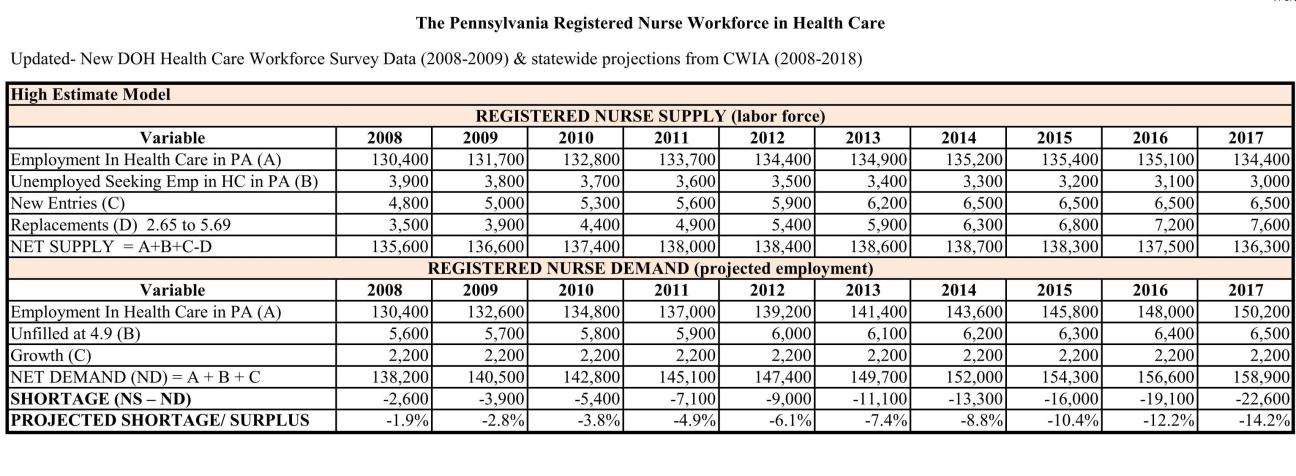

22 Figure 1. Figure
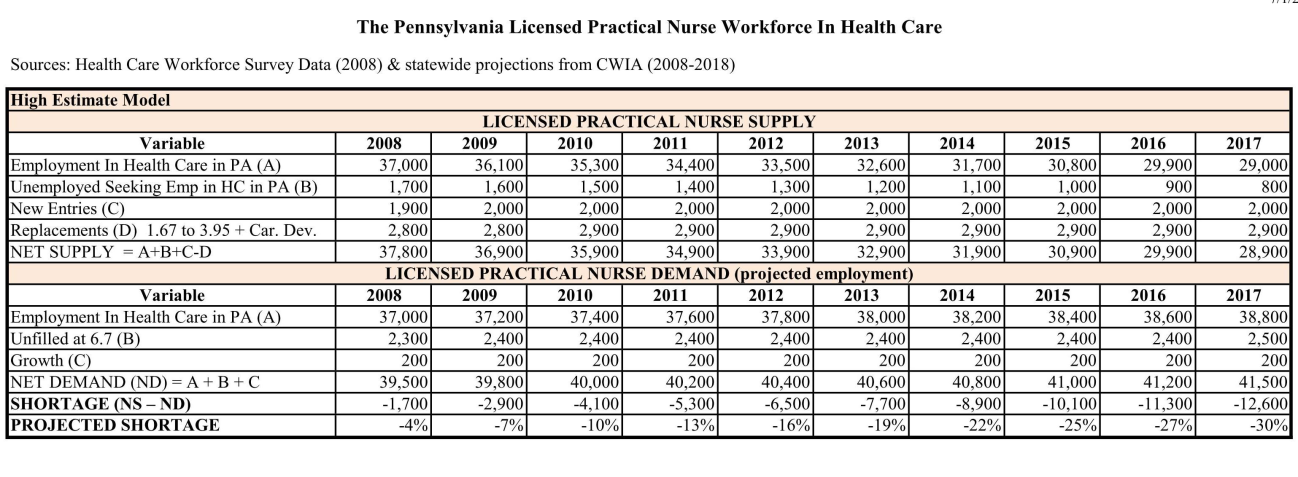
23 Figure 3. Figure 4. The healthcare workforce crisis and recent healthcare reform legislation propel all administrators, front line staff and interested stakeholders to re-evaluate the return on investment of a multitude of implementations aimed at addressing the actual or impending workforce crisis
24 Human capital is a major source of a healthcare institution s budget despite the type of patient care delivery model. With the impending retirements of massive numbers of healthcare workers from the baby boomer generation, knowledge transfer and the building of human capital is a critical concept. Seamless career pathways are a key to a strong nursing workforce of the future. The U.S. has more licensed RNs than ever [an estimated 3,063,163 a 5.3 percent increase since the last Health Resources and Services Administration (HRSA) survey in 2004]. The HRSA chart below depicts 2008 initial findings from the HRSA survey of the distribution of the RN population by highest nursing or nursing related educational preparation from The trend indicates a steady increase in associate and baccalaureate education mirrored by a decrease in diploma education from a national perspective. This trend is similar in Pennsylvania with the exception of the diploma-prepared nurse. Pennsylvania continues to educate nurses at the diploma level outpacing the national numbers, often in conjunction with a college partner. According to the Special Report on the Characteristics of the Registered Nurse Population in Pennsylvania conducted by the Pennsylvania Department of Health (2006), 31.3 percent of nurses working in healthcare in Pennsylvania hold a bachelor s degree in nursing, 25.9 percent hold an associate s degree and 24.8 percent hold a diploma (Figure 5)
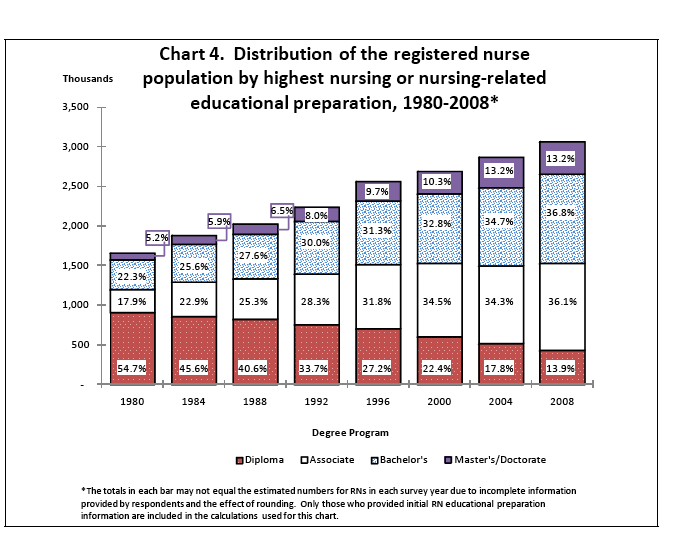
25 Figure 5. Although the number of RNs with master s or doctorate degrees rose to indicate an overall increase in the nursing workforce, the percentage of the whole remains constant. This is a concern, especially in light of healthcare reform and the need for advanced practice nurses. In addition, the need for graduate-prepared nurses is further complicated related to the national nursing faculty shortage. The 2009 American Association of Colleges of Nursing (AACN) survey results confirm the need for career pathways leading toward the BSN and graduate degrees (Figure 6). Diversity of the nursing workforce is impacted by level of educational preparation. According to the
26 National League for Nursing (NLN, 2010), African American enrollment in LPN programs is 21.8 percent, diploma programs is 17.8 percent, ADN is 13.9 percent, BSN is 13.6 percent, master s is 12.7 percent and doctorate is 11.3 percent. These data support the need for career pathways to contribute to the diversification of the nursing workforce. Figure 6. In 2008 and 2009, PCANE collected data to identify currently enrolled nursing students and employed nurses interest in career pathways and other related concepts. The data support the need for low-cost nursing career pathways. Healthcare Institution Nursing Employee-Related Data Pennsylvania hospitals employ approximately 73,000 RNs, representing approximately 61 percent of the state s total RN population currently employed in healthcare in the Commonwealth (Pennsylvania Department of Health, 2008). In 2009, PCANE conducted a survey of hospitals in the Commonwealth to gather data related to educational advancement
27 PONL provided a list of acute care hospitals and the associated CNO within the Commonwealth. This list was utilized for the survey distribution. Fifty-one surveys were returned, which included 47 hospital/medical centers, two long-term care and two institutions who described themselves as hospital medical center, skilled nursing facility and long-term care facility. The purpose of the survey was to gather information regarding the number of RNs in the Commonwealth in acute care settings, the highest degree earned and the support provided from acute care institutions for RN to BSN education. Average Number of RN Full-Time Equivalent (FTE) The number of RN FTEs within the surveyed facilities ranged from 14 to 1,900 with a mean of 447 and a median of RN FTE. The total FTE of RNs in all 51 institutions was 22, (Refer to Table 1 and Figure 7.) Table 1. Number of RN FTE Number/Percent Respondents in this Category Less than (27.4 percent) 100 to (17.6 percent) 200 to (7.8 percent) 300 to (13.8 percent) 400 to (11.8 percent) 500 to (0 percent) 600 to (3.9 percent) 700 to (0 percent) 800 to (0 percent) 900 to (3.9 percent) 1000 and over 7 (13.8 percent)
28 Percent of Institutions Figure Number of RN FTE Highest Degree Earned The percent of RNs within a single organization whose highest nursing degree is an associate s degree ranged from 2 percent to 85 percent. The percent of RNs within a single organization whose highest nursing degree is a hospital-based diploma ranged from 2 percent to 88 percent. The percent of RNs within a single organization whose highest nursing degree is a Bachelor of Science in Nursing ranged from 1 percent to 74 percent with both the mean and median of approximately 30 percent. The percent of RNs within a single organization whose highest nursing degree is a master s degree in nursing ranged from 0 percent to 14 percent. The percent of RNs with a doctoral degree ranged from 0 percent to 2 percent (Figure 8)
29 Figure 8. Percent of ADN Staff Percent of ADN RNs Percent ADN staff # 0 percent to 19 percent percent to 39 percent percent to 59 percent percent to 79 percent 5 80 percent to 100 percent 3 Unknown/No answer 7 Total Organizations to 19% ADN 20 to 39% ADN 40 to 59% ADN 60 to 79% ADN 80 to 100% ADN 16 Range = 2 percent to 85 percent Mean = 36 percent Median = 34 percent Diploma RN Staff Percent diploma staff # 0 to 19 percent to 39 percent to 59 percent 8 60 to 79 percent 4 80 to 100 percent 1 Unknown/No answer to 19% Diploma 20 to 39% Diploma 40 to 59% Diploma 60 to 79% Diploma 80 to 100% Diploma Total Organizations Range = 2 to 88 percent Mean = 30.6 percent Median = 26.5 Percent
30 BSN Staffing BSN RN Staff Percent BSN staff # 0 to 19 percent to 39 percent to 59 percent 5 60 to 79 percent 3 80 to 100 percent 0 Unknown/No answer to 19% BSN 20 to 39% BSN 40 to 59% BSN 60 to 79% BSN 80 to 100% BSN Total 51 Range = 1 to 74 percent Mean = 29.4 percent Median = 30 percent Percent of RNs with Master s Degrees Percent Master s # 0 to 2.9 percent 12 3 to 4.9 percent 9 5 to 6.9 percent 11 7 to 8.9 percent 1 9 to 9.9 percent 4 10 or over 3 Unknown/No answer 11 Total 51 Percent of RNs with Masters Degrees to 2.9% 3 to 4.9% 5 to 6.9% 7 to 8.9% 9 to 9.9% 10 or over Range = 0 to 14 percent Mean = 4.7 percent Median = 4.2 percent
31 Percent of RNs with Doctoral Degree Zero 24 0 to 1 percent 2 1 percent 4 2 percent 1 Unknown/No answer 20 Total 51 Range = Zero to 2 percent Mean = 0.2 percent Median = Zero percent Availability of On-Site RN-BSN Educational Program Respondents were asked if an RN to BSN completion program was offered to their RN staff on-site at the institution. Nineteen institutions (37.3 percent) indicated that on-site courses were available. Thirty-two institutions (62.75 percent) indicated that on-site RN to BSN courses were not available. Seven (13.7 percent) of the surveyed institutions offered on-site programs for the Master of Science in Nursing (MSN). Tuition Reimbursement for RN to BSN Continuing Education The overwhelming majority (92.2 percent) of institutions surveyed provide some form of educational reimbursement for RNs who desire to pursue advanced education. Only 4 of the 51 surveyed institutions indicated that they did not provide any type of educational/tuition incentive. A smaller number of hospitals (11 or 21.6 percent) indicated that the tuition incentive was available as a prepaid benefit. The majority of hospitals (78.4 percent) required the RN to attend the class, pay out of pocket and request reimbursement after successful completion of the course. The data related to prepaid tuition for nursing management produced similar results with
32 only nine of the responding institutions (17.6 percent) indicating that tuition reimbursement is available as a prepaid benefit. The responses regarding the amount of educational reimbursement available were difficult to analyze. Although the question was intended to solicit responses regarding annual tuition benefit, it is unclear from some responses if the data reflect per semester, annual or per person maximum reimbursement. Table 2. Amount of Educational Tuition Reimbursement FULL-TIME STAFF PART-TIME STAFF Zero (4) Zero (6) $75 (1) $75 (1) $300 to $425 (1) $300 to $425 (2) $600 to $750 (2) $600 to $750 (2) $1000 to $1500 (1) $1000 to $1500 (8) $1600 to $1750 (1) $1600 to $1750 (4) $2000 to $2500 (14) $2000 to $2500 (12) $3000 to $3500 (10) $3000 to $3500 (2) $4000 to $4500 (8) $4000 to $4500 (1) $5000 (3) $5000 (1) $6000 (2) $6000 (1) No answer (or incomplete data) (11) No answer (or incomplete data (11)
33 The data regarding the length of service required prior to receiving tuition reimbursement varied from immediate to one year, with a six-month wait as the median wait time prior to an RN s eligibility to receive the tuition reimbursement benefit (Figure 9). Figure 9. Length of Service Prior to Tuition Benefit Immediately 2 6 months 17 One year 9 Other 13 3 months 6 4 months 1 No comment Immediately 6 months One year Other RNs receiving tuition reimbursement are often required to remain employed at the institution for a specified period of time following the receipt of tuition reimbursement. The respondents indicated that 35 out of 51 (68.6 percent) of the institutions required a time commitment in return for receiving tuition reimbursement. Of those institutions, the time commitment varied from six months to two years with the overwhelming majority (91.4 percent) of responses falling at or below a one-year commitment. Some respondents answered this question more than once indicting the time commitment may be different dependent on the setting or circumstances (Figure 10)
34 Figure 10. Length of Work Commitment Length of Work Commitment 6 months 27 One year 26 Two years 5 2 Years One Year 5 26 Series1 6 Months Number of Institutions Pay Scale Adjustment for Educational Level The purpose of the final section of the survey was to gather information regarding the incidence of differences in pay structure for RNs based on highest level of education achieved. Only 8 of the 51 respondents (15.7 percent) indicated that there was a structure in place to award a differential in pay for nurses based on achieved educational level. However, 27 (52.9 percent) of the responding institutions indicated that a clinical ladder structure was in place for RNs and included credentials earned as a part of the clinical ladder advancement process. Approximately 50 percent of RNs in the Commonwealth have an associate s degree or diploma as their highest nursing credential earned (PA Department of Health, 2008). The percent of RNs with an earned bachelor s degree or higher, working within a specific acute care institution in the Commonwealth, varies widely throughout the state. The overwhelming majority (92.2 percent) of institutions in the Commonwealth provides some form of educational tuition reimbursement for RNs who desire to pursue advanced education, but the amount of reimbursement and the policies regarding the reimbursement process vary significantly. Only 15.7 percent of the acute care institutions in the Commonwealth provide a structure to award a difference in compensation for nurses based on achieved educational level. This information is
35 critical to analyzing the current RN population and implementing strategies to increase the number of BSN-level graduates working within the Commonwealth. Practical Nursing Student Data A survey of Pennsylvania practical nursing (PN) schools was conducted by PAPNA in Winter 2008 to determine the interest of PN students in continuing their education. A total of 678 surveys were sent via with a response rate of 376. This number represented various PN programs throughout the Commonwealth (located in both rural and urban areas) and representing different program types (vocational-technical schools and community college settings). Of these, 88.2 percent indicated interest in attending an RN program after completion of their LPN program. In this cohort, 54.7 percent indicated that they would enroll in a RN program within one year. Interestingly, 46 percent of all students interested in pursuing nursing education reported being undecided regarding the type of RN program. Of those reporting a choice, the variation was minimal among ADN, BSN or diploma programs. However, if money was available to support their education, a resounding 40.5 percent indicated that they would pursue a MSN, followed by 32.3 percent indicating that they would pursue a BSN. Diploma and ADN dropped significantly (to 2.7 percent and 9.7 percent, respectively). These data provide implications regarding the need for seamless transition pathways from LPN to all RN program types. The reality of money must be considered when examining the availability of programs. In addition, career pathways from ASN and BSN programs to MSN- and doctoral-level courses should be identified for nurses, and students should be mentored as to choices available. The fact that the PN students were largely undecided regarding their choice of RN program type speaks volumes regarding the lack of clarity relevant to this issue
36 Data in Figure are listed in percentage. Figure 11. Do you plan on attending an RN program after you graduate from this program? Figure 12. If you answered yes, when would you plan on enrolling in an RN program?

37 Figure 13. What type of RN program will you be most likely to enroll in? Figure 14. If money were available to support your education, what would be the highest level of nursing education you would pursue?
38 According to the NCSBN LPN/VN Practice Analysis (2009), approximately 25.6 percent of responders reported enrollment in an RN education program: 80.5 percent were in associate s degree programs; 13.7 percent were in baccalaureate programs; 4.9 percent were in diploma programs; and.9 percent were in other. In addition, 19.2 percent reported that they had applied to such a program but were not currently enrolled. Associate s Degree and Diploma Nursing Student Data A survey of 4,390 Pennsylvania associate s degree and diploma nursing students (Maneval & Teeter, 2010) found that the majority of nursing students in Pennsylvania are planning on pursuing a bachelor s degree in nursing (86.3 percent) and most hope to be enrolled in a BSN program within four years of graduation (94.8 percent). The majority of students (78.9 percent) indicated they would still enroll in their current program even if they were mandated to complete a Bachelor of Science in Nursing (BSN) within 10 years. When asked if 10 years was a reasonable amount of time to complete a BSN, 79.4 percent agreed. If money were not an obstacle, 95.8 percent of participants indicated they would pursue a BSN or higher. The results of this survey suggest that the vast majority of associate s degree and diploma nursing students value and hope to pursue higher education in nursing
39 Examples for Educational Programs The goal of this White Paper is to encourage, promote and support nursing educational programs at all levels (LPN, ADN, diploma, BSN, MSN and doctoral) across the state to examine their curricula and collaborate with colleagues in other organizations to ensure that articulation to the next level of advancement can occur without undue difficulty, unnecessary repetition and in a financially reasonable manner. The goal is to create seamless, cost effective career pathways encouraging nurses to achieve their maximum educational potential, while respecting multiple entry and exit points through the continuum. At this point, there does not seem to be one model that will accommodate all the educational programs in the Commonwealth such as has been accomplished in Oregon and Maryland. Therefore, this White Paper will attempt to offer principles, guidelines and examples that will assist schools at all levels of nursing education. LPN to RN In the Commonwealth, 25.6 percent of LPNs pursue licensure as a RN. This will continue to be an important source of RNs for the Commonwealth. The majority of LPNs go on to study in associate s degree programs particularly in the community college system with many granting advanced standing. However, examples of advanced standing in BSN programs also exist. Both associate s and bachelor s degree programs are encouraged to provide support for this very important source of future RNs. Advanced standing can be granted by articulation agreements between two schools that recognize the level of education in each program and can award credit for completed courses. Some articulation agreements also include a joint admission policy that automatically admits successful graduates of a particular program with no further admissions
40 process except for registration for the next level program. In other models, the RN program provides specific transition courses that allow the incoming student to advance through the program more quickly. LPN to RN Articulation An example of a successful articulation program at this level is that between the Center for Arts and Technology-Brandywine Campus (CAT-B) LPN program and the Delaware County Community College. LPN graduates from the CAT-B who apply to Delaware County Community College s Associate in Applied Science Degree for Nursing are eligible for advanced standing in the nursing program. The advanced-placed LPNs receive credit for the first year of the program with 8 nursing credits for the first semester and 10 nursing credits for the second semester. Therefore they enter the program with 18 of the 41 required nursing credits completed with their successful completion of the LPN program and their LPN license. To obtain this advanced standing, the entering students must meet the admission criteria for the nursing program. This includes taking the nurse entrance test and achieving the required scores. They must have a current LPN license with a minimum of 1,000 hours of work experience. LPN to BSN Articulation York College of Pennsylvania accepts students who are graduates of NLNAC-accredited LPN programs. The college awards credit to the LPNs for sophomore-year nursing courses including: NUR 210/211 Basic Principles, NUR 202 Nutrition, NUR 201 Human Development and Healthcare. The LPNs then take a two-credit transition course titled NUR 220 Concepts in
41 Professional Nursing for the LPN. This course presents concepts and theories needed for the LPN to progress to higher nursing courses. LPNs are also required to take a course in health assessment. From this entry point, the LPN transitions into other classes with generic BSN students. This awards the LPN advanced standing and an easy transition into BSN courses. RN to BSN Program Availability According to the Pennsylvania State Board of Nursing (2011), there are 35 pre-licensure baccalaureate nursing programs in Pennsylvania. A review of these programs official school websites reveal that 29 programs also offer an option for RNs wishing to complete their BSN. Of these 29 RN to BSN programs, eight are online and one is a hybrid program. Online programs include: Drexel University, Thomas Jefferson University, LaSalle University, Pennsylvania College of Technology, Pennsylvania State University, DeSales University, Edinboro University and Mansfield University. Widener University offers a hybrid program. A computer search for Pennsylvania RN to BSN programs produced eight additional program options. These programs are offered by colleges and universities that do not offer a prelicensure program and include: Eastern Mennonite University, California University of Pennsylvania, Chatham University, Eastern University, Millersville University, Gannon University, Clarion University and Edinboro University. Three of these programs are online: Gannon University, Clarion University and Edinboro University. In total, this search produced 37 RN to BSN programs operated by Pennsylvania colleges and universities, with 11 online options. There are also a number of online RN to BSN program options offered by colleges and universities outside of Pennsylvania. A search of online RN to BSN program options produced 23 such programs, which included University of Phoenix,
42 Walden University, Kaplan University, Capella University, Western Governor s University and University of Illinois, Chicago. In summary, RN to BSN programs within Pennsylvania are geographically diverse and include private, state-related and state support schools. As a result, these options provide a widerange of tuition price points for potential students. In addition, there is considerable opportunity for Pennsylvania RNs to attend a traditional classroom program or an online learning program. RN to BSN Articulation Articulation agreements are important to enhance access to baccalaureate-level nursing education. These agreements support education mobility and facilitate the seamless transfer of academic credit between associate degree, diploma and baccalaureate nursing programs. Pennsylvania is referenced in the AACN Fact Sheet (2005) as having a statewide-articulation agreement which means the state has voluntary articulation plans and models developed through the collaborative effort of nurse educators, regulators, legislators and other stakeholders to enhance educational mobility for RNs. These agreements are accepted by community colleges and public universities in a given state, though private institutions often choose to participate. RN to BSN Dual Admission The Lewistown Hospital School of Nursing (LHSON) has an affiliation agreement with Penn State University (PSU). Upon completion of the nursing program and after attaining their RN license, students are awarded 33 transfer credits for nursing courses completed at LHSON when admitted to the RN to BS program at PSU. Also, during the two-year diploma program, the nursing students take 30 required general education credits with PSU Learning Center in
43 Lewistown. Thus, the student is already enrolled in PSU and begins the RN to BS program with a minimum of 63 credits. Different options are provided through PSU that include online courses through World Campus or on-site programs such as that offered by the Altoona campus. This program is designed so that students can enter full time and receive their Lewistown diploma in one and one-half years. Students at the LHSON also have the option to begin some of the required BSN courses prior to finishing their diploma. This can further shorten the time to obtaining the BS degree. Students are encouraged to enter an MS program at the completion of the BS degree. Dual Admission Agreements The findings of Maneval and Teeter (2010) clearly demonstrated that associate s degree and diploma nursing students overwhelmingly (86 percent) have a desire to pursue a BSN or higher following graduation. A barrier that hinders some in goal pursuit is the perceived lack of a direct, seamless path from one level of education to the next. Dual admission agreements, which provide direct admission and matriculation from the associate s and diploma level directly into the BSN or graduate level, can help to eliminate this barrier and support educational advancement. While the Oregon Consortium for Nursing Education (OCNE) model is laudable, less comprehensive, individualized models between one associate/diploma program with a specific four-year institution are being realized in the Commonwealth. One such model is that of Thomas Jefferson University (TJU), a private health science center that provides direct admission to the baccalaureate nursing program at the time of student admittance to the associate or diploma program. Upon successful completion of the associate or diploma program and the NCLEX-RN, the student enters directly into the RN to BSN program. Such a model clearly
44 demonstrates to the student that advancement to the BSN is a value held by the associate ro diploma program. The TJU model also assists in reducing the barrier of cost, a significant barrier to educational advancement identified by students. In this model, a student can transfer to the baccalaureate program all but the required 27.5 upper level residency requirement RN to BSN nursing credits. This agreement stipulation enables the student to complete all general education course requirements at an area community college where the cost of tuition is significantly less than that of the private university. Additionally, every course in the 27.5 credits can be completed whether in an online or online/classroom hybrid combination over two semesters. This flexibility assists in overcoming the barriers of time and rigid academic schedules that are incongruent with the student s employment and personal commitments. Other Examples Examples of an effective diploma school articulation model are those found between Abington Memorial Hospital Dixon School of Nursing and a number of regional colleges and universities. By partnering with many institutions, graduates are afforded a number of unique opportunities, such as: Drexel University (online BSN accelerated cohort program), Immaculata College (on-site BSN cohort accelerated program and on-site MSN), Thomas Jefferson College (partnership with the Dixon School of Nursing for BSN completion) and La Salle University (BSN cohort accelerated completion program and on-site MSN cohort courses)
45 Master s Degrees The RN who wishes to pursue a graduate degree has many options. There are some programs at the master s level that will accept diploma and associate degree graduates directly into graduate programs. Some limit this admission to only those who hold a previous bachelor s degree in another field while others admit any RN regardless of previous education. In addition, schools who offer both BSN and MSN degrees often offer opportunities for sub-matriculation at the undergraduate level in order to give them advanced standing when they are enrolled in the graduate program. RN to MSN An example of a successful RN to MSN program is Bloomsburg University. The Department of Nursing at Bloomsburg University developed an RN to MSN program for RNs in the mid-1990s. Based on feedback from the RN population in the region, a large portion of that cohort group indicated that the RN to BSN program was not meeting their personal and professional goals. The program was designed for diploma and associate degree graduates who hold a current RN license and were actively practicing to complete the degree requirements for the baccalaureate degree embedded in the RN to MSN program. The degree granted is the Master of Science in Nursing. The program requirements combine the university expectations of 120 credits at the baccalaureate level and 30 credits at the graduate level. RNs receive 36 advanced placement nursing credits at the undergraduate level via this articulation model and are required to take an undergraduate nursing research course. The remaining undergraduate credits for the 120 are under the category of general education, electives and graduate course substitutions. Graduate nursing courses also are substituted for undergraduate nursing
46 competencies related to community health and leadership/management in nursing. All of the graduate specialty areas are available in the RN to MSN degree program except the nurse anesthesia option. This option is only for BSN to MSN students. Since the inception of the RN to MSN program, the RN to BSN program has had very few candidates. The RN population overwhelmingly opts for the RN to MSN degree. Employers also support this option due to the advanced competencies at the APN level. Another variation of an RN to MSN was developed at Gwynedd-Mercy College. The Frances M. Maguire School of Nursing at Gwynedd-Mercy College accepts RNs without a BSN into the MSN program. However, they must have a bachelor s degree in another field and complete undergraduate courses in statistics and health assessment. Applicants are required to take the NLN Baccalaureate Achievement Test and score within one standard deviation of the norm referenced mean. If they do not meet this score, they may be counseled to take additional undergraduate nursing courses. As with the program at Bloomsburg University, this type of program meets the needs of the college graduate who has pursued nursing as a mature, experienced learner. Support for the Advancing Student In the study conducted by Maneval and Teeter (2010), it was demonstrated that the vast majority of nurses who graduated from an associate degree or diploma nursing program hoped to pursue higher education in nursing. Barriers to this goal were identified as finances, work schedules, and family and work responsibilities. In order for the goal of educational advancement in the Commonwealth to be achieved, support and encouragement from employers and administrators will be essential. Nurses pursuing advanced education at whatever level they
47 choose must have the support of both peers and administrators. Of course, this begins with financial support which is available in most healthcare institutions in the Commonwealth. This may also include flexible scheduling, respect for a student s school schedule, and recognition by peers and supervisors of their efforts and successes. Recommendations and Call to Action PCANE believes that the work of the Coalition does not end with this White Paper. The Coalition seeks the input of all stakeholders in nursing and nursing education throughout the Commonwealth for support of the following recommendations. Action plans and strategies need to be designed to achieve these goals. This is a call to action for the nursing profession to unite in its efforts to advance the education of nurses in the Commonwealth and ultimately improve the health and healthcare of all Pennsylvania citizens. Build an integrated network of nursing education opportunities through multiple pathways Increase the proportion of RNs with a BSN by 10 percent every two years to reach 80 percent by 2020 Strengthen articulation agreements among LPN, ADN and BSN programs; Expand dual admission to ADN/diploma and BSN programs; Encourage development of LPN to BSN programs; Increase support for nursing students from multiple pathways; Increase financial aid to ADN/diploma to BSN programs; and
48 Increase funding to nursing schools. Ensure that every LPN program has a formal agreement with at least one RN program by 2015 Ensure that every ADN/diploma program has a formal agreement with at least one BSN program by 2015 Increase data collection concerning academic preparation of RNs from state and regulatory agencies Expand capacity of RN to BSN programs in institutions of higher education across the Commonwealth, both public and private Support innovative use of distance learning and alternative delivery systems Expand support for graduate education in nursing Ensure that at least 10 percent of all BSN graduates matriculate into a master s or doctoral program within five years of graduation Provide enhanced loans/scholarships for graduate nursing students Secure funding for expansion of graduate nursing education programs Encourage support by clinical agencies for their staff nurses returning to graduate school Create closer collaboration among educators, researchers and clinicians to promote evidence-based practice and practice-relevant research Develop innovative and alternative education systems combining distance learning and classroom experiences
49 Identify opportunities to share resources between independent universities Increase data collection concerning academic preparation of RNs from state and regulatory agencies On May 25, The Summit on Advancing Nursing Education in Pennsylvania will be held in Harrisburg, Penn., for the presentation and discussion of this White Paper. Stakeholders who attend will have the opportunity to offer feedback and suggestions for future action plans. This feedback will be incorporated into this White Paper. Together, we can advance the profession of nursing in the Commonwealth and ultimately improve healthcare to all Pennsylvania citizens
50 References American Association of Colleges of Nursing (AACN). (2004). AACN s legislative agenda: Advancing higher education in nursing. Washington, DC. Retrieved from American Association of Colleges of Nursing (AACN). (2005). Articulation Agreements Among Nursing Education Programs. Washington, DC: AACN American Association of Colleges of Nursing (AACN). (2008). The essentials of baccalaureate education for professional nursing practice. Washington, DC: AACN. Retrieved from American Nurses Association (2003). Nursing s social policy statement, Second Edition. Silver Spring, MD: American Nurses Association. American Nurses Association (ANA). (2008). The educational advancement for RNs briefing paper. Compiled by ANA Government Affairs; updated 12/08. Washington, DC. American Nurses Association first position on nursing education (1965). American Journal of Nursing, 65(12), Aiken, L. H., Clarke, S. P., Cheung, R. B., Sloane, D. M. & Silber, J. H. (2003). Educational levels of hospital nurses and surgical patient mortality, Journal of the American Medical Association, 290, Aiken, L. H., Clarke, S. P., Sloane, D. M., Lake, E. T. & Cheney, T. (2008). Effects of hospital care environment on patient mortality and nurse outcomes. Journal of Nursing Administration, 38(5), Barter, M. & McFarland, P. (2001). BSN by 2010: A California initiative. Journal of Nursing Administration, 31(3), Benner, P., Sutphen, M., Leonard, V. & Day, L. (2009). Educating nurses: A call for radical transformation. Carnegie Foundation for the Advancement of Teach. San Francisco: Jossey-Bass. Bobay, K., Gentile, D. L. & Hagle, M. E. (2009). The relationship of nurses professional characteristics to levels of clinical nursing experience. Applied Nursing Research, 22(1), Breckenridge, D. M. (2006). Hospital diversity initiative for new access students: NETS, a career ladder program. Pennsylvania Nurse, 61(4),
51 Breckenridge, D. M. (2010). A time to give back. In J. J. Fitzpatrick, C. M. Shultz & T. D. Aiken (Eds.), Giving through teaching: How nurse educators are changing the world. New York: National League of Nursing Press/Springer Publishing. Estabrooks, C. A., Midodzi, W. K., Cummings, G. C., Ricker, K. L. & Giovanetti, P. (2005). The impact of hospital nursing characteristics on 30-day mortality. Nursing Research, 54(2), Friese, C. R., Lake, E. T., Aiken, L. H., Silber, J. H. & Sochalski, J. (2008). Hospital nurse practice environments and outcomes for surgical oncology patients. Health Services Research, 43(4), Gebbie, K. M. (2009). 20 th century reports on nursing and nursing education: What difference did they make? Nursing Outlook, 57, Goode, C. J., Pinkerton, S., McCausland, M. P., Southard, P., Graham, R. & Kresek, C. (2001). Professional issues-documenting chief nursing officers preference for BSN-prepared nurses. Journal of Nursing Administration, 31(2), Gosnell, D. J. (2002). The 1965 entry into practice proposal: Is it relevant today? Online Journal of Issues in Nursing, 7(2). Retrieved from OJIN/TableofContents/Volume72002/No2May2002/EntryIntoPracticeOverview.aspx Graf, C. M. (2006). ADN to BSN: Lessons from human capital theory. Nursing Economics, 24(3), Institute of Medicine of the National Academies. (2010). The future of nursing: Leading change, advancing health. Retrieved from -of- Nursing-Leading-Change-Advancing-Health.aspx Maneval, R. E. & Teeter, M. M. (2010). The student perspective on RN-plus 10 legislation: A survey of associate degree and diploma nursing program students. Nursing Education Perspectives, 31(6), National League for Nursing. (2010). Percentage of minority students enrolled in nursing programs: to , , and Retrieved July 1, 2010 from Orsalini-Hain, L. M. (2008). An interpretive phenomenological study on the influences on associate degree prepared nurses to return to school to earn a higher degree in nursing. Doctoral Dissertation, University of California, San Francisco
52 Pennsylvania Center for Health Careers. (2011a). The registered nurse workforce in Pennsylvania: Supply/demand report, Summer Retrieved Febuary 27, 2012 from Pennsylvania Center for Health Careers. (2011b) update to the RN & LPN workforce in Pennsylvania Report. Retrieved on December 19, 2011 from rsing/ Pennsylvania Department of Health. (2006). Special report on the characteristics of the registered nurse population in Pennsylvania: Combined data from the survey of registered nurses renewing licenses in April 2004, October 2004, April 2005, and October Retrieved September 27, 2008 from Pennsylvania Department of Health. (2008). State health improvement plan: Healthy Pennsylvanians 2010 and beyond. Special Report on the Characteristics of the Registered Nurse Population in Pennsylvania, (vol. 3). Pennsylvania Department of Health. (2004). State health improvement plan: Special report on the characteristics of the registered nurse population in Pennsylvania, Combined Data, Volume 1, Number 3, April Retrieved from Pennsylvania State Board of Nursing. (2011, October). Approved professional nursing programs. Retrieved from _18/RN_PROGRAMS.PDF Phillips, C., Palmer, C., Zimmerman, B. & Mayfield, M. (2002). Professional development: Assuring growth of RN-to-BSN students. Journal of Nursing Education, 41(6), Porter-Wenzlaff, L. & Froman, R. (2008). Responding to increasing RN demand: Diversity and retention trends through an accelerated LVN-to-BSN curriculum. Journal of Nursing Education, 47(5), doi: / Reams, S. & Stricklin, S. M. (2006). Staff development bachelor of science in nursing completion: A matter of patient safety. Nurse Educator, 32(5), Spear, H. J. (2003). The baccalaureate degree for entry into practice: It s time for nursing to take a stand. Nurse Education Today, 23(4),
53 Tourangeau, A. E, Doran, D. M., McGillis Hall, L., O'Brien Pallas, L., Pringle, D., Tu, J. V. & Cranley, L. A. (2007). Impact of hospital nursing care on 30-day mortality for acute medical patients. Journal of Advanced Nursing, 57(1), Trossmanm, S. (2008). BSN in 10. American Nurse Today. Retrieved from U.S. Department of Health and Human Services Health Resources and Services Administration (2010). The Registered Nurse Population Initial Findings from the 2008 National Sample Survey of Registered Nurses. Retrieved July 1, 2010 from
54 Appendix A Summary of Responses East & West Symposiums May 25, 2011 & September 25, 2011 PCANE hosted two statewide meetings in May and September of 2011 at Central Pennsylvania College and Westmoreland County Community College respectively to garner feedback vis-à-vis the PCANE White Paper, Advancement of Nursing Education in Pennsylvania. The meetings drew more than 150 stakeholders who enthusiastically shared their thoughts and ideas. Representatives from RWJF and AARP provided opening sessions around the IOM s report The Future of Nursing: Leading Change Advancing Health followed by the presentation of the Coalition s report, Advancement of Nursing Education in Pennsylvania. Stakeholders representing schools of nursing included four-year universities, community colleges, diploma and licensed practical programs. Hospitals and health systems, nursing associations, state organizations and independent RNs also attended. The participants were asked to provide general feedback about the White Paper, to develop action steps around four areas of foci related to the papers findings: (1) nursing administration, (2) nursing education, (3) nursing practice and (4) nursing research. They also identified other stakeholders and considered a call to action. General feedback: Collaboration: Participants expressed the need for all levels of nursing to be at the table when discussing nursing education and the nursing workforce, from the staff nurse to nurse faculty and administrators. There was general agreement about the great need within Pennsylvania for strong mentoring programs at all levels of nursing practice. Finally, participants affirmed they understood the need for stakeholders to put aside differences and move toward agreement on a seamless, multiple point-of-entry model of nursing education for Pennsylvania
55 Communication: Participants determined that a communication plan was essential to the success of the implementation of the recommendations made in both the Pennsylvania White Paper and the IOM Report. It was noted that special attention be made to communicating with nursing student and frontline nurses. It was recommended that PSNA educate the public about nurse s roles through a variety of media pathways. Action steps: Nursing Administration: Participants consistently expressed the need for Pennsylvania to address the workplace barriers to advancing nursing education including but not limited to reimbursement policies within organizations. There was consensus around the need for increased opportunities for institutionbased scholarships, organizational and faculty sharing programs, and support of nurse residency programs. Participants felt there should be greater involvement of CNOs and vice presidents of nursing in discussions regarding the advancement of nursing education in Pennsylvania. Nursing Practice: Participants identified the ongoing need to build collaborative and interdisciplinary environments, and collect state specific healthcare workforce data to evaluate and achieve the desired outcomes identified in the recommendations. Nursing Education: Participants confirmed the development of a statewide curriculum that supports a seamless career pathway from LPN through a terminal degree. Increased communication between all providers of nursing education and exemplars of seamless career pathway models were also identified as necessary steps in implementing the recommendations. Nursing Research: Participants concluded a need for increased competency in nursing research as it relates to competency within the clinical setting and models of care and the educational setting. Upon completion of the general and specific feedback, participants were asked to identify other stakeholders who may be included in this initiative (see below)
56 Finally, as we reflected on our statewide symposiums during which we heard the struggles and successes of advancing nursing education within the Commonwealth, we asked: Now what? There was overwhelming unanimity to remain vigilant in furthering the work and recommendations of the PCANE White Paper and the IOM Report, and to provide avenues of communication to all nurses regarding the work being done within the Commonwealth to prepare a diverse, well-educated healthcare and nursing workforce that can meet the challenges of the healthcare profession in the 21 st century. Other Stakeholders PA Department of Education CNOs and Hospital Administrators Regulators Consumer Groups Other Healthcare Professionals Guidance Counselors Area Health Education Centers Area Agency on Aging Sigma Theta Tau University Administrator Legislators Foundations Organized Labor Insurance Companies AARP Department of Public Welfare Nursing Alumni Associations Long-Term Care Associations Business Communities
57 Appendix B Pennsylvania Coalition for the Advancement of Nursing Education (PCANE) Member Roster Chair Andrea Hollingsworth, PhD, RN Dean and Professor Frances M. Maguire Nursing School Gwynedd-Mercy College 1325 Sumneytown Pike Gwynedd Valley, PA [email protected] Christine Alichnie, PhD, RN Director of the School of Health Sciences Bloomsburg University 422 East Second Street Bloomsburg, PA [email protected] [email protected] Diane Breckenridge, PhD, RN Associate Professor LaSalle University Philadelphia, PA [email protected] Lana DeRuyter, PhD, RN Dean of Nursing and Allied Health Delaware County Community College 901 South Media Line Road Media, PA [email protected] Marion Burns-Tuck, PhD, RN, FACHE Executive Director Pennsylvania Organization of Nurse Leaders 461 Cochran Road Box #246 Pittsburgh, PA [email protected]
58 Patrick Kenny, EdD, RN, ACRN, APRN-PMH, NE-BC PSNA President 252 South State Street Newtown, PA Patty Knecht, MSN, RN Director of Practical Nursing Center for Arts and Technology Brandywine Campus 1635 East Lincoln Highway Coatesville, PA Dr. Rhonda Maneval, DEd, RN Associate Chair, Undergraduate Nursing Education Temple University Jones Hall, Room North Broad Street Philadelphia, PA Mary Alyce Nelson, MSN, RN Director, School of Nursing Lewistown Hospital 400 Highland Avenue Lewistown, PA Debbie Rahn, MSN, RN, CNE, FABC Reading Hospital School of Health Science PO Box Reading, PA Beverly L. Welhan, DNSc, RN, ANEF Dean, Health Science Montgomery County Community College 340 DeKalb Pike Blue Bell, PA Betsy M. Snook, MEd, BSN, RN Chief Executive Officer PA State Nurses Association 2578 Interstate Drive, Suite 101 Harrisburg, PA Patti Gates Smith, MSN, RNC-E Director of Professional Development PA State Nurses Association 2578 Interstate Drive, Suite 101 Harrisburg, PA
Education Advancement for RNs Briefing Paper
 Proposal The 2008 American Nurses Association House of Delegates RESOLVED, that the American Nurses Association support initiatives to require registered nurses (RNs) to obtain a baccalaureate degree in
Fact Sheet: Creating a More Highly Qualified Nursing Workforce
 CONTACT: Robert J. Rosseter, 202-463-6930, x231 [email protected] Fact Sheet: Creating a More Highly Qualified Nursing Workforce Quality patient care hinges on having a well educated nursing workforce.
POSITION STATEMENT ON EDUCATIONAL ADVANCEMENT FOR REGISTERED NURSES
 POSITION STATEMENT ON EDUCATIONAL ADVANCEMENT FOR REGISTERED NURSES EXECUTIVE SUMMARY INA supports the action report adopted at the House of Delegates. ANA (O Brien & Gural, 2008) recommends: Increasing
Tri-Council for Nursing
 For Immediate Release Tri-Council for Nursing Issues New Consensus Policy Statement on the Educational Advancement of Registered Nurses WASHINGTON, D.C., May 14, 2010 In light of the recent passage of
BUILD UPON YOUR NLCP EXPERIENCE THROUGH ACADEMIC PROGRESSION
 BUILD UPON YOUR NLCP EXPERIENCE THROUGH ACADEMIC PROGRESSION Dr. Colleen Manzetti, CNE, CNLCP Assistant Professor & Graduate Faculty Monmouth University 1 LEARNING OBJECTIVES: 1. The participants will
Issues and Scope of the Problem Several major issues confront the nursing profession with respect to academic progression:
 Organization for Associate Degree Nursing and American Nurses Association Joint Position Statement on Academic Progression to Meet the Needs of the Registered Nurse, the Health Care Consumer, and the U.S.
THE FACULTY SENATE. The Faculty Senate. Date: April 18, 2014. From: The Executive Committee. AAC RN BSN Variance Residency Requirements
 THE FACULTY SENATE TO: The Faculty Senate Date: April 18, 2014 From: The Executive Committee RE: AAC RN BSN Variance Residency Requirements The Academic Affairs Committee recommends that a 30 hour university
To help transform our health care system and improve
 INVITED COMMENTARY The RIBN Initiative: A New Effort to Increase the Number of Baccalaureate Nurses in North Carolina Polly Johnson To meet the increasing demand for a more educated nursing workforce,
Fact Sheet: The Impact of Education on Nursing Practice
 CONTACT: Robert J. Rosseter (202) 463-6930, x231, [email protected] Fact Sheet: The Impact of Education on Nursing Practice The American Association of Colleges of Nursing (AACN), the national voice
University of Saint Mary New Initiative Proposal Business Plan
 University of Saint Mary New Initiative Proposal Business Plan Department Name of Project Summary/ Goal of Project Person Completing Study Date Business Plan Submitted to President s Office Start Up Cost
Wisconsin Nursing Education and Nurse Faculty: 2010 Survey Results. Susan Dean-Baar, PhD, RN, FAAN Ann Cook, PhD, RN Christine Laurent, MSN, RNC
 Wisconsin Nursing Education and Nurse Faculty: 2010 Survey Results Susan Dean-Baar, PhD, RN, FAAN Ann Cook, PhD, RN Christine Laurent, MSN, RNC Wisconsin Center for Nursing http://www.wicenterfornursing.org
Nursing Education Programs 2013-2014 Annual School Report
 STATE OF WASHINGTON DEPARTMENT OF HEALTH Nursing Education Programs 2013-2014 Annual School Report Statistical Summary and Trends Analysis Nursing Care Quality Assurance Commission DOH 669-269 (Revised
Nursing Leadership, Nursing Education, and Patient Outcomes
 Nursing Leadership, Nursing Education, and Patient Outcomes Linda H. Aiken www.nursing.upenn.edu/chopr IOM Report: Future of Nursing IOM Report legitimizes many of nursing s long standing action priorities.
Survey of Nursing Education Programs: 2009 2010 School Year
 Survey of Nursing Education Programs: 2009 2010 School Year Prepared for Michigan Center for Nursing Okemos, Michigan Prepared by Public Sector Consultants Lansing, Michigan www.pscinc.com Survey of Nursing
The Future of Baccalaureate Degrees for Nursesnuf_194
 218..227 AN INDEPENDENT VOICE FOR NURSING The Future of Baccalaureate Degrees for Nursesnuf_194 Susan H. Lane, RN, MSN, and Eileen Kohlenberg, PhD, RN, NEA-BC PROBLEM. Unlike other professional healthcare
Victoria Folse, PhD, APN. Donna Meyer, MSN, RN
 Victoria Folse, PhD, APN Director & Professor, School of Nursing, Illinois Wesleyan University Caroline F. Rupert Endowed Chair of Nursing Vice-Chair, Illinois Association of Colleges of Nursing Donna
Excerpt from: The Future of Nursing: Leading Change, Advancing Health http://www.nap.edu/catalog.php?record_id=12956
 Excerpt from: The Future of Nursing: Leading Change, Advancing Health http://www.nap.edu/catalog.php?record_id=12956 THE ROLE OF NURSES IN REALIZING A TRANSFORMED HEALTH CARE SYSTEM By virtue of its numbers
New Jersey BSN in 10
 New Jersey BSN in 10 Susan B. Anthony 1902 The day is coming when trained nurses will be required to possess a college education before being admitted to training. Did she really think it would take more
A CHANGING, GROWING HEALTH CARE SECTOR
 A CHANGING, GROWING HEALTH CARE SECTOR Demand Continues for More Nurses and Allied Health Care Professionals 2012 Nursing and Allied Health Care Professionals Workforce Survey Report The 2012 Nursing and
Arizona State Board of Nursing 4747 North 7 th Street, Suite 200 Phoenix. AZ 85014-3653 Phone (602)771-7800 Fax - (602)771-7888
 Janice K. Brewer Governor Arizona State Board of Nursing 4747 North 7 th Street, Suite 200 Phoenix. AZ 85014-3653 Phone (602)771-7800 Fax - (602)771-7888 Joey Ridenour Executive Director Credits/Length
Nursing Education Programs in Pennsylvania Data from 2012 Nursing Education Program Annual Reports
 Nursing Education Programs in Pennsylvania Data from 2012 Nursing Education Program Annual Reports Bureau of Health Planning Division of Plan Development Volume 11, January 2014 TABLE OF CONTENTS List
Survey of New Mexico Nursing Employers
 Survey of New Mexico Nursing Employers February 2014 Written By: Shanna Schultz, Program Coordinator for the Academic Progression in Nursing Grant In Conjunction With: The Robert Wood Johnson Foundation
Academic Consulting Group. Get the Grant: Writing a Powerful and Persuasive Grant Proposal EXAMPLES OF GRANT COMPONENTS
 Academic Consulting Group Get the Grant: Writing a Powerful and Persuasive Grant Proposal Objectives of Presentation: Susan Sportsman, RN, PhD, ANEF, FAAN 1. Evaluate the effectiveness of a basic logic
Florida Pre-Licensure Registered Nurse Education: Academic Year 2012-2013
 The information below represents the key findings regarding the pre-licensure RN (Associate Degree in Nursing, ADN, and Bachelor of Science Degree in Nursing, BSN) education system in Florida. This report
New Program Proposal Bachelor of Science Nursing (R.N. to B.S.N. Completion) Coastal Carolina University
 New Program Proposal Bachelor of Science Nursing (R.N. to B.S.N. Completion) Coastal Carolina University Summary Coastal Carolina University requests approval to offer a program leading to the Bachelor
RN-to-BSN Education: The Imperative for Rapid Change
 RN-to-BSN Education: The Imperative for Rapid Change Susan Sportsman, PhD, RN, ANEF Director, Academic Consulting Group Nursing is unique among all health professions because it has multiple educational
CGEAN Position Statement on the Educational Preparation of Nurse Executives and Nurse Managers*
 CGEAN Position Statement on the Educational Preparation of Nurse Executives and Nurse Managers* Background The Council on Graduate Education for Administration in Nursing (CGEAN) is focused on advancing
The Magnificent Journey to Nursing Excellence at Sharp Grossmont
 The Magnificent Journey to Nursing Excellence at Sharp Grossmont Grossmont College Future of Nursing / Strategic Partnership Dale E. Beatty, RN, MSN, NEA-BC CNO Sharp Grossmont Hospital Future of Nursing
Montana Statewide Nursing Education Summit - June 9,2014 Pat Crombie MSN, RN MAAC/APIN Project Director RWJF APIN Grantee State.
 STATES RECEIVING RWJF SUPPORT To Implement Academic Progression Models Montana Statewide Nursing Education Summit - June 9,2014 Pat Crombie MSN, RN MAAC/APIN Project Director RWJF APIN Grantee State Academic
White Paper: Community Colleges Awarding Baccalaureate Degrees in Nursing
 White Paper: Community Colleges Awarding Baccalaureate Degrees in Nursing Introduction The community s response to the proposal for a six-year pilot program allowing community colleges in Arizona to offer
Regulatory and Legislative Action Since the September 2010 Membership Meeting:
 MEMBERSHIP MEETING January 19, 2011 Delivery System Reform: Healthcare Workforce Issue: The passage of health reform will bring millions of newly insured individuals into the system and drive patients
Fact Sheet: Creating a More Highly Qualified Nursing Workforce
 CONTACT: Robert J. Rosseter, 202-463-6930, x231 [email protected] Fact Sheet: Creating a More Highly Qualified Nursing Workforce Quality patient care hinges on having a well educated nursing workforce.
Emerging Challenges for Nursing & Healthcare. Judith Hansen, MS, BSN, RN Executive Director Wisconsin Center for Nursing, Inc.
 Emerging Challenges for Nursing & Healthcare Judith Hansen, MS, BSN, RN Executive Director Wisconsin Center for Nursing, Inc. Goal Describe the work of Wisconsin Center for Nursing Identify funding priorities
BOARD OF HIGHER EDUCATION REQUEST FOR COMMITTEE AND BOARD ACTION. COMMITTEE: Assessment and Accountability NO.: AAC 08-01 BOARD DATE: October 19, 2007
 BOARD OF HIGHER EDUCATION REQUEST FOR COMMITTEE AND BOARD ACTION COMMITTEE: Assessment and Accountability NO.: AAC 08-01 BOARD DATE: October 19, 2007 MOVED: The Board of Higher Education hereby approves
Cerritos College Associate Degree Nursing Program
 Cerritos College Associate Degree Nursing Program The California Board of Registered Nursing 2010-2011 Annual School Report reflected that 61% of nursing programs in California are Associate Degree programs.
2010 NLN NURSE EDUCATOR SHORTAGE FACT SHEET
 2010 NLN NURSE EDUCATOR SHORTAGE FACT SHEET The National League for Nursing and the Carnegie Foundation Preparation for the Professions Program conducted a study of the nation's estimated 32,000 nurse
NEW YORK S GROWING DEMAND
 Nurses and Allied Health Professionals NEW YORK S GROWING DEMAND Results from the 2011 Health Care Professionals Workforce Survey JUNE 2011 Published by The 2011 Health Care Professionals Workforce Survey
Community College Presidents National Meeting on Academic Progression in Nursing
 Community College Presidents National Meeting on Academic Progression in Nursing Convened by: The Robert Wood Johnson Foundation Hosted at: The American Association of Community Colleges April 9, 2013
RESPONSES TO GRADUATE COUNCIL QUESTIONS COLLEGE of NURSING ADRN to MN Proposal 10-2-14
 RESPONSES TO GRADUATE COUNCIL QUESTIONS COLLEGE of NURSING ADRN to MN Proposal 10-2-14 1. In the study by Benner, Sutphen, Leonard, and Day (2010) on Page 1 they state that To practice safely and effectively,
A VISION FOR Doctoral Preparation for Nurse Educators A Living Document from the National League for Nursing
 A VISION FOR Doctoral Preparation for Nurse Educators A Living Document from the National League for Nursing Mission Promote excellence in nursing education to build a strong and diverse nursing workforce
Iowa Legislative Fiscal Bureau. Iowa's Nursing Shortage. This Issue Review provides a comprehensive overview of the current nursing shortage in Iowa.
 Iowa Legislative Fiscal Bureau I S S U E R E V I E W Dennis Prouty State Capitol (515) 281-5279 Des Moines, IA 50319 FAX 281-8451 September 20, 2001 ISSUE Iowa's Nursing Shortage This Issue Review provides
Identifying Challenges in Academic Progression
 Identifying Challenges in Academic Progression Educational Opportunities: LPN ADN DNP/PhD BSN MSN Gail Withers, RN, DNP, CNE Janet Pierce, PhD, APRN, CCRN, FAAN Academic Progression Outline nursing educational
The Future of Nursing Initiative RWJ and the Institute of Medicine
 The Future of Nursing Initiative RWJ and the Institute of Medicine Mary Val Palumbo DNP, APRN AHEC Nursing Workforce Initiatives University of Vermont #1) Remove Scope-of-Practice Barriers - APRN State
WASHBURN UNIVERSITY SCHOOL OF NURSING. Program Comparisons: Prelicensure BSN and RN-BSN Undergraduate Degrees
 WASHBURN UNIVERSITY SCHOOL OF NURSING Program Comparisons: Prelicensure BSN and RN-BSN Undergraduate Degrees Introduction The Washburn University School of Nursing offers two tracks for the Bachelor of
Intent to Plan for Master of Science in Nursing
 Shepherd University Board of Governors October 12, 2006 Agenda Item No. 6 Intent to Plan for Master of Science in Nursing Board of Governors approval is sought to plan a Master of Science in Nursing (MSN)
New Program Proposal Bachelor of Science in Nursing University of South Carolina-Beaufort
 Agenda Item 4.02.A.4 New Program Proposal Bachelor of Science in Nursing University of South Carolina-Beaufort Summary University of South Carolina-Beaufort requests approval to offer a program leading
The State of the State s Nursing Education Programs 2012
 The State of the State s Nursing Education Programs 2012 Prepared by Susan B. Sepples PhD Associate Professor of Nursing School of Nursing University of Southern Maine Nursing Programs in Maine Central
Registered Nurse Survey 2012 Executive Summary
 Wisconsin Registered Nurse Survey 2012 Executive Summary wicenterfornursing.org Wisconsin Center for Nursing Mary Ellen Murray, PhD, RN, School of Nursing University of Wisconsin-Madison Judith Westphal,
Non-Partnership Group Needs Non-partnership Respondents identified the following nursing workforce development needs:
 Non-Partnership Group Executive Summary Sixteen health care facilities across the state reported that they had no partnerships beyond clinical placements. The complete list of non- partnership survey participants
Final Recommendation: HEALTH SERVICES COST REVIEW COMMISSION. Nurse Support Program II FY 2012 COMPETITIVE INSTITUTIONAL GRANTS.
 Final Recommendation: HEALTH SERVICES COST REVIEW COMMISSION Nurse Support Program II FY 2012 COMPETITIVE INSTITUTIONAL GRANTS June 1, 2011 This final recommendation was approved by the Commission on June
A Master Plan for Nursing Education In Washington State
 A Master Plan for Nursing Education In Washington State Implementation Recommendations Washington Center for Nursing www.wacenterfornursing.org December 2009 This work was funded by Grant N14191 from the
COMPENDIUM OF POSITIONS, POSITION STATEMENTS, AND DOCUMENTS
 COMPENDIUM OF ANA EDUCATION POSITIONS, POSITION STATEMENTS, AND DOCUMENTS 600 Maryland Avenue, SW Suite 100 West Washington, DC 20024-2571 (202) 651-7000 COMPENDIUM OF ANA EDUCATION POSITIONS, POSITION
SUMMARY REPORT ACADEMIC YEAR 2004-2005 STATEWIDE SURVEY OF NURSING PROGRAMS
 2915 High School Road Indianapolis, IN 46224 SUMMARY REPORT ACADEMIC YEAR 2004-2005 STATEWIDE SURVEY OF NURSING PROGRAMS Compiled fall 2005 Introduction The Indiana Nursing Workforce Development Coalition
How To Understand And Understand The National Health Care System
 A Data-Driven Examination of the Impact of Associate and Bachelor s Degree Programs on the Nation s Nursing Workforce Roxanne Fulcher and Christopher M. Mullin AACC Policy Brief 2011-02PBL March 2011 HEALTH
THE FLORIDA COLLEGE SYSTEM BACCALAUREATE PROGRAM APPROVAL PROPOSAL FORMAT
 THE FLORIDA COLLEGE SYSTEM BACCALAUREATE PROGRAM APPROVAL PROPOSAL FORMAT COVER SHEET INSTITUTION: St. Johns River State College BACCALAUREATE DEGREE CONTACTS: PRIMARY Name: Dr. Melanie Brown Title: Vice
Doctor of Nursing Practice (DNP)
 REQUEST FOR NEW PROGRAM APPROVAL Catalog Copy for New Program Doctor of Nursing Practice (DNP) The doctor of nursing practice (DNP) degree prepares nurses with a blend of clinical, organizational, economic,
Tool-kit for Advancing Nursing Education. Suggestions for Use
 Tool-kit for Advancing Nursing Education Suggestions for Use Tool-Kit Use This tool-kit was designed to be used by nurse leaders who will use the kit in conjunction with working nurses to encourage and
Florida Licensed Practical Nurse Education: Academic Year 2012-2013
 Florida Licensed Practical Nurse Education: Academic Year 2012-2013 This report presents the key findings regarding the Licensed Practice Nursing education system in Florida. This report details information
Role of Nursing Professional Development in Helping Meet. Institute of Medicine s Future of Nursing Recommendations. Preamble:
 1 Role of Nursing Professional Development in Helping Meet Institute of Medicine s Future of Nursing Recommendations Preamble: The Robert Wood Johnson Foundation s Initiative on The Future of Nursing at
Nursing Education: The State of the Discipline. Unique contribution of the Florida Atlantic University, Christine E. Lynn College of Nursing
 Nursing Education: The State of the Discipline Unique contribution of the Florida Atlantic University, Christine E. Lynn College of Nursing Access to Nursing Education: Programs Licensed Practical Nurse
THE SEARCH POSITION DESCRIPTION
 An Invitation to Apply: San Francisco State University School of Nursing College Of Health And Human Services Assistant, Associate or Full Professor in Nursing / Tenure Track Area of Specialization: Leadership/Management,
Ashland University Dwight Schar College of Nursing Case for Support
 Ashland University Dwight Schar College of Nursing Case for Support History Established in 1919 by Mansfield General Hospital as a hospital-based diploma program, the Mansfield General Hospital School
NURSING. Faculty. Bachelor of Science in Nursing. Programs Offered
 NURSING DEPARTMENT OFFICE Nichols Hall 256, (707) 664-2465 Fax: (707) 664-2653 www.sonoma.edu/nursing DEPARTMENT CHAIR Deborah A. Roberts ADMINISTRATIVE STAFF Ana Munoz Kristi Nellman Faculty *Liz Close
Survey of Nursing Education Programs: 2005 2006 School Year
 Survey of Nursing Education Programs: EXECUTIVE SUMMARY In the fall of 2006, the Michigan Center for Nursing conducted a survey of nursing education programs in Michigan to collect information on the types
 Jane Kirschling, PhD, RN, FAAN Dean and Professor, University of Maryland School of Nursing [email protected], 410 706 6740 Immediate Past President, American Association of Colleges of Nursing
The Baccalaureate Degree in Nursing as Minimal Preparation for Professional Practice
 3/17/15 downloaded from webpage http://www.aacn.nche.edu/publications/position/bacc degree prep The Baccalaureate Degree in Nursing as Minimal Preparation for Professional Practice Position Statement:
Nursing Education Expansion Plan
 University System of Georgia s Nursing Education Expansion Plan Approved by: USG Health Professions Advisory Committee November 18, 2009 Submitted by: USG Nursing Education Task Force September 22, 2009
ABOUT N-OADN ASSOCIATE DEGREE NURSING FAST FACTS
 MISSION The National Organization for Associate Degree Nursing promotes Associate Degree Nursing through collaboration, advocacy, and education to ensure excellence in the future of health care and professional
Nursing. Faculty. Programs Offered. Bachelor of Science in Nursing. (707) 664-2465 www.sonoma.edu/nursing
 Nursing (707) 664-2465 www.sonoma.edu/nursing Department Chair Liz Close Administrative Staff Ana Munoz Eileen O Brien Faculty Anita Catlin Liz Close Carole Heath Deborah Kindy Jeanette Koshar Deborah
NEW YORK S HEALTH CARE SECTOR: A CHANGING, GROWING WORKFORCE: Demand Continues for Health Care Professionals NEW YORK S HEALTH CARE SECTOR:
 NEW YORK S HEALTH CARE SECTOR: A CHANGING, GROWING WORKFORCE Demand Continues for Health Care Professionals 2013 Nursing and Allied Health Care Professionals Workforce Survey Report 1 The 2013 Health Care
Partnering with Academic Partners to Enhance Student Experiences and Transitions into Practice
 Partnering with Academic Partners to Enhance Student Experiences and Transitions into Practice Holly Lorenz, RN, MSN Sandra Rader, DNP, MSA, RN, NEA-BC Melanie Shatzer, DNP, RN Pittsburgh, PA UPMC Objectives