
Case 19 Treating Cataracts in India
|
|
|
- Ann Joseph
- 10 years ago
- Views:
Transcription
1 Case 19 Treating Cataracts in India Geographic area: India Health condition: In India in the early 1990s, it was estimated that more than 80 percent of blind people, or more than 10 million individuals, suffered from bilateral cataract, and another 10 million individuals had cataract in one eye. Global importance of the health condition today: The leading cause of global blindness, cataract is present in more than half of all cases. Cataract is an age-related condition in which the lens of the eye becomes clouded, blurring vision. In 1998, it was estimated that some 20 million people were blind due to cataract, and at least 100 million eyes have very poor vision as a result of cataract. Intervention or program: In 1994, recognizing both the tremendous problem of adult blindness in India and the shortcomings in the existing cataract treatment program, the Cataract Blindness Control Program was begun in seven states in India where the need was most concentrated. The program consisted of introducing a new, more effective surgical technique; shifting from a strategy of providing treatment in mass camps to one in which fixed sites were used; partnering with Aravind Eye Hospital and other nongovernmental organizations for delivery of services; and improving management and training at all levels. Cost and cost-effectiveness: The total cost of the project was about US$136 million, with close to 90 percent coming from the World Bank and the remainder from the government of India. In some settings, costs were as low as $10 per cataract operation, due to the efficiencies of high patient volume and the local production of high-quality artificial lenses. Overall, the cost-effectiveness of surgery in the South Asia region has been estimated at about $60 per disability adjusted life year. Impact: A cumulative total of million cataract operations were performed within the seven years of the program, which was successful in improving the quality of care. Surgeries using the recommended technique increased from 3 percent before 1994 to about 42 percent (cumulative) between 1999 and Based on an estimated 3.5 million cataract surgeries in India in the year 2000, 320,000 people were saved from blindness. Achieving major public health impact requires that interventions reach a large share of those who need them and are effective and affordable. In many of the cases in this volume, the greatest challenge was to ensure access to a simple and cost-effective preventive technology or treatment that could be delivered or administered by basic health workers. In the case of treating millions of cataract sufferers in India, the task was to both reach those in need and to ensure that the surgical treatment offered was of adequate quality to solve the problem, without needless complications. This represents a vast challenge, given major limitations in both the reach and the quality of health care delivery in India, but one that the govern- Treating Cataracts in India

2 ment, working with key partners and deploying low-cost technologies, has been able to accomplish to a remarkable degree. The cataract program in India, in its several phases, demonstrates some of the key features of scaling up : introducing better and affordable technologies when they become available, building demand for a service that was previously unavailable, and getting to low unit costs by serving large numbers of patients efficiently. Initially, the goal of a broad coverage of services to treat blindness and severe vision loss was achieved by public education to convince people that treatment was possible, and by the use of eye camps to bring screening and treatment services to remote and impoverished areas that had not previously been well served by either government or private providers. Services then needed to be reoriented and upgraded, focusing on quality as well as quantity. Achieving good outcomes from treatment required the systematic introduction of improved techniques, training and retraining, attention to monitoring, and partnership between government and a broad range of funding and service-provision organizations to achieve high-volume, low-cost surgery. Through those actions, more than 300,000 people have been saved from a lifetime of blindness each year. The Devastation of Blindness Blindness affects rich and poor, young and old but it is the poor and the old who suffer the greatest burden. Blindness affects an estimated 45 million people around the world; another 135 million are visually impaired. 1 About 90 percent of people who are blind live in lowand middle-income countries, and several diseases of poverty including trachoma, onchocerciasis, and vitamin A deficiency account for large shares of that burden. 1 (See Cases 10, 7, and 4.) Of every 10 blind individuals, about 9 are adults, with the incidence of blindness and other vision problems rising steeply above age 50. In India, vision problems represent an enormous problem; about 45 million Indians experience visual impairment, and about 12 million are blind. It is estimated that nearly one quarter of the world s blind live in India. 2 In addition to age-related factors, risks for eye problems include exposure to excessive sunlight, poor sanitation and other environmental hazards, infection, and poor nutrition. Because of environmental risks and limited access to care, women from low-income households are particularly affected by several blinding eye diseases, including trachoma and cataract. The household and social costs of blindness are high. About 3.1 percent of deaths worldwide are directly or indirectly due to cataract, glaucoma, trachoma, and onchocerciasis. 3 Annual worldwide productivity loss associated with blindness is estimated at $168 billion (using 1993 data). 4,a In India, the economic burden of blindness was estimated in 1997 to be about $4.4 billion annually. 5 Cataract as the Cause Worldwide, the leading cause of blindness is cataract, present in more than half of all cases. Described simply, a cataract is a clouding of the lens of the eye, due to a clumping of the protein elements of the lens or a discoloration that occurs with age, excessive sunlight exposure, diabetes, undernutrition, and other risk factors. The normal lens, clear and transparent, sits behind the colored iris and pupil and helps focus light on the retina, which converts the light images to electrical and chemical signals that are carried to the brain. A cataract blurs the image on the retina, producing a visual effect that is like looking through a window that is frosted or fogged with steam. Cataracts can affect one or both eyes. In addition to blurry vision and changes in color perception, symptoms can include glare and halo effects from lights and sun, failing night vision, and double vision. Cataract is detected by an eye exam that includes a visual acuity test and dilated eye exam. In 1998, it was estimated that some 20 million people were blind due to cataract. 1 Globally, at least 100 million eyes have very poor vision (visual acuity < 6/60) as a result of cataract. 6 The problem of cataract in India has been profound, given the country s huge population and an above avera This is likely to be a slight overestimate because it assumes that all sighted persons are fully productive and all blind persons are completely unproductive. 2 Treating Cataracts in India

3 age incidence of cataract. Few extended families are untouched by the problem. In India in the early 1990s, it was estimated that more than 80 percent of blind people, or more than 10 million individuals, suffered from bilateral cataract, and another 10 million individuals had cataract in one eye. In India, the problem affects a broad swath of the population. Cataract hits people earlier in life than in most other parts of the world. Almost half (45 percent) of cataract cases in India occur before 60 years of age, and women appear to be particularly hard-hit, in part because exposure to smoke from indoor cooking represents a significant risk factor. 7 Because of the relatively early onset, those affected with cataracts face many years of severe vision loss and/or blindness. In short, addressing the widespread problem of blindness in India requires dealing with cataract and dealing with cataract requires surgical intervention. Successful treatment of cataract can then have benefits over many years for individuals and their families. Treatment for Cataract Surgical treatment for cataract has been around since the mid-1700s, becoming more widely available, safer, and more effective through a series of major advances in technique. Age-related cataracts by far the most common can be treated well with a two-step surgery: all or part of the lens is removed, and then eyesight is corrected with eyeglasses or an intraocular corrective lens. Two approaches have been developed to remove the lens: With intracapsular cataract extraction, known as ICCE, the lens and surrounding lens capsule are removed in one piece. A plastic lens (an intraocular lens implant) is then placed, and remains permanently in the eye. This surgery requires a large incision and places significant pressure on a part of the eye known as the vitreous body. Because of these features, it has a relatively high rate of complications. ICCE also almost always requires patients to wear strong spectacles to correct for remaining refractive distortions. Traditionally, ICCE has been the procedure used in low-income environments because it is a relatively simple and quick surgery. The alternative, more technically sophisticated approach is called extracapsular cataract extraction, or ECCE. In ECCE, the lens is removed but the lens capsule is left partially intact; an intraocular lens is then implanted. In general, ECCE requires a very small incision, and the complication rate is quite low. In some cases, the correction is so good that patients do not require glasses or other corrective lenses. Although ECCE requires somewhat more skill by practitioners than ICCE, the outcomes confirm that the extra effort is worth it. The difference in efficacy between ICCE and ECCE is dramatic: In a study of outcomes after cataract surgery in India, covering about 3,600 operated eyes, researchers found that patients who had ECCE surgery had a 2.8 times higher chance of obtaining a good outcome after surgery, compared to those who had undergone an ICCE procedure. Among those who had obtained ECCE surgery, some 71 percent had a good outcome (vision >= 6/18 in the operated eye). 8 The Government of India s Early Efforts The government of India s response to the problem of blindness, and cataract in particular, has been impressive in its breadth and duration. In 1963, India became one of the first countries in the world to organize a centrally sponsored national program to deal with eye disease. The program initially was aimed at controlling trachoma, an eye infection that is easily spread, also disproportionately affects women, and commonly results in blindness (see Case 10). Over the following decade, it was broadened to include treatment of all visual impairment, as well as prevention of blindness. In 1976, in recognition of the tremendous burden associated with cataract, India s National Program for Control of Blindness was formed to address the problem. The program emerged at a time when the government was implementing various types of health care from family planning to immunization through mass campaigns. It took a similar approach to dealing with cataract treatment. This was an approach that partially overcame the unwillingness of trained health workers, and physicians in particular, to work in remote areas. Temporary camps were established for short periods to provide specific types of services, including mass ICCE surgeries, to populations in the surrounding areas. The centrally directed program s activities were heavily oriented toward the expansion of access to surgical treat- Treating Cataracts in India 3

4 ment. In addition to the camps, the program included establishing regional institutions of ophthalmology, development of mobile eye units, recruitment of ophthalmologic professionals, and an increase in various eye care services. Help came from outside. In 1978, the National Program accepted assistance from DANIDA, the Danish International Development Assistance organization. This support primarily focused on nationwide expansion of infrastructure (equipment and mobile units) and for training of paramedical ophthalmic assistants. Funds were later added for central monitoring and evaluation. As the program expanded, the volume of surgeries in the camps was indeed impressive. The number of individuals screened in a day might be upwards of 600 in a camp, and the number of surgeries undertaken in a typical camp was 100 or more per day. Patients spent a very brief time recovering from surgery, and then were sent home with relatives. Once the screening and treatment were completed in a particular area, the team would pack up and move to the next, leaving few opportunities for postsurgical follow-up. Although the program s quantitative achievements were remarkable in those early years, the impact on health was disappointing; outcomes were relatively poor. According to at least one study of 24 villages, less than half of those operated had good visual outcomes. 9 The reasons for this underperformance were many: First, the ICCE surgery itself had a significant failure rate, even under the best circumstances. And the camps were in no way the best circumstances. Surgeons were serving a rural population that did not always understand instructions for postsurgical care at home; it was difficult (and often impossible) to maintain a sterile field during the operation; and local doctors were either not present or not able to provide follow-up monitoring and care. And, while the program was increasingly successful at stimulating a demand for surgeries, it was unable to keep up with that demand. A backlog of people asking for treatment led to long lines and increased pressure to work quickly and move on. In part in response to the shortcomings of the public sector program, the private sector and particularly nongovernmental organizations sought to fill the void. Among those NGOs, the Aravind Eye Hospital, founded by a charismatic and committed leader, demonstrated a remarkable ability to reach poor communities with a range of quality eye care, including surgical treatment of cataract (see Box 19 1). In 1992, Aravind fostered a major innovation: the local manufacture of the previously imported intraocular lens, making surgery far more affordable. With this breakthrough in 1992, the path to large-scale use of superior surgical methods became possible. From Quantity to Quality: The World Bank Project In 1994, recognizing the tremendous problem of adult blindness in India, the shortcomings in the existing government cataract treatment program, and the promising approach pioneered by Aravind, the World Bankassisted Cataract Blindness Control Program (CBCP) was begun in seven states in India where the need was most concentrated: Andhra Pradesh, Madhya Pradesh, Maharashtra, Orissa, Rajasthan, Tamil Nadu, and Uttar Pradesh. These include regions that are home to very poor, marginalized populations, living at subsistence level with little contact with public services. Specific program objectives of CBCP were designed to support and enhance the work of the existing national program in several ways. First, the program sought to improve the quality of cataract surgery and lessen the prevalence of blindness by reducing the backlog of cataract blindness in the participating states. To achieve these objectives, the seven states would perform more than 11 million sight restoration surgeries during the seven-year project period. A particular concern was to induce a change in the treatment protocol away from the unsatisfactory ICCE approach and toward the more complicated but ultimately more effective ECCE technique. To make this transition, the existence of the locally produced intraocular lens was a critical ingredient. Second, the CBCP aimed at a particular type of scaleup of services, strengthening India s capacity to provide high-volume, high-quality, and low-cost eye care by upgrading health and management skills for eye care personnel. Importantly, the program envisioned improving service delivery through nongovernmental and 4 Treating Cataracts in India

5 Box 19 1 Aravind Eye Hospital The Aravind Eye Care System, an NGO with a 30-year history of providing very low-cost vision care, has been a leading partner to the government of India in its blindness program and a leading example of social entrepreneurship in the health sector. Among the NGOs providing cataract treatment in India, Aravind is by far the largest, conducting more than 1,000 screening camps and performing close to 1 million cataract surgeries each year. Within the context of the CBCP, Aravind s role was particularly significant in Tamil Nadu, where some 95 percent of the surgeries were performed under the organization s auspices. Aravind had its start in 1976 when its founder, Dr. Govindappa Venkataswamy, after mandatory retirement from government service at age 58, opened a 12-bed hospital in the South Indian city of Madurai. Starting with little money but a strong sense of mission toward saving the vision of those in need and inspired, serendipitously, by the large-scale success of the McDonald s fast-food marketing strategy over time Dr. Venkataswamy established a network of specialty eye hospitals throughout India that uses a sustainable business model to provide high-quality patient care. He devoted himself to this effort until his death in 2006; his family continues his work. Three key elements define the Aravind business model: Economies of scale With excellent management and high patient volume, Aravind keeps productivity high, with surgeons performing procedures daily; unit costs are maintained at the very low level of about $10 per cataract operation. Cross-subsidies Aravind provides free or very low-priced care to two thirds of its patients with the revenue derived from the one third of patients who are able to pay moderate prices. The only difference in the treatment of those who do and don t pay is in the amenities, such as the air conditioning in the recovery room. Vertical integration Recognizing that the imported intraocular lenses constituted a major component of the total surgical costs, Aravind obtained a transfer of technology through the US-based Seva Foundation, and additional support from the Combat Blindness Foundation, to permit it to manufacture these lenses at a fraction of the cost. The manufacturing activity scaled up quickly, from 35,000 in to nearly 600,000 lenses today. Now, at the Aurolab subsidiary established for this purpose, a workforce of about 200 young women from rural backgrounds produces lenses to a global standard of quality that are used at Aravind, as well as at facilities throughout India. The affordably priced intraocular lenses are exported to some 85 countries around the world, providing another source of revenue for Aravind. The system of eye hospitals also is considered one of India s premier ophthalmic training institutions, providing a steady flow of well-prepared professionals and support staff. Beyond the mechanics of the business model was the leadership of Dr. Venkataswamy a surprising combination of marketing savvy and spirituality. If Coca-Cola can sell billions of sodas and McDonald s can sell billions of burgers, Dr. Venkataswamy asked, why can t Aravind sell millions of sight-restoring operations, and, eventually, the belief in human perfection? With sight, people could be freed from hunger, fear, and poverty. You could perfect the body, then perfect the mind and the soul, and raise people s level of thinking and acting. 10 With this approach, he attracted both financial and technical support from many organizations outside of India, from Lion s Club to the World Health Organization to the Seva Foundation, and inspired a generation of health professionals in South Asia and beyond. Treating Cataracts in India 5

6 public sector collaboration by assigning geographic areas to NGOs and government hospitals to avoid duplication of effort and to help improve performance. Aravind was the leading partner, and ultimately provided a large share of the total services. Third, the program undertook specific actions to increase the coverage of eye care delivery among the underprivileged population groups including women and those in tribal areas and in geographically inaccessible and remote terrain. These actions included identification of patients blind in both eyes, who were given preferential access to services, and preparation of village registries of blind residents. Management Support for the Program As Dr. Alfred Sommer points out, High-volume cataract surgery requires exquisite organization, provision of inexpensive equipment and supplies, and a constant stream of patients eager to benefit from the procedure. 11 In other words, to achieve its aims the CBCP program had to pay considerable attention to getting the support functions for service delivery fully functional. In contrast to situations where a greenfield program is being established where none previously existed, this was a challenge of reeducation, reorientation, and changing entrenched practices of surgeons, support staff, and managers. The main management elements included training; generating demand through information, education, and communication; tracking the data; strengthening institutional capacity; and expanding the role of international NGOs. Training Training of eye care professionals was an imperative of CBCP. A 16-week train-the-trainer program was delivered through medical colleges across India, ultimately training 100 faculty in ophthalmic hospitals. This was followed by two months of instruction for eye surgeons on the latest surgical techniques, such as intraocular lens and sutureless surgeries. More than 800 eye surgeons received this training. Education programs also included health workers and teachers, covering issues such as types of eye disease, treatments, and advantages and disadvantages of available surgical methods. Generating Demand Through Information, Education, and Communication The program included significant resources for the provision of information to the general population about the potential to cure cataracts through a relatively simple surgical procedure. Individuals affected by cataract and their families were informed through both public and NGO outreach that services were available and that full recovery of sight was possible. This aspect of the program built directly on the Aravind experiences, which had demonstrated that even very poor patients in rural areas valued effective treatment for cataracts. As researchers and clinicians from Aravind had found, The magnitude of intraocular lens (IOL) acceptance among these patients has surpassed even our expectations and projections. Since this change seems to occur from within the community, there is every reason to expect the demand to increase in an exponential fashion. This clearly indicates that the rural patient is prepared to meet the cost of an IOL provided the visual results are convincing. 12 Tracking the Data A simple management information system was devised for use at the state, district, and central levels. Data from the cataract surgery records provided detailed information for every person operated on for cataract, as well as financial status for all districts. Funds were released based on information from this system. At a district level, the system could be used for evaluating the monthly performance of the District Blindness Control Society, the ophthalmic surgeon, and the civil surgeon (or chief medical officer) against a fixed target. The data provided a good leading indicator of trends and needs. Tracking studies developed by the Indian Institute of Health Management Research and by the National Program for Control of Blindness were carefully designed to build a benchmark against which to measure progress with established survey elements for statistical analysis. A combination of measures attempted to capture both the number of individuals treated and the outcomes of the surgeries. Strengthening Institutional Capacity Based on the experiences of previous blindness control programs, the Cataract Blindness Control Project committed to the decentralization of eye care services 6 Treating Cataracts in India

7 in the seven participating states. Toward that end, district blindness control societies were established, each headed by a district program manager. Each district was assigned eye surgeons and paramedical ophthalmic assistants to diagnose patients, conduct surgeries, and perform follow-up care. Expanding the Role of International NGOs In addition to the many Indian NGOs participating in the CBCP, significant organizational, professional, and financial contributions have been made by the following international NGOs: Sight Savers International, based in the United Kingdom, is active in more than 50 countries worldwide. India is one of its oldest programs. Sight Savers supported (and continues to support) NGOs and eye hospitals throughout India. It funds training courses, such as the intraocular lens training course in the Aravind Eye Hospital and programs for rehabilitation of incurably blind persons. Christoffel Blinden Mission (CBM), based in Germany, is the largest NGO working on blindness control and rehabilitation in 105 countries in Asia, Africa, Latin America, and Europe. The CBM total budget for 1994 was over US$100 million. Eventually, CBM has come to support 127 eye care projects in India; these are mainly Christian NGO eye hospitals in rural and underserved areas. Lions International SightFirst program activities have been implemented through local Lions Clubs all over India. SightFirst funds cataract surgeries performed by local NGOs. They have constructed eye hospitals and funded a training institute for community ophthalmology Lions Aravind Institute for Community Ophthalmology at the Aravind Eye Hospital in Madurai. DANIDA supported the NPCB starting in 1978 and the CBCP through 1996, with emphasis on equipment and training including the development of local education programs such as school vision screening programs. Major Achievements Although the achievements of the program were not subject to a rigorous impact evaluation, there is little doubt that much was accomplished: many more people obtained surgical treatment; that treatment was, on average, much more effective than earlier methods; and the move from performing surgeries in the camps to fixed facilities greatly reduced the postsurgical risks. In short, better outcomes for more people. At the most basic level, the program was successful in increasing access to services, improving the quality of care provided, and the health outcomes achieved. A rapid assessment conducted in found that the program had expanded access a cumulative total of million cataract operations were performed within the seven years of the World Bank-funded program and during that period 69 percent of those requiring cataract surgery received it. By the end of the program, which included a major communications effort, some 90 percent of the population the area included in the program was aware of the availability of a treatment for cataract blindness. The appropriate surgeries are now being done: According to the rapid assessment, the number of surgeries using the recommended IOL technique increased from 3 percent before 1994 to about 42 percent (cumulative) between Although exceptions do exist, today eye surgeons have moved their operating theaters to safe and more sterile locations, away from the mobile camps. By 2001, only about 8 percent of conventional surgeries were taking place in camps. The remainder are done in fixed facilities, where better outcomes can be expected; 17 percent of those are in government facilities; 37 percent in NGOs; and about 38 percent in private facilities. 13 The camps have continued to play a crucial role as the locus for screening and follow-up care, as well as the provision of public information. Surgical outcomes have improved with the introduction of improved procedures, well-equipped surgical facilities, and trained personnel: Postoperative visual Treating Cataracts in India 7

8 acuity to an acceptable level (> 3/60) following surgery improved from 75 percent before 1994 to 82 percent between Based on an estimated 3.5 million cataract surgeries each year in India (2000 figure), about 320,000 people were saved from blindness annually. Overall population prevalence of cataract blindness declined by 26 percent, from 1.5 percent at baseline to 1.1 percent, during the program period. 13 Cost and Cost-Effectiveness The total cost of the World Bank-funded project was about US$136 million, with close to 90 percent coming from the World Bank and the remainder from the government of India. (Information on private contributions is unavailable.) Cataract surgery, which can be performed at relatively low cost and can result in lasting reversal of vision loss, is among the most highly cost-effective interventions, 14 when the surgery done uses the appropriate method and among populations with relatively high prevalence, so that facilities and personnel are used efficiently. According to Baltussen et al, the cost-effectiveness of ECCE surgery is estimated at about $60 per disability adjusted life year in the South and East Asia region (which includes India). 15 Interestingly, it is the model of care provided by NGOs through a combination of screening camps and then surgery at a base hospital providing high-volume services that has been demonstrated most cost-effective. The NGO public awareness campaigns are both motivating and educational; coupled with efficiencies of scale in serving the needy population and the ability to screen and select patients for cataract surgery, these facilities practice the most effective use of resources. More recent cost-effectiveness analyses by the Disease Control Priorities Project confirm that cataract surgery is one among several other surgical interventions, such as obstetric and abdominal operations, that can be made cost-effective in low-tech hospitals and other resource-poor settings. 16 Remaining Challenges Despite the achievements of the program in the participating states, major challenges remain. First, the states that did not participate in the program have much catching up to do. It is estimated that eliminating cataract blindness in the country would have required 9 million high-quality cataract surgeries annually between , and would require another 14 million between , given population growth and demographic change. This requires twice the current number of surgeries. Second, because the program funded by the World Bank was focused entirely on reducing the prevalence of cataract blindness, no provisions were made to treat individuals who came to the screening camps with other types of eye problems. Thus, there has been a steady and ever more obvious neglect of other causes of blindness. Effective Management, Useful Information for Providers and Patients Two central features of India s cataract program success provide key lessons for other efforts to scale up complex health programs to hard-to-reach populations. First, the program focused intensive attention on improving the management systems, from the organization of training programs, to the methods for identifying target populations and clients, to the organization of logistics and financing at the district level. Neither the expansion of services at relatively low cost nor the improvement in the quality of those services would have been possible without specific and constant attention to the management side of the program, including the recruitment of a strong management team at all levels. Second, the program designers recognized from the inception that one of the core challenges was changing behavior of providers (who needed to learn new approaches and methods) and the potential patients (who had to take action to obtain services to address a health problem that many thought was untreatable). Focused, sustained efforts were made to achieve these behavior changes. On the side of the providers, these efforts included training programs and sharing the results of research and monitoring to motivate improvements. On the side of the patients, massive communications efforts were undertaken, particularly by NGOs with close links to the community. The experiences of Aravind and the government have had an impact far beyond India s borders. In fact, the success of the India program was a major motivating 8 Treating Cataracts in India

9 force behind the VISION 2020: The Right to Sight initiative of the WHO and the International Agency for the Prevention of Blindness. This international initiative is a multinational effort to generate and share accurate data on distribution and determinants of vision loss; the development and introduction of cost-effective ways to prevent and treat eye problems; and partnerships among governments, communities, and NGOs. With the advances in control of onchocerciasis and trachoma, prevention of xerophthalmia due to vitamin A deficiency, and treatment of cataract, the successes of those who work on eye care are among the most impressive in global health. References 1. World Health Organization. Global Initiative for the Prevention of Avoidable Blindness. Geneva, Switzerland: World Health Organization; WHO/ PBL/ Bachani D, Gupta SK, Murthy GVS, Jose R. Visual outcomes after cataract surgery cataract surgical coverage in India. Int Ophthalmol. 1999; 23(1): Anand R, Gupta A, Ram J, Singh U, Kumar R. Visual outcome following cataract surgery in rural Punjab. Indian J of Ophthalmol. 2000; 48(2): Rubin H. The perfect vision of Dr. V. Fast Company. 2001;43:146. Available at: com/online/43/drv.html. Accessed January 12, Sommer A. Toward affordable, sustainable eye care. Int Ophthalmol. 1994;18: Venkatesh PN, Raheem R. Changing trends in the intraocular lens acceptance in rural Tamil Nadu. Indian J of Opthalmol. 1995; 43(4): Frick K, Foster A. The magnitude and cost of global blindness: A problem that can be alleviated. Am J of Ophthalmol. 2003; 135(4): Murray CJL, Lopez AD. Global mortality, disability, and the contribution of risk factors: Global Burden of Disease Study. Lancet. 1997;349: Smith AF, Smith JG. The economic burden of global blindness: a price too high! Brit J Ophthalmol. 1996;80: Shamanna BR, Dandona L, Rao GN. Economic burden of blindness in India. Indian J Ophthalmol. 1998;46: Foster A. Cataract a global perspective: output, outcome and outlay. Eye. 1999;13: Pokhrel AK, Smith KR, Khalakdina A, Deuja A, Bates MN. Case-control study of indoor cooking smoke exposure and cataract in Nepal and India. Int J Epidemiol. 2005;34(3): World Bank. Cataract Blindness Control Project Implementation Completion Report. Washington, DC: World Bank; Javitt J, Venkataswamy G, Sommer A. The economic and social aspect of restoring sight. In: Henkind P, ed. ACTA: 24th Int Congress of Ophthalmol. New York, NY: JP Lippincott; 1983: Baltussen R, Sylla M, Mariotti SP. Cataract surgery: a global and regional cost-effectiveness analysis. Bull WHO. 2004;82(5): Debas HT, Gosselin R, McCord C, Thind A. Surgery. In: Jamison DT, Breman JG, Measham AR, et al, eds. Disease Control Priorities in Developing Countries. 2nd ed. New York, NY: Oxford University Press; 2006: Treating Cataracts in India 9

Monitoring Visual Outcomes of Cataract Surgery performed by a Non-physician Cataract Surgeon, at New Sight Eye Center, Paynesville City, Liberia
 Monitoring Visual Outcomes of Cataract Surgery performed by a Non-physician Cataract Surgeon, at New Sight Eye Center, Paynesville City, Liberia Presentation at Unite For Sight, Global Health & Innovation
Seeing Beyond the Symptoms
 Seeing Beyond the Symptoms Cataracts are one of the leading causes of vision impairment in the United States. 1 However, because cataracts form slowly and over a long period of time, many people suffer
Glenn B. Cook, M.D., Ph.D. DIPLOMATE AMERICAN BOARD OF OPHTHALMOLOGY Coronado Eye Associates
 Glenn B. Cook, M.D., Ph.D. INFORMED CONSENT FOR CATARACT OPERATION AND/OR IMPLANTATION OF INTRAOCULAR LENS INTRODUCTION: RIGHT / LEFT This information is given to you so that you can make an informed decision
Cataracts. Cataract and Primary Eye Care Service...215-928-3041. Main Number...215-928-3000. Physician Referral...1-877-AT-WILLS 1-877-289-4557
 Main Number...215-928-3000 Physician Referral...1-877-AT-WILLS 1-877-289-4557 Emergency Service...215-503-8080 Cataract and Primary Eye Care Service...215-928-3041 Retina Service... 215-928-3300 Cataract
Tucson Eye Care, PC. Informed Consent for Cataract Surgery And/Or Implantation of an Intraocular Lens
 Tucson Eye Care, PC Informed Consent for Cataract Surgery And/Or Implantation of an Intraocular Lens INTRODUCTION This information is provided so that you may make an informed decision about having eye
ADDENDUM to the Informed Consent for Cataract Surgery with Intraocular Lens Implant
 ADDENDUM to the Informed Consent for Cataract Surgery with Intraocular Lens Implant INTRODUCTION Except for unusual situations, a cataract operation is indicated only when you cannot function satisfactorily
WHAT IS A CATARACT, AND HOW IS IT TREATED?
 4089 TAMIAMI TRAIL NORTH SUITE A103 NAPLES, FL 34103 TELEPHONE (239) 262-2020 FAX (239) 435-1084 DOES THE PATIENT NEED OR WANT A TRANSLATOR, INTERPRETOR OR READER? YES NO TO THE PATIENT: You have the right,
Eye Diseases. 1995-2014, The Patient Education Institute, Inc. www.x-plain.com otf30101 Last reviewed: 05/21/2014 1
 Eye Diseases Introduction Some eye problems are minor and fleeting. But some lead to a permanent loss of vision. There are many diseases that can affect the eyes. The symptoms of eye diseases vary widely,
Driving down the cost of high-quality care. Lessons from the Aravind Eye Care System
 Driving down the cost of high-quality care Lessons from the Aravind Eye Care System Aravind is delivering high-quality, low-cost ophthalmological care to some of India s poorest people. Its methods might
The Bladeless Laser Cataract Surgery
 I HAVE SUDDENLY STARTED SEEING BLURRY. WHY WOULD THAT BE? THIS COULD BE DUE TO CATARACT A cataract is clouding of the lens in the eye that affects vision. Most cataracts are related to aging. A cataract
Your one stop vision centre Our ophthalmic centre offers comprehensive eye management, which includes medical,
 sight see OLYMPIA EYE & LASER CENTRE Your one stop vision centre Our ophthalmic centre offers comprehensive eye management, which includes medical, At the Olympia Eye & Laser Centre, our vision is to improve
INFORMED CONSENT FOR PHOTOREFRACTIVE KERATECTOMY (PRK)
 INFORMED CONSENT FOR PHOTOREFRACTIVE KERATECTOMY (PRK) This information and the Patient Information booklet must be reviewed so you can make an informed decision regarding Photorefractive Keratectomy (PRK)
Your Prescription for a New Beginning
 Your Prescription for a New Beginning Now is the time to stop letting poor vision stand in between you and life's most meaningful moments. Surgeons at TLC Laser Eye Centers specialize in the latest vision
THE VALUE OF CATARACT SURGERY & ADVANCED LENS TECHNOLOGY Improving Quality of Life and Saving Costs
 THE VALUE OF CATARACT SURGERY & ADVANCED LENS TECHNOLOGY Improving Quality of Life and Saving Costs the disease 24.5 MILLION AMERICANS SUFFER FROM CATARACTS Cataracts are a condition in which the eye s
BACKGROUND INFORMATION AND INFORMED CONSENT FOR CATARACT SURGERY AND IMPLANTATION OF AN INTRAOCULAR LENS
 OMNI EYE SPECIALISTS A Madison Street Company Proudly Owned by Employees Specializing in Medical and Surgical Care of the Eye 55 Madison St, Suite 355 Denver CO 80206 303-377-2020 800-GO-2-OMNI www.omnieye.com
Custom Cataract Surgery. Laser and Lens Options
 Custom Cataract Surgery Laser and Lens Options What is a Cataract? More than fifty percent of people over the age of 60, and quite a few younger than that, suffer from cataracts. In fact, cataracts are
Discover the assurance of bladeless cataract surgery. The LenSx Laser System. Important Product Information for the LenSx Laser
 The LenSx Laser System Important Product Information for the LenSx Laser CAUTION: The LenSx Laser is restricted by law to the sale and use by, or on the order of, a physician. DESCRIPTION: The LenSx Laser
The LenSx Laser System. Discover the assurance of bladeless cataract surgery
 g/ 14. The LenSx Laser System Discover the assurance of bladeless cataract surgery Don t let cataracts limit your lifestyle If you or someone you care for has been diagnosed with cataracts, you re certainly
LASIK. Cornea. Iris. Vitreous
 LASIK Introduction LASIK surgery is a procedure that improves vision and can decrease or eliminate the need for eyeglasses or contact lenses. If you and your doctor decide that LASIK surgery is right for
Eye and Vision Care in the Patient-Centered Medical Home
 1505 Prince Street, Alexandria, VA 22314 (703) 739-9200200 FAX: (703) 739-9497494 Eye and Vision Care in the Patient-Centered Medical Home The Patient Centered Medical Home (PCMH) is an approach to providing
THE EYES IN MARFAN SYNDROME
 THE EYES IN MARFAN SYNDROME Marfan syndrome and some related disorders can affect the eyes in many ways, causing dislocated lenses and other eye problems that can affect your sight. Except for dislocated
Explanation of the Procedure
 Informed Consent Cataract Surgery with Intraocular Lens Implant Please initial below indicating that you have read and understand each section Introduction The internal lens of the eye can become cloudy
How To Treat Eye Problems With A Laser
 1550 Oak St., Suite 5 1515 Oak St., St Eugene, OR 97401 Eugene, OR 97401 (541) 687-2110 (541) 344-2010 INFORMED CONSENT FOR PHOTOREFRACTIVE KERATECTOMY (PRK) This information is to help you make an informed
Guide to Cataract Surgery
 Guide to Cataract Surgery According to Prevent Blindness America s Vision Problems in the U.S. report, more than 24 million Americans age 40 and older have cataract. By age 80, more than half of all Americans
PATIENT INFORMATION BOOKLET
 (060110) VISIONCARE S IMPLANTABLE MINIATURE TELESCOPE ( BY DR. ISAAC LIPSHITZ ) AN INTRAOCULAR TELESCOPE FOR TREATING SEVERE TO PROFOUND VISION IMPAIRMENT DUE TO BILATERAL END-STAGE AGE-RELATED MACULAR
If You Receive a Monofocal Lens During your Cataract Operation You Can Get Rid of Astigmatism at the Same Time
 If You Receive a Monofocal Lens During your Cataract Operation You Can Get Rid of Astigmatism at the Same Time What Is Astigmatism? Astigmatism alters the shape of the front of the eye (the cornea). When
POSITION PAPER November 2011 IMPROVING ACCESS TO MODERN CATARACT SURGERY IN EUROPE THROUGH EXPANDING PATIENT CHOICE. Page 1 of 8
 POSITION PAPER November 2011 IMPROVING ACCESS TO MODERN CATARACT SURGERY IN EUROPE THROUGH EXPANDING PATIENT CHOICE Page 1 of 8 Contents SUMMARY... 3 DEFINITIONS... 5 MONOFOCAL INTRAOCULAR LENSES AS STANDARD
Informed Consent for Cataract Surgery and/or Implantation of an Intraocular Lens (IOL)
 Bruce H. Brumm, MD, PC 6751 North 72 nd Street, Ste 105 Omaha, NE 68122 (402) 572-2020 800-775-5909 www.brummeye.com Informed Consent for Cataract Surgery and/or Implantation of an Intraocular Lens (IOL)
LASER CATARACT SURGERY
 LASER CATARACT SURGERY Laser cataract surgery is now a reality, and now it is available at ReVision LASIK and Cataract Surgery Center. James Schumer, M.D. performed the first laser cataract surgery in
INFORMED CONSENT FOR CATARACT AND LENS IMPLANT SURGERY
 INFORMED CONSENT FOR CATARACT AND LENS IMPLANT SURGERY 1. GENERAL INFORMATION This information is given to you to help you make an informed decision about having cataract and/or lens implant surgery. Once
LASIK and Refractive Surgery. Laser and Lens Vision Correction Options
 LASIK and Refractive Surgery Laser and Lens Vision Correction Options For over 30 years, The Eye Institute of Utah has been giving people vision for life... Dr. Andrew Lyle, vision pioneer and founder
Guide to Eye Surgery and Eye-related Claims
 If you or a loved one have suffered because of a negligent error during eye treatment or surgery, you may be worried about how you will manage in the future, particularly if your eyesight has been made
Informed Consent For Cataract Surgery And/Or Implantation of an Intraocular Lens
 Informed Consent For Cataract Surgery And/Or Implantation of an Intraocular Lens INTRODUCTION This information is given to you so that you can make an informed decision about having eye surgery. Take as
World. sight day. Day. rld LIONS. An Activity Guide for Lions Clubs. Lions. What Is Lions World Sight Day? Why Should Your Club Participate?
 s s ight sight sight sight World LIONS An Activity Guide for Lions Clubs What Is Lions World Sight Day? Lions World Sight Day (LWSD), which was created to recognize and reinforce the importance of eradicating
Information For Consent For Cataract Surgery
 Information For Consent For Cataract Surgery Your Ophthalmologist has diagnosed you with a visually significant cataract. The following handout will explain your condition and give you the information
LASER CATARACT SURGERY
 LASER CATARACT SURGERY We re Taking Cataract Surgery to Another Level, Yet Again. At Associated Eye Care you can now experience advanced, bladeless cataract surgery. As the region s first and most experienced
OMNI EYE SPECIALISTS. The Intraocular Lens
 OMNI EYE SPECIALISTS Intraocular Lens Options In Cataract Surgery Or Refractive Lens Exchange Surgery Your decision to have vision surgery is important and the doctors at Omni Eye Specialists will explain
Visual Acuity, Impairments and Vision Insurance Plan Provisions. Stuart West Specialty Sales Manager Virginia CE Forum 2009 Course # 201718
 Visual Acuity, Impairments and Vision Insurance Plan Provisions Stuart West Specialty Sales Manager Virginia CE Forum 2009 Course # 201718 How Vision Works Light passes through the cornea & lens Light
ALTERNATIVES TO LASIK
 EYE PHYSICIANS OF NORTH HOUSTON 845 FM 1960 WEST, SUITE 101, Houston, TX 77090 Office: 281 893 1760 Fax: 281 893 4037 INFORMED CONSENT FOR LASER IN-SITU KERATOMILEUSIS (LASIK) INTRODUCTION This information
Informed Consent for Cataract Surgery or Clear Lens Extraction with Implantation of an Intraocular Lens
 Informed Consent for Cataract Surgery or Clear Lens Extraction with Implantation of an Intraocular Lens Please read the following pages carefully, and initial and sign where indicated. Please do not sign
Alexandria Fairfax Sterling Leesburg 703-931-9100 703-573-8080 703-430-4400 703-858-3170
 DIABETIC RETINOPATHY www.theeyecenter.com This pamphlet has been written to help people with diabetic retinopathy and their families and friends better understand the disease. It describes the cause, symptoms,
Private Healthcare. How To Apply For IFC Financing About IFC CREATING OPPORTUNITY IN EMERGING MARKETS
 How To Apply For IFC Financing About IFC A company or entrepreneur seeking to establish a new health project or expand an IFC, a member of the World Bank Group, is the largest global development existing
Cataract Surgery FAQ s
 1150 E Sherman Blvd Suite 1500 Muskegon, MI 49444 Phone: 231-737-9378 Fax: 231-737-1023 Cataract Surgery FAQ s Frequently Asked Questions Regarding: Cataract/Lens Replacement Surgery What is a cataract?
Your eyes deserve to see their best.
 Your eyes deserve to see their best. Your Choice for the Best Quality of Vision Correction STAAR Surgical s Visian ICL has a proven track record of providing improved quality of vision. When compared to
Age-Related Eye Diseases and Conditions. See Well for a Lifetime
 Age-Related Eye Diseases and Conditions See Well for a Lifetime Vision Changes You may notice vision changes with aging. Many changes are common and can often be corrected. As you get older, you are at
TABLE OF CONTENTS: LASER EYE SURGERY CONSENT FORM
 1 BoydVision TABLE OF CONTENTS: LASER EYE SURGERY CONSENT FORM Risks and Side Effects... 2 Risks Specific to PRK... 3 Risks Specific to LASIK... 4 Patient Statement of Consent... 5 Consent for Laser Eye
Hearing and Vision Program. Public Health Muskegon County
 Hearing and Vision Program Public Health Muskegon County H&V Screening: Two of the Required Public Health Services in Michigan The Hearing and Vision programs are required by the Michigan Public Health
CONSENT FOR CATARACT SURGERY REQUEST FOR SURGICAL OPERATION / PROCEDURE AND ANAESTHETIC
 CONSENT FOR CATARACT SURGERY REQUEST FOR SURGICAL OPERATION / PROCEDURE AND ANAESTHETIC Your doctor has indicated that the condition of your eye appears stable and your cataract surgery and/or implantation
Mahad Ibrahim, Aman Bhandari Jaspal S. Sandhu, and P. Balakrishnan
 Mahad Ibrahim, Aman Bhandari Jaspal S. Sandhu, and P. Balakrishnan innovations TECHNOLOGY GOVERNANCE GLOBALIZATION mitpress.mit.edu/innovations Making Sight Affordable (Part I) Aurolab Pioneers Production
What are your options for correcting astigmatism?
 What are your options for correcting astigmatism? If you depend upon eyeglasses, you may have experienced the inconvenience of not being able to find your glasses when you really need them. Eyeglasses
Regional workshop on the development of public health control strategies on glaucoma
 Summary report on the Regional workshop on the development of public health control strategies on glaucoma Cairo, Egypt 14 16 December 2009 Summary report on the Regional workshop on the development of
Patient Information Cataract surgery
 Patient Information Cataract surgery Introduction This leaflet has been written to help you understand more about surgery for a cataract. It explains what the operation involves, the benefits and risks
UNDERSTANDING CATARACT SURGERY AND ITS BENEFITS
 UNDERSTANDING CATARACT SURGERY AND ITS BENEFITS Regaining A Clear Outlook At Sutton Linder & Sutton and Eye Surgical Associates, our focus is on you. Every patient is unique and faces unique challenges,
Allianz Reducing the risks of the poor through microinsurance
 DEDICATED TO MAKING A DIFFERENCE World Business Council for Sustainable Development Case Study 2009 Allianz Reducing the risks of the poor through microinsurance The business case The Allianz Group has
Again, thank you for trusting Shady Grove Ophthalmology!
 Dear Valued Patient, Thank you for choosing Shady Grove Ophthalmology for your Cataract procedure. Our excellent staff is committed to offering you the highest quality eye care using state of the art technologies.
No need to wear distance or near glasses now or ever again
 No need to wear distance or near glasses now or ever again The worlds most successful Presbyopia controlling Laser technique is now available with the brilliant new CATALYS system. Mehta International
Your eyes deserve to see their best.
 Your eyes deserve to see their best. The Implantable Collamer Lens Your Choice for the Best Quality of Vision Correction STAAR Surgical s Visian ICL has a proven track record of providing improved quality
THE GUIDE TO REFRACTIVE LENS EXCHANGE SEE CLEARLY.
 THE GUIDE TO REFRACTIVE LENS EXCHANGE SEE CLEARLY. EVERYBODY WANTS TO SEE CLEARLY Many of us take our sight for granted, whether it s forgetting how often we rely on it to guide us through our day-to-day
LASIK. What is LASIK? Eye Words to Know. Who is a good candidate for LASIK?
 2014 2015 LASIK What is LASIK? LASIK (laser in situ keratomileusis) is a type of refractive surgery. This kind of surgery uses a laser to treat vision problems caused by refractive errors. You have a refractive
Oregon Eye Specialists, PC YOUR GUIDE CATARACT SURGERY. Improving VISION. Improving LIFE.
 Oregon Eye Specialists, PC YOUR GUIDE TO CATARACT SURGERY Dinelli M. Monson, M.D. Comprehensive Ophthalmology Physician and Surgeon Tualatin Clinic: 19250 SW 65 th Ave, Ste 215 503.692.3630 Newberg Clinic:
SARAH PHYLLIPS. Now, a cataract procedure as unique as your eye itself. TABLE 1. Age: 68.2. Depth (ACD) 3.48 0.36 Axial LengTH 23.79 0.
 TABLE 1 Baseline data SARAH PHYLLIPS Age: 68.2 mean ± Standard Deviat Anterior Chamber Depth (ACD) 3.48 0.36 Axial LengTH 23.79 0.55 Keratometry (K) 43.10 1.04 Now, a cataract procedure as unique as your
There may be no symptoms at first. Eye problems can. You can help prevent eye problems. Just because you have
 Keeping your eyes healthy when you have diabetes Oregon Diabetes Resource Bank Handouts to help people with diabetes If you have diabetes, here are things you need to know: 1 2 3 Having diabetes makes
Advanced Eyecare of Orange County Kim Doan, M.D. Eye Physician & Surgeon
 Advanced Eyecare of Orange County Kim Doan, M.D. Eye Physician & Surgeon Patient Information Sheet: Cataract Surgery And/Or Implantation of an Intraocular Lens This information is given to you so that
LASIK & Refractive Surgery
 LASIK & Refractive Surgery LASIK PRK ICL RLE Monovision + + + For over 30 years, The Eye Institute of Utah has been giving people vision for life... The Eye Institute of Utah was the first medical facility
Survey the community for early detection of eye defects.
 Minutes of 2 nd meetings of the Committee of Experts held On 8th November, 2010 to formulate the revisied duties of Ophthalmic Assistants under the National Programme for Control of Blindness (NPCB) The
CHAPTER 4. Eye Care in the Private Sector: Innovation at the Service of Patients
 CHAPTER 4 Eye Care in the Private Sector: Innovation at the Service of Patients In Canada, it is professionals working essentially in private practices who provide patients with the eye and vision care
Consent for Bilateral Simultaneous Refractive Surgery PRK
 Consent for Bilateral Simultaneous Refractive Surgery PRK Please sign and return Patient Copy While many patients choose to have both eyes treated at the same surgical setting, there may be risks associated
Informed Consent for Refractive Lens Exchange (Clear Lens Extraction)
 Informed Consent for Refractive Lens Exchange (Clear Lens Extraction) This form is designed to ensure that you have all the information you need to make a decision about whether or not you wish to undergo
TRUSTED LASIK SURGEONS. Eye Conditions Correctable by Refractive Surgical Procedures
 Eye Conditions Correctable by Refractive Surgical Procedures How does the eye focus? Light rays are focused on to the retina (where the image is relayed to the brain) by the cornea and the lens of the
PUBLIC HEALTH OPTOMETRY ECONOMICS. Kevin D. Frick, PhD
 Chapter Overview PUBLIC HEALTH OPTOMETRY ECONOMICS Kevin D. Frick, PhD This chapter on public health optometry economics describes the positive and normative uses of economic science. The terms positive
Standard Single-Focus Lens Implant
 Standard Single-Focus Lens Implant These lenses are ideal for many cataract patients. The single-focus lens implants give patients the best possible clarity at one distance, either for far away, intermediate
Consent for LASIK (Laser In Situ Keratomileusis) Retreatment
 Consent for LASIK (Laser In Situ Keratomileusis) Retreatment Please read the following consent form very carefully. Please initial at the bottom of each page where indicated. Do not sign this form unless
How To Know If You Can See Without Glasses Or Contact Lense After Lasik
 The LASIK experience I WHO CAN HAVE LASIK? To be eligible for LASIK you should be at least 21 years of age, have healthy eyes and be in good general health. Your vision should not have deteriorated significantly
TUBERCULOSIS CONTROL INDIA
 TUBERCULOSIS CONTROL INDIA In terms of population coverage, India now has the second largest DOTS (Directly Observed Treatment, Short course) programme in the world. However, India's DOTS programme is
Macular Hole. James L. Combs, M.D. Eleanore M. Ebert, M.D. Byron S. Ladd, M.D. George E. Sanborn, M.D. Jeffrey H. Slott, M.D.
 Macular Hole James L. Combs, M.D. Eleanore M. Ebert, M.D. Byron S. Ladd, M.D. George E. Sanborn, M.D. Jeffrey H. Slott, M.D. (804) 285-5300 or (804) 287-4200 www.vaeye.com Macular Hole In order to maintain
Surgical Solutions for Enhancing Your Vision SURGICAL SOLUTIONS FOR ENHANCING YOUR VISION. www.silversteineyecenters.com 1
 Surgical Solutions for Enhancing Your Vision SURGICAL SOLUTIONS FOR ENHANCING YOUR VISION www.silversteineyecenters.com 1 Introduction Types and Causes of Vision Impairment Laser Surgery for Refractive
Cataracts & Astigmatism? Quality Distance Vision in Just One Step
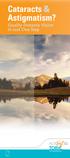 Cataracts & Astigmatism? Quality Distance Vision in Just One Step What would it be like to say goodbye to both cataracts and astigmatism at the same time? Imagine being able to see and enjoy quality distance
Marketing Samples Medical Optometry
 Marketing Samples Medical Optometry Intended Use The purpose of this marketing sample packet is to provide examples of the ways your practice can implement text for newsletters, emails or letters, on-hold
Get Your Eyes Examined
 1 Vision Changes You may notice vision changes with aging. Many changes are common and can often be corrected. As you get older, you are at higher risk of age-related eye diseases and conditions. Get Your
The cataract laser technology of tomorrow is here for you today.
 The cataract laser technology of tomorrow is here for you today. See inside to learn about all your exciting new options Thanks to new advancements, this is a great time to have cataract surgery Laser
INFORMED CONSENT FOR PHAKIC IMPLANT SURGERY
 INFORMED CONSENT FOR PHAKIC IMPLANT SURGERY INTRODUCTION This information is being provided to you so that you can make an informed decision about having eye surgery to reduce or eliminate your nearsightedness.
SURGICAL EYE CAMP AT DOLAKHA SERVICE REPORT:
 SURGICAL EYE CAMP AT DOLAKHA SERVICE REPORT: Location : Dolakha Lions Primary Eye Care Center Dolakha Period : 18 Nov 2008 20 Nov 2008 Service Record : OPD : 492, 56% female Surgery: 92 in total (cataract
The wait is over! Your NEW Choice For Cataract Removal
 The wait is over! Your NEW Choice For Cataract Removal Excellence in Eye Care Vision For Life World renowned eye surgeon Konrad Filutowski, MD is truly a man of vision. As Chief Surgeon and Medical Director
Vision Screening by Teachers in Southern Indian Schools : Testing a New "All Class Teacher" Model
 Management Vision Screening by Teachers in Southern Indian Schools : Testing a New "All Class Teacher" Model Priya Adhiseshan, Dr. K. Veena, R.D.Thulasiraj, Dr. Moutappa Frederick, Dr. Rengaraj Venkatesh,
Keeping Your Eyes Healthy after Treatment for Childhood Cancer
 Keeping Your Eyes Healthy after Treatment for Childhood Cancer High doses of radiation to the brain, eye, or eye socket (orbit) during treatment for childhood cancer can have a long-lasting affect on the
Refractive errors are caused by an imperfectly shaped eyeball, cornea or lens, and are of three basic types:
 Tips on Lasik Eye Surgery If you re tired of wearing glasses or contact lenses, you may be considering Lasik eye surgery one of the newest procedures to correct vision problems. Before you sign up for
Cataract Surgery Patient Information
 Cataract Patient Information 1. Within the human eye, there is a normal structure called the lens. In youth, this lens is clear, and light rays pass through and are focused by this lens as well as the
Congratulations! You have just joined the thousands of people who are enjoying the benefits of laser vision correction.
 Dear Valued Patient, Thank you for choosing Shady Grove Ophthalmology for your laser vision correction procedure. Our excellent staff is committed to offering you the highest quality eye care using state
A PATIENT GUIDE TO EYE SURGERY
 A PATIENT GUIDE TO EYE SURGERY RISKS ASSOCIATED WITH SURGERY There is a one in 1000 or less than one percent chance that a cataract surgery patient will experience complications that lead to blindness
Consent for Bilateral Simultaneous Refractive Surgery
 Consent for Bilateral Simultaneous Refractive Surgery Please sign and return Patient Copy While many patients choose to have both eyes treated at the same surgical setting, there may be risks associated
INFORMED CONSENT FOR LASER IN-SITU KERATOMILEUSIS (LASIK)
 Drs. Fine, Hoffman and Packer, LLC PHYSICIANS AND SURGEONS, EyeMDs OPHTHALMOLOGY I. Howard Fine, M.D. Richard S. Hoffman, M.D. Mark Packer, M.D. 1550 Oak Street, Suite 5 www.finemd.com Eugene, OR 97401-7701
INFORMED CONSENT FOR LASER IN-SITU KERATOMILEUSIS (LASIK)
 Lasik Center 2445 Broadway Quincy, IL 62301 217-222-8800 INFORMED CONSENT FOR LASER IN-SITU KERATOMILEUSIS (LASIK) INTRODUCTION This information is being provided to you so that you can make an informed