
NEW YORK STATE MEDICAID PROGRAM PHYSICIAN PROCEDURE CODES SECTION 5 - SURGERY
|
|
|
- Tracey Hart
- 10 years ago
- Views:
Transcription
1 NEW YORK STATE MEDICAID PROGRAM PHYSICIAN PROCEDURE CODES SECTION 5 - SURGERY

2 Table of Contents ANESTHESIA SECTION GENERAL INFORMATION AND RULES CALCULATION OF TOTAL ANESTHESIA VALUES SURGERY SECTION GENERAL INFORMATION AND RULES SURGERY SERVICES GENERAL INTERGUMENTARY SYSTEM MUSCULOSKELETAL SYSTEM RESPIRATORY SYSTEM CARDIOVASCULAR SYSTEM HEMIC AND LYMPHATIC SYSTEMS MEDIASTINUM AND DIAPHRAGM DIGESTIVE SYSTEM URINARY SYSTEM MALE GENITAL SYSTEM REPRODUCTIVE SYSTEM PROCEDURES FEMALE GENITAL SYSTEM MATERNITY CARE AND DELIVERY ENDOCRINE SYSTEM NERVOUS SYSTEM EYE AND OCULAR ADNEXA AUDITORY SYSTEM Version (4/1/2009) Page 1 of 304

3 ANESTHESIA SECTION For moderate conscious sedation, see codes , in the Medicine section. This is the only specialty that will continue to be concerned with units for claim submission purposes. The maximum conversion factor is $ Enter Total Anesthesia Value (total units) for each procedure in the units column of the MMIS Claim Form. GENERAL INFORMATION AND RULES 1. The total values for anesthesia services include pre- and post-operative visits, the administration of the anesthetic and the administration of fluids and/or blood incident to the anesthesia or surgery. 2. Calculated values for anesthesia services are to be used only when the anesthesia is administered by a physician who remains in constant attendance during the procedure for the sole purpose of rendering such anesthesia service. When more than one anesthesiologist is billing due to attending in shifts only the first anesthesiologist is allowed to bill the Basic Value, all others should bill the anesthesia time only, do not add the Basic Value in addition to time when billing the second, third, shift etc. Anesthesiologists should bill on paper documenting their time in attendance. 3. When hypothermia and/or a pump oxygenator are employed in conjunction with an anesthetic, see procedure code(s) 99116, 99190, 99191, Do not report the Anesthesia Basic Value in addition to time when billing code(s) 99116, 99190, 99191, separately. To bill for the anesthesia time, report the appropriate surgery procedure code with modifier -AA. The total time billed should represent the anesthesia time only. Do not include the Anesthesia Basic Value in the calculation of the total anesthesia value. 4. If the general or regional anesthetic is administered by the attending surgeon, the fee will be fifty percent of the ordinarily calculated anesthesia value (see below). Such procedures shall be identified by adding the modifier -47 to the MMIS surgical procedure code. This does not apply to local anesthesia (see Rule #8). 5. In procedures where no value is listed, the basic portion of the calculated value will be the same as listed for comparable procedures. For claiming purposes, the closest comparable surgical procedure code will be used for such procedures. 6. Necessary drugs and materials provided by the anesthesiologist may be charged for separately. 7. Where unusual detention with the patient is essential for the safety and welfare of such patient, the necessary time will be valued on the same basis as indicated below for anesthesia time. 8. No fee will be allowed for local infiltration or digital block anesthesia administered by the operating surgeon. Version (4/1/2009) Page 2 of 304

4 9. Anesthesia services not connected with surgery will be found in other sections of this fee schedule. 10. ALL anesthesia services must be identified by adding the modifier -23, -47, or -AA, to the same MMIS code number as the related surgical procedure. 11. Anesthesia Report (or Operative Record) must document total time spent with the patient and include starting time, completion time and an explanation of any unusual occurrence which prolonged anesthesia time. 12. The following MMIS MODIFIERS are commonly used in anesthesia: -23 Unusual Anesthesia: Occasionally, a procedure, which usually requires either no anesthesia or local anesthesia, because of unusual circumstances must be done under general anesthesia. This circumstance may be reported by adding the modifier -23 to the procedure code of the basic service. (Reimbursement will not exceed $30 plus time for the procedure.) -47 Anesthesia By Surgeon: Regional or general anesthesia provided by the surgeon may be reported by adding the modifier -47 to the basic service. (This does not include local anesthesia.) (Reimbursement will not exceed 50% of the basic value plus time for the procedure.) -AA Anesthesia Services Preformed Personally By Anesthesiologist: All anesthesia services not reported with modifiers 23 or -47 will be identified by adding the modifier -AA to the procedure number of the surgical procedure. (Reimbursement will not exceed the basic value plus time for the procedure.) For Anesthesia Complicated By Total Body Hypothermia and/or PUMP Oxygenator, see procedure code(s) 99116, 99190, 99191, Do not report these codes with an anesthesia modifier. See also Anesthesia Section, Rule #3. Version (4/1/2009) Page 3 of 304

5 CALCULATION OF TOTAL ANESTHESIA VALUES Calculation of total anesthesia value is determined by adding the listed basic value and time units. To bill for the anesthesia time report the appropriate surgery procedure code with modifier AA. When billing for anesthesia complicated by total body hypothermia and/or pump oxygenator, see procedure code(s) 99116, 99190, 99191, Do not report the anesthesia basic value in addition to time when billing code(s) 99116, 99190, 99191, separately. The total time billed on the service specific code should represent the anesthesia time only. A basic value is listed for most procedures. This includes the value of all anesthesia services except the value of the actual time spent administering the anesthesia or in unusual detention with the patient (see also Anesthesia Rule #7). The time units are computed by allowing one unit for each 15 minutes of anesthesia time. After the total anesthesia time is calculated, the resulting number of units should be rounded to the next whole number. Anesthesia time starts with the beginning of the administration of the anesthetic agents and ends when the anesthesiologist is no longer in personal attendance (when the patient may be safely placed under customary post-operative supervision). For example, in a procedure with a basic value of 5 units requiring two hours and forty-five minutes of an anesthesiologist's time, the time units total 11, and are added to the basic value of 5, producing a total anesthesia value of 16 units for this anesthesia service. Basic Value + Time Units = TOTAL ANESTHESIA VALUE CALCULATION OF ANESTHESIA VALUES FOR MULTIPLE/BILATERAL SURGICAL PROCEDURES When multiple or bilateral surgical procedures, which add time and complexity to patient care, are performed at the same operative session, the total anesthesia value should be calculated by taking 100% of the basic unit value assigned to the major surgical procedure plus the total time worked (1 hour 15 minutes, 2 hours 45 minutes, etc). The surgical procedure assigned the highest reimbursable fee may be considered the major procedure performed. Use the MMIS procedure code for the major procedure performed and the appropriate modifier (-23, -47, or -AA) when billing according to this instruction. (NOTE: Attach copy of Anesthesia Report to Operative Record which must verify total time spent with the patient.) Version (4/1/2009) Page 4 of 304

6 SURGERY SECTION GENERAL INFORMATION AND RULES 1. FEES: Fees or values for office, home and hospital visits, consultations and other medical services are listed in the sections entitled MEDICINE. 2. FOLLOW-UP (F/U) DAYS: Listed dollar values for all surgical procedures include the surgery and the follow-up care for the period indicated in days in the column headed "F/U Days". Necessary follow-up care beyond this listed period is to be added on a fee-for-service basis. (See modifier -24) 3. BY REPORT: When the value of a procedure is indicated as "By Report" (BR), an Operative Report must be submitted with the MMIS claim form for a payment determination to be made. The Operative Report must include the following information: a. Diagnosis (post-operative) b. Size, location and number of lesion(s) or procedure(s) where appropriate c. Major surgical procedure and supplementary procedure(s) d. Whenever possible, list the nearest similar procedure by number according to these studies e. Estimated follow-up period f. Operative time Failure to submit an Operative Report when billing for a "By Report" procedure will cause your claim to be denied by MMIS. 4. ADDITIONAL SERVICES: Complications or other circumstances requiring additional and unusual services concurrent with the procedure(s) or during the listed period of normal follow-up care, may warrant additional charges on a fee-for-service basis. (See modifiers -24, -25, -79) 5. When an additional surgical procedure(s) is carried out within the listed period of follow-up care for a previous surgery, the follow-up periods will continue concurrently to their normal terminations. (See modifiers -78, -79) 6. SEPARATE PROCEDURE: Certain of the listed procedures are commonly carried out as an integral part of a total service, and as such do not warrant a separate charge. When such a procedure is carried out as a separate entity, not immediately related to other services, the indicated value for "Separate Procedure" is applicable. Version (4/1/2009) Page 5 of 304

7 7. MULTIPLE SURGICAL PROCEDURES: a. When multiple or bilateral surgical procedures, which add significant time or complexity to patient care, are performed at the same operative session, the total dollar value shall be the value of the major procedure plus 50% of the value of the lesser procedure(s) unless otherwise specified. (For reporting bilateral surgical procedures, see modifier -50). b. When an incidental procedure (eg, incidental appendectomy, lysis of adhesions, excision of previous scar, puncture of ovarian cyst) is performed through the same incision, the fee will be that of the major procedure only. 8. PROCEDURES NOT SPECIFICALLY LISTED: Will be given values comparable to those of the listed procedures of closest similarity. When no similar procedure can be identified, the MMIS procedure codes to be utilized may be found at the end of each section. 9. SUPPLEMENTAL SKILLS: When warranted by the necessity of supplemental skills, values for services rendered by two or more physicians will be allowed. 10. SKILLS OF TWO SURGEONS: a. When the skills of two surgeons are required in the management of a specific surgical procedure, by prior agreement, the total dollar value may be apportioned in relation to the responsibility and work done, provided the patient is made aware of the fee distribution according to medical ethics. The value may be increased by 25 percent under these circumstances. See MMIS modifier -62. b. PHYSICIAN ASSISTANT/NURSE PRACTITIONER SERVICES FOR ASSIST AT SURGERY: When a physician requests a nurse practitioner or a physician's assistant to participate in the management of a specific surgical procedure in lieu of another physician, by prior agreement, the total value may be apportioned in relation to the responsibility and work done, provided the patient is made aware of the fee distribution according to medical ethics. The value may be increased by 20 percent under these circumstances. The claim for these services will be submitted by the physician using the appropriate modifier. Version (4/1/2009) Page 6 of 304

8 11. MATERIALS SUPPLIED BY A PHYSICIAN: Supplies and materials provided by the physician, eg, sterile trays/drugs, over and above those usually included with the office visit or other services rendered may be listed separately. List drugs, trays, supplies and materials provided. Identify as Reimbursement for drugs (including vaccines and immunglobulin) furnished by practitioners to their patients is based on the acquisition cost to the practitioner of the drug dose administered to the patient. For all drugs furnished in this fashion it is expected that the pracitioner will maintain auditable records of the actual itmeized invoice cost of the drug, including the numbers of doses of the drug represented on the invoice. New York State Medicaid does not intend to pay more than the acquisition cost of the drug dosage, as established by invoice, to the practitioner. Regardless of whether an invoice must be sumbitted to Medicaid for payment, the pracitioner is expected to limit his or her Medicaid claim amount to the actual invoice cost of the drug dosage administered. 12. PRIOR APPROVAL: Payment for those listed procedures where the MMIS code number is underlined is dependent upon obtaining the approval of the Department of Health prior to performance of the procedure. If such prior approval is not obtained, no reimbursement will be made. 13. INFORMED CONSENT FOR STERILIZATION: When procedures are performed for the primary purpose of rendering an individual incapable of reproducing, and in all cases when procedures identified by MMIS codes 55250, 55450, 58565, 58600, 58605, 58611, 58615, and are performed, the following rules will apply: a. The patient must be 21 years of age or older at the time to consent to sterilization. b. The patient must have been informed of the risks and benefits of sterilization and have signed the mandated consent form, (DSS-3134) not less than 30 days nor more than 180 days prior to the performance of the procedure. In cases of premature delivery and emergency abdominal surgery, consent must have been given at least 72 hours prior to sterilization. c. No bill will be processed for payment without a properly completed consent form. (Refer to Billing Section for completion instructions). NOTE: For procedures performed within the jurisdiction of NYC the guidelines established under NYC Local Law #37 of 1977 continue to be in force. Version (4/1/2009) Page 7 of 304

9 14. RECEIPT OF HYSTERECTOMY INFORMATION: Hysterectomies must not be performed for the purpose of sterilization. When hysterectomy procedures are performed and in all cases when procedures identified by MMIS codes 51925, 58150, 58152, 58180, 58200, 58210, 58240, 58260, 58262, 58263, 58267, 58270, 58275, 58280, 58285, 58290, 58291, 58292, 58293, 58294, 58541, 58542, 58543, 58544, 58548, 58550, 58552, 58553, 58554, 58570, 58571, 58572, 58573, 58951, 58953, 58954, 58956, 59135, or are billed, a properly completed "Hysterectomy Receipt of Information Form" must be attached to the bill for payment. No bill will be processed without a properly completed "Hysterectomy Receipt of Information Form", (DSS-3113). 15. MMIS SURGERY MODIFIERS: -47 Anesthesia By Surgeon: Regional or general anesthesia provided by the surgeon may be reported by adding the modifier -47 to the basic service. (This does not include local anesthesia.) (Reimbursement will not exceed 50% of the basic value plus time for the procedure.) -50 Bilateral Procedure (Surgical): Unless otherwise identified in the listings, bilateral surgical procedures requiring a separate incision that are performed at the same operative session, should be identified by the appropriate five digit code describing the first procedure. To indicate a bilateral surgical procedure was done add modifier -50 to the procedure number. (Reimbursement will not exceed 150% of the maximum Fee Schedule amount. One claim line is to be billed representing the bilateral procedure. Amount billed should reflect total amount due.) -54 Surgical Care Only: When one physician performs a surgical procedure and another provides preoperative and/or postoperative management (or postoperative management is to be provided in an outpatient department when physician services are included in the rate), surgical services may be identified by adding the modifier -54 to the usual procedure number. (Reimbursement will not exceed 80% of the maximum Fee Schedule amount.) -62 Two Surgeons: When two surgeons (usually of different skills) work together as primary surgeons performing distinct part(s) of a single reportable procedure, add the modifier 62 to the single definitive procedure code. [One surgeon should file one claim line representing the procedure performed by the two surgeons. Reimbursement will not exceed 125% of the maximum State Medical Fee Schedule amount.] If additional procedure(s) (including add-on procedure(s)) are performed during the same surgical session, separate code(s) may be reported without the modifier 62 added as appropriate. NOTE: If a co-surgeon acts as an assistant in the performance of additional procedure(s) during the same surgical session, those services may be reported using separate procedure code(s) with the modifier 80 added, as appropriate. Version (4/1/2009) Page 8 of 304

10 -63 Procedure Performed on Infants Less Than 4 kg: Procedures performed on neonates and infants up to a present body weight of 4 kg may involve significantly increased complexity and physician work commonly associated with these patients. This circumstance may be reported by adding modifier 63 to the procedure number. Note: Unless otherwise designated, this modifier may only be appended to procedures/services listed in the code series. Modifier 63 should not be appended to any CPT codes listed in the Evaluation and Management Services, Anesthesia, Radiology, Pathology/Laboratory, or Medicine sections. (Reimbursement will not exceed 100% of the maximum Fee Schedule amount.) -66 Surgical Team: Under some circumstances, highly complex procedures (requiring the concomitant services of several physicians, often of different specialties, plus other highly skilled, specially trained personnel, various types of complex equipment) are carried out under the "surgical team" concept. Such circumstances may be identified by each participating physician with the addition of the modifier -66 to the basic procedure number used for reporting services. (Reimbursement will not exceed 20% of the maximum Fee Schedule amount.) -78 Return to the Operating Room for a Related Procedure During the Postoperative Period: The physician may need to indicate that another procedure was performed during the postoperative period of the initial procedure. When this subsequent procedure is related to the first, and requires the use of the operating room, it may be reported by adding the modifier -78 to the related procedure. (Reimbursement will not exceed 100% of the maximum Fee Schedule amount.) -79 Unrelated Procedure or Service by the Same Practitioner During the Postoperative Period: The practitioner may need to indicate that the performance of a procedure or service during the postoperative period was unrelated to the original procedure. This circumstance may be reported by adding the modifier -79. (Reimbursement will not exceed 100% of the maximum Fee Schedule amount.) -80 Assistant Surgeon: Surgical assistant services may be identified by adding the modifier -80 to the usual procedure number(s). (Reimbursement will not exceed 20% of the maximum Fee Schedule amount.) -82 Assistant Surgeon: (when qualified resident surgeon not available): The unavailability of a qualified resident surgeon is a prerequisite for use of modifier -82 appended to the usual procedure code number(s). (Reimbursement will not exceed 20% of the maximum Fee Schedule amount.) Version (4/1/2009) Page 9 of 304

11 -AS -AQ -LT -RT Physician Assistant or Nurse Practitioner Services for Assist at Surgery: When the physician requests that a Physician Assistant or Nurse Practitioner assist at surgery in lieu of another physician, Modifier -AS should be added to the appropriate code describing the procedure. One claim is to be filed. (Reimbursement will not exceed 120% of the maximum Fee Schedule amount). Physician Providing a Service in an Unlisted Health Professional Shortage Area (HPSA) Left Side (used to identify procedures performed on the left side of the body): Add modifier LT to the usual procedure code number. (Reimbursement will not exceed 100% of the Maximum Fee Schedule amount. One claim line should be billed.) (Use modifier 50 when both sides done at same operative session.) Right Side (used to identify procedures performed on the right side of the body): Add modifier RT to the usual procedure code number. (Reimbursement will not exceed 100% of the Maximum Fee Schedule amount. One claim line should be billed.) (Use modifier 50 when both sides done at same operative session.) Version (4/1/2009) Page 10 of 304

12 SURGERY SERVICES GENERAL Fine needle aspiration; without imaging guidance with imaging guidance (For radiological supervision and interpretation, see 76942, 77002, 77012, 77021) (For percutaneous needle biopsy, other than fine needle aspiration, see for muscle, for pleura, for lung or mediastinum, for salivary gland, 47000, for liver, for pancreas, for abdominal or retroperitoneal mass, for thyroid, for spinal cord) INTERGUMENTARY SYSTEM SKIN, SUBCUTANEOUS AND ACCESSORY STRUCTURES INCISION AND DRAINAGE (For excision, see 11400, et seq) Acne surgery (eg, marsupialization, opening or removal of multiple milia, comedones, cysts, pustules) Incision and drainage of abscess (eg, carbuncle, suppurative hidradenitis, cutaneous or subcutaneous abscess, cyst, furuncle, or paronychia); simple or single complicated or multiple Incision and drainage of pilonidal cyst; simple complicated (For excision of pilonidal cyst, see ) Incision and removal of foreign body, subcutaneous tissues; simple complicated (To report wound exploration due to penetrating trauma without laparotomy or thoracotomy, see , as appropriate) (To report debridement associated with open fracture(s) and/or dislocation(s), use , as appropriate) Incision and drainage of hematoma, seroma or fluid collection (If imaging guidance is performed, see 76942, 77012, 77021) Puncture aspiration of abscess, hematoma, bulla or cyst (If imaging guidance is performed, see 76942, 77012, 77021) Incision and drainage, complex, postoperative wound infection (For secondary closure of surgical wound, see 12020, 12021, 13160) Version (4/1/2009) Page 11 of 304

13 EXCISION DEBRIDEMENT (For dermabrasions, see ) (For nail debridement, see ) (For burn(s), see ) Debridement of extensive eczematous or infected skin; up to 10% of body surface (For abdominal wall or genitalia debridement for necrotizing soft tissue infection, see ) each additional 10% of the body surface, or part thereof (Use in conjunction with 11000) Debridement of skin, subcutaneous tissue, muscle and fascia for necrotizing soft tissue infection; external genitalia and perineum abdominal wall, with or without fascial closure external genitalia, perineum and abdominal wall, with or without fascial closure Removal of prosthetic material or mesh, abdominal wall for infection (eg, for chronic or recurrent mesh infection or necrotizing soft tissue infection) (Use in conjunction with 10180, ) (Do not report in conjunction with , ) (Report skin grafts or flaps separately when performed for closure at the same session as ) (When insertion of mesh is used for closure, use 49568) (If orchiectomy is performed, use 54520) (If testicular transplantation is performed, use 54680) Debridement including removal of foreign material associated with open fracture(s) and/or dislocation(s); skin and subcutaneous tissues skin, subcutaneous tissue, muscle fascia, and muscle skin, subcutaneous tissue, muscle fascia, muscle, and bone Debridement; skin, partial thickness skin, full thickness skin, and subcutaneous tissue skin, subcutaneous tissue, and muscle skin, subcutaneous tissue, muscle, and bone PARING OR CUTTING (To report destruction, see ) Paring or cutting of benign hyperkeratotic lesion (eg, corn or callus); single lesion two to four lesions more than four lesions Version (4/1/2009) Page 12 of 304

14 BIOPSY During certain surgical procedures in the integumentary system, such as excision, destruction, or shave removals, the removed tissue is often submitted for pathologic examination. The obtaining of tissue for pathology during the course of these procedures is a routine component of such procedures. This obtaining of tissue is not considered a separate biopsy procedure and is not separately reported. The use of a biopsy procedure code (eg, 11100, 11101) indicates that the procedure to obtain tissue for pathologic examination was performed independently, or was unrelated or distinct from other procedures/services provided at that time. Such biopsies are not considered components of other procedures when performed on different lesions or different sites on the same date, and are to be reported separately. (For biopsy of conjunctiva, use 68100; eyelid, use 67810) Biopsy of skin, subcutaneous tissue and/or mucous membrane (including simple closure), unless otherwise listed; single lesion each separate/additional lesion (Use in conjunction with 11100) REMOVAL OF SKIN TAGS Removal by scissoring, or any sharp method, ligature strangulation electrosurgical destruction or combination of treatment modalities including chemical or electrocauterization of wound, with or without local anesthesia Removal of skin tags, multiple fibrocutaneous tags, any area; up to and including 15 lesions each additional ten lesions, or part thereof (Use in conjunction with 11200) SHAVING OF EPIDERMAL OR DERMAL LESIONS Shaving is the sharp removal by transverse incision or horizontal slicing to remove epidermal and dermal lesions without a full-thickness dermal excision. This includes local anesthesia, chemical or electrocauterization of the wound. The wound does not require suture closure Shaving of epidermal or dermal lesion, single lesion, trunk, arms or legs; lesion diameter 0.5 cm. or less lesion diameter 0.6 to 1.0 cm lesion diameter 1.1 to 2.0 cm lesion diameter over 2.0 cm Shaving of epidermal or dermal lesion, single lesion, scalp, neck, hands, feet, genitalia; lesion diameter 0.5 cm or less lesion diameter 0.6 to 1.0 cm lesion diameter 1.1 to 2.0 cm lesion diameter over 2.0 cm Version (4/1/2009) Page 13 of 304

15 11310 Shaving of epidermal or dermal lesion, single lesion, face, ears, eyelids, nose, lips, mucous membrane; lesion diameter 0.5 cm or less lesion diameter 0.6 to 1.0 cm lesion diameter 1.1 to 2.0 cm lesion diameter over 2.0 cm EXCISION BENIGN LESIONS Excision (including simple closure) of benign lesions of skin (eg, neoplasm, cicatricial, fibrous, inflammatory, congenital, cystic lesions), includes local anesthesia. See appropriate size and area below. For shave removal, see et seq., and for electrosurgical and other methods, see et seq. Excision is defined as full-thickness (through the dermis) removal of a lesion, including margins, and includes simple (non-layered) closure when performed. Report separately each benign lesion excised. Code selection is determined by measuring the greatest clinical diameter of the apparent lesion plus that margin required for complete excision (lesion diameter plus the most narrow margins required equals the excised diameter). The margins refer to the most narrow margin required to adequately excise the lesion, based on the physician's judgement. The measurement of lesion plus margin is made prior to excision. The excised diameter is the same whether the surgical defect is repaired in a linear fashion, or reconstructed (eg, with a skin graft). The closure of defects created by incision, excision, or trauma may require intermediate or complex closure. Repair by intermediate or complex closure should be reported separately. For excision of benign lesions requiring more than simple closure, ie, requiring intermediate or complex closure, report in addition to appropriate intermediate ( ) or complex closure ( ) codes. For reconstructive closure, see , , For definition of intermediate or complex closure, see Integumentary System, Repair (Closure) Excision, benign lesion including margins, except skin tag (unless listed elsewhere), trunk, arms or legs; excised diameter 0.5 cm or less excised diameter 0.6 to 1.0 cm excised diameter 1.1 to 2.0 cm excised diameter 2.1 to 3.0 cm excised diameter 3.1 to 4.0 cm excised diameter over 4.0 cm Excision, benign lesion including margins, except skin tag (unless listed elsewhere), scalp, neck, hands, feet, genitalia; excised diameter 0.5 cm or less excised diameter 0.6 to 1.0 cm excised diameter 1.1 to 2.0 cm excised diameter 2.1 to 3.0 cm excised diameter 3.1 to 4.0 cm excised diameter over 4.0 cm Version (4/1/2009) Page 14 of 304

16 11440 Excision, other benign lesion including margins, (unless listed elsewhere), face, ears, eyelids, nose, lips, mucous membrane; excised diameter 0.5 cm or less excised diameter 0.6 to 1.0 cm excised diameter 1.1 to 2.0 cm excised diameter 2.1 to 3.0 cm excised diameter 3.1 to 4.0 cm excised diameter over 4.0 cm (For eyelids involving more than skin, see also et seq) Excision of skin and subcutaneous tissue for hidradenitis, axillary; with simple or intermediate repair with complex repair Excision of skin and subcutaneous tissue for hidradenitis, inguinal; with simple or intermediate repair with complex repair Excision of skin and subcutaneous tissue for hidradenitis, perianal, perineal or umbilical; with simple or intermediate repair with complex repair (For bilateral procedure, add modifier 50) (When skin graft or flap is used for closure, use appropriate procedure code in addition) EXCISION - MALIGNANT LESIONS Excision (including simple closure) of malignant lesions of skin (eg, basal cell carcinoma, squamous cell carcinoma, melanoma) includes local anesthesia. (See appropriate size and body area below). For destruction of malignant lesions of skin, see destruction codes Excision is defined as full-thickness (through the dermis) removal of a lesion including margins, and includes simple (non-layered) closure when performed. Report separately each malignant lesion excised. Code selection is determined by measuring the greatest clinical diameter of the apparent lesion plus that margin required for complete excision (lesion diameter plus the most narrow margins required equals the excised diameter). The margins refer to the most narrow margin required to adequately excise the lesion, based on the physician's judgment. The measurement of lesion plus margin is made prior to excision. The excised diameter is the same whether the surgical defect is repaired in a linear fashion, or reconstructed (eg, with a skin graft). The closure of defects created by incision, excision, or trauma may require intermediate or complex closure. Repair by intermediate or complex closure should be reported separately. For excision of malignant lesions requiring more than simple closure, i.e., requiring intermediate or complex closure, report in addition to appropriate intermediate ( ) or complex closure ( ) codes. For reconstructive closure, see , , See definition of intermediate or complex closure. When frozen section pathology shows the margins of excision were not adequate, an additional excision may be necessary for complete tumor removal. Use only one code to report the additional excision and re-excision(s) based on the final widest excised diameter required for complete tumor removal at the same operative session. Version (4/1/2009) Page 15 of 304

17 To report a re-excision procedure performed to widen margins at a subsequent operative session, see codes , as appropriate Excision, malignant lesion including margins, trunk, arms or legs; excised diameter 0.5 cm or less excised diameter 0.6 to 1.0 cm excised diameter 1.1 to 2.0 cm excised diameter 2.1 to 3.0 cm excised diameter 3.1 to 4.0 cm excised diameter over 4.0 cm Excision, malignant lesion including margins, scalp, neck, hands, feet, genitalia; excised diameter 0.5 cm or less excised diameter 0.6 to 1.0 cm excised diameter 1.1 to 2.0 cm excised diameter 2.1 to 3.0 cm excised diameter 3.1 to 4.0 cm excised diameter over 4.0 cm Excision, malignant lesion including margins, face, ears, eyelids, nose, lips; excised diameter 0.5 cm or less excised diameter 0.6 to 1.0 cm excised diameter 1.1 to 2.0 cm excised diameter 2.1 to 3.0 cm excised diameter 3.1 to 4.0 cm excised diameter over 4.0 cm (For eyelids involving more than skin, see also et seq) NAILS (For drainage of paronychia or onychia, see 10060, 10061) Debridement of nail(s) by any method(s); one to five six or more Avulsion of nail plate, partial or complete, simple; single each additional nail plate (Use in conjunction with 11730) Evacuation of subungual hematoma Excision of nail and nail matrix, partial or complete, (eg, ingrown or deformed nail) for permanent removal; with amputation of tuft of distal phalanx (For skin graft, if used, see 15050) Biopsy of nail unit (eg, plate, bed, matrix, hyponychium, proximal and lateral nail folds) (seperate procedure) Repair of nail bed Reconstruction of nail bed with graft Wedge excision of skin of nail fold (eg, for ingrown toenail) Version (4/1/2009) Page 16 of 304

18 PILONIDAL CYST Excision of pilonidal cyst or sinus; simple extensive complicated INTRODUCTION Injection, intralesional; up to and including seven lesions more than seven lesions (11900, are not to be used for preoperative local anesthetic injection) (For veins, see 36470, 36471) (For intralesional chemotherapy administration, see 96405, 96406) Tattooing, intradermal introduction of insoluble opaque pigments to correct color defects of skin, including micropigmentation; 6.0 sq cm or less to 20.0 sq cm each additional 20.0 sq cm, or part thereof (Report required) (Use in conjunction with 11921) Subcutaneous injection of filling material (eg, collagen); 1 cc or less (Report required) to 5 cc (Report required) to 10 cc (Report required) over 10 cc (Report required) Insertion of tissue expander(s) for other than breast, including subsequent expansion (For breast reconstruction with tissue expander(s), use 19357) Replacement of tissue expander with permanent prosthesis Removal of tissue expander(s) without insertion of prosthesis Insertion, implantable contraceptive capsules Removal, implantable contraceptive capsules Removal with reinsertion, implantable contraceptive capsules Subcutaneous hormone pellet implantation (implantation of estradiol and/or testosterone pellets beneath the skin) Insertion, non-biodegradable drug delivery implant Removal, non-biodegradable drug delivery implant Removal with reinsertion, non-biodegradable drug delivery implant REPAIR (CLOSURE) Use the codes in this section to designate wound closure utilizing sutures, staples, or tissue adhesives (eg, 2-cyanoacrylate), either singly or in combination with each other, or in combination with adhesive strips. Wound closure utilizing adhesive strips as the sole repair material should be coded using the appropriate E/M code. DEFINITIONS: The repair of wounds may be classified as Simple, Intermediate or Complex. Version (4/1/2009) Page 17 of 304

19 SIMPLE REPAIR: is used when the wound is superficial; ie, involving primarily epidermis or dermis, or subcutaneous tissues without significant involvement of deeper structures, and requires simple one layer closure. This includes local anesthesia and chemical or electrocauterization of wounds not closed. (For closure with adhesive strips, list appropriate Evaluation and Management service only). INTERMEDIATE REPAIR: includes the repair of wounds that, in addition to the above, require layer closure of one or more of the deeper layers of subcutaneous tissue and superficial (non-muscle) fascia, in addition to the skin (epidermal and dermal) closure. Single-layer closure of heavily contaminated wounds that have required extensive cleaning or removal of particulate matter also constitutes intermediate repair. COMPLEX REPAIR: includes the repairs of wounds requiring more than layered closure, viz, scar revision, debridement, (eg, traumatic lacerations or avulsions), extensive undermining, stents or retention sutures. Necessary preparation includes creation of a defect for repairs (eg, excision of a scar requiring a complex repair) or the debridement of complicated lacerations or avulsions. Complex repair does not include excision of benign ( ) or malignant ( ) lesions. Instructions for listing services at time of wound repair: 1. The repaired wound(s) should be measured and recorded in centimeters, whether curved, angular or stellate. 2. When multiple wounds are repaired, add together the lengths of those in the same classification (see above) and from all anatomic sites that are grouped together into the same code descriptor. For example, add together the lengths of imtermediate repairs to the trunk and extremities. Do not add lengths of repairs from different groupings of anatomic sites (eg, face and extremities). Also, do not add together lengths of different classifications (eg, intermediate and complex repairs). 3. Decontamination and/or debridement: Debridement is considered a separate procedure only when gross contamination requires prolonged cleansing, when appreciable amounts of devitalized or contaminated tissue are removed, or when debridement is carried out separately without immediate primary closure. (For extensive debridement of soft tissue and/or bone, see ) (For extensive debridement of soft tissue and/or bone, not associated with open fracture(s) and/or dislocation(s) resulting from penetrating and/or blunt trauma, see ) (For extensive debridement of subcutaneous tissue, muscle fascia, muscle, and/or bone associated with open fracture(s) and/or dislocation(s), see ) 4. Involvement of nerves, blood vessels and tendons: Report under appropriate system (Nervous, Cardiovascular, Musculoskeletal) for repair of these structures. The repair of these associated wounds is included in the primary procedure. Simple ligation of vessels in an open wound is considered as part of any wound closure. Version (4/1/2009) Page 18 of 304

20 Simple exploration of nerves, blood vessels or tendons exposed in an open wound is also considered part of the essential treatment of the wound and is not a separate procedure unless appreciable dissection is required. If the wound requires enlargment, extension of dissection (to determine penetration), debridement, removal of foreign body(s), ligation or coagulation of minor subcutaneous and/or muscular blood vessel(s), of the subcutaneous tissue, muscle, fascia, and/or muscle, not requiring thoracotomy or laparotomy, use codes , as appropriate. REPAIR-SIMPLE (Sum of length of repairs for each group of anatomic sites) Simple repair of superficial wounds of scalp, neck, axillae, external genitalia, trunk and/or extremities (including hands and feet); 2.5 cm or less cm to 7.5 cm cm to.12.5 cm cm to 20.0 cm cm to 30.0 cm over 30.0 cm Simple repair of superficial wounds of face, ears, eyelids, nose, lips and/or mucous membranes; 2.5 cm or less cm to 5.0 cm cm to 7.5 cm cm to 12.5 cm cm to 20.0 cm cm to 30.0 cm over 30.0 cm Treatment of superficial wound dehiscence; simple closure (For extensive or complicated secondary wound closure, see 13160) REPAIR-INTERMEDIATE (Sum of length of repairs for each group of anatomic sites.) Repair, intermediate, wounds of scalp, axillae, trunk and/or extremities (excluding hands and feet); 2.5 cm or less cm to 7.5 cm cm to.12.5 cm cm to 20.0 cm cm to 30.0 cm over 30.0 cm Repair, intermediate, wounds of neck, hands, feet and/or external genitalia; 2.5 cm or less cm to 7.5 cm cm to.12.5 cm cm to 20.0 cm cm to 30.0 cm over 30.0 cm Version (4/1/2009) Page 19 of 304

21 12051 Repair, intermediate, wounds of face, ears, eyelids, nose, lips and/or mucous membranes; 2.5 cm or less cm to 5.0 cm cm to 7.5 cm cm to 12.5 cm cm to 20.0 cm cm to 30.0 cm over 30.0 cm REPAIR-COMPLEX Reconstructive procedures, complicated wound closure. Sum of length of repairs for each group of anatomic sites. (For full thickness repair of lip or eyelid, see respective anatomical subsections.) Repair, complex, trunk; 1.1 cm to 2.5 cm cm to 7.5 cm each additional 5 cm or less (Use in conjunction with 13101) Repair, complex, scalp, arms, and/or legs; 1.1 cm to 2.5 cm cm to 7.5 cm each additional 5 cm or less (Use in conjunction with 13121) Repair, complex, forehead, cheeks, chin, mouth, neck, axillae, genitalia, hands and/or feet; 1.1 cm to 2.5 cm cm to 7.5cm each additional 5 cm or less (Use in conjunction with 13132) Repair, complex, eyelids, nose, ears and/or lips; 1.0 cm or less (See also , ) cm to 2.5 cm cm to 7.5 cm each additional 5 cm or less (Use in conjunction with 13152) Secondary closure of surgical wound or dehiscence, extensive or complicated (For packing or simple secondary wound closure, see 12020) Version (4/1/2009) Page 20 of 304
22 ADJACENT TISSUE TRANSFER OR REARRANGEMENT For full thickness repair of lip or eyelid, see respective anatomical subsections. Excision (including lesion) and/or repair by adjacent tissue transfer or rearrangement (eg, Z-plasty, W-plasty, V-Y plasty, rotation flap, advancement flap, double pedicle flap). When applied in repairing lacerations, the procedures listed must be developed by the surgeon to accomplish the repair. They do not apply when direct closure or rearrangement of traumatic wounds incidentally result in these configurations. Skin graft necessary to close secondary defect is considered an additional procedure. For purposes of code selection, the term defect includes the primary and secondary defects. The primary defect resulting from the excision and the secondary defect resulting from flap design to perform the reconstruction are measured together to determine the code Adjacent tissue transfer or rearrangement, trunk; defect 10 sq cm or less defect 10.1 sq cm to 30.0 sq cm Adjacent tissue transfer or rearrangement, scalp, arms and/or legs; defect 10 sq cm. or less defect 10.1 sq cm to 30.0 sq cm Adjacent tissue transfer or rearrangement, forehead, cheeks, chin, mouth, neck, axillae, genitalia, hands and/or feet; defect 10 sq cm or less defect 10.1 sq cm to 30.0 sq cm Adjacent tissue transfer or rearrangement, eyelids, nose, ears and/or lips; defect 10 sq cm or less defect 10.1 sq cm to 30.0 sq cm (For eyelid, full thickness, see et seq) Adjacent tissue transfer or rearrangement, more than 30 sq cm, unusual or complicated, any area Filleted finger or toe flap, including preparation of recipient site SKIN REPLACEMENT SURGERY AND SKIN SUBSTITUTES Identify by size and location of the defect (recipient area) and the type of graft or skin substitute; includes simple debridement of granulation tissue or recent avulsion. When a primary procedure such as orbitectomy, radical mastectomy or deep tumor removal requires skin graft for definitive closure, see appropriate anatomical subsection for primary procedure and this section for skin graft or skin substitute. Use 15002, for initial wound recipient site preparation. Use for autogenous skin grafts. For autogenous tissue-cultured epidermal grafts, use For harvesting of autologous keratinocytes and dermal tissue for tissuecultured skin grafts, use Procedures are coded by recipient site. Use for acellular dermal replacement. Repair of donor site requiring skin graft or local flaps is to be added as an additional procedure. Version (4/1/2009) Page 21 of 304
23 Codes and describe burn and wound preparation or incisional or excisional release of scar contracture resulting in an open wound requiring a skin graft. Codes describe the application of skin replacements and skin substitutes. The following definition should be applied to those codes that reference 100 sq cm or one percent of body area of infants and children when determining the involvement of body size: The measurement of 100 sq cm is applicable to adults and children age 10 and over, percentages of body surface area apply to infants and children under the age of 10. These codes are not intended to be reported for simple graft application alone or application stabilized with dressings (eg, simple gauze wrap) without surgical fixaton of the skin substitute/graft. The skin substitute/graft is anchored using the surgeon s choice of fixation. When services are performed in the office, the supply of the skin substitute/graft should be reported separately. Routine dressing supplies are not reported separately. (For microvascular flaps, see ) SURGICAL PREPARATION Surgical preparation or creation of recipient site by excision of open wounds, burn eschar, or scar (including subcutaneous tissues), or incisional release of scar contracture, trunk, arms, legs; first 100 sq cm or 1% of body area of infants and children each additional 100 sq cm, or part thereof, or each additional 1% of body area of infants and children (Use in conjunction with 15002) Surgical preparation or creation of recipient site by excision of open wounds, burn eschar, or scar (including subcutaneous tissues), or incisional release of scar contracture, face, scalp, eyelids, mouth, neck, ears, orbits, genitalia, hands, feet and/or multiple digits; first 100 sq cm or 1% of body area of infants and children each additional 100 sq cm, or part thereof, or each additional 1% of body area of infants and children (Use in conjunction with 15004) (Report in conjunction with code for appropriate skin grafts or replacements [ , ]. List the graft or replacement separately by its procedure number when the graft, immediate or delayed, is applied) (For excision of benign lesions, see ) (For excision of malignant lesions, see ) (For excision to prepare or create recipient site with dressings or materials not listed in , use only) (For excision with immediate allograft skin placement, use in conjunction with and ) (For excision with immediate xenogeneic dermis placement, use in conjunction with ) (For excision with immediate skin grafting, use in conjunction with ) Version (4/1/2009) Page 22 of 304
24 GRAFTS AUTOGRAFT/TISSUE CULTURED AUTOGRAFT Harvest of skin for tissue cultured skin autograft, 100 sq cm or less Pinch graft, single or multiple, to cover small ulcer, tip of digit, or other minimal open area (except on face), up to defect size 2 cm diameter Split-thickness autograft, trunk, arms, legs; first 100 sq cm or less, or one percent of body area of infants and children (except 15050) each additional 100 sq cm, or each additional one percent of body area of infants and children, or part thereof (Use in conjunction with 15100) Epidermal autograft, trunk, arms, legs; first 100 sq cm or less, or one percent of body area of infants and children each additional 100 sq cm, or each additional one percent of body area of infants and children, or part thereof (Use in conjunction with 15110) Epidermal autograft, face, scalp, eyelids, mouth, neck, ears, orbits, genitalia, hands, feet, and/or multiple digits; first 100 sq cm or less, or one percent of body area of infants and children each additional 100 sq cm, or each additional one percent of body area of infants and children, or part thereof (Use in conjunction with 15115) Split-thickness autograft, face, scalp, eyelids, mouth, neck, ears, orbits, genitalia, hands, feet, and/or multiple digits; first 100 sq cm or less, or one percent of body area of infants and children (except 15050) each additional 100 sq cm, or each additional one percent of body area of infants and children, or part thereof (Use in conjunction with 15120) (For eyelids, see also et seq) Dermal autograft, trunk, arms, legs; first 100 sq cm or less, or one percent of body area of infants and children each additional 100 sq cm, or each additional one percent of body area of infants and children, or part thereof (Use in conjunction with 15130) Version (4/1/2009) Page 23 of 304
25 15135 Dermal autograft, face, scalp, eyelids, mouth, neck, ears, orbits, genitalia, hands, feet, and/or multiple digits; first 100 sq cm or less, or one percent of body area of infants and children each additional 100 sq cm, or each additional one percent of body area of infants and children, or part thereof (Use in conjunction with 15135) Tissue cultured epidermal autograft, trunk, arms, legs; first 25 sq cm or less additional 1 sq cm to 75 sq cm (Do not report more than once per session) (Use in conjunction with 15150) each additional 100 sq cm, or each additional one percent of body area of infants and children, or part thereof (Use in conjunction with 15151) Tissue cultured epidermal autograft, face, scalp, eyelids, mouth, neck, ears, orbits, genitalia, hands, feet, and/or multiple digits; first 25 sq cm or less additional 1 sq cm to 75 sq cm (Do not report more than once per session) (Use in conjunction with 15155) each additional 100 sq cm, or each additional one percent of body area of infants and children, or part thereof (Use in conjunction with 15156) ACELLULAR DERMAL REPLACEMENT Acellular dermal replacement, trunk, arms, legs; first 100 sq cm or less, or one percent of body area of infants and children each additional 100 sq cm, or each additional one percent of body area of infants and children, or part thereof (Use in conjunction with 15170) Acellular dermal replacement, face, scalp, eyelids, mouth, neck, ears, orbits, genitalia, hands, feet, and/or multiple digits; first 100 sq cm or less, or one percent of body area of infants and children each additional 100 sq cm, or each additional one percent of body area of infants and children, or part thereof (Use in conjunction with 15175) Version (4/1/2009) Page 24 of 304
26 15200 Full thickness graft, free, including direct closure of donor site, trunk; 20 sq cm or less each additional 20 sq cm, or part thereof (Use in conjunction with 15200) Full thickness graft, free, including direct closure of donor site, scalp, arms, and/or legs; 20 sq cm or less each additional 20 sq cm, or part thereof (Use in conjunction with 15220) Full thickness graft, free, including direct closure of donor site, forehead, cheeks, chin, mouth, neck, axillae, genitalia, hands, and/or feet; 20 sq cm or less (For finger tip graft, use 15050) (For repair of syndactyly, fingers, see ) each additional 20 sq cm, or part thereof (Use in conjunction with 15240) Full thickness graft, free, including direct closure of donor site, nose, ears, eyelids, and/or lips; 20 sq cm or less each additional 20 sq cm, or part thereof (Use in conjunction with 15260) (For eyelids, see also et seq) (Repair of donor site requiring skin graft or local flaps, to be added as additional separate procedure) ALLOGRAFT/TISSUE CULTURED ALLOGENEIC SKIN SUBSTITUTE Application of a non-autologous human skin graft (ie, homograft) from a donor to a part of the recipient s body to resurface an area damaged by burns, traumatic injury, soft tissue infection and/or tissue necrosis or surgery Allograft skin for temporary wound closure, trunk, arms, legs; first 100 sq cm or less, or one percent of body area of infants and children each additional 100 sq cm, or each additional one percent of body area of infants and children, or part thereof (Use in conjunction with 15300) Allograft skin for temporary wound closure, face, scalp, eyelids, mouth, neck, ears, orbits, genitalia, hands, feet, and/or multiple digits; first 100 sq cm or less, or one percent of body area of infants and children each additional 100 sq cm, or each additional one percent of body area of infants and children, or part thereof (Use in conjunction with 15320) Version (4/1/2009) Page 25 of 304
27 15330 Acellular dermal allograft, trunk, arms, legs; first 100 sq cm or less, or one percent of body area of infants and children each additional 100 sq cm, or each additional one percent of body area of infants and children, or part thereof (Use in conjunction with 15330) Acellular dermal allograft, face, scalp, eyelids, mouth, neck, ears, orbits, genitalia, hands, feet, and/or multiple digits; first 100 sq cm or less, or one percent of body area of infants and children each additional 100 sq cm, or each additional one percent of body area of infants and children, or part thereof (Use in conjunction with 15335) Tissue cultured allogeneic skin substitute; first 25 sq cm or less each additional 25 sq cm, or part thereof (Use in conjunction with 15340) (Do not report 15340, in conjunction with , ) Tissue cultured allogeneic dermal substitute; trunk, arms, legs; first 100 sq cm or less, or one percent of body area of infants and children each additional 100 sq cm, or each additional one percent of body area of infants and children, or part thereof (Use in conjunction with 15360) Tissue cultured allogeneic dermal substitute, face, scalp, eyelids, mouth, neck, ears, orbits, genitalia, hands, feet, and/or multiple digits; first 100 sq cm or less, or one percent of body area of infants and children each additional 100 sq cm, or each additional one percent of body area of infants and children, or part thereof (Use in conjunction with 15365) XENOGRAFT Application of a non-human skin graft or biologic wound dressing (eg, porcine tissue or pigskin) to a part of the recipient s body following debridement of the burn wound or area of traumatic injury, soft tissue infection and/or tissue necrosis, or surgery Xenograft, skin (dermal), for temporary wound closure; trunk, arms, legs; first 100 sq cm or less, or one percent of body area of infants and children each additional 100 sq cm or each additional one percent of body area of infants and children, or part thereof (Use in conjunction with 15400) Version (4/1/2009) Page 26 of 304
28 15420 Xenograft skin (dermal), for temporary wound closure, face, scalp, eyelids, mouth, neck, ears, orbits, genitalia, hands, feet, and/or multiple digits; first 100 sq cm or less, or one percent of body area of infants and children each additional 100 sq cm, or each additional one percent of body area of infants and children, or part thereof (Use in conjunction with 15420) Acellular xenograft implant; first 100 sq cm or less, or one percent of body area of infants and children each additional 100 sq cm, or each additional one percent of body area of infants and children, or part thereof (Use in conjunction with 15430) (Do not report 15430, in conjunction with , ) FLAPS (SKIN AND/OR DEEP TISSUES) Regions listed refer to recipient area (not donor site) when flap is being attached in transfer or to final site. Regions listed refer to donor site when tube is formed for later transfer or when delay of flap is prior to transfer. Procedures do not include extensive immobilization, (eg, large plaster casts and other immobilizing devices are considered additional separate procedures) Repair of donor site requiring skin graft or local flaps is considered an additional separate procedure. (For microvascular flaps, see ) (For flaps without inclusion of a vascular pedicle, see ) (For adjacent tissue transfer flaps, see ) Formation of direct or tubed pedicle, with or without transfer; trunk scalp, arms, or legs forehead, cheeks, chin, mouth, neck, axillae, genitalia, hands or feet eyelids, nose, ears, lips, or intraoral Delay of flap or sectioning of flap (division and inset); at trunk at scalp, arms, or legs at forehead, cheeks, chin, neck, axillae, genitalia, hands, or feet at eyelids, nose, ears, or lips Transfer, intermediate, of any pedicle flap (eg, abdomen to wrist, Walking tube), any location (For eyelids, nose, ears or lips, see also specific anatomic section) (For revision, defatting or rearranging of transferred pedicle flap or skin graft, see ) Version (4/1/2009) Page 27 of 304
29 15731 Forehead flap with preservation of vascular pedicle (eg, axial pattern flap, paramedian forehead flap) (Procedures are described by donor site of the muscle, myocutaneous, or fasciocutaneous flap) Muscle, myocutaneous, or fasciocutaneous flap; head and neck (eg, temporalis, massetermuscle, sternocleidomastoid, levator scapulae) trunk upper extremity lower extremity OTHER FLAPS AND GRAFTS Repair of donor site requiring skin graft or local flaps should be reported as an additional procedure Flap; island pedicle neurovascular pedicle Free muscle or myocutaneous flap with microvascular anastomosis Free skin flap with microvascular anastomosis Free fascial flap with microvascular anastomosis Graft; composite (full thickness of external ear or nasal ala), including primary closure, donor area derma-fat-fascia Punch graft for hair transplant; 1 to 15 punch grafts (Report required) more than 15 punch grafts (Report required) (For strip transplant, use 15220) OTHER PROCEDURES Dermabrasion; total face (eg, for acne scarring, fine wrinkling, rhytids, general keratosis) segmental, face regional, other than face superficial, any site, (eg, tattoo removal) (Report required) Abrasion; single lesion (eg, keratosis, scar) each additional four lesions or less (Use in conjunction with 15786) Chemical peel, facial; epidermal dermal Chemical peel, nonfacial; epidermal dermal Cervicoplasty Blepharoplasty, lower eyelid; with extensive herniated fat pad Version (4/1/2009) Page 28 of 304
30 15822 Blepharoplasty, upper eyelid; with excessive skin weighting down lid (For bilateral blepharoplasty, add modifier 50) Rhytidectomy; forehead (For repair of brow ptosis, use 67900) neck with platysmal tightening (platysmal flap, P-flap) glabellar frown lines cheek, chin, and neck superficial musculoaponeurotic system (SMAS) flap (Report required) (For bilateral rhytidectomy, add modifier 50) Excision, excessive skin and subcutaneous tissue (includes lipectomy); abdomen, infraumbilical panniculectomy (Do not report in conjunction with 12031, 12032, 12034, 12035, 12036, 12037, 13100, 13101, 13102, , 14300) (To report abdominoplasty with panniculectomy, use in conjunction with to report other abdominoplasty, use 17999) thigh leg hip buttock arm forearm or hand submental fat pad other area (For bilateral procedure, add modifier 50) Graft for facial nerve paralysis; free fascia graft (including obtaining fascia) (For bilateral procedure, add modifier 50) free muscle graft (including obtaining graft) free muscle flap by microsurgical technique regional muscle transfer (For intravenous fluorescein examination of blood flow in graft or flap, use 15860) (For nerve transfers, decompression, or repair, see , 64905, 64907, 69720, 69725, 69740, 69745, 69955) Excision, excessive skin and subcutaneous tissue (includes lipectomy), abdomen (eg, abdominoplasty) (includes umbilical transposition and fascial plication) (Report required) (Use in conjunction with 15830) (For abdominal wall hernia repair, see ) (To report other abdominoplasty, use 17999) Version (4/1/2009) Page 29 of 304
31 15850 Removal of sutures under anesthesia (other than local), same surgeon (See Rule 4) (Report required) Removal of sutures under anesthesia (other than local), other surgeon Dressing change (for other than burns) under anesthesia (other than local) (See Rule 4) Intravenous injection of agent (eg, fluorescein) to test vascular flow in flap or graft Suction assisted lipectomy; head and neck (Report required) trunk (Report required) upper extremity (Report required) lower extremity (Report required) PRESSURE ULCERS (DECUBITIS ULCERS) Excision, coccygeal pressure ulcer, with coccygectomy; with primary suture with flap closure Excision, sacral pressure ulcer, with primary suture; with ostectomy Excision, sacral pressure ulcer, with skin flap closure with ostectomy Excision, sacral pressure ulcer, in preparation for muscle or myocutaneous flap or skin graft closure; with ostectomy (For repair of defect using muscle or myocutaneous flap, use code(s) and/or in addition to 15936, 15937) (For repair of defect using split skin graft, use codes and/or in addition to 15936, 15937) Excision, ischial pressure ulcer, with primary suture; with ostectomy Excision, ischial pressure ulcer, with skin flap closure; with ostectomy Excision, ischial pressure ulcer, with ostectomy, in preparation for muscle or myocutaneous flap or skin graft closure (For repair of defect using muscle or myocutaneous flap, use code(s) and/or in addition to 15946) (For repair of defect using split skin graft, use codes and/or in addition to 15946) Excision, trochanteric pressure ulcer, with primary suture; with ostectomy Excision, trochanteric pressure ulcer, with skin flap closure; with ostectomy Excision, trochanteric pressure ulcer, in preparation for muscle or myocutaneous flap or skin graft closure; with ostectomy Version (4/1/2009) Page 30 of 304
32 (For repair of defect using muscle or myocutaneous flap, use code(s) and/or in addition to 15956, 15958) (For repair of defect using split skin graft, use codes and/or in addition to 15956, 15958) Unlisted procedure, excision pressure ulcer (For free skin graft to close ulcer or donor site, see et seq) BURNS, LOCAL TREATMENT Procedures refer to local treatment of burned surface only. Codes include the application of materials (eg, dressings) not described in List percentage of body surface involved and depth of burn. For necessary related medical services (eg, hospital visits, detention) in management of burned patients, see appropriate services in Evaluation and Management Services and Medicine Section. For the application of skin grafts or skin substitutes, see Initial treatment, first degree burn, when no more than local treatment is required Dressings and/or debridement of partial-thickness burns, initial or subsequent; small (less than 5% total body surface area) medium (eg, whole face or whole extremity or 5% to 10% total body surface area) large (eg, more than one extremity, or greater than 10% total body surface area) Escharotomy; initial incision each additional incision (Use in conjunction with code 16035) DESTRUCTION (For debridement, curettement of burn wound, see ) Destruction means the ablation of benign, pre-malignant or malignant tissues by any method, with or without curettement, including local anesthesia, and not usually requiring closure. Any method includes electrocautery, electrodesiccation, cryosurgery, laser and chemical treatment. Lesions include condylomata, papillomata, molluscum contagiosum, herpetic lesions, warts (ie, common, plantar, flat), milia, or other benign, pre-malignant (eg, actinic keratoses), or malignant lesions. (For destruction of lesion(s) in specific anatomic sites; see 40820, , 46924, , 54065, 56501, 56515, 57061, 57065, 67850, 68135) (For paring or cutting of benign hyperkeratonic lesions (eg, corns or calluses), see ) (For sharp removal or electrosurgical destruction of skin tags and fibrocutaneous tags, see 11200, 11201) (For cryotherapy of acne, use 17340) Version (4/1/2009) Page 31 of 304
33 (For initiation or follow-up care of topical chemotherpay (eg, 5-FU or similar agents), see appropriate office visits) (For shaving of epidermal or dermal lesions, see ) DESTRUCTION, BENIGN OR PREMALIGNANT LESIONS Destruction (eg, laser surgery, electrosurgery, cryosurgery, chemosurgery, surgical curettement), premalignant lesions (e.g., actinic keratoses); first lesion (Report required) second through 14 lesions, each (List separately in addition to code for first lesion) (Use in conjunction with 17000) (For destruction of common or plantar warts, see 17110, 17111) or more lesions (Do not report in addition to ) Destruction of cutaneous vascular proliferative lesions (eg, laser technique); less than 10 sq cm sq cm over 50.0 sq cm Destruction (eg, laser surgery, electrosurgery, cryosurgery, chemosurgery, surgical curettement), of benign lesions other than skin tags or cutaneous vascular proliferative lesions; up to 14 lesions or more lesions Chemical cauterization of granulation tissue (proud flesh, sinus or fistula) (17250 is not to be used with excision/removal codes for the same lesions) DESTRUCTION, MALIGNANT LESIONS, ANY METHOD Destruction, malignant lesion, (eg, laser surgery, electrosurgery, cryosurgery, chemosurgery, surgical curettement), trunk, arms or legs; lesion diameter 0.5 cm or less lesion diameter 0.6 to 1.0 cm lesion diameter 1.1 to 2.0 cm lesion diameter 2.1 to 3.0 cm lesion diameter 3.1 to 4.0 cm (Report required) lesion diameter over 4.0 cm (Report required) Destruction, malignant lesion (eg, laser surgery, electrosurgery, cryosurgery, chemosurgery, surgical curettement), scalp, neck, hands, feet, genitalia; lesion diameter 0.5 cm or less lesion diameter 0.6 to 1.0 cm lesion diameter 1.1 to 2.0 cm lesion diameter 2.1 to 3.0 cm lesion diameter 3.1 to 4.0 cm lesion diameter over 4.0 cm Version (4/1/2009) Page 32 of 304
34 17280 Destruction, malignant lesion (eg, laser surgery, electrosurgery, cryosurgery, chemosurgery, surgical curettement), face, ears, eyelids, nose, lips, mucous membrane; lesion diameter 0.5 cm or less lesion diameter 0.6 to 1.0 cm lesion diameter 1.1 to 2.0 cm lesion diameter 2.1 to 3.0 cm (Report required) lesion diameter 3.1 to 4.0 cm (Report required) lesion diameter over 4.0 cm (Report required) MOHS MICROGRAPHIC SURGERY Mohs micrographic surgery is a technique for the removal of complex or ill-defined skin cancer with histologic examination of 100% of the surgical margins. It requires a single physician to act in two integrated but separate and distinct capacities: surgeon and pathologist. If either of these responsibilities is delegated to another physician who reports the services separately, these codes should not be reported. The Mohs surgeon removes the tumor tissue and maps and divides the tumor specimen into pieces, and each piece is embedded into an individual tissue block for histopathologic examination. Thus a tissue block in Mohs surgery is defined as an individual tissue piece embedded in a mounting medium for sectioning. If repair is performed, use separate repair, flap, or graft codes. If a biopsy of a suspected skin cancer is performed on the same day as Mohs surgery because there was no prior pathology confirmation of a diagnosis, then report diagnostic skin biopsy (11100, 11101) Mohs micrographic technique, including removal of all gross tumor, surgical excision of tissue specimens, mapping, color coding of specimens, microscopic examination of specimens by the surgeon, and histopathologic preparation including routine stain(s) (eg, hematoxylin and eosin, toluidine blue), head, neck, hands, feet, genitalia, or any location with surgery directly involving muscle, cartilage, bone, tendon, major nerves, or vessels; first stage, up to 5 tissue blocks each additional stage after the first stage, up to 5 tissue blocks (Use in conjunction with 17311) Mohs micrographic technique, including removal of all gross tumor, surgical excision of tissue specimens, mapping, color coding of specimens, microscopic examination of specimens by the surgeon, and histopathologic preparation including routine stain(s) (eg, hematoxylin and eosin, toluidine blue), of the trunk, arms, or legs; first stage, up to 5 tissue blocks each additional stage after the first stage, up to 5 tissue blocks (Use in conjunction with 17313) Version (4/1/2009) Page 33 of 304
35 17315 Mohs micrographic technique, including removal of all gross tumor, surgical excision of tissue specimens, mapping, color coding of specimens, microscopic examination of specimens by the surgeon, and histopathologic preparation including routine stain(s) (eg, hematoxylin and eosin, toluidine blue), each additional block after the first 5 tissue blocks, any stage (Report required) (Use in conjunction with 17314) OTHER PROCEDURES Cryotherapy (C02 slush, liquid N2) for acne Chemical exfoliation for acne (eg, acne paste, acid) Electrolusis epilation, each 30 minutes Unlisted procedure, skin, mucous membrane and subcutaneous tissue BREAST INCISION Puncture aspiration of cyst breast; each additional cyst (Use in conjunction with 19000) (If imaging guidance is performed, see 76942, 77021, 77031, 77032) Mastotomy with exploration or drainage of abscess, deep Injection procedure only for mammary ductogram or galactogram (For radiological supervision and interpretation, see 77053, 77054) EXCISION (To report bilateral procedures, use modifier -50) Excisional breast surgery includes certain biopsy procedures, the removal of cysts or other benign or malignant tumors or lesions, and the surgical treatment of breast and chest wall malignancies. Biopsy procedures may be percutaneous or open, and they involve the removal of differing amounts of tissue for diagnosis. Breast biopsies are reported using codes The open excision of breast lesions (eg, lesions of the breast ducts, cysts, benign or malignant tumors), without specific attention to adequate surgical margins, with or without the preoperative placement of radiological markers, is reported using codes Partial mastectomy procedures (eg, lumpectomy, tylectomy, quadrantectomy, or segmentectomy) describe open excisions of breast tissue with specific attention to adequate surgical margins. Partial mastectomy procedures are reported using codes or as appropriate. Documentation for partial mastectomy procedures includes attention to the removal of adequate surgical margins surrounding the breast mass or lesion. Version (4/1/2009) Page 34 of 304
36 Total mastectomy procedures include simple mastectomy, complete mastectomy, subcutaneous mastectomy, modified radical mastectomy, radical mastectomy, and more extended procedures (eg, Urban type operation). Total mastectomy procedures are reported using codes as appropriate. Excisions or resections of chest wall tumors including ribs, with or without reconstruction, with or without mediastinal lymphadenectomy, are reported using codes 19260, 19271, or Codes are not restricted to breast tumors and are used to report resections of chest wall tumors originating from any chest wall component. (For excision of lung or pleura, see et seq.) Biopsy of breast; percutaneous, needle core, not using needle guidance (separate procedure) (For fine needle aspiration, use 10021) (For image guided breast biopsy, see 19102, 19103, 10022) open, incisional percutaneous, needle code, using imaging guidance (For placement of percutaneous localization clip, use 19295) percutaneous, automated vacuum assisted or rotating biopsy device, using imaging guidance (For imaging guidance performed in conjunction with 19102, 19103, see 76942, 77012, 77021, 77031, 77032) (For placement of percutaneous localization clip, use 19295) Ablation, cryosurgical, of fibroadenoma, including ultrasound guidance, each fibroadenoma (Do not report in conjunction with 76940, 76942) (For adjacent lesions treated with one cryoprobe insertion, report once) Nipple exploration, with or without excision of a solitary lactiferous duct or a papilloma lactiferous duct Excision of lactiferous duct fistula Excision of cyst, fibroadenoma, or other benign or malignant tumor, aberrant breast tissue, duct lesion, nipple or areolar lesion (except 19300), open, male or female, one or more lesions Excision of breast lesion identified by pre-operative placement of radiological marker, open; single lesion each additional lesion separately identified by a preoperative radiological maker (Use in conjunction with code 19125) (Do not report 19260, 19271, in conjunction with 32100, 32422, 32503, 32504, ) Excision of chest wall tumor including ribs Version (4/1/2009) Page 35 of 304
37 19271 Excision of chest wall tumor involving ribs, with plastic reconstruction; without mediastinal lymphadenectomy with mediastinal lymphadenectomy INTRODUCTION Preoperative placement of needle localization wire, breast; each additional lesion (Use in conjunction with code 19290) (For radiological supervision and interpretation, see 76942, 77031, 77032) Image guided placement, metallic localization clip, percutaneous, during breast biopsy (Use in conjunction with code 19102, 19103) Placement of radiotherapy afterloading expandable catheter (single or multichannel) into the breast for interstitial radioelement application following partial mastectomy, includes imaging guidance; on date separate from partial mastectomy (Report required) concurrent with partial mastectomy (Use in conjunction with code or 19302) Placement of radiotherapy afterloading brachytherapy catheters (multiple tube and button type) into the breast for interstitial radioelement application following (at the time of or subsequent to) partial mastectomy, includes imaging guidance (Report required) MASTECTOMY PROCEDURES (For immediate or delayed insertion of implant for codes 19303, 19304, 19305, 19306, 19307, see 19340, 19342) Mastectomy for gynecomastia Mastectomy, partial (eg, lumpectomy, tylectomy, quadrantectomy, segmentectomy); with axillary lymphadenectomy (For placement of radiotherapy afterloading balloon/brachytherapy catheters, see ) Mastectomy, simple, complete (For gynecomastia, use 19300) Mastectomy, subcutaneous Mastectomy, radical, including pectoral muscles, axillary lymph nodes Mastectomy, radical, including pectoral muscles, axillary and internal mammary lymph nodes (Urban type operation) Mastectomy, modified radical, including axillary lymph nodes, with or without pectoralis minor muscle, but excluding pectoralis major muscle Version (4/1/2009) Page 36 of 304
38 REPAIR AND/OR RECONSTRUCTION (To report bilateral procedures, use modifier -50) Mastopexy (unilateral) Reduction mammaplasty (unilateral) Mammaplasty, augmentation; without prosthetic implant with prosthetic implant (For flap or graft, use also appropriate number) Removal of intact mammary implant Removal of implant material Immediate insertion of breast prosthesis following mastopexy, mastectomy or in reconstruction Delayed insertion of breast prosthesis following mastopexy, mastectomy or in reconstruction (For physician supply of implant, use 99070) (For preparation of custom breast implant, use 19396) Nipple/areola reconstruction Correction of inverted nipples Breast reconstruction, immediate or delayed, with tissue expander, including subsequent expansion Breast reconstruction with latissimus dorsi flap, without prosthetic implant (For insertion of prosthesis, use also 19340) Breast reconstruction with free flap (19364 includes harvesting of the flap, microvascular transfer, closure of the donor site, and inset shaping the flap into a breast) Breast reconstruction with other technique (For insertion of prosthesis, use also or 19342) Breast reconstruction with transverse rectus abdominis myocutaneous flap (TRAM), single pedicle, including closure of donor site; with microvascular anastomosis (supercharging) Breast reconstruction with transverse rectus abdominis myocutaneous flap (TRAM), double pedicle, including closure of donor site Open periprosthetic capsulotomy, breast Periprosthetic capsulectomy, breast Revision of reconstructed breast Preparation of moulage for custom breast implant (Report required) OTHER PROCEDURES Unlisted procedure, breast Version (4/1/2009) Page 37 of 304
39 MUSCULOSKELETAL SYSTEM Casts and strapping procedures appear at the end of this section. The services listed below include the application and removal of the first cast or traction device only. Subsequent replacement of cast and/or traction device may require an additional listing. DEFINITIONS The terms "closed treatment, "open treatment" and "percutaneous skeletal fixation" have been carefully chosen to accurately reflect current orthopedic procedural treatments. CLOSED TREATMENT - specifically means that the fracture site is not surgically opened (exposed to the external environment and directly visualized). This terminology is used to describe procedures that treat fractures by three methods: 1) without manipulation; 2) with manipulation; or 3) with or without traction. OPEN TREATMENT - is used when the fractured bone is either: 1) surgically opened (exposed to the external environment) and the fracture (bone ends) visualized and internal fixation may be used; or 2) the fractured bone is opened remote from the fracture site in order to insert an intramedullary nail across the fracture site (the fracture site is not opened and visualized). PERCUTANEOUS SKELETAL FIXATION - describes fracture treatment which is neither open nor closed. In this procedure, the fracture fragments are not visualized, but fixation (eg, pins) is placed across the fracture site, usually under x-ray imaging. The type of fracture (eg, open, compound, closed) does not have any coding correlation with the type of treatment (eg, closed, open or percutaneous) provided. The codes for treatment of fractures and joint injuries (dislocations) are categorized by the type of manipulation (reduction) and stabilization (fixation or immobilization). These codes can apply to either open (compound) or closed fractures or joint injuries. Skeletal traction is the application of a force (distracting or traction force) to a limb segment through a wire, pin, screw or clamp that is attached (eg, penetrates) to bone. Skin traction is the application of a force (longitudinal) to a limb using felt or strapping applied directly to skin only. External fixation is the usage of skeletal pins plus an attaching mechanism/device used for temporary or definitive treatment of acute or chronic bony deformity. Codes for obtaining autogenous bone grafts, cartilage, tendon fascia lata grafts or other tissues, through separate incisions are to be used only when the graft is not already listed as part of the basic procedure. Re-reduction of a fracture and/or dislocation performed by the primary physician may be identified by either the addition of the modifier -76 to the usual procedure number to indicate Repeat Procedure by Same Physician. Version (4/1/2009) Page 38 of 304
40 Codes for external fixation are to be used only when external fixation is not already listed as part of the basic procedure. All codes for suction irrigation have been deleted. To report, list only the primary surgical procedure performed (eg, sequestrectomy, deep incision). MANIPULATION - is used throughout the musculoskeletal fracture and dislocation subsections to specifically mean the attempted reduction or restoration of a fracture or joint dislocation to its normal anatomic alignment by the application of manually applied forces. GENERAL INCISION Incision of soft tissue abscess (eg, secondary to osteomyelitis); superficial deep or complicated WOUND EXPLORATION - TRAUMA (eg PENETRATING GUNSHOT, STAB WOUND) relate to wound(s) resulting from penetrating trauma. These codes describe surgical exploration and enlargement of the wound, extension of dissection (to determine penetration), debridement, removal of foreign body(s), ligation or coagulation of minor subcutaneous and/or muscular blood vessel(s), of the subcutaneous tissue, muscle fascia, and/or muscle, not requiring thoracotomy or laparotomy. If a repair is done to major structure(s) or major blood vessel(s) requiring thoracotomy or laparotomy, then those specific code(s) would supersede the use of codes To report Simple, Intermediate or Complex repair of wound(s) that do not require enlargement of the wound, extension of dissection, etc., as stated above, use specific Repair code(s) in the Integumentary System section Exploration of penetrating wound (separate procedure); neck chest abdomen/flank/back extremity EXCISION Excision of epiphyseal bar, with or without autogenous soft tissue graft obtained through same fascial incision (For aspiration of bone marrow, use 38220) Biopsy, muscle; superficial deep Biopsy, muscle, percutaneous needle (If imaging guidance is performed, see 76942, 77012, 77021) (For fine needle aspiration, use 10021, 10022) (For excision of muscle tumor, deep, see specific anatomic section) Version (4/1/2009) Page 39 of 304
41 20220 Biopsy, bone, trocar or needle; superficial (eg, ilium, sternum, spinous process, ribs) deep (eg, vertebral body, femur) (For radiological supervision and interpretation, see 77002, 77012, 77021) (For bone marrow biopsy, use 38221) Biopsy, bone, open; superficial (eg, ilium, sternum, spinous process, ribs, trochanter of femur) deep (eg, humerus, ischium, femur) Biopsy, vertebral body, open; thoracic lumbar or cervical (For sequestrectomy, osteomyelitis or drainage of bone abscess, see. specific anatomic section) INTRODUCTION OR REMOVAL (For injection procedure for arthrography, see specific anatomic section) Injection of sinus tract; therapeutic (separate procedure) diagnostic (sinogram) (For radiological supervision and interpretation, see 76080) Removal of foreign body in muscle, or tendon sheath, simple deep or complicated Injection, therapeutic (eg, local anesthetic; corticosteroid), carpal tunnel Injection(s); single tendon sheath, or ligament, aponeurosis (eg, plantar ''fascia'') single tendon origin/insertion single or multiple trigger point(s), one or two muscle(s) single or multiple trigger point(s), three or more muscle(s) (If imaging guidance is performed, see 76942, 77002, 77021) Placement of needles or catheters into muscle and/or soft tissue for subsequent interstitial radioelement application (at the time of or subsequent to the procedure) (For placement of devices into the breast for interstitial radioelement application, see ) (For placement of needles, catheters, or devices into muscle or soft tissue of the head and neck, for interstitial radioelement application, use 41019) (For placement of needles or catheters for interstitial radioelement application into prostate, use 55875) (For placement of needles or catheters into the pelvic organs or genitalia [except prostate] for interstitial radioelement application, use 55920) (For imaging guidance, see 76942, 77002, 77012, 77021) Arthrocentesis, aspiration and/or injection; small joint or bursa (eg, fingers, toes) intermediate joint or bursa (eg, temporomandibular, acromioclavicular, wrist, elbow or ankle, olecranon bursa) Version (4/1/2009) Page 40 of 304
42 20610 major joint or bursa (eg, shoulder, hip, knee joint, subacromial bursa) (If imaging guidance is performed, see 76942, 77002, 77012, 77021) Aspiration and/or injection of ganglion cyst(s) any location Aspiration and injection for treatment of bone cyst Insertion of wire or pin with application of skeletal traction, including removal (separate procedure) Application of cranial tongs, caliper, or stereotactic frame, including removal (separate procedure) Application of halo, including removal; cranial pelvic femoral Application of Halo, including removal, cranial, 6 or more pins placed, for thin skull osteology (eg, pediatric patients, hydrocephalus, osteogenesis imperfecta), requiring general anesthesia Removal of tongs or halo applied by another physician Removal of implant; superficial (eg, buried wire, pin or rod) (separate procedure) deep, (eg, buried wire, pin, screw, metal band, nail, rod or plate) Application of a uniplane (pins or wires in one plane), unilateral, external fixation system Application of a multiplane (pins or wires in more than one plane),unilateral, external fixation system (eg, Ilizarov, Monticelli type) Adjustment or revision of external fixation system requiring anesthesia (eg, new pin(s) or wire(s), and/or new ring(s) or bar(s)) Removal, under anesthesia, of external fixation system REPLANTATION Replantation, arm (includes surgical neck of humerus through elbow joint), complete amputation Replantation, forearm, (includes radius and ulna to radial carpal joint), complete amputation Replantation, hand (includes hand through metacarpophalangeal joints), complete amputation Replantation, digit, excluding thumb (includes metacarpophalangeal joint to insertion of flexor sublimis tendon), complete amputation Replantation, digit, excluding thumb (includes distal tip to sublimis tendon insertion), complete amputation Replantation, thumb (includes carpometacarpal joint to MP joint), complete amputation Replantation, thumb (includes distal tip to MP joint), complete amputation Replantation, foot, complete amputation GRAFTS (OR IMPLANTS) Codes for obtaining autogenous bone, cartilage, tendon, fascia lata grafts, or other tissues through separate skin/fascial incisions should be reported separately unless the code descriptor references the harvesting of the graft or implant (eg, includes obtaining graft). Version (4/1/2009) Page 41 of 304
43 Do not append modifier 62 to bone graft codes (For spinal surgery bone graft(s) see codes ) Bone graft, any donor area; minor or small (eg, dowel or button) major or large Cartilage graft; costochondral nasal septum (For ear cartilage, use 21235) Fascia lata graft; by stripper by incision and area exposure, complex or sheet Tendon graft, from a distance (eg, palmaris, toe extensor, plantaris) Tissue grafts, other (eg, paratenon, fat, dermis) (Codes are reported in addition to codes for the definitive procedure(s). (Report only one bone graft code per operative session.) Allograft for spine surgery only; morselized (Use in conjunction with 22319, , , , 22630, ) structural (Use in conjunction with 22319, , , , 22630, ) Autograft for spine surgery only (includes harvesting the graft); local (eg, ribs, spinous process, or laminar fragments) obtained from same incision (Use in conjunction with 22319, , , , 22630, ) morselized (through separate skin or fascial incision) (Use in conjunction with 22319, , , , 22630, ) structural, bicortical or tricortical (through separate skin or fascial incision) (List separately in addition to code for primary procedure) (Use in conjunction with 22319, , , , 22630, ) (For needle aspiration of bone marrow for the purpose of bone grafting, use 38220) OTHER PROCEDURES Monitoring of interstitial fluid pressure (includes insertion of device eg, wick catheter technique, needle manometer technique) in detection of muscle compartment syndrome Version (4/1/2009) Page 42 of 304
44 20955 Bone graft with microvascular anastomosis; fibula iliac crest metatarsal other than fibula, iliac crest, or metatarsal Free osteocutaneous flap with microvascular anastomosis; other than iliac crest, metatarsal, or great toe iliac crest (Report required) metatarsal (Report required) great toe with web space (Report required) (For great toe, wrap-around procedure, use 26551) Electrical stimulation to aid bone healing; noninvasive (nonoperative) invasive (operative) Low intesity ultrasound stimulation to aid bone healing, noninvasive (nonoperative) Ablation, bone tumor(s) (eg, osteoid osteoma, metastasis) radiofrequency, percutaneous, including computed tomographic guidance (Report required) (Do not report in conjunction with 77013) Unlisted procedure, musculoskeletal system, general HEAD Skull, facial bones and temporomandibular joint INCISION (For drainage of superficial abscess and hematoma, see 20000) (For removal of embedded foreign body from dentoalveolar structure, see 41805, 41806) Arthrotomy, temporomandibular joint (To report bilateral procedures, use modifier -50) EXCISION Radical resection of tumor (eg, malignant neoplasm), soft tissue of face or scalp (To report excision of skull tumor for osteomyelitis, use 61501) Excision of bone (eg, for osteomyelitis or bone abscess); mandible facial bone(s) Removal by contouring of benign tumor of facial bone (eg, fibrous dysplasia) Excision of benign tumor or cyst of maxilla or zygoma by enucleation and curettage Excision of torus mandibularis Excision of maxillary torus palatinus Excision of malignant tumor of maxilla or zygoma Excision of benign tumor or cyst of mandible, by enucleation and/or curettage (For enucleation and/or curettage of benign cysts or tumors of mandible not requiring osteotomy, use 21040) (For excision of benign tumor or cyst of mandible requiring osteotomy, see ) Version (4/1/2009) Page 43 of 304
45 21044 Excision of malignant tumor of mandible; radical resection (For bone graft, see 21215) Excision of benign tumor or cyst of mandible; requiring intra-oral osteotomy (eg, locally aggressive or destructive lesion(s)) requiring extra-oral osteotomy and partial mandibulectomy (eg, locally aggressive or destructive lesion(s)) Excision of benign tumor or cyst of maxilla; requiring intra-oral osteotomy (eg, locally aggressive or destructive lesion(s)) requiring extra-oral osteotomy and partial maxillectomy (eg, locally aggressive or destructive lesion(s)) Condylectomy, temporomandibular joint; (separate procedure) (For bilateral procedures use modifier -50) Meniscectomy, partial or complete, temporomandibular joint (separate procedure) (For bilateral procedures use modifier -50) Coronoidectomy (separate procedure) (For bilateral procedures use modifier -50) MANIPULATION Manipulation of temporomandibular joint(s) (TMJ), therapeutic, requiring an anesthesia service (ie, general or monitored anesthesia care) (Report required) (For TMJ manipulation without an anesthesia service [ie, general or monitored anesthesia care], see 97140, , 98943) (For closed treatment of temporomandibular dislocation, see 21480, 21485) HEAD PROSTHESIS (For application or removal of caliper or tongs, see 20660,20665) Codes describe professional services for the rehabilitation of patients with oral, facial or other anatomical deficiencies by means of prostheses such as an artificial eye, ear or nose or intraoral obturator to close a cleft. Codes should only be used when the physician actually designs and prepares the prosthesis (ie, not prepared by an outside laboratory) Impression and custom preparation; surgical obturator prosthesis (Report required) orbital prosthesis (Report required) interim obturator prosthesis (Report required) definitive obturator prosthesis (Report required) mandibular resection prosthesis (Report required) palatal augmentation prosthesis (Report required) palatal lift prosthesis (Report required) speech aid prosthesis (Report required) oral surgical splint Version (4/1/2009) Page 44 of 304
46 21086 auricular prosthesis (Report required) nasal prosthesis (Report required) facial prosthesis Unlisted maxillofacial prosthetic procedure INTRODUCTION OR REMOVAL Application of halo type appliance for maxillofacial fixation, includes removal (separate procedure) (Report required) Application of interdental fixation device for conditions other than fracture or dislocation, includes removal (For removal of interdental fixation by another physician, see ) Injection procedure for temporomandibular joint arthrography (For radiological supervision and interpretation, use Do not report in conjunction with 70332) REPAIR, REVISION, AND/OR RECONSTRUCTION (For cranioplasty, see 21179, and 62116, 62120, ) Genioplasty; augmentation (autograft, allograft, prosthetic material) sliding osteotomy, single piece sliding osteotomies, two or more osteotomies (eg, wedge excision or bone wedge reversal for asymmetrical chin) sliding, augmentation with interpositional bone grafts (includes obtaining autografts) (Report required) Augmentation, mandibular body or angle; prosthetic material with bone graft, onlay or interpositional (includes obtaining autograft) Reduction forehead; contouring only (Report required) contouring and application of prosthetic material or bone graft (includes obtaining autograft) contouring and setback of anterior frontal sinus wall (Report required) Reconstruction midface, LeFort I; single piece, segment movement in any direction (eg, for Long Face Syndrome), without bone graft two pieces, segment movement in any direction, without bone graft three or more pieces, segment movement in any direction, without bone graft single piece, segment movement in any direction, requiring bone grafts (includes obtaining autografts) two pieces, segment movement in any direction, requiring bone grafts (includes obtaining autografts) (eg, ungrafted unilateral alveolar cleft) three or more pieces, segment movement in any direction, requiring bone grafts (includes obtaining autografts) (eg, ungrafted bilateral alveolar cleft or multiple osteotomies) Reconstruction midface, LeFort II; anterior intrusion (eg, Treacher-Collins Syndrome) (Report required) Version (4/1/2009) Page 45 of 304
47 21151 any direction, requiring bone grafts (includes obtaining autografts) (Report required) Reconstruction midface, LeFort III (extracranial), any type, requiring bone grafts (includes obtaining autografts); without LeFort I with LeFort I Reconstruction midface, LeFort III (extra and intracranial) with forehead advancement (eg, mono bloc), requiring bone grafts (includes obtaining autografts); without LeFort I (Report required) with LeFort I (Report required) Reconstruction superior-lateral orbital rim and lower forehead, advancement or alteration, with or without grafts (includes obtaining autografts) (For frontal or parietal craniotomy performed for craniosynostosis, use 61556) Reconstruction, bifrontal, superior-lateral orbital rims and lower forehead, advancement or alteration (eg, plagiocephaly, trigonocephaly, brachycephaly), with or without grafts (includes obtaining autografts) (For bifrontal craniotomy performed for craniosynostosis, use 61557) Reconstruction, entire or majority of forehead and/or supraorbital rims; with grafts (allograft or prosthetic material) (Report required) with autograft (includes obtaining grafts) (For extensive craniectomy for multiple suture craniosynostosis, use only or 61559) Reconstruction by contouring of benign tumor of cranial bones (eg, fibrous dysplasia), extracranial Reconstruction of orbital walls, rims, forehead, nasoethmoid complex following intra and extracranial excision of benign tumor of cranial bone (eg, fibrous dysplasia), with multiple autografts (includes obtaining grafts); total area of bone grafting less than 40 sq cm (Report required) total area of bone grafting greater than 40 sq cm but less than 80 sq cm (Report required) total area of bone grafting greater than 80 sq cm (Report required) (For excision of benign tumor of cranial bones, see 61563, 61564) Reconstruction midface, osteotomies (other than LeFort type) and bone grafts (includes obtaining autografts) Reconstruction of mandibular rami, horizontal, vertical, "C", or "L" osteotomy; without bone graft with bone graft (includes obtaining graft) (Report required) Reconstruction of mandibular rami and/or body, sagittal split; without internal rigid fixation (Report required) with internal rigid fixation Osteotomy, mandible, segmental; with genioglossus advancement (To report total osteotomy of the maxilla, see ) Version (4/1/2009) Page 46 of 304
48 21206 Osteotomy, maxilla, segmental (eg, Wassmund or Schuchard) Osteoplasty, facial bones; augmentation (autograft, allograft or prosthetic implant) reduction Graft, bone; nasal, maxillary and malar areas (includes obtaining graft) (For cleft palate repair, see ) mandible (includes obtaining graft) Graft; rib cartilage, autogenous, to face, chin, nose or ear (includes obtaining graft) ear cartilage, autograft, to nose or ear (includes obtaining graft) (To report graft augmentation of facial bones, use 21208) Arthroplasty, temporomandibular joint, with or without autograft (includes obtaining graft) Arthroplasty, temporomandibular joint, with allograft Arthroplasty, temporomandibular joint, with prosthetic joint replacement (Report required) Reconstruction of mandible, extraoral, with transosteal bone plate (eg, mandibular staple bone plate) Reconstruction of mandible or maxilla, subperiosteal implant; partial complete Reconstruction of mandibular condyle with bone and cartilage autografts (includes obtaining grafts) (eg, for hemifacial microsomia) Reconstruction of mandible or maxilla, endosteal implant (eg, blade, cylinder); partial complete (Report required) (To report midface reconstruction, see ) Reconstruction of zygomatic arch and glenoid fossa with bone and cartilage (includes obtaining autografts) Reconstruction of orbit with osteotomies (extracranial) and with bone grafts (includes obtaining autografts) (eg, micro-ophthalmia) Periorbital osteotomies for orbital hypertelorism, with bone grafts; extracranial approach combined intra- and extracranial approach (Report required) with forehead advancement Orbital repositioning, periorbital osteotomies, unilateral, with bone grafts; extracranial approach combined intra- and extracranial approach (Report required) Malar augmentation, prosthetic material (For malar augmentation with bone graft, see 21210) Secondary revision of orbitocraniofacial reconstruction Medial canthopexy (separate procedure) (For medial canthoplasty, use 67950) Lateral canthopexy Version (4/1/2009) Page 47 of 304
49 21295 Reduction of masseter muscle and bone (eg, for treatment of benign masseteric hypertrophy); extraoral approach (Report required) intraoral approach (Report required) OTHER PROCEDURES Unlisted craniofacial and maxillofacial procedure FRACTURE AND/OR DISLOCATION (For operative repair of skull fracture, see ) (To report closed treatment of skull fracture, use the appropriate evaluation and management code) Closed treatment of nasal bone fracture without manipulation Closed treatment, nasal bone fracture; without stabilization with stabilization Open treatment of nasal fracture; uncomplicated complicated, with internal and/or external skeletal fixation with concomitant open treatment of fractured septum Open treatment of nasal septal fracture, with or without stabilization Closed treatment of nasal septal fracture, with or without stabilization Open treatment of nasoethmoid fracture; without external fixation with external fixation Percutaneous treatment of nasoethmoid complex fracture, with splint, wire or headcap fixation, including repair of canthal ligaments and/or the nasolacrimal apparatus Open treatment of depressed Open treatment of complicated (eg, comminuted or involving posterior wall) frontal sinus fracture, via coronal or multiple approaches Closed treatment of nasomaxillary complex fracture (LeFort II type), with interdental wire fixation or fixation of denture or splint Open treatment of nasomaxillary complex fracture (LeFort II type); with wiring and/or local fixation requiring multiple open approaches with bone grafting (includes obtaining graft) Percutanous treatment of fracture of malar area, including zygomatic arch and malar tripod,with manipulation Open treatment of depressed zygomatic arch fracture (eg, Gilles approach) Open treatment of depressed malar fracture, including zygomatic arch and malar tripod Open treatment of complicated (eg, comminuted or involving cranial nerve foramina) fracture(s)of malar area, including zygomatic arch and malar tripod; with internal fixation and multiple surgical approaches with bone grafting (includes obtaining graft) Open treatment of orbital floor blowout fracture; transantral approach(caldwell-luc type operations) periorbital approach Version (4/1/2009) Page 48 of 304
50 21387 combined approach periorbital approach, with alloplastic or other implant periorbital approach with bone graft (includes obtaining graft) Closed treatment of fracture of orbit, except blowout; without manipulation with manipulation Open treatment of fracture of orbit except blowout; without implant with implant with bone grafting (includes obtaining graft) Closed treatment of palatal or maxillary fracture (LeFort I type), with interdental wire fixation or fixation of denture or splint Open treatment of palatal or maxillary fracture (LeFort I type); complicated (comminuted or involving cranial nerve foramina), multiple approaches Closed treatment of craniofacial separation (LeFort III type) using interdental wire fixation of denture or splint Open treatment of craniofacial separation (LeFort III type); with wiring and/or internal fixation complicated (eg, comminuted or involving cranial nerve foramina), multiple surgical approaches complicated, utilizing internal and/or external fixation techniques (eg, head cap, halo device, and/or intermaxillary fixation) (For removal of internal or external fixation device, use 20670) complicated, multiple surgical approaches, internal fixation, with bone grafting (includes obtaining graft) (Report required) Closed treatment of mandibular or maxillary alveolar ridge fracture (separate procedure) Open treatment of mandibular or maxillary alveolar ridge fracture (separate procedure) Closed treatment of mandibular fracture; without manipulation with manipulation Percutaneous treatment of mandibular fracture, with external fixation Closed treatment of mandibular fracture with interdental fixation Open treatment of mandibular fracture with external fixation Open treatment of mandibular fracture; without interdental fixation with interdental fixation Open treatment of mandibular condylar fracture Open treatment of complicated mandibular fracture by multiple surgical approaches including internal fixation, interdental fixation, and/or wiring of dentures or splints Closed treatment of temporomandibular dislocation, initial or subsequent complicated (eg, recurrent requiring intermaxillary fixation or splinting), initial or subsequent (Report required) Open treatment of temporomandibular dislocation (For interdental wire fixation, use 21497) Open treatment of hyoid fracture (Report required) Version (4/1/2009) Page 49 of 304
51 (For laryngoplasty with open reduction of fracture, use 31584) (To report treatment of closed fracture of larynx, use the applicable evaluation and management codes) OTHER PROCEDURES Interdental wiring, for condition other than fracture (Report required) Unlisted musculoskeletal procedure, head (For unlisted craniofacial or maxillofacial procedure, use 21299) NECK (SOFT TISSUES) AND THORAX (For cervical spine and back, see et seq) (For injection of fracture site or trigger point, see 20550) INCISION (For incision and drainage of abscess or hematoma, superficial, see 10060, 10140) Incision and drainage, deep abscess or hematoma, soft tissues of neck of thorax; (For posterior spine subfascial incision and drainage, see ) with partial rib ostectomy Incision, deep, with opening of bone cortex (eg, for osteomyelitis or bone abscess), thorax EXCISION (For bone biopsy, see ) Biopsy, soft tissue of neck or thorax (For needle biopsy of soft tissue, use 20206) Excision tumor, soft tissue of neck or thorax; subcutaneous deep, subfascial, intramuscular Radical resection of tumor (eg, malignant neoplasm), soft tissue of neck or thorax Excision of rib, partial (For radical resection of chest wall and rib cage for tumor, use 19260) (For radical debridement of chest wall and rib cage for injury, see ) Costotransversectomy (separate procedure) Excision first and/or cervical rib; with sympathectomy Ostectomy of sternum, partial Sternal debridement (For debridement and closure, use 21750) Radical resection of sternum; with mediastinal lymphadenectomy Version (4/1/2009) Page 50 of 304
52 REPAIR, REVISION AND/OR RECONSTRUCTION (For superficial wound, see Integumentary System section under REPAIR-SIMPLE) Hyoid myotomy and suspension Division of scalenus anticus; without resection of cervical rib with resection of cervical rib Division of sternocleidomastoid for torticollis, open operation; without cast application (For transection of spinal accessory and cervical nerves, see 63191, 64722) with cast application Reconstructive repair of pectus excavatum or carinatum; open minimally invasive approach (Nuss procedure), without thoracoscopy (Report required) minimally invasive approach (Nuss procedure), with thorascopy (Report required) Closure of median sternotomy separation with or without debridement (separate procedure) FRACTURE AND/OR DISLOCATION Closed treatment of rib fracture, uncomplicated, each Open treatment of rib fracture without fixation, each (Report required) Treatment of rib fracture requiring external fixation (flail chest) (Report required) Closed treatment of sternum fracture Open treatment of sternum fracture with or without skeletal fixation (For sternoclavicular dislocation, see ) OTHER PROCEDURES Unlisted procedure, neck or thorax BACK AND FLANK EXCISION Biopsy, soft tissue of back or flank; superficial deep (For needle biopsy of soft tissue, use 20206) Excision, tumor, soft tissue of back or flank Radical resection of tumor (eg, malignant neoplasm), soft tissue of back or flank SPINE (VERTEBRAL COLUMN) Cervical, thoracic, and lumbar spine. Within the SPINE section, bone grafting procedures are reported separately and in addition to arthrodesis. For bone grafts in other Musculoskeletal sections, see specific code(s) descriptor(s) and/or accompanying guidelines. Version (4/1/2009) Page 51 of 304
53 To report bone grafts performed after arthrodesis, see codes Do not append modifier 62 to bone graft codes Example: Posterior arthrodesis of L5-S1 for degenerative disc disease utilizing morselized autogenous iliac bone graft harvested through a separate fascial incision. Report as and Within the SPINE section, instrumentation is reported separately and in addition to arthrodesis. To report instrumentation procedures performed with definitive vertebral procedure(s), see codes Instrumentation procedure codes and are reported in addition to the definitive procedure(s). The modifier 62 may not be appended to the definitive add-on spinal instrumentation procedure code(s) and Example: Posterior arthrodesis of L4-S1, utilizing morselized autogenous iliac bone graft harvested through separate fascial incision, and pedicle screw fixation. Report as 22612, 22614, and Vertebral procedures are sometimes followed by arthrodesis and in addition may include bone grafts and instrumentation. When arthrodesis is performed addition to another procedure, the arthrodesis should be reported in addition to the original procedure. Examples are after osteotomy, fracture care, vertebral corpectomy and laminectomy. Since bone grafts and instrumentation are never performed without arthrodesis, they are reported as add-on codes. Arthrodesis, however, may be performed in the absence of other procedures. Example: Treatment of a burst fracture of L2 by corpectomy followed by arthrodesis of Ll-L3, utilizing anterior instrumentation Ll-L3 and structural allograft. Report as 63090, , 22585, and (Do not append modifier 62 to bone graft code 20931) (For injection procedure for myelography, use 62284) (For injection procedure for discography, see 62290, 62291) (For injection procedure, chemonucleolysis, single or multiple levels, use 62292) (For injection procedure for facet joints, see , ) (For needle or trocar biopsy, see ) INCISION Incision and drainage, open, of deep abscess (subfascial), posterior spine; cervical, thoracic, or cervicothoracic lumbar, sacral, or lumbosacral (Do not report in conjunction with 22010) (Do not report in conjunction with instrumentation removal, 10180, 22850, 22852) (For incision and drainage of abscess or hematoma, superficial, see 10060, 10140) EXCISION For the following codes, when two surgeons work together as primary surgeons performing distinct part(s) of partial vertebral body excision, each surgeon should report his/her distinct operative work by appending the modifier 62 to the procedure code. In this situation, the modifier 62 may be appended to the procedure code(s) , and, as appropriate, to the associated additional vertebral segment add-on code(s) 22103, as long as both surgeons continue to work together as primary surgeons. Version (4/1/2009) Page 52 of 304
54 (For bone biopsy, see ) (To report soft tissue biopsy of back or flank, see ) (For needle biopsy of soft tissue, use 20206) (To report excision of soft tissue tumor of back or flank, use 21930) Partial excision of posterior vertebral component (eg, spinous process, lamina or facet) for intrinsic bony lesion, single vertebral segment; cervical thoracic lumbar each additional segment (Use in conjunction with codes 22100, 22101, 22102) Partial excision of vertebral body for intrinsic bony lesion, without decompression of spinal cord or nerve root(s), single vertebral segment; cervical thoracic lumbar each additional vertebral segment (Use only for codes 22110, 22112, 22114) (For complete or near complete resection of vertebral body, see vertebral corpectomy, ) (For spinal reconstruction with bone graft (autograft, allograft) and/or methylmethacrylate of cervical vertebral body, use and and or 20938) (For spinal reconstruction with bone graft (autograft, allograft) and/or methylmethacrylate of thoracic vertebral body, use or and and or 20938) (For spinal reconstruction with bone graft (autograft, allograft) and/or methylmethacrylate of lumbar vertebral body, use or and and or 20938) (For spinal reconstruction following vertebral body resection, use or or or 63091, and 22585) (For harvest of bone autograft for vertebral reconstruction, see or 20938) (For cervical spinal reconstruction with prosthetic replacement of resected vertebral bodies, see codes and and or and 22851) (For thoracic spinal reconstruction with prosthetic replacement of resected vertebral bodies, see codes or and and or and 22851) (For lumbar spinal reconstruction with prosthetic replacement of resected vertebral bodies, see codes or and 22558, and or and 22851) (For osteotomy of spine, see ) Version (4/1/2009) Page 53 of 304
55 OSTEOTOMY To report arthrodesis, see codes (Report in addition to code(s) for the definitive procedure) To report instrumentation procedures, see codes (Report in addition to code(s) for the definitive procedure(s)). Do not append modifier 62 to spinal instrumentation codes and To report bone graft procedures, see codes (Report in addition to code(s) for the definitive procedure(s). Do not append modifier 62 to bone graft codes For the following codes, when two surgeons work together as primary surgeons performing distinct part(s) of an anterior spine osteotomy, each surgeon should report his/her distinct operative work by appending the modifier 62 to the procedure code. In this situation, the modifier 62 may be appended to code(s) , and, as appropriate, to associated additional segment add-on code(s) 22216, as long as both surgeons continue to work together as primary surgeons Osteotomy of spine, posterior or posteriolateral approach, three columns, one vertebral segment (eg, pedicle/vertebral body subtraction); thoracic (Do not report in conjunction with 22207) lumbar (Do not report in conjunction with 22206) each additional vertebral segment (Use in conjunction with 22206, 22207) (Do not report 22206, 22207, in conjunction with , 22830, , , , , when performed at the same level) Osteotomy of spine, posterior or posteriolateral approach, one vertebral segment; cervical thoracic lumbar each additional segment (Use in conjunction with 22210, 22212, 22214) Osteotomy of spine, including diskectomy, anterior approach, single vertebral segment; cervical thoracic lumbar each additional segment (Use only for codes 22220, 22222, 22224) (For vertebral corpectomy, see ) Version (4/1/2009) Page 54 of 304
56 FRACTURE AND/OR DISLOCATION To report arthrodesis, see codes (Report in addition to code(s) for the definitive procedure) To report instrumentation procedures, see codes (Report in addition to code(s) for the definitive procedure(s)). Do not append modifier 62 to spinal instrumentation codes and To report bone graft procedures, see codes (Report in addition to code(s) for the definitive procedure(s)). Do not append modifier 62 to bone graft codes For the following codes, when two surgeons work together as primary surgeons performing distinct part(s) of an open fracture and/or dislocation procedure(s), each surgeon should report his/her distinct operative work by appending the modifier 62 to the procedure code. In this situation, the modifier 62 may be appended to code(s) , and, as appropriate, to associated additional segment add-on code as long as both surgeons continue to work together as primary surgeons Closed treatment of vertebral process fracture(s) Closed treatment of vertebral body fracture(s), without manipulation, requiring and including casting or bracing Closed treatment of vertebral fracture(s) and/or dislocation(s) requiring casting or bracing, with and including casting and/or bracing, with or without anesthesia, by manipulation or traction Open treatment and/or reduction of odontoid fracture(s) and or dislocation(s) including os odontoideum), anterior approach, including placement of internal fixation; without grafting with grafting (Report required) Open treatment and/or reduction of vertebral fracture (s) and/or dislocation(s); posterior approach, one fractured vertebrae or dislocated segment; lumbar cervical thoracic each additional fractured vertebrae or dislocated segment (Use in conjunction with codes 22325, 22326, 22327) (For treatment of vertebral fracture by the anterior approach, see corpectomy , and appropriate arthrodesis, bone graft and instruments codes) (For decompression of spine following fracture, see ) (For arthrodesis of spine following fracture, see ) MANIPULATION Manipulation of spine requiring anesthesia, any region Version (4/1/2009) Page 55 of 304
57 VERTEBRAL BODY, EMBOLIZATION OR INJECTION Percutaneous vertebroplasty, one vertebral body, unilateral or bilateral injection; thoracic lumbar each additional thoracic or lumbar vertebral body (Use in conjunction with codes 22520, as appropriate) (For radiological supervision and interpretation, see 72291, 72292) Percutaneous vertebral augmentation, including cavity creation (fracture reduction and bone biopsy included when performed) using mechanical device, one vertebral body, unilateral or bilateral cannulation (eg, kyphoplasty); thoracic lumbar each additional thoracic or lumbar vertebral body (D not report in conjunction with when performed at the same level as ) (Ue in conjunction with 22523, 22524) (For radiological supervision and interpretation, see 72291, 72292) Percutaneous intradiscal electrothermal annuloplasty, unilateral or bilateral including fluoroscopic guidance; single level one or more additional levels (List separately in addition primary procedure) (Do not report codes 22526, in conjunction with 77002, 77003) ARTHRODESIS To report instrumentation procedures, see (Report in addition to code(s) for the definitive procedure(s)). Do not append modifier 62 to spinal instrumentation codes and To report exploration of fusion, use To report bone graft procedures, see codes (Report in addition to code(s) for the definitive procedure(s)). Do not append modifier 62 to bone graft codes LATERAL EXTRACAVITARY APPROACH TECHNIQUE Arthrodesis, lateral extracavitary technique, including minimal diskectomy to prepare interspace (other than for decompression); thoracic lumbar thoracic or lumbar, each additional vertebral segment (Use in conjunction with and 22533) Version (4/1/2009) Page 56 of 304
58 ANTERIOR OR ANTEROLATERAL APPROACH TECHNIQUE Procedure codes are for SINGLE interspace; for additional interspaces, use A vertebral interspace is the non-bony compartment between two adjacent vertebral bodies, which contains the intervertebral disk, and includes the nucleus pulposus, annulus fibrosus, and two cartilagenous endplates. For the following codes, when two surgeons work together as primary surgeons performing distinct part(s) of an anterior interbody arthrodesis, each surgeon should report his/her distinct operative work by appending the modifier 62 to the procedure code. In this situation, the modifier 62 may be appended to the procedure code(s) and, as appropriate, to the associated additional interspace add-on code as long as both surgeons continue to work together as primary surgeons Arthrodesis, anterior transoral or extraoral technique, clivus-cl-c2 (atlas-axis), with or without excision of odontoid process (For intervertebral disk excision by laminotomy or laminectomy, see ) Arthrodesis, anterior interbody technique, including minimal diskectomy to prepare interspace (other than for decompression); cervical below C thoracic lumbar each additional interspace (Use in conjunction with 22554, 22556, 22558) POSTERIOR, POSTEROLATERAL OR LATERAL TRANSVERSE PROCESS TECHNIQUE To report instrumentation procedures, see codes (Report in addition to code(s) for the definitive procedure(s)). Do not append modifier 62 to spinal instrumentation codes and To report bone graft procedures, see codes (Report in addition to code(s) for the definitive procedure(s)). Do not append modifier 62 to bone graft codes A vertebral segment describes the basic constituent part into which the spine may be divided. It represents a single complete vertebral bone with its associated articular processes and laminae. A vertebral interspace is the non-bony compartment between two adjacent vertebral bodies which contains the intervertebral disk, and includes the nucleus pulposus, annulus fibrosus, and two cartilagenous endplates Arthrodesis, posterior technique, craniocervical (occiput-c2) Arthrodesis, posterior technique, atlas-axis (Cl-C2) Arthrodesis, posterior or posterolateral technique, single level; cervical below C2 segment thoracic (with or without lateral transverse technique) lumbar (with or without lateral transverse technique) each additional vertebral segment (Use in conjunction with 22600,22610,22612) Version (4/1/2009) Page 57 of 304
59 22630 Arthrodesis, posterior interbody technique, inlcuding laminectomy and/or diskectomy to prepare interspace (other than for decompression) single interspace; lumbar each additional interspace (Use in conjunction with 22630) SPINE DEFORMITY (EG, SCOLIOSIS, KYPHOSIS) To report instrumentation procedures, see codes (Report in addition to code(s) for the definitive procedure(s).) Do not append modifier 62 to spinal instrumentation codes and To report bone graft procedures, see codes (Report in addition to code(s) for the definitive procedures(s).) Do not append modifier 62 to bone graft codes A vertebral segment describes the basic constituent part into which the spine may be divided. It represents a single complete vertebral bone with its associated articular processes and laminae. For the following codes, when two surgeons work together as primary surgeons performing distinct part(s) of an arthrodesis for spinal deformity, each surgeon should report his/her distinct operative work by appending the modifier 62 to the procedure code. In this situation, the modifier 62 may be appended to the procedure code(s) as long as both surgeons continue to work together as primary surgeons Arthrodesis, posterior, for spinal deformity, with or without cast; up to 6 vertebral segments to 12 vertebral segments or more vertebral segments Arthrodesis, anterior, for spinal deformity, with or without cast; 2 to 3 vertebral segments to 7 vertebral segments or more vertebral segments Kyphectomy, circumferential exposure of spine and resection of vertebral segment(s) (inlcuding body and posterior elements); single or 2 segments or more segments EXPLORATION (To report bone graft procedures, see ) Exploration of spinal fusion SPINAL INSTRUMENTATION Segmental instrumentation is defined as fixation at each end of the construct and at least one additional interposed bony attachment. Non-segmental instrumentation is defined as fixation at each end of the construct and may span several vertebral segments without attachment to the intervening segments. Version (4/1/2009) Page 58 of 304
60 Insertion of spinal instrumentation is reported separately and in addition to arthrodesis. Instrumentation procedure codes and are reported in addition to the definitive procedure(s). Do not append modifier 62 to spinal instrumentation codes and To report bone graft procedures, see codes (Report in addition to code(s) for definitive procedure(s).) Do not append modifier 62 to bone graft codes A vertebral segment describes the basic constituent part into which the spine may be divided. It represents a single complete vertebral bone with its associated articular processes and laminae. A vertebral interspace is the non-bony compartment between two adjacent vertebral bodies, which contains the intervertebral disk, and includes the nucleus pulposus, annulus fibrosus, and two cartilagenous endplates. List separately, in conjunction with code(s) for fracture, dislocation, arthrodesis or exploration of fusion of the spine , , , and Codes , are reported in conjunction with code(s) for the definitive procedure(s). Code should not be reported with 22850, 22852, and at the same spinal levels Posterior non-segmental instrumentation (eg, Harrington Rod Technique), pedicle fixation across one interspace, atlantoaxial transarticular screw fixation, sublaminar wiring at C1, facet screw fixation (Use in conjunction with , , , , , , , , , 22630, , , , , , 63064, 63075, 63077, 63081, 63085, 63087, 63090, , , ) Internal spinal fixation by wiring of spinous processes (Use in conjunction with , , , , , , , , , 22630, , , , , , 63064, 63075, 63077, 63081, 63085, 63087, 63090, , , ) Posterior segmental instrumentation (eg, pedical fixation, dual rods with multiple hooks and sublaminal wires); 3 to 6 vertebral segments (Use in conjunction with , , , , , , , , , 22630, , , , , , 63064, 63075, 63077, 63081, 63085, 63087, 63090, , , ) Version (4/1/2009) Page 59 of 304
61 to 12 vertebral segments (Use in conjunction with , , , , , , , , , 22630, , , , , , 63064, 63075, 63077, 63081, 63085, 63087, 63090, , , ) or more vertebral segments (Use in conjunction with , , , , , , , , , 22630, , , , , , 63064, 63075, 63077, 63081, 63085, 63087, 63090, , , ) Anterior instrumentation; 2 to 3 vertebral segments (Use in conjunction with , , , , , , , , , 22630, , , , , , 63064, 63075, 63077, 63081, 63085, 63087, 63090, , , ) to 7 vertebral segments (Use in conjunction with , , , , , , , , , 22630, , , , , , 63064, 63075, 63077, 63081, 63085, 63087, 63090, , , ) or more vertebral segments (Use in conjunction with , , , , , , , , , 22630, , , , , , 63064, 63075, 63077, 63081, 63085, 63087, 63090, , , ) Pelvic fixation (attachment of caudal end of instrumentation to pelvic bony structures) other than sacrum (Use in conjunction with , , , , , , , , , 22630, , , , , , 63064, 63075, 63077, 63081, 63085, 63087, 63090, , , ) Reinsertion of spinal fixation device Removal of posterior nonsegmental instrumentation (eg, Harrington rod) Version (4/1/2009) Page 60 of 304
62 22851 Application of intervertebral biomechanical device(s) (eg, synthetic cages, threaded bone dowel(s), methylmethacrylate) to vertebral defect or interspace (Use in conjunction with , , , , , , , , , 22630, , , , , , 63064, 63075, 63077, 63081, 63085, 63087, 63090, , , ) Removal of posterior segmental instrumentation Removal of anterior instrumentation (For spinal cord monitoring use 95925) Total disc arthroplasty (artificial disc), anterior approach, including discectomy with end plate preparation (includes osteophytectomy for nerve root or spinal cord decompression and microdissection), single interspace, cervical (Do not report in conjunction with 22554, 22845, 22851, when performed at the same level) Total disc arthroplasty (artificial disc), anterior approach, including discectomy to prepare interspace (other than for decompression), single interspace, lumbar (Do not report in conjunction with 22558, 22845, 22851, when performed at the same level) Revision including replacement of total disc arthroplasty (artificial disc), anterior approach, single interspace; cervical (Do not report in conjunction with 22845, 22851, 22864, when performed at the same level) lumbar (Do not report in conjunction with 22558, 22845, 22851, 22865, when performed at the same level) Removal of total disc arthroplasty (artificial disc), anterior approach, single interspace; cervical (Do not report in conjunction with 22861) Removal of total disc arthroplasty (artificial disc), anterior approach, single interspace, lumbar (Do not report in conjunction with 49010) ( include fluoroscopy when performed) (For decompression, see ) OTHER PROCEDURES Unlisted procedure, spine Version (4/1/2009) Page 61 of 304
63 ABDOMEN EXCISION Excision, abdominal wall tumor, subfascial (eg, desmoid) OTHER PROCEDURES Unlisted procedure, abdomen, musculoskeletal system SHOULDER Clavicle, scapula, humerus head and neck, sternoclavicular joint, acromioclavicular joint and shoulder joint. INCISION Removal of subdeltoid calcareous deposits, open (For arthroscopic removal of bursal deposits, use 29999) Capsular contracture release (eg, Sever type procedure) (For incision and drainage procedures, superficial, see ) Incision and drainage, shoulder area; deep abscess or hematoma infected bursa Incision, bone cortex (eg,for osteomyelitis or bone abscess), shoulder area Arthrotomy, glenohumeral joint, including exploration, drainage or removal of foreign body Arthrotomy, acromioclavicular, sternoclavicular joint, including exploration, drainage or removal of foreign body EXCISION Biopsy, soft tissues; superficial deep (For needle biopsy of soft tissue, use 20206) Excision, soft tissue tumor, shoulder area; subcutaneous deep, subfascial or intramuscular Radical resection of tumor (eg, malignant neoplasm), soft tissue of shoulder area Arthrotomy, glenohumeral joint, including biopsy Arthrotomy, acromioclavicular joint or sternoclavicular joint, including biopsy and/or excision of torn cartilage Arthrotomy, glenohumeral joint with synovectomy, with or without biopsy sternoclavicular joint, with synovectomy, with or without biopsy Arthrotomy, glenohumeral joint, with joint exploration, with or without removal of loose or foreign body Claviculectomy; partial (For arthroscopic procedure, use 29824) total Version (4/1/2009) Page 62 of 304
64 23130 Acromioplasty or acromionectomy, partial, with or without coracacromial ligament release Excision or curettage of bone cyst or benign tumor of clavicle or scapula; with autograft (includes obtaining graft) with allograft Excision or curettage of bone cyst or benign tumor of proximal humerus; with autograft (includes obtaining graft) with allograft Sequestrectomy (eg, for osteomyelitis or bone abscess); clavicle scapula humeral head to surgical neck Partial excision (craterization, saucerization, or diaphysectomy) bone (eg, osteomyelitis); clavicle scapula proximal humerus Ostectomy of scapula, partial (eg, superior medial angle) Resection humeral head (For replacement with implant, use 23470) Radical resection of bone tumor; clavicle scapula Radical resection for tumor, proximal humerus; with autograft, (includes obtaining graft) with prosthetic replacement INTRODUCTION OR REMOVAL (For arthrocentesis or needling of bursa, see 20610) (For K-wire or pin insertion or removal, see 20650, 20670, 20680) Removal of foreign body, shoulder; subcutaneous deep (eg, Neer hemiarthroplasty removal) complicated (eg, total shoulder) (Report required) Injection procedure for shoulder arthrography or enhanced CT/MRI shoulder arthrography (For radiographic arthrography, radiological supervision and interpretation, use Fluoroscopy (77002) is inclusive of radiographic arthrography) (When fluoroscopic guided injection is performed for enhanced CT arthrography, use 23350, 77002, and or 73202) (When fluoroscopic guided injection is performed for enhanced MR arthrography, use 23350, 77002, and or 73223) (For enhanced CT or enhanced MRI arthrography, use and either 73201, 73202, or 73223) (To report biopsy of the shoulder and joint, see ) Version (4/1/2009) Page 63 of 304
65 REPAIR, REVISION AND/OR RECONSTRUCTION Muscle transfer, any type, shoulder or upper arm; single multiple Scapulopexy (eg, Sprengel's deformity or for paralysis) Tenotomy, shoulder area; single tendon multiple tendons through same incision Repair of ruptured musculotendinous cuff (eg, rotator cuff) open; acute chronic (For arthroscopic procedure, use 29827) Coracoacromial ligament release, with or without acromioplastym (For arthroscopic procedure, use 29826) Reconstruction of complete shoulder (rotator) cuff avulsion, chronic (includes acromioplasty) Tenodesis of long tendon of biceps Resection or transplantation of long tendon of biceps Capsulorrhaphy, anterior; Putti-Platt procedure or Magnuson type operation (To report arthroscopic thermal capsulorrhaphy, use 29999) with labral repair (eg, Bankart procedure) (For arthroscopic procedure, use 29806) Capsulorrhaphy, anterior, any type; with bone block with coracoid process transfer (To report open thermal capsulorrhaphy, use 23929) Capsulorrhaphy, glenohumeral joint, posterior, with or without bone block (For sternoclavicular and acromioclavicular reconstruction, see and 23550) Capsulorrhaphy, glenohumeral joint, any type multi-directional instability Arthroplasty, glenohumeral joint; hemiarthoplasty total shoulder (glenoid and proximal humeral replacement (eg, total shoulder) (For removal of total shoulder implants, see 23331, 23332) (For osteotomy proximal humerus, use 24400) Osteotomy, clavicle, with or without internal fixation; with bone graft for nonunion or malunion (includes obtaining graft and/or necessary fixation) Prophylactic treatment (nailing, pinning, plating, or wiring) with or without methylmethacrylate; clavicle proximal humerus Version (4/1/2009) Page 64 of 304
66 FRACTURE AND/OR DISLOCATION Closed treatment of clavicular fracture; without manipulation with manipulation Open treatment of clavicular fracture, includes internal fixation, when performed Closed treatment of sternoclavicular dislocation; without manipulation with manipulation Open treatment of sternoclavicular dislocation, acute or chronic; with fascial graft (includes obtaining graft) Closed treatment of acromioclavicular dislocation; without manipulation with manipulation Open treatment of acromioclavicular dislocation, acute or chronic; with fascial graft (includes obtaining graft) Closed treatment of scapular fracture; without manipulation with manipulation, with or without skeletal traction (with or without shoulder joint involvement) Open treatment of scapular fracture (body, glenoid or acromion) includes internal fixation, when performed Closed treatment of proximal humeral (surgical or anatomical neck) fracture; without manipulation with manipulation, with or without skeletal traction Open treatment of proximal humeral (surgical or anatomical neck) fracture, includes internal fixation, when performed, includes repair of tuberosity(s), when performed; with proximal humeral prosthetic replacement Closed treatment of greater humeral tuberosity fracture; without manipulation with manipulation Open treatment of greater humeral tuberosity fracture, includes internal fixation, when performed Closed treatment of shoulder dislocation, with manipulation; without anesthesia requiring anesthesia Open treatment of acute shoulder dislocation (Repairs for recurrent dislocations, see ) Closed treatment of shoulder dislocation, with fracture of greater humeral tuberosity, with manipulation Open treatment of shoulder dislocation, with fracture of greater humeral tuberosity, includes internal fixation, when performed Closed treatment of shoulder dislocation, with surgical or anatomical neck fracture, with manipulation Open treatment of shoulder dislocation, with surgical or anatomical neck fracture, includes internal fixation, when performed MANIPULATION Manipulation under anesthesia, including application of fixation apparatus (dislocation excluded) Version (4/1/2009) Page 65 of 304
67 ARTHRODESIS Arthrodesis, glenohumeral joint; (Report required) with autogenous graft (includes obtaining graft) AMPUTATION Interthoracoscapular amputation (forequarter) Disarticulation of shoulder; secondary closure or scar revision OTHER PROCEDURES Unlisted procedure, shoulder HUMERUS (UPPER ARM) AND ELBOW Elbow area includes head and neck of radius and olecranon process. INCISION (For incision/drainage procedures, superficial, see ) Incision and drainage upper arm or elbow area; deep abscess or hematoma bursa Incision, deep, with opening of bone cortex (eg, for osteomyelitis or bone abscess), humerus or elbow Arthrotomy, elbow, including exploration, drainage or removal of foreign body Arthrotomy of the elbow, with capsular excision for capsular release (separate procedure) EXCISION Biopsy, soft tissue of upper arm or elbow area; superficial deep (sufascial or intramuscular) (For needle biopsy of soft tissue, use 20206) Excision, tumor, soft tissue of upper arm or elbow area; subcutaneous deep, subfascial or intramuscular Radical resection of tumor (eg, malignant neoplasm), soft tissue of upper arm or elbow area Arthrotomy, elbow; with synovial biopsy only with joint exploration, with or without biopsy, with or without removal of loose or foreign body with synovectomy Excision, olecranon bursa Excision or curettage of bone cyst or benign tumor, humerus; with autograft (includes obtaining graft) with allograft Version (4/1/2009) Page 66 of 304
68 24120 Excision or curettage of bone cyst or benign tumor of head or neck of radius or olecranon process; with autograft (includes obtaining graft) with allograft Excision, radial head (For replacement with implant, use 24366) Sequestrectomy (eg, for osteomyelitis or bone abscess), shaft or distal humerus radial head or neck olecranon process Partial excision (craterization, saucerization or diaphysectomy) of bone (eg, for osteomyelitis); humerus radial head or neck olecranon process Radical resection of capsule, soft tissue, and heterotopic bone, elbow, with contracture release (separate procedure) (For capsular and soft tissue release only, use 24006) Radical resection for tumor, shaft or distal humerus; with autograft (includes obtaining graft) Radical resection for tumor, radial head or neck; with autograft (includes obtaining graft) Resection of elbow joint (arthrectomy) INTRODUCTION OR REMOVAL (For K-wire or pin insertion or removal, see 20650, 20670, 20680) (For arthrocentesis or needling of bursa or joint, use 20605) Implant removal; elbow joint radial head Removal of foreign body, upper arm or elbow area; subcutaneous deep (subfascial or intramuscular) Injection procedure for elbow arthrography (For radiological supervision and interpretation, use Do not report in conjunction with 73085) (For injection of tennis elbow, use 20550) REPAIR, REVISION AND/OR RECONSTRUCTION Manipulation, elbow, under anesthesia (For application of external fixation, see or 20692) Muscle or tendon transfer, any type, upper arm or elbow, single (excluding ) Tendon lengthening, upper arm or elbow, each tendon Tenotomy, open, elbow to shoulder, each tendon Version (4/1/2009) Page 67 of 304
69 24320 Tenoplasty, with muscle transfer, with or without free graft, elbow to shoulder, single (Seddon-Brookes type procedure) Flexor-plasty, elbow,(eg, Steindler type advancement); with extensor advancement Tenolysis, triceps Tenodesis of biceps tendon at elbow (separate procedure) Repair, tendon or muscle, upper arm or elbow, each tendon or muscle, primary or secondary (excludes rotator cluff) Reinsertion of ruptured biceps or triceps tendon, distal, with or without tendon graft Repair lateral collateral ligament, elbow, with local tissue Reconstruction lateral collateral ligament, elbow, with tendon graft (includes harvesting of graft) Repair medial collateral ligament, elbow, with local tissue Reconstruction medial collateral ligament, elbow, with tendon graft (includes harvesting of graft) Tenotomy, elbow, lateral or medial (eg, epicondylitis, tennis elbow, golfer's elbow); percutaneous Tenotomy, elbow, lateral or medial (eg, epicondylitis, tennis elbow, golfer's elbow); debridement, soft tissue and/or bone, open Tenotomy, elbow, lateral or medial (eg, epicondylitis, tennis elbow, golfer's elbow); debridement, soft tissue and/or bone, open with tendon repair or reattachment Arthroplasty, elbow; with membrane (eg, fascial) with distal humeral prosthetic replacement with implant and fascia lata ligament reconstruction with distal humerus and proximal ulnar prosthetic replacement (eg, total elbow) Arthroplasty, radial head; with implant Osteotomy, humerus, with or without internal fixation Multiple osteotomies with realignment on intramedullary rod, humeral shaft (Sofield type procedure) Osteoplasty, humerus (eg, shortening or lengthening) (excluding 64876) Repair of nonunion or malunion, humerus; without graft (eg, compression technique, etc) with iliac or other autograft (includes obtaining graft) (For proximal radius and/or ulna, see ) Hemiepiphyseal arrest (eg, cubitus varus or valgus, distal humerus) Decompression fasciotomy, forearm, with brachial artery exploration Prophylactic treatment (nailing, pinning, plating or wiring) with or without methylmethacrylate, humeral shaft Version (4/1/2009) Page 68 of 304
70 FRACTURE AND/OR DISLOCATION Closed treatment of humeral shaft fracture; without manipulation with manipulation, with or without skeletal traction Open treatment of humeral shaft fracture with plate/screws, with or without cerclage Treatment of humeral shaft fracture, with insertion of intramedullary implant, with or without cerclage and/or locking screws Closed treatment of supracondylar or transcondylar humeral fracture, with or without intercondylar extension; without manipulation with manipulation, with or without skin or skeletal traction Percutaneous skeletal fixation of supracondylar or transcondylar humeral fracture, with or without intercondylar extension Open treatment of humeral supracondylar or transcondylar fracture, includes internal fixation, when performed; without intercondylar extension with intercondylar extension Closed treatment of humeral epicondylar fracture, medial or lateral; without manipulation with manipulation Percutaneous skeletal fixation of humeral epicondylar fracture, medial or lateral, with manipulation Open treatment of humeral epicondylar fracture, medial or lateral, includes internal fixation, when performed Closed treatment of humeral condylar fracture, medial or lateral; without manipulation with manipulation Open treatment of humeral condylar fracture, medial or lateral, includes internal fixation, when performed (To report closed treatment of fractures without manipulation, see 24530, 24560, 24576, 24650, 24670) (To report closed treatment of fractures with manipulation, see 24535, 24565, 24577, 24675) Percutaneous skeletal fixation of humeral condylar fracture, medial or lateral, with manipulation Open treatment of periarticular fracture and/or dislocation of the elbow (fracture distal humerus and proximal ulna and/or proximal radius); with implant arthroplasty (See also 24361) Treatment of closed elbow dislocation; without anesthesia requiring anesthesia Open treatment of acute or chronic elbow dislocation Closed treatment of Monteggia type of fracture dislocation at elbow (fracture proximal end of ulna with dislocation of radial head), with manipulation Open treatment of Monteggia type of fracture dislocation at elbow (fracture proximal end of ulna with dislocation of radial head), includes internal fixation, when performed Version (4/1/2009) Page 69 of 304
71 24640 Closed treatment of radial head subluxation in child, nursemaid elbow, with manipulation Closed treatment of radial head or neck fracture; without manipulation with manipulation Open treatment of radial head or neck fracture, includes internal fixation or radial head excision, when performed; with radial head prosthetic replacement Closed treatment of ulnar fracture, proximal end (eg, olecranon or coronoid process [es]); without manipulation with manipulation Open treatment of ulnar fracture, proximal end (eg, olecranon or coronoid process [es] ), includes internal fixation, when performed ARTHRODESIS Arthrodesis, elbow joint; local with autogenous graft (includes obtaining graft) AMPUTATION Amputation, arm through humerus; with primary closure open, circular (guillotine) secondary closure or scar revision reamputation with implant Stump elongation, upper extremity (Report required) Cineplasty, upper extremity, complete procedure OTHER PROCEDURES Unlisted procedure, humerus or elbow FOREARM AND WRIST Radius, ulna, carpal bones and joints. INCISION Incision, extensor tendon sheath, wrist (eg, dequervains disease) (For decompression median nerve or for carpal tunnel syndrome, use 64721) Incision, flexor tendon sheath, wrist (eg, flexor carpi radialis) Decompression fasciotomy, forearm and/or wrist, flexor or extensor compartment; without debridement of nonviable muscle and/or nerve with debridement of nonviable muscle and/or nerve (For decompression fasciotomy with brachial artery exploration, use 24495) (For incision and drainage procedures, superficial, see ) (For debridement, see also ) Version (4/1/2009) Page 70 of 304
72 25024 Decompression fasciotomy, forearm and/or wrist, flexor AND extensor compartment; without debridement of nonviable muscle and/or nerve with debridement of nonviable muscle and/or nerve Incision and drainage forearm and/or wrist; deep abscess or hematoma bursa Incision, deep, bone cortex, forearm and/or wrist (eg, for osteomyelitis or bone abscess) Arthrotomy, radiocarpal or midcarpal joint, with exploration, drainage, or removal of foreign body EXCISION Biopsy, soft tissue; superficial deep (subfascial or intramuscular) (For needle biopsy of soft tissue, use 20206) Excision, tumor, soft tissue of forearm and/or wrist area; subcutaneous deep, subfascial or intramuscular Radical resection of tumor (eg, malignant neoplasm), soft tissue of forearm and/or wrist area Capsulotomy, wrist (eg, for contracture) Arthrotomy, wrist joint; with biopsy with joint exploration, with or without biopsy, with or without removal of loose or foreign body with synovectomy Arthrotomy, distal radioulnar joint including repair of triangular cartilage, complex Excision of tendon, forearm and/or wrist, flexor or extensor, each Excision, lesion of tendon sheath Excision of ganglion, wrist (dorsal or volar); primary recurrent (For hand or finger, use 26160) Radical excision of bursa, synovia of wrist, or forearm tendon sheaths (eg, tenosynovitis, fungus, Tbc, or other granulomas, rheumatoid arthritis); flexors extensors (with or without transposition of dorsal retinaculum) (For finger synovectomies, use 26145) Synovectomy, extensor tendon sheath, wrist, single compartment; with resection of distal ulna Excision or curettage of bone cyst or benign tumor of radius or ulna (excluding head or neck of radius and olecranon process); (For head or neck of radius or olecranon process, see ) with autograft (includes obtaining graft) with allograft Version (4/1/2009) Page 71 of 304
73 25130 Excision or curettage of bone cyst or benign tumor of carpal bones; with autograft (includes obtaining graft) with allograft Sequestrectomy (eg, for osteomyelitis or bone abscess) Partial excision (craterization, saucerization or diaphysectomy) of bone (eg, for osteomyelitis); ulna radius (For head or neck of radius or olecranon process, see ) Radical resection for tumor, radius or ulna Carpectomy; one bone (For carpectomy with implant, see ) all bones of proximal row Radial styloidectomy (separate procedure) Excision distal ulna partial or complete (eg, Darrach type or matched resection) (For implant replacement, distal ulna, see 25442) (For obtaining fascia for interposition, see 20920, 20922) INTRODUCTION OR REMOVAL (For K-wire, pin, or rod insertion or removal, see 20650, 20670, 20680) Injection procedure for wrist arthrography (For radiological supervision and interpretation, use Do not report in conjunction with 73115) (For foreign body removal, superficial, use 20520) Exploration with removal of deep foreign body, forearm or wrist Removal of wrist prosthesis; (separate procedure) (Report required) complicated, including total wrist (Report required) Manipulation, wrist, under anesthesia (For application of external fixation, see or 20692) REPAIR, REVISION AND/OR RECONSTRUCTION Repair, tendon or muscle, flexor, forearm and/or wrist; primary, single, each tendon or muscle secondary, single, each tendon or muscle secondary, with free graft (includes obtaining graft) each tendon or muscle Repair, tendon or muscle, extensor; forearm and/or wrist; primary, single, each tendon or muscle secondary, single, each tendon or muscle secondary, with free graft (includes obtaining graft), each tendon or muscle Repair, tendon sheath, extensor, forearm and/or wrist, with free graft (includes obtaining graft) (eg, for exterior carpi ulnaris subluxation) Version (4/1/2009) Page 72 of 304
74 25280 Lengthening or shortening of flexor or extensor tendon, forearm and/or wrist; single, each tendon Tenotomy, open, flexor or extensor tendon, forearm and/or wrist single, each tendon Tenolysis, flexor or extensor tendon, forearm and/or wrist, single, each tendon Tenodesis at wrist; flexors of fingers extensors of fingers Tendon transplantation or transfer, flexor or extensor, forearm and/or wrist, single; each tendon with tendon graft(s) (includes obtaining graft), each tendon Flexor origin slide (eg, for cerebral palsy, Volkmann contracture), forearm and/or wrist; with tendon(s) transfer Capsulorrhaphy or reconstruction, wrist, open, (eg, capsulodesis,ligament repair, tendon transfer or graft) (includes synovectomy, capsulotomy and open reduction) for carpal instability Arthroplasty, wrist, with or without interposition, with or without external or internal fixation (For obtaining fascia for interposition, see ) (For prosthetic replacement arthroplasty, see ) Centralization of wrist on ulna (eg, radial club hand) Reconstruction for stabilization of unstable distal ulna or distal radioulnar joint, secondary by soft tissue stabilization (eg, tendon transfer, tendon graft or weave, or tenodesis) with or without open reduction of distal radioulnar joint (For harvesting of fascia lata graft, see 20920, 20922) Osteotomy, radius; distal third middle or proximal third Osteotomy; ulna radius AND ulna Multiple osteotomies, with realignment on intramedullary rod (Sofield type procedure); radius OR ulna radius AND ulna Osteoplasty, radius OR ulna; shortening lengthening with autograft Osteoplasty, radius AND ulna; shortening (excluding 64876) lengthening with autograft Osteoplasty, carpal bone, shortening Repair of nonunion or malunion, radius OR ulna; without graft (eg, compression technique) with autograft (includes obtaining graft) Repair of nonunion or malunion, radius AND ulna; without graft (eg, compression technique) with autograft (includes obtaining graft) Version (4/1/2009) Page 73 of 304
75 25425 Repair of defect with autograft; radius OR ulna radius AND ulna Insertion of vascular pedicle into carpal bone (eg, Hori procedure) Repair of nonunion of carpal bone (excluding carpal scaphoid (navicular)) (includes obtaining graft and necessary fixation), each bone Repair of nonunion, scaphoid carpal (navicular) bone, with or without radial styloidectomy (includes obtaining graft and necessary fixation) Arthroplasty with prosthetic replacement; distal radius distal ulna scaphoid carpal (navicular) lunate trapezium distal radius and partial or entire carpus ("total wrist") Arthroplasty interposition, intercarpal or carpo-metacarpal joints (For wrist arthroplasty, see 25332) Revision of arthroplasty, including removal of implant, wrist joint Epiphyseal arrest by epiphysiodesis or stapling; distal radius OR ulna distal radius AND ulna Prophylactic treatment (nailing, pinning, plating or wiring) with or without methylmethacrylate; radius ulna radius AND ulna FRACTURE AND/OR DISLOCATION (For application of external fixation in addition to internal fixation, use and the appropriate internal fixation code) (Do not report 25600, 25605, 25606, 25607, 25608, 25609, in conjunction with 25650) Closed treatment of radial shaft fracture; without manipulation with manipulation Open treatment of radial shaft fracture, includes internal fixation, when performed Closed treatment of radial shaft fracture and closed treatment of dislocation of distal radio-ulnar joint (Galeazzi fracture/dislocation) Open treatment of radial shaft fracture, includes internal fixation, when performed, and closed treatment of distal radioulnar joint dislocation (Galeazzi fracture/dislocation), includes percutaneous skeletal fixation, when performed Open treatment of radial shaft fracture, includes internal fixation, when performed, and open treatment of distal radioulnar joint dislocation (Galeazzi fracture/dislocation), includes internal fixation, when performed, includes repair of triangular fibrocartilage complex Closed treatment of ulnar shaft fracture; without manipulation with manipulation Open treatment of ulnar shaft fracture, includes internal fixation, when performed Version (4/1/2009) Page 74 of 304
76 25560 Closed treatment of radial and ulnar shaft fractures; without manipulation with manipulation Open treatment of radial and ulnar shaft fractures, with internal fixation, when performed; of radius or ulna of radius and ulna Closed treatment of distal radial fracture (eg, Colles or Smith type) or epiphyseal separation, includes closed treatment of fracture of ulnar styloid, when performed; without manipulation with manipulation Percutaneous skeletal fixation of distal radial fracture or epiphyseal separation Open treatment of distal radial extra-articular fracture or epiphyseal separation, with internal fixation with internal fixation of 2 fragments (Do not report in conjunction with 25609) Open treatment of distal radial intra-articular fracture or epiphyseal separation; with internal fixation of 3 or more fragments (For 25606, 25607, for percutaneous treatment of ulnar styloid fracture, use 25651) (For 25606, 25607, for open treatment of ulnar styloid fracture, use 25652) Closed treatment of carpal scaphoid (navicular) fracture; without manipulation with manipulation Open treatment of carpal scaphoid (navicular) fracture, includes internal fixation, when performed Closed treatment of carpal bone fracture (excluding carpal scaphoid (navicular)); without manipulation, each bone with manipulation, each bone Open treatment of carpal bone fracture (other than carpal scaphoid (navicular)), each bone Closed treatment of ulnar styloid fracture (Do not report in conjunction with 25600, 25605, ) Percutaneous skeletal fixation of ulnar styloid fracture Open treatment of ulnar styloid fracture Closed treatment of radiocarpal or intercarpal dislocation, one or more bones, with manipulation Open treatment of radiocarpal or intercarpal dislocation, one or more bones Percutaneous skeletal fixation of distal radioulnar dislocation Closed treatment of distal radioulnar dislocation with manipulation Open treatment of distal radioulnar dislocation, acute or chronic Closed treatment of trans-scaphoperilunar type of fracture dislocation, with manipulation Open treatment of trans-scaphoperilunar type of fracture dislocation Closed treatment of lunate dislocation, with manipulation Open treatment of lunate dislocation Version (4/1/2009) Page 75 of 304
77 ARTHRODESIS Arthrodesis, wrist; complete, without bone graft (includes radiocarpal and/or intercarpal and/or carpometacarpal joints) with sliding graft with iliac or other autograft (includes obtaining graft) Arthrodesis, wrist; limited, without bone graft (eg, intercarpal or radiocarpal) with autograft (includes obtaining graft) Arthrodesis with distal radioulnar joint and segmental resection of ulna, with or without bone graft (eg, Sauve-Kapandji procedure) AMPUTATION Amputation, forearm, through radius and ulna; open, circular (guillotine) secondary closure or scar revision re-amputation Krukenberg procedure Disarticulation through wrist; secondary closure or scar revision re-amputation Transmetacarpal amputation; secondary closure or scar revision re-amputation OTHER PROCEDURES Unlisted procedure, forearm or wrist HAND AND FINGERS INCISION Drainage of finger abscess; simple complicated (eg, felon) Drainage of tendon sheath, one digit and/or palm, each Drainage of palmar bursa; single bursa multiple bursa Incision, bone cortex, hand or finger (eg,osteomyelitis or bone abscess) Decompression fingers and/or hand, injection injury (eg, grease gun) (Report required) Decompressive fasciotomy, hand (excludes 26035) (For injection injury, see 26035) Fasciotomy, palmar, (eg, Dupuytren's contracture); percutaneous open, partial (For fasciectomy, see ) Tendon sheath incision (eg, for trigger finger) Tenotomy, percutaneous, single, each digit Version (4/1/2009) Page 76 of 304
78 26070 Arthrotomy, with exploration, drainage, or removal of foreign body; carpometacarpal joint metacarpophalangeal joint, each interphalangeal joint, each EXCISION Arthrotomy with biopsy; carpometacarpal joint, each metacarpophalangeal joint, each interphalangeal joint, each Excision, tumor or vascular malformation, soft tissue of hand or finger; subcutaneous deep (subfascial or intramuscular) Radical resection of tumor (eg, malignant neoplasm), soft tissue of hand or finger Fasciectomy, palm only, with or without Z-plasty, other local tissue rearrangement, or skin grafting (includes obtaining graft) Fasciectomy, partial palmar with release,of single digit including promixal interphalangeal joint, with or without Z-plasty, other local tissue rearrangement, or skin grafting (includes obtaining graft); each additional digit (Use in conjunction with code 26123) (For fasciotomy, see 26040, 26045) Synovectomy, carpometacarpal joint Synovectomy, metacarpophalangeal joint including intrinsic release and extensor hood reconstruction, each digit Synovectomy, proximal interphalangeal joint, including extensor reconstruction, each interphalangeal joint Synovectomy, tendon sheath, radical (tenosynovectomy), flexor tendor, palm and/or finger, each tendon (For tendon sheath synovectomies at wrist, see 25115, 25116) Excision of lesion of tendon sheath or joint capsule (eg, cyst, mucous cyst, or ganglion), hand or finger (For wrist ganglion, see 25111, 25112) (For trigger digit, see 26055) Excision of tendon, palm, flexor, or extensor, single, each tendon (Do not report in conjunction with 26390, 26415) Excision of tendon, finger, flexor or extensor, each tendon (Do not report in conjunction with 26390, 26415) Sesamoidectomy, thumb or finger (separate procedure) Excision or curettage of bone cyst or benign tumor of metacarpal; with autograft (includes obtaining graft) Version (4/1/2009) Page 77 of 304
79 26210 Excision or curettage of bone cyst or benign tumor of proximal, middle or distal phalanx; with autograft (includes obtaining graft) Partial excision (craterization, saucerization, or diaphysectomy) bone (eg, for osteomyelitis); metacarpal proximal or middle phalanx distal phalanx Radical resection metacarpal; (eg, tumor) with autograft (includes obtaining graft) Radical resection, proximal or middle phalanx of finger (eg, tumor); with autograft (includes obtaining graft) Radical resection, distal phalanx of finger (eg, tumor) INTRODUCTION OR REMOVAL Removal of implant from finger or hand (For removal of foreign body in hand or finger, see 20520, 20525) REPAIR, REVISION AND/OR RECONSTRUCTION Manipulation, finger joint, under anesthesia, each joint (For application of external fixation, see or 20692) Repair or advancement, flexor tendon, in zone 2 digital flexor tendon sheath (eg, no man's land); primary or secondary without free graft, each tendon secondary with free graft (includes obtaining graft), each tendon Repair or advancement, flexor tendon, in zone 2 digital flexor tendon sheath (eg, no man's land); primary, without free graft, each tendon secondary, without free graft, each tendon secondary with free graft (includes obtaining graft), each tendon Repair or advancement of profundus tendon, with intact superficialis tendon; primary, each tendon secondary with free graft (includes obtaining graft), each tendon secondary without free graft, each tendon Excision flexor tendon, with implantation of synthetic rod for delayed tendon graft, hand or finger, each rod Removal of synthetic rod and insertion of flexor tendon graft, hand or finger (includes obtaining graft), each rod Repair, extensor tendon, primary or secondary;without free graft, each tendon with free graft (includes obtaining graft), each tendon Excision of extensor tendon, implantation of synthetic rod for delayed tendon graft, hand or finger, each rod (Report required) Removal of synthetic rod and insertion of extensor tendon graft (includes obtaining graft), hand or finger, each rod (Report required) Version (4/1/2009) Page 78 of 304
80 26418 Repair, extensor tendon, finger, primary or secondary; without free graft, each tendon with free graft (includes obtaining each tendon graft) Repair of extensor tendon, central slip, secondary (eg, boutonniere deformity); using local tissue(s), including lateral band(s), each finger with free graft (includes obtaining graft), each finger Closed treatment of distal extensor tendon insertion, with or without percutaneous pinning (eg, mallet finger) Repair extensor tendon, distal insertion, primary or secondary; without graft (eg, mallet finger) with free graft (includes obtaining graft) (For tenovaginotomy for trigger finger, use 26055) Realignment of extensor tendon, hand, each tendon Tenolysis, flexor tendon; palm OR finger, each tendon palm AND finger, each tendon Tenolysis, extensor tendon, hand or finger; each tendon Tenolysis, complex, extensor tendon, finger, including forearm, each tendon Tenotomy, flexor, palm, open, each tendon Tenotomy, flexor, finger, open, each tendon Tenotomy, extensor, hand or finger, open, each tendon Tenodesis; of proximal interphalangeal joint, each joint of distal joint, each joint Lengthening of tendon, extensor, hand or finger, each tendon Shortening of tendon, extensor, hand or finger, each tendon Lengthening of tendon, flexor, hand or finger, each tendon Shortening of tendon, flexor, hand or finger, each tendon Transfer or transplant of tendon, carpometacarpal area or dorsum of hand, without free graft, each tendon with free tendon graft (includes obtaining graft), each tendon Transfer or transplant of tendon, palmar; without free tendon graft, each tendon with free tendon graft (includes obtaining graft), each tendon Opponensplasty; superficialis tendon transfer type, each tendon tendon transfer with graft (includes obtaining graft), each tendon hypothenar muscle transfer other methods (For thumb fusion in opposition, use 26820) Transfer of tendon to restore intrinsic function; ring and small finger all four fingers Correction claw finger, other methods (Report required) Reconstruction of tendon pulley, each tendon; with local tissues (separate procedure) with tendon or fascial graft (includes obtaining graft) (separate procedure) Release of thenar muscle(s) (eg, thumb contracture) Cross intrinsic transfer, each tendon (Report required) Version (4/1/2009) Page 79 of 304
81 26516 Capsulodesis, metacarpophalangeal joint; single digit two digits three or four digits Capsulectomy or capsulotomy; metacarpophalangeal joint, each joint interphalangeal joint, each joint (To report carpometacarpal joint arthroplasty, use 25447) Arthroplasty, metacarpophalangeal joint; each joint with prosthetic implant, each joint Arthroplasty interphalangeal joint; each joint with prosthetic implant, each joint Repair of collateral ligament, metacarpophalangeal or interphalangeal joint Reconstruction, collateral ligament, metacarpophalangeal joint, single, with tendon or fascial graft (includes obtaining graft) with local tissue (eg, adductor advancement) Reconstruction, collateral ligament, interphalangeal joint, single, including graft, each joint Repair non-union, metacarpal or phalanx, (includes obtaining bone graft with or without external or internal fixation) Repair and reconstruction, finger, volar plate, interphalangeal joint Pollicization of a digit Transfer, toe-to-hand with microvascular anastomosis; great toe wrap-around with bone graft (Report required) (For great toe with web space, use 20973) other than great toe, single (Report required) other than great toe, double (Report required) Transfer, finger to another position without microvascular anastomosis (Report required) Transfer, free toe joint, with microvascular anastomosis (Report required) (To report great toe-to-hand transfer, use 20973) Repair of syndactyly (web finger), each web space; with skin flaps with skin flaps and grafts complex (eg, involving bone, nails) Osteotomy; metacarpal, each phalanx of finger, each Osteoplasty, lengthening, metacarpal or phalanx (Report required) Repair cleft hand (Report required) Reconstruction of polydactylous digit, soft tissue and bone (For excision of polydactylous digit, soft tissue only, use 11200) Repair macrodactylia, each digit Repair, intrinsic muscles of hand, each muscle Release, intrinsic muscles of hand, each muscle Version (4/1/2009) Page 80 of 304
82 26596 Excision of constricting ring of finger, with multiple Z-plasties (To report release of scar contracture or graft repairs see , , or 15120, 15240) FRACTURE AND/OR DISLOCATION Closed treatment of metacarpal fracture, single; without manipulation, each bone with manipulation, each bone Closed treatment of metacarpal fracture, with manipulation, with external fixation, each bone Percutaneous skeletal fixation of metacarpal fracture, each bone Open treatment of metacarpal fracture, single, includes internal fixation, when performed, each bone Closed treatment of carpometacarpal dislocation, thumb, with manipulation Closed treatment of carpometacarpal fracture dislocation, thumb (Bennett fracture), with manipulation Percutaneous skeletal fixation of carpometacarpal fracture dislocation, thumb (Bennett fracture), with manipulation Open treatment of carpometacarpal fracture dislocation, thumb (Bennett fracture), includes internal fixation, when performed Closed treatment of carpometacarpal dislocation, other than thumb, with manipulation, each joint; without anesthesia requiring anesthesia Percutaneous skeletal fixation of carpometacarpal dislocation, other than thumb, with manipulation, each joint Open treatment of carpometacarpal dislocation, other than thumb; includes internal fixation, when performed, each joint complex, multiple or delayed reduction Closed treatment of metacarpophalangeal dislocation, single, with manipulation; without anesthesia requiring anesthesia Percutaneous skeletal fixation of metacarpo-phalangeal dislocation, single, with manipulation Open treatment of metacarpophalangeal dislocation, single, includes internal fixation, when performed Closed treatment of phalangeal shaft fracture, proximal or middle phalanx, finger or thumb; without manipulation, each with manipulation, with or without skin or skeletal traction, each Percutaneous skeletal fixation of unstable phalangeal shaft fracture, proximal or middle phalanx, finger or thumb, with manipulation, each Open treatment of phalangeal shaft fracture, proximal or middle phalanx, finger or thumb, includes internal fixation, when performed, each Closed treatment of articular fracture, involving metacarpophalangeal or interphalangeal joint; without manipulation, each with manipulation, each Version (4/1/2009) Page 81 of 304
83 26746 Open treatment of articular fracture, involving metacarpophalangeal or interphalangeal joint, includes internal fixation, when performed, each Closed treatment of distal phalangeal fracture, finger or thumb; without manipulation, each with manipulation, each Percutaneous skeletal fixation of distal phalangeal fracture, finger or thumb, each Open treatment of distal phalangeal fracture, finger or thumb, includes internal fixation, when performed, each Closed treatment of interphalangeal joint dislocation, single, with manipulation; without anesthesia requiring anesthesia Percutaneous skeletal fixation of interphalangeal joint dislocation, single, with manipulation Open treatment of interphalangeal joint dislocation, includes internal fixation, when performed, single ARTHRODESIS Fusion in opposition, thumb, with autogenous graft (includes obtaining graft) Arthrodesis, carpometacarpal joint, thumb, with or without internal fixation; with autograft (includes obtaining graft) Arthrodesis, carpometacarpal joint, digit, other than thumb, each; with autograft (includes obtaining graft) Arthrodesis, metacarpophalangeal joint, with or without internal fixation; with autograft (includes obtaining graft) Arthrodesis, interphalangeal joint, with or without internal fixation; each additional interphalangeal joint (Use in conjunction with 26860) with autograft (includes obtaining graft) with autograft (includes obtaining graft), each additional joint (Use in conjunction with 26862) AMPUTATION (For hand through metacarpal bones, use 25927) Amputation, metacarpal, with finger or thumb (ray amputation), single, with or without interosseus transfer (For repositioning, see 26550, 26555) Amputation, finger or thumb, primary or secondary, any joint or phalanx, single, including neurectomies; with direct closure with local advancement flap (V-Y, hood) Version (4/1/2009) Page 82 of 304
84 (For repair of soft tissue defect requiring split or full thickness graft or other pedicle flaps, see ) OTHER PROCEDURES Unlisted procedure, hands or fingers PELVIS AND HIP JOINT Including head and neck of femur. INCISION (For incision and drainage procedures, superficial, see ) Incision and drainage; pelvis or hip joint area; deep abscess or hematoma infected bursa Incision, bone cortex, pelvis and/or hip joint (eg, for osteomyelitis or bone abscess) Tenotomy, adductor of hip, percutaneous, (separate procedure) Tenotomy, adductor of hip, open Tenotomy, adductor, subcutaneous, open, with obturator neurectomy Tenotomy, hip flexor(s), open (separate procedure) Tenotomy, abductors and/or extensor(s) of hip, open (separate procedure) Fasciotomy, hip or thigh, any type (For 27001, 27003, 27025, to report bilateral procedures, use modifier -50) Decompression fasciotomy(ies), pelvic (buttock) compartment(s) (eg, gluteus medius-minimus, gluteus maximus, iliopsoas, and/ or tensor fascia lata muscle), unilateral (To report bilateral procedure, report with modifier 50) Arthrotomy, hip, with drainage (eg, infection) Arthrotomy, hip, including exploration or removal of loose or foreign body Denervation, hip joint, intrapelvic or extrapelvic intra-articular branches of sciatic, femoral or obturator nerves (Report required) (For obturator neurectomy, see 64763, 64766) Capsulectomy or capsulotomy, hip, with or without excision of heterotopic bone, with release of hip flexor muscles (ie, gluteus medius, gluteus minimus, tensor fascia latae, rectus femoris, sartorius, iliopsoas) EXCISION Biopsy, soft tissues of pelvis and hip area; superficial deep subfascial or intramuscular (For needle biopsy of soft tissue, use 20206) Excision, tumor, pelvis and hip area; subcutaneous tissue deep, subfascial, intramuscular Version (4/1/2009) Page 83 of 304
85 27049 Radical resection of tumor, soft tissue of pelvis and hip area, (eg, malignant neoplasm) Arthrotomy, with biopsy; sacroiliac joint hip joint Arthrotomy with synovectomy, hip joint Decompression fasciotomy(ies), pelvic (buttock) compartment(s) (eg, gluteus medius-minimus, gluteus maximus, iliopsoas, and/ or tensor fascia lata muscle) with debridement of nonviable muscle, unilateral (To report bilateral procedure, report with modifier 50) Excision; ischial bursa trochanteric bursa or calcification (For arthrocentesis or needling of bursa, see 20610) Excision of bone cyst or benign tumor; superficial (wing or ilium, symphysis pubis, or greater trochanter of femur) with or without autograft deep, with or without autograft with autograft requiring separate incision Partial excision (craterization, saucerization) (eg, osteotomyelitis or bone abscess); superficial (eg, wing of ilium, symphysis pubis or greater trochanter of femur) deep (subfascial or intramuscular) Radical resection of tumor or infection; wing of ilium, one pubic or ischial ramus or symphysis pubis ilium, including acetabulum, both pubic rami, or ischium and acetabulum innominate bone, total ischial tuberosity and greater trochanter of femur ischial tuberosity and greater trochanter of femur, with skin flaps Coccygectomy, primary (For pressure (decubitus) ulcer, see 15920, and ) INTRODUCTION OR REMOVAL Removal of foreign body, pelvis or hip; subcutaneous tissue deep (subfacial or intramuscular) Removal of hip prosthesis; (separate procedure) complicated, including total hip prosthesis, methylmethacrylate, with or without insertion of spacer Injection procedure for hip arthrography; without anesthesia with anesthesia (For 27093, for radiological supervision and interpretation, use Do not report in conjunction with 73525) Injection procedure for sacroiliac joint, arthrography and/or anesthetic/steriod (27096 is to be used only with imaging confirmation of intra-articular needle positioning) (27096 is a unilateral procedure. For bilateral procedure, use modifier -50) Version (4/1/2009) Page 84 of 304
86 (For radiological supervision and interpretation, of sacroiliac joint arthrography use 73542) (For fluoroscopic guidance without formal arthrography, use 77003) REPAIR, REVISION, AND/OR RECONSTRUCTION Release or recession, hamstring, proximal Transfer, adductor to ischium Transfer external oblique muscle to greater trochanter including fascial or tendon extension (graft) Transfer paraspinal muscle to hip (includes fascial or tendon extension graft) (Report required) Transfer iliopsoas; to greater trochanter of femur to femoral neck Acetabuloplasty; (eg, Whitman, Colonna Haygroves, or cup type) resection, femoral head (Girdlestone procedure) Hemiarthroplasty, hip, partial (eg, femoral stem prosthesis, bipolar arthroplasty) (For prosthetic replacement following fracture of hip, use 27236) Arthroplasty, acetabular and proximal femoral prosthetic replacement, (total hip arthroplasty), with or without autograft or allograft Conversion of previous hip surgery to total hip arthroplasty, with or without autograft or allograft Revision of total hip arthroplasty; both components, with or without autograft or allograft acetabular component only, with or without autograft or allograft femoral component only, with or without allograft Osteotomy and transfer of greater trochanter of femur (separate procedure) Osteotomy, iliac, acetabular or innominate bone; with open reduction of hip with femoral osteotomy with femoral osteotomy and with open reduction of hip Osteotomy, pelvis, bilateral (eg, congenital malformation) Osteotomy, femoral neck (separate procedure) Osteotomy, intertrochanteric or subtrochanteric including internal or external fixation and/or cast Bone graft, femoral head, neck, intertrochanteric or subtrochanteric area (includes obtaining bone graft) Treatment of slipped femoral epiphysis; by traction, without reduction by single or multiple pinning, in situ Open treatment of slipped femoral epiphysis; single or multiple pinning or bone graft (includes obtaining graft) closed manipulation with single or multiple pinning osteoplasty of femoral neck (Heyman type procedure) osteotomy and internal fixation Epiphyseal arrest by epiphysiodesis or stapling, greater trochanter of femur Version (4/1/2009) Page 85 of 304
87 27187 Prophylactic treatment (nailing, pinning, plating or wiring) with or without methylmethacrylate, femoral neck and proximal femur FRACTURE AND/OR DISLOCATION Closed treatment of pelvic ring fracture, dislocation, diastasis or subluxation; without manipulation with manipulation, requiring more than local anesthesia Closed treatment of coccygeal fracture Open treatment of coccygeal fracture (Report required) Open treatment of iliac spine(s), tuberosity avulsion, or iliac wing fracture(s), unilateral, (eg, pelvic fracture(s) which do not disrupt the pelvic ring), with internal fixation Percutaneous skeletal fixation of posterior pelvic bone fracture and/or dislocation, for fracture patterns that disrupt the pelvic ring, unilateral (includes ipsilateral ilium, sacroiliac joint and/or sacrum) Open treatment of anterior pelvic bone fracture and/or dislocation for fracture patterns that disrupt the pelvic ring, unilateral, includes internal fixation, when performed (includes pubic symphysis and/or ipsilateral superior/inferior rami) Open treatment of posterior pelvic bone fracture and/or dislocation, for fracture patterns that disrupt the pelvic ring, unilateral, includes internal fixation, when performed (includes ipsilateral ilium, sacroiliac joint and/or sacrum) (To report bilateral procedure, report 27215, 27216, 27217, with modifier 50) Closed treatment of acetabulum (hip socket) fracture(s); without manipulation with manipulation, with or without skeletal traction Open treatment of posterior or anterior acetabular wall fracture, with internal fixation Open treatment of acetabular fracture(s) involving anterior or posterior (one) column, or a fracture running transversely across the acetabulum, with internal fixation Open treatment of acetabular fracture(s) involving anterior and posterior (two) columns, includes T-fracture and both column fracture with complete articular detachment, or single column or transverse fracture with associated acetabular wall fracture; with internal fixation Closed treatment of femoral fracture, proximal end, neck; without manipulation with manipulation, with or without skeletal traction Percutaneous skeletal fixation of femoral fracture, proximal end, neck Open treatment of femoral fracture, proximal end, neck, internal fixation or prosthetic replacement Closed treatment of intertrochanteric, pertrochanteric, or subtrochanteric femoral fracture; without manipulation with manipulation, with or without skin or skeletal traction Treatment of intertrochanteric, pertrochanteric or subtrochanteric femoral fracture; with plate/screw type implant, with or without cerclage with intramedullary implant, with or without interlocking screws and/or cerclage Closed treatment of greater trochanteric fracture, without manipulation Version (4/1/2009) Page 86 of 304
88 27248 Open treatment of greater trochanteric fracture, includes internal fixation, when performed Closed treatment of hip dislocation, traumatic; without anesthesia requiring anesthesia Open treatment of hip dislocation, traumatic, without internal fixation Open treatment of hip dislocation, traumatic, with acetabular wall and femoral head fracture, with or without internal or external fixation (For treatment of acetabular fracture with fixation, see 27226, 27227) Treatment of spontaneous hip dislocation (developmental, including congenital or pathological), by abduction, splint or traction; without anesthesia, without manipulation with manipulation, requiring anesthesia Open treatment of spontaneous hip dislocation (developmental, including congenital or pathological), replacement of femoral head in acetabulum (including tenotomy, etc); with femoral shaft shortening Closed treatment of post hip arthroplasty dislocation; without anesthesia requiring regional or general anesthesia Closed treatment of femoral fracture, proximal end, head; without manipulation Closed treatment of femoral fracture, proximal end, head; with manipulation Open treatment of femoral fracture, proximal end, head, includes internal fixation, when performed MANIPULATION Manipulation, hip joint, requiring general anesthesia ARTHRODESIS Arthrodesis, sacroiliac joint (including obtaining graft) (Report required) (To report bilateral procedures, use modifier -50) Arthrodesis, symphysis pubis (including obtaining graft) (Report required) Arthrodesis, hip joint (includes obtaining graft); with subtrochanteric osteotomy AMPUTATION Interpelviabdominal amputation (hind quarter amputation) (Report required) Disarticulation of hip OTHER PROCEDURES Unlisted procedure, pelvis or hip joint Version (4/1/2009) Page 87 of 304
89 FEMUR (THIGH REGION) AND KNEE JOINT Including tibial plateaus. INCISION (For incision/drainage of abscess/hematoma, superficial, see ) Incision and drainage of deep abscess, bursa, or hematoma, thigh or knee region Incision, deep with opening of bone cortex, femur or knee(eg, osteomyelitis or bone abscess) Fasciotomy, iliotibial (tenotomy), open (For combined Ober-Yount fasciotomy, see 27025) Tenotomy, percutaneous, adductor or hamstring, single tendon (separate procedure) multiple tendons Arthrotomy, knee, with exploration, drainage or removal of foreign body (eg, infection) EXCISION Biopsy, soft tissue of thigh or knee area; superficial deep (subfacial or intramuscular) (For needle biopsy of soft tissue, use 20206) Neurectomy, hamstring muscle (Report required) Neurectomy, popliteal (gastrocnemius) Excision, tumor; thigh or knee area; subcutaneous deep, subfascial, or intramuscular Radical resection of tumor (eg, malignant neoplasm), soft tissue of thigh or knee area Arthrotomy, knee; with synovial biopsy only including joint exploration, biopsy, or removal of loose or foreign bodies Arthrotomy, with excision of semilunar cartilage (meniscectomy) knee; medial OR lateral medial AND lateral Arthrotomy, with synovectomy; knee, anterior OR posterior anterior AND posterior including popliteal area Excision, prepatellar bursa Excision of synovial cyst of popliteal space (eg, Baker's cyst) Excision of lesion of meniscus or capsule (eg, cyst, ganglion), knee Patellectomy or hemipatellectomy Excision or curettage of bone cyst or benign tumor of femur; with allograft with autograft (includes obtaining graft) with internal fixation (List in addition to primary procedure) (Use in conjunction with 27355, 27356, or 27357) Version (4/1/2009) Page 88 of 304
90 27360 Partial excision (craterization, saucerization, or diaphysectomy) bone, femur, proximal tibia and/or fibula (eg, osteomyelitis or bone abscess) Radical resection of tumor, bone, femur or knee (For radical resection of tumor, soft tissue, use 27329) INTRODUCTION OR REMOVAL Injection procedure for knee arthrography (For radiological supervision and interpretation, use Do not report in conjunction with 73580) Removal foreign body, deep, thigh region or knee area (For removal of knee prosthesis including "total knee", use 27488) (For surgical arthroscopic knee procedures, see ) REPAIR, REVISION, AND/OR RECONSTRUCTION Suture of infrapatellar tendon; primary secondary reconstruction, including fascial or tendon graft Suture of quadriceps or hamstring muscle rupture; primary secondary reconstruction, including fascial or tendon graft Tenotomy, open, hamstring, knee to hip; single tendon multiple tendons, one leg multiple tendons, bilateral Lengthening of hamstring tendon; single tendon multiple tendons, one leg multiple tendons, bilateral Transplant or transfer (with muscle redirection or rerouting), thigh (eg, extensor to flexor); single tendon multiple tendons Transfer tendon or muscle, hamstrings to femur (eg, Eggers type procedure) Arthrotomy with open meniscus repair, knee (For arthroscopic repair, use 29882) Repair, primary, torn ligament and/or capsule, knee; collateral cruciate (For cruciate ligament reconstruction, use 27427) collateral and cruciate ligaments (For ligament reconstruction, see ) Osteochondral allograft, knee, open (For arthroscopic implant of osteochondral allograft, use 29867) Version (4/1/2009) Page 89 of 304
91 27416 Osteochondral autograft(s), knee, open (eg, mosaicplasty) (includes harvesting of autograft[s]) (Do not report in conjunction with 27415, 29870, 29871, 29875, when performed at the same session and/or 29874, 29877, 29879, when performed in the same compartment) (For arthroscopic osteochondral autograft of knee, use 29866) Anterior tibial tubercleplasty (eg, Maquet type procedure) Reconstruction of dislocating patella; (eg, Hauser type procedure) with extensor realignment and/or muscle advancement or release (eg, Campbell, Goldwaite type procedure) with patellectomy Lateral retinacular release open (For arthroscopic lateral release, use 29873) Ligamentous reconstruction (augmentation), knee; extra-articular intra-articular (open) intra-articular (open) and extra-articular (Report required) (For primary repair of ligament(s) performed in conjunction with reconstruction, report 27405, or in conjunction with 27427, or 27429) Quadricepsplasty (eg, Bennett or Thompson type) Capsulotomy, posterior release, knee Arthroplasty, patella; without prosthesis (Report required) with prosthesis (Report required) Arthroplasty, knee, tibial plateau; with debridement and partial synovectomy Arthroplasty, femoral condylesor tibial plateau(s), knee; with debridement and partial synovectomy Arthroplasty, knee, hinge prosthesis (eg, Walldius type) Arthroplasty, knee, condyle and plateau; medial OR lateral compartment medial AND lateral compartments with or without patella resurfacing (total knee replacement) (For revision of total knee arthroplasty, use 27487) (For removal of total knee prosthesis, use 27488) (To report , as bilateral procedures, use modifier -50) Osteotomy, femur, shaft or supracondylar; without fixation with fixation Osteotomy, multiple, with realignment on intramedullary rod, femoral shaft, (eg, Sofield type procedure) Osteotomy, proximal tibia, including fibular excision or osteotomy (includes correction of genu varus (bowleg) or genu valgus (knock-knee)); before epiphyseal closure after epiphyseal closure Version (4/1/2009) Page 90 of 304
92 27465 Osteoplasty, femur; shortening (excluding 64876) lengthening combined, lengthening and shortening with femoral segment transfer Repair, nonunion or malunion, femur, distal to head and neck; without graft (eg, compression technique) with iliac or other autogenous bone graft (includes obtaining graft) Arrest, epiphyseal, any method (eg, epiphydiodesis); distal femur tibia and fibula, proximal combined distal femur, proximal tibia and fibula Arrest, hemiepiphyseal, distal femur or proximal tibia or fibula (eg, for genu varus or valgus) Revision of total knee arthroplasty, with or without allograft; one component femoral and entire tibial component Removal of prosthesis, including total knee prosthesis, methylmethacrylate with or without insertion of spacer, knee Prophylactic treatment (nailing, pinning, plating or wiring) with or without methylmethacrylate, femur Decompression fasciotomy, thigh and/or knee, one compartment (flexor or extensor or adductor); with debridement of nonviable muscle and/or nerve Decompression fasciotomy, thigh and/or knee, multiple compartments; with debridement of nonviable muscle and/or nerve FRACTURE AND/OR DISLOCATION (For arthroscopic treatment of tibial fracture, see 29855, 29856) (For arthroscopic treatment of intercondylar spine(s) and tuberosity fracture(s) of the knee, see 29850, 29851) Closed treatment of femoral shaft fracture, without manipulation Closed treatment of supracondylar or transcondylar femoral fracture with or without intercondylar extension, without manipulation Closed treatment of femoral shaft fracture, with manipulation, with or without skin or skeletal traction Closed treatment of supracondylar or transcondylar femoral fracture with or without intercondylar extension; with manipulation, with or without skin or skeletal traction Open treatment of femoral shaft fracture, with or without external fixation, with insertion of intramedullary implant, with or without cerclage and/or locking screws Open treatment of femoral shaft fracture with plate/screws, with or without cerclage Closed treatment of femoral fracture, distal end, medial or lateral condyle, without manipulation Percutaneous skeletal fixation of femoral fracture, distal end, medial or lateral condyle, or supracondylar or transcondylar, with or without intercondylar extension, or distal femoral epiphyseal separation Closed treatment of femoral fracture, distal end, medial or lateral condyle, with manipulation Version (4/1/2009) Page 91 of 304
93 27511 Open treatment of femoral supracondylar or transcondylar fracture without intercondylar extension, includes internal fixation, when performed Open treatment of femoral supracondylar or transcondylar fracture with intercondylar extension, includes internal fixation, when performed Open treatment of femoral fracture, distal end, medial or lateral condyle, includes internal fixation, when performed Closed treatment of distal femoral epiphyseal separation; without manipulation (Report required) with manipulation, with or without skin or skeletal traction (Report required) Open treatment of distal femoral epiphyseal separation, includes internal fixation, when performed Closed treatment of patellar fracture, without manipulation Open treatment of patellar fracture, with internal fixation and/or partial or complete patellectomy and soft tissue repair Closed treatment of tibial fracture, proximal (plateau); without manipulation with or without manipulation, with skeletal traction (For arthroscopic treatment for 27532, 27536, see 29855, 29856) Open treatment of tibial fracture, proximal (plateau); unicondylar, includes internal fixation, when performed bicondylar, with or without internal fixation Closed treatment of intercondylar spine(s) and/or tuberosity fracture(s) of knee, with or without manipulation (For arthroscopic treatment, see 29850, 29851) Open treatment of intercondylar spine(s) and/or tuberosity fracture(s) of the knee, includes internal fixation, when performed Closed treatment of knee dislocation; without anesthesia requiring anesthesia Open treatment of knee dislocation, includes internal fixation, when performed; without primary ligamentous repair or augmentation/reconstruction with primary ligamentous repair with primary ligamentous repair, with augmentation/reconstruction Closed treatment of patellar dislocation; without anesthesia (For recurrent dislocation, see ) requiring anesthesia Open treatment of patellar dislocation, with or without partial or total patellectomy MANIPULATION Manipulation of knee joint under general anesthesia (includes application of traction or other fixation devices) ARTHRODESIS Arthrodesis, knee, any technique Version (4/1/2009) Page 92 of 304
94 AMPUTATION Amputation, thigh, through femur, any level; immediate fitting technique including first cast open, circular (guillotine) secondary closure or scar revision reamputation Disarticulation at knee OTHER PROCEDURES Unlisted procedure, femur or knee LEG (TIBIA AND FIBULA) AND ANKLE JOINT INCISION Decompression fasciotomy, leg; anterior and/or lateral compartments only posterior compartment(s) only anterior and/or lateral, and posterior compartment(s) (For incision/drainage procedures, superficial, see ) (For decompression fasciotomy with debridement, see ) Incision and drainage; deep abscess or hematoma infected bursa Tenotomy, percutaneous, Achilles tendon (separate procedure); local anesthesia general anesthesia Incision, (eg, osteomyelitis or bone abscess) leg or ankle Arthrotomy, ankle, including exploration, drainage or removal of foreign body Arthrotomy, posterior capsular release, ankle, with or without Achilles tendon lengthening (See also 27685) EXCISION Biopsy, soft tissues; superficial deep (subfacial or intramuscular) (For needle biopsy of soft tissue, use 20206) Radical resection of tumor (eg, malignant neoplasm), soft tissue of leg or ankle area Excision, tumor, leg or ankle area; subcutaneous tissue deep, (subfascial or intramuscular) Arthrotomy, ankle, with joint exploration, with or without biopsy, with or without removal of loose or foreign body Arthrotomy, with synovectomy, ankle; including tenosynovectomy Excision of lesion of tendon sheath or capsule (eg, cyst or ganglion), leg and/or ankle Version (4/1/2009) Page 93 of 304
95 27635 Excision or curettage of bone cyst or benign tumor, tibia or fibula; with autograft (includes obtaining graft) with allograft Partial excision (craterization, saucerization, or diaphysectomy) bone (eg, osteomyelitis or exostosis); tibia fibula Radical resection of tumor, bone; tibia fibula talus or calcaneus INTRODUCTION OR REMOVAL Injection procedure for ankle arthrography (For radiological supervision and interpretation, use Do not report in conjunction with 73615) (For ankle arthroscopy, see ) REPAIR, REVISION, AND/OR RECONSTRUCTION Repair, primary, open or percutaneous ruptured Achilles tendon; with graft (includes obtaining graft) Repair, secondary, ruptured Achilles tendon, with or without graft Repair, fascial defect of leg Repair or suture of flexor tendon, leg; primary, without graft, each tendon secondary with or without graft, each tendon Repair, extensor tendon, leg; primary, without graft, each tendon secondary with or without graft, each tendon (Report required) Repair dislocating peroneal tendons; without fibular osteotomy with fibular osteotomy Tenolysis, flexor or extensor tendon, leg and/or ankle; single, each tendon multiple tendons (through same incision(s)) Lengthening or shortening of tendon; leg or ankle; single tendon (separate procedure) multiple tendons (through same incision), each Gastrocnemius recession (eg, Strayer procedure) (Toe extensors are considered as a group to be a single tendon when transplanted into midfoot) Transfer or transplant of single tendon (with muscle redirection or rerouting); superficial (eg, anterior tibial extensors into midfoot) deep (eg, anterior tibial or posterior tibial through interosseous space, flexor digitorum longus, flexor hallicus longus, or peroneal tendon to midfoot or hindfoot) each additional tendon (Use in conjunction with 27690, 27691) Version (4/1/2009) Page 94 of 304
96 27695 Repair, primary, disrupted ligment, ankle; collateral both collateral ligaments Repair, secondary disrupted ligament,ankle, collateral (eg, Watson-Jones procedure) Arthroplasty, ankle; with implant (total ankle) revision, total ankle (Report required) Removal of ankle implant Osteotomy; tibia fibula tibia and fibula multiple, with realignment on intramedullary rod (eg, Sofield type procedure) (For osteotomy to correct genu varus (bowleg) or genu valgus (knock-knee), see ) Osteoplasty, tibia and fibula, lengthening or shortening Repair of nonunion or malunion, tibia; without graft, (eg, compression technique) with sliding graft with iliac or other autograft (includes obtaining graft) by synostosis, with fibula, any method repair of fibula nonunion and/or malunion with internal fixation (Do not report in conjunction with 27707) Repair of congenital pseudarthrosis, tibia (Report required) Arrest, epiphyseal (epiphysiodesis), open; distal tibia distal fibula distal tibia and fibula Arrest epiphyseal, (epiphysiodesis), any method; combined, proximal and distal tibia and fibula; and distal femur (For epiphyseal arrest of proximal tibia and fibula, use 27477) Prophylactic treatment (nailing, pinning, plating or wiring) with or without methylmethacrylate, tibia FRACTURE AND/OR DISLOCATION Closed treatment of tibial shaft fracture (with or without fibular fracture); without manipulation with manipulation, with or without skeletal traction Percutaneous skeletal fixation of tibial shaft fracture (with or without fibular fracture) (eg, pins or screws) Open treatment of tibial shaft fracture, (with or without fibular fracture) with plate/screws, with or without cerclage Treatment of tibial shaft fracture (with or without fibular fracture) by intramedullary implant, with or without interlocking screws and/or cerclage Version (4/1/2009) Page 95 of 304
97 27760 Closed treatment of medial malleolus fracture; without manipulation with manipulation, with or without skin or skeletal traction Open treatment of medial malleolus fracture, includes internal fixation, when performed Closed treatment of posterior malleolus fracture; without manipulation with manipulation Open treatment of posterior malleolus fracture, includes internal fixation, when performed (Do not report in conjunction with ) Closed treatment of proximal fibula or shaft fracture; without manipulation with manipulation Open treatment of proximal fibula or shaft fracture, includes internal fixation, when performed Closed treatment of distal fibular fracture (lateral malleolus); without manipulation with manipulation Open treatment of distal fibular fracture (lateral malleolus), includes internal fixation, when performed (For treatment of tibia and fibula shaft fractures, see ) Closed treatment of bimalleolar ankle fracture, (eg, lateral and medial malleoli, or lateral and posterior malleoli or medial and posterior malleoli); without manipulation with manipulation Open treatment of bimalleolar ankle fracture, (eg, lateral and medial malleoli, or lateral and posterior malleoli, or medial and posterior malleoli), includes internal fixation, when performed Closed treatment of trimalleolar ankle fracture; without manipulation with manipulation Open treatment of trimalleolar ankle fracture, includes internal fixation, when performed, medial and/or lateral malleolus; without fixation of posterior lip with fixation of posterior lip Closed treatment of fracture of weight bearing articular portion of distal tibia (eg, pilon or tibal plafond), with or without anesthesia; without manipulation with skeletal traction and/or requiring manipulation Open treatment of fracture of weight bearing articular surface/portion of distal tibia (eg, pilon or tibial plafond), with internal fixation; when performed; of fibula only of tibia only of both tibia and fibula Open treatment of distal tibiofibular joint (syndesmosis) disruption, includes internal fixation, when performed Closed treatment of proximal tibiofibular joint dislocation; without anesthesia requiring anesthesia Open treatment of proximal tibiofibular joint dislocation, includes internal fixation, when performed, or with excision of proximal fibula Closed treatment of ankle dislocation; without anesthesia requiring anesthesia, with or without percutaneous skeletal fixation Version (4/1/2009) Page 96 of 304
98 27846 Open treatment of ankle dislocation, with or without percutaneous skeletal fixation; without repair or internal fixation with repair or internal or external fixation (For surgical or diagnostic arthroscopic procedures, see ) MANIPULATION Manipulation of ankle under general anesthesia (includes application of traction or other fixation apparatus) ARTHRODESIS Arthrodesis, ankle, open (For arthroscopic ankle arthrodesis, use 29899) Arthrodesis, tibiofibular joint, proximal or distal AMPUTATION Amputation leg, through tibia and fibula; with immediate fitting technique including application of first cast open, circular (guillotine) secondary closure or scar revision reamputation Amputation, ankle, through malleoli of tibia and fibula (Syme, Pirogoff type procedures), with plastic closure and resection of nerves Ankle disarticulation OTHER PROCEDURES Decompression fasciotomy, leg; anterior and/or lateral compartments only, with debridement of nonviable muscle and/or nerve (For decompression fasciotomy of the leg without debridement, use 27600) posterior compartment(s) only, with debridement of nonviable muscle and/or nerve (For decompression fasciotomy of the leg without debridement, use 27601) anterior and/or lateral, and posterior compartment(s), with debridement of nonviable muscle and/or nerve (For decompression fasciotomy of the leg without debridement, use 27602) Unlisted procedure, leg or ankle FOOT AND TOES INCISION (For incision and drainage procedures, superficial, see ) Version (4/1/2009) Page 97 of 304
99 28001 Incision and drainage bursa, foot Incision and drainage below fascia, with or without tendon sheath involvement, foot; single bursal space multiple areas Incision, bone cortex (eg, for osteomyelitis or bone abscess), foot Fasciotomy, foot and/or toe (See also 28060, 28062, 28250) Tenotomy, percutaneous, toe; single tendon multiple tendons (For open tenotomy, see ) Arthrotomy, with exploration, drainage or removal of loose or foreign body; intertarsal or tarsometatarsal joint metatarsophalangeal joint interphalangeal joint Release, tarsal tunnel (posterior tibial nerve decompression) EXCISION (For other nerve entrapments, see 64704, 64722) Excision, tumor, foot; subcutaneous tissue deep, subfascial, intramuscular Radical resection of tumor (malignant neoplasm), soft tissue of foot Arthrotomy with biopsy; intertarsal or tarsometatarsal joint metatarsophalangeal joint interphalangeal joint Neurectomy, intrinsic musculature of foot Fasciectomy, plantar fascia; partial (separate procedure) radical (separate procedure) (For plantar fasciotomy, see 28008, 28250) Synovectomy; intertarsal or tarsometatarsal joint, each metatarsophalangeal joint, each Excision of interdigital (Morton) neuroma, single, each Synovectomy, tendon sheath, foot; flexor extensor Excision of lesion, tendon, tendon sheath, or capsule (including synovectomy) (cyst or ganglion); foot toe(s), each Excision or curettage of bone cyst or benign tumor, talus or calcaneus; with iliac or other autograft (includes obtaining graft) with allograft Excision or curettage of bone cyst or benign tumor, tarsal or metatarsal, except talus or calcaneus; with iliac or other autograft (includes obtaining graft) with allograft Version (4/1/2009) Page 98 of 304
100 28108 Excision or curettage of bone cyst or benign tumor, phalanges of foot (For ostectomy, partial (eg, hallux valgus, Silver type procedure), use 28290) Ostectomy, partial excision, fifth metatarsal head (bunionette) (separate procedure) Ostectomy, complete excision; first metatarsal head other metatarsal head (second, third or fourth) fifth metatarsal head all metatarsal heads, with partial proximal phyalangectomy, excluding first metatarsal (Clayton type procedure) Ostectomy, excision of tarsal coalition Ostectomy, calcaneus; for spur, with or without plantar fascial release Partial excision (craterization, saucerization, sequestrectomy, or diaphysectomy) bone (eg, osteomyelitis or bossing); talus or calcaneus tarsal or metatarsal bone except talus or calcaneous (For partial excision of talus or calcaneus, use 28120) (For cheilectomy for hallux rigidus, use 28289) phalanx of toe Resection, partial or complete, phalangeal base, each toe Talectomy (astragalectomy) (For calcanectomy, use 28118) Metatarsectomy Phalangectomy, toe, each toe Resection, condyle(s), distal end of phalanx, each toe Hemiphalangectomy or interphalangeal joint excision, toe, proximal end of phalanx, each Radical resection of tumor, bone; tarsal (except talus or calcaneus) (Report required) metatarsal phalanx of toe (For talus or calcaneus, use 27647) INTRODUCTION OR REMOVAL Remove foreign body, foot; subcutaneous deep complicated REPAIR, REVISION, AND/OR RECONSTRUCTION Repair, tendon, flexor, foot; primary or secondary, without free graft, each tendon secondary with free graft, each tendon (includes obtaining graft) Repair, tendon, extensor, foot; primary or secondary, each tendon secondary with free graft, each tendon (includes obtaining graft) Version (4/1/2009) Page 99 of 304
101 28220 Tenolysis, flexor, foot; single tendon multiple tendons Tenolysis, extensor, foot; single tendon multiple tendons Tenotomy, open, tendon flexor; foot, single or multiple tendon(s) (separate procedure) toe, single tendon (separate procedure) Tenotomy, open, extensor, foot or toe, each tendon (For tendon transfer to midfoot or hindfoot, see 27690, 27691) Reconstruction (advancement), posterior tibial tendon with excision of accessory tarsal navicular bone (eg, Kidner type procedure) (For subcutaneous tenotomy, see 28010, 28011) (For transfer or transplant of tendon with muscle redirection or rerouting, see ) (For extensor hallucis longus transfer with great toe IP fusion (Jones procedure), use 28760) Tenotomy lengthening, or release, abductor hallucis muscle Division of plantar fascia and muscle (eg, Steindler stripping) (separate procedure) Capsulotomy, midfoot; medial release only (separate procedure) with tendon lengthening extensive, including posterior talotibial capsulotomy and tendon(s) lengthening (eg, resistant clubfoot deformity) Capsulotomy, midtarsal (eg, Heyman type procedure) Capsulotomy; metatarsophalangeal joint, with or without tenorrhaphy, each joint (separate procedure) interphalangeal joint, each joint (separate procedure) Syndactylism, (eg, webbing or Kelikian type procedure) Correction, hammertoe;(eg, interphalangeal fusion, partial or total phalangectomy) Correcting cock-up fifth toe, with plastic skin closure (Ruiz-Mora type procedure) Ostectomy, partial, exostectomy or condylectomy, metatarsal head, each metatarsal head Hallux rigidus correction with cheilectomy, debridement and capsular release of the first metatarsophalangeal joint Correction hallux valgus (bunion), with or without sesamoidectomy; simple exostectomy (Silver type procedure) Keller, McBride or Mayo type procedure resection of joint with implant with tendon transplants (Joplin type procedure) with metatarsal osteotomy (eg, Mitchell, Chevron, or concentric type procedures) Lapidus type procedure by phalanx osteotomy by double osteotomy Version (4/1/2009) Page 100 of 304
102 28300 Osteotomy; calcaneus (eg, Dwyer or Chambers type procedure), with or without internal fixation talus Osteotomy, tarsal bones, other than calcaneus or talus; with autograft (includes obtaining graft) (eg, Fowler type) Osteotomy, with or without lengthening, shortening or angular correction, metatarsal; first metatarsal first metatarsal with autograft (other than first toe) other than first metatarsal, each multiple, (eg, Swanson type cavus foot procedure) (Report required) Osteotomy, shortening, angular or rotational correction; proximal phalanx, first toe (separate procedure) other phalanges, any toe Reconstruction, angular deformity of toe, soft tissue procedures only (overlapping second toe, fifth toe, curly toes) Sesamoidectomy, first toe (separate procedure) Repair of nonunion or malunion; tarsal bones metatarsal, with or without bone graft (includes obtaining graft) Reconstruction, toe, macrodactyly; soft tissue resection requiring bone resection Reconstruction, toe(s); polydactyly syndactyly, with or without skin graft(s), each web Reconstruction, cleft foot FRACTURE AND/OR DISLOCATION Closed treatment of calcaneal fracture; without manipulation with manipulation Percutaneous skeletal fixation of calcaneal fracture, with manipulation Open treatment of calcaneal fracture, includes internal fixation, when performed; with primary iliac or other autogenous bone graft (includes obtaining graft) Closed treatment of talus fracture; without manipulation with manipulation Percutaneous skeletal fixation of talus fracture, with manipulation Open treatment of talus fracture, includes internal fixation, when performed Open osteochondral autograft, talus (includes obtaining graft[s]) (Do not report in conjunction with 27705, 27707) (For arthroscopic osteochondral talus graft, use 29892) (For open osteochondral allograft or repairs with industrialgrafts, use 27599) Treatment of tarsal bone fracture (except talus and calcaneus); without manipulation, each with manipulation, each Percutaneous skeletal fixation of tarsal bone fracture (except talus and calcaneus), with manipulation, each Version (4/1/2009) Page 101 of 304
103 28465 Open treatment of tarsal bone fracture (except talus and calcaneus), includes internal fixation, when performed, each Closed treatment of metatarsal fracture; without manipulation, each with manipulation, each Percutaneous skeletal fixation of metatarsal fracture, with manipulation, each Open treatment of metatarsal fracture, includes internal fixation, when performed, each Closed treatment of fracture great toe, phalanx or phalanges; without manipulation with manipulation Percutaneous skeletal fixation of fracture great toe, phalanx or phalanges, with manipulation Open treatment of fracture, great toe, phalanx or phalanges, includes internal fixation, when performed Closed treatment of fracture, phalanx or phalanges, other than great toe; without manipulation, each with manipulation, each Open treatment of fracture, phalanx or phalanges, other than great toe, includes internal fixation, when performed, each Closed treatment of sesamoid fracture (Report required) Open treatment of sesamoid fracture, with or without internal fixation (Report required) Closed treatment of tarsal bone dislocation, other than talotarsal; without anesthesia requiring anesthesia Percutaneous skeletal fixation of tarsal bone dislocation, other than talotarsal, with manipulation Open treatment of tarsal bone dislocation, includes internal fixation, when performed Closed treatment of talotarsal joint dislocation; without anesthesia requiring anesthesia Percutaneous skeletal fixation of talotarsal joint dislocation, with manipulation Open treatment of talotarsal joint dislocation, includes internal fixation, when performed Closed treatment of tarsometatarsal joint dislocation; without anesthesia requiring anesthesia Percutaneous skeletal fixation of tarsometatarsal joint dislocation, with manipulation Open treatment of tarsometatarsal joint dislocation, includes internal fixation, when performed Closed treatment of metatarsophalangeal joint dislocation; without anesthesia requiring anesthesia Percutaneous skeletal fixation of metatarso phalangeal joint dislocation, with manipulation Open treatment of metatarsophalangeal joint dislocation, includes internal fixation, when performed Closed treatment of interphalangeal joint dislocation; without anesthesia requiring anesthesia Percutaneous skeletal fixation of interphalangeal joint dislocation, with manipulation Version (4/1/2009) Page 102 of 304
104 28675 Open treatment of interphalangeal joint dislocation, includes internal fixation, when performed ARTHRODESIS Arthrodesis, pantalar triple subtalar Arthrodesis, midtarsal or tarsometatarsal, multiple or transverse; with osteotomy (eg, flatfoot correction) Arthrodesis, with tendon lengthening and advancement, midtarsal, tarsal, navicularcuneiform (eg, Miller type procedure) Arthrodesis, midtarsal or tarsometatarsal, single joint Arthrodesis, great toe; metatarsophalangeal joint interphalangeal joint Arthrodesis, with extensor hallucis longus transfer to first metatarsal neck, great toe, interphalangeal joint, (eg, Jones type procedure) AMPUTATION (For hammertoe operation or interphalangeal fusion, use 28285) Amputation, foot; midtarsal (eg, Chopart type procedure) transmetatarsal Amputation, metatarsal, with toe, single Amputation, toe; metatarsophalangeal joint interphalangeal joint OTHER PROCEDURES Unlisted procedure, foot or toes APPLICATION OF CASTS AND STRAPPING (Separate Procedure Only) The listed procedures apply to the application of a cast or strapping. Listed procedures include removal of cast or strapping. Use code for cost of materials. BODY AND UPPER EXTREMITY CASTS Application of halo type body cast (See for insertion) Application of Risser jacket, localizer, body; only including head Application of turnbuckle jacket, body; only including head Version (4/1/2009) Page 103 of 304
105 29035 Application of body cast, shoulder to hips; including head, Minerva type including one thigh including both thighs Application, cast; figure-of-eight shoulder spica plaster Velpeau shoulder to hand (long arm) elbow to finger (short arm) hand and lower forearm (gauntlet) finger (eg, contracture) SPLINTS Application of long arm splint (shoulder to hand) Application of short arm splint (forearm to hand); static dynamic LOWER EXTREMITY CASTS Application of hip spica cast; one leg one and one-half spica or both legs (For hip spica (body) cast, including thighs only, use 29046) Application of long leg cast (thigh to toes); walker or ambulatory type Application of long leg cast brace Application of cylinder cast (thigh to ankle) Application of short leg cast (below knee to toes); walking or ambulatory type Application of patellar tendon bearing (PTB) cast Adding walker to previously applied cast Application of rigid total contact leg cast Application of clubfoot cast with molding or manipulation, long or short leg SPLINTS Application of long leg splint (thigh to ankle or toes) Application of short leg splint (calf to foot) STRAPPING-ANY AGE Strapping; Unna boot Denis-Browne splint strapping Version (4/1/2009) Page 104 of 304
106 REMOVAL OR REPAIR Codes for cast removals should be employed only for casts applied by another physician Removal of bivalving; gauntlet, boot or body cast full arm or full leg cast shoulder or hip spica, Minerva, or Risser jacket, etc turnbuckle jacket Repair of spica, body cast or jacket Windowing of cast Wedging of cast (except clubfoot casts) Wedging of clubfoot cast (To report bilateral procedure, use modifier -50) OTHER PROCEDURES Unlisted procedure, casting or strapping ENDOSCOPY/ARTHROSCOPY Surgical endoscopy/arthroscopy always includes a diagnostic endoscopy/arthroscopy Arthroscopy, temporomandibular joint, diagnostic, with or without synovial biopsy (separate procedure) Arthroscopy, temporomandibular joint, surgical (For open procedure, use 21010) Arthroscopy, shoulder, diagnostic, with or without synovial biopsy (separate procedure) (For open procedure, see , ) Arthroscopy, shoulder, surgical; capsulorrhaphy (For open procedure, see ) (To report thermal capsulorrhaphy, use 29999) repair of slap lesion Arthroscopy, shoulder, surgical; with removal of loose body or foreign body (For open procedure, see , 23107) synovectomy, partial synovectomy, complete (For and 29821, for open procedure, see 23105) debridement, limited debridement, extensive (For and 29823, for open procedures, see specific open shoulder procedure performed) Arthroscopy, distal claviculectomy including distal articular surface (Mumford procedure) (For open procedure, use 23120) Version (4/1/2009) Page 105 of 304
107 29825 with lysis and resection of adhesions with or without manipulation (For open procedures, see specific open shoulder procedure performed) decompression of subacromial space with partial acromioplasty with or without coracoacromial release (For open procedure, use or 23415) with rotator cuff (For open or mini-open rotator cuff repair, use 23412) (When arthroscopic subacromial decompression is performed at the same setting, use 29826) (When arthroscopic distal clavicle resection is performed at the same setting, use 29824) Arthroscopy, shoulder, surgical; biceps tenodesis (Do not report in conjunction with 29805, 29820, 29822) (For open biceps tenodesis, use 23430) Arthroscopy, elbow, diagnostic, with or without synovial biopsy (separate procedure) Arthroscopy, elbow, surgical; with removal of loose body or foreign body synovectomy, partial synovectomy, complete debridement, limited debridement, extensive Arthroscopy, wrist, diagnostic, with or without synovial biopsy (separate procedure) Arthroscopy, wrist, surgical; for infection, lavage and drainage synovectomy, partial synovectomy, complete excision and/or repair of triangular fibrocartilage and/or joint debridement internal fixation for fracture or instability Endoscopy, wrist, surgical, with release of transverse carpal ligament (For open procedure, use 64721) Arthroscopically aided treatment of intercondylar spine(s) and/or tuberosity fracture(s) of the knee, with or without manipulation; without internal or external fixation (includes arthroscopy) with internal or external fixation (includes arthroscopy) (For bone graft, use 20900, 20902) Arthroscopically aided treatment of tibial fracture, proximal (plateau); unicondylar, includes internal fixation, when performed (includes arthroscopy) bicondylar, includes internal fixation, when performed (includes arthroscopy) (For bone graft, use 20900, 20902) Arthroscopy, hip, diagnostic with or without synovial biopsy (separate procedure) Arthroscopy, hip, surgical; with removal of loose body or foreign body Version (4/1/2009) Page 106 of 304
108 29862 with debridement/shaving of articular cartilage (chondroplasty), abrasion arthroplasty, and/or resection of labrum with synovectomy Arthroscopy, knee, surgical; osteochondral autograft(s) (eg, mosaicplasty) (includes harvesting of the autograft[s]) (Do not report in conjunction with 29870, 29871, 29875, when performed at the same session and/or 29874, 29877, 29879, when performed in the same compartment) (For open osteochondral autograft of knee, use 27416) osteochondral allograft (eg, mosaicplasty) (Do not report in conjunction with 27570, 29870, 29871, 29875, when performed at the same session and/or 29874, 29877, 29879, when performed in the same compartment) (Do not report in conjunction with 27415) meniscal transplantation (includes arthrotomy for meniscal insertion), medial or lateral (Do not report in conjunction with 29870, 29871, 29875, 29880, 29883, when performed at the same session or 29874, 29877, 29881, when performed in the same compartment) Arthroscopy, knee, diagnostic, with or without synovial biopsy (separate procedure) Arthroscopy, knee, surgical; for infection, lavage and drainage with lateral release (For open lateral release, use 27425) for removal of loose body or foreign body (eg, osteochondritis dissecans fragmentation, chondral fragmentation) synovectomy, limited (eg, plica or shelf resection) (separate procedure) synovectomy, major, two or more compartments (eg, medial or lateral) debridement/shaving of articular cartilage (chondroplasty) abrasion arthroplasty (includes chondroplasty where necessary) or multiple drilling or microfracture with meniscectomy (medial AND lateral, including any meniscal shaving) with meniscectomy (medial OR lateral, including any meniscal shaving) with meniscus repair (medial OR lateral) with meniscus repair (medial AND lateral) (For meniscal transplantation, medial or lateral, knee, use 29868) with lysis of adhesions with or without manipulation (separate procedure) drilling for osteochondritis dissecans with bone grafting, with or without internal fixation (including debridement of base of lesion) drilling for intact osteochondritis dissecans lesion drilling for intact osteochondritis dissecans lesion with internal fixation Version (4/1/2009) Page 107 of 304
109 29888 Arthroscopically aided anterior cruciate ligament repair/augmentation or reconstruction Arthroscopically aided posterior cruciate ligament repair/ augmentation or reconstruction (Procedures and should not be used with reconstruction procedures ) Arthroscopy, ankle, surgical; excision of osteochondral defect of talus and/or tibia, including drilling of the defect Arthroscopically aided repair of large osteochondritis dissecans lesion, talar dome fracture, or tibial plafond fracture, with or without internal fixation (includes arthroscopy) Endoscopic plantar fasciotomy Arthroscopy ankle (tibiotalar and fibulotalar joints), surgical; with removal of loose body or foreign body synovectomy, partial debridement, limited debridement, extensive with ankle arthrodesis (For open ankle arthrodesis, use 27870) Arthroscopy, metacarpophalangeal joint, diagnostic, includes synovial biopsy (Do not report with 29901, 29902) Arthroscopy, metacarpophalangeal joint, surgical; with debridement with reduction of displaced ulnar collateral ligament (eg, Stenar Lesion) Arthroscopy, subtalar joint, surgical; with removal of loose body or foreign body Arthroscopy, subtalar joint, surgical; with synovectomy Arthroscopy, subtalar joint, surgical; with debridement Arthroscopy, subtalar joint, surgical; with subtalar arthrodesis Unlisted procedure, arthroscopy RESPIRATORY SYSTEM NOSE INCISION Drainage abscess or hematoma, nasal, internal approach (For external approach, see 10060, 10140) Drainage abscess or hematoma, nasal septum (For lateral rhinotomy, see specific application, eg, 30118, 30320) EXCISION Biopsy, intranasal (For biopsy skin of nose, see 11100, 11101) Version (4/1/2009) Page 108 of 304
110 30110 Excision, nasal polyp(s), simple (30110 would normally be completed in an office setting) (To report bilateral procedure, use modifier -50) Excision, nasal polyp(s), extensive (30115 would normally require the facilities available in a hospital setting.) (To report bilateral procedure, use modifier -50) Excision or destruction, (eg, laser), intranasal lesion; internal approach external approach (lateral rhinotomy) Excision or surgical planing of skin of nose for rhinophyma Excision dermoid cyst, nose; simple, skin, subcutaneous complex, under bone or cartilage Excision inferior turbinate, partial or complete, any method (For excision of superior or middle turbinate, use 30999) Submucous resection inferior turbinate, partial or complete, any method (Do not report or in conjunction with 30801, 30802, 30930) (For submucous resection of superior or middle turbine,use 30999) (For endoscopic resection of concha bullosa of middle turbinate, use 31240) (For submucous resection of nasal septum, see 30520) Rhinectomy; partial total (For closure and/or reconstruction, primary or delayed, see Integumentary System, , , 15120, 15121, 15260, 15261, 15760, ) INTRODUCTION Injection into turbinate(s), therapeutic Displacement therapy (Proetz type) Insertion, nasal septal prosthesis (button) REMOVAL OF FOREIGN BODY Removal foreign body, intranasal; office type procedure requiring general anesthesia by lateral rhinotomy REPAIR (For obtaining tissues for graft, see , 21210) Rhinoplasty, primary; lateral and alar cartilages and/or elevation of nasal tip (For columellar reconstruction, see et seq) complete, external parts including bony pyramid, lateral and alar cartilages, and/or elevation of nasal tip including major septal repair Version (4/1/2009) Page 109 of 304
111 30430 Rhinoplasty, secondary; minor revision (small amount of nasal tip work) intermediate revision (bony work with osteotomies) major revision (nasal tip work and osteotomies) Rhinoplasty for nasal deformity secondary to congenital cleft lip and/or palate, including columellar lengthening; tip only tip, septum, osteotomies Repair of nasal vestibular stenosis (eg, spreader grafting, lateral nasal wall reconstruction) (30465 excludes obtaining graft. For graft procedure, see , 21210) (30465 is used to report a bilateral procedure) Septoplasty or submucous resection, with or without cartilage scoring, contouring or replacement with graft (For submucous resection of turbinates, use 30140) Repair choanal atresia; intranasal transpalatine (Do not report modifier 63 in conjunction with 30540, 30545) Lysis intranasal synechia Repair fistula; oromaxillary (combine with if antrotomy is included) oronasal Septal or other intranasal dermatoplasty (does not include obtaining graft) Repair nasal septal perforations DESTRUCTION Cautery and/or ablation, mucosa of inferior turbinates, unilateral or bilateral, any method,(separate procedure); superficial (For cautery and ablation of superior or middle turbinates, use 30999) intramural (Do not report 30801, 30802, in conjunction with or 30140) OTHER PROCEDURES Control nasal hemorrhage, anterior, simple (limited cautery and/or packing) any method (To report bilateral procedure, use modifier -50) Control nasal hemorrhage, anterior, complex (extensive cautery and/or packing) any method (To report bilateral procedure, use modifier -50) Control nasal hemorrhage, posterior, with posterior nasal packs and/or cautery, any method; initial subsequent Ligation arteries; ethmoidal internal maxillary artery, transantral Version (4/1/2009) Page 110 of 304
112 (For ligation external carotid artery, use 37600) Fracture nasal inferior turbinate(s), therapeutic (Do not report 30801, 30802, in conjunction with or 30140) (For fracture of superior or middle turbinate(s), use 30999) Unlisted procedure, nose ACCESSORY SINUSES INCISION (For 31000, 31020, 31030, 31032, to report bilateral procedures, use modifier -50) Lavage by cannulation; maxillary sinus (antrum puncture or natural ostium) sphenoid sinus Sinusotomy, maxillary (antrotomy); intranasal radical (Caldwell-Luc) without removal of antrochoanal polyps radical (Caldwell-Luc) with removal antrochoanal polyps Pterygomaxillary fossa surgery, any approach (Report required) (For transantral ligation of internal maxillary artery, use 30920) Sinusotomy, sphenoid, with or without biopsy; with mucosal stripping or removal of polyp(s) Sinusotomy frontal; external, simple (trephine operation) (For frontal intranasal sinusotomy, use 31276) transorbital, unilateral (for mucocele or osteoma, Lynch type) obliterative without osteoplastic flap, brow incision (includes ablation) obliterative, without osteoplastic flap, coronal incision (includes ablation) obliterative, with osteoplastic flap, brow incision obliterative, with osteoplastic flap, coronal incision nonobliterative, with osteoplastic flap, brow incision nonobliterative, with osteoplastic flap, coronal incision Sinusotomy, unilateral, three or more paranasal sinuses, (frontal, maxillary, ethmoid, sphenoid) EXCISION Ethmoidectomy; intranasal, anterior intranasal, total extranasal, total Maxillectomy; without orbital exenteration with orbital exenteration (en bloc) (For orbital exenteration only, see et seq) (For skin grafts, see et seq) Version (4/1/2009) Page 111 of 304
113 ENDOSCOPY A surgical sinus endoscopy always includes a sinusotomy (when appropriate) and diagnostic endoscopy. Codes are used to report unilateral procedures unless otherwise specified. The codes for diagnostic evaluation refer to employing a nasal/sinus endoscope to inspect the interior of the nasal cavity and the middle and superior meatus, the turbinates, and the spheno-ethmoid recess. Any time a diagnostic evaluation is performed all these areas would be inspected and a separate code is not reported for each area Nasal endoscopy, diagnostic, unilateral or bilateral (separate procedure) Nasal/sinus endoscopy, diagnostic; with maxillary sinusoscopy (via inferior meatus or canine fossa puncture) with sphenoid sinusoscopy (via puncture of sphenoidal face or cannulation of ostium) Nasal/sinus endoscopy, surgical; with biopsy, polypectomy or debridement (separate procedure) with control of nasal hemorrhage with dacryocystorhinostomy with concha bullosa resection (For endoscopic osteomeatal complex (OMC) resection with antrostomy and/or anterior ethmoidectomy, with or without removal of polyp(s), use and 31256) (For endoscopic osteomeatal complex (OMC) resection with antrostomy, removal of antral mucosal disease, and/or anterior ethmoidectomy, with or without removal of polyp(s), use and 31267) (For endoscopic frontal sinus exploration, osteomeatal complex (OMC) resection and/or anterior ethmoidectomy, with or without removal of polyp(s), use and 31276) (For endoscopic frontal sinus exploration, osteomeatal complex (OMC) resection, antrostomy, and/or anterior ethmoidectomy, with or without removal of polyp(s), use 31254, 31256, and 31276) (For endoscopic nasal diagnostic endoscopy, see ) (For endoscopic osteomeatal complex (OMC) resection, frontal sinus exploration, antrostomy, removal of antral mucosal disease, and/or anterior ethmoidectomy, with or without removal of polyp(s), use 31254, 31267, and 31276) Nasal/sinus endoscopy, surgical; with ethmoidectomy, partial (anterior) with ethmoidectomy, total (anterior and posterior) Nasal/sinus endoscopy, surgical, with maxillary antrostomy; (For endoscopic anterior and posterior ethmoidectomy (APE) and antrostomy, with or without removal of polyp(s), use and 31256) (For endoscopic anterior and posterior ethmoidectomy (APE), antrostomy and removal of antral mucosal disease, with or without removal of polyp(s), use and 31267) Version (4/1/2009) Page 112 of 304
114 (For endoscopic anterior and posterior ethmoidectomy (APE), and frontal sinus exploration, with or without removal of polyp(s), use and 31276) with removal of tissue from maxillary sinus (For endoscopic anterior and posterior ethmoidectomy (APE), and frontal sinus exploration and antrostomy, with or without removal of polyp(s), use 31255, 31256, and 31276) (For endoscopic anterior and posterior ethmoidectomy (APE), frontal sinus exploration, antrostomy, and removal of antral mucosal disease, with or without removal of polyp(s), use 31255, 31267, and 31276) Nasal/sinus endoscopy, surgical with frontal sinus exploration, with or without removal of tissue from frontal sinus (For endoscopic anterior and posterior ethmoidectomy and sphenoidotomy (APS), with or without removal of polyp(s), use 31255, or 31288) (For endoscopic anterior and posterior ethmoidectomy and sphenoidotomy (APS), and antrostomy, with or without removal of polyp(s), use 31255, 31256, and or 31288) (For endoscopic anterior and posterior ethmoidectomy and sphenoidotomy (APS), antrostomy and removal of antral mucosal disease, with or without removal of polyp(s), use 31255, 31267, and or 31288) (For endoscopic anterior and posterior ethmoidectomy and sphenoidotomy (APS), and frontal sinus exploration with or without removal of polyp(s), use 31255, or 31288, and 31276) (For endoscopic anterior and posterior ethmoidectomy and sphenoidotomy (APS), with or without removal of polyp(s), with frontal sinus exploration and antrostomy, use 31255, 31256, or 31288, and 31276) (For unilateral endoscopy of two or more sinuses, see ) (For endoscopic anterior and posterior ethmoidectomy and sphenoidotomy (APS), frontal sinus exploration, antrostomy and removal of antral mucosal disease, with or without removal of polyp(s), see 31255, 31267, or and 31276) Nasal/sinus endoscopy, surgical, with sphenoidotomy; with removal of tissue from sphenoid sinus Nasal/sinus endoscopy, surgical, with repair of cerebrospinal fluid leak; ethmoid region sphenoid region Nasal/sinus endoscopy, surgical; with medial or inferior orbital wall decompression with medial orbital wall and inferior orbital wall decompression with optic nerve decompression (For hypophysectomy, transantral or transeptal approach, use 61548) (For transcranial hypophysectomy, use 61546) Version (4/1/2009) Page 113 of 304
115 OTHER PROCEDURES Unlisted procedure, accessory sinuses LARYNX EXCISION Laryngotomy (thyrotomy, laryngofissure); with removal of tumor or laryngocele, cordectomy diagnostic Laryngectomy; total, without radical neck dissection total, with radical neck dissection subtotal supraglottic, without radical neck dissection subtotal supraglottic, with radical neck dissection Partial laryngectomy (hemilaryngectomy); horizontal laterovertical anterovertical antero-latero-vertical Pharyngolaryngectomy, with radical neck dissection; without reconstruction with reconstruction Arytenoidectomy or arytenoidopexy, external approach (For endoscopic arytenoidectomy, use 31560) Epiglottidectomy INTRODUCTION Intubation, endotracheal, emergency procedure ENDOSCOPY (For injection procedure for segmental bronchography, use 31656) For endoscopic procedures, code appropriate endoscopy of each anatomic site examined. If using operating microscope, telescope, or both, use the applicable code only once per operative session Laryngoscopy, indirect; diagnostic (separate procedure) with biopsy with removal of foreign body with removal of lesion with vocal cord injection (Report required) Laryngoscopy, direct, with or without tracheoscopy; for aspiration diagnostic, newborn (Do not report with modifier 63) diagnostic, except newborn diagnostic, with operating microscope or telescope with insertion of obturator (Report required) Version (4/1/2009) Page 114 of 304
116 31528 with dilation, initial with dilation, subsequent (Report required) Laryngoscopy, direct, operative, with foreign body removal; with operating microscope or telescope Laryngoscopy, direct, operative, with biopsy; with operating microscope or telescope Laryngoscopy, direct, operative, with excision of tumor and/or stripping of vocal cords or epiglottis; with operating microscope or telescope Laryngoscopy, direct, operative, with operating microscope or telescope, with submucosal removal of non-neoplastic lesion(s) of vocal cord; reconstruction with local tissue flap(s) reconstruction with graft(s) (includes obtaining autograft) (Do not report in addition to for graft harvest) (Do not report or in conjunction with 31540, 31541) (For reconstruction of vocal cord with allograft, use 31599) Laryngoscopy, direct, operative, with arytenoidectomy; with operating microscope or telescope Laryngoscopy, direct, with injection into vocal cord(s), therapeutic; with operating microscope or telescope Laryngoscopy, flexible fiberscopic; diagnostic with biopsy with removal of foreign body with removal of lesion (To report flexible fiberoptic endoscopic evaluation of swallowing, see ) (To report flexible fiberoptic endoscopic evaluation with sensory testing, see ) (To report flexible fiberoptic endoscopic evaluation of swallowing with sensory testing, see ) (For flexible fiberoptic laryngoscopy as part of flexible fiberoptic endoscopic evaluation of swallowing and/or laryngeal sensory testing by cine or video recording, see ) Laryngoscopy, flexible or rigid fiberoptic, with stroboscopy REPAIR Laryngoplasty; for laryngeal web, two stage, with keel insertion and removal for laryngeal stenosis, with graft or core mold, including tracheotomy with open reduction of fracture Laryngoplasty, cricoid split Laryngoplasty, not otherwise specified (eg, for burns, reconstruction after partial laryngectomy) Laryngeal reinnervation by neuromuscular pedicle Version (4/1/2009) Page 115 of 304
117 DESTRUCTION Section recurrent laryngeal nerve, therapeutic (separate procedure), unilateral (Report required) OTHER PROCEDURES Unlisted procedure, larynx TRACHEA AND BRONCHI INCISION Tracheostomy, planned (separate procedure); under two years Tracheostomy, emergency procedure; transtracheal cricothyroid membrane Tracheostomy, fenestration procedure with skin flaps (For endotracheal intubation, use 31500) (For tracheal aspiration under direct vision, use 31515) Construction of tracheoesophageal fistula and subsequent insertion of an alaryngeal speech prosthesis (eg, voice button, Blom-Singer prosthesis) Tracheal puncture, percutaneous with transtracheal aspiration and/or injection Tracheostoma revision; simple, without flap rotation complex, with flap rotation ENDOSCOPY For endoscopy procedures, code appropriate endoscopy of each anatomic site examined. Surgical bronchoscopy always includes diagnostic bronchoscopy when performed by the same physician. Codes include flouroscopic guidance, when performed. (For tracheoscopy, see laryngoscopy codes ) Tracheobronchoscopy through established tracheostomy incision Endobronchial ultrasound (EBUS) during bronchoscopic diagnostic or therapeutic intervention(s) (List separately in addition to primary procedure(s)) (Use in conjunction with ) Bronchoscopy, rigid or flexible, with or without fluoroscopic guidance; diagnostic, with or without cell washing (separate procedure) with brushing or protected brushings with bronchial alveolar lavage with bronchial or endobronchial biopsy(s), single or multiple sites with transbronchial lung biopsy(s), single lobe (31628 should be reported only once regardless of how many transbronchial lung biopsies are performed in a lobe) (To report transbronchial lung biopsies performed on additional lobe, use 31632) Version (4/1/2009) Page 116 of 304
118 31629 with transbronchial needle aspiration biopsy(s), trachea, main stem and/or lobar bronchus(i) (31629 should be reported only once for upper airway biopsies regardless of how many transbronchial needle aspiration biopsies are performed in the upper airway or in a lobe) (To report transbronchial needle aspiration biopsies performed on additional lobe(s), use 31633) with tracheal/bronchial dilation or closed reduction of fracture with placement of tracheal stent(s) (includes tracheal/ bronchial dilation as required) (For placement of bronchial stent, see 31636, 31637) (For revision of tracheal/bronchial stent, use 31638) with transbronchial lung biopsy(s), each additional lobe (Use in conjunction with 31628) (31632 should be reported only once regardless of how many transbronchial lung biopsies are performed in a lobe) with transbronchial needle aspiration biopsy(s), each additional lobe (Use in conjunction with 31629) (31633 should be reported only once regardless of how many transbronchial needle aspiration biopsies are performed in the trachea or the additional lobe) with removal of foreign body with placement of bronchial stent(s) (includes tracheal/ bronchial dilation as required), initial bronchus each additional major bronchus stented (Use in conjunction with 31636) with revision of tracheal or bronchial stent inserted at previous session (includes tracheal/bronchial dilation as required) with excision of tumor Bronchoscopy, (rigid or flexible); with destruction of tumor or relief of stenosis by any method other than excision (eg, laser therapy, cryotherapy) (For bronchoscopic photodynamic therapy, report in addition to 96570, as appropriate) with placement of catheter(s) for intracavitary radioelement application (For intracavitary radioelement application, see , ) with therapeutic aspiration of tracheobronchial tree, initial (eg, drainage of lung abscess) with therapeutic aspiration of tracheobronchial tree, subsequent (For catheter aspiration of tracheobronchial tree at bedside, use 31725) Version (4/1/2009) Page 117 of 304
119 31656 with injection of contrast material for segmental bronchography (fiberscope only) (For radiological supervision and interpretation, see 71040, 71060) INTRODUCTION (For endotracheal intubation, see 31500) (For tracheal aspiration under direct vision, see 31515) Transtracheal injection for bronchography (For radiological supervision and interpretation, see 71040, 71060) (For prolonged services, see ) Catheterization with bronchial brush biopsy Catheter aspiration (separate procedure); nasotreacheal tracheobronchial with fiberscope, bedside Transtracheal (percutaneous) introduction of needle wire dilator/stent or indwelling tube for oxygen therapy EXCISION, REPAIR Tracheoplasty; cervical tracheopharyngeal fistulization, each stage intrathoracic Carinal reconstruction (Report required) Bronchoplasty; graft repair excision stenosis and anastomosis (For lobectomy and bronchoplasty, use 32501) Excision tracheal stenosis and anastomosis; cervical cervicothoracic Excision of tracheal tumor or carcinoma; cervical thoracic Suture of tracheal wound or injury; cervical intrathoracic Surgical closure tracheostomy or fistula; without plastic repair with plastic repair (For repair tracheoesophageal fistula, see 43305, 43312) Revision of tracheostomy scar OTHER PROCEDURES Unlisted procedure, trachea, bronchi Version (4/1/2009) Page 118 of 304
120 LUNGS AND PLEURA INCISION Thoracostomy; with rib resection for empyema with open flap drainage for empyema Thoracotomy, limited, for biopsy of lung or pleura (To report wound exploration due to penetrating trauma without thoractomy, use 20102) Thoracotomy, major; with exploration and biopsy (Do not report in conjunction with 19260, 19271, 19272, 32503, 32504) with control of traumatic hemorrhage and/or repair of lung tear for postoperative complications with open intrapleural pneumonolysis with cyst(s) removal, with or without a pleural procedure with excision- plication of bullae, with or without any pleural procedure (For lung volume reduction, use 32491) with removal of intrapleural foreign body or fibrin deposit with removal of intrapulmonary foreign body with cardiac massage (For segmental or other resections of lung, see ) Pneumonostomy; with open drainage of abscess or cyst with percutaneous drainage of abcess or cyst (For radiological supervision and interpretation, use 75989) Pleural scarification for repeat pneumothorax Decortication, pulmonary (separate procedure); total partial EXCISION Pleurectomy; parietal (separate procedure) Decortication and parietal pleurectomy Biopsy, pleura; percutaneous needle (If imaging guidance is performed, see 76942, 77002, 77012, 77021) (For fine needle aspiration, use or 10022) open Biopsy, lung or mediastinum, percutaneous needle (For radiological supervision and interpretation see 76942, 77002, 77012, 77021) (For fine needle aspiration, use 10022) REMOVAL Pneumonocentesis, puncture of lung for aspiration Version (4/1/2009) Page 119 of 304
121 32421 Thoracentesis, puncture of pleural cavity for aspiration, initial or subsequent (If imaging guidance is performed, see 76942, 77002, 77012) (For total lung lavage, use 32997) Thoracentesis with insertion of tube, includes water seal (eg, for pneumothorax), when performed (separate procedure) (Do not report in conjunction with 19260, 19271, 19272, 32503, 32504) (if imaging guidance is performed, see 76942, 77002, 77012) Removal of lung, total pneumonectomy with resection of segment of trachea followed by bronco-tracheal anastomosis (sleeve pneumonectomy) (Report required) extrapleural (For extrapleural pneumonectomy, with empyemectomy, use and 32540) (If lung resection is performed with chest wall tumor resection, report the appropriate chest wall tumor resection code, , in addition to lung resection code ) Removal of lung, other than total pneumonectomy; single lobe (lobectomy) two lobes (bilobectomy) single segment (segmentectomy) (For removal of lung with bronchoplasty, use 32501) with circumferential resection of segment of bronchus followed by broncho-bronchial anastomosis (sleeve lobectomy) all remaining lung following previous removal of a portion of lung (completion pneumonectomy) (For total or segmental lobectomy, with concomitant decortication, use and the appropriate removal of lung code) excision-plication of emphysematous lung(s), (bullous or non-bullous) for lung volume reduction, sternal split or transthoracic approach, with or without any pleural procedure wedge resection, single or multiple (If lung resection is performed with chest wall tumor resection, report the appropriate chest wall tumor resection code, , in addition to lung resection code ) Resection and repair of portion of bronchus (bronchoplasty) when performed at time of lobectomy or segmentectomy (Use in conjunction with codes 32480, 32482, 32484) (32501 is to be used when a portion of the bronchus to preserved lung is removed and requires plastic closure to preserve function of that preserved lung. It is not to be used for closure for the proximal end of a resected bronchus) Version (4/1/2009) Page 120 of 304
122 32503 Resection of apical lung tumor (eg, pancoast tumor), including chest wall resection, rib(s) resection(s), neurovascular dissection, when performed; without chest wall reconstruction(s) with chest wall reconstruction (Do not report 32503, in conjunction with 19260, 19271, 19272, 32100, 32422, 32551) (For performance of lung resection in conjunction with chest wall resection, see 19260, 19271, and , 32503, 32504) Extrapleural enucleation of empyema (empyemectomy); (For extrapleural enucleation of empyema (empyemectomy) with lobectomy, use and the appropriate removal of lung code) INTRODUCTION Insertion of indwelling tunneled pleural catheter with cuff (Do not report in conjunction with 32421, 32422, 32551, 32560, 36000, 36410, 62318, 62319, 64450, 64470, 64475) (if imaging guidance is performed, use 75989) Tube thoracostomy, includes water seal (eg, for abscess, hemothorax, empyema), when performed (separate procedure) (Do not report in conjunction with 19260, 19271, 19272, 32503, 32504) (If imaging guidance is performed, use 75989) DESTRUCTION Chemical pleurodesis (eg, for recurrent or persistent pneumothorax) ENDOSCOPY Surgical thoracoscopy always includes diagnostic thorascopy. For endoscopic procedures, code appropriate endoscopy of each anatomic site examined Thoracoscopy, diagnostic (separate procedure); lungs and pleural space, without biopsy lungs and pleural space, with biopsy pericardial sac, without biopsy pericardial sac, with biopsy mediastinal space, without biopsy mediastinal space, with biopsy Thoracoscopy, surgical; with pleurodesis, (eg, mechanical or chemical) with partial pulmonary decortication with total pulmonary decortication, including intrapleural pneumonolysis with removal of intrapleural foreign body or fibrin deposit with control of traumatic hemorrhage with excision-plication of bullae, including any pleural procedure with parietal pleurectomy Version (4/1/2009) Page 121 of 304
123 32657 with wedge resection of lung, single or multiple with removal of clot or foreign body from pericardial sac with creation of pericardial window or partial resection of pericardial sac for drainage with total pericardectomy with excision of pericardial cyst, tumor, or mass with excision of mediastinal cyst, tumor, or mass with lobectomy, total or segmental with thoracic sympathectomy with esophagomyotomy (Heller type) (For exploratory thoracoscopy, and exploratory thoracoscopy with biopsy, see ) REPAIR Repair lung hernia through chest wall Closure of chest wall following open flap drainage for empyema (Clagett type procedure) Open closure of major bronchial fistula Major reconstruction, chest wall (post-traumatic) (Report required) LUNG TRANSPLANTATION Lung transplant, single; without cardiopulmonary bypass with cardiopulmonary bypass Lung transplant, double (bilateral sequential or en bloc); without cardiopulmonary bypass with cardiopulmonary bypass SURGICAL COLLAPSE THERAPY; THORACOPLASTY (See also 32503, ) Resection of ribs, extrapleural, all stages Thoracoplasty, Schede type or extrapleural (all stages); with closure of bronchopleural fistula (For open closure of major bronchial fistula, use 32815) (For resection of first rib for thoracic outlet compression, see 21615, 21616) Pneumonolysis, extraperiosteal, including filling or packing procedures Pneumothorax, therapeutic, intrapleural injection of air OTHER PROCEDURES Total lung lavage (unilateral) (For bronchoscopic bronchial alveolar lavage, use 31624) Version (4/1/2009) Page 122 of 304
124 32998 Ablation therapy for reduction or eradication of one or more pulmonary tumor(s) including pleura or chest wall when involved by tumor extension, percutaneous,radiofrequency, unilateral (For imaging guidance and monitoring, see 76940, 77013, 77022) Unlisted procedure, lungs and pleura CARDIOVASCULAR SYSTEM Selective vascular catheterizations should be coded to include introduction and all lesser order selective catheterizations used in the approach (eg, the description for a selective right middle cerebral artery catheterization includes the introduction and placement catheterization of the right common and internal carotid arteries). Additional second and/or third order arterial catheterizations within the same family of arteries supplied by a single first order artery should be expressed by or Additional first order or higher catheterizations in vascular families supplied by a first order vessel different from a previously selected and coded family should be separately coded using the conventions described above. (For monitoring, operation of pump and other nonsurgical services, see , 99291, 99292, ) (For radiological supervision and interpretation, see ) HEART AND PERICARDIUM PERICARDIUM Pericardiocentesis; initial subsequent (For 33010, 33011, for radiological supervision and interpretation, use 76930) Tube pericardiostomy Pericardiotomy for removal of clot or foreign body (primary procedure) Creation of pericardial window or partial resection for drainage Pericardiectomy, subtotal or complete; without cardiopulmonary bypass with cardiopulmonary bypass Excision of pericardial cyst or tumor CARDIAC TUMOR Excision of intracardiac tumor, resection with cardiopulmonary bypass Resection of external cardiac tumor (Report required) TRANSMYOCARDIAL REVASCULARIZATION Transmyocardial laser revascularization, by thoracotomy (separate procedure) performed at the time of other open cardiac procedure(s) (Use in conjunction with codes , , 33542) Version (4/1/2009) Page 123 of 304
125 PACEMAKER OR PACING CARDIOVERTER-DEFIBRILLATOR A pacemaker system includes a pulse generator containing electronics and a battery, and one or more electrodes (leads). Pulse generators are placed in a subcutaneous "pocket" created in either a subclavicular or underneath the abdominal muscles just below the ribcage. Electrodes may be inserted through a vein (transvenous) or they may be placed on the surface of the heart (epicardial). The epicardial location of electrodes requires a thoracotomy for electrode insertion. A single chamber pacemaker system includes a pulse generator and one electrode inserted in either the atrium or ventricle. A dual chamber pacemaker system includes a pulse generator and one electrode inserted in the right atrium and one electrode inserted in the right ventricle. In certain circumstances, an additional electrode may be required to achieve pacing of the left ventricle (bi-ventricular pacing). In this event, transvenous (cardiac vein) placement of the electrode should be separately reported using code or Epicardial placement of the electrode should be separately reported using Like a pacemaker system, a pacing cardioverter defibrillator system also includes a pulse generator and electrodes, although pacing cardioverter-defibrillators may require multiple leads, even when only a single chamber is being paced. A pacing cardioverter-defibrillator system may be inserted in a single chamber (pacing the ventricle) or in dual chambers (pacing the atrium and ventricle). These devices use a combination of antitachycardia pacing, low energy cardioversion or defibrillating shocks to treat ventricular tachycardia or ventricular fibrillation. Pacing cardioverter-defbrillator pulse generators may be implanted in a subcutaneous infraclavicular pocket or in an abdominal pocket. Removal of a pacing cardioverterdefibrillator pulse generator requires opening of the existing subcutaneous pocket and disconnection of the pulse generator from its electrode(s). A thoracotomy (or laparotomy in the case of abdominally placed pulse generators) is not required to remove the pulse generator. The electrodes (leads) of a pacing cardioverter-defibrillator system are positioned in the heart via the venous system (transvenously), in most circumstances. In certain circumstances, an additional electrode may be required to achieve pacing of the left ventricle (bi-ventricular pacing). In this event, transvenous (cardiac vein) placement of the electrode should be separately reported using code or Epicardial placement of the electrode should be separately reported using Electrode positioning on the epicardial surface of the heart requires thoracotomy, or thoracosopic placement of the leads. Removal of electrode(s) may first be attempted by transvenous extraction (code 33244). However, if transvenous extraction is unsuccessful, a thoracotomy may be required to remove the electrodes (code 33243). Use codes 33212, 33213, as appropriate in addition to the thoracotomy or endoscopic epicardial lead placement codes to report the insertion of the generator if done by the same physician during the same session. Version (4/1/2009) Page 124 of 304
126 When the "battery" of a pacemaker or pacing cardioverter-defibrillator is changed, it is actually the pulse generator that is changed. Replacement of a pulse generator should be reported with a code for removal of the pulse generator and another code for insertion of a pulse generator. Repositioning of a pacemaker electrode, pacing cardioverter-defibrillator electrode(s), or a left ventricular pacing electrode is reported using or 33226, as appropriate. Replacement of a pacemaker electrode, pacing cardioverter-defibrillator electrode(s), of a left ventricular pacing electrode is reported using , , or 33224, as appropriate. (For electronic, telephonic analysis of internal pacemaker system, see ) (For radiological supervision and interpretation with insertion of pacemaker use 71090) Insertion of epicardial electrode(s); open incision (eg, thoracotomy, median sternotomy, subxiphoid approach) endoscopic approach (eg, thoracoscopy, pericardioscopy) (When epicardial lead placement is performed by the same physician at the same session as insertion of the generator, report 33202, in conjunction with 33212, 33213, as appropriate) Insertion or replacement of permanent pacemaker with transvenous electrode(s); atrial ventricular atrial and ventricular (Codes include subcutaneous insertion of the pulse generator and transvenous placement of electrode(s)) Insertion or replacement of temporary transvenous single chamber cardiac electrode or pacemaker catheter (separate procedure) Insertion or replacement of temporary transvenous dual chamber pacing electrodes (separate procedure) Insertion or replacement of pacemaker pulse generator only; single chamber, atrial or ventricular dual chamber (Use 33212, 33213, as appropriate, in conjunction with the epicardial lead placement codes 33202, to report the insertion of the generator when done by the same physician during the same session) Upgrade of implanted pacemaker system, conversion of single chamber system to dual chamber system (includes removal of previously placed pulse generator, testing of existing lead, insertion of new lead, insertion of new pulse generator) (When epicardial electrode placement is performed, report in conjunction with 33202, 33203) Repositioning of previously implanted transvenous pacemaker or pacing cardioverter-defibrillator (right atrial or right ventricular) electrode Version (4/1/2009) Page 125 of 304
127 33216 Insertion of transvenous electrode; single chamber (one electrode) permanent pacemaker or single chamber pacing cardioverter-defibrillator dual chamber (two electrodes) permanent pacemaker or dual chamber pacing cardioverter-defibrillator (Do not report in conjunction with code 33214) Repair of single transvenous electrode for a single chamber, permanent pacemaker or single chamber pacing cardioverter-defibrillator (For atrial or ventricular single chamber repair of pacemaker electrode(s) with replacement of pulse generator, see or and or 33220) Repair of two transvenous electrodes for a dual chamber permanent pacemaker or dual chamber pacing cardioverter-defibrillator Revision or relocation of skin pocket for pacemaker Revision of skin pocket for single of dual chamber pacing cardioverter defibrillator Insertion of pacing electrode, cardiac venous system, for left ventricular pacing, with attachment to previously placed pacemaker or pacing cardioverter-defibrillator pulse generator (including revision of pocket, removal, insertion and/or replacement of generator) (When epicardial electrode placement is performed, report in conjunction with 33202, 33203) Insertion of pacing electrode, cardiac venous system, for left ventrical pacing, at time of insertion of pacing cardioverter-defibrillator or pacemaker pulse generator (including upgrade to dual chamber system) (Use in conjunction with 33206, 33207, 33208, 33212, 33213, 33214, 33216, 33217, 33222, 33233, 33234, 33235, 33240, 33249) Repositioning of previously implanted cardiac venous system (left ventricular) electrode (including removal, insertion and/or replacement of generator) Removal of permanent pacemaker pulse generator Removal of transvenous pacemaker electrode(s); single lead system, atrial or ventricular dual lead system Removal of permanent epicardial pacemaker and electrodes by thoracotomy; single lead system, atrial or ventricular dual lead system Removal of permanent transvenous electrode(s) by thoracotomy Insertion single or dual chamber pacing of cardioverter-defibrillator pulse generator (Use 33240, as appropriate, in addition to the epicardial lead placement codes to report the insertion of the generator when done by the same physician during the same session) Version (4/1/2009) Page 126 of 304
128 33241 Subcutaneous removal of single or dual chamber pacing cardioverter-defibrillator pulse generator (For removal of electrode(s) by thoracotomy, use in conjunction with 33241) (For removal of electrode(s) by transvenous extraction, use in conjunction with 33241) (For removal and reinsertion of a pacing cardioverter-defibrillator system (pulse generator and electrodes), report and or and 33249) (For repair of implantable cardioverter-defibrillator pulse generator and/or leads, see 33218, 33220) Removal of single or dual chamber pacing cardioverter-defibrillator electrode(s); by thoracotomy by transverse extraction (For subcutaneous removal of the pulse generator, use in conjunction with or 33244) Insertion or repositioning of electrode lead(s) for single or dual chamber pacing cardioverter-defibrillator and insertion of pulse generator (For removal and reinsertion of a pacing cardioverter-defibrillator system (pulse generator and electrodes), report and or and 33249) (For insertion of implantable cardioverter-defibrillator lead(s), without thoracotomy, use 33216) ELECTROPHYSIOLOGIC OPERATIVE PROCEDURES This family of codes describes the surgical treatment of supraventricular dysrhythmias. Tissue ablation, disruption and reconstruction can be accomplished by many methods including surgical incision or through the use of a variety of energy sources (eg, radiofrequency, cryotherapy, microwave, ultrasound, laser). If excision or solation of the left atrial appendage by any method, including stapling, oversewing, ligation, or plication, is performed in conjunction with any of the atrial tissue ablation and reconstruction (maze) procedures ( , ), it is considered part of the procedure. Codes are only to be reported when there is no concurrently performed procedure that requires median sternotomy or cardiopulmonary bypass. When are performed with a concurrent procedure that requires a median sternotomy or cardiopulmonary bypass, report the operative (nonthoracoscopic) electrophysiologic procedure with unlisted procedure code DEFINITIONS Limited operative ablation and reconstruction includes: Surgical isolation of triggers of supraventricular dysrhythmias by operative ablation that isolates the pulmonary veins or other anatomically defined triggers in the left or right atrium. Version (4/1/2009) Page 127 of 304
129 Extensive operative ablation and reconstruction includes: 1. The services included in limited 2. Additional ablation of atrial tissue to eliminate sustained supraventricular dysrhythmias. This must include operative ablation that involves either the right atrium, the atrial septum, or left atrium in continuity with the atrioventricular annulus. INCISION Operative ablation of supraventricular arrhythmogenic focus or pathway(eg, Wolff-Parkinson-White, atrioventricular node re-entry), tract(s) and/or focus (foci);without cardiopulmonary bypass with cardiopulmonary bypass Operative tissue ablation and reconstruction of atria, limited (eg, modified maze procedure) Operative tissue ablation and reconstruction of atria, extensive (eg, maze procedure); without cardiopulmonary bypass with cardiopulmonary bypass (Do not report in conjunction with, 32100, 32551, 33120, 33130, 33210, 33211, , , , , , ) Operative tissue ablation and reconstruction of atria, performed at the time of other cardiac procedure(s), limited (eg, modified maze procedure) (Use in conjunction with , , 33261, , , , , , , , , , , , , , 33935, 33945, ) Operative tissue ablation and reconstruction of atria, performed at the time of other cardiac procedure(s), extensive (eg, maze procedure), without cardiopulmonary bypass (Use in conjunction with 33130, 33250, 33300, 33310, 33320, 33321, 33330, 33332, 33401, , 33420, , , , , 33690, 33735, 33737, , , 33915, when the procedure is performed without cardiopulmonary bypass) Operative tissue ablation and reconstruction of atria, performed at the time of other cardiac procedure(s), extensive (eg, maze procedure), with cardiopulmonary bypass (Use in conjunction with 33120, 33251, 33261, 33305, 33315, 33322, 33335, 33400, , , , 33496, 33500, , , , , , 33730, 33732, 33736, , , , 33814, 33853, , 33910, , 33926, 33935, 33945, when the procedure is performed with cardiopulmonary bypass) Version (4/1/2009) Page 128 of 304
130 (Do not report 33257, and in conjunction with 32551, 33210, 33211, , 33265, 33266) Operative ablation of ventricular arrhythmogenic focus with cardiopulmonary bypass ENDOSCOPY Endoscopy, surgical; operative tissue ablation and reconstruction of atria, limited (eg, modified maze procedure), without cardiopulmonary bypass extensive (eg, maze procedure), without cardiopulmonary bypass (Do not report in conjunction with 32551, 33210, 33211) PATIENT-ACTIVATED EVENT RECORDER Implantation of patient-activated cardiac event recorder (Initial implantation includes programming. For subsequent electronic analysis and/or reprogramming, use 93727) Removal of an implantable, patient-activated cardiac event recorder WOUNDS OF THE HEART AND GREAT VESSELS Repair of cardiac wound; without bypass with cardiopulmonary bypass Cardiotomy, exploratory (includes removal of foreign body, atrial or ventricular thrombus); without bypass with cardiopulmonary bypass (Do not report removal of thrombus ( ) in conjunction with other cardiac procedures unless a separate incision in the heart is required to remove the atrial or ventricular thrombus) Suture repair of aorta or great vessels; without shunt or cardiopulmonary bypass with shunt bypass with cardiopulmonary bypass Insertion of graft, aorta or great vessels; without shunt, or cardiopulmonary bypass with shunt bypass (Report required) with cardiopulmonary bypass CARDIAC VALVES AORTIC VALVE Valvuloplasty, aortic valve; open, with cardiopulmonary bypass open, with inflow occlusion using transventricular dilation, with cardiopulmonary bypass (Report required) (Do not report modifier 63 in conjunction with 33401, 33403) Construction of apical-aortic conduit Version (4/1/2009) Page 129 of 304
131 33405 Replacement, aortic valve, with cardiopulmonary bypass; with prosthetic valve other than homograft or stentless valve with allograft valve (freehand) (For aortic valve valvotomy, (commissurotomy) with inflow occlusion, use 33401) (For aortic valve valvotomy, (commissurotomy) with cardiopulmonary bypass, use 33403) with stentless tissue valve (Report required) Replacement, aortic valve; with aortic annulus enlargement, noncoronary cusp with transventricular aortic annulus enlargement (Konno procedure) by translocation of autologous pulmonary valve with allograft replacement of pulmonary valve (Ross procedure) Repair of left ventricular outflow tract obstruction by patch enlargement of the outflow tract Resection or incision of subvalvular tissue for discrete subvalvular aortic stenosis Ventriculomyotomy (-myectomy) for idiopathic hypertrophic subaortic stenosis (eg, asymmetric septal hyertrophy) Aortoplasty (gusset) for supravalvular stenosis MITRAL VALVE Valvotomy, mitral valve; closed heart open heart, with cardiopulmonary bypass Valvuloplasty, mitral valve, with cardiopulmonary bypass; with prosthetic ring radical reconstruction, with or without ring Replacement, mitral valve, with cardiopulmonary bypass TRICUSPID VALVE Valvectomy, tricuspid valve, with cardiopulmonary bypass; Valvuloplasty, tricuspid valve; without ring insertion with ring insertion Replacement, tricuspid valve, with cardiopulmonary bypass Tricuspid valve repositioning and plication for Ebstein anomaly PULMONARY VALVE (Do not report modifier 63 in conjunction with 33470, 33472) Valvotomy, pulmonary valve, closed heart; transventricular via pulmonary artery (To report percutaneous valvuloplasty of pulmonary valve, use 92990) Valvotomy, pulmonary valve, open heart; with inflow occlusion with cardiopulmonary bypass Replacement, pulmonary valve Right ventricular resection for infundibular stenosis, with or without commissurotomy Version (4/1/2009) Page 130 of 304
132 33478 Outflow tract augmentation (gusset), with or without commissurotomy or infundibular resection (Use in conjunction with when a cavopulmonary anastomosis to a second superior vena cava is performed) OTHER VALVULAR PROCEDURES Repair of non-structural prosthetic valve dysfunction with cardiopulmonary bypass (separate procedure) (For reoperation, use in addition to 33496) CORONARY ARTERY ANOMALIES Basic procedures include endarterectomy or angioplasty. (Do not report modifier 63 in conjunction with 33502, 33503, 33505, 33506) Repair of coronary arteriovenous or arteriocardiac chamber fistula; with cardio-pulmonary bypass without cardio-pulmonary bypass (Report required) Repair of anomalous coronary artery from pulmonary artery origin; by ligation (Report required) by graft, without cardiopulmonary bypass by graft, with cardiopulmonary bypass with construction of intrapulmonary artery tunnel (Takeuchi procedure) by translocation from pulmonary artery to aorta Repair of anomalous (eg, intramural) aortic origin of coronary artery by unroofing or translocation ENDOSCOPY Surgical vascular endoscopy always inlcudes diagnostic endoscopy Endoscopy, surgical, including video-assisted harvest of vein(s) for coronary artery bypass procedure (Use in conjunction with code ) (For open harvest of upper extremity vein procedure, use 35500) VENOUS GRAFTING ONLY FOR CORONARY ARTERY BYPASS The following codes are used to report coronary artery bypass procedures using venous grafts only. These codes should NOT be used to report the performance of coronary artery bypass procedures using arterial grafts and venous grafts during the same procedure. See and for reporting combined arterial-venous grafts. Version (4/1/2009) Page 131 of 304
133 Procurement of the saphenous vein graft is included in the description of the work for and should not be reported as a separate service or co-surgery. To report harvesting of an upper extremity vein, use in addition to the bypass procedure. To report harvesting of a femoropopliteal vein segment, report in addition to the bypass procedure. When surgical assistant performs graft procurement, add modifier 80 to Coronary artery bypass, vein only; single coronary venous graft two coronary venous grafts three coronary venous grafts four coronary venous grafts five coronary venous grafts six or more coronary venous grafts COMBINED ARTERIAL-VENOUS GRAFTING FOR CORONARY BYPASS The following codes are used to report coronary artery bypass procedures using venous grafts and arterial grafts during the same procedure. These codes may NOT be used alone. To report combined arterial-venous grafts it is necessary to report two codes: 1) the appropriate combined arterial-venous graft code ( ); and 2) the appropriate arterial graft code ( ). Procurement of the saphenous vein graft is included in the description of the work for and should not be reported as a separate service or co-surgery. Procurement of the artery for grafting is included in the description of the work for and should not be reported as a separate service or co-surgery, except when an upper extremity artery (eg, radial artery) is procured. To report harvesting of an upper extremity vein, use in addition to the bypass procedure. To report harvesting of an upper extremity artery, use in addition to the bypass procedure. To report harvesting of a femoropopliteal vein segment, report in addition to the bypass procedure. When surgical assistant performs arterial and/or venous graft procurement, add modifier -80 to , , as appropriate Coronary artery bypass, using venous graft(s) and arterial graft(s); single vein graft (Use in conjunction with ) two venous grafts (Use in conjunction with ) three venous grafts (Use in conjunction with ) four venous grafts (Use in conjunction with ) Version (4/1/2009) Page 132 of 304
134 33522 five venous grafts (Use in conjunction with ) six or more venous grafts (Use in conjunction with ) Reoperation, coronary artery bypass procedure or valve procedure, more than one month after original operation (Use in conjunction with ; , 33863) ARTERIAL GRAFTING FOR CORONARY ARTERY BYPASS The following codes are used to report coronary artery bypass procedures using either arterial grafts only or a combination of arterial-venous grafts. The codes include the use of the internal mammary artery, gastroepiploic artery, epigastric artery, radial artery, and arterial conduits procured from other sites. To report combined arterial-venous grafts it is necessary to report two codes: 1) the appropriate arterial graft code ( ); and 2) the appropriate combined arterial-venous graft code ( ). Procurement of the artery for grafting is included in the description of the work for and should not be reported as a separate service or co-surgery, except when an upper extremity artery (eg, radial artery) is procured. To report harvesting of an upper extremity artery, use in addition to the bypass procedure. To report harvesting of an upper extremity vein, use in addition to the bypass procedure. To report harvesting of a femoropopliteal vein segment, report in addition to the bypass procedure. When surgical assistant performs arterial and/or venous graft procurement, add modifier -80 to , as appropriate Coronary artery bypass, using arterial graft(s); single arterial graft two coronary arterial grafts three coronary arterial grafts four or more coronary arterial grafts Myocardial resection (eg, ventricular aneurysmectomy) Repair of postinfarction ventricular septal defect, with or without myocardial resection Surgical ventricular restoration procedure, includes prosthetic patch, when performed (eg, ventricular remodeling, SVR, SAVER, DOR procedures) (Do not report in conjunction with 32551, 33210, 33211, 33310, 33315) (For Batista procedure or pachopexy, use 33999) Version (4/1/2009) Page 133 of 304
135 CORONARY ENDARTERECTOMY Coronary endarterectomy, open, any method, of left anterior descending, circumflex, or right coronary artery performed in conjunction with coronary artery bypass graft procedure, each vessel (Use in conjunction with , ) SINGLE VENTRICLE AND OTHER COMPLEX CARDIAC ANOMALIES (Do not report modifier 63 in conjunction with 33610, or 33619) Closure of atrioventricular valve (mitral or tricuspid) by suture or patch Closure of semilunar valve (aortic or pulmonary) by suture or patch Anastomosis of pulmonary artery to aorta (Damus-Kaye-Stansel procedure) Repair of complex cardiac anomaly other than pulmonary atresia with ventricular septal defect by construction or replacement of conduit from right or left ventricle to pulmonary artery (For repair of pulmonary artery arborization anomalies by unifocalization, see ) Repair of complex cardiac anomalies (eg, single ventricle with subaortic obstruction) by surgical enlargement of ventricular septal defect Repair of double outlet right ventricle with intraventricular tunnel repair; with repair of right ventricular outflow tract obstruction Repair of complex cardiac anomalies (eg, tricuspid atresia) by closure of atrial septal defect and anastomosis of atria or vena cava to pulmonary artery (simple Fontan procedure) Repair of complex cardiac anomalies (eg, single ventricle) by modified Fontan procedure Repair of single ventricle with aortic outflow obstruction and aortic arch hypoplasia (hypoplastic left heart syndrome) (eg, Norwood procedure) SEPTAL DEFECT (Do not report modifier -63 in conjunction with 33647, 33670, or 33694) Repair atrial septal defect, secundum, with cardiopulmonary bypass, with or without patch Direct or patch closure, sinus venosus, with or without anomalous pulmonary venous drainage (Do not report in conjunction with 33724, 33726) Repair of atrial septal defect and ventricular septal defect, with direct or patch closure (For repair of tricuspid atresia (eg, fontan, gago procedures), use 33615) Repair of incomplete or partial atrioventricular canal (ostium primum atrial septal defect), with or without atrioventricular valve repair Version (4/1/2009) Page 134 of 304
136 33665 Repair of intermediate or transitional atrioventricular canal, with or without atrioventricular valve repair Repair of complete atrioventricular canal, with or without prosthetic valve Closure of multiple ventricular septal defects; with pulmonary valvotomy or infundibular resection (acyanotic) with removal of pulmonary artery band, with or without gusset (Do not report in conjunction with 32100, 32422, 33210, 32551, 33681, 33684, 33688) (For percutaneous closure, use 93581) Closure of single ventricular septal defect, with or without patch; with pulmonary valvotomy or infundibular resection (acyanotic) with removal of pulmonary artery band, with or without gusset (For pulmonary vein repair requiring creation of atrial septal defect, use 33724) Banding of pulmonary artery Complete repair tetralogy of Fallot without pulmonary atresia; with transannular patch Complete repair tetralogy of Fallot with pulmonary atresia including construction of conduit from right ventricle to pulmonary artery and closure of ventricular septal defect (For ligation and takedown of a systemic-to-pulmonary artery shunt, performed in conjunction with a congenital heart procedure; see 33924) SINUS OF VALSALVA Repair sinus of Valsalva fistula, with cardiopulmonary bypass; with repair of ventricular septal defect Repair sinus of Valsalva aneurysm, with cardiopulmonary bypass Closure of aortico-left ventricular tunnel (Report required) VENOUS ANOMALIES (Do not report modifier 63 in conjunction with 33730, 33732) Repair of isolated partial anomalous pulmonary venous return (eg, scimitar syndrome) Repair of pulmonary venous stenosis (Do not report 33724, in conjunction with 32551, 33210, 33211) Complete repair of anomalous venous return (supracardiac, intracardiac, or infracardic types) (For partial anomalous pulmonary venous return, use 33724; for repair of pulmonary venous stenosis, use 33726) Repair of cor triatriatum or supravalvular mitral ring by resection of left atrial membrane Version (4/1/2009) Page 135 of 304
137 SHUNTING PROCEDURES (Do not report modifier 63 in conjunction with 33735, 33736, 33750, 33755, 33762) Atrial septectomy or septostomy; closed heart (Blalock-Hanlon type operation) open heart with cardiopulmonary bypass open heart, with inflow occlusion (Report required) (For transvenous method cardiac catheterization balloon atrial septectomy or septostomy (rashkind type), use 92992) (For blade method cardiac catheterization atrial septectomy or septostomy (sangpark septostomy), use 92993) Shunt; subclavian to pulmonary artery (Blalock-Taussig type operation) ascending aorta to pulmonary artery (Waterston type operation) (Report required) descending aorta to pulmonary artery (Potts-Smith type operation) central, with prosthetic graft superior vena cava to pulmonary artery for flow to one lung (classical Glenn procedure) superior vena cava to pulmonary artery for flow to both lungs (bidrectional Glenn procedure) Anastomosis, cavopulmonary, second superior vena cava (Use in conjunction with 33478, 33617, 33767) (Do not report in conjunction with 32551, 33210, 33211) TRANSPOSITION OF THE GREAT VESSELS Repair of transposition of the great arteries with ventricular septal defect and subpulmonary stenosis; without surgical enlargement of ventricular septal defect with surgical enlargement of ventricular septal defect Repair of transposition of the great arteries, atrial baffle procedure (eg, Mustard or Senning type) with cardiopulmonary bypass; with removal of pulmonary band with closure of ventricular septal defect with repair of subpulmonic obstruction Repair of transposition of the great arteries, aortic pulmonary artery reconstruction (eg, Jatene type) (Do not report modifier 63 in conjunction with 33778) with removal of pulmonary band with closure of ventricular septal defect with repair of subpulmonic obstruction TRUNCUS ARTERIOSUS Total repair, truncus arteriosus (Rastelli type operation) (Do not report modifier 63 in conjunction with 33786) Reimplantation of an anomalous pulmonary artery Version (4/1/2009) Page 136 of 304
138 (For pulmonary artery band, use 33690) AORTIC ANOMALIES Aortic suspension (aortopexy) for tracheal decompression (eg, for tracheomalacia) (separate procedure) Division of aberrant vessel (vascular ring); with reanastomosis (Report required) Obliteration of aortopulmonary septal defect; without cardiopulmonary bypass with cardiopulmonary bypass Repair of patent ductus arteriosus; by ligation by division, under 18 years by division, 18 years and older Excision of coarctation of aorta, with or without associated patent ductus arteriosus; with direct anastomosis with graft repair using either left subclavian artery or prosthetic material as gusset for enlargement Repair of hypoplastic or interrupted aortic arch using autogenous or prosthetic material; without cardiopulmonary bypass with cardiopulmonary bypass (For repair of hypoplastic left heart syndrome (eg, norwood type), via excision of coarctation of aorta, use 33619) THORACIC AORTIC ANEURYSM Ascending aorta graft, with cardiopulmonary bypass, with or without valve suspension; with coronary reconstruction with aortic root replacement using composite prosthesis and coronary reconstruction (For graft of ascending aorta, with cardiopulmonary bypass and valve replacement, with or without coronary implant or valve suspension; use or and or 33406) Ascending aorta graft, with cardiopulmonary bypass with valve suspension, with coronary reconstruction and valve-sparing aortic annulus remodeling (eg, David procedure, Yacoub procedure) (Do not report in conjunction with 32551, 33210, 33211, 33400, 33860, 33863) Transverse arch graft, with cardiopulmonary bypass Descending thoracic aorta graft, with or without bypass Repair of thoracoabdominal aortic aneurysm with graft, with or without cardiopulmonary bypass Version (4/1/2009) Page 137 of 304
139 ENDOVASCULAR REPAIR OF DESCENDING THORACIC AORTA Codes represent a family of procedures to report placement of an endovascular graft for repair of the descending thoracic aorta. These codes include all device introduction, manipulation, positioning, and deployment. All balloon angioplasty and/or stent deployment within the target treatment zone for the endoprosthesis, either before or after endograft deployment, are not separately reportable. Open arterial exposure and associated closure of the arteriotomy sites (eg, 34812, 34820, 34833, 34834), introduction of guidewires and catheters (eg, 36140, ), and extensive repair or replacement of an artery (eg, 35226, 35286) should be additionally reported. Transposition of subclavian artery to carotid, and carotid-carotid bypass performed in conjunction with endovascular repair of the descending thoracic aorta (eg, 33889, 33891) should be separately reported. The primary codes, and 33881, include placement of all distal extensions, if required, in the distal thoracic aorta, while proximal extensions, if needed, are reported separately. For fluoroscopic guidance in conjunction with endovascular repair of the thoracic aorta, see codes as appropriate. Codes and include all angiography of the thoracic aorta and its branches for diagnostic imaging prior to deployment of the primary endovascular devices (including all routine components of modular devices), fluoroscopic guidance in the delivery of the endovascular components, and intraprocedural arterial angiography (eg, confirm position, detect endoleak, evaluate runoff). Code includes the analogous services for placement of each proximal thoracic endovascular extension. Code includes the analogous services for placement of a distal thoracic endovascular extension(s) placed during a procedure after the primary repair. Other interventional procedures performed at the time of endovascular repair of the descending thoracic aorta should be additionally reported (eg, innominate, carotid, subclavian, visceral, or iliac artery transluminal angioplasty or stenting, arterial embolization, intravascular ultrasound) when performed before or after deployment of the aortic prostheses Endovascular repair of descending thoracic aorta (eg, aneurysm, pseudoaneurysm, dissection, penetrating ulcer, intramural hematoma, or traumatic disruption); involving coverage of left subclavian artery origin, initial endoprosthesis plus descending thoracic aortic extension(s), if required, to level of celiac artery origin (For radiological supervision and interpretation, use in conjunction with 33880) not involving coverage of left subclavian artery origin, initial endoprosthesis plus descending thoracic aortic extension(s), if required, to level of celiac artery origin (For radiological supervision and interpretation, use in conjunction with 33881) Placement of proximal extension prosthesis for endovascular repair of descending thoracic aorta (eg, aneurysm, pseudoaneurysm, dissection, penetrating ulcer, intramural hematoma, or traumatic disruption); initial extension (For radiological supervision and interpretation, use in conjunction with 33883) Version (4/1/2009) Page 138 of 304
140 (Do not report 33881, when extension placement converts repair to cover left subclavian origin. use only 33880) each additional proximal extension (Use in conjunction with 33883) (For radiological supervision and interpretation, use in conjunction with 33884) Placement of distal extension prosthesis(s) delayed after endovascular repair of descending thoracic aorta (Do not report in conjunction with 33880, 33881) (Report once, regardless of number of modules deployed) (For radiological supervision and interpretation, use in conjunction with 33886) Open subclavian to carotid artery transposition performed in conjunction with endovascular repair of descending thoracic aorta, by neck incision, unilateral (Do not report in conjunction with 35694) Bypass graft, with other than vein, transcervical retropharyngeal carotid-carotid, performed in conjunction with endovascular repair of descending thoracic aorta, by neck incision (Do not report in conjunction with 35509, 35601) PULMONARY ARTERY Pulmonary artery embolectomy; with cardiopulmonary bypass without cardiopulmonary bypass Pulmonary endarterectomy with or without embolectomy, with cardiopulmonary bypass Repair of pulmonary artery stenosis by reconstruction with patch or graft Repair of pulmonary atresia with ventricular septal defect, by construction or replacement of conduit from right or left ventricle to pulmonary artery (For repair of other complex cardiac anomalies by construction or replacement of right or left ventricle to pulmonary artery conduit, use 33608) Transection of pulmonary artery with cardiopulmonary bypass (Do not report modifier 63 in conjunction with 33922) Ligation and takedown of a systemic-to-pulmonary artery shunt, performed in conjunction with a congenital heart procedure (Use in conjunction with , , , , , , 33786, ) Repair of pulmonary artery arborization anomalies by unifocalization; without cardiopulmonary bypass (Report required) with cardiopulmonary bypass (Do not report 33925, in conjunction with 33697) Version (4/1/2009) Page 139 of 304
141 HEART/LUNG TRANSPLANTATION Heart-lung transplant with recipient cardiectomy-pneumonectomy Heart transplant, with or without recipient cardiectomy CARDIAC ASSIST Prolonged extracorporeal circulation for cardiopulmonary insufficiency; initial 24 hours each additional 24 hours (Use in conjunction with 33960) (Do not report 33960, in conjunction with global neonatal and pediatric critical care codes ) (Do not report modifier 63 in conjunction with 33960, 33961) (For insertion of cannula for prolonged extracorporeal circulation, use 36822) Insertion of intra-aortic balloon assist device, percutaneous Removal of intra-aortic balloon assist device, percutaneous Insertion of intra-aortic balloon assist device through the femoral artery, open approach Removal of intra-aortic ballon assist device including repair of femoral artery, with or without graft Insertion of intra-aortic balloon assist device through the ascending aorta Removal of intra-aortic balloon assist device from the ascending aorta, including repair of the ascending aorta, with or without graft Insertion of ventricular assist device; extracorporeal, single ventricle extracorporeal, biventricular Removal of ventricular assist device; extracorporeal, single ventricle extracorporeal, biventricular Insertion of ventricular assist device, implantable intracorporeal, single ventricle Removal of ventricular assist device, implantable intracorporeal, single ventricle (Report required) OTHER PROCEDURES Unlisted procedure, cardiac surgery ARTERIES AND VEINS Primary vascular procedure listings include establishing both inflow and outflow by whatever procedures necessary. Also included is that portion of the operative arteriogram performed by the surgeon, as indicated. Sympathectomy, when done, is included in the listed aortic procedures. For unlisted vascular procedure, use Version (4/1/2009) Page 140 of 304
142 EMBOLECTOMY/THROMBECTOMY ARTERIAL, WITH OR WITHOUT CATHETER Embolectomy or thrombectomy, with or without catheter; carotid, subclavian or innominate artery, by neck incision innominate, subclavian artery, by thoracic incision axillary, brachial, innominate, subclavian artery, by arm incision radial or u1nar artery, by arm incision renal, celiac, mesentery, aortoiliac artery, by abdominal incision femoropopliteal, aortoiliac artery, by leg incision popliteal-tibio-peroneal, by leg incision VENOUS, DIRECT OR WITH CATHETER Thrombectomy, direct or with catheter; vena cava, iliac vein, by abdominal incision vena cava, iliac, femoropopliteal vein, by leg incision vena cava, iliac, femoropopliteal vein, by abdominal and leg incision subclavian vein, by neck incision axillary and subclavian vein, by arm incision VENOUS RECONSTRUCTION Valvuloplasty, femoral vein Reconstruction of vena cava, any method Venous valve transposition, any vein donor Cross-over vein graft to venous system Saphenopopliteal vein anastomosis ENDOVASCULAR REPAIR OF ABDOMINAL AORTIC ANEURYSM Codes represent a family of component procedures to report placement of an endovascular graft for abdominal aortic aneurysm repair. These codes describe open femoral or iliac artery exposure, device manipulation and deployment, and closure of the arteriotomy sites. Balloon angioplasty and/or stent deployment within the target treatment zone for the endoprosthesis, either before or after endograft deployment, are not separately reportable. Introduction of guidewires and catheters should be reported separately (eg, 36200, , 36140). Extensive repair of an artery should be additionally reported (eg, or 35286). For fluoroscopic guidance in conjunction with endovascular aneurysm repair, see code or 75953, as appropriate. Code includes angiography of the aorta and its branches for diagnostic imaging prior to deployment of the endovascular device (including all routine components of modular devices), fluoroscopic guidance in the delivery of the endovascular components, and intraprocedural arterial angiography (eg, confirm position, detect endoleak, evaluate runoff). Code includes the analogous services for placement of additional extension prostheses (not for routine components of modular devices). Version (4/1/2009) Page 141 of 304
143 Other interventional procedures performed at the time of endovascular abdominal aortic aneurysm repair should be additionally reported (eg, aortography before deployment of endoprosthesis, renal transluminal angioplasty, arterial embolization, intravascular ultrasound, balloon angioplasty or native artery(s) outside the endoprosthesis target zone when done before or after deployment of graft) Endovascular repair of infrarenal abdominal aortic aneurysm or dissection; using aorto-aortic tube prosthesis using modular bifurcated prosthesis (one docking limb) using modular bifurcated prosthesis (two docking limbs) using unibody bifurcated prosthesis using aorto-uniiliac or aorto-unifemoral prosthesis Transcatheter placement of wireless physiologic sensor in aneurysmal sac during endovascular repair, including radiological supervision and interpretation, instrument calibration, and collection of pressure data (Do not report in conjunction with 93982) (Use in conjunction with 33880, 33881, 33886, , 34825, 34900) Endovascular placement of iliac artery occlusion device (Use in conjunction with codes 34800, 34805, 34813, 34825, 34826) (For radiological supervision and interpretation use in conjunction with ) (For open arterial exposure, report 34812, 34820, 34833, as appropriate, in addition to ) Open femoral artery exposure for delivery of endovascular prosthesis, by groin incision, unilateral (For bilateral procedure, use modifier -50) Placement of femoral-femoral prosthetic graft during endovascular aortic aneurysm repair (Use in conjunction with code 34812) (For femoral artery grafting, see 35521, 35533, 35539, 35540, , 35566, 35621, 35646, , 35666, 35700) Open iliac artery exposure for delivery of endovascular prosthesis or iliac occlusion during endovascular therapy, by abdominal or retroperitoneal incision, unilateral (For bilateral procedure, use modifier -50) Placement of proximal or distal extension prosthesis for endovascular repair of infrarenal abdominal aortic or iliac aneurysm, false aneurysm, or dissection; initial vessel Version (4/1/2009) Page 142 of 304
144 34826 each additional vessel (Use in conjunction with code 34825) (For radiological supervision and interpretation, use 75953) (Use 34825, in addition to , as appropriate) Open repair of infrarenal aortic aneurysm or dissection, plus repair of associated arterial trauma, following unsuccessful endovascular repair; tube prosthesis aorto-bi-iliac prosthesis aorto-bifemoral prosthesis Open iliac artery exposure with creation of conduit for delivery of aortic or iliac endovascular prosthesis, by abdominal or retroperitoneal incision, unilateral (Report required) (Do not report in addition to 34820) (For bilateral procedure, use modifier -50) Open brachial artery exposure to assist in the deployment of aortic or iliac endovascular prosthesis by arm incision, unilateral (Report required) (For bilateral procedure, use modifier -50) ENDOVASCULAR RREPAIR OF ILIAC ANEURYSM Code represents a procedure to report introduction, positioning, and deployment of an endovascular graft for treatment of aneurysm, psuedoaneurysm, or arteriovenous malformation or trauma of the iliac artery (common, hypogastric, external). All balloon angioplasty and/or stent deployments within the target treatment zone for the endoprosthesis, either before or after endograft deployment, are included in the work of and are not separately reportable. Open femoral or iliac artery exposure (eg, 34812, 34820), introduction of guidewires and catheters (eg, 36200, ), and extensive repair or replacement of an artery (eg, ) should be also reported. For fluoroscopic guidance in conjunction with endovascular iliac aneurysm repair, see code Code includes angiography of the aorta and iliac arteries for diagnostic imaging prior to deployment of the endovascular device (including all routine components), fluoroscopic guidance in the delivery of the endovascular components, and intraprocedural arterial angiography to confirm appropriate position of the graft, detect endoleaks, and evaluate the status of the runoff vessels (eg, evaluation for dissection, stenosis, thrombosis, distal embolization, or iatrogenic injury). Other interventional procedures performed at the time of endovascular aortic aneurysm repair should be additionally reported (eg, transluminal angioplasty outside the aneurysm target zone, arterial embolization, intravascular ultrasound) Endovascular graft replacement for repair of iliac artery (eg, aneurysm, pseudoaneurysm, arteriovenous malformation, trauma) (Report required) (For bilateral procedure, use modifier 50) (For radiological supervision and interpretation, use 75954) (For placement of extension prothesis during endovascular iliac artery repair, use 34825) Version (4/1/2009) Page 143 of 304
145 DIRECT REPAIR OF ANEURYSM OR EXCISION (PARTIAL OR TOTAL) AND GRAFT INSERTION FOR ANEURSYM, PSEUDOANEURYSM, RUPTURED ANEURYSM, AND ASSOCIATED OCCLUSIVE DISEASE Procedures include preparation of artery for anastomosis including endarterectomy. (For direct repairs associated with occlusive disease only, see ) (For intracranial aneurysm, see et seq) (For endovascular repair of abdominal aortic aneurysm, see ) (For endovascular repair of iliac artery aneurysm, see 34900) (For thoracic aortic aneurysm, see ) (For endovascular repair of descending thoracic aorta, involving coverage of left subclavian artery origin, use 33880) Direct repair of aneurysm, pseudoaneurysm, or excision (partial or total) and graft insertion, with or without patch graft; for aneurysm and associated occlusive disease, cartoid, subclavian artery, by neck incision for ruptured aneurysm, carotid, subclavian artery, by neck incision (Report required) for aneurysm, pseudoaneurysm, and associated occlusive disease, vertebral artery for aneurysm and associated occlusive disease, axillary-brachial artery, by arm incision for ruptured aneurysm, axillary- brachial artery, by arm incision for aneurysm, pseudoaneurysm, and associated occlusive disease, innominate, subclavian artery, by thoracic incision for ruptured aneurysm, innominate, subclavian artery, by thoracic incision for aneurysm, pseudoaneurysm, and associated occlusive disease, radial or ulnar artery for aneurysm, pseudoaneurysm, and associated occlusive disease, abdominal aorta for ruptured aneurysm, abdominal aorta for aneurysm, pseudoaneurysm, and associated occlusive disease, abdominal aorta involving visceral vessels (mesenteric, celiac, renal) for ruptured aneurysm, abdominal aorta involving visceral vessels (mesenteric, celiac, renal) for aneurysm, pseudoaneurysm, and associated occlusive disease, abdominal aorta involving iliac vessels (common, hypogastric, external) for ruptured aneurysm, abdominal aorta involving iliac vessels (common, hypogastric, external) for aneurysm, pseudoaneurysm, and associated occlusive disease, splenic artery for ruptured aneurysm, splenic artery for aneurysm, pseudoaneurysm, and associated occlusive disease, heptic,celiac, renal or mesenteric artery for ruptured aneurysm, hepatic, celiac, renal, or mesenteric artery Version (4/1/2009) Page 144 of 304
146 35131 for aneurysm, pseudoaneurysm, and associated occlusive disease, iliac artery (common, hypogastric, external) for ruptured aneurysm, iliac artery (common, hypogastric, external) for aneurysm, pseudoaneurysm, and associated occulsive disease, common femoral artery (profunda femoris, superficial femoral) for ruptured aneurysm, common femoral artery (profunda femoris,superficial femoral) for aneurysm, pseudoaneurysm, and associated occlusive disease, popliteal artery for ruptured aneurysm, popliteal artery REPAIR ARTERIOVENOUS FISTULA Repair, congenital arteriovenous fistula; head and neck thorax and abdomen (Report required) extremities (Report required) Repair, acquired or traumatic arteriovenous fistula; head and neck thorax and abdomen (Report required) extremities REPAIR BLOOD VESSEL OTHER THAN FOR FISTULA, WITH OR WITHOUT PATCH ANGIOPLASTY (For AV fistula repair, see ) Repair blood vessels, direct; neck upper extremity hand, finger intrathoracic, with bypass intrathoracic, without bypass intra-abdominal lower extremity Repair blood vessel with vein graft; neck upper extremity intrathoracic, with bypass intrathoracic, without bypass intra-abdominal lower extremity Repair blood vessel with graft other than vein; neck upper extremity intrathoracic, with bypass intrathoracic, without bypass intra-abdominal lower extremity Version (4/1/2009) Page 145 of 304
147 THROMBOENDARTERECTOMY (For coronary artery, see and 33572) ( include harvest of saphenous or upper extremity vein when performed) Thromboendarterectomy, including patch graft, if performed; carotid, vertebral, subclavian, by neck incision superficial femoral artery popliteal artery (Do not report 35302, in conjunction with 35483, 35500) tibioperoneal trunk artery tibial or peroneal artery, initial vessel each additional tibial or peroneal artery (Use in conjunction with 35305) (Do not report 35304, 35305, in conjunction with 35485, 35500) subclavian, innominate, by thoracic incision axillary-brachial abdominal aorta mesenteric, celiac, or renal iliac iliofemoral combined aortoiliac combined aortoiliofemoral common femoral deep (profunda) femoral (For thromboendarterectomy of the superficial femoral artery, use 35302; of the popliteal artery, use 35303; of the tibioperoneal trunk, use 35304; of the tibial or peroneal artery, see 35305, 35306) Reoperation, carotid, thromboendarterectomy, more than one month after original operation (Use in conjunction with 35301) ANGIOSCOPY Angioscopy (non-coronary vessels or grafts) during therapeutic intervention TRANSLUMINAL ANGIOPLASTY (For radiological supervision and interpretation, see and 75978) OPEN Transluminal balloon angioplasty, open; renal or other visceral artery Version (4/1/2009) Page 146 of 304
148 35452 aortic iliac femoral-popliteal brachiocephalic trunk or branches, each vessel tibioperoneal trunk and branches venous PERCUTANEOUS Codes for catheter placement and the radiologic supervision and interpretation should also be reported, in addition to the code(s) for the therapeutic aspect of the procedure Transluminal balloon angioplasty, percutaneous; tibioperoneal trunk or branches, each vessel renal or visceral artery aortic iliac femoral-popliteal brachiocephalic trunk or branches, each vessel venous (For radiological supervision and interpretation, use 75978) TRANSLUMINAL ATHERECTOMY (For radiological supervision and interpretation, see ) OPEN Transluminal peripheral atherectomy, open; renal or other visceral artery aortic iliac femoral-popliteal brachiocephalic trunk or branches, each vessel tibioperoneal trunk and branches PERCUTANEOUS Codes for catheter placement and the radiologic supervision and interpretation should also be reported, in addition to the code(s) for the therapeutic aspect of the procedure Transluminal peripheral atherectomy, percutaneous; renal or other visceral artery aortic iliac femoral-popliteal brachiocephalic trunk or branches, each vessel tibioperoneal trunk and branches Version (4/1/2009) Page 147 of 304
149 BYPASS GRAFT VEIN Procurement of the saphenous vein graft is included in the description of the work for and should not be reported as a separate service or co-surgery. To report harvesting of an upper extremity vein, use in addition to the bypass procedure. To report harvesting of a femoropopliteal vein segment, use in addition to the bypass procedure. To report harvesting and construction of an autogenous composite graft of two segments from two distant locations, report in addition to the bypass procedure, for autogenous composite of three or more segments from distant sites, report Harvest of upper extremity vein, one segment, for lower extremity or coronary artery bypass procedure (Use in conjunction with , 35556, 35566, 35571, ) (For harvest of more than one vein segment, see 35682, 35683) (For endoscopic procedure, use 33508) Bypass graft, with vein; common carotid-ipsilateral internal carotid carotid-subclavian or subclavian-carotid (For subclavian-carotid bypass with vein, use 35506) carotid-vertebral carotid-contralateral carotid carotid-brachial subclavian-subclavian subclavian-brachial subclavian-vertebral subclavian-axillary axillary-axillary axillary-femoral (For bypass graft performed with synthetic graft, use 35621) axillary-brachial brachial-ulnar or -radial (Do not report in conjunction with 35206, 35500, 35525, 36838) (For bypass graft performed with synthetic conduit, use 37799) brachial-brachial aortosubclavian or carotid (For bypass graft performed with synthetic graft, use 35626) aortoceliac or aortomesenteric axillary-femoral-femoral (For bypass graft performed with synthetic graft, use 35654) Version (4/1/2009) Page 148 of 304
150 35535 hepatorenal (Do not report in conjunction with 35221, 35251, 35281, 35500, 35536, 35560, 35631, 35636) splenorenal aortoiliac (Do not report in conjunction with 35538) (For bypass graft performed with synthetic graft, use 35637) aortobi-iliac (Do not report in conjunction with 35537) (For bypass graft performed with synthetic graft, use 35638) aortofemoral (Do not report in conjunction with 35540) (For bypass graft performed with synthetic graft, use 35647) aortobifemoral (Do not report in conjunction with 35539) (For bypass graft performed with synthetic graft, use 35646) (For aortoiliac graft with vein, use For aortobi-iliac graft with vein, use 35538) (For aortofemoral graft with vein use For aortobifemoral graft with vein, use 35540) aortoiliofemoral, unilateral (For bypass graft performed with synthetic graft, use 37799) aortoiliofemoral, bilateral (For bypass graft performed with synthetic graft, use 37799) aortofemoral-popliteal femoral-popliteal femoral-femoral aortorenal ilioiliac iliofemoral femoral-anterior tibial, posterior tibial, peroneal artery or other distal vessels tibial-tibial, peroneal-tibial, or tibial/peroneal trunk-tibial (Do not report in conjunction with 35256, 35286) popliteal-tibial, -peroneal artery or other distal vessels Version (4/1/2009) Page 149 of 304
151 35572 Harvest of femoropopliteal vein, one segment, for vascular reconstruction procedure (eg, aortic, vena caval, coronary, peripheral artery) (Use in cojnuction with code , , 33523, , 34502, 34520, 35001, 35002, , 35102, 35103, , , , ) (For bilateral procedure, use modifier -50) IN-SITU VEIN (To report aortobifemoral bypass using synthetic conduit, and femoral-popliteal bypass with vein conduit in-situ, use and To report aorto(uni)femoral bypass with synthetic conduit, and femoral-popliteal bypass with vein conduit in-situ, use and To report aortofemoral bypass using vein conduit, and femoral-popliteal bypass with vein conduit in-situ, use and 35583) In-situ vein bypass; femoral-popliteal femoral-anterior tibial, posterior tibial, or peroneal artery popliteal-tibial, peroneal OTHER THAN VEIN (For arterial transposition and/or reimplantation, see ) Harvest of upper extremity artery, one segment, for coronary artery bypass procedure (Use in conjunction with ) Bypass graft, with other than vein; common carotid-ipsilateral internal carotid carotid-subclavian (For open transcervical common carotid-common carotid bypass performed in conjunction with endovascular repair of descending thoracic aorta, use 33891) (For open subclavian to carotid artery transposition performed in conjunction with endovascular thoracic aneurysm repair by neck incision, use 33889) subclavian-subclavian subclavian-axillary axillary-femoral axillary-popliteal or -tibial aortosubclavian or carotid aortoceliac, aortomesenteric, aortorenal ilio-celiac (Do not report in conjunction with 35221, 35251, 35281, 35531, 35631) ilio-mesenteric (Do not report in conjunction with 35221, 35251, 35281, 35531, 35631) Version (4/1/2009) Page 150 of 304
152 35634 iliorenal (Do not report in conjunction with 35221, 35251, 35281, 35560, 35536, 35631) splenorenal (splenic to renal arterial anastomosis) aortoiliac (Do not report in conjunction with 35638, 35646) aortobi-iliac (Do not report in conjunction with 35637, 35646) (For aortoiliac graft constructed with conduit other than vein, use For aortobiiliac graft with other than vein, use 35638) (For open placement of aortobi-iliac prosthesis following unsuccessful endovascular repair, use 34831) carotid-vertebral subclavian-vertebral aortobifemoral (For bypass graft performed with vein graft, use 35540) (For open placement of aortobifemoral prosthesis following unsuccessful endovascular repair, use 34832) aortofemoral (For bypass graft performed with vein graft, use 35539) axillary-axillary aortofemoral-popliteal axillary-femoral-femoral femoral-popliteal femoral-femoral ilioiliac iliofemoral femoral-anterior tibial, posterior tibial, or peroneal artery popliteal-tibial, or -peroneal artery COMPOSITE GRAFTS Codes are used to report harvest and anastomosis of multiple vein segments from distant sites for use as arterial bypass graft conduits. These codes are intended for use when the two or more vein segments are harvested from a limb other than that undergoing bypass. Add-on codes and are reported in addition to bypass graft codes 35556, 35566, 35571, , as appropriate. (Do not report in addition to each other.) Bypass graft; composite, prosthetic and vein autogenous composite, two segments of veins from two locations Version (4/1/2009) Page 151 of 304
153 35683 autogenous composite, three or more segments of vein from two or more locations ADJUVANT TECHNIQUES Adjuvant (additional) technique(s) may be required at the time a bypass graft is created to improve patency of the lower extremity autogenous or synthetic bypass graft (eg, femoralpopliteal, femoral-tibial, or popliteal-tibial arteries). Code should be reported in addition to the primary synthetic bypass graft procedure, when an interposition of venous tissue (vein patch or cuff) is placed at the anastomosis between the synthetic bypass conduit and the involved artery (includes harvest). Code should be reported in addition to the primary bypass graft procedure, when autogenous vein is used to create a fistula between the tibial or peroneal artery and vein at or beyond the distal bypass anastomosis site of the involved artery. (For composite graft(s), see ) Placement of vein patch or cuff at distal anastomosis of bypass graft, synthetic conduit (Use in conjunction with codes 35656, 35666, or 35671) Creation of distal arteriovenous fistula during lower extremity bypass surgery (nonhemodialysis) (Use in conjunction with codes 35556, 35566, 35571, , 35623, 35656, 35666, 35671) ARTERIAL TRANSPOSITION Transposition and/or reimplantation; vertebral to carotid artery vertebral to subclavian artery subclavian to carotid artery (For open subclavian to carotid artery transposition performed in conjunction with endovascular repair of descending thoracic aorta, use 33889) carotid to subclavian artery Reimplantation, visceral artery to infrarenal aortic prosthesis, each artery (Do not report in conjunction with 33877) EXCISION, EXPLORATION, REPAIR, REVISION Reoperation, femoral-popliteal or femoral (popliteal) -anterior tibial, posterior tibial, peroneal artery or other distal vessels, more than one month after original operation (Use in conjunction with 35556, 35566, 35571, 35583, 35585, 35587, 35656, 35666, 35671) Version (4/1/2009) Page 152 of 304
154 35701 Exploration (not followed by surgical repair), with or without lysis of artery; carotid artery femoral artery popliteal artery other vessels Exploration for postoperative hemorrhage, thrombosis or infection; neck chest abdomen extremity Repair of graft-enteric fistula Thrombectomy of arterial or venous graft (other than hemodialysis graft or fistula); with revision of arterial or venous graft (For thrombectomy of hemodialysis graft or fistula, see 36831, 36833) Codes and describe open revision of graft-threatening stenoses of lower extremity arterial bypass graft(s) (previously constructed with autogenous vein conduit) using vein patch angioplasty or segmental vein interposition techniques. For thrombectomy with revision of any non-coronary arterial or venous graft, including those of the lower extremity, (other than hemodialysis graft or fistula), use For direct repair (other than for fistula) of a lower extremity blood vessel (with or without patch angioplasty), use For repair (other than for fistula) of a lower extremity blood vessel using a vein graft, use Revision, lower extremity arterial bypass, without thrombectomy, open; with vein patch angioplasty with segmental vein interposition (For revision of femoral anastomosis of synthetic arterial bypass graft, see 35883, 35884) (For excision of infected graft, see and appropriate revascularization code) Revision, femoral anastomosis of synthetic arterial bypass graft in groin, open; with nonautogenous patch graft (eg, dacron, eptfe, bovine pericardium) (For bilateral procedure, use modifier -50) (Do not report in conjunction with 35700, 35875, 35876, 35884) with autogenous vein patch graft (For bilateral procedure, use modifier -50) (Do not report in conjunction with 35700, 35875, 35876, 35883) Excision of infected graft; neck extremity thorax abdomen Version (4/1/2009) Page 153 of 304
155 VASCULAR INJECTION PROCEDURES Listed services for injection procedures include necessary local anesthesia introduction of needles or catheter, injection of contrast media with or without automatic power injection, and/or necessary pre- and postinjection care specifically related to the injection procedure. Catheters, drugs, and contrast media are not included in the listed service for the injection procedures. Selective vascular catheterization should be coded to include introduction all lesser order selective catheterization used in the approach (eg, the description for a selective right middle cerebral artery catheterization includes the introduction and placement catheterization of the right common and internal carotid arteries). Additional second and/or third order arterial catheterization within the same family of arteries or veins supplied by a single first order vessel should be expressed by 36012, or Additional first order or higher catheterization in vascular families supplied by a first order vessel different from a previously selected and coded family should be separately coded using the conventions described above. (For injection procedures in conjunction with cardiac catheterization, see ) (For chemotherapy of malignant disease, see ) INTRAVENOUS An intracatheter is a sheathed combination of needle and short catheter Introduction of needle or intracatheter, vein (For radiological vascular injection procedure not otherwise listed) Injection procedures (eg, thrombin) for percutaneous treatment of extremity pseudoaneurysm (Do not report for vascular sealant of an arteriotomy site) (For imaging guidance, see 76942, 77002, 77012, 77021) (For ultrasound guided compression repair of pseudoaneurysm, use 76936) Injection procedure for extremity venography (including introduction of needle or intracatheter) (For radiological supervision and interpretation, see 75820, 75822) Introduction of catheter; superior or inferior vena cava Selective catheter placement, venous system; first order branch (eg, renal vein, jugular vein) second order, or more selective, branch (eg, left adrenal vein, petrosal sinus) Introduction of catheter, right heart or main pulmonary artery Selective catheter placement, left or right pulmonary artery Selective catheter placement, segmental or subsegmental pulmonary artery (For insertion of flow directed catheter (eg, Swan-Ganz), use 93503) (For venous catheterization for selective organ blood sampling, use 36500) Version (4/1/2009) Page 154 of 304
156 INTRA-ARTERIAL - INTRA-AORTIC Introduction of needle or intracatheter, carotid or vertebral artery (For bilateral procedure, report with modifier -50) Introduction of needle or intracatheter; retrograde brachial artery extremity artery arteriovenous shunt created for dialysis (cannula, fistula or graft) (For insertion of arteriovenous cannula, see ) Introduction of needle or intracatheter, aortic, translumbar Introduction of catheter, aorta Selective catheter placement, arterial system; each first order thoracic or bracheocephalic branch, within a vascular family (For catheter placement for coronary angiography, use 93508) initial second order thoracic or bracheocephalic branch, within a vascular family initial third order or more selective thoracic or bracheocephalic branch, within a vascular family additional second order, third order and beyond, thoracic or bracheocephalic branch, within a vascular family (List in addition to code for initial second or third order vessel as appropriate) (Use in conjunction with 36216, 36217) (For angiography, see ) (For angioplasty, see ) (For transcatheter therapies, see , 61624, 61626) When coronary artery, arterial conduit (eg, internal mammary, inferior epigastric or free radial artery) or venous bypass graft angiography is performed in conjunction with cardiac catheterization, see the appropriate cardiac catheterization code(s) ( ) in the Medicine section. When coronary artery, arterial coronary conduit or venous bypass graft angiography is performed without concomitant left heart cardiac catheterization, use When internal mammary artery angiography only is performed without a concomitant left heart cardiac catheterization, use or as appropriate Selective catheter placement, arterial system; each first order abdominal, pelvic or lower extremity artery branch, with a vascular family initial second order abdominal, pelvic or lower extremity artery branch, within a vascular family initial third order or more selective abdominal, pelvic or lower extremity artery branch, within a vascular family additional second order, third order and beyond, abdominal, pelvic or lower extremity artery branch, within a vascular family (Use in conjunction with 36246, 36247) Insertion of implantable intra-arterial infusion pump (eg, for chemotherapy of liver) Revision of implanted intra-arterial infusion pump Removal of implanted intra-arterial infusion pump Version (4/1/2009) Page 155 of 304
157 36299 Unlisted procedure, vascular injection VENOUS Venipuncture, needle or catheter for diagnostic study or intravenous therapy, percutaneous. These codes are also used to report the therapy as specified. For collection of a specimen from a completely implantable venous access device, use (Do not report modifier 63 in conjunction with 36420, 36450, 36460, 36510) Venipuncture, younger than age 3 years, necessitating physician's skill, not to be used for routine venipuncture; femoral or jugular vein (Report required) scalp vein (Report required) other vein (Report required) Venipuncture, cutdown; younger than age 1 year age 1 or over (Not to be used for routine venipuncture) (Report required) Transfusion, blood or blood components Push transfusion, blood, 2 years or younger Exchange transfusion, blood; newborn other than newborn Transfusion, intrauterine, fetal (For radiological supervision and interpretation, use 76941) Single or multiple injections of sclerosing solutions, spider veins (telangiectasia); limb or trunk face Injection of sclerosing solution; single vein multiple veins, same leg Percutaneous portal vein catheterization by any method (For radiological supervision and interpretation, see 75885, 75887) Venous catheterization for selective organ blood sampling (For radiological supervision and interpretation, use 75893) (For catheterization in superior or inferior vena cava, use 36010) Catheterization of umbilical vein for diagnosis or therapy, newborn Therapeutic apheresis; for white blood cells for red blood cells for platelets for plasma pheresis with extracorporeal immunoadsorption and plasma reinfusion with extracorporeal selective absorption or selective filtration and plasma reinfusion Photopheresis, extracorporeal Version (4/1/2009) Page 156 of 304
158 CENTRAL VENOUS ACCESS PROCEDURES To qualify as a central venous access catheter or device, the tip of the catheter/device must terminate in the subclavian, brachiocephalic (innominate) or iliac veins, the superior or inferior vena cava, or the right atrium. The venous access device may be either centrally inserted (jugular, subclavian, femoral vein or inferior vena cava catheter entry site) or peripherally inserted (eg, basilic or cephalic vein). The device may be accessed for use either via exposed catheter (external to the skin), via a subcutaneous port or via a subcutaneous pump. The procedures involving these types of devices fall into five categories: 1) Insertion (placement of catheter through a newly established venous access) 2) Repair (fixing device without replacement of either catheter or port/pump, other than pharmacologic or mechanical correction of intracatheter or pericatheter occlusion (see or 36596)) 3) Partial replacement of only the catheter component associated with a port/pump device, but not entire device 4) Complete replacement of entire device via same venous access site (complete exchange) 5) Removal of entire device. There is no coding distinction between venous access achieved percutaneously versus by cutdown or based on catheter size. For the repair, partial (catheter only) replacement, complete replacement, or removal of both catheters (placed from separate venous access sites) of a multi-catheter device, with or without subcutaneous ports/pumps, use the appropriate code describing the service with a frequency of two. If an existing central venous access device is removed and a new one placed via a separate venous access site, appropriate codes for both procedures (removal of old, if code exists, and insertion of new device) should be reported. When imaging is used for these procedures, either for gaining access to the venous entry site or for manipulating the catheter into final central position, use 76937, (For refilling and maintenance of an implantable pump or reservoir for intravenous or intraarterial drug delivery, use 96522) INSERTION OF CENTRAL VENOUS ACCESS DEVICE Insertion of non-tunneled centrally inserted central venous catheter; under 5 years of age (For peripherally inserted non-tunneled central venous catheter, younger than 5 years of age, use 36568) age 5 years or older (For peripherally inserted non-tunneled central venous catheter, age 5 years or older, use 36569) Version (4/1/2009) Page 157 of 304
159 36557 Insertion of tunneled centrally inserted central venous catheter, without subcutaneous port or pump; under 5 years of age age 5 years or older (For peripherally inserted central venous catheter with port, 5 years or older, use 36571) Insertion of tunneled centrally inserted central venous access device, with subcutaneous port; under 5 years of age (For peripherally inserted central venous access device with subcutaneous port, younger than 5 years of age, use 36570) age 5 years or older (For peripherally inserted central venous catheter with subcutaneous port, 5 years or older, use 36571) Insertion of tunneled centrally inserted central venous access device with subcutaneous pump Insertion of tunneled centrally inserted central venous access device, requiring two catheters via two separate venous access sites; without subcutaneous port or pump (eg, tesio type catheter) with subcutaneous port(s) Insertion of peripherally inserted central venous catheter (PICC), without subcutaneous port or pump; under 5 years of age (For placement of centrally inserted non-tunneled central venous catheter, without subcutaneous port or pump, younger than 5 years of age, use 36555) age 5 years or older (For placement of centrally inserted non-tunneled central venous catheter, without subcutaneous port or pump, age 5 years or older, use 36556) Insertion of peripherally inserted central venous access device, with subcutaneous port; younger than 5 years of age (For insertion of tunneled centrally inserted central venous access device with subcutaneous port, younger than 5 years of age, use 36560) age 5 years or older (For insertion of tunneled centrally inserted central venous access device with subcutaneous port, age 5 years or older, use 36561) REPAIR OF CENTRAL VENOUS ACCESS DEVICE (For mechanical removal of pericatheter obstructive material, use 36595) (For mechanical removal of intracatheter obstructive material, use 36596) Repair of tunneled or non-tunneled central venous access catheter, without subcutaneous port or pump, central or peripheral insertion site Repair of central venous access device, with subcutaneous port or pump, central or peripheral insertion site Version (4/1/2009) Page 158 of 304
160 PARTIAL REPLACEMENT OF CENTRAL VENOUS ACCESS DEVICE (CATHETER ONLY) Replacement, catheter only, of central venous access device, with subcutaneous port or pump, central or peripheral insertion site (For complete replacement of entire device through same venous access, use or 36583) COMPLETE REPLACEMENT OF CENTRAL VENOUS ACCESS DEVICE THROUGH SAME VENOUS ACCESS SITE Replacement, complete, of a non-tunneled centrally inserted central venous catheter, without subcutaneous port or pump, through same venous access Replacement, complete, of a tunneled centrally inserted central venous catheter, without subcutaneous port or pump, through same venous access Replacement, complete, of a tunneled centrally inserted central venous access device, with subcutaneous port, through same venous access Replacement, complete, of a tunneled centrally inserted central venous access device, with subcutaneous pump, through same venous access Replacement, complete, of a peripherally inserted central venous catheter (PICC), without subcutaneous port or pump, through same venous access Replacement, complete, of a peripherally inserted central venous access device, with subcutaneous port, through same venous access REMOVAL OF CENTRAL VENOUS ACCESS DEVICE Removal of tunneled central venous catheter, without subcutaneous port or pump Removal of tunneled central venous access device, with subcutaneous port or pump, central or peripheral insertion (Do not report or for removal of non-tunneled central venous catheters) OTHER CENTRAL VENOUS ACCESS PROCEDURES Collection of blood specimen from a completely implantable venous access device (Do not report in conjunction with any other service) Declotting by thrombolytic agent of implanted vascular access device or catheter Mechanical removal of pericatheter obstructive material (eg, fibrin sheath) from central venous device via separate venous access (Do not report in conjunction with 36593) (For radiological supervision and interpretation, use 75901) (For venous catheterization, see ) Mechanical removal of intraluminal (intracatheter) obstructive material from central venous device through device lumen (Do not report in conjunction with 36593) (For radiological supervision and interpretation, use 75902) (For venous catheterization, see ) Version (4/1/2009) Page 159 of 304
161 36597 Repositioning of previously placed central venous catheter under fluoroscopic guidance (For fluoroscopic guidance, use 76000) Contrast injection(s) for radiologic evaluation of existing central venous access device, including fluoroscopy, image documentation and report (Do not report in conjunction with 36595, 36596) (Do not report in conjunction with 76000) ARTERIAL (For complete diagnostic studies, see 75820, 75825, 75827) Arterial puncture, withdrawal of blood for diagnosis (Report required) Arterial catheterization or cannulation for sampling, monitoring or transfusion (separate procedure); percutaneous cutdown Arterial catheterization for prolonged infusion therapy (chemotherapy), cutdown (See also ) (For arterial catheterization for occlusion therapy, see 75894) Catheterization, umbilical artery, newborn, for diagnosis or therapy (Do not report modifier 63 in conjunction with 36660) INTRAOSSEOUS Placement of needle for intraosseous infusion HEMODIALYSIS ACCESS, INTERVASCULAR CANNULIZATION FOR EXTRACORPOREAL CIRCULATION, OR SHUNT INSERTION Insertion of cannula for hemodialysis, other purpose (separate procedure); vein to vein arteriovenous, external (Scribner type) arteriovenous, external revision or closure Arteriovenous anastomosis, open; by upper arm cephalic vein transposition (Do not report in conjunction with 36819, 36820, 36821, during a unilateral upper extremity procedure. For bilateral upper extremity open arteriovenous anastomoses performed at the same operative session, use modifier -50) by upper arm basilic vein transposition (Do not report in conjunction with 36818, 36820, 36821, during a unilateral upper extremity procedure. For bilateral upper extremity open arteriovenous anastomoses performed at the same operative session, use modifier -50) by forearm vein transposition direct, any site(eg. Cimino type) (separate procedure) Version (4/1/2009) Page 160 of 304
162 36822 Insertion of cannula(s) for prolonged extracorporeal circulation for cardiopulmonary insufficiency (ECMO) (separate procedure) (For maintenance of prolonged extracorporal circulation, see 33960, 33961) Insertion of arterial and venous cannula(s) for isolated extracorporeal circulation including regional chemotherapy perfusion to an extremity, with or without hyperthermia, with removal of cannula(s) and repair of arteriotomy and venotomy sites (36823 includes chemotherapy perfusion supported by a membrane oxygenator/perfusion pump. Do not report in conjunction with 36823) Creation of arteriovenous fistula by other than direct arteriovenous anastomosis (separate procedure); autogenous graft nonautogenous graft (eg, biological collogen, thermoplastic graft) (For procedures 36825, for direct arteriovenous anastomosis, use 36821) Thrombectomy, open, arteriovenous fistula without revision, autogenous or nonautogenous dialysis graft (separate procedure) Revision, open, arteriovenous fistula; without thrombectomy, autogenous or nonautogenous dialysis graft (separate procedure) with thrombectomy, autogenous or nonautogenous dialysis graft (separate procedure) Plastic repair of arteriovenous aneurysm (separate procedure) Insertion of Thomas shunt (separate procedure) Distal revascularization and interval ligation (dril), upper extremity hemodialysis access (steal syndrome) (Do not report in conjunction with 35512, 35522, 36832, 37607, 37618) External cannula declotting (separate procedure); without balloon catheter with balloon catheter (If imaging guidance is performed, use 76000) Thrombectomy, percutaneous, arteriovenous fistula, autogenous or nonautogenous graft (includes mechanical thrombus extraction and intra-graft thrombolysis) (Do not report in conjunction with code 36593) (For radiological supervision and interpretation, use 75790) (For catheterization, use 36145) PORTAL DECOMPRESSION PROCEDURES Venous anastomosis, open; portocaval (For peritoneal-venous shunt, use 49425) renoportal caval-mesenteric splenorenal, proximal Version (4/1/2009) Page 161 of 304
163 37181 splenorenal, distal (selective decompression of esophagogastric varices, any technique) (For percutaneous procedure, use 37182) Insertion of transvenous intrahepatic portosystemic shunt(s) (TIPS) (includes venous access, hepatic and portal vein catheterization, portography with hemodynamic evaluation, intrahepatic tract formation/dilatation, stent placement and all associated imaging guidance and documentation (Do not report or in conjunction with 37182) (For open procedure, use 37140) Revision of transvenous intrahepatic portosystemic shunt(s) (TIPS) (includes venous access, hepatic and portal vein catheterization, portography with hemodynamic evaluation, intrahepatic tract recanulization/dilation, stent placement and all associated imaging guidance and documentation) (Do not report or in conjunction with code 37183) (For repair of arteriovenous aneurysm, use 36834) TRANSCATHETER PROCEDURES Codes for catheter placement and the radiologic supervision and interpretation should also be reported, in addition to the code(s) for the therapeutic aspect of the procedure. Mechanical thrombectomy code(s) for catheter placement(s), diagnostic studies, and other percutaneous interventions (eg, transluminal balloon angioplasty, stent placement) provided are separately reportable. Codes specifically include intraprocedural fluoroscopic radiological supervision and interpretation services for guidance of the procedure. Intraprocedural injection(s) of a thrombolytic agent is an included service and not separately reportable in conjunction with mechanical thrombectomy. However, subsequent or prior continuous infusion of a thrombolytic is not an included service and is separately reportable (see 37201, 75896, 75898). For coronary mechanical thrombectomy, use For mechanical thrombectomy for dialysis fistula, use Arterial mechanical thrombectomy may be performed as a primary transcatheter procedure with pretreatment planning, performance of the procedure, and postprocedure evaluation focused on providing this service. Typically, the diagnosis of thrombus has been made prior to the procedure, and a mechanical thrombectomy is planned preoperatively. Primary mechanical thrombectomy is reported per vascular family using for the initial vessel treated and for second or all subsequent vessel(s) within the same vascular family. Primary mechanical thrombectomy may precede or follow another percutaneous intervention. Most commonly primary mechanical thrombectomy will precede another percutaneous intervention with the decision regarding the need for other services not made until after mechanical thrombectomy has been performed. Occasionally, the performance of primary mechanical thrombectomy may follow another percutaneous intervention. Version (4/1/2009) Page 162 of 304
164 Do NOT report for mechanical thrombectomy performed for retrieval of short segments of thrombus or embolus evident during other percutaneous interventional procedures. See for these procedures. Arterial mechanical thrombectomy is considered a secondary transcatheter procedure for removal or retrieval of short segments of thrombus or embolus when performed either before or after another percutaneous intervention (eg, percutaneous transluminal balloon angioplasty, stent placement). Secondary mechanical thrombectomy is reported using Do NOT report in conjunction with Venous mechanical thrombectomy use to report the initial application of venous mechanical thrombectomy. To report bilateral venous mechanical thrombectomy performed through a separate access site(s), use modifier -50 in conjunction with For repeat treatment on a subsequent day during a course of thrombolytic therapy, use ARTERIAL MECHANICAL THROMBECTOMY (Do not report 37184, 37185, in conjunction with 76000, Primary percutaneous transluminal mechanical thrombectomy, noncoronary, arterial or arterial bypass graft, including fluoroscopic guidance and intraprocedural pharmacological thrombolytic injection(s); initial vessel (Do not report in conjunction with ) second and all subsequent vessel(s) within the same vascular family (List separately in addition to code for primary mechanical thrombectomy procedure) Secondary percutaneous transluminal thrombectomy (eg, nonprimary mechanical, snare basket, suction technique), noncoronary, arterial or arterial bypass graft, including fluoroscopic guidance and intraprocedural pharmacological thrombolytic injections, provided in conjunction with another percutaneous intervention other than primary mechanical thrombectomy VENOUS MECHANICAL THROMBECTOMY (Do not report 37187, in conjunction with 76000, 76001) Percutaneous transluminal mechanical thrombectomy, vein(s), including intraprocedural pharmacological thrombolytic injections and fluoroscopic guidance Percutaneous transluminal mechanical thrombectomy, vein(s), including intraprocedural pharmacological thrombolytic injections and fluoroscopic guidance, repeat treatment on subsequent day during course of thrombolytic therapy OTHER PROCEDURES Thrombolysis, cerebral, by intravenous infusion Transcatheter biopsy (For radiological supervision and interpretation, use 75970) Transcatheter therapy, infusion for thrombolysis other than coronary (For radiological supervision and interpretation, use 75896) Version (4/1/2009) Page 163 of 304
165 37202 Transcatheter therapy, infusion other than for thrombolysis, any type (eg, spasmolytic, vasoconstrictive) (For radiological supervision and interpretation, use 75896) (For thromolysis of coronary vessels, see 92975, 92977) Transcatheter retrieval, percutaneous, of intravascular foreign body (eg, fractured venous or arterial catheter) (For radiological supervision and interpretation, use 75961) Transcatheter occlusion or embolization (eg, for tumor destruction, to achieve hemostasis, to occlude a vascular malformation), percutaneous, any method, non-central nervous system, non-head or neck (See also 61624, 61626) (For radiological supervision and interpretation, use 75894) (For uterine fibroid embolization [uterine artery embolization performed to treat uterine fibroids], use 37210) (For obstetrical and gynecologic embolization procedures other than uterine fibroid embolization [eg, embolization to treat obstetrical or postpartum hemorrhage], use 37204) Transcatheter placement of an intravascular stent(s), (except coronary, carotid, and vertebral vessel), percutaneous; initial vessel (For radiological supervision and interpretation, use 75960) (For coronary stent placement, see 92980, 92981; intracranial, use 61635) each additional vessel (Use in conjunction with 37205) (For radiological supervision and interpretation, use 75960) (For transcatheter placement of intravascular cervical carotid artery stent(s), see 37215, 37216) Transcatheter placement of an intravascular stent(s), (non-coronary vessel), open; initial vessel each additional vessel (Use in conjunction with 37207) (For radiological supervision and interpretation, use 75960) (For catheterizations, see ) (For transcatheter placement of intracoronary stent(s), see 92980, 92981) Exchange of a previously placed intravascular catheter during thrombolytic therapy (For radiological supervision and interpretation, use 75900) Version (4/1/2009) Page 164 of 304
166 37210 Uterine fibroid embolization (UFE, embolization of the uterine arteries to treat uterine fibroids, leiomyomata), percutaneous approach inclusive of vascular access, vessel selection, embolization, and all radiological supervision and interpretation, intraprocedural roadmapping, and imaging guidance necessary to complete the procedure (37210 includes all catheterizations and intraprocedural imaging required for a UFE procedure to confirm the presence of previously known fibroids and to roadmap vascular anatomy to enable appropriate therapy) (Do not report in conjunction with 36200, , 37204, 75894, 75898) (For all other non-central nervous system (CNS) embolization procedures, use 37204) Transcatheter placement of intravascular stent(s), cervical carotid artery, percutaneous; with distal embolic protection without distal embolic protection (37215 and include all ipsilateral selective carotid catheterization, all diagnostic imaging for ipsilateral, cervical and cerebral carotid arteriography, and all related radiological supervision and interpretation. When ipsilateral carotid arteriogram (including imaging and selective catheterization) confirms the need for carotid stenting, and are inclusive of these services. If carotid stenting is not indicated, then the appropriate codes for carotid catheterization and imaging should be reported in lieu of and 37216) (Do not report 37215, in conjunction with 75671, 75680) (For percutaneous transcatheter placement of intravascular stents other than coronary, carotid, or vertebral, see 37205, 37206) INTRAVASCULAR ULTRASOUND SERVICES Intravascular ultrasound services include all transducer manipulations and repositioning within the specific vessel being examined, both before and after therapeutic intervention (eg, stent placement). Vascular access for intravascular ultrasound performed during a therapeutic intervention is not reported separately Intrasvascular ultrasound (non-coronary vessel) during diagnostic evaluation and/or therapeutic intervention; initial vessel each additional vessel (Use in conjunction with 37250) (For radiological supervision and interpretation see 75945, 75946) (For catheterizations, see ) (For transcatheter therapies, see , 61624, 61626) Version (4/1/2009) Page 165 of 304
167 ENDOSCOPY Surgical vascular endoscopy always includes diagnostic endoscopy Vascular endoscopy, surgical, with ligation of perforator veins, subfascial (SEPS) (For open procedure, use 37760) Unlisted vascular endoscopy procedure LIGATION (For phleborraphy and arteriorraphy, see ) (For bilateral procedures for 37650, 37700, 37718, 37722, 37735, 37780, use modifier -50) Ligation, internal jugular vein Ligation; external carotid artery internal or common carotid artery internal or common carotid artery, with gradual occlusion, as with Selverstone or Crutchfield clamp (For transcatheter permanent arterial occlusion or embolization, see ) (For endovascular temporary arterial balloon occlusion, use 61623) (For ligation treatment of intracranial aneurysm, use 61703) Ligation or banding of angioaccess arteriovenous fistula Ligation or biopsy, temporal artery Ligation, major artery (eg, post-traumatic, rupture); neck chest abdomen extremity Interruption, partial or complete, of inferior vena cava by suture, ligation, plication, clip, extravascular,intravascular (umbrella device) (For radiological supervision and interpretation, use 75940) Ligation of femoral vein Ligation of common iliac vein Ligation and division of long saphenous vein at saphenofemoral junction, or distal interruptions (Do not report in conjunction with 37718, 37722) Ligation, division and stripping, short saphenous vein (Do not report in conjunction with 37735, 37780) Ligation, division and stripping, long (greater) saphenous veins from saphenofemoral junction to knee or below (Do not report in conjunction with 37700, 37735) (For ligation, division, and stripping of the greater saphenous vein, use 37722) (For ligation, division, and stripping of the short saphenous vein, use 37718) Version (4/1/2009) Page 166 of 304
168 37735 Ligation and division and complete stripping of long or short saphenous veins with radical excision of ulcer and skin graft and/or interruption of communicating veins of lower leg, with excision of deep fascia (Do not report in conjunction with 37700, 37718, 37722, 37780) Ligation of perforator veins, subfascial, radical (Linton type), with or without skin graft, open (For endoscopic procedure, use 37500) Stab phlebectomy of varicose veins, one extremity; stab incisions (For less than 10 incisions, use 37799) more than 20 incisions Ligation and division of short saphenous vein at saphenopopliteal junction (separate procedure) Ligation, division, and/or excision of recurrent or secondary varicose veins (clusters), one leg OTHER PROCEDURES Penile revascularization, artery, with or without vein graft (Report required) Penile venous occlusive procedure Unlisted procedure, vascular surgery HEMIC AND LYMPHATIC SYSTEMS SPLEEN EXCISION Splenectomy; total (separate procedure) partial total, en bloc for extensive disease, in conjunction with other procedure (List in addition to primary procedure) REPAIR Repair of ruptured spleen (splenorrhaphy) with or without partial splenectomy LAPAROSCOPY Surgical laparoscopy always includes diagnostic laparoscopy. To report a diagnostic laparoscopy (peritoneoscopy) (separate procedure), use Laparoscopy, surgical, splenectomy Unlisted laparoscopy procedure, spleen INTRODUCTION Injection procedure for splenoportography (For radiological supervision and interpretation, use 75810) Version (4/1/2009) Page 167 of 304
169 GENERAL BONE MARROW OR STEM CELL SERVICES/PROCEDURES Bone marrow; aspiration only biopsy, needle or trocar (For bone marrow biopsy interpretation, use 88305) Bone marrow harvesting for transplantation Bone marrow or blood-derived peripheral stem cell transplantation; allogenic autologous allogeneic donor lymphocyte infusions LYMPH NODES AND LYMPHATIC CHANNELS INCISION Drainage of lymph node abscess or lymphadenitis; simple extensive Lymphangiotomy or other operations on lymphatic channels Suture and/or ligation of thoracic duct; cervical approach thoracic approach abdominal approach EXCISION (For injection for sentinel node identification, use 38792) Biopsy or excision of lymph node(s); open, superficial (Do not report with ) by needle, superficial (eg, cervical, inguinal, axillary) (If imaging guidance is performed, see 76942, 77012, 77021) (For fine needle aspiration, use 10021, 10022) open, deep cervical node(s) open, deep cervical node(s) with excision scalene fat pad open, deep axillary node(s) open, internal mammary node(s) (separate procedure) (Do not report with ) (For percutaneous needle biopsy, retroperitoneal lymph node or mass, use For fine needle aspiration, use 10022) Dissection, deep jugular node(s) (For radical cervical neck dissection, use 38720) Excision of cystic hygroma, axillary or cervical; without deep neurovascular dissection with deep neurovascular dissection Version (4/1/2009) Page 168 of 304
170 LIMITED LYMPHADENECTOMY FOR STAGING Limited lymphadenectomy for staging (separate procedure); pelvic and para-aortic (When combined with prostatectomy, use or 55842) (When combined with insertion of radioactive substance into prostate, use 55862) retroperitoneal (aortic and/or splenic) LAPAROSCOPY Surgical laparoscopy always includes diagnostic laparoscopy. To report a diagnostic laparoscopy (peritoneoscopy) (separate procedure), use Laparoscopy,surgical;with retroperitoneal lymph node sampling (biopsy), single or multiple with bilateral total pelvic Lymphadenectomy with bilateral total pelvic lymphadenectomy and peri-aortic lymph node sampling (biopsy) single or multiple (For drainage of lymphocele to peritoneal cavity, use 49323) Unlisted laparoscopy procedure, lymphatic system RADICAL LYMPHADENECTOMY (RADICAL RESECTION OF LYMPH NODES) (For limited pelvic and retroperitoneal lymphadenectomies, see 38562, 38564) (For bilateral procedures for 38700, 38720, 38760, 38765, 38770, use modifier -50) Suprahyoid lymphadenectomy Cervical lymphadenectomy (complete) Cervical lymphadenectomy (modified radical neck dissection) Axillary lymphadenectomy; superficial complete Thoracic lymphadenectomy, regional, including mediastinal and peritracheal nodes Abdominal lymphadenectomy, regional, including celiac, gastric, portal, peripancreatic, with or without para-aortic and vena caval nodes Inguinofemoral lymphadenectomy, superficial, including Cloquet's node (separate procedure) Inguinofemoral lymphadenectomy, superficial, in continuity with pelvic lymphadenectomy, including external iliac, hypogastric, and obturator nodes (separate procedure) Pelvic lymphadenectomy, including external iliac, hypogastric, and obturator nodes (separate procedure) Retroperitoneal transabdominal lymphadenectomy, extensive, including pelvic, aortic, and renal nodes (separate procedure) Version (4/1/2009) Page 169 of 304
171 (For excision and repair of lymphedematous skin and subcutaneous tissue, see , ) INTRODUCTION Injection procedure; lymphangiography (For bilateral procedure, report with modifier 50) (For radiological supervision and interpretation, see ) for identification of sentinel node (For excision of sentinel node, see ) (For nuclear medicine lymphatics and lymph gland imaging, use 78195) Cannulation, thoracic duct (Report required) Unlisted procedure, hemic or lymphatic system MEDIASTINUM AND DIAPHRAGM MEDIASTINUM INCISION Mediastinotomy with exploration, drainage, removal of foreign body, or biopsy; cervical approach transthoracic approach, including either transthoracic or median sternotomy EXCISION Excision of mediastinal cyst Excision of mediastinal tumor (For substernal thyroidectomy, use 60270) (For thymectomy, use 60520) ENDOSCOPY Mediastinoscopy, with or without biopsy OTHER PROCEDURES Unlisted procedure, mediastinum DIAPHRAGM REPAIR (For transabdominal repair of diaphragmatic (esophageal hiatal) hernia, see 43324, 43325) Repair, laceration of diaphragm, any approach Repair, paraesophageal hiatus hernia, transabdominal, with or without fundoplasty, vagotomy, and/or pyloroplasty, except neonatal Version (4/1/2009) Page 170 of 304
172 39503 Repair, neonatal diaphragmatic hernia, with or without chest tube insertion and with or without creation of ventral hernia (Do not report modifier 63 in conjunction with 39503) Repair, diaphragmatic hernia (esophageal hiatal); transthoracic combined, thoracoabdominal combined, thoracoabdominal, with dilation of stricture (with or without gastroplasty) Repair, diaphragmatic hernia (other than neonatal), traumatic; acute chronic Imbrication of diaphragm for eventration, transthoracic or transabdominal, paralytic or nonparalytic Resection, diaphragm, with simple repair (eg, primary suture) with complex repair (eg, prosthetic material, local muscle flap) OTHER PROCEDURES Unlisted procedure, diaphragm DIGESTIVE SYSTEM LIPS (For procedures on skin of lips, see et seq) EXCISION Biopsy of lip Vermilionectomy (lip shave), with mucosal advancement Excision of lip; transverse wedge excision with primary closure V-excision with primary direct linear closure (For excision of mucous lesions, see ) full thickness, reconstruction with local flap (eg, Estlander or fan) full thickness, reconstruction with cross lip flap (Abbe-Estlander) Resection lip, more than one-fourth, without reconstruction (For reconstruction, see et seq) REPAIR (CHEILOPLASTY) Repair lip, full thickness; vermilion only up to half vertical height over one-half vertical height, or complex Plastic repair of cleft lip/nasal deformity; primary, partial or complete, unilateral primary bilateral, one stage procedure primary bilateral, one of two stages secondary, by recreation of defect and reclosure (For bilateral procedure, use modifier -50) Version (4/1/2009) Page 171 of 304
173 (To report rhinoplasty only for nasal deformity secondary to congenital cleft lip, see 30460, 30462) (For repair of cleft lip, with cross lip pedicle flap (Abbe-Estlander type), use 40527) with cross lip pedicle flap (Abbe-Estlander type), including sectioning and inserting of pedicle (For repair cleft palate, see et seq) (For other reconstructive procedures, see 14060, 14061, , 15574, 15576, 15630) OTHER PROCEDURES Unlisted procedure, lips VESTIBULE OF MOUTH The vestibule is the part of the oral cavity outside the dentoalveolar structures, including the mucosal and submucosal tissue of lips and cheeks. INCISION Drainage of abscess, cyst, hematoma, vestibule of mouth; simple complicated Removal of embedded foreign body; vestibule of mouth; simple complicated (Report required) Incision of labial frenum (frenotomy) EXCISION, DESTRUCTION Biopsy, vestibule of mouth Excision of lesion of mucosa and submucosa vestibule of mouth; without repair with simple repair with complex repair complex with excision of underlying muscle Excision of mucosa of vestibule of mouth as donor graft (Report required) Excision of frenum, labial or buccal (frenumectomy, frenulectomy, frenectomy) Destruction of lesion or scar by physical methods (eg, laser, thermal, cryo, chemical) REPAIR Closure of laceration, vestibule of mouth; 2.5 cm or less over 2.5 cm or complex Vestibuloplasty; anterior posterior, unilateral (Report required) posterior, bilateral (Report required) entire arch (Report required) complex (including ridge extension, muscle repositioning) (For skin grafts, see et seq) Version (4/1/2009) Page 172 of 304
174 OTHER PROCEDURES Unlisted procedure, vestibule of mouth TONGUE AND FLOOR OF MOUTH INCISION Intraoral incision and drainage of abscess, cyst, or hematoma of tongue or floor of mouth; lingual sublingual, superficial sublingual, deep, supramylohyoid submental space submandibular space masticator space Incision of lingual frenum (frenotomy) Extraoral incision and drainage of abscess, cyst, or hematoma of floor of mouth; sublingual submental submandibular masticator space (For frenoplasty,use 41520) Placement of needles, catheters, or other device(s) into the head and/or neck region (percutaneous, transoral, or transnasal) for subsequent interstitial radioelement application (For imaging guidance, see 76942, 77002, 77012, 77021) (For stereotactic insertion of intracranial brachytherapy radiation sources, use 61770) (For interstitial radioelement application, see ) EXCISION Biopsy of tongue; anterior two-thirds posterior one-third Biopsy of floor of mouth Excision of lesion of tongue without closure Excision of lesion of tongue with closure; anterior two-thirds posterior one-third with local tongue flap (Report required) (List in addition to code or 41113) Excision of lingual frenum (frenectomy) Excision, lesion of floor of mouth Glossectomy; less than one-half tongue hemiglossectomy partial, with unilateral radical neck dissection complete or total, with or without tracheostomy, without radical neck dissection Version (4/1/2009) Page 173 of 304
175 41145 complete or total, with or without tracheostomy, with unilateral radical neck dissection composite procedure with resection floor of mouth and mandibular resection, without radical neck dissection composite procedure with resection floor of mouth, with suprahyoid neck dissection composite procedure with resection floor of mouth, mandibular resection, and radical neck dissection (Commando type) REPAIR Repair of laceration 2.5 cm or less; floor of mouth and/or anterior two-thirds of tongue posterior one-third of tongue Repair of laceration of tongue, floor of mouth, over 2.6 cm or complex OTHER PROCEDURES Fixation of tongue, mechanical, other than suture (eg, K-wire) (Report required) Suture of tongue to lip for micrognathia (Douglas type procedure) Tongue base suspension, permanent suture technique (For fixation of tongue, mechanical, other than suture, use 41500) (For suture of tongue to lip for micrognathia, use 41510) Frenoplasty (surgical revision of frenum, eg, with Z-plasty) (For frenotomy, see 40806, 41010) Submucosal ablation of the tongue base, radiofrequency, one or more sites, per session Unlisted procedure, tongue, floor of mouth DENTOALVEOLAR STRUCTURES INCISION Drainage of abscess, cyst, hematoma from dentoalveolar structures Removal of embedded foreign body from dentoalveolar structures; soft tissues bone EXCISION, DESTRUCTION Gingivectomy, excision gingiva, each quadrant (Report required) Operculectomy, excision pericoronal tissues (Report required) Excision of fibrous tuberosities, dentoalveolar structures (Report required) Excision of osseous tuberosities, dentoalveolar structures (Report required) Excision of lesion or tumor (except listed above), dentoalveolar structures; without repair (Report required) with simple repair (Report required) with complex repair Version (4/1/2009) Page 174 of 304
176 (For nonexcisional destruction, use 41850) Excision of hyperplastic alveolar mucosa, each quadrant (specify) (Report required) Alveolectomy, including curettage of osteitis or sequestrectomy Destruction of lesion (except excision), dentoalveolar structures (Report required) OTHER PROCEDURES Periodontal mucosal grafting (Report required) Gingivoplasty, each quadrant (specify) (Report required) Alveoloplasty each quadrant (specify) (For closure of lacerations, see 40830, 40831) (For segmental osteotomy, use 21206) (For reduction of fractures, see ) Unlisted procedure, dentoalveolar structures PALATE AND UVULA INCISION Drainage of abscess of palate, uvula EXCISION, DESTRUCTION Biopsy of palate, uvula Excision, lesion of palate, uvula; without closure with simple primary closure with local flap closure (Report required) (For skin graft, see ) (For mucosal graft, use 40818) Resection of palate or extensive resection of lesion (For reconstruction of palate with extraoral tissue, see ,15050, 15120, 15240, 15576) Uvulectomy, excision of uvula Palatopharyngoplasty eg, uvulopalatopharyngoplasty, uvulopharyngoplasty) (For removal of exostosis of the bony palate, see 21031, 21032) Destruction of lesion, palate or uvula (thermal, cryo or chemical) REPAIR Repair, laceration of palate; up to 2 cm over 2 cm or complex Palatoplasty for cleft palate, soft and/or hard palate only Version (4/1/2009) Page 175 of 304
177 42205 Palatoplasty for cleft palate, with closure of alveolar ridge; soft tissue only with bone graft to alveolar ridge (includes obtaining graft) Palatoplasty for cleft palate; major revision secondary lengthening procedure attachment pharyngeal flap Lengthening of palate, and pharyngeal flap Lengthening of palate, with island flap Repair of anterior palate, including vomer flap (For repair of oronasal fistula, use 30600) Repair of nasolabial fistula (For repair of cleft lip, see et seq) OTHER PROCEDURES Unlisted procedure, palate, uvula SALIVARY GLANDS AND DUCTS INCISION Drainage of abscess; parotid, simple parotid, complicated submaxillary or sublingual, intraoral submaxillary, external Sialolithotomy; submandibular (submaxillary), sublingual or parotid, uncomplicated, intraoral submandibular (submaxillary), complicated, intraoral parotid, extraoral or complicated intraoral EXCISION (If imaging guidance is performed for 42400, 42405, see 76942, 77002, 77012, 77021) Biopsy of salivary gland; needle (For fine needle aspiration, see 10021, 10022) incisional Excision of sublingual salivary cyst (ranula) Marsupialization of sublingual salivary cyst (ranula) Excision of parotid tumor or parotid gland; lateral lobe, without nerve dissection lateral lobe, with dissection and preservation of facial nerve total, with dissection and preservation of facial nerve total, en bloc removal with sacrifice of facial nerve total, with unilateral radical neck dissection (For suture or grafting of facial nerve, see 64864, 64865, 69740, 69745) Excision of submandibular (submaxillary) gland Excision of sublingual gland Version (4/1/2009) Page 176 of 304
178 REPAIR Plastic repair of salivary duct, sialodochoplasty; primary or simple secondary or complicated Parotid duct diversion, bilateral (Wilke type procedure); (Report required) with excision of one submandibular gland (Report required) with excision of both submandibular glands (Report required) with ligation of both submandibular (Wharton's) ducts OTHER PROCEDURES Injection procedure for sialography (For radiological supervision and interpretation, use 70390) Closure salivary fistula Dilation salivary duct Dilation and catheterization of salivary duct, with or without injection Ligation salivary duct, intraoral Unlisted procedure, salivary glands or ducts PHARYNX, ADENOIDS, AND TONSILS INCISION Incision and drainage abscess; peritonsillar retropharyngeal or parapharyngeal, intraoral approach retropharyngeal or parapharyngeal, external approach EXCISION, DESTRUCTION Biopsy; oropharynx hypopharynx nasopharynx, visible lesion, simple nasopharynx, survey for unknown primary lesion (For laryngoscopic biopsy, see 31510, 31535, 31536) Excision or destruction of lesion of pharynx, any method Removal of foreign body from pharynx Excision branchial cleft cyst or vestige, confined to skin and subcutaneous tissues Excision branchial cleft cyst, vestige, or fistula, extending beneath subcutaneous tissues and/or into pharynx Tonsillectomy and adenoidectomy; under age age 12 or over Tonsillectomy, primary or secondary; under age age 12 or over Adenoidectomy, primary; under age age 12 or over Adenoidectomy, secondary; under age age 12 or over Version (4/1/2009) Page 177 of 304
179 42842 Radical resection of tonsil, tonsillar pillars, and/or retromolar trigone; without closure closure with local flap (eg, tongue, buccal) closure with other flap (For closure with other flap(s), use appropriate number for flap(s)) (When combined with radical neck dissection, use also 38720) Excision of tonsil tags Excision or destruction lingual tonsil, any method (separate procedure) (For resection of the nasopharynx (eg, juvenile angiofibroma) by bicoronal and/or transzygomatic approach, see and 61600) Limited pharyngectomy Resection of lateral pharyngeal wall or pyriform sinus, direct closure by advancement of lateral and posterior pharyngeal walls (When combined with radical neck dissection, use also 38720) Resection of pharyngeal wall requiring closure with myocutaneous flap (When combined with radical neck dissection, use also 38720) (For limited pharyngectomy with radical neck dissection, use with 42890) REPAIR Suture pharynx for wound or injury Pharyngoplasty (plastic or reconstructive operation on pharynx) (For pharyngeal flap, use 42225) Pharyngoesophageal repair (For closure with myocutaneous or other flap, use appropriate number in addition) OTHER PROCEDURES Pharyngostomy (fistulization of pharynx, external for feeding) Control oropharyngeal hemorrhage primary or secondary (eg, post-tonsillectomy); simple complicated, requiring hospitalization with secondary surgical intervention Control of nasopharyngeal hemorrhage, primary or secondary (eg, postadenoidectomy); simple, with posterior nasal packs, with or without anterior packs and/or cautery complicated, requiring hospitalization with secondary surgical intervention Unlisted procedure, pharynx, adenoids, or tonsils Version (4/1/2009) Page 178 of 304
180 ESOPHAGUS INCISION (For esophageal intubation with laparotomy, use 43510) Esophagotomy, cervical approach, with removal of foreign body Cricopharyngeal myotomy Esophagotomy, thoracic approach, with removal of foreign body EXCISION (For gastrointestinal reconstruction for previous esophagectomy, see 43360, 43361) Excision of lesion, esophagus, with primary repair; cervical approach thoracic or abdominal approach (For wide excision of malignant lesion of cervical esophagus, with total laryngectomy without radical neck dissection, see 43107, 43116, 43124, and 31360) (For wide excision of malignant lesion of cervical esophagus, with total laryngectomy with radical neck dissection, see 43107, 43116, 43124, and 31365) Total or near total esophagectomy, without thoracotomy; with pharyngogastrostomy or cervical esophagogastrostomy, with or without pyloroplasty (transhiatal) with colon interposition or small intestine reconstruction, including intestine mobilization, preparation and anastomosis(es) Total or near total esophagectomy, with thoracotomy; with pharyngogastrostomy or cervical esophagogastrostomy, with or without pyloroplasty with colon interposition or small intestine reconstruction, including intestine mobilization, preparation, and anastomosis(es) Partial esophagectomy, cervical, with free intestinal graft, including microvascular anastomosis, obtaining the graft and intestinal reconstruction (For free jejunal graft with mircovascular anastomosis perfomed by another physician, use 43496) Partial esophagectomy, distal two-thirds, with thoracotomy and separate abdominal incision, with or without proximal gastrectomy; with thoracic esophagogastrostomy, with or without pyloroplasty (Ivor Lewis) with colon interposition or small intestine reconstruction, including intestine mobilization, preparation, and anastomosis(es) (For total esophagectomy with gastropharyngostomy, see 43107, 43124) (For esophagogastrectomy (lower third) and vagotomy, use 43122) Partial esophagectomy, distal two-thirds, with thoracotomy only, with or without proximal gastrectomy,with thoracic esophagogastrostomy, with or without pyloroplasty Partial esophagectomy, thoracoabdominal or abdominal approach, with or without proximal gastrectomy; with esophagogastrostomy, with or without pyloroplasty Version (4/1/2009) Page 179 of 304
181 43123 with colon interposition or small intestine reconstruction, including intestine mobilization, preparation, and anastomosis(es) Total or partial esophagectomy, without reconstruction (any approach),with cervical esophagostomy Diverticulectomy of hypopharynx or esophagus, with or without myotomy; cervical approach thoracic approach ENDOSCOPY For endoscopic procedures, code appropriate endoscopy of each anatomic site examined. Surgical endoscopy always includes diagnostic endoscopy. (Do not report 43232, 43237, 43238, in conjunction with 76942, 76975) Esophagoscopy, rigid or flexible; diagnostic, with or without collection of specimen(s) by brushing or washing (separate procedure) with directed submucosal injection(s), any substance (For injection sclerosis of esophageal varcies, use 43204) with biopsy, single or multiple with injection sclerosis of esophageal varices with band ligation of esophageal varcies with removal of foreign body (For radiological supervision and interpretation, use 74235) with removal of tumor(s), polyp(s), or other lesion(s) by hot biopsy forceps or bipolar cautery with removal of tumor(s), polyp(s), or other lesion(s) by snare technique with insertion of plastic tube or stent with balloon dilation (less than 30 mm diameter) (If imaging guidance is performed, use 74360) (For endoscopic dilation with balloon 30 mm diameter or larger, use 43458) (For dilation without visualization, see ) (For diagnostic fiberoptic esophagogastroscopy, use 43200, 43235) (For fiberoptic esophagogastroscopy with biopsy or collection of specimen, use 43200, 43202, 43235, 43239) (For fiberoptic esophagogastroscopy with removal of polyp(s), use 43217, 43251) (For fiberoptic esophagogastroscopy with removal of foreign body, use 43215, 43247) with insertion of guide wire followed by dilation over guide wire (For radiological supervision and interpretation, use 74360) with control of bleeding, (eg, injection, bipolar cautery, unipolar cautery, laser, heater probe, stapler, plasma coagulator) with ablation of tumor(s), polyp(s),or other lesions(s) not amenable to removal by hot biopsy forceps, bipolar cautery or snare technique Version (4/1/2009) Page 180 of 304
182 (For esophagoscopic photodynamic therapy, report in addition to 96570, as appropriate) with endoscopic ultrasound examination (Do not report in conjunction with 76975) with transendoscopic ultrasound-guided intramural or transmural fine needle aspiration/biopsy(s) Upper gastrointestinal endoscopy, simple primary examination (eg, with small diameter flexible endoscope) (separate procedure) Upper gastrointestinal endoscopy including esophagus, stomach, and either the duodenum and/or jejunum as appropriate; diagnostic, with or without collection of specimen(s) by brushing or washing (separate procedure) with directed submucosal injection(s), any substance (For injection sclerosis of esophageal and/or gastric varices, use 43243) with endoscopic ultrasound examination limited to the esophagus with transendoscopic ultrasound-guided intramural or transmural fine needle aspiration/biopsy(s), esophagus (includes endoscopic ultrasound examination limited to the esophagus) with biopsy, single or multiple with transmural drainage of pseudocyst with transendoscopic intraluminal tube or catheter placement with transendoscopic ultrasound-guided intramural or transmural fine needle aspiration/biopsy(s) (includes endoscopic ultrasound examination of the esophagus, stomach, and either the duodenum and/or jejunum as appropriate) (For transendoscopic fine needle aspiration/biopsy limited to esophagus, use 43238) with injection sclerosis of esophageal and/or gastric varices with band ligation of esophageal and/or gastric varices with dilation of gastric outlet for obstruction (eg, balloon, guide wire, bougie) (Do not report in conjunction with 43256) with directed placement of percutaneous gastrostomy tube (For nonendoscopic percutaneous placement of gastrostomy tube, see 49440) with removal of foreign body (For radiological supervision and interpretation, use 74235) with insertion of guide wire followed by dilation of esophagus over guide wire with balloon dilation of esophagus (less than 30 mm diameter) with removal of tumor(s), polyp(s), or other lesion(s) by hot biopsy forceps or bipolar cautery with removal of tumor(s), polyp(s), or other lesion(s) by snare technique with control of bleeding, any method with transendoscopic stent placement (includes predilation) with ablation of tumor(s), polyp(s), or other lesion(s) not amenable to removal by hot biopsy forceps, bipolar cautery or snare technique Version (4/1/2009) Page 181 of 304
183 (For injection sclerosis of esophageal varices, use or 43243) with endoscopic ultrasound examination, including the esophagus, stomach, and either the duodenum and/or jejunum as appropriate (Do not report in conjunction with 76975) (For radiological supervision and interpretation for 43260, 43261, 43262, 43263, 43264, 43265, 43267, 43268, 43269, 43271, see 74328, 74329, 74330) Endoscopic retrograde cholangiopancreatography (ERCP); diagnostic, with or without collection of specimen(s) by brushing or washing (separate procedure) (For radiological supervision and interpretation, see 74328, 74329, 74330) with biopsy, single or multiple with sphincterotomy/papillotomy with pressure measurement of sphincter of Oddi (pancreatic duct or common bile duct) (For 43264, 43265, 43267, 43268, 43269, 43271, when done with sphincterotomy, also use 43262) with endoscopic retrograde removal of calculus/calculi from biliary and/or pancreatic ducts with endoscopic retrograde destruction, lithotripsy of calculus/calculi, any method with endoscopic retrograde insertion of nasobiliary or nasopancreatic drainage tube with endoscopic retrogade insertion of tube or sent into bile or pancreatic duct with endoscopic retrograde removal of foreign body and/or change of tube or stent with endoscopic retrograde balloon dilation of ampulla, biliary and/or pancreatic duct(s) with ablation of tumor(s), polyp(s), or other lesion(s) not amenable to removal by hot biopsy forceps, bipolar cautery or snare technique Endoscopic cannulation of papilla with direct visualization of common bile duct(s) and/or pancreatic duct(s) (List separately in addition to code(s) for primary procedure) (Use in conjunction with 43260, 43261, , ) LAPAROSCOPY Surgical laparoscopy always includes diagnostic laparoscopy. To report a diagnostic laparoscopy (peritoneoscopy) (separate procedure), use Laparoscopy, surgical, esophagomyotomy (Heller type), with fundoplasty, when performed (Do not report in conjunction with 43280) (For open approach, see 43330, 43331) Version (4/1/2009) Page 182 of 304
184 43280 Laparascopy, surgical, esophagogastric fundoplasty (eg, Nissen, Toupet procedures) (For open approach, use 43324) Unlisted laparoscopy procedure, esophagus REPAIR Esophagoplasty, (plastic repair or reconstruction), cervical approach; without repair of tracheoesophageal fistula with repair of tracheoesophageal fistula Esophagoplasty, (plastic repair or reconstruction), thoracic approach; without repair of tracheoesophageal fistula with repair of tracheoesophageal fistula Esophagoplasty for congenital defect, (plastic repair or reconstruction), thoracic approach, without repair of congenital tracheoesophageal fistula (Report required) with repair of congenital tracheoesophageal fistula (Report required) (Do not report modifier 63 in conjunction with 43313, 43314) Esophagogastrostomy (cardioplasty), with or without vagotomy and pyloroplasty, transabdominal or transthoracic approach Esophagogastric fundoplasty (eg, Nissen, Belsey IV, Hill procedures) (For laparoscopic procedure, use 43280) Esophagogastric fundoplasty; with fundic patch (Thal-Nissen procedure) (For cricopharyngeal myotomy, see 43030) with gastroplasty (eg, Collis) Esophagomyotomy (Heller type); abdominal approach thoracic approach (For thoracoscopic esophagomyotomy, use 32665) Esophagojejunostomy (without total gastrectomy); abdominal approach thoracic approach Esophagostomy, fistulization of esophagus, external; abdominal approach thoracic approach cervical approach Gastrointestinal reconstruction for previous esophagectomy, for obstructing esophageal lesion or fistula, or for previous esophageal exclusion; with stomach, with or without pyloroplasty with colon interposition or small intestine reconstruction, including intestine mobilization, preparation, and anastomosis(es) Ligation, direct, esophageal varices Transection of esophagus with repair, for esophageal varices Ligation or stapling at gastroesophageal junction for pre-existing esophageal perforation Version (4/1/2009) Page 183 of 304
185 43410 Suture of esophageal wound or injury; cervical approach (Report required) transthoracic or transabdominal approach Closure of esophagostomy or fistula; cervical approach transthoracic or transabdominal approach (For repair of esophageal hiatal hernia, see et seq) MANIPULATION (For associated esophagogram, use 74220) (For radiological supervision and interpretation for 43450, 43453, 43456, use 74360) Dilation of esophagus; by unguided sound or bougie, single or multiple passes over guide wire (For dilation with direct visualization, use 43220) (For dilation of esophagus, by balloon or dilator, see 43220, 43458, and 74360) by balloon or dilator, retrograde with balloon (30 mm diameter or larger) for achalasia (For dilation with balloon less than 30 mm diameter, see 43220) Esophagogastric tamponade, with balloon (Sengstaaken type) (For removal of esophageal foreign body by balloon catheter, see 43215, 43247, 74235) OTHER PROCEDURES Free jejunum transfer with microvascular anastomosis Unlisted procedure, esophagus STOMACH INCISION Gastrotomy; with exploration or foreign body removal with suture repair of bleeding ulcer with suture repair of pre-existing esophagogastric laceration (eg, Mallory-Weiss) with esophageal dilation and insertion of permanent intraluminal tube (eg, Celestin or Mousseaux-Barbin) Pyloromyotomy, cutting of pyloric muscle (Fredet-Ramstedt type operation) (Do not report modifier 63 in conjunction with 43520) EXCISION Biopsy of stomach; by capsule, tube, peroral (one or more specimens) by laparotomy Excision, local; ulcer or benign tumor of stomach malignant tumor of stomach Version (4/1/2009) Page 184 of 304
186 43620 Gastrectomy, total; with esophagoenterostomy with Roux-en-Y reconstruction with formation of intestinal pouch, any type Gastrectomy, partial, distal; with gastroduodenostomy with gastrojejunostomy with Roux-en-Y reconstruction with formation of intestinal pouch (Report required) Vagotomy when performed with partial distal gastrectomy (List separately in addition to code(s) for primary procedure) (Use in conjunction with 43631, 43632, 43633, 43634) Vagotomy including pyloroplasty, with or without gastrostomy; truncal or selective (For pyloroplasty, use 43800) (For vagotomy, see ) parietal cell (highly selective) (For upper gastrointestinal endoscopy, see ) LAPAROSCOPY Surgical laparoscopy always includes diagnostic laparoscopy. To report a diagnostic laparoscopy (peritoneoscopy) (separate procedure), use (For upper gastrointestinal endoscopy including esophagus, stomach, and either the duodenum and/or jejunum, see ) Laparoscopy, surgical, gastric restrictive procedure; with gastric bypass and Rouxen-Y gastroenterostomy (roux limb 150 cm or less) (Do not report in conjunction with 43846, 49320) (For greater than 150 cm, use 43645) (For open procedure, use 43846) with gastric bypass and small intestine reconstruction to limit absorption (Do not report in conjunction with 49320, 43847) Laparoscopy, surgical; transection of vagus nerves, truncal transection of vagus nerves, selective or highly selective gastrostomy, without construction of gastric tube (eg, Stamm procedure) (separate procedure) Unlisted laparoscopy procedure, stomach INTRODUCTION To report percutaneous gastrostomy tube insertion, use 43246) Naso- or oro-gastric tube placement, requiring physician's skill and fluoroscopic guidance (includes fluoroscopy, image documentation and report) (Do not report in conjunction with critical care codes , neonatal critical care codes , pediatric critical care codes or low birth weight intensive care service codes ) Version (4/1/2009) Page 185 of 304
187 (For percutaneous placement of gastrostomy tube, use 49440) (For enteric tube placement, see 44500, 74340) Change of gastrostomy tube, percutaneous, without imaging or endoscopic guidance (To report fluoroscopically guided gastrostomy, use 49450) (For endoscopic placement of gastrostomy tube, see 43246) Repositioning of the gastric feeding tube, through the duodenum for enteric nutrition (Do not report in conjunction with 44500, 49446) (If imaging guidance is performed, use 76000) (For placement of a long gastrointestinal tube into the duodenum, use 44500) (For endoscopic conversion of a gastrostomy tube to jejunostomy tube, use 44373) BARIATRIC SURGERY Bariatric surgical procedures may involve the stomach, duodenum, jejunum, and/or the ileum. LAPAROSCOPY Surgical laparoscopy always includes diagnostic laparoscopy. To report a diagnostic laparoscopy (separate procedure), use Typical postoperative follow-up care after gastric restriction using the adjustable gastric band technique includes subsequent band adjustment(s) through the postoperative period for the typical patient. Band adjustment refers to changing the gastric band component diameter by injection or aspiration of fluid through the subcutaneous port component Laparoscopy, surgical, gastric restrictive procedure; placement of adjustable gastric restrictive device (eg, gastric band and subcutaneous port components) (For individual component placement, report with modifier 52) revision of adjustable gastric restrictive device component only removal of adjustable gastric restrictive component only removal and replacement of adjustable gastric restrictive device component only (Do not report in conjunction with 43772) removal of adjustable gastric restrictive device and subcutaneous port components (For removal and replacement of both gastric band and subcutaneous port components, use 43659) OTHER PROCEDURES Pyloroplasty (For pyloroplasty and vagotomy, use 43640) Gastroduodenostomy Version (4/1/2009) Page 186 of 304
188 43820 Gastrojejunostomy; without vagotomy with vagotomy, any type Gastrostomy, open; without construction of gastric tube (eg, Stamm procedure) (separate procedure) neonatal, for feeding (Do not report modifier 63 in conjunction with 43831) (For change of gastrostomy tube, use 43760) with construction of gastric tube (eg, Janeway procedure) (For percutaneous endoscopic gastrostomy, use 43246) Gastrorrhaphy, suture of perforated duodenal or gastric ulcer, wound, or injury Gastric restrictive procedure, without gastric bypass, for morbid obesity; vertical-banded gastroplasty other than vertical-banded gastroplasty Gastric restrictive procedure with partial gastrectomy, pylorus-preserving duodenoileostomy and ileoileostomy (50 to 100 cm common channel) to limit absorption (biliopancreatic diversion with duodenal switch) (Report required) (Do not report in conjunction with 43633, 43847, 44130, 49000) Gastric restrictive procedure, with gastric bypass for morbid obesity; with short limb (150 cm or less) Roux-en-Y gastroenterostomy (For laparoscopic procedure, use 43644) (For greater than 150 cm, use 43847) with small intestine reconstruction to limit absorption Revision, open, of gastric restrictive procedure for morbid obesity, other than adjustable gastric restrictive device (separate procedure) (For laparoscopic adjustable gastric restrictive procedures, see ) (For gastric restrictive port procedures, see ) Revision of gastroduodenal anastomosis (gastroduodenostomy) with reconstruction; without vagotomy with vagotomy Revision of gastrojejunal anastomosis (gastrojejunostomy) with reconstruction, with or without partial gastrectomy or intestine resection; without vagotomy with vagotomy Closure of gastrostomy, surgical Closure of gastrocolic fistula Gastric restrictive procedure, open; revision of subcutaneous port component only removal of subcutaneous port component only removal and replacement of subcutaneous port component only (Do not report in conjunction with 43774, 43887) (For laparoscopic removal of both gastric band and subcutaneous port components, use 43774) (For removal and replacement of both gastric band and subcutaneous port components, use 43659) Version (4/1/2009) Page 187 of 304
189 43999 Unlisted procedure, stomach INTESTINES (EXCEPT RECTUM) INCISION Enterolysis (freeing of intestinal adhesion) (separate procedure) (Do not report in addition to 45136) (For laparoscopic approach, use 44180) Duodenotomy, for exploration, biopsy(s), or foreign body removal Tube or needle catheter jejunostomy for enteral alimentation, intraoperative, any method Enterotomy, small bowel, other than duodenum; for exploration, biopsy(s), or foreign body removal for decompression (eg, Baker tube) Colotomy, for exploration, biopsy(s), or foreign body removal (For exteriorization of intestine (Mikulicz resection with crushing of spur), see ) Reduction of volvulus, intussusception, internal hernia, by laparotomy Correction of malrotation by lysis of duodenal bands and/or reduction of midgut volvulus (eg, Ladd procedure) (Do not report modifier 63 in conjunction with 44055) EXCISION Biopsy of intestine by capsule, tube, peroral (one or more specimens) Excision of one or more lesions of small or large intestine not requiring anastomosis, exteriorization, or fistulization; single enterotomy multiple enterotomies Enterectomy, resection of small intestine; single resection and anastomosis (Do not report in addition to 45136) each additional resection and anastomosis (Use in conjunction with 44120) with enterostomy Enterectomy, resection of small intestine for congenital atresia, single resection and anastomosis of proximal segment of intestine, without tapering with tapering each additional resection and anastomosis (Use in conjunction with 44126, 44127) (Do not report modifier 63 in conjunction with 44126, 44127, 44128) Version (4/1/2009) Page 188 of 304
190 44130 Enteroenterostomy, anastomosis of intestine, with or without cutaneous enterostomy (separate procedure) Donor enterectomy, open, (with preparation and maintenance of allograft); partial, from living donor Intestinal allotransplantation; from cadavor donor from living donor Removal of transplanted intestinal allograft, complete (Report required) (For partial removal of transplant allograft, see 44120, 44121, 44140) Mobilization (take-down) of splenic flexure performed in conjunction with partial colectomy (Use only for codes ) Colectomy, partial; with anastomosis with skin level cecostomy or colostomy (For laparoscopic procedure, use 44204) with end colostomy and closure of distal segment (Hartmann type procedure) (For laparoscopic procedure, use 44206) with resection, with colostomy or ileostomy and creation of mucofistula with coloproctostomy (low pelvic anastomosis) (For laparoscopic procedure, use 44207) with coloproctostomy (low pelvic anastomosis), with colostomy (For laparoscopic procedure, use 44208) abdominal and transanal approach Colectomy, total, abdominal, without proctectomy; with ileostomy or ileoproctostomy (For laparoscopic procedure, use 44210) with continent ileostomy Colectomy, total, abdominal, with proctectomy; with ileostomy (For laparoscopic procedure, use 44212) with continent ileostomy with ileoanal anastomosis, includes loop ileostomy, and rectal mucosectomy, when performed with ileoanal anastomosis, creation of ileal reservoir (S or J), includes loop ileostomy, and rectal mucosectomy, when performed (For laparoscopic procedure, use 44211) Colectomy, partial, with removal of terminal ileum with ileocolostomy LAPAROSCOPY Surgical laparoscopy always includes diagnostic laparoscopy. To report a diagnostic laparoscopy (peritoneoscopy) (separate procedure), use Version (4/1/2009) Page 189 of 304
191 INCISION Laparoscopy, surgical; enterolysis (freeing of intestinal adhesion) (separate procedure) (For laparoscopy with salpingolysis, ovariolysis, use 58660) ENTEROSTOMY-EXTERNAL FISTULIZATION OF INTESTINES Laparoscopy, surgical; jejunostomy (eg, for decompression or feeding) ileostomy or jejunostomy, non-tube (For open procedure, use 44310) Laparoscopy, surgical, colostomy or skin level cecostomy (Do not report in conjunction with 44970) (For open procedure, use 44320) EXCISION Laparoscopy, surgical;enterectomy, resection of small intestine, single resection and anastomosis each additional small intestine resection and anastomosis (Use in conjunction with code 44202) (For open procedure, see 44120, 44121) colectomy, partial, with anastomosis (For open procedure, use 44140) colectomy, partial, with removal of terminal ileum with ileocolostomy (For open procedure, use 44160) colectomy, partial, with end colostomy and closure of distal segment (Hartmann type procedure) (For open procedure, use 44143) colectomy, partial, with anastomosis, with coloproctostomy (low pelvic anastomosis) (For open procedure, use 44145) colectomy, partial, with anastomosis, with coloproctostomy (low pelvic anastomosis) with colostomy (For open procedure, use 44146) colectomy, total, abdominal, without protectomy, with ileostomy or ileoproctostomy (For open procedure, use 44150) colectomy, total, abdominal, with protectomy, with ileoanal anastomosis, creation of ileal reservoir (S or J), with loop ileostomy, includes rectal mucosectomy, when performed (For open procedure, see 44157, 44158) Version (4/1/2009) Page 190 of 304
192 44212 colectomy, total, abdominal, with proctectomy, with ileostomy (For open procedure, use 44155) Laparoscopy, surgical, mobilization (take-down) of splenic flexure performed in conjunction with partial colectomy (Use in conjunction with ) (For open procedure, use 44139) REPAIR Laparoscopy, surgical, closure of enterostomy, large or small intestine, with resection and anastomosis (For open procedure, see 44625, 44626) OTHER PROCEDURES Unlisted laparoscopy procedure, intestine (except rectum) ENTEROSTOMY - EXTERNAL FISTULIZATION OF INTESTINES Placement, enterostomy, or cecostomy, tube open (eg, for feeding or decompression) (separate procedure) (For percutaneous placement of duodenostomy, jejunostomy, gastro-jejunostomy or cecostomy [or other colonic] tube including fluoroscopic imaging guidance, see ) Ileostomy or jejunostomy, non-tube (For laparoscopic procedure, use 44187) (Do not report in conjunction with 44144, , 44155, 44156, 45113, 45119, 45136) Revision of ileostomy; simple (release of superficial scar) (separate procedure) complicated (reconstruction in depth) (separate procedure) Continent ileostomy (Kock procedure) (separate procedure) (For fiberoptic evaluation, use 44385) Colostomy or skin level cecostomy; (For laparoscopic procedure, use 44188) (Do not report in conjunction with 44141, 44144, 44146, 44605, 45110, 45119, 45126, 45563, 45805, 45825, 50810, 51597, 57307, or 58240) with multiple biopsies (eg, for congenital megacolon) (separate procedure) Revision of colostomy; simple (release of superficial scar) (separate procedure) complicated (reconstruction in depth) (separate procedure) with repair of paracolostomy hernia (separate procedure) Version (4/1/2009) Page 191 of 304
193 ENDOSCOPY, SMALL INTESTINE AND STOMAL Surgical endoscopy always includes diagnostic endoscopy. (For upper gastrointestinal endoscopy, see ) Small intestinal endoscopy, enteroscopy beyond second portion of duodenum, not including ileum; diagnostic, with or without collection of specimen(s) by brushing or washing (separate procedure) with biopsy, single or multiple with removal of foreign body with removal of tumor(s), polyp(s), or other lesion(s) by snare technique with removal of tumor(s), polyp(s), or other lesion(s) by hot biopsy forceps or bipolar cautery with control of bleeding, (eg, injection, bipolar cautery, unipolar cautery, laser, heater probe, stapler, plasma coagulator) with ablation of tumor(s), polyp(s), or other lesion(s) not amenable to removal by hot biopsy forceps, bipolar cautery or snare technique with transendoscopic stent placement (includes predilation) with placement of percutaneous jejunostomy tube with conversion of percutaneous gastrostomy tube to percutaneous jejunostomy tube (For fiberoptic jejunostomy through stoma, use 43235) Small intestinal endoscopy, enteroscopy beyond second portion of duodenum, including ileum; diagnostic, with or without collection of specimen(s) by brushing or washing (separate procedure) with biopsy, single or multiple with control of bleeding, (eg, injection, bipolar cautery, unipolar cautery, laser, heater probe, stapler, plasma coagulator) with transendonscopic stent placement (includes predilation) Ileoscopy, through stoma; diagnostic, with or without collection of specimen(s) by brushing or washing (separate procedure) with biopsy, single or multiple with transendoscopic stent placement (inlcudes predilation) Endoscopic evaluation of small intestinal (abdominal or pelvic) pouch; diagnostic, with or without collection of specimen(s) by brushing or washing (separate procedure) with biopsy, single or multiple Colonscopy through stoma; diagnostic, with or without collection of specimen(s) by brushing or washing (separate procedure) with biopsy, single or multiple with removal of foreign body with control of bleeding,(eg, injection, bipolar cautery, unipolar cautery, laser, heater probe, stapler, plasma coagulator) (Report required) with removal of tumor(s), polyp(s), or other lesion(s) by hot biopsy forceps or bipolar cautery Version (4/1/2009) Page 192 of 304
194 44393 with ablation of tumor(s), polyp(s), or other lesion(s) not amenable to removal by hot biopsy forceps, bipolar cautery or snare technique with removal of tumor(s), polyp(s), or other lesion(s) by snare techniques (For colonoscopy per rectum, see ) with transendoscopic stent placement (includes predilation) INTRODUCTION Introduction of long gastrointestinal tube (eg, Miller-Abbott) (separate procedure) (For radiological supervision and interpretation, see 74340) REPAIR (For naso- or oro-gastric tube placement, use 43752) Suture of small intestine (enterorrhaphy) for perforated ulcer, diverticulum, wound, injury, or rupture; single perforation multiple perforations Suture of large intestine (colorrhaphy) for perforated ulcer, diverticulum, wound, injury or rupture (single or multiple perforations); without colostomy with colostomy Intestinal stricturoplasty (enterotomy and enterorrhaphy) with or without dilation, for intestinal obstruction Closure of enterostomy, large or small intestine; with resection and anastomosis other than colorectal with resection and colorecta anastomosis (eg, closure of Hartmann type procedure) (For laparoscopic procedure, use 44227) Closure of intestinal cutaneous fistula Closure of enteroenteric or enterocolic fistula Closure of enterovesical fistula; without intestinal or bladder resection with intestine and/or bladder resection (For closure of renocolic fistula, see 50525, 50526) (For closure of gastrocolic fistula, use 43880) (For closure of rectovesical fistula, see 45800, 45805) Intestinal plication (separate procedure) OTHER PROCEDURES Exclusion of small intestine from pelvis by mesh or other prosthesis, or native tissue (eg, bladder or omentum) Intraoperative colonic lavage (Use in conjunction with 44140, 44145, 44150, or as appropriate) (Do not report in conjunction with 44300, ) Version (4/1/2009) Page 193 of 304
195 44799 Unlisted procedure, intestine (For unlisted laparoscopic procedure, intestine except rectum, use 44238) MECKEL S DIVERTICULUM AND THE MESENTERY EXCISION Excision of Meckel's diverticulum (diverticulectomy) or omphalomesenteric duct Excision of lesion of mesentery (separate procedure) SUTURE (With intestine resection, see or et seq) Suture of mesentery (separate procedure) (For reduction and repair of internal hernia, use 44050) OTHER PROCEDURES Unlisted procedure, Meckel's diverticulum and the mesentery APPENDIX INCISION Incision and drainage of appendiceal abscess; open percutaneous (For radiological supervision and interpretation, use 75989) EXCISION Appendectomy; (Incidental appendectomy during intra-abdominal surgery does not warrant a separate identification) when done for indicated purpose at time of other major procedure (not as separate procedure) for ruptured appendix with abscess or generalized peritonitis LAPAROSCOPY Surgical laparoscopy always includes diagnostic laparoscopy. To report a diagnostic laparoscopy (peritoneoscopy) (separate procedure), use Laparoscopy, surgical, appendectomy Unlisted laparoscopy procedure, appendix Version (4/1/2009) Page 194 of 304
196 RECTUM INCISION Transrectal drainage of pelvic abscess Incision and drainage of submucosal abscess, rectum Incision and drainage of deep supralevator, pelvirectal, or retrorectal abscess (See also 46050, 46060) EXCISION Biopsy of anorectal wall, anal approach (eg, congenital megacolon) (For endoscopic biopsy, use 45305) Anorectal myomectomy Proctectomy; complete, combined abdominoperineal, with colostomy (For laparoscopic procedure, use 45395) partial resection of rectum, transabdominal approach Proctectomy, combined abdominoperineal, pull-through procedure (eg, colo-anal anastomosis) (For colo-anal anastomosis with colonic reservoir or pouch, use 45119) Proctectomy, partial, with rectal mucosectomy, ileoanal anastomosis, creation of ileal reservoir (S or J), with or without loop ileostomy Proctectomy, partial, with anastomosis; abdominal and transsacral approach transsacral approach only (Kraske type) Protectomy, combined abdominoperineal pull-through procedure (eg, colo-anal anastomosis), with creation of colonic reservior (eg, J-pouch), with diverting enterostomy when performed (For laparoscopic procedure, use 45397) Proctectomy, complete (for congenital megacolon), abdominal and perineal approach; with pull-through procedure and anastomosis (eg, Swenson, Duhamel, or Soave type operation) with subtotal or total colectomy, with multiple biopsies Proctectomy, partial, without anastomosis, perineal approach Pelvic exenteration for colorectal malignancy, with proctectomy (with or without colostomy), with removal of bladder and ureteral transplantations, and/or hysterectomy, or cervicectomy, with or without removal of tube(s), with or without removal of ovary(s), or any combination thereof Excision of rectal procidentia, with anastomosis; perineal approach abdominal and perineal approach Excision of ileoanal reservoir with Ileostomy (Do not report in addition to 44005, 44120, 44310) Division of stricture of rectum Excision of rectal tumor by proctotomy, transacral or transcoccygeal approach Excision of rectal tumor, transanal approach Version (4/1/2009) Page 195 of 304
197 DESTRUCTION Destruction of rectal tumor, (eg, electrodesiccation, electrosurgery, laser ablation, laser resection, cryosurgery) transanal approach ENDOSCOPY DEFINITIONS: PROCTOSIGMOIDOSCOPY- is the examination of the rectum and sigmoid colon. SIGMOIDOSCOPY- is the examination of the entire rectum, sigmoid colon and may include examination of a portion of the descending colon. COLONOSCOPY- is the examination of the entire colon, from the rectum to the cecum, and may include the examination of the terminal ileum. (Surgical endoscopy always includes diagnostic endoscopy) Proctosigmoidoscopy, rigid; diagnostic,with or without collection of specimen(s) by brushing or washing (separate procedure) with dilation, (eg, balloon, guide wire, bougie) (For radiological supervision and interpretation, use 74360) with biopsy, single or multiple with removal of foreign body with removal of single tumor, polyp, or other lesion by hot biopsy forceps or bipolar cautery with removal of single tumor, polyp, or other lesion by snare technique with removal of multiple tumors, polyps, or other lesions by hot biopsy forceps, bipolar cautery or snare technique with control of bleeding, (eg, injection, bipolar cautery, unipolar cautery, laser, heater probe, stapler, plasma coagulator) with ablation of tumor(s), polyp(s), or other lesion(s) not amenable to removal by hot biopsy forceps, bipolar cautery or snare technique (eg, laser) with decompression of volvulus with transendoscopic stent placement (includes predilation) Sigmoidoscopy, flexible; diagnostic, with or without collection of specimen(s) by brushing or washing (separate procedure) with biopsy, single or multiple with removal of foreign body with removal of tumor(s), polyp(s), or other lesion(s) by hot biopsy forceps or bipolar cautery with control of bleeding, (eg, injection, bipolar cautery, unipolar cautery, laser, heater probe, stapler, plasma coagulator) with directed submucosal injection(s), any substance with decompression of volvulus, any method with removal of tumor(s), polyp(s), or other lesion(s) by snare technique Version (4/1/2009) Page 196 of 304
198 45339 with ablation of tumor(s), polyp(s), or other lesion(s) not amenable to removal by hot biopsy forceps, bipolar cautery or snare technique with dilation by balloon, 1 or more strictures (Do not report in conjunction with 45345) with endoscopic ultrasound examination with transendoscopic ultrasound guided intramural or transmural fine needle aspiration/biopsy(s) (Do not report 45341, in conjunction with 76942,76975) (For transrectal ultrasound utilizing rigid probe device, use 76872) with transendoscopic stent placement (includes predilation) Colonoscopy, rigid or flexible, transabdominal via colotomy, single or multiple (For fiberoptic colonoscopy beyond 25cm to splenic flexure, see ) Colonoscopy, flexible, proximal to splenic flexure; diagnostic, with or without collection of specimen(s) by brushing or washing, with or without colon decompression (separate procedure) with removal of foreign body with biopsy, single or multiple with directed submucosal injection(s), any substance with control of bleeding, (eg, injection, bipolar cautery, unipolar cautery, laser, heater probe, stapler, plasma coagulator) with ablation of tumor(s), polyp(s), or other lesion(s) not amenable to removal by hot biopsy forceps, bipolar cautery or snare technique with removal of tumor(s), polyp(s), or other lesion(s) by hot biopsy forceps or bipolar cautery with removal of tumor(s), polyp(s), or other lesion(s) by snare technique (For small bowel and stomal endoscopy, see ) with dilation by balloon, 1 or more strictures (Do not report in conjunction with 45387) with transendoscopic stent placement (includes predilation) with endoscopic ultrasound examination with transendoscopic ultrasound guided intramural or transmural fine needle aspiration/biopsy(s) (Do not report 45391, in conjunction with 45330, 45341, 45342, 45378, 76872) LAPAROSCOPY Surgical laparoscopy always includes diagnostic laparoscopy. To report a diagnostic laparoscopy (peritoneoscopy) (separate procedure), use Version (4/1/2009) Page 197 of 304
199 EXCISION Laparoscopy, surgical; proctectomy, complete, combined abdominoperineal, with colostomy (For open procedure, use 45110) proctectomy, combined abdominoperineal pull-through procedure (eg, coloanal anastomosis), with creation of colonic reservoir (eg, J-pouch), with diverting enterostomy, when performed (For open procedure, use 45119) REPAIR Laparoscopy, surgical; proctopexy (for prolapse) (For open procedure, use 45540, 45541) proctopexy (for prolapse), with sigmoid resection (For open procedure, use 45550) Unlisted laparoscopy procedure, rectum REPAIR Proctoplasty; for stenosis for prolapse of mucous membrane Perirectal injection of sclerosing solution for prolapse Proctopexy (eg, for prolapse); abdominal approach (For laparoscopic procedure, use 45400) perineal approach with sigmoid resection, abdominal approach (For laparoscopic procedure, use 45402) Repair of rectocele (separate procedure) (For repair of rectocele with posterior colporrhapy, use 57250) Exploration, repair, and presacral drainage for rectal injury; with colostomy Closure of rectovesical fistula; with colostomy Closure of rectourethral fistula; with colostomy (For rectovaginal fistula closure, see ) MANIPULATION Reduction of procidentia (separate procedure) under anesthesia Dilation of anal sphincter (separate procedure) under anesthesia other than local Dilation of rectal stricture (separate procedure) under anesthesia other than local Removal of fecal impaction or foreign body (separate procedure) under anesthesia Version (4/1/2009) Page 198 of 304
200 OTHER PROCEDURES Unlisted procedure, rectum ANUS INCISION (For unlisted laparoscopic procedure, rectum, use 45499) (For subcutaneous fistulotomy, use 46270) Placement of seton (Do not report in addition to 46060, 46280, 46600) Removal of anal seton, other marker Incision and drainage of ischiorectal and/or perirectal abscess (separate procedure) Incision and drainage of intramural, intramuscular or submucosal abscess, transanal, under anesthesia Incision and drainage, perianal abscess, superficial (See also 45020, 46060) Incision and drainage of ischiorectal or intramural abscess, with fistulectomy or fistulotomy, submuscular, with or without placement of seton (Do not report in addition to 46020) (See also 45020) Incision, anal septum (infant) (Do not report modifier 63 in conjunction with 46070) (For anoplasty, see ) Sphincterotomy, anal, division of sphincter (separate procedure) Incision of thrombosed hemorrhoid, external EXCISION Fissurectomy, with or without sphincterotomy Cryptectomy; single multiple (separate procedure) Papillectomy or excision of single tag, anus (separate procedure) Hemorrhoidectomy, by simple ligature (eg, rubber band) Excision of external hemorrhoid tags and/or multiple papillae Hemorrhoidectomy, external, complete Hemorrhoidectomy, internal and external, simple; with fissurectomy with fistulectomy, with or without fissurectomy Hemorrhoidectomy, internal and external, complex or extensive; with fissurectomy with fistulectomy, with or without fissurectomy (For injection of hemorrhoids, use 46500; for destruction use46930; for ligation, see 46945, 46946; for hemorrhoidopexy, use 46947) Version (4/1/2009) Page 199 of 304
201 46270 Surgical treatment of anal fistula (fistulectomy/fistulotomy); subcutaneous submuscular complex or multiple, with or without placement of seton (Do not report in addition to 46020) second stage Closure of anal fistula with rectal advancement flap Enucleation or excision of external thrombotic hemorrhoid INTRODUCTION Injection of sclerosing solution, hemorrhoids (For excision of hemorrhoids, see ; for destruction use 46930; for ligation, see 46945, 46946; for hemorrhoidopexy, use 46947) Chemodenervation of internal anal sphincter (For chemodenervation of other muscles, see , 64640) (Report the specific service in conjunction with the specific substance(s) or drug(s) provided) ENDOSCOPY (Surgical endoscopy always includes diagnostic endoscopy) Anoscopy; diagnostic, with or without collection of specimen(s) by brushing or washing (separate procedure) (Do not report in addition to 46020) with dilation, (eg, balloon, guide wire, bougie) with biopsy, single or multiple with removal of foreign body with removal of single tumor, polyp, or other lesion by hot biopsy forceps or bipolar cautery with removal of single tumor, polyp, or other lesion by snare technique with removal of multiple tumors, polyps, or other lesions by hot biopsy forceps, bipolar cautery or snare technique with control of bleeding, (eg, injection, bipolar cautery, unipolar cautery, laser, heater probe, stapler, plasma coagulator) with ablation of tumor(s), polyp(s), or other lesion(s) not amenable to removal by hot biopsy forceps, bipolar cautery or snare technique REPAIR (Do not report modifier 63 in conjunction with 46705, 46715, 46716, 46730, 46735, 46740, 46742, 46744) Anoplasty, plastic operation for stricture; adult infant (For simple incision of anal septum, see 46070) Version (4/1/2009) Page 200 of 304
202 46706 Repair of anal fistula with fibrin glue Repair of ileoanal pouch fistula/sinus (eg, perineal or vaginal), pouch advancement; transperineal approach combined transperineal and transabdominal approach Repair of low imperforate anus; with an operineal fistula (cut-back procedure) with transposition of anoperineal or anovestibular fistula Repair of high imperforate anus without fistula; perineal or sacroperineal approach combined transabdominal and sacroperineal approaches Repair of high imperforate anus with rectourethral or rectovaginal fistula; perineal or sacroperineal approach combined transabdominal and sacroperineal approaches (Report required) Repair of cloacal anomaly by anorectovaginoplasty and urethroplasty; sacroperineal approach Repair of cloacal anomaly by anorectovaginoplasty and urethroplasty, combined abdominal and sacroperineal approach (Report required) with vaginal lengthening by intestinal graft and pedicle flaps Sphincteroplasty, anal, for incontinence or prolapse; adult child Graft (Thiersch operation) for rectal incontinence and/or prolapse Removal of Thiersch wire or suture, anal canal (Report required) Sphincteroplasty, anal, for incontinence, adult; muscle transplant levator muscle imbrication(park posterior anal repair) implantation artificial sphincter DESTRUCTION Destruction of lesion(s), anus (eg, condyloma, papilloma, molluscum contagiosum, herpetic vesicle), simple; chemical electrodesiccation cryosurgery laser surgery surgical excision Destruction of lesion(s), anus (eg, condyloma, papilloma, molluscum contagiosum, herpetic vesicle), extensive, (eg, laser surgery, electrosurgery, cryosurgery, chemosurgery) Destruction of internal hemorrhoid(s) by thermal energy (eg, infrared coagulation, cautery, radiofrequency) (For incision of external thrombosed hemorrhoid(s), use 46083; for destruction of internal hemorrhoid(s) by thermal energy, use 46930; for destruction of hemorrhoid(s) by cryosurgery, use 46999; for excision of hemorrhoid(s), see , 46320; for injection, use 46500; for ligation, see 46221, 46945, 46946; for hemorrhoidopexy, use 46947) Cryosurgery of rectal tumor; benign malignant Version (4/1/2009) Page 201 of 304
203 46940 Curettage or cautery of anal fissure, including dilation of anal sphincter (separate procedure); initial subsequent SUTURE Ligation of internal hemorrhoids; single procedure multiple procedures Hemorrhoidopexy (eg, for prolapsing internal hemorrhoids) by stapling (For excision of hemorrhoids, see ; for injection, use 46500; for destruction, see 46930) OTHER PROCEDURES Unlisted procedure, anus LIVER INCISION Biopsy of liver, needle; percutaneous (If imaging guidance is performed, see 76942, 77002, 77012, 77021) when done for indicated purpose at time of other major procedure (If imaging guidance is performed, see 76942, 77002) (For fine needle aspiration in conjunction with 47000, 47001, see 10021, 10022) Hepatotomy; for open drainage of abscess or cyst, one or two stages for percutaneous drainage of abscess or cyst, one or two stages (For radiological supervision and interpretation, use 75989) Laparotomy, with aspiration and/or injection of hepatic parasitic (eg, amoebic or echinococcal) cyst(s) or abscess(es) EXCISION Biopsy of liver, wedge Hepatectomy, resection of liver; partial lobectomy trisegmentectomy total left lobectomy total right lobectomy LIVER TRANSPLANTATION Liver allotransplantation; orthotopic, partial or whole, from cadaver or living donor, any age REPAIR Marsupialization of cyst or abscess of liver Version (4/1/2009) Page 202 of 304
204 47350 Management of liver hemorrhage; simple suture of liver wound or injury complex, suture of liver wound or injury, with or without hepatic artery ligation exploration of hepatic wound, extensive debridement, coagulation and/or suture, with or without packing of liver re-exploration of hepatic wound for removal of packing LAPAROSCOPY Surgical laparoscopy always includes diagnostic laparoscopy. To report a diagnostic laparoscopy (peritoneoscopy) (separate procedure), use Laparoscopy, surgical, ablation of one or more liver tumor(s); radiofrequency (For imaging guidance, use 76490) cryosurgical (For imaging guidance, use 76490) Unlisted laparoscopic procedure, liver OTHER PROCEDURES Ablation, open, of one or more liver tumor(s); radiofrequency (For imaging guidance, use 76490) cryosurgical (For imaging guidance, use 76490) Ablation, one or more liver tumor(s), percutaneous, radiofrequency (For imaging guidance and monitoring, see 76490, 77013, 77022) Unlisted procedure, liver BILIARY TRACT INCISION Hepaticotomy or hepaticostomy with exploration, drainage, or removal of calculus Choledochotomy or choledochostomy with exploration, drainage, or removal of calculus, with or without cholecystotomy; without transduodenal sphincterotomy or sphincteroplasty with transduodenal sphincterotomy or sphincteroplasty Transduodenal sphincterotomy or sphincteroplasty, with or without transduodenal extraction of calculus (separate procedure) Cholecystotomy or cholecystostomy with exploration, drainage, or removal of calculus (separate procedure) Percutaneous cholecystostomy (For radiological supervision and interpretation, use 75989) INTRODUCTION Injection procedure for percutaneous transhepatic cholangiography (For radiological supervision and interpretation, use 74320) Version (4/1/2009) Page 203 of 304
205 47505 Injection procedure for cholangiography through an existing catheter (eg, percutaneous transhepatic or T-tube) (For radiological supervision and interpretation, use 74305) Introduction of percutaneous transhepatic catheter for biliary drainage (For radiological supervision and interpretation, use 75980) Introduction of percutaneous transhepatic stent for internal and external biliary drainage (For radiological supervision and interpretation, use 75982) Change of percutaneous biliary drainage catheter (For radiological supervision and interpretation, use 75984) Revision and/or reinsertion of transhepatic tube (For radiological supervision and interpretation, use 75984) ENDOSCOPY Surgical endoscopy always includes diagnostic endoscopy Biliary endoscopy, intraoperative (choledochoscopy) Biliary endoscopy, percutaneous via T-tube or other tract; diagnostic, with or without collection of specimen(s) by brushing and/or washing (separate procedure) with biopsy, single or multiple ttt with removal of calculus/calculi with dilation of biliary duct stricture(s) without stent with dilation of biliary duct stricture(s) with stent (For ERCP, see , 74363) (If imaging guidance is performed, see 74363, 75982) LAPAROSCOPY Surgical laparoscopy always includes diagnostic laparoscopy. To report a diagnostic laparoscopy (peritoneoscopy) (separate procedure), use Laparoscopy, surgical; with guided transhepatic cholangiography, without biopsy with guided transhepatic cholangiography with biopsy cholecystectomy cholecystectomy with cholangiography cholecystectomy with exploration of common duct cholecystoenterostomy Unlisted laparoscopy procedure, biliary tract EXCISION Cholecystectomy; with cholangiography (For laparoscopic approach, see ) Version (4/1/2009) Page 204 of 304
206 47610 Cholecystectomy with exploration of common duct; (For cholecystectomy with exploration of common duct with biliary endoscopy, use with 47550) with choledochoenterostomy with transduodenal sphincterotomy or sphincteroplasty, with or without cholangiography Biliary duct stone extraction, percutaneous via T-tube tract, basket or snare (eg, Burhenne technique) (For radiological supervision and interpretation, use 74327) Exploration for congenital atresia of bile ducts, without repair, with or without liver biopsy, with or without cholangiography Portoenterostomy (eg, Kasai procedure) (Do not report modifier 63 in conjunction with 47700, 47701) Excision of bile duct tumor, with or without primary repair of bile duct; extrahepatic intraphepatic (For anastomosis, see ) Excision of choledochal cyst REPAIR Cholecystoenterostomy; direct (For laparoscopic approach, use 47570) with gastroenterostomy Roux-en-Y Roux-en-Y with gastroenterostomy Anastomosis, of extrahepatic biliary ducts and gastrointestinal tract Anastomosis, of intrahepatic ducts and gastrointestinal tract Anastomosis, Roux-en-Y, of extrahepatic biliary ducts and gastrointestinal tract Anastomosis, Roux-en-Y, of intrahepatic biliary ducts and gastrointestinal tract Reconstruction, plastic, of extrahepatic biliary ducts with end-to-end anastomosis Placement of choledochal stent U-tube hepaticoenterostomy Suture of extrahepatic biliary duct for pre-existing injury (separate procedure) OTHER PROCEDURES Unlisted procedure, biliary tract PANCREAS (For peroral pancreatic endoscopic procedures, see ) INCISION Placement of drains, peripancreatic, for acute pancreatitis; Version (4/1/2009) Page 205 of 304
207 48001 with cholecystostomy, gastrostomy, and jejunostomy Removal of pancreatic calculus EXCISION Biopsy of pancreas, open, (eg, fine needle aspiration, needle core biopsy, wedge biopsy) Biopsy of pancreas, percutaneous needle (For radiological supervision and interpretation, see 76942, 77002, 77012, 77021) (For fine needle aspiration, use 10022) Resection or debridement of pancreas and peripancreatic tissue for acute necrotizing pancreatitis Excision of lesion of pancreas (eg, cyst, adenoma) Pancreatectomy, distal subtotal, with or without splenectomy; without pancreaticojejunostomy with pancreaticojejunostomy Pancreatectomy, distal, near-total with preservation of duodenum (Child-type procedure) Excision of ampulla of Vater Pancreatectomy, proximal subtotal with total duodenectomy, partial gastrectomy, cholecystoenterostomy and gastrojejunostomy (Whipple-type procedure); with pancreatojejunostomy without pancreatojejunostomy Pancreatectomy, proximal subtotal with near-total duodenectomy, cholecystoenterostomy and duodenojejunostomy (pylorus-sparing, Whipple-type procedure); with pancreatojejunostomy without pancreatojejunostomy (Report required) Pancreatectomy, total INTRODUCTION Injection procedure for intraoperative pancreatography (For radiological supervision and interpretation, see ) REPAIR Marsupialization of pancreatic cyst External drainage, pseudocyst of pancreas; open percutaneous (For radiological supervision and interpretation, use 75989) Internal anastomosis of pancreatic cyst to gastrointestinal tract; direct Roux-en-Y Pancreatorrhaphy for injury Duodenal exclusion with gastrojejunostomy for pancreatic injury Pancreaticojejunostomy, side-to-side anastomosis (Puestow-type operation) Version (4/1/2009) Page 206 of 304
208 PANCREAS TRANSPLANTATION Transplantation of pancreatic allograft Removal of transplanted pancreatic allograft OTHER PROCEDURES Unlisted procedure, pancreas ABDOMEN, PERITONEUM, AND OMENTUM INCISION (To report wound exploration due to penetrating trauma without laparotomy for 49000, 49010, use 20102) (For radiological supervision and interpretation for 49021, 49041, 49061, use 75989) Exploratory laparotomy, exploratory celiotomy with or without biopsy(s) (separate procedure) Reopening of recent laparotomy (To report re-exploration of hepatic wound for removal of packing, use 47362) Exploration, retroperitoneal area with or without biopsy(s) (separate procedure) Drainage of peritoneal abscess or localized peritonitis, exclusive of appendiceal abscess; open (For appendiceal abscess, use 44900) percutaneous Drainage of subdiaphragmatic or subphrenic abscess; open percutaneous Drainage of retroperitoneal abscess; open percutaneous (For laparoscopic drainage, use 49323) Drainage of extraperitoneal lymphocele to peritoneal cavity, open Peritoneocentesis, abdominal paracentesis, or peritoneal lavage (diagnostic or therapeutic); initial subsequent (If imaging guidance is performed, see 76942, 77012) EXCISION, DESTRUCTION (For lysis of intestinal adhesions, use 44005) Biopsy, abdominal or retroperitoneal mass, percutaneous needle (If imaging guidance is performed, see 76942, 77002, 77012, 77021) (For fine needle aspiration, use or 10022) (For resection of recurrent ovarian, tubal, primary peritoneal, or uterine malignancy, see 58957, 58958) (For open cryoablation of renal tumor, use 50250) Version (4/1/2009) Page 207 of 304
209 49203 Excision or destruction, open, intra-abdominal tumors, cysts or endometriomas, 1 or more peritoneal, mesenteric, or retroperitoneal primary or secondary tumors; largest tumor 5 cm diameter or less largest tumor cm diameter largest tumor greater than 10.0 cm diameter (Do not report in conjunction with 38770, 38780, 49000, 49010, 49215, 50010, 50205, 50225, 50236, 50250, 50290, ) (For colectomy, use in conjunction with ) (For small bowel resection, use in conjunction with ) (For vena caval resection with reconstruction, use in conjunction with 37799) (For partial or total nephrectomy, use or inconjunction with ) (For resection of recurrent ovarian, tubal, primary peritoneal or uterine malignancy, see 58957, 58958) (For cryoablation of renal tumors, see 50250, 50593) Excision of presacral or sacrococcygeal tumor (Do not report modifier 63 in conjunction with 49215) Staging laparotomy for Hodgkin's disease or lymphoma (includes splenectomy, needle or open biopsies of both liver lobes, possibly also removal of abdominal nodes, abdominal node and/or bone marrow biopsies, ovarian repositioning) (Report required) Umbilectomy, omphalectomy, excision of umbilicus (separate procedure) Omentectomy, epiploectomy, resection of omentum (separate procedure) LAPAROSCOPY Surgical laparoscopy always includes diagnostic laparoscopy. To report a diagnostic laparoscopy (peritoneoscopy), (separate procedure), use For laparoscopic fulguration or excision of lesions of the ovary, pelvic viscera, or peritoneal surface use Laparoscopy, abdomen, peritoneum, and omentum, diagnostic, with or without collection of specimen(s) by brushing or washing (separate procedure) Laparoscopy, surgical; with biopsy (single or multiple) with aspiration of cavity or cyst (eg, ovarian cyst) (single or multiple) with drainage of lymphocele to peritoneal cavity (For percutaneous or open drainage, see 49060, 49061) with insertion of intraperitoneal cannula or catheter, permanent (For subcutaneous extension of intraperitoneal catheter with remote chest exit site, use in conjunction with 49324) (For open insertion of permanent intraperitoneal cannula or catheter, use 49421) Version (4/1/2009) Page 208 of 304
210 49325 with revision of previously placed intraperitoneal cannula or catheter, with removal of intraluminal obstructive material if performed with omentopexy (omental tacking procedure) (Use in conjunction with 49324, 49325) Unlisted laparoscopy procedure, abdomen, peritoneum and omentum INTRODUCTION, REVISION AND/OR REMOVAL Injection of air or contrast into peritoneal cavity (separate procedure) (For radiological supervision and interpretation, use 74190) Removal of peritoneal foreign body from peritoneal cavity (For lysis of intestinal adhesions, use 44005) Insertion of intraperitoneal cannula or catheter, with subcutaneous reservoir, permanent (ie, totally implantable) (For removal, use 49422) Insertion of intraperitoneal cannula or catheter for drainage or dialysis; temporary permanent (For subcutaneous extension of intraperitoneal catheter with remote chest exit site, use in conjunction with 49421) (For laparoscopic insertion of permanent intraperitoneal cannula or catheter, use 49324) Removal of permanent intraperitoneal cannula or catheter (For removal of a temporary catheter/cannula, use appropriate E/M code) Exchange of previously placed abcess or cyst drainage catheter under radiological guidance (separate procedure) (For radiological supervision and interpretation, use 75984) Contrast injection for assessment of abscess or cyst via previously placed drainage catheter or tube (separate procedure) (For radiological supervision and interpretation, use 76080) Insertion of peritoneal-venous shunt Revision of peritoneal-venous shunt (For shunt patency test, use 78291) Injection procedure (eg, contrast media) for evaluation of previously placed peritoneal-venous shunt (For radiological supervision and interpretation, see 75809, 78291) Ligation of peritoneal-venous shunt Removal of peritoneal-venous shunt Version (4/1/2009) Page 209 of 304
211 49435 Insertion of subcutaneous extension to intraperitoneal cannula or catheter with remote chest exit site (Use in conjunction with 49324, 49421) Delayed creation of exit site from embedded subcutaneous segment of intraperitoneal cannula or catheter INITIAL PLACEMENT Do not additionally report for placement of a nasogastric(ng) or orogastric (OG) tube to insufflate the stomach prior to percutaneous gastrointestinal tube placement. NG or OG tube placement is considered part of the procedure in this family of codes Insertion of gastrostomy tube, percutaneous, under fluoroscopic guidance including contrast injection(s), image documentation and report (For conversion to a gastro-jejunostomy tube at the time of initial gastrostomy tube placement, use in conjunction with 49446) Insertion of duodenostomy or jejunostomy tube, percutaneous, under fluoroscopic guidance including contrast injection(s), image documentation and report (For conversion of gastrostomy tube to gastro-jejunostomy tube, use 49446) Insertion of cecostomy or other colonic tube, percutaneous, under fluoroscopic guidance including contrast injection(s), image documentation and report CONVERSION Conversion of gastrostomy tube to gastro-jejunostomy tube, percutaneous, under fluoroscopic guidance including contrast injection(s), image documentation and report (For conversion to a gastro-jejunostomy tube at the time of initial gastrostomy tube placement, use in conjunction with 49440) REPLACEMENT If an existing gastrostomy, duodenostomy, jejunostomy, gastro-jejunostomy, or cecostomy (or other colonic) tube is removed and a new tube is placed via a separate percutaneous access site, the placement of the new tube is not considered a replacement and would be reported using the appropriate initial placement codes Replacement of gastrostomy or cecostomy (or other colonic) tube, percutaneous, under fluoroscopic guidance including contrast injection(s), image documentation and report Replacement of duodenostomy or jejunostomy tube, percutaneous, under fluoroscopic guidance including contrast injection(s), image documentation and report Replacement of gastro-jejunostomy tube, percutaneous, under fluoroscopic guidance including contrast injection(s), image documentation and report Version (4/1/2009) Page 210 of 304
212 MECHANICAL REMOVAL OF OBSTRUCTIVE MATERIAL Mechanical removal of obstructive material from gastrostomy, duodenostomy, jejunostomy, gastro-jejunostomy, or cecostomy (or other colonic) tube, any method, under fluoroscopic guidance including contrast injection(s), if performed, image documentation and report (Do not report in conjunction with , 49465) OTHER Contrast injection(s) for radiological evaluation of existing gastrostomy, duodenostomy, jejunostomy, gastro-jejunostomy, or cecostomy (or other colonic) tube, from a percutaneous approach including image documentation and report (Do not report in conjunction with ) REPAIR HERNIOPLASTY, HERNIORRHAPHY, HERNIOTOMY The hernia repair codes in this section are categorized primarily by the type of hernia (inguinal, femoral, incisional, etc.). Some types of hernias are further categorized as "initial" or "recurrent" based on whether or not the hernia has required previous repair(s). Additional variables accounted for by some of the codes include patient age and clinical presentation (reducible vs. incarcerated or strangulated). With the exception of the incisional hernia repairs (see ) the use of mesh or other prosthesis is not separately reported. The excision/repair of strangulated organs or structures such as testicle(s), intestine, ovaries are reported by using the appropriate code for the excision/repair (eg, 44120, 54520, and 58940) in addition to the appropriate code for the repair of the strangulated hernia. (For reduction and repair of intra-abdominal hernia, see 44050) (For debridement of abdominal wall, see 11042, 11043) (Codes are unilateral procedures. To report bilateral procedures, report modifier 50 with the appropriate procedure code) (Do not report modifier 63 in conjunction with 49491, 49492, 49495, 49496, 49600, 49605, 49606, 49610, 49611) Repair, initial inguinal hernia, preterm infant (younger than 37 weeks gestation at birth), performed from birth up to 50 weeks post-conception age, with or without hydrocelectomy; reducible incarcerated or strangulated (Postconception age equals gestational age at birth plus age of infant in weeks at the time of the hernia repair. Initial inguinal hernia repairs that are performed on preterm infants who are older than 50 weeks post-conception age and younger than 6 monthsof age at the time of surgery, should be reported using codes 49495, 49496) Version (4/1/2009) Page 211 of 304
213 49495 Repair initial inguinal hernia, full term infant younger than 6 months, or preterm infant older than 50 weeks postconception age and younger than age 6 months at the time of surgery, with or without hydrocelectomy; reducible incarcerated or strangulated (Postconceptual age equals gestational age at birth plus age in weeks at the time of the hernia repair. Initial inguinal hernia repairs that are performed on preterm infants who are younger than or up to 50 weeks postconceptual age but younger than 6 months of age since birth, should be reported using codes 49491, Inguinal hernia repairs on infants age 6 months to younger than 5 years should be reported using codes ) Repair initial inguinal hernia, age 6 months to younger than 5 years, with or without hydrocelectomy; reducible incarcerated or strangulated Repair initial inguinal hernia, age 5 years or over; reducible incarcerated or strangulated (For inguinal hernia repair, with simple orchiectomy, see or and 54520) (For inguinal hernia repair, with excision of hydrocele or spermatocele, see or and or 55040) Repair recurrent inguinal hernia, any age; reducible incarcerated or strangulated Repair inguinal hernia, sliding, any age (For incarcerated or strangulated inguinal hernia repair, see 49496, 49501, 49507, 49521) Repair lumbar hernia Repair initial femoral hernia, any age; reducible incarcerated or strangulated Repair recurrent femoral hernia; reducible incarcerated or strangulated Repair initial incisional or ventral hernia; reducible incarcerated or strangulated Repair recurrent incisional or ventral hernia; reducible incarcerated or strangulated Implantation of mesh or other prosthesis for open incisional or ventral hernia repair or mesh for closure of debridement for necrotizing soft tissue infection (List separately in addition to code for the incisional or ventral hernia repair) (Use in conjunction with , ) Repair epigastric hernia (eg. preperitoneal fat); reducible (separate procedure); incarcerated or strangulated Repair umbilical hernia, younger than age 5 years; reducible incarcerated or strangulated Version (4/1/2009) Page 212 of 304
214 49585 Repair umbilical hernia, age 5 years or over; reducible incarcerated or strangulated Repair spigelian hernia Repair of small omphalocele, with primary closure Repair of large omphalocele or gastroschisis; with or without prosthesis with removal of prosthesis, final reduction and closure, in operating room Repair of omphalocele (Gross type operation); first stage second stage (For diaphragmatic or hiatal hernia repair, see ) (For surgical repair of omentum, use 49999) LAPAROSCOPY Surgical laparoscopy always includes diagnostic laparoscopy. To report a diagnostic laparoscopy (peritoneoscopy), (separate procedure), use Laparoscopy, surgical; repair initial inguinal hernia repair recurrent inguinal hernia Laparoscopy, surgical, repair, ventral, umbilical, spigelian or epigastric hernia (includes mesh insertion, when performed); reducible incarcerated or strangulated Laparoscopy, surgical, repair, incisional hernia (includes mesh insertion, when performed); reducible incarcerated or strangulated Laparoscopy, surgical, repair, recurrent incisional hernia (includes mesh insertion, when performed); reducible incarcerated or strangulated (Do not report in conjunction with 44180, 49568) Unlisted laparoscopy procedure, hernioplasty, herniorrhaphy, herniotomy SUTURE Suture, secondary, of abdominal wall for evisceration or dehiscence (For suture of ruptured diaphragm, see 39540, 39541) (For debridement of abdominal wall, see 11042, 11043) OTHER PROCEDURES Omental flap, extra-abdominal (eg, for reconstruction of sternal and chest wall defects) (Code includes harvest and transfer. If a second surgeon harvests the omental flap, then the two surgeons should code as co-surgeons, using modifier 62) Omental flap, intra-abdominal (Do not report in conjunction with 47700) Version (4/1/2009) Page 213 of 304
215 49906 Free omental flap with microvascular anastomosis Unlisted procedure, abdomen, peritoneum and omentum URINARY SYSTEM KIDNEY INCISION (For retroperitoneal exploration, abscess, tumor, or cyst, see 49010, 49060, ) Renal exploration, not necessitating other specific procedures (For laparoscopic ablation of renal mass lesion(s), use 50542) Drainage of perirenal or renal abscess; open percutaneous (For radiological supervision and interpretation, use 75989) Nephrostomy, nephrotomy with drainage Nephrotomy, with exploration (For renal endoscopy performed with nephrotomy, see ) Nephrolithotomy; removal of calculus secondary surgical operation for calculus complicated by congenital kidney abnormality removal of large staghorn calculus filling renal pelvis and calyces (including anatrophic pyelolithotomy) Percutaneous nephrostolithotomy or pyelostolithotomy, with or without dilation, endoscopy, lithotripsy, stenting or basket extraction; up to 2 cm over 2 cm (For flourocopic guidance, see ) (For establishment of nephrostomy without nephrostolithotomy, see 50040, or 52334) Transection or repositioning of aberrant renal vessels (separate procedure) Pyelotomy; with exploration (For renal endoscopy performed in conjunction with this procedure, see ) with drainage, pyelostomy with removal of calculus (pyelolithotomy, pelviolithotomy, including coagulum pyelolithotomy) complicated (eg, secondary operation, congenital kidney abnormality) (For supply of anticarcinogenic agents, use appropriate codes in addition to code for primary procedure) Version (4/1/2009) Page 214 of 304
216 EXCISION (For excision of retroperitoneal tumor or cyst, see ) (For laparoscopic ablation of renal mass lesion(s), use 50542) Renal biopsy; percutaneous, by trocar or needle (For radiological supervision and interpretation, see 76942, 77002, 77012, 77021) (For fine needle aspiration, use 10022) by surgical exposure of kidney Nephrectomy, including partial ureterectomy, any open approach including rib resection; complicated because of previous surgery on same kidney radical, with regional lymphadenectomy and/or vena caval thrombectomy (When vena caval resection with reconstruction is necessary use 37799) Nephrectomy with total ureterectomy and bladder cuff; through same incision through separate incision Nephrectomy, partial (For laparoscopic partial nephrectomy, use 50543) Ablation, open, one or more renal mass lesion(s), cryosurgical, including intraoperative ultrasound, if performed (For laparoscopic ablation of renal mass lesions, use 50542) (For cryoablation of renal tumors, use 50593) Excision or unroofing of cyst(s)of kidney (For laparoscopic ablation of renal cysts, use 50541) Excision of perinephric cyst RENAL TRANSPLANTATION (For dialysis, see ) (For laparoscopy donor nephrectomy, use 50547) (For laparoscopic drainage of lymphocele to peritoneal cavity, use 49323) Donor nephrectomy (including cold preservation); open, from living donor Recipient nephrectomy (separate procedure) (For bilateral procedure, report with modifier 50) Renal allotransplantation, implantation of graft; without recipient nephrectomy with recipient nephrectomy Removal of transplanted renal allograft Renal autotransplantation, reimplantation of kidney INTRODUCTION (For bilateral procedure for 50382, 50384, 50387, use modifier -50) Version (4/1/2009) Page 215 of 304
217 RENAL PELVIS CATHETER PROCEDURES INTERNALLY DWELLING Removal (via snare/capture) and replacement of internally dwelling ureteral stent via percutaneous approach, including radiological supervision and interpretation Removal (via snare/capture) of internally dwelling ureteral stent via percutaneous approach, including radiological supervision and interpretation (Do not report 50382, in conjunction with 50395) (For removal of an internally dwelling ureteral stent via a transurethral approach, use 50386) Removal (via snare/capture) and replacement of internally dwelling ureteral stent via transurethral approach, without use of cystoscopy, including radiological supervision and interpretation Removal (via snare/capture) of internally dwelling ureteral stent via transurethral approach, without use of cystoscopy, including radiological supervision and interpretation EXTERNALLY ACCESSIBLE Removal and replacement of externally accessible transnephric ureteral stent (eg, external/internal stent) requiring fluoroscopic guidance, including radiological supervision and interpretation (For removal and replacement of externally accessible ureteral stent via ureterostomy or ilieal conduit, use 50688) (For removal without replacement of an externally accessible ureteral stent not requiring fluoroscopic guidance, see E/M services codes) Removal of nephrostomy tube, requiring fluoroscopic guidance (eg, with concurrent indwelling ureteral stent) (Removal of nephrostomy tube not requiring fluoroscopic guidance is considered inherent to E/M services. Report the appropriate level of E/M service provided) OTHER INTRODUCTION PROCEDURES Aspiration and/or injection of renal cyst or pelvis by needle, percutaneous (For radiological supervision and interpretation, see 74425, 74470, 76942, 77002, 77012, 77021) Instillation(s) of therapeutic agent into renal pelvis and/or ureter through established nephrostomy, pyelostomy or ureterostomy tube (eg, anticarcinogenic or antifungal agent) Introduction of intracatheter or catheter into renal pelvis for drainage and/or injection, percutaneous (For radiological supervision and interpretation, see 74475, 76942, 77012) Version (4/1/2009) Page 216 of 304
218 50393 Introduction of ureteral catheter or stent into ureter through renal pelvis for drainage and/or injection, percutaneous (For radiological supervision and interpretation, see 74480, 76942, 77002, 77012) Injection procedure for pyelography (as nephrostogram, pyelostogram, antegrade pyeloureterograms) through nephrostomy or pyelostomy tube, or indwelling ureteral catheter (For radiological supervision and interpretation, use 74425) Introduction of guide into renal pelvis and/or ureter with dilation to establish nephrostomy tract, percutaneous (For radiological supervision and interpretation, see 74475, 74480, 74485) (For nephrostolithotomy, see 50080, 50081) (For retrograde percutaneous nephrostomy, use 52334) (For endoscopic surgery, see ) Manometric studies through nephrostomy or pyelostomy tube, or indwelling ureteral catheter (For radiological supervision and interpretation, see 74425, 74475, 74480) Change of nephrostomy or pyelostomy tube (For radiological supervision and interpretation, use 75984) REPAIR Pyeloplasty (Foley Y-pyeloplasty), plastic operation on renal pelvis, with or without plastic operation on ureter, nephropexy, nephrostomy, pyelostomy, or ureteral splinting; simple complicated (congenital kidney abnormality, secondary pyeloplasty, solitary kidney, calycoplasty) (For laparoscopic approach, use 50544) Nephrorrhaphy, suture of kidney wound or injury Closure of nephrocutaneous or pyelocutaneous fistula Closure of nephrovisceral fistula (eg, renocolic), including visceral repair; abdominal approach thoracic approach Symphysiotomy for horseshoe kidney with or without pyeloplasty and/or other plastic procedure, unilateral or bilateral (one operation) LAPAROSCOPY Surgical laparoscopy always includes diagnostic laparoscopy. To report a diagnostic laparoscopy (peritoneoscopy), (separate procedure), use Laparoscopy, surgical; ablation of renal cysts ablation of renal mass lesion(s) (For open procedure, see ) (For cryosurgical ablation, see 50250, 50593) Version (4/1/2009) Page 217 of 304
219 50543 partial nephrectomy (For open procedure, use 50240) pyelopasty radical nephrectomy (includes removal of Gerota s fascia and surrounding fatty tissue, removal of regional lymph nodes, and adrenalectomy) (For open procedure, use 50230) nephrectomy, including partial ureterectomy donor nephrectomy (including cold preservation), from living donor (For open procedure, use 50320) nephrectomy with total ureterectomy (For open procedure, see 50234, 50236) Unlisted lapaoscopy procedure, renal (For laparoscopic drainage of lymphocele to peritoneal cavity, use 49323) ENDOSCOPY Renal endoscopy through established nephrostomy or pyelostomy, with or without irrigation, instillation, or ureteropyelography, exclusive of radiologic service; with ureteral catheterization, with or without dilation of ureter with biopsy with fulguration and/or incision, with or without biopsy with removal of foreign body or calculus with resection of tumor (When procedures provide a significant identifiable service, they may be added to and 50120) Renal endoscopy through nephrotomy or pyelotomy, with or without irrigation, instillation, or ureteropyelography, exclusive of radiologic service; (For nephrotomy, use 50045) (For pyelotomy, use 50120) with ureteral catheterization, with or without dilation of ureter with biopsy with endopyelotomy (includes cystoscopy, ureteroscopy, dilation of ureter and ureteral pelvic junction, incision of ureteral pelvic junction and insertion of endopyelotomy stent) with fulguration and/or incision, with or without biopsy with removal of foreign body or calculus OTHER PROCEDURES (Codes 50592, are unilateral procedures, for bilateral procedures, report with modifier 50) Lithotripsy, extracorporeal shock wave Version (4/1/2009) Page 218 of 304
220 50592 Ablation, one or more renal tumor(s), percutaneous, unilateral, radiofrequency (For imaging guidance and monitoring, see 76940, 77013, 77022) Ablation, renal tumor(s), unilateral, percutaneous, cryotherapy (Report required) (For imaging guidance and monitoring, see codes 76940, 77013, 77022) URETER INCISION Ureterotomy with exploration or drainage (separate procedure) (For ureteral endoscopy performed in conjunction with this procedure, see ) Ureterotomy for insertion of indwelling stent, all types Ureterolithotomy; upper one-third of ureter middle one-third of ureter lower one-third of ureter (For laparoscopic approach, use 50945) EXCISION (For transvesical ureterolithotomy, use 51060) (For cystotomy with stone basket extraction of ureteral calculus, use 51065) (For endoscopic extraction or manipulation of ureteral calculus, see 50080, 50081, 50561, 50961, 50980, , 52352, 52353) (For ureterocele, see 51535, 52300) Ureterectomy, with bladder cuff (separate procedure) Ureterectomy, total, ectopic ureter, combination abdominal, vaginal and/or perineal approach INTRODUCTION (For procedures 50684, 50690, radiological supervision and interpretation, use 74425) Injection procedure for ureterography or ureteropyelography through ureterostomy or indwelling ureteral catheter Manometric studies through ureterostomy or indwelling ureteral catheter Change of ureterostomy tube or externally accessible ureteral stend via ileal conduit (If imaging guidance is performed, use 75984) Injection procedure for visualization of ileal conduit and/or ureteropyelography, exclusive of radiologic service REPAIR (For bilateral procedure, for 50715, 50780, 50785, 50800, 50815, 50820, 50840, 50860, use modifier -50) Version (4/1/2009) Page 219 of 304
221 50700 Ureteroplasty, plastic operation on ureter (eg, stricture) Ureterolysis, with or without epositioning of ureter for retroperitoneal fibrosis Ureterolysis for ovarian vein syndrome Ureterolysis for retrocaval ureter, with reanastomosis of upper urinary tract or vena cava Revision of urinary-cutaneous anastomosis (any type urostomy); with repair of fascial defect and hernia Ureteropyelostomy, anastomosis of ureter and renal pelvis Ureterocalycostomy, anastomosis of ureter to renal calyx Ureteroureterostomy Transureteroureterostomy, anastomosis of ureter to contralateral ureter (Codes include minor procedures to prevent vesicoureteral reflux) Ureteroneocystostomy; anastomosis of single ureter to bladder (When combined with cystourethroplasty or vesical neck revision, use 51820) anastomosis of duplicated ureter to bladder with extensive ureteral tailoring with vesico-psoas hitch or bladder flap Ureteroenterostomy, direct anastomosis of ureter to intestine Ureterosigmoidostomy, with creation of sigmoid bladder and establishment of abdominal or perineal colostomy, including intestine anastomosis Ureterocolon conduit, including intestine anastomosis Ureteroileal conduit (ileal bladder), including intestine anastomosis (Bricker operation) (For combination of with cystectomy, see ) Continent diversion, including intestine anastomosis using any segment of small and/or large bowel (Kock pouch or Camey enterocystoplasty) Urinary undiversion (eg, taking down of ureteroileal conduit, ureterosigmoidostomy or ureteroenterostomy with uretero-ureterostomy or ureteroneocystostomy) Replacement of all or part of ureter by intestine segment, including intestine anastomosis Cutaneous appendico-vesicostomy Ureterostomy, transplantation of ureter to skin Ureterorrhaphy, suture of ureter (separate procedure) Closure of ureterocutaneous fistula Closure of ureterovisceral fistula (including visceral repair) Delegation of ureter (For ureteroplasty, ureteroylysis, see ) Version (4/1/2009) Page 220 of 304
222 LAPAROSCOPY Surgical laparoscopy always includes diagnostic laparoscopy. To report a diagnostic laparoscopy (peritoneoscopy), (separate procedure), use Laparoscopy, surgical; ureterolithotomy ureteroneocystostomy with cystoscopy and ureteral stent placement ureteroneocystostomy without cystoscopy and ureteral stent placement (For open ureteroneocystostomy, see ) Unlisted laparoscopic procedure, ureter ENDOSCOPY Ureteral endoscopy through established ureterostomy, with or without irrigation, instillation, or ureteropyelography, exclusive of radiologic service; with ureteral catheterization, with or without dilation of ureter with biopsy with fulguration and/or incision, with or without biopsy with removal of foreign body or calculus (When procedures provide a significant identifiable service, they may be added to 50600) Ureteral endoscopy through ureterotomy, with or without irrigation, instillation, or ureteropyelography, exclusive of radiologic service; (For ureterotomy, use 50600) with ureteral catheterization, with or without dilation of ureter with biopsy with fulguration and/or incision, with or without biopsy with removal of foreign body or calculus BLADDER INCISION Cystotomy or cystostomy; with fulguration and/or insertion of radioactive material with cryosurgical destruction of intravesical lesion Cystostomy, cystotomy with drainage Cystotomy, with insertion of ureteral catheter or stent (separate procedure) Cystolithotomy, cystotomy with removal of calculus, without vesical neck resection Transvesical ureterolithotomy Cystotomy, with calculus basket extraction and/or ultrasonic or electrohydraulic fragmentation of ureteral calculus Drainage of perivesical or prevesical space abscess REMOVAL Aspiration of bladder; by needle Version (4/1/2009) Page 221 of 304
223 51101 by trocar or intracatheter with insertion of suprapubic catheter EXCISION (For imaging guidance, see 76942, 77002, 77012) Excision of urachal cyst or sinus, with or without umbilical hernia repair Cystotomy; for simple excision of vesical neck (separate procedure) for excision of bladder diverticulum, single or multiple (separate procedure) for excision of bladder tumor (For transurethral resection, see , 52305) Cystotomy for excision, incision, or repair of ureterocele (For bilateral procedure, use modifier -50) (For transurethra excision, use 52300) Cystectomy, partial; simple complicated (eg, postradiation, previous surgery, difficult location) Cystectomy, partial, with reimplantation of ureter(s) into bladder (ureteroneocystostomy) Cystectomy, complete; (separate procedure) with bilateral pelvic lymphadenectomy, including external iliac, hypogastric and obturator nodes Cystectomy, complete with ureterosigmoidostomy or ureterocutaneous transplantations; with bilateral pelvic lymphadenectomy, including external iliac, hypogastric and obturator nodes Cystectomy, complete, with ureteroileal conduit or sigmoid bladder, including intestine anastomosis; with bilateral pelvic lymphadenectomy, including external iliac, hypogastric and obturator nodes Cystectomy, complete, with continent diversion, any technique, using any segment of small and/or large intestine to construct neobladder Pelvic exenteration, complete, for vesical, prostatic or urethral malignancy, with removal of bladder and ureteral transplantations, with or without hysterectomy and/or abdominoperineal resection of rectum and colon and colostomy, or any combination thereof (For pelvic exenteration for gynecologic malignancy, use 58240) INTRODUCTION Injection procedure for cystography or voiding urethrocystography (For radiological supervision and interpretation, see 74430, 74455) Injection procedure and placement of chain for contrast and/or chain urethrocystography (For radiological supervision and interpretation, use 74430) Version (4/1/2009) Page 222 of 304
224 51610 Injection procedure for retrograde urethrocystography (For radiological supervision and interpretation, use 74450) Bladder irrigation, simple, lavage and/or instillation Insertion of temporary indwelling bladder catheter; complicated (eg, altered anatomy, fractured catheter/balloon) (Report required) (Code is reported only when performed independently. Do not report when catheter insertion is an inclusive component of another procedure) Change of cystostomy tube; complicated (Report required) (If imaging guidance is performed, use 75984) Endoscopic injection of implant material into the submucosal tissues of the urethra and/or bladder neck Bladder instillation of anticarcinogenic agent (including retention time) URODYNAMICS The following section ( ) lists procedures that may be used separately or in many and varied combinations. All procedures in this section imply that these services are performed by, or are under the direct supervision of, a physician and that all instruments, equipment, fluids, gases, probes, catheters, technician's fees, medications, gloves, trays, tubing and other sterile supplies be provided by the physician. When the physician only interprets the results and/or operates the equipment, a professional component, modifier 26, should be used to identify physicians services Simple cystometrogram (CMG) (eg, spinal manometer) Complex cystometrogram (eg, calibrated electronic equipment) Simple uroflowmetry (UFR) (eg, stop-watch flow rate, mechanical uroflowmeter) Complex uroflowmetry (eg, calibrated electronic equipment) Urethral pressure profile studies (UPP) (urethral closure pressure profile), any technique Electromyography studies (EMG) of anal or urethral sphincter, other than needle, any technique Needle electromyography studies (EMG) of anal or urethral sphincter, any technique Stimulus evoked response (eg, measurement of bulbocavernosus reflex latency time) Voiding pressure studies (VP); bladder voiding pressure, any technique intra-abdominal voiding pressure (AP) (rectal, gastric, intraperitoneal) (Use in conjuncton with 51795) Measurement of post-voiding residual urine and/or bladder capacity by ultrasound, non-imaging Version (4/1/2009) Page 223 of 304
225 REPAIR Cystoplasty or cystourethroplasty, plastic operation on bladder and/or vesical neck (anterior Y-plasty, vesical fundus resection), any procedure, with or without wedge resection of posterior vesical neck Cystourethroplasty with unilateral or bilateral ureteroneocystostomy Anterior vesicourethropexy, or urethropexy (Marshall-Marchetti-Krantz, Burch); simple complicated (eg, secondary repair) (For urethropexy (Pereyra type), use 57289) Abdomino-vaginal vesical neck suspension, with or without endoscopic control (eg, Stamey, Raz, modified Pereyra) Cystorrhaphy, suture of bladder wound, injury or rupture; simple complicated Closure of cystostomy (separate procedure) Closure of vesicovaginal fistula, abdominal approach (For vaginal approach, see ) Closure of vesicouterine fistula; with hysterectomy (See Rule 14) (For closure of vesicoenteric fistula, see 44660, 44661) (For closure of rectovesical fistula, see ) Closure, exstrophy of bladder (See also 54390) Enterocystoplasty, including intestinal anastomosis Cutaneous vesicostomy LAPAROSCOPY Surgical laparoscopy always includes diagnostic laparoscopy. To report a diagnostic laparoscopy (peritoneoscopy) (separate procedure), use Laparoscopy, surgical; urethral suspension for stress incontinence sling operation for stress incontinence (eg, fascia or synthetic) (For open sling operation for stress incontinence, use 57288) (For reversal or removal of sling operation for stress incontinence, use 57287) Unlisted laparoscopy procedure, bladder ENDOSCOPY - CYSTOSCOPY, URETHROSCOPY, CYSTOURETHROSCOPY Endoscopic descriptions are listed so that the main procedure can be identified without having to list all the minor related functions performed at the same time. For example: meatotomy, urethral calibration and/or dilation, urethroscopy, and cystoscopy prior to a transurethral resection of prostate; ureteral catheterization following extraction of ureteral calculus; internal urethrotomy and bladder neck fulguration when performing a cystourethroscopy for the female urethral syndrome. Version (4/1/2009) Page 224 of 304
226 52000 Cystourethroscopy (separate procedure) Cystourethroscopy with irrigation and evacuation of multiple obstructing clots (Do not report in addition to 52000) Cystourethroscopy, with ureteral catheterization, with or without irrigation, instillation, or ureteropyelography, exclusive of radiologic service; with brush biopsy of ureter and/or renal pelvis Cystourethroscopy, with ejaculatory duct catheterization, with or without irrigation, instillation, or duct radiography, exclusive of radiologic service (For radiological supervision and interpretation, see 74440) TRANSURETHRAL SURGERY URETHRA AND BLADDER Cystourethroscopy, with biopsy(s) Cystourethroscopy, with fulguration (including cryosurgery or laser surgery) of trigone, bladder neck, prostatic fossa, urethra, or periurethral glands Cystourethroscopy, with fulguration (including cryosurgery or laser surgery) or treatment of MINOR (less than 0.5 cm) lesion(s), with or without biopsy Cystourethroscopy, with fulguration (including cryosurgery or laser surgery) and/or resection of; SMALL bladder tumor(s) (0.5 up to 2.0 cm) MEDIUM bladder tumor(s) (2.0 to 5.0 cm) LARGE bladder tumor(s) Cystourethroscopy with insertion of radioactive substance, with or without biopsy or fulguration Cystourethroscopy, with dilation of bladder for interstitial cystitis; general or conduction (spinal) anesthesia local anesthesia Cystourethroscopy, with internal urethrotomy; female male Cystourethroscopy, with direct vision internal urethrotomy Cystourethroscopy, with resection of external sphincter (sphincterotomy) Cystourethroscopy, with calibration and/or dilation of urethral stricture or stenosis, with or without meatotomy, with or without injection procedure for cystography, male or female Cystourethroscopy, with insertion of urethral stent Cystourethroscopy, with steroid injection into stricture Cystourethroscopy for treatment of the female urethral syndrome with any or all of the following: urethral meatotomy, urethral dilation, internal urethrotomy, lysis of urethrovaginal septal fibrosis, lateral incisions of the bladder neck, and fulguration of polyp(s) of urethra, bladder neck, and/or trigone Cystourethroscopy; with ureteral meatotomy, unilateral or bilateral with resection or fulguration of orthotopic ureterocele(s), unilateral or bilateral with resection or fulguration of ectopic ureterocele(s), unilateral or bilateral with incision or resection of orifice of bladder diverticulum, single or multiple Version (4/1/2009) Page 225 of 304
227 52310 Cystourethroscopy, with removal of foreign body, calculus, or ureteral stent from urethra or bladder (separate procedure); simple complicated Litholapaxy: crushing or fragmentation of calculus by any means in bladder and removal of fragments; simple or small (less than 2.5 cm) complicated or large (over 2.5 cm) URETER AND PELVIS Therapeutic cystourethroscopy always includes diagnostic cystourethroscopy. To report a diagnostic cystourethroscopy, use Therapeutic cystourethroscopy with ureteroscopy and/or pyeloscopy always includes diagnostic cystourethroscopy with ureteroscopy and/or pyeloscopy. To report a diagnostic cystourethroscopy with ureteroscopy and/or pyeloscopy, use Do not report in conjunction with Do not report in conjunction with , The insertion and removal of a temporary ureteral catheter (52005) during diagnostic or therapeutic cystourethroscopic with ureteroscopy and/or pyeloscopy is included in and should not be reported separately. To report insertion of a self-retaining, indwelling stent performed during diagnostic or therapeutic cystourethroscopy with ureteroscopy and/or pyeloscopy report 52332, in addition to primary procedure(s) performed is used to report a unilateral procedure unless otherwise specified. For bilateral insertion of self-retaining, indwelling ureteral stents, use code 52332, and modifier -50. To report cystourethroscopic removal of a self-retaining, indwelling ureteral stent, see 52310, Cystourethroscopy (including ureteral catheterization); with removal of ureteral calculus with fragmentation of ureteral calculus (eg, ultrasonic or electro-hydraulic technique) with subureteric injection of implant material with manipulation, without removal of ureteral calculus Cystourethroscopy, with insertion of indwelling ureteral stent (eg, Gibbons or double- J type) Cystourethroscopy, with insertion of ureteral guide wire through kidney to establish a percutaneous nephrostomy, retrograde (For cystourethroscopy, with ureteroscopy and/or pyeloscopy, see ) (For cystourethroscopy with incision, fulguration, or resection of congenital posterior urethral valves or obstructive hypertrophic mucosal folds, use 52400) (For percutaneous nephrostolithotomy, see 50080, 50081; for establishment of nephrostomy tract only, see 50395) Version (4/1/2009) Page 226 of 304
228 52341 Cystourethroscopy; with treatment of ureteral stricture (eg, balloon dilation, laser, electrocautery, and incision) with treatment of ureteropelvic junction stricture (eg, balloon dilation, laser, electrocautery, and incision) with treatment of intra-renal stricture (eg, balloon dilation, laser, electrocautery, and incision) Cystourethroscopy with ureteroscopy; with treatment of ureteral stricture (eg, balloon dilation, laser, electrocautery, and incision) with treatment of ureteropelvic junction stricture (eg, balloon dilation, laser, electrocautery, and incision) with treatment of intra-renal stricture (eg, balloon dilation, laser, electrocautery, and incision) (For transurethral resection or incision of ejaculatory ducts, use 52402) Cystourethroscopy, with ureteroscopy and/or pyeloscopy; diagnostic (Do not report in conjunction with , ) (For radiological supervision and interpretation, use 74485) with removal or manipulation of calculus (ureteral catheterization is included) with lithotripsy (ureteral catheterization is included) with biopsy and/or fulguration of ureteral or renal pelvic lesion with resection of ureteral or renal pelvic tumor VESICAL NECK AND PROSTATE Cystourethroscopy with incision, fulguration, or resection of congenital posterior urethral valves, or congenital obstructive hypertrophic mucosal folds Cystourethroscopy with transurethral resection or incision of ejaculatory ducts Transurethral incision of prostate Transurethral resection of bladder neck (separate procedure) Transurethral electrosurgical resection of prostate, including control of postoperative bleeding, complete (vasectomy, meatotomy, cystourethroscopy, urethral calibration and/or dilation, and internal urethrotomy are included) (For other approaches, see ) Transurethral resection; residual or regrowth of obstructive prostate tissue including control of postoperative bleeding, complete (vasectomy, meatotomy, cystourethroscopy, urethral calibration and/or dilation, and internal urethrotomy are included) of postoperative bladder neck contracture Laser coagulation of prostate, including control of postoperative bleeding, complete (vasectomy, meatotomy, cystourethroscopy, urethral calibration and/or dilation, and internal urethrotomy are included if performed) Version (4/1/2009) Page 227 of 304
229 52648 Laser vaporization of prostate, including control of postoperative bleeding, complete (vasectomy, meatotomy, cystourethroscopy, urethral calibration and/or dilation, internal urethrotomy and transurethral resection of prostate are included if performed) Laser enucleation of the prostate with morcellation, including control of postoperative bleeding, complete (vasectomy, meatotomy, cystourethroscopy, urethral calibration and/or dilation, internal urethrotomy and transurethral resection of prostate are included if performed) (Do not report in conjunction with 52000, 52276, 52281, 52601, 52647, 52648, 53020, 55250) Transurethral drainage of prostatic abscess URETHRA (For litholapaxy, use 52317, 52318) (For endoscopy, see cystoscopy, urethroscopy, cystourethroscopy, ) (For injection procedure for urethrocystography, see ) INCISION Urethrotomy or urethrostomy, external (separate procedure); pendulous urethra perineal urethra, external Meatotomy, cutting of meatus (separate procedure); except infant infant (Do not report modifier -63 in conjunction with 53025) Drainage of deep periurethral abscess (For subcutaneous abscess, see 10060, 10061) Drainage of Skene's gland abscess or cyst Drainage of perineal urinary extravasation; uncomplicated(separate procedure) complicated EXCISION Biopsy of urethra Urethrectomy, total, including cystostomy; female male Excision or fulguration of carcinoma of urethra Excision of urethral diverticulum (separate procedure); female male Marsupialization of urethral diverticulum, male or female Excision of bulbourethral gland (Cowper's gland) Excision or fulguration; urethral polyp(s), distal urethra (For endoscopic approach, see 52214, 52224) urethral caruncle Version (4/1/2009) Page 228 of 304
230 53270 Skene's glands urethral prolapse REPAIR (For hypospadias, see ) Urethroplasty; first stage, for fistula, diverticulum, or stricture, (eg, Johannsen type) second stage (formation of urethra), including urinary diversion Urethroplasty, one-stage reconstruction of male anterior urethra Urethroplasty, transpubic or perineal, one stage, for reconstruction or repair of prostatic or membranous urethra Urethroplasty, two-stage reconstruction or repair of prostatic or membranous urethra; first stage second stage Urethroplasty, reconstruction of female urethra Urethroplasty with tubularization of posterior urethra and/or lower bladder for incontinence (eg, Tenago, Leadbetter procedure) Sling operation for correction of male urinary incontinence, (eg, fascia or synthetic) Removal or revision of sling for male urinary incontinence (eg, fascia or synthetic) (Report required) Insertion of tandem cuff (dual cuff) Insertion of inflatable urethral/bladder neck sphincter, including placement of pump, reservoir, and cuff Removal of inflatable urethral/bladder neck sphincter, including pump, reservoir, and cuff Removal and replacement of inflatable urethral/bladder neck sphincter including pump, reservoir and cuff at the same operative session Removal and replacement of inflatable urethral/bladder neck sphincter including pump, reservoir, and cuff through an infected field at the same operative session including irrigation and debridement of infected tissue (Do not report in addition to 53448) Repair of inflatable urethral/bladder neck sphincter, including pump, reservoir, and cuff (Report required) Urethromeatoplasty, with mucosal advancement (For meatotomy, see ) Urethromeatoplasty, with partial excision of distal urethral segment (Richardson type procedure) Urethrolysis, transvaginal, secondary, open, including cystourethroscopy (eg, postsurgical obstruction, scarring) (Do not report in conjunction with 52000) (For urethrolysis by retropubic approach, use 53899) Version (4/1/2009) Page 229 of 304
231 53502 Urethrorrhaphy, suture of urethral wound or injury; female (Report required) penile perineal prostatomembranous Closure of urethrostomy or urethrocutaneous fistula, male (separate procedure) (For closure of urethrovaginal fistula, use 57310) (For closure of urethrorectal fistula, see 45820, 45825) MANIPULATION (For radiological supervision and interpretation, use 74485) Dilation of urethral stricture by passage of sound or urethral dilator, male; initial subsequent Dilation of urethral stricture or vesical neck by passage of sound or urethral dilator, male, general or conduction (spinal) anesthesia Dilation of urethral stricture by passage of filiform and follower, male; initial subsequent Dilation of female urethra including suppository and/or instillation; initial subsequent Dilation of female urethra, general or conduction (spinal) anesthesia OTHER PROCEDURES Transurethral destruction of prostate tissue; by microwave thermotherapy by radiofrequency thermotherapy Unlisted procedure, urinary system MALE GENITAL SYSTEM PENIS INCISION (For abdominal perineal gangrene debridement, see ) Slitting of prepuce, dorsal or lateral (separate procedure); newborn (Do not report modifier 63 in conjunction with 54000) except newborn Incision and drainage of penis, deep (For skin and subcutaneous abscess, see ) DESTRUCTION Destruction of lesion(s), penis (eg, condyloma, papilloma, molluscum contagiosum, herpetic vesicle), simple; chemical electrodesiccation cryosurgery laser surgery surgical excision Version (4/1/2009) Page 230 of 304
232 54065 Destruction of lesion(s), penis (eg, condyloma, papilloma, molluscum contagiosum, herpetic vesicle), extensive,(eg, laser surgery, electrosurgery, cryosurgery, chemosurgery) (Report required) EXCISION (For destruction or excision of other lesions, see Integumentary System) Biopsy of penis; (separate procedure) deep structures Excision of penile plaque (Peyronie disease); with graft to 5 cm in length with graft greater than 5 cm in length Removal foreign body from deep penile tissue (eg, plastic implant) Amputation of penis; partial complete Amputation of penis, radical; with bilateral inguinofemoral lymphadenectomy in continuity with bilateral pelvic lymphadenectomy, including external iliac, hypogastric and obturator nodes (For lymphadenectomy (separate procedure), see ) Circumcision, using clamp or other device with regional dorsal penile or ring block (Do not report modifier -63 in conjunction with 54150) Circumcision, surgical excision other than clamp, device, or dorsal slit; neonate (28 days of age or less) (Do not report modifier -63 in conjunction with 54160) older than 28 days of age Lysis or excision of penile post-circumcision adhesions Repair incomplete circumcision Frenulotomy of penis (Do not report with circumcision codes , 54162, 54163) INTRODUCTION Injection procedure for Peyronie disease; with surgical exposure of plaque Irrigation of corpora cavernosa for priapism Injection procedure for corpora cavernosography (For radiological supervision and interpretation, use 74445) Penile plethysmography Nocturnal penile tumescence and/or rigidity test Version (4/1/2009) Page 231 of 304
233 REPAIR (For other urethroplasties, see ) (For penile revascularization, see 37788) Plastic operation of penis for straightening of chordee (eg, hypospadias), with or without mobilization of urethra Plastic operation on penis for correction of chordee or for first stage hypospadias repair with or without transplantation of prepuce and/or skin flaps Urethroplasty for second stage hypospadias repair (including urinary diversion); less than 3 cm greater than 3 cm Urethroplasty for second stage hypospadias repair (including urinary diversion) with free skin graft obtained from site other than genitalia Urethroplasty for third stage hypospadias repair to release penis from scrotum (eg, 3rd stage Cecil repair) One stage distal hypospadias repair (with or without chordee or circumcision); with simple meatal advancement (eg, Magpi, V-flap) with urethroplasty by local skin flaps (eg, flip-flap, prepucial flap) with urethroplasty by local skin flaps and mobilization of urethra with extensive dissection to correct chordee and urethroplasty with local skin flaps, skin graft patch, and/or island flap (For urethroplasty and straightening of chordee, use 54308) One stage proximal penile or penoscrotal hypospadias repair requiring extensive dissection to correct chordee and urethroplasty by use of skin graft tube and/or island flap One stage perineal hypospadias repair requiring extensive dissection to correct chordee and urethroplasty by use of skin graft tube and/or island flap Repair of hypospadias complications (ie, fistula, stricture, diverticula); by closure, incision, or excision, simple requiring mobilization of skin flaps and urethroplasty with flap or patch graft requiring extensive dissection and urethroplasty with flap, patch or tubed graft (includes urinary diversion) Repair of hypospadias cripple requiring extensive dissection and excision of previously constructed structures including re-release of chordee and reconstruction of urethra and penis by use of local skin as grafts and island flaps and skin brought in as flaps or grafts Plastic operation on penis to correct angulation Plastic operation on penis for epispadias distal to external sphincter; with incontinence (Report required) with exstrophy of bladder Insertion of penile prosthesis; non-inflatable (semi-rigid) inflatable (self contained) (For removal or replacement of penile prosthesis, see 54415, 54416) Version (4/1/2009) Page 232 of 304
234 54405 Insertion of multi-component, inflatable penile prosthesis, including placement of pump, cylinders, and reservoir Removal of all components of a multi-component, inflatable penile prosthesis without replacement of prosthesis Repair of component(s) of a multi-component, inflatable penile prosthesis Removal and replacement of all component(s) of a multi-component, inflatable penile prosthesis at the same operative session Removal and replacement of all components of a multi-component inflatable penile prosthesis through an infected field at the same operative session, including irrigation and debridement of infected tissue (Do not report in addition to 54411) Removal of non-inflatable (semi-rigid) or inflatable (self-contained) penile prosthesis, without replacement of prosthesis Removal and replacement of non-inflatable (semi-rigid) or inflatable (selfcontained) penile prosthesis at the same operative session Removal and replacement of non-inflatable (semi-rigid) or inflatable (selfcontained) penile prosthesis through an infected field at the same operative session, including irrigation and debridement of infected tissue (Do not report in addition to 54417) Corpora cavernosa-saphenous vein shunt (priapism operation), unilateral or bilateral Corpora cavernosa-corpus spongiosum shunt (priapism operation), unilateral or bilateral Corpora cavernosa-glans penis fistulization (eg, biopsy needle, Winter procedure, rongeur, or punch) for priapism Plastic operation of penis for injury MANIPULATION Foreskin manipulation including lysis of preputial adhesions and stretching TESTIS EXCISION (For abdominal perineal gangrene debridement, see ) Biopsy of testis, needle (separate procedure) (For fine needle aspiration, see 10021, 10022) Biopsy of testis, incisional (separate procedure) (For bilateral procedure, use modifier -50) Excision of extraparenchymal lesion of testis Orchiectomy, simple (including subcapsular), with or without testicular prosthesis, scrotal or inguinal approach (For bilateral procedure, use modifier -50) Version (4/1/2009) Page 233 of 304
235 54522 Orchiectomy, partial Orchiectomy, radical, for tumor; inguinal approach with abdominal exploration EXPLORATION (For orchiectomy with repair of hernia, see or and 54520) (For radical retroperitoneal lymphadenectomy, use 38780) (For 54550, for bilateral procedure, use modifier -50) Exploration for undescended testis (inguinal or scrotal area) Exploration for undescended testis with abdominal exploration REPAIR Reduction of torsion of testis, surgical, with or without fixation of contralateral testis Fixation of contralateral testis (separate procedure) Orchiopexy, inguinal approach, with or without hernia repair (For bilateral procedure, use modifier -50) (For inguinal hernia repair performed in conjunction with inguinal orchiopexy, see ) Orchiopexy, abdominal approach, for intra-abdominal testis (eg, Fowler-Stephens) (For laparoscopic approach, use 54692) Insertion of testicular prosthesis (separate procedure) (For bilateral procedure, use modifier -50) Suture or repair of testicular injury Transplantation of testis(es) to thigh (because of scrotal destruction) LAPAROSCOPY Surgical laparoscopy always includes diagnostic laparoscopy. To report a diagnostic laparoscopy (peritoneoscopy) (separate procedure), use Laparoscopy, surgical; orchiectomy orchiopexy for intra-abdominal testis Unlisted laparoscopy procedure, testis EPIDIDYMIS INCISION Incision and drainage of epididymis, testis and/or scrotal space (eg, abscess or hematoma) (For debridement of necrotizing soft tissue infection of external genitalia, see ) Version (4/1/2009) Page 234 of 304
236 EXCISION Biopsy of epididymis, needle (For fine needle aspiration, see 10021, 10022) Excision of local lesion of epididymis Excision of spermatocele, with or without epididymectomy Epididymectomy; unilateral bilateral EXPLORATION Exploration of epididymis, with or without biopsy TUNICA VAGINALIS INCISION Puncture aspiration of hydrocele, tunica vaginalis, with or without injection of medication EXCISION Excision of hydrocele; unilateral bilateral (With hernia repair, see 49495, 49501) REPAIR Repair of tunica vaginalis hydrocele (Bottle type) SCROTUM INCISION Drainage of scrotal wall abscess (See also 54700) (For debridement of necrotizing soft tissue infection of external genitalia, see ) Scrotal exploration Removal of foreign body in scrotum EXCISION (For excision, local lesion of scrotum skin, see Integumentary System) Resection of scrotum REPAIR Scrotoplasty; simple complicated Version (4/1/2009) Page 235 of 304
237 VAS DEFERENS INCISION Vasotomy, cannulization with or without incision of vas, unilateral or bilateral (separate procedure) EXCISION Vasectomy, unilateral or bilatera (separate procedure), including postoperative semen examination(s) (See Rule 13) REPAIR Vasovasostomy, vasovasorrhaphy (For bilateral procedure, use modifier -50) SUTURE Ligation (percutaneous) of vas deferens, unilateral or bilateral (separate procedure) (See Rule 13) SPERMATIC CORD EXCISION Excision of hydrocele of spermatic cord, unilateral (separate procedure) Excision of lesion of spermatic cord (separate procedure) Excision of varicocele or ligation of spermatic veins for varicocele; (separate procedure) abdominal approach with hernia repair LAPAROSCOPY Surgical laparoscopy always includes diagnostic laparoscopy. To report a diagnostic laparoscopy (peritoneoscopy) (separate procedure), use Laparoscopy, surgical, with ligation of spermatic veins for vericocele Unlisted laparoscopy procedure, spermatic cord SEMINAL VESICLES INCISION Vesiculotomy; (For bilateral procedure, use modifier -50) complicated Version (4/1/2009) Page 236 of 304
238 EXCISION Vesiculectomy, any approach (For bilateral procedure, use modifier -50) Excision of Mullerian duct cyst PROSTATE INCISION (For injection procedure, see 52010) Biopsy, prostate; needle or punch, single or multiple, any approach (If imaging guidance is performed, use 76942) (For fine needle aspiration, see 10021, 10022) incisional, any approach Prostatotomy, external drainage of prostatic abscess, any approach; simple complicated EXCISION (For transurethral drainage, use 52700) (For transurethral removal of prostate, see ) (For transurethral desctruction of prostate, see ) (For limited pelvic lymphadenectomy for staging (separate procedure), use 38562) (For independent node dissection, see ) Prostatectomy, perineal, subtotal (including control of postoperative bleeding, vasectomy, meatotomy, urethral calibration and/or dilation, and internal urethrotomy) Prostatectomy, perineal radical; with lymph node biopsy(s) (limited pelvic lymphadenectomy) with bilateral pelvic lymphadenectomy, including external iliac, hypogastric and obturator nodes (If is carried out on separate days, use and 55810) Prostatectomy (including control of postoperative bleeding, vasectomy, meatotomy, urethral calibration and/or dilation, and internal urethrotomy); suprapubic, subtotal, one or two stages retropubic, subtotal Prostatectomy, retropubic radical, with or without nerve sparing; with lymph node biopsy(s) (limited pelvic lymphadenectomy) with bilateral pelvic lymphadenectomy, including external iliac, hypogastric and obturator nodes (If is carried out on separate days, use and 55840) (For laparoscopic retropubic radical prostatectomy, use 55866) Version (4/1/2009) Page 237 of 304
239 55860 Exposure of prostate, any approach, for insertion of radioactive substance; (For application of interstitial radioelement, see ) with lymph node biopsy(s) (limited pelvic lymphadenectomy) with bilateral pelvic lymphadenectomy, including external iliac, hypogastric and obturator nodes LAPAROSCOPY Surgical laparoscopy always includes diagnostic laparoscopy. To report a diagnostic laparoscopy (peritoreoscopy) (separate procedure), use Laparoscopy, surgical prostatectomy, retropubic radical, including nerve sparing (For open procedure, use 55840) OTHER PROCEDURES Cryosurgical ablation of the prostate (includes ultrasounic guidance for intestinal cryosurgical probe placement) Transperineal placement of needles or catheters into prostate for interstitial radioelement application, with or without cystoscopy (For placement of needles or catheters into pelvic organs and/or genitalia [except prostate] for interstitial radioelement application, use 55920) (For interstitial radioelement application, see ) (For ultrasonic guidance for interstitial radioelement application, uee 76965) Placement of interstitial device(s) for radiation therapy guidance (eg, fiducial markers, dosimeter), prostate (via needle, any approach), single or multiple (For imaging guidance, see 76942, 77002, 77012, 77021) Unlisted procedure, male genital system REPRODUCTIVE SYSTEM PROCEDURES Placement of needles or catheters into pelvic organs and/ or genitalia (except prostate) for subsequent interstitial radioelement application (For placement of needles or catheters into prostate, use 55875) (For insertion of heyman capsules for clinical brachytherapy, use 58346) (For insertion of uterine tandems and/or vaginal ovoids for clinical brachytherapy, use 57155) FEMALE GENITAL SYSTEM (For pelvic laparotomy, use 49000) (For paracentesis, see 49080, 49081) (For secondary closure of abdominal wall evisceration or disruption, use 49900) (For fulguration or excision of lesions, laparoscopic approach, use 58662) (For chemotherapy, see ) Version (4/1/2009) Page 238 of 304
240 (For excision or destruction of endometriomas, open method, see , 58957, 58958) VULVA, PERINEUM AND INTROITUS The following definitions apply to the vulvectomy codes ( ): Simple: The removal of skin and superficial subcutaneous tissue. Radical: The removal of skin and deep subcutaneous tissue. Partial: Removal of less than 80% of the vulvar area. Complete: The removal of greater than 80% of the vulvar area. INCISION (For incision and drainage of sebaceous cyst, furuncle, or abscess, see 10040, 10060, 10061) Incision and drainage of vulva or perineal abscess Incision and drainage of Bartholin's gland abscess (For incision and drainage of Skene's gland abscess or cyst, use 53060) Marsupialization of Bartholin's gland cyst Lysis of labial adhesions Hymenotomy, simple incision DESTRUCTION Destruction of lesion(s), vulva; simple, (laser surgery, electrosurgery, cryosurgery, chemosurgery) extensive, (laser surgery, electrosurgery, cryosurgery, chemosurgery) (For destruction of Skene's gland cyst or abscess, use 53270) (For cautery destruction of urethral caruncle, use 53265) EXCISION Biopsy of vulva or perineum. (separate procedure); one lesion each separate additional lesion (Use in conjunction with 56605) (For excision of local lesion, see , ) Vulvectomy simple; partial complete (For skin graft, see et seq) Vulvectomy, radical, partial; (For skin graft, if used, see , 15120, 15121, 15240, 15241) Version (4/1/2009) Page 239 of 304
241 56631 with unilateral inguinofemoral lymphadenectomy with bilateral inguinofemoral lymphadenectomy Vulvectomy, radical, complete; with unilateral inguinofemoral lymphadenectomy with bilateral inguinofemoral lymphadenectomy Vulvectomy, radical, complete, with inguinofemoral, iliac, and pelvic lymphadenectomy (For bilateral procedure, use modifier -50) (For lymphadenectomy, see ) Partial hymenectomy or revision of hymenal ring Excision of Bartholin's gland or cyst REPAIR (For excision of Skene's gland, use 53270) (For excision of urethral caruncle, use 53265) (For excision or fulguration of urethral carcinoma, use 53220) (For excision or marsupialization of urethral diverticulum, see ) (For repair of urethra for mucosal prolapse, use 53275) Plastic repair of introitus Clitoroplasty for intersex state Perineoplasty, repair of perineum, non-obstetrical (separate procedure) (See also 56800) ENDOSCOPY (For repair of wounds to genitalia, see , , ) (For anal sphincteroplasty, see 46750, 46751) (For repair of recent injury of vagina and perineum, nonobstetrical, use 57210) (For episiorrhaphy, episioperineorrhaphy for recent injury of vulva and/or perineum, nonobstetrical, use 57210) Colposcopy of the vulva; with biopsy(s) (For colposcopic examinations/procedures involving the vagina, see 57420, 57421; cervix, see ) VAGINA INCISION Colpotomy; with exploration with drainage of pelvic abscess Colpocentesis (separate procedure) Incision and drainage of vaginal hematoma; obstetrical/post-partum non-obstetrical (eg, post-trauma, spontaneous bleeding) Version (4/1/2009) Page 240 of 304
242 DESTRUCTION Destruction of vaginal lesion(s); simple, (eg, laser surgery, electrosurgery, cryosurgery, chemosurgery) extensive, (eg, laser surgery, electrosurgery, cryosurgery, chemosurgery) EXCISION Biopsy of vaginal mucosa; simple (separate procedure) extensive, requiring suture (including cysts) Vaginectomy, partial removal of vaginal wall; with removal of paravaginal tissue (radical vaginectomy) with removal of paravaginal tissue (radical vaginectomy) with bilateral total pelvic lymphadenectomy and para-aortic lymph node sampling (biopsy) Vaginectomy, complete removal of vaginal wall; with removal of paravaginal tissue (radical vaginectomy) with removal of paravaginal tissue (radical vaginectomy) with bilateral total pelvic lymphadenectomy and para-aortic lymph node sampling (biopsy) Colpocleisis (Le Fort Type) Excision of vaginal septum Excision of vaginal cyst or tumor INTRODUCTION Irrigation of vagina and/or application of medicament for treatment of bacterial, parasitic, or fungoid disease Insertion of uterine tandems and/or vaginal ovoids for clinical brachytherapy (For placement of needles or catheters into pelvic organs and/or genitalia [except prostate] for interstitial radioelement application, use 55920) (For insertion of radioelement sources or ribbons, see , ) Fitting and insertion of pessary or other intravaginal support device Introduction of any hemostatic agent or pack for spontaneous or traumatic non-obstetrical hemorrhage (separate procedure) REPAIR (For urethral suspension, Marshall-Marchetti- Krantz type, abdominal approach, see 51840, 51841) (For laparoscopic suspension, use 51990) Colporrhaphy, suture of injury of vagina (nonobstetrical) Colpoperineorrhaphy, suture of injury of vagina and/or perineum (nonobstetrical) Plastic operation on urethral sphincter, vaginal approach (eg, Kelly urethral plication) Plastic repair of urethrocele Anterior colporrhaphy, repair of cystocele with or without repair of urethrocele Posterior colporrhaphy, repair of rectocele with or without perineorrhaphy (For repair of rectocele (separate procedure) without posterior colporrhapy, use 45560) Version (4/1/2009) Page 241 of 304
243 57260 Combined anteroposterior colporrhaphy; with enterocele repair Insertion of mesh or other prosthesis for repair of pelvic floor defect, each site (anterior, posterior compartment), vaginal approach (Use in addition to 45560, ) Repair of enterocele, vaginal approach (separate procedure) Repair of enterocele, abdominal approach (separate procedure) Colpopexy, abdominal approach Colpopexy, vaginal; extra-peritoneal approach (sacrospinous, iliococcygeus) intra-peritoneal approach (uterosacral, levator myorrhaphy) Paravaginal defect repair (including repair of cystocele, if performed); open abdominal approach (Do not report in conjunction with 51840, 51841,51990, 57240, 57260, 57265, 58152, 58267) vaginal approach (Do not report in conjunction with 51990, 57240, 57260, 57265, 58267) Removal or revision of sling for stress incontinence (eg, fascia or synthetic) Sling operation for stress incontinence (eg, fascia or synthetic) (For laparoscopic approach, use 51992) Pereyra procedure, including anterior colporrhaphy Construction of artificial vagina; without graft with graft Revision (including removal) of prosthetic vaginal graft, vaginal approach open abdominal approach Closure of rectovaginal fistula; vaginal or transanal approach abdominal approach abdominal approach, with concomitant colostomy transperineal approach, with perineal body reconstruction, with or without levator plication Closure of urethrovaginal fistula; with bulbocavernosus transplant (Report required) Closure of vesicovaginal fistula; vaginal approach (For concomitant cystostomy, see , 51101, 51102) transvesical and vaginal approach (For abdominal approach, use 51900) Vaginoplasty for intersex state Version (4/1/2009) Page 242 of 304
244 MANPULATION Dilation of vagina under anesthesia (other than local) Pelvic examination under anesthesia (other than local)(report required) Removal of impacted vaginal foreign body (separate procedure) under anesthesia (other than local) ENDOSCOPY (For removal without anesthesia of an impacted vaginal foreign body, use the appropriate Evaluation and Management code) Colposcopy of the entire vagina, with cervix if present; with biopsy(s) of vagina/cervix (For colposcopic visualization of cervix and adjacent upper vagina; use 57452) (For colposcopic examinations/procedures involving the vulva, see 56820, 56821; cervix, see ) (For endometrial sampling (biopsy) performed in conjunction with colposcopy, use 58110) Paravaginal defect repair (including repair of cystocele, if performed), laparoscopic approach (Do not report in conjunction with 49320, 51840, 51841, 51990, 57240, 57260, 58152, 58267) Laparoscopy, surgical, colpopexy (suspension of vaginal apex) CERVIX UTERI ENDOSCOPY (For colposcopic examinations/procedures involving the vulva, see 56820, 56821, vagina, see 57420, 57421) Colposcopy of the cervix including upper/adjacent vagina; (Do not report in addition to ) with biopsy(s) of the cervix and endocervical curettage with biopsy(s) of the cervix with endocervical curettage with loop electrode biopsy(s) of the cervix with loop electrode conization of the cervix (Do not report in addition to 57461) (For endometrial sampling (biopsy) performed in conjunction with colposcopy, use 58110) EXCISION (For radical surgical procedures, see ) Biopsy of cervix, single or multiple, or local excision of lesion, with or without fulguration (separate procedure) Version (4/1/2009) Page 243 of 304
245 57505 Endocervical curettage (not done as part of a dilation and curettage) Cautery of cervix; electro or thermal cryocautery, initial or repeat laser ablation Conization of cervix, with or without fulguration, with or without dilation and curettage, with or without repair; cold knife or laser (See also 58120) loop electrode excision Trachelectomy (cervicectomy), amputation of cervix (separate procedure) Radical trachelectomy, with bilateral total pelvic lymphadenectomy and para-aortic lymph node sampling biopsy, with or without removal of tube(s), with or without removal of ovary(s) (For radical abdominal hysterectomy, use 58210) Excision of cervical stump, abdominal approach; with pelvic floor repair Excision of cervical stump, vaginal approach; with anterior and/or posterior repair with repair of enterocele (For insertion of intrauterine device, use 58300) (For insertion of any hemostatic agent or pack for control of spontaneous nonobstetrical hemorrhage, see 57180) Dilation and curettage of cervical stump REPAIR Cerclage of uterine cervix, nonobstetrical Trachelorrhaphy, plastic repair of uterine cervix, vaginal approach MANIPULATION Dilation of cervical canal, instrumental (separate procedure) CORPUS UTERI EXCISION Endometrial sampling (biopsy), with or without endocervical sampling(biopsy), without cervical dilation, any method (separate procedure) (For endocervical currettage only, use 57505) (For endometrial sampling (biopsy) performed in conjunction with colposcopy (57420, 57421, ), use 58110) Endometrial sampling (biopsy) performed in conjunction with colposcopy (Use in conjunction with 57420, 57421, ) Version (4/1/2009) Page 244 of 304
246 58120 Dilation and curettage, diagnostic and/or therapeutic (nonobstetrical) (For postpartum hemorrhage, use 59160) Myomectomy, excision of fibroid tumor(s) of uterus, 1 to 4 intramural myoma(s) with total weight of 250 grams or less and/or removal of surface myomas; abdominal approach vaginal approach Myomectomy, excision of fibroid tumor(s) of uterus, 5 or more intramural myomas and/or intramural myomas with total weight greater than 250 grams, abdominal approach (Do not report in addition to , ) HYSTERECTOMY PROCEDURES (For codes , See Rule 14, Receipt of Hysterectomy Information) Total abdominal hysterectomy (corpus and cervix), with or without removal of tube(s), with or without removal of ovary(s); with colpo-urethrocystopexy (eg, Marshall-Marchetti-Krantz, Burch) (For urethrocystopexy without hysterectomy, see 51840, 51841) Supracervical abdominal hysterectomy (subtotal hysterectomy), with or without removal of tube(s), with or without removal of ovary(s) Total abdominal hysterectomy, including partial vaginectomy, with para-aortic and pelvic lymph node sampling, with or without removal of tube(s), with or without removal of ovary(s) Radical abdominal hysterectomy, with bilateral total pelvic lymphadenectomy and para-aortic lymph node sampling (biopsy), with or without removal of tube(s), with or without removal of ovary(s) (For radical hysterectomy with ovarian transposition, use also 58825) Pelvic exenteration for gynecologic malignancy, with total abdominal hysterectomy or cervicectomy, with or without removal of tube(s), with or without removal of ovary(s), with removal of bladder and ureteral transplantations, and/or abdominoperineal resection of rectum and colon and colostomy, or any combination thereof (For pelvic ententeration for lower urinary tract or male genital malignancy, use 51597) Vaginal hysterectomy, for uterus 250 grams or less; with removal of tube(s), and/or ovary(s) with removal of tube(s), and/or ovary(s), with repair of enterocele (Do not report in addition to 57283) with colpo-urethrocystopexy (Marshall-Marchetti-Krantz Type, Pereyra type, with or without endoscopic control) with repair of enterocele (For repair of enterocele with removal of tubes and/or ovaries, use 58263) Version (4/1/2009) Page 245 of 304
247 58275 Vaginal hysterectomy, with total or partial vaginectomy; with repair of enterocele Vaginal hysterectomy, radical (Schauta type operation) Vaginal hysterectomy, for uterus greater than 250 grams; with removal of tube(s) and/or ovary(s) with removal of tube(s) and/or ovary(s), with repair of enterocele with colpo-urethrocystopexy (Marshall-Marchetti-Krantz type, Pereyra type) with or without endoscopic control with repair of enterocele INTRODUCTION (For insertion, removal and supply of implantable contraceptive capsules, see 11975, 11976, 11977) Insertion of intrauterine device (IUD) Removal of intrauterine device (IUD) Catheterization and introduction of saline or contrast material for saline infusion sonohysterography (sis) or hysterosalpingography (For radiological supervision and interpretation of saline infusion sonohysterography, use 76831) (For radiological supervision and interpretation of hysterosalpingography, use 74740) Insertion of Heyman capsules for clinical brachytherapy (For placement of needles or catheters into pelvic organs and/or genitalia [except prostate] for interstitial radioelement application, use 55920) (For insertion of radioelement sources or ribbons, see , ) Endometrial ablation, thermal, without hysteroscopic guidance REPAIR (For hysteroscopic procedure, use 58563) Uterine suspension, with or without shortening of round ligaments, with or without shortening of sacrouterine ligaments; (separate procedure) with presacral sympathectomy Hysterorrhaphy, repair of ruptured uterus (nonobstetrical) Hysteroplasty, repair of uterine anomaly (Strassman type) (Report required) (For closure of vesicouterine fistula, use 51920) Version (4/1/2009) Page 246 of 304
248 LAPAROSCOPY/HYSTEROSCOPY Surgical laparoscopy always includes diagnostic laparoscopy. To report a diagnostic laparoscopy (peritoneoscopy) (separate procedure), use To report a diagnostic hysteroscopy (separate procedure), use (For codes , , , See Rule 14, Receipt of Hysterectomy Information) (For code 58565, See Rule 13, Informed Consent for Sterilization) (Do not report , , , in conjunction with 49320, 57000, 57180, 57410, , 58150, 58545, 58546, 58561, 58661, 58670, 58671) Laparoscopy, surgical, supracervical hysterectomy, for uterus 250 g or less; with removal of tube(s) and/or ovary(s) Laparoscopy, surgical, supracervical hysterectomy, for uterus greater than 250 g; with removal of tube(s) and/or ovary(s) Laparoscopy, surgical, myomectomy, excision; 1 to 4 intramural myomas with total weight of 250 grams or less and/or removal of surface myomas or more intramural myomas and/or intramural myomas with total weight greater than 250 grams Laparoscopy, surgical, with radical hysterectomy, with bilateral total pelvic lymphadenectomy and para-aortic lymph node sampling (biopsy), with removal of tube(s) and ovary(s), if performed (Do not report in conjunction with , 58210, 58285, ) Laparoscopy surgical, with vaginal hysterectomy, for uterus 250 grams or less; with removal of tube(s) and/or ovary(s) Laparoscopy, surgical, with vaginal hysterectomy, for uterus greater than 250 grams; with removal of tube(s) and/or ovary(s) Hysteroscopy, diagnostic (separate procedure) Hysteroscopy, surgical; with sampling (biopsy) of endometrium and/or polypectomy, with or without D&C with lysis of intrauterine adhesions (any method) with division or resection of intrauterine septum (any method) with removal of leiomyomata with removal of impacted foreign body with endometrial ablation (eg, endometrial resection, electrosurgical ablation, thermoablation) with bilateral fallopian tube cannulation to induce occlusion by placement of permanent implants (Do not report in conjunction with or 57800) Laparoscopy, surgical, with total hysterectomy, for uterus 250 g or less; with removal of tube(s) and/or ovary(s) Version (4/1/2009) Page 247 of 304
249 58572 Laparoscopy, surgical, with total hysterectomy, for uterus greater than 250 g; with removal of tube(s) and/or ovary(s) Unlisted laparoscopy procedure, uterus Unlisted hysteroscopy procedure, uterus OVIDUCT/OVARY INCISION (For codes , See Rule 13, Informed Consent for Sterilization) Ligation or transection of fallopian tube(s), abdominal or vaginal approach, unilateral or bilateral Ligation or transection of fallopian tube(s), abdominal or vaginal approach, postpartum, unilateral or bilateral, during same hospitalization (separate procedure) (For laparoscopic procedures, use 58670, 58671) Ligation or transection of fallopian tube(s) when done at the time of cesarean delivery or intra-abdominal surgery (not a separate procedure) Occlusion of fallopian tube(s) by device (eg, band, clip, Falope ring) vaginal or suprapubic approach (For laparoscopic approach, use 58671) (For lysis of adnexal adhesions, use 58740) LAPAROSCOPY Surgical laparoscopy always includes diagnostic laparoscopy. To report a diagnostic laparoscopy (peritoneoscopy) (separate procedure), use (For codes 58670, 58671, See Rule 13, Informed Consent for Sterilization) Laparoscopy, surgical; with lysis of adhesions (salpingolysis, ovariolysis) (separate procedure) with removal of adnexal structures (partial or total oophorectomy and/or salpingectomy) with fulguration or excision of lesions of the ovary, pelvic viscera, or peritoneal surface by any method with fulguration of oviducts (with or without transection) with occlusion of oviducts by device (eg, band, clip, or Falope ring) with salpingostomy (salpingoneostomy) (Code is used to report unilateral procedures, for bilateral procedure, use modifier -50) Unlisted laparoscopy procedure, oviduct, ovary (For laparoscopic aspiration of ovarian cyst, use 49322) (For laparoscopic biopsy of the ovary or fallopian tube, use 49321) Version (4/1/2009) Page 248 of 304
250 EXCISION Salpingectomy, complete or partial, unilateral or bilateral (separate procedure) Salpingo-oophorectomy, complete or partial, unilateral or bilateral (separate procedure) REPAIR Lysis of adhesions (salpingolysis, ovariolysis) (For laparascopic approach, use 58660) (For fulguration or excision of lesions, laparascopic approach, use 58662) (For excision/destruction of endometriomas, open method, see , 58957, 58958) Salpingostomy (salpingoneostomy) (For laparoscopic approach, use 58673) OVARY INCISION Drainage of ovarian cyst(s), unilateral or bilateral, (separate procedure); vaginal approach abdominal approach Drainage of ovarian abscess; vaginal approach, open abdominal approach Drainage of pelvic abscess, transvaginal or transrectal approach, percutaneous (eg, ovarian, pericolic) (For radiological supervision and interpretation, use 75989) Transposition, ovary(s) EXCISION (For codes 58951, 58953, 58954, 58956, See Rule 14, Receipt of Hysterectomy Information) Biopsy of ovary, unilateral or bilateral (separate procedure) (For laparoscopic biopsy of the ovary or fallopian tube, use 49321) Wedge resection or bisection of ovary, unilateral or bilateral Ovarian cystectomy, unilateral or bilateral Oophorectomy, partial or total, unilateral or bilateral; (For oophorectomy with concomitant debulking for ovarian malignancy, use 58952) for ovarian, tubal or primary peritoneal malignancy, with para-aortic and pelvic lymph node biopsies, peritoneal washings, peritoneal biopsies, diaphragmatic assessments, with or without salpingectomy(s) with or without omentectomy Version (4/1/2009) Page 249 of 304
251 58950 Resection (initial) of ovarian, tubal or primary peritoneal malignancy with bilateral salpingo-oophorectomy and omentectomy; with total abdominal hysterectomy, pelvic and limited para-aortic lymphadenectomy with radical dissection for debulking (ie, radical excision or destruction, intraabdominal or retroperitoneal tumors) (For resection of recurrent ovarian, tubal, primary peritoneal, or uterine malignancy, see 58957, 58958) Bilateral salpingo-oophorectomy with omentectomy, total abdominal hysterectomy and radical dissection for debulking; with pelvic lymphadenectomy and limited para-aortic lymphadenectomy Bilateral salpingo-oophorectomy with total omentectomy, total abdominal hysterectomy for malignancy (Do not report in conjunction with 49255, 58150, 58180, 58262, 58263, 58550, 58661, 58700, 58720, 58900, 58925, 58940, 58957, 58958) Resection (tumor debulking) of recurrent ovarian, tubal, primary peritoneal, uterine malignancy (intra-abdominal, retroperitoneal tumors), with omentectomy, if performed; with pelvic lymphadenectomy and limited para-aortic lymphadenectomy (Do not report 58957, in conjunction with 38770, 38780, 44005, 49000, , 49255, ) Laparotomy, for staging or restaging of ovarian, tubal or primary peritoneal malignancy (second look), with or without omentectomy, peritoneal washing, biopsy of abdominal and pelvic peritoneum, diaphragmatic assessment with pelvic and limited para-aortic lymphadenectomy (Do not report in conjunction with 58957, 58958) Unlisted procedure, female genital system, nonobstetrical MATERNITY CARE AND DELIVERY The services normally provided in uncomplicated maternity cases include antepartum care, delivery, and postpartum care. Antepartum care includes the initial and subsequent history, physical examinations, recording of weight, blood pressures, fetal heart tones, routine chemical urinalysis, and monthly visits up to 28 weeks gestation, biweekly visits to 36 weeks gestation, and weekly visits until delivery. Any other visits or services within this time period should be coded separately. Delivery services include admission to the hospital, the admission history and physical examination, management of uncomplicated labor, vaginal delivery (with or without episiotomy, with or without forceps), or cesarean delivery. Medical problems complicating labor and delivery management may require additional resources and should be identified by utilizing the codes in the Medicine and E/M Services section in addition to codes for maternity care. Version (4/1/2009) Page 250 of 304
252 Epidurals are to be billed using the delivery code with the -AA modifier. The number of units should indicate the actual face to face time spent with the patient. Postpartum care includes hospital and office visits following vaginal or cesarean section delivery. For medical complications of pregnancy (eg, cardiac problems, neurological problems, diabetes, hypertension, toxemia, hyperemesis, pre-term labor, premature rupture of membranes), see services in the Medicine and E/M Services section. For surgical complications of pregnancy (eg, appendectomy, hernia, ovarian cyst, bartholin cyst), see services in the Surgery section. If a physician provides all or part of the antepartum and/or postpartum patient care but does not perform delivery due to termination of pregnancy by abortion or referral to another physician for delivery, see the antepartum and postpartum care codes and (For circumcision of newborn, see 54150, 54160) Reimbursement amounts for the Medicaid Obstetrical and Maternal Services Program (MOMS), are noted in the Surgery excel Fee Schedule. For information on the MOMS Program, see Policy Section. ANTEPARTUM SERVICES Amniocentesis; diagnostic (For radiological supervision and interpretation, use 76946) therapeutic amniotic fluid reduction (includes ultrasound guidance) Cordocentesis (intrauterine), any method (For radiological supervision and interpretation, use 76941) Chorionic villus sampling, any method (For radiological supervision and interpretation, use 76945) Fetal contraction stress test Fetal non-stress test Fetal scalp blood sampling Fetal monitoring during labor by consulting physician (ie, non-attending physician) with written report; supervision and interpretation EXCISION (For code 59135, See Rule 14, Receipt of Hysterectomy Information) Hysterotomy, abdominal (eg, for hydatidiform mole, abortion) (When tubal ligation is performed at the same time as hysterotomy, use in addition to 59100) Version (4/1/2009) Page 251 of 304
253 59120 Surgical treatment of ectopic pregnancy; tubal or ovarian, requiring salpingectomy and/or oophorectomy, abdominal or vaginal approach tubal or ovarian, without salpingectomy and/or oophorectomy abdominal pregnancy interstitial, uterine pregnancy requiring total hysterectomy interstitial, uterine pregnancy with partial resection of uterus cervical, with evacuation (Report required) Laparoscopic treatment of ectopic pregnancy; without salpingectomy and/or oophorectomy with salpingectomy and/or oophorectomy Curettage, postpartum INTRODUCTION (For intrauterine fetal transfusion, use 36460) (For introduction of hypertonic solution and/or prostaglandins to initiate labor, see ) Insertion of cervical dilator (eg, laminaria, prostaglandin) (separate procedure) REPAIR (For tracheloplasty, use 57700) Episiotomy or vaginal repair, by other than attending physician Cerclage of cervix, during pregnancy; vaginal abdominal Hysterorrhaphy of ruptured uterus VAGINAL DELIVERY, ANTEPARTUM AND POSTPARTUM CARE Routine obstetric care including antepartum care, vaginal delivery (with or without episiotomy, and/or forceps) and (inpatient and outpatient) postpartum care (total, all-inclusive, "global" care) Vaginal delivery only (with or without episiotomy and/or forceps); (when only inpatient postpartum care is provided in addition to delivery, see appropriate HOSPITAL E/M code(s) for postpartum care visits) including (inpatient and outpatient) postpartum care Delivery of placenta (separate procedure) (For antepartum care only, see 59425, or appropriate E/M code(s)) (For 1-3 antepartum care visits, see appropriate E/M code(s)) Antepartum care only; 4-6 visits Procedure code includes reimbursement for one initial antepartum encounter (111.13) and five subsequent encounters (63.25). If less than 6 antepartum encounters were provided, adjust the amount charged accordingly. Version (4/1/2009) Page 252 of 304
254 or more visits Procedure code includes reimbursement for one initial antepartum encounter (111.13) and eight subsequent encounters (63.25). If less than 9 antepartum encounters were provided, adjust the amount charged accordingly. For 6 or less antepartum encounters, see code Postpartum care only (outpatient) (separate procedure) CESAREAN DELIVERY (For low cervical or classical cesarean section, see 59510, 59515, 59525) Routine obstetric care including antepartum care, cesarean delivery, and (inpatient and outpatient) postpartum care (total, all-inclusive, "global" care) Caesarean delivery only; (when only inpatient postpartum care is provided in addition to delivery, see appropriate HOSPITAL E/M code(s) for postpartum care visits) including (inpatient and outpatient) postpartum care Subtotal or total hysterectomy after cesarean delivery (See Rule 14) (Use in conjunction with 59510, 59514, 59515, or 59618, 59620, 59622) (For extraperitoneal cesarean section, or cesarean section with subtotal or total hysterectomy, see 59510, 59515, 59525) DELIVERY AFTER PREVIOUS CESAREAN DELIVERY Patients who have had a previous cesarean delivery and now present with the expectation of a vaginal delivery are coded using codes If the patient has a successful vaginal delivery after a previous cesarean delivery (VBAC), use codes If the attempt is unsuccessful and another cesarean delivery is carried out, use codes To report elective cesarean deliveries use code 59510, or Routine obstetric care including antepartum care, vaginal delivery (with or without episiotomy, and/or forceps) and (inpatient and outpatient) postpartum care, after previous cesarean delivery (total, all-inclusive, "global" care) Vaginal delivery only, after previous cesarean delivery (with or without episiotomy and/or forceps); (when only inpatient postpartum care is provided in addition to delivery, see appropriate HOSPITAL E/M code(s) for postpartum care visits) including (inpatient and outpatient) postpartum care Routine obstetric care including antepartum care, cesarean delivery, and (inpatient and outpatient) postpartum care, following attempted vaginal delivery after previous cesarean delivery (total, all-inclusive, "global" care) Cesarean delivery only, following attempted vaginal delivery after previous cesarean delivery; (when only inpatient postpartum care is provided in addition to delivery, see appropriate HOSPITAL E/Mcode(s) for postpartum care visits) including (inpatient and outpatient) postpartum care Version (4/1/2009) Page 253 of 304
255 ABORTION (For surgical treatment of spontaneous abortion, use 59812) (For medical treatment of spontaneous complete abortion, any trimester, use E&M codes ) (Ultrasound service(s) provided in conjunction with procedure codes through are reimbursable ONLY via echography code Procedure code should be billed regardless of the approach used to perform the ultrasound (eg, transvaginal)) Treatment of incomplete abortion, any trimester, completed surgically Treatment of missed abortion, completed surgically; first trimester second trimester Treatment of septic abortion, completed surgically Induced abortion, by dilation and curettage Induced abortion, by dilation and evacuation Induced abortion, by one or more intra-amniotic injections (amniocentesis-injections), including hospital admission and visits, delivery of fetus and secundines; with dilation and curettage and/or evacuation with hysterotomy (failed intra-amniotic injection) (For insertion of cervical dilator, use 59200) Induced abortion, by one or more vaginal suppositories (eg, prostaglandin) with or without cervical dilation (eg, laminaria), including hospital admission and visits, delivery of fetus and secundines; with dilation and curettage and/or evacuation with hysterotomy (failed medical evaluation) OTHER PROCEDURES Uterine evacuation and curettage for hydatidiform mole Removal of cerclage suture under anesthesia (other than local) Unlisted laparoscopy procedure, maternity care and delivery Unlisted procedure, maternity care and delivery ENDOCRINE SYSTEM (For pituitary and pineal surgery, see Nervous System) THYROID GLAND INCISION Incision and drainage of thyroglossal duct cyst, infected EXCISION Biopsy thyroid, percutaneous core needle (If image guidance is performed, see 76942, 77002, 77012, 77021) (For fine needle aspiration, use 10021, 10022) Excision of cyst or adenoma of thyroid, or transection of isthmus Version (4/1/2009) Page 254 of 304
256 60210 Partial thyroid lobectomy, unilateral; with or without isthmusectomy with contralateral subtotal lobectomy, including isthmusectomy Total thyroid lobectomy, unilateral; with or without isthmusectomy with contralateral subtotal lobectomy, including isthmusectomy Thyroidectomy, total or complete (For thyroidectomy, subtotal or partial, use 60271) Thyroidectomy, total or subtotal for malignancy; with limited neck dissection with radical neck dissection Thyroidectomy, removal of all remaining thyroid tissue following previous removal of a portion of thyroid (For bilateral procedure, use modifier -50) Thyroidectomy, including substernal thyroid; sternal split or transthoracic approach cervical approach Excision of thyroglossal duct cyst or sinus; recurrent (For thyroid ultrasonography, see 76536) REMOVAL Aspiration and/or injection, thyroid cyst (For fine needle aspiration, see 10021, 10022) (If imaging guidance is performed, see 76942, 77012) PARATHYROID, THYMUS, ADRENAL GLANDS, PANCREAS, AND CARTOID BODY EXCISION Parathyroidectomy or exploration of parathyroid(s); re-exploration with mediastinal exploration, sternal split or transthoracic approach Parathyroid autotransplantation (Use in conjunction with codes 60500, 60502, 60505, 60212, 60225, 60240, 60252, 60254, 60260, 60270, 60271) Thymectomy, partial or total; transcervical approach (separate procedure) sternal split or transthoracic approach, without radical mediastinal dissection (separate procedure) sternal split or transthoracic approach, with radical mediastinal dissection (separate procedure) Version (4/1/2009) Page 255 of 304
257 60540 Adrenalectomy, partial or complete, or exploration of adrenal gland with or without biopsy, transabdominal, lumbar or dorsal (separate procedure); with excision of adjacent retroperitoneal tumor (For bilateral procedure, use modifier -50) (For laparoscopic approach, use 60650) (For excision of remote or disseminated pheochromocytoma, see ) Excision of carotid body tumor; without excision of carotid artery with excision of carotid artery LAPAROSCOPY Surgical laparoscopy always includes diagnostic laparoscopy. To report a diagnostic laparoscopy (peritoneoscopy) (separate procedure), use Laparoscopy, surgical; with adrenalectomy, partial or complete, or exploration of adrenal gland with or without biopsy, transabdominal, lumbar or dorsal Unlisted laparoscopiy procedure, endocrine system OTHER PROCEDURES Unlisted procedure, endocrine system NERVOUS SYSTEM SKULL, MENINGES, AND BRAIN (For injection procedure for cerebral angiography, see ) (For injection procedure for ventriculography, see 61026, 61120) (For injection procedure for pneumoencephalography, use 61055) INJECTION, DRAINAGE OR ASPIRATION Subdural tap through fontanelle, or suture, infant, unilateral or bilateral; initial subsequent taps Ventricular puncture through previous burr hole, fontanelle, suture, or implanted ventricular catheter/reservoir; without injection with injection of medicament or other substance for diagnosis or treatment Cisternal or lateral cervical (Cl-C2) puncture; without injection (separate procedure) with injection of medicament or other substance for diagnosis or treatment (Cl-C2) Puncture of shunt tubing or reservoir for aspiration or injection procedure (For radiological supervision and interpretation, use 75809) TWIST DRILL, BURR HOLE(S) OR TREPHINE (For codes 61107, for intracranial neuroendoscopic ventricular catheter placement, use 62160) Twist drill hole for subdural or ventricular puncture; Version (4/1/2009) Page 256 of 304
258 61107 Twist drill hole(s) for subdural, intracerebral, or ventricular puncture; for implanting ventricular catheter, pressure recording device, or other intracerebral monitoring device for evacuation and/or drainage of subdural hematoma Burr hole(s) for ventricular puncture (including injection of gas, contrast media, dye or radioactive material); Burr hole(s) or trephine; with biopsy of brain or intracranial lesion with drainage of brain abscess or cyst with subsequent tapping (aspiration) of intracranial abscess or cyst Burr hole(s) with evacuation and/or drainage of hematoma, extradural or subdural (For bilateral procedure, use modifier -50) Burr hole(s); with aspiration of hematoma or cyst, intracerebral for implanting ventricular catheter, reservoir, EEG electrode(s), pressure recording device, or other cerebral monitoring device (separate procedure) Insertion of subcutaneous reservoir, pump or continuous infusion system for connection to ventricular catheter (For refilling and maintenance of an implantable infusion pump for spinal or brain drug therapy, use 95990) (For chemotherapy, use 96450) Burr hole(s) or trephine, supratentorial, exploratory, not followed by other surgery (For bilateral procedure, use modifier -50) Burr hole(s) or trephine, infratentorial, unilateral or bilateral (If burr hole(s) or trephine followed by craniotomy at same operative session use ; do not use or 61253) CRANIECTOMY OR CRANIOTOMY Craniectomy or craniotomy, exploratory; supratentorial infratentorial (posterior fossa) Craniectomy or craniotomy for evacuation of hematoma, supratentorial; extradural or subdural intracerebral Craniectomy or craniotomy for evacuation of hematoma, infratentorial; extradural or subdural intracerebellar Incision and subcutaneous placement of cranial bone graft (Use in conjunction with codes 61304, 61312, 61313, 61322, 61323, 61340, 61570, 61571, ) Craniectomy or craniotomy, drainage of intracranial abscess; supratentorial infratentorial Version (4/1/2009) Page 257 of 304
259 61322 Craniectomy or craniotomy, decompressive, with or without duraplasty, for treatment of intracranial hypertension, without evacuation of associated intraparenchymal hematoma; without lobectomy with lobectomy (Do not report in addition to 61322, 61323) (For subtemporal decompression, use 61340) Decompression of orbit only, transcranial approach (For bilateral procedure, use modifier -50) Exploration of orbit (transcranial approach); with biopsy with removal of lesion with removal of foreign body Subtemporal cranial decompression (pseudotumor cerebri, slit ventrical syndrome) (For bilateral procedure, use modifier -50) (For decompressive craniotomy or craniectomy for intracranial hypertension, without hematoma evacuation, see 61322, 61323) Craniectomy, suboccipital with cervical laminectomy for decompression of medulla and spinal cord, with or without dural graft (eg, Arnold-Chiari malformation) Other cranial decompression, posterior fossa (For orbital decompression by lateral wall approach, kroenlein type, use 67445) Craniotomy for section of tentorium cerebelli (separate procedure) Craniectomy, subtemporal, for section, compression, or decompression of sensory root of gasserian ganglion Craniectomy, suboccipital; for exploration or decompression of cranial nerves for section of one or more cranial nerves for medullary tractotomy for mesencephalic tractotomy or pedunculotomy Craniotomy for lobotomy, including cingulotomy (For bilateral procedure, use modifier -50) Craniectomy; with excision of tumor or other bone lesion of skull for osteomyelitis Craniectomy, trephination, bone flap craniotomy; for excision of brain tumor, supratentorial, except meningioma for excision of meningioma, supratentorial for excision of brain abscess, supratentorial for excision or fenestration of cyst, supratentorial (For excision of pituitary tumor or craniopharyngioma, see 61545, 61546, 61548) Implantation of brain intracavitary chemotherapy agent (Use only in conjunction with codes or 61518) (Do not report for brachytherapy insertion. For intracavitary insertion of radioelement sources or ribons, see ) Version (4/1/2009) Page 258 of 304
260 61518 Craniectomy for excision of brain tumor, infratentorial or posterior fossa; except meningloma, cerebellopontine angle tumor, or midline tumor at base of skull meningioma cerebellopontine angle tumor midline tumor at base of skull Craniectomy, infratentorial or posterior fossa; for excision of brain abscess for excision or fenestration of cyst Craniectomy, bone flap craniotomy, transtemporal (mastoid) for excision of cerebellopontine angle tumor; combined with middle/posterior fossa craniotomy/craniectomy Subdural implantation of strip electrodes through one or more burr or trephine hole(s) for long term seizure monitoring (For stereotactic implantation of electrodes, see 61760) (For craniotomy for excision of intracranial arteriovenous malformation, see ) Craniotomy with elevation of bone flap; for subdural implantation of an electrode array, for long term seizure monitoring (For continuous EEG monitoring, see ) for excision of epileptogenic focus without electrocorticography during surgery for removal of epidural or subdural electrode array, without excision of cerebral tissue (separate procedure) for excision of cerebral epileptogenic focus, with electrocorticography during surgery (includes removal of electrode array) for lobectomy, temporal lobe, without electrocorticography during surgery for lobectomy, temporal lobe, with electrocorticography during surgery for lobectomy, other than temporal lobe, partial or total with electrocorticography during surgery for lobectomy, other than temporal lobe, partial or total, without electrocorticography during surgery for transection of corpus callosum for total hemispherectomy for partial or subtotal (functional) hemispherectomy for excision or coagulation of choroid plexus for excision of craniopharyngioma (For craniotomy for selective amygdalohippocampectomy, use 61566) (For craniotomy for multiple subpial transections during surgery, use 61567) Craniotomy for hypophysectomy or excision of pituitary tumor, intracranial approach Hypophysectomy or excision of pituitary tumor, transnasal or transseptal approach, nonstereotactic Craniectomy for craniosynostosis;single cranial suture multiple cranial sutures Version (4/1/2009) Page 259 of 304
261 (For cranial reconstruction for orbital hypertelorism, see ) (For reconstruction, see ) Craniotomy for craniosynostosis; frontal or parietal bone flap bifrontal bone flap Extensive craniectomy for multiple cranial suture craniosynostosis (eg, cloverleaf skull); not requiring bone grafts recontouring with multiple osteotomies and bone autografts (eg, barrel-stave procedure) (includes obtaining grafts) (For reconstruction, see ) Excision, intra- and extracranial, benign tumor of cranial bone (eg, fibrous dysplasia); without optic nerve decompression (Report required) with optic nerve decompression (For reconstruction, see ) Craniotomy with elevation of bone flap; for selective amygdalohippocampectomy for multiple subpial transections, with electrocorticography during surgery Craniectomy or craniotomy; with excision of foreign body from brain with treatment of penetrating wound of brain (For sequestrectomy for osteomyelitis, use 61501) Transoral approach to skull base, brain stem or upper spinal cord for biopsy, decompression or excision of lesion; requiring splitting of tongue and/or mandible (including tracheostomy) (For arthrodesis, use 22548) SURGERY OF SKULL BASE The surgical management of lesions involving the skull base (base of anterior, middle and posterior cranial fossae) often requires the skills of several surgeons of different surgical specialties working together or in tandem during the operative session. These operations are usually not staged because of the need for definitive closure of dura, subcutaneous tissues and skin to avoid serious infections such as osteomyelitis and/or meningitis. The procedures are categorized according to 1) approach procedure necessary to obtain adequate exposure to the lesion (pathologic entity), 2) definitive procedure(s) necessary to biopsy, excise or otherwise treat the lesion, and 3) repair/reconstruction of the defect present following the definitive procedure(s). The approach procedure is described according to anatomical area involved, ie, anterior cranial fossa, middle cranial fossa, posterior cranial fossa and brain stem or upper spinal cord. The definitive procedure(s) describes the repair, biopsy, resection or excision of various lesions of the skull base and, when appropriate, primary closure of the dura, mucous membranes and skin. Version (4/1/2009) Page 260 of 304
262 The repair/reconstruction procedure(s) is reported separately if extensive dural grafting, cranioplasty, local or regional myocutaneous pedicle flaps, or extensive skin grafts are required. For primary closure, see the appropriate codes, ie, 15732, When one surgeon performs the approach procedure, another surgeon performs the definitive procedure, and another surgeon performs the repair/reconstruction procedure, each surgeon reports only the code for the specific procedure performed. APPROACH PROCEDURES Craniofacial approach to anterior cranial fossa; extradural, including lateral rhinotomy, ethmoidectomy, sphenoidectomy, without maxillectomy or orbital exenteration extradural, including lateral rhinotomy, orbital exenteration, ethmoidectomy, sphenoidectomy and/or maxillectomy extradural, including unilateral or bifrontal craniotomy, elevation of frontal lobe(s), osteotomy of base of anterior cranial fossa intradural, including unilateral or bifrontal craniotomy, elevation or resection of frontal lobe, osteotomy of base of anterior cranial fossa Orbitocranial approach to anterior cranial fossa, extradural, including supraorbital ridge osteotomy and elevation of frontal and/or temporal lobe(s); without orbital exenteration with orbital exenteration Bicoronal, transzygomatic and/or LeFort I osteotomy approach to anterior cranial fossa with or without internal fixation, without bone graft Infratemporal pre-auricular approach to middle cranial fossa (parapharyngeal space, infratemporal and midline skull base, nasopharynx), with or without disarticulation of the mandible, including parotidectomy, craniotomy, decompression and/or mobilization of the facial nerve and/or petrous carotid artery Infratemporal post-auricular approach to middle cranial fossa (internal auditory meatus, petrous apex, tentorium, cavernous sinus, parasellar area, infratemporal fossa) including mastoidectomy, resection of sigmoid sinus, with or without decompression and/or mobilization of contents of auditory canal or petrous carotid artery Orbitocranial zygomatic approach to middle cranial fossa (cavernous sinus and carotid artery, clivus, basilar artery or petrous apex) including osteotomy of zygoma, craniotomy, extra- or intradural elevation of temporal lobe Transtemporal approach to posterior cranial fossa, jugular foramen or midline skull base, including mastoidectomy, decompression of sigmoid sinus and/or facial nerve, with or without mobilization Transcochlear approach to posterior cranial fossa, jugular foramen or midline skull base, including labyrinthectomy, decompression, with or without mobilization of facial nerve and/or petrous carotid artery Version (4/1/2009) Page 261 of 304
263 61597 Transcondylar (far lateral) approach to posterior cranial fossa, jugular foramen or midline skull base including occipital condylectomy, mastoidectomy, resection of Cl-C3 vertebral body(s), decompression of vertebral artery, with or without mobilization Transpetrosal approach to posterior cranial fossa, clivus or foramen magnum, including ligation of superior petrosal sinus and/or sigmoid sinus DEFINITIVE PROCEDURES Resection or excision of neoplastic, vascular or infectious lesion of base of anterior cranial fossa; extradural intradural, including dural repair, with or without graft Resection or excision of neoplastic, vascular or infectious lesion of infratemporal fossa, parapharyngeal space, petrous apex; extradural intradural, including dural repair, with or without graft Resection or excision of neoplastic, vascular or infectious lesion of parasellar area, cavernous sinus, clivus or midline skull base; extradural intradural, including dural repair, with or without graft (Codes are reported in addition to code(s) for primary procedure(s) ). Report only one transection or ligation of cartoid artery code per operative session) Transection or ligation, carotid artery in cavernous sinus; without repair with repair by anastomosis or graft Transection or ligation, carotid artery in petrous canal; without repair with repair by anastomosis or graft Obliteration of carotid aneurysm, arteriovenous malformation, or carotid-cavernous fistula by dissection within cavernous sinus Resection or excision of neoplastic vascular or infectious lesion of base of posterior cranial fossa, jugular foramen, foramen magnum, or CI-C3 vertebral bodies; extradural intradural, including dural repair, with or without graft REPAIR AND/OR RECONSTRUCTION OF SURGICAL DEFECTS OF SKULL BASE Secondary repair of dura for cerebrospinal fluid leak, anterior, middle or posterior cranial fossa following surgery of the skull base; by free tissue graft (eg, pericranium, fascia, tensor fascia lata, adipose tissue, homologous or synthetic grafts) by local or regionalized vascularized pedicle flap or myocutaneous flap (including galea, temporalis, frontalis or occipitalis muscle) Version (4/1/2009) Page 262 of 304
264 ENDOVASCULAR THERAPY Endovascular temporary balloon arterial occlusion, head or neck (extracranial/intracranial) including selective catheterization of vessel to be occluded, positioning and inflation of occlusion balloon, concomitant neurological monitoring, and radiologic supervision and interpretation of all angiography required for balloon occlusion and to exclude vascular injury post occlusion (If selective catheterization and angiography of arteries other than artery to be occluded is performed, use appropriate catheterization and radiologic supervision and interpretation codes) (If complete diagnostic angiography of the artery to be occluded is performed immediately prior to temporary occlusion, use appropriate radiologic supervision and interpretation codes only) Transcatheter permanent occlusion or embolization (eg, for tumor destruction, to achieve hemostasis, to occlude a vascular malformation), percutaneous, any method; central nervous system (intracranial, spinal cord) (For radiological supervision and interpretation, use 75894) (See also 37204) non-central nervous system, head or neck (extracranial, brachiocephalic branch) (For radiological supervision and interpretation, use 75894) (See also 37204) Balloon angioplasty, intracranial (eg, atherosclerotic stenosis), percutaneous (Report required) Transcatheter placement of intravascular stent(s), intracranial (eg, atherosclerotic stenosis), including balloon angioplasty, if performed (Report required) (61630 and include all selective vascular catheterization of the target vascular family, all diagnostic imaging for arteriography of the target vascular family, and all related radiological supervision and interpretation. When diagnostic arteriogram (including imaging and selective catheterization) confirms the need for angioplasty or stent placement, and are inclusive of these services. If angioplasty or stenting are not indicated, then the appropriate codes for selective catheterization and imaging should be reported in lieu of and 61635) Balloon dilatation of intracranial vasospasm, percutaneous; initial vessel (Report required) each additional vessel in same vascular family (Report required) each additional vessel in different vascular family (Report required) (Use and in conjunction with 61640) (61640, 61641, include all selective vascular catheterization of the target vessel, contrast injection(s), vessel measurement, roadmapping, postdilatation angiography, and fluoroscopic guidance for the balloon dilatation) Version (4/1/2009) Page 263 of 304
265 SURGERY FOR ANEURYSM, ARTERIOVENOUS MALFORMATION OR VASCULAR DISEASE Includes craniotomy when appropriate for procedure Surgery of intracranial arteriovenous malformation; supratentorial, simple supratentorial, complex infratentorial, simple infratentorial, complex dural, simple dural, complex Surgery of complex intracranial aneurysm, intracranial approach; cartoid circulation veretrobasilar circulation (61697, involve aneurysms that are larger than 15 mm or with calcification of the aneurysm neck, or with incorporation of normal vessels into the aneurysm neck, or a procedure requiring temporary vessel occulsion, trapping or cardiopulmonary bypass to successfully treat the aneurysm) Surgery of simple intracranial aneurysm, intracranial approach; carotid circulation vertebrobasilar circulation Surgery of intracranial aneurysm, cervical approach by application of occluding clamp to cervical carotid artery (Selverstone-Crutchfield type) (For cervical approach for direct ligation of carotid artery, see ) Surgery of aneurysm, vascular malformation or carotid-cavernous fistula; by intracranial and cervical occlusion of carotid artery by intracranial electrothrombosis (For ligation or gradual occlusion of internal/common carotid artery, see 37605, 37606) by intra-arterial embolization, injection procedure, or balloon catheter Anastomosis, arterial, extracranial-intracranial (eg, middle cerebral/cortical) arteries STEREOTAXIS (For carotid or vertebral thromboendarterectomy, use 35301) Creation of lesion by stereotactic method, including burr hole(s) and localizing and recording techniques, single or multiple stages; globus pallidus or thalamus subcortical structure(s) other than globus pallidus or thalamus Stereotactic biopsy, aspiration, or excision, including burr hole(s), for intracranial lesion; with computed tomography and/or magnetic resonance guidance (For radiological supervision and interpretation of computerized tomography, see 70450, 70460, or as appropriate) (For radiological supervision and interpretation of magnetic resonance imaging, see 70551, 70552, or as appropriate) Version (4/1/2009) Page 264 of 304
266 61760 Stereotactic implantation of depth electrodes into the cerebrum for long term seizure monitoring Stereotactic localization, including burr hole(s); with insertion of catheter(s) or probe(s) for placement of radiation source Creation of lesion by stereotactic method, percutaneous, by neurolytic agent (eg, alcohol, thermal, electrical, radiofrequency); gasserian ganglion trigeminal medullary tract (Report required) STEREOTACTIC RADIOSURGERY (CRANIAL) Stereotactic radiosurgery (particle beam, gamma ray, or linear accelerator); each additional cranial lesion, simple (list separately in addition to code for primary procedure) (Do not report more than once per course of treatment) (Do not report in conjunction with 61798) each additional cranial lesion, simple (Use in conjunction with 61796, 61798) (For each course of treatment, and may be reported no more than once per lesion. Do not report any combination of and more than 4 times for entire course of treatment regardless of number of lesions treated) complex cranial lesion (Do not report more than once per course of treatment) (Do not report in conjunction with 61796) each additional cranial lesion, complex (Use in conjunction with 61798) (ffr each course of treatment, and may be reported no more than once per lesion. Do not report any combination of and more than 4 times for entire course of treatment regardless of number of lesions treated) Application of stereotactic headframe for stereotactic radiosurgery (Use in conjunction with 61796, 61798) NEUROSTIMULATORS (INTRACRANIAL) Codes apply to both simple and complex neurostimulators. For initial or subsequent electronic analysis and programming of neurostimulator pulse generators, see codes Version (4/1/2009) Page 265 of 304
267 Microelectrode recording, when performed by the operating surgeon in association with implantation of neurostimulator electrode arrays, is an inclusive service and should not be reported separately. If another physician participates in neurophysiological mapping during a deep brain stimulator implantation procedure, this service may be reported by the other physician with codes Twist drill or burr hole(s) for implantation of neurostimulator electrodes, cortical Craniectomy or craniotomy for implantation of neurostimulator electrodes, cerebral; cortical Twist drill, burr hole, craniotomy, or craniectomy with stereotactic implantation of neurostimulator electrode array in subcortical site (eg, thalamus, globus pallidus, subthalamic nucleus, periventricular, periaqueductal gray), without use of intraoperative microelectrode recording; first array each additional array (Use in conjunction with 61863) Twist drill, burr hole, craniotomy, or craniectomy with stereotactic implantation of neurostimulator electrode array in subcortical site (eg, thalamus, globus pallidus, subthalamic nucleus, periventricular, periaqueductal gray), with use of intraoperative microelectrode recording; first array each additional array (Use in conjunction with 61867) Craniectomy for implantation of neurostimulator electrodes, cerebellar; cortical subcortical Revision or removal of intracranial neurostimulator electrodes Incision or replacement of cranial neurostimulator pulse generator or receiver, direct or inductive coupling; with connection to a single electrode array with connection to two or more electrode arrays (For open placement of cranial nerve (eg, vagal, trigeminal, neurostimulator electrode(s), use 64573) (For percutaneous placement of cranial nerve (eg, vagal, trigeminal) neurostimulator electrode(s), use 64553) (For revision or removal of cranial nerve (eg, vagal, trigeminal) neurostimulator electrode(s), use 64585) Revision or removal of cranial neurostimulator pulse generator or receiver (Do not report in conjunction with or for the same pulse generator) REPAIR Elevation of depressed skull fracture; simple, extradural compound or comminuted, extradural with repair of dura and/or debridement of brain Version (4/1/2009) Page 266 of 304
268 62100 Craniotomy for repair of dural/cerebrospinal fluid leak, including surgery for rhinorrhea/otorrhea (For repair of spinal dural/csf leak, see or 63709) Reduction of craniomegalic skull (eg, treated hydrocephalus); not requiring bone grafts or cranioplasty with simple cranioplasty requiring craniotomy and reconstruction with or without bone graft (includes obtaining grafts) Repair of encephalocele, skull vault, including cranioplasty Craniotomy for repair of encephalocele, skull base Cranioplasty for skull defect; up to 5 cm diameter larger than 5 cm diameter Removal of bone flap or prosthetic plate of skull Replacement of bone flap or prosthetic plate of skull Cranioplasty for skull defect with reparative brain surgery Cranioplasty with autograft (includes obtaining bone grafts); up to 5 cm diameter larger than 5 cm diameter Incision and retrieval of subcutaneous cranial bone graft for cranioplasty (Use in conjunction with codes ) NEUROENDOSCOPY Surgical endoscopy always includes diagnostic endoscopy Neuroendoscopy, intracranial, for placement or replacement of ventricular catheter and attachment to shunt system or external drainage (Use only in conjunction with codes 61107, 61210, 62220, 62223, or 62230) Neuroendoscopy, intracranial; with dissection of adhesions, fenestration of septum pellucidum or intraventricular cysts (including placement, replacement, or removal of ventricular catheter) with fenestration or excision of colloid cyst, including placement of external ventricular catheter for drainage with retrieval of foreign body with excision of brain tumor, including placement of external ventricular catheter for drainage with excision of pituitary tumor, transnasal or transphenoidal approach CEREBROSPINAL FLUID (CSF) SHUNT (For codes 62220, 62223, 62225, 62230, 62258, for intracranial neuroendoscopic ventricular catheter placement, use 62160) Ventriculocisternostomy (Torkildsen type operation) Version (4/1/2009) Page 267 of 304
269 62190 Creation of shunt; subarachnoid/subdural-atrial, -jugular, -auricular subarachnoid/subdural-peritoneal, -pleural, -other terminus Replacement or irrigation, subarachnoid/subdural catheter Ventriculocisternostomy, third ventricle stereotactic, neuroendoscopic method (For intracranial neuroendoscopic procedures, see ) Creation of shunt; ventriculo-atrial, -jugular, -auricular ventriculo-peritoneal, -pleural, -other terminus Replacement or irrigation, ventricular catheter Replacement or revision of cerebrospinal fluid shunt, obstructed valve, or distal catheter in shunt system Reprogramming of programmable cerebrospinal fluid shunt Removal of complete cerebrospinal fluid shunt system; without replacement with replacement by similar or other shunt at same operation (For percutaneous irrigation or aspiration of shunt reservoir, use 61070) (For reprogramming of programmable CSF shunt, use 62252) SPINE AND SPINAL CORD (For application of caliper or tongs, use 20660) (For treatment of fracture or dislocation of spine, see ) INJECTION, DRAINAGE OR ASPIRATION Injection of contrast during fluoroscopic guidance and localization is an inclusive component of codes , , , Fluoroscopic guidance and localization is reported by code 77003, unless a formal contrast study (myelography, epidurography, or arthrography) is performed, in which case the use of fluoroscopy is included in the supervision and interpretation codes. For radiologic supervision and interpretation of epidurography, use Code is only to be used when a epidurogram is performed, images documented, and a formal radiologic report is issued. Code describes a catheter-based treatment involving targeted injection of various substances (eg, hypertonic saline, steroid, anesthetic) via an indwelling epidural catheter. Code includes percutaneous insertion and removal of an epidural catheter (remaining in place over a several-day period), for the administration of multiple injections of a neurolytic agent(s) performed during serial treatment sessions (ie, spanning two or more treatment days). If required, adhesions or scarring may also be lysed by mechanical means. Code is NOT reported for each adhesiolysis treatment, but should be reported ONCE to describe the entire series of injections/infusions spanning two or more treatment days. Code describes multiple adhesiolysis treatment sessions performed on the same day. Adhesions or scarring may be lysed by injections of neurolytic agent(s). If required, adhesions or scarring may also be lysed mechanically using a percutaneously-depolyed catheter. Version (4/1/2009) Page 268 of 304
270 Codes and include the procedure of injections of contrast for epidurography (72275) and fluoroscopic guidance and localization (77003) during initial or subsequent sessions. (For daily hospital management of continuous epidural or subarachnoid drug administration performed in conjunction with codes , see E/M services.) Percutaneous lysis of epidural adhesions using solution injection (eg, hypertonic saline, enzyme) or mechanical means (eg, catheter) including radiologic localization (includes contrast when administered), multiple adhesiolysis sessions; 2 or more days day (Do not report with 62263) (62263 and include codes and 77003) Percutaneous aspiration within the nucleus pulposus, intervertebral disc, or paravertebral tissue for diagnostic purposes (Do not report in conjunction with 10022, 20225, 62287, 62290, 62291) (For imaging, see 77003, 77012) Percutaneous aspiration, spinal cord cyst or syrinx (For radiological supervision and interpretation, see 76942, 77002, 77012) Biopsy of spinal cord, percutaneous needle (For radiological supervision and interpretation, see 76942, 77002, 77012) (For fine needle aspiration, see 10021, 10022) Spinal puncture, lumbar, diagnostic Spinal puncture, therapeutic, for drainage of cerebrospinal fluid (by needle or catheter) Injection, epidural, of blood or clot patch (For injection of diagnostic or therapeutic substance(s), see 62310, 62311, 62318, 62319) Injection/infusion of neurolytic substance (eg, alcohol, phenol, iced saline solutions)with or without other therapeutic substance; subarachnoid epidural, cervical or thoracic epidural, lumbar, sacral (caudal) Injection procedure for myelography and/or computed tomography, spinal (other than C1-C2 and posterior fossa) (For injection procedure at C1-C2, use 61055) (For radiological supervision and interpretation, see Radiology) Decompression procedure, percutaneous, of nucleus pulposus of intervertebral disk, any method, single or multiple levels, lumbar (eg, manual or automated percutaneous discectomy, percutaneous laser diskectomy) Version (4/1/2009) Page 269 of 304
271 (For fluoroscopic guidance, use 77002) (For injection of non-neurolytic diagnostic or therapeutic substance(s), see 62310, 62311) Injection procedure for diskography, each level; lumbar cervical or thoracic (For radiological supervision and interpretation, see 72285, 72295) Injection procedure for chemonucleolysis, including diskography, intervertebral disk, single or multiple levels, lumbar Injection procedure, arterial, for occlusion of arteriovenous malformation, spinal Injection, single (not via indwelling catheter), not including neurolytic substances, with or without contrast (for either localization or epidurography), of diagnostic or therapeutic substance(s) (including anesthetic, antispasmodic, opioid, steriod, other solution), epidural or subarachnoid; cervical or thoracic lumbar, sacral (caudal) Injection, including catheter placement, continuous infusion or intermittent bolus, not including neurolytic substances, with or without contrast (for either localization or epidurography), of diagnostic or therapeutic substance(s) including anesthetic, antispasmodic, opioid, steriod, other solution) epidural or subarachnoid; cervical or thoracic lumbar, sacral (caudal) (For transforaminal epidural injection, see ) CATHETER IMPLANTATION (For percutaneous placement of intrathecal or epidural catheter, see codes , , ) Implantation, revision or repositioning of tunneled intrathecal or epidural catheter, for long-term medication administration via an external pump or implantable reservoir infusion pump; without laminectomy with laminectomy (For refiling and manitenance of an implantable reservoir or infusion pump, for spinal or brain drug therapy, use 95990, 95991) Removal of previously implanted intrathecal or epidural catheter RESEVOIR/PUMP IMPLANTATION Implantation or replacement of device for intrathecal or epidural drug infusion; subcutaneous reservoir non-programmable pump programmable pump, including preparation of pump, with or without programming Removal of subcutaneous reservoir or pump, previously implanted for intrathecal or epidural infusion Version (4/1/2009) Page 270 of 304
272 62367 Electronic analysis of programmable, implanted pump for intrathecal or epidural drug infusion (includes evaluation of reservoir status, alarm status, drug prescription status); without reprogramming with reprogramming (For refilling and maintenance of an implantable infusion pump for spinal or brain drug therapy not involving reprogramming, use 95990, 95991) POSTERIOR EXTRADURAL LAMINOTOMY OR LAMINECTOMY FOR EXPLORATION/ DECOMPRESSION OF NEURAL ELEMENTS OR EXCISION OF HERNIATED INTERVERTEBRAL DISKS (When are followed by arthrodesis, see ) Laminectomy with exploration and/or decompression of spinal cord and/or cauda equina, without facetectomy, foraminotomy or diskectomy, (eg, spinal stenosis), one or two vertebral segments; cervical thoracic lumbar, except for spondylolisthesis sacral Laminectomy with removal of abnormal facets and/or pars inter-articularis with decompression of cauda equina and nerve roots for spondylolisthesis, lumbar (Gill type procedure) Laminectomy with exploration and/or decompression of spinal cord and/or cauda equina, without facetectomy, foraminotomy or diskectomy, (eg. spinal stenosis), more than 2 vertebral segments; cervical thoracic lumbar (For codes , for bilateral procedures, use modifier -50) Laminotomy (hemilaminectomy), with decompression of nerve root(s), including partial facetectomy, foraminotomy and/or excision of herniated intervertebral disk; including open and endoscopically-assisted approaches; 1 interspace, cervical interspace, lumbar each additional interspace, cervical or lumbar (Use in conjunction with ) Laminotomy (hemilaminectomy), with decompression of nerve root(s), including partial facetectomy, foraminotomy and/or excision of herniated intervertebral disk, re-exploration, single interspace; cervical lumbar each additional cervical interspace (Use in conjunction with 63040) Version (4/1/2009) Page 271 of 304
273 63044 each additional lumbar interspace (Use in conjunction with code 63042) Laminectomy, facetectomy and foraminotomy (unilateral or bilateral with decompression of spinal cord, cauda equina and/or nerve root(s), (eg, spinal or lateral recess stenosis)), single vertebral segment; cervical thoracic lumbar each additional segment, cervical thoracic or lumbar (Use in conjunction with codes ) Laminoplasty, cervical, with decompression of the spinal cord, two or more vertebral segments; with reconstruction of the posterior bony elements (including the application of bridging bone graft and non-segmental fixation devices (eg, wire, suture, mini-plates), when performed) (Do not report or in conjunction with 22600, 22614, , 63001, 63015, 63045, 63048, for the same vertebral segment(s)) TRANSPEDICULAR OR COSTOVERTEBRAL APPROACH FOR POSTEROLATERAL EXTRADURAL EXPLORATION/DECOMPRESSION Transpedicular approach with decompression of spinal cord, equina and/or nerve root(s) (eg, herniated intervertebral disk), single segment; thoracic lumbar (including transfacet, or lateral extraforaminal approach) (eg, far lateral herniated intervertebral disk) each additional segment, thoracic or lumbar (Use in conjunction with codes 63055, 63056) Costovertebral approach with decompression of spinal cord or nerve root(s), (eg, herniated intervertebral disk), thoracic; single segment each additional segment (Use in conjunction with code 63064) (For excision of thoracic intraspinal lesions by laminectomy, see 63266, 63271, 63276, and 63286) ANTERIOR OR ANTEROLATERAL APPROACH FOR EXTRADURAL EXPLORATION/DECOMPRESSION For the following codes, when two surgeons work together as primary surgeons performing distinct part(s) of spinal cord exploration/decompression operation, append modifier -62 to the procedure code (and any associated add-on codes for that procedure code as long as both surgeons continue to work together as primary surgeons). One surgeon should file one claim line representing the procedure performed by the two surgeons. Version (4/1/2009) Page 272 of 304
274 In this situation, modifier -62 may be appended to the definitive procedure code(s) 63075, 63077, 63081, 63085, 63087, and, as appropriate, to associated additional interspace add-on code(s) 63076, or additional segment add-on code(s) 63082, 63086, 63088, as long as both surgeons continue to work together as primary surgeons Diskectomy, anterior, with decompression of spinal cord and/or nerve root(s), including osteophytectomy; cervical, single interspace cervical, each additional interspace (Use in conjunction with 63075) thoracic, single interspace thoracic, each additional interspace (Use in conjunction with 63077) Vertebral corpectomy (vertebral body resection), partial or complete, anterior approach with decompression of spinal cord and/or nerve root(s); cervical, single segment cervical, each additional segment (Use in conjunction with 63081) (For transoral approach, see ) Vertebral corpectomy (vertebral body resection), partial or complete, transthoracic approach with decompression of spinal cord and/or nerve root(s); thoracic, single segment thoracic, each additional segment (Use in conjunction with 63085) Vertebral corpectomy (vertebral body resection), partial or complete, combined thoracolumbar approach with decompression of spinal cord, cauda equina or nerve root(s), lower thoracic or lumbar; single segment each additional segment (Use in conjunction with 63087) Vertebral corpectomy (vertebral body resection), partial or complete, transperitoneal or retroperitoneal approach with decompression of spinal cord, cauda equina or nerve root(s), lower thoracic, lumbar, or sacral; single segment each additional segment (Use in conjunction with 63090) (Procedures include diskectomy above and/or below vertebral segment) (If followed by arthrodesis, see ) Version (4/1/2009) Page 273 of 304
275 (For reconstruction of spine, use appropriate vertebral corpectomy codes , bone graft codes , arthrodesis codes , and spinal instrumentation codes ) LATERAL EXTRACAVITARY APPROACH FOR EXTRADURAL EXPLORATION/DECOMPRESSION Vertebral corpectomy (vertebral body resection), partial or complete, lateral extracavitary approach with decompression of spinal cord and/or nerve root(s) (eg, for tumor or retropulsed bone fragments); thoracic, single segment lumbar, single segment thoracic or lumbar, each additional segment (Use in conjunction with and 63102) INCISION Laminectomy with myelotomy (eg, Bischof or DREZ type), cervical, thoracic or thoracolumbar Laminectomy with drainage of intramedullary cyst/syrinx; to subarachnoid space to peritoneal or plueral space Laminectomy and section of dentate ligaments, with or without dural graft, cervical; one or two segments more than two segments Laminectomy with rhizotomy; one or two segments more than two segments Laminectomy with section of spinal accessory nerve (For bilateral procedure, use modifier -50) (For resection of sternocleidomastoid muscle, use 21720) Laminectomy with cordotomy, with section of one spinothalamic tract, one stage; cervical thoracic Laminectomy with cordotomy, with section of both spinothalamic tracts, one stage; cervical thoracic Laminectomy with cordotomy, with section of both spinothalamic tracts, two stages within 14 days; cervical (Report required) thoracic (Report required) Laminectomy, with release of tethered spinal cord, lumbar EXCISION BY LAMINECTONY OF LESION OTHER THAN HERNIATED DISK Laminectomy for excision or occlusion of arteriovenous malformation of spinal cord; cervical thoracic thoracolumbar Version (4/1/2009) Page 274 of 304
276 63265 Laminectomy for excision or evacuation of intraspinal lesion other than neoplasm, extradural; cervical thoracic lumbar sacral Laminectomy for excision of intraspinal lesion other than neoplasm, intradural; cervical thoracic lumbar sacral Laminectomy for biopsy/excision of intraspinal neoplasm; extradural, cervical extradural, thoracic extradural, lumbar extradural, sacral intradural, extramedullary, cervical intradural, extramedullary, thoracic intradural, extramedullary, lumbar intradural, sacral intradural, intramedullary, cervical intradural, intramedullary, thoracic intradural, intramedullary, thoracolumbar combined extradural-intradural lesion, any level (For drainage of intramedullary cyst/syrinx, use 63172, 63173) Osteoplastic reconstruction of dorsal spinal elements, following primary intraspinal procedure (Use in conjunction with 63172, 63173, 63185, 63190, ) (Do not report in conjunction with , , 63050, for the same vertebral segment(s)) EXCISION, ANTERIOR OR ANTEROLATERAL APPROACH, INTRASPINAL LESION For the following codes, when two surgeons work together as primary surgeons performing distinct part(s) of an anterior approach for an intraspinal excision, append modifier -62 to the single definitive procedure code. One surgeon should file one claim line representing the procedure performed by the two surgeons. In this situation, modifier 62 may be appended to the definitive procedure code(s) and, as appropriate, to the associated additional segment add-on code as long as both surgeons continue to work together as primary surgeons. (For arthrodesis, see ) (For reconstruction of spine, see ) Vertebral corpectomy (vertebral body resection), partial or complete for excision of intraspinal lesion, single segment; extradural, cervical extradural, thoracic by transthoracic approach Version (4/1/2009) Page 275 of 304
277 63302 extradural, thoracic by thoracolumbar approach extradural, lumbar or sacral by transperitoneal or retroperitoneal approach intradural, cervical intradural, thoracic by transthoracic approach intradural, thoracic by thoracolumbar approach intradural, lumbar or sacral by transperitoneal or retroperitoneal approach each additional segment (List separately in addition to codes for single segment) (Use in conjunction with ) STEREOTAXIS Creation of lesion of spinal cord by stereotactic method, percutaneous, any modality (including stimulation and/or recording) (Report required) Stereotactic stimulation of spinal cord, percutaneous, separate procedure not followed by other surgery (Report required) Stereotactic biopsy, aspiration, or excision of lesion spinal cord (Report required) STEREOTACTIC RADIOSURGERY (SPINAL) Stereotactic radiosurgery (particle beam, gamma ray, or linear accelerator); 1 spinal lesion (Do not report more than once per course of treatment) each additional spinal lesion (Report in conjunction with 63620) (For each course of treatment, may be reported no more than once per lesion. Do not report more than 2 times for entire course of treatment regardless of number of lesions treated) NEUROSTIMULATORS (SPINAL) Codes apply to both simple and complex neurostimulators. For initial or subsequent electronic analysis and programming of neurostimulator pulse generators, see codes Codes 63650, 63655, and describe the operative placement, revision, or removal of the spinal neurostimulator system components to provide spinal electrical stimulation. A neurostimulator system includes an implanted neurostimulator, external controller, extension, and collection of contacts. Multiple contacts or electrodes (4 or more) provide the actual electrical stimulation in the epidural space. For percutaneously placed neurostimulator systems (63650, 63660), the contacts are on a catheter-like lead. An array defines the collection of contacts that are on one catheter. For systems placed via an open surgical exposure (63655, 63660), the contacts are on a plate or paddle-shaped surface. Version (4/1/2009) Page 276 of 304
278 63650 Percutaneous implantation of neurostimulator electrode array, epidural Laminectomy for implantation of neuro-stimulator electrodes plate/paddle,epidural Revision or removal of spinal neurostimulator electrode percutaneous array(s) or plate/paddle(s) Insertion or replacement of spinal neurostimulator pulse generator or receiver, direct or inductive coupling (Do not report in conjunction with for the same pulse generator or receiver) Revision or removal of implanted spinal neurostimulator pulse generator or receiver REPAIR (For electronic analysis of implanted neurostimulator pulse generator system, see ) (Do not use modifier 63 in conjunction with ) Repair of meningocele; less than 5 cm diameter larger than 5 cm diameter Repair of myelomeningocele; less than 5 cm diameter larger than 5 cm diameter Repair of dural/cerebrospinal fluid leak, not requiring laminectomy Repair of dural/cerebrospinal fluid leak or pseudomeningocele, with laminectomy Dural graft, spinal (For laminectomy and section of dentate ligaments, with or without dural graft, cervical, see ) SHUNT, SPINAL CSF Creation of shunt, lumbar, subarachnoid- peritoneal, -pleural, or other; including laminectomy percutaneous, not requiring laminectomy Replacement, irrigation or revision of lumbosubarachnoid shunt Removal of entire lumbosubarachnoid shunt system without replacement (For insertion of subarachnoid catheter with reservoir and/or pump for intermittent or continuous infusion of drug including laminectomy, see and 62360, or 62362) (For insertion or replacement of subarachnoid or epidural catheter, with reservoir and/or pump for drug infusion without laminectomy, see and 62360, or 62362) EXTRACRANIAL NERVES, PERIPHERAL NERVES, AND AUTONOMIC NERVOUS SYSTEM (For intracranial surgery on cranial nerves, see 61450, 61460, 61790) Version (4/1/2009) Page 277 of 304
279 INTRODUCTION/INJECTION OF ANESTHETIC AGENT (NERVE BLOCK), DIAGNOSTIC 0R THERAPEUTIC: SOMATIC NERVES Injection, anesthetic agent; trigeminal nerve, any division or branch facial nerve greater occipital nerve vagus nerve phrenic nerve spinal accessory nerve cervical plexus brachial plexus, single brachial plexus, continuous infusion by catheter (including catheter placement) axillary nerve suprascapular nerve intercostal nerve, single intercostal nerves, multiple, regional block ilioinguinal, iliohypogastric nerves pudendal nerve paracervical (uterine) nerve sciatic nerve, single sciatic nerve, continuous infusion by catheter, (including catheter placement) femoral nerve, single femoral nerve, continuous infusion by catheter, (including catheter placement) lumbar plexus, posterior approach, continuous infusion by catheter (including catheter placement) other peripheral nerve or branch (For subarachnoid or subdural, injection, see 62280, ) (For phenol destruction, see ) (For epidural or caudal injection, see 62273, , ) (Codes are unilateral procedures, for bilateral procedures use modifier -50) (For fluoroscopic guidance and localization for needle placement and injection in conjunction with , use 77003) Injection(s), anesthetic agent and/or steroid, plantar common digital nerve(s) (eg, Morton's neuroma) (Do not report in conjunction with 64632) (Codes are unilateral procedures. For bilateral procedures, use modifier 50) Injection, anesthetic agent and/or steroid, paravertebral facet joint or facet joint nerve; cervical or thoracic, single level Version (4/1/2009) Page 278 of 304
280 64472 cervical or thoracic, each additional level (Use in conjunction with 64470) lumbar or sacral, single level lumbar or sacral, each additional level (Use in conjunction with 64475) Injection, anesthetic agent and/or steroid, transforaminal epidural; cervical or thoracic, single level cervical or thoracic, each additional level (Use in conjunction with 64479) lumbar or sacral, single level lumbar or sacral, each additional level (Use in conjunction with 64483) SYMPATHETIC NERVES Injection, anesthetic agent; sphenopalatine ganglion carotid sinus (separate procedure) stellate ganglion (cervical sympathetic) superior hypogastric plexus lumbar or thoracic (paravertebral sympathetic) celiac plexus, with or without radiologic monitoring NEUROSTIMULATORS (PERIPHERAL NERVE) Codes apply to both simple and complex neurostimulators. For initial or subsequent electronic analysis and programming of neurostimulator pulse generators, see codes (For codes 64553, for open placement of cranial nerve (eg, vagal, trigeminal) neurostimulator pulse generator or receiver, see 61885, 61886, as appropriate) Percutaneous implantation of neurostimulator electrodes;cranial nerve peripheral nerve (excludes sacral nerve) autonomic nerve sacral nerve (transforaminal placement) neuromuscular (Report required) Incision for implantation of neurostimulator electrodes; cranial nerve (For revision or removal of cranial nerve (eg, vagal, trigeminal) neurostimulator pulse generator or receiver, use 61888) peripheral nerve (excludes sacral nerve) autonomic nerve Version (4/1/2009) Page 279 of 304
281 64580 neuromuscular sacral nerve (transforaminal placement) (Report required) Revision or removal of peripheral neurostimulator electrodes Insertion or replacement of peripheral or gastric neurostimulator pulse generator or receiver, direct or inductive coupling (Do not report in conjunction with 64595) Revision or removal of peripheral or gastric neurostimulator pulse generator or receiver DESTRUCTION BY NEUROLYTIC AGENT (EG, CHEMICAL, THERMAL, ELECTRICAL, RADIOFREOUENCY) Codes include the injection of other therapeutic agents (eg, corticosteroids). SOMATIC NERVES Destruction by neurolytic agent, trigeminal nerve; supraorbital, infraorbital, mental, or inferior alveolar branch second and third division branches at foramen ovale second and third division branches at foramen ovale under radiologic monitoring Chemodenervation of muscle(s); muscle(s) innervated by facial nerve (eg, for blepharospasm, hemifacial spasm) neck muscle(s) (eg, for spasmodic torticollis, spasmotic dysphonia) extremity(s) and/or trunk muscle(s) (eg, for dystonia, cerebral palsy, multiple sclerosis) (For chemodenervation of internal anal sphincter, use 46505) (For chemodenervation for strabismus involving the extraocular muscles, use 67345) Destruction by neurolytic agent; intercostal nerve (Codes are unilateral procedures, for bilateral procedures use modifier -50) (For fluoroscopic guidance and localization for needle placement and neurolysis in conjunction with , use 77003) Destruction by neurolytic agent, paravertebral facet joint nerve;lumbar or sacral, single level lumbar or sacral, each additional level (Use in conjunction with 64622) cervical or thoracic, single level cervical or thoracic, each additional level (Use in conjunction with 64626) Destruction by neurolytic agent; pudendal nerve Version (4/1/2009) Page 280 of 304
282 64632 plantar common digital nerve (Do not report in conjunction with 64455) other peripheral nerve or branch SYMPATHETIC NERVES Chemodenervation of eccrine glands; both axillae other area(s) (eg, scalp, face, neck), per day (Report the specific service in conjunction with code(s) for the specific substance(s) or drug(s) provided) (For chemodenervation of extremities (eg, hands or feet), use 64999) Destruction by neurolytic agent, with or without radiologic monitoring; celiac plexus superior hypogastric plexus NEUROPLASTY (EXPLORATION, NEUROLYSIS OR NERVE DECOMPRESSION) Neuroplasty is the decompression or freeing of intact nerve from scar tissue, including external neurolysis and/or transposition. (For facial nerve decompression, use 69720) (For neuroplasty with nerve wrapping, see , 64999) Neuroplasty; digital, one or both, same digit nerve of hand or foot Neuroplasty, major peripheral nerve, arm or leg; other than specified sciatic nerve brachial plexus lumbar plexus Neuroplasty and/or transposition; cranial nerve (specify) ulnar nerve at elbow ulnar nerve at wrist median nerve at carpal tunnel (For arthroscopic procedure, use 29848) Decompression; unspecified nerve(s) (specify) plantar digital nerve TRANSECTION OR AVULSION (For stereotactic lesion of gasserian ganglion, use 61790) Transection or avulsion of; supraorbital nerve infraorbital nerve mental nerve inferior alveolar nerve by osteotomy lingual nerve (Report required) facial nerve, differential or complete (Report required) Version (4/1/2009) Page 281 of 304
283 64744 greater occipital nerve phrenic nerve (For section of recurrent laryngeal nerve, use 31595) vagus nerve (vagotomy), transthoracic vagus nerve limited to proximal stomach (selective proximal vagotomy, proximal gastric vagotomy, parietal cell vagotomy, supra- or highly selective vagotomy) (For laparoscopic approach, use 43652) vagus nerve (vagotomy), abdominal (Report required) (For laparoscopic approach, use 43651) (For procedures 64761, 64763, 64766, for bilateral procedure, use modifier -50) pudendal nerve (Report required) Transection or avulsion of obturator nerve, extrapelvic, with or without adductor tenotomy Transection or avulsion of obturator nerve, intrapelvic, with or without adductor tenotomy Transection or avulsion of other cranial nerve, extradural Transection or avulsion of other spinal nerve, extradural EXCISION (For excision of tender scar, skin and subcutaneous tissue, with or without tiny neuroma, see , ) SOMATIC NERVES (For Morton neurectomy, use 28080) Excision of neuroma; cutaneous nerve, surgically identifiable digital nerve, one or both, same digit digital nerve, each additional digit (Use in conjunction with 64776) hand or foot, except digital nerve hand or foot, each additional nerve, except same digit (Use in conjunction with 64782) major peripheral nerve, except sciatic sciatic nerve Implantation of nerve end into bone or muscle (List separately in addition to neuroma excision) (Use in conjunction with ) Excision of neurofibroma or neurolemmoma; cutaneous nerve major peripheral nerve Version (4/1/2009) Page 282 of 304
284 64792 extensive (including malignant type) Biopsy of nerve SYMPATHETIC NERVES (For procedures 64802, 64804, 64809, for bilateral procedure, use modifier -50) Sympathectomy, cervical cervicothoracic thoracolumbar lumbar digital arteries, each digit radial artery ulnar artery superficial palmar arch NEURORRHAPHY Suture of digital nerve, hand or foot; one nerve each additional digital nerve (Use in conjunction with 64831) Suture of one nerve; hand or foot, common sensory nerve median motor thenar ulnar motor Suture of each additional nerve, hand or foot (Use in conjunction with ) Suture of posterior tibial nerve Suture of major peripheral nerve, arm or leg, except sciatic; including transposition without transposition Suture of sciatic nerve Suture of each additional major peripheral nerve (Use in conjunction with 64856, 64857) Suture of; brachial plexus lumbar plexus Suture of facial nerve; extracranial infratemporal, with or without grafting Anastomosis; facial-spinal accessory facial-hypoglossal facial-phrenic (Use 64872, 64874, in conjunction with ) Version (4/1/2009) Page 283 of 304
285 64872 Suture of nerve; requiring secondary or delayed suture (List separately in addition to primary neurorrhaphy) requiring extensive mobilization, or transposition of nerve (List separately in addition to code for nerve suture) requiring shortening of bone of extremity (Report required) (List separately in addition to code for nerve suture) NEURORRHAPHY WITH NERVE GRAFT, VEIN GRAFT, OR CONDUIT Nerve graft (includes obtaining graft), head or neck; up to 4 cm in length more than 4 cm in length Nerve graft (includes obtaining graft), single strand hand or foot; up to 4 cm length more than 4 cm length Nerve graft (includes obtaining graft), single strand, arm or leg; up to 4 cm length more than 4 cm length Nerve graft (includes obtaining graft), multiple strands (cable), hand or foot; up to 4 cm length more than 4 cm length Nerve graft (includes obtaining graft), multiple strands (cable), arm or leg; up to 4 cm. length more than 4 cm length Nerve graft, each additional nerve; single strand (Use in conjunction with ) multiple strands (cable) (Use in conjunction with 64885, 64886, ) Nerve pedicle transfer; first stage second stage Nerve repair; with synthetic conduit or vein allograft (eg, nerve tube), each nerve with autogenous vein graft (includes harvest of vein graft), each nerve OTHER PROCEDURES Unlisted procedure, nervous system EYE AND OCULAR ADNEXA (For diagnostic and treatment ophthalmological services, see MEDICINE, Ophthalmology, and et seq) EYEBALL REMOVAL OF EYE Evisceration of ocular contents; without implant with implant Version (4/1/2009) Page 284 of 304
286 65101 Enucleation of eye; without implant with implant, muscles not attached to implant with implant, muscles attached to implant (For conjunctivoplasty after enucleation, see et seq) Exenteration of orbit (does not include skin graft), removal of orbital contents; only with therapeutic removal of bone with muscle or myocutaneous flap (For skin graft to orbit (split skin), see 15120, 15121; free, full thickness, see 15260, 15261) (For eyelid repair involving more than skin, see et seq) SECONDARY IMPLANT(S) PROCEDURES An ocular implant is an implant inside muscular cone; an orbital implant is an implant outside muscular cone Modification of ocular implant with placement or replacement of pegs (eg, drilling receptacle for prosthesis appendage) (separate procedure) (Report required) Insertion of ocular implant secondary; after evisceration, in scleral shell after enucleation, muscles not attached to implant after enucleation, muscles attached to implant Reinsertion of ocular implant; with or without conjunctival graft with use of foreign material for reinforcement and/or attachment of muscles to implant Removal of ocular implant (For orbital implant (implant outside muscle cone) insertion, use 67550; removal, use 67560) REMOVAL OF FOREIGN BODY (For removal of implanted material: ocular implant, use 65175; anterior segment implant, use 65920; posterior segment implant, use 67120; orbital implant, use 67560) (For diagnostic X-ray for foreign body, use 70030) (For diagnostic echography for foreign body, use 76529) (For removal of foreign body from orbit: frontal approach, use 67413; lateral approach, use 67430; transcranial approach, use 61334) (For removal of foreign body from eyelid, embedded, use 67938) (For removal of foreign body from lacrimal system, use 68530) Removal of foreign body, external eye; conjunctival superficial conjunctival embedded (includes concretions), subconjunctival, or scleral nonperforating corneal, without slit lamp corneal, with slit lamp (For repair of corneal laceration with foreign body, use 65275) Removal of foreign body, intraocular; from anterior chamber of eye or lens Version (4/1/2009) Page 285 of 304
287 (For removal of implanted material from anterior segment, use 65920) from posterior segment, magnetic extraction, anterior or posterior route from posterior segment, nonmagnetic extraction (For removal of implanted material from posterior segment, use 67120) REPAIR OF LACERATION (For fracture of orbit, see et seq) (For repair of wound of eyelid, skin, linear, simple, see ; intermediate, layered closure, see ; linear, complex, see ; other, see 67930, 67935) (For repair of wound of lacrimal system, use 68700) (For repair of operative wound, use 66250) Repair of laceration; conjunctiva, with or without nonperforating laceration sclera, direct closure conjunctiva, by mobilization and rearrangement, without hospitalization conjunctiva, by mobilization and rearrangement, with hospitalization cornea, nonperforating, with or without removal foreign body cornea and/or sclera, perforating, not involving uveal tissue cornea and/or sclera, perforating,with reposition or resection of uveal tissue application of tissue glue, wounds of cornea and/or sclera (Repair of laceration includes use of conjunctival flap and restoration of anterior chamber, by air or saline injection when indicated) (For repair of iris or ciliary body, use 66680) Repair of wound, extraocular muscle, tendon and/or Tenon's capsule ANTERIOR SEGMENT CORNEA EXCISION Excision of lesion, cornea (keratectomy, lamellar, partial), except pterygium Biopsy of cornea Excision or transposition of pterygium; without graft with graft REMOVAL OR DESTRUCTION Scraping of cornea, diagnostic, for smear and/or culture Removal of corneal epithelium; with or without chemocauterization (abrasion, curettage) with application of chelating agent, eg, EDTA Destruction of lesion of cornea by cryotherapy, photocoagulation or thermocauterization Multiple punctures of anterior cornea (eg, for corneal erosion, tattoo) Version (4/1/2009) Page 286 of 304
288 KERATOPLASTY Corneal transplant includes use of fresh or preserved grafts, and preparation of donor material. (Keratoplasty excludes refractive keratoplasty procedures 65760, and 65767) Keratoplasty (corneal transplant); anterior lamellar penetrating (except in aphakia or pseudophakia) penetrating (in aphakia) penetrating (in pseudophakia) endothelial OTHER PROCEDURES Keratomileusis Keratophakia Epikeratoplasty (Report required) Keratoprosthesis Radial keratotomy Corneal relaxing incision for correction of surgically induced astigmatism Corneal wedge resection for correction of surgically induced astigmatism (Report required) (For unlisted procedures on cornea, use 66999) ANTERIOR CHAMBER INCISION Paracentesis of anterior chamber of eye (separate procedure); with diagnostic aspiration of aqueous with therapeutic release of aqueous with removal of vitreous and/or discission of anterior hyaloid membrane, with or without air injection with removal of blood, with or without irrigation and/or air injection (For injection, see ) (For removal of blood clot, use 65930) Goniotomy (Do not report modifier -63 in conjunction with 65820) (For use of ophthalmic endoscope with 65820, use 66990) Trabeculotomy ab externo Trabeculoplasty by laser surgery, one or more sessions (defined treatment series) (For trabeculectomy, use 66170) Severing adhesions of anterior segment, laser technique (separate procedure) Severing adhesions of anterior segment of eye, incisional technique (with or without injection of air or liquid) (separate procedure); goniosynechiae (For trabeculoplasty by laser surgery, use 65855) Version (4/1/2009) Page 287 of 304
289 65870 anterior synechiae, except goniosynechiae posterior synechiae (For use of ophthalmic endoscope with 65875, use 66990) corneovitreal adhesions (For laser surgery, use 66821) REMOVAL Removal of epithelial downgrowth, anterior chamber of eye Removal of implanted material, anterior segment of eye (For use of ophthalmic endoscope with 65920, use 66990) Removal of blood clot, anterior segment of eye INTRODUCTION Injection, anterior chamber of eye (separate procedure); air or liquid medication (For unlisted procedures on anterior segment, use 66999) ANTERIOR SCLERA EXCISION (For removal of intraocular foreign body, use 65235) (For operations on posterior sclera, use ) Excision of lesion, sclera Fistulization of sclera for glaucoma; trephination with iridectomy thermocauterization with iridectomy sclerectomy with punch or scissors, with iridectomy iridencleisis or iridotasis trabeculectomy ab externo in absence of previous surgery (For trabeculotomy ab externo, use 65850) (For repair of operative wound, use 66250) trabeculectomy ab externo with scarring from previous ocular surgery or trauma (includes injection of antifibrotic agents) AQUEOUS SHUNT Aqueous shunt to extraocular reservoir, (eg, Molteno, Schocket, Denver-Krupin) Revision of aqueous shunt to extraocular reservoir (For removal of implanted shunt, use 67120) REPAIR OR REVISION (For scleral procedures in retinal surgery, see et seq) Version (4/1/2009) Page 288 of 304
290 66220 Repair of scleral staphyloma; without graft (Report required) with graft (Report required) (For scleral reinforcement, see 67250, 67255) Revision or repair of operative wound of anterior segment, any type, early or late, major or minor procedure (For unlisted procedure on anterior sclera, use 66999) IRIS, CILIARY BODY INCISION Iridotomy by stab incision (separate procedure); except transfixion with transfixion as for iris bombe (For iridotomy by photocoagulation, use 66761) EXCISION Iridectomy, with corneoscleral or corneal section; for removal of lesion with cyclectomy peripheral for glaucoma (separate procedure) sector for glaucoma (separate procedure) optical (separate procedure) (For coreoplasty by photocoagulation, use 66762) REPAIR Repair of iris, ciliary body (as for iridodialysis) (For reposition or resection or uveal tissue with perforating wound of cornea or sclera, use 65285) Suture of iris, ciliary body (separate procedure) with retrieval of suture through small incision (eg, McCannel suture) DESTRUCTION Ciliary body destruction; diathermy, cyclophotocoagulation, transscleral cyclophotocoagulation, endoscopic (Do not report in conjunction with 66990) cryotherapy cyclodialysis Iridotomy/iridectomy by laser surgery (eg, for glaucoma) (one or more sessions) Iridoplasty by photocoagulation (one or more sessions) (eg, for improvement of vision for widening of anterior chamber angle) Destruction of cyst or lesion iris or ciliary body (nonexcisional procedure) (Report required) Version (4/1/2009) Page 289 of 304
291 LENS INCISION (For excision lesion iris, ciliary body, see 66600, 66605) (For removal epithelial downgrowth, use 65900) (For unlisted procedures on iris, ciliary body, use 66999) Discission of secondary membranous cataract (opacified posterior lens capsule and/or anterior hyaloid); stab incision technique (Ziegler or Wheeler knife) laser surgery (eg, YAG laser) (one or more stages) Repositioning of intraocular lens prosthesis, requiring an incision (separate procedure) REMOVAL Lateral canthotomy, iridectomy, iridotomy, anterior capsulotomy, posterior capsulotomy, the use of viscoelastic agents, enzymatic zonulysis, use of other pharmacologic agents, and subconjunctival or sub-tenon injections are included as part of the code for the extraction of lens Removal of secondary membranous cataract (opacified posterior lens capsule and/or anterior hyaloid) with corneo-scleral section, with or without iridectomy (iridocapsulotomy, iridocapsulectomy) Removal of lens material; aspiration technique, one or more stages phacofragmentation technique (mechanical or ultrasonic,) (eg, phacoemulsification), with aspiration pars plana approach, with or without vitrectomy intracapsular intracapsular, for dislocated lens extracapsular (other than 66840, 66850, 66852) (For removal of intralenticular foreign body without lens extraction, use 65235) (For repair of operative wound, use 66250) INTRAOCULAR LENS PROCEDURES Extracapsular cataract removal with insertion of intraocular lens prosthesis (one stage procedure), manual or mechanical technique (eg, irrigation and aspiration or phacoemulsification), complex, requiring devices or techniques not generally used in routine cataract surgery (eg, iris expansion device, suture support for intraocular lens, or primary posterior capsulorrhexis) or performed on patients in the amblyogenic developmental stage Intracapsular cataract extraction with insertion of intraocular lens prosthesis (one stage procedure) Extracapsular cataract removal with insertion of intraocular lens prosthesis (one stage procedure), manual or mechanical technique (eg, irrigation and aspiration or phacoemulsification) (For complex extracapsular cataract removal, use 66982) Version (4/1/2009) Page 290 of 304
292 66985 Insertion of intraocular lens prosthesis (secondary implant)not associated with concurrent cataract removal (For use of ophthalmic endoscope with 66985, use 66990) (To code implant at time of concurrent cataract surgery, see 66982, or 66984) (For ultrasonic determination of intraocular lens power, use 76519) (For removal of implanted material from anterior segment, use 65920) (For secondary fixation (separate procedure) use 66682) Exchange of intraocular lens (For use of ophthalmic endoscope with 66986, use 66990) OTHER PROCEDURES Use of ophthalmic endoscope (66990 may be used only with codes 65820, 65875, 65920, 66985, 66986, 67036, 67039, 67040, 67041, 67042, 67043, 67112) Unlisted procedure, anterior segment, eye POSTERIOR SEGMENT VITREOUS Removal of vitreous, anterior approach (open sky technique or limbal incision); partial removal subtotal removal with mechanical vitrectomy (For removal of vitreous by paracentesis of anterior chamber, use 65810) (For removal of corneovitreal adhesions, see 65880) Aspiration or release of vitreous, subretinal or choroidal fluid, pars plana approach (posterior sclerotomy) Injection of vitreous substitute, pars plana or limbal approach, (fluid-gas exchange), with or without aspiration (separate procedure) Implantation of intravitreal drug delivery system (eg, Ganciclovir implant), includes concomitant removal of vitreous (For removal, use 67121) Intravitreal injection of a pharmacologic agent (separate procedure) Discission of vitreous strands (without removal), pars plana approach Severing of vitreous strands, vitreous face adhesions, sheets, membranes or opacities, laser surgery (one or more stages) Vitrectomy, mechanical, pars plana approach; with focal endolaser photocoagulation with endolaser panretinal photocoagulation with removal of preretinal cellular membrane (eg, macular pucker) Version (4/1/2009) Page 291 of 304
293 67042 with removal of internal limiting membrane of retina (eg, for repair of macular hole, diabetic macular edema), includes, if performed, intraocular tamponade (ie, air, gas or silicone oil) with removal of subretinal membrane (eg, choroidal neovascularization), includes, if performed, intraocular tamponade (ie, air, gas or silicone oil) and laser photocoagulation (For use of ophthalmic endoscope with 67036, 67039, , use 66990) (For associated lensectomy, use 66850) (For use of vitrectomy in retinal detachment surgery, see 67108, 67113) (For associated removal of foreign body, see 65260, 65265) (For unlisted procedures on vitreous, use 67299) RETINA OR CHOROID REPAIR (If diathermy, cryotherapy and/or photocoagulation are combined, report under principal modality used) Repair of retinal detachment, one or more sessions; cryotherapy or diathermy, with or without drainage of subretinal fluid photocoagulation with or without drainage of subretinal fluid Repair of retinal detachment; scleral buckling (such as lamellar scleral dissection, imbrication or encircling procedure), with or without implant, with or without cryotherapy, photo-coagulation and drainage of subretinal fluid with vitrectomy, any method, with or without air or gas tamponade, focal endolaser photocoagulation, cryotherapy, drainage of subretinal fluid, scleral buckling, and/or removal of lens by same technique by injection of air or other gas (eg, pneumatic retinopexy) by scleral buckling or vitrectomy, on patient having previous ipsilateral retinal detachment repair(s) using scleral buckling or vitrectomy techniques (For use of ophthalmic endoscope with 67112, use 66990) (For aspiration or drainage of subretinal or subchoroidal fluid, use 67015) Repair of complex retinal detachment (eg, proliferative vitreoretinopathy, stage C-1 or greater, diabetic traction retinal detachment, retinopathy ofprematurity, retinal tear of greater than 90 degrees), with vitrectomy and membrane peeling, may include air, gas, or silicone oil tamponade, cryotherapy, endolaser photocoagulation, drainage of subretinal fluid, scleral buckling, and/or removal of lens (To report vitrectomy, pars plana approach, other than in retinal detachment surgery, see ) Release of encircling material (posterior segment) Removal of implanted material, posterior segment; extraocular intraocular (For removal from anterior segment, use 65920) (For removal of foreign body, see 65260, 65265) Version (4/1/2009) Page 292 of 304
294 PROPHYLAXIS Codes 67141, 67145, , 67227, 67228, include treatment at one or more sessions that may occur at different encounters. These codes should be reported once during a defined treatment period. Repetitive services. The services listed below are often performed in multiple sessions or groups of sessions. The methods of reporting vary. The following descriptors are intended to include all sessions in a defined treatment period Prophylaxis of retinal detachment (eg, retinal break, lattice degeneration) without drainage, one or more sessions; cryotherapy, diathermy photocoagulation (laser or xenon arc) DESTRUCTION Destruction of localized lesion of retina (eg, macular edema, tumors) one or more sessions; cryotherapy, diathermy photocoagulation radiation by implantation of source (includes removal of source) Destruction of localized lesion of choroid (eg, choroidal neovascularization); photocoagulation (eg, laser), one or more sessions photodynamic therapy (includes intravenous infusion) photodynamic therapy, second eye, at single session (List separately in addition to primary eye treatment) (Use in conjunction with code 67221) Destruction of extensive or progressive retinopathy (eg, diabetic retinopathy), one or more sessions; cryotherapy, diathermy Treatment of extensive or progressive retinopathy, one or more sessions; (eg, diabetic retinopathy),photocoagulation preterm infant (less than 37 weeks gestation at birth), performed from birth up to 1 year of age (eg, retinopathy of prematurity), photocoagulation or cryotherapy (For bilateral procedure, use modifier 50) (For unlisted procedures on retina, use 67299) POSTERIOR SCLERAL REPAIR (For excision lesion sclera, use 66130) Scleral reinforcement (separate procedure); without graft with graft (For repair scleral staphyloma, see 66220, 66225) Version (4/1/2009) Page 293 of 304
295 OTHER PROCEDURES Unlisted procedure, posterior segment OCULAR ADNEXA EXTRAOCULAR MUSCLES Strabismus surgery, recession or resection procedure; one horizontal muscle two horizontal muscles one vertical muscle (excluding superior oblique) two or more vertical muscles (excluding superior oblique) (For adjustable sutures, use in addition to codes for primary procedure reflecting number of muscles operated on) Strabismus surgery, any procedure superior oblique muscle (Use 67320, 67331, 67332, in conjunction with ) Transposition procedure (eg, for paretic extraocular muscle), any extraocular muscle (specify) Strabismus surgery on patient with previous eye surgery or injury that did not involve the extraocular muscles Strabismus surgery on patient with scarring of extraocular muscles (eg, prior ocular injury, strabismus or retinal detachment surgery) or restrictive myopathy (eg, dysthyroid ophthalmopathy) Strabismus surgery by posterior fixation suture technique, with or without muscle recession (Use 67335, 67340, in conjunction with ) Placement of adjustable suture(s) during strabismus surgery, including postoperative adjustment(s) of suture(s) (List separately in addition to code for specific strabismus surgery) Strabismus surgery involving exploration and/or repair of detached extraocular muscle(s) Release of extensive scar tissue without detaching extraocular muscle (separate procedure) (Use in conjunction with , when such procedures are performed other than on the affected muscle) Version (4/1/2009) Page 294 of 304
296 67345 Chemodenervation of extraocular muscle (For chemodenervation for blepharospasm and other neurological disorders, see and 64613) Biopsy of extraocular muscle (For repair of wound, extraocular muscle, tendon or Tenon's capsule, use 65290) OTHER PROCEDURES Unlisted procedure, ocular muscle ORBIT EXPLORATION, EXCISION, DECOMPRESSION Orbitotomy without bone flap (frontal or transconjunctival approach); for exploration, with or without biopsy with drainage only with removal of lesion with removal of foreign body with removal of bone for decompression Fine needle aspiration of orbital contents (For exenteration, enucleation, and repair, see et seq) (For optic nerve decompression use 67570) Orbitotomy with bone flap or window, lateral approach (eg, Kroenlein); with removal of lesion with removal of foreign body with drainage with removal of bone for decompression (For optic nerve sheath decompression, use 67570) for exploration, with or without biopsy (For orbitotomy, transcranial approach, see ) (For orbital implant, see 67550, 67560) (For removal of eyeball or for repair after removal, see ) OTHER PROCEDURES Retrobulbar injection; medication (separate procedure, does not include supply of medication) alcohol Injection of medication or other substance into Tenon's capsule (For subconjunctival injection, use 68200) Orbital implant (implant outside muscle cone); insertion removal or revision Version (4/1/2009) Page 295 of 304
297 (For ocular implant (implant inside muscle cone), see , ) (For treatment of fractures of malar area, orbit, see et seq) Optic nerve decompression (eg, incision or fenestration of optic nerve sheath) Unlisted procedure, orbit EYELIDS INCISION Blepharotomy, drainage of abscess, eyelid Severing of tarsorrhaphy Canthotomy (separate procedure) (For canthoplasty, use 67950) (For division of symblepharon, use 68340) EXCISION, DESTRUCTION Codes for removal of lesion include more than skin (i.e., involving lid margin, tarsus, and/or palpebral conjunctiva) (For removal of lesion, involving mainly skin of eyelid, see ; ; ; ) (For repair of wounds, blepharoplasty, grafts, reconstructive surgery, see ) Excision of chalazion; single multiple, same lid multiple, different lids under general anesthesia and/or requiring hospitalization, single or multiple Biopsy of eyelid Correction of trichiasis; epilation, by forceps only epilation by other than forceps (eg, by electrosurgery, cryotherapy, laser surgery) incision of lid margin incision of lid margin, with free mucous membrane graft Excision of lesion of eyelid (except chalazion) without closure or with simple direct closure (For excision and repair of eyelid by reconstructive surgery, see ) Destruction of lesion of lid margin (up to 1 cm) (Report required) (For Mohs micrographic surgery, see ) (For initiation or follow-up care of topical chemotherapy, eg, 5-FU or similar agents, see appropriate office Evaluation and Management service) TARSORRHAPHY Temporary closure of eyelids by suture (eg, Frost suture) Construction of intermarginal adhesions, median tarsorrhaphy, or canthorrhaphy; with transposition of tarsal plate Version (4/1/2009) Page 296 of 304
298 (For severing of tarsorrhaphy, Use 67710) (For canthoplasty, reconstruction canthus, Use 67950) (For canthotomy, Use 67715) REPAIR (BROW PTOSIS, BLEPHAROPTOSIS, LID RETRACTION, ECTROPION, ENTROPION) Repair of brow ptosis (supraciliary, mid-forehead or coronal approach) (For forehead rhytidectomy, use 15824) Repair of blepharoptosis; frontalis muscle technique with suture or other material (eg, banked fascia) frontalis muscle technique with autologous fascial sling (includes obtaining fascia) (tarso) levator resection or advancement, internal approach (tarso) levator resection or advancement, external approach superior rectus technique with fascial sling (includes obtaining fascia) conjunctivo-tarso-muller s muscle-levator resection (Fasanella Servat type) Reduction of overcorrection of ptosis Correction of lid retraction (For obtaining autogenous graft material, see 20920, or 20926) (For correction trichiasis by mucous membrane graft, use 67835) Correction of lagophthalmos, with implantation of upper eyelid lid load (eg, gold weight) Repair of ectropion; suture thermocauterization excision tarsal wedge extensive (eg, tarsal strip operations) (For correction everted punctum, use 68705) Repair of entropion; suture thermocauterization excision tarsal wedge extensive (eg, tarsal strip or capsulopalpebral fascia repairs operation) (For repair cicatricial ectropion or entropion requiring scar excision or skin graft, see also et seq) RECONSTRUCTION Codes for blepharoplasty involve more than skin (ie, involving lid margin, tarsus, and/or palpebral conjunctiva) Suture of recent wound, eyelid, involving lid margin, tarsus, and/or palpebral conjunctiva, direct closure; partial thickness full thickness Version (4/1/2009) Page 297 of 304
299 67938 Removal of embedded foreign body, eyelid (For repair of skin of eyelid, see ; ; ) (For tarsorrhaphy, canthorrhaphy, see ) (For repair of blepharoptosis and lid retraction, see ) (For blepharoplasty for entropion, ectropion, see 67916, 67917, 67923, 67924) (For correction of blepharochalsis (blepharorhytidectomy), see ) (For repair of skin of eyelid, adjacent tissue transfer, see 14060, 14061; preparation for graft, use 15004; free graft, see 15120, 15121, 15260, 15261) (For excision of lesion of eyelid, use et seq) (For repair of lacrimal canaliculi, use 68700) Canthoplasty (reconstruction of canthus) Excision and repair of eyelid, involving lid margin, tarsus, conjunctiva, canthus, or full thickness, may include preparation for skin graft or pedicle flap with adjacent tissue transfer or rearrangement; up to one-fourth of lid margin over one-fourth of lid margin (For canthoplasty, use 67950) (For free skin grafts, see 15120, 15121, 15260, 15261) (For tubed pedicle flap preparation, use 15576; for delay, use 15630; for attachment, use 15650) Reconstruction of eyelid, full thickness by transfer of tarsoconjunctival flap from opposing eyelid; up to two-thirds of eyelid, one stage or first stage total eyelid, lower, one stage or first stage total eyelid, upper, one stage or first stage second stage OTHER PROCEDURES Unlisted procedure, eyelids CONJUNCTIVA (For removal of foreign body, see et seq) INCISION AND DRAINAGE Incision of conjunctiva, drainage of cyst Expression of conjunctival follicles (eg, for trachoma) EXCISION AND/OR DESTRUCTION Biopsy of conjunctiva Excision of lesion, conjunctiva; up to 1 cm over 1 cm with adjacent sclera (Report required) Destruction of lesion, conjunctiva Version (4/1/2009) Page 298 of 304
300 INJECTION (For injection into Tenon's capsule or retrobulbar injection, see ) Subconjunctival injection CONJUNCTIVOPLASTY (For wound repair, see ) Conjunctivoplasty; with conjunctival graft or extensive rearrangement with buccal mucous membrane graft (includes obtaining graft) Conjunctivoplasty, reconstruction cul-de-sac; with conjunctival graft or extensive rearrangement with buccal mucous membrane graft (includes obtaining graft) Repair of symblepharon; conjunctivoplasty, without graft with free graft conjunctiva or buccal mucous membrane (includes obtaining graft) division of symblepharon with or without insertion of conformer or contact lens OTHER PROCEDURES Conjunctival flap; bridge or partial (separate procedure) total (such as Gunderson thin flap or purse string flap) (For conjunctival flap for perforating injury, see 65280, 65285) (For repair of operative wound, use 66250) (For removal of conjunctival foreign body, see 65205, 65210) Unlisted procedure, conjunctiva LACRIMAL SYSTEM INCISION Incision, drainage of lacrimal gland Incision, drainage of lacrimal sac (dacryocystotomy or dacryocystostomy) Snip incision of lacrimal punctum EXCISION Excision of lacrimal gland (dacryoadenectomy), except for tumor; total partial Biopsy of lacrimal gland Excision of lacrimal sac (dacryocystectomy) Biopsy of lacrimal sac Removal of foreign body or dacryolith, lacrimal passages Excision of lacrimal gland tumor; frontal approach involving osteotomy Version (4/1/2009) Page 299 of 304
301 REPAIR Plastic repair of canaliculi Correction of everted punctum, cautery Dacryocystorhinostomy (fistulization of lacrimal sac to nasal cavity) Conjunctivorhinostomy (fistulization of conjunctiva to nasal cavity); without tube with insertion of tube or stent Closure of lacrimal punctum; by thermocauterization, ligation, or laser surgery by plug, each Closure of lacrimal fistula (separate procedure) PROBING AND/OR RELATED PROCEDURES (For codes , for bilateral procedures, use modifier -50) Dilation of lacrimal punctum, with or without irrigation Probing of nasolacrimal duct, with or without irrigation; requiring general anesthesia with insertion of tube or stent (See also 92018) Probing of nasolacrimal duct, with or without irrigation; with transluminal balloon catheter dilation (Do not report in conjunction with 68810, 68811, 68815) Probing of lacrimal canaliculi, with or without irrigation Injection of contrast medium for dacryocystography (For radiological supervision and interpretation, see 70170, 78660) OTHER PROCEDURES Unlisted procedure, lacrimal system AUDITORY SYSTEM (For diagnostic services, eg, audiometry, vestibular tests, see et seq) EXTERNAL EAR INCISION Drainage external ear, abscess or hematoma; simple complicated Drainage external auditory canal, abscess EXCISION Biopsy external ear Biopsy external auditory canal Excision external ear; partial, simple repair complete amputation (For reconstruction of ear, see et seq) Version (4/1/2009) Page 300 of 304
302 69140 Excision exostosis(es), external auditory canal Excision soft tissue lesion, external auditory canal Radical excision external auditory canal lesion; without neck dissection with neck dissection REMOVAL (For resection of temporal bone, use 69535) (For skin grafting, see ) (For codes 69220, 69222, for bilateral procedures use modifier -50) Removal foreign body from external auditory canal; without general anesthesia (Report required) with general anesthesia Debridement, mastoidectomy cavity, simple (eg, routine cleaning) Debridement, mastoidectomy cavity, complex (eg, with anesthesia or more than routine cleaning) REPAIR (For suture of wound or injury of external ear, see ) Otoplasty, protruding ear, with or without size reduction (For bilateral procedure, report with modifier 50) Reconstruction of external auditory canal (meatoplasty) (eg, for stenosis due to injury, infection), separate procedure Reconstruction of external auditory canal for congenital atresia, single stage (For combination with middle ear reconstruction, see 69631, 69641) (For other reconstructive procedures with grafts (eg, skin, cartilage, bone), see , ) OTHER PROCEDURES (For otoscopy under general anesthesia, see 92502) Unlisted procedure, external ear MIDDLE EAR INTRODUCTION Eustachian tube inflation, transnasal; with catheterization without catheterization Eustachian tube catheterization, transtympanic INCISION (For codes 69433, 69436, for bilateral procedures use modifier -50) Myringotomy including aspiration and/or eustachian tube inflation Version (4/1/2009) Page 301 of 304
303 69421 Myringotomy including aspiration and/or eustachian tube inflation requiring general anesthesia Tympanostomy (requiring insertion of ventilating tube), local or topical anesthesia Tympanostomy (requiring insertion of ventilating tube), general anesthesia Middle ear exploration through postauricular or ear canal incision (For atticotomy, see et seq) Tympanolysis, transcanal EXCISION Transmastoid antrotomy (simple mastoidectomy) Mastoidectomy; complete modified radical radical (For skin graft, see et seq) (For mastoidectomy cavity debridement, see ) Petrous apicectomy including radical mastoidectomy Resection temporal bone, external approach (Report required) (For middle fossa approach, see ) Excision aural polyp Excision aural glomus tumor; transcanal transmastoid extended (extratemporal) REPAIR Revision mastoidectomy; resulting in complete mastoidectomy resulting in modified radical mastoidectomy resulting in radical mastoidectomy resulting in tympanoplasty (For planned secondary tympanoplasty after mastoidectomy, see 69631, 69632) with apicectomy (For skin graft, see 15120, 15121, 15260, 15261) Tympanic membrane repair, with or without site preparation or perforation for closure, with or without patch Myringoplasty (surgery confined to drumhead and donor area) Tympanoplasty without mastoidectomy (including canalplasty, atticotomy and/or middle ear surgery), initial or revision; without ossicular chain reconstruction with ossicular chain reconstruction, (eg, postfenestration) with ossicular chain reconstruction and synthetic prosthesis (eg, partial ossicular replacement prosthesis, (PORP), total ossicular replacement prosthesis, (TORP)) Version (4/1/2009) Page 302 of 304
304 69635 Tympanoplasty with antrotomy or mastoidotomy (including canalplasty, atticotomy, middle ear surgery, and/or tympanic membrane repair); without ossicular chain reconstruction with ossicular chain reconstruction with ossicular chain reconstruction and synthetic prosthesis (eg, partial ossicular replacement prosthesis, (PORP), total ossicular replacement prosthesis, (TORP)) Tympanoplasty with mastoidectomy (including canalplasty, middle ear surgery, tympanic membrane repair); without ossicular chain reconstruction with ossicular chain reconstruction with intact or reconstructed wall, without ossicular chain reconstruction with intact or reconstructed canal wall, with ossicular chain reconstruction radical or complete, without ossicular chain reconstruction radical or complete, with ossicular chain reconstruction Stapes mobilization Stapedectomy or stapedotomy with reestablishment of ossicular continuity, with or without use of foreign material; with footplate drill out Revision of stapedectomy or stapedotomy Repair oval window fistula Repair round window fistula Mastoid obliteration (separate procedure) Tympanic neurectomy (For bilateral procedure, use modifier -50) OTHER PROCEDURES Closure postauricular fistula, mastoid (separate procedure) Implantation or replacement of electromagnetic bone conduction hearing device in temporal bone (Replacement procedure includes removal of old device) Removal or repair of electromagnetic bone conduction hearing device in temporal bone (Report required) Implantation, osseointegrated implant, temporal bone, with percutaneous attachment to external speech processor/cochlear stimulator; without mastoidectomy with mastoidectomy Replacement (including removal of existing device), osseointegrated implant, temporal bone, with percutaneous attachment to external speech processor/cochlear stimulator; without mastoidectomy with mastoidectomy Decompression facial nerve, intratemporal; lateral to geniculate ganglion including medial to geniculate ganglion Suture facial nerve, intratemporal, with or without graft or decompression; lateral to geniculate ganglion including medial to geniculate ganglion Version (4/1/2009) Page 303 of 304
305 (For extracranial suture of facial nerve, use 64864) Unlisted procedure, middle ear INNER EAR INCISION AND/OR DESTRUCTION Labyrinthotomy, with or without cryosurgery including other nonexcisional destructive procedures or perfusion of vestibuloactive drugs (single or multiple perfusions); transcanal (69801 includes all required infusions performed on initial and subsequent days of treatment) (69801 includes all required infusions performed on initial and subsequent days of treatment) with mastoidectomy Endolymphatic sac operation; without shunt with shunt Fenestration semicircular canal Revision fenestration operation EXCISION Labyrinthectomy; transcanal with mastoidectomy Vestibular nerve section, translabyrinthine approach (Report required) INTRODUCTION (For transcranial approach, use 69950) Cochlear device implantation, with or without mastoidectomy OTHER PROCEDURES Unlisted procedure, inner ear TEMPORAL BONE, MIDDLE FOSSA APPROACH (For external approach, use 69535) Vestibular nerve section, transcranial approach (Report required) Total facial nerve decompression and/or repair (may include graft) Decompression internal auditory canal Removal of tumor, temporal bone OTHER PROCEDURES Unlisted procedure, temporal bone, middle fossa approach Version (4/1/2009) Page 304 of 304
Physicians as Assistants at Surgery: 2013 Study Participating Organizations:
 Physicians as Assistants at Surgery: 2013 Study Participating Organizations: American College of Surgeons American Academy of Ophthalmology American Academy of Orthopaedic Surgeons American Academy of
NEW YORK STATE MEDICAID PROGRAM PHYSICIAN PROCEDURE CODES SECTION 5 - SURGERY
 NEW YORK STATE MEDICAID PROGRAM PHYSICIAN PROCEDURE CODES SECTION 5 - SURGERY Table of Contents SURGERY SECTION... 3 GENERAL INFORMATION AND RULES... 3 SURGERY SERVICES... 9 GENERAL... 9 INTERGUMENTARY
Daman Published Rates
 Daman Published Rates Non-Network Services Price List Daman Published Rates as applicable for covered Health Services in Non-Network Providers TABLE OF CONTENTS WELCOME... 3 HOW TO READ THE PRICE LIST?...
Physicians as Assistants at Surgery: 2016 Update Participating Organizations:
 Physicians as Assistants at Surgery: 2016 Update Participating Organizations: American College of Surgeons American Academy of Ophthalmology American Academy of Orthopaedic Surgeons American Academy of
Traumatic Primary Eyelid and Facial Laceration Repair. Riva Lee Asbell Philadelphia, PA
 Traumatic Primary Eyelid and Facial Laceration Repair Riva Lee Asbell Philadelphia, PA I INTRODUCTION I always have to work a little harder when coding for traumatic eyelid and facial repairs. There is
Integumentary System Individual Exercises
 Integumentary System Individual Exercises 1. A physician performs an incision and drainage of a subcutaneous abscess in his office for a particularly uncooperative established patient. How should this
DERMABOND Portfolio 2012 LACERATION REPAIR REIMBURSEMENT GUIDE
 2012 LACERATION REPAIR REIMBURSEMENT GUIDE ETHICON, INC. IS PLEASED TO PROVIDE THIS LACERATION REPAIR REIMBURSEMENT GUIDE AS A RESOURCE FOR HEALTHCARE PROVIDERS. This guide is intended for informational
MEDICAL MANAGEMENT POLICY
 TITLE: Scar Revision/Keloid PAGE: 1of 9 This Medical policy is not a guarantee of benefits or coverage, nor should it be deemed as medical advice. In the event of any conflict concerning benefit coverage,
Coding & Reimbursement
 2013 Coding & Reimbursement 2013 Coding and Reimbursement MatriStem is a unique extracellular matrix derived from a porcine urinary bladder. It has been shown to be effective in the treatment of acute
Claims submission simplified for emergency dental procedure codes
 January 2002 No. 2002-02 PHC 1844 To: Dentists HMOs and Other Managed Care Programs Claims submission simplified for emergency dental procedure codes Effective immediately, both electronic and paper claims
Coding Dermatology Procedures. Presented by: Betty A Hovey Director, ICD-10 Development and Training AAPC
 Coding Dermatology Procedures Presented by: Betty A Hovey Director, ICD-10 Development and Training AAPC 1 No part of this presentation may be reproduced or transmitted in any form or by any means (graphically,
Excision of Lesions. Brenda Chidester-Palmer CPC, CPC-I, CEMC, CASCC, CCS-P. All Rights Reserved. Objectives
 Excision of Lesions Surgical Approach Brenda Chidester-Palmer CPC, CPC-I, CEMC, CASCC, CCS-P 1 Objectives In this session we will discuss Lesion categories Removal versus biopsy Different lesion removal
The 2015 edition of the South Carolina Workers Compensation Medical Services Provider Manual has been updated as follows:
 Dear Customer: The 2015 edition of the South Carolina Workers Compensation Medical Services Provider Manual has been updated as follows: NOTE: Underlined text has been added; text with strikethrough has
Modifiers 25 and 59. Modifier 25
 Modifiers 25 and 59 This article discusses the appropriate use of modifier 25, Significant, Separately Identifiable Evaluation and Management Service by the Same Physician on the Same Day of the Procedure
Cracking CPT Codes: An Interactive Discussion Presented by Tom Loughrey, CCS-P. Jumping Right In!
 Cracking CPT Codes: An Interactive Discussion Presented by Tom Loughrey, CCS-P Jumping Right In! Code the following: 38 year old female for right breast biopsy with percutaneous needle core using image
CUSTOM SOFTWARE SYSTEMS, INC
 MODIFIERS 4 21 PROLONGED EVALUATION AND MANAGEMENT SERVICES 5 22 UNUSUAL PROCEDURAL SERVICES 6 23 UNUSUAL ANESTHESIA 7 24 UNRELATED EVALUATION AND MANAGEMENT SERVICE BY THE SAME PHYSICIAN DURING A POSTOPERATIVE
Dermatology & Wound Care Services
 Dermatology & Wound Care Services Presenter: Sara San Pedro CPC, CPMA, CEMC, CCP-P AHIMA Approved ICD-10 CM&PCS Trainer/Ambassador Objectives The Surgical Package and modifiers Common wound care services
Wound Care Management
 Rule Category: Billing ` Ref: No: 2012-BR-0007 Version Control: Version No. 3.0 Effective Date: 08 December 2012 Revision Date: August 2015 Wound Care Management Adjudication Rule Table of content Abstract
Medical Policy Original Effective Date: 11-19-08 Revised Date: 1-27-16 Page 1 of 8
 Page 1 of 8 Disclaimer Description Coverage Determination Refer to the member s specific benefit plan and Schedule of Benefits to determine coverage. This may not be a benefit on all plans, or the plan
Surgical Coding Errors & English 101. Riva Lee Asbell. Fort Lauderdale, FL
 Surgical Coding Errors & English 101 Riva Lee Asbell Fort Lauderdale, FL INTRODUCTION Many surgical coding mistakes result from misinterpretation of CPT (Current Procedural Terminology) wording. When the
MODIFIER 59 ARTICLE. The CPT Manual defines modifier 59 as follows:
 MODIFIER 59 ARTICLE The Medicare National Correct Coding Initiative (NCCI) includes Procedure-to-Procedure (PTP) edits that define when two Healthcare Common Procedure Coding System (HCPCS)/ Current Procedural
Coding for Oral and Maxillofacial Pathology
 saving faces changing lives Coding for Oral and Maxillofacial Pathology I. INTRODUCTION Detailed discussion of evaluation and management (E/M) codes is not within the scope of this paper. However, this
Breast Reconstruction Surgery
 Breast Reconstruction Surgery I. Policy University Health Alliance (UHA) will reimburse for Breast Reconstruction Surgery when it is determined to be medically necessary and when it meets the medical criteria
MEA 131 MEDICAL CODING II (CPT/HCPCS)
 MEA 131 MEDICAL CODING II (CPT/HCPCS) PRESENTED FEBRUARY 3, 2012 EFFECTIVE FALL 2012-13 Prefix & Number MEA 131 Course Title: Medical Coding II- CPT/HCPCS Purpose of this submission: New Change/Updated
Procedural Coding Guidelines Utilizing CPT, HCPCS and CDT
 saving faces changing lives Procedural Coding Guidelines Utilizing CPT, HCPCS and CDT I. INTRODUCTION This paper discusses procedure coding, using the Current Procedural Terminology (CPT), Health Care
Lesions, and Masses, and Tumors Oh My!!
 Lesions, and Masses, and Tumors Oh My!! Presented by: Susan Ward, CPC, CPC-H, CPC-I, CPCD, CEMC, CPRC 1 1 CPT GUIDELINES Agenda CPT DEFINITIONS OP REPORT CASES 2 Definitions Cyst - a closed sac having
Oklahoma Facts CPT. Definitions. Mohs Micrographic Surgery. What Does That Mean? Billing and Coding for Mohs Surgery
 Billing and Coding for Mohs Surgery Cindy L. Wilson Dermatology Associates of Tulsa Oklahoma Facts Per square mile, Oklahoma has more tornadoes than any other place in the world. The highest wind speed
11.28 289.34 381.90. 2015_01_01_Podiatry.xls 1/28
 Note: The 4% fee increase for children does not apply to the J-codes and Q-codes listed on this fee schedule. Fees are rounded to the nearest hundredth. ***See Physician Injectable Fee Schedule for J Code
Wound Care Charge Process
 There are six components to the wound care charge process. 1. Visit evaluation and management levels 2. Nursing / Rehab Therapist procedures 3. Physician procedures 4. Diagnostic testing 5. Dermal tissue
PHaSES: Practical Hands-on Surgical Education System
 U.S. Toll Free 866-GOLIMBS PHaSES Range PHaSES: Practical Hands-on Surgical Education System Limbs & Things is pleased to introduce the PHaSES Range. The range is based upon our well known basic & general
Contents. 1. What is Medical coding? (page 1) 2. Medical coding as a career (page 2) 3. Certification exams in Medical coding (page 3-5)
 Thank you for subscribing. This ebook is not too long but I am sure you love the content of every page. If for people who are passionate towards learning medical codes and make a beautiful career in medical
APPENDIX D. April 1, 2015 AD1 Amd 12 Draft 1. Appendix DApril 1, 2015 PREAMBLE
 Appendix DApril 1, 2015 PREAMBLE 1. Surgery to alleviate significant physical symptoms, which have not responded to a minimum of six months active treatment, or to restore or improve function to any area
AVAILABLE CPT CODES For Orthopaedic Surgery
 10040 Acne surgery (eg, marsupialization, opening or removal of multiple milia, comedones, cysts, pustules) 10060 Incision and drainage of abscess (eg, carbuncle, suppurative hidradenitis, cutaneous or
NEW YORK STATE MEDICAID PROGRAM PHYSICIAN PROCEDURE CODES. SECTION 2 MEDICINE, DRUGS and DRUG ADMINISTRATION
 NEW YORK STATE MEDICAID PROGRAM PHYSICIAN PROCEDURE CODES SECTION 2 MEDICINE, DRUGS and DRUG ADMINISTRATION Table of Contents GENERAL RULES AND INFORMATION... 3 MMIS MODIFIERS... 15 EVALUATION AND MANAGEMENT
Clarification of Medicare Benefits Schedule rules for the Transport Accident Commission and WorkSafe Victoria
 Clarification of Medicare Benefits Schedule rules for the Transport Accident Commission and WorkSafe Victoria MAY 2013 When paying the reasonable costs of medical services, the TAC and WorkSafe pay in
Spinal Arthrodesis Group Exercises
 Spinal Arthrodesis Group Exercises 1. Two surgeons work together to perform an arthrodesis. Dr. Bonet, a general surgeon, makes the anterior incision to gain access to the spine for the arthrodesis procedure.
CPT Codes for the ABOS Hand Subspecialty Case List
 10060 Incision and drainage of abscess eg, carbuncle, suppurative hidradenitis, and other cutaneous or subcutaneous abscess, cyst, furuncle, or paronychia; simple or single 10061 Incision and drainage
Medical Necessity Guidelines: Reconstructive and Cosmetic Surgery
 Medical Necessity Guidelines: Reconstructive and Cosmetic Surgery Effective: October 1, 2015 Clinical Documentation and Prior Authorization Required Coverage Guideline, No Prior Authorization Applies to:
Procedure Coding for Skin Lesions and Lacerations
 Procedure Coding for Skin Lesions and Lacerations Audio Seminar/Webinar April 30, 2009 Practical Tools for Seminar Learning Copyright 2009 American Health Information Management Association. All rights
Clinical Privileges Profile Plastic Surgery. Indu & Raj Soin Medical Center
 Printed Name Clinical Privileges Profile Plastic Surgery Indu & Raj Soin Medical Center Applicant: Check off the Requested box for each privilege requested. Applicants have the burden of producing information
SECTION 2. Oral Maxillofacial Surgeon Services. Table of Contents
 SECTION 2 Table of Contents Table of Contents 1. GENERAL POLICY (Updated 4/1/12)... 3 1-1 Credentials... 3 1-2 Clients Enrolled in a Managed Care Plan... 3 1-3 Clients NOT Enrolled in a Managed Care Plan...
An individual is considered an incident case only once per lifetime.
 1 DERM 4 MALIGNANT MELANOMA; SKIN Includes Invasive Malignant Melanoma Only; Does Not Include Secondary Melanoma; For Malignant Melanoma In-Situ, See Corresponding Case Definition Background This case
Meditec.com Free Trial Offer Medical Coding Mini Course. Notice to user:
 Meditec.com Free Trial Offer Medical Coding Mini Course Notice to user: The materials contained in this mini course are copyrighted and may not be reproduced or distributed by any means, or used for any
Medical Review Criteria Gender Reassignment Services
 Medical Review Criteria Gender Reassignment Services Effective Date: May 12, 2016 Subject: Gender Reassignment Services for Fully-Insured Transgender Subscribers and Dependents Policy: HPHC covers specific
Plastic Surgery Jewish General Hospital / Montreal General Hospital
 Plastic Surgery Jewish General Hospital / Montreal General Hospital Structure of the Rotation Duration: Two weeks. Activities: Emergency Department consults Minor surgery Major surgery Plastics clinic
Breast Reconstruction Following Mastectomy or Lumpectomy
 Breast Reconstruction Following Mastectomy or Lumpectomy [For the list of services and procedures that need preauthorization, please refer to www.mcs.pr Go to Comunicados a Proveedores, and click Cartas
The ASA defines anesthesiology as the practice of medicine dealing with but not limited to:
 1570 Midway Pl. Menasha, WI 54952 920-720-1300 Procedure 1205- Anesthesia Lines of Business: All Purpose: This guideline describes Network Health s reimbursement of anesthesia services. Procedure: Anesthesia
Cosmetic Surgery Procedures
 Last Review Date: July 20, 2015 Number: MG.MM.AD.07cC2 Medical Guideline Disclaimer Property of EmblemHealth. All rights reserved. The treating physician or primary care provider must submit to EmblemHealth
School of Health Sciences HEALTH INFORMATION TECHNOLOGY
 School of Health Sciences HEALTH INFORMATION TECHNOLOGY Course: HIT 1030 - Basic Procedure Coding Credit Hours: 3cr hours Instructor: TBA Office Phone: Division of Allied Health (801) 957-6200 Office Hours:
There are two levels of modifiers: Level 1 (CPT) and Level II (CMS, also known as HCPCS).
 PROVIDER BILLING GUIDELINES Modifiers Modifiers are two digit or alphanumeric characters that are appended to CPT and HCPCS codes. The modifier allows the provider to indicate that a procedure was affected
Modifier Usage Guide What Your Practice Needs to Know
 BlueCross BlueShield of Mississippi Modifier Usage Guide What Your Practice Needs to Know Modifier 22 Usage Modifier 22 - Procedural Service The purpose of this modifier is to report services (surgical
BREAST RECONSTRUCTION POST MASTECTOMY
 BREAST RECONSTRUCTION POST MASTECTOMY CLINICAL POLICY Policy Number: SURGERY 095.11 T2 Effective Date: January 1, 2016 Table of Contents CONDITIONS OF COVERAGE... BENEFIT CONSIDERATIONS... COVERAGE RATIONALE...
Pat Cox, CPC, CPC-H, CPMA, CPC-I, CEMC, CCS-P. Professional Medical Coding Education
 Pat Cox, CPC, CPC-H, CPMA, CPC-I, CEMC, CCS-P Professional Medical Coding Education Thank you for your interest in the upcoming Certified Professional Coder (CPC ) class. This session is a 16-week class
MEDICAL ASSISTANCE BULLETIN
 MEDICAL ASSISTANCE BULLETIN ISSUE DATE October 20, 2008 EFFECTIVE DATE November 3, 2008 NUMBER 99-08-17 SUBJECT BY Implementation of ClaimCheck Michael Nardone, Deputy Secretary Office of Medical Assistance
Local Coverage Determination (LCD) for Skin Lesion (Non-Melanoma) Removal (L28300)
 Search Home Medicare Medicaid CHIP About CMS Regulations & Guidance Research, Statistics, Data & Systems Outreach & Education People with Medicare & Medicaid Questions Careers Newsroom Contact CMS Acronyms
The Use of MEDIHONEY for Wound Management in Oncology
 The Use of MEDIHONEY for Wound Management in Oncology Presenter: Patrice M. Dillow, MSN, APRN, CWOCN Cancer Treatment Centers of America Midwestern Regional Medical Center A Magnet Hospital This presentation
Rotation Specific Goals & Objectives: University Health Network-Princess Margaret Hospital/ Sunnybrook Breast/Melanoma
 Rotation Specific Goals & Objectives: University Health Network-Princess Margaret Hospital/ Sunnybrook Breast/Melanoma Medical Expert: Breast Rotation Specific Competencies/Objectives 1.0 Medical History
Correct Coding to Maximize Reimbursements: Common Urological Coding and Billing Errors. Michael A. Ferragamo, MD, FACS
 Correct Coding to Maximize Reimbursements: Common Urological Coding and Billing Errors Michael A. Ferragamo, MD, FACS Coding and Reimbursement Consultant; Assistant Clinical Professor of Urology, University
CMS Limitations Guide Mammograms and Bone Density Radiology Services
 CMS Limitations Guide Mammograms and Bone Density Radiology Services Starting July 1, 2008, CMS has placed numerous medical necessity limits on tests and procedures. This reference guide provides you with
Plastic and Reconstructive Surgery
 Plastic and Reconstructive Surgery General Description Office for Clinical Affairs (515) 271-1629 FAX (515) 271-1727 Elective Rotation This elective rotation in Plastic and Reconstructive Surgery (PRS)
UPMC For Reference Only PHYSICIAN ASSISTANT 2014
 Summary of Services and Availability (by location) UPMC Each location has sufficient space, equipment, staffing and financial resources in place or available in sufficient time as required to support each
SURGICAL PREAMBLE SPECIFIC ELEMENTS SURGICAL SERVICES WHICH ARE NOT LISTED AS A "Z" CODE
 Surgical PreambleApril 1, 2015 PREAMBLE SPECIFIC ELEMENTS In addition to the common elements, all surgical services include the following specific elements. A. Supervising the preparation of and/or preparing
Deborah Rondeau. NY Part B
 Page 1 of 8 Deborah Rondeau From: Saved by Windows Internet Explorer 7 Sent: Saturday, August 23, 2008 7:22 PM Subject: NGS Article for Incision and Drainage (I & D) of Abscess of Skin, Subcutaneous and
UNDERSTANDING & CODING WITH MODIFIERS
 UNDERSTANDING & CODING WITH MODIFIERS -21 Prolonged Evaluation and Management When the service provided is prolonged or otherwise greater than that usually required for the highest level of service in
FUNCTIONS OF THE SKIN
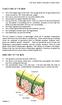 FUNCTIONS OF THE SKIN Skin is the largest organ of the body. The average adult has 18 square feet of skin which account for 16% of the total body weight. Skin acts as a physical barrier for you to the
HCPCS AMERIGEL HYDROGEL DRESSINGS CODING GUIDANCE FOR:
 HCPCS CODING GUIDANCE FOR: AMERIGEL HYDROGEL DRESSINGS FORM 1500 MUST HAVE THE FOLLOWING: APPROPRIATE HCPCS CODE APPROPRIATE A MODIFIER ACCURATE POS = 12 The Centers for Medicare and Medicaid Services
CODE AUDITING RULES. SAMPLE Medical Policy Rationale
 CODE AUDITING RULES As part of Coventry Health Care of Missouri, Inc s commitment to improve business processes, we are implemented a new payment policy program that applies to claims processed on August
NEW YORK STATE MEDICAID PROGRAM NURSE PRACTITIONER PROCEDURE CODES
 NEW YORK STATE MEDICAID PROGRAM NURSE PRACTITIONER PROCEDURE CODES Table of Contents GENERAL INFORMATION... 3 STATE DEPARTMENT OF HEALTH CONDITIONS FOR PAYMENT... 6 PRACTITIONER SERVICES PROVIDED IN HOSPITALS...
Separate, But Not Distinct: The Appropriate Use Of Modifiers 25 And 59
 Separate, But Not Distinct: The Appropriate Use Of Modifiers 25 And 59 Sandy Giangreco, RHIT, CCS, CPC, CPC-H, CPC-I, PCS AHIMA Approved ICD-10-CM/PCS Trainer Jenny Studdard, CPC, RCC, CPCO AHIMA Approved
Modifiers XE, XS, XP, XU, and 59 - Distinct Procedural Service
 Manual: Policy Title: Reimbursement Policy Modifiers XE, XS, XP, XU, and 59 - Distinct Procedural Service Section: Modifiers Subsection: None Date of Origin: 1/1/2000 Policy Number: RPM027 Last Updated:
DEPARTMENT OF SURGERY GENERAL SURGERY SECTION
 Privilege Request Form DIRECTIONS: This Privilege Request Form must accompany all initial applications for appointment to the General Surgery Section, Department of Surgery. Please indicate those privileges
BREAST RECONSTRUCTION POST MASTECTOMY
 COVERAGE DETERMINATION GUIDELINE BREAST RECONSTRUCTION POST MASTECTOMY Guideline Number: CDG.003.05 Effective Date: January 1, 2016 Table of Contents COVERAGE RATIONALE... DEFINITIONS... APPLICABLE CODES...
Objectives. Why is this important? 5/1/2012. By: Rhonda Trexler, BS RN COS-C CCP
 By: Rhonda Trexler, BS RN COS-C CCP Objectives Verbalize the ability to determine if a surgical wound exists when documenting in OASIS-C Describe would healing phases related to wounds healing by primary
Modifiers. Page 1 of 6
 Modifiers A Current Procedural Terminology/Healthcare Common Procedure Coding System (CPT/HCPCS) modifier is a twocharacter (alpha and/or numeric) code appended to a CPT/HCPCS procedure code to clarify
ICD-10-CM Official Guidelines for Coding and Reporting
 2013 Narrative changes appear in bold text Items underlined have been moved within the guidelines since the 2012 version Italics are used to indicate revisions to heading changes The Centers for Medicare
Anatomic Percutaneous Ankle Reconstruction of Lateral Ligaments (A Percutaneous Anti ROLL)
 Anatomic Percutaneous Ankle Reconstruction of Lateral Ligaments (A Percutaneous Anti ROLL) Mark Glazebrook James Stone Masato Takao Stephane Guillo Introduction Ankle stabilization is required when a patient
NATIONAL CORRECT CODING INITIATIVE CORRESPONDENCE LANGUAGE MANUAL FOR MEDICAID SERVICES
 NATIONAL CORRECT CODING INITIATIVE CORRESPONDENCE LANGUAGE MANUAL FOR MEDICAID SERVICES Revised March 1, 2015 *Includes 2015 HCPCS/CPT codes Current Procedural Terminology (CPT) codes, descriptions and
Breast Implants and Reconstruction
 Last Review Date: October 9, 2015 Number: MG.MM.SU.fv2 Medical Guideline Disclaimer Property of EmblemHealth. All rights reserved. The treating physician or primary care provider must submit to EmblemHealth
Modifiers. This modifier can be located in the following rule(s): Anesthesia Global Maternity
 The Medical Clean Claims Task force has developed this modifier grid to identify modifiers that are considered to be important in the overall adjudication of a claim from a commercial payer perspective.
ALBERTA HEALTH CARE INSURANCE PLAN
 ALBERTA HEALTH CARE INSURANCE PLAN Podiatry Procedure List As Of 01 October 2007 ALBERTA HEALTH CARE INSURANCE PLAN Page i Generated 2007/09/26 TABLE OF CONTENTS As of 2007/10/01 I. CERTAIN DIAGNOSTIC
21140 Closed treatment of reimplantation. mandibular or maxillary and/or stabilization. alveolar ridge fracture of accidentally
 Medical in Nature Oral Surgery CDT Code Description (CDT code) CPT Code Description (CPT Code) D7270 Tooth 21140 Closed treatment of reimplantation mandibular or maxillary and/or stabilization alveolar
Global Surgery Fact Sheet
 DEPARTMENT OF HEALTH AND HUMAN SERVICES Centers for Medicare & Medicaid Services R Global Surgery Fact Sheet Fact Sheet Definition of a Global Surgical Package Medicare established a national definition
Modifiers. Policy Number: 10.01.503 Last Review: 5/2015 Origination: 12/2004 Next Review: 5/2016
 Modifiers Policy Number: 10.01.503 Last Review: 5/2015 Origination: 12/2004 Next Review: 5/2016 Policy Modifiers indicate that a service was altered in some way from the stated descriptor without changing
What is the Extended Medicare Safety Net (EMSN) and how does EMSN capping work?
 What is the Extended Medicare Safety Net (EMSN) and how does EMSN capping work? The Extended Medicare Safety Net (EMSN) provides an additional rebate for Australian families and singles who incur out-of-pocket
Mississippi Medicaid. Provider Reference Guide. For Part 203. Physician Services
 Mississippi Medicaid Provider Reference Guide For Part 203 Physician Services This is a companion document to the Mississippi Administrative Code Title 23 and must be utilized as a reference only. January
Abdominal Pedicle Flaps To The Hand And Forearm John C. Kelleher M.D., F.A.C.S.
 Abdominal Pedicle Flaps To The Hand And Forearm John C. Kelleher M.D., F.A.C.S. Global-HELP Publications Chapter Eight: TECHNICAL REQUIREMENTS FOR FORMATION OF A TUBED PEDICLE FLAP Creating a tube pedicle
Learning Plan Step Tab Website URL
 Coding Diagnostic Coding INSTRUCTIONS http://farm2.static.flickr.com/1176/1366654132_db65f7784e_t.jpg Coding Diagnostic Coding OVERVIEW http://farm2.static.flickr.com/1176/1366654132_db65f7784e_t.jpg Coding
UNMH Oral and Maxillofacial Surgery Clinical Privileges
 All new applicants must meet the following requirements as approved by the UNMH Board of Trustees effective: 09/26/2014 INSTRUCTIONS Applicant: Check off the "Requested" box for each privilege requested.
My Coding Connection, LLC 618-530-1196. 24 Unrelated E/M by the same physician during a postoperative period
 MODIFIERS Rachel Coon, CCS-P, CPC, CPC-P, CPMA, CPC-I, CEMC, ICD-10 My Coding Connection, LLC 618-530-1196 GLOBAL PACKAGE MODIFIERS 24 Unrelated E/M by the same physician during a postoperative period
X-Plain Inguinal Hernia Repair Reference Summary
 X-Plain Inguinal Hernia Repair Reference Summary Introduction Hernias are common conditions that affect men and women of all ages. Your doctor may recommend a hernia operation. The decision whether or
FRIEND TO FRIEND CPT CODES 2015 2016. Diagnostic digital breast tomosynthesis, unilateral (list separately in addition to code for primary procedure)
 FRIEND TO FRIEND CPT CODES 2015 2016 CPT CODE SERVICE DESCRIPTION FEE EFFECTIVE G0101 Screening pelvic examination $36.69 01 Jan 16 G0202 Mammography, screening, digital, bilateral (2 view film study of
INTEGUMENTARY SYSTEM SURGICAL PROCEDURES Integumentary System Surgical ProceduresApril 1, 2015 SKIN AND SUBCUTANEOUS TISSUE
 Integumentary System Surgical ProceduresApril 1, 2015 INCISION Abscess or haematoma - Local anaesthetic - subcutaneous Z101 - one... nil 25.75 Z173 - two... 30.35 Z174 - three or more... 40.80 Z104 - perianal...
INTERNATIONAL MEDICAL COLLEGE
 INTERNATIONAL MEDICAL COLLEGE Joint Degree Master Program: Implantology and Dental Surgery (M.Sc.) Basic modules: List of individual modules Basic Module 1 Basic principles of general and dental medicine
Class Action Settlement Recap
 Class Action Settlement Recap Enhancements to Claim Payment Policy, Processing and Payment Disclosure, and an Appeals Process for Class Action Settlement Providers The following enhancements are effective
Melanoma The Skin Understanding Cancer
 Melanoma A form of cancer that begins in melanocytes (cells that make the pigment melanin). It may begin in a mole (skin melanoma), but can also begin in other pigmented tissues, such as in the eye or
Preparing to Suture. 6 th Annual Pediatric Advanced Practice Conference Tuesday, February 9, 2016 1:30 pm. Workshop B: Suturing for Beginners
 Preparing to Suture Kristen Devick, MPAS, PA-C University of Colorado Department of Emergency Medicine NONE! Skin Anatomy Trott, 2012, p.11 Preparing to suture Initial evaluation Hemostasis Anesthesia
NEW JERSEY STATE BOARD OF MEDICAL EXAMINERS Application for Privileges N.J.A.C. 13:35-4A.12 PLASTIC AND RECONSTRUCTIVE SURGERY
 NEW JERSEY STATE BOARD OF MEDICAL EXAMINERS Application for Privileges N.J.A.C. 13:35-4A.12 PLASTIC AND RECONSTRUCTIVE SURGERY Plastic Surgery Procedures: PRIVILEGE CRITERIA 1. Attestation (Attachment
Modifiers and all you will need to know!
 Modifiers and all you will need to know! 24Unrelated Evaluation and Management Service by the Same Physician during a Postoperative Period: The physician may need to indicate that an evaluation and management
Lesions, and Masses,
 Lesions, and Masses, and dtumors Oh My!! Presented by: Betty Johnson, CPC, CPC-I, CCS-P, PCS, CPC-H, RMC, CCP, CIC, CPCD and Susan Ward, CPC, CPC-H, CPC-I, CPCD, CEMC, CPRC 1 1 CPT GUIDELINES Agenda CPT