
FORENSIC DENTISTRY CHAPTER 10 INSURANCE INTRODUCTION
|
|
|
- Sharon Joseph
- 10 years ago
- Views:
Transcription
1 CHAPTER 0 FORENSIC DENTISTRY INTRODUCTION Forensic dentistry may be defined as that branch of forensic medicine that applies dental knowledge to civil and criminal problems. The military simply expands this definition to include the unique needs of the military services. While it is true that our primary mission is to support requests for aid in forensic dental identification, you must understand that dental identification is only one of a number of major areas in forensic dentistry. These include: dental identification, bite mark analysis, human abuse and neglect, dental malpractice and negligence, and dental anthropology and archaeology. As a basic dental assistant, your primary duties will be assisting dental officers and civilian dentists with the dental identification section in forensic dentistry when directed. The other major areas in forensic dentistry will not be covered in this book because they pertain mainly to dental officers and dentists. PURPOSE The primary reason we in the Navy have been directed to establish a forensic dental identification (ID) capability is to assure our ability to assist in the ID of human remains. In most cases this means identifying members of the Armed Forces, but occasionally it may include civilians. We are tasked to do this to meet both the civilian needs and the unique military needs for positive ID of individuals. The first four of these needs are common to both the military and civilian communities and include estate, insurance, legal, and psychological considerations. The last two needs are military considerations and include manpower and intelligence needs. ESTATE Positive ID is necessary to allow probate of the last will and testament and transfer of any inheritance to the deceased's next of kin. Without positive ID, this process could be delayed until the person is declared legally dead, or up to 7 years. INSURANCE Positive ID also is necessary to allow survivors to properly claim any life insurance held by the victim. Again, if a positive ID is not accomplished, the payment of insurance to the beneficiaries could be delayed for years. This would defeat the purpose for buying the policy in the first place and could deny any survivors the funds needed to adjust to the loss of the provider's income. LEGAL A less common but important consideration is the possibility of legal action such as malpractice or wrongful death litigation. Obviously, it would be very difficult, if not impossible, to prove wrongful death in a court of law if one cannot prove that an individual is dead. This would not only eliminate any possibility for compensation for loss of a loved one, but also could affect the legal handling of the deceased's estate as well as payment of any life insurance benefits. PSYCHOLOGICAL The last of the common needs is the psychological aspect of an individual's death. The loss of a loved one is frequently psychologically devastating to those left behind. In fact, many persons are not able to accept the death of their child, parent, or spouse until long after the occasion. Not knowing positively their loved one is dead complicates this process leading to false hopes and preventing the survivors from getting on with their lives. A graphic example of this was the tremendous agony experienced by the next of kin of our Vietnam missing in action. MANPOWER Simply stated, you need to know who the causalities are so you can rapidly replace them. If we do not know who the Sailors are, it will be impossible to replace them with persons of similar training and skills in their areas of expertise to restore full combat readiness. 0-

2 INTELLIGENCE You also must know the location and condition of our personnel familiar with sensitive operational information. If a Sailor who knows the details of an upcoming operation is missing, you need to know whether he is wounded, dead, or captured, and if the operation plans have been compromised. OTHER METHODS OF IDENTIFICATION Now that we have established the purpose for forensic dental identification and explained why we have been tasked to do so, we need to look at why dental techniques have become so important in forensic identification operations. To do this we need to look at some of the other different methods of forensic identification. Various methods of ID have been used depending on the individual situation. Body Characteristics Many body characteristics can be used to identify an individual. Recognition includes using visual, scars, deformities, and tattoos methodologies. Visual recognition this is the most common method. It is reserved for instances in which no real doubt exists about the identity of the individual and death did not occur under unusual circumstances. Its drawbacks occur when changes in appearance because of illness, fire, water immersion, or decomposition make ID quite difficult. Figures 0- and 0-2 show soft tissue trauma from fire and water. Visual recognition, therefore, is considered an unreliable means of identification in medico-legal death investigation and not usually acceptable as positive proof on the identity of the deceased individual. Scars this method is useful in some cases. Surgical scars are probably the most commonly found but are of the least value since they are seldom distinctive. Like visual recognition, scars can change or be destroyed by the same processes affecting visual recognition. Deformities may be either soft tissue alterations or because of bony abnormalities. Radiographs of the deformity on file in the medical record can be useful in the ID process. The bony deformity must be significantly distinctive, however, to be of value as a means of ID. Tattoos can assist in the identification process. Figure 0-3 shows a tattoo on an arm. Multiple tattoos would increase the likelihood of positive Figure 0-.Charred remains from fire. 0-2

3 Figure 0-2. Remains from immersion in water for two weeks. identification. Again tattoos are soft tissue evidence and therefore are prone to easy destruction by environmental effect. For many reasons, tattoos should be used only as a secondary means to a positive ID. Personal Effects Personal effects may include anything that is found on the body of the deceased that can be used to assist in establishing the identity of the individual. Drivers' licenses, credit cards, ID cards, ID badges, and passports are just a few such items. In the military, dog tags are used specifically for this purpose. Other examples of personnel effects that may be helpful in establishing an identity include name tags sewn into clothing, distinctive jewelry, inscribed jewelry, and family photographs. Personal effects, however, are the 0-3

4 Figure 0-3. Tattoo on an arm. least reliable means of establishing an identity. They are not a physical part of the body, and, therefore, they may easily be transferred from one individual to another. In addition, lost or stolen items, and jewelry in particular, are very likely to be found in the possession of an individual other than its owner. Falsified documents may be found improperly identifying an individual as someone else. In most instances, the identity established by the personal effects will prove to be the actual identity of the deceased, but this must still be verified by a more objective, definitive means of ID. Skeletal Remains Identification by skeletal remains may be an excellent means to identify an unknown individual. In some cases, it can provide positive proof of identity that is acceptable in a court of law. Identification by skeletal remains requires matching of postmortem radiographs with radiographs that were taken before death. Features that can be used for ID by skeletal remains would include healed fracture sites, pathologic lesions, and medical hardware. The main problem with ID by skeletal remains is the fact too few individuals in the general population have such characteristics. This makes it difficult to rely on as a routine method of ID of an unknown body. Fingerprints Of all the methods of ID, fingerprints are probably the best known. Fingerprints are an excellent means of positive ID. Figure 0-4 demonstrates a fingerprinting technique used by the FBI. Many individuals will argue that fingerprint ID is the most definitive means of identifying an unknown set of human remains, and it is generally accepted that no two individuals have the same set of fingerprints. Fingerprint ID, therefore, is always acceptable in a court of law. DNA Analysis DNA analysis, also known as DNA fingerprinting, is a fairly new technology that may replace dental identification and fingerprint identification as the most definitive means of identifying unknown remains. It will be fully implemented when an adequate database of DNA specimens can be established. 0-4

5 Figure 0-4. Fingerprinting DENTAL IDENTIFICATION Dental ID, like fingerprint ID, is a definitive means of positive identification of unknown human remains. It also is routinely acceptable as evidence in court. It has several significant advantages, and only a few disadvantages when compared with fingerprint identification. The bulk of the remaining chapter will center on dental ID. WHY DENTAL IDENTIFICATION WORKS Dental evidence tends to survive much better than does soft tissue evidence such as facial characteristics or fingerprints. Teeth are calcified structures and are the hardest substance in the human body, even harder than bone. Because they are calcified, they are resistant to the environmental effects that destroy soft tissue evidence. Thus teeth are not destroyed by immersion in water, by desiccation (drying up), or by decomposition. Even in cases of skeletalization of remains, teeth are available for ID purposes. In addition, teeth are relatively resistant to destruction by fire. However, teeth can be destroyed in rare instances by heat if the temperatures are greater than 000 F and the teeth are unprotected by the soft tissues of the cheeks and lips. Figure 0-5 shows intact dentition of a charred mandible. Teeth are further protected by the soft tissue mass of the tongue. The roots of the teeth are encased in the alveolar bone, providing an additional layer of protection. Therefore, even in fires where temperatures approach 600 F, teeth are ordinarily found intact within the oral cavity and can be used for ID when all other means have been destroyed. In addition to the teeth, the materials used for dental restorations are also resistant to destruction by the environment, even more so than the natural teeth themselves. Gold alloys, as shown in figure 0-6, fused porcelain, synthetic porcelain, and porcelain denture teeth all will withstand temperatures exceeding 600 F. Silver amalgam, the most commonly used restorative material, will resist temperatures up to 600 F. Large Number of Potential Points of Comparison The human dentition is composed of 32 teeth, each of which may be restored, unrestored, or missing. When restored, any of the 5 different surfaces may be involved in the restoration. The number of potentially different dental chartings, considering even one restorative material, is astronomically large ( x 0 48 ). In addition to restorations, the tooth crown form, root 0-5

6 Figure 0-5. Charred teeth. Figure 0-6. Gold fixed partial denture from a fire. 0-6

7 canal, and root form provide numerous other potential points of comparison that make each set of teeth unique. Therefore, it can be said with complete confidence that, given sufficient data, no two sets of teeth are identical. Antemortem Database A decided advantage of dental ID over fingerprint ID is the relatively comprehensive nature of the antemortem database. An extremely high percentage of the general population has visited the dentist at some time in their life. Dentists routinely create dental records for these patients that detail the antemortem (before death) dental condition. These records are often maintained for long periods of time. Most importantly, dental radiographs are generated on almost every patient. Radiographs are hard evidence that is not subject to human error to the same extent that a written dental record might be. The radiographs also provide multiple additional potential points of comparison for establishing ID. With adequate dental records available to the forensic dentist, nearly 00% of unknown remains can be identified. PROBLEMS IN DENTAL IDENTIFICATION The dentist and you, the Dental Technician, may encounter many problems with dental ID. These problems can waste numerous hours or days before the final determination of ID. Illegible Dental Records Because in many cases the dental records are handwritten, the task of determining what treatment has been provided can be quite difficult. Inadequate Dental Radiographs Radiographs may not be found useful for comparison purposes for a variety of reasons. Most often this is because of poor quality of the radiograph obscuring the features necessary for comparison. It may also be because of a lack of positioning of the radiograph or absence of a date on the radiograph. Lack of Adequate Charting Many civilian dentists do not record the status of the dentition at the first appointment as required in the Navy. Pre-existing restorations, therefore, may not be documented in the dental record, leading to confusion in the final analysis. Lack of Uniformity of Charting and Numbering Systems Dentists might use multiple systems to record the treatment provided for a patient and to indicate which tooth was treated. Unless the forensic dental team is familiar with every possible charting and numbering system, a dental record may be unintelligible despite being legible. Luckily, most of the civilian and Navy dentists use a single system for charting and numbering teeth in the United States. Changes in Dentition Teeth are not fixed in the jaws. Small changes in position are constantly occurring in addition to the normal functional wear produced by chewing. These changes are not distinct over a short period of time, but over an extended time period these small changes can accumulate to produce significant differences. Human Error No matter how conscientious and persistent a dentist or Dental Technician might be about the accuracy of their dental records, errors in the written record will occur on occasion. This can cause discrepancies in the comparison and problems in establishing the ID. PRINCIPLES OF DENTAL IDENTIFICATION The principles of dental ID are identical to those used in any other ID method. The postmortem (after death) remains are examined and documented, then the antemortem records are obtained and reviewed, and finally the two are compared to establish similarities and discrepancies. In evaluating the comparison, the forensic dental team looks first at discrepancies. Discrepancies are more important than similarities since a single discrepancy can negate a whole list of similarities. It is important for the dental team to consider the source of the discrepancy. If the discrepancy is found in the written dental record, it may be possible to explain it on the basis of human error. However, if the discrepancy is in a radiographic comparison, it is extremely difficult to ignore. Discrepancies may be classified into two broad categories, relative and absolute. 0-7

8 Relative Discrepancies These represent differences between the antemortem and the postmortem dental exam findings that can be explained by continued dental treatment. For example, an unrestored tooth may have been restored in the time interval between the last dental record entry and the death of the individual. Or, a small restoration may be enlarged because of additional decay. In any case, these discrepancies do not necessarily negate an identification if there are enough similarities in the remaining evidence. Absolute Inconsistencies These represent differences between the antemortem records and the postmortem exam findings that are physically impossible and prove the remains cannot be those of the individual under consideration. For example, an unrestored tooth is found in the unknown remains. On examination of the antemortem records, however, the radiographs reveal the tooth in question had previously been restored. Since natural tooth structure can never be replaced once it has been restored, this finding would verify that the remains were not of those of the suspect individual. Once discrepancies have been examined, the dental team will compare the number and degree of any similarities found in comparing the antemortem and postmortem records. No minimum number of similarities are required or accepted for positive ID. In many cases a judgment decision on the part of the examiner may be required regarding the certification of the ID. RADIOGRAPHIC COMPARISONS At some point in the ID process, as shown in figure 0-7, the dental team will use dental radiographs and compare with the dental remains of the deceased. There are four categories in radiographic comparison. Exact Match The postmortem radiographs show a restoration that in every respect is identical to a restoration in the same tooth in the antemortem radiographs as shown in figure 0-8. In some cases, the radiographs may be laid on top of each other to compare. Multiple distinctive points of comparison are normally documentable in a single restoration. Figure 0-7. Forensic dental team comparing dental remains with radiographs. 0-8

9 Figure 0-8. Postmortem and antemortem exact match periapical X-ray. Similarity The restoration in the postmortem radiographs is not identical to the restoration seen in the antemortem radiograph. The restorations occupy the same position in the tooth and many similarities in form are present, but there is no exact match. Similarities are caused by differences in the angulation at which the antemortem and postmortem radiographs were exposed. Relative Discrepancy A significant difference exists between the restorations in the antemortem and postmortem radiographs. Little or no similarity can be found 0-9

10 between them. However, the difference is explainable by continued treatment and no absolute inconsistency is present. Absolute Inconsistency A significant difference between restorations or teeth in the antemortem and postmortem radiographs are presented that are not explainable by continued treatment. In fact, they are found to represent an impossibility in treatment. CLASSIFICATION OF THE DENTAL IDENTIFICATION Classification is the last and most important step in the dental ID process. Five classifications can be used to establish identity. Positive Identification The forensic dentist is positive they have determined the identity of the individual. Radiographic comparisons have been used in the ID process. Positive Identification by Charting Only The forensic dentist feels confident in identifying the individual, but radiographic comparisons have not been used in the ID process. The ID is based solely on the written dental record. This category of ID leaves open the possibility that errors in the written dental record may be present and could affect the ID process. Consistent With A good probability is the remains are those of the suspect individual. However, the findings are such that the forensic dentist is not confident enough to certify the remains. In this situation there is usually a deficiency in either the antemortem or postmortem evidence with which to make a comparison. It may also be because of a lack of similarities or because of the presence of too many discrepancies. Exclusion Absolute inconsistencies are present. The remains cannot be those of the suspect individual. Unidentified No sufficient evidence exists to determine the identity of the remains. While it could possibly be the suspect individual, it could just as easily not be the individual. Additional information, either antemortem or postmortem, is required before an identification can be established. MANAGEMENT OF MASS CASUALTY OPERATIONS Although each mass casualty operation is unique in many ways, some basic principles are common to all such missions. First and foremost is recognition that these operations require a team effort by all participating parties. Figure 0-9 shows the forensic team receiving a victim to start the ID process. While many specialty areas may be represented, all must work together and exchange information if the operation is to be a success. For our purposes, we will divide the participants into members of command/ support elements or members of identification elements. The command/support elements consist of the following: Commander Public affairs Communications Registar Data processing Security Facilities support Recovery/transportation Storage/handling Mortuary affairs Graves registration The identification elements consist of the following: In processing Photographic Personal effects Finger/foot print Medical radiology Dental Medical exam/lab Anthropology Facial reconstruction THE DENTAL TEAM IN MASS CASUALTY OPERATIONS Like the other elements of the operation, the different sections of the dental team work together with a common goal. The basic steps in forensic dental identification are () postmortem examination and 0-0

11 Figure 0-9. Receiving a victim. charting, (2) antemortem record acquisition and record reconstruction, and (3) antemortem and postmortem record comparison. The dental elements of the team are described next. DENTAL TEAM LEADER The dental team leader (dental officer) performs the same tasks as the operations chief, only within the confines of the dental team. He brings back information to the dental sections and takes information to the operations commander and other members of the ID operation. DENTAL REGISTRAR The registrar is one of the most important members of the dental element because he must control and protect all dental evidence coming into and going out of the dental area. He logs in and out all evidence, antemortem and postmortem, keeps track of workload figures (IDs per day, X-rays taken, photographs made, etc.), and coordinates with other areas of the operation to ensure that all potentially valuable sources of dental information are made available for review by the dental officer or dentist. Figure 0-0 shows a dental registrar updating a forensic tracking board. He makes particular efforts to coordinate with personal effects, medical radiology, and medical examination sections and keeps the operations registrar updated with information the dental section needs. He also maintains and updates the dental exclusion matrix for use at the close of the operation. ORAL SURGERY The surgeon's primary job, if needed, is to expose maxilla and mandible so that the postmortem examination team can examine and chart the dental arches. Figure 0- shows a maxilla and mandible that have been completely removed from a casualty. This is accomplished by removing tissue from around the oral cavity to expose the teeth, sectioning the ramus of the mandible and the pterygoid muscle to allow the release of the lower jaw. Also, making an incision in the floor of the mouth will release the mylohyoid muscle to ensure an accurate anatomical placement of the dental films. This is made by the Dental Technician who will take radiographs of the appropriate areas. 0-

12 Figure 0-0. Dental registrar. DENTAL RADIOLOGY Postmortem dental radiology plays a critical role in the process of identifying unknown human remains. The procedures used are basically identical to those that would be performed on a living patient, with certain adaptations necessary to each specific situation. The actual exposure of postmortem radiographs poses some special problems that must be recognized and considered to ensure the production of adequate, useful radiographs for comparison with the antemortem dental records. These problems will vary depending on the number of remains to be identified, the condition of those remains, the completeness of the dental structures recovered, and the availability of antemortem dental records. In general, the smaller the total number of remains to be processed, the fewer problems with postmortem radiology. As the number of remains increases, the problems encountered in performing postmortem radiology will increase both in total number and complexity. Access Access to dental structures for placement and exposing of the radiographs is entirely determined by the condition of the remains. Normally no problems are associated with skeletalized remains. The lack of soft tissue allows easy visualization for placement of film and angulation. Positioning of the tubehead can also be readily determined and adjusted as needed. The same is true for fragmented remains, which are easily positioned against the X-ray film on a flat surface, as shown in figure 0-2. Problems with access to dental structures arise most commonly with intact full body remains. This is particularly true if it is a recent death and rigor mortis (stiffing of a dead body) is still present. Opening the jaws more than just a few millimeters can be exceedingly difficult in the presence of rigor mortis. Problems with access are also routinely encountered in individuals killed by fire, because of the loss of flexibility of the muscle fibers as they are cooked in the extreme heat. Drowning victims will also present problems with access to the dentition. If the individual remained in the water for a prolonged period of time, the soft tissues around the teeth begin to swell with fluid and thereby obstruct accurate film placement. When access to the dentition for postmortem dental radiology is a problem, the dental officer will be able to assist you with proper access. 0-2

13 Figure 0-. Exposed maxilla and mandible. Equipment In small operations with minimal number of remains to be processed, equipment is not a major consideration. However, as the number of remains increases, the availability of equipment becomes a major determining factor in the efficiency of the dental Id section. In situations where hundreds of remains require ID, you should have as many X-ray machines available as possible to speed up the initial processing of the remains. Postmortem radiographs are obtained from regular floor-mounted, mobile endodontic, and portable military field types of dental X-ray units. Exposure of Postmortem Radiographs The forensic X-ray section must realize that exposure of postmortem dental radiographs is the time limiting step for the dental ID section as a whole. It will normally require approximately 20 minutes to expose a complete series of postmortem radiographs. Therefore, a maximum of 3 sets of remains per hour can be processed with a single X-ray machine. Careful 0-3

14 Figure 0-2. Positioning dental fragment on X-ray film for exposure. planning is required to prevent confusion in the flow and tracking of the remains as they are processed. The dental radiology section's job is to get, as nearly as possible, a full mouth series of periapical radiographs. On occasion, the forensic dentist may request occlusal and lateral jaw films. The proper technique to use is to expose of the films in the proper anatomical orientation to prevent overlap, shorting, or elongation of exposed dental films. This is necessary because the postmortem films will be compared with the antemortem films that were exposed on a live patient using appropriate anatomical placement and angulation. Always expose a full mouth series using duplicate film packets even if areas appear edentulous or teeth are missing, fractured, or avulsed. Shoot different films at several angles and take care to expose all fragments in their proper anatomical orientation. It may not always be easy to take X-rays of teeth because postmortem dental remains may be fractured. The following supplies may be needed to assist you in exposing radiographs: hemostats, gauze, clay, and rope wax. Developing Any X-ray developer can be used to process radiographs. The use of a daytime loader is recommended to speed up the process. When multiple remains are being processed at the same time, the following procedures are normally prescribed. The entire series of postmortem radiographs is exposed before any has been developed. The series is placed into a labeled carrying container for transport to the developing area. Each series is developed at a single developing site or machine. Films from one series are never separated from one another for developing. Mounting In forensic dental operations, it is not important which method is used for mounting periapical and bitewing X-rays, as long as the method selected is uniform. The raised dot on the film can be facing in or out. All postmortem radiographs should be mounted in the same manner so there will be no confusion by the examiners as to which side is which. The policy should be well publicized so that everyone working in the dental ID section, not just those in the dental radiology subsection, are aware of the standard. FILM ACCOUNTABILITY. One primary area of concern is the ability to determine, at any point 0-4

15 in time, if a film is missing from the film mount. This might occur because of its falling out of the mount or because an examiner has purposefully removed it for some reason. When dental evidence is incomplete and a complete series of postmortem radiographs has not been taken, there are two methods by which the examiners know for sure what films are available for their use. The first, and best method, is to fill all holes in the mount with undeveloped, unexposed film once all films from a set of remains are developed. An examiner who picks up a mount will immediately notice the green, opaque films in the mount and realize that no radiograph is available for this particular area. If an empty space is present in any of the mounting slots, the examiner immediately knows that a film was taken out of this site. The second method is to maintain a written inventory list of postmortem films exposed on each set of remains. ELIMINATION OF ERRORS. A routine mounting procedure is quite useful and involves taking the following actions: Have one viewbox per developer and co-locate them so that loss of films in transport from developer to viewbox is not possible. Use viewboxes that can be laid flat to prevent dropping of films. Orient all dots in the correct position. Orient the entire series as it will appear in the mount before actually mounting any films. Remember whatever is in the center of the film determines its position in the mount. Have all series reviewed by a dental officer or a dentist at the postmortem examination station for correctness in mounting. DENTAL POSTMORTEM EXAMINATION The postmortem examination team you may be on is responsible for examining and charting the dental remains to include the presence or absence of teeth, restorations, pathology, and any other feature that might be useful in the ID process. Figure 0-3 shows a forensic dental examination of a casualty. The process starts with gentle cleaning of the dental remains with a tooth brush using sodium hypochlorite (bleach) and hydrogen peroxide. Remember that incinerated (burnt) teeth are brittle and will shatter if not handled carefully. Next, a team process including either a team of three dentists or a team of two dentists and a dental hygienist or a Dental Technician, chart all dental evidence on a postmortem dental record form. Figure 0-4 is an example of a completed postmortem dental record form. Figure 0-3. Forensic dental examination. 0-5

16 Figure 0-4. Completed postmortem dental record form. 0-6

17 The entire dental team must agree to be consistent in charting methods. This is a slow process and much attention must be paid to details. Remember to check and double check each step. The team will decide which charting system they will use. The different branches of the service and civilian dentists all use different charting systems and abbreviations. The Manual of the Medical Department, chapter 6, describes the Navy's charting system and abbreviations used to complete all dental information for the different forms used in forensic dentistry. Other dental abbreviations used for charting, such as the Computer Assisted Postmortem Identification, may be used and will be covered later in this chapter under Computer Support. The use of a fiberoptic light is invaluable in the examination process. The examiner begins by evaluating tooth # and associated radiographs. The second dentist on the examination team evaluates tooth # and confirms the findings of the first dentist. The recorder charts the findings of tooth # and all three members confirm the charting. Tooth #2 is examined and the process is repeated until all 32 teeth have been charted. The approach is redundant, but errors are corrected as they are made. Charting should be done in pen, not pencil. Findings to be recorded during the postmortem examination are as follows: Dental restorations Missing teeth Prosthetic appliances Pathology Unique anatomy Age estimate References to possible gender and racial group Teeth missing because of the trauma of the mishap should be specifically noted to avoid confusion over extracted or congenitally missing teeth. A prosthodontist should be available to examine and describe dental prosthetic appliances. In some cases, the appliance may have been specifically marked for identification as shown in figure 0-5. It is wise to solicit from the victim s family study models or extra prosthetic appliances that may be available. Such evidence is important in providing antemortem data regarding ridge shape/size, rugae, and general oral anatomy. The antemortem dental record will be covered next. Figure 0-5. Maxillary denture with SSN embedded in acrylic. 0-7

18 ANTEMORTEM DENTAL EXAMINATION Another major section in forensic dentistry involves the antemortem dental record examination. Dentists, hygienists, and Dental Technicians can effectively operate this section. The task of this section will always be the most difficult in the entire forensic dentistry arena. They will be required to determine who was involved in the disaster, locate and procure all military or civilian dental records and radiographs, arrange for the delivery of these materials, and undertake the process of developing a composite antemortem record for each victim for the evidence supplied. You may not have all existing antemortem dental records for the victim from outside sources. This may lead to discrepancies in the antemortem record and postmortem record comparison. The quality, quantity, and variety of dental record documentation of this antemortem evidence present the major obstacles in this section. Clearly, all antemortem evidence must be compiled to a single antemortem dental record form as shown in figure 0-6, to provide a composite antemortem picture. The latter (computer/description codes column) may be easily compared to the postmortem findings recorded on a postmortem dental record of similar format. Comparing dental records sent directly from dental offices with a postmortem record is a near impossible task. At least two members of the antemortem dental record staff should review each composite antemortem dental record as a quality control mechanism. Figure 0-7 shows a dental staff reviewing antemortem dental records. The completed antemortem composite form should also be quality checked against antemortem dental radiographs. COMPUTER SUPPORT In this day of data management and word processing, computers can now play a major role in forensic dental ID. The software we use is called the Computer Assisted Postmortem Identification (CAPMI) referenced in figure 0-8. The basic principle is one in which antemortem and postmortem databases are built using the information charted on the antemortem and postmortem forms. These two databases are run against each other and the possibilities of matches are ranked to produce a most likely identities list. This list is then used by the forensic team to assist in the final ID process. The list does not make an ID, but merely minimizes the number of records that must be compared manually by the team. The advantage is that, instead of having to look at every record to make a comparison, the dental officer or dentist who is reviewing the record is initially guided to the most likely match. This is tremendously efficient and offers a significant savings in time. CAPMI may be installed either on a portable or desktop computer. Your command can obtain copies of CAPMI software and instructions free of charge by writing to the following address: The Director Armed Forces Institute of Pathology Attn: AFIP-AMS 4th & Alaska Ave, NW Washington, DC ANTEMORTEM/POSTMORTEM RECORDS COMPARISON The last section in the dental forensic ID process compares the antemortem and postmortem records. Here the results of all previous work are seen. Armed with the antemortem record and radiographs, postmortem record and radiographs, CAPMI printout (if used), and a summary sheet, the forensic team starts the process of comparing records and films. The size of the section is dependent on the number of fatalities, since there is a requirement to place all postmortem dental records face-up on tables in numerical order for a comparison with the antemortem composite dental records, as shown in figure 0-9. After all postmortem dental records have been placed as described, the staff can systematically compare- the antemortem dental composite records as they are received with the postmortem dental records placed on the table. This is done by hand carrying the composite antemortem record and walking alongside the tables viewing the postmortem dental records looking for a significant point of comparison, such as a crown on tooth #30. Once significant points of comparison are noted between the antemortem and postmortem dental record forms, the radiographs of the respective records can be reviewed and a possible match established. Figure 0-20 shows dental team members reviewing radiographs. If it is possible to determine the gender of the disaster victims, it is possible to reduce the manual comparison task by placing the postmortem records in 0-8

19 Figure 0-6. Completed antemortem dental record form. 0-9

20 Figure 0-7. Reviewing antemortem dental records. numerical order on table by gender. Postmortem records of children may also be individually managed. To provide quality control, provide the team leader of the forensic dentistry section the antemortem and postmortem dental records of potential positive ID established by the staff. The leader must reconstruct the positive dental ID. A dental identification form that summarizes the ID data can be completed at this time. Figure 0-2 shows an example of a completed dental ID summary sheet. This form is a tool in the decision-making and documentation process. It is used to provide rapid answers to questions when the team leader of the forensic dentistry section meets with the Identification Center chief at which time evidence regarding each case is presented. Only after all sections have 0-20

21 Figure 0-8. Computer Assisted Postmortem Identification (CAPMI). presented their evidence and all inconsistencies have been explained or addressed should the Identification Center chief sign the case out as a positive ID. After the case has been signed out as a positive ID, the antemortem and postmortem dental records and associated evidence should be combined with the summary sheet into a single completed file. The antemortem composite dental record should be placed in the completed file only if the full dentition was present with the remains or if all dental/oral fragments have been recovered. If this is not the case and an additional oral fragment is recovered, thepostmortem fragment may go unidentified since the necessary antemortem dental record was placed in the completed file. This mistake is made in almost every disaster. Please avoid it! In the consolidation process, the antemortem and postmortem dental radiographs that provided the conclusive evidence of the positive dental identification should be photographed. These photographs or slides are indispensable for record keeping purposes and provide a superior method of displaying the evidence in court. EQUIPMENT, SUPPLIES, AND FACILITIES The following equipment, supplies, and facilities as listed in Tables 0-, 0-2, and 0-3 are recommended for use in forensic dental operations. The items mentioned below are only a recommended list. Most of the equipment and supplies can be maintained in a medium-size tackle box and canvas bags for immediate availability and easy transport to the ID site. Your command should plan to add or subtract items or change quantities according to your local requirements. 0-2
22 Figure 0-9. Postmortem dental records. Figure Reviewing radiographs. 0-22
23 Figure 0-2. Dental identification summary sheet. 0-23
24 Table 0-. Equipment for up to 50 casualties DESCRIPTION 50 KVP Endo X-ray unit, portable, self-contained Portable lead screens X-ray badges X-ray film processor, with daylight loader Fiberoptic light Surgical saw (autopsy) Headlamps X-ray view boxes Slide duplicator Extension cords, 50 ft CAPMI software and computer 35mm camera Camera with self-developing film Security badges File cabinets, 4 drawer Tables or gurney carts QUANTITY As needed Table 0-2. Forensic Dentistry Kit (Supplies) 35mm film, 36 exposure Paper pads DESCRIPTION Identification forms: Postmortem, Antemortem, and Summary reports Tags with string or wire Manila envelopes for case records Masking tape Stapler with staples Large felt tip markers Felt tip pens (black ink) Plastic denture bags Pencils Clip boards Paper cups QUANTITY 0 rolls 0 00 each rolls box LG box SM 2 boxes 0 box 0-24
25 Table 0-2. Forensic Dentistry Kit (Supplies) Continued DESCRIPTION Work gloves, leather Scrub suits Surgical gowns, disposable Surgical gloves, sizes 7 /2 & 8 Surgical mask Dental X-ray film, double exposure Chemicals for film processing Self-developing film Magnifying glass Loops Sodium hypochlorite Safety glasses Flashlights Handsaw Straight and curved retractors Scaple handles Scaple #0, #5, #20 Large scissors, surgical Small scissors, surgical Large hemostats Mouth props, large and small Tongue blades Cotton applicators Mouth mirrors Explorers Periodontal scalers Cutting pliers Straight pliers Straight chisel Mallet Millimeter rule Spatula, #7 wax Disclosing solution Hydrogen peroxide solution QUANTITY 4 pairs 20 pairs 30 3 boxes each box 0 boxes as needed 5 rolls 2 gallon 5 6 set 4 box each each box box bottles /2 gallon 0-25
26 Table 0-2. Forensic Dentistry Kit (Supplies) Continued DESCRIPTION QUANTITY 4 x 4 sponges 0 boxes Toothbrushes 20 Computer terminal paper box Ribbon for terminal printer Occlusal X-ray film Soap, antibacterial box 6 bottles Towels 0 Scrub brushes Rubber aprons Trash can liners 5 0 box Table 0-3. Office Facilities Office facilities: Room for antemortem records Room for postmortem records Postmortem exam area Access to: Copy machine/computer Watts/DSN telephone lines Refrigeration 0-26
PREPARATION OF MOUTH FOR REMOVABLE PARTIAL DENTURES Dr. Mazen kanout
 PREPARATION OF MOUTH FOR REMOVABLE PARTIAL DENTURES Dr. Mazen kanout Mouth preparation includes procedures in four categories: 1. Oral Surgical Preparation. 2. Conditioning of Abused and Irritated Tissue.
HEALTH SERVICES POLICY & PROCEDURE MANUAL. SUBJECT: Types of Dental Treatments Provided EFFECTIVE DATE: July 2014 SUPERCEDES DATE: January 2014
 PAGE 1 of 5 References Related ACA Standards 4 th Edition Standards for Adult Correctional Institutions 4-4369, 4-4375 PURPOSE To provide guidelines for determining appropriate levels of care and types
Dental Radiography collimator Ionising radiation image radiolucent area radiopaque area controlled zone scatter radiation intraoral
 Dental Radiography X-rays for dental radiography are produced by high voltages of electricity within an x-ray head and come out through a metal tube called a collimator. This ensures the x-rays only come
ANGEL DENTAL CARE Implant Consent
 This information is to help you make an informed decision about having implant treatment. You should take as much time as you wish to make the decision in relation to signing the following consent form.
IMPLANT CONSENT FORM WHAT ARE DENTAL IMPLANTS?
 IMPLANT CONSENT FORM WHAT ARE DENTAL IMPLANTS? Dental implants are a very successful and accepted treatment option to replace lost or missing teeth. A dental implant is essentially an artificial tooth
(1) may be provided under contract with another health care insurer;
 Sec. 21.42.385. Dental, vision, and hearing coverage. (a) Except for a fraternal benefit society, a health care insurer that offers, issues for delivery, delivers, or renews in this state a health care
Understanding Dental Implants
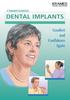 Understanding Dental Implants Comfort and Confidence Again A new smile It s no fun when you re missing teeth. You may not feel comfortable eating or speaking. You might even avoid smiling in public. Fortunately,
MEDICAID DENTAL PROGRAMS CODING, POLICY AND RELATED FEE REVISION INFORMATION
 MEDICAID DENTAL PROGRAMS CODING, POLICY AND RELATED FEE REVISION INFORMATION Effective for dates of service on and after November 1, 2005, the following dental coding, policy and related fee revisions
Taylor Dental Assisting School Course Description
 Taylor Dental Assisting School Course Description Entry Level Dental Assisting The Entry Level Dental Assisting Course is divided into Twenty Six (26) modules of four hours each. Total time is One Hundred
Dentalworkers JOB DESCRIPTIONS Great Team Members make your Office function!
 Dentalworkers JOB DESCRIPTIONS Great Team Members make your Office function! Dental Assistant Registered Dental Assistant with Expanded Function: RDAEF Sterilization Assistant Dental Hygienist General
Taking the Mystique out of Implant Dentistry. Dr. Michael Weinberg B.Sc., DDS, FICOI
 Taking the Mystique out of Implant Dentistry Dr. Michael Weinberg B.Sc., DDS, FICOI What is Restorative Implant Dentistry? Restorative implant dentistry involves taking a few simple mechanical principles
Job Ready Assessment Blueprint. Dental Assisting. Test Code: 4126 / Version: 01. Copyright 2013. All Rights Reserved.
 Job Ready Assessment Blueprint Dental Assisting Test Code: 4126 / Version: 01 Copyright 2013. All Rights Reserved. General Assessment Information Blueprint Contents General Assessment Information Written
Position Classification Standard for Dental Officer Series, GS-0680
 Position Classification Standard for Dental Officer Series, GS-0680 Table of Contents SERIES DEFINITION... 2 BACKGROUND... 2 TITLES... 3 GRADE-LEVEL EVALUATION CRITERIA... 3 NOTES ON THE USE OF THE STANDARDS...
WMI Mutual Insurance Company
 Dental Policy WMI Mutual Insurance Company PO Box 572450 Salt Lake City, UT 84157 (801) 263-8000 & (800) 748-5340 Fax: (801) 263-1247 DENTAL POLICY A. Schedule of Benefits: Annual Maximum Dental Benefit
Rochester Regional Health. Dental Plan
 Rochester Regional Health Dental Plan TABLE OF CONTENTS EXPLANATION OF TERMS... 2 INTRODUCTION... 4 DENTAL BENEFITS... 5 DEDUCTIBLES AND COINSURANCE... 7 PRE-TREATMENT ESTIMATES... 8 LIMITATIONS... 8
2007 Insurance Benefits Guide. Dental and Dental Plus. Dental and. Dental Plus. www.eip.sc.gov Employee Insurance Program 91
 Dental and www.eip.sc.gov Employee Insurance Program 91 Table of Contents Introduction...93 Your Dental Benefits at a Glance...94 Claim Examples (using Class III procedure claims)...95 How to File a Dental
Be it enacted by the People of the State of Illinois,
 AN ACT concerning regulation. Be it enacted by the People of the State of Illinois, represented in the General Assembly: Section 5. The Illinois Dental Practice Act is amended by changing Sections 16 and
Coding and Payment Guide for Dental Services. A comprehensive coding, billing, and reimbursement resource for dental services
 Coding and Payment Guide for Dental Services A comprehensive coding, billing, and reimbursement resource for dental services 2014 Contents Introduction...1 Coding Systems... 1 Claim Forms... 2 Contents
DENTAL DENTAL PLAN of North Carolina
 DENTAL DENTAL PLAN of North Carolina 333 Six Forks Rd Ste 18 Raleigh NC 27609 800-662-8856 http://www.deltadentalnc.org Plan Document Group #1100 This document should be read in conjunction with the Schedule
Chart 1. Chart 2. How to Use the Following Charts. Be sure to follow the legal requirements to perform dental radiographic procedures.
 These data are presented for informational purposes only and are not intended as a legal opinion regarding dental practice in any state. DANB confers with each state s dental board at least annually regarding
TREATMENT REFUSAL FORMS
 TREATMENT REFUSAL FORMS These forms are intended to be used when a patient refuses the treatment. These forms help confirm that the patient is informed and aware of the risks involved with not proceeding
OPTION #2 COMPANION LIFE DENTAL INSURANCE PLAN SELECT ANY DENTIST
 OPTION #2 COMPANION LIFE DENTAL INSURANCE PLAN SELECT ANY DENTIST A Dental Plan for Groups of Three or More Covered Services Description SELECT ANY DENTIST Preventive, Basic, and Major services are subject
Humana Health Plans of Florida. Important:
 Humana Health Plans of Florida Important: Dental discount membership in Florida is determined by viewing the member s ID card and verifying that the Humana Logo and Medicare name is listed with an effective
ARTICLE 20-03 DENTAL ASSISTANTS CHAPTER 20-03-01 DUTIES
 ARTICLE 20-03 DENTAL ASSISTANTS Chapter 20-03-01 Duties CHAPTER 20-03-01 DUTIES Section 20-03-01-01 Duties 20-03-01-01.1 Expanded Duties of Registered Dental Assistants 20-03-01-02 Prohibited Services
SCOPE OF PRACTICE GENERAL DENTAL COUNCIL
 www.gdc-uk.org SCOPE OF PRACTICE Effective from 30 September 2013 2 SCOPE OF PRACTICE The scope of your practice is a way of describing what you are trained and competent to do. It describes the areas
Jacket crown. Advantage : Crown and Bridge
 Crown and Bridge Lecture 1 Dr.Nibras AL-Kuraine Jacket crown It is a type of crown that is formed by a tooth colored material. It is mainly used as a single unit in the anterior quadrant of the mouth.
ORTHODONTIC TREATMENT
 ORTHODONTIC TREATMENT Informed Consent for the Orthodontic Patient As a general rule, positive orthodontic results can be achieved by informed and cooperative patients. Thus, the following information
dental plan For Students 2015-2016 Ameritas Life Insurance Corp. of New York
 dental plan For Students 2015-2016 Cornell University students and dependents may enroll in an optional dental insurance plan that has been tailored to fit their needs. This plan, offered through Ameritas
PATIENT INFORM CONSENT for IMPLANT RESTORATION Rev 04.2012
 PATIENT INFORM CONSENT for IMPLANT RESTORATION Rev 04.2012 Implant placement and restoration involves two major stages: surgical placement of the implant(s) followed by the restoration of the implant after
DentaCare Level 3 Dental Plan
 DentaCare Level 3 Dental Plan Technical Details. Guide to Claiming Cigna helpline number 01475 492 351 Dental team email [email protected] You must read this Guide to Claiming alongside the Policy Terms
[PAGE HEADLINE] Improve your Health and Change Your Smile with Complete Dental Services in One [CITYNAME] Location
![[PAGE HEADLINE] Improve your Health and Change Your Smile with Complete Dental Services in One [CITYNAME] Location](/thumbs/31/14971568.jpg "[PAGE HEADLINE] Improve your Health and Change Your Smile with Complete Dental Services in One [CITYNAME] Location") Eddie Stephens//Copywriter Sample: Website copy/internal Dental Services Pages [PAGE HEADLINE] Improve your Health and Change Your Smile with Complete Dental Services in One [CITYNAME] Location [LEAD SENTENCE/PARAGRAPH]
Eddie Stephens//Copywriter Sample: Website copy/internal Dental Services Pages [PAGE HEADLINE] Improve your Health and Change Your Smile with Complete Dental Services in One [CITYNAME] Location [LEAD SENTENCE/PARAGRAPH]
What is a dental implant?
 What is a dental implant? Today, the preferred method of tooth replacement is a dental implant. They replace missing tooth roots and form a stable foundation for replacement teeth that look, feel and function
An Overview of Your Dental Benefits
 An Overview of Your Dental Benefits Educators Health Alliance ii \ DENTAL BENEFITS PPO Dental Plan Options OPTION 1 Maintenance Dentistry OPTION 2 (STANDARD PLAN) IN-NETWORK OUT-OF-NETWORK Maintenance
DENTAL FOR EVERYONE SUMMARY OF BENEFITS, LIMITATIONS AND EXCLUSIONS
 DENTAL FOR EVERYONE SUMMARY OF BENEFITS, LIMITATIONS AND EXCLUSIONS DEDUCTIBLE The dental plan features a deductible. This is an amount the Enrollee must pay out-of-pocket before Benefits are paid. The
Forensic Anthropology. Introduction
 Forensic Anthropology Introduction Introduction This course is Biological Anthropology We have covered many themes Primates Evolution Paleoanthropology Genetics Disease Life Cycle Variation Forensics We
Facial Sports Injuries
 Facial Sports Injuries Playing catch, shooting hoops, bicycling on a scenic path or just kicking around a soccer ball have more in common than you may think. On the up side, these activities are good exercise
Quality, affordable dental insurance
 Quality, affordable dental insurance Group association dental insurance under the IHC Dental plans is underwritten by Madison National Life Insurance Company, Inc. in all states except Maine, New Hampshire
Dental Benefits. How Dental Benefits Work. Schedule of Benefits
 Dental coverage under Stryker s healthcare plan helps pay dental bills for you and your family. It is designed to encourage good dental care. The plan covers preventive dental services and treatment for
Teeth and Dental Implants: When to save, and when to extract.
 Teeth and Dental Implants: When to save, and when to extract. One of the most difficult decisions a restorative dentist has to make is when to refer a patient for extraction and placement of dental implants.
NAPCS Product List for NAICS 62121 (US, Mex): Offices of Dentists
 NAPCS List for NAICS 62121 (US, Mex): Offices of Dentists 62121 1 Services of dentists Providing dental medical attention by means of consultations, preventive services, and surgical and non-surgical interventions.
portion of the tooth such as 3/4 Crown, 7/8Crown.
 Lecture.1 Dr.Adel F.Ibraheem Crown and Bridge: It s a branch of dental science that deals with restoration of damaged teeth with artificial crown replacing the missing natural teeth by a cast prosthesis
Summary of Benefits. Mount Holyoke College
 Dental Blue Program 2 Summary of Benefits Mount Holyoke College Blue Cross Blue Shield of Massachusetts is an Independent Licensee of the Blue Cross and Blue Shield Association Dental Blue Program 2 Preventive
Group Dental Benefits
 Group Dental Benefits FRONTIER SCHOOL DIVISION TEACHERS AND SUPPORT STAFF Sponsored By:: Table of Contents Introduction... 1 Eligibility... 2 Dental Benefits... 3 Basic Services Covered... 3-4 Major Services
Clinical Practice Guideline For Orthodontics
 Clinical Practice Guideline For Orthodontics MOH- Oral Health CSN -Orthodontics -2010 Page 1 of 15 Orthodontic Management Guidelines 1. Definitions: Orthodontics is the branch of dentistry concerned with
healthy teeth healthy body arkansas medicaid s dental care for adults
 healthy teeth healthy body arkansas medicaid s dental care for adults eeping your teeth healthy can help your whole body stay well. If your mouth and teeth are clean, you might not get sick as much. That
 AN ACT RELATING TO DENTISTRY; CHANGING THE LICENSING OF DENTISTS AND DENTAL HYGIENISTS BY CREDENTIAL; EXPANDING THE SCOPE OF PRACTICE OF DENTAL HYGIENISTS. BE IT ENACTED BY THE LEGISLATURE OF THE STATE
INTRODUCTION TO OSTEO-TI IMPLANTS; A NURSES MANUAL
 INTRODUCTION TO OSTEO-TI IMPLANTS; A NURSES MANUAL Osteo-Ti INTRODUCTION This handbook has been designed to give you a basic understanding of dental implants and related surgery procedures. As with all
A collection of pus. Usually forms because of infection. A tooth or tooth structure which is responsible for the anchorage of a bridge or a denture.
 Abscess A collection of pus. Usually forms because of infection. Abutment A tooth or tooth structure which is responsible for the anchorage of a bridge or a denture. Amalgam A silver filling material.
Perkins Statewide Articulation Agreement. Documentation item: Secondary Competency Task List Coversheet
 Perkins Statewide Articulation Agreement Documentation item: Secondary Task List Coversheet The Secondary School agrees to: A. Implement the approved PDE Program(s) of Study. B. Provide assessment of student
How To Get A Ppo Plan In Texas
 Aetna Dental Plan Dental Benefits Summary With PPOII Network Participating Non-participating Annual Deductible* Individual $100 $125 Family $300 $375 Preventive Services 100% 80% Basic Services 80% 70%
OVERVIEW The MetLife Dental Plan for Retirees
 OVERVIEW The MetLife Dental Plan for Retirees IN NETWORK: Staying in network saves you money. 1 Participating dentists have agreed to MetLife s negotiated fees which are typically 15% to 45% below the
CLINICAL GOALS OF PATIENT CARE AND CLINIC MANAGEMENT. Philosophical Basis of the Patient Care System. Patient Care Goals
 University of Washington School of Dentistry CLINICAL GOALS OF PATIENT CARE AND CLINIC MANAGEMENT Philosophical Basis of the Patient Care System The overall mission of the patient care system in the School
2015 Insurance Benefits Guide. Dental Insurance. Dental Insurance. www.eip.sc.gov S.C. Public Employee Benefit Authority 95
 2015 Insurance Benefits Guide www.eip.sc.gov S.C. Public Employee Benefit Authority 95 Insurance Benefits Guide 2015 Table of Contents Introduction...97 State Dental Plan... 97 Dental Plus... 97 Dental
Forensic Anthropology Introduction. Human Biology/Forensics B.M.C. Durfee High School
 Forensic Anthropology Introduction Human Biology/Forensics B.M.C. Durfee High School Objectives Describe Forensic Anthropology Describe the history of Forensic Anthropology Identify the three fields of
Periapical radiography
 8 Periapical radiography Periapical radiography describes intraoral techniques designed to show individual teeth and the tissues around the apices. Each film usually shows two to four teeth and provides
SECURITY LIFE INSURANCE COMPANY OF AMERICA Minnetonka, Minnesota
 SECURITY LIFE INSURANCE COMPANY OF AMERICA Minnetonka, Minnesota COVERAGE SCHEDULE PREFERRED (In-Network) PROVIDER: WE WILL PAY BASED ON THE CONTRACTED FEE FOR SERVICE WITH THE PREFERRED PROVIDER ORGANIZATION
Dental Outline of Coverage
 Dental Outline of Coverage Blue Cross and Blue Shield of Texas (herein called (BCBSTX, We, Us, Our) Dental Indemnity Insurance Contract REQUIRED OUTLINE OF COVERAGE A. Read Your Contract Carefully. This
Collecting a Buccal Swab An Art or a Cinch? By Chantel Marie Giamanco, Forensic Scientist Human Identification Technologies, Inc.
 Collecting a Buccal Swab An Art or a Cinch? By Chantel Marie Giamanco, Forensic Scientist Human Identification Technologies, Inc. An increasing number of cases tried in the courtroom involve DNA evidence.
Tooth Replacement Options
 Dr. Jordan Johnson Johnson Dental Associates http://www.beta.mydentalhub.com/ada/test/ (800) 947-4746 Tooth Replacement Options If you re missing one or more teeth, you may be all too aware of their importance
A Dental Benefit Summary for Rice University
 Aetna Dental presents A Dental Benefit Summary for Rice University CODE CODE Office Visit Copay $5 DIAGNOSTIC CROWNS/BRIDGES D0120 Exam-Periodic No Charge D2510 Inlay, Metallic, One surface $225 D0150
DISTRICT OF COLUMBIA MUNICIPAL REGULATIONS FOR DENTAL ASSISTANTS
 DISTRICT OF COLUMBIA MUNICIPAL REGULATIONS FOR DENTAL ASSISTANTS July 12, 2013 1 CHAPTER 90 DENTAL ASSISTANTS Secs. 9000 GENERAL PROVISIONS 9001 REGISTRATION REQUIRED 9002 TERM OF REGISTRATION 9003 EDUCATION
What Dental Implants Can Do For You!
 What Dental Implants Can Do For You! Putting Smiles into Motion About Implants 01. What if a Tooth is Lost and the Area is Left Untreated? 02. Do You Want to Restore Confidence in Your Appearance? 03.
2016 Buy Up Dental Care Plan Procedure List
 * This is in addition to the embedded Preventive Plan (see procedure list at deltadentalco.com/kp_preventive. BASIC SERVICES Minor Restorative Services D2140 Amalgam 1 surface, primary or permanent D2150
Schedule B Indemnity plan People First Plan Code #4084
 : Calendar year deductible Waived for Type I preventive dental services Calendar year maximum Type I, II, III Waiting period Type I, II, III $50 individual $150 family (3 per family) $1,000 per covered
(a) The performance of intraoral tasks by dental hygienists or assistants shall be under the direct supervision of the employer-dentist;
 5-1-8. Expanded duties of dental hygienists and dental assistants. 8.1. General. Licensed dentists may assign to their employed dental hygienists or assistants intraoral tasks as set out in this section
Dentistry. Dental Services
 Dentistry Dental Services The Department of Dentistry s multi-disciplinary team cares for your oral health and wellness, and provides you with personalised service that is integrated, comprehensive, teambased
Job Ready Assessment Blueprint. Dental Assisting. Test Code: 4026 / Version: 01
 Job Ready Assessment Blueprint Dental Assisting Test Code: 4026 / Version: 01 Measuring What Matters Specific Competencies and Skills Tested in this Assessment: Introduction to the Dental Assisting Profession
The Most Frequently Asked Questions About Dental Implants... A Consumer s Guide to Understanding Implant Treatment
 Number 3 $1.25 The Most Frequently Asked Questions About Dental Implants... A Consumer s Guide to Understanding Implant Treatment If you are like most people considering dental implants, you probably have
Individual Dental Insurance
 Individual Dental Insurance From Delta Dental of Wisconsin Be your own individual with dental plans from the most trusted name in dental benefits. Plan designs and rates subject to change without notice.
DENTAL IMPLANT THERAPY
 DENTAL IMPLANT THERAPY PATIENT WELCOME PACK Dr. Syed Abdullah BDS, MSc (Dental Implants) What are dental implants? In the early 1950s, a Swedish Scientist, Per-Ingvar Branemark observed that titanium metal
Dental care and treatment for patients with head and neck cancer. Department of Restorative Dentistry Information for patients
 Dental care and treatment for patients with head and neck cancer Department of Restorative Dentistry Information for patients i Why have I been referred to the Restorative Dentistry Team? Treatment of
Role of dentistry in the health scciences, the dental team. Dr. Dézsi Anna Júlia
 Role of dentistry in the health scciences, the dental team Dr. Dézsi Anna Júlia The art of medicine Herodatus, a historian, described the medical art in Egypt: "The art of medicineis distributed thus:
Gotta- Have- It Chart
 Gotta- Have- It Chart One area of heartbreak at state and national HOSA competitive events is a failure to bring the needed supplies/materials to an event for orientation or competition. Every year competitors
SPILLS & SPILL KITS. Spills -General Guidelines:
 Spills -General Guidelines: If handled properly, a spill may be nothing more than a nuisance. If handled improperly, a spill can seriously disrupt your activities and the work of your colleagues. At worst,
1. G ENERAL ASSESSMENT OF SCENE. LAB AND MORTUARY INVESTIGATIONS
 FORENSIC ANTHROPOLOGY CURRICULUM 1. G ENERAL ASSESSMENT OF SCENE. LAB AND MORTUARY INVESTIGATIONS Candidates for examinations at FAI and II are expected to have knowledge and practical experience of working
LANAP. (Laser Assisted New Attachment Procedure)
 LANAP (Laser Assisted New Attachment Procedure) Marcus Hannah, DDS 970 N. Kalaheo Avenue, Suite A305 Kailua, HI 96734 Tel: 808.254.5454 Fax: 808.254.5427 Dental Laser ANAP Informed Consent and Authorization
Small Business Solutions
 Small Business Solutions Dental Benefits and Insurance Plan Options Florida Dental benefits plans and dental insurance plans are offered, underwritten or administered by Aetna Life Insurance Company (Aetna).
EmblemHealth Preferred Dental
 EmblemHealth Preferred Dental Unique coverage levels at affordable group rates. Here s how EmblemHealth Preferred Dental will deliver for you: Complete your benefits package with paid-infull* in-network
Anthem Blue Dental PPO Plan
 Anthem Blue Dental PPO Plan For Individuals and Families Anthem Blue Cross and Blue Shield 700 Broadway Denver, Colorado 80273 anthem.com An independent licensee of the Blue Cross and Blue Shield Association.
OPTIONAL DENTAL COVERAGE
 OPTIONAL DENTAL COVERAGE Go ahead and smile. Laugh as often as you like. Don t be afraid to show your pearly whites. Flash that movie-star grin. If the eyes are the windows to the soul, the teeth are the
Bitewing Radiography B.E. DIXON. B.D.S., M.Sc., D.P.D.S.
 Bitewing Radiography B.E. DIXON B.D.S., M.Sc., D.P.D.S. Main Indications Detection of Dental Caries Monitoring progression of caries Assessment of existing restorations Assessment of Periodontal status
ACKNOWLEDGEMENT OF RECEIPT OF NOTICE OF PRIVACY PRACTICES
 ACKNOWLEDGEMENT OF RECEIPT OF NOTICE OF PRIVACY PRACTICES *You may refuse to sign this acknowledgement* I, have received a copy of this office s Notice of Privacy Practices. Please Print Name Signature
The University of Alabama at Birmingham Dental Plan Benefits
 The University of Alabama at Birmingham Dental Plan Benefits Network: PDP Plus Benefit Summary Basic Plan Plan Option 1 Benefit Summary Coverage Type In-Network Out-of-Network Type A cleanings, oral examinations
Forensic Science. The student will demonstrate the ability to explain the history and philosophy of forensic science.
 Forensic Science UNIT I: Introduction to Forensic Science and Human Body The student will demonstrate the ability to explain the history and philosophy of forensic science. a. Define forensic science or
IN THE CIRCUIT COURT OF THE ELEVENTH JUDICIAL CIRCUIT IN AND FOR MIAMI-DADE COUNTY, FLORIDA AFFIDAVIT IN SUPPORT OF ARREST WARRANT
 IN THE CIRCUIT COURT OF THE ELEVENTH JUDICIAL CIRCUIT IN AND FOR MIAMI-DADE COUNTY, FLORIDA STATE OF FLORIDA ) ) COUNTY OF MIAMI-DADE ) AFFIDAVIT IN SUPPORT OF ARREST WARRANT BEFORE ME, appeared Affiant
CHAPTER 7 DENTAL AUXILARIES. Section 1. Dental Auxiliary Personnel. The following applies to dental auxiliary personnel generally:
 CHAPTER 7 DENTAL AUXILARIES Section 1. Dental Auxiliary Personnel. The following applies to dental auxiliary personnel generally: (a) No irreversible procedures may be conducted by any dental auxiliary
Prosthodontist s Perspective
 Unless otherwise noted, the content of this course material is licensed under a Creative Commons Attribution - Non-Commercial - Share Alike 3.0 License. Copyright 2008, Dr. Jeff Shotwell. The following
Resorptive Changes of Maxillary and Mandibular Bone Structures in Removable Denture Wearers
 Resorptive Changes of Maxillary and Mandibular Bone Structures in Removable Denture Wearers Dubravka KnezoviÊ-ZlatariÊ Asja»elebiÊ Biserka LaziÊ Department of Prosthodontics School of Dental Medicine University
IMPLANT DENTISTRY EXAM BANK
 IMPLANT DENTISTRY EXAM BANK 1. Define osseointegration. (4 points, 1/4 2. What are the critical components of an acceptable clinical trial? (10 points) 3. Compare the masticatory performance of individuals
4-1-2005. Dental Clinical Criteria and Documentation Requirements
 4-1-2005 Dental Clinical Criteria and Documentation Requirements Table of Contents Dental Clinical Criteria Cast Restorations and Veneer Procedures... Pages 1-3 Crown Repair... Page 3 Endodontic Procedures...
Eastman Dental Hospital. Dental implants - general information for patients. Department of Restorative Dentistry
 Eastman Dental Hospital Dental implants - general information for patients Department of Restorative Dentistry First published: January 2004 Last review date: March 2014 Next review date: March 2016 Leafl
Network BLUE & FEP Dental Webinar
 Network BLUE & FEP Dental Webinar Housekeeping Items: All lines will be muted throughout the webinar If you have any questions during the presentation, you may enter them in the questions box, located
Dental Services. Dental Centre. HKSH Healthcare Medical Centre Dental Centre. For enquiries and appointments, please contact us
 Dental Services For enquiries and appointments, please contact us HKSH Healthcare Medical Centre Dental Centre Level 22, One Pacific Place 88 Queensway, Hong Kong (852) 2855 6666 (852) 2892 7589 [email protected]
Dental Radiology Related With Pedodontics
 Dental Radiology Related With Pedodontics Presented by: Dr. Rajeev Kumar Singh Radiology The branch of medicine that deals with the use of X- rays and radioactive substances in the diagnosis and treatment