
Independent Technical Report for the Oracle Ridge Copper Project, Arizona, U.S.A.
|
|
|
- Adam Payne
- 10 years ago
- Views:
Transcription
1 Independent Technical Report for the Oracle Ridge Copper Project, Arizona, U.S.A. Prepared for: Oracle Mining Corp. Prepared by: Dr. Gilles Arseneau, P.Geo. Inc. Effective Date: February 26, 2014 Report Date: March 31, 2014

2 Table of Contents TABLE OF CONTENTS... I LIST OF TABLES... V LIST OF FIGURES... VI 1 SUMMARY Access and Location History Geology Exploration Mineralization Drilling Sample Analysis and Security Mineral Resource Estimates Conclusions and Recommendations INTRODUCTION Terms of Reference Cautionary Note Regarding Forward-Looking Information Qualified Persons Effective Date Information Sources and References Terms and Definitions Monetary Previous Technical Reports RELIANCE ON OTHER EXPERTS Mineral Tenure Surface Rights PROPERTY DESCRIPTION AND LOCATION Property and Title in Arizona Project Ownership Mineral Tenure Surface Rights Obligations of Lessee Royalties and Encumbrances Property Taxes Permits Environmental Liabilities Social License Encumbrances Significant Risk Factors ACCESSIBILITY, CLIMATE, LOCAL RESOURCES, INFRASTRUCTURE, AND PHYSIOGRAPHY Accessibility Climate Local Resources and Infrastructure Physiography Sufficiency of Surface Rights i

3 6 HISTORY Exploration and Operating History Geophysics Historical Drilling Historical Sampling Historical Analytical Procedures Historical Quality Assurance and Quality Control Historical Estimates Continental Copper 1974 (Pre NI ) Continental Union Joint Venture 1979 (Pre NI ) Santa Catalina Mining (Pre NI ) Mintec 1994 (Pre NI ) Oracle Ridge Mine 1996 (Pre NI ) Comments on Historical Resource and Reserve Estimates GEOLOGICAL SETTING AND MINERALIZATION Regional Geology Sedimentary and Metamorphic Rocks Volcanic and Intrusive Rocks Regional Structure Project Geology Sedimentary Formations Igneous Rocks Structure Mineralization Orientation, Thickness and Continuity of Mineralization DEPOSIT TYPES EXPLORATION Geological Mapping Underground Rehabilitation Program Metallurgical Studies Core Re-sampling Program ACS Comments DRILLING Historical Drill Program ORM Drill Program Drill Methods Geological Logging Recovery Collar Surveys Downhole Surveys Geotechnical and Hydrological Drilling Geotechnical Core Logging Sample Length/True Thickness SAMPLE PREPARATION, ANALYSES, AND SECURITY Sampling Methods Sample Security Analytical and Test Laboratories Sample Preparation and Analysis ii

4 11.5 Quality Assurance and Quality Control Duplicate Sampling Program Comparison of Skyline Labs to SGS Drill Hole Twinning ORM QA/QC Protocols Density Determinations ACS Comments DATA VERIFICATION Historical Drilling Historical Core Re-assaying Verification by ACS MINERAL PROCESSING AND METALLURGICAL TESTING Metallurgical Testwork Lyntek Studies Recovery Estimates Metallurgical Testing Metallurgical Testing MINERAL RESOURCE ESTIMATES Introduction Resource Estimation Procedures Drill Hole Database Geological Model Compositing Evaluation of Outliers Spatial Analysis Block Model Grade Estimation Density Model Validation Swath Plots Model Classification Mineral Resource Statement Grade Sensitivity Analysis MINERAL RESERVE ESTIMATES MINING METHODS RECOVERY METHODS PROJECT INFRASTRUCTURE MARKET STUDIES AND CONTRACTS ENVIRONMENTAL STUDIES, PERMITTING, AND SOCIAL OR COMMUNITY IMPACT Baseline Studies Air Quality Monitoring and Weather Stations Cultural Resources Surveys Biology Environmental Issues Permitting iii

5 County Air Quality Permit State Aquifer Protection Permit Federal Preliminary Jurisdictional Delineation and Section 404 Permit National Environmental Policy Act Multisector General Permit Pima County Memorandum of Understanding Summary of Permitting Requirements Considerations of Social and Community Impacts Discussion on Environmental Risks to Mineral Resources CAPITAL AND OPERATING COSTS ECONOMIC ANALYSIS ADJACENT PROPERTIES OTHER RELEVANT DATA AND INFORMATION Power INTERPRETATION AND CONCLUSIONS Interpretation Conclusions RECOMMENDATIONS REFERENCES CERTIFICATE OF QUALIFIED PERSON I, Dr. Giles Arseneau, P.Geo., do hereby certify that: iv

6 List of Tables Table 1-1 Oracle Ridge Project Measured and Indicated Mineral Resource Estimate... 4 Table 1-2 Oracle Ridge Project Measured Mineral Resource Estimate... 5 Table 1-3 Oracle Ridge Project Indicated Mineral Resource Estimate... 5 Table 1-4 Oracle Ridge Project Inferred Mineral Resource Estimate... 6 Table 1-5: Estimated Cost of Proposed Program... 9 Table 2-1 List of common abbreviations Table 4-1: Description of Patented Claim Parcels Table 10-1 Drill results from the 2013 drilling program Table 10-2: Summary of Geotechnical Specific Drill Holes Table 11-1: Assay Comparison Skyline and SGS Table 11-2: Twin Hole Mineralized Zones Comparison Table 11-3 SRM material used by ORM during the drilling programs Table 11-4: Specific Gravity Analysis by Rock Type (Initial 1,526 Samples) Table 12-1: Drilling Summary Table 14-1 Drill holes used in the block model construction Table 14-2 Comparison of assay values within mineralized skarn beds by drilling campaign Table 14-3 Skarn horizons and corresponding copper bearing units Table 14-4 Correlogram parameters used for grade estimation Table 14-5: Block model parameters Table 14-6 Skarn horizon grouping for search ellipse orientation Table 14-7 Search interpolation parameters Table 14-8 Mineral Resource Statement for Oracle Ridge Copper Deposit February 26, 2014* Table 20-1: Potential Federal, State and Local Agency Permits and Authorizations Table 26-1: Estimated Cost of Proposed Program v

7 List of Figures Figure 4-1: Oracle Ridge Location Map Figure 4-2: Property Map Showing Patented Claims Figure 4-3: Land Status Map Figure 5-1: Aerial View Photo of the Project Figure 6-1: Aeromagnetic Survey - Known Mineralization and Exploration Targets Figure 7-1: Southwest USA Core Complexes Figure 7-2: Structural Fabric of the Santa Catalinas Figure 7-3: Geologic Map of the Marble Peak Area Figure 7-4: Cross Section of the Marble Peak Area Looking Northwest Figure 7-5: Detailed Geologic Map Figure 7-6: Typical Cross Section at 1,061,500 East (Looking West) Figure 7-7: Typical Cross Section at 538,800 North (Looking North) Figure 7-8: Typical Cross Section at 538,500 North (Looking North) Figure 9-1: Locations of Known Mineralized Zones Figure 9-2 Thompson Howarth Plot of Original and Re-assay copper values Figure 9-3 X-Y Plot of Re-assayed copper values and Historical copper values Figure 9-4 Thompson Howarth Plot of Historical and Re-assayed copper values Figure 9-5 QQ Plot of Historical and Re-assayed copper values Figure 9-6 QQ Plot of Historical assay data adjusted down by 12.5% against Re-assayed data (Cu %)65 Figure 9-7 Comparison of re-assayed data grouped in 0.2% Cu bin classes against historical assay data Figure 9-8 Thompson Howarth Plot of adjusted Historical assay data and Re-assayed data Figure 10-1: Typical core photograph prior to sampling (left) and after sampling (right) Figure 11-1: QQ Plot of Skyline and ALS copper assays Figure 11-2 Comparison of underground twin drilling program with original long hole assays Figure 11-3 Comparison between long holes and twinned core holes of average copper value across mineralized intervals Figure 11-4 Shewhart control chart for SRM CM Figure 11-5 Shewhart control chart for SRM CM Figure 11-6 Shewhart control chart for SRM CM Figure 11-7 Blank performances for samples analysed at Skyline Figure 12-1 Comparison of copper values from database against values on paper logs Figure 14-1 Basic statistical information for copper assays within the skarn horizons Figure 14-2: View of Three Dimensional Geological Model Looking NE Figure 14-3: Section N (Looking North) Figure 14-4: Section N (Looking North) Figure 14-5 Location of skarn horizons at Oracle Ridge Figure 14-6 Skarn body B1 with copper bearing subunits Figure 14-7 Basic statistical information for 10 ft copper composited data within the skarn horizons101 Figure 14-8 Correlogram for the major, semi-major and minor directions for Skarn body Figure 14-9 Cross section on 577,630 N looking north Figure East-West Swath plot comparing block estimates with nearest neighbour estimate Figure North-South swatch comparing block estimates with nearest neighbour estimate Figure Elevation swatch comparing block estimates with nearest neighbour estimate Figure Grade tonnage curve for Measured and Indicated mineral resources Figure Grade tonnage curve for Inferred mineral resource vi

8 1 SUMMARY Arseneau Consulting Services Inc. (ACS) was commissioned by Oracle Mining Corp. (OMC or Oracle Mining) to prepare this technical report (the Report) in accordance with National Instrument Standards of Disclosure for Mineral Projects (NI ) for the Oracle Ridge copper-silver-gold project (the Project ) located near San Manuel, in Pima County, Arizona, USA. 1.1 Access and Location The Project consists of 57 patented mining claims in 13 parcels, covering approximately 900 acres in the Old Hat Mining District at Marble Peak, and an additional 353 acres of private land acquired in Pima County, Arizona, U.S.A. on which the historical land tailings facility was located and adjacent property that OMC may use as a future tailings facility. There are 50 unpatented mining claims totaling approximately 1,000 acres outside the deposit area intended to protect land and access rights. The Project is located on Oracle Ridge near Tucson, Arizona, U.S.A. and is accessible via Highway 77 to Oracle then south on Mt. Lemmon road (Forest Service Road 38) approximately 72 miles from Tucson. The Project is located on the site of the previously operated Oracle Ridge copper mine and ACS assumes that any mining operation at Oracle Ridge could operate year round. References herein to the Oracle Ridge Mine or the Mine are historical references to the former producing copper mine. The Project is 100% owned by Oracle Ridge Mining LLC ( ORM ), an Arizona limited liability corporation. ORM is a wholly-owned subsidiary of B.C. Ltd., a corporation organized under the laws of British Columbia, which in turn is whollyowned by OMC, a corporation organized under the laws of Canada. Surface rights have been secured by way of an industrial property lease. References to ORM in the Report identify activities completed by, or contracted to ORM on behalf of OMC. Ownership of the patented mining claims will revert to the previous owner in the year 2025, unless ORM exercises its option to extend its interests in the mining claims, by payment of additional consideration. There are presently no known significant risks that may affect ORM s access, title or right to perform work on the Project but the potential for changes to regulatory requirements and opposition to Project development are constant risks. As the Project is located on private land, permitting is considered to be relatively uncomplicated. ORM are in possession of all necessary permits to support current site activities. Additional exploration and development will generally be conducted from underground. 1

9 1.2 History The Oracle Ridge Mine was last operated from 1991 to It closed in 1996 due to operating difficulties and the low copper price. Until ORM started work on the property in 2011, there had been no activity on the property since Geology The Project is located in the Santa Catalina-Rincon Mountains metamorphic core complex. This metamorphic complex is the eastern most in a belt of core complexes trending west northwest into California and southward into Mexico. The area is structurally complex, contains formations ranging from Proterozoic to recent in age. It has been the site of massive intrusions and associated volcanism since the Laramide Orogeny. Rocks of sedimentary origin are up to 1.5 miles in combined thickness. Intrusive rocks have added 2.8 miles to the total stratigraphic section. 1.4 Exploration Oracle Mining s on-going exploration program on the property has included geological mapping, core logging and re-sampling, drilling and rehabilitation of the underground workings. ORM has completed a portion of surface mapping, primarily utilizing road exposures and mapping of the safely accessible underground workings as part of the underground drilling program. ORM has rehabilitated the underground workings in order to establish underground drilling stations and prepare the underground access for eventual mining. Approximately six thousand (6,000) feet of drifts and haulage have been rehabilitated on the 5900 and 6400 levels. ORM carried out a re-sampling program of the historical drill core stored at the mine site. In total 1,557 samples were collected from historical drill core stored at the mine site, these included 753 new samples of previously un-sampled core leaving a total 990 paired samples used for the comparison to quantify the bias associated with the historical data. The re-sampling program resulted in the historical copper grades being adjusted downwards by 12.5% to correct an apparent bias associated with the historical assay data. 2

10 1.5 Mineralization Skarn mineralization at the Project consists of copper and magnetite along with biproduct gold and silver mineralization. Copper grades in excess of 15% have been reported. Magnetite when present can be as high as 60%, however historically no attempt to recover the iron has been documented. Gold and silver have historically been recovered in the copper concentrate from the previously operated Oracle Ridge Mine. The Project hosts at least 12 known zones containing multiple beds of primary copper skarn mineralization. During previous operations, gold and silver were produced from the Mine as by-products. In order of relative abundance, the copper mineralization consists of bornite, chalcocite, and chalcopyrite. The copper minerals occur as finely disseminated grains to massive blobs within fractures, in veins or as disseminations. The alteration mineral assemblage is comprised of andradite, grossularite garnet, epidote, quartz, calcite and serpentine with some local talc. 1.6 Drilling There are 485 historical drill holes totalling more than 180,432 feet on the Oracle Ridge Project. In addition to these, OMC has drilled a total of 128 holes for a total length of 71,449 feet. There were 70 holes drilled from the surface and 58 holes from the underground. ORM has contributed 28% of the total footage and 37% of the assayed total footage. 1.7 Sample Analysis and Security Drill core is checked, logged, marked for sampling by a geologist. The sample size varies depending on the geology and the mineralization. In general, the samples are predominantly about 5 feet long. One-half of the core is maintained for future reference and one-half of the core is sent for analysis. The core is split by the designated hand splitter and one half is bagged with a unique sample number. Once logged, the core is split and each sample is bagged for direct transport from the Project to Skyline Assayers and Laboratories (Skyline) in Tucson. Skyline dries and then crushes the sample. A portion of the crushed sampled is separated by riffling and then pulverized prior to the assay sample selected. ORM is having the samples analyzed for copper, silver and gold. Since 2011, ORM has assayed 6,771 core samples, 5,672 were assayed at Skyline and 1,099 were assayed at SGS Minerals Services (SGS) laboratories. In addition to the core samples, ORM submitted 255 blank samples and 206 standard reference material ( SRM ). Blanks and SRMs were only submitted commencing with the

11 drilling program. No SRM or blanks were submitted with the 2011 drill samples. ACS is of the opinion that the sample preparation, analytical procedures and sample security was excellent and adequate for inclusion in resource estimation. 1.8 Mineral Resource Estimates In late 2013, ORM contracted ACS to prepare a NI Mineral Resource estimate for the Oracle Ridge Project. Table 1-1 summarizes the combined estimated Measured and Indicated Mineral Resources at various cut-off grades for comparison purposes, with 1.0% copper equivalent (CuEQ) used as the base case cut-off grade. Measured plus Indicated Mineral Resources at the 1.0% CuEQ base case cut-off grade are estimated to be 7.3 million short tons at 1.61% copper. All tonnages in this Report are in imperial (short) tons. Table 1-1 Oracle Ridge Project Measured and Indicated Mineral Resource Estimate Grade Contained Cu Contained Ag Contained Au Cut-off %CuEQ Tons Millions %Cu Ag oz/t Au oz/t %CuEQ Millions (lb) Millions (oz) Thousands (oz) The effective date of the Mineral Resource estimate is February 26, Mineral Resources are not Mineral Reserves and do not have demonstrated economic viability. There is no certainty that all or any part of the Mineral Resources will be converted into Mineral Reserves. The base case cut-off grade of 1.0% CuEQ has been estimated to ensure reasonable prospects of economic extraction assuming extraction by an underground mining scenario, projected copper price of $2.80 per pound and estimated total site operating costs of $45 per ton. A selective mining unit of 15 x 15 x 10 feet has been used. Mineral Resource tonnage and contained metal have been rounded to reflect the accuracy of the estimate, and numbers may not add due to rounding. Silver and gold grade estimates were based on a less comprehensive data set than the copper grade estimates. Where copper grade estimates exist without accompanying silver or gold grade estimates, the drill hole was not used to estimate the silver or gold grade. Copper equivalency has been estimated using metal pricing of $2.80 per pound of copper, $20 per ounce of silver and $1,300 per ounce of gold. Metallurgical recovery were derived from preliminary lock cycle test results and assumed to be 81% for gold and silver. The formula used is as follows: CuEQ = Cu% + {(Ag oz/ton * $20 * 0.81) + (Au oz/ton * $1,300 * 0.81)} / $2.80 / 2,000 * 100. Table 1-2 summarises the estimated Measured Resources at various cut-off grades for comparison purposes, with 1.0% CuEQ used as the base case cut-off grade and Table 4

12 1-3 summarises the Indicated Mineral Resources at various cut-off grades for comparison purposes, with 1.0% CuEQ used as the base case cut-off grade. Table 1-2 Oracle Ridge Project Measured Mineral Resource Estimate Grade Contained Cu Contained Ag Contained Au Cut-off %CuEQ Tons Millions %Cu Ag oz/ton Au oz/ton %CuEQ Millions (lb) Millions (oz) Thousands (oz) The effective date of the Mineral Resource estimate is February 26, Mineral Resources are not Mineral Reserves and do not have demonstrated economic viability. There is no certainty that all or any part of the Mineral Resources will be converted into Mineral Reserves. The base case cut-off grade of 1.0% CuEQ has been estimated to ensure reasonable prospects of economic extraction assuming extraction by an underground mining scenario, projected copper price of $2.80 per pound and estimated total site operating costs of $45 per ton. A selective mining unit of 15 x 15 x 10 feet has been used. Mineral Resource tonnage and contained metal have been rounded to reflect the accuracy of the estimate, and numbers may not add due to rounding. Silver and gold grade estimates were based on a less comprehensive data set than the copper grade estimates. Where copper grade estimates exist without accompanying silver or gold grade estimates, the drill hole was not used to estimate the silver or gold grade. Copper equivalency has been estimated using metal pricing of $2.80 per pound of copper, $20 per ounce of silver and $1,300 per ounce of gold. Metallurgical recovery were derived from preliminary lock cycle test results and assumed to be 81% for gold and silver. The formula used is as follows: CuEQ = Cu% + {(Ag oz/ton * $20 * 0.81) + (Au oz/ton * $1,300 * 0.81)} / $2.80 / 2,000 * 100. Table 1-3 Oracle Ridge Project Indicated Mineral Resource Estimate Contained Cu Millions (lb) Contained Ag Millions (oz) Contained Au Thousands (oz) Grade Cut-off Tons Ag Au %CuEQ Millions %Cu oz/ton oz/ton %CuEQ The effective date of the Mineral Resource estimate is February 26, Mineral Resources are not Mineral Reserves and do not have demonstrated economic viability. There is no certainty that all or any part of the Mineral Resources will be converted into Mineral Reserves. The base case cut-off grade of 1.0% CuEQ has been estimated to ensure reasonable prospects of economic extraction assuming extraction by an underground mining scenario, projected copper price of $2.80 per pound and estimated total site operating costs of $45 per ton. 5

13 A selective mining unit of 15 x 15 x 10 feet has been used. Mineral Resource tonnage and contained metal have been rounded to reflect the accuracy of the estimate, and numbers may not add due to rounding. Silver and gold grade estimates were based on a less comprehensive data set than the copper grade estimates. Where copper grade estimates exist without accompanying silver or gold grade estimates, the drill hole was not used to estimate the silver or gold grade. Copper equivalency has been estimated using metal pricing of $2.80 per pound of copper, $20 per ounce of silver and $1,300 per ounce of gold. Metallurgical recovery were derived from preliminary lock cycle test results and assumed to be 81% for gold and silver. The formula used is as follows: CuEQ = Cu% + {(Ag oz/ton * $20 * 0.81) + (Au oz/ton * $1,300 * 0.81)} / $2.80 / 2,000 * 100. Table 1-4 summarizes the estimated Inferred Mineral Resources at various cut-off grades for comparison purposes, with 1.0% CuEQ used as the base case cut-off grade. At the 1.0% copper base case cut-off grade, the Inferred Mineral Resources are estimated to be 5.6 million tons at 1.53% copper. Table 1-4 Oracle Ridge Project Inferred Mineral Resource Estimate Grade Contained Cu Contained Ag Contained Au Cut-off %CuEQ Tons Millions %Cu Ag oz/ton Au oz/ton %CuEQ Millions (lb) Millions (oz) Thousands (oz) The effective date of the Mineral Resource estimate is February 26, Mineral Resources are not Mineral Reserves and do not have demonstrated economic viability. There is no certainty that all or any part of the Mineral Resources will be converted into Mineral Reserves. The base case cut-off grade of 1.0% CuEQ has been estimated to ensure reasonable prospects of economic extraction assuming extraction by an underground mining scenario, projected copper price of $2.80 per pound and estimated total site operating costs of $45 per ton. A selective mining unit of 15 x 15 x 10 feet has been used. Mineral Resource tonnage and contained metal have been rounded to reflect the accuracy of the estimate, and numbers may not add due to rounding. Silver and gold grade estimates were based on a less comprehensive data set than the copper grade estimates. Where copper grade estimates exist without accompanying silver or gold grade estimates, the drill hole was not used to estimate the silver or gold grade. Copper equivalency has been estimated using metal pricing of $2.80 per pound of copper, $20 per ounce of silver and $1,300 per ounce of gold. Metallurgical recovery were derived from preliminary lock cycle test results and assumed to be 81% for gold and silver. The formula used is as follows: CuEQ = Cu% + {(Ag oz/ton * $20 * 0.81) + (Au oz/ton * $1,300 * 0.81)} / $2.80 / 2,000 * 100. Inferred Mineral Resources have a great amount of uncertainty as to their existence and as to whether they can be mined legally or economically. It cannot be assumed that all or any part of the Inferred Mineral Resources will ever be upgraded to a higher category. 6

14 The Mineral Resource model was developed using a total of 613 drill holes, including 128 holes (70 from surface and 58 from underground) drilled on behalf of Oracle Mining between 2011 and 2013 drilling campaigns and 485 historical drill holes. All copper grades from the historical drill holes were adjusted down by 12.5% to correct an apparent bias associated with the historical assay database identified as a result of the 2013 re-assaying program of historical drill core. The Mineral Resource estimate has been generated from drill hole sample assay results and the interpretation of a geologic model that relates to the spatial distribution of copper in the deposit. Grades were estimated by ordinary kriging constrained within individually identified geological beds using sample data composited to 10-foot intervals into model blocks measuring 15 by 15 by 10 feet vertically. High grades, greater than 10% copper and greater than 2.0 oz/t silver, were restricted to search radii of 20 by 20 by 20 feet. A comprehensive geological model that encompasses all known mineralization was constructed. Resources have been classified using average distances and a minimum number of drill holes within the search ellipse and are reported according to the CIM definition standards for Mineral Resources and Mineral Reserves. Dr. Arseneau has verified the technical and scientific information including sampling, analytical and test data underlying the information or opinions relating to the updated Mineral Resource estimate. This verification was done during a site visit to the Oracle Ridge Project and by reviewing and interpreting the data that was produced. In connection with the 2013 drilling program, Dr. Arseneau also reviewed QA/QC procedures, inspected drill core and reviewed assay certificates. There are no known legal, political, environmental, or other risks that could materially affect the potential development of the Mineral Resources. 1.9 Conclusions and Recommendations The Oracle Ridge Mine did not extract all of the copper bearing zones while it was in production. The mine was closed in 1996 due to production problems. Historical references indicate that the main problem was that the crushing and grinding circuits were inadequate for the tonnage of ore the mine was attempting to process. The historical mill facility has been removed and as the Project advances, evaluation of a new plant will be necessary. The work that has been carried out by or on behalf of ORM is of excellent quality. 7

15 At a 1.0% CuEQ used as the base case cut-off grade, the NI Mineral Resource estimate for the Oracle Ridge Project is: 7.3 million tons grading 1.88% CuEQ, 1.61% copper and 0.52 silver ounces/ton in the Measured and Indicated Mineral Resource category containing 236 million pounds of copper, and 3.8 million ounces of silver. 5.6 million tons grading 1.75% CuEQ, 1.53% copper and 0.49 silver ounces/ton in the Inferred Mineral Resource category containing 173 million pounds of copper and 2.8 million ounces of silver. Permitting of a mining operation at this location is anticipated to be straight forward, especially since there is a history of production on the Project site. ORM has been pro-active in advancing permitting for the Project and several important permits have been obtained that will be necessary if a production decision is made on the Project. There is some indication in the recent drilling that there is potential for the known mineralized zones to be expanded. ACS recommends that ORM continue drilling with the goal of expanding and upgrading, if possible, the Inferred Mineral Resources to a higher Mineral Resource category. Inferred Mineral Resources have a great amount of uncertainty as to their existence and as to whether they can be mined legally or economically. It cannot be assumed that all or any part of the Inferred Mineral Resources will ever be upgraded to a higher category. Mineral Resources that are not Mineral Reserves have no demonstrated economic viability. The estimated budget for recommended work is outlined in Table 1-5 and in Section 26. 8

16 Table 1-5: Estimated Cost of Proposed Program Area Amount Unit Cost (US$) Total (US$) Drilling (feet) 35, ,750,000 Assays 7, ,000 Check Assays ,750 Metallurgy 200, ,000 Underground Rehabilitation 650, ,000 Surveying and Survey Tool 125, ,000 Resource Study 100, ,000 Geologists 3 110, ,000 Labourers 4 60, ,000 Supervision 2 125, ,000 Travel 42,000 42,000 Road and Surface Work 40,000 40,000 Update Mineral Resource Estimate 100, , ,075 TOTAL $4,642,825 9

17 2 INTRODUCTION Arseneau Consulting Services Inc. (ACS) was contracted by Oracle Mining Corp. (OMC or Oracle Mining) to prepare this technical report (the Report ) in accordance with National Instrument Standards of Disclosure for Mineral Projects (NI ) for the Oracle Ridge copper-silver-gold project (the Project ) located near San Manuel, in Pima County, Arizona, USA. The Project is directly owned by Oracle Ridge Mining LLC ( ORM ), an Arizona limited liability corporation. ORM is a wholly-owned subsidiary of B.C. Ltd., a corporation organized under the laws of British Columbia, which in turn is whollyowned by OMC, a corporation organized under the laws of Canada. 2.1 Terms of Reference The Report was prepared to support the disclosure by OMC of scientific and technical information for the Oracle Ridge Project, including disclosure of Mineral Resource estimate on the Project contained in OMC s February 26, 2014 news release and OMC s Management s Discussion and Analysis and Annual Information Form for the year ended December 31, 2013 (collectively, the Written Disclosure). The Written Disclosure can be found on OMC s website and The updated Mineral Resource Estimates presented in this Report incorporates drill results from the 2013 drilling program carried out by ORM and the re-sampling program of historical drill core stored at the Oracle Ridge Project. 2.2 Cautionary Note Regarding Forward-Looking Information Information and statements contained in this Report that are not historical facts are "forward-looking information" within the meaning of Canadian securities legislation that involves risks and uncertainties. Forward-looking information included herein is made as of the date of this Report and OMC and the qualified persons do not intend, and do not assume any obligation, to update forward-looking information unless required by applicable securities laws. In certain cases, forward-looking information can be identified by the use of words such as "plans", "expects" or "does not expect", "is expected", "scheduled", "estimates", "intends", targets, "anticipates" or "does not anticipate", "goal" or "believes", or variations of such words and phrases or statements that certain actions, events or results "may", "could", "would", "might" or "will be taken", "occur" or "be achieved" or the negative of these terms or comparable terminology. Examples of forward-looking information in this Report include, but are not limited to, statements with respect to: the Mineral Resource estimates for the Oracle Ridge Project; the estimates of cut-off grade and the factors underlying including projected copper, silver and gold prices and estimated total operating costs; expected selectivity of mining units; plans and expectations for the Oracle Ridge Project including plans relating to completion of a further drilling program and further exploration and 10

18 development of the Oracle Ridge Project; the timing or completion of any work on the Oracle Ridge Project, including timing of commencement and completion of proposed work programs; results of metallurgical testwork and the goal to expand the Mineral Resource estimate and upgrade Mineral Resources, if possible, to a higher Mineral Resource category, the potential to use the lands adjacent to the Project as a future tailings facility and the expectation that surface rights sufficient to support Project development will be obtained as may be necessary. This forward-looking information is based, in part, on assumptions and factors that may change or prove to be incorrect, thus causing actual results, performance or achievements to be materially different from those expressed or implied by forward-looking information. Such factors and assumptions include, but are not limited to: assumptions regarding copper, base metal and precious metal prices; accuracy of Mineral Resource estimate and Mineral Resource modelling; accuracy of cut-off grade and assumptions underlying thereto, including projected copper, silver and gold prices and estimates of total operating costs; dilution allowance assumptions; success of future drilling programs; reliability of drilling, sampling and assay data, including the historical drill database; representativeness of mineralization; accuracy of metallurgical testwork and preliminary process design work; ability to comply with current and future environmental, safety and other regulatory requirements and to obtain and maintain timely receipt of regulatory approvals; and OMC s ability to obtain financing to continue its operations and advance Project plans on acceptable terms or at all. By its very nature, forward-looking information involves known and unknown risks, uncertainties and other factors which may cause the actual results, performance or achievements to be materially different from any future results, performance or achievements expressed or implied by forward-looking information. Such factors include, but are not limited to: risks relating to the uncertainty of OMC s exploration and development efforts; risks relating to estimates of Mineral Resources and cut-off grade and factors underlying, proving to be inaccurate; dependence on the Oracle Ridge Project; risk that we OMC and ORM are unable to enforce legal rights under existing agreements, permits or licences or are subject to litigation or arbitration that has an adverse outcome; risk there are changes in project parameters as plans continue to be refined; risks related to the actual results of exploration and development activities; historical experience with development-stage mining operations; changes in commodity prices, and particularly fluctuation in copper, base metal and precious metals prices; receipt of necessary permits and licences; regulatory changes; risks related to the uncertainty of timing of events including delays in obtaining governmental approvals or financing or in the completion of project development studies; we are affected by environmental, safety and regulatory risks, including increased regulatory burdens or delays, accidents, labour disputes and other risks inherent in the mining industry; dilution to shareholders from any equity or equity linked financings; the availability of capital on acceptable terms, or at all; availability of materials and equipment; lack of revenue and commercial production; ORM s ability to repay existing indebtedness and exposure to increased indebtedness and events of 11

19 default thereunder; competition for properties, capital, skilled personnel and resources; uninsured risks; defects in title; influence of significant shareholders; foreign operations; adequate infrastructure in the jurisdictions in which OMC operates; opposition to mining activities; fluctuations in currency exchange rate, as well as those factors discussed in OMC s annual information form for the year ended December 31, 2013, filed and available for review on SEDAR at Although the author has attempted to identify important factors that could cause actual actions, events or results to differ materially from forward-looking information, there may be other factors that cause actions, events or results not to be as anticipated, estimated or intended. There can be no assurance that forward-looking information will prove to be accurate, as actual results and future events could differ materially from those anticipated by such forward-looking information. Accordingly, readers should not place undue reliance on forward-looking information. 2.3 Qualified Persons Gilles Arseneau, PhD, P.Geo, of Inc. is an independent qualified person as the term is defined in NI Gilles Arseneau visited the Project on November 14 and 15, The site visits included examination of ORM and historical drill core. The underground operation was visited and exposures of mineralization were observed. Resampling of the historical core was recommended to assist in determining the accuracy of historical assays. 2.4 Effective Date The effective date for information contained within the Report is February 26, Information Sources and References Reports and documents listed in the Reliance on Other Experts (Section 3.0) and References (Section 27.0) sections of this Report were used to support the preparation of the Report. 2.6 Terms and Definitions All units in this report are Imperial unless otherwise noted. Table 2-1 summarizes the commonly used abbreviations used throughout this report. 12

20 Table 2-1 List of common abbreviations Unit Silver Gold Copper Total Copper Copper Oxide acre hectare Abbreviation Ag Au Cu CuT CuOX ac ha square kilometre km 2 square mile mi 2 grams per metric ton troy ounces per short ton foot metre kilometre centimetre mile yard gram kilogram troy ounce Imperial ton 2000 pounds metric ton Dry metric tonnes million years cubic yard g/t oz/ton ft m km cm mi yd g kg oz ton, t T, tonne DMT Ma degrees Celsius C cu yd degrees Fahrenheit F 13

21 2.6.1 Monetary All monetary values are given in United States of America dollars ($) unless otherwise stated. 2.7 Previous Technical Reports This Report is an update of the previous Review of the Oracle Ridge Mine Project for Oracle Mining Corp. Oracle Ridge, Arizona, U.S.A. by Glenn Clark, P.Eng., of Glenn R. Clark & Associates Limited and Tracy Barnes of Barnes Engineering Services, Inc. effective date April 1, Prior technical reports are: Review of the Oracle Ridge Mine Project for Oracle Mining Corp. Oracle Ridge, Arizona, U.S.A. by Glenn Clark, P.Eng., of Glenn R. Clark & Associates Limited effective date April 13, The initial Technical Report entitled Review of the Oracle Ridge Mine Project for Gold Hawk Resources Inc. by Glenn Clark, P.Eng., of Glenn R. Clark & Associates Limited is dated August 20, Gold Hawk Resources Inc. subsequently changed its name to Oracle Mining Corp. Sections 4 through 8 of this Report were essentially derived from the April 2013 technical report prepared by Clark and Barnes with only minor editing changes. 14
22 3 RELIANCE ON OTHER EXPERTS 3.1 Mineral Tenure ACS has not reviewed the mineral tenure, nor independently verified the legal status, ownership of the Project area or underlying property agreements and has fully relied upon, and disclaims responsibility for, information derived from legal experts retained by ORM for this information through the following document: DeConcini McDonald Yetwin & Lacy, Update to November 21, 2012, Title Review of the Oracle Ridge Mine: letter opinion prepared by DeConcini McDonald Yetwin & Lacy, Attorneys on behalf of Oracle Ridge Mining LLC, November 8, 2013 This information is used in Section 4.3 of the Report. 3.2 Surface Rights ACS has fully relied upon, and disclaims responsibility for, information supplied by experts retained by ORM for information relating to the status of the current surface rights as follows: DeConcini McDonald Yetwin & Lacy, Update to July 3, 2012, Title Review of the Oracle Ridge Mine: letter opinion prepared by DeConcini McDonald Yetwin & Lacy, Attorneys on behalf of Oracle Ridge Mining LLC, November 8, 2013 This information is used in Section 4.4 of the Report. 15
23 4 PROPERTY DESCRIPTION AND LOCATION 4.1 Property and Title in Arizona The Project consists of 57 patented mining claims in 13 parcels, covering approximately 900 acres in the Old Hat Mining District at Marble Peak, and an additional 353 acres of private land acquired in Pima County, Arizona, U.S.A. on which the historical land tailings facility was located and adjacent property that OMC may use as a future tailings facility. All of the patented claims are surveyed. The patented claims have no expiry date but are subject to real estate taxes to Pima County. There are 50 unpatented mining claims totaling approximately 1,000 acres. The Project is located on Oracle Ridge and Marble Peak approximately 15 miles by air northeast of Tucson, Arizona, U.S.A. and is located in Sections 17, 18, 19 and 20 of Township 11 South, Range 16 East, Gila and Salt River Base and Meridian (Figure 4-1). The geographical coordinates are approximately Latitude 32º28' North, Longitude 110º41' West. 4.2 Project Ownership The Oracle Ridge Mining District was discovered in 1873 and the Project has passed through many hands since that time. Phelps Dodge Copper Company (Phelps Dodge) entered the District in Around 1937 the Project was leased from Phelps Dodge by the Daily Arizona Copper Company. In 1939, Control Mines leased the Daily mine and in 1940 bought the Geesaman mine. In 1968, Continental Copper, Inc., a subsidiary of Continental Materials, (Continental) leased the property with an option to purchase. In 1977, Union Mines Inc., a subsidiary of Union Miniere entered into a joint venture with Continental. In October 1988, South Atlantic Ventures (whose name was changed to Southern Copper Corp. then to Santa Catalina Mining Corp.), a Vancouver-based mining company, acquired Union Miniere's interest and entered into a partnership with Continental. In 2005, the property was sold to Marble Mountain Ventures LLC ( Marble Mountain ). In November 2009, B.C. Ltd. entered in to an option to purchase the mineral rights and also entered into a long term surface lease with Marble Mountain on 924 acres of patented mining claims. 16
24 The mineral rights to the Project were acquired pursuant to a purchase and sale agreement dated January 21, 2010, as amended between ORM and Marble Mountain (the Marble Mountain Purchase Agreement), whereby Marble Mountain agreed to sell to ORM certain sub-surface mineral rights (described below) located on the property for the purchase price of approximately $4.8 million (the Purchase Price), plus an initial payment of approximately $26,000 and a closing payment of approximately $127,000. ORM has paid the Purchase Price in full and holds fee title to the mineral rights subject to Marble Mountain s reversionary interest (described below). Figure 4-2 depicts the extent of the patented claims relative to the extent of known skarn mineralization. 4.3 Mineral Tenure ORM has a 100% ownership of the mineral rights comprising the Project. ORM Figure 4-1: Oracle Ridge Location Map 17
25 ORM Figure 4-2: Property Map Showing Patented Claims The red portions in Figure 4-2 depict the surface projections of the known mineralized zones. The patented claim parcels are described in Table 4-1. There are 50 unpatented claims of approximately 1,000 acres outside of the deposit area intended to protect land and access rights. The Project land status is depicted in Figure Surface Rights The surface rights for the area necessary for potential mining access, processing facilities and offices have been secured by an industrial property lease (the "Lease"), which Lease includes the Daily 5, Sphinx, Oversight, Golden Peak, Copper Peak, York, Apache Central and Copper Princess mining claims. Under the Lease, ORM leased from Marble Mountain the surface rights to the Project for the purpose of 18
26 carrying out its exploration, and potential development and mining of the Project. The Lease has an initial term of three years and is renewable for nine additional extensions of three years each. The second lease term began February 2013 wherein ORM paid lease payments of $150,000 in 2013 and $152,250 in Future payments required to renew the Lease are $150,000 per annum plus annual adjustments for inflation. In December 2012, pursuant to a Memorandum of Understanding between ORM and Pima County, ORM exchanged with Pima County approximately 133 acres of private land for certain Pima County land that lies between the historical mine site and the historical tailings facility. In addition, ORM provided at least an additional 300 acres of land to Pima County as mitigation for potential disturbances related to the operation of the Project. During the fourth quarter of 2012, ORM received a Right of Way from the Arizona State Land Department that provides ORM access along the Black Hills Road to the mining operation from San Manuel. In May 2013, ORM was granted a Special Land Use Permit from the Arizona State Land Department that permits drilling of exploratory water wells along the ORM Right of Way Obligations of Lessee Pursuant to the Lease, ORM is the make reasonable effort in, amongst other things, the following: The improvement and restoration of the façade of the old office/warehouse building, old mine dry building, and associated shed and carport The installation of a boundary fence and gate at a precise location approved by ORM and Marble Mountain (completed) The improvement and restoration of the mechanic's building The improvement and restoration or removal of the old rock house The camouflaging of the hatched and ventilation shafts The installation of new well(s), water delivery and pumping facilities (completed) The construction, improvement and maintenance of the U.S. Forest Service Road (pending US Forest Service approval) The Lease includes the Daily 5, Sphinx, Oversight, Golden Peak, Copper Peak, York, Apache Central and Copper Princess patented mining claims. 19
27 Table 4-1: Description of Patented Claim Parcels Parcel l: Roosevelt, Way-Up, Homestake, Lone Pine, Imperial and Hidden Treasure Lode Mining Claims in the Old Hat Mining District, being shown on Mineral Survey No. 2871, on file in the Bureau of Land Management, as granted by Patent recorded in Book 28 of Deeds of Mines, page 64, records of Pima County, Arizona and reflected in the records of the Record of Patents of the United States Government as U.S. Patent No Parcel 2: Eagle, York, Copper Peak and Golden Peak No.2 Lode Mining Claims in the Old Hat Mining District, being shown on Mineral Survey No. 3017, on file in the Bureau of Land Management, as granted by Patent recorded in Book 28 of Deeds of Mines, page 471, records of Pima County, Arizona and reflected in the records of the Record of Patents of the United States Govemment as U.S. Patent No Parcel 3: Grand Central Lode Mining Claim in the Old Hat Mining District, being shown on Mineral Survey No. 3054, on file in the Bureau of Land Management, as granted by Patent recorded in Book 28 of Deeds of Mines, page 324, records of Pima County, Arizona and reflected in the records of the Record of Patents of the United States Government as U.S. Patent No ; Except all that portion embraced in Eagle Lode Claim, Survey No. 3017, and Roosevelt Lode Claim, Survey No. 2871, and also all that portion of the Grand Central Vein or Lode, and of all veins, lodes and ledges, throughout their entire depth, the tops or apexes of which lie inside of such excluded ground, Survey No. 3054, extending 1,237.9 feet in length along said Grand Central Vein or lode, as set forth in said Patent. Parcel 4: Tunnel Site, Major McKinley, Marble Peak, Wedge, Giant, Copper Head, Centennial, General R. E. Lee and Blizzard Lode Mining Claims in the Old Hat Mining District, being shown on Mineral Survey Nos A & B, on file in the Bureau of Land Management, as granted by Patent recorded in Book 28 of Deeds of Mines, page 76, records of Pima County, Arizona and reflected in the records of the Record of Patents of the United States Government as U.S. Patent No Parcel 5: Oversight Lode Mining Claim in the Old Hat Mining District, being shown on Mineral Survey No. 3461, on file in the Bureau of Land Management, as granted by Patent recorded in Book 30 of Deeds of Mines, page 106, records of Pima County, Arizona and reflected in the records of the Record of Patents of the United States Government as U.S. Patent No ; Except all that portion embraced in Survey No. 3056, and also that portion of the Oversight Vein or Lode, and also all veins, lodes and ledges, throughout their entire depth, the tops or apexes of which lie inside of such excluded portion, as set forth in said Patent. Parcel 6: Daily No.3, Daily No.5, Sphinx, Roskruge, Calumet, Edith, Daily Extension, Cave, Wedge No.3, Wedge No.2 and Katherine Lode Mining Claim in the Old Hat Mining District, being shown on Mineral Survey No. 3499, on file in the Bureau of Land Management, as granted by Patent 20
28 recorded in Book 34 of Deeds of Mines, page 28, records of Pima County, Arizona and reflected in the records of the Record of Patents of the United States Government as U.S. Patent No ; Except all that portion embraced in Survey No. 3461, in Major McKinley, Wedge and Marble Peak Lode Claims, in Survey No. 3056; in Hidden Treasure and Imperial Lode Claims, Survey No. 2871; and in Epidote Lode Claim, and also all veins, lodes and ledges, throughout their entire depth, the tops or apexes of which lie inside of such excluded portion, as set forth in said Patent. Parcel 7: Copper Princess, Apache Central and Daily Tunnel Site Patented Lode Mining Claims in the Old Hat Mining District, being shown on Mineral Survey No. 3500, on file in the Bureau of Land Management, as granted by Patent recorded in Book 34 of Deeds of Mines, page 25, records of Pima County, Arizona and reflected in the records of the Record of Patents of the United States Government as U.S. Patent No ; Except all that pmiion embraced in Golden Peak No.2 Lode Claim Survey No. 3017, and also all veins, lodes and ledges, throughout their entire depth, the tops or apexes of which lie inside of such excluded portion, as set forth in said Patent. Parcel 8: Oversight Lode Mining Claim in the Old Hat Mining District, being shown on Mineral Survey No. 3504, on file in the Bureau of Land Management, as granted by Patent recorded in Book 30 of Deeds of Mines, page 335, records of Pima County, Arizona and reflected in the records of the Record of Patents of the United States Government as U.S. Patent No ; Except all that portion embraced in Survey No. 2871, and also that portion of the Oversight Vein or Lode, and also all veins, lodes and ledges, throughout their entire depth, the tops or apexes of which lie inside of such excluded portion, as set forth in said Patent. Parcel 9: Apex, Alabama, Bornite, Contact, Cuprite, Epidote, Embersite, Gamet, Over the Top, Yellow Copper, Valley, Apex No.2, Keeney and Wilson Lode Mining Claims in the Old Hat Mining District, being shown on Mineral Survey No. 3679, on file in the Bureau of Land Management, as granted by Patent recorded in Book 30 of Deeds of Mines, page 253, records of Pima County, Arizona and reflected in the records of the Record of Patents of the United States Government as U.S. Patent No ; Except all that portion embraced in Survey 363, and in Giant, Copper Head and Centenial (sic) Lode Claims, Survey No. 3056, and all veins, lodes and ledges, throughout their entire depth, the tops or apexes of which lie inside of such excluded portion, as set forth in said Patent. Parcel 10: Chalcopyrite and Peacock Lode Mining Claims in the Old Hat Mining District, being shown on Mineral Survey No. 3874, on me in the Bureau of Land Management, as granted by Patent recorded in Book 34 of Deeds of Mines, page 35, records of Pima County, Arizona and reflected in the records of the Record of Patents of the United States Government as U.S. Patent No ; 21
29 Except all that portion embraced in Survey No. 3017, and in Major McKinley and Tunnel Site Lode Claims, Survey No. 3056, and all veins, lodes and ledges, throughout their entire depth, the tops or apexes of which lie inside of such excluded pmiion, as set forth in said Patent. Parcel 11: Daily Extension No.2, Daily Extension No.3 and Daily Extension No.4 Lode Mining Claims in the Old Hat Mining District, being shown on Mineral Survey No. 4768, on me in the Bureau of Land Management, as granted by Patent recorded in Docket 5589, Page 610, records of Pima County, Arizona and ret1ected in the records of the Record of Patents of the United States Government as U.S. Patent No ; Except all that portion embraced in Imperial, Lone Pine and Homestake Lode Claims, Survey No. 2871, and in Daily Extension and Cave Lode Claims, Survey No. 3499, and also all veins, lodes and ledges, throughout their entire depth, the tops or apexes of which lie inside of such excluded portion, as set forth in said Patent. Parcel 12: H T Fraction Lode Mining Claim in the Old Hat Mining District, being shown on Mineral Survey No. 4769, on me in the Bureau of Land Management, as granted by Patent recorded in Docket 5589, Page 630, records of Pima County, Arizona and reflected in the records of the Record of Patents of the United States Government as U.S. Patent No ; Except all that portion embraced in Hidden Treasure Lode Claim, Survey No. 2871, and in Daily No.3 and Daily Extension Lode Claims, Survey No. 3499, and also all veins, lodes and ledges, throughout their entire depth, the tops or apexes of which lie inside of such excluded portion, as set in said Patent. Parcel 13: Turkey Lode Mining Claim in the Old Hat Mining District, being shown on Mineral Survey No. 4770, on me in the Bureau of Land Management, as granted by Patent recorded in Docket 5589, Page 644, records of Pima County, Arizona and reflected in the records of the Record of Patents of the United States Government as U.S. Patent No ; Except all that portion embraced in Hidden Treasure and Roosevelt Lode Claims, Survey No. 2871; Grand Central Lode Claim, Survey No. 3054; Daily No.3 Lode Claim, Survey No. 3499; Oversight Lode Claim, Survey No and in the H T Fraction Lode Claim, Survey No. 4769, and also all veins, lodes and ledges, throughout their entire depth, the tops or apexes of which lie inside of such excluded portion, as set forth in said Patent. 22
30 ORM 2013 Figure 4-3: Land Status Map 23
31 4.5 Royalties and Encumbrances In November 2012, OMC and ORM entered into an investment agreement with MF2 Investment Company 1LP ( MF2 ) which includes, among other matters, an offtake agreement wherein MF2 agrees to purchase and OMC agrees to sell, 100% of the future annual copper concentrate production from the Project, if any, for the life of the mine. The price payable for the material is to be based on prices set by the London Metal Exchange as published by the London Metal Bulletin. In addition, MF2 also purchased a 3% net smelter returns royalty on the future sale of any metals and minerals derived from the Project, for a gross purchase price of $10.0 million. Pursuant to the Marble Mountain Purchase Agreement, ownership of the mineral rights comprising the Project will revert to Marble Mountain in 2025, unless ORM exercises its right to extend its interest in the mineral rights to 2040 by making a payment equal to $3,000,000, subject to certain consumer price index adjustments. 4.6 Property Taxes ORM is obligated to pay the Pima County taxes for the patented claims and the surface rights. The taxes on the patented claims are approximately $6 per claim for a total of $324 per year. The taxes on the surface rights are approximately $7904 per year. 4.7 Permits As the Project is located on private land, permitting for exploration studies is considered to be relatively uncomplicated. As long as the surface disturbance is less than 5 acres no permit is required for exploration. As drill roads are already constructed in areas feasible for exploration from surface the permitting should be straight forward. ORM has confirmed that they are in possession of all necessary permits to support current site activities. Additional exploration and development will generally be conducted from underground. Permits required to support Project development are discussed in Section Environmental Liabilities The previous operators cleaned the site of the historical Oracle Ridge Mine and removed the previous processing plant. The portal openings to the underground were sealed but have since been reopened by ORM. Acid base accounting testing and synthetic precipitation leaching were conducted on the existing mine waste rock and tailings facility in 2011, and were both proven to be non-acid generating. This is 24
32 consistent with what was expected from the host rock types, primarily limestone and dolomite which are calcareous rocks. ORM had volunteered to cover and contour surface rock piles at the 5900 and 6400 portals; this has become an obligation as a result of the Arizona Aquifer Protection Permit. Cost to complete reclamation is estimated to be $468,800. There is no timeline related to the completion of the reclamation and the cost is included in a financial assurance bond held by the Arizona Department of Environmental Quality. 4.9 Social License The current site activities are relatively minor and minimal social impact is expected. A social license plan will need to be developed as the Project advances Encumbrances On November 12, 2013, OMC, as borrower, B.C. Ltd (BC Holdco) and ORM, as guarantors, and Rich Stone Mining Investment (Hong Kong) Limited (Rich Stone), as lender entered into a secured convertible loan agreement for up to an aggregate principal of C$10.0 million which was subsequently amended on January 24, 2014 (together, the Loan Agreement). As security under the Loan Agreement, OMC has granted in favour of Rich Stone: (i) a general security agreement providing for a security interest over all present and afteracquired personal property; and (ii) a pledge of equity interests with respect to all securities held by OMC in the capital of BC Holdco. The loan has also been guaranteed by BC Holdco and ORM and the obligations under these guarantees are secured by: (i) a general security agreement granted by BC Holdco providing a security interest over all present and after-acquired personal property; (ii) a pledge of BC Holdco s equity interest in all membership interests of ORM; (iii) a deed of trust with respect to certain real property and mining rights held by ORM in Pima County, USA (subject to the net smelter royalty in favour of MF2 Investment Company I LP); (iv) a leasehold deed of trust with respect to ORM s rights and interests under certain leases with respect to certain real property in Pima County, USA; and (v) a security agreement with respect to all present and after-acquired personal property of ORM Significant Risk Factors There are presently no known significant risks that may affect ORM s access, title or the right to perform work on the Project but the potential for changes to regulatory requirements and opposition to Project development are constant risks. 25
33 Information provided to ACS by ORM supports ORM s ownership of the mineral tenure. The mineral tenures have been surveyed and appropriate property taxes have been paid as required. There is an offtake agreement for 100% of future copper concentrate and a 3% net smelter returns royalty for any metals or minerals from the Project. Additional permits will be required for Project development. There is presently a $468,800 environmental liability associated with the Project for capping and contouring of the 5900 and 6400 rock piles. 26
34 5 ACCESSIBILITY, CLIMATE, LOCAL RESOURCES, INFRASTRUCTURE, AND PHYSIOGRAPHY 5.1 Accessibility There are three ways to access the Project by paved and dirt road from Tucson. 5.2 Climate Via Highway 77 to Oracle then south on Mt. Lemmon road (Forest Service Road 38). This route is approximately 72 road miles from Tucson. Approximately 30 miles are on a dirt road. Via Highway 77 to State Highway 76 then south past the San Manual Smelter Site to the Black Hills Mine Road (Forest Service Road 4450). The Black Hill Mine Road bears south then west where it intersects the Mt. Lemmon road just below the Oracle Ridge Project area. This route is approximately 85 miles from Tucson. Approximately 18 miles is on dirt road. Via the General Hitchcock-Mt. Lemmon Highway to Summerhaven then east approximately 3.5 miles on the Mt Lemmon Road (Forest Service Road 38). The total distance is approximately 40 miles. A four wheel drive vehicle is recommended for the final 3.5 miles of dirt road. The Santa Catalina Mountains is one of the sky island mountain ranges in the Arizona Upland portion of the Sonoran Desert. Temperatures are typically 15 to 20 degrees cooler than the surrounding lowlands. Semi-arid to arid conditions prevail. Rain fall averages 19 inches but is highly variable both in amount and from location to location. The main rainy season occurs from mid-july to September when monsoon type conditions prevail. Winter rainfall is derived from storm fronts arising in the Pacific Ocean and is unpredictable. Pan evaporation at the site averages 89 inches per year. The Project is accessible by road year round subject to temporary delays due to infrequent snow storms. 5.3 Local Resources and Infrastructure The Project area has been primarily used for mining and cattle grazing. Various natural springs are present in the area but there are no natural bodies of standing water. ORM would need to drill and secure a water use agreement with the Arizona State Land Department for any future expanded operation. Water resources are estimated to be in sufficient quantity and not anticipated to be an issue going forward. The San Manual smelter-town site and closed underground copper mine are approximately 10 and 15 miles to the north-northeast respectively. The San Manuel mine was opened in 1953 by Magma Copper, then a division of Newmont Mining, and 27
35 was mined continuously until its closure by BHP in San Manuel was one of the largest underground copper mines in the world. The mine has been allowed to flood and the surface facilities and smelter site have been reclaimed. Three miles to the west of the Project is the weekend community of Summerhaven and the Mt. Lemmon ski area. Summerhaven s main attraction is as a get away from the heat of the desert in the summer and it has a very limited number of shops, restaurants and services. The Mt. Lemmon ski area receives approximately 180 inches of snow annually and is the southernmost ski area in the US. It has a vertical drop of 950 feet. The Summerhaven area was devastated by the Aspen forest fire of 2003 and many homes were destroyed. The Mine and former mill sites are not visible from the town or the ski area. However, the historical tailings facility is visible from the Aspen Vista overlook along the Catalina Highway just outside of Summerhaven. The infrastructure for the Project is considered adequate for exploration and underground refurbishment. Should the Project advance to production, improvements to access roads to site would be required to support construction material and equipment transport. Previous mining operations have left an intact, developed underground mine with an estimated +11 miles (17 kilometres) of underground workings and a mill site which can be readied for construction activities. The historical mill facility has been removed and as the Project advances, evaluation of a new plant may be necessary. The Project has a 3,000 square foot maintenance shop with outdoor work areas and flat areas sufficient for the construction of office facilities, mine laboratory, etc. without significant further surface disturbance. The Project has 7.2kV single phase service provided by TRICO Electric Cooperative Inc. which is sufficient for office use. The Project s potential power requirements are discussed further in section 24 of this Report. The availability of mining personnel is not expected to be an issue given the location of the Project within a prolific mining region of the United States. 5.4 Physiography The Project is located in the Marble Peak area of the Santa Catalina Mountains. The Santa Catalina Mountains have a vertical relief of over 7,500 feet with the highest point being 9,157 feet above sea level. Elevations within the Project area range from 5,200 28
36 to 7,200 feet above sea level. The terrain is rugged (Figure 5-1). The Santa Catalina Mountains consist of a Front or fore range and Main Range of mountains. These two geographic features are divided by aligned valleys which drain to the west. 5.5 Sufficiency of Surface Rights The surface rights appear adequate for Project development. ORM 2010 Figure 5-1: Aerial View Photo of the Project Although there is no mine infrastructure design, considering that the historical Mine operated previously within a similar footprint, it is reasonable to assume that the Project has sufficient surface rights to support Project development. It is a reasonable expectation that any additional surface rights to support Project development and operations can be obtained. It is expected that any future mining operations will be able to be conducted year round. 29
37 6 HISTORY 6.1 Exploration and Operating History The Oracle Ridge Mining District was discovered in It is also referred to in the literature as the Old Hat or Control Mining District. All of the historical information below pertains to the Project. There were a number of small showings that received some attention. Details of any exploration programs are unavailable. In 1881, a 20 ton per day copper smelter was erected at nearby Apache Camp. The ore for this smelter was supplied from the Hartman, Homestake, Leatherwood, Stratton, Geesaman and other small mines in the area. Phelps Dodge Copper Company (Phelps Dodge) entered the District in 1910 and undertook considerable development and exploration work (Keith, 1984). While some small production undoubtedly took place, the first documented production began late in 1937 when the Daily Arizona Copper Company (Daily) erected a 90 ton flotation plant. Ore was mined from the Daily and Geesaman mines, the latter being leased from Phelps Dodge. Between August of 1937 and May 1938, Daily reportedly processed 18,000 tons grading 2.7% copper (Peterson and Creasey, 1943). In 1939, Control Mines bought the Daily flotation plant and leased the Daily mine. In spring of 1940, Control Mines purchased the Geesaman mine from Phelps Dodge. Peterson and Creasey state that between 1940 and 1942 the Geesaman mine produced 52,200 tons of ore grading 3.4% copper. The operation apparently continued until During this period approximately 115,000 tons of ore were treated, producing concentrates assaying 27% Cu and 8.6 oz/ton Ag. Following World War II, operations continued off and on for the next 25 years. Continental Copper, Inc., a subsidiary of Continental Materials (Continental) began exploring in the District in the 1950s. Continental leased the property in 1968 with an option to purchase and undertook a large exploration and development program. This was the first time there was a large scale look at the mineralization. Union Mines Inc., a subsidiary of Union Miniere, entered into a joint venture with Continental in 1977 to develop and operate the mine. Construction activities were curtailed in 1979 when it was determined that further exploration and underground development were necessary. Under an amended partnership agreement a new exploration program began in April In 1984, a feasibility study for a 2,000 ton per day operation was completed. Further development was then suspended due to low copper prices after a reported expenditure of $19 million. 30
38 In October 1988, South Atlantic Ventures (whose name was changed to Southern Copper Corp. then to Santa Catalina Mining Corp.), a Vancouver-based mining company, acquired Union Miniere's interest and entered into a partnership with Continental to develop the mine. Minproc Engineers Inc. was contracted to supervise the confirmatory metallurgical test work. A detailed design was started in November 1989 on a column flotation plant. Construction of the facility commenced in April 1990 and the first ore was processed through the plant on March 3, The capacity of the mill was initially set at 850 tons per day. Concise production records have not been located. Various reports and internal documents indicate that approximately 172,000 tons grading 1.65% Cu were processed in The mill capacity was stated as 750 tons per day. In 1992, 224,000 tons at an unknown grade were processed. During 1992 the operation was restructured and the bank debt eliminated, however the mine was still experiencing operational problems and operated at a loss. The copper price averaged around $1.05 during In 1993, the mill was shut down for three months, however approximately 100,000 tons were processed over the course of the year. The milling capacity during the shutdown period was reportedly expanded to a nominal 1,000 tons per day in an effort to lower production costs. With the increased capacity, the historical Oracle Ridge mine reopened in the third quarter. Although copper price bottomed out in the fourth quarter of 1993 at $0.72/lb the mine reported a modest profit. The year 1994 was a 14-month financial period as Southern Copper Corp. changed its name in November of 1993 to Santa Catalina Mining Corporation (Santa Catalina). During this period, 453,635 tons of ore with a mill head grade of 1.8% copper were mined. Due to ongoing operational problems the mill only processed 378,630 tons of ore. In addition, the Santa Catalina 1994 Annual Report states that grades were lower than budgeted due to dilution caused by inadequate exploration diamond drilling underground. The copper price in 1994 ranged from around $0.80/lb to a high of approximately $1.35/lb at year end. Unfortunately Santa Catalina entered into a hedge program in August of 1994 covering 40% of budgeted production at $1.07 and it did not fully benefit from the increased copper price. Although there was the increase in the copper price the operation reported a loss of $902,670 during this period because of ongoing milling problems. During 1994, it was recognized that modifications had to be made to the processing circuits and that operational savings could be obtained by expanding the milling 31
39 capacity to 2,000 tons per day. A feasibility study by Western States Engineering (Western) of Tucson, Arizona and Walsh Engineers of Denver, Colorado was initiated. Funding for the expansion of the milling circuit was not available in 1995 and operational problems with the mill continued throughout To further complicate the situation, beginning in the summer of 1995 it was reported that harder ore was encountered and the crushing and grinding circuits could not process this ore. Ball mill scat (oversize rejects) increased from a reported 5% of the ball mill feed to 50% by January 1996 (Santa Catalina Internal Memos, ). The copper content of the scats went from 0.4% to 1.6% copper in September Prior to 1995, the ball mill scat had been discarded, however because of the near run of mine grade, the ball mill scat was recycled to the crushing and milling circuit. By January 1996, over 50% of the mill feed was scat. Hardness testing by ORM (see Section 13) suggests that the scat problem may have been due to overfeeding the ball mill. In addition, the rounded form of the ball mill scats is indicative of overloading a ball mill. A temporary shutdown of the operation for the stated purposes of processing the scat inventory and upgrading the crushing circuit occurred in early February The Mine was officially closed in April It is not quite clear from the records that are available how many tons were mined and processed between 1991 and the closing in 1996 though it is estimated to be on the order of 900,000 tons. 6.2 Geophysics During 1995, a geophysical study was undertaken in order to locate new exploration targets. This work was conducted by DIGHEM, a division of CGG Canada Ltd. and consisted of air borne magnetic and resistivity surveys. This work successfully showed that the known mineral occurrence could be identified. Additional exploration targets were delineated. Figure 6-1 shows the location of known mineralization (labelled B-1 for example) and targets identified. 32
40 ORM 2010 Figure 6-1: Aeromagnetic Survey - Known Mineralization and Exploration Targets 33
41 6.3 Historical Drilling The late Steven Soderman, former Oracle Ridge Mine Chief Geologist, provided the following information regarding the drilling and sampling, as he was employed at Oracle Ridge during much of the exploration period and all of the active operational phase. Various diamond drill core sizes have been utilized in the surface and underground drilling. Surface core sizes used have been NC, NQ, NX, BQ, and BX, underground drill sizes were BQ, BX, AQ, and AX. The drill core was logged, indicating rock type, structure, mineralization, and alteration, providing an estimate of the relative abundance of mineralization and alteration encountered. Development and production percussion drilling holes were also sampled. The sludge from the jumbo and jackleg drill holes was collected Historical Sampling The descriptions below pertain to the work conducted prior to ORM s acquisition of the Project. Methods Various types of sampling have been employed at the Oracle Ridge mine. The type of sample utilized has often been of necessity. Diamond Drill Core The drill core was logged by the geologist and the samples were determined by the mineralization present. Once the samples were identified the core was split with one half stored and the other half sent to an analytical laboratory for assay. Onsite there are a number of the previous drill core stored and which were found to be in good condition. These historical core holes were re-logged, photographed, sampled and submitted for assay. The results of this work is presented in Section 9.3 Percussion Drill Sludge Sampling Pre-1980 long hole drilling was accomplished using a one boom drill jumbo, utilizing 4 foot drill steel and a 4 inch drill bit. The cuttings were collected in 5 foot increments in a container at the collar. The sample was then logged, and submitted for assay. Hole depths of feet were obtained. 34
42 Development Drilling Sampling The development or production drilling sludge was sampled. When the drill jumbo was used, a depth of + 40 feet was obtained, with a hole diameter of 3.5 inches. The drill steel used was 12 feet in length. Jackleg drilling differed in that the hole diameter was 1.5 inches, and limited to + 24 feet. A sample of the material was obtained by holding a container at the drill hole collar and collecting the material discharged during the drilling process. A sample was obtained for each length of drill steel. The jumbo steel was 12 feet and the jackleg steel 6 feet. On occasion the samples would be assayed, but more commonly, the copper grade was visually estimated. This method of obtaining information was relatively quick, and inexpensive. The data was evaluated quickly for on the spot development planning and for direction and/or grade control estimates Historical Analytical Procedures There have been no records found describing the analytical procedures used by the commercial labs that carried out the assaying on the exploration samples prior to the production period. Similarly there have been no records found describing the assay procedures during the production period. Considering when the exploration and production took place (1980 and 1990 s) it is expected that the copper was assayed using acid digestion and atomic adsorption (AA) analysis. According to the feasibility study completed by Western noted that in 1994 the AA machine needed replacement. No other assay equipment was mentioned. Precious metals were not assayed on a routine basis. The assay technique used for the precious metals is not known. It is anticipated that any silver assays carried out by the mine would have been by acid digestion and AA analysis Historical Quality Assurance and Quality Control Over the course of exploration, development and mining activities at the Oracle Ridge mine, thousands of samples were submitted for assay. It is believed that professional analytical laboratories were used up to the time that milling activity started in 1991, when an on-site assay lab was used. During the development program conducted from 1980 through 1983, the mine prepared a set of assay standards. These assay standards were obtained by selecting a range of values for the elements which were then being assayed: copper, gold, 35
43 silver, molybdenum and tungsten. The assay standards were created by selecting suitable assay rejects and exhaustively homogenizing them during the sample preparation. The assays of the inserted QA/QC standards are unavailable to confirm the rigor of their use and reliability of the assay results. 6.4 Historical Estimates Over the years, previous owners of the Project have completed a number of historical resource and reserve estimates. Most of these historical estimates were completed prior to the implementation of NI The key assumptions and parameters used to prepare these estimates are not fully known, and the historical estimates don t use categories Mineral Resources and Mineral Reserves set out in NI The reliability of the historical estimates is unknown and they should not be relied upon. A qualified person has not done sufficient work to classify the historical estimates as current Mineral Resource and Mineral Reserve estimates. The only current Mineral Resource estimate for the Project is described in Section 14.0 of this Report. The historical estimates are only stated here as historical reference Continental Copper 1974 (Pre NI ) A reserve estimate of 11 million tons grading 2.25% with significant silver and minor gold was estimated in 1974 at the conclusion of Continental Coppers exploration program (Mining Journal, 1991). All existing drill holes in all 12 blocks were included in the estimation. The methodology that was used is reported by Steven Soderman to be grade thickness contouring. No break down by reserve class was reported by the Mining Journal nor is a mine plan sited in the article Continental Union Joint Venture 1979 (Pre NI ) Between January 29th and April 27th May of 1979, an historical reserve estimate was performed by personnel in the employ of Union Mines (Johnson, et. al., 1979). This reserve estimation appears to have employed categories utilizing definitions compliant with regulations formulated by the United States Securities Exchange Commission at that time. The historical reserve categories in 1979 were defined as follows: Proved Ore mineralization which is so completely exposed in underground workings or so closely drilled that its grade, tonnage, and geometry are essentially certain. At the present time it is felt that Proved Ore is that which has been exposed or drilled on a maximum grid of 50 x 100 ft, and there must be confidence of geologic continuity between samples. Probable Ore mineralization whose occurrence is for all essential purposes reasonably assured but not absolutely certain as to grade and tonnage. 36
44 Probable Ore has been generally drilled or exposed at 100-ft intervals. Where confidence in geologic continuity is high, this interval may be 150 ft. Outward extension of 50 ft from the last ore exposure is allowed if geologic continuity is likely. Any probable Ore must have at least two sample points. The geometry of Probable Ore is not known in detail, and irregularities of the boundaries and fault off-sets may occur Possible Ore mineralization whose existence is a reasonable possibility, based primarily upon the strength and continuity of geologic mineralogical relationships and upon similarities of occurrence of ore bodies already developed. Possible Ore cannot be assigned a grade with any practical certainty, nor can the quantity be expressed as a definite amount. Possible Ore has been drilled or exposed at 200- ft intervals or up to 400-ft intervals if geologic continuity is likely. Outward extension of 50 ft from the last ore exposure or drill is allowed if geologic continuity is likely. The geometry of Possible Ore is only known as a gross simplification. Fault off-sets and other frequent variations in shape may exist without being known Parameters used in estimating the 1979 historical reserve estimate were as follows: Minimum true thickness 10 feet, or a grade thickness (%Cu x True thickness) of 20 or greater. A tonnage factor of 10 cubic feet per ton. Waste between parallel ore zones was not included for blocks 8 and 9. Blocks 1 & 2 at a 1.5% copper cut-off grade included the lower grade copper mineralization if the overall grade, after inclusion of the low grade, still averaged above 1.5%. Except for Blocks 1-2 as described above the ore reserves were undiluted. At a 1.5% copper cut-off the 1979 historical reserve estimation contained no Proved Ore. The Probable Ore totalled 1.4 million tons grading 2.39% copper and 0.72 opt silver. Possible Ore totalled 1.88 million tons grading 2.41% copper and 0.69 opt silver. Blocks 3, 4, 5, 6, 7, 10, 11 and 12 which had drill holes known to contain ore grade mineralization were not included in the study. In addition ore grade drill hole intercepts contained in the Escabrosa Limestone were not included as they were felt to be too small and discontinuous to be of importance. The Escabrosa proved to be the largest ore host in terms of processed tonnage during the 1990 s period of production Santa Catalina Mining (Pre NI ) During this operating period, historical resource estimates were apparently carried out in house in conjunction with the mine planning. Public documents filed by Santa 37
45 Catalina and Annual Reports contain the following information on historical reserve estimation proven plus probable reserves of 4 million tons grading 2.33% copper. There is no breakdown of proven and probable reserve estimates contained in the documentation nor is it known if all blocks of mineralization were included. The Santa Catalina 1993 Annual Report states that as of year-end the Oracle Ridge mine had an expanded proven plus probable reserve of 5.23 million tons grading The 1994 Annual Report further elaborates that the geologic reserves estimated in 1993 consisted of 5.23 million tons at 2.24% copper and 9.59 million tons at 2.32% copper proven plus probable plus possible Mintec 1994 (Pre NI ) Mintec Inc. was contracted in 1994 to complete a reserve estimate as part of a feasibility study for increasing the mine and processing plants capacity to 2,000 tons per day. These historical reserves were classified as geologic reserves by Mintec. The drill hole intervals were composited into maximum 10 foot intervals respecting rock and unit types. If a composited 10 foot interval had two rock types it was split into two at the interface of the change in rock type. Rock types were interpolated into the model based on the rock associated with each assay interval. This was accomplished by nearest neighbour projection. Blocks were first matched by rock type to the appropriate geology then the grade was interpolated into a block using an Inverse Distance to the second power search (ID 2 ). Interpolation distances were 40 to 50 feet in a maximum 3D distance for proven and 100 to 120 feet maximum for probable or possible ore. Probable ore required more composites being used to interpolate a block grade than the possible needed. A high grade outlier restriction was used which limited grades in excess of 4.61% copper to a projection distance of 20 feet. 4.61% Cu was substituted for the composite grade beyond 20 feet. No allowance was made for mined out areas. A tonnage factor of 10 cubic feet per ton was used. At a 1.5% copper cut-off the model estimated 8.14 million tons of proven and probable at a grade of 2.33% copper and an additional million ton at 2.33%. No allowance is made for dilution, mine loss or pillars. Gold and silver grades were not estimated. 38
46 6.4.5 Oracle Ridge Mine 1996 (Pre NI ) In April of 1996, an historical reserve and mine and mine plan was developed utilizing polygons on cross section estimation techniques (Oracle Ridge Mining Partners, 1996). This estimate used more restrictive reserve category definitions than those used in the 1978 reserve estimation. The category requirements used were as follows. Proven Ore was projected 50 feet up and 50 feet down dip and had to be exposed in mine workings. A drill hole intersection without an adjacent working could not be used to define a proved block of ore. Probable Ore had to be adjacent to Proven Ore and where projected 50 feet up dip and 50 feet down dip where geologic interpretation allowed or where sufficient drill data is available. Possible Ore was projected 50 feet above and 50 feet below probable ore where geologic interpretation allowed. Individual exploration drill holes were projected 100 feet in both the vertical and horizontal dimensions. This equates to 50 feet up dip and 50 feet down dip. This study used a 1.5% copper cut-off and resulted in an historical reserve estimate of 3.32 million tons of proven and probable grading 2.10% copper and 4.9 million tons of possible grading 2.38% copper. The reserve estimation is stated to be diluted and accounts for mine loss and pillars. The percentage of mine and pillar loss is not stated Comments on Historical Resource and Reserve Estimates The historical estimates referenced above were completed prior to the adaptation of NI They don t use the categories of Mineral resources and Mineral Reserves in the CIM Definition Standards on Mineral Resources and Mineral Reserves adopted by the Canadian Institute of Mining, Metallurgy and Petroleum as required by NI The qualified person considers that these historical estimates are relevant for historical background information only and should not be relied upon. The only current Mineral Resource estimate for the Project is described in Section 14.0 of this Report. 39
47 7 GEOLOGICAL SETTING AND MINERALIZATION 7.1 Regional Geology The Project is located in the Santa Catalina-Rincon Mountains metamorphic core complex (Figure 7-1). This metamorphic complex is the eastern most in a belt of core complexes trending west northwest into California (Davis and Coney, 1979) and southward in to Mexico. From Force, 1997 Figure 7-1: Southwest USA Core Complexes The area is structurally complex, containing formations ranging from Proterozoic to recent in age. It has been the site of massive intrusions and associated volcanism since the Laramide Orogeny. Rocks of sedimentary origin are up to 1.5 miles in combined thickness. Intrusive rocks have added 2.8 miles to the total stratigraphic section. Structural reconstructions by Force and others (1997) demonstrate that over 4 miles of rock have been removed from the top of the range through a combination of erosion and tectonic movement since Laramide times Sedimentary and Metamorphic Rocks The oldest rocks are the Early Proterozoic Pinal Schist. The Pinal formation is made up of pelitic schist with quartz segregations, meta-rhyolite, purple green and white 40
48 phyllitic rocks and argillite beds believed to be of turbidite origin (Force, 1997). The Pinal Schist has been subject to lower greenschist metamorphism. The second oldest rock is the Oracle granite. In its type section area near the town of Oracle, the granite is coarsely porphyritic. Biotite is the most common mafic mineral. In other areas intrusive rocks believed to be genetically related to the Oracle granite are equigranular medium grained, biotite poor, granite, aplite and pegmatite and granodiorite. The Middle Proterozoic Apache group consists of the Pioneer Formation, the Dripping Spring Quartzite, and the Mescal Limestone, from the base to the top. The combined group has a thickness of up to 900 feet which thins to the south west. The Pioneer Formation is made up of three members. The basal member is the Scanlan Conglomerate with the Pioneer shale or siltstone member and a silica rich pyroclastic member at the top. The Dripping Springs Quartzite rests conformably over the Pioneer Formation and consists of the basal Barnes Creek Conglomerate and an overlying unit of fine grained quartzite. The total thickness of this formation is approximately 300 feet. The Mescal Limestone is the upper most member of the Pioneer group and is up to 200 feet thick. The carbonate units of the Mescal are potential skarn hosts. The Late Proterozoic is represented by the Campo Bonito Formation, a maroon siltstone up to 100 feet thick. It is restricted in extent to an area north of the Project. The Campo Bonito Formation lies unconformably over the Mescal limestone or the Dripping Springs Quartzite. Paleozoic rocks consisting of the Bolsa Quartzite, the Abrigo formation, Martin Formation, Escabrosa Limestone and the Naco Group range in age from Cambrian to Pennsylvanian. These carbonate units in the above formations are copper mineralization hosts at the Project and are discussed in more detail in section below. Mesozoic rocks are very limited in areal extent in the Catalina core complex having been eroded due to Laramide tectonic activity. Possible remnants of conglomerates belonging to the Late Jurassic to Early Cretaceous of the Bisbee Group, lie to the east of the Project boundaries in erosional windows adjacent to the San Pedro trough. The American Flag Formation, of late Cretaceous and possibly early Tertiary age is exposed to the north of the Project area. It consists of three members, all 41
49 conglomerates. The lower member is a conglomerate containing limestone clasts, the middle member contains clasts of the Oracle Granite, and the upper member contains clasts of Proterozoic rocks. The combined total thickness is listed as 2,080 feet. The American Flag Formation is the result of Laramide associated uplift, the first in a series of mountain building events which formed the Santa Catalina core complex. Mid to upper level Teritary formations are represented by the Oligocene Cloudburst and Pantano formations and the informal Stratton unit, the Miocene San Manuel Formation and the Tinja beds, and the Miocene through Pliocene Quiburis. These rocks all occur on the flanks of the core complex or in erosional windows in the adjacent valleys. They all contain coarse detritus and some volcanic fragments and document the uplift and erosion of the Catalina core complex. Unconformities separate these formations in most areas with detachment faults further complicating correlations. Throughout most of the core complex area the Cloudburst and San Manuel formations are buried beneath the valley floors. The estimated maximum thickness of the combined Cloudburst and San Manuel formations is 3.4 miles. Recent sediments in the form of out wash alluvial fans surround the Santa Catalina Mountains documenting much wetter conditions during the last glacial periods Volcanic and Intrusive Rocks The oldest intrusive rocks, diabase dikes and sills, are present in all the above rocks except the Campo Bonito but do not pass into the overlying Cambrian formations. These intrusions are up to 200 meters in thickness. These diabase intrusions have been dated at between 1,040 and 1,150 Ma in age. Intrusive rocks from late Cretaceous to mid Tertiary can be broken into three suites, the first dates from late Cretaceous to early Tertiary and are related to the Laramide Orogeny, the second suite dates from the Eocene and the third has returned Oligocene age dates. The Laramide intrusives include the Leatherwood granodiorite, the Rice Lake Porphyries and the San Manuel Porphyries. The Leatherwood Granodiorite is sill-like in nature. It is approximately 1,000 feet thick and extends from the crest of the Catalina Mountains eastward. It is present throughout the Project and is the intrusive which is responsible for the copper mineralization found in the historical Oracle Ridge Mine. It is discussed in more detail in Section The Rice Lake intrusions are also granodiorite in composition and from the same parent magma as the Leatherwood. The Rice Lake intrusive rocks form small stocks 42
50 and sill bodies and are found near the base of the Apache Group sediments. Force (1997) has proposed a depth of emplacement of approximately 2.5 miles beneath the Laramide land surface. The San Manuel porphyry is an informal unit and the host to the San Manuel and Kalamazoo copper porphyry deposits. Compositionally it ranges from a granodiorite to a quartz monzonite. It is currently divided into two types. Type A contains large zoned phenocrysts of plagioclase in a micro aplitic groundmass. Type B has a microlithic groundmass with unzoned plagioclase. Age dates range from 65 to 69 million years ago with Type B being slightly older. Surface exposure of the San Manuel porphyry is limited. The Wilderness Intrusive suite is Eocene in age. It is made up of seven sills having a composite thickness of 5,000 feet. Compositionally it is a peraluminous, low potassium granite. Pegmatite and banded aplites believed to be related to the Wilderness intrusive rocks are found in the Mount Lemmon area and in Sabino Canyon east of Summerhaven. Oligocene age rocks are represented by the Knagge and Catalina Granites. Age dating indicates these rocks were emplaced between 23.5 and 28 million years ago Regional Structure The structure of the Santa Catalina Mountains is very complex (Figure 7-2). The area has been subjected to both compressive tectonics and extension and detachment faulting. The Laramide compressive tectonics is evident primarily on the northern slope of the Main Range of the Santa Catalinas. The Tertiary extension and detachment faulting has produced broad areas of mylonite in the Fore Range rocks of the Santa Catalinas. The oldest observable structures reported as Laramide in age exhibit characteristics commonly found in crustal shortening environments. Faulting during this time period is represented by thrust faults, the dip slip Geesaman normal fault, small high angle reverse faults and the Laramide intrusive rocks between the Geesaman Fault and the town of Oracle. Folding accompanied the compression event producing a series of structures including the Marble Peak monocline/syncline upon which the Project is centered. The presence of penetrative deformation texture in the Oracle Granite and the Pioneer Group sediments is further evidence of compression. Crustal shortening due to compression is estimated by Force (1997) to be on the order of 1.9 miles Compression type tectonics were replaced by extensional tectonics in the Tertiary and are represented by a series of detachment faults. The amount of extension is under debate with estimates ranging from several miles to more than 20 miles. If the current 43
51 interpretation is correct, that rocks making up the Tucson Mountains once occupied a position on top of rocks currently exposed in the Catalina Mountains, then the extensional movement was +20 miles to the southwest. Other workers believe the detached block is buried beneath sediments which would decrease the amount of movement along the detachment surface by perhaps one half. From Force, 1997 Figure 7-2: Structural Fabric of the Santa Catalinas 44
52 7.1.4 Project Geology The Project area is a roof pendent of Palaeozoic carbonate sedimentary rocks at Marble Peak, surrounded by the Leatherman Granodiorite intrusive as can be seen in Figures 7-3 and 7-4. A A 1 Mile From Force, 1997 Figure 7-3: Geologic Map of the Marble Peak Area The legend of Figures 7-3 and 7-4 is contained in Sections and The Project surrounds Marble Peak that is in the centre of the map (Figure 7-3). The cross section through Marble Peak depicted by A A on Figure 7-3 is in Figure 7-4. The emplacement of the intrusive resulted in alteration of the carbonate rocks to skarn and introduction of sulphide copper mineralization. 45
53 7.1.5 Sedimentary Formations The following information was provided in part by Steven Soderman. Mr. Soderman was the Chief Geologist at the Oracle Ridge Mine. The description of the formations are presented youngest to oldest (from the top down) in keeping with historic conventions used at the mine. A A Not to Scale From Force, 1997 Figure 7-4: Cross Section of the Marble Peak Area Looking Northwest PPe Pennsylvanian Earp Formation This formation consists of inter-fingering limestone, argillite and quartzite beds. This formation, while containing potentially favourable carbonates, is not currently a significant host to copper mineralization. lph Pennsylvanian Horquilla limestone This formation when present is up to 25 feet thick. The Horquilla is Early Virgilian in age (late Pennsylvanian) and consists of highly clastic limestone beds. To date it has not been found to be a significant host to copper mineralization although this may be due to lack of exploration. Me Mississippian Escabrosa limestone The Escabrosa is Late Kinderhook to late Meramecian in age (lower Mississippian) and is composed of thin to massive beds of limestone and dolomites. Colouration is white to dark gray and the grain size varies from very fine to very coarse-grained crystalline. Local cherty units are up to 20 feet 46
54 thick. Fossils are rare due to recrystallization, but sponge and crinoid debris have been observed. The Escabrosa is the favoured host for copper mineralization. Dm The Devonian Martin Formation is a series of interbedded limestone, dolomites and siltstones. The formation has been divided at the Mine into two interbedded zones based on the presence or absence of copper. L-zones have copper and S-zones do not contain copper. The L-zones are carbonates which have been recrystallized to high temperature skarns followed by retrograde alteration which transformed these rocks into low temperature Mg-skarns, or permeable Ca-skarns. The S-zones are clastic or clastic rich dolomites in composition and have been recrystallized into microcline-biotite-epidote hornfels or skarnified with epidote-garnet assemblages. Both types of S-zone rocks are almost totally impermeable. The Martin Formation from the top down consists of the following local units. Each unit is not always present. DmL1 - This carbonate unit is up to 25 feet in thickness. This unit is composed of limestone and dolomite. It is gray to black in color, finely crystalline and is composed of thinly laminated beds. The variable thickness is due to the Me/Dm discontinuity. Dmq - This quartzite unit is up to 45 feet in thickness and is light tan to light gray. It is fine grained with thin to very thin bedding. This quartzite locally contains a dolomitic bed up to 6 feet thick near its base. In other areas the basal unit becomes more of a siltstone in terms of grain size. DmL2 - This limestone and dolomite unit is 60 to 65 feet thick. It is light gray to black, fine to medium crystalline, and thinly bedded. Locally it contains carbonaceous laminations, and/or a silty to sandy clastic component. A bed containing distinctive mottling near the base may be a limestone conglomerate. DmS1 - This unit is 20 feet thick and is comprised of an upper 10 foot thick dolomitic sandstone/ siltstone and a lower 10 foot thick shaley dolomite DmL3 - This unit is 15 to 22 feet in thickness and is a Dolomitic limestone. lamprophyre sill called the L3 marker accounts for 2 to 8 feet of thickness. A 47
55 DmS2 - This unit is 10 to 12 feet in thickness and is composed of dolomitic siltstone and quartzite. It is light gray to white. The basal quartzite, when present, can be coarse grained and is generally poorly sorted. DmL4 - This limestone to dolomitic limestone is 4 to 12 feet thick, white to dark gray in color and varies from fine to coarsely crystalline. It is very thin to thinly bedded and may contain cherty laminations. DmS3 - This relatively thick unit, 60 to 82 feet is composed of calcareous shale and sandy dolomite. Approximately 15 feet above the lower contact is a distinctive 6-12 inch dark gray laminated micaceous shale. At the base of this unit a calcareous shale with intercalated dolomite is sometimes present and can be up to 12 feet thick. The unit is distinctive by the abundance of chlorite (due to numerous shale partings), and forms a very poor hanging wall. It should be extracted along with the upper Abrigo. The average grade is nearly 0.75% Cu, with the bornite content much greater than the chalcopyrite. Erosion during Silurian and Ordovician times has produced an angular unconformity. The Cambrian Abrigo Formation - The total thickness of the Abrigo in the mine area is up to 480 feet. It has been divided by the mine geologists into three units, the upper middle and lower Cau, Cam, and Cal. Cau The upper Abrigo unit was further subdivided into three subunits based on the relative abundance of copper Cau (u), Cau (m) and Cau (l). Cau (u) This dolomite is 15 to 20 feet thick and is light yellow/ green to light green/ gray and very thinly bedded. It contains some clastic components and possibly chert. It is the poorest of the copper hosts in the upper Abrigo unit possibly due to the clastic component of the rock. Cau (m) This subunit is 25 to 30 feet thick and is comprised of dolomite interbedded with 1 to 1.5 foot thick beds of calcareous shale. It has been found to be copper bearing in only a few areas. It usually contains pervasive diopside. Soderman believes that this unit was originally more porous, the first pulse of alteration fluids being diopside rich, pervaded the unit, especially, distal to the intrusive contact. The diopsidic alteration effectively sealed the unit to the copper bearing solutions, except close to the contact. The areas away from the contact zone that do contain highergrade copper mineralization are more than likely structurally influenced. 48
56 Cau (l) This subunit is 15 to 30 feet thick. This subunit is dolomite to shaley dolomite in composition, light gray to light green-gray and very thin to thinly bedded, with shale partings. It has a higher silt content near the base. This subunit is second only to the Escabrosa Formation in terms of containing copper mineralization. Cam u The middle Abrigo unit is a 45 foot thick quartzite which grades into a 7 to 10 foot thick siltstone. The quartzite is light to dark green, medium to coarse grained, cross laminated, thin to medium bedded. Grains are rounded to well-rounded. Diopside altered cement (+30%), imparts a light green color to the rock. Locally it contains a lamprophyre sill (L3 marker type) close to 8 feet thick near the middle of the unit. The upper siltstone is light brown to green, very thin to thinly bedded. The uppermost 18 inches is variegated with alternating dolomitic siltstone. Cal The Lower Abrigo unit is approximately 450 feet thick and is composed of shale with lesser amounts of siltstone and sandstone. It is generally brown in coloration and irregularly laminate to very thinly bedded. Copper mineralization is minimal and fracture controlled. Cb The Cambrian Bolsa Quartzite can be up to 300 feet thick but it is quite variable as it was deposited on an irregular erosion surface. It contains primarily quartz although local lenses with a feldspar component are present. The formation coarsens upwards grading from a fine grained festoon cross- bedded sequence to coarser grained herring-bone cross-bedded layers at the top. The lower portions are believed to be non-marine in origin while the upper portion is marine. Yds Apache group consists of the Pioneer Formation, the Dripping Spring Quarzite, and the Mescal Limestone. Yp Pinal Schist. The Pinal formation is made up of pelitic schist with quartz segregations, meta-rhyolite, purple green and white phyllitic rocks and argillite beds believed to be of turbidite origin. 49
57 7.1.6 Igneous Rocks Kl The Leatherwood Intrusive Complex is a granodiorite - quartz diorite porphyry and a product of the Laramide Orogeny of late Cretaceous. It has been age dated at between 64.2 and 68.5 million years. In form, it is a sill-like body. While the sill itself generally was intruded between the base of the Paleozoic and the underlying Proterozoic Apache Group, there are other smaller intrusive bodies, such as the Q-sill that have the same mineralogical and chemical composition. The Q-Sill intrudes the upper part of the Martin formation, usually within, but not limited to the Martin quartzite (Dmq), along a low angle fault. In the east part of the mine area the Q-sill becomes a dike and is connected to the main Leatherwood stock. Alaskite dikes and lamprophyre dikes and sills were subsequently intruded into the Leatherwood stock. Late stage olivine diabasic diorite dikes cross cut the skarnified sediments and earlier intrusive. These dikes are associated with late northwest faults. While muscovite-beryl pegmatite occurs as dikes within the Leatherwood complex, they have not been found to be in the sedimentary rocks. Yo Kl The Oracle granite is a coarse to medium-grained porphyritic rock. The main mafic mineral is biotite and is generally chloritized. Plagioclase is commonly sericitized and k-spar alteration is common. The Oracle granite has been dated at between 1351 to 1430 Ma. The Project surface geology map is depicted in Figure
58 Scale bar = 300 meters ORM 1996 Figure 7-5: Detailed Geologic Map Structure The Geesaman Fault is the most prominent structural feature at the Project. The fault trends NW-SE and has a very high angle dip on the north side of the mine area. The displacement is feet, normal, as it brings the Pre-Cambrian rocks on the north in juxtaposition to the Paleozoic section on the south side of the fault trace. This displacement is also evident to the east, near the former tailings containment area. Here the fault trends more in the NE-SW direction. 51
59 The age of the most recent movement along the Geesaman Fault is younger than the Tertiary-Cretaceous Leatherwood stock, as seen in surface exposures. The Geesaman Fault was not encountered in the recent underground workings. The orientation of the Geesaman Fault in Figure 7-4, lends itself to a detachment fault interpretation and therefore it is the product of extensional tectonics. This would indicate a Tertiary age. However Force s structural reconfigurations of the area indicate that the current position and orientation of the Geesaman is due to subsequent folding and date the movement as Laramide. Faults evident in the development areas of the underground mine are presumed to be related to the Geesaman Fault event. These faults exhibit predominantly minor to moderate offsets, from < 1 to about 60 feet. The trend of the faults is N40-70 E with variable degree dips to the NW. A few rather strong NNW (+ N 15 W) high angle faults have also been encountered. These structures are evidently related to the large (+ 40 feet) diorite dike trending to the NW which can be seen both on the surface and in the underground. Faults are generally difficult to trace over any significant distance in the workings. Local scale folding is quite evident in the mine area, both on the surface and in underground exposures. The Marble Mountain syncline is parallel to sub-parallel to the Geesaman Fault although younger in terms of its age. This synform and its related subfolds apparently have a variable plunge southward and it appears to be undulating in nature. It trends through Blocks 5, 6, and 7, and to the north of Block 1. The blocks are shown on Figure 7-5. Two fold axis directions have been observed, essentially paralleling the fault trends ENE and NNW. The axial intersections are nearly perpendicular, giving rise to an apparent egg-carton structure that is represented by cymoids of variable size. The cymoids are most evident in the eastern exposures of Block 6 and Block 7. These zones are comprised of Escabrosa formation, a massive bedded limestone, which allows for deformation of a more plastic nature than it does to faulting. It is suspected that the pattern of deformation extends to other stratigraphic units, but is expressed more in the formation of structural offsets, rather than folding, due to the more thinly bedded nature, and alteration characteristics of the Martin and Abrigo Formations that produced more brittle rocks. Correlation of faults in the Project area is tenuous due to changes in lithology and alteration from unit to unit, as well as, along and/or within the structure. 52
60 7.2 Mineralization Skarn mineralization at the Project consists of copper and magnetite along with biproduct gold and silver mineralization. Copper grades in excess of 15% have been reported. Magnetite when present can be as high as 60%, however, historically no attempt to recover the iron has been documented. Gold and silver have historically been recovered in the copper concentrate from the previously operated Oracle Ridge Mine. The Project hosts at least 12 known zones containing multiple beds of primary copper skarn mineralization. During previous operations, gold and silver were produced from the Mine as by-products. With the current precious metal prices, it will be important as the Project progresses to evaluate the potential credit of precious metals. The Escabrosa (Me) limestone is the most favourable copper host in terms of past production. It has been especially productive when found in discordant intrusive contacts, where the mineralizing fluids were allowed to migrate along bedding. The copper mineralization in the Escabrosa consists of chalcopyrite, bornite, and chalcocite in the order of relative abundance. The copper minerals occur as finely disseminated grains to massive blobs within fractures, veins or as disseminations. The alteration mineral assemblage is comprised of andradite, grossularite garnet, epidote, quartz, calcite, and serpentine with some local talc. In the Martin Formation three carbonate units, the L-zones, have been found, thus far, to contain higher grade copper mineralization. The impermeable S-zones are interstratified with the permeable L-zones. The S-zones restricted the movement of the fluids while the L-zones acted as channel-ways, resulting in more abundant, but irregular copper mineralization bodies in the L-zones. Mineralization in the L-zones is characterized by an abundance of magnetite, up to + 60%, with intricate intergrowths of bornite, chalcopyrite, chalcocite, and covellite. No discrete silver or gold minerals have been identified. The DmS3 subunit of the Martin is a calcareous shale near its base with intercalated dolomite. This zone can be up to 12 feet thick. The unit is distinctive because of the abundance of chlorite (due to numerous shale partings), and a bornite content much greater than the chalcopyrite. Although previously considered uneconomic in grade, its extent and geometry should be re-examined in light of recent copper prices. The upper unit of the Abrigo has two favourable skarn horizons the Cau (u) and the Cau (l) dolomites. These two horizons are separated by a 25 to 30 foot thick shaley unit. 53
61 The Cau (u) dolomite is generally 15 to 20 feet thick. Bornite is the dominant copper bearing mineral in the Abrigo followed by chalcopyrite, chalcocite, and covellite. As reported by Steven Soderman (personal communication), the bornite to chalcopyrite ratio is approximately 3:1. These copper minerals occur as disseminated grains and massive blebs, and fracture fillings. Associated alteration consists of alternating diopside, epidote and garnet beds with chloritized shaley partings, especially near the top of the unit. The Cau (l) is an important copper host bed. Mineralization consists of chalcopyrite, with lesser bornite, and occurs as disseminated irregular sized blebs and fracture filling. Subordinate chalcocite and covellite, have been noted. The associated alteration assemblage consists of pervasive diopside in the weakly altered zones which imparts a light cream to tan coloration. In intensely altered areas the assemblage consists of andradite and grossularite garnet, epidote and diopside. 7.3 Orientation, Thickness and Continuity of Mineralization The mineralized skarn beds are irregular in orientation but generally dip easterly. Thicknesses range from 5 to 50 and average 23 feet wide using a composited cut-off grade of 1.0% copper. Figures 7-6, 7-7 and 7-8 are westerly and northerly cross sections through the deposit which illustrate the variable thickness, length, orientation, depth and continuity of mineralization. 54
62 Source ORM 2013 Figure 7-6: Typical Cross Section at 1,061,500 East (Looking West) 55
63 Source ORM 2013 Figure 7-7: Typical Cross Section at 538,800 North (Looking North) 56
64 Source ORM 2013 Figure 7-8: Typical Cross Section at 538,500 North (Looking North) 57
65 8 DEPOSIT TYPES The Project s copper deposits are classified as copper dominated skarns. Minerals representative of both prograde and retrograde skarn development are present, the former being represented by diopside and garnets, the later by epidote, magnetite and chlorite. Copper dominated mineralization generally contain chalcopyrite and bornite. The deposits are most commonly associated with Andean-type plutons intruded in older continental-margin carbonate sequences. The associated intrusive rocks are commonly porphyritic stocks, dikes and breccia pipes of quartz diorite, granodiorite, monzo-granite and tonalite composition, intruding carbonate rocks, calcareousvolcanic or tuffaceous rocks. The deposits shapes vary from stratiform and tabular to vertical pipes, narrow lenses, and irregular zones that are controlled by intrusive contacts. The copper rich skarn deposits at Oracle Ridge are found in conformable lens along the contact with the Leatherwood Granodiorite or associated with faults and shear zones which intersect the Leatherwood. These have acted as feeders into the reactive carbonate horizons. The later can form a Christmas Tree type shape. The geological model used for exploration is a drill-intensive program of investigating favorable marble horizons where they are proximal to intrusive rocks suspected of causing the mineralizing event. 58
66 9 EXPLORATION Oracle Mining s on-going exploration program on the property has included geological mapping, core re-sampling, drilling and rehabilitation of the underground workings. 9.1 Geological Mapping ORM has completed a portion of surface mapping, primarily utilizing road exposures and mapping of the safely accessible underground workings as part of the underground drilling program. As a result of this program and the historical exploration programs, at least twelve known blocks (zones) containing multiple beds of primary copper skarn mineralization have been identified. Of the 12 blocks, 6 have been developed underground (Figure 9-1) Underground Rehabilitation Program Oracle Mining has rehabilitated the underground workings in order to establish underground drilling stations and prepare the underground access that would be necessary for mining. The program included the installation of ventilation equipment and securing the underground mine in accordance with United States Mine Safety and Health Administration (MSHA) standards. In total approximately six thousand (6,000) feet of drifts and haulage have been rehabilitated on the 5900 and 6400 Levels. The program has included the following: Establishing barricades to preclude entry to certain areas for safety Providing appropriate warning and information signage throughout for safety Installing mine phone lines for communication and safety Conducting a 3D laser survey of accessible workings Geologic mapping of all accessible workings Installing a water line from the sump for surface drill water Installing new steel and poly lines for both compressed air and water for new bolting Secured the back of the 5900 Level haulage to the Ramp by scaling, bolting with mats and mesh as necessary Secured the back of the 6400 Level haulage by scaling, bolting with mats and mesh as necessary Scaling and mucking the 5900 to 6400 Level Ramp for a continuing program of bolting with mats and mesh as necessary Removing old utility services in refurbished areas Re-establishing the 150hp Main fan for primary exhaust ventilation to the surface and a 50hp Auxiliary fan for additional ventilation into new underground drill stations 59
67 Installing new bulkheads, air curtains and air doors for improved ventilation control Established Ventilation, Escape and Evacuation, Small and Remote Mine Alternative Mine Rescue Capability, and Training Plans as required by MSHA for the near term needs of the planned underground drilling Planning of an electrical system for self-generating sufficient power to support the ventilation system and two underground drills Ran 13,800 volt electrical cable to the Mine Power Center and 480 volt electrical cable to the Ventilation Fan and multiple underground drill stations Mobilizing the electrical gear (500 kw generator, transformer, neutral ground, and switchgear) to the 6400 Level Surface Power Station in preparation for its installation. 9.2 Metallurgical Studies Metallurgical samples were selected from core representing each of the three main skarn units, Escabrosa, Martin, and Abrigo. The samples were selected to provide ORM with a preliminary indication of metallurgy and to compare to historical documents. The results are summarized in Section
68 N ZONES ORM 2013 Figure 9-1: Locations of Known Mineralized Zones 61
69 9.3 Core Re-sampling Program In 2012, Oracle carried out a limited re-sampling program of the historical drill core stored at the mine site. In total 186 samples were collected from the existing drill core. Not all of the re-sample intervals matched the original intervals complicating the comparison of the re-assay results with the original data. However, preliminary results seem to indicate that the historical copper assay data was possibly biased on the high side (Figure 9-2). Figure 9-2 Thompson Howarth Plot of Original and Re-assay copper values As can be seen on Figure 9-2 most of the data points are above the zero line indicating that the historical assay data appear to be on average higher than the reassayed core. Because of this apparent bias, Oracle Mining decided to re-sample all existing drill core that was stored at the mine site in order to quantify the bias and determine if an appropriate correction factor could be applied to the historical copper assays to correct the high bias. In total, 1,557 samples were collected from historical drill core stored at the mine site, these included 753 new samples of previously unsampled core leaving a total 990 paired samples used for the comparison to quantify the bias associated with the historical data. 62
70 ACS reviewed the paired data and confirmed that the historical assay data did appear to be bias on the high side when compared with the re-assayed core. Figure 9-3 is a scatter plot of the re-assayed copper values plotted against the original copper assays form the database. As can be observed on the graph, the data doesn t follow the one to one correlation line. The linear trend indicates that the historical assay data are higher than the re-assayed data and most of the points plot above the one to one correlation line indicating that the historical assay data are higher than the re-assayed core. Figure 9-3 X-Y Plot of Re-assayed copper values and Historical copper values Similarly, when the data is plotted on a Thompson Howarth plot, most of the data plot above the zero line indicating a positive bias for the historical assay data (Figure 9-4). 63
71 Figure 9-4 Thompson Howarth Plot of Historical and Re-assayed copper values In order to quantify the amount of bias associated with the historical assay data, ACS prepared two separate nearest neighbour block models estimates one using the reassayed data and one using only the historical assay data. Quantile-quantile (QQ) plots of the blocks estimated in both models were compared. Only blocks that were estimated with both data sets were used in the comparison. As can be seen on Figure 9-5, the blocks estimated with the historical assay data are higher than blocks estimated with the re-assayed data. 64
72 Figure 9-5 QQ Plot of Historical and Re-assayed copper values To correct the over-estimation and bias associated with the historical data, ACS adjusted the historical assay data until the QQ plot of the historical assay data matched the re-assayed data. Several adjustment factors were evaluated from 5% to 20%. Based on an analysis of several grade adjustments, ACS decided that the historical data appeared to be 12.5% higher than the re-assayed data when compared on QQ basis (Figure 9-6). Figure 9-6 QQ Plot of Historical assay data adjusted down by 12.5% against Re-assayed data (Cu %) 65
73 The data were also examined to determine if the bias was consistent or varied with grade. As can be seen on Figure 9-7, the bias does not appear to be grade dependant, while there is a small variation between different grade bins, overall the data correlation still seems to fit a straight line best. Figure 9-7 Comparison of re-assayed data grouped in 0.2% Cu bin classes against historical assay data 9.4 ACS Comments Based on the above information, ACS decided to adjust all historical assay data downwards by 12.5% to correct the apparent bias associated with the historical data. ACS recognises that adjusting all historical data may not be appropriate as the historical data is comprised of several drilling campaigns and was generated by several different operators and assayed at several different laboratories over many years. The majority of the assay data are believed to have been generated from the laboratory that was in place at the Mine when the Mine was in operation in the early 1990s. While it is impossible to determine the exact cause of the apparent bias associated with the historical database, ACS can only speculate that the bias is a result of instrument calibration or procedural error in the laboratory or to database 66
74 manipulation. If the bias is due to laboratory error then the correction factor should only be applied to the assays that were prepared in the site laboratory. However, because it is impossible to validate the historical data separately, the correction was applied to all historical data irrespective of provenance. Figure 9-8 shows a Thompson Howarth plot of the adjusted historical assays and the re-assayed data. As can be seen on the graph, the corrected data is symmetrical about the zero line indicating that the 12.5% adjustment seems to have corrected the apparent bias. Figure 9-8 Thompson Howarth Plot of adjusted Historical assay data and Re-assayed data 67
75 10 DRILLING Historical Drill Program There are 485 historical drill holes in the Oracle Ridge database on the Project. Most holes were drilled in the early 1970s by Continental Minerals. Most of the information on the historical drilling is non-existent. Drill logs, reports and all quality control information were destroyed by fire during a forest fire in However, drill core for at least 67 drill holes did survive and was stored in the truck shop at the mine site. This core was re-sampled by ORM and the results are discussed in Section 9.0 of this report ORM Drill Program In September 2010, ORM began work on a program designed to validate the existing technical database and produce a new technical report in accordance with NI To this end, in December 2010, ORM contracted Major Drilling Environmental LLC of Little Falls, Minnesota for a surface diamond drill program at the Project. Additional surface drilling contracts were awarded to Altar Drilling LLC (Altar) in March 2011 and Titan Drilling LLC (Titan) in September 2011, both located in Tucson, Arizona. The surface drilling program, which began in mid-february 2011, was for an initial 15,000 feet. In the second quarter of 2012, ORM extended its contracts with Altar and Titan for further drilling, and contracted with Boart Longyear to complete of 18,500 feet of underground drilling, which commenced in April In 2011, 29 drill holes were completed for a total length of 25,540 feet and ORM drilled an additional 59 holes a total of 27,839 feet in Drilling continued into 2013 and an additional 37 underground holes were drilled for a total of 16,696 feet. Table 10-1 summarizes the results of the 2013 drilling program. Intervals were calculated using an external 1.0% copper cut-off and may include internal waste. As the holes cut the mineralization at different angles, they all have different true widths. In general, they are estimated to be 60% to 100% of the stated interval length for Zones 1, 2 and 4. Additional drilling in Zones 5 and 6 will be needed before true thickness can be estimated. Intervals labelled "includes" are higher-grade portions of the previous listed interval. 68
76 Table 10-1 Drill results from the 2013 drilling program Drill From To Interval Cu Au Ag Hole (feet) (feet) (feet) (%) (oz/ton) (oz/ton) Zone Azimuth Dip OUH-13 Encountered only sub 1.0% copper mineralization OUH-14 Encountered only sub 1.0% copper mineralization OUH OUH OUH OUH includes OUH includes OUH includes OUH OUH includes OUH OUH OUH-25T includes OUH-25T OUH-26T OUH-27T OUH-27T OUH-28T OUH-28T OUH-28T OUH-28T OUH OUH OUH OUH OUH OUH OUH OUH OUH OUH OUH OUH OUH OUH OUH OUH OUH OUH OUH
77 Drill From To Interval Cu Au Ag Hole (feet) (feet) (feet) (%) (oz/ton) (oz/ton) Zone Azimuth Dip OUH OUH includes OUH includes OUH OUH OUH-35T includes OUH-36T OUH-36T OUH-37T OUH-38T OUH-39T OUH-40T OUH-40T OUH-41T OUH OUH OUH OUH includes OUH OUH includes OUH OUH OUH OUH OUH OUH OUH OUH includes OUH includes OUH OUH includes OUH OUH OUH OUH OUH OUH OUH includes
78 Drill From To Interval Cu Au Ag Hole (feet) (feet) (feet) (%) (oz/ton) (oz/ton) Zone Azimuth Dip OUH OUH OUH OUH OUH OUH OUH OUH OUH OUH OUH OUH OUH OUH OUH OUH OUH OUH OUH OUH includes OUH includes OUH OUH OUH OUH OUH includes OUH ORM is analyzing selected samples for a full suite of elements and have identified silver and gold as likely by-product. Gold and silver have historically been recovered in the copper concentrate and as the Project progresses may warrant further consideration given the current metal prices Drill Methods The drilling carried out on surface utilized diesel hydraulic rigs. The underground drills were electric hydraulic, Boart Longyear s, an LM 75 and ORM s a Hagby. The size of the core is either HQ or NQ dependent upon drilling conditions. 71
79 10.3 Geological Logging Drill core is checked, logged, photographed, marked for sampling and split in half (Figure 10-1). One-half of the core is maintained for future reference and one-half of the core is sent for analysis. Half-core samples are shipped to Skyline or SGS. ORM 2012 Figure 10-1: Typical core photograph prior to sampling (left) and after sampling (right) 10.4 Recovery Core recovery is good to excellent Collar Surveys Collar surveys are conducted by Darling Survey and Environmental Ltd. (Darling) of Tucson, AZ Downhole Surveys The downhole surveying is carried by IDS Surveys of Phoenix using a gyroscopic survey based on a survey back sight in order to compensate for magnetic minerals that are present Geotechnical and Hydrological Drilling Geotechnical Core Logging During the 2012 and 2013 drilling program, one of OMC s third party consultants logged extensive geotechnical data for a significant number of the resource drill holes 72
80 in B1, 2, 4, and 6. These data provided the foundation of the geotechnical model. Drill holes were selected for geotechnical analysis according to location and orientation in an effort to validate historical geotechnical data and collect geotechnical data in areas with no previous data. Consequently, structural station mapping was completed to extrapolate the B1, 2, 4 and 6 drilling data into B8, 9, and 12. Twenty drill holes were selected for geotechnical investigation (Table 10-2). Table 10-2: Summary of Geotechnical Specific Drill Holes Hole ID Size Oriented / Non- Collar Coordinates Azimuth Inclination Length Oriented Northing Easting Elevation (deg) (deg) (ft) ODH-29 NQ Non ODH-34 NQ Non ODH-35 NQ Non ODH-36 NQ Non ODH-37 NQ Non ODH-38 NQ Non ODH-39 NQ Non ODH-40 NQ Non ODH-41 NQ Non ODH-42 NQ Non ODH-43 NQ Non ODH-44 NQ Non OUH-01 HQ Non OUH-02 HQ Non OUH-03 HQ Non OUH-04 HQ3 Oriented OUH-05 HQ3 Oriented OUH-06 HQ3 Oriented OUH-08 HQ3 Oriented OUH-10 HQ3 Oriented Two types of geotechnical logging were performed at Oracle Ridge; non-oriented logging for rock mass rating (RMR), and oriented logging for both RMR and discontinuity orientation. The non-oriented drill holes were a combination of underground and surface drill holes with both NQ and HQ sized core. The oriented drill holes were underground drill holes with HQ 3 sized core. All surface drill holes (non-oriented) at the Project were drilled by either Altar or ORM s in-house drill. Both drills drilled with 47.6 mm I.D. (NQ) and 10.0 ft sampling barrel. All underground drill holes (oriented) at the Project were drilled by Boart Longyear with either 63.5 mm I.D. (HQ) or 61.1 mm I.D. (HQ 3). All drilling was done on day-shift only. Core retrieved from the non-oriented drill holes was logged at the core shack in the core boxes. Core retrieved from the oriented drill holes was at the rig, in the liners or splits, prior to boxing and transporting. The geotechnical core logging program was developed to yield information pertinent to modeling of stope stability, such as geologic contacts, profiles of rock strength, and characterization and frequency of discontinuities. Specific parameters that were logged included: 73
81 General lithology and structures; Total core recovery; Rock Quality Designation (RQD); Intact strength indices; Rock weathering/alteration; Frequency of discontinuities; Discontinuity characteristics (type, roughness, infillings and wall condition); and Discontinuity orientation (when possible) on the oriented drill holes. Care was taken to exclude handling or mechanically induced fracturing of the core as the inclusion of such would produce lower rock quality classifications, potentially contributing to an unnecessarily conservative stope design Sample Length/True Thickness The sample lengths are normally 5 ft however the length varies depending on the lithology and mineralization style. The samples lengths are determined during logging by the geologist. As the holes cut the mineralization at different angles, they all have different true widths. In general, they are estimated to be 60% to 100% of the stated interval length for Zones 1, 2 and 4. Additional drilling in Zones 5 and 6 will be needed before true thickness can be estimated. The skarn deposits can be irregular and the host carbonate beds have undergone some folding and boudinage thinning. 74
82 11 SAMPLE PREPARATION, ANALYSES, AND SECURITY 11.1 Sampling Methods Drill core is checked, logged, marked for sampling by a geologist. The sample size varies depending on the geology and the mineralization. In general, the samples are predominantly about 5 feet long. One-half of the core is maintained for future reference and one-half of the core is sent for analysis. The drill core sampling intervals are determined by the logging geologist with the aid of an XRF analytical tool. The core is oriented so that the same half of the core is used in each sample. The core is split by the designated hand splitter and one half is bagged with a unique sample number. The other half returned in order to the core box for storage. The samples numbers and physical lengths are indicated in the core box Sample Security The Project site has a secured gate which prevents unauthorized access, samples are collected from the drill site by an ORM geologist and transported to the logging onsite logging facility. Once logged, the core is split and each sample is bagged and sealed into a 5 gallon bucket for direct transport from the Project to Skyline in Tucson. The truck is unloaded by Skyline personnel into their secured sample storage area. Samples sent to SGS were sealed in 5 gallon buckets and shipped via FedEX to the SGS preparation lab in Elko, Nevada. From Elko, the pulp samples were sent by SGS to their analytical laboratory in Vancouver, Canada Analytical and Test Laboratories Half-core samples are shipped to Skyline, in Tucson, Arizona. Some samples were sent to SGS or Skyline. Both Skyline and SGS are ISO/IEC accredited laboratories. Each lab is contracted to complete all sample preparation and assaying and is independent of OMC and its subsidiaries. Samples were analyzed employing acid digestion and AA for analyses of copper, as well as fire assaying for silver and gold. For QA/QC purposes, Skyline and SGS run a series of standard and blank samples and provides the results of these assays to ORM. In 2012, ORM began inserting standard reference materials and blanks into the sample stream to independently confirm laboratory control. ORM periodically submit the pulps of the samples assayed by Skyline to ALS Chemex in Reno, Nevada for check analysis Sample Preparation and Analysis Skyline dries and then crushes the sample. A portion of the crushed sampled is separated by riffling and then pulverized prior to the assay sample selected. ORM is having the samples analyzed for copper, silver and gold. 75
83 11.5 Quality Assurance and Quality Control Skyline runs a series of standard and blank samples and provides the results of these assays to ORM. ORM periodically submit the pulps of the samples assayed by Skyline to ALS Chemex in Reno, Nevada for check analysis Duplicate Sampling Program Sixty-nine samples from holes , , , ODH 002, ODH 006, ODH 007 and ODH 008 were assayed at both of Skyline and ALS Chemex. The ALS results agree well with the Skyline assays with ALS reporting slightly lower copper grade than Skyline. Figure 11-1 is a QQ plot comparing the results of the 69 samples, as can be seen, the correlation is very good between ALS and Skyline with the Skyline assays being slightly lower than ALS between 2.5 and 4% copper. ACS 2014 Figure 11-1: QQ Plot of Skyline and ALS copper assays Comparison of Skyline Labs to SGS In 2012, Oracle started to use SGS as well as Skyline for assaying because of the delays in getting results. To test the labs for accuracy, a group of 498 samples that had previously been assayed by Skyline were chosen and the pulps were sent to SGS 76
84 for assay. These samples included 26 standards for comparison. compared very favourably and the results are shown in Table The assays Table 11-1: Assay Comparison Skyline and SGS CHECK ANALYSIS, 498 SAMPLES INCLUDING 26 STANDARDS Range of Cu % Au oz/ton Ag oz/ton Fe % Samples Cu % Skyline SGS Skyline SGS Skyline SGS Skyline SGS > Note: 12 of the standards did not have Fe assays and 14 other standards did not have Ag and Fe assays. STANDARDS NOT INCLUDED Range of Cu % Au oz/ton Ag oz/ton Fe % Samples Cu % Skyline SGS Skyline SGS Skyline SGS Skyline SGS > The assay comparisons are based on the original Skyline grades to establish the samples used in each range 11.6 Drill Hole Twinning In order to validate the historical drilling, ORM twinned eight of the historical holes drilled from the surface. The twinned holes were placed as close to the original holes as practical. The comparison of the historical drilling to the ORM twins is generally good regarding the location and width of the mineralized zones (Table 11-2). However, there are significant grade differences between the historical drilling and the ORM twin holes. Drill holes C-074, C-130 and C-135 are all on the periphery of the known mineralization and do not fall within any of the resource models. Drill hole is drilled deeper that C-071 and extends the known mineralized zone. Removing the above mentioned intervals from consideration, the historical drilling delineated 644 feet at 1.93% Cu and 0.51 oz/t Ag while the ORM twin holes found 634 feet at 1.63% Cu and 0.39 oz/t Ag. The historical copper grades are 21% higher and the silver grades are 32% higher than the recent drilling. Note that the historical 77
85 copper grade have not been adjusted to reduce the 12.5% bias for this comparison. If the outlying holes are included, the discrepancy is much worse. This was problematical and is in part explained by the 12.5% bias associated with the historical drilling discussed in Section 9 of this report and to the variability of the skarn mineralogy. Table 11-2: Twin Hole Mineralized Zones Comparison Historical ORM Twin DHID Length Cu (%) Ag (oz/t) Length Cu (%) Ag (oz/t) C C C C C C C C C C C C C N/A In addition to the surface drill hole twinning program ORM twinned 11 underground holes. All of the original underground holes were percussion drill holes (Long holes) so direct comparison with the original Long hole data and the twinned core hole is not easy as down hole contamination is often a problem associated with Long hole sampling. Figure 11-2 compares the assay results from the original long holes with the twinned core holes. As can be seen, there is little correlation between the original assays and the twin drilling program. 78
86 ACS 2014 Figure 11-2 Comparison of underground twin drilling program with original long hole assays When the assays are composited across the mineralized intervals to smooth out the assay to assay variation, the correlation between the original Long hole assays and the twinned core drilling assays improves (Figure 11-3). The most significant discrepancy is associated with point 12 on the graph which represents long hole LH31, this probably represent a sampling error or down hole smearing of high grade often seen with Long holes. ACS 2014 Figure 11-3 Comparison between long holes and twinned core holes of average copper value across mineralized intervals 79
87 11.7 ORM QA/QC Protocols Since 2011, ORM has assayed 6,771 core samples, 5,672 were assayed at Skyline and 1,099 were assayed at SGS laboratories. In addition to the core samples. ORM submitted 255 blank samples and 206 standard reference material ( SRM ). Blanks and SRMs were only submitted stating with the 2012 drilling program. No SRM or blanks were submitted with the 2011 drill samples. ORM geologists insert blanks after each high grade sample to check for contamination at the lab s sample preparation facility. SRM are inserted with each mineralized intervals. ORM used three commercially prepared SRM. Table 11-3 summarises the SRM used by ORM along with the expected standard deviations. Table 11-3 SRM material used by ORM during the drilling programs Standard Expected Cu % 2SD +2SD +3SD -2SD -3SD CDN-CM CDN-CM CDN-CM Overall, SRM CM-17 and CM-30 performed reasonably well with SRM CM-17 performing the best of all three standards used. ORM monitors the SRM assay results and generally gets sample batches that fall outside of ± 3 standard deviations reassayed. Figures 11-4, 11-5 and 11-6 show the SRM performance for standards CM- 17, CM-19 and CM-30 respectively. As can be seen, SRM CM-19 has by far the highest failure rate almost 15% of all assays fall outside of the ± 3 standard deviations. Most of the failed standards have been identified by ORM and the sample batches have been re-assayed and the new data entered into the database. Sample batch BNI 213 and BNI 219 do not appear to have been re-assayed. ACS recommends that these two batches be re-assayed and that the new data be updated in the database. ACS also recommends that ORM considers acquiring a different standard for future drill programs. The performance of SRM CM-17 and CM-30 is acceptable. 80
88 ACS 2014 Figure 11-4 Shewhart control chart for SRM CM- 17 ACS 2014 Figure 11-5 Shewhart control chart for SRM CM-19 81
89 ACS 2014 Figure 11-6 Shewhart control chart for SRM CM-30 Six blanks plot outside of the accepted range for blanks. Four are within the accepted range but well within the range that the laboratory should be advised about the poor blank performance. Two samples are well outside of the range for blanks and returned 0.51 and 0.15 % copper. ACS assumed that these samples were actually incorrectly labelled and not true blank material. These two samples were removed from the database. Figure 11-4 shows the blank performance since 2012 with the four warning samples highlighted in red. 82
90 ACS 2014 Figure 11-7 Blank performances for samples analysed at Skyline 11.8 Density Determinations A methodical program of density determinations from core samples from the ORM drill program has been carried out. Initially a total of 1,526 samples were measured in the core shack by weighing the sample and then submersing it to establish the volume. Table 11-4 shows the results of these determinations. Table 11-4: Specific Gravity Analysis by Rock Type (Initial 1,526 Samples) Rock Type Skarn Intrusive Hornfels Quarzite Marble Limestone Siltstone SG (g/cm 3 ) Tonnage Factor (ton/ft 3 ) # of Samples Percentage of samples by Rock Type 55.7% 18.6% 3.5% 4.1% 6.1% 11.6% 0.4% 83
91 In addition, ORM continued the bulk density determinations at the core shack. A total of 5,363 measurements with the values ranging from to 0.18 t/ft 3. The overall average of 5,363 density measurements from skarn horizons t/ft 3 or 3.14 g/cm 3. Skyline initially determined the specific gravity (SG) on 440 samples. Their technique was much more elaborate than the ORM system but the results were similar. The 440 samples SG averaged 2.93 g/cm 3 using the Skyline method and 2.94 g/cm 3 using the ORM method. Since then an additional 152 samples were added to the Skyline total. The SG average of all the Skyline determinations is 2.95 g/cm 3. The Skyline technique is given below: 1) Prior to analysis, a sample of relatively pure Fluorite (CaF2) is analyzed to determine that the analytical setup is functioning properly. The dry Fluorite pieces are weighed on the top loading balance and then again in the submerged stainless steel basket. The SG of the Fluorite is calculated by dividing the dry weight by the difference between the dry weight and the submerged weight. The calculated SG should be in the range of to g/cm 3. Dry the Fluorite in an oven at 250 F before subsequent use. 2) At the end of each batch, the SG of the Fluorite is determined again as described above. 3) Weigh the sample on a top loading balance and record the Received Weight in the workbook. 4) Place the sample in a plastic bag and add sufficient water to cover the sample. The water should be about 2 above the sample. Allow the sample to soak for 24 hours. 5) Remove the sample from the plastic bag and place on a damp sponge. Count the number of pieces to insure that all of the sample has been removed from the plastic bag. Roll the sample back and forth on the damp sponge to remove any excess surface water, but do not rub or try to dry the sample. Immediately pace the saturated sample on a top loading balance and weigh. Record this weight in the Excel workbook as the Saturated Weight. 6) Place the saturated sample in a stainless steel wire basket suspended from the bottom of the top loading balance and which is submerged to a depth of about 3 4. Wait for the weight to stabilize and record this weight in the Excel workbook as the Submerged Weight. 84
92 7) Remove the submerged sample from the wire basket and place in a labeled aluminum pie pan. Place the pie pan in an oven set at 250 F and dry for a period of 24 hours. 8) Remove the dried sample from the oven and cool to room temperature. Place the dried sample on the top loading balance and weigh. Record this weight in the Excel workbook as the Dry Weight 9) The SG is calculated by dividing the Dry Weight by the difference between the Saturated Weight and the Submerged Weight ACS Comments ACS is of the opinion that the sample preparation, analytical procedures and sample security was excellent and adequate for inclusion in resource estimation. 85
93 12 DATA VERIFICATION The historical drilling information was from two primary sources. The first was a digital file in the possession of Mintec Inc. of Tucson, Arizona as they had completed a historical resource estimate for previous operators. The second was scanned copies of the original drill logs for a portion of the historical surface drilling. A summary of the available drilling is shown in Table Of the total footage drilled, 72% is historical and 28% drilled by ORM. Table 12-1: Drilling Summary No. of Holes Total Footage Historical Surface core holes ,781 Underground core holes ,424 Underground Long holes 60 8,318 Total 501* 185,523 ORM Surface 70 45,915 Underground 58 25,535 Total ,450 Total Drilling ,973 *Of the original 501 historical drill holes, 16 holes were removed because they were duplicates ORM has carried out a drill program to verify the historical information and expand the defined Mineral Resource. ORM twinned eight of the historical holes drilled from the surface. ORM also instituted a program to re-assay selected core. The result of the twin hole program was to confirm the location and extent of the mineralized zones but brought into question the veracity of the historical assays. The initial results of the reassay of selected core seemed to identify a bias associated with the historical data. The re-assayed core returned on average about 10 to 15% lower copper grades than the original assay data. The results were difficult to correlate because the re-assayed core didn t always use the same sample intervals as were used for the historical program. In order to better define this apparent bias, ORM initiated a comprehensive core re-sampling program in November of Results of the re-assay program are discussed in Section 9 of this Report Historical Drilling The historical data as received was checked against the available logs. Logs were available, as digital scans, for 147 of the surface drill holes and none of the underground drilling. The scanned logs consist of detailed geological logging, a transcription of the assays, and in the later holes a transcription of the down-hole surveys. Several of the higher grade copper values were found not to correspond with 86
94 the data entered in the database. Based on the examination of several historical logs ACS concluded that some of the higher grade intersections must have been reassayed over time but because no records of the re-assay program could be located, ACS corrected the digital database so that it corresponded with the scanned drill logs to assure better auditing. While some differences were noted between the digital database and the paper logs, the difference didn t indicate any biases and overall the digital database agreed reasonably well with the data on the paper logs (Figure 12-1). ACS 2014 Figure 12-1 Comparison of copper values from database against values on paper logs Checks were made of the geology contained in the database against the logs and were found to match. A 1:2400 scale map is also available for the location of the historical surface drilling. Checks were made against this map to verify the collar locations of the surface drilling. For holes collared from the surface, checks were made against topography to ensure that the hole collars started at ground level. Checks were made for the underground holes to make sure that the hole collars were consistent with the underground workings. Checks were made to ensure that holes were not duplicated and sixteen duplicate holes were identified and deleted from the database. Past operators had 87
95 renamed a number of the holes in the database probably when the re-sampling of some of the mineralized intervals took place. None of the historical assay information could be audited because assay certificates do not exist but the core re-sampling program helped in re-establishing confidence in the historical database Historical Core Re-assaying As part of the process of validating the historical drilling, all of the available core at site was re-assayed and the new assay data were substituted in the database. The samples were sent to Skyline. The re-assay program identified a 12.5% bias associated with the historical data in the database. ACS then adjusted all the historical data downwards by 12.5% to correct for the bias associated with the historical data. See Section 9 of this Report for details of the re-assay program Verification by ACS Dr. Arseneau of ACS carried out a site visit to the Oracle Ridge Project in November 14 and 15, During the site visit, the surface and underground geology was examined. The mineralization was observed in drill core and in the underground workings. Drill sites were located at surface and underground. The core logging, sample handling procedures and were also examined. The historical drill core was examined for integrity and ACS recommended that all historical drill core be resampled so that silver and gold values could be included in the database and so that the apparent high assay bias associated with the historical data could be better quantified. Of the 10,499 assay data in the drill hole database, ACS verified 6,771 against original assay certificates and no significant errors were identified. In addition, ACS verified all historical assay data for the surface drilling program against the scanned copies of original drill logs. Several discrepancies were noted with the historical drill holes. All were corrected to match the information on the drill logs. ACS believes that some of the discrepancies noted probably reflected a re-sampling program that post-dated the original drilling but because no evidence existed of any re-sampling program, the digital data was modified to match the original drill logs. In summary, ACS is of the opinion that the drill hole database is adequate for the inclusion in a resource estimation. 88
96 13 MINERAL PROCESSING AND METALLURGICAL TESTING 13.1 Metallurgical Testwork In 2011, metallurgical testing was conducted on drill hole samples collected from the first 4 holes drilled under the Phase I surface drill program and bulk chip samples collected from underground workings. Samples were collected in July 2011 and shipped to Phillips Enterprises LLC in Golden, Colorado for testing under the supervision of Lyntek Inc. (Lyntek) of Lakewood, Colorado. Metallurgical testing began in August 2011 with the completion of comminution studies. The Bond Ball Mill work index determinations ranged from 9.09 to kw-hr/st and an evaluation for SAG mill grinding was designated as average. Samples tested demonstrated an average hardness and resistance to grinding, typical of copper ores. Flotation testing was conducted on 8 composites made up of the assay pulps from early diamond drill holes , , and Grind/recovery tests were completed and indicated a p80 of 150 mesh (106 micron) was suitable for optimum rougher flotation recovery. In 2012, Resource Development Inc. (RDi) was awarded the contract to undertake metallurgical testwork for the Project with the primary objective of generating flowsheet and technical data to support ongoing engineering studies. The metallurgical test program objectives were to confirm/refine the process flowsheet developed in earlier studies in order to produce marketable-grade copper concentrate and evaluate the potential of increasing metal recoveries. The metallurgical test results are expected to be used to design a preliminary process flowsheet Lyntek Studies Recovery Estimates Rougher flotation concentrates with grades of greater than 25% copper and greater than 90% copper recovery were produced during the studies. Recovery of gold and silver values in the individual composites at times exceeded 90%, but averaged about 80% to 85% each. Settling and filtration studies conducted on flotation concentrates and tailing products demonstrated that low moisture contents of 7.6% to 8.5% could be obtained on concentrates, and of 10.5% to 11.1% on tailing materials by pressure filtration of settled and thickened material. 89
97 Metallurgical Testing RDi initially received 78 kg to 104 kg of drill core for three composite samples (designated Composites 9 to 11) for the metallurgical testwork. Fifteen additional samples were received during the on-going testwork for variability testing. The testwork consisted of sample preparation and characterization, grinding studies, mineralogical studies, rougher and cleaner flotation tests, locked-cycle flotation tests, and thickening and filtration tests. Mineralogical studies were performed on the feed material for the three composite. The primary objective of the study was to determine the copper, iron and overall mineralogy using scanning electron microscope/electron dispersive spectroscopy (SEM/EDX) and mineral liberation analyses (MLA). The highlights of the study indicated the following: The copper sulfides, namely bornite, chalcocite and chalcopyrite were the primary copper minerals in these composites with very low occurrence of copper oxide minerals. Bornite and chalcocite were more abundant in Composites 9 and 10 whereas bornite and chalcopyrite were more abundant in Composite 11. Bornite and chalcopyrite were relatively well liberated at 140 mesh with chalcocite showing poor liberation even at 270 mesh. The copper sulfides are strongly associated with each other and the gangue minerals serpentine, magnetite and pyroxene. The predominant gangue phase minerals in these composites are magnetite, pyroxene, grossular, serpentine and the carbonates, dolomite and calcite Metallurgical Testing The objectives of the 2013 testing program were to confirm/refine the preliminary process flowsheet developed in earlier studies in order to produce marketable-grade copper concentrate and evaluate the potential of increasing metal recoveries. To the extent possible, the metallurgical test results would be used to design the flowsheet for a future feasibility study. There is no assurance that a feasibility study will be completed or, if completed, that the outcome will be positive. The additional 2013 tests were carried out on the same 78 to 104 kg of samples collected in The testwork consisted of sample preparation and characterization, grinding studies, mineralogical studies, rougher and cleaner flotation test, lock-cycle flotation tests and thickening and filtration tests (RDi 2013). 90
98 The following conclusions were drawn based on the testwork undertaken on three composites and fifteen variability samples: The three composite samples assayed 1.635% to 2.448% Cu, g/t to g/t Au, 16.6 g/t to 27 g/t Ag and 0.69% to 1.39% Total Sulphur. The major copper minerals in the samples were bornite, chalcocite and chalcopyrite with trace amounts of oxide copper. Bond s ball mill work indices indicated that the deposit is typical of porphyry ore with an average hardness (BWi of 11.5 to 13.5 kwh/st). A simple reagent suite consisting of potassium amyl xanthate and a 90%/10% mixture of MIBC and AF 65 at natural ph and primary grind of P80 of 150 mesh floated most of the sulfide copper in the ore. The process flowsheet consisting of roughers, scavenger and two cleaners produced marketable-grade copper concentrate. The use of NaHS in the primary grind helped improve copper recovery when oxide copper was present (i.e., Composite 10). The use of depressant CMC improved concentrate grade for samples when talc was present (i.e., Composite 9). Copper recovery in the locked cycle tests ranged from 77% for Composite 10 to 96.4% for Composite 11. The copper grade of concentrate for all composites was over 29% Cu. The smelter penalty analyses did not indicate presence of excess amounts of penalty elements. Thickening and filtration data was generated for the copper concentrates and final tailings. The variability open-circuit tests indicated that the process flowsheet was flexible to handle varying ore types. 91
99 14 MINERAL RESOURCE ESTIMATES 14.1 Introduction The Mineral Resources reported in this section for the Oracle Ridge deposit were prepared by ACS of Vancouver, British Columbia. The mineral resource model prepared by ACS utilised a total of 613 drill holes, 128 of which were drilled by Oracle Mining between 2011 and The resource estimation work was completed by Dr. Gilles Arseneau, P.Geo. (APEGBC) an appropriate independent qualified person within the meaning of NI The effective date of the Mineral Resource statement is February 26, This section describes the resource estimation methodology and summarizes the key assumptions considered by ACS. In the opinion of ACS, the resource evaluation reported herein is a reasonable representation of the copper Mineral Resources found in the Oracle Ridge Project at the current level of sampling. The mineral resources have been estimated in conformity with generally accepted CIM Estimation of Mineral Resource and Mineral Reserves Best Practices guidelines (2003) and are reported in accordance with the Canadian Securities Administrators NI Mineral Resources that are not Mineral Reserves do not have demonstrated economic viability. There is no certainty that all or any part of the Mineral Resource will be converted into Mineral Reserve. The database used to estimate the Oracle Ridge Project Mineral Resources was audited by ACS. ACS is of the opinion that the current drilling information is sufficiently reliable to interpret with confidence the boundaries for skarn mineralization and that the assay data are sufficiently reliable to support mineral resource estimation Resource Estimation Procedures The resource evaluation methodology involved the following procedures: Database compilation and verification; Construction of wireframe models for the boundaries of the skarn mineralization; Definition of resource domains; Data conditioning (compositing and capping) for geostatistical analysis and variography; Block modelling and grade interpolation; Resource classification and validation; Assessment of reasonable prospects for economic extraction and selection of appropriate cut-off grades; and Preparation of mineral resource statement. 92
100 14.3 Drill Hole Database The drilling database consists of a combination of historical drilling and drilling undertaken by ORM in 2011 and The existing database was extensively reviewed with the available information. The review of the historical data is discussed in Section 12 above. The distribution of drill is shown in Table Table 14-1 Drill holes used in the block model construction Drill hole count footage % of drilled footage Historical drill holes with assays adjusted , Historical drill holes with no assay data 54 21, Historical drill holes outside of deposit 12 4, Historical drill holes reassayed 67 21, Total Historical Drill holes , Recent drill holes with no assays 4 1, Recent drill holes with assays , Total Recent Drill holes , Total drilling , Two significant parts of the drill hole data base were used in the development of the Mineral Resource model. First, the logged lithology was used to develop the geological model. This lithology logging is detailed down to the individually identified skarn beds and is quite consistent from drill hole to drill hole. Secondly, the assay data associated with each of the skarn beds was used to assign grades to the model. The assayed drill footage is summarized in Table The ORM drilling is only 28% of the total footage drilled but when combined with the core re-assay data the recent assay database represents 37% of all assays in the database. There are a total of 10,059 records in the assay database, of these 4,118 represent samples taken from the mineralized skarn beds. When the assay data within the mineralized zones are compared, the percentage of recent assays increases to 47% of the sample population (Table 14-2). As can be seen the adjusted historical assay data agree well with the re-assay and recent drilling from the same zones. Figure 14-1 compares the basic statistical information for copper for each of the mineralized zones. 93
101 Table 14-2 Comparison of assay values within mineralized skarn beds by drilling campaign Historical Drilling Re-assayed holes Recent drill holes Zone No of assays Average of Adjusted Cu (%) B B B B B B B B B B Historic total B B B B B B Re-assay total B B B B B B B B B Recent total Grand Total
102 ACS 2014 Figure 14-1 Basic statistical information for copper assays within the skarn horizons 14.4 Geological Model A comprehensive geological model constructed by ORM formed the basis for the geological interpretation. ACS reviewed the geological model on section and plans and agreed that the geological interpretation corresponded well with the drill information. This model was used as the framework for all subsequent detailed modeling and grade estimation. The geological model covers all of the identified mineralized areas (Figures 14-2, 14-3 and 14-4). The model consists of the major geological units: Horquilla, Escabrosa, Martin, Abrigo, and basal Leatherwood. 95
103 Formation Horquilla Escabrosa Martin Abrigo Leatherwood ORM Figure 14-2: View of Three Dimensional Geological Model Looking NE 96
104 Formation Horquilla Escabrosa Martin Abrigo Leatherwood ORM Figure 14-3: Section N (Looking North) Formation Horquilla Escabrosa Martin Abrigo Leatherwood ORM Figure 14-4: Section N (Looking North) 97
105 Geological modelling of the skarn horizons was carried out on sections at a 30 foot spacing. Modelling followed the previous wireframes constructed by ORM as much as possible with minor modifications where appropriate. ACS incorporated all drill intersections that were greater than 0.5 % total copper. The wireframes were based on un-adjusted copper grades and all drill holes were included to model the geology. There are ten recognized skarn bodies at the Oracle Ridge deposit (Figure 14-5). Each skarn body is host to multiple copper bearing units. In all, a total of 29 separate copper bearing skarn unit were constructed. Table 14-3 summarizes the skarn horizons with corresponding copper bearing units and Figure 14-6 shows a cross section of skarn unit 1 with the different copper bearing sub-units. ORM 2014 Figure 14-5 Location of skarn horizons at Oracle Ridge 98
106 Table 14-3 Skarn horizons and corresponding copper bearing units Skarn Horizon Rock code of Cu bearing unit B1 153 B1 151 B1 148 B1 147 B1 145 B1 144 B1 143 B3 330 B4 430 B5 530 B6 639 B6 635 B6 634 B6 633 B6 632 B6 630 B6 631 B8 853 B8 851 B9 953 B9 951 B B B B B B B B
107 ACS 2014 Figure 14-6 Skarn body B1 with copper bearing subunits Note grid is 200 by 200 ft 14.5 Compositing All assay data were composited to a fixed length prior to estimation. ACS evaluated the assay lengths for the various data types and found that most samples had an average length of five foot or less with 97% of samples lengths being less than 10 feet. For this reason, ACS decided to composite all assay data to 10 ft prior to estimation. There are a total of 4,118 copper assays in the database but only 3,285 silver assays and only 2,702 gold assays. While common practice is to assume that missing or unsampled intervals have a zero grade, ACS is of the opinion that to treat the missing silver and gold values as having to zero grade would be incorrect and would adversely affect the true gold and silver grade of the deposit. For this reason, ACS decided to treat the missing values as un-sampled intervals and ignored them during the compositing process. ACS prepared separate composite tables for each of the elements. Compositing was carried out within the geological boundaries constructed to represent the copper bearing units of the skarn horizons. Because the compositing is interrupted at zone boundaries, the compositing routine can generate very short composites at zone boundaries. To assure equal weighting of all composites, ACS linked all composites 100

108 that were less than five feet to the previous composite thereby assuring that all composites were between five and fifteen feet with the majority being equal to 10 ft in length. Figure 14-7 summarises the basic statistical information for the 10 ft composited copper assay data. ACS Figure 14-7 Basic statistical information for 10 ft copper composited data within the skarn horizons 14.6 Evaluation of Outliers Block grade estimates may be unduly affected by high grade outliers. Therefore assay data were evaluated for high grade outliers. Based on the analysis of the assay distribution, ACS decided that capping of high grade was not warranted but that a few higher grade values needed to be restricted during grade interpolation. ACS decided to limit all composite values greater than 10% Cu and 2 oz/t Ag to a 20 foot search radius Spatial Analysis Spatial continuity of copper, silver and gold was evaluated with correlograms developed using SAGE 2001 version The correlogram measures the correlation between data values as a function of their separation distance and direction. The distance at which the correlogram is close to zero is called the range of correlation or simply the range. The range of the correlogram corresponds roughly to the more qualitative notion of the range of influence of a sample or composite. 101
109 Directional correlograms were generated for composited data at 30 degree increments along horizontal azimuths. For each azimuth, correlograms were calculated at dips of 0, 30 and 60 degrees. A vertical correlogram was also calculated. Using information from these 37 correlograms, Sage determines the best fit model using least square fit method. The correlogram model is described by the nugget (Co), and two nested structure variance contributions (C1, C2), ranges of the variance contributions and the model type (spherical or exponential). After fitting the variance parameters, the algorithm then fits an ellipsoid to the 37 ranges from the directional models for each structure. The final models of anisotropy are given by the lengths and orientations of the axes of the ellipsoids. Variographic analysis was evaluated for all metals in the skarn bodies but unfortunately only skarn body 1 contained sufficient data to developed a robust variogram (Figure 14-8). All other skarn bodies were evaluated with omni-directional variograms. ACS Figure 14-8 Correlogram for the major, semi-major and minor directions for Skarn body 1 The correlogram models applied in the Mineral Resource estimates in each domain derived from drill hole composites are presented in Table Model rotations follow the right hand rule and nugget effects were established from downhole variograms. 102
110 The nugget values are 10% and 20% of the total sill value. Note that the sill represents the grade variability at a distance beyond which there is no correlation in grade. Table 14-4 Correlogram parameters used for grade estimation Skarn body B1, B4 B3, B5 B6 B8 B9 B10, B11 B12 Gems ZYZ Range 1 Range 2 Metal Co C1 C2 Z rot Y rot Z rot X Y Z X Y Z Au na na na na Ag Cu Au na na na na Ag na na na na Cu na na na na Au na na na na Ag na na na na Cu na na na na Au na na na na Ag na na na na Cu na na na na Au na na na na Ag na na na na Cu na na na na Au na na na na Ag na na na na Cu na na na na Au na na na na Ag na na na na Cu na na na na 14.8 Block Model A single block model was constructed in Gemcom GEMs version 6.6. The model included parameters for rock code, density, copper, gold and silver grades. The model origin is: 1,060,750 East; 535,000 North; 7,000 Elevation. The block model parameters are defined in Table
111 Table 14-5: Block model parameters Minimum Maximum Block Size (ft.) No. of Blocks Easting 1,060,750 1,064, Northing 535, , Elevation 5,500 7, Grade Estimation Grade are estimated by ordinary kriging constrained within individually identified geological beds using sample data composited to 10-foot intervals into model blocks measuring 15 by 15 by 10 feet vertically. High grades, greater than 10% copper and greater than 2.0 oz/t silver, were restricted to search radii of 20 by 20 by 20 feet. Grade interpolation strategies were based on zone orientations, drill hole distances and parameters derived from variographic analysis. Grade interpolations were carried out in three passes with successive passes only interpolating block grades for blocks that had not been interpolated by the previous passes. To simplify the interpolation process, skarn horizons were grouped in four broad groups of bodies with similar orientations (Table 14-6). Search ellipse orientation and number of samples used to interpolate a block are listed in Table Table 14-6 Skarn horizon grouping for search ellipse orientation Group 1 Group 3 Group 8 Group 10 B1 B3 B8 B10 B4 B5 B11 B9 B6 B12 Table 14-7 Search interpolation parameters Group Metal Pass No of composites Max no per hole Rotation Search Ellipse Size X Y Z X Y Z Min Max 1 Cu Cu Cu Ag Ag
112 No of composites Max no per hole Rotation Search Ellipse Size Group Metal Pass X Y Z X Y Z Min Max 1 Ag Au Au Au Cu Cu Cu Ag Ag Ag Au Au Au Cu Cu Cu Ag Ag Ag Au Au Au Cu Cu Cu Ag Ag Ag Au Au Au Blocks were only interpolated in pass 1 if at least three drill holes containing five composites were found within the search neighborhood. Blocks were interpolated during pass 2 if they had not been interpolated during pass 1 and at least three composites from at least two drill holes were found within the search neighborhood and finally blocks were interpolated during Pass 3 if at least two composites were 105
113 found within the search neighborhood and the block had not been estimated during passes one and two Density Between 2010 and 2013, ORM has taken 5,363 bulk density measurements, 1,561 were collected from within the copper mineralized skarn zones. ACS therefore decided estimate bulk density into the Mineral Resource model by inverse distance weighting to the second power (ID 2 ). Search parameters used were the same as those used for grade interpolation. For those blocks that were un-estimated because of insufficient bulk density measurement within, the search ellipses were set to t/ft 3, the average of all bulk density measurement collected from the skarn units Model Validation Three levels of model validation were carried out. First the model was visually validated by examining the model in relation to the composite data to ensure that the model was representative of the drilling. As can be seen on Figure 14-9, the block grades agree well with the drill hole information. The block model was validated both in section and plan views and ACS concluded that the block estimates agreed consistently with the drill hole grades. Secondly, the model was examined geometrically and globally to ensure that the model was not biased. ACS 2014 Figure 14-9 Cross section on 577,630 N looking north Grid is 200 by 200 ft 106
114 Swath Plots Swath plots are used to check for geometric bias in the estimate. The average of the estimated grades are compared to the nearest-neighbor estimates. The nearestneighbour estimate represents an approximation of the declustered composites. In examining the swath plots, the general trends shown in the nearest-neighbor estimate should be reflected in the estimated grades. The swath plots for the main model for copper are shown in Figures 14-10, and There are a total of 189,062 estimated blocks with an average copper grade of 1.07% Cu and an average nearest neighbor grade of 1.068% Cu. The estimate is considered globally unbiased. ACS 2014 Figure East-West Swath plot comparing block estimates with nearest neighbour estimate 107
115 ACS 2014 Figure North-South swatch comparing block estimates with nearest neighbour estimate ACS 2014 Figure Elevation swatch comparing block estimates with nearest neighbour estimate 108
116 14.11 Model Classification Block model quantities and grade estimates for the Oracle Ridge Copper Project were classified according to the CIM Definition Standards for Mineral Resources and Mineral Reserves (the CIM Definition Standards, November 2010) by Dr. Gilles Arseneau, P.Geo. (APEGBC), an independent qualified person for the purpose of NI Mineral resource classification is typically a subjective concept, however, industry best practices suggest that resource classification should consider the confidence in the geological continuity of the mineralized structures, the quality and quantity of exploration data supporting the estimates and the geostatistical confidence in the tonnage and grade estimates. Appropriate classification criteria should aim at integrating these concepts to delineate regular areas at similar resource classification. ACS is satisfied that the geological modelling reflects the current geological information and knowledge. The location of the samples and the assay data are sufficiently reliable to support resource evaluation. The sampling information was acquired primarily by core drill holes. Drilling samples were from sections spaced at 50 to 100 feet. ACS considers that blocks estimated with at least three drill holes within a 50 ft radius can be classified in the Measured Mineral Resource category, blocks estimated with at least three drill holes within a 100 ft radius can be classified in the Indicated Mineral Resource category and all other estimated blocks can be classified in the Inferred Mineral Resource category within the meaning of the CIM Definition Standards Mineral Resource Statement CIM Definition Standards defines a Mineral Resource as: a concentration or occurrence of diamonds, natural solid inorganic material, or natural solid fossilized organic material including base and precious metals, coal, and industrial minerals in or on the Earth s crust in such form and quantity and of such a grade or quality that it has reasonable prospects for economic extraction. The location, quantity, grade, geological characteristics and continuity of a Mineral Resource are known, estimated or interpreted from specific geological evidence and knowledge. The reasonable prospects for economic extraction requirement generally implies that the quantity and grade estimates meet certain economic thresholds and that the mineral resources are reported at an appropriate cut-off grade taking into account extraction scenarios and processing recoveries. In order to meet this requirement, 109
117 ACS considers that major portions of the Oracle Ridge Project are amenable for underground extraction. In order to determine the quantities of material satisfying reasonable prospects for economic extraction, ACS assumed a minimum horizontal mining width of 1.5 m and a minimum cut-off of 1.0% copper equivalent (CuEQ), a copper price of $2.80 per pound and total estimated site operating costs of $45 per ton. The reader is cautioned that there are no mineral reserves on the Oracle Ridge Project. The results are used as a guide to assist in the preparation of a Mineral Resource statement and to select an appropriate resource reporting cut-off grade. ACS is unaware of any known environmental, permitting, legal, title, taxation, socioeconomic, marketing, political issues that may adversely affect the Mineral Resources presented in this Report. ACS considers that the blocks with grades above the cut-off grade satisfy the criteria for reasonable prospects for economic extraction and can be reported as a Mineral Resource. Mineral Resources for the Oracle Ridge Project are summarized in Table Table 14-8 Mineral Resource Statement for Oracle Ridge Copper Deposit February 26, 2014* Class Cut-Off Cu Eq (%) tons (000) Cu Eq (%) Cu (%) Au (oz/t) Ag (oz/t) Cu Lbs (000) Au oz Ag oz Measured 1.0% 1, ,248 8, ,796 Indicated 1.0% 6, ,559 38,364 3,187,707 Measured + Indicated 1.0% 7, ,806 46,665 3,829,503 Inferred 1.0% 5, ,863 22,482 2,768,186 Mineral Resources are not Mineral Reserves and do not have demonstrated economic viability. There is no certainty that all or any part of the Mineral Resources will be converted into Mineral Reserves. The base case cut-off grade of 1.0% CuEQ has been estimated to ensure reasonable prospects of economic extraction assuming extraction by an underground mining scenario, projected copper price of $2.80 per pound and estimated total site operating costs of $45 per ton. A selective mining unit of 15 x 15 x 10 feet has been used. Mineral Resource tonnage and contained metal have been rounded to reflect the accuracy of the estimate, and numbers may not add due to rounding. Silver and gold grade estimates were based on a less comprehensive data set than the copper grade estimates. Where copper grade estimates exist without accompanying silver or gold grade estimates, the drill hole was not used to estimate the silver or gold grade. Copper equivalency has been estimated using metal pricing of $2.80 per pound of copper, $20 per ounce of silver and $1,300 per ounce of gold. Metallurgical recovery were derived from preliminary lock cycle test results and assumed to be 81% for gold and silver. The formula used is as follows: CuEQ = Cu% + {(Ag oz/t * $20 * 0.81) + (Au oz/t * $1,300 * 0.81)}/$2.80/2000*
118 Mineral Resources were estimated in conformity with generally accepted CIM Estimation of Mineral Resource and Mineral Reserve Best Practices Guidelines. Mineral Resources are not Mineral Reserves and do not have demonstrated economic viability. The Mineral Resources may be affected by subsequent assessment of mining, environmental, processing, permitting, taxation, socio-economic and other factors. There is insufficient information in this early stage of study to assess the extent to which the Mineral Resources will be affected by these factors that are more suitably assessed in a conceptual study. Mineral Reserves can only be estimated based on the results of an economic evaluation as part of a preliminary feasibility study or feasibility study. As such, no Mineral Reserves have been estimated by ACS. There is no certainty that all or any part of the Mineral Resources will be converted into a Mineral Reserve. Table 14-9 summarizes the combined estimated Measured and Indicated Mineral Resources at various cut-off grades for comparison purposes, with 1.0% CuEQ used as the base case cut-off grade. Measured plus Indicated Mineral Resources at the 1.0% CuEQ base case cut-off grade are estimated to be 7.3 million short tons at 1.61% copper. Table 14-9 Oracle Ridge Project Measured and Indicated Mineral Resource Estimate Grade Contained Cu Contained Ag Tons Millions %Cu Ag oz/t Au oz/t %CuEQ Millions (lb) Millions (oz) Cut-off %CuEQ Contained Au Thousands (oz) The effective date of the Mineral Resource estimate is February 26, Mineral Resources are not Mineral Reserves and do not have demonstrated economic viability. There is no certainty that all or any part of the Mineral Resources will be converted into Mineral Reserves. The base case cut-off grade of 1.0% CuEQ has been estimated to ensure reasonable prospects of economic extraction assuming extraction by an underground mining scenario, projected copper price of $2.80 per pound and estimated total site operating costs of $45 per ton. A selective mining unit of 15 x 15 x 10 feet has been used. Mineral Resource tonnage and contained metal have been rounded to reflect the accuracy of the estimate, and numbers may not add due to rounding. Silver and gold grade estimates were based on a less comprehensive data set than the copper grade estimates. Where copper grade estimates exist without accompanying silver or gold grade estimates, the drill hole was not used to estimate the silver or gold grade. Copper equivalency has been estimated using metal pricing of $2.80 per pound of copper, $20 per ounce of silver and $1,300 per ounce of gold. Metallurgical recovery were derived from preliminary lock cycle test results and assumed to be 81% for gold and silver. The formula used is as follows: CuEQ = Cu% + {(Ag oz/t * $20 * 0.81) + (Au oz/t * $1,300 * 0.81)}/$2.80/2,000*
119 Table summarizes the estimated Measured Resources at various cut-off grades for comparison purposes, with 1.0% CuEQ used as the base case cut-off grade and Table summarises the Indicated Mineral Resources at various cut-off grades for comparison purposes, with 1.0% CuEQ used as the base case cut-off grade. Table Oracle Ridge Project Measured Mineral Resource Estimate Grade Contained Cu Contained Ag Tons Millions %Cu Ag oz/t Au oz/t %CuEQ Millions (lb) Millions (oz) Cut-off %CuEQ Contained Au Thousands (oz) The effective date of the Mineral Resource estimate is February 26, Mineral Resources are not Mineral Reserves and do not have demonstrated economic viability. There is no certainty that all or any part of the Mineral Resources will be converted into Mineral Reserves. The base case cut-off grade of 1.0% CuEQ has been estimated to ensure reasonable prospects of economic extraction assuming extraction by an underground mining scenario, projected copper price of $2.80 per pound and estimated total site operating costs of $45 per ton. A selective mining unit of 15 x 15 x 10 feet has been used. Mineral Resource tonnage and contained metal have been rounded to reflect the accuracy of the estimate, and numbers may not add due to rounding. Silver and gold grade estimates were based on a less comprehensive data set than the copper grade estimates. Where copper grade estimates exist without accompanying silver or gold grade estimates, the drill hole was not used to estimate the silver or gold grade. Copper equivalency has been estimated using metal pricing of $2.80 per pound of copper, $20 per ounce of silver and $1,300 per ounce of gold. Metallurgical recovery were derived from preliminary lock cycle test results and assumed to be 81% for gold and silver. The formula used is as follows: CuEQ = Cu% + {(Ag oz/t * $20 * 0.81) + (Au oz/t * $1,300 * 0.81)}/$2.80/2,000*100. Table Oracle Ridge Project Indicated Mineral Resource Estimate Cut-off %CuEQ Grade Contained Cu Millions (lb) Contained Ag Millions (oz) Contained Au Thousands (oz) Tons Millions %Cu Ag oz/t Au oz/t %CuEQ The effective date of the Mineral Resource estimate is February 26, Mineral Resources are not Mineral Reserves and do not have demonstrated economic viability. There is no certainty that all or any part of the Mineral Resources will be converted into Mineral Reserves. The base case cut-off grade of 1.0% CuEQ has been estimated to ensure reasonable prospects of economic extraction assuming extraction by an underground mining scenario, projected copper price of $2.80 per pound and estimated total site operating costs of $45 per ton. A selective mining unit of 15 x 15 x 10 feet has been used. 112
120 Mineral Resource tonnage and contained metal have been rounded to reflect the accuracy of the estimate, and numbers may not add due to rounding. Silver and gold grade estimates were based on a less comprehensive data set than the copper grade estimates. Where copper grade estimates exist without accompanying silver or gold grade estimates, the drill hole was not used to estimate the silver or gold grade. Copper equivalency has been estimated using metal pricing of $2.80 per pound of copper, $20 per ounce of silver and $1,300 per ounce of gold. Metallurgical recovery were derived from preliminary lock cycle test results and assumed to be 81% for gold and silver. The formula used is as follows: CuEQ = Cu% + {(Ag oz/t * $20 * 0.81) + (Au oz/t * $1,300 * 0.81)}/$2.80/2,000*100. Table summarizes the estimated Inferred Mineral Resources at various cut-off grades for comparison purposes, with 1.0% CuEQ used as the base case cut-off grade. At the 1.0% copper base case cut-off grade, the Inferred Mineral Resources are estimated to be 5.6 million tons at 1.53% copper. Table Oracle Ridge Project Inferred Mineral Resource Estimate Grade Contained Cu Contained Ag Tons Millions %Cu Ag oz/t Au oz/t %CuEQ Millions (lb) Millions (oz) Cut-off %CuEQ Contained Au Thousands (oz) The effective date of the Mineral Resource estimate is February 26, Mineral Resources are not Mineral Reserves and do not have demonstrated economic viability. There is no certainty that all or any part of the Mineral Resources will be converted into Mineral Reserves. The base case cut-off grade of 1.0% CuEQ has been estimated to ensure reasonable prospects of economic extraction assuming extraction by an underground mining scenario, projected copper price of $2.80 per pound and estimated total site operating costs of $45 per ton. A selective mining unit of 15 x 15 x 10 feet has been used. Mineral Resource tonnage and contained metal have been rounded to reflect the accuracy of the estimate, and numbers may not add due to rounding. Silver and gold grade estimates were based on a less comprehensive data set than the copper grade estimates. Where copper grade estimates exist without accompanying silver or gold grade estimates, the drill hole was not used to estimate the silver or gold grade. Copper equivalency has been estimated using metal pricing of $2.80 per pound of copper, $20 per ounce of silver and $1,300 per ounce of gold. Metallurgical recovery were derived from preliminary lock cycle test results and assumed to be 81% for gold and silver. The formula used is as follows: CuEQ = Cu% + {(Ag oz/t * $20 * 0.81) + (Au oz/t * $1,300 * 0.81)}/$2.80/2,000*100. Inferred Mineral Resources have a great amount of uncertainty as to their existence and as to whether they can be mined legally or economically. It cannot be assumed that all or any part of the Inferred Mineral Resources will ever be upgraded to a higher category. 113
121 14.13 Grade Sensitivity Analysis The Mineral Resources at the Oracle Ridge Project are somewhat sensitive to the selection of the reporting cut-off grade. To illustrate this sensitivity, the global model quantities and grade estimates are presented in Figure for the measured and indicated mineral resource and in Figure for the inferred mineral resource. The reader is cautioned that the figures presented in these figures should not be misconstrued as a Mineral Resource Statement. The figures are only presented to show the sensitivity of the block model estimates to the selection of cut-off grade. ACS 2014 Figure Grade tonnage curve for Measured and Indicated mineral resources 114
122 ACS 2014 Figure Grade tonnage curve for Inferred mineral resource 115
123 15 MINERAL RESERVE ESTIMATES This section is not relevant to the Project at this time. 16 MINING METHODS This section is not relevant to the Project at this time. 17 RECOVERY METHODS This section is not relevant to the Project at this time. 18 PROJECT INFRASTRUCTURE This section is not relevant to the Project at this time. 116
124 19 MARKET STUDIES AND CONTRACTS In November 2012, OMC and ORM entered into an investment agreement with MF2 Investment Company 1LP ( MF2 ) which includes, among other matters, an offtake agreement wherein MF2 agrees to purchase and Oracle Mining agrees to sell, 100% of the future annual copper concentrate production from the Oracle Ridge Project, if any, for the life of the mine. The price payable for the material is to be based on prices set by the London Metal Exchange as published by the London Metal Bulletin. The terms of the agreement are believed to be within industry norms. 117
125 20 ENVIRONMENTAL STUDIES, PERMITTING, AND SOCIAL OR COMMUNITY IMPACT 20.1 Baseline Studies Air Quality Monitoring and Weather Stations The air quality and meteorological station at the mine site (Site #1) became operational on February 16, Air quality data collected from February through April 2012 included PM10, PM2.5, PMC), (NO, NO2, and NOX, SO2) and O3. Weather data was collected for horizontal wind speed and direction, vertical wind speed, temperature, Delta temperature, humidity, solar radiation, barometric pressure, and precipitation. The air quality and meteorological station at the TF (Site #2) became operational on May 12, 2011 and collects the same data as summarized for Site #1. No federal or state air quality standards were exceeded during the monitoring period from February 2011 through April No further data collection is underway and the meteorological stations have been removed from site Cultural Resources Surveys A Class I and Class III 100% Cultural Resources Assessment Survey was completed in November/December 2011 for the Project area to cover approximately 751-acres of privately-owned lands, U.S. Forest Service lands, Pima County Land and Arizona State Land (100-ft right of way (ROW)) of Pima and Pinal Counties. In January/February 2012, Antigua Archaeology, LLC completed supplemental surveys on Pima County lands and the proposed transmission alignment, including the area from the mine to tailings and approximately 4.5 miles (200-ft ROW) along east side of SR 76 to San Manuel. Additional surveys were initiated in April 2012 for the following areas: An approximately 5-mile (200-foot) ROW along the west side of State Road 76; A small segment around the substation that extends out to State Road 76; FS 38 ROW and expanded area along conveyance corridor; Additional 50 ft along both sides of Black Hills Mine Road (+/- ten miles needs re-survey); 118
126 Lay down area in Section 24, along Black Hills Road for utilities; and, Four lay down areas along the conveyance corridor (between the mine and tailings property. Average area of each is approximately 15,000 sq. ft. (0.35 acres). Survey Results: Based on these surveys, five archaeological sites were present. All are recommended not eligible to the National Register of Historic Places Biology The vegetative community at the Project area consists of mountain mahogany with pine and oak woodlands limited to the valleys and north facing slopes. The western portion of the Project area contains a ponderosa pine forest. The understory is primarily Manzanita and browse species, with the lowest layer consisting of sideoats, gramma and hairy gramma. Much of the area was burned during the 21,000 acre Bullock Fire in Wildlife species in the area include mule deer, white tail deer, javalina, bear and mountain lions. Smaller species present include coyote, bobcat, fox and rabbit. There are also numerous bird species present including dove, quail and birds of prey. A flora and fauna assessment by Envirocon Inc. in 1989 found the flora and fauna of the area typical and reported no unique population groups. Biological surveys conducted in 2011 by Tetra Tech biologists have identified the lowland leopard frog (Rana yavapaiensis), an Arizona state protected species, in several riparian areas that border the Project to the east and south. These areas include Gibb Wash, Geesaman Wash, Alder Canyon and three ponds occurring along a ridgeline separating Gibb Wash and Geesaman Wash. An active Mexican spotted owl (Strix occidentalis lucida) protected activity center has been identified on Mt. Lemmon, approximately a mile south of the Project. However, no Mexican spotted owls were determined to be occurring on the Project during surveys conducted in 2011 using approved survey methodology. No threatened or endangered bat species were detected in the Project area during 2011 surveys and no further bat surveys are planned or anticipated. Biological surveys for Pima County species of interest have included the Pima Pineapple Cactus (Coryphantha scheeri var. robustispina), Cactus Ferruginous Pygmy Owl (Glaucidium brasilianum) and desert tortoise (Gopherus agassizii). None of these species have been found on the Project and only the desert tortoise was found on right of ways that are proposed for use by the Project during surveys conducted in
127 Species Surveys Summary: Mid-March 2011 for Mexican Spotted Owl (MSO), cactus ferruginous pygmy-owl (CFPO), northern goshawk, peregrine falcon, lowland leopard frog, northern Mexican gartersnake, Sonora mud turtle, and Huachuca water umbel. Mid-April MSO, CFPO, northern goshawk, peregrine falcon, desert tortoise, lowland leopard frog, northern Mexican gartersnake, Sonora mud turtle, and Huachuca water umbel. May Bat Surveys. Early June 2011 MSO, CFPO, Goodding s onion, needle-spined pineapple cactus and Nichol s Turk head cactus. Late June 2011 MSO, CFPO. June, July, August, September 2011 Bat Surveys. Mid-September 2011 CFPO, desert tortoise, needle-spined pineapple cactus, and Nichol s Turk head cactus. October 2011 Bat Surveys. Mid-October 2011 CFPO, desert tortoise surveys and agave mapping. Late October 2011 Desert Tortoise surveys and agave mapping. Survey Results: Parry s Agave - Approximately 554 plants were identified in the Project survey area Needle-spined cactus - Twelve individual plants were documented within the buffer area along Black Hills Road and along Highway 76. Desert Tortoise -One desert tortoise scat was observed adjacent to Black Hills Road Northern goshawk- One visual detection was documented within Alder Canyon during amphibian surveys. No nest associated with this individual was located. MSO- One auditory detection was documented to the south of the Project area. The call was noted to be coming from the vicinity of a known Protected Activity Center. Bats - A total of six species of were observed and handled by mist netting (pallid bat, brown bat, southwestern myotis, cave myotis, California myotis, and Brazilian freetailed bat). Survey areas included USFS, ASLD and Pima County lands. A total of six species of bats were recorded along conveyance corridor using AnaBat sonar 120
128 detectors. These included: western small-footed myotis, fringed myotis, Yuma myotis, canyon bat, pocketed free-tailed bat, and big free-tailed bat) Environmental Issues Aside from minor erosion issues related to historical water diversion channels, there are no known material environmental issues. ORM has proposed to improve storm water diversion and partially cap waste rock piles at the 6400 and 5900 portal Levels. The proposal is a component of ORM s proactive approach to environmental protection and permitting activities. This is discussed in more detail in Section Permitting The regulatory process for the Project includes federal, state and county jurisdictions. Biological, archaeological, hydrological and storm water, waste rock and tailings characterization, air quality analysis and wetlands analysis needs to be systematically studied to support the requisite permit regime. Several of these characterizations or analyses involve baseline studies for determining potential impacts from the reactivation of the Project. To this end, in November 2010, OMC announced the signing of a contract with Tetra Tech Inc. ("Tetra Tech") for environmental baseline studies and environmental permitting for the Project. Tetra Tech is a U.S.-based corporation specializing in consulting, engineering and technical services worldwide. The results of the waste characterization of the reclaimed tailings and existing waste rock were favourable and verified that the waste rock and tailings are non-acid generating. ORM has submitted two of the three primary permit applications. The County Air Quality Permit application was submitted in October 2011 and the State Aquifer Protection Permit Significant Amendment application was submitted in January County Air Quality Permit ORM submitted an application to the Pima County Department of Environmental Quality (PDEQ) for a Class II County Air Quality Operating Permit (Air Permit) in October 2011, and a technical review with Pima County was completed by the PDEQ on March Subsequently, ORM held two general public meetings in the local communities of Oracle and Summerhaven in May 2012 to discuss various aspects of the Project, including the Air Permit. Thereafter, PDEQ held an open house and a formal public hearing regarding the Air Permit. The public comment period for the Air Permit was completed in late June 2012 without comment. The permit was granted on July 3, State Aquifer Protection Permit In August 2011, OMC announced that the State of Arizona transferred Aquifer Protection Permit No. P to ORM, a major achievement in the permitting 121
129 process necessary for the reactivation of the Mine. The Aquifer Protection Permit covers the previous area of historical tailings storage and needed to be amended to incorporate the proposed new tailings design. ORM applied to ADEQ on September 28, 2011 for an expedited Aquifer Protection Permit process. The application was accepted October 5, 2011 by ADEQ. The ADEQ's third-party consulting group, SCS Engineers, of Phoenix, Arizona, was selected on December 15, 2011 to be responsible for the review of ORM's expedited application. ORM submitted the Aquifer Protection Permit application on January 31, The permit was granted on March 4, The amendment to the existing Aquifer Protection Permit (APP) for the Project incorporates the proposed new tailings design for the site that is being evaluated. The new design incorporates Best Available Demonstrated Controls and Technology (BADCT), including a fully lined dry stack tailings impoundment designed to zero discharge standards, a storm water diversion system and monitoring wells. A financial assurance in the amount of $2.1 million was posted by ORM with the ADEQ as a requirement to receive the amended APP. Financial assurance was provided through the issuance of a surety bond by a third-party insurer requiring a collateral cash deposit of 40% of the overall value of the financial assurance Federal Preliminary Jurisdictional Delineation and Section 404 Permit Preliminary Jurisdictional Delineation ("PJD") surveys were completed on the Project and an Agent Designation Letter was submitted to the US Army Corps of Engineers (USACE) in the first quarter of ORM submitted the PJD report to the USACE in September The PJD was approved by USACE on February 6, An approved PJD is a step toward securing a Clean Water Act Section 404 permit. If the Project moves towards a construction decision, final construction drawings will be compared to the PJD by USACE to determine the amount of disturbance and the permitting path forward National Environmental Policy Act Consultation with the US Forest Service through 2011 focused on the Project's reactivation and its requirements under the National Environmental Policy Act ("NEPA"). The US Forest Service is anticipated to be the lead agency for the NEPA process, although this has yet to be determined. The Form 299 Right-of-Way application was submitted in the first quarter of 2012, which initiated the NEPA process by addressing concerns regarding the conveyance corridor alignment along prior disturbed areas. The Project's only US Forest Service involvement is along the 11,300 feet conveyance corridor of which 5,000 feet is under US Forest Service jurisdiction, consisting of three individual segments. As part of the NEPA process, an environmental information document was submitted in the second quarter of 2012 and a preliminary draft Environmental Assessment was submitted to the USFS during the 122
130 fourth quarter of 2012 in support of the Section 299 Use permit. necessary to allow ORM to use a portion of Forest Service lands. This permit is The above list is a summary only setting forth certain of the permits that are necessary to construct a new milling facility and tailings management facility at the Project. Additional permits will be required to be obtained by ORM to construct a new milling facility and tailings facility prior to production Multisector General Permit ORM maintains a Stormwater Protection Prevention Plan (SWPPP) as part of our Arizona Pollutant Discharge Elimination System (AZPDES) Multisector General Permit (MSGP) administered by the ADEQ and US EPA for the Project. The SWPPP for the Project has been developed in support of a Notice of Intent (NOI) approved by the ADEQ on April 13, Pima County Memorandum of Understanding In July 2012, OMC announced that the signing of a Memorandum of Understanding (MOU) with Pima County for the development of the Mine. On July 10, 2012, the County Board of Supervisors unanimously approved a resolution in support of the proposal to re-open the mine, and also approved and ratified the MOU. In December 2012, pursuant to the MOU, ORM exchanged with Pima Country approximately 133 acres of private land for certain Pima County land that lies between the Project site and the historical tailings facility. In addition, ORM provided at least an additional 300 acres to Pima County as mitigation for potential disturbances related to operation of the Project. As a result of the MOU, ORM has the following environmental or engineering obligations: To the best of ORM's ability, the entire facility will be designed, constructed, and operated to prevent and/or minimize new disturbances. In order to minimize the impact of the Project on areas important to the County, and to provide additional mitigation to the County, ORM will construct an alternate corridor for the pipeline and vehicle travel that is on an alignment outside of the Geesaman wash. Voluntarily remove historical old pipes and equipment along the route between the mine and the tailings pile, which were placed by a third-party prior to ORM's acquisition of the Project. Ensure that the new pipeline conveyance construction and operation is accomplished in such a way as to avoid and/or minimize any potential disturbances, visual impacts, and/or erosion by using best engineering 123
131 maintenance practices including complete or partial burial of the pipeline where feasible, consistent with all regulatory requirements. Voluntarily address the historical slurry and other materials located at the border of County Geesaman Property and Forest Service land, which were deposited by a third-party prior to ORM's acquisition of the Project. Place new tailings within a lined facility and relocate historical tailings to the lined facility Ensure the concurrent reclamation of the Project's tailings facility. Construct the milling, flotation, and mineral processing area to the highest quality standards to avoid and/or minimize any potential adverse impacts related thereto. Voluntarily assist in ensuring that baseline habitat conditions for lowland leopard frogs be maintained in the area to the extent practicable. The parties acknowledge that the lowland leopard frog is not subject to protection under federal law. Provide for water reuse at the Project to the extent practicable. Work with the County to develop road construction plans that minimize erosion to the extent practicable. Comply with the 2012 City of Tucson/Pima County Outdoor Lighting Code. ORM has not yet determined the cost of these obligations Summary of Permitting Requirements Table 20-1 lists the potential federal, state and local permits and authorizations that the Project may have to obtain. Table 20-1: Potential Federal, State and Local Agency Permits and Authorizations AGENCY PERMIT OR AUTHORIZATION Federal Permits US Forest Service (USFS), Coronado National Forest (CNF) Analysis of a proposed action under the National Environmental Policy Act (NEPA). The type of proposed action and its likely outcome dictate the level of analysis necessary to fulfill the requirements of NEPA. These include: Categorical Exclusion (CatEx) Finding of No Significant Impact (FONSI) following an Environmental Assessment (EA) 124
132 AGENCY PERMIT OR AUTHORIZATION U.S. Army Corps of Engineers (USACE) U.S. Fish and Wildlife Service (USFWS) Mine Safety and Health Administration (MSHA) USEPA/Arizona State Mine Inspector (ASMI) US Department of Transportation (USDOT) Bureau of Alcohol, Tobacco, and Firearms (ATF) Federal Communications Commission (FCC) Occupational Safety and Health Administration (OSHA) State Programs Record of Decision (ROD) following an Environmental Impact Statement (EIS) Clean Water Act (CWA) Section 404 Permit Section 7, Endangered Species Act Compliance MSHA Number Tank Regulation Hazardous Materials Transportation Registration Blasting Operator Registration Radio License for Industrial/Business Pool Conventional Use Portions of mining activities may be regulated by OSHA. Arizona Department of Agriculture (ADA) Arizona Department of Environmental Quality (ADEQ) Arizona Department of Transportation (ADOT) Arizona Department of Water Resources (ADWR) Arizona State Land Department (ASLD) ASLD Contractual Water Use ASLD ROW ASLD Arizona State Mine Inspector (ASMI) State Historic Preservation Office (SHPO) Notice of Intent (NOI) to clear undisturbed land Aquifer Protection Permit (APP) and Multisector General Permit Transportation Requirements and Traffic impacts Drilling Permits and Well Registration Acquisition of state land or water use from wells on state land A state lease/permit is required to utilize available groundwater on state land Corridors for access and/or utilities Acquisition of an easement on state land requires a public auction Reclamation and Bonding Building Safety County Requirements and Local Ordinances Cultural Resources Pima County Department of Environmental Quality (PDEQ) PDEQ/USEPA/ADEQ PDEQ PDEQ Pima County Land Use Permit Pima County Building Department Class II Air Permit Resource Conservation and Recovery Act (RCRA), RCRA Generator ID Number Drinking Water Permit Wastewater General Permits Special Use Permit for activities on Pima County-owned lands Pima County Outdoor Lighting Code (Dark-Sky Ordinance) 125
133 AGENCY PERMIT OR AUTHORIZATION Other Local Ordinances Additional local ordinances may apply and/or require documentation or plan review (if not already addressed under other actions) 20.7 Considerations of Social and Community Impacts The Project has a Mineral Resource estimate and is in early stage exploration, identification of stakeholders and development of an engagement plan. The communities of Oracle and San Manuel have both undergone economic downturns and high unemployment in part as a result of the closing of the San Manuel mine. There is considerable local interest in the Project as a potential source of employment Discussion on Environmental Risks to Mineral Resources There are presently no known environmental issues that could materially impact ORM s ability to extract the Mineral Resources. The Project will require a considerable number of permits, which ORM is actively pursuing, as development advances. Base line environmental data collection has commenced which will assist in determining current conditions and provide a basis for future permit applications. There are presently no known environmental issues that could materially impact ORM s ability to extract the Mineral Resources. The Project is in early stage exploration and there are no final plans for waste and tailings disposal, site monitoring and water management both during operations and post mine closure. Nor are there any closure plans or costs. 126
134 21 CAPITAL AND OPERATING COSTS This section is not relevant to the Project at this time. 22 ECONOMIC ANALYSIS This section is not relevant to the Project at this time. 23 ADJACENT PROPERTIES This section is not relevant to the Project at this time. 127
135 24 OTHER RELEVANT DATA AND INFORMATION 24.1 Power ORM reviewed a number of power alternatives for the Project in 2011 (Lyntek, 2011). In this regard, studies were conducted on solar, natural gas, diesel and electrical grid power. Based on these, ORM believes that the preferred power alternative for the Project is to connect to grid power from the town of San Manuel, located approximately 20 miles away. It is expected, based on previous operation of the Project that the energy capacity required for operations and processing may be approximately 7.5 megawatts. ORM has engaged Trico Electric Cooperative, in conjunction with the Arizona Public Service, to review the proposed alignment and installation details for the Project. Trico Electric Cooperative has reviewed the proposed power line alignment and engineering for the Oracle Ridge project. Arizona Public Service completed a Network Integrated Transmission Service Agreement with Trico and Southwest Transmission Cooperative Inc., which determined that the additional power consumption contemplated by the Company could be serviced by APS through their substation in San Manuel. 128
136 25 INTERPRETATION AND CONCLUSIONS 25.1 Interpretation The Oracle Ridge Mine did not extract all of the copper bearing zones while it was in production. The mine was closed due to production problems. Historical references indicate the main problem was that the crushing and grinding circuits were inadequate for the tonnage of ore the mine was attempting to process. The historical mill facility has been removed and as the Project advances, evaluation of a new plant will be necessary. A lot of the technical data has been located and it is expected that as work continues on the property more will be located. The work that has been carried out by or on behalf of ORM is of excellent quality Conclusions Permitting of a mining operation at this location should be straight forward especially as it has already had a history of production. ORM has been pro-active in the permitting and progress has been made to obtain permits that will be necessary if a production decision is made on the Project. The drilling program confirmed the technical data that was needed in order to prepare an updated Mineral Resource estimate to advance the Project. At a 1.0% copper equivalent cut-off grade, the NI Mineral Resource estimate for the Oracle Ridge Project is: 7.3 million tons grading 1.88% CuEQ, 1.61% copper and 0.52 silver ounces/ton in the Measured and Indicated mineral resource category containing 236 million pounds of copper, and 3.8 million ounces of silver. 5.6 million tons grading 1.75% CuEQ, 1.53% copper and 0.49 silver ounces/ton in the Inferred mineral resource category containing 173 million pounds of copper and 2.8 million ounces of silver. There is some indication in the recent drilling that the known mineralized zones have the potential to be expanded. Progress has been made in the surface drill hole twin and historical core assaying programs. The result of these programs resulted in a downward adjustment of 12.5% of all historical copper grades. 129
137 26 RECOMMENDATIONS ACS recommends that ORM continue drilling with the goal of expanding and upgrading, if possible, the Inferred Mineral Resources to a higher Mineral Resource category. Inferred Mineral Resources have a great amount of uncertainty as to their existence and as to whether they can be mined legally or economically. It cannot be assumed that all or any part of the Inferred Mineral Resources will ever be upgraded to a higher category. Mineral Resources that are not Mineral Reserves have no demonstrated economic viability. The estimated budget for recommended work is outlined in Table Table 26-1: Estimated Cost of Proposed Program Area Amount Unit Cost (US$) Total (US$) Drilling (feet) 35, ,750,000 Assays 7, ,000 Check Assays ,750 Metallurgy 200, ,000 Underground Rehabilitation 650, ,000 Surveying and Survey Tool 125, ,000 Resource Study 100, ,000 Geologists 3 110, ,000 Labourers 4 60, ,000 Supervision 2 125, ,000 Travel 42,000 42,000 Road and Surface Work 40,000 40,000 Update Mineral Resource Estimate 100, , ,075 TOTAL $4,642,825 Page 130
138 27 REFERENCES Numerous internal documents were provided by companies, consultants and private individuals with past involvement at the Project. Additionally, annual reports, quarterly reports and corporate filings for Santa Catalina Mining and Continental Materials Corp. archived on Sedar, Edgar and internet libraries were utilized in the preparation of this report. The following are the reports and books sited in the Report. PIMA AND PINAL COUNTIES, ARIZONA Clark, G.R., and Barnes, T., Review of the Oracle Ridge Project Oracle Ridge, Arizona, U.S.A. National Instrument Technical Report, 132 p. Davis, G.H., and Coney, P.J Geologic development of the Cordilleran metamorphic core complexes. Geology, 7, DeConcini McDonald Yetwin & Lacy, Title Review of the Oracle Ridge Mine: letter opinion prepared by DeConcini McDonald Yetwin & Lacy, Attorneys on behalf of Oracle Ridge Mining LLC, September 13, 2010 DeConcini McDonald Yetwin & Lacy, Update to July 3, 2012, Title Review of the Oracle Ridge Mine: letter opinion prepared by DeConcini McDonald Yetwin & Lacy, Attorneys on behalf of Oracle Ridge Mining LLC, November 21, 2012 DeConcini McDonald Yetwin & Lacy, Update to November 21, 2012, Title Review of the Oracle Ridge Mine: letter opinion prepared by DeConcini McDonald Yetwin & Lacy, Attorneys on behalf of Oracle Ridge Mining LLC, November 8, 2013 Force, E.R., Unruh, D. M., and Kamilli, R. J., 1997: Geology and Mineral Resources of the Santa Catalina Mountains, Southeastern Arizona A Cross-Sectional Approach, Monographs in Mineral Resources Science No. 1, Center for Mineral Resources, The University of Arizona and the U.S. Geologic Survey Keith, S. B., 1974: Index of Mining Properties in Pima County, Arizona, Bulletin 189, Arizona Bureau of Geology and Mineral Technology, Geologic Survey Branch. Johnson, R.C., Hagegeorge, C., Soderman, S., Miller, J., Lefebvre, J. J., Eyrich, H., 1979: Oracle Ridge Mining Partners Geology Ore Reserves Exploration, May 8, 1979, Internal Company Report Union Miniere Luchetta, S., Moses, J. and Cook, M., A Class I And Class III Cultural Resources Assessment Survey For The Oracle Ridge Mining Project, Report prepared by Antigua Archaeology, LLC for Tetra Tech, May 29, 2012 Page 131
139 Lyntek Inc. Oracle Ridge Mine Alternative Power Study, Report prepared by Lyntek Inc. for Oracle Ridge Copper, February 2, 2011 Lyntek, Inc., Denver, Colorado, Progress Report, Metallurgical Testing of Samples From the Oracle Ridge Deposit, Report prepared by Lyntek, Inc. for Oracle Ridge Copper, LLC, December 8, 2011 Oracle Ridge Mining Partners, Internal Memorandum Subject Ore Reserve Re- Calculation, Murray Strachan to Rene Tourigny, April 10, Peterson, N. P., and Creasey, S. C., 1943: Some Copper Deposits in the Old Hat mining district, Pima County, Arizona: U.S. Geological Survey Open File Report Resource Development Inc., Lakewood, Colorado, Metallurgical Testing of Oracle Ridge Samples, Report prepared by Resource Development Inc. for Oracle Ridge Mining LLC., February 11, 2013 Western States Engineering, 1994: Oracle Ridge Mining Partners Feasibility Study of the Oracle Ridge Mine, Books 1 and 2, Internal Report for Santa Catalina Mining Page 132
140 CERTIFICATE OF QUALIFIED PERSON I, Dr. Giles Arseneau, P.Geo., do hereby certify that: 1. I am President of Inc. ( ACS ), a corporation with a business address of Suite 2300, 1066 West Hastings Street, Vancouver, British Columbia, Canada. 2. I am author of a technical report entitled Independent Technical Report for the Oracle Ridge Copper Project, Arizona, U.S.A. dated March 31, 2014 with an effective date of February 26, 2014 (the Technical Report ). 3. I am a graduate of the University of New Brunswick with a B.Sc. (Geology) degree obtained in 1979, the University of Western Ontrario with an M.Sc. (Geology) degree obtained in 1984 and the Colorado School of Mines with a Ph.D. (Geology) obtained in I have practiced my profession continuously since I have worked in exploration in North and South America and have extensive experience modelling skarn hosted copper deposits similar to the Oracle Ridge copper project. 5. I am Professional Geoscientist registered as a member, in good standing, with the Association of Professional Engineers & Geoscientists of British Columbia (no ). 6. I have read the definition of qualified person set out in National Instrument Standards of Disclosure for Mineral Projects ( NI ) and certify that by reason of my education, affiliation with a professional association (as defined in NI ) and past relevant work experience, I am a qualified person within the meaning of NI My most recent personal inspection of the Oracle Ridge copper project occurred on November 14 and 15, I am responsible for all sections of the Technical Report and accept professional responsibility for the Technical Report. 9. I am independent of Oracle Mining Corp. as defined in Section 1.5 of NI I have had no prior involvement with the Oracle Ridge copper project that is the subject of the Technical Report. 11. I have read NI , Form F1 and the Technical Report, which have been prepared in compliance with that instrument and form. 12. As of the effective date of the Technical Report, to the best of my knowledge, information and belief, the Technical Report contains all scientific and technical information that is required to be disclosed to make the Technical Report not misleading. Dated this 31st day of March, 2014 in Vancouver, British Columbia. [ signed and sealed ] Dr. Gilles Arseneau, P.Geo
YAMANA GOLD ANNOUNCES SIGNIFICANT NEW DISCOVERIES AT CHAPADA AND EL PEÑÓN IMPROVE OPERATIONAL OUTLOOK
 YAMANA GOLD ANNOUNCES SIGNIFICANT NEW DISCOVERIES AT CHAPADA AND EL PEÑÓN IMPROVE OPERATIONAL OUTLOOK TORONTO, ONTARIO, December 15, 2014 YAMANA GOLD INC. (TSX:YRI; NYSE:AUY) ( Yamana or the Company )
For Immediate Release Date: February 3, 2016 #01-2016. Orvana Announces New Mineral Resources at El Valle Mine, Villar Zone and at La Brueva
 For Immediate Release TSX:ORV Date: February 3, 2016 #01-2016 Orvana Announces New Mineral Resources at El Valle Mine, Villar Zone and at La Brueva New Villar Zone discovered within 50m of existing reserves
Lalor Project Base Metal Zones and Gold Mineralization January 2009
 Lalor Project Base Metal Zones and Gold Mineralization January 2009 1 Forward-Looking Statements All monetary amounts in Canadian dollars unless otherwise stated.. This presentation contains forward-looking
SILVERCORP INTERCEPTS 18.8 METRES TRUE WIDTH GRADING 368 G/T SILVER AND 1.78 PERCENT LEAD AT THE LM MINE WEST, YING MINING DISTRICT, CHINA
 NEWS RELEASE Trading Symbol: TSX: SVM NYSE: SVM SILVERCORP INTERCEPTS 18.8 METRES TRUE WIDTH GRADING 368 G/T SILVER AND 1.78 PERCENT LEAD AT THE LM MINE WEST, YING MINING DISTRICT, CHINA VANCOUVER, British
NEWS RELEASE. Toronto and Swiss Stock Exchanges Symbol IMZ, Frankfurt Symbol MIW
 NEWS RELEASE February 11, 2008 Toronto and Swiss Stock Exchanges Symbol IMZ, Frankfurt Symbol MIW INTERNATIONAL MINERALS ANNOUNCES 6.2 MILLION OUNCES OF MEASURED AND INDICATED GOLD RESOURCES AND RESULTS
Continental Gold Announces a Positive Preliminary Economic Assessment for the Buriticá Project
 Continental Gold Announces a Positive Preliminary Economic Assessment for the Buriticá Project Toronto, Ontario, November 17, 2014 - Continental Gold Limited (TSX:CNL; OTCQX:CGOOF) ("Continental" or the
Highlights of selected high-grade mineralized zones exposed in drift tunnels include:
 NEWS RELEASE Trading Symbol: TSX: SVM SILVERCORP REPORTS NEWLY EXPOSED MINERALIZATION AT THE TLP MINE FROM ITS 2015 EXPLORATION TUNNELING PROGRAM - 1,414 METERS IN TOTAL LENGTH AND 0.70 METERS IN AVERAGE
FALCO COMPLETES HORNE 5 CONFIRMATION DRILLING PROGRAM AND ANNOUNCES FINAL RESULTS
 For Immediate Release TSX.V - FPC FALCO COMPLETES HORNE 5 CONFIRMATION DRILLING PROGRAM AND ANNOUNCES FINAL RESULTS (November 23, 2015) Montreal, Québec Falco Resources (FPC: TSX-V) ( Falco ) is pleased
SILVERCORP REPORTS RESULTS FROM ITS 2012 EXPLORATION PROGRAM AT THE SGX MINE, YING MINING DISTRICT, CHINA
 NEWS RELEASE Trading Symbol: TSX: SVM NYSE: SVM SILVERCORP REPORTS RESULTS FROM ITS 2012 EXPLORATION PROGRAM AT THE SGX MINE, YING MINING DISTRICT, CHINA VANCOUVER, British Columbia June 4, 2013 Silvercorp
AVINO SILVER & GOLD MINES LTD.
 AVINO SILVER & GOLD MINES LTD. T 604.682.370 Suite 900, 570 Granville Street [email protected] F 604.682.3600 Vancouver, BC V6C 3P www.avino.com August 8, 205 NYSE - MKT: ASM TSX-V: ASM FSE: GV6 Avino Reports
Trading Symbol: TSX: SVM February 17, 2011 NYSE: SVM
 PRESS RELEASE Trading Symbol: TSX: SVM February 17, 2011 NYSE: SVM SILVERCORP ANNOUNCES POSITIVE PRELIMINARY ASSESSMENT FOR THE SILVERTIP SILVER-LEAD-ZINC PROJECT, BRITISH COLUMBIA, CANADA VANCOUVER, British
GOLD RESOURCE CORPORATION REPORTS PRELIMINARY INDEPENDENT RESOURCE ESTIMATE; ANNOUNCES COMPANY CONFERENCE CALL
 FOR IMMEDIATE RELEASE April 26, 2012 NEWS NYSE Amex: GORO GOLD RESOURCE CORPORATION REPORTS PRELIMINARY INDEPENDENT RESOURCE ESTIMATE; ANNOUNCES COMPANY CONFERENCE CALL COLORADO SPRINGS April 26, 2012
Detour Gold Provides New Life of Mine Plan for Detour Lake
 January 25, 2016 NEWS RELEASE Detour Gold Provides New Life of Mine Plan for Detour Lake Detour Gold Corporation (TSX: DGC) ( Detour Gold or the Company ) is pleased to announce a new life of mine plan
Year End 2014 Earnings Conference Call
 SECOND FOURTH QUARTER OVERVIEW FINANCIAL REVIEW OPERATIONS REVIEW EXPLORATION & PRE-DEVELOPMENT REVIEW Year End 2014 Earnings Conference Call February 18, 2015 Cautionary Statements HECLA MINING COMPANY
Ivanhoe Mines announces an accelerated infill drilling program at the Kamoa copper project s Kakula Discovery in the D.R. Congo
 April 6, 2016 Ivanhoe Mines announces an accelerated infill drilling program at the Kamoa copper project s Kakula Discovery in the D.R. Congo SANTIAGO, CHILE Robert Friedland, Executive Chairman of Ivanhoe
NEWS RELEASE NOT FOR DISSEMINATION IN THE UNITED STATES OR FOR DISTRIBUTION TO U.S. WIRE SERVICES
 Suite 250, 1075 West Georgia Street Vancouver, BC, Canada V6E 3C9 Tel: 1.778.373.0102 Fax: 1.604.434.1487 NEWS RELEASE NOT FOR DISSEMINATION IN THE UNITED STATES OR FOR DISTRIBUTION TO U.S. WIRE SERVICES
NEWS RELEASE LEXAM ANNOUNCES POSITIVE PRELIMINARY ECONOMIC ASSESSMENT RESULTS FOR THE OPEN PIT PROJECTS IN TIMMINS
 NEWS RELEASE LEXAM ANNOUNCES POSITIVE PRELIMINARY ECONOMIC ASSESSMENT RESULTS FOR THE OPEN PIT PROJECTS IN TIMMINS Project Generates 32% IRR and C$33 Million NPV After-Tax; Cash Costs of US$865 per Ounce
Coeur Reports Fourth Quarter and Full-Year 2015 Production and Provides 2016 Production Guidance
 NEWS RELEASE Coeur Reports Fourth Quarter and Full-Year 2015 Production and Provides 2016 Production Guidance Chicago, Illinois - January 11, 2016 - Coeur Mining, Inc. (the "Company" or "Coeur") (NYSE:CDE)
Richmont Increases Mineral Reserves by 187% and Island Gold Mine Increases Mineral Reserves by 206%, With a 29% Increase in Reserve Grade
 PRESS RELEASE TSX NYSE MKT: RIC Richmont Increases Mineral Reserves by 187% and Island Gold Mine Increases Mineral Reserves by 206%, With a 29% Increase in Reserve Grade TORONTO, Ontario, Canada, February
Barkerville Gold Mines Investor presentation q1 2016. The last great Canadian gold mining camp controlled by a junior mining company.
 Barkerville Gold Mines Investor presentation q1 2016 The last great Canadian gold mining camp controlled by a junior mining company. 1 Forward Looking statement This presentation and the material contained
2015 Third Quarter Results Webcast October 29, 2015
 2015 Third Quarter Results Webcast October 29, 2015 Speaker Randall Oliphant Executive Chairman 2 Cautionary statements ALL AMOUNTS IN U.S. DOLLARS UNLESS OTHERWISE STATED CAUTIONARY NOTE REGARDING FORWARD-LOOKING
LUPAKA GOLD ANNOUNCES JOSNITORO GOLD PROJECT OPTION WITH HOCHSCHILD MINING PLC
 LUPAKA GOLD ANNOUNCES JOSNITORO GOLD PROJECT OPTION WITH HOCHSCHILD MINING PLC VANCOUVER, BRITISH COLUMBIA, November 26, 2013 -- Lupaka Gold Corp ("Lupaka Gold" or the Company") (TSX:LPK, BVL:LPK, FRA:LQP)
Sabina Gold & Silver Corp.
 Sabina Gold & Silver Corp. Creating precious metals opportunities in the Canadian North November 2011 Hackett River Camp, looking to west 1 Forward Looking Statements This presentation includes certain
TSX-V: CDA WKN: A0M6U5
 TSX-V: CDA WKN: A0M6U5 Mill Village Gold Property, Nova Scotia MidTex Oil & Gas, Texas Cash flow Developing cash flow producing gas wells Texas, USA expansion of gas & oil wells Texas, USA Canuc-Nambija
WILLAMAX PROJECT. TSX-V: DVN Reach us at 604 818 1706. Developing B.C. mining assets to create profitable gold production.
 WILLAMAX PROJECT Developing B.C. mining assets to create profitable gold production May 2014 Reach us at 604 818 1706 Management Team Akash Patel, President and CEO Mr. Patel has received a bachelor in
Savannah North Scoping Study Looking into the future 3 February 2016
 Savannah North Scoping Study Looking into the future 3 February 2016 ASX: PAN Disclaimer Cautionary Statements This presentation includes information extracted from Panoramic Resources Limited ASX announcement
Acquisition of Rice Lake. December 2015
 Acquisition of Rice Lake December 2015 CAUTIONARY NOTES Qualified Person Brian Morris, is the non-independent Klondex Mines "qualified person" as defined by National Instrument 43-101 Standards of Disclosure
Queensland Mining Corporation L I M I T E D. Maiden JORC Resources Estimate for Horseshoe Copper Deposit, Duck Creek, South Cloncurry District
 ASX Release 12 October 2012 Maiden JORC Resources Estimate for Horseshoe Copper Deposit, Duck Creek, South Cloncurry District Total mineral resource at Duck Creek Project area of 960,000t @ 1.47% Cu (0.2%
Barkerville Gold Mines Investor presentation q4 2015. Mines are found in the shadows of headframes
 Barkerville Gold Mines Investor presentation q4 2015 Mines are found in the shadows of headframes Forward Looking statement This presentation and the material contained herein are confidential and are
FOR IMMEDIATE RELEASE
 FOR IMMEDIATE RELEASE March 19, 2014 NEWS NYSE MKT: GORO GOLD RESOURCE CORPORATION REPORTS $16.2M NET INCOME AND RECORD ANNUAL METAL PRODUCTION FOR 2014; PROVIDES 2015 PRODUCTION OUTLOOK COLORADO SPRINGS
THIRD QUARTER EARNINGS NOVEMBER 12, 2015
 THIRD QUARTER EARNINGS NOVEMBER 12, 2015 CAUTIONARY NOTES Qualified Person Brian Morris, is the non-independent Klondex Mines "qualified person" as defined by National Instrument 43-101 Standards of Disclosure
Financial and Operating Highlights through and subsequent to March 31, 2016: Completion of Flow-Through Share Financing
 VANCOUVER, BRITISH COLUMBIA--(Marketwired - Jun 17, 2016) - Pure Gold Mining Inc. (TSX VENTURE:PGM) ("Pure Gold" or the "Company") is pleased to announce financial results and operating highlights for
Galahad Gold plc (Galahad)
 23 January 2007 Galahad Gold plc (Galahad) 2006 Drilling Expands Northern Dynasty's Pebble East Deposit Pebble East Deposit Now Over 7000 Ft By 4000 Ft With Grades Exceeding 1% Cueq Galahad sets out below
TORONTO STOCK EXCHANGE COMPANY MANUAL APPENDIX B DISCLOSURE STANDARDS FOR COMPANIES ENGAGED IN MINERAL EXPLORATION, DEVELOPMENT & PRODUCTION
 B-1 APPENDIX B DISCLOSURE STANDARDS FOR COMPANIES ENGAGED IN MINERAL EXPLORATION, DEVELOPMENT & PRODUCTION 1.0 INTRODUCTION The disclosure of the results of exploration and development activity on mineral
FORWARD-LOOKING STATEMENTS
 FORWARD-LOOKING STATEMENTS This presentation contains forward-looking information. Forward looking information contained in this presentation includes, but is not limited to, statements with respect to:
Unprecedented Opportunities in Final Frontier of B.C. s Golden Triangle. Exploration and mineral resource development
 TSX.V:RG OTC-PK: RM IOF FRANKFURT: D4R Unprecedented Opportunities in Final Frontier of B.C. s Golden Triangle Exploration and mineral resource development in North America Romios Galore Project, BC Newmont
How To Know If Goldcorp Is A Successful Company
 Second Quarter Conference Call July 30 th, 2009 Management Participants Chuck Jeannes President and Chief Executive Officer Lindsay Hall Chief Financial Officer Steve Reid Chief Operating Officer Jeff
Annual Information Form ( AIF ) Nevada Copper Corp. Suite 1238-200 Granville Street Vancouver, British Columbia, Canada V6C 1S4
 Annual Information Form ( AIF ) Nevada Copper Corp. Suite 1238-200 Granville Street Vancouver, British Columbia, Canada V6C 1S4 Telephone: 604-683-8992 Facsimile: 604-681-0122 Website: www.nevadacopper.com
(NYSE-MKT:XRA, TSX:XRC,
 For Immediate Release: NR 15-08 Corporate Update Vancouver, B.C., December 17 th, 2015 Exeter Resource Corporation (NYSE-MKT:XRA, TSX:XRC, Frankfurt:EXB Exeter or the Company ) is pleased to provide the
Trip to Pulacayo. Pulacayo - Paca
 Disclaimer This Presentation contains forward-looking information as defined under applicable securities law in Canada. Forward-looking information can be identified by the use of words such as "anticipated",
News Release. n j. NovaCopper Releases Year End Results and Continues to Focus on Adding Long Term Value
 n j News Release TSX, NYSE-MKT Symbol: NCQ NovaCopper Releases Year End Results and Continues to Focus on Adding Long Term Value February 8, 2016 - Vancouver, British Columbia - NovaCopper Inc. (TSX, NYSE-MKT:
AIM: KEFI 6 March 2014. KEFI Minerals Plc. ( KEFI or the Company ) SAUDI ARABIAN EXPLORATION AND DEVELOPMENT UPDATE
 KEFI Minerals Plc Doğu Akdeniz Mineralleri San. Tic. Ltd. Şti. Cemal Gürsel Cad. Yalı Apt. No:304 K:4 D:9 Karşıyaka İZMİR Tel: +90 232 381 9431 Fax: +90 232 381 9071 Email: [email protected] AIM:
ALCYONE REPORTS JORC SILVER RESOURCES
 ASX ANNOUNCEMENT & MEDIA RELEASE 29 March 2010 ALCYONE REPORTS JORC SILVER RESOURCES +15Moz RESOURCE INVENTORY UNDERPINS PROGRAM TARGETING RESUMPTION OF SILVER PRODUCTION AT TEXAS PROJECT LATER THIS YEAR
Corporate Presentation October 2015
 TSX.V: GBB OTC PK: GBBFF THE GRANADA GOLD PROPERTY IN ROUYN - NORANDA QUEBEC a Corporate Presentation October 2015 GoldBullionDevelopmentCorp.com A Compelling Value Proposition High-grade rolling start
MANAGEMENT S DISCUSSION AND ANALYSIS U308 CORP. (A DEVELOPMENT STAGE COMPANY) THREE AND SIX MONTHS ENDED JUNE 30, 2007 (UNAUDITED)
 MANAGEMENT S DISCUSSION AND ANALYSIS U308 CORP. THREE AND SIX MONTHS ENDED JUNE 30, 2007 (UNAUDITED) Prepared by: U3O8 Corp. 69 Yonge St. Suite 310 Toronto ON M5E 1K3 www.u3o8corp.com Table of Contents
TURKEY CREEK PIT OPTIMISATION STUDY ADDS 2 YEARS MINE LIFE TO THE LITTLE EVA PROJECT AT CLONCURRY
 10 August 2015 ASX: AOH, FSE: A2O TURKEY CREEK PIT OPTIMISATION STUDY ADDS 2 YEARS MINE LIFE TO THE LITTLE EVA PROJECT AT CLONCURRY Estimated oxide and sulphide resources within the optimum pit is 17.3
GOLD RESOURCE CORPORATION INTERCEPTS ADDITIONAL MULTIPLE HIGH-GRADE PARALLEL VEINS AT SWITCHBACK INCLUDING 6.32 METERS OF 5.
 FOR IMMEDIATE RELEASE JANUARY 26, 2016 NEWS NYSE MKT: GORO GOLD RESOURCE CORPORATION INTERCEPTS ADDITIONAL MULTIPLE HIGH-GRADE PARALLEL VEINS AT SWITCHBACK INCLUDING 6.32 METERS OF 5.87 G/T GOLD Colorado
SAVANT LAKE GOLD PROJECT. May 24, 2016 WWW.NEWDIMENSIONRESOURCES.COM
 SAVANT LAKE GOLD PROJECT May 24, 2016 WWW.NEWDIMENSIONRESOURCES.COM FORWARD LOOKING STATEMENTS This document may contain "forward-looking statements" within the meaning of Canadian securities legislation
STARCORE INTERNATIONAL MINES LTD. TSX:SAM
 STARCORE INTERNATIONAL MINES LTD. TSX:SAM DISCLAIMER The data contained herein is provided for information purposes only. Certain information has been compiled from sources believed to be reliable. No
Chapter 5. Rules and Policies
 Chapter 5 Rules and Policies 5.1.1 NI 43-101 Standards of Disclosure for Mineral Projects, Form 43-101F1 Technical Report and Related Consequential Amendments NATIONAL INSTRUMENT 43-101 STANDARDS OF DISCLOSURE
For personal use only
 Investigator Resources Limited Date: 7 th February 2012 up to 2.25% Ag at the new Paris prospect in South Australia First assays received for new drilling on Paris Line 7 with all three holes assayed returning
Focusing on Near Term Production and Exploration in Quebec
 Focusing on Near Term Production and Exploration in Quebec AGM January 2016 Forward Looking Statement Forward Looking Statement This presentation may contain forward looking statements, being statements
Reservoir Minerals Reports Further High Grade Copper-Gold Drill Intercepts from the Upper Zone of the Cukaru Peki Deposit, Serbia
 CORPORATE OFFICE: 501 543 Granville Street Vancouver, BC, V6C 1X8 Canada Phone: +1 604 669 4854 Fax: +1 604 688 1157 TSX-V RMC www.reservoirminerals.com [email protected] News Release April 13,
Trevali reports record Santander Mine production for Q3-2015 and increases 2015 guidance
 Trevali Mining Corporation 2300 1177 West Hastings Street Vancouver, British Columbia, CANADA V6E 2K3 Telephone: (604) 488-1661 Facsimile: (604) 408-7499 www.trevali.com NEWS RELEASE Trevali reports record
December 8, 2008. Visit www.ivanhoemines.com for pictures of the drill core and maps and sections of the new discovery.
 December 8, 2008 Ivanhoe Mines Makes Another High-Grade Discovery of Gold and Copper at the Oyu Tolgoi Project in Mongolia Discovery Remains Open to Expansion in All Directions ULAANBAATAR, MONGOLIA John
News Release. Trading Symbols: GTP (TSX-V) P01 (FRANKFURT) COLTF (OTCQX)
 News Release July 3 rd, 2012 Trading Symbols: GTP (TSX-V) P01 (FRANKFURT) COLTF (OTCQX) Initial NI 43-101 Resource Estimate for the Chaminé and Casas Novas deposits within its 100% Boa Fé Gold Project,
NOTE FOR MINING AND OIL & GAS COMPANIES - JU N E 2 0 0 9
 NOTE FOR MINING AND OIL & GAS COMPANIES - JU N E 2 0 0 9 A G U I D E T O A I M U K TA X B E N E F I T S 2 AIM Note for Mining, Oil and Gas Companies Contents Introduction 1 Companies to which this Note
MANAGEMENT S DISCUSSION AND ANALYSIS INTRODUCTION
 MANAGEMENT S DISCUSSION & ANALYSIS FOR THE THREE AND SIX MONTHS ENDED June 30, 2014 August 11, 2014-1- MANAGEMENT S DISCUSSION AND ANALYSIS INTRODUCTION This Management's Discussion & Analysis ("MD&A")
SECOND QUARTER 2015 CONFERENCE CALL & WEBCAST
 SECOND QUARTER 2015 CONFERENCE CALL & WEBCAST JULY 30, 2015 TSX: FM; LSE: FQM CAUTIONARY NOTE REGARDING FORWARD-LOOKING STATEMENT Certain statements and information herein, including all statements that
First Quarter 2015 Earnings Conference Call
 SECOND FIRST QUARTER OVERVIEW FINANCIAL REVIEW OPERATIONS REVIEW EXPLORATION & PRE-DEVELOPMENT REVIEW First Quarter 2015 Earnings Conference Call May 7, 2015 HECLA MINING COMPANY 2 Cautionary Statements
For personal use only
 Korab Resources Limited Gold Operations Update November 2012 Andrej K. Karpinski Executive Chairman Korab Projects BOBRIKOVO MELROSE 1 Korab Gold Projects Other Korab Projects Robust Undervalued Gold Portfolio
Copper and Gold at Our Core
 Copper and Gold at Our Core January 2016 TSX: ETG NYSE MKT: EGI FRANKFURT: EKA Cautionary Statement This presentation contains forward-looking statements within the meaning of the United States Private
SCORPIO MINING REPORTS FIRST QUARTER 2015 FINANCIAL RESULTS
 SCORPIO MINING REPORTS FIRST QUARTER 015 FINANCIAL RESULTS TORONTO, ONTARIO May 13, 015 Scorpio Mining Corporation (TSX: SPM)(OTCQX: SMNPF) ( Scorpio Mining or the Company ) today reported financial and
El cinturón de oro del río Narcea: el futuro de la minería de oro en España. Dr. Vern N. Rampton Presidente y CEO de Kinbauri Gold Corp.
 El cinturón de oro del río Narcea: el futuro de la minería de oro en España Dr. Vern N. Rampton Presidente y CEO de Kinbauri Gold Corp. CORPORATE PRESENTATION JUNE 16, 2009 TARGETED TO BECOME ONE OF WESTERN
CNSX: TV www.trevali.com
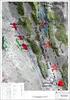 CNSX: TV www.trevali.com March 2010 DISCLAIMER Certain statements contained in this document, including, without limitation, those concerning the economic outlook for the mining industry, expectations
How To Understand The History Of The American Gold Mine
 September 12, 2011 THE ATLANTA GOLD MINE, EASTERN NEVADA Gold Exploration in Nevada with Near-Term Production Potential TSXV: MAY OTCQX:MAYGF Atlanta Gold & Silver Mine, Nevada Atlanta is located in northeastern
Avion will host a conference call at 10:30 AM (EST) on Monday, April 2, 2011 to discuss the results. To participate in the call please dial:
 March 31, 2012 A v i o n G o l d A n n o u n c e s F o u r t h Q u a r t e r 2 0 1 1 E a r n i n g s o f $ 8. 1 M i l l i o n W i t h E a r n i n g s P e r S h a r e O f $ 0. 0 2 R e c o r d 2 0 1 1 E
For personal use only. MRV Metals Launch February 2016
 MRV Metals Launch February 2016 Important Information This document has been prepared by Moreton Resources Limited ( Moreton or Company ) for the purpose of providing a company and technical overview to
HISTORIC INTERSECTIONS INCLUDE 19.8 G/T AU OVER 8.9 METRES AND 24.4 GT AU OVER 9 METRES
 65 Queen Street West Suite 825, P.O. Box 75 Toronto, Ontario M5H 2M5 Canada CROCODILE GOLD INITIATES DRILL PROGRAM AT UNION REEFS PROJECT AREA TARGETING HIGHH GRADE ZONES BELOW HISTORICAL OPEN PITS ADJACENT
CANADA S INTERMEDIATE GOLD PRODUCER
 CANADA S INTERMEDIATE GOLD PRODUCER Third Quarter 2015 Results Conference 1 Call & Webcast October 29, 2015 Forward Looking Information This presentation contains certain forward-looking information and
LYDIAN ANNOUNCES $325 MILLION CONSTRUCTION FINANCING FOR AMULSAR GOLD PROJECT
 LYDIAN ANNOUNCES $325 MILLION CONSTRUCTION FINANCING FOR AMULSAR GOLD PROJECT Conference Call December 1, 2015 Lydianinternational.co.uk TSX:LYD Cautionary Statements Forward Looking Statements & Other
NEXTRACTION ENERGY CORP. (Formerly Kruger Capital Corp.)
 MANAGEMENT S DISCUSSION AND ANALYSIS of NEXTRACTION ENERGY CORP. (Formerly Kruger Capital Corp.) For the year ended December 31, 2008 NEXTRACTION ENERGY CORP. (Formerly Kruger Capital Corp.) Management
Pasinex Resources Limited Reports Large New Area of Surface Copper Mineralisation on its Golcuk Property in Turkey
 Pasinex Resources Limited Reports Large New Area of Surface Copper Mineralisation on its Golcuk Property in Turkey July 11, 2013 - Pasinex Resources Limited (CNSX : PSE) (FSE: PNX) is pleased to announce
Canadian Spirit Resources Inc.
 This management discussion and analysis ( MD&A ) of the financial conditions and results of operations should be read in conjunction with the audited financial statements for the year ended December 31,
Endeavour Management Presentation
 Endeavour Management Presentation June 2014 GOLD PRODUCER WEST AFRICA CASH FLOW Disclaimer & Forward Looking Statements This presentation contains forward-looking statements including but not limited to,
FIRST QUARTER CONFERENCE CALL MAY 4, 2010
 FIRST QUARTER CONFERENCE CALL MAY 4, 2010 1 Cautionary Statement CAUTIONARY NOTE REGARDING FORWARD-LOOKING STATEMENTS: This presentation contains or incorporates by reference forwardlooking statements
Ferrex plc ( Ferrex or the Company ) Acquisition of Gold Mining Company in Australia and Strategic Review
 Ferrex plc / Index: AIM / Epic: FRX / Sector: Mining 17 November 2015 Ferrex plc ( Ferrex or the Company ) Acquisition of Gold Mining Company in Australia and Strategic Review Ferrex plc, the AIM quoted
FORWARD LOOKING STATEMENTS
 MPH Ventures Corp. (MPS: TSX.V) Advancing Gold and Molybdenum Projects in Canada June 2013 1 FORWARD LOOKING STATEMENTS This presentation may contain forward-looking statements including but not limited
ACQUISITION OF TWO QUALITY MINES IN NEVADA
 November 12 2015 ACQUISITION OF TWO QUALITY MINES IN NEVADA 1 1 CAUTIONARY STATEMENT ON FORWARD-LOOKING INFORMATION All statements, other than statements of historical fact, contained or incorporated by
MASUPARIA GOLD CORPORATION
 CONDENSED CONSOLIDATED INTERIM FINANCIAL STATEMENTS THREE MONTHS ENDED DECEMBER 31, 2011 and 2010 (expressed in Canadian Dollars) NOTICE TO READERS Under National Instrument 51-102, Part 4.3 (3)(a), if
FORM 7 MONTHLY PROGRESS REPORT
 FORM 7 MONTHLY PROGRESS REPORT Name of CNSX Issuer: GoviEx Uranium Inc. (the Issuer ). Trading Symbol: GXU Number of Outstanding Listed Securities: 162,444,230 Class A Common Shares Date: October 5, 2015
HARTE GOLD CORP. Management s Discussion and Analysis of Financial Condition and Results of Operations for the 12 months ended December 31, 2015
 The following discussion of the results of operations and financial condition of Harte Gold Corp. ( Harte Gold or the Company ) prepared as of March 24, 2015 summarizes management s review of the factors
Mako Project, Eastern Senegal Completion of Scoping Study
 Toro Gold Ltd Trafalgar Court Admiral Park, Guernsey. GY1 3EL. News Release: 18 th April 2013, Guernsey Mako Project, Eastern Senegal Completion of Scoping Study Toro Gold Ltd ( Toro Gold or the Company
CIM DEFINITION STANDARDS - For Mineral Resources and Mineral Reserves
 CIM DEFINITION STANDARDS - For Mineral Resources and Mineral Reserves Prepared by the CIM Standing Committee on Reserve Definitions Adopted by CIM Council on November 27, 2010 FOREWORD CIM Council, on
For personal use only
 ASX Release 27 September 2012 OPTION TO ACQUIRE 560,000oz PEAK HILL GOLD PROJECT RESOURCE AND INVESTMENT NL (ASX: RNI) (RNI or the Company) has reached agreement with Montezuma Mining Company Limited for
C o r p o r a t e P r e s e n t a t i o n A u g u s t 2 0 1 5
 C o r p o r a t e P r e s e n t a t i o n A u g u s t 2 0 1 5 Forward Looking Statements This presentation includes certain estimates, projections and forward looking statements within the meaning of Section
Management s Discussion and Analysis and Consolidated Financial Statements. First Quarter 2014
 Management s Discussion and Analysis and Consolidated Financial Statements First Quarter 2014 For the three months ended March 31, 2014 TABLE OF CONTENTS Page Management s Discussion and Analysis INTRODUCTION...
FIJI GOLD LION ONE METALS
 FIJI GOLD LION ONE METALS Tuvatu Gold Project January 2016 Presentation Disclaimer Forward Looking Statements and Qualified Person DISCLAIMER The information provided in this presentation is not intended
Management s Discussion and Analysis and Consolidated Financial Statements. Second Quarter 2014
 Management s Discussion and Analysis and Consolidated Financial Statements Second Quarter 2014 For the six months ended June 30, 2014 TABLE OF CONTENTS Page Management s Discussion and Analysis INTRODUCTION...
Achtung, Folientest, nicht für den Produktiveinsatz geeignet. Blötberget Iron Ore Project From Resource and Mining History to Present
 From Resource and Mining History to Present 30.11.2015 Folie 1 DMT-Präsentation Project Location From Berlin 1100 km by road (13 hours) 1.5 hours by plane to Stockholm plus 2.5 hours by car Introduction