
Substance Abuse, Violence, Mental Health, and Academic Success
|
|
|
- Buck Burns
- 10 years ago
- Views:
Transcription
1 Substance Abuse, Violence, Mental Health, and Academic Success July 2009 The mission of the American school has expanded considerably over the last thirty years. We expect our schools to teach the traditional three Rs as well as the subjects and skills needed to prosper in the contemporary world such as foreign languages and computer technology. At the same time, schools are encouraged to engage in health promotion and risk prevention and to teach children social and emotional skills and how to promote their own wellbeing in a complex and sometimes threatening world. Educators sometimes voice frustration at having to take on these new tasks when shrinking resources make just teaching the traditional subjects more challenging than ever. Support for prevention programs, from educators and taxpayers alike, might be more forthcoming if they realized that prevention programs also contribute to academic achievement. To quote Howard Adelman and Linda Taylor (2003) of the UCLA Center for Mental Health in Schools: Our approach to framing a policy rationale for mental health in schools begins with the conclusion arrived at by the Carnegie Council Task Force on Education of Young Adults. In their report, they stress: School systems are not responsible for meeting every need of their students. But when the need directly affects learning, the school must meet the challenge. It is evident that a variety of psychological and physical health problems affect learning in profound ways. Moreover the problems are exacerbated as youngsters internalize the frustrations of confronting barriers (external and internal) to learning, experiencing the debilitating effects of performing poorly at school, and are punished for the misbehavior that often accompanies school failure. Substance abuse, violence, and emotional disorders interfere with the ability of children to learn and the ability of a school to educate. Students who are under the influence of alcohol or other drugs or battling emotional problems are not going to be able to learn as well as students who devote their full attention to their education. Time, energy, and resources devoted to maintaining order in schools with serious violence and discipline problems are time, energy, and resources not being used for education. Chaotic and insecure school environments also interfere with the academic success of students who otherwise are ready, and willing, to learn. Substance abuse, violence, and behavioral disorders can form a cluster of risk behaviors. These clusters can often be found afflicting particular individuals or communities whose life and social circumstances place them at risk. And these problems can have a profound impact on the ability of Substance Abuse, Violence, Mental Health, and Academic Success - 1 -

2 students to learn. A review of the literature by the Massachusetts Department of Education concluded that Drug use, alcohol use, and tobacco use, pregnancy, poor nutrition and physical inactivity, and violence are all related to diminished school performance (McManis and Sorenson, 2000). A major study in Washington State concluded that Groups of middle and high school students with even moderate involvement with substance use and violence/delinquency have dramatically lower academic achievement than groups of students with little or no involvement in these behaviors (Washington Kids Count, 2002). Children and adolescents who are under the influence of drugs and alcohol, fighting or acting out, and/or tormented by emotional distress and fear are not going to succeed in school. In addition to the cognitive impact of drugs, alcohol, and emotional distress, these behaviors result in increased absenteeism (or time spend in detention), which also have an impact on a student s academic success. And a school in which teachers spend much of their time enforcing discipline rather than teaching is not an environment in which most children will learn. The purpose of this prevention brief is to clarify some of the relationships among substance abuse, violence, and mental health for children and adolescents and to point the reader to resources (found under References, below) that demonstrate how overarching school-wide interventions can help reduce all three of these problems while enhancing a school s ability to promote academic success for all students. The Abuse of Alcohol and Other Drugs and Violence Research indicates that alcohol use (especially heavy alcohol use) and violence among youth are connected (Reiss and Roth, 1993). Alcohol can promote influence young people to behave in ways or to let themselves behave in ways that they would not if they were sober. A young person under the influence of alcohol, and especially one who is intoxicated, may not feel restrained by his or her better judgment, nor by the standards of their peers or society, and engage in violence or to behave in ways that provoke confrontations. Alcohol and drug use impairs judgment and decision-making skills, leading youth into potentially violent situations which they might have otherwise avoided and depriving them of the clarity of mind that would help resolve these situations without violence. The relationship of drugs other than alcohol to violence is more complicated. Like alcohol, drugs can impair judgment and incite violence. And there is a demonstrated relationship at the community level between drugs and crime including violent crime. Young people on drugs may steal to enforce their habits. The buying and selling of drugs also leads to violence among drug dealers and consumers, drug wholesalers and retailers, and competing drug-selling gangs. (For more information on the relationship of alcohol and other drugs and violence, see Miczek, DeBold, Haney, Tidey, Vivian, and Weerts, 1994) The contribution that violence can make to the abuse of alcohol or other drugs is less well documented. It has been suggested that some children and adolescents people turn to alcohol or drugs in an effort to cope with the violence in their lives, whether that is domestic or sexual violence at home, bullying at school, or a persistent level of violence in their community

3 The Abuse of Alcohol and Other Drugs and Emotional Disorders The relationship of the abuse of alcohol and other drugs to emotional and behavioral disorders and mental illness, is complicated by the fact that drug and alcohol dependence are themselves diagnostic categories. The question of whether a young person with a dual-diagnosis (that is, who has been diagnosed with both an emotional disorder or mental illness and a drug or alcohol dependence) would have avoided emotional problems if he or she had avoided drugs or alcohol is difficult to answer. Both may be indicative of other personal, family, or environmental risk factors. Researchers also suggest that some young people (such as runaway and homeless adolescents and those with emotional disorders but without access to treatment) self-medicate that is, they abuse alcohol or drugs to cope with their emotional pain. A report by the Substance Abuse and Mental Health Service Administration (SAMSHA, 1999) reported that: Adolescents with serious emotional problems were four times as likely to have used marijuana as adolescents with low levels of emotional problems. Adolescents with serious behavioral problems were nine times as likely to be dependent on drugs as adolescents with low levels of behavioral problems. Adolescents with serious emotional problems nearly twice as likely to use alcohol as adolescents with low levels of emotional problems. They were also twice as likely to smoke tobacco as adolescents with low levels of emotional problems. Adolescents with serious behavioral problems were nearly three times as likely to use alcohol in the past month as adolescents with low levels of behavioral problems. They were also three times more likely to smoke than were adolescents with low levels of behavioral problems. Adolescents with serious emotional problems were nearly four times more likely to be dependent on alcohol or illicit drugs than adolescents with low levels of emotional problems. There is also some evidence that the emotional problems are likely to precede the drug dependence. However, the difficulty in sorting out the precise relationships among risk behaviors does not mean we cannot take effective steps to reduce these behaviors. The Substance Abuse and Mental Health Services Administration s Report to Congress on The Prevention and Treatment of Co-Occurring Substance Abuse Disorders and Mental Disorders suggests that Though scan research has been conducted on the prevention of co-occurring substance abuse disorders and mental disorders, the limited data available suggest that since some of the risk factors for mental and substance abuse disorders may be identical (e.g. low socioeconomic status, family conflict, exposure to violence), programs designed to prevent one disorder may prevent or forestall development of the other (SAMSHA, nd)

4 Emotional Disorders and Violence Most youth violence is not committed by people with a diagnosable mental illness. It may be that certain types of emotional disorders contribute to violence by affecting judgment and decision-making abilities, or making young people with these disorders more susceptible to peer or social pressure impelling them toward violence. Emotional disorders play a role in suicide and other behaviors involving violence towards oneself (such as self-mutilation). Being a victim of, or a witness to, violence can take an emotional toll upon children especially young children. There is evidence to suggestion that witnessing violence when young is a risk factor for engaging in violence, or other anti-social behavior, when older. Witnessing violence can also lead to heightened levels of fear, hopelessness, and a loss of control. Research indicates that violence witnessed by young children can result in changes to the brain that can lead to a heightened state of fear or anticipation even in the absence of external stimuli (Child Witness To Violence Project, nd). Implications for Prevention and Intervention Evaluation results show that many prevention programs including many of those reviewed by the National Registry of Effective Programs and Practices (and designated by SAMSHA as Model Programs) are effective at both preventing problem behaviors and improving academic performance (Northrop Grumman Information Technology, 2002). The ability of prevention programs to reduce risk behaviors and promote academic success provides a strong argument that these programs are not add-on s but intrinsic to the success of the basic mission of a school: providing an effective education to all children. References: Adelman, H, and Taylor, L (2003) Toward a comprehensive policy vision for mental health in schools. In Handbook of School Mental Health: Advancing Research and Practice edited by M Weist, S Evans, and N Lever. Boston: Kluwer/Plenum Publishers Child Witness To Violence Project (n.d.) For Caregivers: Impact On Development. Hawkins, J, Catalano, R, Kosterman, R, Abbott, R, and Hill, K (1999) Preventing adolescent health-risk behaviors by strengthening protection during childhood. Archives of Pediatrics and Adolescent Medicine. 153(3) Marc McManis, D and Sorensen, D. (2000) The Role of Comprehensive School Health Education Programs in the Link between Health and Academic Performance: A Literature Review. Malden, MA: Massachusetts Department of Public Health Learning Support Services Miczek, K. DeBold, J. Haney, M. Tidey, J. Vivian, J. & Weerts, E. (1994) Alcohol, Drugs of Abuse, Aggression, and Violence. In Understanding and Preventing Violence. Volume 3. Social Influences. Edited by A. Reiss and J. Roth. Washington, DC: National Academy Press - 4 -

5 Northrop Grumman Information Technology. (October, 2002). SAMHSA model programs: Model prevention programs supporting academic achievement. Center for Substance Abuse Prevention, Substance Abuse and Mental Health Services Administration, U.S. Department of Health and Human Services. Contract No Reiss, A, and Roth, J. (1993) Understanding and Preventing Violence. Washington, DC. National Academy Press. Substance Abuse and Mental Health Services Administration (nd) SAMSHA Model Programs: Effective Substance Abuse and Mental Health Programs for Every Community. Substance Abuse and Mental Health Services Administration. (1999) The Relationship between Mental Health and Substance Abuse among Adolescents. U.S. Department Of Health And Human Services. Rockville, MD: 1999 Washington Kids Count (2002) The Impact of Substance Use and Violence/Delinquency on Academic Achievement for Groups of Middle and High School Students in Washington Summary of a Report by Washington Kids Count. Seattle: Human Services Policy Center, University of Washington - 5 -

OAHP Key Adolescent Health Issue. Behavioral Health. (Mental Health & Substance Abuse)
 OAHP Key Adolescent Health Issue Area 1 Behavioral Health (Mental Health & Substance Abuse) Introduction In Ohio, the promotion of positive mental health and the prevention of substance abuse and mental
A Review of Conduct Disorder. William U Borst. Troy State University at Phenix City
 A Review of 1 Running head: A REVIEW OF CONDUCT DISORDER A Review of Conduct Disorder William U Borst Troy State University at Phenix City A Review of 2 Abstract Conduct disorders are a complicated set
Risk and Resilience 101
 Risk and Resilience 101 July 2004 Thirty years ago, most prevention efforts relied on fear. They tried to convince young people that smoking or using drugs would damage their health and ruin their futures.
Underage Drinking. Underage Drinking Statistics
 Underage Drinking Underage drinking is a serious public health problem in the United States. Alcohol is the most widely used substance of abuse among America s youth, and drinking by young people poses
Substance Abuse and Mental Health Services Administration Reauthorization
 Substance Abuse and Mental Health Services Administration Reauthorization 111 th Congress Introduction The American Psychological Association (APA) is the largest scientific and professional organization
Essential Trauma Informed Practices in Schools. Shannon Cronn, N.C.S.P. Barb Iversen, M.C.
 Essential Trauma Informed Practices in Schools Shannon Cronn, N.C.S.P. Barb Iversen, M.C. Objectives: Participants attending this session will be able to: Define trauma Explain how trauma may impact child/teen
Comprehensive System for Supporting Learners: Using the UCLA Center for Mental Health in Schools Framework to Address Barriers to Learning
 Comprehensive System for Supporting Learners: Using the UCLA Center for Mental Health in Schools Framework to Address Barriers to Learning Gainesville City Schools Ken Martin- Gainesville Middle School
Physical Symptoms Mood Symptoms Behavioral Symptoms
 Prescription drugs are the 3 rd most commonly abused drugs amongst teens in Nebraska, and the same statistic holds true on a national level. The rise in prescription drug abuse is becoming increasingly
2) Recurrent emotional abuse. 3) Contact sexual abuse. 4) An alcohol and/or drug abuser in the household. 5) An incarcerated household member
 Co Occurring Disorders and the on Children: Effectively Working with Families Affected by Substance Abuse and Mental Illness Definition (Co-Occurring also called Dual Dx) A professional diagnosis of addictive/substance
Eating Disorders. Symptoms and Warning Signs. Anorexia nervosa:
 Eating Disorders Eating disorders are serious conditions that can have life threatening effects on youth. A person with an eating disorder tends to have extreme emotions toward food and behaviors surrounding
Workforce Development Online Workshop Descriptions
 Workforce Development Online Workshop Descriptions Behavioral Health Service Delivery Workshops: The Effects of Violence Exposure on Children (1.5 hours) Regretfully, violence against children and youth
Restorative Parenting: Engaging Parents & Families of
 Restorative Parenting: Engaging Parents & Families of Restorativ e Homeless Youth The 7 Minute Movie Trailer Parenting David Mathews, PsyD, LICSW Program Director Bridge for Youth Perspectives The Goal
Behavior-Management Techniques for Safe Schools
 Behavior-Management Techniques for Safe Schools Each new school year brings high hopes, great expectations and challenges for both new and seasoned educators. Th e American Federation of Teachers (AFT)
Behavioral Health Barometer. Oklahoma, 2014
 Behavioral Health Barometer Oklahoma, 2014 Acknowledgments This report was prepared for the Substance Abuse and Mental Health Services Administration (SAMHSA) by RTI International under contract No. 283
Behavioral Health Barometer. Mississippi, 2014
 Behavioral Health Barometer Mississippi, 2014 Acknowledgments This report was prepared for the Substance Abuse and Mental Health Services Administration (SAMHSA) by RTI International under contract No.
Bullying. Take Action Against. stealing money. switching seats in the classroom. spreading rumors. pushing & tripping
 switching seats in the classroom stealing money Take Action Against Bullying spreading rumors pushing & tripping U.S. DEPARTMENT OF HEALTH & HUMAN SERVICES Substance Abuse and Mental Health Services Administration
I. Each evaluator will have experience in diagnosing and treating the disease of chemical dependence.
 PREVENTION/INTERVENTION CENTER COBB COUNTY PUBLIC SCHOOL SAFE AND DRUG FREE PROGRAM www.cobbk12.org/~preventionintervention CONTRACT FOR SERVICE PROVIDERS As a member of the Cobb County Schools Coalition
Flagship Priority: Mental Health and Substance Abuse
 10 Colorado s winnable battles Flagship Priority: Mental Health and Substance Abuse ELEVATING HEALTH AND ENVIRONMENT Mental and emotional well-being is essential to shaping a state of health for Coloradans.
Drug Abuse Prevention Training FTS 2011
 Drug Abuse Prevention Training FTS 2011 Principles of Prevention Prevention programs should enhance protective factors and reverse or reduce risk factors (Hawkins et al. 2002). The risk of becoming a drug
ADOLESCENT CO-OCCURRING DISORDERS: TREATMENT TRENDS AND GUIDELINES AMANDA ALKEMA, LCSW BECKY KING, LCSW ERIC TADEHARA, LCSW
 ADOLESCENT CO-OCCURRING DISORDERS: TREATMENT TRENDS AND GUIDELINES AMANDA ALKEMA, LCSW BECKY KING, LCSW ERIC TADEHARA, LCSW INTRODUCTION OBJECTIVES National and Utah Statistics Best Practice Guidelines
Co-Occurring Substance Use and Mental Health Disorders. Joy Chudzynski, PsyD UCLA Integrated Substance Abuse Programs
 Co-Occurring Substance Use and Mental Health Disorders Joy Chudzynski, PsyD UCLA Integrated Substance Abuse Programs Introduction Overview of the evolving field of Co-Occurring Disorders Addiction and
Anti-Social Personality Disorder
 Anti-Social Personality Disorder Definition Anti-Social Personality Disorder is a type of chronic mental condition in which a person's ways of thinking, perceiving situations and relating to others are
Handout: Risk. Predisposing factors in children include: Genetic Influences
 Handout: Risk The more risk factors to which a child is exposed the greater their vulnerability to mental health problems. Risk does not cause mental health problems but it is cumulative and does predispose
Traumatic Stress. and Substance Use Problems
 Traumatic Stress and Substance Use Problems The relation between substance use and trauma Research demonstrates a strong link between exposure to traumatic events and substance use problems. Many people
Therapy and Professional Training Specialists. www.mifamilytherapy.com
 Therapy and Professional Training Specialists www.mifamilytherapy.com Help When it s Needed Everyone at some point is faced with challenges that require extra thought and attention. Most of the time people
TEEN MARIJUANA USE WORSENS DEPRESSION
 TEEN MARIJUANA USE WORSENS DEPRESSION An Analysis of Recent Data Shows Self-Medicating Could Actually Make Things Worse Millions of American teens* report experiencing weeks of hopelessness and loss of
Overview of the Adverse Childhood Experiences (ACE) Study. Robert F. Anda, MD, MS Co-Principal Investigator. www.robertandamd.com
 Overview of the Adverse Childhood Experiences (ACE) Study Robert F. Anda, MD, MS Co-Principal Investigator www.robertandamd.com Death Early Death Disease, Disability and Social Problems Adoption of Health-risk
Alcohol Abuse Among our Nation s Youth What to do as educators
 Alcohol Abuse Among our Nation s Youth What to do as educators The devastating rate of drug and alcohol abuse by American youth is cause for alarm and its prevention and treatment remains one of our nation
Maternal and Child Health Issue Brief
 Maternal and Child Health Issue Brief Why is substance abuse an issue among youth? December 14 8 Substance Abuse among Youth in Colorado Substance abuse among youth is defined as using alcohol, tobacco,
Georgia Performance Standards. Health Education
 HIGH SCHOOL Students in high school demonstrate comprehensive health knowledge and skills. Their behaviors reflect a conceptual understanding of the issues associated with maintaining good personal health.
GOING BEYOND FOSTER CARE
 GOING BEYOND FOSTER CARE Sharon W. Cooper, MD Developmental & Forensic Pediatrics, P.A. University of North Carolina Chapel Hill School of Medicine [email protected] OBJECTIVES Adverse childhood
Mental Health in Schools and Public Health
 Special Report on Child Mental Health Mental Health in Schools and Public Health Howard S. Adelman, PhD a Linda Taylor, PhD a Health policy and practice call for health and mental health parity and for
The Longterm Effects of Childhood Trauma and Abuse. Andrew Robertson. University of Phoenix WH07UC12
 The Longterm Effects 1 The Longterm Effects of Childhood Trauma and Abuse Andrew Robertson University of Phoenix WH07UC12 COMM105 / Introduction to Effective Written Communication Dr. Lori Travis, PhD
Antisocial personality disorder
 Page 1 of 7 Diseases and Conditions Antisocial personality disorder By Mayo Clinic Staff Antisocial personality disorder is a type of chronic mental condition in which a person's ways of thinking, perceiving
Substance Abuse 2014-2015. Chapter 10: Substance Abuse
 Substance Abuse 214-215 Chapter 1: Substance Abuse 265 214-215 Health of Boston Substance Abuse Substance abuse involves the excessive use of alcohol or illicit substances (e.g., marijuana, cocaine, heroin,
Facts for Teens: Youth Violence
 P.O. Box 6003 Rockville, MD 20849-6003 [email protected] www.safeyouth.org Facts for Teens: Youth Violence Introduction Many teenagers are concerned about youth violence, and with good reason. Each
FACT SHEET. What is Trauma? TRAUMA-INFORMED CARE FOR WORKING WITH HOMELESS VETERANS
 FACT SHEET TRAUMA-INFORMED CARE FOR WORKING WITH HOMELESS VETERANS According to SAMHSA 1, trauma-informed care includes having a basic understanding of how trauma affects the life of individuals seeking
THE EFFECTS OF FAMILY VIOLENCE ON CHILDREN. Where Does It Hurt?
 THE EFFECTS OF FAMILY VIOLENCE ON CHILDREN Where Does It Hurt? Child Abuse Hurts Us All Every child has the right to be nurtured and to be safe. According to: Family Violence in Canada: A Statistical Profile
Introduction to Healthy Family Dynamics
 Introduction to Parents & Families: Relationships are important to a satisfying life and learning about healthy relationships begins at home. Family provides the foundation for our sense of security and
ACE Awareness for Prevention
 Parenting Fundamentals ACE Awareness f Prevention Adverse Childhood Experiences The infmation provided in this booklet was excerpted from: The Ace Study http://acestudy.g/ Centers f Disease Control and
Co-Occurring Disorder-Related Quick Facts: ELDERLY
 Co-Occurring Disorder-Related Quick Facts: ELDERLY Elderly: In 2004, persons over the age of 65 reached a total of 36.3 million in the United States, an increase of approximately nine percent over the
Conduct Disorder: Treatment Recommendations. For Vermont Youth. From the. State Interagency Team
 Conduct Disorder: Treatment Recommendations For Vermont Youth From the State Interagency Team By Bill McMains, Medical Director, Vermont DDMHS Alice Maynard, Mental Health Quality Management Chief, Vermont
Social and Emotional Wellbeing
 Social and Emotional Wellbeing A Guide for Children s Services Educators Social and emotional wellbeing may also be called mental health, which is different from mental illness. Mental health is our capacity
States In Brief. The National Survey on Drug Use and Health. texas. Prevalence of Illicit Substance 1 and Alcohol Use
 texas States In Brief Substance Abuse and Mental Health Issues At-A-Glance a short Report from the Office of applied studies Prevalence of Illicit Substance 1 and Alcohol Use The National Survey on Drug
Collaborative Care for Pregnant Women with Substance Use Disorders
 Collaborative Care for Pregnant Women with Substance Use Disorders Alane O Connor DNP Maine Dartmouth Family Medicine Residency MaineGeneral Medical Center Dartmouth Medical School Vanderbilt University
Colorado Substance Use and Recommendations Regarding Marijuana Tax Revenue
 Colorado Substance Use and Recommendations Regarding Marijuana Tax Revenue Substance addiction and abuse is Colorado s most prevalent, complex, costly and untreated public health challenge. It is an issue
DRUG & ALCOHOL POLICY
 DRUG & ALCOHOL POLICY Rationale: Koonung Secondary College (KSC) has an interest in the health, personal and legal wellbeing of its students and staff. There is no clear dividing line between the responsibility
Dual Diagnosis and Integrated Treatment of Mental Illness and Substance Abuse Disorder
 Dual Diagnosis and Integrated Treatment of Mental Illness and Substance Abuse Disorder What are dual diagnosis services? Dual diagnosis services are treatments for people who suffer from co-occurring disorders
Walking a Tightrope. Alcohol and other drug use and violence: A guide for families. Alcohol- and Other Drug-related Violence
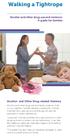 Walking a Tightrope Alcohol and other drug use and violence: A guide for families Alcohol- and Other Drug-related Violence Alcohol and other drug use and family violence often occur together. Families
Supporting Children s Mental Health Needs in the Aftermath of a Disaster: Pediatric Pearls
 Supporting Children s Mental Health Needs in the Aftermath of a Disaster: Pediatric Pearls Satellite Conference and Live Webcast Thursday, August 25, 2011 5:30 7:00 p.m. Central Time Faculty David J. Schonfeld,
3.5 Guidelines, Monitoring and Surveillance of At Risk Groups
 3.5 Guidelines, Monitoring and Surveillance of At Risk Groups 3.5.6 Children of Parents who are Affected by Drug and Alcohol Misuse Background There is overwhelming evidence that the misuse of drugs and
Introduction. Communities That Care
 Introduction Communities That Care Research-based prevention planning 4Research-Based Planning The programs, policies and practices in this guide will have the greatest impact in your community when implemented
Diploma In Child Protection Studies Block Two
 Diploma In Child Protection Studies Block Two 1 Neglect 2 Neglect Is. any act or omission that results in impaired physical functioning, injury, and/or development of a child or young person Types Of Neglect
PROGRAM FOR LICENSING ASSESSMENTS FOR COLORADO EDUCATORS (PLACE ) OBJECTIVES FIELD 031: HEALTH
 PROGRAM FOR LICENSING ASSESSMENTS FOR COLORADO EDUCATORS (PLACE ) OBJECTIVES Subareas Physical Health Mental Health Social Health Community Health PHYSICAL HEALTH Understand the stages of physical growth
Assessing families and treating trauma in substance abusing families
 Children, Trauma and the impact of Substance abuse Day One Outpatient (874-1045) Amy Stevenson LCPC CCS ([email protected]) Don Burke LCPC CCS ([email protected]) Assessing families and treating trauma in
How Health Reform Will Help Children with Mental Health Needs
 How Health Reform Will Help Children with Mental Health Needs The new health care reform law, called the Affordable Care Act (or ACA), will give children who have mental health needs better access to the
Child Abuse and Neglect AAP Policy Recommendations
 Child Abuse and Neglect AAP Policy Recommendations When Inflicted Skin Injuries Constitute Child Abuse Committee on Child Abuse and Neglect PEDIATRICS Vol. 110 No. 3 September 2002, pp. 644-645 Recommendations
National Center for Mental Health Promotion and Youth Violence Prevention. Positive Behavioral Intervention and Supports Brief
 National Center for Mental Health Promotion and Youth Violence Prevention Positive Behavioral Intervention and Supports Brief Purpose of this Guide School districts around the nation have begun to implement
If we had no winter, the spring would not be so pleasant; if we did not sometimes taste of adversity, prosperity would not be so welcome.
 CHAPTER VII CO-OCCURRING DISORDERS If we had no winter, the spring would not be so pleasant; if we did not sometimes taste of adversity, prosperity would not be so welcome. ANNE BRADSTREET TAY Resource
For NSDUH, the Northeast includes: Connecticut, Maine, Massachusetts, New Hampshire, New Jersey, New York, Pennsylvania, Rhode Island, and Vermont.
 Collective Action Issue Brief #4: MARIJUANA USE IN NEW HAMPSHIRE WHAT WE KNOW In New Hampshire, adolescent and young adult marijuana use is a significant concern. Rates of marijuana use among New Hampshire
Trauma and the Family: Listening and learning from families impacted by psychological trauma. Focus Group Report
 Trauma and the Family: Listening and learning from families impacted by psychological trauma Focus Group Report A summary of reflections and remarks made by Baltimore City families impacted by trauma and
ANTISOCIAL PERSONALITY DISORDER
 ANTISOCIAL PERSONALITY DISORDER Antisocial personality disorder is a type of chronic mental illness in which your ways of thinking, perceiving situations and relating to others are dysfunctional. When
IS IT A MOOD OR A MOOD DISORDER
 TEENAGE DEPRESSION & BIPOLAR IS IT A MOOD OR A MOOD DISORDER PRESENTED BY THE MOOD DISORDERS ASSOCIATION OF MANITOBA MOOD DISORDERS ASSOCIATION OF MANITOBA We are a self-help organization whose purpose
Maternal and Child Health Issue Brief
 Maternal and Child Health Issue Brief Substance Abuse among Women of Reproductive Age in Colorado September 14 9 Why is substance abuse an issue among women of reproductive age? Substance abuse poses significant
THE ANGLO-AMERICAN SCHOOL OF MOSCOW. K-12 Health Education
 THE ANGLO-AMERICAN SCHOOL OF MOSCOW K-12 Health Education The Physical Education curriculum is designed to encourage a commitment to a lifelong healthy lifestyle. Our program promotes personal, social,
Behavioral Health Services for Adults Program Capacity Eligibility Description of Services Funding Dosage Phase I 33 hours
 Outpatient Substance Abuse Recovery (OSARP) Dual Diagnosis Behavioral Health Services for Adults Capacity Eligibility Description of Services Funding Dosage 35 at any Adults with Phase I 33 hours point
POLICY ON COMPREHENSIVE SCHOOL HEALTH EDUCATION
 MICHIGAN STATE BOARD OF EDUCATION POLICY ON COMPREHENSIVE SCHOOL HEALTH EDUCATION The Michigan State Board of Education promotes school success through coordinated school health programs. 1 Schools cannot
Institute for Health and Recovery In Cambridge and Massachusetts
 Institute for Health and Recovery In Cambridge and Massachusetts Katharine Thomas, IHR Assistant Director Cambridge Commission for Human Services December 12, 2013 2 Institute for Health and Recovery:
Protection of the Rights of Children and Women Suffering from Drug Addiction in the Family and Society - Shelter Don Bosco, Mumbai, India -
 Protection of the Rights of Children and Women Suffering from Drug Addiction in the Family and Society - Shelter Don Bosco, Mumbai, India - Article 24 of the Convention on the Rights of the Child recognizes
Submission regarding intention self-harm and suicidal behaviour in children The Child and Youth Mental Health Team Central Australia
 May 2014 Postal Address: Central Australian Mental Health Services (CAMHS) Child and Youth Team 3/15 Leichhardt Terrace PO Box 721 Alice Springs NT 0871 Tel: 8951 5950 Fax: 8953 1858 To the National Children
United Nations Office on Drugs and Crime (UNODC)
 United Nations Office on Drugs and Crime (UNODC) Moderator: Juan Pablo Yga Director: Patricio Williams Secretary: Andrea Cisneros Topic B: Decreasing drug abuse among minors Description of Committee: The
REVISED SUBSTANCE ABUSE GRANTMAKING STRATEGY. The New York Community Trust April 2003
 REVISED SUBSTANCE ABUSE GRANTMAKING STRATEGY The New York Community Trust April 2003 1 I. INTRODUCTION Substance Abuse is defined as the excessive use of addictive substances, especially narcotic drugs,
Chapter 4 STRATEGIC GOALS AND OBJECTIVES
 Chapter 4 STRATEGIC GOALS AND OBJECTIVES PRINCIPLES OF A COMPREHENSIVE, BALANCED STRATEGY This urban-based Substance Abuse Strategy (the Strategy) is built on the premise that no single approach can end
Minnesota Co-occurring Mental Health & Substance Disorders Competencies:
 Minnesota Co-occurring Mental Health & Substance Disorders Competencies: This document was developed by the Minnesota Department of Human Services over the course of a series of public input meetings held
Further Discussion of Comprehensive Theory of Substance Abuse Prevention March, 2011
 Further Discussion of Comprehensive Theory of Substance Abuse Prevention March, 2011 The prime dichotomy between profoundly challenged children and socially influenced teens may be similar to some other
THERASCRIBE INFORMATION
 THERASCRIBE INFORMATION TheraScribe is a professional counseling software program, designed by therapists to assist in the dayto-day recordkeeping and paperwork necessary to operate a private practice,
3. Use and/or abuse of substance is a detractor from the school s primary function of educating its students.
 1992 6152/7321 POLICY Policy on substance abuse Personnel SUBJECT: POLICY ON SUBSTANCE ABUSE Introduction As our country struggles to combat the growing problem of substance abuse, school systems across
How To Know If You Can Get Help For An Addiction
 2014 FLORIDA SUBSTANCE ABUSE LEVEL OF CARE CLINICAL CRITERIA SUBSTANCE ABUSE LEVEL OF CARE CLINICAL CRITERIA Overview Psychcare strives to provide quality care in the least restrictive environment. An
Best Practices in Juvenile Justice Reform
 The Case for Evidence-Based Reform Best Practices in Juvenile Justice Reform Over the past decade, researchers have identified intervention strategies and program models that reduce delinquency and promote
TAKING MENTAL HEALTH TO SCHOOL: A POLICY- ORIENTED PAPER ON SCHOOL-BASED MENTAL HEALTH FOR ONTARIO
 TAKING MENTAL HEALTH TO SCHOOL: A POLICY- ORIENTED PAPER ON SCHOOL-BASED MENTAL HEALTH FOR ONTARIO EXECUTIVE SUMMARY FOR POLICY MAKERS Taking mental health to school: A policy-oriented paper on school-based
OVERVIEW OF COGNITIVE BEHAVIORAL THERAPY. 1 Overview of Cognitive Behavioral Therapy
 OVERVIEW OF COGNITIVE BEHAVIORAL THERAPY 1 Overview of Cognitive Behavioral Therapy TABLE OF CONTENTS Introduction 3 What is Cognitive-Behavioral Therapy? 4 CBT is an Effective Therapy 7 Addictions Treated
ADDICTIONS. BEHAVIOURAL Internet Shopping Work Sex Gambling Food. SUBSTANCE - RELATED Alcohol Drugs Medicine Tobacco
 ADDICTIONS BEHAVIOURAL Internet Shopping Work Sex Gambling Food SUBSTANCE - RELATED Alcohol Drugs Medicine Tobacco Addiction is a chronic, relapsing disease affecting the brains's reward, motivation and
Mental Health. Health Equity Highlight: Women
 Mental Health Background A person s ability to carry on productive activities and live a rewarding life is affected not only by physical health but by mental health. In addition, mental well-being can
These changes are prominent in individuals with severe disorders, but also occur at the mild or moderate level.
 Substance-Related Disorders DSM-V Many people use words like alcoholism, drug dependence and addiction as general descriptive terms without a clear understanding of their meaning. What does it really mean
PhD. IN (Psychological and Educational Counseling)
 PhD. IN (Psychological and Educational Counseling) I. GENERAL RULES CONDITIONS: Plan Number 2012 1. This plan conforms to the regulations of the general frame of the programs of graduate studies. 2. Areas
VENTURA COUNTY ALCOHOL & DRUG PROGRAMS
 VENTURA COUNTY ALCOHOL & DRUG PROGRAMS women s services Helping women recover (805) 981-9200 1911 Williams Drive, Oxnard, CA 93036 www.venturacountylimits.org recovery VCBH ALCOHOL & DRUG PROGRAMS WOMEN
Relationship Between Child Abuse, Substance Abuse and Violence
 Relationship Between Child Abuse, Substance Abuse and Violence Native American Population (All Ages) Leads nation in death caused by: alcohol-related motor vehicle fatalities chronic liver disease and