
ICD-10. Clinical Concepts for Family Practice
|
|
|
- Dwight Paul
- 10 years ago
- Views:
Transcription
1 ICD-10 Clinical Concepts for Family Practice ICD-10 Clinical Concepts Series Common Codes Clinical Documentation Tips Clinical Scenarios ICD-10 Clinical Concepts for Family Practice is a feature of Road to 10, a CMS online tool built with physician input. With Road to 10, you can: l Build an ICD-10 action plan customized for your practice l Use interactive case studies to see how your coding selections compare with your peers coding l Access quick references from CMS and medical and trade associations l View in-depth webcasts for and by medical professionals To get on the Road to 10 and find out more about ICD-10, visit: cms.gov/icd10 roadto10.org ICD-10 Compliance Date: October 1, 2015 Official CMS Industry Resources for the ICD-10 Transition 1

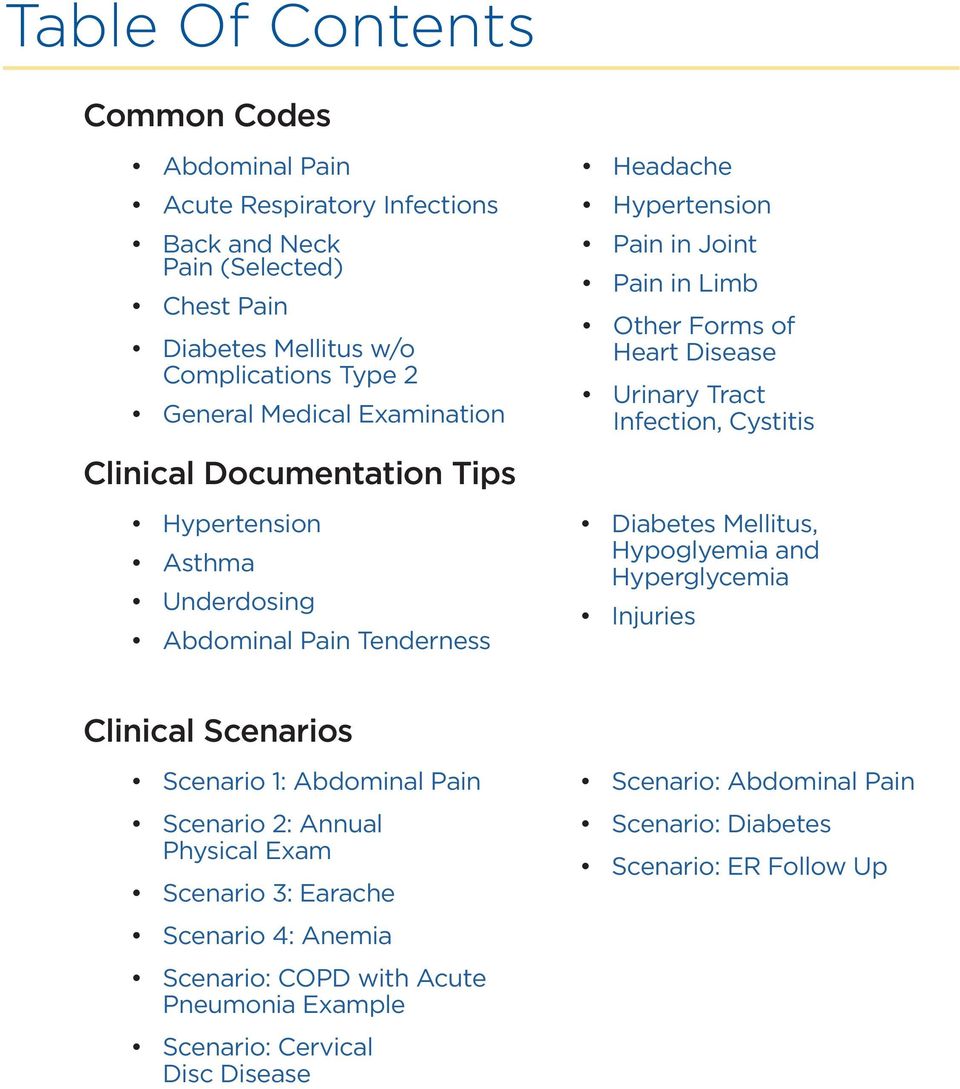
2 Table Of Contents Common Codes Abdominal Pain Acute Respiratory Infections Back and Neck Pain (Selected) Chest Pain Diabetes Mellitus w/o Complications Type 2 General Medical Examination Clinical Documentation Tips Hypertension Asthma Underdosing Abdominal Pain Tenderness Headache Hypertension Pain in Joint Pain in Limb Other Forms of Heart Disease Urinary Tract Infection, Cystitis Diabetes Mellitus, Hypoglyemia and Hyperglycemia Injuries Clinical Scenarios Scenario 1: Abdominal Pain Scenario 2: Annual Physical Exam Scenario 3: Earache Scenario 4: Anemia Scenario: COPD with Acute Pneumonia Example Scenario: Cervical Disc Disease Scenario: Abdominal Pain Scenario: Diabetes Scenario: ER Follow Up
3 Common Codes ICD-10 Compliance Date: October 1, 2015 Abdominal Pain (ICD-9-CM to range) R10.0 Acute abdomen R10.10 Upper abdominal pain, unspecified R10.11 Right upper quadrant pain R10.12 Left upper quadrant pain R10.13 Epigastric pain R10.2 Pelvic and perineal pain R10.30 Lower abdominal pain R10.31 Right lower quadrant pain R10.32 Left lower quadrant pain R10.33 Periumbilical pain R10.84 Generalized abdominal pain R10.9* Unspecified abdominal pain *Codes with a greater degree of specificity should be considered first. 3

4 Acute Respiratory Infections (ICD-9-CM 462, 465.9, 466.0) [Note: Organisms should be specified where possible] J02.8 Acute pharyngitis due to other specified organisms J02.9* Acute pharyngitis, unspecified J06.9* Acute upper respiratory infection, unspecified J20.0 Acute bronchitis due to Mycoplasma pneumoniae J20.1 Acute bronchitis due to Hemophilus influenzae J20.2 Acute bronchitis due to streptococcus J20.3 Acute bronchitis due to coxsackievirus J20.4 Acute bronchitis due to parainfluenza virus J20.5 Acute bronchitis due to respiratory syncytial virus J20.6 Acute bronchitis due to rhinovirus J20.7 Acute bronchitis due to echovirus J20.8 Acute bronchitis due to other specified organisms J20.9* Acute bronchitis, unspecified *Codes with a greater degree of specificity should be considered first. Back and Neck Pain (Selected) (ICD-9-CM 723.1, 724.1, 724.2, 724.5) M54.2 Cervicalgia M54.5 Low back pain M54.6 Pain in thoracic spine M54.89 Other dorsalgia M54.9* Dorsalgia, unspecified *Codes with a greater degree of specificity should be considered first. 4

5 Chest Pain (ICD-9-CM to range) R07.1 Chest pain on breathing R07.2 Precordial pain R07.81 Pleurodynia R07.82 Intercostal pain R07.89 Other chest pain R07.9* Chest pain, unspecified *Codes with a greater degree of specificity should be considered first. Diabetes Mellitus w/o Complications Type 2 (ICD-9-CM ) E11.9 Type 2 diabetes mellitus without complications General Medical Examination (ICD-9-CM V70.0) Z00.00 Encounter for general adult medical exam without abnormal findings Z00.01 Encounter for general adult medical exam with abnormal findings Headache (ICD-9-CM 784.0) R51 Headache Hypertension (ICD-9-CM 401.9) I10 Essential (primary) hypertension 5

6 Pain in Joint (ICD-9-CM to range) M Pain in right shoulder M Pain in left shoulder M25.519* Pain in unspecified shoulder M Pain in right elbow M Pain in left elbow M25.529* Pain in unspecified elbow M Pain in right wrist M Pain in left wrist M25.539* Pain in unspecified wrist M Pain in right hip M Pain in left hip M25.559* Pain in unspecified hip M Pain in right knee M Pain in left knee M25.569* Pain in unspecified knee M Pain in right ankle and joints of right foot M Pain in left ankle and joints of left foot M25.579* Pain in unspecified ankle and joints of unspecified foot M25.50* Pain in unspecified joint *Codes with a greater degree of specificity should be considered first. 6

7 Pain in Limb (ICD-9-CM 729.5) M Pain in right arm M Pain in left arm M79.603* Pain in arm, unspecified M Pain in right leg M Pain in left leg M79.606* Pain in leg, unspecified M Pain in unspecified limb M Pain in right upper arm M Pain in left upper arm M79.629* Pain in unspecified upper arm M Pain in right forearm M Pain in left forearm M79.639* Pain in unspecified forearm M Pain in right hand M Pain in left hand M79.643* Pain in unspecified hand M Pain in right finger(s) M Pain in left finger(s) M79.646* Pain in unspecified finger(s) M Pain in right thigh M Pain in left thigh M79.659* Pain in unspecified thigh M Pain in right lower leg M Pain in left lower leg M79.669* Pain in unspecified lower leg M Pain in right foot M Pain in left foot M79.673* Pain in unspecified foot M Pain in right toe(s) M Pain in left toe(s) M79.676* Pain in unspecified toe(s) *Codes with a greater degree of specificity should be considered first. 7

8 Other Forms Of Heart Disease (ICD-9-CM ) I48.0 Paroxysmal atrial fibrillation I48.2 Chronic atrial fibrillation I48.91* Unspecified atrial fibrillation *Codes with a greater degree of specificity should be considered first. URINARY TRACT INFECTION, CYSTITIS (ICD-9-CM TO RANGE, , , , 595.9, 599.0) N30.00 Acute cystitis without hematuria N30.01 Acute cystitis with hematuria N30.10 Interstitial cystitis (chronic) without hematuria N30.11 Interstitial cystitis (chronic) with hematuria N30.20 Other chronic cystitis without hematuria N30.21 Other chronic cystitis with hematuria N30.30 Trigonitis without hematuria N30.31 Trigonitis with hematuria N30.40 Irradiation cystitis without hematuria N30.41 Irradiation cystitis with hematuria N30.80 Other cystitis without hematuria N30.81 Other cystitis with hematuria N30.90 Cystitis, unspecified without hematuria N30.91 Cystitis, unspecified with hematuria N39.0* Urinary tract infection, site not specified *Codes with a greater degree of specificity should be considered first. 8

9 Primer for Family Practice Clinical Documentation Changes ICD-10 Compliance Date: October 1, 2015 Specifying anatomical location and laterality required by ICD-10 is easier than you think. This detail reflects how physicians and clinicians communicate and to what they pay attention - it is a matter of ensuring the information is captured in your documentation. In ICD-10-CM, there are three main categories of changes: Definition Changes Terminology Differences Increased Specificity Over 1/3 of the expansion of ICD-10 codes is due to the addition of laterality (left, right, bilateral). Physicians and other clinicians likely already note the side when evaluating the clinically pertinent anatomical site(s). HYPERTENSION Definition Change In ICD-10, hypertension is defined as essential (primary). The concept of benign or malignant as it relates to hypertension no longer exists. When documenting hypertension, include the following: 1. Type e.g. essential, secondary, etc. 2. Causal relationship e.g. Renal, pulmonary, etc. ICD-10 Code Examples I10 Essential (primary) hypertension I11.9 Hypertensive heart disease without heart failure I15.0 Renovascular hypertension 9

10 ASTHMA Terminology Difference ICD-10 terminology used to describe asthma has been updated to reflect the current clinical classification system. When documenting asthma, include the following: 1. Cause Exercise induced, cough variant, related to smoking, chemical or particulate cause, occupational 2. Severity Choose one of the three options below for persistent asthma patients 1. Mild persistent 2. Moderate persistent 3. Severe persistent 3. Temporal Factors Acute, chronic, intermittent, persistent, status asthmaticus, acute exacerbation ICD-10 Code Examples J45.30 Mild persistent asthma, uncomplicated J Cough variant asthma UNDERDOSING Terminology Difference Underdosing is an important new concept and term in ICD-10. It allows you to identify when a patient is taking less of a medication than is prescribed. When documenting underdosing, include the following: 1. Intentional, Unintentional,Non-compliance Is the underdosing deliberate? (e.g., patient refusal) 2. Reason Why is the patient not taking the medication? (e.g.financial hardship, age-related debility) ICD-10 Code Examples Z Patient s intentional underdosing of medication regimen due to financial hardship T36.4x6A Underdosing of tetracyclines, initial encounter T45.526D Underdosing of antithrombotic drugs, subsequent encounter 10

11 ABDOMINAL PAIN AND TENDERNESS Increased Specificity When documenting abdominal pain, include the following: 1. Location e.g. Generalized, Right upper quadrant, periumbilical, etc. 2. Pain or tenderness type e.g. Colic, tenderness, rebound ICD-10 Code Examples R10.31 Right lower quadrant pain R10.32 Left lower quadrant pain R10.33 Periumbilical pain DIABETES MELLITUS, HYPOGLYCEMIA AND HYPERGLYCEMIA Increased Specificity The diabetes mellitus codes are combination codes that include the type of diabetes mellitus, the body system affected, and the complications affecting that body system. When documenting diabetes, include the following: 1. Type e.g. Type 1 or Type 2 disease, drug or chemical induced, due to underlying condition, gestational 2. Complications What (if any) other body systems are affected by the diabetes condition? e.g. Foot ulcer related to diabetes mellitus 3. Treatment Is the patient on insulin? A second important change is the concept of hypoglycemia and hyperglycemia. It is now possible to document and code for these conditions without using diabetes mellitus. You can also specify if the condition is due to a procedure or other cause. The final important change is that the concept of secondary diabetes mellitus is no longer used; instead, there are specific secondary options. ICD-10 Code Examples E08.65 Diabetes mellitus due to underlying condition with hyperglycemia E09.01 Drug or chemical induced diabetes mellitus with hyperosmolarity with coma R73.9 Transient post-procedural hyperglycemia R79.9 Hyperglycemia, unspecified 11

12 INJURIES Increased Specificity ICD-9 used separate E codes to record external causes of injury. ICD-10 better incorporates these codes and expands sections on poisonings and toxins. When documenting injuries, include the following: 1. Episode of Care e.g. Initial, subsequent, sequelae 2. Injury site Be as specific as possible 3. Etiology How was the injury sustained (e.g. sports, motor vehicle crash, pedestrian, slip and fall, environmental exposure, etc.)? 4. Place of Occurrence e.g. School, work, etc. Initial encounters may also require, where appropriate: 1. Intent e.g. Unintentional or accidental, self-harm, etc. 2. Status e.g. Civilian, military, etc. ICD-10 Code Examples Example 1: A left knee strain injury that occurred on a private recreational playground when a child landed incorrectly from a trampoline: Injury: S86.812A, Strain of other muscle(s) and tendon(s) at lower leg level, left leg, initial encounter External cause: W09.8xxA, Fall on or from other playground equipment, initial encounter Place of occurrence: Y92.838, Other recreation area as the place of occurrence of the external cause Activity: Y93.44, Activities involving rhythmic movement, trampoline jumping Example 2: On October 31st, Kelly was seen in the ER for shoulder pain and X-rays indicated there was a fracture of the right clavicle, shaft. She returned three months later with complaints of continuing pain. X-rays indicated a nonunion. The second encounter for the right clavicle fracture is coded as S42.021K, Displaced fracture of the shaft of right clavicle, subsequent for fracture with nonunion. 12

13 Family Practice Clinical Scenarios ICD-10 Compliance Date: October 1, 2015 Quality clinical documentation is essential for communicating the intent of an encounter, confirming medical necessity, and providing detail to support ICD-10 code selection. In support of this objective, we have provided outpatient focused scenarios to illustrate specific ICD-10 documentation and coding nuances related to your specialty. The following scenarios were natively coded in ICD-10-CM and ICD-9-CM. As patient history and circumstances will vary, these brief scenarios are illustrative in nature and should not be strictly interpreted or used as documentation and coding guidelines. Each scenario is selectively coded to highlight specific topics; therefore, only a subset of the relevant codes are presented. Scenario 1: Abdominal Pain Scenario Details Chief Complaint My stomach hurts and I feel full of gas. History 47 year old male with mid-abdominal epigastric pain 1, associated with severe nausea & vomiting; unable to keep down any food or liquid. Pain has become severe and constant. Has had an estimated 13 pound weight loss over the past month. Patient reports eating 12 sausages at the Sunday church breakfast five days ago which he believes initiated his symptoms. Patient admits to a history of alcohol dependence 2. Consuming 5 6 beers per day now, down from per day 6 months ago. States that he has nausea and sweating with the shakes when he does not drink. Exam VS: T 99.8 F, otherwise normal. Mild jaundice noted. Abdomen distended and tender across upper abdomen 3. Guarding is present. Bowel sounds diminished in all four quadrants. Oral mucosa dry, chapped lips, decreased skin turgor 13

14 Scenario 1: Abdominal Pain (continued) Assessment and Plan Dehydration and suspected acute pancreatitis. Admit to the hospital. Orders written and sent to on-call hospitalist. 1L IV NS started in office. Blood drawn for labs. Recommend behavioral health counseling for substance abuse assessment and possible treatment. Patient s wife notified of plan; she will transport to hospital by private vehicle. Summary of ICD-10-CM Impacts Clinical Documentation 1. Describe the pain as specifically as possible based on location. 2. When addressing alcohol related disorders you should distinguish alcohol use, alcohol abuse, and alcohol dependence. ICD-10-CM has changed the terminology and the parameters for coding substance abuse disorders. In this encounter note, as the acute pancreatitis is suspected, and the patient s alcohol intake status is stated, the associated alcoholism code is listed. 3. Abdominal tenderness may be coded. Ideally the documentation should include right or left upper quadrant and indicate if there is rebound in order to identify a more specific code. Currently the ICD-10 code would be R10.819, Abdominal tenderness, unspecified site as the documentation is insufficient in laterality and specificity. Coding ICD-9-CM Diagnosis Codes Abdominal pain, epigastric Abdominal tenderness, unspecified site Jaundice NOS Dehydration Other and unspecified alcohol dependence, unspecified ICD-9-CM Diagnosis Codes R10.13 Epigastric pain R Abdominal tenderness, unspecified site R17 Unspecified jaundice E86.0 Dehydration F10.20 Alcohol dependence, uncomplicated Other Impacts No specific impacts noted. 14

15 Scenario 2: Annual Physical Exam Scenario Details Chief Complaint I m here for my annual check-up. 1 History 73 year old male with history of coronary artery disease, stent placement, hyperlipidemia, HTN and GERD. Recent admission to hospital following a hypertensive crisis. Discharged home on olmesartan medoxomil 20 mg daily. Patient stopped taking olmesartan medoxomil due to side effects 2, including a headache that began after starting the medication and still exists, and tiredness. Regular activity includes walking, golfing. Active social life. No complaints of chest pain, or dyspnea on exertion. Last colonoscopy was 9 months ago. No significant pathology found; some diverticular disease. Medications were reviewed. Exam Chest clear. Heart sounds normal. Mental status exam intact. EKG shows no changes from prior EKG. Vitals: BP is 159/95, otherwise normal. Per patient, he had good control of BP on meds, but it has risen without medication. BUN/creatinine normal limits. Assessment and Plan HTN noted on exam today. Change from olmesartan medoxomil to metoprolol tartrate 50 mg once daily, will titrate dosage every two weeks until BP normalizes. Discussed the importance of daily home BP monitoring, low sodium diet, and taking BP medication as prescribed; he verbalizes understanding. Schedule follow-up visit in two weeks to evaluate effectiveness of new BP medication therapy, and repeat BUN/creatinine. 15

16 Scenario 2: Annual Physical Exam (continued) Summary of ICD-10-CM Impacts Clinical Documentation 1. Documenting why the encounter is taking place is important, as the coder may assign a different code based on the type of visit (e.g., screening, with no complaint or suspected diagnosis, for administrative purposes). In this situation, the patient is requesting an encounter without a complaint, suspected or reported diagnosis. 2. Document that the patient is noncompliant with his medication. This underdosing concept can often be coded, along with the patient s reason for not taking the prescribed medications. Document if there is a medical condition linked to the underdosing that is relevant to the encounter, and ensure the connection is clearly made. The ICD-10-CM terms provide new detail as compared to the ICD-9-CM code V15.81, history of past noncompliance. In this case there was no noted history of noncompliance. In this note the side effects of stopping the medication include headache, which remains as a patient complaint for this encounter. When documenting headache do differentiate if intractable versus non-intractable. Coding ICD-9-CM Diagnosis Codes ICD-10-CM Diagnosis Codes V70.0 Routine medical exam Unspecified essential hypertension Drug-induced headache, not elsewhere classified N/A N/A Z00.01 Encounter for general adult medical examination with abnormal findings I10 Essential (primary) hypertension G44.40 Drug-induced headache, not els where classified, not intractable T46.5X6A Underdosing of other antihypertensive drugs, initial encounter Z Patient s intentional underdosing of medication regimen for other reason Other Impacts Assess if the new patient-centric preventative health incentives for annual exams are relevant to your practice. For hierarchical condition categories (HCC) used in Medicare Advantage Risk Adjustment plans, certain diagnosis codes are used as to determine severity of illness, risk, and resource utilization. HCC impacts are often overlooked in the ICD-9-CM to ICD-10-CM conversion. The physician should examine the patient each year and compliantly document the status of all chronic and acute conditions. HCC codes are payment multipliers. 16

17 Scenario 3: Earache Scenario Details Chief Complaint Right earache and ear pain. History This 20 year old male is an established patient and well known to me. He is a full-time college student, and presents with a right sided ear pain, noted 8/10. The symptoms started yesterday and continue to worsen with no pain relief using acetaminophen. Denies discharge, hearing loss, or ringing/roaring. He denies trauma or recent barotrauma to ear. He denies fever, sore throat, and cough today. He reports recently having an URI that resolved with OTC medications. He is up to date on his influenza, HPV, Tdap, and meningococcal immunizations. Patient does not use tobacco, alcohol, or illicit drugs. He denies exposure to second hand smoke. Medical history includes major depressive disorder with recurrent episodes of mild severity, and bipolar II disorder. His current medications include aripiprazole, and duloxetine. No known allergies. 16 point review of systems negative except for notations above. Exam Healthy appearing male. A&Ox3. He appears calm and is cooperative. Vital signs: BP: 130/78 HR: 70 bpm T: 99.8 F Wt: 235 lbs Ht: ENT: auricle and external canals normal bilaterally. Right ear: erythematous membrane, bulging, with loss of landmarks. Pharynx, teeth, and nose exam normal. No cervical adenopathy bilaterally. Integumentary: Skin is flushed, warm, and dry with no edema. Mucous membranes are moist. Respiratory: Lungs clear CTA with normal respiratory effort. Abdomen: non-tender, no organomegely. Assessment and Plan New onset AOM AD, suppurative, with pain unrelieved by acetaminophen. Prescriptions: amoxicillin for AOM; ibuprofen for pain. Return in one week if symptoms persist. 17

18 Scenario 3: Earache (continued) Summary of ICD-10-CM Impacts Clinical Documentation 1. In diagnosing otitis media using ICD-9-CM you should document items such as acute, chronic, not specified as acute or chronic, nonsuppurative or suppurative, and with or without spontaneous rupture of the eardrum. In ICD-10-CM, you will need to document these characteristics plus left, right or bilateral that are affected and is the problem initial or recurrent to assign a correct code. 2. In this fictional test case we gave this young male a diagnosis of bipolar II disorder. You would not report the bipolar disorder unless it affects treatment at today s encounter. Conditions that are not treated or that do not affect patient treatment nor are treated should not be reported. Coding ICD-9-CM Diagnosis Codes Acute suppurative otitis media without spontaneous rupture of eardrum ICD-10-CM Diagnosis Codes H Acute suppurative otitis media without spontaneous rupture of ear drum, right ear Other Impacts No specific impact noted. 18

19 Scenario 4: Anemia Scenario Details Chief Complaint Discuss laboratory results. History 38 year old established female seen by me over one week ago for decreased exercise tolerance and general malaise over the past four weeks when doing her daily aerobics class. Labs were ordered on that visit. She presents today with pale skin, weakness, and epigastric pain; symptoms are unchanged since previous visit. Laboratory studies reviewed today are as follows: HGB 8.5 gm/dl, HCT 27%, platelets 300,000/mm3, reticulocytes 0.24%, MCV 75, serum iron 41 mcg/dl, serum ferritin 9 ng/ml, TIBC 457 mcg/dl; Fecal occult blood test is positive. She takes Esomeprazole daily for GERD with esophagitis and reports taking OTC antacids at bedtime for epigastric pain for the past three months. She also uses ibuprofen as needed for headaches. Current pain is 0/10. Medical history significant for GERD, peptic ulcer, pre-eclampsia with last pregnancy. LMP: two weeks ago, normal flow, unchanged in last three months. Married; three children ages 15, 12, and 1 year old. Patient does not use tobacco, alcohol, or illicit drugs. No known allergies. No changes in interval history and review of systems noted from encounter 8 days ago. Exam Well-nourished, well groomed, pleasant female who shows good judgment and insight. Oriented X 3. Good recent and remote memory. Appropriate mood and affect. Vital signs: T 98.7, RR 18, BP: 118/75, standing 120/60, HR: 90. HEENT: PERRLA. Neck: Supple. No thyromegaly. Lungs: clear to auscultation with normal respiratory effort. Cardiovascular: Regular rate and rhythm. No pedal edema. Integumentary: Pale, clear of rashes and lesions, no ulcers. Early cheilosis noted. Rectal: No gross blood on exam one week ago; stool sample results noted above. Lymphatics: No lymphadenopathy. Musculoskeletal: The patient had good, stable gait. 19

20 Scenario 4: Anemia (continued) Assessment and Plan Iron-deficiency anemia secondary to blood loss. Continue esomeprazole as prescribed. Replace ibuprofen use with acetaminophen extra strength for headaches, dosage as per label. Prescribed iron sulfate supplements for three month trial. Counseled patient on appropriate use of iron supplementation and side effects. Patient to return in one week for repeat laboratory studies. Summary of ICD-10-CM Impacts Clinical Documentation 1. In ICD-10-CM, gastro-esophageal reflux disease is differentiated by noting with esophagitis versus without esophagitis. With esophagitis must be documented in the record. Coding ICD-9-CM Diagnosis Codes Iron deficiency anemia secondary to blood loss (chronic) Disease, Gastroesophageal reflux (GERD) ICD-10-CM Diagnosis Codes D50.0 Iron deficiency anemia secondary to blood loss (chronic) K21.0 Gastro-esophageal reflux disease with esophagitis Other Impacts Reflux esophagitis is not coded when GERD is coded in ICD-9-CM because is an excluded code from in ICD-9-CM but it is a combination code in ICD-10-CM. 20

21 Scenario: COPD with Acute Pneumonia Example Scenario Details Chief Complaint I just got out of the hospital 2 days ago. I m a little better, but still can barely breathe. History 67-year-old male with 40 pack/year history of cigarette use (still smoking) and severe oxygen dependent COPD developed cough with increased production of green/gray sputum 2 weeks prior to office visit. Admitted to hospital through Emergency Department with diagnosis of presumed pneumonia superimposed on severe COPD. Hospital exam confirmed acute RLL pneumococcal pneumonia. Patient treated with an IV cephalosporin as he has known penicillin allergy, and was discharge from hospital to home 2 days prior to office visit. PMH shows severe O2 dependent COPD, with type II diabetes mellitus secondary to chronic prednisone therapy, which is treated with oral hypoglycemics. Patient also has known hypertension, on ACE inhibitor therapy. Review of Systems, Physical Exam, Laboratory Tests T 99, BP 145/105, P 92 and irregular, RR 28 Chest exam shows decreased lung sounds throughout all lung fields except in RLL where there were mild rhonchi and wheezes noted ABG s on 2L O2 by nasal cannula show PO2 62, PCO2 47, ph 7.40 CXR shows hyperinflation of lungs with small RLL alveolar infiltration. Comparison to CXR from hospitalization shows approximately 75% resolution of pneumonia. ECG reveals persistent atrial fibrillation which was not present on previous ECG of 6 months earlier, but had been found at time of recent hospitalization. Labs show finger stick glucose of 195mg%. Assessment and Plan Acute Community Acquired Pneumococcal Pneumonia: continue oral cephalosporin. Schedule office follow up visit in 1 week with repeat CXR. Severe COPD: continue O2, low dose Prednisone, and inhaled bronchodilator. Chronic Hypoxemic, Hypercarbic Respiratory Failure Persistent Atrial Fibrillation: continue digoxin initiated during recent hospitalization Hypertension: continue ACE inhibitor therapy Diabetes Mellitus, Type II, secondary to prednisone therapy; continue oral hypoglycemic therapy Penicillin Allergy Tobacco Dependence 21
22 Scenario: COPD with Acute Pneumonia Example (continued) Summary of ICD-10-CM Impacts Clinical Documentation ICD-10-CM separates pneumonia by infectious agent. Document the infectious agent of pneumonia, as there are discrete ICD-10-CM codes for each type. ICD-10-CM separates by acuity of respiratory failure, and hypoxia or hypercapnia, if present. Document drug allergies with ICD-10-CM status Z codes from Chapter 21 to identify these. Document the type of cardiac arrhythmia. Atrial fibrillation in ICD-10-CM separates into paroxysmal, persistent, chronic, typical, atypical, unspecified. Acute atrial fibrillation defaults to unspecified in ICD-10-CM. The Table of Drugs & Chemicals has a code assignment for Adverse effect of the drug that would be followed by the secondary diabetes code. Go to the Volume 3 Index to Table of Drugs and Chemicals. Along the left hand side proceed alphabetically to Glucocorticoids and then move horizontally across to the column for Adverse Effect. In Volume 1 (Tabular List) the instruction at the beginning of the code category T38 are the instructions for the 7th character. Note: Drug-induced Diabetes Mellitus is a secondary type of diabetes due to the use of glucocorticoids. This code can only be coded as an additional code and would never be first-listed The code categories for secondary diabetes are : Due to underlying disease (E08) Due to drug (E09) Due to other specified condition such as post pancreatectomy. (E13) These three categories can never be first-listed per ICD-10-CM guidelines. The underlying cause would be first-listed diagnosis. Coding ICD-9-CM Diagnosis Codes ICD-10-CM Diagnosis Codes 481 Pneumonia, Pneumococcal 496 COPD V46.2 Oxygen dependence Atrial fibrillation Diabetes, secondary, drug induced E932.0 Therapeutic use of Prednisone HTN V14.0 Allergy, Penicillin Tobacco dependence J13 Pneumonia due to Streptococcus pneumoniae J44.0 Chronic obstructive pulmonary disease with acute lower respiratory infection Z99.81 Dependence on supplemental oxygen I48.1 Persistent atrial fibrillation E09.9 Drug or chemical induced diabetes mellitus without complications T38.0x5A Adverse effect of glucocorticoids and synthetic analogues, initial encounter I10 Essential (primary) hypertension Z88.0 Allergy status to penicillin F Nicotine dependence, cigarettes, uncomplicated 22
23 Scenario: COPD with Acute Pneumonia Example (continued) Other Impacts Management of chronic conditions such as COPD, Diabetes Mellitus, Hypertension, and Atrial Fibrillation should be described in the record. Scenario: Cervical Disc Disease Scenario Details Chief Complaint My neck hurts and I have a tingling pain sensation going down my right arm. History Patient is a 68 year-old male with history of neck pain that has been worsening over the last two years. Recently, he has experienced some numbness and a painful tingling sensation in his right arm going down to his thumb. No other symptoms or pertinent medical history. Review of Systems, Physical Exam, Laboratory Tests Review of systems is negative except for the neck pain and sensations in his right arm described above. No history of acute injury to neck or arm. Physical exam is normal except for neurological exam of the right upper extremity, which reveals slight decrease to sensation in the thumb and forefinger region of the hand in the C6 nerve root distribution. No evidence of weakness in the muscles of the arm or hand. MRI scan of the neck shows degenerative changes of the C5-6 disc with lateral protrusion of disc material. No other abnormalities noted. Assessment and Plan Cervical transforaminal injection at C5-6 23
24 Scenario: Cervical Disc Disease (continued) Summary of ICD-10-CM Impacts Clinical Documentation Subcategory M50.1 describes cervical disc disorders. M50.12 Cervical disc disease that includes degeneration of the disc as a combination code. The 5th character differentiates various regions of the cervical spine (high cervical C2-3 and C3-4; mid-cervical C4-5, C5-6, and C6-7; cervicothoracic C7-T1 and the associated radiculopathies at each level). This is a combination code that includes the disc degeneration and radiculopathy Coding ICD-9-CM Diagnosis Codes Cervical disc displacement without myelopathy Degeneration of cervical intervertebral disc ICD-10-CM Diagnosis Codes M50.12 Cervical disc disorder with radiculopathy, mid-cervical region 24
25 Scenario: Abdominal Pain Scenario Details Chief Complaint My stomach hurts. History Patient is a 65-year-old male admitted to the hospital with abdominal pain. He has a history of Crohn s disease of the large intestine. He also has a history of coronary artery disease, had a heart attack 5 years ago, but has had no problems since then. He smoked cigarettes for 45 years, but quit after his myocardial infarction. He also has a history of allergic reactions to Penicillins and Cephalosporins. Review of Systems, Physical Exam, Laboratory Tests 99.8 Abdomen: diffuse tenderness over entire abdomen CT scan of abdomen: abscess secondary to Crohn s disease of descending colon Assessment and Plan Crohn s disease, large intestine with abscess. Awaiting GI consultation 25
26 Scenario: Abdominal Pain (continued) Summary of ICD-10-CM Impacts Clinical Documentation Crohn s disease in ICD-10-CM is separated by small, large intestine or both (small and large intestine), with or without complications of rectal bleeding, obstruction, fistula, or abscess (combination codes). Coding ICD-9-CM Diagnosis Codes Regional enteritis, large intestine Abscess, abdominal 412 Old myocardial infarction V15.82 History of tobacco use V14.0 History of allergy to Penicillin V14.1 History of allergy to other antibiotic (cephalosporins) ICD-10-CM Diagnosis Codes K Crohn s disease of the large intestine with abscess I25.2 Old myocardial infarction Z Personal history of nicotine dependence or personal history of tobacco use. Z88.0 Allergy status to Penicillin Z88.1 Allergy status to other antibiotic agent Other Impacts Coding allergies to specific medications allows the providers who share a common EHR to be notified of these allergies. They can be placed into the ongoing problem list therefore becoming available whenever relevant for coding on the claim. At the beginning of Chapter 10 Respiratory conditions this instruction is found: Use additional code, where applicable, to identify: exposure to environmental tobacco smoke (Z77.22) exposure to tobacco smoke in the perinatal period (P96.81) history of tobacco use (Z87.891) occupational exposure to environmental tobacco smoke (Z57.31) tobacco dependence (F17.-) tobacco use (Z72.0) These tobacco-related codes should also be coded into the ongoing problem list for future coding situations as indicated in ICD-10-CM. 26
27 Scenario: Diabetes Scenario Details Chief Complaint I am here for my quarterly evaluation of my diabetes. History Patient is a 50-year-old woman with Type 1 diabetes since childhood. She has been on insulin since age 13. As a result of her diabetes she has chronic kidney disease and is currently on dialysis for ESRD. She also has diabetic neuropathy affecting both lower extremities. Review of Systems, Physical Exam, Laboratory Tests No changes in underlying condition during the last 3 months. She continues to perform selftesting of her blood sugar levels on a daily basis, is on dialysis every other day, most recently 24 hours ago, and has not noticed any changes in the numbness in her legs. BP 140/75, P 80, R 16 and T 98.8 Dialysis fistula without any signs of infection Decreased sensation over lower extremities below the knees Lab: BUN/Cr nl, K+ 3.5, glu 105, Hgb A1c 7.9 Assessment and Plan Continue BS checks daily with sliding scale as previously prescribed Start Capsaicin topically and defer to nephrologist for any Rx at this time. She has an appointment 10 am tomorrow. 27
28 Scenario: Diabetes (continued) Summary of ICD-10-CM Impacts Coding ICD-9-CM Diagnosis Codes Diabetes with renal manifestations, type 1, not stated as uncontrolled End stage renal disease Diabetes with neurological manifestations, type 1, not stated as uncontrolled Polyneuropathy in diabetes V45.11 Renal dialysis status ICD-10-CM Diagnosis Codes E10.22 Type 1 diabetes mellitus with diabetic chronic kidney disease N18.6 End-stage renal disease Z99.2 Dependence on renal dialysis Presence of AV shunt for dialysis E10.42 Type 1 diabetes mellitus with polyneuropathy Other Impacts E10.22 is a combination code in ICD-10-CM incorporating both the type of diabetes (type 1 is E10) and the manifestation chronic kidney disease (after decimal point.22). Instructions from Volume 1 under the code E10.22 is to use additional code to identify stage of chronic kidney disease N18.1 N18.6. In this documentation the ESRD is documented. Code the type of diabetes and each associated complication (diabetes with renal disease and diabetic neuropathy) in ICD-10-CM. Code the stage of the patient s chronic kidney disease per instruction under the diabetic code E10.22 Code the dialysis and AV graft by the use of status codes (Z codes). The key word to find this status code in the Index to Diseases from Volume 3 is Dependence and then sub indent to the word on and then to the words renal dialysis Z
29 Scenario: ER Follow Up Scenario Details Chief Complaint Seen in the ER over the weekend. History Mrs. Jones is a 64-year-old female, with a history of morbid obesity, type 2 diabetes with nephropathy, and asthma, presents here for follow-up ER visit two days ago for shortness of breath. Patient was discharged with a diagnosis of bronchitis, an Albuterol and Beclomethasone inhaler prescription, along with five day course of Z pack and a six-day steroid dose pack. Patient is improving on the regimen. She is no longer wheezing and her phlegm is now scant. Her sugars however, have been poorly controlled with the Prednisone with fasting sugars greater than 200. Patient has long-standing asthma with 2-3 exacerbations per week and daily need for rescue inhalers. Patient is still smoking half a pack a day. She is compliant with her inhalers when she is not feeling well. Patient has diabetes with overt proteinuria with her last creatinine of 1.3 Hypertension Morbid Obesity Review of Systems, Physical Exam, Laboratory Tests BMI 44; central adiposity; no respiratory distress; able to speak in full sentences BP 142/64 HR94 RR 12 Sats: 98% on RA HEENT: TM clear; conjunctiva clear; no sinus tenderness; mallampati 3 airway Neck: thick; no adenopathy Lungs: scattered wheezing; no consolidation prolonged expiratory phase Ext: thin no edema Assessment and Plan Asthma: moderate persistent, with acute exacerbation Bronchitis Current Smoker Diabetes Type 2 with nephropathy and poorly controlled hyperglycemia secondary to prescribed use of steroid medication 29
30 Scenario: ER Follow Up (continued) Summary of ICD-10-CM Impacts Clinical Documentation Choosing the first-listed diagnosis in this scenario is determined by the Section IV Guidelines of ICD-10-CM found in Volume 2 of ICD-10-CM Section IV. Diagnostic Coding and Reporting Guidelines for Outpatient Services Selection of first-listed condition In the outpatient setting, the term first-listed diagnosis is used in lieu of principal diagnosis. ICD-10-CM code for the diagnosis, condition, problem, or other reason for encounter/visit List first the ICD-10-CM code for the diagnosis, condition, problem, or other reason for encounter/visit shown in the medical record to be chiefly responsible for the services provided. List additional codes that describe any coexisting conditions. In some cases the first-listed diagnosis may be a symptom when a diagnosis has not been established (confirmed) by the physician. Asthma was chosen as first-listed in this scenario. Asthma is classified as mild, moderate and severe with additional detail as intermittent, persistent and severe; include if there is acute exacerbation or status asthmaticus. Bronchitis was not specified as acute so the assignment is made to not specify as acute or chronic. In ICD-10- CM both bronchitis and asthma are reported separately. Bronchitis is reported separately from asthma per ICD-10-CM guidelines. Bronchitis was not specified as acute or chronic and the default code would be J40. Conditions involving infectious processes will have acute versus chronic choice. Providers should document whenever possible acute or chronic. Guidelines require reporting of tobacco use or exposure for respiratory, vascular and some other chronic illnesses such as oral and esophageal cancer codes. The guideline message for using these codes is found at the beginning of the respiratory Chapter 10 in this scenario. Diabetic manifestations are incorporated into the primary code for Diabetes Mellitus (combination codes). In this case diabetes with nephropathy is a combination code. Uncontrolled diabetes is no longer a concept in ICD-10. Diabetes that is poorly controlled should include whether hyperglycemia or hypoglycemia is present; whenever either is present it should be coded accordingly. This patient would also have hyperglycemia reported as the recorded Blood sugars show hyperglycemia. Adverse effects of prescribed medications are reported from the Table of Drugs & Chemicals and then a final code assignment from Tabular List for the 7th character. Identify which medications are causing adverse reactions and go to The Table of Drugs and Chemicals found in Volume 3 of ICD-10-CM. Along the left side of that table find the drug or (drug class if individual drug is not found.) Then the 7th characters are found at the beginning of the T38 category in Volume 1 (Tabular List) of ICD-10-CM. The choices for 7th character for this Table are: A= initial encounter D= subsequent encounter S= Sequela 30
31 Scenario: ER Follow Up (continued) Clinical Documentation (continued) In this scenario it would be an initial encounter as this is the first time this provider is evaluating the patient for this adverse effect. Hypertension and Obesity are documented as co-morbid conditions and reported when treatment is given for affected by these conditions. Instructions found at the obesity code instruct to also report the BMI if documented. Note: In ICD-10-CM Nephritis is not referenced in the diabetes complication codes with nephropathy Coding ICD-9-CM Diagnosis Codes ICD-10-CM Diagnosis Codes Asthma, unspecified with (acute) exacerbation N/A Tobacco use disorder Diabetes with renal manifestations, Type II or unspecified type, uncontrolled Nephritis and nephropathy, not specified as acute or chronic, in diseases classified elsewhere N/A Effect, adverse to medication properly administered Hypertension, unspecified Morbid obesity V85.41 BMI J45.41 Moderate persistent asthma with (acute) exacerbation J40 Bronchitis, not specified as acute or chronic F Nicotine dependence, cigarettes, uncomplicated E11.21 Type 2 Diabetes Mellitus with diabetic nephropathy N/A E11.65 Type 2 diabetes mellitus with hyperglycemia T38.0x5A Adverse effect of glucocorticoids and synthetic analogues, initial encounter I10 Essential (primary) hypertension. E66.01 Morbid (severe) obesity due to excess calories Z68.41 Body mass index (BMI) , adult ICD-10 Compliance Date: October 1, 2015 Official CMS Industry Resources for the ICD-10 Transition 31
Alameda Alliance for Heath ICD-9 to ICD-10 TRANSLATION CODES E10.10
 DIABETES ICD-9 CM ICD-9 CM Volume 1 - Diagnosis Description ICD-10 CM - Diagnosis Code ICD-10 CM - Diagnosis Description 250.00 Diabetes mellitus without mention of complication, type II or unspecified
ICD-10. Clinical Concepts for Pediatrics
 ICD-10 Clinical Concepts for Pediatrics ICD-10 Clinical Concepts Series Common Codes Clinical Documentation Tips Clinical Scenarios ICD-10 Clinical Concepts for Pediatrics is a feature of Road to 10, a
Medical Drug Monitoring ICD-10-CM Sign and Symptom Codes
 Medical Drug Monitoring ICD-10-CM Sign and Symptom s The ICD-10-CM codes listed below are commonly associated with LabCorp and MedTox Laboratories for medical drug monitoring and were selected based on
Hospital-based SNF Coding Tip Sheet: Top 25 codes and ICD-10 Chapter Overview
 Hospital-based SNF Coding Tip Sheet: Top 25 codes and Chapter Overview Chapter 5 - Mental, Behavioral and Neurodevelopmental Disorders (F00-F99) Classification improvements (different categories) expansions:
Introduction to ICD - 10. Andrea Devlin, CPMA, CPC Alta Partners, LLC 2015
 Introduction to ICD - 10 Andrea Devlin, CPMA, CPC Alta Partners, LLC 2015 Agenda Introduction Benefits of ICD-10 Features of ICD-10 ICD-9 vs. ICD-10 ICD-10 Structure Question & Answer Introducing ICD-10
Breaking the Code: ICD-9-CM Coding in Details
 Breaking the Code: ICD-9-CM Coding in Details ICD-9-CM diagnosis codes are 3- to 5-digit codes used to describe the clinical reason for a patient s treatment. They do not describe the service performed,
Section IV Diagnostic Coding and Reporting for Outpatient Services
 Section IV Diagnostic Coding and Reporting for Outpatient Services Section IV, here we come! Keep that book cracked open and let s go through Diagnostic Coding and Reporting Guidelines for Outpatient Services.
Basic ICD-10-CM Documentation and Coding. Effective date: October 1, 2015. Presented by: Jenna Glenn, CPC May 6, 2015 1
 Basic ICD-10-CM Documentation and Coding Effective date: October 1, 2015 Presented by: Jenna Glenn, CPC May 6, 2015 1 Objectives Overview on what is ICD-10-CM Changes from ICD-9-CM to ICD-10-CM Importance
Speaking ICD-10-CM. The New Coding Language. COPD documented with a more specific respiratory condition falls under one code category: J44.0-J44.
 Speaking : Chronic Obstructive Pulmonary Disease (COPD) COPD documented with a more specific respiratory condition falls under multiple code categories: 491.20-491.22 Obstructive chronic bronchitis 493.20-493.22
Home Health Care ICD-10-CM Coding Tip Sheet Overview of Key Chapter Updates for Home Health Care and Top 20 codes
 Home Health Care ICD-10-CM Coding Tip Sheet Overview of Key Chapter Updates for Home Health Care and Top 20 codes Chapter 4: Endocrine, Nutritional and Metabolic Diseases (E00-E99) ICD-10-CM diabetes mellitus
2/28/2013 ICD-10 AS MANDATED BY ACCME SPEAKERS ARE ASKED TO DISCLOSE ANY REAL OR APPARENT CONFLICT RELATED TO THE CONTENT OF THEIR PRESENTATION
 ICD-10 An Overview of the Code Sets with Emphasis on Documentation Requirements & Practice Readiness UMMC Family Medicine Update March 5-8, 2013 Flowood, Mississippi Patty Harper, RHIA AHIMA Approved ICD-CM/PCS
Certified Registered Nurse Anesthetist ICD-10-CM Coding Tip Sheet Overview of Key Chapter Updates for CRNA s and Top 25 Codes
 Certified Registered Nurse Anesthetist ICD-10-CM Coding Tip Sheet Overview of Key Chapter Updates for CRNA s and Top 25 Codes Chapter 2 Neoplasms (C00-D49) Classification improvements Code expansions Significant
ICD-10 Provider Preparation
 ICD-10 Provider Preparation After browsing this slide deck, the viewer will become more familiar with the following information: What are the origins of ICD-10? Why transition to ICD-10? Why ICD-10 matters.
ICD-9-CM/ICD-10-CM Codes for MNT
 / Codes for MNT ICD (International Classification of Diseases) codes are used by physicians and medical coders to assign medical diagnoses to individual patients. It is not within the scope of practice
ICD-10-CM Official Guidelines for Coding and Reporting
 2013 Narrative changes appear in bold text Items underlined have been moved within the guidelines since the 2012 version Italics are used to indicate revisions to heading changes The Centers for Medicare
ICD-10 CM Training. Family Practice
 ICD-10 CM Training Family Practice ICD-10-CM Compliance Dates ICD-10-CM will be valid for dates of service on or after October 1, 2015 Outpatient dates of service of October 1, 2015 and beyond. Inpatient
Pathology ICD-10-CM Coding Tip Sheet Overview of Key Chapter Updates for Pathology and Top 25 codes
 Pathology ICD-10-CM Coding Tip Sheet Overview of Key Chapter Updates for Pathology and Top 25 codes Chapter 2 Neoplasms (C00-D49) Classification improvements Code expansions Significant expansions or revisions
KINDRED HEALTHCARE. Billing & Coding for SNF Physician Visits. KINDRED HEALTHCARE Continue the Care
 KINDRED HEALTHCARE Billing & Coding for SNF Physician Visits KINDRED HEALTHCARE Continue the Care 1 SNF CPT Codes Initial Care Services 99304 99305 99306 Subsequent Care Services 99307 99308 99309 99310
Dallas Neurosurgical and Spine Associates, P.A Patient Health History
 Dallas Neurosurgical and Spine Associates, P.A Patient Health History DOB: Date: Reason for your visit (Chief complaint): Past Medical History Please check corresponding box if you have ever had any of
ICD-10... What Are You Waiting For?
 ICD-10... What Are You Waiting For? What is it? International classification for all general epidemiological, many health management purposes, and clinical use Published by the World Health Organization
ICD-10-CM: Training. Presented by: Anna M. Cruz CCS, CCS/P,CPC-A ICD10CM/PCS AHIMA Approved Trainer & Sonya Shebala CPC, CPC-H
 1 ICD-10-CM: Training Presented by: Anna M. Cruz CCS, CCS/P,CPC-A ICD10CM/PCS AHIMA Approved Trainer & Sonya Shebala CPC, CPC-H Partial Freeze of Revisions to ICD-9-CM and ICD-10-CM/PCS CDC.gov 2 October
Marilyn Borkgren-Okonek, APN, CCNS, RN, MS Suburban Lung Associates, S.C. Elk Grove Village, IL
 Marilyn Borkgren-Okonek, APN, CCNS, RN, MS Suburban Lung Associates, S.C. Elk Grove Village, IL www.goldcopd.com GLOBAL INITIATIVE FOR CHRONIC OBSTRUCTIVE LUNG DISEASE GLOBAL STRATEGY FOR DIAGNOSIS, MANAGEMENT
Guidelines Most Significantly Affected Under ICD-10-CM. May 29, 2013
 Guidelines Most Significantly Affected Under ICD-10-CM May 29, 2013 Guidelines Most Significantly Affected Under ICD-10-CM A look at the new system and how it compares to ICD-9-CM Presented by Therese
NEURO-OPHTHALMIC QUESTIONNAIRE NAME: AGE: DATE OF EXAM: CHART #: (Office Use Only)
 PAGE 1 NEURO-OPHTHALMIC QUESTIONNAIRE NAME: AGE: DATE OF EXAM: CHART #: (Office Use Only) 1. What is the main problem that you are having? (If additional space is required, please use the back of this
Countdown to ICD-10: Are You Ready?
 Countdown to ICD-10: Are You Ready? Presented by: Racheal Reeves, RHIT, CCS Amenity Consulting Michelle Schurig, MPH Optimity Advisors Introductions Racheal Reeves ICD-10 Approved Trainer with over 11
The ICD-9-CM uses an indented format for ease in reference I10 I10 I10 I10. All information subject to change. 2013 1
 Section I. Conventions, general coding guidelines and chapter specific guidelines The conventions, general guidelines and chapter-specific guidelines are applicable to all health care settings unless otherwise
Denver Spine Surgeons David Wong, MD, Sanjay Jatana, MD, Gary Ghiselli, MD
 Cervical and Lumbar Spine Health History Name: Today s Date: Referring Provider: How did you find us: (Please circle) Primary care physician, Google search, Facebook, Friend or Family member, Website (JatanaSpine
MEDICARE RISK ADJUSTMENT A PROSPECTIVE APPROACH TO RISK ADJUSTMENT AND ACCURATE DOCUMENTATION AND CODING
 MEDICARE RISK ADJUSTMENT A PROSPECTIVE APPROACH TO RISK ADJUSTMENT AND ACCURATE DOCUMENTATION AND CODING WHAT IS RISK ADJUSTMENT? Risk Adjustment ensures that accurate payments are made to Medicare Advantage
RHEUMATOLOGY ICD-10 CROSSWALK
 RHEUMATOLOGY ICD-10 CROSSWALK ICD is revised periodically and is currently in its tenth edition and will be implemented in the United States on October 1, 2015. There is an annual minor update and three-yearly
Roswell Ear, Nose, Throat, & Allergy 342 W. Sherrill Lane Suite A, Roswell, New Mexico 88201 (575)-622-2911 Fax: (575)-622-2598
 Roswell Ear, Nose, Throat, & Allergy 342 W. Sherrill Lane Suite A, Roswell, New Mexico 88201 (575)-622-2911 Fax: (575)-622-2598 Patient Registration Form: (Please Print all Pertinent Information) Last
ICD-10-CM KEVIN SOLINSKY, CPC, CPC-I, CEDC, CEMC PRESIDENT HEALTHCARE CODING CONSULTANTS, LLC 480-200-4590
 ICD-10-CM KEVIN SOLINSKY, CPC, CPC-I, CEDC, CEMC PRESIDENT HEALTHCARE CODING CONSULTANTS, LLC 480-200-4590 ICD-10 FINAL RULE Implementation date October 1, 2014. ICD-9-CM codes will not be accepted by
Overview. Geriatric Overview. Chapter 26. Geriatrics 9/11/2012
 Chapter 26 Geriatrics Slide 1 Overview Trauma Common Medical Emergencies Special Considerations in the Elderly Medication Considerations Abuse and Neglect Expanding the Role of EMS Slide 2 Geriatric Overview
ICD-10 Cheat Sheet Frequently Used ICD-10 Codes for Musculoskeletal Conditions *
 ICD-10 Cheat Sheet Frequently Used ICD-10 Codes for Musculoskeletal Conditions * Finding the ICD-10 equivalent for an ICD-9 code can be a challenge. This resource of frequently used codes can help when
Anesthesia ICD-10-CM Coding Tip Sheet Overview of Key Chapter Updates for Anesthesia and Top 25 Codes
 Anesthesia ICD-10-CM Coding Tip Sheet Overview of Key Chapter Updates for Anesthesia and Top 25 Codes Chapter 2 Neoplasms (C00-D49) Classification improvements Code expansions Significant expansions or
ICD-10-CM: Focus on Documentation
 ICD-10-CM: Focus on Documentation Family Practice, Internal Medicine, Primary Care Should You Have Technical Difficulties During The Webinar: ReadyTalk Customer Care Phone: 800.843.9166 Email: [email protected]
Stuart B Black MD, FAAN Chief of Neurology Co-Medical Director: Neuroscience Center Baylor University Medical Center at Dallas
 Billing and Coding in Neurology and Headache Stuart B Black MD, FAAN Chief of Neurology Co-Medical Director: Neuroscience Center Baylor University Medical Center at Dallas CPT Codes vs. ICD Codes Category
ICD 10 ICD 9. 14, 000 codes No laterality Limited severity parameters No placeholders 3-5 digits
 ICD 10 Conversion 1 Why Change? ICD 9 14, 000 codes No laterality Limited severity parameters No placeholders 3-5 digits 1 2 3 4 5 ICD 10 69,000+ codes Indicates Rt or Lt Extensive severity parameters
Where Are You on the ICD-10-CM Radar Screen? Presented to the Indiana Medical Group Management Association
 Where Are You on the ICD-10-CM Radar Screen? Presented to the Indiana Medical Group Management Association ICD-10 Final Rule On January 16, 2009, the U.S. Department of Health and Human Services (HHS)
New Patient Evaluation
 What area hurts you the most? (Please choose one) When did this pain start? Neck Other: Back How did this pain start? How often do you experience this pain? Describe what this pain feels like. What makes
ICD-9 Basics Study Guide
 Board of Medical Specialty Coding ICD-9 Basics Study Guide for the Home Health ICD-9 Basic Competencies Examination Two Washingtonian Center 9737 Washingtonian Blvd., Ste. 100 Gaithersburg, MD 20878-7364
ICD-9-CM to ICD-10-CM Resource Guide
 Prescription Drug Monitoring and Toxicology ICD-9-CM to ICD-10-CM Resource Guide Provided as a service of Quest Diagnostics ICD-9-CM to ICD-10-CM Resource Guide 1 Disclaimer This list is intended to assist
Module 9: Diseases of the Endocrine System and Nutritional Disorders Exercises
 Module 9: Diseases of the Endocrine System and Nutritional Disorders Exercises 1. An 86 year old male with brittle Type I DM is admitted for orthopedic surgery. The physician documents in the operative
New England Pain Management Consultants At New England Baptist Hospital
 New England Pain Management Consultants At New England Baptist Hospital Pain Management Center Health Assessment Dear New Pain Management Patient, Welcome to the New England Pain Management Consultants
Highlights of the Revised Official ICD-9-CM Guidelines for Coding and Reporting Effective October 1, 2008
 Highlights of the Revised Official ICD-9-CM Guidelines for Coding and Reporting Effective October 1, 2008 Please refer to the complete ICD-9-CM Official Guidelines for Coding and Reporting posted on this
Getting Ready for ICD-10. Part 2: ICD-10 Coding
 Getting Ready for ICD-10 Part 2: ICD-10 Coding Introduction In the United States, on October 1, 2015 the ICD 9 code set used to report medical diagnoses and inpatient procedures will be replaced by International
CHAPTER 9 DISEASES OF THE CIRCULATORY SYSTEM (I00-I99)
 CHAPTER 9 DISEASES OF THE CIRCULATORY SYSTEM (I00-I99) March 2014 2014 MVP Health Care, Inc. CHAPTER 9 CHAPTER SPECIFIC CATEGORY CODE BLOCKS I00-I02 Acute rheumatic fever I05-I09 Chronic rheumatic heart
Risk Adjustment Coding/Documentation Checklist
 Risk Adjustment Coding/Documentation Checklist The following list should be used to ensure that all member and diagnosis-related information is reported, and all the member s chronic conditions are documented
The Physician s Perspective of ICD-10
 May 14, 2015 The Physician s Perspective of ICD-10 Moderator: J. Allen Meadows, MD, FACAAI Advocacy Council of ACAAI Therese Jorwic, MPH, RHIA, CCS, CCS-P, FAHIMA Provided by: Disclosures Presenter Therese
ICD-10 IS COMING OCTOBER 1, 2014
 ICD-10 IS COMING OCTOBER 1, 2014 WHAT IS THE IMPACT ON THERAPY PRACTICES? CHET DESHMUKH, MBA, OTR/L, CPC, CHDA Overview Understanding the language of clinical diagnosis What is ICD? About ICD-9 CM Good
Long term care coding issues for ICD-10-CM
 Long term care coding issues for ICD-10-CM Coding Clinic, Fourth Quarter 2012 Pages: 90-98 Effective with discharges: October 1, 2012 Related Information Long Term Care Coding Issues for ICD-10-CM Coding
POINCIANA INTERNAL MEDICINE PA. Patient Name: Social Security Number: Date of Birth: / / Sex: M/F (Circle One) Married/Single/Divorced/Widow Address:
 Patient Name: Social Security Number: Date of Birth: / / Sex: M/F (Circle One) Married/Single/Divorced/Widow Address: (Street) (City/State/Zip) Home Phone: ( ) E Mail Address: Would you be interested in
Emory Eye Center New Patient Questionnaire
 Patient Name: Date: Current Address: Current Phone: Date of Birth: Primary Care Physician: Referring Physician: (First & Last Name) (First & Last Name) Pharmacy Name: Phone #: ( ) Please answer all questions
The Family Library. Understanding Diabetes
 The Family Library Understanding Diabetes What is Diabetes? Diabetes is caused when the body has a problem in making or using insulin. Insulin is a hormone secreted by the pancreas and is needed for the
Diabetes Mellitus in ICD 10 CM
 ICD 10 Resource: Diabetes Mellitus in ICD 10 CM The diabetes mellitus codes are expanded in ICD 10 CM. The codes for diabetes mellitus are located in chapter 4, Endocrine, Nutritional, and Metabolic Diseases,
6/3/2011. High Prevalence and Incidence. Low back pain is 5 th most common reason for all physician office visits in the U.S.
 High Prevalence and Incidence Prevalence 85% of Americans will experience low back pain at some time in their life. Incidence 5% annual Timothy C. Shen, M.D. Physical Medicine and Rehabilitation Sub-specialty
ICD-10 Transition & Implementation Information
 ICD-10 Transition & Implementation Information I ICD-10 Implementation Compliance Date: October 1, 2015 ICD-10-CM diagnoses codes will be used by all providers in every health care setting. ICD-10-PCS
Full name DOB Age Address Email Phone numbers (H) (W) (C) Emergency contact Phone
 DEMOGRAPHIC INFORMATION Full name DOB Age Address Email Phone numbers (H) (W) (C) Emergency contact Phone CARE INFORMATION Primary care physician: Address Phone Fax Referring physician: Specialty Address
Performance Measurement for the Medicare and Medicaid Eligible (MME) Population in Connecticut Survey Analysis
 Performance Measurement for the Medicare and Medicaid Eligible (MME) Population in Connecticut Survey Analysis Methodology: 8 respondents The measures are incorporated into one of four sections: Highly
Documenting & Coding. Chronic Obstructive Pulmonary Disease (COPD) Presented by: David S. Brigner, MLA, CPC
 Documenting & Coding Chronic Obstructive Pulmonary Disease (COPD) Presented by: David S. Brigner, MLA, CPC Sr. Provider Training & Development Consultant Professional Profile David Brigner currently performs
Insulin is a hormone produced by the pancreas to control blood sugar. Diabetes can be caused by too little insulin, resistance to insulin, or both.
 Diabetes Definition Diabetes is a chronic (lifelong) disease marked by high levels of sugar in the blood. Causes Insulin is a hormone produced by the pancreas to control blood sugar. Diabetes can be caused
Billing and Coding Guidance Co-morbidities associated with morbid obesity
 Billing and Coding Guidance Co-morbidities associated with morbid obesity AMA CPT / ADA CDT / AHA NUBC Copyright Statement CPT only copyright 2002-2014 American Medical Association. All Rights Reserved.
Pneumonia Education and Discharge Instructions
 Pneumonia Education and Discharge Instructions Pneumonia Education and Discharge Instructions Definition: Pneumonia is an infection of the lungs. Many different organisms can cause it, including bacteria,
Clinical Quality Measure Crosswalk: HEDIS, Meaningful Use, PQRS, PCMH, Beacon, 10 SOW
 Clinical Crosswalk: HEDIS, Meaningful Use, PQRS, PCMH, Beacon, 10 SOW NQF 0105 PQRS 9 NQF 0002 PQRS 66 Antidepressant Medication Management Appropriate Testing for Children with Pharyngitis (2-18 years)
PATIENT HISTORY FORM
 PATIENT HISTORY FORM If you are new to the office, have not been seen in over one (1) year, or are returning for a new problem, please complete this form in full. If there have been any changes since your
Common Pathology Diagnoses: ICD-9 to ICD-10 Mapping
 PERFORMANCE THAT MATTERS NUMBER OF CODES 14,000 69,000 ICD-9 DIAGNOSIS CODES ICD-10 DIAGNOSIS CODES CODE STRUCTURE ICD-9-CM CODE FORMAT ICD-10-CM CODE FORMAT X X X X X X X X X X X X CATEGORY ETIOLOGY,
ICD 10 CM: Presented by:
 ICD 10 CM: Presented by: ICD-10-CM Mission 2014 Why ICD-10? Mechanics of ICD-10 Why ICD-10? Why are we doing this? Here is an excerpt taken from the final ruling [T]he ICD-10 code sets provide a standard
Disease/Illness GUIDE TO ASBESTOS LUNG CANCER. What Is Asbestos Lung Cancer? www.simpsonmillar.co.uk Telephone 0844 858 3200
 GUIDE TO ASBESTOS LUNG CANCER What Is Asbestos Lung Cancer? Like tobacco smoking, exposure to asbestos can result in the development of lung cancer. Similarly, the risk of developing asbestos induced lung
NEW STUDENT-ATHLETE MEDICAL HISTORY FORM
 Student-Athlete Information NEW STUDENT-ATHLETE MEDICAL HISTORY FORM Name Date Birth SSN Sport Student ID Number Academic Class 1 Personal Physician s Name Phone # Person to Contact In The Event of Emergency
Medical Surgical Nursing (Elsevier)
 1 of 6 I. The Musculoskeletal System Medical Surgical Nursing (Elsevier) 1. Med/Surg: Musculoskeletal System: The Comprehensive Health History 2. Med/Surg: Musculoskeletal System: A Nursing Approach to
Laparoscopic Colectomy. What do I need to know about my laparoscopic colorectal surgery?
 Laparoscopic Colectomy What do I need to know about my laparoscopic colorectal surgery? Traditionally, colon & rectal surgery requires a large, abdominal and/or pelvic incision, which often requires a
JAMES PETROS, M.D., INC. PHONE: (408) 528-8833 FAX: (408) 528-8557
 FIGHTING PAIN. TOUCHING LIVES. JAMES PETROS, M.D., INC. PHONE: (408) 528-8833 FAX: (408) 528-8557 Personal Information Emergency Contact Today s Date: Name: Patient: Realtionship: Birth Date: Age: Sex:
Physician and other health professional services
 O n l i n e A p p e n d i x e s 4 Physician and other health professional services 4-A O n l i n e A p p e n d i x Access to physician and other health professional services 4 a1 Access to physician care
ICD-10-CM Overview and Coding Guidelines. Presented by: Katherine Abel/Rhonda Buckholtz
 ICD-10-CM Overview and Coding Guidelines Presented by: Katherine Abel/Rhonda Buckholtz 1 No part of this presentation may be reproduced or transmitted in any form or by any means (graphically, electronically,
PART 2 Countdown to ICD-10... Tips for a Smooth & Effective Transition
 PART 2 Countdown to ICD-10... Tips for a Smooth & Effective Transition Cindy Cain, BSHA, CPC, CPC-H, CCS-P, CHC Senior Manager, Consulting June 23,2015 Objectives Identifying complex ICD-10 transitional
How To Treat An Elderly Patient
 1. Introduction/ Getting to know our Seniors a. Identify common concepts and key terms used when discussing geriatrics b. Distinguish between different venues of senior residence c. Advocate the necessity
PATIENT INFORMATION INSURANCE INFORMATION
 (mm/dd/yyyy): Have you been to Physicians Urgent Care before? Yes No Arrival Time: If yes, when? Is this a follow-up to a previous visit: Yes No PATIENT INFORMATION Patient s First Name: Middle Name: Last
POLICY AND PROCEDURE MANUAL
 Policy Title: Authorization for Observation vs. Inpatient Admission for Contracted Hospitals Primary Department: Affiliated Department(s): N/A Last Revision Date: 09/12/2014 Revision Dates: 12/16/2011;
The Official Guidelines for coding and reporting using ICD-9-CM
 Reporting Accurate Codes In the Era of Recovery Audit Contractor Reviews Sue Roehl, RHIT, CCS The Official Guidelines for coding and reporting using ICD-9-CM A set of rules that have been developed to
New Patient Registration Information
 New Patient Registration Information Form 8026 5/09 3038 PR&C Dear WellSpan Orthopedics Patient: Welcome to WellSpan Orthopedics. Thank you for allowing us the opportunity to assist with your health care
ICD-9 and ICD-10 ORTHOPEDIC
 ICD-9 and ICD-10 ORTHOPEDIC Payers and Providers Partnering for Success Shannon Chase, CPC, AHIMA Approved ICD-10-CM/PCS Trainer July 2014 ICD-9 & ICD-10 - ORTHOPEDIC AGENDA Importance of Documentation
Risk Adjustment Factor (RAF) RADV June 1 st 2016
 Risk Adjustment Factor (RAF) RADV June 1 st 2016 Disclaimer The information presented herein is for information purposes only. HIMS BMG Coding and Compliance Education has prepared this education using
LOEWENBERG SCHOOL OF NURSING LOEWENBERG SCHOOL OF NURSING HEALTH EXAMINATION FORM (FORM 003)
 SECTION I: To be completed by STUDENT: Name: DOB: Address: Phone (H): Phone (C): Health History: Please complete the following information: Recent weight loss or gain Fatigue, fever, sweats Difficulty
Patient Information Form Pain Management Center at Phoebe
 Patient Information Form Pain Management Center at Phoebe Please complete the following form, so that we may facilitate your visit Occupation: or (circle) Retired, Disabled Homemaker, Full time student
PHC4 35 Diseases, Procedures, and Medical Conditions for which Laboratory Data is Required Effective 10/1/2015
 PHC4 35 Diseases, Procedures, and Medical Conditions for which Laboratory Data is Required Effective 10/1/2015 Laboratory data is to be submitted for discharges in the following conditions: 1. Heart Attack
Emergency Scenario. Chest Pain
 Emergency Scenario Chest Pain This emergency scenario reviews chest pain in a primary care patient, and is set up for roleplay and case review with your staff. 1) The person facilitating scenarios can
St. Luke s MS Center New Patient Questionnaire. Name: Date: Birth date: Right or Left handed? Who is your Primary Doctor?
 St. Luke s MS Center New Patient Questionnaire Name: Date: Birth date: Right or Left handed? Who is your Primary Doctor? Who referred you to the MS Center? List any other doctors you see: Reason you have
How To Fill Out A Health Declaration
 The English translation has no legal force and is provided to the customer for convenience only. The Dutch health declaration should be filled in. Health declaration for occupational disability insurance
1960 Ogden St. Suite 120, Denver, CO 80218, 303-318-3840
 Dear Valued Patient, 1960 Ogden St. Suite 120, Denver, CO 80218, 303-318-3840 Thank you for choosing Denver Medical Associates as your healthcare provider. We strive to provide you with the best possible
Electronic Health Records Next Chapter: Best Practices, Checklists, and Guidelines ICD-10 and Small Practices April 30, 2014.
 Electronic Health Records Next Chapter: Best Practices, Checklists, and Guidelines ICD-10 and Small Practices April 30, 2014 Fallon Health Plan Christine Grondalski, Director Risk Adjustment & Analytics
The Top 20 ICD-10 Documentation Issues That Cause DRG Changes
 7th Annual Association for Clinical Documentation Improvement Specialists Conference The Top 20 ICD-10 Documentation Issues That Cause DRG Changes Donna Smith, RHIA Project Manager, Consulting Services
Best of AHA Coding Clinic for ICD 10 CM. Disclaimer
 Best of AHA Coding Clinic for ICD 10 CM Wednesday, June 18, 2014 12:00 1:00pm CST Nelly Leon Chisen, RHIA, Director of Coding and Classification, AHA Anita Rapier, RHIT, CCS, Senior Coding Consultant,
HEdis Code Quick Reference Guide Disease Management Services
 HEdis Code Quick Reference Guide Disease Management Services Respiratory Conditions Appropriate Testing for Children With Pharyngitis (ages 2-18) [Commercial, Medicaid] Appropriate Treatment (no antibiotic)
ICD-10-CM Coding Overview AHCA Spring Convention & Trade Show April 21-23, 2015
 ICD-10-CM Coding Overview AHCA Spring Convention & Trade Show April 21-23, 2015 1 Why the Conversion to ICD-10-CM? ICD-10-CM provides more specific data than ICD-9-CM Better reflection of current medical
Introduction to ICD-10-CM. An Introduction to the Transition from ICD-9-CM to ICD-10-CM
 Introduction to ICD-10-CM An Introduction to the Transition from ICD-9-CM to ICD-10-CM 1 Purpose Explain why the transition from ICD-9-CM to ICD- 10-CM is needed Describe the differences between ICD-9-CM
MEDICAL HISTORY AND SCREENING FORM
 MEDICAL HISTORY AND SCREENING FORM The purpose of preventive exams is to screen for potential health problems and provide education to promote optimal health. It is best practice for chronic health problems