
Public Switched Telephone Network (PSTN) Simulators
|
|
|
- Kelly Rodgers
- 10 years ago
- Views:
Transcription
1 Rev. 2.0 Updated Feb Public Switched Telephone Network (PSTN) Simulators (ANALOG FXS AND T1/E1 PORTS) This user manual is applicable to the following products: SIM-2FXS, SIM-2FXS-A, SIM-4FXS, SIM-4FXS-A, CH-4FXS-MOD-2PRI, CH-4FXS-MOD- 2PRI-A, CH-8FXS-MOD-2PRI, CH-8FXS-MOD-2PRI-A, CH-32FXS-MOD-2PRI, CH-32FXS-MOD-2PRI-A, SIM-16FXS, SIM-16FXS-A Copyright , Virtual Console, LLC All Rights Reserved

2

3 Table of Contents 1. Chapter 1: Important Information General Disclaimer Other Restrictions Trademark Information Patent information Warranty Limitation of Remedies and Damages Important Safeguards Regulatory Compliance 6 2. Chapter 2: Introduction Overview of PSTN simulator Functional Overview Back and Front Views Overview of FXS ports Audio IN/OUT ports DB9 port Power Adapter T1/E1/PRI Ports ISDN Manager Typical applications for PSTN simulator 8 3. Chapter 3: Getting started with PSTN Simulator Connecting PSTN simulator to a PC Powering up PSTN simulator Installing PSTN Manager software Connecting analog telephones to simulator Connecting T1/E1/PRI devices to simulator Monitoring/recording calls with Audio out port Configuring Music on Hold with Audio In port Chapter 4: Configuring simulator with PSTN Manager Replicating configuration among FXS ports Configuring Global Parameters Configuring call progress tones Dial tone Busy tone Ringback Tone 14 1

4 Reorder Tone Call Waiting Tone Test Tone TAS Tone for Type II Caller ID Idle State Alert Tone for UK Caller ID transmission Disconnect Supervision Maximum flash on-hook time Minimum flash on-hook time Disconnect timeout Dial tone delay Network response delay Hunt group mode Response to busy Response to invalid number Maximum phone number length Audio Out amplification Audio in amplification Audio out monitors Special test phone numbers Configuring Hunt Groups Configuring FXS interfaces Signaling type Line impedance Assigning Phone numbers Configuring ring cadence Off hook mode Input/Output amplification Detect Flash Detect Pulse dialing Detect Tone dialing Allow Incoming Call Waiting Maximum Interdigit Delay Polarity Reversal for Metering Configuring Caller ID Caller ID Overview Caller ID Type I and Caller ID Type II Caller ID multiple or single message Caller ID Data Reasons for absence of Caller ID information Caller ID transmission parameters MWI. Message Waiting Indicator Electrical Parameters Line Impairments Chapter 5: Using CLASS or PBX Features 26 2

5 5.1. Call hold Three-way-calling Chapter 6: Optional T1/E1/PRI module Overview of T1/E1/PRI module RJ48 pin-out for T1/E1/PRI module LED description for T1/E1/PRI module Configuring T1/E1/PRI module Interface type: T1 or E Line Code and Framing Line build-out Clock source Configuring PRI Switch type Scan Order Configuring PRI Phone numbers Simulating Network Delays Generating Yellow alarms Chapter 7: Upgrading PSTN simulator firmware Upgrading FXS chassis firmware Upgrading PRI module firmware Chapter 8: PSTN Simulator Technical Specifications Chapter 9: Glossary 32 3

6 1. Chapter 1: Important Information 1.1 General Disclaimer No part of this document can be reproduced or transmitted in any form or by any means, electronic or mechanical, for any purpose without the written express permission from Virtual Console, LLC. Under the law reproducing includes translating into another language or digital format. As between the parties, Virtual Console, LLC retains title to, and ownership of, all proprietary rights with respect to the software contained within its products. The software is protected by United States and international copyright laws. Therefore, you must treat the software like any other copyrighted material. 1.2 Other Restrictions You shall not and shall not allow any third party to decompile, disassemble, reverse-engineer or attempt to reconstruct or discover any source code or underlying ideas or algorithms of the software by any means whatsoever or remove any product. 1.3 Trademark Information Virtual Console logo design is registered trademark in the United States and various other countries. Microsoft, Windows are registered trademarks or trademarks of Microsoft Corporation. All other trademarks are the property of their respective owners. Every effort has been made to ensure that the information in this manual is accurate. Information in this document is the subject to change without notice. 1.4 Patent Information The accompanying product is protected by one or more U.S. and foreign patents and patents pending held by Virtual Console, LLC 1.5 Warranty Virtual Console, LLC warrants its products to be free of defects in materials and factory workmanship for a period of twelve (12) months from date of purchase. This warranty does not apply to damage to products resulting from accident, misuse, service or modification by anyone other than a Virtual Console, LLC authorized service facility/dealer. The warranty is limited to the original purchaser and is not transferable. Any liability of Virtual Console or its suppliers with respect to the product or the performance thereof under any warranty, negligence, strict liability or other theory will be limited exclusively to product repair or replacement as provided above. Except for the foregoing, the product is provided "as is" without warranty of any kind including without limitation, any warranty of merchantability or fitness for a particular purpose. The entire risk of the quality and performance of the software programs contained in the system is with you. 4

7 1.6 Limitation of Remedies and Damages Virtual Console, LLC, its agents, employees, suppliers, dealers and other authorized representatives shall not be responsible or liable with respect to the product or any other subject matter related thereto under any contract, negligence, strict liability or other theory for any indirect, incidental, or consequential damages, including, but not limited to loss of information, business, or profits.the law of certain states or nations does not permit limitation or exclusion of implied warranties and consequential damages, so the above limitations, disclaimers, or exclusion may not apply to you. This warranty gives you special legal rights. You may also have other rights that vary by state and nation. 1.7 Important Safeguards Read and understand the following instructions before using the system: Close supervision is necessary when the system is used by or near children. Do not leave unattended while in use. Always disconnect the system from power before cleaning and servicing and when not in use. Do not spray liquids directly onto the system when cleaning. Always apply the liquid first to a static free cloth. Do not place this product onto unstable desk, cart or table. The product may fall causing serious damage to the product. Do not immerse the system in any liquid or place any liquids on it. Do not disassemble this system (except as instructed in the manufacturer s instructions). To reduce the risk of shock and to maintain the warranty on the system, a qualified technician must perform service or repair work. Connect this appliance to a grounded outlet. Connect the system only to surge protected power outlets. Keep ventilation openings free of any obstructions. Unplug this product from the wall outlet and refer servicing to qualified service personnel under the following conditions: 1. When the power supply adapter or plug is damaged or frayed. 2. If liquid has been spilled into the product. 3. If the product has been exposed to rain or water. 4. If the product has been dropped or the enclosure has been damaged. 5. If the product exhibits a distinct change in performance. SAVE THESE INSTRUCTIONS 5

8 1.8 Regulatory Compliance This equipment has been tested and found to comply with the limits for a Class A digital device, pursuant to Part 15 of the FCC Rules. These limits are designed to provide reasonable protection against harmful interference when the equipment is operated in a commercial environment. This equipment generates, uses and can radiate radio frequency energy and, if not installed and used in accordance with the instruction manual, may cause harmful interference in which case the user will be required to correct the interference at his own expense. 2. Chapter 2: Introduction Overview of PSTNsimulator 2.1 Functional Overview PSTN (Public Switched Telephone Network) Simulator provides an analog and digital* call switching services eliminating the expense of the real phone lines for testing or demonstrating devices that require analog (FXS) and digital (T1/E1/PRI) interfaces. PSTN Simulator gives access to the rich set of configurable parameters from electrical to line impairments making it a valuable tool for telecom designers and developers. PSTN simulator comes with fixed number of analog (FXS) loops start ports allowing to connects up to 16 analog telephone sets for full non-blocking switching among any of the ports. Simulators equipped with T1/E1/PRI module can be used for making calls between analog and T1/E1/PRI ports. Latest versions or simulators can support PRI and CAS signaling on T1/E1 ports. * - If equipped with T1/E1/PRI module 2.2 Front and Back View 6

9 2.3 Overview of FXS ports FXS (Foreign Exchange Station) ports are commonly used to connect analog telephone sets to a CO (Central Office) They can be found as a regular RJ11 wall jacks in every household or offices equipped with analog telephone lines. RJ11 jacks usually have 6 pins, but only pins 3 and 4 are being used. PSTN simulator comes with 8-pin RJ45 jacks where only pins 4 and 5 are being used. PSTN Simulators can accept standard RJ11 connector without any additional rewiring. Each FXS port on PSTN simulator has two integrated Green LED: Left and Right. LEDs on FXS ports provide visual indication for call progress states, indication of Connect, Disconnect, on hook and off hook modes. LED Right LED - OFF LEFT LED - OFF Right LED - Solid Green Right LED - Blinking GREEN Left LED - Solid GREEN Left LED - Blinking GREEN Legend Telephone set is ON HOOK or not Connected No active or in progress outgoing calls Telephone set if OFF HOOK Incoming call is in progress Call is established Outgoing call is in progress 2.4 Audio IN/OUT ports 4 and 8 port PSTN Simulator comes with two standard audio ports: Input and Output. Audio Input (Audio In) port can be used as a source of Music On Hold (MOH), Audio Output (Audio Out) port can be used for monitoring or recording conversations originated or terminated at any FXS or PRI ports. Located on the back of the enclosure audio ports are equipped with standard 3.5mm mono jacks with 600- Ohm impedance. 2.5 DB9 port DB9 port provides communication between PSTN simulator and PSTN Manager application which runs on Windows platform. Standard straight-through Serial cable should be used to connect simulator to a PC. Latest version if simulators are being equipped with USB ports. 2.6 Power Adapter PSTN simulator is shipped with a desktop or wall type power adapter with a 2.5mm output jack. PSTN simulator can accept power source with a range of 12V-20V AC or DC with a current rating of 1.5A. Switching or Linear adapters can be used. For applications that require low noise levels linear adapters are recommended. Please be aware that power adapter can get warm during normal operation and require proper ventilation to operate. Do not block airflow to and from power adapter. 7

10 Keep it turned off while not in use. 2.7 T1/E1/PRI Ports Some models of PSTN simulator come with two T1/E1/PRI ports. Following simulator models have two PRI port: CH-8FXS-MOD-2PRI, CH-8FXS-MOD-2PRI-A CH-4FXS-MOD-2PRI, CH-4FXS-MOD-2PRI-A Following simulator models do not have PRI ports: SIM-2FXS, SIM-2FXS-A SIM-4FXS, SIM-4FXS-A SIM-16FXS, SIM-16FXS-A 2.8 ISDN Manager Standard PSTN simulator kit includes a floppy or CD with PSTN Manager application. PSTN Manager is the only way of configuring PSTN simulator. PSTN Manager is a Windows application that can be installed on the following OS: Windows 2000 and XP 2.9 Typical applications for PSTN simulator. Following diagrams demonstrate typical applications for PSTN simulator 8

11 9

12 10

13 3. Chapter 3: Getting started with PSTN Simulator 3.1 Connecting PSTN simulator to a PC After unpacking your PSTN simulator, connect DB9 port on a simulator to a COM port on your PC with a supplied RS-232 cable. RS232 cable is included with every simulator sold. RS-232 cable is a standard straight-through serial cable with 9 pins Male/Female connectors. 3.2 Powering up PSTN simulator Make sure that Power switch is in OFF position. Connect output power jack from power adapter to a DC jack on a simulator labeled "Power" Turn power switch into an ON position 3.3 Installing PSTN Manager software Install PSTN Manager from the floppy or CD which came with a simulator kit. PSTN Manager requires 2Mb of free space on your hard drive and can be installed on the following OS: Windows 2000 and XP. 3.4 Connecting analog telephones to simulator To connect analog telephones to FXS ports you can use regular RJ11 cables which are usually supplied with a telephones. Thought FXS ports on simulator are equipped with RJ45 jacks they can accept RJ45 connectors as well. You can test the connection by lifting a handset and verifying a presence of the dial tone. 3.5 Connecting T1/E1/PRI devices to simulator To connect devices with T1/E1/PRI interfaces to PSTN simulator you need to use straight-through CAT5 or CAT3 cable with RJ-45 connectors. RJ45 Jacks on simulator are wired for T1/E1 Network side. Note: If your CPE device is also wired as network side you need to use T1/E1 crossover cable. 3.6 Monitoring/recording calls with Audio out port You can configure PSTN simulator to duplicate the audio stream associated with any of the FXS ports and route it to "Audio Out" port. By connecting the "Audio Out" port to a speakers or audio amplifier you can broadcast, listen or record Rx or Tx audio streams associated with a particular FXS port. 3.7 Configuring Music on Hold with Audio In port You can configure PSTN simulator to play a "Music on Hold" after calling or called party is placed on Hold. Connect a source of music (CD player or FM radio) to an "Audio In" port and verify it by calling a special test phone number "09". You should hear music in your handset. 11

14 Note: "Audio in" and "Audio out" ports available only on following models CH-8FXS-MOD-2PRI, CH-8FXS-MOD-2PRI-A SIM-16FXS, SIM-16FXS-A CH-4FXS-MOD-2PRI, CH-4FXS-MOD-2PRI-A 4. Chapter 4: Configuring simulator with PSTN Manager Using PSTN Manager is the only way of configuring the simulator. Any changes that you make in PSTN Manager do not take an effect until you save the configuration to PSTN simulator. Some of the changes can be applied "on the fly" and some requires a reboot of the simulator. PSTN Manger will determine if the Reboot is required and automatically reboot the simulator if needed. Please note that all established calls will be lost if simulator is rebooted. You can also save your current configuration to a file on the disk by accessing a "Main Menu -> File-> Save Config" interface. PSTN Manager is a set of configuration Tabs for Global (applicable to all ports) and Local (port specific) parameters. The actual set of parameters is based on firmware version and firmware feature set installed and activated on a particular PSTN simulator. 4.1 Replicating configuration among FXS ports You can easily replicate changes made on a single FXS port To: or From: particular FXS port by using a "Copy configuration" button on each FXS port configuration tab. You can copy configuration from the current port to all FXS ports or a particular FXS port number or you can copy configuration from any FXS port number to a current FXS port. Please note that Phone numbers and Caller ID information will not be copied as a part of this process. 4.2 Configuring Global Parameters Configuring call progress tones Call progress tones can be configured as a single or dual tone bands with a specific frequency, cadence and signal power. Different countries has deployed different standards for call progress tones. Refer to an ITU E.180 standard for further details on country specific call progress tones. Three primary standards are: Single tone: Dual tone: Tone consist of a single tone at a given frequency (Tone 1 + Tone 2): Tone is the result of a sum of two tones. Each tone has its own frequency. Dual tone: (Tone 1 x Tone 2): Tone is the result of Tone1 modulated by Tone 2. Each tone has its own frequency 12

15 Dial tone Dial tone is a tone advising that the exchange is ready to receive a call information and inviting the user to start sending call information. In North America, the most common dial tone consist of the sum of two tones: Tone 1 = 350 Hz and Tone 2 = 440Hz at -13 dbm. PSTN Manager allows following values for the dial tone: Tone 1: Frequency: from 0 Hz to 3999 Hz with 1 Hz increments. Power: from dbm to 3.00 dbm with 0.01 dbm increments Tone 2: Frequency: Power: from 0 Hz to 3999 Hz with 1 Hz increments. from dbm to 3.00 dbm with 0.01 dbm increments 13

16 To hear the configured Dial tone, call special test number Busy tone Busy tone is tone advising the caller that the called party is engaged in another call. In North America, the most common busy tone consists of the sum of two tones: Tone 1 = 480 Hz and Tone 2 = 620 Hz at -24 dbm with cadence of 500ms ON, 500ms OFF PSTN Manager allows following values for the busy tone: Tone 1: Frequency: Power: Tone 2: Frequency: Power: Cadence: from 0 Hz to 3999 Hz with 1 Hz increments. from dbm to 3.00 dbm with 0.01 dbm increments from 0 Hz to 3999 Hz with 1 Hz increments. from dbm to 3.00 dbm with 0.01 dbm increments ms ON, ms OFF with 1ms increments To hear the configured busy tone, call special test number Ringback Tone Ringback tone is a tone advising the caller that a connection has been made and that a calling signal is being applied to a telephone number or service point. In North America, the most common ringback tone consists of the sum of two tones: Tone 1 = 440 Hz and Tone 2 = 480 Hz at -16 dbm with a cadence of 2000ms ON, 4000ms OFF. PSTN Manager allows following values for the ringback tone: Tone 1: Frequency: Power: Tone 2: Frequency: Power: Cadence: from 0 Hz to 3999 Hz with 1 Hz increments. from dbm to 3.00 dbm with 0.01 dbm increments from 0 Hz to 3999 Hz with 1 Hz increments. from dbm to 3.00 dbm with 0.01 dbm increments ms ON, ms OFF with 1ms increments To hear the configured ringback tone, call special test number Reorder Tone Reorder tone is a tone advising the caller that the groups of lines or switching equipment necessary for the setting-up of the required call or for the use of a specific service are temporarily engaged. In North America, the most common reorder tone consists of the sum of two tones: Tone 1 = 480 Hz and Tone 2 = 620 Hz at -16 dbm with a cadence of 2500ms ON, 250ms OFF PSTN Manager allows following values for reorder tone: 14

17 Tone 1: Frequency: from 0 Hz to 3999 Hz with 1 Hz increments. Power: from dbm to 3.00 dbm with 0.01 dbm increments Tone 2: Frequency: Power: Cadence: from 0 Hz to 3999 Hz with 1 Hz increments. from dbm to 3.00 dbm with 0.01 dbm increments ms ON, ms OFF with 1ms increments To hear the current reorder tone, call special test number Call Waiting Tone Call waiting tone is a tone advising the user of the call waiting supplementary service who is engaged on a call that someone is attempting to call his number. In North America, the most common Call Waiting tone consists of single tone: Tone 1 = 440 Hz at -13 dbm with a cadence of 300ms ON, 10000ms OFF. PSTN Manager allows following values for Call Waiting tone: Tone 1: Frequency: Power: Tone 2: Frequency: Power: Cadence: from 0 Hz to 3999 Hz with 1 Hz increments. from dbm to 3.00 dbm with 0.01 dbm increments from 0 Hz to 3999 Hz with 1 Hz increments. from dbm to 3.00 dbm with 0.01 dbm increments ms ON, ms OFF with 1ms increments To hear the configured call waiting tone, call special test number Test Tone Test tone is a non-standard tone of the user's choice. PSTN Manager allows following values for the test tone: Tone 1: Frequency: Power: Tone 2: Frequency: Power: from 0 Hz to 3999 Hz with 1 Hz increments. from dbm to 3.00 dbm with 0.01 dbm increments from 0 Hz to 3999 Hz with 1 Hz increments. from dbm to 3.00 dbm with 0.01 dbm increments To hear the configured test tone, call special test number TAS Tone for Type II Caller ID TAS (TE Alerting Signal) is being used in Caller ID Type II transmissions. 15

18 Please refer to a GR-30-CORE, LSSGR standard for details on utilizing TAS signal and its effect to Caller ID transmission Idle State Alert Tone for UK Caller ID transmission This tone is specific to a UK BT Caller ID transmission and being use only when UK Caller ID Type is selected on FXS ports. Please refer to a European Telecommunications Standard ETS for details on using this tone Disconnect Supervision 16

19 "Disconnect Supervision" defines how PSTN Simulator treat an event when Called part disconnects. In the event when Called party disconnects Calling party can hear one of the following types of in-band audio signal: Busy or Dialtone or Reorder or Silence. Those in-band signals can be used by DSP based systems for correct detection of disconnect event. In addition to in-band signal Simulator can advise Calling party by Polarity Reversal (Battery Reversal) or brief loss of current supplied to a line. Options "Loss of Current" and "Polarity Reversal" can be used at the same Maximum Flash on-hook time "Maximum Flash on-hook time" defines the border line between "Flash" and "On Hook" events. Pressing a hook for less than this time will result in a "Flash", pressing a hook for a longer than this time will result in an "On Hook" event. Default timer value is 700ms. PSTN Manager allows following values for the "Maximum Flash on-hook time': From 0ms to 65535ms with 1ms increment Minimum Flash on-hook time Minimum Flash on-hook time defines a minimum time hook has to be pressed to generate a Flash. Pressing a hook for less than this time will not have any result, pressing a hook for a longer than this time will result in Flash event. Default timer value is 100ms. PSTN Manager allows following values for the Minimum Flash on-hook time : From 0ms to 65535ms with 1ms increment Disconnect timeout Disconnect timeout defines a minimum time that the hook has to be pressed to generate an On Hook event. Default timer value is 1000ms. PSTN Manager allows following values for the Disconnect timeout : From 0ms to 65535ms with 1ms increment Dial tone delay Dial tone delay is the timer that defines how soon the user will hear a dial tone after lifting a handset. Default timer value is 200ms. PSTN Manager allows following values for the Dial tone delay : From 0ms to 65535ms with 1ms increment. 17

20 4.2.7 Network response delay Network response delay is a timer that defines how soon the user will hear Ringback after dialing the destination phone number. Default timer value is 500ms. PSTN Manager allows following values for the Network response delay :From 0ms to 65535ms with 1ms increment Hunt group mode PSTN simulator supports different modes of operation and logic for the hunt groups. Hunt group is a subset of phone lines that have been assigned an identical phone number.the easiest way to create a Hunt Group is to assign an identical secondary phone number to several phone lines while keeping primary phone number unique. This way you can still dial particular phone line and have a hunt group with the secondary phone number. When PSTN simulator identifies that the dialed phone number has been assigned to more than one phone line it will use a "Hunt group mode" parameter to determine which of the phone lines Ring signal has to be applied to. Default value is: Ring first PSTN Manager allows following values for the Hunt group mode : Ring first (Rings the first phone line in a hunt group) Ring next (Rings the first available phone line in a hunt group) Ring all (Rings all phone lines in a hunt group) Response to busy Response to Busy defines which tone calling party will hear when the called party is engaged in another call. Default value is: Busy PSTN Manager allows following values for the Response to busy Busy (Calling party will hear a busy tone) Reorder (Calling party will hear a reorder tone) Response to invalid number Response to invalid number defines which tone the calling party will hear when the called number does not exist. Default value is: Busy PSTN Manager allows following values for the Response to invalid number : Busy (Calling party will hear a busy tone) Reorder (Calling party will hear a reorder tone) Silence (Calling party will hear nothing) 18

21 Maximum phone number length Maximum phone number length defines how many digits PSTN simulator has to collect before forwarding call to a PRI module. Default value is: 10 PSTN Manager allows following values for the Maximum phone number length :From 1 to 16 with increment of Audio Out amplification Audio Out amplification defines amplification in db that will be applied to the original signal before sending it out of the Audio Out port. Default value is: 0.00 db (no amplification) PSTN Manager allows following values for the Audio Out amplification : From -100 db to + 30dB with 0.01 db increment Audio In amplification Audio In amplification defines amplification in db that will be applied to the original signal before feeding this signal into any of the FXS or PRI. Default value is: 0.00 db (no amplification) PSTN Manager allows following values for the Audio In amplification :From -100 db to + 30dB with 0.01 db increment Audio Out monitors Audio Out monitors defines which FXS port will be monitored by the Audio Out port. Example: You want to record or broadcast to speakers everything that a telephone set connected to FXS port 1 is receiving or transmitting. You would select Port 1 as a value for this parameter and connect Audio out port to a recorder or speakers. Default value is: None PSTN Manager allows following values for the Audio Out monitors : From: Port 1 to Port Special test phone numbers Special test phone numbers are the virtual phone lines by calling to which you can hear standard call progress tones or "Audio in" line. You can come up with your own phone numbers using up to 16 digits for each. Following test phone numbers are supported in firmware
22 Event Test Phone Dial tone 01 Busy 02 Silence 03 Ringback 04 Reorder 05 Call Waiting 06 Stuttered Dial 07 Test Tone 08 Audio In 09 20
23 4.4 Configuring Hunt Groups You can configure a Hunt Group by assigning an identical phone number to two or more phone lines. Each FXS port can have up to two phone numbers assigned and it is easier to use second phone number for creating a Hunt Groups while still having a unique primary phone number so you can call particular phone line even if it is still a member of the Hunt Group. 4.5 Configuring FXS interfaces 21
24 4.5.1 Signaling type There are two types of signaling available to the FXS ports: Loop Start or Ground Start. Loop Start is a two-way, two-wire (tip and ring) signaling method in which the current used for the signaling flows in a circuit (loop) between a telephone and PBX or a telephone and a central office. Seizure of the line is accomplished by going off-hook which causes current to flow in a circuit (loop). Ground Start is a method of signaling from a terminal or subscriber loop to a switch, in which method one side of a cable pair is temporarily grounded. When used as a trunk, loop start lines are more susceptible to event of glare when both sides try to seize the line simultaneously. Ground start is less affected by this problem and is preferred way to establish a trunk with FXS interface. Support for ground start signaling will be added in the next versions of firmware. Note: Ground Start Signaling is not available on all simulator models. Please consult manufacturer before purchasing if this feature is important to you Line impedance 600 Ohm or 800 Ohm selectable impedance is available for each FXS port Assigning Phone numbers There are two phone numbers that can be assigned to each FXS port. Each number can be from 1 to 16 digits long. You can dial either one to call a particular FXS port. You can use secondary phone numbers to create a Hunt Groups or to test custom ring cadences. Default numbers for each port are two digit numbers: FXS 1 First number 11, Second number 12 FXS 2 First number 21, Second number 22 FXS 3 First number 31, Second number 32 FXS 4 First number 41, Second number 42 FXS 5 First number 51, Second number 52 FXS 6 First number 61, Second number 62 FXS 7 First number 71, Second number 72 FXS 8 First number 81, Second number Configuring ring cadence Cadence is the rhythm of the ring voltage applied to a telephone connected to FXS port. It is defined as a sequence of ON and OFF timers. You can configure two ring cadences for each FXS port. One cadence for each phone number. Default value for Phone 1 is: 1000ms ON, 3000ms OFF Default value for Phone 2 is: 500ms ON, 400ms OFF, 500ms ON, 400ms OFF, 2000ms OFF PSTN Manager allows following values for the Cadence timers: From 0ms to 9999ms with 1ms increment Note: Using a 0 value for the first ON timer will prevent a ring on that FXS port. This can be useful for maintaining quiet environment, when the ring noise is not desirable, however work still has to be done. 22
25 4.5.5 Off hook mode Off hook mode defines how PSTN simulator must treat an OFF hook even on particular FXS port. Default value is Standard. PSTN simulator will provide a Dial tone and will wait for the called number to be dialed manually. PSTN Manager allows following values for the Off Hook mode : Standard Default Hotline (PLAR) Automatically dials pre-configured phone number assigned in the "Hotline" filed Do nothing No dial tone will be provided Input/Output amplification Input and Output amplification defines amplification in db that will be applied to a signal which comes from/to a connected telephone set to a particular FXS port. Default value is: 0.00 db (no amplification) PSTN Manager allows following values for the Input and Output amplification:from -100 db to + 30dB with 0.01 db increment Detect Flash Check button Detect Flash turns ON detection of the Flash event. Flash is an event of pressing a telephone s hook for a time between Min and Max Flash on hook time defined in Global parameter tab Detect Pulse dialing Turns ON and OFF detection of Pulse dialing Default is: ON Detect Tone dialing Turns ON and OFF detection of Tone dialing Default is: ON Allow Incoming Call Waiting Turns ON and OFF an incoming call notification when called party is engaged in another call. Called party will hear a Call waiting tone either every 10 seconds or according to a configured cadence if different value was defined. Default is: ON Maximum Interdigit Delay Maximum interdigit delay defines maximum time allowed between two consecutive dialed digits. After this timer is expired, simulator considers that destination number was dialed completely and it will perform a phone table lookup or forward it to a PRI module. 23
26 Default value is: 3 seconds (3000ms) Polarity Reversal for Metering Some applications such as pay phones and billing systems require polarity reversal to occur in a predefined interval for correct billing calculation. You can enable Metering polarity Reversal on each FXS port and Polarity Reversal will occur every 60 seconds (60 seconds is default). It can be adjusted to a lesser or grater time interval Configuring Caller ID Caller ID Overview Caller ID is the CLASS service of PSTN simulator which delivers the calling party phone number and name to the telephone set of the called party. This service gives the called party ability to identify caller by telephone number or name even before answering the phone or when is on call with a third party. North American Caller ID services were defined by BellCore. The documents GR-30-CORE and SR-TSV specify the voice-band data transmission which governs the interface for Caller ID (Type I) and Caller ID on Call Waiting (CIDCW). CIDCW is also called Type II application where the data transmission is under the off-hook condition. GR-30-CORE, Voice-band Data Transmission Interface, can be used for references for Caller ID and its protocol. It describes the standard modem-based technology from an SPCS (Stored Program Controlled Switching System) to a CPE (Customer Premises Equipment). It provides some of the lower-layer requirements of the CID protocol. SR-TSV , CPE Compatibility Considerations for the Voice-band Data Transmission Interface, defines requirements for CPE compatibility with GR-30-CORE. It addresses signaling protocol, data transmission, signaling detection and generation, and design consideration Caller ID Type I and Caller ID Type II Two types of Caller ID are available for configuration. Caller ID Type I is the service when caller information is delivered when called telephone is on hook. Caller ID Type II is the service when caller identity is delivery to the called party while called party is engaged in a call with a third party. This type of Caller ID also know as "Caller ID on Call Waiting" or CIDCW. Caller ID type I is a subset of Type Caller ID multiple or single message Single Data Message Format (SDMF) or Multiple Data Message Format (MDMF) defines which information delivered to the called party as a part of Caller ID Data message. SDMF delivers date, time and a calling number. MDMF delivers date, time, calling number and a caller s name Caller ID Data Caller ID data consists of date, time, caller s phone number and a caller s name Reasons for absence of Caller ID information Caller ID information is not always can be presented to the called party. Due to a lack of SS7 signaling in some areas, calling number cannot be exchanged among telephone switches. In this case called party will have an "Out of Area" message instead of the calling party phone number. 24
27 Calling party can also elect an option to make its identity invisible to the called party. In that case called party will have a "Private" message instead of the calling party phone number. PSTN simulator allows you to generate all possible scenarios with a missing Caller ID data and to choose a particular reason for Caller ID data absence Caller ID transmission parameters Caller ID data consists of date, time, caller s phone number and a caller s name Fig: Caller ID Type transmission flow PSTN simulator allows precise manipulation of the Caller ID transmission parameters. "First Ring On" defines the time for the duration of the first ring burst. In the Caller ID transmission flow diagram it corresponds to the Event A. Default value is 1.0 second. "Pre CID Delay" defines the timeout between the end of the first ring and the start of the channel seizure block. In the Caller ID transmission flow diagram it corresponds to the Event B. Default value is 0.6 second. "Number of Seizure bits" parameter defines the block of continuous bits of alternating 0 and 1. The first bit to be transmitted is 0 while the last bit is 1. It is used for Caller ID Type I only. In the Caller ID transmission flow diagram it corresponds to the Event C. Default value is 300 bits. "Number of Mark bits" parameter defines the number of bits of continuous high transmitted after the seizure bits block. In the Caller ID transmission flow diagram it corresponds to the Event D. Default value is 180 bits. "Post CID Delay" defines the timeout between the end of the Caller ID data transmission and the second ring. In the Caller ID transmission flow diagram it corresponds to the Event F. Default value is 1.0 second MWI. Message Waiting Indicator PSTN Simulator support three types of Message Waiting Indicators a. FSK signal based b. Stutter Dialtone based c. DC voltage based (neon lamp) Each of the types can be tested by pressing a Start/Stop buttons in PSTM Manager MWI tab Electrical parameters Physical level electrical parameters supported by PSTN Manager located in "Electrical" port specific tab. 25
28 Impedance: Off hook loop DC current: Ring Frequency: Ring Voltage: Line Impairments 600 and 800 Ohm 10, 20 and 32mA 16 to 75Hz 30 to 55 VRMS Line impairments allow software developers and QA testers to simulate real world conditions On telephone lines such as noise, delays or echo. Delays can be configured for Transmit and Receive path separately for up to 2000 ms. Noise is a White Gaussian distribution noise. Echo can be configured for up to 2000ms 5. Chapter 5: Chapter 5: Using CLASS or PBX Features 5.1 Call hold When you need to place a remote party on hold, you can do so by pressing a Flash button on your telephone. After pressing a Flash button you will hear a secondary (stuttered) dialtone which will allow you to make another call while a first party is still on hold. After you finished and would like to revert to a holding party you need to put your handset on hook and wait till you hear a ring. After you pick up handset you will be connected back to a party that was on hold. 5.2 Three-way-calling To use a there-way-calling, follow this procedure: Call a first party by dialing its phone number After first party has answered a call, press the Flash button on your telephone This will place a first party on hold and you will hear a secondary (stuttered) dial tone Once you have a secondary dial tone, dial a second party s telephone number After a second party has answered a call, press again the Flash button on your telephone This will interconnect two calls into a three-way calling conference 6. Chapter 6: Optional T1/E1/PRI module 6.1 Overview of T1/E1/PRI module Optional T1/E1/PRI module support switching audio/video or data calls among ant B-channels or FXS ports. With a module installed you can place a call from any of the analog telephones to any of the PRI B- channels by dialing a one of the 30 phone numbers configured for each of the PRI ports and vise versa. T1/E1/PRI module supports PRI call switching over T1 or E1 and supports following PRI switch types: National NI-2, 5ESS, DMS-100, NET3 and Q.SIG 26
29 T1 or E1 selection is done on the fly and does not require any hardware upgrades. PRI ports are equipped with a standard RJ45 jack for T1 or balanced E1 connection RJ48/45 pin-out for T1/E1/PRI module PSTN simulator is equipped with a two standard RJ45 jacks for PRI ports and connects to a PRI end-devices with straight shielded CAT3 or CAT5 twisted pair cable. Following cable pin-out is being used at the simulator side: Pin Description 1 RX Tip 2 RX Ring 3 RX SHIELD 4 TX TIP 5 TX RING 6 TX SHIELD 7 Not used 8 Not used Note: For connecting PSTN simulator to a Cisco router with a balanced 120-ohm E1/PRI interface with a DB15 connector you need to use Cisco cable P/N: CAB-E1-PRI/NT LEDs description for T1/E1/PRI module Each PRI port have two integrated LEDs: Left LED is Yellow and Right LED is Green. When Yellow (left) LED is ON, it indicates that a Remote (Yellow) alarm is present. When Green (right) LED is ON it indicates that the interface in activated. When Green (right) LED is blinking, it indicates that one or more calls are active on that port. 6.2 Configuring T1/E1/PRI module When PRI module is installed your ISDN Manager will display two additional tabs for configuring T1, E1 and PRI parameters Interface type: T1 or E1 First step in configuring PRI call switching is interface type selection. PRI module supports full T1 or full E1 operation. Default is T Line Code and Framing There are several different linecodes and framings available for T1 or E1 interfaces Linecode for T1: Framing for T1: AMI, B8ZS SF, ESF 27
30 Linecode for E1: Framing for E1: AMI, HDB3 CRC4, no-crc4 Linecode and framing must match on CPE and simulator. If you experience a large number of CRC errors, packet loss or connectivity problems, always check linecode and framing first and ensure that it matches on both ends Line build-out Line build-out ensures signal attenuation compensation for long cable runs. If you connect to a simulator with a cable grater than 100 ft. long, select the appropriate line build-out Clock source Clock source is the one of the most important parameters in ensuring flawless operation of T1 or E1 lines. PSTN simulator s PRI module requires that module itself (network) should provide a clock to connected devices. If you connect a router or another CPE device with a T1/E1 interface to a simulator PRI interface, configure it to use a network clock provided by simulator for synchronization purposes Configuring PRI Switch type PSTN simulator PRI module conforms to a different PRI switch signaling options: National ISDN 2 ATT/Lucent 5ESS Nortel DMS-100 Q.931 Q.SIG Scan Order Scan Order parameter defines the B-channel selection order for outbound calls. When simulator places a call to an end device it has to select an outgoing B-channel. If the ascending order is configured simulator will select the lowest B-channel available. It will select a highest B-channel if the descending order is configured. With a high call rate it is statistically possible that the end device and the simulator will try to seize the same B-channel resulting in the event called glare. To prevent glare from occurring it is advisable that the CPE and the Simulator use different B-channel selection orders Configuring PRI Phone numbers You can configure up to 30 phone numbers on the Phone numbers tab in PSTN Manager. Phone numbers are not associated with any particular B-channels which are being allocated based on Scan Order parameter value Simulating Network Delays To add transmission delays to B-channels, similar to the ones existing in satellite based links, select the desired delay timer from 1ms to 500ms on Tools tab. Delays apply to B-channels only, and not to D-channel. Default value is: 0 ms (no delays) 28
31 6.2.9 Generating Yellow alarms It is possible to generate Yellow (remote) alarm on each T1/E1/PRI port by pressing a Start button on Tools sub-tab. 7. Chapter : Upgrading PSTN simulator firmware Virtual console is constantly working on adding new features to its products. Please check for the latest firmware updates for your PSTN simulator. There is a separate firmware file for 8 port FXS chassis and for PRI module. If your simulator has a PRI module installed, make sure that you update PRI firmware as well. After upgrading a firmware for FXS and/or PRI, always use a latest Manager application which is available for downloading from com. To determine the current version of FXS or PRI module firmware use a PSTN Manager log window output: * Log started 1-May-04 19:21:55 * Hardware version: VH * Serial Number: * Firmware version: V01.03 (Apr ) <-Chassis firmware version * AVR version: V01.01 (Apr ) * Configuration version: * Codec revision: 15/15/15/15 * Module TMS version: V01.16 (Apr ) <-PRI module firmware version * Module cfg version: * Module AVR version: V01.01 (Apr ) * Module Hardware version: TH , BbkVer=2 Upgrading FXS chassis firmware Upgrading PRI module firmware 8. Chapter 8: PSTN Simulator Technical Specification Power External power supply Input: Output: VAC, 50/60 Hz 20 VDC 1.5A Telephone Interface (POTS-FXS) Connector: Loop Current: Battery Source: Ringing Source: Ring Cadence: RJ11/RJ45 Modular Jack 20 ma 48 VDC VAC with 10 V increments. (Default is 60 VAC) 29
32 Up to two distinctive cadences can be assigned per port, one per each of the phone numbers. Double cycles support (ON, OFF, ON, OFF, PAUSE) ON and OFF cycles: 0-65 seconds in 1 ms increments Ring Frequency : Impedance: Attenuation/Amplification: On-hook Disconnect Timeout: On/Off-hook Detect Flash: Line Reversal: Hz in 1 Hz increments 600 Ohm uf or 900 Ohm uf -90 to +30 db in 0.01 db increments ms in 1 ms increments ms in 1 ms increments ms in 5 ms increments Call Progress Tones Ringback Tone (Dual or Single tone) Frequency: Level: Cadence: Dial Tone (Dual or Single tone) Frequency: Level: Busy Tone (Dual or Single tone) Frequency: Level: Cadence: Reorder Tone (Dual or Single tone) Frequency: Level: Cadence: Test Tone Frequency: Level: Call Waiting Tone (Dual or Single tone) Frequency: Level: Cadence: 440 Hz and 480 Hz (default) Hz in 1 Hz increments -16 dbm per tone (default) -90 to +3 dbm in 0.01 dbm increments 2000 ms (ON) ms (OFF) (default) 0-65 sec. in 1 ms increments 350 Hz and 440 Hz (default) Hz in 1 Hz increments -13 dbm per tone (default) -90 to +3 dbm in 0.01 dbm increments 440 Hz and 620 Hz (default) Hz in 1 Hz increments -24 per tone dbm (default) -90 to + 3 dbm in 0.01 dbm increments 500 ms (ON) ms (OFF) (default) 0-65 sec. in 1 ms increments 480 Hz and 620 Hz (default) Hz in 1 Hz increments -16 dbm per tone (default) -90 to +3 dbm in 0.01 dbm increments 250 ms (ON) ms (OFF) (default) 0-65 sec. in 1 ms increments 1004 Hz (default) 0 to 4000 Hz in 1 Hz increments -90 to + 3 dbm in 1 dbm increments 440 Hz single (default) Hz in 1 Hz increments -13 dbm (default) -90 to +3 dbm in 0.01 dbm increments 300 ms (ON) ms (OFF) (default) 0-65 sec. in 1 ms increments 30
33 Number Unobtainable Tone (Dual or Single tone) Frequency: 950 Hz and 1400 Hz ± 1 Hz (Default) Hz in 1 Hz increments Level: -13 dbm (default) -90 to + 3 dbm in 1 dbm increments Cadence: 330 ms (ON) - 5 ms (OFF) ms (ON) - 5 ms (OFF) (default) 0-10 sec. in 5 ms increments Dialing Characteristics Rotary Detection Percent Break range: Minimum break time: Maximum break time: Minimum make time: Maximum make time: Minimum inter-digit time: Ring trip detection time: 8-30 PPS 40 ms / 60 ms Make / Break ratio (US, Germany) 33 ms / 67 ms Make / Break ratio (UK, France, Ireland) 6 ms programmable 6 ms programmable programmable 2 periods DTMF Detection Complies with the requirements of ITU-T Q.24, BellCore GR-30-CORE (TR-NWT ) Deutsche Telecom network (BAPT 223 ZV 5) Frequency accept: Frequency reject: Positive twist accept: Negative twist accept: Min tone accept duration: Max tone reject duration: Min inter-digit pause duration: Max tone drop-out duration: Signaling velocity: Signal detection level: DTMF noise tolerance: Caller ID FSK Tone Level: FSK Low Frequency (Tone 1): FSK High Frequency (Tone 2): CAS Tone Level: CAS Tone 1: CAS Tone 2: < ± 1.5% (+4 Hz) and <± 1.8% > ± 3% < 8 db < 8 db 40 ms 25 ms 40 ms 20 ms >= 93 ms/digit -48 to 0 dbm -12dB to lowest amplitude tone -15 dbm per tone (default) -10 to -60 dbm in 1 dbm increments 1200 Hz (default) Hz in 1 Hz increments 2200 Hz (default) Hz in 1 Hz increments -15 dbm per tone (default) - 6 to 60 dbm in 1 dbm increments 2130 Hz (default) Hz in 1 Hz increments 2750 Hz (default) Hz in 1 Hz increments 31
34 CAS Tone Duration: 80 ms (default) ms in 5 ms increments Wait for ACK: Line Impairments 160 ms (default) ms in 5 ms increments Echo Time: Level: Configurable Level Accuracy: Selectable from 0 ms to 100 ms 60 db (default) 4-60 db in 1 db increments ± 1 db Satellite Delay ms in 1 ms increments White Noise Level Accuracy Hz ± 2 db Audio Output Port (Monitoring) Connector: Output Impedance: Frequency response: Amplification: 3.5 mm mono audio plug 600 Ohm Hz -90 to +30 db in 0.01 db increments Audio Input Port (Music on Hold) Connector: Output Impedance: Amplification: 3.5 mm mono audio plug 600 Ohm -90 to +30 db in 0.01 db increments 9. Chapter 9: Glossary of Terms AMI (Alternate Mark Inversion) Alternate "1" bits have their polarity reversed (between + and - 3 volts). Also, between two successive "1"s, the voltage briefly pauses at 0. Most often used if framing mode is SF/D4. B8ZS (Binary 8 Zero Substitution) Method of maintaining density of "1"s on the line by deliberately inserting "bipolar violations". Most often used if framing mode is ESF. Busy Tone A tone advising the caller that the telephone number is busy. 32
35 Call Waiting A service feature that provides an indication to a terminal already engaged in an established call that one or more calls are awaiting connection. Call Waiting Tone A tone advising the user of the call waiting supplementary service who is engaged on a call that someone is attempting to call his number. Caller ID A network service feature that permits the recipient of an incoming call to determine, even before answering, the number from which the incoming call is being placed. CO (Central Office) Local telephone company office where all local loops in a given area connect and circuit switching of subscriber lines occurs. Codec Coder-Decoder. Device that typically uses pulse code modulation (PCM) to transform analog signals into a digital bit stream and digital signals back to analog. Congestion Tone A tone advising the caller that the groups of lines or switching equipment necessary for the setting-up of the required call or for the use of a specific service are temporarily engaged. CPE (Customer Premises Equipment) Communications equipment that resides on the customer s premises. db Abbreviation for decibel. One tenth of the common logarithm of the ratio of relative powers, equal to 0.1 B (bel). dbm Abbreviation. db referenced to one milliwatt. dbm is used in communication work as a measure of absolute power values. Zero dbm equals one milliwatt. Dial Tone A tone advising that the exchange is ready to receive call information and inviting the user to start sending call information. DID (Direct Inward Dial) DID trunks are one-way trunks that allow you to dial into a PBX without operator intervention. DOD (Direct Outward Dial) DOD trunks are also one-way trunks that allow you to connect directly to the CO. DS0 Digital Signal Level 0. The base for the digital signal X series; transmits digital signals over a single channel at 64 Kbps. 33
36 DS1 Digital Signal Level 1. Framing specification used in transmitting digital signals at Mbps on a T1 facility (United States) or at Mbps on an E1 facility (Europe). DTMF Dual Tone Multi Frequency. The signal a telephone company receives when a telephone s touch keys are pressed. Also known as Touchtone. E1 European digital trunk standard for 2.048Mbps transmission; an E1 trunk carries 30 64Kbps voice or data channels, plus two 64Kbps signaling and framing channels. E&M RecEive and TransMit. A trunking arrangement used for two-way switch-to-switch or switch-to-network connections. It is used with E1 and T1 interfaces. Echo Cancellation A technique used in high speed modems and voice circuits to isolate and filter out unwanted signal energy caused by echoes from the main transmitted signal. Flash While the phone is off-hook, quickly pressing and releasing the flash hook to signal the central office or PBX that you are requesting special processing, for example, call waiting. Flash hook The plunger the phone s handset rests on while on-hook. FSK (frequency-shift keying) Frequency modulation in which the modulating signal shifts the output frequency between predetermined values. FXO (Foreign Exchange Office) FXO interface connects to the Public Switched Telephone Network (PSTN) central office and is the interface offered on a standard telephone. FXO interface is an RJ-11 connector that allows an analog connection at the PSTN s central office or to a station interface on a PBX. FXS (Foreign Exchange Station) FXS interface connects directly to a standard telephone and supplies ring, voltage, and dial tone. FXS interface is an RJ-11 connector that allows connections to keysets, and PBX. Ground Start A method of signaling from a terminal or subscriber loop to a switch, in which method one side of a cable pair is temporarily grounded. HDB3 A modified AMI signaling code that only applies to E-1 and is used to preserve one s density on the line. Hunt group A hunt group is a set of phone lines that you can access by using a single phone number. 34
37 ITU-T International Telegraph and Telephone Consultative Committee. International body that develops worldwide standards for telecommunications technologies. Impedance The combined effect of resistance, inductance and capacitance on a transmitted signal. Impedance varies at different frequencies. Jitter The deviation of a transmission signal in time or phase. It can introduce errors and loss of synchronization in high speed synchronous communications. Loop Start A two-way, two-wire (tip and ring) signaling method in which the current used for signaling flows in a circuit (loop) between a telephone and PBX or a telephone and central office. Seizure of the line is accomplished by going off-hook which causes current to flow in a circuit (loop). Loop Current The current that flows through the circuit from the telephone switch to the voice board when the channel is off-hook On-hook The signaling state that occurs when a handset is sitting on the phone (the phone s inactive state) and the flash hook is depressed. Off-hook The signaling state that occurs when the handset is removed from the phone and the flash hook is released. When a phone is taken off-hook it signals the central office or PBX that it needs attention, for example, to make a call or to answering an incoming call. Pay Tone A tone advising users of a payphone that a payment is required. PBX (Private Branch Exchange) A private telephone exchange. PCM (Pulse Code Modulation) A procedure for adapting an analog signal (such as voice) into a 64 kbps digital bit stream for transmission. PRI An application that uses a singal channel to carry the signaling for all other channels on a line. On a T-1 line, the application uses channels 1 through 23 (B channels) to carry data, digital voice, and compressed video. Channel 24 (D channel) carries the signaling for all 23 B channels. On an E-1 line, the application uses channels 1 through 15 and 17 through 31 (B channels) to carry data, digital voice, and compressed video. Channel 16 (D channel) carries the signaling for all 30 B channels. PSTN (Public Switched Telephone Network) The telecommunications network commonly accessed by ordinary telephones, key systems, PBX trunks and data equipment. 35
38 Ring A signal of specific duration and character that indicates to a user that a calling party is engaged in an access attempt. Ring Detect The act of sensing that an incoming call is present by determining that the telephone switch is providing a ringing signal to the voice board. Ringback Tone A tone advising the caller that a connection has been made and that a calling signal is being applied to a telephone number or service point. Special Information Tone A tone advising the caller that the called number cannot be reached for reasons other than "subscriber busy" or "congestion". The tone may also be used in conjunction with recorded announcements to signify that what the caller is about to hear is a recording. It should always be used to precede all call failure announcements Three Way Calling A facility that allows a simultaneous call to be established between three different numbers. Tone An audible signal consisting of one or more superimposed frequencies with a defined cadence and duration. 36
39 Copyright , Virtual Console, LLC All Rights Reserved 37
ADA COMPLIANT BOX STYLE TELEPHONE INSTALLATION, PROGRAMMING AND OPERATING INSTRUCTIONS FOR MODEL PBX
 ADA COMPLIANT BOX STYLE TELEPHONE INSTALLATION, PROGRAMMING AND OPERATING INSTRUCTIONS FOR MODEL PBX INSTALLATION INSTRUCTIONS Step 1. Determine the position for the Hands-free phone in the elevator phone
PagePac PAGEPAL V-5335700
 PagePac Issue 3 by PAGEPAL V-5335700 INTRODUCTION The PagePal unit interfaces most telephone systems (PBX, KTS, Centrex) to virtually any public address audio system. In addition, PagePal furnishes inputs
Application Note: Extending a TSP s Analog Capabilities Using an Access Bank I
 22116 23 rd Drive SE Bothell, WA 98021-4413, USA Toll free 800-426-3926 425-487-1515 Fax 425-487-2288 E-mail [email protected] www.teltone.com Application Note: Extending a s Analog Capabilities Using an
Technical Manual. For use with Caller ID signaling types: Belcore 202, British Telecom, & ETSI
 Technical Manual For use with Caller ID signaling types: Belcore 202, British Telecom, & ETSI Caller ID.com WHOZZ CALLING? POS 2 Caller ID Monitoring Unit Technical Manual For use with Caller ID signaling
innkeeper PBX Desktop Digital Hybrid User Guide JK Audio
 innkeeper PBX Desktop Digital Hybrid User Guide JK Audio Introduction Innkeeper PBX will allow you to send and receive audio through your multi-line PBX, ISDN or analog telephone. While this may seem like
innkeeper PBX Desktop Digital Hybrid User Guide JK Audio Warranty
 Warranty Innkeeper PBX is covered by a 2-year warranty to be free from defective workmanship and materials. In the event that the innkeeper PBX needs repair, you must call us to get an authorization, and
TNE1500-P and TNE1500-S Single Line T1 Network Extender Provider and Subscriber
 Installation Instructions TNE1500-P and TNE1500-S Single Line T1 Network Extender Provider and Subscriber CAUTION Net to Net Techlogies strongly recommends the use of proper electrostatic discharge (ESD)
innkeeper PBX Desktop Digital Hybrid User Guide JK Audio Warranty
 Warranty Innkeeper PBX is covered by a 2-year warranty to be free from defective workmanship and materials. In the event that the innkeeper PBX needs repair, you must call us to get an authorization, and
ITC-BTTN Cellular Bluetooth Gateway. Owner s Manual 1
 ITC-BTTN Cellular Bluetooth Gateway Owner s Manual 1 2 Table of Contents Introduction...3 Package Contents...3 XLink Connections Diagram...4 Setup...5 Pairing your Bluetooth Cell Phone to the XLink...6
Traditional Telephony
 Traditional Telephony Basic Components of a Telephony Network This topic introduces the components of traditional telephony networks. Basic Components of a Telephony Network 3 A number of components must
How To Use A U.S. Cell Phone At Home
 U.S. Cellular Home Phone 1 Contents Getting to Know Your Device...5 Appearance... 5 LED Indicators... 6 Device Installation...7 Before You Begin... 7 Installing the Battery... 7 Installing the Power Adapter...
Configuring the ADTRAN ATLAS for a Rabbit-Hole Application
 Configuring the ADTRAN ATLAS for a Rabbit-Hole Application Description: This configuration allows an ADTRAN ATLAS to convert PRI to FXS and pass ANI/DNIS information as DTMF digits toward a receiver in
6002TA Analog Port Terminal Adapter User Manual
 6002TA Analog Port Terminal Adapter User Manual Contents Introduction... 1 Operation... 3 Placing a Call... 3 Answering a Call... 3 Switching a Call Between the POTS Port and Speakerphone or Handset...
Trunk Signaling. Figure 1 Subscriber Loop Signaling and Trunk Signaling
 Signaling Overview Signaling is the step by step process of completing a telephone call. For example, when you make a telephone call, you lift the handset off of the telephone cradle (known as going off
Innkeeper PBX. Desktop Digital Hybrid. User Guide. JK Audio
 Innkeeper PBX Desktop Digital Hybrid User Guide JK Audio Introduction Innkeeper PBX will allow you to send and receive audio through your multi-line PBX, ISDN or analog telephone. While this may seem like
How To Use A 1232 On A 1236 On A Computer Or A Cell Phone
 12-36-1000 Autodialler and Relay Telephone Interface 1.0 INTRODUCTION 12-36-1000 I/O Telephone Interface with AutoDialer The 12-36-1000 is a autodialer and telephone interface that can be used autonomously
Universal Host. Desktop Digital Hybrid. User Guide. JK Audio
 Universal Host Desktop Digital Hybrid User Guide JK Audio Introduction Universal Host will allow you to send and receive audio through your multi-line PBX, ISDN, VoIP or analog telephone. While this may
APPLICATION NOTE # Using Sage SMOS for VoIP Testing, IP Phone to IP Phone TABLE OF CONTENTS
 Product: 930A L3 Communications Test Set 935AT Communications Test Set APPLICATION NOTE # Using Sage SMOS for VoIP Testing, IP Phone to IP Phone TABLE OF CONTENTS Introduction... 2 Configuring 935AT #1
NOKIA 32 SUPPORT GUIDE FOR INSTALLING NOKIA 32
 NIA 32 SUPPORT GUIDE FOR INSTALLING NIA 32 CONTENTS 1. INTRODUCTION...1 2. INSTALLATION...1 2.1 INSTALLATION ENVIRONMENT...1 2.2 CONNECTING NIA 32 TERMINAL AND PBX / TELEPHONE SET...1 2.3 CONNECTING NIA
-Helping to make your life betterwww.person-to-person.net
 Household Telephone Management System Built on Interceptor ID Technology Owner/Operation Manual Telephone Management System- Model P2P101 Call Receiver - Model P2P301 (Receiver may be sold separately)
CelluLine CGW-TS GSM Cellular Gateway. Installation and Programming Manual
 CelluLine CGW-TS GSM Cellular Gateway Installation and Programming Manual CelluLine CGW-TS GSM Cellular Gateway Installation and Programming Manual CGWTS-M001A Version 1, Release 1, December 2004 NOTICE
Crow Limited Warranty. Print Version 017
 Crow Limited Warranty (Crow) warrants this product to be free from defects in materials and workmanship under normal use and service for a period of one year from the last day of the week and year whose
24/48 Channel T-1 / PRI Logger. Installation Guide
 24/48 Channel T-1 / PRI Logger Installation Guide Features Provides 48 channels of digital T-1 or ISDN PRI recording in loop mode when connected to a PBX. Digitally combines East and West audio for 24
LifeSize Networker Installation Guide
 LifeSize Networker Installation Guide November 2008 Copyright Notice 2006-2008 LifeSize Communications Inc, and its licensors. All rights reserved. LifeSize Communications has made every effort to ensure
Installation & Operation Manual for EC-8 Phone Line Consolidator
 Installation & Operation Manual for EC-8 Phone Line Consolidator For Use With Talk-A-Phone Hands-Free Emergency Phones Section Page Getting Started 2 Hardware Installation 3 Software Programming 5 Operation
VOICE RECORDING SYSTEM ISDN PRI / BRI
 Sense Box VOICE RECORDING SYSTEM ISDN PRI / BRI / Analog SUB-SYSTEM ISDN2, ISDN30 Sense Box USER MANUAL TABLE OF CONTENTS 1. STATUTORY INFORMATION... 3 1.1 SAFETY WARNING... 3 1.2 SAFETY EXTRA LOW VOLTAGE
PRI (T1/E1) Call Recorder User Manual Rev 1.0 (December 2013)
 PRI (T1/E1) Call Recorder User Manual Rev 1.0 (December 2013) 1. Call Recording Architecture Overview PRI Call recording solution consists of two major components: Passive T1/E1 Tap Adapter and server
BroadCloud Adtran Total Access Quick Start Guide
 BroadCloud Adtran Total Access Quick Start Guide Specification Document Version 2.0 1009 Pruitt Road The Woodlands, TX 77380 Tel +1 281.465.3320 WWW.BROADSOFT.COM BroadCloud Adtran NetVanta QSG Copyright
TAM1500-12 12-Port T1 Access Multiplexer
 TAM1500-12 12-Port T1 Access Multiplexer Interface Module User Guide CAUTION Net to Net Technologies strongly recommends the use of proper electrostatic discharge (ESD) precautions when handling this equipment.
Product Overview. Features CHAPTER
 CHAPTER 1 This chapter describes the Cisco IAD1101 integrated access device chassis, and the line interface modules supported by the Cisco IAD1101. This chapter includes the following sections: Features
AA9604 Auto Attendant
 AA9604 Auto Attendant Operation Manual 10AA96V4M.2.13.EN1 DSG, DSG logo, AA9604, VL880, VL880L, IM1200, IM2400, IL1000 and IL5000 are trademarks of DSG Technology. Windows and Outlook Express are trademarks
Vanguard Managed Solutions. Understanding Voice Technology - Vanguard Technical Reference
 Vanguard Managed Solutions Understanding Voice Technology - Vanguard Technical Reference Notice 2003 Vanguard Managed Solutions, LLC 575 West Street Mansfield, Massachusetts 02048 (508) 261-4000 All rights
Voice Dial Plans, Configuring Voice Interfaces and Dial Peers
 Voice Dial Plans, Configuring Voice Interfaces and Dial Peers Cisco Networking Academy Program 1 Call Establishment Principles 2 Dial-Peer Call Legs 3 End-to-End Calls 4 Configuring Dial Peers 5 Understanding
Configuring CyberData Devices for Intermedia Hosted PBX
 The IP Endpoint Company Configuring CyberData Devices for Intermedia Hosted PBX This procedure was written by: CyberData Corporation 3 Justin Court Monterey, CA 93940 T:831-373-2601 F: 831-373-4193 www.cyberdata.net
For T1 / E1, an NT NeTwork device must be connected to a TE Terminal Equipment device; NT must connect to TE.
 Information Note Connecting a T1 / E1 - checklist When connecting a Vega to a T1 or E1 connection there are a number of steps that need to be followed in order to ensure that the link will come up and
TELECOMMUNICATIONS AUTHORITY HONG KONG
 HKTA 2023 ISSUE 04 NETWORK CONNECTION SPECIFICATION FOR CONNECTION OF CUSTOMER PREMISES EQUIPMENT (CPE) TO THE LEASED LINE OR PRIVATE CIRCUIT PROVIDED BY THE FIXED TELECOMMUNICATIONS NETWORK SERVICES (FTNS)
PBXport. Rackmount PBX Digital Hybrid. User Guide. JK Audio
 PBXport Rackmount PBX Digital Hybrid User Guide JK Audio Introduction PBXport will allow you to send and receive audio through your multiline PBX, ISDN or analog telephone. While this may seem like a simple
Conference Phone UserÕs Manual. Part No. 54-2070-01R1 Printed in Korea. 2002 Bogen Communications, Inc.
 Part No. 54-2070-01R1 Printed in Korea. 2002 Bogen Communications, Inc. UserÕs Manual Notice Every effort was made to ensure that the information in this guide was complete and accurate at the time of
Configuring the 930A for Common PBX Metallic Signaling Interfaces
 Product: 930A Communications Test Set APPLICATION NOTE # Configuring the 930A for Common PBX Metallic Signaling Interfaces TABLE OF CONTENTS Introduction...1 Primer...1 LOOP START...2 General...2 Trunk
Unattended Answering Device Instruction Manual
 Model 3137B Unattended Answering Device Instruction Manual Monroe Electronics 100 Housel Ave Lyndonville NY 14098 800-821-6001 585-765-2254 fax: 585-765-9330 monroe-electronics.com Printed in USA Copyright
VOIP Business Phone User Guide
 VOIP Business Phone User Guide Model 25630/25600 MGCP Please read this manual before operating the product for the first time. Interference Information This device complies with Part 15 of the FCC Rules.
Caller-ID on your TV!
 TM Caller-ID on your TV! User s Manual and Installation Guide Copyright 1998 NetMedia Inc., All rights reserved. Rev. 061898 Thank you for your purchase of Caller-TV! You are now ready to enjoy the convenience
Business Audio System: Music & Messaging MP3 Player. by Grace Digital Audio. User Guide. Model No. GDI-USBM10
 Business Audio System: Music & Messaging MP3 Player by Grace Digital Audio User Guide Model No. GDI-USBM10 User Guide Contents Introduction 2 Safety & General Use Information 2 Features 3 Set Up & Operation
TCB-2 Auto Answer Coupler Product Manual
 TCB-2 Auto Answer Coupler Product Manual About Comrex Comrex has been building reliable, high quality broadcast equipment since 1961. Our products are used daily in every part of the world by networks,
DMX USB PRO. User Manual. www.enttec.com
 DMX USB PRO User Manual www.enttec.com Firmware V1.43 February 2007 Package Contents Your DMX USB PRO package should contain these items: DMX USB PRO (Part No. 70304) Driver for Windows software on the
Alarm Clock USER GUIDE
 Alarm Clock USER GUIDE Jazwares, Inc. 2012 CONTENTS Please read the instructions along with the Alarm Clock carefully before you use it, so that you can operate it conveniently. WELCOME & Warnings Page
Dock-N-Talk U S E R S G U I D E. Forming a New World of Communication. SM
 Dock-N-Talk U S E R S G U I D E Forming a New World of Communication. SM 2 UNIVERSAL DOCKING STATION USER S GUIDE INTRODUCTION...3 INSTALLATION...5 Line Pair Switch... 6 Extension Telephone Sets... 7 Warning:
ReadyNet Easy Jack 2 Voice/Data and Data Only Owner s Manual PX-211d and PX-211v
 ReadyNet Easy Jack 2 Voice/Data and Data Only Owner s Manual PX-211d and PX-211v Phonex Broadband Corporation dba ReadyNet 6952 High Tech Drive Midvale, Utah 84047 801.566.0100 Phone 801.566.0880 Fax www.readynetsolutions.com
Centrepoint Technologies. Phone System Solutions for: Smart homes Home businesses Small offices Branch/Remote offices DESKTOP PHONE SYSTEM.
 Centrepoint Technologies DESKTOP PHONE SYSTEM Phone System Solutions for: Smart homes Home businesses Small offices Branch/Remote offices User Guide Table of Contents 1.0 Installing TalkSwitch 1.1 What's
VM-8 USB Desktop Audio Device Installation Guide
 VM-8 USB Desktop Audio Device Installation Guide THE POSSIBILITIES ARE ENDLESS. 9 Austin Drive, Marlborough, CT 06447 (860) 295-8100 www.essentialtel.com [email protected] Table of Contents Introduction...3
Miniature Surface-Mount DAA for Audio or Data Transfer XE0402LCC BLOCK DIAGRAM
 XE0402LCC January 2007 Miniature Surface-Mount DAA for Audio or Data Transfer Description The XE0402LCC supplies a complete telephone line interface or DAA (Data Access Arrangement) in a miniature, surface-mount
MAX T1/E1. Quick Start Guide. VoIP Gateway. Version 1.0
 MAX T1/E1 TM VoIP Gateway Quick Start Guide Version 1.0 Contents INTRODUCTION 1 Hardware Needed Software Needed 1 1 NET2PHONE MAX SET UP Hardware Set Up Software Set Up Set Up Internet Protocol (IP) Address
Configuring Analog and Digital Voice Interfaces
 Configuring Analog and Digital Voice Interfaces Foreign Exchange Station Ports (FXS) FXS ports connect analog edge devices. This topic identifies the parameters that are configurable on the FXS port. FXS
Curso de Telefonía IP para el MTC. Sesión 4-1 Tipos de llamadas. Mg. Antonio Ocampo Zúñiga
 Curso de Telefonía IP para el MTC Sesión 4-1 Tipos de llamadas Mg. Antonio Ocampo Zúñiga Call Types Local: Does not traverse the WAN or PSTN. On-net: Occurs between two telephones on the same data network.
Customer Interface Publication: KCH CIP002. Public Switched Telephone Network (PSTN)
 Customer Interface Publication: KCH CIP002 Public Switched Telephone Network (PSTN) Technical Characteristics of the Private Branch Exchange (PBX) Analogue Multi-Line Interface Issue: 1.1 August 2007 The
FAQs. XAP Frequently Asked Questions. Software/Configuration
 XAP Frequently Asked Questions ~ Software/Configuration ~ Echo Cancellation ~ Audio Performance ~ Expansion Bus ~ Firmware ~ Installation ~ Presets ~ Telephone Hybrid Software/Configuration What is the
GW400 VoIP Gateway. User s Guide
 GW400 VoIP Gateway User s Guide P/N: 956YD30001 Copyright 2006. All Rights Reserved. Document Version: 1.0 All trademarks and trade names are the properties of their respective owners. i Table of Contents
VM-4 USB Desktop Audio Device Installation Guide
 VM-4 USB Desktop Audio Device Installation Guide THE POSSIBILITIES ARE ENDLESS. 9 Austin Drive, Marlborough, CT 06447 (860) 295-8100 www.essentialtel.com [email protected] Table of Contents Introduction...3
In addition to our VoiceDirector hardware products, the following SIP broadband devices are also compatible with VoiceDirector:
 Device Compatibility Along with the full range of VoiceDirector devices we offer, a number of other SIP telephony products are compatible with the VoiceDirector corporate calling solution In addition to
Installation Manual for D0700 ISDN Analogue Converter
 Installation Manual for D0700 ISDN Analogue Converter Dycon Ltd Tel: +44 (0)1443 471 060 Fax: +44 (0)1443 479 374 Cwm Cynon Business Park Mountain Ash CF45 4ER - UK www.dyconsecurity.eu [email protected]
E1-GSM RION ORION TELECOM NETWORKS INC. E1 Channel Bank with 30 X GSM Wireless Interface(s) TELECOM NETWORKS
 RION TELECOM NETWORKS ORION TELECOM NETWORKS INC. E1-GSM TM E1 Channel Bank with 30 X GSM Wireless Interface(s) Product Overview Features & Highlights Ordering Information Product Specifications 1. E1
Advantium 2 Plus Alarm
 ADI 9510-B Advantium 2 Plus Alarm INSTALLATION AND OPERATING INSTRUCTIONS Carefully Read These Instructions Before Operating Carefully Read These Controls Corporation of America 1501 Harpers Road Virginia
UIM-2T1 T1 Loop Bonding Uplink Interface Module
 Installation Instructions UIM-2T1 T1 Loop Bonding Uplink Interface Module CAUTION Net to Net Technologies strongly recommends the use of proper electrostatic discharge (ESD) precautions when handling this
Telecommunications Switching Systems (TC-485) PRACTICAL WORKBOOK FOR ACADEMIC SESSION 2011 TELECOMMUNICATIONS SWITCHING SYSTEMS (TC-485) FOR BE (TC)
 PRACTICAL WORKBOOK FOR ACADEMIC SESSION 2011 TELECOMMUNICATIONS SWITCHING SYSTEMS (TC-485) FOR BE (TC) Department of Electronic Engineering NED University of Engineering and Technology, Karachi LABORATORY
Standalone Voice/IP Gateway Model MVP200 H.323 Mode Quick Start Guide
 Voice / Fax over IP Networks Standalone Voice/IP Gateway Model MVP200 H.323 Mode Quick Start Guide Quick Start Guide 82098177 Revision C MultiVOIP 200 (Model MVP200) This publication may not be reproduced,
InnoMedia ESBC 9580-4B. Quick Install Guide. www.innomedia.com 1
 InnoMedia ESBC 9580-4B Quick Install Guide www.innomedia.com 1 Table of Contents Introduction 2 Package Contents 2 CAUTION 2 Installation 3 Wall-Mounting Instructions 5 Troubleshooting 6 Appendix A. LED
Security Auto Dialer. Owner s Manual. Please read before using this equipment.
 Security Auto Dialer Owner s Manual Please read before using this equipment. ˆ Contents Features... 2 FCC Statement... 3 Lightning... 3 A Quick Look at Your Auto Dialer... 4 Installation... 5 Selecting
Ethernet Radio Configuration Guide
 Ethernet Radio Configuration Guide for Gateway, Endpoint, and Repeater Radio Units April 20, 2015 Customer Service 1-866-294-5847 Baseline Inc. www.baselinesystems.com Phone 208-323-1634 FAX 208-323-1834
InnoMedia ESBC 9380-4B. Quick Install Guide. www.innomedia.com 1
 InnoMedia ESBC 9380-4B Quick Install Guide www.innomedia.com 1 Table of Contents Introduction 2 Package Contents 2 CAUTION 2 Installation 3 Wall-Mounting Instructions 5 Troubleshooting 6 Appendix A. LED
FUTURE CALL PICTURE CARE PHONE MODEL: FC-1007 USER MANUAL
 FUTURE CALL PICTURE CARE PHONE MODEL: FC-1007 USER MANUAL Please follow instructions for repairing if any otherwise do not alter or repair any parts of device except specified. IMPORTANT SAFETY INSTRUCTIONS
QUICK INSTALLATION. 8-Port Telephony Gateway. Model: SPA8000
 QUICK INSTALLATION 8-Port Telephony Gateway Model: SPA8000 Table of Contents Connect................................................. 4 Regulatory Information....................................12 WEEE
Quick Installation and Configuration Guide OX10
 Quick Installation and Configuration Guide OX10 Hybrid Office Business Telephone System with Built-In Analog Phone Ports, CO Line Ports and SIP Adaptors Table of Contents 1. INTRODUCTION... 3 2. GETTING
User Guide - Allworx Phones
 User Guide - Allworx Phones Model 9112 Model 9102 Warranties and Specifications This equipment has been tested and found to comply with the limits for a Class B digital device, pursuant to Part 15 of the
Installation & Operation Instructions
 Tel-A-Greeter 204 Installation & Operation Instructions Please leave these instructions with the unit at all times Tel-A-Greeter 204 Rev. 04/19/2000 Table of Contents Limited Warranty and Limitation of
User's Guide. Integrating Sound Level Datalogger. Model 407780. Introduction
 User's Guide 99 Washington Street Melrose, MA 02176 Phone 781-665-1400 Toll Free 1-800-517-8431 Visit us at www.testequipmentdepot.com Back to the Extech 407780 Product Page Integrating Sound Level Datalogger
The Bizfon is sold direct through the web site, through our telephone sales division and through our dealer network.
 Who is Bizfon, Inc? What is a Bizfon? Bizfon, Inc. is a developer, manufacturer and marketer of full featured, affordable phone systems for the SOHO (small office/home office) market. Bizfon, Inc. was
BLACK BOX. T1/E1 Link Extenders OCTOBER 2007 MT195A-T1 MT196A-E1
 BLACK BOX NETWORK SERVICES OCTOBER 2007 MT195A-T1 MT196A-E1 T1/E1 Link Extenders Important This is a Class A device and is intended for use in a light industrial environment. It is not intended nor approved
User manual. Your best protection against theft and loss. (Android) Made for
 User manual Made for Your best protection against theft and loss (Android) Warranty SCOPE OF THE WARRANTY Subject to legal provisions, the responsibility of SECU4 under this warranty is limited to the
LF-IRX. Limited Warranty LF-IRX. Remote Control Extender OWNER S MANUAL
 Limited Warranty OWNER S MANUAL Audiovox Corporation (Audiovox) warrants this product against defects in materials or workmanship for one (1) year from the date of purchase. During this period, this product
Automatic Phone-Out Home Monitoring Systems
 Automatic Phone-Out Home Monitoring Systems Power Outage and Freeze Alarm Model Number: THP202 Power Outage, Freeze and Flood Alarm Product Description Model Number: THP201 These monitoring systems are
PATTON TECH NOTES What are FXS and FXO?
 Introduction The question What is the difference between FXS and FXO? is frequently asked by those deploying Patton Voice-over-Internet Protocol (VoIP) SmartNode solutions. Foreign exchange Subscriber
XPanel V2. Remote Control Panel. User Manual. XILICA Audio Design
 XPanel V2 Remote Control Panel User Manual XILICA Audio Design Important Safety Instructions 1. READ THESE INSTRUCTIONS All the safety and operating instructions should be read before the product is operated.
cpci cfxo3120 FXO/FXS VoIP Gateway
 cpci cfxo3120 FXO/FXS VoIP Gateway March 2009 1 of 6 S-1056 PRODUCT DESCRIPTION The MediaPro cfxo3120 is a combination FXO and FXS Controller and VoIP Gateway in a 6U cpci Board. The cfxo3120 includes
2-Wire/4-Wire Telephone Line Interface. XE0204 Block Diagram
 XE0204 July 2000 2-Wire/4-Wire Telephone Line Interface Description The XE0204 provides a common telephone interface for networks integrating two and four-wire telephone connections. The XE0204 supplies
AT&T. PARTNER Plus Door Phone. Installation and Operation Manual
 AT&T PARTNER Plus Door Phone Installation and Operation Manual Copyright 1990 AT&T All Rights Reserved Printed in U.S.A. CIC# 999-500-317 OII722050-051 Issue 1 October 1990 PARTNER Plus Door Phone is a
Owner s Instruction Manual. 2500/2554 Telephones Message Waiting
 Owner s Instruction Manual 2500/2554 Telephones Message Waiting THANK YOU FOR PURCHASING THIS TELEPHONE We want you to know all about your new telephone, how to install it, the features it provides, and
Personal VoIP Gateway SKG-300 User Manual
 Personal VoIP Gateway SKG-300 User Manual 1 Copyright Copyright (C) 2005 PLANET Technology Corp. All rights reserved. The products and programs described in this User s Manual are licensed products of
AN-3 SEVEN KEY CONSIDERATIONS BEFORE YOU START YOUR SLIC OR FXS PHONE LINE INTERFACE DESIGN
 AN-3 SEVEN KEY CONSIDERATIONS BEFORE YOU START YOUR SLIC OR FXS PHONE LINE INTERFACE DESIGN By Joe Randolph Introduction The conventional 2-wire analog phone line that telephone companies provide to residential
PC Program User s Guide (01.01.05) 1. Connecting the PC. 2. Installation and Start-up. 3. Programming
 Work Off-Line Set up a new database or modify a previously saved database (without being connected to the telephone system). This helps minimize on-site programming time. Work On-Line (connected directly
OnQ 2x10 KSU/PBX Telephone System P/N 364565-01. User s Guide P/N 1307724 Rev. A
 OnQ 2x10 KSU/PBX Telephone System P/N 364565-01 User s Guide P/N 1307724 Rev. A For information regarding any of the products discussed in this user s guide, contact your local OnQ product installer or
Temperature & Humidity SMS Alert Controller
 Temperature & Humidity SMS Alert Controller Version 7 [Windows XP/Vista/7] GSMS THR / GSMS THP Revision 110507 [Version 2.2.14A] ~ 1 ~ SMS Alarm Messenger Version 7 [Windows XP/Vista/7] SMS Pro series
Cisco PAP2T Internet Phone Adapter with 2 VoIP Ports Cisco Small Business Voice Gateways and ATAs
 Cisco PAP2T Internet Phone Adapter with 2 VoIP Ports Cisco Small Business Voice Gateways and ATAs Feature-Rich VoIP Service Through Your High-Speed Internet Connection Highlights Enables high-quality feature-rich
USER MANUAL DUET EXECUTIVE USB DESKTOP SPEAKERPHONE
 USER MANUAL DUET EXECUTIVE USB DESKTOP SPEAKERPHONE DUET EXE OVERVIEW Control Button Panel Connector Panel Loudspeaker Microphone The Duet is a high performance speakerphone for desktop use that can cover
Vertex VoIP Caller ID (Version 1.5)
 Vertex VoIP Caller ID (Version 1.5) Introduction The Vertex unit is designed to capture Caller ID and other telephony signaling on VoIP phone calls and send this information to computers. Depending on
TNE1500-P and TNE1500-S T1 Network Extenders Installation Instructions
 TNE1500-P and TNE1500-S T1 Network Extenders Installation Instructions Document Number TNE1-A2-GN10-10 September 2005 Contents Software and Firmware License Agreement... 1 Product Documentation... 3 Warranty,
Configuring Shared Line Appearances over Analog Trunks
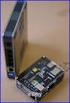 61200796L1-29.1G March 2013 Configuration Guide Configuring Shared Line Appearances over Analog Trunks This configuration guide explains how to configure shared line appearances (SLAs) on AOS voice products
8-Port HDMI Switch USER MANUAL VS0801H
 8-Port HDMI Switch USER MANUAL VS0801H FCC Information This equipment has been tested and found to comply with the limits for a Class B digital device, pursuant to Part 15 of the FCC Rules. These limits
AP IR Remote Control Installation & Operation Manual
 AP IR Remote Control Installation & Operation Manual ClearOne Communications, Inc. ~ 1825 Research Way, Salt Lake City, UT 84119 ~ tel 1-800-945-7730 ~ fax 1-800-933-5107 ii Table of Contents 1 Table of
Model 70A00-1. GSM Cellular Communications Center
 Home Automation, Inc. Model 70A00-1 GSM Cellular Communications Center Operation Manual Document Number 70I00-1 Rev A August, 2009 Contents Description... 1 Use with security systems...1 Everyday use...2