
Navigating the Population Health Management Software Vendor Landscape
|
|
|
- Arnold Cannon
- 10 years ago
- Views:
Transcription
1 Navigating the Population Health Management Software Vendor Landscape
2 2 Just when you thought it was safe to go back in the water was the tagline for the 978 film Jaws 2, the sequel to Steven Spielberg s original classic. As we enter 204, many healthcare executives are experiencing similar emotions. Nearly five years following the financial crisis and the resulting Health Information Technology for Economic and Clinical Health (HITECH) Act, no one can be blamed for feeling exhausted and a little bit deserving of a break. Unfortunately, the healthcare industry waits for no man, and we find ourselves again in an environment of increasing costs (although at a much lower rate), demographic headwinds (78 million baby boomers beginning to retire effective 20), and the resulting imminent changes in reimbursement methodologies. Ready or not, change is again afoot, even if you thought it was safe to go back in the water! This white paper is focused on the rapidly evolving field of Population Health Management (PHM), and the substantial information technology (IT) solutions that it will require. Termed hot and evolving by KLAS, this category of software solutions embodies many of the buzzwords we ve been hearing for the past year (i.e., Business Intelligence, Analytics, Big Data, etc.), and represents the Jaws 2 to EHR s Jaws as providers continue to attempt to keep pace with emerging regulatory and reimbursement changes. Indeed a number of parallels can be drawn between the EHR marketplace of 5-7 years ago and today s emerging PHM vendor landscape, and as in the past, the seas are rough and full of danger. A Problem of Demography Much has been written about the challenges facing our nation as a result of the perfect storm of an aging population and the difficult problem of healthcare cost inflation. Healthcare spending in 203 was 8% of gross domestic product (GDP). As the 78 million baby boomers (i.e., those born between 946 and 964) continue to enter retirement, projections of federal healthcare spending are staggering. The Congressional Budget Office projects federal healthcare spending to double in the next decade from $77 billion in 203 to $.6 trillion in While nobody knows for sure what fraction of the U.S. economy is too much to spend on healthcare, most believe that 20% or more is the line we cannot afford to cross. As if the demographic volume numbers weren t challenging enough, the nature of elderly populations provides a devastating kicker in the remarkable correlation of chronic disease and healthcare costs. A great example of the Pareto Principal (the 80/20 rule), the older a person gets, the more chronic conditions he/she typically ends up with, and naturally a polychronic patient correlates to higher healthcare costs. To wit, CMS studies show per capita healthcare spending for those 65+ to be $4,797 vs. $4,5 for those 9-64 years of age.
3 2 3 Transitioning from Volume to Value A number of initiatives have begun in both the private and public sectors to address the ever increasing costs of healthcare, and two central themes are emerging: greater focus on improving quality and transitioning from volume- to value-based payment models. Similar to reforms of the past (but presumably much improved given better information through EHRs and learnings from prior mistakes), the primary goal is to reduce the cost of providing care. While many theories exist on how to do this, most experts agree that a transition away from fee-for-service payment models is a necessary and inevitable component. Different from previous movements towards capitation, these new programs are tying payments and incentives to patient health benchmarks, in addition to measures related to quality of care and patient satisfaction. One such model currently experiencing growth is the Accountable Care Organization (ACO) concept. ACOs are groups of doctors, hospitals, and healthcare providers that are accountable for the cost and quality of the care they provide to a defined group of beneficiaries. The Affordable Care Act (ACA) initiated the Medicare ACOs programs, but an increasing number of private initiatives are emerging as well (i.e. Patient Centered Medical Homes, Bundled Payments, Accountable Care Models, etc.). As we move towards capitated payment models, the provider assumes a greater percentage of the cost risk; a move that will require an equal level of evolution in care delivery. An ounce of prevention is worth a pound of cure will hold even more truth in this new era as proactive approaches to care delivery become the norm. While the EHR initiatives of recent years have laid the framework for the collection and organization of the data required to meet this new bar, moving away from fee-forservice will require organizations to continue to increase their levels of clinical integration to keep up with the demands for clinical coordination and optimization. Figure below depicts the phases of movement from fee-for-service toward capitation and the associated characteristics of risk and levels of clinical integration necessary for success.
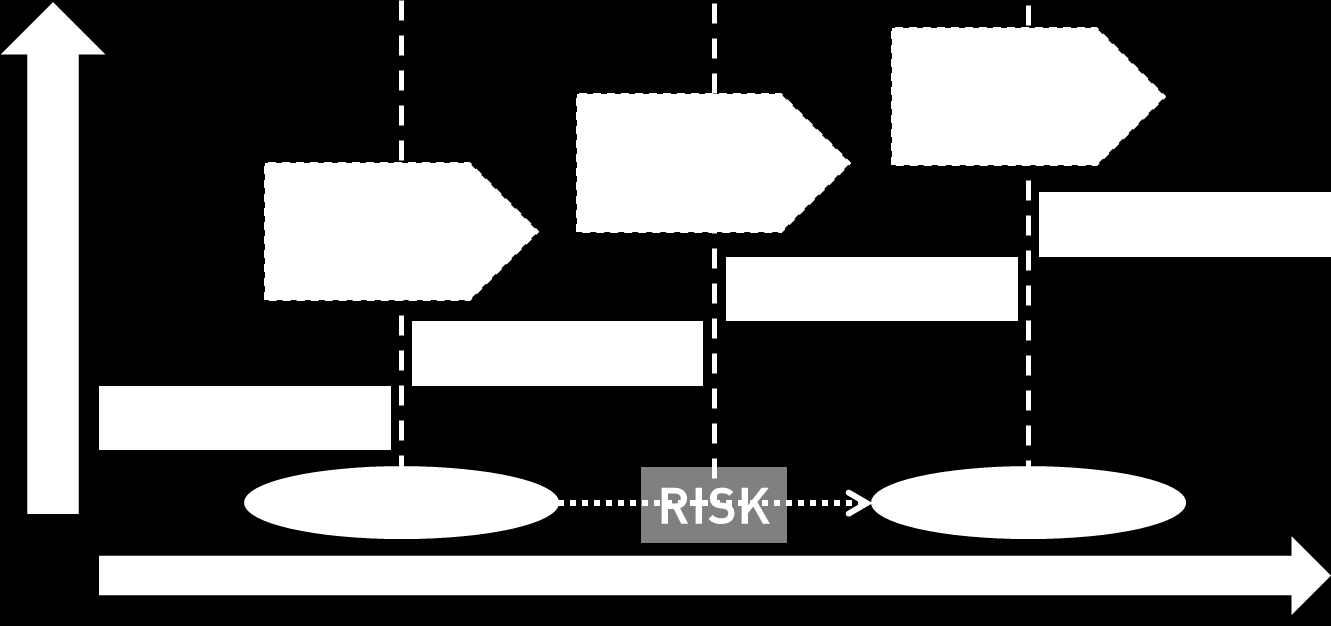
4 3 4 Figure. Network Maturity Model Having to reduce cost and improve quality while simultaneously managing the health of larger, older, and (presumably) sicker populations creates a challenging paradox. As organizations begin to address this challenge, it s no surprise that population health analytics ranks as a top priority for 204; not if but when has been the resounding message heard from leaders across the industry. Population Health Management: What It Is and Why It Matters PHM can be broadly defined as operational processes designed to foster health and quality improvements while managing costs (McAlearney, 2003). The idea is not new; in fact, payers have been using population analytics as a means to track and control costs for years. However, as external forces thrust providers into the driver s seat, they will need a more focused definition of what PHM means to their organization and how it affects costs and outcomes. Some key drivers in this definition include the following: Access Cost Quality Lifestyle Management Demand Management Disease Management Care Coordination The American Hospital Association (AHA) describes this as a must-do strategy, and organizations will be required to explore solutions in the aggregate, as focusing solely on those seeking care will no longer be acceptable. As we begin to focus on the cost of care for an entire population, identifying trends, focusing on the highest

5 4 5 utilizers and proactively addressing preventive conditions will all be components of a successful healthcare organization. While EHR and HIE initiatives of the past five years have gone a long way to automate and integrate the U.S. healthcare system, we still operate under a mostly fragmented delivery model. Tools that coordinate care across the entire continuum and apply economies of scale and scope will be required to maximize efficiency gains. The larger the population, the more necessary it will be for organizations to apply more powerful and effective analytics as a strategy for success. In short, as we hear pundits talk about Healthcare BI, Analytics, and Big Data; what they are really talking about is tools and techniques for doing PHM. Unfortunately the majority of classic EHR systems, even those that are fully integrated across modules and care settings, are not PHM systems. What PHM Systems Do KLAS has recently begun to examine this emerging class of vendors, and organizes PHM solutions into four pillars or categories of workflow: () Data Aggregation, (2) Risk Stratification, (3) Care Coordination, and (4) Patient Outreach. Figure 2 below depicts these functions as roles. Figure 2. KLAS Roles of PHM
6 5 6 Most PHM vendors supply tools and services that help customers manage medical costs, prevent fraud and abuse, and improve the quality and efficacy of healthcare. Customers include healthcare payers, provider organizations and government entities. Their value is typically derived from Enterprise Analytics; in other words, the vendors employ decision analytics and reporting tools for identification and stratification of populations to detect high-risk individuals or groups, risk adjustment and predictive modeling, clinical analytics, business intelligence and reporting. The primary goal of these systems is to provide meaningful direction based on data from a variety of sources. By collecting and organizing information across the entire continuum of care, these systems reduce fragmentation and provide scalable data to identify trends in population health, bridging the gap between providers across the organization. Once data is normalized, stratification of high risk patients and isolation of high utilizers allows providers to control cost and mitigate risk. Segmenting patients based on these risk profiles also allows for more efficient and coordinated care, making sure the right patient is receiving the right care at the right time. As organizations extend care outside of the traditional four walls of the hospital, engaging patients as active participants in their care through outreach and education programs extends the providers reach and improves clinical outcomes. Navigating the PHM Vendor Marketplace Emerging technology in big data/business intelligence is not isolated to healthcare. As data sets become more complex and data centers become unprecedentedly large, projects such as the IBM Watson computer are becoming the next wave of technology advances. Similarly, the rapid adoption of HIT and quickly evolving regulatory environment in healthcare are having a significant impact on the growth of technology solutions for PHM. The demand for collecting and utilizing clinical data in meaningful ways has created entry points for a number of vendors into the PHM market and a number of new vendors have thrown their hats in the ring. As the number of PHM vendors continues to rise (currently over 50 named participants), the parallels between the EHR market of years past and the PHM market of today are becoming increasingly obvious. Recall the pre-hitech EHR market that included several hundred players in an arms race to capture mind and market share in a rapidly growing space. What started as a market chock-full of niche products and services, quickly evolved into a market focused on integration and enterprise solutions. The subsequent success of enterprise solutions such as Cerner and Epic speaks to the perceived value and importance of integration, and proof of a trend away from best-of-breed approaches.
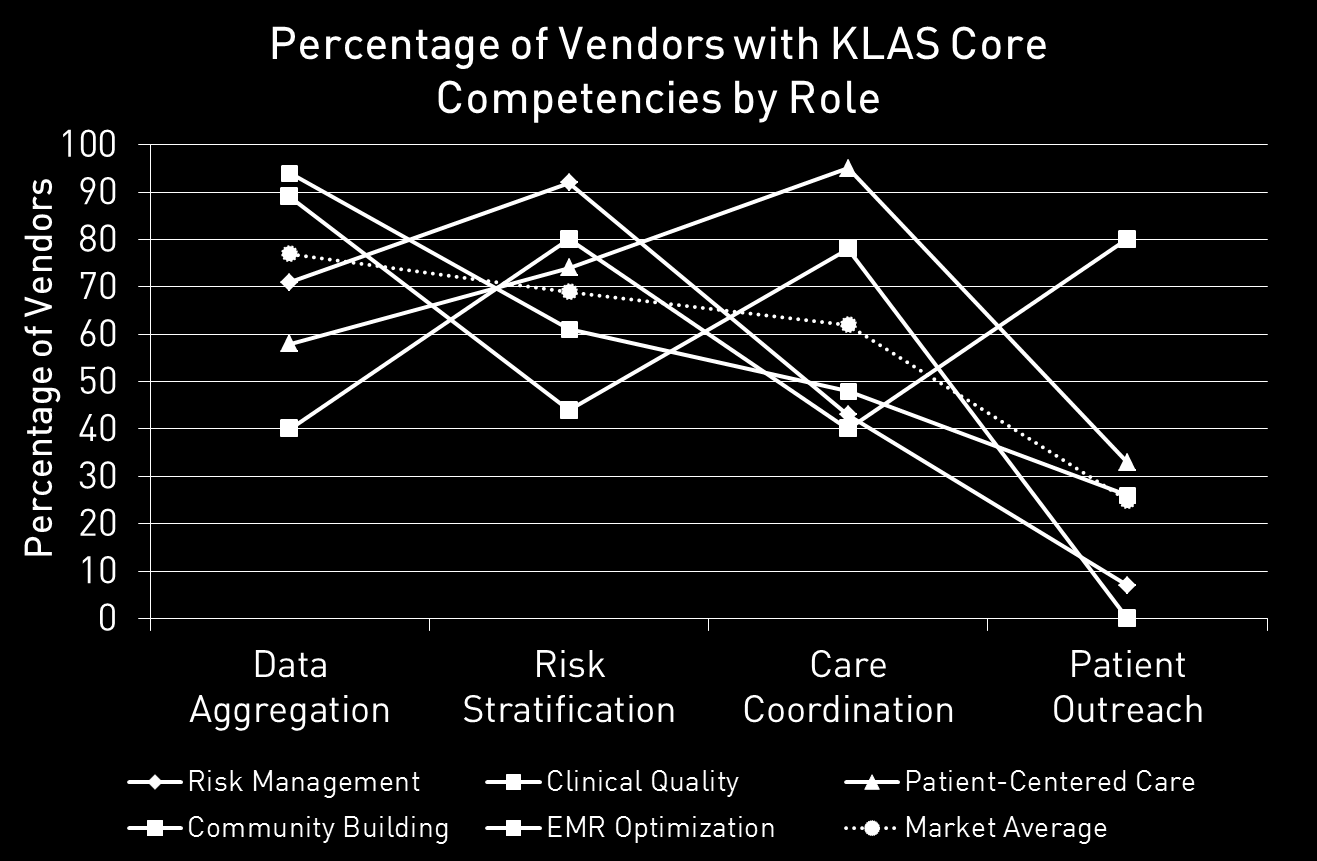
7 6 7 The PHM vendor marketplace today is similar to the EHR market in the pre-hitech days. There are literally hundreds of vendors claiming to offer some component of PHM, BI, Analytics, etc. This can be confusing and intimidating to provider organizations. Simply getting clarity about what a provider needs to participate in PHM is tough enough; navigating the vendor environment makes it all the more challenging. The figure below highlights the KLAS categorization of vendor competencies by role and illustrates the relative specialization of PHM solutions today. Figure 3. KLAS Core Competencies During this challenging time, providers need to be careful. Environments such as this can easily result in the expensive purchase of software solutions that are both expensive and unable to meet their true needs. Vendor Selection: Associated Risks and Perils of Snap Decisions As healthcare organizations prepare for the not if, but when of payment reform, the current vendor landscape requires careful navigation. Vendor selection during a maturing market will require careful alignment of organizational priorities and needs with vendor strengths and potential for growth. PHM applications are an early stage market with ever-changing requirements, said Cynthia Burghard, IDC Health Insights Research Director. As healthcare organizations continue to evolve their
8 7 8 PHM strategies, they will need access to rich, integrated claims and clinical data, supported by complete organizational transformation with a focus on efforts and outcomes rather than the volume of services delivered. Burghard makes a great point: strategies are evolving and given the low level of maturity within the PHM vendor marketplace, there are a few things that prudent organizations will want to consider. First, what is the time-to-value ratio associated with a particular vendor? Unlike the timeframe afforded to an EHR implementation, most organizations are viewing PHM adoption with rapidity. Given this, it is important to assess whether the vendor can provide appropriate and needed functionality in the time you require it. Second, who are the vendor s references? Did they have a good experience and are they similar to your organization? Again, given the limited maturity of the marketplace, this is an important factor as it is easy to run across fly-by-night operators. Lastly, consider the vendor s extensibility; in other words, can they provide you with the exact capabilities that you need given the resources that are available to your organization? Are they HIT vendor neutral, in that they do not care from where the solution sources its data, or are they an EHR who will stumble when sourcing from a competitor? The new fee-for-value models of care and reimbursement require providers to progress beyond care coordination for the individual patient and into true PHM; without this progression, providers will not be able to compete. Among other things, this progression will require access to integrated data sources that can be used for monitoring and data mining. Some of the challenges associated with this include system interoperability and data standardization. Effective data analysis is the start of developing evidence-based care protocols that can be used across a healthcare system. However, you need to have basic building blocks in place. Let s be honest; knowing what systems and interfaces you have is the first step in this process.
9 8 9 Conclusion: Ready or Not, You re Being Forced Back in the Water! The triad of constantly changing regulatory requirements, increasing cost pressure, and an aging population has likely left many feeling as though we ve got another shark problem. As the industry continues to evolve and produce advancing technology solutions, healthcare organizations cannot ignore the trend: population health matters. As the torch is passed from EHR initiatives to HIT projects of the future, such as PHM system implementation, careful navigation of this evolving and volatile vendor marketplace will be critical to survival in the landscape that follows. As with all HIT initiatives, having the resources and tools to know where you are and chart where you want to be is crucial.
10 0 A B O U T C U M B E R L A N D C O N S U L T I N G G R O U P Cumberland Consulting Group is a national technology implementation and project management firm serving clients in the healthcare industry, including providers, payors and life sciences companies. Through the effective implementation of new technologies, we help our clients advance the quality of services they deliver and improve overall business performance. Our approach to IT planning is based on years of experience with successful implementations. We believe that proven methods combined with disciplined, rigorous, but pragmatic project management delivers successful results. We get it right the first time. 720 Cool Springs Blvd. Suite 550 Franklin, TN (65)
Infogix Healthcare e book
 CHAPTER FIVE Infogix Healthcare e book PREDICTIVE ANALYTICS IMPROVES Payer s Guide to Turning Reform into Revenue 30 MILLION REASONS DATA INTEGRITY MATTERS It is a well-documented fact that when it comes
Early Lessons learned from strong revenue cycle performers
 Healthcare Informatics June 2012 Accountable Care Organizations Early Lessons learned from strong revenue cycle performers Healthcare Informatics Accountable Care Organizations Early Lessons learned from
New Business and Investment Opportunities Emerging from Population Health Management (PHM)
 Stax s Perspective on Changes Driven by PHM New Business and Investment Opportunities Emerging from Population Health Management (PHM) By Natalie De Fazio, Director, Stax Inc. November 2014 New Business
ACCOUNTABLE CARE ANALYTICS: DEVELOPING A TRUSTED 360 DEGREE VIEW OF THE PATIENT
 ACCOUNTABLE CARE ANALYTICS: DEVELOPING A TRUSTED 360 DEGREE VIEW OF THE PATIENT Accountable Care Analytics: Developing a Trusted 360 Degree View of the Patient Introduction Recent federal regulations have
How MissionPoint Health is Using Population Health Insights to Achieve ACO Success
 How MissionPoint Health is Using Population Health Insights to Achieve ACO Success Background The United States spends more per capita on healthcare than other country, yet is ranked last among industrialized
The Five Pillars of Population Health Management. Dr. Christopher Mathews Senior Vice President and Chief Medical Officer ZeOmega
 The Five Pillars of Population Health Management Dr. Christopher Mathews Senior Vice President and Chief Medical Officer ZeOmega ZeOmega a forerunner in Population Health Management Transformation into
Enterprise Analytics Strategic Planning
 Enterprise Analytics Strategic Planning June 5, 2013 1 "The first question a data driven organization needs to ask itself is not "what do we think?" but rather "what do we know? Big Data: The Management
Population health management:
 GE Healthcare Population health management: Navigating successfully from volume to value In the new world of value-based care and risk-sharing compensation, success will depend on how well provider organizations
6/12/2015. Dignity Health Population Health Management and Compliance Programs. Moving Towards Accountable Care. Dignity Health Poised for Innovation
 Dignity Health Population Health Management and Compliance Programs Julie Bietsch, VP Population Health Management Dawnese Kindelt, Senior Compliance Director, Clinical Integration June 8, 2015 Moving
Leveraging Population Health to Meet Value-Based Care Goals. 19 out of 25 Organizations view population health as a high priority today.
 Leveraging Population Health to Meet Value-Based Care Goals Value-based reimbursement is no longer a futuristic concept. It s a reality that healthcare organizations need to face today. 19 out of 25 Organizations
A STRATIFIED APPROACH TO PATIENT SAFETY THROUGH HEALTH INFORMATION TECHNOLOGY
 A STRATIFIED APPROACH TO PATIENT SAFETY THROUGH HEALTH INFORMATION TECHNOLOGY Table of Contents I. Introduction... 2 II. Background... 2 III. Patient Safety... 3 IV. A Comprehensive Approach to Reducing
HOW CARE MANAGEMENT EVOLVES WITH POPULATION MANAGEMENT
 Reform and rising costs continue to push the importance of care management systems to the forefront. With the growing prominence of population health for provider organizations, provider-based care management
Hayes Management Consulting Optimizing the Business of Healthcare
 Hayes Management Consulting Optimizing the Business of Healthcare Hayes Management Consulting partners with healthcare organizations to deliver tailored solutions that streamline operations, improve revenue,
Population Health Management Impact on the U.S. Healthcare System. A new patient-centered approach driven by big data revolutionizes U.S.
 Population Health Management Impact on the U.S. Healthcare System A new patient-centered approach driven by big data revolutionizes U.S. Healthcare Your Guide to This Book Population Health Management
Analytics for ACOs Integrated patient views
 Analytics for ACOs Integrated patient views What s at stake? Level-setting Overview The healthcare environment is changing and healthcare organizations have challenging decisions to make. With the dramatic
Program Description and FAQ s 2016 Medicare Shared Savings Program Year
 and FAQ s 2016 Medicare Shared Savings Program Year Who is the National Rural ACO? The National Rural ACO was formed in 2013 to pool knowledge, patients, and resources so that independent community health
Population Health Management A Key Addition to Your Electronic Health Record
 Population Health Management A Key Addition to Your Electronic Health Record Rosemarie Nelson, MS Principal Consultant, MGMA Sponsored by: 1 Contents Introduction... 3 Managing Populations of Patients...
Population Health Management: Leveraging Data and Analytics to Achieve Value. White Paper. A Special Report
 Authors Carol Cassell CTG Health Solutions John Kontor, MD Clinovations Lisa Shah, MD, MAPP Clinovations Contributors Marla Roberts, DrPH, RN CTG Health Solutions Katie Stevenson Clinovations : Leveraging
Improving Quality And Bending the Cost Curve: Strategies That Work
 Improving Quality And Bending the Cost Curve: Strategies That Work Lewis G. Sandy MD SVP, Clinical Advancement, UnitedHealth Group UnitedHealth Center for Health Reform and Modernization AcademyHealth
THE ACCOUNTABLE CARE ORGANIZATION (ACO) TRAIN IS LEAVING THE STATION: ARE YOU ON BOARD?
 UNDER THE MICROSCOPE NOVEMBER 5, 2013 THE ACCOUNTABLE CARE ORGANIZATION (ACO) TRAIN IS LEAVING THE STATION: ARE YOU ON BOARD? ISSUE. A 2006 Institute of Medicine report ( Performance measurement: Accelerating
Accountable Care: Implications for Managing Health Information. Quality Healthcare Through Quality Information
 Accountable Care: Implications for Managing Health Information Quality Healthcare Through Quality Information Introduction Healthcare is currently experiencing a critical shift: away from the current the
Presenters. How to Maximize Technology to Improve Care and Reduce Cost 9/17/2015
 How to Maximize Technology to Improve Care and Reduce Cost Presenters Justin Miller Director of Synergy Jordan Health services Dallas, TX [email protected] Justine Garcia Director of Software Solutions
US Hospital Information Systems Overview and Outlook, 2013 2020 Managing Information in an Era of Reform
 US Hospital Information Systems Overview and Outlook, 2013 2020 Managing Information in an Era of Reform December 2014 Contents Section Slide Number Executive Summary 11 Market Background 19 The EHR Landscape
What is Healthcare Reform? Get a view of the future health care system in the US; learn. success factors for healthcare administrators?
 What is Healthcare Reform? Get a view of the future health care system in the US; learn about primary resources and tools for the healthcare administrator, and what are the success factors for healthcare
Solution Overview. Fusion Health Advantage Big Data Accelerator Platform
 Solution Overview Fusion Health Advantage Big Data Accelerator Platform Improve Patient Outcomes And Manage Them Cost Effectively Healthcare reform measures have intensified governmental scrutiny, thereby
WHITEPAPER 6 EHR TRENDS to Watch in
 WHITEPAPER 6 EHR TRENDS to Watch in 2015 INTRODUCTION Since the passage of the HITECH Act in 2009, the healthcare industry has undergone rapid changes in technology. The adoption of electronic health records
White Paper. Healthcare Reform Successful Strategies for IT-Enabled Transformation in an Era of Accountable, Coordinated Care
 White Paper Healthcare Reform Successful Strategies for IT-Enabled Transformation in an Era of Accountable, Coordinated Care By Greg Gootee Product Manager MZI HealthCare, LLC April 2012 Contents Introduction
The Cornerstones of Accountable Care ACO
 The Cornerstones of Accountable Care Clinical Integration Care Coordination ACO Information Technology Financial Management The Accountable Care Organization is emerging as an important care delivery and
Accountable Care: Clinical Integration is the Foundation
 Solutions for Value-Based Care Accountable Care: Clinical Integration is the Foundation Clinical Integration Care CoordinatioN ACO Information Technology Financial Management The Accountable Care Organization
Population Health Management Industry Overview
 Population Health Management Industry Overview May 19, 2016 The safe bet for long-term population health success The changing population health market Population health management has emerged as a major
Population Health Management Systems
 Population Health Management Systems What are they and how can they help public health? August 18, 1:00 p.m. 2:30 p.m. EDT Presented by the Public Health Informatics Working Group Webinar sponsored by
From Information Exchange to Population Health Management
 GE Healthcare From Information Exchange to Population Health Management Central Florida RHIO Joel Vengco VP & GM ehealth Solutions March 26, 2012 1 / GE / Discussion Goals Review the foundational goal
I n t e r S y S t e m S W h I t e P a P e r F O R H E A L T H C A R E IT E X E C U T I V E S. In accountable care
 I n t e r S y S t e m S W h I t e P a P e r F O R H E A L T H C A R E IT E X E C U T I V E S The Role of healthcare InfoRmaTIcs In accountable care I n t e r S y S t e m S W h I t e P a P e r F OR H E
Helping You Achieve Better Clinical and Financial Health
 McKesson Business Performance Services Accountable Care Services Helping You Achieve Better Clinical and Financial Health 1 We recognized that fee-for-service would decrease and value-based care would
Emerging Technologies That Support Transitions of Care. 8 June 2016 Elaine Remmlinger, Senior Partner, and Robin Settle, Partner
 Emerging Technologies That Support Transitions of Care 8 June 2016 Elaine Remmlinger, Senior Partner, and Robin Settle, Partner Topics of Discussion Drivers of Transitions of Care Technology Perspective:
Global Headquarters: 5 Speen Street Framingham, MA 01701 USA P.508.935.4445 F.508.988.7881 www.idc-hi.com
 Global Headquarters: 5 Speen Street Framingham, MA 01701 USA P.508.935.4445 F.508.988.7881 www.idc-hi.com L e v e raging Big Data to Build a F o undation f o r Accountable Healthcare C U S T O M I N D
Sharing Clinical Data: A New Approach
 Sharing Clinical Data: A New Approach Page 1 Health information exchange (HIE) technology offers an intriguing new alternative for data sharing and coordination of care both within your organization and
Identifying High-Risk Medicare Beneficiaries with Predictive Analytics
 Identifying High-Risk Medicare Beneficiaries with Predictive Analytics September 2014 Until recently, with the passage of the Affordable Care Act (ACA), Medicare Fee-for-Service (FFS) providers had little
Integrating Predictive Analytics Into Clinical Practice For Improved Outcomes & Financial Performance
 Transforming the HHS Experience Improving the relationship between payers, providers and consumers Integrating Predictive Analytics Into Clinical Practice For Improved Outcomes & Financial Performance
Integrated Leadership for Hospitals and Health Systems: Principles for Success
 Integrated Leadership for Hospitals and Health Systems: Principles for Success In the current healthcare environment, there are many forces, both internal and external, that require some physicians and
EFFICIENCY UP. COSTS DOWN. The Benefits of an Automated Healthcare Revenue Cycle
 EFFICIENCY UP. COSTS DOWN. The Benefits of an Automated Healthcare Revenue Cycle 1 Executive Summary Do more with less. It s a tall order for healthcare providers facing elevated quality expectations,
TACKLING POPULATION HEALTH MANAGEMENT with Worksite Wellness & Community Outreach
 TACKLING POPULATION HEALTH MANAGEMENT with Worksite Wellness & Community Outreach APRIL 2015 THE PRESIDENT S MESSAGE Daniel T. Yunker Why do we need population health management in the health care delivery
HEALTHCARE BUSINESS INTELLIGENCE (BI) MARKET
 HEALTHCARE BUSINESS INTELLIGENCE (BI) MARKET By Function (Reporting, OLAP, Monitoring), Application (Clinical & Financial), Technology (Traditional, Cloud, Mobile), End User (Hospitals, Clinics, ACO, HIE,
INSERT COMPANY LOGO HERE. Product Leadership Award
 2013 2014 INSERT COMPANY LOGO HERE 2014 2013 North North American Health SSL Certificate Data Analytics Product Leadership Award Background and Company Performance Industry Challenges Numerous social,
IDC MarketScape: U.S. Population Health Management 2014 Vendor Assessment
 IDC MARKETSCAPE IDC MarketScape: U.S. Population Health Management 2014 Vendor Assessment Cynthia Burghard THIS IDC MARKETSCAPE EXCERPT FEATURES: WELLCENTIVE IDC MARKETSCAPE FIGURE FIGURE 1 IDC MarketScape
How To Use Predictive Analytics To Improve Health Care
 Unlocking the Value of Healthcare s Big Data with Predictive Analytics Background The volume of electronic data in the healthcare industry continues to grow. Adoption of electronic solutions and increased
HEALTHCARE CHANGES AFFECTING YOUR PRACTICE. Vinay Kumar MD, FACS, ABVM Endovascular options Dallas, Texas
 HEALTHCARE CHANGES AFFECTING YOUR PRACTICE Vinay Kumar MD, FACS, ABVM Endovascular options Dallas, Texas HEALTH CARE CHANGES 1 st Major overhaul of health care system since WWII introduction of 3 rd party
Population Health Management: Advancing Your Position in the Journey to Value-Based Care
 Population Health Management: Advancing Your Position in the Journey to Value-Based Care Webcast Session One: An Integrated Approach to Population Health Management 11 August 2015 Welcome & Introductions
Managing and Coordinating Non-Acute Care in an ACO Environment
 Managing and Coordinating Non-Acute Care in an ACO Environment By Glen Roebuck, Vice President of Business Development, Health Dimensions Group Hospital and health care systems across the country are engaging
Data: The Steel Thread that Connects Performance and Value
 WHITE PAPER Data: The Steel Thread that Connects Performance and Value An Encore Point of View Randy L. Thomas, FHIMSS, Managing Director, Value April 2016 Realization Solutions, David H. Brown, Barbara
A Roadmap for Modernizing the Health Care Revenue Cycle
 A Roadmap for Modernizing the Health Care Revenue Cycle 1 March 2016 Timothy Panks Senior VP, Finance and Revenue Management Douglas Hires Senior VP, Strategic Client Relationships Conflict of Interest
Accountable Care Platform
 The shift toward increased collaboration, outcome-based payment and new benefit design is transforming how we pay for health care and how health care is delivered. UnitedHealthcare is taking an industry
Medicare Economics. Part A (Hospital Insurance) Funding
 Medicare Economics Medicare expenditures are a substantial part of the federal budget $556 billion, or 15 percent in 2012. They also comprise 3.7 percent of the country s gross domestic product (GDP),
Strengthening Medicare: Better Health, Better Care, Lower Costs Efforts Will Save Nearly $120 Billion for Medicare Over Five Years.
 Strengthening Medicare: Better Health, Better Care, Lower Costs Efforts Will Save Nearly $120 Billion for Medicare Over Five Years Introduction The Centers for Medicare and Medicaid Services (CMS) and
State of the HEALTHCARE IT MARKET: 2016 A WHITE PAPER FOR KEYBANC CAPITAL MARKETS BY MODERN HEALTHCARE CUSTOM MEDIA
 State of the HEALTHCARE IT MARKET: 2016 A WHITE PAPER FOR KEYBANC CAPITAL MARKETS BY MODERN HEALTHCARE CUSTOM MEDIA THIS WHITE PAPER EXPLORES THE CURRENT AND FUTURE HEALTHCARE IT TRENDS. IT LAYS OUT THE
New Business Model for Medical Billing Companies
 New Business Model for Medical Billing Companies Author: Mick Raich Vachette Pathology @ www.vachettepathology.com Introduction I ve worked in the medical billing world for the past 20 years, both for
Computer-assisted coding and documentation for a changing healthcare landscape
 Computer-assisted coding and documentation for a changing healthcare landscape Reality is, in this new ICD-10 environment, providers will have two options: a) work harder; or b) find a new way to do things.
Andy Slavitt Centers for Medicare & Medicaid Services
 January 29, 2016 Andy Slavitt Centers for Medicare & Medicaid Services Wellcentive comment, Request for Information: Certification Frequency and Requirements for the Reporting of Quality Measures under
eprescribing Information to Improve Medication Adherence
 eprescribing Information to Improve Medication Adherence January 2014 This white paper was funded by the Pharmaceutical Research and Manufacturers of America. About Point-of-Care Partners Point-of-Care
PUBLISHED BY: CareCloud Corporation 5200 Blue Lagoon Drive, Suite 900 Miami, FL 33126 Phone: (877) 342-7517 Email: hello@carecloud.
 PUBLISHED BY: CareCloud Corporation 5200 Blue Lagoon Drive, Suite 900 Miami, FL 33126 Phone: (877) 342-7517 Email: [email protected] Copyright 2012 CareCloud Corporation. All rights reserved. No part
The Promise of Regional Data Aggregation
 The Promise of Regional Data Aggregation Lessons Learned by the Robert Wood Johnson Foundation s National Program Office for Aligning Forces for Quality 1 Background Measuring and reporting the quality
The Business Case for Using Big Data in Healthcare
 SAP Thought Leadership Paper Healthcare and Big Data The Business Case for Using Big Data in Healthcare Exploring How Big Data and Analytics Can Help You Achieve Quality, Value-Based Care Table of Contents