
CONSENT FOR ALLOGENEIC STEM CELL TRANSPLANTATION OF RELATED OR UNRELATED STEM CELL GRAFT
|
|
|
- Kerrie Blake
- 10 years ago
- Views:
Transcription
1 UNIVERSITY OF VIRGINIA HEALTH SYSTEM PLACE LABEL HERE IF LABEL NOT AVAILABLE, WRITE IN PT NAME & MR# CONSENT FOR ALLOGENEIC STEM CELL TRANSPLANTATION OF RELATED OR UNRELATED STEM CELL GRAFT A. CONSENT FOR ALLOGENEIC STEM CELL TRANSPLANT 1. I authorize Dr. to perform an Allogeneic Stem Cell Transplant using the conditioning regimen to treat my cancer or disorder of my blood and use as the source of my stem cell graft. I understand that my doctor may need to perform other urgent procedures that may be unanticipated. I consent to the performance of any additional procedures determined during my original procedure to be in my interests and where delay might cause additional harm. I understand that other qualified practitioners, including residents (doctors who have finished medical school and are getting more training), may be chosen to do or help with procedures. All qualified practitioners will only perform tasks for which they have been granted clinical privileges or permission to practice based upon demonstrated competency. Your attending physician will be present during key parts of the transplant but may not be present for the entire transplant. Prior to transplant, he/she will discuss with you the roles of the members of the transplant team and the key parts of the transplant for which he/she will be present. 2. I understand my diagnosis to be: 3. I have been told about what results to expect, which includes information about the chances for the expected results and about problems that might occur during my recuperation. I know that results cannot be guaranteed. The details of these are discussed in detail below and I have had opportunity to ask questions and have them answered to my full understanding. 4. I have been told about and understand the risks and benefits of the undergoing a stem cell transplant procedure. These risks can be serious and life threatening. They are outlined in the information below. I fully understand the risks and benefits and have been able to ask questions that have been answered by my transplant physician. 5. I understand the alternatives to the proposed procedure and the related risks to be: standard chemotherapy supportive measures no therapy to treat my cancer comfort care 6. I understand that for some kinds of medical equipment used during procedures, a representative from the equipment manufacturer may be present, providing consultation or performing checks on the equipment. B. STEM CELL TRANSPLANT An allogeneic stem cell transplant, also known as a bone marrow transplant, replaces damaged or destroyed bone marrow cells with healthy ones from a donor. In an allogeneic stem cell transplant, stem cells (specialized cells that have the ability to develop into different types of blood cells in the body such as white blood cells, red blood cells, and platelets) are first collected from the donor. The donated healthy cells are then infused into you (the recipient) so they can grow and produce normal blood cells and immune cells that help fight disease. C. PURPOSE Allogeneic stem cell transplant is being offered to you as a treatment option because you have a type of cancer, bone marrow disease, or other disorder that has a low chance of being cured with chemotherapy, radiotherapy or other non-transplant approach alone. Your doctor has recommended that you have an allogeneic stem cell transplant as a possible cure for your disease. FORM # CAT: 01-CONSENT (REV. 10/2014) To reorder, log onto 1 OF 11

2 D. SOURCE OF STEM CELLS Donors for allogeneic stem cell transplants are chosen based on results from a blood test or a mouth swab test for human leukocyte antigens (HLA). HLA is a special protein commonly found in the body, especially on white blood cells. HLA plays an important role in an immune system function. There are many variations in HLA between different people. In choosing a donor for an allogeneic stem cell transplant, the closer the match between a patient s HLA markers and the donor s, the less likely it is that the patient (recipient) will experience transplant related complications, such as graft rejection or graft-vs-host disease (explained below). If you choose to have an allogeneic stem cell transplant, you will need stem cells from one of the following stem cell sources: an adult donor who is related to you an adult donor who is not related to you infant umbilical cord blood that is donated after an infant has been delivered (cord blood stem cells are collected with no risk or trauma to the mother or infant) For an adult donor transplant, matching between the donor and the recipient requires: willingness of the individual to be a donor test results indicating that the donor s overall health is not likely to cause any significant transplant-related problems for him/her or for you an acceptable HLA (human leukocyte antigen) match For adult donors, cells may be collected from blood circulating in the donor s body (peripheral blood), or the donor may have their bone marrow harvested in an operating room. The following categories of donors are generally considered: Matched Related and Matched Unrelated Donor Transplants (MRD/MUD): With an MRD transplant, the donor is a relative (usually a brother or sister), and with a MUD transplant, the donor is an unrelated individual found through a registry of donors. With MRD and MUD transplants, the donor shares at least 8 main HLA-antigens with the patient (i.e. 8/8 match or 10/10 match if 10 HLA genes are tested). Mismatched unrelated donor transplant (MMUD): Mismatched unrelated donors have one HLA gene mismatch to the patient out of 10 HLA genes tested i.e. 9/10 HLA match. This type of transplant may have higher rate of complications, but is often considered when patient has a high risk disease and fully matched donors are not available. Haploidentical transplant (Haplo): This type of a transplant may be used when there is not a fully matched family member or unrelated donor. A haplo is a halfidentical match rather than a full match. This type of transplant has the same requirements as MRD and MUD transplants except that the number of HLA antigens that are shared between the donor and the recipient are less with these types of transplants. Umbilical Cord blood (UCB): The stem cells used for this type of transplant come from the umbilical cord blood of healthy newborn babies. This is considered a partial-match transplant. If you do not have a full blooded relative or an unrelated donor match, a UCB transplant may be the best option for you. If you have this type of transplant, it will most likely require two units of umbilical cord blood due to body size and cell dosing of the stem cells in the cord blood units. Cord blood units are stored frozen (cryopreserved) in cord blood banks. They are shipped frozen to the University of Virginia Cytotherapy Laboratory where they are thawed and used for transplant. Cord blood is considered a biological drug by the United States Food and Drug Administration (FDA). Cord blood units that don t meet specific FDA requirements or that have not yet been approved by the FDA can only be accessed and distributed through a research study with an Investigational New Drug (IND) number regulated by the FDA. The units that we use are obtained under an IND, so you will need to join a research study and sign another consent document in order to receive a UCB transplant at UVa. My Transplant Plan: My transplant physician has discussed the methods of stem cell collection with me. Stem cells for my allogeneic transplant will be collected from: Peripheral blood circulating in the donor s body (PBSCT) Bone marrow harvested in an operating room 2 OF 11

3 My transplant physician has discussed the different types of allogeneic transplants, and has determined that the best option for me at this time is: Matched Related Donor (MRD) Matched Unrelated Donor (MUD) Mismatched Unrelated Donor (MMUD) Haploidentical (Haplo) Umbilical Cord Blood (UCB) E. WHAT IS INVOLVED IN AN ALLOGENEIC STEM CELL TRANSPLANT? Before, during, and after your stem cell transplant, you will receive supportive care instructions and interventions, which will be explained in detail with you. These measures will help prepare your body for the transplant, reduce the potential for infections and other complications, support you with transfusions (if needed), and help your bone marrow recover after your transplant. There are four phases to an allogeneic stem cell transplant: Screening Conditioning Transplantation Post-Transplant Each phase is described below: 1. Screening: During the Screening Phase, you will be asked questions about your health, your quality of life, and your ability to go about your daily tasks, your medical history and your current and previous medications You will also have the following tests/procedures performed: A Physical Examination Vital signs, including measurements of your body temperature, blood pressure, heart rate, respiration (breathing) rate, weight, and height Blood will be drawn for an HIV test as well as other infectious diseases Women who may be able to have children will have a pregnancy test. If you are pregnant you cannot have an allogeneic stem cell transplant. You may need to provide a urine sample. This is to check protein levels and kidney function. You will have blood tests to assess your liver and kidney function You will have a chest x-ray to look at your lungs and heart. Pulmonary Function Tests to check your lung function by measuring how much air is in your lungs and how forcefully this air can be exhaled An electrocardiogram (ECG) a painless test that looks at the electrical activity of your heart A Multiple Gated Acquisition scan (MUGA) or echocardiogram (ECHO). A MUGA is a non-invasive test of your heart pumping capability, and an ECHO is a painless procedure that uses ultrasound directed over the chest wall to get a record of your heart s position, motion of the walls, or internal parts such as the valves. It also measures how well your heart muscle is functioning. A dental exam and/or an eye exam. Certain dental and eye problems will need to be treated before your conditioning treatment starts The status of your disease before transplant will be assessed. This may include: A bone marrow aspiration and biopsy - a procedure in which a sample of bone marrow fluid and a small sample of solid bone marrow will be taken. Samples are usually removed from a bone in your hip area. Your skin and bone will be numbed, and a needle will be inserted to remove both samples. Other procedures that will be done during screening will depend on your disease, and on which procedures your transplant physician feels are necessary. You may be asked to have: A computed tomography scan or CT scan (a specialized type of x-ray) of the stomach, pelvis, chest areas, and/or sinuses A PET scan positron emission tomography scan this uses a tracer chemical to show potential active/cancerous areas in your body. A skeletal survey, which is an x-ray of your bones You will sign separate consent forms for many of the procedures above that are required. Risks and additional details will be discussed when you review the procedure-specific consent forms. 3 OF 11

4 4 OF 11 The results of your screening tests and procedures will be reviewed with you. Test results may require consultation from a specialist. If other health problems are found during screening, they may require treatment before you are cleared for your transplant. Certain health problems could mean it is not safe for you to have a transplant. If tests show that stem cell transplantation is not safe for you, alternative treatments will be discussed. Alternative treatments may include chemotherapy, supportive measures, or no treatment. 2. Conditioning Indwelling Tunneled Central Venous Access Catheter Before you start chemotherapy, you will need to have a central venous catheter placed for drawing blood and giving intravenous (by vein) treatments. During the procedure, you will have a plastic tube placed through your skin and the wall of your chest. Once you no longer need regular blood draws and IV treatments, the catheter will be removed. This procedure will be done under local or general anesthesia. It will then be sewn into place. In order to prepare your body for an allogeneic stem cell transplant, you will need to have chemotherapy and/or radiation therapy and/or medications to: treat your disease prepare your body for the transplant graft lower your immune system to prevent rejection of the stem cell graft Members of a multi-disciplinary Stem Cell Transplant team have reviewed characteristics of your disease as well as the history of your treatments, and recommend as a Conditioning Regimen for you. If your treatment requires radiation therapy, a radiation oncologist will discuss the procedure with you and will ask you to sign a separate informed consent document. Your Conditioning regimen may begin before you are admitted to the Inpatient unit at the UVA Medical Center. Your transplant doctor will decide whether or not it is in your best interest to have some or all of your Conditioning treatment as an outpatient or as an inpatient. You will be seen at the Emily Couric Clinical Cancer Center if your Conditioning treatment begins in the outpatient setting. You may need to be transported by UVA Medic-5 to the Radiation Oncology Department for your radiation treatment (if you require radiation). Chemotherapy and radiation will cause your white blood cell counts to decrease. This means that you will be more likely to get infections. To lower your chances of contact with infectious agents, you will remain isolated from other patients in a private room with a private bathroom. Additional precautions will be necessary to prevent infections. For example, visitors with colds or other infectious diseases will be asked not to visit. The inpatient unit is equipped with high efficiency particulate air (HEPA) filters and the rooms have positive pressure to the hallway. If for any reason you need to leave your room, you will be required to wear a mask. The best way to reduce the chances of getting an infection is through hand washing. 3. Transplantation of Donor Stem Cells The matched stem cells from your donor will be infused into you after you complete your Conditioning regimen. This is referred to as Transplant Day 0. On day 0, the following will happen: You will be placed on a heart monitor prior to the infusion of the donor cells. You will be closely monitored for at least 8 hours after the infusion of fresh cells and for at least 24 hours after the infusion of cells that were previously frozen. You will be given intravenous fluids before, during, and after the infusion of the donor cells. You may or may not experience a different taste in your mouth. This will depend on how the donor stem cells were preserved. You will receive the donor stem cells through your central venous catheter. An infusion typically takes between 30min and 3 hours. A transplant physician or designee will be available during the infusion and until 1 hour after the procedure is complete. During the infusion, you will be asked questions about your health. You will have a physical examination and vital signs will be taken (temperature, blood pressure, heart rate, breathing rate, and weight). While it is rare to experience adverse effects at the time of donor cell infusion, the following effects can occur and are usually related directly to the cells or the preservative used to stabilize the stem cells:

5 Alteration of taste during the infusion or nausea. There can also be a change in smell of your breath for approximately 24hrs if a preservative is used. Changes in heart rate or high blood pressure, which may need to be treated with a blood pressure lowering medication Occasional chest tightness typically related to the infusion and generally relieved by slowing or stopping the infusion for a few minutes Difficulty breathing, which may necessitate oxygen use for a few hours There are sometimes extra red blood cells in the donor cells, so you may have a slight amount of red blood cells in your urine after the infusion. If this occurs, it will pose minimal risk to you and your urine will be monitored until the red blood cells are no longer present. On rare occasions, one may experience a more rapid destruction of red blood cells, which may result in symptoms of chills, fever, pain in back and abdomen, possible confusion and reddish-brown urine color. In this event, you will be treated with aggressive hydration, blood transfusions as needed and close monitoring of your blood counts. Infection despite rigorous testing, there is a small chance of infection transmission during an infusion. All cell products are carefully screened for infection. If an infection is suspected, you will be treated with appropriate antibiotics according to transplant protocols. Any of the listed potential complications can be life threatening. 4. Post-Transplant Post-transplant days are referred to Day + for example, Day +1, Day +2, Day +3, etc. After you have your transplant, you will receive supportive care instructions. It is very important that you follow all instructions and keep up with treatments until your bone marrow recovers and your new immune system can protect you against infections. After your transplant, you will remain hospitalized and monitored until you meet discharge criteria. Discharge criteria will be discussed in detail with you and your caregiver. It is important to understand that you may need to be re-admitted to the University of Virginia Medical Center one or more times for complications following your stem cell transplant. This is not uncommon. It is important to monitor levels of medications that suppress your immune system after transplant. These levels will be drawn at least twice to three times a week for the first few months after transplant. Your medications will be adjusted periodically based on these results, complications that arise, and the clinical judgment of your doctor. Tapering of your immunesuppressing medications will typically begin about 3 months after you have your transplant unless you have complications or your disease comes back. Once you are discharged from the inpatient unit, you will have frequent visits to the outpatient clinic and infusion center in the Emily Couric Clinical Cancer Center. Sometimes these visits only take a couple of hours, but other visits will take anywhere from half a day to an entire day, depending on the tests and procedures that you need. During this time, you can expect: Frequent blood work to see how your body is reacting to the transplant Levels of your immune-suppressing medications to be checked regularly Regular checks to look for infections Continued support of your red blood cells and platelets with intermittent transfusions if needed Infusion of intravenous fluids and medications to replace electrolytes in your body Radiologic imaging procedures to check for infections or assess your disease You may also need: Bone marrow biopsies at Days +30, +100, +180 and +365 to see how many donor cells are in your body compared to your own cells and to ensure that there is no detectable disease. It is possible that you will need bone marrow biopsies beyond these time points depending on clinical status. Various tests to watch for side effects of all the treatments you have received. You may have lung function tests, heart studies (MUGA and/or ECHO), blood tests to check your thyroid function, blood tests to check your immune system recovery, and possibly other tests ordered as needed. If you have Non-Hodgkin s Lymphoma or Hodgkin s disease, you will also need a PET/CT scan of your whole body to see how the stem cell transplant has affected your cancer. Other procedures and medications that your transplant doctor may order Until transplant Day +100, you will have to stay in Charlottesville so that you will have immediate access to your transplant team and qualified medical care. As your recovery progresses, your transplant physician may allow you to return home for 5 OF 11

6 short periods of time. In these instances, your transplant physician will communicate with your local medical oncologist, and arrangements will be made before you go home. This will ensure a safe transition home. As you get better and require less observation, visits home can be more frequent and can last for longer periods of time. F. MEDICATIONS, COMPLICATIONS, AND SIDE EFFECTS (RISKS) Risks and Complications of a Central Venous Catheter: Discomfort and/or pain is common for a few days at the site where catheter has been placed. Potential risks related to insertion of line, and risks of anesthesia and/or local analgesia during placement of catheter, will be discussed with you by the team performing the procedure. Bruising or bleeding around the catheter can occur. Rarely, this results in a need to do further procedures to stop the bleeding. Infections can occur, requiring antibiotics or catheter removal. A clot in a vein can occur, which may require medication or removal of the catheter. DEATH: Transplant complications can result in death. The risk of dying from complications depends on the intensity of the regimen and pre-existing medical conditions and can vary between 10-30%. Infections during transplant and transmission of infectious diseases: All products derived from human blood carry a small risk of transmission of blood-borne infectious diseases, including hepatitis and HIV. Before donor cells are given to you for your transplant, screening tests will be done to look for infectious diseases. The risk of infections being transmitted to you is estimated to be around 1 in 200,000 for Hepatitis B, and 1 in 2 million for Hepatitis C and HIV. Because of bone marrow suppression as well as medications that further suppress your immune system, you will have a significant risk of serious infection as you recover from stem cell transplant. Infections can be caused by bacteria, viruses or fungal organisms. You will be monitored closely in hospital and after discharge for potential infections, which will then be treated according to protocol and often with an assistance of infectious disease specialists. Some infections can be fatal or result in significant discomfort. EXAMPLES OF VIRAL INFECTIONS: CMV - Before you have your transplant, your blood will be tested to see if you have previously been exposed to cytomegalovirus (CMV). CMV is a common virus that infects most people at some time during their lives, but rarely causes obvious illness. However, people with a compromised immune system may experience more serious illness from an active CMV infection involving fever, pneumonia, inflammation of your bowel and other symptoms. EBV - Another virus that can become active in people with weak immune system is Epstein-Barr virus (EBV). EBV is best known as the cause of infectious mononucleosis (mono). It infects cells in a person s immune system called B cells. Once a person s body is infected with EBV it stays in a person s B cells for the rest of the individual s life. Sometimes transplant patients who were previously exposed to EBV will develop an EBV associated lymphoproliferative disorder, which is a viral condition that causes the production of higher than normal numbers of white blood cells and enlarged lymph nodes. EBV associated lymphoproliferative disorder usually occurs within a year after transplantation. It is often treated with a drug called Rituximab, an antibody to the immune cells that harbor the virus. EBV may also cause Lymphoma which may require chemotherapy. Bone Marrow Suppression This is a condition resulting from chemotherapy and/or radiation in which the production of blood cells in the bone marrow activity is decreased. This results in fewer red blood cells, white blood cells, and platelets. Decreased red blood cells cause anemia (a lower than normal number of red blood cells), resulting in fatigue or shortness of breath. Decreased white blood cells may result in infections. Decreased platelets may result in bleeding and bruising. These side effects occur before there is engraftment and recovery of white blood cell and platelet counts. This will require frequent monitoring of blood counts. Platelet and packed red cell transfusion may be required. Antibiotics will be used if an infection is suspected or found. Graft versus Host Disease (GVHD) Graft versus Host Disease is a complication of transplant where the donor stem cells attack normal cells, organs, and tissues. Medications will be given after you have your transplant to try to prevent and minimize GVHD, but it may still occur. There are two forms of GVHD: acute and chronic. Acute GVHD occurs up to Transplant Day +100, and chronic GVHD occurs after Transplant Day In the acute form, skin rashes, diarrhea, gastrointestinal disturbances, liver abnormalities, and lowered blood counts can occur. Chronic GVHD most commonly results in skin changes, however it can affect any organ in your body, leading to decreased function of that organ and potential disability. Treatment for GVHD is associated with a higher risk of infection. Although both forms can be treated, GVHD can be fatal. 6 OF 11

7 In order to attempt to prevent or minimize GVHD, you will be given immunosuppressant medications beginning before your transplant. These medications will continue to be given for at least 3 months after your transplant, and will then be tapered off. If you develop chronic GVHD, medications will continue until the GVHD resolves. Medications will be given intravenously initially, but will be given orally as soon as it is feasible. Disease recurrence (relapse) It is not possible to predict if you will be cured of your disease following an allogeneic stem cell transplant. While some patients relapse shortly after their transplant, others have prolonged or lifelong remissions. If your disease comes back after your allogeneic stem cell transplant, your doctor will discuss your options with you. Treatment may include as a second transplant, chemotherapy, immunotherapy, comfort care, or other types of treatments. Risks of having radiation You may have radiation therapy during your Conditioning regimen. You may have CT scans, bone scans, x-rays, and/or other scans that utilize radioactivity to evaluate your disease. In the long term, there is a low risk that you could develop a new cancer from the radiation exposure from these tests. A radiation oncologist will go over the procedures and risks of radiation if radiation therapy is part of your treatment plan. You will sign a separate consent for radiation therapy. Other reactions/complications that occur after an allogeneic transplant, include: Mucositis: A side effect resulting from effect of radiation and chemotherapy agents on gastrointestinal tract, resulting in mouth ulcerations, mouth pain, inability to eat food, abdominal pain, diarrhea. Supportive measures and pain medications are available to treat this until resolution, which normally occurs over 1-2 weeks. Veno-occlusive disease: A rare but serious complication that occurs from high doses of chemotherapy. Patients develop jaundice (yellow skin and eyes), liver function abnormalities, abdominal swelling, and abdominal or shoulder pain, usually in the first month after transplant. Although many patients recover completely, veno-occlusive disease can be fatal. Interstitial pneumonia: occurs when patients suffer severe lung problems from a reaction to the chemotherapy. Although treatments are available, this form of pneumonia can be fatal. Metabolic disorders It is possible that you may develop hyperglycemia (high blood sugar), typically related to the use of steroids. You could also develop thyroid dysfunction, which may need repletion therapy with oral thyroid hormone. Secondary Cancer A long-term complication following an allogeneic stem cell transplant is the risk of developing a second malignancy. Possible secondary malignancies include skin cancer and oral cavity cancer. Acquired Cancer In rare cases (less than 2 out of 100 patients) people develop blood cancer from cells of the donor. Risks of becoming Pregnant or Fathering a Child Many of the drugs given to you prior to, during, and after your allogeneic transplant can harm an unborn baby or a nursing baby. If you are female, you cannot have an allogeneic transplant if you are pregnant or nursing a baby. Please discuss any plans of becoming pregnant with your transplant doctor. If you become pregnant or think you may be pregnant, you must tell your doctor right away. Your doctor will discuss your treatment and the effect on the pregnancy. If you are male, you should not attempt to father a child as the treatment could affect your sperm and could potentially cause harm to an unborn baby. If you are sexually active, you and your partner must use an approved form of birth control in order to be considered for stem cell transplantation. Examples of birth control you may use are: Norplant Birth Control Pills IUD (intrauterine device) Birth Control Patch Depo-Provera Sterilization 7 OF 11

8 The birth control methods listed below are less effective. They may be used if combined with other birth control methods. Condoms Diaphragm Jellies or foam Rhythm Withdrawal Cervical cap Sponge No matter what type of birth control you and your partner are using, a condom must be worn to protect your partner against medications or by-products of medications that may be in your semen. Infertility Risks and Fertility Preservation Options Some cancer treatments can cause infertility, or decrease your fertility. Infertility is the inability to have a child. Radiation and chemotherapy may damage the cells required for childbirth. The damage may be short-term or life-long. Your cancer type, age, sex, and treatment plan determine your individual risk. Your fertility status before cancer may also play a role in your individual risk. Effects from cancer treatment may be temporary or permanent. Some of the effects for women include vaginal dryness, early menopause, and sterility. Two side effects for men are erectile dysfunction and sterility. Since every patient is different, your doctor may not be able to predict whether cancer treatment will make you infertile. You should consider your fertility risks and discuss this with your doctor even if you are not sure if you want to have a child. There are many available fertility preservation options. For women, the most established options are embryo and egg freezing. For men, the most common and successful option is sperm banking. Other experimental options exist for both men and women if the established methods are not viable options for you. If you would like to learn more, a referral can be made for you to an appropriate reproductive specialist. Timely referral is important. Fertility preservation treatments need to be scheduled before you begin cancer treatment. Fertility preservation methods can take as little as 24 hours for men, and methods for women may take 2 to 4 weeks. Insurance coverage for fertility preservation for patients with cancer is improving. A fertility center and/or sperm bank will be able to check your benefits for you. Advocacy organizations such as LIVESTRONG Fertile Hope and some pharmaceutical companies may also provide cost saving programs. Medications: All cancer drugs and treatments have side effects, which can range from mild and reversible to severe, long lasting and possibly life-threatening. There is a great deal of variability among side effects of different drugs and between individuals. The most frequently used medications and complications associated with allogeneic stem cell transplantation are listed below. Common, rare and serious side effects are provided, but the list is not all inclusive. Check marks will be placed next to the most likely medications/treatments you will receive for your transplant: Busulfan Busulfan is a type of chemotherapy drug used in combination with other drugs during the conditioning phase prior to transplantation. Side effects include mouth sores, high blood sugar, low magnesium and phosphate levels, shortness of breath, cough, nausea/ vomiting/diarrhea, infection, anxiety, dizziness, depression, skin rashes, temporary darkening of the skin, hair loss, bleeding from the bladder, liver damage and the possibility of being unable to have children. Very rarely seizures can occur for which medicine will be given to prevent seizures. Genital abnormalities, damage to the eyes, and damage to the lung or liver can occur but are much less common. Cyclophosphamide Cyclosphosphamide is a chemotherapy drug used in combination with other drugs during the conditioning phase prior to transplantation. It is also used to suppress immune system and may be used to after transplant to prevent GUHD. Side effects include suppression of the blood forming units of the bone marrow, irritation and bleeding of the bladder (hemorrhagic cystitis), poor appetite, nausea and vomiting, mouth sores, diarrhea, hair loss, fluid retention, low sodium, sterility. Lung scarring (pulmonary fibrosis) is rare. Very high doses over a short period of time may be associated heart damage, blurred vision, and irregular heart rate. 8 OF 11

9 Etoposide Etoposide is a chemotherapy drug used with other drugs or radiation treatment during the conditioning phase prior to transplantation. Side effects include bone marrow suppression resulting in low red cell, white cell and platelet counts. Other potential effects include mouth sores, difficulty swallowing, poor appetite, nausea/vomiting, diarrhea, liver inflammation, loss of hair, low blood pressure during drug infusion, allergic reactions, numbness in hands or feet, lung inflammation. Fludarabine Fludarabine is a chemotherapy drug used in combination with other drugs during the conditioning phase prior to transplant. Side effects include a very low lymphocyte counts (type of white blood with important functions in the immune system), which significantly increases your risk of developing infections, lowering of other blood counts, nausea, vomiting, fatigue, weakness, general feeling of discomfort, and chills. Other side effects may include loss of appetite, liver abnormalities, hair loss, sleepiness, skin rash and lower limb weakness. Melphalan Melphalan is a chemotherapy drug used in combination with other drugs during the conditioning phase prior to transplant. Side effects include mouth sores, bowel irritation, nausea, vomiting, diarrhea, loss of appetite and taste, hair loss, bladder irritation, fatigue, It causes bone marrow suppression with decrease in red cell, white cell and platelet counts. It can also cause liver inflammation and damage, lung inflammation. Exposure to melphalan may predispose to another cancer later on in life. Antithymocyte Gobulin (ATG): This is a serum (type of a blood product), commonly derived from an animal, that attacks human immune cells and is used for immunosuppression. Side effects include fever/chills, skin rash/itching, kidney problems which are usually mild and reversible but occasionally require dialysis or can lead to complete and permanent renal failure, serum sickness (a flu-like condition) with severe skin rashes, mouth and vaginal sores, and joint pain and swelling, low blood pressure, wheezing (difficulty breathing), anaphylaxis (a life-threatening allergic reaction) that can cause low blood pressure, rash hives, and wheezing, low blood counts with risks of serious bleeding and infections and the need for transfusions and antibiotics. Methotrexate (MTX) Methotrexate is a chemotherapy drug, most commonly used in transplant to suppress immune system and prevent graft vs. host disease. Side effects include low blood cell counts, which can increase your chances of getting an infection or can make you bleed more easily, liver dysfunction, lung injury, kidney injury, mouth ulceration/discomfort. Tacrolimus This is a drug that suppresses a person s immune system after an allogeneic stem cell transplant. This reduces the activity of the immune system to lower the risk of rejection or graft-vs- host disease(gvhd). Side effects include decrease in body s ability to fight infections, cardiac damage, high blood pressure, blurred vision, liver and kidney problems, neuropathy (damage to the peripheral nerves, which can cause abnormal sensations in the arms, legs, and/or feet), seizures, tremors, electrolyte imbalances, low red cell and platelet counts, high blood sugar levels, itching, lung damage, loss of appetite, confusion, weakness, depression, cramps, catatonia (state of motor immobility and lack of responsiveness), posterior reversible leukoencephalopathy syndrome (RPLS), a syndrome characterized by headache, nausea, vomiting, confusion, seizures, and visual loss (symptoms tend to resolve after a period of time, but visual changes sometimes remain). Tacrolimus levels typically need close monitoring. Cyclosporine This is a drug that suppresses a person s immune system after an allogeneic stem cell transplant. This reduces the activity of the immune system to lower the risk of rejection or graft-vs- host disease(gvhd). Side effects include decrease in body s ability to fight infections, cardiac damage, high blood pressure, blurred vision, liver and kidney problems, neuropathy (damage to the peripheral nerves, which can cause abnormal sensations in the arms, legs, and/or feet), seizures, tremors, electrolyte imbalances, low red cell and platelet counts, swollen red painful gums, excessive hair growth, vomiting, diarrhea, loss of appetite, confusion, inflammation of the pancreas (which causes severe abdominal pain 9 OF 11

10 or left upper quadrant burning pain, nausea, and vomiting. This condition requires immediate medical attention), increased cholesterol levels. Cyclosporine levels typically need close monitoring. Sirolimus This is a drug that suppresses a person s immune system after an allogeneic stem cell transplant. This reduces the activity of the immune system to lower the risk of rejection or graft-vs- host disease(gvhd). Side effects include high blood pressure, headache, kidney dysfunction, abdominal pain, nausea, diarrhea or constipation, lung inflammation, increased blood cholesterol, elevated blood sugar level, low red cell and platelet counts. Sirolimus levels typically need close monitoring. Mycophenolate Mofetil (MMF) This is a drug that suppresses a person s immune system after an allogeneic stem cell transplant. This reduces the activity of the immune system to lower the risk of rejection or graft-vs- host disease(gvhd). Side effects include diarrhea, nausea, abdominal pain, leukopenia (abnormal decrease in the number of white blood cells in the blood), liver or kidney dysfunction, changes in blood pressure, headache, difficulty sleeping, high blood sugar, high cholesterol, low magnesium level, low potassium level, low calcium level, fever, lung inflammation with resultant breathing difficulty. Steroids - Methylprednisolone or Prednisone These are steroid medications, often given in a setting of transplant to treat graft-vs-host disease, allergic reactions or other inflammatory conditions, such as chemotherapy related pneumonitis. Steroids can be administered intravenously or as a pill. Frequent side effects associated with steroids include fluid retention, weight gain, muscle weakness, puffy face appearance with prolonged use, stomach ulcer with possible complications, increased blood pressure, permanent changes in the bones (weakening of the bone secondary to the loss of calcium, also called osteoporosis), increase in infection risk, high blood sugar levels and possible development of diabetes-like syndrome, eye problems with prolonged use, chanes in mood/agitation. Fluid and electrolyte problems can also occur. Rarely, loss of production of cortisol from the adrenal glands (adrenal insufficiency) can occur after a prolonged use. Intravenous Immune Globulin (IVIG) This is a blood product collected from multiple healthy donors, used to treat immune deficiencies, autoimmune diseases, and acute infections. During your hospitalization and after you are discharged from the hospital, you may receive IVIG for protection against infection or bleeding related to low platelet count. Side effects of IVIG therapy include headache, infection, irregular heartbeat, flushing, chills, back pain, muscle aches, nausea/ vomiting, dizziness, fever. Less commonly people may experience chest tightness, shortness of breath, low blood pressure. Other rare but serious complications that can occur include serious allergic reaction, lung injury and an aseptic meningitis syndrome ((a condition marked by severe headache, drowsiness, fever, light sensitivity, painful eye movements, nausea and vomiting) During my hospitalization for the allogeneic stem cell transplant and after discharge from the hospital, I may receive intravenous gamma globulin (IVIG), for protection against two common post-transplant conditions: 1) infection; and 2) bleeding, caused by insufficient platelets in the blood as a result of poor response to platelet transfusions. Each treatment with IVIG will involve an intravenous infusion Filgrastim (G-CSF) Filgrastim is a drug that is used to boost low neutrophil (a type of white blood cell) counts. Treatments used to prepare you for your stem cell transplant will cause you to have low neutrophil counts. Side effects include injection site irritation and muscle or bone pain. Rare reported side effects include lung toxicity, enlargement or rupture of the spleen, or severe allergic reactions. Mild hair loss has also occurred. Spontaneously reversible mild to moderate elevations in liver tests may occur. G. COSTS I have been counseled and have been given information on the determination of benefits regarding coverage for my transplant, coverage for donor benefits for my stem cell graft, and coinsurance for prescription medication that I may need. I understand that if my insurance benefits refuse payment of all or some of the costs of the procedure, I will be responsible for the medical costs incurred from the transplant. I am aware I may check with my insurance carrier to determine what my coverage will be. 10 OF 11

11 UNIVERSITY OF VIRGINIA HEALTH SYSTEM PLACE LABEL HERE IF LABEL NOT AVAILABLE, WRITE IN PT NAME & MR# H. PATIENT OR LEGAL REPRESENTATIVE SIGNATURE: By signing below I state that I am 18 years of age or older, or otherwise authorized to consent. I have read or have had explained to me the contents of this form and I agree to receive the care, treatment or services listed on this consent. I have had a chance to ask questions and all of my questions have been answered. SIGNATURE OF PATIENT OR LEGAL REPRESENTATIVE PRINTED NAME DATE TIME IF SIGNED BY PERSON OTHER THAN THE ADULT PATIENT, CHECK RELATIONSHIP TO PATIENT: o 1. Agent Named in Advance Directive o 4. Adult Child o 7. Other Blood Relative o 2. Guardian o 5. Parent o 8. Other* o 3. Husband/Wife o 6. Adult Brother/Sister FOR MINOR PATIENTS: o 1. Parents o 2. Guardian or Legal Custodian o 3. Authorized person for child in out-of-home placement * Requires review and appointment by Ethics Consult Service. See Medical Center Policy 024, Informed Consent. I. PHYSICIAN STATEMENT/SIGNATURE & WITNESS SIGNATURE: I have explained the procedure(s) stated on this form, including the possible risks, complications, alternative treatments (including non-treatment) and anticipated results to the patient and/or his/her representative. The patient and/or their representative has communicated to me that they understand the contents of this form. SIGNATURE OF PHYSICIAN OR DESIGNEE OBTAINING CONSENT PRINTED NAME PIC # DATE TIME SIGNATURE OF WITNESS (OPTIONAL) PRINTED NAME DATE TIME REQUIRED FOR TELEPHONE CONSENTS J. INTERPRETER ATTESTATION: Interpretation has been provided by: SIGNATURE OF INTERPRETER/CYRACOM ID # PRINTED NAME DATE TIME 11 OF 11

Bone Marrow Transplantation and Peripheral Blood Stem Cell Transplantation: Questions and Answers. Key Points
 CANCER FACTS N a t i o n a l C a n c e r I n s t i t u t e N a t i o n a l I n s t i t u t e s o f H e a l t h D e p a r t m e n t o f H e a l t h a n d H u m a n S e r v i c e s Bone Marrow Transplantation
PERIPHERAL STEM CELL TRANSPLANT INTRODUCTION
 PERIPHERAL STEM CELL TRANSPLANT INTRODUCTION This booklet was designed to help you and the important people in your life understand the treatment of high dose chemotherapy with stem cell support: a procedure
Blood-Forming Stem Cell Transplants
 Blood-Forming Stem Cell Transplants What are bone marrow and hematopoietic stem cells? Bone marrow is the soft, sponge-like material found inside bones. It contains immature cells known as hematopoietic
Liver Disease & Hepatitis Program Providers: Brian McMahon, MD, Steve Livingston, MD, Lisa Townshend, ANP. Primary Care Provider:
 Liver Disease & Hepatitis Program Providers: Brian McMahon, MD, Steve Livingston, MD, Lisa Townshend, ANP Primary Care Provider: If you are considering hepatitis C treatment, please read this treatment
Bone Marrow or Blood Stem Cell Transplants in Children With Severe Forms of Autoimmune Disorders or Certain Types of Cancer
 Bone Marrow or Blood Stem Cell Transplants in Children With Severe Forms of Autoimmune Disorders or Certain Types of Cancer A Review of the Research for Parents and Caregivers Is This Information Right
Bone Marrow or Blood Stem Cell Transplants in Children With Certain Rare Inherited Metabolic Diseases *
 Bone Marrow or Blood Stem Cell Transplants in Children With Certain Rare Inherited Metabolic Diseases * A Review of the Research for Parents and Caregivers * Wolman Disease, Farber Disease, Niemann-Pick
Multiple Myeloma. This reference summary will help you understand multiple myeloma and its treatment options.
 Multiple Myeloma Introduction Multiple myeloma is a type of cancer that affects white blood cells. Each year, thousands of people find out that they have multiple myeloma. This reference summary will help
Bone Marrow (Stem Cell) Transplant for Sickle Cell Disease
 Bone Marrow (Stem Cell) Transplant for Sickle Cell Disease Bone Marrow (Stem Cell) Transplant for Sickle Cell Disease 1 Produced by St. Jude Children s Research Hospital Departments of Hematology, Patient
Breast Cancer. Breast Cancer Page 1
 Breast Cancer Summary Breast cancers which are detected early are curable by local treatments. The initial surgery will give the most information about the cancer; such as size or whether the glands (or
What You Need to Know About LEMTRADA (alemtuzumab) Treatment: A Patient Guide
 For Patients What You Need to Know About LEMTRADA (alemtuzumab) Treatment: A Patient Guide Patients: Your doctor or nurse will go over this patient guide with you. It is important to ask any questions
Other treatments for chronic myeloid leukaemia
 Other treatments for chronic myeloid leukaemia This information is an extract from the booklet Understanding chronic myeloid leukaemia. You may find the full booklet helpful. We can send you a copy free
Blood & Marrow Transplant Glossary. Pediatric Blood and Marrow Transplant Program Patient Guide
 Blood & Marrow Transplant Glossary Pediatric Blood and Marrow Transplant Program Patient Guide Glossary Absolute Neutrophil Count (ANC) -- Also called "absolute granulocyte count" amount of white blood
Saint Francis Kidney Transplant Program Issue Date: 6/9/15
 Kidney Transplant Candidate Informed Consent Education Here are educational materials about Kidney Transplant. Please review and read these before your evaluation visit. The RN Transplant Coordinator will
Graft-versus-host disease (GvHD)
 Graft-versus-host disease (GvHD) This information is an extract from the booklet Understanding donor stem cell (allogeneic) transplants. You may find the full booklet helpful. We can send you a free copy
STEM CELL TRANSPLANTS
 UAMS Information on STEM CELL TRANSPLANTS What is a Stem Cell Transplant? A stem cell transplant is an infusion of stem cells following high-dose chemotherapy. The infused cells effectively rescue the
VAD Chemotherapy Regimen for Multiple Myeloma Information for Patients
 VAD Chemotherapy Regimen for Multiple Myeloma Information for Patients The Regimen contains: V = vincristine (Oncovin ) A = Adriamycin (doxorubicin) D = Decadron (dexamethasone) How Is This Regimen Given?
Temozolomide (oral) with concurrent radiotherapy to the brain
 Temozolomide (oral) with concurrent radiotherapy to the brain Temozolomide (oral) with concurrent radiotherapy to the brain This leaflet is offered as a guide to you and your family. You will find it useful
MEDICATION GUIDE POMALYST (POM-uh-list) (pomalidomide) capsules. What is the most important information I should know about POMALYST?
 MEDICATION GUIDE POMALYST (POM-uh-list) (pomalidomide) capsules What is the most important information I should know about POMALYST? Before you begin taking POMALYST, you must read and agree to all of
QUESTIONS TO ASK MY DOCTOR
 Be a part of the treatment decision by asking questions QUESTIONS TO ASK MY DOCTOR FOR PATIENTS WITH ADVANCED STOMACH OR GASTROESOPHAGEAL JUNCTION (GEJ) CANCER CYRAMZA (ramucirumab) is used alone or in
Summary of the risk management plan (RMP) for Accofil (filgrastim)
 EMA/475472/2014 Summary of the risk management plan (RMP) for Accofil (filgrastim) This is a summary of the risk management plan (RMP) for Accofil, which details the measures to be taken in order to ensure
Treating Chronic Hepatitis C. A Review of the Research for Adults
 Treating Chronic Hepatitis C A Review of the Research for Adults Is This Information Right for Me? Yes, this information is right for you if: Your doctor* has told you that you have chronic hepatitis C.
Your NHL Journey. RITUXAN for Follicular Lymphoma and Diffuse Large B-cell Lymphoma (DLBCL) Indications. Important Safety Information
 * Your NHL Journey RITUXAN for Follicular Lymphoma and Diffuse Large B-cell Lymphoma (DLBCL) * Non-Hodgkin s Lymphoma Indications RITUXAN (rituximab) is indicated for the treatment of: Follicular CD20-positive
UW MEDICINE PATIENT EDUCATION. Xofigo Therapy. For metastatic prostate cancer. What is Xofigo? How does it work?
 UW MEDICINE PATIENT EDUCATION Xofigo Therapy For metastatic prostate cancer This handout explains how the drug Xofigo is used to treat metastatic prostate cancer. What is Xofigo? Xofigo is a radioactive
Positron Emission Tomography - For Patients
 Positron Emission Tomography - For Patients A physician s written order is required for any PET-CT tests. How should I prepare for my PET-CT? PET-CT is more complicated than most other tests you may be
Acute Myeloid Leukemia
 Acute Myeloid Leukemia Introduction Leukemia is cancer of the white blood cells. The increased number of these cells leads to overcrowding of healthy blood cells. As a result, the healthy cells are not
CHOP Chemotherapy Regimen for Lymphoma Information for Patients
 CHOP Chemotherapy Regimen for Lymphoma Information for Patients The Regimen Contains: C: Cytoxan (cyclophosphamide) H: Adriamycin (hydroxy doxorubicin) O: vincristine (Oncovin ) P: Prednisone How Is This
MEDICATION GUIDE. PROCRIT (PRO KRIT) (epoetin alfa)
 MEDICATION GUIDE PROCRIT (PROKRIT) (epoetin alfa) Read this Medication Guide: before you start PROCRIT. if you are told by your healthcare provider that there is new information about PROCRIT. if you are
Dallas Neurosurgical and Spine Associates, P.A Patient Health History
 Dallas Neurosurgical and Spine Associates, P.A Patient Health History DOB: Date: Reason for your visit (Chief complaint): Past Medical History Please check corresponding box if you have ever had any of
BASIC INFORMATION ABOUT HIV, HEPATITIS B and C, and TUBERCULOSIS Adapted from the CDC
 BASIC INFORMATION ABOUT HIV, HEPATITIS B and C, and TUBERCULOSIS Adapted from the CDC HIV What are HIV and AIDS? HIV stands for Human Immunodeficiency Virus. This is the virus that causes AIDS. HIV is
Blood Transfusion. There are three types of blood cells: Red blood cells. White blood cells. Platelets.
 Blood Transfusion Introduction Blood transfusions can save lives. Every second, someone in the world needs a blood transfusion. Blood transfusions can replace the blood lost from a serious injury or surgery.
Patient identifier/label: Page 1 of 6 PATIENT AGREEMENT TO SYSTEMIC THERAPY: CONSENT FORM FEC-T. Patient s first names. Date of birth.
 Patient identifier/label: Page 1 of 6 PATIENT AGREEMENT TO SYSTEMIC THERAPY: CONSENT FORM FEC-T Patient s surname/family name Patient s first names Date of birth Hospital Name: Guy s Hospital St. Thomas
Mitoxantrone. For multiple sclerosis. InfoNEURO INFORMATION FOR PATIENTS. Montreal Neurological Hospital
 i InfoNEURO Montreal Neurological Hospital INFORMATION FOR PATIENTS Mitoxantrone For multiple sclerosis Centre universitaire de santé McGill McGill University Health Centre Collaborators: D. Lowden Clinical
Radiation Therapy for Prostate Cancer
 Radiation Therapy for Prostate Cancer Introduction Cancer of the prostate is the most common form of cancer that affects men. About 240,000 American men are diagnosed with prostate cancer every year. Your
Smoking and misuse of certain pain medicines can affect the risk of developing renal cell cancer.
 Renal cell cancer Renal cell cancer is a disease in which malignant (cancer) cells form in tubules of the kidney. Renal cell cancer (also called kidney cancer or renal adenocarcinoma) is a disease in which
Multiple Myeloma Understanding your diagnosis
 Multiple Myeloma Understanding your diagnosis Multiple Myeloma Understanding your diagnosis When you first hear that you have cancer you may feel alone and afraid. You may be overwhelmed by the large amount
X-Plain Chemotherapy for Breast Cancer - Adriamycin, Cytoxan, and Tamoxifen Reference Summary
 X-Plain Chemotherapy for Breast Cancer - Adriamycin, Cytoxan, and Tamoxifen Reference Summary Introduction Breast cancer is a common condition that affects one out of every 11 women. Your doctor has recommended
Informed Consent to Participate in Research
 Informed Consent to Participate in Research MULTI-CENTER, OPEN LABEL, RANDOMIZED TRIAL COMPARING SINGLE VERSUS DOUBLE UMBILICAL CORD BLOOD TRANSPLANTATION IN PEDIATRIC PATIENTS WITH HIGH RISK LEUKEMIA
Patient Guide. Important information for patients starting therapy with LEMTRADA (alemtuzumab)
 Patient Guide Important information for patients starting therapy with LEMTRADA (alemtuzumab) This medicinal product is subject to additional monitoring. This will allow quick identification of new safety
Disease Modifying Therapies for MS
 Disease Modifying Therapies for MS The term disease-modifying therapy (DMT) means a drug that can modify or change the course of a disease. In other words a DMT should be able to reduce the number of attacks
Understanding How Existing and Emerging MS Therapies Work
 Understanding How Existing and Emerging MS Therapies Work This is a promising and hopeful time in the field of multiple sclerosis (MS). Many new and different therapies are nearing the final stages of
Canine Lymphoma Frequently Asked Questions by Pet Owners
 Canine Lymphoma Frequently Asked Questions by Pet Owners What is lymphoma? The term lymphoma describes a diverse group of cancers in dogs that are derived from white blood cells called lymphocytes. Lymphocytes
YTTRIUM 90 MICROSPHERES THERAPY OF LIVER TUMORS
 YTTRIUM 90 MICROSPHERES THERAPY OF LIVER TUMORS The information regarding placement of Yttrium 90 microsphres for the management of liver tumors on the next several pages includes questions commonly asked
MEDICATION GUIDE REMICADE (Rem-eh-kaid) (infliximab) Read the Medication Guide that comes with REMICADE before you receive the first treatment, and
 MEDICATION GUIDE REMICADE (Rem-eh-kaid) (infliximab) Read the Medication Guide that comes with REMICADE before you receive the first treatment, and before each time you get a treatment of REMICADE. This
PATIENT INFORMATION INSURANCE INFORMATION
 (mm/dd/yyyy): Have you been to Physicians Urgent Care before? Yes No Arrival Time: If yes, when? Is this a follow-up to a previous visit: Yes No PATIENT INFORMATION Patient s First Name: Middle Name: Last
Blood Transfusion. Red Blood Cells White Blood Cells Platelets
 Blood Transfusion Introduction Blood transfusions are very common. Each year, almost 5 million Americans need a blood transfusion. Blood transfusions are given to replace blood lost during surgery or serious
Teriflunomide (Aubagio) 14mg once daily tablet
 Teriflunomide (Aubagio) 14mg once daily tablet Exceptional healthcare, personally delivered Your Consultant Neurologist has suggested that you may benefit from treatment with Teriflunomide. The decision
CVP Chemotherapy Regimen for Lymphoma Information for Patients
 CVP Chemotherapy Regimen for Lymphoma Information for Patients The Regimen Contains: C: Cyclophosphamide (Cytoxan ) V: Vincristine (Oncovin ) P: Prednisone How Is This Regimen Given? CVP is given every
Presenting the SUTENT Patient Call Center.
 Presenting the SUTENT Patient Call Center. Please see patient Medication Guide and full prescribing information attached. We re here to support you. Dealing with cancer is a journey. Along the way, you
Thymus Cancer. This reference summary will help you better understand what thymus cancer is and what treatment options are available.
 Thymus Cancer Introduction Thymus cancer is a rare cancer. It starts in the small organ that lies in the upper chest under the breastbone. The thymus makes white blood cells that protect the body against
Stepping toward a different treatment option LEARN WHAT ACTHAR CAN DO FOR YOU
 FOR MS RELAPSES Stepping toward a different treatment option LEARN WHAT ACTHAR CAN DO FOR YOU As a person with multiple sclerosis (MS), you know firsthand the profound impact MS relapses can have on your
Medication Guide TASIGNA (ta-sig-na) (nilotinib) Capsules
 Medication Guide TASIGNA (ta-sig-na) (nilotinib) Capsules Read this Medication Guide before you start taking Tasigna and each time you get a refill. There may be new information. This information does
TCH: Docetaxel, Carboplatin and Trastuzumab
 PATIENT EDUCATION patienteducation.osumc.edu TCH: Docetaxel, Carboplatin and Trastuzumab What is TCH? It is the short name for the drugs used for this chemotherapy treatment. The three drugs you will receive
Chemoembolization for Patients with Pancreatic Neuroendocrine Tumours
 Chemoembolization for Patients with Pancreatic Neuroendocrine Tumours What is this cancer? Pancreatic Endocrine Tumours are also called Pancreatic Neuroendocrine Tumours. This cancer is rare and it starts
LYMPHOMA IN DOGS. Diagnosis/Initial evaluation. Treatment and Prognosis
 LYMPHOMA IN DOGS Lymphoma is a relatively common cancer in dogs. It is a cancer of lymphocytes (a type of white blood cell) and lymphoid tissues. Lymphoid tissue is normally present in many places in the
YOU RE A POTENTIAL MATCH
 YOU RE A POTENTIAL MATCH Explore the Journey to Donation Edward, PBSC donor, with his wife, Andrea TABLE OF CONTENTS A patient needs you You re a potential match and next steps 3 Steps of the donation
CANCER TREATMENT: Chemotherapy
 CANCER TREATMENT: Chemotherapy Chemotherapy, often called chemo, is the use of drugs to treat a disease. The term chemotherapy is now most often used to describe a type of cancer treatment. Dr. Khuri:
SEARCHING FOR A BONE MARROW DONOR
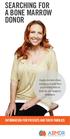 SEARCHING FOR A BONE MARROW DONOR Angela received a bone marrow transplant from an unrelated donor to treat her non-hodgkin s lymphoma. INFORMATION FOR PATIENTS AND THEIR FAMILIES For patients who need
RADIATION THERAPY FOR LYMPHOMA. Facts to Help Patients Make an Informed Decision TARGETING CANCER CARE AMERICAN SOCIETY FOR RADIATION ONCOLOGY
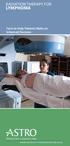 RADIATION THERAPY FOR Facts to Help Patients Make an Informed Decision TARGETING CANCER CARE AMERICAN SOCIETY FOR RADIATION ONCOLOGY FACTS ABOUT The lymphatic system is a network of tiny vessels extending
Disease Modifying Therapies for MS
 Disease Modifying Therapies for MS The term disease-modifying therapy means a drug that can modify or change the course of a disease. In other words a DMT should be able to reduce the number of attacks
It can be devastating to be diagnosed with a cancer like multiple myeloma. But there are treatments that can help you live longer and feel better.
 Patient information from the BMJ Group It can be devastating to be diagnosed with a cancer like multiple myeloma. But there are treatments that can help you live longer and feel better. What is multiple
TC: Docetaxel and Cyclophosphamide
 PATIENT EDUCATION patienteducation.osumc.edu What is TC? It is the short name for the drugs used for this chemotherapy treatment. The two drugs you will receive during this treatment are Docetaxel (Taxotere
APPENDIX I-A: INFORMED CONSENT BB IND 11184 Protocol CDC IRB #4167
 APPENDIX I-A: INFORMED CONSENT BB IND 11184 Protocol CDC IRB #4167 INFORMED CONSENT FOR USE OF DIPHTHERIA ANTITOXIN (DAT) FOR SUSPECTED DIPHTHERIA CASES Investigational New Drug (IND) BB 11184 Protocol
Vincristine by short infusion Doxorubicin by injection Cyclophosphamide by injection Rituximab by an infusion over between 60 minutes to a few hours
 R-CHOP R-CHOP This leaflet is offered as a guide to you and your family. The possible benefits of treatment vary; for some people chemotherapy may reduce the risk of the cancer coming back, for others
Gemcitabine and Cisplatin
 PATIENT EDUCATION patienteducation.osumc.edu What is Gemcitabine (jem-site-a been)? Gemcitabine is a chemotherapy medicine known as an anti-metabolite. Another name for this drug is Gemzar. This drug is
Prostate Cancer. There is no known association with an enlarged prostate or benign prostatic hyperplasia (BPH).
 Prostate Cancer Definition Prostate cancer is cancer that starts in the prostate gland. The prostate is a small, walnut-sized structure that makes up part of a man's reproductive system. It wraps around
Medicines To Treat Alcohol Use Disorder A Review of the Research for Adults
 Medicines To Treat Alcohol Use Disorder A Review of the Research for Adults Is This Information Right for Me? Yes, this information is right for you if: Your doctor* said you have alcohol use disorder
Chemotherapy Side Effects Worksheet
 Page 1 of 6 Chemotherapy Side Effects Worksheet Medicines or drugs that destroy cancer cells are called cancer chemotherapy. It is sometimes the first choice for treating many cancers. Chemotherapy differs
Tuberculosis and You A Guide to Tuberculosis Treatment and Services
 Tuberculosis and You A Guide to Tuberculosis Treatment and Services Tuberculosis (TB) is a serious disease that can damage the lungs or other parts of the body like the brain, kidneys or spine. There are
Patient Medication Guide Brochure
 Patient Medication Guide Brochure 1 MEDICATION GUIDE TASIGNA (ta-sig-na) (nilotinib) Capsules Read this Medication Guide before you start taking TASIGNA and each time you get a refill. There may be new
Human Normal Immunoglobulin Solution for Intravenous Infusion.
 CONSUMER MEDICINE INFORMATION (CMI) OCTAGAM Human Normal Immunoglobulin Solution for Intravenous Infusion. OCTAGAM is available in single use bottles of 20 ml, 50 ml, 100 ml and 200 ml. OCTAGAM contains
PATIENT HEALTH QUESTIONNAIRE Radiation Oncology (Patient Label)
 REVIEWED DATE / INITIALS SAFETY: Are you at risk for falls? Do you have a Pacemaker? Females; Is there a possibility you may be pregnant? ALLERGIES: Do you have any allergies to medications? If, please
Docetaxel (Taxotere) This booklet explains what docetaxel is, when it may be prescribed, how it works and what side effects may occur.
 Docetaxel (Taxotere) This booklet explains what docetaxel is, when it may be prescribed, how it works and what side effects may occur. Treatment Lorem ipsum and dolore side effects estes 2 Call our Helpline
MEDICATION GUIDE. ACTEMRA (AC-TEM-RA) (tocilizumab) Solution for Intravenous Infusion
 MEDICATION GUIDE ACTEMRA (AC-TEM-RA) (tocilizumab) Solution for Intravenous Infusion ACTEMRA (AC-TEM-RA) (tocilizumab) Injection, Solution for Subcutaneous Administration Read this Medication Guide before
What is a Stem Cell Transplantation?
 What is a Stem Cell Transplantation? Guest Expert: Stuart, MD Associate Professor, Medical Oncology www.wnpr.org www.yalecancercenter.org Welcome to Yale Cancer Center Answers with Drs. Ed and Ken. I am
Peripherally Inserted Central Catheter (PICC) for Outpatient
 Peripherally Inserted Central Catheter (PICC) for Outpatient Introduction A Peripherally Inserted Central Catheter, or PICC line, is a thin, long, soft plastic tube inserted into a vein of the arm. It
X-Plain Low Testosterone Reference Summary
 X-Plain Low Testosterone Reference Summary Introduction Testosterone is the most important male sex hormone. It helps the body produce and maintain adult male features. Low levels of testosterone affect
Infosheet. Allogeneic stem cell transplantation in myeloma. What is the principle behind stem cell transplantation?
 Infosheet Allogeneic stem cell transplantation in myeloma High-dose therapy and autologous stem cell transplantation is currently the first-line treatment standard of care for younger/fitter myeloma patients.
Eastern Health MS Service. Tysabri Therapy. Information for People with MS and their Families
 Eastern Health MS Service Tysabri Therapy Information for People with MS and their Families The Eastern Health MS Service has developed this information for you as a guide through what will happen to you
For the Patient: Paclitaxel injection Other names: TAXOL
 For the Patient: Paclitaxel injection Other names: TAXOL Paclitaxel (pak'' li tax' el) is a drug that is used to treat many types of cancer. It is a clear liquid that is injected into a vein. Tell your
The degree of liver inflammation or damage (grade) Presence and extent of fatty liver or other metabolic liver diseases
 ilearning about your health Liver Biopsy www.cpmc.org/learning What is a Liver Biopsy? A liver biopsy is a procedure where a specially trained doctor (typically a hepatologist, radiologist, or gastroenterologist)
CERVICAL MEDIASTINOSCOPY WITH BIOPSY
 INFORMED CONSENT INFORMATION ADDRESSOGRAPH DATA CERVICAL MEDIASTINOSCOPY WITH BIOPSY You have decided to have an important procedure and we appreciate your selection of UCLA Healthcare to meet your needs.
Share the important information in this Medication Guide with members of your household.
 MEDICATION GUIDE BUPRENORPHINE (BUE-pre-NOR-feen) Sublingual Tablets, CIII IMPORTANT: Keep buprenorphine sublingual tablets in a secure place away from children. Accidental use by a child is a medical
APPENDIX B SAMPLE INFORMED CONSENT FORM
 APPENDIX B SAMPLE INFORMED CONSENT FORM B.1 INFORMED CONSENT TO PARTICIPATE IN A RESEARCH STUDY Umbilical Cord Blood Banking for Transplantation You are being asked to take part in a research study that
AC: Doxorubicin and Cyclophosphamide
 PATIENT EDUCATION patienteducation.osumc.edu What is AC? It is the short name for the drugs used for this chemotherapy treatment. The two drugs you will receive during this treatment are Doxorubicin (Adriamycin
Paclitaxel and Carboplatin
 PATIENT EDUCATION patienteducation.osumc.edu What is Paclitaxel (pak-li-tax-el) and how does it work? Paclitaxel is a chemotherapy drug known as an anti-microtubule inhibitor. Another name for this drug
What you need to know about. Multiple Myeloma. Based on a brochure from National Institutes of Health National Cancer Institute STDAVIDS.
 What you need to know about Multiple Myeloma Based on a brochure from National Institutes of Health National Cancer Institute STDAVIDS.COM What you need to know about Multiple Myeloma Introduction...1
Epidural Continuous Infusion. Patient information Leaflet
 Epidural Continuous Infusion Patient information Leaflet April 2015 Introduction You may already know that epidural s are often used to treat pain during childbirth. This same technique can also used as
Severe Combined Immune Deficiency (SCID)
 Severe Combined Immune Deficiency (SCID) ASCIA EDUCATION RESOURCES (AER) PATIENT INFORMATION Severe combined immune deficiency (SCID) is the most serious form of primary immune deficiency and is usually
Like cocaine, heroin is a drug that is illegal in some areas of the world. Heroin is highly addictive.
 Heroin Introduction Heroin is a powerful drug that affects the brain. People who use it can form a strong addiction. Addiction is when a drug user can t stop taking a drug, even when he or she wants to.
Commonly Asked Questions About Chronic Hepatitis C
 Commonly Asked Questions About Chronic Hepatitis C From the American College of Gastroenterology 1. How common is the hepatitis C virus? The hepatitis C virus is the most common cause of chronic viral
POINCIANA INTERNAL MEDICINE PA. Patient Name: Social Security Number: Date of Birth: / / Sex: M/F (Circle One) Married/Single/Divorced/Widow Address:
 Patient Name: Social Security Number: Date of Birth: / / Sex: M/F (Circle One) Married/Single/Divorced/Widow Address: (Street) (City/State/Zip) Home Phone: ( ) E Mail Address: Would you be interested in
INITIATING ORAL AUBAGIO (teriflunomide) THERAPY
 FOR YOUR PATIENTS WITH RELAPSING FORMS OF MS INITIATING ORAL AUBAGIO (teriflunomide) THERAPY WARNING: HEPATOTOXICITY AND RISK OF TERATOGENICITY Severe liver injury including fatal liver failure has been
My Sister s s Keeper. Science Background Talk
 My Sister s s Keeper Science Background Talk Outline Acute promyelocytic leukemia (APL) APL Treatment Savior Siblings In vitro fertilization (IVF) Pre-implantation Genetic Diagnosis (PGD) Risks of donating
12 Points of Tuberculosis (TB) Patient Education
 12 Points of Tuberculosis (TB) Patient Education Transmission of TB TB is a disease caused by the TB germ. The disease is mainly in the lungs (pulmonary TB), but the germ can travel to other parts of the
CMF: Cyclophosphamide, Methotrexate and Fluorouracil
 PATIENT EDUCATION patienteducation.osumc.edu CMF: Cyclophosphamide, Methotrexate and Fluorouracil What is CMF? This is the short name for the drugs used for this chemotherapy treatment. The three drugs
NEW PATIENT HISTORY QUESTIONNAIRE. Physician Initials Date PATIENT INFORMATION
 NEW PATIENT HISTORY QUESTIONNAIRE Physician Initials Date PATIENT INFORMATION JHH# DOB# AGE HOME PH CELL PH DAY PH EMAIL Who is your REFERRING PHYSICIAN? (The doctor who referred you to Johns Hopkins Neurology.)
Leader's Resource. Note: Both men and women can have an STD without physical symptoms.
 Leader's Resource Information on Sexually Transmitted Diseases (STDs) Signs and Symptoms of STDs Note: Both men and women can have an STD without physical symptoms. Any of the following can indicate to
INTRAPERITONEAL HYPERTHERMIC CHEMOTHERAPY (IPHC) FOR PERITONEAL CARCINOMATOSIS AND MALIGNANT ASCITES. INFORMATION FOR PATIENTS AND FAMILY MEMBERS
 INTRAPERITONEAL HYPERTHERMIC CHEMOTHERAPY (IPHC) FOR PERITONEAL CARCINOMATOSIS AND MALIGNANT ASCITES. INFORMATION FOR PATIENTS AND FAMILY MEMBERS Description of Treatment A major difficulty in treating
Acute myeloid leukemia (AML)
 Acute myeloid leukemia (AML) Adult acute myeloid leukemia (AML) is a type of cancer in which the bone marrow makes abnormal myeloblasts (a type of white blood cell), red blood cells, or platelets. Adult
The challenge of herpes
 The challenge of herpes Herpes is a common and personally challenging disease Herpes is very common. One out of four adults has genital herpes. When people first hear that they are infected, many become