
Investment and Finance Study for Off-Grid Lighting
|
|
|
- Doris Cameron
- 10 years ago
- Views:
Transcription


1 Investment and Finance Study for Off-Grid Lighting An A.T. Kearney report in collaboration with GOGLA June 2014 Sponsored by GIZ Supported by Quadia, Stiftung Solarenergie, and SolarAid Investment and Finance Study for Off-Grid Lighting 1

2 Cover photograph: d.light Investment and Finance Study for Off-Grid Lighting 2

3 Management Summary This study reviews the market for solar off-grid lighting products (SOGLPs) and concludes that improved financing can promote industry growth. The market consists of about 1.3 to 1.4 billion people at the bottom of the pyramid (BOP) who have no access to electricity. This group s primary sources of light are kerosene lamps and battery-operated flashlights. By comparison, modern solar lamps offer lower cost, better quality of light, and an improved social and environmental impact. Currently, this group invests an estimated $30 billion per year buying kerosene for lighting purposes. The cost to supply equivalent light with solar equipment is estimated at $2.7 billion. This frees up $27 billion for use elsewhere, such as further investments in solar systems. While the SOGLP market is growing, improved financing of the industry s relatively high working capital needs could help it grow faster. There are already several established solutions for meeting this financing need; however, none of them are considered best practices and there remains room for more innovative solutions. Each investor group can play its role in the effort to grow this industry in a win-win way. From angel and philanthropic investors to established banks and private equity, the industry has the potential to offer attractive returns. Investment and Finance Study for Off-Grid Lighting 3

4 About GOGLA Over one-quarter of the world s population lives without access to electricity. Off-grid lighting addresses this challenge by providing light to those in need. The move to off-grid lighting is transforming lives and economies in developing countries around the world by increasing incomes, assisting educational development, and improving health and safety. The Global Off-Grid Lighting Association (GOGLA) was established to act as the industry advocate with a focus on small and medium-size enterprises. It is a neutral, independent, not-for-profit association created to promote lighting solutions that benefit society and businesses in developing and emerging markets. GOGLA supports industry in the market penetration of clean, high-quality, alternative lighting systems. GOGLA s main objective is to support industry in scaling the sector based on the principles of the triple bottom line, thus contributing to the objectives of SE4All (Sustainable Energy for All) and the MDGs (Millennium Development Goals). Formed in 2012 as a public-private initiative, GOGLA was conceived out of the joint World Bank/IFC effort to provide a sustainable exit strategy for the Lighting Africa initiative. GOGLA s unique position as an advocate for off-grid lighting outside the philanthropic area enables it to continue where Lighting Africa stops. The association welcomes the participation of all stakeholders within the off-grid lighting sector. About A.T. Kearney A.T. Kearney is a global team of forward-thinking partners that delivers immediate impact and growing advantage for its clients. We are passionate problem solvers who excel in collaborating across borders to co-create and realize elegantly simple, practical, and sustainable results. Since 1926, we have been trusted advisors on the most mission-critical issues to the world s leading organizations across all major industries and service sectors. A.T. Kearney has 59 offices located in major business centers across 40 countries. Investment and Finance Study for Off-Grid Lighting 4

5 About the Study Objectives: GOGLA appointed A.T. Kearney as a trusted advisor to conduct a comprehensive and informative off-grid lighting market study to raise awareness of the opportunity and support finance professionals as they evaluate it. The study highlights creative solutions, such as collaborative financing approaches. It also highlights the need for the increased transparency of current market challenges. The study will enable investors, financial service companies, foundations, manufacturers, and distributors within the off-grid lighting sector, national governments, NGOs (non-governmental organizations), and international facilitators such as GOGLA to further the development of an off-grid lighting market. Methodology: This study, the first of its kind, investigates the issues and opportunities specific to the financing of the off-grid lighting industry. To do this, we relied on a three-pillar research approach: 1. We conducted in-depth literature research and desktop analysis of available data 2. We involved the top 20 industry players in interviews, face-to-face workshops, and surveys for the purposes of data collection and validation 3. We involved 13 finance industry professionals in interviews and surveys for the purposes of data collection and validation For our first pillar we analyzed market data, key players, trends, and growth barriers through literature research. Then we combined the points of view and insights from various institutions and external consultancies into one comprehensive market overview. For our second pillar we turned to the major players in the off-grid lighting industry and conducted interviews, a survey, and several face-to-face workshops to understand their needs and challenges. This helped us discern the barriers to growth and accessing finance within the industry, as well as the firms perspectives on certain innovative approaches. In total, we interviewed and surveyed representatives from the top 20 companies in the off-grid lighting industry. For our third and final pillar we wanted to understand the off-grid lighting industry s financing barriers and the strategies it uses to address them. To do this we conducted interviews with and surveys of 13 financial professionals and involved them in workshops during the completion of this study. The results helped us determine the industry s main barriers to growth and finance, while offering individual perspectives on several innovative approaches. Investment and Finance Study for Off-Grid Lighting 5

6 Table of Contents Table of Figures 1 Glossary 2 The Off-Grid Lighting Market Opportunity 3 Financing Needs and Investing in the Off-Grid Lighting Industry 22 Summary and Call to Action 36 Bibliography 38

7 Table of Figures Figure 1: World economic pyramid (Source: World Resource Institute) 3 Figure 2: African population without electricity 4 Figure 3: Three megatrends drive the SPL market 5 Figure 4: The SOGLP energy ladder 6 Figure 5: Household savings with SPLs 9 Figure 6: Scenarios achieving universal energy access 11 Figure 7: Potential market for SPLs 12 Figure 8: Market potentials in off-grid electricity 13 Figure 9: Mobile phone owners vs. grid access for select African countries, Figure 10: Sensitivity analysis of SOGLP affordability 15 Figure 11: Historic and future SOGLP sales 16 Figure 12: Profitability of interviewed companies 16 Figure 13: Comparing industry and investor views on barriers to growth 17 Figure 14: Barriers to growth from firm perspective 18 Figure 15: Market barriers perceived by investors 19 Figure 16: Barriers to finance from investor and industry player perspective 23 Figure 17: Barriers to finance from firm perspective 24 Figure 18: Barriers to finance from investor perspective 25 Figure 19: Off-grid lighting landscape along the value chain 26 Figure 20: Investor focus along the player value chain 27 Figure 21: Capital requirements in the SOGLP industry 28 Figure 22: Examples of capital requirements in the SOGLP industry 29 Figure 23: Investment focus of investors vis-à-vis company stage 30 Figure 24: Impact investors investments in energy access 30 Figure 25: Investors along the industry life cycle 31 Figure 26: Existing practices and innovative solutions to finance 32 Table 1: Solar off-grid lighting products 5 Table 2: Impacts of SOGLPs 8 Table 3: Market risks and mitigations 20 Investment and Finance Study for Off-Grid Lighting 1

8 Glossary BOP: Bottom of the pyramid CAGR: Compounded annual growth rate ECOWAS: Economic Community of West African States GIZ: Deutsche Gesellschaft für Internationale Zusammenarbeit GmbH GOGLA: Global Off-Grid Lighting Association IEA: International Energy Agency IFC: International Finance Corporation LED: Light-emitting diode MFI: Microfinance institution SHS: Solar home system SOGLP: Solar off-grid lighting product SPL: Solar portable light SPV: Special purpose vehicle UNEP: United Nations Environment Program UNF: United Nations Foundation VC: Venture capital Investment and Finance Study for Off-Grid Lighting 2

9 The Off-Grid Lighting Market Opportunity Over 1 billion people have an unmet demand for cleaner and cheaper off-grid lighting As of today, 1.4 billion people roughly 18 percent of the earth s population do not have access to grid electricity. Another 1 billion people are connected to unstable grids and experience regular power outages, classifying them as under-electrified. 1 Together, these people offer nearly $30 billion of potential business to companies working in the off-grid lighting sector. 2 This segment of the population, which is sometimes classified as the bottom of the pyramid (BOP), has an unfulfilled need that represents a significant market opportunity. Sector growth rates are on a trajectory similar to the one followed by mobile phones. In other words, we can expect an outstanding market growth performance. 3 Yet, historically, investors have paid little attention to the BOP energy market. Figure 1 illustrates the world economic pyramid. Four billion people with a cumulative market size of $5 trillion represent the bottom of the pyramid. 4 Figure 1 World economic pyramid Individual annual income ($ in purchasing power parity, 2005) Population 0.5 billion Mature markets: >$20,000 2 billion Emerging markets: $3,260 to $20,000 4 billion Survival markets: <$3,260 Sources: World Resource Institute; A.T. Kearney analysis In the off-grid market, things have begun to change, but the revolution hasn t occurred just yet. While numerous startups and established companies (such as Philips) are moving to seize the opportunity represented by the needs of the non- and under-electrified, no one group has come to dominate this area. One of the focus markets is sub-saharan Africa, where the off-grid population is forecast to rise from 600 million people in 2011 to 698 million in 2030 (see figure 2 on page 4). 5 1 IEA (2012); IEA (2013) 2 UNEP (2013) 3 Mobile phone penetration CAGR from 2000 to 2012 accounted for 36 percent. See GSMA (2012). 4 IFC and WRI (2007) 5 IEA (2013); Lighting Africa (2013) Investment and Finance Study for Off-Grid Lighting 3

10 Macro trends Solar portable lights are already the preferred source of lighting for households with zero or unreliable access to energy. As awareness of the advantages of such sources increases, demand will continue to grow. Three megatrends, illustrated in figure 3 on page 5, will drive demand for solar off-grid lighting products (SOGLPs). 6 First, component costs for solar lanterns will fall at a CAGR of -6 percent from 2012 to Second, kerosene prices will rise at a CAGR of 4 percent. 8 Although many countries in sub-saharan Africa and Asia subsidize kerosene keeping prices artificially low over long periods of time increases in kerosene prices entail higher subsidies and costs for governments. Eventually, higher kerosene prices will be passed on to the end consumer. Third, mobile phone penetration is expected to increase by more than 20 percentage points in Africa and Asia by 2017, at which point the power needed to charge phones will further accelerate SOGLP demand. 9 The many direct benefits of solar off-grid lighting products over kerosene and conventional sources of lighting The rationale behind offering solar-based lighting is simple: Solar off-grid lighting products are cheaper, brighter, more efficient, and healthier than kerosene lamps, and offer additional important functionalities such as mobile phone-charging outlets. Figure 2 African population without electricity (millions) Sources: Lighting Asia, UN Energy Access Practitioner Network, GOGLA; A.T. Kearney analysis 6 GSMA.com; Lighting Africa (2013); eia.gov 7 Dalberg analysis for Lighting Africa Market Trends Report Kerosene cost calculations based on a consumption of 0.16 liters per day, equal to approximately six hours of daily kerosene lamp usage: Lighting Africa (2013). 9 Source: Kantar Investment and Finance Study for Off-Grid Lighting 4

11 Figure 3 Three megatrends drive the SPL market Decreasing SOGLP costs ($ per SOGLP 1 ) Increasing kerosene spend 2 ($ per household, per year) Increasing mobile penetration in Africa (% of SIMs) 6% % % +4% 88% Performance and production costs will continue to improve Key cost improvements from batteries, LED, and PV chips Kerosene prices grow in line with the oil price Price premium for rural customers must be considered Mobile communication is a key facilitator of rural development Mobile charging functionality of SOGLP accelerates demand 1 Manufactured costs for a medium-level solar lantern 2 Kerosene calculation based on consumption of about 60 liters per year (about 6 hours of daily usage). 3 A premium of 33.8 percent for customers in rural parts of developing countries was added to the U.S. wholesale price. Notes: LED is light emitting diode. SIMs are subscriber identity modules. PV is photovoltaic. Sources: GSMA, Dalberg analysis, EIA.gov; A.T. Kearney analysis Range of SOGLPs There is a wide range of SOGLPs, from single light sources without external power outlets and with brightness levels under 100 lumens to multi-light-source applications with external power outlets and brightness levels around 200 lumens. For the purpose of this study, we differentiate between solar portable lights (SPLs), solar home systems (SHS), and large SHS. Table 1 shows the segmentation of simple SPLs, SHS, and large SHS. Table 1 Solar off-grid lighting products Solar portable lights (SPLs) Single light sources with or without mobile phone-charging outlet Entry-level products with solar panels of 10W and below Prices range from less than $10 to $40 Solar home systems (SHS) Multi-light source applications with mobile phone charging outlet Sources can power devices such as radios or small televisions Prices range from $50 to $200 Large solar home systems 12 volt systems replace diesel generators or car batteries 12 volt systems can power multiple lighting points and devices such as televisions and refrigerators Prices start at $200 Images: Left: GOGLA; center: Orb Energy; right: Barefoot Power Sources: GOGLA; A.T. Kearney analysis Investment and Finance Study for Off-Grid Lighting 5

12 Lighting as a demand enabler for more powerful solar home systems As technology improves and prices fall, consumers will shift to more powerful solar home systems. Consequently, with more powerful solar home systems, the markets for electrical products such as TVs and fans will also grow. Lighting is the enabler of demand evolution, and as new technologies become available at the bottom of the pyramid, demand will rise for bigger and more expensive systems (see figure 4). More than just brighter light, SOGLP can be a key enabler for economic development Most SOGLPs offer brightness levels three to 10 times higher than simple kerosene lamps (10 lumens) and offer six to eight hours of quality lighting on one charge. Moreover, multi-lightsource applications such as SHS can power several light sources and attain up to 300 lumens. If the light points are properly focused on the task area, the brightness levels are high enough for reading and writing. 10 Simple candles or wick cans that disperse light simply do not suffice, whereas stronger solar off-grid lighting products that can focus their light on one spot (task lighting) or illuminate a space (ambient lighting) improve working and living conditions enormously. Equally, there is strong evidence that SPL owners want to upgrade to mid-range lights such as SHS and that owners of SPLs or SHS with an integrated phone charging outlet use their mobile phones more often. Figure 4 The SOGLP energy ladder Price $200+ Large SHS Can supply large TV, small fridge Replace diesel generators and car batteries $2,000 5,000 $ SPL SHS Can supply multiple LEDs Can supply radio or small TV $500 1,200 Annual household income $10 40 Replace kerosene lamps Offer USB charging $500 or less Low Performance and features High Source: A.T. Kearney analysis 10 Lighting Africa (2013); Lighting Africa products specification sheets; Mills (2003) Investment and Finance Study for Off-Grid Lighting 6

13 Low-risk, easy-to-use alternative to kerosene With regard to ease of use, kerosene lamps are hard to light and use in extreme winds or rain. Their cheap tin construction and glass windshields make them extremely fragile, and replacements are necessary on a regular basis. Kerosene lamps are also a serious cause of health problems due to indoor air pollution, and damage caused by knocked-over lamps can ruin lives. SOGLPs, on the other hand, are sturdy and durable, and they resist the extreme weather of sub-saharan and Asian countries. The wider benefits of solar off-grid lighting products For users and the economy as a whole, solar lanterns offer economic benefits and a positive social, health, and environmental impact, as shown in table 2 on page GOGLA recently began an ad hoc working group on off-grid lighting impact with results expected in the 4th quarter of Social impacts The provision of off-grid energy enhances community development. Traditionally, in rural areas, village life continues after dark. With solar lighting, new activities that had not been possible before start to take place. For example, activities that can increase social cohesion such as adult classes and regional town meetings can be held after dark. SOGLPs also help reduce the risk of snake and scorpion bites and may help prevent crime, especially against women. 12 Studies also suggest that households equipped with solar lanterns can extend study hours further than those dependent on traditional lighting sources, which can be beneficial for children s education. For example, SolarAid showed that children using SOGLPs for studying prolong their study time by more than one hour per day. 13 Furthermore, when parents make the move from kerosene to solar the cash savings can be re-invested to improve their children s education. 14 Health impacts The Photos use 1 of and SOGLPs 2 improves health and safety on both the individual and community level. Kerosene Studying lamps with fuel-based contribute lighting to indoor versus air pollution, studying causing with SOGLP eye irritation, coughing, allergies, Studying with fuel-based lighting Studying with a SOGLP Images: Lighting Africa/Wilkens Source: A.T. Kearney analysis 11 UNEP (2013); GIZ (2010); SolarAid (2013); The Lumina Project light.lbl.gov 12 SolarAid (2013) 13 Dalberg analysis for Lighting Africa Market Trends Report Agoramoorthy and Hsu (2009); Kesrelioglu (2011); Planète d'entrepreneurs (2012); Furukawa (2012); GIZ (2011); Gustavsson (2007); World Bank (2010); Yayasan Dian Desa (2003); Mondal and Klein (2011); Kürschner et al. (2009) Investment and Finance Study for Off-Grid Lighting 7

14 Table 2 Impacts of SOGLPs Social impacts Health impacts Environmental impacts Economic impacts Longer hours and better illumination for studying Social cohesion and community development Safety and equitable development for women Improve safety by reducing hazards associated with flammable fuels and candles Reduce indoor air pollution with a significant effect on consumers health Prevent 90 million tons of CO2 emissions annually Reduce annual global kerosene consumption by 25 billion liters Prevent 270,000 tons of black carbon annually, with a warming effect equivalent to about 240 million tons of CO2 Protect natural habitats against deforestation Free up $27 billion spent annually on fuel to be invested in more sustainable businesses Reduce household spending on kerosene or candles, and increase savings up to 10 to 15 percent of a household s income Generate new income, stimulate economic activities, and offer new opportunities for small businesses by lengthening the day Multiply trade activities and job creation to increase state income and facilitate overall socioeconomic development Source: A.T. Kearney analysis and chest pain. 15 WHO/GACC studies put the number of deaths resulting from household air pollution at 4.3 million a year, higher than the number of deaths resulting from malaria, AIDS, or sanitation issues. 16 Better and brighter light sources such as SOGLPs also diminish eye strain. Kerosene lamps with brightness levels lower than 10 lumens do not provide sufficient lighting, causing eye irritation and vision problems. 17 In addition, SOGLPs are proven to reduce the likelihood of fires and accidents. This is especially important as 95 percent of the world s 300,000 deaths per year caused by open flame lighting and cooking occur in developing countries. 18 Unsurprisingly then, members of households equipped with SOGLPs report leading more comfortable lives and feeling healthier. Indeed, as a result of the better lighting conditions provided by SOGLPs, it is possible to extend medical care into the night. Environmental impacts Solar lighting also offers enormous environmental benefits. On an individual and SME level, the use of solar products leads to less toxic waste around living areas, working areas, and water sources as single-use battery-powered devices such as flashlights become obsolete. The most impressive numbers, however, concern air pollution and global warming. UNEP estimates that the burning of fossil fuels for the purposes of lighting currently accounts for 90 million tons of CO 2 annually. 19 Recent research suggests that SOGLP customers use 1.5 fewer kerosene lamps on a regular basis, and more than 40 percent stop using kerosene completely SolarAid (2013) 16 Household Energy Network, GACC News, Issue 61: Climate Change: Adaptation, Resilience and Energy Security 17 Mills (2012) 18 WHO (2008) 19 UNEP en.lighten 20 SolarAid (2013) Investment and Finance Study for Off-Grid Lighting 8

15 Furthermore, the burning of kerosene lamps produces black carbon, the particle that is the second largest contributor to global warming. One gram of black carbon warms the atmosphere several hundred times more in just a few days than one gram of CO 2 does over a century. It is estimated that 270,000 tons of black carbon are emitted annually from kerosene lamps. The warming effect of these emissions is equivalent to about 240 million tons of CO 2, equaling around 4.5 percent of the United States annual CO 2 emissions. The elimination of these emissions through off-grid lighting products would represent a 5-gigaton CO 2 reduction over the next 20 years. 21 Economic impacts In off-grid households still relying on traditional fuel-based lighting, expenditures for lighting typically account for 10 to 15 percent of a household s income and constitute a major financial strain on a household s budget. 22 While initial purchasing costs for SOGLPs are often higher than the purchasing costs for kerosene or candles, SOGLPs are cheaper to run in the long term. As with solar lights, the running costs are zero and the solar light device is just a one-time cost. Typically, the investment for a mid-priced solar lantern is repaid within four to five months. What solar lantern owners save on kerosene they can also invest in other important things such as food, education for their children, healthcare, and general improvements to their living standards. Assuming a three-year life cycle (a conservative calculation, as the average SPL has an expected useful life of three to five years), a household can save up to 86 percent of its previous expenses for kerosene and mobile charging. 23 A sample calculation for a household with six hours of kerosene lamp usage every day and a mobile phone charge every sixth day is illustrated in figure 5. Replacing one kerosene lamp with one solar lantern and using the solar lantern to charge the mobile phone can save $60 Figure 5 Household savings with SPLs Example SPL ($) Lighting cost of kerosene 2 Upfront cost of kerosene lamp 68 Annual operating cost of kerosene lamp 15 Annual phone charging cost 85 Total annual expenditure on lighting and charging Payback of SPL 85 Total annual expenditure on lighting and charging 60 First-year savings Payback after less than 4 months 25 Investment in SPL Life cycle economics of SPL 85.0 Total annual expenditure on lighting and charging 76.7 Annualized savings 90% of previous energy expense saved Annual advantage of $ = $230 over 3-year life cycle Annualized cost of SPL Notes: Kerosene assumptions: Six hours of kerosene lamp usage per day, about 60 liters per year. Kerosene price: $1.13 per liter. Mobile charging assumptions: One charge every sixth day at $0.25. Sources: IFC, EIA; A.T. Kearney analysis 21 Jacobsen et al. (2013); Lam et al. (2012) 22 SolarAid (2013) 23 Lighting Asia (2012) Investment and Finance Study for Off-Grid Lighting 9

16 in just the first year of use. Over the assumed three-year lifetime of the lamp, that rises to $76.70 a year, which is more than 10 percent of the total income of those living on less than $2 a day. 24 Besides financial savings, solar powered lighting also increases a household s income potential by enabling extended working hours and increased productivity at night. Additionally, while the possibilities for increased economic activity are many, a few stand out. Handcrafters and farmers can process their products after dark and sell more during the day, shop owners can attract more customers to their shops in extended opening hours, and people can use saved expenses to invest in their own small businesses. More subtly, there is economic value in improved communication too. Readily available, charged mobile phones improve business communication, while solar-charged radios offer access to better information and opportunities for radio advertising. Combined with purchases in nutrition, health, and entertainment and additional electronic accessories, solar lighting can be a significant economic enabler that multiplies trade activities and creates jobs at the bottom of the pyramid. 25 Manufacturers and distributors will also benefit from the maturing off-grid lighting market and contribute to the government coffers of the respective countries. The manufacturing and distribution of SOGLPs will create jobs, provide more income tax, and reduce the need for public welfare. Cleaner SOGLP technology should reduce public health expenditures, too. Finally, as kerosene is heavily subsidized in most sub-saharan African countries, the displacement of kerosene lamps with SOGLPs should reduce government subsidy bills. Reaching universal access to electricity Reaching universal access to electricity is an important objective, and there are several scenarios for how to achieve that. The International Energy Agency and UNF Energy Access Practitioner Network Photos 3 estimate and 4 that about $700 billion will need to be invested to ensure universal electricity access Working by by the candlelight year versus Universal working electricity by solar access light by 2030 also means around 950 terawatt Working in candle light Working with solar light Pictures Lighting Africa/Jamie Seno Source: A.T. Kearney analysis 24 Calculations based on Lighting Africa (2013). Kerosene assumptions: six hours of usage of kerosene lamp per day, kerosene price: $1.13/liter. Mobile charging assumptions: One charge every sixth day at $ Adkins et al. (2010); GIZ (2011, 2012); Planète d Entrepreneurs (2012); SolarAid (2013) 26 IEA (2012); UNF (2012) Investment and Finance Study for Off-Grid Lighting 10

17 hours of electricity need to be generated per year. The cost per new household connection amounts to $2,800 (see figure 6). The electrification of households through solar solutions would require a fraction of the grid investment costs. While households connected to the grid have unlimited access to electricity, off-grid energy becomes a viable alternative when the grid is not available or too costly. For $10, solar lanterns provide basic energy services while large SHS provide sufficient energy to power refrigerators. A system to light an off-grid household and power small devices can cost $120 with an expected useful life of up to 10 years. Moreover, on the basis of past trends, this cost disparity is likely to increase. Over the past decade, clean energy technologies have become cheaper. Unit manufacturing costs have come down worldwide as clean energy policies and emerging markets bolster demand. 27 Grid extensions remain costly and demonstrate declining returns on investment when expanded from heavily populated urban areas (where connections are dense) to rural areas (where villages can be miles from one another). Where the grid extensions are currently under way, investments per household are so high that most households have to contribute by paying high connection charges for grid electricity. For example, in Kenya the highest grid connection charges are around $400. For the same amount, Figure 6 Scenarios achieving universal energy access Grid investments World energy access, 2012 Universal energy access, 2030 (for example, SE4All) Goal Universal energy access by 2030 Proposition by international organizations such as the United Nations Foundation vs. Necessary investments of $700 billion until 2030, mainly into grid and mini-grid $2,800 Average grid and mini-grid investment per household vs. Electrification through solar solutions Necessary investments based on desired electrification level per household $25 for average SPL $120 for average SHS World population: 7 billion people in 2012, 8.3 billion people in billion potential customers without electricity Note: SE4All is Sustainable Energy for All. Sources: Energy Access Practitioner Network, UN; A.T. Kearney analysis 27 Green Growth Action Alliance (2013) Investment and Finance Study for Off-Grid Lighting 11

18 a household could finance more than four entry-level SHS, which can power lamps, radios, and small TVs. Accordingly, when the grid becomes available in rural areas it is common to see adoption rates as low as 10 percent of households. 28 With a more affordable, fast, and reliable solution available, many customers opt for solar-powered energy. Solar off-grid lighting is a multibillion dollar opportunity Today, the world s 250 million off-grid households consume around 25 billion liters of kerosene per year and spend more than $30 billion on fuel-based lighting such as kerosene and candles, excluding expenditures on batteries and diesel generators. 29,30 This $30 billion expenditure on fuel can be used as a proxy to gauge the market for innovative alternatives. With the provision of SOGLPs, energy consumption at the BOP decreases and cash flow into off-grid lighting solutions increases. SOGLP companies interviewed as part of this study noted that a few customers return within months of their initial purchase, looking for bigger solar lighting products. Vendors also noted that the current market is most interested in small solar home systems in the $60 to $100 range. However, in countries such as Kenya, Ethopia, and the Phillipines there is a clear trend toward SHS over $100. Should current trends continue, sub-saharan Africa will eventually overtake Asia as the biggest off-grid market in terms of people and households as a result of population growth exceeding current capacity to extend the grid. 31 Globally, we estimate an annual market of up to $2.7 billion. 32 As a result, $27.3 billion can be freed up as additional purchasing power for education, health, and further solar products and accessories such as solar lanterns, bigger home systems, TVs, radios, fans, and refrigerators. Figure 7 illustrates this concept. Figure 7 Potential market for SPLs Off-grid lighting market spend 1 ($ billion, 2012) Determined by: Number of households (250 million) Average price per solar lantern ($25) Number of lanterns per household (1.3) Lifespan per lantern (3 years) Only $200 million tapped today Potential growth with kerosene prices Freed up capital that can be invested into: Clean energy access (for example, SHS for communication and household appliances) Social requirements (for example, education and health) Economic empowerment (for example, own businesses, stores) 0 Current kerosene spend Market for SPLs Market for SPLs 1 Current kerosene spend is based on 2012 prices. Sources: IFC, Lighting Africa, UNEP; A.T. Kearney analysis 28 UNF (2012); World Bank (2013) 29 Assumption: One household uses two kerosene lamps with 50 liters kerosene usage per year. See also IFC (2012); UNEP (2013); UNF (2012). 30 UNEP (2013) 31 Lighting Africa (2013); OBIN World million households, 1.3 solar lanterns per household, life expectancy of three years, price of $25 Investment and Finance Study for Off-Grid Lighting 12

19 Market forces will redirect the freed-up $27.3 billion toward more economically productive uses, which are likely to include significant investment in access to off-grid energy. Thus, we see solar lighting as an enabler for the solar energy access market as a whole the industry will feed off its own success. In conclusion, we see the following market potentials illustrated in figure 8 based upon A.T. Kearney estimates, interviews, and market data. The market for SPLs today is estimated at $200 million globally, yet if every off-grid household used SPLs instead of kerosene-fuelled lamps the market would be $2.7 billion at current prices. 33,34 Figure 8 Market potentials in off-grid electricity SOGLP market potentials Maximum market potential Today s market volume: $0.20 billion SPL market: $2.71 billion Potential SHS market: $6 billion Potential SHS and accessories market: $50 billion Radio Television Fans Other (for example, hair dryers) Today Short-term Mid-term Long-term Time Sources: Lighting Asia, Energy Practitioner Network; A.T. Kearney analysis For SHS we estimate a market potential of $6 billion, which will appreciate as the market evolves. 35 Additionally, we consider the ability of large SHS to power electrical accessories such as TVs, fans, and radios a multiplier and believe this market could total $50 billion. 36 Naturally, it takes time to evolve from the $200 million market today to $50 billion in the future. Nevertheless, with appropriate expertise and capital investment this market can grow exponentially. It is noteworthy that these market estimations do not include the additional 1 billion people worldwide who are connected to unstable grids and experience regular power outages. Solar solutions can of course be a fallback solution for when the electricity is off, offering a further upside to the market sizing estimates. It is clear that the market is currently underserved. Household penetration rates are estimated at 3 percent for SPLs in sub-saharan Africa and the combination of SPLs and small solar home 33 Four million SPLs sold in Africa in 2013 at an average price of $25. Doubling the African market is a fair assumption for the world market million households, 1.3 solar lanterns per household, life expectancy of three years, price of $ million households, one SHS per household, life expectancy of five years, price of $ million households, one SHS fully equipped with TV, fan, and so forth per household, life expectancy of five years, price of $1,000 Investment and Finance Study for Off-Grid Lighting 13

20 systems in Asia. 37 However, some critics doubt the affordability of solar off-grid products and argue that the market is in fact much smaller. At first glance, the affordability question is real: If households with a limited income must continue to purchase expensive fuel, they may not be able to save the cash to buy more economic solar lighting. However, affordability is not black and white. If devices are financed, then cash savings could go toward paying them off. Yet firms currently in the market lack the necessary capital or business models necessary to make such changes, providing a clear opportunity for innovative financing solutions and improved business models. The mobile phone industry offers a good example of the success businesses can have if they apply the right models in sub-saharan Africa. Figure 9 shows mobile penetration versus electrification rates for select countries. Even in the countries with the lowest electrification rates, at least 70 percent of the population owns a mobile phone. If mobile phones and their communication charges are affordable, then so are basic solar lanterns or higher-level products with regular installments. Besides, as previously mentioned, a high mobile phone penetration implies the need for a means of electrification to charge the devices. 38 Evidence suggests that the market is currently limited by the supply side, not the demand side an assertion confirmed by interview respondents, who also stated that where there is demand a means of supply can be found. The demand is huge! People want to live like us, with 10 lamps, outside and inside the house and for their stores. Where there is demand, people find a way to get what they want. The BOP market is growing fast, and its aggregated purchasing power suggests significant opportunities for market-based approaches. 39 By establishing trust in technology and freeing up household income for further investment, companies can pave the way for even faster growth at higher price points. Figure 9 Mobile phone owners vs. grid access for select African countries (2011) Mobile phone ownership (% of population) Electrification rate (% of population) 93% 47% 90% 42% 88% 61% 86% 82% 80% 79% 71% 49% 51% 14% 9% 16% Côte d Ivoire Senegal Ghana Cameroon Nigeria Tanzania Uganda Kenya Sources: Kantar, IEA; A.T. Kearney analysis 37 Lighting Africa (2011) 38 Kantar (2013); IEA (2011) 39 IFC and WRI (2007) Investment and Finance Study for Off-Grid Lighting 14

21 Our interview respondents strongly believe that consumer finance is an important enabler and could be the way to multiply industry revenues. If industry can identify the right end-user financing mechanisms, then the market should be able to grow to its full potential. This includes existing solutions such as pay-as-you-go systems, mobile payments, and modularized systems that can be extended. Our interviews and surveys suggest that about 50 percent of customers could afford average-priced SOGLPs without any commercial end-user financing. Affordability is increased to 60 percent if 30 percent of the price is financed through commercial end-user financing, and 80 percent if 70 percent were financed. The industry consensus is that by introducing models that enable customers to pay the full price in installments, it will be possible to realize the full market potential. Figure 10 depicts this sensitivity analysis. Figure 10 Sensitivity analysis of SOGLP affordability Addressable SOGLP market (% of total) Off-grid products % financing of the end-user price increases market potential by 35 percentage points versus upfront payment only Upfront payment as share of end-user price (in %) Sources: Interviews; A.T. Kearney analysis The industry is growing, yet growth rates could be better with improved financing Industry growth The SOGLP industry is in growth mode. Lighting Africa (2013) projects the number of SPL units sold will grow at a rate of 75 percent between 2012 and Regarding the worldwide sales of SPLs, we estimate 77 percent growth in 2014 and a healthy average growth rate of 55 percent in the following years (see figure 11 on page 16). There are three ways to promote further growth in the SOGLP industry. First and foremost, reach new customers and increase market penetration. Second, increase incremental sales to existing SOGLP customers, driven by increased household income due to savings on kerosene. Third, increase household income in order to increase consumer awareness and access to finance. Together, these aspects should increase the number of SOGLPs sold per household and open up other avenues of growth. For instance, as the warranties expire and products come to the end of their useful lives people will look for replacements. Capturing this repeat business will be crucial for the industry, and may increase margins for existing players. Investment and Finance Study for Off-Grid Lighting 15
22 Figure 11 Historic and future SOGLP sales ($ million) 1,771 Studies show steady, healthy growth rates +55% 1,245 1, Note: Growth projections for sales based on expert interviews Source: A.T. Kearney analysis Industry profitability Industry profitability and the existence of viable business models are vital to investors. We believe that some companies in the industry have proven their viability, especially those further up the value chain; however, more scale is necessary to increase industry profitability. This is particularly true for those further down the value chain. Our promising interview results regarding profitability are displayed in figure 12. Those companies that are profitable are relatively small or have passed their aggressive growth phase, while the majority of companies that are not profitable indicated that they are pursuing aggressive growth plans, allocating significant resources to expanding the business and scaling up. These Figure 12 Profitability of interviewed companies Industry profitability (% of interviewed companies) % 40% Small companies still testing their business model; capital needed for expansion Big players that have scaled up enough to realize profits 33% Most companies with a proven, profitable business model Current lack of profitability due to aggressive growth phase 27% 0 Manufacturers and distributors Profitable firms Profitable in less than two years Profitable in less than two years Note: Interviews and surveys with 30 manufacturers and distributors (December 2013) Source: A.T. Kearney analysis Investment and Finance Study for Off-Grid Lighting 16
23 companies often demonstrate their business model s profitability on a small-scale basis. Our interview respondents highlighted increased sales and larger, more expensive products as essential to achieving higher margins. Market barriers The crucial barriers to market growth cover general factors such as policy issues and factors specific to emerging industries such as consumer awareness, product quality, distribution, after-sales service, and financing on both the industry player and consumer sides (see figure 13). When we look at industry players and investors, we see slightly different points of view. Industry players are more concerned with policy issues and access to finance for solar firms, while investors are more concerned with distribution challenges and market spoilage. In other words, industry players are concerned with topics at the macro level (policy issues) while investors are concerned with factors that limit scalability (distribution challenges) and threaten market growth (market spoilage). Where industry players and investors cross paths is in evaluating the importance of access to finance for consumers, lack of awareness, and lack of after-sales services. These topics relate to the end user, and every player faces the same challenges when it comes to creating awareness and overcoming its customers limited financial purchasing power. After-sales services still represent a significant challenge for all players as very few solutions exist across all sub-saharan and Southeast Asian countries. Figure 13 Comparing industry and investor views on barriers to growth Barriers to market growth No barrier Strong barrier Policy issues Diverging views Access to finance for solar firms Distribution challenges Poor product quality, market spoilage Lack of business development support Lack of seed and early-stage risk capital Lack of intermediaries, brokers, and platforms to channel seed finance Lack of appropriately priced growth capital Lack of support from local banks in local currency Lack of investors knowledge about the industry Similar views Access to finance for consumers Lack of consumer awareness Lack of aftersales services Manufacturers and distributors Investors Sources: Interviews and surveys with 30 manufacturers and distributors (December 2013) and 13 investors (December 2013 February 2014), Energypedia; A.T. Kearney analysis Investment and Finance Study for Off-Grid Lighting 17
24 Both sides consider access to finance for solar firms and distribution challenges as decisive market barriers. The following section takes a closer look at the challenges surrounding access to finance. Market barriers from an industry perspective Although the market is attractive several barriers limit its growth. The most important barriers are of a financial nature, such as getting access to working capital or long-term growth financing (see Financing Needs and Investing in the Off-Grid Lighting Industry on page 22). Their ratings are shown in figure 14. Figure 14 Barriers to growth from firm perspective Top three stumbling blocks Access to finance for solar firms Policy issues 3.6 Poor product quality, market spoilage Limited access to financing sources in line with industry needs regarded as key challenge Regulatory uncertainties inhibit strategic investments for growing the market Low-quality players and product donations destroy existing market potentials Manufacturers and distributors Investors Sources: Interviews and surveys with 30 manufacturers and distributors (December 2013) and 13 investors (December 2013 February 2014), Energypedia; A.T. Kearney analysis To overcome these growth barriers companies come up with a number of creative solutions, although there is still no best practice. Multi-stakeholder partnerships between governments, the private sector, and civil societies have emerged to draw attention to the lack of energy. In early 2014 the United Nations announced the Decade of Sustainable Energy for All, lasting from 2014 until 2024, with the hope of underscoring the importance of energy access for sustainable development and encouraging the development of post-2015 agendas. There is a clear emerging consensus on the need for policies that support market growth, provide assurance to investors, and help attract investments. Industry advocates such as the IFC and World Bank and their Lighting Global Program, UNEP, the GIZ, and GOGLA work together to encourage regulators to waive duties and taxes for clean and quality off-grid lighting products. By promoting an integrated policy approach for efficient off-grid lighting, the UNEP Enlighten Initiative supports national adoption and best practices for the phase-out of fuel-based lighting. It also provides policy and technical support to government decision makers who quantify the opportunities of efficient off-grid lighting and focus on environmental, health, safety, and green economy benefits. Currently, UNEP is supporting ECOWAS, as the latter develops a regional, efficient lighting strategy to support market transformation in West Africa. GOGLA also contributes to this initiative, providing the necessary private-sector insight to assist with the development of policies and programs. Under the umbrella of the joint IFC/World Bank Lighting Global program, regional programs such as Lighting Asia and Lighting Africa work toward improving access to better lighting in areas not Investment and Finance Study for Off-Grid Lighting 18
25 yet connected to the electricity grid. It aims to support the commercial sector and eliminate market barriers so the private sector can supply high-quality, modern, off-grid lighting products. An important element of the program is providing a quality assurance framework to prevent market disenchantment as a result of low-quality products. For instance, they have worked with the IEC to develop technical specifications and standards for future SOGLPs. In line with these technical specifications, Lighting Global is running its own testing project to establish a set of minimum quality standards. The Lighting Global team is also working with GOGLA and the GIZ to develop a quality seal or label that will simplify the communication of quality products to businesses, consumers, and governments. Local market awareness campaigns are also under way in developing countries to raise awareness among the off-grid population, initiated by Lighting Africa, GIZ, and other stakeholders. Market barriers from the investors point of view According to investors, the top market barrier is distribution challenge, scoring 4.1 points on a scale of 1 (least important) to 5 (most important), shown in figure 15. This helps explain the shift of investment priorities from design, engineering, and manufacturing to distribution. Investors see distribution and sales as the most important areas and therefore invest in companies tackling these issues. Figure 15 Market barriers perceived by investors Top three hurdles Distribution challenges Access to finance for solar firms Challenging supply chain from remote manufacturing facilities into rural off-grid areas Limited access to finance identified as a key issue After-sales service regarded as relevant buying criterion which is insufficiently addressed by the industry Lack of aftersales services 3.0 Manufacturers and distributors Investors Sources: Interviews and surveys with 30 manufacturers and distributors (December 2013) and 13 investors (December 2013 February 2014), Energypedia; A.T. Kearney analysis The distribution solutions currently offered by SOGLP firms are very cost intensive, and as a result many have tried to find new, smarter distribution channels for the last mile. Unfortunately, as the supply and distribution chains within a country are often highly fragmented, economies of scale limit how low costs can go. As a result, some players only focus on distribution and sales. Other top barriers for growth include access to finance for SOGLP firms and the lack of aftersales services. Especially in terms of working capital, it is difficult for SOGLP to access finance solutions. As a result, several investors offer different finance solutions, such as equity, debt, and mezzanine to help firms overcome this problem. Interestingly, while consumer finance represents an attractive investment opportunity for impact investors as outlined above, access to finance for Investment and Finance Study for Off-Grid Lighting 19
26 consumers is not interpreted as one of the top market barriers; however, finance for consumers is still viewed as a barrier. Poor product quality, market spoilage, and a lack of consumer awareness are also identified as barriers, while policy issues only rank around 2.6 and are considered to be less important than the aforementioned barriers. Further investor barriers include the viability of business models and organizational capabilities. Building up and running an organization with a sound business plan and efficient execution are vital preconditions for successful companies. Additionally, it can be a challenge to find qualified staff willing to live and work in emerging or developing countries. Other market barriers include the scalability of companies which is crucial to support more commercial funding sources and a lack of management experience. On the investors side, sometimes the combination of complex business models and a general lack of knowledge of the off-grid lighting industry can complicate the relationship between companies and investors. With regard to the macro level, market development must overcome subsidies, a lack of infrastructure, and ambiguous legal and regulatory environments. Market risks cannot be ignored, but they can be mitigated When barriers to success are overcome, market risks may still remain. In table 3 we summarize perceived risk and categorize it into market, company, and product level; we also state macro level risks. Table 3 Market risks and mitigations Not exhaustive Market level Company level Product level Macro level Risk Counterfeits of low quality could enter the market, proving unreliable, causing brand disillusionment Consumer taste could evolve to shun SOGLP Loan sharks can decrease consumer confidence in micro loans Business models are yet unproven in terms of ability to scale up and in terms of sustainable profitability Current returns are lower than expected, disappointing investors Some investors detected bubble effects around certain SOGLP companies Products do not meet end consumer expectations (for example, in terms of battery life, quality, and performance) A lack of subsidies reduces the uptake of SOGLPs as they are less affordable to low-income customers Inefficient legal systems, corruption, and ambiguous regulatory environments can lower the readiness to invest into SOGLP players, especially in the seed phase Mitigation Introduce internationally recognized quality label and approval for manufacturers and distributors Make availability of financing subject to buying approved product from approved manufacturer and distributor Ensure attractive and transparent finance offering at point of sale Ensure the right investors are paired with the right type of companies Provide suitable advisory services to fledgling companies Make transparent information on firms in the market and market developments Introduce product guarantees Assure good sales techniques Build strong, growing companies in the face of challenging macro-level circumstances. Players in the off-grid lighting sector have proven this possible in many African and Asian countries. Sources: Interviews and surveys with 30 manufacturers and distributors (December 2013) and 13 investors (December 2013 February 2014); A.T. Kearney analysis Investment and Finance Study for Off-Grid Lighting 20
27 While both investors and firms need to consider risks and mitigation options, a number of risk mitigation possibilities may be seen in GOGLA s mission statement. Supporting industry and helping investors mitigate risk is part of the organization s role in enabling a more stable and profitable market. Because marketing resources are scarce and rural areas are widespread, companies rely primarily on wordof-mouth marketing. Innovative business models right out of the starting blocks Innovation is already under way in the market. Technology and business processes are adapting to the specific needs of SOGLPs and there are already many options, though there is no clear winner. Pay-as-you-go and pay-to-own systems and cooperation with mobile technology players Pay-as-you-go solutions are well-known to the developed world from the early days of prepaid mobile phones. To make SOGLPs more affordable and establish increased possibilities for consumer finance, mobile technology is an important enabler. It also stresses the synergies between mobile penetration and off-grid lighting mentioned earlier. Pay-as-you-go solutions allow customers to take home SOGLPs such as SHS after an initial deposit. The SHS contains an embedded SIM card with which further payments are made through existing mobile money platforms. Customers have to activate their solar devices through a code that they find on a scratch card, which can be purchased at even the smallest outlets. If payments are late, units can be remotely turned off. Once the SHS is fully paid, it is permanently turned on and fully owned by the customer, allowing them to access the credit backed by this asset. For instance, in Uganda, distributor M-KOPA not only offers its customers financial payments on a pay-as-yougo basis, it is also partnering with mobile network operator Safaricom. In addition to shared promotion costs, distribution through Safaricom shops, and a revenue sharing agreement, Safaricom offers reduced pricing for mobile money payments to M-KOPA customers, enabling additional financial solutions for low-income customers. Besides these innovative solutions, traditional microfinance institutions can help increase product availability. A similar range of innovative solutions are also available from companies such as SunTransfer, Azuri, and Mobisol. Consumer awareness and education Companies are also working to increase consumer awareness and education. Because marketing resources are scarce and rural areas are widespread, companies rely primarily on word-ofmouth marketing. Hence, it is important to work with well-known and respected people who will support the product. For example, SunnyMoney mainly sells through school teachers who demonstrate the advantages of SOGLPs to students parents. The parents then pass on what they have learned to their relatives, friends, and neighbors. Dutch electronics company Philips, which has a larger marketing budget than SunnyMoney, conducted the From Cape Town to Cairo Roadshow to raise awareness of sustainable healthcare and lighting solutions, visiting nearly 20 locations across Africa. Investment and Finance Study for Off-Grid Lighting 21
28 Distribution models On the distribution front there are as many solutions as there are companies. SunnyMoney leverages its school setup. French Oil giant Total sells SOGLPs at their 3,500 outlets across sub-saharan Africa. Greenlight Planet and other companies sell through micro entrepreneurs who belong to the middle income group and are trusted community members. This ensures that their salespeople are not solely dependent on SOGLP sales, but can multiply their income with it. They act as independent village sales agents who also take on a big role in customer education and explain the advantages to their communities, such as how much they can save on kerosene. Capital is a barrier to the industry s development, with companies at the distribution end of the value chain especially facing shortages. Every solution has its pros and cons. In the micro entrepreneur model, a sales force has to travel around large, sparsely populated areas. In a typical distribution-dealer concept, such as the one used by Total, the challenge lies in the last-mile distribution. Fuel stations in sub-saharan Africa are mostly in urban or suburban areas and wait for the customers to come to them rather than going out and promoting the product. Installation and after-sales services are also a challenge to accommodate in the Total model, which makes it less suited to larger, often modular solar home systems. Especially in consumer finance and distribution models, firms continue to experiment and a best practice has yet to emerge. With more capital available, however, distribution models can be scaled up to more efficiently and effectively serve the rural customer base. Another promising distribution model consists of a network of service stations belonging to one company or consisting of independent small companies in a franchise model that sell units, offer installation services for larger systems, provide microfinancing, and offer after-sales services. Leading firms using this model include Onergy, SunTransfer, Mobisol, SolarGrid, Orb, NRG Renewables, and Rahimafrooz. Financing Needs and Investing in the Off-Grid Lighting Industry Capital has been identified as one of the principle barriers for the industry s further development. Specifically those companies at the distribution end of the value chain face capital shortages. Although there is interest from capital providers to invest, as the environmental and social impact is in most cases clear, the greatest difficulty appears to be matching requirements from financing providers to the company profiles. This mismatch includes size of the target, investment ticket size, geographical footprint, expectations on return, interest charge expectations, product focus, and value chain positioning, to name a few. Even if there is a match, while financing providers obviously need time to assess opportunity and risk, the target companies do not always have the capacity to handle the assessment process. Investment and Finance Study for Off-Grid Lighting 22
29 Barriers to finance We interviewed both SOGLP firms and investors regarding growth-limiting market barriers (see figure 16). The chief barriers mentioned were those that include general risk factors such as currency risk and uncertain legal/policy frameworks; barriers that are caused by the early life cycle of this industry such as the limited track record of players; lack of successful investments by investors; subcritical deal sizes; no common platform for impact investing; and barriers on the investors side such as insufficient knowledge of investors, no innovative deal/ fund structures, and better investment opportunities in other industries. In order to compare the two points of view, we divided the outcomes into two groups with opposing or similar levels of importance on the same topic. From an investor s perspective, the firms short-track records are a major hindrance to financing. From a firm s perspective, financing is a classic What comes first, the chicken or the egg? scenario. With little appreciation of deal and fund structures and insufficient knowledge of financiers requirements, it is a challenge to secure the initial tranche of financing that will provide the necessary track record to secure financing going forward. Both sides have a similar view regarding the foreign currency exchange risk, the lack of successful investments by investors, the policy frameworks, the lack of a common platform, and the high level of due diligence time and high transaction costs relative to deal size. Figure 16 Barriers to finance from investor and industry player perspective Diverging views Better investment opportunities in other industries Limited track record of industry players Insufficient knowledge of investors No innovative deal or fund structures Foreign currency risk No barrier Strong barrier Further mentioned: New risky markets in risky countries scare off investors Local banks do not get involved enough and charge prohibitive interest rates Social institutions prefer projects in even less developed countries, expecting the impact to be higher Market conditions distorted by donations from social institutions Insufficient ability of industry players to generate positive cash flows Similar views Lack of successful investments by investors Uncertain legal and policy frameworks No common platform totalk about impact investing Subcritical deal sizes Manufacturers and distributors Investors Sources: Interviews and surveys with 30 manufacturers and distributors (December 2013) and 13 investors (December 2013 February 2014), Energypedia; A.T. Kearney analysis Investment and Finance Study for Off-Grid Lighting 23
30 Both investors and industry players consider the following to be the biggest challenges for financing: the lack of legal and policy frameworks, appropriate fund structures, and the high level of transaction cost relative to the deal sizes. Industry view on top three barriers to financing Despite investor interest in the industry, it is difficult for companies to secure the financing they need. To understand why, we took a closer look at the top barriers. The results are surprising. While a lot of publications and industry experts mention firms missing track records, our interviews indicate that this is of relatively low importance. Investors are typically aware of the fact that startup companies cannot provide them with the same historic data and security as established firms. From the companies perspective it is more about investors adapting to and getting acquainted with the industry s specifics. There is a clear need to coordinate between firms, investors, and governments to find financing solutions that share risks between the three groups of stakeholders while accommodating the industry s needs. The barriers to finance, rated from 1 (least important) to 5 (most important) are displayed in figure 17. Figure 17 Barriers to finance from firm perspective Top three hurdles No innovative deal or fund structures Insufficient knowledge of investors Industry players miss initiatives from investors to support building the market Potential investors assumed to have limited understanding of market dynamics and challenges Subcritical deal sizes don t allow recovery of due diligence or transaction costs Subcritical deal sizes 3.4 Manufacturers and distributors Investors Sources: Interviews and surveys with 30 manufacturers and distributors (December 2013) and 13 investors (December 2013 February 2014), Energypedia; A.T. Kearney analysis All interviewees mentioned the risk and return profile of the countries they are operating in. Some found that impact investors had not lived up to their expectations because they apply predominantly commercial criteria in a business where societal gain also plays a role. Impact investors are also struggling to believe in high-impact investments that are financially sustainable and generate returns. A number of social institutions also seek to invest in the least-developed countries, and therefore reject opportunities in countries such as Nigeria for lesser-developed countries such as Ethiopia that seem to be a better fit for philanthropic missions. Finally, local banks either do not get involved in the industry at all or claim prohibitive interest rates above 20 percent. However, there is a sense that local banks would be particularly valuable as they know the local market and local working capital is lacking. To summarize, industry believes that with more innovative models, better information, and bigger deals, funds should be streaming at higher volumes moving forward. Investment and Finance Study for Off-Grid Lighting 24
31 Investors view on top three barriers to financing To understand why investors have been hesitant to invest in the energy access segment, we took a look at the top barriers from the investors perspective (see figure 18). The two main barriers to finance are the uncertain legal or policy frameworks in the countries of interest (3.7 points) and companies small track records (3.6). Additional challenges include the level of due diligence and other transaction costs, the foreign currency risk, and the lack of innovative deal or fund structures. However, two additional problems the lack of any common platform for bringing together companies and impact investors on one hand and a general lack of knowledge concerning the energy access industry on the other could be solved with the creation of a space linking companies to investors and disseminating information about the energy access market and industry. The lack of best practice examples is another major barrier for investors. This leaves investors with the impression that successful investments are rare. When it comes to measuring the impact of energy access there are no clear guidelines and inadequate practices continue to prevail. However, while many companies assume that the energy access segment has to compete with other industries where opportunities might be better for investors, investors do not appear to think that way. Additional challenges mentioned by investors include the industry s complex and varying business models. Business ideas and market opportunities have to be congruent and investors stumble over the complexity of many business models, requiring a disproportionate amount of time to fully understand them. Another challenge for investors is brain drain. A highly qualified management team is crucial for investors, who throughout the interviews consistently emphasized the inability to attract and retain quality management. Further obstacles include scalability and the capacity to generate positive cash flow. Many investors also pointed out the lack of viable exit options, well-structured opportunities for equity investments, and the lack of self-claimed debt-ready companies. Another significant barrier is the market distortion caused by the donation of millions of free lamps. Investors models are based on commercial market projections that become invalid if Figure 18 Barriers to finance from investor perspective Top three barriers stated by investors Uncertain legal or policy frameworks Limited track record of industry players Investors more concerned about uncertain market and regulatory conditions Limited trust in industry players ability to deliver on their promises Subcritical deal size identified as a key issue Subcritical deal sizes 3.3 Manufacturers and distributors Investors Sources: Interviews and surveys with 30 manufacturers and distributors (December 2013) and 13 investors (December 2013 February 2014), Energypedia; A.T. Kearney analysis Investment and Finance Study for Off-Grid Lighting 25
32 an institution decides to give SOGLPs out for free. Of course, these donations can produce an immediate impact in a limited geographical area and provide a proof of product need on the end-user side, but they do nothing to enhance perceptions of the industry s long-term profit potential and do not encourage further investment. Thus, these philanthropic acts actually stand in the way of a market takeoff that could have a much greater overall impact. Understanding the SOGLP industry value chain is key to understanding where capital is needed Figure 19 provides an overview of the parts of the value chain for SOGLP players. However, the list is not exhaustive as the industry is quite fragmented and local players often remain under the radar. We can categorize the focus areas of four types of players: 1. Design and engineering, manufacturing steps 2. Distribution and resale 3. Consumer financing 4. Integration along the value chain (as it is with the biggest players) Figure 19 Off-grid lighting landscape along the value chain Industry value chain coverage Active Partially active d.light/barefoot Power Manufacturers Distributors and retailers Consumers Design and engineering Production International distribution National distribution Retailing After sales Consumer financing Azuri/Mobisol 2 Philips Osram NIWA Fosera Prosonergy Total SunnyMoney SunTransfer Solar Sisters/ARTI KIVA/Local MFIs Manufacturing certain components at own factories 2 Implementing pay-as-you-go solutions 3 Distributing only in own projects Note: MFIs are microfinance institutions. Sources: United Nations Foundation; A.T. Kearney analysis Investment and Finance Study for Off-Grid Lighting 26
33 However, position in the value chain varies from company to company. At the one extreme, d.light tries to cover the value chain from end to end. It appears as a manufacturer and it sells products directly to distributors in some countries while it handles product distribution in other countries. Additionally, the company is involved in intensive marketing and groundwork educating consumers. At the more focused end of the spectrum, Prosonergy restricts itself to international and national distribution, while SunnyMoney resells products and offers after-sales services. Last but not least, there are companies such as KIVA and local microfinance institutions that partner with the industry, offering consumer finance solutions and providing after-sales services. With the off-grid market evolving, especially on the distribution side, we assume that players would prefer to focus on their core competencies going forward. Yet what we observe today are industry players performing activities along the value chain that while they do not form part of their core competencies they see as necessary to get the product to the end customer. One of the main reasons for this appears to be a scarcity of financial resources, especially on the distribution and retailing end of the value chains such as for local or national distributors and resellers, reducing their ability to operate effectively. Additionally, consumer financing for solar lights, which could partially make up for the scarcity of funding at the distribution and retail end, is underdeveloped. Investors view of industry attractiveness along the value chain Investors are very interested in investing in business models covering national distribution and consumer financing, or business models that comprise the whole value chain from design and engineering, manufacturing, international and national distribution to resell, consumer financing, and after-sales services. Mr. Samir Patil, a serial entrepreneur, once said, Product is king, but distribution is God! Well, in the off-grid lighting and energy sector, this idea has become the reality and distribution remains the largest industry challenge. Compared to past years, there is a downstream movement with fewer investments in design, engineering, and manufacturing. Figure 20 illustrates this development. Figure 20 Investor focus along the player value chain Investors view on the attractiveness of business models (% of interviewed companies) Downstreaming: Switch from design and engineering to distribution, consumer finance, and holistic approaches Number of investors (multiple answers possible) 15% 15% 23% 62% 31% 15% 62% 54% Design and engineering Manufacturing International distribution National distribution Retailing After sales Consumer financing Holistic Manufacturers Distributors and retailers Consumers Sources: Interviews and surveys with 13 investors (December 2013 February 2014); A.T. Kearney analysis Investment and Finance Study for Off-Grid Lighting 27
34 Industry capital requirements today and in the future Figure 21 shows the industry s capital requirements along the value chain. For logistics and distribution these requirements are determined by the time it takes for the product to get from manufacturing to the end consumer. Distributors experience a double financing burden. On the one hand, they have to finance upstream as they order from the manufacturer. For example, one interviewee noted that while shipping takes 50 days, manufacturers do not normally offer such long payment terms, especially not to smaller companies. On the other hand, they would like to pass down the best possible payment terms to customers and resellers to stimulate further demand. Due to capital constraints, national distributors and resellers can only order small batch sizes that are not efficient to ship internationally. This problem is particularly pronounced in the SOGLP industry as it takes time to sell off the products through underdeveloped distribution channels and consumer financing is quite complex. While delivery conditions and payment terms can be negotiated (such as payment on receipt of goods), the scale and financial position of distributors does not make for a strong negotiation position with larger manufacturers. In summary, the bottleneck is at the level of national distributors and resellers, which have only rudimentary structures and need investments to increase their distribution network and working capital to finance their orders. This leads to significant working capital needs at every step between the manufacturer and the end consumer. Using market sizing and interview data, we estimate about $77 million is needed in transport and import and $130 million is needed in distribution and retail today, with rapidly increasing mid-term and long-term numbers that are displayed in figure 21. As per our affordability sensitivity analysis, consumer financing requires about $15 million in capital today. Figure 21 Capital requirements in the SOGLP industry Capital requirements per value chain step 1 ($ million) Total capital requirements ,040 1, Needed to realize the market potential 3,908 1,900 2,300 2,300 1,100 7,600 Manufacturers Transportation Distributors and retailers Consumers Months Need capital for R&D and to pass along good terms to logistics and distributors Distributors and retailers need to finance upstream and downstream Huge working capital needs because of long transport and distribution times About 50 percent of consumers need to finance their off-grid product Today SPL SHS 1 Capital requirements satisfied or to be satisfied by equity or debt (actual financing demand should be lower than capital requirements) Sources: Niwa, Lighting Africa, Dalberg Analysis, csimarket.com; A.T. Kearney analysis Investment and Finance Study for Off-Grid Lighting 28
35 While manufacturers also have significant capital requirements, they are not in urgent need of new financing sources because they already have good access to financing facilities. The total capital requirements today are modelled and estimated at about $300 million, growing to about $4 billion for the whole SPL market and $7.6 billion capital for the SHS market. At the industry level the capital need is indeed significant, yet to nail down where the opportunity really lies company-level examples of short-term needs can be useful (see figure 22): Figure 22 Examples of capital requirements in the SOGLP industry Selection Working capital A small single-country African distributor needs about $250k in working capital as soon as possible A medium-sized design, engineering, and manufacturing company needs $500k to $1 million working capital... One of the largest players in the industry that covers the whole value chain needs $5 million working capital... Company sales in $ 100, ,000 1,000,000 5,000,000 10,000,000 R&D, expand distribution, consumer finance, capex and needs further investments of about $1 million only mid-term and needs $150k to 300k to finance R&D and capex and has no further capital needs right now, because of an equity raise last year Sources: Expert interviews; A.T. Kearney analysis A single-country African distributor with $0.7 million in revenues needs about $1 million in working capital as soon as possible, while it needs a further $0.25 million of mid-term investments for R&D (for product maintenance), expanding distribution, and general capex or consumer finance. The urgent need for working capital is acute; scaling up will not be possible without it. A medium-sized design, engineering, and manufacturing company with $2 million in revenues needs $0.5 to $1 million in working capital and only $0.15 to $0.30 million for other purposes. One of the largest players in the industry that covers the whole value chain needs $5 million in working capital. Current investment focus As figure 23 on page 30 shows, investors offer the least funds during the seed period of the SOGLP life cycle, while early stage and growth enjoy the most investor attention. These phases are favored by investors as risks are somewhat contained and risk-adjusted returns can be higher. However, SOGLP players at the distribution end can still be in the seed phase, which is insufficiently covered due to investors self-perceived risk aversion. This presents a specific challenge to startup companies in this industry. Investment and Finance Study for Off-Grid Lighting 29
36 Present status of investment in the energy access segment For impact investors, energy access projects are considered a priority opportunity, while SOGLP represents the largest share of investments in the energy access category (see figure 24). Figure 23 Investment focus of investors vis-à-vis company stage (% of interviewed companies) Industry life cycle stage Seed Early stage Growth Expansion Projects 69% 69% 54% Number of investors (multiple answers possible) 23% 8% Angel Early venture capital Venture capital Private equity Project financing Early and growth stage are favored as risks are low and returns are high Seed phase is poorly covered, despite its significant financing needs Sources: Interviews and surveys with 13 investors (December 2013 February 2014); A.T. Kearney analysis Figure 24 Impact investors investments in energy access Impact investors have identified SOGLP as an opportunity, but allocated assets and ticket sizes fail to match industry demand Allocated assets ($ million) Ticket size ($ million) Average fund size Amount allocated to energy access Minimum Average Maximum Around 19 percent of assets allocated to energy access SOGLP representing the largest share of energy access investments Average ticket size quite small Professional, established investors would require tickets of >$2 million Maximum ticket is not representative of the market (exceptional cases) Sources: Interviews and surveys with 13 investors (December 2013 February 2014); A.T. Kearney analysis Investment and Finance Study for Off-Grid Lighting 30
37 As it stands, 19 percent of impact investor funds are currently invested in energy access. That proportion is expected to increase as 69 percent of impact investors have already invested in energy access and now want to invest more, whereas 23 percent have not invested in the sector yet but intend to at some point. In fact, only 8 percent of impact investors show no interest in the area. These numbers suggest that investors understand the potential of the off-grid energy market and expect the market to grow even further. With most investors operating globally, the regional focus lies on sub-saharan Africa and Asia, more specifically on East Africa and Southeast Asia. This is in line with our market growth projections of growth rates around 77 percent in the sub-saharan and Asian regions. Furthermore, the social impact produced by investing in the energy access segment is considered to be quite high, especially in comparison to other segments. The issue is that the average ticket size sought by industry is $900,000. This is considered subscale, as a minimum ticket size for this class of investor is normally $2 million or more. As a result, funds and industry are encouraged to explore innovative ways of ensuring ticket sizes more closely match the needs of the off-grid lighting industry. With regard to the financing models, there is a balanced picture between debt, equity, and mezzanine financing. However, more debt financing will be needed in the future as the energy access market grows and more companies enter the growth phase and require debt financing. Linking financial needs to financial instruments Investors whose investment criteria fit the current industry state will find the market attractive. Figure 25 illustrates the typical life cycle of a young company and the stages in which some types of investors typically invest. It also illustrates how the focus in financing shifts from equity to debt. Figure 25 Investors along the industry life cycle Examples Seed Early stage Growth Expansion Uncommonly quick break-even points 1 Current industry state Time Equity Angel Strategic investors (testing the market) Strategic investors Philanthropic Family offices Impact investors Private equity Equity Development banks Venture capital Commercial banks Factoring service providers Investors with best fit industry requirements Relevance of equity versus debt Sales Profitability 1 Given the nature of the industry, these companies are not technology-cost intensive (even at small scale and with a very local focus, low but positive profitability can be achieved at early stages) Source: A.T. Kearney analysis Investment and Finance Study for Off-Grid Lighting 31
38 Right now the off-grid lighting industry as a whole is between the early stage and the growth stage. That said, the industry average masks the variance in firms maturity levels that can result from their place in the value chain, geography, and capabilities. Investors need to be selective given their appetite for risk. As the industry enters the growth phase, this opens new financing options. More mature companies can start to work with commercial banks, factoring service providers, private-equity providers, and strategic investors. There are numerous solutions and new ideas to facilitate funding in the industry When conducting research and interviews we found numerous examples of how SOGLP firms secure capital and what could be potentially innovative approaches. Figure 26 gives an overview of these, sorted along innovative, already established, other equity, debt, and general enablers. Already established practices of how firms in the SOGLP industry are financed today include: Social/impact and VC investors. Impact and VC investors with a cause are the most prevalent and often the first equity investors in the off-grid industry. They are also increasingly willing to provide loans. Corporate investments. Corporates, which preferably already act as equity investors, can provide loans at attractive rates and help source credit and loan guarantees through their own banking connections. Corporates usually have a strategic rationale for being involved in the segment and the respective geographies (such as learning curve and developing market foothold). Figure 26 Existing practices and innovative solutions to finance Already established Information or new, innovative Equity Debt Social impact and VC investment funds General enablers Technical assistant facilities Corporate investments Working capital funds Pooling of projects Angel (loans) Social institutions, NGOs, or development financing providers Smart end-user financing schemes Credit guarantees and credit enhancements Industry-specific public and private SME growth capital funds Fund with technical assistance pool Crowdfunding Donor-supported business plan competitions Local SPV financing Revolving working capital fund with first-loss tranche Inventory as collateral Financing within the value chain Export guarantees Factoring Sharing and learning network for investors Standardized objective impact measurement Mobile technology solutions Notes: NGOs are non-governmental organizations. SME is small and medium-sized enterprise. Sources: Interviews and surveys with 30 manufacturers and distributors (December 2013) and 13 investors (December 2013 February 2014); A.T. Kearney analysis Investment and Finance Study for Off-Grid Lighting 32
39 Working capital funds. International organizations can provide working capital facilities. One example is the IFC Working Capital Fund. IFC set up a $10 million working capital fund specifically for off-grid projects. The money is allocated through Shell Foundation at interest rates of 12 to 14 percent. Angel loans. Some firms have also received small loans from angel investors. For individuals investing with a cause, return is not always the top priority, so loans can be relatively inexpensive. Furthermore, companies can build up a debt history, which opens the possibility for other sources of finance. Social institutions/ngos/development financing providers. Some firms have received loans at favorable interest rates from social institutions or NGOs. These are mostly non-profit institutions that can provide charitable money as loans. Interest rate and repayment requirements are usually very flexible, and in some cases loans can be interest free. Smart end-user financing schemes. End-user financing is one of the main barriers for the development of the segment as mentioned already. The focus should be on clear investor offering and a professional management for such loans locally. Credit guarantees and credit enhancements. This option exists in one or the other form, not specifically for this segment only (for example, the USAID loan guarantee program in partnership with Acumen Fund). We would expect to see more similar structures, maybe with a higher standardization degree so the industry can benefit. Technical assistance facilities. Technical assistance facilities, as the name suggests, provide technical assistance but also commercial and strategic advice. These facilities tend to be donor funded and consist of experienced consultants who provide firms and investors with support. Working with such facilities provides potential investors reassurance that the firms they are dealing with have the necessary capabilities to manage their finances and avoid default. Specialized impact funds are starting to integrate technical assistance facilities in their overall offering, therefore going beyond a standard financial provider. Pooling of projects. This could be a suitable financing approach. However, for investors who have encountered difficulties in the past, it is very complicated and time consuming to align different projects in various stages of development. Banks make loans to the pool rather than the individual firms, thus assuming a risk profile more closely aligned to the industry through diversification. While pooling projects might help to control risk, successful companies may be held back by losses of poorly performing companies in the same loan pool. We also highlight approaches in formation or new approaches and setups that can facilitate funding for this industry. These still need to be investigated, taken further, and brought to life by investors, industry players, institutions, and governments. Industry-specific public-private SME growth capital funds. Funds that bundle public and private investments have proven to catalyze other industries, such as biotech incubators. Private money is leveraged by public contribution and the whole fund is managed by financial professionals. The sole purpose of the fund is to provide growth capital. Risk sharing between the public and the private can be structured appropriately. Fund with technical assistance pool. As mentioned already, there are several funds (either existing or newly launched) that are in the process of developing a technical assistance facility in order to increase the success rate of their investments by providing support on governance, Investment and Finance Study for Off-Grid Lighting 33
40 organizational matters, legal issues, business development, financial planning, budgeting, and strategy. Most of these technical facilities will be funded by third-party not-for-profit sources or development financing. At a later point, once the companies are in a position to remunerate the experts for the mentioned support, such activities could be funded or co-funded by the companies themselves. Crowdfunding. Crowdfunding platforms such as sunfunder.org, Milaap, and Kiva have two functions. First, they fund single projects or firms with relatively small amounts of capital. The money typically comes from non-professional investors and individuals in the online community who want to invest in a cause, and the crowdfunding platforms experts screen potential targets and propose them for investment. In this fashion, a startup may get its first loan or equity investment, from which they can build a debt repayment history. Firms that do so become more bankable as crowdfunding platforms act as an intermediary between startups and commercial investors, conducting the due diligence of picking and pooling investment opportunities for them, as they already did for the crowd. In particular, they bridge investors lack of knowledge about the industry. Donor supported business plan competitions. Donors can still play an important role in the industry when companies are not sufficiently attractive to commercial investment. One possibility is to have business plan competitions organized by financial professionals in order to allocate donor funds. Local SPV financing. This might work in certain cases or in certain countries; however, it would have to be built into a structure that the investment funds are used to handling and offering to clients. Revolving working capital fund with first loss tranche. This is one idea that could attract commercial investors to the sector and build a track record to attract further financing from investors focusing more on businesses with proven track records, sales, and a market footprint. The fund could be structured in such a way so that first losses are assumed from third-party non-profit money. Inventory as collateral. Several companies indicated that they felt they could more easily secure financing if lenders accepted their inventory as collateral. Two of the interviewed companies already do this with social institutions. Social institutions and impact investors more easily accept inventory as collateral because they do not discount it in the way a bank does, as they know the markets and through their network they could be in a position to sell it on. The practice is not common at all among bank lenders, especially once the goods arrive in their target markets in the developing world. Financing within the value chain. Leveraging existing relationships along the value chain or with existing investors may be one way to secure funds in countries where more formal financing is less developed. In one case, a distributor was able to get improved payment terms from its supplier because the supplier s equity investor provided a loan to the supplier to pass down to its distributor in the form of a good payment term. More generally, the idea is that manufacturers receive a loan from a commercial bank and then allocate it in smaller tranches to its distributors in each country. The manufacturer has a deep knowledge of the capabilities of its distributors, which can reduce transaction costs and the need for due diligence. Local partners that already have a significant presence in the market can help to access much needed local banks. While companies in different stages of the value chain could partner up and apply for financing together with a well-structured plan, empowering their offering and increasing their financing probabilities. Investment and Finance Study for Off-Grid Lighting 34
41 Loan and export guarantees. A promising method, it is also a way of sharing risk. It is mostly governments, social institutions, and NGOs who give loan guarantees to de-risk the investment for commercial lenders. In the case of export guarantees, the private insurance industry or the exporter s country s government cover the credit risk and other risks involved in export transactions against a fee. Additionally, governments or national banks from the importer s and distributor s country can also cover their national firms credit defaults, as does the National Bank of Ethiopia. In the case of SOGLP manufacturers, this would not directly solve the capital shortage problem, but it would make manufacturers much more comfortable exporting to markets with a high perceived risk, such as sub-saharan Africa. First, manufacturers get better access to money, which they could then pass on to local importers and distributors. Second, they improve credit terms and order sizes to a certain extent, because they do not have to worry about not receiving payment. Factoring. Factoring is a common but relatively expensive approach to funding in most established industries. Receivables are sold at a discount to a financing company for cash in order to feed working capital. A twist on this approach comes from the impact investment management firm Invested Development, which set up the Impact Factoring Fund (IFF). The purpose of IFF is to transition this proven model into the impact world and leverage its knowledge in impact investing, credit trading, and startup development. It makes companies more attractive to potential lenders in three ways. First, it affirms the company s growth projections. Second, it verifies invoicing and accounts receivables. Third, it schedules repayment commitments based on acceleration of growth. It gives investors the opportunity to participate in asset-based finance solutions in emerging markets that they would not seize without an intermediary due to lack of knowledge and the size of transaction costs. Thus, it seeks to help impact startups create a more continuous sales cycle, accelerate sustainable business growth, and ultimately become more attractive to commercial investors. Other risk-sharing facilities. There are other mechanisms of risk sharing. Because global and local commercial banks at least today are generally too risk averse to lend to the solar lighting industry, risk sharing facilities help reduce uncertainty and risk barriers, resulting in more competitive interest rates. Typically, governmental or social institutions provide partial loan guarantees. In addition, we see some enablers that do or can support financing for this industry. Sharing and learning network for investors. The industry is still very much undeveloped and information is scarce. Firms, investors, NGOs, governments, and various institutions need to bundle their efforts and create transparency, especially to educate investors. Market investors need to know right away where they can gather market information in order to determine market transparency, support their due diligence process, and minimize transaction. This includes whom to talk to, where to talk to peer investors, and how to get in contact with potential targets. Although there were some efforts to pool deal flow and standardized information on companies to be funded in the impact segment with online platforms and resource centers, there is still no energy access or SOGLP platform to facilitate this in a professional manner. Standardized objective impact measurement. Most investors in the segment apply their own impact measurements and reporting methodologies. Most of these methodologies are developed around the GIIN indicators (Global Impact Investing Network) and are further developed, adjusted, and customized to the investor s internal requirements. Developing specific impact standards indicators, goals, and methodologies for this segment could provide more standardization for the industry and increase investor comfort level. Investment and Finance Study for Off-Grid Lighting 35
42 Mobile technology solutions. Use of pre-paid and pay-as-you-go systems and energy as utility in combination with end-user financing schemes are described above. Consumer leasing and microfinancing It could be possible to reduce the financing problems of the industry by financing end consumers directly. The principle is aligned with modern leasing and financing companies in the developed world. Microfinance institutions (MFIs) and small loans providers would finance the purchase toward the distributor and take a down payment on the SOGLP from the consumer. The consumer pays in monthly installments (preferably no higher than previous kerosene costs) until the product is paid off, upon which ownership is transferred to the consumer. Ideally, the distributor also improves his payment conditions and cash flow. In this case, the idea would be to specifically target microfinancers and small loans providers with capital earmarked for SOGLP. Summary and Call to Action What this report makes clear is that the industry s growth can be enhanced and accelerated by adequate financing. Adequate financing makes sense not just for financial returns, but also for more tangible societal benefits. Here we summarize the top 10 reasons why investors and financial organizations should consider how they can make their investment models work in this sector: 1. There are 1.4 billion people without access to electricity and modern lighting solutions today, and the United Nations has called for strong initiatives to reach universal energy access by The potential market size ranges from about $2.7 billion for solar lanterns to $50 billion including larger solar home systems and accessories such as TVs, fans, and other electrical appliances 3. Solar lanterns are brighter, healthier, and cheaper than kerosene lamps. 4. The economic advantage will increase as kerosene prices rise and SOGLP component costs fall. 5. Customers can afford SOGLPs. Right now, supply, not demand, limits the market. 6. The industry is already in strong growth mode despite being heavily underfunded; more capital will unlock its true potential. 7. The market is becoming more established with proven business models and profitable players, which greatly increases transparency and decreases risk for investors. 8. Appropriate equity and debt funding approaches are readily available, but not fully used to remove financial barriers to market growth. 9. Enablers such as technical assistance facilities, mobile solutions, sharing, and learning networks will drive further professionalization of the market. 10. Investors can have a huge impact on the life of hundreds of millions of people, enabling further economic development in the poorest parts of the world. Investment and Finance Study for Off-Grid Lighting 36
43 We recognize that companies in the industry and financial investors will need to adapt their existing approaches to accommodate the particularities of this industry. Specifically, we call to philanthropic and angel investors to: Direct philanthropic money toward a facilitator role by providing commercial loans, loan guarantees, support for seed funding, or technical assistance Innovate, such as by offering special funds for seed funding Fund mechanisms that facilitate and encourage commercial investment We call on impact investors and venture capital providers to: Consider options to provide seed funding; early involvement is low-outlay and can provide early insight into company performance Provide technical assistance or set up sharing and learning networks Innovate with the industry on ticket size and mutually acceptable deal structures Directly influence policy to improve market conditions We call on banks and other major lenders to: Work with manufacturers to stimulate downstream development Work with equity investors to create more transparency in the market at every level Initiate discussions with governments on the tradeoff between debt financing of grid expansion and SOGLP products in light of possible returns Adequately capitalize on credible local microfinancing institutions and small loan providers with funds earmarked for SOGLP Investment and Finance Study for Off-Grid Lighting 37
44 Bibliography Adkins, E; Eapen, S.; Kaluwile, F.; Nair, G.; Modi, V. (2010): Off-Grid Energy Services for the Poor: Introducing LED lighting in the Millennium Villages Project in Malawi, Energy Policy 38 (2), S Agoramoorthy, G.; Hsu, M.J. (2009): Lighting the Lives of the Impoverished in India s Rural and Tribal Drylands Energy Services for the Poor: Introducing LED Lighting in the Millennium Villages Furukawa, C. (2012): Do Solar Lamps Help Children Study? Contrary Evidence from a Pilot Study in Uganda GIZ (2011): Solar Lamps Field Test in Uganda. Final Report GIZ (2012): Results from a PicoPV Field Test in the Amazon and Chaco Regions in Bolivia Green Growth Action Alliance (2013): The Green Investment Report: The Ways and Means to Unlock Private Finance for Green Growth GSMA (2012): Sub-Saharan Africa Mobile Observatory 2012 Gustavsson, M. (2007): Educational Benefits from Solar Technology Access to Solar Electric Services and Changes in Children s Study Routines, Experiences from Eastern Province Zambia IEA (2011): World Energy Outlook 2011: Energy for All Financing Access for the Poor IEA (2012): World Energy Outlook 2012 IEA (2013): World Energy Outlook 2013 IFC (2012) From Gap to Opportunity: Business Models for Scaling Up Energy Access IFC and WRI (2007): The Next 4 Billion: Market Size and Business Strategy at the Base of the Pyramid Jacobson, A.; Lam, N.L.; Bond, T.C.; Hultman, N. (2013): Black Carbon and Kerosene Lighting: An Opportunity for Rapid Action on Climate Kantar Market Research (2013): Mobile Phone Use in Africa Kesrelioglu, S. (2011): How do Solar Portable Lighting (SPL) Products Affect the Amount of Time Spent on Educational Activities in Rwanda? Kürschner, E; Diehl, E.; Hermann-Friede, J.; Hornikel, C.; Rosenbusch, J.; Sagmeister, E. (2009): Impacts of Basic Rural Energy Systems in Bangladesh. An Assessment of Solar Home Systems and Improved Cookstoves Lam, N. L.; Chen, Y.; Weyant, C.; Venkataraman, C.; Sadavarte, P.; Johnson, M. A.; Smith, K. R.; Brem, B. T.; Arineitwe, J.; Ellis, J. E.; Bond, T. C., (2012): Household Light Makes Global Heat: High Black Carbon Emissions From Kerosene Wick Lamps Lighting Africa (2011): The Off-Grid Lighting Market in Sub-Saharan Africa: Market Research Synthesis Report Investment and Finance Study for Off-Grid Lighting 38
45 Lighting Africa (2013): Lighting Africa Market Trends Report 2012 Lighting Asia (2012): Lighting Asia: Solar Off-Grid Lighting Market Analysis of India, Bangladesh, Nepal, Pakistan, Indonesia, Cambodia, and Philippines Mills, E. (2012): Health Impacts of Fuel-Based Lighting Mondal, A.H. and Klein, D. (2011): Impacts of Solar Home Systems on Social Development in Rural Bangladesh Planète d'entrepreneurs (Hg.) (2012): Social Impact Assessment for HSSi of a Solar Lighting Project in the Philippines Project in Malawi: Energy Policy 38 (2), S SolarAid (2013): Impact Report UNEP (2013): Sustainable Off-Grid Lighting Solutions Can Deliver Major Development and Climate Benefits UNEP en.lighten (n.a.): Climate Change Mitigation Benefits. CountryLightingAssessments/ClimateChangeMitigationBenefits.aspx. UNF (2012): Energy Access Practitioner Network. Towards Achieving Universal Energy Access by 2030 WHO (2008): A WHO Plan for Burn Prevention and Care World Bank (2010): Renewable Energy for Rural Economic Development (RERED) Project, Sri Lanka Monitoring and Evaluation Completion Report World Bank (2013). Connection charges and electricity access in Sub-Saharan Africa Yayasan Dian Desa (2003): The Development Impact of Solar Home Systems in the Province of Lampung, Indonesia: Final Report Investment and Finance Study for Off-Grid Lighting 39
46 A.T. Kearney is a global team of forward-thinking partners that delivers immediate impact and growing advantage for its clients. We are passionate problem solvers who excel in collaborating across borders to co-create and realize elegantly simple, practical, and sustainable results. Since 1926, we have been trusted advisors on the most mission-critical issues to the world s leading organizations across all major industries and service sectors. A.T. Kearney has 59 offices located in major business centers across 40 countries. Americas Atlanta Bogotá Calgary Chicago Dallas Detroit Houston Mexico City New York Palo Alto San Francisco São Paulo Toronto Washington, D.C. Asia Pacific Bangkok Beijing Hong Kong Jakarta Kuala Lumpur Melbourne Mumbai New Delhi Seoul Shanghai Singapore Sydney Tokyo Europe Amsterdam Berlin Brussels Bucharest Budapest Copenhagen Düsseldorf Frankfurt Helsinki Istanbul Kiev Lisbon Ljubljana London Madrid Milan Moscow Munich Oslo Paris Prague Rome Stockholm Stuttgart Vienna Warsaw Zurich Middle East and Africa Abu Dhabi Dubai Johannesburg Manama Riyadh For more information, permission to reprint or translate this work, and all other correspondence, please [email protected]. A.T. Kearney Korea LLC is a separate and independent legal entity operating under the A.T. Kearney name in Korea. A.T. Kearney operates in India as A.T. Kearney Limited (Branch Office), a branch office of A.T. Kearney Limited, a company organized under the laws of England and Wales. 2014, A.T. Kearney, Inc. All rights reserved. The signature of our namesake and founder, Andrew Thomas Kearney, on the cover of this document represents our pledge to live the values he instilled in our firm and uphold his commitment to ensuring essential rightness in all that we do.
The business model of MICRO POWER ECONOMY DIRECTORY. INENSUS GmbH 2011. The business model
 INENSUS GmbH TITEL 2011 DIRECTORY 01 The business model of 01 The business model of Micro Power Economy is a strategic tool to establish a market for economically and ecologically viable electrification
OFF-GRID SOLAR LIGHTING MARKET TRENDS
 OFF-GRID SOLAR LIGHTING MARKET TRENDS 4 th International Off-Grid Lighting Conference COPYRIGHT AND DISCLAIMER This publication is the copyright of Bloomberg New Energy Finance. No portion of this document
Best Practices for Energy Provision in Telecoms: Francophone Africa
 Best Practices for Energy Provision in Telecoms: Francophone Africa April 2014 Contents Introduction... 4 Energy Provision: The context of Francophone Africa... 5 Current Context of Energy Provision...
Social Return on Investment: Developing Power
 Social Return on Investment: Developing Power Just a small amount of electricity can change the lives of poor people. Because the basis of Developing Power s value proposition is breaking the cycles of
In-House Asset Finance for Small-Scale Renewable Energy
 In-House Asset Finance for Small-Scale Renewable Energy While demand for small-scale renewable energy products among low-income consumers around the world is growing, most of these potential clients are
The LP Gas Rural Energy Challenge Michael Kelly, Director, Market Development, World LP Gas Association (WLPGA)
 CSD-16 Partnerships Fair May 2008 The LP Gas Rural Energy Challenge Michael Kelly, Director, Market Development, World LP Gas Association (WLPGA) Introduction Access to affordable, reliable energy services
OFF GRID DISTRIBUTED ENERGY IN INDIA
 OFF GRID DISTRIBUTED ENERGY IN INDIA This report is extracted from the Power to the People - Investing in Clean Energy for the Base of the Pyramid in India (2010) by New Venture and the World Resources
IDCOL Solar Home System Program
 IDCOL Solar Home System Program S. M. Monirul Islam Chief Financial Officer and Head of Operations Infrastructure Development Company Limited Pattaya, Thailand - 25 April 2014 Bangladesh: Key Energy Outlook
FAST FACTS Realizing Africa s Wealth - Building Inclusive Businesses for Shared Prosperity
 FAST FACTS Realizing Africa s Wealth - Building Inclusive Businesses for Shared Prosperity Inclusive business creates profits and unleashes potential Sub-Saharan Africa has a total population of about
Writing an Expository Essay
 UNIT 1 Writing an Expository Essay Part 1 Part 2 Part 3 Essay structure and the introductory paragraph Body paragraphs, concluding paragraphs, and outlining Improving your work P a r t 1 Essay structure
Energy Sector Overview Cameroon at a Glance
 Policy Report Note Cameroon This note summarizes a report prepared by Lighting Africa to identify key policy barriers to the adoption of modern lighting products and services in Cameroon, and offers recommendations
Allianz Reducing the risks of the poor through microinsurance
 DEDICATED TO MAKING A DIFFERENCE World Business Council for Sustainable Development Case Study 2009 Allianz Reducing the risks of the poor through microinsurance The business case The Allianz Group has
SOLARKIOSK an autonomous modular business unit.
 SOLARKIOSK an autonomous modular business unit. AREA & Rockefeller Foundation Bellagio, Italy May 2012 1.5 billion people are not connected to the electricity grid. 650 million of them live in Africa.
Established in 2011, Simpa Networks is a venture-backed technology. Case Study. Simpa Networks Clean energy through mobile payment
 Simpa Networks Clean energy through mobile payment Date of creation : 2011 Location : Bengalore, India Nb staff : 12 people Households income : $10-$20/day Price of an SHS : ~ $300 Down payment : 10-20
Credit: Global Alliance for Clean Cookstoves INCREASING INVESTMENT IN THE CLEAN COOKING SECTOR
 Credit: Global Alliance for Clean Cookstoves INCREASING INVESTMENT IN THE CLEAN COOKING SECTOR A STRATEGY TO DRIVE INVESTMENT BACKGROUND The Global Alliance for Clean Cookstoves is a publicprivate partnership
Good afternoon, and thanks to the Energy Dialogue for your kind invitation to speak today.
 Good afternoon, and thanks to the Energy Dialogue for your kind invitation to speak today. Europe is at the forefront of a global transition to a cleaner energy economy. At the same time globally energy
Kenya Country Report 2014
 PAGE 1 PHOTO: KWAME LESTRADE Kenya Country Report 2014 SolarAid report of SunnyMoney activity in Kenya A welcome from Linda PAGE 2 Welcome to the 2013 Country Report for SunnyMoney Kenya. As Operations
Financing New Business Models to Expand Energy Access in Emerging Markets: A Case Study and Recommendations for Development Finance
 Title Financing New Business Models to Expand Energy Access in Emerging Markets: A Case Study and Recommendations for Development Finance By: Paul Needham, President and Co-Founder, Simpa Networks, India
Low-Cost Solar LED Lighting for Rural Households
 Low-Cost Solar LED Lighting for Rural Households September 26, 2005 Ginger Turner MAP Fellow, Clean Energy Group Winrock International 1 Outline Problems with fuel-based lighting Kerosene gives low light
TNM Malawi Feasibility Study
 1 Mobile connectivity has extended beyond the reach of the electricity grid. The mobile industry is unique in the size and reach of its power infrastructure, distribution channels, penetration rates and
Incubator Success Stories in Africa World Bank/infoDev Experience. Oltac Unsal, Manager
 Incubator Success Stories in Africa World Bank/infoDev Experience Oltac Unsal, Manager AfDB-EMRC SME Forum, June 2011 What does Incubator Success mean? Three levels and narratives (which may or may not
The World Bank FPD Note No. 6 April 1994
 Privatesector P U B L I C P O L I C Y F O R T H E The World Bank FPD Note No. 6 April 1994 Solar energy answer to rural power in Africa Robert van der Plas In Kenya, more rural households get their electricity
Carbon Projects and Potential Source of Revenue for Microfinance Institutions to Accelerate Renewable Energy Lending in Nepal
 Carbon Projects and Potential Source of Revenue for Microfinance Institutions to Accelerate Renewable Energy Lending in Nepal By: Marco van der Linden, Carbon Finance Advisor: [email protected]
Saving energy: bringing down Europe s energy prices
 Saving energy: bringing down Europe s energy prices Saving energy: bringing down Europe s energy prices By: Dr. Edith Molenbroek, Prof. Dr. Kornelis Blok Date: May 2012 Project number: BUINL12344 Ecofys
Solar Sister s Energy Consignment Model
 Emerging Models Solar Sister s Energy Consignment Model SOLAR SISTER 2011 AFFORDABILITY MECHANISMS AND ENERGY ACCESS Women Micro-Retailers Drive Solar Product Adoption in East Africa Founded in 2010 by
Sunlabob Renewable Energy
 Inclusive Business Development Workshop: UNDP/GCN Korea Best Practices and Learnings of an Inclusive Business: Sunlabob Renewable Energy Andy Schroeter, Co-founder and CEO Sunlabob Renewable Energy, Ltd.
Financial analyses and social impacts of solar home systems in Bangladesh: A case study
 Financial analyses and social impacts of solar home systems in Bangladesh: A case study P. K. Halder*, M. S. Parvez* *Jessore University of Science and Technology, Jessore-7408, Bangladesh ([email protected],
Summary of the Impact assessment for a 2030 climate and energy policy framework
 Summary of the Impact assessment for a 2030 climate and energy policy framework Contents Overview a. Drivers of electricity prices b. Jobs and growth c. Trade d. Energy dependence A. Impact assessment
John Chaimanis, Co-Founder and Managing Director, Kendall Sustainable Infrastructure (KSI)
 John Chaimanis, Co-Founder and Managing Director, Kendall Sustainable Infrastructure (KSI) United States Where do you see opportunities for powerful, effective investing today? Mr. Chaimanis: Energy. Clean,
FINANCE FOR CLEAN ENERGY
 Inputs to the Secretary General s Report to the 68 th General Assembly: Development, Transfer & Dissemination of Clean and Environmentally Sound Technologies It is with pleasure for UN Capital Development
SUB-SAHARAN AFRICA ERICSSON MOBILITY REPORT
 SUB-SAHARAN AFRICA ERICSSON MOBILITY REPORT NOVEMBER 2015 Market Overview Key figures: Sub-Saharan Africa 2015 2021 CAGR 2015 2021 Mobile subscriptions (million) 690 1,020 7% Smartphone subscriptions (million)
For a Green Economy Tomorrow, Private Sector Development Today will Tip the Scales!
 DCED Green Growth Working Group For a Green Economy Tomorrow, Private Sector Development Today will Tip the Scales! The Rio+20 summit in June 2012 will further substantiate the concept of sustainable development
Africa Clean Cooking Energy Solutions Initiative. Scaling-Up Access to Clean Cooking Technologies and Fuels in Sub-Saharan Africa
 Africa Clean Cooking Energy Solutions Initiative Scaling-Up Access to Clean Cooking Technologies and Fuels in Sub-Saharan Africa THE CHALLENGE OF CLEANER COOKING Over the last decade, in a growing number
Financing Smallholder Farmers. to Increase Incomes and Transform Lives in Rural Communities
 Financing Smallholder Farmers to Increase Incomes and Transform Lives in Rural Communities EXECUTIVE SUMMARY Africa is home to a quarter of the world s farmland, yet it generates only 10 percent of all
Schneider Electric: Business innovation enabling access to energy
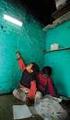 case study Schneider Electric: Business innovation enabling access to energy Summary Schneider Electric, a global specialist in energy management with operations in more than 100 countries, has an ambitious
The costs of clean energy solutions are falling. As one example, solar panel prices
 Community Development INVESTMENT REVIEW 103 Bringing Down Green Financing Costs: How a State-sponsored Bank Might be the Key Richard L. Kauffman Chairman of Energy and Finance for New York, Office of the
Ministerie van Toerisme, Economische Zaken, Verkeer en Telecommunicatie Ministry of Tourism, Economic Affairs, Transport and Telecommunication
 SME Policy Framework for St. Maarten May, 2014 Department of Economic Affairs, Transportation & P. 1 of 16 TABLE OF CONTENTS 1. Introduction 2. SME Developments in St. Maarten 2.1 Definition 2.2 Government
Good-practice examples of different small-scale sustainable energy projects under WISIONS initiative
 Good-practice examples of different small-scale sustainable energy projects under WISIONS initiative Carmen Dienst Wuppertal Institute for Climate, Environment and Energy Research Group 1 - Future Energy
The future agenda for development cooperation: voices of Dutch society
 The future agenda for development cooperation: voices of Dutch society Contribution prepared for the High Level Panel on the Post 2015 development agenda - March 2013 Prepared by NCDO, in cooperation with
How vehicle fuel economy improvements can save $2 trillion and help fund a long-term transition to plug-in vehicles Working Paper 9
 How vehicle fuel economy improvements can save $2 trillion and help fund a long-term transition to plug-in vehicles Working Paper 9 UNEP How vehicle fuel economy improvements can save $2 trillion and help
Success Factors for Investing in Modern Energy Enterprises
 Success Factors for Investing in Modern Energy Enterprises Paul van Aalst, Director E+Co Europe www.eandco.net [email protected] Dakar 16 April 2008 1 E+Co Investment Company in Modern Energy Enterprises
Issue. September 2012
 September 2012 Issue In a future world of 8.5 billion people in 2035, the Energy Information Administration s (EIA) projected 50% increase in energy consumption will require true all of the above energy
Indonesia Solar Loan (ISL) Programme: Lessons learned for Solar PV project development
 Lessons learned for Solar PV project development Marjan Stojiljkovic FS-UNEP Collaborating Centre for Climate and Sustainable Energy Finance GIZ Workshop, March 7th, 2012 Berlin, Germany F r a n k f u
Massachusetts Saving Electricity:
 Commonwealth of Massachusetts Massachusetts Saving Electricity: A Summary of the Performance of Electric Efficiency Programs Funded by Ratepayers Between 2003 and 2005 Executive Office of Energy and Environmental
Clean Energy Jobs Plan
 Clean Energy Jobs Plan Introduction When I was governor, California was the world leader in renewable energy and it led the nation in efficiency standards. Our programs saved California consumers billions
WORLD BANK SOLAR HOME SYSTEMS PROJECTS: EXPERIENCES AND LESSONS LEARNED 1993-2000. Eric Martinot and Anil Cabraal
 WORLD BANK SOLAR HOME SYSTEMS PROJECTS: EXPERIENCES AND LESSONS LEARNED 1993-2000 Eric Martinot and Anil Cabraal World Bank, Rural and Renewable Energy Thematic Group 1 1818 H St. NW, Washington, DC 20433
Global Leadership Conference 2014. Andrea Vogel EMEIA Market Leader, Strategic Growth Markets
 Global Leadership Conference 2014 Andrea Vogel EMEIA Market Leader, Strategic Growth Markets The EY G20 Entrepreneurship Barometer 2013 The power of three Together, governments, entrepreneurs and corporations
Policy Report Note. Rwanda. Energy Sector Overview. In collaboration with: Table 1. Key Government Agencies in Rwanda s Energy Sector
 Policy Report Note Rwanda This note summarizes a recent report prepared by Lighting Africa to identify key policy barriers to the adoption of modern lighting products and services in Rwanda, and offers
Executive Summary. Key findings include:
 Clean Energy Services for All: Financing Universal Electrification Stewart Craine, Evan Mills, Justin Guay June 2014 Executive Summary One in five people around the world, approximately 1.3 billion people,
New York Battery and Energy Storage Technology Consortium, Inc.
 VIA ELECTRONIC FILING August 14, 2015 Hon. Kathleen H. Burgess Secretary to the Commission New York State Public Service Commission Empire State Plaza, Agency Building 3 Albany, New York 12223 1350 Re:
Financing DESCOs A framework
 Financing DESCOs A framework A framework discussion about financing working capital for distributed energy services companies Chris Aidun and Dirk Muench March 2015 This paper looks at the growing need
PAYGO: Solar distribution through pay as you go business models in East Africa
 PAYGO: Solar distribution through pay as you go business models in East Africa Development in practice Impact Paper 16 INTERNATIONAL DEVELOPMENT ADVISORY SERVICES (IDAS AFRICA) photo M - KOPA Solar PAYGO:
A-B-C model for Off-grid Energy Solutions
 A-B-C model for Off-grid Energy Solutions Monali Ranade World Bank Institute Climate Change Practice, as part of Incubating Innovation for Rural Electrification: The Telecom-Energy Initiative September
Procurement Model Analysis: CAPEX vs OPEX. In partnership with the Netherlands
 1 In partnership with the Netherlands Procurement Model Analysis: CAPEX vs OPEX 2 Contents 1. Executive summary.p3 2. What are the different procurement models: p3 i. Illustration of CAPEX model...p4 ii.
For an inclusive business model in Sub-Saharan Africa: The case of renewable energy
 For an inclusive business model in Sub-Saharan Africa: The case of renewable energy To address the economic, social and environmental challenges of the energy situation of Africa, GreenWish is developing
Role of Natural Gas in a Sustainable Energy Future
 Role of Natural Gas in a Sustainable Energy Future Alexander Medvedev, Deputy Chairman of Gazprom Management Committee, Director General of Gazprom Export 2 nd Ministerial Gas Forum Doha, 30 November 2010
Some highlights of the South Australia study include: A large untapped resource: The modelling results show strong growth in
 South Australia has enough clean energy potential to power homes remove pollution equivalent to cars create 3,000,000 450,000 5,000 new jobs Australia is in the early stages of a clean energy boom, with
Residential & Commercial Sectors Overview CLIMATE
 CLIMATE TECHBOOK Residential and Commercial Emissions in the United States Greenhouse gas (GHG) emissions data can be reported either by economic sector, which includes electric power generation as a separate
Ministerial Statement. Beijing, China, 2 Sep 2014. 2014 - APEC Energy Ministerial Meeting. Beijing Declaration
 Ministerial Statement Beijing, China, 2 Sep 2014 2014 - APEC Energy Ministerial Meeting Beijing Declaration Joining Hands Toward Sustainable Energy Development in the Asia-Pacific Region 1. We, the Energy
Lighting the World: A Business Model for Catalyzing Change. Adam Byrnes, Emilia Sibley, Sabrina Sullivan, and Jimmy Ward
 Lighting the World: A Business Model for Catalyzing Change Adam Byrnes, Emilia Sibley, Sabrina Sullivan, and Jimmy Ward University of Michigan Erb Institute for Global Sustainable Enterprise May 2013 Executive
Transcript of an interview with the Wall Street Ledger March 20 th 2013 Geopower Energy Limited (Proposed ASX code: GPX)
 WSL: How large is the overall market you are targeting and elaborate on the potential growth? Ben Mead: Geopower is unique among renewable energy companies in that we are not tied to any specific technology,
Business plan to establish a shop for energy saving products
 Business plan to establish a shop for energy saving products Joint Energy and Environment Projects Miriam Cartheret Kyanja, Gayaza Road, 7Miles (P.O. Box 4264) Kampala, Uganda E-Mail: [email protected]
A Vision Statement by Ban Ki-moon Secretary-General of the United Nations. Sustainable. Energy for. all
 A Vision Statement by Ban Ki-moon Secretary-General of the United Nations Sustainable Energy for all November 2011 UN Photo/R Kollar Contents PREFACE 2 THE GOAL 4 WHY ACT NOW? 5 BARRIERS TO OVERCOME 7
Supporting Small Alternative Energy Enterprises
 Supporting Small Alternative Energy Enterprises Mission contributing to sustainable development by supporting Small and Medium Sized Enterprises (SMEs) Fields of expertise SME s for sustainable development
Extending the Dialogue Among Canadians
 Nations fic and ization Acting on Climate Change: Extending the Dialogue Among Canadians A collection of texts in response to Acting on Climate Change: Solutions from Canadian Scholars, a consensus document
The Rural Electrification in China and The Impact of Renewable Energies
 Student Research Projects/Outputs No.042 The Rural Electrification in China and The Impact of Renewable Energies Tomás Hevia MBA 2009 China Europe International Business School 699, Hong Feng Road Pudong,
Opportunities for a Green Bank in California
 Opportunities for a Green Bank in California California has long been a leader in developing and deploying clean, low-carbon technologies, in large part due to its supportive public policies. Revenues
Sub-Saharan Africa Mobile Economy 2013
 Sub-Saharan Africa Mobile Economy 2013 About the GSMA The GSMA represents the interests of mobile operators worldwide. Spanning more than 220 countries, the GSMA unites nearly 800 of the world s mobile
Lighting Africa Market Trends Report 2012
 Barefoot Power Pty Ltd 2012 Overview of the Off-Grid Lighting Market in Africa Barefoot Power Pty Ltd 01 02 Acknowledgements Content A child holding a Greenlight Planet Sunking Pro, Kenya. Andres Bifani/Lighting
W20. Social Enterprise and Renewable Energy
 W20. Social Enterprise and Renewable Energy Fiza Farhan CEO Buksh Foundation Director Buksh Energy Pvt Ltd What is Social Enterprise? The Triple Bottom Line Approach Any for-profit or non-profit organization
CLEAN ENERGY PROJECT ANALYSIS WITH RETSCREEN SOFTWARE
 Training Module SPEAKER S NOTES CLEAN ENERGY PROJECT ANALYSIS WITH RETSCREEN SOFTWARE CLEAN ENERGY PROJECT ANALYSIS COURSE This document provides a transcription of the oral presentation (Voice & Slides)
WORLD ENERGY INVESTMENT OUTLOOK 2014 FACTSHEET OVERVIEW
 OVERVIEW More than $1.6 trillion was invested in 2013 in energy supply, a figure that has more than doubled in real terms since 2000, and a further $130 billion to improve energy efficiency. Renewables
NECAQ Sustainability Program The Business Case
 NECAQ Sustainability Program The Business Case Key messages Energy efficiency is a fundamental element in the progression towards a future low-carbon economy. Actions to increase energy efficiency can
Winning Entry - Fernando Rezende Ayres. M.S. in Energy Systems, Northeastern University
 Winning Entry - Fernando Rezende Ayres M.S. in Energy Systems, Northeastern University Date: 01/25/2016 Contents 1. Introduction... 3 2. The economics of solar ITC policy... 3 3. ITC Expiration... 6 4.
EXAMPLES OF SUCCESSFUL POLICY TOOLS FOR EMISSION REDUCTION
 Submission of the United Nations Environment Programme (UNEP) Sustainable Building Initiative (SBCI) to the Ad Hoc Working Group on Long-Term Cooperative Action under the Convention (AWG-LCA) 24 April
Capacity Building in the New Member States and Accession Countries on Further Climate Change Action Post-2012
 Capacity Building in the New Member States and Accession Countries on Further Climate Change Action Post-2012 (Service Contract N o 070402/2004/395810/MAR/C2) 29 November 2007 Almost all New Members States
WOMEN BAREFOOT SOLAR ENGINEERS A COMMUNITY SOLUTION*
 United Nations Nations Unies United Nations Commission on the Status of Women Fifty-fifth session 22 February 4 March 2011 New York INTERACTIVE EXPERT PANEL Key policy initiatives and capacity-building
Venture Capital s Role in the US Renewable Energy Sector
 Venture Capital s Role in the US Renewable Energy Sector Abstract: This white paper describes the venture capital industry, its role in the development of a U.S. renewable energy sector, and the aspects
The Amsterdam Investment Fund Amsterdam, the Netherlands
 The Amsterdam Investment Fund Amsterdam, the Netherlands - private housing owners, - SMEs & businesses, - community organisations / associations / NGOs - loans - seed funding 780,000 inhabitants 1. The
UNITED NATIONS COMMISSION ON SCIENCE AND TECHNOLOGY FOR DEVELOPMENT (CSTD)
 UNITED NATIONS COMMISSION ON SCIENCE AND TECHNOLOGY FOR DEVELOPMENT (CSTD) Contribution to the CSTD ten-year review of the implementation of WSIS outcomes Submitted by INTEL DISCLAIMER: The views presented
CHALLENGES OF SOLAR PV FOR REMOTE ELECTRIFICATION IN GHANA
 CHALLENGES OF SOLAR PV FOR REMOTE ELECTRIFICATION IN GHANA WISDOM AHIATAKU-TOGOBO RENEWABLE ENERGY UNIT MINISTRY OF ENERGY ACCRA - GHANA. Email:[email protected] Electricity 10% Energy Consumption GHANA
Final Project Report for Powering Small Business: Understanding the Impact of Solar Energy Under Different Pricing Schemes
 Final Project Report for Powering Small Business: Understanding the Impact of Solar Energy Under Different Pricing Schemes William Jack and Tavneet Suri I. Introduction This report details the progress
The Role of Public Policy in Sustainable Infrastructure
 The Role of Public Policy in Sustainable Infrastructure Zia Qureshi Nonresident Senior Fellow, Global Economy and Development, Brookings Institution Infrastructure development, economic growth, and climate
DC MICROGRIDS. A novel solution for universal electricity access
 DC MICROGRIDS A novel solution for universal electricity access 1.3 billion people still lack access to electricity 2 Electricity is not affordable 3 Electricity is not reliable 4 Electricity is not scalable
Liberia Leasing Investment Forum
 Liberia Leasing Investment Forum Finance Leasing in Liberia: June 13-14, 2012 Monrovia, Liberia Leasing is both a source of affordable capital for small and medium-sized businesses and a catalyst for socio-economic
Solar power as part of an integrated approach to sustainable development. Mark Booth BSc PhD ARCS MA Senior Lecturer Durham University, UK
 Solar power as part of an integrated approach to sustainable development Mark Booth BSc PhD ARCS MA Senior Lecturer Durham University, UK Luanda, 24 a 27 de Setembro de 2013 CONFERÊNCIA INTERNACIONAL SOBRE
Revolving and Esco Funds for Renewable Energy and Energy Efficiency Finance
 Renewable Energy Industrial Energy Efficiency Building Energy Efficiency Revolving and Esco Funds for Renewable Energy and Energy Efficiency Finance Funding the future The growing might of financing boosts
Engineers Without Borders: Solar Recharge Project in Burkina Faso
 Entry for NCEES Engineering Award for Connecting Professional Practice and Education Abstract Engineers Without Borders (EWB) is an internationally recognized volunteer organization whose goal is to partner
MODELS THAT BRIDGE THE GAP BETWEEN ACCESS TO ENERGY AND MICROFINANCE
 MODELS THAT BRIDGE THE GAP BETWEEN ACCESS TO ENERGY AND MICROFINANCE HELIANTI HILMAN KHAULA KARYA, INDONESIA HOW TO TAKE BENEFIT FROM THIS SESSION? 1 FIRST, DEFINE WHAT IS YOUR POSITION OR ROLE? DEVELOPMENT
ANALYSIS OF THE ADMINISTRATION S PROPOSED TAX INCENTIVES FOR ENERGY EFFICIENCY AND THE ENVIRONMENT
 June 28, 1999 ANALYSIS OF THE ADMINISTRATION S PROPOSED TAX INCENTIVES FOR ENERGY EFFICIENCY AND THE ENVIRONMENT INTRODUCTION A few months ago in the FY 2000 budget the President proposed a $3.6 billion
Smart Power for Environmentally-Sound Economic Development (SPEED), Initiative in Development. power sources
 Smart Power for Environmentally-Sound Economic Development (SPEED), Initiative in Development Off-grid green power Decentralized distributed power sources 0 Defining the Problem Almost 2 billion people