
New York City s Wastewater Treatment System
|
|
|
- Debra Wood
- 10 years ago
- Views:
Transcription
1 New York City s Wastewater Treatment System Cleaning the Water We Use Protecting the Environment We Live In New York City Department of Environmental Protection Michael R. Bloomberg, Mayor Emily Lloyd, Commissioner

2 List of Acronyms NYCDEP New York City Department of Environmental Protection NYSDEC New York State Department of Environmental Conservation NYCDOS New York City Department of Sanitation USEPA United States Environmental Protection Agency NYPA New York Power Authority NYCSWCD New York City Soil and Water Conservation District ALS American Littoral Society WPCP Water Pollution Control Plant NYOFCo New York Organic Fertilizer Company IPP Industrial Pretreatment Program PERC Perchloroethylene CSO Combined Sewer Overflow EBPP Enhanced Beach Protection Program MGD Million Gallons per Day CWA Clean Water Act PCB Polychlorinated Biphenols PAHs Poly-Aromatic Hydrocarbons BOD Biochemical Oxygen Demand TSS Total Suspended Solids DO Dissolved Oxygen BNR Biological Nutrient Removal New York City s Wastewater Treatment System 1

3 Table of Contents How Water Gets to Us History of New York City Water Wastewater Treatment Past and Present Nitrogen Control Applied Research Program Wastewater Treatment Process Preliminary Treatment Primary Treatment Secondary Treatment Disinfection Sludge Treatment Thickening Digestion Sludge Dewatering Beneficial Use of Biosolids How Biosolids Are Used Land Application Composting Alkaline Treatment Heat Drying How New York City Protects Its Water Environment Testing New York City Waterways Environmental Concerns Toxic Substances Pollution Control Programs Industrial Pretreatment Program (IPP) Persistent Pollutant Track-down Program Perchloroethylene Program (PERC) Corrosion Control Program 2 New York City s Wastewater Treatment System

4 Pollution Control Programs Continued Pollution Prevention Program Dry Weather Discharges Grease Pumping Station Telemetry Combined Sewer Overflows Floating Debris Water Quality Monitoring Regulatory Telemetry System / Enhanced Beach Protection Program Nutrients Water Waste Map of New York Harbor and Historical Sampling Sites Diagram of Treatment Process How You Can Make a Difference Conserve Water Keep Hazardous Substance out of the Sewer System Don t Litter Use Mass Transportation Dispose of Household Grease Properly Volunteer for Shoreline Cleanup and Survey Programs Report Dry Weather Discharges Map of New York City Plant Locations and Capacities New York City Wastewater Treatment Plants DEP Sludge Vessels Wastewater Treatment Plants Before Modernization Bureau of Wastewater Treatment Organizational Chart How to Get in Touch with DEP New York City s Wastewater Treatment System 3

5 History of New York City Water Where does New York City s water come from? Each day New York City delivers about 1.3 billion gallons of safe drinking water to over 8 million City residents and another 1 million consumers who live in Westchester, Putnam, Ulster and Orange Counties north of the City. The source of New York City s drinking water is supplied by a network of 19 reservoirs and three controlled lakes in a 1,972 square-mile watershed that extends 125 miles north and west of New York City. Between the water supply and wastewater treatment systems are millions of New Yorkers and visitors to the City and an elaborate network of sewers and water mains. Each person can help these systems run better by conserving water, disposing of garbage and household chemicals properly and being concerned about water quality in the City s surrounding waters. Where does used water go? Used water goes into New York City s extensive wastewater treatment system. This amazing network system that cleans our wastewater consists of: over 6,000 miles of sewer pipes; 135,000 sewer catch basins; over 494 permitted outfalls for the discharge of combined sewer overflows (CSOs) and stormwater; 93 wastewater pumping stations that transport it to 14 wastewater treatment plants located throughout the five boroughs. The New York City Department of Environmental Protection (DEP), Bureau of Wastewater Treatment (BWT) is responsible for the operation and maintenance of all facilities related to the treatment of sewage. The Bureau of Wastewater Treatment has 1,900 employees, an annual operating budget of $262 million, and an annual capital budget of $114 million. With these resources, the 1.4 billion gallons of wastewater discharged by eight million residents and workers in New York City each and every day is processed at the treatment plants. After the treatment process is completed, the plants release highquality, treated wastewater, called effluent, into the waterways surrounding New York City. 4 New York City s Wastewater Treatment System

6 Before the City s first upstate reservoir system was developed in 1842, New Yorkers depended on well water and enterprising street vendors for their drinking water. The Dutch, who first settled on the lower tip of Manhattan, got their water from ponds, streams and shallow wells. As the population multiplied, the demand for fresh water grew. With no system for disposing of sewage and garbage, human and animal waste polluted the water supply, causing frequent epidemics of contagious waterborne diseases, such as yellow fever and cholera. It soon became abundantly clear that something had to be done to rid NYC streets of human and animal waste and trash. Wastewater treatment began in New York City in the late 1890s and early 1900s at two locations in Brooklyn and one in Queens. These became the 26th Ward, the Coney Island Water Pollution Control plants (WPCP) in Brooklyn and the Jamaica WPCP in Queens. Because of the tremendous use of the City public beaches, these three areas were considered a high priority. Wastewater treatment consisted of chemical coagulation for settling as well as seasonal disinfection with chlorine. The impetus Wastewater Treatment Past and Present Ashokan Reservoir was to keep the beaches clean and to protect the health of beach goers rather than maintaining water quality. As the population grew to 3.5 million, these plants became overburdened. When the link was made between waterborne bacteria and diseases in humans, it was recognized that a master plan was needed to study and protect the surrounding waterways. As a result, in 1904, the Metropolitan Sewerage commission was created. The commission undertook harbor surveys and water quality analysis. It performed studies of the tides, studied the harbor s natural flushing action, and developed a City Master Plan for wastewater treatment plants. The plan included construction of treatment plants to meet the needs of the growing population and identify the optimum locations for future sites. Between 1935 and 1945 three new plants were constructed Wards Island in Manhattan and Bowery Bay and Tallman Island in Queens. The Wards Island plant was built to handle flows from the east side of Manhattan and the lower part of the Bronx. This plant, which came on line in 1936, was the first to use the conventional activated sludge concept to treat sewage. Bowery Bay and Tallman Island also used activated New York City s Wastewater Treatment System 5

7 sludge. As the population approached 7.5 million, the Coney Island, 26th Ward and Jamaica plants were upgraded. These six plants brought the citywide capacity for treatment to 497 million gallons per day (mgd). Between 1945 and 1965, five new plants were built to meet the needs of the continually expanding population, which was now nearing eight million. These were Hunts Point in the Bronx, Oakwood Beach and Port Richmond in Staten Island, and the Rockaway and Owls Head plants in Brooklyn. During this period, the older Bowery Bay, Coney Island and Tallman Island plants underwent upgrades. These upgrades included the newly invented step-aeration process where primary effluent is added incrementally into the aeration tanks thereby reducing the detention times and allowing for a more flexible and accommodating process. With the addition of these five, there were eleven sewage treatment plants in the City and the citywide capacity for sewage treatment increased from 497mgd to 1,037mgd. Between 1965 and 1979, the Newtown Creek wastewater treatment plant was built in Brooklyn. It was designed to treat 310mgd and was built on a relatively small footprint of 30 acres. Its design lacked primary tanks and, as a result, wastewater traveled from the grit chamber to the aeration tanks to the final tanks without intermediate channels, thereby conserving space and minimizing pumping requirements. The Spring Creek auxiliary plant was also built. (A pilot combined sewer overflow (CSO) facility, connected to the 26th Ward plant consisting of a 10 million gallon holding tank for storm water.) By 1968, 12 wastewater treatment plants were operating in the area of New York City. They treated over one billion gallons a day and removed an average of 65 percent of pollutants from New York City wastewater. In 1972, the federal government passed the Clean Water Act (CWA). It dictated minimum standards for wastewater treatment plants throughout the country. That meant that plants had to be upgraded to secondary treatment, which removed up to 85 percent of pollutants. The CWA made people realize the importance of protecting the environment. Upgrades were performed at eight plants, bringing the citywide capacity to 1,390mgd. By 1979, nine of the city s plants had been upgraded to secondary treatment. Between 1979 and 1995, the Coney Island and Owls Head plants were upgraded to full secondary treatment. Also during this time, two more treatment plants were completed, the Red Hook plant in Brooklyn and the North River plant, which was positioned on a platform in the Hudson River to treat flows from the west side of Manhattan. This brought the total number of wastewater treatment plants to 14. With their completion, virtually all raw sewage generated in New York City was being captured and treated. Today, the City s wastewater treatment plants have the capacity to treat dry weather flows of 1,805 millions gallons daily. Nitrogen Control Applied Research Program PO-55 Physical-Chemical Building PO-55 BNR Building Applied Research Facilities Interior of Applied Research Facilities View of Centrate Tank at 26th Ward WPCP 6 New York City s Wastewater Treatment System

8 Every day, wastewater goes down toilets and drains in homes, schools, businesses and factories and then flows into New York City s sewer system. Runoff from rain and melting snow, street and sidewalk washing, and other outdoor activities flows into catchbasins in the streets and from there into the sewers. In some New York City neighborhoods, runoff from the streets is carried by separate storm sewers directly to local streams, rivers and bays. In most areas of the City, sanitary and industrial wastewater, rainwater and street runoff are collected in the same sewers and then conveyed together to the City s treatment plants. This is known as a combined sewer system. Sometimes, during heavy rains or snow, combined sewers fill to capacity and are unable to carry the combined sanitary and storm sewage to the plants. When this occurs the mix of excess storm water and untreated sewage flows directly into the City s waterways. This is called combined sewer overflow (CSO). Approximately 70 percent of the City sewers are combined. Wastewater treatment plants, also called sewage treatment plants or water pollution control plants, remove most pollutants from wastewater before it is released to local waterways. At the plants, physical and biological processes closely duplicate how wetlands, rivers, streams and lakes naturally purify water. Treatment at these plants is quick, taking only about seven hours to remove most of the pollutants from the wastewater. In the natural environment this process could take many weeks and nature alone cannot handle the volume of wastewater that New York City produces. At the City s wastewater treatment plants, wastewater undergoes five major processes: preliminary treatment, primary treatment, secondary treatment, disinfection and finally, sludge treatment. Primary and secondary treatments remove about 85% to 95% of pollutants from the wastewater before the treated wastewater is disinfected and discharged into local waterways. Sludge, the byproduct of the treatment process, is digested for stabilization and is then dewatered for easier handling. The resulting material, known as biosolids, is then applied to land to improve vegetation or processed further as compost or fertilizer. (See illustration Diagram of Treatment Process on page ) Wastewater Treatment Process Preliminary treatment Several stories underground, wastewater flows into the plants from sewers connected to New York City s homes and businesses. The incoming wastewater, called influent, passes through screens consisting of upright bars, spaced one to three inches apart. These bars remove large pieces of trash including rags, sticks, newspaper, soft drink cans, bottles, plastic cups and other similar items. This protects the main sewage pumps and other equipment. The garbage is transported to landfills. The main sewage pumps then lift the wastewater from the screening chamber to the surface level of the plant. Primary treatment Next, the wastewater enters primary settling tanks, also called sedimentation tanks, for one to two hours. The flow of the water is slowed, allowing heavier solids to settle to the bottom of the tank and the lighter materials to float. At the end of the process, the floatable trash, such as grease and small plastic material, rises and is skimmed from the top of the tanks surface. Heavy solids everything that has sunk is then scraped off the bottom. The settled solids, called primary sludge, are then pumped through cyclone degritters devices that use centrifugal force to separate out sand, grit (such as coffee grinds) and gravel. This grit is removed, washed and taken to landfills. New York City s Wastewater Treatment System 7

9 The degritted primary sludge is pumped to the plant s sludge handling facilities for further processing. The partially treated wastewater from the primary setting tanks then flows to the secondary treatment system. Secondary treatment Secondary treatment is called the activated sludge process. This is because air and seed sludge from the plant treatment process are added to the wastewater to break it down further. Air pumped into large aeration tanks mixes the wastewater and sludge that stimulates the growth of oxygen-using bacteria and other tiny organisms that are naturally present in the sewage. These beneficial microorganisms consume most of the remaining organic materials that are polluting the water and this produces heavier particles that will settle later in the treatment process. Wastewater passes through these bubbling tanks in three to six hours. The aerated wastewater then flows to the final settling tanks which are similar to the primary settling tanks. Here the heavy particles and other solids settle to the bottom as secondary sludge. Some of this sludge is re-circulated back to the aeration tanks as seed to stimulate the activated sludge process. The returned sludge contains millions of microorganisms that help maintain the right mix of bacteria and air in the tank and contribute to the removal of as many pollutants as possible. The remaining secondary sludge is removed from the settling tanks and added to the primary sludge for further processing in the sludge handling facilities. Wastewater passes through the settling tanks in two to three hours and then flows to a disinfection tank. Disinfection Even after primary and secondary treatment, diseasecausing organisms may remain in the treated wastewater. To disinfect and kill harmful organisms, the wastewater spends a minimum of minutes in chlorine-contact tanks mixing with sodium hypochlorite, the same chemical found in common household bleach. The treated wastewater, or effluent, is then released into local waterways. Disinfection is an essential step because it protects the health of people who use local beaches and enjoy other recreational activities on or near the water. Sludge treatment The following are typical stages of the sludge treatment process. Thickening The sludge produced by primary and secondary treatment is approximately 99% water and must be concentrated to enable its further processing. Thickening tanks allow the sludge to collect, settle and separate from the water for up to 24 hours. The water is then sent back to the head of the plant or to the aeration tanks for additional treatment. Thickening tanks allow the sludge produced by primary and secondary treatments to settle and thicken (an important step which aids the sludge digestion process). Digestion After thickening, the sludge is further treated to make it safer for the environment. The sludge is placed in oxygenfree tanks, called digesters, and heated to at least 95 degrees Fahrenheit for between 15 to 20 days. This stimulates the growth of anaerobic bacteria, which consume organic material in the sludge. Unlike the bacteria in the aeration tanks, these bacteria thrive in an oxygen-free or anaerobic environment. The digestion process stabilizes the thickened sludge by converting much of the material into water, carbon dioxide and methane gas. The black sludge that remains after digestion has the consistency of pea soup and has little odor. This is called digested sludge. 8 New York City s Wastewater Treatment System

10 Methane gas is often used as an energy source at the City s wastewater treatment plants. The gas may be used in engines to produce electricity or directly drive plant equipment. Gas is also used in boilers to provide heat for digestion and plant-wide buildings. Currently, DEP and the New York Power Authority (NYPA) have jointly installed fuel cells at four of the City s water pollution control plants; 26th Ward, Red Hook, Oakwood Beach and Hunts Point. Fuel cells convert the methane gas and carbon dioxide into heat and electricity that is then used to operate the plants. This technology contributes to New York City s efforts to enhance clean air operations at its facilities. There is a significant reduction in air emissions as a result of using fuel cells. Digester sludge is pumped from sludge storage tanks to a dewatering facility. At some treatment plants, where there are no dewatering facilities on site, the sludge is transported for processing through a pipeline or by a sludge boat to a plant that has a dewatering facility. (See pictures of sludge vessels on page 25.) Sludge dewatering Digester sludge is stored temporarily in a sludge storage tank prior to dewatering and while awaiting shipment to a plant with a dewatering facility Dewatering reduces the liquid volume of sludge by about 90%. New York City operates dewatering facilities at eight of its 14 treatment plants. At these facilities, digested sludge is sent through large centrifuges that operate like the spin cycle of a washing machine. The force from the very fast spinning of the centrifuges separates most of the water from the solids in the sludge, creating a substance knows as biosolids. The water drawn from the spinning process is then returned to the head of the plant for reprocessing. Adding a substance called organic polymer improves the consistency of the cake, resulting in a firmer, more manageable product. The biosolids cake is approximately 25 to 27percent solid material. Since 1938, sewage sludge had been treated as a waste byproduct and removed from New York City treatment plants by barge and disposed of at sea. In 1988, Congress passed the Ocean Dumping Ban Act, forbidding ocean disposal of sewage sludge by June 30, DEP devised a three-pronged approach an immediate, an interim, and a longterm program to administer the 1,200 wet tons of sludge produced each day. The immediate program resulted in a final design of eight dewatering facilities with construction to begin in March By December 1991 the first facility went on line. The other seven were finished and became operational by June 1992 at a cost of$670 million. Today, the remaining six plants not served by onsite dewatering facilities transport their sludge for dewatering either through force mains or sludge vessels. Beneficial Use of Biosolids For the interim program, three contractors were hired through five-year contracts at a cost of $100 million per year to provide land-based biosolids management. The contractors were responsible for the processing, production and shipment of biosolids as high-quality soil amendments and the application thereof. The long-term program currently costs $50 million annually, and includes three 15-year contracts that were let for the city s entire biosolids production through June After dewatering, the sludge, now known as biosolids, is 100 percent beneficially used as a valuable resource because of its high nutrient and organic contents. Biosolids and biosolids products are used as fertilizers or soil conditioners which are spread on parkland, farmland, lawns, golf courses and cemeteries. Biosolids can also be used to cover inactive landfills or as a daily cover for active ones. New York City s Wastewater Treatment System 9

11 How Biosolids Are Used Land application of Class B biosolids to Texas rangeland. Heat dried pellets are over 99% pathogen free the nutrient content for pellets is: (5% nitrogen, 4% phosphorus and 3% potassium) Florida citrus grove where pellets have been applied. Biosolids applied to corn crops in Virginia. Land Application Biosolids are spread on land to return nutrients to the soil. Biosolids are spread less than a quarter inch thick and are sometimes plowed into the soil. Biosolids have been directly applied to corn crops, wheat and grazing land in Colorado and Virginia. Composting Biosolids are mixed with a bulking agent (for example wood chips) which allows oxygen to mix with the biosolids more easily. The biosolids decompose, creating compost. This compost is similar to peat moss and is used as mulch or soil conditioner at golf courses, nurseries, home gardens, lawns, etc. New York City s biosolids are being composted at a facility in Pennsylvania. Alkaline Treatment Biosolids are mixed with a highly alkaline material, such as lime or Portland cement. This process results in a product, which resembles soil and is used as an agricultural liming agent. New York City s biolosids are alkaline stabilized at a facility in New Jersey. All of these processes destroy disease-causing organisms and reduce moisture content, resulting in products that are easy to handle and have characteristics similar to many commercial agricultural products. Fertilizer pellets used by New York City Department of Transportation to beautify highways. 10 New York City s Wastewater Treatment System

12 Heat Drying Biosolids are heated to a very high temperature to remove moisture and kill pathogens. What remains are fertilizer pellets. New York City s biosolids are made into pellets at a facility in the Bronx. These pellets are sold across the country, many of them for use in citrus groves in Florida. New York City is strongly committed to the continued beneficial use of its biosolids through environmentally safe land application programs. DEP maintains and operates the City s wastewater treatment system; however, its responsibilities extend far beyond the management of the plants. Wastewater treatment is only one part of a very broad program to protect and improve the City s water environment that includes: pollution prevention and remediation; maintenance and upgrading of the City s sewer and wastewater treatment infrastructure; technically innovative wastewater collection and treatment; ecosystem protection; and ongoing scientific and technical research. The ultimate goal is to reduce and control pollution before it reaches our wastewater treatment plants. Pelletizer plant in the Bronx How New York City Protects Its Water Environment DEP manages a comprehensive range of programs to address many of the most pressing concerns that threaten our water environment. Following are program summaries. Toxic substances Heavy metals and other toxic chemicals, such as cadmium and mercury, solvents and pesticides, enter our wastewater treatment plants every day. Many of these substances come from industries and business that dispose of chemicals in their wastewater as part of their regulated industrial processes. They also come from people who use and improperly dispose of hazardous household items such as cleaning products, paints and pesticides. One potential source of lead and copper in wastewater comes from corroding pipes in Environmental Concerns Testing New York City Waterways DEP s Harbor Survey Program tests the New York Harbor waters and sediments at 37 locations. Sampling takes place year-round. Weekly sampling takes place from May through September and monthly from October thru April. Typical tests measure bacteria, turbidity, temperature and the level of dissolved oxygen in the water. The results are used to assess the effectiveness of all of the City s water quality programs and to monitor water quality trends. The Osprey, a vessel equipped with a small laboratory is used to sample the New York City Harbor waters. Since 1909, DEP has monitored water quality in New York Harbor, the East River and the Hudson River, and has published the results annually in its New York Harbor Water Quality Report. existing building plumbing systems. Some toxins in wastewater begin as air pollutants that have fallen to the ground and are carried by rain water to our plants and waterways. Wastewater treatment plants cannot destroy all of these substances so they remain in small amounts (still below standards set by the State and federal governments) in the treated wastewater discharged to local waterways. DEP tests the treated wastewater effluent released from all 14 treatment plants daily for conventional pollutants, and annually for over 130 priority pollutants that the United States Environmental Protection Agency (EPA) lists as the worst pollutants to ensure that federal and State standards are met. These include metals and organic chemicals. DEP runs programs aimed at reducing some key sources of toxic substances. New York City s Wastewater Treatment System 11

13 Pollution Control Programs The Industrial Pretreatment Program (IPP): a federally authorized program, works to control commercial discharges by requiring industries targeted by federal and local pretreatment regulations to remove specific toxins from their wastewater before it is released into the City s sewer system. IPP helps to protect the sewers, the wastewater treatment plants and the City s receiving waters. The EPA requires approximately 1,500 municipalities around the country to implement industrial pretreatment programs. DEP has been a control authority since January DEP s program is annually audited by either the New York State Department of Conservation (NYSDEC) of the EPA. Since 1987, the amount of heavy metals being discharged by regulated businesses fell from over 2000 lbs/day to 37 lbs/per day. Two successful IPP programs are the Persistent Pollutant Track-down Program and the Perchloroethylene (PERC) Reduction Program. Persistent Pollutant Track-down Program: a collaborative effort between DEP and the DEC. Together, the two agencies work to track down the sources of PCBs (polychlorinated biphenols), PAHs (Poly-Aromatic Hydrocarbon), mercury and other organic chemical compounds found in our harbor waters. When businesses responsible for pollution are identified, DEP and DEC work with them to help establish improved (or first-time) methods of pretreatment. PERC Reduction Program: enforces special sewer regulations that require dry cleaners to implement a best management program to limit perchloroethylene (PERC) discharges into the sewer system. (PERC is a solvent widely used by drycleaners.) DEP regularly inspects the City s dry cleaning establishments to make sure owners are adhering to PERC regulations. DEP regulates industrial users of the public sewers in a variety of categories such as electroplating, metal finishing, organic chemical and pharmaceutical manufacturing. As part of the IPP, DEP issue permits setting forth applicable pollutant limits as well as wastewater sampling and reporting requirements. DEP also regularly inspects IPP facilities and performs its own wastewater monitoring to ensure that the regulated facilities are in compliance with pretreatment standards. Whenever it is determined that a facility is not meeting its permit limits due to a failure in operating and maintaining its pretreatment system, or not installing the proper equipment, DEP will require, through Notice of Violation and/or Commissioner s Order, that remedial action be taken. Pollution Prevention Program: Pollution Prevention Programs focus on reduction of toxins from commercial sources through education and information about green technology and good business management practices. Dry Weather Discharges: In 1988 DEP initiated the Shoreline Survey Program. Its purpose was to identify and eliminate sources of raw sewage discharge into the City s waters during dry weather. This program in conjunction Osprey Vessel Chlorine Residual Analysis performed by Operations personnel. 12 New York City s Wastewater Treatment System

14 Sewer backup caused illegal discharge of grease into the sewer system with a more recent one, DEP s Sentinel Monitoring Program, has enabled the elimination of 99 percent of dry weather discharges. DEP continues to work on controlling the remaining discharges by constructing new sewers and taking enforcement action to correct illegal connections to storm sewers. Grease: Discharges of grease (cooking oil) into the sewer system from restaurants and other food related establishments can block sewers, causing backups and bypasses. To ensure proper disposal of grease, and prevent sewer backups, the City requires by law that grease generating establishments correctly install, operate and maintain properly sized grease interceptors. Special DEP staff inspect these establishments to make sure that the required equipment is installed and working properly. DEP has initiated an educational program to address grease discharges from the over 21,000 restaurants in New York City. The Grease Response Education and Strategic Enforcement Program approaches the problem with a combination of education materials, including foreign language material, which are distributed to restaurants in target areas. Sewer blockages can also be caused by grease and oil improperly disposed of in kitchen sinks and toilets in homes and apartments. Grease thrown down kitchen sinks in homes and apartments can also cause sewer blockages. Pumping Station Telemetry: Telemetry is the ability to send real-time (as it is happening) data to a remote terminal (computer) by utilizing a radio signal or telephone line. Since 1998, telemetry has been in operation at DEP s 93 wastewater pumping stations enabling personnel to check the daily operation of these facilities from a remote computer. This program has already succeeded in reducing dry and wet weather discharges by allowing DEP pumping station operators to respond more rapidly to station malfunctions, breakdowns and other potentially serious system disruptions. Combined Sewer Overflows (CSO): The completion of the Red Hook WPCP (on the lower East River in Brooklyn) in 1987 ended the last, permitted, dry weather discharge of raw sewage into New York Harbor. However, the City still faces the problem of combined sewer overflows. As noted earlier, CSOs can occur in wet weather when wastewater treatment plants and/or parts of the sewer system fill to capacity with rain or snow. To relieve pressure on the already filled to capacity wastewater treatment system, the excess flow is forced into the open waters of a river, bay or inlet. These overflows can increase the number of harmful bacteria and add other organic pollutants that consume dissolved oxygen, which marine plants and animals need to survive. CSOs also carry trash and litter washed from streets and may contain toxic chemicals. As a part of a multi-year, $1.8 billion CSO Abatement Program, the City is building retention tanks to hold the overflows near heavily impacted bays and tributaries, installing separate sewers where no sewers exist, and exploring other innovative solutions. The planning, design and construction of some of these facilities has already begun. In addition to construction of these retention tanks, CSO pollution has already been noticeably controlled through improvements in DEP s operation of its treatment plants and intercepting sewer system during wet weather. Floating debris: Litter that washes down storm drains in the street can easily wind up in local waters and on City beaches. This unsightly pollution, called floatables, can kill birds, turtles and other marine animals that mistake trash especially plastic for food. Street litter that goes to the treatment plants must be separated from the wastewater so it won t damage plant equipment. Litter can also clog storm drains and cause sewer backups and flooding. The City is also tackling the problem of debris with a multi-faceted program that includes increased street cleaning in critically located neighborhoods; regular catch basin maintenance; replacement of hoods on catch basins that trap debris before it enters the sewer system; the booming and netting of sites where combined sewer overflows enter local waters; operational improvements at New York City s Wastewater Treatment System 13

15 treatment plants and collections systems, and a fleet of skimmer vessels that collect floatables from the open waters. To eliminate illegal shoreline dumping (another source of floatable materials), DEP set up a Shoreline Dumping Prevention Program to monitor the City s many miles of shoreline for evidence of recent illegal disposal activities. Findings are reported to the Department of Sanitation (DOS) Police for follow-up and possible apprehension of illegal dumpers. Additional programs credited with limiting the discharge of floatables into the Harbor include the use of demolition vessels to remove decaying piers, and collaborative efforts by the US Army Corps of Engineers, EPA and DEC to collect large floatable debris and skim litter from the open waters and shorelines. Water quality monitoring: To gauge the effectiveness of wastewater treatment plant programs, water quality is analyzed at 37 sampling stations throughout New York Harbor. Since 1970, DEP s Annual Harbor Survey has tracked trends showing increases in dissolved oxygen and decreases in fecal coliform indicators of improved water quality. The following diagrams detail these improvements through fecal coliform measurements. Before 1974, there was a large area suitable for fish survival only (the worst indicator) and very few areas were labeled as suitable for bathing. By 1985, the number of fish survival only areas had decreased dramatically while the bathing areas had increased. By 1988, the fish survival only indicator was issued only for an area of the Hudson River west of Manhattan and for another small area near Manhattan in the East River. By 2001, many of the waterways around New York City were suitable for bathing. (See Diagram Fecal Coliform in Surface Waters. ) There have been no Dissolved Oxygen (mg/l) Dissolved Oxygen SA Class Standard I Class Standard Surface Bottom beach closures since 2001, except for precautionary closings, during the 2003 blackout. Area-wide decreases in sewage loading have resulted in greater environmental improvement in the Harbor. Indicative of this improvement has been the increase of dissolved oxygen (DO) to levels that better support aquatic life. Harbor Survey monitoring has documented significant Harbor-wide increases in DO concentrations (~2 mg/l) over the past 30 years (see below). Today, portions of the Harbor have DO concentrations above levels first recorded at the beginning of the 20th century. Regulator Telemetry System Enhanced Beach Protection Program : Regulator telemetry systems are, at present, fully installed and operational at 102 regulators. (A regulator is a device used in New York City s combined sewers to control or regulate the diversion of sewage flow to the treatment plants during dry and wet weather.) These systems are links to an internet software package that allows DEP to monitor each individual site continuously. The telemetry system transmits alarms as soon as the level of the water reaches a predetermined elevation in the regulator. DEP initiated the Enhanced Beach Protection Program (EBPP) in 1997 to monitor pumping stations and regulators that could have an impact on the City s beaches. The immediate goal of the program is to prevent negative water quality impacts that may result as a consequence of unintended dry weather bypasses and, ultimately, to prevent beach closures. This program incorporated the use of telemetry to replace site visits. The successful implementation of the regulator telemetry system has had a significant impact in the reduction of raw sewage bypasses, most important during the recreational beach season. Nutrients: Carbon, nitrogen and phosphorus are substances that are excreted by humans and thus found in wastewater. Excess nutrients can stimulate the growth of algae and other aquatic plants. When these plants die and decompose, they may reduce the amount of oxygen in the water. This condition, called hypoxia, can affect the survival of fish and other aquatic organisms. Nutrients can also get into wastewater from industrial discharges, common household detergents and cleaners, runoff from streets and lawns and air pollutants that fall to the ground. Treatment plants cannot remove all nutrients from the wastewater. They can be reduced by controlling pollution that comes from lawns, farmland, streets and construction sites. 14 New York City s Wastewater Treatment System

16 Map of New York Harbor and Historical Sampling Sites New York City s Wastewater Treatment System 15

17 Process Layout of a Typical New York City Water Pollution Control Plant Centrate Primary Settling Aeration Skimmings And Grease To Landfill Primary Sludge Return Sludge Activated Sludge Grit To Landfill Grit Cyclone Degritter Waste Sludge Overflow Sludge Thickening Heat Pump And Blower House Boiler And Engine Screenings To Landfill Bar Screens Engine Boiler Main Sewage Pump Influent (from households, businesses, etc.) Wet Well Centrate 16 New York City s Wastewater Treatment System

18 Final Settling Skimmings And Grease To Landfill Effluent Chlorine Contact Sludge Digestion Sludge Storage Methane Gas Dewatering Facility Gas Storage Flame Tower Centrifuges Centrate Sludge Cake Land Based Management New York City s Wastewater Treatment System 17

19 DEP has developed a long-term plan to reduce nitrogen in the effluent that is discharged into New York waters by the City s wastewater plants. This process is called Step Feed Biological Nutrient Removal (BNR). Because hypoxia is a particular problem in Long Island Sound and Jamaica Bay, the plan will focus primarily on wastewater treatment plants that discharge into the upper East River and Jamaica Bay. To remove nitrogen at these plants, existing treatment facilities and processes are being modified. Some interim changes are already in operation at several of the critically located plants, and additional work will be in place at the other treatment plants by the end of While costly, the test results show that this technology has been successful in lowering nitrogen concentrations in the affected bodies of water. The City has been and continues to invest millions of dollars in the research and development of new, more cost-effective technologies, programs and processes that will reduce nitrogen levels in the wastewater. Water waste: On average, each New Yorker uses about 100 gallons of water daily twice as much as residents of most European cities and many other places in this country. Naturally, the more water we use, the more wastewater the treatment plants must process. Since each New York City plant is designed to handle a certain amount of wastewater, when too much comes into a plant, it reduces its spare capacity. Unless flows can be lessened, added treatment capacity may be required. DEP has initiated a comprehensive program to encourage water conservation and to reduce flows into the City's treatment plants. The program, which began in 1989, included the following: installation of almost 630,000 residential water meters; electronic water main leak detection; commercial and residential surveys to locate leaks within buildings; incentives to replace old toilets and showerheads with low flow fixtures; permanent and seasonal year-round restrictions on water use such as watering lawns, and hosing sidewalks; installation of fire hydrant locking devices; public education for school children and City residents. These programs and others, have proven successful and cumulatively together have reduced water consumption in the City by approximately 200 million gallons per day in the last ten years. Although wastewater treatment seems like an enormous and technical process, New Yorkers can help to maintain a healthy water and environment. Here are some of the things everyone can do: Conserve water: There are many simple ways to use less water every day, such as taking shorter showers, turning off the faucet when you brush your teeth or shave and fixing leaks. Keep hazardous substance out of the sewer system: Reduce the use of hazardous household products. Never pour hazardous materials down a sink or toilet or dump them into a storm drain. Save hazardous wastes for a DOS household waste collection day or wrap them safely in plastic and call the DOS for instructions. And remember, it s against the law to dump used motor oil down a storm drain. It should be taken to a gasoline service station for recycling. How You Can Make a Difference 18 New York City s Wastewater Treatment System

20 Don t litter: Everyday items like coffee cups, straws and candy wrappers tossed into the street may wash down storm drains and end up on our beaches. If you ve got litter to discard, look for a corner waste can or take it home with you. Use Mass Transportation: Vehicles are responsible for 90 percent of the carbon monoxide in the air and are the greatest contributor to ground-level ozone, the major component of smog. By taking public transportation or carpooling, you help reduce the toxic chemicals that enter the wastewater treatment systems as a result of air pollution. Dispose of grease properly: Don t throw used cooking oil down the sink or toilet as grease accumulations in the sewer system can cause serious blockages. Every time you cook, place the leftover oil in a non-recyclable, plastic container (like a yogurt container or a clear, plastic, takeout food container). Cover and store the container in the refrigerator. When the container is filled, throw it out with your regular trash. Volunteer for Shoreline Cleanup and Survey Programs: These efforts are co-sponsored by DEP, the New York City Soil and Water Conservation District (NYCSWCD) and the American Littoral Society (ALS). Scheduled beach surveys take place throughout the City. Volunteers record the amounts and types of floatable materials that wash up on the beaches. This information helps DEP keep track of the effectiveness of its floatables capture programs. If you are interested in participating, contact the NYCSWCD at (212) and the ALS at (718) The Cormorant Skimmer Vessel patrolling the New York Harbor for floatables Report dry weather: If you see dry weather sewage discharges from any of New York City s 700 combined sewer outfalls (an outfall is an outlet along the waterfront connecting the City s sewers to the open waters) report it to the City s Citizen Service Center at 311. Each outfall has a sign with the identification number assigned to it by DEC. Be sure to give the 311 operator the outfall number when calling to report a problem. New York City s Wastewater Treatment System 19

21 New York City Plant Locations and Capacities Area No. Water Pollution Control Plants Location (North, South, East) Capacity Mgd North 1 Bowery Bay Hunts Point Tallman Island 80 4 Wards Island 275 South 5 Newtown Creek North River Oakwood Beach 40 8 Port Richmond 60 9 Red Hook 60 East 10 26th Ward Coney Island Jamaica Owls Head Rockaway 45 Total 1805 Legend W.P.C.P Service AreaBoundary Service Area Number Plant has Dewatering 20 New York City s Wastewater Treatment System
22 New York City Wastewater Treatment Plants Plant in operation: 1944 Design Capacity: 85 MGD Dewatering: 26th Ward Population Served: 283,428 Receiving Waterbody: Jamaica Bay Drainage Area: 5,907 Acres, eastern section of Brooklyn, near Jamaica Bay Plant Staff: 93 26th Ward WPCP Plant in operation: 1939 Design Capacity: 150 MGD Dewatering: Bowery Bay Population Served: 848,328 Receiving Waterbody: Upper East River Drainage Area: 15,203 Acres, northeast section of Queens Plant Staff: 81 Bowery Bay WPCP Plant in operation: 1935 Design Capacity: 110 MGD Dewatering: 26th Ward Population Served: 596,326 Receiving Waterbody: Jamaica Bay Drainage Area: 15,087 Acres, south and central Brooklyn Plant Staff: 69 Coney Island WPCP Plant in operation: 1952 Design Capacity: 200 MGD Dewatering: Hunts Point Population Served: 684,569 Receiving Waterbody: Upper East River Drainage Area: 16,664 Acres, eastern section of the Bronx Plant Staff: 108 Hunts Point WPCP New York City s Wastewater Treatment System 21
23 Plant in operation: 1903 / 1943 Design Capacity: 100 MGD Dewatering: Jamaica WPCP Population Served: 728,123 Receiving Waterbody: Jamaica Bay Drainage Area: 25,313 Acres, southern section of Queens Plant Staff: 66 Jamaica WPCP Newtown Creek WPCP North River WPCP Plant in operation: 1967 Design Capacity: 310 MGD Dewatering: Hunts Point WPCP Population Served: 1,068,012 Receiving Waterbody: East River Drainage Area: 15,656 Acres, south and eastern midtown sections of Manhattan, northeast section of Brooklyn and western section of Queens Plant Staff: 88 Plant in operation: 1986 Design Capacity: 170 MGD Dewatering: Wards Island WPCP Population Served: 588,772 Receiving Waterbody: Hudson River Drainage Area: 6,030 Acres, west side of Manhattan above Bank Street Plant Staff: 109 First and only Wastewater Treatment Plant in NYC to have a public park built on top. Plant in operation: 1956 Design Capacity: 39.9 MGD Dewatering: Oakwood Beach WPCP Population Served: 244,918 Receiving Waterbody: Lower New York Bay Drainage Area: 10,779 Acres, southern section of Staten Island Plant Staff: 59 Oakwood Beach WPCP 22 New York City s Wastewater Treatment System
24 Plant in operation: 1952 Design Capacity: 45 MGD Dewatering: 26th Ward WPCP Population Served: 90,474 Receiving Waterbody: Jamaica Bay Drainage Area: 6,259 Acres, Rockaway Peninsula Plant Staff: 41 Rockaway WPCP Plant in operation: 1952 Design Capacity: 120 MGD Dewatering: 26th Ward/ Wards Island WPCPs Population Served: 758,007 Receiving Waterbody: Upper New York Bay Drainage Area: 12,947 Acres, western section of Brooklyn Plant Staff: 68 Owls Head WPCP Wards Island WPCP Plant in operation: 1937 Design Capacity: 275 MGD Dewatering: Wards Island WPCP Population Served: 1,061,558 Receiving Waterbody: Upper East River Drainage Area: 12,056 Acres, western section of the Bronx and upper east side of Manhattan Plant Staff: 118 New York City s Wastewater Treatment System 23
25 Plant in operation: 1939 Design Capacity: 80 MGD Dewatering: Tallman Island WPCP Population Served: 410,812 Receiving Waterbody: Upper East River Drainage Area: 16,860 Acres, northeast section of Queens Plant Staff: 71 Tallman Island WPCP Plant in operation: 1953 Design Capacity: 60 MGD Dewatering: Oakwood Beach WPCP Population Served: 198,128 Receiving Waterbody: Kill Van Kull Drainage Area: 9,665 Acres, northern section of Staten Island Plant Staff: 46 Port Richmond WPCP Plant in operation: 1987 Design Capacity: 60 MGD Dewatering: Red Hook WPCP Population Served: 192,050 Receiving Waterbody: Lower East River Drainage Area: 3,200 Acres, northwest section of Brooklyn and Governor s Island Plant Staff: 55 Red Hook WPCP 24 New York City s Wastewater Treatment System
26 P resently, NYC-DEP Marine Section uses these three sludge vessels for the transportation of liquid sludge from wastewater treatment plants without dewatering capabilities. DEP Sludge Vessels North River sludge vessel Newtown Creek sludge vessel Owls Head sludge vessel New York City s Wastewater Treatment System 25
27 Wastewater Treatment Plants Before Modernization Rockaway Oakwood Beach Owls Head 26 New York City s Wastewater Treatment System
28 Wastewater Treatment Plants Before Modernization Port Richmond Red Hook Newtown Creek New York City s Wastewater Treatment System 27
29 Wastewater Treatment Plants Before Modernization 26th Ward Coney Island Jamaica 28 New York City s Wastewater Treatment System
30 Wastewater Treatment Plants Before Modernization Bowery Bay Hunts Point Tallman Island New York City s Wastewater Treatment System 29
31 Wastewater Treatment Plants Before Modernization North River Wards Island 30 New York City s Wastewater Treatment System
32 Bureau of Wastewater Treatment New York City s Wastewater Treatment System 31
33 The New York City Department of Environmental Protection distributes publications about wastewater treatment, the water supply system, water conservation and other environmental issues. For further information, or to obtain publications, or report water main breaks, streets leaks, open fire hydrants, sewer or storm drain backups and other problems, contact New York City s 24-hour Citizen Service Center at 311. You may also visit the New York City DEP web site at: Call 311 for assistance. New York City Department of Environmental Protection Junction Blvd., Flushing, New York Michael R. Bloomberg, Mayor Emily Lloyd, Commissioner Bureau of Wastewater Treatment Alfonso R. Lopez, P.E. Deputy Commissioner 32 New York City s Wastewater Treatment System
34 Wards Island Wastewater Treatment Plant
WASTEWATER TREATMENT OBJECTIVES
 WASTEWATER TREATMENT OBJECTIVES The student will do the following: 1. Define wastewater and list components of wastewater. 2. Describe the function of a wastewater treatment plant. 3. Create a wastewater
The City of Boulder 75 th Street Wastewater Treatment Facility
 The City of Boulder 75 th Street Wastewater Treatment Facility Wastewater Collection and Treatment The Foundation of Public Health Wastewater Collection Boulder s wastewater collection system, also known
City of Green Bay Department of Public Works Engineering Department
 City of Green Bay Department of Public Works Engineering Department The Difference Between Sanitary & Storm Sewers Contact Information: Department of Public Works City Hall 100 North Jefferson Street,
Town of New Castle Utility Department Introduction
 Town of New Castle Utility Department Introduction Town of New Castle Utility Department Mission Statement Our commitment is to ensure that our customers receive high quality water and wastewater treatment
Source Water Protection Practices Bulletin Managing Sanitary Sewer Overflows and Combined Sewer Overflows to Prevent Contamination of Drinking Water
 United States Office of Water EPA 916-F-01-032 Environmental Protection (4606) July 2001 Agency Source Water Protection Practices Bulletin Managing Sanitary Sewer Overflows and Combined Sewer Overflows
Septic Tank Maintenance Information
 Septic Tank Maintenance Information This section has been adapted from materials developed by the Rouge RAP Advisory Council On-site Septic Subcommittee, which included representatives from Oakland, Wayne
YOUR SEPTIC SYSTEM UNCOVERED
 YOUR SEPTIC SYSTEM UNCOVERED By Raymond King District Director of Environmental Health It s underground where you can t see it. You don t really understand how it works. When it doesn t work your toilets
Cambridge Wastewater Treatment Facility
 Cambridge Wastewater Treatment Facility Emergency Situations If you have a water or sewer emergency that relates to the City s utility system call the Public Works office at 763-689-1800 on normal working
SEPTIC SYSTEM. Taking care of your. ... what you need to know
 Taking care of your SEPTIC SYSTEM... what you need to know For more information, please call: WATER & WASTE MANAGEMENT PROGRAM (909) 387-4666 Visit our web site: www.sbcounty.gov/dehs A:\Septic System
septic systems What is a Septic System? How does a Septic System Work?
 septic systems What is a Septic System? A septic system is a private sewage treatment system. They are common in rural areas where there are no municipal sewage pipes for homes, farms, businesses or other
What Is An On-Lot Sewage Disposal System?
 What Is An On-Lot Sewage Disposal System? Most rural homes and communities in Monroe County are not served by a public sewer system. In order to dispose of the wastewater (sewage) generated by homes and
Environmental Science 101 Waste. Fall 2012. Lecture Outline: Terms You Should Know: Learning Objectives: Reading Assignment: Chlorinated.
 Environmental Science 101 Waste Fall 2012 1 Lecture Outline: 17. SEWAGE DISPOSAL A. Sewage Handling B. Raw Sewage C. Wastewater Treatment Steps D. Individual Septic Systems E. Taking Stock Learning Objectives:
Chapter 2 Stormwater Pollution Prevention Plan (SWPPP) for Park Operations
 SWPPP for Park Operations 2 Chapter 2 Stormwater Pollution Prevention Plan (SWPPP) for Park Operations Bordered by Lake Washington & Lake Sammamish, the City of Bellevue has more than 60 miles of streams,
Phosphorus. Phosphorus Lake Whatcom Cooperative Management. www.ecy.wa.gov/programs/wq/nonpoint/phosphorus/phosphorusban.html
 Phosphorus Phosphorus Brochure Lake Whatcom Cooperative Management Reducing Phosphorus Website Washington State Department of Ecology www.ecy.wa.gov/programs/wq/nonpoint/phosphorus/phosphorusban.html Nutrients
Florida Department of Environmental Protection
 Florida Department of Environmental Protection Background Mobile vehicle and equipment washing involves washing at a location where vehicles are based (such as a trucking company, warehouse, bus station,
Fats, Oil and Grease. Best Management Practices Manual. Information, Pollution Prevention, and Compliance Information For Food Service Facilities
 Fats, Oil and Grease Best Management Practices Manual Information, Pollution Prevention, and Compliance Information For Food Service Facilities Pinellas County Utilities Water Quality Management Division
Chapter 14 Quiz. Multiple Choice Identify the choice that best completes the statement or answers the question.
 Chapter 14 Quiz Multiple Choice Identify the choice that best completes the statement or answers the question. 1. Which of the following is NOT true regarding the Chesapeake Bay? a. it is one of many small
Nature's Cleaning Process
 Nature's Cleaning Process Students learn how a septic system cleans wastewater by performing an experiment. Level(s): 6-8 Subject(s): Physical Science, Chemistry, Life Science Virginia SOLs: 6.5 f, g;
Septic System. Responsibility! Is Your. You should know that:
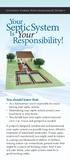 Southwest Florida Water Management District Septic System Your Is Your Responsibility! PIPE SEPTIC TANK DRAIN FIELD SOIL You should know that: As a homeowner you re responsible for maintaining your septic
Frequently Asked Questions about Septic Systems
 What is a septic tank? Where is my septic tank located? Do septic tanks last forever? What should and should not go into my septic tank? How can I tell if my septic tank is working properly? Why should
Who is responsible for making sure that wastewater is treated properly?
 WASTEWATER TREATMENT What is wastewater? Wastewater is water that has been used and must be treated before it is released into another body of water, so that it does not cause further pollution of water
A HOMEOWNERS GUIDE ON-SITE SEWAGE MANAGEMENT SYSTEMS
 GEORGIA DEPARTMENT OF HUMAN RESOURCES ENVIRONMENTAL HEALTH SECTION A HOMEOWNERS GUIDE TO ON-SITE SEWAGE MANAGEMENT SYSTEMS March 12, 2002 WHAT IS AN ON-SITE SEWAGE MANAGEMENT SYSTEM An on-site sewage management
ALL YOU NEED TO KNOW...
 ALL YOU NEED TO KNOW... What do you know about your septic tank system? For the purposes of this booklet, a septic tank system refers to any kind of on-site sewage management system including traditional
Water Recycles poster
 Water Recycles poster The "Water ReCycles" poster is designed for students of all ages. It shows the natural water cycle and humans influence on water resources. Raincloud illustration The raincloud in
Rouge River Watershed, MI Region 5. Community Case Study ROU-1. Number of CSO Outfalls. Combined Sewer Service Area. Wastewater Treatment Capacity
 Community Case Study Rouge River Watershed, MI Region 5 Number of CSO Outfalls 168 Combined Sewer Service Area 93 square miles Wastewater Treatment Capacity 1,700 mgd (primary) 930 mgd (secondary) Receiving
Be a part of the Team! Keep the Bay CLEAN!
 Be a part of the Team! Keep the Bay CLEAN! Water Quality Protection Guidelines for Food Handling Facilities Regional Water Quality Control Plant Operated by the City of Palo Alto for the communities of
PUZZLING PIPES. Grade Level: 4-6
 PUZZLING PIPES Overview: Students will learn about the various paths that water takes after it is used. They will trace the path of wastewater either through the storm drain system or the sanitary sewer
Properly maintaining your septic system will help reduce the. It s Your Septic System. Homeowner s Guide. Here s How to Take Care of It
 Homeowner s Guide for Maintenance and Care of On-Site Sewage Systems It s Your Septic System Here s How to Take Care of It Properly maintaining your septic system will help reduce the possibility of health
CERTIFIED SEPTIC EVALUATION PREPARED FOR MATT HASHEM 1673 MT. MAJOR HWY, ALTON, NH 03810
 DATE: May 31, 2013 N.H. LICENSED DESIGNER OF SUBSURFACE DISPOSAL SYSTEMS 216 Hill Road Phone & Fax: 934-6206 Franklin, NH 03235 Cell: 393-3085 CERTIFIED SEPTIC EVALUATION PREPARED FOR MATT HASHEM 1673
A copy of Worksheet 1 at the appropriate level for each pupil. Ask pupils to answer the question 'What is sewerage?'
 Waste Water Treatment 1. Fascinating Facts Aim: To introduce pupils to key facts about waste water Materials: A copy of Worksheet 1 at the appropriate level for each pupil String Method: Ask pupils to
Improper storage of fuel on construction sites will increase the risk of water pollution that may occur as a result of leaks or spills.
 WQ-10 Best Management Practice (BMP) Water Quality Protection Guideline Secondary Containment Design Standards Fuel Storage on Construction Sites According to the EPA, the majority of water pollution in
4X BMPs for Food Service Facilities
 4X BMPs for Food Service Facilities APPENDIX 4X BEST MANAGEMENT PRACTICES 4X-1 Food Service Facilities Focus of Document This guidance presents BMPs to address the discharge of pollutants to the storm
Lesson Plan: How Do We Clean Polluted Water?
 Lesson Plan: How Do We Clean Polluted Water? Oil Spill Cleanup / Phosphate Cleanup / Groundwater Contamination / Water Treatment Simulation Estimated Time: 2-4 days State Standards taught and addressed
Food Handling Facilities, Waste Reduction & Water Quality Protection Guidelines
 Food Handling Facilities, Waste Reduction & Water Quality Protection Guidelines Food handling facilities such as restaurants, institutional cafeterias, grocery stores, bakeries, and delis, can contribute
Best Management Practices
 for The City of Paso Robles is required to implement a Phase II Municipal Water Program in order to reduce or eliminate the pollutants that enter our waterways from both storm water and non-storm water
Looking after your Septic Tank System
 Looking after your Septic Tank System Name: Bought to you by Address: File this in your property file. 0800 TO FLUSH Call 0800 TO FLUSH 1 What do you know about your septic tank system? Just like your
Grease Trap Maintenance, Procedures and Cleaning Logs
 SAWS Grease Reduction Program Grease Trap Maintenance, Procedures and Cleaning Logs Don t Feed the Grease Monster Best Management Practices for Commercial Food and Restaurant Facilities Train kitchen staff
AP ENVIRONMENTAL SCIENCE 2007 SCORING GUIDELINES
 AP ENVIRONMENTAL SCIENCE 2007 SCORING GUIDELINES Question 1 Read the Fremont Examiner article below and answer the questions that follow. (a) Identify ONE component of the sewage that is targeted for removal
City of Charlottetown Wastewater Treatment Expansion & Upgrading
 City of Charlottetown Wastewater Treatment Expansion & Upgrading Background As Canada s smallest provincial capital, the City of the Charlottetown has a population of approximately 34,000 residents and
26th Ward Wastewater Treatment Plant Wet Weather Operating Plan
 26th Ward Wastewater Treatment Plant Prepared by: New York City Department of Environmental Protection Bureau of Wastewater Treatment July 2010 TABLE OF CONTENTS Page 1.0 INTRODUCTION... 1-1 1.1 BACKGROUND...
POLLUTION PREVENTION FACT SHEET: AUTOMOBILE MAINTENANCE
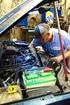 POLLUTION PREVENTION FACT SHEET: AUTOMOBILE MAINTENANCE Description This pollution prevention measure involves creating a program of targeted outreach and training for businesses involved in automobile
Septic Records and Maintenance Guidelines
 1 Septic Records and Maintenance Guidelines Proper design, installation, and maintenance of your septic system will maximize your system's life. It will prevent failures that can be unsightly, foul-smelling,
Is a Storm Drain a Trashcan?
 WHAT IS A WATERSHED? Is a Storm Drain a Trashcan? Objective: Students will understand the relationship between neighborhood litter, floatable debris, and storm drains (a.k.a. catch basins). Students will
Description of the Water Conserv II Facility
 Description of the Water Conserv II Facility Introduction The Water Conserv II (WCII) Water Reclamation Facility provides service to a majority of the southwest section of Orlando. The WCII facility has
FOG PRETREATMENT INFORMATION. New London Public Utilities F.O.G. Program 120 Broad Street New London, CT 06320
 FOG PRETREATMENT INFORMATION 1 New London Public Utilities F.O.G. Program 120 Broad Street New London, CT 06320 Kathryn Willis Program Coordinator Phone: 860-447-5222 Introduction This information package
DRAFT Guidelines for Manually Diverting Outdoor Wastewater to the Sanitary Sewer
 Only RAIN down the Storm Drain... DRAFT Guidelines for Manually Diverting Outdoor Wastewater to the Sanitary Sewer This publication applies to you if: You generate wastewater outdoors, and The wastewater
Orange County Sanitation District
 Orange County Sanitation District The Orange County Sanitation District operates large wastewater treatment plants in Fountain Valley and Huntington Beach, CA. These plants treat about 230 million gallons
What is a CSO / SSO? Sewer Overflows. Prevalence of CSOs in the US. Magnitude of Problem (Local)
 Sewer Overflows Combined Sewer Overflows (CSOs( CSOs) Older, large cities built combined networks to convey sewage and stormwater Stormwater overwhelmed sewage flow, but only for short periods To reduce
Homeowners and Home Buyers Guide to Wells and Private Sewage Systems
 Homeowners and Home Buyers Guide to Wells and Private Sewage Systems What every homeowner should know about living with a well and a private sewage system. YOUR ENVIRONMENTAL SYSTEMS Out of sight out of
City of Mebane Wastewater Collection and Treatment Facility
 City of Mebane Wastewater Collection and Treatment Facility For the Fiscal Year July 1, 2014 - June 30, 2015 City of Mebane Wastewater Collection and Treatment Facility For the Fiscal Year July 1, 2014
Village of St. Louis Sewer Back-up Policy
 Village of St. Louis Sewer Back-up Policy The Village of St. Louis is responsible for maintaining sewer mains and manholes, which are located in public rights-of-way (Village and Provincial maintained
BASEMENT FLOODING. Prevention Guide for. Homeowners
 BASEMENT FLOODING Prevention Guide for Homeowners 1 Did You Know? Floods are the most common hazards in Canada. Water damage is a common cause of loss for homeowner insurance. A heavy rainfall can result
Fats, Oils and Grease
 ENVIRONMENTAL ASSISTANCE OFFICE NEWSLETTER In this Issue Health and Human Impact Fats, Oils and Grease November, 2011 Environmental Impact What to do at Work Introduction What to do at Home Grease Removal
How Your Vehicle Service Facility Can Prevent Stormwater Pollution
 TIPS FOR A CLEANER BAY How Your Vehicle Service Facility Can Prevent Stormwater Pollution alameda county YOU CAN PREVENT WATER POLLUTION! Storm drains flow directly into creeks and the Bay without any
COMBINED SEWER OVERFLOW OPERATIONAL AND MAINTENANCE PLAN SUMMARY
 COMBINED SEWER OVERFLOW OPERATIONAL AND MAINTENANCE PLAN SUMMARY Revised: April 2014 Village of Wilmette, Illinois NPDES CSO Permit No. ILM580012 Chapter 1 Introduction This Operational and Maintenance
Understanding Septic Tank Systems
 Understanding Septic Tank Systems Sewage and effluent can contain a variety of human disease-causing microorganisms and parasites. Disease can be spread to humans from this material by direct contact or
Water is a valuable and expensive resource.
 Conserving Water VIRGINIA SOL Science 6.5 Social studies CE.1, CE.9 Language arts 6.1, 7.1 Math 6.8, 6.10, 6.18, 7.17, 7.18 Technology C/T8.1, C/T8.4 OBJECTIVES Discuss different uses of water Discuss
How To Prevent Over Water Activities
 Objectives Cover Contain Educate Reduce/Minimize Product Substitution Description Over-water activities occur at boat and ship repair yards, marinas, and yacht clubs. The discharge of pollutants to receiving
FREQUENTLY ASKED SEPTIC SYSTEM QUESTIONS
 FREQUENTLY ASKED SEPTIC SYSTEM QUESTIONS What is an OSSF (On-Site Sewage Facility)? This is the term used when referring to "septic systems". What is septic system? A septic system is a method of dealing
Septic Systems How They Work and How to Keep Them Working
 Septic Systems How They Work and How to Keep Them Working PO Box 9300, 49 Exeter Street, Portland, Maine 04104-9300 (207) 780-4820 www.cascobayestuary.org 201 Main Street, Suite 6, Westbrook, Maine 04092
YOUR GUIDE TO PRACTICAL METHODS THAT PROTECT
 POLLUTION PREVENTION PRACTICES FOR SURFACE CLEANING YOUR GUIDE TO PRACTICAL METHODS THAT PROTECT OUR LOCAL CREEKS, RIVERS, LAKES, AND THE SAN FRANCISCO BAY. DECEMBER 2004 CREATED BY THE NAPA-SOLANO-SONOMA
Proposed General Plan Update Goals, Policies, and Implementation Actions
 Proposed General Plan Update Goals, Policies, and Implementation Actions The construction and maintenance of infrastructure is necessary to support existing and planned land uses and to achieve Environmental
Septic Systems and Their Maintenance
 Septic Systems and Their Maintenance Why Use a Septic System? Septic systems are used when sewage treatment plants are not accessible. They safely treat and dispose of wastewaters produced in the bathroom,
FOOD SERVICE FACILITIES Best Management Practices Stormwater Management Program City of Bluff City P.O. Box 70, Bluff City, TN 37618 423-538-7144
 FOOD SERVICE FACILITIES Best Management Practices Stormwater Management Program City of Bluff City P.O. Box 70, Bluff City, TN 37618 423-538-7144 This document may be printed and used for reference by
Waste Handling & Disposal
 Objectives Cover Contain Educate Reduce/Minimize Product Substitution Description Improper storage and handling of solid wastes can allow toxic compounds, oils and greases, heavy metals, nutrients, suspended
California Wastewater
 Abridged Edition L A Y P E R S O N S G U I D E T O California Wastewater Prepared by the Water Education Foundation Contents The Layperson s Guide to California Wastewater is prepared and distributed by
31. ECO-INFO -- SEPTIC SAFE PROTECT YOUR HEALTH AND ENVIRONMENT YOUR SEPTIC PUMP-OUT SYSTEM with SELF ASSESSMENT TROUBLE SHOOTING GUIDE
 31. ECO-INFO -- SEPTIC SAFE PROTECT YOUR HEALTH AND ENVIRONMENT YOUR SEPTIC PUMP-OUT SYSTEM with SELF ASSESSMENT TROUBLE SHOOTING GUIDE Edited 21/12/01 Wyong Shire Council has many non sewered areas that
WWW.STOPTHECLOG.COM WHY A FATS, OILS AND GREASE PROGRAM. Employee Food Service Establishment Information Sheet INTRODUCTION
 Employee Food Service Establishment Information Sheet WHY A FATS, OILS AND GREASE PROGRAM Fats, oils and grease (FOG) cause serious problems in the sewer system. FOG sticks to the walls of the pipes when
Stormwater Ponds. c ıty of a bı le ne st or m wat e r utı lıty dıv ısı on
 CLEAN WATER FACT SHEET Stormwater Ponds c ıty of a bı le ne st or m wat e r utı lıty dıv ısı on Rapid growth in the City of Abil ene and consequent development, as well as construction of culverts, drains,
Best Management Practices Fats, Oils, & Grease
 Best Management Practices Fats, Oils, & Grease for Food Service Facilities Public Works Department Environmental Division Table of Contents A. Introduction B. Purpose of the Manual 1 C. Frequently Asked
Homeowner s Guide to Maintaining a Sewage Treatment System
 Homeowner s Guide to Maintaining a Sewage Treatment System Warren County Combined Health District 416 South East Street Lebanon, OH 45036 513-695-1220 Sewage Treatment Systems Septic Tank and Soil Absorption
Fats, Oils, and Grease Best Management Practices Manual
 Fats, Oils, and Grease Best Management Practices Manual Information, Pollution Prevention and Compliance Information For Food and Beverage Establishments 1 Contact Information: Mendocino City Community
Glossary of Wastewater Terms
 Glossary of Wastewater Terms Activated Sludge Sludge that has undergone flocculation forming a bacterial culture typically carried out in tanks. Can be extended with aeration. Advanced Primary Treatment
IC24. DISPOSAL OF WASTEWATER GENERATED BY MOBILE BUSINESSES AND OUTDOOR ACTIVITIES
 IC24. DISPOSAL OF WASTEWATER GENERATED BY MOBILE BUSINESSES AND OUTDOOR ACTIVITIES BEST MANAGEMENT PRACTICES (BMP) A BMP is a technique, measure, or structural control that is used for a given set of conditions
Improper storage of potential pollutants will increase the risk of water pollution that may occur because of spills.
 WQ-3 Best Management Practice (BMP) Water Quality Protection Guideline Secondary Containment Design and Operation Standards Section 1. Introduction According to the EPA, the majority of water pollution
TALLINN WATER TREATMENT AND SEWERAGE Tuuli Myllymaa
 TALLINN WATER TREATMENT AND SEWERAGE Tuuli Myllymaa Tallinn is the capital of Estonia. It has approximately 450,000 inhabitants and the town area is about 150 km 2. Tallinn Water Ltd., owned by the City
Septic Tank to Cistern Conversions. Saving Water & Saving Money
 Florida Keys Aqueduct Authority 1100 Kennedy Drive Key West, Florida 33040 Septic Tank to Cistern Conversions Saving Water & Saving Money One of the benefits of connecting to the Central Wastewater System
City of Richmond Department of Public Utilities
 City of Richmond Department of Public Utilities Wastewater Treatment Plant EMS Case Study Profile City of Richmond (COR), home to the James River, is in the heart of Virginia and known for its pleasant
GUIDANCE DOCUMENT FOR SIZING AND INSTALLATION OF GREASE TRAPS AND INTERCEPTORS
 GUIDANCE DOCUMENT FOR SIZING AND INSTALLATION OF GREASE TRAPS AND INTERCEPTORS Fort Worth Water Department, Pretreatment Services Division, (817)871-8305 A. Introduction: Part I: Guidance for Grease Trap
Maine Department of Environmental Protection Program Guidance On Combined Sewer Overflow Facility Plans
 Maine Department of Environmental Protection Program Guidance On Combined Sewer Overflow Facility Plans OVERVIEW The objective of a Combined Sewer Overflow (CSO) Facility Plan is to abate CSO discharges
DESCRIPTION OF STORMWATER STRUCTURAL CONTROLS IN MS4 PERMITS
 DESCRIPTION OF STORMWATER STRUCTURAL CONTROLS IN MS4 PERMITS Phase I MS4 permits require continuous updating of the stormwater system inventory owned and operated by the MS4. They also include inspection
Don t spit in the well - you may need to drink from it! -- Unknown, Russia.
 Don t spit in the well - you may need to drink from it! -- Unknown, Russia. WATER POLLUTION Water is a unique substance, because it can naturally renew and cleanse itself, by allowing pollutants to settle
Pamela Birak, Jordan Lake State Park, Chatham County, NC
 Pamela Birak, Jordan Lake State Park, Chatham County, NC 3 Lakes, Reservoirs, and Ponds Forty-six states, Puerto Rico, and the District of Columbia (collectively referred to as states in the rest of this
MARINA ENVIRONMENTAL MANAGEMENT POLICY
 MARINA ENVIRONMENTAL MANAGEMENT POLICY Clean Water & A Clean Environment Are Essential To Good Boating The Abbey Marina Is Committed To Being Environmentally Compatible STATEMENT OF PURPOSE: CLEAN & PROTECT
National Precast Concrete Association
 National Precast Concrete Association NOTES 1. This manual does not claim or imply that it addresses any safety-related issues associated with its use. Operation and maintenance of precast concrete grease
WHAT YOU NEED TO KNOW...
 A GUIDE TO OPERATING & MAINTAINING YOUR SEPTIC SYSTEM WHAT YOU NEED TO KNOW... The way you treat your septic system will influence how long the system lasts and how well it functions. If you own or rent
THE SEPTIC PROFESSIONALS TARGETED BACTERIAL SOLUTIONS CONSUMER PRODUCT CATALOG
 THE SEPTIC PROFESSIONALS TARGETED BACTERIAL SOLUTIONS CONSUMER PRODUCT CATALOG 2 SPECIALIZED BACTERIA THAT TARGET EACH AREA OF THE SYSTEM. Unique challenges and problems occur within every part of a system.
Laws Requiring Pollution Prevention Practices
 Laws Requiring Pollution Prevention Practices Stormwater/urban runoff is being addressed as a result of the 1987 amendments to the Federal Clean Water Act [Section 402(p)], which established requirements
City of Los Angeles Bureau of Sanitation Business Development Services
 City of Los Angeles Bureau of Sanitation Business Development Services OUR MISSION IS TO PROTECT PUBLIC HEALTH AND THE ENVIRONMENT TABLE OF CONTENTS BUSINESS DEVELOPMENT SERVICES...2-5 EFFORTS TO FACILITATE
Drain to Drinking Water
 Drain to Drinking Water Adapted from Project WET Curriculum and Activity Guide Subject: Science, Social Studies Target Grades: 6-8 Duration: one class period Materials Per group (2-3 students) 1 set of
Best Management Practices and Grease Control Device Maintenance for Food Service Establishment Employees
 Best Management Practices and Grease Control Device Maintenance for Food Service Establishment Employees OBJECTIVE Fully understand how using kitchen Best Management Practices (BMPs) to control Fats, Oils,
Freshwater Resources and Water Pollution
 Visualizing Environmental Science Freshwater Resources and Water Pollution Chapter 10 Copyright The Importance of Water Life on Earth would be impossible without water All living organisms contain water
Homeowner s GUIDE. to living with a well and septic system. Northeast Colorado. Health. Department. Replacement System. Leach Field. Septic Tank.
 Homeowner s GUIDE to living with a well and septic system Northeast Colorado Health Department Replacement System Leach Field Septic Tank Well Congratulations on the purchase of your new home. Living in
Septic Tank Use & Maintenance Tips
 Yellowhead County Hamlet of Cadomin Septic Tank Use & Maintenance Tips This guide gives an overview of the responsibilities for property owners in Cadomin. For Seasonal, Permanent & Vacationing Cadomin