
Testimony of. Michael W. Masters. Managing Member / Portfolio Manager. Masters Capital Management, LLC. before the
|
|
|
- Donald Sanders
- 10 years ago
- Views:
Transcription
1 Testimony of Michael W. Masters Managing Member / Portfolio Manager Masters Capital Management, LLC before the Committee on Homeland Security and Governmental Affairs United States Senate May 20, 2008

2 Good morning and thank you, Mr. Chairman and Members of the Committee, for the invitation to speak to you today. This is a topic that I care deeply about, and I appreciate the chance to share what I have discovered. I have been successfully managing a long-short equity hedge fund for over 12 years and I have extensive contacts on Wall Street and within the hedge fund community. Itʼs important that you know that I am not currently involved in trading the commodities futures markets. I am not representing any corporate, financial, or lobby organizations. I am speaking with you today as a concerned citizen whose professional background has given me insight into a situation that I believe is negatively affecting the U.S. economy. While some in my profession might be disappointed that I am presenting this testimony to Congress, I feel that it is the right thing to do. You have asked the question Are Institutional Investors contributing to food and energy price inflation? And my unequivocal answer is YES. In this testimony I will explain that Institutional Investors are one of, if not the primary, factors affecting commodities prices today. Clearly, there are many factors that contribute to price determination in the commodities markets; I am here to expose a fast-growing yet virtually unnoticed factor, and one that presents a problem that can be expediently corrected through legislative policy action. Commodities prices have increased more in the aggregate over the last five years than at any other time in U.S. history. 1 We have seen commodity price spikes occur in the past as a result of supply crises, such as during the 1973 Arab Oil Embargo. But today, unlike previous episodes, supply is ample: there are no lines at the gas pump and there is plenty of food on the shelves. If supply is adequate - as has been shown by others who have testified before this committee 2 - and prices are still rising, then demand must be increasing. But how do you explain a continuing increase in demand when commodity prices have doubled or tripled in the last 5 years? What we are experiencing is a demand shock coming from a new category of participant in the commodities futures markets: Institutional Investors. Specifically, these are Corporate and Government Pension Funds, Sovereign Wealth Funds, University Endowments and other Institutional Investors. Collectively, these investors now account on average for a larger share of outstanding commodities futures contracts than any other market participant. 3 These parties, who I call Index Speculators, allocate a portion of their portfolios to investments in the commodities futures market, and behave very differently from the traditional speculators that have always existed in this marketplace. I refer to them as Index Speculators because of their investing strategy: they distribute their allocation of dollars across the 25 key commodities futures according to the popular indices the Standard & Poors - Goldman Sachs Commodity Index and the Dow Jones - AIG Commodity Index. 4

3 I d like to provide a little background on how this new category of investors came to exist. In the early part of this decade, some institutional investors who suffered as a result of the severe equity bear market of , began to look to the commodity futures market as a potential new asset class suitable for institutional investment. While the commodities markets have always had some speculators, never before had major investment institutions seriously considered the commodities futures markets as viable for larger scale investment programs. Commodities looked attractive because they have historically been uncorrelated, meaning they trade inversely to fixed income and equity portfolios. Mainline financial industry consultants, who advised large institutions on portfolio allocations, suggested for the first time that investors could buy and hold commodities futures, just like investors previously had done with stocks and bonds. Index Speculator Demand Is Driving Prices Higher Today, Index Speculators are pouring billions of dollars into the commodities futures markets, speculating that commodity prices will increase. Chart One shows Assets allocated to commodity index trading strategies have risen from $13 billion at the end of 2003 to $260 billion as of March 2008, 5 and the prices of the 25 commodities that compose these indices have risen by an average of 183% in those five years! 6 CHART ONE 700 COMMODITY INDEX INVESTMENT COMPARED TO S&P GSCI SPOT PRICE COMMODITY INDEX $300 S&P GSCI SPOT PRICE COMMODITY INDEX OTHERS DJ-AIG SP-GSCI S&P GSCI $250 $200 $150 $100 $ COMMODITY INDEX "INVESTMENT" (BILLIONS OF DOLLARS) $- Source: Goldman Sachs, Bloomberg, CFTC Commitments of Traders CIT Supplement, calculations MAR

4 According to the CFTC and spot market participants, commodities futures prices are the benchmark for the prices of actual physical commodities, so when Index Speculators drive futures prices higher, the effects are felt immediately in spot prices and the real economy. 7 So there is a direct link between commodities futures prices and the prices your constituents are paying for essential goods. The next table looks at the commodity purchases that Index Speculators have made via the futures markets. These are huge numbers and they need to be put in perspective to be fully grasped. In the popular press the explanation given most often for rising oil prices is the increased demand for oil from China. According to the DOE, annual Chinese demand for petroleum has increased over the last five years from 1.88 billion barrels to 2.8 billion barrels, an increase of 920 million barrels. 8 Over the same five-year period, Index Speculatorsʼ demand for petroleum futures has increased by 848 million barrels. 9 The increase in demand from Index Speculators is almost equal to the increase in demand from China! Commodity Purchases By Index Speculators The Last 5 Years Sector Commodity Units Previous Futures Market Stockpile January 1, 2003 Net Purchases Last 5¼ Years Current Futures Market Stockpile March 12, 2008 Agricultural Cocoa Metric Tons 18, , ,180 Coffee Pounds 195,716,944 2,238,858,056 2,434,575,000 Corn Bushels 242,561,708 2,138,383,292 2,380,945,000 Cotton Pounds 544,934,999 5,548,915,001 6,093,850,000 Soybean Oil Pounds 163,135,678 4,312,624,322 4,475,760,000 Soybeans Bushels 81,028, ,616, ,645,000 Sugar Pounds 2,291,358,746 46,094,097,254 48,385,456,000 Wheat Bushels 166,738, ,351,775 1,134,090,000 Wheat KC Bushels 54,746, ,618, ,365,000 Livestock Feed Cattle Pounds 104,446, ,453, ,900,000 Lean Hogs Pounds 517,414,747 3,827,425,253 4,344,840,000 Live Cattle Pounds 669,766,732 5,099,033,268 5,768,800,000 Energy Brent Crude Oil Barrels 47,075, ,524, ,599,621 WTI Crude Oil Barrels 99,880, ,499, ,380,320 Gasoil Metric Tons 1,682,662 6,027,680 7,710,342 Heating Oil Gallons 1,067,859,608 2,568,925,661 3,636,785,269 Gasoline Gallons 1,102,184,401 2,488,458,616 3,590,643,018 Natural Gas Million BTUs 330,652,415 1,932,356,225 2,263,008,640 Base Metals Aluminum Metric Tons 344,246 3,232,406 3,576,652 Lead Metric Tons 82, , ,745 Nickel Metric Tons 20, , ,135 Zinc Metric Tons 133,381 1,182,091 1,315,472 Copper Metric Tons 220,096 1,144,538 1,364,634 Precious Metals Gold Troy Ounces 979,863 8,742,401 9,722,264 Silver Troy Ounces 11,126, ,866, ,993,049 Sources: Goldman Sachs, Standard & Poors, Dow Jones, CFTC Commitments of Traders CIT Supplement, calculations

5 In fact, Index Speculators have now stockpiled, via the futures market, the equivalent of 1.1 billion barrels of petroleum, effectively adding eight times as much oil to their own stockpile as the United States has added to the Strategic Petroleum Reserve over the last five years. 10 Let s turn our attention to food prices, which have skyrocketed in the last six months. When asked to explain this dramatic increase, economists replies typically focus on the diversion of a significant portion of the U.S. corn crop to ethanol production. 11 What they overlook is the fact that Institutional Investors have purchased over 2 billion bushels of corn futures in the last five years. Right now, Index Speculators have stockpiled enough corn futures to potentially fuel the entire United States ethanol industry at full capacity for a year. 12 That s equivalent to producing 5.3 billion gallons of ethanol, which would make America the world s largest ethanol producer. 13 Turning to Wheat, in 2007 Americans consumed 2.22 bushels of Wheat per capita. 14 At 1.3 billion bushels, the current Wheat futures stockpile of Index Speculators is enough to supply every American citizen with all the bread, pasta and baked goods they can eat for the next two years! Index Speculator Demand Characteristics Demand for futures contracts can only come from two sources: Physical Commodity Consumers and Speculators. Speculators include the Traditional Speculators who have always existed in the market, as well as Index Speculators. Five years ago, Index Speculators were a tiny fraction of the commodities futures markets. Today, in many commodities futures markets, they are the single largest force. 15 The huge growth in their demand has gone virtually undetected by classically-trained economists who almost never analyze demand in futures markets. Index Speculator demand is distinctly different from Traditional Speculator demand; it arises purely from portfolio allocation decisions. When an Institutional Investor decides to allocate 2% to commodities futures, for example, they come to the market with a set amount of money. They are not concerned with the price per unit; they will buy as many futures contracts as they need, at whatever price is necessary, until all of their money has been put to work. Their insensitivity to price multiplies their impact on commodity markets. Furthermore, commodities futures markets are much smaller than the capital markets, so multi-billion-dollar allocations to commodities markets will have a far greater impact on prices. In 2004, the total value of futures contracts outstanding for all 25 index commodities amounted to only about $180 billion. 16 Compare that with worldwide equity markets which totaled $44 trillion 17, or over 240 times bigger. That year, Index Speculators poured $25 billion into these markets, an amount equivalent to 14% of the total market. 18

6 CHART TWO 800 Commodity Futures Market Size S&P GSCI Spot Price Index Dollar Value of Commercial Positions Dollar Vale of Traditional Speculators' Positions Dollar Value of Index Speculators' Positions MAR Source: Bloomberg, CFTC Commitments of Traders CIT Supplement, calculations Chart Two shows this dynamic at work. As money pours into the markets, two things happen concurrently: the markets expand and prices rise. One particularly troubling aspect of Index Speculator demand is that it actually increases the more prices increase. This explains the accelerating rate at which commodity futures prices (and actual commodity prices) are increasing. Rising prices attract more Index Speculators, whose tendency is to increase their allocation as prices rise. So their profit-motivated demand for futures is the inverse of what you would expect from price-sensitive consumer behavior. You can see from Chart Two that prices have increased the most dramatically in the first quarter of We calculate that Index Speculators flooded the markets with $55 billion in just the first 52 trading days of this year. 19 That s an increase in the dollar value of outstanding futures contracts of more than $1 billion per trading day. Doesn t it seem likely that an increase in demand of this magnitude in the commodities futures markets could go a long way in explaining the extraordinary commodities price increases in the beginning of 2008? There is a crucial distinction between Traditional Speculators and Index Speculators: Traditional Speculators provide liquidity by both buying and selling futures. Index Speculators buy futures and then roll their positions by buying calendar spreads. They never sell. Therefore, they consume liquidity and provide zero benefit to the futures markets. 20

7 It is easy to see now that traditional policy measures will not work to correct the problem created by Index Speculators, whose allocation decisions are made with little regard for the supply and demand fundamentals in the physical commodity markets. If OPEC supplies the markets with more oil, it will have little affect on Index Speculator demand for oil futures. If Americans reduce their demand through conservation measures like carpooling and using public transportation, it will have little affect on Institutional Investor demand for commodities futures. Index Speculators trading strategies amount to virtual hoarding via the commodities futures markets. Institutional Investors are buying up essential items that exist in limited quantities for the sole purpose of reaping speculative profits. Think about it this way: If Wall Street concocted a scheme whereby investors bought large amounts of pharmaceutical drugs and medical devices in order to profit from the resulting increase in prices, making these essential items unaffordable to sick and dying people, society would be justly outraged. Why is there not outrage over the fact that Americans must pay drastically more to feed their families, fuel their cars, and heat their homes? Index Speculators provide no benefit to the futures markets and they inflict a tremendous cost upon society. Individually, these participants are not acting with malicious intent; collectively, however, their impact reaches into the wallets of every American consumer. Is it necessary for the U.S. economy to suffer through yet another financial crisis created by new investment techniques, the consequences of which have once again been unforeseen by their Wall Street proponents? The CFTC Has Invited Increased Speculation When Congress passed the Commodity Exchange Act in 1936, they did so with the understanding that speculators should not be allowed to dominate the commodities futures markets. Unfortunately, the CFTC has taken deliberate steps to allow certain speculators virtually unlimited access to the commodities futures markets. The CFTC has granted Wall Street banks an exemption from speculative position limits when these banks hedge over-the-counter swaps transactions. 21 This has effectively opened a loophole for unlimited speculation. When Index Speculators enter into commodity index swaps, which 85-90% of them do, they face no speculative position limits. 22 The really shocking thing about the Swaps Loophole is that Speculators of all stripes can use it to access the futures markets. So if a hedge fund wants a $500 million

8 position in Wheat, which is way beyond position limits, they can enter into swap with a Wall Street bank and then the bank buys $500 million worth of Wheat futures. 23 In the CFTC s classification scheme all Speculators accessing the futures markets through the Swaps Loophole are categorized as Commercial rather than Non- Commercial. The result is a gross distortion in data that effectively hides the full impact of Index Speculation. Additionally, the CFTC has recently proposed that Index Speculators be exempt from all position limits, thereby throwing the door open for unlimited Index Speculator investment. 24 The CFTC has even gone so far as to issue press releases on their website touting studies they commissioned showing that commodities futures make good additions to Institutional Investors portfolios. 25 Is this what Congress expected when it created the CFTC? Congress Should Eliminate The Practice Of Index Speculation I would like to conclude my testimony today by outlining three steps that can be taken to immediately reduce Index Speculation. Number One: Congress has closely regulated pension funds, recognizing that they serve a public purpose. Congress should modify ERISA regulations to prohibit commodity index replication strategies as unsuitable pension investments because of the damage that they do to the commodities futures markets and to Americans as a whole. Number Two: Congress should act immediately to close the Swaps Loophole. Speculative position limits must look-through the swaps transaction to the ultimate counterparty and hold that counterparty to the speculative position limits. This would curtail Index Speculation and it would force ALL Speculators to face position limits. Number Three: Congress should further compel the CFTC to reclassify all the positions in the Commercial category of the Commitments of Traders Reports to distinguish those positions that are controlled by Bona Fide Physical Hedgers from those controlled by Wall Street banks. The positions of Wall Street banks should be further broken down based on their OTC swaps counter-party into Bona Fide Physical Hedgers and Speculators. There are hundreds of billions of investment dollars poised to enter the commodities futures markets at this very moment. 26 If immediate action is not taken, food and energy prices will rise higher still. This could have catastrophic economic effects on millions of already stressed U.S. consumers. It literally could mean starvation for millions of the world s poor. 27

9 If Congress takes these steps, the structural integrity of the futures markets will be restored. Index Speculator demand will be virtually eliminated and it is likely that food and energy prices will come down sharply.

10 APPENDIX: HOW TO CALCULATE INDEX SPECULATORS POSITIONS If someone knows how much money is invested in the total index then it is easy to calculate how much must be in each commodity in dollars and in futures contracts. Total Dollars Invested In Index X Weight Of Individual Commodity = Dollars In Individual Commodity Total Dollars Invested In Index X Weight Of Individual Commodity / Dollar Value Of A Commodity Contract = # Of Contracts In An Individual Commodity And therefore if someone knows how many contracts are in an individual commodity along with the dollar value of a contract and the weight of that commodity in the index then you can calculate the total dollars invested in the index as follows: # Of Contracts In An Individual Commodity X Dollar Value Of A Commodity Contract / Weight Of Individual Commodity = Total Dollars Invested In Index The CFTC starting in January 2006 has been publishing the Commodity Index Trader Supplement to the Commitments Of Traders report. This supplemental report shows the reported positions of Index Speculators in 12 different agricultural commodities. Of the 12, two commodities:, KC Wheat and Feeder Cattle, are part of the S&P GSCI (and not the DJ-AIG) and one commodity: Soybean Oil, is part of the DJ-AIG (and not the S&P-GSCI). Note that 95% of dollars indexed to commodities are replicating either the S&P-GSCI or DJ-AIG. Both the S&P-GSCI and DJ-AIG publish on a daily basis the individual weights of their constituent commodities. Also futures market data providers like Bloomberg publish daily closing prices for the commodities. Since the futures contract terms do not change that enables someone to calculate the daily dollar values of the individual commodity contracts. So with these three data points it is simple to calculate the total dollars invested in the S&P-GSCI and the DJ-AIG on a weekly basis. And once the total dollars invested in these two indices is known then that results in the ability to calculate the number of contracts held by Index Speculators in the other 13 non-agricultural commodities. A detailed example of this 3 step process follows. Step One - Estimate Total Amount Invested In S&P-GSCI and DJ-AIG According to the CFTC s January 17, 2006 CIT report, Index Specualtors had positiions in KC Wheat, Feeder Cattle and Soybean Oil of 21366, 5613 and contracts

11 respectively. Plugging in the weights and contract values from the appropriate sources yields the following calculations: 21,366 X $18, / 0.82% = $48,887,753,049 5,613 X $56, / 0.68% = $46,338,204,044 59,264 X $12, / 2.77% = $27,240,045,054 So the S&P-GSCI had somewhere between $46 and $49 billion invested in it and the DJ-AIG had around $27 billion invested in it. This corresponds well to the figures published by Goldman Sachs and Dow Jones. CALCULATIONS OF INDEX SPECULATORS POSITIONS (JANUARY 17, 2006) PERCENTAGE POSITIONS Contract POSITIONS Combined CFTC WEIGHTS (in millions) Dollar (in contracts) Position Actual S&P-GSCI DI-AIG S&P-GSCI DI-AIG Value S&P-GSCI DI-AIG Estimate Positions Cocoa 0.2% 0.0% $95.5 $0.0 $15,710 6, ,081 9,390 Coffee 0.8% 2.9% $373.2 $799.0 $46,425 8,039 17,201 25,240 28,777 Corn 2.0% 5.9% $954.0 $1,600.0 $10,438 91, , , ,264 Cotton 0.9% 3.2% $444.9 $862.0 $27,995 15,891 30,777 46,668 53,741 Soybean Oil 0.0% 2.8% $0.0 $753.0 $12, ,173 59,173 59,264 Soybeans 1.4% 7.8% $672.5 $2,116.0 $28,563 23,543 74,073 97, ,304 Sugar 1.9% 3.0% $884.9 $808.0 $17,438 50,742 46,352 97, ,487 Wheat 2.1% 4.8% $1,009.1 $1,300.0 $16,438 61,393 79, , ,986 Wheat KC 0.8% 0.0% $396.0 $0.0 $18,763 21, ,106 21,366 Feed Cattle 0.7% 0.0% $329.5 $0.0 $56,138 5, ,869 5,613 Lean Hogs 1.4% 4.4% $663.8 $1,185.0 $23,790 27,902 49,824 77,726 69,591 Live Cattle 2.7% 6.1% $1,293.2 $1,660.0 $38,620 33,486 42,982 76,468 71,834 Brent Crude Oil 14.5% 0.0% $6,901.3 $0.0 $64, , ,337 WTI Crude Oil 31.3% 12.8% $14,888.0 $3,482.0 $66, ,521 52, ,036 Gasoil 3.1% 0.0% $1,472.7 $0.0 $54,725 26, ,911 Heating Oil 8.0% 3.8% $3,823.7 $1,048.0 $75,243 50,818 13,924 64,742 Gasoline 7.9% 4.1% $3,780.5 $1,105.0 $76,579 49,368 14,424 63,792 Natural Gas 10.6% 12.3% $5,030.8 $3,355.0 $91,680 54,873 36,591 91,464 Aluminum 3.1% 6.9% $1,464.4 $1,866.0 $59,475 24,621 31,383 56,004 Lead 0.3% 0.0% $156.4 $0.0 $31,800 4, ,918 Nickel 0.7% 2.7% $312.8 $724.0 $88,182 3,547 8,214 11,762 Zinc 0.7% 2.7% $355.6 $736.0 $51,900 6,852 14,184 21,036 Copper (LME) 2.8% 0.0% $1,335.1 $0.0 $116,575 11, ,453 Copper (CMX) 0.0% 5.9% $0.0 $1,602.0 $54, ,542 29,542 Gold 1.8% 6.2% $875.9 $1,694.0 $55,430 15,802 30,568 46,370 Silver 0.2% 2.0% $99.2 $545.0 $45,100 2,201 12,080 14,280 TOTAL 100% 100% $47,613 $27,240 Source: Standard & Poor s, Dow Jones, Bloomberg Data

12 Step Two - Calculate Position Size For Other Commodities If $47.6 billion is used as an estimate for the S&P-GSCI and then $27.2 billion is used for the DJ-AIG it is possible to calculate (using the formulas above) Index Speculators positions in all the other commodities. The table above shows the results. Step Three - Compare With Actual CFTC Figures For Accuracy The final column in the table shows the actual figures released by the CFTC. As you can see in almost all cases the estimates generated using this method yield results that are less than the actual reported results. That increases one s confidence that this method is in fact conservative. Final Note This method of calculating Index Speculators is almost identical to the methods used by Philip Verleger ( Steve Briese ( and others. It is not clear who deserves the credit for developing it but it clearly is not us.

13 ENDNOTES 1 Reserve Management, The Commodity Bubble, The Metals Manipulation, The Contagion Risk To Gold And The Threat Of The Great Hedge Fund Unwind To Spread Product. Frank Veneroso, July 19, 2007, pp %20Public% pdf 2 fuseaction=hearings.detail&hearingid=dc7368c2-0ea fc a5bba79 3 Commodities Futures Markets Open Interest 2008 LONG / DEMAND SIDE Physical Hedger Traditional Speculator Index Speculator COCOA 33% 48% 19% COFFEE 26% 35% 39% CORN 41% 24% 35% COTTON 32% 27% 41% SOYBEAN OIL 46% 22% 32% SOYBEANS 30% 28% 42% SUGAR 38% 19% 43% WHEAT 17% 20% 64% WHEAT KC 37% 32% 31% FEED CATTLE 17% 53% 30% LEAN HOGS 18% 20% 63% LIVE CATTLE 13% 24% 63% WTI CRUDE OIL 59% 10% 31% HEATING OIL 37% 16% 47% GASOLINE 41% 20% 39% NATURAL GAS 62% 10% 28% GOLD 22% 55% 23% SILVER 27% 46% 28% AVERAGE 33% 27% 39% Source: CFTC Commitments of Traders CIT supplement plus calculations

14 4 For more information visit: for the DJ-AIG or for the S&P-GSCI 2,3,4,0,0,0,0,0,0,1,1,0,0,0,0,0.html Index Component Weights as of March 12, 2008 S&P- GSCI Weighted Average DI-AIG Agricultural Cocoa 0.2% 0.0% 0.1% Coffee 0.6% 2.9% 1.5% Corn 3.3% 5.7% 4.2% Cotton 0.9% 2.5% 1.5% Soybean Oil 0.0% 2.9% 1.1% Soybeans 2.2% 7.2% 4.1% Sugar 1.0% 3.1% 1.8% Wheat 5.3% 5.6% 5.4% Wheat KC 1.2% 0.0% 0.8% Livestock Feed Cattle 0.3% 0.0% 0.2% Lean Hogs 0.8% 2.2% 1.4% Live Cattle 1.7% 3.9% 2.6% Energy Brent Crude Oil 13.4% 0.0% 8.3% WTI Crude Oil 38.3% 12.9% 28.6% Gasoil 5.0% 0.0% 3.1% Heating Oil 4.9% 3.8% 4.5% Gasoline 4.2% 3.6% 4.0% Natural Gas 6.8% 13.1% 9.2% Base Metals Aluminum 2.5% 7.7% 4.5% Lead 0.5% 0.0% 0.3% Nickel 0.9% 2.7% 1.6% Zinc 0.6% 2.7% 1.4% Copper 3.1% 7.3% 4.7% Precious Metals Gold 1.9% 7.1% 3.9% Silver 0.3% 3.0% 1.3% Source: Standard & Poor s, Dow Jones 5 Investing and Trading in the GSCI, Goldman, Sachs & Co., June 1, 2005 and calculations based upon the CFTC Commitments of Traders Report, CIT Supplement, see the Appendix for more information on how to calculate Index Speculatorsʼ positions.

15 6 Commodity Futures Price Inreases March March 2008 Agricultural Cocoa +34% Coffee +167% Corn +134% Cotton +40% Soybean Oil +199% Soybeans +143% Sugar +69% Wheat +314% Wheat KC +276% Livestock Feed Cattle +34% Lean Hogs +10% Live Cattle +23% Energy Brent Crude Oil +213% WTI Crude Oil +191% Gasoil +192% Heating Oil +192% Gasoline +145% Natural Gas +71% Base Metals Aluminum +120% Lead +564% Nickel +282% Zinc +225% Copper +413% Precious Metals Gold +183% Silver +331% Source: Bloomberg Financial Data 7 The CFTC states on its website that In many physical commodities (especially agricultural commodities), cash market participants base spot and forward prices on the futures prices that are ʻdiscoveredʼ in the competitive, open auction market of a futures exchange. - The Economic Purpose of Futures Markets and How They Work, U.S. Commodities Futures Trading Commission, As an additional example, when Platts, an energy markets pricing service, surveys crude oil pricing in physical markets around the globe they are receiving bid and offer quotations from market participants expressed as WTI Light Sweet Crude minus a spread. - Platts Oil Pricing and Market-on-Close Methodology Explained, Platts - a McGraw Hill Company, July whitepapers/moc.pdf?a=i Note that if and when Platts receive price quotes as Brent Crude or Dubai Crude plus or minus a spread there is still a direct and stable relationship between WTI, Brent and Dubai.

16 8 Please remember if demand for oil stays the same then prices will stay the same. If supply is constant then demand has to increase for prices to increase. That is why we examine increases in demand. Increase In Chinese Demand For Petroleum Last 5 Years CONSUMPTION (Barrels Per Year) YEAR OVER YEAR CHANGE ,883,660, ,036,010, ,349, ,349,681, ,671, ,452,800, ,118, ,654,750, ,950, ,803,010, ,259,211 TOTAL CHANGE 919,349,423 Source: Energy Information Association, US Department of Energy 9 This table takes the numbers from the main table in the body of the statement and converts them to their barrel equivalents. The Petroleum consumption numbers that the DOE provides for Chinese consumption include all forms of petroleum both crude and refined. Increase In Index Speculator Demand For Petroleum Last 5 Years Petroleum Product Barrels WTI Crude Oil 538,499,579 Brent Crude Oil 144,524,265 Gasoil 44,122,619 Heating Oil 61,164,897 Gasoline 59,249,015 TOTAL CHANGE 847,560, Energy Information Association - U.S. Department Of Energy The End Of Cheap Food, The Economist, December 6, articlesbysubject/displaystory.cfm?subjectid= &story_id= Ethanol Reshapes the Corn Market, Economic Research Service - U.S. Department Of Agriculture, Allen Baker and Steven Zahniser April Ethanol.htm 13 Ethanol Production Could Be Eco-Disaster, Brazil's Critics Say, Kelly Hearn, National Geographic News, February 8, 2007, 14 Economic Research Service, U.S. Department of Agriculture, consumption.htm 15 see endnote #2

17 16 Because the base metals are traded on the London Metals Exchange, Bloomberg did not have open interest data prior to Since prices and open interest expressed in contracts have been rising steadily the last five years we took 2005ʼs base metal data and added it to 2004 actual numbers to come up with a conservative estimate for 2004 open interest. These are daily numbers averaged across the entire year. Average Daily Dollar Value Of Open Interest (in millions) COCOA $ 1,815 $ 1,510 $ 1,569 $ 1,883 $ 2,040 $ 2,690 $ 4,062 COFFEE $ 1,408 $ 1,693 $ 2,748 $ 3,769 $ 4,203 $ 6,308 $ 9,521 CORN $ 5,435 $ 5,118 $ 8,182 $ 7,657 $ 15,059 $ 23,763 $ 37,427 COTTON $ 1,646 $ 2,990 $ 2,645 $ 2,841 $ 4,259 $ 6,822 $ 11,689 SOYBEAN OIL $ 1,441 $ 1,952 $ 2,456 $ 1,944 $ 3,186 $ 5,756 $ 8,868 SOYBEANS $ 4,883 $ 7,306 $ 9,480 $ 8,846 $ 10,129 $ 20,882 $ 37,399 SUGAR $ 1,521 $ 1,712 $ 2,772 $ 5,120 $ 8,634 $ 8,174 $ 15,509 WHEAT $ 1,836 $ 1,862 $ 2,647 $ 3,827 $ 7,414 $ 11,608 $ 19,742 WHEAT KC $ 1,304 $ 1,081 $ 1,240 $ 1,525 $ 3,099 $ 4,094 $ 6,253 FEED CATTLE $ 540 $ 757 $ 804 $ 1,298 $ 1,518 $ 1,409 $ 1,818 LEAN HOGS $ 602 $ 858 $ 1,873 $ 2,309 $ 3,285 $ 3,875 $ 4,465 LIVE CATTLE $ 2,670 $ 3,595 $ 3,556 $ 4,859 $ 6,701 $ 7,909 $ 8,764 BRENT CRUDE $ 6,556 $ 8,486 $ 12,620 $ 19,388 $ 31,094 $ 45,653 $ 52,832 WTI CRUDE $ 16,052 $ 20,400 $ 33,620 $ 55,297 $ 80,996 $ 130,699 $ 199,970 GASOIL $ 3,990 $ 3,695 $ 5,461 $ 10,196 $ 14,749 $ 21,006 $ 22,917 HEATING OIL $ 4,412 $ 5,105 $ 8,242 $ 11,838 $ 13,575 $ 17,903 $ 23,854 GASOLINE $ 3,714 $ 3,947 $ 7,304 $ 10,276 $ 11,366 $ 16,085 $ 24,213 NATURAL GAS $ 23,551 $ 27,812 $ 25,897 $ 42,427 $ 45,067 $ 54,075 $ 72,834 ALUMINUM $ 0 $ 0 $ 0 $ 12,286 $ 23,676 $ 27,589 $ 32,741 LEAD $ 0 $ 0 $ 0 $ 677 $ 981 $ 2,226 $ 2,134 NICKEL $ 0 $ 0 $ 0 $ 1,986 $ 4,415 $ 6,690 $ 6,608 ZINC $ 0 $ 0 $ 0 $ 2,696 $ 6,759 $ 6,917 $ 6,428 COPPER $ 0 $ 0 $ 0 $ 11,864 $ 26,516 $ 28,921 $ 32,717 GOLD $ 5,639 $ 9,851 $ 13,221 $ 13,860 $ 18,929 $ 24,891 $ 43,700 SILVER $ 1,976 $ 2,438 $ 3,745 $ 4,286 $ 6,447 $ 7,437 $ 12,935 TOTAL $ 90,991 $ 112,168 $ 150,082 $ 242,955 $ 354,097 $ 493,382 $ 699,400 Source: CFTC Commitment of Traders and Bloomberg. Delta-equivalent options positions are included but spread positions are omitted. For Base Metals, Brent Crude and Gasoil open interest represents futures only. No data for Base Metals in CIA World Factbook.

18 18 There is no publicly available data that shows inflow data for commodity indexation trading strategies but some approximations can be made. The end of year investment figures are published by the respective index companies (or they can be calculated) and the annual performance is known. Therefore the amount that the prior yearʼs investment has grown or shrunk can be calculated. Then the difference in the yearly change has to come from net inflows. When during the year the inflows occurred is not known, so the assumption is made that all net inflows occurred evenly throughout the year. Changing assumptions on net inflow timing only affects the rate of growth for that yearʼs inflow which never amounts to more than a few billion dollars difference. Estimated Annual Inflows S&P-GSCI DJ-AIG TOTAL 2004 $16.2 $8.9 $ $4.8 $12.4 $ $28.3 $11.3 $ $14.7 $15.4 $ $35.1 $20.0 $55.1 TOTAL $99.1 $68.0 $ ibid. 20 This table is a good reference in comparing the differences between market participants. Types Of Futures Market Participants HEDGER INDEX SPECULATOR TRADITIONAL SPECULATOR Sheds Price Risk Takes On Price Risk Takes On Price Risk Hedges Underlying Position Profits From Price Moves Profits From Price Moves Consumes Liquidity Consumes Liquidity Provides Liquidity Price Sensitive Insensitive To Price Price Sensitive Take Long And Short Positions Long Only Take Long And Short Positions 21 And that actually happened in 1991 with a particular swap dealer that was hedging an OTC transaction with a pension fund, and the swap dealer came to us, and we said, "yeah, that qualifies for a hedge exemption," so we granted a hedge exemption to the swap dealer. And in the years since then, we've done the same for other swap dealers, as well. (Remarks of Don Heitman, Division of Market Oversight, CFTC Agricultural Advisory Committee Meeting, Washington, D.C., December 6, 2007) ( 22 Commodities: Whoʼs Behind the Boom?, Gene Epstein, Barronʼs, March 31, 2008

19 23 Similar hedge exemptions were subsequently granted in other cases where the futures positions clearly offset risks related to swaps or similar OTC positions involving both individual commodities and commodity indexes. These nontraditional hedges were all subject to specific limitations to protect the marketplace from potential ill effects. The limitations included: (1) The futures positions must offset specific price risk; (2) the dollar value of the futures positions would be no greater than the dollar value of the underlying risk; and (3) the futures positions would not be carried into the spot month. (72 FR 66097, Notice of Proposed Rulemaking, Risk Management Exemption From Federal Speculative Position Limits,, November 27, 2007.) (The language in 72 FR above also appears in 71 FR 35627, CFTC Request for Comments, Comprehensive Review of the Commitments of Traders Reporting Program, June 21, 2006.) ( 24 (72 FR 66097, Notice of Proposed Rulemaking, Risk Management Exemption From Federal Speculative Position Limits,, November 27, 2007.) 25 CFTC Study Finds Independent-Moving Commodity and Equity Markets, December 19, 2007, Pension fund consultants have been advocating portfolio allocations of between 5% and 12% to commodities indices. Considering that worldwide institutional assets are about $29 trillion, if Institutional Investors heed the advice of their consultants, index replication could easily reach $1 trillion. $1 trillion on $29 trillion would represent an average allocation of just 3.5%. Investing In Collateralised Commodities Futures, Russellʼs Research For Excellence, Yvonne Ooi and David Rae, 2005 Strategic Asset Allocation and Commodities, Ibbotson Associates, Thomas M. Idzorek, March 27, 2006 Pension Funds $26 trillion : UK pension fund returns at five-year low, IFAonline, Jennifer Bollen, January 28, Sovereign Wealth Funds $3 trillion : Sovereign Wealth Funds, Council On Foreign Relations, Lee Hudson Teslik, January 18, WFP says high food prices a silent tsunami, affecting every continent, World Food Program - United Nations, April 22,

Commodity Speculation and Commodity Investment
 Global Commodities Forum Palais des Nations, Geneva 22-23 March 2010 Commodity Speculation and Commodity Investment by Mr. Christopher L. Gilbert, Academic Director, Doctoral Programme in Economics and
What drives crude oil prices?
 What drives crude oil prices? An analysis of 7 factors that influence oil markets, with chart data updated monthly and quarterly Washington, DC U.S. Energy Information Administration Independent Statistics
THE ACCIDENTAL HUNT BROTHERS
 THE ACCIDENTAL HUNT BROTHERS How Institutional Investors Are Driving Up Food And Energy Prices Michael W. Masters Portfolio Manager Masters Capital Management [email protected] Adam K. White,
What does the Dow Jones-UBS Commodity Index track?
 Dow Jones-UBS Commodity Index FAQ What does the Dow Jones-UBS Commodity Index track? The Dow Jones-UBS Commodity Index is an index tracking the performance of a weighted group of exchange-traded futures
Mechanics of the Futures Market. Andrew Wilkinson
 Mechanics of the Futures Market Andrew Wilkinson Risk Disclosure Options and Futures are not suitable for all investors. The amount you may lose may be greater than your initial investment. Before trading
COMMODITIES Precious Metals Industrial (Base) Metals Commodities Grains and Oilseeds Softs affect supply curves Exotics Standardization Tradability
 COMMODITIES Commodities: real and tangible assets that are elements of food (agricultural products like wheat and corn), fuel (oil, gas), metals (ex: copper, aluminum, gold, tin, zinc), and natural resources
Six Ways to Invest in Commodity Futures
 Going Long on Index investing has long been popular in the securities markets. Now it is coming into fashion in the futures world, and bringing a new source of liquidity to commodity futures contracts.
The Commodity Price Roller Coaster
 The Commodity Price Roller Coaster Jayati Ghosh For most of the past year, as global prices in oil and other commodity markets zoomed to stratospheric levels, we were told that it had nothing to do with
INSIGHTS ON INVESTING IN COMMODITIES
 PRUDENTIAL INVESTMENTS» MUTUAL FUNDS INSIGHTS ON INVESTING IN COMMODITIES WHITE PAPER NATURAL RESOURCES STOCKS HOLD THE LONG-TERM EDGE Although commodities may benefit an investment portfolio by offering
Futures Investment Series. No. 2. The Mechanics of the Commodity Futures Markets. What They Are and How They Function. Mount Lucas Management Corp.
 Futures Investment Series S P E C I A L R E P O R T No. 2 The Mechanics of the Commodity Futures Markets What They Are and How They Function Mount Lucas Management Corp. The Mechanics of the Commodity
Introduction to Futures Contracts
 Introduction to Futures Contracts September 2010 PREPARED BY Eric Przybylinski Research Analyst Gregory J. Leonberger, FSA Director of Research Abstract Futures contracts are widely utilized throughout
THE ACCIDENTAL HUNT BROTHERS ACT 2
 THE ACCIDENTAL HUNT BROTHERS ACT 2 Index Speculators Have Been a Major Cause of the Recent Drop in Oil Prices Michael W. Masters Portfolio Manager Masters Capital Management [email protected]
OPEC s One-Way Option: Investors and the Price of Crude Oil. Philip K. Verleger, Jr. PKVerleger LLC
 OPEC s One-Way Option: Investors and the Price of Crude Oil Philip K. Verleger, Jr. PKVerleger LLC Theme After ten years, commodities have finally become a suitable investment class for pension funds.
Should Pension Funds Invest in Commodities? If So What Are the Implications for Them...and Others?
 Should Pension Funds Invest in Commodities? If So What Are the Implications for Them...and Others? Thomas Schneeweis Michael and Cheryl Professor of Finance University of Massachusetts March, 2012 1 Summary
Commodities: an asset class in their own right?
 PHILIPPE MONGARS, CHRISTOPHE MARCHAL-DOMBRAT Market Operations Directorate Market Making and Monitoring Division Investor interest in commodities has risen in recent years in line with the spectacular
PowerShares DB Commodity and Currency ETFs Convenient access to commodities and currencies
 PowerShares DB Commodity and Currency ETFs Convenient access to commodities and currencies Not FDIC Insured May Lose Value No Bank Guarantee For US Use Only Now you can add agriculture, oil, gas, base
Beyond Beta Passive Alternatives to Active Commodities Strategies
 Beyond Beta Passive Alternatives to Active Commodities Strategies Paul D. Kaplan, Ph.D., CFA, Quantitative Research Director, Morningstar Europe The economic rationale for momentum-based long/short commodity
Annuity Linked TVI Index. Explained
 Annuity Linked TVI Index Explained 1 Key Features of the Annuity Linked TVI Index The Index aims to deliver positive returns while moderating volatility regardless of market direction. The Index goal is
Corporate and Investment Banking. Standard Bank Africa Commodity Index Exchange Traded Note
 Corporate and Investment Banking Standard Bank Africa Commodity Index Exchange Traded Note Introduction to Commodities as an Asset Class 2 The Standard Bank Africa Commodity Index 4 Standard Bank s Blue
Testimony of. Michael W. Masters Managing Member / Portfolio Manager Masters Capital Management, LLC. before the
 Testimony of Michael W. Masters Managing Member / Portfolio Manager Masters Capital Management, LLC before the Commodities Futures Trading Commission August 5, 2009 Testimony of Michael W. Masters - Commodities
Chapter Five: Risk Management and Commodity Markets
 Chapter Five: Risk Management and Commodity Markets All business firms face risk; agricultural businesses more than most. Temperature and precipitation are largely beyond anyone s control, yet these factors
Paul Bennett. Senior Vice President and Chief Economist. New York Stock Exchange. Testimony before the
 Paul Bennett Senior Vice President and Chief Economist New York Stock Exchange Testimony before the U.S. Senate Banking Committee, Subcommittee on International Trade and Finance Hearing on Growth and
Algorithmic trading facts & fantasies
 Algorithmic trading facts & fantasies J Scott Kerson Head of Commodities AHL / Man Systematic Strategies, Man Group PLC LBMA/LPPM Precious Metals Conference 2013 For institutional/professional and/or qualified
Market Briefing: Commodity Prices
 Market Briefing: Commodity Prices February 9, 2016 Dr. Edward Yardeni 516-972-7683 eyardeni@ Mali Quintana 480-664-1333 aquintana@ Please visit our sites at www. blog. thinking outside the box Table Of
Chapter 1 - Introduction
 Chapter 1 - Introduction Derivative securities Futures contracts Forward contracts Futures and forward markets Comparison of futures and forward contracts Options contracts Options markets Comparison of
Exchange Traded Commodities. Redefining the commodities marketplace
 Exchange Traded Commodities Redefining the commodities marketplace ETCs removing the difficulties of gaining exposure to commodities. Introduction Exchange Traded Commodities Redefining the commodities
What are futures contracts?
 The Futures Market Introduction and Mechanics (c) 2002-2013 Gary R. Evans. May only be used for non-profit educational purposes only without permission of the author. What are futures contracts? A futures
KCBOT: The Kansas City Board of Trade was formally chartered in 1876 and trades hard red winter
 Section I Introduction to Futures and Options Markets Learning objectives To know major agricultural futures exchanges To see the types of commodities traded To understand common characteristics of futures
Oil prices tumble as speculative bubble burst
 Oil prices tumble as speculative bubble burst The financial and sovereign debt crisis continues to set the agenda for almost every investment decision being taken at the moment. During May the crisis in
Is Gold Worth Its Weight in a Portfolio?
 Is Gold Worth Its Weight in a Portfolio? During a weak global economy and uncertain financial markets, many investors tout the benefits of holding gold. Some proponents claim that gold deserves a significant
COMMODITY SPREAD TRADING
 COMMODITY SPREAD TRADING discretionary commodity trading in different and profitable way Romana Křížová CEO, TradeandFinance.eu, s.r.o. 1 What is Spread? Often used term Used in different contexts represents
Xetra. The market. The leading trading platform. A simple investment in commodities, volatility or currencies
 Xetra. The market. The leading trading platform for ETCs & ETNs A simple investment in commodities, volatility or currencies 2 3 Commodities can be used to reduce the volatility of a portfolio or increase
the basics of commodities
 the basics of commodities About (ETNs) Investors have shown increasing interest in commodities, which as an asset class can offer opportunities to fine-tune a portfolio s risk and return characteristics.
Alternative Asset Classes Page 1 ALTERNATIVE ASSET CLASSES: AN INTRODUCTION
 Alternative Asset Classes Page 1 ALTERNATIVE ASSET CLASSES: AN INTRODUCTION PART OF SOUND PORTFOLIO MANAGEMENT IS DIVERSIFYING INVESTMENTS SO THAT IF ONE TYPE OF INVESTMENT IS PERFORMING POORLY, ANOTHER
INTRODUCTION TO COMMODITY TRADING
 INTRODUCTION TO COMMODITY TRADING Capademy Tutorial Series Option Banque Training Series Vol. 1 Commodities are the raw ingredients or components of almost everything we consume or use in our everyday
Reading: Chapter 19. 7. Swaps
 Reading: Chapter 19 Chap. 19. Commodities and Financial Futures 1. The mechanics of investing in futures 2. Leverage 3. Hedging 4. The selection of commodity futures contracts 5. The pricing of futures
Exchange-traded Funds
 Mitch Kosev and Thomas Williams* The exchange-traded fund (ETF) industry has grown strongly in a relatively short period of time, with the industry attracting greater attention as it grows in size. The
r a t her t han a s a f e haven
 r a t her t han a s a f e haven For Professional Advisers only - not for onward distribution Investors exposure to gold continues to grow but we believe that more consideration of the risks is needed.
Term Structure as the Primary Driver of Return
 Trading Strategies in the Current Commodity Market Environment By Hilary Till Principal, Premia Capital Management, LLC, http://www.premiacap.com; Co-Editor, Intelligent Commodity Investing, http://www.riskbooks.com/intelligentcommodity;
FUTURES SPREADS PRODUCT GUIDE
 FUTURES SPREADS PRODUCT GUIDE 1 PRODUCT INTRODUCTION Saxo Bank offers clients online trading in Futures Spreads from the main Exchange around the world starting with Globex and rolling-out gradually to
ETPs for private investors
 ETPs for private investors Simple products. Sophisticated strategies. ETPs Exchange Traded Products (ETPs) such as Exchange Traded Commodities (ETCs) and Exchange Traded Notes (ETNs) are listed exchange
CBOT Precious Metals AN INTRODUCTION TO TRADING CBOT ELECTRONIC GOLD AND SILVER
 CBOT Precious Metals AN INTRODUCTION TO TRADING CBOT ELECTRONIC GOLD AND SILVER Introduction The Chicago Board of Trade offers electronic trading on two of the world s most actively traded precious metals
Speculators, Index Investors, and Commodity Prices
 Speculators, Index Investors, and Commodity Prices Addressing the questions... As WTI crude oil prices push on toward $140/bbl, questions have been raised regarding the role that the speculators and index
HEDGING IN THEORY AND PRACTICE
 HEDGING IN THEORY AND PRACTICE Ann Berg Senior Commodity Markets Development Expert USAID/FINREP-ІІ Kyiv, 2013 July 11 Maize contract (CME) 320 310 307.58 $ 11 April 308.07 $ 13 June 300 291.44 $ 1 March
Commodity Futures Trading Commission Proposes Position Limits in the Energy Futures and Options Markets
 T O O U R F R I E N D S A N D C L I E N T S M e m o r a n d u m friedfrank.com January 26, 2010 Commodity Futures Trading Commission Proposes Position Limits in the Energy Futures and Options Markets Summary
Global Real Assets Strategy Report: Focus on Oil
 Global Investment Strategy Global Real Assets Strategy Report: Focus on Oil January 28, 2016 John LaForge Co-Head of Real Asset Strategy Analysis and outlook for the real assets market» Commodity prices
The Board of Trustees of the University of Illinois, 1996 www.illinois.edu
 AUTHOR'S NOTE Soon after it was established, the Commodity Futures Trading Commission appointed several study committees to hold hearings and recommend policies and regulations. I was asked to address
RWA Financial Services, Inc. Randy Allen 11149 Calavar Drive Austin, TX 78726 Cell: 512.914.0025 Web: www.farmrwa.com Email: randy@farmrwa.
 RWA Financial Services, Inc Randy Allen 11149 Calavar Drive Austin, TX 78726 Cell: 512.914.0025 Web: www.farmrwa.com Email: [email protected] @MrRandyAllen RandyAllen Commodity Markets Have Changed We
THE GROWING INTERDEPENDENCE BETWEEN FINANCIAL AND COMMODITY MARKETS. No. 195 October 2009
 THE GROWING INTERDEPENDENCE BETWEEN FINANCIAL AND COMMODITY MARKETS No. 195 October 29 The Growing Interdependence between Financial and Commodity Markets Jörg Mayer No. 195 October 29 Acknowledgement:
How To Trade Futures
 CME GROUP EDUCATION A Trader s Guide to Futures Thought Leadership with a Global Perspective How the world advances cmegroup.com/education TABLE OF CONTENTS SECTION 1 What Are Futures? 4 SECTION 2 Who
Managed Futures Strategy Fund CONSOLIDATED SCHEDULE OF INVESTMENTS (Unaudited) March 31, 2015
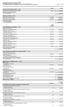 Shares Value EXCHANGE-TRADED FUNDS,1-2.0% Guggenheim Enhanced Short Duration ETF 108,400 $ 5,426,504 Total Exchange-Traded Funds (Cost $5,429,550) 5,426,504 MUTUAL FUNDS,2-55.7% Guggenheim Strategy Fund
Invest Trade Hedge COMMODITY MARKET REVIEW 2012
 COMMODITY MARKET REVIEW 2012 Invest Trade Hedge Pakistan Mercantile Exchange, 9 th Floor, PRC Towers, 32-A Lalazar Drive, MT Khan Road, Karachi, Pakistan. Despite a disappointing 2011, many commodities
THE BLOOMBERG COMMODITY INDEX METHODOLOGY June 2015 >>>>>>>>>>>>>>>>>>>>>>>>>>>>>>>>>>>>>>>>>>>>>>>>>>>>>>>>>>>>>>>>>>>>>>>>>>>>>>>>>>>>>>>>>
 THE BLOOMBERG COMMODITY INDEX METHODOLOGY June 2015 INDEX METHODOLOGY // 1 The data and information (the Information ) presented in this methodology (this Methodology ) reflect the methodology for determining
Re: Notice and Request for Comments - Determinations of Foreign Exchange Swaps and Forwards (75 Fed. Reg. 66829)
 ISDA International Swaps and Derivatives Association, Inc. 360 Madison Avenue, 16th Floor New York, NY 10017 United States of America Telephone: 1 (212) 901-6000 Facsimile: 1 (212) 901-6001 email: [email protected]
Soybean Supply and Demand Forecast
 Soybean Supply and Demand Forecast U.S. soybean planted acreage is expected to increase 11.5 million acres over the forecast period. U.S. soybean yields are expected to increase 7 bushels per acre or an
ICE Futures Europe Commitments of Traders Report Explanatory notes
 ICE Futures Europe Commitments of Traders Report Explanatory notes Contents Basis of report... 1 Report formats... 1 Report contents... 2 Sections of the report... 3 Category breakdown... 3 Concentration
International Swaps and Derivatives Association, Inc. Disclosure Annex for Commodity Derivative Transactions
 International Swaps and Derivatives Association, Inc. Disclosure Annex for Commodity Derivative Transactions This Annex supplements and should be read in conjunction with the General Disclosure Statement.
The Impact of Gold Trading
 The Impact of Gold Trading By: Dan Edward, Market Analyst: FOREXYARD Date: December 2010 In this Issue: I. Introduction A brief history of gold trading II. What affects commodity prices? III. The Global
The impact of the falling yen on U.S. import prices
 APRIL 2014 VOLUME 3 / NUMBER 7 GLOBAL ECONOMY The impact of the falling yen on U.S. import prices By David Mead and Sharon Royales In the fall of 2012, Japan set forth economic policies aimed at turning
The Potential of Hong Kong s Commodity Derivatives Market
 Value Partners Center for Investing The Potential of Hong Kong s Commodity Derivatives Market February 18, 2014 Sponsored by: The Potential of Hong Kong s Commodity Derivatives Market Executive summary
Global stock markets finish off the year on a strong note
 4 3 2 1 - -1 Market Indices Performance Returns 40. 22.6% 19. 17.6% 12. 12.7% 9.4% 10.7% 9.1% 8.2% 9. 2% 7.3% 5. 6.7% 5.9% 6.2% 6.8% 6. 4. 5.3% 5.6% 6. 3.3% 1.2% -0.7%-1.2% -2.6% -0.1% -1.-0.8%-0.8% -4.6%
SOCIETY OF ACTUARIES FINANCIAL MATHEMATICS. EXAM FM SAMPLE QUESTIONS Financial Economics
 SOCIETY OF ACTUARIES EXAM FM FINANCIAL MATHEMATICS EXAM FM SAMPLE QUESTIONS Financial Economics June 2014 changes Questions 1-30 are from the prior version of this document. They have been edited to conform
MARGIN FOREIGN EXCHANGE AND FOREIGN EXCHANGE OPTIONS
 CLIENT SERVICE AGREEMENT Halifax New Zealand Limited Client Service Agreement Product Disclosure Statement for MARGIN FOREIGN EXCHANGE AND FOREIGN EXCHANGE OPTIONS Halifax New Zealand Limited Financial
STATEMENT OF GARY GENSLER CHAIRMAN, COMMODITY FUTURES TRADING COMMISSION BEFORE THE HOUSE OF REPRESENTATIVES COMMITTEE ON FINANCIAL SERVICES
 STATEMENT OF GARY GENSLER CHAIRMAN, COMMODITY FUTURES TRADING COMMISSION BEFORE THE HOUSE OF REPRESENTATIVES COMMITTEE ON FINANCIAL SERVICES SUBCOMMITTEE ON CAPITAL MARKETS, INSURANCE, AND GOVERNMENT SPONSORED
An Introduction to Nadex
 An Introduction to Nadex AN INTODUCTION TO NADEX MULTIPLY YOUR TRADING OPPORTUNITIES, LIMIT YOUR RISK Discover a product set that: Allows you to trade in very small size (risking no more than a few dollars)
THE UNDAMENTALS AND ECHNIQUES RADING OMMODITY PREADS. c s
 c s THE UNDAMENTALS AND ECHNIQUES OF RADING OMMODITY PREADS The purpose of this booklet is to give you a better understanding of various aspects of spread trading in the futures market. Center for Futures
TRADING FUTURES ON THE SAXOTRADER PLATFORM
 TRADING FUTURES ON THE SAXOTRADER PLATFORM Saxo Capital Markets Tel: +65 6303 7788 Web Site: www.saxomarkets.com.sg 1 TRADING FUTURES ON THE SAXOTRADER PLATFORM OPEN DEMO OPEN LIVE WORLDWIDE INVESTMENT
Commodities Portfolio Approach
 Commodities Portfolio Approach Los Angeles Fire and Police Pension System February 2012 Summary The Board approved a 5% allocation to Commodities, representing approximately $690 million of the $13.75
Quarterly Market Review
 Quarterly Market Review Third Quarter 2015 Quarterly Market Review Third Quarter 2015 This report features world capital market performance and a timeline of events for the past quarter. It begins with
CFD Product Guide. www.myfxchoice.com
 CFD Product Guide www.myfxchoice.com Contents Notice Risk Warning 1. Trading Hours 2. Contract Size \ Contract value 3. Tick size \Tick value\spread value 4. Margin Requirements 5. Overnight Rollover Cash
* Test the various investment, portfolio, hedging, and technical trading strategies discussed in class.
 Investment Student: Welcome! You are about to manage an account in the most comprehensive investment simulation available. When you register you will receive a STOCK-TRAK brokerage account with an imaginary
Commodities not finding much traction despite USD weakness
 Commodities not finding much traction despite USD weakness Commodities continued to show weakness into the second week of 2013 despite rising stock markets and a falling US dollar. Investors are generally