
in later life
|
|
|
- Delilah Perry
- 10 years ago
- Views:
Transcription
1 LESBIAN, GAY BISEXUAL PEOPLE in later life

2

3 & LESBIAN, GAY BISEXUAL PEOPLE in later life

4 Introduction Old age can be a hugely exciting time for some but for others, both heterosexual and gay, it can be a time of anxiety and concern. This pioneering research examines the expectations that both heterosexual and gay people have about getting older and underlines how their experiences differ. It demonstrates that older gay people are not accessing the services they need and are genuinely afraid about who will support them as they age. The one million lesbian, gay and bisexual people in Britain over 55 clearly lack confidence that our public services will meet their needs. Half wouldn t feel comfortable being out to care home staff and one in three wouldn t be comfortable being out to hospital staff, a paid carer, social workers or to their housing provider. If older people feel unable to be open about their sexual orientation, they are unlikely to secure the support they require and deserve. Our data paints a compelling picture of a group of people who are more likely to live alone, are estranged from their families and who face the prospect of their informal support and social networks falling away. Added to this, many have experienced discrimination earlier in their lives at work, from families or from authority figures and this leaves them doubtful about the future. They are profoundly uncertain that care and social services that are primarily designed to meet heterosexual people s needs will be able to respond to their own specific requirements. This report provides a compelling evidence base for the first time about older lesbian, gay and bisexual people in this country. It also provides practical recommendations for a range of agencies about how to improve things. Britain s 3.7 million gay people contribute 40 billion annually to our public services. It s only right that as they approach the end of their lives they should be treated with exactly the same care and respect as their heterosexual counterparts. Ben Summerskill Chief Executive Stonewall Contents Summary and key findings 3 1 The facts of older life 4 2 Dealing with getting older 7 3 Feeling secure 12 4 Staying healthy 14 5 Looking for support 20 6 What lesbian, gay and bisexual people want in later life 26 Recommendations 30 2

5 Summary and key findings Stonewall commissioned YouGov to survey a sample of 1,050 heterosexual and 1,036 lesbian, gay and bisexual people over the age of 55 across Britain. The survey asked about their experiences and expectations of getting older and examined their personal support structures, family connections and living arrangements. It also asked about how they feel about getting older, the help they expect to need, and what they would like to be available from health and social care services. Getting older can be much more complex for lesbian, gay and bisexual people than heterosexual people as they are more likely to face the prospect either alone or without as much personal support as their heterosexual counterparts. Lesbian, gay and bisexual people over 55 are: More likely to be single. Gay and bisexual men are almost three times more likely to be single than heterosexual men, 40 per cent compared to 15 per cent. More likely to live alone. 41 per cent of lesbian, gay and bisexual people live alone compared to 28 per cent of heterosexual people. Less likely to have children. Just over a quarter of gay and bisexual men and half of lesbian and bisexual women have children compared to almost nine in ten heterosexual men and women. Less likely to see biological family members on a regular basis. Less than a quarter of lesbian, gay and bisexual people see their biological family members at least once a week compared to more than half of heterosexual people. Lesbian, gay and bisexual people share many worries about ageing with their heterosexual peers but are consistently more anxious across a range of issues including future care needs, independence and mobility, health including mental health and housing. Half feel that their sexual orientation has, or will have, a negative effect on getting older. A healthy lifestyle is important and while the smoking trends of older lesbian, gay and bisexual people broadly follow those of heterosexual people, there are other notable differences. Older lesbian, gay and bisexual people: Drink alcohol more often. 45 per cent drink alcohol at least three or four days a week compared to just 31 per cent of heterosexual people. Are more likely to take drugs. 1 in 11 have taken drugs within the last year compared to 1 in 50 heterosexual people. Are more likely to have a history of mental ill health and have more concerns about their mental health in the future. Lesbian and bisexual women are more likely to have ever been diagnosed with depression and anxiety two in five have been diagnosed with depression, one in three with anxiety. Gay and bisexual men are twice as likely to have ever been diagnosed with depression and anxiety than heterosexual men. 49 per cent of lesbian, gay and bisexual people worry about their mental health compared to 37 per cent of heterosexual people. With diminished support networks in comparison to their heterosexual peers, more lesbian, gay and bisexual people expect they will need to rely on formal support services as they get older. Lesbian, gay and bisexual people are nearly twice as likely as their heterosexual peers to expect to rely on a range of external services, including GPs, health and social care services and paid help. However, at the same time lesbian, gay and bisexual people feel that providers of services won t be able to understand and meet their needs. Three in five are not confident that social care and support services, like paid carers, or housing services would be able to understand and meet their needs. More than two in five are not confident that mental health services would be able to understand and meet their needs. One in six are not confident that their GP and other health services would be able to understand and meet their needs. As a result nearly half would be uncomfortable being out to care home staff, a third would be uncomfortable being out to a housing provider, hospital staff or a paid carer, and approximately one in five wouldn t feel comfortable disclosing their sexual orientation to their GP. Significant numbers of disabled lesbian, gay and bisexual people also report that they have not accessed the health, mental health and social care services in the last year that they felt they needed. The cumulative experience and concerns of older lesbian, gay and bisexual people leave them specifically concerned about the prospect either of living alone without support or having to enter care homes which will not meet their needs. 3

6 1The facts of older life There are real differences in the personal support structures, family connections and living arrangements of lesbian, gay and bisexual people over 55 compared to their heterosexual peers of the same age. Lesbian, gay and bisexual people are more likely to be single, more likely to live alone, less likely to have children and less likely to be in regular touch with their family. Growing old alone is much more difficult The starkest contrast is with older men. Four in ten (40 per cent) gay and bisexual men over 55 are single compared with just 15 per cent of heterosexual men. Three in ten (30 per cent) lesbian and bisexual women are single compared with 26 per cent of heterosexual women (not a statistically significant difference). Relationship status: single Gay & bisexual men 40% Heterosexual men 15% 0% 25% 50% Far fewer lesbian, gay and bisexual people have children. Just over a quarter of gay and bisexual men and half of lesbian and bisexual women have children compared to almost nine in ten heterosexual men and women. Do you have any children? Heterosexual men 88% Heterosexual women 87% Lesbian & bisexual women 49% Gay & bisexual men 28% 0% 50% 100% % of those with children 4

7 However, bisexual men and women are more likely to have children 73 per cent have children. Lack of support from conventional family Lack of support from conventional family is also an important issue for lesbian, gay and bisexual people as they get older. Lesbian, gay and bisexual people are more likely to be estranged from their biological family compared to heterosexual people often because their biological family do not approve of their sexual orientation. Lesbian, gay and bisexual people are less likely than heterosexual people to see their biological family members on a regular basis. Less than a quarter of lesbian, gay and bisexual people see their biological family members at least once a week compared to more than half of heterosexual people. One in eight lesbian, gay and bisexual people see their biological family members less than once a year compared to just 1 in 25 heterosexual people. How often do you see members of your biological family? Every day 6% 17% A few times a week 8% 21% About once a week 9% 19% A few times a month 9% 11% About once a month 8% 11% A few times a year 16% 28% About once a year Less than once a year 3% 4% 9% 13% Lesbian, gay & bisexual people Heterosexual people I don t have any biological family 1% 6% 0% 10% 20% 30% However one in four (26 per cent) lesbian, gay and bisexual people over 55 have caring responsibilities as do one in four heterosexual people (25 per cent, not a statistically significant difference). Housing Lesbian, gay and bisexual people are more likely to live alone than heterosexual people; 41 per cent live alone compared to 28 per cent of heterosexual people. The numbers living alone increases to more than half (53 per cent) of lesbian, gay and bisexual people in the social category C2DE as compared to just 29 per cent of heterosexual people in that social category. 5

8 Living alone Lesbian, gay & bisexual people 41% Heterosexual people 28% 0% 25% 50% Of lesbian, gay and bisexual people over 55: 44 per cent live only with their partner compared with 54 per cent of heterosexual people. Nine per cent are in relationships with people they are not living with, as compared to just three per cent of heterosexual people. Lesbian, gay and bisexual people are much less likely to live with their children or other family members. Just seven per cent live with their children or other family members compared to 16 per cent of heterosexual people. Living with children or other family members Heterosexual people 16% Lesbian, gay & bisexual people 7% 0% 5% 10% 15% 20% Work Older lesbian, gay and bisexual people are more likely to work than heterosexual people. Two thirds (67 per cent) aged between 55 and 59 are in full- or part-time paid employment compared to half (52 per cent) of heterosexual people of the same age. The trend continues as people get older. Fifteen per cent of lesbian, gay and bisexual people over 70 are in full- or part-time paid employment while 81 per cent are retired. Just six per cent of heterosexual people over 70 are in full- or part-time paid employment while 93 per cent are retired. Over 70 in paid employment Lesbian, gay & bisexual people 15% Heterosexual people 6% 0% 5% 10% 15% 20% 6

9 2 Dealing with getting older Getting older can be much more complex for lesbian, gay and bisexual people as they are more likely to face the prospect either alone or without as much personal support as their heterosexual counterparts. As a result, many lesbian, gay and bisexual people over 55 experience an increased sense of vulnerability and are more anxious about ageing. In many ways lesbian, gay and bisexual people and heterosexual people share a similar outlook on ageing; less than half (45 per cent) of lesbian, gay and bisexual people feel positive about getting older and 47 per cent of heterosexual people feel the same. Lesbian, gay and bisexual people voice many of the anxieties about ageing that are shared by gay and heterosexual people alike. I like the freedom to do as I wish. I worry about maintaining good health and mobility. Mary, 60, Scotland I worry about my partner becoming ill or dying, and about leaving him alone if I die first. Frank, 64, East of England I have no pension so I am concerned about income when I am no longer able to work. Omar, 57, London When you get older, you find you become invisible this is a great blow to one s self-esteem. Kathleen, 61, Wales However, the level of anxiety felt by lesbian, gay and bisexual people across a range of issues is consistently greater than that of their heterosexual peers. Which of the following concern you about ageing? Needing care 62% 72% Independence Mobility Health 58% 59% 59% 70% 70% 69% Housing Mental health 34% 39% 46% 50% Lesbian, gay & bisexual people Heterosexual people 0% 20% 40% 60% 80% % of those with particular worries 7

10 Half (48 per cent) of lesbian, gay and bisexual people feel that their sexual orientation has, or will have, a negative effect on getting older. Being gay and getting older is similar to not being gay and getting older but the difficulties are magnified. James, 55, London The reasons behind their increased worries about ageing are diverse, but frequently founded in an expectation of discrimination. Many have experienced ill-treatment due to their sexual orientation in the past, sometimes at work, from those in authority or their own family. This discrimination has a clear influence on their expectations for the future. One in four (25 per cent) gay and bisexual men and one in six (16 per cent) lesbian and bisexual women have experienced hostility or poor treatment from police due to their sexual orientation. In my younger days I paid taxes to be hounded and criminalised by the police. William, 73, North West More than one in three (35 per cent) lesbian, gay and bisexual people have experienced discrimination at work because of their sexual orientation. I lost the support of my family because of my sexuality. Emily, 64, North East I could have achieved more in life if not held back by sexist and homophobic discrimination. Patricia, 57, South West More than two in five (44 per cent) lesbian and bisexual women and almost a third (32 per cent) of gay and bisexual men have experienced hostility or poor treatment from members of their family because of their sexual orientation. My family rejected me a long time ago hence no contact or support no children and my partner of 43 years died from cancer as soon as we retired. Neil, 67, North West I would like to think that my daughter will speak to me again. My two grandchildren (8 and 4) don t know me. Teresa, 64, Scotland In addition to a history of ill treatment, the differences in family and support structures for many lesbian, gay and bisexual people are also a source of increased anxiety. Many see the stability and security brought by partners as an important factor in how they face getting older. I share my life with a partner and can be myself. Linda, 59, South East As long as I have my partner I have no worries. David, 57, South East I am fortunate to be in a long-term relationship that provides support. Carol, 56, London However, many of those without a partner find the lack of support difficult and express greater fears for the future. Growing old alone is much more difficult than being with a partner. Charles, 61, West Midlands 8

11 Having cared for an aged parent I understand how helpful a caring child can be and I haven t got one. Gary, 62, London I have lived alone for so long it would be hard to change even if I met someone. Coming out so late I seem to have well and truly missed the boat. I compensate at the moment by being active and interested in things, but as my health goes that option will be lost. Sandra, 58, Wales As a single gay man, I feel sad about my prospects of finding emotional comfort and support. Michael, 60, East Midlands I am alone, so worried about loneliness and poor health. Sharon, 69, South East For those who do not have children, the prospect of being alone creates more intense anxieties about the future. Lesbian, gay and bisexual people, particularly those who come from loving families with caring parents, know just how crucial family support can be for older people. My brother and I have given my ageing parents a lot of support, especially over admin and organisational matters, which they would not have managed without. Having no children of my own (though I know children do not necessarily help their parents) I am concerned there will be no younger folk to help me like this when I become less able to manage. Judith, 59, North West One doesn t have a younger generation of family to fight your corner should you be unable to do it for yourself. Barbara, 62, Wales I think lesbians who don t have children (like myself) have a more negative experience because you don t have any younger people to look out for you and your needs. Susan, 63, East Midlands I find that I sometimes view those with children a little enviously, as having a support in old age and partner-bereavement that I will not have. Giles, 69, Scotland My gayness makes me less connected to my biological family who would otherwise look out for me. Paul, 59, London For those without close family, support from friends is very important and my family is my friends is a common response from gay, lesbian and bisexual people when asked about personal support. Eight in ten (81 per cent) lesbian and bisexual women and seven in ten (69 per cent) gay and bisexual men say they view their friends as family; 60 per cent of heterosexual women and 48 per cent of heterosexual men say the same. More than half (52 per cent) of lesbian and bisexual women and 42 per cent of gay and bisexual men say they would turn to a friend if they were ill and needing help around the home. Just 19 per cent of heterosexual women and 14 per cent of heterosexual men would say the same. 9

12 Would turn to a friend if ill and needing help around the home Lesbian & bisexual women 52% Gay & bisexual men 42% Heterosexual women 19% Heterosexual men 14% 0% 30% 60% I am part of a caring and supportive community of friends and members of the groups I belong to who understand the situation of older gay people. Pete, 64, South East My friends are the ones that know me better than anyone and put me first before themselves. Daniel, 71, Scotland I belong to a strong network of female friends who support each other. Carolyn, 55, South East However, not all older lesbian, gay and bisexual people have these support networks and those without that personal support have specific worries for the future. I have no immediate family, and friends and neighbours have their own concerns. I sometimes wonder how I d cope if my health failed. Judy, 60, Yorkshire and the Humber I have no family and very few supportive friends and live alone, so getting older is a real worry. Shirley, 68, West Midlands I didn t come out until my late 40s so didn t have a chance to build up my network of lesbian and gay friends. Sandra, 58, Wales And there are limitations for even those that do have strong friendships to rely on. I have a strong number of friends around me, but as I get older they too will die and I may be left isolated. Karen, 55, South East My friendship group are also getting older. This is a positive shared experience but also a concern for all our future needs. Dorothy, 56, Yorkshire and the Humber I have gained a close and caring group of friends through being gay. I have no close family and no children for help and support. Stephen, 61, West Midlands 10

13 As a gay man I become more invisible to the gay community as I grow older. People take less and less notice of you, especially among gays social, not sexual interest, which one might expect. Lawrence, 62, London socialising in an integrated way The lack of family support is often made worse for lesbian, gay and bisexual people who see the opportunity to access formal community groups and social networks diminishing as they get older. They can find generic groups and networks for older people to be exclusive of them and many social activities targeted at gay people are too focussed on younger age groups. Social networks, reminiscence groups and day centres for older people are very straight-orientated heterosexual family orientated and in this sense I think there are reduced options for socialising in an integrated way, while there are also fewer social networks and no specialist provision for older LGB people. Diane, 57, South East There is nowhere to go to meet people the same age as the main bars and clubs are targeted towards the young. Chris, 65, Yorkshire and the Humber The whole gay social scene seems to be aimed at younger people. It would be nice to have a bit for the older ones. Nick, 55, South East The gay scene is very much geared to younger gays and lesbians. Older gays are more vulnerable. Gerrard, 56, London One in four (25 per cent) lesbian, gay and bisexual people over 55 regularly access community groups for lesbian, gay and bisexual people (weekly or monthly). Under a third (31 per cent) of gay and bisexual men and just 17 per cent of lesbian and bisexual women attend gay pubs at least weekly or monthly. 11

14 3Feeling secure Finance and housing are significant issues for older lesbian, gay and bisexual people thinking about their future. Heterosexual people are more likely to rely on financial support from family and partners and are more likely to be able to rely on their home as a financial asset for the future. However, lesbian, gay and bisexual people are more likely to be reliant on personal or employer pensions and to be worried about their future housing arrangements. Three in five (61 per cent) lesbian, gay and bisexual people worry about their finances as do a similar number (59 per cent) of heterosexual people. Heterosexual people are more likely to say that financial support from a partner will be important to their future income; this is particularly pronounced for women. Just 31 per cent of lesbian and bisexual women say financial support from a partner will be an important contribution to their future income compared to 42 per cent of heterosexual women. There is less of a discrepancy among men; 26 per cent of gay and bisexual men say a partner s financial support will be important to their future income compared to 31 per cent of heterosexual men who say the same (not a statistically significant difference). Financial support from partner as important source of future income Heterosexual women 42% Lesbian & bisexual women 31% 0% 25% 50% Heterosexual people are also twice as likely as lesbian, gay and bisexual people to say that financial support from children or other biological family members will be important to their future income. Financial support from children or other family as important source of future income Heterosexual people 11% Lesbian, gay & bisexual people 5% 0% 6% 12% However lesbian, gay and bisexual people are more likely to say a personal or employer pension is important to their future income than heterosexual people. 12

15 Personal or employer pension as important source of future income Gay & bisexual men 84% Lesbian & bisexual women 79% Heterosexual men 73% Heterosexual women 58% 0% 50% 100% Lesbian, gay and bisexual people are more likely than their heterosexual peers to have plans in place for their future financial needs. Of lesbian, gay and bisexual people over 55: 90 per cent in social category ABC1 have planned for their financial futures compared to 80 per cent of heterosexual people in the same category 66 per cent in social category C2DE have planned for their financial futures compared to 58 per cent of heterosexual people in the same category Those who have planned for their future financial needs ABC1 80% 90% C2DE 58% 66% Lesbian, gay & bisexual people Heterosexual people 0% 50% 100% Half (50 per cent) of lesbian, gay and bisexual people worry about their future housing arrangements compared to 39 per cent of heterosexual people. Housing we rent is a big issue. Joan, 61, Scotland At 68 I do worry how much longer I will be able to live in my own home. Jack, 68, South East Three quarters (74 per cent) of lesbian, gay and bisexual people in social category ABC1 and 51 per cent of those in social category C2DE say their home will be an important asset for their financial future. 80 per cent of heterosexual people in social category ABC1 and 59 per cent of heterosexual people in social category C2DE say the same. A similar amount of lesbian, gay and bisexual people and heterosexual people across social categories currently have wills. Of lesbian, gay and bisexual people over 55: 78 per cent in social category ABC1 have a will as do 76 per cent of heterosexual people in the same category. 65 per cent in social category C2DE have a will as do 66 per cent of heterosexual people in the same category. 13

16 4Staying healthy Lifestyle factors will have an effect on later life and the needs of older people. While the smoking pattern of older lesbian, gay and bisexual people broadly follows that of heterosexual people lesbian, gay and bisexual people over 55 drink more alcohol, are more likely to take drugs, have more concerns about their mental health and are more likely to have been diagnosed with anxiety or depression in the past. Smoking One in eight (12 per cent) lesbian, gay and bisexual people over 55 are currently daily smokers as are 12 per cent of heterosexual people. The proportion of daily smokers decreases with age in both populations; just six per cent of lesbian, gay and bisexual people aged over 70 are daily smokers as are four per cent of heterosexual people over 70. Of lesbian, gay and bisexual people: 20 per cent in social category C2DE are daily smokers, compared to just nine per cent in social category ABC1 (there is no significant difference for heterosexual people according to social category). Those in social category C2DE are more likely to smoke than heterosexual people in that same category. Those who are single are nearly twice as likely to smoke as those who are in a relationship 16 per cent compared to nine per cent. Similarly, 17 per cent of single heterosexual people are daily smokers compared to 11 per cent of heterosexual people who are in a relationship. Current daily smokers in social category C2DE Lesbian, gay & bisexual people 20% Heterosexual people 14% 0% 5% 10% 15% 20% 25% Lesbian, gay and bisexual daily smokers Single 16% In a relationship 9% 0% 5% 10% 15% 20% 14

17 Drugs Older lesbian, gay and bisexual people are more likely to take recreational drugs than heterosexual people. Of lesbian, gay and bisexual people: Nine per cent have taken drugs within the last year compared with two per cent of heterosexual people. 14 per cent in social category C2DE have taken drugs in the last year; eight per cent use drugs at least once or twice a week. Seven per cent in social category ABC1 have taken drugs in the last year; two per cent use drugs at least once or twice a week. There is no difference according to social category for heterosexual people; just two per cent of heterosexual people use drugs at least once or twice a week. % who have taken drugs in the last year C2DE 2% 14% ABC1 2% 7% Lesbian, gay & bisexual people Heterosexual people 0% 5% 10% 15% 20% Single lesbian, gay and bisexual people over 55 are more likely to have used drugs in the last year than lesbian, gay and bisexual people who are in a relationship; 11 per cent compared to seven per cent. There is no difference for heterosexual people according to partnership status. Lesbian, gay and bisexual people who have taken drugs in the last year Single 11% In a relationship 7% 0% 6% 12% 15

18 Alcohol Lesbian, gay and bisexual people drink alcohol more often than heterosexual people. More than a third (35 per cent) of gay men drink alcoholic drinks either every day or at least five or six days a week as do a fifth of lesbian and bisexual women (19 per cent). Twenty five per cent of heterosexual men and 15 per cent of heterosexual women drink alcoholic drinks as often. How often do you drink alcohol? 23% 14% Every day 7% 10% 12% 11% Five or six days a week 5% 12% 14% 15% Three or four days a week 7% 17% 24% 22% Once or twice a week 20% 25% 16% 12% At least once a month 12% 16% Gay & bisexual men Heterosexual men 4% 4% 3% 3% Once every couple of months Once or twice a year 5% 7% 9% 12% Lesbian & bisexual women Heterosexual women 12% 10% Not at all 15% 21% 30% 20% 10% 0% 0% 10% 20% 30% Those in social category ABC1 drink alcohol more often than those in social category C2DE. How often do you drink alcohol? ABC1 27% 33% C2DE 15% 22% Lesbian, gay & bisexual people Heterosexual people 0% 10% 20% 30% 40% % who drink every day or five or six days a week Those who are in a relationship are more likely to drink alcohol every day or five or six days a week compared to those who are single. 16

19 How often do you drink alcohol? In a relationship 22% 34% Single 15% 25% Lesbian, gay & bisexual people Heterosexual people 0% 10% 20% 30% 40% % who drink every day or five or six days a week Exercise Older lesbian, gay and bisexual people are more likely to take regular exercise (swimming, walking, yoga, etc) than heterosexual people of the same age; 35 per cent exercise at least five days a week compared with 28 per cent of heterosexuals. How often do you exercise? Every day 20% 23% Five or six days a week 8% 12% Three or four days a week 15% 20% Once or twice a week Less than once a week 12% 12% 16% 20% Lesbian, gay & bisexual people Heterosexual people Not at all 13% 28% 0% 10% 20% 30% Mental health Overall, eight per cent of lesbian, gay and bisexual people rate their mental health as poor as do eight per cent of heterosexual people. However lesbian, gay and bisexual people are more likely than heterosexual people to be worried about their mental health as they get older. Some of us born before the more open, modern times in the UK were not supported in developing attachments which might have flourished towards becoming a family. I m now socially inept and emotionally isolated. Carl, 61, East Midlands 17

20 I have a history of mental illness though am well now. Sometimes I am concerned about being both physically and mentally ill and the associated isolation. Sue, 60, South East Not being able to be open with confidence causes us to have to lead secret lives. This causes stress and is bad for our mental health. Emily, 64, North East Of lesbian, gay and bisexual people: 49 per cent worry about their mental health compared to 37 per cent of heterosexual people. Those who are single are more than three times as likely as those who are in a relationship to rate their mental health as poor ; 13 per cent compared to four per cent. More than twice as many of those in social category C2DE rate their mental health as poor (14 per cent) as those in social category ABC1 (six per cent). Lesbian, gay and bisexual people who rate their mental health as poor Single 13% In a relationship 4% 0% 5% 10% 15% Single people who rate their mental health as poor Lesbian, gay & bisexual people 13% Heterosexual people 8% 0% 5% 10% 15% Lesbian, gay and bisexual people who rate their mental health as poor C2DE 14% ABC1 6% 0% 5% 10% 15% 20% Seven per cent of lesbian and bisexual women and five per cent of heterosexual women have been diagnosed with depression in the last year (not a statistically significant difference). Five per cent of gay and bisexual men have been diagnosed with depression in the last year compared with just two per cent of heterosexual men. Lesbian, gay and bisexual people are also more likely than heterosexual people to have been diagnosed with depression at some time in their past. 18

21 Lesbian and bisexual women are more likely to have ever been diagnosed with depression than heterosexual women; 40 per cent compared to 33 per cent. Twice as many gay and bisexual men (34 per cent) have ever been diagnosed with depression than heterosexual men (17 per cent). Ever diagnosed with depression Lesbian & bisexual women 40% Heterosexual women 33% 0% 10% 20% 30% 40% 50% Ever diagnosed with depression Gay & bisexual men 34% Heterosexual men 17% 0% 10% 20% 30% 40% Similar numbers of lesbian, gay and bisexual people and heterosexual people have been diagnosed with anxiety within the last year; four per cent and three per cent, respectively. However, the figures for those who have ever been diagnosed with anxiety are much higher. Lesbian and bisexual women are more likely than heterosexual women to have ever been diagnosed with having an anxiety-related illness; one in three lesbian and bisexual women and one in four heterosexual women have been diagnosed with anxiety at some time. More than twice as many gay and bisexual men as heterosexual men have ever been diagnosed with having an anxiety-related illness; 29 per cent of gay and bisexual men and 13 per cent of heterosexual men have been diagnosed with anxiety. Ever diagnosed with anxiety Lesbian & bisexual women 33% Heterosexual women 26% 0% 10% 20% 30% 40% Ever diagnosed with anxiety Gay & bisexual men 29% Heterosexual men 13% 0% 10% 20% 30% 40% 19
22 5Looking for support With diminished personal support networks, more lesbian, gay and bisexual people over 55 expect to rely on external services than their heterosexual peers as they get older. However, many have experienced discrimination with health and social care services in the past and this leaves them doubtful that these services will be able to understand and meet their specific needs in the future. Lesbian, gay and bisexual people are nearly twice as likely as their heterosexual peers to expect to rely on a range of external services as they get older, including GPs, health and social care services and paid help. Heterosexual older people can call upon family for help. My family is my friends, but they are my age and so we will need to ask for outside help for ourselves. Will my sexuality be considered and accepted? Emily, 64, North East A small friendship circle means I would be dependent on services for real support. Patrick, 64, London 22 per cent say they would need to turn to social services if they were ill and needing help around the home compared to 13 per cent of heterosexual people. 18 per cent said they would have to rely on GP services compared to 10 per cent of heterosexual people. Who would you turn to if you were ill and needing help around the home? Social services 13% 22% GP services 10% 18% Paid carer Charity services 2% 6% 7% 12% Lesbian, gay & bisexual people Heterosexual people 0% 5% 10% 15% 20% 25% 20
23 I have had bad experiences However there is a clear worry that health and social care services are not geared for older lesbian, gay and bisexual people. I m concerned about how services might view or make judgements about me. I feel there are inequalities around delivery of service and would dread having to rely on social services for help. Yvonne, 56, London A majority of services that provide support services and the people working in housing, health and social care just don t get it when it comes to the needs and aspirations of the older lesbian, gay and bisexual community. Alan, 59, East of England I am concerned about being unable to be open about myself as my friends go and I rely on others to help me. Charlie, 57, London Some of the worries about the attitudes and culture within health and social care services are based on poor experiences in the past, often within the last five years. One in six (17 per cent) lesbian and bisexual women have experienced discrimination, hostility or poor treatment because of their sexual orientation when using GP services 40 per cent of these incidents occurred within the last five years. One in nine (11 per cent) gay and bisexual men have experienced similar treatment from GP services and more than a third (36 per cent) of these incidents occurred within the last five years. One in eleven (nine per cent) lesbian, gay and bisexual people have experienced discrimination, hostility or poor treatment because of their sexual orientation when accessing information about health and social care services half (50 per cent) of these incidences occurred within the last five years. I have had bad experiences with social services and carers, in respect that I was cautioned not to mention I am gay, in case a carer did not approve. Harry, 74, London Moving to the West Midlands five years ago from the South East I have been shocked by the unfriendliness and lack of understanding of the staff in my GP surgery. Martin, 62, West Midlands My GPs do not understand my mental health needs and I believe have actually caused some of my problems which have made me suicidal. Andrew, 72, London Despite some progress, I feel that institutionalised prejudice persists. William, 73, North West One in seven (14 per cent) lesbian and bisexual women have been excluded from a consultation or decision-making process with regard to their partner s health or care needs, as have eight per cent of gay and bisexual men and six per cent of heterosexual people. One in four (25 per cent) lesbian, gay and bisexual people have experienced discrimination, hostility or poor treatment from tradespeople and other service providers because of their sexual orientation more than half (55 per cent) of these incidences occurred within the last five years. 21
24 Ignorance at least, homophobia at worst A large proportion of lesbian, gay and bisexual people lack confidence in the health and social care services that are there to support them. Three in five (61 per cent) are not confident that social care and support services, like paid carers, would be able to understand and meet their needs; 51 per cent of heterosexual people feel the same. Three in five (58 per cent) are not confident that housing services would be able to understand and meet their needs; 51 per cent of heterosexual people feel the same. More than two in five (43 per cent) are not confident that mental health services would be able to understand and meet their needs; 33 per cent of heterosexual people feel the same. One in six (17 per cent) are not confident that GP and other health services would be able to understand and meet their needs; 13 per cent of heterosexual people feel the same. Although things are improving, there is still a lot of ignorance at least, homophobia at worst, among health and social care people. Rita, 61, South East I am not confident they would understand my needs as a lesbian and I might find it difficult to be assertive in that situation. Charlotte, 62, East Midlands I don t expect social care staff to be adequately trained in issues relating to homosexuality/lesbianism. Kathryn, 57, Wales I reckon I will find some appropriate responsiveness to specifically gay needs though I also expect to encounter inadequate understanding of those needs and to have to make them explicit. Patrick, 64, London Moreover, more than two in five (43 per cent) lesbian, gay and bisexual people are not confident that medical professionals would identify and consult the right person to make decisions about their care if they were unable to make their wishes known themselves; this increases to 50 per cent for lesbian, gay and bisexual people who don t have partners. While 38 per cent of heterosexual people feel the same, there is no similar increase for single heterosexual people. There is a severe lack of understanding about the particular needs of older lesbian and gay people, especially from some faith-based organisations that provide care services. John, 57, London 22
25 Are you confident that medical professionals would be able to identify and consult the right person about your care if you were unable to make those decisions for yourself? Single lesbian, gay & bisexual people 50% Single heterosexual people 32% 0% 20% 40% 60% Not confident In addition to the added layer of uncertainty many lesbian, gay and bisexual people feel about of health, housing and care services, many also fear outright homophobia and discrimination, despite being protected from this by law. If I do have to come into contact with mainstream health and social care services, I don t think my identity will be respected and I anticipate discrimination and even possibly homophobic harassment. Diane, 57, South East I would, by virtue of the need to have carers in my home, be at a particularly vulnerable stage of life. The thought of being in my own home requiring help from someone who brings in with them the prejudices and judgements of the world I experience out there fills me with dread. James, 55, London I think that I may face discrimination in a supported housing situation. Fran, 67, West Midlands I am afraid that they would be homophobic and/or would not be able to understand how I might feel if I needed to access services. I think people might be prejudiced against me and my partner. Daniella, 60, North West I don t want to have to be secretive, but I am afraid I will be As an older lesbian I don t think support services are approachable and would treat me with equality and I still think there is a lot of homophobia. Rebecca, 64, Scotland A significant proportion of lesbian, gay and bisexual people say they wouldn t feel comfortable being out to a range of care workers. Almost half wouldn t feel comfortable being out to care home staff. One in three wouldn t be comfortable being out to hospital staff, a paid carer, social workers, or to their housing service provider. Approximately one in five wouldn t feel comfortable disclosing their sexual orientation to their GP. 23
26 How comfortable would you feel disclosing your sexual orientation to the following service providers? Care home staff 47% Housing provider 36% Paid carer 36% Hospital staff 33% Social worker 31% GP 18% 0% 10% 20% 30% 40% 50% % of lesbian, gay & bisexual people who would feel uncomfortable I hate coming out to anyone (shame? fear?) and I also hate not being accepted for who I am. As I need help I don t want to have to be secretive, but I am afraid I will be. Tim, 72, London I would feel it necessary to be something other than my true self in order to secure the support I need. James, 55, London I am worried about having to have 24-hour care and the attitudes of care staff. This would make me keep my sexuality to myself this is bound to have a negative effect on my wellbeing. Sarah, 59, South East I wouldn t want to have to deny who I am but I may feel that I would have to if I was relying on others for my care. Jo, 56, North East Twelve per cent of lesbian and bisexual women have hidden the existence of a partner when accessing services like health, housing and social care within the last five years as have five per cent of gay and bisexual men. Less than one per cent of heterosexual people have done this. Among those who currently feel able to be out to service providers about their sexual orientation, many fear that they will find it harder to do so as they get older. I imagine that as I get older, my self-confidence may diminish and that may make me less confident in discussing my sexuality. Derek, 56, East Midlands 24
27 Some older lesbian, gay and bisexual people not only hide their sexual orientation from service providers, but fail to access needed services altogether. Overall, around one in six lesbian, gay and bisexual people (17 per cent) and heterosexual people (15 per cent) say they neglected to access health care services they felt they needed in the last year. However, those with a disability are far more likely to say they did not access health services they needed in the last year, and those who are lesbian, gay and bisexual even more so. Of disabled lesbian, gay and bisexual people: Almost two in five (37 per cent) did not access health services compared to 28 per cent of disabled heterosexual people. One in four (23 per cent) did not access mental health services compared to just six per cent of disabled heterosexual people. One in five (19 per cent) did not access social care services compared to ten per cent of disabled heterosexual people. Similarly, lesbian, gay and bisexual people in social category C2DE have neglected to access services they felt they needed in the last year: One in four (25 per cent) did not access health services compared to 15 per cent of heterosexual people in the same social category. One in seven (14 per cent) did not access mental health services compared to four per cent of heterosexual people in the same social category. One in ten (11 per cent) did not access social care services compared to six per cent of heterosexual people in the same social category. 25
28 6What lesbian, gay and bisexual people want in later life Older lesbian, gay and bisexual people express considerable worries about their ability to live independently in the future. They want their needs to be met by capable services as they get older without being subjected to inadequate treatment, discrimination or isolation as a result of their sexual orientation. There is a clear concern that care homes are designed for heterosexual people and are not organised to meet their needs. Understandably, 95 per cent of lesbian, gay and bisexual people find the option of remaining in their own homes in later life appealing. I want to remain in my own home where I can be myself. Glenn, 59, East of England Nine in ten (89 per cent) lesbian, gay and bisexual people dislike the prospect of living in a residential care home; 84 per cent of heterosexual people say the same. Three in five lesbian, gay and bisexual people find sheltered housing or retirement communities attractive options for the future as do three in five heterosexual people. For those with partners, a common concern is whether they would be able to remain together if they could no longer look after each other without assistance. 26 I am a gay woman in a very loving and long relationship. We have signed our Civil Partnership but I still worry for the future. My biggest fear is that if we both become ill and need care that we might be separated or be looked after by people who are anti-gay and would treat us badly. Sheila, 62, North West I would like to see more being done to make arrangements for gay couples to continue to live together and be cared for should they be unable to continue living in their own homes or to live without outside assistance. Alex, 55, Yorkshire and the Humber I would like to think that my partner and I would not be separated if we had to move into an older person s home due to us not being able to care for each other. Alistair, 70, East of England
29 More than half (55 per cent) of lesbian and bisexual women and two in five (41 per cent) gay and bisexual men find living with friends later in life appealing. In comparison, just 16 per cent of heterosexual men and women find sharing with friends an attractive option for the future. I want to get old with friends, especially gay-friendly friends. I want to see more scope for friends to cohabit and care for each other without state support. Jay, 58, East Midlands When considering a time when they may need some form of sheltered housing or residential care, many say that living with other lesbian, gay and bisexual people is important. If I were to need residential care and found myself in a heterosexual care home I would find this very difficult. Maggie, 63, East Midlands If I needed residential care or sheltered accommodation I would like to be able to live with other gay women. Kate, 60, London My worst nightmare would be to end up in a mixed-sex, heterosexual care home. Louise, 63, Yorkshire and the Humber Future care I am concerned that those people that I might have to live with in a care home would be antigay bigots and would not see me for the normal human being that I am. Lee, 58, South West The possibility of needing to live in a residential care home is of particular concern to lesbian, gay and bisexual people. While they share many concerns about care homes with their heterosexual peers, they do have an increased level of anxiety. 70 per cent of lesbian, gay and bisexual people don t feel they would be able to be themselves if living in a care home and 65 per cent feel they would have to hide things about themselves from others. This compares to 61 per cent of heterosexual people who would not feel able to be themselves and half (52 per cent) who would feel they have to hide things about themselves from others. From personal experience of visiting older friends in retirement and nursing homes I know as an absolute truth that they have felt more comfortable in hiding their sexuality from other residents and carers. Ray, 59, South East I worry about finding a care home (should it be necessary) where I could be myself. Jeffrey, 75, London I fear prejudice from service providers and other residents/patients in institutions. Leanne, 58, London Everything is predominantly heterosexual orientated. Sheltered and residential housing is mixed with no provision for those who prefer the company of their own orientation. It s depressing to think I might end up in a home where I could be isolated because to disclose/talk about my life would lead to ostracisation. Molly, 68, London Seven in ten (70 per cent) lesbian, gay and bisexual people don t think they would be able to maintain a comfortable degree of privacy in a residential care home; 61 per cent of heterosexual people say the same. More than half (52 per cent) of lesbian, gay and bisexual people don t feel they would be able to be affectionate with their partners and/or 27
30 maintain a sexual relationship. Forty three per cent of heterosexual people would not feel able to be affectionate with their partners and 45 per cent feel they wouldn t be able to maintain a sexual relationship. If we have to be taken into a residential care home, I worry that we won t have the privacy we need to show affection to each other or be able to sleep together or share a room. Even holding hands is still unacceptable publicly between same-sex couples. Kay, 65, South East Three quarters (76 per cent) of lesbian, gay and bisexual people are not confident they would be treated with dignity and respect in a care home setting; a slightly less number (71 per cent) of heterosexual people feel the same. I worry about how I will be treated when I enter a home or hospital in the future both by staff and other residents/patients as I would wish to be open about my sexuality and expect a homophobic reaction. Gordon, 66, West Midlands As a gay man, I am fortunate because I have a lifelong partnership, but if on my own I would not really enjoy living in a nursing home or community of heterosexual people who might be hostile. I think this is a common fear in older gay men. Lloyd, 73, London Generally, maintaining social networks with other lesbian, gay and bisexual people is stressed as an important part of support in later life. I find myself feeling increasingly alienated in social circles where non-gay people s conversation is mainly centred about (biological) family matters than other aspects of life. For this reason it is important to maintain a range of gay friends. Brian, 69, London Although I feel positive about the self-acceptance that comes with older age, I fear there will not be a lesbian community to support me and I will not have the solidarity and solace of other lesbians who understand who I am. Anne, 55, Yorkshire and the Humber I was a member of a group for older lesbians and am now again a member of a lesbian group where many are over 60. We have a common bond and it is usually a supportive community. Laura, 64, North West Loneliness can play a huge part if one is not in a likeminded community of friends and supporters. Ray, 59, South East Fear of services that discriminate or don t understand their needs means many lesbian, gay and bisexual people express a desire for services, housing and care home options that are targeted at, and sometimes staffed by, lesbian, gay and bisexual people where the culture would be pro-gay, not just accepting. 28
31 I do feel very strongly that there should be provision for gay people in care homes and in supported housing. It is so important to feel comfortable in one s living surroundings and shared experiences are one way of ensuring that. Anita, 69, West Midlands I would like to see sheltered accommodation for gay people. Vernon, 61, South East I want to be myself My ideal would be to be looked after by gay staff in either a nursing home or sheltered accommodation run by gay people, for gay people so that I could be myself. Ruthie, 63, North West There need to be LGB & T care homes and care agencies run and staffed by LGB & T people, so that we can be ourselves either in care if we need it or in our own homes, which is the best option. Shaila, 57, South East I do not want to be looked after by someone who dislikes me because I am a lesbian. Shaila, 57, South East I don t think that services or networks are there to support me in an inclusive way. Jeanette, 55, East of England Many older lesbian, gay and bisexual people lack confidence that their needs will be understood and taken into account. Ultimately, older lesbian, gay and bisexual people want to be able to be themselves and they want services in later life that fully understand their needs and won t discriminate against them. Will they understand the importance of being accepted as a whole person, which includes my having a same gender partner, and also having a sexual relationship in older age? I don t want to hide my partner away. Emily, 64, North East I hope that I will be able to be totally open about being gay. Eric, 65, Yorkshire and the Humber I feel at the moment I am completely myself, something it took many years to achieve. Vicki, 56, London I want to be myself. Dan, 69, North West I don t think the larger society has fully accepted gay people and services for older people still lack infrastructures and sensitivity specific to older gay people. Anwar, 63, London 29
32 Recommendations The Department of Health and other strategic bodies The Department of Health should share guidance with frontline health and social care staff on the needs of older lesbian, gay and bisexual people. The Department of Health should develop public health campaigns that include gay people. Campaigns of particular relevance to the older gay community for example mental health should also specifically target them. The Department of Health should advise all health and social care bodies to monitor the sexual orientation of all patients and people in care in an appropriate and confidential manner. Schools and universities teaching medical and social care students should specifically cover the health and care needs of older lesbian, gay and bisexual people in their curricula. All courses covering geriatric medicine and care should cover their needs in detail. All on-going professional development given by the Royal Colleges should cover the health and care needs of older lesbian, gay and bisexual people. Care Quality Commission The Care Quality Commission (CQC) should produce specific guidance for care providers on how to meet the Equality Act 2010 which explicitly covers how to meet the needs of older lesbian, gay and bisexual patients. The CQC registration process for care providers should require all applicants to explicitly demonstrate they ve considered sexual orientation equality for older people in the delivery of their services. The CQC should produce guidance for inspectors on how they can question and assess care providers on how they re meeting the needs of lesbian, gay and bisexual service users. The CQC should engage directly with older lesbian, gay and bisexual users of care services to advise them on relevant issues. The CQC should ensure that older lesbian, gay and bisexual people understand their rights as care users. 30
33 Adult Social Care Services Local authorities and other commissioners of care services should ensure through their contract management that adequate care and support is provided to older lesbian, gay and bisexual service users. Local authorities that directly employ frontline care staff should provide mandatory training that includes how to provide good quality care for older lesbian, gay and bisexual people. Those conducting assessments should be knowledgeable about the needs of older lesbian, gay and bisexual people so that these are considered during the assessment process and so that adequate advice and information, such as knowledge of local support groups for older gay people, is provided during assessments. Local authorities should support opportunities for older lesbian, gay and bisexual people to meet and socialise, as they do for other members of the community. Local authorities should make sure information is widely visible and available to older lesbian, gay and bisexual people on relevant advice services, social groups and other resources. Delivering frontline services GPs and other health care staff GPs and other health care staff shouldn t assume a patient s sexual orientation. GPs and other health care staff should understand the particular health needs of older lesbian, gay and bisexual people. GPs should ensure older lesbian, gay and bisexual patients have stipulated who is their next-of-kin and who should be given decision making power in the event they re unable to make health care decisions for themselves. GPs and other health care staff should use open language when talking to patients to give older lesbian, gay and bisexual people confidence to be open about their sexual orientation. GPs should make their confidentiality policies clear to all patients, and make clear to older lesbian, gay and bisexual patients whether or not they d like their sexual orientation to be included in their medical records. Patient environments should be made more welcoming by displaying images, information posters and materials that include lesbian, gay and bisexual people. 31
34 Delivering frontline services Care and support services in people s homes Care and support staff should never assume a patient s sexual orientation. Care and support staff should be trained on how to provide adequate care and support sensitive to the needs of older lesbian, gay and bisexual service users. Care and support staff should not discuss their personal views about lesbian, gay and bisexual people or issues. Care and support staff should use open questions to encourage service users to be open about their sexual orientation and needs. Care and support staff should provide information to patients on opportunities for them to engage with other lesbian, gay and bisexual people socially. Delivering frontline services Residential care homes Care homes should apply the same polices and procedures to same-sex couples wanting to live together in care homes as heterosexual couples. Same-sex couples should be allowed private time or allowed to show affection for one another as is the case for heterosexual couples. Care homes should develop clear policies on what is acceptable and unacceptable behaviour from patients. Care homes should deal firmly but sensitively with incidents of homophobia from patients. Staff should be trained to understand the needs and circumstances of older lesbian, gay and bisexual patients and how to provide them with good quality care. Lesbian, gay and bisexual residents should be supported to access opportunities to socialise and meet other lesbian, gay and bisexual people to help them maintain social support networks. Care home staff should ensure older lesbian, gay and bisexual people have stipulated who should be given decision making power in the event that they are unable to make decisions about their care for themselves. Care homes should make their environments more welcoming by displaying images, posters and materials that reflect lesbian, gay and bisexual people. Methodology YouGov surveyed a sample of 2,086 people over the age of 55 across England, Scotland and Wales throughout October The sample comprised 1,050 heterosexual and 1,036 lesbian, gay and bisexual participants. This survey was conducted using an online interview administered to members of the YouGov Plc GB panel of over 320,000 individuals. The heterosexual sample is weighted to the profile of the sample definition to provide a representative reporting sample. The profile is derived from official government data. Additional open recruitment through Stonewall was used to achieve the full lesbian, gay and bisexual sample. The resulting data was analysed and presented by Stonewall. Identities attributed to quotes have been anonymised; names have been changed and ages assigned from within age bands. All differences referred to in the report are statistically significant at the 95 per cent confidence level unless otherwise stated. 32
35 Written by April Guasp Designed by Lucy Ward
36 LESBIAN, GAY BISEXUAL PEOPLE in later life My family rejected me a long time ago hence no contact or support no children and my partner of 43 years died from cancer as soon as we retired. Neil, 67, North West I don t think the larger society has fully accepted gay people and services for older people still lack infrastructures and sensitivity specific to older gay people. Anwar, 63, London
Gay Men s Support Work
 Gay Men s Support Work Evaluation Report to Big Lottery Fund December 2014 Page 1 of 7 Context Of an estimated 107,800 people living with HIV in the UK, 40% live in the greater London area and the majority
Mental health and social wellbeing of gay men, lesbians and bisexuals in England and Wales A summary of findings
 Mental health and social wellbeing of gay men, lesbians and bisexuals in England and Wales A summary of findings Report funded by in collaboration with and Mental health and social wellbeing of gay men,
Stonewall Healthcare Equality Index 2015
 Stonewall Healthcare Equality Index 2015 Improving the health of lesbian, gay and bisexual people SOME PEOPLE MAE RHAI AREGAY. POBL YN HOYW. GET FFAITH! OVER IT! 3 2 Stonewall Healthcare Equality Index
Abuse in Same-Sex Relationships
 1 Abuse in Same-Sex Relationships Abuse in relationships is any behavior or pattern of behavior used to coerce, dominate or isolate the other partner. It is the use of any form of power that is imposed
Deciding whether to become a parent
 Deciding whether to become a parent This information is an extract from the booklet, Relationships, sex and fertility for young people affected by cancer. You may find the full booklet helpful. We can
Attitudes of the over 50s to Fuller Working Lives
 Attitudes of the over 50s to Fuller Working Lives January 2015 DWP ad hoc research report no. 15 A report of research carried out by YouGov PLC on behalf of the Department for Work and Pensions Crown copyright
It s Not Right! Neighbours, Friends and Families for Older Adults. What You Can Do to Keep Yourself Safe From Abuse
 It s Not Right! Neighbours, Friends and Families for Older Adults What You Can Do to Keep Yourself Safe From Abuse Everyone has the right to be safe and free from abuse. No one should experience abuse.
Citizen Leadership happens when citizens have power, influence and responsibility to make decisions
 Citizen Leadership happens when citizens have power, influence and responsibility to make decisions Principles and Standards of Citizen Leadership By the Changing Lives User and Carer Forum including What
A GUIDE FOR PEOPLE WITH HIV IN THEIR TEENS AND EARLY ADULTHOOD
 student life going to university or College: A GUIDE FOR PEOPLE WITH HIV IN THEIR TEENS AND EARLY ADULTHOOD ncb.org.uk/lifelinks student life 2 So you re thinking of going to university or college and
The DEMENTIA MANIFESTO. for LONDON
 The DEMENTIA MANIFESTO for LONDON Less than half of people with dementia feel part of their community. 2 3 Dementia is the biggest health and social care challenge facing London today. It s the most feared
Health Issues Affecting Older Gay, Lesbian and Bisexual People in the UK
 Health Issues Affecting Older Gay, Lesbian and Bisexual People in the UK A Policy Brief Primrose Musingarimi November 2008 ILC-UK www.ilcuk.org.uk Made Possible By: The International Longevity Centre -
Evidence to The Commission on Assisted Dying 23 rd February 2011
 Evidence to The Commission on Assisted Dying 23 rd February 2011 My name is Suzy Croft and I am Senior Social Worker at St. John s Hospice, the hospice for Central London. I am a member of the Association
Keeping up with mortgage repayments
 Keeping up with mortgage repayments This information is an extract from the booklet Housing costs, which is part of our Financial guidance series. You may find the full booklet helpful. We can send you
Scottish Parliament Health and Sport Committee s Inquiry into Teenage Pregnancy in Scotland Evidence from CHILDREN 1 ST
 Scottish Parliament Health and Sport Committee s Inquiry into Teenage Pregnancy in Scotland Evidence from CHILDREN 1 ST February 2013 For over 125 years CHILDREN 1 ST has been working to build a better
Sexual orientation explored: A study of identity, attraction, behaviour and attitudes in 2009
 Equality and Human Rights Commission Research report 35 Sexual orientation explored: A study of identity, attraction, behaviour and attitudes in 2009 Gavin Ellison and Briony Gunstone YouGov Sexual orientation
Young people and drugs
 Young people and drugs Many parents worry about whether their son or daughter is taking illegal drugs, how they can tell, and what to do about it. While there s a lot of concern about illegal drugs in
A guide to prostate cancer clinical trials
 1 A guide to prostate cancer clinical trials In this fact sheet: What is a clinical trial? Why are trials done? What are trials looking into at the moment? How are clinical trials done? Should I take part
What You Need to Know About Elder Abuse
 What You Need to Know About Elder Abuse What is Elder Abuse? Elder abuse, or the abuse of older adults, is often defined as any act or omission that harms a senior or jeopardizes his or her health or welfare.
Attitudes to medical records sharing in the Gypsy and Traveller community
 Report Informatics July 2014 - September 2014 Attitudes to medical records sharing in the Gypsy and Traveller community A summary of the report compiled for Brighton and Hove CCG by Michelle Gavin, Friends
Why do I need protection?
 Why do I need protection? What s inside 3 Life cover 4 Critical illness cover 7 Income protection 8 Who else would you rely on? 10 It might cost less than you think 12 A word from your adviser... Introduction
Photography and video film consent form
 Your guide to obtaining consent for someone appearing in a photograph or video that will be used to publicise Barnardo s. Policy statement It is Barnardo s policy that where we are planning to use an image
Homelessness: A silent killer
 Homelessness: A silent killer A research briefing on mortality amongst homeless people December 2011 Homelessness: A silent killer 2 Homelessness: A silent killer December 2011 Summary This briefing draws
CHILDREN, FAMILIES & ALCOHOL USE
 CHILDREN, FAMILIES & ALCOHOL USE Essential Information for Social Workers A BASW Pocket Guide Supported by: Bedford and Luton Purpose of the guide This guide aims to support Social Workers in their practice
Failed By The System
 Failed By The System The views of young care leavers on their educational experiences Barnardo s There were too many promises made but not many fulfilled, Care Leaver aged 16 Policy and Research Page 1
Lesbian, Gay & Bisexual People: A Guide to Good Practice for Social Workers
 Lesbian, Gay & Bisexual People: A Guide to Good Practice for Social Workers 1 Contents Foreword.... 2 Introduction.... 3 Sexual Orientation Concepts and Language.... 5 Social & Emotional Well-Being of
Recovery for Family Members
 Recovery for Family Members The first, and most important, thing to remember is that people with substance use disorders can get well and so can their families. You've survived together through major crises.
Handout: Risk. Predisposing factors in children include: Genetic Influences
 Handout: Risk The more risk factors to which a child is exposed the greater their vulnerability to mental health problems. Risk does not cause mental health problems but it is cumulative and does predispose
Look after your mental health
 Look after your mental health It s important to take care of yourself and get the most from life. This booklet suggests 10 practical ways to look after your mental health. What is mental health? Hi, how
How To Help A Woman Who Is Abused
 If someone you know is experiencing Domestic Abuse November 2013 Note: To both reflect the overwhelming majority and for ease of reading, this document refers to victims/survivors of domestic abuse as
Supporting relatives and informal carers top tips for mental health workers
 Supporting relatives and informal carers top tips for mental health workers These top tip cards have been produced in partnership by NHS Education for Scotland and Support in Mind Scotland. NHS Education
Sheffield City Council Draft Commissioning Strategy for services for people with a learning disability and their families September 2014
 Sheffield City Council Draft Commissioning Strategy for services for people with a learning disability and their families September 2014 1 Sheffield City Council: Draft Commissioning Strategy for services
A MANIFESTO FOR BETTER MENTAL HEALTH
 A MANIFESTO FOR BETTER MENTAL HEALTH The Mental Health Policy Group General Election 2015 THE ROAD TO 2020 The challenge and the opportunity for the next Government is clear. If we take steps to improve
Social Care Support - The Facts You Need to Know
 Factsheet What does the Care Act mean for me? Getting social care support under the new law in England This factsheet concentrates on parts of the Care Act which will most affect people who use social
Around 15,500 Kirklees residents in their 60s are working and are likely to retire from work in the next few years.
 Retirement Headlines Around 15,500 Kirklees residents in their 60s are working and are likely to retire from work in the next few years. Experience of retirement varies with differing levels of access
Young People s Emotional Health
 Young People s Emotional Health For those working with young people aged 16-24 Key facts from research Warning signs Sources of help and further information Kindly supported by Auto Trader Introducing
How to be LGBT. Friendly. 30 Practical Ways to Create a Welcoming Environment for Lesbian, Gay, Bisexual and Transgender People
 LGBT How to be Friendly 30 Practical Ways to Create a Welcoming Environment for Lesbian, Gay, Bisexual and Transgender People There are approximately 57,500 people in Leicester, Leicestershire and Rutland
Substance Abuse. Client Handbook Series January 2015
 Substance Abuse Client Handbook Series January 2015 Developed by Carleton University, Criminal Justice Decision Making Laboratory & Ontario Ministry of Community Safety and Correctional Services Ralph
Life Insurance made easy
 Life Insurance made easy INTRODUCTION Your Health is your Wealth - I genuinely believe that to be true. I work in the A&E Department of a large hospital and every day I see the challenges people face in
Attitudes in the Workplace
 Attitudes in the Workplace A study of sexism and discrimination in Britain How gender stereotypes and discrimination affect people s views and perceptions of the roles of men and women in the British workplace.
WHICH talking therapy for depression?
 WHICH talking therapy for depression? A guide to understanding the different psychological therapies you may be offered to treat your depression 1 Contents Introduction 3 Cognitive Behavioural Therapy
Age, Demographics and Employment
 Key Facts Age, Demographics and Employment This document summarises key facts about demographic change, age, employment, training, retirement, pensions and savings. 1 Demographic change The population
Abuse of Vulnerable Adults in England. 2011-12, Final Report, Experimental Statistics
 Abuse of Vulnerable Adults in England 2011-12, Final Report, Experimental Statistics Published: 6 March 2013 We are England s national source of health and social care information www.ic.nhs.uk [email protected]
Impact of Breast Cancer Genetic Testing on Insurance Issues
 Impact of Breast Cancer Genetic Testing on Insurance Issues Prepared by the Health Research Unit September 1999 Introduction The discoveries of BRCA1 and BRCA2, two cancer-susceptibility genes, raise serious
INNOVATIVE 5-STAR SERIOUS ILLNESS COVER
 INNOVATIVE 5-STAR SERIOUS ILLNESS COVER FROM VITALITYLIFE VITALITY.CO.UK/LIFE YOU RE UP TO TWICE 1 AS LIKELY TO GET A PAYOUT FROM OUR SERIOUS ILLNESS COVER THAN YOU ARE FROM A TYPICAL CRITICAL ILLNESS
Drug & Alcohol Star. Not for use. Want to use this Star? Visit www.outcomesstar.org.uk/support
 User Guide Drug & Alcohol Star TM The Outcomes Star for drug and alcohol recovery drug use 0 0 0 alcohol use physical health meaningful use of time Contact [email protected] Developed by Sara
LGBTI Survey Findings
 LGBTI Survey Findings Contents 1. Purpose and objectives 2. Methodology 3. A summary of the questionnaire 4. Participation of the communities 5. Respondents Profile 6. Spread of respondents across NSW
Contact: Barbara McIntosh Telephone: 07801290575 Email: [email protected].
 Personal Planning Book The Personal Planning Book was originally written by Barbara McIntosh and Andrea Whittaker. Several revisions and additions to this book have been made since the original version
Inquiry into Paid Maternity, Paternity and Parental Leave
 Inquiry into Paid Maternity, Paternity and Parental Leave Productivity Commission Personal Feedback Paper April 2008 For individuals and small firms This personal feedback paper aims to help you engage
A GUIDE TO CRIMINAL INJURIES COMPENSATION
 A GUIDE TO CRIMINAL INJURIES COMPENSATION Being a victim of crime such as physical or sexual assault can have significant and long-term consequences for a woman s health and wellbeing. If you have experienced
Rome Workshop Cooperation between state officials and NGOs
 Rome Workshop Cooperation between state officials and NGOs I understand that participants are expecting to engage in this workshop, so I do not intend to speak initially for very long. l will briefly introduce
Alcohol and mental health
 Alcohol and mental health Alcohol and mental health For many people, having an alcoholic drink is one of life s pleasures. For most of them that s not a problem, but some people have a troubled relationship
A guide for employers
 A guide for employers Contents 01 Contents A guide for employers 02 Discrimination the new law explained 05 Other relevant legisltation 13 02 The Equality Act 2010 and cancer how it affects you A guide
Surviving A Relationship Break-Up - Top 20 Strategies
 Surviving A Relationship Break-Up - Top 20 Strategies Surviving a relationship break-up can be one of the most difficult things we ever do and on an emotional level can be one of the most painful processes
UWM Counseling and Consultation Services Intake Form
 UWM Counseling and Consultation Services Intake Form Dear Student, Date Affix Label Here (Office Use Only) Thank you for giving us the opportunity to better serve you. Please help us by taking a few minutes
getting there Models for Self- Directed Support broker support Getting There Discussion paper
 Models for Self- Directed Support broker support Getting There Discussion paper getting there Outside the Box November 2012 Introduction Introduction what this section covers: About Getting There Summary
nationalcarestandards
 nationalcarestandards dignity privacy choice safety realising potential equality and diversity SCOTTISH EXECUTIVE Making it work together nationalcarestandards dignity privacy choice safety realising potential
IN A SMALL PART OF THE CITY WEST OF
 p T h e L a s t L e a f IN A SMALL PART OF THE CITY WEST OF Washington Square, the streets have gone wild. They turn in different directions. They are broken into small pieces called places. One street
Equality with Human Rights Analysis Toolkit
 Equality with Human Rights Analysis Toolkit The Equality Act 2010 and Human Rights Act 1998 require us to consider the impact of our policies and practices in respect of equality and human rights. We should
prepared in making referrals through Choose and Book, which doesn t create any additional work for me.
 Health Management Limited has been appointed as the supplier to deliver Fit for Work (previously Health and Work Service) in England and Wales. The following is a personal account of a service user s journey.
How prostate cancer is diagnosed
 How prostate cancer is diagnosed This information is an extract from the booklet Having tests for prostate cancer. You may find the full booklet helpful. We can send you a free copy see page 7. Contents
Helping your loved ones. Simple steps to providing for your family and friends
 Helping your loved ones Simple steps to providing for your family and friends Contents 01 How can I take control of who gets what? 02 Inheritance Tax 04 Do you know how much you re worth? 06 Making lifetime
This brochure suggests some strategies for helping someone you know who is living with a terminal condition. Understanding emotions and feelings
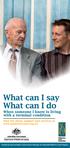 This brochure suggests some strategies for helping someone you know who is living with a terminal condition. Finding out that someone you know a relative, acquaintance, workmate, or friend - is going to
DISCOVER YOUR LIFE-CHANGING COURSE AT THE MERSEY CARE RECOVERY COLLEGE
 DISCOVER YOUR LIFE-CHANGING COURSE AT THE MERSEY CARE RECOVERY COLLEGE Your Future, Your Way AT THE RECOVERY COLLEGE, EVERYTHING IS GEARED AROUND HELPING YOU ENJOY A BETTER QUALITY OF LIFE A GREATER ABILITY
Are you feeling... Tired, Sad, Angry, Irritable, Hopeless?
 Are you feeling... Tired, Sad, Angry, Irritable, Hopeless? I feel tired and achy all the time. I can t concentrate and my body just doesn t feel right. Ray B. I don t want to get out of bed in the morning
WHEN YOU NEED IT MOST
 A HELPING HAND WHEN YOU NEED IT MOST A Guide to Your One to One Personal Support Helping Hand: One to One Personal Support Introducing ROYAL LONDON Ever since we started as a Friendly Society over 150
Postnatal Depression. A guide for mothers, family and friends
 Postnatal Depression A guide for mothers, family and friends What is it? What is it? After giving birth, most mothers experience some degree of mood swings. There are three main kinds of postnatal mood
Pioneering Detox and Rehab Choice
 Pioneering Detox and Rehab Choice TTP: Pioneering Detox and Rehab Choice Over years of providing treatment for alcohol and drug addiction, one thing has always been clear. Everyone is different. Different
Financial Freedom: Three Steps to Creating and Enjoying the Wealth You Deserve
 Financial Freedom: Three Steps to Creating and Enjoying the Wealth You Deserve What does financial freedom mean to you? Does it mean freedom from having to work, yet still being able to enjoy life without
Carer support services
 Carer support services www.lbhf.gov.uk1 Hammersmith & Fulham...3 Getting support from family, friends and other carers...4 Young carers...7 An assessment for you and for the person you are looking after...
How Wakefield Council is working to make sure everyone is treated fairly
 How Wakefield Council is working to make sure everyone is treated fairly As part of meeting the Public Sector Equality Duty, the Council is required to publish information on how it is working to treat
Parenting. Coping with A Parent s Problem Drug or Alcohol Use. For children. aged 6 to 12
 Parenting Positively Coping with A Parent s Problem Drug or Alcohol Use For children aged 6 to 12 The information in this booklet is meant to help children who are living with harmful parental drug or
Helping people to live life their way
 Occupational therapy and Depression Occupational therapy can help people Occupational therapy Dealing Depression is a common illness that affects people of all ages. Depression may occur for no apparent
PARENTAL PERCEPTIONS OF HEALTH PROFESSIONALS. How Useful Did you find these Health Professionals?
 PARENTAL PERCEPTIONS OF HEALTH PROFESSIONALS Introduction This document contains a detailed examination of parents perceptions of Health Professionals, but remains an integral part of the Baby Survey.
New Beginnings: Managing the Emotional Impact of Diabetes Module 1
 New Beginnings: Managing the Emotional Impact of Diabetes Module 1 ALEXIS (AW): Welcome to New Beginnings: Managing the Emotional Impact of Diabetes. MICHELLE (MOG): And I m Dr. Michelle Owens-Gary. AW:
FACTSHEET: SEPARATION AND DIVORCE
 FACTSHEET: SEPARATION AND DIVORCE A SUMMARY OF STATISTICS FOR THE UK Relationships come under immense pressure from demands of children and family, work, home and money difficulties. Furthermore, as people
Looking after someone with Depression or Anxiety. Providing services we would be happy for our own families to use
 Looking after someone with Depression or Anxiety Providing services we would be happy for our own families to use About this booklet: Picking up this booklet means that you are looking after someone with
Quantitative and Qualitative Research to Assess the Impact of the Alcohol Self Help Leaflet
 Quantitative and Qualitative Research to Assess the Impact of the Alcohol Self Help Leaflet Liz Ambler Regional Alcohol Programme Manager East Midlands Background DHEM, building on the work of a pilot
Life with MS: Mastering Relationships with Family and Friends
 Life with MS: Mastering Relationships with Family and Friends Getting the Support You Need The bonds we have with friends and family are linked to our happiness and well-being. They bring us joy during
What is Safeguarding?
 What is Safeguarding? Easy read 2011 All images CHANGE http://www.changepeople.co.uk/ 1 Message from CHANGE We hope that you find this document useful to support people with learning disabilities and other
What Families and Loved Ones Need to Know
 What Families and Loved Ones Need to Know Answers to your questions about addiction, treatment and recovery For families faced with addiction, hope is real, and help is ready at Hazelden. Center City,
The Mind guide to insurance cover and mental health. guide to. insurance cover and mental health
 The Mind guide to insurance cover and mental health guide to insurance cover and mental health The Mind guide to insurance cover and mental health This booklet is for anyone who wants to know how a mental
It s hard to know what to do when you know or suspect that a friend or family member is living with violence.
 How can you help? A B It s hard to know what to do when you know or suspect that a friend or family member is living with violence. How do I know what is the right thing to do? Should I say something or
Managing drug and alcohol misuse at work
 Survey report September 2007 Managing drug and alcohol misuse at work Contents Summary of key findings 2 Policies and procedures 4 Testing 10 Managing and supporting employees with drug and/or alcohol
Code of. Lesbian, Gay, Bisexual and. Communities. for Community Development Projects. Family Resource Centres
 Supporting Lesbian, Gay, Bisexual and Transgender Communities Code of Practice for Community Development Projects Family Resource Centres and Urban Partnerships/Integrated Companies The Department of Community,
Borderline personality disorder
 Understanding NICE guidance Information for people who use NHS services Borderline personality disorder NICE clinical guidelines advise the NHS on caring for people with specific conditions or diseases
Public Knowledge and Attitudes, 2014
 HIV Public Knowledge and Attitudes, 2014 November 2014 A study for the National AIDS Trust by Ipsos MORI Contents Foreword from the Chief Executive 3 NAT Summary of Headline Findings 4 Chapter 1 - Knowledge