
UNICAST REVERSE PATH FORWARDING ENHANCEMENTS FOR THE INTERNET SERVICE PROVIDER INTERNET SERVICE PROVIDER NETWORK EDGE
|
|
|
- Emily Henry
- 10 years ago
- Views:
Transcription
1 WHITE PAPER UNICAST REVERSE PATH FORWARDING ENHANCEMENTS FOR THE INTERNET SERVICE PROVIDER INTERNET SERVICE PROVIDER NETWORK EDGE HIGHLIGHTS New additions to Unicast Reverse Path Forwarding (urpf) that would allow it to be used on the ISP-ISP edge of a network New DoS/DDoS reaction tool that would have BGP advertisements trigger drops on the edge of an ISP s network. General questions on urpf can be sent to [email protected] or [email protected]. INTRODUCTION Unicast Reverse Path Forwarding (urpf) was a feature originally created to implement BCP 38/RFC 2827 Network Ingress Filtering: Defeating Denial of Service Attacks Which Employ IP Source Address Spoofing, by P. Ferguson and D. Senie. As such, urpf was originally designed for the customer-to-internet service provider (ISP) network edge (See Figure 1). The objective was to develop a feature that could be easily automated in the customer provisioning system, scale as new address blocks were allocated to the customer, and work with multiway trie- (MTRIE-) based Cisco Express Forwarding switching. Unicast RPF met those objectives, even in situations where the customer was multihomed to one or more upstream ISPs.* Originally implemented in Cisco IOS Software Release 11.1(17)CC, urpf provided a new ISP security tool for BCP 38/RFC 2827 deployment. Figure 1. Original URPF Deployment on the Customer-ISP Edge * Unicast RPF does work with asymmetrical routing on the customer-isp edge. Detailed configurations and an explanation of the myth that urpf does not work with asymmetrical routing is detailed in Cisco ISP Essentials at All contents are Copyright Cisco Systems, Inc. All rights reserved. Important Notices and Privacy Statement. Page 1 of 19

2 Over time and with an increase in distributed denial-of-service (DDoS) attacks on the Internet, urpf s functionality was reviewed as a tool that ISPs can use on the ISP-ISP edge to enable dynamic (Border Gateway Protocol [BGP]) triggered black hole filtering on the destination and the source address. The forwarding/routing characteristics on the ISP-ISP edge differ vastly from the forwarding characteristics on the customer-isp edge. For example, the customer-isp edge has relatively symmetrical flows (excluding some types of multihomed configurations). In this case, urpf can use the best single path selection in the forwarding information base (FIB). However, the ISP-ISP edge can have several connections to different ISPs. Each ISP connection exchanges BGP routing information. With the original urpf implementation (known as strict mode ), the best single path selection that the BGP routing information base (RIB) sent to the FIB created issues when the FIB did not match the packet flows from the ISP connections. Strict mode urpf would not work if the FIB and the packet flow did not match on an interface. Hence, the urpf strict mode implementation was not an option for the ISP-ISP edge of a network. In order to provide ISPs with a DDoS resistance tool on the ISP-ISP edge, urpf was modified from its original strict mode implementation. Unicast RPF was modified to check the source addresses of each ingress packet without regard for the specific interface upon which it was received. This is known as loose mode. This allowed urpf the ability to automatically detect and drop packets such as the following: RFC 1918 source addresses Other documented special use addresses (DSUAs)* that should not appear in the source Unallocated addresses that have not been allocated by the regional Internet registries (RIRs) Source addresses that are routed to a null interface on the router Any of these source addresses should not be traversing the Internet, are traversing the wrong path, or are defined to be dropped. Identifying and dropping these packets on the inter-isp border are considered to be a very OpEx-friendly way of increasing resistance against many attacks. For this reason, urpf functionality was reviewed and modified to enable it to work on the ISP-ISP edge of the network. The following outlines the first phase of enhancements made to urpf to work on the ISP-ISP edge of the network. WHAT HAS BEEN ENHANCED? Unicast RPF is undergoing a complete review and overhaul. The first phase was to push the existing urpf functionality to the limits of the original design. Specifically, the first phase documented how urpf will work on the customer-isp edge even with asymmetrical routing.** The second phase committed through DDTS CSCdr93424 allowed a looser urpf check and fixed some security holes. This loose check allows urpf to be used on the ISP-ISP edge of the network. The compelling functionality that this second phase added to urpf was an alternative to standard access control lists (ACLs) to drop packets on the edge of the network. A third phase is currently under way that will create a way to have strict enforcement of the urpf check on individual ISP-ISP edges. Here, external BGP (ebgp) peer sessions will send specific prefixes to a dedicated Virtual routing and forwarding (VRF) table. This will allow urpf to query the VRF table that contains all the routes for that specific ebgp peering session over the interface, thus verifying (authorizing) the source addresses of packets matching the advertised routes from the peered ISP. Together, these three phases will provide ISPs with the tools they need to increase the robustness and control of their networks. * DSUAs are detailed in the Internet draft Documenting Special Use IPv4 Address Blocks That Have Been Registered with IANA by Bill Manning ( ** Complete configuration details of how to use urpf on the customer-isp edge with multihoming and asymmetrical routing is documented in detail in the ISP Essentials white paper and presentation, located at ftp://ftp-eng.cisco.com/cons/isp/documents/. Page 2 of 19

3 This paper specifically addresses the second phase of the urpf overhaul. Unicast RPF has been enhanced to allow it work on the ISP-ISP edge of the network. The new loose check enhancement removes the match requirement on the specific ingress interface, allowing urpf to loose check packets. This allows an ISP peering router with multiple links to multiple ISPs to check the source IP address of ingress packets to see if they exist in the FIB. If they exist, then the packets are forwarded. If they do not exist in the FIB, then the packets fail and are dropped. This increases resistance against DoS/DDoS attacks that use spoofed source addresses based on RFC1918, Martian, and unallocated IP addresses.* The urpf enhancement also provides a new tool to drop packets based on source or destination IP addresses using BGP updates vs. ACL updates. DoS/DDoS attacks are often dynamic they change their character over time. Hence, many ACL updates may be needed over the incident period. This new urpf enhancement allows drop updates to be propagated by BGP to the edge of the network triggering packet drops on the DoS/DDoS packets. DDTS CSCdr93424 was committed to 12.0(13.06)S01 and 12.1E for the Cat6K/OSR support. The 7200, 7500, GSR Engine 0, and GSR Engine 1 were supported in the first CCO published version 12.0(14)S. GSR Engine 2 support was added in 12.0(17)S. This feature was also committed to 12.2(13)T for routers that support the IOS T train. OBJECTIVES FOR THE UNICAST RPF ENHANCEMENT Unicast RPF originally was designed to prevent source address spoofing at the customer-isp edge. For example, in Figure 4, urpf works well on the interface on router F leading from the ISP to the customer. It will also work if the customer is multihomed to the ISP or multiple ISPs. Unicast RPF will also work on links to Internet exchange points (IXPs; for example, routers A and D).** What does not work in the urpf original strict mode implementation is if urpf is applied on routers with multiple connections to multiple ISPs. The new additions to urpf were intended to achieve two goals: Create a new option for urpf to work between ISPs specifically, on routers with multiple links to multiple ISPs Create a rapid reaction tool that uses BGP to trigger filters on the edge of the network of an ISP shut down attacks based on the source and destination IP addresses UNICAST RPF BETWEEN INTERNET SERVICE PROVIDERS: WHAT IS THE PROBLEM? The original urpf strict mode implementation does not work between typical ISP router interconnections where there are multiple ISP peers over multiple interfaces. The commonly cited reason for why it will not work on the ISP-ISP edge is asymmetrical routing. However, the asymmetrical routing reason does not accurately describe the core reasons why it will not work. The core strength of urpf was that it used the FIB of the router to validate the reverse path of the packet. This allows urpf to use the same optimized MTRIE lookups to do its validation. At the same time, the use of the FIB is the core in-flexibility of the URPF deployment in a network. The best path selection algorithms for the RIB and the FIB will select one best path. However, there might be more than one best path. The way routing protocols and forwarding tables are built today will only allow one best path into the forwarding table (see Figure 2). This best path forwarding/routing characteristic is the reason why we have asymmetrical routing on the Internet. It is also the reason why strict mode urpf will not work on the ISP-ISP edge. Comprehending the crux of this limitation is key to understanding the deployment limitations of the original urpf strict mode implementation. Once one understands that the limitation is not asymmetrical routing on the Internet, but the best path selection of how routing/forwarding works on a router, new urpf deployment options can be created for the ISP. Some of those new options include deployment options with the original urpf with multihomed customers on the customer-isp edge and special ISP-ISP peering options such as routers connected to IXPs. * Unallocated IP addresses are those Internet Assigned Numbers Authority (IANA) reserved addresses that have not been delegated by the RIRs. ** Check out the "ISP Essentials" white paper for examples of urpf with multihomed customers: ISP Essentials white paper: ISP Essentials seminar slides: Page 3 of 19

4 Figure 2. Unicast RPF Limitation on the ISP-ISP Edge Has More to Do with RIB/FIB Best Path Selection than Asymmetrical Routing An IXP is a good example to demonstrate the original urpf limitation. In Figure 3, the IXP border router has multiple ISP peers over one interface the interface to the IXP switch. The BGP weight attribute is used on all the peers to keep the internal FIB symmetrically aligned so that any packet that arrives on the router goes out the best path of the interface connected to the IXP. With BGP weight and the single connection to the IXP switch, strict mode urpf can be applied to this interface. Packets from each ISP that match their advertised policy will pass the urpf check, since they will all have an adjacency equal to the one interface to the IXP. The second diagram in Figure 3 illustrates what happens when multiple valid paths are fed to the router, yet the routing protocol and forwarding algorithm only allow one best path. In this example, the multiple ISP peers will result in different adjacencies for each route. Several ISPs might advertise the same prefix, with each being a valid path. BGP will pick one of them and insert it into the forwarding table. As a result, strict mode urpf checks would fail on a valid packet sent from an ISP that is also advertising that route (since BGP has picked the route of another provider as the best path). Again, the problem with strict mode urpf on the ISP-ISP edge has more to do with the character of how BGP works with forwarding tables than asymmetrical routing. Fixation on the term asymmetrical routing is misleading and fails to describe the many cases where urpf will work and the few cases where it will not work. Page 4 of 19

5 Figure 3. Routers on the ISP-ISP Edge of the Network Another example that demonstrates how strict mode urpf will work is on routers C and E in Figure 4. These routers are single homed between the two ISPs. The BGP weight attribute would be used to ensure that the router would always prefer the routes from the local ebgp session to all other BGP advertisements. This BGP weight trick is the key factor that will allow urpf to work properly on the connection between the router and the single homed connection to the upstream ISP. This is not the case for routers A, B, and D. Each router has multiple BGP sessions to other ISPs over multiple links. BGP will take all the information from each of the BGP sessions and select the best path. This best path will be submitted to the forwarding table. Since there can only be one best path in this situation, the information in the forward table (FIB) will not necessarily match the traffic flow for any of the connections to other ISPs. As a result, strict mode urpf will drop packets that should not be dropped. As mentioned above, it is desirable to have urpf work in all ISP-ISP edge scenarios. To achieve this, an enhancement was made, called loose mode.. This urpf modification works around the requirement of best path selection in the forwarding/routing algorithms. It does this by only checking if there is an entry in the FIB. Nothing more. Nothing less. If an entry exists in the FIB, no matter what interface the packet arrived on, urpf loose check would pass the packet. The loose check is not perfect, but there are no perfect solutions to Internet security just more tools to make it more difficult to cause mischief on the Internet. The objective with urpf loose check is to give ISPs a tool to make it more difficult to cause mischief. Page 5 of 19

6 Figure 4. ISP Network UNICAST RPF ALGORITHM In the original urpf code, the following command syntax was used: ip verify unicast reverse-path <acl> The original urpf check logic for the above statement is the following: if the source address best path for a prefix is via the source interface pass the packet else if the source is and destination is /* BOOTP and DHCP */ pass the packet else if destination is multicast pass the packet Page 6 of 19

7 else if packet matches <acl> pass the packet else drop the packet The new urpf check logic for the loose mode implementation submitted through DDTS CSCdr93424 is the following: look up source IP address if entry found if ignore-default specified and entry is default route do drop logic & return if source of packet is different from FIB entry if exist-only specified /* loose mode */ count suppressed drop else do drop logic & return pass packet & return else do drop logic & return The drop logic is: if special addresses (e.g. DHCP/BOOTP) pass packet else if ACL permit count suppressed drop pass packet else count drop drop packet NEW UNICAST RPF ENHANCEMENTS AND COMMAND-LINE INTERFACE The new commands, enhancement, and fixes that were added via DDTS CSCdr93424 are as follows: New mode of operation: exists only or loose mode. In this mode, a source address need only be present in the FIB table and be resolved and reachable via any real interface. Close ping DoS hole. The original urpf verification check allowed the router to ping its own interface. This created a potential DoS hole. The default behavior of URPF has been changed such that now, you must include the allow-self-ping option in the command to enable the router to ping its own interface. Without this option, ping packets generated by the router failed the RPF verification check. Caution should be used when enabling this feature, as this opens a potential DoS hole. Allow secondary address pings. A bug in the self-ping hole prevented the router from pinging a secondary address. This is fixed. Note that you must use the new allow-self-ping flag to make this work. Page 7 of 19

8 New command syntax. A new, extendable syntax is used to support the new loose mode operation. It is as follows: ip verify unicast source reachable-via (rx any) [allow-default] [allow-self-ping] [<list>] no ip verify unicast Normally, sources found to be present in the FIB but only by way of the default will be dropped. The allow-default flag will override this default behavior and allow the lookup to match the default route and use it for verification. Note that this is current behavior, which matches (implicitly) with the old command format (see below): ip verify unicast reverse-path [allow-self-ping] [<list>] Note that the old command still works, and it is not converted to the new syntax (although it could be as ip verify unicast source reachable-via rx allow-default ). These new enhancements allow urpf to perform the following key functionality: 1. MTRIE checks on the source address to see if the route is in the FIB. If it is not, then the packet is dropped. The result is the elimination of any packet whose source is spoofed or from a restricted prefix (e.g., RFC1918 prefixes, or unallocated prefixes (those not allocated by the RIRs and reserved by IANA)). This will work on any interface, allowing an ISP border router with multiple links to multiple ISPs to have limited urpf capability. 2. If the adjacency of a route equals Null0, then the packet is dropped. Unicast RPF will only pass a packet if the entry in the FIB points out of any real interface. This allows you to add a null0 route and cause packets to be dropped based on source IP address, since the FIB entry will point to the null interface descriptor block (IDB), which is not real. Real interfaces do include loopback and tunnels. USING THE UNICAST RPF LOOSE CHECK ENHANCEMENT AS A RAPID REACTION TOOL FOR DENIAL-OF- SERVICE/DISTRIBUTED-DENIAL-OF-SERVICE ATTACKS When DoS/DDoS attacks occur, they can come from many sources. ISPs need the ability to rapidly apply filters on the edge of the network that will: Drop packets based on the source IP address. Be selective marking valid packets as well as invalid packets.* Prevent frequent ACL updates on every edge router on the network. Filters should be passive and nonintrusive to the performance of the system. All routers are triggered at once. Applying ACLs to hundreds of routers is an operationally expensive process. The objective is to empower the ISP to identify prefixes originating DoS/DDoS attacks and advertise these prefixes via BGP to all routers with preset filters as an operationally efficient mechanism for dropping attack packets at the edge of the ISP network based on source address (that is, pushing the problem to the edge of the network). * Invalid packets are not part of a contiguous Transmission Control Protocol (TCP), Internet Control Message Protocol (ICMP), or User Datagram Protocol (UDP) flow. They are fragments or parts of a packet sequence. Page 8 of 19

9 Figure 5. URPF as a Rapid Reaction Tool Motivation and Priority DoS attacks are an increasing risk to the Internet. ISPs need passive tools that would make it more difficult to implement an attack and reactive tools to mitigate the effects of attacks when they happen. Maintaining anti-dos ACLs on the edge of an ISP network is an operationally expensive process. Unicast RPF takes a different approach. It builds on the following assumptions of the current operational environment: Attacks are normal day-to-day events for an ISP. Multiple attacks against multiple customers of the ISP are normal. Attacks can shift in their character and type throughout the life cycles of the incident. Multiple updates will be required to the drop list through the life cycles of the incident. The drop list can be hundreds of lines long with frequent changes to respond to evolving or new incidents. ISPs will weigh the risk and take down (that is, drop all packets from) a specific source in order to mitigate the effects of the incident on the network of the customers or themselves The drop list is the list of specific /32 prefixes that need to be dropped at the edge of an ISP network based on the source or destination of the packet. Page 9 of 19

10 Example of the Rapid Reaction Tool in Operation One example of how this Rapid Reaction Tool can be used on the ISP-ISP edge of the network is via the use of a tagged route distributed through the ISP network. The route is tagged by setting its next hop to equal a specific prefix on each router. The specific prefix has a static route to Null0. With the new urpf Null0-Check, all the traffic whose source IP address equals the tagged route would be dropped. The result is a way the ISP can classify the source IP addresses of the DoS packets and activate filters on the edge of the network through the insertion of a route in the BGP table. For example, in Figure 7, router E would have urpf applied to its ISP-ISP interfaces. BGP weight would be used with all the routers to ensure that local ebgp routes would be preferred over one advertised from another internal BGP (ibgp) source in the network. Router B would use the srcreachable-via any option (see above) to allow multiple ebgp interfaces on each router to be used. Routers A and D while having multiple ebgp sessions each only have one interface (a fast Ethernet interface) for all the ebgp sessions. So, urpf would work with the BGP weight set to prefer local ebgp to ibgp. With this new enhancement to urpf, the ISP can preset the following in each router: 1. Configure Unicast RPF with the 'source reachable-via any option (and without the allow-default option) on the interface connecting to the peering ISP or IXP. 2. Configure a static route for /32 to Null0 (that is, IP route null0). The /32 network is used as the next-hop specification; /24 is a network reserved by IANA for testing and documentation. It should not be routed on the Internet, so no valid packets with that destination address should be forward through the Internet. Adding a static route for /32 to Null0 will not harm any valid flows. This static route will be used to glue the Null0 adjacency to the prefix that needs to be dropped. For example, if /24 is the source of an ICMP smurf attack, we want to glue that prefix to Null0 without logging into all of our routers and adding statics to each one. A BGP advertisement is created on one router with the no-export BGP community (so the route does not get advertised outside the autonomous system). The next hop of that prefix is set to When each edge router receives this advertisement, each router will glue /24 to a next hop of Null0 (see Figure 6). Figure 6. Gluing the Network You Want to Drop to Null0 Page 10 of 19

11 While finding the source addresses of the attacks is a topic for another paper (or an intrusion detection system [IDS] tool), once the source IP addresses of a specific DoS/DDoS attack are known, they are entered centrally via BGP at a convenient router or BGP-speaking workstation (gated, zebra, etc.) in the network operations center (NOC; router G in the example used in Figure 7). Since urpf uses the FIB, all source addresses generating the attack can have their next hop set to an address in /32. For example, on a Cisco router, this would be accomplished via the network statement route map:! Trigger Router Configuration router bgp XXXX! redistribute static route-map Set-Next-Hop-To-TESTNET! route-map Set-Next-Hop-To-TESTNET permit 10 set ip next-hop set community no-export route-map Set-Next-Hop-To-TESTNET permit 20! ip route Null0 250 interface Null0 no ip unreachables and! Edge Router Configuration ip route Null0 250 interface Null0 no ip unreachables For example, assume one wanted to drop all packets with a source IP address of /32 using URPF. On the trigger router then, one would apply a static route defining the next-hop for as being The result is that all routers on the edge of the network will have the following FIB/adjacency path for /32: Edge_Router#sh ip route Routing entry for /32 Known via bgp 100, distance 200, metric 0, type internal Last update from :09:25 ago Routing Descriptor Blocks: * , from , 00:09:25 ago Route metric is 0, traffic share count is 1 AS Hops 0, BGP network version 4 Page 11 of 19

12 Edge_Router#sh ip route Routing entry for /32 Known via static, distance 1, metric 0 (connected) Routing Descriptor Blocks: * directly connected, via Null0 Route metric is 0, traffic share count is 1 Edge_Router#sh ip cef /32, version 40 0 packets, 0 bytes via , 0 dependencies, recursive next hop , Null0 via /32 valid null adjacency Page 12 of 19

13 Figure 7. Using Null0 as a Rapid Reaction Tool It is critical that the adjacency of /32 be set to Null0. Without urpf applied, all packets with a destination address of /32 would be dropped via Null0. However, with urpf and the Null0 check applied, all packets with a source OR destination equal to /32 would be dropped. In summary, this Unicast RPF enhancement allows the ISP to update its drop list for IP source and destination across its entire network, all based on a BGP routing update. Of course, since it does use BGP for the updates, when sources of the DoS/DDoS attacks shift in the middle of the incident, updates are just a matter of injecting more BGP advertisements, triggering more source addresses to be dropped on the edge. Why Use Null0 and Not a Loopback Interface? A router with Cisco Express Forwarding switching turned on handles packets sent to Null0 and the loopback interface differently. Null0 is considered to be a special Cisco Express Forwarding adjacency. Any packets with a next hop to Null0 will be dropped in the Cisco Express Forwarding path on the line card or via the ASIC. So packets that are black-holed to Null0 will have no performance impact when they are dropped. Loopback interfaces are valid virtual interfaces. Packets sent to the loopback interface are forwarded like any other packet bound for an interface. For routers such as the 7500 and GSR, the loopback interfaces are on the RP/GRP. Packets black-holed to a loopback will be sent from the line card to the RP/GRP to be processed by the interface. In some cases these are processed switched packets. In any case, packets that Page 13 of 19

14 are black-holed to a loopback interface with Cisco Express Forwarding switching turned on will have some performance impact on the router. The extent of the impact depends on the platform. It is recommended that any black-hole filtering techniques such as the urpf one listed here use the Null0 interface. WORKING WITH INTRUSION DETECTION SYSTEMS The ability to trigger packet drops via an ibgp routing advertisement creates new options for new IDSs to integrate with the operations of an ISP. Currently IDS systems identify and classify attacks, then alert the operations team. They can then create ACLs to be uploaded to routers that will drop or rate-limit the attack. The new Unicast RPF enhancement would allow these tools to interface and update drop lists via BGP vs. trying to update the ACLs on hundreds of routers. One of the key issues of deploying any type of IDS system is its ability to respond to attacks. Until now, ACLs have been created based on the information gathered from the IDS sensors in the network. These ACLs are then updated to the routers on the edge of the network. If the number of routers is small say, one or two then the ACL updates are straightforward. However, if the number of routers that need ACL updates is large say, hundreds then the ACL updates get very tricky and time consuming. In addition, updating ACLs on a live router during prime time traffic flows is a risk. Adding to this, the fact that several attacks may be occurring simultaneously results in complex and long ACLs, and then the ACL technique starts to get very cumbersome. What is needed is a technique where the IDS tool can trigger a packet filter without logging into the router. This new Unicast RPF technique provides that option. Think of an IDS tool with gate D running and an ibgp peering session to one of the routers in the ISP network (see Figure 8). When the IDS sensors trigger an alarm, the following could happen: 1. An IDS tool alerts the NOC of a potential DoS/DDoS attack. The IDS tool posts the list of IP addresses that are generating the DoS/DDoS attack. 2. The IDS tool recommends dropping the attack. It creates a BGP advertisement to trigger urpf to drop the attacks at the edge of the ISP network. The IDS tool waits for human approval. 3. The NOC team reviews the IDS recommendation and approves the BGP advertisement to drop the attack at the edge. 4. The IDS tool continues to monitor the attack. Page 14 of 19

15 Figure 8. IDS Systems Providing Feedback on the Attack to a Central NOC The IDS management tool generates a list of prefixes that would need to be dropped to fend off the attack. A BGP network advertisement is created to set the next hop for these prefixes to that of the shunt to Null0. Since the BGP advertisement will be sent to all the BGP speaking routers on the network, all the routes on the edge of the network would receive the update at the same time (see Figure 9). New attacks would be handled with additional advertisements. The result is a rapid response system integrated with IDS tools deployed throughout the network. Page 15 of 19

16 Figure 9. NOC Authorizes an ibgp Announcement to Trigger a Packet Drop PERFORMANCE EXPECTATIONS Minimal performance impact on the router is inherent in the design of urpf. Since urpf uses the same MTRIE lookups as the forwarding/switching process, the performance impact on the router and/or line card is expected to be minimal. Variance will occur in different ASIC architectures. For example, the GSR Engine 0, Engine 1, and Engine 2 line cards all have slightly different ASIC architectures. Hence, the performance impact with urpf would be slightly different on each line card. Regardless, as shown in the lab test on an Engine 0 line card, 3 percent additional CPU while identifying and dropping packets (while under attack) is considered a minimal performance impact. The lab test had four GSRs with Engine 0 line cards connected in a ring topology. The four routers are located in two different autonomous systems operating under hot potatoes routing. This architecture was used to simulate typical asymmetrical routing encountered on the Internet. This is a typical scenario in which two autonomous systems peer at two different exchange points that hand off the traffic at the closest exit, creating asymmetric routed traffic. The setup is shown in Figure 10. Page 16 of 19

17 Figure 10. Lab Test Architecture Lab Results 1. Normal operation without ip verify unicast source reachable via any on router RTY. Traffic destination is router RTZ. The result is obtained from the line card of intermediate router RTY. There is virtually no change to the GRP CPU utilization, hence the result is not recorded. Attack Stream Interface Packet Size CPU of LC Packets per Second 0 Mbps Gigabit 4/0 64 bytes 0% 0 30 Mbps Gigabit 4/0 64 bytes 52% 61, Mbps Gigabit 4/0 64 bytes 57% 100, Mbps Gigabit 4/0 64 bytes 88% 210, Mbps Gigabit 4/0 64 bytes 98% 330,000 Page 17 of 19

18 2. Unicast RPF is turned on with spoofed source and valid destination address to router RTZ. The result is obtained from the intermediate router RTY line card. Attack Stream Interface Packet Size CPU of LC Packets per Second 0 Mbps Gigabit 4/0 64 bytes 3% 0 30 Mbps Gigabit 4/0 64 bytes 55% 61, Mbps Gigabit 4/0 64 bytes 60% 100, Mbps Gigabit 4/0 64 bytes 90% 210, Mbps Gigabit 4/0 64 bytes 100% 330,000 DEPLOYMENT OPTIONS WITH THE NEW ENHANCEMENTS As mentioned throughout this paper, the new urpf enhancements have created new deployment options for service providers. The following table reviews some of these deployment options. Deployment Situation Type of urpf to Use Config Notes Leased Line Customer Multihomed Leased Line Customer (Same ISP) Multihomed Leased Line Customer (Different ISPs) Dialup Customers DSL Customers Cable Modem Customers IXP Connection No Private Peering IXP Connection with Private Peering Strict check Strict check or loose check Strict check or loose check Strict check Strict check Strict check Strict check Loose check Remember to use BGP weights on strict check Remember to use BGP weights on strict check Private Peering Dedicated Router Strict check Symmetry should be expected between the routes advertised and source addresses sent by the peering ISP Private Peering with Several ISPs on the Same Router Edge Router of Colocation Provider Loose check Loose check Page 18 of 19

19 REFERENCES 1. Cisco ISP Essentials white paper: 2. Cisco IOS Essentials Best Practice Power Session (presentation): 3. Unicast Reverse Path Forwarding Enhancements Cisco IOS Software Release 12.1T documentation: 4. Cisco IOS Software Release 11.1CC Unicast RPF documentation: 5. Strategies to Protect Against Distributed Denial of Service (DDoS) Attacks: 6. Improving Security on Cisco Routers: 7. Cisco IOS Software Release 12.0S Unicast Reverse Path Forwarding Commands (original version): 8. Cisco Catalyst 6000 Series Switch Support for the Original urpf release notes for MSFC Cisco IOS Software Release 12.1E: 9. Security Overview Cisco IOS Software Release 12.1T documentation: Cisco IOS Software Release 12.1 documentation Configuring Unicast Reverse Path Forwarding (original version): Corporate Headquarters Cisco Systems, Inc. 170 West Tasman Drive San Jose, CA USA Tel: NETS (6387) Fax: European Headquarters Cisco Systems International BV Haarlerbergpark Haarlerbergweg CH Amsterdam The Netherlands www-europe.cisco.com Tel: Fax: Americas Headquarters Cisco Systems, Inc. 170 West Tasman Drive San Jose, CA USA Tel: Fax: Asia Pacific Headquarters Cisco Systems, Inc. 168 Robinson Road #28-01 Capital Tower Singapore Tel: Fax: Cisco Systems has more than 200 offices in the following countries and regions. Addresses, phone numbers, and fax numbers are listed on the Cisco Website at Argentina Australia Austria Belgium Brazil Bulgaria Canada Chile China PRC Colombia Costa Rica Croatia Cyprus Czech Republic Denmark Dubai, UAE Finland France Germany Greece Hong Kong SAR Hungary India Indonesia Ireland Israel Italy Japan Korea Luxembourg Malaysia Mexico The Netherlands New Zealand Norway Peru Philippines Poland Portugal Puerto Rico Romania Russia Saudi Arabia Scotland Singapore Slovakia Slovenia South Africa Spain Sweden Switzerland Taiwan Thailand Turkey Ukraine United Kingdom United States Venezuela Vietnam Zimbabwe Copyright Cisco, Cisco Systems, the Cisco Systems logo, Cisco IOS, and IOS are registered trademarks of Cisco Systems, Inc. or its affiliates in the United States and certain other countries. All other trademarks mentioned Important in this notices, document privacy or Website statements, are the property and of trademarks their respective of owners. Cisco The Systems, use of the Inc. word can partner be found does not on imply cisco.com. a partnership relationship between Cisco and any other company. (0501R) h_ETMG_AE_2.05 Page 19 of 19 Printed in the USA

How To Get A New Phone System For Your Business
 Cisco Phone Systems Telemarketing Script Cold Call 1. Locate Contact: Name listed Owner General Manager / Office Manager Chief BDM (Business Decision Maker) Note: Avoid talking to IT since this is not
NetFlow Feature Acceleration
 WHITE PAPER NetFlow Feature Acceleration Feature Description Rapid growth in Internet and intranet deployment and usage has created a major shift in both corporate and consumer computing paradigms. This
CISCO CONTENT SWITCHING MODULE SOFTWARE VERSION 4.1(1) FOR THE CISCO CATALYST 6500 SERIES SWITCH AND CISCO 7600 SERIES ROUTER
 PRODUCT BULLETIN NO. 2438 CISCO CONTENT SWITCHING MODULE SOFTWARE VERSION 4.1(1) FOR THE CISCO CATALYST 6500 SERIES SWITCH AND CISCO 7600 SERIES ROUTER NEW FEATURES New features of the Cisco Content Switching
Cisco IOS Public-Key Infrastructure: Deployment Benefits and Features
 Data Sheet Cisco IOS Public-Key Infrastructure: Deployment Benefits and Features Introduction to Public Key Infrastructure Public Key Infrastructure (PKI) offers a scalable method of securing networks,
CISCO IOS IP SERVICE LEVEL AGREEMENT
 DATA SHEET CISCO IOS IP SERVICE LEVEL AGREEMENT Network services have changed dramatically in recent years, most notably due to the addition of voice, video, and other mission-critical delay- and performance-sensitive
Cisco Conference Connection
 Data Sheet Cisco Conference Connection Cisco IP Communications a comprehensive system of powerful, enterprise-class solutions including IP telephony, unified communications, IP video/audio conferencing,
CISCO MDS 9000 FAMILY PERFORMANCE MANAGEMENT
 WHITE PAPER CISCO MDS 9000 FAMILY PERFORMANCE MANAGEMENT As storage area networks (SANs) grow, so do the challenges for monitoring and resolving performance issues. Summary views of networkwide historical
CISCO METRO ETHERNET SERVICES AND SUPPORT
 SERVICES OVERIVEW CISCO METRO ETHERNET SERVICES AND SUPPORT In the ever-changing communications market, incumbent service providers are looking for ways to grow revenue. One method is to deploy service
CISCO PIX SECURITY APPLIANCE LICENSING
 DATA SHEET CISCO PIX SECURITY APPLIANCE LICENSING The market-leading Cisco PIX Security Appliance Series supports a variety of licensing options, enabling businesses to select the capabilities that are
CISCO IP PHONE SERVICES SOFTWARE DEVELOPMENT KIT (SDK)
 DATA SHEET CISCO IP PHONE SERVICES SOFTWARE DEVELOPMENT KIT (SDK) Cisco Systems IP Phone Services bring the power of the World Wide Web to Cisco IP Phones. An integral part of a Cisco AVVID (Architecture
Cisco CNS NetFlow Collection Engine Version 4.0
 Data Sheet Cisco CNS NetFlow Collection Engine Version 4.0 Cisco CNS is a suite of intelligence engines that work with device agents to create a programmable network. Cisco CNS extends the management plane
THE CISCO CRM COMMUNICATIONS CONNECTOR GIVES EMPLOYEES SECURE, RELIABLE, AND CONVENIENT ACCESS TO CUSTOMER INFORMATION
 CUSTOMER SUCCESS STORY THE CISCO CRM COMMUNICATIONS CONNECTOR GIVES EMPLOYEES SECURE, RELIABLE, AND CONVENIENT ACCESS TO CUSTOMER INFORMATION EXECUTIVE SUMMARY CUSTOMER NAME Coleman Technologies INDUSTRY
PUBLIC KEY INFRASTRUCTURE CERTIFICATE REVOCATION LIST VERSUS ONLINE CERTIFICATE STATUS PROTOCOL
 WHITE PAPER PUBLIC KEY INFRASTRUCTURE CERTIFICATE REVOCATION LIST VERSUS ONLINE CERTIFICATE STATUS PROTOCOL CERTIFICATE REVOCATION CHECKING ON CISCO IOS SOFTWARE Introduction The support for x.509 digital
Cisco Router and Security Device Manager Dial-Backup Solution
 Application Note Cisco Router and Security Device Manager Dial-Backup Solution Introduction Point-to-Point Protocol over Ethernet (PPPoE) and IP Security (IPSec) VPN deployments are increasing and require
CISCO NETWORK CONNECTIVITY CENTER
 DATA SHEET CISCO NETWORK CONNECTIVITY CENTER The Cisco Network Connectivity Center (NCC) delivers end-to-end management across multiple tools, technologies, and silos. From networks and applications to
Cisco Router and Security Device Manager File Management
 Application Note Cisco Router and Security Device Manager File Management Introduction Cisco Router and Security Device Manager (SDM) allows you to view and manage the file system on your Cisco router
CISCO SMALL AND MEDIUM BUSINESS CLASS VOICE SOLUTIONS: CISCO CALLMANAGER EXPRESS BUNDLES
 OVERVIEW CISCO SMALL AND MEDIUM BUSINESS CLASS VOICE SOLUTIONS: CISCO CALLMANAGER EXPRESS BUNDLES COMPANY PROFILE Cisco CallManager Express (CME) promotional bundles are appropriate for small businesses
Cisco CNS NetFlow Collection Engine Version 5.0
 Data Sheet Cisco CNS NetFlow Collection Engine Version 5.0 Cisco CNS consists of software and appliance-based applications, which support scalable network deployment, configuration, service assurance monitoring,
Cisco GLBP Load Balancing Options
 Data Sheet Cisco GLBP Load Balancing Options Last updated: December 2005 INTRODUCTION The purpose of this document is to discuss the options that Cisco Gateway Load Balancing Protocol (GLBP) one of Cisco
Cisco IT Data Center and Operations Control Center Tour
 Cisco IT Data Center and Operations Control Center Tour Inside the Build Room Page 1 of 8 5. Inside the Build Room Introduction Figure 1. Inside the Build Room Ian: The purpose of the Build room is for
Cisco 2-Port OC-3/STM-1 Packet-over-SONET Port Adapter
 Data Sheet Cisco 2-Port OC-3/STM-1 Packet-over-SONET Port Adapter To meet the continual need for increased router features and performance, Cisco Systems introduces its newest packetover-sonet (POS) port
Cisco Blended Agent: Bringing Call Blending Capability to Your Enterprise
 DATA SHEET Cisco Blended Agent: Bringing Call Blending Capability to Your Enterprise Cisco ICM software has traditionally enabled companies to distribute inbound service volume to a variety of termination
CISCO IOS SOFTWARE FEATURE PACKS FOR THE CISCO 1700 SERIES MODULAR ACCESS ROUTERS AND CISCO 1800 SERIES (MODULAR) INTEGRATED SERVICES ROUTERS
 CISCO IOS SOFTWARE FEATURE PACKS FOR THE CISCO 1700 SERIES MODULAR ACCESS ROUTERS AND CISCO 1800 SERIES (MODULAR) INTEGRATED SERVICES ROUTERS This product bulletin provides details on the Cisco IOS s for
THE BUSINESS CASE FOR MANAGED SERVICES IN SMALL AND MEDIUM-SIZED BUSINESSES
 WHITE PAPER THE BUSINESS CASE FOR MANAGED SERVICES IN SMALL AND MEDIUM-SIZED BUSINESSES IP-based managed services help businesses reap benefits by consistently reducing IT costs while increasing employee
IS YOUR OLD PHONE SYSTEM HANGING UP YOUR DISTRICT? CISCO K 12 DIRECT LINE SOLUTION FOR IP COMMUNICATIONS
 IS YOUR OLD PHONE SYSTEM HANGING UP YOUR DISTRICT? CISCO K 12 DIRECT LINE SOLUTION FOR IP COMMUNICATIONS THEN YOU NEED A DIRECT LINE. now. CISCO IP PHONE SOLUTIONS Cisco IP phones provide better communications,
It looks like your regular telephone.
 It looks like your regular telephone. But it s a lot better. CISCO PHONE SYSTEM SOLUTIONS FOR SMALL AND MEDIUM BUSINESSES Between the increased productivity and administrative savings we ve experienced,
NETWORK AVAILABILITY IMPROVEMENT SUPPORT OPERATIONAL RISK MANAGEMENT ANALYSIS
 DATA SHEET NETWORK AVAILABILITY IMPROVEMENT SUPPORT OPERATIONAL RISK MANAGEMENT ANALYSIS Operational Risk Management Analysis helps you maintain and improve network availability by evaluating the risks
Cisco IOS Firewall Intrusion Detection System
 Application Note Cisco IOS Firewall Intrusion Detection System Application Overview As network security becomes increasingly critical to securing business transactions and computer resources, businesses
CISCO IOS SOFTWARE RELEASES 12.4 MAINLINE AND 12.4T FEATURE SETS FOR THE CISCO 3800 SERIES ROUTERS
 PRODUCT BULLETIN NO. 2877 CISCO IOS SOFTWARE RELEASES 12.4 MAINLINE AND FEATURE SETS FOR THE CISCO 3800 SERIES ROUTERS This product bulletin details changes to the Cisco IOS Software packaging for Cisco
CISCO WIRELESS SECURITY SUITE
 Q&A CISCO WIRELESS SECURITY SUITE OVERVIEW What is the Cisco Wireless Security Suite? The Cisco Wireless Security Suite is an enterprise-ready, standards-based, wireless LAN (WLAN) security solution for
Cisco Systems GigaStack Gigabit Interface Converter
 Data Sheet Cisco Systems GigaStack Gigabit Interface Converter The Cisco Systems GigaStack Gigabit Interface Converter (GBIC) is a versatile, low-cost, Gigabit Ethernet stacking GBIC that offers high-speed
E-Seminar. Financial Management Internet Business Solution Seminar
 E-Seminar Financial Management Internet Business Solution Seminar Financial Management Internet Business Solution Seminar 3 Welcome 4 Objectives 5 Financial Management 6 Financial Management Defined 7
HIGH-DENSITY PACKET VOICE DIGITAL SIGNAL PROCESSOR MODULE FOR CISCO IP COMMUNICATIONS SOLUTION
 DATA SHEET HIGH-DENSITY PACKET VOICE DIGITAL SIGNAL PROCESSOR MODULE FOR CISCO IP COMMUNICATIONS SOLUTION PRODUCT OVERVIEW The High-Density Packet Voice digital signal processor (DSP) (PVDM2) enables Cisco
Figure 1. The Cisco Aironet Power Injectors Provide Inline Power to Cisco Aironet Access Points and Bridges
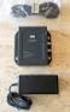 DATA SHEET CISCO AIRONET POWER INJECTOR Cisco Aironet Power Injector products increase the deployment flexibility of Cisco Aironet wireless access points and bridges by providing an alternative powering
Cisco 3640 - PBX Interoperability: Lucent/Avaya Definity G3si V7 PBX with CallManager using Analog FXS and FXO Interfaces as an MGCP Gateway
 Application Note Cisco 3640 - PBX Interoperability: Lucent/Avaya Definity G3si V7 PBX with CallManager using Analog FXS and FXO Interfaces as an MGCP Gateway Introduction This application note describes
CISCO IOS SOFTWARE RELEASES 12.4 MAINLINE AND 12.4T FEATURE SETS FOR THE CISCO 2800 SERIES ROUTERS
 PRODUCT BULLETIN NO. 2879 CISCO IOS SOFTWARE RELEASES 12.4 MAINLINE AND FEATURE SETS FOR THE CISCO 2800 SERIES ROUTERS This product bulletin details changes to the Cisco IOS Software packaging for Cisco
CISCO SFP OPTICS FOR PACKET-OVER-SONET/SDH AND ATM APPLICATIONS
 DATA SHEET CISCO SFP OPTICS FOR PACKET-OVER-SONET/SDH AND ATM APPLICATIONS The Cisco industry-standard Small Form-Factor Pluggable Interface Converter (SFP) for packet-over-sonet/sdh (POS), optical networking,
Cisco Secure Access Control Server Solution Engine
 Data Sheet Cisco Secure Access Control Server Solution Engine The Cisco Secure Access Control Server (ACS) provides a comprehensive identity networking solution and secure user experience for Cisco intelligent
Combined voice and data solution supports Orange s ongoing success in the UK business market
 CUSTOMER CASE STUDY Combined voice and data solution supports Orange s ongoing success in the UK business market Executive Summary CUSTOMER NAME Orange INDUSTRY Telecommunications CHALLENGE To increase
CISCO CATALYST 6500 SERIES CONTENT SWITCHING MODULE
 DATA SHEET CISCO CATALYST 6500 SERIES CONTENT SWITCHING MODULE The Cisco Content Switching Module (CSM) is a line card for the Cisco Catalyst 6500 Series Switch that enhances the experience and response
Cisco Catalyst 6500 Series/Cisco 7600 Series Supervisor Engine 720-3BXL
 Data Sheet Cisco Catalyst 6500 Series/Cisco 7600 Series Supervisor Engine 720-3BXL The Cisco Catalyst 6500 Series/Cisco 7600 Series Supervisor Engine 720-3BXL (Sup 720-3BXL) is the third-generation supervisor
Cisco Aironet 1130AG Series
 Ordering Guide Cisco Aironet 1130AG Series The Cisco Aironet 1130AG Series IEEE 802.11a/b/g Access Point is a fixed-configuration, dual-band access point. Built in to the access point are two radios each
CISCO CATALYST 3750 SERIES SWITCHES
 AT-A-GLANCE CISCO CATALYST 3750 SERIES SWITCHES Product Part Number Port Speed Number Cisco Catalyst 3750-24TS 3750-24TS 3750-24FS 3750-24PS 3750-24PS 3750-48TS 3750-48TS 3750-48PS WS-C3750-24TS-S 10/100
CISCO CATALYST 6500 SUPERVISOR ENGINE 32
 PRODUCT BULLETIN NO. 2678 CISCO CATALYST 6500 SUPERVISOR ENGINE 32 Cisco Systems introduces the Cisco Catalyst 6500 Series Supervisor Engine 32, the next generation of supervisor engine for the Cisco Catalyst
CISCO NETWORK CONNECTIVITY CENTER MPLS MANAGER 1.0
 DATA SHEET CISCO NETWORK CONNECTIVITY CENTER MPLS MANAGER 1.0 Cisco Network Connectivity Center (NCC) Multiprotocol Label Switching (MPLS) Manager maximizes the availability of VPNs based on MPLS technology.
CISCO 7304 SERIES ROUTER PORT ADAPTER CARRIER CARD
 DATA SHEET CISCO 7304 SERIES ROUTER PORT ADAPTER CARRIER CARD The Cisco 7304 Router, part of the industry-leading Cisco 7000 Series, is optimized to deliver flexible, high-performance IP and Multiprotocol
IP Networking and the Advantages of consolidation
 WHITE PAPER Extending the Benefits of Storage Area Networks across IP Networks Introduction The phenomenal growth of Internet business and data-intensive e-business applications over the past few years
CISCO ISDN BRI S/T WIC FOR THE CISCO 1700, 1800, 2600, 2800, 3600, 3700, AND 3800 SERIES
 DATA SHEET CISCO ISDN BRI S/T WIC FOR THE CISCO 1700, 1800, 2600, 2800, 3600, 3700, AND 3800 SERIES Offering a single ISDN BRI S/T interface, this WIC may require an external Network Termination 1 (NT1),
CISCO AIRONET POWER INJECTOR
 DATA SHEET CISCO AIRONET POWER INJECTOR Cisco Aironet Power Injector products increase the deployment flexibility of Cisco Aironet wireless access points and bridges by providing an alternative powering
Cisco 7200 and 7500 Series Routers
 PRODUCT BULLETIN, NO. 965 Cisco 7200 and 7500 Series Routers Software, Feature, and Feature Upgrade Licenses Introduction Cisco IOS Software on the Cisco 7200 and 7500 Series offers three distinctly different
Cisco IOS Telephony Services Survivable/Standby Remote Site Telephony
 DATA SHEET Cisco IOS Telephony Services Survivable/Standby Remote Site Telephony As enterprises extend their telephony and high-value application deployments from central sites out to remote offices, one
Internal IT Staff at a Serbian Children s Hospital Takes Innovative Approach to Outpatient Care
 CUSTOMER CASE STUDY Internal IT Staff at a Serbian Children s Hospital Takes Innovative Approach to Outpatient Care Executive Summary CUSTOMER NAME Belgrade, Serbia INDUSTRY Healthcare BUSINESS CHALLENGES
Serial Connectivity Network Modules for the 2600, 3600, and 3700 Series (NM-1HSSI, NM-4T, NM-4A/S, NM-8A/S, NM-16A/S, NM-16A, NM-32A)
 Data Sheet Serial Connectivity Network Modules for the 2600, 3600, and 3700 Series (NM-1HSSI, NM-4T, NM-4A/S, NM-8A/S, NM-16A/S, NM-16A, NM-32A) The Cisco 2600, 3600, and 3700 Series offer a wide variety
E-Seminar. E-Commerce Internet Business Solution Seminar
 E-Seminar E-Commerce Internet Business Solution Seminar E-Commerce Internet Business Solution Seminar 3 Welcome 4 Objectives 5 The Internet Revolution 6 E-Commerce Defined 7 Types of E-Commerce 8 E-Commerce
CISCO IP PHONE EXPANSION MODULE 7914
 DATA SHEET CISCO IP PHONE EXPANSION MODULE 7914 Call coverage is a critical capability for administrative assistants and others who must monitor, manage, and cover the various status of calls. This requires
Cisco Outbound Option
 Data Sheet Cisco Outbound Option Today s contact center is about more than just handling inbound telephone calls it is about fully integrated, multi-channel customer interaction. The Cisco Intelligent
Cisco Solution Incentive Program Asia Pacific
 Channel Incentive Offerings Cisco Solution Incentive Program Asia Pacific User Guide This program will expire on December 31, 2006. Cisco Systems reserves the right to cancel or modify this program at
Cisco 7200 Series Enterprise WAN Aggregation Application
 OVERVIEW Series Enterprise WAN Aggregation Application Introduction Large enterprise networks face certain challenges when aggregating multiple branch offices or remote locations. Enterprise WAN aggregation
CISCO ATA 186 ANALOG TELEPHONE ADAPTOR
 DATA SHEET CISCO ATA 186 ANALOG TELEPHONE ADAPTOR The Cisco ATA 186 Analog Telephone Adaptor is a handset-to-ethernet adaptor that turns traditional telephone devices into IP devices. Customers can take
CISCO MEETINGPLACE FOR OUTLOOK 5.3
 DATA SHEET CISCO MEETINGPLACE FOR OUTLOOK 5.3 Rich-media Conferencing for Microsoft Outlook PRODUCT OVERVIEW Cisco MeetingPlace part of the Cisco IP Communications system is a complete rich-media conferencing
Cisco WebEx Social Compatibility Guide
 Cisco WebEx Social Compatibility Guide This document provides compatibility information for supported components and applications for Cisco WebEx Social 3.4.2, 3.4, 3.3, 3.1, and 3.0. Note: Due to different
Cisco SMB Class Solutions Your Next Phone System Purchase
 Overview Cisco SMB Class Solutions Your Next Phone System Purchase The Smart Buyer s Checklist for Small and Medium Organizations Will your aging telephone system soon need replacing or require a significant
CISCO ATA 188 ANALOG TELEPHONE ADAPTOR
 DATA SHEET CISCO ATA 188 ANALOG TELEPHONE ADAPTOR The Cisco ATA 188 Analog Telephone Adaptor is a handset-to-ethernet adaptor that turns traditional telephone devices into IP devices. Customers can take
Cisco 2600XM DSL Router Bundles
 Data Sheet Cisco 2600XM DSL Router Bundles Overview In order to provide customers with easy-to-order solutions to meet their Digital Subscriber Line (DSL) networking needs, six new DSL router bundles are
CISCO 7609 ROUTER ENHANCED 9-SLOT CHASSIS
 DATA SHEET CISCO 7609 ROUTER ENHANCED 9-SLOT CHASSIS The Cisco 7609 Router is a high-performance router deployed at the network edge, where performance, IP services, redundancy, and fault resiliency are
PREVENTING WORM AND VIRUS OUTBREAKS WITH CISCO SELF-DEFENDING NETWORKS
 WHITE PAPER PREVENTING WORM AND VIRUS OUTBREAKS WITH CISCO SELF-DEFENDING NETWORKS Worm and virus attacks are among the most common security breaches for organizations today*. A server, laptop, or personal
Cisco AVVID Network Enterprise Data Center Solution Overview
 White Paper Cisco AVVID Network Enterprise Data Center Solution Overview Data centers enable the consolidation of critical computing resources, in controlled environments under centralized management,
Enabling High Availability for Voice Services in Cable Networks
 White Paper Enabling High Availability for Voice Services in Cable Networks When customers place a telephone call, they expect it to go through on the first attempt and they expect it to continue without
NETFLOW PERFORMANCE ANALYSIS
 WHITE PAPER NETFLOW PERFORMANCE ANALYSIS INTRODUCTION The Cisco IOS NetFlow feature set allows for the tracking of individual IP flows as they are received at a Cisco router or switching device. Network
CISCO 10GBASE X2 MODULES
 DATA SHEET CISCO 10GBASE X2 MODULES Figure 1. Cisco 10GBASE X2 and Xenpak Module PRODUCT OVERVIEW The Cisco 10GBASE X2 modules (Figure 1) offers customers a wide variety of 10 Gigabit Ethernet connectivity
Optical Service Modules: OC-3/STM-1, OC-12/STM-4 and OC-48/STM-16 POS, OC-12/STM-4 ATM, Gigabit Ethernet WAN, Channelized T3 (CT3) and OC12/STM-4
 Data Sheet Cisco 7604 Router Product Overview The Cisco 7604 Router is one of the smallest, redundant routers to offer n x 10 Gigabit Ethernet performance with services. This router is part of the Cisco
CISCO DISTRIBUTED DENIAL OF SERVICE PROTECTION SOLUTION: LEADING DDOS PROTECTION FOR SERVICE PROVIDERS AND THEIR CUSTOMERS
 WHITE PAPER CISCO DISTRIBUTED DENIAL OF SERVICE PROTECTION SOLUTION: LEADING DDOS PROTECTION FOR SERVICE PROVIDERS AND THEIR CUSTOMERS Today, service providers and their customers are exposed to a growing
CISCO GUARD XT 5650 PRODUCT OVERVIEW
 DATA SHEET CISCO GUARD XT 5650 PRODUCT OVERVIEW The Cisco Guard XT 5650 DDoS Mitigation Appliance from Cisco Systems delivers a powerful and extensive distributed denial-of-service (DDoS) protection system.
How To Outtask Metro Ether To A Managed Service Provider
 WHITE PAPER MANAGED METRO ETHERNET SERVICES: BUSINESS ADVANTAGES FOR THE ENTERPRISE Ethernet is rapidly becoming the primary communications technology for organizations of all sizes. Most businesses already
Unicast Reverse Path Forwarding
 Unicast Reverse Path Forwarding This feature module describes the Unicast Reverse Path Forwarding (RPF) feature, which helps to mitigate problems caused by malformed or forged IP source addresses passing
CISCO 100BASE-X SFP FOR FAST ETHERNET SFP PORTS
 DATA SHEET CISCO 100BASE-X SFP FOR FAST ETHERNET SFP PORTS PRODUCT OVERVIEW The Cisco 100BASE-X Small Form-factor Pluggable (SFP) is a hot-swappable input/output device that plugs into a Fast Ethernet
CISCO MEETINGPLACE MANAGED SERVICE
 DATA SHEET CISCO MEETINGPLACE MANAGED SERVICE The Cisco MeetingPlace rich-media conferencing solution can be deployed in a variety of ways. As an alternative to a customer managed solution, the Cisco MeetingPlace
CISCO CALLMANAGER EXPRESS 3.2
 ORDERING GUIDE CISCO CALLMANAGER EXPRESS 3.2 To be used by authorized partners and direct accounts only. HOW TO ORDER CISCO CALLMANAGER EXPRESS 3.2 Cisco CallManager Express (CME) is a feature in Cisco
Enterprise Reporting
 Business Solutions Cisco ICM Software Enterprise Reporting Converting Contact Center Data into Business Intelligence. Improving customer service and increasing productivity are critical challenges for
SOUTH BAY BMW ACHIEVES UNMATCHED AVAILABILITY AND SECURITY WITH ITS CISCO NETWORK
 CUSTOMER SUCCESS STORY SOUTH BAY BMW ACHIEVES UNMATCHED AVAILABILITY AND SECURITY WITH ITS CISCO NETWORK EXECUTIVE SUMMARY CUSTOMER NAME South Bay BMW INDUSTRY Automotive BUSINESS CHALLENGE Help assure
Cisco IT Data Center and Operations Control Center Tour
 Cisco IT Data Center and Operations Control Center Tour Data Center Power Page 1 of 9 7. Data Center Power Electrical Power and Power Protection Figure 1. Power Cabinets Dick: Running a data center takes
DATA SHEET. GigaStack GBIC THE CISCO SYSTEMS GIGASTACK GIGABIT INTERFACE CONVERTER (GBIC) IS A VERSATILE, LOW-COST,
 DATA SHEET Technical Information GigaStack GBIC THE CISCO SYSTEMS GIGASTACK GIGABIT INTERFACE CONVERTER (GBIC) IS A VERSATILE, LOW-COST, GIGABIT ETHERNET STACKING GBIC THAT OFFERS HIGH-SPEED INTERCONNECTIVITY
Cisco Intelligent Contact Management Enterprise Edition
 Data Sheet Cisco Intelligent Contact Management Enterprise Edition Cisco IP Communications is a comprehensive system of powerful, enterprise-class solutions including IP telephony, unified communications,
Cisco Systems Brings World-Class Online Banking Solutions to State Bank of India
 C U S T O M E R C A S E S T U D Y Cisco Systems Brings World-Class Online Banking Solutions to State Bank of India Executive Summary CUSTOMER NAME State Bank of India (SBI) INDUSTRY Financial Services
The Palace of Versailles Goes Digital, Increasing Revenue and Enhancing Overall Visitor Experience
 CUSTOMER CASE STUDY The Palace of Versailles Goes Digital, Increasing Revenue and Enhancing Overall Visitor Experience Executive Summary CUSTOMER NAME Palace of Versailles, France INDUSTRY Public Sector
IP Communications for Small Offices Using Cisco CallManager Express and Cisco Unity Express
 Overview IP Communications for Small Offices Using Cisco CallManager Express and Cisco Unity Express Cisco CallManager Express with Cisco Unity Express provides small and medium-sized businesses (SMBs)
networks (VPNs). models, the Cisco 800 series of routers addresses wide range Figure 1 Cisco 800 Series Routers give Small Offices and Corporate
 DATA SHEET Cisco 800 Series Family of Access Routhers Cisco 800 Series Family of Access Routers THE CISCO 800 SERIES FAMILY OF ACCESS ROUTERS OFFER MODELS WITH ENHANCED NETWORK SECURITY AND RELIABILITY
What is network convergence all about?
 What is network convergence all about? What is network convergence all about? The industry's adoption of a converged network that is the concept of the convergence of separate telephone, video and data
CISCO ISDN BRI S/T WIC FOR THE CISCO 1700, 1800, 2600, 2800, 3600, 3700, AND 3800 SERIES
 DATA SHEET CISCO ISDN BRI S/T WIC FOR THE CISCO 1700, 1800, 2600, 2800, 3600, 3700, AND 3800 SERIES Offering a single ISDN BRI S/T interface, this WIC may require an external Network Termination 1 (NT1),
How To Connect A Cisco Aironet 350 Series Wireless Bridge To A Network With A Wireless Bridge
 Data Sheet Cisco Fixed Wireless Solution The Cisco Aironet 350 Series enables high-speed long-range outdoor links between buildings and is ideal for installations subject to plenum rating and harsh environments.
World Consumer Income and Expenditure Patterns
 World Consumer Income and Expenditure Patterns 2014 14th edi tion Euromonitor International Ltd. 60-61 Britton Street, EC1M 5UX TableTypeID: 30010; ITtableID: 22914 Income Algeria Income Algeria Income
Cisco Business Communications Solution. Brochure
 Cisco Business Communications Solution Brochure In today s fast-changing business environment, your customers are becoming more demanding, and the competition is growing more intense. Businesses are migrating
City Government Improves Caller Service and Cultivates Economic Vitality
 Customer Case Study City Government Improves Caller Service and Cultivates Economic Vitality EXECUTIVE SUMMARY CITY OF SACRAMENTO, CALIFORNIA 445,000 residents 97 square miles INDUSTRY Local Government
Cisco CallManager Security Patch Process
 Q & A Cisco CallManager Security Patch Process Q. What Cisco products follow this security patch process? A. Cisco CallManager (CCM), Cisco Customer Response Solutions (CRA/CRS), Cisco Personal Assistant
SERIAL AND ASYNCHRONOUS HIGH-SPEED WAN INTERFACE CARDS FOR CISCO 1800, 2800, AND 3800 SERIES INTEGRATED SERVICES ROUTERS
 DATA SHEET SERIAL AND ASYNCHRONOUS HIGH-SPEED WAN INTERFACE CARDS FOR CISCO 1800, 2800, AND 3800 SERIES INTEGRATED SERVICES ROUTERS Serial and asynchronous high-speed WAN interface cards (HWICs) provide