
Fair Housing for Tenants with Disabilities: A GUIDE. Understanding Reasonable Accommodations and Reasonable Modifications Updated Edition
|
|
|
- Roger Weaver
- 10 years ago
- Views:
Transcription
1 15162 Cover.qxp 7/24/08 11:48 AM Page 1 Fair Housing for Tenants with Disabilities: Understanding Reasonable Accommodations and Reasonable Modifications 2008 Updated Edition A GUIDE

2 Fair Housing for Tenants with Disabilities: Understanding Reasonable Accommodations and Reasonable Modifications 2008 Updated Edition NORTH CAROLINA DEPARTMENT OF HEALTH AND HUMAN SERVICES NORTH CAROLINA HOUSING FINANCE AGENCY SCHOOL OF GOVERNMENT AT THE UNIVERSITY OF NORTH CAROLINA AT CHAPEL HILL REASONABLE ACCOMMODATION STUDY GROUP To request a copy of this publication, contact the N.C. Housing Finance Agency, P.O. Box 28066, Raleigh, NC Telephone (919) The document, along with some of the referenced material, is also available on the NCHFA website at under the Rental Developers, Owners and Managers Section, Reasonable Accommodation. 8,000 copies of this document were printed at a cost of $9,760 or $1.22 per copy.

3

4 Table of Contents Disclaimer 2 Reasonable Accommodations Study Group 3 Introduction 4 Fair Housing Law 5 Figure 1: Federal and State Laws Prohibiting Discrimination Determining Prohibited Conduct Defining Persons with Disabilities The Special Case of Illegal Substance Use and Alcoholism Defining Reasonable Accommodations 9 Individuals With Visual, Speaking, or Hearing Impairments Requests for Reasonable Accommodations Relevant Cases Defining Reasonable Modifications 11 Requests for Reasonable Modification Who Pays for the Modification? Box: Federal Financial Assistance Defined Standards for Modifications Relevant Cases Reasonable Accommodation and Modification Procedures 14 General Management Practices Admissions Policies Figure 2: Reasonable Accommodations or Modifications Flow Chart Questions During the Application Process Denial of Tenancy or Accommodations Relevant Cases Lease Violations and Other Tenancy Matters 20 Step-by-Step Process for Handling Lease Violations Early Termination of a Lease Relevant Cases Protecting the Health and Safety of Other Residents The Issues of Living Independently and Evacuation Relevant Case Consequences 26 Appendices Appendix A: Sample Notice of Right to Reasonable Accommodation/Modification 29 Appendix B: Sample Request and Response Forms 31 Appendix C: Housing Resource Guide 41 Appendix D: Telecommunications Relay Service 55

5 Although this Guidebook contains legal information as well as recommendations for policies and practices, it is intended only as a reference. Landlords must use their best judgment in deciding how to implement reasonable accommodation and modification procedures. Individual cases and circumstances vary widely, and the law is always subject to change through legislative or judicial action. This Guide is not intended to serve as a substitute for legal advice or to establish any lawyer-client relationship. 2 Reasonable Accommodation Guide

6 REASONABLE ACCOMMODATIONS STUDY GROUP The ad hoc Reasonable Accommodation Study Group, sponsored by the Elderly Housing Rights and Consumer Protection Program, developed the original version of this Guide, entitled Reasonable Accommodation for Residents with Mental Illness or Substance Abuse Problems, in Membership of the Study Group included housing providers, service providers, attorneys, and advocates for persons with mental illness and for low-income tenants. The Guide s initial purpose was to address issues involved in making reasonable accommodations for tenants and applicants with mental illness or substance abuse problems. The Study Group believed it was possible to create policies and procedures that satisfy the intent of the law without subjecting either landlords or persons with disabilities to undue burdens. During the past ten years, this has proved to be true and the Guide has been a valuable tool. This update widens the original scope by making the Guide applicable to tenants with all types of disabilities. It includes a new section on reasonable modifications as well as references to relevant court decisions covering the past ten years. Representatives of the following contributed generously to the development of this edition of the Guide and provided valuable feedback on it: Apartment Association of North Carolina, Center for Universal Design at the College of Design, NC State University, Hatch, Little & Bunn, L.L.P., North Carolina Fair Housing Center, North Carolina Human Relations Commission, North Carolina Justice Center. Numerous other organizations and individuals also provided input and assistance in revising this document. The sponsors of this Guide wish to extend a special appreciation to the Justice Center for their role in drafting the original document. The North Carolina Housing Finance Agency 3

7 INTRODUCTION The inclusion of persons with disabilities under the protections of the Fair Housing Act in 1988 and the passage of the Americans with Disabilities Act in 1990 provided persons with disabilities similar protections to those given to racial minorities in the preceding decades. These are first and foremost civil rights laws. Like our statutes outlawing discrimination based upon race, they were enacted to remedy a long history of exclusion and unequal treatment based upon prejudice and reinforced by public policy, law and practice. The four antidiscrimination laws governing housing issues in North Carolina are collectively known as fair housing laws. Americans know that racial discrimination is illegal, but almost 20 years after the passage of the Fair Housing Amendments Act only half of Americans know that it is illegal for landlords to refuse to make reasonable accommodation for persons with disabilities or to refuse to permit reasonable modification to a housing unit. 1 Persons with disabilities face numerous obstacles to securing housing, ranging from architectural barriers to economics and personal history. Fair housing laws recognize these barriers and include important mandates that, if understood and put into practice, will expand housing choice and opportunity for people with disabilities. Fair housing laws prohibit discrimination against people based on their race, color, religion, national origin, sex, familial status, or disability. For persons with disabilities fair housing law goes a step further, making it illegal to: fail to make reasonable accommodation in rules, policies, and services to give a person with a disability equal opportunity to occupy and enjoy the full use of a housing unit and fail to allow reasonable modification to the premises if the modification is necessary to allow full use of the premises. Determining what is a reasonable accommodation or a reasonable modification requires a balancing of interests and a case-by-case judgment as to what is reasonable. Because none of the laws define which accommodations or modifications are reasonable, this Guide includes numerous examples which illustrate the standards the courts use in determining what is reasonable. Most are taken from actual cases. In addition, the Guide includes a statewide list of legal, housing, and community resources (see Appendix C) to help tenants and landlords handle issues that arise in assessing and addressing the issue of reasonableness. 1 M. Abravenel and M. Cunningham, How Much Do We Know: Public Awareness of the Nation's Fair Housing Laws, Urban Institute (Washington, DC, 2002), p.iiv. 4 Reasonable Accommodation Guide

8 FAIR HOUSING LAW Three federal laws and one North Carolina state law specifically prohibit housing discrimination against rental applicants or tenants because of a disability. The federal laws are: 1. the Fair Housing Act of 1968 as amended in 1988 ( Fair Housing Act ), which prohibits discrimination based on race, color, religion, national origin, sex, familial status, or disability and requires landlords to make reasonable accommodations and modifications for tenants with disabilities; 2. the Americans with Disabilities Act ( ADA ), enacted in 1990, which prohibits discrimination on the basis of disability in government-funded programs, including housing programs (Title II), as well as public accommodations (Title III) which means that rental offices, homeless shelters, and other on-site business locations used by the public must be accessible to persons with disabilities; and 3. Section 504 of the Rehabilitation Act of 1973 ( Section 504 ), which prohibits discrimination in federally funded housing programs. The North Carolina law is: 4. the State Fair Housing Act, which is substantially equivalent to the federal Fair Housing Act. Depending on when a unit of rental housing was built and whether its construction was funded from certain federal sources (see box on page 13), some or all of the fair housing laws mentioned above may apply. While other laws and local ordinances also may apply, this guidebook is intended to inform readers of the rights provided to tenants with disabilities by these fair housing laws, and their reasonable accommodation and modification mandates. Figure 1 presents an overview of the laws relating to illegal housing discrimination against persons with disabilities and defines the specific housing types for which each one is applicable. The North Carolina Housing Finance Agency 5

9 Figure 1: Federal and State Laws Prohibiting Discrimination in Housing against People with Disabilities Law Housing Covered Fair Housing All types of dwellings that are designed Amendments Act or used as a residence, and any land or 42 U.S.C vacant property that is sold or leased as et seq. (federal) residential property. Does not apply to: 1. Rental dwellings of four or less units, when one unit is occupied by the owner. 2. Single family homes sold or rented by the owner without the use of a broker or discriminatory advertising. 3. Housing owned by private clubs or religious organizations that restrict occupancy in housing units to their members. Chapter 41A of N.C. General Statutes (state) All housing, including common areas, except: 1. Owner-occupied, single family housing (up to 4 units). 2. Owner-occupied boarding houses. 3. Private clubs, operating for commercial purposes. Types of Practices Which Are Prohibited or Required 1. Cannot discriminate in renting, selling, imposing terms and conditions, advertising, asking questions, or blockbusting (implying that people of a designation are entering the community in large numbers). 2. Must provide reasonable accommodations at the landlord s expense. 3. Must allow reasonable modifications at the tenant s expense. 1. Cannot discriminate in the terms, conditions, or privileges of a real estate transaction or provision of facilities. 2. Cannot refuse to make reasonable accommodations to rules, practices, policies, or services. 3. Cannot refuse to allow the tenant to make reasonable modifications. Definition of Person with a Disability (Handicap) Persons who: 1. Have a physical or mental impairment substantially limiting one or more major life activities, including caring for one s self, walking, seeing, hearing, speaking, breathing, working, performing manual tasks, and learning. 2. Have a history of a physical or mental impairment substantially limiting one or more major life activities. 3. Are regarded as having a physical or mental impairment substantially limiting one or more major life activities. Same as above. Titles II and III of the Americans with Disabilities Act (federal) Title II applies to housing provided by state and local governments and their entities, including public housing authorities, regardless of whether they receive federal funds. Title III applies to public entities, such as commercial facilities and common areas of rental housing and homeless shelters. 1. Cannot deny qualified individuals the opportunity to participate in or benefit from federally funded programs, services, or other benefits. 2. Cannot deny access to programs (all operations of the housing provider), services, benefits, or opportunities to participate as a result of physical barriers. The housing provider is not required to take steps that it can demonstrate will cause an undue financial or administrative burden or change the fundamental nature of the program. Same as above. Section 504 of the Rehabilitation Act 29 U.S.C. 794 (federal) Any housing program or activity receiving Federal financial assistance or any housing program or activity conducted by any executive agency of the U.S. government or by the United States Postal Service. See Box on Page 13 for definition of Federal Financial Assistance. 1. Same as Title II and III of the ADA. 2. 5% of units must be accessible for persons with mobility impairments and an additional 2% must be accessible for persons with visual or hearing impairments. 3. Reasonable modifications must be made at the expense of the housing provider. Same as above. 6 Reasonable Accommodation Guide

10 Law Accessibility Requirements Fair Housing Amendments Act 42 U.S.C et seq. (federal) Accessibility requirements apply to all ground floor or elevator accessed units in all buildings with four or more units built for first occupancy after March 13, Dwellings shall be designed and constructed to have at least one building entrance on an accessible route, unless it is impractical to do so because of terrain or unusual characteristics of the site. 2. Dwellings with a building entrance on an accessible route shall be designed in such a manner that the public and common use areas are readily accessible to and usable by handicapped persons. 3. Dwellings with a building entrance on an accessible route shall be designed in such a manner that doors are wide enough to allow passage by persons in wheelchairs. 4. Dwellings with a building entrance on an accessible route shall be designed and constructed such that all premises contain an accessible route into and through the unit. 5. Light switches, electrical outlets, thermostats, and other environmental controls must be in accessible locations. 6. Dwellings must contain reinforced walls in bathrooms to allow installation of grab bars around toilet, tub, shower stall, and shower seat, where such facilities are provided. 7. Dwellings must contain usable kitchens and bathrooms such that an individual in a wheelchair can maneuver about the space. Is Current Illegal Drug Is a History of Illegal Use Covered? Drug Use Covered? No Yes Yes Are Alcoholics Covered? Chapter 41A of NC General Statutes (state) Same as above plus NC Building code No Yes Yes requirements. 2 Titles II and III of the Americans with Disabilities Act (federal) To be readily accessible, a facility must be able to be approached, entered, and used by individuals with disabilities. All properties subject to Title II constructed after January 26, 1993, must be in compliance with the Americans with Disabilities Act Accessibility Guidelines or the Uniform Federal Accessibility Standards. Title III requires that the rental office, other common areas and parking be accessible. No Yes Yes Section 504 of the Rehabilitation Act 29 U.S.C. 794 (federal) Properties must be readily accessible to persons with disabilities. Providers must ensure that individuals with visual, speaking, or hearing impairments can effectively communicate. No Yes, a person with a history of drug use who has been successfully rehabilitated, or someone who is participating in a drug rehabilitation program and is not currently using drugs illegally, is protected. No, if alcoholism prevents an individual from participating in the housing program or poses a threat to the property or safety of others. Yes, otherwise. 2 More information on NC Building Code requirements can be found in Accessible Multifamily Housing; Key Code Requirements from Volume 1-C (1999) of the North Carolina State Building Code by the Center for Universal Design at NC State University. Available at or The North Carolina Housing Finance Agency 7

11 Determining Prohibited Conduct Fair housing laws as they relate to tenants with disabilities prohibit the following actions: 1. discrimination in the rental of housing because of a handicap or disability of the renter or of a household member or person associated with the renter; 2. discrimination in the terms or conditions of rental or in the provisions of services or facilities because of a handicap or disability of the renter; 3. inquiries to determine whether a person seeking to rent a dwelling unit has a disability; and 4. discriminatory advertising. Defining Persons with Disabilities While this guidebook refers to persons with disabilities, the fair housing laws use the term individuals with handicap. Cases interpreting fair housing laws make clear that the terms have the same meaning. According to the laws, individuals with handicaps or persons with disabilities include those: with a physical or mental impairment that substantially limits one or more major life activities; with a record of having such an impairment; or regarded as having such an impairment whether they have the impairment or not. 3 The following persons are not included in the definition of disability: persons currently engaging in the illegal use of a controlled substance; persons whose tenancy would constitute a direct threat to the health or safety of other individuals or whose tenancy would cause substantial physical damage to the property of others; persons convicted of illegal manufacture or distribution of a controlled substance; and juvenile offenders and sex offenders, by virtue of that status. 4 The term handicapped person is more broadly defined under fair housing laws than under regulations covering eligibility for federally subsidized housing programs (such as Section 811) or federal disability benefits (such as SSI). 5 3 For FHAA, see 42 U.S.C. 3602(h) and 24 C.F.R (1994); for Section 504, see 29 U.S.C. 706(7) and 24 C.F.R. 8.3; and for the ADA, see 42 U.S.C and 28 C.F.R Joint Statement of the Department of Housing and Urban Development (HUD) and the Department of Justice: Reasonable Accommodations under the Fair Housing Act (Washington DC: May 17, 2004). Available at or 5 In determining eligibility for federally assisted housing, a person with a disability is one who: (a) has a disability as defined under the Social Security Act; (b) has a developmental disability as defined by federal law; or (c) is determined to have an impairment that i is expected to be of long-continued and indefinite duration, ii substantially impedes the individual s ability to live independently, and iii is of such a nature that the disability could be improved by more suitable housing conditions. 8 Reasonable Accommodation Guide

12 The Special Case of Illegal Substance Use and Alcoholism CURRENT USE Individuals who currently use illegal drugs are explicitly excluded from protection under all of the antidiscrimination laws, including Section 504 of the Rehabilitation Act, the Americans with Disabilities Act (ADA), the Fair Housing Amendments Act of 1988 (FHAA), and state law. HISTORY OF ILLEGAL USE Federal and state law distinguishes between individuals who are currently using illegal drugs and individuals who are not currently using illegal drugs but who have a history of addiction. Individuals who meet the Fair Housing Act definition of disability and are not currently using but have a history of illegal drug addiction are protected, by law, from discriminatory conduct. The laws are clear that an individual is protected if he or she is not using illegal drugs and (1) has successfully completed a rehabilitation program, (2) has otherwise been successfully rehabilitated, or (3) is participating in a treatment program or self-help group. ALCOHOLISM Persons with alcoholism are treated differently under Section 504 (see Figure 1) than under the Fair Housing Act and the ADA. HUD regulations for Section 504 explicitly exclude from its definition of individual with handicap anyone whose current alcohol use prevents that person from participating in federally funded housing programs (which includes meeting the terms of the lease) or whose current alcohol abuse would constitute a direct threat to property or the safety of others. The Fair Housing Act s definition of an individual with a handicap includes alcoholism as a covered disability but provides a general exclusion for any individual whose tenancy would pose a direct threat to the health or safety of other individuals or whose tenancy would result in substantial physical damage to the property of others, provided reasonable accommodation could not eliminate the threat (see case #10 on page 24). DEFINING REASONABLE ACCOMMODATIONS As opposed to modifications, which involve physical alterations to a property, the term reasonable accommodation refers to procedural changes such as changes in rules or policies. The mandate for making reasonable accommodations is found in both the Fair Housing Act, as amended, and Section 504 (see Figure 1). The Fair Housing Act requires housing providers to make reasonable accommodations as outlined in 24 CFR (a), which states: It shall be unlawful for any person to refuse to make reasonable accommodations in rules, policies, practices or services, when such accommodations may be necessary The North Carolina Housing Finance Agency 9

13 to afford a handicapped person equal opportunity to use and enjoy a dwelling unit, including public and common use areas. The need for a reasonable accommodation may arise at the time a person is applying for housing, during the tenancy, or to avoid an eviction. It is the responsibility of the tenant to ask for a specific, reasonable accommodation whenever one is needed. The law does not establish any clear threshold (financial, administrative, or otherwise) for determining what is reasonable, but it does specify that landlords are not required to provide an accommodation if it would impose an undue burden or result in a fundamental alteration of the nature of the housing program. An undue burden is an unreasonable financial or administrative cost, which is demonstrated by comparing the administrative and financial costs of regular operation, the overall financial resources available to the landlord, and the costs of making the accommodation. 6 A fundamental alteration is an accommodation that would change the basic operation or nature of services provided by significantly modifying, eliminating, or adding to the services that a landlord provides. A request for reduced rent payments is not a reasonable accommodation. Individuals With Visual, Speaking, or Hearing Impairments Landlords must ensure that individuals with visual, speaking, or hearing impairments can effectively communicate with them. For example, visually impaired persons may need to have the rental application or other written documents read to them. Landlords should also be familiar with the Telecommunications Relay Service (TRS) which allows a deaf, hard of hearing, deaf-blind, or speech impaired individual to use special equipment to call to the 711 Relay Center, where a specially trained operator relays messages between the relay user using a text telephone or an assistive device and a hearing person using a standard telephone (see Appendix D). Requests for Reasonable Accommodations Upon receiving a request for a reasonable accommodation, the landlord should take the following three steps. If a landlord denies a request for reasonable accommodation, and the individual who made the request files a complaint, the landlord s defense will rest upon proving that these steps were taken before the request was denied. 1. In requesting an accommodation the individual has disclosed that he or she has a disability. If the disability is not apparent, the landlord may ask for verification that the tenant has a disability as defined by the Fair Housing Act. No additional inquiry into the nature or extent of the disability, beyond establishing the need for the accommodation, is allowed. 2. Establish that the accommodation is necessary. In other words, the accommodation will enable the person with the disability to have equal opportunity to use and enjoy a dwelling unit, including public and common use areas. 6 Shapiro v. Cadman Towers Inc., 51 F.3d 328 (2d Cir. 1995). 10 Reasonable Accommodation Guide

14 3. Determine that the accommodation is reasonable, i.e. it would not impose an undue burden or result in a fundamental alteration of the nature of the housing program. Once an accommodation is determined to be reasonable, the landlord cannot directly or indirectly impose on the tenant the expense of providing the accommodation (for example, a pet deposit cannot be required for a service animal). The landlord must bear this expense. Though not required, the recommended practice is to have requests for reasonable accommodations be made in writing. Relevant Cases #1 Ulah was shown a model apartment and subsequently leased an apartment that was smaller than the model. She began to suffer from claustrophobia. She was prescribed Xanax, but it did not abate the symptoms. Ulah verbally requested that she be allowed to move into a larger apartment, but management told her that doing so involved too much paperwork. Ulah submitted notice of intent to vacate due to illness, and management sued her for unpaid rent. The court determined that because management was given notice of Ulah s disability but made no attempt to make reasonable accommodations, she was discriminated against in violation of the Fair Housing Act. Manor Park Apts. v. Garrison, 2005 Ohio 1891 (2005). #2 After Lisa and her son moved into their apartment, there were complaints from other residents that her son was disrupting their right to enjoy their homes due to his physical and verbal threats to other tenants. Lisa s son had been diagnosed with Oppositional Defiant Disorder (ODD), which is a mental illness and disability under the Fair Housing Act. Management began eviction proceedings, despite requests for a reasonable accommodation of counseling for Lisa s son, because management felt it would be unreasonable for the other tenants to have to bear repeated disruptions before counseling took effect. The mother agreed to provide eyes-on supervision as well as obtain counseling for her son, but she failed to provide supervision. The court determined that when an effort for reasonable accommodations has been made but the tenant fails to meet them, that eviction is proper. Housing Authority of the City of Bangor v. Maheux, 748 A.2d 474 (Me. 2000). #3 Toni suffers from oversensitivity to multiple chemicals, for which she receives Social Security disability payments. When Toni moved in, her landlords accommodated many requests-removing the carpet, cleaning with specified chemicals, cleaning the air ducts, and not repainting. The downstairs tenant used cleaning solutions that irritated Toni, and she asked her landlords to evict her. The court ruled that the downstairs tenant s rights did not have to be violated in the name of reasonable accommodation. Temple v. Gunsalus, 1996 WL (6th Cir. 1996). DEFINING REASONABLE MODIFICATIONS A reasonable modification is a change in the physical arrangement of the interior of a housing unit, common spaces, or parking areas of rental housing covered by the Fair The North Carolina Housing Finance Agency 11

15 Housing Act. The landlord must allow physical modifications if they are reasonable and necessary for the tenant to enjoy and use the dwelling unit, common spaces, or parking areas. Requests for Reasonable Modification Upon receiving a request for a reasonable modification, the landlord should take the following three steps. If a landlord denies a request for reasonable modification, and the individual who made the request files a complaint, the landlord s defense will rest upon proving that these steps were taken before the request was denied: 1. In requesting a modification the individual has disclosed that they have a disability. If the disability is not apparent, the landlord may ask for verification that the tenant has a disability as defined by the Fair Housing Act. No additional inquiry into the nature or extent of the disability, beyond establishing the need for the modification is allowed. 2. Establish that the modification is necessary. In other words, the modification will enable the person with the disability to have equal opportunity to use and enjoy a dwelling unit, including public and common areas. 3. Determine that the modification is reasonable, i.e. whether the modification is structurally possible, cost effective and will overcome the barrier. 4. Ensure that the modification will not damage the property or interfere with other tenants use of their units or common areas. Though not required, the recommended practice is to have requests for reasonable modification be made in writing. Who Pays for the Modification? Three questions must be asked in order to determine who will pay for a reasonable modification: 1. If the property was developed, even in part, with federal funds (see section below), the landlord must pay for the modification, as long as it does not cause a significant financial or administrative hardship. 2. If a building was ready for occupancy for the first time after March 13, 1991, it is subject to the Fair Housing Act and must be physically accessible. If the modification requested is necessary because the building is out of compliance with the Fair Housing Act, owners are financially responsible for all expenses necessary to have the property meet these requirements. 7 The fact that a building was approved by a local building inspector and received a Certificate of Occupancy does not prove that it meets Fair Housing Act requirements. 3. If the property did not receive funding from a federal source and meets the minimum accessibility requirements required by law, then the tenant can be required to pay for the modification. 12 Reasonable Accommodation Guide

16 Federal Financial Assistance defined If a housing development is funded, even partially, with Federal sources or receives a donation of land from a federal source, Section 504 of the Rehabilitation Act applies. Some common sources of Federal financial assistance are: HOME Community Development Block Grants (including Section 108 Loans) Section 202 and 811 Supportive Housing for the Elderly or Persons with Disabilities McKinney-Vento Supportive Housing (permanent or transitional) USDA Rural Development Section 514, 515 and 538 Public Housing Authorities Privately owned developments with federal project-based rental assistance. Three common Federal programs do not trigger Section 504 regulations: Low-Income Housing Tax Credits, tax-exempt bonds and properties developed without federal funds that are rented with either Housing Choice Vouchers (Section 8) or Shelter Plus Care Assistance. However, most sources of direct or indirect federal funding do trigger Section 504. Standards for Modifications If the tenant is paying for the alteration, the landlord can require that the work be done properly, that it comply with all necessary building and architectural codes and that a certified contractor complete the work. The landlord can also require that at the end of the tenancy the modification be removed and the unit restored to its original condition, but only if the modification will interfere with a future tenant s use of the unit. Many modifications, such as the installation of grab bars or widening doorways, do not interfere with a future tenant s use. If the alterations are substantial and the tenant cannot provide adequate assurances regarding payment for the restoration, the landlord can further require that a tenant pay into an interest-bearing escrow account. Any escrow agreement should be described in writing and signed by both the tenant and landlord. Relevant Cases #4 Todd has a child who uses a wheelchair. The bathroom door in the apartment is too narrow to permit the wheelchair to pass through it. Todd asks the landlord for permission to widen the doorway at his own expense. The landlord may not refuse to permit Todd to make the modification. Further, the landlord may not condition permission on Todd paying for the doorway to be narrowed at the end of the lease because a wider doorway will not interfere with the landlord s or the next tenant s use and enjoyment of the premises. 24 C.F.R (c). #5 Hector and three other mobility impaired tenants asked their landlord to install a lift or ramp to enable them to enter and exit their apartment building without assistance. The 7 Landlords should consult the North Carolina Housing Finance Agency s self-evaluation tool on Fair Housing Act Compliance, at for more information. The North Carolina Housing Finance Agency 13

17 estimated cost of installation ranged between $25,000 and $55,000. The court determined that even the low estimate of $25,000 placed an undue burden on the landlord, especially because the building had been operating at a loss for three consecutive years. Rodriguez v. 551 West 157th Owners Corp., 992 F. Supp. 385 (S.D.N.Y. 1998). REASONABLE ACCOMMODATION AND MODIFICATION PROCEDURES Accommodating tenants with disabilities requires flexibility and the application of good management techniques. The number of possible accommodations or modifications will be as numerous and diverse as the number of residents they assist. Many variations can be made to the suggestions below, and appropriate alternatives should be considered. Landlords should also draw upon outside experts and organizations that provide information and technical assistance (see Appendix C). The first step, however, is creating an environment that is receptive to change, supportive of people with disabilities, open to a tenant s disclosure of a disability, flexible in discussing accommodations and modifications, and sensitive to relationships among tenants. General Management Practices All landlords should: 1. Make sure they understand their obligations under federal and state antidiscrimination laws. 2. Increase their awareness of disability issues. Disabilities come in many forms and affect each person differently. 3. Prominently display lists of community resources and contacts as well as information from supportive service providers. 4. Clearly communicate their expectations to the residents, both in writing and orally, at move-in and throughout the term of tenancy. Expectations should be clearly set out in the lease (and rules, if any). 5. Establish a process for handling requests for accommodations or modifications. 6. Not discuss the tenant s disability with other tenants or third parties without the tenant s specific written permission. Decisions involving denying a request for a reasonable accommodation or modification should be made by senior management personnel or the property owner, not the site manager. 14 Reasonable Accommodation Guide

18 Admissions Policies Landlords may not reject a prospective tenant s application because of his or her disability or factors relating to the disability. Landlords also may not use stereotypes to reject an applicant. A refusal based on concerns about the health and safety risk to others, for instance, should be based on documented past history of the person rather than on the landlord s judgment about possible future behavior. Landlords can refuse to rent to someone who either: fails to meet legitimate screening criteria, such as the financial ability to pay the rent, or who would pose a direct threat to the health or safety of other individuals or would result in substantial physical damage to the property of others (see page 25 for more information). The vast majority of issues that arise in the screening process are handled without litigation, and thus case examples are not available. Two of these, poor credit and criminal history, are common barriers for many tenants, including persons with disabilities. Some frequent situations of disability-related credit concerns are shown in the following scenarios: Mary had a serious illness that interrupted her working life and resulted in bankruptcy. John had an untreated mental illness that created a period of uncontrolled spending, causing him to default on loans, pay bills late and hurt his credit history. Similarly, a prospective tenant may have a criminal record as a result of their disability: Susan, who is in recovery from addiction to illegal drugs, was convicted in the past on drug charges. Samuel had an untreated mental illness that resulted in homelessness and convictions for trespassing, vagrancy and assault, all of which can be part of surviving on the streets. All of the above are reasons to consider making a reasonable accommodation. Landlords should follow these steps to determine what is a reasonable accommodation in the tenant screening process: 1. In requesting an accommodation the individual has disclosed that they have a disability. If the disability is not apparent, the landlord may ask for verification that the tenant has a disability as defined by the Fair Housing Act. No additional inquiry into the nature or extent of the disability, beyond establishing the need for the accommodation, is allowed. 2. Establish that the accommodation is necessary. In other words, the issue causing concern is a result of the individual s disability and the accommodation will enable the person with the disability to have equal opportunity to use and enjoy a dwelling unit, including public and common areas. The North Carolina Housing Finance Agency 15

19 3. Determine that the accommodation is reasonable, i.e. it would not impose an undue financial or administrative burden or result in a fundamental alteration of the nature of the housing program. Using the examples from the scenarios above, some circumstances that could warrant an accommodation in the application procedure may include: After Mary declared bankruptcy, she has paid her bills on time; John is receiving psychological counseling for his mental illness and is in compliance with a repayment plan; Susan is no longer uses illegal drugs and has not been arrested since she completed substance abuse treatment; and Samuel has not been convicted of a crime since he began taking medications to treat his mental illness. Unfortunately, the regulations and settled case law in this area are inadequate to provide useful guidance, therefore the illustrations above are not taken directly from a legal authority. (The standards for persons in recovery from illegal substance addiction are set out on pages 7 and 9.) In considering requests for reasonable accommodations in the screening process, as elsewhere, the landlord must consider individual circumstances and facts. Before making an accommodation, landlords are within their rights to have assurances that issues from the tenant s past have been adequately addressed. The requested accommodation must be reasonable, i.e. it will not cause an undue financial or administrative burden or result in a fundamental alteration of the nature of the housing program. The landlord does not have to waive the protective policy entirely, but can accommodate an applicant by modifying it for the situation. In the case of poor credit, if the period of paying bills on time has been too short to establish a pattern of financial responsibility, the tenant may be asked to have a cosigner for the initial term of their lease until they can demonstrate their ability to pay rent on time. In the case of a past criminal history a lease addendum could clearly state that criminal activity in violation of the lease will lead to eviction proceedings. No person comes with a guarantee that they will be a good tenant, but a thoughtful and well documented reasonable accommodation process can both protect the landlord from undue risk and allow the tenant with a disability access to housing. 16 Reasonable Accommodation Guide

20 Figure 2: Reasonable Accommodations or Modifications Flow Chart Did the applicant/ tenant ask for a reasonable accommodation or modification? NO Do not ask if he or she has a disability, even if apparent. Inform all applicants/tenants of policies regarding reasonable accommodations and modifications. YES Is the accommodation or modification reasonable? 1. If the disability is not apparent, the landlord may ask for verification. 2. Establish that the accommodation or modification is necessary. 3. Determine that the accommodation or modification would not impose an undue burden or result in a fundamental alteration of the nature of the housing program. NO YES Give reasons for denying the accommodation or modification and give the tenant an opportunity to appeal the decision. Inform the applicant/tenant of the approval of the modification or accommodation and of any conditions, such as: removal of the modification after lease expiration, addendum to the lease, etc. The North Carolina Housing Finance Agency 17

21 Questions During the Application Process A prospective tenant does not have to disclose a disability unless he or she is seeking a reasonable accommodation or modification. Even if the disability is apparent, the landlord should not ask about it. If the applicant discloses a disability, the landlord may then ask follow-up questions but only to the extent necessary to determine the reasonableness of a particular accommodation. The landlord must be careful to ask the same questions and apply the same screening criteria to all potential tenants and to ensure that the questions asked do not have the effect of probing for information that relates to a disability. For example, the landlord may not ask whether a person is capable of living independently. While it appears to be neutral, the question may have the effect of eliciting information about a disability. WHAT QUESTIONS ARE LEGAL? The following are examples of questions that landlords may ask regarding an applicant s ability to follow the terms of the lease: 1. Will the applicant pay rent and other fair charges in a timely manner? 2. Will the applicant care for and avoid damaging the unit and the common areas, use facilities and equipment in a reasonable way, create no health, safety or sanitation hazards, and report maintenance needs? 3. Will the applicant avoid interfering with the rights and enjoyment of others and avoid damaging the property of others? 4. Will the applicant avoid criminal activity that threatens the health, safety, or rights of others and avoid drug-related criminal activity? 5. Will the applicant comply with necessary and reasonable house rules, program requirements of HUD (if applicable), and health and safety codes? WHAT QUESTIONS CANNOT BE ASKED? Generally, it is illegal for landlords to ask: 1. whether an applicant has a disability; 2. whether an applicant has a particular type of disability; 3. questions about an applicant s disability, including its severity; 4. any question, such as Do you take any medications? that would require an applicant to tell about his or her disability; 5. whether any member of the applicant s family or any friend or associate has a disability; and 6. whether the applicant has the ability to live independently or evacuate safely (see page 26). 18 Reasonable Accommodation Guide
22 Exceptions to the above rules include the following scenarios: If an applicant has applied for a housing program designated for individuals with disabilities or with a certain type of disability, the applicant may be asked if he or she has a qualifying disability. If a person is applying for housing where a priority or preference is in place for persons with disabilities, the applicant may be asked if he or she qualifies for that priority or preference. If an applicant is trying to qualify for an allowance that reduces rent on the basis that he or she has a disability (i.e., in some HUD assisted housing the $400 allowance for elderly, disabled, and handicapped families; the allowance for unreimbursed medical expenses in excess of three percent of annual income; and the handicap assistance allowance), he or she may be asked to verify that he or she has a disability and disability-related expenses when relevant. If the applicant requests a reasonable accommodation or modification, the landlord may ask follow-up questions about their disability; but only to the extent necessary to understand the connection between the disability and the accommodation or modification requested. Denial of Tenancy or Accommodations When any application for tenancy is denied, the landlord should indicate that an opportunity to request a reasonable accommodation is available if the applicant believes it would enable him or her to meet the terms of the lease. A landlord could include the following language in a rejection letter: If you are a person with a disability, and the reason your application is being denied is related to your disability, you may contact us no later than (date, time) to discuss whether a reasonable accommodation by us would make your application acceptable. 8 If an applicant s request for a reasonable accommodation is denied, the applicant should be told the reason for the denial and given an opportunity to respond. In responding, the applicant could point out that: the reason given for the denial is actually the result of the disability; that there has been a change in the applicant s ability to be a good resident; or that there is a plan that will enable the applicant to be a good resident. Any one of these outcomes, if applicable, is grounds for reconsideration. If the request is reconsidered, each step of considering the request (see pages 10-11) should be repeated and documented. Appendix A provides a sample form that can be used to inform an applicant who is denied housing of his or her right to seek a reasonable accommodation. Appendix B provides a sample form that an applicant can use to request a reasonable accommodation. 8 National Affordable Housing Management Association (NAHRO), Fair Housing-A Guidebook for Owners and Managers of Apartments (Washington, DC: 2005). The North Carolina Housing Finance Agency 19
23 Relevant Cases #6 John applied to rent a one-bedroom apartment. On his application he listed his monthly income at $850 and his occupation as disabled. John has been unable to work because of complications from AIDS. John has a history of prompt rental payment and no negative credit history. John s application was denied for failing to meet the minimum monthly income requirement, a failure directly related to his disability status. The apartment denied John s mother s attempt to act as a cosigner because of the landlord s strict no-cosigner policy. The court determined that even if an administrative policy seems disability-neutral, the failure to offer or to accept a reasonable accommodation to the administrative policy was a violation of the Fair Housing Act Amendments. Giebeler v. M&B Associates, 343 F.3d 1143 (9th Cir. 2003). #7 Gordon filled out a lease application to live in Cotton Mill, a housing complex available only to persons with disabilities. A portion of the application stated: STATEMENT OF HEALTH, INCLUDING ANY DISABILITIES (statement of your doctor should be used here). Physician should state here a brief description of your medical condition, disability and/or handicap and whether you are able to care for yourself if living alone and/or able to care for [an] apartment. The court ruled that although it is permissible to ask whether a prospective tenant has a disability to determine if he or she is eligible for housing available only to those with a disability, the FHAA prohibits an inquiry into the nature and severity of a tenant s disability. Robards v. Cotton Mill Associates, 713 A.2d 952 (Me. 1998). LEASE VIOLATIONS AND OTHER TENANCY MATTERS Residents sometimes fail to follow important parts of the lease or repeatedly break minor rules. Persons with disabilities, like all other residents, may be evicted for failure to comply with the terms of the lease or rules of the property. However, as with initial occupancy, landlords are required to make reasonable accommodations to the extent necessary to allow the residents with disabilities to have an opportunity to comply with the terms of the lease. The following suggestions should help landlords to deal effectively with residents with a disability who violate a lease. 1. Managers must distinguish between behavior that is merely irritating and behavior that is so destructive of the rights of other residents that it violates the lease. Residents do not have a right to be shielded from seeing or interacting with persons with disabilities. However, residents do have a right to be protected from behavior that threatens their quiet enjoyment or safety. 2. Education of residents may be helpful so that problems do not occur or escalate. Ideally, a neutral, expert third party would provide such education with the goal of increasing the residents understanding. Local human service organizations offer tapes, workshops, and lectures on disabilities. Advocacy and vocational support groups also can provide assistance (see Appendix C). 20 Reasonable Accommodation Guide
24 3. If a resident violates the lease agreement, the landlord may issue a notice of lease violation or lease termination. This notice should clearly communicate the reason and include information about reasonable accommodations (see Appendix A). 4. All notices of denial, lease violation, and lease termination should include the opportunity for an informal meeting (see Appendix A and Appendix B). 5. Landlords must treat all residents with respect, especially when discussing reasonable accommodations. 6. Landlords should offer assistance such as referrals to social service agencies, to help residents comply with the stated expectations. 7. If a resident violates his or her lease after receiving reasonable accommodation, the landlord may pursue enforcement options. However, another reasonable accommodation may be appropriate if the previous accommodation did not adequately address the tenant s disability. 8. Landlords should take into account the degree to which the problematic behavior is involuntary. Many disabilities result in behavior that cannot be readily controlled and that some neighbors may consider annoying or disturbing. In such cases, landlords should accept the behavior and discuss with the resident with the disability his or her willingness to permit or participate with the landlord in providing information to neighbors that will allay their concerns and help to eliminate further conflict. 9. Landlords should respect an individual s privacy. Not everyone with a disability wants their neighbors to know about their disability. However, if a resident indicates a willingness to discuss his or her condition, the landlord may want to facilitate such a discussion. Step-by-Step Process for Handling Lease Violations When confronted with a resident who breaches his or her lease, the landlord can use the steps listed below as a model. Of course, the particular circumstances of each situation will determine which of the steps are warranted or appropriate. 1. When a resident commits a violation that provides sufficient cause for immediate lease termination, the manager should: a. send the resident a termination letter explaining how the resident s action constituted a violation of the lease; b. allow the resident the opportunity to discuss his or her termination; and c. tell the resident that if a disability caused the violation, the resident may request an accommodation. 2. When a resident commits a violation that does not warrant immediate lease termination, the landlord should: a. send the resident a warning letter explaining how the resident s action constituted a violation of the lease; The North Carolina Housing Finance Agency 21
25 b. allow the resident the opportunity to discuss the matter; and c. inform the resident that if a disability caused the violation, the resident may request an accommodation. Landlords should provide the opportunity to request a reasonable accommodation for a disability to all residents who violate their lease agreement. Offering such a provision only to those whom the landlord suspects of having a disability may be considered discrimination. 3. During the meeting with the resident to discuss the lease violation, the landlord should: a. discuss the matter openly with the resident; b. use a copy of the resident s lease as reference when explaining how the resident s action constituted a violation; and c. ask the resident if he or she understands everything explained in the warning/ lease termination letter. This will give the resident the chance to discuss his or her disability, if any. 4. If the resident discloses a disability and requests an accommodation, the landlord should: a. have an experienced health care provider verify the disability, if the disability is not readily apparent; and b. use the qualified person verifying the disability as a resource for providing the reasonable accommodation. See Appendix C for a list of available resources. 5. When reviewing a request for a reasonable accommodation, the landlord may consider the following: a. Will the accommodation prevent future violations? b. Will the accommodation place an undue financial or administrative burden on the management company or owner? If so, and if the accommodation is unlikely to prevent future lease violations, then the landlord is not required to make the accommodation. (See pages for a more complete explanation of how to determine whether or not an accommodation is reasonable.) 6. If the manager decides that a reasonable accommodation should be made for the tenant, the manager should prepare a lease addendum that includes this accommodation. The addendum should also include a provision stating that the lease may be terminated if the violation occurs again. 7. If the resident does not disclose a disability or attend a meeting to discuss the violations, the manager should suggest possible sources of support for the resident, (e.g., family, friends, social service agencies). The landlord must respect the resident s right to privacy. Before a third party becomes involved, however, the landlord should try to resolve the matter with the resident. 22 Reasonable Accommodation Guide
26 a. If this is not possible, the resident must give written permission before a third party can become involved. b. If permission is granted, the landlord should contact the source of assistance informing them that if the resident has a disability, the resident has the right to request an accommodation. Note: One exception to this right of privacy may apply. If the landlord can determine, with a reasonable degree of certainty, that the resident is incapable of making a request due to a handicap or disability, the landlord may contact a third party without the resident s permission. This issue must be handled carefully. 8. If a meeting is successfully arranged between the manager, resident, and support for the tenant, the manager should encourage an active discussion of the problem between all three parties. In order to facilitate discussion, the manager should: a. try to foster an atmosphere in which the resident may speak freely about his or her problems and disclose a handicap or disability, if any; and b. allow the tenant s support person to make suggestions that might help prevent future violations and use the support person as a resource if an accommodation is requested. The resident is not required to participate in any meeting with third parties. If the resident decides not to participate with the third party, the landlord has met its duty by providing the resident the opportunity to request an accommodation or to have a request made on the resident s behalf. If the resident does not disclose a disability and the landlord decides to contact a relative or social service representative, then these steps must be taken for all residents who do not discuss or disclose a disability and not just for those residents thought to have a disability. Early Termination of a Lease A tenant may develop a disability, or an existing disability may become so severe during the term of a lease, that he or she cannot meet the obligations of their lease. In cases in which there is no reasonable modification or accommodation that can remedy the situation, the tenant may have no choice but to find alternative housing. The tenant should request that the landlord permit an early termination of the lease, and the landlord should grant the request, if it is reasonable. Either the tenant or the landlord may offer an alternative accommodation, such as another, more suitable unit. As with other determinations of reasonableness, a landlord may only refuse to terminate the lease without penalty if the accommodation would result in an undue burden or substantially alter the terms of the agreement. In determining reasonableness, the landlord may consider the following: likelihood of filling the vacancy given vacancy rates in the area/building; any particular characteristics of the dwelling that make it desirable or undesirable; The North Carolina Housing Finance Agency 23
27 the amount of time remaining on the lease term; the size of the owner s business; and the owner s overall resources. 9 Relevant Cases #8 Bruce, who suffers from an undisclosed mental illness, signed a one-year lease with an apartment complex, paying a portion of his rent and supplementing his payment with assistance from HUD. After living in his apartment for three days, his condition worsened, and he was hospitalized. His psychiatrist determined that it would be unsafe for Bruce to continue to live alone in the apartment, and Bruce sought to terminate the lease early. Bruce was assessed for the remaining rent and cleaning charges. The court determined that failure to allow for the early termination of a lease may constitute a failure to provide reasonable accommodations as required by the Fair Housing Act Amendments. Samuelson v. Mid- Atlantic Realty Co., 947 F. Supp. 756 (D. Del. 1996). #9 Susan, a tenant with a physical disability, was required to walk a considerable distance from her parking spot to her apartment, causing her pain and difficulty. The apartment complex normally rents reserved parking spaces for a fee, but Susan requested that she be reserved a space for free. None of the available reserved spaces were near Susan s apartment. The complex offered to designate some handicapped spaces, but none near her apartment. The court ruled that the complex would not have been unduly burdened by reserving a previously unreserved space for Susan s use without charge, as a reasonable accommodation required by the FHAA. Hubbard v. Samson Management Corp., 994 F.Supp. 187 (S.D.N.Y. 1998). #10 Gary and his wife rented a unit in a manufactured home park. Gary was diagnosed as having a schizoaffective disorder, but he stopped taking his medication. After Gary was arrested for assaulting his wife and walking to an adjacent public park with a loaded rifle, his wife was informed that they were no longer welcome to rent their unit. Gary was treated for his psychosis and for a chemical dependency that worsened his condition. The park refused a provisional plan outlined by the treatment facility to return Gary to independent living because he was a direct threat. The court ruled that this constituted a violation of the FHAA for failing to attempt to provide a reasonable accommodation. Cornwell and Taylor v. Moore, 2000 WL (Minn. Ct. App. 2000). #11 Phyllis has AIDS-related, non-hodgkins lymphoma. Phyllis lives in a rent-controlled apartment with a roommate for most of the year, but she spends the winter months in Florida to improve her health. Having a roommate while absent from the apartment is a violation of the lease terms, but Phyllis asked that she be allowed to violate the lease term as a reasonable accommodation. The court ruled that when a reasonable accommodation request is not directly related to a disability, but is based upon economic concerns stemming from the disability, the landlord does not have to make an accommodation to allow lease violations. Marks v. BLDG Management Co., 2002 WL (S.D.N.Y. 2002). #12 While the tenant of a mobile home park, Barbara was subject to a lease provision that she be responsible for maintaining the yard around her home. The park sought to evict Barbara for failure to conduct maintenance, and she responded that an illness had prevented 9 Fair Housing Information Sheet No. 1: Early Termination of a Lease. Found at See also Samuelson v. Mid- Atlantic Realty Co., Inc., 947 F. Supp. 756 (D. Del. 1996). 24 Reasonable Accommodation Guide
28 her from doing the work. Barbara obtained a caretaker to live rent-free in her home in exchange for doing maintenance. The park again sought to evict her for keeping a roommate not listed on the lease. The court upheld a finding that attempting to evict Barbara instead of allowing the alternative arrangement was a violation of the FHAA. Boulder Meadows v. Saville, 2 P.3d 131 (Colo. Ct. App. 2003). #13 Karen, who is wheelchair-bound, and her daughter moved into Cottonwood and were placed on a top-floor apartment. Karen and her daughter both contacted management, requesting to move to a lower floor where a two-bedroom apartment was available. The court determined that where an alternative apartment is available, it is a violation of the FHAA for an apartment complex to refuse to accommodate a tenant with a physical handicap by allowing the tenant to transfer to a different apartment. Roseborough by Roseborough v. Cottonwood Apts., 1996 WL (N.D. Ill. 1996). #14 Linda, suffering from multiple sclerosis, moved into a condominium with a caregiver and two dogs. After one of her dogs died, Linda obtained a puppy to train as a service dog, violating the rules of the association. The dog was trained to provide emotional support for Linda and to alert others when she was in need of assistance. The court found that prohibiting Linda from keeping the dog as a service animal was a violation of the FHAA for failing to provide reasonable accommodation. Fulciniti v. Village of Shadyside Condo. Association, 1998 U.S. Dist. LEXIS (W.D. Pa. 1998). Protecting the Health and Safety of Other Residents Landlords may believe that they are protecting the safety of all of their residents by excluding persons with disabilities from tenancy. They may even believe they are under some obligation to do so, based on the possibility that tenants with disabilities could pose a threat to the health or safety of other tenants or their property. In fact, such actions by the landlord could constitute illegal conduct. First, fair housing law does not allow for exclusion of individuals based on fear, speculation, or stereotypes about a particular disability or persons with disabilities in general. A determination that an individual poses a direct threat must rely on an individualized assessment of the facts of the particular situation that considers: the nature, duration, and severity of the risk or injury; the probability that injury will occur; and whether there are any reasonable accommodations that will eliminate the threat. 10 For example, a tenant with developing Alzheimer s may have a history of causing cookingrelated fires, creating a concern for the safety of the resident and other tenants. Reasonable accommodations, such as removing the stove or making it inoperable, can eliminate this risk. The tenant can have a microwave or receive Meals on Wheels as alternatives. Second, it is important to note that generally landlords are not liable for the criminal acts of their tenants. 11 Landlords may have the responsibility to minimize the risk of foreseeable 10 Joint Statement of the Department of Housing and Urban Development and the Department of Justice: Reasonable Accommodations under the Fair Housing Act (Washington, DC: May 17, 2004). Available at or 11 See Shepard v. Drucker & Falk, 63 N.C. App.667, 306 S.E. 2d 199 (1983). This does not mean that a landlord has no duty to protect a third person from harm caused by the tenant. See Holcomb v. Colonial Assoc., LLC 359 N.C. 198; 607 S.E.2d 270 (2004). The North Carolina Housing Finance Agency 25
29 events, but by definition that is done as part of a comprehensive reasonable accommodation process. The Issues of Living Independently and Evacuation Landlords may be concerned about tenants ability to take care of themselves generally or to engage in more specific activity, such as evacuating safely from an upper floor in the event of an emergency. Regardless of the motivation behind such concerns, they are not criteria that landlords may consider for applications or existing tenancies. Landlords should not ask about the tenant s ability to live independently nor should they ask about the tenant s arrangements for assistance in such matters. Tenants can make arrangements with relatives, live-in aides, neighbors or a contract service provider to assist them with daily chores and in an emergency. Similarly, in multi-story buildings, with or without an elevator, tenants with disabilities cannot be required to live on the first floor. Although the landlord cannot make the determination of whether tenants can evacuate; if a tenant requests a move to another floor because of a disability, this would often be a reasonable accommodation. Relevant Case: #15 A city housing authority provided a questionnaire and conducted an in-home examination to determine if applicants could live independently. Daisy was denied housing because the authority determined that her inability to walk without a walker, her incontinence and use of adult diapers, and her need for ten-hour daily assistance rendered her unable to live independently. The court determined that such a requirement and investigation into an applicant s ability to live independently constitutes unlawful discrimination based on disability. Cason v. Rochester Housing Authority, 748 F. Supp (W.D.N.Y. 1990). CONSEQUENCES Failure to comply with fair housing laws can have significant negative consequences for management companies and owners, including: actual damages to a tenant, including pain and suffering; injunctive relief, which could cover future business activities, such as preventing a company from buying other apartment complexes; civil penalties of $10,000 for the first offense; and punitive damages. In addition, projects that receive Low Income Housing Tax Credits can have their credits recaptured by the IRS under Treasury Regulation Reasonable Accommodation Guide
30 APPENDICES APPENDIX A: APPENDIX B: APPENDIX C: APPENDIX D: Sample Notice of Right to Reasonable Accommodation/Modification Sample Request and Response Forms Housing Resource Guide Telecommunications Relay Service The North Carolina Housing Finance Agency 27
31
32 APPENDIX A: Sample NOTICE OF RIGHT TO REASONABLE ACCOMMODATION/MODIFICATION IF YOU HAVE A DISABILITY and any of the following kinds of changes would help you live here, use the facilities, or take part in programs on-site, you can ask for these kinds of changes, which are called reasonable accommodation: a change in the rules or the way we do things repair or modification in your apartment, or a special type of apartment a change or repair to some other part of the buildings or grounds a change in the way we communicate with you or give you information. If you can show that you have a disability, and if your request is reasonable, not too expensive or too difficult to arrange, we will try to make the changes you request. We will give you an answer in days, unless there is a problem getting the information we need or unless you agree to a longer time. We will let you know if we need more information or verification from you or if we would like to talk with you about other ways to meet your needs. If we turn down your request, we will explain the reasons. You can give us more information if you think that will help. If you need help filling out the Reasonable Accommodation/Modification Request Form, or if you want to give us your request in some other way, we will help you do so. You can get a Reasonable Accommodation/Modification Request Form in the management office. This notice can be given to applicants and tenants and/or posted in the management office. The North Carolina Housing Finance Agency 29
33
34 APPENDIX B: Sample Request and Response Forms SAMPLE B1: REASONABLE ACCOMMODATION REQUEST FORM FOR TENANTS I have a disability. I believe that the problems causing you to reject my application for housing or to send me a lease violation notice or eviction notice are related to my disability. 1. This is why I think the problem happened as a result of my disability: 2. I think the problem is not likely to happen again because: The things described below have changed in my life. or A reasonable accommodation would solve the problem. The accommodation I request is: 3. You can verify that the problem for which I would be rejected or evicted from housing was as a result of my disability by contacting: Name Phone Address 4. You can verify the reasons that I think the problem is not likely to happen again and that I will be likely to continue doing what I need to do to avoid these problems by contacting: Name Phone Address 5. You can verify that the reasonable accommodation I am requesting is necessary and likely to solve the problem by contacting: Name Phone Address [signature] The North Carolina Housing Finance Agency 31
35
36 SAMPLE B2: REASONABLE ACCOMMODATION REQUEST FOR CURRENT TENANT Date Building Manager s Name Address Dear, I live in Apartment No. at. I have a disability that prevents me from. I am therefore requesting a reasonable accommodation. I have attached verification from of my disability and the functional limitations I experience as well as the accommodation(s) I need in order to compensate for my disability. I am asking for this accommodation so that I can have full use and enjoyment of my home. Please reply to my request in writing within the next ten (10) business days. If you have any questions about my request, please do not hesitate to contact me. I look forward to your response and appreciate your attention to this matter. Sincerely, [signature] The North Carolina Housing Finance Agency 33
37
38 SAMPLE B3: ASSORTED RESPONSE LETTERS FROM LANDLORDS RESPONSE NO. 1 (requesting confirmation letter from service providers) Date Dear, We have received your request for a reasonable accommodation, specifically:. Please provide us with a letter from your service providers confirming your disability status and need for the accommodation. Once we receive that letter, we will give prompt consideration to your request. Sincerely, [signature] RESPONSE NO. 2 (outlining accommodation to be made) Date Dear, We have received your request for a reasonable accommodation, specifically:, together with your health care provider s letter documenting your disability and need for the accommodation. We will provide the accommodation as follows:. Sincerely, [signature] The North Carolina Housing Finance Agency 35
39 RESPONSE NO. 3 (asking for clarification of accommodation request) Date Dear, We have received your request for a reasonable accommodation. However, we are unclear about your specific needs and would like to meet with you to discuss the accommodation request. Please contact me as soon as possible so that we can discuss what will best meet your needs. Sincerely, [signature] RESPONSE NO. 4 (outlining reasons for denial of accommodation) Date Dear, We have received your request for an accommodation for your disability, specifically:. We have given your request reasonable consideration and have decided to deny your request for the following reason(s):. Under federal and state fair housing laws, we are not required to grant such requests as we consider unreasonable. If you feel our determination is incorrect, or if you have suggestions for an alternative accommodation, please do not hesitate to contact us. Sincerely, [signature] 36 Reasonable Accommodation Guide
40 SAMPLE B4: REASONABLE MODIFICATION REQUEST Date Dear, I am a resident of. I (or a member of my household) have a disability. As an accommodation for such a disability, I request your permission to, at my expense. I intend to hire to do the work. is willing to discuss the project with you and discuss any concerns you may have. If you wish, I can have any changes removed when I vacate my unit. Please respond in writing to my request for a reasonable modification within ten (10) business days. I look forward to your response and appreciate your attention in this matter. Sincerely, [signature] The North Carolina Housing Finance Agency 37
41
42 SAMPLE B5: REASONABLE MODIFICATION RESPONSE FROM LANDLORD Date Dear, We have received your request for a reasonable modification, specifically, to be allowed to. We have spoken to, who has assured us that the project will be done in a professional manner to meet building codes. Your request to make this modification is granted. Please let me know when the work begins and ends. When you vacate your unit, we request that you. Sincerely, [signature] The North Carolina Housing Finance Agency 39
43
44 Agencies to Contact with Fair Housing Concerns NC Human Relations Commission 1318 Mail Service Center Raleigh, NC East Six Forks Road Raleigh, NC (919) Toll Free: (866) APPENDIX C: Housing Resource Guide Local Human Relations Councils/Commissions With Paid Staff *Asheville-Buncombe Human Relations 50 S. Frenchbroad Ave., Suite 214 Asheville, NC (828) *Charlotte-Mecklenburg Community Relations 600 E. Trade Street Charlotte, NC (704) Cabarrus Co. Human Relations 16 Church Street NE Concord, NC (704) Duplin Co. Human Relations 310 W. Main Street Wallace, NC (910) *Durham Human Relations** 101 City Hall Plaza Durham, NC (919) Fayetteville Human Relations City Hall Hay Street Fayetteville, NC (910) Gaston Human Relations Post Office Box 1264 Gastonia, NC (704) Goldsboro Community Affairs Post Office Drawer A - City Hall 214 N. Center Street Goldsboro, NC (919) *Greensboro Human Relations Post Office Box 3136 City-County Complex 1 Governmental Plaza Greensboro, NC (336) Greenville Human Relations Post Office Box W. 5th Street Greenville, NC (252) High Point Human Relations Post Office Box S. Hamilton Street High Point, NC (336) Lexington Human Relations 28 W. Center Street Lexington, NC (336) Lumberton Human Resources Department Post Office Box N. Cedar Street Lumberton, NC (910) *New Hanover Human Relations** 801 Princess Street, Suite 101 Wilmington, NC (910) *Orange Co. Human Relations** 501 W. Franklin Street Chapel Hill, NC (919) The North Carolina Housing Finance Agency 41
45 Raleigh Human Resources Division Post Office Box 590 Raleigh, NC (919) Rocky Mount Human Relations Post Office Box 1180 Rocky Mount, NC (919) Wilson Human Relations Post Office Box N. Goldsboro Street Wilson, NC (252) *Winston-Salem Human Relations Post Office Box N. Main Street, Suite 109 Winston-Salem, NC (336) or *HUD Substantially Equivalent **Employment Enforcement 42 Reasonable Accommodation Guide
46 Legal Services Legal Services are available statewide for individuals who cannot afford to hire an attorney and who meet low-income guidelines based on family size. Twenty-four legal service offices offer help in the following areas: Housing and public benefits Consumer protection Employment Family or domestic issues. For more information, see the Legal Aid of North Carolina web site at Legal Services Offices Ahoskie Office (Bertie, Camden, Chowan, Currituck, Dare, Gates, Halifax, Hertford, Northampton, Pasquotank, Perquimans) 610 East Church Street Ahoskie, NC (252) (800) Asheville Office (Buncombe, Henderson, Madison, Polk, Rutherford, Transylvania) 184 East Chestnut Asheville, NC (828) (877) Boone Office (Alleghany, Ashe, Avery, Mitchell, Watauga, Wilkes, Yancey) 171 Grand Boulevard Boone, NC (828) (800) Charlotte Office (Mecklenburg) 1431 Elizabeth Avenue Charlotte, NC (704) (800) Concord Office (Anson, Cabarrus, Stanly, Union) 133 Union Street South Concord, NC (704) (877) Durham Office (Durham, Caswell, Franklin, Granville, Person, Vance, Warren) 201 West Main Street, Suite 400 Durham, NC (919) (800) Fayetteville Office (Cumberland, Hoke) 157 Gillespie Street Fayetteville, NC (910) (800) The North Carolina Housing Finance Agency 43
47 Gastonia Office (Cleveland, Gaston, Lincoln) 111 East Third Avenue, Suite 200 Gastonia, NC (704) (800) Goldsboro Office (Greene, Lenoir, Wayne) 102-A South William Street Goldsboro, NC (919) (800) Greensboro Office (Davidson, Guilford, Montgomery, Randolph, Rockingham, Rowan) 122 North Elm Street, Suite 700 Greensboro, NC (336) (800) Greenville Office (Beaufort, Carteret, Craven, Hyde, Jones, Martin, Pamlico, Pitt, Tyrrell, Washington) 427 South Evans Street, Suite 200 Greenville, NC (252) (800) Monroe Office (Stanley, Union) 100 West Jefferson Street Monroe, NC (704) (Monroe) (877) Morganton Office (Alexander, Burke, Caldwell, Catawba, McDowell) 211 East Union Street Morganton, NC (828) (800) New Bern Office (Beaufort, Carteret, Craven, Hyde, Jones, Martin, Pamlico, Pitt, Tyrrell, Washington) 213 Pollack Street New Bern, NC (252) (800) Pembroke Office (Cumberland, Hoke, Robeson, Scotland) 101 East Second Street Pembroke, NC (910) (800) Pittsboro Office (Alamance, Chatham, Lee, Moore, Orange, Richmond) 959 East Street, Suite A&B P. O. Box 1728 Pittsboro, NC (919) (800) Raleigh Office (Harnett, Johnson, Sampson, Wake) 224 South Dawson Street Raleigh, NC (919) Rocky Mount Office (Edgecombe, Nash) 148 South Washington Street, Suite 105 Rocky Mount, NC (252) (800) Sanford Office (Lee) 503 Carthage Street, Suite 305 Sanford, NC (919) (866) Smithfield Office (Harnett, Johnston, Sampson) 300 South Third Street, Suite A Smithfield, NC (919) (800) Sylva Office (Cherokee, Clay, Graham, Haywood, Jackson, Macon, Swain) 1286 West Main Street P. O. Box 426 Sylva, NC (828) (800) Reasonable Accommodation Guide
48 Wilmington Office (Bladen, Brunswick, Columbus, Duplin, New Hanover, Onslow, Pender) 201 North Front Street, Suite 1002 Wilmington, NC (910) (800) Wilson Office (Edgecombe, Greene, Lenoir, Nash, Wayne, Wilson) 409 North Goldsboro Street Wilson, NC (252) (800) Winston-Salem Office (Davie, Forsyth, Iredell, Stokes, Surrey, Yadkin) 102 West Third Street, Suite 305 Winston-Salem, NC (336) (866) ADDITIONAL LEGAL SERVICES FOR LOW INCOME CLIENTS: Pisgah Legal Services (Buncombe, Henderson, Madison, Polk, Rutherford, Transylvania) 89 Montford Avenue P.O. Box 2276 Asheville, NC (828) (800) Legal Services of Southern Piedmont (Mecklenburg) 1431 Elizabeth Avenue Charlotte, NC (704) (800) (toll free; en Espanol) Carolina Legal Assistance Mental Disability Law Project (Statewide) P.O. Box 2446 Raleigh, NC Glenwood Avenue Raleigh, NC (919) The North Carolina Housing Finance Agency 45
49 Services for Older Adults, Adults with Disabilities and their Families The Division of Aging and Adult Services supports a wide range of home and communitybased services working through two primary agencies: (1) Working with seventeen area agencies on aging and more than 425 public and private local organizations, the array of services, programs and protections offered to those persons age 60 and older varies from one county to another based on local need and other factors. Services allowing persons to remain in independent living can include but are not limited to: Adult day care/day health Congregate nutrition Family caregiver support Home delivered meals Housing and home improvement In-home aide service Legal services Ombudsman Services Senior centers Senior employment program Transportation View Area Agency on Aging additional information at (2) Working with the state s 100 county departments of social services, services, program and protections for the adult population, age 18 and above, with disabilities and their families. These services which can vary from one county to another are intended to enable persons to maintain independent living can include: Adult protective services At-risk case management Counseling (includes financial management needs) Guardianship In-home special assistance Transportation View the website for a listing of all 100 county departments. 46 Reasonable Accommodation Guide
50 Area Agencies on Aging Region A (Cherokee, Clay, Graham, Haywood, Jackson, Macon, Swain) Southwestern N.C. Planning and Economic Development Commission 125 Bonnie Lane Sylva, NC (828) (828) FAX Region B (Buncombe, Henderson, Madison, Transylvania) Land-of-Sky Regional Council 339 New Leicester Hwy., Suite 140 Asheville, NC (828) (828) FAX Region C (Cleveland, McDowell, Polk, Rutherford) Isothermal Planning and Development Commission P. O. Box 841 Rutherfordton, NC (828) (828) FAX Region D (Alleghany, Ashe, Avery, Mitchell, Watauga, Wilkes, Yancey) High Country Council of Governments P. O. Box 1820 Boone, NC (828) (828) FAX Region E (Alexander, Burke, Caldwell, Catawba) Western Piedmont Council of Governments P. O. Box 9026 Hickory, NC (828) (828) FAX Region F (Anson, Cabarrus, Gaston, Iredell, Lincoln, Mecklenburg, Rowan, Stanly, Union) Centralina Council of Governments 1300 Baxter Street P. O. Box Charlotte, NC (704) COG (704) FAX Region G (Alamance, Caswell, Davidson, Guilford, Montgomery, Randolph, Rockingham) Piedmont Triad Council of Governments Koger Center, Wilmington Bldg West Meadowview Road, Suite 201 Greensboro, NC (336) (336) FAX Region I (Davie, Forsyth, Stokes, Surry, Yadkin) Northwest Piedmont Council of Governments 400 West Fourth Street, Suite 400 Winston Salem, NC (336) (336) FAX Region J (Chatham, Durham, Johnston, Lee, Moore, Orange, Wake) Triangle J Council of Governments P. O. Box Research Triangle Park, NC (919) (919) FAX Region K (Franklin, Granville, Person, Vance, Warren) Kerr Tar Regional COG P. O. Box 709 Henderson, NC (252) (252) FAX The North Carolina Housing Finance Agency 47
51 Region L (Edgecombe, Halifax, Nash, Northampton, Wilson) Upper Coastal Plain Council of Governments P. O. Box 9 Wilson, NC (252) (252) FAX Region M (Cumberland, Harnett, Sampson) Mid-Carolina Council of Governments P. O. Drawer 1510 Fayetteville, NC (910) (910) FAX Region N (Bladen, Hoke, Richmond, Robeson, Scotland) Lumber River Council of Governments 4721 Fayetteville Road Lumberton, NC (910) (910) FAX Region O (Brunswick, Columbus, New Hanover, Pender) Cape Fear Council of Governments 1480 Harbour Drive Wilmington, NC (910) (910) FAX Region P (Carteret, Craven, Duplin, Greene, Jones, Lenoir, Onslow, Pamlico, Wayne) Eastern Carolina Council of Governments 233 Middle Street P. O. Box 1717 New Bern, NC (252) (252) FAX Region Q (Beaufort, Bertie, Hertford, Martin, Pitt) Mid-East Commission P. O. Box 1787 Washington, NC (252) (252) FAX Region R (Camden, Chowan, Currituck, Dare, Gates, Hyde, Pasquotank, Perquimans, Tyrrell, Washington) Albemarle Commission P. O. Box 646 Hertford, NC (252) (252) FAX 48 Reasonable Accommodation Guide
52 Mental Health, Developmental Disabilities, and Substance Abuse Services Services to assist individuals with mental health, developmental disabilities, and substance abuse problems are available statewide through local management entities and state institutions. For more information, see the North Carolina Department of Health and Human Services- Division of Mental Health Developmental Disabilities and Substance Abuse Services web site at COUNTIES Alamance Caswell Rockingham LOCAL MANAGEMENT ENTITY (LME) Alamance-Caswell-Rockingham LME 319 N. Graham-Hopedale Road, Suite A Burlington, NC (336) (336) FAX (336) Emergency Phone Number (888) Access to Services Camden, Chowan Currituck, Dare Hyde, Martin Pasquotank Perquimans, Tyrrell Washington Edgecombe Greene Nash Wilson Albemarle MH Center & DD/SAS PO Box 2367, Elizabeth City, NC (252) (252) FAX (888) Emergency Phone Number The Beacon Center 500 Nash Medical Arts Mall, Rocky Mount, NC 2804 (252) (252) FAX (888) Emergency Phone Number Davie Forsyth Stokes CenterPoint Human Services 4045 University Parkway, Winston-Salem, NC (336) (336) FAX (888) Emergency Phone Number Iredell Surry Yadkin Crossroads Behavioral Healthcare 200 Elkin Business Park Drive, Elkin, NC (336) (336) FAX (888) Emergency Phone Number Cumberland Cumberland County Mental Health Center PO Box 3069, Fayetteville, NC (910) (910) FAX (877) Emergency Phone Number The North Carolina Housing Finance Agency 49
53 COUNTIES Durham Beaufort, Bertie Craven, Gates Hertford, Jones Northampton Pamlico, Pitt Duplin Lenoir Sampson Wayne LOCAL MANAGEMENT ENTITY (LME) The Durham Center Managing Behavioral Health & Disability Services 501 Willard Street, Durham, NC (919) (919) FAX (800) Emergency Phone Number East Carolina Behavioral Health PO Box 1636, New Bern, NC (252) (252) FAX (877) Emergency Phone Number Eastpointe 100 South James Street, Goldsboro, NC (919) (919) FAX (800) Emergency Phone Number Franklin Granville Halifax Vance Warren Guilford Five County Mental Health Authority 134 S. Garnett Street, Henderson, NC (252) (252) FAX (877) Emergency Phone Number Guilford Center for Behavioral Health and Disability Services 232 N. Edgeworth Street, 4th Floor, Greensboro, NC (336) (336) FAX (336) Emergency Phone Number (800) Access to Care Phone Johnston Johnston County Area MH/DD/SA Authority PO Box 411, 521 N. Brightleaf Blvd., Smithfield, NC (919) (919) FAX (888) Toll Free (919) After Hours Crisis Phone Number Mecklenburg Mecklenburg County Area MH/DD/SA Authority 429 Billingsley Road, Charlotte, NC (704) (704) FAX (704) or (877) Emergency Phone Number Catawba Burke Mental Health Partners (Formerly MH of Catawba County) 1985 Tate Blvd. SE, Suite 529, Hickory, NC (828) (828) FAX (877) Emergency Phone Number Onslow Carteret Onslow Carteret Behavioral Healthcare Services 165 Center St., Jacksonville, NC (910) (910) FAX (888) hr. Emergency Services 50 Reasonable Accommodation Guide
54 COUNTIES Chatham Orange Person LOCAL MANAGEMENT ENTITY (LME) Orange-Person-Chatham MH/DD/SA Authority 100 Europa Dr., Suite 490 Chapel Hill, NC (919) (919) FAX (800) Emergency Phone Number Cleveland Gaston Lincoln Pathways MH/DD/SA 901 S. New Hope Rd., Gastonia, NC (704) (704) FAX (800) Emergency Phone Number Cabarrus Davidson Rowan Stanly, Union PBH (Piedmont Behavioral Healthcare) 245 LePhillip Court, Concord, NC (704) (704) FAX (800) Emergency Phone Number Anson, Harnett Hoke, Lee Montgomery Moore, Randolph Richmond Alleghany, Ashe Avery, Cherokee Clay, Graham Haywood, Jackson Macon, Swain Watauga, Wilkes Brunswick New Hanover Pender Sandhills Center for MH/DD/SAS PO Box 9, West End, NC (910) (910) FAX (800) Emergency Phone Number Smoky Mountain Center 44 Bonnie Lane, Sylva, NC (828) (828) FAX (800) Emergency Phone Number Southeastern Center for MH/DD/SAS 2023 S. 17th St., PO Box 4147, Wilmington, NC (910) (910) FAX (910) Emergency Phone Number Bladen Columbus Robeson Scotland Southeastern Regional MH/DD/SA Services 450 Country Club Road, Lumberton, NC (910) (910) FAX (800) Emergency Phone Number (800) Access Line (800) Customer Service The North Carolina Housing Finance Agency 51
55 COUNTIES Wake LOCAL MANAGEMENT ENTITY (LME) Wake County Human Services 220 Swinburne St., PO Box 46833, Raleigh, NC (919) (919) FAX (919) or (866) Emergency Phone Number Buncombe Henderson, Madison, Mitchell, Polk Rutherford Transylvania, Yancey Western Highlands Network 356 Biltmore Avenue, Asheville, NC (828) (828) FAX (800) or (828) Emergency Phone Number 52 Reasonable Accommodation Guide
56 Vocational Rehabilitation Independent Living Program Assisting individuals with significant disabilities in achieving independence is the primary objective of VR s Independent Living Program. That means providing services that enable these individuals to live and function in the homes and communities of their choice. Counselors and program participants jointly develop a plan that will provide a viable, cost-effective alternative to institutional living and in many cases help maintain or improve employment opportunities. For more information, see Administrative Office: 2801 Mail Service Center 805 Ruggles Dr., Raleigh, NC Phone: (919) , Fax: (919) Albemarle Office (Union, Stanly, Montgomery, Rowan, Richmond, Anson, and Cabarrus) 702 Henson Street, Albemarle, NC Phone: (704) ; Fax: (704) Asheville Office (Buncombe, Henderson, McDowell, Madison, Polk, Rutherford, and Transylvania) 8 Barbetta Drive, Asheville, NC Phone: (828) Fax: (828) Boone Office (Alleghany, Ashe, Avery, Mitchell, Watauga, Wilkes, and Yancey ) 245 Winklers Creek Rd, Suite A Boone, NC Phone: (828) Fax: (828) Charlotte Office (Gaston, and Mecklenburg ) 5501 Executive Center Drive, Suite 101 Charlotte, NC Phone: (704) Fax: (704) Durham Office (Chatham, Durham, Lee, Orange, Person, and Granville ) 4312 Western Park Place Durham, NC Phone: (919) Fax: (919) Elizabeth City Office (Bertie, Camden, Chowan, Currituck, Dare, Gates, Pasquotank, Perquimans, Tyrrell, and Washington) 401 S. Griffin St., Suite 75 Elizabeth City, NC Phone: (252) Fax: (252) Fayetteville Office (Bladen, Cumberland, Harnett, Hoke, Robeson, Sampson, Moore, Scotland) 1200 Fairmont Court, Fayetteville, NC Phone: (910) Fax: (910) Greensboro Office (Alamance, Caswell, Guilford, Randolph and Rockingham) 3401-A W. Wendover Ave. Greensboro, NC Phone: (336) Fax: (336) Greenville Office (Beaufort, Greene, Hyde, Lenoir, Pitt and Wayne) P.O. Box 2487, 101 Fox Haven Dr. Greenville, NC Phone: (252) Fax: (252) Hickory Office (Alexander, Burke, Caldwell, Catawba, Cleveland, Iredell and Lincoln) 2661 Hwy. NC 127 South Hickory, NC Phone: (828) Fax: (828) The North Carolina Housing Finance Agency 53
57 New Bern Office (Carteret, Craven, Jones, Onslow and Pamlico) 2832 Neuse Blvd., New Bern, NC Phone: (252) Fax: (252) Raleigh Office (Franklin, Johnston, Vance, Wake and Warren ) 2803 Mail Service Center 436 N. Harrington St. Raleigh, NC Phone: (919) Fax: (919) Rocky Mount Office (Edgecombe, Halifax, Hertford, Martin, Nash, Northampton and Wilson) Station Square, Suite 163 Rocky Mount, NC Phone: (252) Fax: (252) Sylva Office (Cherokee, Clay, Graham, Haywood, Jackson, Macon and Swain) 100 Bonnie Lane, Suite C, P. O. Box 756 Sylva, NC Phone: (828) Fax: (828) Wilmington Office (Brunswick, Columbus, Duplin, New Hanover and Pender ) 3340 Jaeckle Drive, Suite 201 Wilmington, NC Phone: (910) Fax: (910) Winston-Salem Office (Davidson, Davie, Forsyth, Stokes, Surry and Yadkin ) 2201 Brewer Road Winston-Salem, NC Phone: (336) , Fax: (336) Reasonable Accommodation Guide
58 APPENDIX D: Telecommunications Relay Service Background Telecommunications Relay Services (TRS) permits persons with a hearing or speech disability to use the telephone system via a text telephone (TTY) or other device. Under Title IV of the Americans with Disabilities Act, all telephone companies must provide free relay services either directly or through state programs throughout the 50 states, the District of Columbia, Puerto Rico, and all of the U.S. territories. Businesses, government agencies, family, friends, and employers of persons with hearing and speech disabilities make and receive relay calls everyday. How Does TRS Work? TRS uses operators, called communications assistants (CAs), to facilitate telephone calls between people with hearing and speech disabilities and other individuals. Federal Communications Commission (FCC) rules require telephone companies to provide TRS nationwide on a 24 hour-a-day, 7 day a week basis, at no extra cost to callers. Conversations are relayed in real-time and CAs are not permitted to disclose the content of any conversation. Relay callers are not limited in the type, length, or nature of their calls. What is a TTY (Text Telephone)? TTYs are also called text telephones. TTYs have a typewriter keyboard and allow persons to type their telephone conversations via two-way text. The text is read on a lighted display screen and/or a paper printout on the TTY Access to TRS Just as you can call for information, you can dial to connect to relay service anywhere in the United States makes it easier for travelers to use relay because they do not have to remember relay numbers in every state. Don t Hang Up! Some people hang up on relay calls because they think the CA is a telemarketer. If you answer the phone and hear, Hello, this is the relay service. Have you received a relay call before? please don t hang up. Congratulations! You are about to talk to a person who is deaf, hard-of-hearing, or has a speech disability on your phone! MORE INFORMATION ON TELECOMMUNICATIONS RELAY SERVICES To learn more about TRS, visit the FCC s Web site at The North Carolina Housing Finance Agency 55
59 NOTES 56 Reasonable Accommodation Guide
60 NOTES The North Carolina Housing Finance Agency 57
61 NOTES 58 Reasonable Accommodation Guide
62 NOTES The North Carolina Housing Finance Agency 59
63 NOTES 60 Reasonable Accommodation Guide
64 NOTES The North Carolina Housing Finance Agency 61
65 NOTES 62 Reasonable Accommodation Guide
66 NORTH CAROLINA HOUSING FINANCE AGENCY EQUAL HOUSING OPPORTUNITY
Questions and Answers on: F A I R H O U S I N G. Q: Do the fair housing laws apply to all. A: Yes, except for the following limited exemptions:
 Questions and Answers on: F A I R H O U S I N G The purpose of the fair housing laws is to protect a person s right to own, sell, purchase, or rent housing of his or her choice without fear of unlawful
Housing Discrimination and Federal Law
 People with epilepsy may face discrimination in many aspects of life, including housing. The federal Fair Housing Act (FHA) and Section 504 of the Rehabilitation Act of 1973 (Section 504) prohibit discrimination
REASONABLE ACCOMMODATION. and REASONABLE MODIFICATIONS. Under the FAIR HOUSING ACT. (Self-Help Packet)
 REASONABLE ACCOMMODATION and REASONABLE MODIFICATIONS Under the FAIR HOUSING ACT (Self-Help Packet) An Austin Tenants Council Fair Housing Program Publication 2001 Austin Tenants Council Reasonable Accommodation
Animals & the Fair Housing Act
 The Fair Housing Act Animals & the Fair Housing Act The Fair Housing Act (FHA) prohibits discrimination in housing on the basis of race, color, religion, sex, national origin, familial status, and disability.
Reasonable Accommodations in Tenant Selection Processes
 Reasonable Accommodations in Tenant Selection Processes Guidelines for the Tenant Selection Process The housing interview (location, process) must be accessible to all applicants. The housing provider
BRENTWOOD PLACE APARTMENTS 32 BRENTWOOD PLACE FORSYTH, GA 31029 TENANT SELECTION PLAN MANAGED BY:
 BRENTWOOD PLACE APARTMENTS 32 BRENTWOOD PLACE FORSYTH, GA 31029 TENANT SELECTION PLAN MANAGED BY: TOWER MANAGEMENT COMPANY, INC. P.O. BOX 509 CASSVILLE, GA 30123 770-386-2921 Effective: April 1, 2016 A
This brochure provides general guidance on the legal rights of individuals with alcohol and drug problems. It is not intended to serve as legal
 This brochure provides general guidance on the legal rights of individuals with alcohol and drug problems. It is not intended to serve as legal advice for any particular case involving or potentially involving
FAIR HOUSING AND REASONABLE ACCOMMODATION
 Fair Housing FAIR HOUSING AND REASONABLE ACCOMMODATION As a part of the property management team, it is important for Service Coordinators to know the rights and obligations residents and housing providers
Service and Assistance Animals in Oregon
 FIRST EDITION Service and Assistance Animals in Oregon 2013 Disability Rights Oregon Address: 610 SW Broadway, Suite 200, Portland OR 97205 Voice: 503-243-2081 or 1-800-452-1694 Fax: 503-243-1738 E-mail:
How To Be Evicted From Your Home
 Chapter 8: Introduction to the Eviction Process A. What do I do if I am facing eviction? You should take the following steps: Get legal help as soon as possible. If you have a lease agreement, a document
THE BASICS OF THE FAIR HOUSING ACT. Presented by: Sarah Fisher Idaho Human Rights Commission [email protected].
 THE BASICS OF THE FAIR HOUSING ACT Presented by: Sarah Fisher Idaho Human Rights Commission [email protected] 208-334-2873 Fair Housing Basics 1. What is Fair Housing? 2. What are the Federal
JOINT STATEMENT OF THE DEPARTMENT OF HOUSING AND URBAN DEVELOPMENT AND THE DEPARTMENT OF JUSTICE REASONABLE MODIFICATIONS UNDER THE FAIR HOUSING ACT
 U.S. DEPARTMENT OF JUSTICE CIVIL RIGHTS DIVISION U.S. DEPARTMENT OF HOUSING AND URBAN DEVELOPMENT OFFICE OF FAIR HOUSING AND EQUAL OPPORTUNITY Washington, D.C. March 5, 2008 JOINT STATEMENT OF THE DEPARTMENT
FAIR HOUSING ACT. The Fair Housing Act HOT TOPICS IN FAIR HOUSING. What is considered a reasonable accommodation under the Fair Housing Act?
 HOT TOPICS IN FAIR HOUSING Sharon J. Field, Enforcement Branch Chief US U.S. Department tof fhousing and dub Urban Development FAIR HOUSING ACT Title VIII of the Civil Rights Act of 1968, as amended in
The Fair Housing Act is codified at 42 U.S.C. 3601-3619.
 U.S. DEPARTMENT OF JUSTICE CIVIL RIGHTS DIVISION U.S. DEPARTMENT OF HOUSING AND URBAN DEVELOPMENT OFFICE OF FAIR HOUSING AND EQUAL OPPORTUNITY Washington, D.C. May 17, 2004 JOINT STATEMENT OF THE DEPARTMENT
Fair Housing in Pinellas County
 Fair Housing in Pinellas County Pinellas County Board of County Commissioners Pinellas County Affirmative Action Committee Pinellas County Office of Human Rights and the City of St. Petersburg City of
New Jersey Department of Community Affairs Division of Codes and Standards Landlord-Tenant Information Service
 New Jersey Department of Community Affairs Division of Codes and Standards Landlord-Tenant Information Service GROUNDS FOR AN EVICTION BULLETIN Updated February 2008 An eviction is an actual expulsion
Seniors and Senior Housing What Every Elder Law Attorney Needs to Know
 Seniors and Senior Housing What Every Elder Law Attorney Needs to Know 2013 ELDER LAW INSTITUTE October 30, 2013 Barb Blumer Barb Blumer Law, P.A. 651-454-7838 [email protected] Overview Types and
The ADA: Your Reponsibilities as an Employer
 The U.S. Equal Employment Opportunity Commission The ADA: Your Reponsibilities as an Employer ADDENDUM Since The Americans with Disabilities Act: Your Responsibilities as an Employer was published, the
HAND REASONABLE ACCOMMODATION/MODIFICATION COURTESY MEMORANDUM. RE: Federal Fair Housing Laws Disability Rights in Housing
 LAW OFFICE MAGRUDER COOK & KOUTSOUFTIKIS* 1889 PRESTON WHITE DRIVE, SUITE 200 ANNE M. MAGRUDERi+ RESTON, VIRGINIA 20191 ialso ADMITTED IN DC & MD CYNTHIA R. COOKi Telephone (703) 766-4400 + ALSO ADMITTED
ASSISTANCE & SERVICE ANIMALS FOR TENANTS WHO ARE PERSONS WITH DISABILITIES
 ASSISTANCE & SERVICE ANIMALS FOR TENANTS WHO ARE PERSONS WITH DISABILITIES This article was developed by the Fair Housing Partners of Washington to educate tenants who are persons with disabilities about
Plaza Roberto Maestas Beloved Community Tenant Selection and Occupancy Policy
 Tenant Screening Policy Plaza Roberto Maestas Beloved Community Tenant Selection and Occupancy Policy No person shall be denied the right to submit a written application for admission. Management shall
Fair Housing Information Sheet #13 Live-In Aides as Reasonable Accommodations Under the Fair Housing Act and Related Laws
 Bazelon Center for Mental Health Law Fair Housing Information Sheet #13 Live-In Aides as Reasonable Accommodations Under the Fair Housing Act and Related Laws February 2005 Live-In Aides as Reasonable
Row House Community Development Corporation Resident Selection and Screening Plan
 P.O. Box 1011 Houston, Texas 77251-1011 713/526-7662 Fax: 713/526-1623 www.projectrowhouses.org Row House Community Development Corporation Resident Selection and Screening Plan I. OVERVIEW Row House Community
MODEL LEASE FOR SUBSIDIZED PROGRAMS. 1. Parties and The parties to this Agreement are, referred to as the Landlord, and
 MODEL LEASE FOR SUBSIDIZED PROGRAMS (A) 1. Parties and The parties to this Agreement are Dwelling, referred to as the Unit: Landlord, and (B), referred to as the Tenant. The Landlord leases (C) to the
JOINT STATEMENT OF THE DEPARTMENT OF JUSTICE AND THE DEPARTMENT OF HOUSING AND URBAN DEVELOPMENT GROUP HOMES, LOCAL LAND USE, AND THE FAIR HOUSING ACT
 JOINT STATEMENT OF THE DEPARTMENT OF JUSTICE AND THE DEPARTMENT OF HOUSING AND URBAN DEVELOPMENT GROUP HOMES, LOCAL LAND USE, AND THE FAIR HOUSING ACT Since the federal Fair Housing Act ("the Act") was
Subject: Service Animals and Assistance Animals for People with Disabilities in Housing and HUD-Funded Programs
 U.S. DEPARTMENT OF HOUSING AND URBAN DEVELOPMENT WASHINGTON. DC 204W-2(10(] OFFICE OF FAIR HOUSING AND taual OYPORTUNJTY SPECIAL ATTENTION OF: HUD Regional and Field Office Directors of Public and Indian
EveryOne Home Property Management Partner Guidelines
 EveryOne Home Property Management Partner Guidelines Introduction The EveryOne Home Plan calls for ending homelessness by 2020 by creating 15,000 housing opportunities for the homeless and those living
HOUSING DISCRIMINATION Get The Facts
 Tom Horne Arizona Attorney General Always remain alert and prepared to protect you and your family Arizona Attorney General s Office 1275 West Washington Street Phoenix, Arizona 85007 602.542.5025 HOUSING
Swiss American Hotel 534 Broadway Street, San Francisco, CA 94133 Phone (415) 397-4338 Fax (415) 397-4334
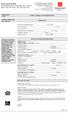 Swiss American Hotel 534 Broadway Street, San Francisco, CA 94133 Phone (415) 397-4338 Fax (415) 397-4334 An Affordable Housing Community Professionally Managed by Chinatown Community Development Center
Frequently Asked Questions (FAQS) Sober Houses/Recovery Residences
 I. What is a Sober House? Frequently Asked Questions (FAQS) Sober Houses/Recovery Residences A Sober House is a group home for persons in recovery from drug/alcohol abuse. It is intended to be the last
Questions and Answers from Webinar: Know Your Rights: Employment Discrimination Against People with Alcohol/Drug Histories
 Questions and Answers from Webinar: Know Your Rights: Employment Discrimination Against People with Alcohol/Drug Histories NOTE: We answered a substantial number of the questions received; however, we
Assistance Animals In Housing. New HUD Guidance Regarding Assistance Animals. Marley J. Eichstaedt, Executive Director Northwest Fair Housing Alliance
 Assistance Animals In Housing New HUD Guidance Regarding Assistance Animals Marley J. Eichstaedt, Executive Director Northwest Fair Housing Alliance Recently, the U.S. Department of Housing & Urban Development
IC 22-9-5 Chapter 5. Employment Discrimination Against Disabled Persons
 IC 22-9-5 Chapter 5. Employment Discrimination Against Disabled Persons IC 22-9-5-1 "Auxiliary aids and services" defined Sec. 1. As used in this chapter, "auxiliary aids and services" includes the following:
AFFORDABLE HOUSING APPLICATION
 AFFORDABLE HOUSING APPLICATION PLEASE FILL OUT THIS APPLICATION COMPLETELY. ALL BLANKS MUST BE FILLED IN BEFORE THE APPLICATION W I L L B E C O N S I D E R E D C O M P L E T E A N D C A N B E PROCESSED
SHORT SALES Frequently Asked Questions
 SHORT SALES Frequently Asked Questions This factsheet is provided for information purposes only. It is not a substitute for advice from legal, accounting, housing, or real estate professionals. Please
The ADA: Your Employment Rights as an Individual With a Disability
 The U.S. Equal Employment Opportunity Commission The ADA: Your Employment Rights as an Individual With a Disability The Americans with Disabilities Act of 1990 (ADA) makes it unlawful to discriminate in
Legal Aid of North Carolina
 LANDLORD/TENANT LAW Landlord-Tenant Laws Table of Contents Legal Aid of North Carolina Greensboro Office 122 North Elm Street Suite 700 Greensboro, NC 27401 Legal Aid of North Carolina Greensboro Office
An Overview of the Laws. Regarding Service/Support Animals for the Property Owner
 An Overview of the Laws Regarding Service/Support Animals for the Property Owner In 2010, coinciding with the 20 th Anniversary of the Americans with Disabilities Act (the ADA ), the U.S. Census Bureau
FAIR HOUSING WHO IS PROTECTED? FAIR HOUSING ACT. Discrimination based on the following factors is prohibited:
 FAIR HOUSING Brought to you by the Virginia Office for Protection and Advocacy (VOPA) With funding from the U.S. Department of Housing and Urban Development (HUD) www.hud.gov Grant #: FH400G05008 FAIR
NEW YORK STATE BAR ASSOCIATION. Rights of Residential Owners and Tenants
 NEW YORK STATE BAR ASSOCIATION Rights of Residential Owners and Tenants Caution: The information in this pamphlet is intended as a general guide for informational purposes only, not as legal advice. Special,
HUD HANDBOOK 4350.3: OCCUPANCY REQUIREMENTS OF SUBSIDIZED MULTIFAMILY HOUSING PROGRAMS SUMMARY FOR PROPERTY OWNER
 HUD HANDBOOK 4350.3: OCCUPANCY REQUIREMENTS OF SUBSIDIZED MULTIFAMILY HOUSING PROGRAMS SUMMARY FOR PROPERTY OWNER TABLE OF CONTENTS Purpose of the Handbook and This Summary... 1 I. Introduction... 1 II.
HOARDING: KNOW YOUR RIGHTS. Legal help is available for people who struggle with hoarding, clutter, and home maintenance problems.
 HOARDING: KNOW YOUR RIGHTS Legal help is available for people who struggle with hoarding, clutter, and home maintenance problems. Effective February 2013 2 Table of Contents I. Hoarding A. What is hoarding?......................................
A Message To Our Applicants
 A Message To Our Applicants Rental Application: Complete and sign the attached Rental application. The application must be complete or will automatically be rejected. This must be accompanied by your application
ARTICLE V. DISCRIMINATION AGAINST AN INDIVIDUAL WITH A DISABILITY
 ARTICLE V. DISCRIMINATION AGAINST AN INDIVIDUAL WITH A DISABILITY Sec. 24-90. Policy. (a) It is the policy of the city that no individual with a disability shall, on the basis of a disability, be excluded
Judge David L. BAZELON CENTER. for Mental Health Law WHAT FAIR HOUSING MEANS FOR PEOPLE WITH DISABILITIES
 Judge David L. BAZELON CENTER for Mental Health Law WHAT FAIR HOUSING MEANS FOR PEOPLE WITH DISABILITIES UPDATED APRIL 2011 Copyright 1999, 2003, 2011 Judge David L. Bazelon Center for Mental Health Law,
This application meets the screening requirements for the following areas:
 INSTRUCTIONS FOR COMPLETING SCREENING APPLICATION This application meets the screening requirements for the following areas: Brookfield HOA - Morrison Creek Estates HOA - Phoenix Park Apartments - Wildwood
Exclusive Listing Agreement beginning, and ending between: SELLER: and BROKER (AGENCY): Phone Agency Address:
 This form has been certified by the Attorney General to be in compliance with the Plain Language Law. Approval of a consumer contract by the Attorney General only means that simple, understandable and
CHAPTER 4. WAITING LIST AND TENANT SELECTION
 4350.3 REV-1 CHAPTER 4. WAITING LIST AND TENANT SELECTION 4-1 Introduction A. This chapter describes requirements and makes suggestions regarding activities that occur during the marketing, application,
KNOW YOUR RIGHTS Training on the Legal Rights and Responsibilities of People with Alcohol and Drug Problems
 I. The Basics KNOW YOUR RIGHTS Training on the Legal Rights and Responsibilities of People with Alcohol and Drug Problems California Laws Regarding Discrimination (December 2006) Q1. Does California have
Landlord s Legal Guide to Renting in Illinois
 Landlord s Legal Guide to Renting in Illinois TRISTAN & CERVANTES 30 W. MONROE STREET, SUITE 630 CHICAGO, IL 60603 312-345- 9200 www.tristancervantes.com Welcome to Tristan & Cervantes Tristan & Cervantes
HOUSING: REASONABLE ACCOMMODATION WHEN RENTING SCENARIO:
 HOUSING: REASONABLE ACCOMMODATION WHEN RENTING SCENARIO: Jane Smith lives on the third floor of Riverwalk Apartments. This is an apartment building with 20 units that is financed by state funding, but
LEGAL RIGHTS OF STUDENTS WITH DISABILITIES UNDER FEDERAL LAW A GUIDE FOR COLLEGE AND UNIVERSITY STUDENTS
 LEGAL RIGHTS OF STUDENTS WITH DISABILITIES UNDER FEDERAL LAW A GUIDE FOR COLLEGE AND UNIVERSITY STUDENTS Protection & Advocacy, Inc. 1-800-776-5746 www.pai-ca.org Publication #5309.01 October 2002 Table
Obtaining and Maintaining Housing: Fair Housing for People with Mental Health Disabilities. Obtaining & Maintaining Housing:
 Obtaining and Maintaining Housing: Fair Housing for People with Mental Health Disabilities Obtaining & Maintaining Housing: Fair Housing for People with Mental Health Disabilities This brochure is meant
504/ADA SELF-EVALUATION AND ASSURANCE OF COMPLIANCE. 504/ADA General Information. Instructions
 504/ADA SELF-EVALUATION AND ASSURANCE OF COMPLIANCE 504/ADA General Information Federal and State laws prohibit discrimination based on disability. Section 504 of the Rehabilitation Act of 1973, as amended
Southern Arizona Legal Aid, Inc. Consumer Information February 2014
 Southern Arizona Legal Aid, Inc. Consumer Information February 2014 1 Landlord & Tenant Issues Which Law Applies?» Arizona Residential Landlord Tenant Act Applies to rental units» Arizona Mobile Home Parks
1. How many children do you have? This question is inappropriate for two reasons.
 Interview Questions: Legal or Illegal? Can you ask if an employee has been arrested? If they have a high school diploma? What organizations they belong to? Employment application forms and pre-employment
REASONABLE ACCOMMODATIONS FOR PEOPLE WITH DISABILITIES
 SAMPLE POLICY: REASONABLE ACCOMMODATIONS FOR PEOPLE WITH DISABILITIES Prepared by: FAIR HOUSING AGENCIES OF WASHINGTON STATE Sample Reasonable Accommodations Policy This is a sample policy you can use,
HOUSING AUTHORITY OF THE CITY OF SAN BUENAVENTURA
 HOUSING AUTHORITY OF THE CITY OF SAN BUENAVENTURA PUBLIC HOUSING PROGRAM 2013 Proposed changes to the Admissions and Continued Occupancy Policy *New policy and clarifications are highlighted in yellow
THE STANDARD RESIDENT SELECTION PLAN - FAMILY
 THE STANDARD RESIDENT SELECTION PLAN - FAMILY This property is an apartment community for families. This property subscribes to the following procedures for qualifying applicants for occupancy in this
4. AN ORIGINAL OF YOUR I.D., SOCIAL SECURITY CARD, AND BIRTH CERTIFICATE WILL BE REQUIRED WHEN SUBMITTING THIS APPLICATION!!
 UNITED MANAGEMENT II Dear Prospective Applicant: The following items listed below are the required documentation that must be verified before your application can be accepted for processing: 1. Fully completed
FLOATING HOME RESIDENCY LAW. (As of 1/1/91)
 FLOATING HOME RESIDENCY LAW (As of 1/1/91) This booklet provides a summary and the actual wording of the Floating Homes Residency Law of California, as of January 1, 1991. The summary (in large type) is
What you need to know about. Massachusetts Transgender Rights Law
 What you need to know about Massachusetts Transgender Rights Law October 2013 On November 23, 2011, Governor Deval Patrick signed into law H3810, An Act Relative to Gender Identity. This law adds gender
Terraces at Lawson Creek Resident Selection Criteria
 Property Name: Terraces at Lawson Creek Resident Screening and Selection Process Terraces at Lawson Creek Thank you for applying to live within our community. Quantum Management Services, Inc. is an Equal
HOME RENTAL REHABILITATION PROGRAM
 HOME RENTAL REHABILITATION PROGRAM The Rental Rehabilitation Program The City of Amsterdam is operating a housing rehabilitation program for rental properties located anywhere within the City limits. Program
Do You Have A Criminal Conviction History? A GUIDE TO YOUR EMPLOYMENT RIGHTS IN NEW YORK
 Do You Have A Criminal Conviction History? A GUIDE TO YOUR EMPLOYMENT RIGHTS IN NEW YORK Introduction Searching for the right job can be difficult. It can be harder if you have a criminal conviction history,
Housing Search Guide for People with Disabilities in Massachusetts
 Housing Search Guide for People with Disabilities in Massachusetts HOW THIS BOOK CAN HELP YOU This book provides information about searching for rental housing in Massachusetts for people who have one
CLIENT INFORMATION YOUR Full Name: Date of Birth: / / SSN: - - HIS/HER Full Name: Date of Birth: / / SSN: - -
 Please answer the questions below as accurately as possible. This information will help us to better meet your needs. Date Time CLIENT INFORMATION YOUR Full Name: Date of Birth: / / SSN: - - Is anyone
WHAT LANDLORDS NEED TO KNOW ABOUT THE LEGALIZATION OF MARIJUANA (AMENDMENT 64)
 WHAT LANDLORDS NEED TO KNOW ABOUT THE LEGALIZATION OF MARIJUANA (AMENDMENT 64) The election results are final. Colorado along with Washington State became the first two states to legalize the recreational
INFORMATION FOR LANDLORDS
 NEW JERSEY JUDICIARY INFORMATION FOR LANDLORDS Superior Court of New Jersey Law Division Special Civil Part Landlord/Tenant Section Information for Landlords page 1 Most disputes between landlords and
B. SECURITY DEPOSITS
 MDOC Policies For Owners. 24 CFR 882 Moderate Rehabilitation (Mod Rehab) & 24 CFR 982 Housing Choice Voucher Program Similar Terms (synonyms) in this document: Tenant, Family, Lessee and Participant have
The Americans with Disabilities Act, the Fair Housing Act, and the Rehabilitation Act of 1973, as amended, ALL apply to domestic violence shelters.
 The Americans with Disabilities Act, the Fair Housing Act, and the Rehabilitation Act of 1973, as amended, ALL apply to domestic violence shelters. The Fair Housing Act (FHA) does not use the term service
TERMINATION OF A TENANCY
 TERMINATION OF A TENANCY STATUTORY REFERENCES Residential Tenancies Act (RTA) sections: 1(1)(e) fixed term tenancy definition 1(1)(f) landlord definition 1(1)(h) overholding tenant definition 1(1)(i) periodic
OVERVIEW OF OHIO LANDLORD-TENANT LAW RIGHTS AND DUTIES OF LANDLORDS AND TENANTS
 OVERVIEW OF OHIO LANDLORD-TENANT LAW RIGHTS AND DUTIES OF LANDLORDS AND TENANTS 50 South Court St. Suite D Athens, OH 45701 Phone: (740) 594-8093 www.studentlegalrights.org WHO WE ARE The Center for Student
Chapter 32. The Americans with Disabilities Act and the Fair Housing Act
 32-100 Introduction Chapter 32 The Americans with Disabilities Act and the Fair Housing Act Title II of the Americans with Disabilities Act ( ADA ) provides: [N]o qualified individual with a disability
IHCDA Tenants Guide to Section 42
 INTRODUCTION This document is a reference guide for tenants living in rental housing under the Section 42 low-income housing tax credit program. It is designed to provide a basic program overview and to
Frequently Asked Questions (FAQ) Fair Housing Guidelines
 Frequently Asked Questions (FAQ) Fair Housing Guidelines TENANT - FREQUENTLY ASKED QUESTIONS Application to Rent Application Fee Verbal Agreements Deposits Breaking a Lease Rent Rates/ Rent Increases Landlord
LOW INCOME PUBLIC HOUSING COMMUNITY SELECTION FORM. Applicant s Full Name. Applicant s Social Security Number - - Applicant s Current Address
 LOW INCOME PUBLIC HOUSING COMMUNITY SELECTION FORM Applicant s Full Name Applicant s Social Security Number - - Applicant s Current Address City State Zip Code Please check up to three (3) box(s) for the
RELOCATION ASSISTANCE
 RELOCATION ASSISTANCE All tenant not-at-fault evictions require payment of relocation assistance and the filing of a Landlord Declaration of Intent to Evict form with the Los Angeles Housing and Community
Landlord-Tenant Law FOR RENT
 Landlord-Tenant Law FOR RENT The Landlord-Tenant Act In 1974, the Nebraska Legislature passed the Uniform Residential Landlord and Tenant Act. This law governs oral and written agreements for residential
Madsen Properties, Inc.
 Madsen Properties, Inc. 27128 State Highway 78, Suite 1 Battle Lake, MN 56515 218-864-5400 1-800-728-5401 Dear Applicant, Thank you for your interest in our affordable apartments. The application you downloaded
*125* Last First MI Maiden. Street Address or P.O. Box City State Zip Code. Home Work Message. Disabled or Handicapped. Full Time
 SEATTLE HOUSING AUTHORITY MOD REHAB SRO HOUSING APPLICATION *125* Head of Household Social Security Number Building Name: - - Approval for housing is subject to meeting all eligibility and suitability
II. SUMMARY OF ALLEGATIONS IN SUPPORT OF THIS CHARGE
 UNITED STATES OF AMERICA DEPARTMENT OF HOUSING AND URBAN DEVELOPMENT OFFICE OF ADMINISTRATIVE LAW JUDGES The Secretary, United States Department of Housing and Urban Development, on behalf of Stacy Myers,
Public and Indian Housing
 U.S. Department of Housing and Urban Development Office of Public and Indian Housing Public and Indian Housing Special Attention of: Notice PIH 2015-19 Public Housing Agency Directors Public Housing Hub
New York State Housing Issues Legal Resource Guide
 This material is provided to answer general questions about the law in New York State. The information and forms were created to assist readers with general issues and not specific situations, and, as
FAIR HOUSING REGULATIONS
 COMMONWEALTH OF VIRGINIA REAL ESTATE BOARD FAIR HOUSING REGULATIONS Last Updated March 1, 2014 STATUTES Title 36, Chapter 5.1 9960 Mayland Drive, Suite 400 Richmond, VA 23233 (804) 367-8500 www.dpor.virginia.gov
AFFORDABLE HOUSING APPLICATION
 For Office-Use-Check all that apply TAX CREDIT *BOND *HUD *OTHER *Requires Addendum Property: Marketing Source: Apartment # Unit Type: Move-in Date App Fee Lease Term Rental Rate Security Deposit Telephone#
When The Law Says It s Okay To Bend The Rules Reasonable Accommodations
 This pamphlet is published by the Self-Determination Housing Project of Pennsylvania and is made possible through support from the Fair Housing Council of Suburban Philadelphia, the Pennsylvania Department
Disclosure Requirements Concerning Lead-Based Paint in Housing: Questions and Answers
 Disclosure Requirements Concerning Lead-Based Paint in Housing: Questions and Answers By Legislative Affairs Updated June, 2003 Institute of Real Estate Management 430 N. Michigan Avenue Chicago, IL 60611
FIRST EDITION. Fair Housing Handbook: Reasonable Accommodations & Modifications
 FIRST EDITION Fair Housing Handbook: Reasonable Accommodations & Modifications FIRST EDITION Fair Housing Handbook: Reasonable Accommodations & Modifications 2008 Disability Rights Oregon 610 SW Broadway,
RENTAL APPLICATION RENTING POLICIES & PROCEDURES
 716 S 20 th, Ste 102 Bozeman, MT 59718 (406) 585-7776 Fax (406) 587-3417 www.rentbozeman.com RENTAL APPLICATION APPLICANT NAME: PROPERTY APPLYING FOR: RENTING POLICIES & PROCEDURES Thank you for choosing
What Tenants Need To Know About The Law
 What Tenants Need To Know About The Law Does This Article Apply To You? This article is about tenants rights under the Residential Tenancies Act (RTA). The RTA applies to most rental housing in Nova Scotia
Accessing Affordable Housing: The Rights of Previously Incarcerated Individuals
 Accessing Affordable Housing: The Rights of Previously Incarcerated Individuals 1 NATIONAL HOUSING LAW PROJECT JANUARY 29, 2009 www.nhlp.org GoToWebinar Interface 2 1. Viewer Window 2. Control Panel Outline
IN ADDICTION RECOVERY: KNOW YOUR RIGHTS
 IN ADDICTION RECOVERY: KNOW YOUR RIGHTS GAIN FAIR ACCESS TO JOBS, HOUSING AND HEALTH CARE SERVICES Promoting Addiction Treatment, Prevention, and Recovery through Advocacy and Education ;Public Policy
HOUSING CHOICE VOUCHER PROGRAM CLIENT S GUIDE FOR A SUCCESSFUL MOVE
 HOUSING CHOICE VOUCHER PROGRAM CLIENT S GUIDE FOR A SUCCESSFUL MOVE Step 1: Find an Acceptable Unit Now that you have been issued a Section 8 voucher, you have the opportunity to locate a safe, decent
HOME Tenant Based Rental Assistance
 TBRA HOUSING ASSISTANCE PAYMENT CONTRACT (TBRA HAP) LANDLORD NAME, ADDRESS AND TELEPHONE NUMBER UNIT NUMBER AND ADDRESS TENANT NAME This TBRA HAP ( Contract ) is entered into between Georgia Department
Familial Status Discrimination in the University Neighborhood
 Familial Status Discrimination in the University Neighborhood A Report by CNY Fair Housing. October 2013 Funding for this study was provided by the City of Syracuse Community Development Block Grant Program
Logan City. Analysis of Impediments to Fair Housing
 Logan City Analysis of Impediments to Fair Housing 2009-13 Consolidated Plan Page 36 of 92 EXECUTIVE SUMMARY Analysis of Impediments The Analysis of Impediments (AI) is a comprehensive review of a jurisdiction
PROPERTY MANAGEMENT Credit & Rental Application 937 N Magnolia Ave., Orlando, FL 32803 Phone 407-841-0888 Fax 407-841-0098
 PROPERTY MANAGEMENT Credit & Rental Application 937 N Magnolia Ave., Orlando, FL 32803 Phone 407-841-0888 Fax 407-841-0098 Non-refundable credit application fee $ (CERTIFIED FUNDS ONLY; $50 per adult over