
MODERNIZATION OF SANITARY AND PHYTOSANITARY LEGISLATION
|
|
|
- Christine Marianna Walters
- 9 years ago
- Views:
Transcription
1 Ministry of Agriculture and Marine Resources MODERNIZATION OF SANITARY AND PHYTOSANITARY LEGISLATION INFORMATION DOCUMENT
2 Introduction The Ministry of Agriculture and Marine Resources received a technical assistance grant from the Food and Agriculture Organization of the United Nations (FAO) to implement a project to modernize sanitary and phytosanitary legislation in compliance with the Agreement on Sanitary and Phytosanitary Measures of the World Trade Organization (WTO). The obligations in the Agreement on Sanitary and Phytosanitary Measures are also found in the Economic Partnership Agreement and due to their relevance to trade will also feature in future trade agreements to which The Bahamas is a party. In November 2010, technical experts in the areas of animal health, plant health and food safety along with national counterparts engaged the public and private sector in consultations on the existing legal and operational framework for sanitary and phytosanitary measures. The output from those consultations was used to prepare the draft legislation. Three draft bills were prepared in the areas of food safety and quality, animal health and plant protection. The draft bills referred to as the Food Safety and Quality Bill, the Animal Health Bill and the Plant Protection Bill were reviewed during a Validation Workshop held in Nassau from May 9-13, What is the Agreement on Sanitary and Phytosanitary Measures? The Agreement on Sanitary and Phytosanitary Measures, also known as the SPS Agreement, is one of the Agreements found in Annex A of the Marrakesh Agreement which established the World Trade Organization in The Agreement establishes the rules which countries can use to balance the benefits of free or more liberalized trade with legitimate INFORMATION DOCUMENT 2
3 concerns to protect human, animal and plant health from imported pests and diseases and to ensure the safety of food. The SPS Agreement does not set international standards. International standards are set by three standard setting bodies: SPS Measure Standard Setting Body Plant health International Plant Protection Convention (IPPC) Animal health and zoonoses Office International des Epizooties now know as the World Organization for Animal Health (OIE) Food safety (including food additives veterinary drugs, pesticide residues, contaminants, methods of sampling and codes and guidelines of hygienic practice Codex Alimentarius Commmission (CAC) What are sanitary and phytosanitary measures? These are actions taken by Governments to protect animal or human life or health are referred to as sanitary measures and those to protect plant and plant life are referred to as phyotsanitary measures. INFORMATION DOCUMENT 3
4 The definition of a sanitary or phytosanitary measure is provided in Paragraph 1, Annex A of the SPS Agreement. These are measures which: (a) protect animal or plant life or health within the territory of the country from: i. risks arising from the entry, establishment and spread of pests and diseases, ii. disease carrying organisms or disease-causing organisms (b) protect human life or health from pest and diseases carried by animals or plants (c) (d) protect human or animal life or health within the territory of the country from risks in food, beverages feedstuffs arising from: a. additives b. contaminants c. toxins d. disease causing organisms prevent or limit damage due to the entry, establishment or spread of pests and diseases. INFORMATION DOCUMENT 4
5 Where are sanitary and phytosanitary measures applied by The Bahamas found? It is stated in Article 1.1 that the SPS Agreement applies to: all sanitary and phytosanitary measures which directly or indirectly affect international trade (Article 1.1) The SPS Agreement is therefore very wide ranging in scope. A review of existing Bahamian legislation indicates that sanitary and phytosanitary legislation currently exists or can be adopted under several pieces of legislation including: Animal Contagious Diseases Act Plant Protection Act Environmental Health Services Act Food Act Health Services Act Customs Management Act Plant Protection Act One of the objectives of the modernization exercise is to provide a coherent regulatory framework for all SPS measures under three principle pieces of legislation; Plant Protection, Animal Health and Food Safety. This will result in greater consistency and transparency on SPS measures. What are some of the sanitary and phytosanitary measures applied by The Bahamas? The Bahamas uses sanitary and phytosanitary measures to regulate imports and exports. An example of each type of SPS measure is indicated in the examples below: INFORMATION DOCUMENT 5
6 Example 1: Sanitary measure applied for animal health reasons Reason for SPS measure: To protect against the introduction of rabies SPS Measure: Dogs and cats imported into The Bahamas must be six months of age or older. The animal must be accompanied by a veterinary certificate which substantiates that it has been vaccinated against rabies. In the case of a one year vaccination, the vaccination must have been administered between one and ten months of the date of travel. The animal must be accompanied by a Veterinary Health Certificate and must be presented to a licensed veterinarian within 48 hours of arrival in the Commonwealth of The Bahamas. Where is the SPS measure found: Animal Contagious Diseases Act, Rabies and Hydrophobia Prevention Regulations Example 2: Phytosanitary measure applied for plant health reasons Reason for SPS measure: To protect against the introduction of plant pest or diseases SPS Measure: All imports of plant and plant parts must be accompanied by an import permit. Where is the SPS measure found: Plant Protection Act, Plants Protection Rules Example 3: Food safety measure Reason for SPS measure: To ensure the safety of seafood products SPS Measure: All seafood products are subject to sensory and scientific analysis to ensure conformity to microbiological and chemical standards. Where is the SPS measure found: Food Act, The Food (Seafood Processing and Inspection)Regulations INFORMATION DOCUMENT 6
7 Why is this process to modernize sanitary and phytosanitary measures necessary? After the WTO was formed in 1995, developing countries were given two year to bring their legislation into conformance with the SPS Agreement. A significant portion of Bahamian legislation predates the establishment of the WTO and does not incorporate the principles of the SPS Agreement. Moreover, since 1995 the international standard setting bodies (IPPC, OIE, Codex) have agreed on a number of standards which need to be incorporated into legislation. Finally, there is a need to ensure coherence on SPS matters to support the regulatory, institutional and procedural changes which need to be made. The modernization of legislation is the first step. What can be expected from the modernization exercise? The modernization exercise will set in motion changes in regulations, policies and procedures. The SPS Agreement contains several principles which will be incorporated into draft legislation. These are: Harmonization The principle of harmonization found in Article 3 will mean that future SPS measures (animal health, plant health and food safety) will be based on international standards, guidelines, and recommendations established by the IPPC, OIE and Codex. INFORMATION DOCUMENT 7
8 Equivalence The principle of equivalence found in Article 4 will require The Bahamas to accept sanitary and phytosanitary measures which exist in other countries as equivalent, if the measures provide the same level of protection. Further, countries which import from The Bahamas must be given reasonable access to Bahamian inspection, testing and other procedures when requested to determine whether measures adopted by The Bahamas are equivalent. The Bahamas may also enter into bilateral and multilateral agreements to recognize equivalent sanitary and phytosanitary measures of other countries. Non-discrimination The principle of non-discrimination is found in Article 2. It states that sanitary and phytosanitary measures should not arbitrarily or unjustifiably discriminate between countries where identical or similar conditions exist. In addition to the legislative changes, compliance with the SPS Agreement will require procedural adjustments which incorporate principles such as: Transparency An electronic enquiry point will be established to provide information on sanitary and phytosanitary measures. Except in cases of emergency, The Bahamas will be required to notify WTO Members on changes in measures as INFORMATION DOCUMENT 8
9 outlined in Article 7 and to permit a 3 month period of comment. Necessity This principle found in Article 2 requires that SPS measures should be applied only to the extent necessary to protect human, animal or plant health and should not be maintained without scientific evidence. Risk assessment Sanitary and phytosanitary measures should be based on a risk assessment that takes into account scientific evidence, ecological, environmental and environmental factors, potential damage from loss of production due to entry, establishment or spread of pest and diseases, the cost of control and alternate approaches to mitigating the risk. What will be the impact of the legislation on the private sector? The legislation will require the private and public sectors to work cooperatively in ensuring that there is an effective agricultural health and food safety system in place. Some of the specific provisions the private sector can expect are listed below: INFORMATION DOCUMENT 9
10 With respect to businesses involving plants: o There will be a registration requirement for all commercial activities. o All persons and institutions will have responsibility of reporting the occurrence of a new or regulated pest. This will mean that importers, postal services, private shipping companies, port authorities and other enforcement authorities have duty to report regulated items. o Registered establishments must allow access by Phytosanitary Officers and keep any records as prescribed. They can also be instructed by the National Plant Protection Organization to carry out phytosanitary measures within specific time period. With respect to businesses involving animals: o There will be a requirement to obtain a license to carry out commercial activities involving animals. o Owners will be responsible for the sanitary status of their establishments and must ensure that persons in charge of establishments and workers comply with provisions of Act. o The slaughter of animal for human consumption will only take place in abattoirs approved by Veterinary Service. INFORMATION DOCUMENT 10
11 o Owners or operators of international transportation facility, where required by Minister, must maintain laboratory and other facilities for administration of Act. o All importations must be accompanied by import permit and international veterinary certificate in English and can only be imported through designated ports of entry. These importations will be subject to inspection by the Veterinary Officer at the port of entry during regular business hours. o The cost of sanitary actions taken will be borne by the importer. With respect to businesses involved in food: o There will be a requirement to put in place Good Manufacturing Practices (GMP) and Hazard Analysis Critical Control Point (HACCP) measures. o Food operators will not be able to sell or distribute food that does not meet safety standards and requirements of Act. o Food establishments will be required to be licensed and food businesses should display a license and street vendors badge of registration. o Food operators should progressively implement hygiene practices and HACCP based systems. INFORMATION DOCUMENT 11
12 o All food operators should: keep records as prescribed maintain a register of employees with names, addresses and other information requested by Authority ensure food handlers in establishments are supervised and instructed or trained in food safety and good hygienic practices commensurate with work duties submit to the Authority within specified period types and quantities of food, data concerning food shipments, food not in compliance with standards in food importing country, summary of incidents or accidents which may have occurred and action taken for food not safe for export establish traceability systems along food chain and to identify person who supplied or to whom they supplied a food producing animal, food or substance intended to expected to be incorporated into food have in place a system to recall food suspected of being unfit for human consumption responsible to take action for food that is recalled to ensure that it is not exported and where it is imported to ensure that it is not released for sale. The cost of calling back the food, analyzing the food product INFORMATION DOCUMENT 12
13 or destroying the food product is borne by the food operator follow prescribed good hygienic practices ensure that packages of food bear label in English, which allow traceability as well as any other particular which may be prescribed in regulations o Street vendors must be registered. o Medical practitioners, nurses, other sanitary personnel, laboratories, food establishments and other facilities must report incidence of food-related illness to Food Authority and Chief Medical Officer. o Imported food must be accompanied by prescribed documents including accredited analytical certificate, traceability, technical regulations and labeling information as well as any other prescribed information. o Costs of inspection, transport, analysis, storage or destruction of food will be borne by the importer. What will be the impact of the legislation on the general public? The principal objective of the three pieces of legislation proposed is to safeguard human health as well as animal and plant life. In this regard, the general public can expect more robust and effective regulation through inspection, monitoring and surveillance to ensure that food, INFORMATION DOCUMENT 13
14 where it enters the food supply from animals or plants or through domestic or imported sources is wholesome and safe. The legislation will also provide a system to safeguard wild and domesticated fauna and flora from pests and diseases. How will be legislation change the role of the public sector? The proposed legislation will establish a single agency, referred to as the Bahamas Agricultural Health and Food Safety Agency (BAHFSA) which will coordinate three newly created departments, a Veterinary Authority on animal health matters, a National Plant Protection Organization on plant health issues and a Food Safety Agency on food control. These department will work with public and private stakeholders to provide an effective agricultural health and food safety system. INFORMATION DOCUMENT 14
AGREEMENT ON THE APPLICATION OF SANITARY AND PHYTOSANITARY MEASURES
 Page 69 AGREEMENT ON THE APPLICATION OF SANITARY AND PHYTOSANITARY MEASURES Members, Reaffirming that no Member should be prevented from adopting or enforcing measures necessary to protect human, animal
South Africa s Food Safety Regulatory System and Industry Standards. Dr. BOITSHOKO NTSHABELE DIRECTOR: FOOD SAFETY AND QUALITY ASSURANCE
 South Africa s Food Safety Regulatory System and Industry Standards Dr. BOITSHOKO NTSHABELE DIRECTOR: FOOD SAFETY AND QUALITY ASSURANCE SAFE FOOD FOR ALL SHARED RESPONSIBILITY FOOD LEGISLATION & LAW ENFORCEMENT
SANITARY AND PHYTOSANITARY MEASURES (SPS)
 TEXTUAL PROPOSAL SANITARY AND PHYTOSANITARY MEASURES (SPS) Article 1 Scope and coverage This Chapter applies to all SPS measures that may, directly or indirectly, affect trade between the Parties. This
ASSURING FOOD SAFETY AND QUALITY:
 FOOD AND AGRICULTURE ORGANIZATION OF THE UNITED NATIONS WORLD HEALTH ORGANIZATION ASSURING FOOD SAFETY AND QUALITY: GUIDELINES FOR STRENGTHENING NATIONAL FOOD CONTROL SYSTEMS Joint FAO/WHO Publication
GUIDELINES FOR FOOD IMPORT CONTROL SYSTEMS
 GUIDELINES FOR FOOD IMPORT CONTROL SYSTEMS SECTION 1 SCOPE CAC/GL 47-2003 1. This document provides a framework for the development and operation of an import control system to protect consumers and facilitate
COMMISSION IMPLEMENTING DECISION. of XXX. (Text with EEA relevance)
 EUROPEAN COMMISSION Brussels, XXX SANCO/12230/2014 CIS (POOL/G2/2014/12230/12230-EN CIS.doc) [ ](2014) XXX draft COMMISSION IMPLEMENTING DECISION of XXX establishing specific transitional measures for
FAO/WHO Regional Conference on Food Safety for the Americas and the Caribbean San José, Costa Rica, 6-9 December 2005
 Agenda Item 5 Conference Room Document 13 FAO/WHO Regional Conference on Food Safety for the Americas and the Caribbean San José, Costa Rica, 6-9 December 2005 THE FOOD SAFETY REGULATORY SYSTEM IN CANADA
Development of an analytical tool to assess Biosecurity legislation
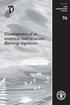 Development of an analytical tool to assess Biosecurity legislation FAO LEGISLATIVE STUDY 96 by Daniele Manzella Jessica Vapnek for the Development Law Service FAO Legal Office FOOD AND AGRICULTURE ORGANIZATION
The FAO-OIE-WHO. Collaboration. A Tripartite Concept Note
 The FAO-OIE-WHO Collaboration Sharing responsibilities and coordinating global activities to address health risks at the animal-human-ecosystems interfaces A Tripartite Concept Note April 2010 Vision A
Decree N 152 (24 January 2013) Administrative Measure on Inspection, Quarantine and Supervision of Imports and Exports of Dairy products
 Decree N 152 (24 January 2013) Administrative Measure on Inspection, Quarantine and Supervision of Imports and Exports of Dairy products Chapter 1 General Principle Article 1 In order to enhance inspection,
The Centre for Food Safety
 The Centre for Food Safety Introduction Ensuring food safety is a major policy objective of the Government of the Hong Kong Special Administrative Region. To enhance the food safety regulatory functions
TEXTUAL PROPOSAL TECHNICAL BARRIERS TO TRADE (TBT) Article 1 Objective and Scope
 TEXTUAL PROPOSAL TECHNICAL BARRIERS TO TRADE (TBT) Article 1 Objective and Scope 1. The objective of this Chapter is to promote convergence in regulatory approaches, by reducing or eliminating conflicting
AGREEMENT ON TECHNICAL BARRIERS TO TRADE. Having regard to the Uruguay Round of Multilateral Trade Negotiations;
 Page 117 AGREEMENT ON TECHNICAL BARRIERS TO TRADE Members, Having regard to the Uruguay Round of Multilateral Trade Negotiations; Desiring to further the objectives of GATT 1994; Recognizing the important
40.1 Reduce funds for operations. State General Funds ($249,348) ($249,348) ($249,348) ($249,348)
 Section 13: Agriculture, Department of Athens and Tifton Veterinary Laboratories The purpose of this appropriation is to provide payment to the Board of Regents for diagnostic laboratory testing, for veterinary
Country Specific Experience with Export Certificates
 Country Specific Experience with Export Certificates Dr. Nanthiya Unprasert Deputy Director General Dr. Narumon Wiangwang Senior Researcher National Bureau of Agricultural Commodity and Food Standards
How To Be Successful In The World Of Trade Unionism
 Performance, vision and strategy (PVS) Eric Bolaños Ledezma Ana Marisa Cordero Peña Interaction within the public sector and with the private sector Capacity to access international markets Human and financial
Food Safety and Quality Management System
 Introduction The company has planned, established, documented and implemented a food safety and quality management system for the site, which is maintained in order to continually improve its effectiveness
PRINCIPLES FOR THE RISK ANALYSIS OF FOODS DERIVED FROM MODERN BIOTECHNOLOGY
 THAI AGRICULTURAL STANDARD TAS 9010-2006 PRINCIPLES FOR THE RISK ANALYSIS OF FOODS DERIVED FROM MODERN BIOTECHNOLOGY National Bureau of Agricultural Commodity and Food Standards Ministry of Agriculture
CONCEPTS OF FOOD SAFETY QUALITY MANAGEMENT SYSTEMS. Mrs. Malini Rajendran
 CONCEPTS OF FOOD SAFETY AND QUALITY MANAGEMENT SYSTEMS Mrs. Malini Rajendran Brief background 1963 - The Codex Alimentarius Commission was created by FAO and WHO to develop food standards, guidelines and
TRANSATLANTIC TRADE AND INVESTMENT PARTNERSHIP
 DISCLAIMER: The EU reserves the right to make subsequent modifications to this text and to complement its proposals at a later stage, by modifying, supplementing or withdrawing all, or any part, at any
Performance, Vision and Strategy (PVS) for
 Performance, Vision and Strategy (PVS) for Technical Capability Human and Financial Capital Interaction with the Private Sector Safeguarding Public Health and Market Access National Food Safety Services
BIOSECURITY PROCEDURES IN POULTRY PRODUCTION
 1 Annex VII CHAPTER 6.4. BIOSECURITY PROCEDURES IN POULTRY PRODUCTION Article 6.4.1. Introduction This chapter provides recommended biosecurity procedures in poultry production and is not specifically
OIE animal welfare standards and the multilateral trade policy framework
 OIE animal welfare standards and the multilateral trade policy framework Dr Sarah Kahn OIE ([email protected]) and Dr Mariela Varas ([email protected]) OIE International Trade Department. 12 rue de Prony 75017
PHYTOSANITARY CERTIFICATION SYSTEM
 Phytosanitary certification system ISPM 7 ISPM 7 INTERNATIONAL STANDARDS FOR PHYTOSANITARY MEASURES ISPM 7 PHYTOSANITARY CERTIFICATION SYSTEM (2011) Produced by the Secretariat of the International Plant
PROCEDURAL STEP-BY-STEP MANUAL
 PROCEDURAL STEP-BY-STEP MANUAL FOR SPS NATIONAL NOTIFICATION AUTHORITIES & SPS NATIONAL ENQUIRY POINTS Acknowledgements Written by Sally Jennings Ministry of Agriculture and Forestry (MAF) Biosecurity
How To Control A Dog
 TITLE 8: AGRICULTURE AND ANIMALS CHAPTER I: DEPARTMENT OF AGRICULTURE : ANIMALS AND ANIMAL PRODUCTS (EXCEPT MEAT AND POULTRY INSPECTION ACT REGULATIONS) PART 30 ANIMAL CONTROL ACT Section 30.10 Definitions
CHAPTER 7 TECHNICAL BARRIERS TO TRADE. Article 7.1. Definitions. Article 7.2. Objectives
 CHAPTER 7 TECHNICAL BARRIERS TO TRADE Article 7.1 Definitions 1. For the purposes of this Chapter, TBT Agreement means the Agreement on Technical Barriers to Trade, which is part of the WTO Agreement.
Part 1 Biosecurity principles and components
 Part 1 Biosecurity principles and components 3 Introduction 3 What is biosecurity? 3 The context of modern biosecurity 4 Who is involved? 6 Rationale for a harmonized and integrated approach to biosecurity
DGAL - French Directorate General for Food
 Food safety inspections DGAL - French Directorate General for Food 2 Contents The food safety system................................................. 4 Official health inspections...............................................
PHYTOSANITARY CERTIFICATION SYSTEM
 ISPM 7 INTERNATIONAL STANDARDS FOR PHYTOSANITARY MEASURES ISPM 7 PHYTOSANITARY CERTIFICATION SYSTEM (2011) Produced by the Secretariat of the International Plant Protection Convention FAO 2011 ISPM 7 Phytosanitary
Animal health requirements for the exported pig meat, etc. to Japan from Spain are as follows.
 Animal health requirements for meat and viscera derived from pigs and sausages, ham and bacon made from the said meat and viscera as raw materials to be exported to Japan from Spain Animal health requirements
EU Food Safety Standards and Turkey
 EU Food Safety Standards and Turkey Workshop on the EU, Turkey and the WTO T.C Yeditepe University, Istanbul 27-28 February 2009 Denise Prévost Institute for Globalisation and International Regulation
EVALUATION OF VETERINARY SERVICES
 1 TERRESTRIAL ANIMAL HEALTH STANDARDS COMMISSION SEPTEMBER 2010 REPORT CHAPTER 3.2. EVALUATION OF VETERINARY SERVICES General considerations Article 3.2.1. 1. Evaluation of Veterinary Services is an important
RISK MANAGEMENT FOOD SAFETY
 FAO FOOD AND NUTRITION PAPER NUMBER 65 RISK MANAGEMENT AND FOOD SAFETY Report of a Joint FAO/WHO Consultation Rome, Italy, 27 to 31 January 1997 ISSUED BY THE FOOD AND AGRICULTURE ORGANIZATION OF THE UNITED
US Food Safety Modernization Act:
 US Food Safety Modernization Act: Overview and Impact for Importers and Exporters August 2012 This paper covers important updates related to the US Food Safety Modernization Act (FSMA) and recent changes
Standard 3.1.1. Interpretation and Application
 Standard 3.1.1 Interpretation and Application AUSTRALIA NEW ZEALAND FOOD STANDARDS CODE CHAPTER 3 (AUSTRALIA ONLY) A GUIDE TO THE FOOD SAFETY STANDARDS SECOND EDITION, JANUARY 2001 AUSTRALIA NEW ZEALAND
Commonwealth of Australia 2003
 Import Risk Analysis Handbook Canberra, 2003 Commonwealth of Australia 2003 This work is copyright. You may download, display, print and reproduce this material in unaltered form only (retaining this notice)
This document is meant purely as a documentation tool and the institutions do not assume any liability for its contents
 2002R0178 EN 30.06.2014 005.001 1 This document is meant purely as a documentation tool and the institutions do not assume any liability for its contents B REGULATION (EC) No 178/2002 OF THE EUROPEAN PARLIAMENT
Your Global Inspection Solution
 Your Global Inspection Solution Seafood Inspection Services of the U.S. Department of Commerce NOAA Fisheries Inspection, Grading and Certification Services Third Party Verification Audits Training and
STDF PROJECT PREPARATION GRANT (PPG) APPLICATION FORM
 STDF PROJECT PREPARATION GRANT (PPG) APPLICATION FORM The Standards and Trade Development Facility (STDF) provides Project Preparation Grants (PPGs), up to a maximum of US$50,000, for the following purposes
Example of a food company quality
 Appendix A manual Example of a food company quality Contents Date: 13/03/95 RME-QLMN-OO Page 1 of 3 Section Title ISO 9001 reference 01 In trod uction 02 Purpose 03 Scope 04 Definitions 05 Management responsibility
OIE recommendations on the Competencies of graduating veterinarians ( Day 1 graduates ) to assure National Veterinary Services of quality.
 Organisation Mondiale de la Santé Animale World Organisation for Animal Health Organización Mundial de Sanidad Animal May 2012 OIE recommendations on the Competencies of graduating veterinarians ( Day
GHPGMP HACP. Are You Confused? Aditya Birla Retail Limited
 GHPGMP HACP Are You Confused? Ms Shashi Sareen, Head, Quality Aditya Birla Retail Limited COVERAGE What do we understand by GHP/ GMP & HACCP Where do the confusions arise? Implementation of GMP & HACCP
Risk Assessment for Food Safety in Hong Kong
 TECHNICAL TRAINING ON RISK ANALYSIS FOR Delhi, SAARC India, COUNTRIES June 17-21, 2013 FAO RAP, Bangkok, Thailand Quality Council of India Risk Assessment for Food Safety in Hong Kong Dr CHOW chor-yiu
Food Safety Risk Analysis
 Food Safety Risk Analysis PART I An Overview and Framework Manual Provisional Edition FAO Rome, June 2005 The views expressed in this publication are those of the author(s) and do not necessarily reflect
EU Sanitary and Phytosanitary Standards. Ella STRICKLAND DG Health and Consumers, EU Commission Kampala, Uganda, 30 November 2010
 EU Sanitary and Phytosanitary Standards Ella STRICKLAND DG Health and Consumers, EU Commission Kampala, Uganda, 30 November 2010 Scope of the presentation The Single Market The Multilateral Framework SPS
EUROPEAN COMMISSION GUIDANCE DOCUMENT. Key questions related to import requirements and the new rules on food hygiene and official food controls
 EUROPEAN COMMISSION GUIDANCE DOCUMENT Key questions related to import requirements and the new rules on food hygiene and official food controls EUROPEAN COMMISSION Brussels, XXX SANCO/1446/2005 Rev.2014
PUBLIC HEALTH QUARANTINE INSPECTION SERIES, GS-1864
 TS-57 July 1965 General Schedule Position Classification Standards POSITION CLASSIFICATION STANDARD FOR PUBLIC HEALTH QUARANTINE INSPECTION SERIES, GS-1864 Theodore Roosevelt Building 1900 E Street, NW
Ninth Meeting of the Inter-American Committee on Ports (CIP) Organization of American States (OAS) Washington DC, United States 18-20 June 2014
 International Health Regulations (IHR) WHO/PAHO/CHA/IR Ninth Meeting of the Inter-American Committee on Ports (CIP) Organization of American States (OAS) Washington DC, United States 18-20 June 2014 International
The Transatlantic Trade and Investment Partnership (TTIP) State of Play
 The Transatlantic Trade and Investment Partnership (TTIP) State of Play 27 April 2016 27 April 2016 Background / context for the negotiations The European Union and the United States have the most integrated
Strengthening national food control systems A quick guide to assess capacity building needs
 Strengthening national food control systems A quick guide to assess capacity building needs Strengthening national food control systems A quick guide to assess capacity building needs FOOD AND AGRICULTURE
SQF Program Vocabulary
 SQF Program Vocabulary 2nd Edition AMENDED JUNE 2009 Safe Quality Food Institute 2345 Crystal Drive, Suite 800 Arlington, VA 22202 USA 202-220-0635 www.sqfi.com SQF Institute is a division of the Food
INTERNATIONAL STANDARDS FOR PHYTOSANITARY MEASURES. 1 to 24. (2005 edition)
 INTERNATIONAL STANDARDS FOR PHYTOSANITARY MEASURES 1 to 24 (2005 edition) INTERNATIONAL STANDARDS FOR PHYTOSANITARY MEASURES 1 to 24 (2005 edition) Produced by the Secretariat of the International Plant
Pest Control Products Act
 Pest Control Products Act CHAPTER P-9 An Act to regulate products used for the control of pests and the organic functions of plants and animals 1 Short title SHORT TITLE 1. This Act may be cited as the
Comments from the National Association of State Public Health Veterinarians (NASPHV) on Proposed Revision of HHS/CDC Animal-Importation Regulations
 November 30, 2007 Comments from the National Association of State Public Health Veterinarians (NASPHV) on Proposed Revision of HHS/CDC Animal-Importation Regulations Response to Section 2, Other Animal
10 GUIDANCE NOTE. Product Recall and Traceability (Revision 3) Guidance Note No. 10: Product Recall and Traceability (Revision 3)
 10 GUIDANCE NOTE Product Recall and Traceability (Revision 3) Guidance Note No. 10: Product Recall and Traceability (Revision 3) B Guidance Note No. 10 Product Recall and Traceability (Revision 3) Published
THE ROLE OF VETERINARY STATUTORY BODIES AND ASSOCIATIONS IN THE PROMOTION OF THE VETERINARY PROFESSION AND UPGRADING OF VETERINARY SERVICES
 THE ROLE OF VETERINARY STATUTORY BODIES AND ASSOCIATIONS IN THE PROMOTION OF THE VETERINARY PROFESSION AND UPGRADING OF VETERINARY SERVICES P. Economides Veterinary consultant 1 Original: English Summary:
Homeland Security Presidential Directive/HSPD-9 Subject: Defense of United States Agriculture and Food January 30, 2004
 For Immediate Release Office of the Press Secretary February 3, 2004 Homeland Security Presidential Directive/HSPD-9 Subject: Defense of United States Agriculture and Food January 30, 2004 Purpose (1)
UNIDO S TRADE CAPACITY-BUILDING PROGRAMME UNITED NATIONS INDUSTRIAL DEVELOPMENT ORGANIZATION
 UNIDO S TRADE CAPACITY-BUILDING PROGRAMME UNITED NATIONS INDUSTRIAL DEVELOPMENT ORGANIZATION UNIDO, a strategic partner for trade capacity-building UNIDO responded to the Doha Development Agenda by realigning
Codex & Food Safety Risk Management Metrics
 Codex & Food Safety Risk Management Metrics IOM Food Forum Meeting Washington, DC, 5.6.2012 Senior veterinary officer Sebastian Hielm Food Safety Unit Ministry of Agriculture and Forestry (Finland) 1 Part
Performance, Vision and Strategy (PVS) for
 Performance, Vision and Strategy (PVS) for Ricardo Molins Ana Marisa Cordero Lourdes Fonalleras Technical capability Human and financial capital Interaction with the private sector Market access National
DEVISING IMPORT HEALTH MEASURES FOR ANIMAL COMMODITIES
 DEVISING IMPORT HEALTH MEASURES FOR ANIMAL COMMODITIES This paper provides guidance to OIE Members on the use of the animal health information in the OIE World Animal Health Information Database (WAHID)
No. 6 GRAIN CERTIFICATION
 No. 6 GRAIN CERTIFICATION Version 1 This edition published May 2015 Australian Grain Industry Code of Practice http://www.graintrade.org.au/node/670 Technical Guideline Document No. 6 Grain Certification
Requirements for Operators of Abattoirs, Rendering Plants and Dead Stock Collection Centres
 Canadian Food Inspection Agency Agence canadienne d inspection des aliments Requirements for Operators of Abattoirs, Rendering Plants and Dead Stock Collection Centres Livestock Identification and Traceability
Horse Meat Production in Canada
 Horse Meat Production in Canada How can Canadian consumers be sure that the meat they are buying is exactly what is stated on the package (i.e. if it is labelled beef, then it only contains beef, not horse
FOOD SAFETY MANAGEMENT SYSTEMS (FSMS): REQUIREMENTS FOR ANY ORGANISATION IN THE FOOD CHAIN (ISO 22000:2005)
 FOOD SAFETY MANAGEMENT SYSTEMS (FSMS): REQUIREMENTS FOR ANY ORGANISATION IN THE FOOD CHAIN (ISO 22000:2005) Dr.R.MANAVALAN, M.Pharm., Ph.D. Professor and Research Director, Department of Pharmaceutics,
A European perspective on creating standards and assuring compliance
 A European perspective on creating standards and assuring compliance Laurence Bonafos European Commission Directorate-General for Health and Consumers Animal Welfare Unit http://ec.europa.eu/food/animal/index_en.htm
http:www.aphis.gov/animal_health/vet_accreditation/training_modules.shtml
 APHIS Approved Supplemental Training for Accredited Veterinarians has now been approved for Continuing Education Credit by the Texas Board of Veterinary Medical Examiners In the new accreditation process,
Provisional translation by Ministry of European Integrations THE FOOD ACT I. GENERAL PROVISIONS. Article 1
 Provisional translation by Ministry of European Integrations THE FOOD ACT This Act shall regulate: I. GENERAL PROVISIONS Article 1 - general principles and requirements relating to the hygiene and safety
Global Food Safety Systems Food-Borne Pathogen Control
 Global Food Safety Systems Food-Borne Pathogen Control Improving Food Safety Through One Health IOM Forum on Microbial Threats December 14, 2011 Michael C. Robach Vice President, Corporate Food Safety
FSSC 22000. - Food Safety System Certification Scheme - ISO-22000 and PAS 220. CIES Food Safety Conference Barcelona, February 2009
 FSSC 22000 - Food Safety System Certification Scheme - ISO-22000 and PAS 220 CIES Food Safety Conference Barcelona, February 2009 Cor Groenveld Chairman of the Board Foundation for Certification of Food
Regulatory Risk Analysis in the European Union, United States, and Canada
 Regulatory Risk Analysis in the European Union, United States, and Canada A Joint Presentation by: Takis Daskaleros, European Commission Nancy Beck, United States, Office of the Management of the Budget
GUIDE TO IMPLEMENTING A REGULATORY FOOD SAFETY AUDITOR SYSTEM
 GUIDE TO IMPLEMENTING A REGULATORY FOOD SAFETY AUDITOR SYSTEM FEBRUARY 2016 2 Contents Introduction... 4 Scope and objectives... 5 Scope... 5 Objectives... 5 Responsibilities... 5 The role of the licensee
Schweppes Australia Head Office Level 5, 111 Cecil Street South Melbourne Victoria 3205. www.schweppesaustralia.com.au
 Schweppes Australia Head Office Level 5, 111 Cecil Street South Melbourne Victoria 3205 www.schweppesaustralia.com.au Quality Management Systems 1. Quality Management Systems develop, implement, verify
RULES PERTAINING TO RABIES CONTROL
 RULES PERTAINING TO RABIES CONTROL Arkansas State Board of Health Effective January 1, 2010 RULES AND REGULATIONS PERTAINING TO RABIES CONTROL Table of Contents AUTHORITY... 1 SECTION I. DEFINITIONS...
Reproduced by Sabinet Online in terms of Government Printer s Copyright Authority No. 10505 dated 02 February 1998 GOVERNMENT NOTICE
 STAATSKOERANT, 15 MEl 2012 No.35354 3 GOVERNMENT NOTICE DEPARTMENT OF HEALTH DEPARTEMENT VAN GESONDHEID No. R. 391 15 May 2012 HEALTH PROFESSIONS ACT, 1974 (ACT NO.56 OF 1974) REGULATIONS DEFINING THE
United Nations Guidelines for. Consumer Protection
 Department of Economic and Social Affairs United Nations Guidelines for Consumer Protection (as expanded in 1999) UNITED NATIONS New York, 2003 United Nations guidelines for consumer protection (as expanded
How To Set Up A National Biological Laboratory Safety And Security Monitoring Program
 Biosecurity and Bioterrorism: Biodefense Strategy, Practice, and Science Volume 10, Number 4, 2012 ª Mary Ann Liebert, Inc. DOI: 10.1089/bsp.2012.0054 Establishing a National Biological Laboratory Safety
EXPORT CERTIFICATION SYSTEM FOR ANIMAL & ANIMAL PRODUCTS THE MALAYSIAN PERSPECTIVE
 EXPORT CERTIFICATION SYSTEM FOR ANIMAL & ANIMAL PRODUCTS THE MALAYSIAN PERSPECTIVE Dr. Norlizan Mohd Noor Biosecurity Management and SPS Division Department of Veterinary Services Malaysia Putrajaya 1
APPROVED ARRANGEMENT GUIDELINE ~ WILD GAME MEAT
 APPROVED ARRANGEMENT GUIDELINE ~ WILD GAME MEAT 1 CONTENTS APPROVED ARRANGEMENT GUIDELINE ~ WILD GAME MEAT... 1 Disclaimer... 6 Preface... 7 Definitions... 8 Acronyms... 10 Approved Arrangements... 11
Department of Defense DIRECTIVE
 Department of Defense DIRECTIVE NUMBER 6400.04E June 27, 2013 Incorporating Change 1, Effective October 18, 2013 USD(P&R) SUBJECT: DoD Veterinary Public and Animal Health Services References: See Enclosure
How To Write A Recipe Card
 THE USER S MANUAL ON CODEX A Contemporary Approach to Food Quality and Safety Standards Developed for Codex-India through the FAO Project TCP/IND/0067 THE USER S MANUAL ON CODEX A CONTEMPORARY APPROACH
QUICK REFERENCE BEst PRaCtICE REgUlatIoN HaNdBooK
 QUICK REFERENCE Best Practice Regulation Handbook Regulatory Review Department Malaysia Productivity Corporation (MPC) Lorong Produktiviti, Off Jalan Sultan, 46904 Petaling Jaya, Selangor Darul Ehsan,
INTERNATIONAL CONVENTION ON THE HARMONIZATION OF FRONTIER CONTROLS OF GOODS
 ECE/TRANS/55 ECONOMIC COMMISSION FOR EUROPE INLAND TRANSPORT COMMITTEE INTERNATIONAL CONVENTION ON THE HARMONIZATION OF FRONTIER CONTROLS OF GOODS Done at Geneva on 21 October 1982 UNITED NATIONS INTERNATIONAL
Chapter No. 765] PUBLIC ACTS, 2004 1 CHAPTER NO. 765 HOUSE BILL NO. 3229. By Representatives West, Marrero. Substituted for: Senate Bill No.
![Chapter No. 765] PUBLIC ACTS, 2004 1 CHAPTER NO. 765 HOUSE BILL NO. 3229. By Representatives West, Marrero. Substituted for: Senate Bill No.](/thumbs/24/3801421.jpg "Chapter No. 765] PUBLIC ACTS, 2004 1 CHAPTER NO. 765 HOUSE BILL NO. 3229. By Representatives West, Marrero. Substituted for: Senate Bill No.") Chapter No. 765] PUBLIC ACTS, 2004 1 CHAPTER NO. 765 HOUSE BILL NO. 3229 By Representatives West, Marrero Substituted for: Senate Bill No. 2840 By Senator Cohen AN ACT to amend Tennessee Code Annotated,
Chapter No. 765] PUBLIC ACTS, 2004 1 CHAPTER NO. 765 HOUSE BILL NO. 3229 By Representatives West, Marrero Substituted for: Senate Bill No. 2840 By Senator Cohen AN ACT to amend Tennessee Code Annotated,
Traceability implementation in developing. countries, its possibilities and its constraints. A few case studies
 Traceability implementation in developing countries, its possibilities and its constraints A few case studies Note: This essay was prepared by Céline Germain,a volunteer working at FAO in 2003. Chapter
STUDY GUIDE: ABATTOIR HYGIENE
 STUDY GUIDE: ABATTOIR HYGIENE In Collaboration with the Directorate Veterinary Services National Department of Agriculture January 2007 Study guide Abattoir Hygiene January 2007 1 CONTENTS MODULES ABATTOIR
Australian standard for the hygienic production and transportation of meat and meat products for human consumption
 Australian standard for the hygienic production and transportation of meat and meat products for human consumption FRSC Technical Report No. 3 AS 4696:2007 This book is available from CSIRO PUBLISHING
SECTION 6. The Codex code of practice on good animal feeding
 SECTION 6 The Codex code of practice on good animal feeding 60 The Codex code of practice on good animal feeding SECTION 6 61 CODE OF PRACTICE ON GOOD ANIMAL FEEDING CAC/RCP 54-2004 SECTION 1. INTRODUCTION
Proposed amendment to Part XV of the Health of Animals Regulations. July 2012. Presentation during comment period
 Proposed amendment to Part XV of the Health of Animals Regulations July 2012 Presentation during comment period 2011 Her Majesty the Queen in Right of Canada (Canadian Food Inspection Agency), all rights
PRINCIPLES AND GUIDELINES FOR THE EXCHANGE OF INFORMATION IN FOOD SAFETY EMERGENCY SITUATIONS
 PRINCIPLES AND GUIDELINES FOR THE EXCHANGE OF INFORMATION IN FOOD SAFETY EMERGENCY SITUATIONS SECTION 1 PREAMBLE CAC/GL 19-1995 1. When a food safety emergency arises, in order to minimize potential adverse
Annex 9 Guide to good storage practices for pharmaceuticals 1
 World Health Organization WHO Technical Report Series, No. 908, 2003 Annex 9 Guide to good storage practices for pharmaceuticals 1 1. Introduction 125 2. Glossary 126 3. Personnel 128 4. Premises and facilities
RESPONSIBLE FISH TRADE
 ISSN 1020-5292 FAO TECHNICAL GUIDELINES FOR RESPONSIBLE FISHERIES 11 RESPONSIBLE FISH TRADE Cover photo: Fish landing and market in Cox s Bazar, Bangladesh. FAO/Giulio Napolitano. FAO TECHNICAL GUIDELINES
CODE OF PRACTICE TO MINIMIZE AND CONTAIN ANTIMICROBIAL RESISTANCE CAC/RCP 61-2005
 CAC/RCP 61-2005 Page 1 of 15 CODE OF PRACTICE TO MINIMIZE AND CONTAIN ANTIMICROBIAL RESISTANCE CAC/RCP 61-2005 INTRODUCTION... 2 AIMS AND OBJECTIVES... 2 RESPONSIBILITIES OF THE REGULATORY AUTHORITIES...
Outlines of the Trans-Pacific Partnership Agreement
 Page 1 of 5 Outlines of the Trans-Pacific Partnership Agreement ENHANCING TRADE AND INVESTMENT, SUPPORTING JOBS, ECONOMIC GROWTH AND DEVELOPMENT: OUTLINES OF THE TRANS-PACIFIC PARTNERSHIP AGREEMENT On
http://www.who.int/csr/disease/avian_influenza/phase/en 4 http://new.paho.org/hq/index.php?option=com_content&task=view&id=1283&itemid=569
 Food and Agriculture Organization of the United Nations International Food Safety Authorities Network (INFOSAN) (Update) 30 April 2009 INFOSAN Information Note No. 2/2009 Human-animal interface aspects