
Child Restraint Law Enforcement Worksheet
|
|
|
- Godfrey Boyd
- 10 years ago
- Views:
Transcription
1 Write the V. C. Section or no violation in the left column. Child Restraint Law Enforcement Worksheet V.C. Section Scenario Recommendation to improve protection month-old, 32 lbs., in an infant-only seat (the kind with a handle) facing forward 2. 3-year-old, 42 lbs., in a booster with lap and shoulder belt 3. 8-year-old wearing a safety belt with lap belt on tummy year-old wearing a properly fitted safety belt in the front seat year-old wearing a safety belt with shoulder belt under the arm

2 Enforcing California Restraint Laws for Children Why Enforcement Is Important Traffic collisions are still the number one cause of death and permanent injury of children. According to the CHP, 80% of the kids under age 4 killed in California would have survived if they had been properly buckled up in a safety seat. Studies show that strong enforcement increases compliance and reduces injuries. These citations are movers (violations count one point on the driving record). Answers to Common Questions Asked by Law Enforcement Officers Q Who is covered by the law? A It is unlawful for any driver to transport a child under 16 in a passenger vehicle or truck (any motor vehicle other than a motorcycle or bus) without the protection of a properly used restraint system. Q When is a child restraint required? A Children must ride in a properly secured child restraint system (safety seat, booster, or other certified product, such as a crash-tested car bed or harness) until they are at least 8 years old. Exceptions: A child under age 8 who is at least 4'9" may be transported in a safety belt if it is used properly. Children who weigh more than 40 lbs. may be transported in just a lap belt if the back seat of the vehicle was not equipped at the time of manufacture with combination lap and shoulder belts. In an emergency vehicle or in case of a life-threatening emergency, a child under 8 years may be secured with a vehicle safety belt if there is no safety seat available. Physical unfitness, medical condition, or size may be cause for exemption, as determined by the court. There are no exemptions for taxis or vehicles registered out of state. Under no circumstances may a child be transported unrestrained. Q When is a child required to ride in the back seat? A Children are required to ride in the back seat until they are at least 8 years old. Exceptions: No forwardfacing rear seat in vehicle; child restraint cannot be properly installed in rear seat; all rear seats are occupied by other children age 7 or under; medical reasons. A child in a rear-facing child restraint may not ride in front if there is an active passenger air bag. Q What is a booster seat and when is it legal for a child to use one? A A booster seat is a firm cushion, with or without a backrest, that positions the lap and shoulder belt on the child. Depending on the model, boosters fit children from lbs. up to lbs. Some manufacturers require a minimum age of 3 or 4. The driver or parent may be cited for misuse if the child is under the minimum age or weight specified on the label or if a booster is used with just a lap belt. Booster seats were designed for children who have outgrown regular safety seats, so parents should be encouraged to keep the child in a seat with a harness as long as it fits. Q When is it legal for a child to wear just a vehicle safety belt? A Although a child who is age 8 or more is not specifically required to ride in a booster, the law requires proper use of safety belts. Most children are not tall enough until about age for vehicle belts to fit properly without a booster. Examples of improper and dangerous use: shoulder belt under the arm or behind the back, lap belt on the tummy instead of the upper thighs. Q Which Vehicle Code Sections should be used when children are not properly restrained? A If the child is under age 8, use (a) for the parent or, if the parent is not present, for the driver. If the child is at least age 8 but under 16, use (a) for the parent or for the driver. If the parent is in the car, the driver is not cited. Do not use for children under age 16. (Note: (b) and (b) are no longer used for non-parent drivers.) #99 Pg. 1 of 3 ( )

3 Q V.C. Sections specifies that child restraints must be used properly. How is proper use defined? A Proper use is defined by the vehicle owner s manual and child restraint manufacturer instruction booklet. Here are some examples of visible, improper use which are prohibited by all manufacturers. A citation or warning may be issued for these dangerous practices: Child riding unrestrained or sharing belt Child under age 8 riding in front seat Infant facing front of car Rear-facing child in front of active air bag Harness loose or not on shoulders Safety seat loose (can be pulled more than 1 ) Shoulder belt under arm or behind back Q How can an officer who has no specialized training in child passenger safety determine if there is a violation? A Concentrate on the obvious, easily seen violations, such as kids in the front seat, toddlers standing up and moving around, or children riding in the cargo area of a vehicle. These situations are not only easy to spot, but also extremely dangerous for the children. Q Is it legal to ride in the back of a pickup under a camper shell? What about extra passengers in a vehicle when all of the belts are already in use? A No. All occupants must be properly restrained (no restraints that meet federal standards are available for the cargo area of a truck). The driver may be cited for violating the child restraint law and/or safety belt law, depending on the age of the unrestrained occupants. Q How much is the fine? May it be waived? A The fine for violating V.C. Section or is $100 plus penalty assessments, which adds up to more than $500. A first offense under this section may be reduced or waived by the court if the defendant shows economic disadvantage. If the fine is reduced, the court is mandated to require the violator to attend an education program. The fine for a second or subsequent offense is $250 plus penalty assessments. Q What can parents do if they believe they cannot afford to buy a safety seat? A Most California counties have programs to help people obtain inexpensive safety seats, and officers can provide the number of a local group that might help. The fine money collected for child restraint violations goes to local health departments to help them provide community education and safety seats for low-income families. A safety seat costs about as much as one tank of gas and much less than a baby crib or a playpen. Whether a child comes from an affluent family or a poor one, he or she deserves to be protected from preventable death and injury. Other laws and information about kids and cars Health and Safety Code (a) Smoking restriction Smoking in a vehicle is prohibited if a child under 18 is present. Consequences: The fine is $100 plus penalty assessments V.C (a) Unattended Children in Vehicles No person may leave a child age 6 or younger in a vehicle if the health or safety of the child is at risk, the engine is running, or the keys are in the ignition. The child must be supervised by a person at least age 12. Insurance Code Replacing Child Restraints Used in a Crash Auto insurance companies are required to ask whether a child restraint was in the vehicle in a covered crash. If a child was in the restraint or if it was damaged, they must replace it or reimburse for its replacement. After it is replaced, the insured may surrender the child restraint to the nearest office of the California Highway Patrol. #99 Pg. 2 of 3 ( )

4 DUI and Child Passengers Motor-vehicle-related injury is the leading cause of death for children and young adults aged 1 to 34 years in the United States. Approximately 24% of child traffic deaths involve alcohol. Two-thirds of drinking-driverrelated child passenger deaths in the United States involve a child riding unrestrained in the same vehicle with a drinking driver. For all child passenger deaths, child passenger restraint use decreased as both the child s age and the blood alcohol concentration of the child s driver increased.* Be sure to include in your reports details about children, including restraint use, in the car with DUI driver. Consider encouraging filing of child endangerment charges. Guidelines for Best Practice Note: Check manufacturers instructions and labels to determine age, weight, and height limits. Recommendation Reason Keep baby facing rear of car as long as possible Young children are 5 times safer in a crash if they are (recommended until at least age 2. riding rear facing. Keep child in seat with harness as long as possible (at 5-point harness is most protective. In a booster, least until age 3 or 4). Choose a seat with a harness that younger children may fall asleep or wiggle out of fits up to 65 lbs. or more. position so the shoulder belt is not on the body. Keep older child in booster seat until lap and shoulder belts fit properly. To find out if the child is ready to wear just a safety belt, try the 5-Step Test. Keep all children in the back seat (required until 8). Using a booster reduces injuries about 45% for children who do not fit properly in a belt. Riding in the back seat is 40% safer. Four Types of Safety Seats Rear-facing-only safety seat Fits until baby reaches maximum weight (30-35 lbs. for most seats; check instructions). Head must be at least 1 below top edge. Must be installed facing rearward. Convertible safety seat Fits up to 35 lbs. or more rear facing, 40 lbs. or more forward facing. Rear facing is strongly recommended until at least age 2. Forward-facing safety seat or harness only Check instructions for minimum age/weight. Most forward-facing seats have a removable harness so they can be used as boosters. Safety booster seat For children who outgrow safety seats with a harness. Most children need a booster until age for proper belt fit. Backless booster may be used if child's head is supported by vehicle seat or headrest. *Journal of the American Medical Association, May 3, 2000 Vol 283, No. 17 SafetyBeltSafe U.S.A. P.O. Box 553, Altadena, CA (310) #99 Pg. 3 of 3 ( )

5 Summary of California Occupant Protection Laws Restraint Laws For Children Under 16 (Vehicle Code Sections ) A driver who is transporting a child in a passenger vehicle (including housecar), motor truck, truck tractor, or threewheeled vehicle is required to properly secure the child. If the parent is in the car, he or she is cited instead of the driver. (V.C ) Children must be properly secured in the back seat in a child restraint system (safety seat, booster, car bed, or harness) that meets federal standards until they are at least 8 years old. Exceptions to requirement for child restraint system: A child under age 8 who is at least 4'9" may be properly restrained in a safety belt. In an emergency vehicle or a life-threatening emergency, if no safety seat is available, a child under age 8 may be secured with a safety belt. Physical unfitness, medical condition, or size may be cause for exemption. Children over 40 lbs. may be transported in a lap belt if the back seat does not have a lap and shoulder belt. Exceptions to rear seat requirement: No forward-facing rear seat in vehicle; child restraint cannot be properly installed in rear seat; all rear seats are occupied by other children age 7 or under; medical reasons. A child in a rear-facing safety seat may not ride in front if there is an active passenger air bag. (V.C ) Children who are at least 8 years old and are under age 16 must be properly secured in either a child restraint system or a properly fitted safety belt. Consequences for failing to properly restrain any child under age 16: $100 fine plus penalty assessments.* Violators also receive one point on driving record. Fine may be reduced or waived if defendant proves economic disadvantage. If fine is reduced or waived, court must refer defendant to education program and require proof of attendance. Fine is $250 plus penalty assessments* for second or subsequent offense. At least 60% of base fine is allocated to local city or county health department for car seat education and distribution programs. Car rental agencies are required to post a sign and to provide safety seats for rent by customers on request. The seats must be in good, safe condition, with no missing parts, and less than five years old (V.C. Section 27365). Retailers/distributors may not sell car seats that do not conform to federal safety standards at the time of sale (V.C ). No person may sell a child restraint that was in use by a child during a crash (V.C. Section ). Auto insurers are required to ask whether a child restraint was in the vehicle during a covered crash. If a child was in the restraint or if it was damaged, the insurer must replace the child restraint or reimburse for its replacement. After it is replaced, the insured may surrender the child restraint to the nearest office of the California Highway Patrol. (Section of the Insurance Code) Local health departments (county or city) must work with the courts to set up a community program that provides education and helps needy families obtain child restraints; they may contract for implementation of a program. Health facilities, including clinics, birth centers, and hospitals, must provide and discuss information about the law regarding children under age 8 with parents at discharge and give contact information (Web site or phone number) for programs that provide safety seat inspection and installation (V.C ). They also must have a written policy requiring that specified information be provided, including a summary of the law, a list of car seat distribution programs in the city or county, and information about the risk of death or injury to children who are not properly restrained (per Sections , 1212, and 1268 of the California Health and Safety Code). Hospitals may contact the California Highway Patrol for reproducible materials in English and Spanish. Day care centers must post signs with specified information at their entrances (per Section California Health and Safety Code). Smoking restriction Smoking in a vehicle is prohibited if a child under 18 is present. Consequences: The fine is $100 plus penalty assessments.* [Health and Safety Code (a)] Law Prohibiting Unattended Children in Vehicles (Vehicle Code Section 15620) No person may leave a child age 6 or younger in a vehicle if the health or safety of the child is at risk, the engine is running, or the keys are in the ignition. The child must be supervised by a person at least age 12. The fine is $100 plus penalty assessments.* #6 ( ) Pg. 1 of 2

6 Restraint Laws for Drivers and Adult Passengers (Vehicle Code Section 27315) Drivers of passenger vehicles (including housecars), motor trucks, or truck tractors are required to wear safety belts properly and to have passengers 16 or older properly restrained by safety belts. Passengers 16 or older are required to wear safety belts in all motor vehicles; they may be cited as well as the driver. Owners of private passenger vehicles, limos, and taxicabs must maintain safety belts in good working order. Proper use of a safety belt is defined as the lower (lap) portion of the belt crosses the hips or upper thighs of the occupant and the upper (shoulder) portion of the belt, if present, crosses the chest in front of the occupant. Consequences: $20 fine plus penalty assessments* for first offense; $50 plus penalty assessments* for subsequent offenses. The court may order attendance at a school in which proper use of safety belts is demonstrated in lieu of the fine. Exceptions: Driver with certified medical condition, rural mail carrier, newspaper delivery person, trash truck operator, taxi driver with fare-paying passenger on city street, passenger in sleeper berth. Operators of limos, taxis, and emergency vehicles are responsible for restraining passengers 16 or older in the front seat only. Farm labor vehicles are not exempt. Pickup Trucks (Vehicle Code Section 23116) Drivers are prohibited from transporting any person in or on the back of a pickup or flatbed motor truck; any person riding in or on the back of the truck also may be cited. Consequences: $50 fine plus penalty assessments* and one point on the driving record. Exceptions: This section does not apply if the person is secured with a restraint system which meets federal safety standards (no federal safety standard exists for anchorage of belts in cargo areas) or in an emergency response situation by a public agency. There is no exemption for passengers riding within an enclosed camper or camper shell. Animals in Pickup Trucks (Vehicle Code Section 23117) Animals must ride in an enclosed area or be restrained to prevent their ejection from the back of a truck. Exceptions: livestock and dogs used for ranching or farming. Consequences: $50-$100 fine plus penalty assessments.* School Buses (Vehicle Code Section 27316) All Type 2 school buses manufactured on or after July 1, 2004, and Type 1 school buses manufactured on or after July 1, 2005, and purchased or leased for use in California shall be equipped at all designated seating positions with a combination pelvic and upper torso passenger restraint system. No person or organization can be cited under this code, but California Department of Education requires their use, if present. Motorcycle Helmets (Vehicle Code Section 27803) All motorcycle riders must wear properly fitted safety helmets which conform to federal safety standards and are so labeled. Driver and passenger may be cited. Helmets for Children (Vehicle Code Sections 21212, 21204) Children under age 18 who are skating or riding on a bicycle, non-motorized scooter, or skateboard must wear a properly fitted and fastened helmet that meets specified safety standards. Helmets sold in California must conform to applicable standards and be so labeled. Bicycle operators are prohibited from carrying passengers without a separate seat. For children who are either under four years old or under 40 pounds, the seat must include a restraint system and protection from moving parts of bicycle, and a properly fitted safety helmet must be used. Consequences: The maximum fine is $25; the case may be dismissed on a first offense. The money collected will be used for education and to assist low income families to obtain helmets. Used Air Bags (Vehicle Code Section 27317) Check new legislation on air bags--i think I heard about that. It is a misdemeanor ($5000 fine and/or one year in county jail) to modify a vehicle s computer system or air bag system or to knowingly sell or install a previously deployed air bag. Shoulder Belt Positioning Devices (Vehicle Code Section 27302) No person shall sell or offer for sale a seatbelt or attachments thereto for use in a vehicle unless it complies with requirements established by the department [California Department of Motor Vehicles]. *Total fines vary. The fine with penalty assessments generally is approximately five times the base fine. SafetyBeltSafe U.S.A. P.O. Box 553, Altadena, CA / , 800/745-SAFE (English) 310/ , 800/747-SANO (Spanish) This document was developed by SafetyBeltSafe U.S.A. and may be reproduced in its entirety. Important: Call to check if there is a more recent version before reproducing this document. #6 ( ) Pg. 2 of 2


7 CALIFORNIA CHILD PASSENGER SAFETY LAW Children under age 8 must be properly buckled into a car seat or booster in the back seat. Children age 8 or older may use the vehicle safety belt if it fits properly with the lap belt low on the hips, touching the upper thighs, and the shoulder belt crossing the center of the chest. If children are not tall enough for proper belt fit, they must ride in a booster or child safety seat. Everyone in the car must be properly buckled up. For each child under 16 who is not properly secured, parents (if in the car) or drivers can be fined more than $500 and get a point on their driving records. NO I like my booster! NO Most kids need to ride in a booster seat until age 10 to 12. Using a booster instead of just a belt prevents 45% of crash injuries. If your child isn t using a booster, try the simple test below the next time you ride together in the car. You may find that your child is not yet ready to use a safety belt without a booster. The 5-Step Test 1. Does the child sit all the way back against the auto seat? 2. Do the child's knees bend comfortably at the edge of the auto seat? 3. Does the belt cross the shoulder between the neck and arm? 4. Is the lap belt as low as possible, touching the thighs? 5. Can the child stay seated like this for the whole trip? If you answered "no" to any of these questions, your child needs a booster seat to make both the shoulder belt and the lap belt fit right for the best crash protection. Your child will be more comfortable, too. For best protection, all children should ride in the back seat. It's twice as safe as the front! For a list of programs with low-cost safety seats, call your local health department at For assistance with inspecting or installing a safety seat, visit or or call 866-SEAT-CHECK or your local CHP office. For assistance with inspecting or installing a safety seat, visit or or call 866-SEAT-CHECK or your local CHP office. For more information: SafetyBeltSafe U.S.A SAFE (English) SANO (Spanish) Funding for this program was provided by a grant from the California Office of Traffic Safety through the National Highway Traffic Safety Administration. #630CA Pg. 1,

8 California Buckle-Up Laws for Parents Car crashes are the #1 preventable cause of death of children and young adults, as well as a major cause of permanent brain damage, epilepsy, and spinal cord injuries. A sudden stop at 30 miles per hour could cause the same crushing force on your child's brain and body as a fall from a three-story building. Fortunately, by buckling up children, we can prevent most of these deaths and serious injuries. (V.C ) All children under age 8 must be properly buckled into a safety seat or booster in the back seat. Exceptions: A child who weighs more than 40 pounds and is riding in a car without lap and shoulder belts in the back seat may wear just a lap belt. A child under age 8 who is at least 4'9" may wear a safety belt if it fits properly. Children under age 8 may ride in the front if there is no forward-facing rear seat in the vehicle, the child restraint cannot be properly installed in rear seat, all rear seats are occupied by other children age 7 or under, or for medical reasons. A child in a rearfacing safety seat may not ride in front if there is an active passenger air bag. (V.C ) Children age 8 or more may use the vehicle safety belt if it fits properly with the lap belt low on the hips, touching the upper thighs, and the shoulder belt crossing the center of the chest. If children are not tall enough for proper belt fit, they must ride in a booster or safety seat. Consequences for failing to properly buckle up any child under 16 The parent gets the ticket if a child under 16 is not properly buckled up. The driver gets the ticket if the parent is not in the car. The cost of a ticket could be more than $500* per child; the fine for a second offense could be more than $1000* per child. One point is added to the driving record, which could raise insurance rates. Part of the fine money goes to a special fund to help pay for local safety seat education and distribution programs. Related Information Older babies and toddlers should ride in a rear-facing convertible seat until they are at least two years old. Check manufacturer s instructions for the maximum weight (30-45 lbs.). Children should ride in a safety seat with a harness as long as possible (40-90 lbs., depending on the model). Children who have outgrown their safety seats need a booster for proper belt fit (usually until age 10-12). To find out if a child is tall enough to wear just a safety belt, try the 5-Step Test (see other side). Auto insurers are required to replace safety seats that were in use or damaged during a crash. (V.C ) Drivers and passengers 16 or older must be properly buckled up in vehicle safety belts. The driver may be ticketed for not wearing a belt and for each unbuckled passenger. Fine is more than $100* per person. Passengers also may be ticketed for not being properly buckled up. (V.C ) Pickup truck passengers also must be properly buckled up. The driver may be ticketed for letting passengers ride in the back of a pickup truck. Passengers also may be ticketed for not being properly buckled up. The cost of a ticket could be more than $250* for each unbuckled adult. No exemption for camper shells. Other Laws to Protect Children Children left in vehicle (V.C ): A child 6 years old or less may not be left alone in a vehicle if the health or safety of the child is at risk, the engine is running, or the keys are in the ignition. The child must be supervised by someone at least age 12. The cost of a ticket could be more than $500.* Smoking in a vehicle [Health and Safety Code (a)] is prohibited if a child under 18 is present. The cost of a ticket could be more than $500.* Helmets (V.C , 21204, 27803): Children under age 18 who are skating or riding on a bicycle, scooter, or skateboard must wear a properly fitted and fastened helmet. All drivers and passengers on a motorcycle must wear a helmet that meets federal standards, fits correctly, and has the proper label. *Fine amounts shown include penalty assessments SafetyBeltSafe U.S.A. P.O. Box 553, Altadena, CA (800) 745-SAFE This document was developed by SafetyBeltSafe U.S.A. and may be reproduced in its entirety. Important: Call to check if there is a more recent version before reproducing this document. #630CA Pg. 2,

9 Family Safety in the Car Program Description and Purpose Family Safety in the Car is a one time, two hour class for violators of the safety seat and safety belt laws. Violators are referred to the class by participating courts. The purpose of the program is to save lives and prevent injuries by motivating drivers to buckle up their families and educating them to use restraints properly. Recognition Received Letters of support have been received from California Highway Patrol, California Office of Traffic Safety, Los Angeles Police Department, and National Easter Seal Society. SafetyBeltSafe U.S.A. was selected by Nationwide Insurance as one of three national winners to receive the 1996 On Your Side Highway Safety Award for developing Family Safety in the Car, which was recognized as an exemplary and innovative program. A study on effectiveness of the program conducted by University of California, Irvine, was reported in the July 2004 issue of Pediatrics. Violators who participated in the program showed greater knowledge, were more likely to have an appropriate restraint for their children, and made fewer usage errors than violators who did not participate. Researchers stated that correct use improved most on items corrected during the hands-on inspection component and recommended that referrals be made administratively instead of requiring a court appearance. Program History SafetyBeltSafe U.S.A. the non profit organization founded in 1980 and recognized nationally for expertise in the field of child passenger safety developed the program. SafetyBeltSafe U.S.A. provides the curriculum, selects providers, and specifies procedures for the program. Currently, courts in Los Angeles, Monterey, Orange, Sonoma, and Yolo Counties are referring violators to the program. Downey Municipal Court piloted the program in July, More than 50,000 violators of the child restraint law and safety belt law have attended the two-hour class; more than 25,000 car seats have been checked. Of those seats, 20% were safe and legal to use without correction; 60% were safe and legal to use only after instructors provided replacement parts or made necessary adjustments. The other 20% of the seats were rejected because they did not meet federal safety standards; parents were required to obtain an appropriate seat for the child and bring it back to the program to be checked. How the Program Works SafetyBeltSafe U.S.A. provides consultation to the court and the county health department, if desired, to help them meet the requirements of the child restraint law. SafetyBeltSafe U.S.A. collaborates with a local Family Safety in the Car program provider to set up classes within the jurisdiction. Classes are taught by nationally certified Child Passenger Safety Technicians and Instructors. Violators of Vehicle Code Sections 27360, , and (unattended child in vehicle) are referred by the court to the program. SafetyBeltSafe U.S.A. provides the court with a handout for violators, in English and Spanish, that has a telephone number for information and registration. Violators attend a two hour class, which includes lecture, discussion, and videos. Parents cited for child restraint violations must bring a car seat to class and have it checked. For violators who do not have a car seat or bring a seat to class that does not pass inspection, a list of low-cost programs in the county is provided. Violators pay a fee at the class to get a completion certificate, which they return to the court. Community members may attend the class and have their safety seats inspected without charge. SafetyBeltSafe U.S.A. P.O. Box 553, Altadena, CA / , 800/745-SAFE (English) 310/ , 800/747-SANO (Spanish) #516 ( )

10 Write the V. C. Section or no violation in the left column. Child Restraint Law Enforcement Worksheet Answers V.C. Section Scenario Recommendation to improve protection (a) month-old, 32 lbs., in an infant-only seat (the kind with a handle) facing forward Do not use this type of seat facing forward. Most of them only fit up to 30 lbs., so the parent should get a convertible seat and use it facing rearward. No violation 2. 3-year-old, 42 lbs., in a booster with lap and shoulder belt Acceptable, but encourage the parent to get a seat with a harness that fits kids up to 65 lbs. or more (a) 3. 8-year-old wearing a safety belt with lap belt on tummy Child needs a booster for proper belt fit. In a crash, the lap belt could perforate the stomach or bowel, leading to permanent disability No violation year-old wearing a properly fitted safety The child would be 40% safer in the back seat. belt in the front seat (a) year-old wearing a safety belt with shoulder belt under the arm Child needs booster (he probably put the belt under the arm because it was uncomfortable)

Virginia's Child Passenger Safety Laws
 Virginia's Child Passenger Safety Laws Updated July 2010 VIRGINIA'S CHILD RESTRAINT DEVICE LAW (Code of Virginia Article 13 - Section 46.2) The major requirements of Virginia's Child Safety Seat Law: Child
CENTER FOR EFFECTIVE PARENTING
 CENTER FOR EFFECTIVE PARENTING CHILD SAFETY SEATS * Car crashes are the leading traumarelated cause of spinal cord injury, epilepsy, and mental retardation for children in the U.S. * It's the law. All
CHILD DEVELOPMENT INFORMATION & TIP SHEET: INSTALLING AND USING A CAR SEAT
 CHILD DEVELOPMENT INFORMATION & TIP SHEET: INSTALLING AND USING A CAR SEAT Disclaimer: The following information was compiled for First 5 LA Parent Helpline from reliable sources. It is for informational
Section 15. transportation of children in vehicles. Regulation 51. of Children in Vehicles. 15. Transportation
 15. Transportation of Children in Vehicles Section 15 Regulation 51 transportation of children in vehicles Section 15 Regulation 51 TRANSPORTATION OF CHILDREN IN VEHICLES This regulation explains the policy
INFANT AND CHILD CAR SAFETY
 INFANT AND CHILD CAR SAFETY Infants and children should always ride in child safety seats that meet standards established by the National Highway Traffic Safety Administration (NHTSA) of the U.S. Department
A Parent s Guide to Car Seats
 Keep Kids Safe A Parent s Guide to Car Seats Choosing and using the right car seat. 122 For safety s sake Your child should be in a properly installed car seat whenever he or she rides in any car. This
Contents. 1. What types of car restraints are available? 3. 2. Buying a car child seat- checklist 5. 3. Tips for fitting car seats 6
 Child Car Safety Contents 1. What types of car restraints are available? 3 2. Buying a car child seat- checklist 5 3. Tips for fitting car seats 6 4. How to use car seats 6 5. Legislation for child safety
A Parent s Guide to Car Seats
 Keep Kids Safe A Parent s Guide to Car Seats Choosing and using the right car seat. ! FOR SAFETY S SAKE This booklet tells you how to install and use car seats in your own car, van, truck or SUV. Please
Child Car Restraints
 Frequently Asked Questions Revised laws for the restraint of children in vehicles were introduced on 1 October 2010. The questions and answers below provide information on the laws and how they impact
Child Restraints questions and answers
 Child Restraints questions and answers Legislation and the new rules 2 Child restraints 3 Affordability and costs 7 Penalties 8 Taxis, public transport and airports 9 Technical child restraint questions
PERSONAL SAFETY child passenger safety
 PERSONAL SAFETY child passenger safety 1 our mission The mission of The USAA Educational Foundation is to help consumers make informed decisions by providing information on financial management, safety
Buckle Up! A Lesson on Car Seat Safety Playgroup #11
 Buckle Up! A Lesson on Car Seat Safety Playgroup #11 Materials Needed Borrow or bring in car owner s manuals and car seat manuals You will need a car and car seat for the activity Handouts Facts About
119877 Child in Car Safety Leaflet 1/8/07 8:54 am Page 1 Child In Car Safety
 Child In Car Safety Child In Car Safety Purchasing and fitting appropriate child car restraints is vital but complicated Following the advice in this leaflet will help you to protect the children travelling
What Research Has Show:
 Child Safety Seats and Safety Belts What Research Has Show: Children of all ages, from infants to grade schoolers, tend to move to the next step of restraint sooner than they need to. Some infants are
Injury Prevention & Crash Dynamics
 MODULE 3 National Child Passenger Safety Certification Training Program Injury Prevention & Crash Dynamics OBJECTIVES Describe challenges to crash survival. Explain the concept of crash forces. Describe
Securing your precious cargo
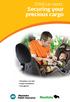 Child car seats: Securing your precious cargo Choosing a car seat Proper installation The right fit Your child s safety is a priority. Using a child car seat correctly means you re taking one of the best
Secure Them for Life. Child safety seats. From infant seats to seat belts, everything you need to know to ensure your child s safety.
 Secure Them for Life Child safety seats From infant seats to seat belts, everything you need to know to ensure your child s safety. It s the law In a vehicle, children whose sitting height is less than
Traffic Safety Facts. Children. 2003 Data. Motor vehicle crashes are the leading cause of death for children from 2 to 14 years old.
 Traffic Safety Facts 2003 Data DOT HS 809 762 Children Motor vehicle crashes are the leading cause of death for children from 2 to 14 years old. In 2003, there were more than 60 million children under
DOT HS 811 458 April 2011 Summary of Vehicle Occupant Protection Laws
 DOT HS 811 458 April 2011 Summary of Vehicle Occupant Protection Laws Ninth Edition Current as of June 1, 2010 DISCLAIMER This publication is distributed by the U.S. Department of Transportation, National
Car Safety for Children with Down Syndrome
 Car Safety for Children with Down Syndrome Children with Down syndrome may have special needs that can affect how they travel. This tip sheet answers some questions you may have about transporting your
Children and road safety: a guide for parents
 Child Safety Week Report Children and road safety: a guide for parents What are the facts? The number of children aged up to 19 years who are killed or seriously injured each year on Britain's roads has
US and Canada Child Safety Seat Law Guide
 US and Canada Child Safety Seat Law Guide For informational purposes only. Please consult local authorities for further interpretation and current status. As of April 2016. Extended Rear-Facing is the
Booster Seat. OWNER'S MANUAL Model 8481. 2001 Graco 420-5-01
 Booster Seat OWNER'S MANUAL Model 8481 Even if using this booster seat seems easy to figure out on your own, it is very important to read this manual. Your child s safety depends on you installing and
II. Civil Fine: A person, who violates either I or II above, is subject to a. more $50. 3 V&T Law '1229-c(5)
 JURISDICTION: General Reference: NEW YORK McKinney's Consolidated Laws of New York Note: Most Citations are to the Vehicle and Traffic Law (V&T Law) New York Code of Rules and Regulations (NYCRR) Required
Facts About Car Seat Safety in BC
 Facts About Car Seat Safety in BC Issue In Canada, on average, each year 3,500 children are injured while another 61 are killed Motor vehicle injuries are the leading cause of injury-related death for
2005 Chevrolet Cavalier Owner Manual M
 2005 Chevrolet Cavalier Owner Manual M Seats and Restraint Systems... 1-1 Front Seats... 1-2 Rear Seats... 1-7 Safety Belts... 1-8 Child Restraints... 1-27 Airbag System... 1-46 Restraint System Check...
WHAT SHOULD I DO IF I HAVE AN AUTO ACCIDENT? GET THE L E G A L F A C T S
 T H E S TAT E B A R O F C A L I F O R N I A WHAT SHOULD I DO IF I HAVE AN AUTO ACCIDENT? GET THE L E G A L F A C T S O F L I F E What should I do if I have an 1 a u t o a c c i d e n t? If I have an auto
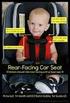
Car Seat Safety Buckling Up Isn t Always Enough
 Michael K. Sachs, MD Private Practice Pediatrician Assistant Professor of Pediatrics University of California, Los Angeles Stephanie M. Tombrello, LCSW Executive Director SafetyBeltSafe U.S.A. Torrance,
US and Canada Child Safety Seat Law Guide
 US and Canada Child Safety Seat Law Guide For informational purposes only. Please consult local authorities for further interpretation and current status. As of March 2015. Extended Rear-Facing is the
BACKGROUND. National. Cell Phone Use and Text Messaging
 BACKGROUND National Developing public policies and legislation is an important component of injury and violence prevention. Implementing and enforcing regulations and laws can help reduce injuries, reduce
AHIS Road safety project Student Council THINK!
 AHIS Road safety project Student Council 2013 THINK! Today, we drive safer cars on safer roads; decades of advertisements and public information campaigns have made most of us safer drivers. Improvements
Car Safety Seats A Guide for Families
 Car Safety Seats A Guide for Families Part I 2008 Safety Information One of the most important jobs you have as a parent is keeping your child safe when riding in a vehicle. Each year thousands of young
POLICY SEAT BELTS IMPACT{ National Center for Injury Prevention and Control Division of Unintentional Injury Prevention
 IMPACT{ POLICY SEAT BELTS National Center for Injury Prevention and Control Division of Unintentional Injury Prevention What s the Issue? Motor vehicle crashes are the leading cause of death in the first
Talking Points. About Roadway Users
 General facts regarding the driver: Talking Points About Roadway Users Motor vehicle crashes are the leading cause of death in the U.S. for people ages 6-33. They annually account for more than 1 million
2006 Pontiac G6 Owner Manual M
 2006 Pontiac G6 Owner Manual M Seats and Restraint Systems... 1-1 Front Seats... 1-2 Rear Seats... 1-9 Safety Belts... 1-10 Child Restraints... 1-30 Airbag System... 1-56 Restraint System Check... 1-71
CHILD BOOSTER SEAT. Instructions for Installation & Use Series No. 4050/A/2013 IMPORTANT: KEEP THIS BOOK IN THE PLACE PROVIDED ON THE CHILD RESTRAINT
 CHILD BOOSTER SEAT Instructions for Installation & Use Series No. 4050/A/2013 IMPORTANT: KEEP THIS BOOK IN THE PLACE PROVIDED ON THE CHILD RESTRAINT INDEX PAGE 3 4 6 7 9 10 14 19 21 22 INTRODUCTION WARNINGS
Complete Voyager/Vista Belt-Positioning Booster Instruction Manual
 4358-3501 VoyagerVista 12/13/04 3:57 PM Page 1 Replacement Parts List NOTE: If requested color is not available, similar color will be substituted. Part Cost Quantity Total Cost Seat Pad........$29.99
OREGON TRAFFIC ACCIDENT AND INSURANCE REPORT
 DMV OREGON TRAFFIC ACCIDENT AND INSURANCE REPORT Tear this sheet off your report, read and carefully follow the directions. ONLY drivers involved in an accident resulting in any of the following MUST file
TRANSPORTATION POLICY
 TRANSPORTATION POLICY Contents 1 NQS... 2 2 National Regulations... 2 3 Aim... 2 4 Related Policies... 2 5 Implementation... 2 6 General Transport Guidelines... 4 7 Guidelines for Seatbelts and Restraints...
CHAPTER 5: LAWS AND RELATED ISSUES
 CHAPTER 5: LAWS AND RELATED ISSUES This chapter will provide information you need to know about Pennsylvania laws and important related issues. For more information on Pennsylvania laws please visit www.dmv.state.pa.us,
WHAT SHOULD I DO IF I HAVE AN AUTO ACCIDENT? 1. If I have an auto accident, do I have to stop? 2. What should I do if someone is injured?
 WHAT SHOULD I DO IF I HAVE AN AUTO ACCIDENT? 1. If I have an auto accident, do I have to stop? 2. What should I do if someone is injured? 3. How can I get help? 4. What information should I gather at the
Precious Cargo In The City Car Seat Safety & Safely Transporting Children in the City presented by BRITAX
 Precious Cargo In The City Car Seat Safety & Safely Transporting Children in the City presented by BRITAX The NYC Dads Group continue to offer amazing and informative educational workshops. I was privileged
2005 Chevrolet Equinox Owner Manual M
 2005 Chevrolet Equinox Owner Manual M Seats and Restraint Systems... 1-1 Front Seats... 1-2 Rear Seats... 1-9 Safety Belts... 1-11 Child Restraints... 1-30 Airbag System... 1-50 Restraint System Check...
Montana Traffic Safety Problem Identification FFY 2011
 Montana Traffic Safety Problem Identification FFY 2011 2009 Data State Highway Traffic Safety Office Montana Department of Transportation 2701 Prospect Avenue Helena, Montana 59620-1001 http://www.mdt.mt.gov/safety/safetyprg.shtml
DMV. OREGON TRAFFIC ACCIDENT AND INSURANCE REPORT Tear this sheet off your report, read and carefully follow the directions.
 OREGON TRAFFIC ACCIDENT AND INSURANCE REPORT Tear this sheet off your report, read and carefully follow the directions. ONLY drivers involved in an accident resulting in any of the following MUST file
LOOSE IN THE CAR MISTAKES ADULTS MAKE CARRYING CHILDREN CRASH TESTS AT 19MPH. www.aatrust.com
 LOOSE IN THE CAR MISTAKES ADULTS MAKE CARRYING CHILDREN CRASH TESTS AT 19MPH www.aatrust.com The AA Motoring Trust was created by the AA to champion the interests and safety of Britain s road users. At
Significant Laws in Oregon Traffic Safety
 Significant Laws in Oregon Traffic Safety 1931 As part of National Model Driver License law, driver licenses could be suspended upon conviction for DUII. 1937 Law passed making driving under the influence
A Guide to Selecting and Fitting Child Restraints
 CHILD SAFETY IN CARS A Guide to Selecting and Fitting Child Restraints gn and n 2012 20/02/2012 17:21 Key Points where safety belts have been fitted they must be worn, children under 3 years of age may
Child Passenger Safety. WRHA Injury Prevention Program Public Health and Parent Child Coalitions Meeting April 9, 2015
 Child Passenger Safety WRHA Injury Prevention Program Public Health and Parent Child Coalitions Meeting April 9, 2015 Objectives We will review: Why Child Passenger Safety? Child Car Seat and Booster Seat
The facts about road accidents and children
 A The AA Motoring Trust The facts about road accidents and children Around 5, children under the age of 16 die or are seriously injured on Britain s roads each year Nearly two in three road accidents happen
2007 Pontiac G5 Owner Manual M
 2007 Pontiac G5 Owner Manual M Seats and Restraint Systems... 7 Front Seats... 8 Rear Seats... 15 Safety Belts... 16 Child Restraints... 39 Airbag System... 64 Restraint System Check... 80 Features and
POLICY INVOLVING VEHICLE USE ON OFFICIAL COLLEGE BUSINESS AUTOMOBILES & OTHER MOTORIZED VEHICLES Last update: August 9, 2011
 POLICY INVOLVING VEHICLE USE ON OFFICIAL COLLEGE BUSINESS AUTOMOBILES & OTHER MOTORIZED VEHICLES Last update: August 9, 2011 INTRODUCTION: Rollins College has many faculty, staff and students whose responsibilities
INCREASING MOTORCYCLE HELMET USE
 INCREASING MOTORCYCLE HELMET USE Head injuries among motorcyclists are a growing concern Rapid growth in the use of motorized twowheeled vehicles in many countries has been accompanied by increases in
Program Descriptions:
 Program Descriptions: Alcohol Education Alcohol education programs include underage drinking prevention and diverse community outreach. Underage drinking is America s number one youth drug problem, killing
Convertible Booster Seat
 Convertible Booster Seat Series No. JS8A/2010 IMPORTANT: KEEP THIS Instructions BOOKLET IN for THE Installation PLACE PROVIDED & Use - ON Series THE No. CHILD JS8A/2010 RESTRAINT INDEX Page 3 INTRODUCTION
Bike Laws: Massachusetts
 Bike Laws: Massachusetts Do you know your rights of the road? Do you know what your responsibilities are when biking in Massachusetts? Here is a summary of Massachusetts bike law that covers equipment,
2006 Cadillac CTS/CTS-V Owner Manual M
 2006 Cadillac CTS/CTS-V Owner Manual M Seats and Restraint Systems... 1-1 Front Seats... 1-2 Rear Seats... 1-8 Safety Belts... 1-10 Child Restraints... 1-29 Airbag System... 1-50 Restraint System Check...
2006 Cadillac STS/STS-V Owner Manual M
 2006 Cadillac STS/STS-V Owner Manual M Seats and Restraint Systems... 1-1 Front Seats... 1-2 Rear Seats... 1-7 Safety Belts... 1-8 Child Restraints... 1-26 Airbag System... 1-48 Restraint System Check...
New York Study of Booster Seat Effects on Injury Reduction Compared to Safety Belts in Children Aged 4-8 in Motor Vehicle Crashes
 New York Study of Booster Seat Effects on Injury Reduction Compared to Safety Belts in Children Aged 4-8 in Motor Vehicle Crashes Kainan Sun, Ph.D., Michael Bauer, M.S. Sarah M. Sperry, M.S., Susan Hardman
3 INTRODUCTION INDEX. Instructions for Installation & Use - Series No. 8100/A/2010 3. 2 Instructions for Installation & Use - Series No.
 IMPORTANT: KEEP THIS BOOKLET IN THE PLACE PROVIDED ON THE CHILD RESTRAINT Instructions for Installation & Use - Series No. 8100/A/2010 INDEX Page 3 INTRODUCTION 4 WARNINGS 6 SHOULDER HEIGHT MARKERS AND
2005 Cadillac Escalade/Escalade ESV Owner Manual M
 2005 Cadillac Escalade/Escalade ESV Owner Manual M Seats and Restraint Systems... 1-1 Front Seats... 1-3 Rear Seats... 1-8 Safety Belts... 1-28 Child Restraints... 1-48 Airbag System... 1-72 Restraint
Car Seats, Belts and Buses:
 : The 10 Most Common Mistakes Kathy Strotmeyer PA American Academy of Pediatrics Traffic Injury Prevention Project 2015 Objectives: Provide CPS information for school bus transporters and CPS technicians
Keeping Children. Safe in Cars BY JILL COOPER
 Keeping Children Safe in Cars BY JILL COOPER Co-authors on this study include David Ragland, Director, Berkeley Traffic Safety Center; Kara MacLeod, Research Associate, Berkeley Traffic Safety Center;
Car Safety for Children with Cerebral Palsy
 Car Safety for Children with Cerebral Palsy Children with cerebral palsy may have special needs that can affect how they travel. This brochure answers some questions you may have about transporting your
15-Passenger Van Safety Frequently Asked Questions & Recommendations for Safe Operation
 15-Passenger Van Safety Frequently Asked Questions & Recommendations for Safe Operation Mississippi Institutions of Higher Learning Safety and Loss Control FY 20 0 6 Page 1 of 7 15-Passenger Van Safety
BUSINESS COLLEGE MOTOR VEHICLE POLICY CHAPTER # 2 Board of Trustees Approval: 08/14/2013 POLICY # 14.01 Page 1 of 1
 BUSINESS CHAPTER # 2 Board of Trustees Approval: 08/14/2013 POLICY # 14.01 Page 1 of 1 I. POLICY Motor vehicles at Salt Lake Community College shall be purchased, operated, maintained and sold in accordance
The. Graduated Licensing. System in Ontario. What s NEW! Increasing penalties for not following licence conditions
 The Graduated Licensing System in Ontario What s NEW! Graduated Licensing Increasing penalties for not following licence conditions Fully licensed drivers Zero alcohol condition for all drivers 21 and
IMPORTANT! KEEP INSTRUCTIONS FOR FUTURE USE.
 Flip Front2Back Carrier Owners Manual Instructions IMPORTANT! KEEP INSTRUCTIONS FOR FUTURE USE. Read all instructions before assembling and using your carrier. Failure to follow each instruction can result
Associate Vice President of Public Safety & Administrative Services
 Policy Title: Vehicle Use Policy Policy No.: 5810 Effective Date: June 1 2013 Responsible Office: Responsible Official: Department of Public Safety Associate Vice President of Public Safety & Administrative
FREQUENTLY ASKED QUESTIONS Ministry of Forests, Lands and Natural Resource Operations Off-Road Vehicle Act and Regulations
 Oct. 15, 2015 FREQUENTLY ASKED QUESTIONS Ministry of Forests, Lands and Natural Resource Operations Off-Road Vehicle Act and Regulations What is an off-road vehicle? An off-road vehicle (ORV) includes
JUVENILES BEHIND THE WHEEL LAWS FOR YOUNG DRIVERS
 JUVENILES BEHIND THE WHEEL LAWS FOR YOUNG DRIVERS Mara Dudley Llano Municipal Court Where Are We Going? Identify relevant statutes applicable to young drivers Discuss the need for restrictive laws on young
VEHICLE & TRAFFIC LAW FINE PENALTY AND POINTS ASSESSED
 VEHICLE & TRAFFIC LAW FINE PENALTY AND POINTS ASSESSED Please Note: Fines listed below are for informational use and only serve as a guide. Fines do not include any New York State mandated surcharges.
Strategic Highway Safety Plan
 SAFETY CULTURE CONNECTION INSIDE Motorcycles Crashes Aren t Accidents What s Trending Buckle Up Nevada! Your Decision, but Who Pays? 1 2 3 4 5 Always Buckle Up Don t Drive Impaired Focus on the Road Stop
Tel: 888-336-7909 skjp.com
 Product: Monterey child booster seat Model: 15000 Mfg. by: Sunshine Kids Juvenile Products 3104 142nd Ave E Sumner, WA 98390 CUSTOMER SERVICE Tel: 888-336-7909 Email: [email protected] skjp.com 2 Contents
Auto Insurance for New Mexico s Young Drivers
 Auto Insurance for New Mexico s Young Drivers Prepared for New Mexico s Young Drivers and Their Parents by: One of the major events in many people s lives is earning the privilege of driving a motor vehicle.
Traffic Safety Milestones A Short History of Traffic Safety Legislation and Public Policy in New Mexico Since Statehood
 Traffic Safety Milestones A Short History of Traffic Safety Legislation and Public Policy in New Mexico Since Statehood Carolyn Johnson, Training and Development Section Transportation Safety Law Center,
How to Reach Motorcyclists Through Innovative Techniques
 Reaching Motorcyclists Through Innovative Techniques: California Problem Identification California Motorcyclist Fatalities 600 500 432 469 506 518 560 400 383 300 200 235 204 236 276 299 324 100 0 1997