
Monitoring the scope and benefits of Fairtrade fourth Edition
|
|
|
- Marjorie Hill
- 10 years ago
- Views:
Transcription
1 Monitoring the scope and benefits of Fairtrade fourth Edition 2012

2 Copyright: Fairtrade Labelling Organizations International e.v All rights reserved. None of the materials provided in this publication may be used, reproduced, or transmitted, in whole or in part, in any form or by any means, electronic or mechanical, including photocopying, recording or the use of any information storage and retrieval system, without permission in writing from Fairtrade International. Information presented here is for informative purposes only. Fairtrade International grants permission to use information for personal, non-commercial use, without any right to resell or redistribute information or to compile or create derivative works therefrom.

3 Contents 1. Introduction: About this report Where do the data in this report come from? Data coverage and completeness Data confidentiality Data accuracy and limitations Disclaimer Notes on the data Acknowledgements Summary and key data at a glance Fairtrade producers How many farmer and workers participated in Fairtrade in 2011? Where are the farmers and workers who participate in Fairtrade? How have the numbers of farmers and workers changed since the last monitoring report? Farmers and workers by product category Workers in Fairtrade Women in Fairtrade Fairtrade and young people Fairtrade producer organizations How many Fairtrade producer organizations were there in 2011? Where are the Fairtrade producer organizations? Certified producer organizations by producer type Size of Fairtrade producer organizations 36

4 5. Fairtrade crop production and sales Fairtrade production capacity Fairtrade sales volumes and values reported by producer organizations What percentage of total sales volumes are sold as Fairtrade? How much land is under Fairtrade production? Small farmers in Fairtrade: Average area of cultivation by product and region Organic and other certifications Fairtrade Premium How much Fairtrade Premium did Fairtrade producer organizations receive in ? How was the Fairtrade Premium used in ? Focus on Fairtrade products: coffee, bananas, cocoa, tea, sugar, and seed cotton Fact file: Fairtrade coffee Fact file: Fairtrade bananas Fact file: Fairtrade cocoa Fact file: Fairtrade tea Fact file: Fairtrade sugar Fact file: Fairtrade seed cotton Focus on Fairtrade regions Fairtrade in Africa and the Middle East Fairtrade in Asia and Oceania Fairtrade in Latin America and the Caribbean

5 01. introduction: about this report
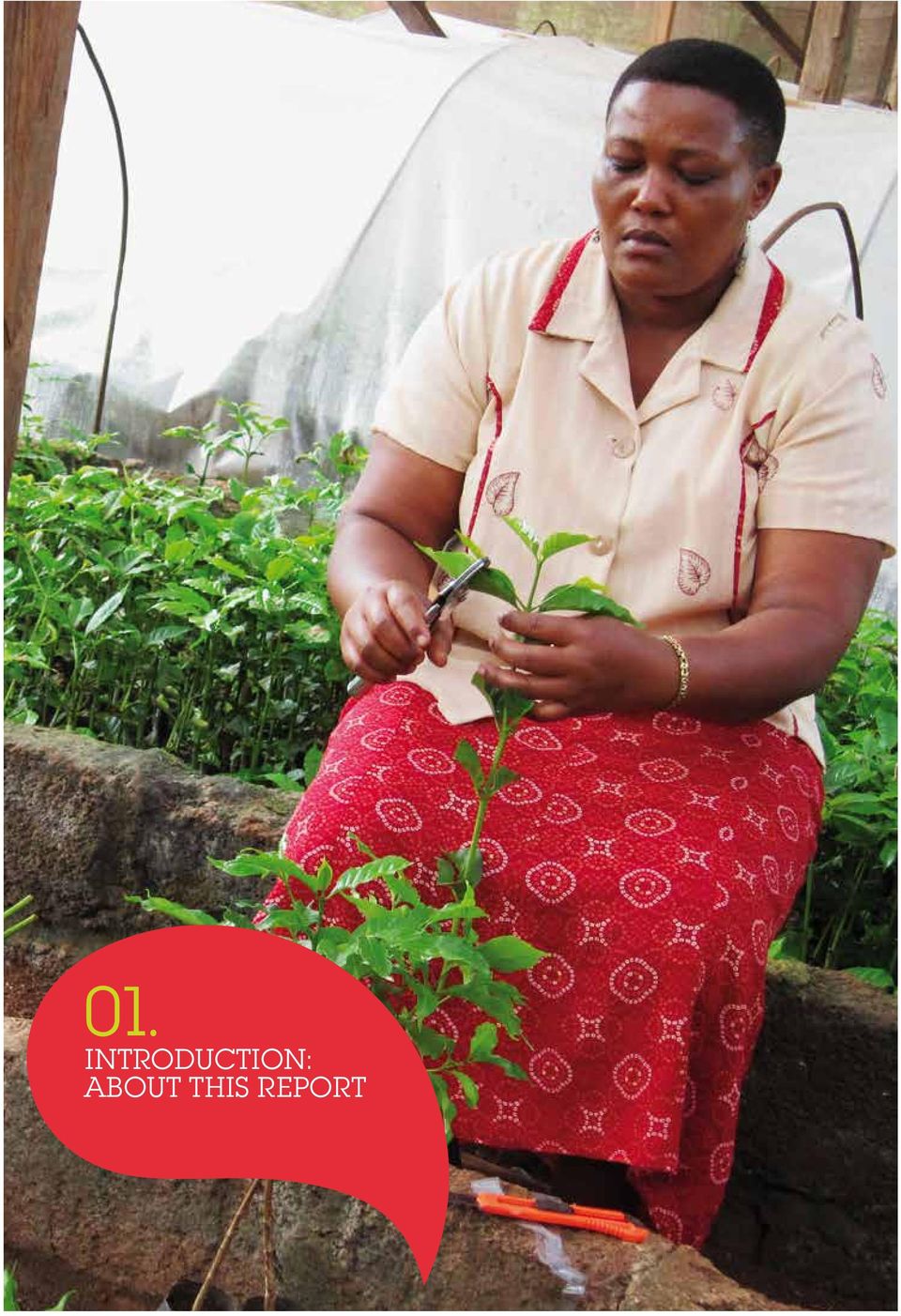
6 6 Monitoring the scope and benefits of Fairtrade fourth Edition 2012 This report gives the results of the annual monitoring data collection from Fairtrade certified producer organizations which took place during It presents the scope and scale of Fairtrade in 2011, and gives data for some key Fairtrade performance indicators from a producer perspective. This year, for the first time, the report also captures the results of recent research studies containing evidence about the longer-term impacts of Fairtrade. The information generated through our monitoring and evaluation processes is used to inform and guide the Fairtrade system. It gives us an important indication of how we are performing in relation to our ambitions to strengthen, broaden and deepen Fairtrade s impact for farmers and workers in developing countries. Monitoring and evaluation shows us where we are performing well, and where we have challenges to overcome. Being aware of these challenges allows us to reshape our programme activities in order to tackle them. Fairtrade International makes this information public as part of our commitment to transparency, openness, and information-sharing with our stakeholders and supporters. We recognise that there are some shortcomings in the reliability and coverage of the data, and we try to be open about these shortcomings. We hope that you will find the report interesting and useful. We welcome your feedback and comments: these will help us improve future editions of the report. 1.1 Where do the data in this report come from? There are three main sources of data used to generate this report. Data on the number, type, and geographical spread of Fairtrade certified producer organizations and product certifications are drawn from the main certification database held by FLO-CERT GmbH, the Fairtrade certification body. These data capture the number, type and location of Fairtrade producer organizations at the end of Since some Fairtrade producer organizations are certified for more than one product, we differentiate between producer organizations and product certifications. This data source also gives us information on the numbers of product certifications held by Fairtrade producer organizations. In order to have a more detailed picture of Fairtrade producer organizations and of Fairtrade performance from the producer perspective, Fairtrade International requests FLO-CERT GmbH to collect data for a range of monitoring indicators during the Fairtrade audits. The list of indicators that we collect is given in Box 1.1 below. Box 1.1 Key indicators used in this report Data against the following indicators are currently collected through the monitoring process: A Number and type of Fairtrade certified producer organizations A Number of members and number of workers of Fairtrade certified producer organizations A Number and type of other certifications of the group A Gender breakdown of membership or workforce A Land area used for cultivation of the Fairtrade certified crop or crops A Total crop volume produced A Organic/conventional breakdown of crop production A Total volumes sold A Total sales revenues A Total volumes sold as Fairtrade A Total Fairtrade sales revenues A Total Fairtrade Premium received A Fairtrade Premium expenditure Data for each indicator can be aggregated and analysed by country, by region, by product, or by producer type.

7 7 Monitoring the scope and benefits of Fairtrade fourth Edition 2012 The data in this report are drawn from the reports of all audits undertaken between March 2011 and February For producer organizations where no audit was undertaken within this time period, data from the 2010 or in a few cases the 2009 audit report have been used. Eighty-one percent of the audit reports used to generate this monitoring data set were from 2011 or 2012 (see Table 1.1). In addition to the annual monitoring process, Fairtrade International and other Fairtrade organizations commission regular, independent in-depth evaluations of Fairtrade s performance from the perspective of the farmers and workers who participate in Fairtrade. These evaluations allow us to go beyond the limited set of indicators that we collect through the annual monitoring process to give us a better understanding of how Fairtrade is making a difference for farmer and worker livelihoods or empowerment. In this report, we include summary results from a number of research projects that were commissioned during 2010 or The Fairtrade system is committed to making the full results of evaluations public, wherever possible, and for many of these projects the full research results are or will become available on our website. Table 1.1: Audit years for reports included in monitoring data Audit year Number of reports included % % % % % Grand Total % 1.2 Data coverage and completeness Product and producer coverage Information on the numbers, types, and geography of Fairtrade producer organizations represents the status of the Fairtrade producer organizations at the end of 2011 and is complete to the best of our knowledge. Information on numbers of product certifications is largely complete. There may be some instances of second or third product certifications that are missing from these data, but we are confident that the majority of active multiple certifications are included. The monitoring data drawn from the audit reports cover 990 of the 991 producer organizations that were certified at the end of 2011, nearly 100 percent of all certified producer organizations. This is the most complete batch of monitoring data so far collected and gives a more comprehensive picture of the status of Fairtrade International than the two preceding monitoring reports. For almost all products, between 70 and 100 percent of the data included is based on a 2011 or 2012 audit report. The major exceptions are: Cane sugar, for which 2011 or 2012 audit reports were available for only 44 percent of the certified producer organizations. Accordingly, the sugar data have been reviewed and updated by product specialists to reflect the 2011 situation as far as possible. Cocoa from Côte d Ivoire, where the political crisis in the first half of 2011 meant that scheduled audits for many producer organizations were not possible. Côte d Ivoire grew rapidly in importance as a producer of Fairtrade cocoa during , but this data set does not adequately reflect this. Honey and oilseeds and oleaginous fruit, for which 2011 and 2012 audit reports were available for only 52 percent and 33 percent of certified producer organizations, respectively. As such, the data for these two product categories are less current than for the other products.

8 8 Monitoring the scope and benefits of Fairtrade fourth Edition 2012 Not all producer organizations report against all indicators; for example, some choose not to report the monetary value of their total sales or of their Fairtrade sales; others do not report their Fairtrade Premium receipts. In particular, hired labour organizations frequently choose not to report the value of their sales. In this year s data set we believe that this has led to significant under-reporting of the performance of Fairtrade hired labour organizations. Where there is major under-reporting against a specific indicator we indicate that within the report. We continue to work with producer organizations to encourage full reporting of the monitoring indicators. Time period covered by the data In the audit reports, producer organizations are asked to report production volumes, sales volumes, and sales and Fairtrade Premium incomes retrospectively. Many organizations report this for the 12-month period preceding the audit. This means that the reporting of retrospective data does not always correspond to a precise calendar year. In this report, the majority of these data span calendar years In all cases, the data represent the most recent audit-based information available for the producer organization in question. Data, such as the numbers of farmers and workers participating in Fairtrade producer organizations or areas under cultivation, are snapshot data, accurate at the time of audit. Since we are primarily drawing on 2011 audits, we consider these data to reflect the status of these indicators for In summary: Data on the numbers and locations of certified producer organizations and product certifications are accurate to the end of We use 2011 to describe these data in the report. Data on the numbers of farmers and workers within producer organizations and the areas under production for Fairtrade crops reflect the status of Fairtrade in We use 2011 to describe these data in the report. Data on volumes produced, volumes sold, sales incomes, and Fairtrade Premium income and expenditure are usually retrospective for the 12-month period preceding the audit. Since the majority of the audits for this data set took place during 2011, the majority of producer organizations have reported on time periods spanning We use to describe these data in the report. 1.3 Data confidentiality Under the terms of confidentiality agreements with Fairtrade producer organizations, data may be publicly reported in aggregate, but not used in ways that expose data belonging to a single producer organization. This limits our ability to report information at country level, where for any given product there may be only one or two Fairtrade certified producer organizations. For this reason, data in this report are typically presented at regional or sub-regional and not at country level. Every effort has been made to protect the confidentiality of individual producer organizations. 1.4 Data accuracy and limitations The data have been extensively checked and cleaned. However, in a monitoring project of this size and nature there are undoubtedly some errors and weaknesses. Weaknesses are likely to be more exposed in the smaller products (because the data sample is smaller), which is why the analysis here focuses on the major Fairtrade products. Data for smaller products should be taken as indicative only. Similarly, data at regional and country level are weaker than global-level data. As in previous years, the data for producer organizations selling more than one product into the Fairtrade system are incomplete, creating some challenges for the presentation and calculation of data relating to those producer organizations. For

9 9 Monitoring the scope and benefits of Fairtrade fourth Edition 2012 example, for producer organizations selling more than one product as Fairtrade we do not always have a breakdown of the relative participation of farmers or workers in the production of the different products, or the relative contribution of different products to Fairtrade Premium income. Improving data relating to diversified production should be a priority going forward. 1.5 Disclaimer The monitoring data in this report are based on data collected by FLO-CERT GmbH, and reported by producer organizations through the audit process. Fairtrade International is not responsible for the accuracy of the data. The report has been compiled to the best of our knowledge and is provided for informational purposes only. Fairtrade International reserves the right to update the monitoring data as new information becomes available. The data are provided as is and no warranty of any kind is given for the accuracy and reliability of the data. Fairtrade International will not be liable for any claims or damages related to the quality and completeness of the data, as far as it is permitted under law. 1.6 Notes on the data The geographical regions used in the report are primarily the United Nations regions, which are also adopted within the Fairtrade Geographical Scope. A reference for this can be found at: standards/documents/ _geographical_scope_policy_en.pdf The only divergence to this classification is that this year the Africa region has been titled Africa and the Middle East, with the Northern Africa region being extended to include countries in the Middle East where there are Fairtrade Producer Organizations (currently Occupied Palestinian Territory and Lebanon). This change was made to reflect the functional organization of Fairtrade s producer support and producer representation. The product classification used for this report follows the classification adopted for the Fairtrade Standards. As of 2012, the Fairtrade product categories have changed in comparison with previous years. Specifically: The category Nuts and Oilseeds has been split into two categories: Nuts and Oilseeds and Oleaginous Fruit. The latter category includes soybeans. Vegetables are now a stand-alone category, which includes pulses. Rooibos tea is included in the category Herbs, Herbal Teas and Spices. Accordingly, data in these categories cannot be easily compared with data from previous years. More information about the Fairtrade product classification can be found at: user_upload/content/2009/standards/documents/ _product_ Classification Compatibility_Mode_.pdf This report uses weighted means for calculating average values, weighted according to the numbers of farmers or workers contributing to the value. There are some instances where data do not sum completely accurately, or where there are slight differences in summed data between tables. This is due to rounding error. Audit reports state financial values in many varying local and international currencies. All financial data have been converted into euro ( ) values, based on the average exchange rate for the year in which the transaction took place. All product volume data has been converted into metric tonnes (MT), with the exception of flowers, which are given as numbers of stems, and sports balls which are given as units. For many products, different product forms exist. Audit reports often collect data based on different product forms for the same product, and sometimes the product form is not clear in the report itself, or changes according to the

10 10 Monitoring the scope and benefits of Fairtrade fourth Edition 2012 indicator. For example, wine production volumes are often expressed in terms of wine grape volumes produced, while sales volumes are expressed as litres of wine sold. All efforts have been made to ensure that data are used in a consistent product form for each product; nevertheless it is highly likely that there are inaccuracies arising in the data due to product form and conversion issues, especially in cases where the form is not clearly indicated in the audit reports. The following products are often reported in different forms in the audit reports. We indicate here which form we have adopted for the monitoring data: Cocoa: cocoa beans Coffee: green bean equivalent (GBE) Dried fruit: dried fruit (not fresh) Rice: paddy rice Seed cotton: seed cotton (not lint) Sugar: cane sugar (not sugar cane) Tea: made tea (tea which has gone through the first processing stages of fermentation and drying, not green leaf) Wine grapes: grapes (not wine volumes) For the product categories of nuts, oilseeds and oleaginous fruit, fruit juice, and herbs, herbals teas and spices the in-category diversity of products, combined with lack of consistency in reporting, has made it difficult to ensure that product forms are expressed consistently. 1.7 Acknowledgements Report text Kate Kilpatrick, Vidya Rangan, Kyle Freund Data analysis Charlotte de Vroey, Kate Kilpatrick Editing and design management Kyle Freund, Vicky Pauschert Design Data preparation Ruth Audera, Daniela Geppert, Martina Janssen, Yoshi Kato, Thibault Renoux, Melanie Seifert, Marie Steenpass, Juliane Wachtmeister, Linda Wagner, Nicole Xeller Photography Nathalie Bertrams, Didier Gentilhomme, Marcela Guerrero Casas, Linus Hallgren, Sean Hawkey, Stefan Lechner, Simon Rawles, Green Living Project, Roxy Medan, Carla Veldhuyzen Thanks and acknowledgements to Monika Berresheim, Frank Brinkschneider, Lee Byers, Silvia Campos, Rene Capote, Chris Davis, Sam Dormer, Wil Flinterman, Francois Guenet, Xavier Huchet, Andreas Kratz, Damien Sanfilippo, Anita Sheth, Miyako Takahashi, for their support with data checking and analysis.

11 2. Summary and key data at a glance 02. summary and key data at a glance

12 12 Monitoring the scope and benefits of Fairtrade fourth Edition 2012 The data in this report show that in the period under review, Fairtrade has continued to grow, both in terms of the participation of farmers, workers, and their producer organizations, and in terms of the volumes of products sold on Fairtrade terms. Fairtrade cocoa and sugar in particular show continued high growth. The large growth in Fairtrade sales revenues reported by producer organizations reflects the high prices for coffee and for many other commodities that characterized For Fairtrade producer organizations, this volatility in coffee prices brought many challenges in 2011, including widespread side-selling of coffee outside of cooperative channels. Fairtrade has invested significant resources in supporting producer organizations to manage the risks of price volatility, organizing training and support for coffee producers in all the major coffee-producing regions. Analysis of how producer organizations use their Fairtrade Premium shows that Fairtrade producers are continuing to invest significantly in improvements to their organizations and businesses. Investments in processing, productivity, quality improvements, and in organizational strengthening this year accounted for more than half of the Fairtrade Premium expenditure that was reported by small producer organizations. Through this support for investment in producer organizations and their members, Fairtrade aims to support more sustainable and successful businesses which in turn can generate more sustainable returns for farmers, their households, and communities. Farmers, workers, and producer organizations The number of farmers and workers participating in Fairtrade grew to 1.24 million by the end of Roughly 60 percent of the farmers and workers in the Fairtrade system are located in Africa and the Middle East. There was growth in the numbers of Fairtrade farmers, workers, and producer organizations on all three continents, and across all of the major products. Particularly notable growth was seen in sugar the result of several new sugar producing organizations entering the Fairtrade system in Mauritius and Guyana. The number of farmers producing Fairtrade sugar more than doubled during Overall, the number of Fairtrade producer organizations grew by a steady 10 percent on 2010 levels, to 991 at the end of This includes Fairtrade producer organizations in three new countries Guyana, Lebanon, and Uzbekistan. Fairtrade sales values and volumes Total reported Fairtrade sales revenues and Fairtrade Premium receipts have grown significantly in the reporting period, particularly for small producer organizations. In comparison with reported levels, the data for reported by producers shows a 19 percent increase in Fairtrade Premium returns to producer organizations, and a 22 percent increase in overall Fairtrade sales revenues reported by producer organizations. While results for small producer organizations showed very strong growth in both indicators, the results for hired labour organizations showed declines. This partly reflects the fact that a significant number of hired labour organizations reported Fairtrade sales, but did not report the value of those sales. This means that the data on Fairtrade sales income from hired labour organizations is incomplete. In addition, several Fairtrade fresh fruit producers in South Africa left the Fairtrade system during , in response to market uncertainty for their products. This has had a significant impact on the hired labour findings in this report. Growth in Fairtrade sales volumes of certain products has been considerable in the reporting period, particularly for cocoa and sugar. Sales volumes of coffee and tea were also reported to have increased, while volumes for bananas declined slightly. Tea and sports balls producers continued to struggle to sell a significant percentage of their total output as Fairtrade, while hired labour organizations as a whole only sold around 20 percent of their total production as Fairtrade in 2011.

13 13 Monitoring the scope and benefits of Fairtrade fourth Edition 2012 table 2.1 Overall growth in numbers of Fairtrade farmers, workers, and producer organizations Percentage change Total Fairtrade producer organizations worldwide % Percentage change Total farmers 936,000 1,070,800 14% Total workers 163, ,200 3% Total farmers and workers 1.1 million 1.24 million 13% Total countries with Fairtrade certified producer organizations 66 New countries during 2011 Guyana, Lebanon, Uzbekistan table 2.2 Overall growth in Fairtrade sales values and Fairtrade Premium values ( millions) Percentage Fairtrade Premium ( millions) change Total reported by Small Producer Organizations % Total reported by Hired Labour Organizations % Total reported Fairtrade Premium receipts % Percentage Fairtrade sales revenues ( millions) change Total reported by Small Producer Organizations % Total reported by Hired Labour Organizations % Total reported Fairtrade sales revenues % Where producer organizations can sell only a minor proportion of their production on Fairtrade terms, this obviously limits the potential impacts of Fairtrade certification for those organizations. For this reason, Fairtrade continues to develop strategies to support those products and origins such as tea from South Asian producers to gain better market access. Producer organizations in Asia and Oceania reported considerable growth in Fairtrade Premium receipts and volumes sold as Fairtrade, reflecting the growth in importance of Fairtrade coffee from Indonesia and sugar from Fiji. Africa and the Middle East appeared to have lost ground in comparison, reporting a slight decline in Fairtrade Premium levels compared with However, the data for Africa and the Middle East were not complete for sales volumes and Fairtrade Premium. Most significant were the incomplete data from cocoa sales in Côte d Ivoire, which would have added at least an additional 1 million to the Fairtrade Premium total for Africa and the Middle East. Premium expenditure Taking the overall Fairtrade Premium receipts and averaging them across organizations and across members gives a crude indication of whether Fairtrade impacts are increasing for existing producers. Figure 2.1 shows that the average reported Fairtrade Premium income per member or worker and per organization for increased slightly on levels. However, behind this overall figure was stronger growth for small producer organizations, while the per organization and per capita values for hired labour organizations declined somewhat. As noted above, this reflects some under-reporting of Fairtrade income and Fairtrade Premium among hired labour organizations, as well as the reduction in the number of Fairtrade fresh fruit-producing hired labour organizations in Southern Africa.

14 14 Monitoring the scope and benefits of Fairtrade fourth Edition 2012 FIGURE 2.1 Fairtrade Premium received global averages HLO Hired Labour Organization SPO/CP Small Producer Organization/Contract Production 100, ,000 80, , ,000 50, ,000 30, , ,000 0 Average Fairtrade Premium per SPO/CP Average Fairtrade Premium per HLO Average Fairtrade Premium all organizations 0 Average Fairtrade Premium per SPO/CP farmer Average Fairtrade Premium per HLO worker Average Fairtrade Premium all farmers or workers 97,000 Analysis of Fairtrade Premium expenditure indicates that small producer organizations have increasingly invested in their businesses, in organizational development, and in supporting production and processing improvements for their members. For many organizations it has also continued to be necessary to use the Fairtrade Premium to make direct payments to members over and above Fairtrade prices to ensure member commitment, in view of the high market prices for coffee in particular. These activities continued to displace the more traditional use of Fairtrade Premium to support wider aspects of community development. Workers in hired labour organizations continue to make large investments in community and educational projects, but also invested significantly in direct support to workers, through a wide range of different projects aimed at meeting workers needs. This shift perhaps reflects a response to the ongoing high living costs faced by poor workers around the world. The chapter on Fairtrade Premium use shows how banana hired labour organizations have invested significant sums in projects to improve worker housing, with impressive results.

15 15 Monitoring the scope and benefits of Fairtrade fourth Edition 2012 Researching Fairtrade impacts on poverty reduction and rural development In 2011 TransFair Germany and Max Havelaar Foundation Switzerland commissioned The study found that one of the ways in which Fairtrade contributes most strongly to rural development is by giving farmers and workers a unique opportunity to plan, design, and implement development projects for their communities through partici patory decision- independent impact research aimed at deepening our understanding of whether and how Fairtrade certified producer organizations contribute to poverty reduction and rural development. The study, conducted by the Centre for Evaluation (CEval) based at the Saarland University, Germany, analysed six Fairtrade product cases (cocoa, coffee, tea, bananas, cotton, and flowers) using a quasi-experimental design that compared a Fairtrade certified producer organization with a non-certified or very recently certified organization for the same product in the same region. A total of more than 100 indicators were defined, and the research employed both qualitative and quantitative methods to collect a large data set allowing for a strong statistical analysis. The study found that one of the ways in which Fairtrade contributes most strongly to rural development is by giving farmers and workers a unique opportunity to plan, design, and implement development projects for their communities through participatory decision-making processes. Fairtrade also has a positive impact on certified organizations and their communities by building technical and organizational capacities. The study found higher productivity and income levels among members of Fairtrade certified producer organizations, as well as an increased level of investment. Furthermore, the study associated better livelihoods, working conditions and increased control over supply chains with Fairtrade certification. making processes. It is clear that Fairtrade Premium money is often invested in projects that benefit not only the producers at individual and organizational levels, but also the larger community in which the producer organization is located, for example through improve ments in infrastructure or education from which entire communities can benefit. On the other hand, the study also found areas in which Fairtrade is not yet having a significant generalized impact. This was the case with gender equity, for example. Although Fairtrade may introduce helpful institutions such as gender committees within producer organizations, many producer organizations still struggle to overcome existing cultural barriers toward a more balanced or equitable participation of men and women within the organization or the community, or towards girls education. The study found that the impact of Fairtrade varies greatly between different products and regions. The evidence that Fairtrade has had impacts on regional or national development was strongest from the banana and coffee case studies, where investments in local infrastructure were found to have had a major impact on regional development. Overall, the study concluded that Fairtrade contributes to the preconditions necessary for rural development and poverty reduction, but that many other factors co-determine whether significant rural development and poverty reduction will take place, in any given context. The researchers identified four critical factors that can deepen Fairtrade s contribution to rural development in agrarian communities. The level of information and knowledge among farmers and workers about the fact that their organization is Fairtrade certified, and how Fairtrade works; The quality of organizational structures in the producer organization, particularly where these contribute to transparent and non-hierarchical ways of communicating and working;

16 16 Monitoring the scope and benefits of Fairtrade fourth Edition 2012 The motivation of the leadership and management of Fairtrade certified producer organizations; The share of sales into the Fairtrade market. A significant share of sales ensures that the organization has the means to earn Fairtrade Premium income, which can be used for investments in development projects. The researchers argue that Fairtrade s impact on rural development will be highest when all four preconditions above are met to a high degree. The study recommends that helping producer organizations achieve these preconditions should be a priority for the Fairtrade system. The full research report will be published by Transfair Germany and Max Havelaar Foundation Switzerland in December 2012.

17 3. Fairtrade producers 03. Fairtrade producers

18 18 Monitoring the scope and benefits of Fairtrade fourth Edition How many farmer and workers participated in Fairtrade in 2011? The monitoring data indicate that approximately 1.07 million farmers were members of Fairtrade small producer or contract production organizations in 2011, and people worked in Fairtrade certified hired labour organizations, making a total of 1.24 million farmers and workers in the Fairtrade system as a whole. 3.2 Where are the farmers and workers who participate in Fairtrade? Table 3.1 shows that in 2011, 59 percent of all farmers and workers within the Fairtrade system lived in Africa. Latin America and the Caribbean accounted for 24 percent of all famers and workers within the Fairtrade system, and Asia and Oceania for 17 percent very similar to the relative proportions in Of the 66 countries where there are Fairtrade certifications, Tanzania had the most farmer members of Fairtrade small producer organizations, while India had the largest number of workers in Fairtrade hired labour organizations. Taking farmers and workers together, Kenya has the highest number of people participating in Fairtrade overall: 14 percent of all farmers and workers in the Fairtrade system are found in Kenya. figure 3.1 Distribution of Fairtrade farmers and workers 2011 Latin America and the Caribbean Farmers 285,400 % of all farmers 27% Workers 11,400 % of all workers 7% Total 296,900 % 24% Africa and the Middle East Farmers 663,000 % of all farmers 62% Workers 69,200 % of all workers 41% Total 736,900 % 59% Asia and Oceania Farmers 122,400 % of all farmers 11% Workers 87,600 % of all workers 52% Total 210,000 % 17%

19 19 Monitoring the scope and benefits of Fairtrade fourth Edition 2012 figure Top Ten Countries: Number of Fairtrade farmers and workers 2011 Pakistan Mexico Colombia Peru Nicaragua Ghana Uganda Rwanda Ethiopia Kenya Tanzania Malawi India Sri Lanka South Africa Top Ten Countries: Number of Fairtrade farmers 2011 Tanzania 164,600 Kenya 135,200 Ethiopia 105,100 Ghana 75,300 India 63,400 Colombia 53,900 Peru 52,600 Nicaragua 34,400 Uganda 32,600 Mexico 26,900 Top Ten Countries: Number of Fairtrade workers 2011 India 58,000 Kenya 38,600 Sri Lanka 22,700 South Africa 9,200 Pakistan 6,700 Tanzania 4,500 Malawi 4,100 Ghana 3,000 Mexico 2,700 Rwanda 2,100 Top Ten Countries: Number of Fairtrade farmers and workers 2011 Kenya 173,800 Tanzania 169,100 India 121,400 Ethiopia 106,900 Ghana 78,300 Colombia 55,900 Peru 52,600 Nicaragua 34,400 Uganda 32,600 Mexico 29,600 figure 3.2 Global distribution of Fairtrade farmers and workers 2011 Africa and the Middle East Farmers 663,000 Workers 69,200 Farmers and workers 732,200 Asia and Oceania Farmers 122,400 Workers 87,600 Farmers and workers 210,000 Latin America and the Caribbean Farmers 285,400 Workers 11,400 Farmers and workers 296,800 World Farmers 1,070,800 Workers 168,200 Farmers and workers 1,239,000 1,500,000 1,000, ,000 0 Africa and the Middle East Asia and Oceania Latin America and the Caribbean World

20 Monitoring the scope and benefits of Fairtrade fourth Edition 2012 figure 3.3 Distribution of Fairtrade farmers and workers by region 2011 Farmer members of Fairtrade organizations Workers in Fairtrade hired labour organizations Total farmers and workers Northern Africa and the Middle East Central Asia Eastern Asia Caribbean Southern Asia Central America Melanesia Western Africa Middle Africa South-Eastern Asia Southern Africa Eastern Africa South America Latin America and the Caribbean Caribbean 40,200 1,800 42,000 Central America 110,100 3, ,200 South America 135,100 6, ,600 Total 285,400 11, ,800 Africa and the Middle East Eastern Africa 493,500 52, ,000 Middle Africa 29, ,200 Northern Africa and the Middle East 3,700 3,700 7,400 Southern Africa ,000 10,300 Western Africa 136,300 3, ,300 Total 663,000 69, ,200 Asia and Oceania Central Asia 1, ,100 Eastern Asia 5, ,800 Melanesia 9, ,000 South-Eastern Asia 33, ,500 Southern Asia 73,100 87, ,600 Total 122,400 87, ,000 figure 3.4 Regional distribution of all Fairtrade farmers and workers 2011 Region Eastern Africa 44% Middle Africa 2% Northern Africa and the Middle East 1% Southern Africa 1% Western Africa 11% Central Asia 0% Eastern Asia 1% Melanesia 1% South-Eastern Asia 3% Southern Asia 13% Caribbean 3% Central America 9% South America 11% 44+ Central America South America Caribbean Southern Asia South-Eastern Asia Melanesia Eastern Asia Western Africa Southern Africa Eastern Africa Middle Africa Northern Africa and the Middle East

21 Monitoring the scope and benefits of Fairtrade fourth Edition 2012 figure 3.5 Regional distribution of Fairtrade farmers 2011 Region Eastern Africa 46% Middle Africa 3% Northern Africa and the Middle East 0% Southern Africa 0% Western Africa 13% Central Asia 0% Eastern Asia 0% Melanesia 1% South-Eastern Asia 3% Southern Asia 7% Caribbean 4% Central America 10% South America 13% 46+ South America Central America Caribbean Southern Asia South-Eastern Asia Melanesia Eastern Africa Middle Africa Western Africa figure 3.6 Regional distribution of workers within Fairtrade certified Hired Labour Organizations 2011 Region Caribbean 1% Central America 2% South America 4% Eastern Africa 31% Middle Africa 0% Northern Africa and the Middle East 2% Southern Africa 6% Western Africa 2% Central Asia 0% Eastern Asia 0% Melanesia 0% South-Eastern Asia 0% Southern Asia 52% 1+ Southern Asia Caribbean Central America South America Eastern Africa Northern Africa and the Middle East Southern Africa Western Africa
22 22 Monitoring the scope and benefits of Fairtrade fourth Edition 2012 figure 3.7 Growth in the numbers of Fairtrade farmers and workers Total farmers and workers 1,600,000 1,400,000 1,200,000 12% growth 14% growth 13% growth 16% 14% 12% Percentage change ,000, ,000 9% growth 10% 8% 600,000 6% 400,000 4% 200,000 2% Asia and Oceania Latin America and the Caribbean Africa and the Middle East Total 0% 3.3 How have the numbers of farmers and workers changed since the last monitoring report? In last year s monitoring report we reported a total of 1.1 million farmers and workers in the Fairtrade system at the end of 2010 (although we estimated that the actual figure was slightly higher due to under-reporting). In 2011 there was roughly a 13 percent increase in the number of farmers and workers in the Fairtrade system. The majority of this increase resulted from growth in the number and size of Fairtrade certified small producer organizations: the number of workers in Fairtrade certified hired labour organizations grew only slightly, by 3 percent. Within each region the patterns of growth have been slightly different. In Africa and the Middle East, there was strong growth in Western Africa, due to ongoing growth in the number of certified cocoa producer organizations, particularly in Côte d Ivoire. In Eastern Africa, a large number of sugar-producing organizations in Mauritius entered the Fairtrade system, which accounts for some of the growth in that region. The numbers of workers in Fairtrade certified hired labour organizations in Africa and the Middle East appeared to decrease overall. Several fresh fruit producer organizations in Southern Africa left the Fairtrade system during 2010 and 2011 in response to volatile markets, accounting for the overall decline in the number of workers. In Asia, the number of workers grew modestly in all regions, with the exception of Southern Asia, where there was significant growth in numbers of both workers and farmers, principally in India. In Latin America and the Caribbean, the major growth was in Central America and in the Caribbean, where total membership in Fairtrade certified small producer organizations grew by around 20,000 people. Hired labour organizations showed little change in any sub-region.
23 23 Monitoring the scope and benefits of Fairtrade fourth Edition 2012 figure 3.8 Fairtrade in Africa and the Middle East: Farmer and worker numbers SPO SPO SPO HLO HLO HLO farmers farmers farmers workers workers workers Total Total Total Eastern Africa 394, , ,500 49,000 48,600 52, , , ,000 Middle Africa 34,000 29,200 29, ,000 29,200 29,200 Northern Africa and the Middle East 1,000 3,400 3,700 8,200 8,400 3,700 9,200 9,200 7,400 Southern Africa ,000 13,000 10,000 13,170 13,200 10,300 Western Africa 87, , ,300 2,700 2,900 3,000 89, , ,300 Total 516, , ,000 72,900 72,800 69, , , , ,000 SPo farmers (Small Producer Organization) hlo workers (Hired Labour Organization) total 700, , , , , , , figure 3.9 Fairtrade in Asia and Oceania: Farmer and worker numbers SPO SPO SPO HLO HLO HLO farmers farmers farmers workers workers workers Total Total Total Central Asia 770 1,000 1, ,000 1,100 Eastern Asia 6,100 5,700 5, ,100 5,700 5,800 Melanesia 1,400 8,600 9, ,400 8,600 9,000 South-Eastern Asia 44,000 31,500 33, ,000 31,600 33,500 Southern Asia 58,000 58,500 73,100 46,000 80,100 87, , , ,600 Total 110, , ,400 46,000 80,200 87, , , , ,000 SPo farmers (Small Producer Organization) hlo members (Hired Labour Organization) total 200, ,
24 24 Monitoring the scope and benefits of Fairtrade fourth Edition 2012 figure 3.10 Fairtrade in Latin America and the Caribbean: Farmer and worker numbers SPO SPO SPO HLO HLO HLO farmers farmers farmers workers workers workers Total Total Total Caribbean 23,000 28,000 40,200 2,300 2,500 1,800 25,300 30,500 42,000 Central America 100, , , ,400 3, , , ,200 South America 97, , ,100 6,200 5,900 6, , , ,600 Total 220, , ,400 8,960 9,800 11, , , , ,000 SPo farmers (Small Producer Organization) hlo workers (Hired Labour Organization) total 200, , Farmers and workers by product category Table 3.2 gives a breakdown of the numbers of farmers and workers within Fairtrade certified producer organizations, according to product, for Coffee, tea, and cocoa remained the most significant products in terms of farmer and worker numbers. Together, those three product categories account for nearly 80 percent of all of the farmers and workers in the Fairtrade system. Comparison with the figures for 2010 shows growth in the numbers of farmers and workers for all of the major Fairtrade products. By far the most significant growth in percentage terms was for Fairtrade sugar, where the number of farmer members of Fairtrade small producer organizations more than doubled during This was primarily due to a large number of sugar producing small farmer organizations joining the Fairtrade system in Mauritius and Guyana. The numbers of small farmers producing Fairtrade seed cotton also began to grow again during 2011 following a decline in Workers in Fairtrade The data in this report suggest that there was a decline in the participation of hired labour organizations in Fairtrade during 2011, with a decrease in the number of hired labour organizations holding Fairtrade certification, and apparent decreases in the Fairtrade sales and Fairtrade Premium flows to hired labour organizations. While some of this apparent decrease is the result of under-reporting, it is also clear that many hired labour organizations do not sell enough of their product on Fairtrade terms, and that this is limiting the impact of Fairtrade for workers. Fairtrade remains committed to working to make a difference for workers, and in early 2012 a new global hired labour strategy was approved by the board of Fairtrade
25 25 Monitoring the scope and benefits of Fairtrade fourth Edition 2012 table 3.1 Change in number of farmers and workers by first certified product s b t c x f v Percentage change Cane Sugar 17,600 37, % Bananas 15,500 20,300 31% Tea 223, ,100 15% Seed Cotton 58,500 66,500 14% Cocoa 125, ,800 13% Flowers and Plants 34,000 37,500 10% Coffee 532, ,200 9% table 3.2 Number of farmers and worker by first certified product 2011 v t x c f s b Farmers by Workers by Total farmers Percentage product 2011 product 2011 and workers 2011 of total Coffee 580, ,200 47% Tea 160,500 97, ,100 21% Cocoa 141, ,800 11% Seed Cotton 66, ,500 5% Flowers and Plants 0 37,500 37,500 3% Cane Sugar 37, ,200 3% Banana 15,400 4,900 20,300 2% Fresh Fruit 3,800 14,900 18,700 2% Nuts 14, ,300 1% Herbs, Herbal Teas and Spices 10, ,400 1% Dried Fruit 9, ,300 1% Rice 9, ,200 1% Oilseeds and Oleaginous Fruit 8, ,800 1% Sports Balls 0 6,700 6,700 1% Wine Grapes 700 4,400 5,100 0% Honey 4, ,900 0% Quinoa 3, ,800 0% Fruit Juices 2, ,100 0% Vegetables 1, ,700 0% Gold % Grand Total 1,070, ,200 1,239, % *Based on data for 100 % of all certified HLOs and 93% of all certified SPOs, end 2011
26 26 Monitoring the scope and benefits of Fairtrade fourth Edition 2012 International. The new strategy emphasizes the central position of workers, alongside small farmers, in the Fairtrade system. In the strategy, Fairtrade emphasises that collective empowerment would best be achieved by workers organizing in trade unions and engaging with employers through mature systems of industrial relations. In order for workers to organize in trade unions and engage with employers, workers should not only be granted Freedom of Association as a basic human right, but also be sufficiently empowered to exercise their rights. Fairtrade considers that the best means of individual empowerment is a living wage, allowing workers to meet their needs and those of their families. As part of the strategy, Fairtrade will explore whether making the rules around the use of the Fairtrade Premium more flexible would help workers move towards a living wage. Undermining collective bargaining will need to be avoided. The strategy also proposes that a better interface between union committees and Joint Bodies should be in place to avoid situations where Joint Bodies inadvertently undermine the work of trade unions in the workplace. In each region, the Fairtrade producer networks will guide implementation of the strategy to ensure that it is adapted to local needs. A full review of the Fairtrade Hired Labour Standards in 2012, and a programme of partnerships, worker support, and training will bring the strategy to life. PRODUCER REPORT A commitment to biodiversity in South Africa At Springfield Farms local wildlife aren t pests, but rather honoured residents on this 425 hectare farm that produces avocadoes, lychees and more. Employees have recorded well over 120 bird species and other wildlife on the farm. Training on environmental practices for the farm s 165 permanent employees and 100 seasonal workers is just one part of Springfield s comprehensive training programme to build workers capacity, increase future employability, and promote care for the local environment. Read full story here
27 27 Monitoring the scope and benefits of Fairtrade fourth Edition 2012 Flower workers reflect on what empowerment means to them In 2011, Fairtrade International and Max Havelaar Switzerland commissioned independent research to understand more about the impacts of Fairtrade for workers on flower farms in Ecuador and East Africa. Part of this research focused on how workers on Fairtrade certified flower plantations understand empowerment, and to what extent Fairtrade certification has been successful in promoting empowerment among flower workers. In Ecuador, workers definitions of empowerment focused on two core aspects. The first was around strengthening individual voice, which meant the development of the self-confidence needed to express ideas and concerns directly to supervisors and administration. Workers felt that this had given them greater power to influence decision-making at the workplace and greater control over their lives and communities. Workers reported that Fairtrade had contributed to helping develop their voice through a number of mechanisms. The opportunity to manage meetings and assemblies through the Fairtrade Joint Body and Workers Committee was highly valued for developing skills, self-esteem, and confidence. Workers on one plantation recalled that in 2006 they could not interpret Fairtrade criteria and standards and how, by 2008, due to improved skills and capacities, We could then manage ourselves before the assembly defend our ideas; have better self-esteem so that they can t impose things on us. Targeted training and skills development in areas such as accounting, project manage ment, public speaking, leadership, computer literacy, health, and workers rights helped workers build self-esteem and also served as spaces for collective knowledge-building. The second aspect of empowerment prioritized the importance of access to resources that expand individual choice and economic strategies for workers. Here, workers viewed the investments made through the Fairtrade Premium income as an important tool giving them access to resources that enhance individual choice. A variety of Fairtrade Premium investments including housing credits to reduce economic dependence on landlords and family members; scholarships for children s education; and credits for investment in other small agri-businesses were highly valued as pathways to empowerment. Most importantly, the vast majority of workers envisioned full empowerment as gaining economic autonomy from plantation work, and dedicating themselves to developing independent agricultural production or other small businesses. This reflects the fact that many workers have limited options. Moving forward, it will be important to consider how Fairtrade can help to increase worker access to productive resources and help them to expand the livelihoods options available to them. The study also drew out challenges that workers perceived as obstacles to their empowerment. The most commonly cited challenge was resistance from plantation administrators and supervisors to negotiating with workers. Other challenges identified by workers included increasing workloads, ensuring confidentiality in workers assembles, the need for greater Fairtrade Premium funds, and promoting horizontal organizing between workers organizations from different farms. In East Africa, workers discussed kujengewauwezo and kuwezeshwa (broadly interpreted as capacity-building in Kiswahili), and focused on two aspects. The first was a pathway where training and knowledge acquisition led to economic mobility. Here again, workers said that trainings on financial management, communication, and project planning have enabled them to become better leaders and get better jobs elsewhere. Other activities, such as exchange visits to other flower farms and specific training for Joint Body members on Fairtrade Premium income and project management, have contributed to the empowerment of Joint Body members and resulted in more meaningful Fairtrade Premium projects for all workers. The second pathway identified by workers was union-based representation as a means to better conditions and defence of rights. Workers reported that improved capacity to negotiate with estate management had built their confidence and also had Targeted training and skills development in areas such as accounting, project manage ment, public speaking, leadership, computer literacy, health, and workers rights helped workers build self-esteem and also served as spaces for collective knowledgebuilding.
28 28 Monitoring the scope and benefits of Fairtrade fourth Edition 2012 tangible results, such as improved salaries for workers (that were now the highest in the area); two new Collective Bargaining Agreements (CBAs) with management; and worker interventions resulting in the reinstatement of workers who had been dismissed. At one farm, workers remarked that through their improved capacity to negotiate with management on key issues around rights and workers problems, We have now been able to overcome the old perception that we are working against the management or inciting workers to bring trouble to the management. Improved relationships and negotiation capacity have also brought about a difference in the kinds of issues negotiated by unions. These now include issues such as transport, medical attention, family issues, and worker productivity. Key challenges identified by workers in East Africa included time and resource constraints, especially for worker representatives; the general literacy and education levels of workers; and the need to be regularly informed of changes within estate management and within Fairtrade. By investigating workers aspirations and their understandings of empowerment, this study has helped make the link between how Fairtrade tools, such as standards, workers organizations, capacity-building, and investment of the Fairtrade Premium, can serve as pathways to achieving workers empowerment goals. Recommendations for how Fairtrade can help workers progress toward their empowerment goals include working toward the provision of a living wage; promoting knowledgesharing; and opening more effective lines of communication between workers and Fairtrade representatives. The full research report will be published by Fairtrade International in early Workers reported that improved capacity to negotiate with estate management had built their confidence and also had tangible results, such as improved salaries 3.6 Women in Fairtrade According to the data submitted in the audit reports, women make up 25 percent of the farmers and workers involved in Fairtrade overall. Women are more strongly represented within hired labour organizations, where women reportedly represent 47 percent of all workers. In India and Sri Lanka, women workers form 56 percent of the Fairtrade hired labour workforce. The global figure for women s membership of small producer organizations is considerably lower at 20 percent, and is particularly low in Asia and Oceania. The data this year excluded two very large producer organizations in Africa, which had previously supplied data on women s membership, but where no data were given during the most recent Fairtrade audit. Similarly, data on women s membership is still not available for the largest Fairtrade producer organization, also in Africa. If data were available for these larger organizations, this would have an impact on the gender breakdown for small producer organizations as a whole, as well as those for the specific products in question (cocoa and coffee). Women s participation is most significant in Fairtrade product categories that are open to hired labour organizations for example, tea, flowers and plants, fresh fruit and fruit juices. Nearly 90,000 women work on Fairtrade tea plantations or are registered as tea farmer members of small producer organizations. For products that are only open to small producer organizations, the oilseeds and oleaginous fruit category has a high level of participation by women. This is due to the predominance of several women s cooperatives producing shea butter in Burkina Faso and Mali. While the number of women who are registered as farmer members of small producer organizations remains low, women around the world have a central role in agricultural production, including within Fairtrade supply chains and in particular as workers in hired labour organizations. Fairtrade recognizes that there is greater scope for supporting women to benefit more equitably from Fairtrade. As part of our upcoming research programme, Fairtrade will focus on learning from best practice within the Fairtrade system and capturing learning from those Fairtrade producer organizations that have chosen gender equity as a priority for action.
29 29 Monitoring the scope and benefits of Fairtrade fourth Edition 2012 FIGURE 3.11 Women s participation in Fairtrade 2011 Number of female workers compared with number of male workers, Hired Labour Organizations 2011 Africa and the Middle East Asia and Oceania Latin America and the Caribbean 10,000 20,000 30,000 40, ,000 Percentage of workers who are women 41% 56% 22% Workers Total 47% Number of female farmers compared with number of male farmers, Small Producer Organizations 2011 Africa and the Middle East Asia and Oceania Latin America and the Caribbean 100, , Based on data for 100% of all certified HLOs and 93% of all certified SPOs, end , , ,000 Percentage of farmers who are women 20% 13% 22% Farmers Total 20% Grand Total 25% table 3.3 Women as a percentage of all Fairtrade farmers and workers by product 2011 Percentage of workers Total number of Number of female and farmers Workers in Fairtrade Hired Labour Organizations farmers or workers* farmers or workers* who are women* Fruit Juices % Tea 97,700 50,600 52% Flowers and Plants 37,500 17,600 47% Vegetables % Fresh Fruit 14,900 6,100 41% Wine Grapes 4,400 1,400 32% Sports Balls 6,700 2,100 31% Banana 4, % Herbs, Herbal Teas and Spices % Farmers in Small Producer and Contract Production Organizations Oilseeds and Oleaginous Fruit 8,700 6,300 72% Fresh Fruit 3,800 1,700 45% Dried Fruit 9,100 3,200 35% Quinoa 3,800 1,300 34% Tea 155,300 48,000 31% Nuts 14,300 4,200 29% Rice 8,300 2,400 29% Herbs, Herbal Teas and Spices 9,800 2,500 26% Cane Sugar 36,600 9,300 25% Gold % Vegetables 1, % Cocoa 63,900 11,600 18% Fruit Juices 2, % Banana 9,900 1,600 16% Honey 4, % Wine Grapes % Coffee 411,800 58,200 14% Seed Cotton 66,500 9,100 14% *Based on data for 100 % of all certified HLOs and 93% of all certified SPOs, end 2011
30 30 Monitoring the scope and benefits of Fairtrade fourth Edition 2012 PRODUCER REPORT Women Take on Greater Role at Congolese Coffee Co-op Over 600 of SOPACDI s 3200 producer members are women. Although women play an important role in coffee production in eastern DRC, most land is owned by men and many women remain dependent with limited access to credit. The SOPACDI Women s Committee is working to change that and now has a repre sentative on the organization s board. A project by Fairtrade and Twin Trading is helping cooperatives like SOPACDI to build gender equity and equality into all their activities. Read full story here Fairtrade and young people In order to continually improve Fairtrade s approach to the elimination of child labour, we listen directly to children in producer communities to improve our understanding of children s and young people s needs, aspirations, norms, and the current conditions of their lives so we can better address them. In 2011, Fairtrade carried out in-depth focus group discussions with nearly 150 children in cocoa and cotton communities in Cameroon, Ghana, and Côte d Ivoire. While we have learned from these children about their involvement in cocoa and cotton production, we also heard some of them talk about the unacceptable conditions in their schooling such as physical violence, bullying, overcrowded classrooms, absent teachers, and work they perform at their schools. These views are important in helping Fairtrade to learn from children about existing safe alternatives to child labour as we work to support them in remediation and prevention. Our standard is clear: children found in child labour must be remediated in a way that ensures their prolonged safety. Our work with expert child rights partners is critical to ensuring appropriate remediation and prevention. Fairtrade has also organized several forums with farmers, workers, and producer organization representatives in countries around the world. The purpose of these forums is to hear from women and men about the challenges faced in implementing Fairtrade child labour requirements, and what is needed to support communities to ensure the increased well-being of girls and boys in Fairtrade communities. Empowering producer organizations Fairtrade s approach to development is based on the principle of empowering organizations of small-scale farmers and workers to take control of their work,
31 31 Monitoring the scope and benefits of Fairtrade fourth Edition 2012 PRODUCER REPORT Impact for Fairtrade children and young people The farmers of COCAFELOL in Octotepeque, Honduras, are experiencing the same problem confronted by many coffee farming communities: their children, future stewards of the land, are moving away from coffee farming. COCAFELOL first became Fairtrade certified in 2011 and last year the organization sold nearly 20 percent of its coffee on Fairtrade terms. The group invested their first Fairtrade Premium to create a cupping school for students to stimulate an interest in coffee and ensure a future for coffee farming in their communities. Read full story here their lives, and their communities. While auditing for compliance on our standards is essential, it is also important that producers and their communities own their development, set their own goals, and measure their progress in achieving them. In this context, Fairtrade encourages producers to improve the wellbeing of boys and girls in their own communities. Child-inclusive community-based monitoring and remediation on child labour is one way in which producers and their communities can assess how they are doing in ensuring the protection of children and youth against harm. Fairtrade provides training and support for producer organizations to develop community-based monitoring and remediation systems, in partnership with expert organizations. We are working with farmers and workers to develop pilots in self-monitoring and remediation systems in Honduras, Ghana, Ivory Coast, Zambia, and Burkina Faso. Trainings on child labour and child protection Training for producer organizations on how to interpret and implement the Fairtrade Standards on child labour and child protection is an important part of our programme. In 2011, over 50 trainings on child labour were held within the Fairtrade system. Child rights partnerships and programming Fairtrade develops partnerships with child rights expert organizations to build the awareness and capacity of Fairtrade personnel and producer organizations on child rights methodologies for speaking to children and young people. We also work with these partners to conduct case-by-case assessments when the worst forms of child labour are detected in our system, and develop appropriate responses ensuring that impacted children are protected. We enable partnerships between child rights organizations, producer organizations and companies to ensure that all relevant stakeholders share information, exchange best practices and support targeted programmes to increase the well-being of children and young people in Fairtrade communities.
32 4. Fairtrade producer organizations 04. Fairtrade producer organizations
33 33 Monitoring the scope and benefits of Fairtrade fourth Edition How many Fairtrade producer organizations were there in 2011? At the end of 2011 there were 991 Fairtrade certified producer organizations in 66 countries. This is a net increase of 86 producer organizations since the end of 2010 a ten percent increase, which is in line with the overall growth trajectory of the previous years. Figure 4.2 shows that the net numbers of new certifications increased in all regions. The number of new certifications was highest in Africa and the Middle East, primarily the result of 31 new farmer organizations producing sugar in Mauritius. In 2011, Fairtrade organizations in three new countries were certified. These included eight sugar cooperatives in Guyana; a cooperative of farmers growing wine grapes in Lebanon; and a farmer organization producing cherries and almonds in Uzbekistan. table 4.1 Five years of growth in the number of Fairtrade certified producer organizations Number of Percentage certified change on Year organizations previous year % % % % % FIGURe 4.1 Five years of growth in the number of Fairtrade certified producer organizations Asia and Oceania Africa and the Middle East Latin America and the Caribbean 1,100 1, total 745 total 827 total 905 total 991 total
34 34 Monitoring the scope and benefits of Fairtrade fourth Edition 2012 FIGURe 4.2 Growth in Fairtrade certified producer organizations (POs) 2011 Latin America and the Caribbean Net new POs % change % Africa and the Middle East Net new POs % change % Asia and Oceania Net new POs % change % Total Net new POs % change % FIGURE 4.3 Fairtrade producer organizations worldwide 2011 Indicates new producer countries Tunisia 5 Occupied Palestinian Uzbekistan 1 Territory 16 Kyrgyzstan 1 Lebanon 1 Pakistan 7 Morocco 2 China 8 Mexico 52 Cuba 27 Egypt 7 Haiti 9 Mali 7 Vietnam 5 Lao PDR 1 Belize 2 Dominican Republic 29 Guatemala 19 Honduras 22 Saint Lucia 1 Senegal 9 El Salvador 5 Saint Vincent and the Ethiopia 6 India 72 Philippines 2 Nicaragua 31 Uganda 11 Kenya 60 Thailand 7 Costa Rica 13 Guyana 8 Côte d Ivoire 23 Sri Lanka 16 Panama 2 Rwanda 8 Papua New Guinea 5 Colombia 82 Burkina Faso 15 Tanzania 18 Ecuador 25 Ghana 18 Zimbabwe 5 Peru 91 Togo 1 Comoros 2 Indonesia 11 Benin 4 Malawi 8 Grenadines 1 Sierra Leone 1 Bolivia 31 São Tomé and Príncipe 1 Fiji 1 Cameroon 3 Madagascar 9 Congo, Democratic Mauritius 31 Chile 21 Brazil 37 Republic 2 Mozambique 2 Paraguay 10 Zambia 1 Swaziland 1 Uruguay 1 Argentina 19 South Africa 39 Latin America and the Caribbean Total 538 Africa and the Middle East Total 316 Asia and Oceania Total 137
35 35 Monitoring the scope and benefits of Fairtrade fourth Edition 2012 FIGURE 4.4 Fairtrade producer organizations by region 2011 Africa and the Middle East 32% Latin America and the Caribbean 54% Asia and Oceania 14% Asia and Oceania Africa and the Middle East Latin America and the Caribbean 4.2 Where are the Fairtrade producer organizations? In contrast with the total numbers of farmers and workers, the majority of Fairtrade producer organizations are in Latin America and the Caribbean, accounting for more than half of all Fairtrade producer organizations worldwide. Peru has the largest number of Fairtrade producer organizations, followed by Colombia. However, the largest net growth in the number of Fairtrade producer organizations was in Africa particularly in sugar cooperatives in Mauritius and cocoa cooperatives in Côte d Ivoire and in India. Top Ten Countries: Number of Fairtrade certified producer organizations 2011 Peru 91 Colombia 82 India 72 Kenya 60 Mexico 52 South Africa 39 Brazil 37 Bolivia 31 Mauritius 31 Nicaragua 31
36 36 Monitoring the scope and benefits of Fairtrade fourth Edition 2012 Top Ten Countries: Increase in number of Fairtrade certified producer organizations 2011 Mauritius 26 India 11 Côte d Ivoire 9 Peru 9 Guyana 8 Kenya 6 Mexico 5 Colombia 5 Burkina Faso 4 Ghana Certified producer organizations by producer type For the purposes of this report we consider the three major types of Fairtrade producer organizations: small producer organizations (SPO), contract production organizations (CP), and hired labour organizations (HLO). Table 4.2 shows that during 2011 the total number of hired labour organizations with Fairtrade certification decreased, while the numbers of small producer organizations continued to increase. Small producer organizations now account for 76 percent of all producer organizations up three percentage points from 2010 while hired labour organizations dropped from 25 percent to 22 percent of all Fairtrade producer organizations. Contract production organizations have remained stable at 2 percent of all Fairtrade producer organizations. 4.4 Size of Fairtrade producer organizations The size of Fairtrade producer organizations varies widely. The smallest producer organization has only seven members, and the largest more than 70,000. Of the ten largest Fairtrade producer organizations, nine are located in Africa and seven in Eastern Africa. While there are far more Fairtrade producer organizations in Latin America and the Caribbean, Fairtrade producer organizations in Africa and the Middle East have many more farmer members or workers on average. PRODUCER REPORT The smallest Fairtrade producer organization Hop Tac Xa Nong Nghiep Chanh Day may be the smallest Fairtrade cooperative with only seven members, but they have big plans. Just two months after becoming Fairtrade certified, they sold all 20 tonnes of their export-quality passion fruit. The cooperative achieved certification in June 2012 with the support of their exporter and they are now busy making plans for how to use their Fairtrade Premium and grow their membership. They may be small now, but not for long. Read full story here
37 37 Monitoring the scope and benefits of Fairtrade fourth Edition 2012 table 4.2 Growth of Fairtrade by certification type Percentage change Small Producer Organizations (SPO) since st grade nd grade rd grade Mixed structure Small Producer Organization total % Small Producer Organizations as a proportion of all producer organizations 73% 73% 76% -- Percentage change Contract Production (CP) since 2010 Contract Production % Contract Production Organizations as a proportion of all producer organizations 2% 2% 2% -- Percentage change Hired Labour Organizations (HLO) since 2010 Factory Multi-Estate Plantation Hired Labour total % Hired Labour Organizations as a proportion of all producer organizations 25% 25% 22% -- Percentage change since 2010 Grand Total % FIGURe 4.5 Overall proportions of producer organization types Small Producer Organizations 73% 73% 76% Contract Production Organizations 2% 2% 2% Hired Labour Organizations 25% 25% 22% Proportions of producer organization types 100% 90% 80% 70% 60% 50% 40% 30% 20% 10%
38 5. Fairtrade crop production and sales 05. fairtrade crop production and sales
39 39 Monitoring the scope and benefits of Fairtrade fourth Edition Fairtrade production capacity Data on production capacity during show major increases in the production capacity for Fairtrade-certifiable sugar, and significant increases for coffee, tea, and cocoa compared with the previous monitoring report. There was some reduction in the production capacity for seed cotton and for bananas (Table 5.1). The reduction in Fairtrade small farmer banana production capacity is in part due to decreased production in the Windward Islands resulting from the devastating impacts of a drought and hurricane during Decreases in hired labour production capacity for fresh fruit and for wine grapes were a result of several producer organizations stopping their Fairtrade certification because of uncertain markets. This was to some extent offset by reported increases in production capacity among small farmer fresh fruit and wine grapes producers. table 5.1 Reported total production capacity of Fairtrade-certifiable products (MT) b s x v f c t Small Producer Hired Labour Organizations/Contract Organizations Production Banana 346, ,400 Cane Sugar 533, Cocoa 124, Coffee 393, Dried Fruit 6, Flowers and Plants (million stems) -- 1,949 Fresh Fruit 84, ,100 Fruit Juices 27,400 50,100 Herbs, Herbal Teas and Spices 10,500 2,400 Honey 13, Nuts 8, Quinoa 3, Rice 133, Seed Cotton 48, Sports Balls (units) -- 8,905,200 Tea 89, ,800 Vegetables 800 3,000 Wine Grapes 23,200 83,900 All volumes are given in metric tonnes (MT) unless otherwise specified. Data covering 96% of all producer organizations. Where producer organizations hold a Fairtrade certification for more than one product, data on the secondary products were included where these were given.
40 40 Monitoring the scope and benefits of Fairtrade fourth Edition Fairtrade sales volumes and values reported by producer organizations The Fairtrade sales volumes and values are reported by producer organizations retrospectively at the time of audit. While some audit reports give a report on the preceding calendar year s sales, others report for the 12 months directly preceding the audit. For this reason, the reported Fairtrade volumes do not relate to a precise calendar year, and typically span two years, in this case While data coverage this year was generally good, figures for smaller products are particularly affected when one or two major operators do not provide full or accurate data. As such, figures for smaller products in particular should be taken as indicative only. In addition, the crisis in Côte d Ivoire in 2011 meant that several producer organizations there were inaccessible for auditing during Though Côte d Ivoire grew rapidly in importance as a Fairtrade cocoa producer during , our data do not adequately reflect this. The volumes that producer organizations reported as Fairtrade sales indicate strong growth in Fairtrade volumes of cocoa, coffee, and tea sold compared with the preceding year. Exceptional growth was recorded for Fairtrade sugar. There was modest growth in sales of Fairtrade flowers. Seed cotton showed a decline on the figures reported last year, but since the data reported last year for seed cotton were out-dated at the time of reporting, the picture for seed cotton in 2011 is rather one of stabilization. Among the smaller products, changes to the Fairtrade product classification during 2011 make comparison with previous years more difficult. For example, the herbs and spices category now includes rooibos tea, while the nuts and oilseeds and the soybeans and pulses categories have been split and merged with other products. Taking this into account, sales of herbs, herbal teas and spices; nuts; oilseeds and oleaginous fruit; wine grapes; and sports balls appeared to remain stable. Producers selling dried fruit and rice reported reduced Fairtrade sales, while quinoa producers reported continued growth. The fall in dried fruit sales may in part be a reflection of the challenges faced by one of the major Fairtrade dried fruit producers. This group of farmers in northern Pakistan was severely affected by landslides and flooding during , making it impossible for them to get their products to market. Fairtrade producer organizations reported Fairtrade sales values totalling million for the 12-month period preceding their 2011 audit. The four largest products by value coffee, bananas, cocoa, and flowers and plants generated 87 percent of the reported Fairtrade sales income, with Fairtrade coffee alone responsible for nearly 60 percent of all reported Fairtrade sales income. Fairtrade sales by small producer and contract production organizations represented 87 percent of the total reported value of all sales. Reported Fairtrade sales values from hired labour organizations fell from 103 million in to 89 million. This partially reflects reductions in reported sales volumes of bananas and fresh fruit from hired labour organizations, and partially results from under-reporting. As in previous years, there was significant under-reporting from producers in relation to this indicator. Of producer organizations reporting their Fairtrade sales volume, roughly nine percent did not report the sales value of the volume sold. Hired labour organizations were significantly less likely to report the value of their Fairtrade sales than small producer organizations, with particular under-reporting of the value of Fairtrade tea sales. Of all the producer organizations that were already Fairtrade certified at the time of audit, some 13 percent did not report having made Fairtrade sales during the year prior to the audit. This indicates that a significant number of certified organizations were not yet able to find market opportunities for their products. Sales were unevenly spread between the Fairtrade producer organizations in different countries. As in previous years, 75 percent of the Fairtrade sales revenues were reported by just ten countries, eight of which were in Latin America and the Caribbean (see box on page 42).
41 41 Monitoring the scope and benefits of Fairtrade fourth Edition 2012 FIGURe 5.1 Fairtrade sales volumes reported by producer organizations SPO/CP HLO Total Banana 220, , ,300 Cane Sugar 184, ,800 Coffee 123, ,200 Cocoa 46, ,600 Fresh Fruit 25,600 16,800 42,400 Wine Grapes 1,200 20,400 21,600 Seed Cotton 20, ,800 Tea 4,600 8,100 12,700 Rice 11, ,700 Fruit Juice 9, ,300 Honey 2, ,500 Nuts 2, ,100 Quinoa 1, ,600 Herbs, Herbal Teas and Spices 1, ,300 Dried Fruit Oilseeds and Oleaginous Fruit Vegetables , , , , , ,000 Flowers and Plants (million stems) Sports Balls (units) 0 214, , , , ,000 SPO/CP Small Producer Organization/Contract Production HLO Hired Labour Organization 0 Volumes are given in metric tonnes (MT) unless otherwise stated. Tea volumes are given as made tea, not green leaf. SPO/CP HLO Total FIGURe 5.2 Fairtrade sales volumes by product % Change since Product Flowers and Plants (million stems) % f Banana 330, , ,300-7% b s v x c t Cane Sugar 102, , ,800 66% Coffee 97, , ,200 19% Cocoa 13,900 37,400 46,600 25% Fresh Fruit 26,300 26,100 42,400 62% Wine Grapes 19,500 21,800 21,600-1% Seed Cotton 44,000 38,400 20,800-46% Tea 10,000 10,900 12,700 17% Rice 11,000 15,300 11,700-24% Fruit Juice , Honey 2,600 2,700 2,500-7% Nuts 1,900 2,200 2,100-5% Quinoa 760 1,200 1,600 33% Herbs, Herbal Teas and Spices ,300 44% Dried Fruit 660 1, % Oilseeds and Oleaginous Fruit Vegetables Sports Balls (units) 148, , ,500 1% All volumes are given in metric tonnes (MT) unless otherwise stated.
42 42 Monitoring the scope and benefits of Fairtrade fourth Edition 2012 FIGURe 5.3 Reported Fairtrade sales income by product ( millions) SPO/CP HLO Total Coffee Banana Cocoa Flowers and Plants Seed Cotton Tea Fresh Fruit Cane Sugar Wine Grapes Honey Rice Herbs, Herbal Teas and Spices Quinoa Nuts Fruit Juices Vegetables Sports Balls Oilseeds and Oleaginous Fruit Dried Fruit Grand Total , , , , , , , ,000 SPO/CP Small Producer Organization/Contract Production HLO Hired Labour Organization A significant proportion of producer organizations in the data set did not report their Fairtrade 0 sales income, which means that in some product categories the reported income is less than the actual value of the Fairtrade sales. SPO/CP HLO Total Top Ten Countries: reported Fairtrade sales income ( millions) Peru Dominican Republic 65.3 Colombia 54.9 Honduras 47.7 Mexico 45.4 Nicaragua 40.9 Kenya 37.0 Ethiopia 26.6 Brazil 26.3 Ecuador 25.3 Total Total as percentage of all Fairtrade sales revenues 75%
43 43 Monitoring the scope and benefits of Fairtrade fourth Edition 2012 FIGURe 5.4 Fairtrade sales volumes as a proportion of total sales volumes Hired Labour Organizations Small Producer Organizations /Contract Production Percentage of all producer organizations 50% 40% 30% 20% 10% 0 >0 and 10 >10 and 25 >25 and 50 >50 and 75 >75 and 90 >90 Fairtrade sales volumes as a percentage of total sales volumes 5.3 What percentage of total sales volumes are sold as Fairtrade? Figure 5.4 shows that, of all the small producer organizations for which we had full data (data for total volumes sold and data for Fairtrade volumes sold), 36 percent report that over 90 percent of their sales were made on Fairtrade terms in At the other end of the scale, 18 percent of small producer organizations reported Fairtrade sales of less than ten percent of the total sales volume. Over 60 percent of small producer organizations reported selling more than 50 percent of their production as Fairtrade in Amongst hired labour organizations the picture is less positive. Of all hired labour organizations for which we had full data, more than 40 percent reported selling less than 10 percent of their total sales volume as Fairtrade in , while only 24 percent reported selling more than 50 percent of their production as Fairtrade. Figure 5.5 shows Fairtrade sales as a percentage of total reported sales volumes for the major Fairtrade products. As in previous years, banana producers report relatively high Fairtrade sales as a percentage of total sales volumes, at around 70 percent for both small producer and hired labour organizations. Percentages of Fairtrade coffee, cocoa, and flowers sold as Fairtrade remain similar to last year. As in previous years, Fairtrade tea producers as a whole continue to sell less than ten percent of their potentially Fairtrade-certifiable output on Fairtrade terms, with tea producers in Sri Lanka and India being particularly badly affected.
44 44 Monitoring the scope and benefits of Fairtrade fourth Edition 2012 FIGURe 5.5 Fairtrade sales volumes as a percentage of total sales volumes, for major products Fairtrade sales volumes as a percentage of total sales volumes in Small Producer Organizatons/ Contract Production Banana 72% 100% 90% Cane Sugar 54% 80% Cocoa 61% Coffee 45% Seed Cotton 60% Tea 7% Fairtrade sales volumes as a percentage of total sales volumes in Hired Labour Organizatons Banana HL 70% Flowers and Plants 22% Tea HL 8% 70% 60% 50% 40% 30% 20% 10% 0 bb Banana s x v Cane Sugar Cocoa Coffee f Flowers & Plants c Seed Cotton tt Tea PRODUCER REPORT Supporting producers to move up the value chain When we started we didn t have anything, and here Fairtrade helped us connect with the market. In Paraguay people said, You are poor. You are crazy. You will never be able to sell or export your sugar directly or think about having your own sugar mill, said Andrés González Aguilera, General Manager of Manduvira Cooperative in Paraguay. In early 2012, the cooperative laid the foundation for a unique producer-owned sugar mill. By helping producer organizations take greater control of the value chain, Fairtrade helps ensure that benefits remain in the community where they belong. Read full story here
45 45 Monitoring the scope and benefits of Fairtrade fourth Edition How much land is under Fairtrade production? Table 5.2 and Figure 5.6 show the area of land under production of Fairtrade certifiable products around the world in The data indicate that the Fairtrade production area has grown by 12 percent in comparison with the 2010 data. Including all producers for which we have data, more than 1.3 million hectares are under Fairtrade production. Ninety-five percent of this area is farmed by members of small farmer organizations and contract production farmers. Five percent of the total production area is reported by hired labour organizations. Particular growth in area under production was seen in cane sugar and in cocoa. The growth in the number of certified cocoa-producing organization largely accounts for the strong growth in Western Africa. table 5.2 Total area of cultivation of Fairtrade products (hectares) b s x v f c t Percentage change SPO/CP SPO/CP since HLO 2011 Total (SPO/CP) Banana 24,000 3,900 27,900 20,300 18% Cane Sugar 79, ,300 59,200 34% Cocoa 215, , ,700 24% Coffee 747, , ,500 4% Dried Fruit 2, ,200 1,200 83% Flowers and Plants -- 1,500 1, Fresh Fruit 6,900 10,900 17,800 12,100-43% Fruit Juices 7,500 1,447 8,947 9,700-23% Herbs, Herbal Teas and Spices 11, ,243 6,500 74% Oilseeds and Oleaginous Fruit 13, , Quinoa 10, ,100 9,700 4% Rice 14, ,600 12,400 18% Seed Cotton 70, ,700 58,600 21% Tea 48,100 35,200 83,300 39,800 21% Vegetables Wine Grapes 3,400 7,700 11,100 2,500 36% 1,255,000 61,690 1,316,690 1,123,200 12% SPO/CP Small Producer Organization/Contract Production HLO Hired Labour Organization Excludes data for honey and nuts since these are based on wild collection which can include extensive land areas. Data for the largest Fairtrade cocoa producer is missing from this data set.
46 46 Monitoring the scope and benefits of Fairtrade Report fourth Edition 2012 FIGURe 5.6 Total area of cultivation of Fairtrade products by region 2011 (hectares) Northern Africa and the Middle East Central Asia Eastern Asia Caribbean Southern Asia Central America Melanesia Western Africa Middle Africa South-Eastern Asia Southern Africa Eastern Africa South America Latin America and Total Total % change the Caribbean SPO/CP HL since 2010 Caribbean 74,200 2,600 76,800 81,700-6% Central America 236,800 2, , ,300 24% South America 377,000 6, , ,000 1% LAC Total 688,000 9, , ,000 7% Africa and the Total Total % change Middle East SPO/CP HL since 2010 Eastern Africa 274,300 9, , ,200 10% Middle Africa 24, ,100 21,100 14% Northern Africa and the Middle East 3,300 1,900 5,200 4,600 13% Southern Africa 1,100 12,000 13,100 14,000-6% Western Africa 131,200 1, ,700 90,800 46% AME Total 434,000 24, , ,700 18% Total Total % change Asia and Oceania SPO/CP HL since 2010 Central Asia % Eastern Asia 4, ,400 4,300 2% Melanesia 18, ,600 18,400 1% South-Eastern Asia 36, ,440 37,100-2% Southern Asia 73,100 26, ,000 83,800 19% Total 133,100 27, , ,300 11% Grand Total 1,255,100 61,600 1,316,700 1,187,000 11% Data for nuts and honey are excluded. table 5.3 Average areas of cultivation for Fairtrade products per farmer member by region 2011 (hectares) Africa and the Asia and Latin America and Product Middle East Oceania the Caribbean World b s x v c t Banana Cane Sugar Cocoa*** Coffee Dried Fruit Fresh Fruit Fruit Juices Herbs, Teas and Spices Quinoa Rice Seed Cotton Tea Wine Grapes All products * Based on first certified product only. ** We lack data on area of cultivation from the largest African cocoa producer, so this figure is unreliable
47 47 Monitoring the scope and benefits of Fairtrade fourth Edition Small farmers in Fairtrade: Average area of cultivation by product and region Table 5.3 shows average areas of cultivation for the different Fairtrade products per farmer member, broken down by region. Globally, the average area of cultivation per farmer across all products and regions is 1.4 hectares. But farmers in Latin America and the Caribbean are cultivating plot sizes that are on average nearly three times larger than those in Africa, and twice as large as those in Asia and Oceania. Tea farmers and African rice farmers are cultivating the smallest plots, while farmers of wine grapes in Chile are farming the largest plots on average. 5.6 Organic and other certifications Of all the Fairtrade certified producer organizations in the data sample, 80 percent reported holding at least one additional certification other than Fairtrade in 2011 (see Table 5.4), an increase of three percent on the 2010 figures. Organic continues to be by far the most frequently reported other certification held by producers, particularly for small producer organizations. Fifty-four percent of the Fairtrade certified producers in the data sample report an organic certification, including 61 percent of all Fairtrade certified small producer organizations. This indicates a slight decrease in the proportion of Fairtrade organizations reporting an organic certification compared with the 2010 data. In contrast, more Fairtrade producer organizations reported holding Utz Certified or Rainforest Alliance certification compared with last year. Hired labour organizations more frequently reported holding a GAP certificate than an organic certificate. table 5.4 Fairtrade certified producers holding organic and other certifications 2011 Percentage of producer organizations reporting certification Small Producer Organizations/ Hired Labour Certification Contract Production Organizations Organic 61% 26% Rainforest Alliance 8% 10% Utz 7% 4% GlobalGap 6% 34% No non-fairtrade certification 24% 12% Any non-fairtrade certification 76% 88%
48 6. Fairtrade Premium 06. Fairtrade premium
49 49 Monitoring the scope and benefits of Fairtrade fourth Edition How much Fairtrade Premium did Fairtrade producer organizations receive in ? In , Fairtrade producer organizations reported receiving a total of 61.1 million in Fairtrade Premium income. This was an increase of 19 percent over the figure reported for Compared with the data, the proportion of all Fairtrade Premium income reported by hired labour organizations dropped to just over 20 percent, with nearly 80 percent of all Fairtrade Premium incomes going to small producer and contract production organizations. This reflects the reduced participation of hired labour organizations in Southern Africa in Small farmers producing cocoa and sugar experienced the greatest percentage increases in Fairtrade Premium flows, in line with the increased Fairtrade sales volumes for both of these products. Moreover, the Fairtrade Premium data for cocoa significantly underestimate the Fairtrade Premium earned by cocoa farmers in Côte d Ivoire during When we look at the Fairtrade Premium distribution by product, shown in Figure 6.1, we see that the seven major Fairtrade products account for 95 percent of all Fairtrade Premium incomes, slightly higher than last year. However, the share of the Fairtrade Premium has slightly shifted between the major products. The growth in Fairtrade Premium flows to sugar and cocoa producers means that their share of the total Fairtrade Premium has grown from 17 percent in to 24 percent for , while the share for Fairtrade coffee and bananas appeared to drop from 60 percent to 54 percent of the total. table 6.1 Fairtrade Premium reported received by producer organizations by product ( ) b s x v f c t Percentage change Percentage Small Producer Small Producer since change since Organizations/ Hired Labour Organizations/ Hired Labour (Small Producer Contract Production Organizations Contract Production Organizations Organizations/ (Hired Labour Contract Production) Organizations) Banana 9,922,000 4,208,000 8,004,000 4,392,000 24% -4% Cane Sugar 7,370, ,482, % -- Cocoa 7,640, ,051, % -- Coffee 18,981, ,491, % -- Dried Fruit 95, , % -- Flowers and Plants 0 3,825, ,527, % Fresh Fruit 286, , , ,000 1% -34% Fruit Juices 214,000 5, , % -- Herbs, Herbal Teas and Spices 206,000 85,000 53, % -- Honey 251, , % -- Nuts 105, , % -- Oilseeds and Oleaginous Fruit 53, Quinoa 93, , % -- Rice 209, , % -- Seed Cotton 1,167, ,181, % -- Sports Balls 0 70, , % Tea 1,707,000 3,136,000 1,638,000 2,410,000 4% 30% Vegetables 19,000 17, Wine Grapes 117, , , ,000 14% -19% Subtotal 48,435,000 12,687,000 38,326,000 13,184,000 26% -4% Grand Total 61,122,000 51,510,000 19% Approximately 12 percent of Fairtrade-certified organizations reported some Fairtrade sales but did not give data about their Fairtrade Premium receipts. Producers of Cane Sugar, Fruit Juices and Rice were over-represented in this subset, which means that Fairtrade Premium information for these product categories is less complete than for others.
50 Monitoring the scope and benefits of Fairtrade fourth Edition 2012 FIGURe 6.1 Fairtrade Premium distribution by product Coffee 31% Banana 23% Cocoa 12% Cane Sugar 12% Tea 8% Flowers and Plants 6% Seed Cotton 2% Other 5% Other Seed Cotton Flowers and Plants Tea Cane Sugar Cocoa 31+ Coffee Banana FIGURe 6.2 Average Fairtrade Premium received by producer organization by product , , , , ,000 50,000 Oilseeds and Oleaginous Fruit Vegetables SPO Fruit Juices HLO Vegetables all Herbs, Herbal Teas and Spices SPO Honey Dried Fruit Nuts Herbs, Herbal Teas and Spices All Sports Balls Wine Grapes SPO Vegetables HLO Fruit Juices all Rice Fruit Juices SPO Fresh Fruit SPO Wine Grapes all Fresh Fruit all Wine Grapes HLO Fresh Fruit HLO Quinoa Herbs, Herbal Teas and Spices HLO 0 Seed Cotton Tea SPO All CP Tea all Coffee All HlO All Tea HLO All SPOs Flowers and Plants Bananas HLO Cocoa Bananas all Cane Sugar Bananas SPO
51 51 Monitoring the scope and benefits of Fairtrade fourth Edition 2012 However, because the Fairtrade Premium data reported by producer organizations are retrospective from the point of audit (spanning in the majority of cases), the impacts of a significant increase in the level of the Fairtrade Premium for coffee which was raised from US$ 0.10 per pound to $US 0.20 per pound, effective from April 2011 are not fully reflected in this data. Other information sources indicate that the total Fairtrade Premium paid to coffee producers by the end of 2011 was approximately 28.9 million, significantly more than this report suggests. When we consider the average distribution of the Fairtrade Premium to producer organizations by product, shown in Figure 6.2, we can see that small producer organizations for bananas, cane sugar and cocoa have the highest average Fairtrade Premium receipts. In the case of sugar and cocoa, one or two very large producer organizations earning very high Fairtrade Premium income have skewed the average in the past. Although the same organizations continue to receive high amounts of Fairtrade Premium, several other cocoa and sugar producers are now performing well in Fairtrade markets, especially when we take into account the growth in Fairtrade cocoa in Côte d Ivoire, which is not adequately reflected here. Fairtrade Premium income is intended for collective use by producer organizations and by workers, and as such the organizational-level income may be the most relevant to understanding the potential impact of the Fairtrade Premium in any given context. However, looking at Fairtrade Premium values per member or worker gives an indication of the differential benefits within the Fairtrade system, depending on product and geography, and also of how hard the Fairtrade Premium has to work to make a difference in producer organizations with a large membership or workforce, for example through investment in collective projects that benefit a large group of people. Banana producers showed the highest Fairtrade Premium incomes per individual member or worker, with a considerable gap between bananas and all other products (Figure 6.3). Wine grapes producers also had quite high Fairtrade Premium incomes in relation to the number of members or workers, because these tend to be quite small organizations. In contrast, though coffee and cocoa show quite high Fairtrade Premium receipts at producer organization level, the per capita levels are much lower. This is the dilution effect of very large member organizations, particularly large coffee unions in Africa, and a few large cocoa organizations. A similar pattern is seen for tea in both hired labour and small producer organizations. For coffee, these data should show improvement in the next round of data collection, following the doubling of the Fairtrade Premium effective from April When we look at the geographical distribution of the Fairtrade Premium by region or by country, it is not surprising to see that the regions that receive the greatest amount of Fairtrade Premium are those where large quantities of the major Fairtrade products are produced. Compared with last year s data, reported Fairtrade Premium receipts in Asia and Oceania and Latin America and the Caribbean grew significantly, while those reported for Africa and the Middle East declined slightly. However, if the data for Fairtrade Premium received by cocoa producers in Cȏte d Ivoire during 2011 were fully reflected, Fairtrade Premium flows to Africa and the Middle East would also have increased. Important Fairtrade banana, sugar, cocoa and coffee-producing countries feature strongly in the top ten Fairtrade Premium-receiving countries, which account for over 40 million in Fairtrade Premium receipts. This year the top ten countries account for 66 percent of all Fairtrade Premium receipts from producer organizations, compared with 75 percent last year, as newer origins for Fairtrade sugar and cocoa start to grow in importance. When we look at the per capita distribution of Fairtrade Premium between regions, we see again the dilution effect due to very large numbers of members and workers in Eastern, Western and Middle Africa. For example, although the total
52 52 Monitoring the scope and benefits of Fairtrade fourth Edition 2012 FIGURe 6.3 Average Fairtrade Premium by farmer/worker by product Fruit Juices HLO Oilseeds and Oleaginous Fruit Sports Balls Dried Fruit Tea SPO Nuts Seed Cotton Tea all Vegetables HLO Vegetables all Quinoa Vegetables SPO All CP Herbs, Herbal Teas and Spices SPO Herbs, Herbal Teas and Spices all Coffee Tea HLO Rice All SPOs All All products Cocoa Honey Fresh Fruit HLO Fresh Fruit all All HlO Fresh Fruit SPO Flowers and Plants Fruit Juices all Fruit Juices SPO Wine Grapes HLO Wine Grapes all Cane Sugar Wine Grapes SPO Herbs, Herbal Teas and Spices HLO Bananas SPO Bananas all Bananas HLO 100 FIGURe 6.4 Fairtrade Premium received by region Northern Africa and the Middle East 300, Central Asia 9, Eastern Asia 268, Caribbean 8,275,000 Central America 11,854, Southern Asia 3,181,000 Melanesia 1,801,000 Western Africa 3,243, Middle Africa 142, South-Eastern Asia 1,473, Southern Africa 636, Eastern Africa 8,660, South America 21,280,000 Latin America and the Caribbean 41,409,000 Africa and the Middle East 12,982,000 Asia and Oceania 6,733,000
53 53 Monitoring the scope and benefits of Fairtrade fourth Edition 2012 FIGURe 6.5 Average Fairtrade Premium received per farmer or worker by region Northern Africa and the Middle East Central Asia Eastern Asia Caribbean Southern Asia Central America Melanesia Western Africa Middle Africa South-Eastern Asia Southern Africa Eastern Africa South America Middle Africa Central Asia Eastern Africa Africa and the Middle East Southern Asia Western Africa Asia and Oceania Eastern Asia South-Eastern Asia GlObAl AverAGe Northern Africa and the Middle East Southern Africa Central America Latin America and the Caribbean South America Caribbean Melanesia FIGURe 6.6 Fairtrade Premium received global averages HLO Hired Labour Organization SPO/CP Small Producer Organization/Contract Production 100, ,000 80, , ,000 50, ,000 30, , ,000 0 Average Fairtrade Premium per SPO/CP Average Fairtrade Premium per HLO Average Fairtrade Premium all organizations 0 Average Fairtrade Premium per SPO/CP farmer Average Fairtrade Premium per HLO worker Average Fairtrade Premium all farmers or workers
54 54 Monitoring the scope and benefits of Fairtrade fourth Edition 2012 Fairtrade Premium levels received per region are similar, the per capita Fairtrade Premium for Central America is more than five times greater than that for Africa and the Middle East because the producer organizations in Central America have a smaller average membership and greater per capita crop production and sales. Overall, the average Fairtrade Premium received per Fairtrade producer organization was , a slight increase on the figures reported in last year s report. Per organization and per capita values decreased for hired labour organizations, and increased for small producer organizations. The reduction in Fairtrade Premium reported for hired labour organizations reflects reported reductions in sales of fresh fruit and bananas from hired labour organizations, as well as some under-reporting of this indicator. Top Ten Countries: Fairtrade Premium receipts millions Peru 8.2 Dominican Republic 6.3 Colombia 5.9 Kenya 4.3 Belize 3.2 India 2.7 Ecuador 2.7 Ghana 2.5 Honduras 2.5 Mexico How was the Fairtrade Premium used in ? The Fairtrade Premium is intended to be a flexible support that farmers and workers can use to meet their specific needs and those of their communities. Accordingly, Fairtrade farmers and workers use the Fairtrade Premium in hundreds of different ways. It is impossible to capture the full detail and diversity of Premium expenditure in this report. Instead Fairtrade Premium use, as outlined in the audit reports, is categorized into broad spending categories to give an indication of how farmers and workers are choosing to use the money. For small producer and contract production organizations, the Fairtrade Premium expenditure categories are defined (in no order of importance) as follows: 1. Community Community development projects; community infrastructure (such as energy or water provision, road-building, community buildings); community credit schemes; community disaster relief; support for community institutions or charities; support for vulnerable groups; support for community events recreation or festivals. 2. Education School infrastructure; school supplies, scholarships and bursaries; payment of school fees; teacher training; adult education. 3. Environment Organic certification; environmental and waste management; environmental development projects. 4. Health Clinics; health insurance; medical supplies; health training; sanitation. 5. Gender equity Programmes and projects focusing on women s needs or promoting gender equity, for example: women s income generation projects; gender training; training and development for women; women s health.
55 55 Monitoring the scope and benefits of Fairtrade fourth Edition Investment in business or organizational development, production and processing 7. Cash payments to members This category captures the range of ways in which producer organizations are investing Fairtrade Premium to generate business improvements. At the level of the producer organization this includes: investment in the development and strengthening of farmers organizations, for example through business training for organization employees and management; development of internal control systems and quality management; development of organizational infrastructure and equipment (for example: processing, warehouse and storage facilities, quality checking facilities, export and packing facilities); organizational costs, transport, and administration; or payment of certification fees. At the level of the individual farmer this includes inputs, tools and equipment, capacity building and training directed at farmers or their workers to support increased yield, quality, diversification, safety, pest management or other improvement in production, as well as training for farmers in business skills. Cash payments and bonuses made to farmer members of the producer organization. Other forms of direct financial support to members not fitting in the above categories. 8. Other Financial investment and capitalization of the producer organization; other uses not fitting into the above categories. Fairtrade Premium has been spent but its precise use has not been detailed in the audit report. FIGURe 6.7 Fairtrade Premium use in Small Producer and Contract Production Organizations ( ) Community Education Environment Health Gender equity Investment in business or organizational development, production and processing eeee Cash payment to members Other ee e e e e eeee eeee eeee e eeee ee eeee 4,000,000 8,000,000 12,000,000 16,000,000
56 56 Monitoring the scope and benefits of Fairtrade fourth Edition 2012 Within hired labour organizations, the use of the Fairtrade Premium is agreed by worker representatives (the Joint Body), and is not intended to be used for activities that are the responsibility of the plantation management, such as business investment, investment in production or processing, or the meeting of legal obligations to workers. The categories for Fairtrade Premium use therefore differ from those for small producer organizations, as follows: 1. Community Community development projects; community infrastructure (such as energy or water provision, road-building, community buildings); community credit schemes; community disaster relief; support for community institutions or charities; support for vulnerable groups; support for community events recreation or festivals. 2. Education School infrastructure; school supplies, scholarships and bursaries; payment of school fees (often for workers children); teacher training; adult education. 3. Environment Environmental development projects outside of core business activities, such as focusing on community environmental improvements, or environmental improvements that will benefit workers: treeplanting/reforestation; composting and soil protection/improvement; water harvesting and protection. 4. Health Clinic infrastructure, personnel or equipment, check-ups, vaccines, health insurance, medicines and medical supplies, health training, sanitation including health interventions aimed at communities or at workers. 5. Gender equity Programmes and projects focusing on women s needs or on gender equity, for example: women s income generation projects; gender training; training and development for women workers or community members; women s health. 6. Investment in workers and their organizations 7. Other direct support to workers Capacity building and organizational development and support for the Joint Body or other worker organizations. Workers exchange visits. Training and development for workers, including training on workers rights, literacy, business skills, computer skills. Other projects intended to provide direct support to workers, for example: provision of child-care; support for funeral payments; subsidized goods; provision of loans and credit; improvement in worker housing; emergency financial support. 8. Other Other Premium use not fitting into the above categories. Fairtrade Premium has been spent but its precise use has not been detailed in the audit report.
57 57 Monitoring the scope and benefits of Fairtrade fourth Edition 2012 FIGURe 6.8 Fairtrade Premium use in Hired Labour Organizations ( ) Community Education Environment Health Gender equity Investment in workers and their organizations eeeee Other direct support to workers Other or unknown eeeee eee eeeee eeeee ee e eeeee e 1,000,000 2,000,000 3,000,000 4,000,000 5,000,000 eeeee eeeee eeeee eeeee eeeee eeee The figures show the difference in patterns of Fairtrade Premium use between small producer and hired labour organizations. Fairtrade Premium expenditure among small producer organizations continues to show strong preference for spending to support business improvements, for example by investing in the capacities to deliver processing, marketing and extension services to their members, and working with farmers to improve productivity and quality. This is the case across all major products. In recognition of the importance of quality and productivity for the sustainability of small producer organizations and their members, since 2011, 25 percent of the increased Fairtrade Premium for coffee has been earmarked for support to quality and productivity improvements. This is a model which may be extended to other Fairtrade products in the future. In addition, a large number of direct payments to members were recorded, presumably in response to continued high commodity prices which have created challenges for cooperatives to buy sufficient supply from their members and circumvent side-selling. In hired labour organizations, in comparison, community, education and healthrelated investments remained high, though with some reduction compared with last year. There was considerable investment in worker training, education and capacity building. Workers and their families also benefited from the Fairtrade Premium through numerous projects designed to meet diverse needs, such as child-care provision, provision of loans and credits, housing improvements, emergency payments, financial support in the event of a death in the family, and others. This category has grown in comparison with previous years, perhaps a reflection of how high food prices and living costs in many countries are pushing workers in Fairtrade plantations to choose to invest their Fairtrade Premium into more direct support activities.
58 Monitoring the scope and benefits of Fairtrade fourth Edition 2012 FIGURe 6.9 Fairtrade Premium expenditure by category: Small Producer Organizations and Contract Production Community 7% Education 4% Environment 3% Health 3% Gender equity 0% Investment in business or organizational development, production and processing 53% Cash payment to members 18% Other 12% Other Cash payment to members 7+ Community Education Environment Health Investment in business or organizational development, production and processing FIGURe 6.10 Fairtrade Premium expenditure by category: Hired Labour Organizations Community 13% Education 21% Environment 1% Health 8% Gender equity 0% Investment in workers and their organizations 9% Other direct support to workers 43% Other 6% Other Other direct support to workers 13+ Environment Community Education Health Investment in workers and their organizations
59 59 Monitoring the scope and benefits of Fairtrade fourth Edition 2012 Tracking Fairtrade Premium investments: How banana producers in Colombia are spending their Fairtrade Premium In 2011, Fairtrade started to collect more detailed information about how the Fairtrade Premium for bananas is being invested. This project is being piloted in the first year with banana producers in Colombia. The findings add a more detailed insight into the impact that the Fairtrade Premium is making. In 2011, banana small producer organizations in Colombia budgeted to spend just under US$ 1.9 million in Fairtrade Premium money. By far the most urgent need of Colombian banana cooperatives and their members is to improve their productivity so they can make a living on their farms and survive in an increasingly competitive environment. The alternative is for these farmers to sell their land to the large companies seeking to buy productive land in the area, and leave farming altogether. Accordingly, the cooperative farmers decided to spend one third of their Fairtrade Premium money on productivity improvements, including paying for soil analysis and fertilizers, irrigation and drainage infrastructure, adaptation of packing facilities, cableways, aerial spraying, establishment of cover crops, renovation of their plantations, and so on. According to a representative of one Fairtrade banana cooperative, which is investing in subsidized fertilisers and other productivity improvements: We are using the Fairtrade Premium resources to ensure that our members do not have to sell their farms and are able to maintain their families with the results of their production. In hired labour situations, many Colombian banana workers live in poor and overcrowded housing, and accordingly the workers in Colombian Fairtrade certified banana plantations have chosen to invest just over 50 percent of their Fairtrade Premium money in projects to improve workers housing. This is being done in a variety of ways, including using Fairtrade Premium money to buy land for housing development; improving current worker housing; buying empty houses for worker use; legalization of property rights to workers houses; and offering loans to support housing improvements. Education is the other top priority for workers on Fairtrade banana plantations in Colombia, many of whom never finished primary or secondary education. Over 20 percent of the Fairtrade Premium funds in 2011 were spent on offering educational opportunities to workers and their families. These include basic education, higher and technical education for workers and their families, as well as training and education for women in skills to support income generation. Workers from one of the larger banana plantations in Colombia have used their Fairtrade Premium to improve housing for workers. By far the most urgent need of Colombian banana cooperatives and their members is to improve their productivity so they can make a living on their farms and survive in an increasingly competitive environment.
60 7. Focus on Fairtrade products: coffee, bananas, cocoa, tea, Sugar, and SEED COTTON 07. Focus on Fairtrade products: coffee, bananas, cocoa, tea, sugar, and seed cotton
61 61 Monitoring the scope and benefits of Fairtrade fourth Edition Fact file: Fairtrade coffee At the end of 2011, 348 producer organizations in 28 countries worldwide held a Fairtrade certificate for coffee, and more than 580,000 small-scale farmers were members of Fairtrade certified coffee producer organizations. Fairtrade coffee farmers cultivate Fairtrade-certifiable coffee on nearly 750,000 hectares worldwide. Reported Fairtrade coffee sales showed a 20 percent increase in volume in The total reported sales volume of 123,000 MT represented just over 30 percent of total certifiable production. Overall, Fairtrade-certifiable coffee production in grew by 19 percent to 393,000 metric tonnes (MT) of green bean equivalent (GBE). Of the total Fairtrade-certifiable production, one third is organic-certifiable. Each coffee year brings specific challenges. In 2011, international prices for Arabica coffee reached a 34-year high at over US$3 per pound of coffee. These high prices enabled Fairtrade certified coffee producer organizations to achieve a 46 percent increase in total Fairtrade sales income compared with However, the high and volatile prices also posed particular challenges for producer organizations in their management of coffee supply, price risk, and contracts. Fairtrade delivered training to more than 200 producer organizations in different countries to encourage proactive risk management. We continue to promote trade standards for coffee transactions that minimize the risk to producer organizations. Additionally, in July 2011, Fairtrade International implemented a Coffee Help Desk ( [email protected]), which offers producers and buyers advice on coffee contracts, mediation and good commercial practices. In April 2011, the Fairtrade Premium was increased to US$ 0.20 per pound of coffee, double the previous level of US$ 0.10 per pound. Because the data in this report spans , this change is not fully reflected in the Fairtrade Premium figures given here. Reported Fairtrade Premium income for increased by only 9 percent, lagging behind the reported sales growth and the Fairtrade Premium increase. The estimated total Fairtrade Premium for coffee for 2011 is higher, at around 28.9 million, and this should be better reflected in the next round of monitoring data. In , producer organizations allocated nearly 50 percent of their Fairtrade Premium income to improvements in production and processing, and business and organizational development. In order to support and deepen these efforts, the Fairtrade movement agreed to earmark five cents of the increased US$ 0.20 Fairtrade Premium for investments in productivity and quality improvement. Around 80 percent of Fairtrade certifiable coffee is produced by small farmers in Latin America. However, in Fairtrade saw continued development in other coffee origins, such as Indonesia, Papua New Guinea, Vietnam, and in Eastern and Middle Africa, including the Fairtrade certification of a coffee producer organization in eastern Democratic Republic of Congo, one of the poorest and most unstable regions in the world. In 2011, the average Fairtrade coffee farmer in Africa and Asia was cultivating a coffee plot of less than one hectare, while farmers in Latin America and the Caribbean cultivated coffee on plots of 2.6 hectares on average. Worldwide, the average Fairtrade coffee plot size is 1.4 hectares, a clear indication of Fairtrade s continued commitment to supporting small farmer coffee production.
62 62 Monitoring the scope and benefits of Fairtrade fourth Edition 2012 FIGURE 7.1 Fairtrade coffee: Product certifications Number of product certificates certs. 256 certs. 302 certs. 316 certs. 329 certs. 348 certs FIGURE 7.2 Fairtrade coffee: Producer organizations with Fairtrade coffee certification 2011 Mexico 39 Guatemala 13 Honduras 22 El Salvador 04 Costa Rica 07 Colombia 48 Ecuador 02 Nicaragua 25 Haiti 06 Dominican Republic 02 Uganda 05 Côte d Ivoire 06 Cameroon 01 Congo, Democratic Republic 02 Ethiopia 04 India 11 Kenya 10 Tanzania 07 Malawi 01 Indonesia 11 Vietnam 03 Lao PDR 01 Thailand 01 Papua New Guinea 03 Peru 65 Bolivia 22 Rwanda 06 Brazil 21 Grand Total 348
63 63 Monitoring the scope and benefits of Fairtrade fourth Edition 2012 FIGURE 7.3 Fairtrade coffee: Number of farmers by region 2011 Caribbean 16,500 Central America 87,700 Western Africa 200 Southern Asia 20,100 Melanesia 4,500 Middle Africa 26,200 South-Eastern Asia 26,100 Eastern Africa 315,800 South America 83,100 Latin America and the Caribbean 187,300 Africa and the Middle East 342,200 Asia and Oceania 50,700 Grand Total 580,200 Data only for producer organizations registering coffee as their first certified product. table 7.1 Fairtrade coffee: Key data 2011 Percentage change Total number of farmers 580, ,000 9% Total number of hectares under Fairtrade coffee cultivation 748, ,500 4% Total certifiable volume (MT) 393, ,000 19% Organic Fairtrade-certifiable volume (MT) 134, ,000 28% Organic volume as percentage of total certifiable volume 34% 32% -- Total Fairtrade sales volume (MT) 123, ,000 20% Total Fairtrade Premium received ( ) 18,981,000 17,491,000 9%
64 64 Monitoring the scope and benefits of Fairtrade fourth Edition 2012 FIGURE 7.4 Fairtrade coffee: Fairtrade sales volumes and Fairtrade Premium received Fairtrade coffee volumes sold (MT) 140, , ,200 Fairtrade Premium received ( ) 20,000,000 18,000,000 17,491,000 18,981,000 16,000, ,000 97, ,000 14,000,000 13,469,000 80,000 12,000,000 10,000,000 60,000 8,000,000 40,000 6,000,000 4,000,000 20,000 2,000, FIGURE 7.5 Fairtrade coffee: Fairtrade Premium use Community 8% Education 2% Environment 3% Health 2% Gender equity 0% Investment in business or organizational development, production and processing 49% Cash payment to members 27% Other 9% Other Cash payment to members Community Education Environment Health Investment in business or organizational development, production and processing
65 65 Monitoring the scope and benefits of Fairtrade fourth Edition 2012 Average area of Fairtrade coffee cultivated per farmer 2011 (hectares) Africa and the Middle East 0.9 Asia and Oceania 0.8 Latin America and the Caribbean Total 2.6 Caribbean 2.3 Central America 2.0 South America 3.1 World 1.4 Fairtrade certifiable coffee production capacity: Top ten countries (MT) Colombia 107,200 Peru 61,500 Brazil 50,000 Indonesia 27,100 Nicaragua 23,700 Costa Rica 21,400 India 16,400 Mexico 16,100 Honduras 16,000 Tanzania 13,800 Fairtrade coffee: Top five producer countries of Fairtrade-certifiable organic coffee (MT) Peru 55,500 Indonesia 18,000 Honduras 14,300 Mexico 13,200 Colombia 9,500 PRODUCER REPORT Safe coffee production means managing risk and improving quality in Vietnam While volatile coffee prices have caused problems for farmers, traders and roasters over the past two years, the Safe Coffee Producing Cooperative in Vietnam has been thriving. The co-op, with just 43 members, learned how to continuously improve their quality and manage market risks while attending Fairtrade s Asia Pacific Coffee Forum. The group sold more than 270 metric tonnes of green coffee on Fairtrade terms in , more than doubling the Fairtrade Premium they received. Thanks to their success, the co-op is now helping another group enter the Fairtrade system. Read full story here
66 66 Monitoring the scope and benefits of Fairtrade fourth Edition Fact file: Fairtrade bananas At the end of 2011, 80 producer organizations in 11 countries worldwide held a product certification for Fairtrade bananas, including 43 small producer organizations and 37 hired labour organizations. The majority of Fairtrade banana producer organizations are in Colombia and the Dominican Republic. More than 18,000 people were involved in Fairtrade bananas as small farmer members or workers on Fairtrade banana plantations. The data show a decline of seven percent in the volumes of bananas that producers reported sold as Fairtrade, in comparison with the data reported for Since data on volumes sold was missing for some important operators, it is likely that the actual volumes sold as Fairtrade were slightly higher than reported here. The volume of Fairtrade banana sales in represented 65 percent of the total certifiable production. In , Fairtrade banana producer organizations reported receiving more than 14 million in Fairtrade Premium money. Top receiving countries are shown below. This is a reported increase on the levels reported for , suggesting that the Fairtrade Premium figures last year s report were too low. Worldwide, the average area of land that a Fairtrade small-scale farmer devotes to banana cultivation is 1.8 hectares. This varies from an average area of less than one hectare in Peru to over three hectares in the Dominican Republic. Fairtrade banana producers in the Windward Islands suffered significant loss of production and loss of sales in 2011 as a result of drought and the devastating impact of Hurricane Tomas in late Since the producers in Saint Lucia and Saint Vincent and the Grenadines were major contributors to the Fairtrade banana supply, it is likely that the significant decrease in production and sales for these producers had negative impact on the overall production and sales totals for small producer organizations. Fairtrade Premium money was used to support the rehabilitation and recovery of banana production in the Windward Islands, and production was starting to increase again by the end of 2011.
67 67 Monitoring the scope and benefits of Fairtrade fourth Edition 2012 FIGURE 7.6 Fairtrade bananas: Product certifications Number of product certificates certs. 71 certs. 77 certs. 80 certs certs certs FIGURE 7.7 Fairtrade bananas: Producer organizations with Fairtrade banana certification 2011 Colombia HLO 9 SPO 21 All 30 Ecuador HLO 6 SPO 1 All 7 Mexico HLO 0 SPO 1 All 1 Costa Rica HLO 1 SPO 0 All 1 Dominican Republic HLO 12 SPO 12 All 24 Panama HLO 1 SPO 0 All 1 Saint Lucia HLO 1 SPO 0 All 1 Saint Vincent & the Grenadines HLO 1 SPO 0 All 1 Ghana HLO 0 SPO 1 All 1 Philippines HLO 0 SPO 1 All 1 Peru HLO 12 SPO 0 All 12 SPO Small Producer Organization HLO Hired Labour Organization Grand Total SPO 43 HLO 37 All 80
68 68 Monitoring the scope and benefits of Fairtrade fourth Edition 2012 FIGURE 7.8 Fairtrade bananas: Number of farmers and workers by country 2011 Dominican Republic SPO 1,980 HLO 1,830 Total 3,810 Windward Islands SPO 3,560 HLO 0 Total 3,560 Colombia SPO 420 HLO 2,010 Total 2,430 Ecuador SPO 2,330 HLO 280 Total 2,610 Peru SPO 4,710 HLO 0 Total 4,710 SPO Small Producer Organization HLO Hired Labour Organization Other (Ghana and Philippines) SPO 300 HLO 780 All 1,080 We use Windward Islands here to refer to Saint Lucia and Saint Vincent and the Grenadines. Data only for producer organizations registering fresh bananas as their first certified product. Grand Total SPO 13,300 HLO 4,900 All 18,200 table 7.2 Fairtrade bananas: Key data 2011 Percentage change Total number of farmers and workers 18,200 15,460 18% Total number of hectares under Fairtrade banana cultivation 27,900 25,720 8% Total certifiable volume (MT) 491, ,000-12% Organic Fairtrade-certifiable volume (MT) 189, ,800 35% Organic volume as percentage of total certifiable volume 39% 25% 54% Total Fairtrade sales volume (MT) 321, ,000-7% Total Fairtrade Premium received ( ) 14,121,000 12,400,000 14% The data in this chapter relate only to producers of fresh, whole bananas. The data exclude producer organizations producing banana puree or bananas for drying. For this reason, the data here differ slightly from the data in Table 3.2.
69 69 Monitoring the scope and benefits of Fairtrade fourth Edition 2012 FIGURE 7.9 Fairtrade bananas: Fairtrade sales volumes and Fairtrade Premium received Small Producer Organizations Hired Labour Organizations Fairtrade banana volumes sold (MT) 400, , , , ,500 Fairtrade Premium received ( ) 16,000,000 14,000,000 12,000,000 4,035,000 4,392,500 4,208, , , , ,800 10,000,000 8,000,000 7,853,000 8,004,000 9,913,000 6,000, ,000 4,000,000 2,000, FIGURE 7.10a Fairtrade bananas: Fairtrade Premium use Small Producer Organizations Community 6% Education 6% Environment 4% Health 7% Investment in business or organizational development, production and processing 67% Cash payment to members 9% Other 1% Other Cash payment to members Community Education Environment Health Investment in business or organizational development, production and processing
70 70 Monitoring the scope and benefits of Fairtrade fourth Edition 2012 FIGURE 7.10b Fairtrade bananas: Fairtrade Premium use Hired Labour Organizations Community 4% Education 18% Environment 0% Health 4% Investment in workers and their organizations 5% Other support to workers 59% Other 10% Other Community Education Health Investment in workers and their organizations Other support to workers Fairtrade bananas: Cultivation areas 2011 Total area of Fairtrade Average area of Fairtrade bananas under small farmer bananas cultivated per Small Producer Organizations cultivation (hectares) farmer (hectares) Dominican Republic 6, Ecuador 6, Windward Islands 5, Peru 4, Colombia 1, World 24, Total area of Fairtrade Range of Hired bananas under Labour Organization cultivation in Hired Labour cultivation areas Hired Labour Organizations Organizations (hectares) (hectares) Colombia 2, to 565 Dominican Republic 1, to 314 World 3, to 565
71 71 Monitoring the scope and benefits of Fairtrade fourth Edition 2012 Fairtrade bananas: Top three countries Fairtrade Premium received ( ) Dominican Republic 4,493,000 Colombia 3,704,000 Ecuador 1,968,000 Fairtrade bananas: Top three producer countries of Fairtrade-certifiable organic bananas (MT) Peru 93,100 Dominican Republic 53,600 Ecuador 40,700 Fairtrade bananas: Top selling countries by volume (MT) Dominican Republic 113,800 Colombia 88,900 Peru 54,200 Ecuador 47,500 Windward Islands 8,400 PRODUCER REPORT Support from buyers, smart investment help Peruvian producers withstand devastating rains The Asociación de Bananeros Orgánicos Solidarios (BOS) became certified Fairtrade in 2003 and sells nearly 96 percent of their bananas on Fairtrade terms. But after the heaviest rainy season the region has seen in 14 years, the farmers of BOS are working hard to overcome many challenges to get back on their feet. Support from long-term buyers and smart investment of the Fairtrade Premium in community infrastructure are key to the organization s efforts to get back on track. Read full story here
72 72 Monitoring the scope and benefits of Fairtrade fourth Edition 2012 New research increases understanding of the impacts of Fairtrade for banana producers In December 2011, the Fairtrade Foundation (UK) published new research on the impacts of Fairtrade bananas. This global assessment was carried out between 2008 and 2010 by the UK Institute of Development Studies (IDS). The selected case studies included three Fairtrade small producer organizations and three Fairtrade hired labour organizations in Ecuador, the Dominican Republic, Ghana and the Windward Islands. For small producer organizations, the study found that Fairtrade banana farmers in these countries receive on average a higher and a more stable price through Fairtrade than if they sold their bananas in conventional markets. Of the farmers interviewed in the Dominican Republic, 75 percent said they had savings in the bank, 48 percent said they could use savings not loans to cover unexpected costs, and 75 percent said their standard of living had improved as a result of membership in the Fairtrade cooperative. However, the study also indicated that rising costs of production meant that benefits from Fairtrade prices have had more of an income-stabilizing rather than income-boosting effect for these farmers. At the cooperative level, evidence from all three case studies suggested that Fairtrade improves access to agricultural services and premium markets for these organizations, and provides stability to help offset the low prices received for non-fairtrade fruit. The Fairtrade Standards were also found to encourage more democratic and open organiz ations. The growth and confidence vested in these organizations by their members has also improved their bargaining power with partners in the transportation and export sectors and government, especially in Ecuador and the Windward Islands. However, the study did raise a concern that cooperatives and farmer communities could become overly dependent on Fairtrade Premium income to fund basic community facilities. The study s findings in relation to Fairtrade s impact for workers in certified banana plantations were more challenging. Although, on average, these workers had a higher income than workers on non-fairtrade certified plantations, the wages they received were still far below what could be considered a living wage for the region. The study revealed that in general, workers were often drawn from vulnerable social groups, including migrants, and that working on Fairtrade certified plantations improved their contracts, basic working conditions and job security. The use of the Fairtrade Premium income to boost the health, housing and education prospects of poor workers communities was appreciated and valued. The study found evidence that Fairtrade certification contributes to better working conditions including health and safety provisions, paid leave, and strengthening of women s rights. For instance, normally, non-fairtrade workers can expect no paid holiday, but on the Fairtrade plantations studied, workers received 12 days (Ecuador), 14 days (Dominican Republic), and 21 days (Ghana) of paid leave. However, the study clearly showed that Fairtrade had had limited impact in driving increased trade union organization among workers in these regions. Many interviewees felt that workers committees were less effective than trade unions, and their existence may act as a disincentive to unionization. Further, a lack of effective representative bodies and channels of communication had led to unresolved disagreement between management and workers over Fairtrade Premium use in some cases. It concluded that a lot more remained to be done by the Fairtrade system to help break down barriers (e.g. confidence, language skills) that prevented the most marginalized workers in these organizations from fully participating in representative bodies. To read the full research report, go to: For small producer organizations, the study found that Fairtrade banana farmers in these countries receive on average a higher and a more stable price through Fairtrade than if they sold their bananas in conventional markets.
73 73 Monitoring the scope and benefits of Fairtrade fourth Edition Fact file: Fairtrade cocoa Fairtrade made significant progress in cocoa in 2011, showing strong increases in all monitoring indicators. By the end of 2011, 71 small producer organizations in 19 countries held a Fairtrade certification for cocoa, representing nearly 142,000 small-scale farmers. During 2011, despite the ongoing political and economic crisis, there was significant growth in the numbers of organizations certified in Côte d Ivoire. Reported sales volume of Fairtrade cocoa increased by 27 percent in the reporting period, the result of large-scale new commitments to Fairtrade cocoa by several major companies. These cocoa purchases from cooperatives in West Africa are generating significant amounts of Fairtrade Premium funds for cocoa farmer organizations to invest in their farms, businesses, and communities. In , Fairtrade cocoa producer organizations reported receiving more than 7.6 million in Fairtrade Premium money. This was most likely an underestimate since full data were not available for cocoa farmers in Côte d Ivoire. In cocoa as in other products, Fairtrade Premium money is increasingly being used to support producer organizations and farmers in strengthening their business for example by investing in replacing old cocoa trees to increase productivity, or investments in better facilities for crop collection, storage, transport, or processing. In , over 51 percent of cocoa Fairtrade Premium expenditure reported was used for investments in business or organizational development, or to support improvements in production and processing. Fairtrade-certifiable cocoa volume rose to 124,000 metric tonnes (MT) worldwide at the end of At least 27,000 MT of this cocoa was organic-certifiable. Worldwide, the average area of land that a Fairtrade small-scale farmer devotes to cocoa cultivation is 3 hectares. Since we do not have data on cultivation areas for the largest Fairtrade cocoa producer in Ghana, the data on area of cultivation for cocoa is incomplete. Côte d Ivoire has now overtaken Ghana as the origin with the largest production capacity for Fairtrade-certifiable cocoa. Farmers and cooperatives in Côte d Ivoire experienced huge challenges in 2011 as a result of political conflict and economic sanctions following elections in November In addition to loss of life and property, many Fairtrade cooperatives could not trade their cocoa for several months, and were unreachable for Fairtrade staff or auditors. As soon as the security situation allowed, Fairtrade undertook a needs-assessment with representatives of Fairtrade certified cooperatives to understand the impact of the crisis and adapt our support plans accordingly. Fairtrade cooperatives wished to resume trading as quickly as possible and Fairtrade supported them to achieve this. Despite this very difficult year for farmers, the number of Fairtrade certified cocoa cooperatives in Côte d Ivoire increased from 12 to 20, and continues to increase into We could not undertake our usual data collection activities with Côte d Ivoire producer organizations during 2011 because of the insecurity, as a result of which the data used in this report for Côte d Ivoire are outdated. Based on other sources we estimate that Fairtrade cooperatives sold more than 12,000 MT of Fairtrade cocoa in These sales generated US$ 2.4 million in Fairtrade Premium, vital funds needed more than ever to rebuild livelihoods. Producers in South America continued to sell fine-flavour and organic Fairtrade cocoa into premium markets. During , Fairtrade International and Max Havelaar Belgium commissioned research to understand more about the achievements and challenges facing Fairtrade fine-flavour cocoa producers. Some key results from the research are set out on page 77.
74 74 Monitoring the scope and benefits of Fairtrade fourth Edition 2012 FIGURE 7.11 Fairtrade cocoa: Product certifications Number of product certificates certs certs certs. 30 certs. 30 certs. 39 certs FIGURE 7.12 Fairtrade cocoa: Producer organizations with Fairtrade cocoa certification 2011 Belize 01 Honduras 01 Nicaragua 04 Haiti 01 Dominican Republic 03 Panama 01 Costa Rica 01 Colombia 02 Ecuador 06 Peru 19 Bolivia 01 Sierra Leone 01 Côte d Ivoire 20 Ghana 03 São Tomé e Príncipe 01 Cameroon 01 India 02 Sri Lanka 01 Papua New Guinea 02 Latin America and the Caribbean 40 Africa and the Middle East 26 Asia and Oceania 5 Grand Total 71
75 75 Monitoring the scope and benefits of Fairtrade fourth Edition 2012 FIGURE 7.13 Fairtrade cocoa: Number of farmers by region 2011 Caribbean 13,500 Central America 3,100 Western Africa 94,000 Southern Asia 400 Melanesia 500 Middle Africa 800 South America 29,600 Latin America and the Caribbean 46,100 Africa and the Middle East 94,800 Asia and Oceania 900 Grand Total 141,800 Data only for producer organizations registering cocoa as their first certified product. table 7.3 Fairtrade cocoa: Key data 2011 Percentage change Total number of farmers 141, ,000 13% Total number of hectares under Fairtrade cocoa cultivation* 215, ,000 24% Total certifiable volume (MT) 124, ,000 17% Organic Fairtrade-certifiable volume (MT) 27, Organic volume as percentage of total certifiable volume 22% Total Fairtrade sales volume (MT)** 47,000 37,000 27% Total Fairtrade Premium received ( )** 7,640,000 4,051,000 89% * Data on total area of cultivation is missing for the largest Fairtrade cocoa producer. Accordingly the actual area under Fairtrade cocoa cultivation is considerably higher than reported here. ** Data on total Fairtrade sales volumes and Fairtrade Premium received underestimate the volumes of sales from Côte d Ivoire and the Fairtrade Premium received by producers in Côte d Ivoire. Lack of access to the Fairtrade cooperatives during the crisis period in meant it was not possible to collect accurate data from all of the producer organizations during that time.
76 76 Monitoring the scope and benefits of Fairtrade fourth Edition 2012 FIGURE 7.14 Fairtrade cocoa: Fairtrade sales volumes and Fairtrade Premium received Fairtrade cocoa volumes sold (MT) 50,000 46,600 Fairtrade 10,000,000 Premium received ( ) 9,000,000 40,000 37,000 8,000,000 7,000,000 7,640,000 30,000 6,000,000 5,000,000 20,000 4,000,000 4,051,000 10,000 13,900 3,000,000 2,000,000 1,000,000 1,057, Average area of Fairtrade cocoa cultivated per farmer 2011 (hectares) Caribbean 3.2 Central America 1.9 Melanesia 0.3 Middle Africa 3.1 South America 1.9 Southern Asia 1.1 Western Africa 4.7 World 3.0 Fairtrade-certifiable cocoa production capacity: Top five countries (MT) Côte d Ivoire 48,200 Ghana 40,000 Dominican Republic 15,400 Peru 12,500 Ecuador 5,300 Fairtrade cocoa: Top five producer countries of Fairtrade-certifiable organic cocoa (MT) Dominican Republic 11,300 Peru 8,900 Ecuador 5,200 Fairtrade cocoa: Top selling countries by volume (MT) Ghana 21,800 Côte d Ivoire* 12,500 Dominican Republic 11,300 * Estimated sales volume for 2011, see notes for Table 7.3
77 77 Monitoring the scope and benefits of Fairtrade fourth Edition 2012 Understanding Fairtrade impacts for fine-flavour cocoa producers in Peru Fairtrade International and Max Havelaar Belgium commissioned a research team from the Natural Resources Institute (NRI) in the UK to undertake reseach into the impacts of Fairtrade with two Fairtrade cocoa cooperatives in the San Martín region of Peru. The cooperatives were Fairtrade certified in 2002 and 2003, and sell approximately 66 percent and 83 percent of their cocoa production on Fairtrade terms. Results from a household survey conducted with a sample of cocoa farmers from across both cooperatives indicate some of the benefits that Fairtrade has had for individual cocoa farmer households. One result is that the greater the length of a farmer s membership with the organization, the higher their cocoa production and income. Over the last five years, 60 percent of Fairtrade households surveyed had invested in their houses, 50 percent had bought at least one mobile phone and over 25 percent had bought motorbikes. Thus, over time, Fairtrade can be said to be contributing to improved income and an improved standard of living. It is also clear that for most Fairtrade farmers interviewed, on-farm food production was increasing, indicating that food security is improving. Interviews with farmers and cooperative leadership also revealed that investing in children s education was a clear priority for farmers and that Fairtrade had facilitated this, resulting in nearly 30 percent of interviewed households being able to afford to educate their children to university level. However, the survey also indicated that a substantial proportion of households surveyed at the time of this study continue to be poor as defined by local poverty standards. Relatively high market prices for cocoa in recent years have meant that the Fairtrade Minimum Price has been too low to deliver benefits for either cooperative. However, Fairtrade farmers in both cooperatives obtain higher than average and more stable prices for their cocoa when compared to non-fairtrade cocoa farmers in the region. Fairtrade and organic certification, along with government efforts and other programmes to improve production, have brought about important changes in the technical management of farms, resulting in higher yields. These changes include improvement in pruning, introduction of composting, better environmental management with adoption of soil conservation and agro-forestry techniques, and improved disease control and harvesting. Fairtrade has directly contributed to this change through investment of part of the Fairtrade Premium in technical assistance. Another important finding from the study has been the improved capitalization of both cooperatives, resulting from higher contributions from members, and higher profits, both facilitated by Fairtrade. Interviews with cooperative leaders also indicate that progressive compliance with Fairtrade Standards has resulted in making both organizations more transparent, with constructive support from the local Fairtrade International Liaison Officer. The study shows that Fairtrade has enabled market access, and has provided opportunities for both cooperatives to access credit and pre-financing for the harvest and other activities based on their cocoa contracts. This is a clear difference with non-fairtrade organizations that do not have access to working capital and are capital-dependent on exporting companies. Over the last five years, 60 percent of Fairtrade households surveyed had invested in their houses, 50 percent had bought at least one mobile phone and over 25 percent had bought motorbikes. Thus, over time, Fairtrade can be said to be contributing to improved income and an improved standard of living.
78 78 Monitoring the scope and benefits of Fairtrade fourth Edition 2012 PRODUCER REPORT Fairtrade impact is clear for cocoa farmers in the Dominican Republic For Mariano Manzuela, a member of the CONACADO cooperative in the Dominican Republic, Fairtrade means four of his children attend secondary school on scholarships funded by the Fairtrade Premium. What began as a development project in 1988 has now become the tenth largest cocoa exporter in the world. CONACADO provides Fairtrade cocoa products to brands such as Green & Black s, Lush Cosmetics, Ben & Jerry s and Café Direct. Read full story here Finally, the most discernible impact of Fairtrade has been in the quality and quantity of services that both cooperatives have been able to provide their members, which has resulted in increasing membership figures, improved trust, and outreach to other cooperatives to recommend Fairtrade certification. Both cooperatives have succeeded in getting their members to produce high-quality cocoa that is being internationally recognized. Looking to the future, both cooperatives expressed concern about private exporters in Peru competing with established small producer organizations for Fairtrade business. The researchers recommend that Fairtrade should continue to monitor the dynamics between established producer organizations and exporters in Peru. The full research report will be published by Fairtrade International in early 2013.
79 79 Monitoring the scope and benefits of Fairtrade fourth Edition Fact file: Fairtrade tea At the end of 2011, 100 producer organizations in 14 countries worldwide held a product certification for Fairtrade tea. Of these 89 were for Camila sinensis tea (black tea), and 11 were for rooibos and herbal teas such as camomile, mint, and hibiscus. The data here primarily relate to Camila sinensis tea and not to rooibos and herbal teas. Nearly 250,000 people were involved in Fairtrade tea as small farmers or as workers on Fairtrade tea plantations. Over 100,000 of these were in Kenya, and nearly 60,000 in India. The global Fairtrade tea sales volumes in showed a 15 percent increase against reported sales for Growth resulted from increased commitments to Fairtrade tea among retailers in the UK, notably Waitrose and Tesco. The major Dutch retailer Super Unie also converted its tea label to Fairtrade. Malawi continued to grow in importance as an origin for Fairtrade tea. The data also indicate growth in Fairtrade tea sales from India. Fairtrade tea sales represent on average only about six percent of the total potentially-certifiable volumes, the lowest ratio of volume sold to certifiable volume of all Fairtrade products. This challenge is being addressed through the implementation of a new model for scalability in Fairtrade tea to encourage major commitments by retailers, and generate increased impact for Fairtrade tea producers. The Fairtrade Premium for tea is significant, with nearly 5 million paid directly to small farmer organizations or to workers organizations on Fairtrade tea estates. The data show that small farmer organizations invest over 40 percent of their Fairtrade Premium money in business and organizational development or production and processing. They also invest 45 percent of their Fairtrade Premium in community, education, and health projects. In hired labour organizations, community, education, and health projects account for about 50 percent of Fairtrade Premium spending, while direct support to workers e.g. through the provision of different goods and services to workers (see section 6.2) accounted for nearly 40 percent of spending. Investments in worker training and worker organizations were relatively low in Fairtrade tea plantations, compared with other Fairtrade hired labour settings. Smallholder tea farmers report very small cultivation areas for their tea, with small farmers in Eastern Africa cultivating their tea on just 0.3 hectares on average. During 2011, Fairtrade established new Minimum Prices for tea, raising them by 16 percent on average. A Minimum Price for instant tea was introduced to encourage Fairtrade sales of ready-to-drink tea. A new Fairtrade Premium for organic tea was implemented. In addition, some of the rules for trading of Fairtrade tea were changed at the request of both tea producers and traders.
80 80 Monitoring the scope and benefits of Fairtrade fourth Edition 2012 FIGURE 7.15 Fairtrade tea: Product certifications The figures include producers of tea (Camelia sinensis) and of herbal teas such as rooibos, hibiscus, mint, and camomile. At the end of 2011, 89 producer organizations were certified for tea (Camelia sinensis) and 11 for herbal teas. Number of product certificates certs. 75 certs. 82 certs. 83 certs. 94 certs. 100 certs figure 7.16 Fairtrade tea: Producer organizations with Fairtrade tea certification 2011 Egypt SPO 1 HLO 2 All 3 HERBAL TEA Burkina Faso SPO 3 HLO 0 All 3 HERBAL TEA China SPO 6 HLO 0 All 6 Vietnam SPO 2 HLO 0 All 2 Peru SPO 1 HLO 0 All 1 Argentina SPO 0 HLO 1 All 1 Uganda SPO 4 HLO 0 All 4 Rwanda SPO 1 HLO 1 All 2 South Africa SPO 3 HLO 2 All 5 HERBAL TEA Sri Lanka SPO 2 HLO 10 All 12 India SPO 3 HLO 25 All 28 Kenya SPO 16 HLO 5 All 21 Tanzania SPO 3 HLO 4 All 7 Malawi SPO 3 HLO 2 All 5 Tea total (Camelia sinensis) SPO 41 HLO 48 All 89 Herbal teas total (rooibos, mint, hibiscus, camomile) SPO 7 HLO 4 All 11
81 81 Monitoring the scope and benefits of Fairtrade fourth Edition 2012 FIGURE 7.17 Fairtrade tea (Camelia sinensis): Number of farmers and workers by country 2011 China SPO 5,700 HLO 0 All 5,700 Uganda SPO 16,200 HLO 0 All 16,200 Sri Lanka SPO 2,300 HLO 22,600 All 24,900 India SPO 900 HLO 57,900 All 58,800 Kenya SPO 102,000 HLO 8,400 All 110,400 Tanzania SPO 15,200 HLO 2,500 All 17,700 Malawi SPO 12,900 HLO 4,100 All 17,000 Other (Argentina, Rwanda, Vietnam) SPO 5,200 HLO 2,100 All 7,300 Latin America and the Caribbean 30 Africa and the Middle East 168,000 SPO Small Producer Organization HLO Hired Labour Organization Data only for producer organizations registering tea as their first certified product. Asia and Oceania 90,100 Grand Total SPO 160,500 HLO 97,700 All 258,100 table 7.4 Fairtrade tea (Camelia sinensis): Key data 2011 Percentage change Total number of farmers and workers 258, ,000 15% Total number of hectares under Fairtrade tea cultivation 83,300 72,000 16% Total certifiable volume (MT) 205, ,000 36% Organic Fairtrade-certifiable volume (MT) 7,000 5,700 23% Organic volume as percentage of total certifiable volume 3% Total Fairtrade sales volume (MT) 12,700 11,000 15% Total Fairtrade Premium received ( ) 4,843,000 4,047,000 20%
82 82 Monitoring the scope and benefits of Fairtrade fourth Edition 2012 FIGURE 7.18 Fairtrade tea (Camelia sinensis): Fairtrade sales volumes and Fairtrade Premium received Small Producer Organizations Hired Labour Organizations Fairtrade tea volumes sold (MT) 15,000 Fairtrade Premium received ( ) 6,000,000 12,000 8,100 5,000,000 3,136,000 9,000 7,000 6,100 4,000,000 2,650,000 2,410,000 3,000,000 6,000 3,000 3,000 4,800 4,600 2,000,000 1,000,000 1,300,000 1,600,000 1,707, FIGURE 7.19a Fairtrade tea (Camelia sinensis): Fairtrade Premium use Small Producer Organizations Community 21% Education 17% Environment 1% Health 7% Gender equity 0% Investment in business or organizational development, production and processing 41% Cash payment to members 9% Other 4% Other Cash payment to members Community Education Investment in business or organizational development, production and processing Environment Health
83 83 Monitoring the scope and benefits of Fairtrade fourth Edition 2012 FIGURE 7.19b Fairtrade tea (Camelia sinensis): Fairtrade Premium use Hired Labour Organizations Community 19% Education 25% Environment 1% Health 5% Investment in workers and their organizations 7% Other support to workers 38% Other 5% Other Community Education Other support to workers Health Investment in workers and their organizations Average area of Fairtrade tea cultivated per farmer 2011 (hectares) Eastern Africa 0.3 Eastern Asia 0.4 South-Eastern Asia 0.8 Southern Asia 0.8 Tea worldwide average 0.3 Only data for Camelia sinensis are included in this table, not for herbal teas Fairtrade-certifiable tea production capacity: Top five countries (MT) Kenya 87,400 India 47,700 Sri Lanka 23,200 Uganda 16,100 Tanzania 15,000 Only data for Camelia sinensis are included in this table, not for herbal teas Fairtrade tea: Top producing countries of Fairtrade-certifiable organic tea (MT) India 4,600 China 1,100 Tanzania 600 Sri Lanka 600 Only data for Camelia sinensis are included in this table, not for herbal teas Fairtrade tea: Top five selling countries by volume (MT) Kenya 4,200 India 3,700 Malawi 2,200 Tanzania 900 Sri Lanka 800 Only data for Camelia sinensis are included in this table, not for herbal teas
84 84 Monitoring the scope and benefits of Fairtrade fourth Edition Fact file: Fairtrade sugar Fairtrade sugar has seen substantial growth in recent years, the result of major new commitments by brands and retailers. Commitments to switching major confectionery brands to Fairtrade have had positive impacts not just for cocoa, but also for sugar. The data for show major increases for sugar on nearly every indicator (Table 7.5). At the end of 2011 there were 69 producer organizations in 15 countries holding a Fairtrade certification for sugar. This number more than doubled during 2011, primarily due to the entry of a large number of sugar cooperatives in Mauritius into the Fairtrade system. The volumes of sugar reported sold as Fairtrade increased by 66 percent during , and the Fairtrade Premium increased in similar proportion. Producers reported Fairtrade Premium receipts of 7.4 million in the period under review. Sugar producers invested more than half of their Fairtrade Premium income in business and organizational development or in production and processing. Sugar producers in Belize continue to generate the most Fairtrade sales volumes of any origin, but Fiji, Zambia and Paraguay all grew in importance during , while sugar producers in Guyana joined the Fairtrade system and immediately started to benefit from the Fairtrade Premium. New origins projected for 2012 include Mozambique, Jamaica, and Swaziland. Going forward, the Fairtrade sugar sourcing plan will aim to support growth from ACP (African, Caribbean and Pacific) and least-developed countries, recognizing that sugar farmers in these countries experience very low prices and are not prepared for the challenges of operating in fully liberalized trade environments. Fairtrade sugar farmers in Belize have been participating in a longitudinal impacts research project. Results from the baseline and follow-up research are summarized on page 88. Meanwhile, Fairtrade sugar farmers in Paraguay made important steps up the supply chain. Sugar is almost exclusively exported by mills and exporters. Farmers sell raw sugar cane to the mills, which process the cane before exporting or selling on to exporters. As a result, sugar farmers have few opportunities to add value to their crop, and few have knowledge about onward supply chains. But thanks in part to Fairtrade, one farmer group in Paraguay is tackling this problem by setting up its own mill to process sugar cane (see page 44). Another group entered into negotiations with their local mill, and has reached agreement that the mill and the farmers will jointly export the sugar, meaning more of the benefits from the sale of the processed sugar going back to the farmers. During 2011 Fairtrade International organized a number of meetings and training events for sugar stakeholders, supporting the sharing of market information, experiences, and learning. In 2012 the first Product Advisory Council for sugar will take place, which is an opportunity for key Fairtrade sugar stakeholders to give feedback on what is working well and what needs to be changed and improved.
85 85 Monitoring the scope and benefits of Fairtrade fourth Edition 2012 FIGURE 7.20 Fairtrade sugar: Product certifications Number of product certificates certs certs certs. 15 certs. 17 certs. 21 certs FIGURE 7.21 Fairtrade sugar: Producer organizations with Fairtrade sugar certification 2011 Cuba 4 Belize 1 Costa Rica 4 Ecuador 1 Guyana 8 Ghana 1 India 1 Malawi 01 Philippines 1 Fiji 1 Peru 2 Zambia 1 Mauritius 32 Brazil 1 Paraguay 10 Grand Total 69
86 86 Monitoring the scope and benefits of Fairtrade fourth Edition 2012 FIGURE 7.22 Fairtrade sugar: Number of farmers by region 2011 Caribbean 500 Central America 14,500 Western Africa 1,000 Southern Asia 1,400 Melanesia 4,000 South-Eastern Asia 700 Eastern Africa 9,100 South America 6,100 Latin America and the Caribbean 21,100 Africa and the Middle East 10,100 Asia and Oceania 6,000 Grand Total 37,200 Data only for producer organizations registering sugar as their first certified product. table 7.5 Fairtrade sugar: Key data % change Total number of farmers 37,200 17, % Total number of hectares 79,300 59,200 34% Total certifiable volume (MT) 533, , % Organic Fairtrade-certifiable volume (MT) 57, Total Fairtrade sales volume (MT)* 184, ,600 66% Total Fairtrade Premium received ( ) 7,370,000 4,482,000 64% * Data on the Fairtrade Premium for sugar does not always reflect the volumes sold because of the practice of retro-certification. This allows a buyer to buy under conventional terms and then declare the sugar as Fairtrade later on. This means both that the Fairtrade Premium may be returned to the producer organization some time after the initial sale was made, and that the Fairtrade producer organization may only be able to identify a certain volume of sales as Fairtrade retrospectively.
87 87 Monitoring the scope and benefits of Fairtrade fourth Edition 2012 FIGURE 7.23 Fairtrade sugar: Fairtrade sales volumes and Fairtrade Premium received Fairtrade sugar volumes sold (MT) 200, , ,800 Fairtrade Premium received ( ) 8,000,000 7,000,000 7,370, ,000 6,000, , , , , ,600 5,000,000 4,000,000 4,024,000 4,482,000 80,000 3,000,000 60,000 2,000,000 40,000 20,000 1,000, Average area of Fairtrade sugar cultivated per farmer 2011 (hectares) Africa and the Middle East 0.8 Asia and Oceania 2.8 Latin America and the Caribbean 2.5 World 2.1 Fairtrade sugar: Top five producer countries of Fairtrade-certifiable organic sugar (MT) Paraguay 48,800 Cuba 4,300 India 2,200 Philippines 1,900 Costa Rica 200 Fairtrade sugar: Top selling countries by volume (MT) Belize 69,900 Fiji 40,700 Zambia 30,000 Paraguay 20,700 Malawi 8,500
88 88 Monitoring the scope and benefits of Fairtrade fourth Edition 2012 Researching the impact of Fairtrade Sugar in Belize In 2008, the Fairtrade Foundation commissioned the UK-based Natural Resources Institute (NRI) to begin a five-year longitudinal assessment of the impact of Fairtrade for small sugar farmers in Belize. Results from the first two phases of the research (undertaken in 2008 and 2011 respectively) present an encouraging picture of how the Belize Sugar Cane Farmers Association (BSCFA), certified in 2008, has strengthened over time. The baseline study that was undertaken in 2008 indicated that the Fairtrade Premium income accruing to the Association and member households from the sale of sugar on Fairtrade terms was significant. However, the baseline also highlighted some concerns around the organizational structure of the Association and the need for further training and capacity-building of BSCFA office-bearers in management, administration and contract negotiation. It also identified the need to provide focused technical support to small-scale cane farmers to improve the productivity and quality of their cane yields, bringing their households more income and preventing them from abandoning sugar production. The second round of the assessment was undertaken in 2011 to review how the organization had progressed against identified indicators, and the extent to which it had addressed the challenges that were identified in the baseline study. The research revealed that the BSCFA had undertaken a number of important organizational strengthening improvements, including the election of a new Management Committee and CEO; and the establishment of professional environmental, cane-quality, and projects departments. In particular, the increasingly autonomous and professionallyrun Fairtrade Premium projects have made a considerable difference to farmer and business perceptions of the transparency, professionalism and democratisation of the BSCFA. At the farmer-level, the substantial Fairtrade Premium income that the BSCFA has earned between has been invested in a range of projects that benefit individual farmer households and the community. Benefits to cane farmers have included free inputs like fertilizers and herbicides, and several jointly-determined community projects including student grants, funeral grants, road improvements, purchase of sports equipment for schools, and school and church renovation. Work on productivity issues has included soil analysis, a replanting programme, and a frog-hopper programme all of which contributed to an increase in yields in the season. The second round assessment concluded that, thanks to better organizational management and focused environmental projects the overall picture of the BSCFA was encouraging with strong yield improvements forecasted. However, more support is needed to sustain the cane-growing business for small farmers, ensure adequate income to cover needs in non-harvest seasons, and to promote diversification to reduce dependence on income from cane. A third round of assessment is planned for The research report will be published by Fairtrade Foundation in early Benefits to cane farmers have included free inputs like fertilizers and herbicides, and several jointly-determined community projects including student grants, funeral grants, road improvements, purchase of sports equipment for schools, and school and church renovation.
89 89 Monitoring the scope and benefits of Fairtrade fourth Edition Fact file: Fairtrade seed cotton At the end of 2011, 35 producer organizations held Fairtrade certification for seed cotton. This was a slight drop versus figures, reflecting a response to the decline in the market demand for Fairtrade seed cotton that took place during There were 14 small producer organizations in Northern, Western and Middle Africa, and 17 contract production organizations in India. Fifty-seven percent of all Fairtrade producer organizations held an organic certification in Market demand for Fairtrade cotton stabilized during , with no significant growth projected until 2013 when a new Fairtrade cotton model is expected to be rolled out. In the absence of immediate projected growth, producers were therefore advised to put on hold any growth plans. World cotton market prices reached historical heights in , which created significant instability in the market, with issues related to government interventions, export bans, contract defaulting, and side-selling, all of which had an impact on Fairtrade cotton producers and markets. Prices have subsequently dropped back to near-normal levels. The Fairtrade Minimum Prices for seed cotton were revised in mostly to reflect increases in the costs of inputs. The new prices came into effect in October While the Fairtrade Premium remains unchanged, minimum prices increased by 10 percent on average across all regions. Fairtrade Minimum Prices were also introduced for the first time for short staple cotton varieties. Fairtrade producers reported Fairtrade Premium receipts of nearly 1.2 million in Sixty-three percent of Fairtrade Premium expenditure was allocated to investments in business and organizational development, or improvements in production and processing, while around 30 percent was spent on community and educational projects. FIGURE 7.24 Fairtrade seed cotton: Product certifications Number of product certificates certs. certs. 35 certs certs certs. 16 certs
90 90 Monitoring the scope and benefits of Fairtrade fourth Edition 2012 FIGURE 7.25 Fairtrade seed cotton: Producer organizations with Fairtrade seed cotton certification 2011 Egypt SPO 1 CP 0 All 1 Nicaragua SPO 1 CP 0 All 1 Mali SPO 4 CP 0 All 4 Senegal SPO 7 CP 0 All 7 Burkina Faso SPO 1 CP 0 All 1 Cameroon SPO 1 CP 0 All 1 India SPO 1 CP 17 All 18 Kyrgyzstan SPO 1 CP 0 All 1 Brazil SPO 1 CP 0 All 1 SPO Small Producer Organization CP Contract Production Organization Grand Total SPO 18 CP 17 All 35 FIGURE 7.26 Fairtrade seed cotton: Number of farmers by region 2011 Egypt Kyrgyzstan Nicaragua Mali Senegal Burkina Faso Cameroon India Brazil Latin America and the Caribbean SPO 120 Africa and the Middle East SPO 30,120 Data only for producer organizations registering seed cotton as their first certified product. SPO Small Producer Organization CP Contract Production Asia and Oceania SPO 6,600 CP 29,600 Total SPO 36,900 CP 29,600
91 91 Monitoring the scope and benefits of Fairtrade fourth Edition 2012 table 7.6 Fairtrade seed cotton: Key data % change Total number of farmers 66,500 58,500 14% Total number of hectares 70,700 58,600 21% Total certifiable volume (MT) 48,100 55,700-14% Number of Fairtrade producer organizations holding organic certification Percentage of Fairtrade producer organizations that hold organic certification 57% Total Fairtrade sales volume (MT)* 20, Total Fairtrade Premium received ( ) 1,167,000 1,181,000-1% * Data on the Fairtrade Premium for seed cotton does not always reflect the volumes sold because of the practice of retro-certification. This allows a buyer to buy under conventional terms and then declare the seed cotton as Fairtrade later on. FIGURE 7.27 Fairtrade seed cotton: Fairtrade Premium received Fairtrade Premium received ( ) 1,400,000 1,200,000 1,181,000 1,167,000 1,000,000 1,070, , , , ,
92 92 Monitoring the scope and benefits of Fairtrade fourth Edition 2012 Average area of Fairtrade seed cotton cultivated per member 2011 (hectares) Africa and the Middle East 0.7 Asia and Oceania 1.3 Latin America and the Caribbean 0.9 Cotton worldwide average 1.1 Researching the Impact of Fairtrade Seed Cotton In 2012, the Fairtrade Foundation published a new study of Fairtrade cotton impacts. The research was conducted by the Natural Resources Institute (NRI) and the Institute of Development Studies (IDS) over , covering four countries Senegal, Cameroon, Mali, and India. The study was the first attempt to understand how Fairtrade seed cotton was making a difference to extremely poor cotton farmers in West Africa and India. The study provided clear evidence that Fairtrade can make a real, practical difference for cotton farmers. The study found that the Fairtrade Minimum Price for cotton was significantly higher than the national base price in all three West African countries (up to 49 percent higher in Senegal and Cameroon and up to 78 percent higher in Mali). Although the same effect was not visible in India on account of high market prices for cotton, farmers did appreciate Fairtrade s role in ensuring timely and regular above-market prices paid to them by the Promoting Body. The study also noted that Fairtrade price incentives and technical assistance brought improvements in the quality of cotton produced by farmers in all four countries, enabling them to sell their cotton for a higher price. Despite these gains, the study clearly revealed how decreases in the retail market for products containing Fairtrade seed cotton after 2008 resulted in delayed price and Fairtrade Premium payments to farmers, and a subsequent reduction in household incomes. The study highlighted how a requirement in the Fairtrade Standards for seed cotton stipulating that women farmers should be paid directly (rather than through their husbands or other male family members) had encouraged more women in West and Central Africa to cultivate cotton. They considered that this had given them more influence over their household resources. Fairtrade has also led to increased membership of women in West and Central African cotton producer organizations in , 37 percent of Fairtrade cotton farmers in Senegal and 31 percent in Mali were women. On the organizational front, the study concluded that in India, Fairtrade had played an instrumental role in formally organizing poor cotton farmers for the first time. This opportunity to work together, share information, and jointly address issues has been greatly valued by all farmers, but especially by women. Fairtrade had also contributed to improvements in making cotton cooperatives more transparent, democratic and better managed. The Fairtrade Premium income had been used to support a range of priority community projects in each country (including water wells and primary healthcare services in Senegal; food and water security in Mali; and supporting children s education in India). Fairtrade Standards (complementary to organic standards) had resulted in more environmentally-friendly production of cotton. Farmers also felt that The study highlighted how a requirement in the Fairtrade Standards for seed cotton that women farmers should be paid directly (rather than through their husbands or other male family members) had encouraged more women in West and Central Africa to cultivate cotton. They considered that this had given them more influence over their household resources.
93 93 Monitoring the scope and benefits of Fairtrade fourth Edition 2012 Fairtrade had made a positive contribution to community solidarity, with 90 percent of interviewed farmers in Senegal saying that reinforced solidarity between and within villages was a unique contribution of Fairtrade. However, the study acknowledges that a lot more remains to be done to make cooperatives and farmers organizations independent of national marketing and exporting boards (in West Africa) or the contract production promoting organizations (in India). In summary, the study was the first attempt to understand the farmer and organizational-level impacts of Fairtrade s work in the cotton sector. While some benefits have emerged, it is clear that to sustain and increase these, the market for Fairtrade seed cotton needs to grow, which in turn requires significant changes and improvements in the Fairtrade supply chain model for seed cotton. The new Fairtrade cotton model planned to be rolled out in 2013 aims to address the key challenges, and to generate new growth in the sector. To read the full research report, go to:
94 8. Focus on Fairtrade regions 08. Focus on Fairtrade regions
95 95 Monitoring the scope and benefits of Fairtrade fourth Edition Fairtrade in Africa and the Middle East 2011 At the end of 2011 there were 316 Fairtrade certified producer organizations in 30 countries in Africa and the Middle East. Of these, 217 were small producer organizations and 99 were hired labour organizations. The number of certified hired labour organizations in Africa and the Middle East declined during Several hired labour organizations in South Africa chose to stop their Fairtrade certification during 2010 and 2011 because of uncertain market conditions for Fairtrade fresh fruit. Reported Fairtrade Premium revenues to producers in Africa and the Middle East totalled 13 million in This was a decrease of 0.8 million on the levels reported for However, because of difficulties caused by the political crisis in Côte d Ivoire, the data set significantly under-reported the cocoa sales and Fairtrade Premium revenues from Côte d Ivoire. If the full Fairtrade Premium received by producers in Côte d Ivoire were reflected here, the reported Fairtrade Premium for Africa and the Middle East would be above the levels. Over 50 percent of reported Fairtrade Premium revenues to Africa and the Middle East flowed to Kenya and Ghana, reflecting the importance of West African cocoa within Fairtrade sales globally, and the importance of Kenya in sales of several products from both small farmer and hired labour organizations. Products from Tanzania, Uganda, Malawi, Côte d Ivoire, and Ethiopia continue to grow in importance for Fairtrade in Africa. More than 40 percent of all Fairtrade hired labour workers are based in Africa, and more than 40 percent of hired labour organization Fairtrade Premium revenues are received by African producer organizations. This reflects the importance of African hired labour organizations in Fairtrade flowers, wine grapes, and tea in particular. African farmers and workers account for nearly 60 percent of the global total of Fairtrade farmers and workers. Twenty-one percent of global Fairtrade Premium revenues flowed to African producers in This was a relative decline on levels, the result both of some under-reporting of the situation in Africa, combined with strong growth in other regions. Since the African hired labour sector captures a large proportion of these benefits, the average per capita benefits for Fairtrade small producer organization members are lower than for other regions. However, a better understanding of the meaning of Fairtrade benefits in any given region can only be given by expressing amounts in terms of local purchasing power. This would likely reduce the apparent global inequalities in the flow of Fairtrade benefits. In Northern Africa and the Middle East, widespread political unrest and insecurity during 2011 presented challenges for Fairtrade producer organizations and personnel. Despite the political uncertainty, the first producer organization in Lebanon achieved Fairtrade certification in The African producer network Fairtrade Africa continued its work to strengthen relationships and networking between African producers, including the creation of the North African Network which held its inaugural meeting during 2011, and elected a Moroccan woman as its first president.
96 96 Monitoring the scope and benefits of Fairtrade fourth Edition 2012 table 8.1 Fairtrade in Africa and the Middle East 2011 Number of members and workers in Fairtrade Premium Fairtrade producer receipts organizations 2011 ( millions) Small Producer Organizations 663, Hired Labour Organizations 69, Africa and the Middle East Total 732, Percentage of global total Small Producer Organizations 62% 15% Percentage of global total Hired Labour Organizations 41% 43% Percentage of global total overall 59% 21% Africa and the Middle East Fairtrade in Africa and the Middle East: Total members Fairtrade members Top ten countries Fairtrade farmers and workers 2011 and workers and workers Kenya 173,800 24% Tanzania 169,100 23% Ethiopia 106,900 15% Ghana 78,300 11% Uganda 32,600 4% Congo, Democratic Republic of 26,200 4% Malawi 22,200 3% Côte d Ivoire 20,800 3% Rwanda 20,200 3% Burkina Faso 14,900 2% Percentage of total Total Fairtrade Africa and the Fairtrade in Africa and the Middle East: Premium Middle East Fairtrade Top ten Fairtrade Premium receiving countries revenues ( ) Premium revenues Kenya 4,278,200 33% Ghana 2,542,800 20% Tanzania 1,700,200 13% Ethiopia 909,800 7% Malawi 885,700 7% South Africa 631,400 5% Côte d Ivoire 429,900 3% Rwanda 297,100 2% Zambia 210,600 2% Uganda 168,000 1%
97 Monitoring the scope and benefits of Fairtrade fourth Edition 2012 FIGURe 8.1 Fairtrade in Africa and the Middle East: Fairtrade Premium distribution by product Flowers and Plants 24% Cocoa 21% Tea 21% Coffee 17% Cane Sugar 5% Fresh Fruit 4% Wine Grapes 2% Herbs, Herbal Teas and Spices 2% Seed Cotton 2% Other 2% 24+ Seed Cotton Herbs,Herbal Teas and Spices Wine Grapes Fresh Fruit Cane Sugar Coffee Other Flower and Plants Cocoa Tea FIGURe 8.2 Fairtrade in Africa and the Middle East: Producer organizations Hired Labour Organizations Small Producer Organizations All
98 98 Monitoring the scope and benefits of Fairtrade fourth Edition 2012 FIGURe 8.3 Fairtrade in Africa and in the Middle East: Producer organizations by country 2011 Tunisia SPO 5 HLO 0 All 5 Morocco SPO 0 HLO 2 All 2 Mali SPO 7 HLO 0 All 7 Senegal SPO 9 HLO 0 All 9 Lebanon SPO 1 HLO 0 All 1 Occupied Palestinian Territory SPO 16 HLO 0 All 16 Egypt SPO 2 HLO 5 All 7 Sierra Leone SPO 1 HLO 0 All 1 Côte d Ivoire SPO 23 HLO 0 All 23 Ghana SPO 9 HLO 9 All 18 Togo SPO 1 HLO 0 All 1 São Tomé e Príncipe SPO 1 HLO 0 All 1 Congo, Democratic Republic SPO 2 HLO 0 All 2 Zambia SPO 1 HLO 0 All 1 Zimbabwe SPO 0 HLO 5 All 5 South Africa SPO 4 HLO 35 All 39 Burkina Faso SPO 15 HLO 0 All 15 Benin SPO 4 HLO 0 All 4 Cameroon SPO 3 HLO 0 All 3 Ethiopia SPO 4 HLO 2 All 6 Uganda SPO 11 HLO 0 All 11 Kenya SPO 30 HLO 30 All 60 Rwanda SPO 7 HLO 1 All 8 Tanzania SPO 11 HLO 7 All 18 Comoros SPO 2 HLO 0 All 2 Madagascar SPO 9 HLO 0 All 9 Mauritius SPO 31 HLO 0 All 31 Malawi SPO 6 HLO 2 All 8 Mozambique SPO 2 HLO 0 All 2 Swaziland SPO 0 HLO 1 All 1 SPO Small Producer Organization HLO Hired Labour Organization Total SPO 217 HLO 99 All 316 PRODUCER REPORT Fairtrade farmers sharing on Fairtrade impacts in Africa Whether it s fair tourism in Tanzania, efficient irrigation in Tunisia, or educational radio broadcasts in Senegal, farmers and workers all over Africa are using the Fairtrade Premium and other support to invest in their communities and businesses. Fairtrade Africa, the producer network representing African farmers and workers, regularly publishes case studies chronicling the efforts there. Read full story here
99 99 Monitoring the scope and benefits of Fairtrade fourth Edition 2012 Researching Fairtrade impacts in Malawi: Initial findings from a multi-year study In 2009, the Fairtrade Foundation initiated a longitudinal study of Fairtrade impacts in Malawi. The study covered five Fairtrade certified organizations growing tea, sugar, and groundnuts for export to the UK and other markets. This research aimed to understand the impact that Fairtrade certification has had on producers, their organizations, and the wider community, as well as the impact on the local economy and how Fairtrade can more effectively support producers to achieve their goals in the future. The first phase of this project was carried out as an independent impact assessment by Natural Resources Institute, University of Greenwich in A synthesis report Taking Root: Fairtrade in Malawi which outlines the findings from the initial research phase, was published in The research confirms that there are tangible, significant, and sometimes considerable economic, social, technical, and organizational development benefits to smallholder families and estate workers arising from Fairtrade certification. Participation, democracy, and empowerment have also been enhanced through the application of Fairtrade Standards and the technical and organizational support given to the smallholder and worker organizations. In tea, an assessment of two small producer organizations and one hired labour organization indicates that Fairtrade has contributed to considerable organizational change (structural and procedural), leading to greater democracy, transparency, and accountability and giving greater voice to smallholder tea producers and tea estate workers within their organizations. Fairtrade certification has led to access to markets that was previously unavailable, while capacity development efforts have started the empowerment process for office-holders, especially in the two small producer cooperatives. The improvement in conditions and a stronger voice for tea estate workers has resulted in improved workforce motivation, increased demand for work and increased gender equality in the one hired labour organization studied. Significant Fairtrade Premium funds have been invested in productivity-enhancing activities such as the creation of tree nurseries, improved green leaf weighing and storage facilities, and community projects in the health and education sectors that are highly valued by the local community, especially women. For sugar, in-kind support to farmer households funded by the Fairtrade Premium income had helped farmers diversify into small businesses in addition to growing cane sugar. It also contributed to more effective maintenance of cane fields, and community development and environmental projects benefitting members and non-members alike (these include clean water pipes, boreholes, clinic extensions, medication, and village electricity supply). In particular, the contribution of the Fairtrade Premium in supporting food security efforts was invaluable to many households who face 3 months of food scarcity every year. For groundnuts, Fairtrade is making a unique contribution to building and strengthening a supply chain for exporting groundnuts to European markets. Fairtrade certification had enabled the small producers association to build its capacity through The improvement in conditions and a stronger voice for tea estate workers has resulted in improved workforce motivation, increased demand for work and increased gender equality in the one hired labour organization studied. Significant Fairtrade Premium funds have been invested in productivity-enhancing activities such as the creation of tree nurseries, improved green leaf weighing and storage facilities, and community projects in the health and education sectors that are highly valued by the local community, especially women.
100 100 Monitoring the scope and benefits of Fairtrade fourth Edition 2012 investing Fairtrade Premium income in equipment for sorting and shelling nuts, and warehouses to store and dry harvested groundnuts. Fairtrade Premium funds were also invested in the construction of district hospital buildings. Groundnut farmers in the region are some of the poorest in Malawi, and the study recognized Fairtrade s potential to build a sustainable route to access markets in the UK and other European countries. The authors concluded that Fairtrade has the potential for far-ranging positive impact in Malawi, with real potential to reach out to more farmers and workers. There is also a clear message that positive impacts from Fairtrade will last over time only if benefits are equitably distributed among participating households and organizations. The research recommends several steps toward deepening the impact of Fairtrade in Malawi and these will form a key pillar of our future work. The Phase 1 assessment identified a range of simple and measurable indicators that will be used over time to monitor the progress of these organizations and the economic, social, environmental and organizational impacts of Fairtrade. A second phase of research was conducted in May-June 2012, and the second research report is expected to be published by the end of To read the full research report, go to: Fairtrade in Asia and Oceania 2011 At the end of 2011, there were 137 Fairtrade certified producer organizations in 13 countries in Asia and Oceania. Of these, 68 were small producer organizations, 24 were contract production organizations, and 45 were hired labour organizations. Workers in hired labour organizations in Asia and Oceania account for more than 50 percent of all workers within the Fairtrade system worldwide. Yet only 15 percent of the total global Fairtrade Premium flows to Asian hired labour organizations. This reflects the ongoing challenges for South Asian tea estates and sports ball producers to sell a significant percentage of their output as Fairtrade. Workers and farmers in Asia and Oceania represent 17 percent of all Fairtrade workers and farmers worldwide, and 11 percent of all Fairtrade Premium revenues were received by producer organizations in Asia and Oceania during The reported Fairtrade Premium revenues to producers in Asia and Oceania totalled 6.7 million in , almost doubling the levels reported for Around 75 percent of Fairtrade Premium revenues to Asia and Oceania were received by producers in India, Fiji, and Indonesia, reflecting the importance of Indian tea and seed cotton, Indonesian coffee, and the rapid growth in importance of sugar from Fiji. Sugar producers in Fiji joined the Fairtrade system in 2010, and are already among the largest Fairtrade Premium recipients in Asia and Oceania. Compared with the data for , a much larger proportion of the Fairtrade Premium went to coffee and sugar producers in Asia and Oceania in During 2011 the first Fairtrade producer organization in Uzbekistan gained Fairtrade certification for almonds and cherries. With support from UNDP and Helvetas, representatives from producer organizations, traders, and NGOs from across Central Asia received training on all aspects of Fairtrade in the first Central Asia Fairtrade Conference in Bishkek in November Looking forward, we expect to see new producer organizations joining the Fairtrade system from across Central Asia, where poverty levels are high and market access is challenging.
101 Monitoring the scope and benefits of Fairtrade fourth Edition 2012 table 8.2 Fairtrade in Asia and Oceania 2011 Number of farmers and workers in Fairtrade Premium Fairtrade producer receipts organizations 2011 ( millions) Contract Production 39, Small Producer Organizations 83, Hired Labour Organizations 88, Asia and Oceania Total 210, Percentage of global total Small Producer Organizations and Contract Production 11% 10% Percentage of global total Hired Labour Organizations 52% 15% Percentage of global total overall 17% 11% Percentage of total Asia and Oceania Fairtrade in Asia and Oceania: Total farmers Fairtrade farmers Top five countries Fairtrade farmers and workers 2011 and workers and workers India 121,400 58% Sri Lanka 26,000 12% Indonesia 23,300 11% Pakistan 13,200 6% Thailand 6,000 3% Percentage of Total Fairtrade total Asia and Fairtrade in Asia and Oceania: Top five Fairtrade Premium Oceania Fairtrade Premium receiving countries or regions revenues ( ) Premium revenues India 2,726,900 41% Melanesia (Fiji and Papua New Guinea) 1,800,900 27% Indonesia 1,165,400 7% Sri Lanka 371,100 5% China 268,500 5% FIGURe 8.4 Fairtrade in Asia and Oceania: Fairtrade Premium distribution by product Tea 32% Cane Sugar 25% Coffee 21% Seed Cotton 14% Rice 3% Fresh Fruit 1% Sportsballs 1% Flowers and Plants 1% Herbs, Herbal Teas and Spices 1% Other 0% Sportsballs Fresh Fruit Rice Seed Cotton Coffee 33+ Herbs, Herbal Teas and Spices Flowers and Plants Tea Cane Sugar
102 102 Monitoring the scope and benefits of Fairtrade Report fourth Edition 2012 FIGURe 8.5 Fairtrade in Asia and Oceania: Producer organizations Contract Production Hired Labour Organizations Small Producer Organizations All FIGURe 8.6 Fairtrade in Asia and Oceania: Producer organizations by country 2011 Kyrgyzstan SPO 1 HLO 0 All 1 Uzbekistan SPO 1 HLO 0 All 1 China SPO 8 HLO 0 All 8 Pakistan SPO 0 CP 1 HLO 6 All 7 India SPO 23 CP 23 HLO 26 All 72 Vietnam SPO 5 HLO 0 All 5 Lao PDR SPO 1 HLO 0 All 1 Philippines SPO 1 HLO 1 All 2 Papua New Guinea SPO 5 HLO 0 All 5 Sri Lanka SPO 4 HLO 12 All 16 Thailand SPO 7 HLO 0 All 7 Fiji SPO 1 HLO 0 All 1 Indonesia SPO 11 HLO 0 All 11 SPO Small Producer Organization CP Contract Production HLO Hired Labour Organization Total SPO 68 CP 24 HLO 45 All 137
103 103 Monitoring the scope and benefits of Fairtrade fourth Edition 2012 PRODUCER REPORT Improving Fairtrade coffee impacts in Asia and Oceania For farmers and workers, being able to identify the qualities and shortcomings of their coffee is key to improving overall quality and ensuring long-lasting relationships with interested traders. Over 70 participants including farmers, cooperative managers, and traders gathered at the Fairtrade Asia Coffee Pacific Forum to learn about strategies for improving quality, dealing with the effects of climate change, and managing risk in a volatile market. Read full story here Fairtrade in Latin America and the Caribbean At the end of 2011 there were 537 Fairtrade certified producer organizations in 23 countries in Latin America and the Caribbean. Of these, 469 were small producer organizations and 69 were hired labour organizations. Reported Fairtrade sales revenues to producers in Latin America and the Caribbean totalled over 478 million in Strong growth in revenues was the result of record price levels for coffee. Reported Fairtrade Premium revenues to producers in Latin America and the Caribbean totalled over 41 million in Over 70 percent of all Fairtrade Premium revenues were due to sales of coffee and bananas. Cane sugar and cocoa were the next largest products in terms of Fairtrade Premium revenue. Latin American small-scale farmers and workers represent 25 percent of the Fairtrade farmers and workers worldwide. The success of Latin American producer organizations in the markets for Fairtrade coffee, bananas, sugar, and fine-flavour cocoa means that they receive nearly 70 percent of all Fairtrade Premium flows worldwide. During 2011, Fairtrade producer organizations across Latin America and the Caribbean struggled with the impacts of climate change. Guatemalan Fairtrade honey producers reported reductions in productivity of up to 40 percent during 2011, while producers in the Andes also faced decreases in productivity in coffee and cocoa, due to climatic conditions. Fairtrade is working with producer organizations across the world to support them in responding to climate risks.
104 104 Monitoring the scope and benefits of Fairtrade Report fourth Edition 2012 table 8.3 Fairtrade in Latin America and the Caribbean 2011 Number of members and workers in Fairtrade Premium Fairtrade producer receipts organizations 2011 ( millions) Small Producer Organizations 285, Hired Labour Organizations 11, Latin America and Caribbean Total 296, Percentage of global total Small Producer Organizations 27% 75% Percentage of global total Hired Labour Organizations 7% 42% Percentage of global total overall 24% 68% Percentage of total Latin America and Caribbean Fairtrade Fairtrade in Latin America and the Caribbean: Total farmers farmers and Top ten countries Fairtrade farmers and workers 2011 and workers workers Colombia 55,900 19% Peru 52,600 18% Nicaragua 34,400 12% Mexico 29,600 10% Costa Rica 23,500 8% Dominican Republic 19,700 7% Haiti 15,700 5% Guatemala 12,200 4% Brazil 9,600 3% Ecuador 8,400 3% Percentage of total Total Fairtrade Latin America and Fairtrade in Latin America and the Caribbean: Premium Caribbean Fairtrade Top ten Fairtrade Premium receiving countries revenues ( ) Premium revenues Peru 8,196,700 20% Dominican Republic 6,261,000 15% Colombia 5,919,400 14% Belize 3,171,000 8% Ecuador 2,681,300 6% Honduras 2,450,500 6% Mexico 2,025,600 5% Windward Islands 1,910,600 5% Brazil 1,811,600 4% Nicaragua 1,647,300 4%
105 Monitoring the scope and benefits of Fairtrade fourth Edition 2012 FIGURe 8.7 Fairtrade in Latin America and the Caribbean: Fairtrade Premium distribution by product Coffee 37% Banana 34% Cane Sugar 12% Cocoa 12% Flowers and Plants 1% Wine Grapes 1% Fresh Fruit 1% Honey 1% Fruit Juices 1% Other 1% Honey Fresh Fruit Wine Grapes Flowers and Plants Cocoa Cane Sugar 36+ Fruit Juices Other Coffee Banana FIGURe 8.8 Fairtrade in Latin America and the Caribbean: Producer organizations Hired Labour Organizations Small Producer Organizations All
106 106 Monitoring the scope and benefits of Fairtrade fourth Edition 2012 FIGURe 8.9 Fairtrade in Latin America and the Caribbean: Producer organizations by country 2011 Mexico SPO 49 HLO 3 All 52 Guatemala SPO 19 HLO 0 All 19 El Salvador SPO 5 HLO 0 All 5 Nicaragua SPO 31 HLO 0 All 31 Costa Rica SPO 12 HLO 1 All 13 Panama SPO 2 HLO 0 All 2 Colombia SPO 61 HLO 21 All 82 Ecuador SPO 14 HLO 11 All 25 Peru SPO 91 HLO 0 All 91 Bolivia SPO 31 HLO 0 All 31 Chile SPO 15 HLO 6 All 21 Haiti SPO 9 HLO 0 All 9 Belize SPO 2 HLO 0 All 2 Honduras SPO 22 HLO 0 All 22 Cuba SPO 27 HLO 0 All 27 Dominican Republic SPO 17 HLO 12 All 29 Saint Lucia SPO 1 HLO 0 All 1 Saint Vincent and the Grenadines SPO 1 HLO 0 All 1 Guyana SPO 8 HLO 0 All 8 Brazil SPO 36 HLO 1 All 37 Paraguay SPO 10 HLO 0 All 10 Uruguay SPO 1 HLO 0 All 1 Argentina SPO 5 HLO 14 All 19 SPO Small Producer Organization HLO Hired Labour Organization Total SPO 469 HLO 69 All 538 PRODUCER REPORT Fairtrade Access Fund to provide long-term loans to smallholder farmers in Latin America With the announcement of the Fairtrade Access Fund a social investment fund managed by Incofin Investment Management, Fairtrade International, and the Grameen Foundation smallholder farmer organizations in Latin America will now have access to long-term loans. According to a survey conducted in 2010, farmers in Latin America alone cited a need for $500 million to cover their financing needs more than half of this for long-term loans. The Fairtrade Access Fund is projected to grow to $25 million over two years. Read full story here
107
108 Bonner Talweg Bonn Germany Telephone +49 (0) Telefax +49 (0) twitter.com/fairtrade facebook.com/fairtrade
Monitoring the scope and benefits of Fairtrade
 Monitoring the scope and benefits of Fairtrade Third Edition, 2011 Fairtrade Labelling Organizations International e.v. Copyright: Fairtrade Labelling Organizations International e.v. All rights reserved.
How To Calculate Fairtrade Premium
 MONITORING THE SCOPE AND BENEFITS OF FAIRTRADE SIXTH EDITION 2014 About Fairtrade International Fairtrade International develops the internationally-agreed Fairtrade Standards, coordinates support for
Fairtrade Impact Study
 Fairtrade Impact Study Assessing the Impact of Fairtrade on Poverty Reduction through Rural Development Summary of Results Fairtrade Impact Study Commissioned by TransFair Germany and Max Havelaar Foundation
Fairtrade certified cotton. How do I get the Fairtrade Certification Mark on a cotton product and what difference will it make?
 Fairtrade certified cotton How do I get the Fairtrade Certification Mark on a cotton product and what difference will it make? Photography: Kennet Havgaard, Morten Holtum, Simon Rawles and Stefan Lechner.
around the A Useful Definition of Fair Trade
 Credit: Global Exchange What is Fair Trade? Swaziland artisan at work on the loom What is Fair Trade? www.ftrn.org Fair Trade is a lot of things: a social justice movement, an alternative business model,
SIXTY Years of Fair Trade A brief history of the Fair Trade movement November 2006
 SIXTY Years of Fair Trade A brief history of the Fair Trade movement November 2006 Fair Trade today The Fair Trade movement today is a global movement. Over a million small-scale producers and workers
EB 3946/08. 16 May 2008 Original: English. Executive Board/ International Coffee Council 19 23 May 2008 London, England
 EB 3946/08 International Coffee Organization Organización Internacional del Café Organização Internacional do Café Organisation Internationale du Café 16 May 2008 Original: English E Executive Board/ International
1. TRENDS IN INTERNATIONAL MIGRATION
 1. TRENDS IN INTERNATIONAL MIGRATION This chapter provides a brief overview of global and regional patterns and trends in international migration since 199. It also describes selected characteristics of
U.S. Agriculture and International Trade
 Curriculum Guide I. Goals and Objectives A. Understand the importance of exports and imports to agriculture and how risk management is affected. B. Understand factors causing exports to change. C. Understand
TechnoServe. Strategic Plan 2013-2017 2 INTRODUCTION 4 WHO WE ARE 6 WHAT WE DO 8 WHERE WE WORK
 TechnoServe Strategic Plan 2013-2 INTRODUCTION 4 WHO WE ARE 6 WHAT WE DO 8 WHERE WE WORK 10 OUR JOURNEY TO DATE 12 ON THE GROUND 16 STRATEGIC PRIORITIES Introduction TECHNOSERVE: STRATEGIC PLAN 2013-3
MAX HAVELAAR LICENSING GUIDELINES
 MAX HAVELAAR LICENSING GUIDELINES Dear reader, Welcome to Fairtrade/Max Havelaar! We are very pleased to welcome you as a new Licensee. As a Licensee, you need to become familiar with our system. We designed
Progress and prospects
 Ending CHILD MARRIAGE Progress and prospects UNICEF/BANA213-182/Kiron The current situation Worldwide, more than 7 million women alive today were married before their 18th birthday. More than one in three
How To Help The World Coffee Sector
 ICC 105 19 Rev. 1 16 October 2012 Original: English E International Coffee Council 109 th Session 24 28 September 2012 London, United Kingdom Strategic action plan for the International Coffee Organization
How to Design and Update School Feeding Programs
 CHAPTER 7 How to Design and Update School Feeding Programs Previous chapters highlight the need to improve the design of new school feeding programs and to revisit existing programs with a view toward
PROCUREMENT SERVICES REPORT ON FAIRLY TRADED GOODS
 PROCUREMENT SERVICES REPORT ON FAIRLY TRADED GOODS 1. Background The Scottish Parliament Corporate Body Responsible Purchasing Strategy contained the following objective: to undertake comprehensive investigation
Creating Gender-Responsive Agricultural Development Programs An Orientation Document
 Creating Gender-Responsive Agricultural Development Programs An Orientation Document February 2012 Poor farmers are not a problem to be solved; they are the best answer for a world that is fighting hunger
Strong peak season anticipated for international tourism
 Volume 12 June 201 Contents Inbound tourism: short-term trends 201 Regional results 7 UNWTO s Panel of Tourism Experts 11 Air transport booking trends Forwardkeys 13 Statistical Annex Annex-1 to Annex-3
![:?8GK<I K?I<< K_\ @e]fidxk`fe Xe[ :fddle`zxk`fej. DXib\k](/thumbs/20/639358.jpg ":?8GK<I K?I<< K_\ @e]fidxk`fe Xe[ :fddle`zxk`fej. DXib\k") :?8GK
:?8GK Evolution of informal employment in the Dominican Republic
 NOTES O N FORMALIZATION Evolution of informal employment in the Dominican Republic According to official estimates, between 2005 and 2010, informal employment fell from 58,6% to 47,9% as a proportion of
Fairtrade Belgium: Scaling up with integrity. General presentation Fairtrade Academy
 Fairtrade Belgium: Scaling up with integrity General presentation Fairtrade Academy Evolution 1989 Concept Launch Max Havelaar Belgium 1990 First bag of Fairtrade coffee in the supermarket 1997 2002 First
PJ 22/12. 7 February 2012 English only. Projects Committee/ International Coffee Council 5 8 March 2012 London, United Kingdom
 PJ 22/12 7 February 2012 English only E Projects Committee/ International Coffee Council 5 8 March 2012 London, United Kingdom Sustainable input credit for financing the production end of the coffee value
THE MASTERCARD FOUNDATION: RURAL AND AGRICULTURAL FINANCE STRATEGY
 THE MASTERCARD FOUNDATION: RURAL AND AGRICULTURAL FINANCE STRATEGY SEPTEMBER 2015 The MasterCard Foundation works with visionary organizations to provide greater access to education, skills training and
UNAIDS 2013 AIDS by the numbers
 UNAIDS 2013 AIDS by the numbers 33 % decrease in new HIV infections since 2001 29 % decrease in AIDS-related deaths (adults and children) since 2005 52 % decrease in new HIV infections in children since
Exploring the links between water and economic growth
 Exploring the links between water and economic growth A report prepared for HSBC by Frontier Economics: Executive Summary June 2012 June 2012 The water challenge Population and economic growth are putting
FAST FACTS Realizing Africa s Wealth - Building Inclusive Businesses for Shared Prosperity
 FAST FACTS Realizing Africa s Wealth - Building Inclusive Businesses for Shared Prosperity Inclusive business creates profits and unleashes potential Sub-Saharan Africa has a total population of about
M&E/Learning Guidelines for IPs. (To be used for preparation of Concept Notes and Proposals to LIFT)
 Published: 17 March 2015 Background M&E/Learning Guidelines for IPs (To be used for preparation of Concept Notes and Proposals to LIFT) LIFT's new strategy (2015-2018) envisions LIFT as a knowledge platform.
Understanding and Measuring Women s Economic Empowerment. Definition, Framework and Indicators. Definition, Framework and Indicators
 Definition, Framework and Indicators by Anne Marie Golla, Anju Malhotra, Priya Nanda, and Rekha Mehra Understanding and Measuring Women s Economic Empowerment Definition, Framework and Indicators 2 Understanding
Sustainable Development Goals. Position Paper
 Alliance Coopérative Internationale AISBL - Avenue Milcamps 105-1030 Brussels - Belgium T: +32.2.743.10.30 - F: +32.2.743.10.39 - [email protected] - www.ica.coop Sustainable Development Goals Position Paper
DEMOGRAPHIC AND SOCIOECONOMIC DETERMINANTS OF SCHOOL ATTENDANCE: AN ANALYSIS OF HOUSEHOLD SURVEY DATA
 BACKGROUND PAPER FOR FIXING THE BROKEN PROMISE OF EDUCATION FOR ALL DEMOGRAPHIC AND SOCIOECONOMIC DETERMINANTS OF SCHOOL ATTENDANCE: AN ANALYSIS OF HOUSEHOLD SURVEY DATA By Hiroyuki Hattori, UNICEF This
Summary. Developing with Jobs
 Do not publish or DiStribute before 00:01 Gmt on tuesday 27 may 2014 Summary Developing with Jobs World of Work Report 2014 Developing with jobs Executive Summary INTERNATIONAL LABOUR ORGANIZATION RESEARCH
LIVING WAGE. Wages in international supply chains
 LIVING WAGE Wages in international supply chains 2 Working for a living is a matter of course in the Western world. You would like your employees to earn enough to make a decent living, and you have the
SOCIAL PROTECTION BRIEFING NOTE SERIES NUMBER 4. Social protection and economic growth in poor countries
 A DFID practice paper Briefing SOCIAL PROTECTION BRIEFING NOTE SERIES NUMBER 4 Social protection and economic growth in poor countries Summary Introduction DFID s framework for pro-poor growth sets out
Gender and ICT issues in Africa
 + Gender and ICT issues in Africa + Trends in ICTs in Africa 2010 Big growth in Internet, HUGE growth in mobile (cellular subscribers) ICT use 2000 2008 increase Internet users 3 M. 32M 10 times Cellular
Social protection and poverty reduction
 Social protection and poverty reduction Despite the positive economic growth path projected for Africa, the possibility of further global shocks coupled with persistent risks for households make proactive
MILITARY VERSUS SOCIAL EXPENDITURE: THE OPPORTUNITY COST OF WORLD MILITARY SPENDING
 MEDIA BACKGROUNDER MILITARY VERSUS SOCIAL EXPENDITURE: THE OPPORTUNITY COST OF WORLD MILITARY SPENDING The headline estimate for total world military spending for 2015 amounts to $1676 billion, or about
Pricing, Cost Structures, and Profitability in the Australian Vegetable Industry
 Pricing, Cost Structures, and Profitability in the Australian Vegetable Industry This paper examines some key financial aspects of the Australian vegetable industry as it relates to pricing and costs of
Presentation Outline. Introduction. Declining trend is largely due to: 11/15/08
 State of the Cotton Industry and Prospects for the Future in Ghana Presented By Mr. Kwaku Amoo-Baffoe November, 2008 Presentation Outline Introduction Institutional Arrangement for Cotton Production in
Growth Continues: Global Organic Market at 72 Billion US Dollars with 43 Million Hectares of Organic Agricultural Land Worldwide
 Growth Continues: Global Organic Market at 72 Billion US Dollars with 43 Million Hectares of Organic Agricultural Land Worldwide (Bonn/Frick/Nürnberg February 10, 2015) The positive trend of the past continues:
ACCOUNTING FOR ASIA S NATURAL CAPITAL
 ACCOUNTING FOR S NATURAL CAPITAL DRIVING THE TRANSITION TO A RESOURCE-EFFICIENT GREEN ECONOMY Asia s rapid economic growth during recent decades has been accompanied by serious depletion of the region
Implementation of the FDES 2013 and the Environment Statistics Self-Assessment Tool (ESSAT)
 Implementation of the FDES 2013 and the Environment Statistics Self-Assessment Tool (ESSAT) 6. Protection, Management and Engagement 2. Resources and their Use 5. Human Settlements and Health 1. Conditions
LEARNING CASE 9: GENDER AND RURAL INFORMATION AND COMMUNICATIONS TECHNOLOGY 1
 LEARNING CASE 9: GENDER AND RURAL INFORMATION AND COMMUNICATIONS TECHNOLOGY 1 1. An Information and Communications Technology (ICT) project in Jordan was launched to create an enabling environment that:
Improving social compliance in the textile supply chain of Fairtradecertified
 Improving social compliance in the textile supply chain of Fairtradecertified cotton: An Overview Anita Sheth, Textiles Policy Manager, World Congress on Organic Cotton, Interlaken, CH, September, 2009
Contract Farming Session Report
 Contract Farming Session Report The Moderator of the session was Mr Andrew Shepherd of CTA. The panel consisted of Ms Elizabeth Isu Rava from Papua New Guinea s oil palm industry, Ms Sudha Narayanan, a
Total Purchases in 2012
 Fighting Hunger Worldwide Food Procurement Annual Report 2012 Maize, Niger WFP/Rein Skullerud Procurement Mission Statement To ensure that appropriate commodities are available to WFP beneficiaries in
ICC 109 14. 31 October 2012 Original: English E. International Coffee Council 109 th Session 24 28 September 2012 London, United Kingdom
 ICC 109 14 31 October 2012 Original: English E International Coffee Council 109 th Session 24 28 September 2012 London, United Kingdom Summary report on the Seminar on the economic, social and environmental
2015 Growth in data center employment continues but the workforce is changing
 Published in Conjunction with MARKET BRIEFING GLOBAL DATA CENTER EMPLOYMENT 2015 2015 Growth in data center employment continues but the workforce is changing Globally, the number of people working in
7 Cocoa Market. The Green Economy. Standards Context. Criteria Development. Markets. Conclusion. References
 The Green Economy Standards Context Banana 7 Cocoa Market Cocoa (Theobroma 1 cacao) is harvested primarily for its purplish beans, which are used to create cocoa liquor, butter and powder, the primary
Chief Operations Officer, CFC, World Bamboo Congress, April 2012
 Common Fund for Commodities and bamboo value chains Short brief by Guy Sneyers Short brief by Guy Sneyers Chief Operations Officer, CFC, World Bamboo Congress, April 2012 Young autonomous intergovernmental
A CHARTER OF FAIR TRADE PRINCIPLES
 A CHARTER OF FAIR TRADE PRINCIPLES January 2009 2009 World Fair Trade Organization and Fairtrade Labelling Organizations International. All Rights Reserved. A CHARTER OF FAIR TRADE PRINCIPLES Contents
Farmer field school networks in Western Kenya
 Chain empowerment Farmer field school networks in Western Kenya Small-scale farmers in Western Kenya produce mainly for their own use, and tend to sell any surplus quite close to home often less than 30
SHAPING LAND-USE PRACTICES AND SUPPLY CHAINS THROUGH COMMODITY CERTIFICATION: THE EXPERIENCE OF THE RAINFOREST ALLIANCE
 SHAPING LAND-USE PRACTICES AND SUPPLY CHAINS THROUGH COMMODITY CERTIFICATION: THE EXPERIENCE OF THE RAINFOREST ALLIANCE Jeffrey Milder, Rainforest Alliance GEF/STAP Mainstreaming Biodiversity Workshop
Crop production. 0 5 10 15 million ha. 0 5 10 15 20 million tonnes PART 1. CHART 7: Harvested area of the most important crops in Central Asia (2010)
 PART 1 Crop production is the most important crop in the region of Europe and Central Asia. More than 80 million hectares of land are dedicated to growing wheat, of which 240 were produced in 2010. is
ETI PERSPECTIVE 2020: A FIVE YEAR STRATEGY
 ETI PERSPECTIVE 2020: A FIVE YEAR STRATEGY Introduction This document is the final and Board approved version of ETI s strategic directions based on the ETI Board meeting discussion of 12 th March 2015.
Financing Smallholder Farmers. to Increase Incomes and Transform Lives in Rural Communities
 Financing Smallholder Farmers to Increase Incomes and Transform Lives in Rural Communities EXECUTIVE SUMMARY Africa is home to a quarter of the world s farmland, yet it generates only 10 percent of all
Poultry Production and Marketing Project. Kitui County. Terms of Reference. For. An End of Project Evaluation
 Poultry Production and Marketing Project Kitui County Terms of Reference For An End of Project Evaluation Funded by: Implemented by: About Farm Africa Farm Africa is an international NGO whose goal is
2013 Beneficiary Satisfaction Survey on KOICA s ODA Programme Worldwide
 업무자료 평가심사 2014-45-068 ISBN 978-89-6469-233-2 93320 2014 업무자료 평가심사 2014-45-068 Beneficiary Satisfaction Survey on KOICA s ODA Programme Worldwide 발간등록번호 11-B260003-000346-01 Beneficiary Satisfaction Survey
WOMEN AND FOOD SECURITY: ROLES, CONSTRAINTS, AND MISSED OPPORTUNITIES
 WOMEN AND FOOD SECURITY: ROLES, CONSTRAINTS, AND MISSED OPPORTUNITIES Lynn R. Brown World Bank, Washington, DC, USA Keywords: Poverty alleviation, nutrition, labor, land tenure, marriage, inheritance,
Enabling poor rural people to overcome poverty in Honduras
 IFAD/F. Mattioli Enabling poor rural people to overcome poverty in Honduras Rural poverty in Honduras The Republic of Honduras is the second-poorest country in Central America. It is a lower middle-income
ANALYSIS OF LEBANON S FOOD MARKET
 ANALYSIS OF LEBANON S FOOD MARKET Table of Contents World Food Market 3 Lebanon s Food Production 8 Lebanon s Food Imports and Exports 11 Evolution of Food Imports 11 Food Imports by Type 12 Food Imports
Agricultural Mechanization Strategies in India
 050 India Agricultural Mechanization Strategies in India Dr. Champat Raj Mehta Project Coordinator, All India Co-ordinated Research Project (AICRP) on Farm Implements and Machinery (FIM), Central Institute
Overview on milk prices and production costs world wide
 Overview on milk prices and production costs world wide This article summarises the key findings of the IFCN work in 2013 and the recently published IFCN Dairy Report 2013 Authors: Torsten Hemme and dairy
Sustainable Coffee Certifications A Comparison Matrix
 Mission Create a verified sustainable agriculture system that produces food in harmony with nature, supports biodiversity and enhances soil health. Support a better life for farming families in the developing
IV. DEMOGRAPHIC PROFILE OF THE OLDER POPULATION
 World Population Ageing 195-25 IV. DEMOGRAPHIC PROFILE OF THE OLDER POPULATION A. AGE COMPOSITION Older populations themselves are ageing A notable aspect of the global ageing process is the progressive
About the authors. Coffee certification in East Africa 259
 Fred Bagamba is a lecturer in the Department of Agribusiness and Resource Economics, School of Agricultural Sciences, Makerere University, Uganda. He has worked before as a research assistant at the Faculty
Cash Crops, Food Crops and Agricultural Sustainability
 GATEKEEPER SERIES No. 2 International Institute for Environment and Development Sustainable Agriculture and Rural Livelihoods Programme Cash Crops, Food Crops and Agricultural Sustainability EDWARD B.
Environment and Society in Developing Countries. Ideas for Master s and PhD projects
 Environment and Society in Developing Countries Ideas for Master s and PhD projects Ex ante Criteria! 1) Experience? 2) Interest? 3) Relevance? 4) Practicability? 1) Time (fieldwork and analysis) 2) Research
LEARNING CASE 7: GENDER AND NATURAL RESOURCE MANAGEMENT 1
 LEARNING CASE 7: GENDER AND NATURAL RESOURCE MANAGEMENT 1 1. In Uganda, a natural resource management (NRM) project is aimed at breaking the cycle of natural resource degradation and poverty. This project
Sample Project Roles. TechnoServe: Business Solutions to Poverty. Volunteer Consultant Program
 TechnoServe: Business Solutions to Poverty Sample Project Roles Volunteer Consultant Program Since 2001, TechnoServe has engaged more than 800 volunteer consultants on three to 12-month assignments throughout
Assets & Market Access (AMA) Innovation Lab. Tara Steinmetz, Assistant Director Feed the Future Innovation Labs Partners Meeting April 21, 2015
 Assets & Market Access (AMA) Innovation Lab Tara Steinmetz, Assistant Director Feed the Future Innovation Labs Partners Meeting April 21, 2015 Countries with Current AMA Innovation Lab Projects AMERICAS
Sustainable cocoa. Together with farmers, Cargill is making sustainable cocoa and chocolate a reality.
 Sustainable cocoa Building a transparent and sustainable supply chain Cargill Cocoa & Chocolate Together with farmers, Cargill is making sustainable cocoa and chocolate a reality. Committed to sustainability
Evaluating the benefits of integrated rice-duck farming as organic system in Bangladesh
 Evaluating the benefits of integrated rice-duck farming as organic system in Bangladesh Shaikh Tanveer Hossain*, H Konagaya, T Furuno and H Sugimoto * E-mail : [email protected] Fact Sheet of Bangladesh
Consumer Credit Worldwide at year end 2012
 Consumer Credit Worldwide at year end 2012 Introduction For the fifth consecutive year, Crédit Agricole Consumer Finance has published the Consumer Credit Overview, its yearly report on the international
Three cotton farmers from the Sababougnounam Co-operative in Ouangolo village, Côte d, Ivoire
 Three cotton farmers from the Sababougnounam Co-operative in Ouangolo village, Côte d, Ivoire Olam Livelihood Charter 2013 We are committed to ongoing leadership in developing the livelihoods of farmers
Adaptation, gender and women s empowerment
 CARE International Climate Change Brief Adaptation, gender and women s empowerment Why is gender important in climate change adaptation? Adapting to climate change is about reducing vulnerability to current
Research Brief Measuring Sales Management s Coaching Impact
 SalesManagement.org Research Brief Measuring Sales Management s Coaching Impact About the Sales Management Association The Sales Management Association is a global, cross-industry professional organization
FEED THE FUTURE LEARNING AGENDA
 FEED THE FUTURE LEARNING AGENDA OBJECTIVE OF THE LEARNING AGENDA USAID s Bureau of Food Security will develop Feed the Future s (FTF) Learning Agenda, which includes key evaluation questions related to
World Manufacturing Production
 Quarterly Report World Manufacturing Production Statistics for Quarter III, 2013 Statistics Unit www.unido.org/statistics Report on world manufacturing production, Quarter III, 2013 UNIDO Statistics presents
Reached over 4.8 1,239. applicants 2011 RESULTS. countries. in requests. Fund for Gender Equality
 18 Million 55 47 countries 2011 RESULTS Programmes 4.8 Reached over Million people in 2011 1,239 applicants from 127 countries representing $3 BILLION in requests Fund for Gender Equality Gender equality
The International Migrant Stock: A Global View. United Nations Population Division
 The International Migrant Stock: A Global View United Nations Population Division International migration is increasingly recognized as an important issue in the modern world where economic globalization
EMPOWERING WOMEN FARMERS IN AGRICULTURAL VALUE CHAINS
 EMPOWERING WOMEN FARMERS IN AGRICULTURAL VALUE CHAINS 00 Abbreviations Contents GALS: DRC: FTAK: JNC: FAO: NASFAM: UNICAFEC: CSR: Gender Action Learning Systems Democratic Republic of Congo Fair Trade
Emmanuel Tumusiime-Mutebile: The challenge of modernising smallholder agriculture in East Africa
 Emmanuel Tumusiime-Mutebile: The challenge of modernising smallholder agriculture in East Africa Keynote address by Mr Emmanuel Tumusiime-Mutebile, Governor of the Bank of Uganda, at the International
Representatives from National and International Research Institutions;
 OPENING SPEECH FOR DR. KHALID S. MOHAMMED PRINCIPAL SECRETARY SECOND VICE PRESIDENT OFFICE- ZANZIBAR DURING COUNTRY LAUNCHING OF MULTINATIONAL CGIAR PROJECT: SUPPORT TO AGRICULTURAL RESEARCH FOR DEVELOPMENT
Mineral Industry Surveys
 4 Mineral Industry Surveys For information contact: Robert L. Virta, Asbestos Commodity Specialist U.S. Geological Survey 989 National Center Reston, VA 20192 Telephone: 703-648-7726, Fax: (703) 648-7757
Seventh African Development Forum. Climate Risk Management: Monitoring, Assessment, Early Warning and Response
 Seventh African Development Forum Acting on Climate Change for Sustainable Development in Africa Climate Risk Management: Monitoring, Assessment, Early Warning and Response Issues Paper #4 ADF VII 10-15
DRYLAND SYSTEMS Science for better food security and livelihoods in the dry areas
 DRYLAND SYSTEMS Science for better food security and livelihoods in the dry areas CGIAR Research Program on Dryland Agricultural Production Systems The global research partnership to improve agricultural
Education is the key to lasting development
 Education is the key to lasting development As world leaders prepare to meet in New York later this month to discuss progress on the Millennium Development Goals, UNESCO s Education for All Global Monitoring
UNDP Business Call to Action & Drishtee Skill Development Center
 ANDE Metrics from the Ground Up 2015 Data in Action: Updates from the Field UNDP Business Call to Action & Drishtee Skill Development Center 23 June 2015 Agenda 1. Overview of Business Call to Action 2.