
Nail Technician s Tips for Health & Safety
|
|
|
- Aldous Grant
- 9 years ago
- Views:
Transcription
1 Nail Technician s Tips for Health & Safety Introduction Every industry has workplace health and safety hazards, including nail technology. These hazards can cause illness and injury, can come from many sources and sometimes might initially appear insignificant like a wet floor or an instrument used on more than one client without proper cleaning. Chemicals, like those used in acrylics and polish removers, can pose a health risk. Many of these workplace illnesses and injuries can be prevented, often by simple precautions. Listed below are some simple explanations about workplace health and safety and some common workplace hazards with suggestions on what to do about them. What is Occupational Health and Safety? Occupational health and safety (OHS) is a planned system of working to prevent illness and injury where you work by recognising and identifying hazards. The law says you must identify the hazards where you are working and decide how dangerous they are. Then you have to find ways to remove them or separate people from them. Risk Management An essential part of any OHS program is risk management. This is a logical step-by-step approach, which, if followed, can reduce the likelihood of injury and disease in the workplace. Always try to assess every single task in terms of risk: that is, identify the hazard, assess the risk and do something to control it. What about Nail Technicians? Many of the hazards for a nail technician are the same as for clients, but wherever you work, it will be you who is responsible for the health and safety of the client. First, you must be aware of the different types of risks you will be exposed to in your work. These include: chemical as in acrylics, polishes and removers biological as in transmission of live organisms or pathogens like hepatitis, and physical as in injury due to poor posture, repetitive movements or even slipping over on spilled liquid. It is not always easy to control your work environment because many nail technicians work in other people s homes, from mobile vans or even their own homes.
2 Mobile nail technicians may provide their own portable table to improve their comfort, but the products that they are taking on the road some highly flammable could be kept in an insulated container like an esky, with cold blocks to keep their temperature low. In a client s home, think like you would in a salon. Look around and try to imagine the possible risks. In a salon environment you would have ventilation possibly directly at the work area. This may not be possible in a client s home, so unless you are in a bathroom with an exhaust fan working, open windows and doors to release the fumes. While a client would be responsible for hazards as part of the environment in their own home like sitting on a broken chair - you as the nail technician are responsible for the hazards you introduce or control as part of your job. This would include materials and products, wastes, chemical fumes, which may be hazardous and ergonomic, or postural safety, as far as possible. Protecting Your Skin Nail technicians can suffer from skin disorders for various reasons. Constant hand washing or reaction to chemical handling can break down the skin s natural barriers. Dermatitis is a skin inflammation caused by exposure to irritants and is the most common skin disorder encountered by nail technicians. The two main forms of dermatitis are primary irritant dermatitis and allergic dermatitis. Primary irritant dermatitis is a toxic reaction on the skin. It can be reduced by wearing gloves (preferably disposable plastic or Nitrile) and frequent moisturising of the skin. Allergic dermatitis is caused by a chemical irritant known as a sensitiser. This condition may take longer to develop and causes mild to severe dermatitis or eczema. Ensure that your skin is not in contact with the product and nail dust. 2 Respiratory Irritations and Asthma Ingredients in many nail products may cause respiratory irritations and trigger asthma attacks. Nail powders contain polymers, which are known nose and throat irritants. Reactions to these chemicals can vary but include nausea, headaches and respiratory problems including asthma. Acrylic materials used in nail products typically contain methacrylates either ethyl or methyl methacrylate. Methacrylates can trigger asthma and high concentrations may cause central nervous system depression. Remember all chemicals if not handled correctly can pose a health risk. 2
3 What to Do For safety you can: wear protective gloves and change these after each client (preferably cotton lined or plastic disposable nitrile gloves produce less allergic reactions than latex) Barrier creams are not effective, avoid direct contact with products that contain known sensitisers such as nail polishes, acrylic liquids or removers containing solvents, moisturise hands regularly, generic brand sorbolene cream with glycerin is an effective and cheap moisturiser, wash skin with a ph neutral soap after skin contact with chemicals and then moisturise reduce handling of the hazardous substance where possible. Try to keep the amount of use small to minimise evaporation, or try to ensure lids are replaced on substances when not in immediate use, and wear a dust mask when filing acrylic nails, or use a down draft manicure table if possible. These tables can be a good investment, but proper maintenance and cleaning of filters is a must. They can be teamed with armrests to provide better ergonomic stability for nail technician and client. If a ventilation table is not available to you, then use exhaust fans or ventilation close to the source of the chemical and dust. Hygiene A clean, tidy workplace is essential for good health and safety. A dirty workplace can result in slips and falls, which may cause injury. More importantly, it can also contribute to infection by providing an unhygienic environment where bacteria can thrive. For health and safety you should: regularly clean floors to ensure that they are free from nail dust, clippings and so on immediately clean up any spilt oil, chemicals, water, etc remove rubbish including boxes, or obstacles regularly from walkways change towels and all linen after each client, and all instruments should be disinfected or cleaned after use. Risk of Disease Infections like hepatitis and the human immunodeficiency virus (HIV) make it vital to have high standards of cleanliness, personal hygiene and infection control. Hepatitis, HIV and other diseases are spread by blood and body fluids and it is essential that equipment (especially if contaminated by blood) is thoroughly cleaned/disinfected and that strict codes of work and personal hygiene are followed. In addition to these well-known health issues, nail technicians face special infection issues. Artificial fingernails are known to harbour more harmful bacteria (like staphylococcus) and yeasts (like candida) than natural nails and handwashing is not enough to remove these pathogens. Nail technicians need to be aware that their own artificial nails may transfer infection to clients and clients may transfer infection to the technician. 3
4 Dermatologists also warn that excessive filing and buffing can cause nail trauma and also put the recipient at greater risk of bacterial or yeast infections. Bumps to nails and even over-zealous filing or buffing can tear the skin and allow dirt and germs to enter. Remember never cut the cuticle. If the nail is re-glued without proper cleaning, bacteria and fungi may grow in between nails and spread to the natural nail. Remember to clean the nail with alcohol before applying the new nail. Also, if the space between the artificial and natural nail is not regularly filled, then this space can increase the risk of infection. Fungal infections can also occur if artificial nails are left on too long more than three months. Moisture accumulates under the nail creating a perfect environment for bugs to grow. What to Do For safety, always: wash your hands and your client s hands thoroughly with soap and water before beginning wash your hands after contact with blood or after removing gloves check for any cuts and abrasions and cover them with waterproof dressings, and always wash hands before and after working, going to the toilet, eating, drinking and smoking. 3 Managing Exposure to Blood or Other Body Substances Every nail technician should understand clearly what to do if they are exposed to blood or other body substances. After exposure to blood or other body substances the nail technician should: encourage bleeding if the exposure involves a cut or puncture, then wash with liquid soap and water wash with liquid soap and water where the exposure does not involve a cut or puncture if eyes are splashed, rinse them while they are open gently but thoroughly with water or normal saline if blood or other body substances get in to the mouth, spit out and then rinse the mouth with water several times if clothing is soiled, remove clothing and shower if necessary report the incident immediately to your supervisor if there is one, and seek medical advice as soon as possible. You may wish to have immunisation against hepatitis B and also consider immunisation against tetanus. Discuss this with your local public health unit or doctor. As with most immunisation, regular boosters are needed. 4
5 IF A CLIENT BLEEDS DURING THE COURSE OF A PROCEDURE THE NAIL TECHNICIAN SHOULD: put on clean disposable gloves (if not already wearing them) place a clean dressing on the wound and apply pressure to stop the bleeding place soiled, disposable sharp equipment into a sharps or similar container dispose of soiled dressings into a waste bin place soiled, reusable equipment into a labelled container (for example Soiled Equipment) clean the work area surfaces, that is benches, chairs or floors that have become soiled with blood or other body substances, as soon as possible with water and detergent, removing all visible soil using a disposable cloth dispose of cloths used for wiping up blood remove gloves, dispose of them and wash hands thoroughly. Personal ProtectiveEquipment In some situations personal protective equipment (PPE) may be the most practical and effective way to minimise risk. Examples of PPE are gloves, aprons and dust masks, where needed, and safety glasses, which should be worn when cleaning equipment or mixing chemicals. Be aware that contact lenses are not PPE and should not be worn by nail technicians as they make the eye extremely difficult to clean in case of accident and some vapours can make them melt. Cleaning Equipment Properly All equipment must be cleaned as soon as it is used. A special area should be set aside for cleaning, and plastic or nitrile gloves worn during the entire process. To clean equipment, always: 1. pre rinse equipment in cold water 2. wash in tepid water and detergent taking extra care with hard-to-reach areas. Hold the item under water and carefully scrub with a clean brush 3. equipment which cannot be washed must be wiped clean with 70 per cent alcohol on a clean cotton pad, and 4. dry and store in a dust-free environment. As Well To minimise the risk of infection, always: use disposable equipment, if possible clean equipment thoroughly after each client treat all body substances such as blood as potentiallyinfectious always wear gloves, and make sure all sharp equipment is disposed of in a safe manner. 5
6 Storing Chemicals Safely Safety is not just limited to directions for use. Storage, accurate labelling and tidiness are important safety issues if you are to handle and use chemicals properly. When storing chemicals always: store chemicals in original containers. Never pour chemicals into unwashed containers or put them into food or drink bottles if chemicals are put into a different container or the original label is not clear, then relabel the chemicals immediately with the name of the product and the appropriate safety and risk phrases clearly mark unlabelled containers with the words "Caution. Do not use. Unknown substance". Then phone your local council for the correct disposal method. Every council has dedicated chemical disposal days each year. Householders are notified. There are also certain tip sites where chemicals can be disposed of, though usually for a fee. never mix chemicals that are not intended for mixing together. Check the MSDS or ask the supplier if you are unsure clean up any spilled chemicals following the clean-up instructions on the MSDS store all nail chemicals away from cleaning and hairdressing products and foodstuffs use and store flammable chemicals (most nail technician s chemicals are highly flammable) away from heat, flame and ignition sources like dryers and hot water systems never allow smoking in the nail technician s work environment, and replace lids on containers when you have finished with them. Protection from Chemicals It is important to know what types of chemical hazards you are working with and being exposed to. If you are the owner or operator of a workplace, the law says you must: provide information about these substances find out what the risks are and how to control them (risk assessment) provide training in the safe use of these substances, and keep records, including a register of hazardous substances, Material Safety Data Sheet (MSDS), risk assessments and training records. Who Supplies What The risks of a chemical will depend on its concentration and volatility (how quickly it becomes vapourised), how it is stored and how it is used. The law requires you to have chemical information sheets or MSDS for each hazardous substance in your workplace, 6
7 to label these substances properly and to keep a register listing them. Manufacturers or suppliers must label each product with the right risk and safety phrases and provide MSDS if the product contains a hazardous substance. All nail technicians or employers must ensure that they have the MSDS and see that any chemicals poured into new containers are clearly relabelled with the same information as is on the original container. Manufacturers have already developed standard MSDS for each product. If you do not have them, contact your supplier. An MSDS cannot be more than five years old. Keeping Track You must keep records of your own risk assessments of chemicals. At the back of this kit are examples of how these records should be kept. You can photocopy these samples and use them for your own record taking. A First Step One of the first steps in risk assessment is to read the label and MSDS from your supplier or manufacturer. If the product contains a hazardous substance, then a risk assessment must be carried out to determine whether control measures are needed or if the control measures in place are adequate. Involve Everyone If you are a salon owner, you are responsible for informing staff, and if you are an owner operator, then make yourself aware of risk assessment. Talking to staff about risk assessment and OHS issues should be an ongoing process and they can often provide ideas on how to improve risk situations. 4 Posture and Physical Injury Many nail technicians experience problems with upper body injuries caused by having to maintain awkward postures of the upper body and limbs while performing highly repetitive tasks. Ergonomic assessment of the work of nail technicians found there are high injury risk factors attached to the nail technician s duties. This includes repetition, forcefulness of hand movements (as in filing and buffing), uncomfortable postures held for long periods (like bent neck), and in a thriving business, little recovery time between sessions. Injuries include musculo-skeletal disorders, also known as repetitive strain injuries (RSI) or cumulative trauma disorders. These can include injuries like myalgia, carpal tunnel syndrome, tendonitis and tenosynovitis. Scientific studies show neck, shoulders, arms, hands, and fingers are at significant risk of injury unless efforts are made to reduce the 7
8 problem areas. What to Do To minimise potential injury, you can: vary tasks as much as possible to allow recovery time for muscles adjust the height of the chair to ensure that arms are in a comfortable position and your head is not constantly bent too far forward as you work manage bookings to rotate the lengthy, demanding tasks if possible store all objects between knee and shoulder height avoid swivelling your body while working and try to move your feet in the same direction as you are turning, and do finger stretching exercises and rotation of wrists, shoulders and neck. Layout and Furniture Equally important is the location of materials and equipment. Often the emphasis is on what looks good rather than practicality and comfort. You should: encourage staff to wear comfortable clothing, including footwear ensure that work stations are at the right height for the relevant tasks, such as manicure tables at the right height and reception desks at a comfortable standing height, and use height-adjustable chairs with good back support. 5 How to Assess a Risk Risk assessment means that you have to find out what chemicals are used what the hazards are and how to control them. The best control measure is the one that provides the best protection and which is practical to use. You may also find that hazardous substances are not only confined to nail products. For example, you might be using a cleaning product or be working in a hairdressing salon where other chemicals are in use. In most cases, there are practical solutions, including following the precautions for use listed on MSDS, for controlling the risk. In conducting a risk assessment, you should: Divide your work into tasks: Look at each process used in a nail technician s work. For example, removing polish, filing and buffing nails, applying acrylic mixtures and filling up. Include all work processes, including cleaning the workspace or equipment. 8
9 Identify all substances used in the process: Look at all the substances that you use, including products for cleaning as well as nail care and other beauty items. Design a way to deal with the hazards: Look at the MSDS to see if they are hazardous substances and then follow safety information. Try to reduce any risks by changing the work process or substituting a safer chemical. Record the assessment: Make notes of what you have done. Photocopy the appropriate Assessment Record Card included with this booklet and fill in the relevant columns. Keep your assessment records with your MSDS and training records in this folder. Review the assessment: You should review your risk assessment every five years and you must do a new risk assessment if there are changes in the workplace or in the products used. If you need more information on how to carry out a risk assessment, see the Worksafe Australia book: Guidance Note for the Assessment of Health Risks Arising from the use of Hazardous Substances at the Workplace. Copies of this booklet are available from the WorkCover bookshop. 6 Professional Help In some cases, you may need to use an expert like an occupational hygienist to identify the hazards and the effectiveness of the control measures. WorkCover has experts who can help identify and evaluate the hazardous substances in your workplace. Training Nail technicians must know how to use hazardous substances safely. They need to know what the health effects are if not handled correctly. Training should cover: the risk assessment process reading and understanding labels and MSDS and where MSDS are kept safe handling and work practices the use of PPE like gloves and eye protectors clean-up of spills, and emergency procedures and first aid. Training should take into account literacy levels and language barriers and it should be practical, with hands-on sessions. Training needs to be updated when there is a change in the hazardous substances used or if different control methods are used. 9
10 You must also keep records of the training provided to staff. Acknowledgements/Bibliography This publication has been developed in consultation with WorkCover NSW, NSW Health and Nail Technician industry representatives. Written by Adrienne Riddell for the Department for Women - Produced by the Department for Women, October 2000 ISBN ISBN (set) ISBN
Staff Skin Care Policy
 This is an official Northern Trust policy and should not be edited in any way Staff Skin Care Policy Reference Number: NHSCT/10/350 Target audience: All Trust staff and in particular those involved in
This guide is prepared by the Occupational Safety and Health Branch, Labour Department. This edition March 2010
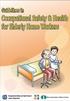 This guide is prepared by the Occupational Safety and Health Branch, Labour Department This edition March 2010 This guide is issued free of charge and can be obtained from offices of the Occupational Safety
Working safely with metalworking fluids
 Working safely with metalworking fluids A guide for employees Introduction This leaflet aims to help employees who work with metalworking fluids understand the main risks to their health. It contains general
CONTROLLING CROSS INFECTION IN THE DENTAL LABORATORY. Best Practice Guide
 CONTROLLING CROSS INFECTION IN THE DENTAL LABORATORY Best Practice Guide Preparing to Work A separate work area shall be set aside in the laboratory to receive all incoming work. This should ideally be
INFECTION CONTROL POLICY
 INFECTION CONTROL POLICY Infection control is the name given to a wide range of policies, procedures and techniques intended to prevent the spread of infectious diseases amongst staff and service users.
Welcome to the safe@work Hairdressing Module
 Welcome to the safe@work Hairdressing Module Have you read the General Module, completed the test and printed your safe@work General Award of Attainment? The Hairdressing Module should be done AFTER the
JAC-CEN-DEL COMMUNITY SCHOOLS BLOODBORNE PATHOGENS UNIVERSAL PRECAUTIONS A BACK TO SCHOOL TRADITION
 JAC-CEN-DEL COMMUNITY SCHOOLS BLOODBORNE PATHOGENS UNIVERSAL PRECAUTIONS A BACK TO SCHOOL TRADITION UNIVERSAL PRECAUTIONS AGAINST BLOODBORNE PATHOGENS Employees working in a school system are potentially
Brock University Facilities Management Operating Procedures
 Subject: Bodily Fluid Clean-Up Number: FMOP 2-3 Approval: Executive Director Issue Date: 22 Sep 08 Responsibility: Manager Custodial Services Review Period: 2 Years PROCEDURES FOR BODILY FLUID CLEAN-UP
Welcome to the safe@work Health and Community Services Module.
 Welcome to the safe@work Health and Community Services Module. Have you read the General Module, completed the test and printed your safe@work General Award of Attainment? The Health and Community Services
GUIDELINES FOR THE CLEANING UP OF BODILY FLUIDS
 GUIDELINES FOR THE CLEANING UP OF BODILY FLUIDS INTRODUCTION This Guidance Note is aimed at employees who may be dealing with or responsible for the cleaning up of bodily fluids as a part of their work
Training on Standard Operating Procedures for Health Care Waste Management Swaziland 12 May, 2011
 Training on Standard Operating Procedures for Health Care Waste Management Swaziland 12 May, 2011 Safe Infectious Waste Handling and Transport Objective Waste Overview Roles and Responsibilities of Waste
RELEVANT HACCP CHARTS: Preparation, Service
 HOUSE RULES PERSONAL HYGIENE 4.8 RELEVANT HACCP CHARTS: Preparation, Service PERSONAL HYGIENE HOUSE RULES Why is personal hygiene important? People working in your business can contaminate food or spread
GEORGIA INSTITUTE OF TECHNOLOGY ENVIRONMENTAL HEALTH AND SAFETY PERSONAL PROTECTIVE EQUIPMENT
 PURPOSE To protect the health and welfare of GEORGIA TECH employees in areas where there may be a risk of injury or exposure to hazardous substances or conditions employees who work in areas where physical
Blood-borne viruses in the workplace Guidance for employers and employees
 Blood-borne viruses in the workplace Guidance for employers and employees Is this guidance useful to me? If you are an employer or employee, self-employed or a safety representative, and involved in work
Leader s Guide E4017. Bloodborne Pathogens: Always Protect Yourself
 E4017 Bloodborne Pathogens: Always Protect Yourself 1 Table of Contents Introduction 3 Video Overview.3 Video Outline.4 Preparing for and Conducting a Presentation. 7 Discussion Ideas..8 Quiz..9 Quiz Answers...11
Particularly Hazardous Substances (PHS) Standard Operating Procedure (SOP)
 Particularly Hazardous Substances (PHS) Standard Operating Procedure (SOP) Formaldehyde, formalin, paraformaldehyde solutions, and paraformaldehyde solids Principal Investigator: Room & Building #: Department:
Worker Health, Hygiene, and Personal Practices. Please pass the apple from the back of the room to the front
 Worker Health, Hygiene, and Personal Practices Please pass the apple from the back of the room to the front Penn State Farm Food Safety Workshop 2011 Would you eat the apple we just passed around? How
Blood borne Pathogens
 Blood borne Pathogens What Are Blood borne Pathogens? Blood borne pathogens are microorganisms such as viruses or bacteria that are carried in blood and can cause disease in people. Types of Blood borne
Shampoo and conditioning
 Shampoo and conditioning UV30336 L/502/3753 Learner name: VRQ Learner number: VTCT is the specialist awarding body for the Hairdressing, Beauty Therapy, Complementary Therapy and Sport and Active Leisure
A Guideline for Cleaning Up After Flood or Sewer Back-up
 A Guideline for Cleaning Up After Flood or Sewer Back-up Revised 2010-03 INDEX PAGE Index 2 Personal Protection 3 Procedure for Cleaning Up 3 Safety 4 Initial Clean-up 5 Clean-up and Disinfection 5 Disinfectants
Protection for hand eczema
 Oxford University Hospitals NHS Trust Department of Dermatology Protection for hand eczema Information for patients What can I do to help my hand eczema? Hand eczema (the same as hand dermatitis) is normally
CYTOTOXIC PRECAUTIONS A GUIDE FOR PATIENTS & FAMILIES
 Perth and Smiths Falls District Hospital Attention: Manager, Quality 60 Cornelia Street, West Smiths Falls, Ontario K7A 2H9 CYTOTOXIC PRECAUTIONS A GUIDE FOR PATIENTS & FAMILIES This guide has been prepared
Standard Operating Procedure for a Chemical Spill
 Standard Operating Procedure for a Chemical Spill Facility: Lab Director: Scope: ERC Clean Room C17 Engineering Research Complex Electrical and Computer Engineering Brian Wright 3234 Engineering 355-5233
Management Plan For Control of Blood-borne Pathogens, Infectious Wastes and Other Potentially Hazardous Biological Agents
 Management Plan For Control of Blood-borne Pathogens, Infectious Wastes and Other Potentially Hazardous Biological Agents 1.0 Executive Summary 1.1 The Bloodborne Pathogen standard, initiated by OSHA,
LiAiSON. Formaldehyde. In This Issue. How does Formaldehyde affect human health?
 LiAiSON OCTOBER Marwell Medical Newsletter Formaldehyde How does Formaldehyde affect human health? Formaldehyde is toxic by inhalation, by skin contact, and by swallowing. Breathing Formaldehyde vapours
AORN Recommended Practices. AORN Practices. RPs Related to Environmental Services. Joan Blanchard, RN, MSS, CNOR, CIC September 10, 2008
 AORN Recommended Practices Joan Blanchard, RN, MSS, CNOR, CIC September 10, 2008 AORN Practices AORN Recommended Practices are AORN s official position on aseptic technique and technical practices. This
In addition, flammable solvents and thinners are often mixed with the above substances.
 1 of 7 This guidance note describes the measures required to control the risk to health and safety when spraying flammable liquids. Flammable liquids Flammable liquids are dangerous goods of Class 3. They
4. Cryogenic gloves are generally designed to protect the hands from intense cold or heat.
 PROTECTIVE GLOVES In many University laboratories, exposure to chemicals, infectious agents, sharp objects, extreme temperatures and other hazards can create a potential for injury to the hand. Wherever
Environmental Management of Staph and MRSA in Community Settings July 2008
 Page 1 of 7 Environmental Management of Staph and MRSA in Community Settings July 2008 Questions addressed on this page What are Staph and MRSA? How is Staph and MRSA spread? What is the role of the environment
Welcome to the safe@work Veterinary Module.
 Welcome to the safe@work Veterinary Module. Have you read the General Module, completed the test and gained your safe@work General certificate? The Veterinary Module should be done AFTER the General Module
Corporate Safety Infection Prevention Employee Health
 Corporate Safety Infection Prevention Employee Health This self-directed learning module contains information you are expected to know to protect yourself, our patients, and our guests. Target Audience:
Hygiene Standards for all Food Businesses
 Hygiene Standards for all Food Businesses Food hygiene laws are not simply a list of rules. They are intended to let food business operators assess the risks to food safety in their business and apply
BLOODBORNE PATHOGENS EXPOSURE CONTROL PLAN
 BLOODBORNE PATHOGENS EXPOSURE CONTROL PLAN Facility Name: University of Arkansas at Little Rock Date of Preparation: 01-17-06 In accordance with the OSHA Bloodborne Pathogens Standard, 1910.1030, the following
Hygiene and Infection. Control advice in the home
 Introduction The Infection Control Department Mid-Western Regional Hospital, Ennis, wrote this booklet with Clare Primary Community and Continuing Care and C-Diff Patients and Families Group. This booklet
BLOOD BORNE PATHOGENS
 BLOOD BORNE PATHOGENS AIDS and other blood-borne pathogens such as Hepatitis B and C are deadly diseases that are present in today s society. All blood-borne pathogens are transmitted in blood and other
HEALTH AND SOCIAL CARE E QUALIFICATIONS HE UNIT ICO 1
 ARE HEALTH AND SOC H AND SOCIAL CARE H OCIAL CARE HEALTH A ARE HEALTH AND SOC ND SOCIAL CARE HEA E QUALIFICATIONS HE LTH AND EXEMPLAR SOCIAL CARE OCIAL CANDIDATE CARE HEALTH WORK A ARE HEALTH AND SOC UNIT
Bloodborne Pathogens (BBPs) Louisiana Delta Community College
 Bloodborne Pathogens (BBPs) Louisiana Delta Community College 1 Bloodborne Pathogens Rules & Regulations Office of Risk Management (ORM) requires development of a bloodborne pathogens plan low risk employees
Biosafety Spill Response Guide
 Yale University Office of Environmental Health & Safety Biosafety Spill Response Guide Office of Environmental Health & Safety 135 College Street, 1 st Floor, New Haven, CT 06510 Telephone: 203-785-3550
Moving to a hospital or skilled nursing facility
 H Moving to a hospital or skilled nursing facility What to expect when you have MRSA (Methicillin-resistant Staphylococcus aureus) A booklet for patients, residents, family members, and caregivers About
PICCs and Midline Catheters
 Patient Education PICCs and Midline Catheters Patient s guide to PICC (peripherally inserted central catheter) and midline catheters What are PICCs and midline catheters used for? Any medicine given over
Welcome to the safe@work Office and Business Module.
 Welcome to the safe@work Office and Business Module. Have you read the General Module, completed the test and printed your safe@work General Award of Attainment? The Office and Business Module should be
EOSMS 204C Effective Date: 12/8/2014 Page 1 of 8
 EOSMS 204C Effective Date: 12/8/2014 Page 1 of 8 1. Purpose This Standard Operating Procedure (SOP) establishes procedures for the safe handling, transportation and storage of (MC), which is also known
Occupational Health and Safety in the Laboratory (Undergraduate Students)
 Occupational Health and Safety in the Laboratory (Undergraduate Students) Introduction and scope of the Guidelines These guidelines have been written for all laboratory practical classes at the University
Hand Hygiene and Infection Control
 C Hand Hygiene and Infection Control Sirius Business Services Ltd www.siriusbusinessservices.co.uk Tel 01305 769969 [email protected] Whatever your First Aid, Fire Safety or Health & Safety
VRE. Living with. Learning how to control the spread of Vancomycin-resistant enterococci (VRE)
 VRE Living with Learning how to control the spread of Vancomycin-resistant enterococci (VRE) CONTENTS IMPORTANT VRE is a serious infection that may become life-threatening if left untreated. If you or
POLICY & PROCEDURE: SAFE HANDLING OF SHARPS & NEEDLE STICKS
 POLICY & PROCEDURE: SAFE HANDLING OF SHARPS & NEEDLE STICKS File Name: SAFESHARPSPP2013 Revision: 2 Date of Issue: Person Responsible: Edel Niland 1.0 POLICY Dublin Institute of Technology (DIT) endeavours
Pesticide Spills. Chapter 26. In This Chapter. Keywords. Accidents. Pesticides Act and Environmental Protection Act
 Chapter 26 Pesticide Spills In This Chapter Keywords Accidents After learning the information in this chapter, you will be able to: 1. Define a spill. 2. Describe when a spill must be reported to the Spills
Sanitary Food Preparation & Safe Food Handling
 70 Feeding Infants 10 Sanitary Food Preparation & Safe Food Handling Babies are more susceptible to bacteria than older children, and unsanitary food conditions can cause serious infections. General cleanliness,
MATERIAL SAFETY DATA SHEET TOILET BOWL SANITIZER
 MATERIAL SAFETY DATA SHEET TOILET BOWL SANITIZER No. 1 Date Issued: 07/03/2011 COMPANY DETAILS NAME: Hygiene Systems (Pty) Ltd EMERGENCY TEL: 0860 494 4363 ADDRESS: 7 Hargan Road, TEL: 011 552 8403 SECTION
Work & Pregnancy Do Mix...
 Work & Pregnancy Do Mix... www.beststart.org PREGNANT AND WORKING Most women continue to work during their pregnancy, whether they work from home, or travel to a workplace. If you are pregnant or planning
Product Code: VLB4236 310ml cartridges. Substance Name EC No. CAS No. % by Wt Hazard Symbols n Butylacetate 123 86 4 10 30 10.
 1 Product and company identification Supplier: The Vapormatic Co Ltd PO Box 58, Kestrel Way Sowton Industrial Estate, Exeter, EX2 7NB, England Phone Number: 00 44 (0)1392 435461 Fax Number: 00 44 (0)1392
Waste Management Policy
 Waste Management Policy Revised April 2013 1 Contents Page Content Page No. Clinical Waste 3 - The handling and disposal of Clinical and Soiled 3 - Policy 3 - Warning - The collection of Clinical Waste
Appendix J IBC Biohazard Spill Management Plan
 OVERVIEW Prevention is the most important part of any spill management plan. Be sure to read and understand standard operating procedures (SOP s) and protocols for safe manipulation of biohazards before
TEMPLE UNIVERSITY ENVIRONMENTAL HEALTH AND RADIATION SAFETY
 Page 1 of 7 ISSUED: 5/00 REVISED: 08/06 1. Potential Releases of Radioactive Materials to Unrestricted Areas The Environmental Health and Safety Department (EHRS) must be notified immediately if an emergency
Cleaning of Laboratories
 Cleaning of Laboratories Introduction Within the University cleaning staff are usually provided by Support Services Division of the Estates and Buildings Department, but arrangements may vary on different
MATERIAL SAFETY DATA SHEETS
 SYMEX HOLDINGS LIMITED TRADING AS PENTAL PRODUCTS PTY LTD 48 Drummond Road Telephone : 03 5820 5200 Shepparton VIC 3630 Fax : 03 5820 5221 ABN 68 103 213 467 ----------------------------------------------------------------------------------------------------------------------------
Guidance sheet 4: Chemical Spill Management
 Guidance sheet 4: Chemical Spill Management The purpose of this Guidance sheet is to provide information on how to prevent chemical spills and /or manage and respond to spills in the event that they do
ERGONOMICS. Improve your ergonomic intelligence by avoiding these issues: Awkward postures Repetitive tasks Forceful exertions Lifting heavy objects
 ERGONOMICS The goal of ergonomics is to reduce your exposure to work hazards. A hazard is defined as a physical factor within your work environment that can harm your body. Ergonomic hazards include working
CHEMICAL SPILL MANAGEMENT GUIDELINES
 WHS Unit CHEMICAL SPILL MANAGEMENT GUIDELINES Contents 1 Purpose... 2 2 Scope... 2 3 Definitions... 2 4 Roles and Responsibilities... 2 5 General... 2 6 Defining Major or Minor Spill... 3 7 Major Spill
OESO Ergonomics Division...919-668-ERGO(3746) Duke Police...919-684-2444 Corporate Risk Management... 919-684-6226
 Musculoskeletal Disorders (MSDs) Develop over time and can take a long time to heal Can be quite painful and reduce overall effectiveness and efficiency Occur in any part of the body A variety of risk
DO YOU WORK AROUND BLOOD OR BODY FLUIDS? Cal/OSHA s New Rules
 DO YOU WORK AROUND BLOOD OR BODY FLUIDS? Cal/OSHA s New Rules Labor Occupational Health Program University of California, Berkeley 1994 ACKNOWLEDGMENTS This booklet is a publication of the Labor Occupational
MD 52 WASTE MANAGEMENT AUTHORITY CORPORATE HEALTH AND SAFETY PROGRAM
 UNSAFE ACTS AND CONDITIONS All accidents are the result of an unsafe act, an unsafe condition or a combination of both. Unsafe acts account for approximately 80% of all incidents/accidents, while unsafe
Mercyhurst University Athletic Training Program Bloodborne Pathogens Exposure Control Plan
 Mercyhurst University Athletic Training Program Bloodborne Pathogens Exposure Control Plan In accordance with the Occupational Safety Health Administration (OSHA) Bloodborne Pathogens Standard, 29 CFR
Back Pain Musculoskeletal Disorder Updated October 2010
 Back Pain Musculoskeletal Disorder Updated October 2010 According to the Health and Safety Executive back pain is the most common health problem for British workers. Approximately 80% of people experience
Conducting a Job Hazard Assessment. Environmental, Health and Safety 275-3241
 Conducting a Job Hazard Assessment Environmental, Health and Safety 275-3241 EH&S Programs: Fire Safety Blood Borne Pathogens Hazard Communication Personal Protective Equipment Emergency Preparedness General
Document the assessment, PPE selection, and training.
 Requirements... 1 Hazard Control... 1 Supervisor Responsibilities... 2 How to Use This Website... 3 Step One - Assessment... 3 Step Two - Selection... 3 Step Three - Training... 4 Step Four - Documentation...
GESSO PRIMER WHITE DALER ROWNEY, 2 Corporate Drive, Cranbury, New Jersey, 08512-9584 USA
 1. IDENTIFICATION OF THE SUBSTANCE/PREPARATION AND OF THE COMPANY/UNDERTAKING Product Name Supplier DALER ROWNEY, 2 Corporate Drive, Cranbury, New Jersey, 08512-9584 USA Emergency telephone number 1-609-655-5252
COMPOSITION / INFORMATION ON INGREDIENTS
 MATERIAL SAFETY DATA SHEET DAMTITE WATERPROOFER- WHITE 01071, 01211, 01451 DAMTITE POWDER FOUNDATION WATERPROOFER GRAY 02451 SECTION I. COMPANY & PRODUCT INFORMATION Product Identification Manufacturer
Prevention and control of infection in care homes. Summary for staff
 Prevention and control of infection in care homes Summary for staff 1 DH INFORMATION READER BOX Policy Clinical Estates HR / Workforce Commissioner Development IM & T Management Provider Development Finance
PI s Name Date Bldg./Rm# CDC Biosafety Level 3 (BSL-3)
 PI s Name Date Bldg./Rm# CDC Biosafety Level 3 (BSL-3) Yes No 1. Is access to the laboratory limited or restricted at the discretion of the laboratory director when experiments are in progress? Yes No
GUIDELINES TO PREVENT TRANSMISSION INFECTIOUS DISEASES IN SCHOOLS
 GUIDELINES TO PREVENT TRANSMISSION OF INFECTIOUS DISEASES IN SCHOOLS May 1991 Precautions, Procedures and Instructions for Handling Body Fluids DUVAL COUNTY PUBLIC SCHOOLS CONTENTS PAGE Introduction...
SPILLS & SPILL KITS. Spills -General Guidelines:
 Spills -General Guidelines: If handled properly, a spill may be nothing more than a nuisance. If handled improperly, a spill can seriously disrupt your activities and the work of your colleagues. At worst,
PERSONAL PROTECTIVE EQUIPMENT (PPE)
 Page 1 of 6 (PPE) Personal protective equipment (PPE) is used to protect an individual from hazards associated with their work tasks or environment. Specific types of personal protective equipment include
Shop Safety. Action Tattoo 3525 Del Mar Heights Rd., Suite 7 San Diego, CA 92130
 Shop Safety Action Tattoo 3525 Del Mar Heights Rd., Suite 7 San Diego, CA 92130 Action Tattoo Exposure Control and Infection Prevention Plan (ECIPP) Established on: / / Section 1: Policy, Scope, and Responsibility...
Bloodborne Pathogens
 Bloodborne Pathogens Learning Objectives By the end of this section, the participant should be able to: Name 3 bloodborne pathogens Identify potentially contaminated bodily fluids Describe 3 safe work
Conforms to Regulation (EC) No. 1907/2006 (REACH), Annex II and Regulation (EC) No. 1272/2008 (CLP) - Europe. Bona Wood Floor Cleaner
 Conforms to Regulation (EC) No. 1907/2006 (REACH), Annex II and Regulation (EC) No. 1272/2008 (CLP) - Europe 1. SAFETY DATA SHEET IDENTIFICATION OF THE SUBSTANCE/PREPARATION AND OF THE COMPANY/UNDERTAKING
Workshop Self Inspection Checklist WORK01
 Workshop Self Inspection Checklist WORK01 General Mechanical Workshops Location Assessor Date This core checklist is provided by the Health and Safety Department as a template, which provides a basic framework
SAFETY DATA SHEET (REACH regulation (EC) n 1907/2006 - n 453/2010)
 SAFETY DATA SHEET (REGULATION (EC) n 1907/2006 - REACH) Date : 23/04/2015 Page 1/6 SAFETY DATA SHEET (REACH regulation (EC) n 1907/2006 - n 453/2010) SECTION 1 : IDENTIFICATION OF THE SUBSTANCE/MIXTURE
PENNY IN A CUP: DEMONSTRATING THE LAW OF INERTIA
 PENNY IN A CUP: DEMONSTRATING THE LAW OF INERTIA Introduction Newton s (Sir Isaac Newton, English physicist, 1642 1727) First Law of Motion states that: An object at rest tends to stay at rest, and an
Personal protective equipment (PPE) at work A brief guide
 Personal protective equipment (PPE) at work A brief guide Introduction This leaflet describes what you, as an employer, may need to do to protect your employees from the risk of injury in the workplace.
Lab PPE Guide Examples of Personal Protective Equipment
 Lab PPE Guide Examples of Personal Protective Equipment 1140 South Paulina St. 245 (PSB) Chicago IL 60612 Phone: 312-413-3387 Fax: 312-413-3700 www.uic.edu/depts/envh This document is to be used as a supplement
BLOODBORNE PATHOGENS EXPOSURE CONTROL PROGRAM
 BLOODBORNE PATHOGENS EXPOSURE CONTROL PROGRAM Purpose: The purpose of this program is to eliminate or minimize employee and student exposure to blood and other potentially infectious materials. This exposure
SECTION 3: COMPOSITION/INFORMATION ON INGREDIENTS 3.1. Substances Not applicable 3.2. Mixture
 Revision Date: 05/19/2015 Date of issue: 05/19/2015 Version: 1.0 SECTION 1: IDENTIFICATION 1.1. Product Identifier Product Form: Mixture Product Name: 10X Spheroid Formation ECM Product Code: 3500-096-01
MATERIAL SAFETY DATA SHEETS
 PENTAL LIMITED TRADING AS PENTAL PRODUCTS PTY LTD 48 Drummond Road Telephone : 03 5820 5200 Shepparton VIC 3630 Fax : 03 5820 5221 ABN 68 103 213 467 ----------------------------------------------------------------------------------------------------------------------------
SAFETY DATA SHEET Revised edition no : 0 SDS/MSDS Date : 12 / 7 / 2012
 Page : 1 1. Identification of the substance/mixture and of the company/undertaking 1.1. Product identifier Trade name : Product code : Identification of the product : NILE BLUE CHLORIDE CAS No :2381-85-3
SAFETY DATA SHEET DALER ROWNEY 1. IDENTIFICATION OF THE SUBSTANCE/PREPARATION AND OF THE COMPANY/UNDERTAKING. Primer for Acrylic Paint
 1. IDENTIFICATION OF THE SUBSTANCE/PREPARATION AND OF THE COMPANY/UNDERTAKING Product Name Supplier DALER-ROWNEY LTD, PEACOCK LANE, BRACKNELL, RG12 8SS, ENGLAND. Emergency tel : +44 (0) 1344 461000/ fax
Fact Sheet: Occupational Overuse Syndrome (OOS)
 Fact Sheet: Occupational Overuse Syndrome (OOS) What is OOS? Occupational Overuse Syndrome (OOS) is the term given to a range of conditions characterised by discomfort or persistent pain in muscles, tendons
SAFETY DATA SHEET EVO-STIK GRIPFILL SOLVENT FREE (Irl)
 Revision Date December 2014 SAFETY DATA SHEET According to Regulation (EC) No 1907/2006 1 / 6 SECTION 1: IDENTIFICATION OF THE SUBSTANCE/MIXTURE AND OF THE COMPANY/UNDERTAKING 1.1. Product identifier Product
Swallowed Do not induce vomiting give 250 ml water to drink. Seek immediate medical attention.
 Section 3- HAZARDS IDENTIFICATION R20/21 3.1 Hazardous substance dangerous goods 3.2 Risk Phrases R20/21 Harmful by inhalation in contact with skin. 3.3 Safety Phrases S16 Keep away from sources of ignition
POLICY ON OCCUPATIONAL HEALTH AND SAFETY RISK MANAGEMENT
 THE NORTHCOTT SOCIETY POLICY ON OCCUPATIONAL HEALTH AND SAFETY RISK MANAGEMENT VOLUME: 2 Policy on Management and Organisational Issues SECTION: B Occupational Health & Safety & Workers Compensation SUB-SECTION:
MATERIAL SAFETY DATA SHEET DATE: 2009, revised July 2011 PRODUCT NAME: BOSTON BRAKE & PARTS CLEANER PRODUCT CODE: 78200
 MATERIAL SAFETY DATA SHEET DATE: 2009, revised July 2011 PRODUCT NAME: BOSTON BRAKE & PARTS CLEANER PRODUCT CODE: 78200 SUPPLIER S NAME : SECTION I SUPPLIER IDENTIFICATION CAMPBELLS WHOLESALE PTY LTD ADDRESS
Clinical Waste Management & Sharps Injury Prevention. Clinical Skills
 Clinical Skills Clinical Waste Management and Sharps Injury Prevention Clinical Skills and Simulation Team Cardiff and Vale Waste Management Team Aims & Outcomes Aims & Outcomes The aim of this module
THE BLUE WASHING BOOK
 Resources For other booklets and resources visit the Grampians Region Health Collaborative Website Infection Control at: http://www.grhc.org.au/infection-control A LITTLE YELLOW INFECTION CONTROL BOOK
Personal Protective Equipment PPE
 Trainer notes for personal protection equipment (PPE) presentation Personal Protective Equipment PPE A short presentation on the principles of infection control in social care 1 P a g e Different types
Biosafety Level 2 Criteria
 Biosafety Level 2 Criteria Biosafety in Microbiological and Biomedical Laboratories (BMBL) 5th Edition Biosafety Level 2 (BSL-2): Biosafety Level 2 builds upon BSL-1. BSL-2 is suitable for work involving
Mold. Clean Up, Removal, Safety Concerns
 Mold & Clean Up, Removal, Safety Concerns What is Mold? What are the Symptoms? Should I be concerned? What is Toxic Mold? Molds are fungi that can be found both indoors and outdoors. It s not know how
THE UNIVERSITY OF NEWCASTLE- SCHOOL of BIOMEDICAL SCIENCES
 Page: 1 of 7 1. Purpose: 1.1. To describe the procedures to be used when dealing with chemical or microbiological spills. 2. Equipment: 2.1. Spill Kit 2.2. Miscellaneous items as listed 3. Materials: 3.1.
INFECTION CONTROL POLICY MANUAL
 Page 1 of 7 POLICY MANUAL Key Words: personal protective equipment, PPE, safety equipment, infection control, standard precautions Policy Applies to: All staff employed by Mercy Hospital. Credentialed