
HOME & GARDEN INFORMATION CENTER
|
|
|
- Marlene Moore
- 9 years ago
- Views:
Transcription
1 HGIC HOME & GARDEN INFORMATION CENTER Less Toxic Insecticides While a good pest management plan will start with preventative, cultural and other non-chemical methods, these are sometimes not completely effective on their own. In this case a pesticide may be considered. If pesticide use is deemed necessary for control of the pest problem, it is good practice to use the least toxic pesticide that will do the job effectively. Although all pesticides are by their nature toxic in some way to some organisms, there are now a number of "less toxic" pesticide options. Insecticides may be considered less toxic for several reasons. Generally they should pose less risk to human and environmental health than conventional insecticides. Many break down rapidly and do not accumulate in the body or environment. Some are very pest specific and do little or no damage to other organisms. Still others, such as bait stations, minimize human exposure to the pesticide. While "organic" insecticides are often less damaging to the environment than conventional insecticides, they are still pesticides. All pesticides should be evaluated before selection for level of toxicity, effectiveness, environmental impacts and costs. Some "organic" pesticides are as toxic, or even more toxic, than some synthetic pesticides. Soaps & Oils Insecticidal soaps and oils have a number of advantages for controlling insects. They are virtually non-toxic to humans and other mammals, and are relatively safe to beneficial insects in the landscape. They control a wide range of common soft-bodied pests including aphids, mealybugs, thrips, whiteflies, mites, and scales. It is difficult for pests to develop resistance to oils and soaps. Soaps and oils are now readily available and relatively inexpensive. Both soaps and oils can cause damage to plants if applied when plants are water stressed, temperatures are above 90 F, or high humidity prevents rapid drying. Some plants are sensitive to oil sprays. Read and follow the label. Since soaps and oils work on contact, an effective application must coat both the upper and lower leaf surfaces as well as stems for best results. Repeated applications may be necessary. Apply soap or oil sprays in the early morning or late evening to reduce drying times for more effective insect pest control. Insecticidal Soaps: Insecticidal soaps damage the protective coat of soft-bodied insects causing them to dehydrate. Homemade soap recipes are not recommended because they may be more likely to cause foliage burn. Commercial insecticidal soaps are tested on plants and are less likely to cause damage. Some are available as concentrates to dilute before spraying, and some are available as pre-mixed Ready to Use (RTU) bottles. Examples of insecticidal soap products are: Bonide Insecticidal Soap Conc. (47%) & RTU (1%) Natural Guard Insecticidal Soap Conc. (47%) & RTU (1%) Schultz Garden Safe Insecticidal Soap Insect Killer Conc. (47%) & RTU (1%) Safer Brand Insect Killing Soap Conc. (49.52%) & RTU (1%) OMRI Espoma Earth-tone Insecticidal Soap Conc. (47%) & RTU (1%) Concern Rose & Flower Insect Killer II RTU Bayer Natria Insecticidal Soap RTU (1%)

2 Raid Earth Options Insecticidal Soap RTU (1%) OMRI Lilly Miller Worry Free Insecticidal Soap RTU (1%) Whitney Farms Insecticidal Soap RTU (1%) Bayer Natria Insecticidal Soap RTU (1%) Horticultural Oils: Oil products smother soft bodied insects on contact. Oils are formulated as either horticultural or dormant oils. Dormant oils are heavier, less refined oils used on dormant, leafless plants to control overwintering insects (e.g., aphids, spider mites, and scales). Dormant oils will damage plant foliage if used during the growing season. Horticultural oils are also called summer or superior oils, and these are lighter and more refined. They can be applied to both actively growing plants, as well as dormant plants for insect pest control. Do not apply horticultural oil sprays when the temperature is above 90 F, or if rain is in the forecast within 24 hours. Most horticultural oils are applied at a 1 to 2% mix with water to spray actively growing plants (this would be 2½ to 5 tablespoons of oil with a gallon of water). To use horticultural oil as a dormant oil spray to control pests on woody plant bark, they are mixed at 4% with water (this would be 10 tablespoons of oil per gallon of water). Always spray very late in the day to slow drying time, and to get better insect control. Most are available as concentrates made to dilute with water in a sprayer, although some are available as either a Ready to Spray (RTS), which is a bottle to attach to a garden hose for spraying, or as a Ready to Use (RTU), which is a pre-mixed spray bottle. Examples of horticultural oils are: Ferti-lome Horticultural Oil Spray Concentrate (80%) & RTS Southern Ag Parafine Horticultural Oil (98%) Bonide All Seasons Spray Oil Concentrate ((98%) & RTU Lilly Miller Superior Type Spray Oil Concentrate (99%) Monterey Horticultural Oil Concentrate (80%) & RTS Botanical Insecticides Botanical insecticides are naturally occurring toxins extracted from plants. There are several advantages to using botanical rather than synthetic insecticides. Plant derived insecticides breakdown quickly in the environment, resulting in little risk of residues on food crops and less risk to beneficial insects. Some materials can be used shortly before harvest. Most botanicals are rapid acting and most, but not all botanicals are of low to moderate toxicity to mammals. Because most botanical insecticides must be eaten by the insect pest, they are primarily harmful to these pests and do little harm to beneficial insects. There can also be disadvantages to using these products. Rapid break down, while less risky to health and environment, often creates a need for precise timing or more frequent applications. Several botanical insecticides are quite toxic and should be handled accordingly. Some botanical insecticides can be difficult to find in local stores. Neem products: Neem oil is botanical insecticide made from extracts of Neem tree seeds. The active ingredient is listed on product labels as hydrophobic extracts of neem oil. It is used to control a wide variety of insects including leafminers, whiteflies, thrips, caterpillars, aphids, mealybugs, spider mites, scale crawlers, and beetles. Neem oil is most effective against actively growing immature insects. Neem oil sprays kill small insect pests and mites by suffocation as do horticultural oil sprays, but also has some insecticidal properties. Neem oil sprays have some fungicidal activity, but it is typically limited to powdery mildew control. This control is primarily because it is oil. However, a horticultural oil spray generally works better for powdery mildew control. Azadirachtin: Azadirachtin the active ingredient in neem extracts, has a very low mammalian toxicity. It has been separated from the neem oil. It acts as an insect feeding deterrent and growth regulator. Azadiractin does not produce a quick knockdown and kill, but stops insect feeding. The treated insect usually cannot molt into its next life stage and dies without reproducing. It also is an egg-laying deterent. Many commercial neem products exist, and these products are labeled for use on ornamentals, foliage plants, trees, shrubs and food crops. Most neem oil products are available as concentrates made to dilute with water in a sprayer, but some are

3 available as either Ready to Spray (RTS), which is a bottle to attach to a garden hose for spraying, or as Ready to Use (RTU), which is a pre-mixed spray bottle. Examples of neem products for landscape and garden use include: Neem Oil: Southern Ag Triple Action Neem Oil Ferti-lome Rose, Flower & Vegetable Spray Bonide Rose Rx 3-in-1 Concentrate; & RTU, Bonide Neem Oil Concentrate; & RTU, Green Light Rose Defense Green Light Neem Natural Guard Neem Garden Safe Fungicide 3 Conc.; & RTU OMRI, Garden Safe (Schultz) Neem Oil Extract Conc. OMRI, Concern Garden Defense Multi-Purpose Spray Monterey 70% Neem Oil Fungicide/ Insecticide/Miticide Conc.; & RTS OMRI. Azadiractin: Gordon s Azatrol EC Insecticide, Safer Brand BioNeem Insecticide & Repellent Safer Brand Grub Killer RTS. Limonene: Limonene is produced from citrus oils extracted from oranges and other citrus fruit peels. It is used as a contact insecticide against ants, roaches, palmetto bugs, fleas, silverfish and many other insects. Limonene has low oral and dermal toxicity to mammals, birds and fish, although it can cause skin irritation or sensitization in some people. Pesticide products containing limonene are used for flea and tick control on pets, insecticide sprays, outdoor dog and cat repellents, mosquito larvicides, and insect repellents. Many products containing limonene are labeled as safe for use in areas near food. Limonene is the active ingredient in Ortho Home Defense Indoor Insect Killer, Concern Citrus Home Pest Control, and in products made by Orange Guard. Safer Fire Ant Killer and Citrex Fire Ant Killer also contain d-limonene. Capsaicin: This is the material that makes chili peppers hot. It can be used on ornamentals outdoors and indoors for control of aphids, spider mites, thrips, whitefly, lace bugs, leafhoppers, and other pests. It is important to note that capsaicin containing products are primarily used to repel insects, rather than to kill existing infestations, and they appear to be effective at repelling certain animal pests such as rabbits, deer and squirrels. Products containing capsaicin include: Bonide Hot Pepper Wax Insect Repellent RTU, Bonide Hot Pepper Wax Animal Repellent RTU, Bonide Go Away Deer & Rabbit Repellent RTU. Pyrethrin: Pyrethrum is made from the finely powdered flowers of a species of daisy. The word pyrethrum is the name for the crude flower dust itself, and the term pyrethrin refers to the insecticidal compounds that are extracted from pyrethrum. Pyrethroids are not botanical insecticides, but synthetically produced pesticides that are very similar in structure to the pyrethrins. Pyrethrin is a contact insecticide and must be applied directly to the insect to be effective. Pyrethrum rapidly paralyzes pests, but may not kill them. Pyrethrins are often formulated with another insecticide to ensure that paralyzed insects do not recover and once again become pests. Because the pyrethrin mammalian toxicity is very low, it can be applied to food crops close to harvest. Pyrethrum has high contact toxicity for common beneficial insects. Pyrethrin s insecticidal activity only lasts a few hours. There are many products with pyrethrin available; some products with pyrethrin alone, and other products combined with another insecticide, such as: Pyrethrins: PyGanic Crop Protection EC 1.4 (1.4% a.i.) OMRI, PyGanic Crop Protection EC 5.0 (5.9% a.i.) OMRI. Neem Oil with Pyrethrins: Green Light Neem II RTU, Green Light Fruit Tree Spray

4 Ferti-lome Triple Action Plus II with Neem Oil, Ferti-lome Fruit Tree Spray Bonide Bon-Neem II Ortho Tree & Shrub Fruit Tree Spray Concentrate. Pyrethrins & Pipernyl Butoxide: Spectracide Garden Insect Killer Southern Ag Natural Pyrethrin Bonide Pyrethrin Garden Insect Spray Bonide Japanese Beetle Killer RTU, Garden Safe (Schultz) Rose & Flower Insect Killer RTU, Lilly Miller (GardenTech) Worry Free Insecticide & Miticide Conc.; RTS; RTU. Pyrethrins & Sulfur: Bayer Advanced Natria Insect, Disease & Mite Control RTU & RTS, Espoma Earth-tone Disease Control Concentrate; & RTU, Bonide Citrus Fruit & Nut Orchard Spray Concentrate; & RTS, Bonide Tomato & Vegetable 3 in 1 Concentrate; & RTS, Ortho Elementals 3-in-1 Rose & Flower Care RTU. Pyrethrins & Canola Oil: Espoma Earth-tone Insect Control Conc. & RTU, Monterey Take Down Garden Spray Whitney Farms Outdoor Insect Killer RTU, Ortho Elemental Garden Insect Killer RTU. Garlic: Garlic is marketed in several products intended to repel insects, much as capsaicin does. Products are labeled to repel a wide variety of pests on ornamental plants, but garlic may also repel nuisance animals. To date there is limited research showing effectiveness of garlic insecticides. Products containing garlic or garlic oil include: Havahart Deer Off Deer, Rabbit & Squirrel Repellent Concentrate; & RTU, Sweeney s Deer & Rabbit Repellent Captiva Insect Repellent/ Insecticide. Rotenone, Sabadilla, Ryania, and Nicotine: These are older botanical insecticides that are no longer available due to toxicity to people and/or the environment. Although these insecticides were naturally-derived, they are more toxic or harmful than many commercially produced insecticides. Essential Oils A variety of pesticides based on essential oils or components of essential oils have come on the market in the last few years. Essential oils are volatile, highly concentrated substances extracted from plant parts. In 1996 the EPA established that certain ingredients that pose minimum risk to users no longer require EPA approval to be marketed as insecticides. A number of these ingredients are essential oils, including the oils of cedar, cinnamon, citronella, citrus, clove, eugenol (a component of clove oil), garlic, mints, rosemary, and several others. As insecticides, these work most commonly as contact killing agents only, so re-treatment may be needed. Most essential oils used as pesticides work by disrupting an insect neurotransmitter that is not present in people, pets, or other vertebrates. Eugenol: The active component of clove oil is Eugenol. It is a fast acting contact insecticide that is effective on a wide variety of household pests such as cockroaches, ants, dust mites, flies, wasps, spiders, crickets, and fleas. It is also used on some ornamental plant pests such as armyworms, thrips, aphids and mites. Eugenol has little or no residual activity, although the scent of cloves will linger. Products based on eugenol are considered minimum risk pesticides with very low risk of damage to the environment. Eugenol is rapidly absorbed by skin, is toxic to human skin cells, and can cause severe eye irritation. Applicators should wear protective eye wear and water proof gloves for handling and spraying. Often clove oils are mixed with other natural oils, such as rosemary oil, thyme oil, and sesame oil for enhanced control. Products that contain eugenol include: Bioganic Safety Brand s Barrier Treatment Indoor/Outdoor Insect Control, Bioganic Brand s Flying Insect Killer, Bioganic Safety Brand s Lawn and Garden Spray.

5 Microbial Insecticides Microbial insecticides contain microorganisms (viruses, bacteria, fungi, protozoa, or nematodes) or their by-products. Microbial insecticides are especially valuable because their toxicity to animals and humans is extremely low. Insecticidal products comprised of a single species of microorganism may be active against a wide variety of insects or group of related insects (such as caterpillars) or they may be effective against only one or a few species. Most are very specific. Since there is such a narrow range of insects killed, they spare the beneficial insects almost entirely. Bacillus thuringiensis: These products are the most widely used microbial insecticides in the United States. They are commonly known as Bt. Different subspecies of Bt are effective against different groups of insects or their larvae. The best results will be achieved using Bt products by following a few guidelines. Make sure the Bt product you have chosen lists the specific insect you want to control. Make sure the insect is at a stage where it is susceptible to control by Bt. In general, Bt products are effective against young larval stages, but will not kill adults. Spray the parts of the plant on which insects are feeding thoroughly, including the underside of leaves. Bt products must be eaten in order to be effective. Liquid formulations are more effective and stay on plants better than dust formulations. Treat with Bt in late afternoon or evening, or on a cloudy day as Bt breaks down in sunlight. Be aware that Bt does not kill immediately, but the poisoned insects will stop feeding almost immediately. Bacillus thuringiensis var. kurstaki (Btk): These Btk products are toxic only to larvae of butterflies and moths. They are used to safely control many common leaf-feeding caterpillars, including caterpillar pests on vegetables, bagworms and tent caterpillars on trees and shrubs, and European corn borer larvae. Some caterpillars are not effectively controlled by Bt, especially those that live in the soil or bore into plant tissues without consuming a significant amount of the Bt applied to plant surfaces. Bacillus thuringiensis var. kurstaki products include: Safer Caterpillar Killer with B.t. American Brand Thuricide Bonide Thuricide Bt Southern Ag Thuricide Bt Caterpillar Control (Concentrate), Hi-Yield Thuricide Southern Ag Thuricide Bt Caterpillar Control Tiger Brand Worm Killer Green Light Bt Worm Killer Monterey Bt, Organic Laboratories Organocide Worm & Caterpillar Control, Ferti-lome Dipel Dust, Green Light Dipel Dust, Southern Ag Dipel Dust, Safer Brand Garden Dust with Bt. Bacillus thuringiensis var. israelensis (Bti): These Bti formulations kill mosquito, black fly, and fungus gnat larvae. Bti is most effective for mosquito or black fly control when it is used on a community-wide basis. For most homeowners, eliminating standing water sources is more effective than applying Bti or other insecticides. Floating products sold as dunks or pellets can eliminate mosquito larvae in ornamental ponds and other areas that cannot be drained. Bti products that are available commercially include: Summit Mosquito Dunks, Summit Mosquito Bits, Bonide Mosquito Beater WSP. Milky Spore: Milky Spore products contain the bacteria Bacillus popillae and Bacillus lentimorbus. Milky spore is applied to turf and watered into the soil below to control the larval (grub) stage of the Japanese beetle and, less effectively, some other beetle grubs. If a substantial grub population is present at the time of application, milky spore can survive beneath undisturbed sod for a period of 15 to 20 years. Consequently, lawn applications of milky spore bacteria might not have to be repeated each year.

6 Examples of products are: St Gabriel s Milky Spore Powder Japanese Beetle Control St Gabriel s Milky Spore Granular Grub Control Spinosad: Avery effective insect toxin derived from a soil-dwelling bacterium is Spinosad. It kills primarily by ingestion and is used against fire ants, caterpillars, thrips, leaf miners, and some beetles. It is also used against caterpillar borers of fruit trees. When applied at recommended rates, this product poses less risk than most insecticides to mammals, birds, fish, and beneficial insects. It is, however, toxic to bees, and should not be applied to plants in flower. Affected pests stop feeding within minutes, but may remain on the plant for up to two days. Always spray plants late in the day to reduce any harmful effect on pollinating insects. Products containing spinosad are sold as concentrates to spray, or as fire ant baits in granular form. The sprays are labeled for use on ornamentals, lawns, and vegetables; the baits can be used in landscapes and within vegetable gardens. Examples of concentrates and baits are: Spinosad Concentrates: Green Light Lawn & Garden Spray with Spinosad Concentrate; & RTS OMRI, Southern Ag Conserve Naturalyte Insect Control Concentrate OMRI, Bonide Colorado Potato Beetle Beater Bonide Captain Jack s Deadbug Brew Concentrate; & RTS; & RTU, Ferti-lome Borer, Bagworm & Leafminer Spray Monterey Garden Insect Spray Natural Guard Spinosad Landscape & Garden Insecticide RTS. Spinosad Fire Ant Baits: Southern Ag Payback Fire Ant Bait, Garden Safe Fire Ant Killer Ready to Use Granules, Green Light Fire Ant Control Bait, Conserve Fire Ant Bait, Ferti-lome Come and Get It! Fire Ant Bait, Safer Brand Fire Ant Bait Ready to Use. Beauveria bassiana: This fungus that attacks and kills a variety of immature and adult insects. Insects effected by various formulations include whiteflies, aphids, mites, caterpillars, leaf hoppers, grasshoppers, Colorado potato beetles, Mexican bean beetles, Japanese beetles, boll weevils, cutworms, sod webworms, bark beetles, chinch bugs, fire ants, European corn borers, and codling moths. Beneficial insects, such as lady beetles, are also susceptible. Products containing Beauveria work best when applied at the onset of an infestation. It typically takes three to seven days after application for the spores to germinate, penetrate, and grow throughout the insect, thus killing them. Thorough spray coverage is essential because fungal spores must contact the insect for infection to occur. Commercial products contain spores that germinate after application. New formulations do not require high humidity in order to provide effective control. Commercial products containing Beauvaria include: Naturalis L, Botanigard 22WP or ES. Beneficial Nematodes: Nematodes are microscopic, worm-like parasites. While some species of nematodes are pests of turf grass and other plants, others are beneficial, being parasites of harmful insects. Since beneficial nematodes cannot develop in vertebrate animals, they are very safe for use in pest control. Beneficial nematodes can be used to control a variety of plant pests, including larvae of black vine weevil, clearwing borers, cutworms, sod webworms, mole crickets and white grubs. It is important to select the proper nematode species when trying to control a particular pest. Nematodes can be difficult to use for most home gardeners. They must be shipped, stored and used under specific temperature and moisture conditions, and generally must be used very soon after shipping. For this reason, they are best ordered from suppliers immediately after a pest problem is observed. A number of nematode products are available by mail order. Be sure the product you are ordering is specified for the pest you have and that you are able to provide proper environmental conditions for the

7 nematodes. In general, nematodes require moist conditions, high humidity, and temperatures between 55 and 90 F with little direct sunlight. Minerals Diatomaceous Earth: Diatomaceous Earth is a nontoxic powder composed of fossilized, one-celled organisms called diatoms. It is used to control slugs, millipedes, sow bugs, cockroaches, ants and softbodied insects like aphids. It has low mammalian toxicity. Use the "natural grade," not the type used as a filtering agent in swimming pools. Prolonged exposure to diatomaceous earth will irritate lungs and other tissues of people or pets. Because it also kills honeybees, avoid applying the product to crops in flower. Diatomaceous earth products include: Concern Diatomaceous Earth, Natural Guard Diatomaceous Earth, Bonide Diatomaceous Earth Crawling Insect Killer, Natural Guard Crawling Insect Control Containing Diatomaceous Earth, Safer Brand Ant & Crawling Insect Killer. Kaolin Clay: These clay products act as a barrier that irritates insects and disguises the host plant by coating it with a ghostly white film. Insects are apparently unable to recognize plants treated with kaolin. It is most commonly used against a wide variety of pests on apple and pear trees. Also, kaolin can be used to control Japanese beetles, tarnished plant bugs, thrips, leafhoppers, cucumber beetles and Colorado potato beetles on vegetable crops. Kaolin must be applied as a preventative to be effective and cannot control a pest that is already established. Kaolin clay can be applied up to the day of harvest and is non-toxic. Kaolin is sold as Surround Crop Protectant. Boric Acid: Boric acid is a naturally occurring mineral. It acts as a stomach poison and causes insects to die from starvation. Boric acid is available in powder, paste, aerosol, tablet, and liquid forms for use against cockroaches, ants, and other insects. It should not be applied around plants in the landscape because, although boron is a necessary plant micro-nutrient, larger than trace amounts are toxic to plants. Most boric acid products are available as ready-to-use products. Boric acid (labels may list this as orthoboric acid or sodium tetraborate) is sold under a number of brand names, including: Terro Outdoor Liquid Ant Baits, Pic Boric Acid Roach Killer Gel, Pic Ant Killing System (Bait), Terro Multi-Purpose Insect Bait, Amdro Kills Ants Liquid Ant Killer. Silica Gel: This is an inert, nonabrasive material that is very effective in absorbing moisture. It absorbs the waxy coating on the insect's body and causes death by dehydration. Silica gel products are often used by professional pest control operators to control cockroaches, silverfish, and other pests. Examples are BASF Tri-Die and Bayer Drione Insecticide. These contain 40% amorphous silca gel and 1% pyrethrins. Sulfur: Sulfur is probably the oldest known pesticide in current use. It can be used as a dust, wettable powder, paste or liquid, and is primarily for disease control. However, mites, psyllids and thrips are also controlled by sulfur. Sulfur is nontoxic to mammals, but may irritate skin or especially eyes. Sulfur is also used as a fungicide to control powdery mildew, rusts, brown rot and leaf spots on fruits, vegetables and ornamentals. Sulfur has the potential to damage plants in hot, dry weather. It is also incompatible with other pesticides. Do not use sulfur within 20 to 30 days of applying spray oils to plants as it reacts with the oils and is more likely to cause damage to foliage. Do not apply sulfur when temperatures are above 80 F. Examples of products containing sulfur are: Sulfur: Hi-Yield Wettable Dusting Sulfur, Safer Brand Garden Fungicide Concentrate; & RTU OMRI, Southern Ag Wettable or Dusting Sulfur, Bonide Sulfur Plant Fungicide (dust or spray), Lilly Miller Sulfur Dust (also wettable for spray), Ferti-lome Dusting Sulfur.

8 Sulfur & Pyrethrins: Bayer Advanced Natria Insect Disease & Mite Control RTU, Bonide Citrus, Fruit & Nut Orchard Spray Espoma Earth-tone 3-in-1 Disease Control Concentrate; & RTU. Sulfur with Insecticidal Soap: Safer Brand 3-in-1 Concentrate OMRI. Insect Growth Regulators Insect growth regulators (IGRs) are juvenile insect hormone analogs. They interfere with egg development and molting of various insect life stages. Because of their mode of action, they are very safe for vertebrate animals. IGRs are among the safest pesticides for application in homes. They are primarily used in homes for flea control. More information is available in EIIS/HS-2, Flea Control. Two commonly available IGRs are methoprene (Precor) and pyriproxyfen (Nylar). The latter is photostable, and therefore can also be used outdoors. Nylar is sold as Martin s IG Regulator. Safer Formulations Bait Stations: Bait stations deliver an insecticide through a sealed plastic or metal chamber that insects enter. This gives bait stations the advantage of decreasing both the amount of insecticide used and the likelihood of exposure to it. Bait stations are particularly suitable for use in situations where the safety of children is a concern, or in areas where food is prepared or stored. Numerous brands of bait stations are commonly available to control cockroaches and ants. Some of the more effective bait stations have fipronil as the active ingredient, but those with boric acid (it may list this as orthoboric acid or sodium tetraborate) are also available. Examples of products containing fipronil are: Terro Liquid Ant Bait, Combat Source Kill Max Ant Bait, Bayer Maxforce FC Ant Bait Stations, Combat Roach Killing Bait, Bayer Maxforce FC Magnum Roach Killer Bait Gel. Pesticide Safety Always read the pesticide label and follow its directions exactly. You may only use the pesticide on sites or crops listed on the label. Be sure to observe all special precautions that are listed on the label. Wear protective clothing or equipment as listed on the label when mixing or applying pesticides. Mix pesticides at the rate recommended for the target site as listed on the label. Never use more than the label says. Follow all label directions for safe pesticide storage and disposal. Always remember to read and heed the six most important words on the label: "KEEP OUT OF REACH OF CHILDREN." Caution: Pollinating insects, such as honey bees and bumblebees, can be adversely affected by the use of pesticides. Avoid the use of spray pesticides (both insecticides and fungicides), as well as soil-applied, systemic insecticides unless absolutely necessary. If spraying is required, always spray late in the evening to reduce the direct impact on pollinating insects. Always try less toxic alternative sprays first for the control of insect pests and diseases. For example, sprays with insecticidal soap, horticultural oil, neem oil extract, spinosad, Bacillus thuringiensis (B.t.), or botanical oils can help control many small insect pests and mites that affect garden and landscape plants. Neem oil extract or botanical oil sprays may also reduce plant damage by repelling many insect pests. Practice cultural techniques to prevent or reduce the incidence of plant diseases, including pre-plant soil improvement, proper plant spacing, crop rotation, applying mulch, applying lime and fertilizer based on soil test results, and avoiding over-head irrigation and frequent watering of established plants. Additionally, there are less toxic spray fungicides that contain sulfur or copper soap, and biological control sprays for plant diseases that contain Bacillus subtilis. However, it is very important to always read and follow the label directions on each product. For more information, contact the Clemson Extension Home & Garden Information Center.

9 Revised & pesticides updated by Joey Williamson, HGIC Horticulture Extension Agent, Clemson University, 09/15. Originally prepared by Karen Russ, HGIC Information Specialist, Clemson University. New 08/05. This information is supplied with the understanding that no discrimination is intended and no endorsement of brand names or registered trademarks by the Clemson University Cooperative Extension Service is implied, nor is any discrimination intended by the exclusion of products or manufacturers not named. All recommendations are for South Carolina conditions and may not apply to other areas. Use pesticides only according to the directions on the label. All recommendations for pesticide use are for South Carolina only and were legal at the time of publication, but the status of registration and use patterns are subject to change by action of state and federal regulatory agencies. Follow all directions, precautions and restrictions that are listed. The Clemson University Cooperative Extension Service offers its programs to people of all ages, regardless of race, color, sex, religion, national origin, disability, political beliefs, sexual orientation, marital or family status and is an equal opportunity employer. Clemson University Cooperating with U.S. Department of Agriculture, South Carolina Counties, Extension Service, Clemson, South Carolina. Issued in Furtherance of Cooperative Extension Work in Agriculture and Home Economics, Acts of May 8 and June 30, 1914 Public Service Activities

Homeowner Trees and Ornamentals
 Homeowner Trees Ornamentals Control Recommendations for 2011 Homeowner Trees Ornamentals: Control ARBORVITAE CEDAR icide INSECT Bagworms General : See ANR-191, "Controlling Bagworms on Ornamentals. Homeowners
OSU Extension Service Master Gardener Program. Organic Pest Control. Weston Miller OSU Extension Service Community and Urban Horticulture faculty
 Organic Pest Control Weston Miller OSU Extension Service Community and Urban Horticulture faculty Audience Question What does the term organic pest control mean to you? Preview of Presentation Organic
Insecticide Dilemma: May 6, 2004 No. 10
 May 6, 2004 No. 10 Insecticide Dilemma: Old timers recall the adage, You can order any color car you want, as long as its black. Given limited options, selections were easily made. Today however, people
FOR INSECT AND DISEASE CONTROL
 FOR INSECT AND DISEASE CONTROL Holly Thornton, Homeowner IPM Specialist, Extension Plant Pathology This guide was developed as a quick reference to materials which are acceptable for use in organic vegetable
Alternative Pesticide Management for the Lawn and Garden
 Alternative Pesticide Management for the Lawn and Garden XCM-221 A pest-free lawn and garden may sound ideal, but is it really? Maintaining the perfect urban landscape may result in a reliance on pesticides
HOMEOWNER INSECTICIDE PRODUCT LIST
 acephate Orthene Fire Ant Killer Ortho 50% acephate Orthene Turf Tree & Ornamental WSP AMVAC 75% acephate Systemic Insect Control Bonide 9.4% acephate acetamiprid Flower, Fruit & Vegetable Insect Killer
List of safe chemicals for use at community garden sites in Lee County, Florida
 Fitzroy Beckford Extension Agent http://lee.ifas.ufl.edu List of safe chemicals for use at community garden sites in Lee County, Florida Insecticides Whether the product is considered organic or non-organic,
5.3 Natural Pesticides
 5.3 Natural Pesticides Introduction As explained in chapter 5.1, strengthening the plant is the best protection against pests and disease. Through adapted cultivation methods and with good management of
Insecticides for Organic Commercial & Backyard Vegetable Production Organic crop production is not pesticide free!
 Insecticides for Organic Commercial & Backyard Vegetable Production By Dr. Ayanava Majumdar (Extension Entomologist), Lloyd Chapman, James Miles, Chip East, Mike Reeves, Bethany O Rear, Gary Gray, and
Insect Management in the Home Vegetable Garden
 Insect Management in the Home Vegetable Garden Insects are part of any garden. Beneficial insects pollinate plants, destroy pests, or improve the soil by scavenging and burrowing. Some insects cause problems
Cloud Mountain Farm Center 6906 Goodwin Rd., Everson, WA 98247 (360)966-5859 voice, (360)966-0921 fax, www.cloudmountainfarmcenter.
 Disease and Pest Management in the Home Orchard Fruit trees have been grown in home orchards for centuries. The goal of many gardeners today is to have fresh fruit from their own trees with a minimum of
Disease and Insect Management in the Home Orchard
 North Carolina Cooperative Extension Service NC STATE UNIVERSITY Buncombe County Center North Carolina Cooperative Extension 94 Coxe Avenue Asheville, NC 2 NC 8801-3620 (828) 255-5522 FAX (828) 255-5202
Pesticides for use on Mangoes
 Pesticides for use on Mangoes Brian Thistleton, DPIFM and Scott Spencer, Landmark Talk Outline Insecticide issues Types Registration Labels Off label use Withholding periods Problems with insecticides
Can I Use this Pesticide on My Organic Farm? Brian Baker
 Brian Baker Overview Organic agriculture relies primarily on biological and cultural practices to manage pests, weeds, and diseases. However, there are circumstances where some form of direct-kill method
Natural Products for Managing Landscape and Garden Pests in Florida 1
 ENY-350 Natural Products for Managing Landscape and Garden Pests in Florida 1 Eileen A. Buss and Sydney G. Park Brown 2 Ideally, insecticides and fungicides should reduce insect and disease problems; be
Systemic. Granules. Insect Control. Protects against damaging insects for up to 8 weeks CAUTION. Root Weevils. Birch Leaf Miner.
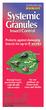 Systemic Granules Insect Control Protects against damaging insects for up to 8 weeks Root Weevils Birch Leaf Miner Beetles Internal insect protection won t wash off with rain or water For use outdoors
IPM Plan for Campus Landscape
 Created June 2014 IPM Plan for Campus Landscape Statement of Purpose The purpose of this integrated pest management (IPM) plan is to guide the use of environmentally sensitive pest management strategies
Integrated Pest Management (IPM) Policy
 Integrated Pest Management (IPM) Policy What is Integrated Pest Management (IPM)? Integrated pest management (IPM) is an approach to pest control that utilizes regular monitoring and record keeping to
Integrated Pest Management
 Integrated Pest Management Science and Language Arts Brief Description: This lesson will focus all of the information the students have learned about pests in the other insect lessons in a decision-making
LAWN GUARDIAN GRUB CONTROL
 LAWN GUARDIAN GRUB CONTROL Beneficial Nematodes When Do I Apply? Grubs start feeding in April and again in August. Apply Beneficial Nematodes in May or when grubs are seen in the soil, ensure the soil
Integrated Pest Management
 Chapter 2 Integrated Pest Management In This Chapter Keywords After learning the information in this chapter, you will be able to: 1. Define Integrated Pest Management (IPM). 2. List and describe the 5
THE PERIMETER PEST GUIDE
 BACKED BY THE BEST It s science. It s support. It s our commitment to you. It s Backed by Bayer. And it s the best you can get. For any questions about our products & services, visit www.backedbybayer.com
MOSQUITO & GNAT BARRIER Kills & Repels Insects for up to 4 weeks
 MOSQUITO & GNAT BARRIER Kills & Repels Insects for up to 4 weeks Spray on Yard, Patio, Plants & Flowers Contains Permethrin, a long lasting insecticide, providing weeks of control. ACTIVE INGREDIENTS PERMETHRIN*
Garden and plant health
 The idea of a healthy garden, rather than simply pest and disease free plants, is at the heart of organic growing. The first part of this section, Keeping the garden healthy, looks at ways of maintaining
The Environmental Protection Agency (EPA) evaluates and registers
 United States Prevention, Pesticides May 2000 Environmental and Toxic substances 735-F-00-004 Protection Agency (7506C) FOR YOUR INFORMATION Synthetic Pyrethroids for Mosquito Control EPA evaluates and
COMMERCIAL TURF GOLF COURSES
 The following table provides commercial turf and golf course insect control recommendations with pesticides for use by professional applicators. All chemical information provided below is given with the
Less-Toxic Product List
 Purpose This product list is intended to help stores participating in the Our Water, Our World program to stock less-toxic products that are compatible with Integrated Pest Management (IPM). The list is
ORIENTAL COCKROACH PREVENTION & CONTROL
 ORIENTAL COCKROACH PREVENTION & CONTROL DESCRIPTION Oriental cockroaches are dark brown to black in color and 1-1¼ inch in length. The females have only traces of wings, while males have short wings which
Best Lawns News. Late Spring 2014 Edition Virginia Cooperative Extension Prince William Unit. Featured in This Issue
 Best Lawns News Late Spring 2014 Edition Virginia Cooperative Extension Prince William Unit Featured in This Issue Stilt Grass 2 National Arboretum s Grass Roots Exhibit 4 Grub Control 5 All content was
WEST NILE VIRUS QUESTIONS ABOUT SPRAYING AND MOSQUITO CONTROL
 WEST NILE VIRUS QUESTIONS ABOUT SPRAYING AND MOSQUITO CONTROL Q1: What is West Nile virus (WNV)? A: WNV is a virus carried by certain species of mosquitoes that pick it up after biting infected birds.
Checking the Effectiveness of Pest Control Measures
 Checking the Effectiveness of Pest Control Measures Chris Hayes, PhD (Tampa) SE Technical Sales Manager & Mexico [email protected] Cell: 585-820-6807 6/15/2015 1 Thanks Cultivate 15 Thanks to YOU,
HOME & GARDEN INFORMATION CENTER
 http://www.clemson.edu/extension/hgic HGIC 2002 1-888-656-9988 HOME & GARDEN INFORMATION CENTER Crape Myrtle Diseases & Insect Pests Crape myrtles (Lagerstroemia indica) are essentially trouble-free small
12. INSECT PEST AND DISEASE MANAGEMENT
 12. INSECT PEST AND DISEASE MANAGEMENT Conservation farming promotes a diversity of insect life, influences pest populations and also favours many beneficial insects. The beneficial insects which act as
GUARANTEE: Bacillus thuringiensis, subspecies, kurstaki strain HD-1 (16 Billion International Units per kg).
 14-SEP-2001 Biological Insecticide DiPel* WP Wettable Powder COMMERCIAL GUARANTEE: Bacillus thuringiensis, subspecies, kurstaki strain HD-1 (16 Billion International Units per kg). REGISTRATION NO. 11252
Less-Toxic Product List
 Purpose This product list is intended to help stores participating in the Our Water, Our World program to stock less-toxic products that are compatible with Integrated Pest Management (IPM). The list is
Alaska Industrial, Institutional, Structural, and Health Related Pest Control Supplemental Information. Category Seven
 Alaska Industrial, Institutional, Structural, and Health Related Pest Control Supplemental Information Category Seven In general, applicators who apply pesticides to property other than their own, or act
It can be easy..without using pesticides you can increase the health of your landscape allowing it to naturally fight insects and diseases.
 The Pesticide By-law Think Outside the Box It can be easy..without using pesticides you can increase the health of your landscape allowing it to naturally fight insects and diseases. Let us help you. Your
Control of aphids and mites on Celebrity tomato plants using organic controls
 Control of aphids and mites on Celebrity tomato plants using organic controls Kimberly chofield, Program pecialist-ipm Texas AgriLife Extension ervice, Dallas, TX Vicki Burk, Amy Dessert, Joyce Flachmeier-
Fertilizer, Weed Control, Grubs, and General Application Questions
 Lawn Care FAQ s Fertilizer, Weed Control, Grubs, and General Application Questions Why do we have so many weeds? Dandelions in particular, weeds in general, do not seem concerned about how long lawn has
Fire Ant Products for Tennessee's Schools
 E&PP Info Note # 802 9 Nov. 2009, revised 9/25/14, 2/27/15 2015 Fire Ant Products for Tennessee's Schools Sorted By Active Ingredient Intended as a supplement to UT Extension PB1788 Managing Fire Ants
Advanced Intelligence Report Tree & Shrub Insect Control: Protecting Trees from Emerald Ash Borer
 Advanced Intelligence Report Treating For Emerald Ash Borer With Bayer Advanced Tree and Shrub Insect Control Soil Drench Dr. Bruce Stewart, Bayer Advanced Consumer Products Emerald Ash Borer (EAB) is
What is a pest? How Insects Become Pests. How do insects become pests? Problems with Pesticides. What is most commonly used to control insect pests?
 What is a pest? How Insects Become Pests How do insects become pests? Introduction outside of native range Becomes disease vector Plant or animal (inclu. human) disease vector Host shift in native insect
Hop Pest Control. H. E. Morrison. jpf^vrsiolnrru; - «ibntoj."' «- '',orto JUN 6 I-JJ3
 Hop Pest Control H. E. Morrison its of jpf^vrsiolnrru; - «th ' s ibntoj."' «- '',orto JUN 6 I-JJ3 Agricultural Experiment Station Oregon State College Corvallis Circular of Information 589 May 1958 Hop
Products. Products. Toxicity Ratings. earth-wise guide to
 earth-wise guide to Products Products Toxicity Ratings Why Grow Green? The Grow Green program recommends the least toxic approach to pest management and responsible fertilizer use in order to reduce the
University of Hawaii at Manoa, College of Tropical Agriculture and Human Resources
 University of Hawaii at Manoa, College of Tropical Agriculture and Human Resources J. Sugano, J. Uyeda, S. Fukuda, K. Wang, M. Kawate, C. Tamaru, B. Fox, and T. Radovich College of Tropical Agriculture
LITTLE FIRE ANT FACT SHEET 2
 LITTLE FIRE ANT FACT SHEET 2 (VERSION 3: AUGUST 2012) A HOUSEHOLDER S GUIDE TO MANAGING LITTLE FIRE ANTS AROUND THE HOME On top of that, if your property has LFA, your neighbors probably do as well. So,
The Neem Tree. produced by. HDRA - the organic organisation
 produced by What is neem? The neem tree (Azadirachta indica) is native to tropical South East Asia. It is fast growing, can survive drought and poor soil and keeps its leaves all year round. It is a tall
GUIDELINES FOR THE REGISTRATION OF BIOLOGICAL PEST CONTROL AGENTS FOOD AND AGRICULTURE ORGANIZATION OF THE UNITED NATIONS
 GUIDELINES FOR THE REGISTRATION OF BIOLOGICAL PEST CONTROL AGENTS FOOD AND AGRICULTURE ORGANIZATION OF THE UNITED NATIONS -ii- GUIDELINES ON THE REGISTRATION OF BIOLOGICAL PEST CONTROL AGENTS FOOD AND
Survey of Insecticides Available for Homeowners in Lee County, Florida: 2013
 Stephen H. Brown, Horticulture Agent Dick Dutton, Master Gardener Tyler Marshall, UF Intern Lee County Extension Fort Myers, Florida 33916-3736 (239) 533-7513, [email protected] Survey of Insecticides Available
Unit 4 Lesson 1: A Pest by Any Other Name
 Focus Areas: Pest Control: Biological; Environmental Science, Language Arts Focus Skills: critical thinking, conducting research, observing, graphing, interpreting data Objectives To explore human attitudes
What is Integrated Pest Management?
 SLIDE 1: This is Steve Johnson, University of Maine Cooperative Extension, bringing you information on Integrated Pest Management. It is possible to receive a Maine Board of Pesticides Control recertification
Pesticides and Alternatives to Pest Control
 Pesticides and Alternatives to Pest Control Be familiar with different pesticides that may be found in the home and how to minimize poisonings and exposure. " Understand the role of integrated pest management
INTEGRATED PEST MANAGEMENT
 C 1 H A P TE R INTEGRATED PEST MANAGEMENT LEARNING OBJECTIVES After completely studying this chapter, you should: Be able to define integrated pest management. Understand the importance of an economic
Formulation of bio-pesticides and mass culture of natural enemies for pest management. D. Ahangama
 Formulation of bio-pesticides and mass culture of natural enemies for pest management D. Ahangama Bio-pesticides Microbial pesticides Fungi, Bacteria, Viruses, Protozoa, Nematodes Biochemical Substances
Fungal Entomopathogens: An Enigmatic Pest Control Alternative
 Fungal Entomopathogens: An Enigmatic Pest Control Alternative Nicole Rusconi $ and Cerruti R 2 Hooks! $ Student Research Assistant and 1 Associate Professor and Extension Specialist, University of Maryland
Prevent Trees and Bushes from Having Direct Contact with Your Home.
 6 Ways to Kill a Cockroach: How to Rid Your Home of Roaches, Ants, and Other Unhealthy Pests Florida's warm and humid climate is a magnet for many insect pests that often threaten your home. It would be
SOIL TEST NOTES. NOTE 17: Managing Lead Contaminated Soils
 University of Delaware Soil Testing Laboratory Newark, DE 19717-1303 SOIL TEST NOTES NOTE 17: Managing Lead Contaminated Soils Lead in Soils Lead is naturally present in all soils at low levels. Some soils,
ALL SEASONS 1 HORTICULTURAL AND DORMANT SPRAY OIL Concentrate
 ALL SEASONS 1 HORTICULTURAL AND DORMANT SPRAY OIL Concentrate for organic gardening CONTROLS scale insects, mealybugs, apple aphids, european red spider mites, leafminers, leaf rollers (redbanded, obliquebanded,
Control of Insect Pests in Eucalypt Plantations
 Control of Insect Pests in Eucalypt Plantations Number 30 Revised February 2007 By Charlma Phillips, Principal Forest Health Scientist Eucalypts are native to Australia and have evolved in association
INSECT MANAGEMENT (Roberts & McPherson)
 INSECT MANAGEMENT (Roberts & McPherson) A number of insect pests are capable of severely damaging soybeans. However, it is important to realize that soybeans can withstand considerable insect damage at
Ornamental and Lawn Pest Control (For Homeowners)
 Oklahoma Cooperative Extension Service EPP-7306 Ornamental and Lawn Pest Control (For Homeowners) Eric Rebek Extension Entomologist and Associate Professor Mike Schnelle Extension Ornamentals - Floriculture
Pest Control in Home Vegetable Gardens WSU EXTENSION MANUAL EM009
 Pest Control in Home Vegetable Gardens WSU EXTENSION MANUAL EM009 PEST CONTROL IN HOME VEGETABLE GARDENS A.L. Antonelli, Washington State University Extension Entomologist These control measures for common
Black Dotted Brown Moth
 Athens-Clarke County Community Tree Program Black Dotted Brown Moth Athens is experiencing its fourth year of significant infestation by the black dotted brown moth (Cissusa spadix). The caterpillar of
Carbamate Insecticides Common name Trade names Chemical name
 Carbamate Insecticides Common name Trade names Chemical name Aldicarb Temik 2-methyl-2-(methylthio)propionaldehyde O-(methylcarbamoyl)oxine Carbaryl Carbaryl, Prokoz and Sevin 1 -naphthyl methylcarbamate
Integrated Pest Management. A Brief Guide to Pest Management For Fruit Trees
 Integrated Pest Management A Brief Guide to Pest Management For Fruit Trees 1 Introduction This report is based on a workshop held July 18, 2012 covering the basics of Integrated Pest Management. This
Area-Wide Chemical Control of Ticks
 Area-Wide Chemical Control of Ticks Insecticides, or as termed for ticks, acaricides, are the most effective way to reduce ticks, particularly when combined with the landscaping changes to decrease tick
UTAH CERTIFIED NURSEY PROFESSIONAL UCNP TEST SYLLABUS
 UTAH CERTIFIED NURSEY PROFESSIONAL UCNP TEST SYLLABUS Contact Information: Utah Green-UNLA 1174 E 2760 S #16 Salt Lake City UT 84152 801-484-4426 or [email protected] UCNP Program Description: The
Integrated Pest Management
 Integrated Pest Management Andrea Veres Junior Technical Officer FAO REU [email protected] Yerevan, Armenia 2013 Why develop IPM? Agriculture was: not sustainable optimized inputs for maximum profit
Virginia Gardener http://www.hort.vt.edu/envirohort
 The Virginia Gardener http://www.hort.vt.edu/envirohort Name Help Sheets: Things Plants Need There are certain things that every living thing needs in order to live and grow. Just like you, plants need
Pest Management Issues Affecting Cannabis in Colorado
 Pest Management Issues Affecting Cannabis in Colorado Whitney Cranshaw [email protected] Primary Pest Problems of Observed with Indoor Grown Cannabis Abiotic disorders (e.g., nutrition) Pathogens
Irish potatoes are one of America s most
 E-511 11-10 Easy Gardening Joseph Masabni, Assistant Professor and Extension Horticulturist, The Texas A&M University System Irish potatoes are one of America s most popular vegetables the average American
earth-wise guide to Is damage patchy or not patchy? Patchy (throughout lawn) Not Patchy Are problems occurring during wet or dry conditions?
 earth-wise guide to Lawn Problems In this Fact Sheet: Chinch bugs Grubs Brown Patch Take All Patch Drought Stress Iron Chlorosis Shade Stress Quick Tips to avoid lawn problems Establish a healthy soil
This lesson is part of a larger, comprehensive school garden guide called Minnesota School Gardens: A Guide to Gardening and Plant Science developed
 This lesson is part of a larger, comprehensive school garden guide called Minnesota School Gardens: A Guide to Gardening and Plant Science developed by Minnesota Agriculture in the Classroom in 2013. The
Class Insecta - The insects
 A Introduction 1. Very species rich 2. Characteristics a. 3 pairs of legs b. 2 pairs of wings (most) except flies (1 pair of wings - Diptera) B. Distribution 1. All habitats except saltwater - replaced
Gardening for Food & Fun 2014
 Gardening for Food & Fun 2014 Pest Control Decisions For Your Vegetable Garden Jeff White University of Illinois Extension Winnebago County Master Gardener Gardening for Food and Fun 03/01/2014 What Is
FOLPAN 50 WP (FOLPET) FUNGICIDE COMMERCIAL
 21-NOV-2008 2008-4133 GROUP M FUNGICIDE FOLPAN 50 WP (FOLPET) FUNGICIDE COMMERCIAL A wettable powder fungicide for the control of a number of fungus diseases on certain fruit, vegetable, ornamental and
Kumulus FUNGICIDES. Active ingredient: sulphur...800 g / kg
 Reg. No. L2404; N AR 0732 Act No. 36 of 1947 A water dispersible granular fungicide and acaricide for the control of powdery mildew, various other fungal diseases as well as certain mites and thrips on
INTEGRATED PEST MANAGEMENT
 INTEGRATED PEST MANAGEMENT Definitions Biological Controls -- Use of a pest s natural enemies to control pest population. Conservation and augmentation are the biological control strategies most commonly
Comparison of Production Costs and Resource Use for Organic and Conventional Production Systems
 Comparison of Production Costs and Resource Use for Organic and Conventional Production Systems KAREN KLONSKY The USDA established the National Organic Program (NOP) to develop national standards for organically
Names of General Use Insecticides. List compiled by Philip L. Nixon, Extension Entomologist, University of Illinois, November 2011.
 Names of General Use Insecticides This table lists the trade names of insecticides available to homeowners and other residents. The common names of the insectides are followed by the italicized chemical
Less-Toxic Product List
 "Our Water, Our World" Promotion Less-Toxic Product List This product list is intended to help stores participating in the "Our Water, Our World" promotion stock less-toxic products that are compatible
Home & Garden Solutions
 Home & Garden Solutions TELEPHONE: 08 9337 4933 FACSIMILIE: 08 9337 8316 POSTAL ADDRESS: PO Box 2084 Palmyra DC WA 6961 Distributors For Multicrop Aust Pty Ltd Scotts Australia PRODUCT CATALOGUE www.davidgray.com.au
Insects That Kill Trees. Diane G. Alston Extension Entomologist Utah State University 2004 Professional Tree Care Workshops
 Insects That Kill Trees Diane G. Alston Extension Entomologist Utah State University 2004 Professional Tree Care Workshops Topics Introduction websites, IPM strategies Ips bark beetles Tree borers flatheaded,
Preferred Methods of Treatment and Control: - Azasol - Azamax - Neem Oil (Cold Pressed) - Predators
 The Two Spotted Spider Mite The spider mite, Tetranychus urticae, is a tiny, eight-legged pest related to the spider and tick. Spider mites are members of the arachnid class. The term spider mite comes
KEEP OUT OF REACH OF CHILDREN CAUTION
 CONCENTRATE Controls Wood-Destroying Insects For Outdoor Homeowner Use Only Active Ingredient Permethrin*... 36.8% Other Ingredients**... 63.2% TOTAL... 100.0% *cis/trans ratio: Max. 42% (±) cis and min.