
Caterham UKTA Taekwon-Do
|
|
|
- Della Reynolds
- 9 years ago
- Views:
Transcription
1 Caterham UKTA Taekwon-Do Affiliated to the ITF, AETF and BTC GENERAL INFORMATION Taekwon-Do is a version of an ancient form of unarmed combat practiced for many centuries in Korea. It became perfected to its present form by General Choi Hong Hi ( ), head of the Republic of Korea Armed Forces unarmed combat division for many years. It has been scientifically developed and modernized since its first introduction to the world on 11th April Translated from the Korean Tae means "to jump, kick or smash with the foot." Kwon means "to punch, strike or smash with the fist." Do means "art, method, or way." In short it is the most powerful system of self-defence ever devised. To the Korean people Taekwon-Do is more than a mere use of skilled movements. It also implies a way of life with a strong sway toward the more philosophical side, particularly in instilling a concept and spirit of self-imposed discipline and an ideal of noble moral re-armament. In these days of violence and intimidation, which seem to plague our modern society, Taekwon-Do enables the weak to possess a fine weapon with which to defend themselves. However, when wrongly applied, it can also be very dangerous. The Tenets of Taekwon-Do Courtesy Integrity Perseverance Self Control Indomitable Spirit International Taekwon-Do Oath I shall observe the tenets of Taekwon-Do. I shall respect the Instructors and Seniors. I shall never misuse Taekwon-Do. I shall be a champion of freedom and justice. I shall build a more peaceful world. Conduct in the Dojang Bow upon entering and leaving the Dojang at all times. Bow to the instructor at the start of or when joining a class. Recite the International Taekwon-Do Oath prior to training. Bow to the Instructor prior to dismissal. Always address Instructors and black belts as 'Sir.' Do not eat, drink, or smoke whilst wearing your dobok unless prior permission to do so has been granted by the Instructor. Do not speak unnecessarily during a session. Always hand objects to the Instructor with both hands.

2 White Belt Terminology Applicable to 10th Kup The Five Tenets Ye Ui Courtesy Yom Chi Integrity In Nae Perseverance Guk Gi Self-Control Baekjool Boolgool Indomitable Spirit Commands Charyot Attention Kyong Ye Bow Junbi Ready Sijak Start Gomman Stop Barrol Return to Ready Tirro Torra About turn Body Sections Nopun Bubun High section Kaun Bubun Middle section Najun Bubun Low section Body Parts Ap Joomuk Forefist Sonkal Knifehand Bakat Palmok Outer forearm An Palmok Inner forearm Defensive Movements An Palmok Makgi Inner forearm block Bakat Palmok Makgi Outer forearm block Najunde Sonkal Makgi Low knifehand block Attacking Movements Bandae Jirugi Reverse punch Barro Jirugi Obverse punch Ap Cha Busigi Front snap kick Ap Cha Olligi Front rising kick General Terms Tae Kwon Do Jungshin Dojang Dobok Bo Sabum nim Sabum nim Sahyun nim Sasung nim Saju Jirugi Saju Makgi Stances Charyot Sogi Narani Sogi Annun Sogi Gunnon Sogi Counting Hana Dool Set Net Datsut Yowsot Ilgop Yodul Ahop Yol Yol Hana Yol Dool (Etc.) Samul Sorun Mahun Of the foot Of the hand Art, Method, or Way Tenets Training Hall Practice suit Assistant Instructor International Instructor Master Grandmaster 4-Directional Punch 4-Directional Block Attention stance Parallel stance Sitting stance Walking stance One Two Three Four Five Six Seven Eight Nine Ten Elven Twelve Twenty Thirty Forty General Information The founder of Taekwon-Do is General Choi Hong Hi ( ) 9th Dan, Grandmaster. The founder and Chief Instructor of the UKTA is Grandmaster Rhee Ki Ha (9th Dan, Grandmaster). The Instructor of Caterham Taekwon-do School is Mr P Harwood (4th Dan). Taekwon-Do was founded on 11th April The ITF was founded on 22nd March The UKTA was founded in 1968, though Grandmaster Rhee introduced TKD into the UK in st, 2nd, and 3rd Dan instructors are classed as Bo Sabum nim. 4th, 5th, and 6th Dan International instructors are classed as Sabum nim. 7th and 8th Dan are Masters, Sahyun nim. 9th Dan are Grandmasters, Sasung nim. An OBVERSE technique is performed using the same arm as the leg that is most bent. A REVERSE technique is performed using the same arm as the leg that is least bent, thus the opposite of obverse. If the left leg is most bent then it is a left stance. If the right leg is most bent, then is it a right stance. Saju Jirugi and Saju Makgi are exercises, they are NOT patterns. White belt signifies innocence as that of a beginning student who has no previous knowledge of the art.

3 White Belt Yellow Tag Terminology Applicable to 9th Kup Patterns What is a pattern? A pattern is a series of attacking and defensive movements designed to combat one or more imaginary opponents. Following a pre-determined diagram on the floor, starting and finishing on the same spot. Chon-Ji (19 movements): Means literally, "The heaven, the earth." In the Orient it is interpreted as the creation of the world or the beginning of human history, therefore it is the initial pattern performed by the beginner. The pattern consists of two similar parts - one to represent the heaven, the other, the earth. Stances Niunja Sogi General Terms An Makgi Annuro Makgi Bakat Makgi Bakurro Makgi Tul Wen Orun Nagagi Durogi L-stance Inside Block Inward Block Outside Block Outward Block Pattern Left Right Forward Backward Body Parts Ap Kumchi Balkal Attacking Movements Ap Cha Busigi Doo Jirugi Yop Cha Jirugi Defensive Movements Chookyo Makgi Najunde Bakat Palmok Makgi Sparring Sambo Matsoki Front sole Footsword Front snap kick Double punch Side piercing kick Rising block Low outer forearm block Three-step sparring General Information When in L-stance (Niunja Sogi), the weight must be distributed 70% on the rear foot and 30% on the front foot. Toes should be degrees from center. Front sole (Ap Kumchi) is used for front kick and turning kick. Footsword (Balkal) is used for side piercing kick and back piercing kick. The last two movements of Chon-Ji are obverse punch (Barro Jirugi). The two blocks used in Chon-Ji are outer forearm low block (Najunde Bakat Palmok Makgi) and middle inner forearm block (Kaunde An Palmok Makgi). The two stances in Chon-Ji are walking stance (Gunnon sogi) for low block and L-stance (Niunja Sogi) for middle block. There are 24 patterns in Taekwon-Do which symbolises 24 hours, or one day, or all of General Choi's life which he has dedicated to the art. Inside block (An makgi) is ANY block to the inside of your opponent's attacking tool. Inwards block (Annuro makgi) is ANY block travelling inwards across your own body. Outside block (Bakat makgi) is ANY block to the outside of your opponent's attacking tool. Outward block (Bakurro makgi) is ANY block travelling outwards across your own body. Yellow belt signifies the earth, from which a plant sprouts and takes root as the Taekwon-Do foundation is laid.

4 Terminology Applicable to 8th Kup Patterns Dan-Gun (21 movements): Dan-Gun is named after the Holy Dan-Gun, the legendary founder of Korea in the year 2333 BC. Yellow Belt Body Parts Ap Kumchi Front sole Balkal Footsword Dwit Chook Back heel Sonkal Knifehand Sonkal Dung Reverse knifehand Attacking Movements Bandae Dollyo Chagi Reverse turning kick Dollyo Chagi Turning kick Nopunde Ap Jirugi High front punch Sonkal Yop Taerigi Knifehand side strike Yop Cha Jirugi Side piercing kick Defensive Movements Chookyo Makgi Sang Palmok Makgi Sonkal Daebi Makgi Sparring Ban Jayoo Matsoki Jayoo Matsoki Sambo Matsoki Commands Hechyo Gaesok Jeuii Kamjom Silkyok Rising block Twin forearm block Knifehand guarding block Semi-free sparring Free sparring Three-step sparring Break/Separate Continue Warning Demerit/Minus point Disqualification General Information Rising block is classified as a front block, so it must be performed full facing. Front block means when the blocking tool finishes at the centerline & the body is full facing. When performing rising block, the fist must be over the opposite shoulder. Three-step sparring may be practised using the same three of ANY attack. Remember not to perform the high punch when returning to Chon-Ji. Side block is when the body is kept half-facing whilst blocking. The 4 defensive movements in Dan-Gun are: 1. Niunja Sogi, Sonkal Kaunde Daebi Makgi, 2. Niunja Sogi, Sang Palmok Makgi, 3. Gunnun Sogi, Bakat Palmok Najunde Makgi, 4. Gunnun Sogi, Chookyo Makgi.

5 Terminology Applicable to 7th Kup Patterns Do-San (24 movements): Do-San is the pseudonym of the patriot Ahn-Chang-Ho ( ). The 24 movements represent his entire life, which he dedicated to furthering the education of the Korean people and to its independence movement. Yellow Belt Green Tag Body Parts Dung Joomuk Sonkut Backfist Fingertips Attacking Movements Dung Joomuk Taerigi Backfist strike Sun Sonkut Tulgi Straight fingertip thrust Defensive Movements Hechyo Makgi Wedging Block General Terms Chagi Euhke son Gassum son Japyosul Tae Makgi Myong chi son Sogi Taerigi Tulgi Weeryok Kick Shoulder line Chest line Release from grab Block Centre line (Solar plexus line) Stance Strike Thrust Power General Information Green belt signifies the plant's growth as the Taekwon-Do skills begin to develop.

6 Terminology Applicable to 6th Kup Patterns Won-Hyo (28 movements): Won-Hyo was the noted monk who introduced Buddhism to the Silla Dynasty in the year 686. Green Belt Stance Gojung Sogi Goburyo Sogi 'A' Moa Sogi Body Parts Baldung Balkut Bokboo Chiboo Mori Myong Chi Fixed stance Bending stance 'A' Close stance Instep Toes Abdomen Pubic region Head Solar plexus Attacking Movements Dwit Cha Jirugi Back piercing kick Sonkal Annuro Taerigi Knifehand inward strike Yop Jirugi Side punch General Information Defensive Movements Dollimyo Makgi Circular block Palmok Daebi Makgi Forearm guarding block Sparring Ibo Matsoki General Terms Gong gyuk gi Bang eo gi Ha bansin Sang bansin Two-step sparring. A combination of any hand and any foot attack in either order. Attack techniques Defence techniques Foot parts Hand parts When using Gojung Sogi (fixed stance) the weight must be distributed 50/50, whilst keeping the feet in an L-shape stance. Mori (the head) should only be used in extreme circumstances. The starting point for pattern Won-Hyo is Moa Junbi Sogi 'A'.

7 Terminology Applicable to 5th Kup Patterns Yul-gok (38 movements): Yul-gok is the pseudonym of a great philosopher and scholar Yi Ee ( ), nicknamed, "The Confuscious of Korea." The 38 movements of the pattern represent his birthplace in the 38 latitude and the diagram represents "Scholar." Green Belt Blue Tag Stances Guburyo Sogi 'B' Kyocha Sogi Body Parts Ap Palkup Injoong Son Badak Bending stance 'B' X-stance Front elbow Philtrum Palm Attacking Movements Ap Palkup Taerigi Front elbow strike General Information Defensive Movements Doo Palmok Makgi Golcho Makgi Sang Sonkal Makgi Sparring Ilbo Matsoki General Terms Phiagi Mikulgi Gwanja nori Yop tok Double forearm block Hooking block Twin knifehand block One-step sparring Dodging Sliding Temple Jaw Consecutive movement means using one breath per move, as in normal execution. Continuous movement means using one breath for two movements, as in Yul-Gok, movement numbers 16 & 17, and 19 and 20. Son badak (the palm) is used for Golcho Makgi (hooking block). When performing Sang sonkal Makgi, the knifehand rising block must be over the centerline. When in Kyocha Sogi (X-stance) both feet must point in the same direction. Blue belt signifies the heaven, toward which the plant develops into a towering tree as training in Taekwon-Do progresses.

8 Terminology Applicable to 4th Kup Patterns Joong Gun (32 movements) Joong Gun is named after the patriot Ahn Joong Gun, who assassinated Hiro-Bumi Ito, the first JAPANESE Governor General of Korea, known as the man who played the leading part in the Korea-Japan merger. There are 32 movements in this pattern to represent Mr. Ahn's age when he was executed at Lui-Shung prison in Stances Dwitbal Sogi Rear foot stance Moa Junbi Sogi 'B' Close ready stance 'B' Nachau Sogi Low stance Body Parts Ap Palkup Front elbow Bandal Son Arc hand Son Badak Palm Sonkal Dung Reverse knifehand Attacking Movements Giokja Jirugi Angle punch Sang Dwijibo Jirugi Twin upset punch Sang Sewo Jirugi Twin vertical punch Wi Palkup Taerigi Upper elbow strike Yobap Cha Busigi Side front snap kick Defensive Movements Degutcha Makgi Kyocha Joomuk Chookyo Makgi Son Badak Noolo Makgi Son Badak Ollyo Makgi Sonkal Dung Kaunde Makgi Sparring Idil Matsoki General Terms Mikulgi Twimyo Twiggi U-shape block X-fist rising block Palm pressing block Palm upwards block Reverse knifehand middle block Two versus one sparring Sliding Flying Jumping General Information When performing angle punch (Giokja Jirugi) the fist finishes on the chest line. Arc hand (Bandal Son) is used for U-shape block. Blue Belt

9 Terminology Applicable to 3rd Kup Patterns Toi Gye (37 movements): Toi Gye is the pen name of the noted scholar Yi Hwang (16th century), an authority on neo-confuscianism. The 37 movements of the pattern represent his birthplace on the 37 latitude, and the diagram represents "Scholar." Attacking Movements Dwijibun Sonkut Tulgi Upset fingertip thrust Moorup Ap Chagi Knee front kick Naeryo Chagi Downward kick Opun Sonkut Tulgi Flat fingertip thrust Defensive Movements Doo Palmok Miro Makgi Kyocha Joomuk Noolo Makgi Najunde Sonkal Daebi Makgi San Makgi Double forearm pushing block X-fist pressing block Low knifehand guarding block W-shape block General Information Saju Tulgi - Four-directional thrust. This is not a pattern, but this exercise is practised by the 3rd kup holder and above. When performing San Makgi (W-shape block) you must look toward the direction you are travelling, e.g., when moving the left foot, look left. The student should by now have a wide-ranging knowledge of the vital spots and be able to name most in terminology. Red belt signifies danger, cautioning the student to exercise control and warning the opponent to stay away. Blue Belt Red Tag

10 Terminology Applicable to 2nd Kup Patterns Hwa-Rang (29 movements): Hwa-Rang is named after the Hwa-Rang youth group which originated in the Silla Dynasty in the early 7th century. The 29 movements refer to the 29th Infantry Division, where Taekwon-Do developed into maturity. Stance Soojik Sogi Waebal Sogi Vertical stance One-legged stance (Not yet used in Tul) Attacking Movements Bandae Dollyo Goro Chagi Reverse hooking kick Bituro Chagi Twisting kick Cha Bapgi Stamping kick Niunja So Baro Jirugi L-stance obverse punch Naeryo Chagi Downward kick Ollyo Jirugi Upward punch Sonkal Naeryo Taerigi Knifehand downward strike Yop Palkup Tulgi Side elbow thrust Body Parts Hori Waist Pyun Joomuk Open fist Yop Joomuk Side fist Defensive Movements Bandal Chagi Crescent kick Cha Momchugi Checking kick Kaunde Yobap Makgi Middle inner forearm side front Makgi block Noolo Chagi Pressing kick Son Badak Miro Makgi Palm pushing block General Information When performing Bandal Chagi (crescent kick), the leg must be kept bent. You need to be able to demonstrate all 13 stances so far learnt. You need to be able to demonstrate the different uses of Ap Joomuk, i.e., as many punches as possible using only the forefist. When performing Idil Matsoki (2 versus 1 sparring) an emphasis must be placed on safety. This will involve keeping both opponents in a straight line for as long as possible and not exposing yourself to danger. Red Belt

11 Terminology Applicable to 1st Kup Patterns Choong-Moo (30 movements): Was the name given to the great Admiral Yi-Soon-Sin of the Yi Dynasty. He was reputed to have invented the first armoured battleship (Kobukson) in 1592, which is said to be the precursor of the present day submarine. The reason why this pattern ends with a left hand attack is to symbolise his regrettable death, having no chance to show his unrestrained potentiality checked by the forced reservation of his loyalty to the king. Attacking Movements Dwitcha Jirugi Nopunde Sonkal Ap Taerigi Twimyo Yopcha Jirugi Back piercing kick High knifehand front strike Flying side piercing kick Defensive Movements Doo Son Badak Ollyo Makgi Twin palm upward block Kyocha Sonkal Momchau Makgi X-knifehand checking block General Information There are 24 patterns in Taekwon-Do. The reason for this is as follows "Here I leave Taekwon-Do for mankind as a trace of man of the late 20th century. The 24 patterns represent 24 hours, one day, or all my life." General Choi Hong Hi Black belt, the opposite to White, signifies the wearers proficiency and knowledge of Taekwon-Do. Red Belt Black Tag

12 What is a Pattern? TUL A PATTERN IS A SERIES OF FUNDAMENTAL MOVEMENTS, BOTH OFFENSIVE AND DEFENSIVE PERFORMED AGAINST ONE OR MORE IMAGINARY OPPONENTS, STARTING AND FINISHING ON THE SAME SPOT, DESCRIBING A SET DIAGRAM ON THE FLOOR. Patterns : Tul Chon-Ji Means literally, "The heaven, the earth." In the Orient it is interpreted as the creation of the world or the beginning of human history, therefore it is the initial pattern performed by the beginner. The pattern consists of two similar parts - one to represent the heaven, the other, the earth. Movements: 19 Diagram: + Dan-Gun is named after the Holy Dan-Gun, the legendary founder of Korea in the year 2333 BC. Movements: 21 Diagram: I Do-San is the pseudonym of the patriot Ahn-Chang-Ho ( ). The 24 movements represent his entire life, which he dedicated to furthering the education of the Korean people and to its independence movement. Movements: 24 Diagram: Step or Straightened S Won-Hyo was the noted monk who introduced Buddhism to the Silla Dynasty in the year 686. Movements: 28 Diagram: I Yul-gok is the pseudonym of a great philosopher and scholar Yi Ee ( ), nicknamed, "The Confuscious of Korea." The 38 movements of the pattern represent his birthplace in the 38 latitude. Movements: 38 Diagram: Scholar Joong Gun is named after the patriot Ahn Joong Gun, who assassinated Hiro-Bumi Ito, the first JAPANESE Governor General of Korea, known as the man who played the leading part in the Korea-Japan merger. There are 32 movements in this pattern to represent Mr. Ahn's age when he was executed at Lui-Shung prison in Movements: 32 Diagram: I Toi Gye is the pen name of the noted scholar Yi Hwang (16th century), an authority on neo-confuscianism. The 37 movements of the pattern represent his birthplace on the 37 latitude, and the diagram represents "Scholar." Movements: 37 Diagram: Scholar Hwa-Rang is named after the Hwa-Rang youth group which originated in the Silla Dynasty in the early 7th century. The 29 movements refer to the 29th Infantry Division, where Taekwon-Do developed into maturity. Movements: 29 Diagram: I Choong-Moo Was the name given to the great Admiral Yi-Soon-Sin of the Yi Dynasty. He was reputed to have invented the first armoured battleship (Kobukson) in 1592, which is said to be the precursor of the present day submarine. The reason why this pattern ends with a left hand attack is to symbolise his regrettable death, having no chance to show his unrestrained potentiality checked by the forced reservation of his loyalty to the king. Movements: 30 Diagram: I

13 Stances Parallel Stance (Narani Sogi) Spread the feet parallel to shoulder with. Keep toes pointing towards the front. One shoulder width Sitting Stance (Annun Sogi) One and a half shoulder width 1. Spread one leg to the side at a distance of one & half shoulder widths between the big toes. 2. Point the toes to the front & distribute weight evenly between both feet. 3. Extend the knees outward, bending until the knee caps come over the ball of the foot. 4. Infuse the strength into the inner thighs & tense inward by scraping the ground with the side soles. 5. Push both the chest & abdomen out &pull the hip back tensing the abdomen. Walking Stance (Gunnun sogi) 1. Move one foot to either front or rear at a distance of one and a half shoulder width between the big toes & a shoulder width from one centre of the instep to the other. 2. Bend the front leg until the knee cap forms a vertical line with the heel, extending the opposite leg fully. 3. Weight is distributed evenly between both feet. 4. Keep the toes of the front foot pointing forward, the opposite foot 25 degrees outward. 5. Tense the muscles of the feet with the feeling of pulling them towards each other. When the right leg is bent, the stance is a right walking stance and vice-versa. One and a half shoulder width One shoulder width One and a half shoulder width L stance (Niunja Sogi) 1. Move one foot to either front or rear to a distance of approximately one & a half times the shoulder width from the footsword of the rear foot to the toes of the front foot, forming almost right angles. 2. Bend the rear leg until the knee cap forms a vertical line with the toes, bending the front leg proportionally 3. Keep the hip aligned with the inner knee joint 4. Weight distribution is about 70 percent on the rear leg & 30 percent on the front leg.

14 Stances Closed Stance (Moa Sogi) Stand with feet together, hand position determines the stance A, B, C or D Side and Front Views Fixed Stance (Gujung Sogi) 1. The body weight is distributed evenly between both legs. 2. The distance between the big toes is about one and a half shoulder width. When the right foot is advanced, the stance is called a right fixed stances and vice-versa. Bending Ready Stance (Guburyo Jumbi Sogi) This stance is classified into types A and B. When standing with a right foot executing a left forearm guarding block, it is called a right bending ready stance and vice-versa. Type A It is principally used for a preparatory position of side piercing and side thrusting kick. Bending Ready Stance Type B It is preparatory position of back piercing kick. 1. The distance between the fists and thigh is about 25 centimeters. 2. The elbow should be bent 30 degrees. One and a half shoulder width

15 Stances Rear Foot Stance (Dwitbal Sogi) One shoulder width 1. Move one foot to either the front or rear at a distance of one shoulder wodth between the small toes. 2. Bend the rear leg until the knee comes over the toes, placing the heel slightly beyond the heel of the front foot. 3. Bend the front leg, touching the ground slightly with the ball of the foot. 4. Keep the toes of the front foot pointing about 25 degrees and the toes of the resr foot about 15 degrees inward. 5. Distribute most of the body weight on the rear foot. When the Right foot is at the rear, it is called a Right Rear Foot Stance and vice-versa. One and a half shoulder width Vertical Stance (Soojik Sogi) 1. Move one foot to either front or side at a distance of one shoulder width between the big toes. 2. Weight distribution is about 60 percent on the rear leg and 40 percent on the front leg. 3. Keep the toes of both feet pointed approximately 15 degrees inward. 4. Keep the legs straight. Low Stance (Nachuo Sogi) Is similar to Walking stance, though longer by one foot. The advantage of this stance is the ease with which one can extend the attacking tool. X-Stance (Kyocha Sogi) 1. Cross one foot over or behind the other, touching the ground slightly with the ball of the foot. 2. Place the body weight on the stationary foot. 3. One foot always crosses over the front of the other with the exception of a jumping motion. Stepping Jumping

16 Stances One and a half shoulder width Diagonal Stance (Sasun Sogi) This is a very useful stance for shifting into walking stance without relocating the foot. The principle for sitting stance is directly applied except that the heel of the front foot is placed on the same line with the toes of the rear foot. When the right foort is advanced, the stance is a right diagonal stance and vice-versa. Attention Stance (Charyot Sogi) This is the attention position used before & after each exercise. 1. Feet form a 45 degree angle 2. Drop the fits down naturally, bending the elbows slightly. 3. The fists are clenched slightly. 4. Eyes face front slightly above the horizontal line. One-Leg Stance (Waebal Sogi) Stretch the stationary leg and bring the other reverse footsword on the knee joint or instep to the hollow. When the right foot is advanced, the stance is called a right One-Leg stance and vice-versa.

17 Parts of the Hand Ap Joomuk Fore Fist Yop Joomuk Side Fist (hammer Fist) Dung Joomuk Back Fist Sonkal Knife hand Sonkal Dung Reverse Knife hand SonKut Finger Tip Sondung Back Hand Pyon Joomuk Palm Heel (open Fist) Gomsom Bear Hand Ghin Joomuk Long Fist Han Songarat Index Finger Doo Songarat Double Finger Umji Joomuk Thumb Knuckle Umji Petang Thumb Knuckle Inji Joomuk Index Finger Knuckle Sonmok Dung Bow Wrist Joonji Joomuk Middle Finger Knuckle Parts of the Foot Balkal Footsword Dwitchuck (Back) Heel Ap Kumchi Ball of Foot (front sole) Baldung Instep Dwit Kumchi Heel Base (Back Sole) Balkut Toes Balkal Dung Reverse Footsword Balmok Ankle Yop Baldung Side Sole (Near Front) Yop Bal Badak Side Sole Elbow Strikes & Elbow Thrusts An Elbow Strike is performed with the front (forearm) part of the elbow. In a circular motion. Ap Palkop Terrigi Front Elbow Strike Wi Palkop Terrigi Upper Elbow Strike Nopun Palkop Terrigi High Elbow Strike An Elbow Trust is performed with the back (past the elbow joint) part of the elbow. In a linear motion. Yop Palkop Tulgi Side Elbow Thrust Dwit Palkop Tulgi Back Elbow Thrust Naero Palkop Tulgi Downward Elbow Thrust Techniques That can be performed with Forefist Ap Jurugi Yop Jurugi Swero Jurugi Sang Swero Jurugi Dwijibo Jurugi Sang Dwijibo Jurugi Ollyo Jurugi Naero Jurugi Dollio Jurugi Kyokja Jurugi Bandal Jurugi Deguotcha Jurugi Ap Joomuk Naero Makgi Front Punch Side Punch Vertical Punch Twin Vertical Punch Upset Punch Twin Upset Punch Upward Punch Downward Punch Turning Punch Angle Punch Crescent Punch U Shape Punch Forefist Downward Block

18 Training Secrets of Taekwon-Do An old proverb says that even heaven cannot make a diligent worker poor. However, in Taekwon-Do, diligence or intensive training alone does not produce quality techniques. On the contrary, instructions from a false or unqualified instructor would be worse than not being taught at all because unscientific movements not only reduce the power but require a tremendous amount of time to correct. On the other hand, under the proper guidance of a competent instructor, a student who trains earnestly with dedication will learn the true techniques of Taekwon-Do in a comparatively short period of time with less effort. 1. To study the theory of power thoroughly (Reaction Force, Concentration, Balance, Breath Control, Sine Wave, and Speed). 2. To understand the purpose and method of each movement clearly. 3. To bring the movement of the eyes, hands, feet and breath into a single coordinated action. 4. To choose the appropriate attacking tool for each vital spot. 5. To become familiar with the correct angle and distance for attack and defense. 6. Keep both the arms and legs bent slightly while the movement is in motion. 7. All movements must begin with a backward motion with very few exceptions. However, once the movement is in motion it should not be stopped before reaching the target. 8. To create a sine wave during the movement by utilizing the knee spring properly. 9. To exhale briefly at the moment of each blow except a connecting motion. The Theory of Power The beginning student may ask; Where does one obtain the power to create the devastating results attributed to Taekwon-Do? This power is attributed to the utilization of a person s full potential through the mathematical application of Taekwon-Do techniques. The average person uses only 10 to 20 percent of his potential. Anyone, regardless of size, age, or sex who can condition himself to use 100 percent of his potential can also perform the same destructive techniques. Though training will certainly result in a superb level of physical fitness, it will not necessarily result in the acquisition of extraordinary stamina or superhuman strength. More important, Taekwon-Do training will result in obtaining a high level of reaction force, concentration, equilibrium, breath control and speed; these are the factors that will result in a high degree of physical power. Reaction Force (Bandong Ryok) According to Newton s Law, every force has as equal and opposite force. When an automobile crashes into a wall with the force of 2,000 pounds, the wall will return a force of 2,000 pounds; or forcing the end of the seesaw down with a ton of weight will provide an upward force of the same weight; if your opponent is rushing towards you at a high speed, by the slightest blow at his head, the force with which you strike his head would be that of his own onslaught plus that of your blow. The two forces combined; his, which is large, and yours, which is small is quite impressive. Another reaction force is your own. A punch with the right fist is aided by pulling back the left fist to the hip. Concentration (Jip Joong) By applying the impact force onto the smallest target area, it will concentrate the force and therefore, increase its effect. For example, the force of water coming out of a water hose is greater if the orifice is smaller. Conversely, the weight of a man spread out on snow shoes makes hardly any impression on the snow. The blows in Taekwon-Do are often concentrated onto the edge of the open palm or to the crook of the fingers. It is very important that you should not unleash all your strength at the beginning but gradually, and particularly at the point of contact with your opponent s body, the force must be so concentrated as to give a knock-out blow. That is to say, the shorter the time for the concentration, the greater will be the power of the blow. The utmost concentration is required in order to mobilize every muscle of the body onto the smallest target area simultaneously. In conclusion, concentration is done in two ways: one is to concentrate every muscle of the body, particularly the bigger muscles around the hip and abdomen (which theoretically are slower than the smaller muscles of other parts of the body) towards the appropriate tool to be used at the proper time; the second way is to concentrate such mobilized muscles onto the opponent s vital spot. This is the reason why the hip and abdomen are jerked slightly before the hands and feet in any action, whether it be attack or defense. Remember, jerking can be executed in two ways: laterally and vertically.

19 Equilibrium (Kyun Hyung) Balance is of utmost importance in any type of athletics. In Taekwon-Do, it deserves special consideration. By keeping the body always in equilibrium, that is, well balanced, a blow is more effective and deadly. Conversely, the unbalanced one is easily toppled. The stance should always be stable yet flexible, for both offensive and defensive movements. Equilibrium is classified into both dynamic and static stability. They are so closely inter-related that the maximum force can only be produced when the static stability is maintained through dynamic stability. To maintain good equilibrium, the center of gravity of the stance must fall on a straight line midway between both legs when the body weight is distributed equally on both legs, or in the center of the foot if it is necessary to concentrate the bulk of body weight on one foot. The center of gravity can be adjusted according to body weight. Flexibility and knee spring are also important in maintaining balance for both a quick attack and instant recovery. One additional point; the heel of the rear foot should never be off the ground at the point of impact. This is not only necessary for good balance but also to produce maximum power at the point of impact. Breath Control (Hohup Jojul) Controlled breathing not only affects one s stamina and speed but can also condition a body to receive a blow and augment the power of a blow directed against an opponent. Through practice, breath stopped in the state of exhaling at the critical moment when a blow is landed against a pressure point on the body can prevent a loss of consciousness and stifle pain. A sharp exhaling of breath at the moment of impact and stopping the breath during the execution of a movement tense the abdomen to concentrate maximum effort on the delivery of the motion, while a slow inhaling helps the preparation of the next movement. An important rule to remember; Never inhale while focusing a block or blow against an opponent. Not only will this impede movement but it will also result in a loss of power. Students should also practice disguised breathing to conceal any outward signs of fatigue. An experienced fighter will certainly press an attack when he realizes his opponent is on the point of exhaustion. One breath is required for one movement with the exception of a continuous motion. Mass (Zilyang) Mathematically, the maximum kinetic energy or force is obtained from maximum body weight and speed and it is all important that the body weight be increased during the execution of a blow. No doubt the maximum body weight is applied with the motion of turning the hip. The large abdominal muscles are twisted to provide additional body momentum. Thus the hip rotates in the same direction as that of the attacking or blocking tool as in figure F. Another way of increasing body weight is the utilization of a springing action of the knee joint. This is achieved by slightly raising the hip at the beginning of the motion and lowering the hip at the moment of impact to drop the body weight into the motion. In summarizing, it is necessary to point out that the principles of force outlined here hold just as true today in our modern scientific and nuclear age as they did centuries ago. I am sure that when you go through this art, both in theory and in practice, you will find that the scientific basis of the motions and the real power which comes out a small human body cannot fail to impress you. Speed (Sokdo) Speed is the most essential factor of force or power. Scientifically, force equals mass multiplied by acceleration (F = MA) or (P = MV2). According to the theory of kinetic energy, every object increases its weight as well as speed in a downward movement. This very principle is applied to this particular art of self-defense. For this reason, at the moment of impact, the position of the hand normally becomes lower than the shoulder and the foot lower than the hip while the body is in the air. Reaction force, breath, control, equilibrium, concentration, and relaxation of the muscles cannot be ignored. However, these are the factors that contribute to the speed and all these factors, together with flexible and rhythmic movements, must be well coordinated to produce the maximum power in Taekwon-Do. From the enclyclopedia of TaeKwon-Do By General Choi Hong Hi Copyright International Taekwon-Do Federation

20 Attacking and Blocking Tools

21 Terminology (English Korean) about turn - twiro tora alternate euhkallin angle fingertip - homi sonkut angle punch - giokja jirugi arc-hand bandal son at ease swiyo attention charyot attention stance - charyot sogi back - dwit [foot parts/attacks] back [hand parts] - dung back elbow - dwit palkup back hand - sondung back heel - dwitchook back sole dwitkumchi backward - duruogi (dwiro) ball of the foot - apkumchi base of knife hand - sonkal batang bear hand - gomson belt ti bending stance - guburyo sogi block makgi (magumyo-) body dropping - mom nachugi bow kyong ye bow posture - kyong ye jase bow wrist sonmok dung by count kuryong e [with command] machuoso checking momchugi checking block - momchau makgi checking kick - cha momchugi circular block - dollimyo makgi close stance - moa sogi combination - honap commence - si jak competition - kyong gi connecting motion - yon gyol tongjak consecutive - yonsok continue kesok continuous motion - iojin tongjak counter kick - bada chagi courtesy ye ui covering karioogi crescent bandal cross-cut ghutgi (kuo-) crouched stance - oguryo sogi grade - kup, or gup Grand Master (9th dan) - Saseong (nim) grasping block - butjaba makgi grasping kick - butjapgo chagi ground noowo guarding block - daebi makgi half ban half facing - bahnmom heaven hand - hanulson high nopunde high elbow - nopun palkup high kick nopi chagi high section - nopun bubun holding bachigi hooking golcho horizontal - soopyong indomitable spirit - baekjul boolgool inner an inside block - anmakgi instep baldung Instructor Boosabum (nim) (1st - 3rd dan) Instructor Sabum (nim) (4th - 6th dan) integrity yom chi inward anuro jumping (flying) - twigi (twimyo-) kick - chagi (cha-) knee moorup knee bending - moorup guburigi knife-hand - sonkal knuckle fist - songarak joomuk left wen leg crossing - dari kogi long fist ghin joomuk low najunde low section - najun bubun low stance - nachuo sogi L-stance niunja sogi luring block - yuin makgi Master (7th - 8th dan) - Sahyun (nim) mid-air twio dolmyo middle kaunde middle knuckle fist - joongji joomuk middle section - kaunde bubun model sparring - mobum matsogi
22 moral culture - jungshin sooyang nine ahop nine (9)-shape block - gutja makgi degree - dan demonstration - sibum diagonal stance - sasun sogi dismiss - hae san dodging - pihagi (pihamyo-) double I-jung [attack/defence] double ibo [technique eg stepping] double - doo [tool eg forearm] downward - naeryo eight yodul elbow palkup etiquette - ye jol face [eg. instructor] - kke face flag - kukki e tae hae fast motion - balli [pparun sokdo] finger belly - songarak badak finger pincers - jipge son fingertips - sonkut fist joomuk five dasot fixed stance - gojung sogi flat fingertip - opun sonkut flying twimyo foot lifting - bal dulgi foot shifting - jajun bal foot sparring - bal matsogi foot tackling - bal golgi foot techniques - bal gisool foot-fist-way - tae-kwon-do footsword - balkal forearm - palmok forefinger - han songarak forefist - ap joomuk fore-knuckle fist - inji joomuk forward - nagagi four net four direction - saju [punch/block/thrust] four direction kick - sabang chagi free sparring - jayu matsogi front ap front-back kick - apdwi chagi full facing - ohnmom normal speed - potonguro one hana one way - han chok one-leg stance - waebal sogi open stance - palja sogi outer bakat outside block - bakat makgi outward - bakuro overhead - twio nomo overlapped backhand - pogaen sondung own time - kuryong obsi [without command] [obshi] palm sonbadak parallel - narani parallel stance - narani sogi patterns - tul perseverance - in nae pick-shape kick - gokaeng-i chagi piercing kick - cha jirugi practice suit - do bok prearranged sparring - yaksok matsogi press finger - jiap pressing - noollo punch jirugi (jirumyo-, jilla-) punching kick - jirumyo chagi pushing block - miro makgi pushing kick - cha milgi ready junbi ready posture - junbi jase ready stance - junbi sogi rear foot stance - dwitbal sogi reflex kick - bansa chagi release from a grab - jappyosul tae repeat tasi [tashi] return baro reverse - dung [hand and foot parts] reverse [techniques] - bandae reverse hooking - bandae dollyo kick gorochagi right orun rising block - chookyo makgi rising kick - cha olligi scissors-shape kick - kawi chagi scooping block - duro makgi self-control - guk gi self-defence - hosin sul semi-free sparring - ban jayu matsogi seven ilgop
23 shifting jajunbal shout kihap side yop one-step sparring - ilbo matsogi open fist - pyon joomuk side front yobap side instep - yop baldung side sole yop bal badak side-twisting kick - yop bituro chagi sine wave - hwaldung pahdo single - ilbo [technique eg. stepping] single wae [tools eg. back-hand] sitting stance - annun sogi six yosot skip kick duro gamyo chagi sliding mikulgi slow motion - chonchonhi smashing kick - cha busigi snap kick cha busigi sparring matsogi spiral kick - rasonsik chagi spot gujari square punching - sagak jirumyo kick chagi stamping kick - cha bapgi stance sogi (so-) stepping omgyo didigi stop guman straight sun [technique eg thrust] straight kick - jigeau chagi strike taerigi (taerimyo-) students jeja sweeping kick - suroh chagi Taekwon-Do Practitioner - Taekwon-Doin teacher kyo sa (nim) ten yol tenets of Taekwon-Do - Taekwon-Do jungshin test simsa thank you - ko mup sum neda three set three direction kick - sambang chagi three-step sparring - sambo matsogi Throwing - dunjigi wa falling techniques - torojigi thrust tulgi (tulumyo-, tturo-) thrusting kick - cha tulgi side back yopdwi side facing - yopmom thumb umji thumb knuckle fist - umji joomuk thumb ridge - umji batang toe edge balgarak nal toes balkut toward [eg. Toward A] - bang (eg A-bang) training hall - do jang trapezoid punching - jaegak jirumyo kick chagi treble [technique eg. turning] - sambo triple [eg. Attack] - samjung tumbling kick - joma chagi turning [around] - dolgi turning dollyo [technique eg. kick] twin sang twin foot sangbal twisting kick - bituro chagi two dool two direction kick - sangbang chagi two way yang chok two-step sparring - ibo matsogi under fist mit joomuk under forearm - mitpalmok upper back - widwi palkup elbow strike - palkup taerigi upper elbow - wi palkup upset fingertip - dwijibun sonkut upset punch - dwijibo jirugi upward ollyo u-shape digutja u-shape grasp - digutja japgi vertical sewo vertical stance - soojik sogi waist block - hori makgi walking stance - gunnun sogi warrior ready stance - moosa junbi sogi waving kick - doro chagi wedging hechyo w-shape block - san makgi x- kyocha x-stance kyocha sogi you re welcome - chang ma naeo
Tae Kwon-Do theory for beginners
 Tae Kwon-Do theory for beginners Contents Tae Kwon-Do theory for beginners... 1 History... 2 Tae Kwon-Do student oath... 2 Tae Kwon-Do tenets... 2 Dojang etiquette, rules at training hall... 2 Dobok (suit)
THEORY FOR 9 KUP (WHITE / YELLOW BELT)
 THEORY FOR 9 KUP (WHITE / YELLOW BELT) 1. Historical Background (TAEKWONDO YOKSA) Taekwondo is no ordinary sport, such as football or tennis. It is a martial art. Therefore, there are certain traditions
STUDENT HANDBOOK 2015 edition
 STUDENT HANDBOOK 2015 edition www.taekwon-do.co.za AFFILIATED TO Index 3.. International Affiliation 4...TSA Heads 5...Rules of Dojang 6...General Introduction 7...General Knowledge 8...General Knowledge
Ho Sin Sul. Defense against wrist grabs:
 Ho Sin Sul Ho Sin Sul are ways to escape from attackers who grab, choke or attempt some other form of assault, especially one where they get hold of your body or clothes. While these moves are a memorized
DSA Royal International Taekwondo Club Member : International Taekwondo Federation (ITF)
 DSA Royal International Taekwondo Club Member : International Taekwondo Federation (ITF) Welcome to our club and to Taekwon Do. Taekwon Do is the fastest growing martial art in the world. It is an art
What I Need To Know For My
 What I Need To Know For My Green Belt Test Answers the question... What will be on my test? INTRO Green signifies your fast growth like a Taekwon-Do plant on Miracle Grow! You re moving up the ranks.
10th Kup White Belt Theory & Grading Requirements
 10th Kup White Belt Theory & Grading Requirements Dec 2011 WHAT IS TAEKWONTAEKWON - DO? DO In Korean it literally means the Art of Hand and Foot. Defined as; the scientific use of the body for self-defence,
TAI-CHI 24 FORM. Compiled by Robert Yeoh CONTENTS. [email protected] www.optusnet.com.au/~robyeoh Latest Revision: 24 October 2002
 TAI-CHI 24 FORM Compiled by Robert Yeoh [email protected] www.optusnet.com.au/~robyeoh Latest Revision: 24 October 2002 CONTENTS HISTORY OF TAI CHI 1 OPENING FORM...3 2 PART HORSE S MANE LEFT, RIGHT,
LEVEL I SKATING TECHNICAL. September 2007 Page 1
 SKATING September 2007 Page 1 SKATING SKILLS The game of Ice Hockey is a fast-paced, complex, team sport, which demands quick thinking, fast reactions and special athletic skills. Skating is the most important
EXERCISE INSTRUCTIONS 1
 EXERCISE INSTRUCTIONS 1 Contents ANKLE TOUCHES... 4 BACK EXTENSIONS... 4 BACK REVERSE FLYES... 4 BALL ROLL... 4 BASKETBALL SQUATS... 4 BEAR CRAWL... 4 BICEP CURL (Resistance Band)... 4 BOXING JABS... 5
Majest Martial Arts www.majesttkd.com
 www.majesttkd.com ~ Questions for Current WHITE Belts ~ 1. Q. What do we learn at this school? A. Tae Kwon Do, SIR! 2. Q. What is Tae Kwon Do? A. A Korean Martial Art, SIR! 3. Q. What does Tae Kwon Do
Range of Motion. A guide for you after spinal cord injury. Spinal Cord Injury Rehabilitation Program
 Range of Motion A guide for you after spinal cord injury Spinal Cord Injury Rehabilitation Program This booklet has been written by the health care providers who provide care to people who have a spinal
WING-T OFFENSIVE LINE BLOCKING TECHNIQUES DRILLS AND PRACTICE ORGANIZATION 2014 EDITION
 WING-T OFFENSIVE LINE BLOCKING TECHNIQUES DRILLS AND PRACTICE ORGANIZATION 2014 EDITION By: Tom Herman TABLE OF CONTENTS I. INTRODUCTION -------------------------------------------------- 4 II. CHAPTER
UMPIRE S PROCEDURES AND SIGNALS
 UMPIRE S PROCEDURES AND SIGNALS The following document documents and illustrates the official ITF Procedures and Hand Signals to be used by all Officials when conducting competitions. It is important to
General Guidelines. Neck Stretch: Side. Neck Stretch: Forward. Shoulder Rolls. Side Stretch
 Stretching Exercises General Guidelines Perform stretching exercises at least 2 3 days per week and preferably more Hold each stretch for 15 20 seconds Relax and breathe normally Stretching is most effective
A proper warm-up is important before any athletic performance with the goal of preparing the athlete both mentally and physically for exercise and
 A proper warm-up is important before any athletic performance with the goal of preparing the athlete both mentally and physically for exercise and competition. A warm-up is designed to prepare an athlete
Hwa-Rang an Overview
 Hwa-Rang an Overview David Apimerika Hwa-Rang David Apimerika, 1st Dan Offered as a thesis towards testing to 2nd Dan Table of Contents Introduction...4 Hwa-Rang Tul...5 Pattern Meaning...6 Pattern Diagram...6
Whole Hand Activities
 Activities Walk & Flip 5 Baton Twirl Rotate the pencil in, around and between all your fingers like it was a baton. 10 Walk your fingers up the pencil (your index will look like an inchworm climbing the
BEACH VOLLEYBALL TRAINING PROGRAM
 2008 ELITE PERFORMANCE ATHLETE CONDITIONING BEACH VOLLEYBALL TRAINING PROGRAM Team BC 2008 Steve Van Schubert, CAT(C), CSCS Training Schedule General Outline Phase 1 2 Weeks Phase 2 3 Weeks Phase 3 3 Weeks
Exercise 1: Knee to Chest. Exercise 2: Pelvic Tilt. Exercise 3: Hip Rolling. Starting Position: Lie on your back on a table or firm surface.
 Exercise 1: Knee to Chest Starting Position: Lie on your back on a table or firm surface. Action: Clasp your hands behind the thigh and pull it towards your chest. Keep the opposite leg flat on the surface
EGOSCUE CLINIC PAIN/POSTURE STRETCHES 1. Standing Arm Circles: Helps Restore Upper Body Strength
 EGOSCUE CLINIC PAIN/POSTURE STRETCHES 1. Standing Arm Circles: Helps Restore Upper Body Strength Two sets of 40 repetitions each. Stand with your feet pointed straight and hip-width apart. Place your fingertips
THE SPEED PROGRAM THE following is A list Of POinTS THAT PRODucE RESulTS in SPEED improvement: CHANGE THE GAME
 THE SPEED PROGRAM Remember, perfect technique is the #1 emphasis with the BFS Speed Program. Faster times will follow perfect technique. The Speed Program is as follows: 1. Start with a Sprint Learning
ISOMETRIC EXERCISE HELPS REVERSE JOINT STIFFNESS, BUILDS MUSCLE, AND BOOSTS OVERALL FITNESS.
 ISOMETRIC EXERCISE HELPS REVERSE JOINT STIFFNESS, BUILDS MUSCLE, AND BOOSTS OVERALL FITNESS. By Askari A. Kazmi KazmisBioscienceLabs exercise helps reverse joint stiffness, builds muscle, and boosts overall
A Stretch-Break Program for Your Workplace! www.healthyworkplaceweek.ca
 www.healthyworkplaceweek.ca A Stretch-Break Program for Your Workplace! Why is stretching at work important? Sitting at a desk or computer; or standing at your work station for extended periods of time
Passive Range of Motion Exercises
 Exercise and ALS The physical or occupational therapist will make recommendations for exercise based upon each patient s specific needs and abilities. Strengthening exercises are not generally recommended
Fact sheet Exercises for older adults undergoing rehabilitation
 Fact sheet Exercises for older adults undergoing rehabilitation Flexibility refers to the amount of movement possible around a joint and is necessary for normal activities of daily living such as stretching,
5 th SPIRIT OPEN 2016 BUDAPEST
 5 th SPIRIT OPEN 2016 BUDAPEST Competition: 5 th SPIRIT OPEN Open Taekwon-do Competition 2016 Organizer Association: Organizer Master: TKD Spirit Association Péter Szász 5 th Degree +36-20-398-5391, [email protected]
Exercises for older people
 Exercise for older people Exercises for older people Sitting Getting started If you ve not done much physical activity for a while, you may want to get the all-clear from a GP before starting. For the
Range of Motion Exercises
 Range of Motion Exercises Range of motion (ROM) exercises are done to preserve flexibility and mobility of the joints on which they are performed. These exercises reduce stiffness and will prevent or at
Shoulders (free weights)
 Dumbbell Shoulder Raise Dumbbell Shoulder Raise 1) Lie back onto an incline bench (45 or less) with a DB in each hand. (You may rest each DB on the corresponding thigh.) 2) Start position: Bring the DB
FLAG FOOTBALL SKILLS
 FLAG FOOTBALL SKILLS Colonial Baptist Church SNAPPING SKILLS Each play begins with the snap. There are 2 types of snaps used in Flag Football; Under Center and Shot Gun. Without a good center to quarterback
English translated version
 English translated version Official translation of the Japanese original Copyright c 2014 Kodokan Judo Institute All Rights Reserved. Ju-no-Kata Revised on July 7 th, 1977 Amended on June 1 st, 2007 Introduction
Standing with legs slightly apart, inhale and expand chest and shoulders; exhale and draw in chest and shoulders.
 ILLUSTRATED EXERCISE #4 PAGE 1 2012 Bringing the Body to the Stage and Screen and Beyond by Annette Lust 1 Standing with legs slightly apart, inhale and expand chest and shoulders; exhale and draw in chest
Chŏn-Tu Kwan Combat Hapkido Master s Curriculum
 Chŏn-Tu Kwan Combat Hapkido Master s Curriculum Version 2.0 November 1, 2015 Page intentionally left blank Combat Hapkido Master s Curriculum ii Version 2.0 --- 11/01/15 Table of Contents Belt Test Performance,
The Eight Pieces of Brocade
 The Eight Pieces of Brocade Ba Duan Jin (The Eight Pieces of Brocade) was developed during the twelfth century by the famous general Yueh Fei (who also created the Hsing I internal martial art) as a way
Overview for Beginner s Class:
 Overview for Beginner s Class: Each class consists of: arm up, stretching exercises; Learning the Tai Chi 24 Short Form; Learning QiQong exercises. Stretching: The purpose of stretching exercises is to
JUNIPERO SERRA VOLLEYBALL OFF SEASON TRAINING SCHEDULE
 JUNIPERO SERRA VOLLEYBALL OFF SEASON TRAINING SCHEDULE 2007 OFF SEASON WORKOUT Our off season workout is centered around Speed, Agility & Quickness which are athletic attributes that are very trainable
Qigong. Ba Duan Jin. The Eight Pieces of Brocade
 Qigong Ba Duan Jin The Eight Pieces of Brocade by Col and g Hamilton Yiheyuan Martial Arts Contents Page Introduction 2 Preparation 2 1. Hold up the Sky 3 2. The Archer 4 3. Join Heaven and Earth 5 4a.
Instructor Training Program Levels 1 through 4 Uneven Bars
 USA Gymnastics Online: Technique: Uneven Bars Page 1 of 9 Instructor Training Program Levels 1 through 4 Uneven Bars Level 1 - Uneven Bars MOUNT: BACK HIP PULLOVER Grasp bar with hands "shoulder width"
The 11+ A complete warm-up program
 The 11+ A complete warm-up program Part 1 & 3 A A }6m Part 2 B A: Running B: Jog back B! FIELD SET-UP A: Running exercise B: Jog back The course is made up of 6 pairs of parallel cones, approx. 5-6m apart.
Stretching in the Office
 Stretching in the Office Legs: Quads, Hamstrings, IT band, Hip flexors, Gluts, Calves Quads: Standing @ desk maintaining upright posture, grab one leg @ a time by foot or ankle and bring it towards backside
12 Week Do-it-Yourself Fitness Program
 12 Week Do-it-Yourself Fitness Program Created by Brad Awalt, MS, ACSM Assistant Manager, Health Plus [email protected] January 2011 Do you have a goal to begin an exercise routine, but not sure
Lower Body Strength/Balance Exercises
 Compliments of (Medical Group Name & Phone # to be inserted here) Lower Body Strength/Balance Exercises Hip Flexion Strengthens thigh and hip muscles. Use ankle weights, if you are ready to. Stand to the
Krav Maga Expert s Secrets
 Krav Maga Expert s Secrets Krav Maga became the official hand to Hand Combat System of the Israeli Defense Forces (IDF) from its inception. It was created and perfected as a Self Defense and Hand to Hand
CHAPTER 9: DRILL AND CERMONY
 CHAPTER 9: DRILL AND CERMONY DRILL PROCEDURES Many drill procedures used by the United States Army today were developed during the Revolutionary War. The purpose of the drill then was to instill discipline
stretches and exercises
 stretches and exercises The enclosed sheets contain stretches and exercises which can be used to delay and minimise the development of contractures and deformities occurring in children with Duchenne muscular
SHOULDER PULL DOWNS. To learn efficient use of the shoulder blades and arms while maintaining a neutral spine position.
 SHOULDER INTRODUCT ION Welcome to your shoulder exercise program The exercises in the program are designed to improve your shoulder mobility, posture and the control of the muscles in your neck and shoulder
Cardiac Rehab Program: Stretching Exercises
 Cardiac Rehab Program: Stretching Exercises Walk around the room, step side to side, ride a bike or walk on a treadmill for at least 5 minutes to warm up before doing these stretches. Stretch warm muscles
Living Room Bodyweight Workout Week 1 March or jog in place for 1 min to increase heart rate and lubricate joints.
 Warm Up- Living Room Bodyweight Workout Week 1 March or jog in place for 1 min to increase heart rate and lubricate joints. Protocol- All exercises will be done for 2 sets of 10 repetitions. After the
Stair Workouts Get in Shape: Step up
 Stair Workouts Get in Shape: Step up Warning: If you feel any knee pain, refrain from continuing that particular exercise. Avoid the no pain, no gain motto and modify with regular walking or any activity
SELF-MASSAGE HANDOUTS
 SELF-MASSAGE HANDOUTS Self-Massage for the Head and Face Self-Massage for the Low Back and Buttocks Self-Massage for Runners Self-Massage for the Neck Self-Massage for the Feet Self-Massage for the Arms
The Lose-the-Last-1o-Pounds Workout
 Printable Workout: www.myfitstation.com The Lose-the-Last-1o-Pounds Workout From The Women s Health Big Book of Exercises Phase 1) Week 1-4 It s time to finish off that fat for good! This 8-week plan from
Keep fit at the workplace! A simple training programme for more exercise at the workplace.
 Keep fit at the workplace! A simple training programme for more exercise at the workplace. INTRODUCTION Dear Readers, Keeping your body in one position, such as sitting or standing for a long time, results
Chronos - Circuit Training Bodyweight
 Outline Chronos - Circuit Training Bodyweight 1. Mountain climbers doubles x 10 2. Mountain climbers singles x 10 each leg 3. Mountain climbers singles out x 10 each leg 4. Mountain Climbers Doubles out
YMCA Basketball Games and Skill Drills for 3 5 Year Olds
 YMCA Basketball Games and s for 3 5 Year Olds Tips ( s) Variations Page 2 Dribbling Game 10 Players will learn that they must be able to dribble to attack the basket (target) to score in basketball. The
Yoga Routine. Khun Reinhard. (www.khunreinhard.com)
 Yoga Routine by Khun Reinhard (www.khunreinhard.com) Yoga-Routine Khun Reinhard - 2 - December 2013 Introduction This yoga routine has been taught by the author of this paper over many years to more than
Coaching the High School Discus Throw
 Coaching the High School Discus Throw By: Paul Brueske Talent Identification: To establish a successful high school throws program, the first thing a coach must to do is find the right type of athletes.
EXERCISE DESCRIPTIONS PHASE I Routine #1
 EXERCISE DESCRIPTIONS PHASE I Routine #1 Hip Mobility Exercise: Forward Out-In Movement: Raise leg out to the side, and rotate around to the front. Keep shin/thigh angle at 90 degrees. Exercise: Backward
KNEE EXERCISE PROGRAM
 KNEE PROGRAM INTRODUCT ION Welcome to your knee exercise program. The exercises in the program are designed to improve your knee stability and strength of the muscles around your knee and hip. The strength
Physical Capability Strength Test: One Component of the Selection Process
 Physical Capability Strength Test: One Component of the Selection Process One aspect of the Power Systems Institute selection process is to successfully complete and achieve a passing score on a physical
No Equipment Agility/Core/Strength Program for Full Body No Equip Trainer: Rick Coe
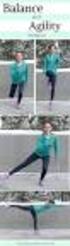 No Equipment Agility/Core/Strength Program for Full Body No Equip Trainer: Rick Coe Introduction Program designed to be performed in a circuit. Perform exercises in sequence without rest 2-3 times. Increase
SAMPLE WORKOUT Full Body
 SAMPLE WORKOUT Full Body Perform each exercise: 30 secs each x 2 rounds or 2-3 sets of 8-12 reps Monday & Wednesday or Tuesday & Thursday Standing Squat Muscles: glutes (butt), quadriceps (thigh) Stand
Youth Volleyball Coaches Drill Book
 Youth Volleyball Coaches Drill Book Volleyball - 4 X 2 Pepper Drill Practice ball control with a wide variety of types of contacts. Put players in pairs. Player one hits the ball down to player two. Player
Low Back Pain: Exercises
 Low Back Pain: Exercises Your Kaiser Permanente Care Instructions Here are some examples of typical rehabilitation exercises for your condition. Start each exercise slowly. Ease off the exercise if you
The Santa Monica Orthopaedic and Sports Medicine Research Foundation. The PEP Program: Prevent injury and Enhance Performance
 The Santa Monica Orthopaedic and Sports Medicine Research Foundation The PEP Program: Prevent injury and Enhance Performance This prevention program consists of a warm-up, stretching, strengthening, plyometrics,
Yoga Teacher Training Home Study Course. Part 3b. Teaching and Practicing Sun Salutations
 Yoga Teacher Training Home Study Course Part 3b Teaching and Practicing Sun Salutations Sun Salutations (Surya Namaskar) A sun salutation is a graceful sequence of positions performed as one continuous
1. Cut & plant 6. Hitch Hiker 5-7 cuts on each side 3 x 20-30s. 2. Single-leg jumping 7. Y-position 5-10 reps 2 x 10 reps each arm
 Beach Volleyball program - Level 1 1. Cut & plant 6. Hitch Hiker 5-7 cuts on each side Keep knee over toe 5-7 cuts on each side Squeeze shoulder blades together Lift arms Thumb pointing upwards 2. Single-leg
Learning the 48 Form Set of Tai Chi
 Learning the 48 Form Set of Tai Chi In some Chinese martial arts traditions, a student always faces south when beginning to do a Form. This is because the south is the bringer of warmth and good fortune.
DEFENSE Warm-Up Arm Warm up with starting light and gradually throw harder. Spend 5-15 minutes. OFFENSE
 10-12 Year Old Practice Format & Outline (1-2 Hour) Begin each practice with Team Announcements & Warm Up Lap Stretch i.e., Upper & Lower Body Form Run (Agility) i.e., High Knees, Power Skips, Shuffle,
are you reaching your full potential...
 T h e r e s n o s u c h t h i n g a s b a d e x e r c i s e - j u s t e x e r c i s e d o n e b a d l y FIT for sport are you reaching your full potential... These tests are a series of exercises designed
Have a ball SWISS BALL EXERCISES SWISS BALL TRAINING
 Have a ball SWISS BALL EXERCISES SWISS BALL TRAINING 2 Swiss Ball training is an excellent way to build 'core body strength' and have some fun at the same time. Training on the Ball forces you to use muscles
Take a few minutes for yourself and incorporate some Office Yoga into your daily routine.
 OFFICE YOGA Working in an office or at a computer for prolonged periods of time can put strain on the neck, shoulder and back muscles which in turn can lead to tension and stiffness. This tension can cause
Coaching Session Plan
 Aim of Session To introduce & develop catching a high ball Duration 5 minutes catch & movement Receiver call for the ball Move so that the is under the ball Keep looking at the ball In pairs, 5 metres
START FINISH. 5 yards 5 yards
 Agility, Plyometric & Conditioning Drills Pro Agility Objectives: Improve athletic ability and body coordination during sudden change of direction 1. Measure out a 10 yard area with 5 yard increments 2.
How To Stretch Your Body
 Exercise Module A New Leaf Choices for Healthy Living University of North Carolina at Chapel Hill 2007 Center for Health Promotion and Disease Prevention Physical Activity Exercises for Keeping Active
SHOULDER REHABILITATION EXERCISE PROGRAM. Phase I
 Franklin Orthopedics 7400 W Rawson Ave, Suite 225 Franklin, WI 53132 414-425-8232 SHOULDER REHABILITATION EXERCISE PROGRAM Phase I PENDULUM EXERCISES: Bending over at the waist and balancing with the good
UNIVERSAL FITNESS NETWORK, Inc. 2315 West Monica Dunlap, IL 61525 (309)-360-5615 [email protected] FACTS ABOUT THE PHYSICAL FITNESS ASSESSMENT TESTS
 UNIVERSAL FITNESS NETWORK, Inc. 2315 West Monica Dunlap, IL 61525 (309)-360-5615 [email protected] FACTS ABOUT THE PHYSICAL FITNESS ASSESSMENT TESTS Universal Fitness Network, Inc. specializes in physical
This document fully describes the 30 Day Flexibility Challenge and allows you to keep a record of your improvements in flexibility.
 Welcome to the StretchTowel 30 Day Flexibility Challenge! You can Be More Flexible in 30 days by following our stretching program for 10 minutes a day. The best part is that you can stretch using the StretchTowel
Locomotion Skills. Walking Running Horizontal Jump Hopping Skipping
 Locomotion Skills Walking Running Horizontal Jump Hopping Skipping Walking Progressive alternation of leading legs and continuous contact with the supporting surface. Walking cycle or Gait cycle involves
*The steps described are for the right-handed person; adjustments will need to be made for a lefthander.
 Archery Study Guide History The origin of archery is unknown; however, archery has been an activity with varied objectives for human beings since the beginning of recorded history. The successful use of
Preventing Falls. Strength and balance exercises for healthy ageing
 Preventing Falls Strength and balance exercises for healthy ageing Exercise should be comfortable and fun. To get the most out of your home exercise book, join a class for older people to check your exercises
Psoas Syndrome. The pain is worse from continued standing and from twisting at the waist without moving the feet.
 Psoas Syndrome The iliopsoas muscle is a major body mover but seldom considered as a source of pain. Chronic lower back pain involving the hips, legs, or thoracic regions can often be traced to an iliopsoas
TRE TM Template for Level I Trainees June 2013
 TRE TM Template for Level I Trainees June 2013 THIS DOCUMENT IS TO BE PROVIDED TO TRE LEVEL I TRAINEES WHO ARE: ENROLLED IN THE TRE ENROLLMENT WEBSITE AND WORKING WITH A LEVEL III TRAINER WITHIN THE TRE
Ensure that the chair you use is sturdy and stable. Wear comfortable clothes and supportive footwear.
 Page 1 Safety Ensure that the chair you use is sturdy and stable. Wear comfortable clothes and supportive footwear. Prepare a space and have your exercise band and a glass of water (for afterwards) ready
Part I Assessing Soccer Skills
 Part I Assessing Soccer Skills Soccer Skills Assessment Assessment # 1 Description of assessment: The instructor observes player s following skills during the lesson. Instructor explains all key components
ANKLE STRENGTHENING INTRODUCTION EXERCISES SAFETY
 ANKLE STRENGTHENING INTRODUCTION Welcome to your Ankle Strengthening exercise program. The exercises in the program are designed to improve your ankle strength, fitness, balance and dynamic control. The
Workout Routine - Dumbbells - Full Body Printed on Apr 28 2011
 Workout Routine - Dumbbells - Full Body Printed on Apr 28 2011 Workout Routine Snapshot 2 Workout Days 0 Cardio Exercises 14 Strength Training 0 Stretching Exercises 2 Abs 2 Back 2 Chest 2 Shoulders 2
Strength Training HEALTHY BONES, HEALTHY HEART
 Strength Training HEALTHY BONES, HEALTHY HEART No matter what your age, strength training can improve your bone health and your balance. As we age, our bones lose both tissue and strength. This condition
During the breathing exercises, it is important not to use your neck or shoulder muscles. Generally, ten breath cycles per session is adequate.
 Cool-Down Breathing Exercises Overview Breathing exercises help make use of the entire lung and keep the chest muscles active. They allow for more oxygen with each breath and to breathe with less effort.
Week 7. Equipment. None required. Session 19. Total lengths = 48 lengths. Total distance = 1,200m
 Equipment None required Session 19 Total lengths = 48 lengths Total distance = 1,200m Warm up 200m FC (concentrating on push and glide at the start of each length) Main set 1. 100m FC X 4 (pace yourself
ABOUT THE FUNCTIONAL FITNESS TEST: ABOUT THE AUTHORS:
 The Interactive Health Partner Wellness Program addresses fall prevention with assessments and outcomes tracking in an easy to use, comprehensive online system. Website: www.interactivehealthpartner.com
Strength Training for the Runner
 Strength Training for the Runner Strength Training for the Runner What? The goal of resistance training for runners is not necessarily adding muscle mass but 1. improving muscular strength, 2. improving
Rehabilitation Exercises for Shoulder Injuries Pendulum Exercise: Wal Walk: Back Scratcher:
 Rehabilitation Exercises for Shoulder Injuries Begin these exercises when your pain has decreased about 25% from the time when your injury was most painful. Pendulum Exercise: Lean over with your uninjured
跆 拳 道 品 勢 The Poomse of Taekwondo
 跆 拳 道 品 勢 The Poomse of Taekwondo By Ronald A. Southwick 2005 KEON TAE 1 SEON 2 5 RI 3 GAM 6 4 7 JIN 8 GAN GON Taekwondo Poomse ( 品 勢 ) are paradigms of the martial art. They contain the basic physical
Knee Conditioning Program. Purpose of Program
 Prepared for: Prepared by: OrthoInfo Purpose of Program After an injury or surgery, an exercise conditioning program will help you return to daily activities and enjoy a more active, healthy lifestyle.
THROWER S TEN EXERCISE PROGRAM
 THROWER S TEN EXERCISE PROGRAM Diagonal Pattern D2 Extension Involved hand will grip tubing handle overhead and out to the side. Pull tubing down and across your body to the opposite side of leg. During
Exercises for Growing Taller
 1 Exercises for Growing Taller A Mini-Guide By Rodney Williams Copyright and Legal Notice 2 Published by: Copyright 2011. All Rights Reserved. No part of this publication may be reproduced or transmitted
Specific massage movements.
 Specific massage movements. Exclusive Body Digi-Esth Esthétique movements Awakening Prelude 5 min + Specific movements Relaxing 30 min Aromatic bags 30 min Plantar 20 min Hands 10 min = Position of the
Lower Body Exercise One: Glute Bridge
 Lower Body Exercise One: Glute Bridge Lying on your back hands by your side, head on the floor. Position your feet shoulder width apart close to your glutes, feet facing forwards. Place a theraband/mini